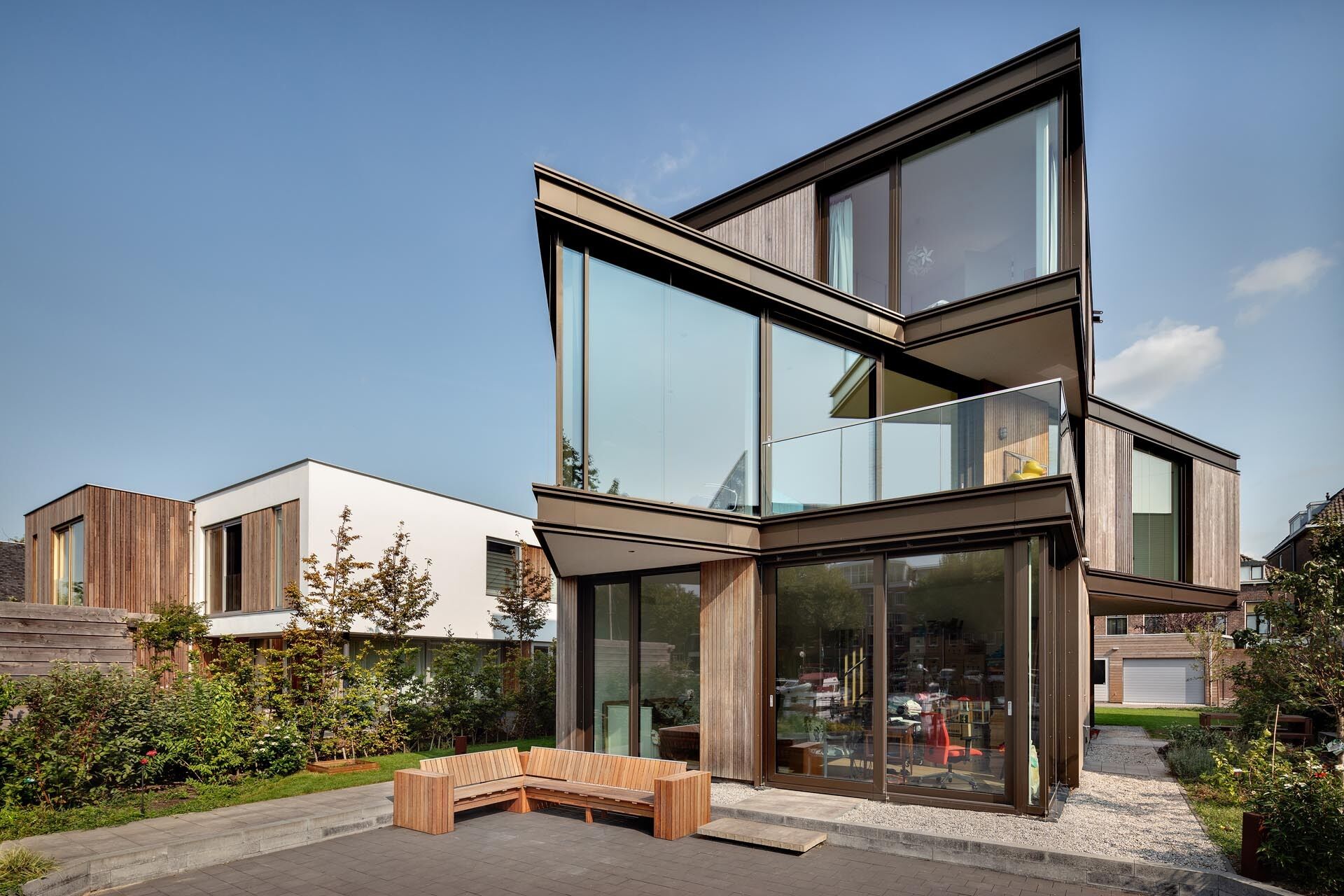
In Schiedam, a city in the Netherlands better known for its historic windmills and gin distilleries, Stats Architecten has designed a house that quite literally shifts perspective. Set along a quiet waterfront, the villa announces itself with an irregular angled floor that subtly breaks from the predictable geometry of its neighbors.
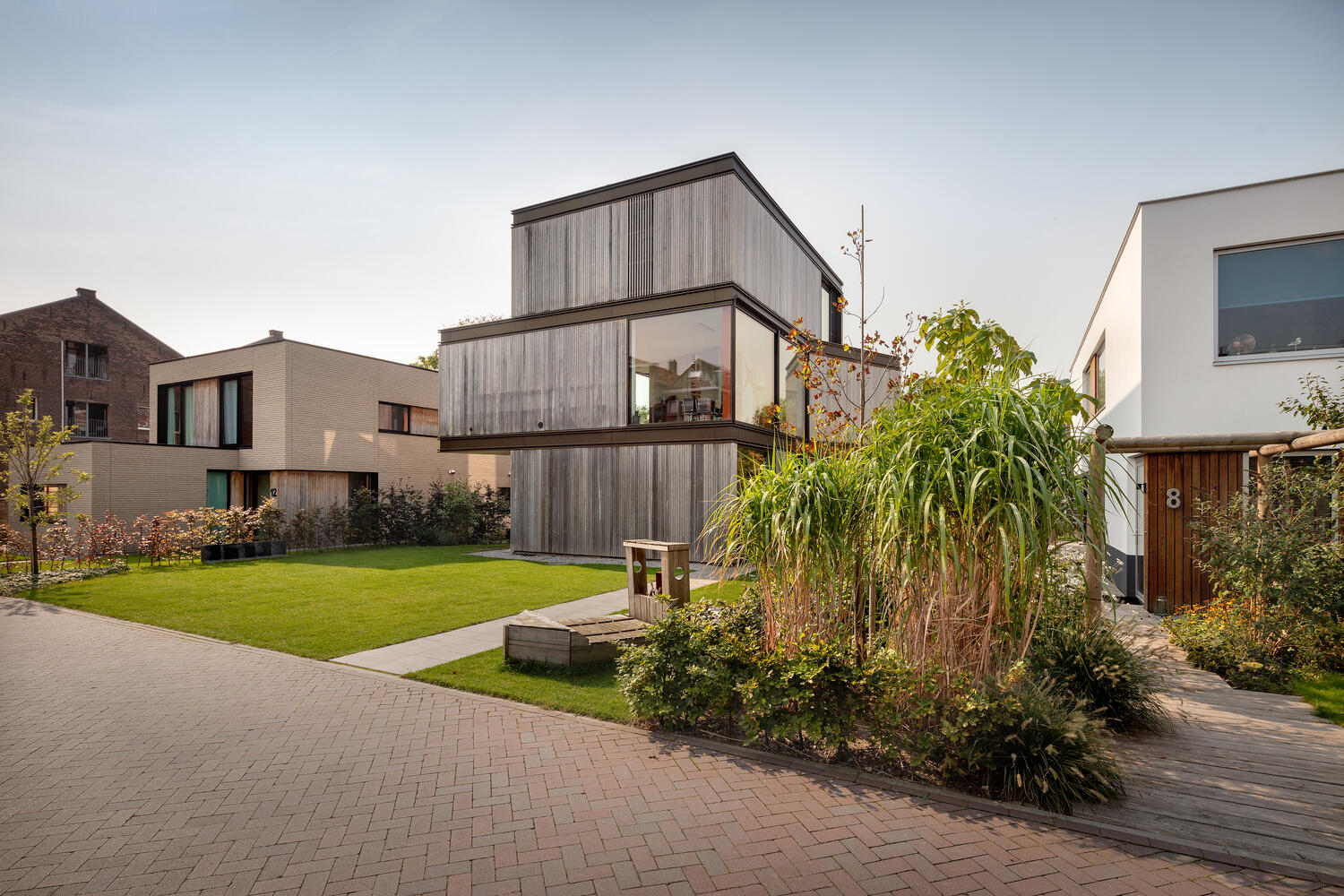
The modern home forms part of Plantagewerf, the careful transformation of a former industrial site into a residential enclave of six detached or semi detached villas, all designed by the same firm. The development sits within the Plantage, an 18th century expansion of Schiedam’s old city center, long regarded as one of the city’s most atmospheric residential areas.
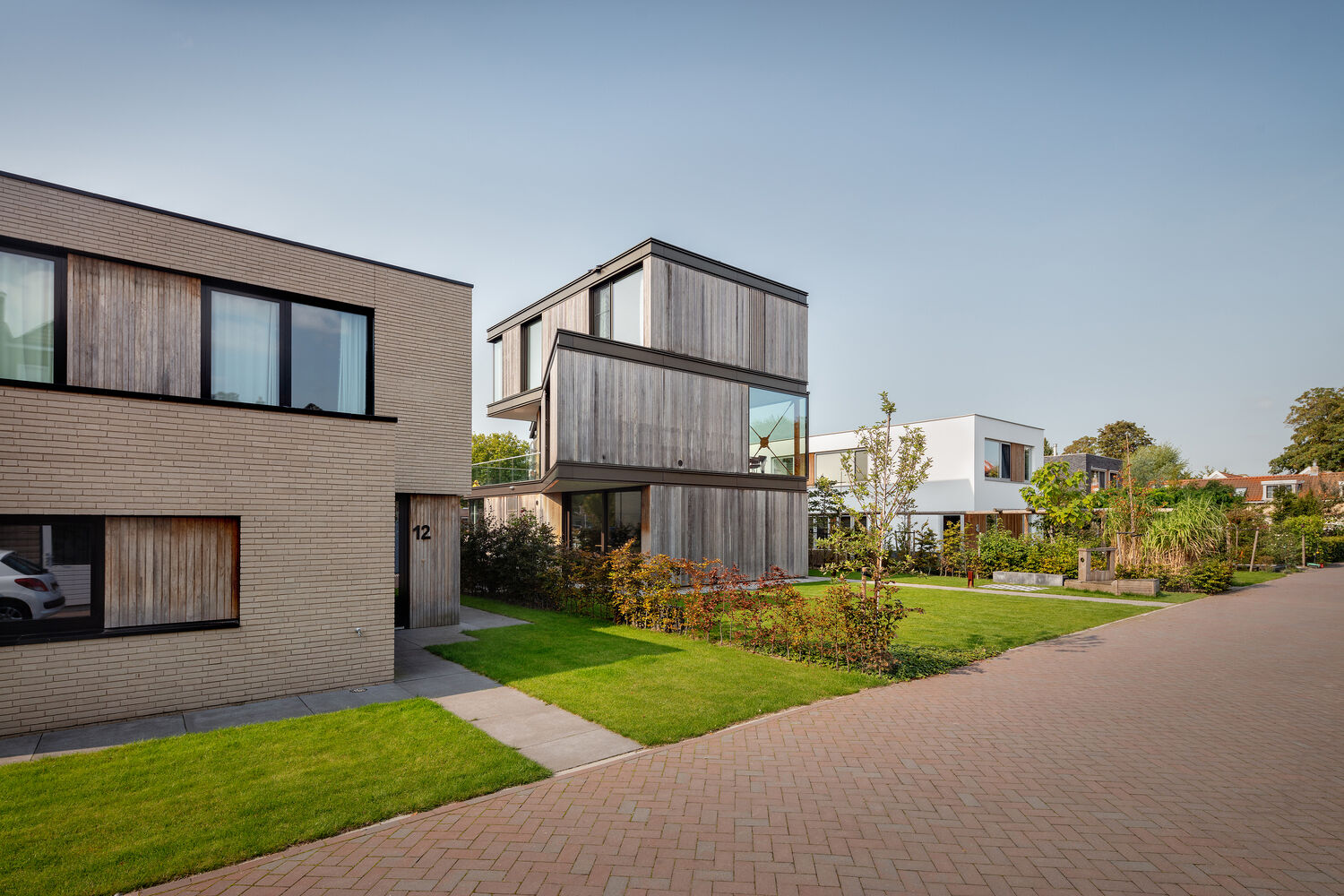
Along the historic park edge stand traditional patrician houses, while the waterfront behind has historically been more unruly, layered with workshops, sheds, gardens and working yards. Into this varied context, the architects introduced a contemporary language that both integrates and contrasts.
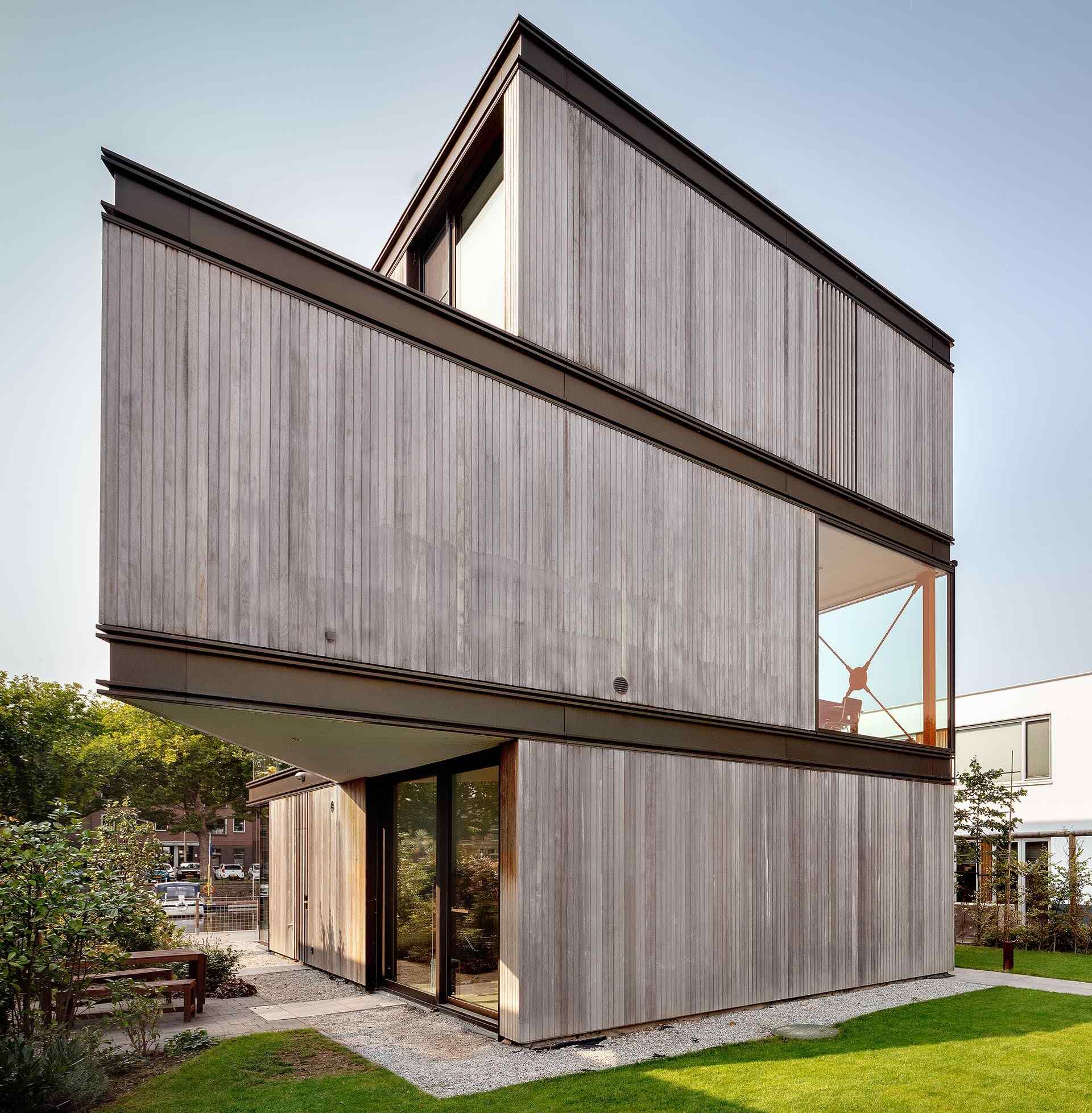
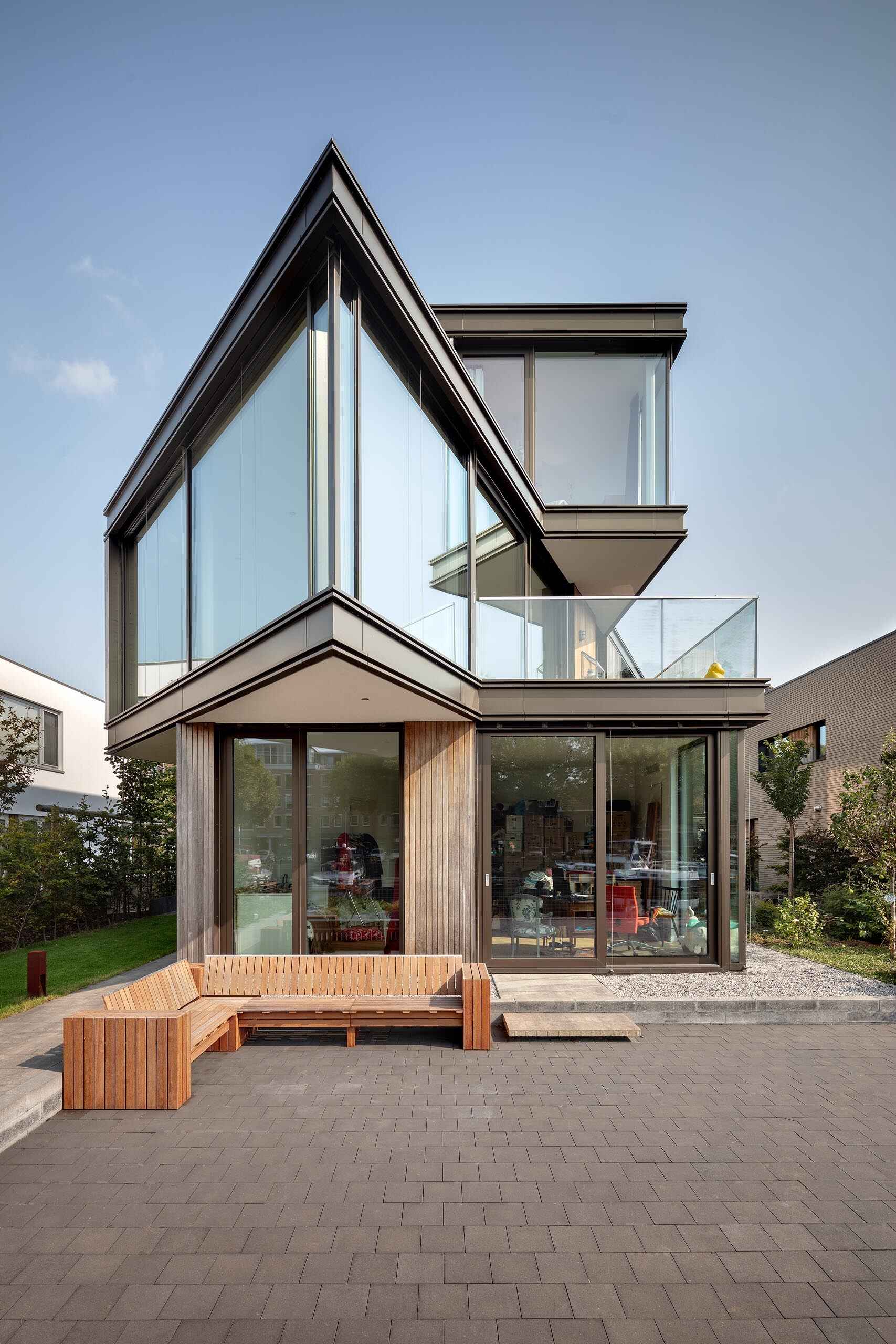
At first glance, the house appears almost simple. It is composed of three rectangular floors stacked neatly atop one another. But the middle level rotates at an angle, turning the composition into something more dynamic. That single shift creates a subtle sense of movement, as if the building is adjusting its stance toward the water.
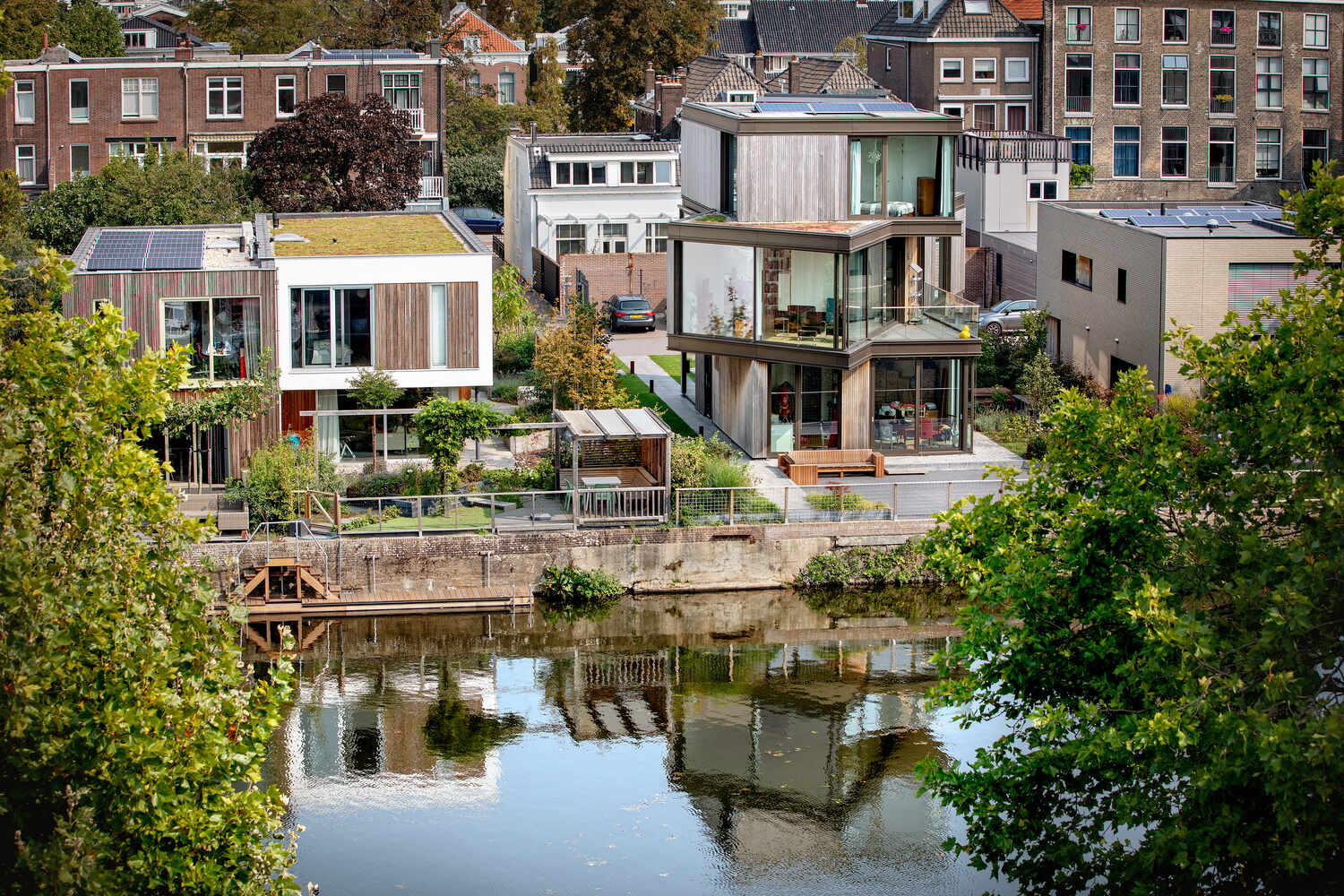
The exterior palette is restrained. Wood, metal and glass define the facades, lending the house a faint maritime character that feels at home beside the canal. The materials also reference the industrial sheds that once occupied the site, structures of timber and steel that shaped the area’s working past. Sharp corners give the villa a crisp outline, and from certain viewpoints the house seems to pivot toward the harbor.
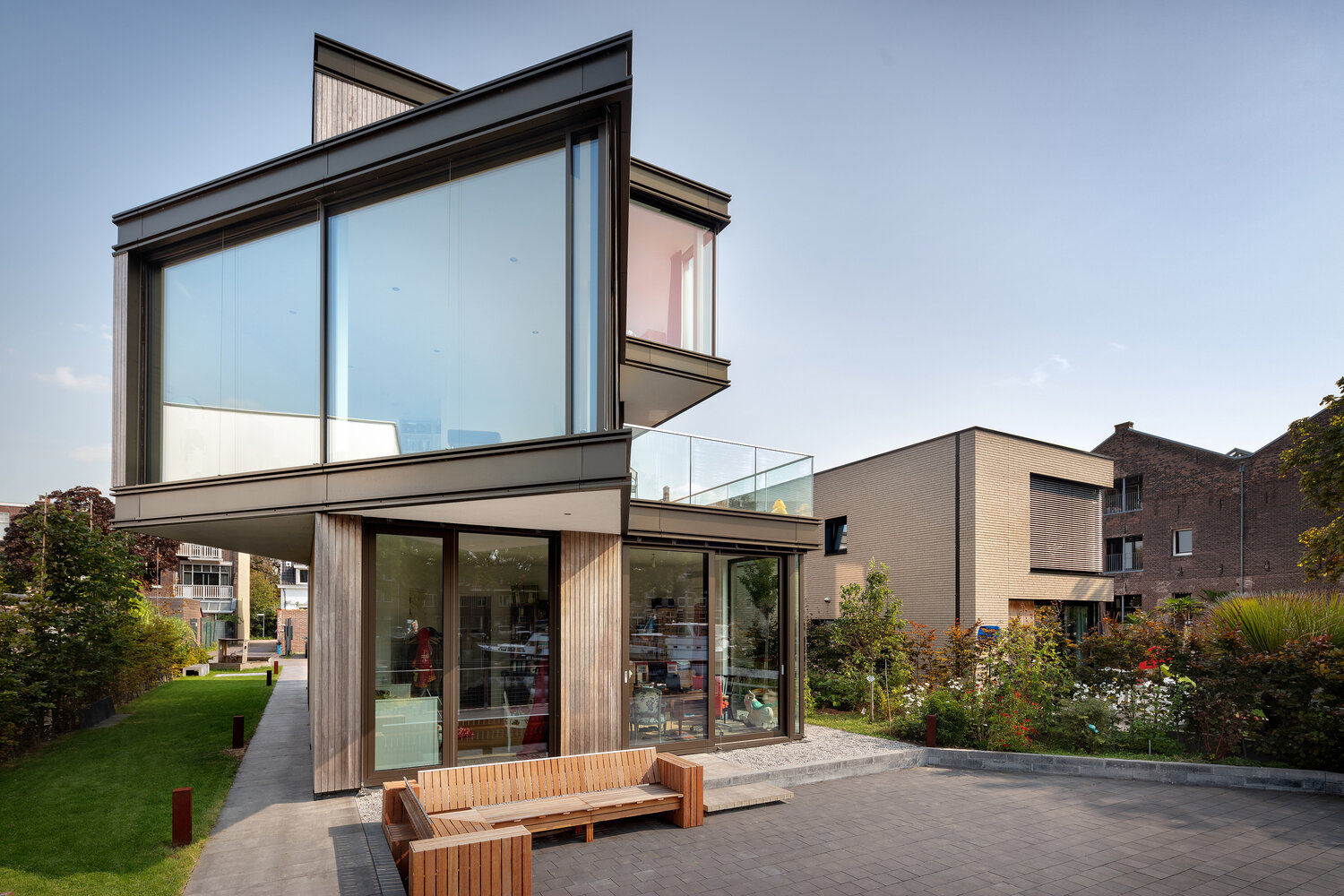
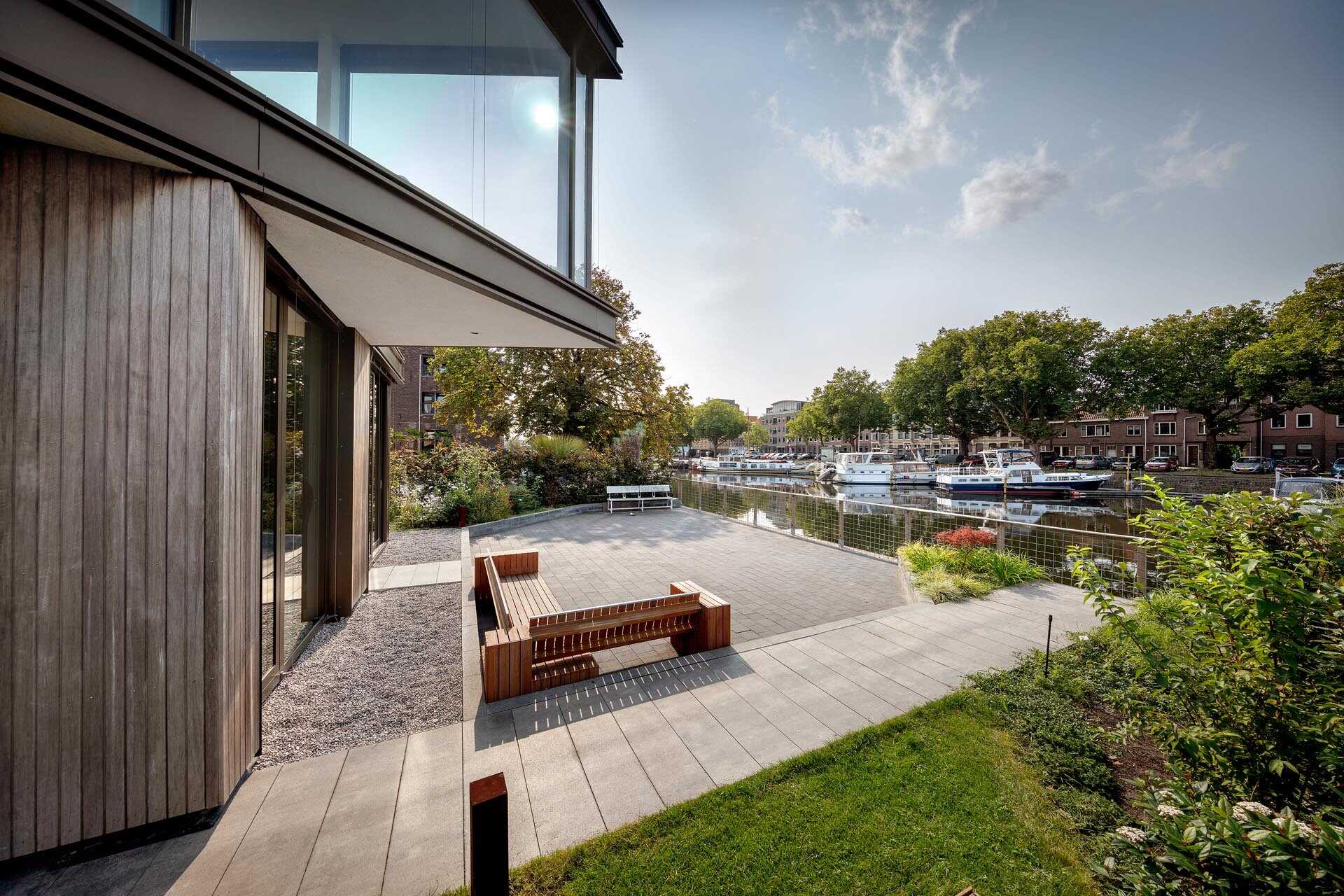
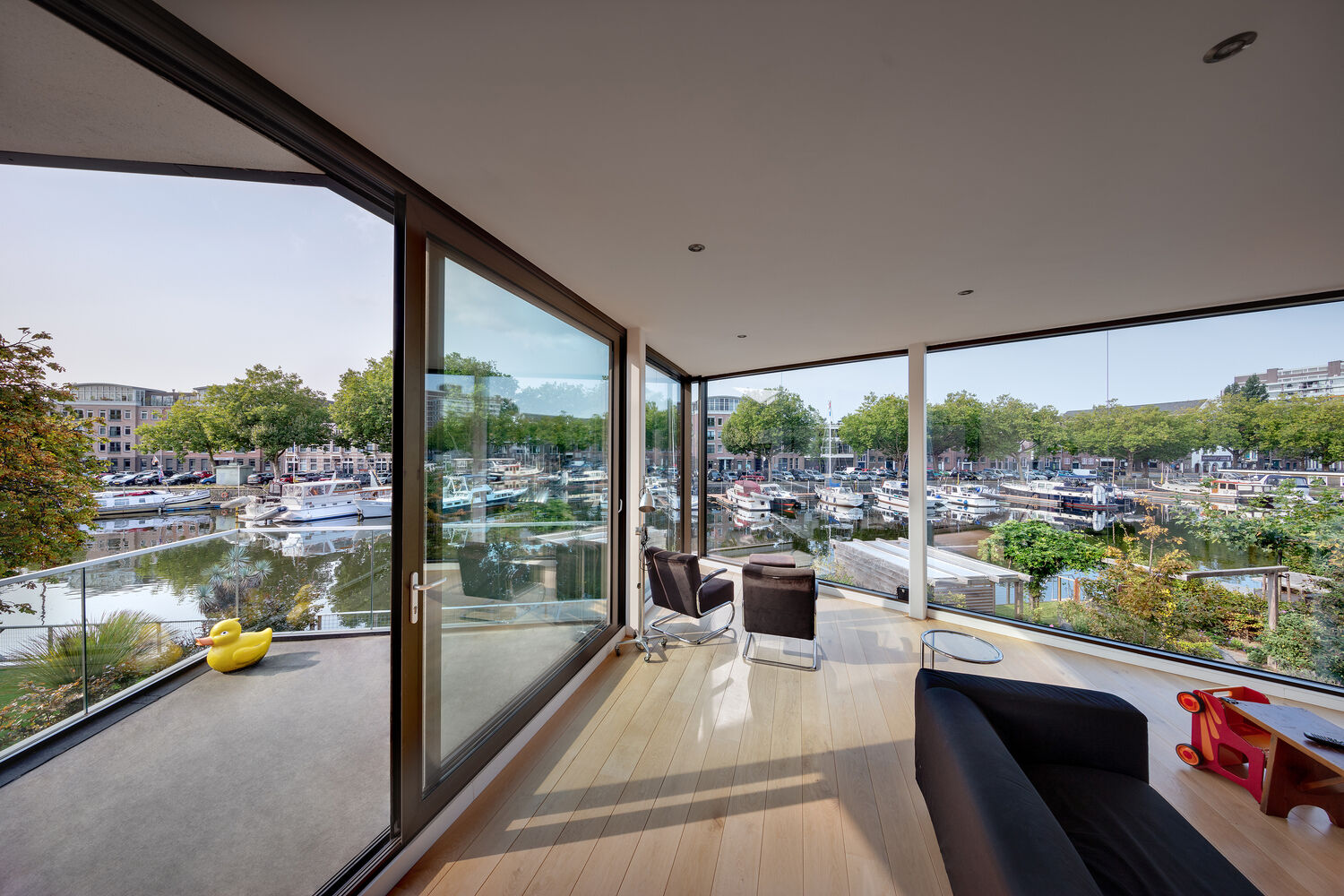
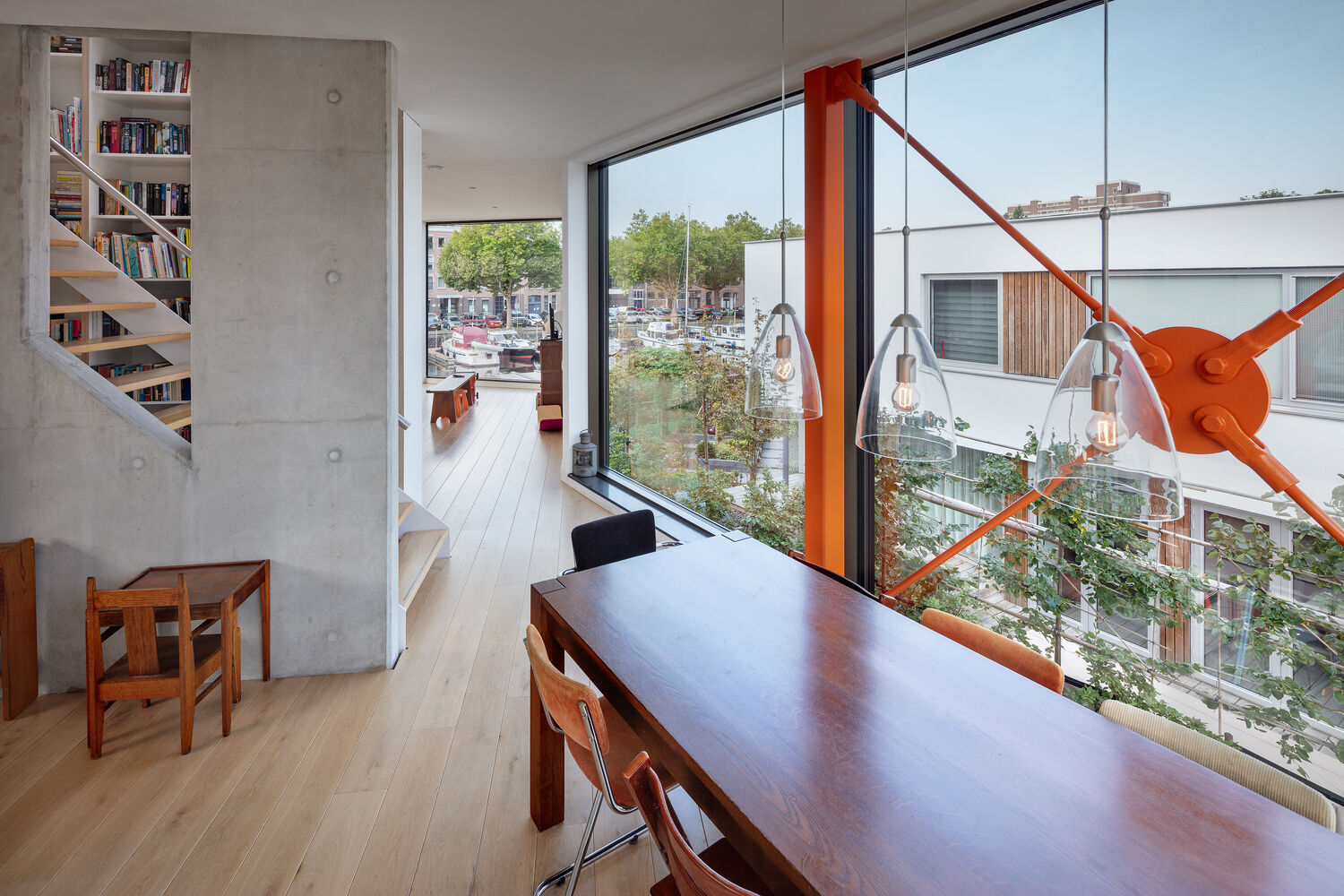
On the waterfront side, walls of glass open the interior to the changing light and movement of the canal. The dining room on the middle floor extends toward a semi recessed balcony, positioned to catch the breeze and frame the water. A patio at ground level offers another vantage point, an ideal place to sit and watch the quiet choreography of passing vessels.
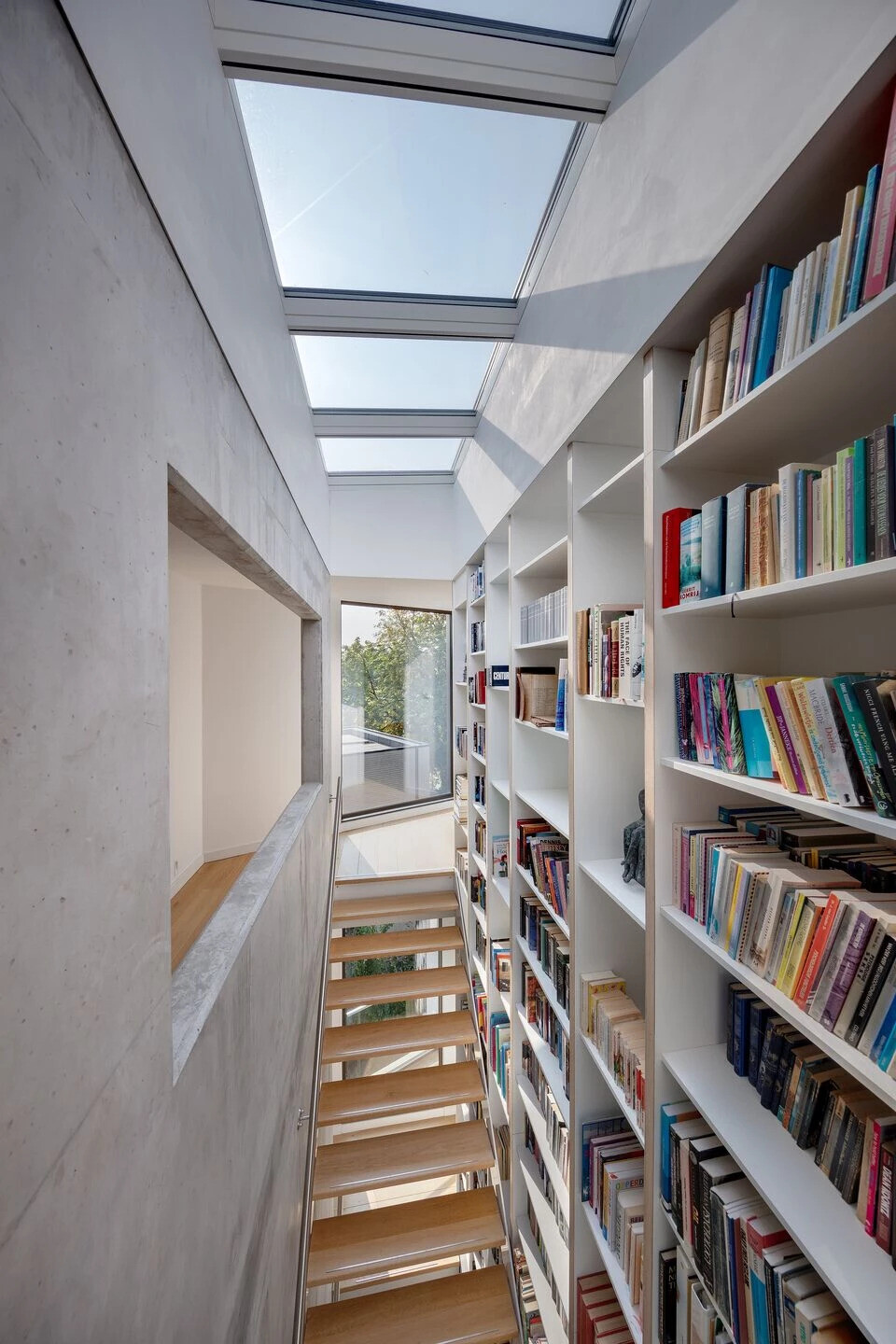
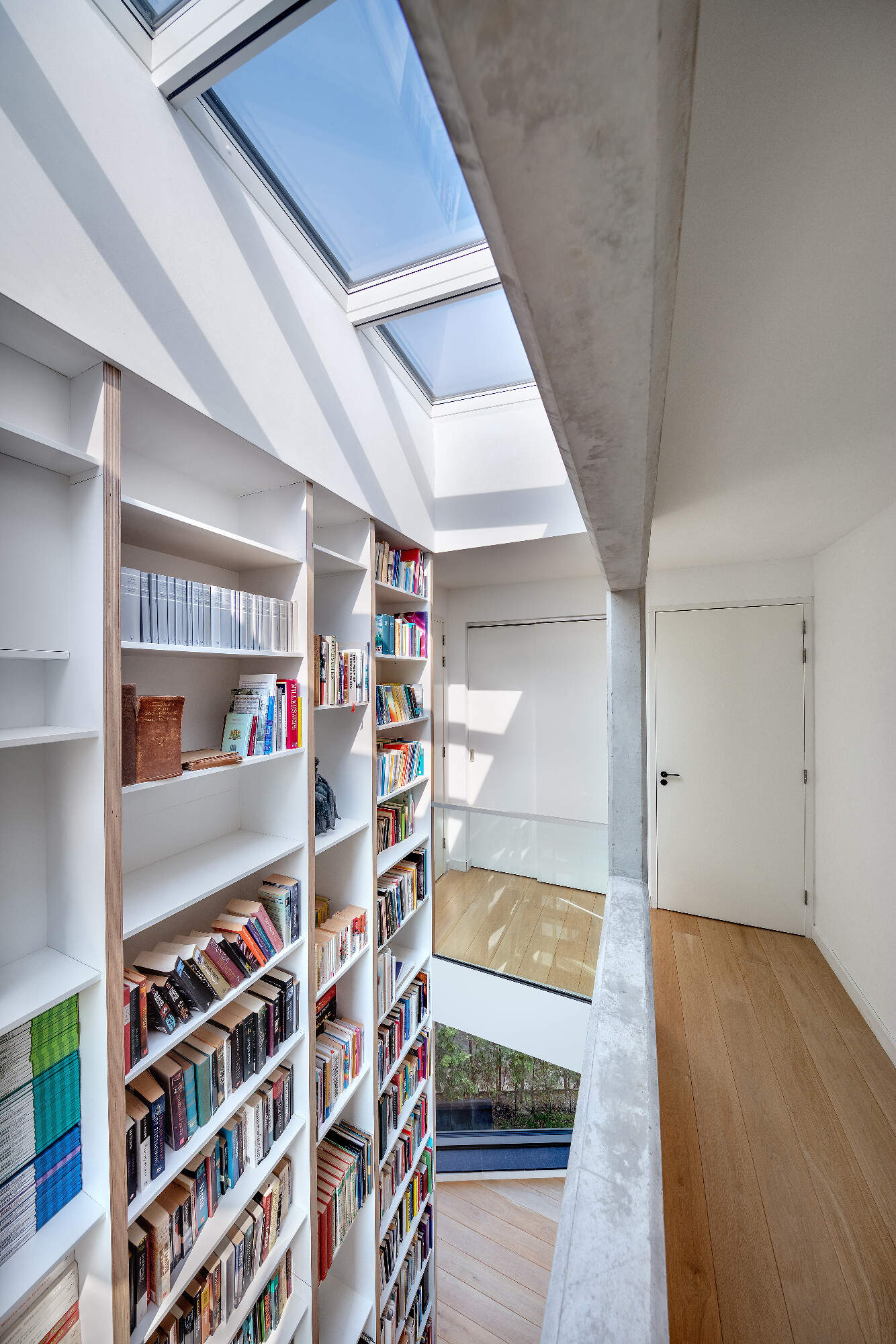
Inside, the floors are connected by a central staircase with wood treads that add warmth to the otherwise crisp interior. The stair does more than link levels. It orchestrates the experience of the house, guiding residents upward through a sequence of views. Natural light from skylights and expansive windows keeps the vertical core bright throughout the day.
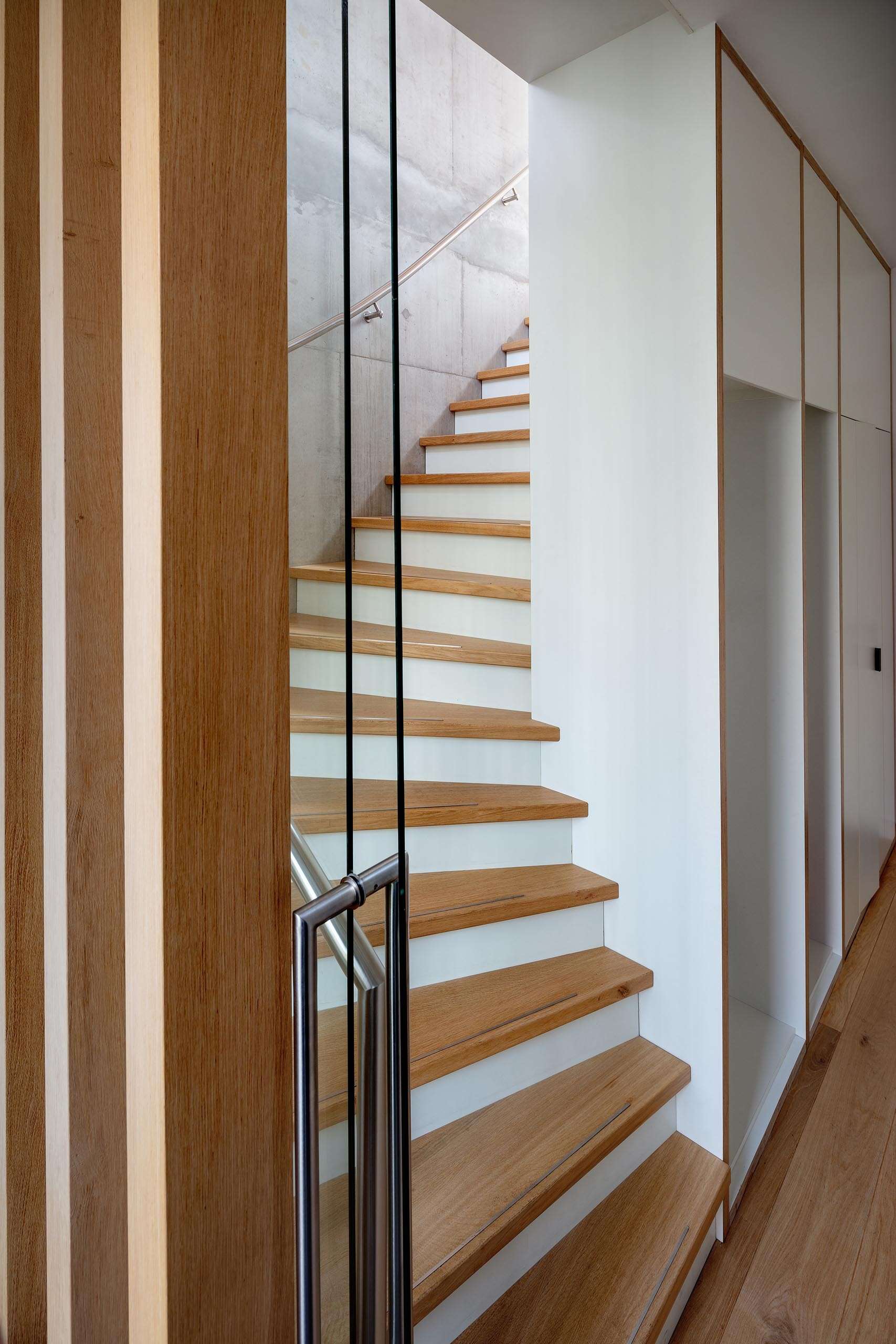
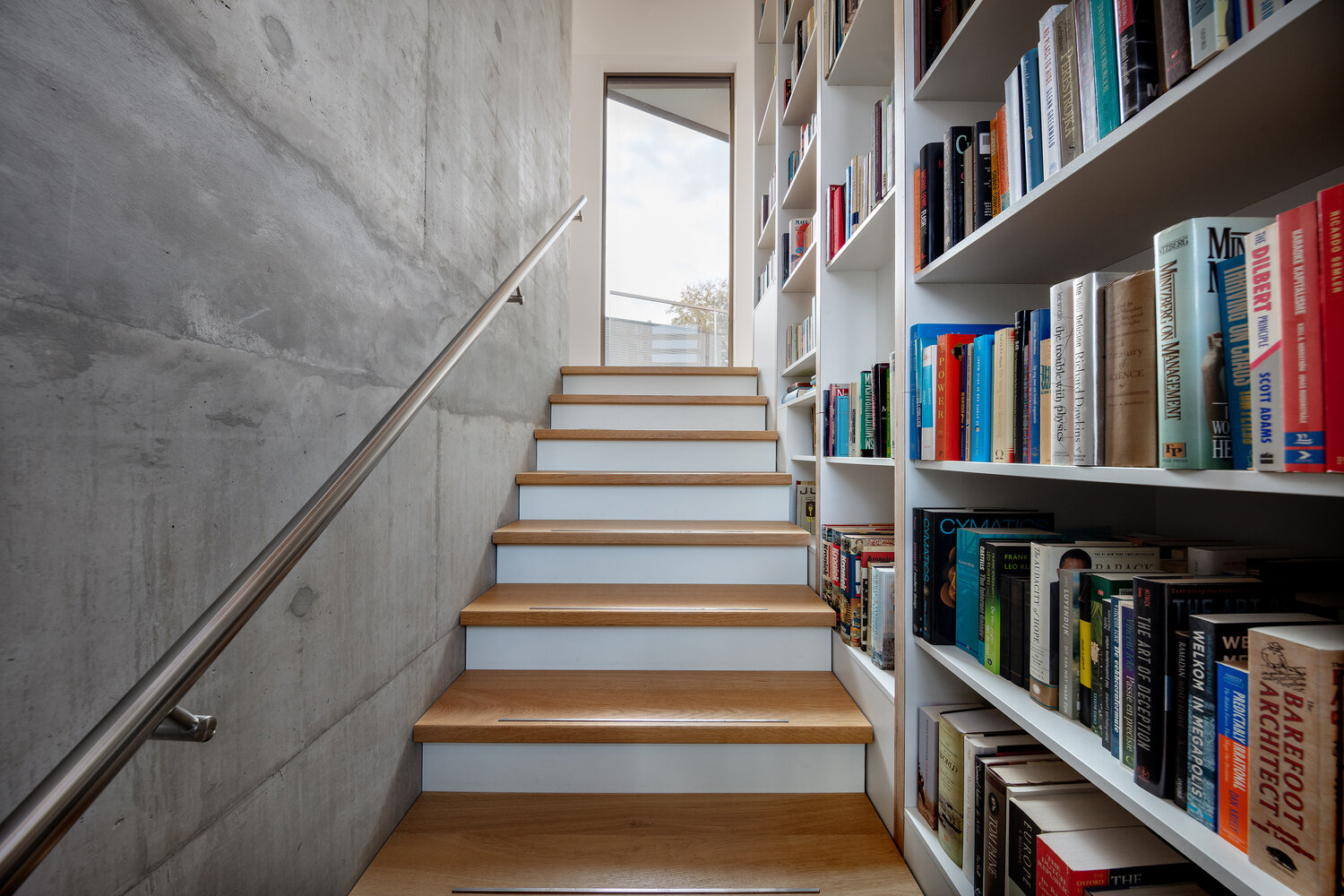
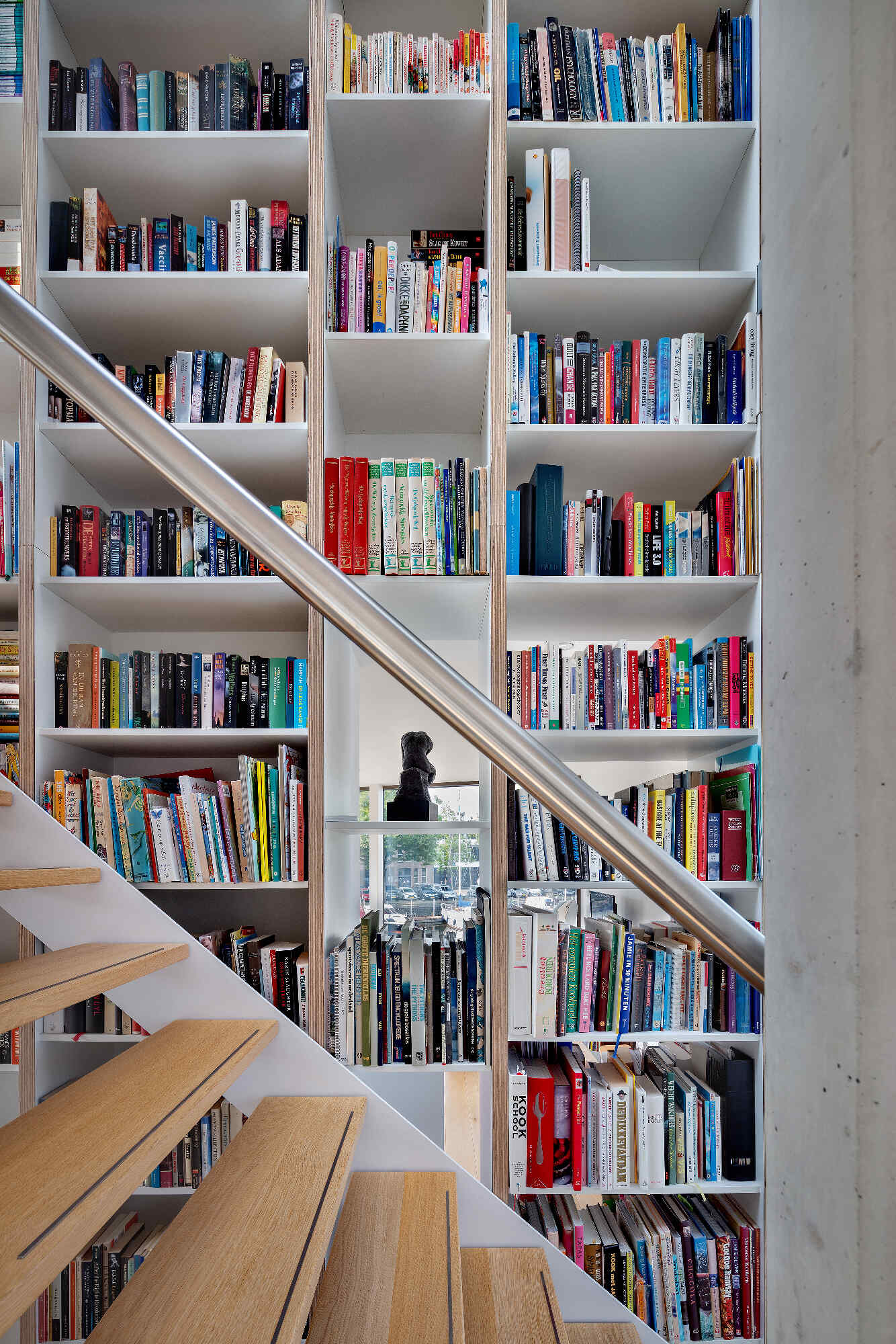
The homeowner’s extensive book collection presented a challenge in a house defined by glass and openness. The solution was architectural rather than decorative. A custom bookshelf travels the full height of the villa, threading its way alongside the staircase.
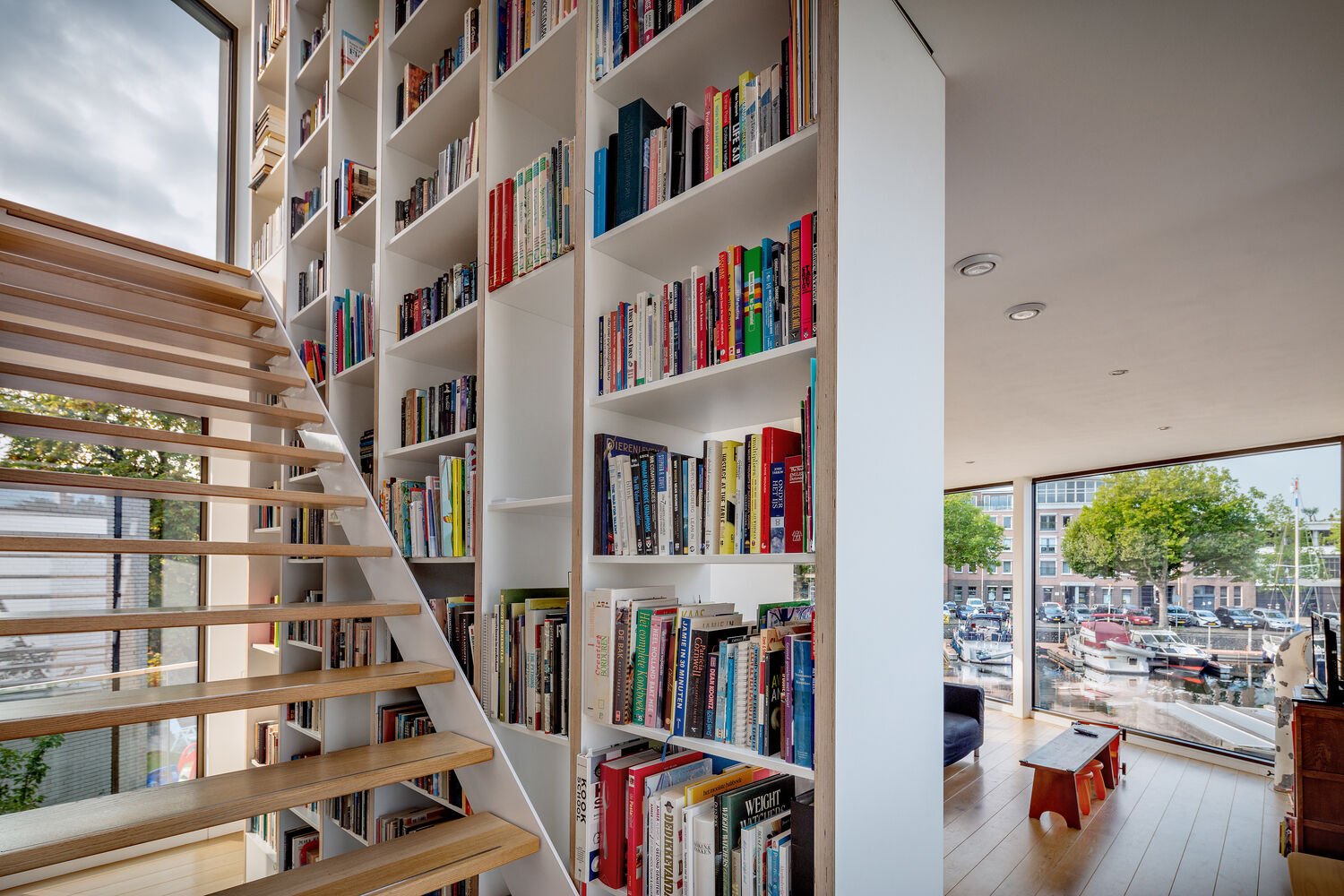
In the entrance hall it discreetly incorporates practical elements such as the wardrobe and utility meters. From there, one walks almost through the cabinet itself, ascending between shelves and past a wall of in situ cast concrete. The journey upward becomes spatial and cinematic, with glimpses across levels and out toward the water unfolding at every turn.
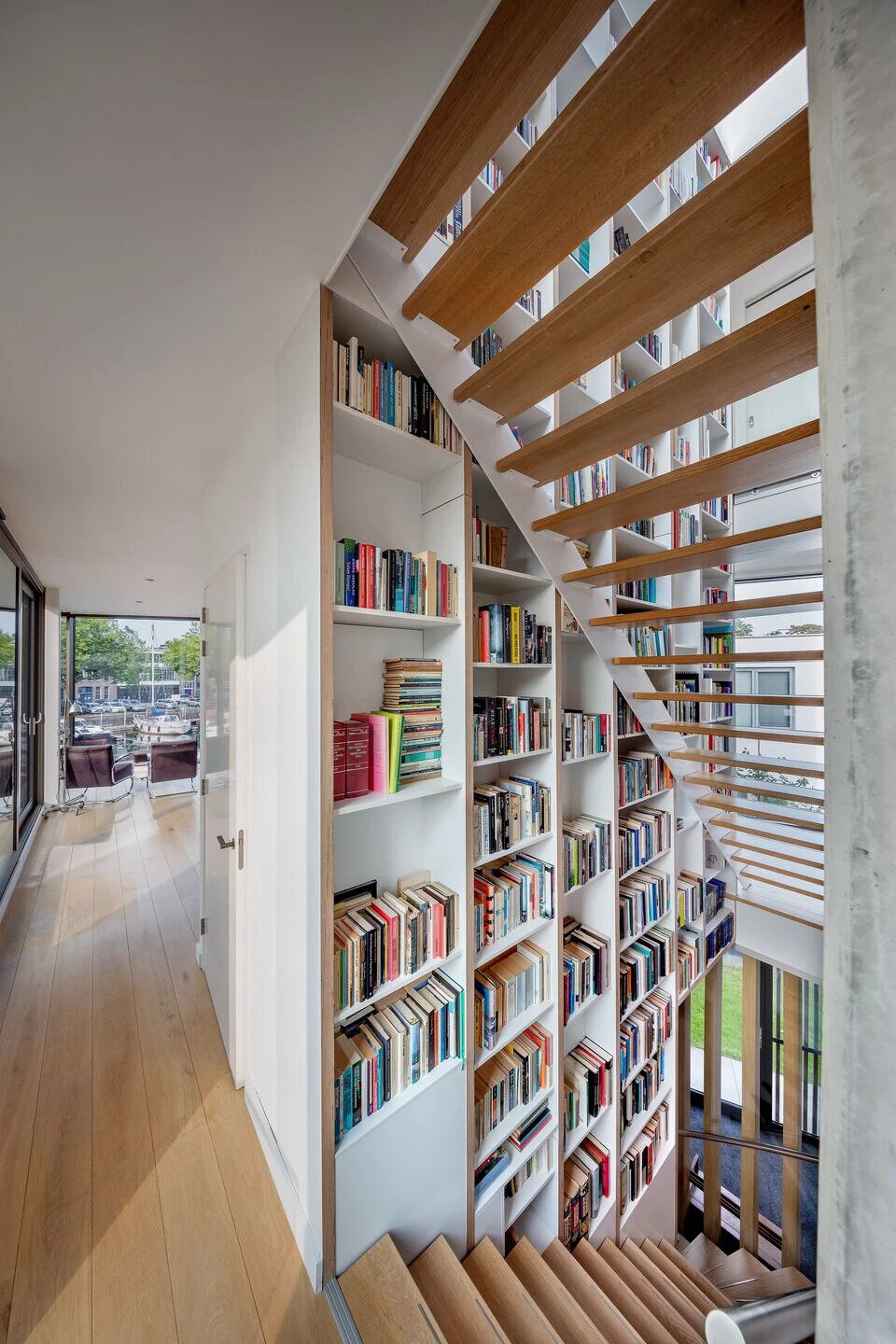
Floor to ceiling windows and sliding doors ensure that the surrounding treetops and canal remain ever present. The rotated middle floor intensifies this effect, creating unexpected sightlines and a sense of panoramic breadth. The architects have described the interior as offering a widescreen experience, and it is easy to see why. Light, water and greenery are drawn deep into the plan, dissolving the boundary between inside and out.
Set within a former industrial landscape now reimagined as a green residential haven, this house shows that a single architectural gesture can redefine an entire experience. By turning one floor and opening itself fully to the water, the villa transforms a quiet canal into the centerpiece of daily life.