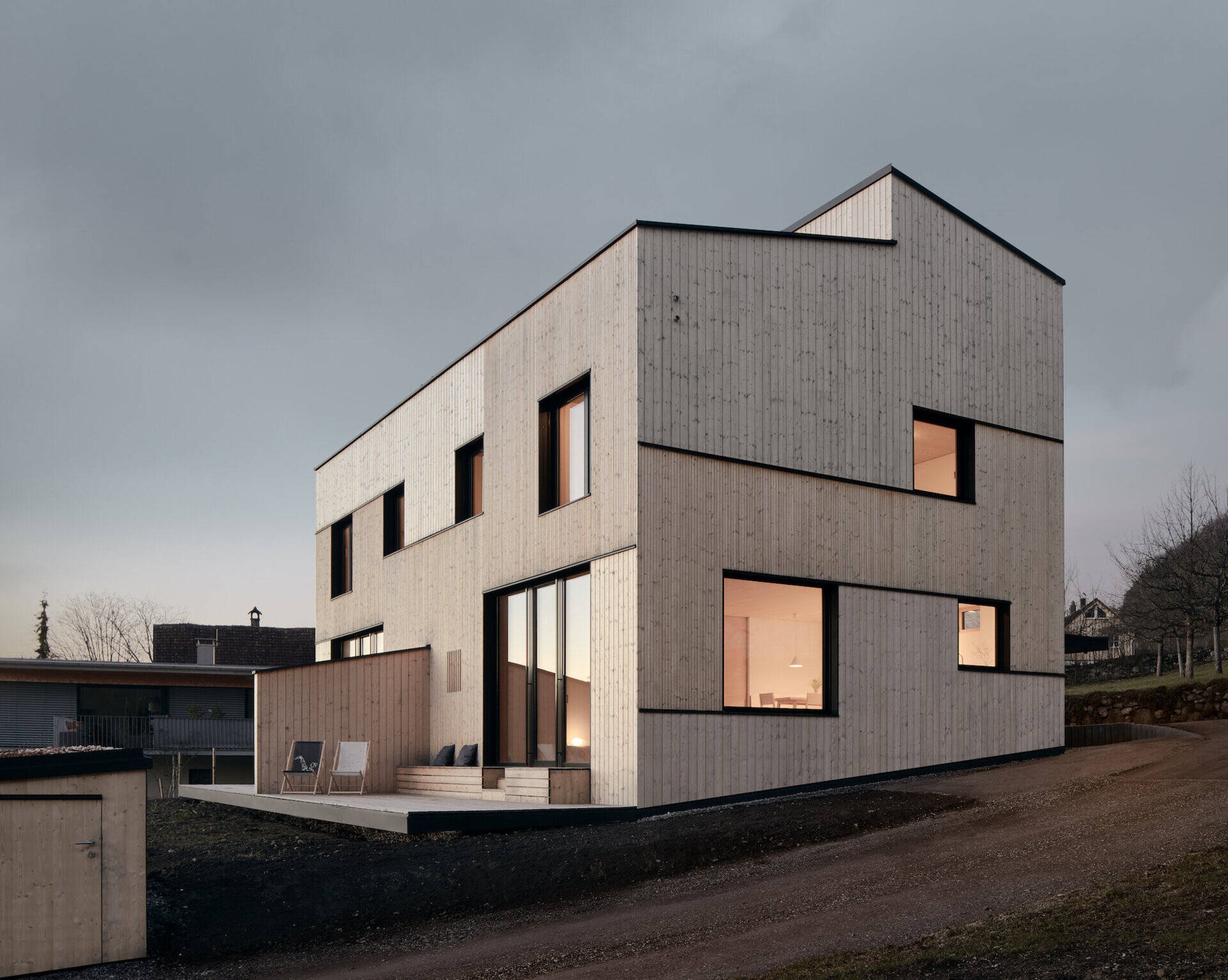
In Hohenems, Austria, MWArchitektur has designed a semi-detached house that leans into simplicity, using light wood to define both its exterior and interior. The project brings together two homes, each carefully planned to make the most of a modest site while still offering a sense of individuality.
Built to Fit the Land
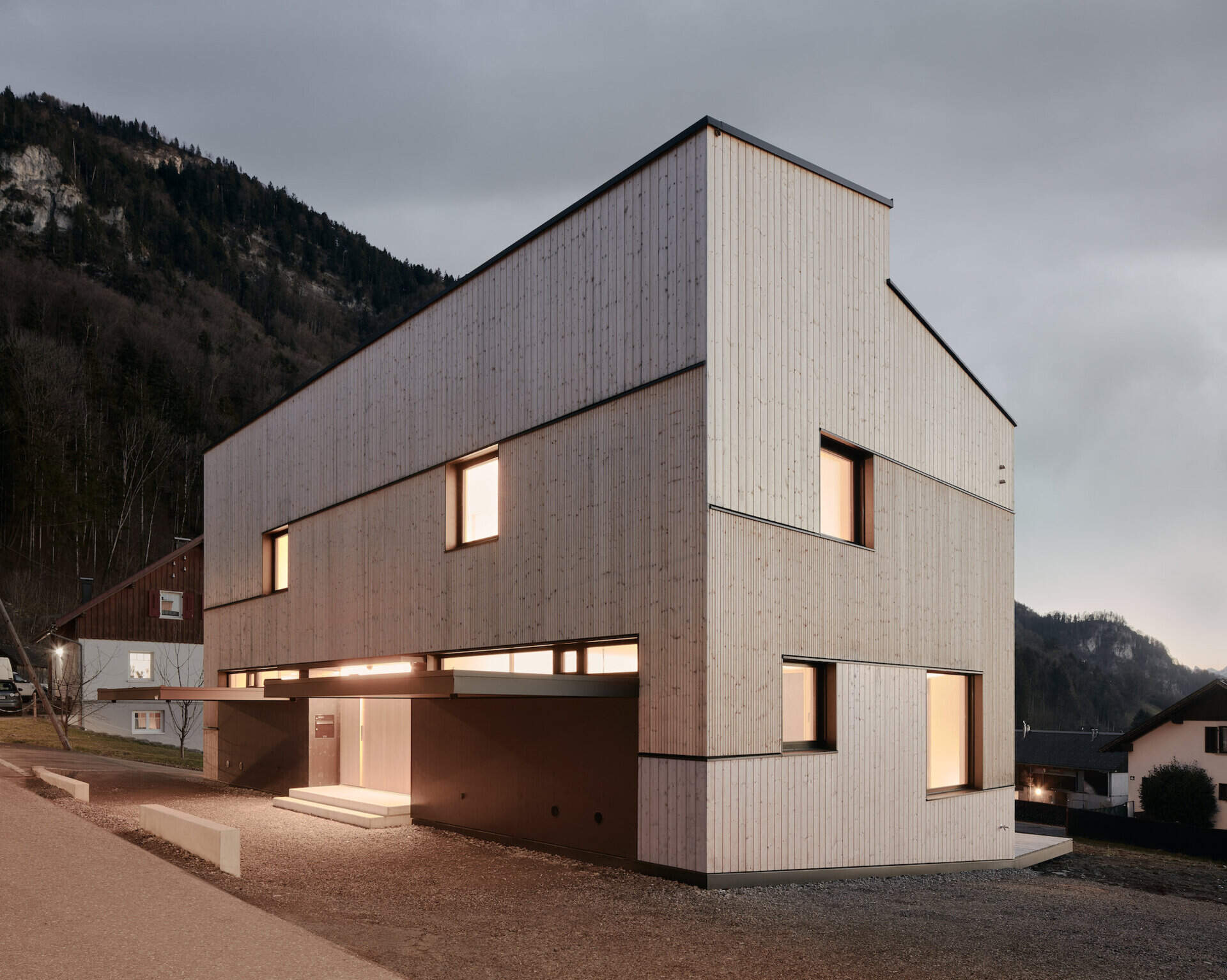
The homes were shaped with the terrain in mind, settling into the slope with a quiet confidence. Instead of forcing the land into submission, the design follows it, allowing subtle level changes to guide the layout. This approach reflects a broader intention from the architects to create housing that is both sustainable and affordable, using available resources with care.
A Facade Defined by Rhythm
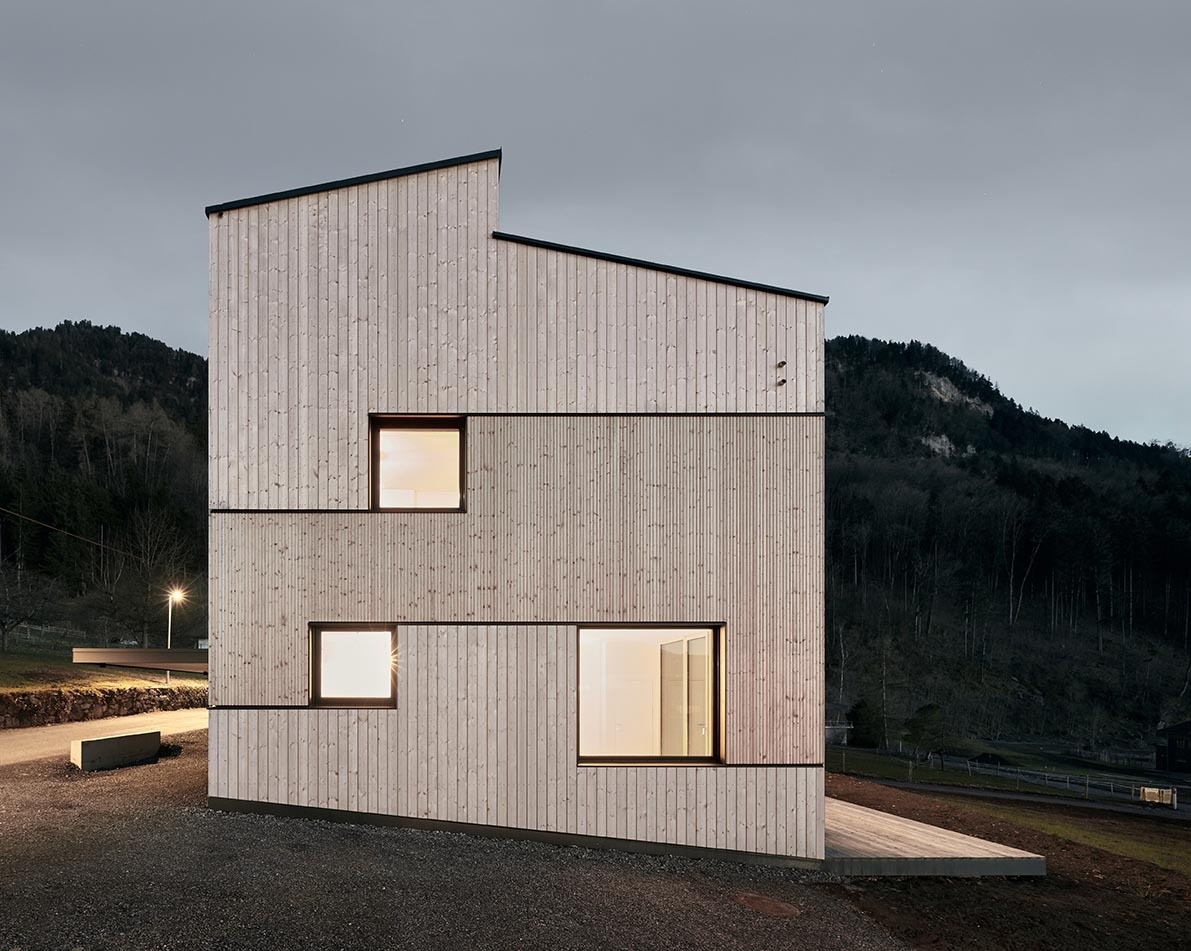
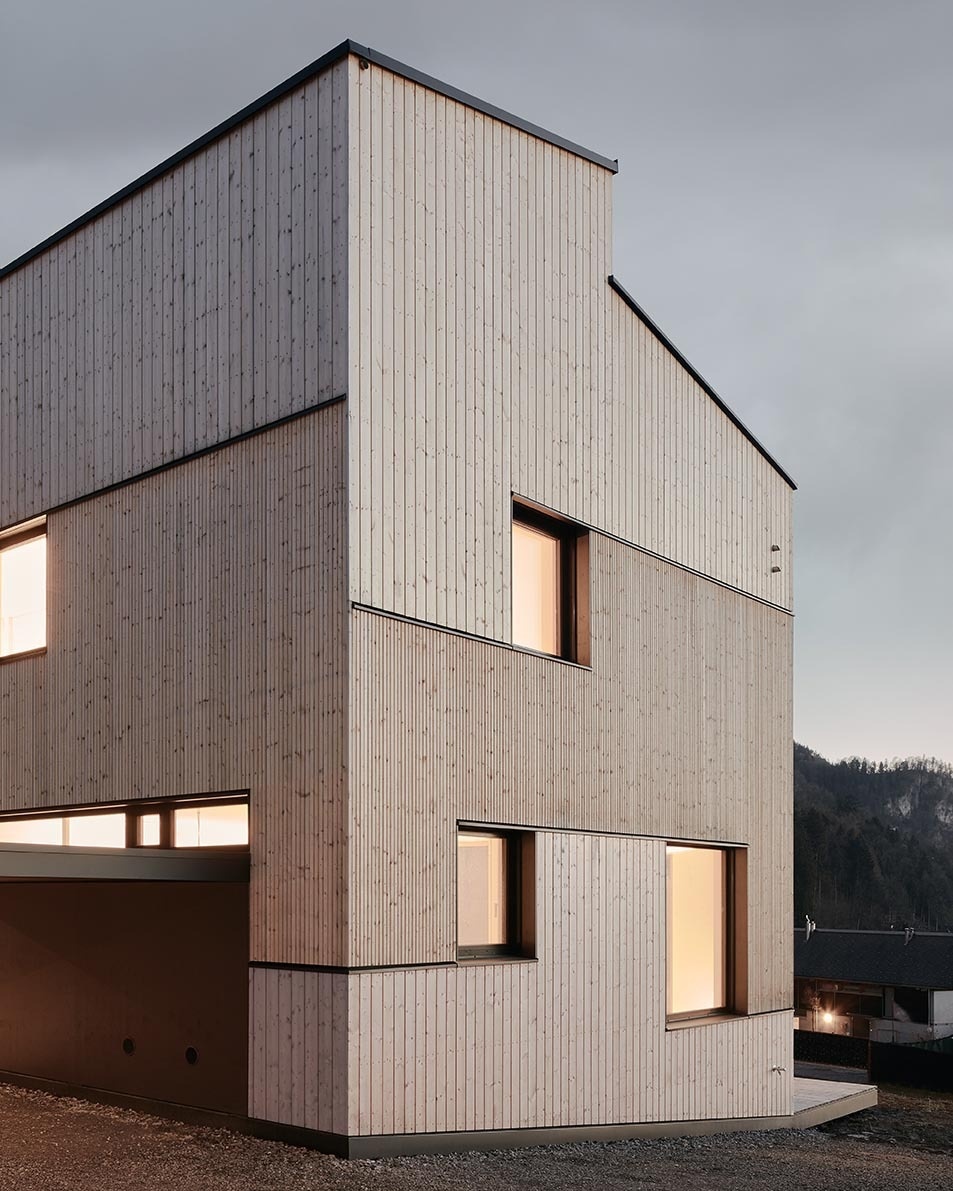
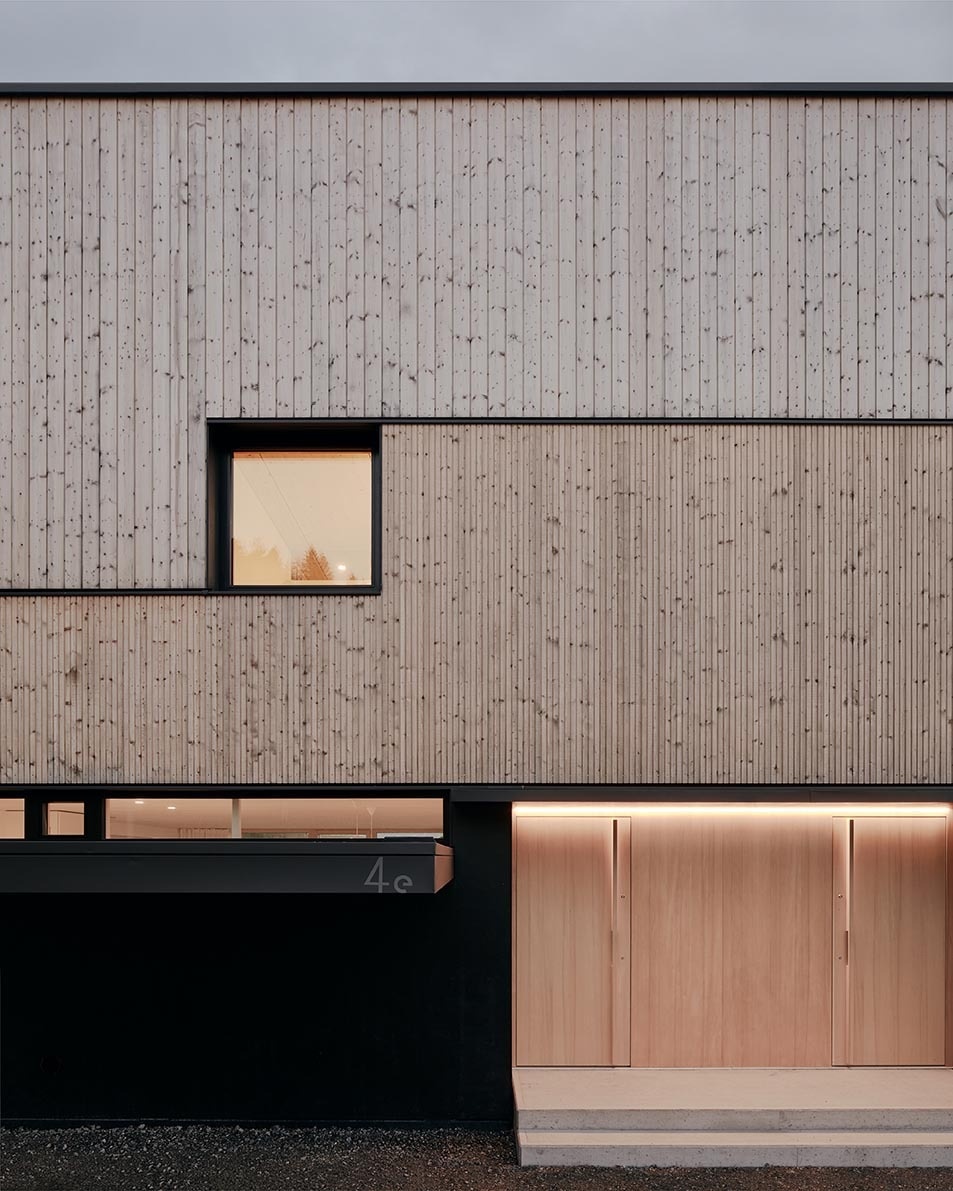
From the outside, the homes are wrapped in untreated light wood, arranged in two different widths. The variation introduces a quiet rhythm across the facade, with thinner strips acting as subtle accents against the broader boards.
Black details sharpen the composition. Window frames and thin horizontal lines break up the timber surface, giving the exterior a clear structure without overwhelming its softness. The overall effect draws from traditional farm buildings, reinterpreted in a more pared-back, contemporary way.
A Split-Level Interior
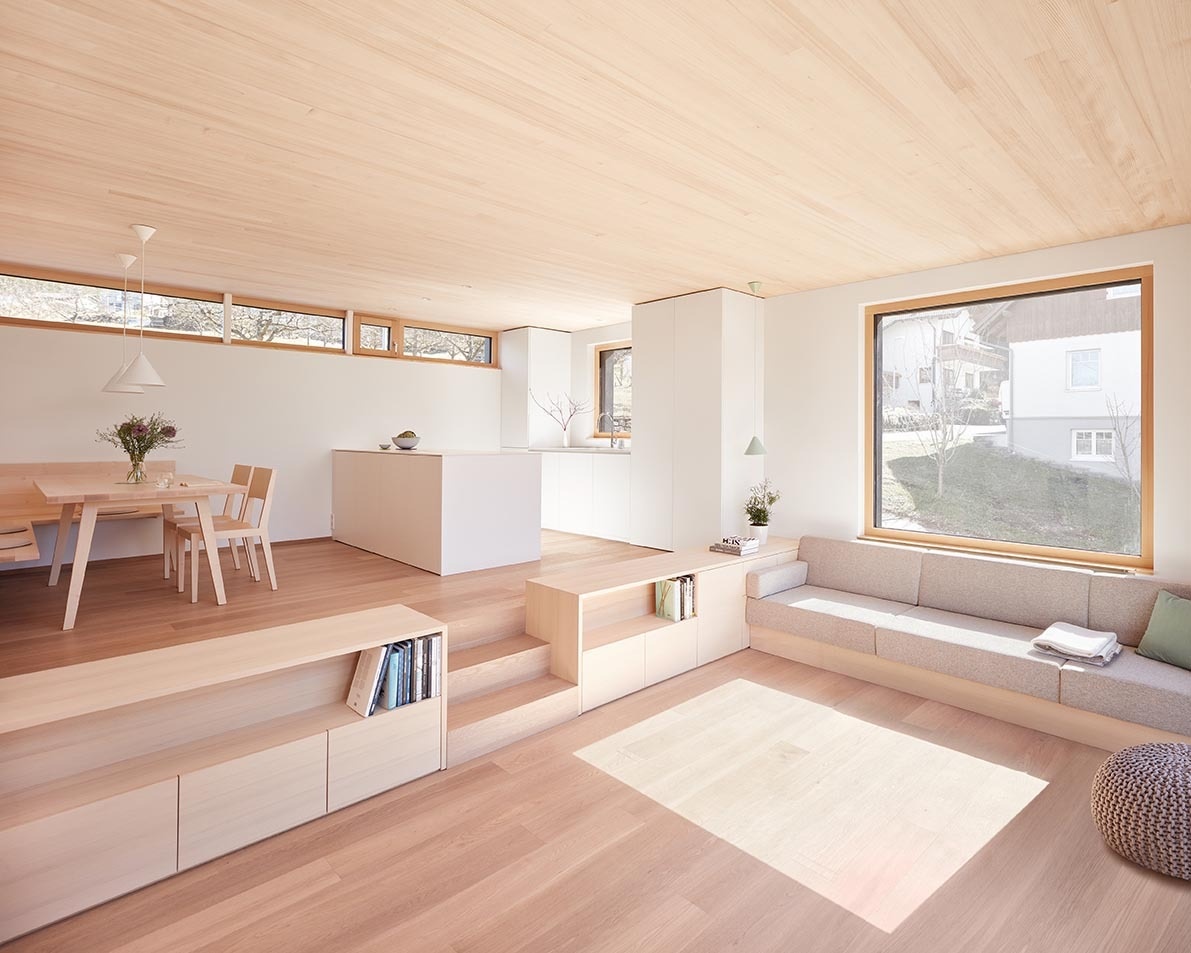
Inside, the material story continues. Wood lines the interior, creating a consistent atmosphere that carries from one space to the next. The layout unfolds across split levels, shaped by the slope of the site.
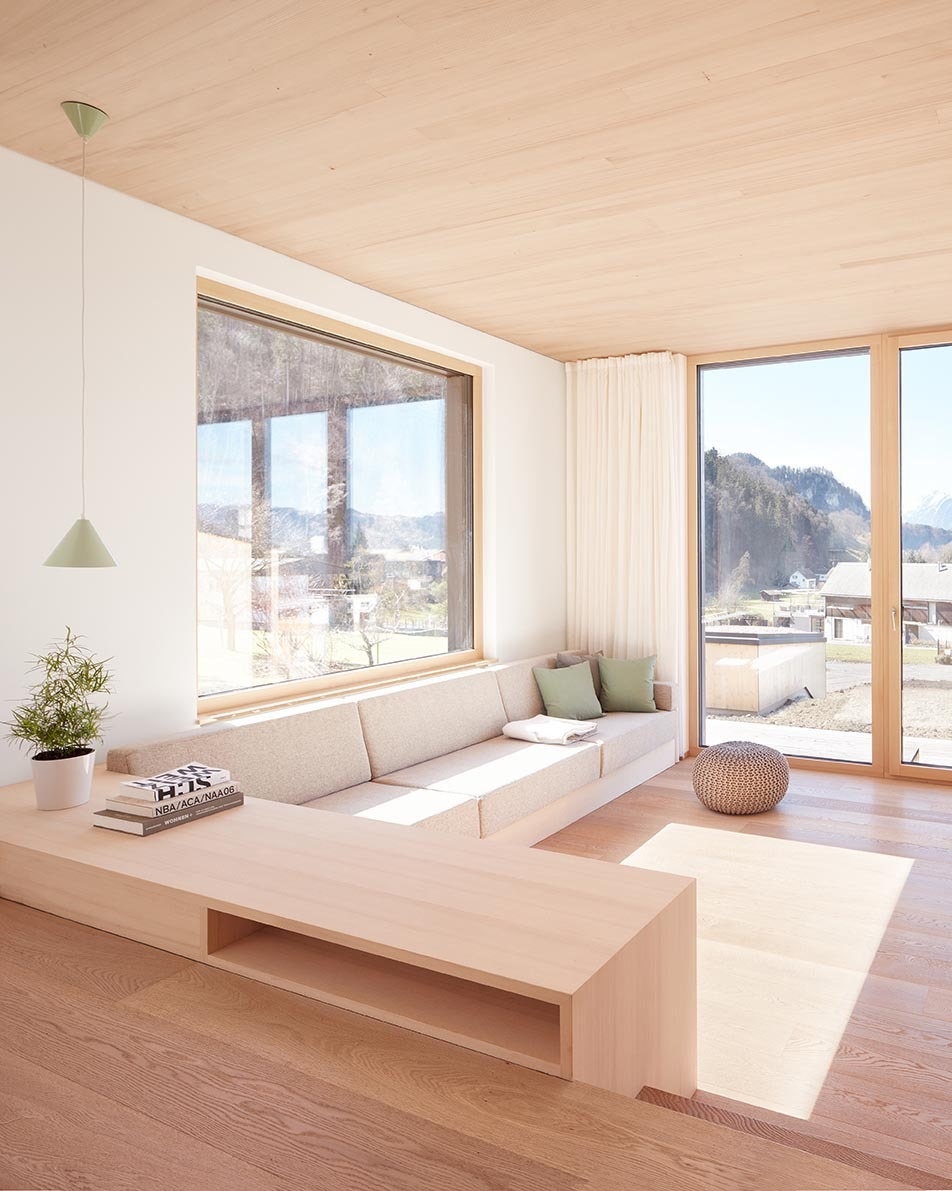
The kitchen and dining area sit on the upper level, slightly elevated. Below, the living room steps down, anchored by a built-in sofa that feels integrated into the architecture itself. Between the two, a custom bookshelf and storage unit acts as both divider and connector, defining the shift in levels without closing anything off.
This layered arrangement makes the movement through the home more gradual, revealing each space in sequence.
Light, White, and Contrast
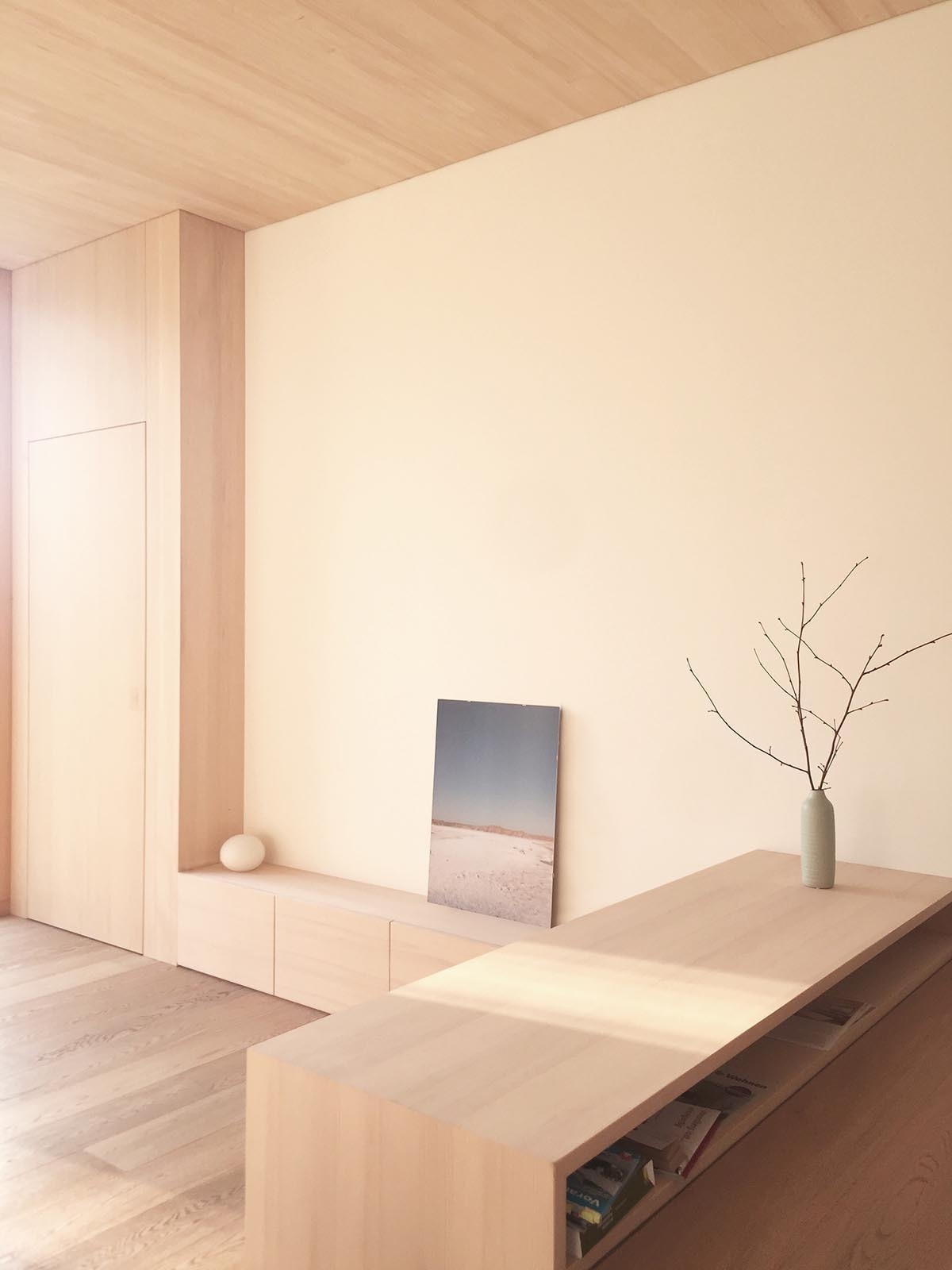
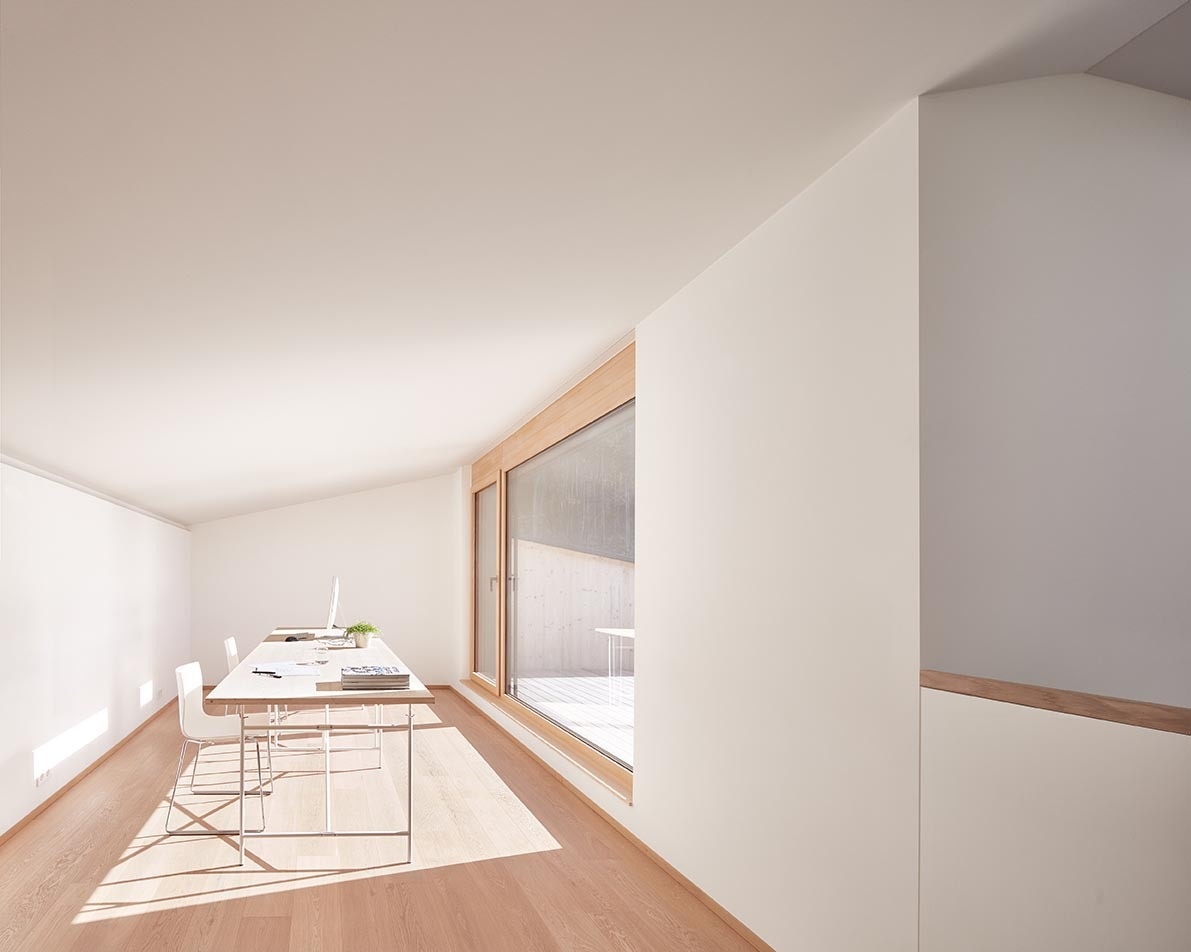
On another level, the palette shifts. White walls appear alongside wood accents, creating moments of contrast within the otherwise timber-lined home. A large window draws in natural light, brightening the space and softening the material palette.
These lighter areas break up the continuity of wood just enough, offering visual relief while keeping the overall language consistent.
Stairs as a Continuation
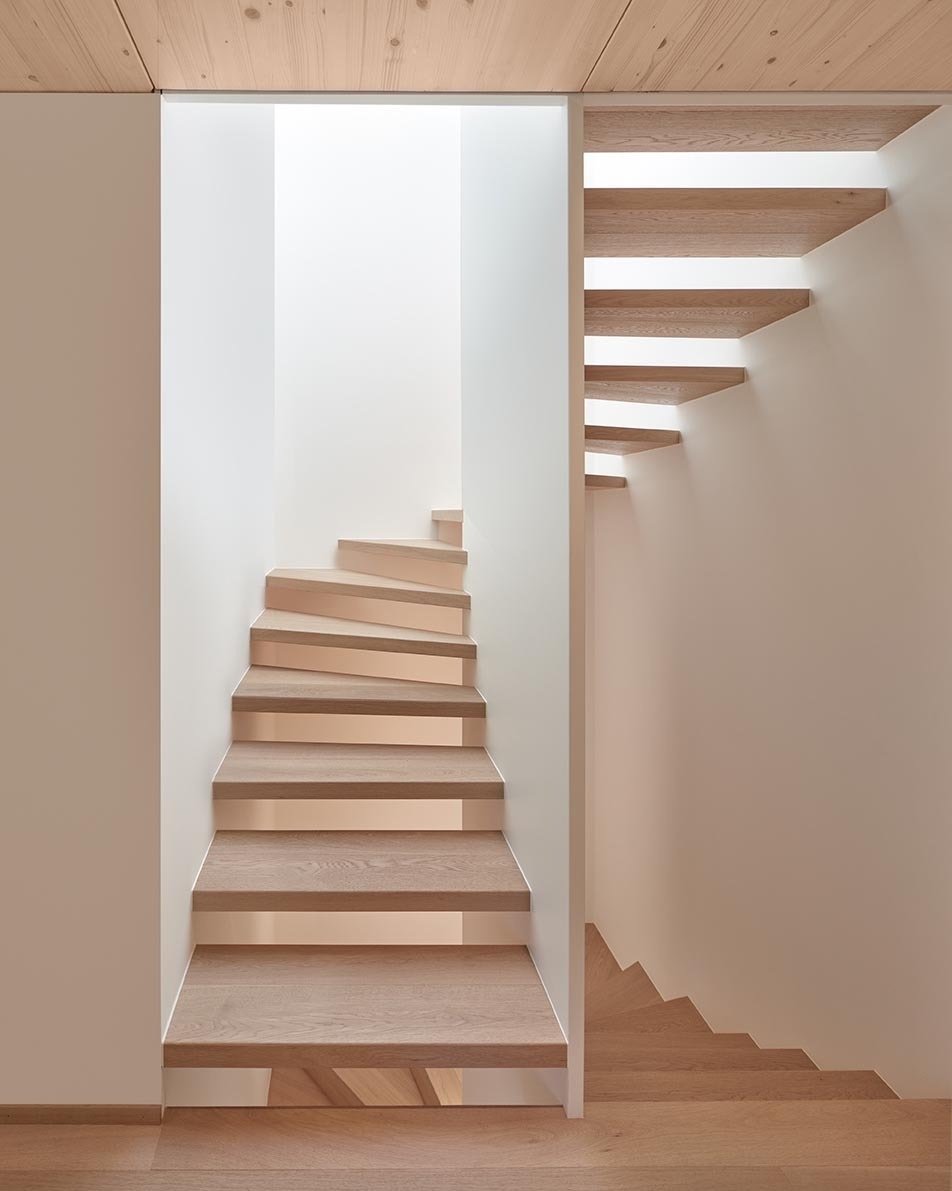
The stairs carry the same material language, extending the wood surfaces vertically as they link each level. Moving through the house becomes a tactile experience, where each step feels tied to the next.
The continuity reinforces the idea that the home was planned as a whole, with every transition carefully thought through.
Built-In Living
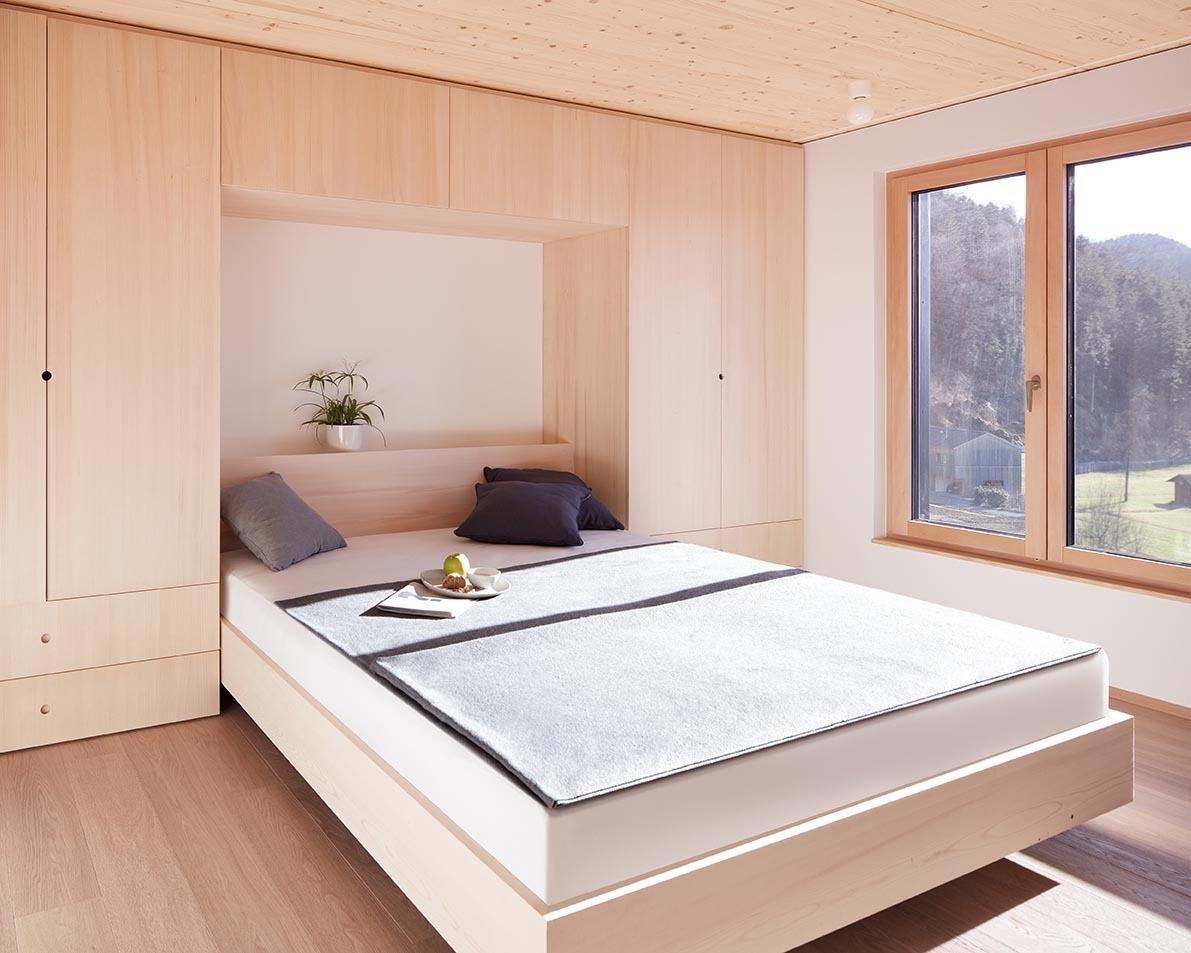
In the bedroom, storage is not an afterthought. Built-in closets and drawers frame the bed on both sides, maximizing space while maintaining a clean, uncluttered look.
This approach echoes the architects’ broader strategy. By integrating furniture into the structure, the homes feel more precise and efficient, even within a compact footprint.
Framing the View
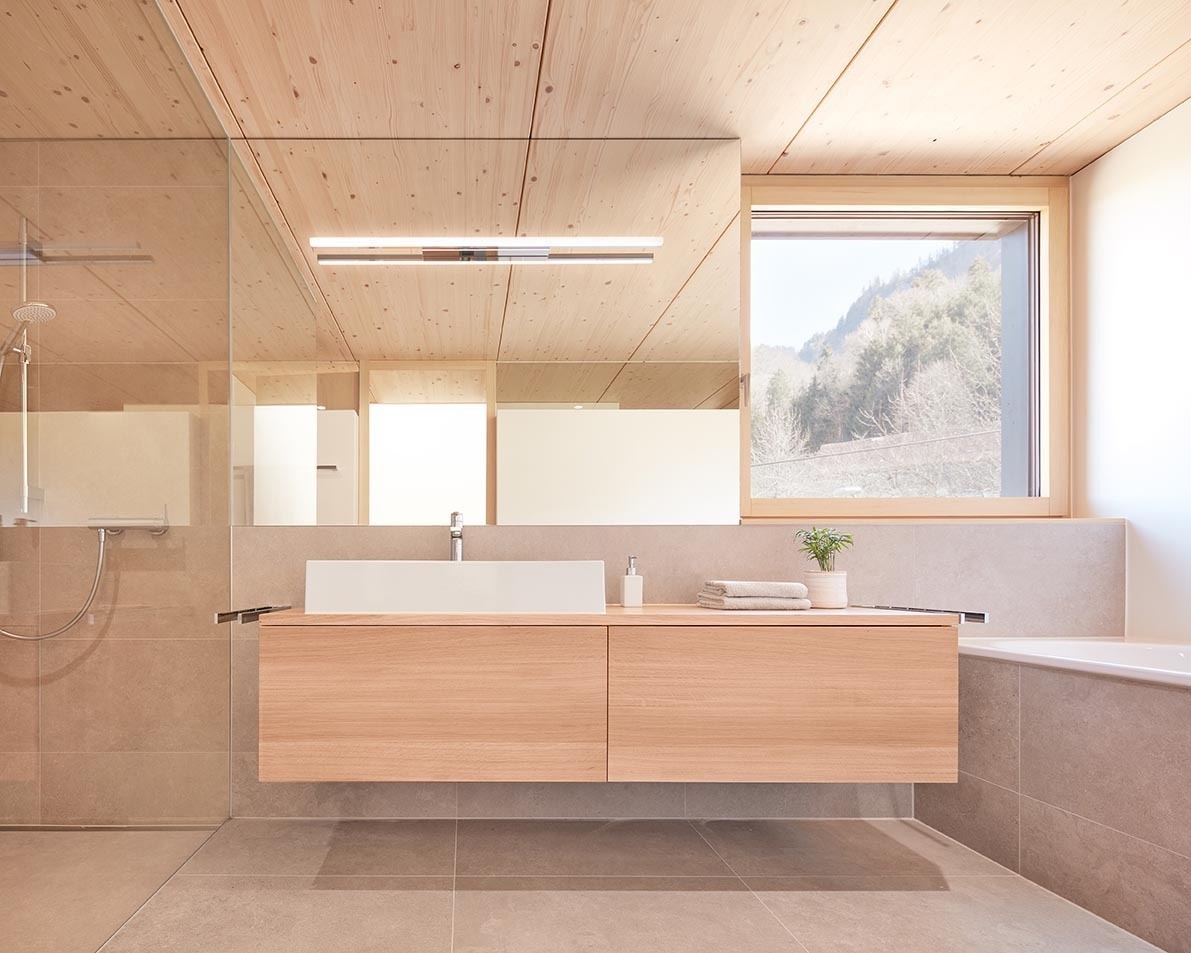
In the bathroom, a square window captures a quiet view of the surrounding trees, turning a simple opening into a focal point. Below, a floating wood vanity stretches across the space, separating the shower from the built-in bath.
By working with the land, refining every detail, and letting wood take the lead, this semi-detached house feels both practical and full of character.