Photography by Aryeh Kornfeld
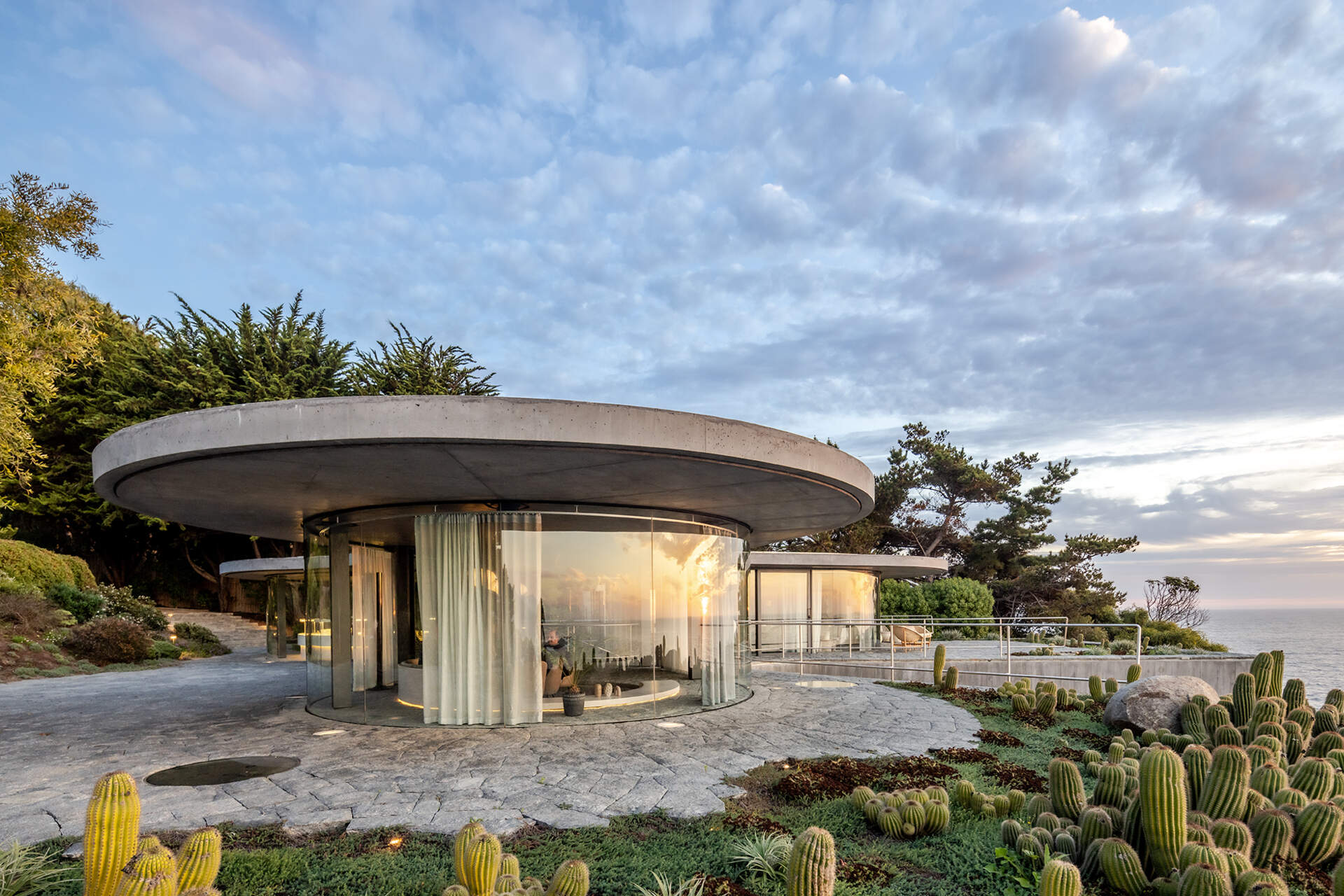
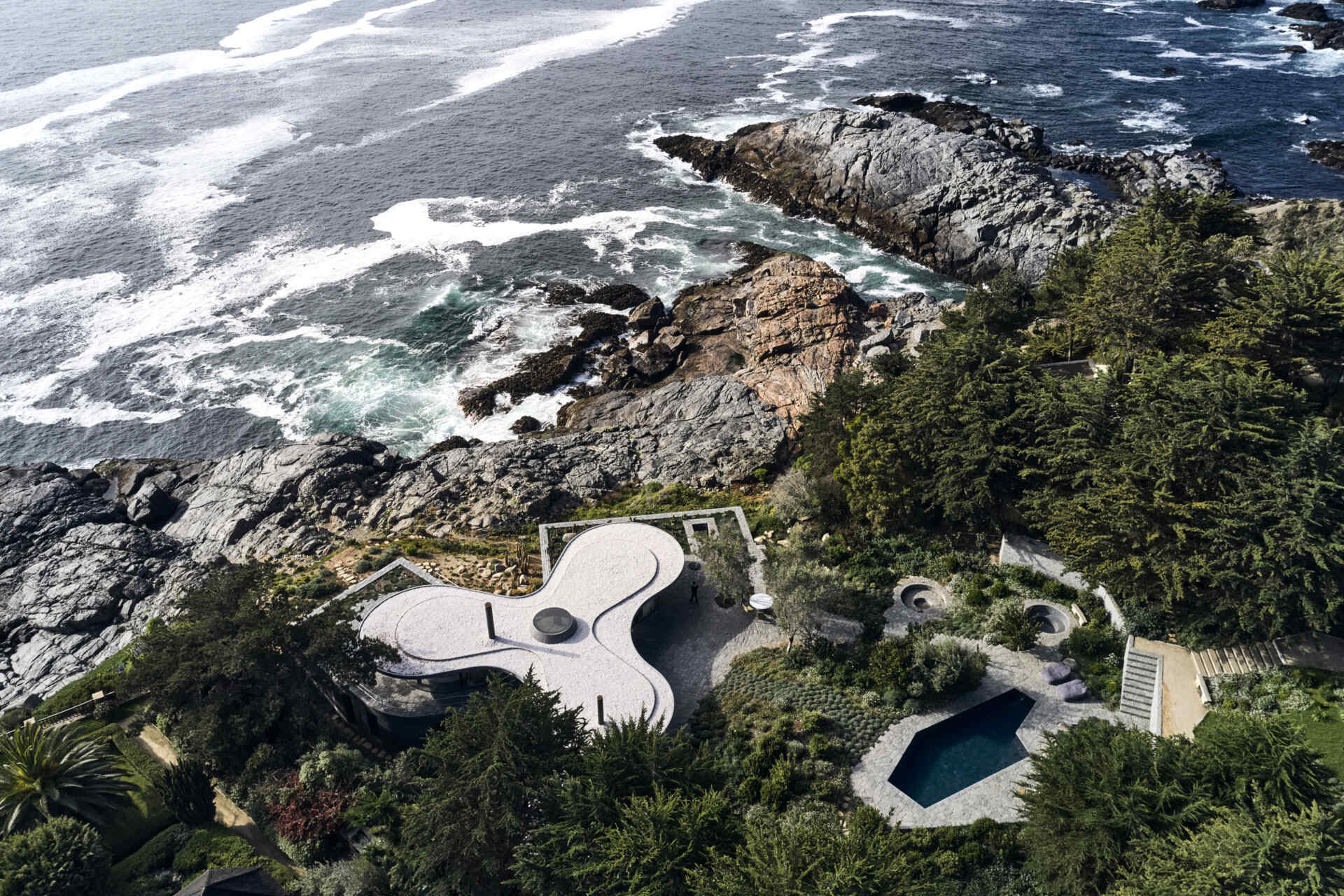
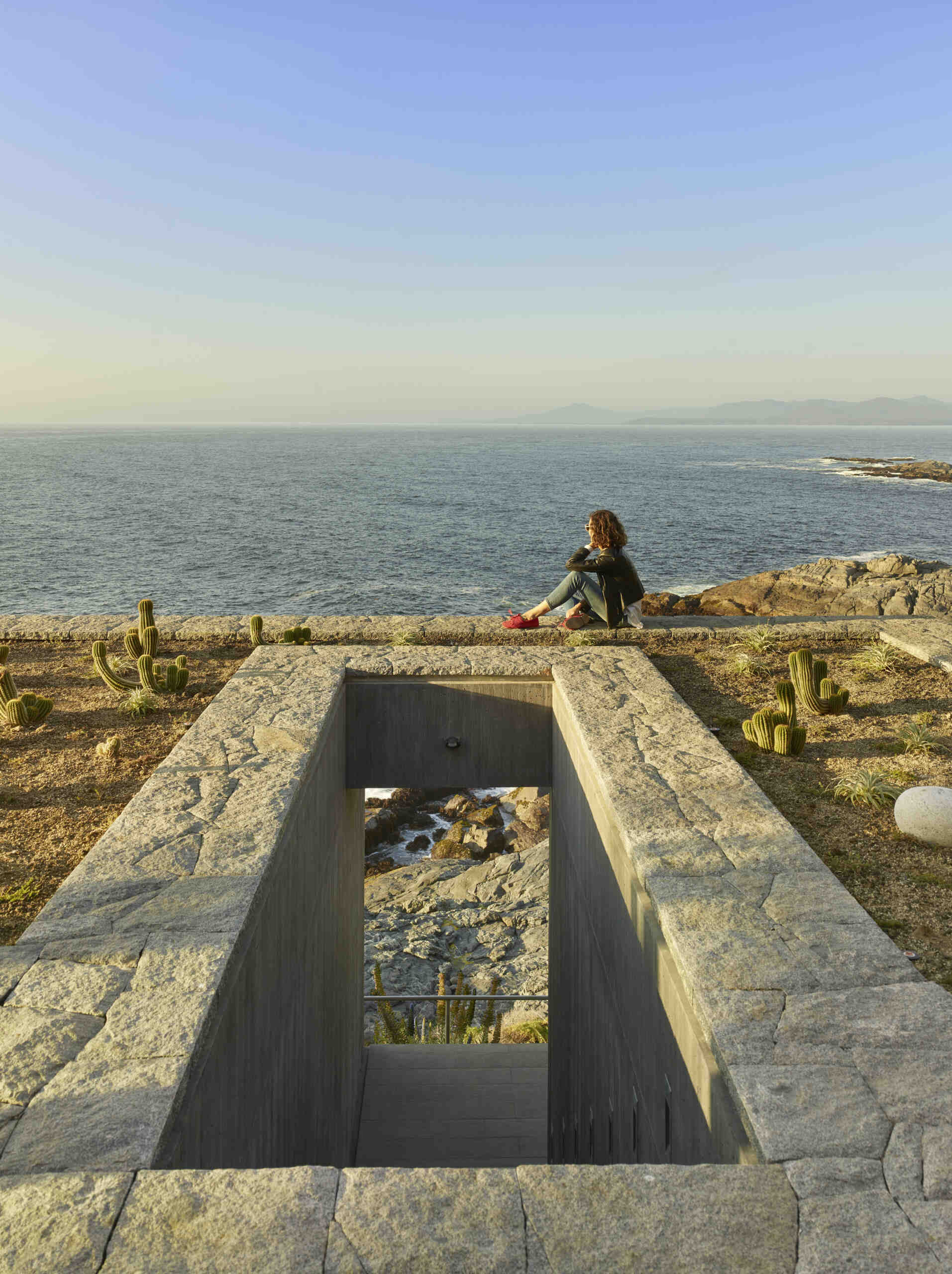
Set on a steep stretch of the Chilean coast, this house designed by Gubbins Polidura Arquitectos together with MasArquitectos, solves a difficult site with shape, restraint, and clarity. The design turns a rocky slope into a horizontal place to live, framing the sea and sunset without overpowering the landscape.
Photography by Cristobal Palma
Photography by Cristobal Palma
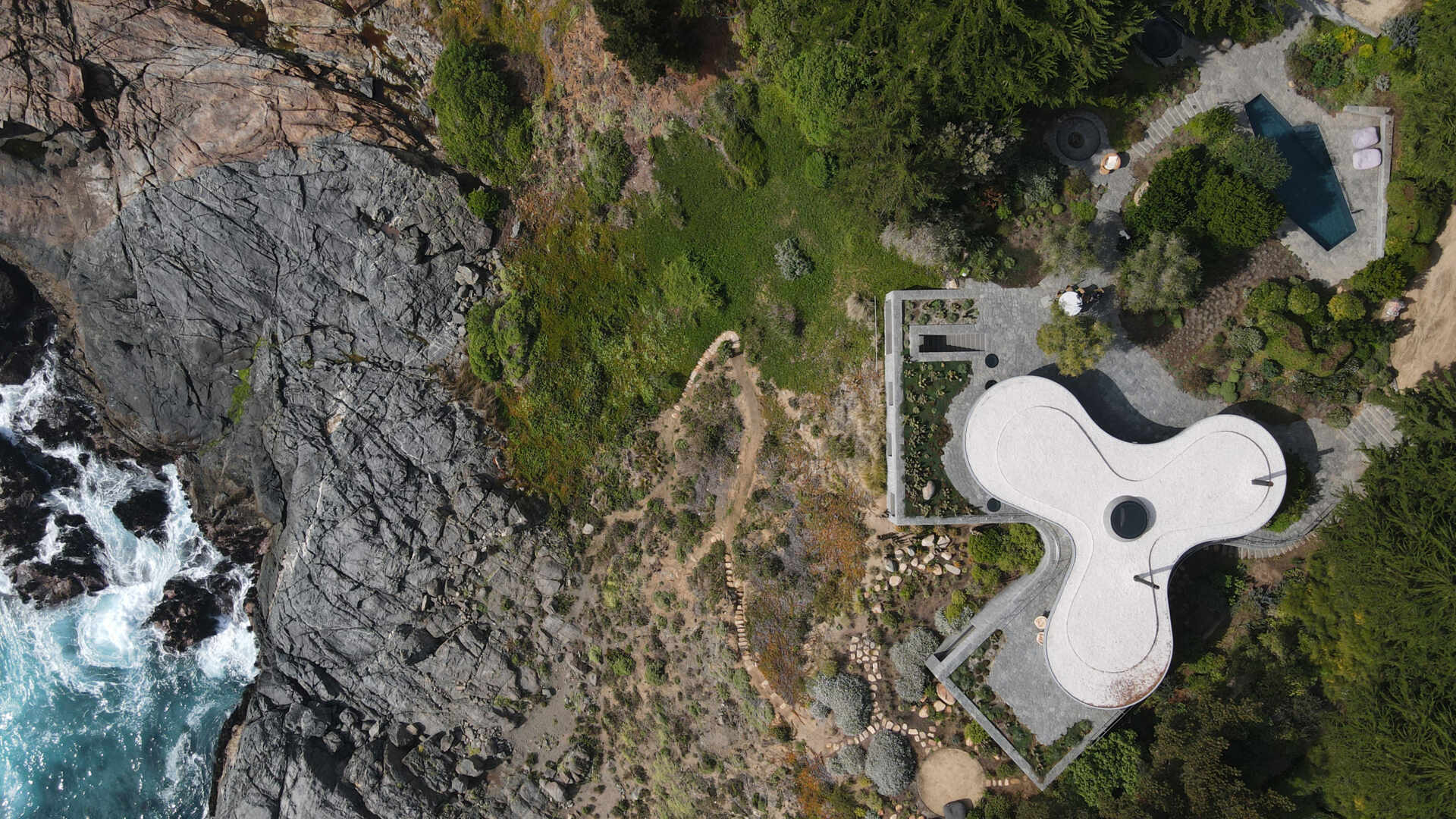
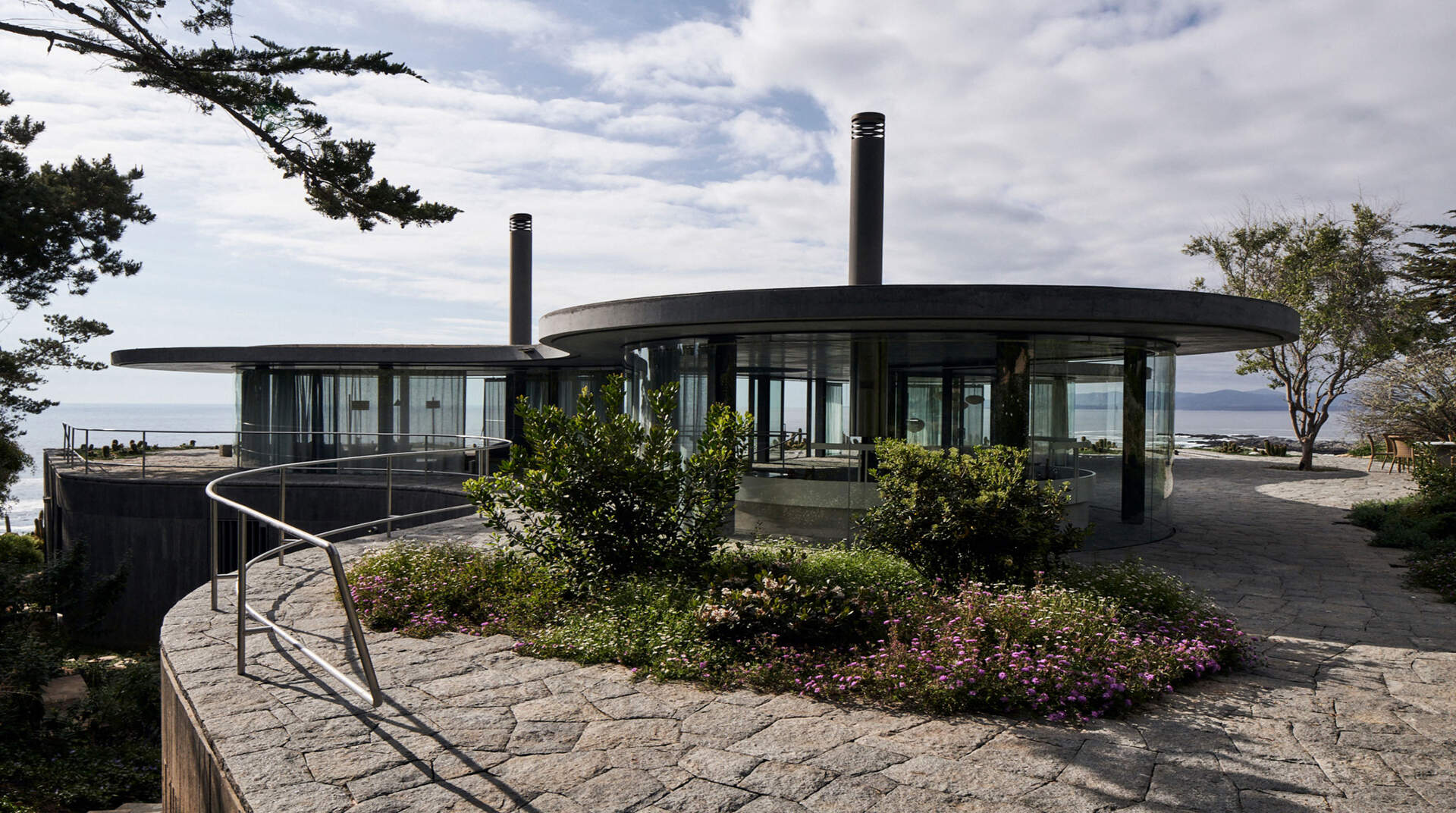
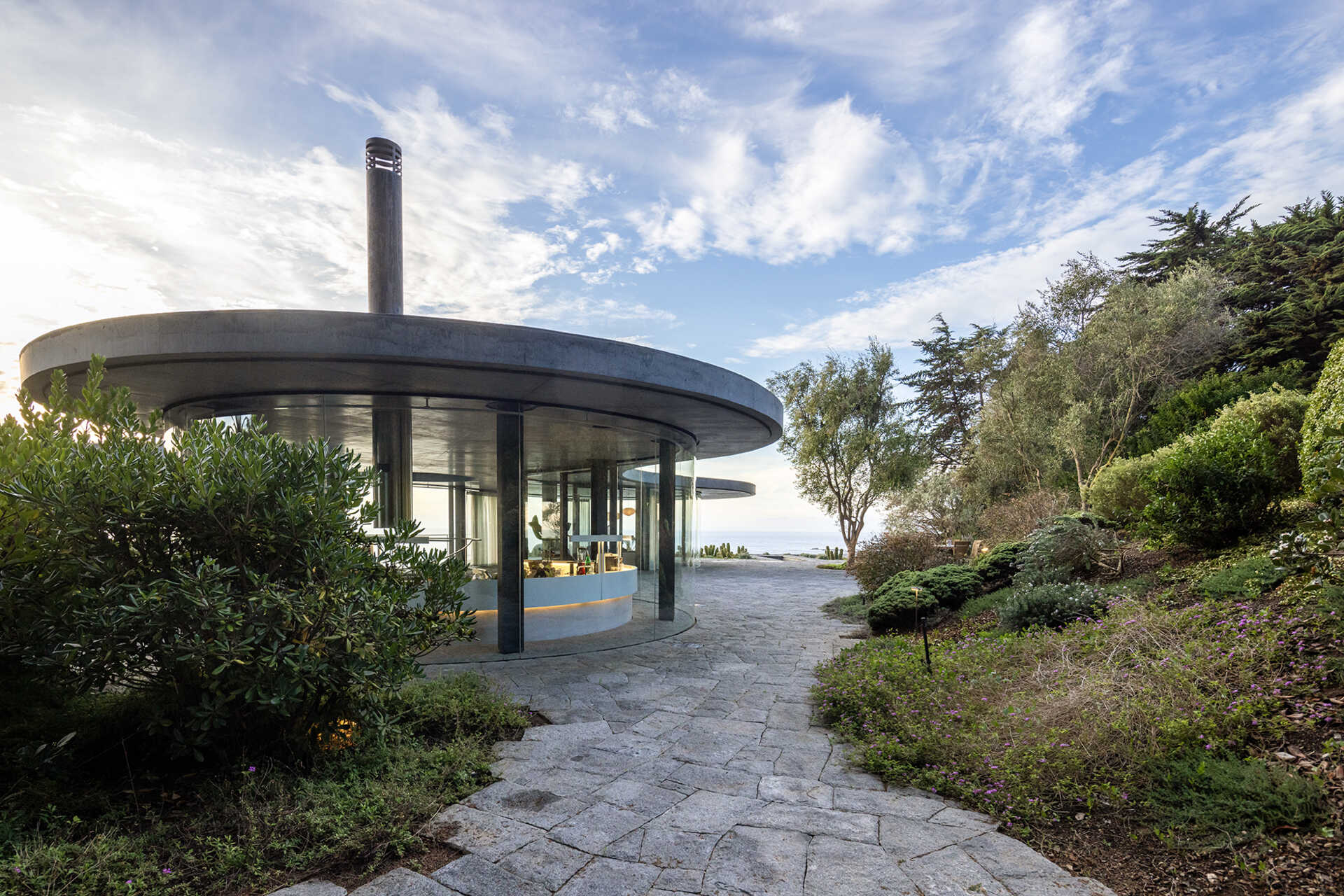
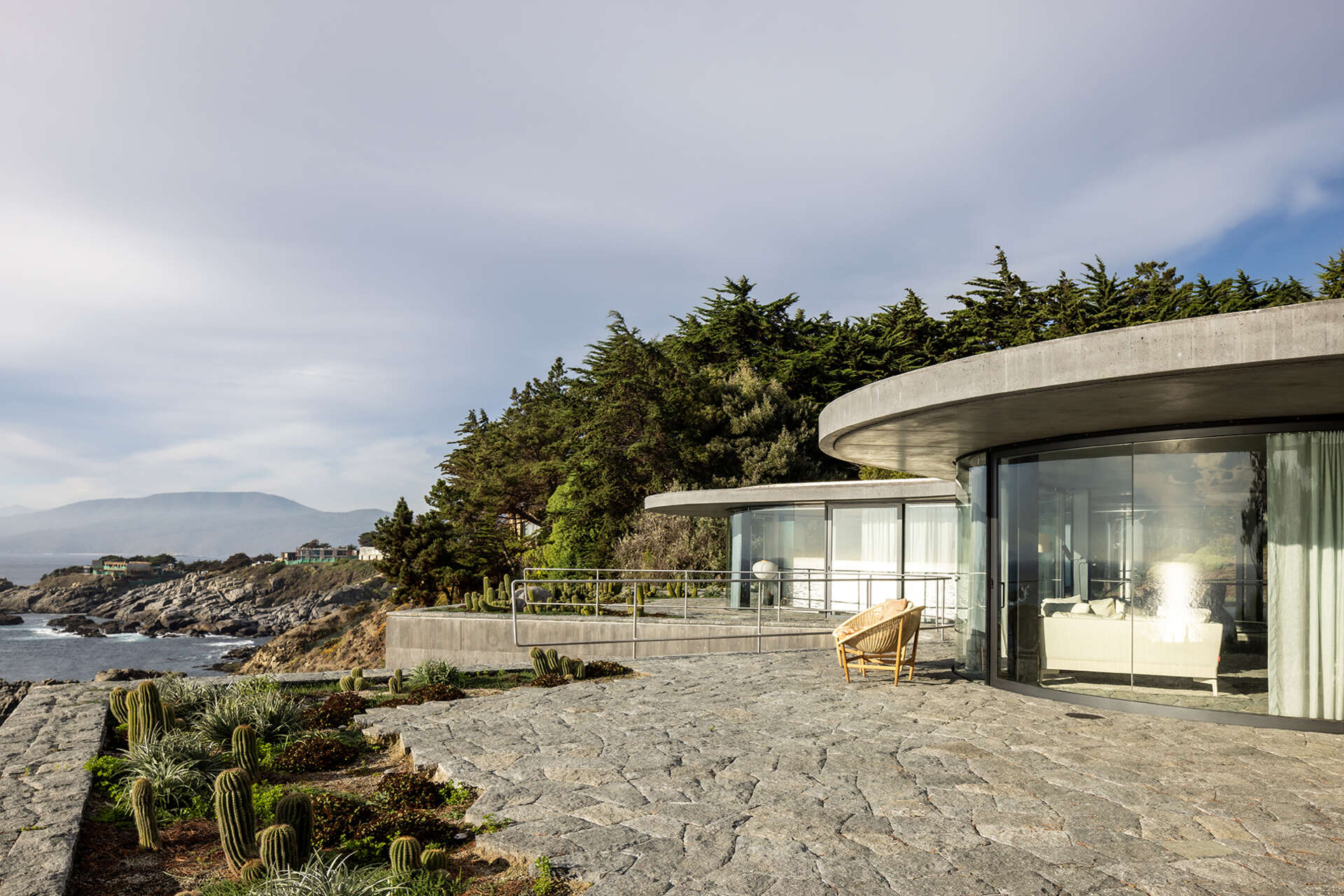
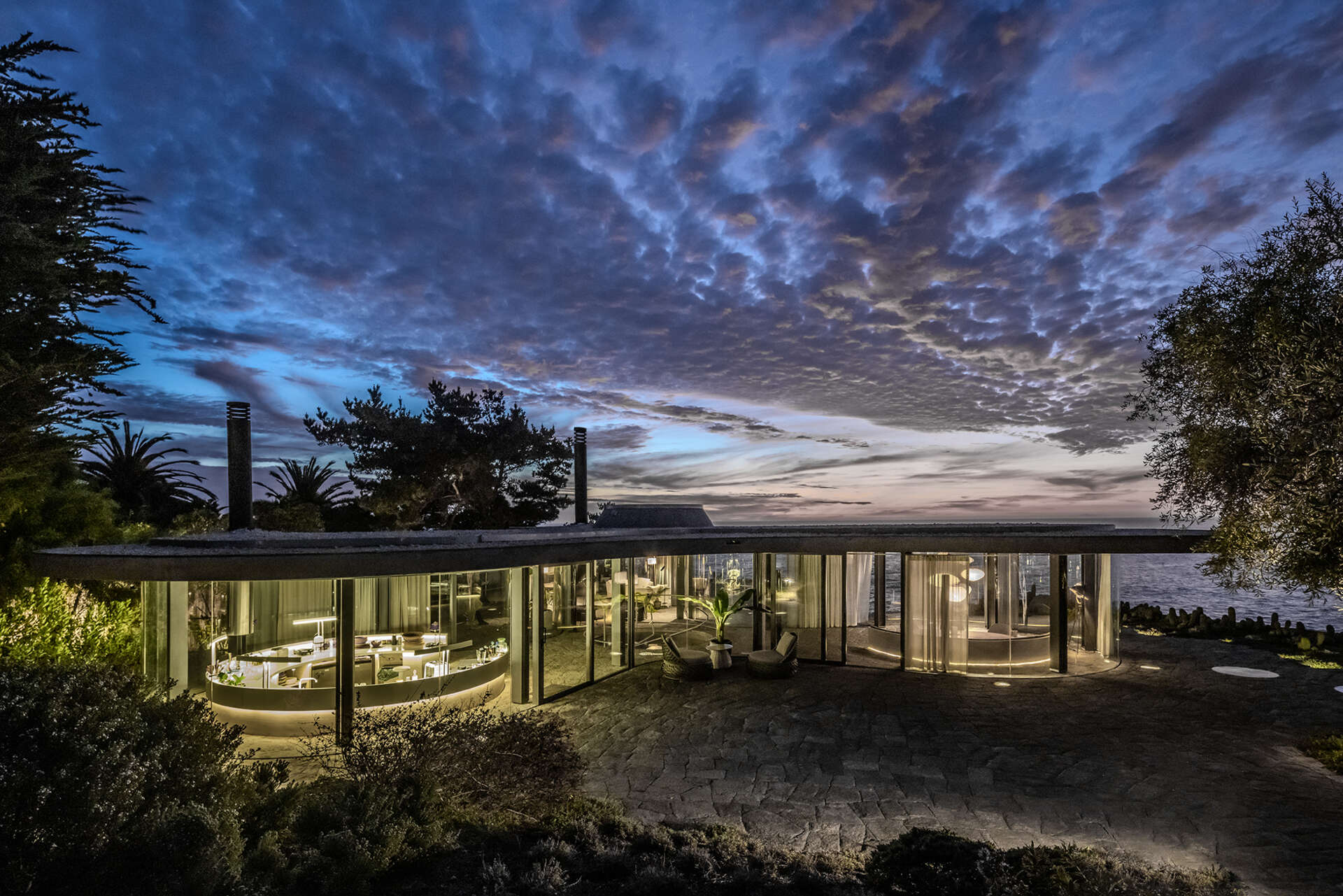
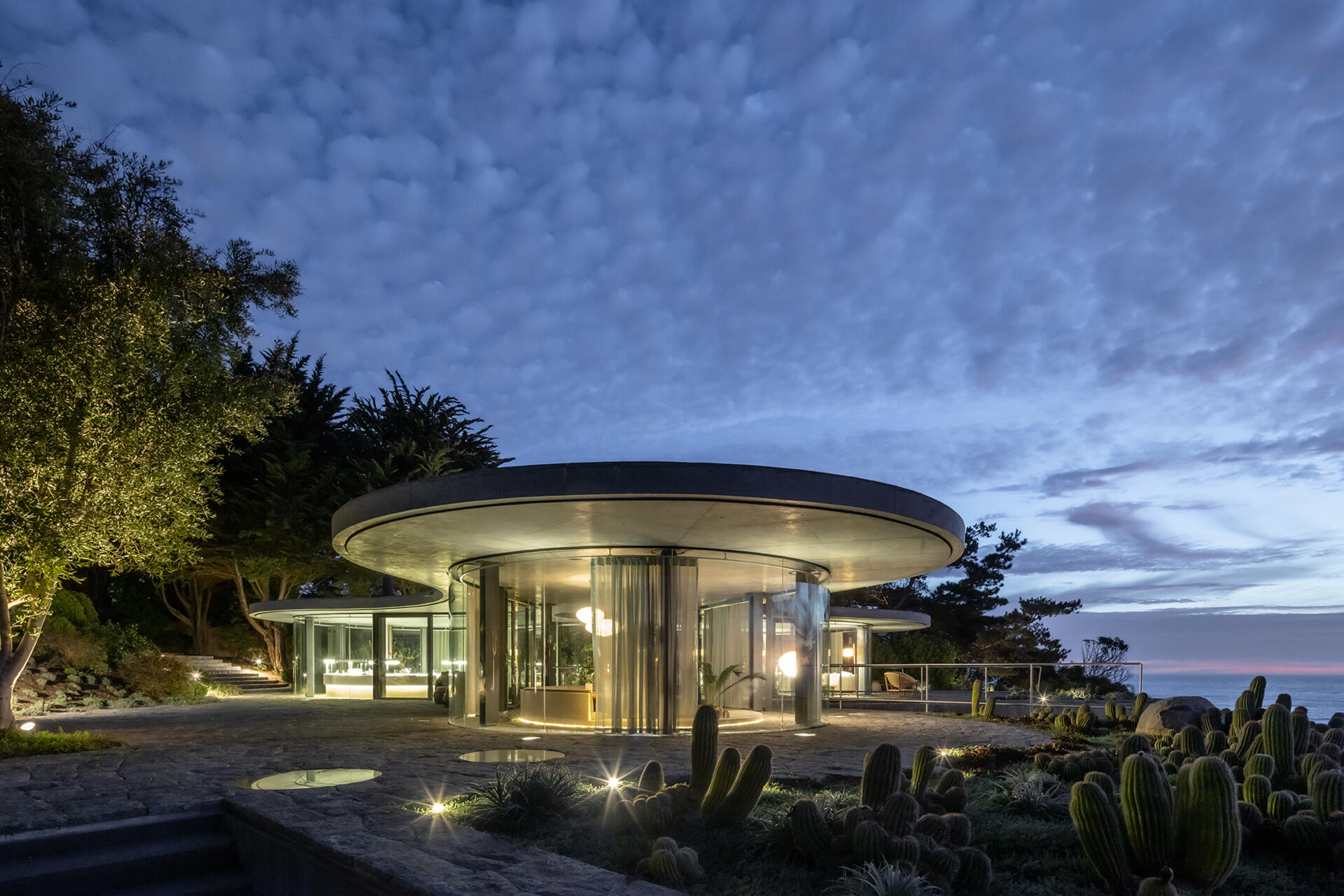
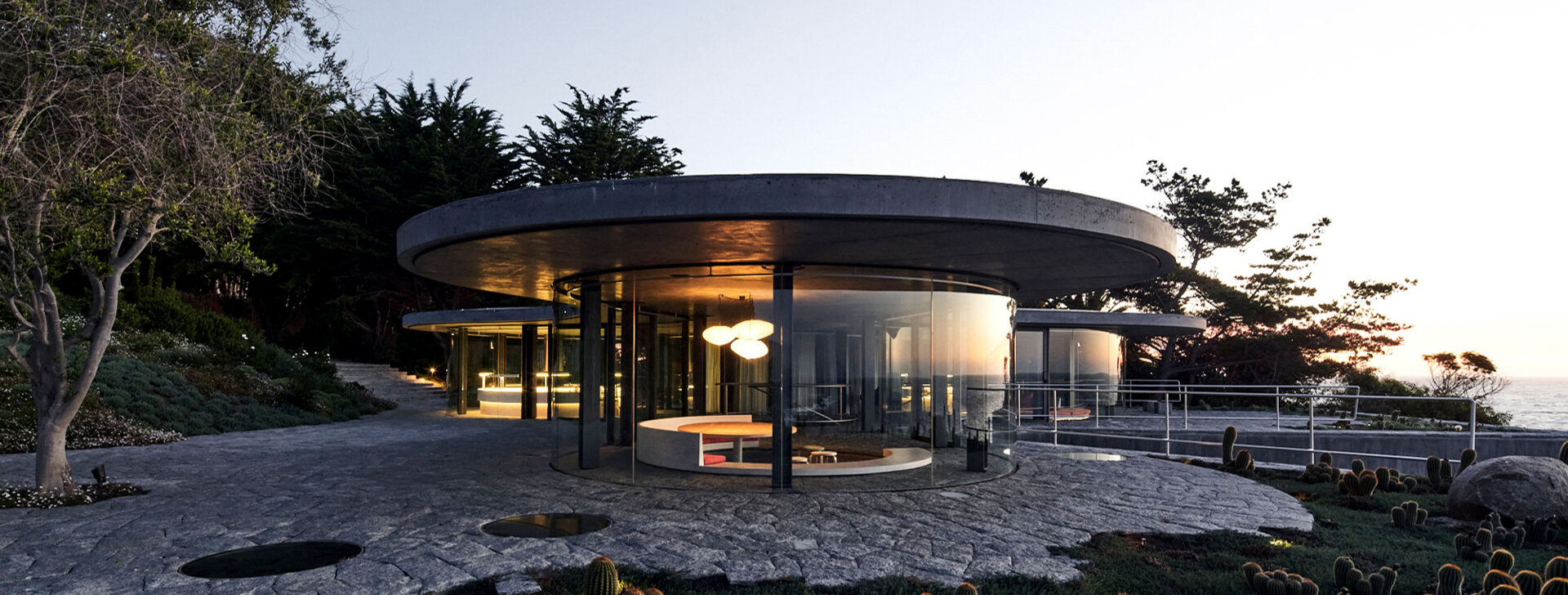
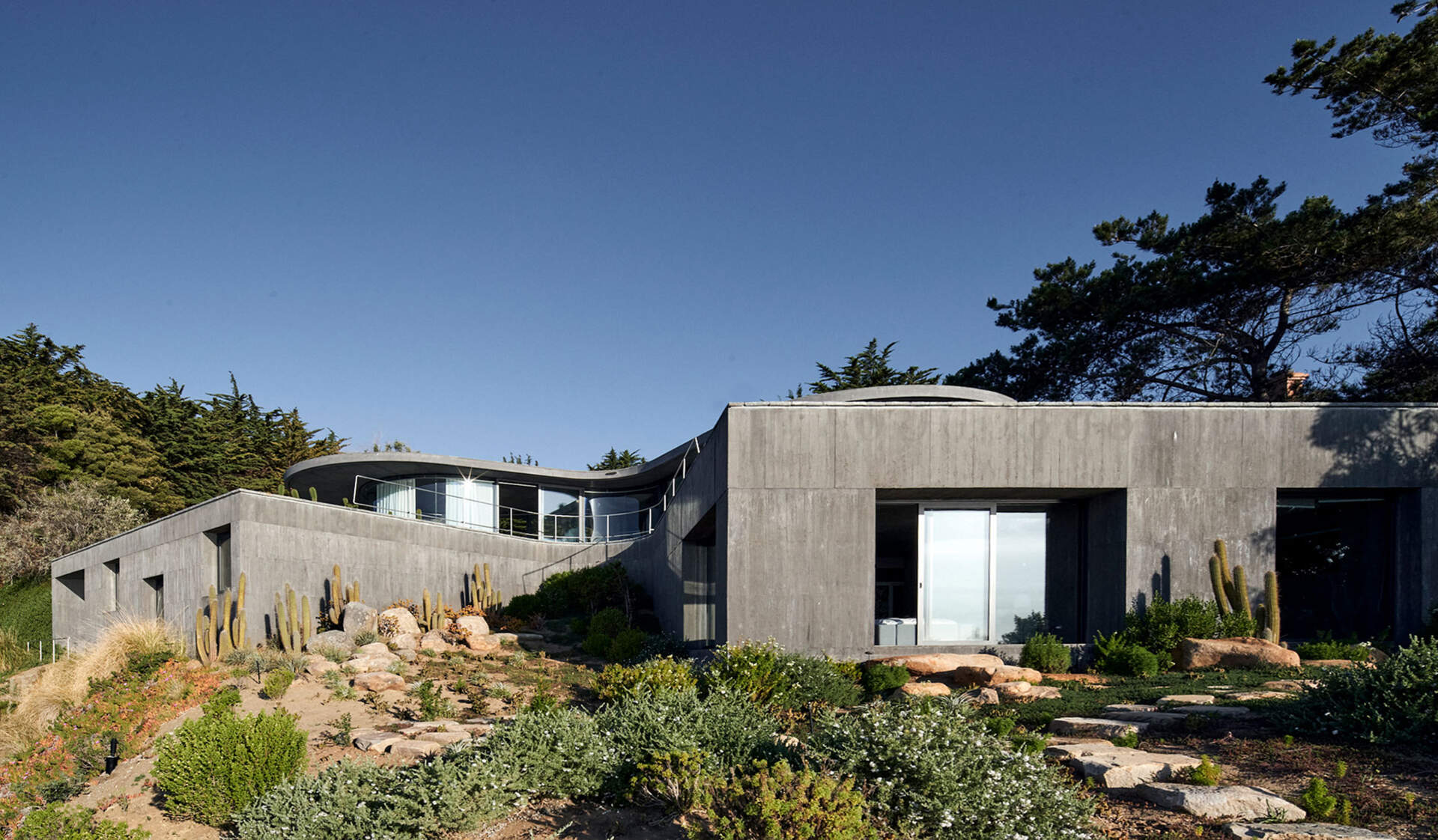
The house is composed of two stacked elements arranged vertically. A concrete podium forms the base, embedded into the slope so it becomes part of the terrain. Above it sits an amoeba-shaped glazed pavilion.
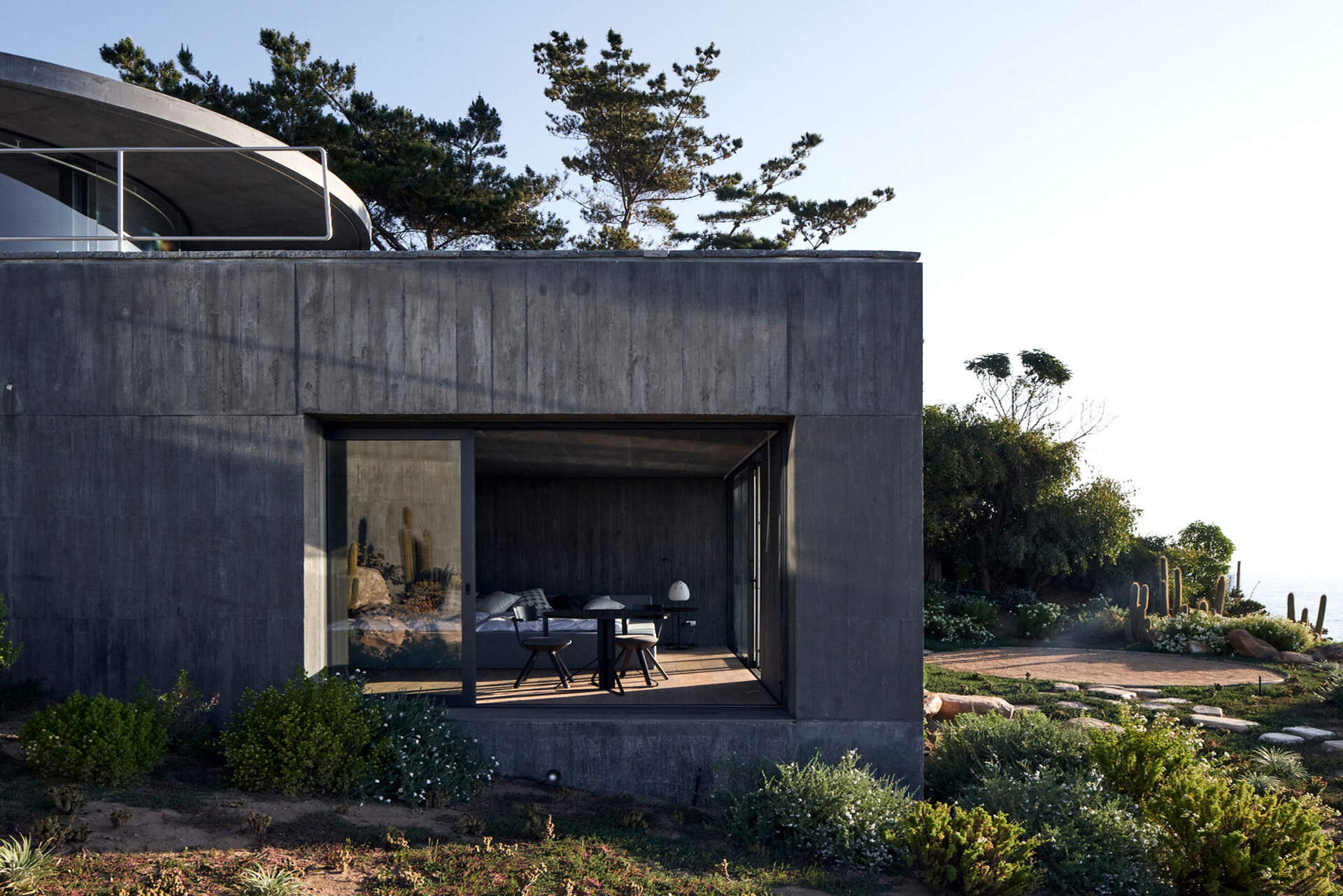
Material choices are deliberately limited. Glass, stone, wood, and plank-form concrete appear throughout, creating visual continuity between structure and interior elements.
Photography by Cristobal Palma
Photography by Aryeh Kornfeld
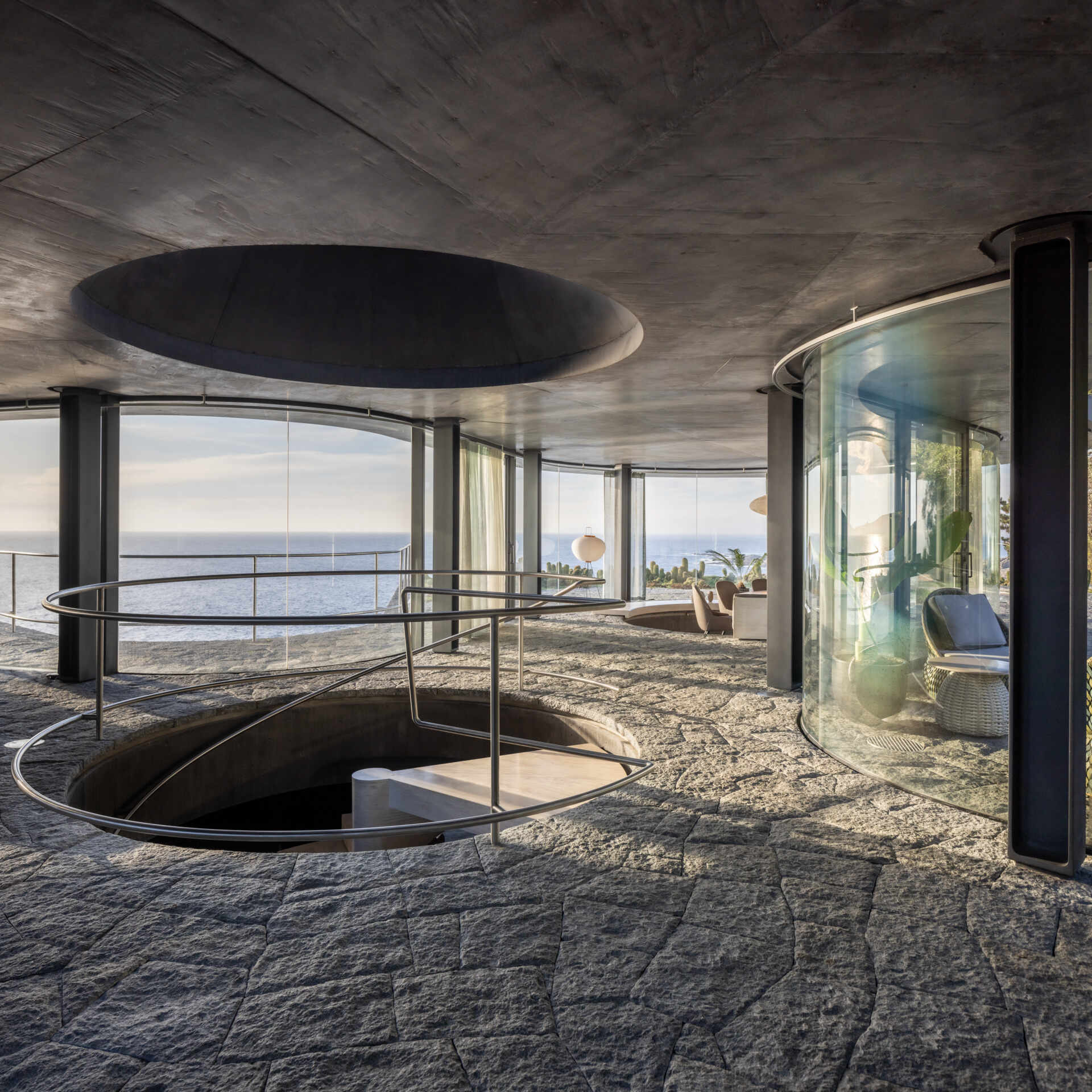
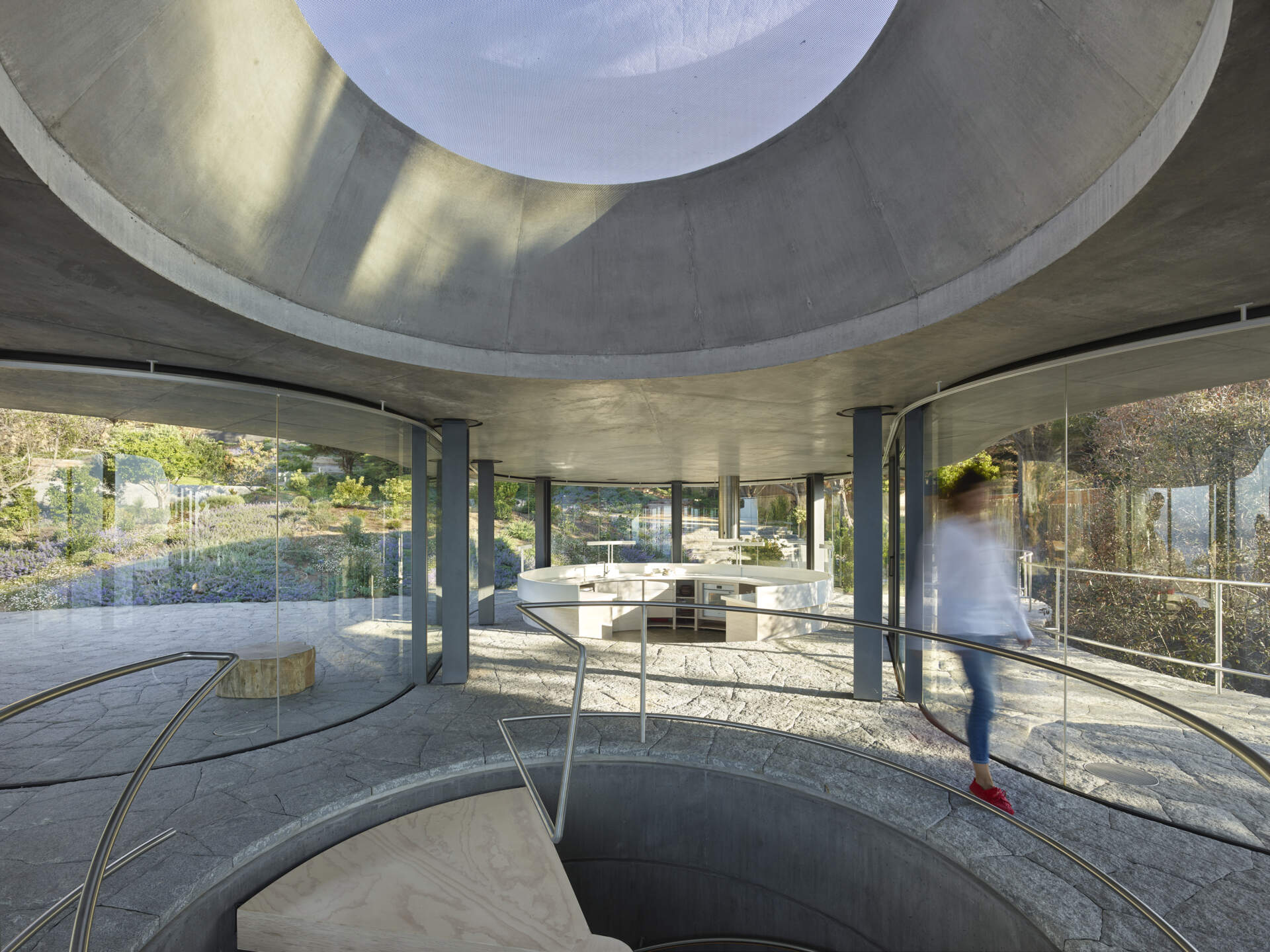
The pavilion is wrapped in floor-to-ceiling glass, allowing views to unfold in every direction. The curved perimeter softens the boundary between inside and outside, reinforcing the organic shape of the plan.
Around the house, the landscape was restored using native flora and fauna. Over time, vegetation is intended to fill the spaces between architecture, making the building feel long-established.
Photography by Aryeh Kornfeld
Photography by Aryeh Kornfeld
Photography by Aryeh Kornfeld
Inside, the material palette remains restrained and consistent. Granite floors continue from interior spaces to the exterior, visually extending rooms into the landscape.
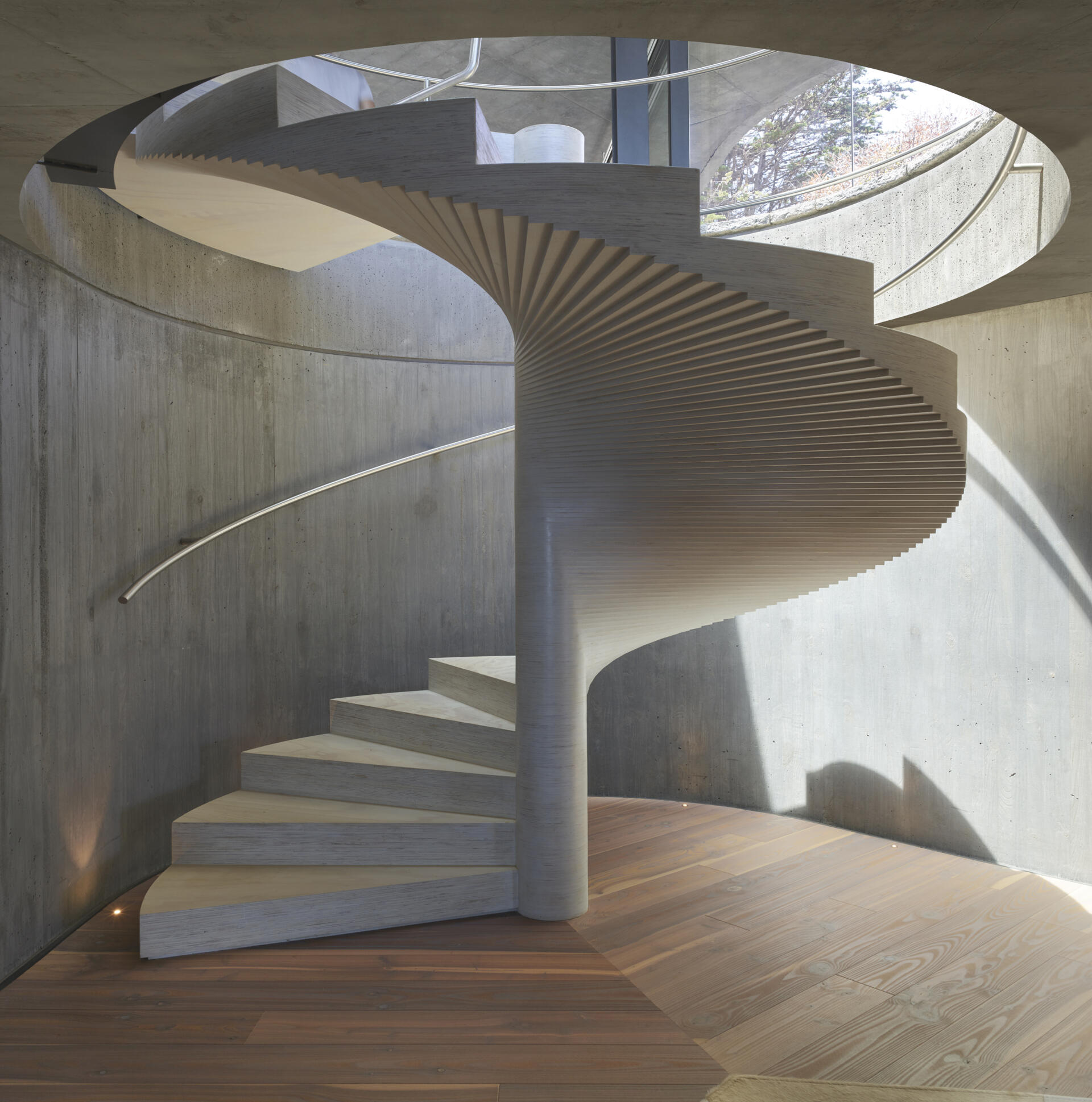
Furniture and built-in elements are made from stacked plywood boards, reinforcing the idea of repetition, horizontality, and material economy.
Photography by Aryeh Kornfeld
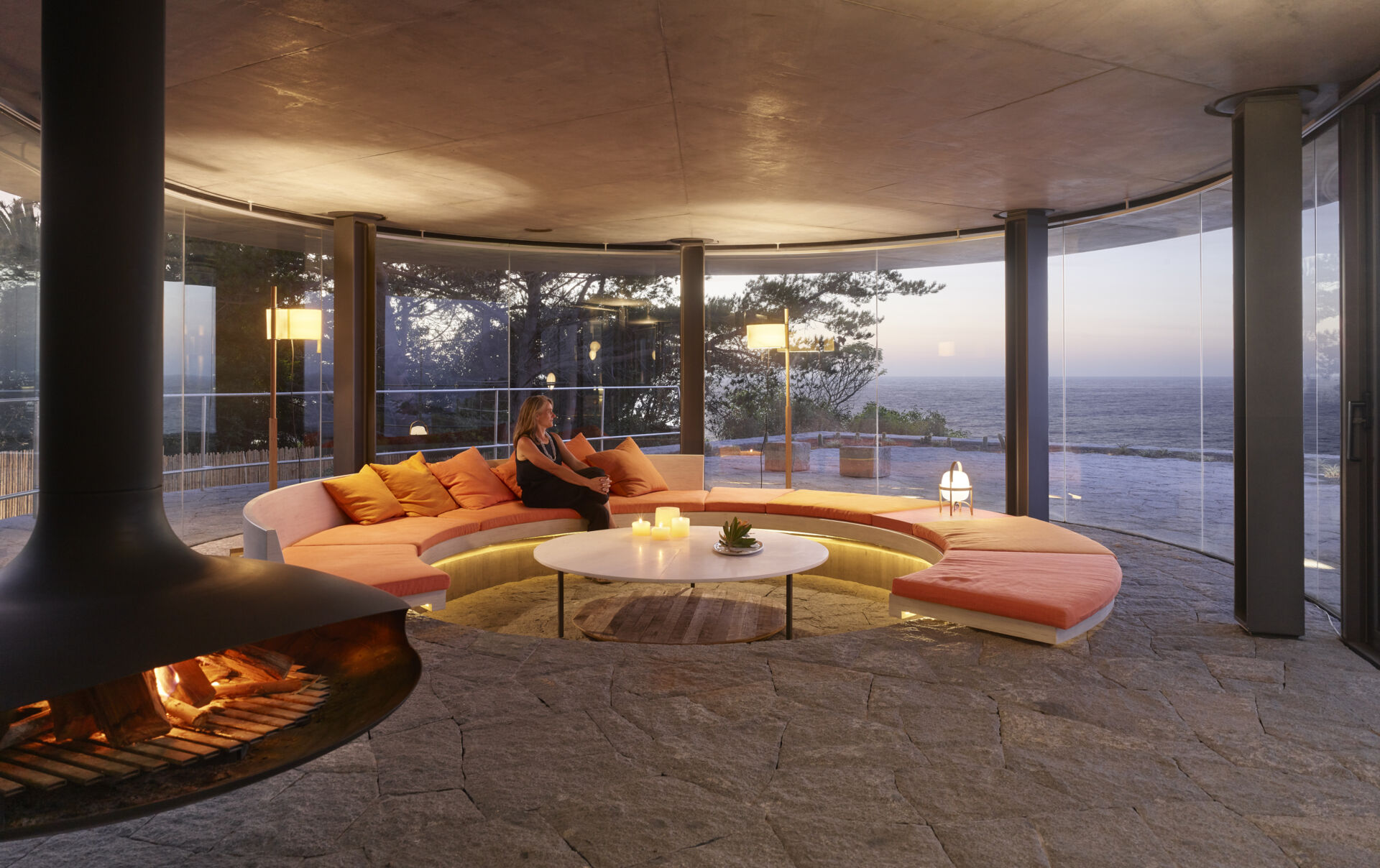
The living room occupies one of the pavilion’s circular spaces. At its center is a sunken lounge that grounds the room while remaining visually open to the sea. With no walls interrupting the perimeter, attention is drawn outward toward the horizon rather than inward toward structure.
Photography by Roland Halbe
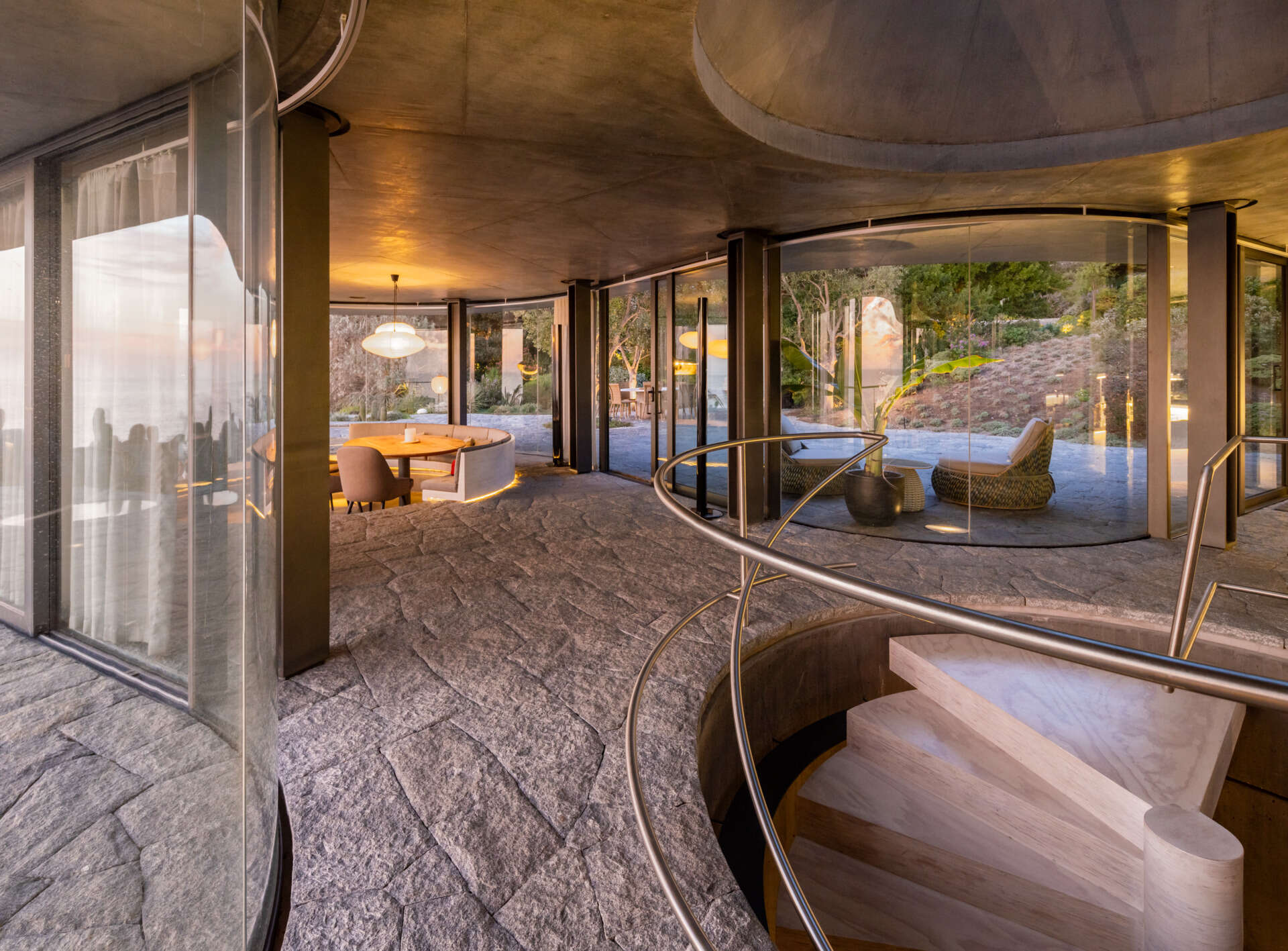
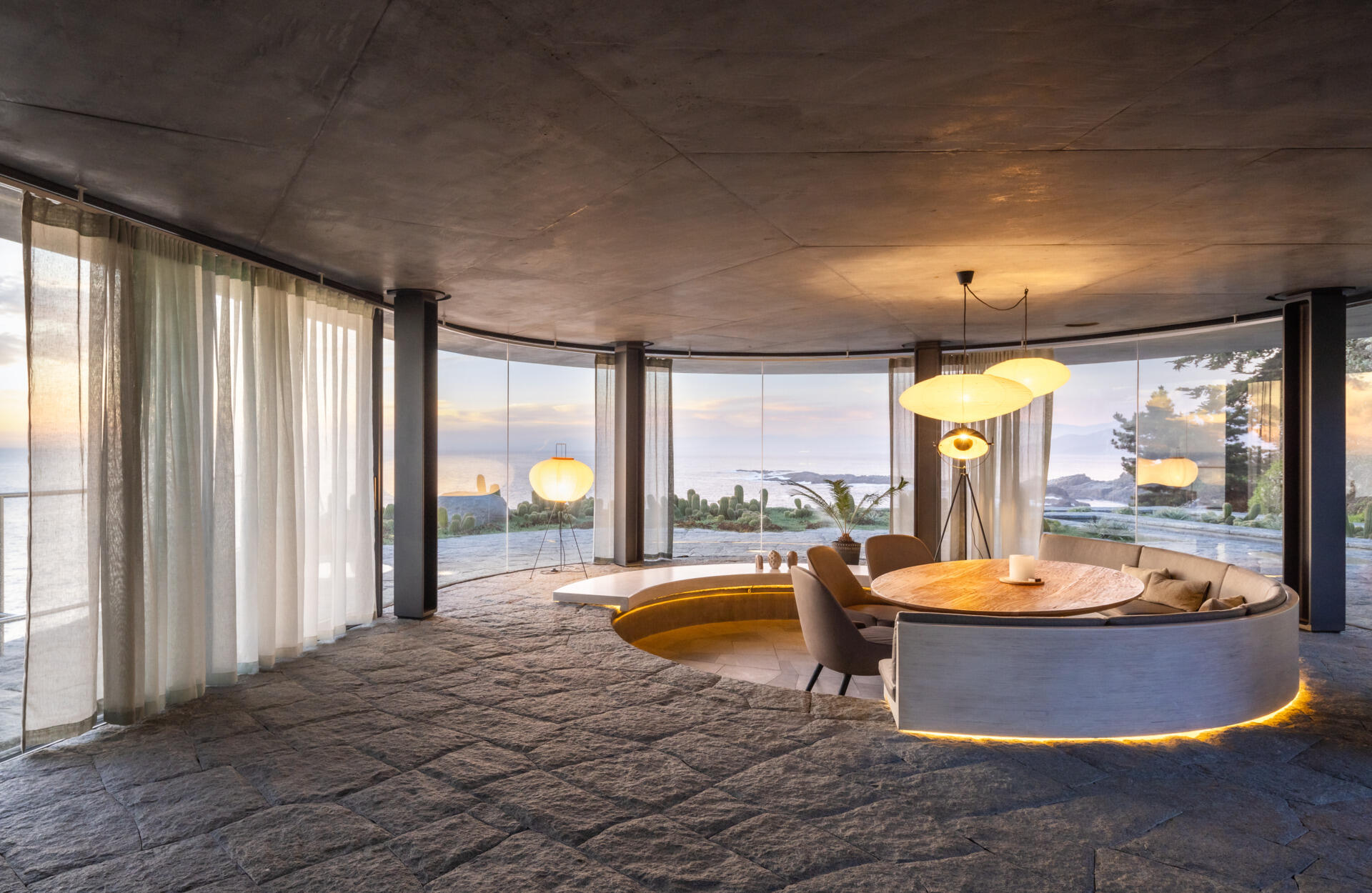
The dining room follows the same circular logic as the other public spaces. Its placement within the pavilion allows it to remain visually connected to the landscape at all times. Like the living room, the sunken central area with banquette seating defines the space without enclosing it.
Photography by Aryeh Kornfeld
Photography by Aryeh Kornfeld
Photography by Cristobal Palma
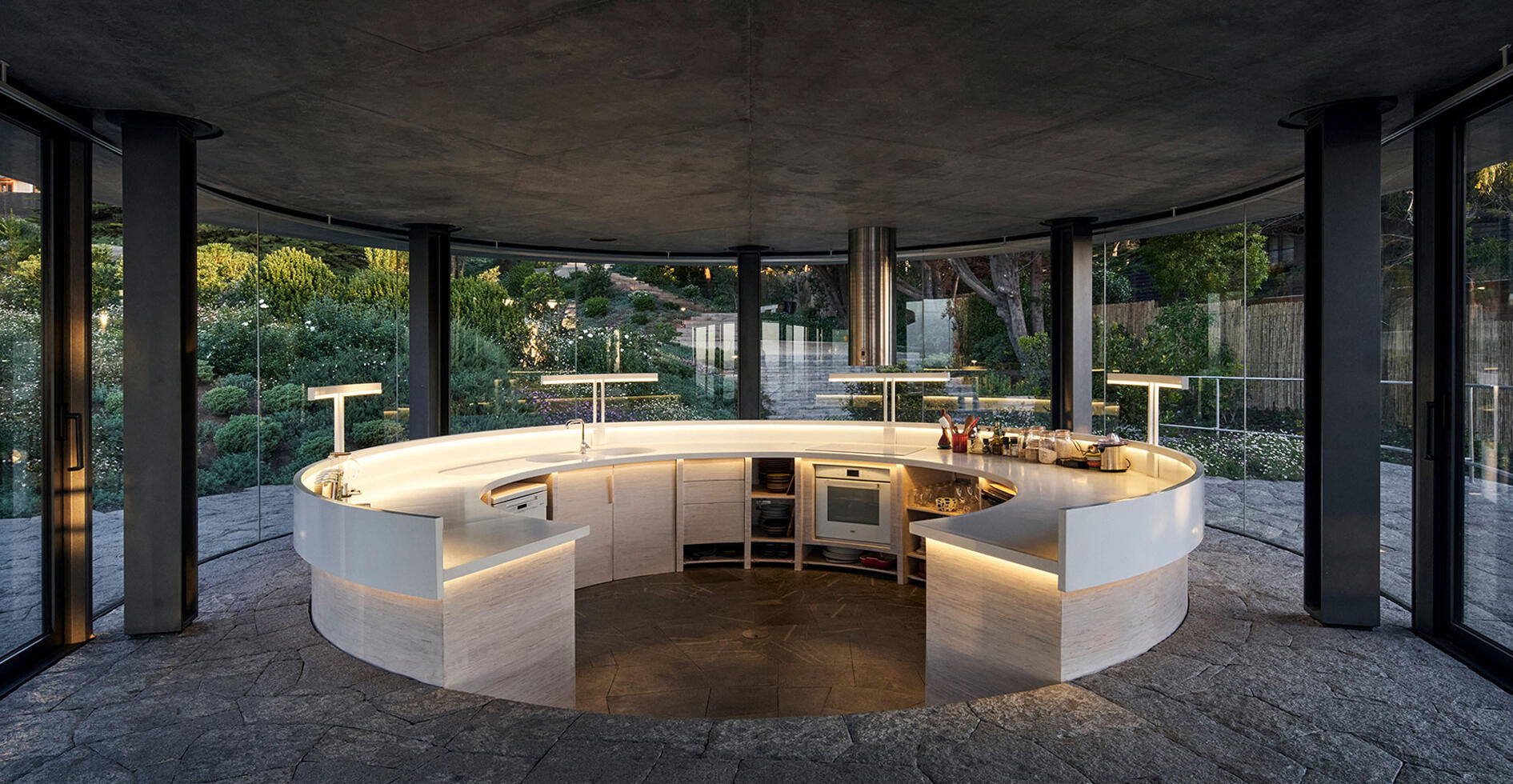
The kitchen, with its curved white cabinetry, completes the trio of public rooms in the upper pavilion. From here, the rest of the house fades from view, leaving only glass, sky, and sea.
Photography by Roland Halbe
Photography by Cristobal Palma
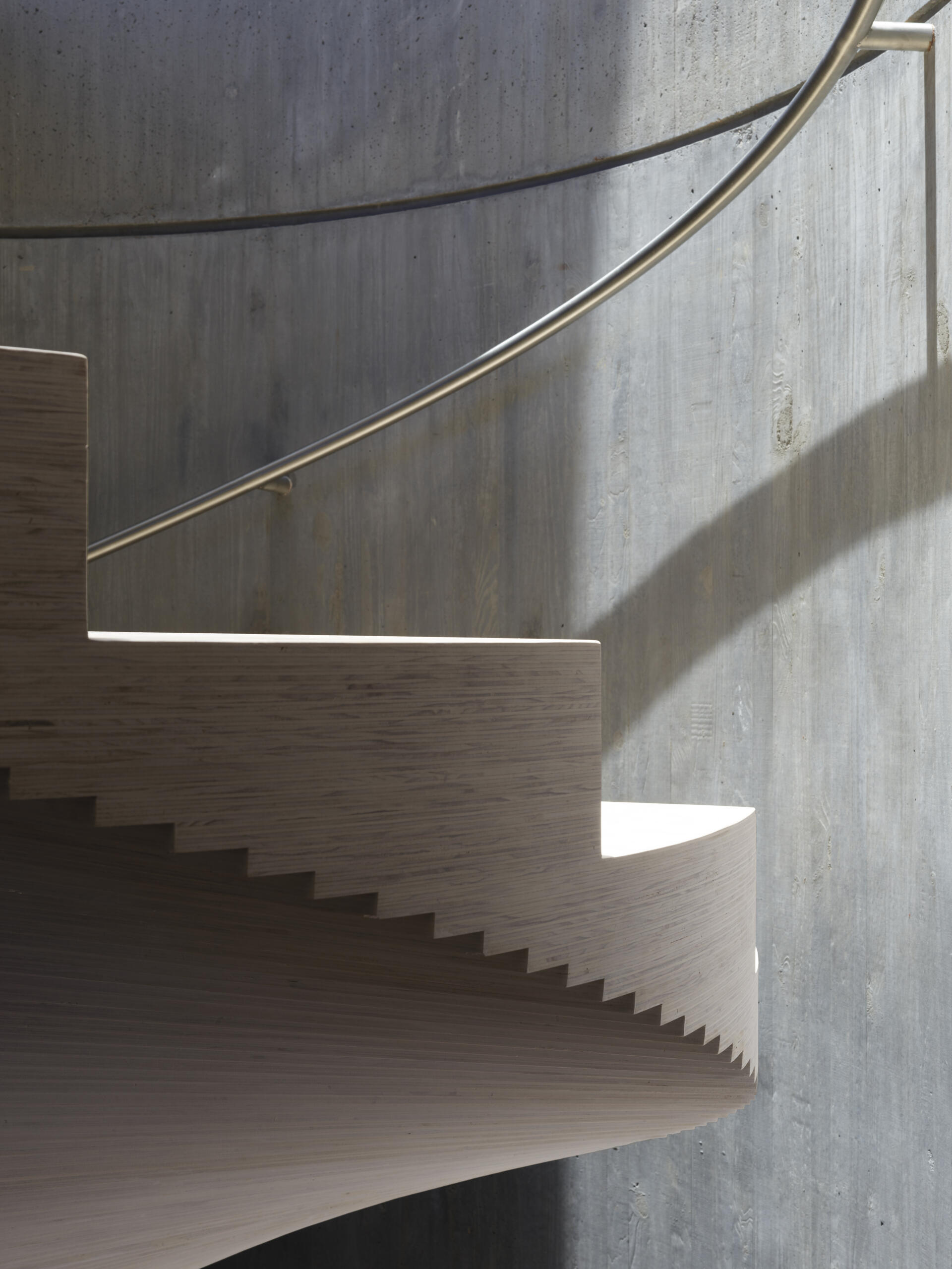
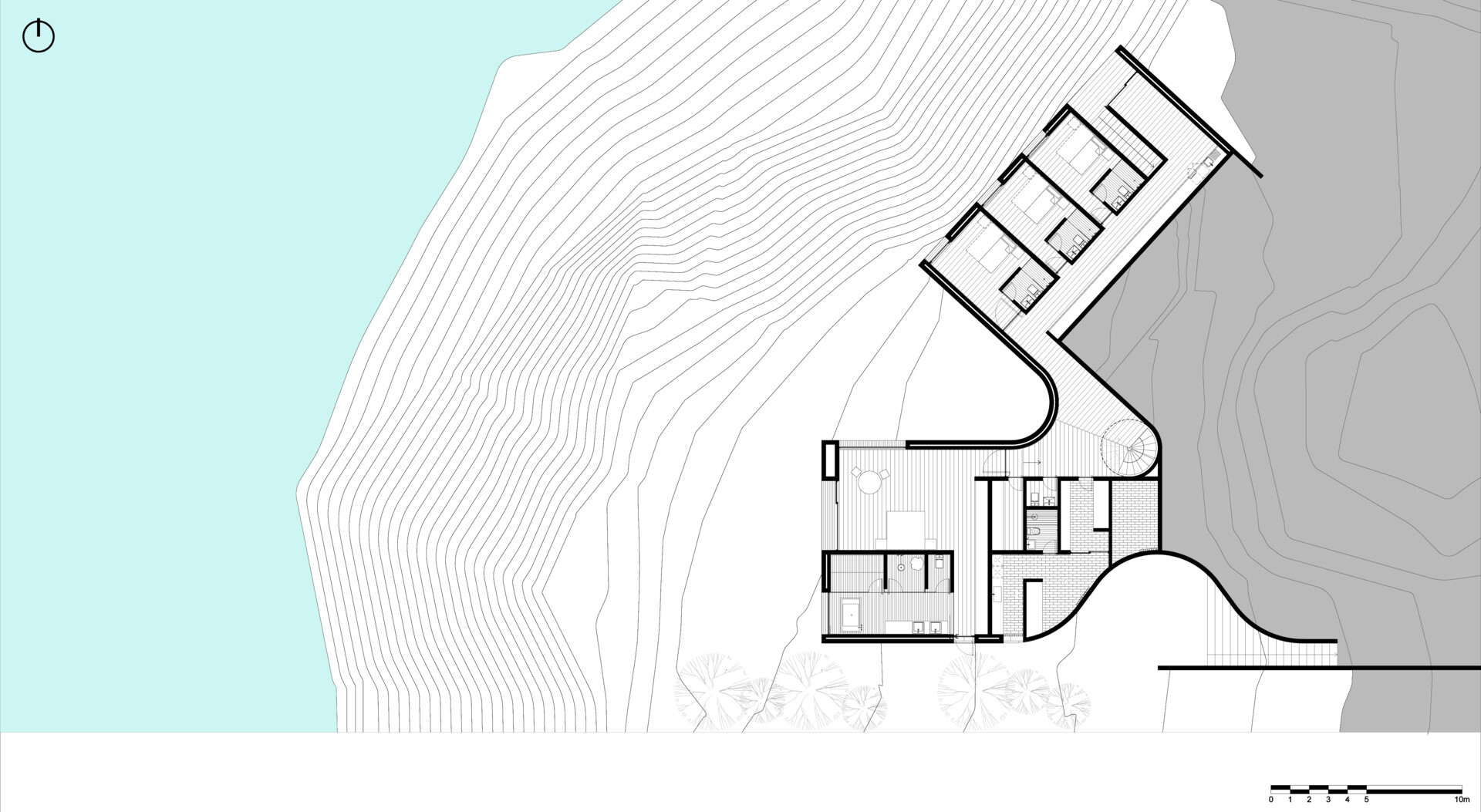
At the heart of the home is a spiral staircase. This vertical element connects the public spaces above with the private sleeping areas below. Constructed from stacked plywood, it acts as both circulation and sculptural anchor.
Photography by Roland Halbe
Photography by Roland Halbe
The lower level is embedded in the site and houses the private areas. Bedrooms and bathroom spaces are contained within the concrete podium. Floor-to-ceiling windows provide uninterrupted views, while the sliding doors open directly to the landscaping.
Photography by Cristobal Palma
Photography by Cristobal Palma

Photography by Roland Halbe
A green roof covers the concrete podium, helping it blend into the surrounding terrain. From certain viewpoints, the base of the house is barely visible. This strategy reduces the visual impact of the building and strengthens its relationship with the landscape.
Photography by Roland Halbe
The architectural drawings reveal the clear separation between public and private programs. They show how the two levels relate differently to the land, one embedded and one elevated. The amoeba-shaped plan also plays a role in seismic behavior, supporting both structure and form.
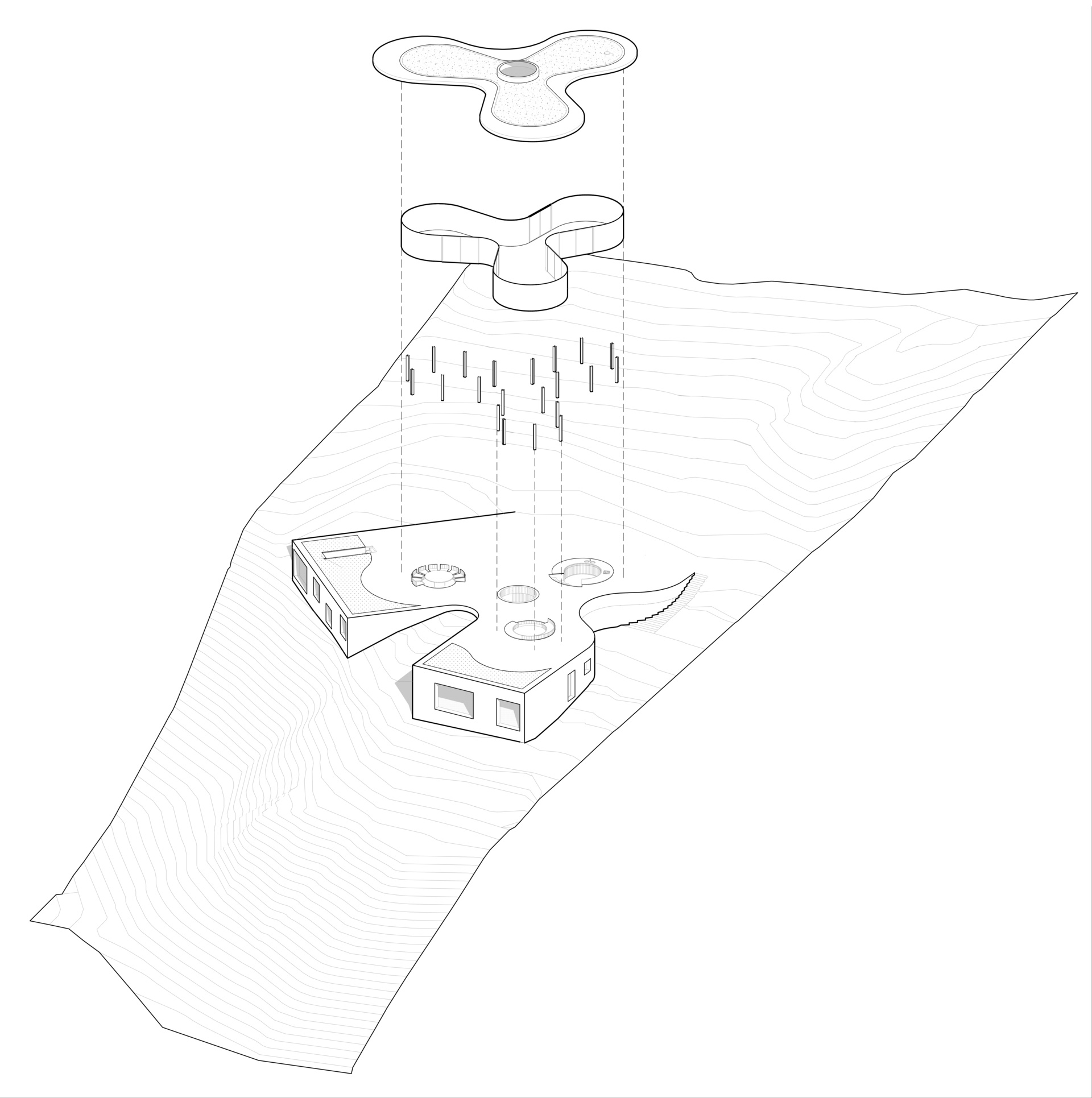
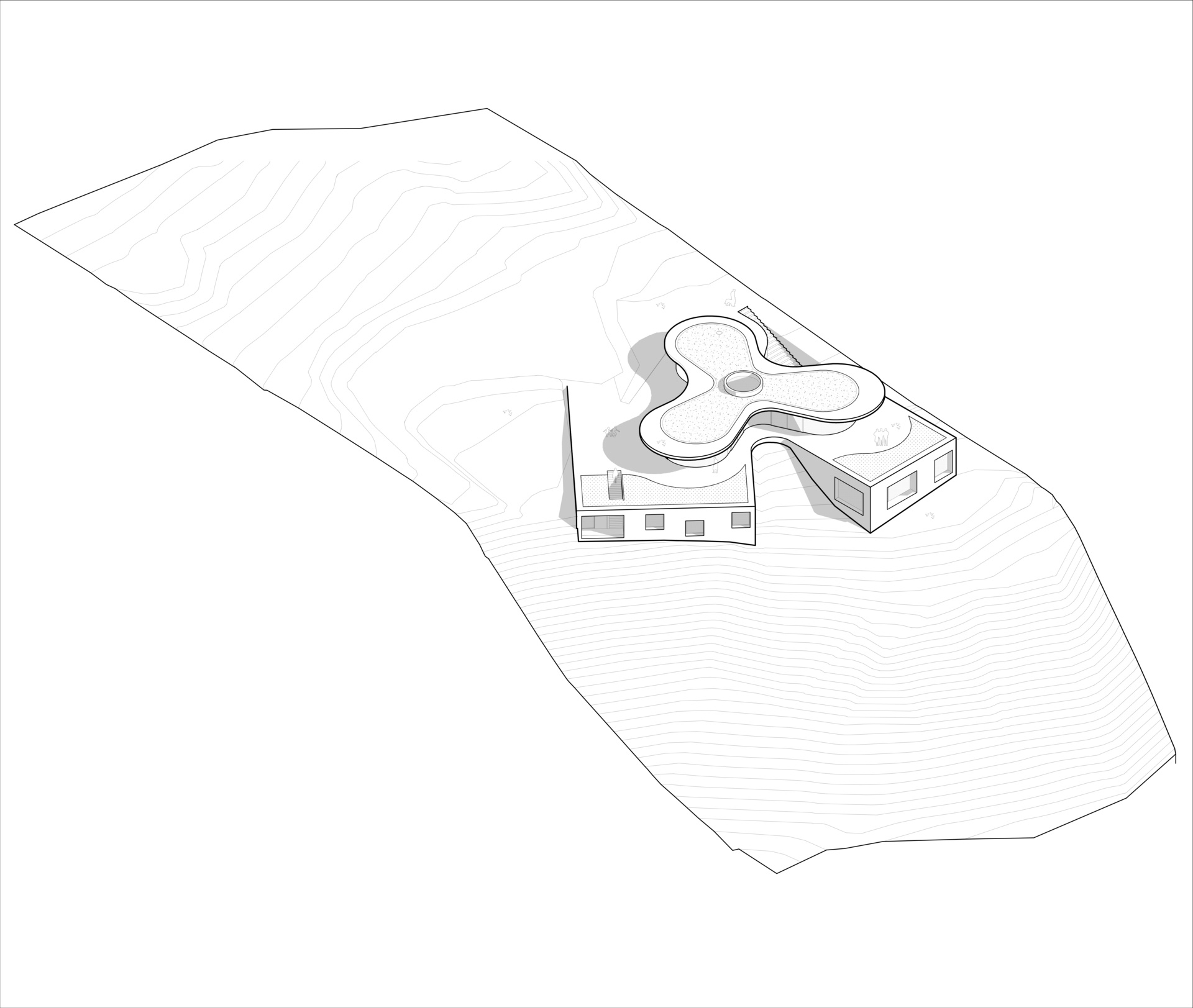

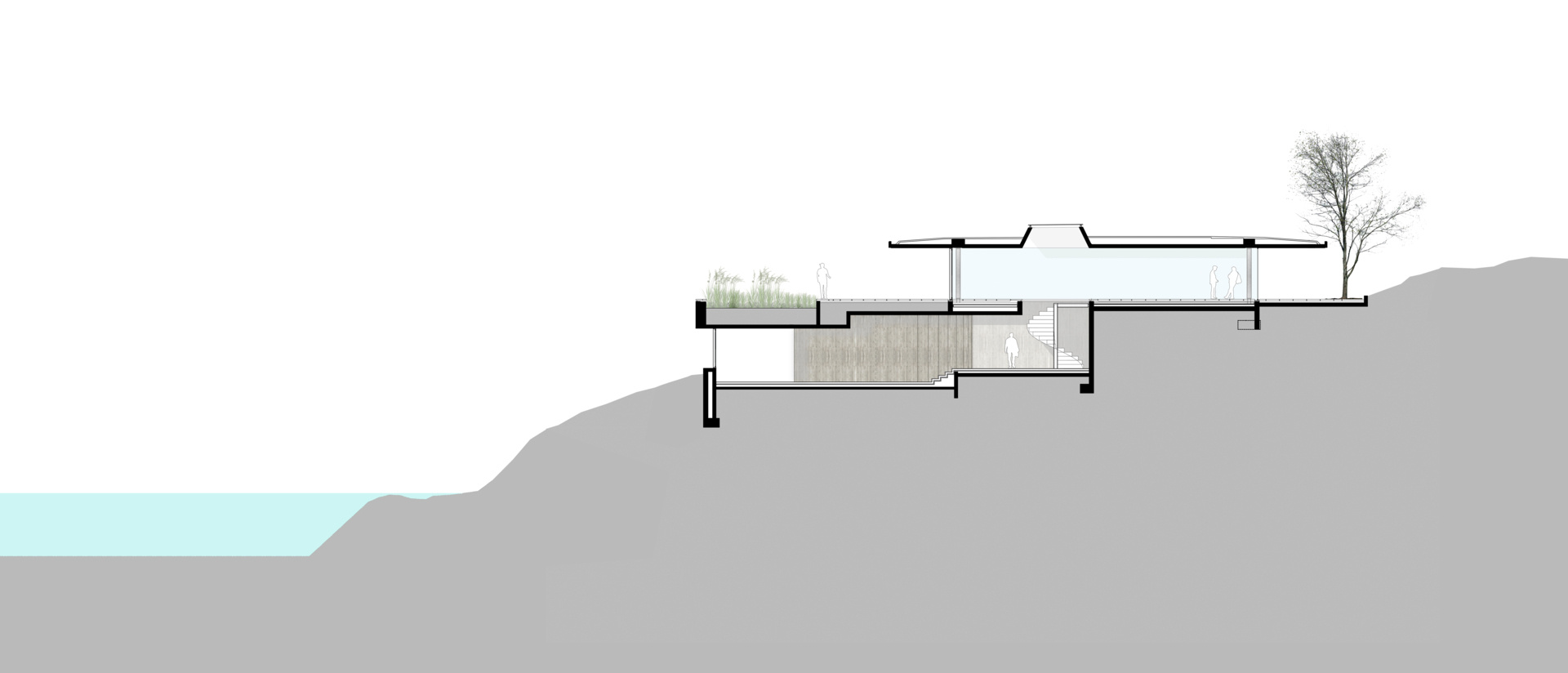
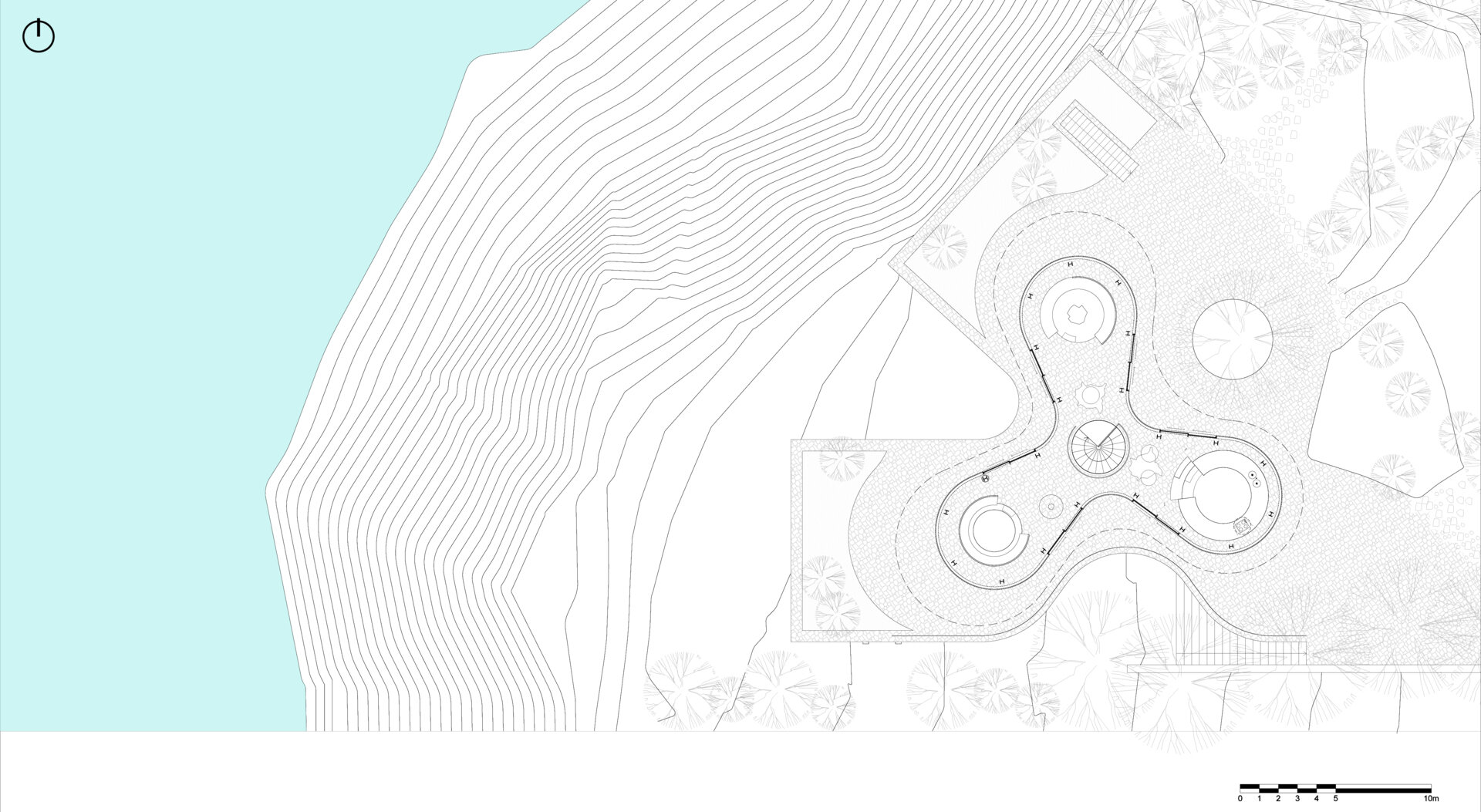
By carving a horizontal plane into a steep slope and placing a transparent pavilion above it, the design of this house allows landscape, light, and horizon to lead. When you stand inside the glass pavilion, the house itself seems to disappear, leaving only the coast and the view beyond.