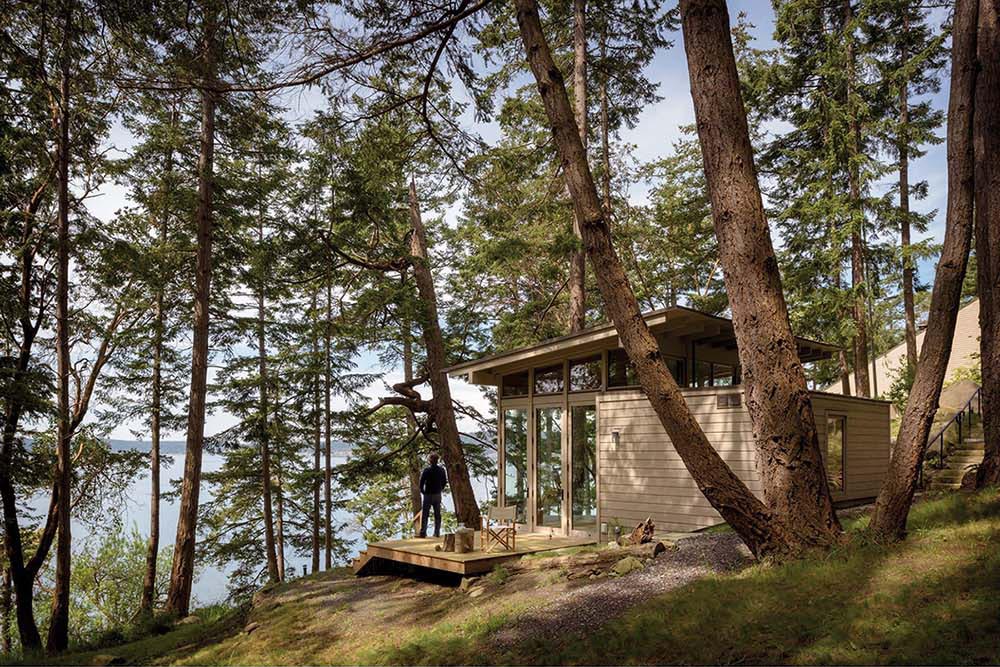
Tucked into a quiet stretch of the San Juan Islands, in Washington, this compact 450 square foot cabin by Olson Kundig makes careful use of its position above the water. The site is remote, edged by trees and shaped by a natural slope that falls away toward the shoreline below. From the start, the project leans into these conditions, using placement and proportion to heighten what is already there.
Rather than spreading out, the cabin stays small and focused. Its footprint is modest, but its orientation gives it reach. The structure sits lightly on the bluff, allowing the landscape to remain the dominant presence.
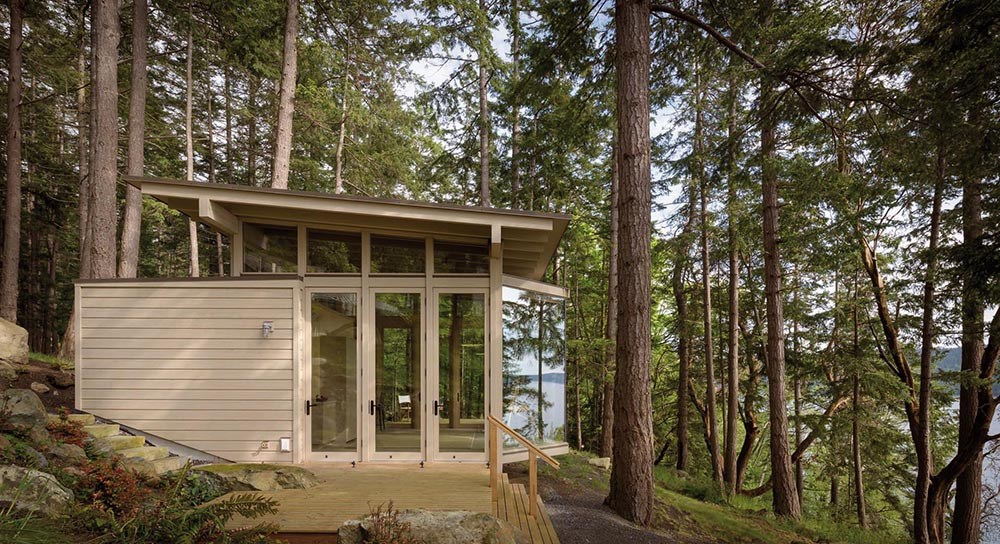
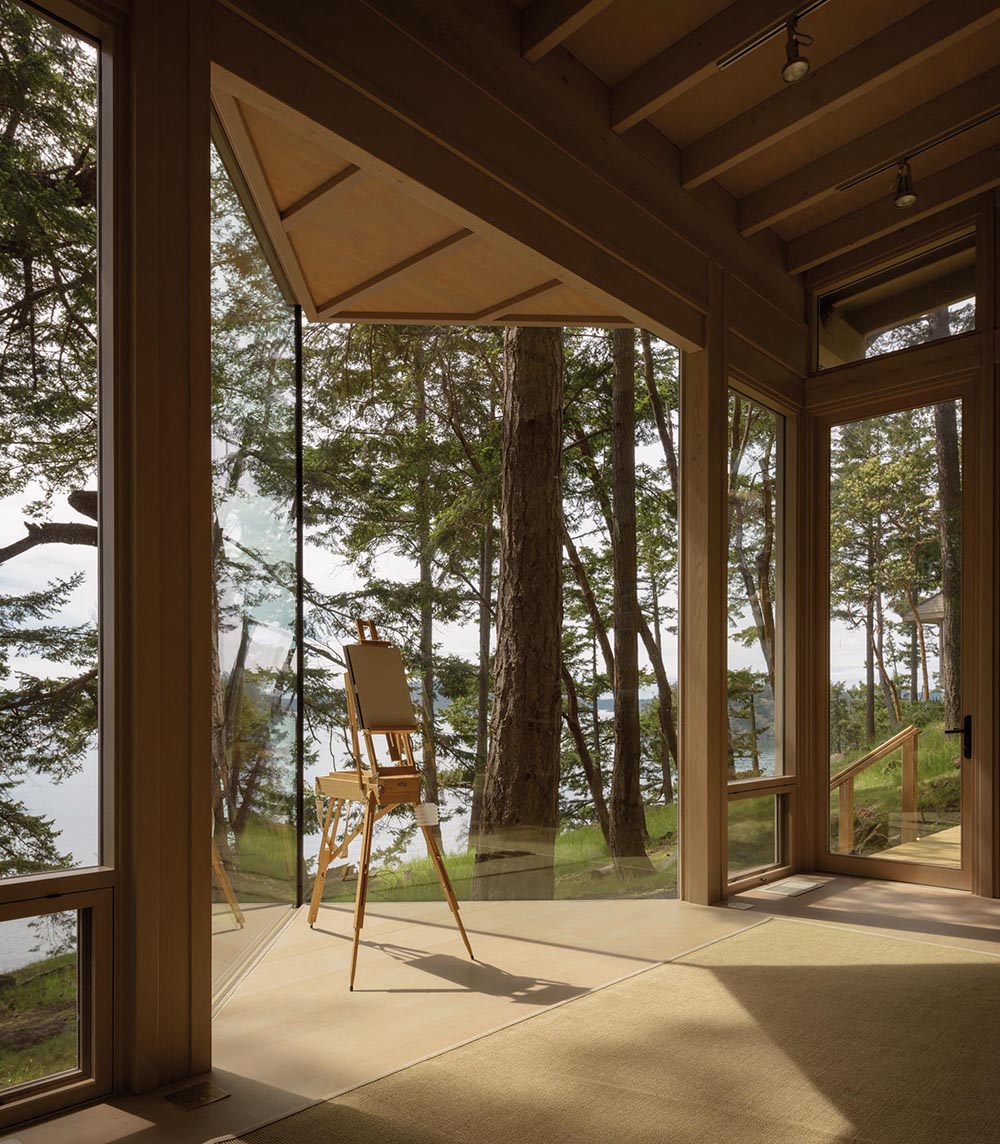
A series of doors line the cabin, opening out to a patio on either side. When opened, they extend the living area beyond the walls, making the cabin feel larger than its size suggests. The transition between inside and outside is easy, with no clear boundary once the doors are pulled back.
Clerestory windows run along the upper portion of the structure, drawing light deep into the interior. These high openings lift the eye upward, making the ceiling feel taller and the room more open.
They also give the sloped roof a lighter presence. With daylight filtering in from above, the roof appears to hover, adding a subtle sense of lift to the compact space.
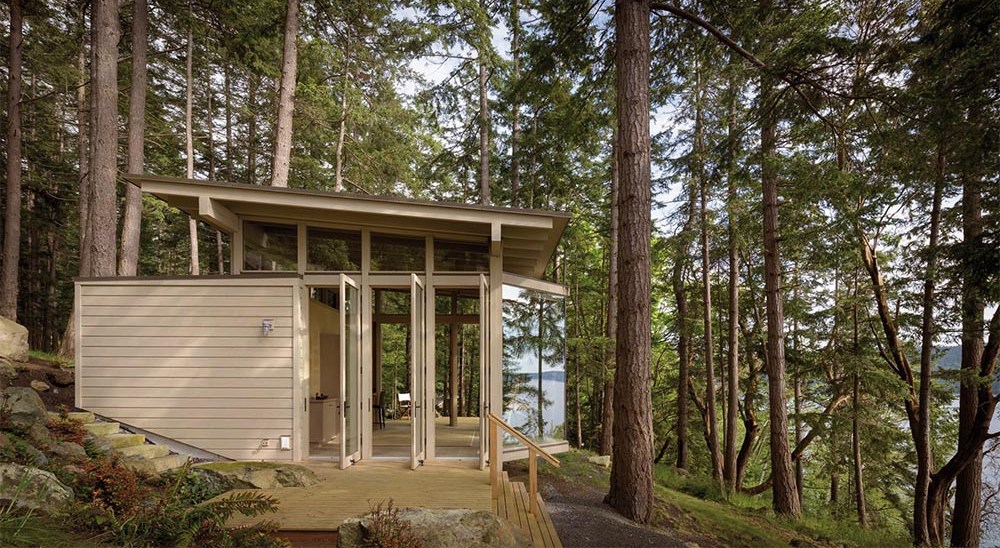
Inside, the cabin is made up of a single open room. The space shifts easily between uses, serving as a painting studio or a guesthouse depending on the day. This flexibility keeps the interior simple, free from unnecessary divisions.
At the rear, the cabin is more enclosed. Here, a micro kitchen and bathroom are set into the hillside, using the natural edge of the site to create a more private zone.
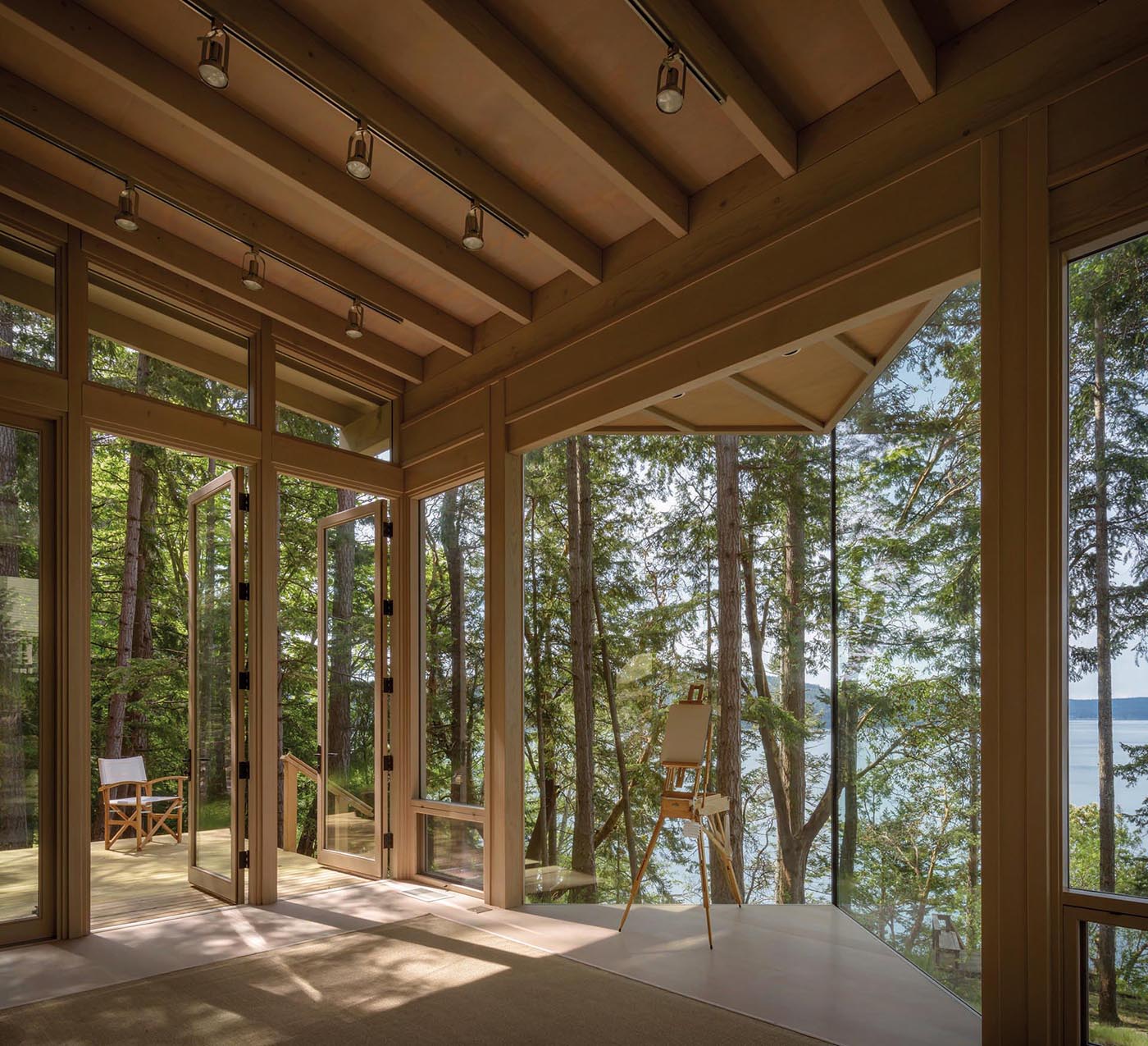
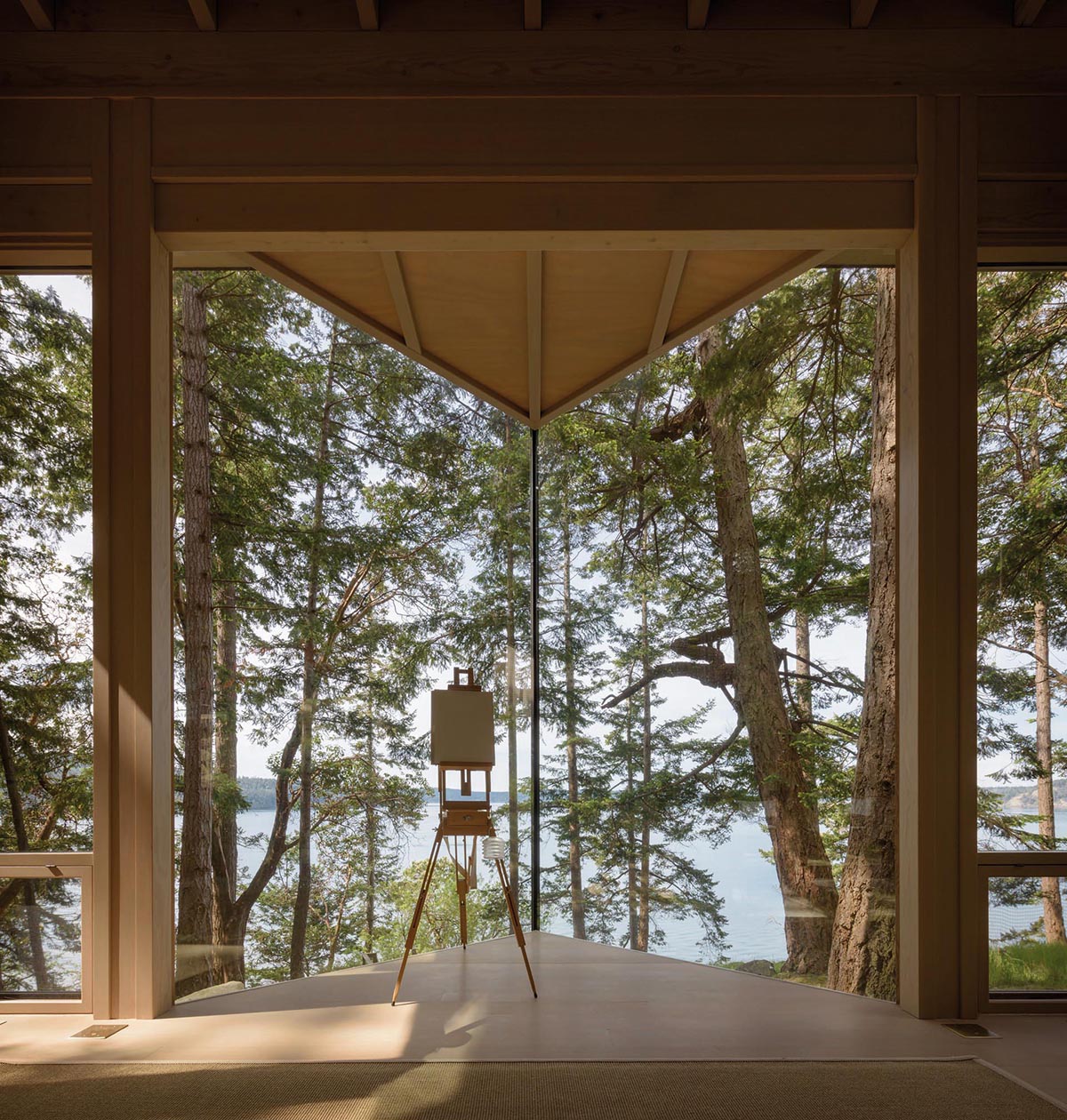
The front of the cabin reaches out over the slope, extending toward the view. This cantilevered edge holds a wall of floor-to-ceiling glass, opening the interior to the water and distant islands.
One angled window projects outward, sharpening the perspective and pulling the view further into the room. It creates a natural place to pause, or to set up a canvas and work with the shifting light.
Despite its small size, the cabin does not feel inward. The attention shifts outward, toward the trees and the water below. Glass walls, doors, and carefully placed openings guide the eye beyond the interior.