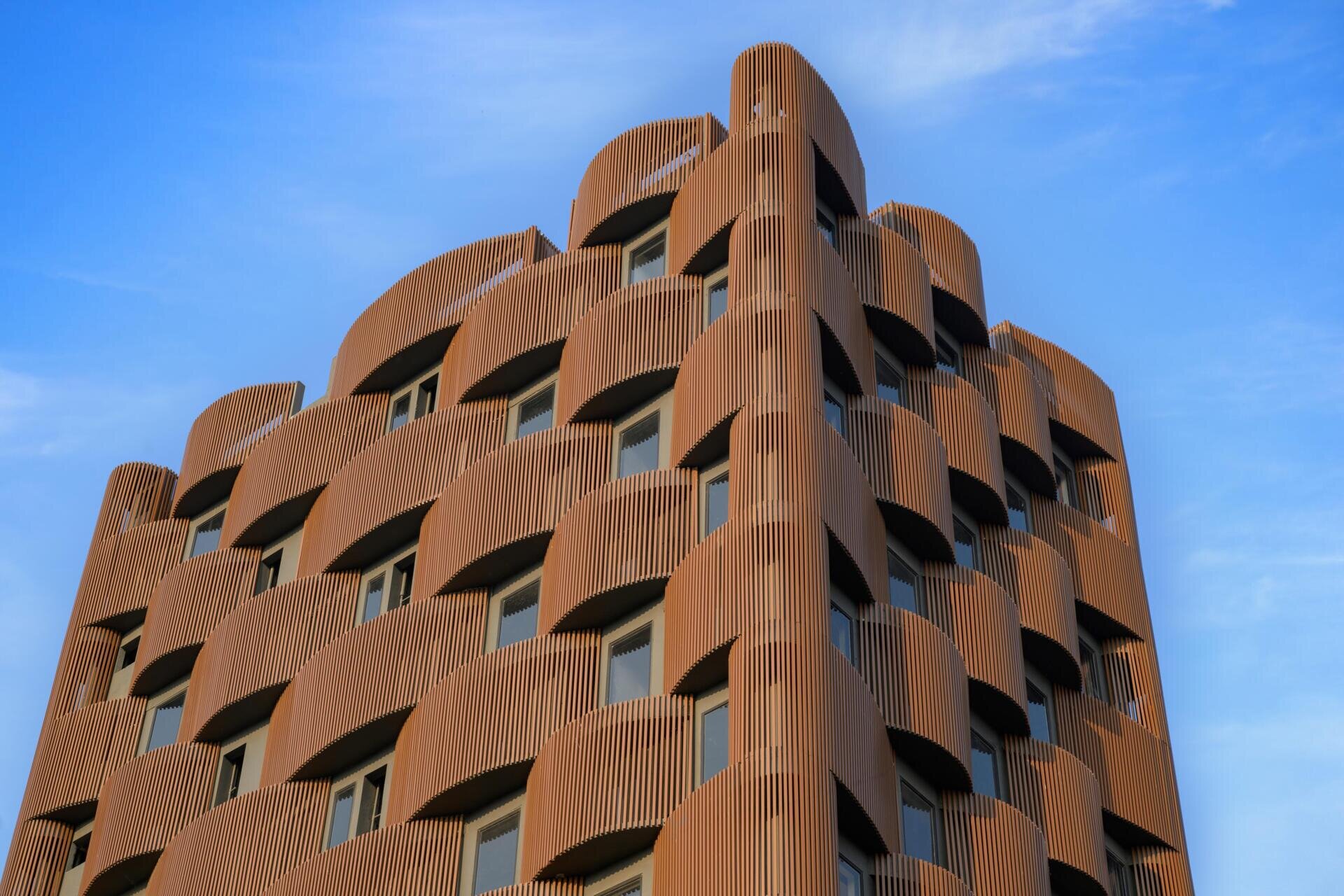
In Nagpur, where summer temperatures climb to 48°C, fully glazed office towers struggle against the climate. Stella takes a different path.
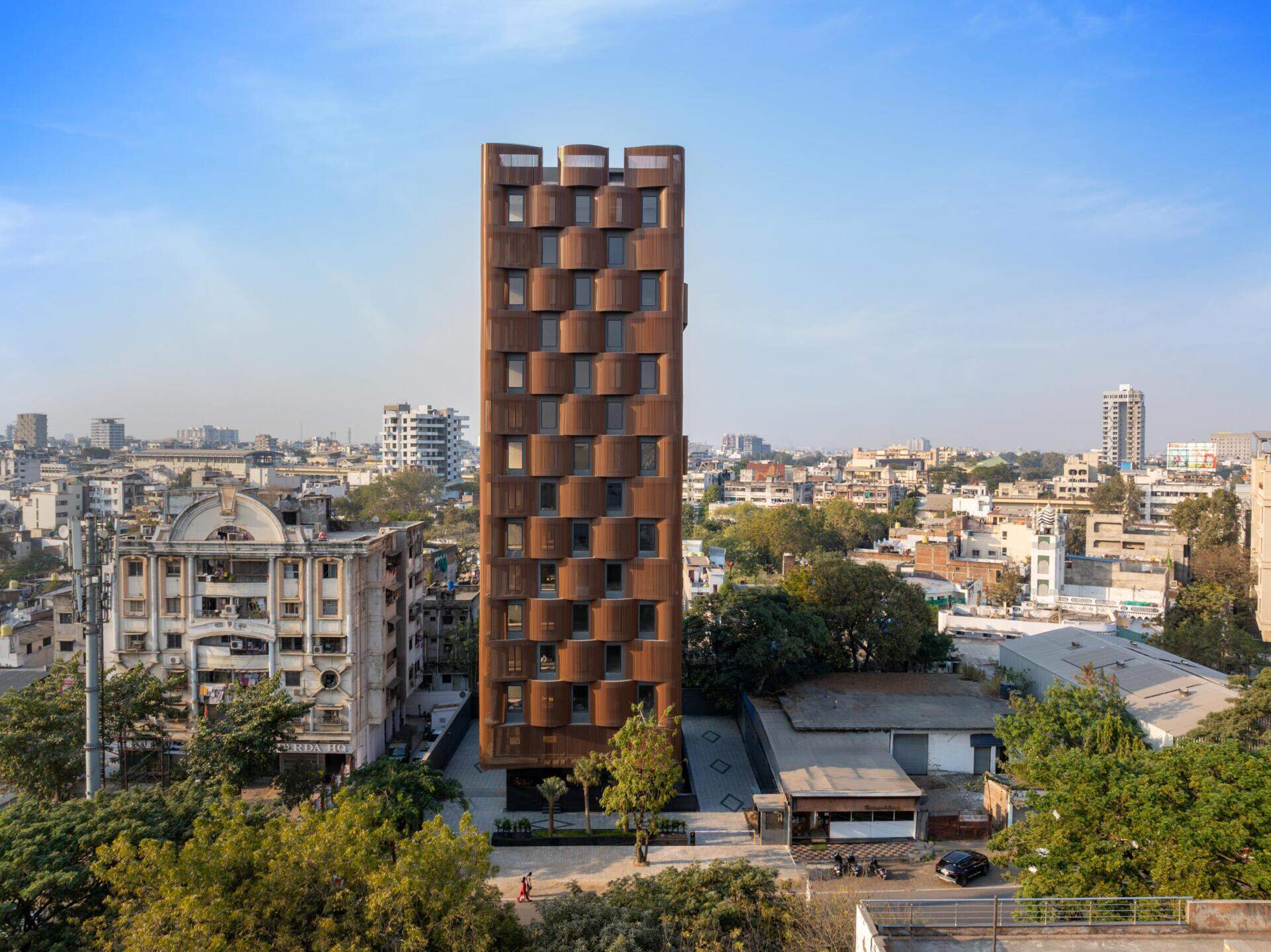
Completed in January 2026 by Sanjay Puri Architects, this compact office building rethinks how workplaces perform in extreme heat. The result is a 14-level structure that prioritizes shade, ventilation, and greenery over glass.
A Vertical Solution on a Tight Plot
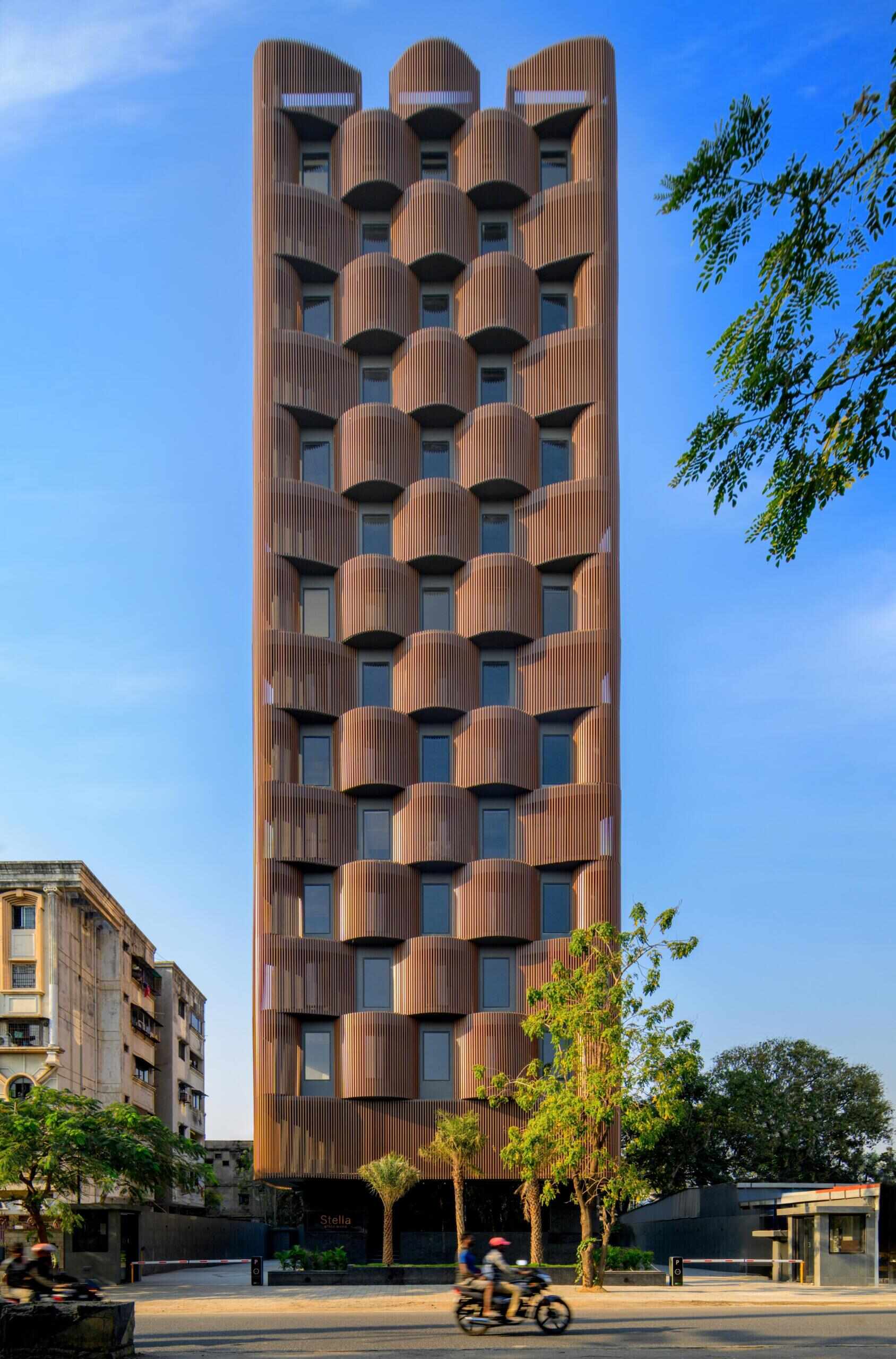
Statutory open space requirements and the restricted site area pushed the design upward. The building rises 14 levels, with four offices on each floor, maximizing usable space while maintaining access to natural light and ventilation.
Designed for 48°C Summers
Nagpur ranks among India’s hottest cities. Designing for such heat meant rejecting the typical glass-heavy office model.
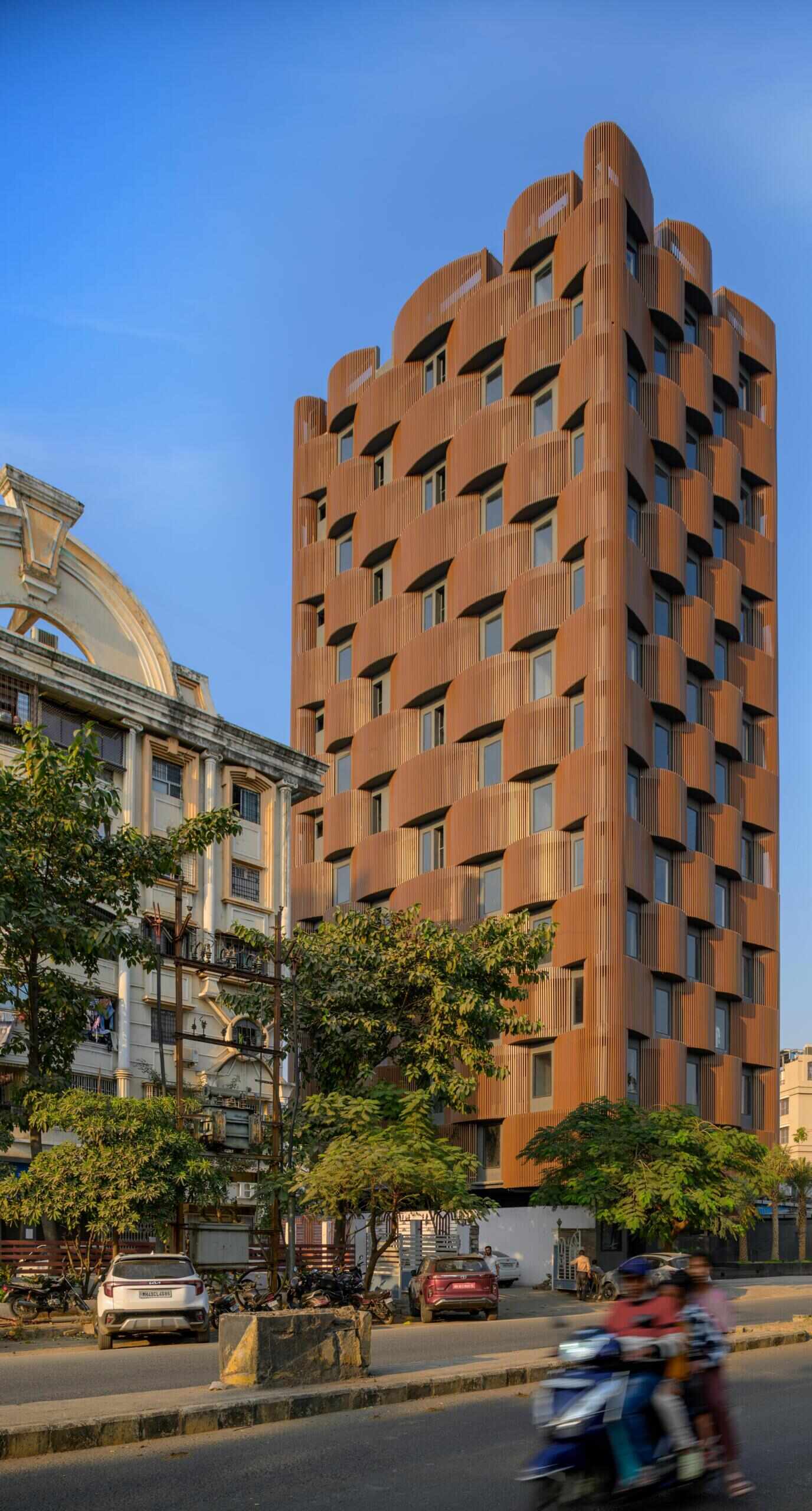
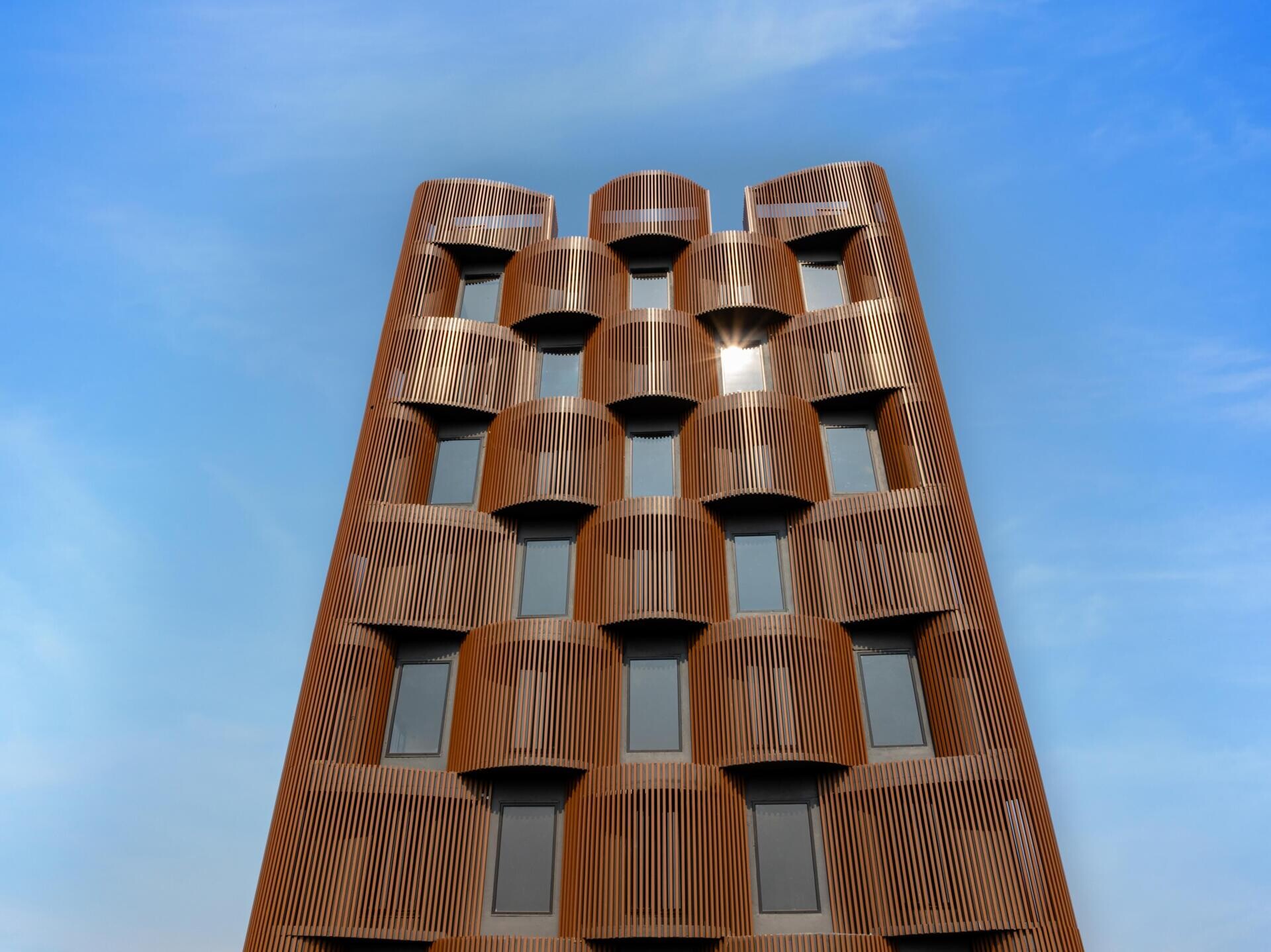
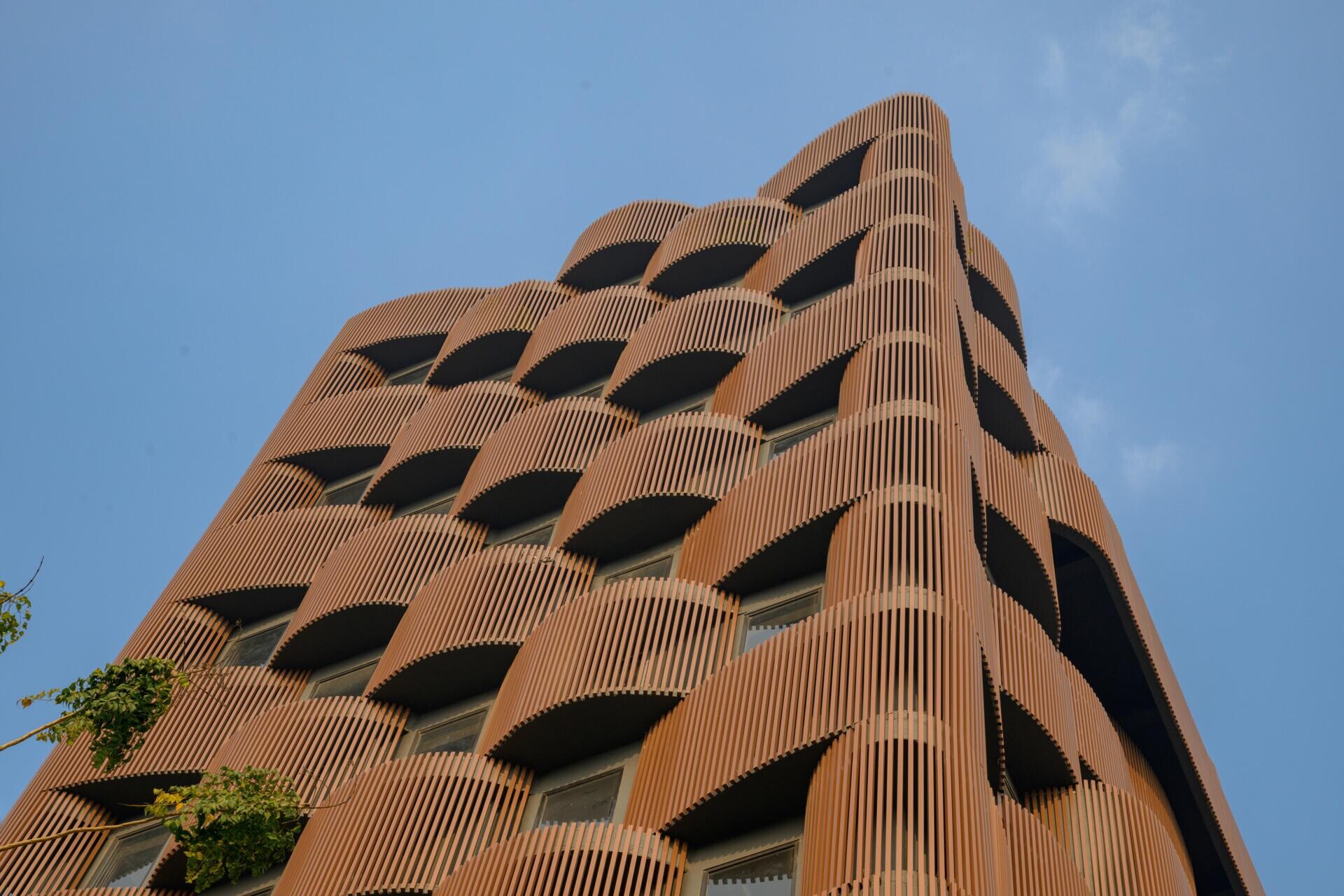
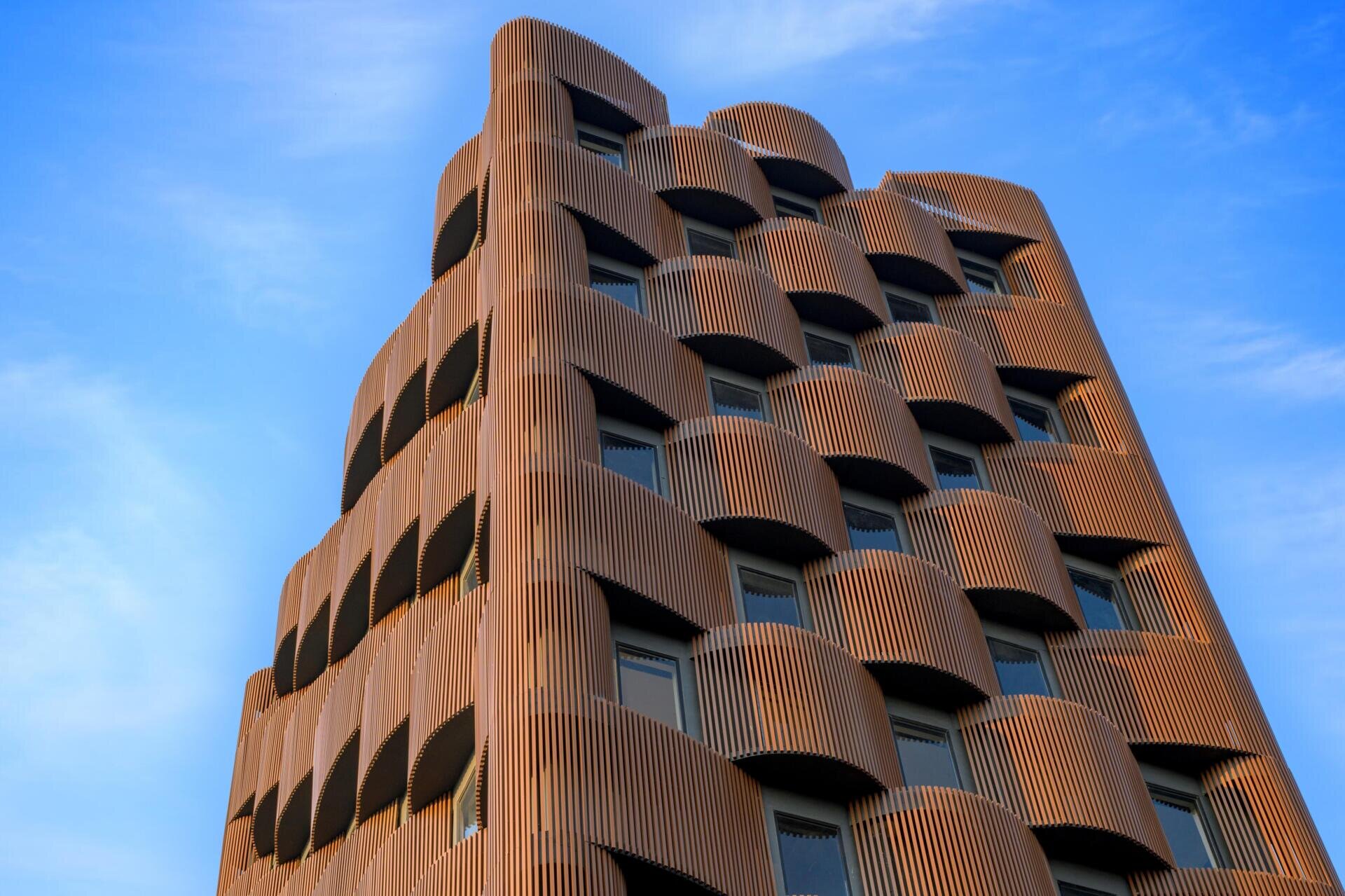
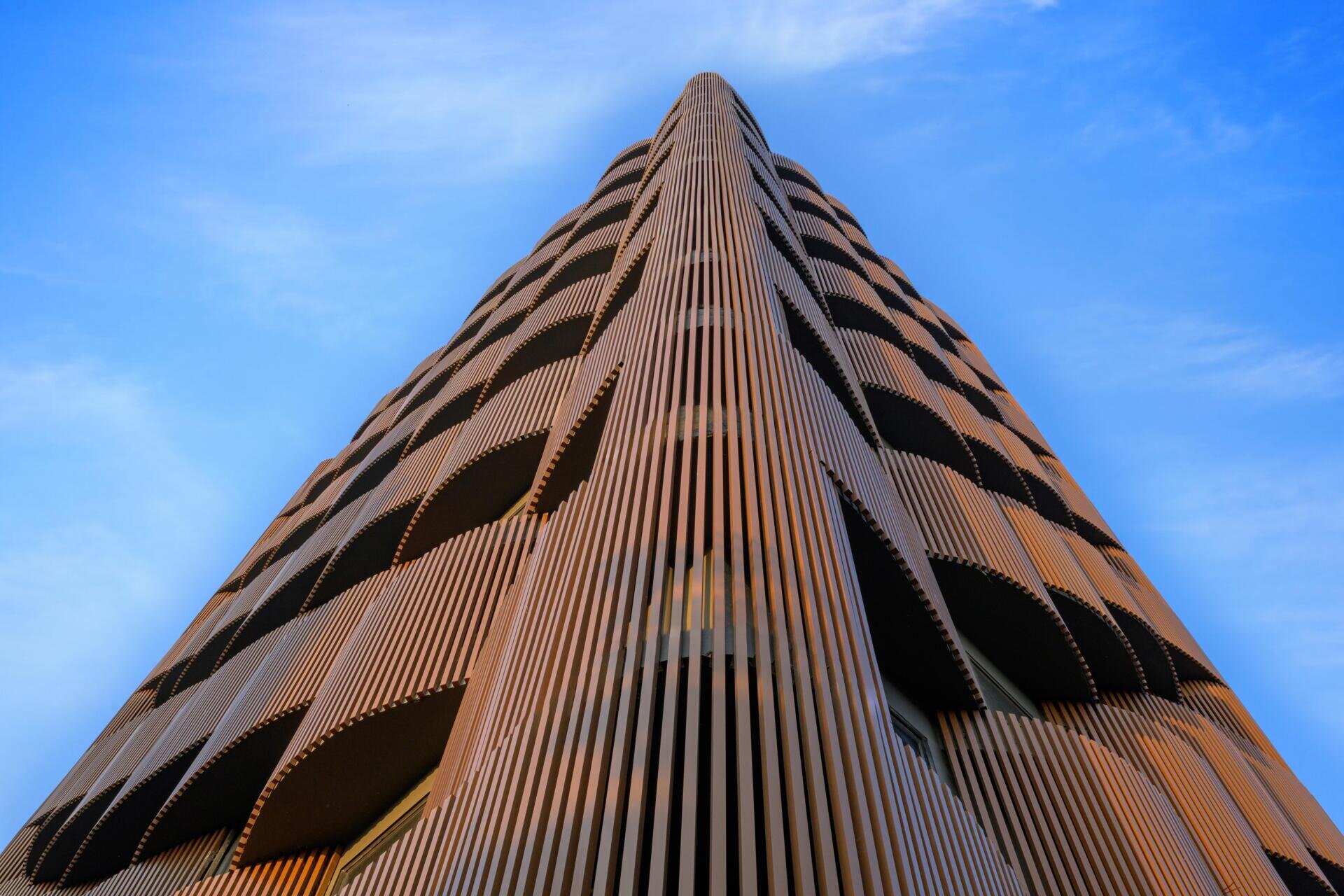
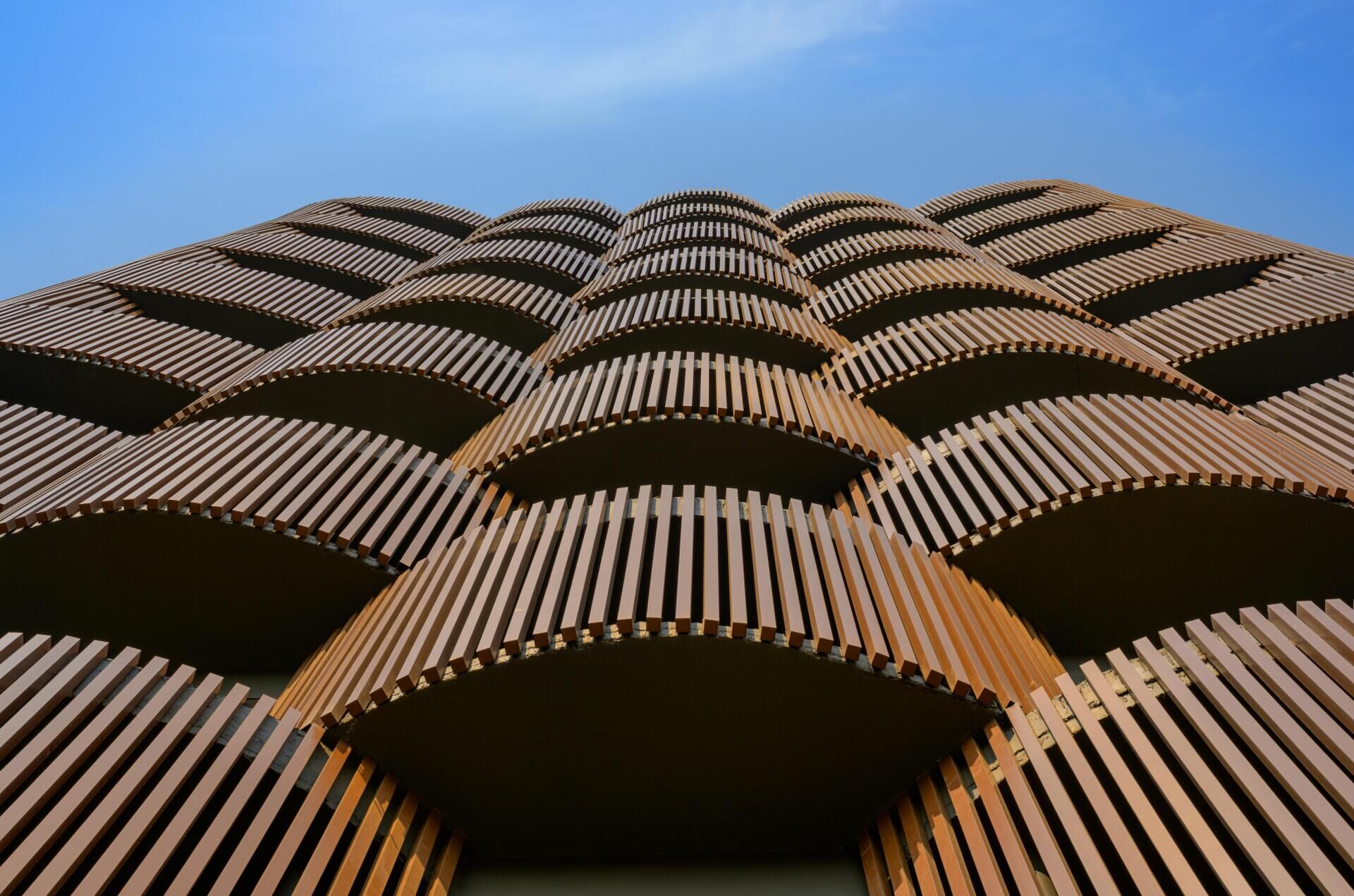
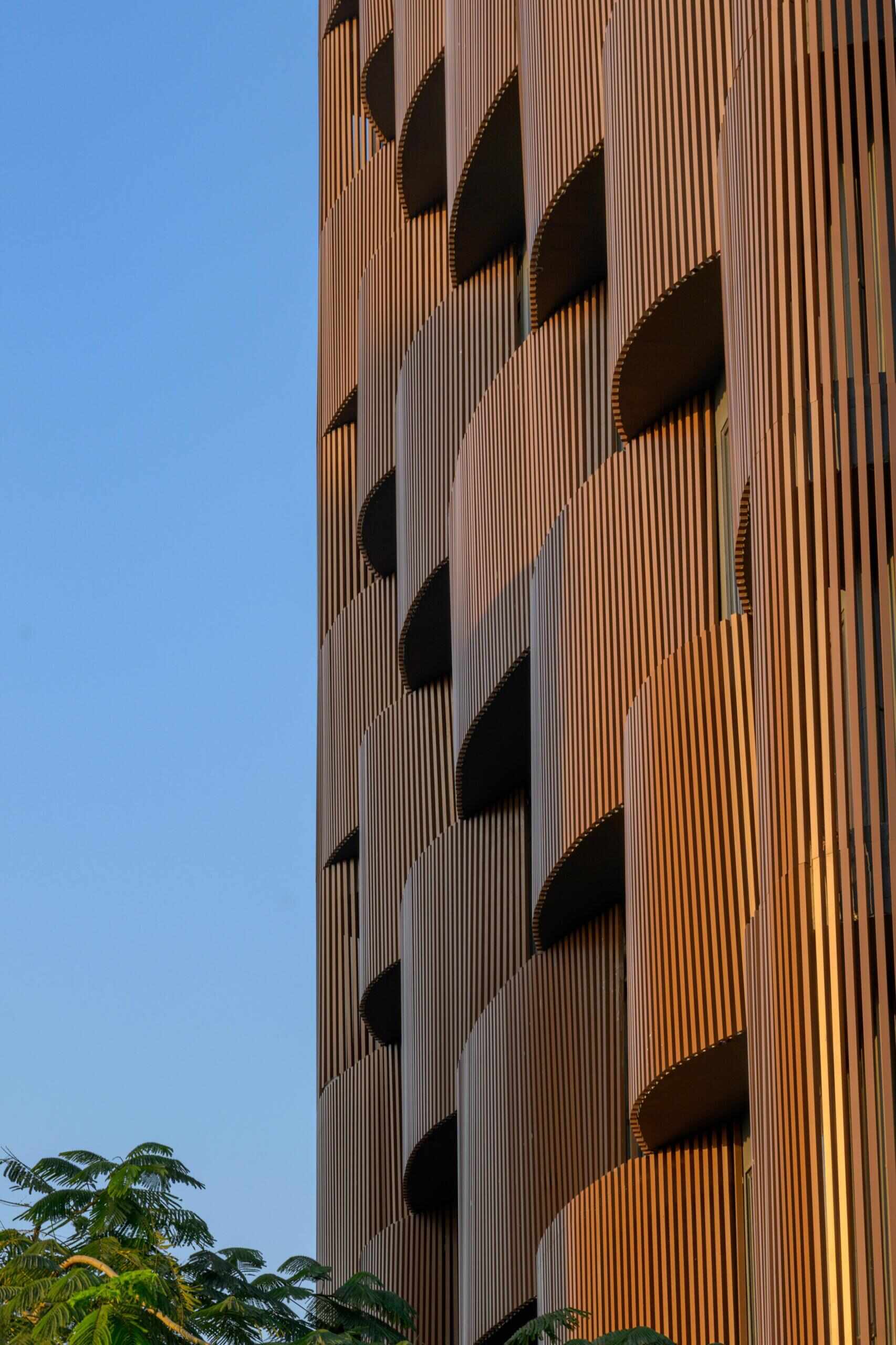
Instead, the facade acts as a layered, climate-responsive skin. Semicircular open decks and planters wrapped in aluminum louvers alternate across the perimeter, both horizontally and vertically. This configuration reduces direct solar heat gain while creating shaded zones around the building.
Light, Air, and Smart Orientation
The service and circulation core is positioned along the eastern edge. This strategic placement frees the north, west, and south facades for naturally lit office spaces.
Larger offices occupy the front and rear, benefiting from daylight, cross ventilation, and outdoor views. Indirect sunlight filters into work areas, reducing glare while keeping interiors bright.
By minimizing heat gain and lowering operational energy demand, Stella offers sheltered, well-illuminated workplaces rooted in their climatic context.
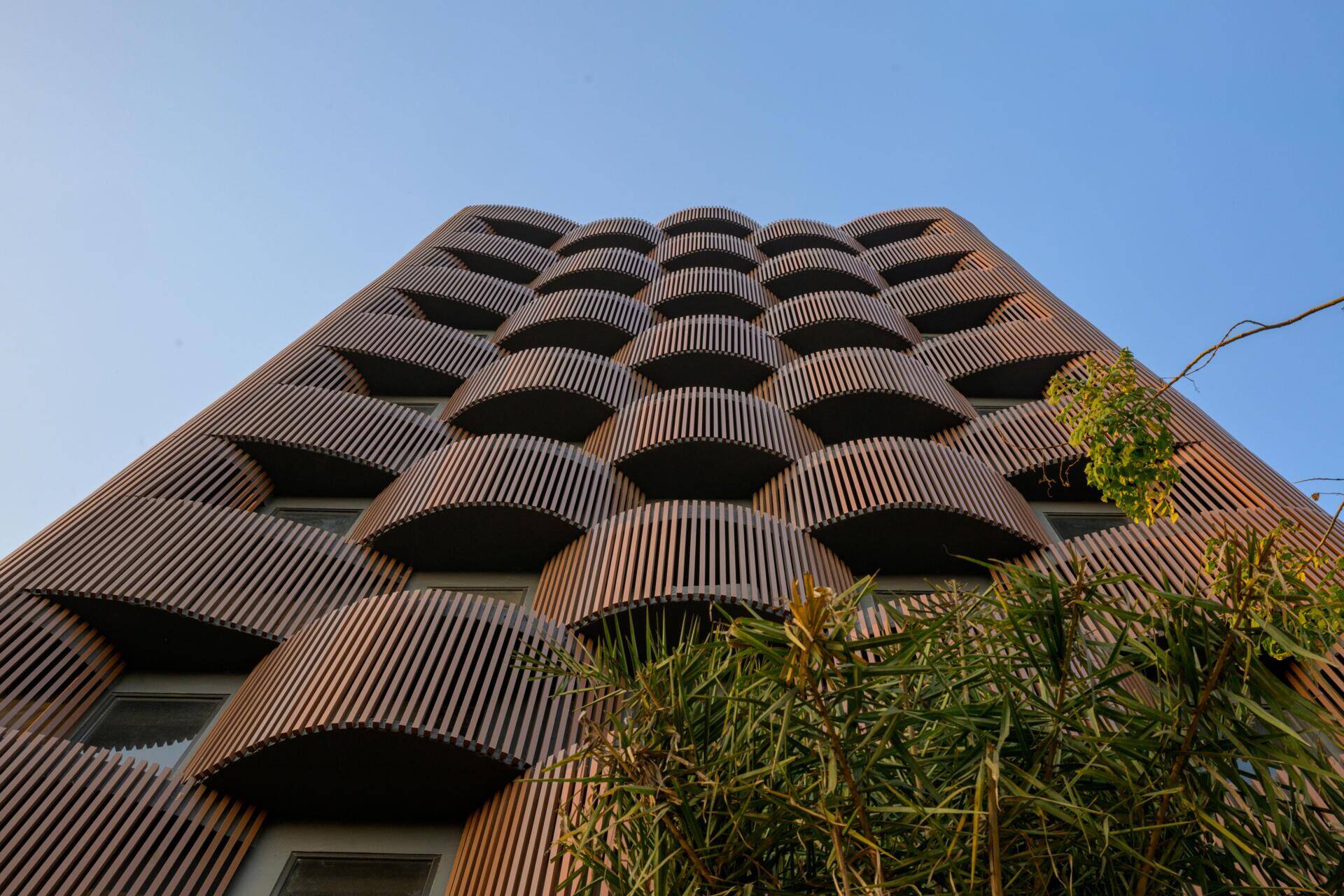
A Contextual Alternative to the Glass Tower
Rather than following a globalized glass facade trend, Stella responds directly to its environment. Passive strategies, integrated greenery, and a modern architectural language combine to create an energy-efficient office building designed specifically for Nagpur’s conditions.
Stella stands as a clear case for climate-aware design in rapidly growing Indian cities. It shows how architecture shaped by heat, light, and context can create workplaces that perform better, feel better, and belong exactly where they are.