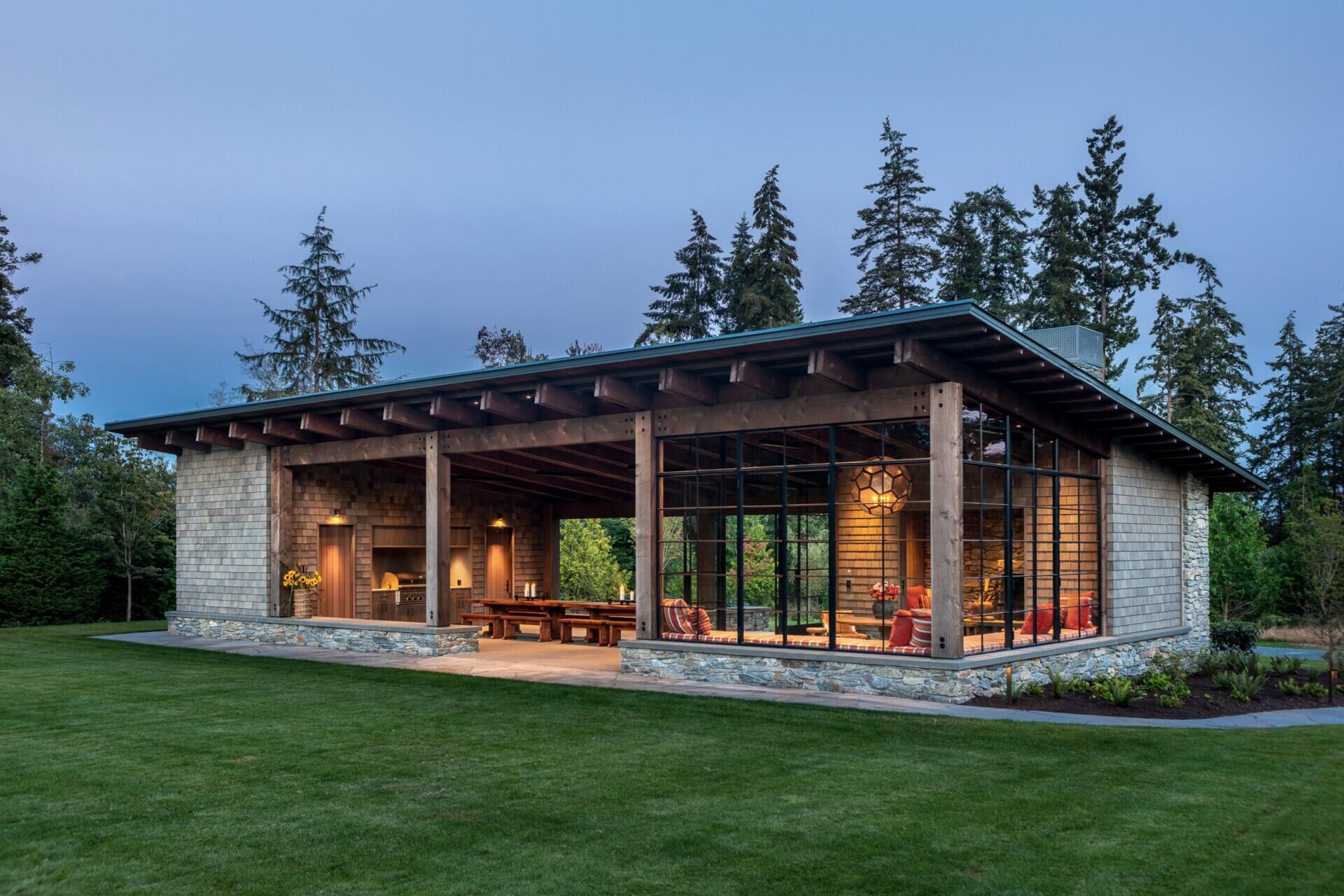
On a quiet island property in Washington State, a structure has been designed with one clear purpose in mind: bringing people together.
Seattle based architecture firm Hoedemaker Pfeiffer created The Fieldhouse as a dedicated place for family and friends to gather, celebrate and unwind in the country. Set apart from the main home, the building acts as a garden pavilion and social anchor, designed specifically for sport, connection and long afternoons that stretch into evening.
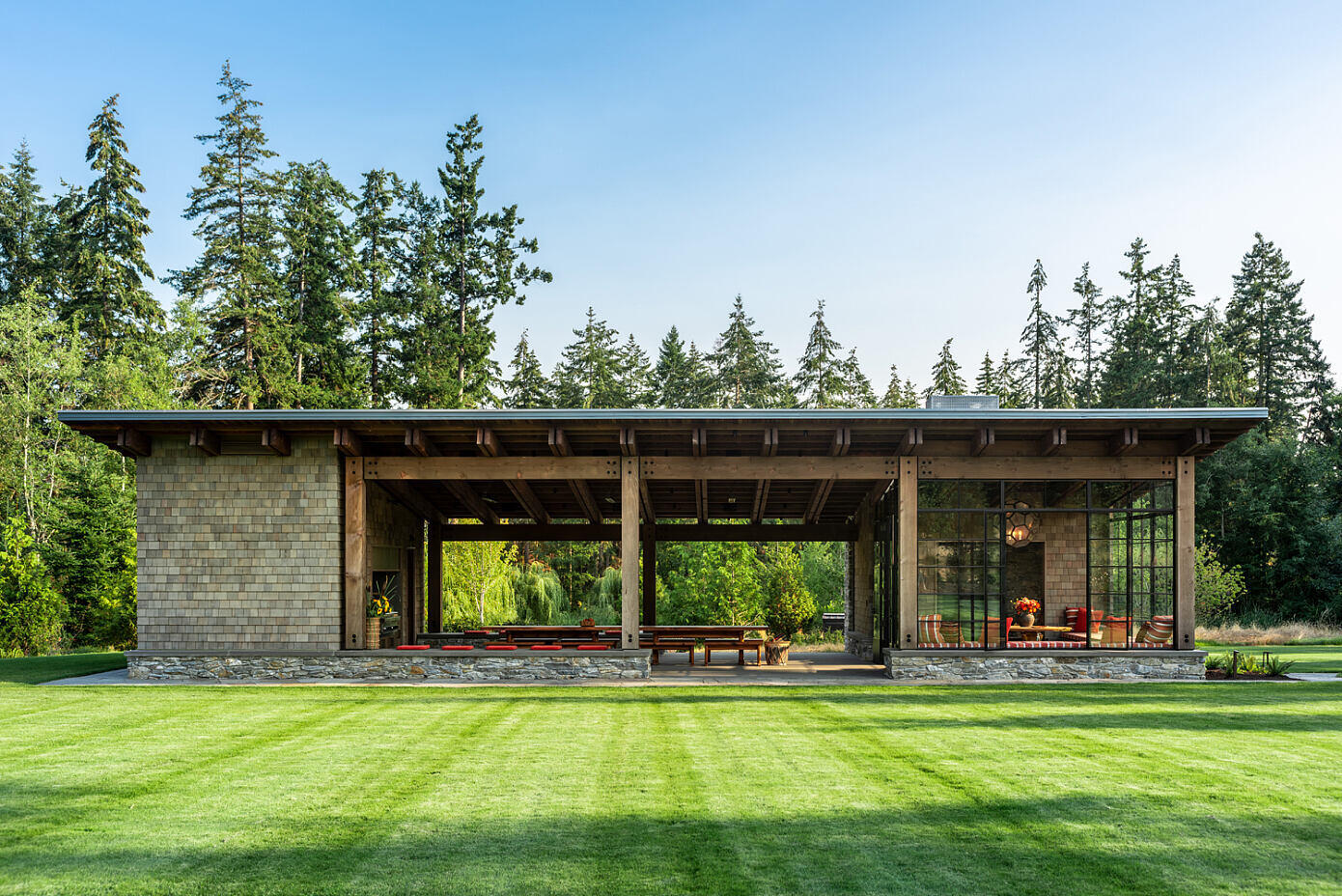
At its heart, the Fieldhouse is simple and functional. But its inspiration runs deeper. The design draws from the Pacific Northwest landscape and from the rugged stone and timber structures built across the country in the 1930s by the Civilian Conservation Corps. Those park buildings were crafted to immerse visitors in nature while providing shelter and community space. This project follows that same spirit.
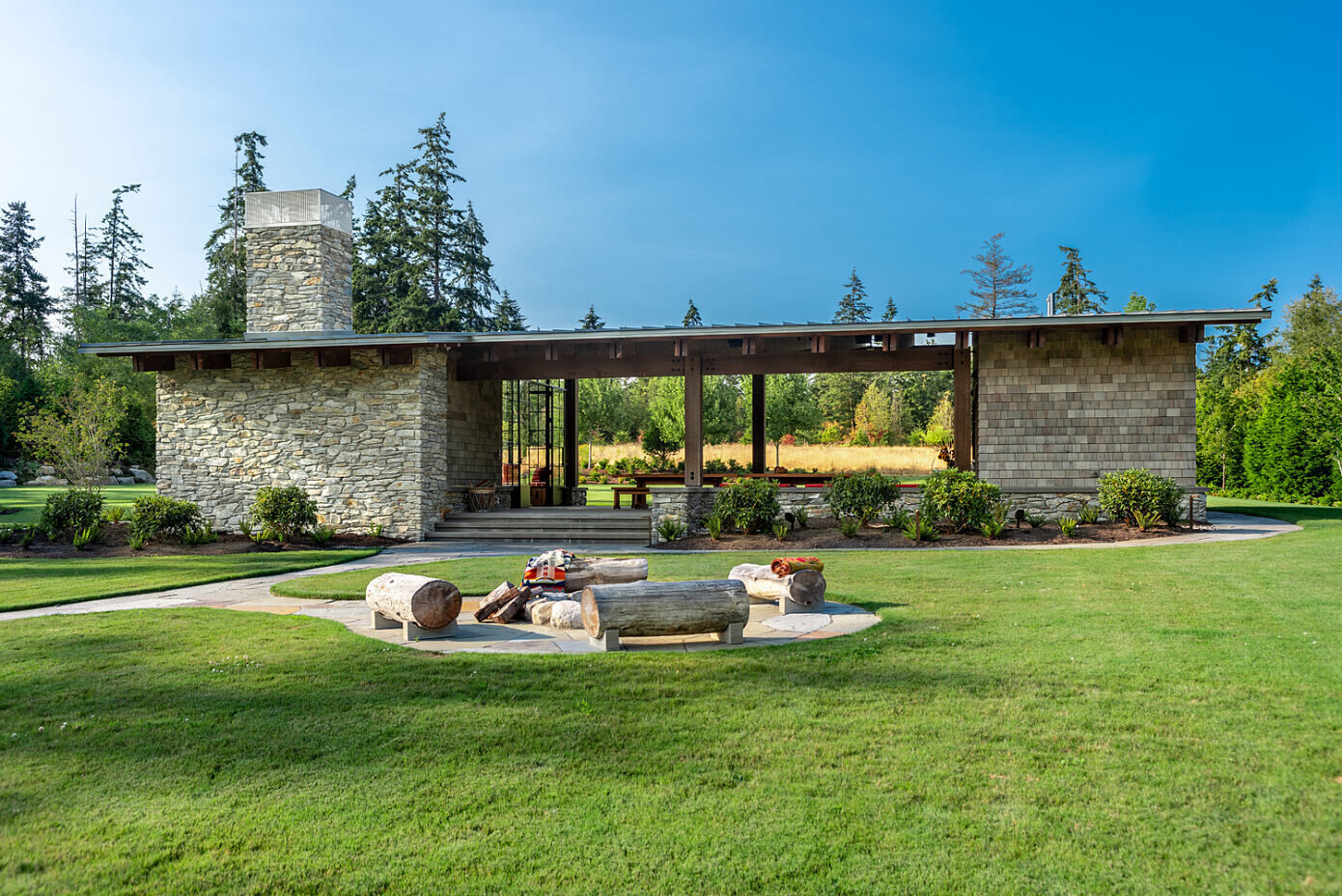
The large structure is defined by a single plane shed roof that slopes confidently over a covered outdoor patio. On either side of this central space sit two offset enclosed volumes, creating a composition that feels balanced yet relaxed. The patio acts as the social core, protected from the elements but open to the landscape beyond.
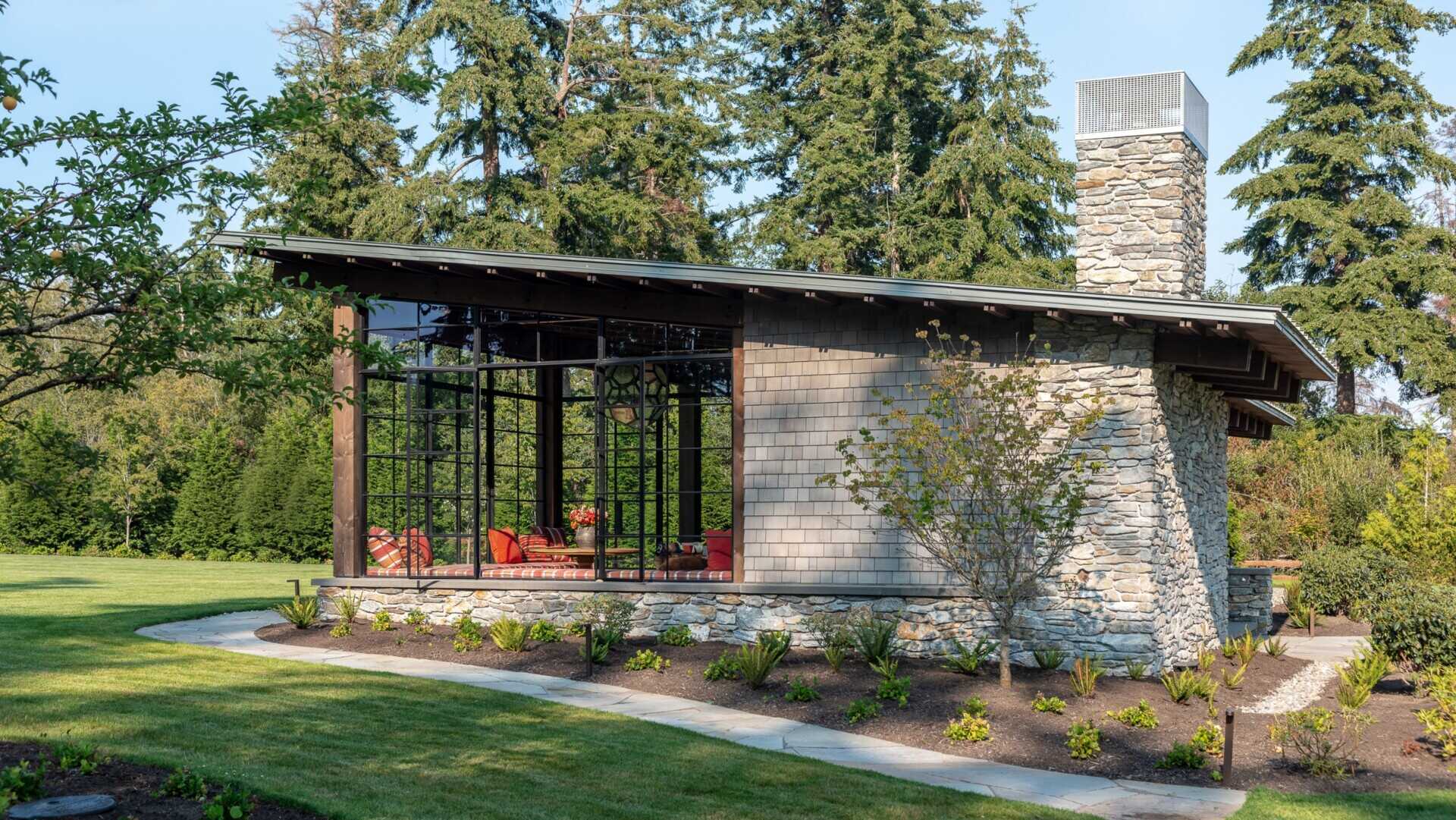
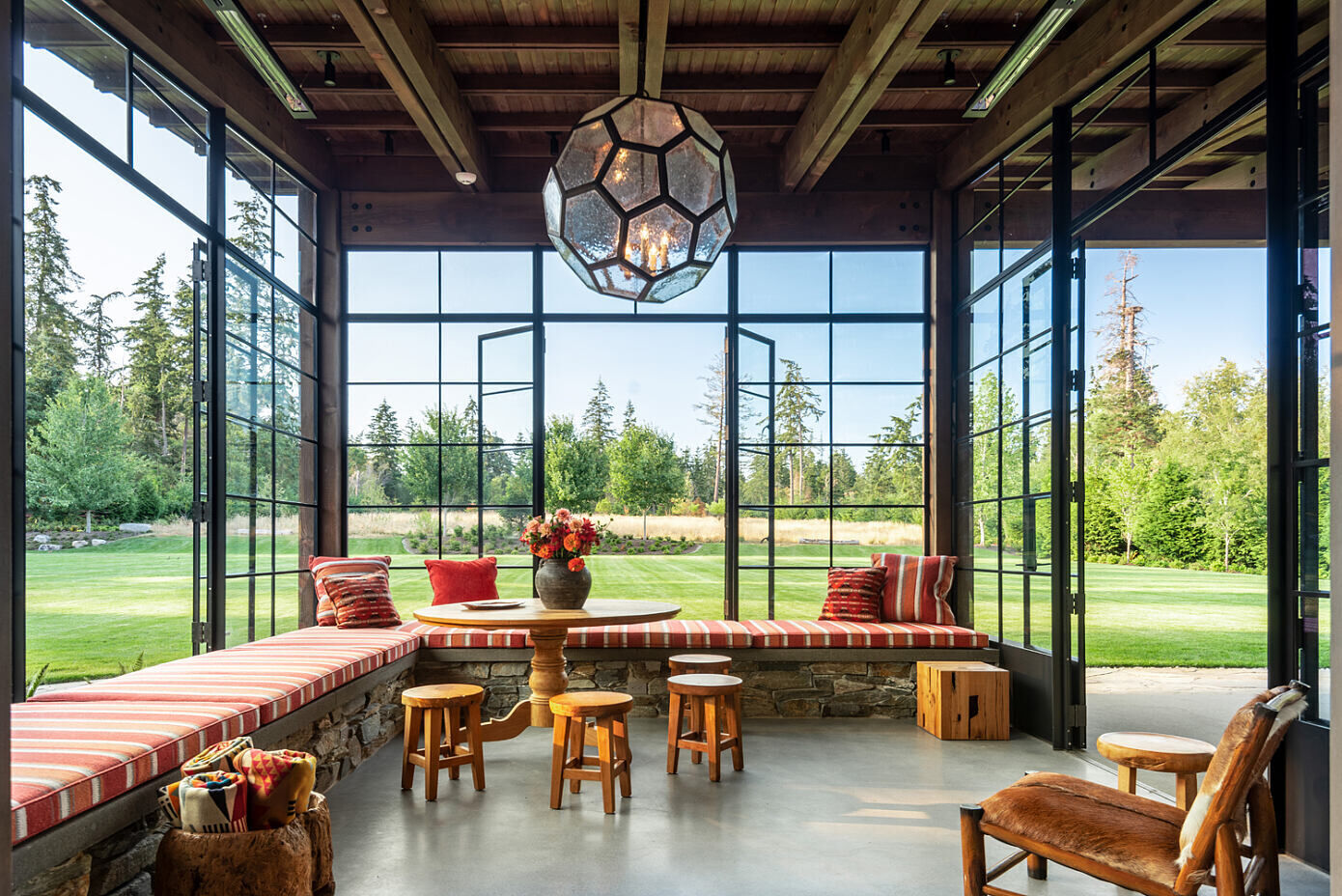
Materials root the building firmly in its region. Douglas fir and cedar, harvested and salvaged from the Pacific Northwest, line the structure with warmth and texture. Stone sourced from a quarry on nearby Vancouver Island forms a tactile, grounding presence. Early factory style steel casement doors and windows, built on the West Coast, add a subtle industrial edge while framing views across the field.
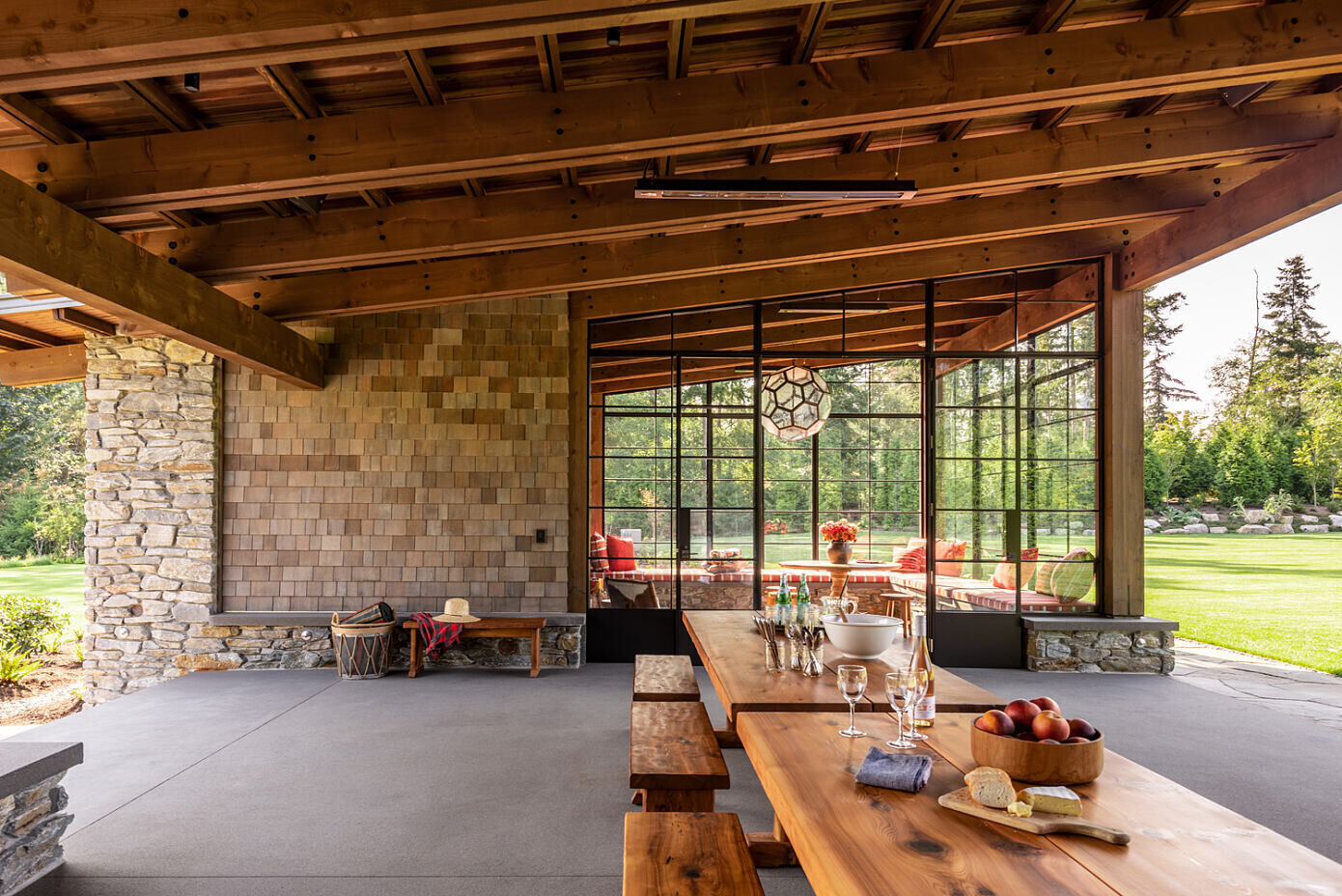
To the west, a sunroom captures natural light through generous windows that look directly onto the open field. Inside, wrap around seating encourages conversation, while an inglenook creates a quieter pocket within the larger gathering space.
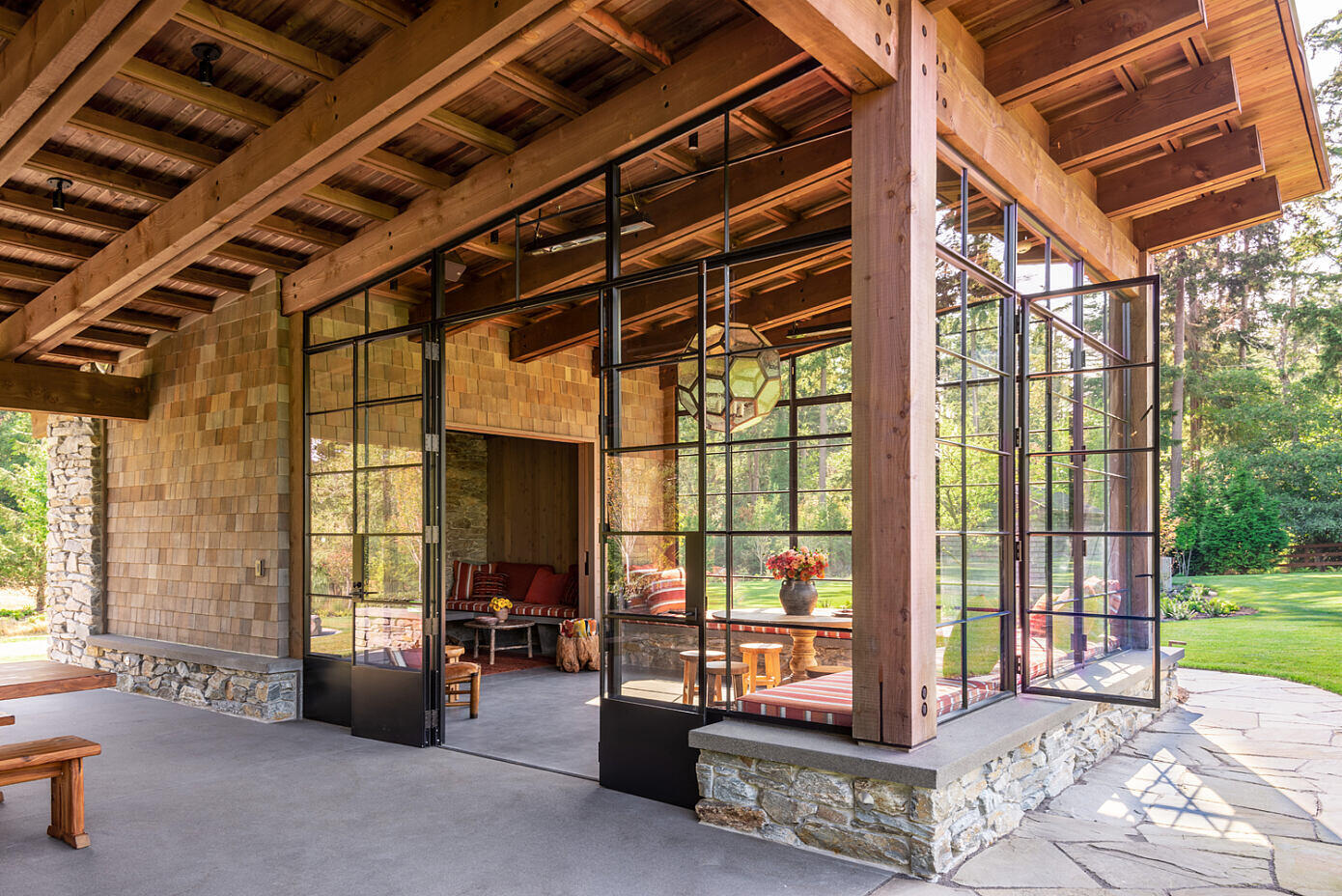
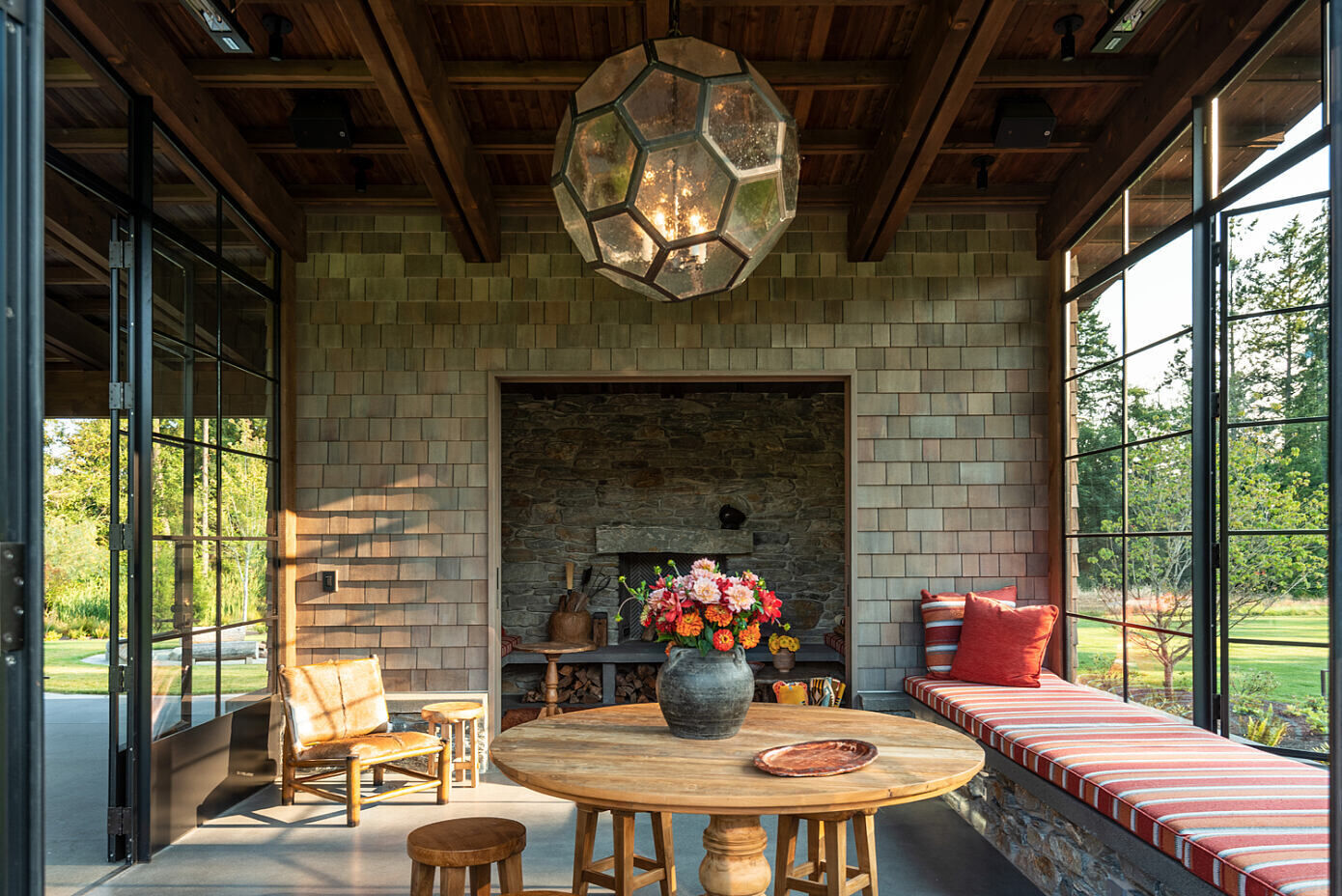
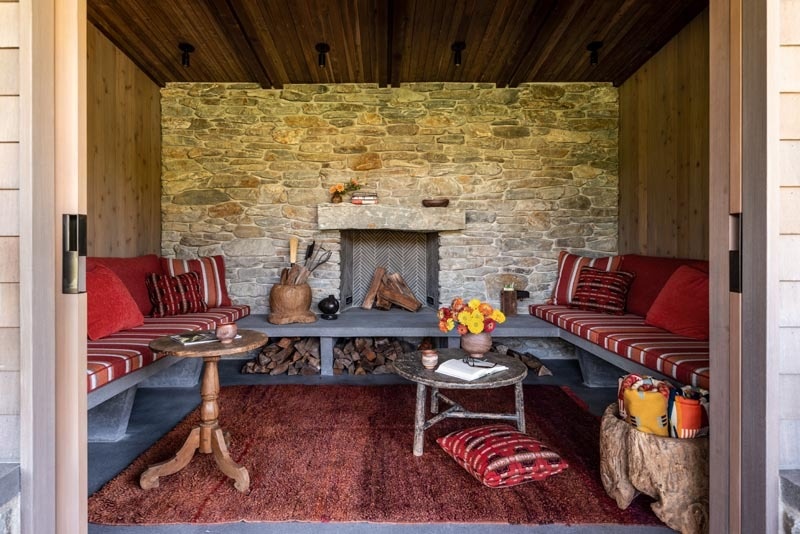
The inglenook, sometimes known as a chimney room, is anchored by a fireplace set into a substantial stone wall. Built in seating surrounds the hearth, creating an intimate spot that feels especially inviting on cooler evenings. It is a room designed for stories, board games and the slow burn of a fire after the sun goes down.
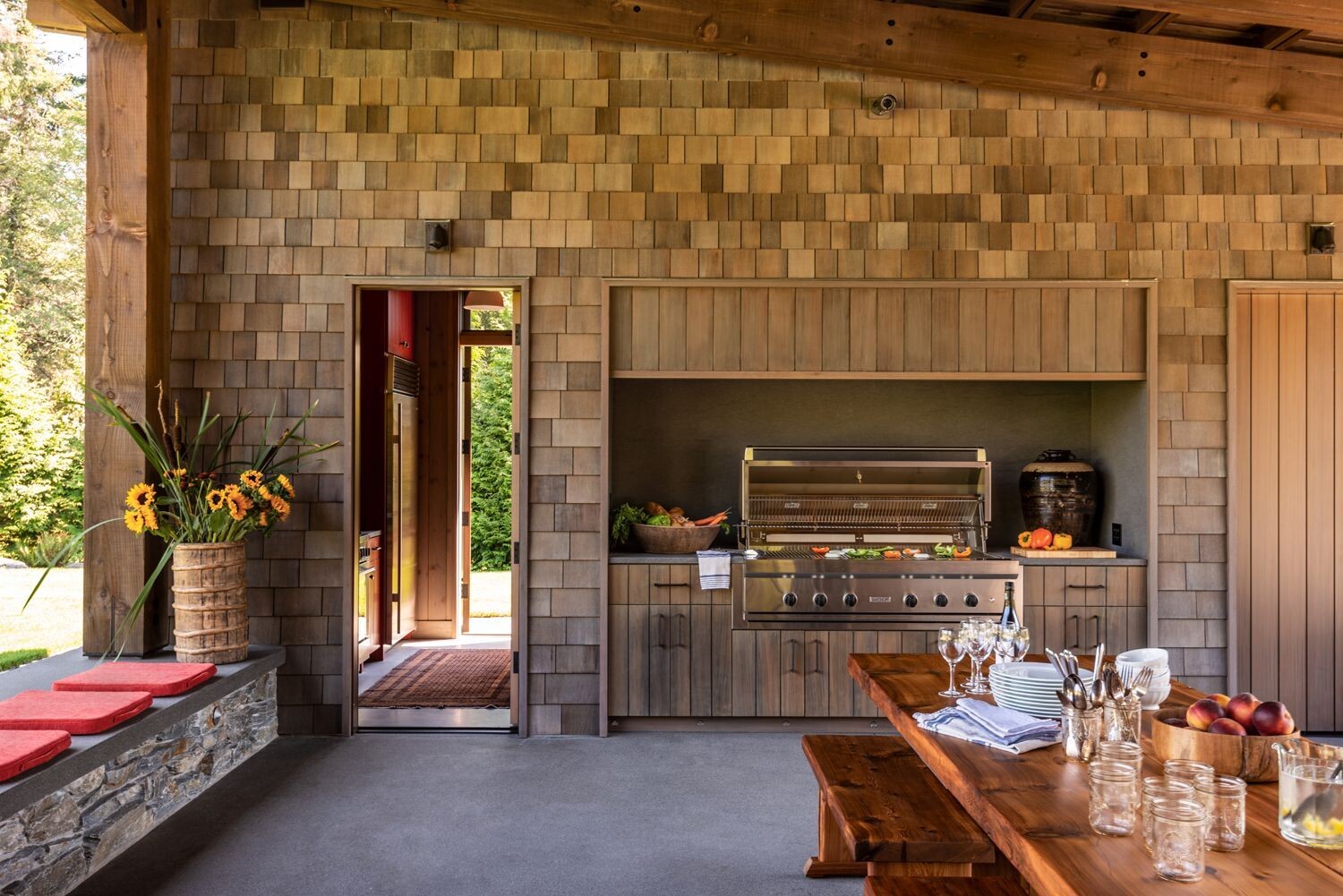
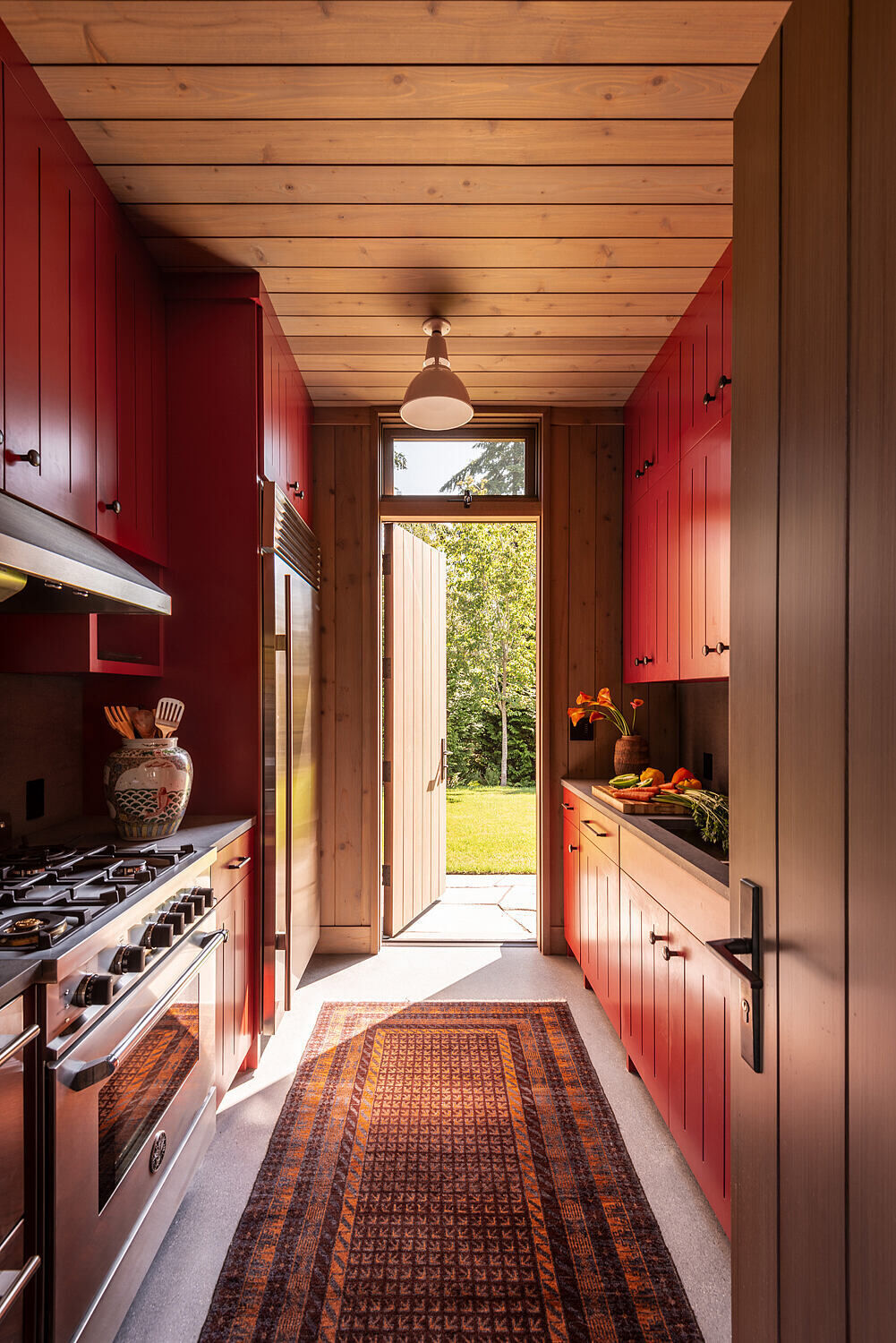
On the eastern side of the patio, the mood shifts toward activity. A built in barbecue area sits alongside a kitchen equipped with all the essentials, allowing hosts to prepare meals without missing out on the action. Two bathrooms are tucked neatly into this wing, ensuring the space functions easily during larger celebrations or sports days.
A short set of stairs and a winding path lead down from the pavilion to a firepit encircled by log seating. As daylight fades, the focus shifts from sport to flame. Marshmallows are toasted, conversations linger and the Fieldhouse settles into its evening rhythm.
In a time when homes are often designed for privacy and separation, The Fieldhouse offers the opposite. It is a place built intentionally for gathering, rooted in regional materials and inspired by a legacy of park architecture that celebrated nature and community.