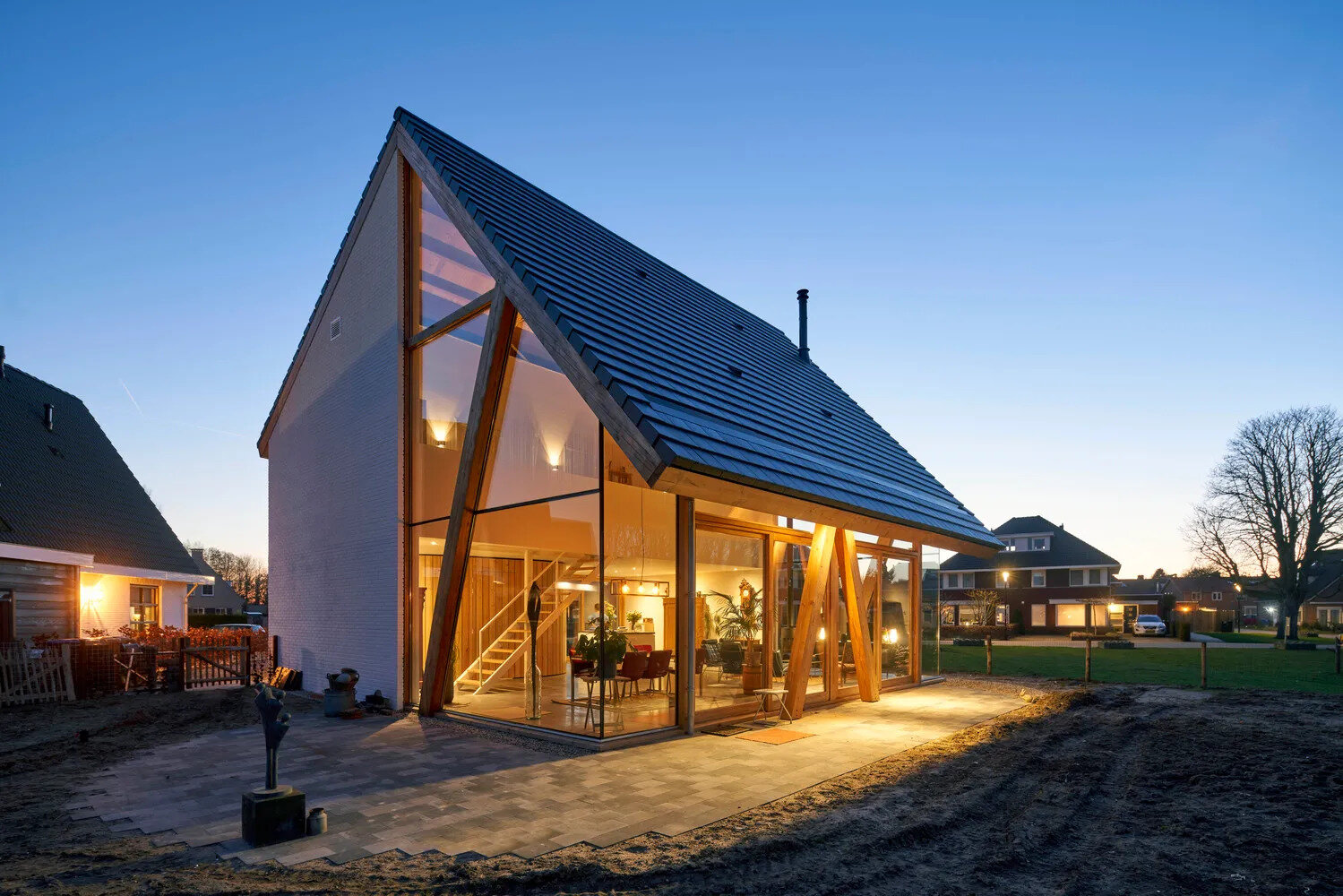
On the edge of the Dutch village of Werkhoven, a contemporary barnhouse quietly reinterprets one of the Netherlands’ most familiar housing types. Designed by Ruud Visser and Fumi Hoshino of RV Architecture, Barnhouse Werkhoven takes inspiration from catalogue homes, a model that has shaped countless residential streets across the country.
As the architects explain, catalogue houses are sold much like cars, offered in recognisable types that buyers can choose from. One of the most popular is the barnhouse, a home that echoes the look of an agricultural building converted for modern living. These houses are typically defined by a large gable roof and a construction that relies heavily on wood. For this project, that familiar starting point became the basis for a far more tailored result.
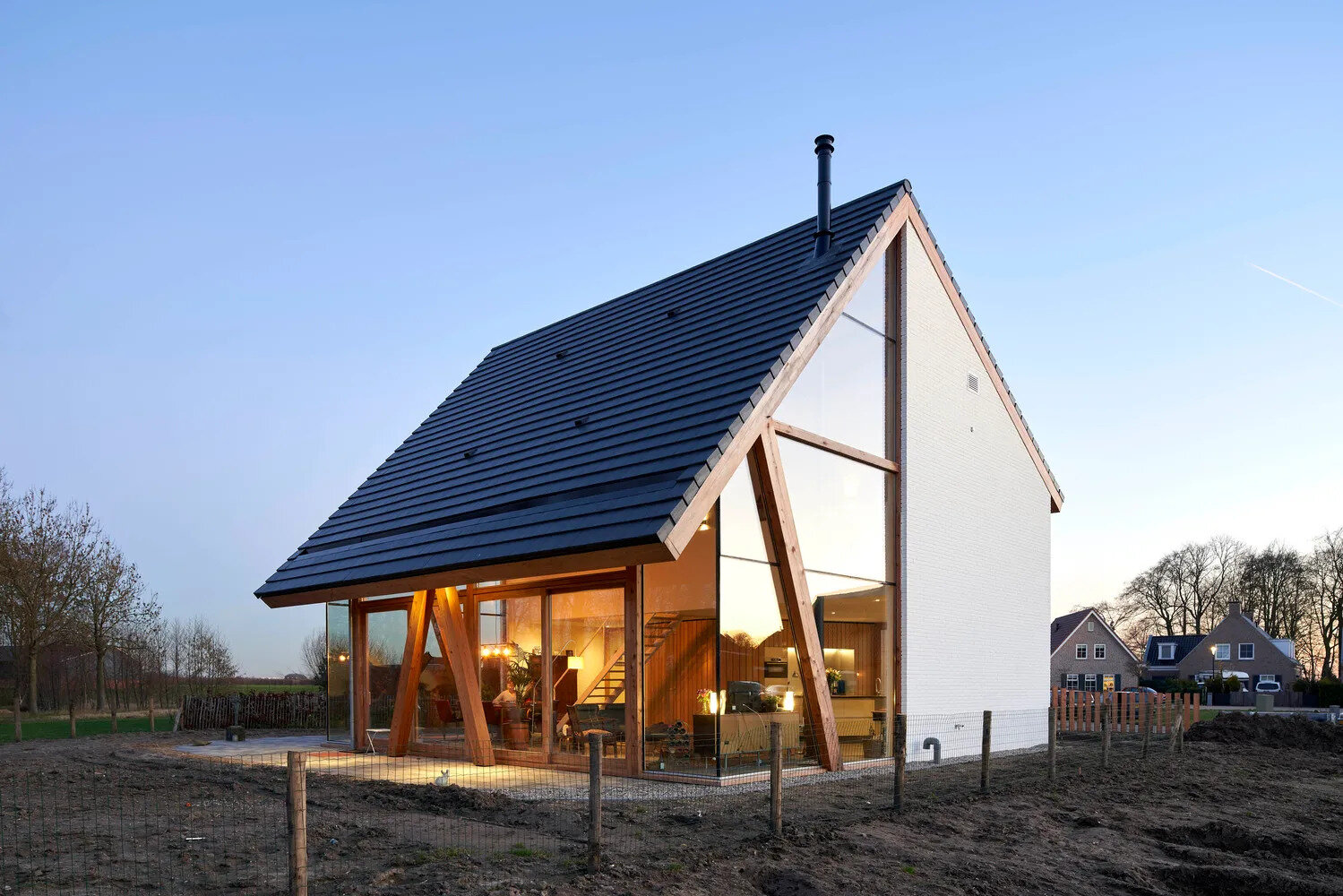
The site itself played a major role in shaping the final design. Unlike the surrounding rectangular plots, this one was triangular and sat on an angle. Rather than forcing the house into a conventional position at the front of the lot, the architects embraced the irregular geometry. The barnhouse was positioned to take full advantage of the expansive backyard, with large windows opening the home to views of the fields and trees beyond.
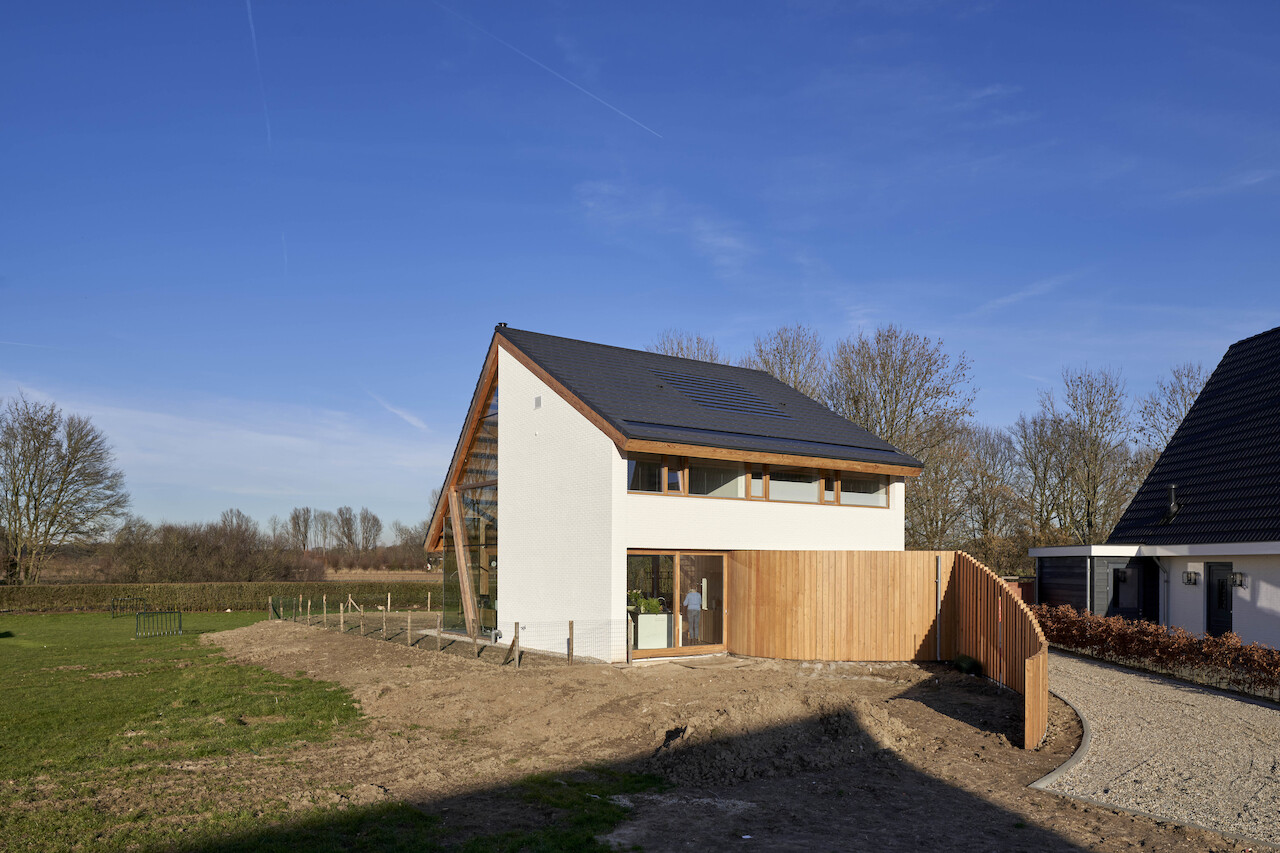
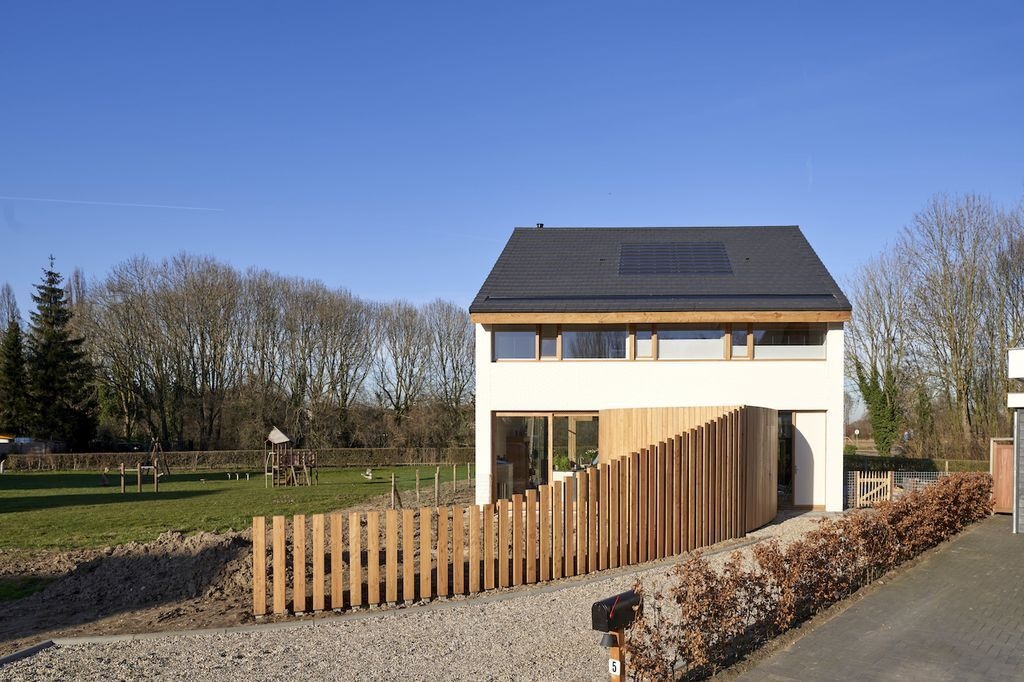
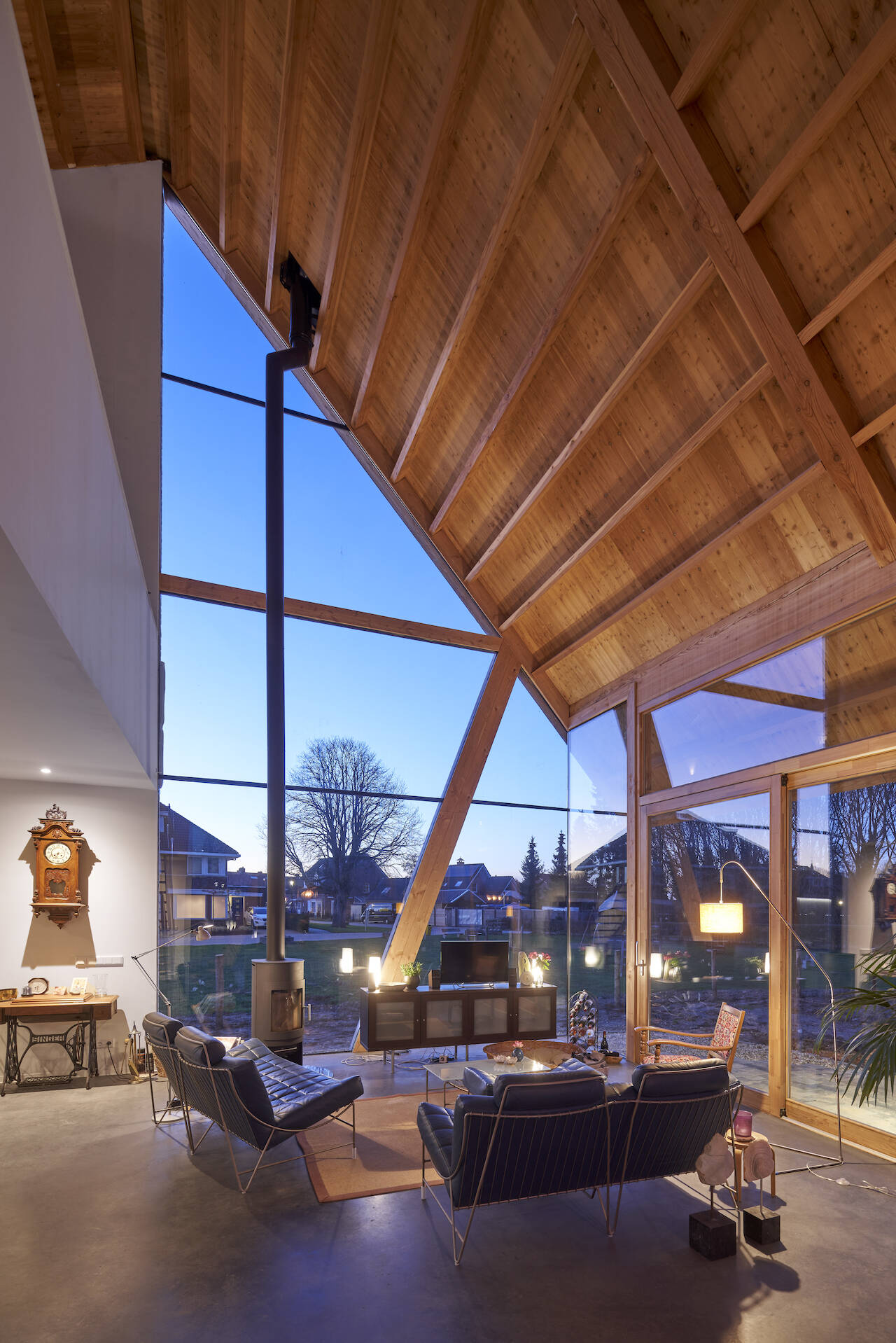
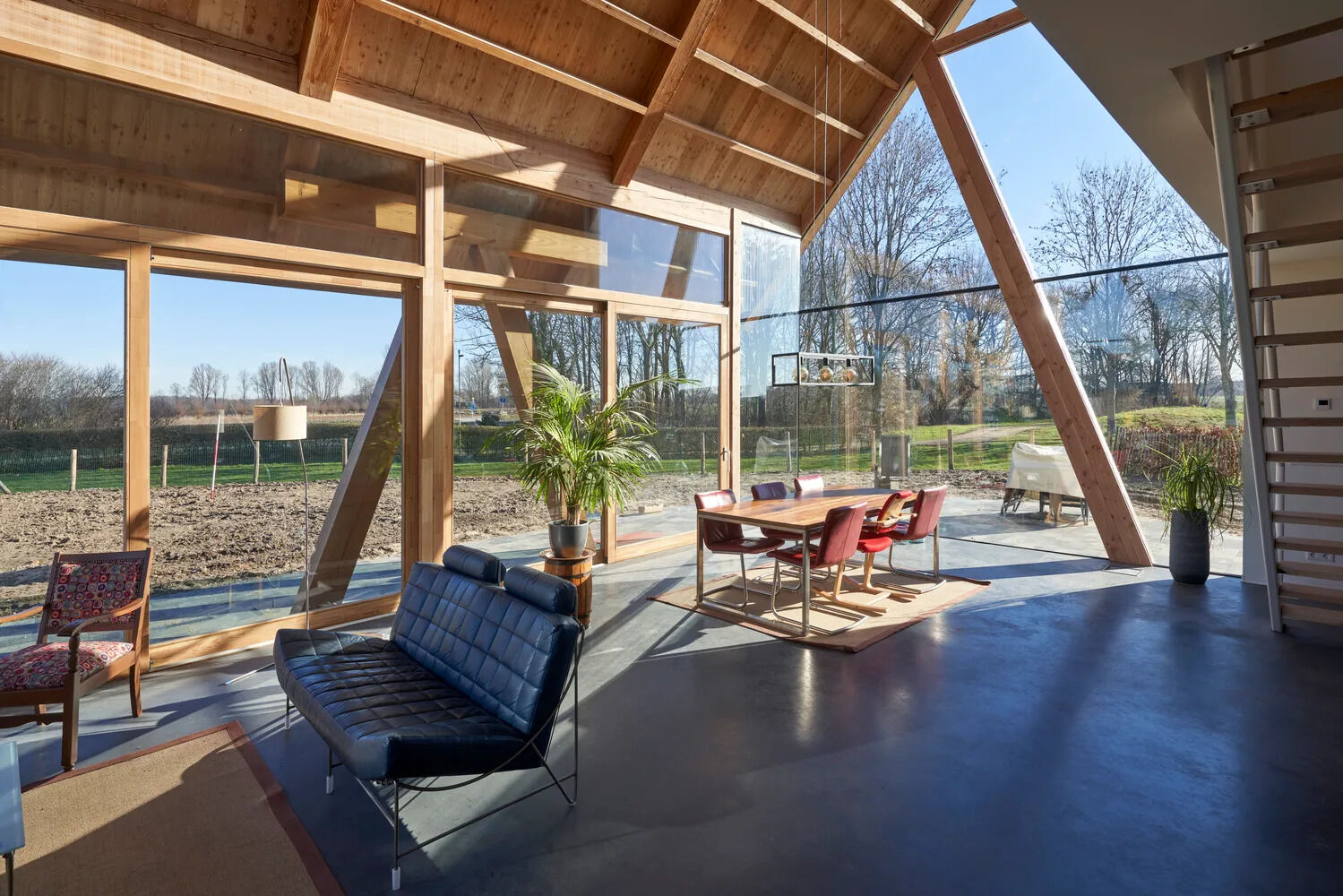
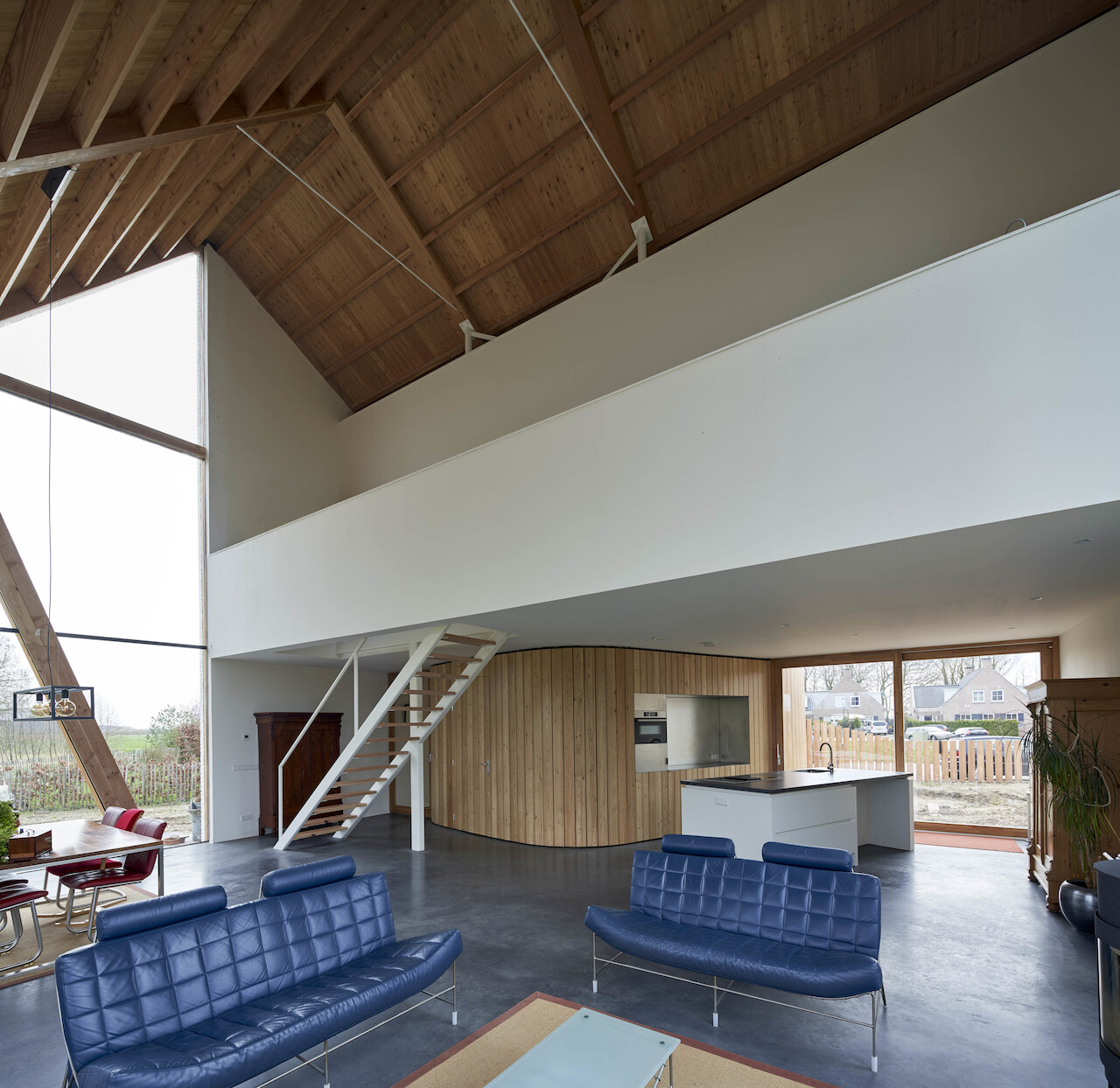
Stepping inside, the impact of the gable roof becomes immediately apparent. Its height creates a generous sense of volume, allowing daylight to pour deep into the home. Floor-to-ceiling windows line three sides of the open plan living and dining area, blurring the boundary between indoors and out and giving the central space a calm, airy feel throughout the day.
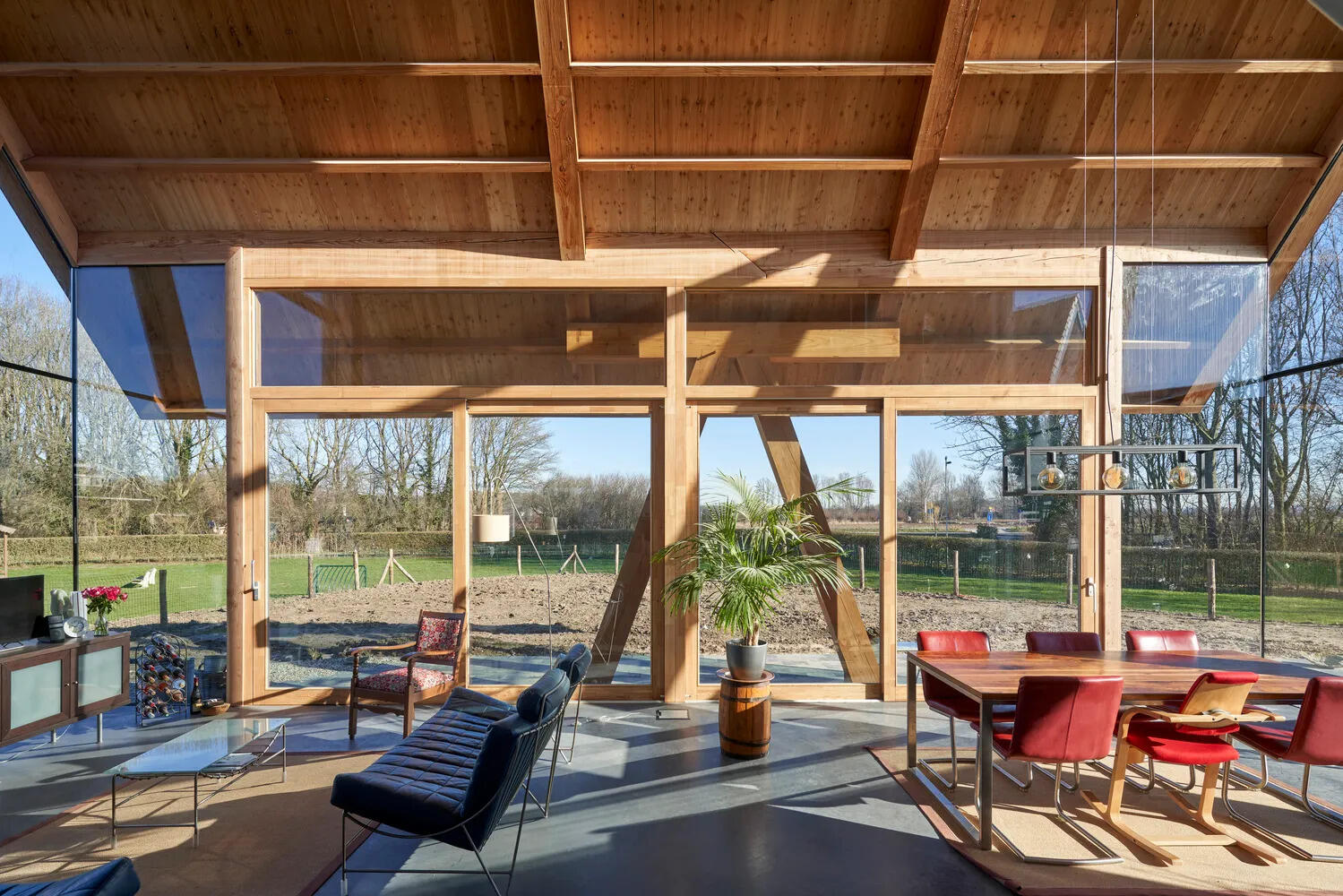
The construction reflects the same clarity seen in the layout. Four primary wooden beams sit atop the side walls and internal walls between the bedrooms, with smaller purlins spanning between them to stiffen the roof. In the open half of the house, three angled wooden columns support the roof while also stabilising the structure. Their placement was carefully considered to frame the best possible views, closing the house off where privacy was needed and opening it up toward the landscape at the rear.
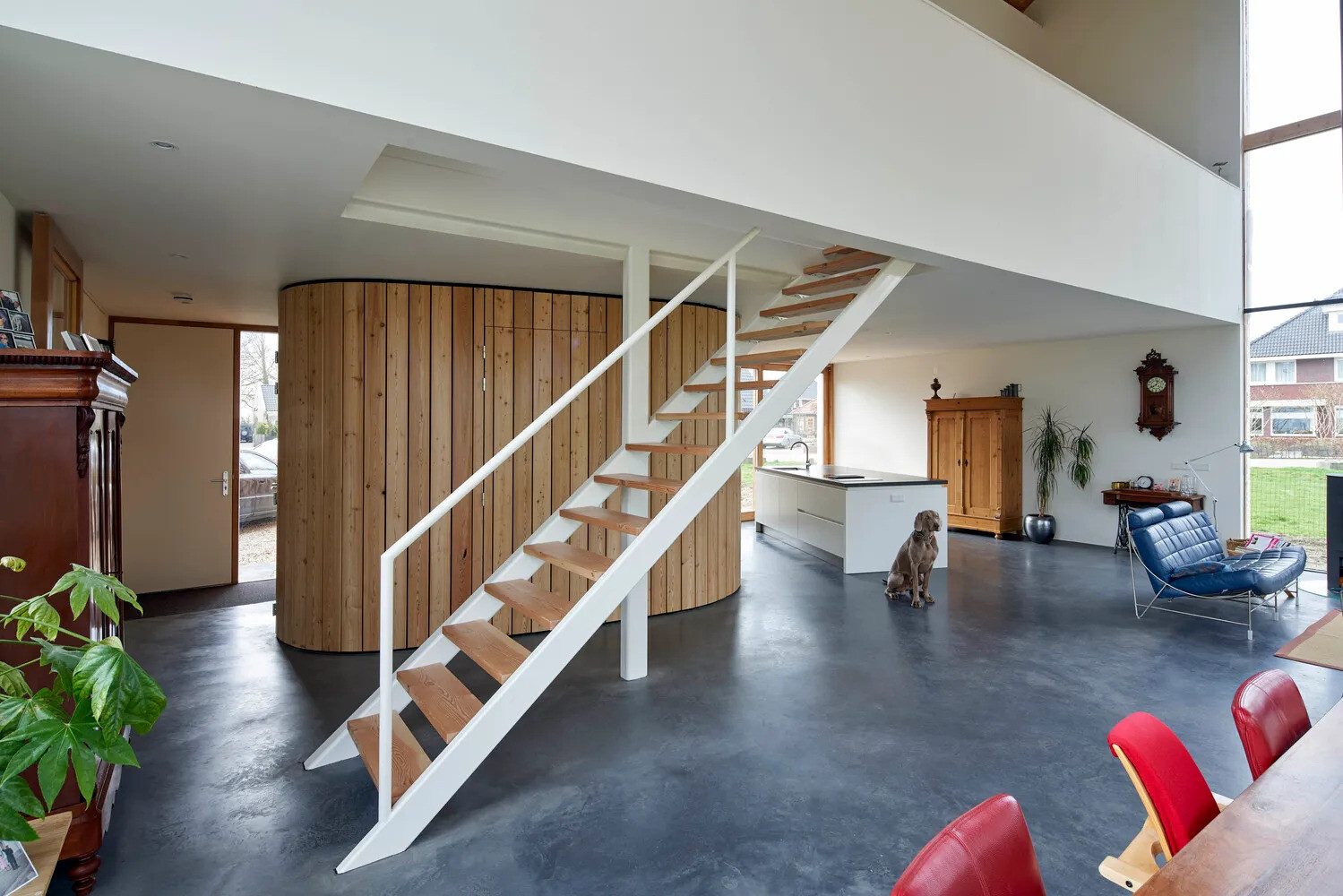
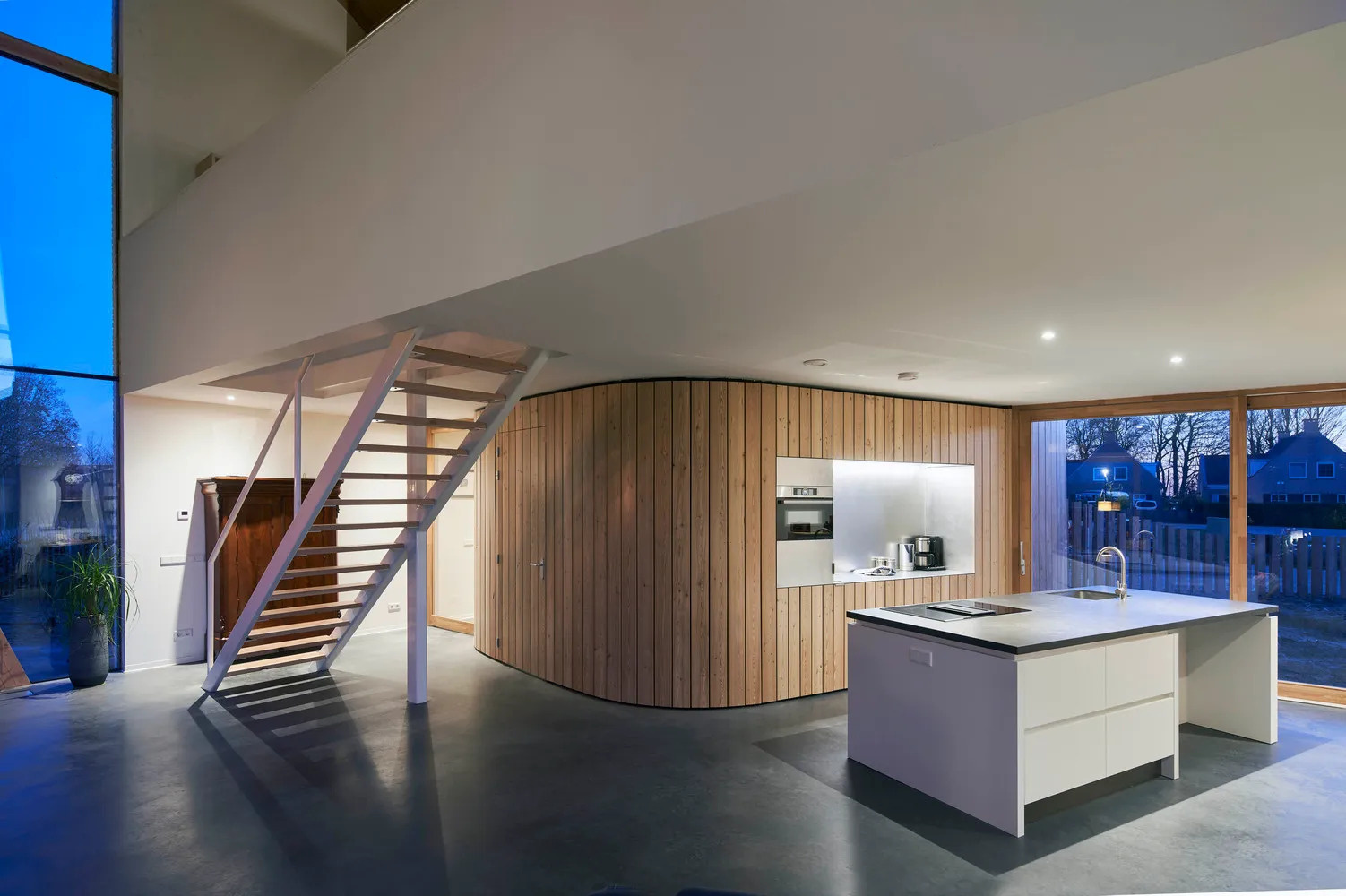
Running through the interior is a gently curved wood wall that begins at the front door and leads toward the kitchen. This sculptural element also conceals the practical services of the house, including the laundry room, toilet, cloakroom, and storage, keeping everyday functions neatly tucked away. Beside the kitchen, a set of stairs rises to a more private zone containing a work area, two bedrooms, and a bathroom, all organised beneath the sloping roof.
What began as a catalogue-inspired idea has been transformed into a custom dream, shaped by site, light, and a clear architectural vision.