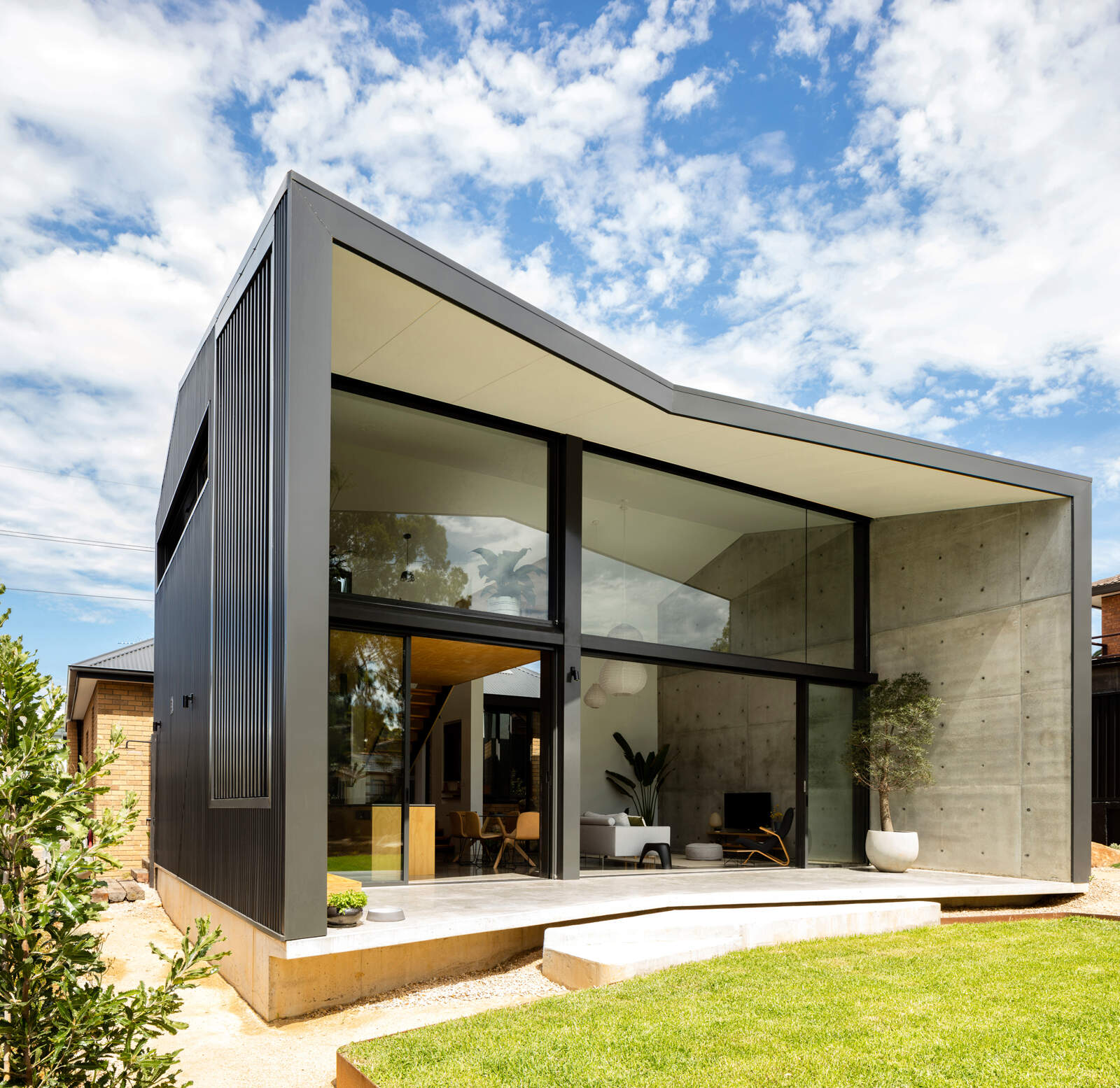
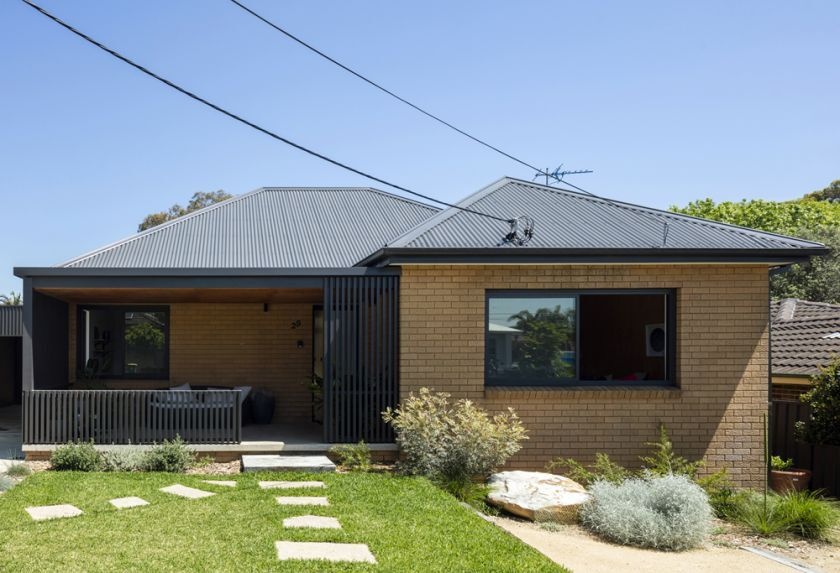
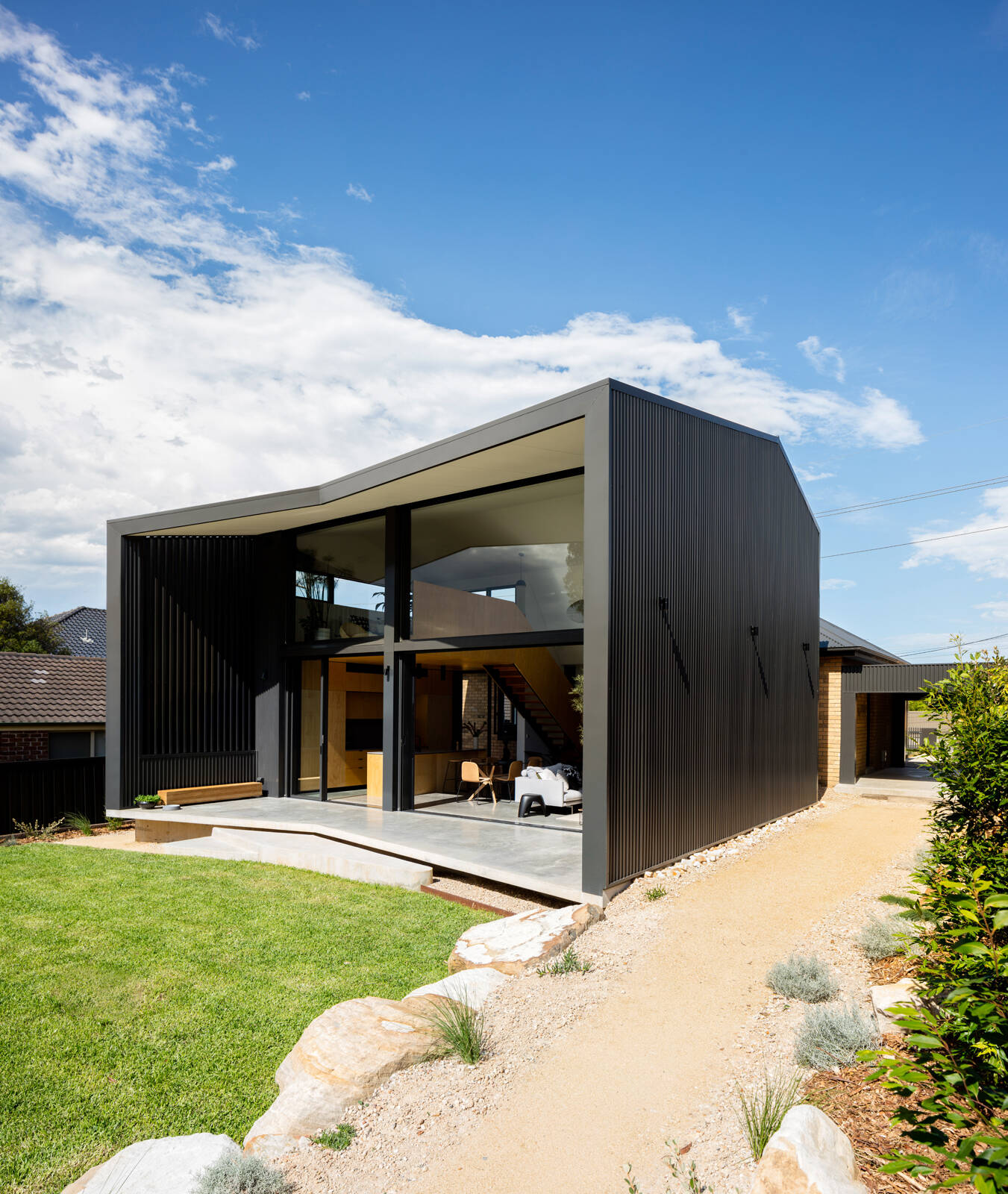
From the street, this Sydney home still reads as a familiar 1960s yellow brick house. But step inside and the experience shifts quickly. Designed by Christopher Polly Architect, the home has been carefully extended with a bold black metal addition at the rear, creating a clear contrast between old and new while transforming how the house is lived in day to day.
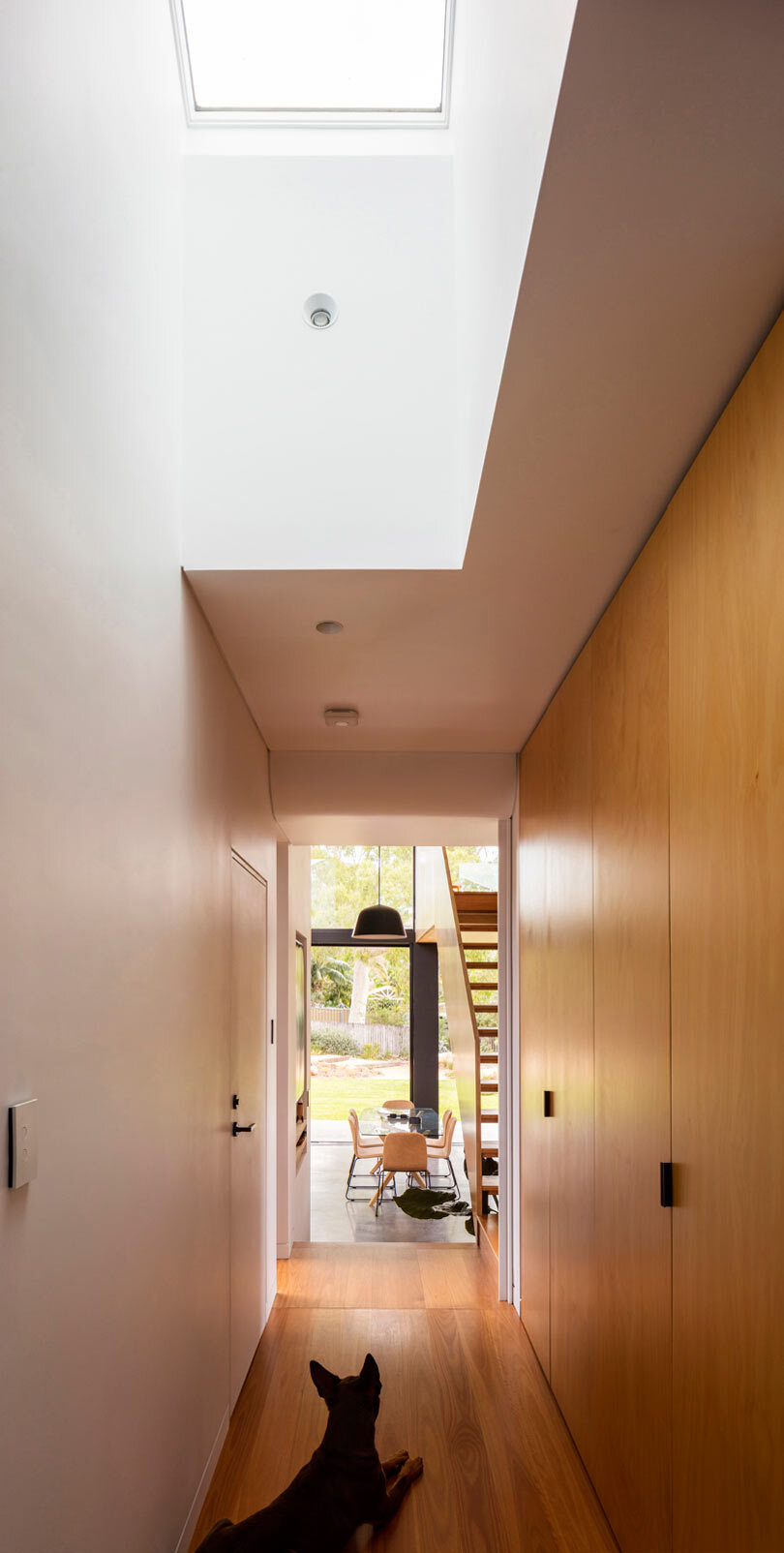
A hallway that sets the tone
Entering the home, a long hallway runs through the original part of the house, immediately guiding you toward the modern extension beyond. The space is lined with timber closets that add warmth and practical storage, while a skylight overhead draws natural light deep into the plan, softening what could otherwise feel like a narrow transition space.
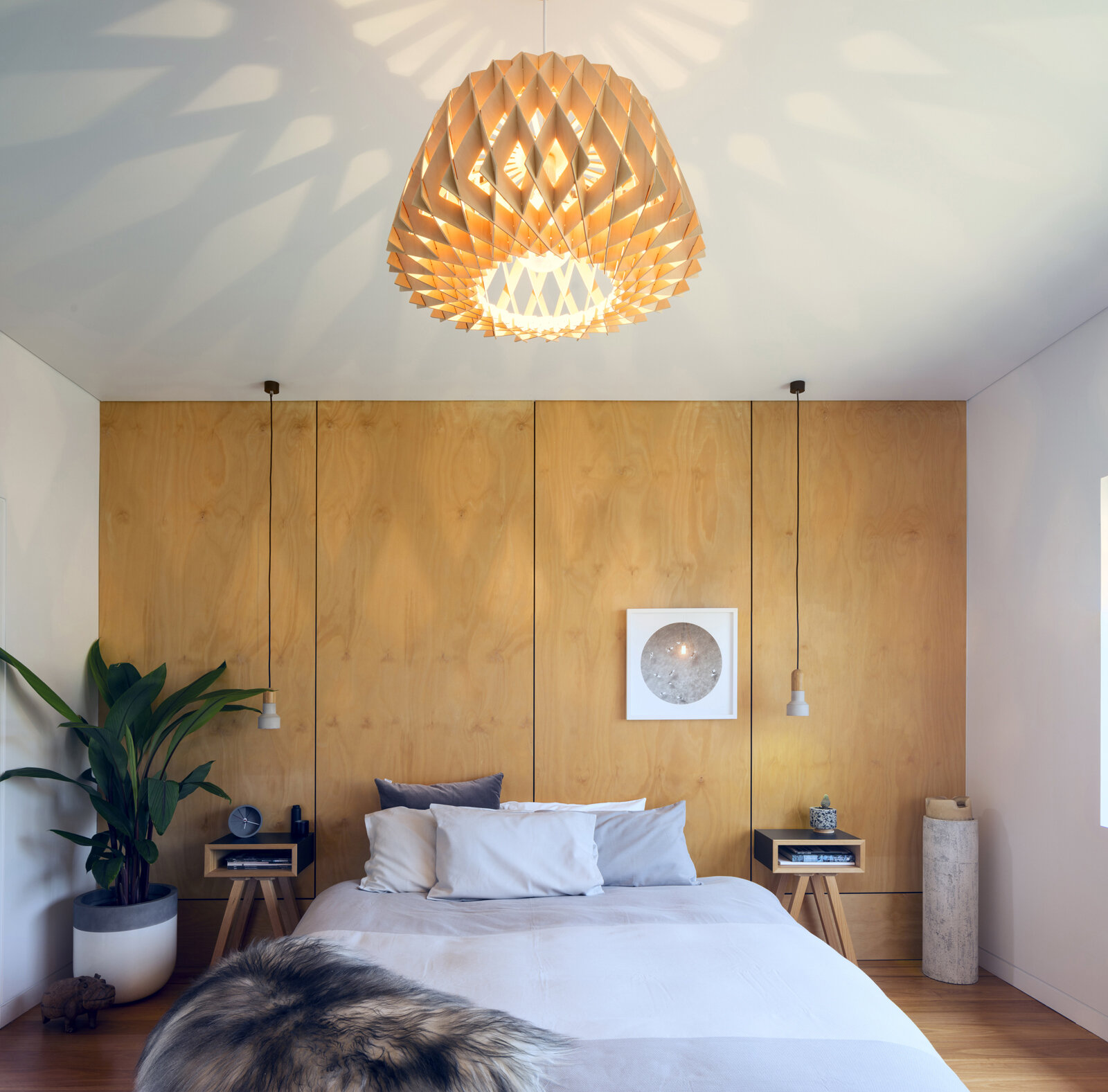
Private rooms tucked off the hall
Bedrooms and bathrooms branch off this central hallway, keeping the more private parts of the home contained within the retained brick structure. In the primary bedroom, timber wraps an entire wall and doubles as an oversized headboard, giving the room a grounded and cohesive feel without the need for additional decoration.
The primary ensuite continues the restrained palette, with dark grey tiles covering both the walls and floor. A light timber vanity provides contrast, while a round mirror softens the geometry of the space.

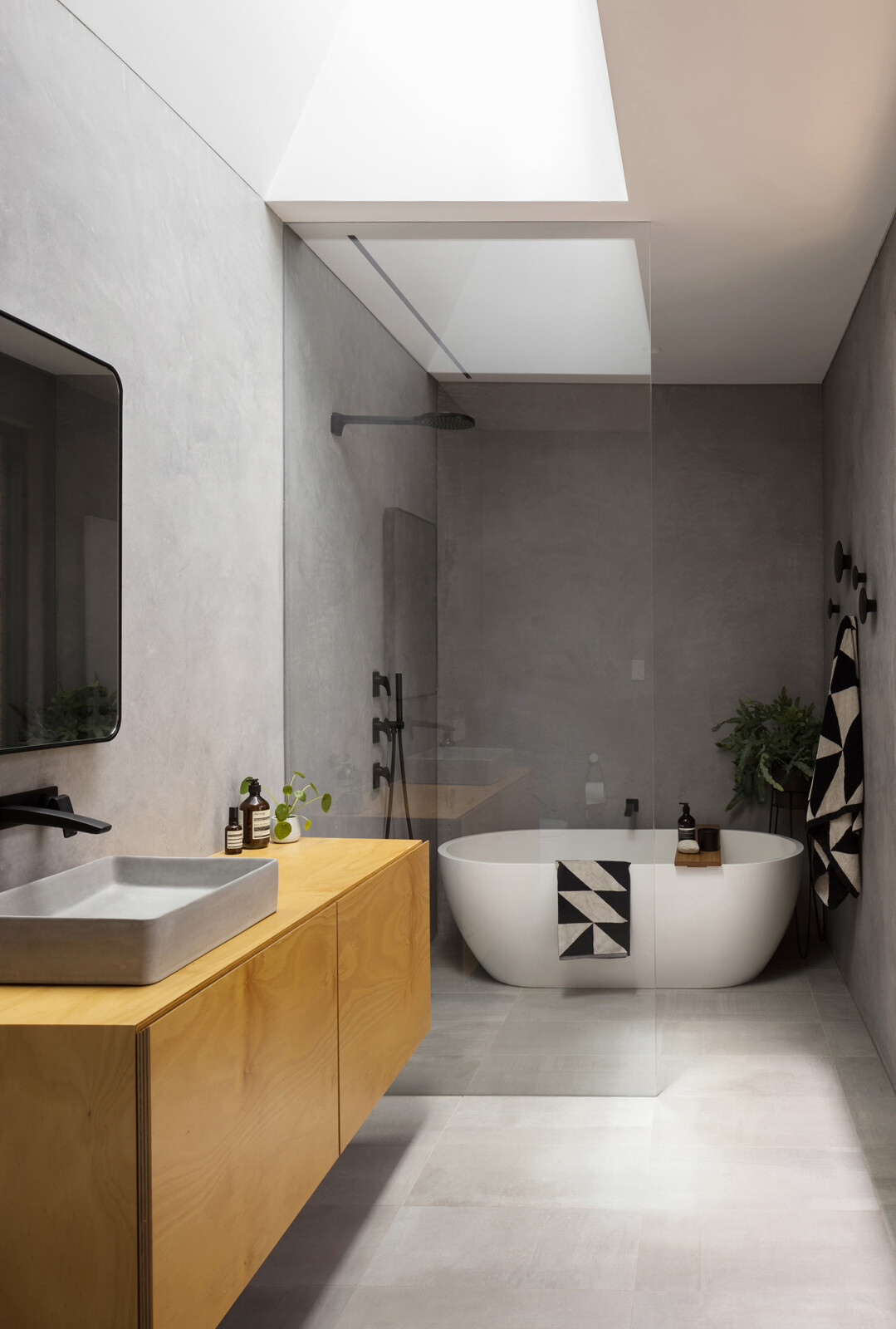
Another bathroom brings in daylight from above, thanks to a skylight cut into the roof. A glass partition separates the bath and shower area from the rest of the room, keeping the layout open while still clearly defined.
A dramatic shift at the end of the hall
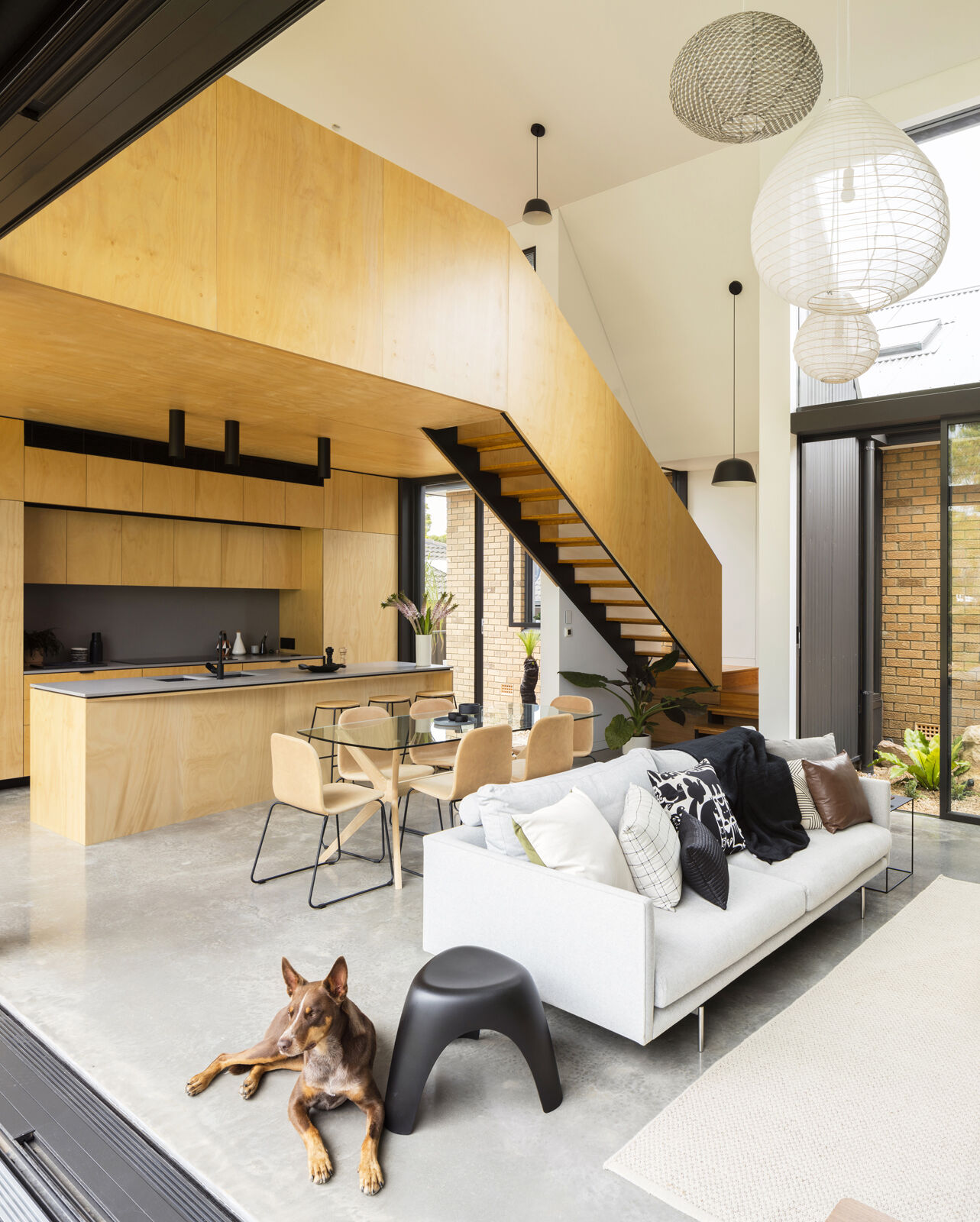
At the end of the hallway, the house opens up dramatically. The new extension contains a large open plan space that brings together the kitchen, dining and living areas, marking a clear shift from the cellular layout at the front of the house.
This is where the black metal addition fully reveals itself, with volume, height and light replacing the tighter proportions of the original rooms.
Double-height living and raw materiality
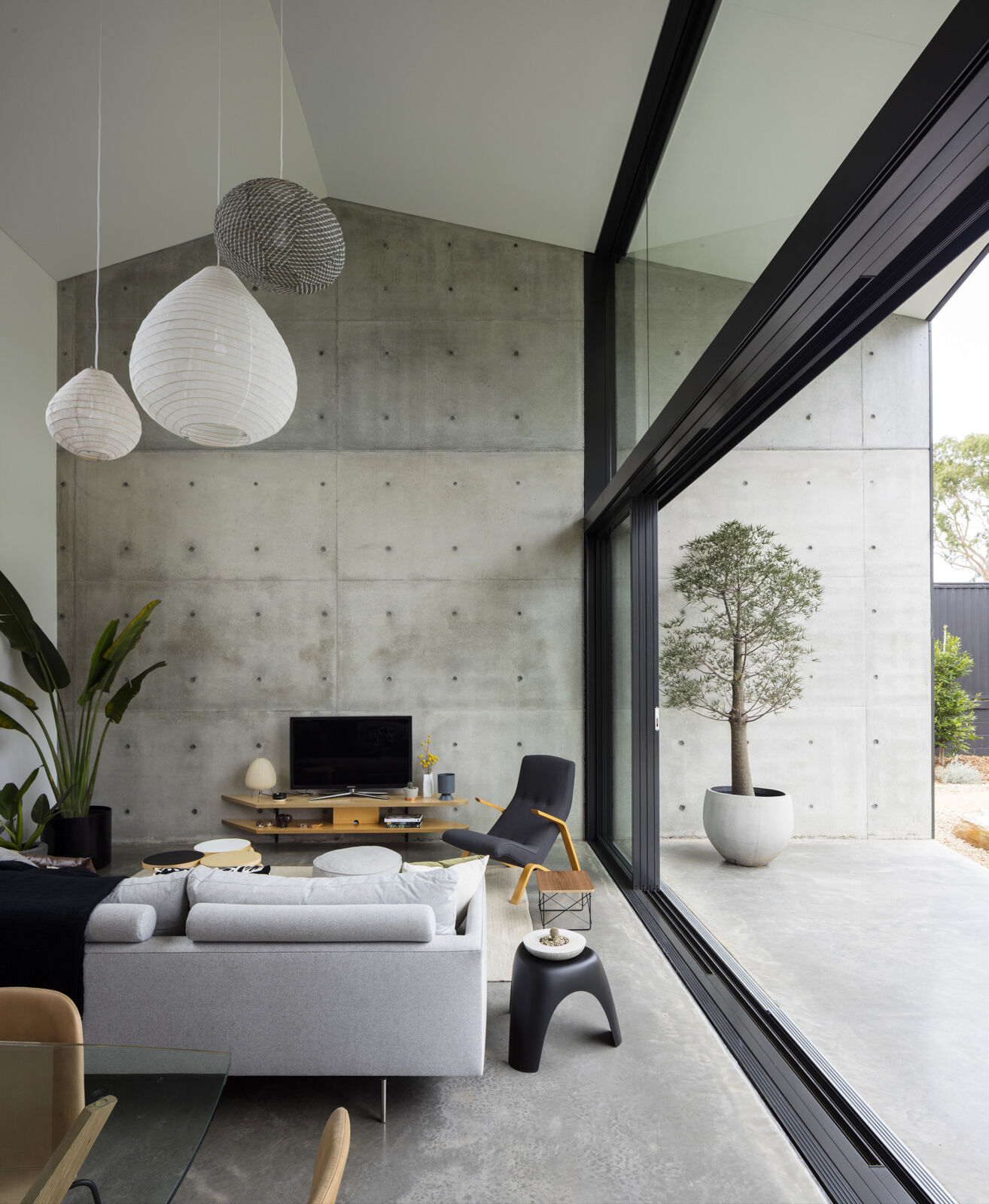
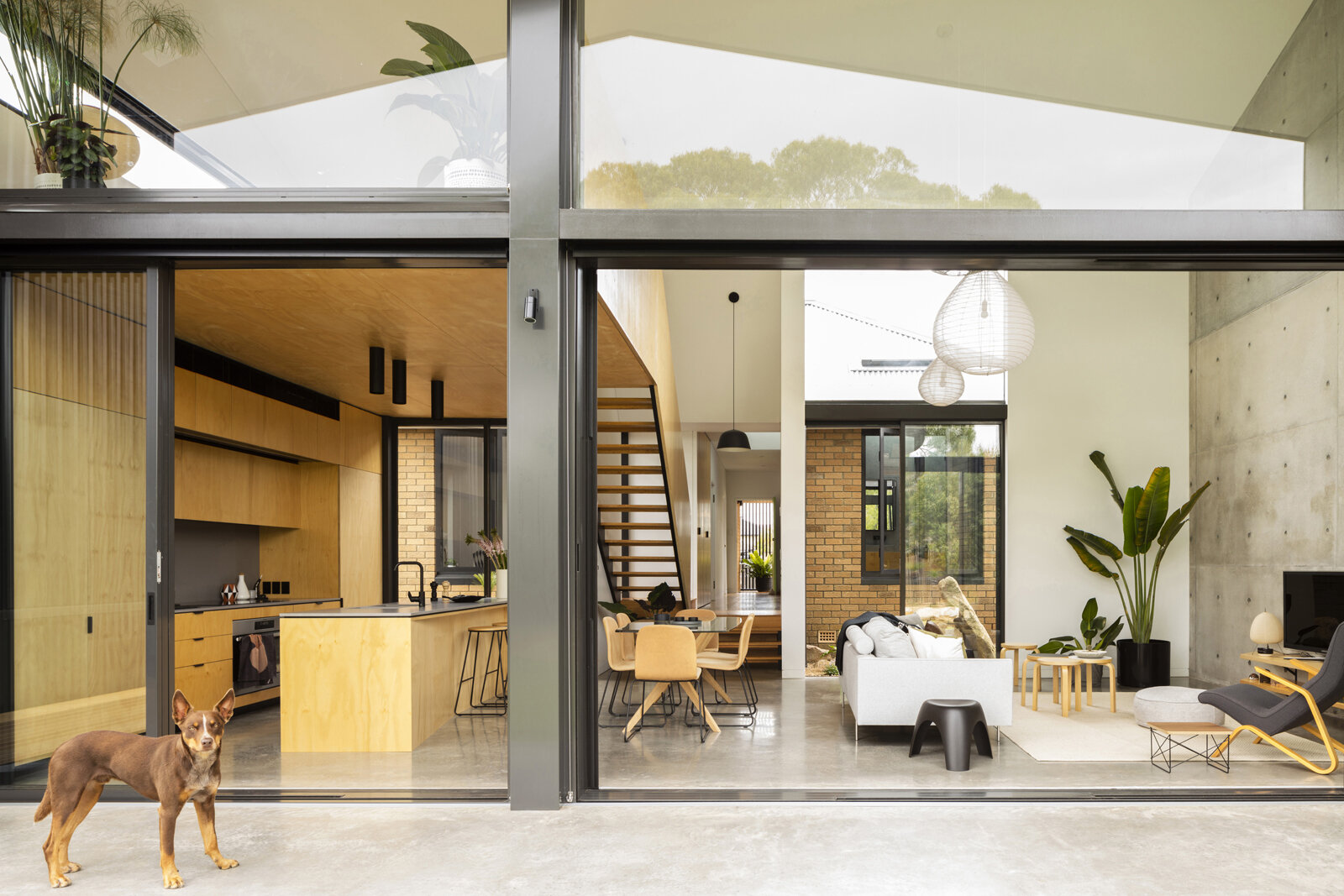
In the living area, a double-height ceiling immediately changes the sense of scale. A large exposed concrete wall anchors the space and continues seamlessly from inside to outside, reinforcing the connection between the interior and the garden beyond.
The combination of height, concrete and light creates a room that feels open and robust, yet still comfortable as a family living space.
Outdoor connections and practical details
Large openings allow the living space to flow directly onto a covered outdoor patio, extending the main living zone into the garden. Along the side of the house, a path runs from the garage through to the backyard, making movement around the site easy and intuitive.
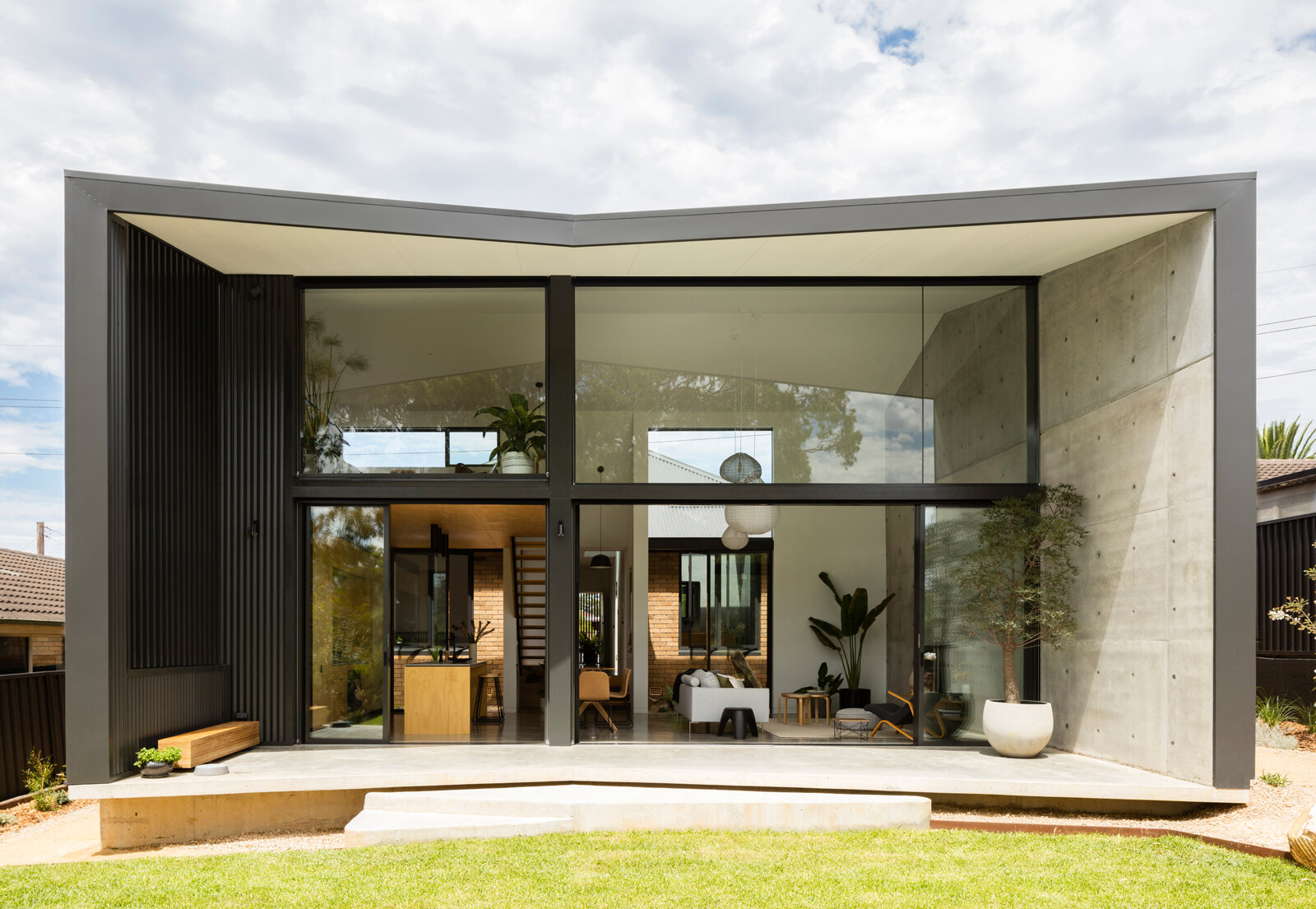
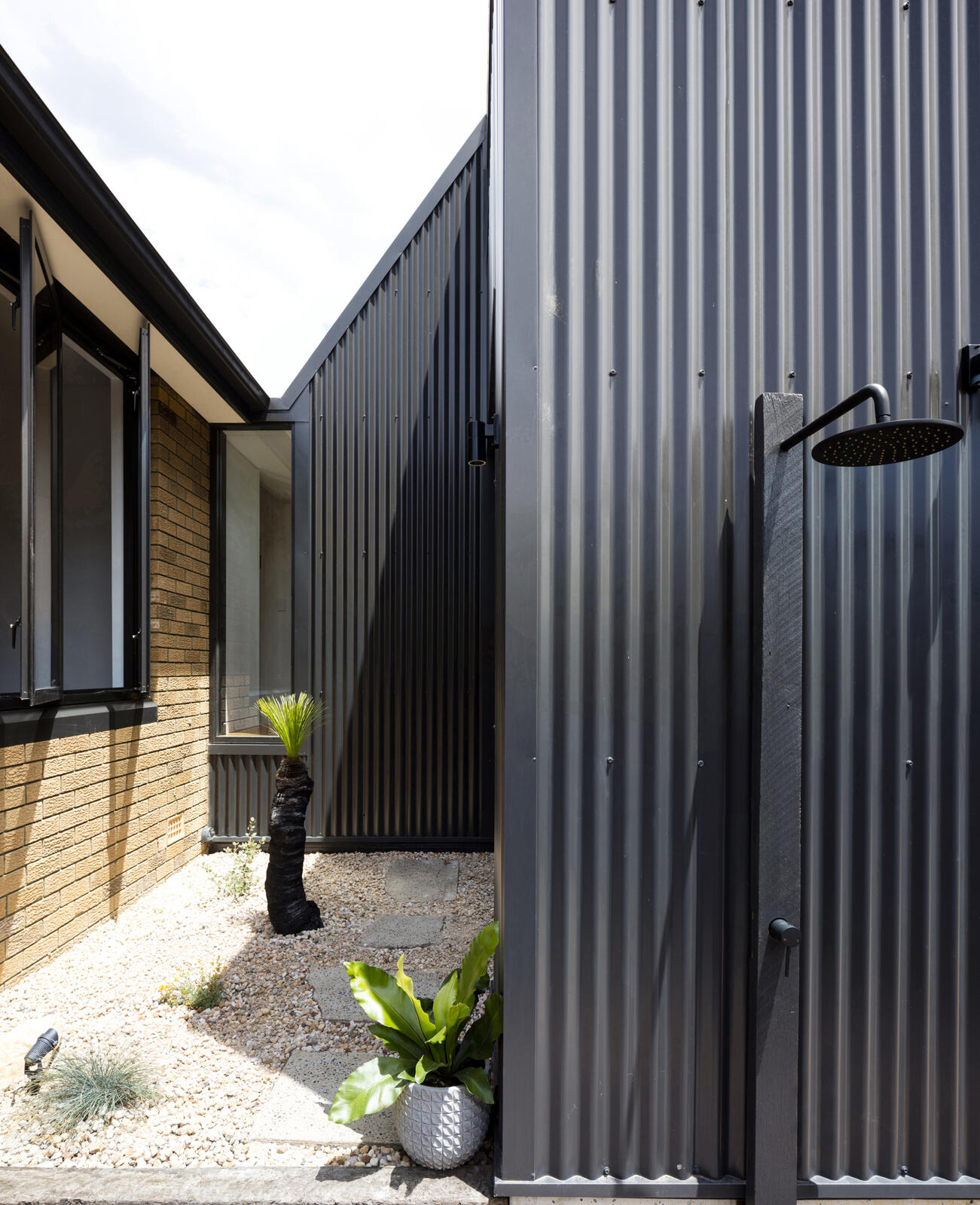
Tucked beside the extension is an outdoor shower, perfect for washing off after a trip to the beach. From here, the junction between the original yellow brick house and the black metal extension is clearly visible, highlighting the project’s deliberate contrast.
A kitchen designed for everyday use
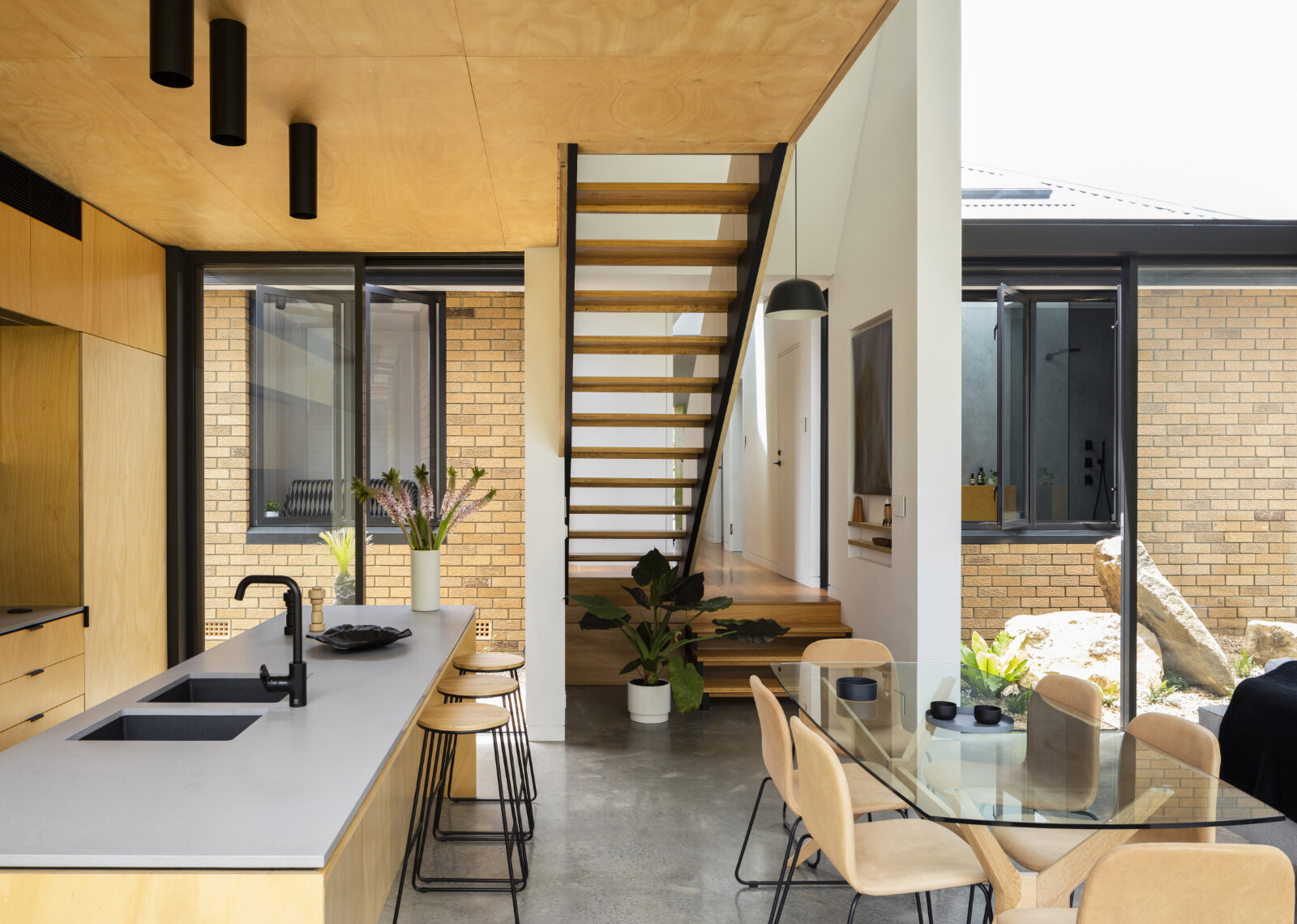
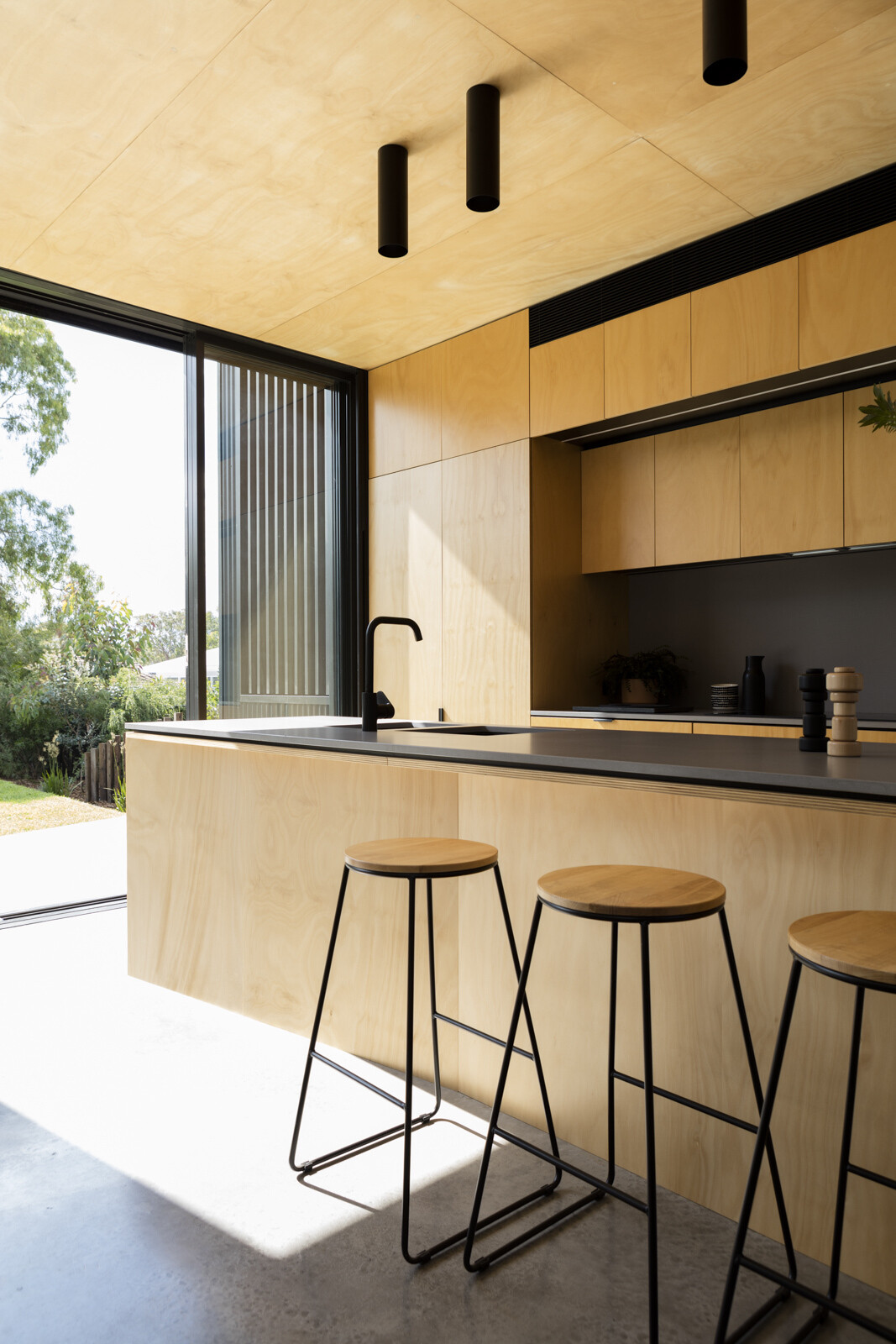
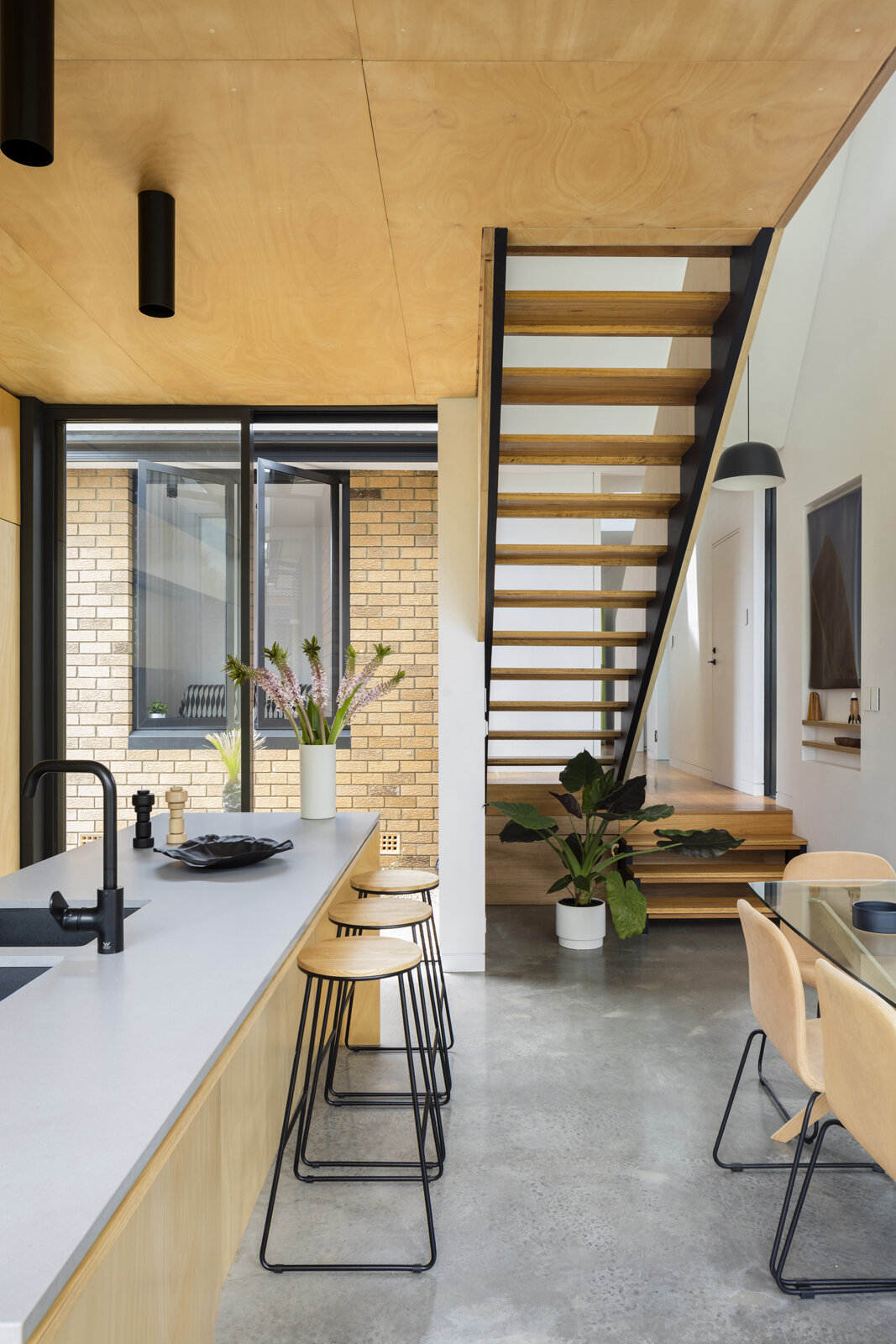
Back inside, the kitchen sits at the heart of the open plan space. Light timber cabinetry keeps the palette soft, while a long island bench provides generous workspace and an informal gathering point. Light grey countertops complement the surrounding materials without drawing attention away from the architecture.
Stairs leading to a lofted retreat
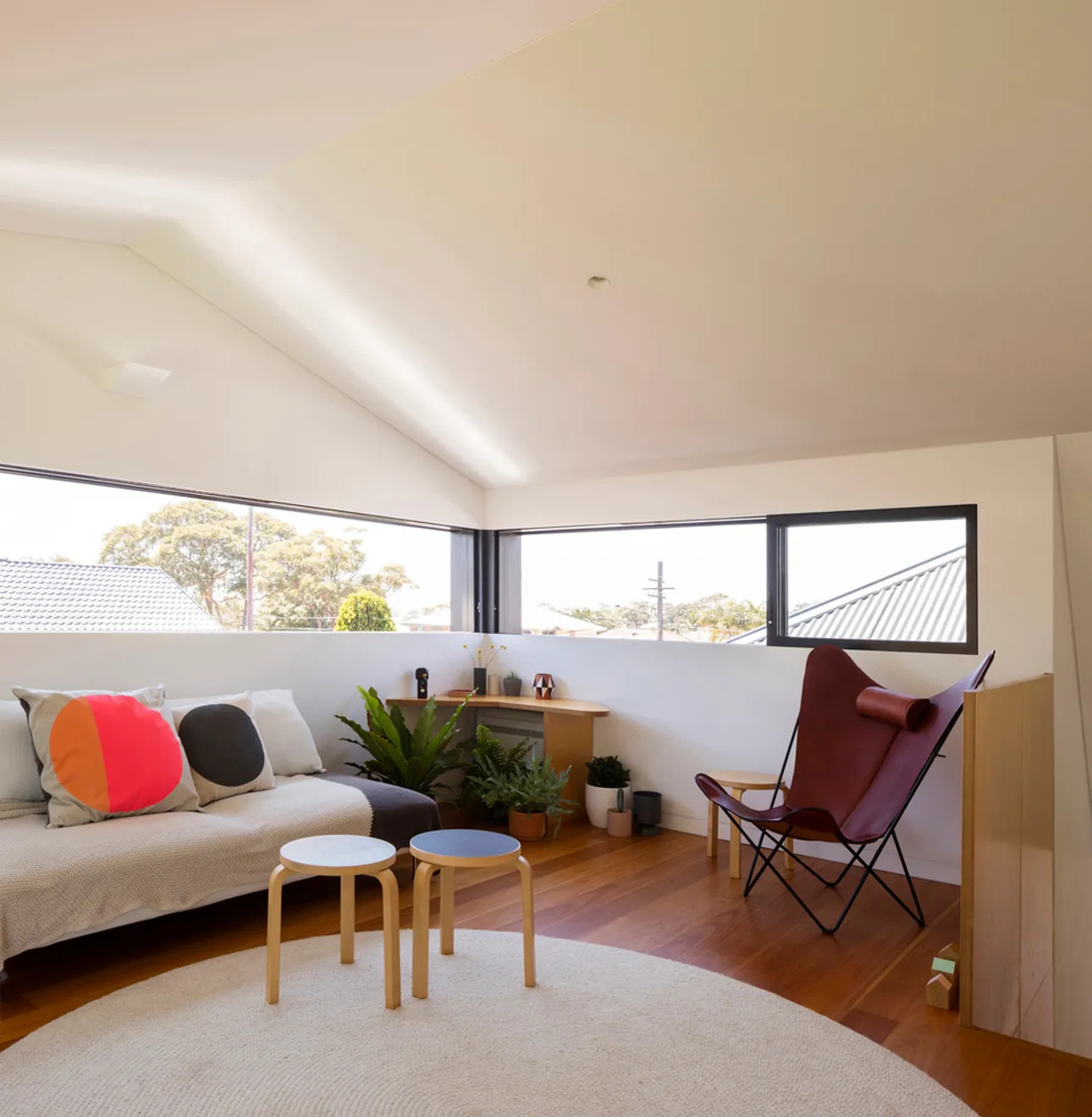
Off the hallway, a set of timber and steel stairs leads upward to a lofted area positioned above the kitchen. The stair continues the home’s material language while creating a clear vertical connection within the extension.
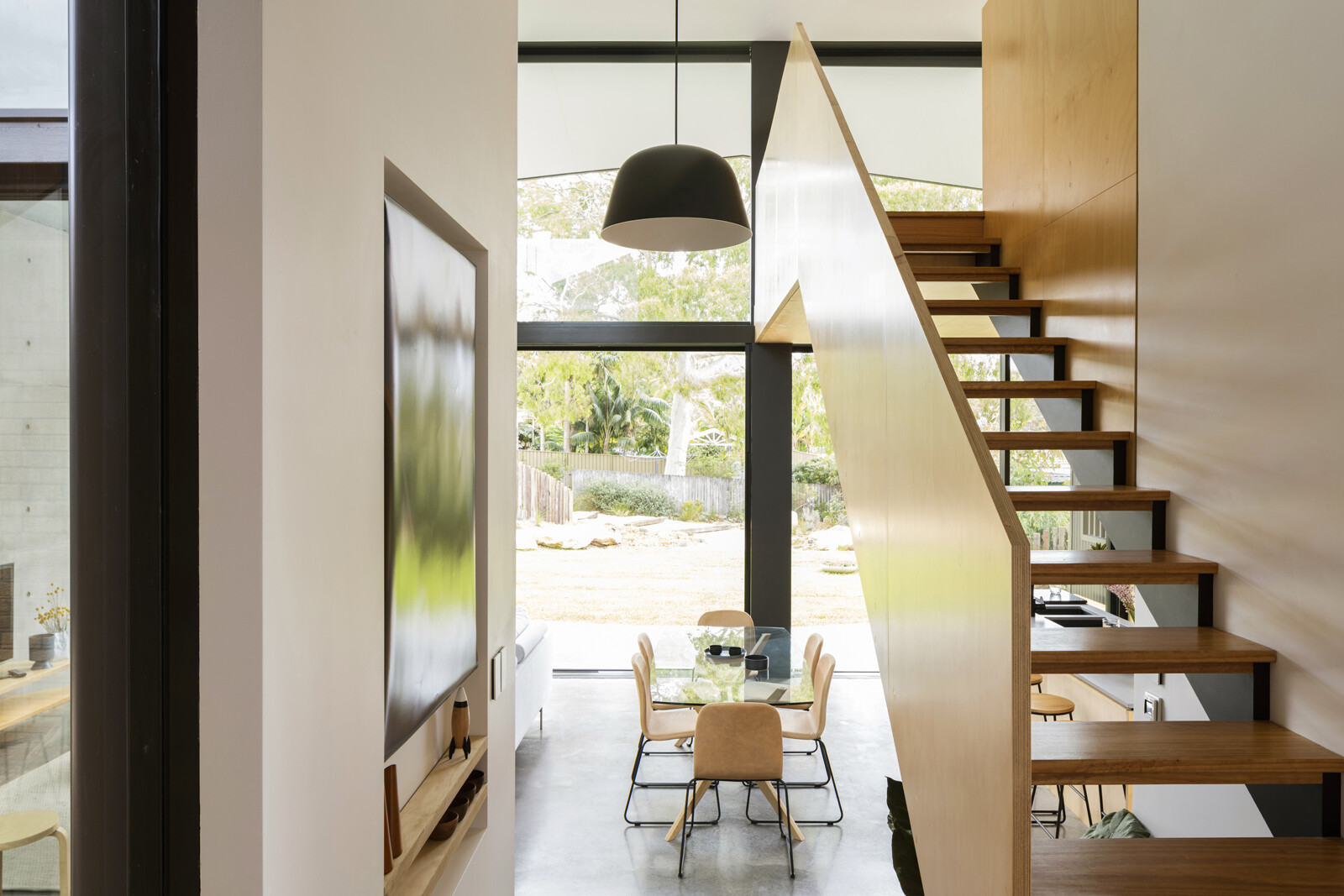
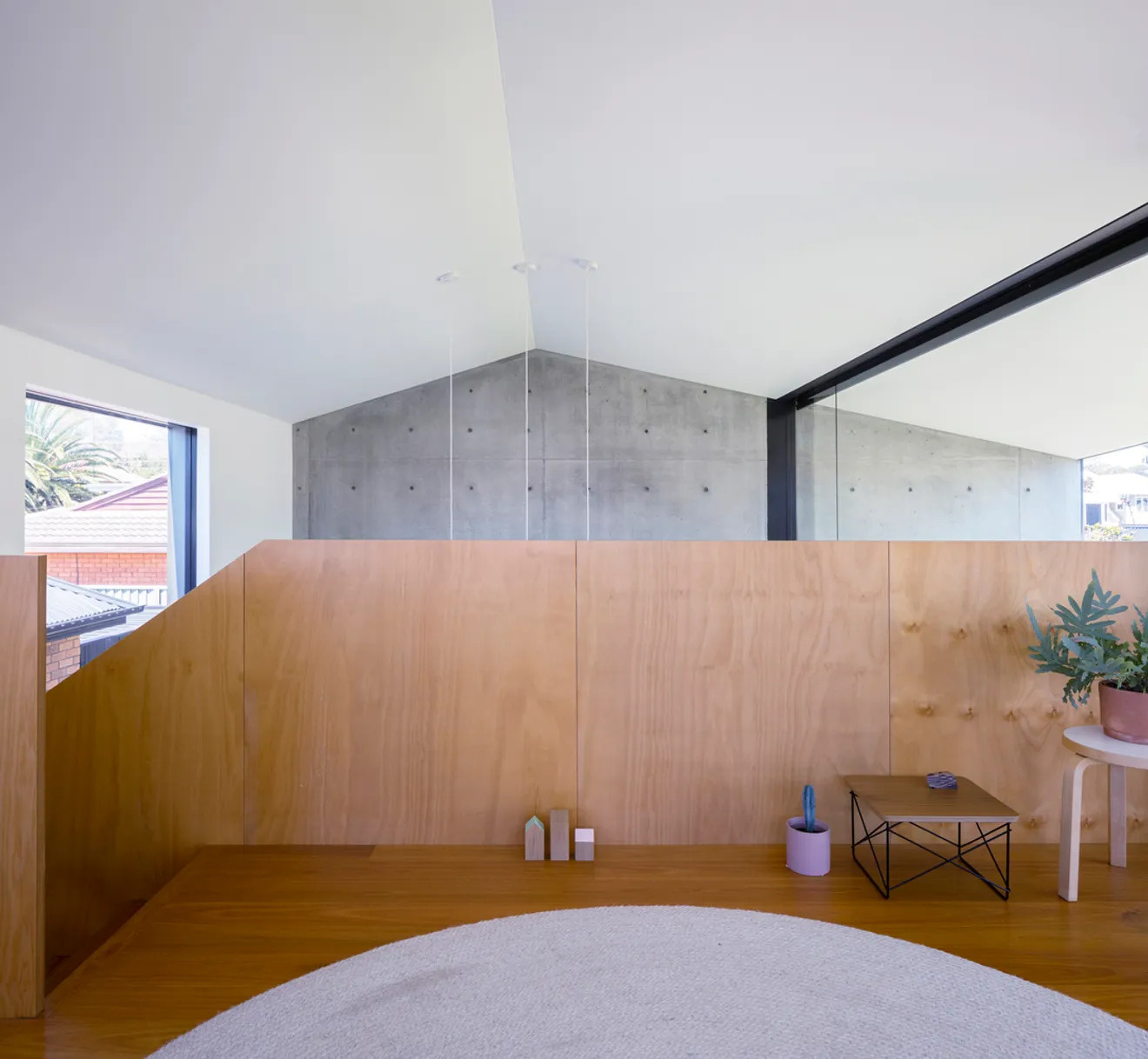
At the top, the loft functions as a secondary living room, overlooking the main living area below. From here, the double-height volume can be fully appreciated, offering a quieter retreat that still feels connected to the rest of the house.
By retaining the original 1960s brick house and pairing it with a bold black metal extension, Christopher Polly Architect has created a home that balances privacy, openness and long-term practicality. The result is a carefully planned transformation that respects the past while embracing a contemporary way of living, all through light, material contrast and thoughtful spatial design.