On a quiet stretch of Sackett Street in Brooklyn, a familiar townhouse exterior hides a thoughtfully reworked family home inside. Designed by Frederick Tang Architecture for a family with young children, the four storey townhouse has been carefully reshaped to support daily life while introducing moments of light, texture, and unexpected detail throughout the interiors.
The entryway sets a calm and practical tone from the moment you step inside. A round mirror anchors the wall, flanked by simple sconces that add soft light. Hooks line one side, offering an easy place to drop jackets and bags, while a wood bench below provides hidden storage for shoes. It is a compact space, but one designed to handle the coming and going of family life with ease.

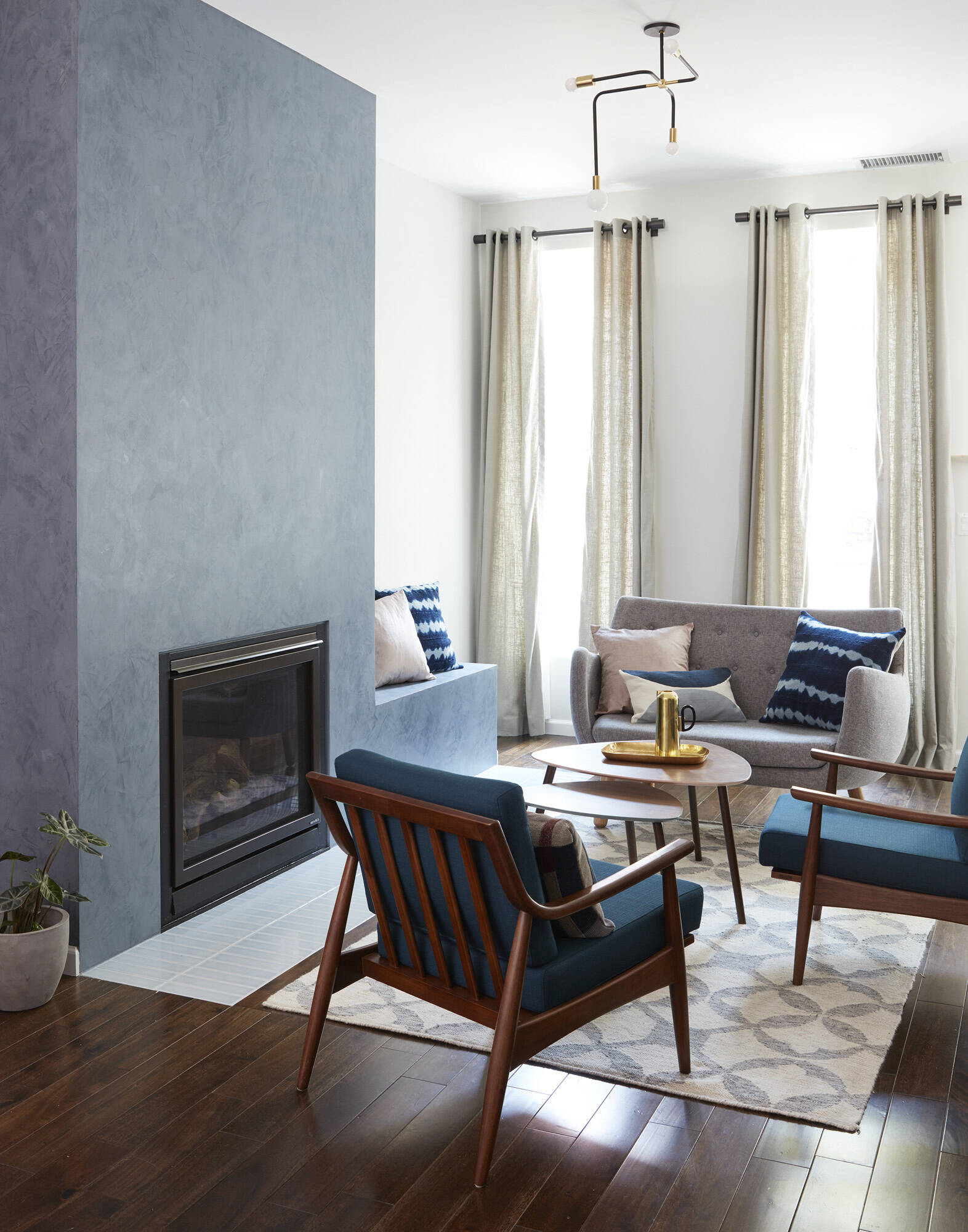
One of the townhouse’s multiple living rooms sits just beyond the entry. Here, a fireplace surround becomes more than a focal point, with a built in bench that adds seating without cluttering the room. The layout encourages everyday use, creating a comfortable space that feels relaxed rather than formal.
The kitchen continues the home’s restrained palette with white subway tiles laid vertically along the walls. Floating wood shelves introduce warmth and contrast, working alongside white cabinetry and wood counters to create a space that feels both clean and lived in. The materials keep the room bright while still grounding it with natural texture.
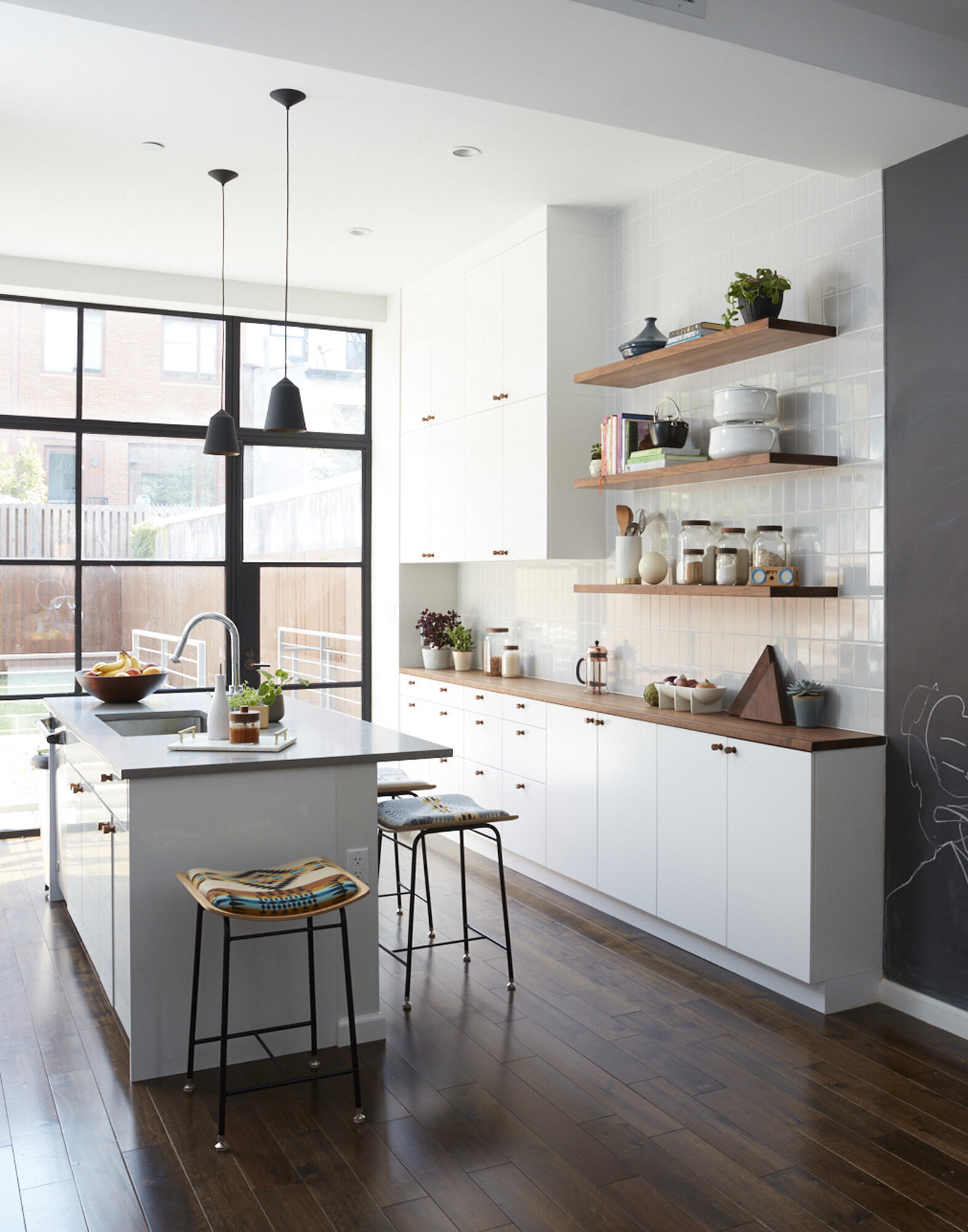
A closer look at the shelving reveals how the wood tones soften the crisp tiled backdrop. The vertical tile layout subtly draws the eye upward, adding height and rhythm without overwhelming the space. It is a small design move that quietly elevates the room.

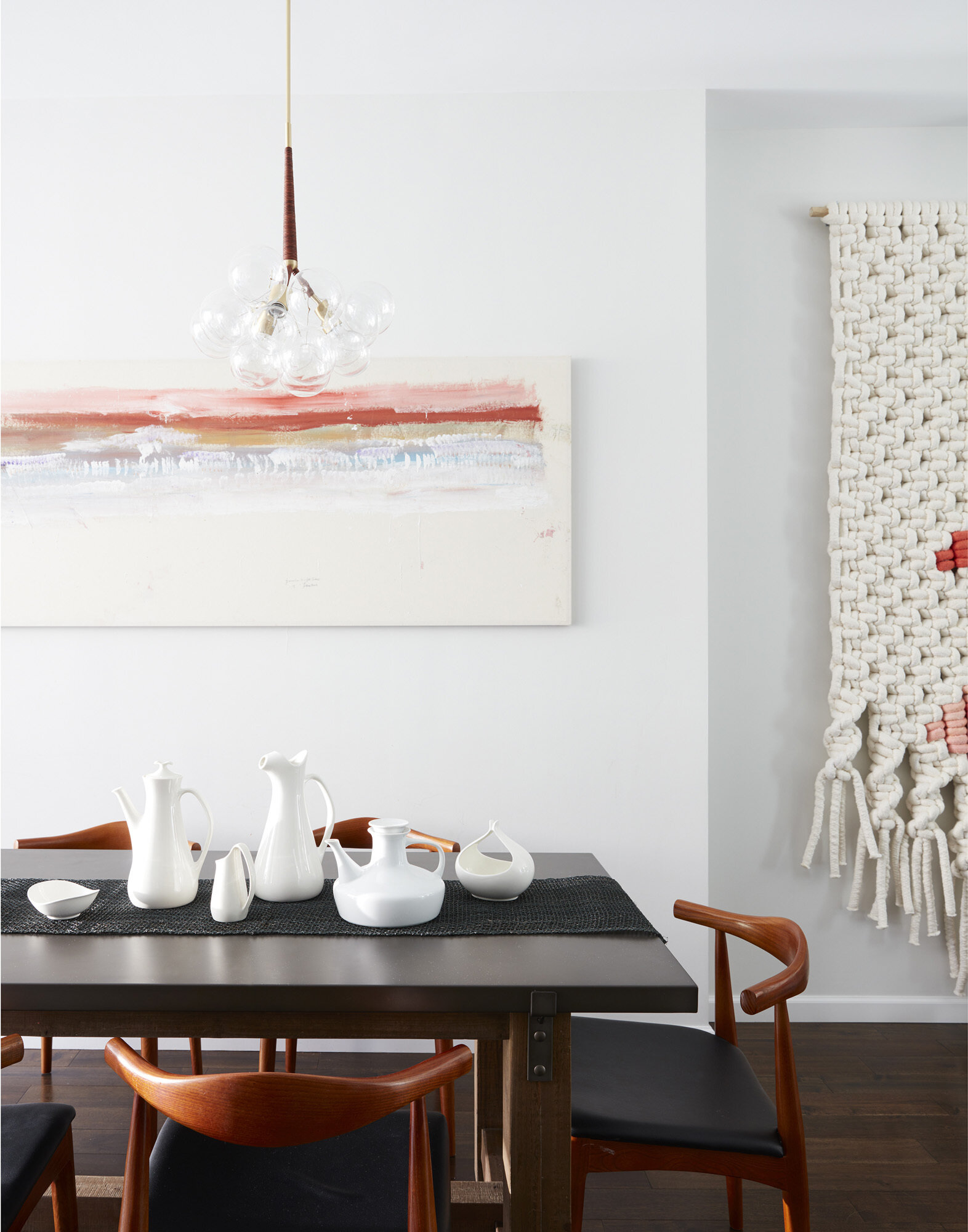
Adjacent to the kitchen, the dining room is furnished with pieces that lean gently toward a mid century aesthetic. The result is a simple, contemporary space that feels welcoming and unfussy, well suited to family meals as well as casual entertaining.
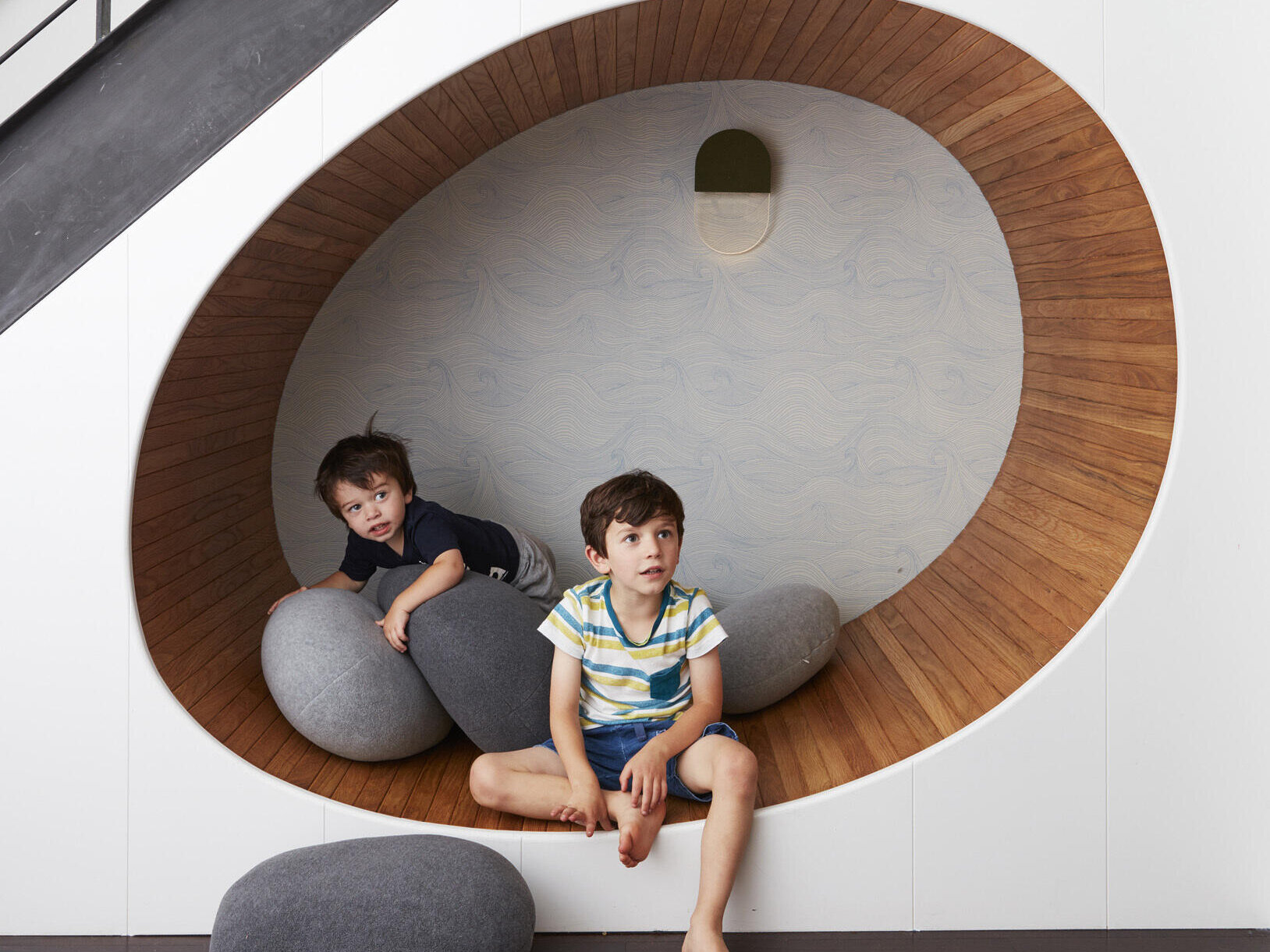
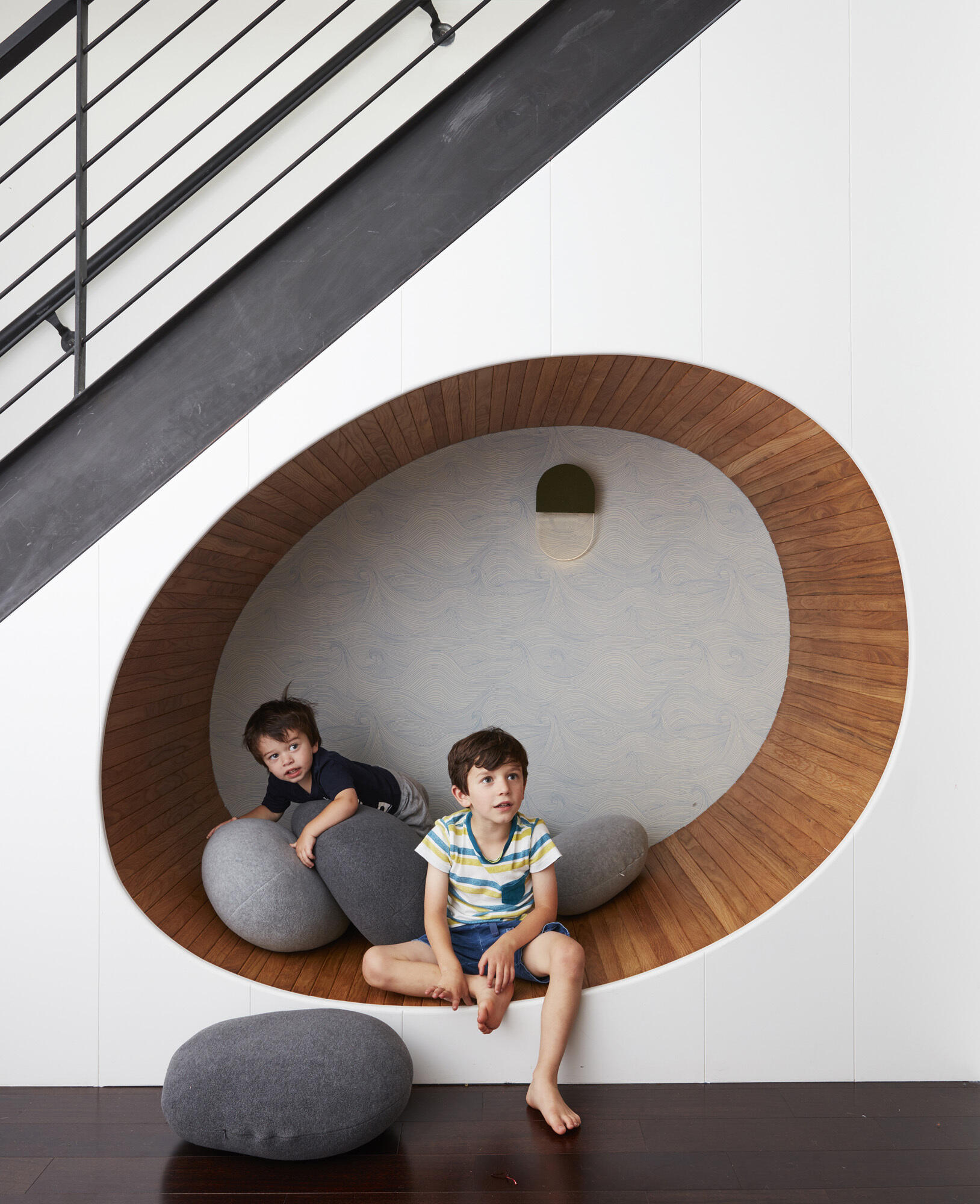
One of the townhouse’s most distinctive elements appears beneath the stairs. A curved seating nook lined in wood is built directly into the architecture, introducing a more modern note to the home. The custom shape transforms an often overlooked area into a functional and playful spot to sit, read, or pause during the day.
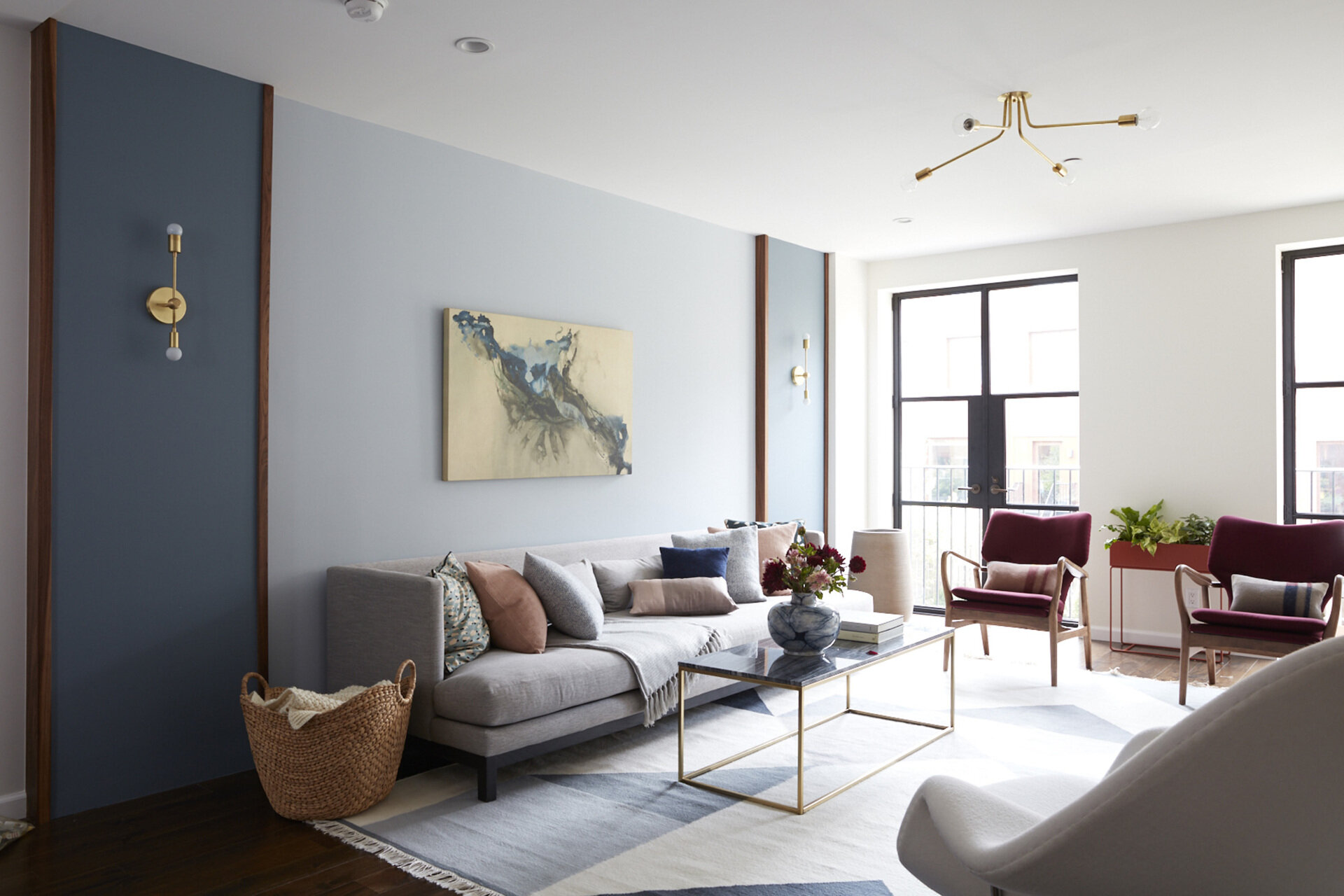
Upstairs, another living room takes advantage of new steel and glass French doors that open onto a Juliet balcony. The addition brings in more daylight and creates a stronger connection to the outdoors. The doors reflect a broader strategy used throughout the renovation to replace enclosed surfaces with light filled openings where possible.
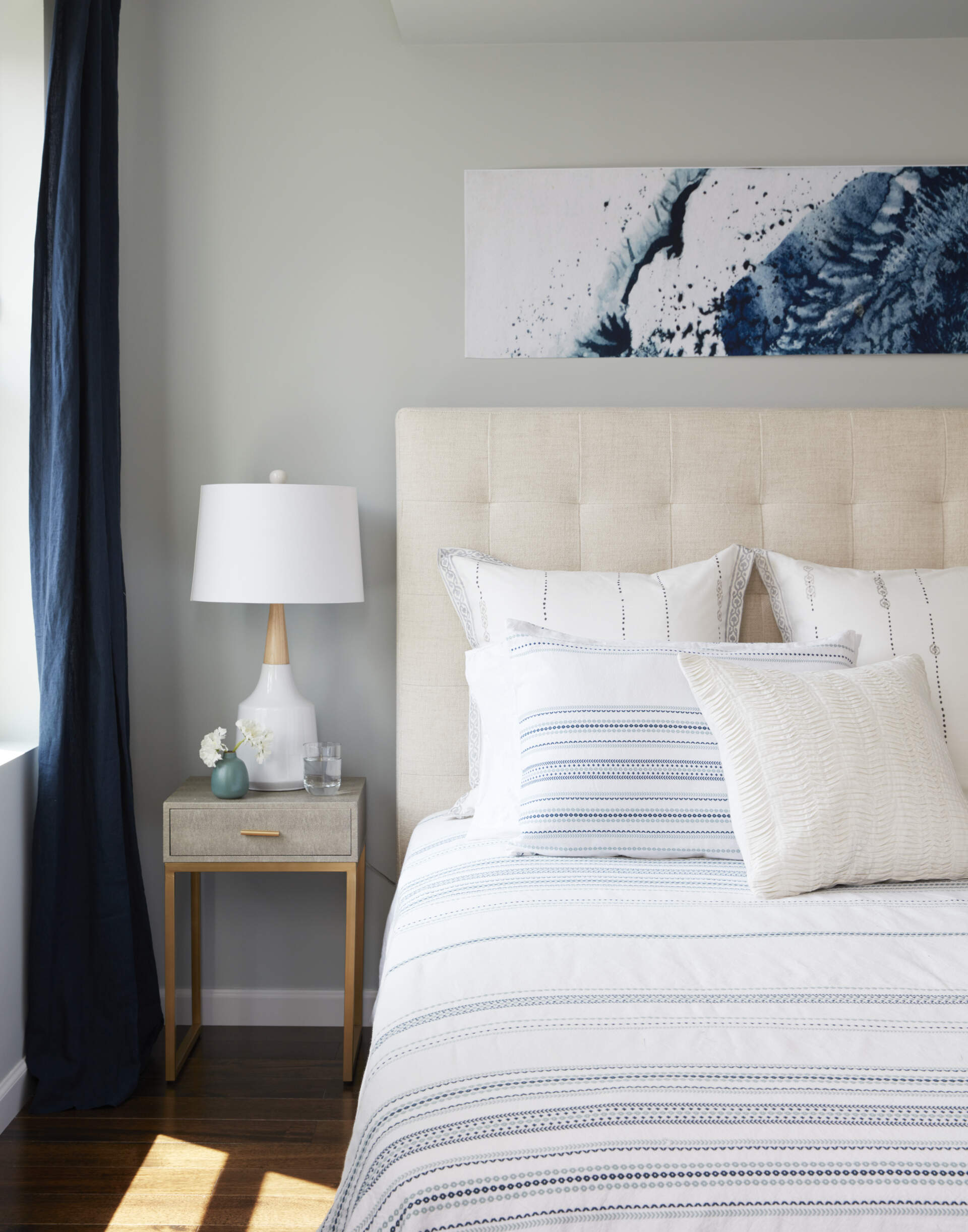
The primary bedroom is positioned at the top of the house, allowing direct access to a roof deck with views toward Manhattan. Inside, neutral tones dominate the space, while dark blue accents add depth and calm. The atmosphere is intentionally restful, offering a quiet retreat at the end of the day without feeling overly styled.
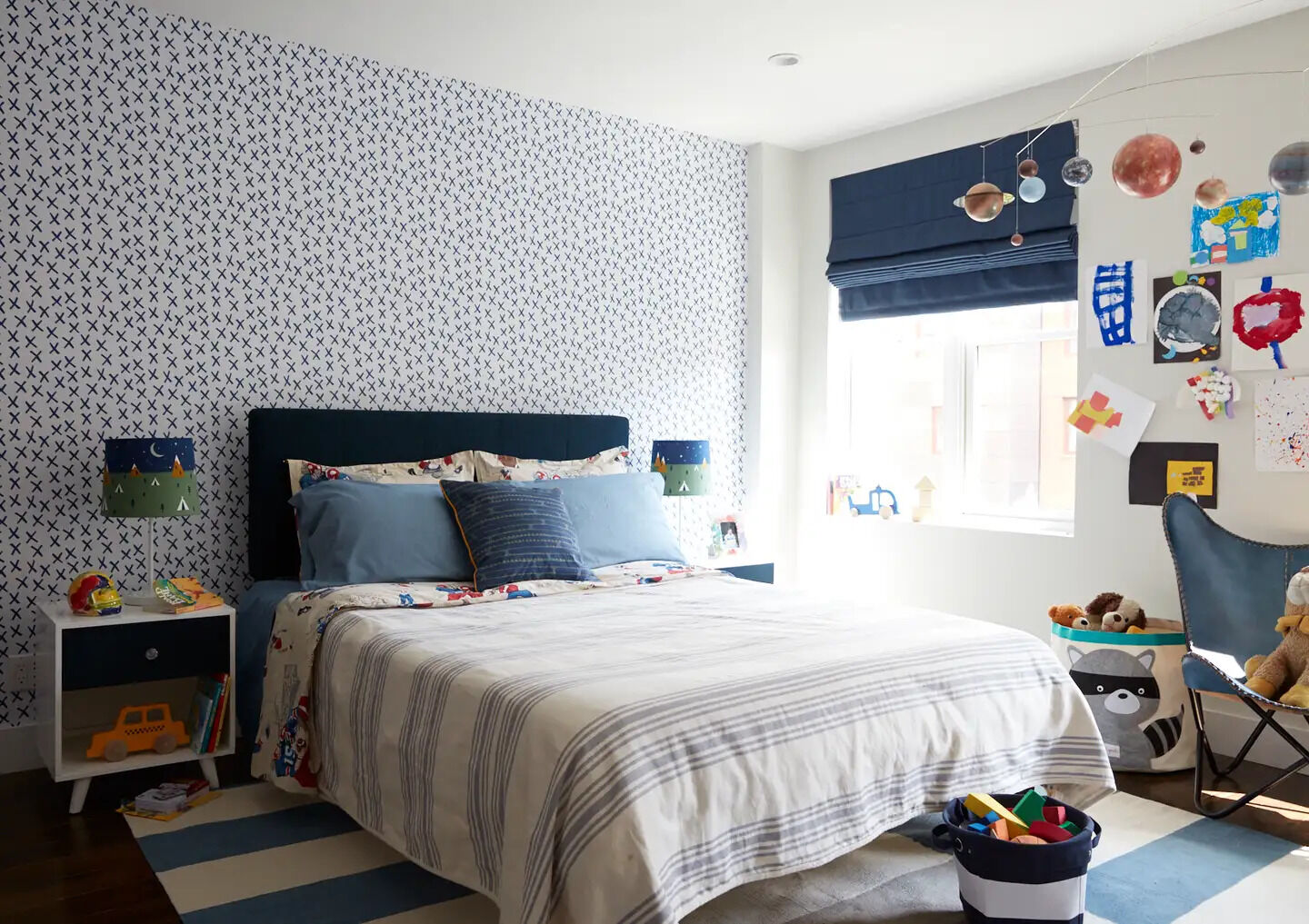
In one of the other bedrooms, decorative wallpaper introduces a graphic note that feels playful rather than loud. Blue design elements reappear here as well, creating a visual link back to the primary suite while still giving the room its own identity.
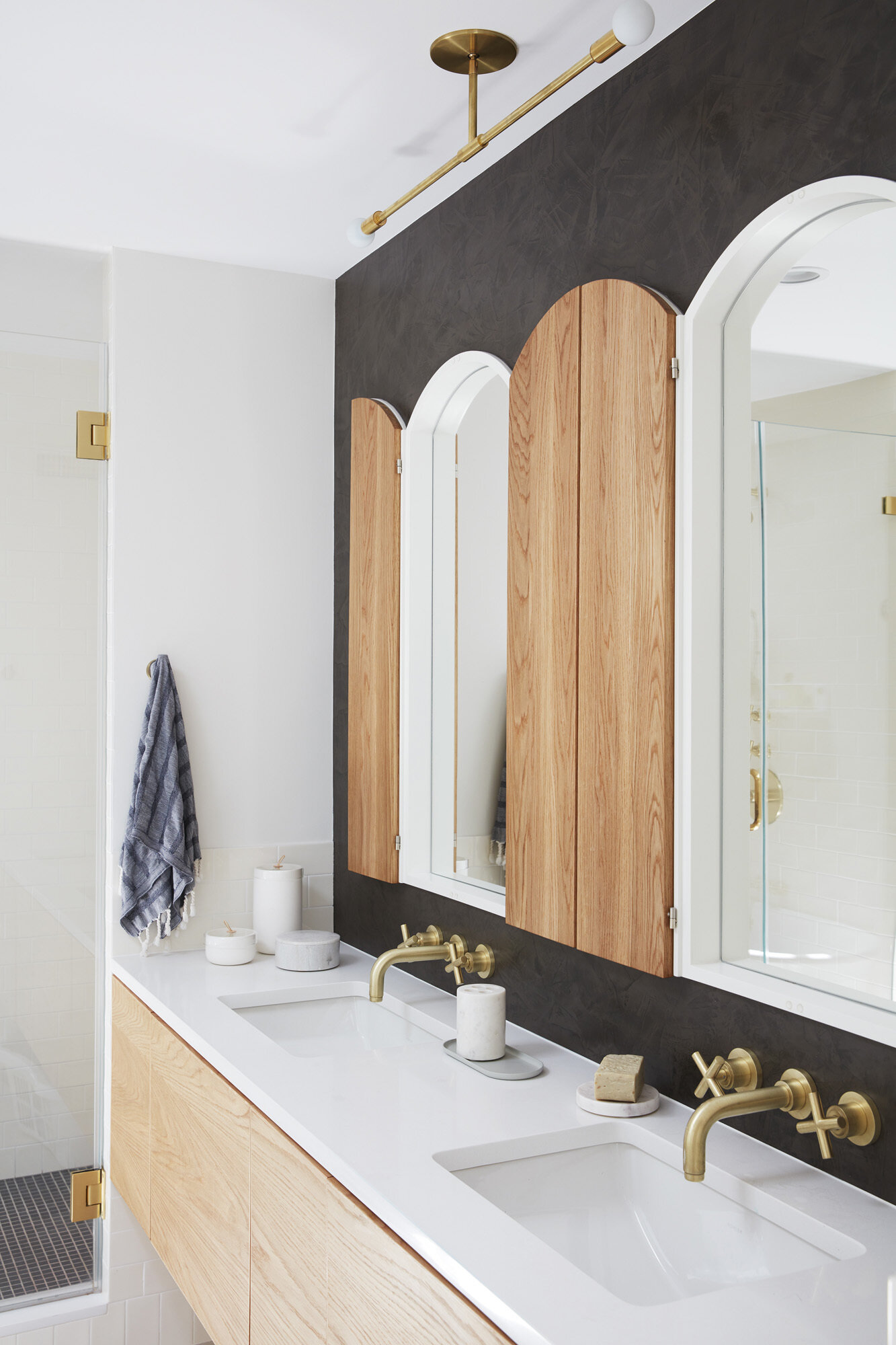
The bathroom balances contrast and restraint. A dark accent wall grounds the space, set against white finishes and light wood mirrors and vanity. The combination keeps the room feeling fresh while adding just enough drama to avoid looking flat.
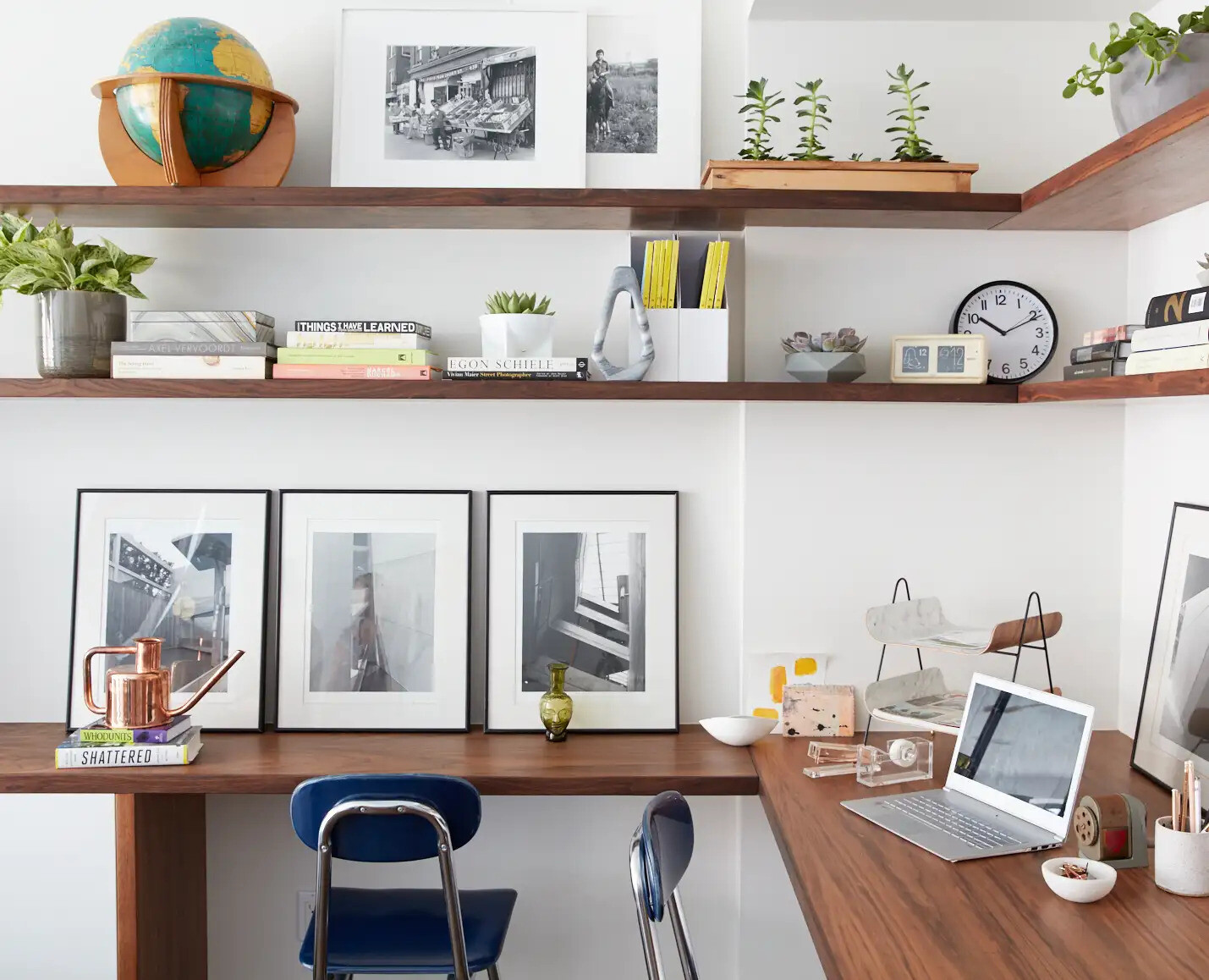
In the home office, wood shelving wraps neatly around the corner of the room, maximizing storage and display space. A matching desk spans the wall, providing enough room for two people to work side by side. It is a practical setup that reflects the home’s overall focus on function without sacrificing design.
By reworking the layout and introducing carefully chosen architectural details, Frederick Tang Architecture has transformed a standard development townhouse into a layered family home. From the curved seating nook to the Juliet balconies and rooftop access, the renovation shows how thoughtful design can quietly reshape everyday living.