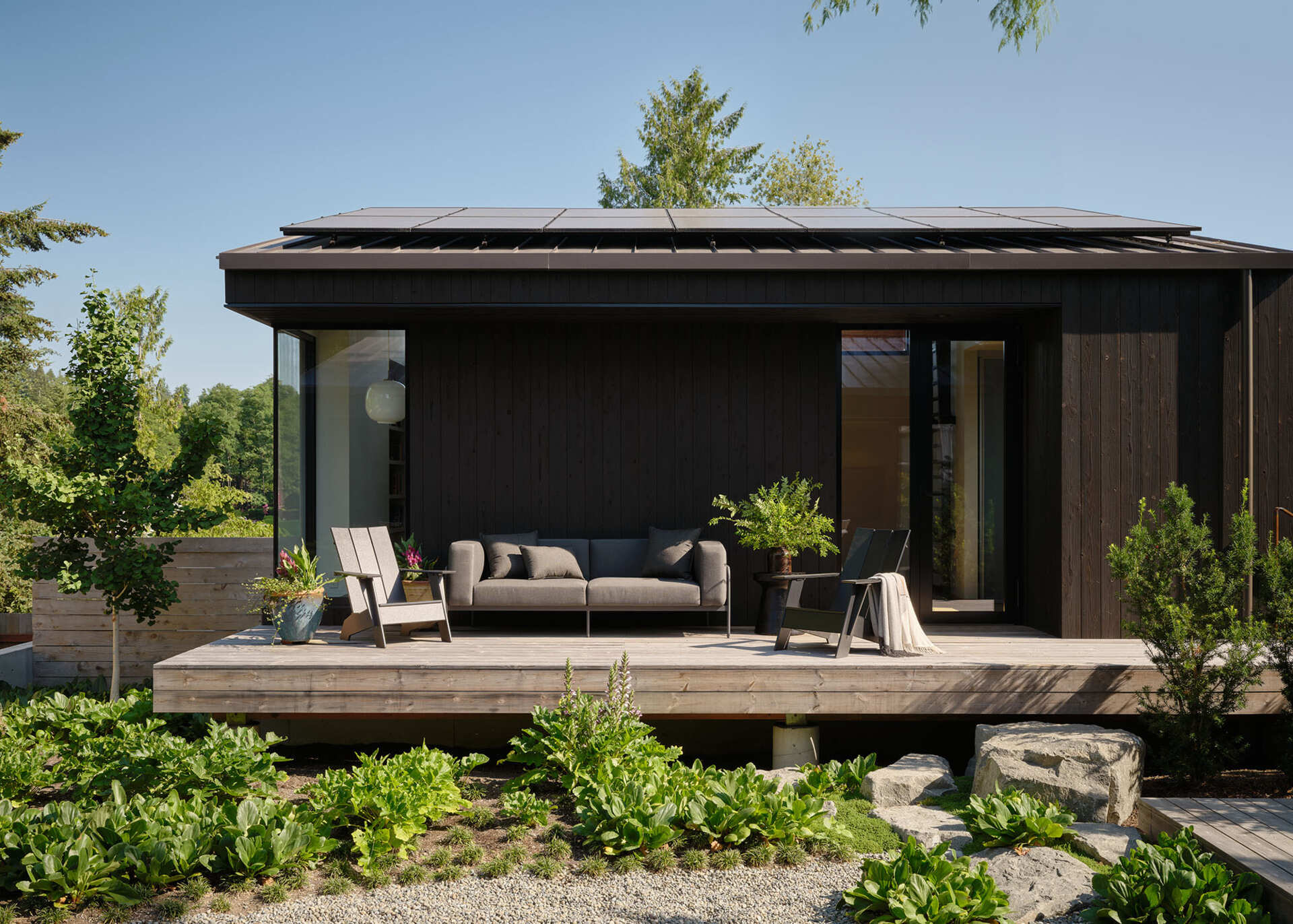
What happens when an architect designs his own family home with the future in mind? In Northeast Seattle, Linework Architecture co founder Ben Humphrey rebuilt a modest 1940s ranch into a flexible two structure home focused on sustainability, durability, and long term living. Designed during COVID quarantine, the house was rethought to support daily family life now while staying adaptable for decades to come. The result is a compact home that connects indoors and outdoors and allows the family to evolve without outgrowing the site.
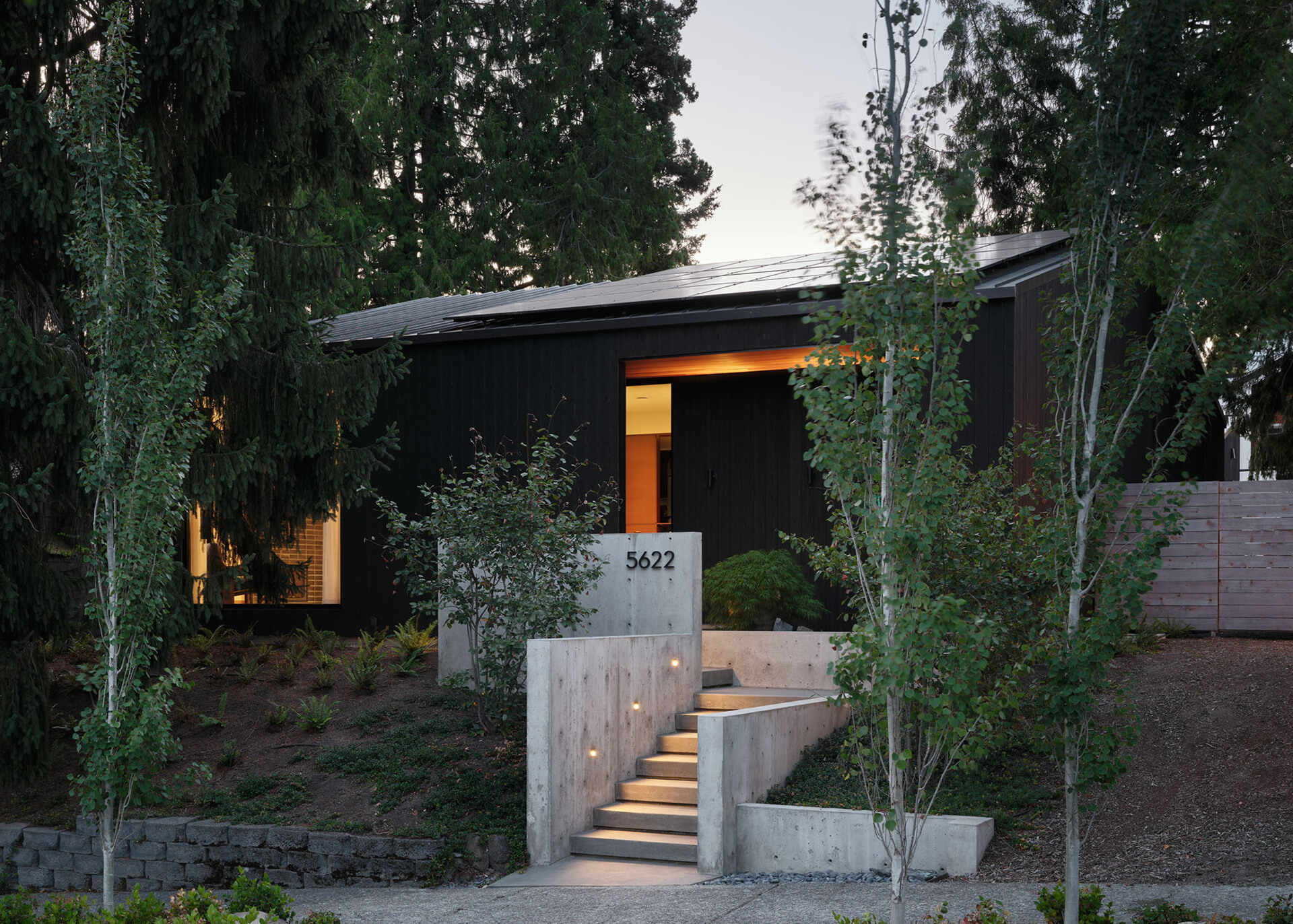
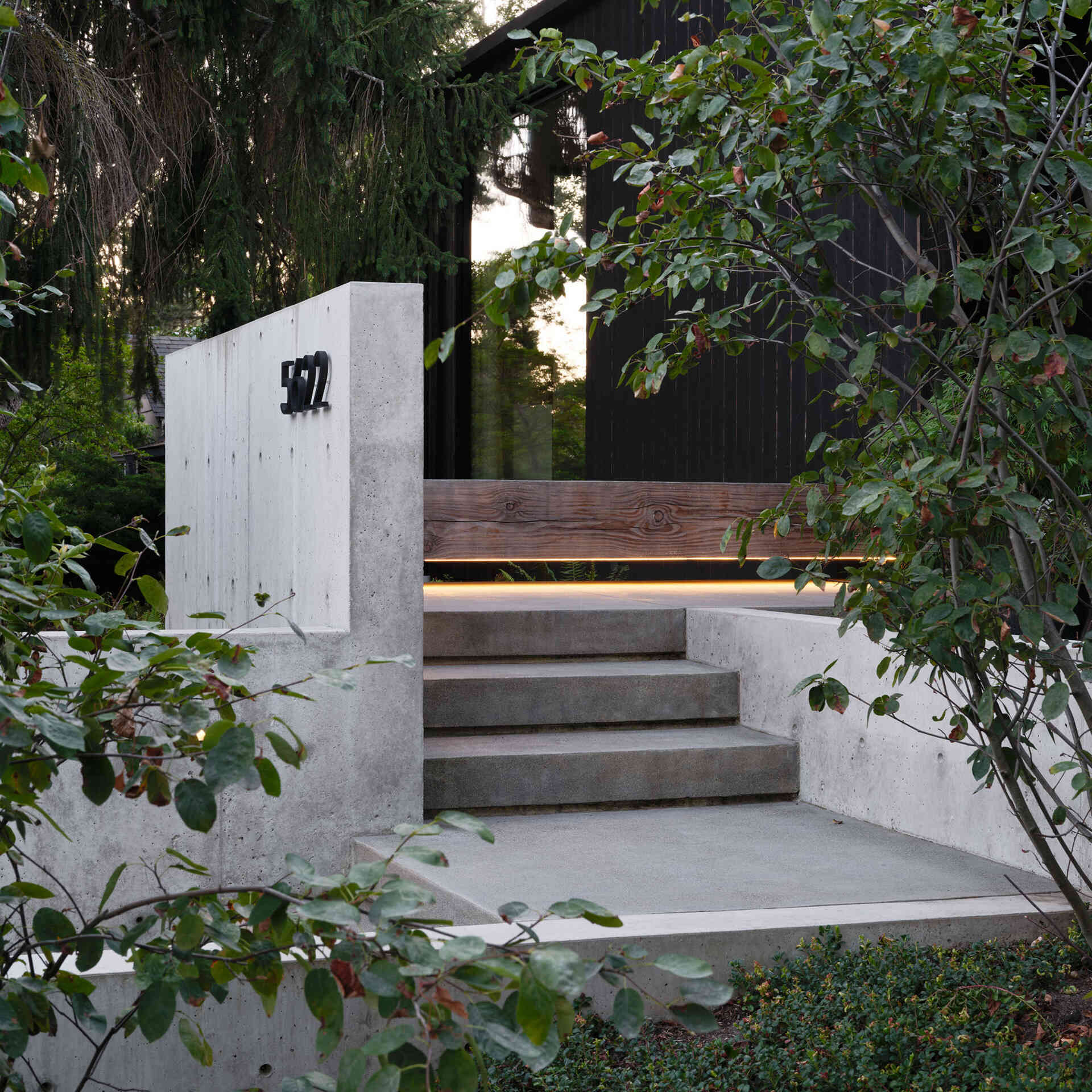
Rebuilding a 1940s Ranch Into a Flexible Two Structure Home
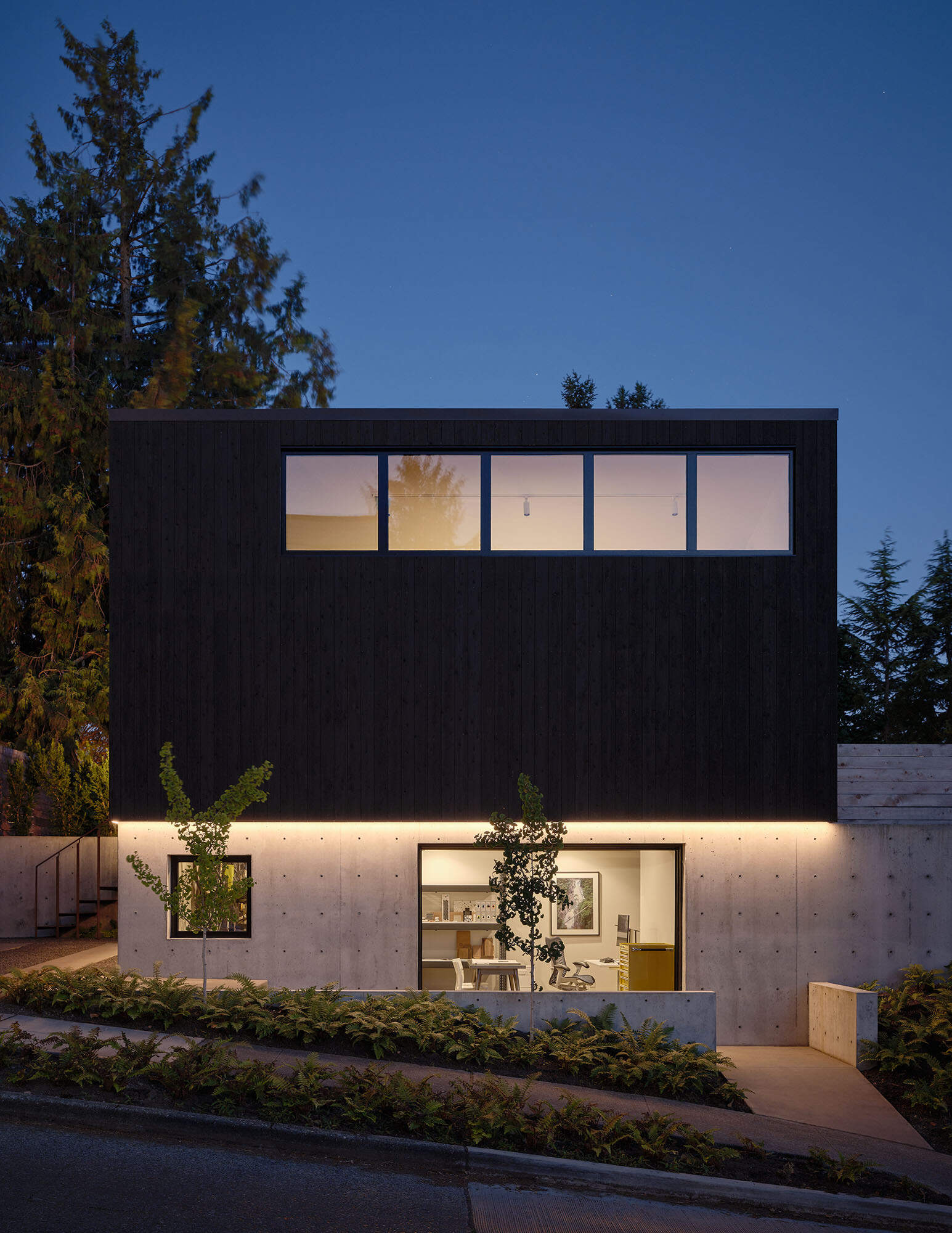
Known as Mr. Belvedere, the project is a substantial remodel and addition rather than a teardown. The main house was rebuilt on the existing foundation and extended to create a larger kitchen and a primary bedroom and bath. At the rear of the through lot, a new garage and DADU (Detached Accessory Dwelling Unit) was added along the northern lot line, opening up new ways to use the site and reconnect with the street.
The two building approach allows the property to function as one home today, while offering the potential for each structure to become self sufficient in the future. This flexibility supports changing family needs, multigenerational living, or rental use without sacrificing privacy or connection.
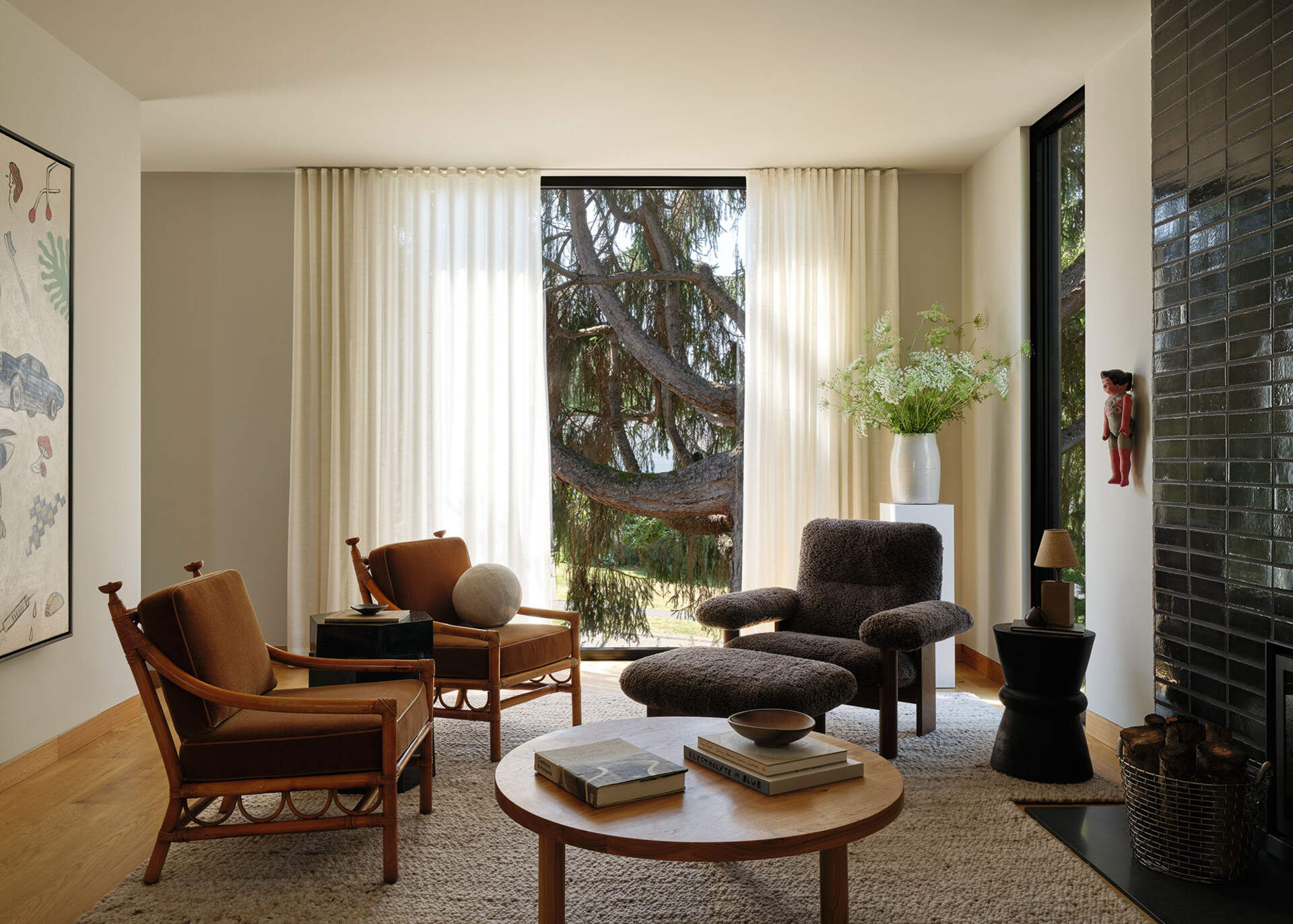
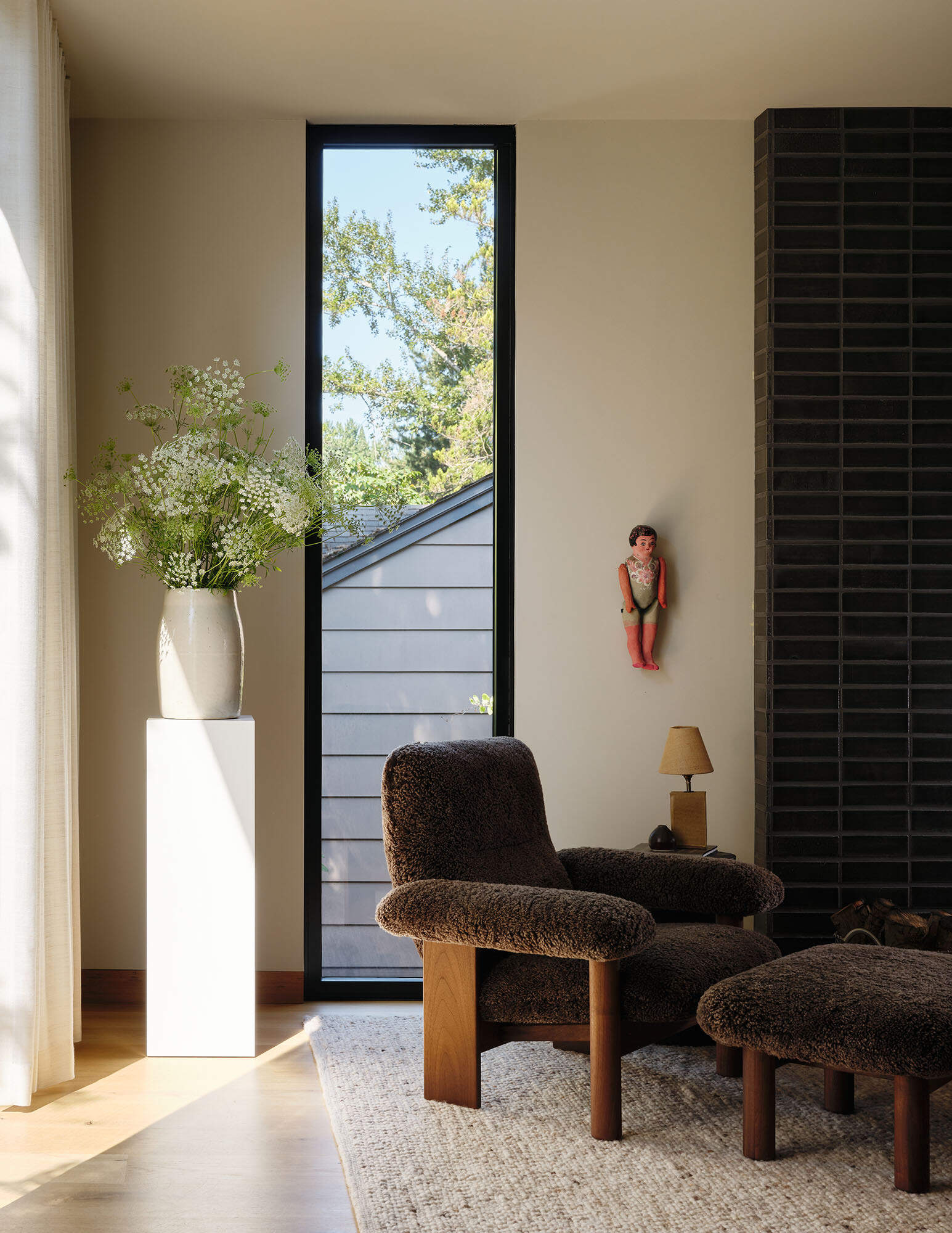
A Calm Living Room
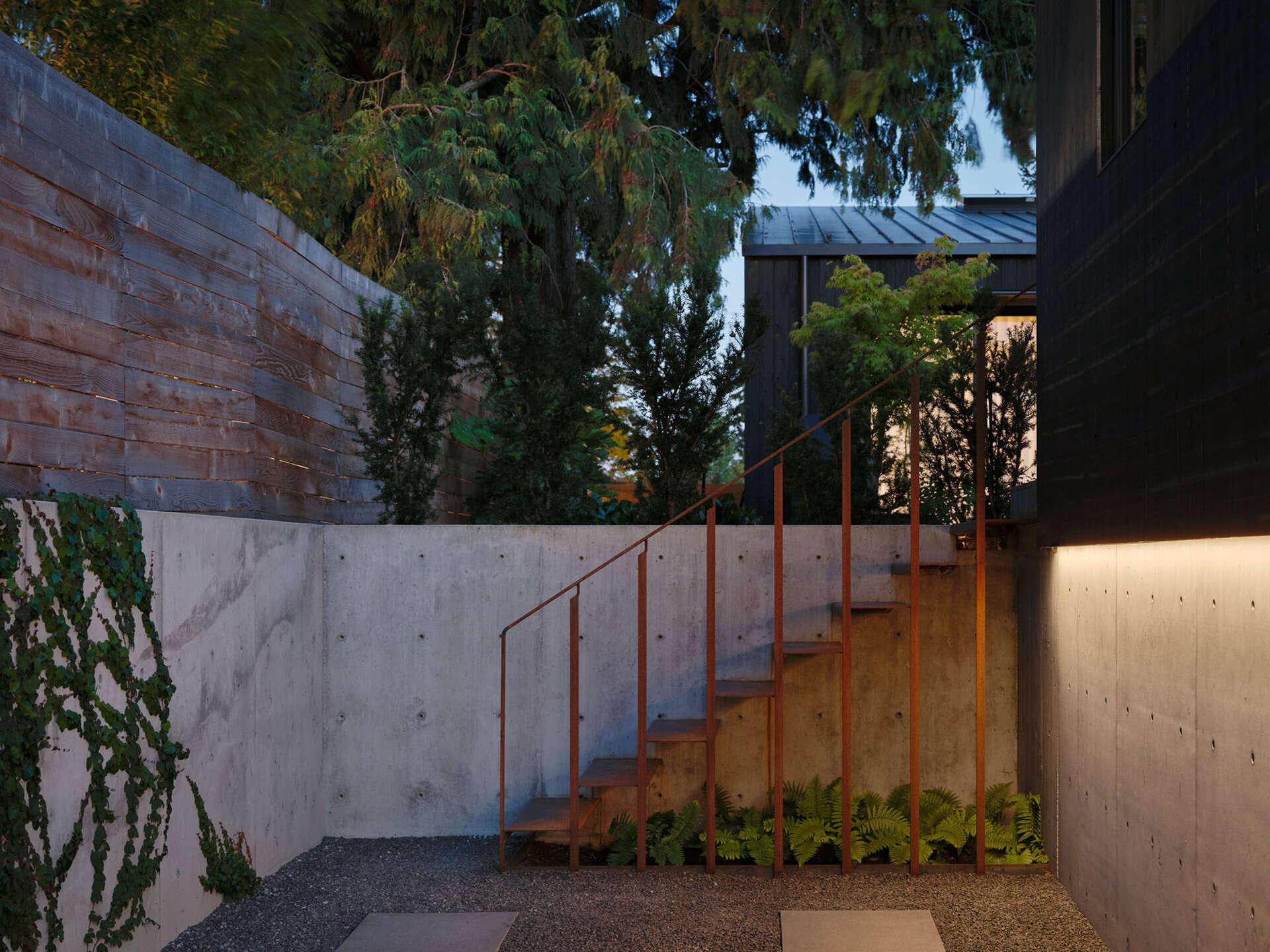
The layout was influenced by Humphries’ experience living in a Japanese temple complex, where spaces relate through shared courtyards and gardens. In the main house, rooms are arranged to encourage movement between inside and outside, with views oriented toward a central garden court.
The Kitchen and Dining Area as the Heart of the Home
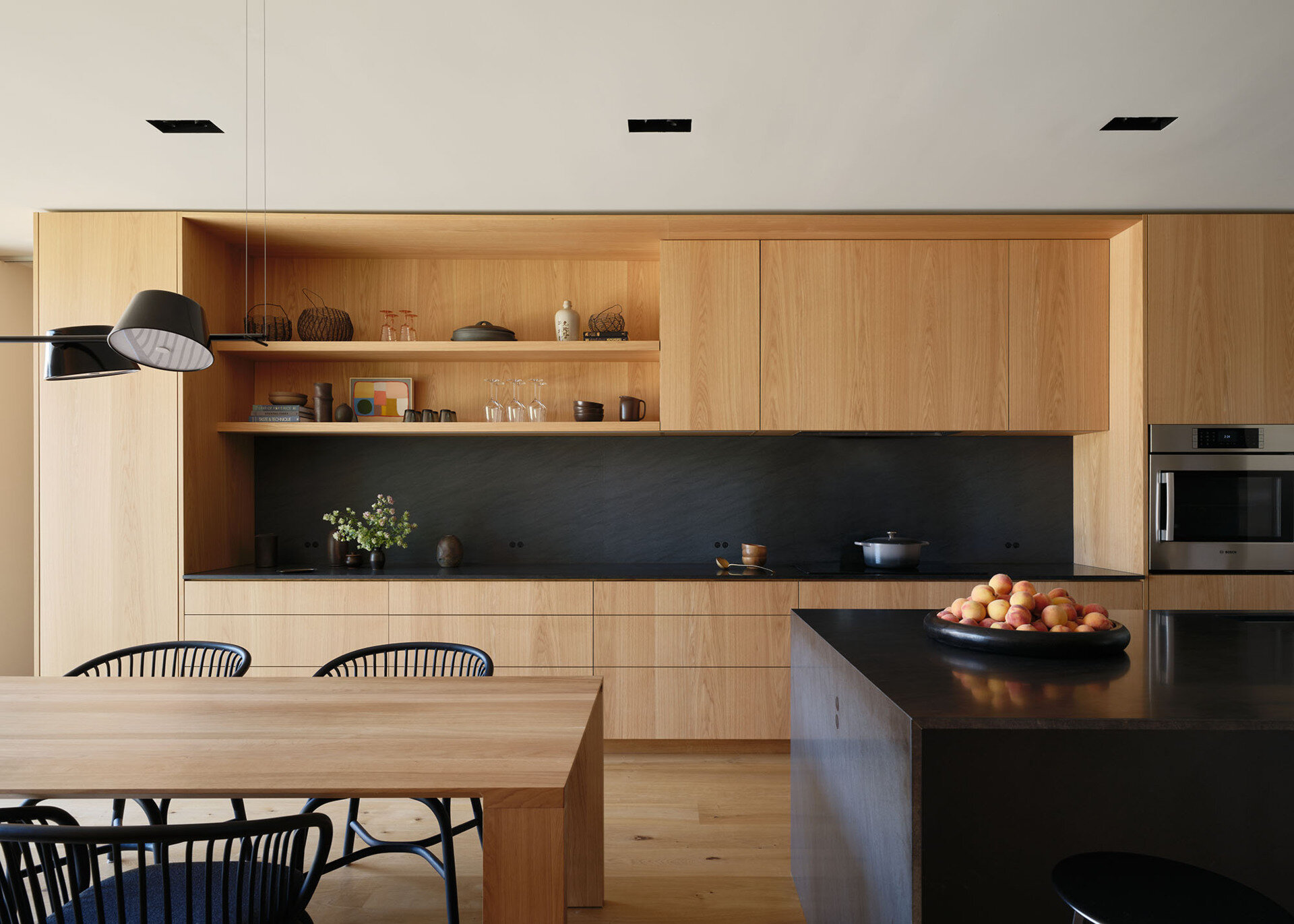
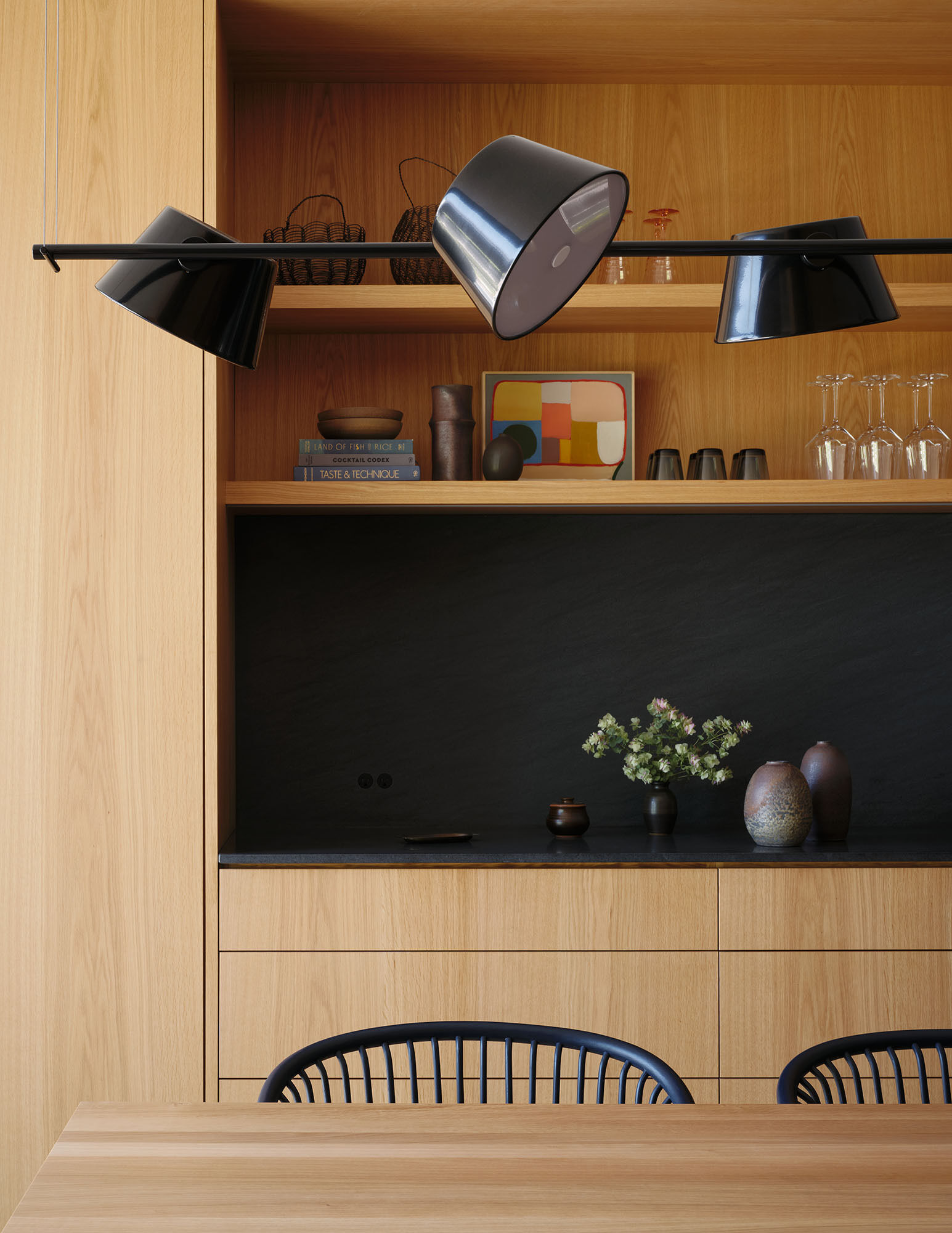
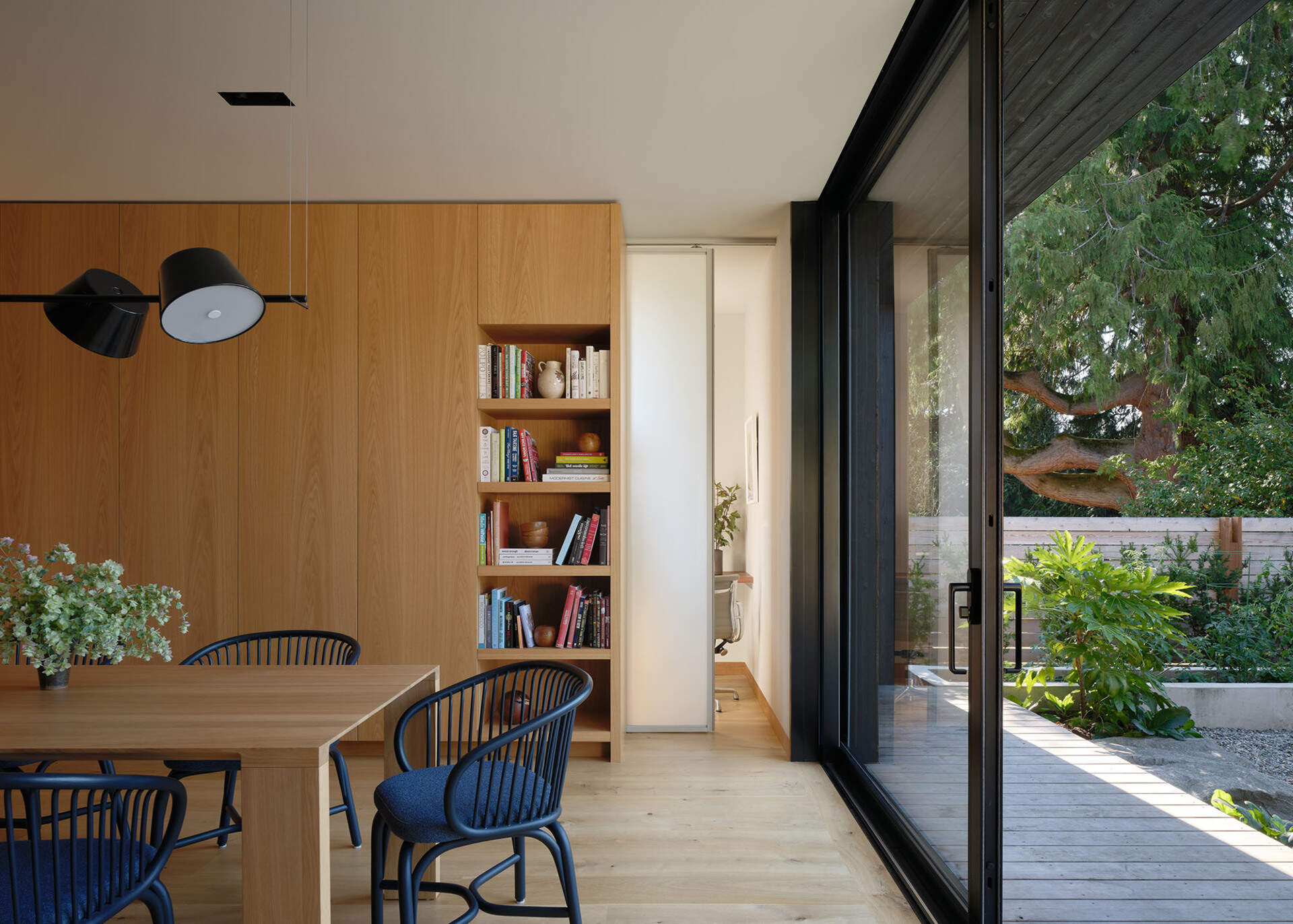
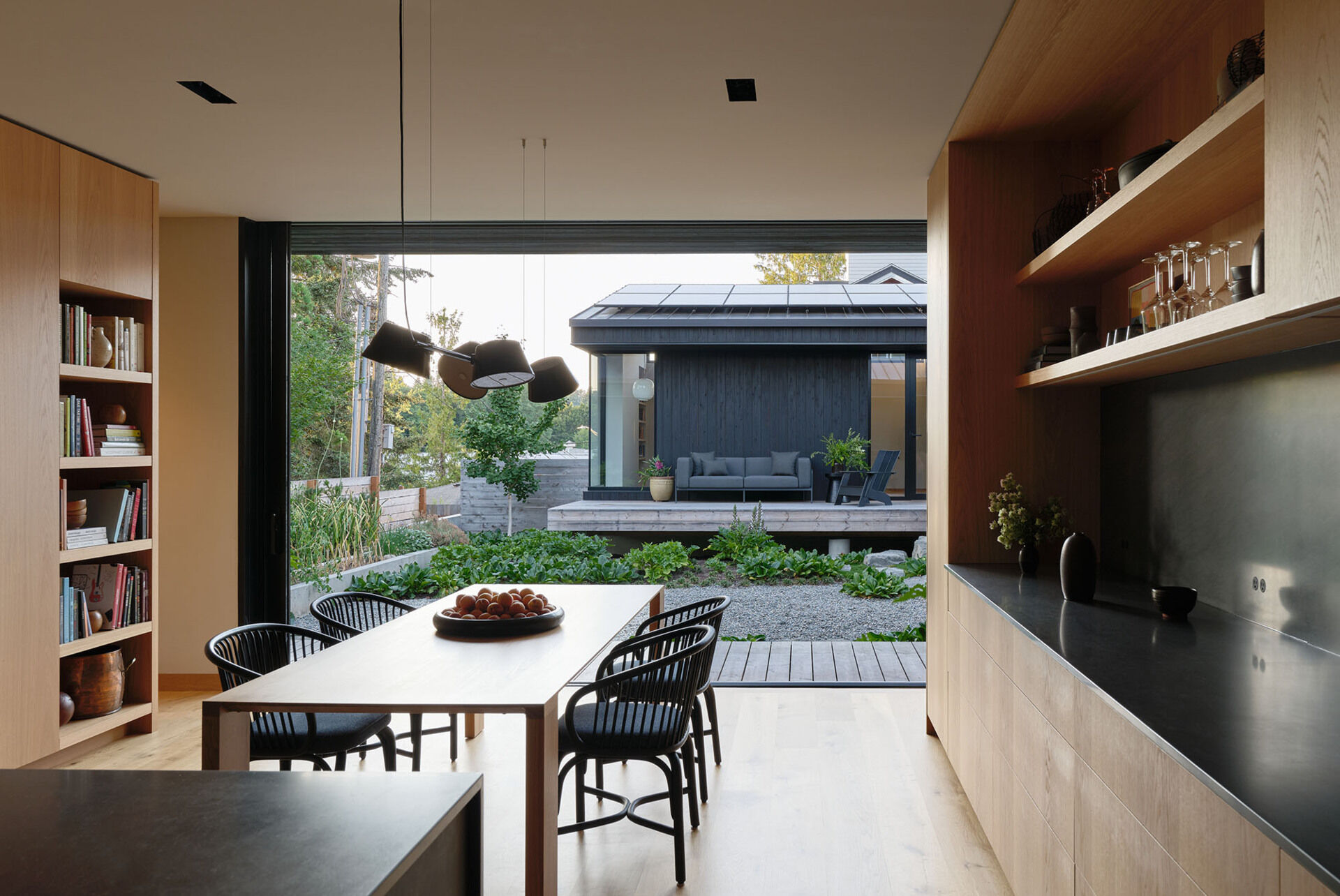
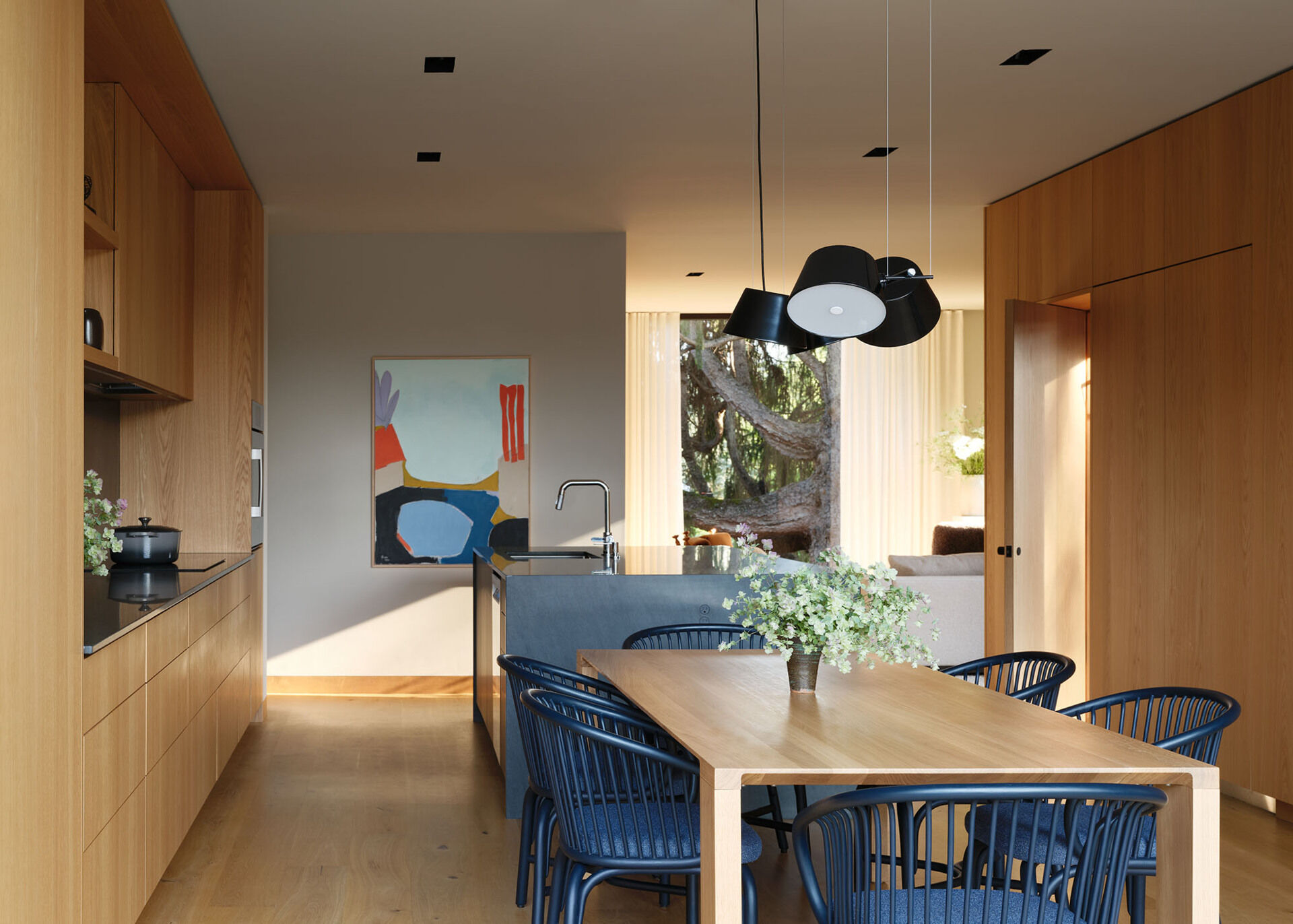
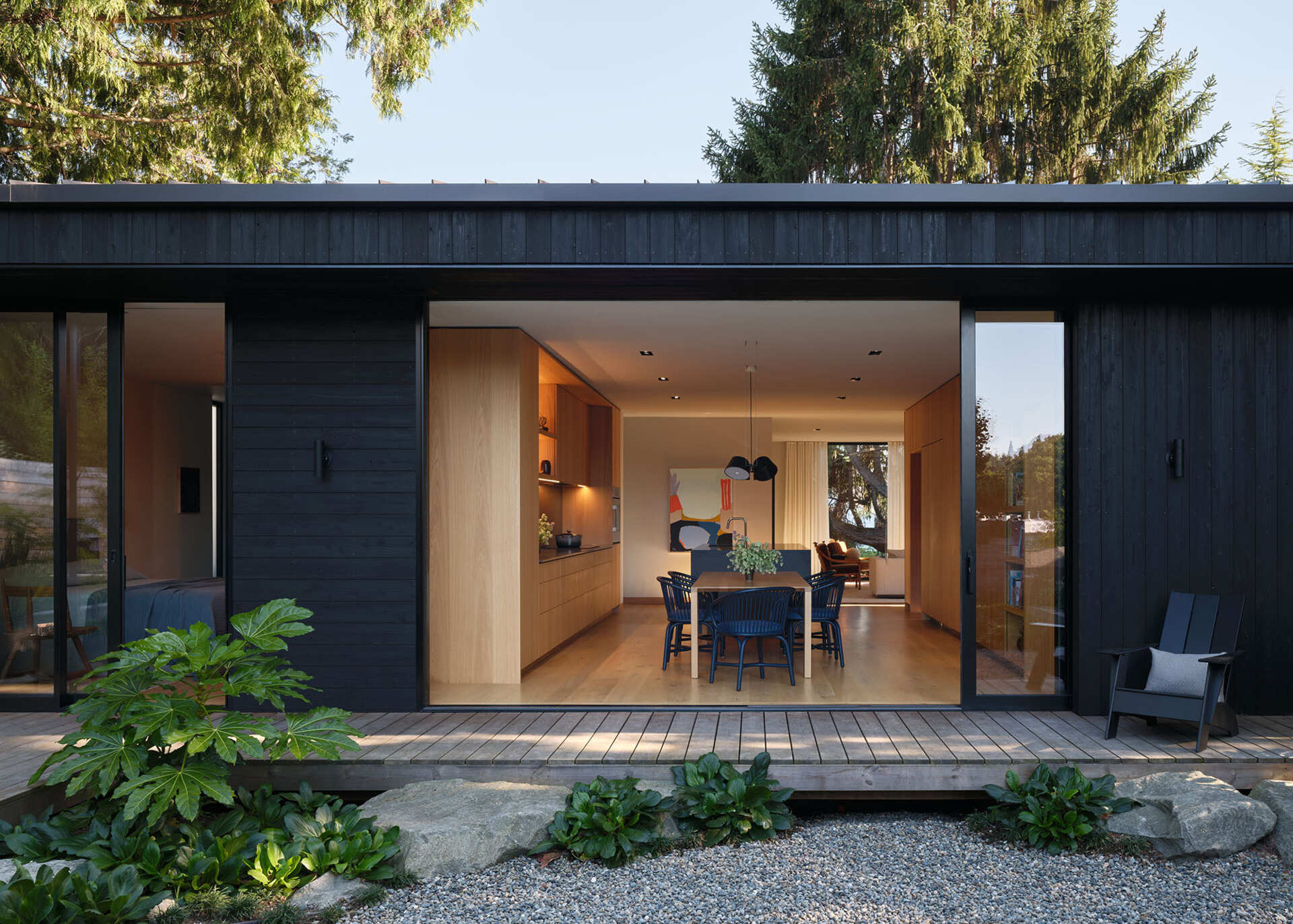
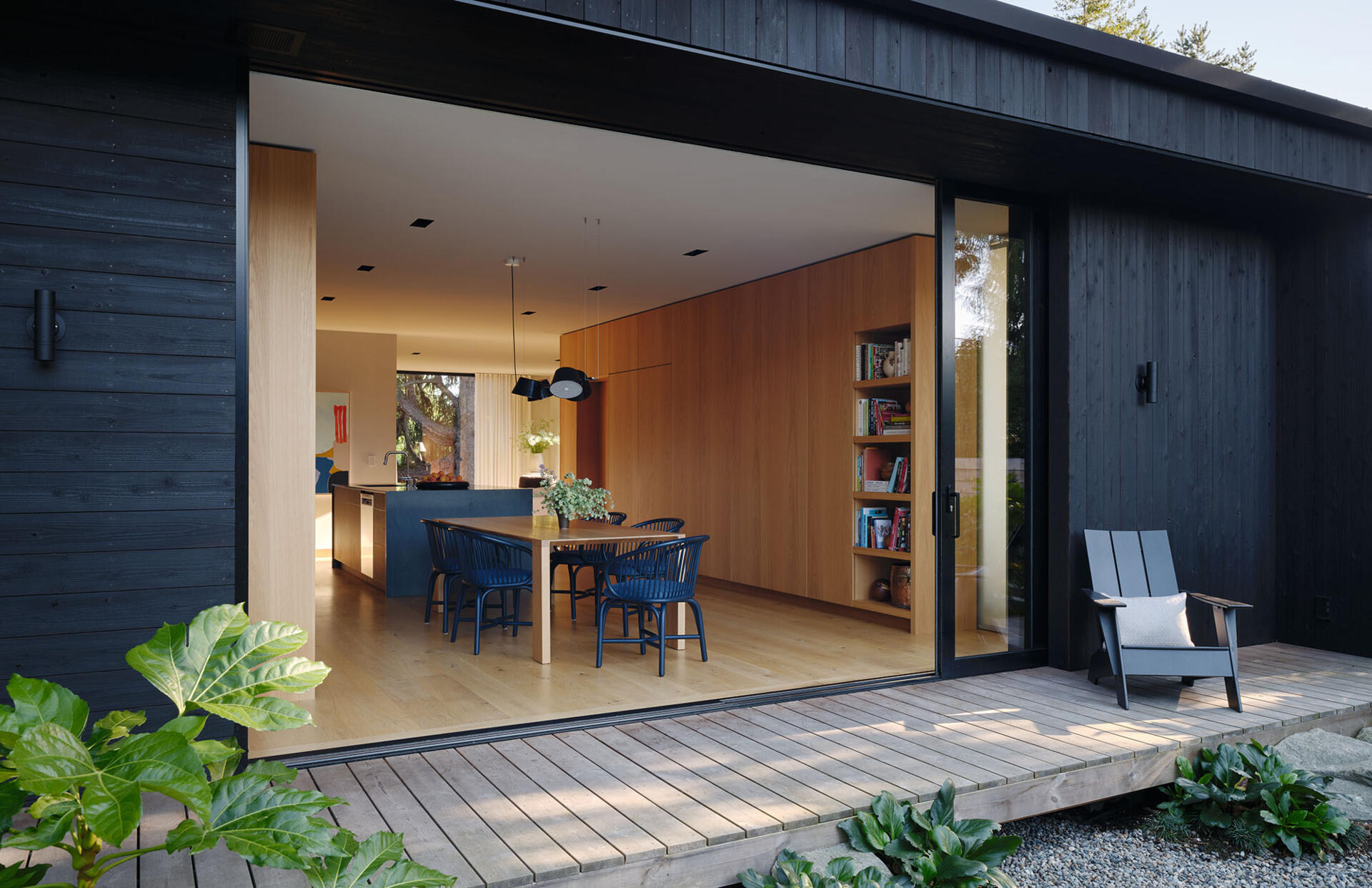
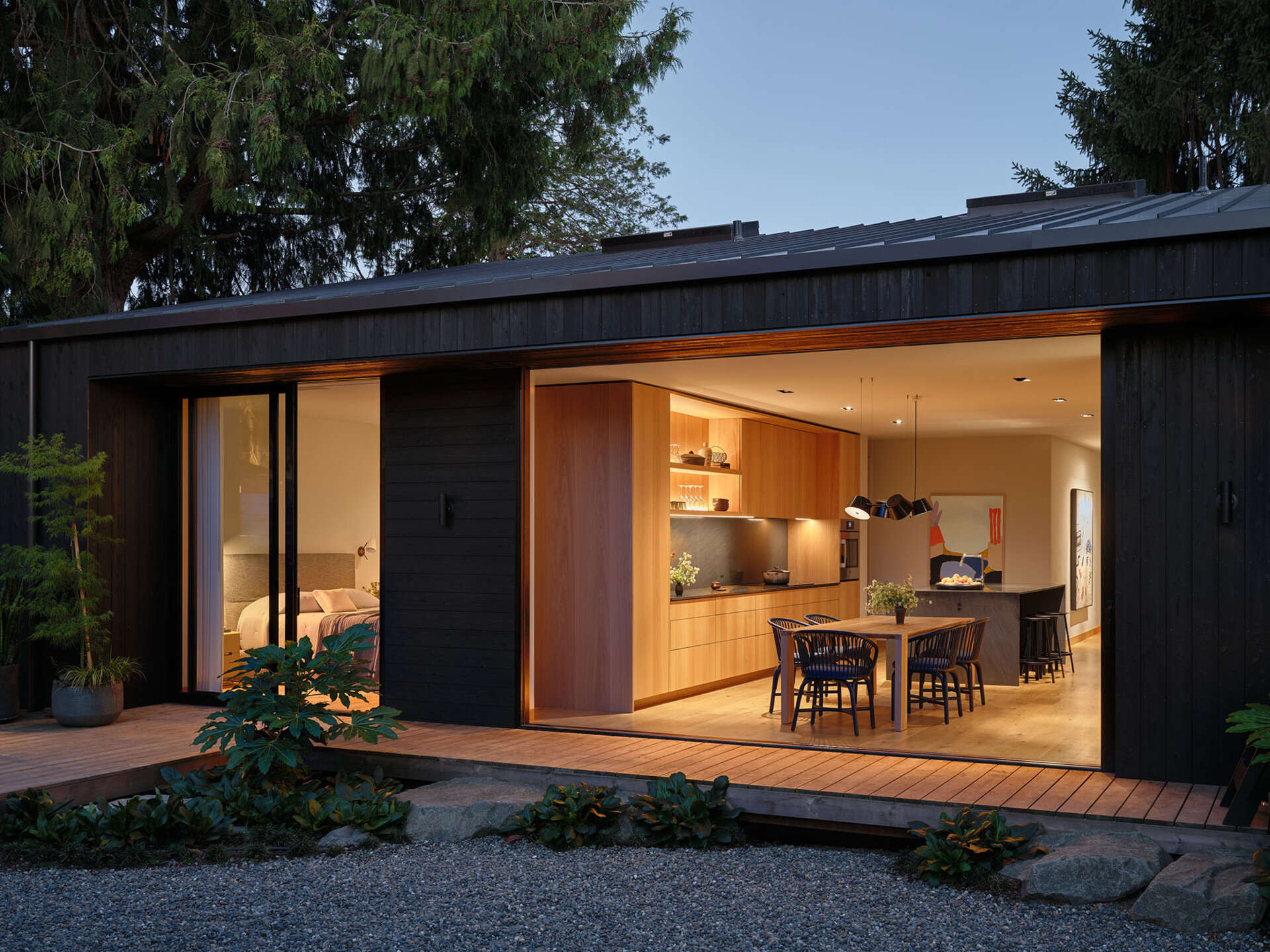
The open kitchen and dining area form the heart of the home. This space was intentionally enlarged during the remodel to support everyday family life and gathering. Positioned to face the garden court, it becomes a central hub that visually and physically connects the two structures on the site.
Natural light, outdoor views, and direct access to the garden reinforce the idea that the house functions as a sequence of connected spaces rather than a single enclosed volume.
Outdoor Circulation That Supports Change and Independence
Large sliding glass pocket doors open the living spaces to the garden, expanding the perceived interior volume and strengthening the relationship with nature throughout the day.
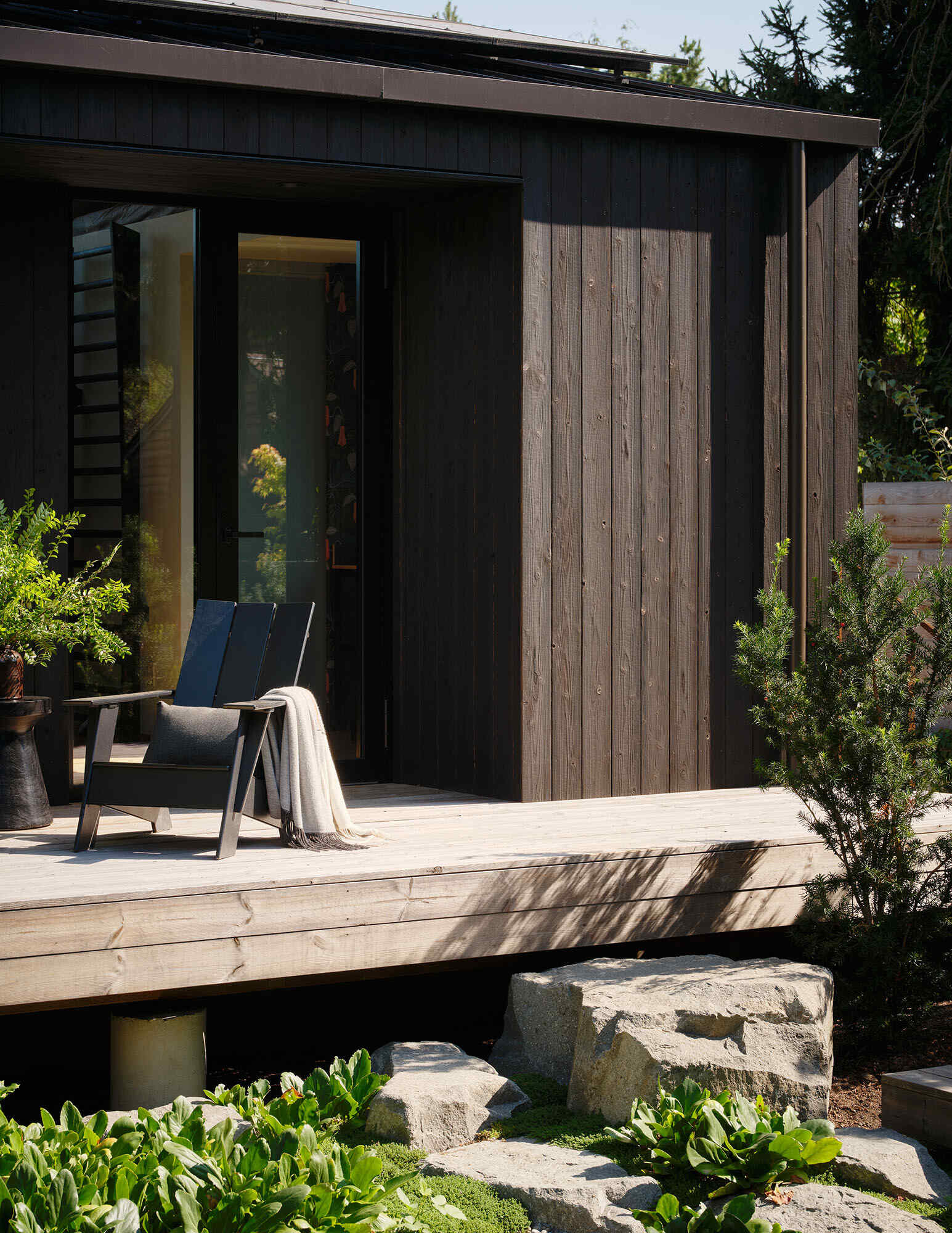
An elevated deck and informal stone steps lead toward the DADU, keeping access deliberately ambiguous. This design choice allows the secondary structure to feel connected today while remaining flexible for future uses.
Whether the DADU functions as part of the family home or as an independent unit later on, the outdoor circulation supports both independence and togetherness.
A Primary Bedroom Designed for Long Term Living
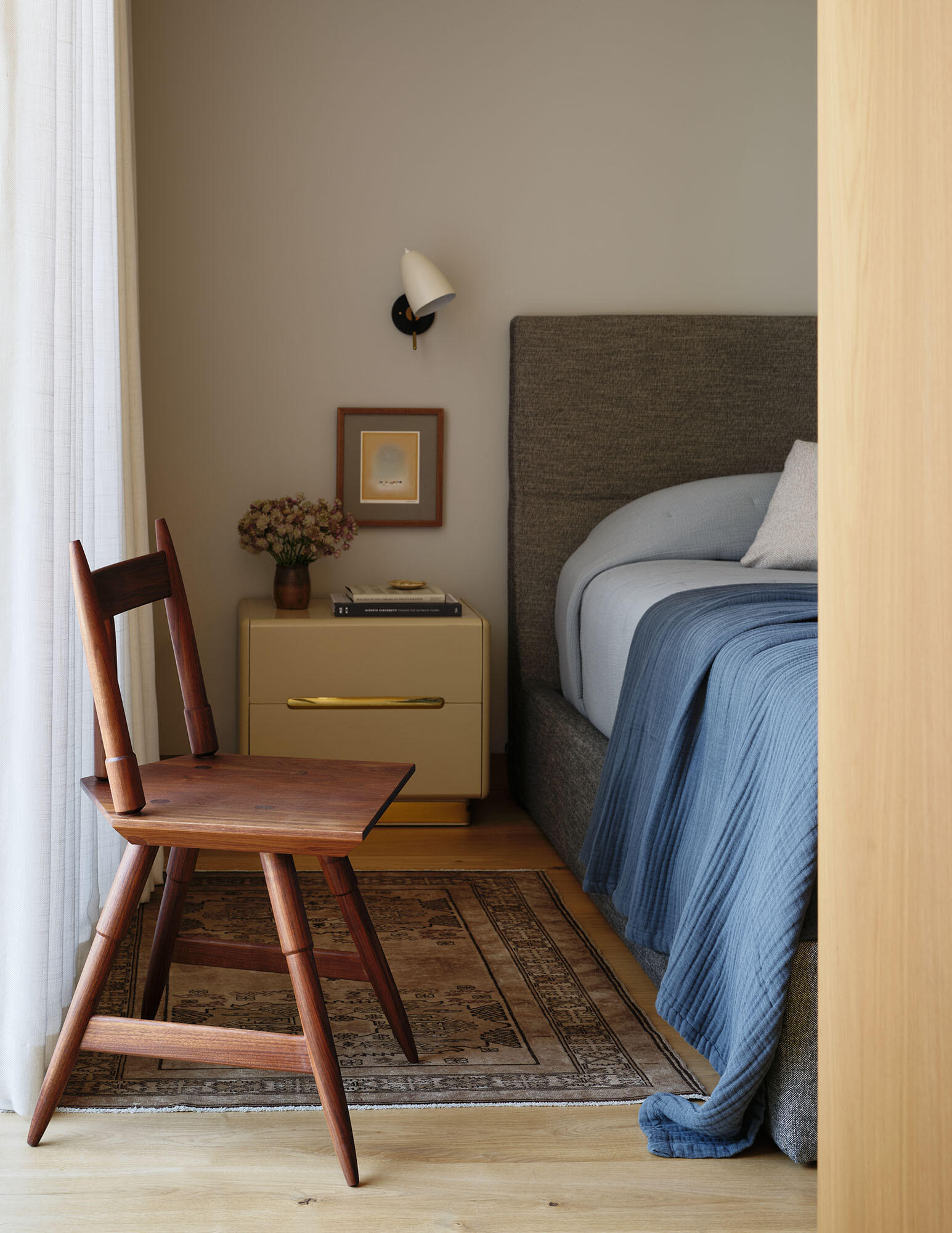
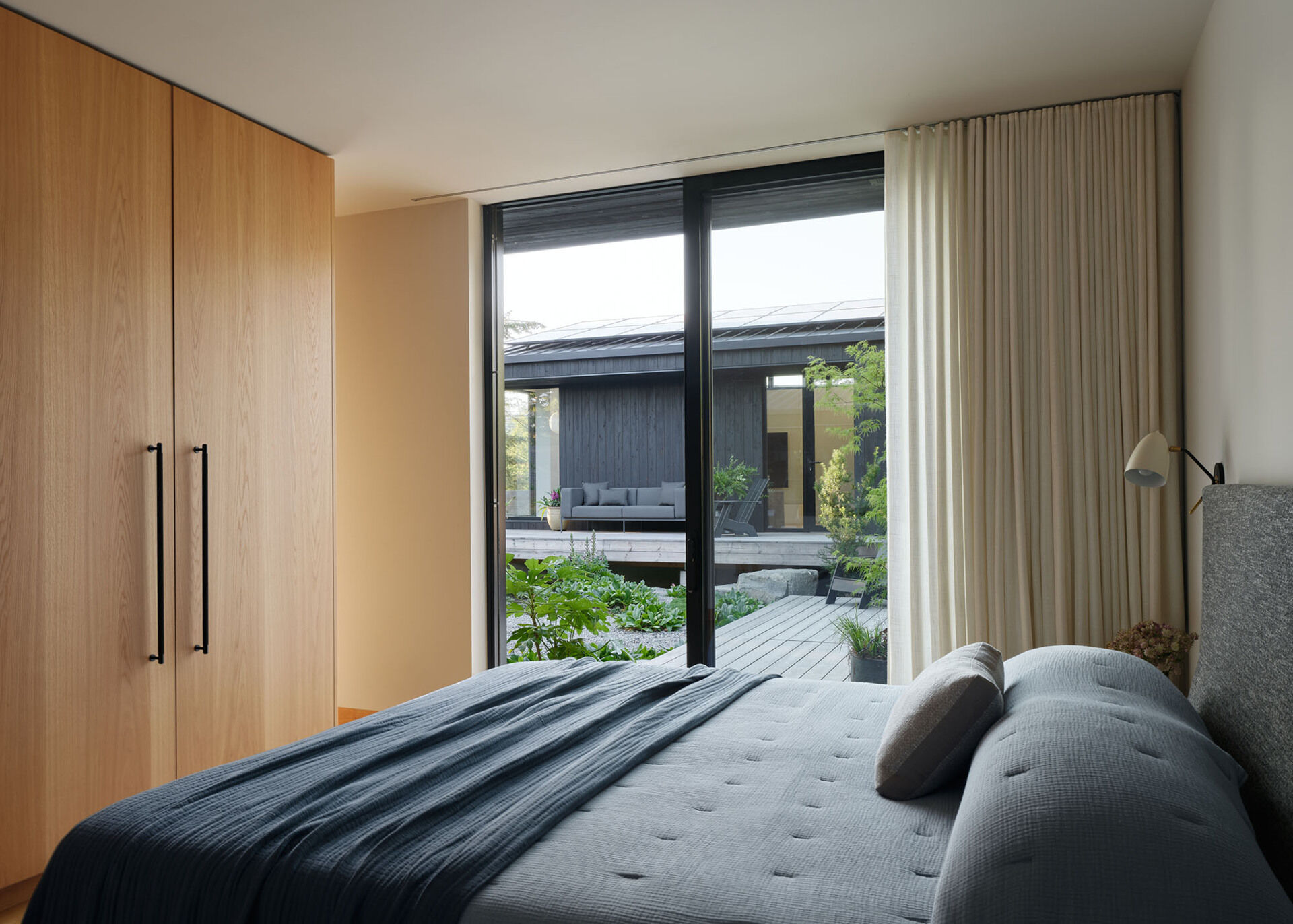
The primary bedroom was added as part of the main house extension, improving comfort and long term livability without increasing the home’s footprint unnecessarily. By building small and efficiently, the design prioritizes quality of space over size.
This approach supports aging in place and allows the house to remain functional regardless of how the family’s needs shift over time.
Minimal Bathrooms Focused on Light, Clarity, and Durability
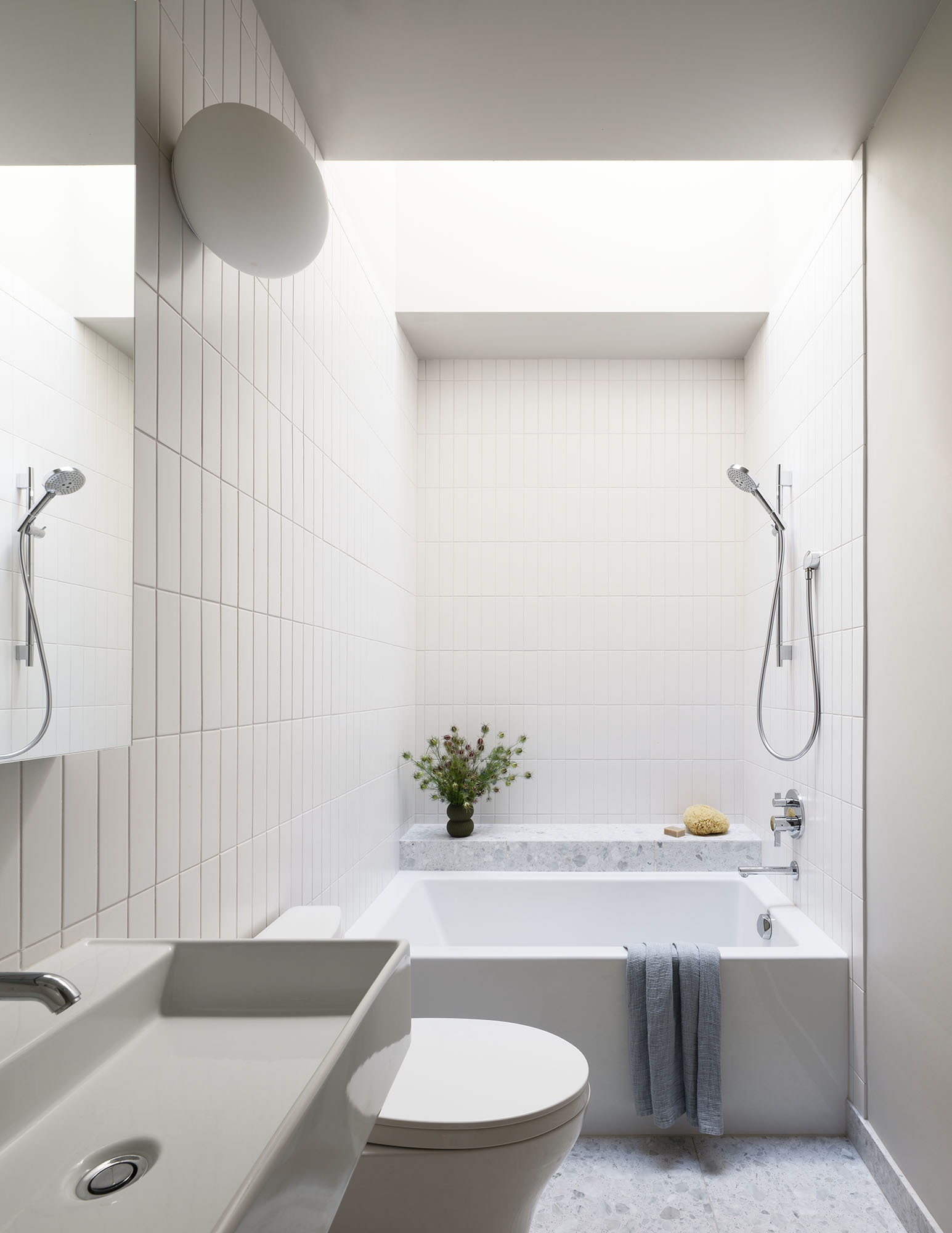
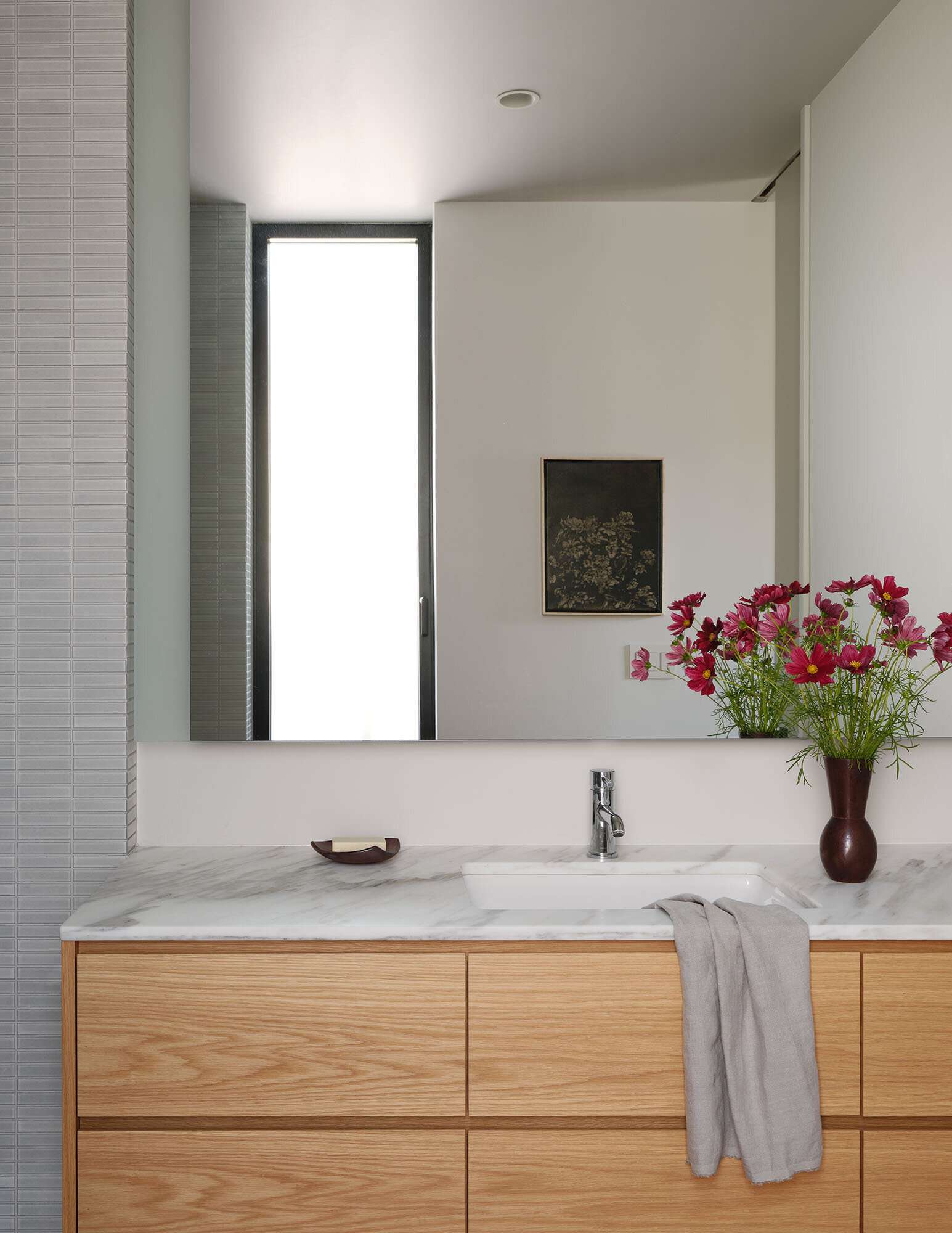
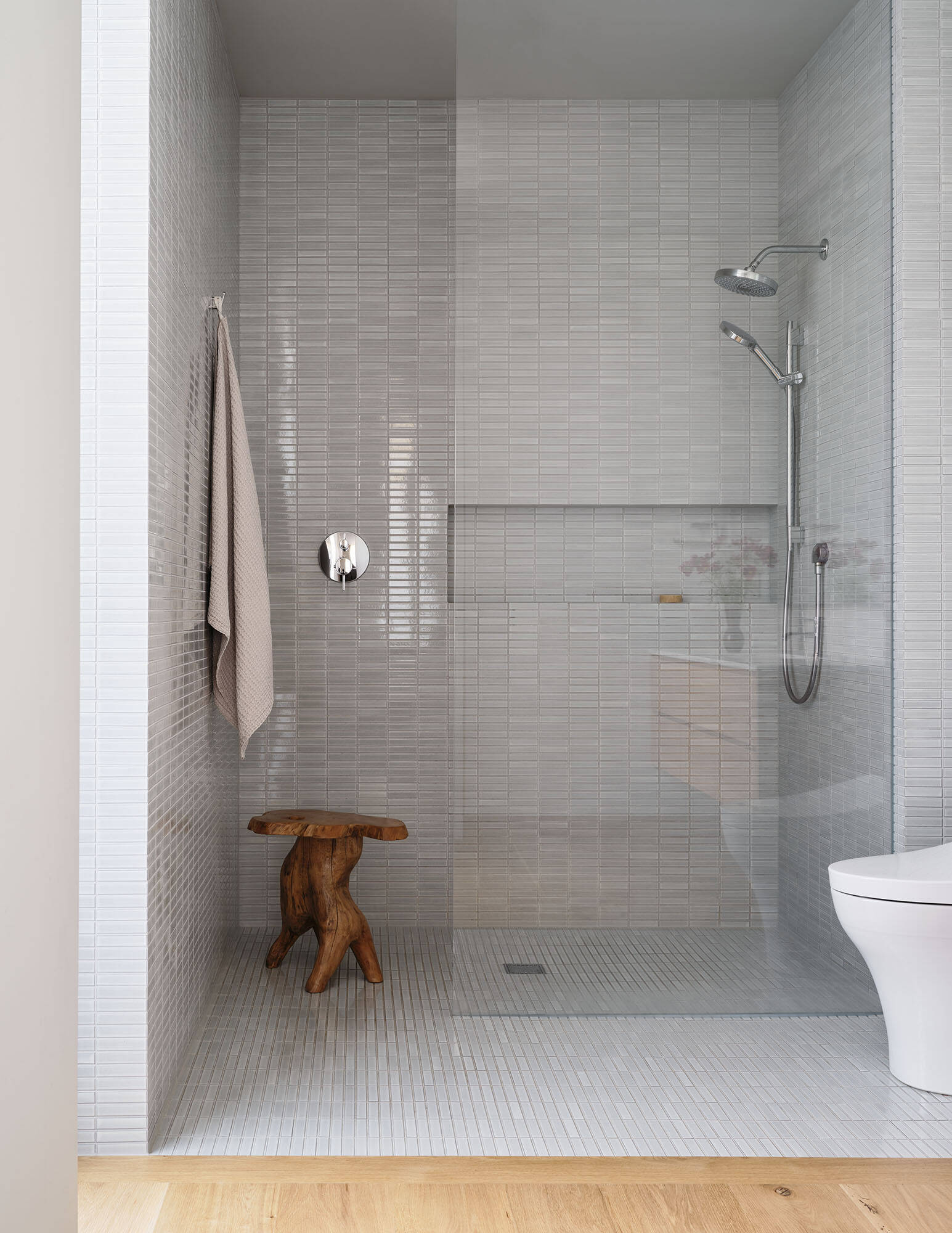
Both bathrooms follow the same restrained design language while offering slightly different spatial experiences. One bathroom pairs a vertical white tiles and a built-in bathtub with an integrated ledge beneath a skylight, turning daily routines into moments of pause. The other shifts toward a walk-in shower with small format tile, clear glass, and a timber vanity topped with a pale stone surface.
By rebuilding on the existing foundation and keeping the overall size modest, this Seattle home how building small, building durably, and making smart environmental choices can have a meaningful impact when applied across everyday residential projects.