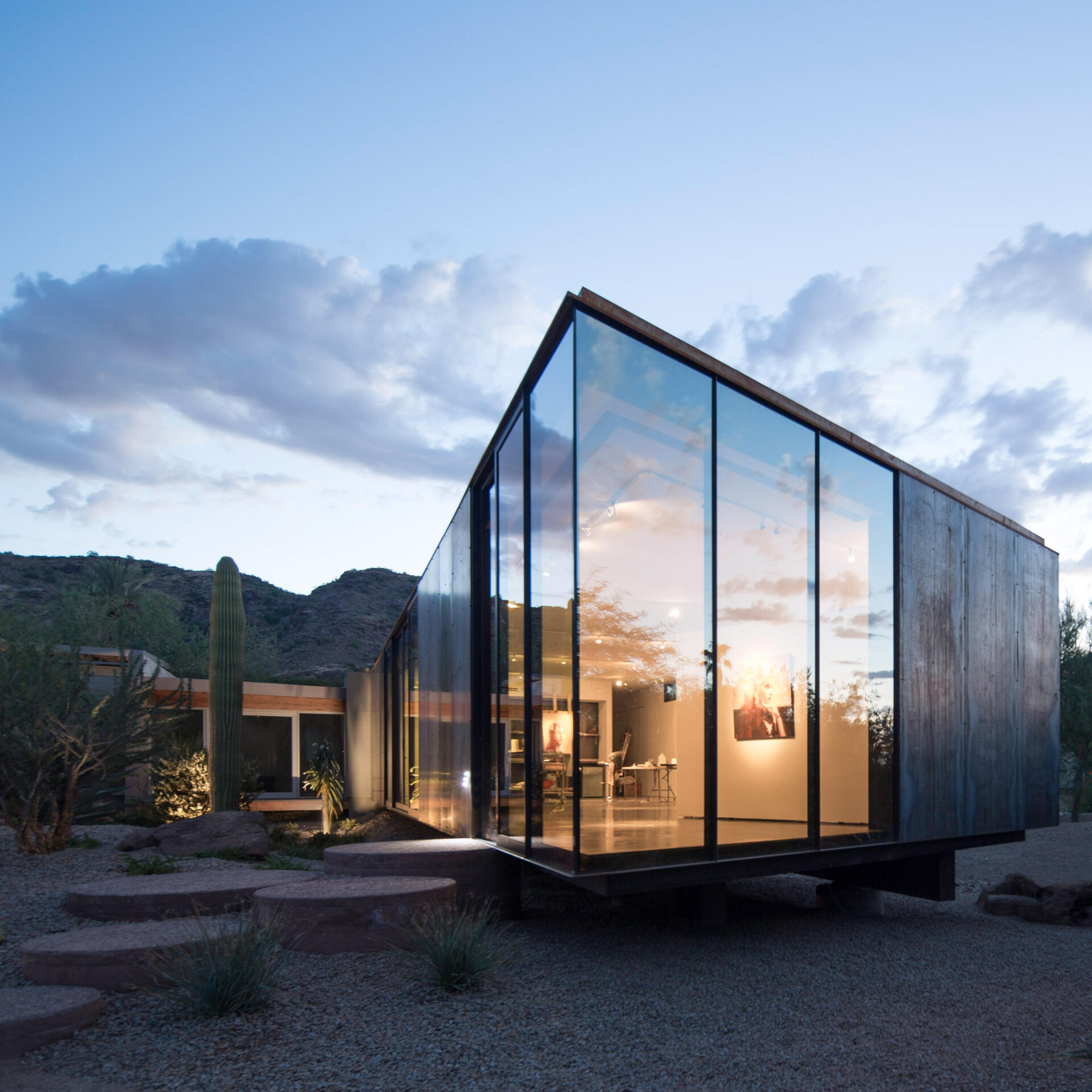
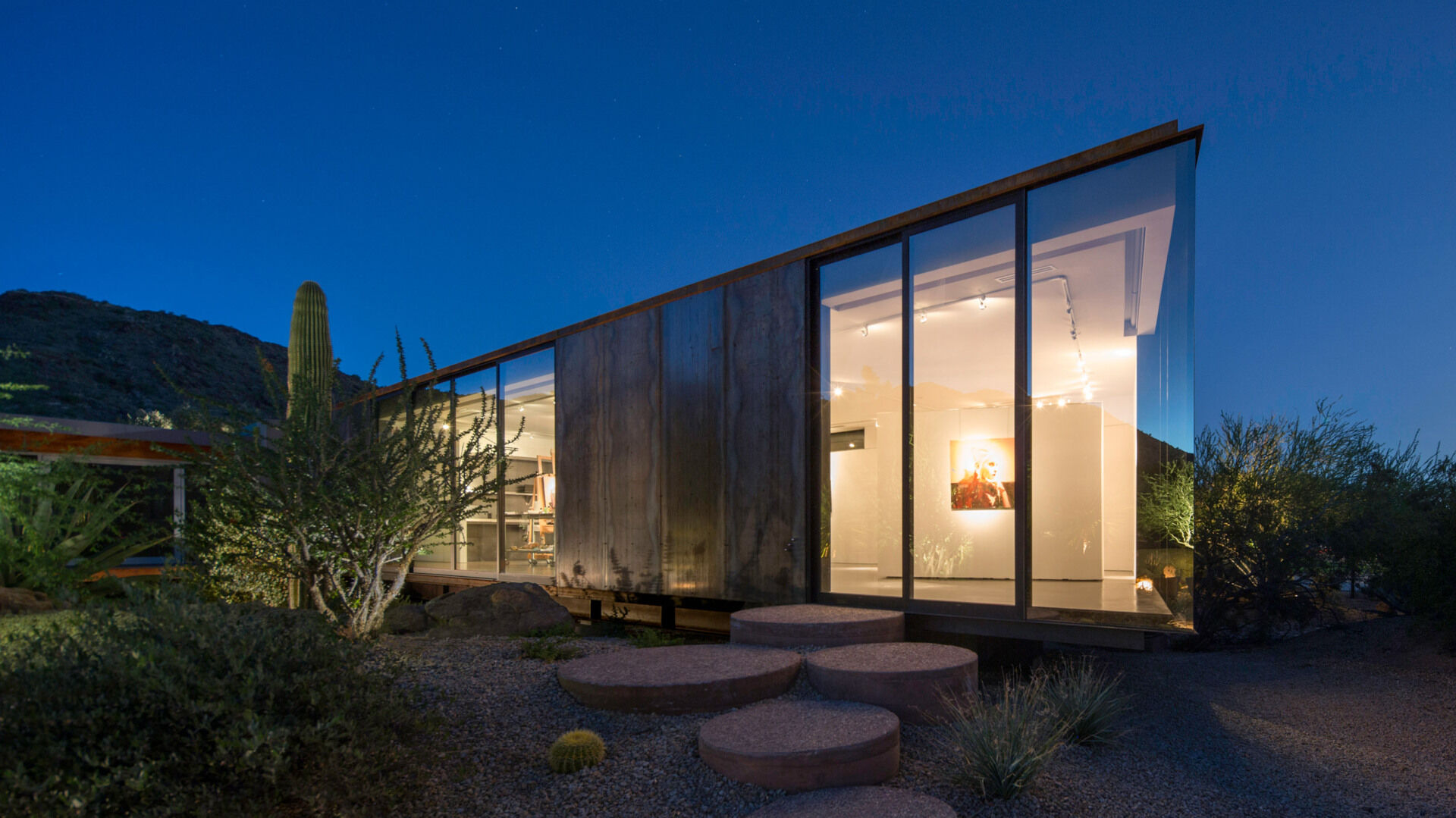
At first glance, The Little Art Studio looks like a bold object placed carefully into the Arizona desert. Look closer and its restraint becomes clear. Designed by Chen Suchart Studio, this 1,400 square foot addition in Paradise Valley is less about making a statement and more about listening to its surroundings. Every decision, from structure to material, was made to ensure the desert below remains largely untouched.
A Carefully Considered Addition
The Little Art Studio was designed as an addition to an existing contemporary stucco and glass residence in Paradise Valley, Arizona. Rather than mimicking the architecture of the main house, the studio establishes its own identity while still respecting the setting it sits within. The result is a structure that feels distinct yet deeply connected to its environment, allowing the desert to remain the dominant presence.
Steel, Glass, and a Clear Structural Logic
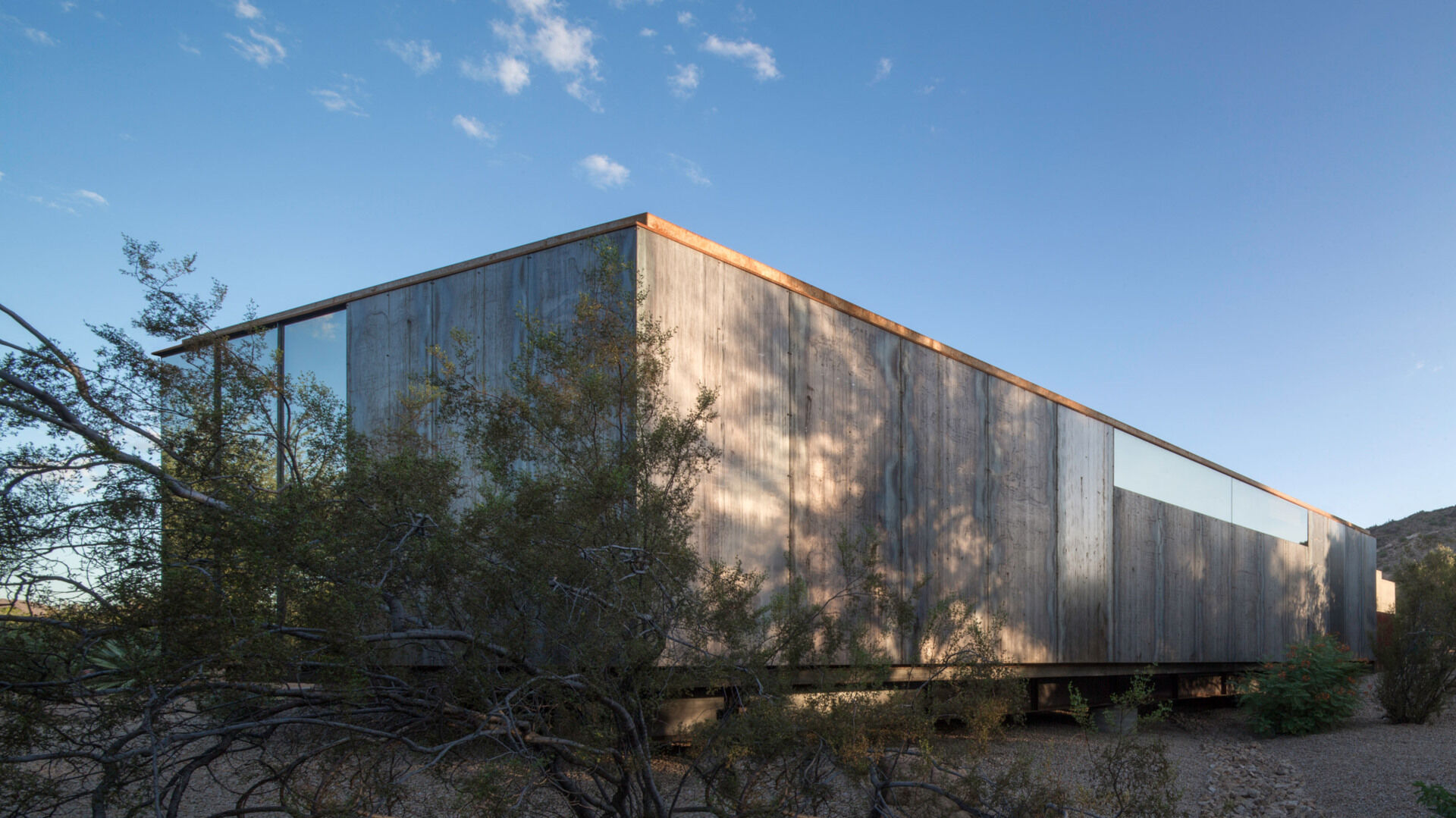
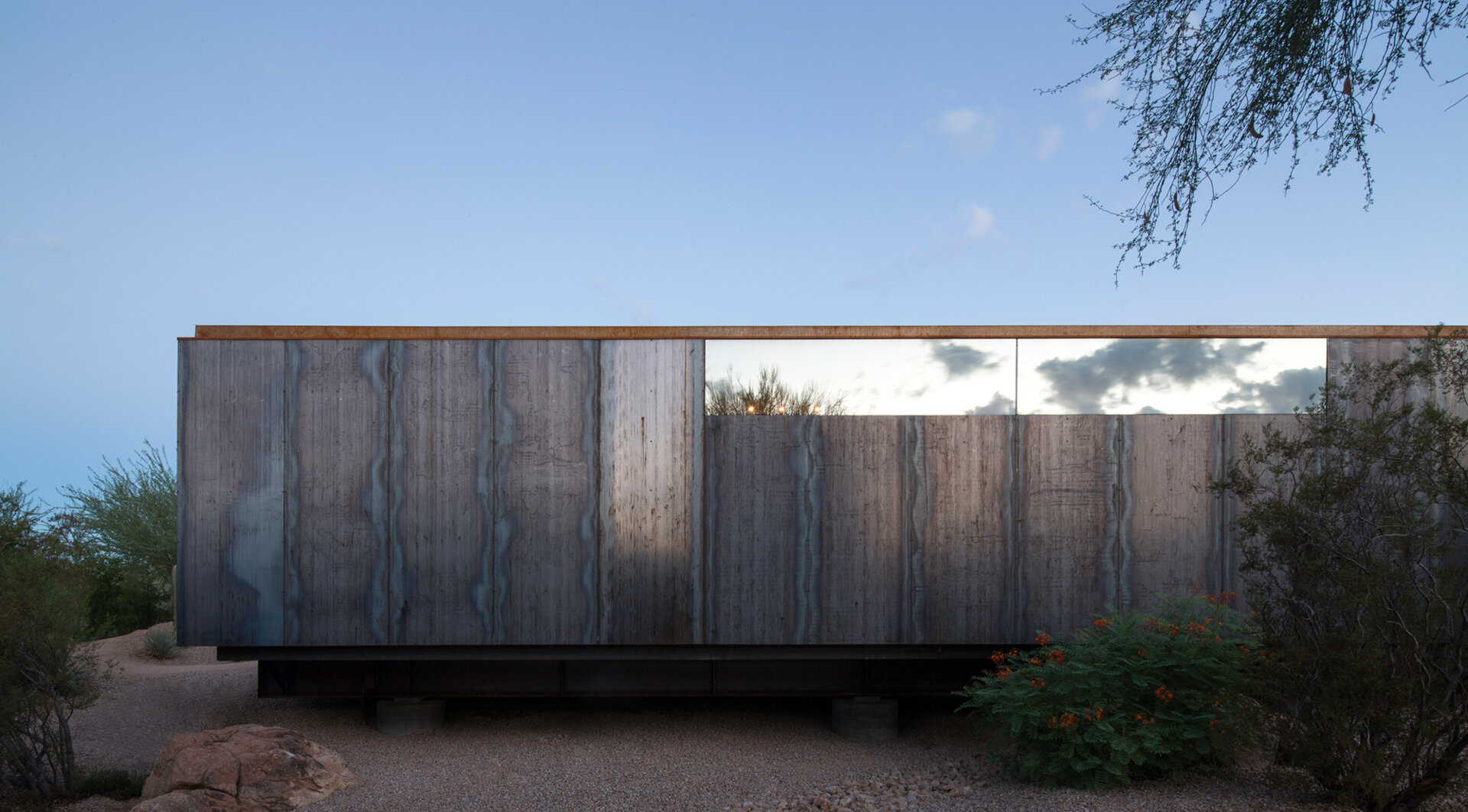
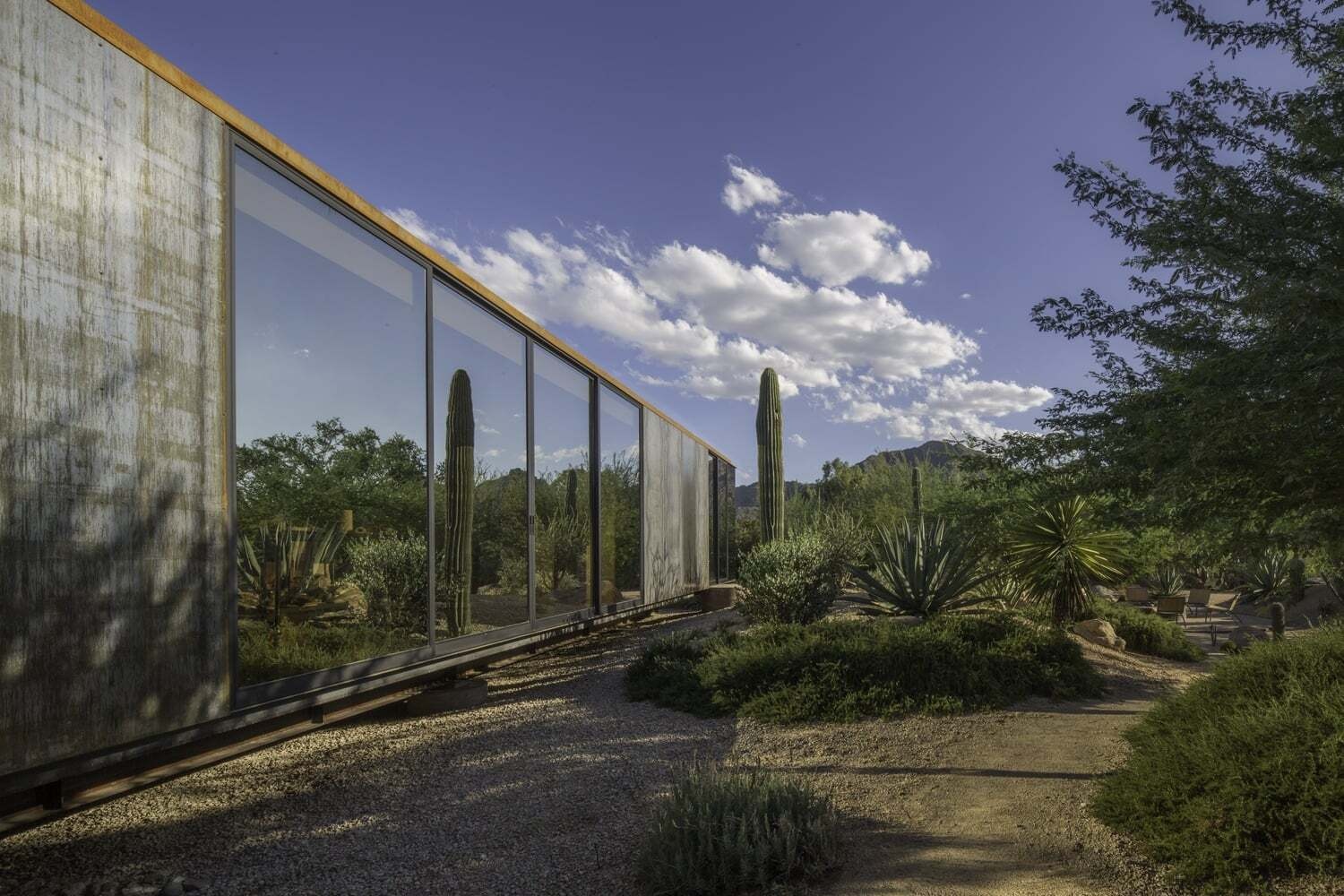
The exterior of the studio is defined by weathering steel panels and expansive glazing, supported by a steel beam floor structure with a composite concrete deck. These materials were selected for both durability and performance in the desert climate. The weathering steel develops a natural patina over time, allowing the building to visually settle into the tones of the landscape, while the glass introduces lightness and reflection.
Floating Above the Desert Floor
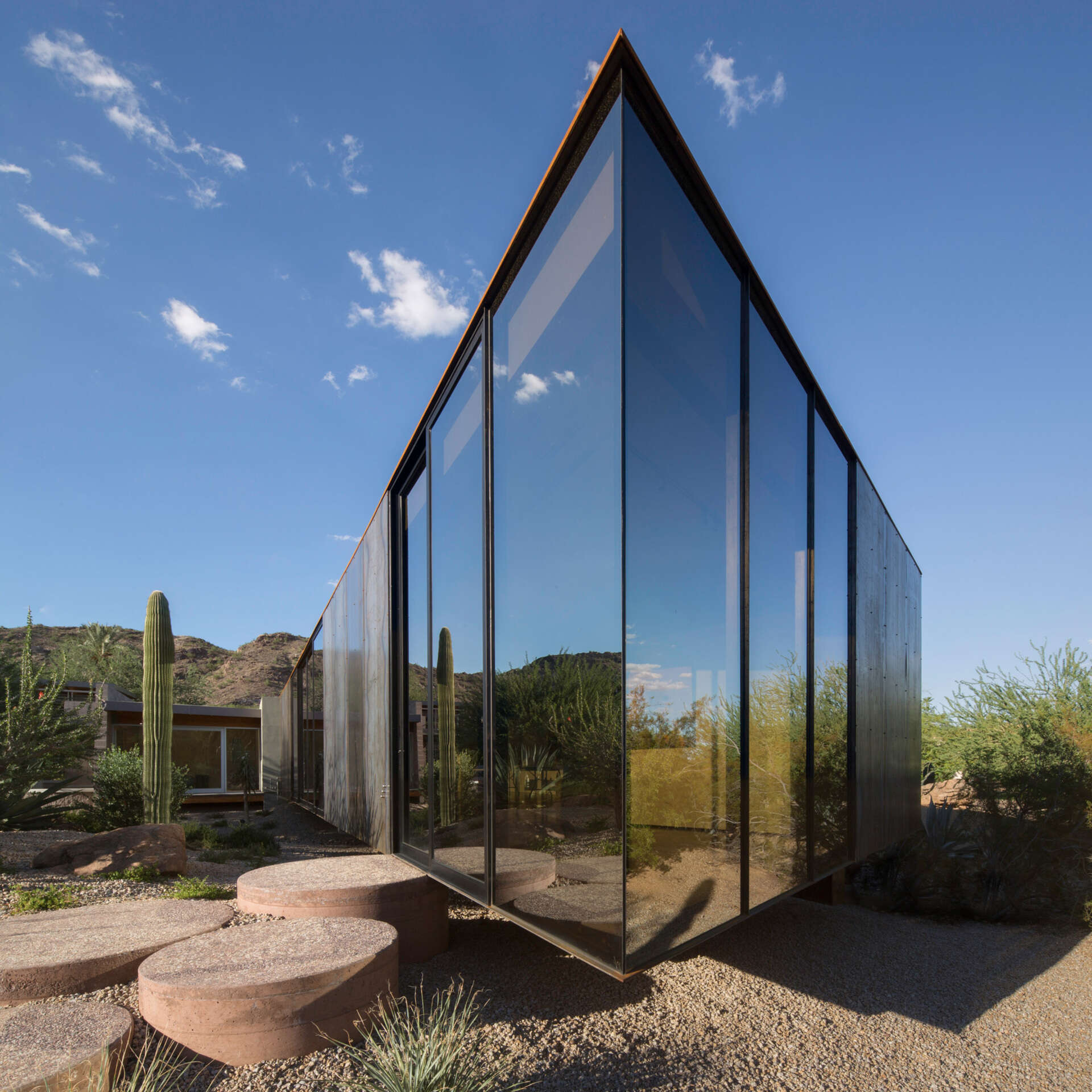
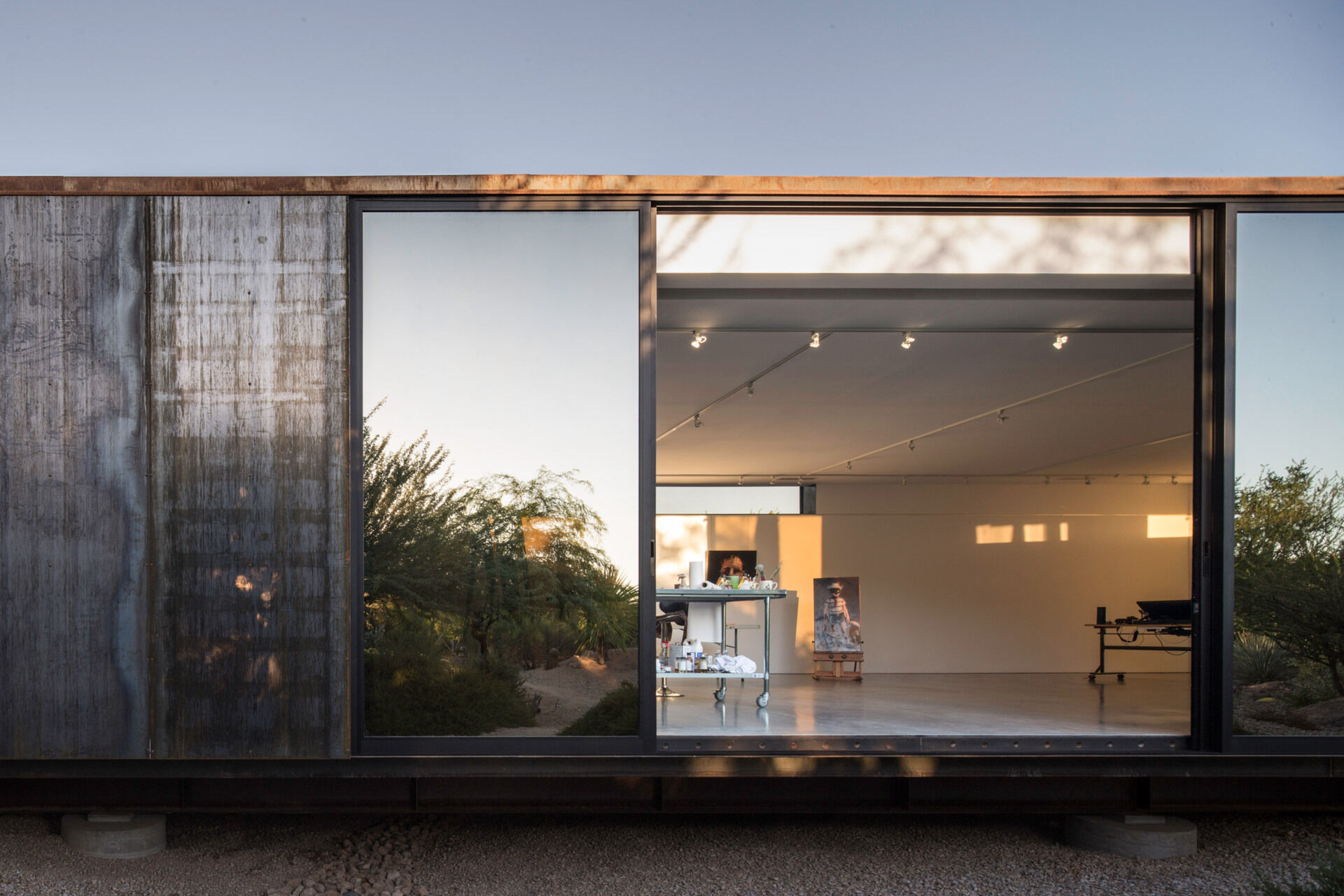
One of the most defining features of the project is how lightly it touches the ground. The structure is supported by six 36 inch diameter concrete caissons, allowing the studio to float above an existing desert wash. By limiting ground contact to just six points, the design minimizes disruption to the fragile ecosystem below and preserves the natural vegetation that already exists on the site.
Materials Chosen for Efficiency and Performance
To reduce construction time and disturbance to the site, the designers used standard steel panels that required minimal preparation and fabrication. High thermal performing reflective insulated glazing was selected for the windows, maximizing heat rejection while increasing reflection. This combination helps control interior temperatures while allowing the building to visually absorb and mirror the surrounding desert environment.
An Interior Designed for Creative Freedom
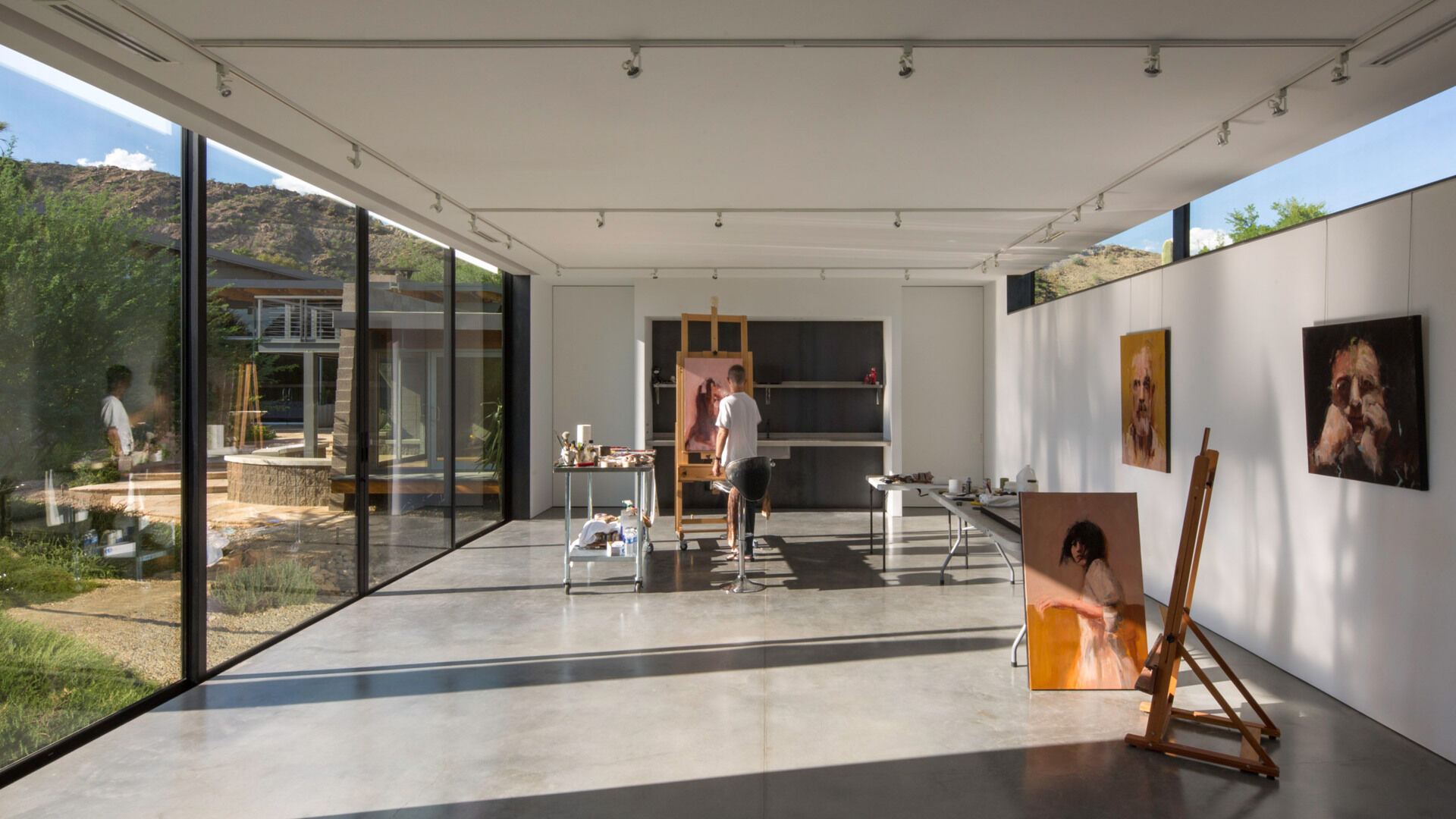
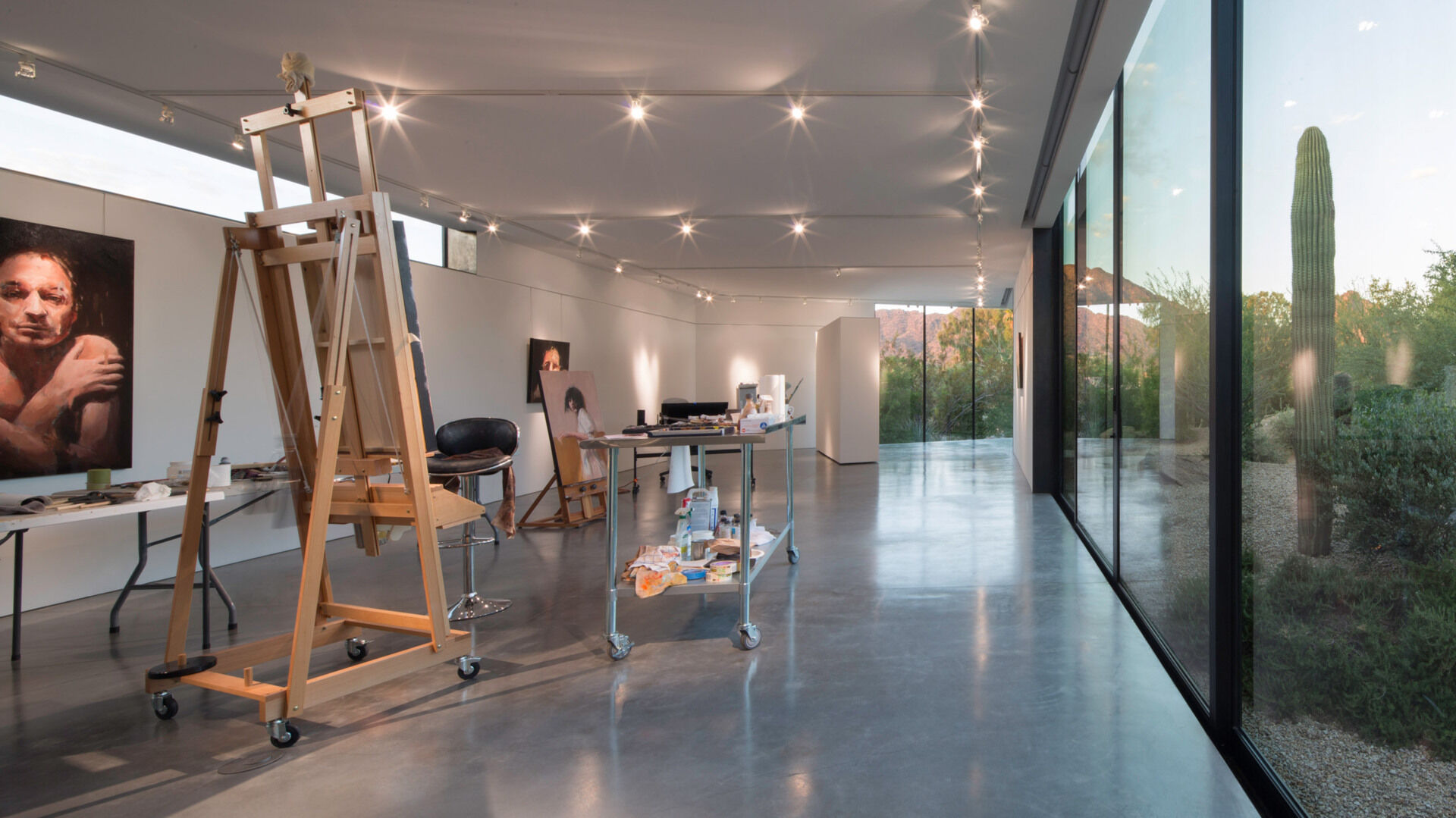
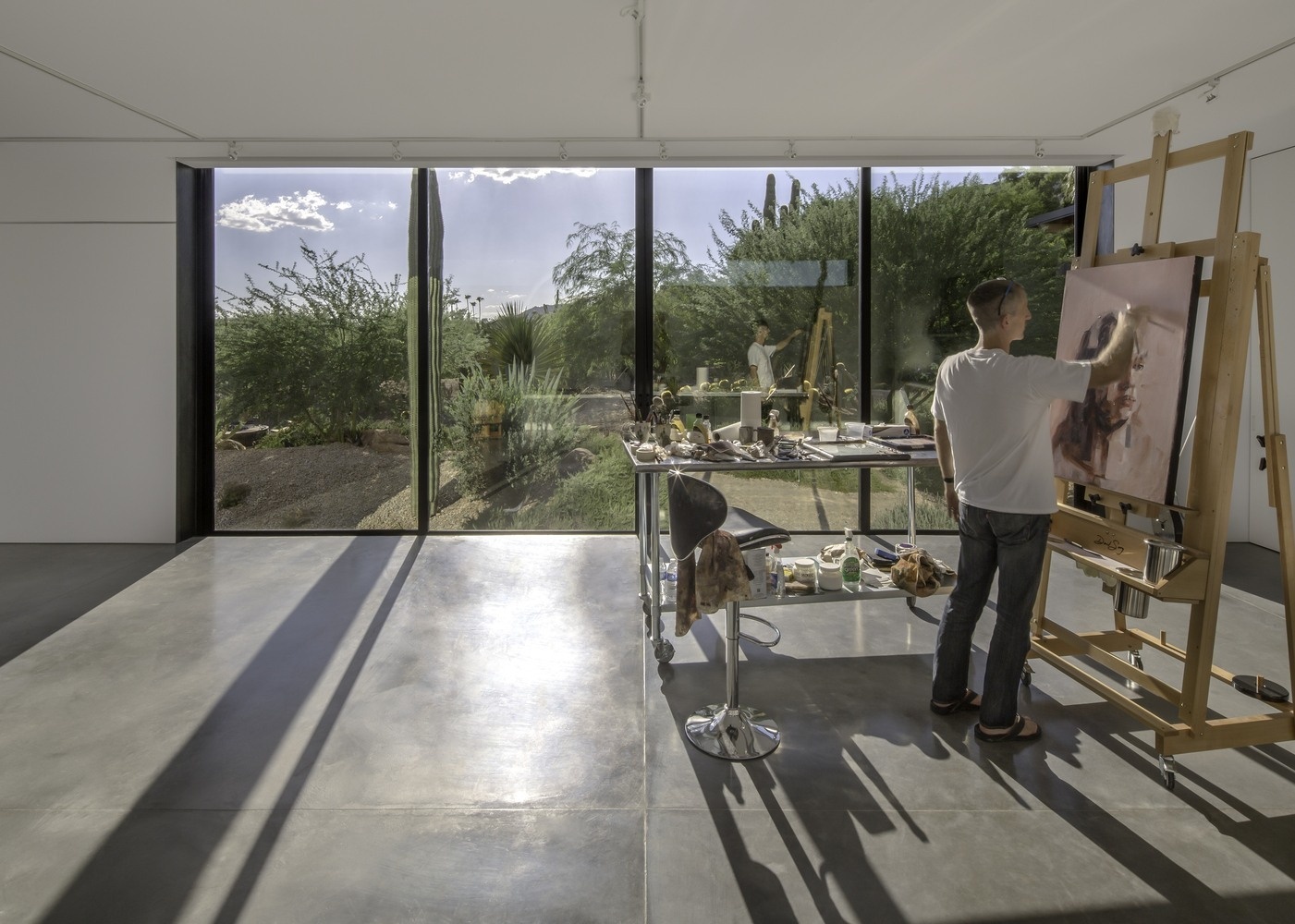
Inside, the studio is arranged as a flexible open plan that can function as both a working artist’s studio and a gallery space. Three large movable partitions allow the interior to be reconfigured in countless ways, creating spatial variety and increasing surface area for displaying artwork. This adaptability ensures the space can evolve alongside the artist’s needs without requiring permanent changes.
The Little Art Studio is a quiet example of architecture done with care. By floating above the desert, using restrained materials, and prioritizing flexibility over excess, Chen Suchart Studio have created a space that supports creativity without overpowering its setting. It proves that respecting the landscape does not mean disappearing into it, but rather knowing when to touch lightly and when to step back.