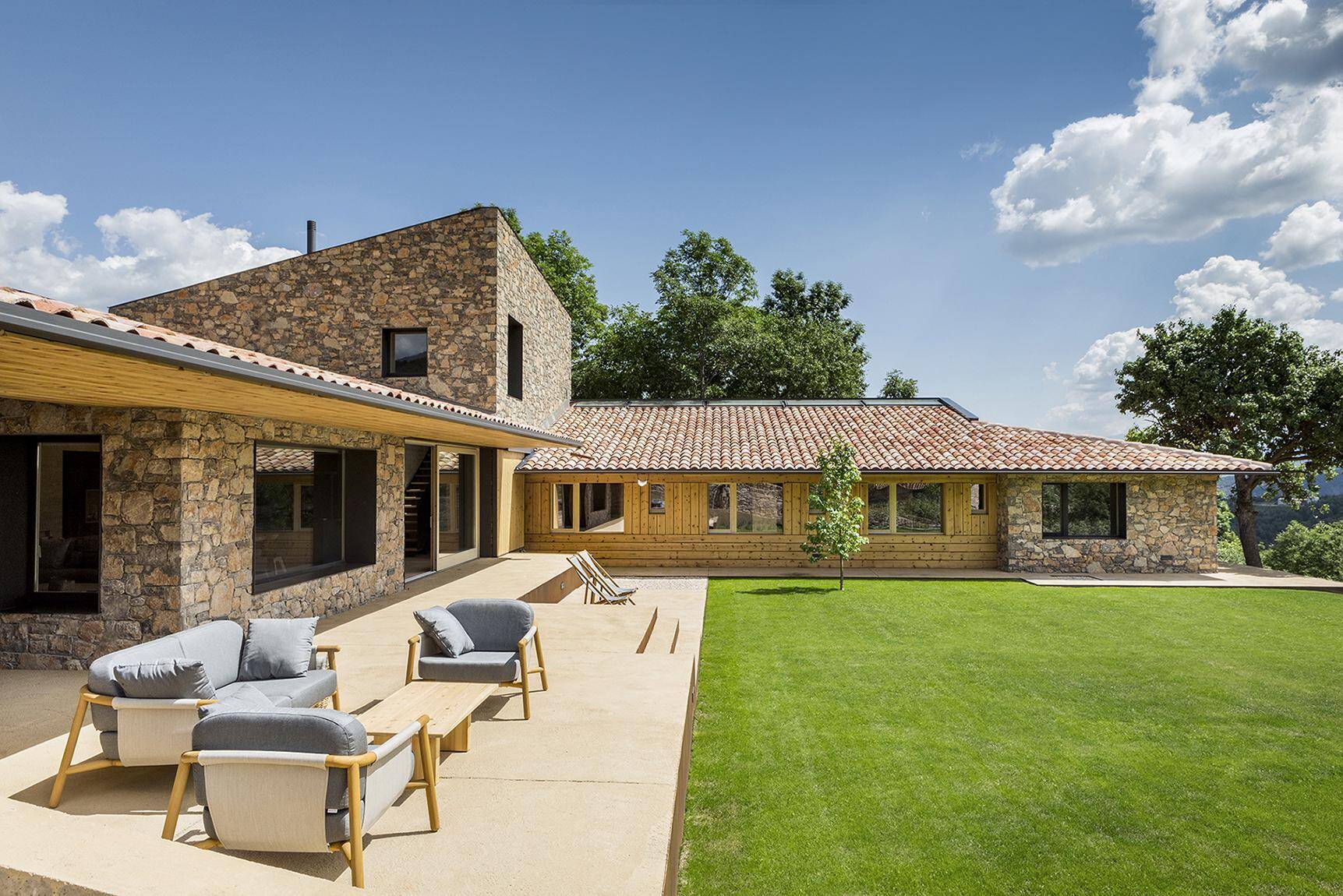
Tucked into the mountain landscape of La Cerdanya, this family home by Dom Arquitectura sits quietly within an old settlement east of the Pyrenees, a region shared by France and Spain. The village has been carefully rehabilitated over recent years, and today only a small cluster of homes remains, surrounded by sweeping views of the Cerdanya Valley and the Cadí-Moixeró Natural Park. Here, tradition is not just a reference point, but a requirement, shaping every decision behind the house’s design.
A House Shaped by Tradition and Regulation
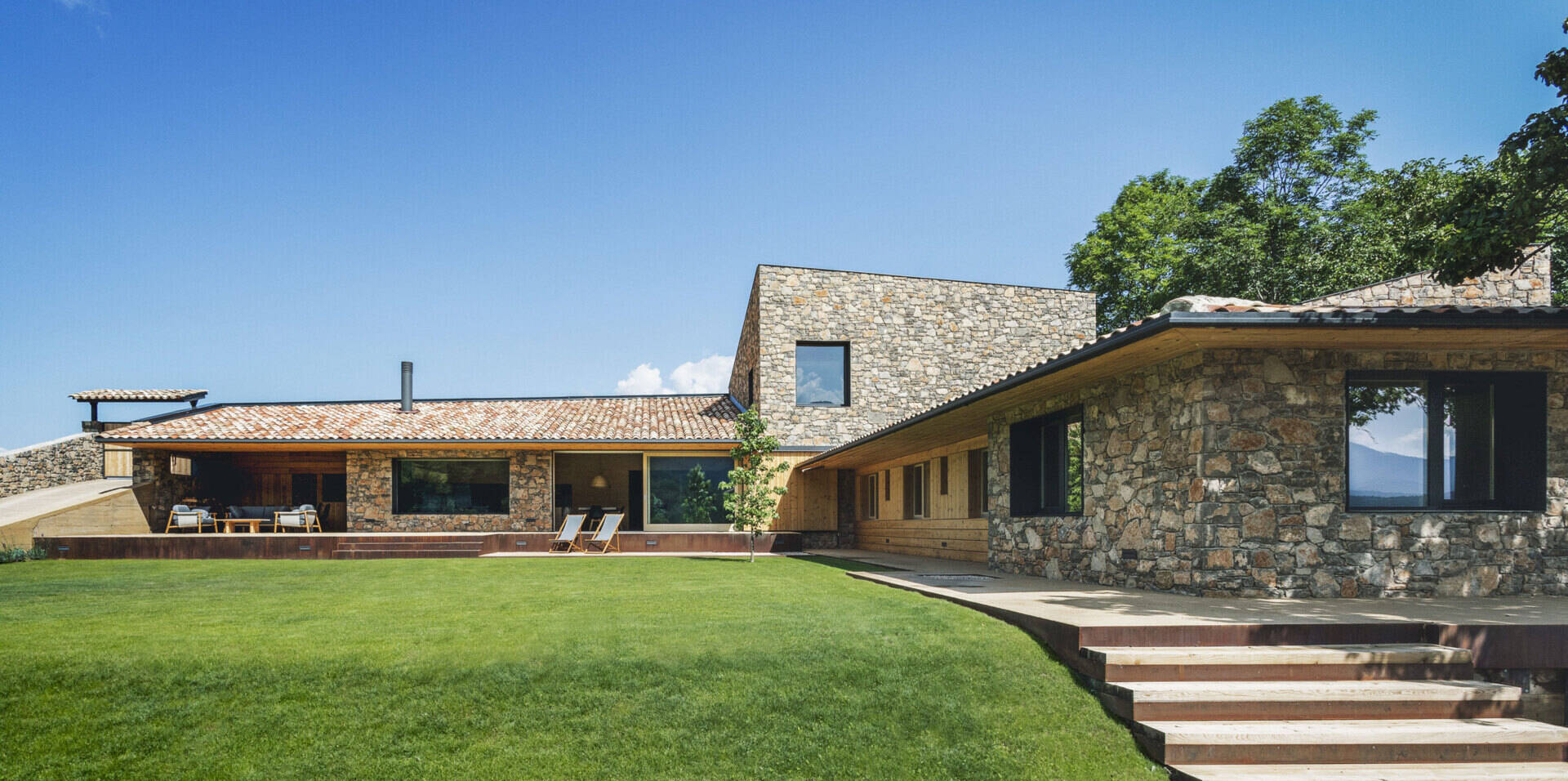
When designing the home, Dom Arquitectura worked within strict local regulations that dictated the use of traditional Cerdanya materials. The exterior had to be constructed using locally sourced stone, wood, and handmade clay tiles for the sloping roofs. Rather than seeing this as a limitation, the architects used it as a foundation, aiming to create a house that would sit naturally among its neighbors while offering a contemporary and welcoming atmosphere inside. The result is a building that feels rooted in place, echoing the stone facades, tiled roofs, and garden porches typical of the region, yet subtly reinterpreted for modern family life.
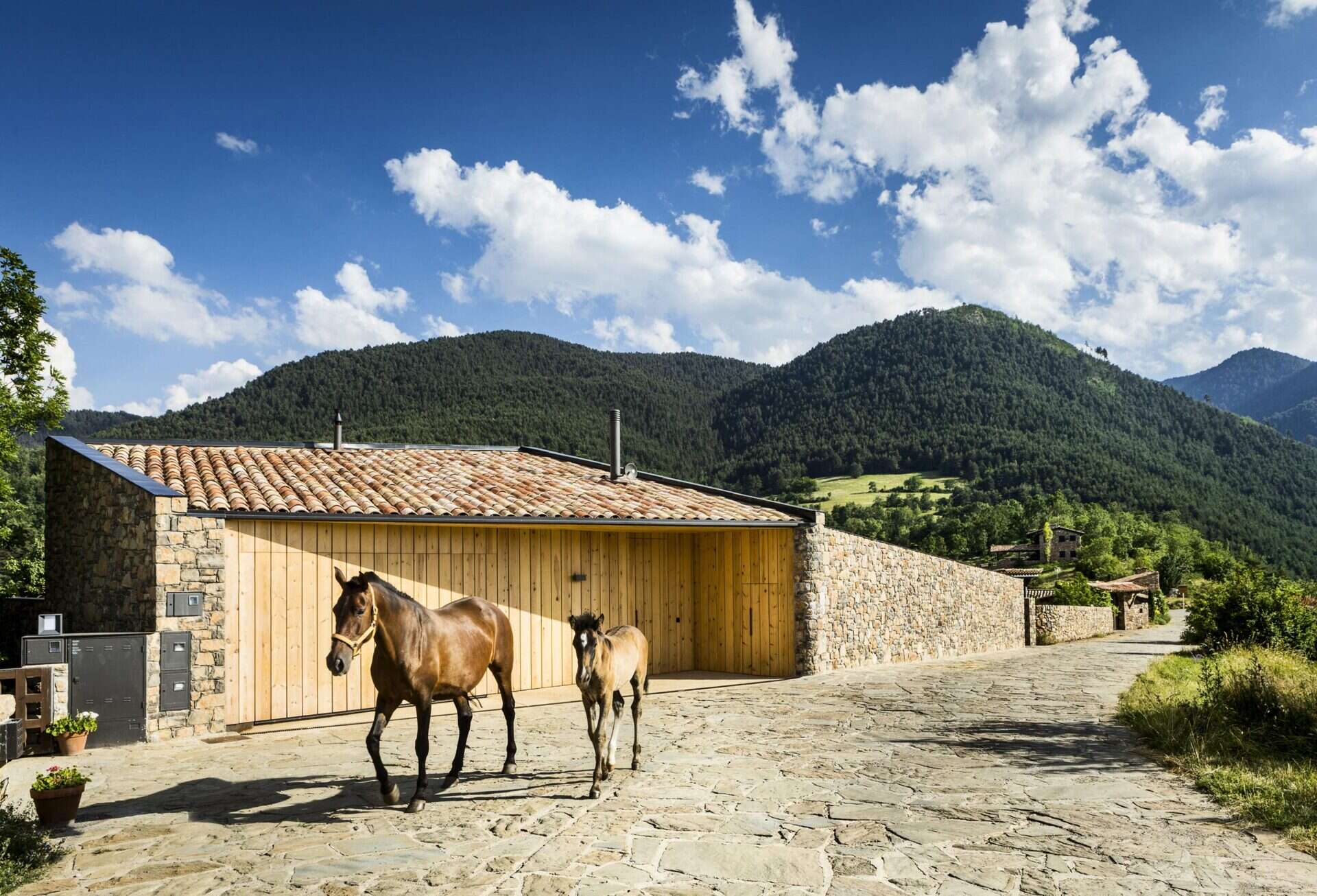
A Discreet Arrival From the Street
Approaching the house along the stone road, the entrance is intentionally understated. A wooden garage and front door blend into a surrounding timber wall, keeping the street-facing facade closed and private. This choice reflects traditional rural architecture, where homes were designed to protect themselves from the elements and from outside intrusion.
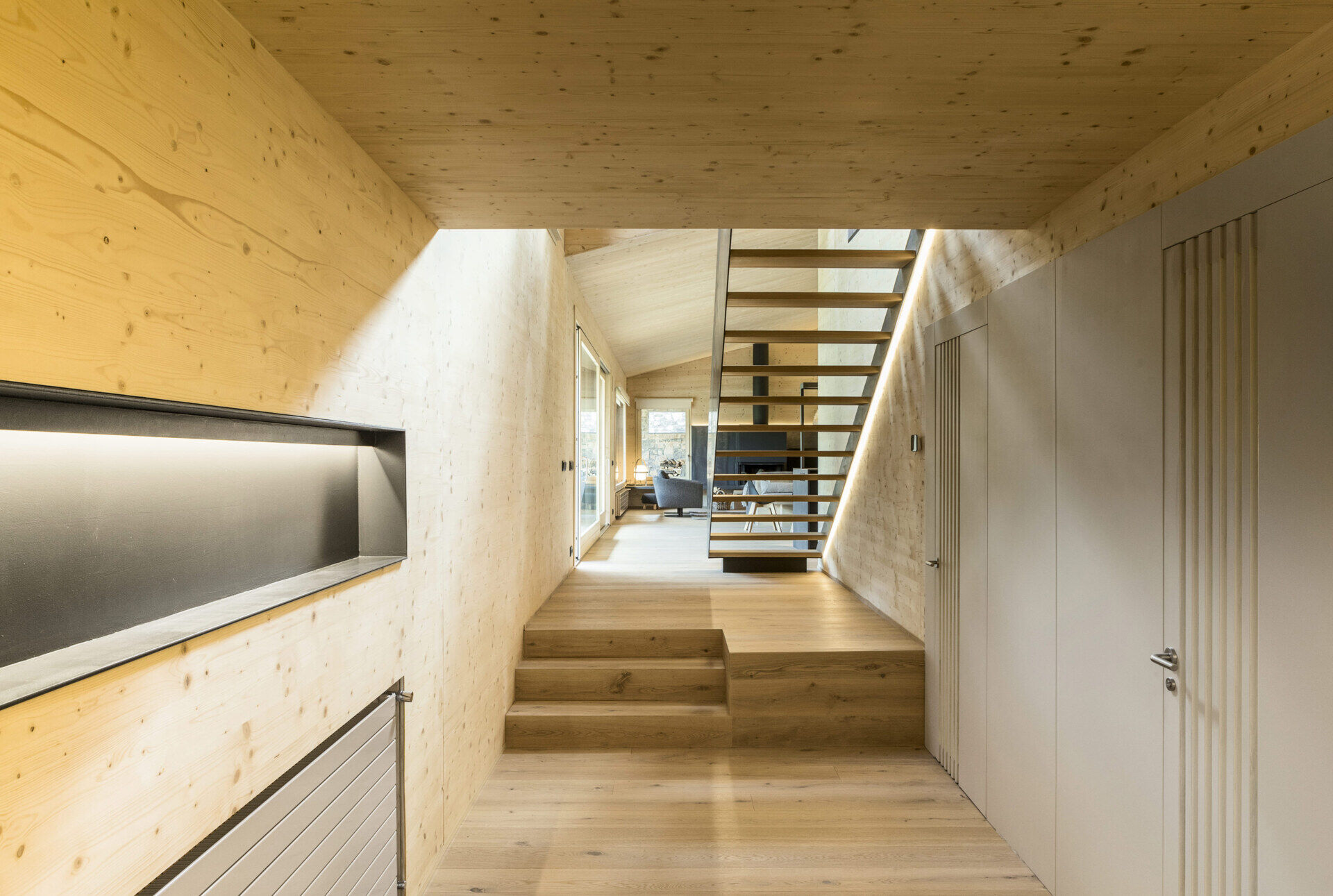
Once inside, the atmosphere shifts. The front door opens to an iron staircase, a striking yet restrained element that immediately signals the home’s contemporary character. From here, the stairs lead down into the heart of the house.
An Open Plan Living Space Anchored by Materials
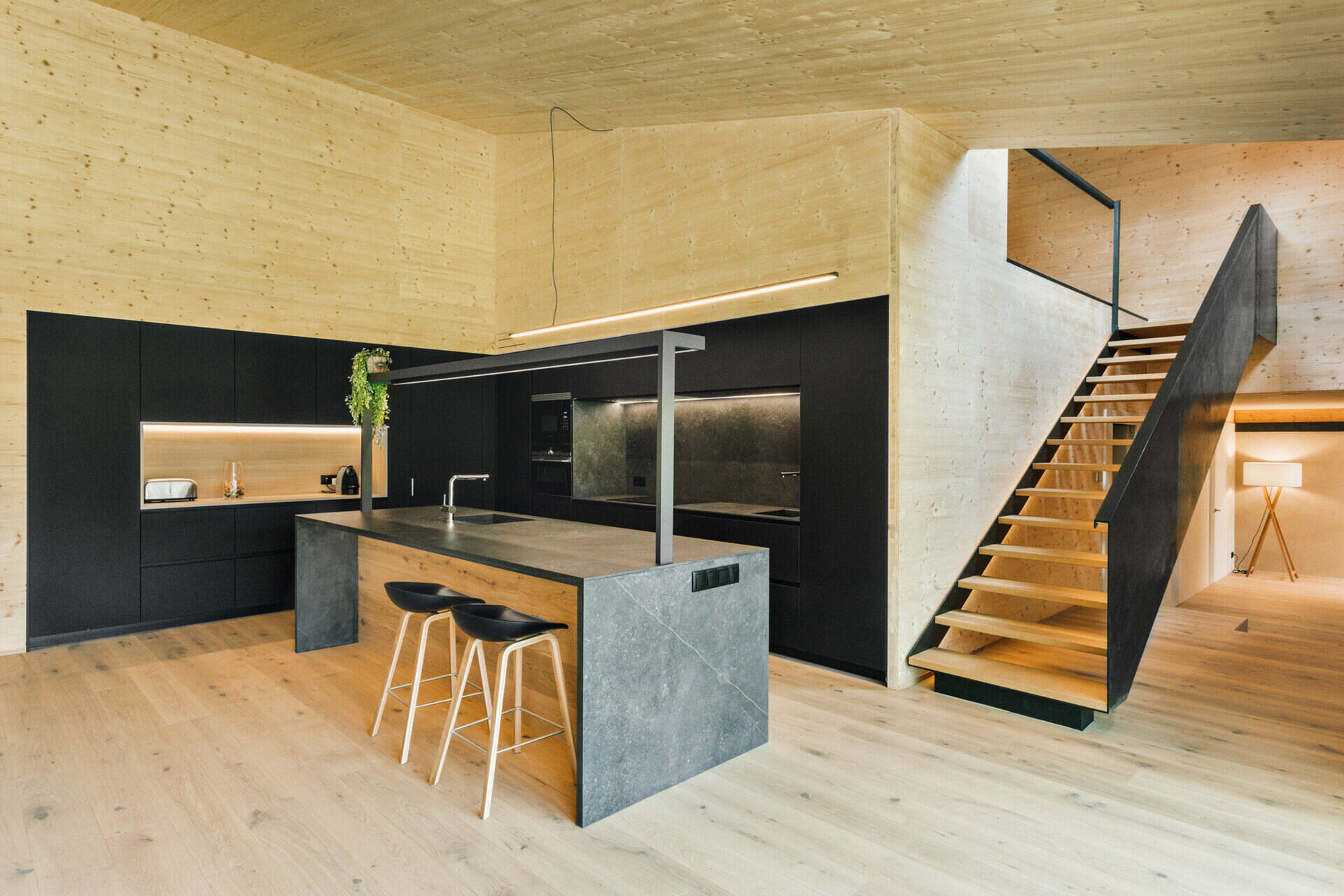
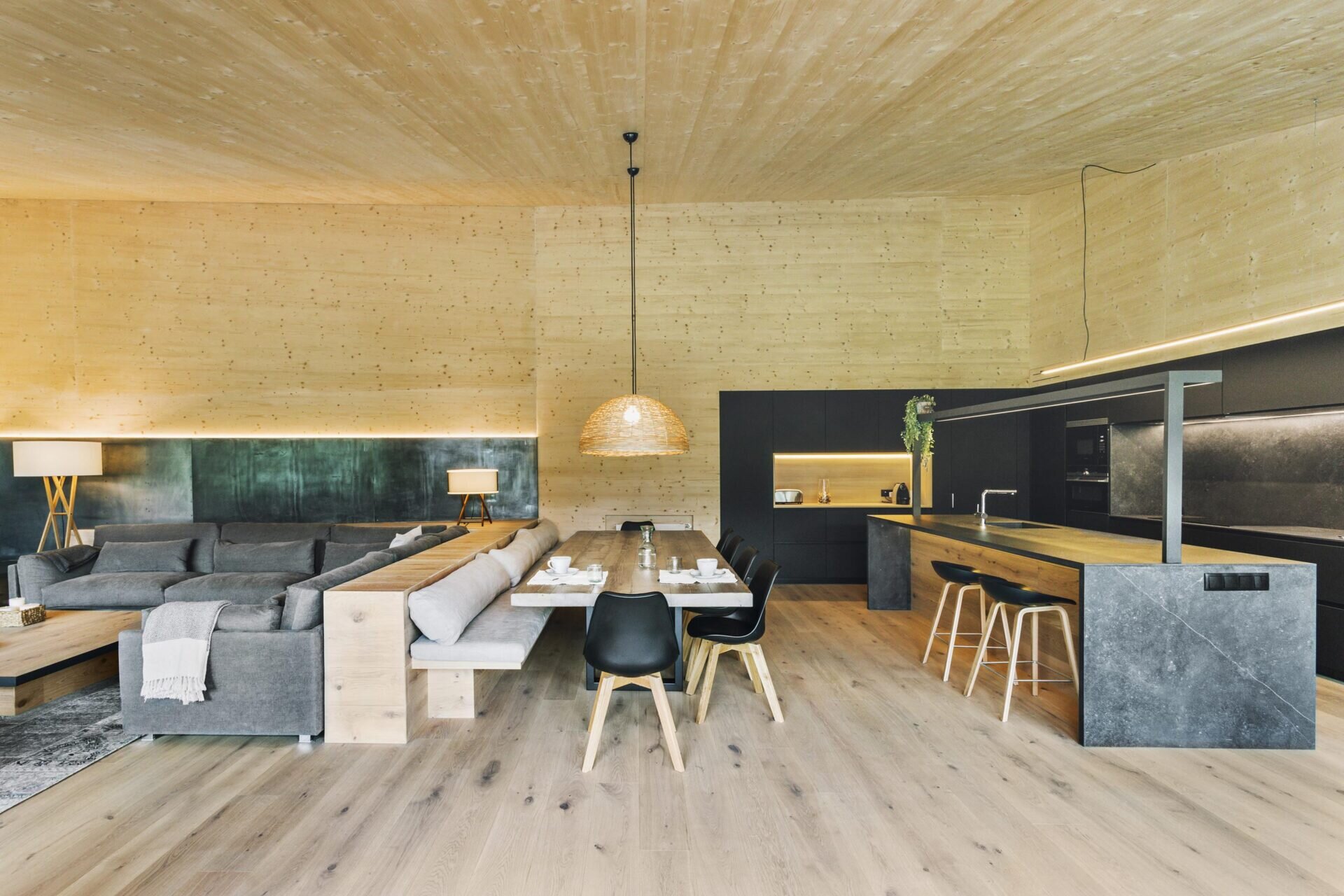
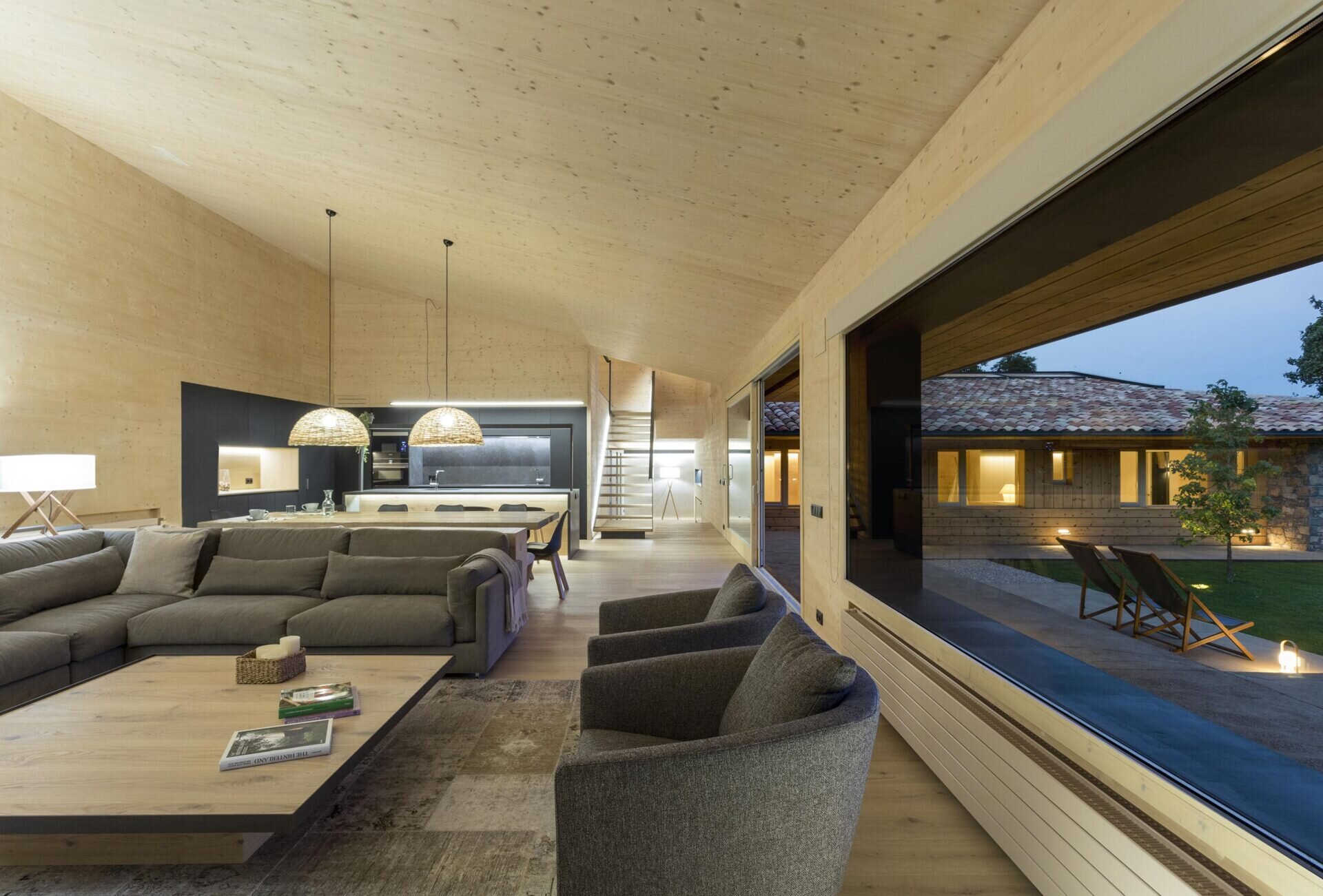
At the bottom of the staircase, the interior opens into a single, flowing living space shared by the kitchen, dining area, and living room. Wood takes center stage throughout, lining the walls and ceilings with fir panels and continuing underfoot as natural oak parquet flooring, creating a sense of warmth and continuity.
In the kitchen, black cabinetry echoes the iron staircase, giving the space a grounded, architectural feel. A grey kitchen island sits at the center, softening the palette and providing a visual break while anchoring the room as a place for gathering.
Dining and Living Areas Defined Without Walls
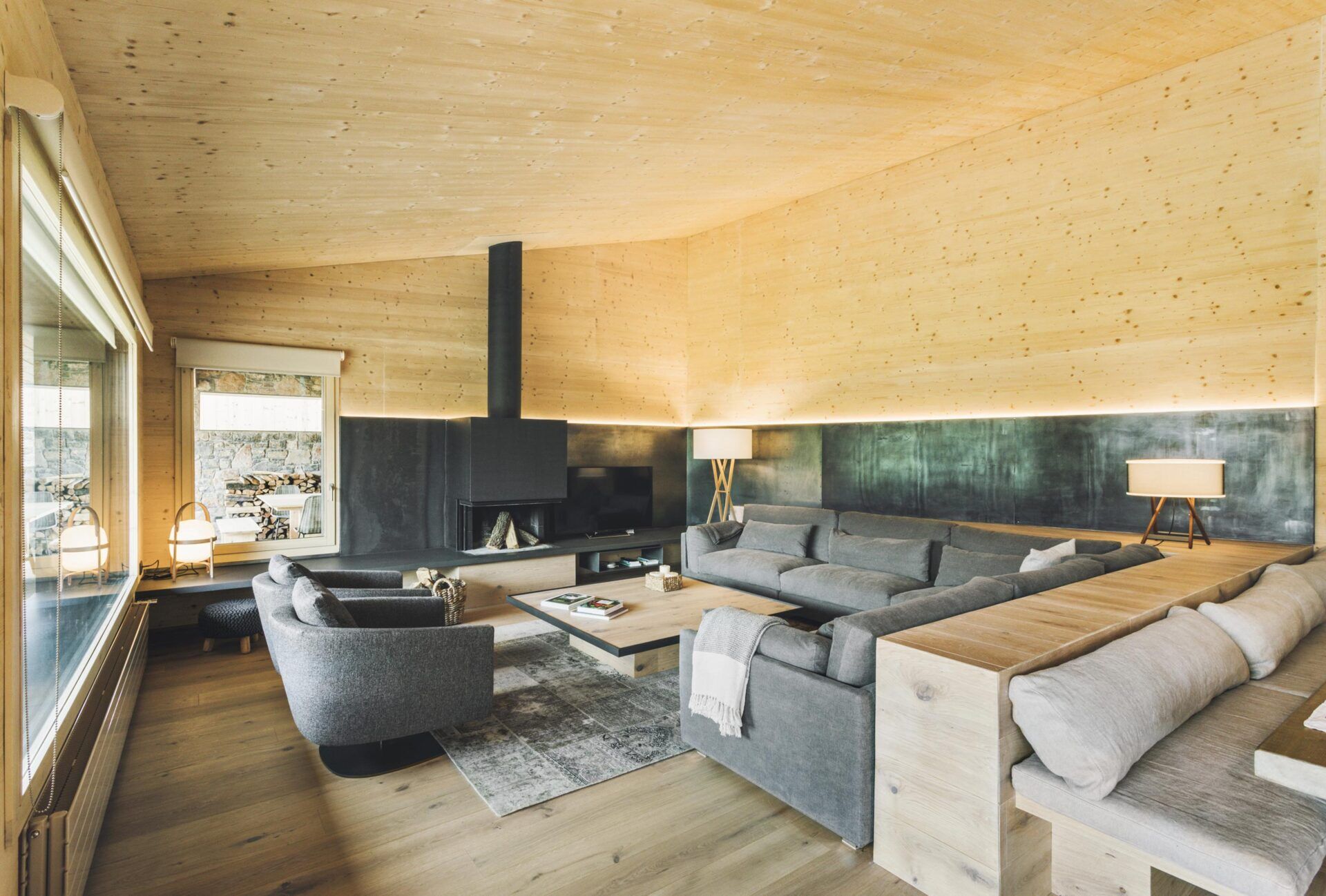
Behind the kitchen island, the dining area unfolds. A low timber pony wall runs the length of the dining table, doubling as the backrest for a built-in bench. This subtle division defines the space without closing it off, allowing light and views to move freely through the room.
On the other side of the pony wall, the living room is arranged around an iron fireplace, a modern interpretation of the traditional hearth. A large picture window frames the surrounding landscape, turning the valley and mountains into a constant backdrop for daily life.
Opening Out to the Landscape
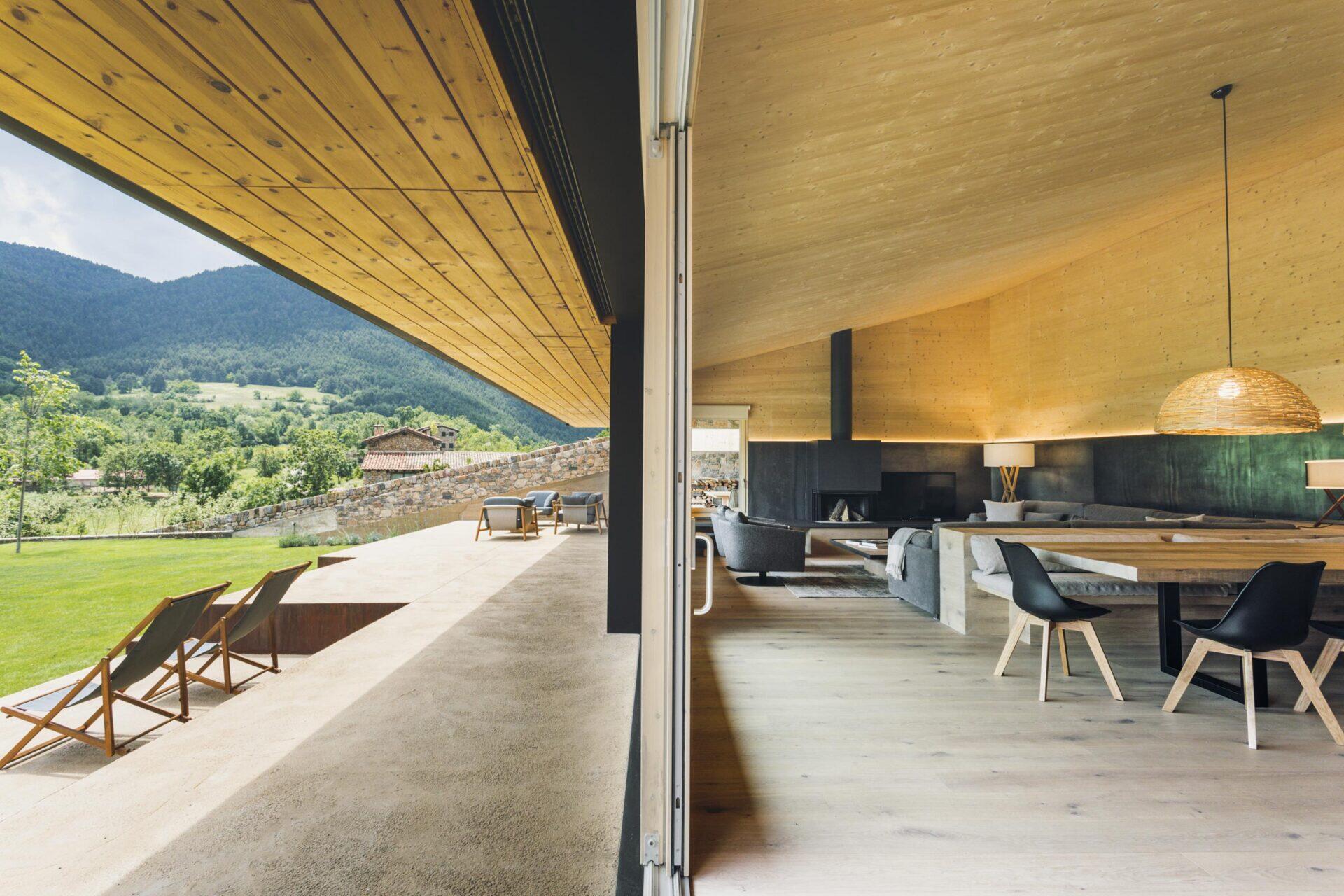
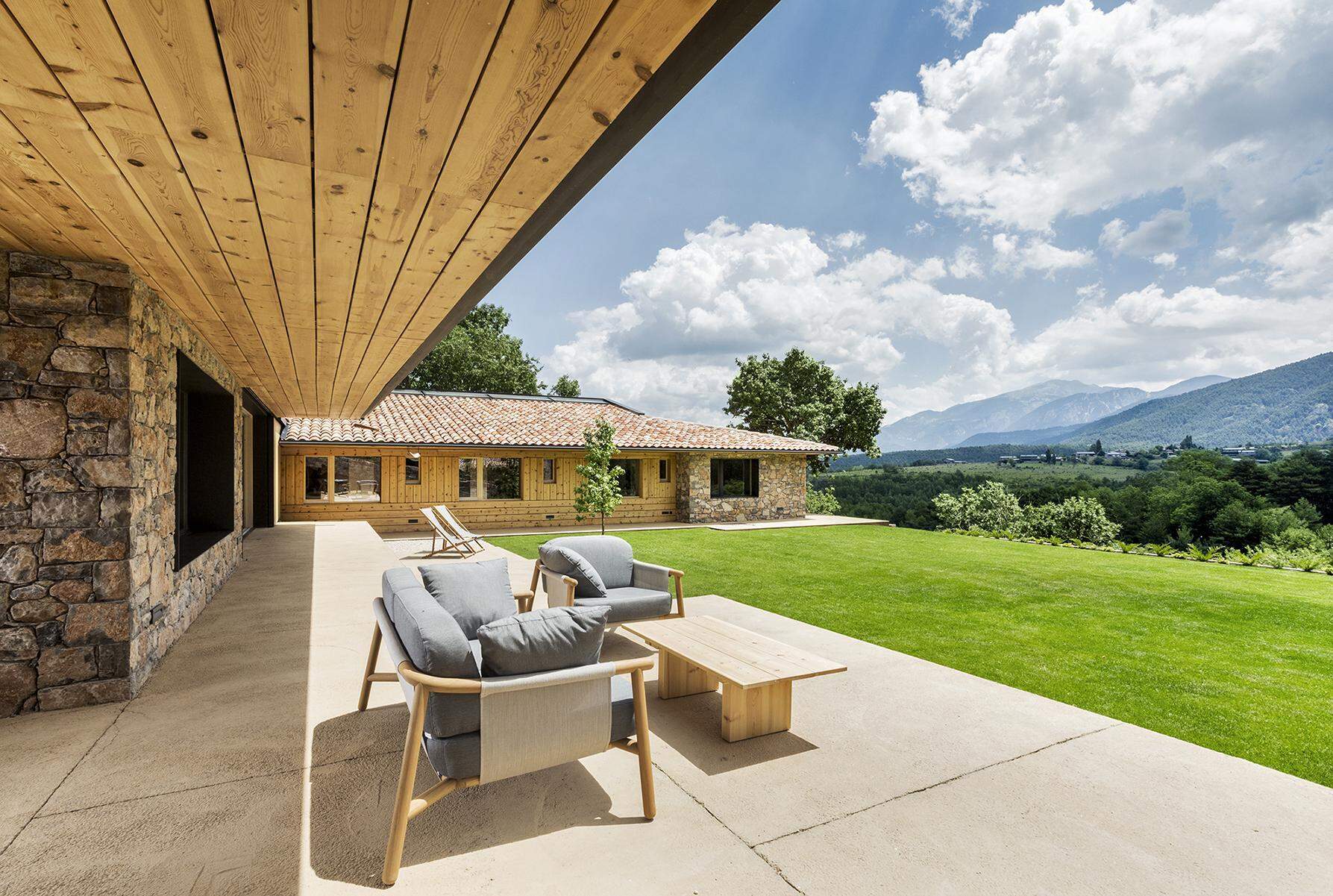
Sliding doors lead from the living area onto a covered porch that steps down across multiple levels into a large grassy backyard. This outdoor space enjoys uninterrupted views of the Cadí-Moixeró Natural Park and the valley beyond, reinforcing the architects’ intention to open the house toward nature while keeping the street side closed for privacy.
The overhanging roofs extend around the home, providing shelter and creating a seamless transition between inside and out, particularly suited to mountain living.
A Quiet Transition to the Private Spaces
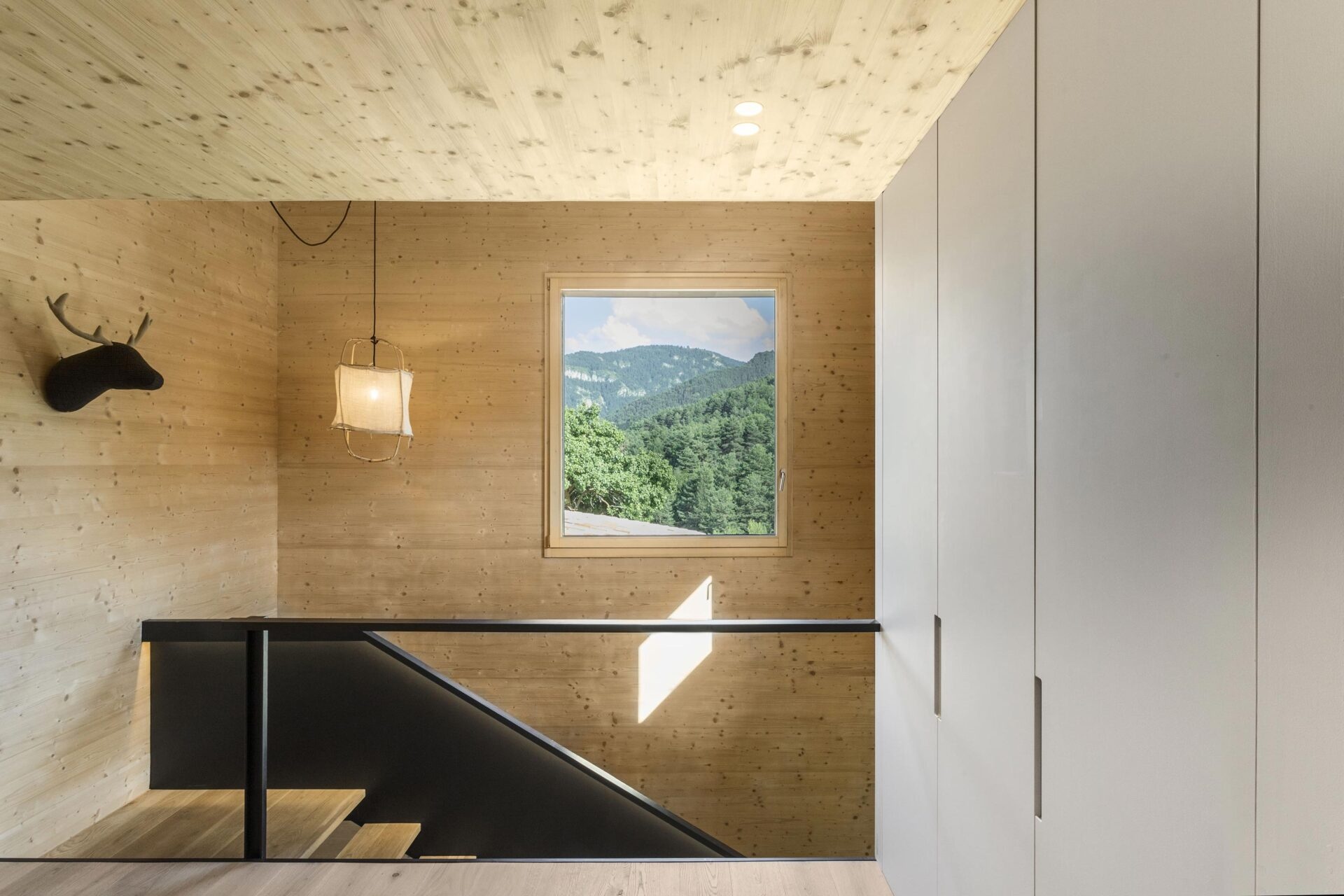
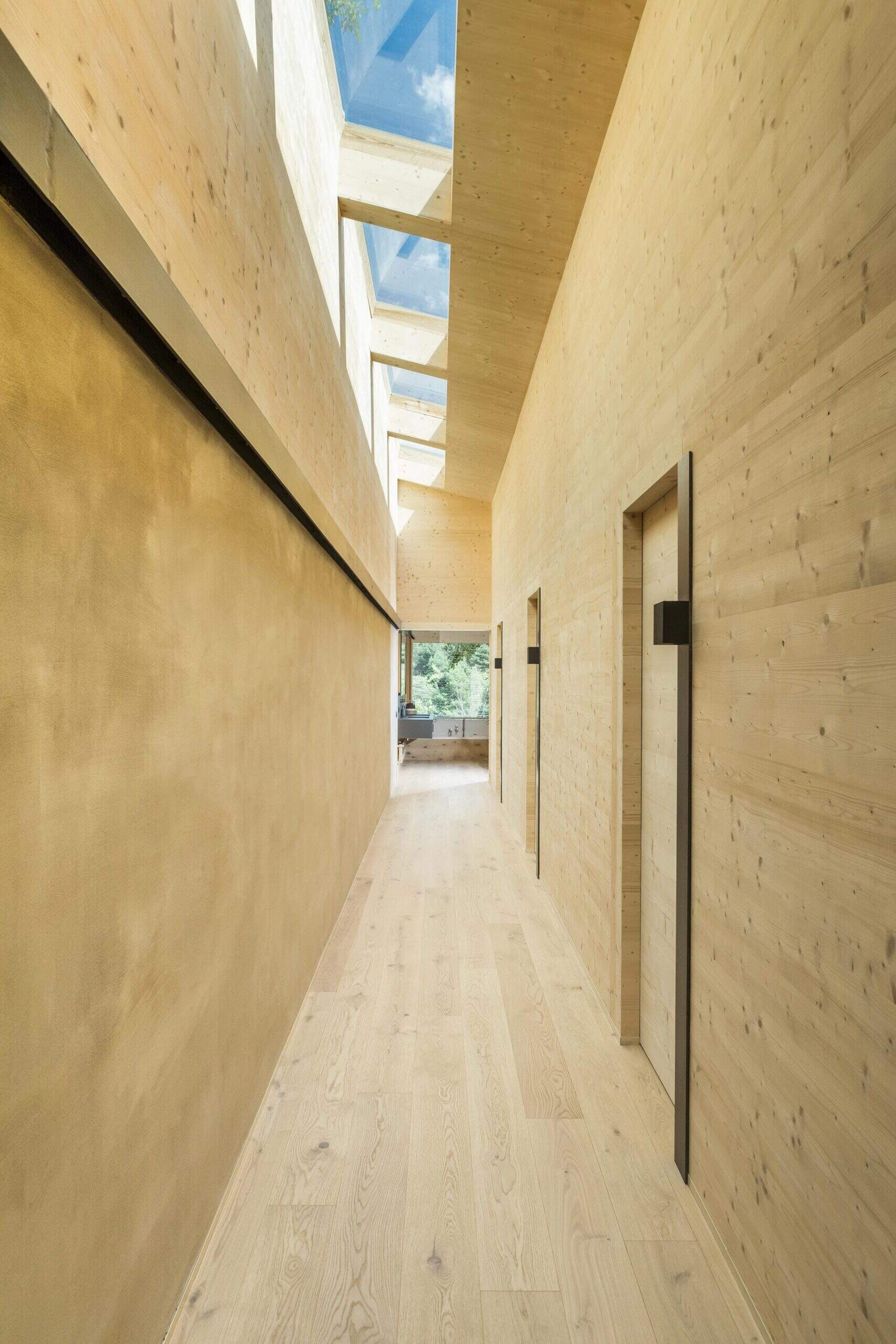
Back inside, a hallway tucked beneath the staircase leads to the bedrooms and bathrooms. Skylights above bring natural light into this passage, preventing it from feeling enclosed and maintaining the sense of openness found throughout the house.
Bathrooms Defined by Light and Simplicity
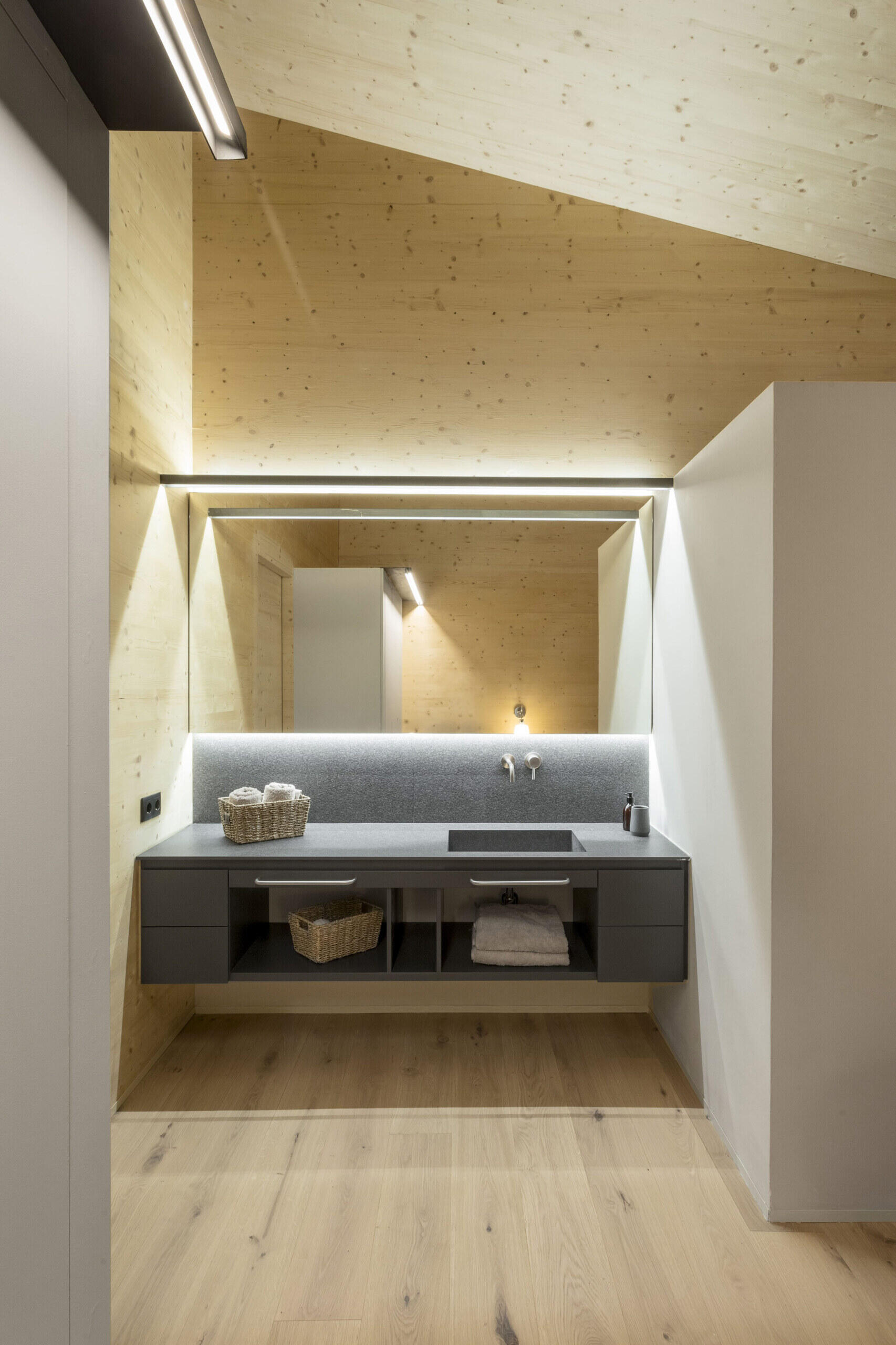
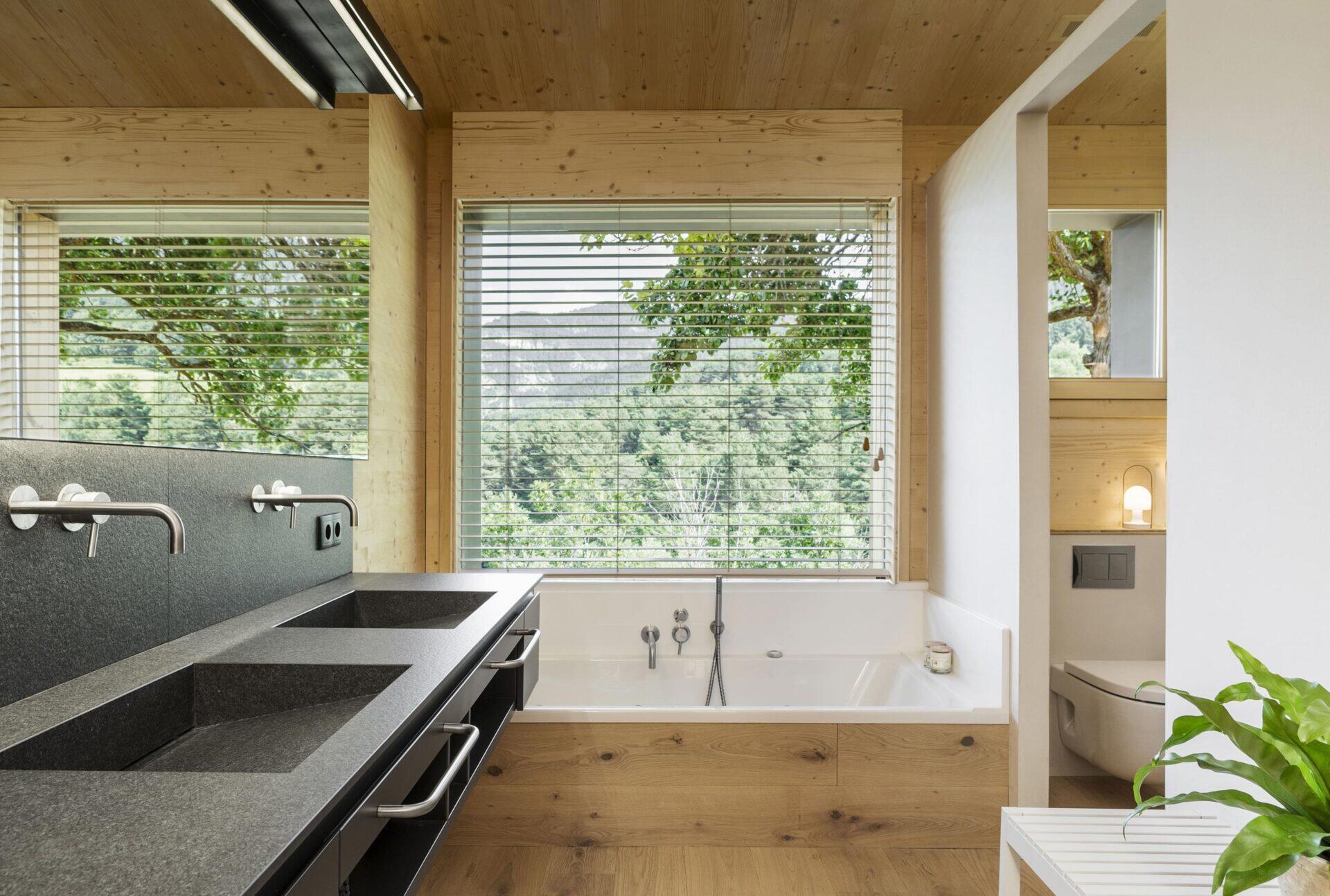
In one of the bathrooms, grey cabinetry stands out against the wood-lined walls and ceiling. A backlit mirror and minimalist iron lighting fixtures add depth and softness, highlighting the vanity without overwhelming the space. The restrained palette keeps the focus on texture and light.
A Children’s Bedroom Designed for Play and Rest
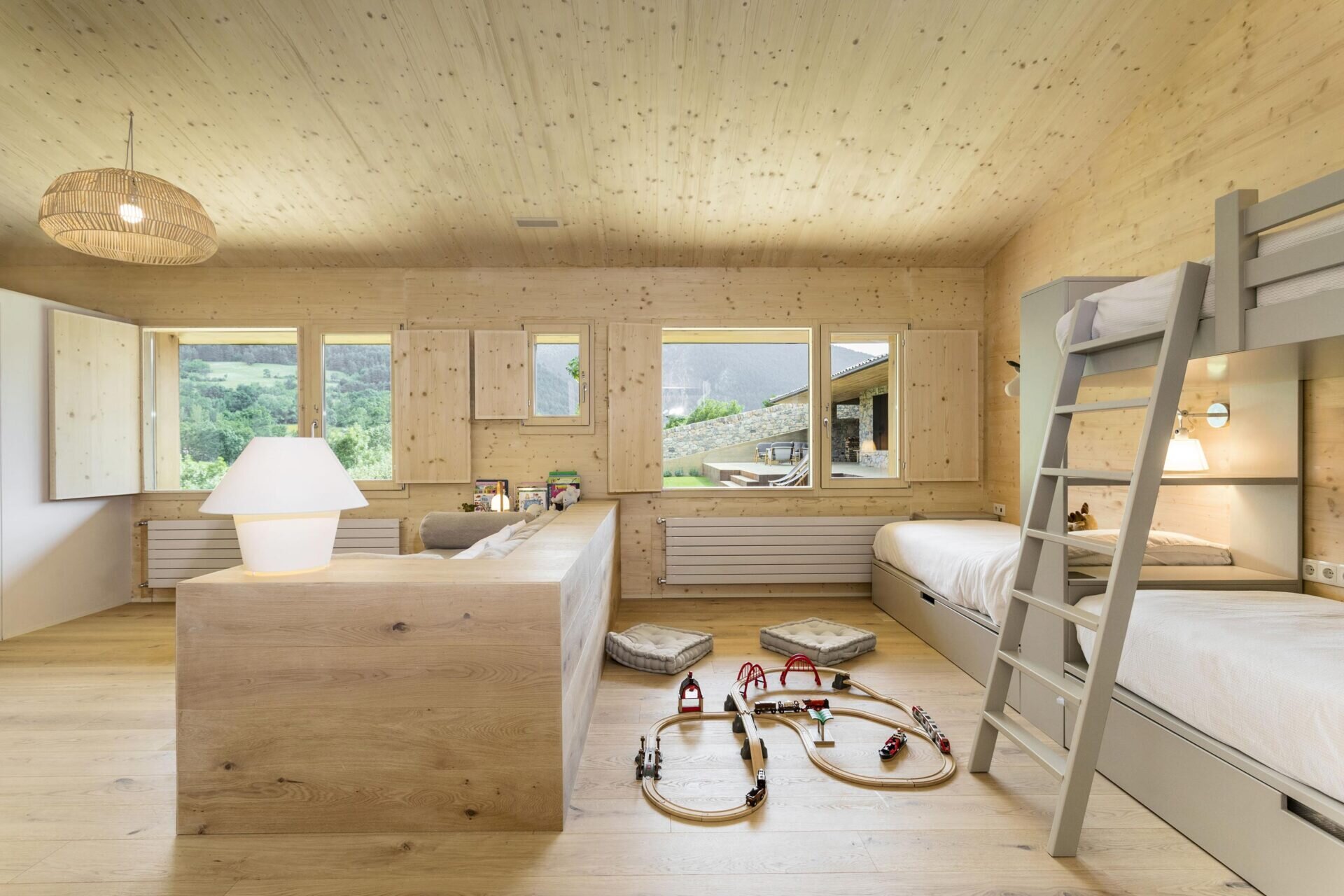
The children’s bedroom balances practicality with warmth. Bunk beds line one wall, maximizing floor space, while a pony wall separates a small play and lounge area from the sleeping zone. This simple division allows different activities to coexist within a single room, adapting easily as the children grow.
A Calm Retreat for the Parents
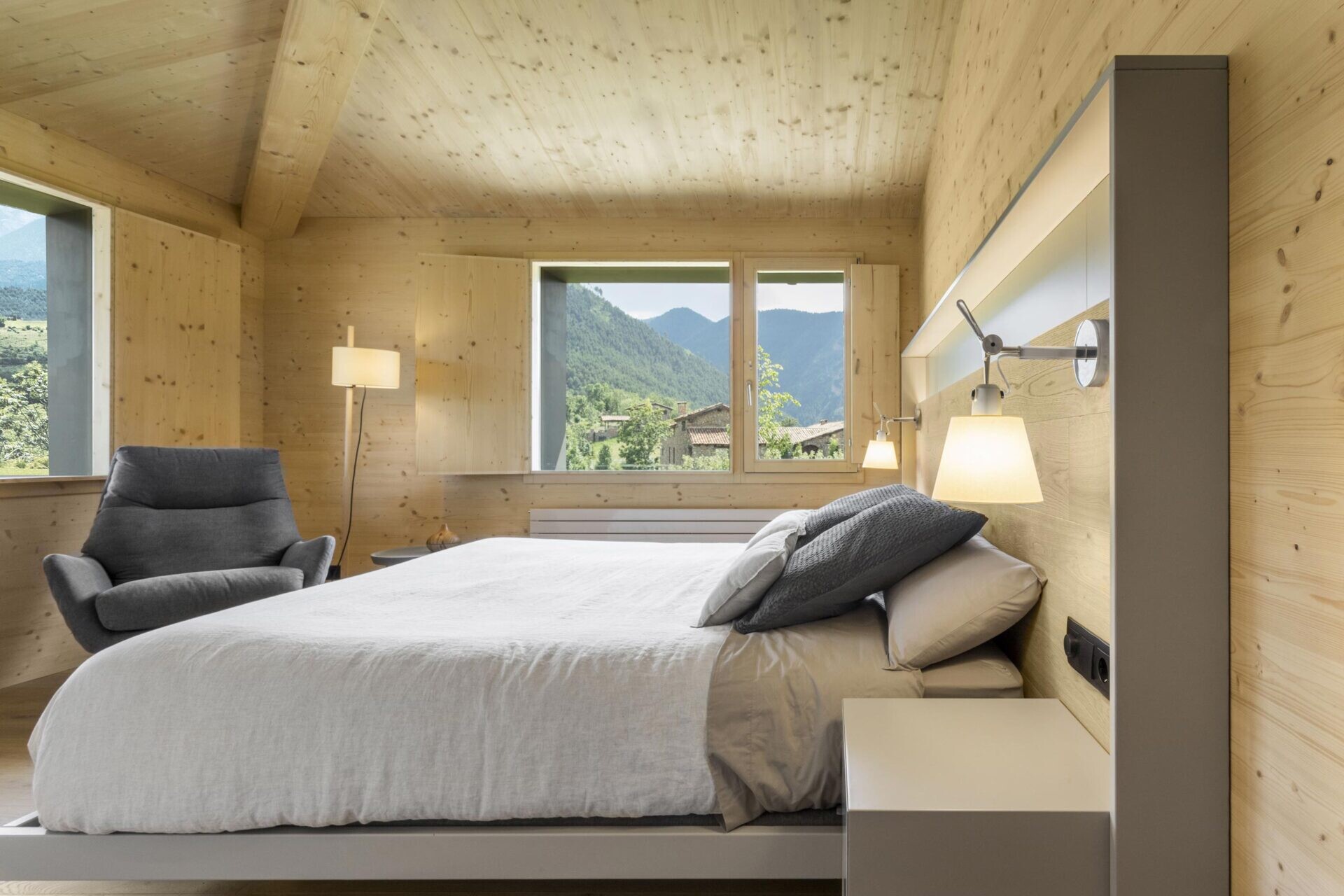
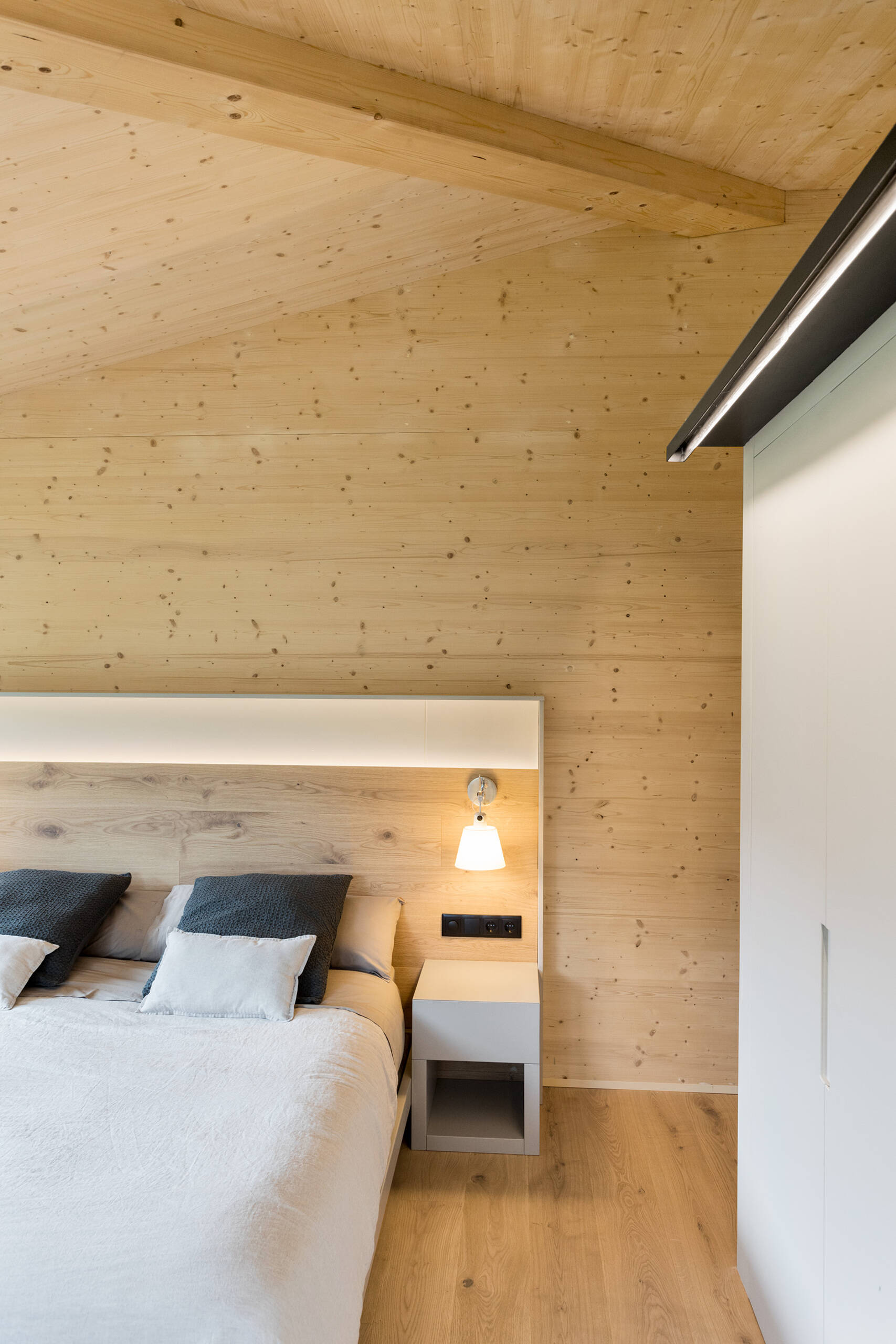
At the end of the hallway, the primary bedroom enjoys a sense of quiet separation. High ceilings enhance the feeling of space, while the consistent use of wood maintains the home’s cohesive interior language.
In the primary bathroom, a built-in bathtub sits beneath a window, inviting light and views into the room. Behind a partial wall, the toilet and shower are discreetly tucked away, preserving a clean and uncluttered layout.
A Home Built Into the Land
The layout of the house responds directly to the site’s steep slope. While the entrance and garage sit at street level, the main living spaces are set 2.6 meters lower, allowing the house to remain largely on a single level where it meets the garden. An L-shaped plan separates day and night zones while embracing the southeast orientation and the surrounding views.
The structure itself is made entirely from pine wood, chosen for its sustainability, speed of construction, and excellent thermal and acoustic performance. Iron details appear throughout, resolving structural connections and forming custom lighting that casts a soft, indirect glow across the interiors.
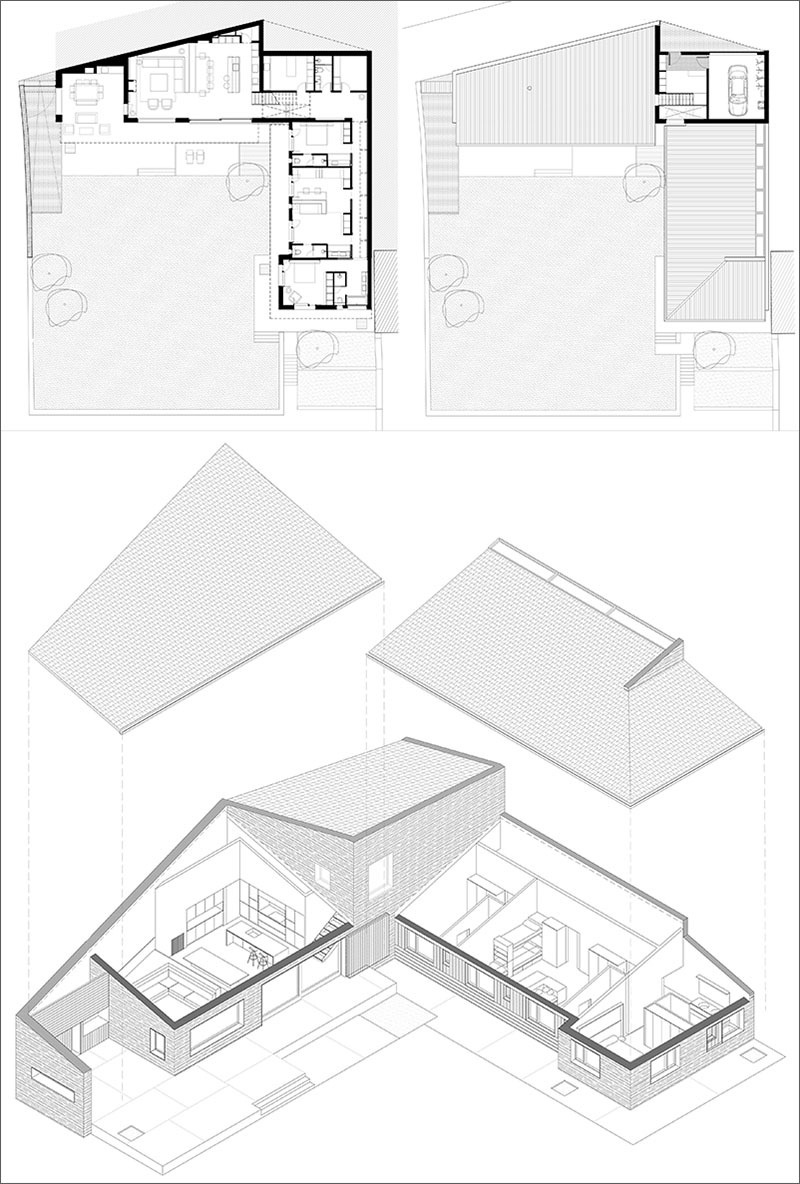
By combining traditional materials with contemporary spatial planning, Dom Arquitectura have created a family home that feels both timeless and current. Closed and protective toward the street, yet generous and open toward the landscape, the house reflects a modern way of living that also represents the character of La Cerdanya.