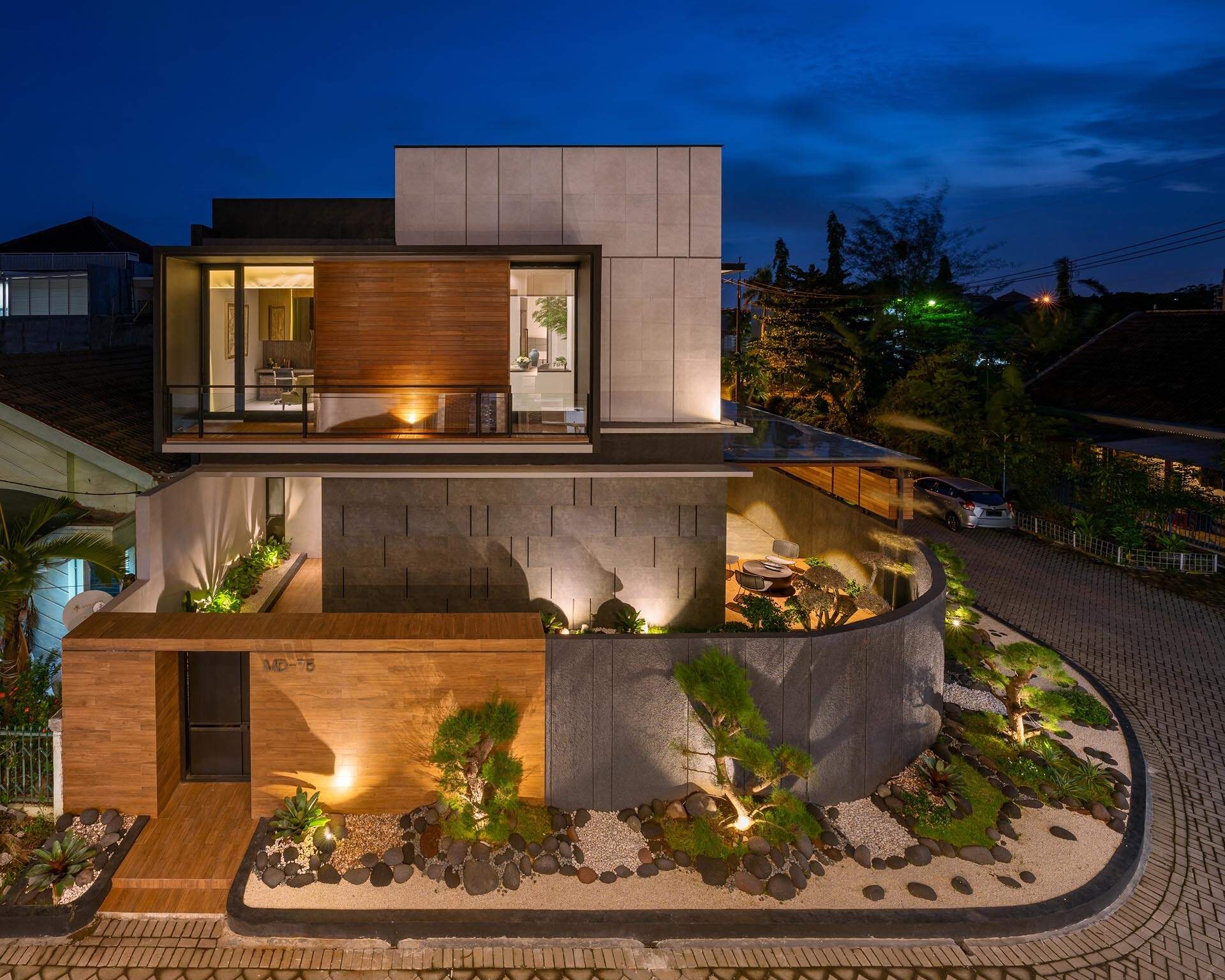
Designed by y0 Design Architect, this home in Sidoarjo, Indonesia, began with a clear vision from the owner. After years of living in a more traditional house, they wanted something simple, modern, and comfortable.
The project came with its own constraints. The site sits within a dense residential area, and the plot itself is relatively compact. At the same time, being positioned on a corner meant the house would be visible from two sides and exposed to strong western sunlight.
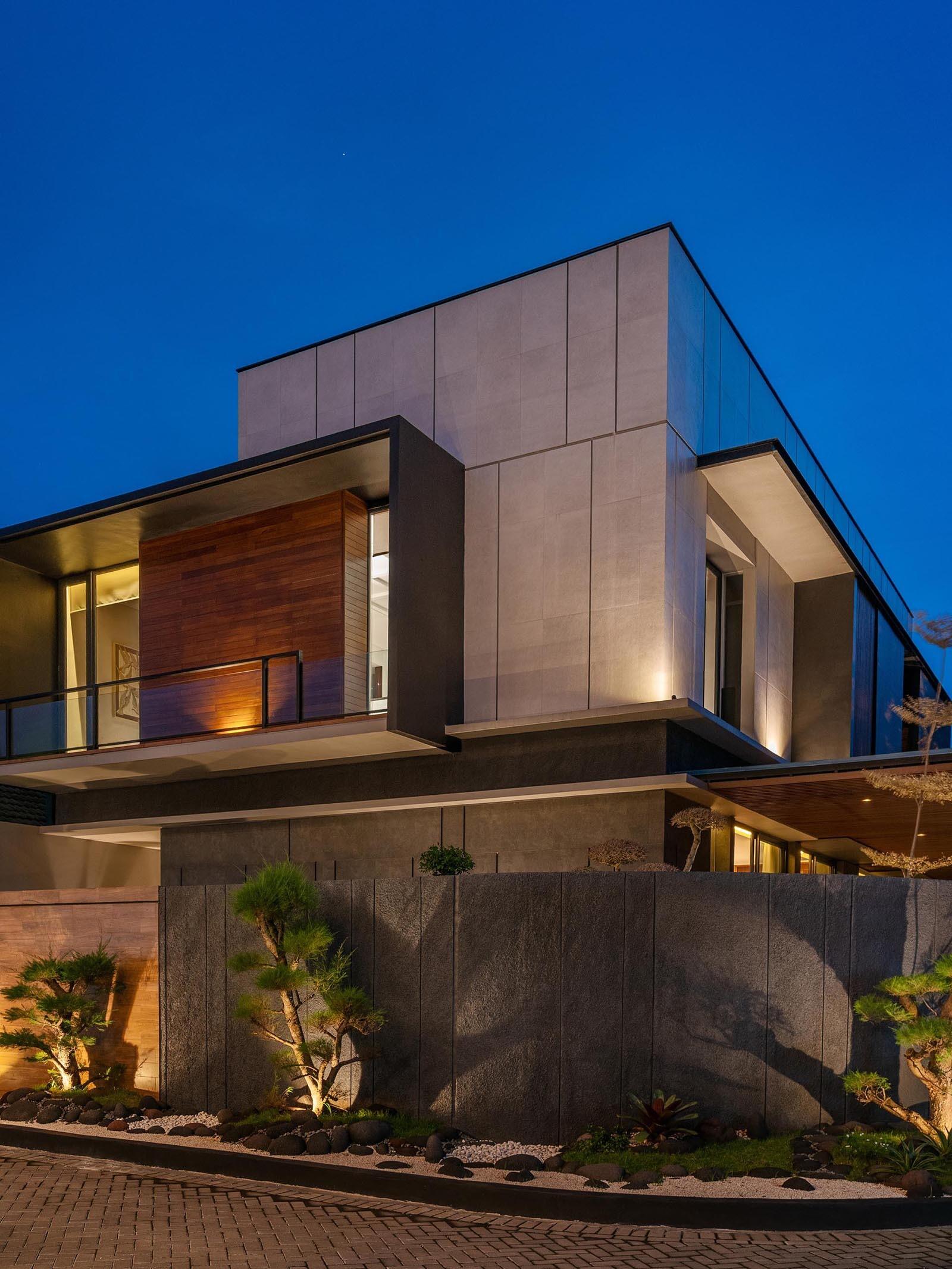
The response was a geometric form built primarily with concrete, chosen not just for structure but also to minimize disruption to neighboring homes during construction. From there, layers of material and detail were added, bringing warmth and texture through wood, tile, and steel.
A Corner Lot That Opens to Green
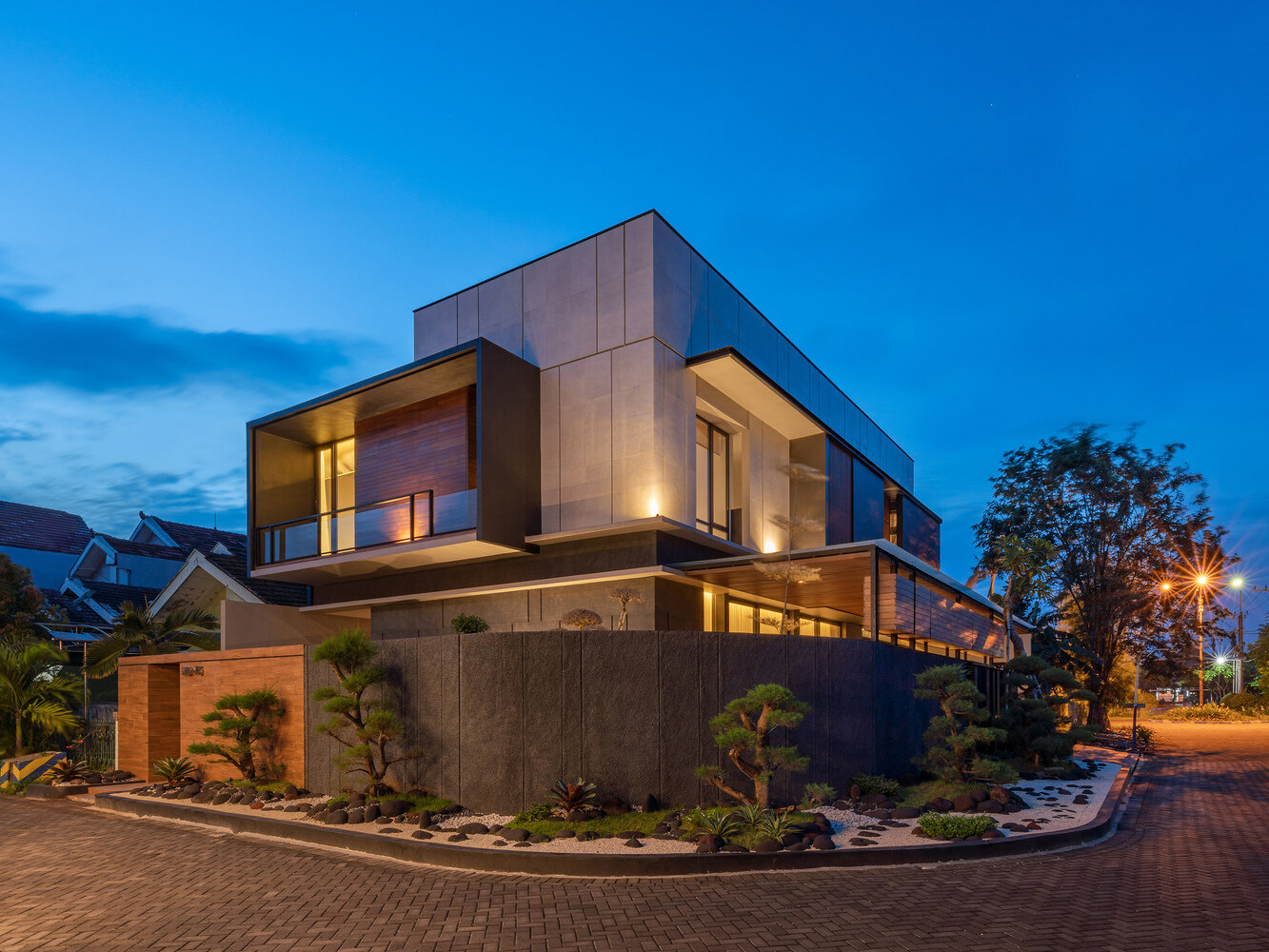
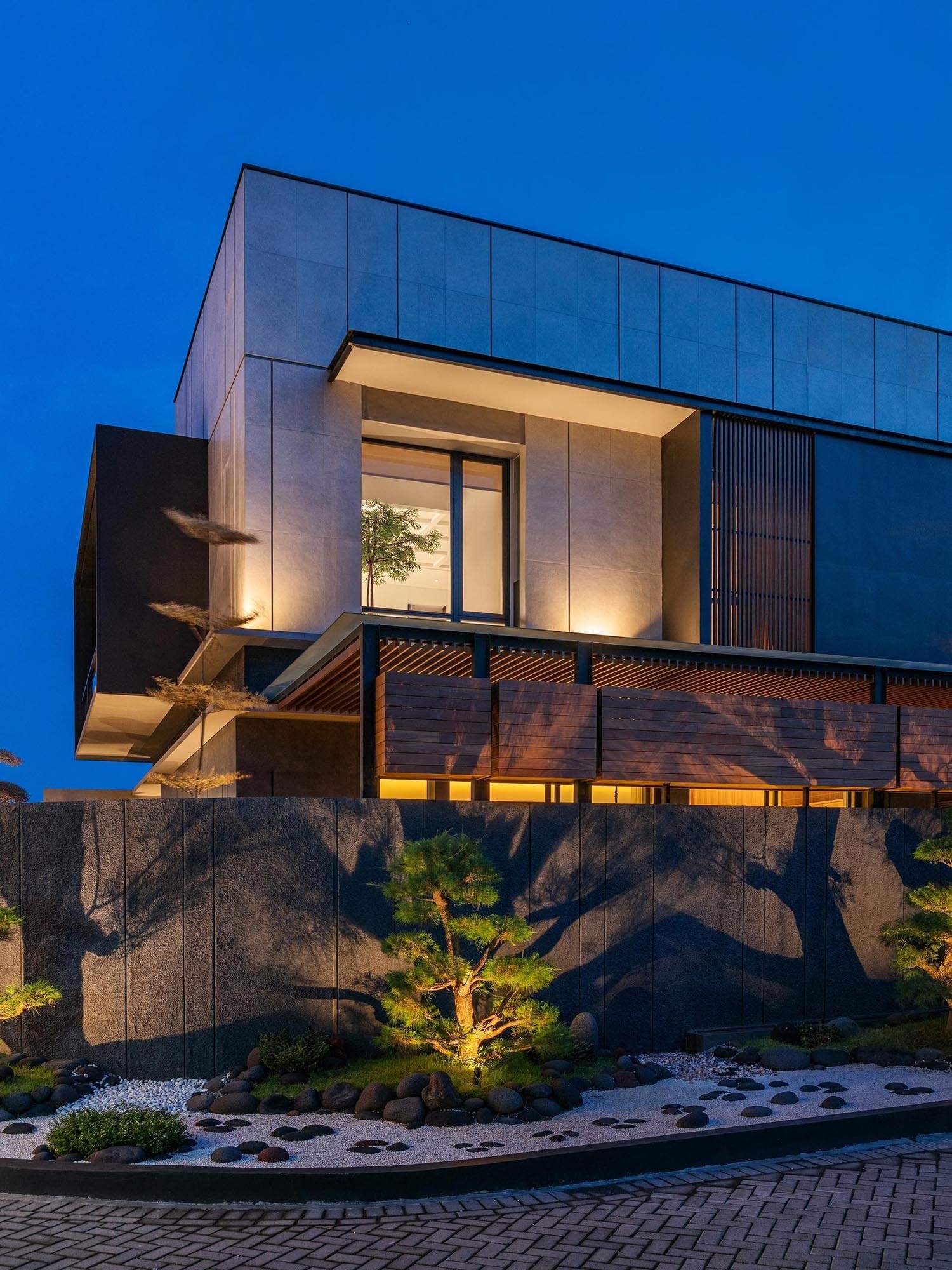
Positioned on a corner, the house takes advantage of its layout with a garden that wraps around the edge of the property.
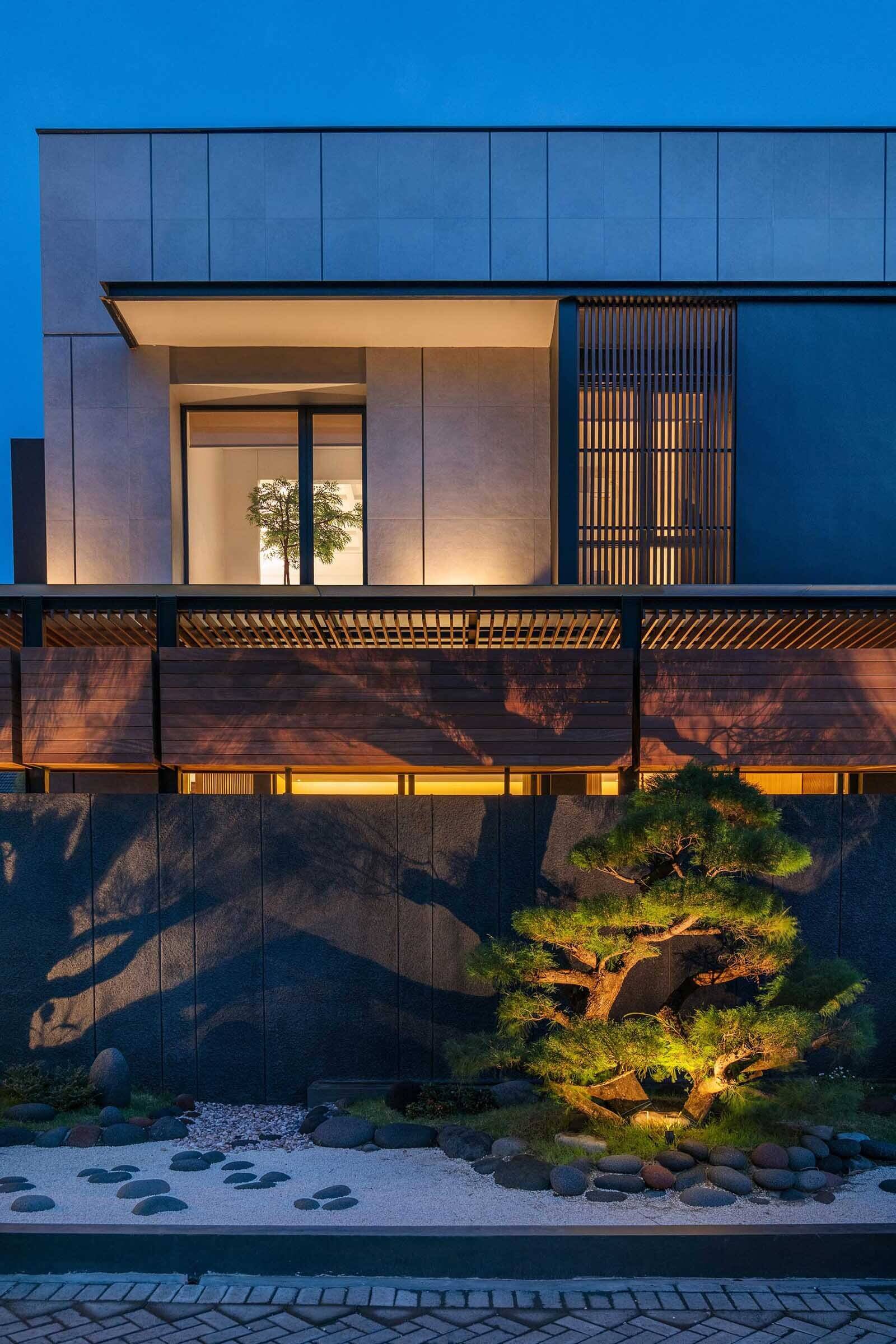
This outdoor space does more than soften the structure. It creates a visual buffer from the street while giving the home two active sides. The influence of Japanese modern design is clear here, especially in the addition of a Zen-inspired garden that keeps maintenance low while still feeling intentional.
As the sun sets, the garden takes on a new role. Integrated lighting highlights the plants and casts soft shadows across the fence, subtly extending the presence of the home into the surrounding neighborhood.
A Facade That Balances Texture and Heat
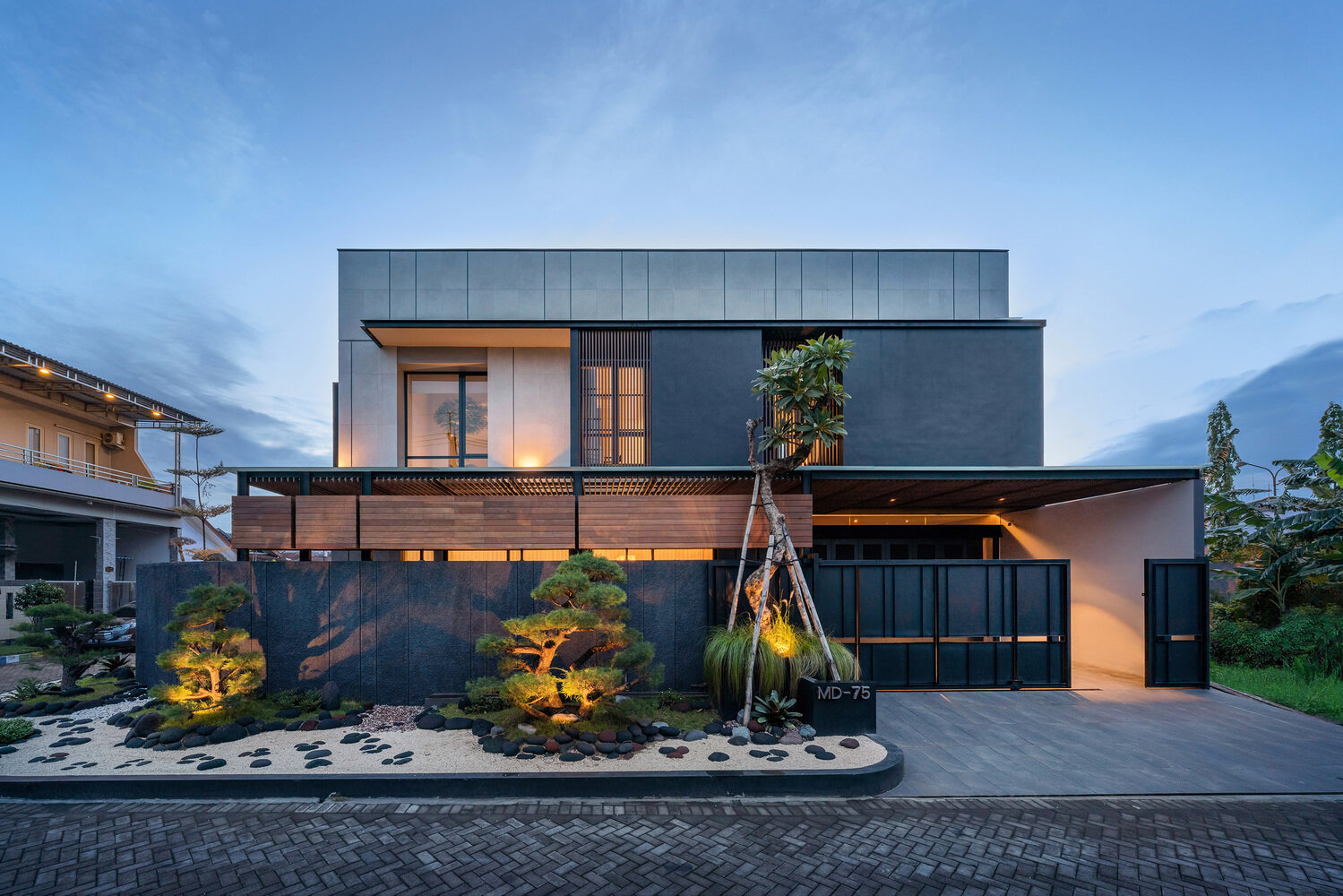
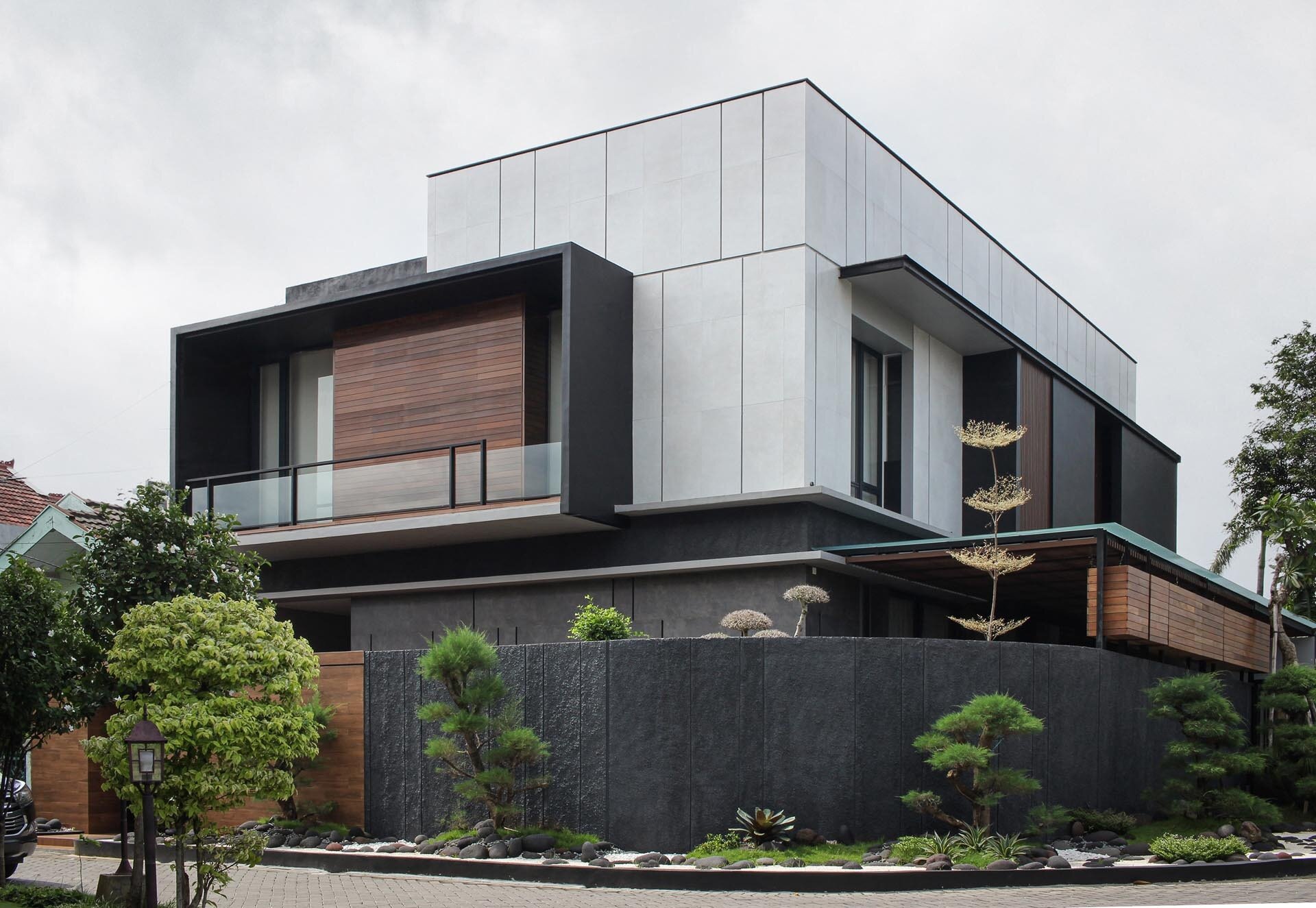
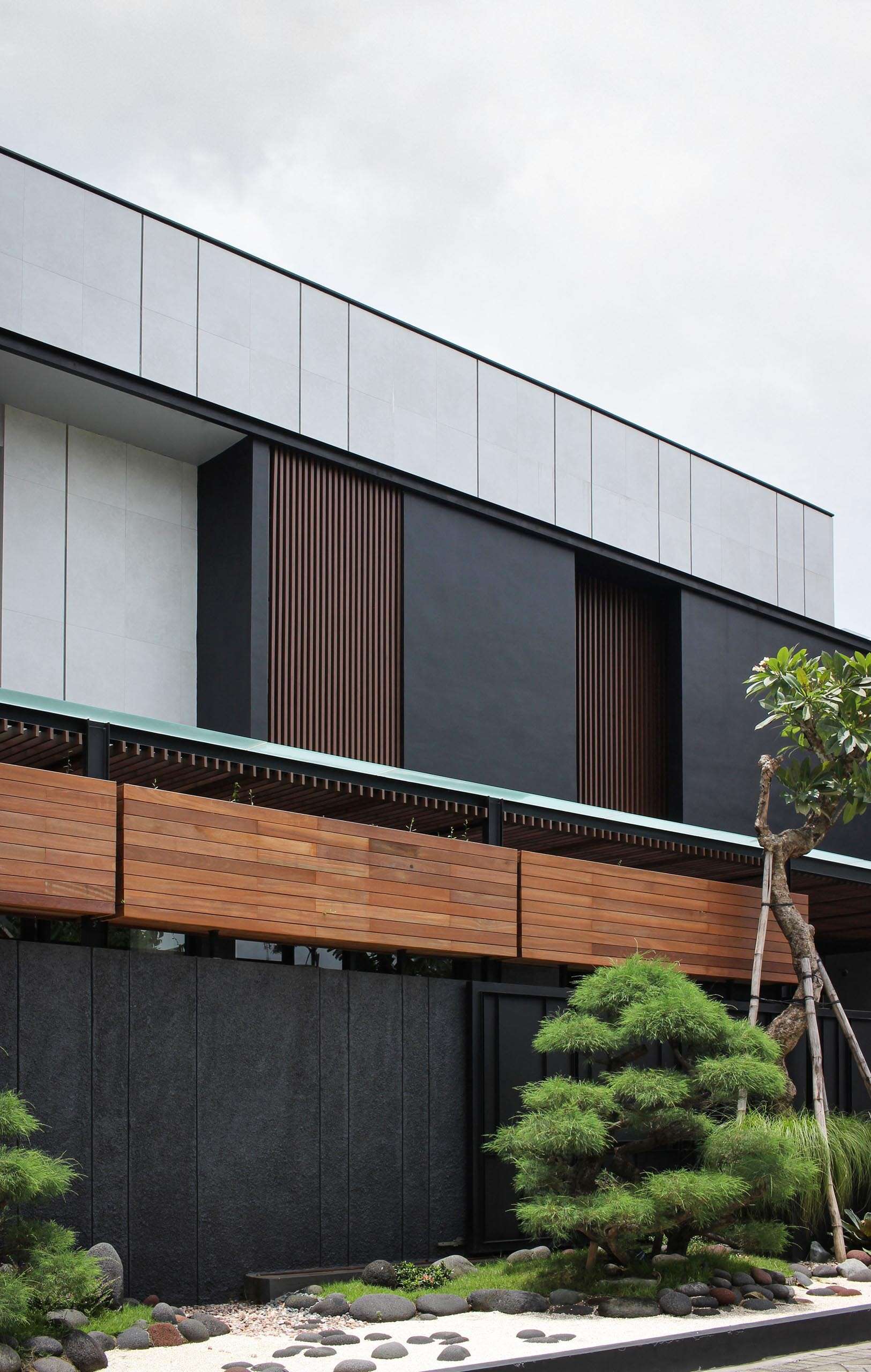
The exterior combines wood, tile, and steel, giving the geometric form a sense of depth and variation.
But beyond aesthetics, the design also responds to climate. The sides most exposed to the harsh western sun are fitted with elements like wooden louvres, planter boxes, and service spaces such as bathrooms and work areas. These act as buffers, reducing heat before it reaches the main living zones.
An Open Living Space with Hidden Layers
Stepping inside, the main living area becomes the center of the home.
The living room is anchored by artistic panels that partially conceal the staircase behind them. These panels double as a backdrop for the television, turning a functional feature into a design focal point.
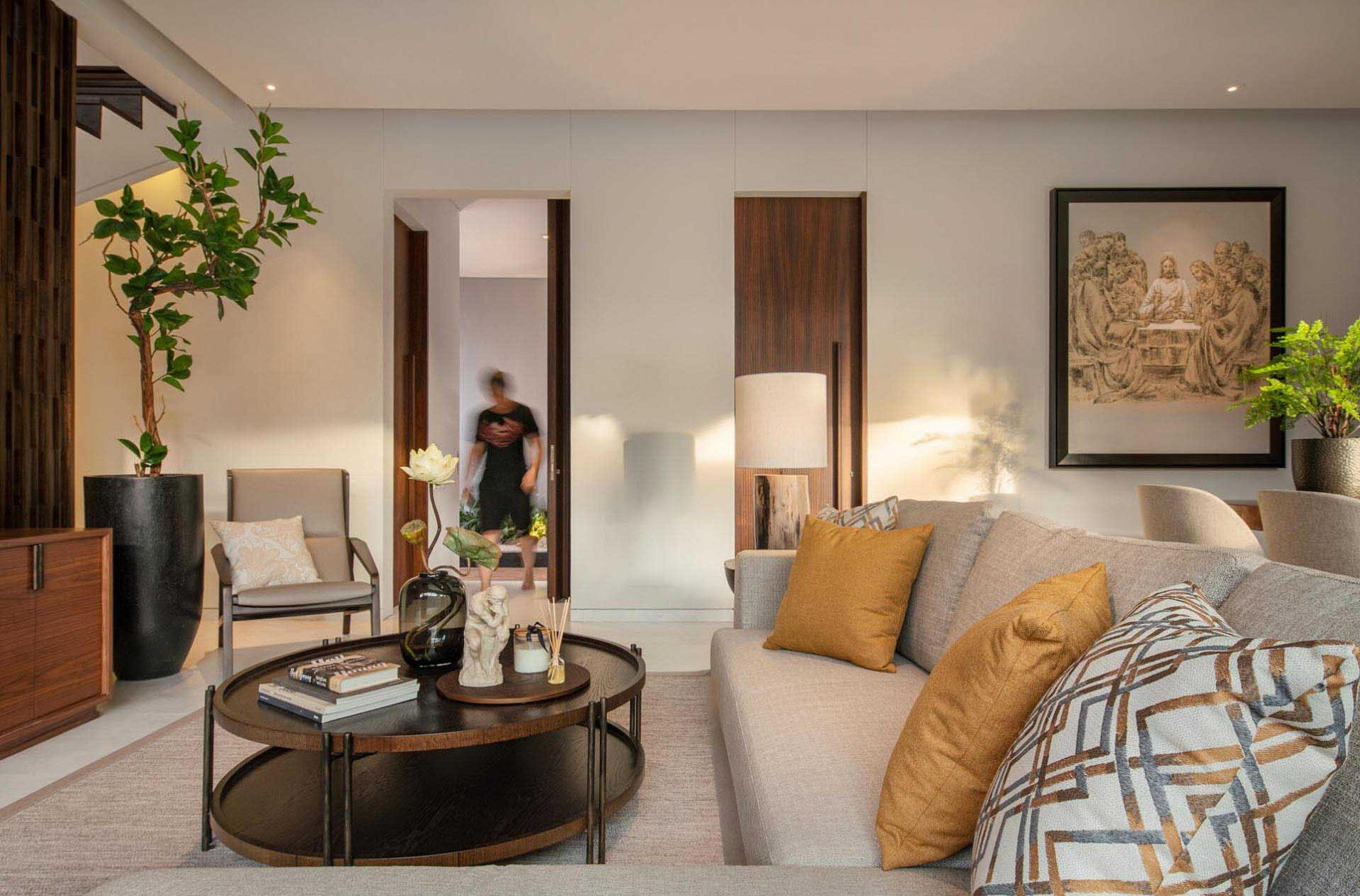
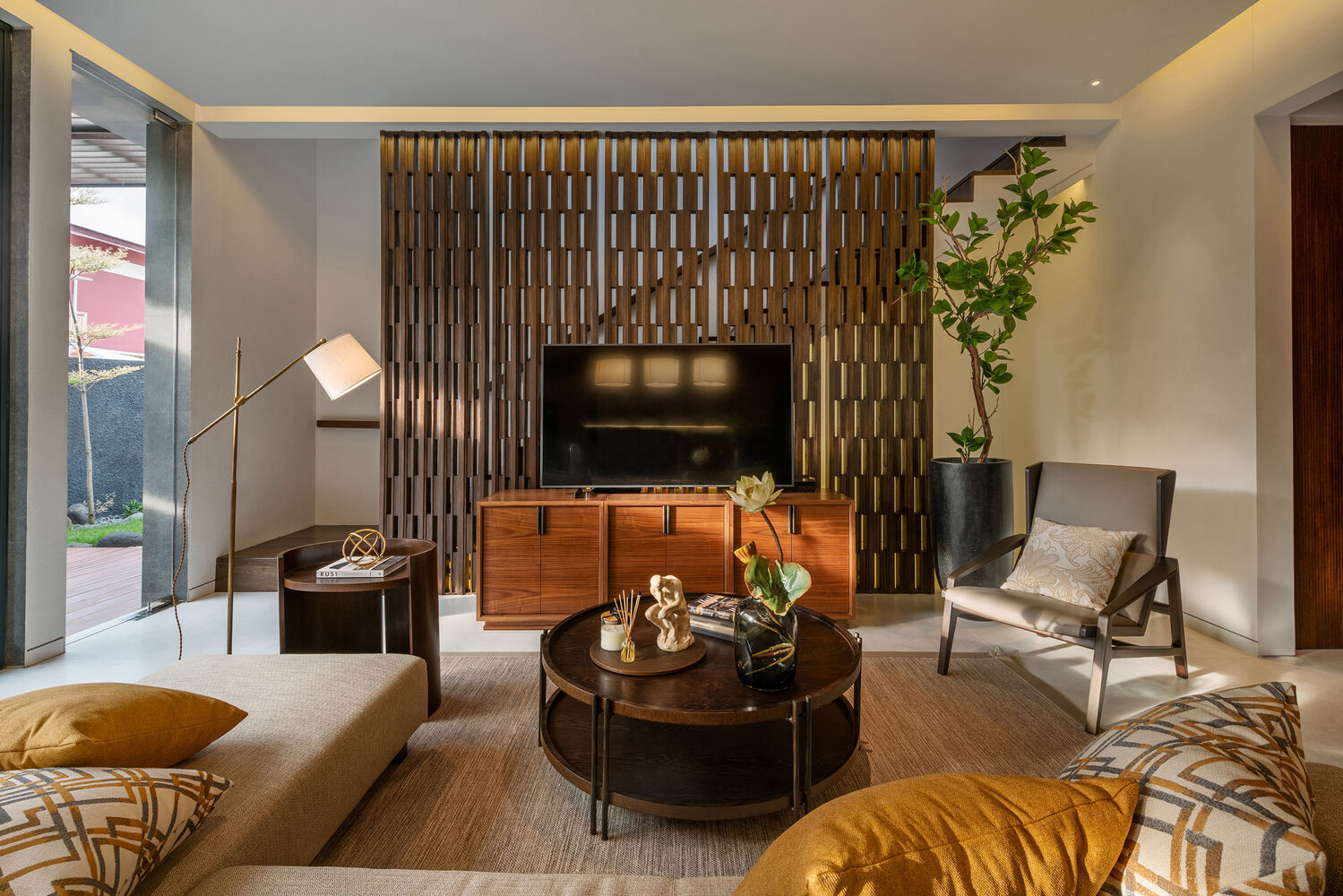
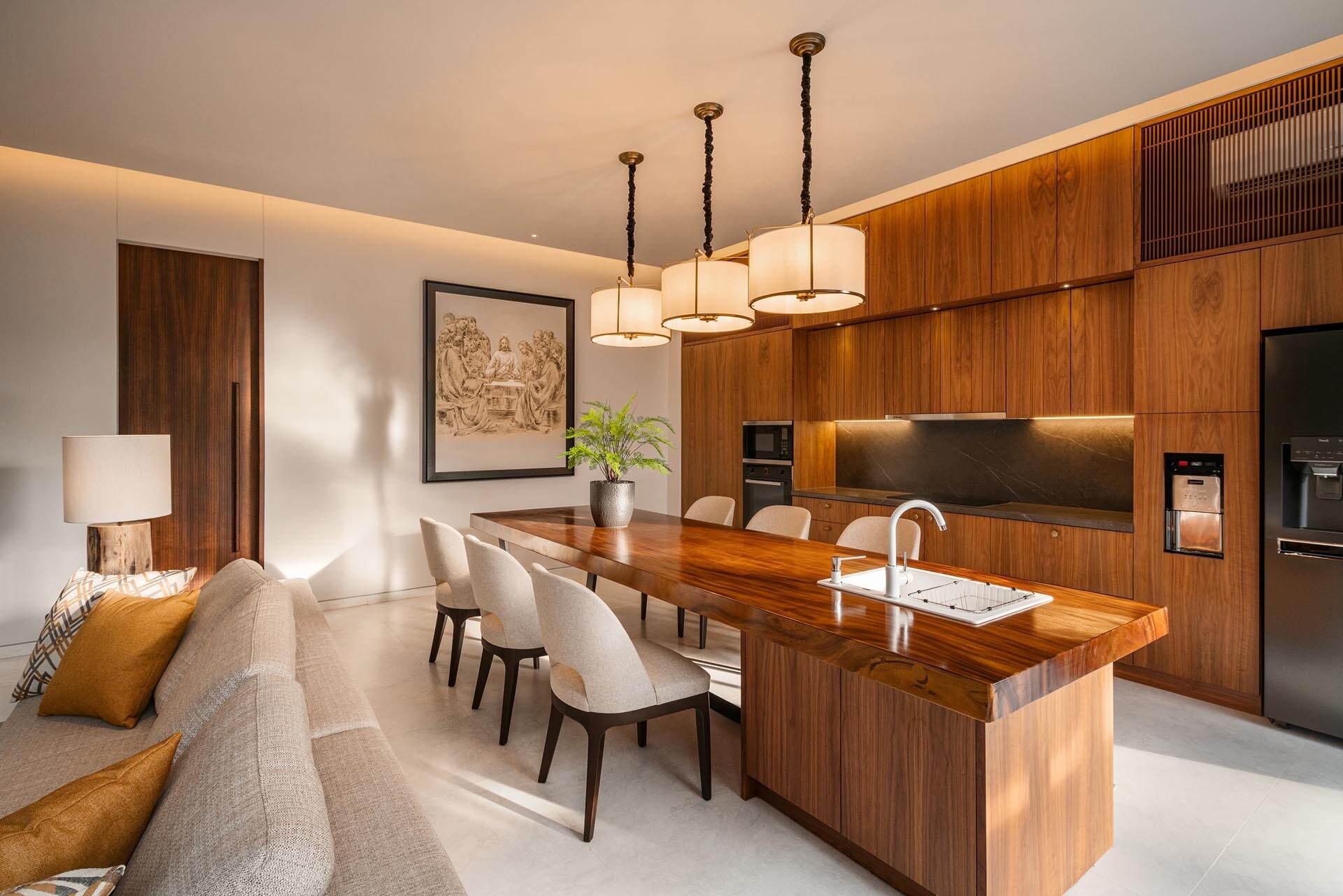
This space flows directly into the kitchen and dining area, forming a large open-plan layout. The kitchen itself is defined by warm wood finishes, with the dining area seamlessly integrated into the island, creating a social and practical hub.
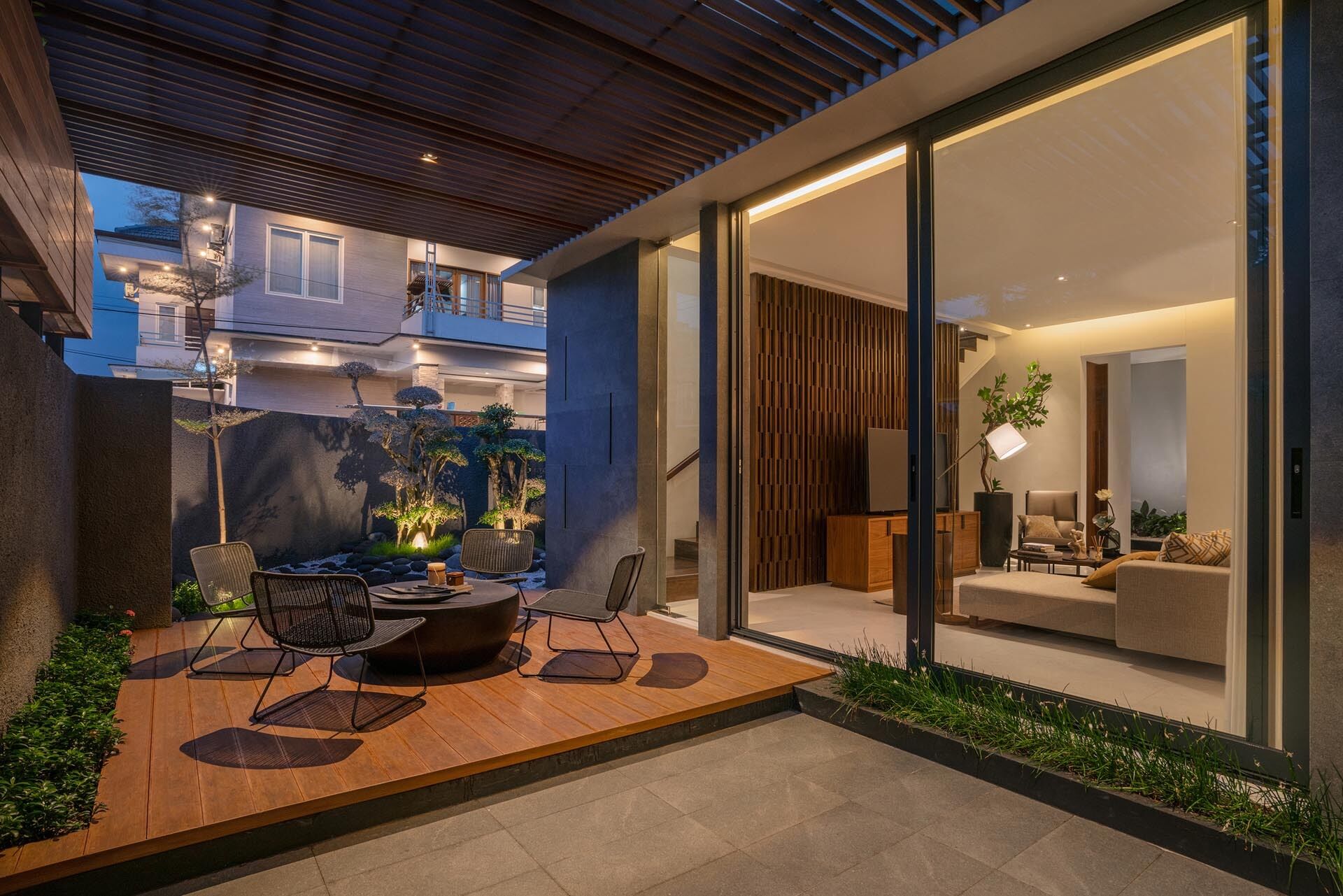
Large openings and sliding doors connect this interior space to the patio outside, bringing in natural light and ventilation while maintaining privacy from the street.
Finished with a wood deck and furnished with a round table and outdoor chairs, the patio mirrors the warmth of the interior. Along the fence, the landscaping continues, echoing the greenery seen at the front of the house and creating a consistent visual language throughout.
Upstairs Spaces with Subtle Lighting
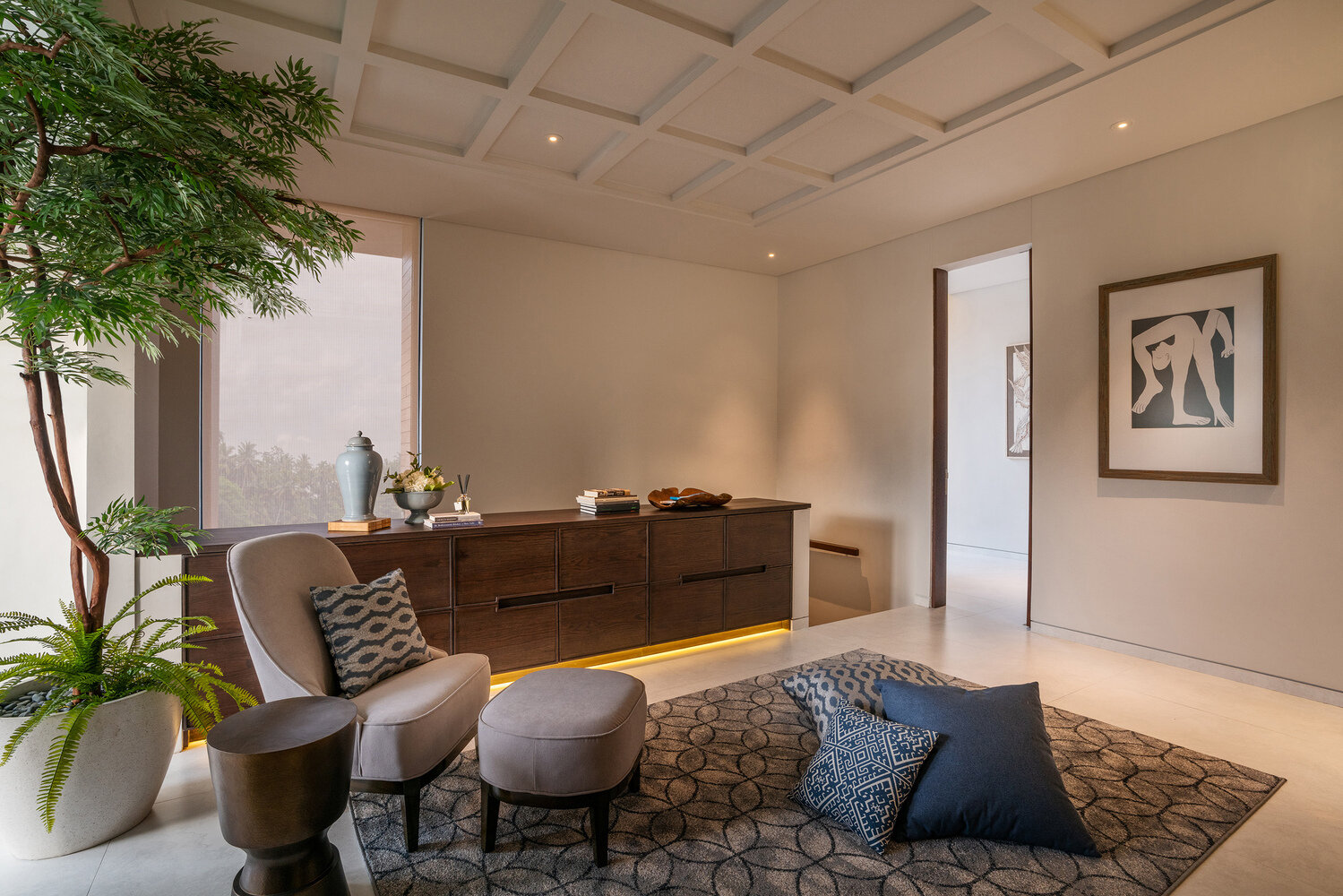
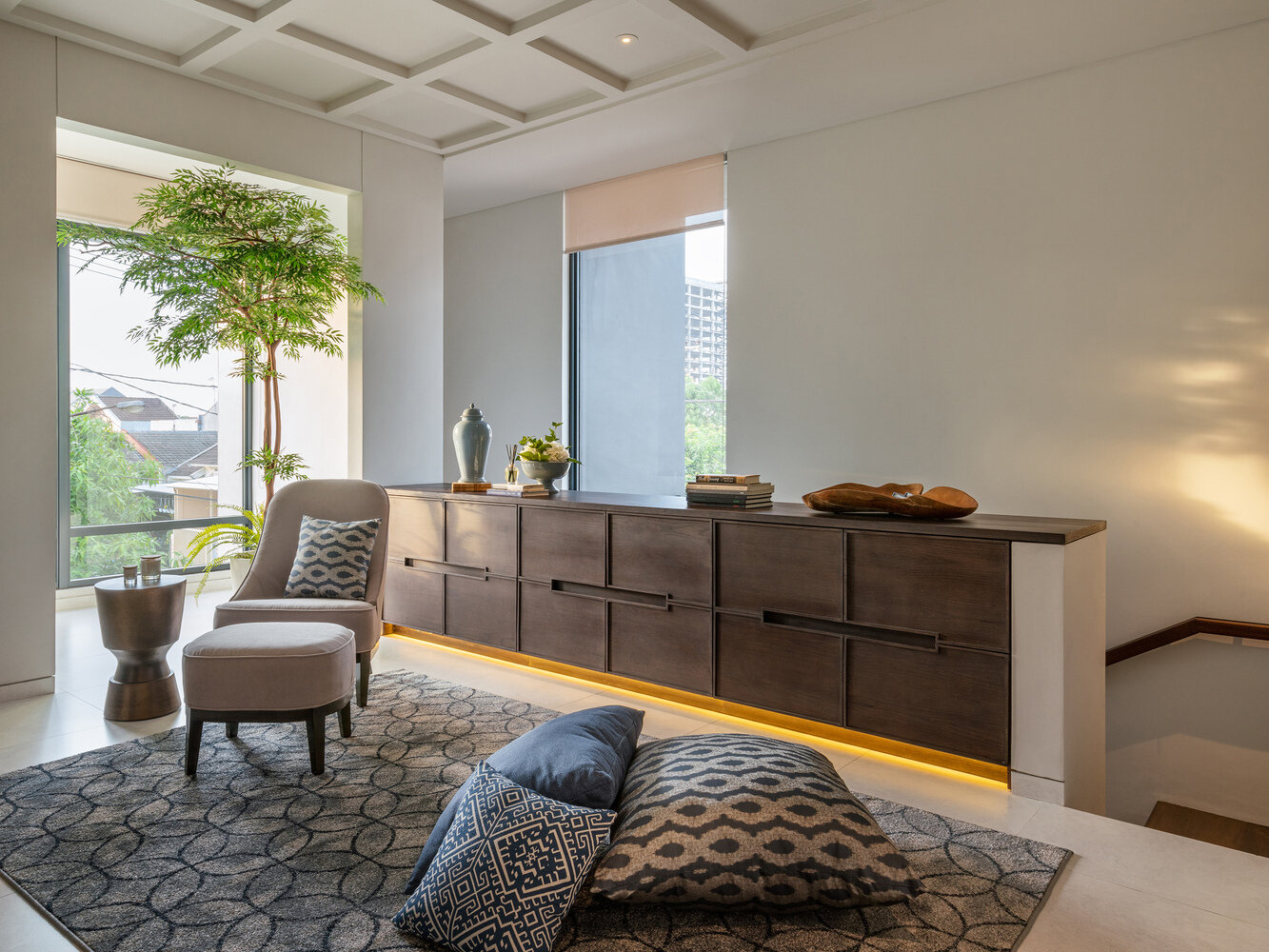
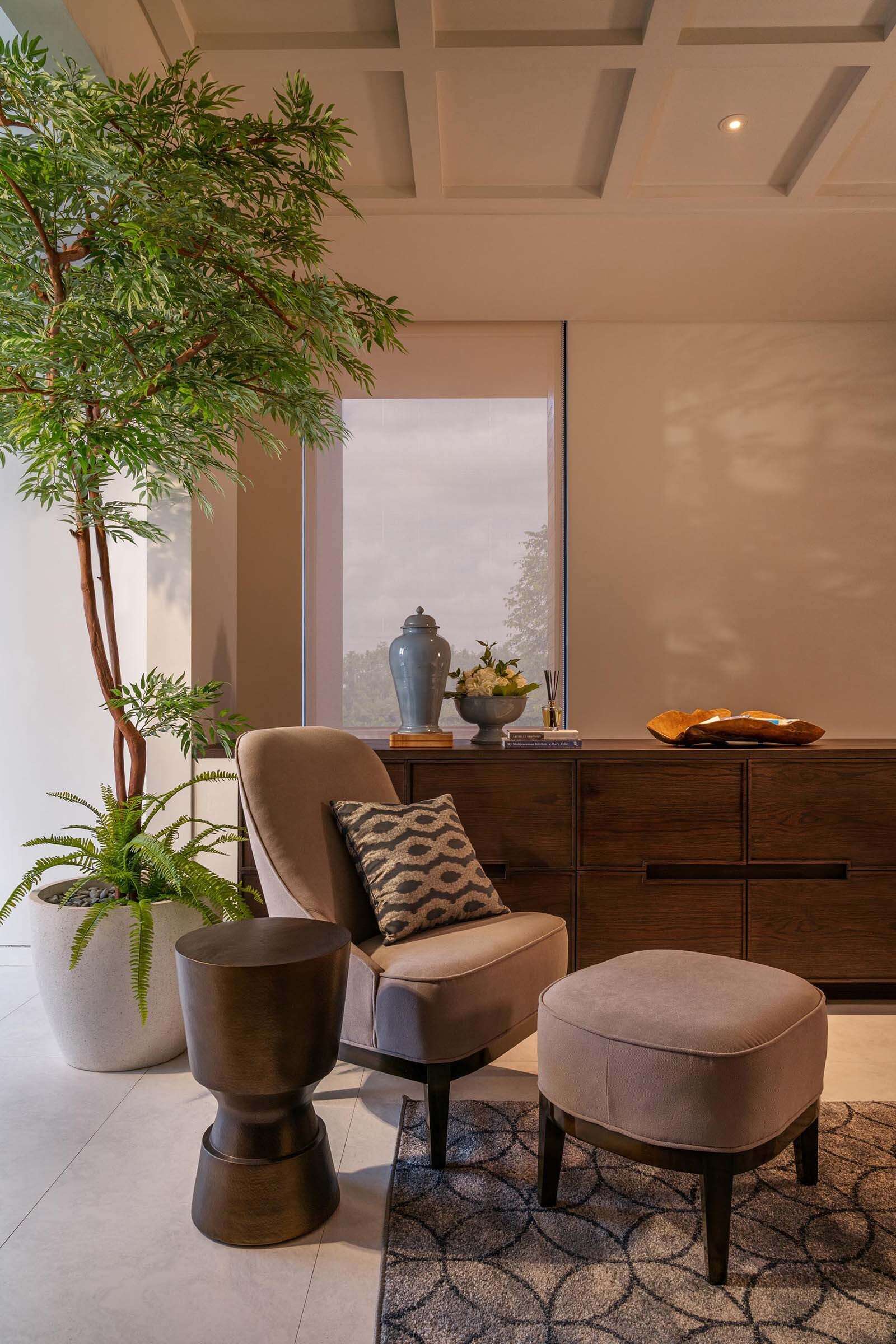
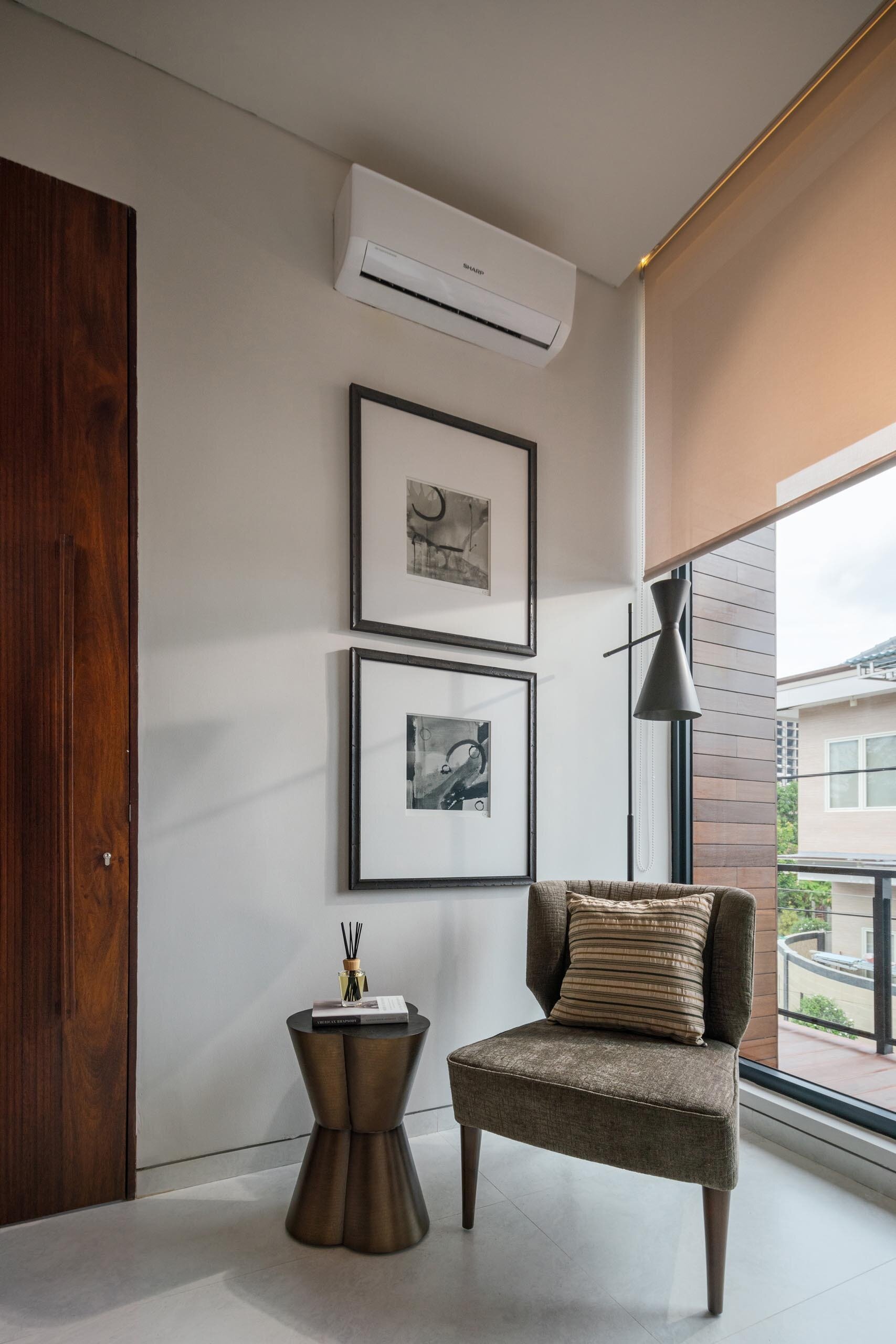
Moving upstairs, the home shifts into more private areas. A sitting area offers a quieter zone, complete with a sideboard that features hidden lighting underneath, adding a soft glow without overwhelming the room.
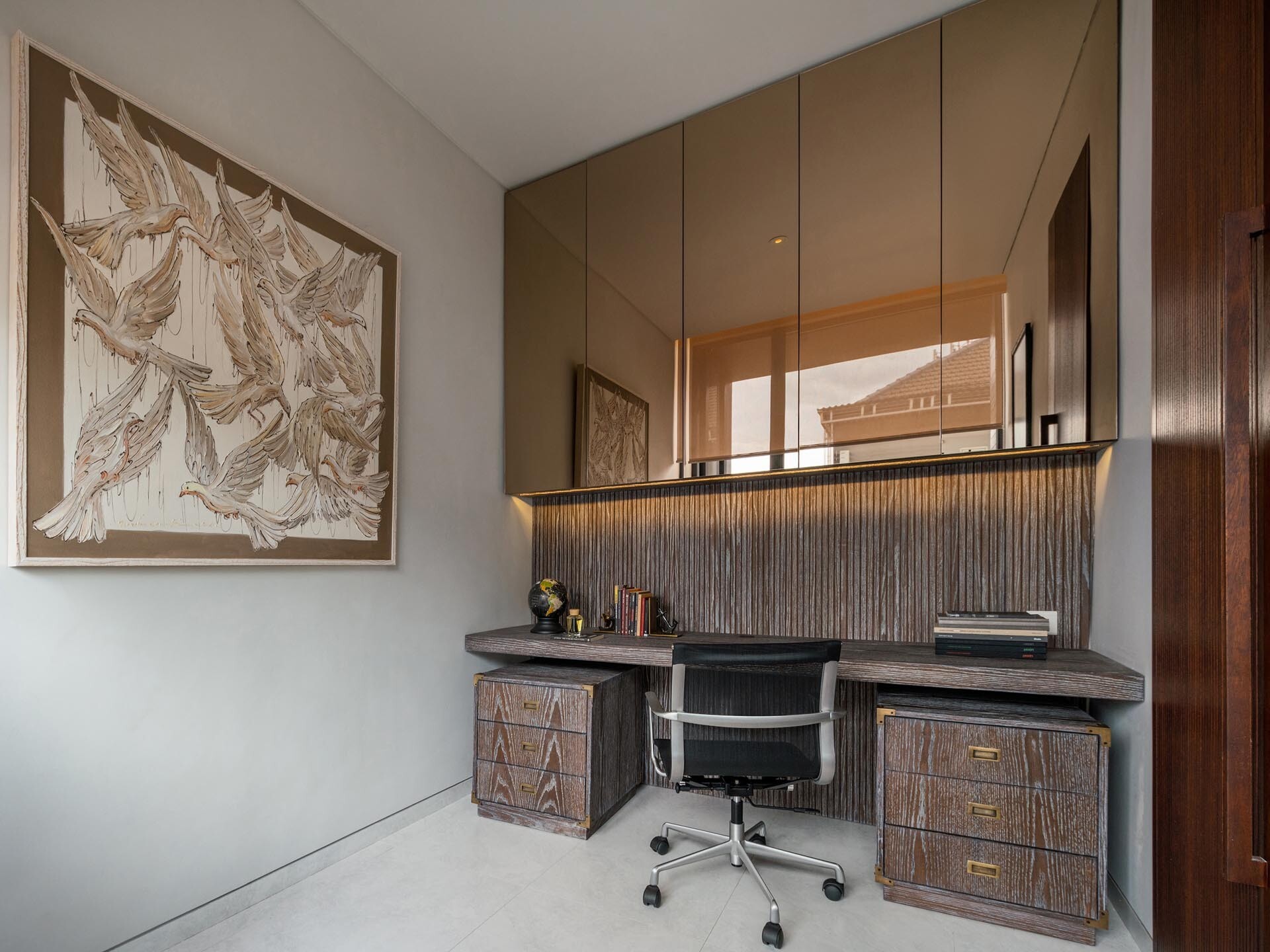
Nearby, a home office is fitted with mirrored cabinets above the desk, helping reflect light and visually expand the space. A chair placed by the window creates a comfortable corner for breaks or reading.
A Hallway Designed with Warmth and Storage
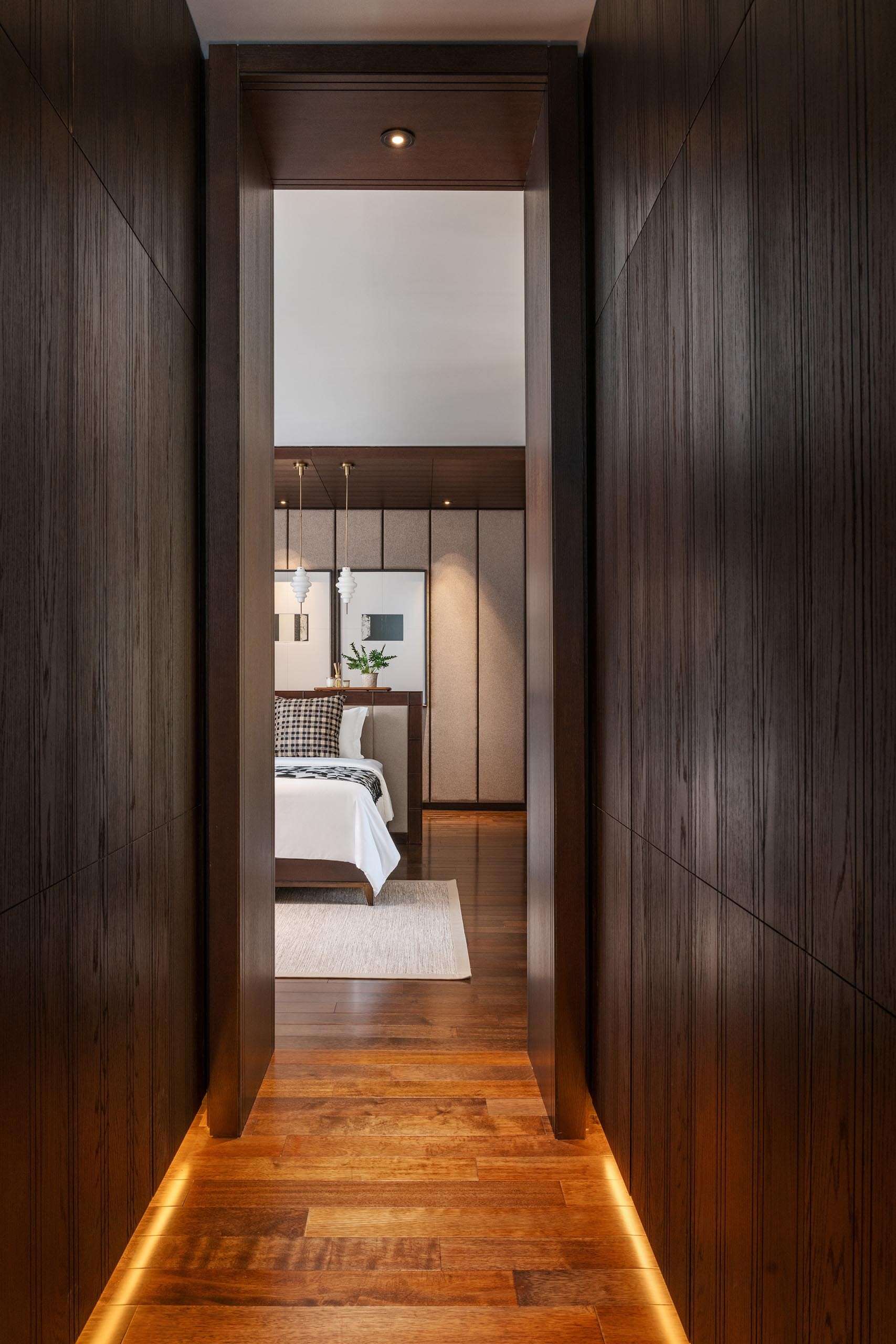
Connecting the upper level is a hallway lined with dark wood cabinetry. Integrated lighting runs along the cabinets, adding depth and guiding the way toward the primary bedroom. It turns what could be a simple corridor into a more engaging and functional part of the home.
A Bedroom That Feels Balanced and Open
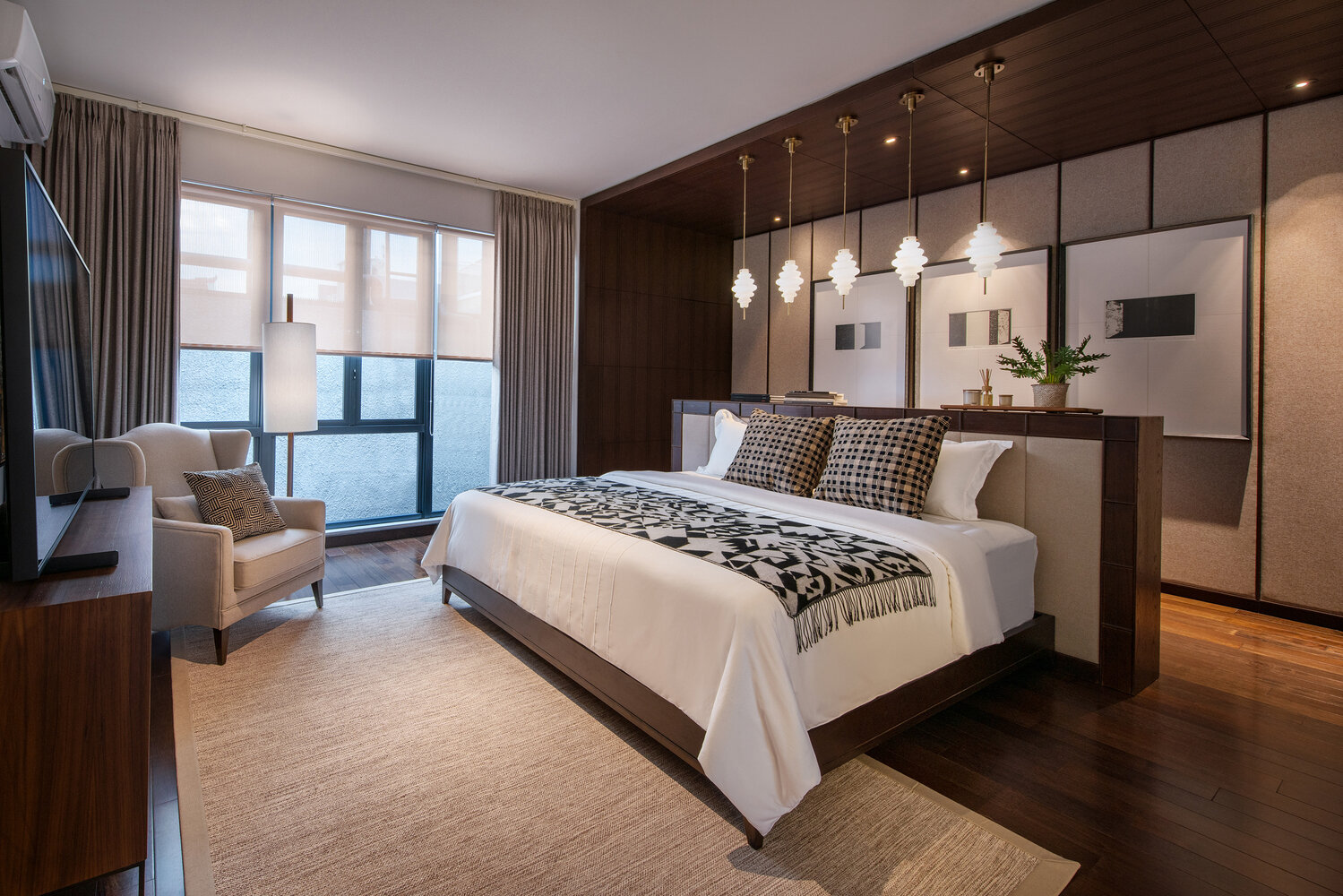
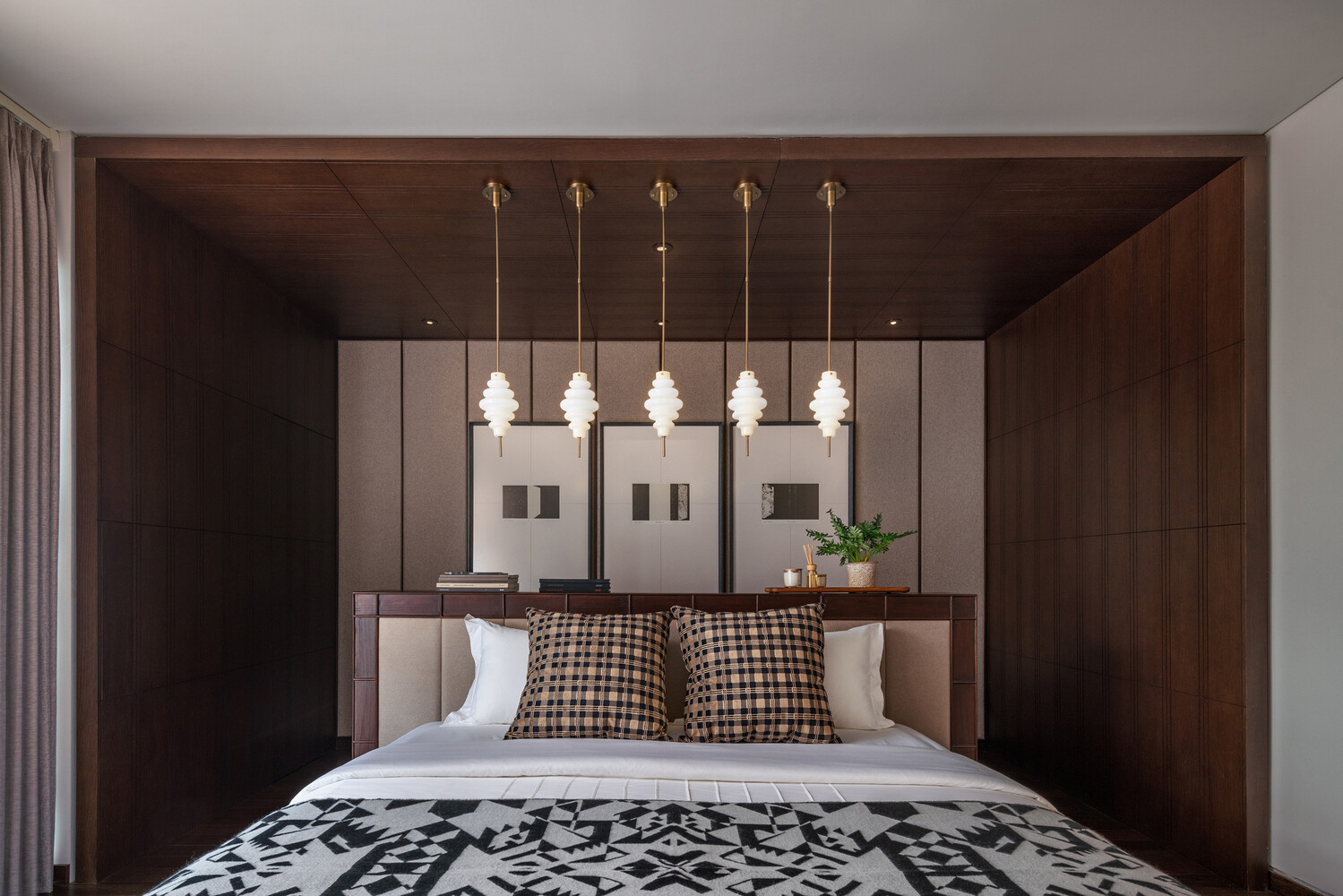
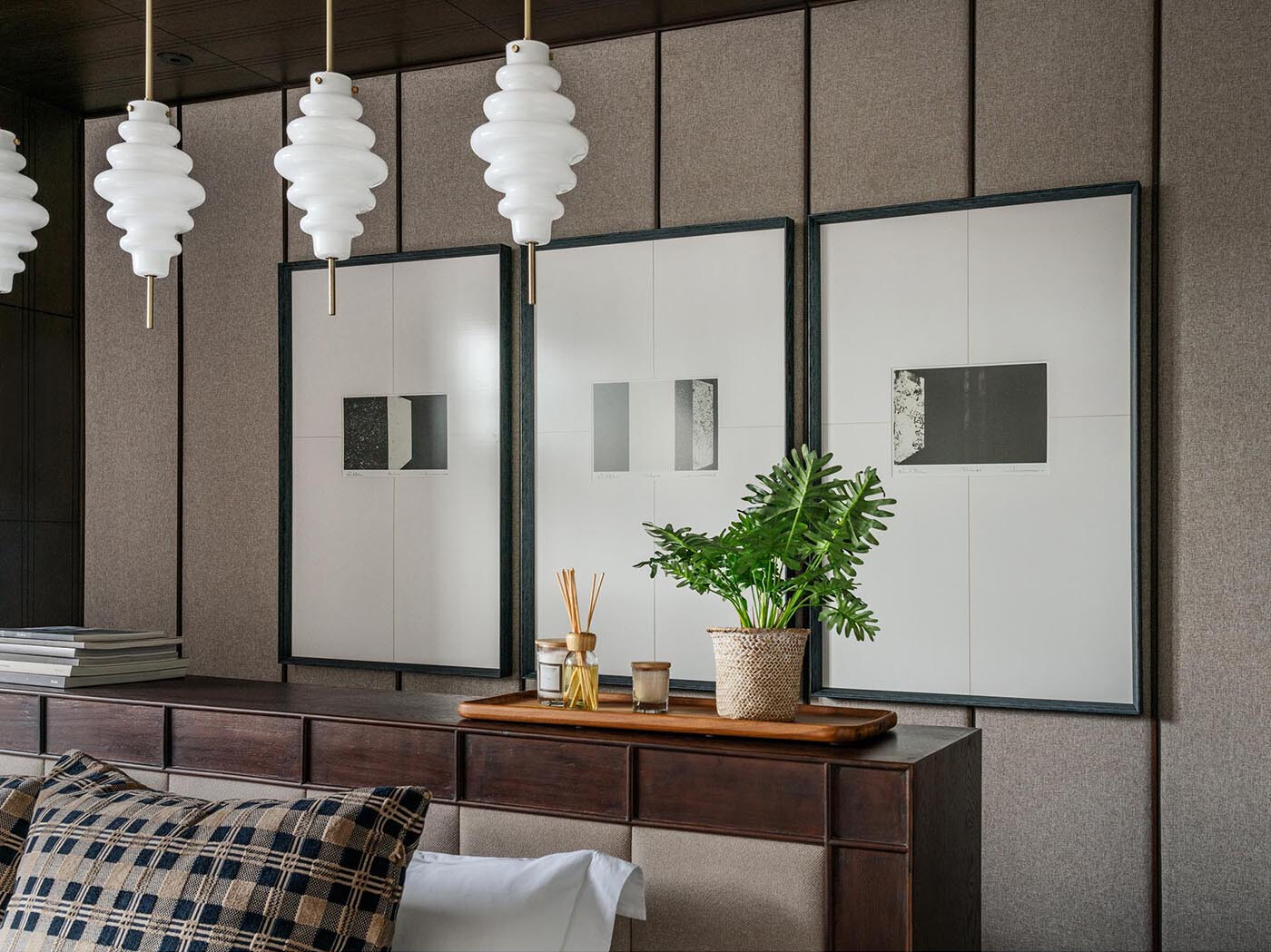
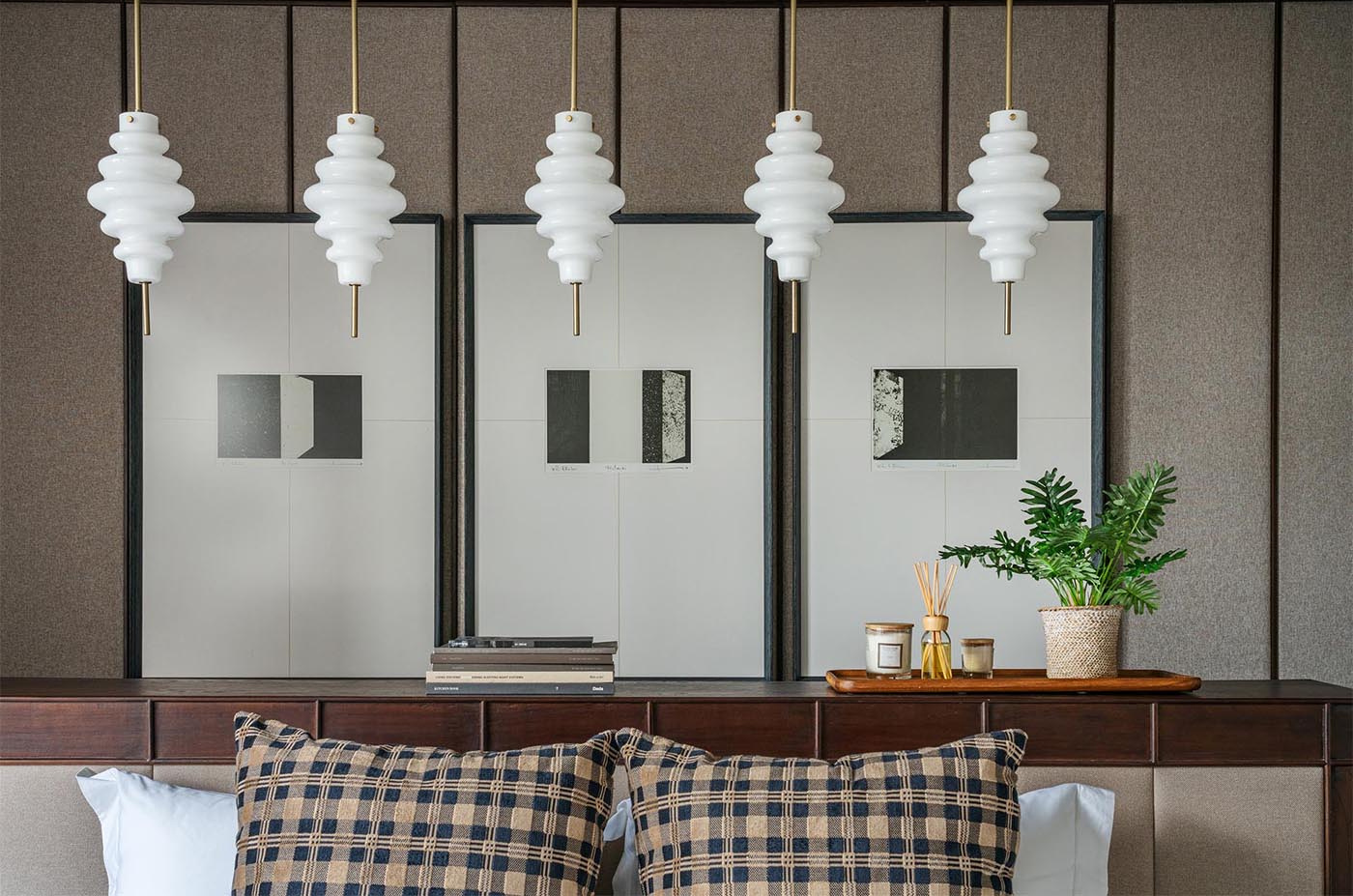
In the primary bedroom, the layout is both simple and striking. The bed is positioned centrally, with a pony wall acting as a headboard. Above it, five pendant lights hang in a row, creating a soft focal point. Behind the wall, three large art pieces add another layer of visual interest without overwhelming the space.
The design keeps materials and finishes straightforward, aligning with a philosophy that values natural textures and subtle imperfections.
A Bathroom That Mixes Concrete and Warm Wood
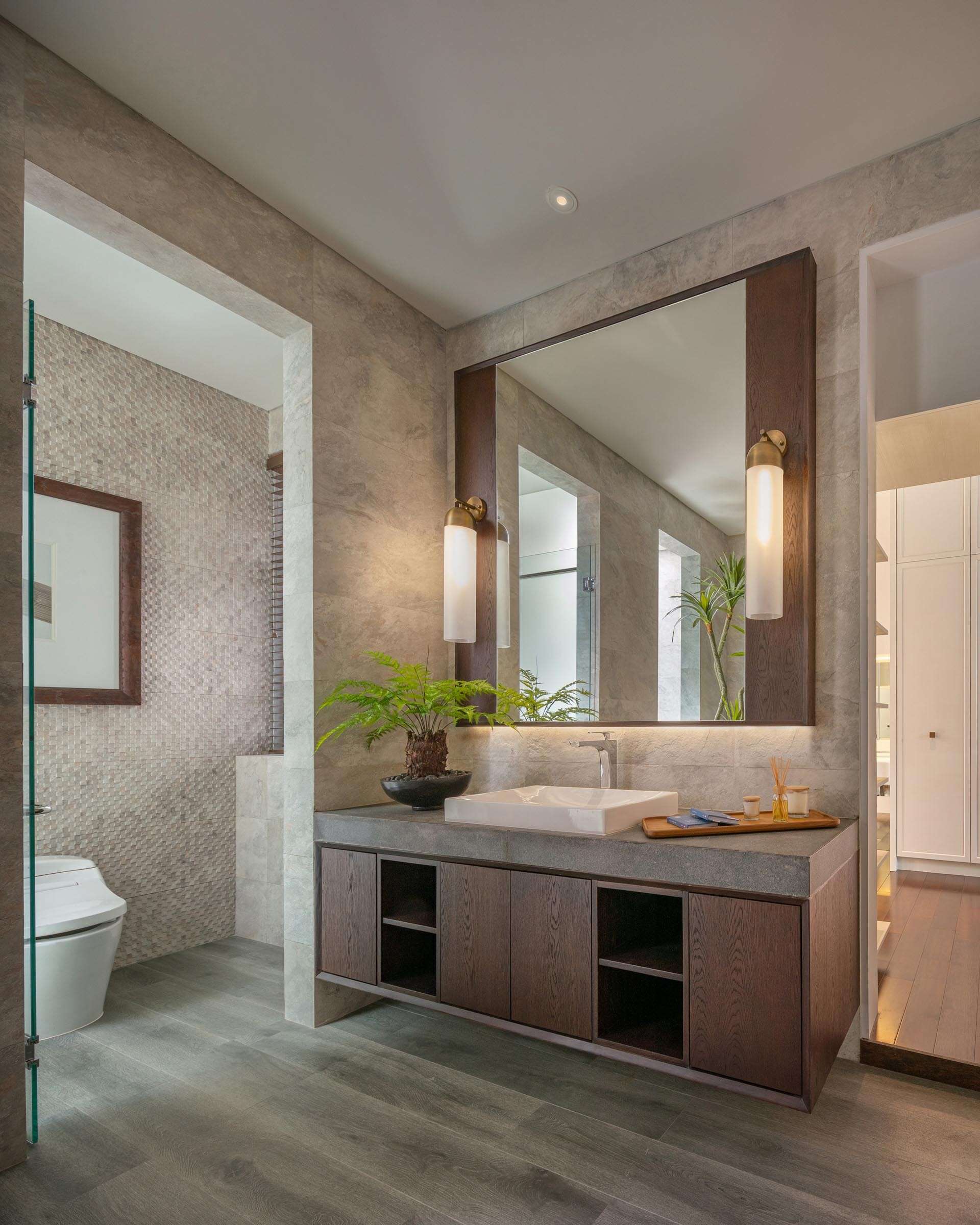
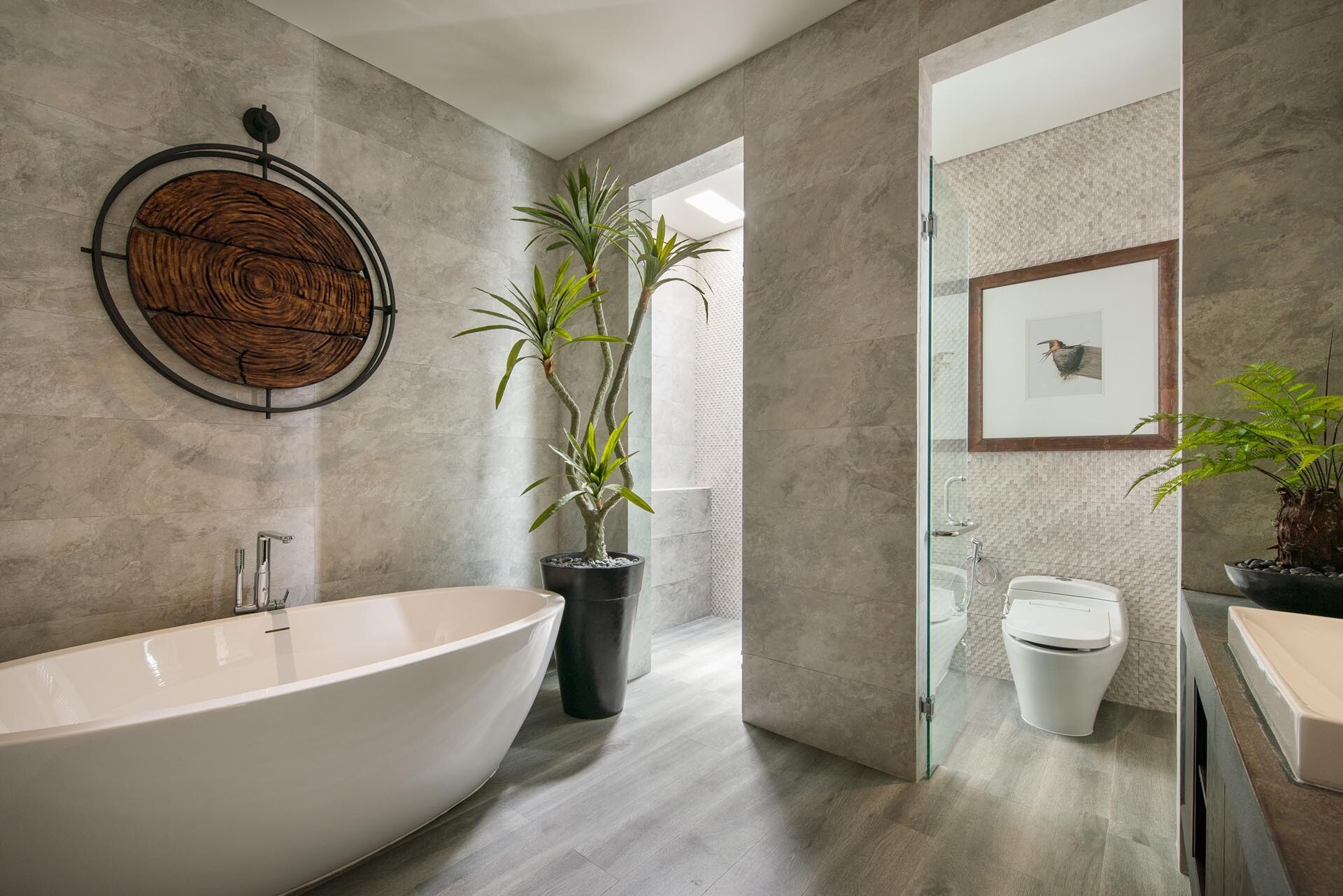
The ensuite bathroom continues the material palette seen throughout the house. A floating wood vanity is paired with a thick concrete countertop, combining warmth and solidity. A freestanding bathtub sits nearby, while separate enclosed areas for the toilet and shower provide added functionality.
Simple Guest Rooms with a Consistent Palette
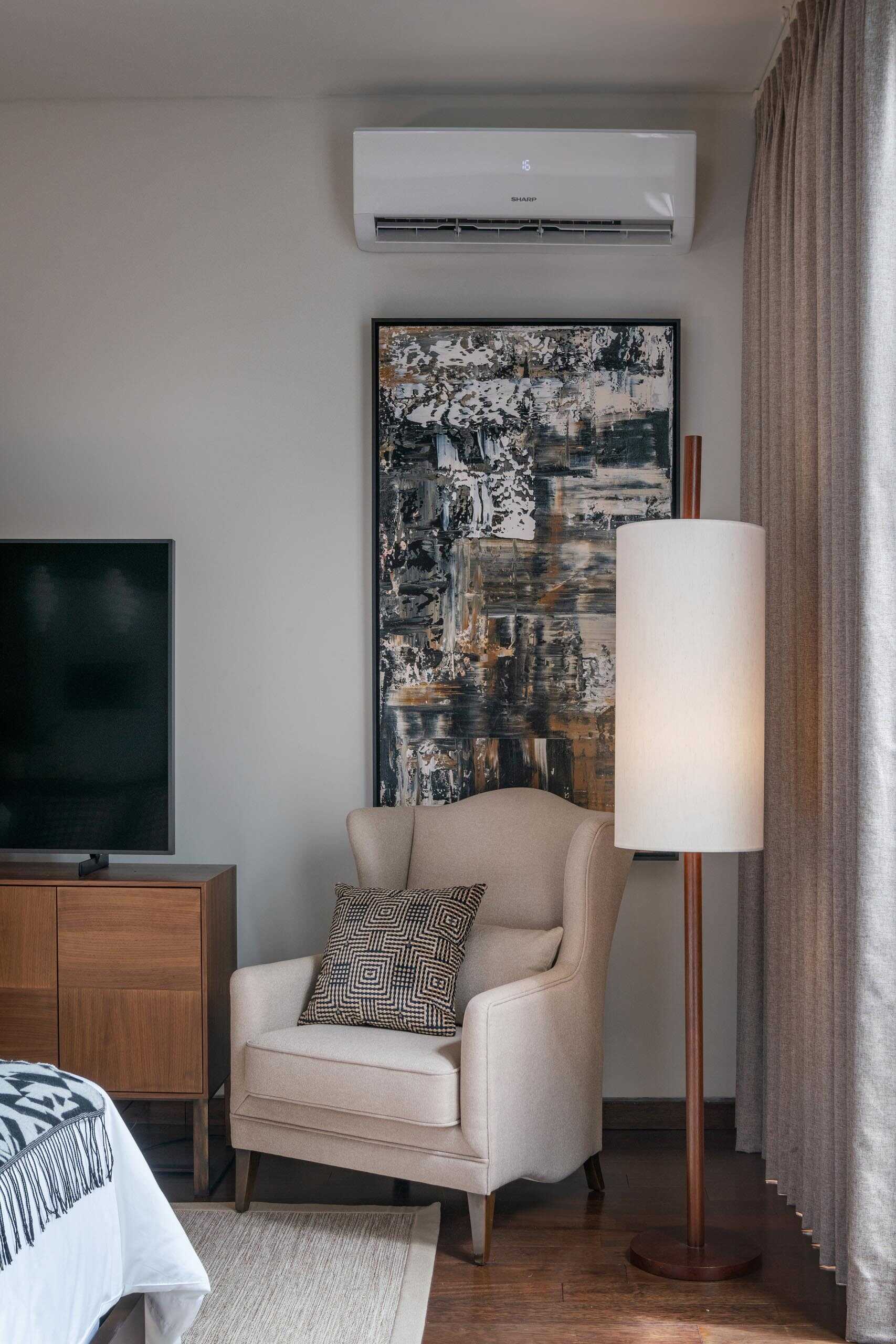
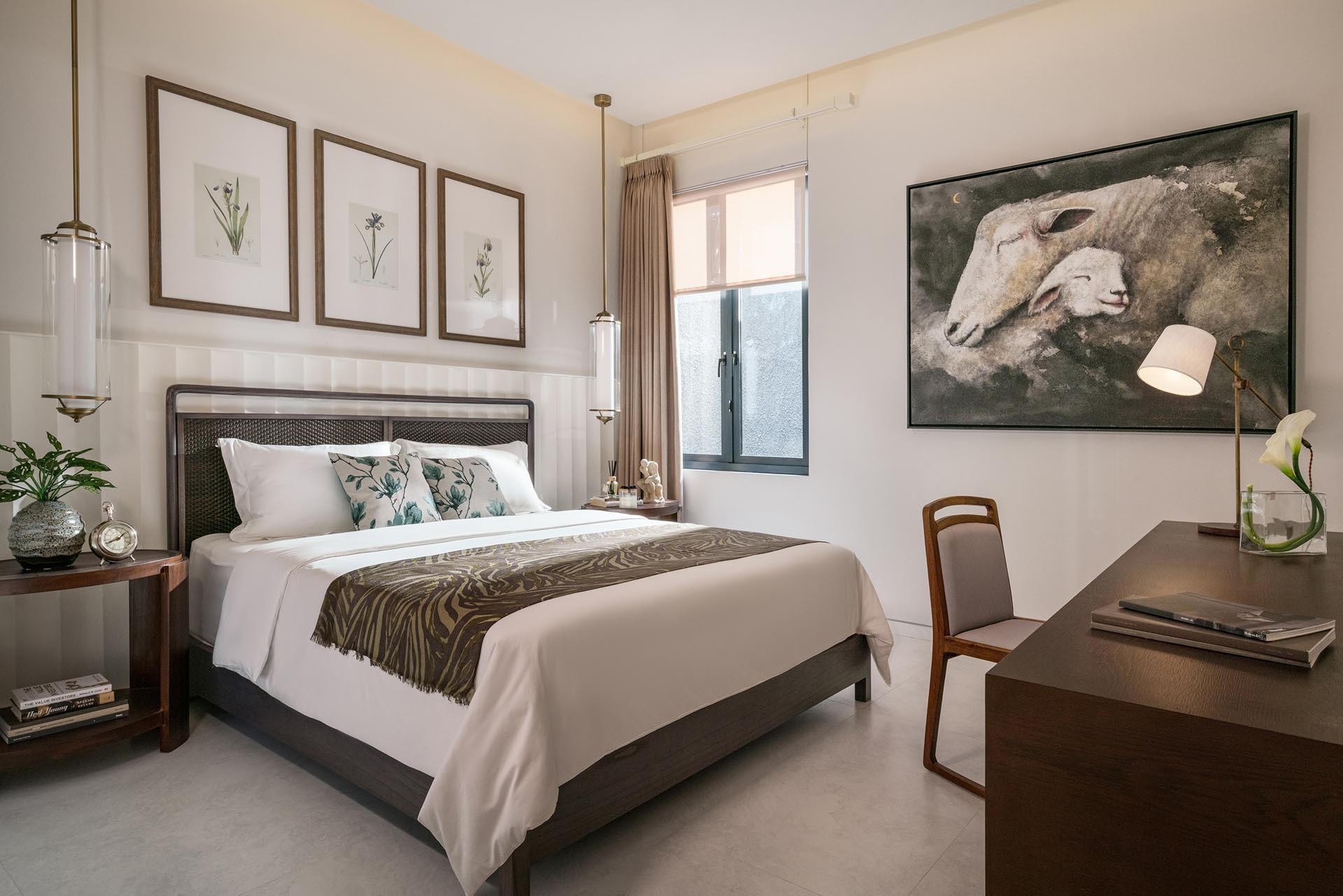
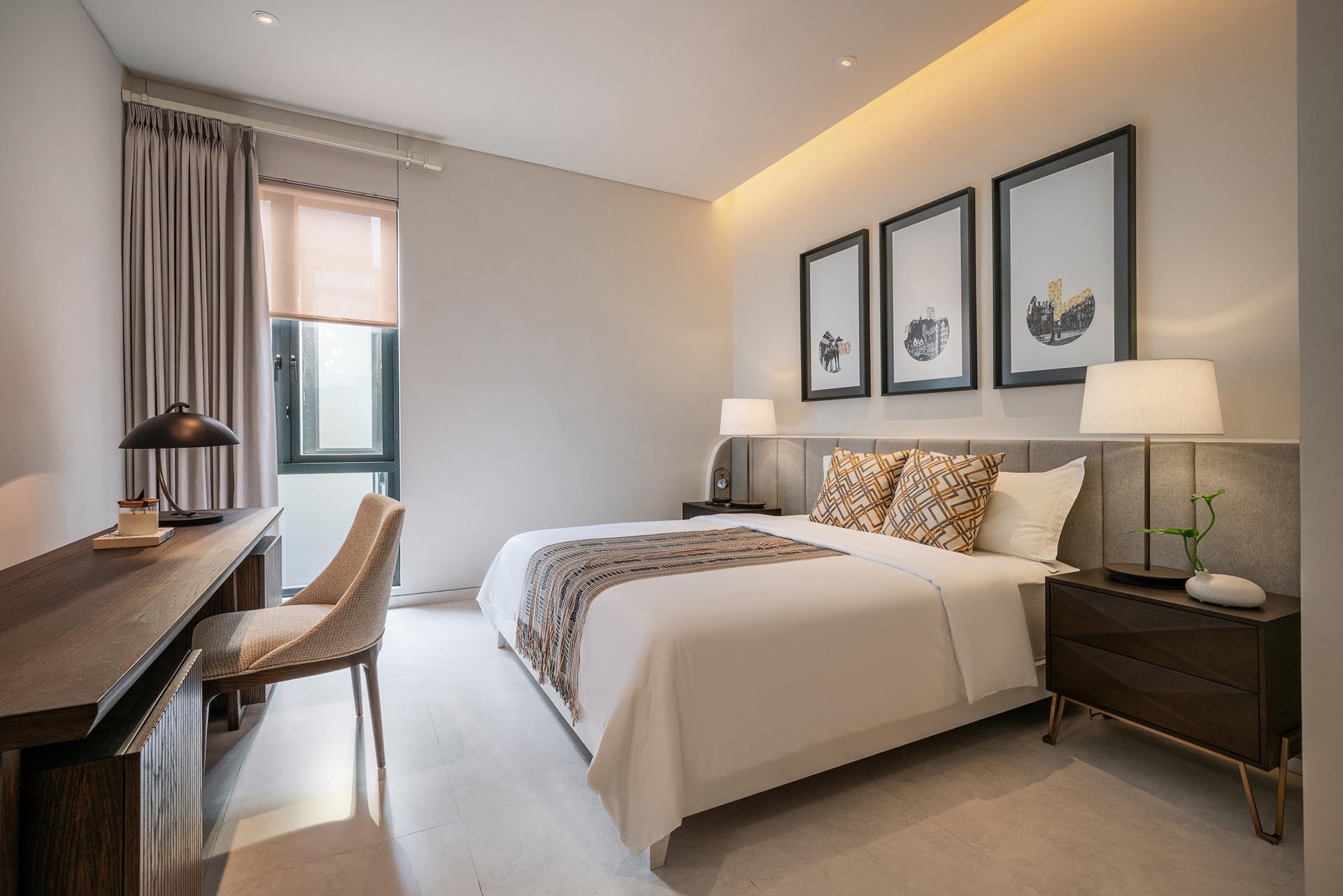
The guest bedrooms follow a similar approach, using a neutral color palette accented by wood elements. These rooms are kept uncluttered, allowing the materials and natural light to define the atmosphere.
For the owner, this project marked their first experience working with an architect and interior designer. The process brought together practical needs, design preferences, and site challenges into a home that feels cohesive from start to finish. From the geometric structure to the layered materials and light-filled spaces, every element works toward a comfortable and functional result.