Photography by Ryan Lester, Architecture Sarasota
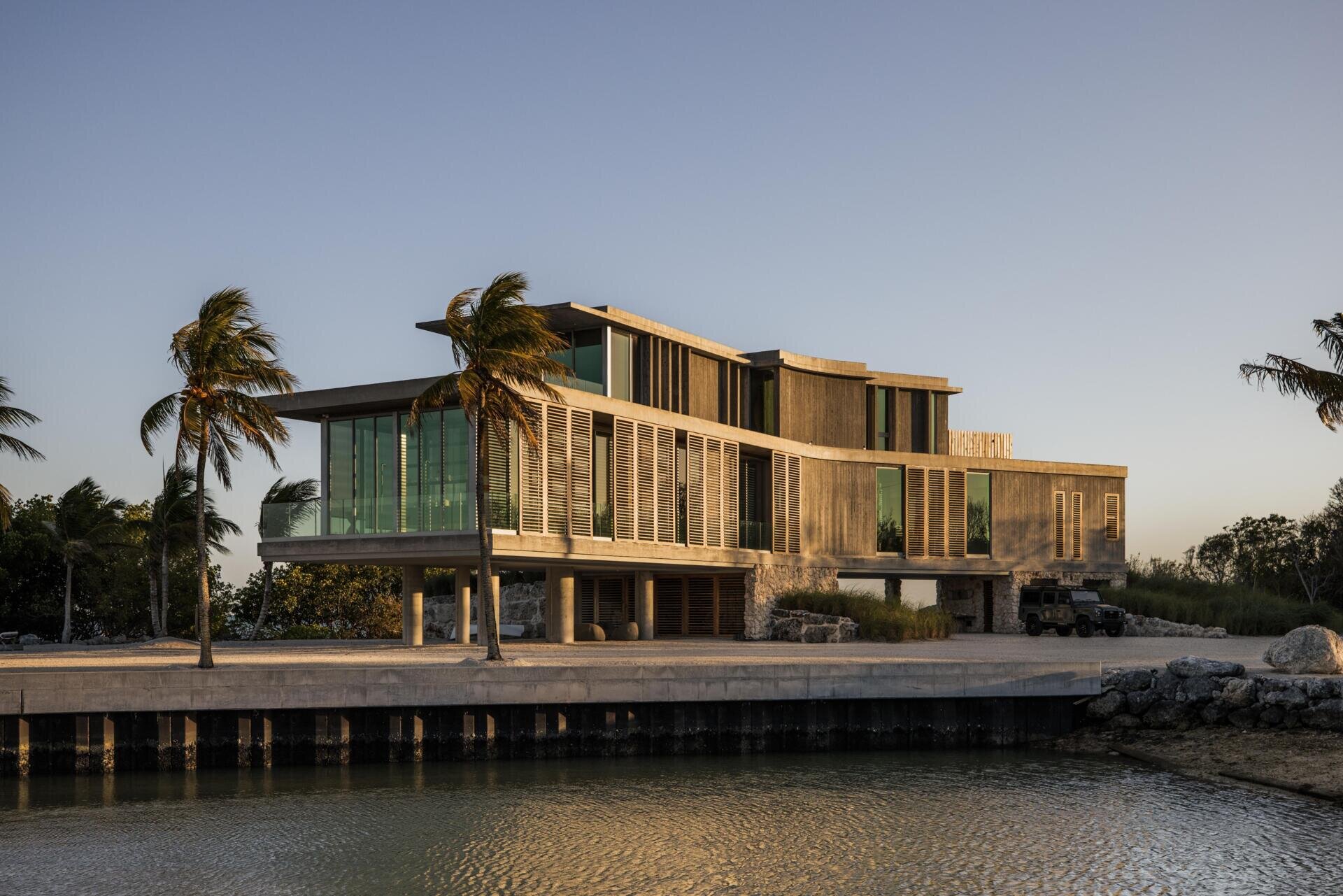
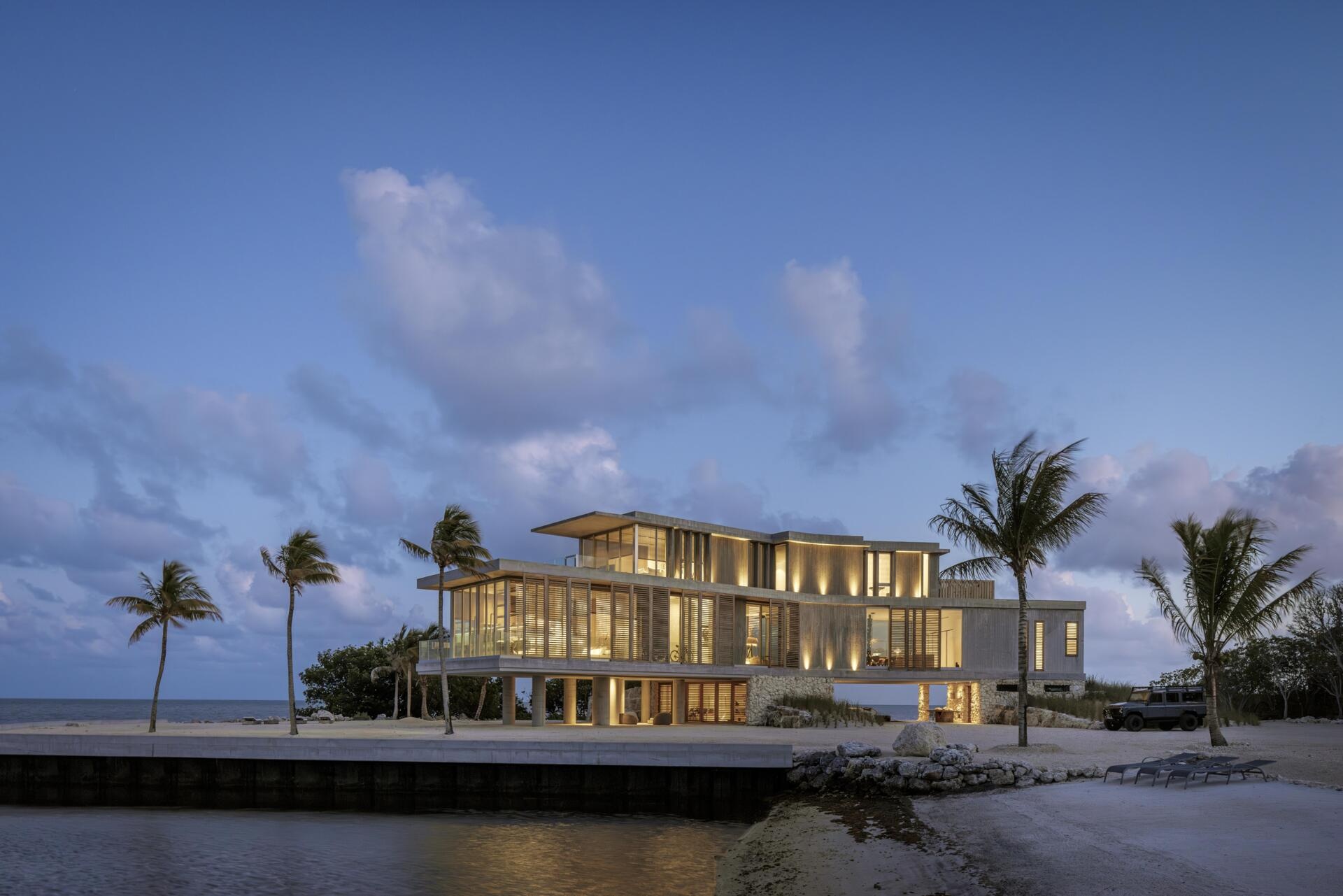
Along a relatively untouched stretch of the Upper Florida Keys, a coastal home has been carefully designed to meet the realities of its environment. Elevated, resilient, and deeply connected to its site, the Van der Vlugt Residence sets out to prove that climate adaptation and architectural clarity can exist together.
Designed by Miami-based firm STRANG, this highly acclaimed home has earned major recognition for its approach to coastal living. Its design responds directly to sea level rise, storm surge, and intense sun, while creating spaces that feel calm, open, and intentional.
Photography by Kris Tamburello
Set Between Sea, Sand, and Forest
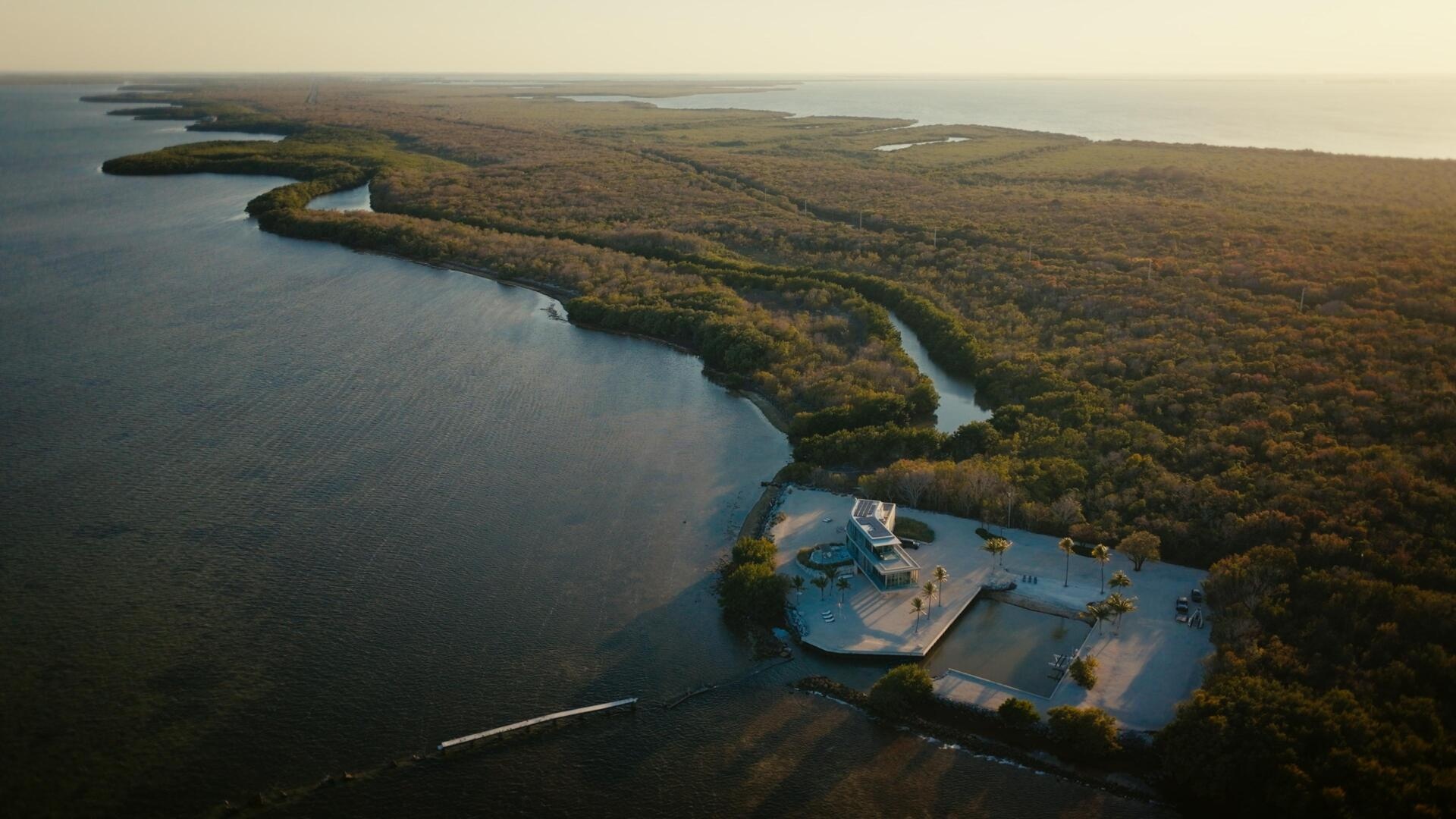
The Van der Vlugt Residence sits along the Upper Florida Keys coastline, with beach on three sides and a tropical forest on the other. The site remains largely untouched, and the home responds by carefully framing views rather than dominating the landscape.
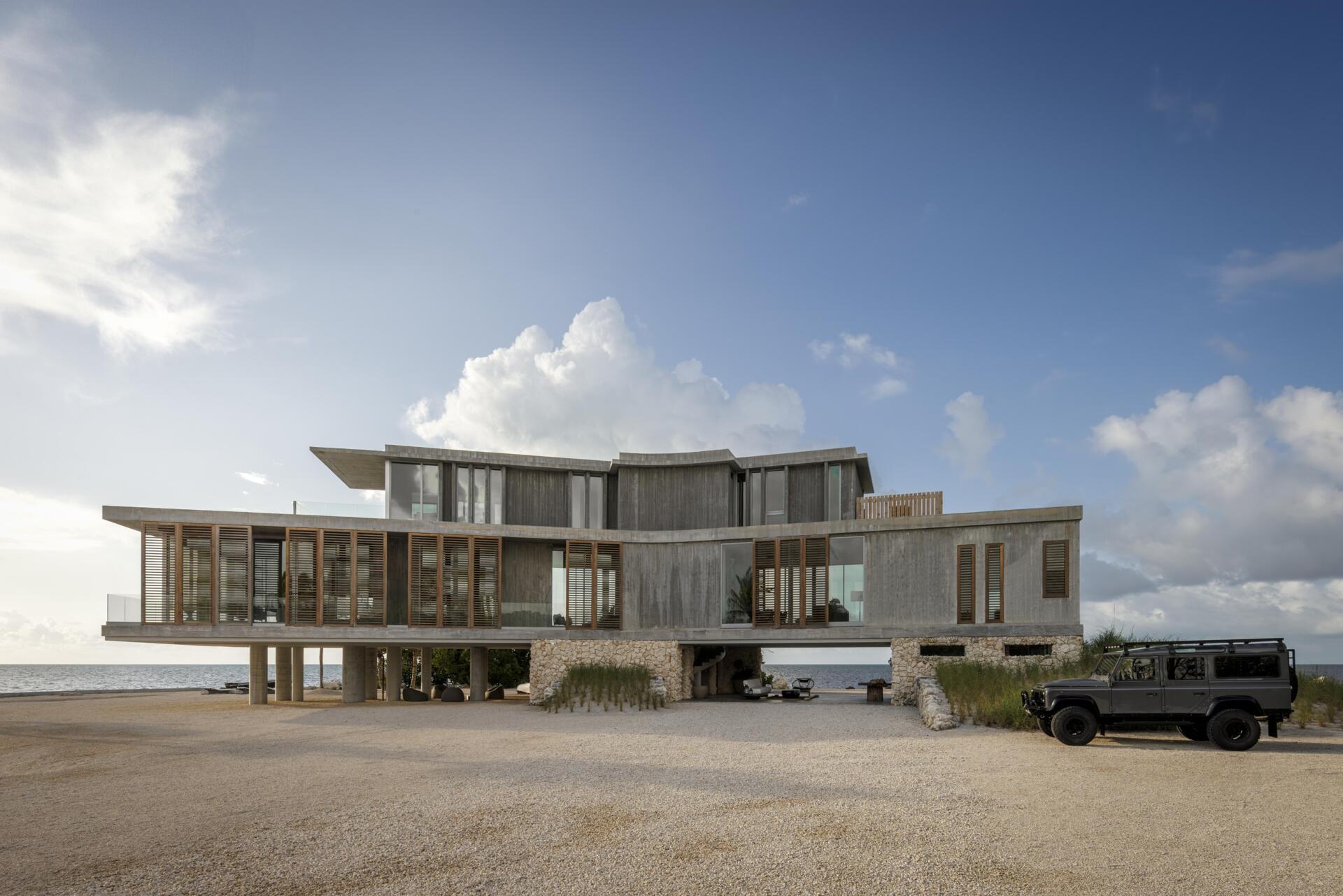
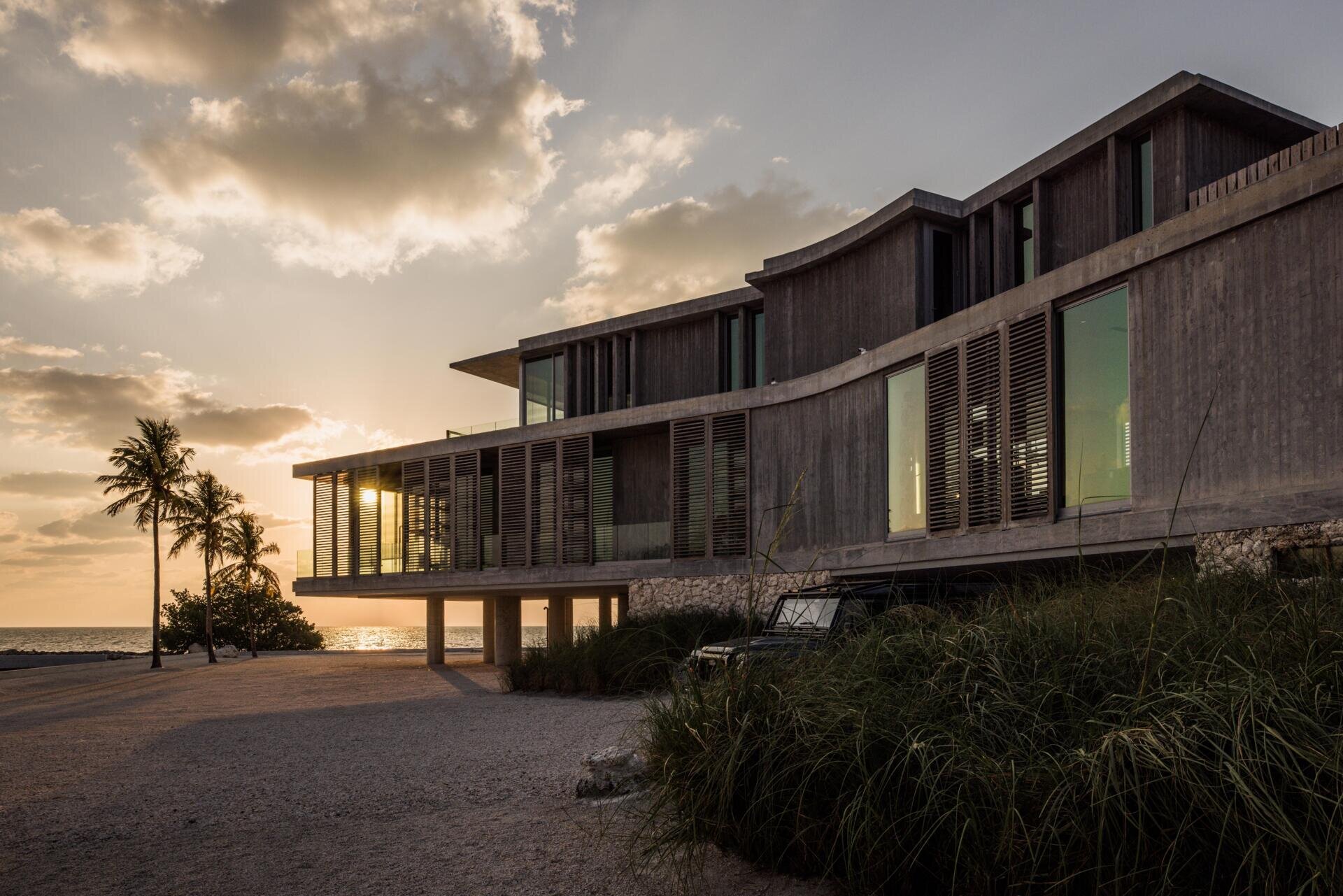
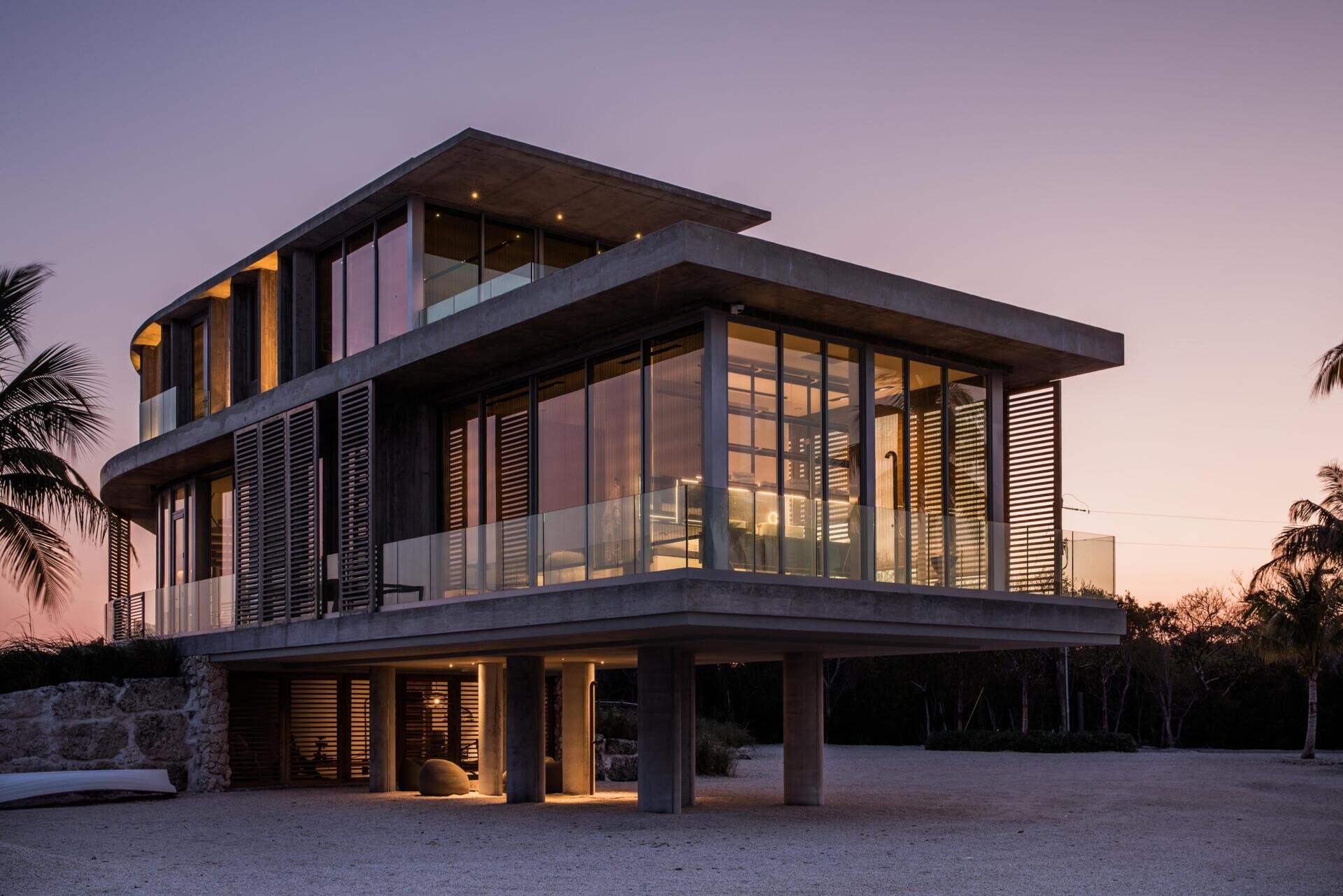
The structure is elevated ten feet above ground level, allowing it to sit lightly within its fragile setting. Its distinctive curvature mirrors the site’s waterfront boundary, reinforcing a close relationship between architecture and location.
Photography by Kris Tamburello
Photography by Ryan Lester, Architecture Sarasota
Photography by Ryan Lester, Architecture Sarasota
Built From Concrete, Stone, and Intent
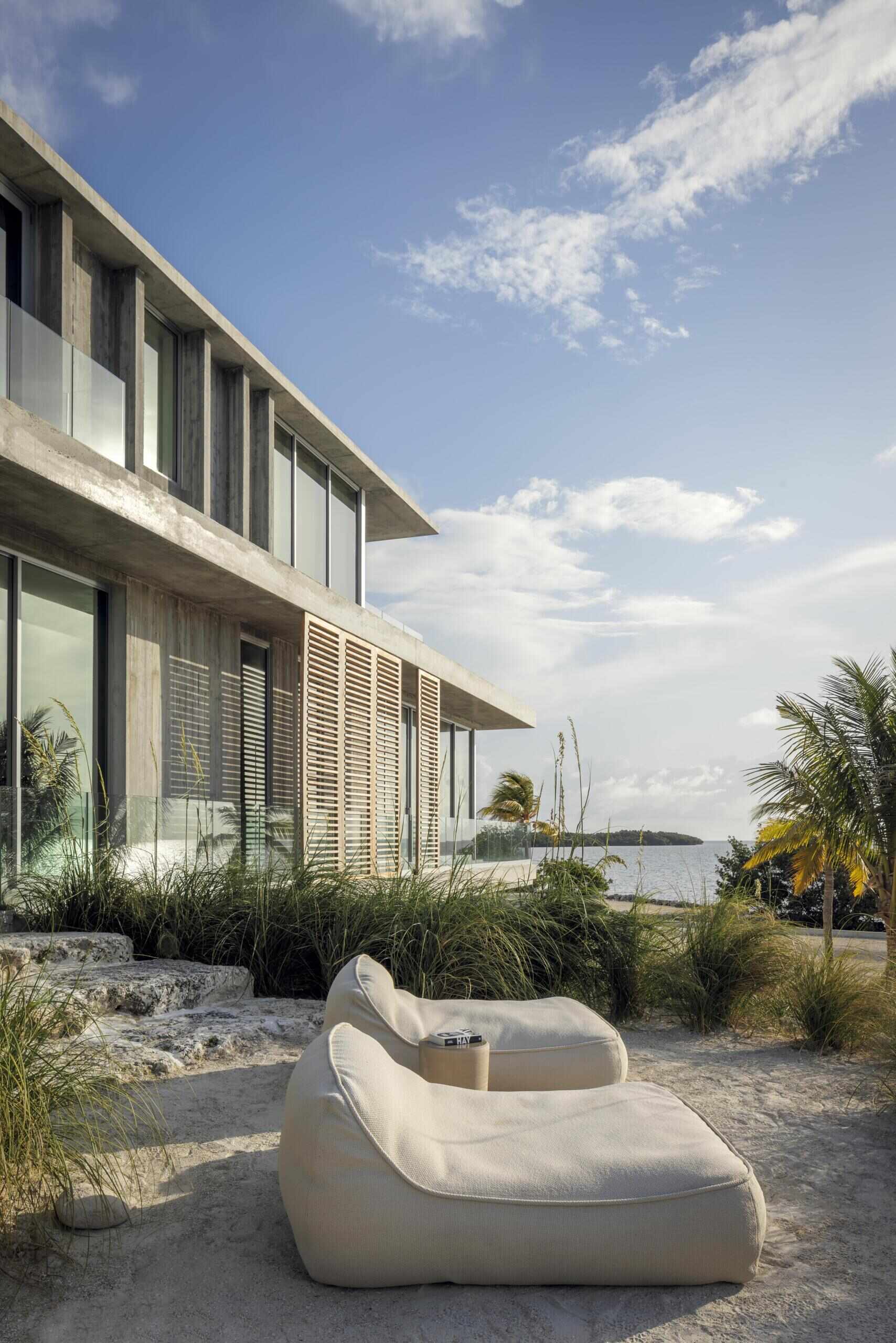
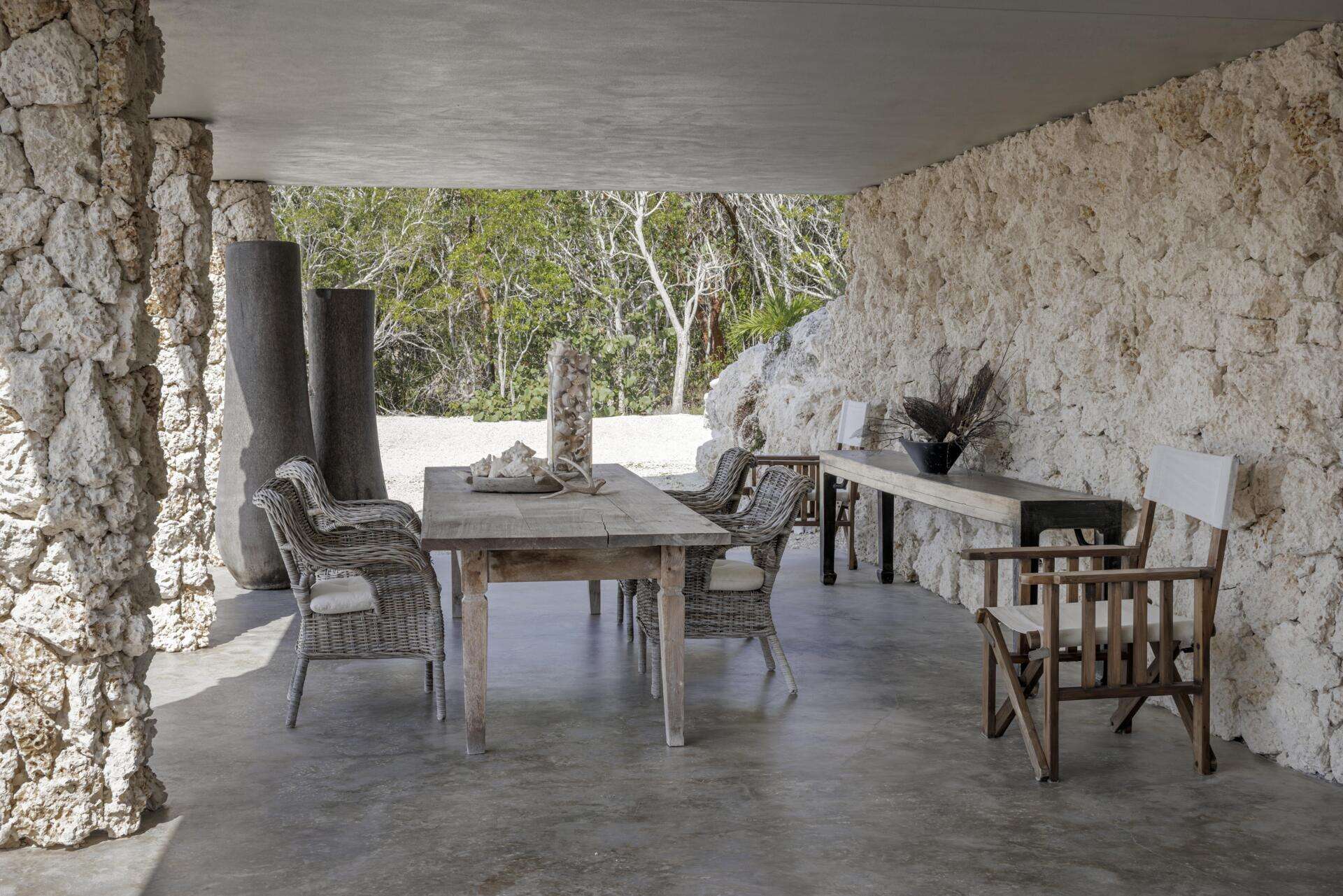
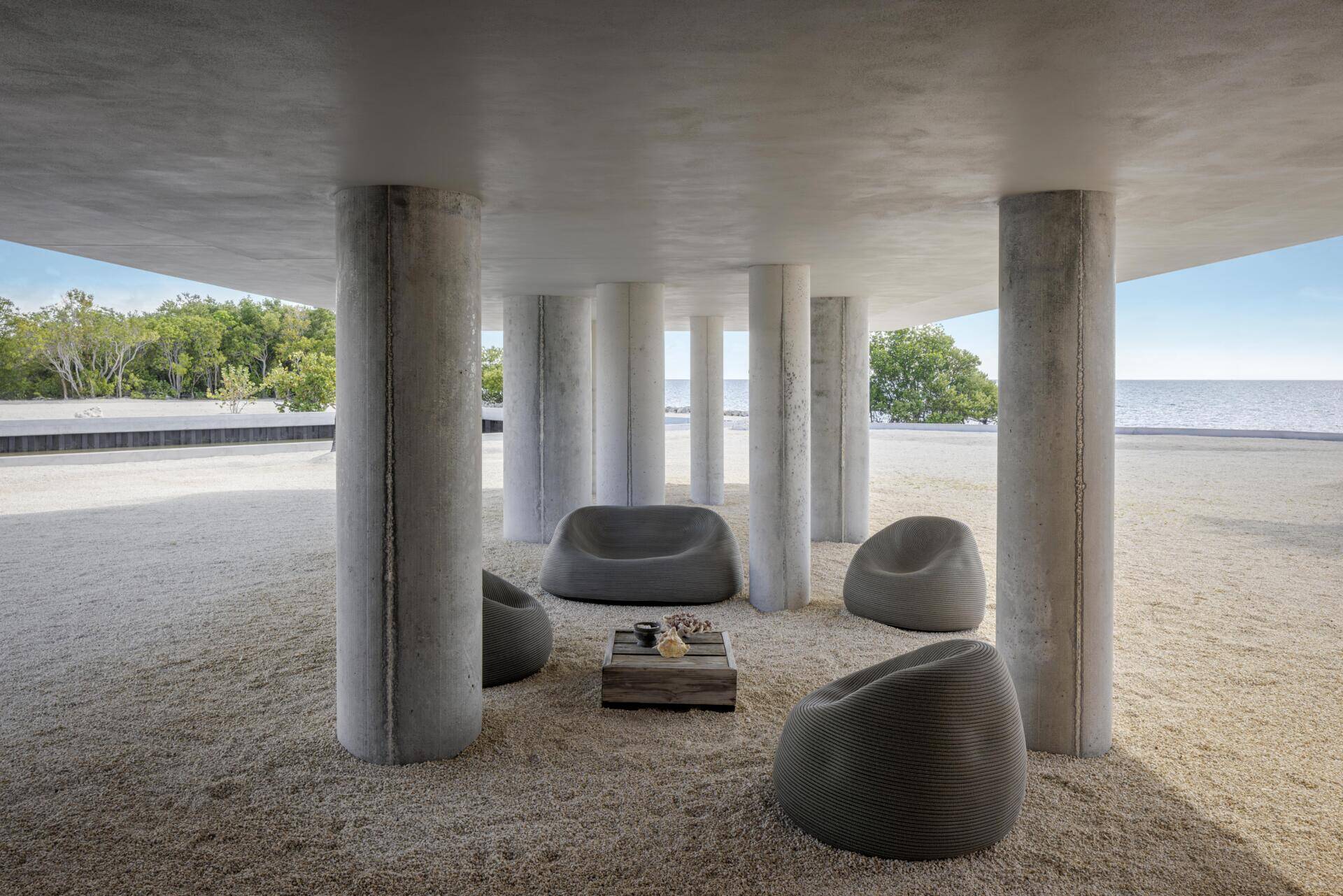
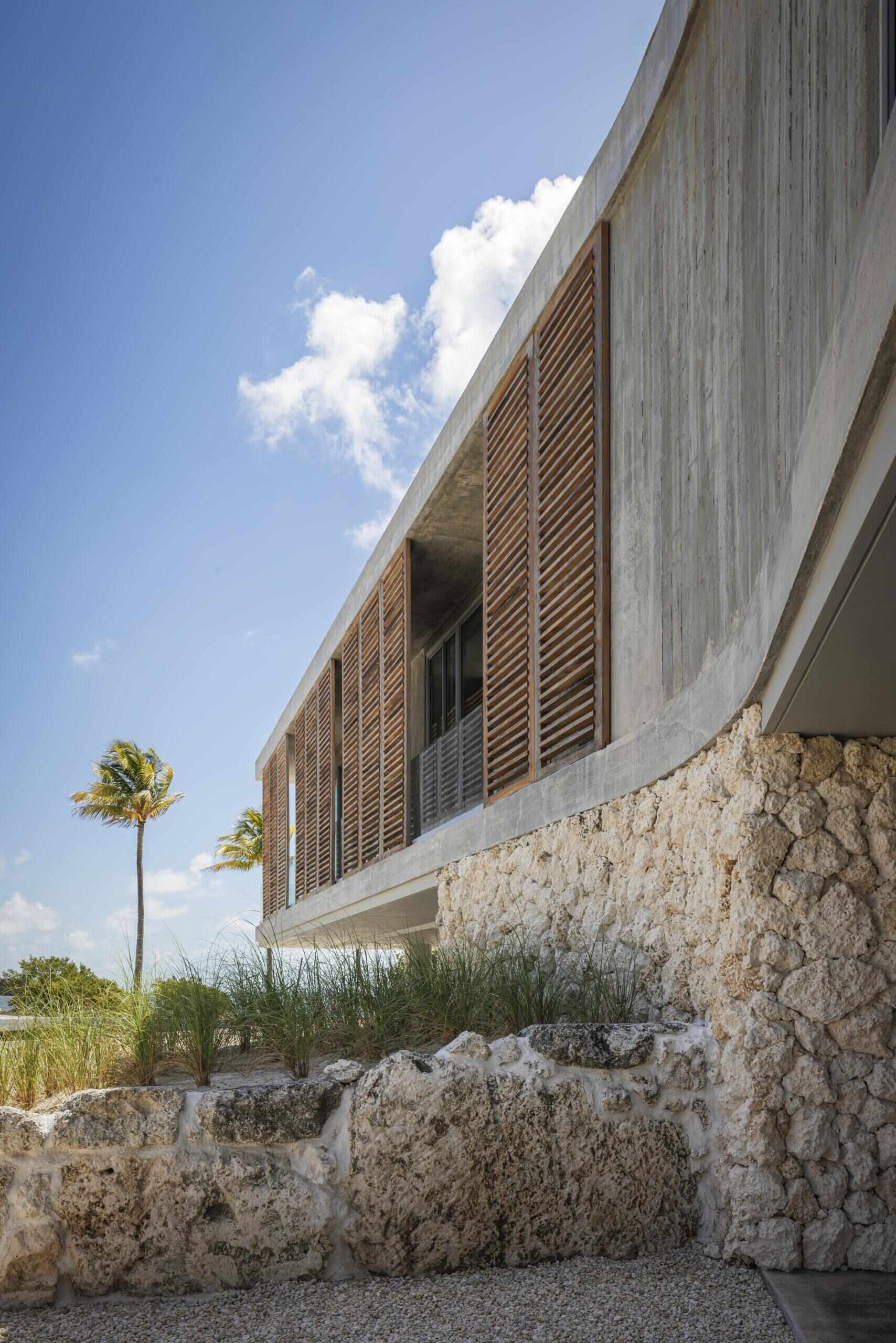
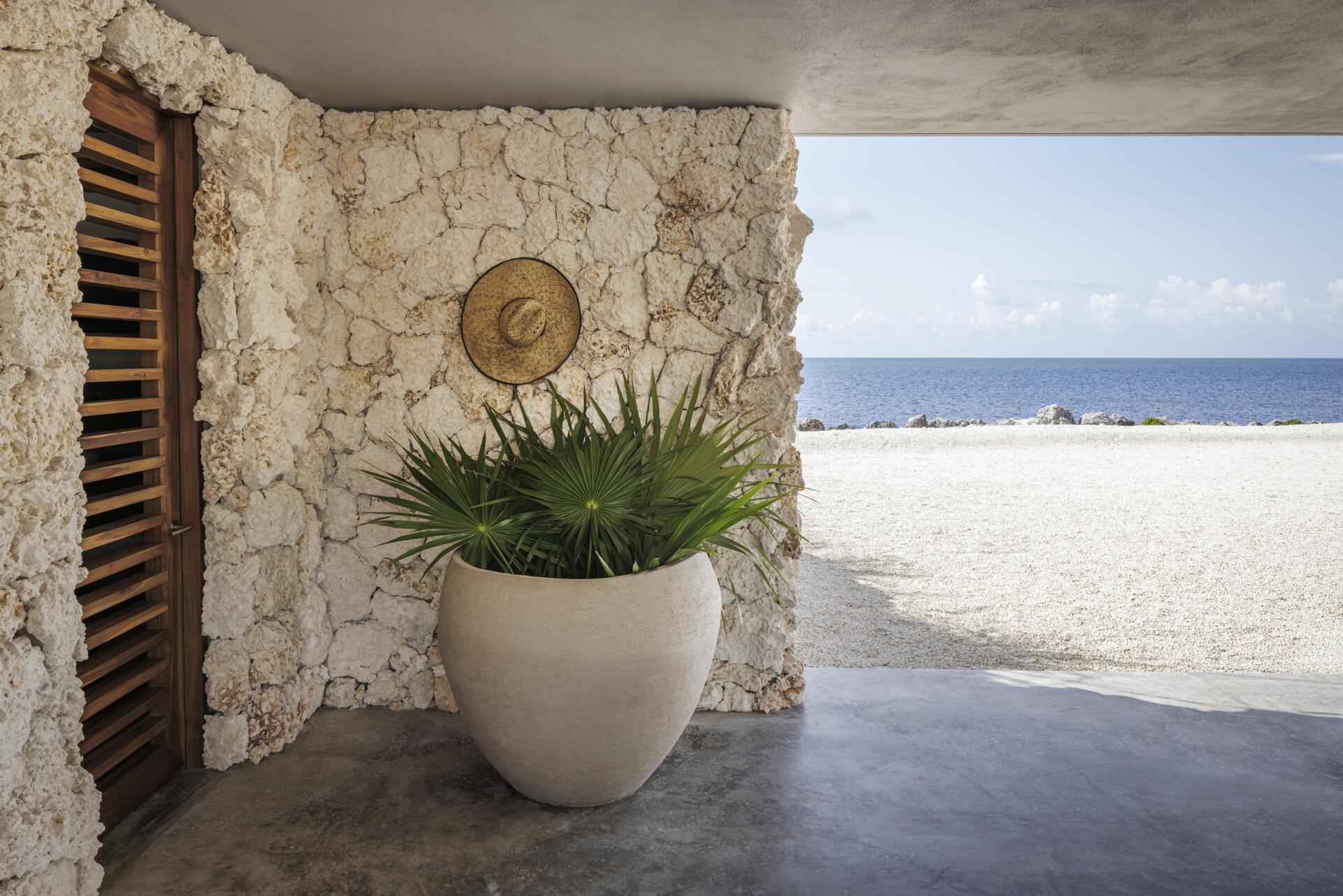
A rugged palette anchors the home to its coastal context. Board-formed concrete defines the exterior of the raised structure, supported by a coral rock base and concrete cylinders clustered beneath.
This material language continues indoors. The textured concrete flows from outside to inside, creating moments of contrast against softer interior finishes. Wood slats add another layer, offering additional protection against hurricane force winds while contributing warmth.
Photography by Ryan Lester, Architecture Sarasota
Photography by Kris Tamburello
Where Elevation Creates Livable Shade
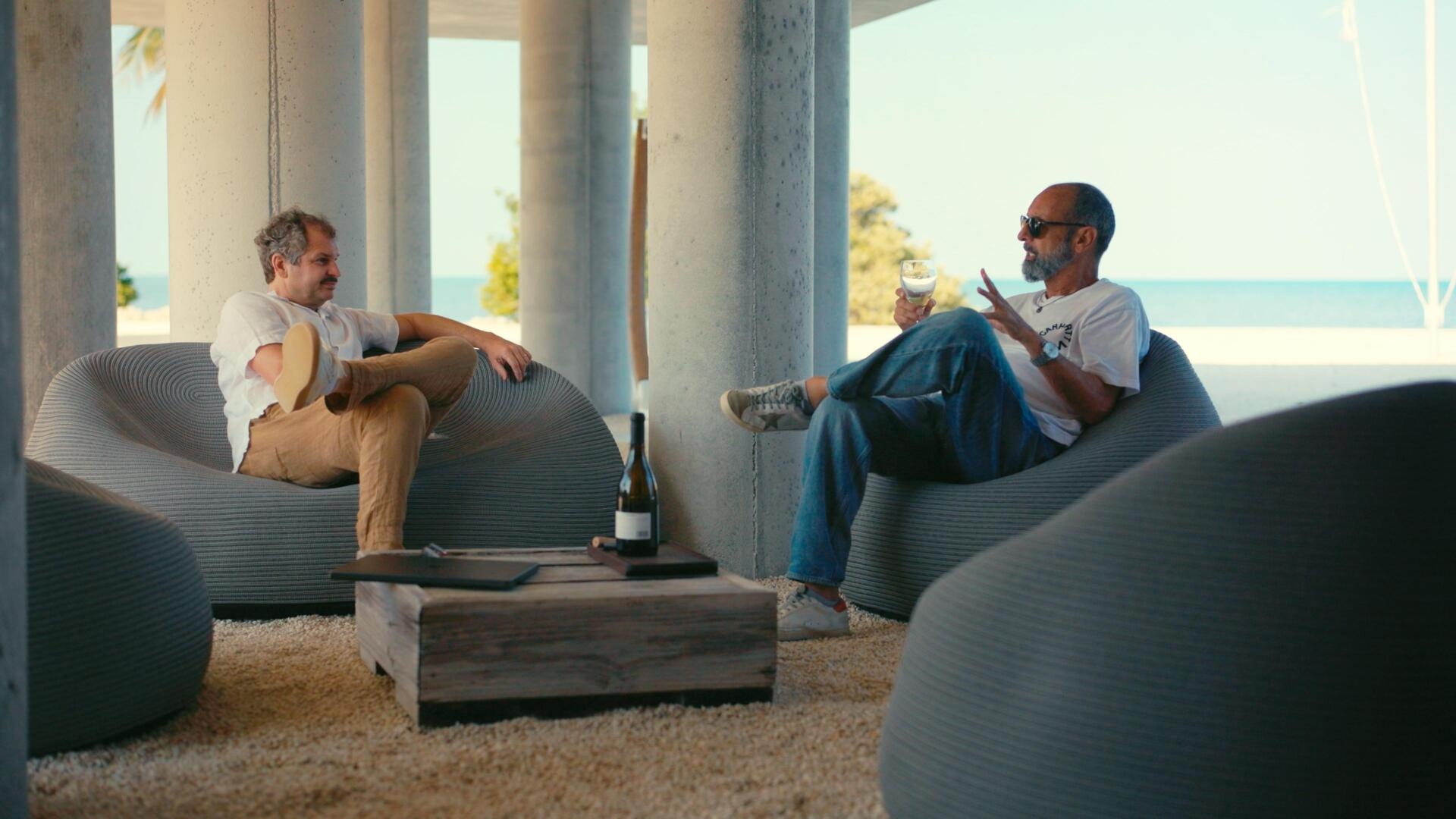
Beneath the elevated home, a covered outdoor dining and living area is tucked into the shaded ground plane. This space remains protected while still open to breezes moving through the site.
The underside of the house becomes a functional extension of daily life, reinforcing the idea that elevation is not just defensive but spatially generous.
Photography by Kris Tamburello
Photography by Kris Tamburello
Photography by Ryan Lester, Architecture Sarasota
A Protective Skin That Shapes Light
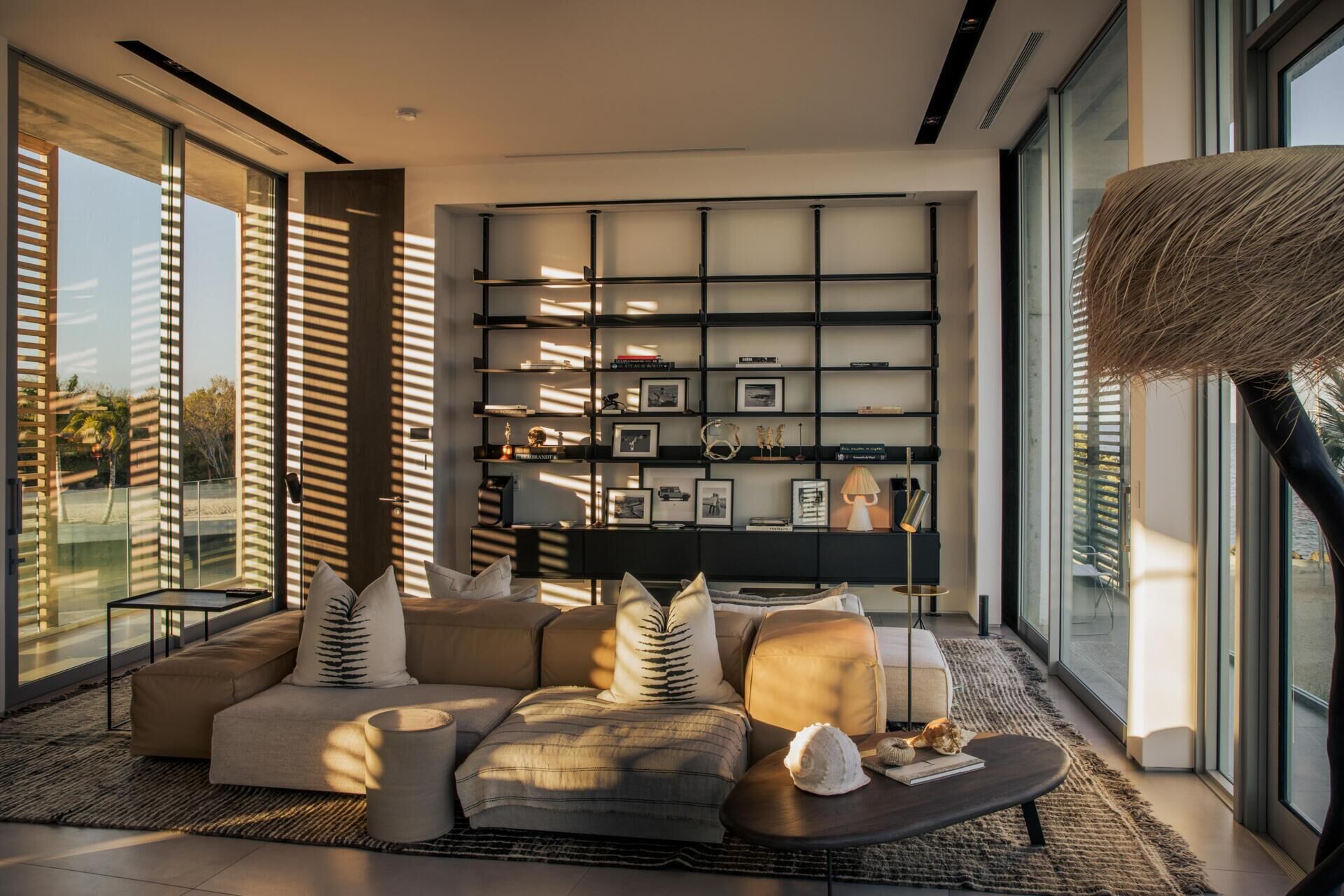
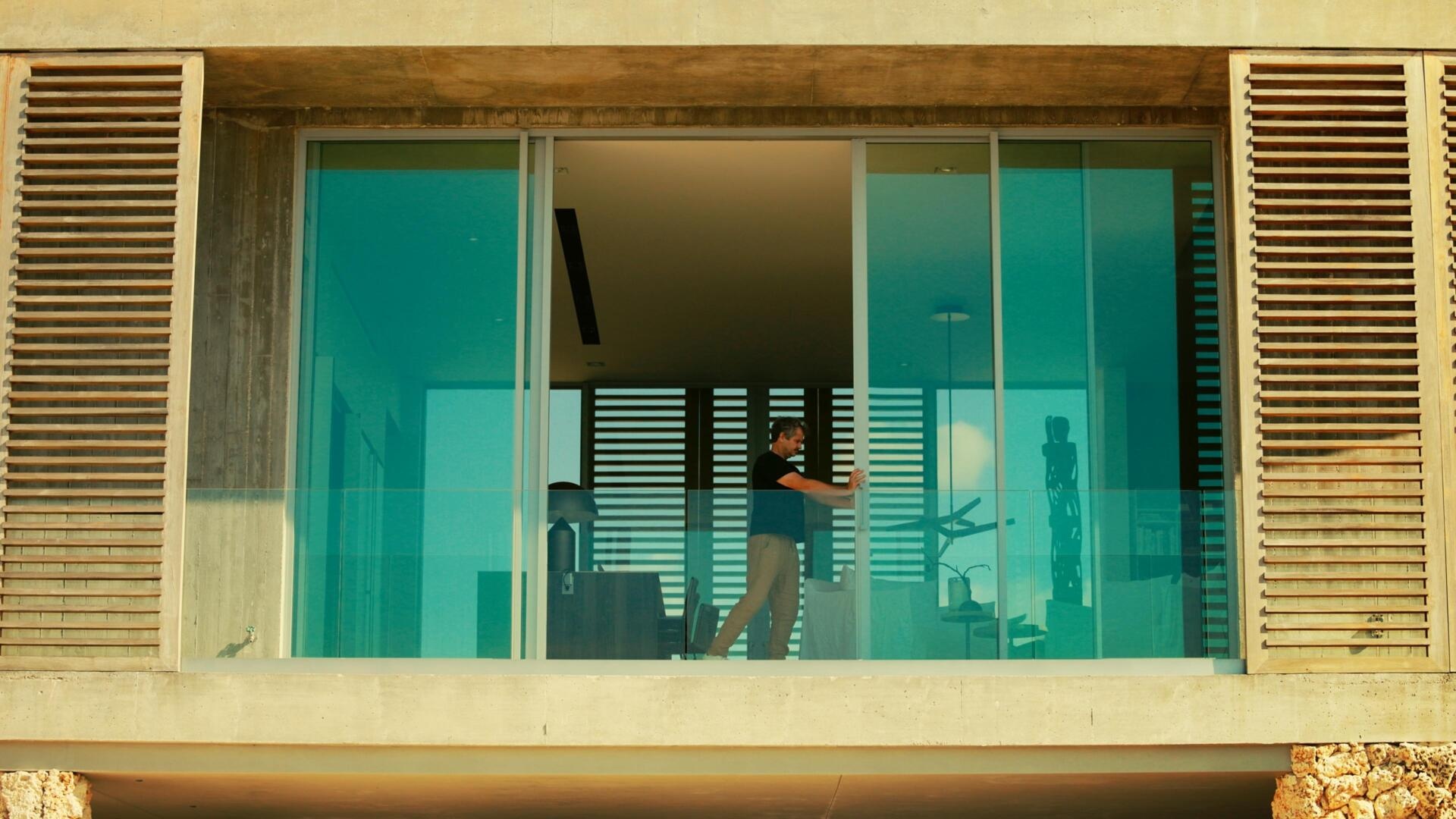
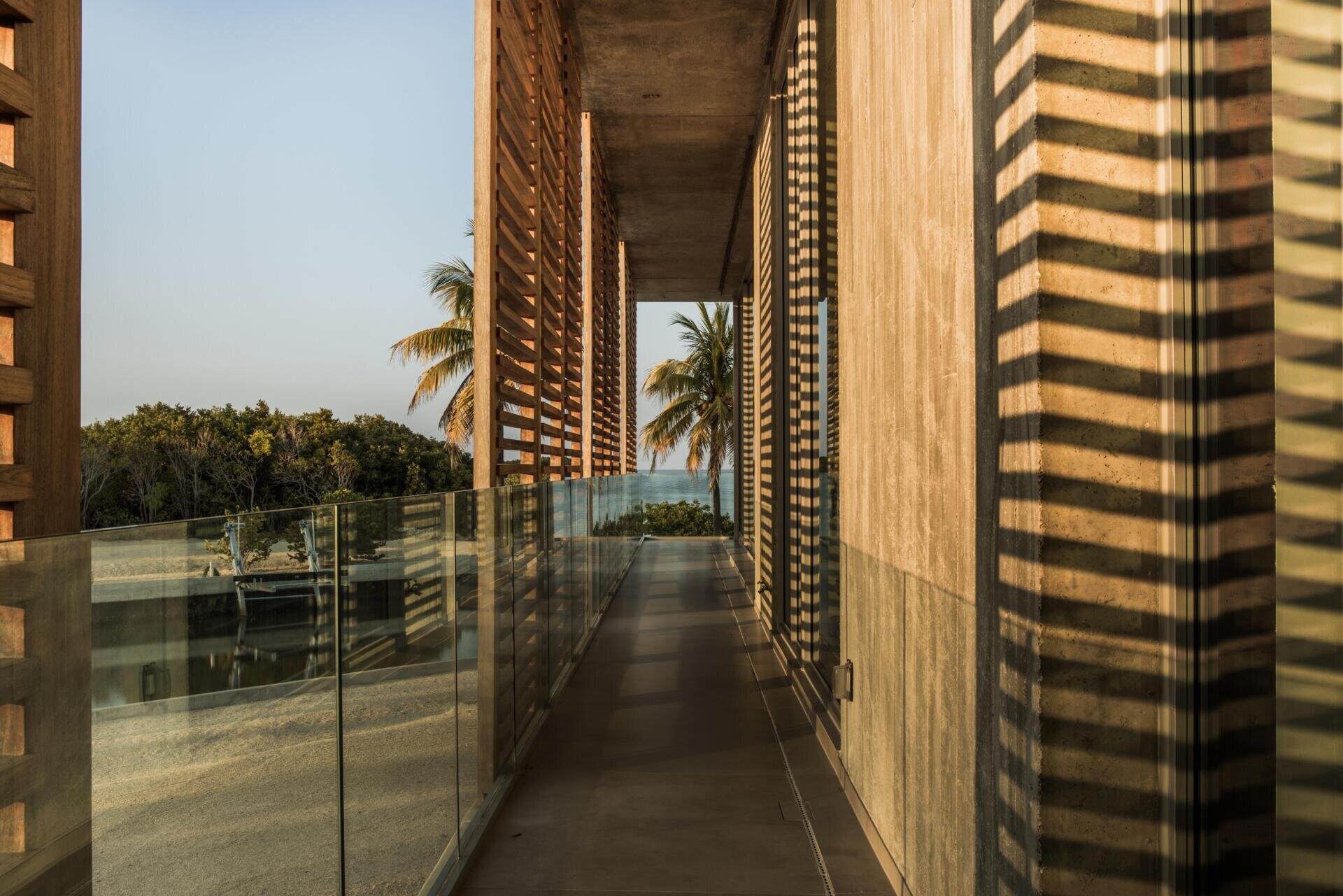
Wood shutters and louvered screens wrap the home, shaping light and shadow throughout the day. These elements play a critical role in shading and cooling while also protecting the structure during severe weather.
Stone and concrete surfaces reinforce durability, grounding the home visually while supporting its long-term performance in a coastal climate.
Photography by Kris Tamburello
Photography by Kris Tamburello
Open to the Horizon, Shielded From the Sun
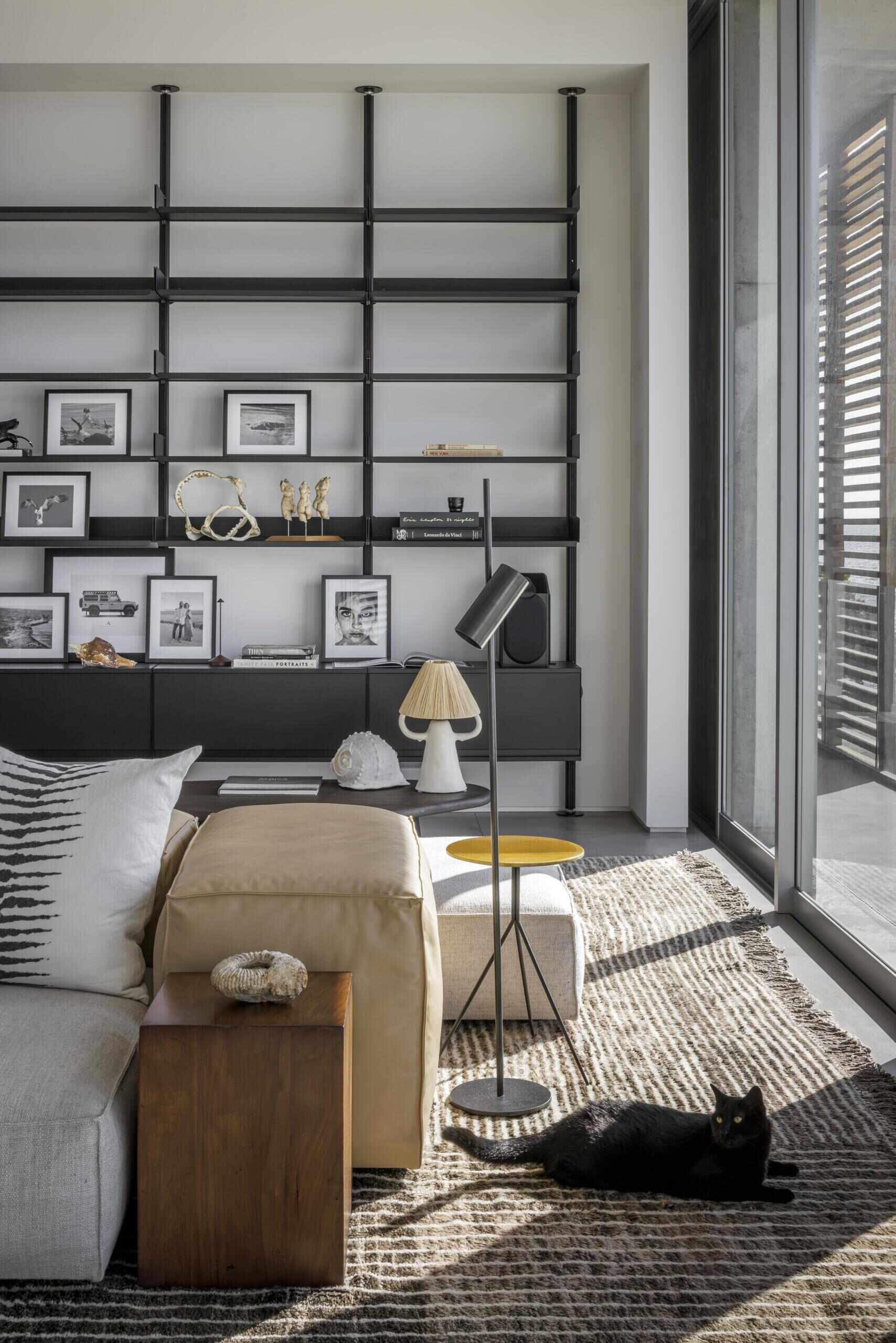
Inside, floor-to-ceiling impact glass opens the living spaces to the surrounding landscape. Natural light pours in while remaining shielded by louvers designed to manage heat and glare.
Photography by Ryan Lester, Architecture Sarasota
Photography by Kris Tamburello
An Elevated View Over the Atlantic
Sliding glass doors open to a covered terrace walkway overlooking the Atlantic Ocean. Overhangs and louvered screens help maintain comfort while preserving uninterrupted views to the water.
Photography by Ryan Lester, Architecture Sarasota
Photography by Ryan Lester, Architecture Sarasota
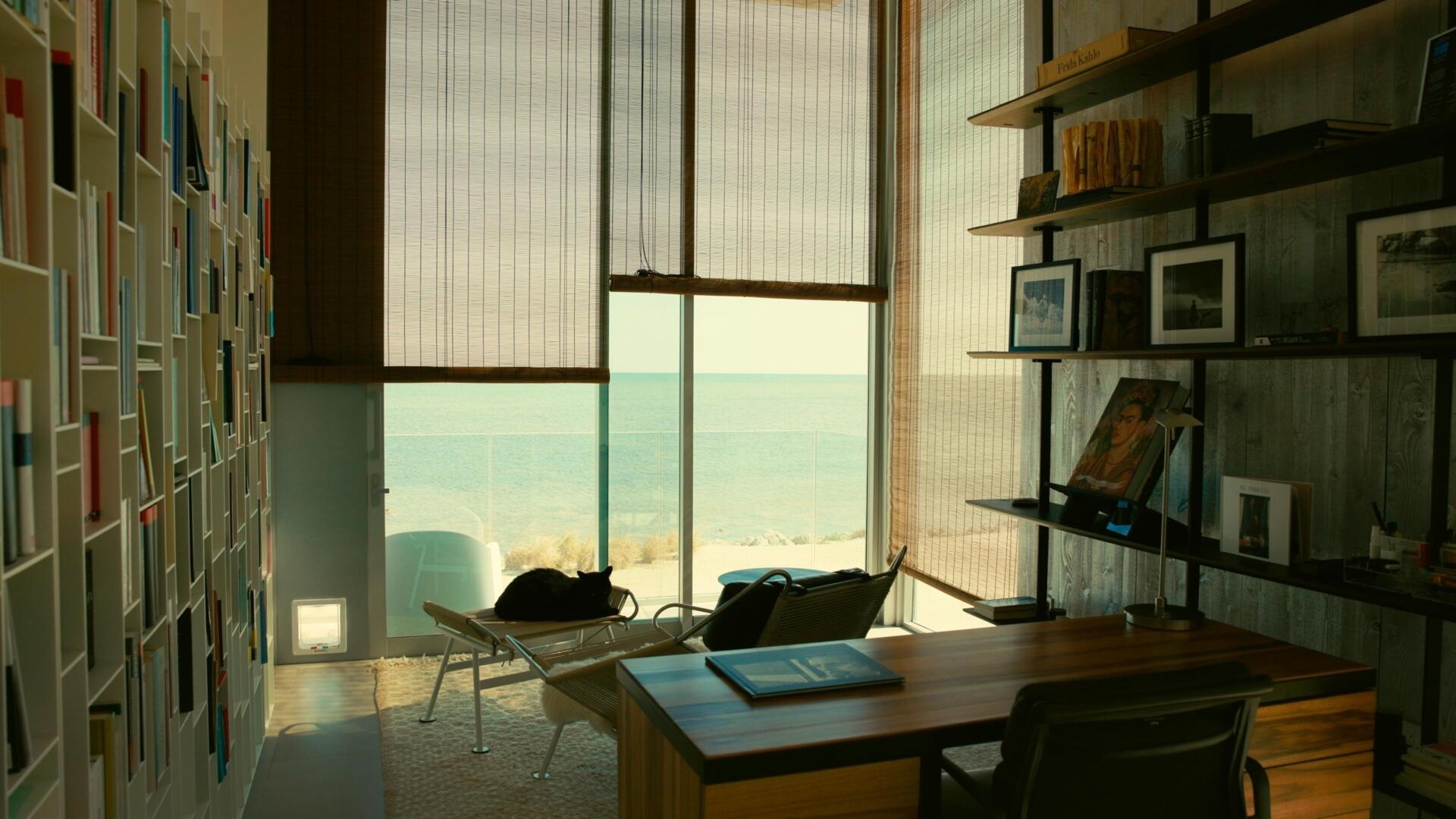
A Quiet Room Framed by the Coast
The home office is positioned to take advantage of carefully framed views across the site. Surrounded by light and landscape, it provides a calm environment for work and reflection.
The space reflects the project’s broader intent to create interiors that feel restorative while remaining grounded in function.
Photography by Ryan Lester, Architecture Sarasota
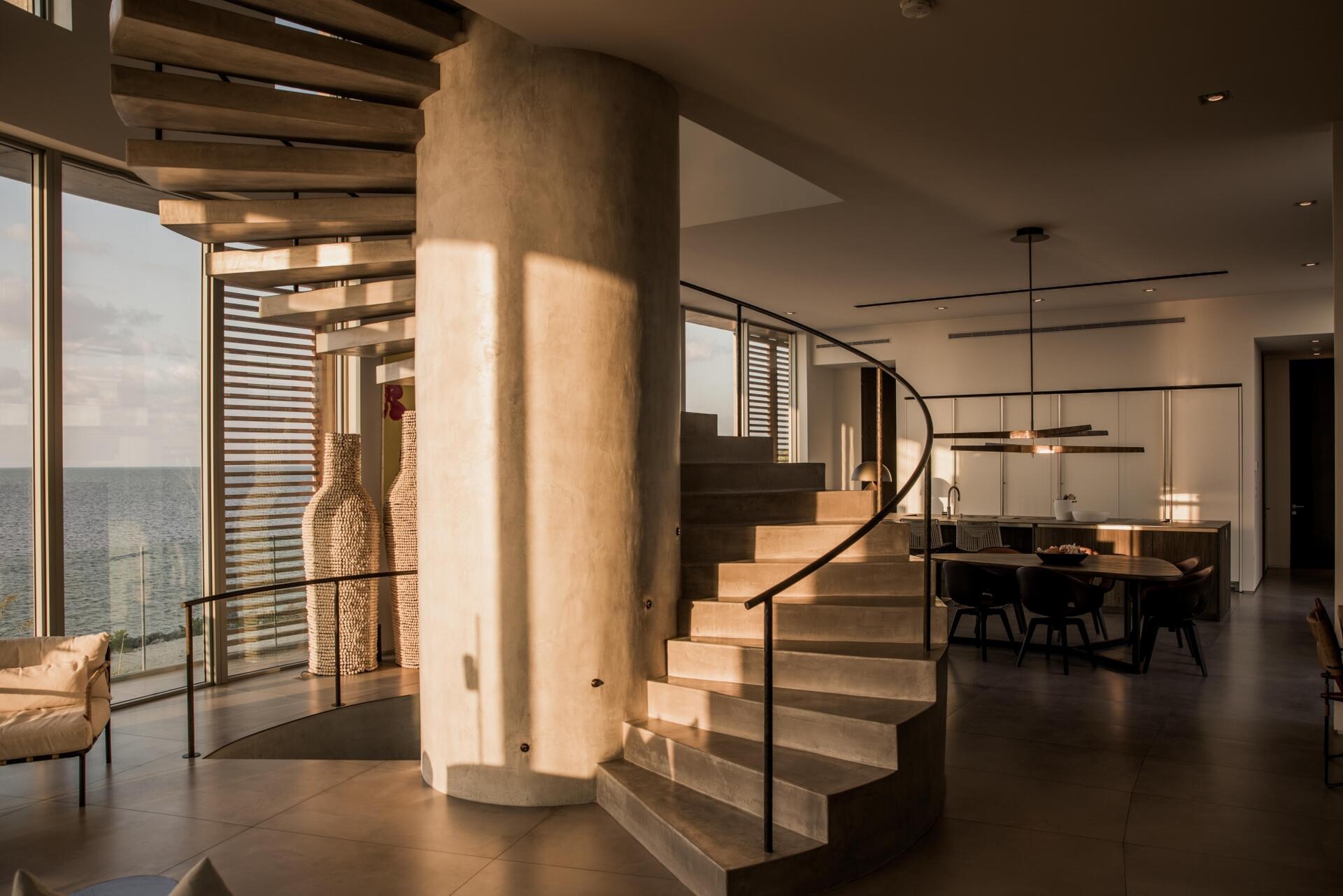
The Spiral That Holds the House Together
A spiral staircase marks a pivotal architectural moment within the house. Wrapped in cool gray microcement, it acts as a joint where the home’s curvature meets its axis. This sculptural element echoes the site’s waterfront boundary and serves as a clear transition between levels.
Photography by Ryan Lester, Architecture Sarasota
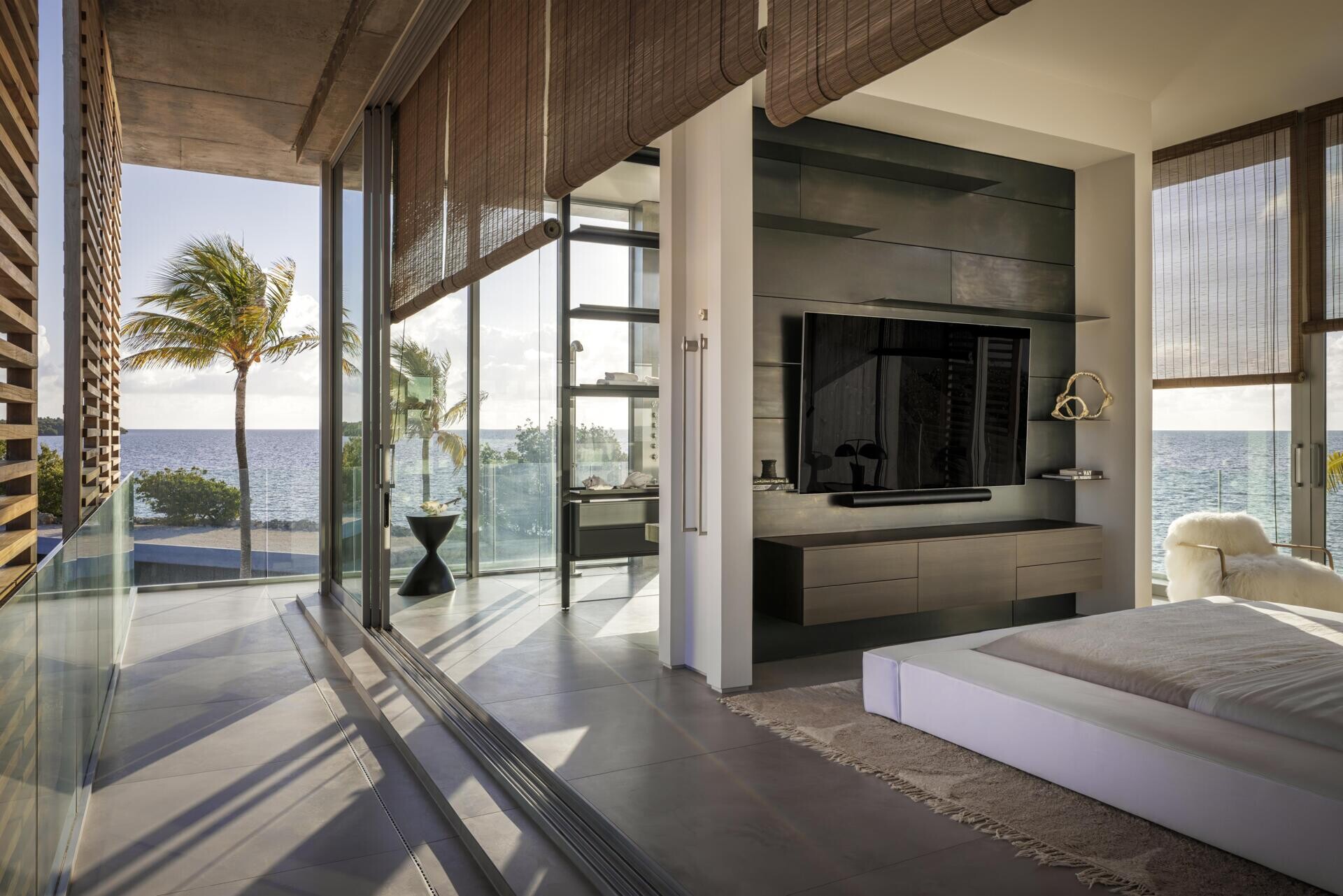
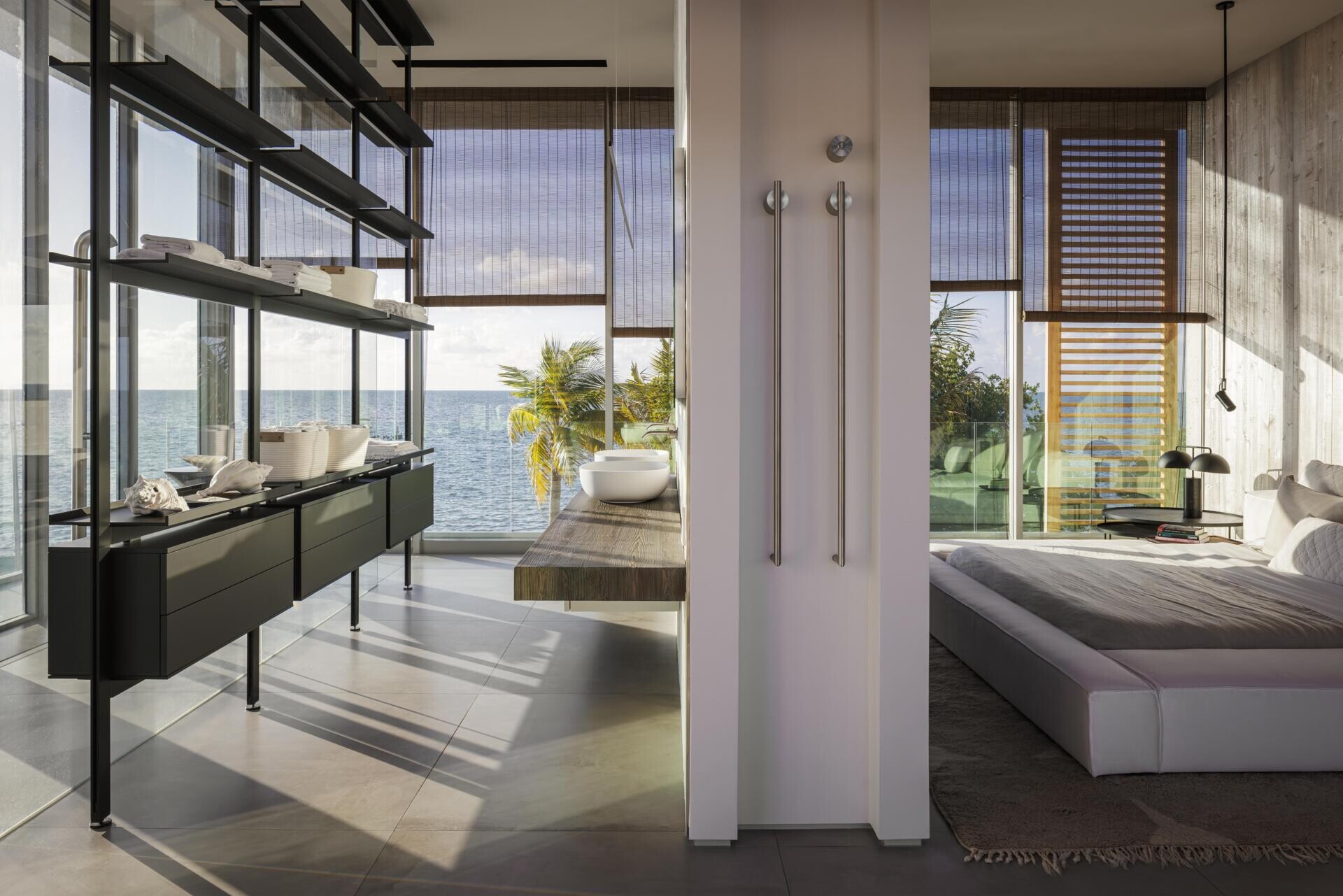
Waking Up Surrounded by Water
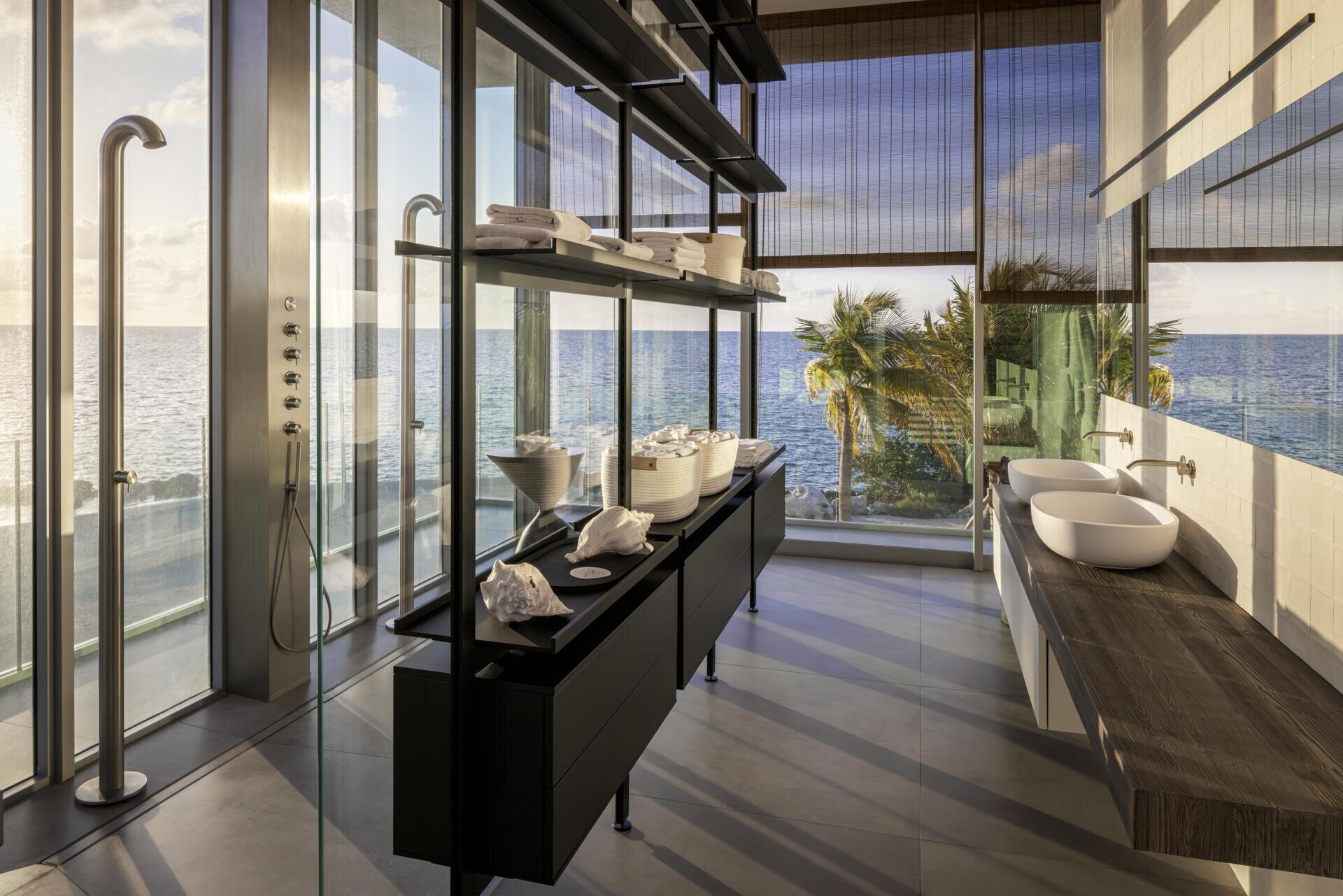
The owner’s primary suite is encased in sliding glass doors, offering water views from every angle. Metallic imprints of the board-formed concrete form a feature wall behind the bed, continuing the material story indoors. The suite combines openness with solidity, reinforcing the balance between exposure and protection that defines the home.
Photography by Kris Tamburello
Photography by Kris Tamburello
Photography by Kris Tamburello
The Van der Vlugt Residence stands as a clear response to the challenges facing coastal architecture today. Elevated ten feet above the ground, supported by resilient materials, and shaped by its environment, it demonstrates how design can adapt without compromise.