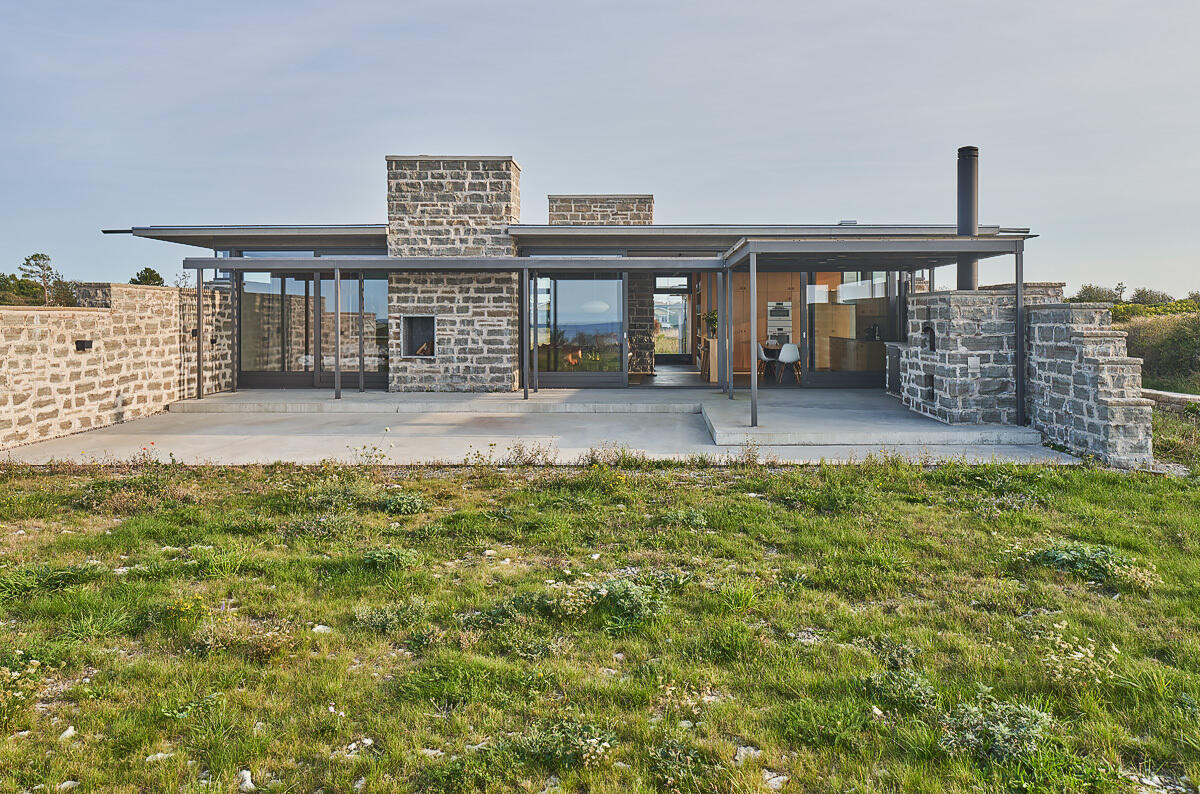
Designed by Margen Wigow Arkitektkontor, this contemporary home sits on the island of Öland in southern Sweden. From the beginning, the design draws directly from its surroundings, taking cues from the wide open fields, low vegetation, and distinct limestone formations that define the coastline.
Reading the Landscape
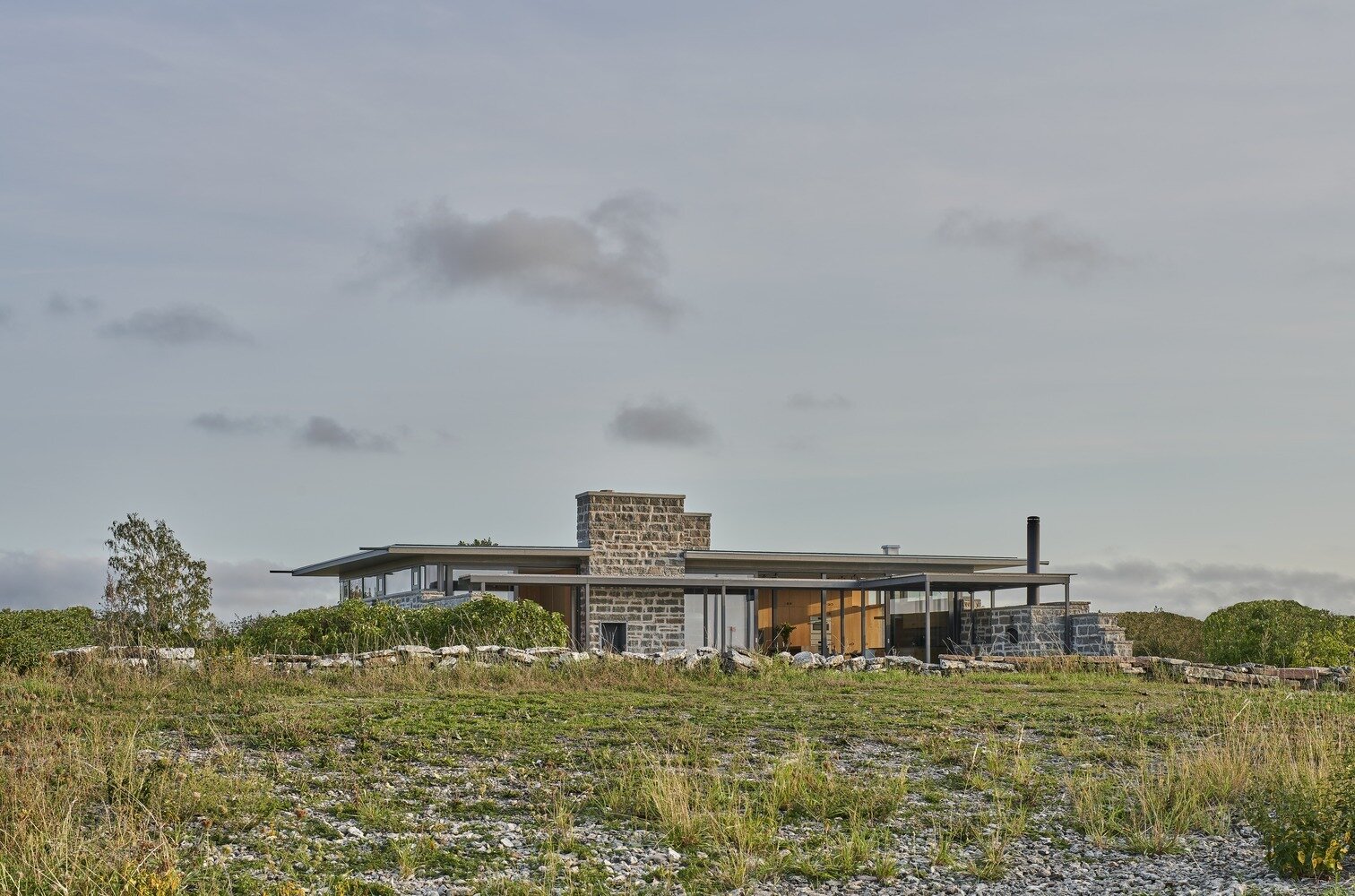
The character of the site sets the tone for everything that follows. Vast fields stretch outward, broken only by low-growing vegetation and natural stone formations. These elements are not just background, they inform how the house is shaped, positioned, and experienced.
A Material Palette That Ages in Place
On the exterior, wood panels are specially sawn and left untreated. Over time, they will gradually turn grey, matching the tone of the surrounding limestone. This shift allows the house to visually settle into its environment as it ages.
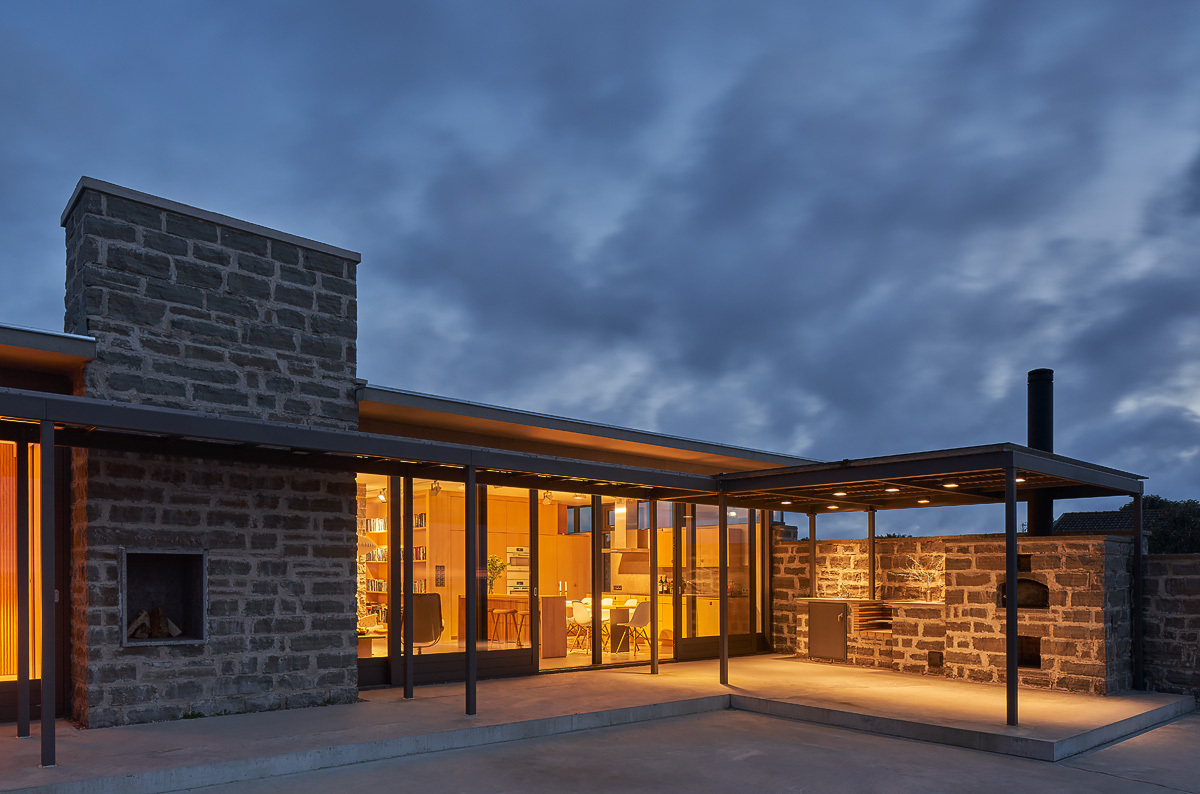
Limestone walls anchor the structure, while extended rooflines provide protection from the coastal weather. Together, these elements handle both exposure to wind and the shifting light conditions across the site.
Open to the Sea and Sky
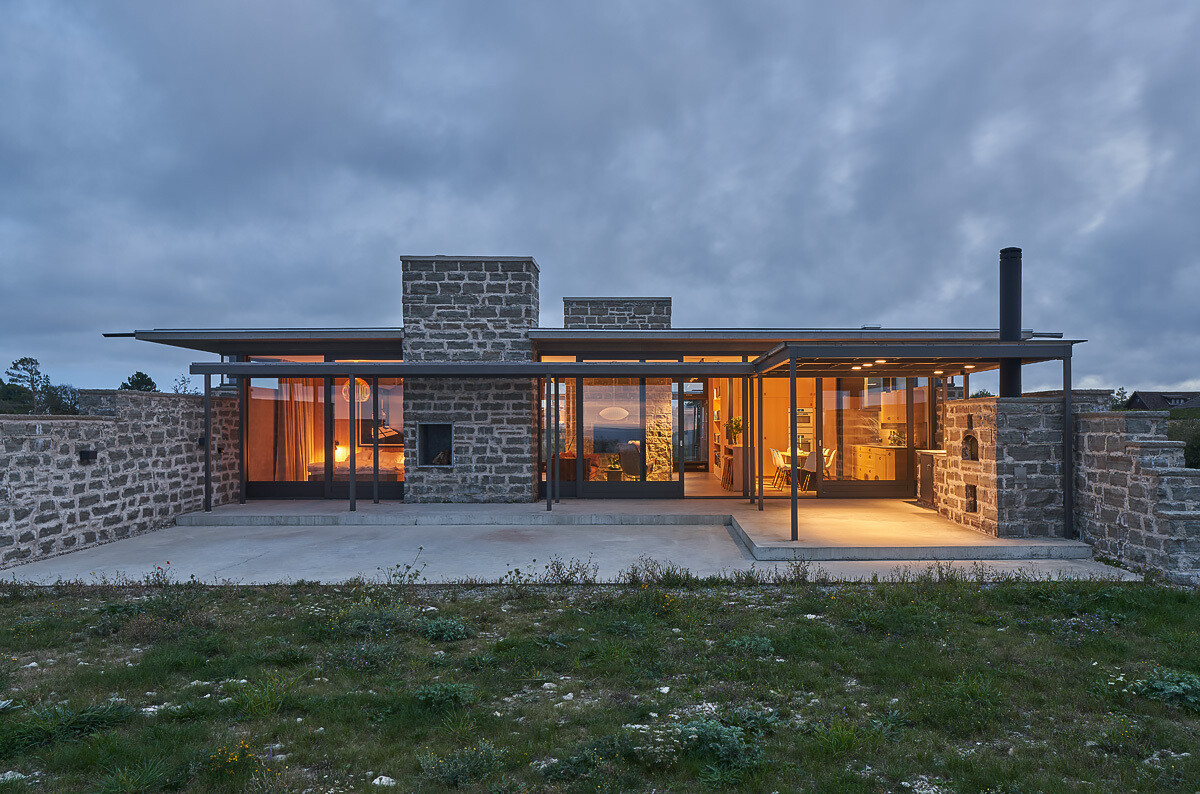
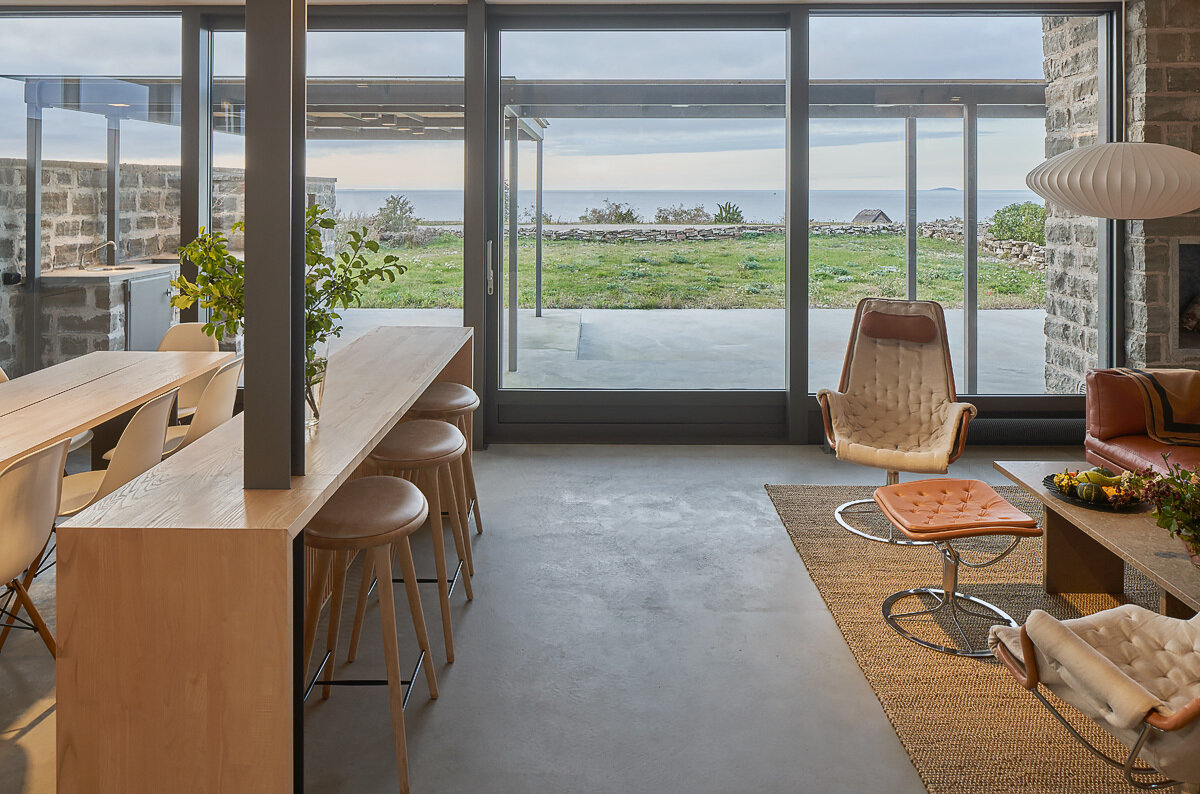
Large glass sections are placed to capture views of the sea and surrounding terrain. These openings pull the outside in, making the changing light and weather part of the interior experience.
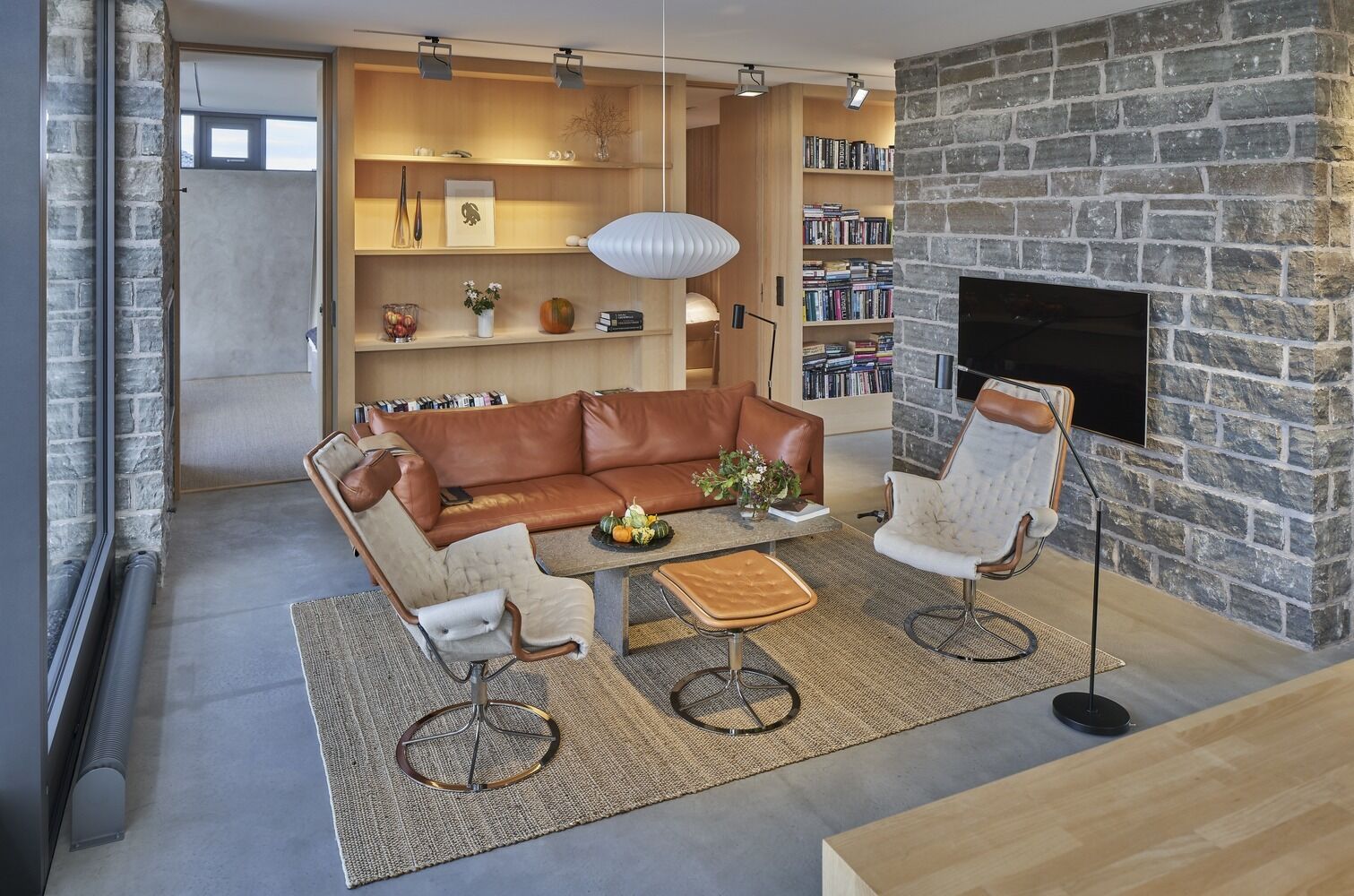
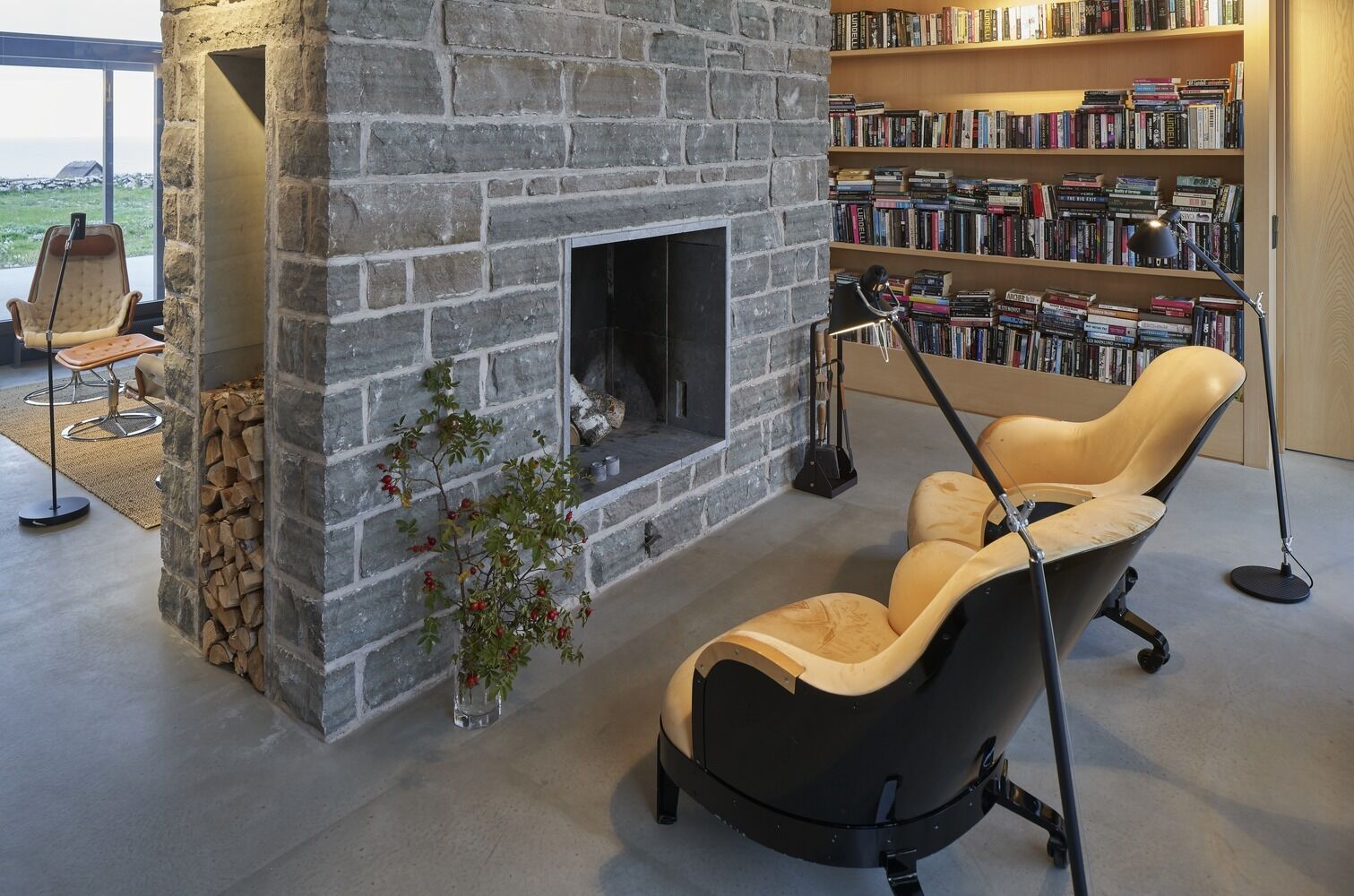
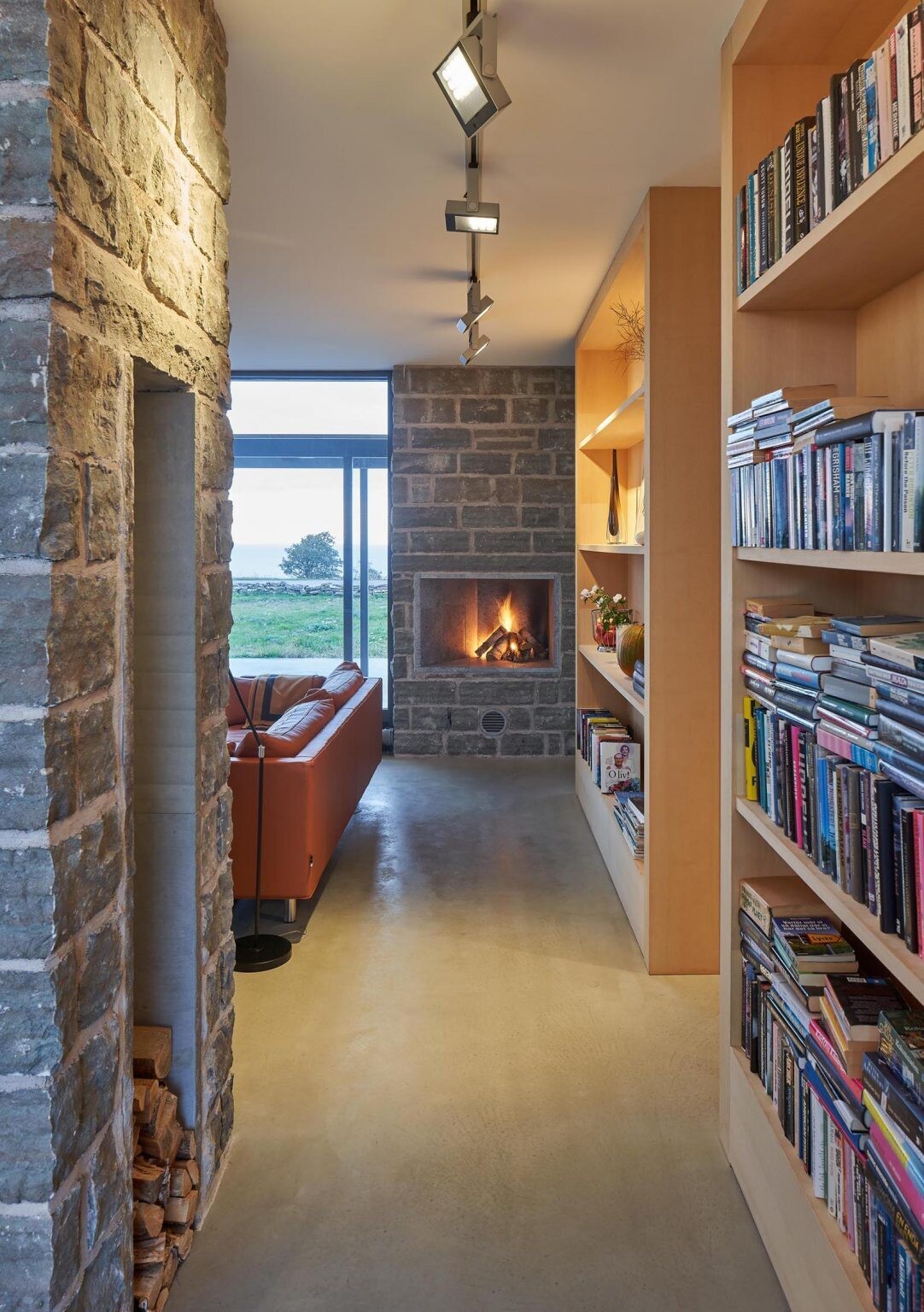
The same limestone used outside continues indoors, forming a central wall that separates the main living room from a smaller sitting area with a fireplace. This transition from exterior to interior feels seamless, with materials carrying through the entire home.
A Social Core Built Around Light
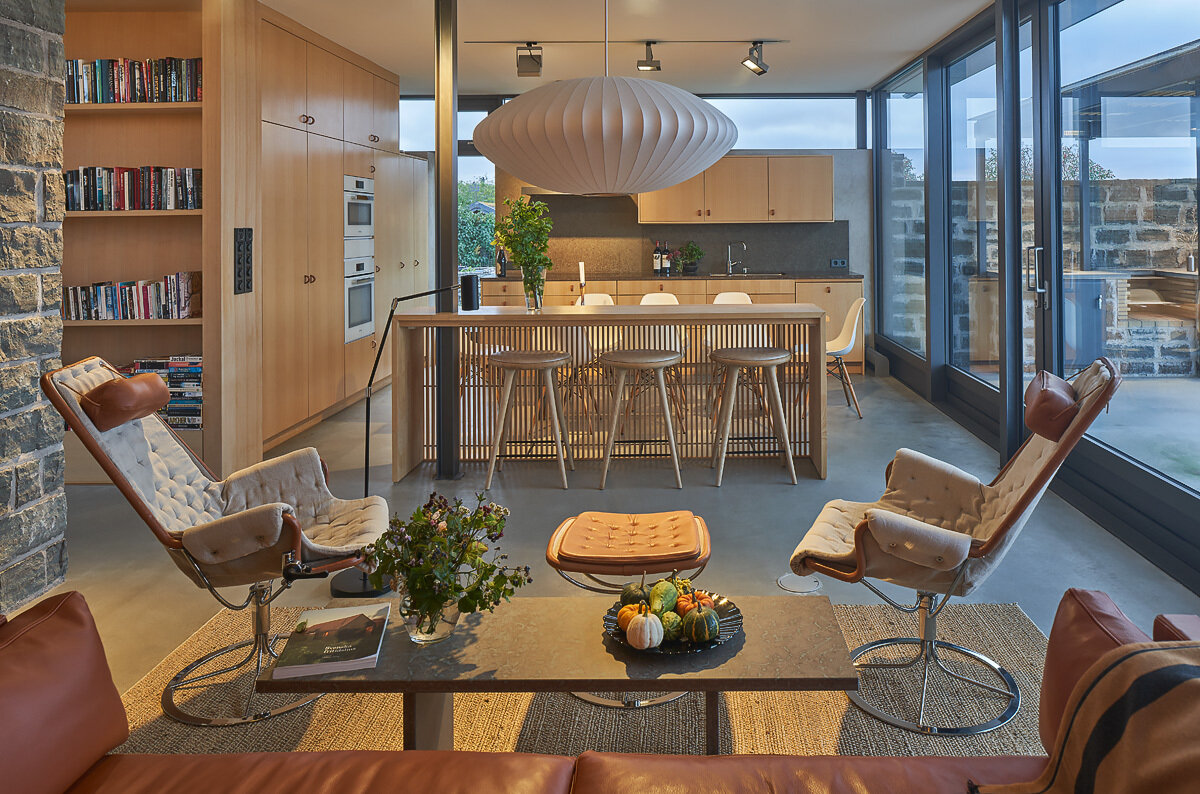
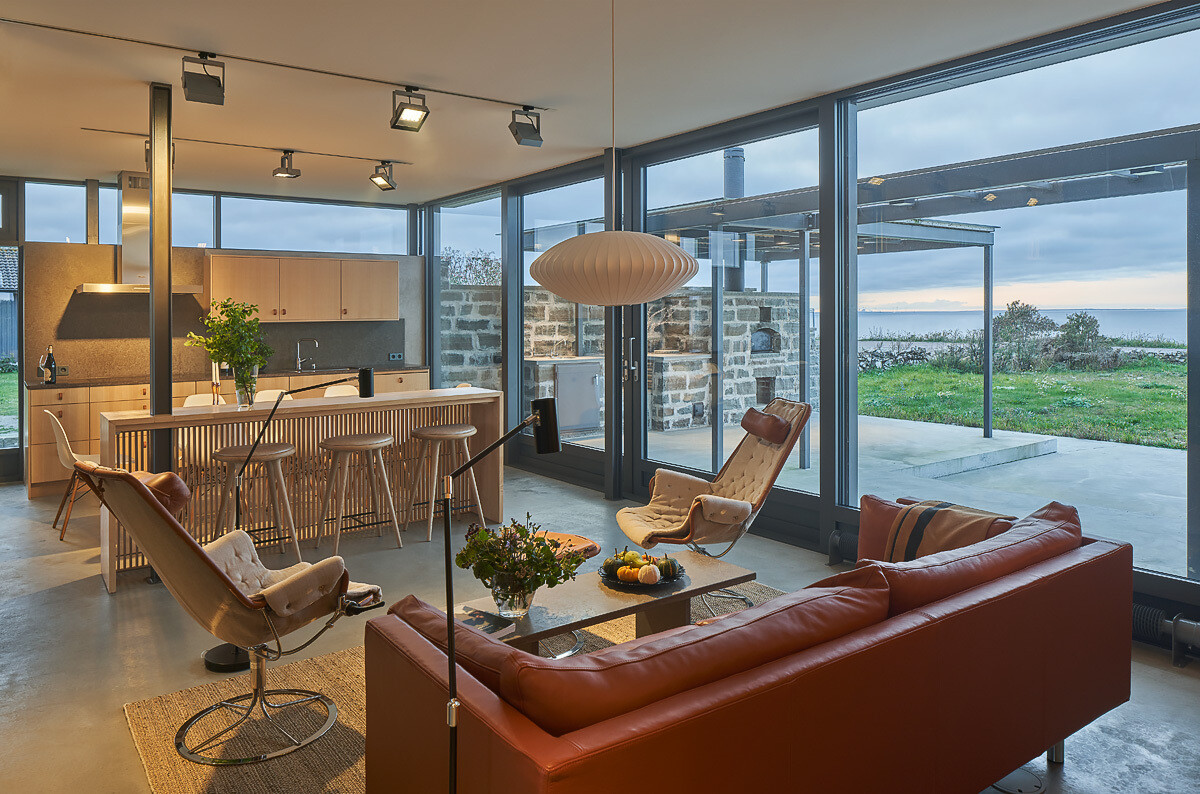
The main living area is organized as an open plan, combining a bar, dining space, and kitchen into one continuous zone. This central space becomes the hub of the home, designed for gathering while staying visually connected to the landscape.
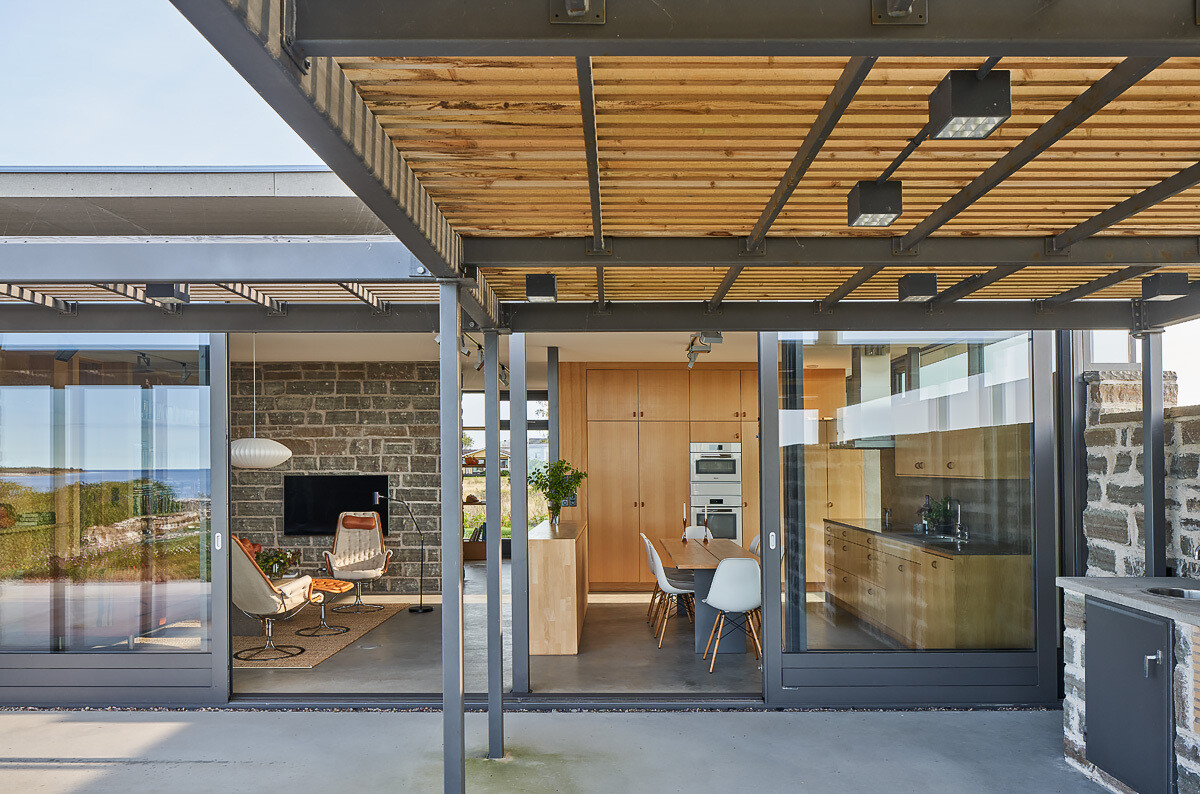
Large sliding glass doors extend this area outward to a terrace overlooking the water. Natural light fills the space throughout the day, shifting as the sun moves.
Extending Living Outdoors
The terrace acts as a second living area. It includes an outdoor kitchen and a fireplace, making it usable beyond just warm summer days. With the sea in view, this space continues the connection between the home and its setting.
Texture Inside
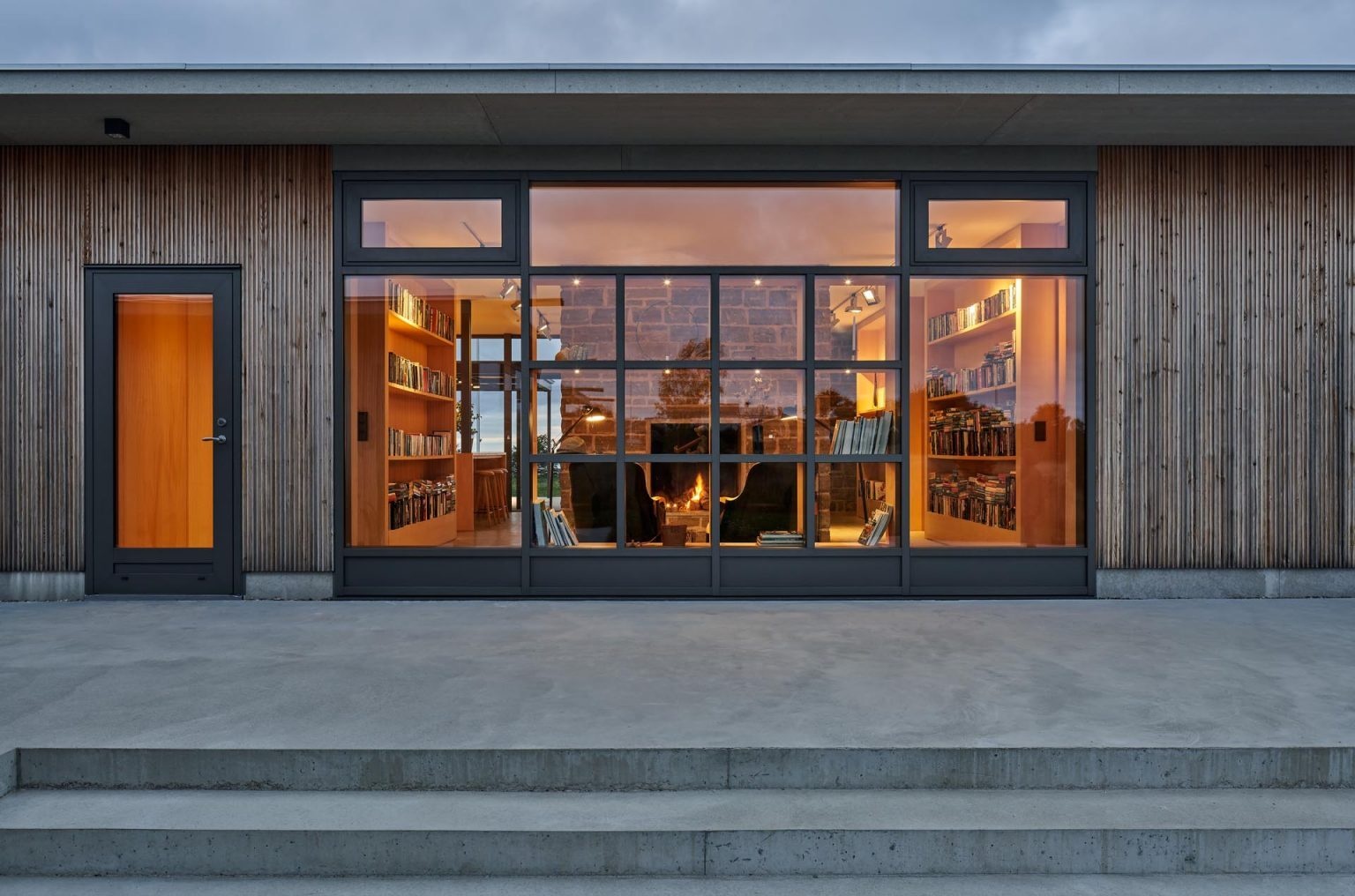
Inside, the palette shifts slightly but remains consistent in tone. Concrete floors add a solid base, while ash wood introduces warmth through built-in elements like floor-to-ceiling bookshelves. These materials balance each other, creating contrast without overwhelming the simplicity of the design.
Compact and Efficient Sleeping Spaces
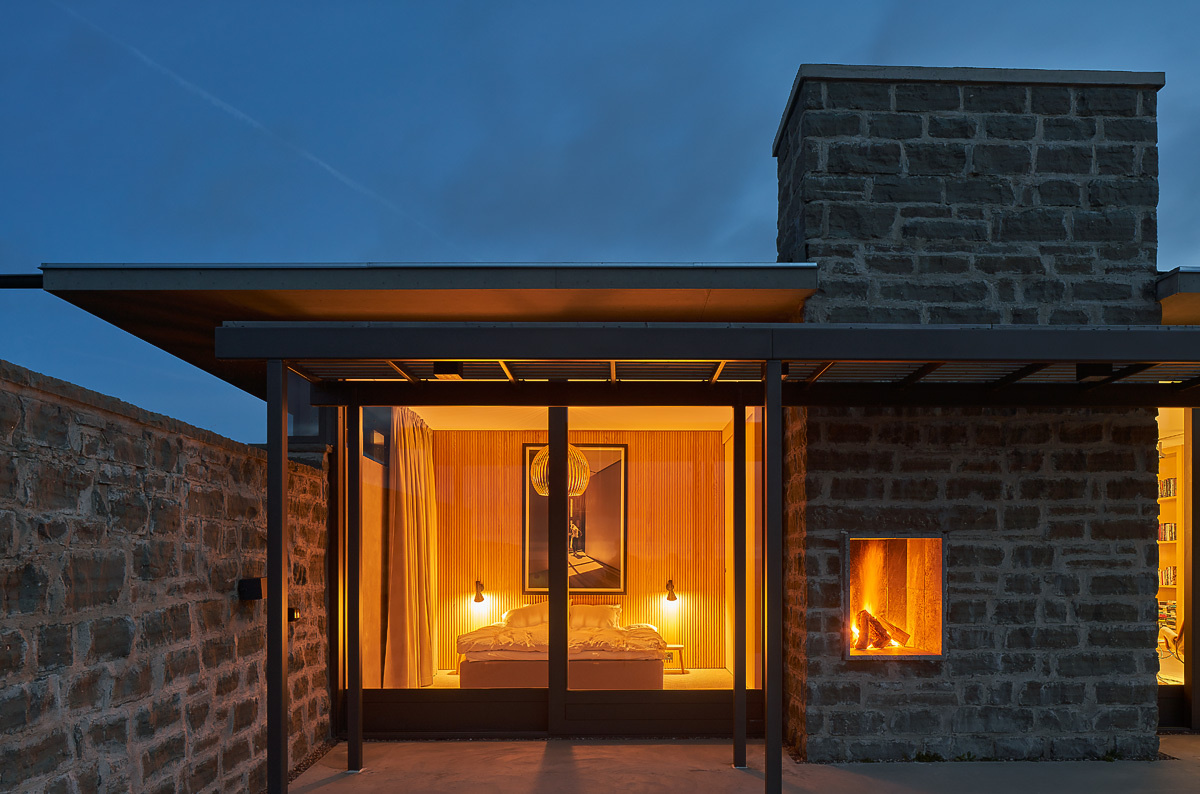
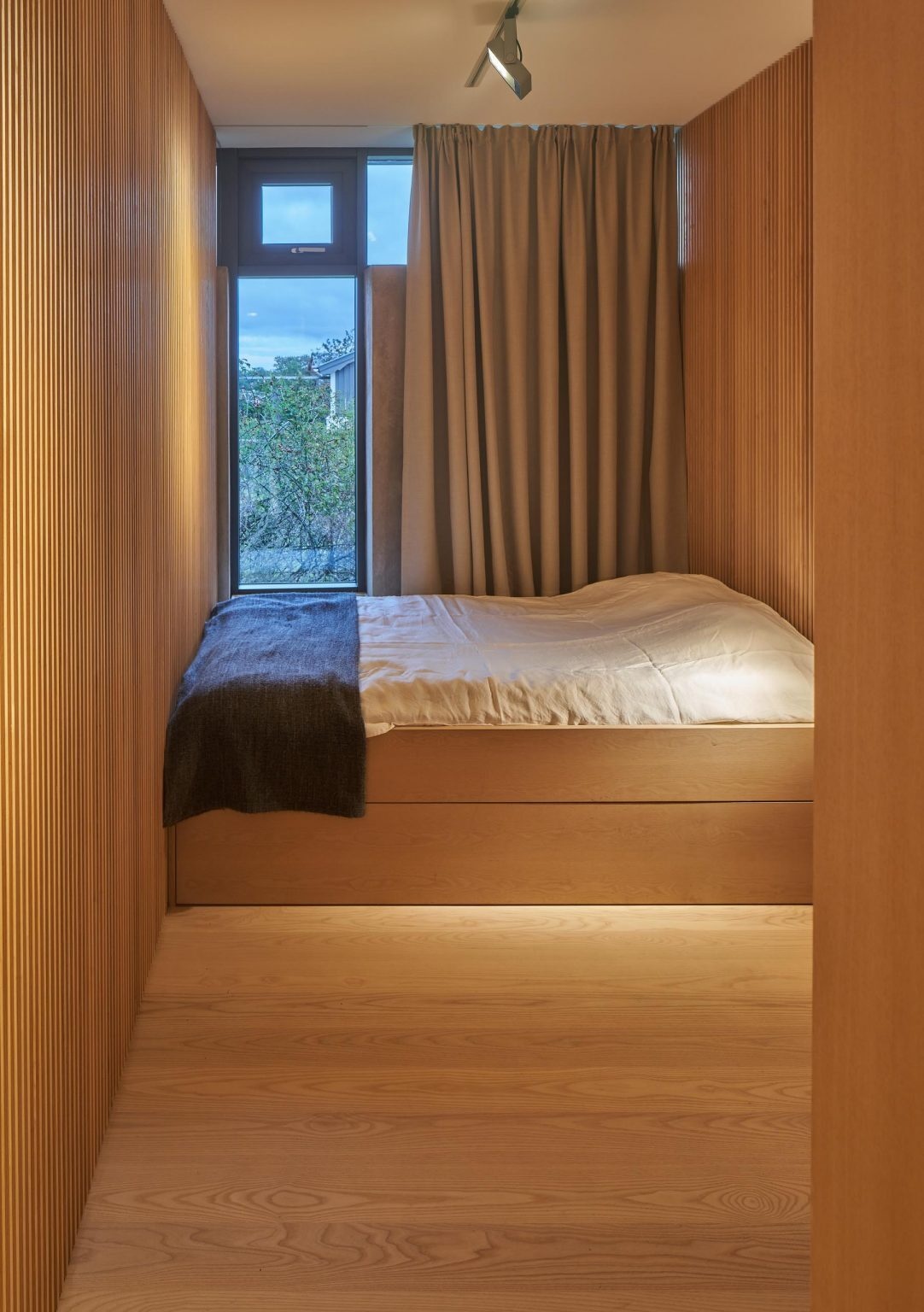
In one of the bedrooms, wood-lined walls and a built-in bed make efficient use of a smaller footprint. The design focuses on function, using integrated elements to maximize space without adding clutter.
A Closer Look at Stone and Wood
The combination of limestone and wood defines the identity of the house. Up close, the textures reveal how these materials work together, one solid and enduring, the other evolving with time.
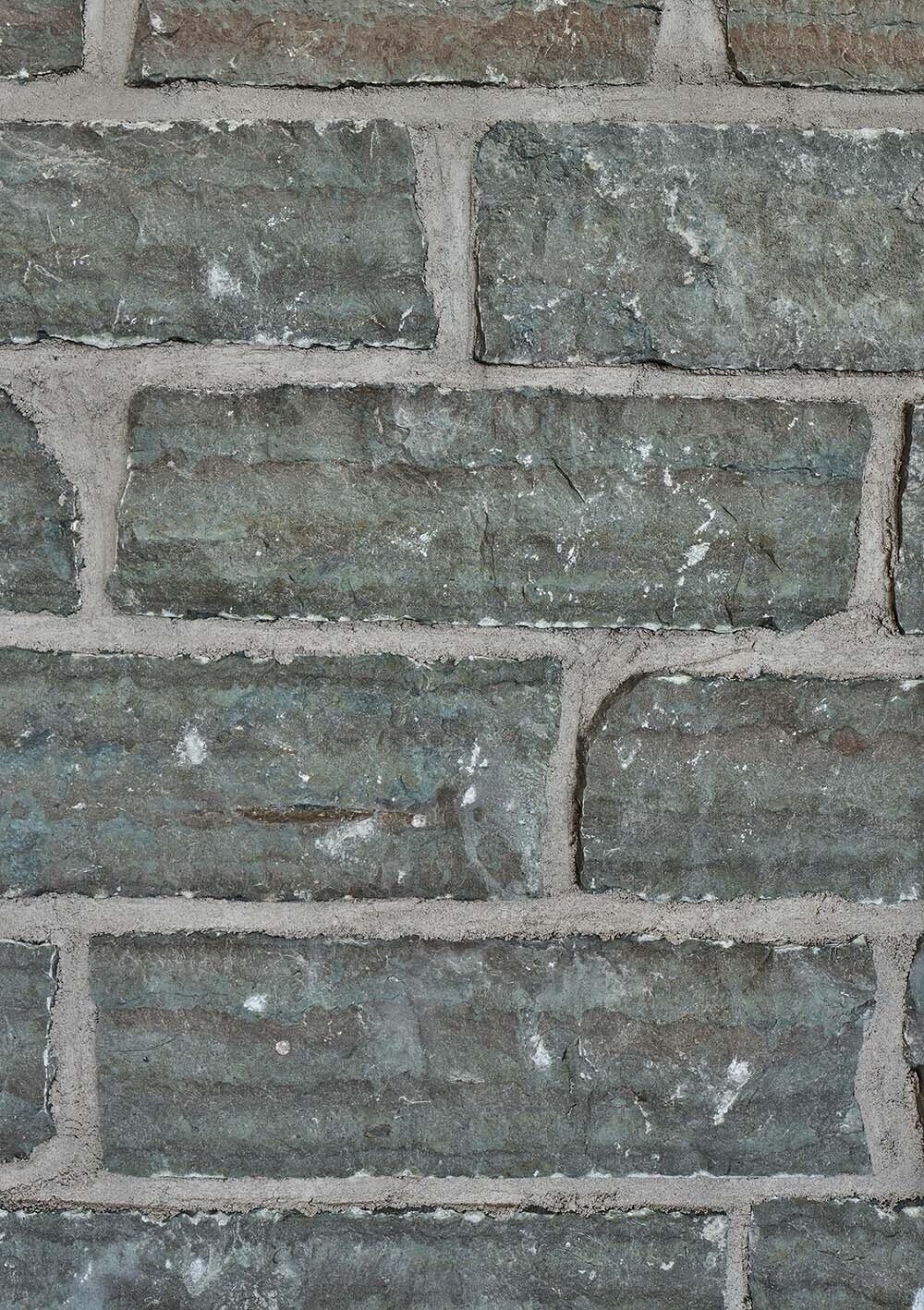
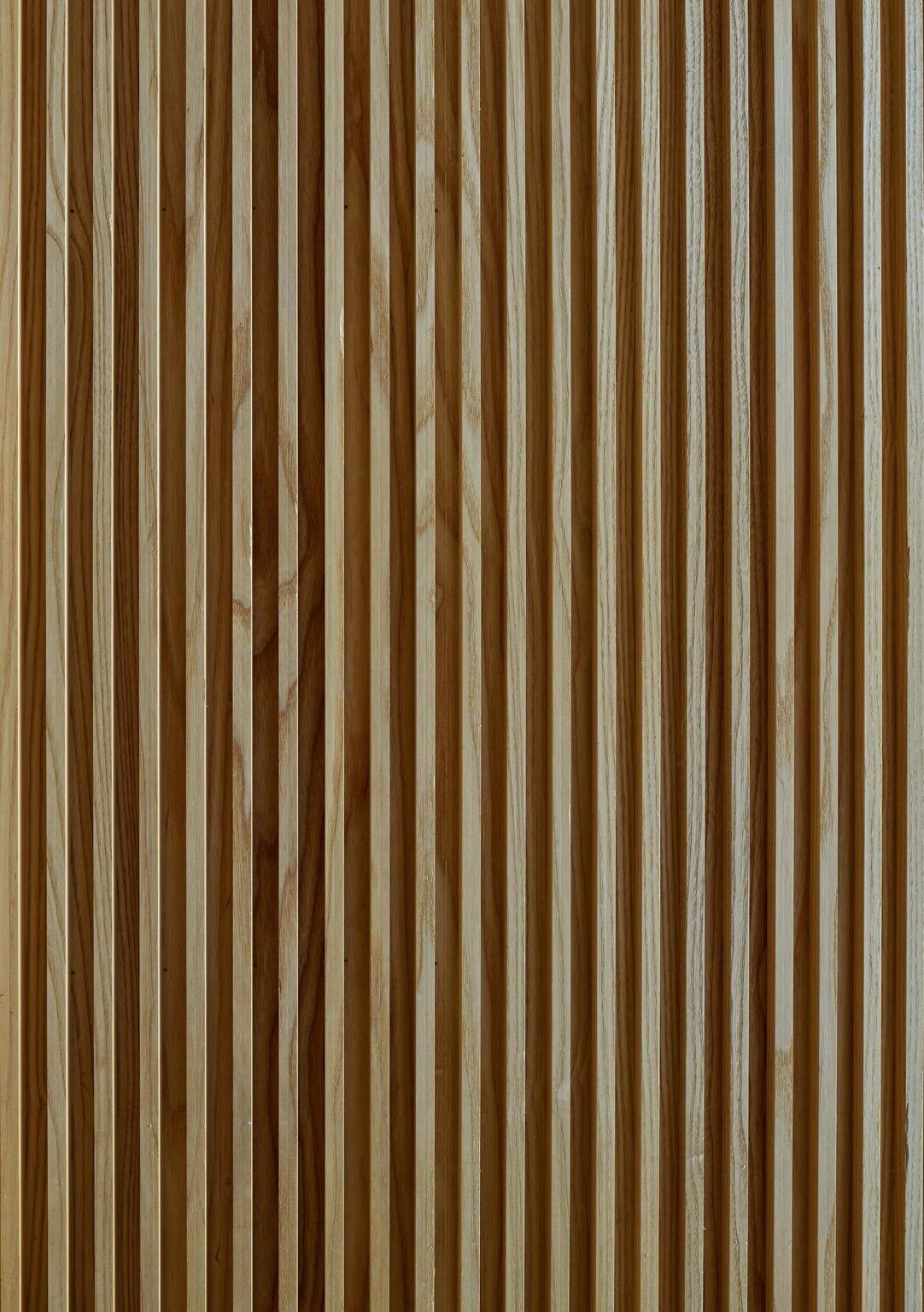
As the seasons shift and the coastal weather leaves its mark, the house continues to evolve. The wood slowly fades to grey, the limestone holds its texture, and the light moves differently through the glass from morning to evening.