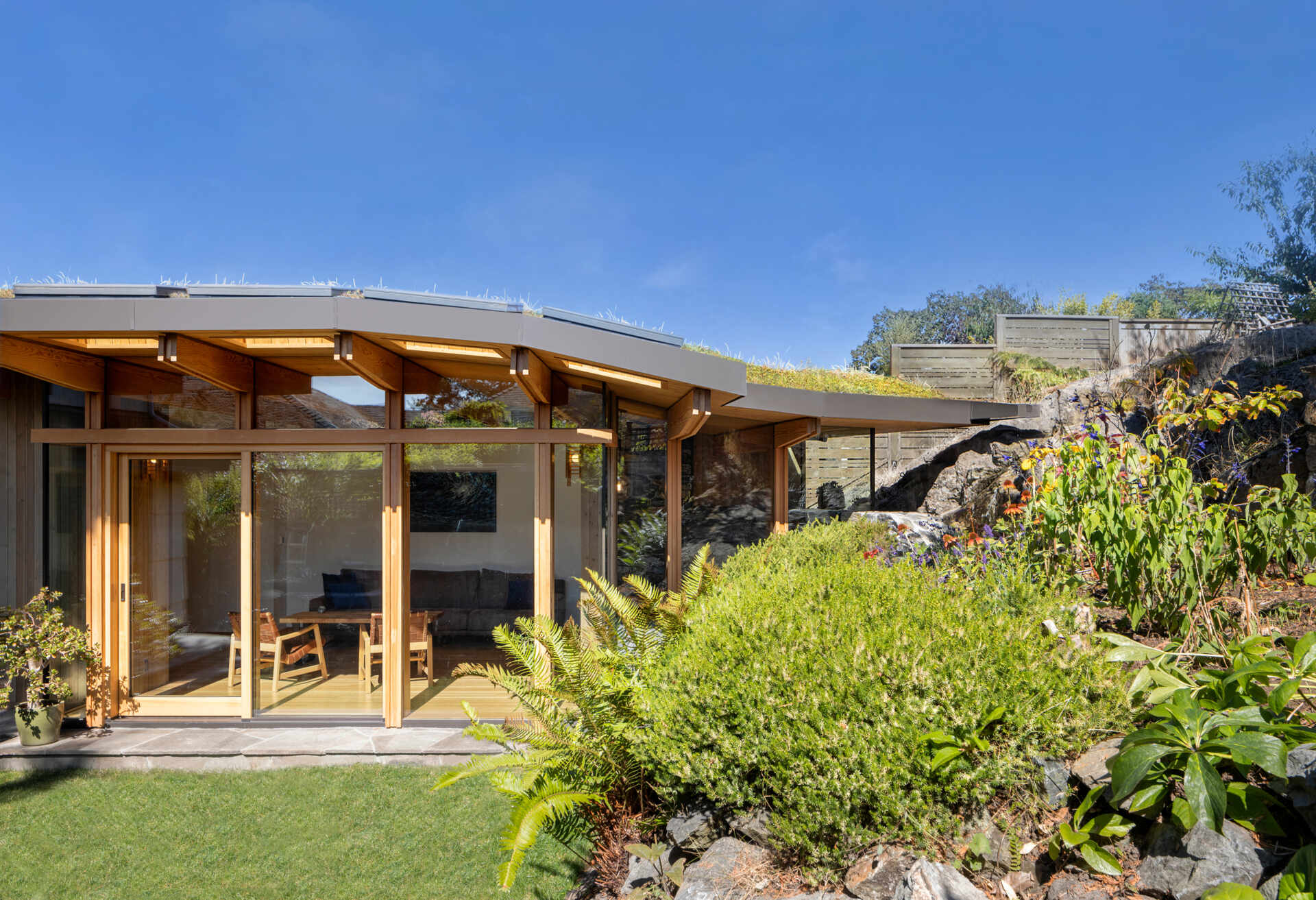
The project did not begin with drawings or dimensions. It began with a rock. Behind a home in Victoria, Canada, a massive bedrock outcrop shaped how rain sounded, how children played, and how the family experienced their backyard.
When the couple approached Greenway Studio Architecture about a sunroom and home office, the conversation stayed fixed on that rock. Avoiding it was impossible. Removing it was unthinkable. The only option was to build in a way that belonged to it. That decision set the tone for everything that followed.
From the first sketches, the addition was conceived as something that would become part of the outcrop itself. Architect and clients drew together, testing ideas that treated the rock as collaborator rather than obstacle. As the concept developed, the project earned its name. The Grotto.
A space shaped by enclosure, mass, and the feeling of being held by stone. The idea was not to place a structure beside the rock, but to let the rock define the structure.
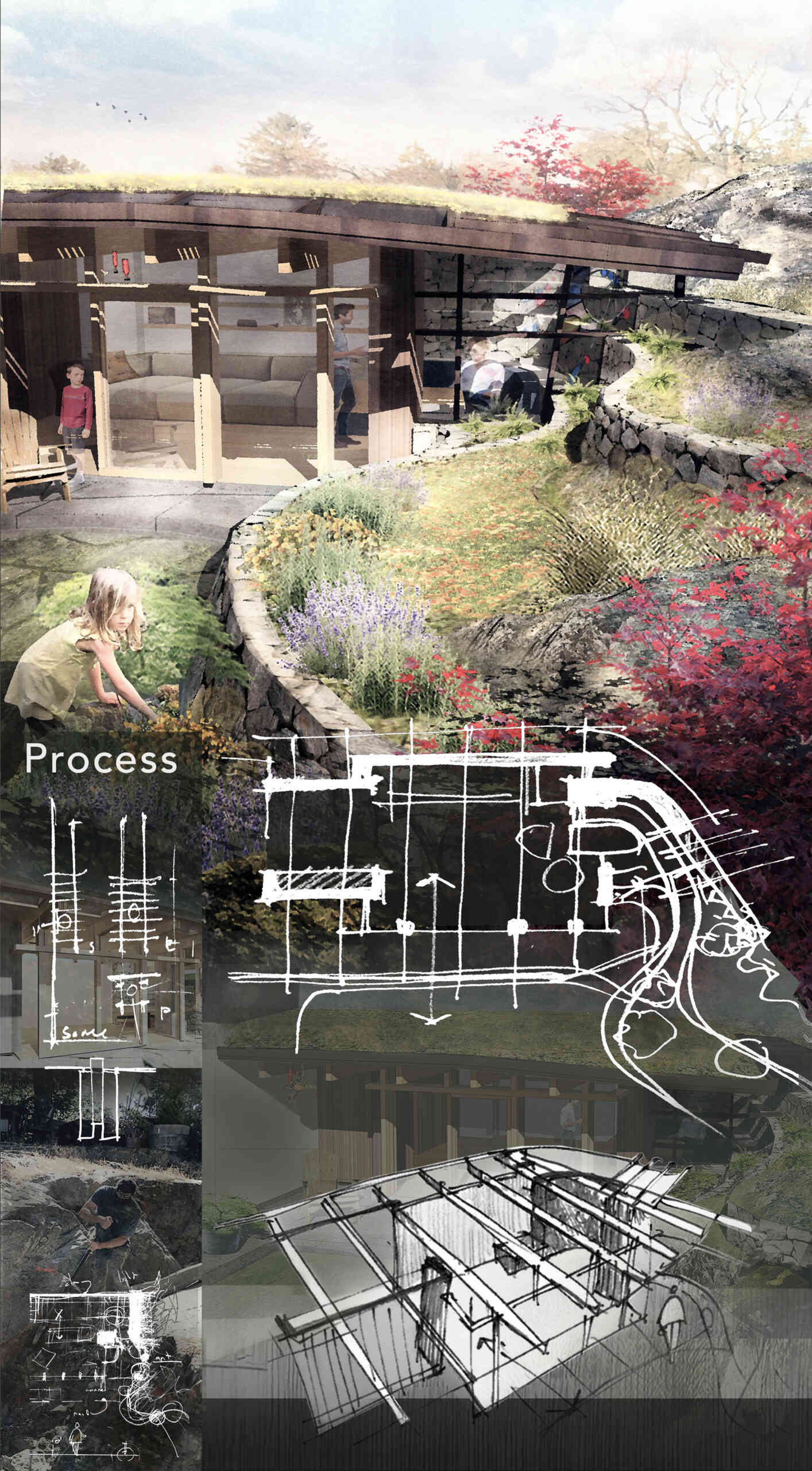
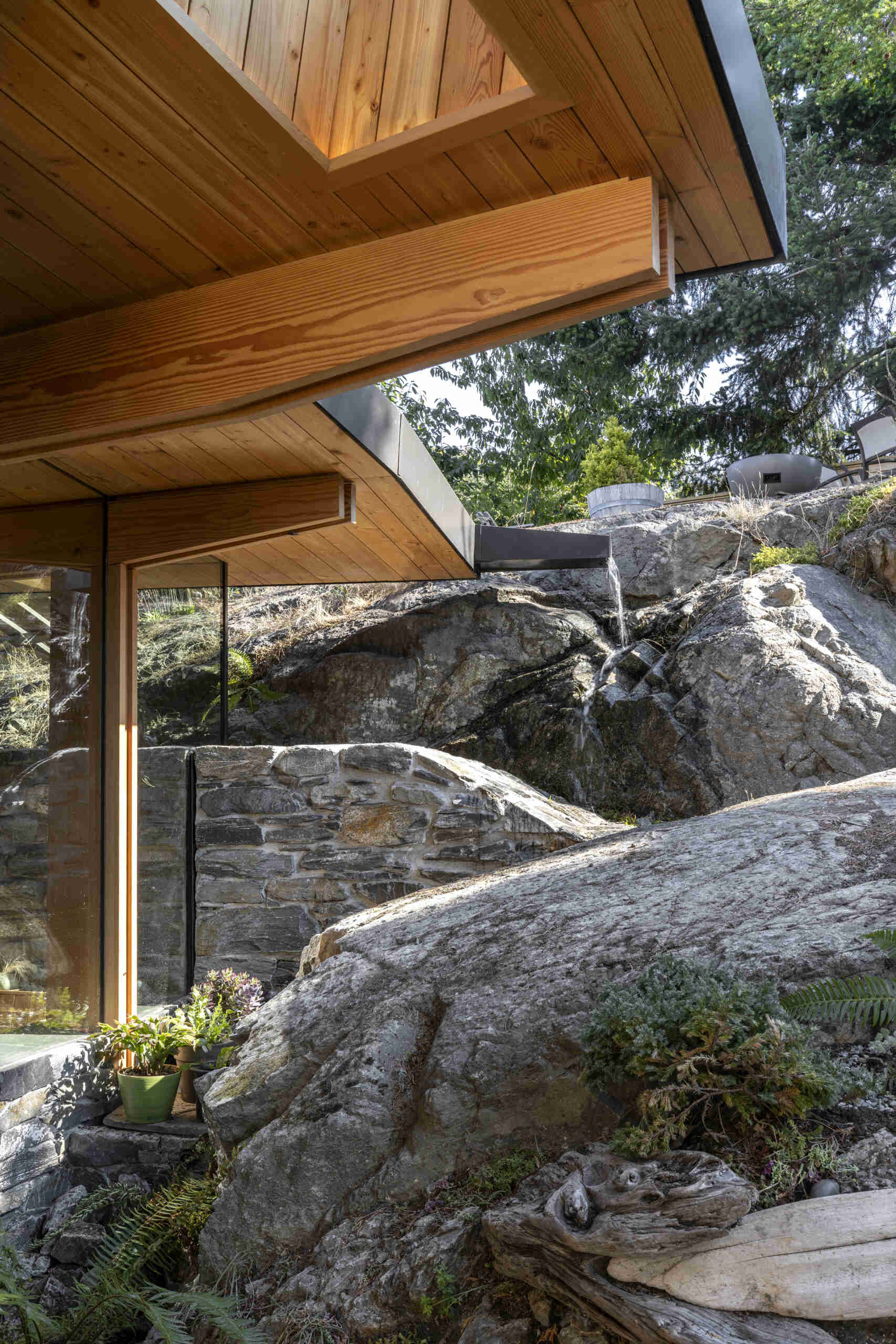
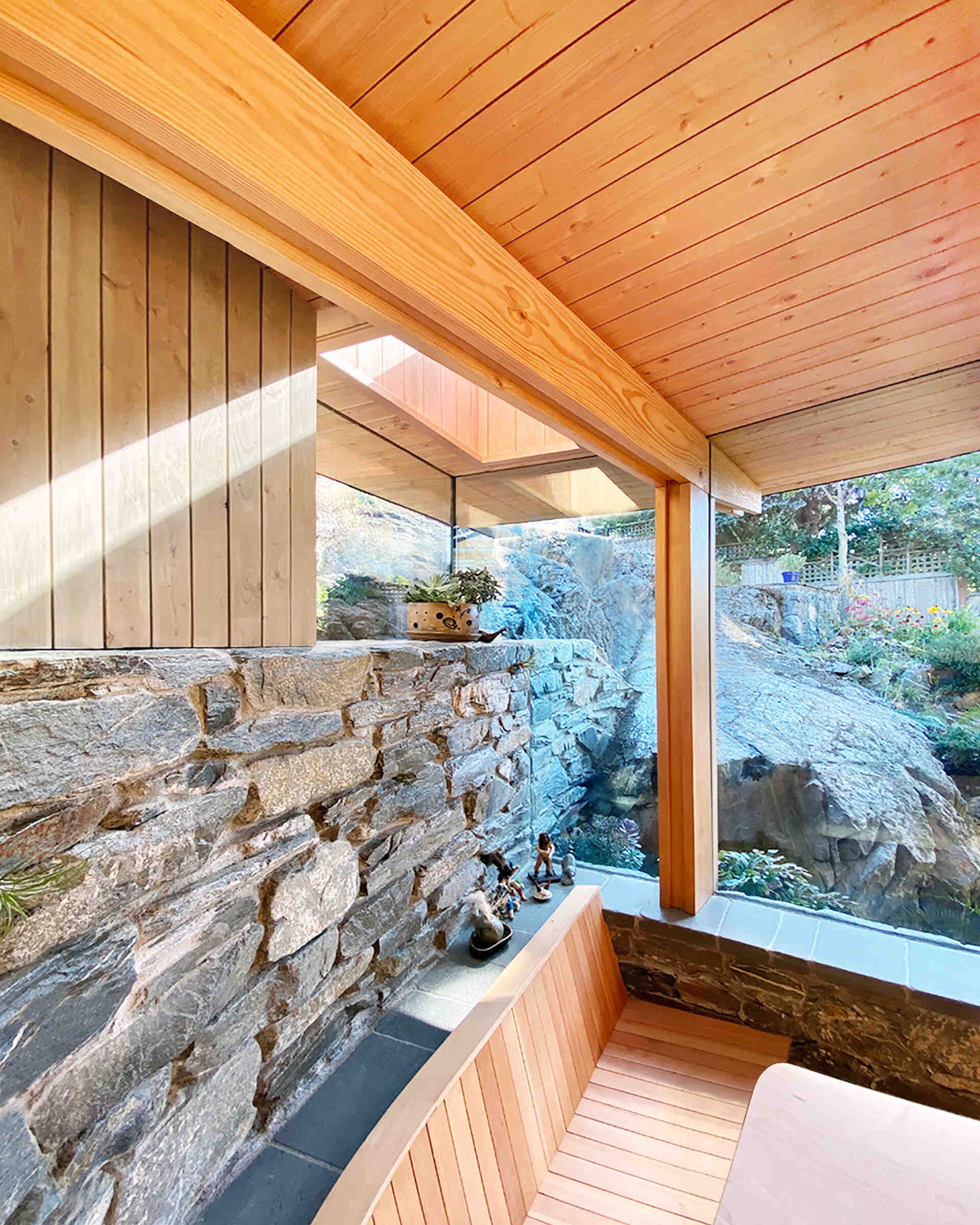
The architectural process began with subtraction. Loose sections of stone around the main fold of the outcrop were carefully removed to create a foothold where the building could mesh into the landscape. Stone taken from the site was reshaped into a curving wall that rises directly from the fold of the rock.
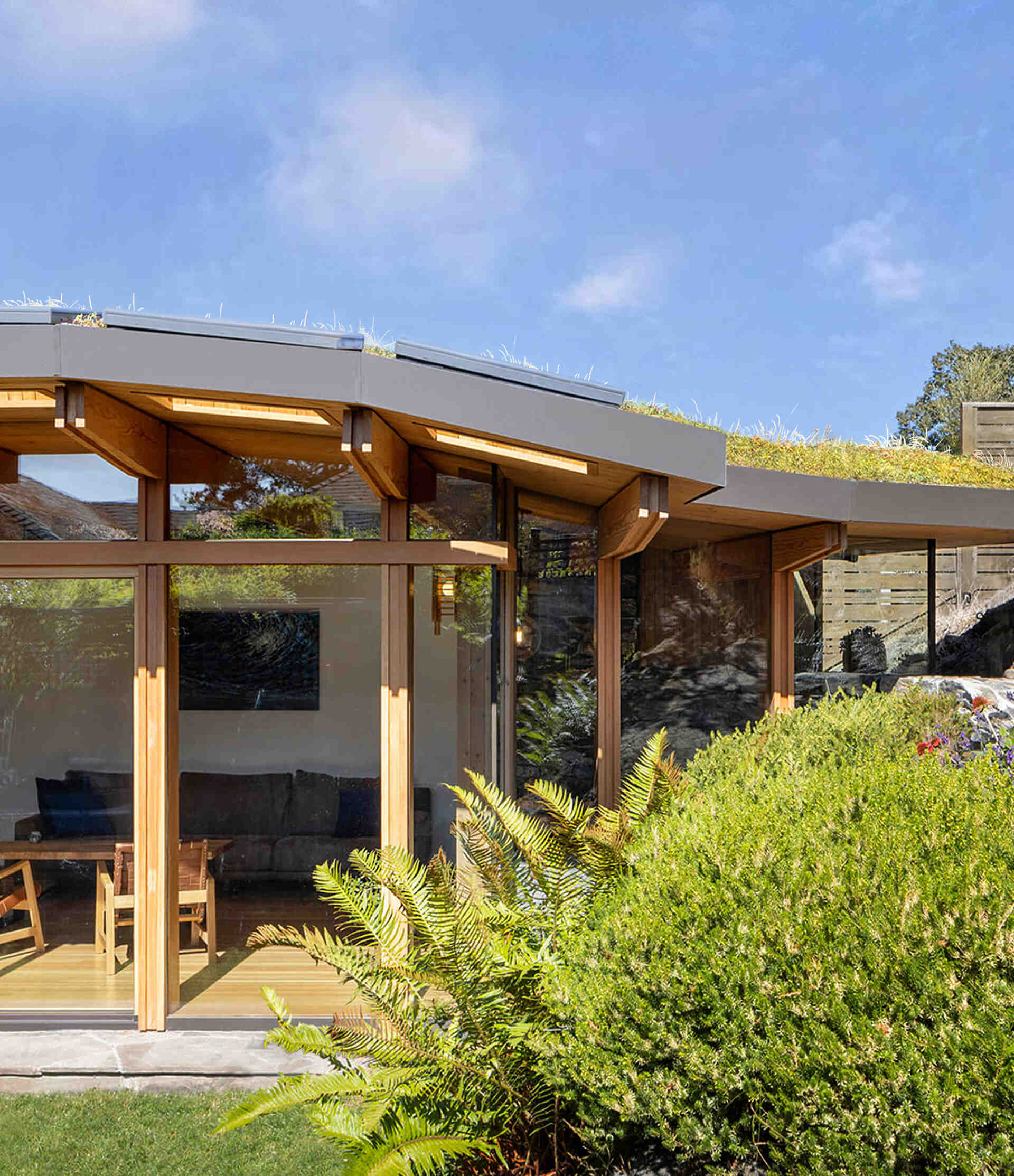
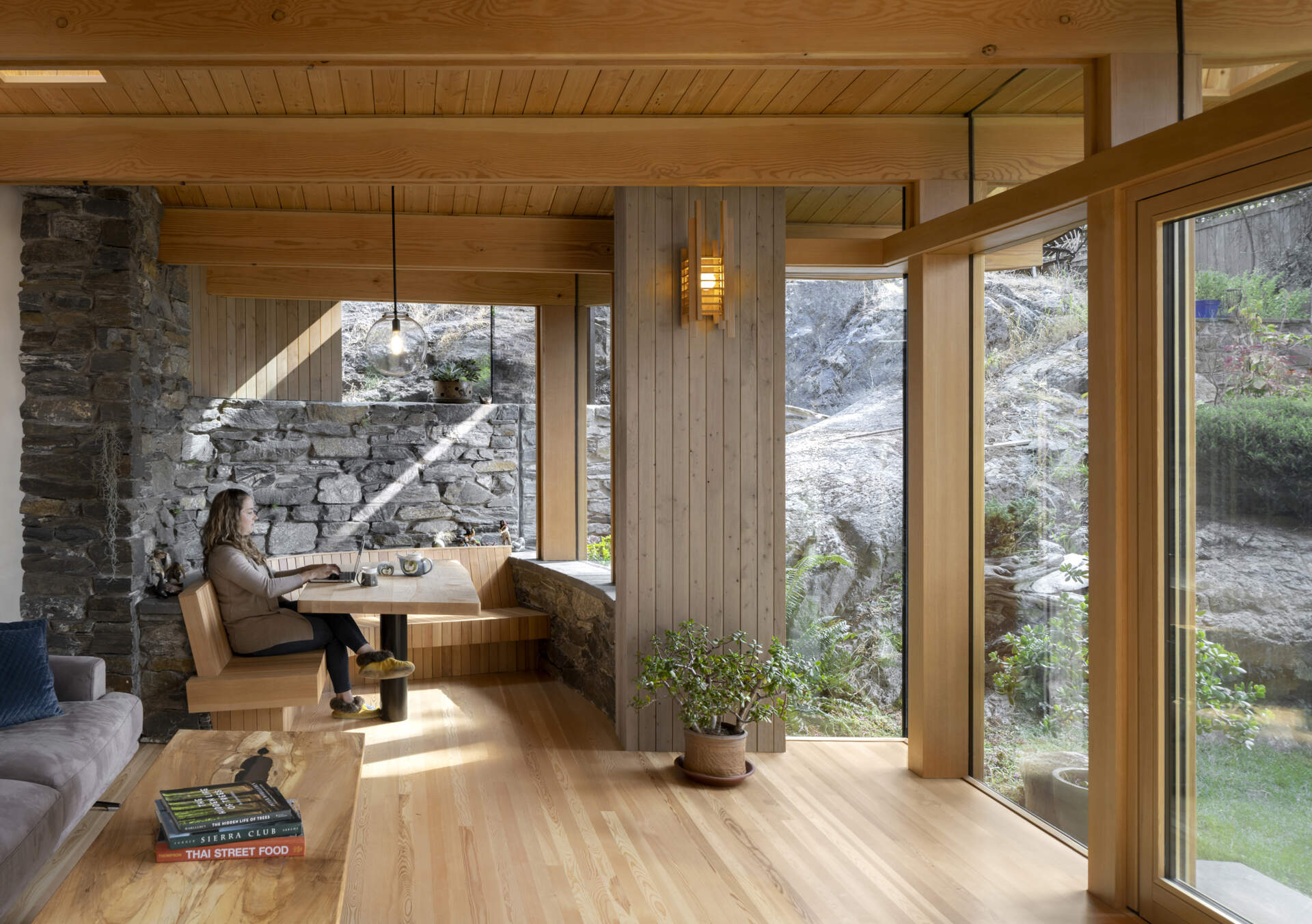
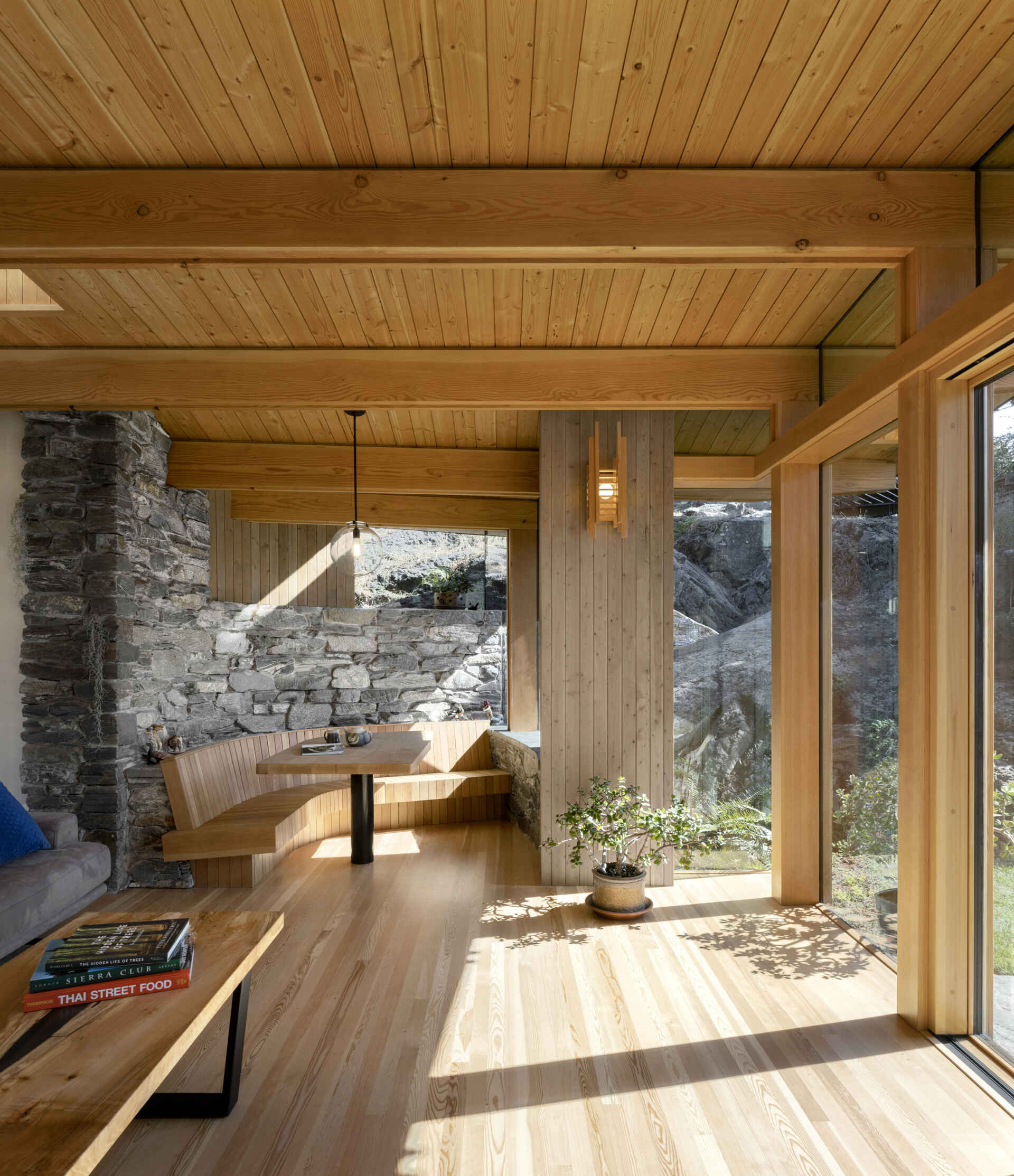
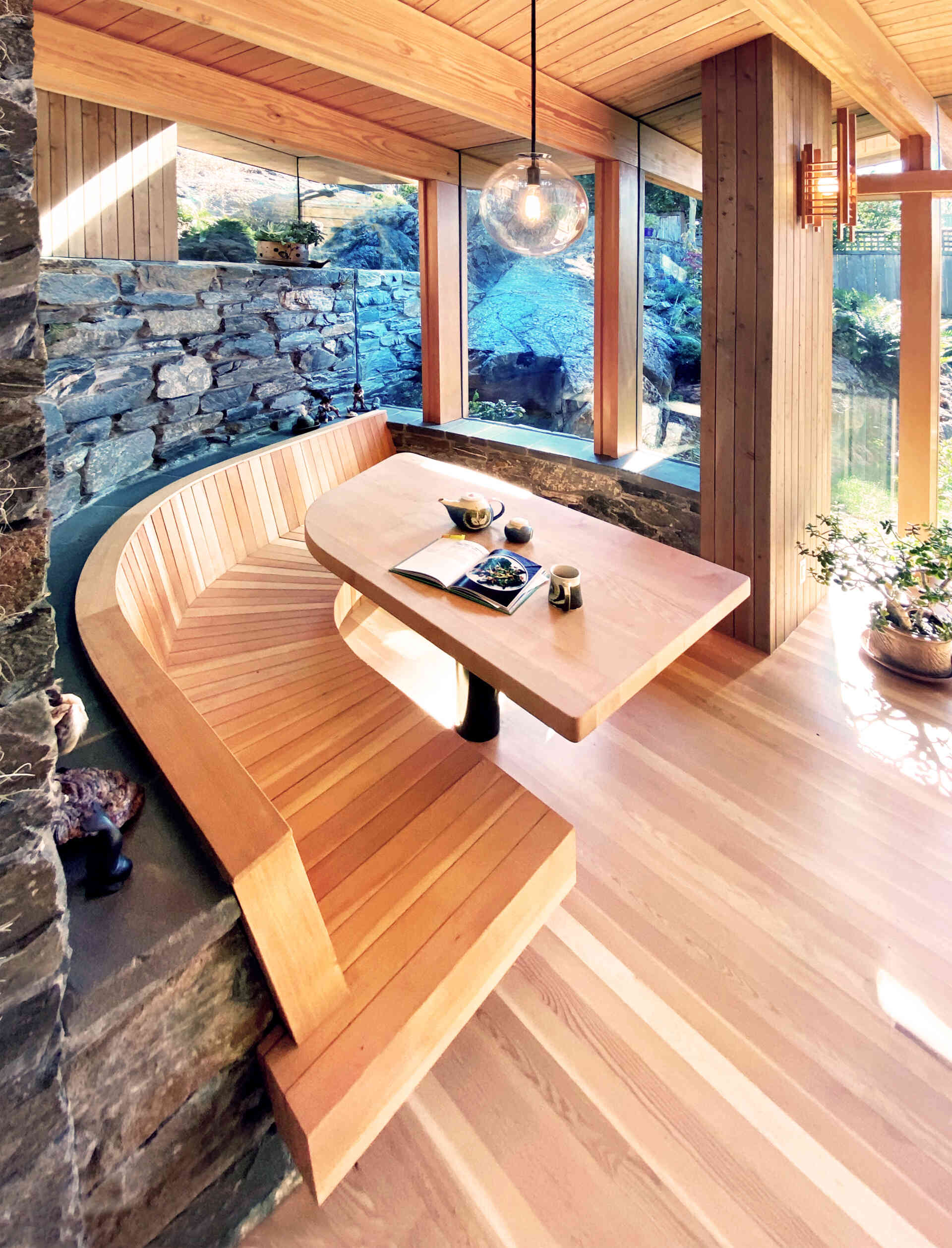
This wall embraces the work at home area and visually anchors the addition to its setting. Its mass supports and roots a flowing wood post and beam roof structure, tying architecture and landscape together.
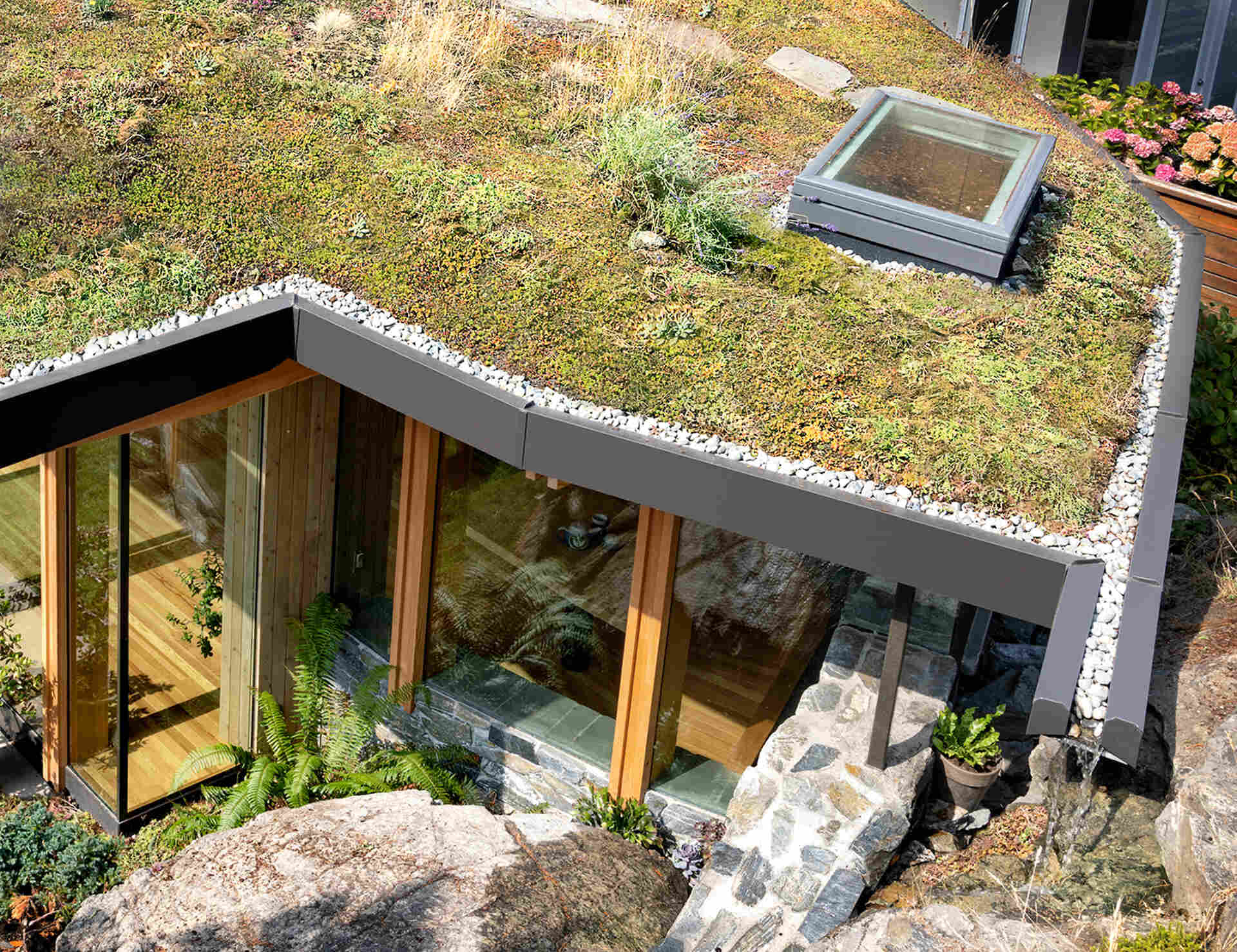
Above, the roof hosts an ecosystem rather than a conventional surface. Native plants were collected by the couple, their children, and neighbours, then planted alongside locally sourced materials. Heavier sedum mats were installed as part of the system, allowing the family to complete the planting themselves.
The roof reflects a balance between professional construction and hands on participation, an approach the architects have since adopted on other projects.
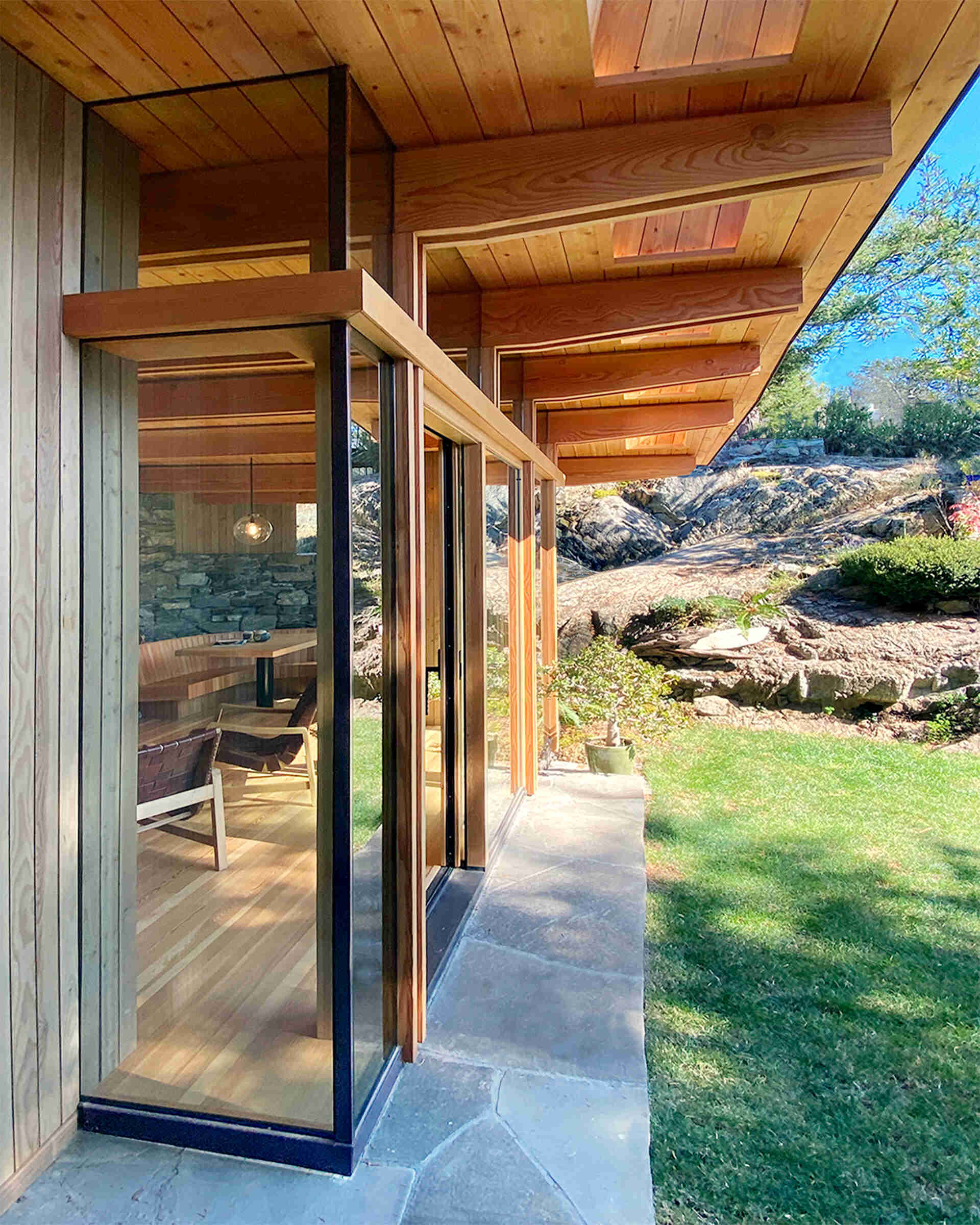
Timbers for the post and beam structure were sourced from the Island, reinforcing the local material palette, while passive solar overhangs were designed to regulate temperature, keeping the space cool in summer and warm in winter.
High insulation values throughout the roof, floor, and walls, along with triple glazing, ensure comfort across seasons. Seamless glass details intersect cleanly with the stone wall, allowing uninterrupted views into the surrounding landscape while meeting the thermal demands of coastal British Columbia.
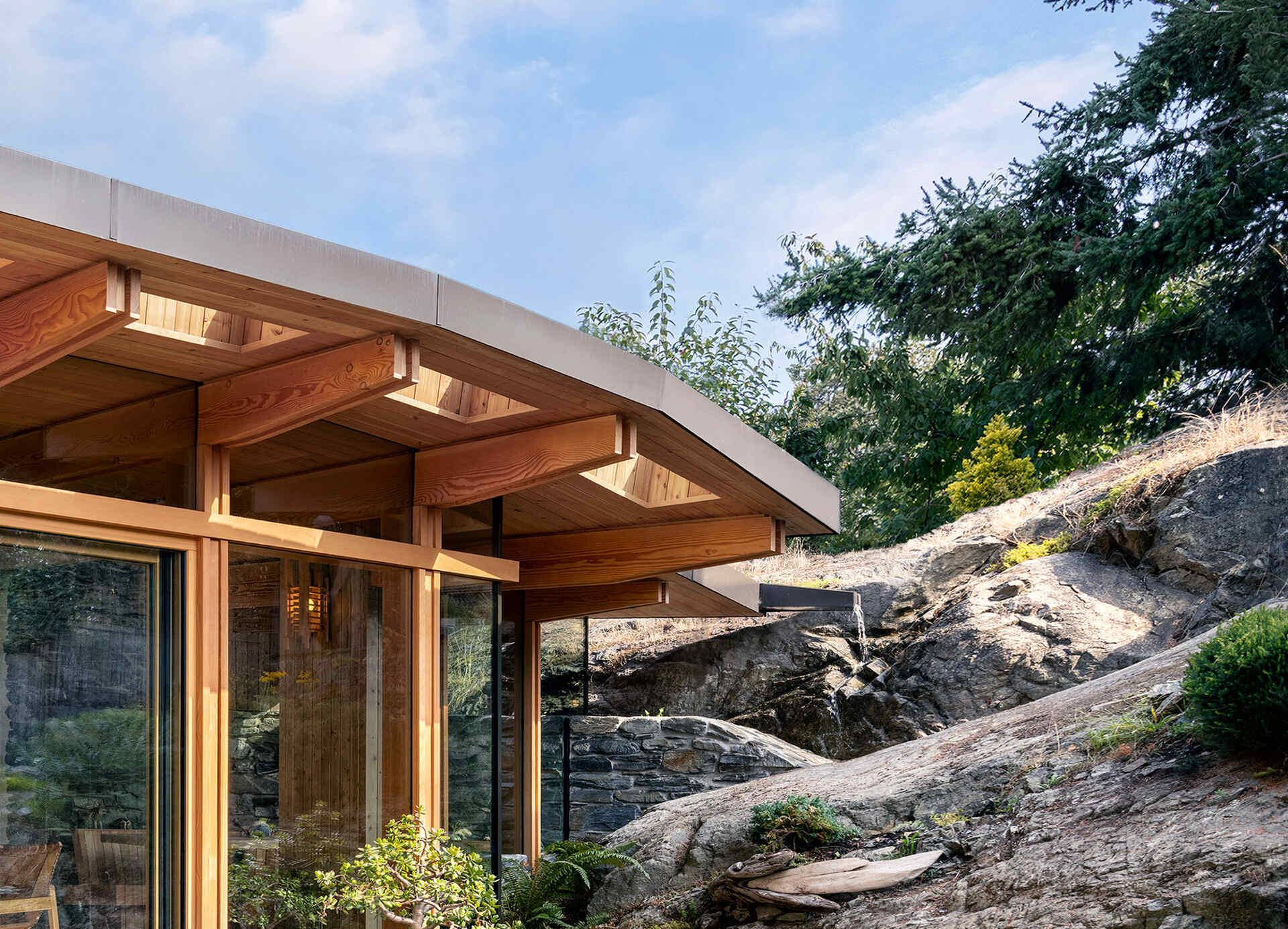
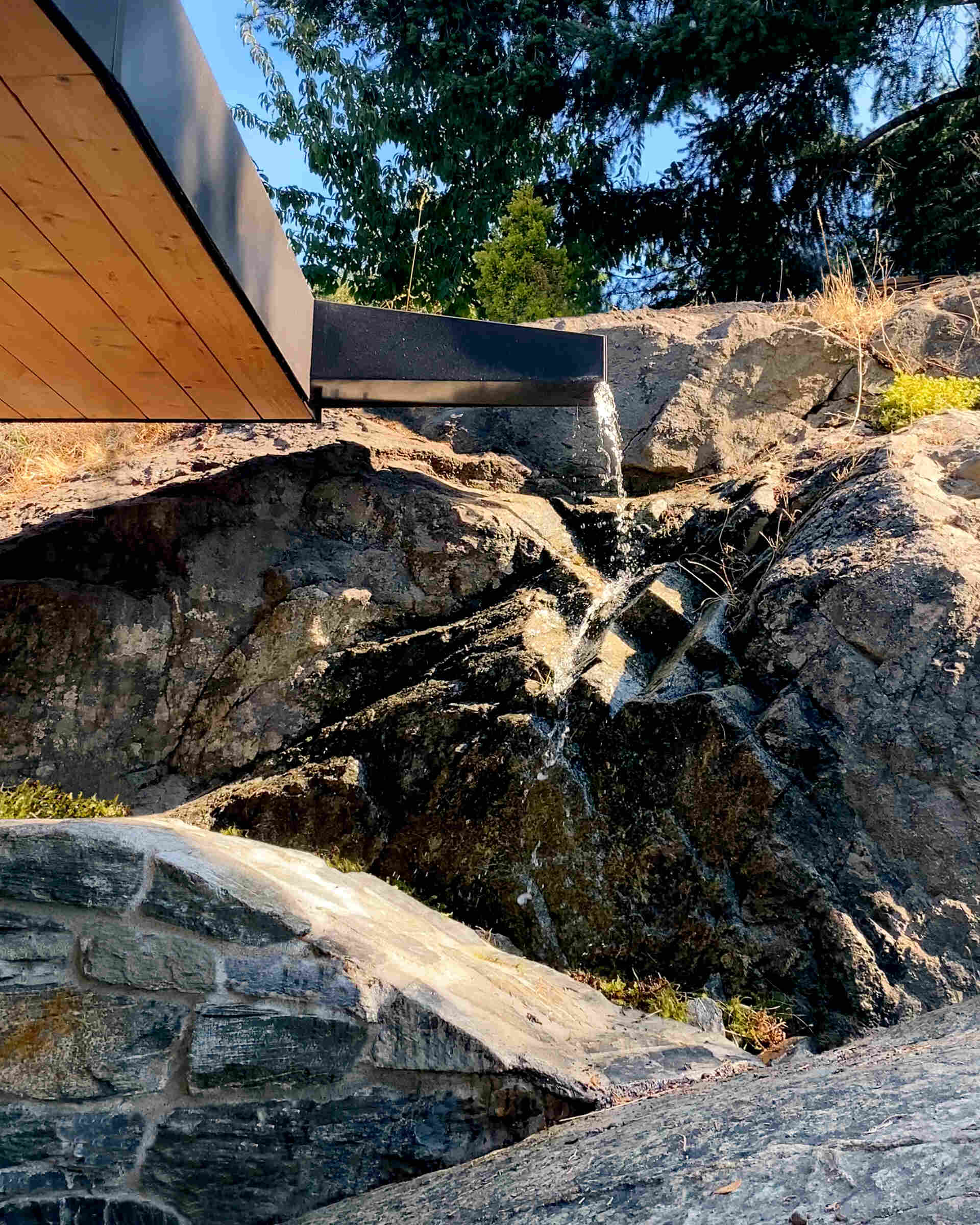
Rain plays an active role in the experience of the space. Water running off the roof splashes onto the rock at a precise point, amplifying the sounds the family had loved long before the addition existed. Later, the idea emerged to collect and recycle this water back onto the roof. This allows the sound of falling water to continue even during drier summer months.
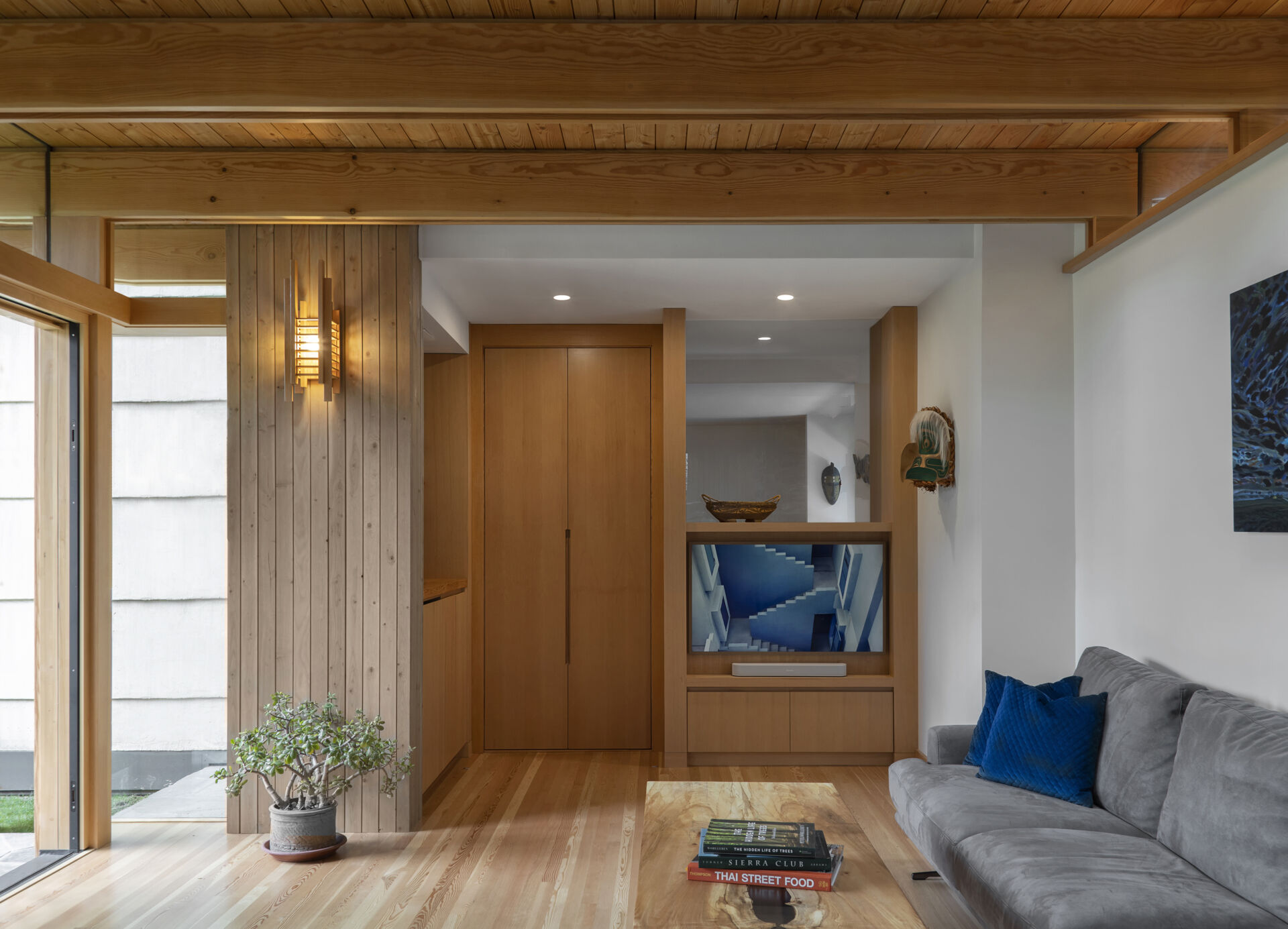
Inside, the stone wall becomes a backdrop for daily life and work. Reflected daylight warms faces during virtual meetings, while the textured surface provides visual calm. Reclaimed wood flooring from a demolished warehouse adds history and material depth beneathfoot. First Nations and African artwork, along with objects made by the children, inhabit the space without overwhelming it.
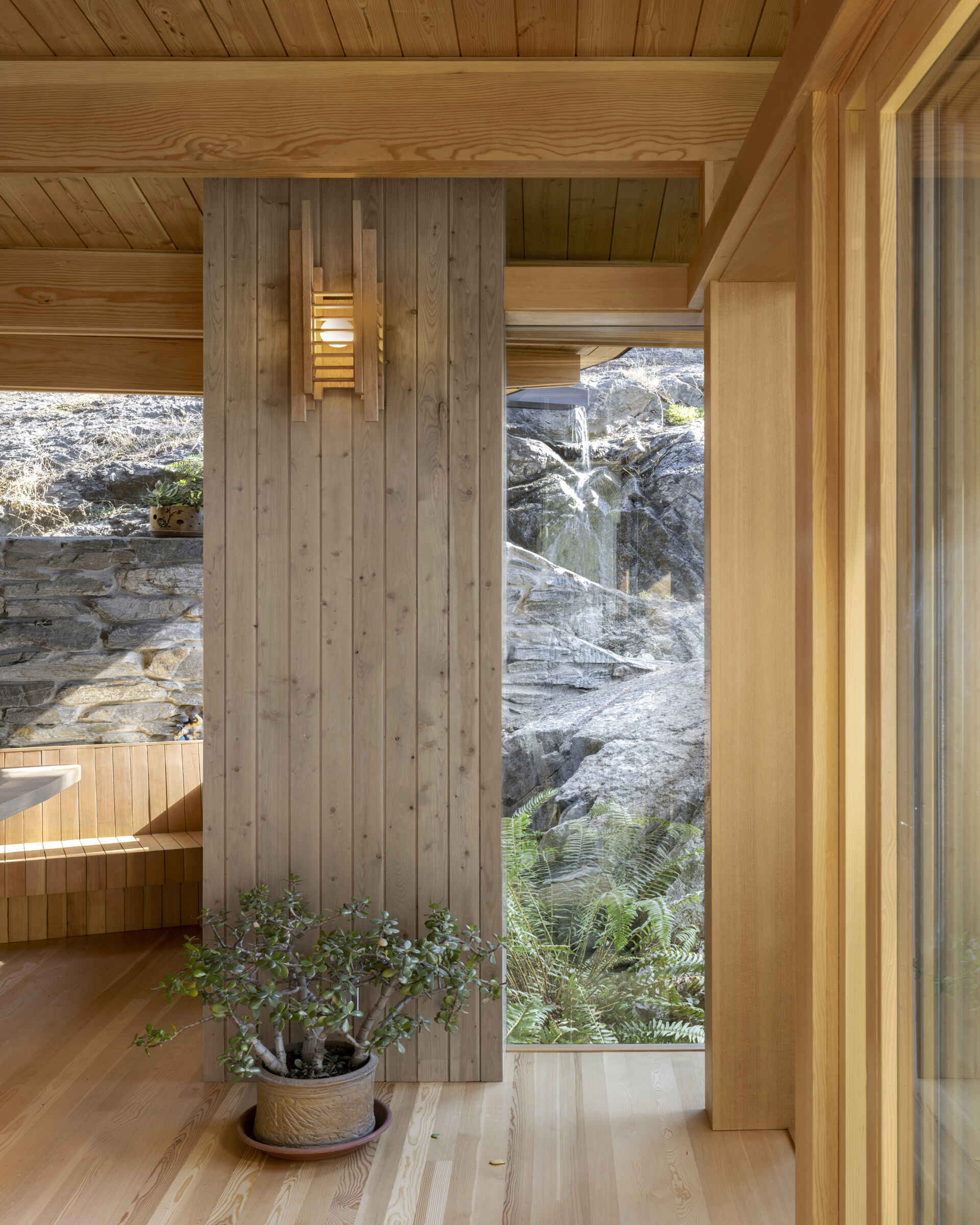
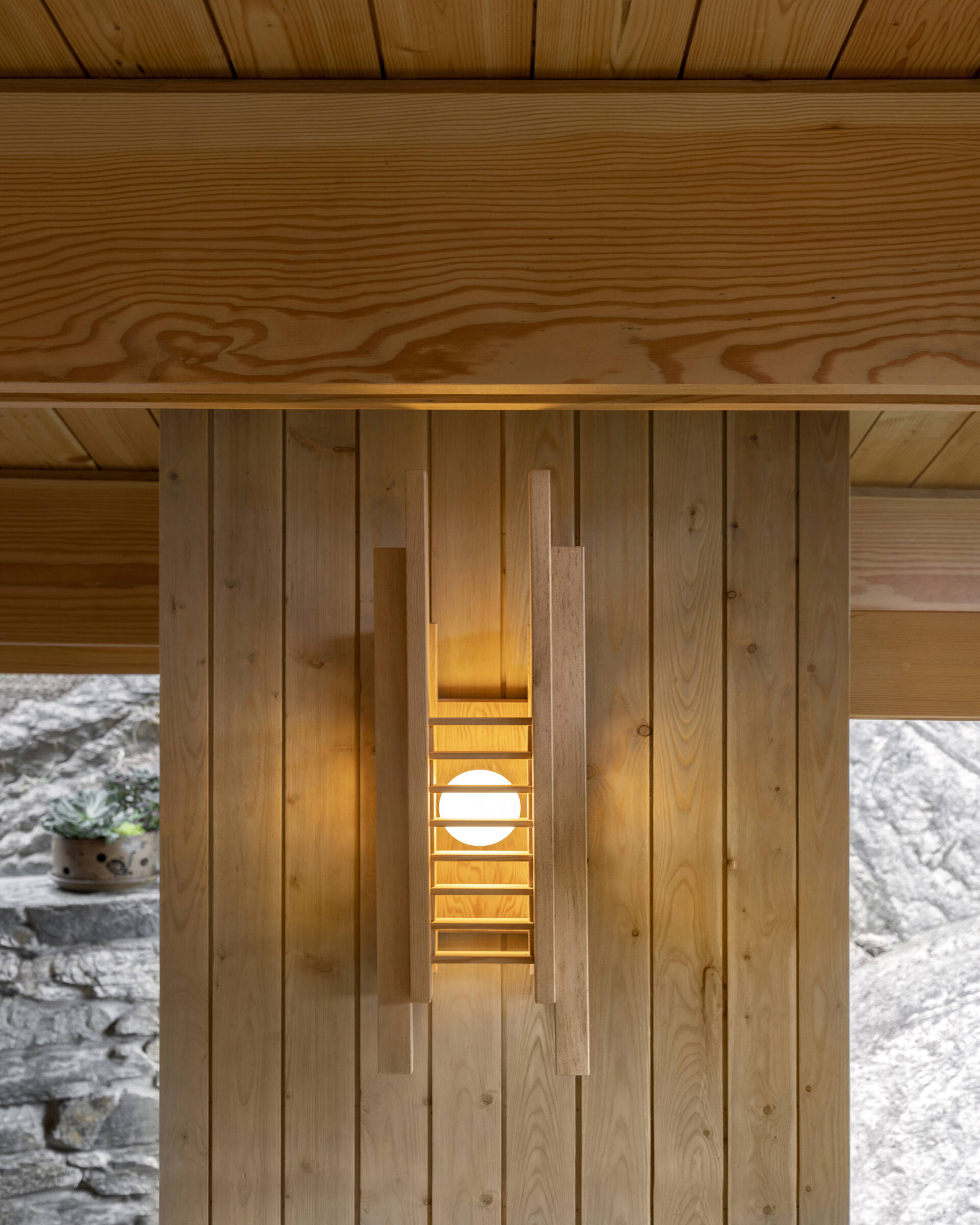
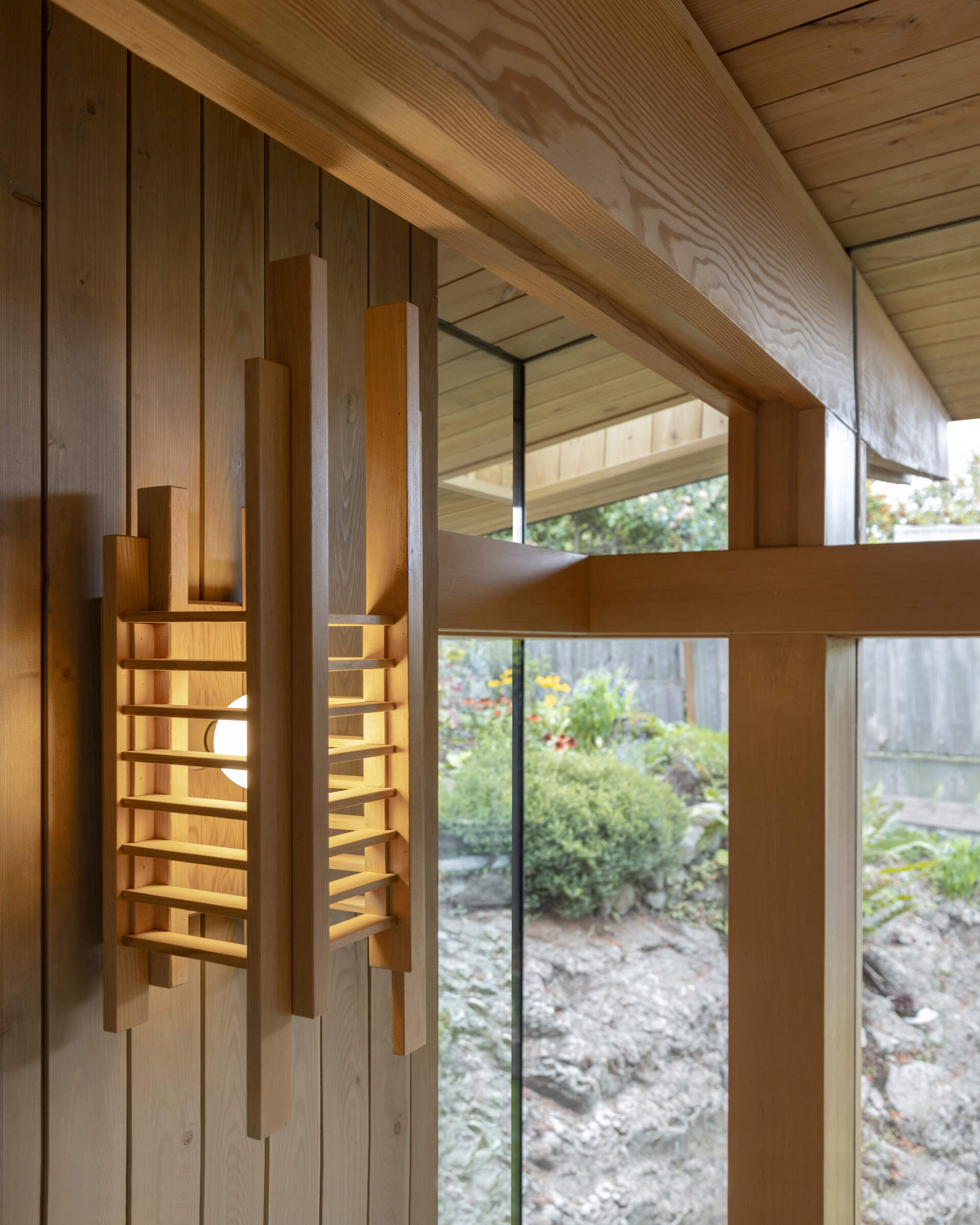
Bespoke lantern sconces hang from the stone wall, made by the lead carpenter using leftover wood casing and a few quick sketches. The forms are simple, crafted with freedom rather than specification, allowing the maker’s hand to remain visible in the final result. At night, they soften the mass of the stone and bring warmth to the work and family spaces without competing with the architecture.
Banquette seating anchors the room as it moves through the day. During working hours, the space supports virtual meetings and focused tasks. By evening, everything tucks away into discreet storage, making room for family games and shared meals around the table. The layout allows the room to feel active without becoming cluttered.
Today, the Grotto House extends beyond private use. It hosts workshops for students studying green roofs and occasionally opens to the community for events. What began as a conversation about a rock became an example of how architecture can respond with restraint.