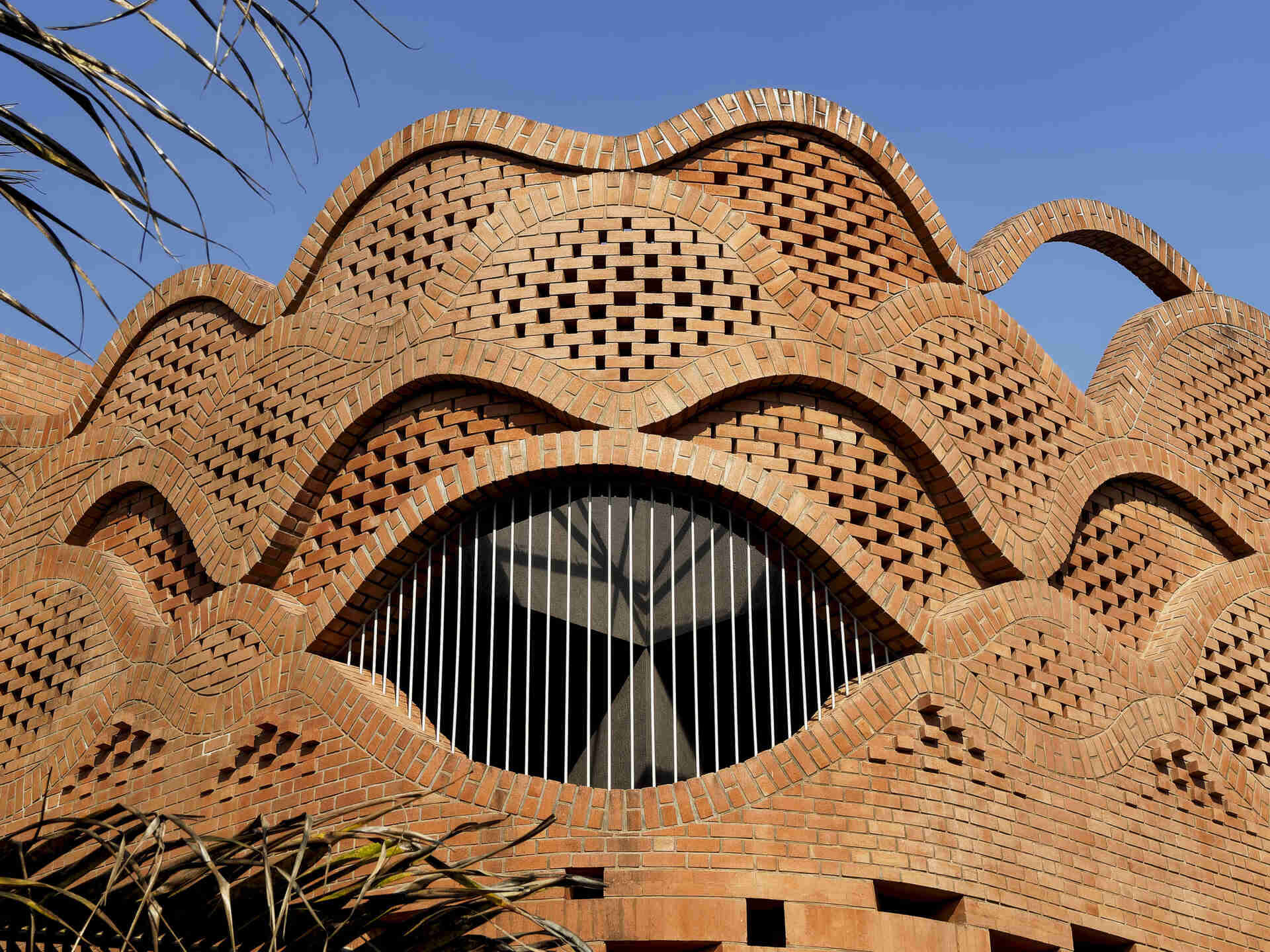
Gadi House in Talegaon Dhabade, India, is a powerful merging of tradition and innovation, built by PMA Madhushala for two brothers who wanted a home that honors their Maratha lineage. Inspired by the fortified Gadi houses of the region, it rises from its 1.2 acre site with thick stone walls, handcrafted brick bands, and a crown of sculpted openings that redefine what brick can do. Within this protected, inward facing world, every volume, surface, and courtyard echoes a legacy passed down through generations while embracing the needs of modern family life.

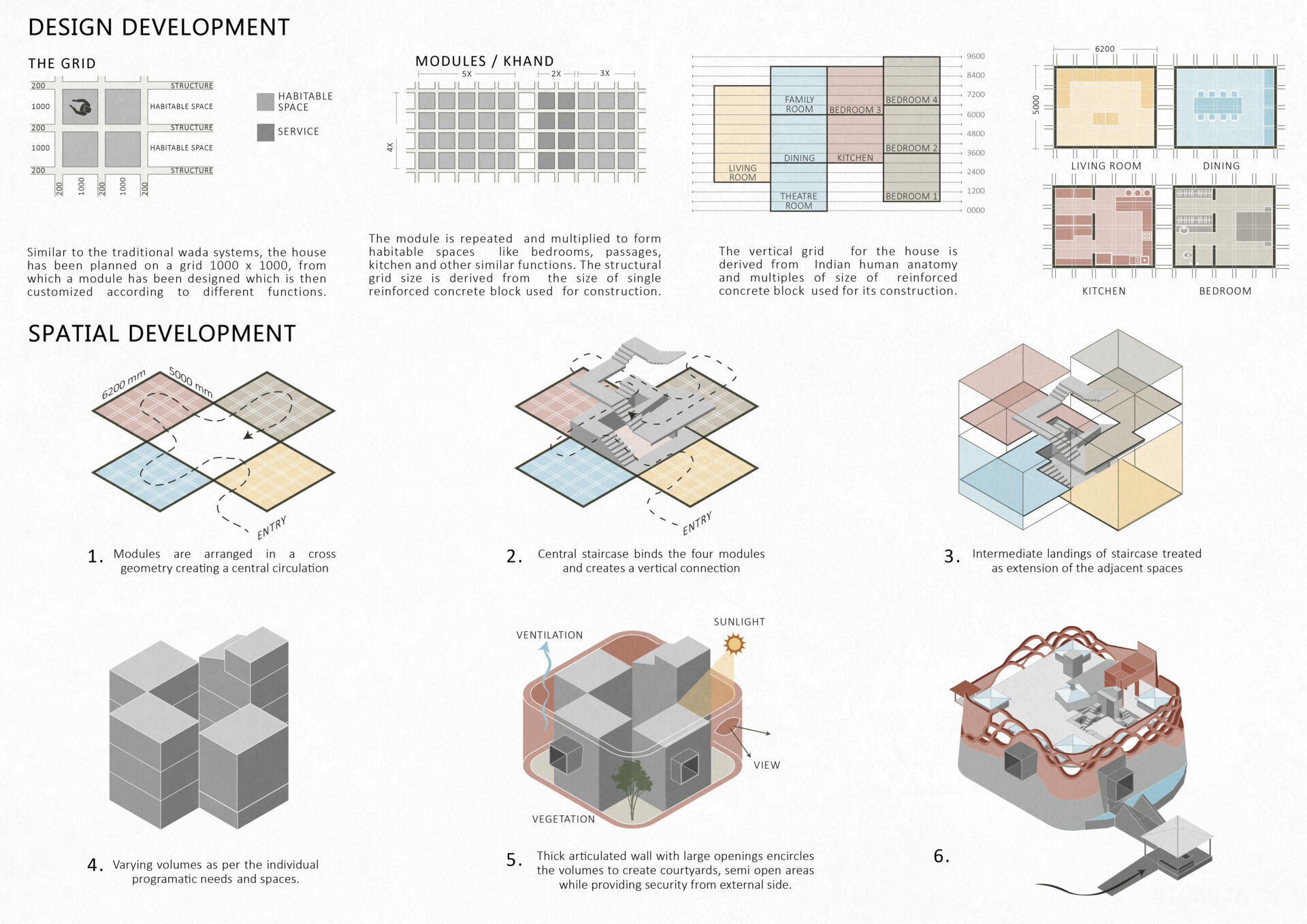
The architecture draws deeply from the traditional Gadi a compact fortress designed to safeguard families while supporting daily life through internal courts, semi open spaces, and thick protective walls. PMA Madhushala reinterprets this logic with a modern approach, organizing the home through the traditional Khand module.

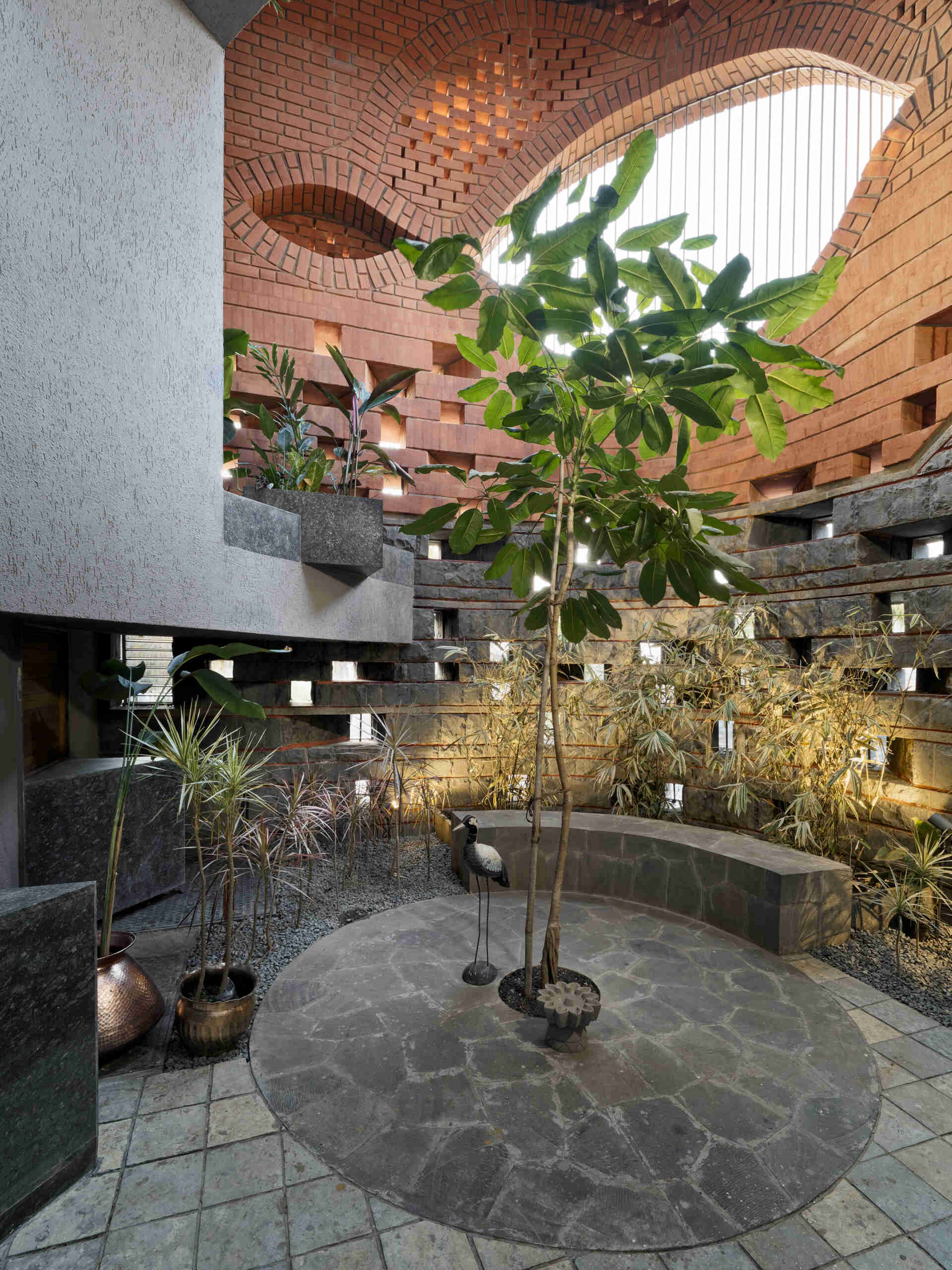
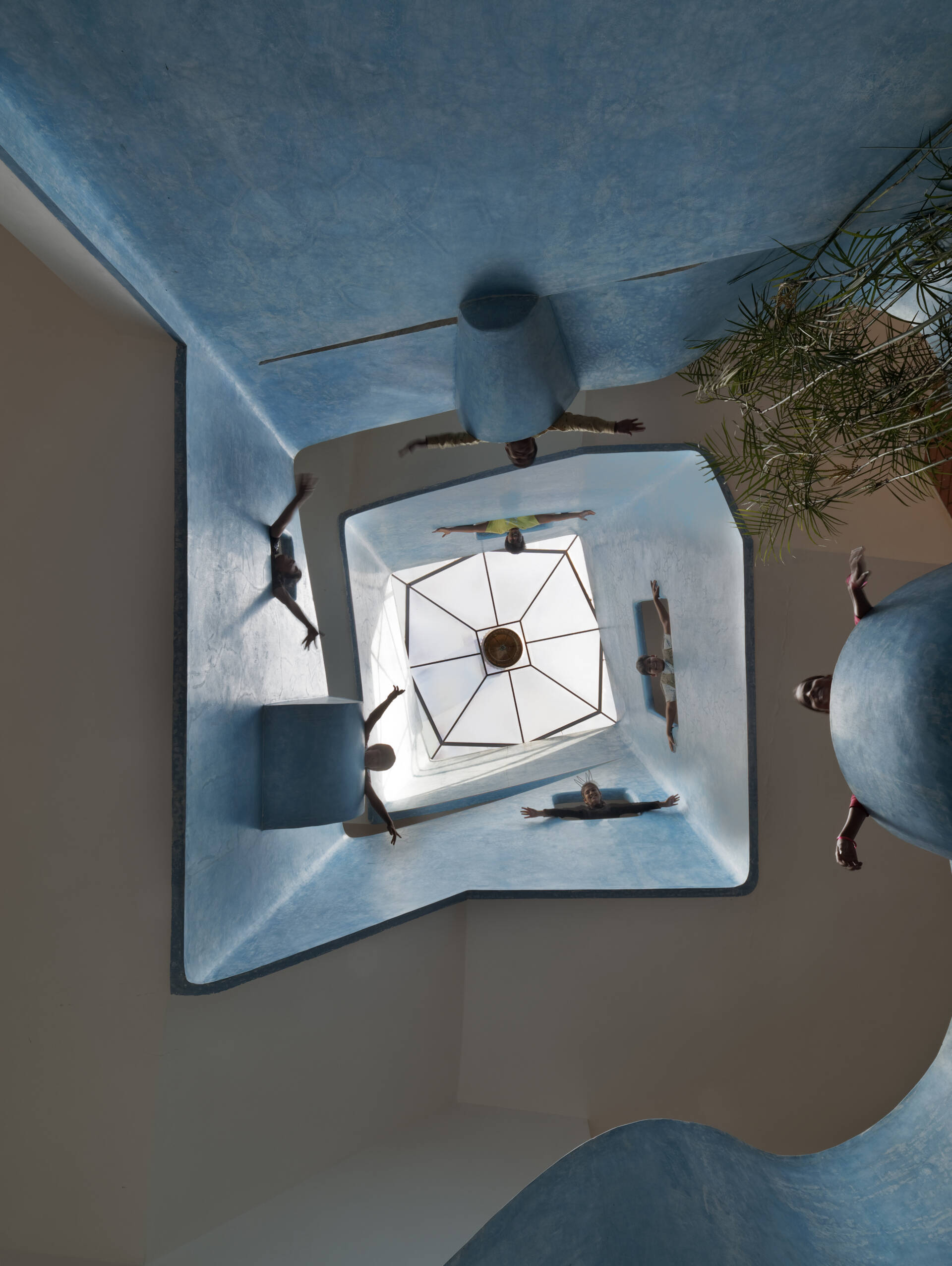
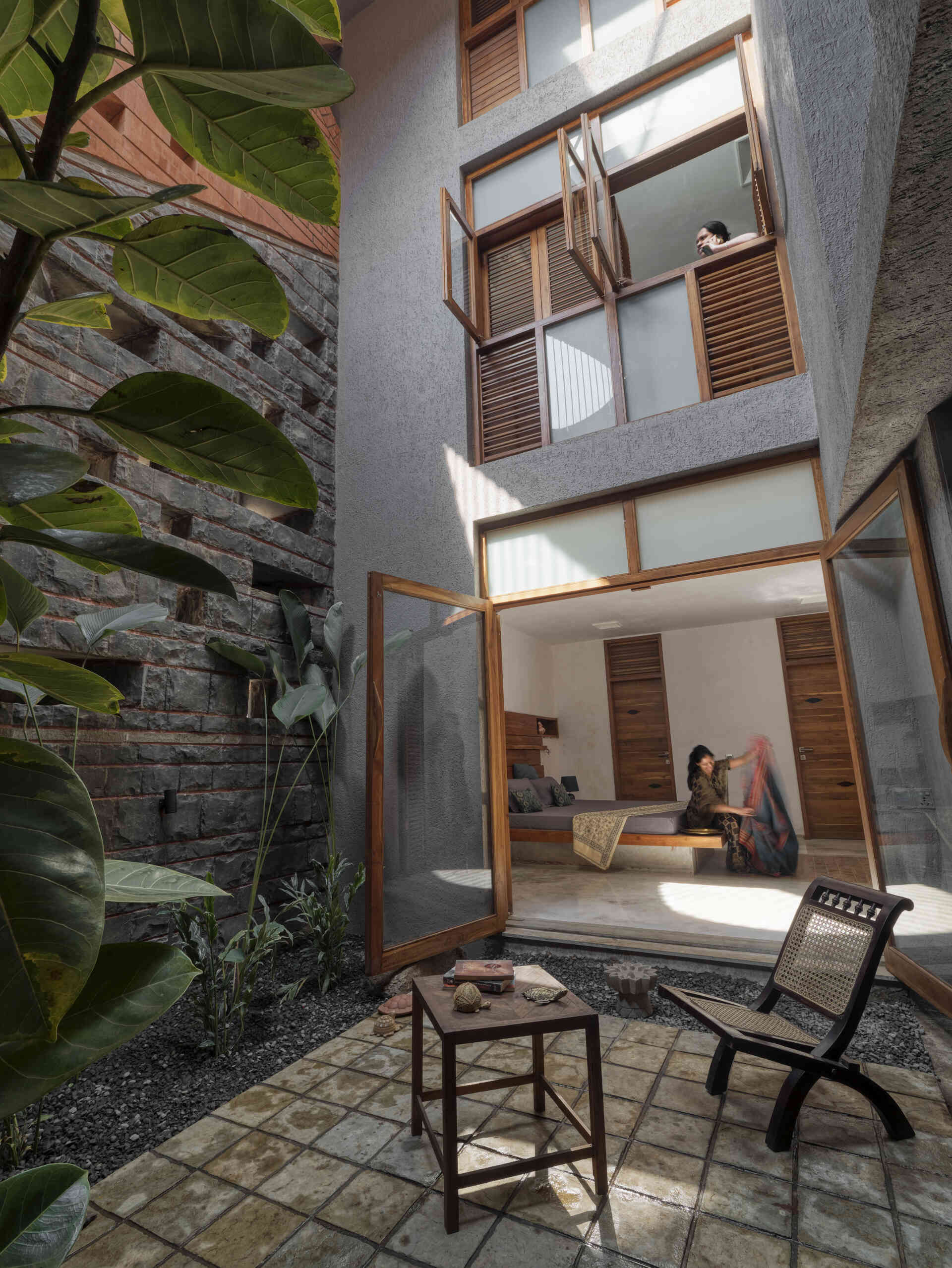
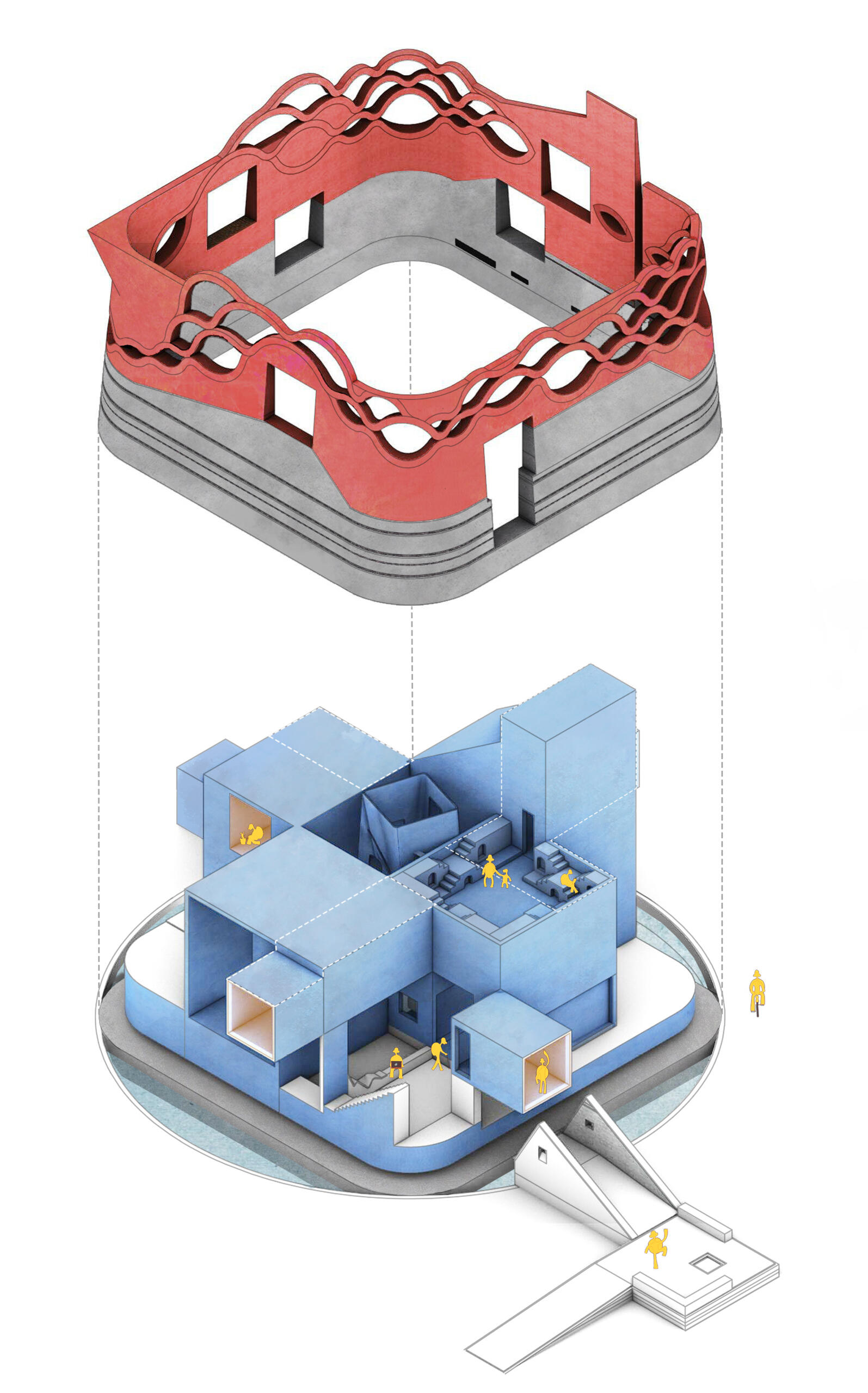
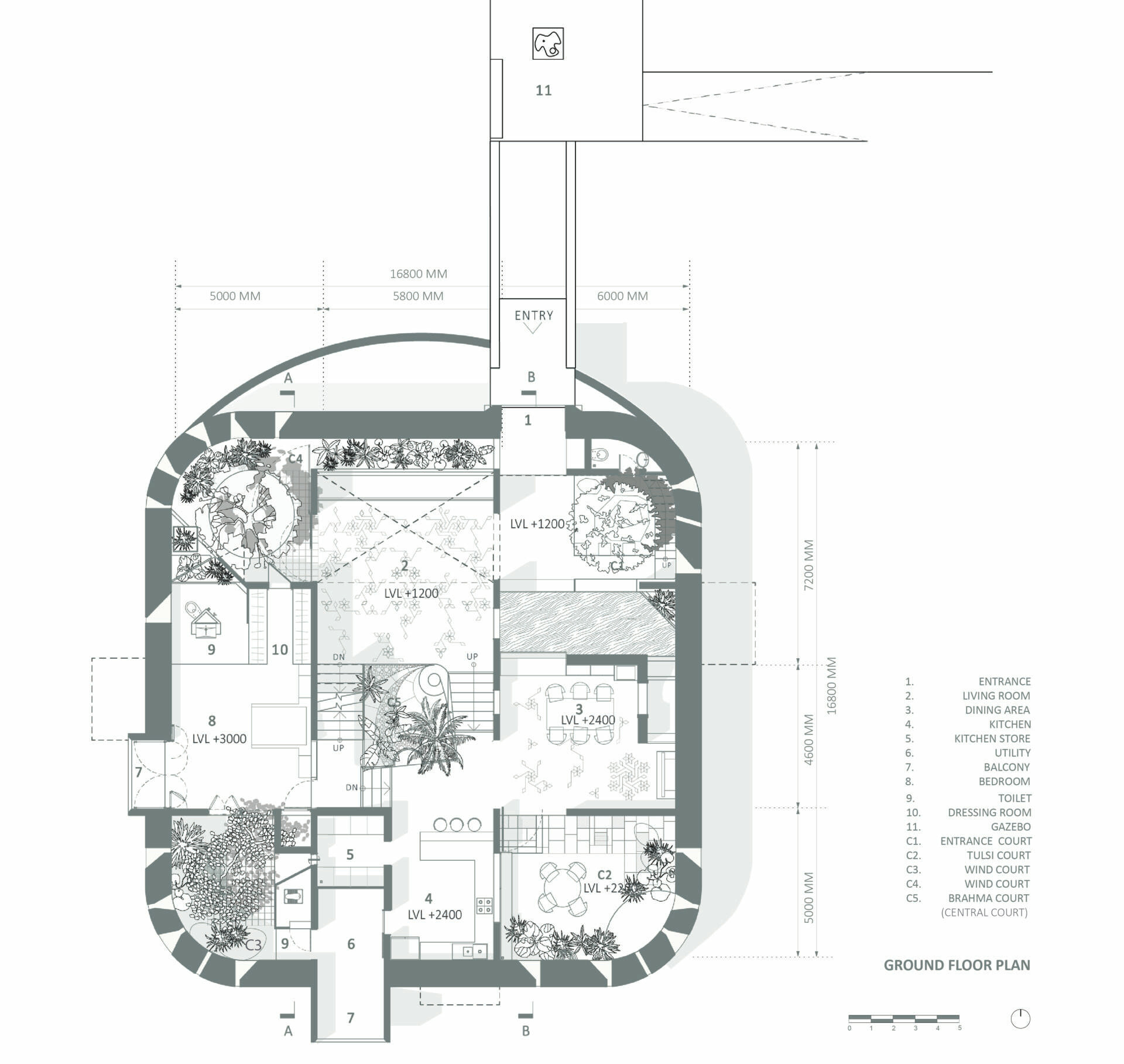
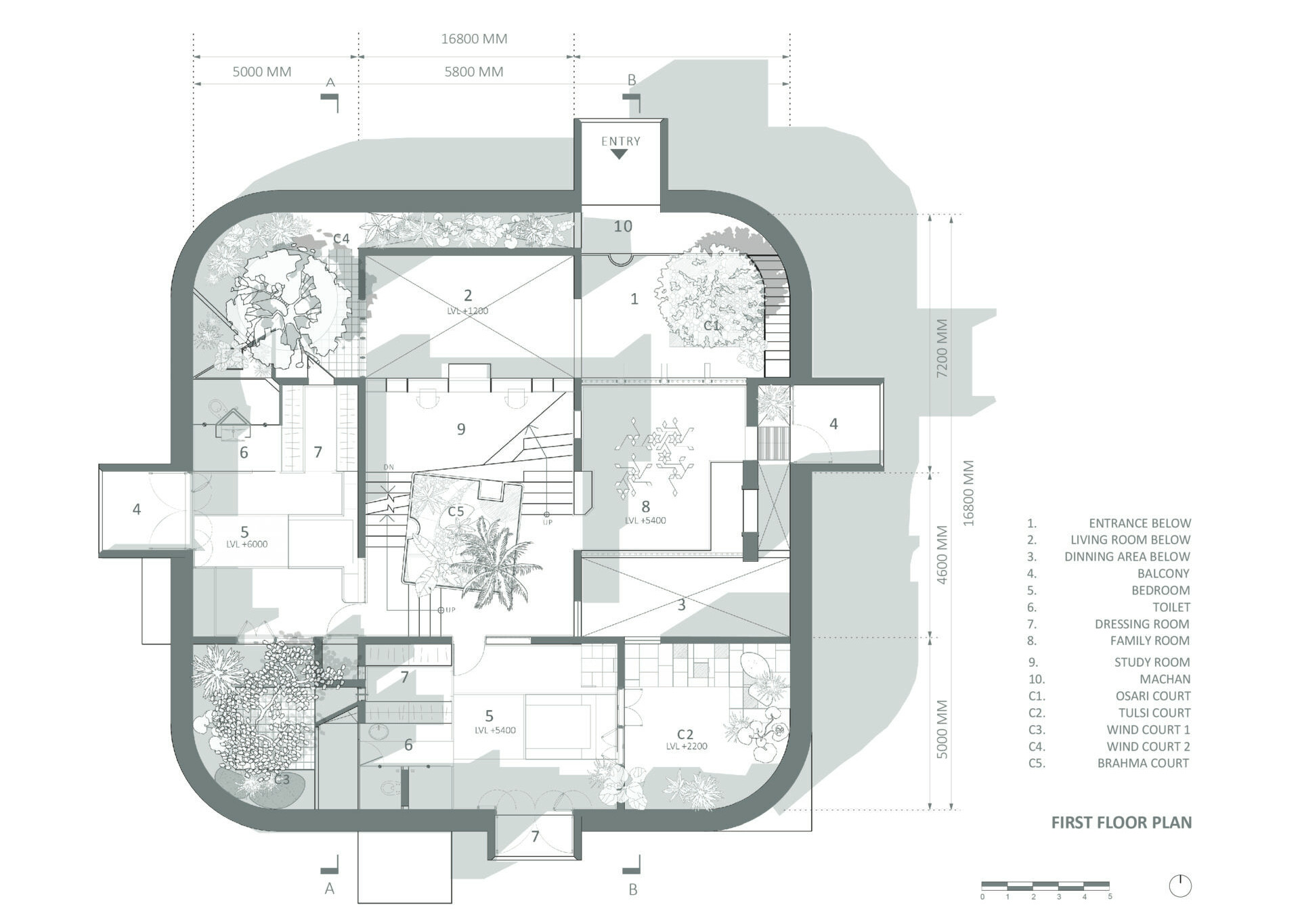
Arranged in a cruciform plan, these modules expand vertically through ascending volumes connected by shifting steps. The corners open to the sky, acting as spatial breathers that break up the mass and create intimate relationships between light, air, and structure. Throughout this composition, the sculptural brickwork acts as both a unifying skin and an expressive device that anchors the home in its historic lineage.
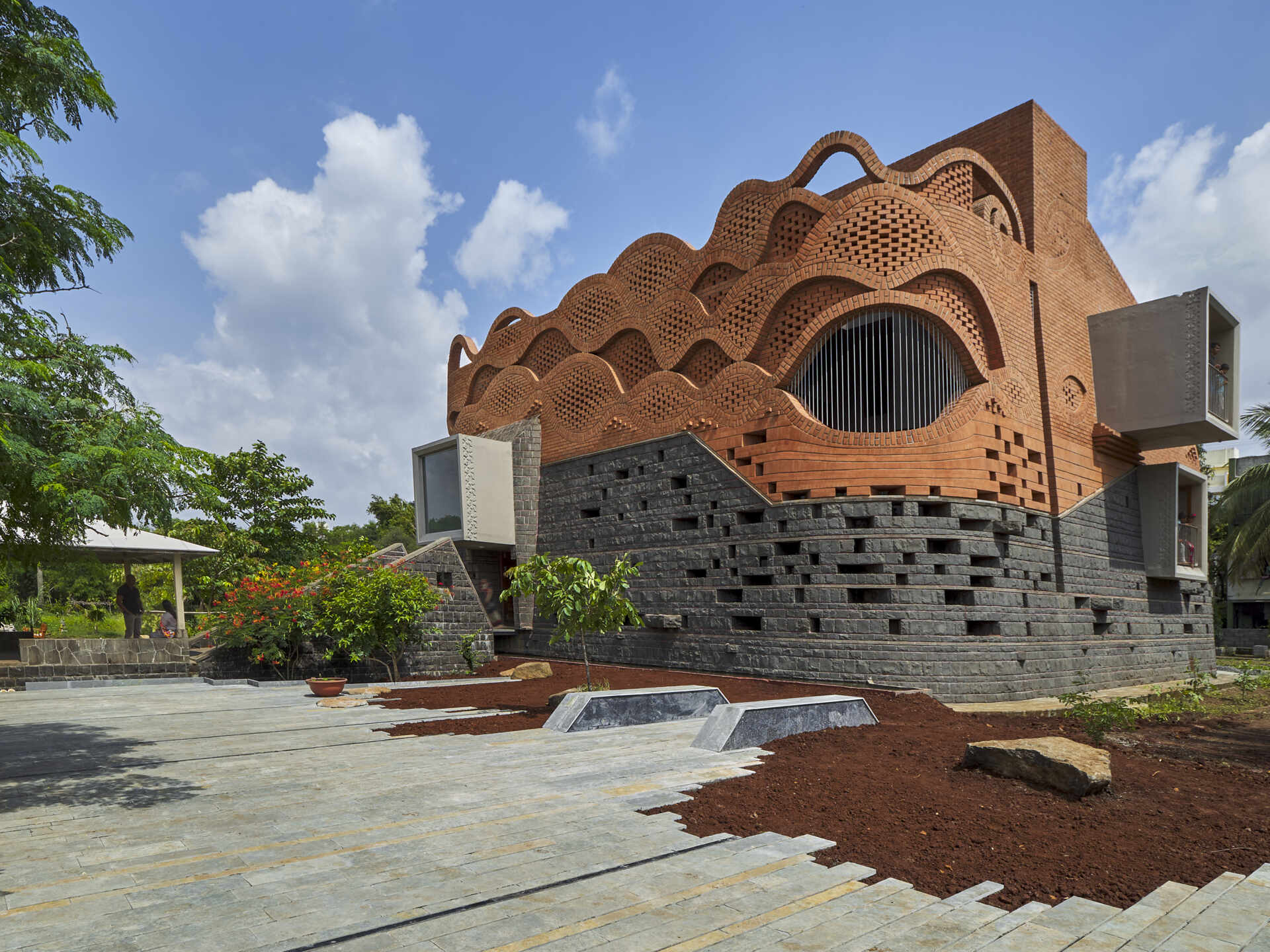
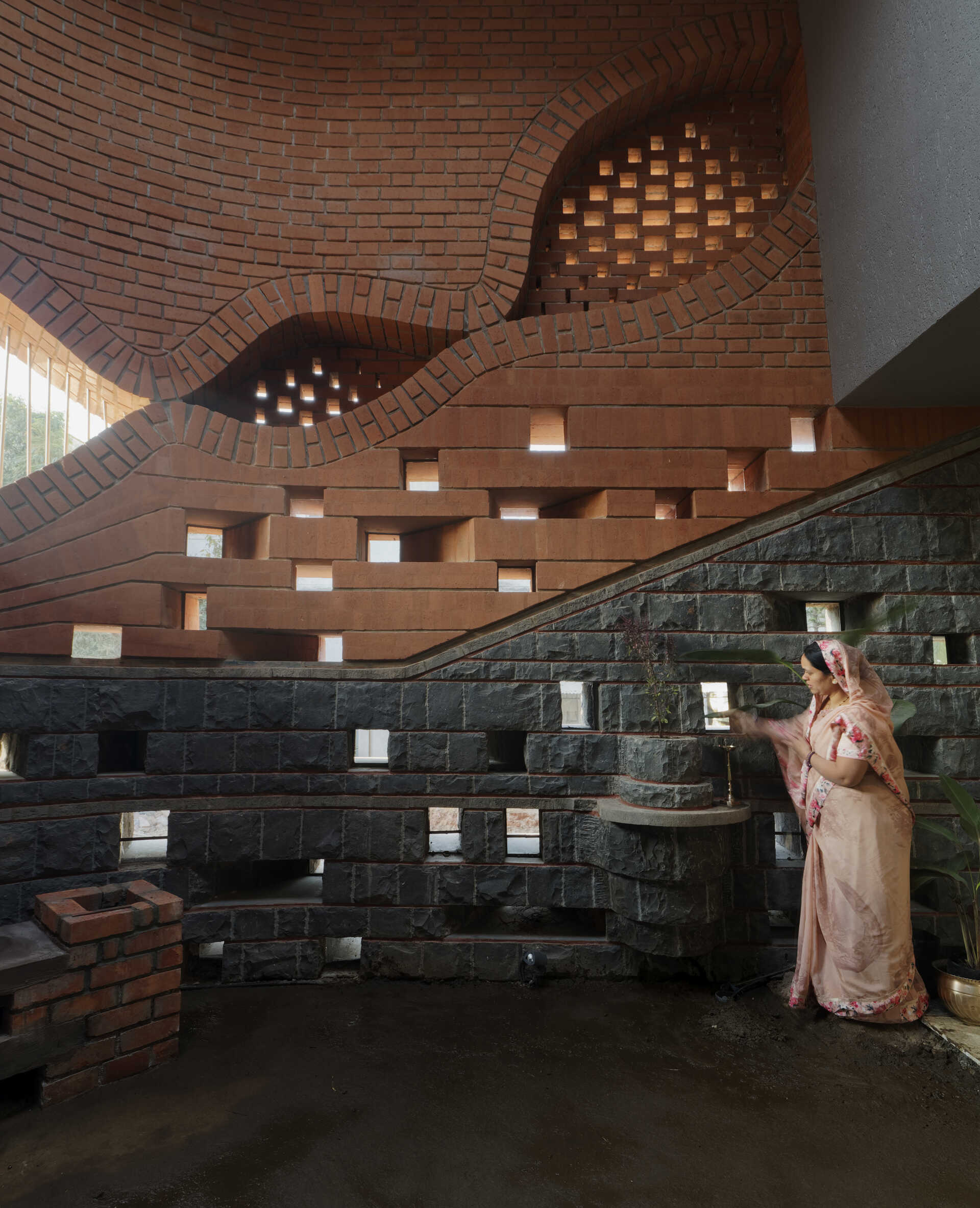
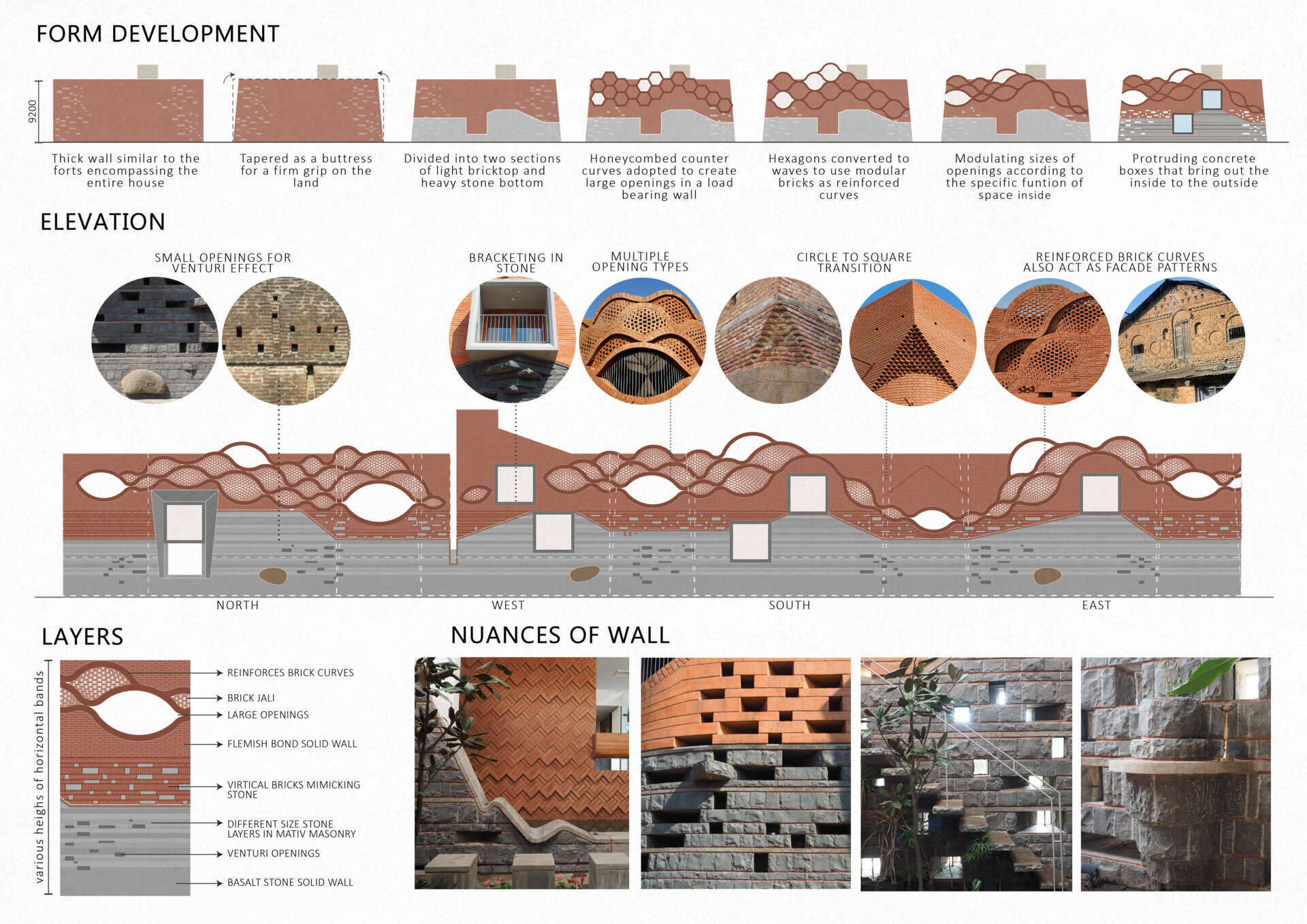
Brick is the architectural protagonist here. Local stone forms the muscular base, while brick becomes the lighter, more intricate upper body of the home. The exterior wall is built in horizontal bands, a method rooted in traditional craftsmanship, but reimagined through a contemporary eye.

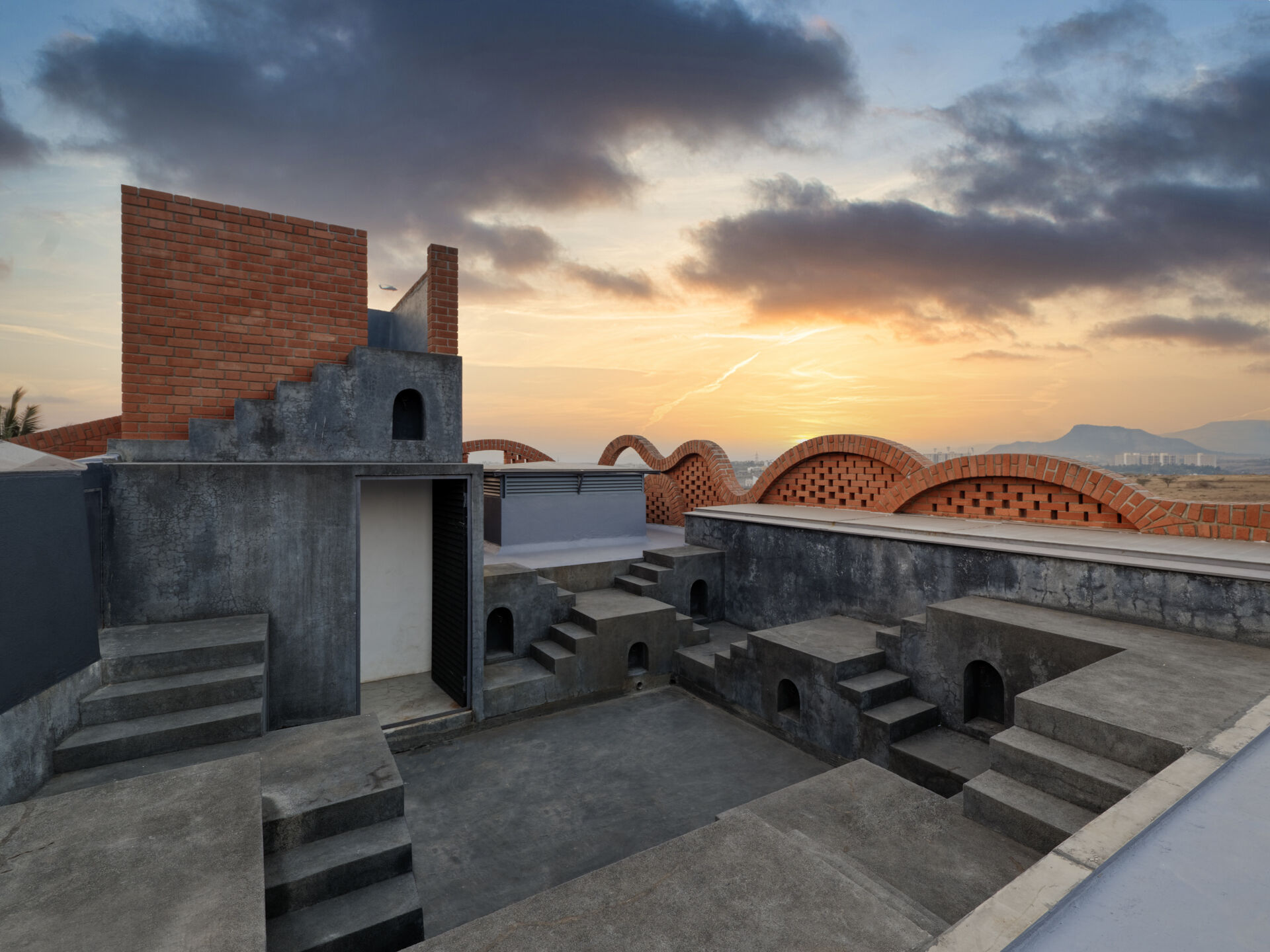
Above, the entire home is crowned with curved brick openings shaped like a honeycomb loop structure. This crown is not just decorative it expresses the load bearing logic of brick while creating an ornamental identity that defines the home. Each curve and cutout demonstrates how brick can be molded into fluid geometries while still performing structurally, turning the envelope of the house into a handmade sculpture.
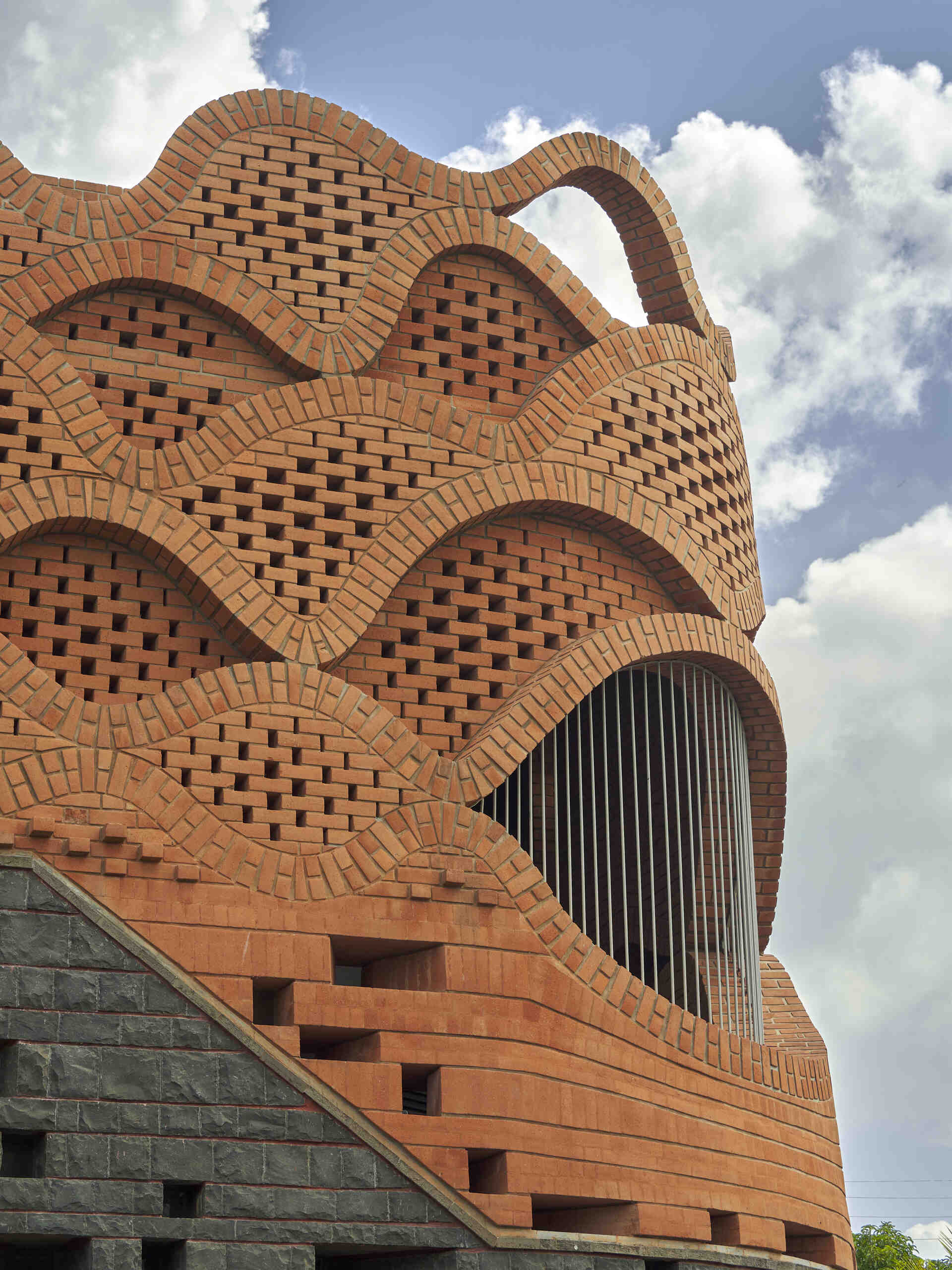
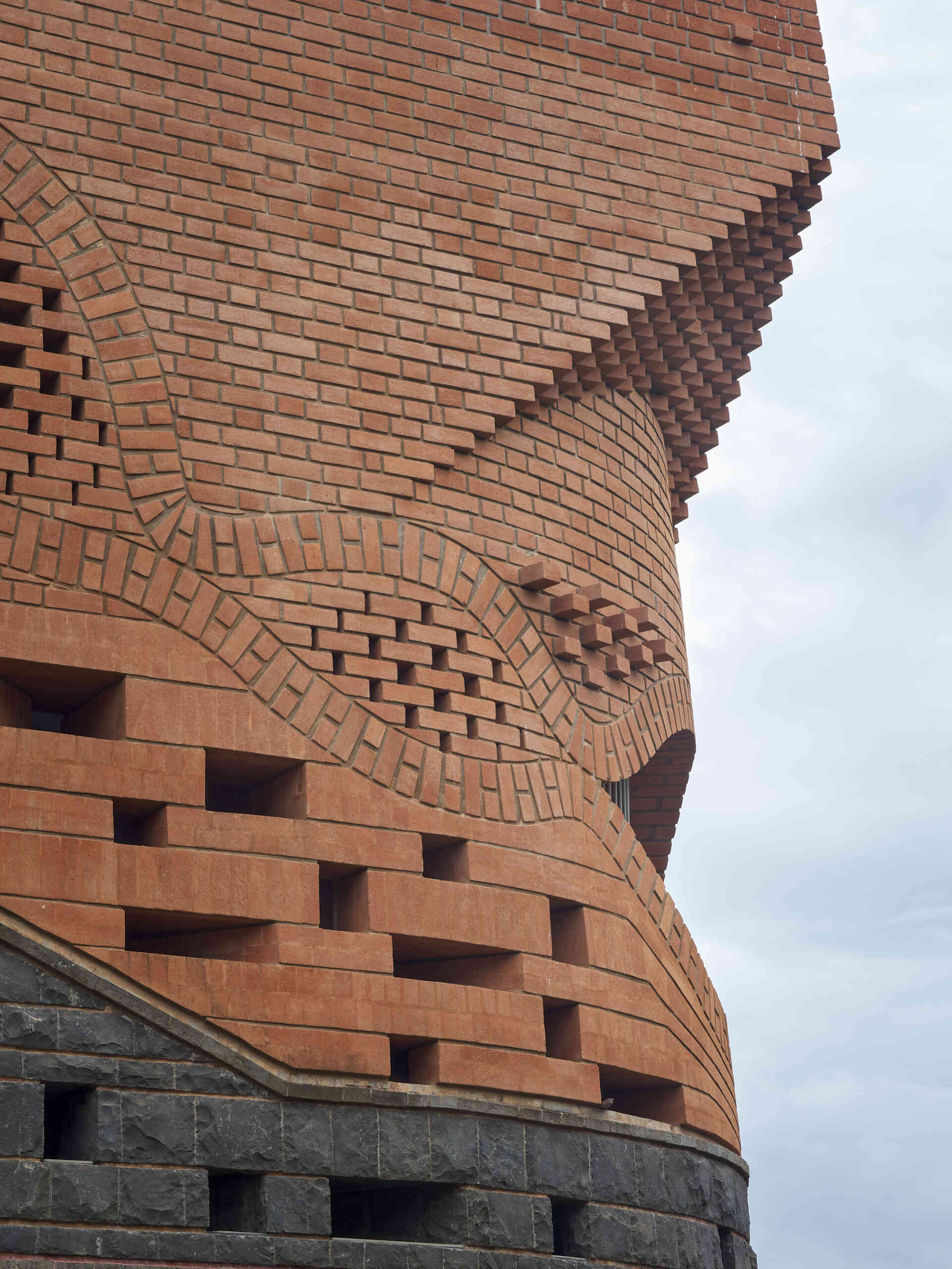
The sculptural brickwork directly shapes the windows. On the lower stone levels, openings follow the widths of the traditional bands, giving the base a grounded and fortress like presence. As the building rises, the honeycomb brick geometry allows windows to become more expressive. Openings can shift in size, placement, and rhythm while maintaining structural integrity.
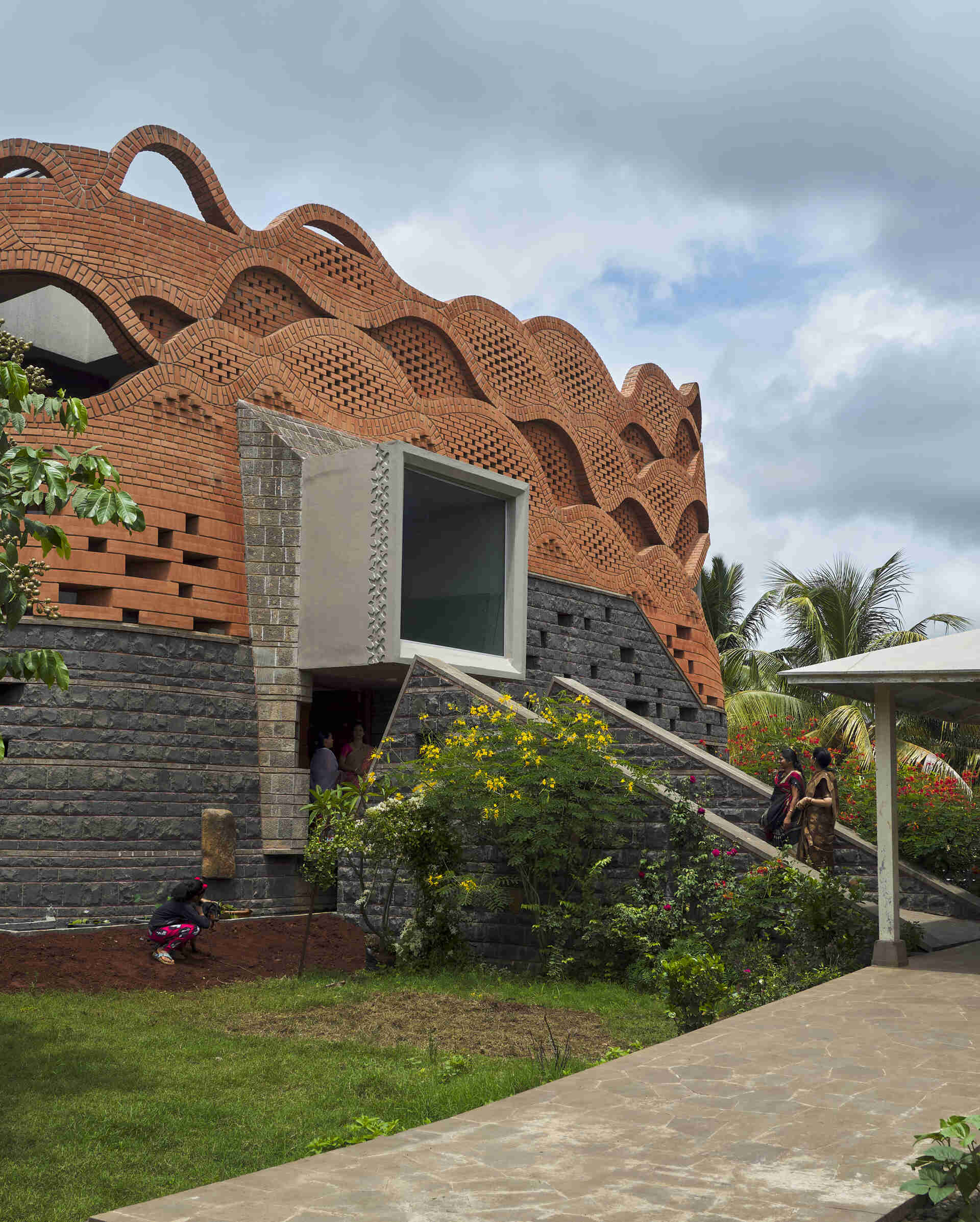

This flexibility lets the architecture adapt to the needs of the rooms inside while keeping the exterior cohesive. Light filters through the curved brick patterns in soft, textured ways that connect the interior atmosphere to the handmade character of the envelope.


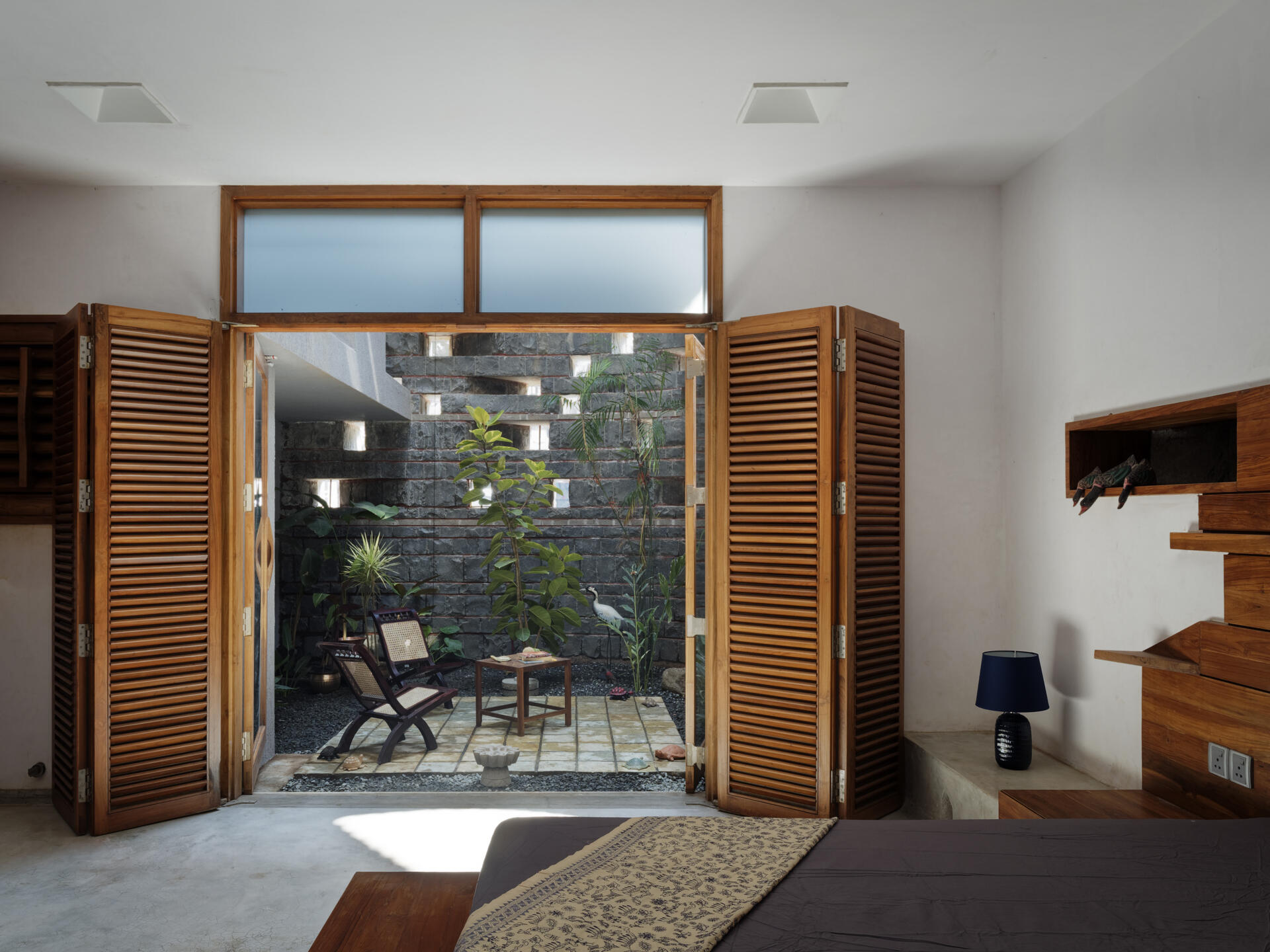
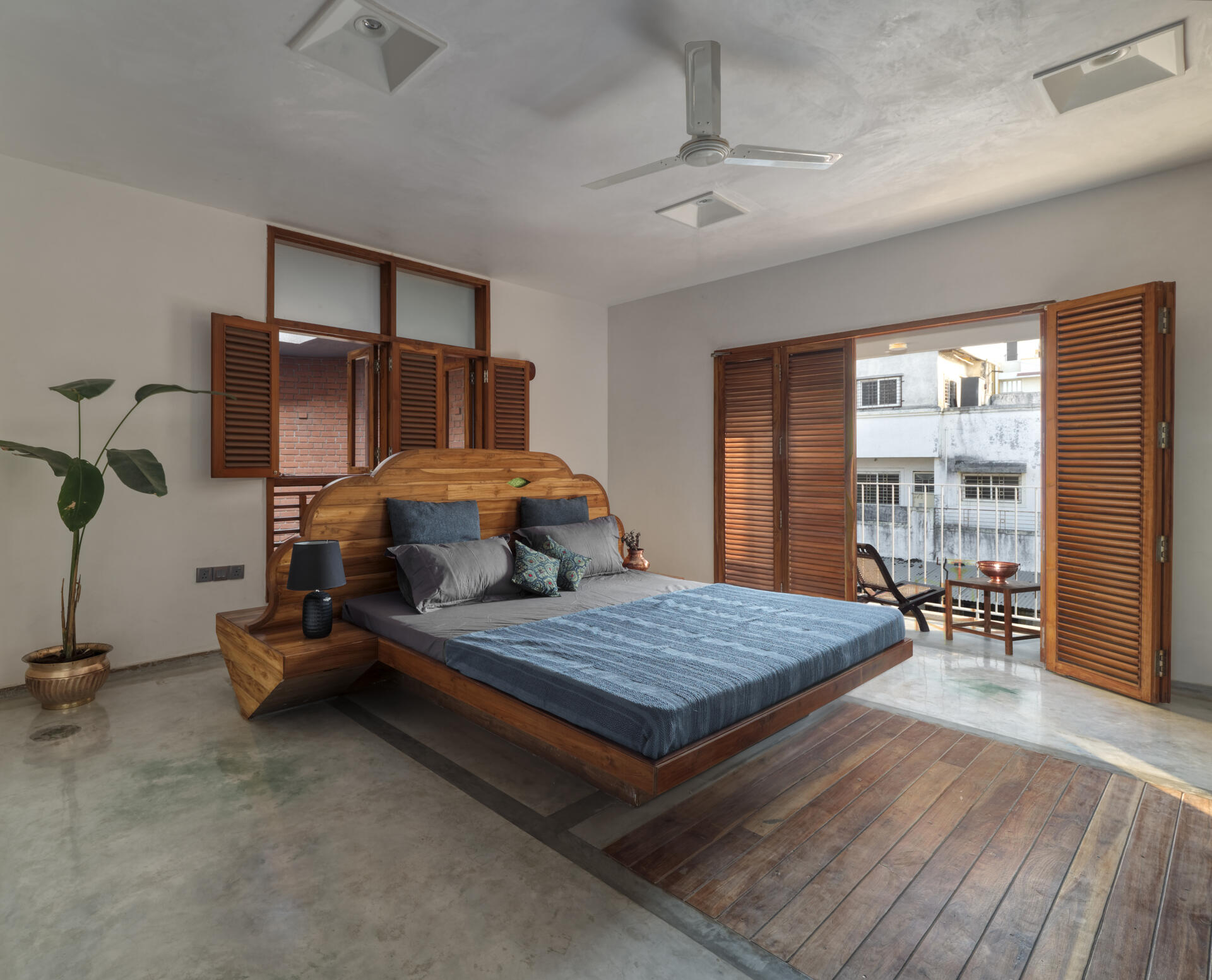
Inside, the aesthetic shifts to quiet simplicity. Reinforced concrete block construction creates clean, uninterrupted interior volumes that contrast the tactile exterior. Internal partitions made of lightweight wood or stone keep the spaces adaptable, while traditional lime stucco gives every wall a seamless, flowing feel. The interior becomes a calm counterpart to the sculptural exterior, allowing the brickwork outside to take visual precedence while the rooms inside support the everyday rhythm of a multigenerational household.
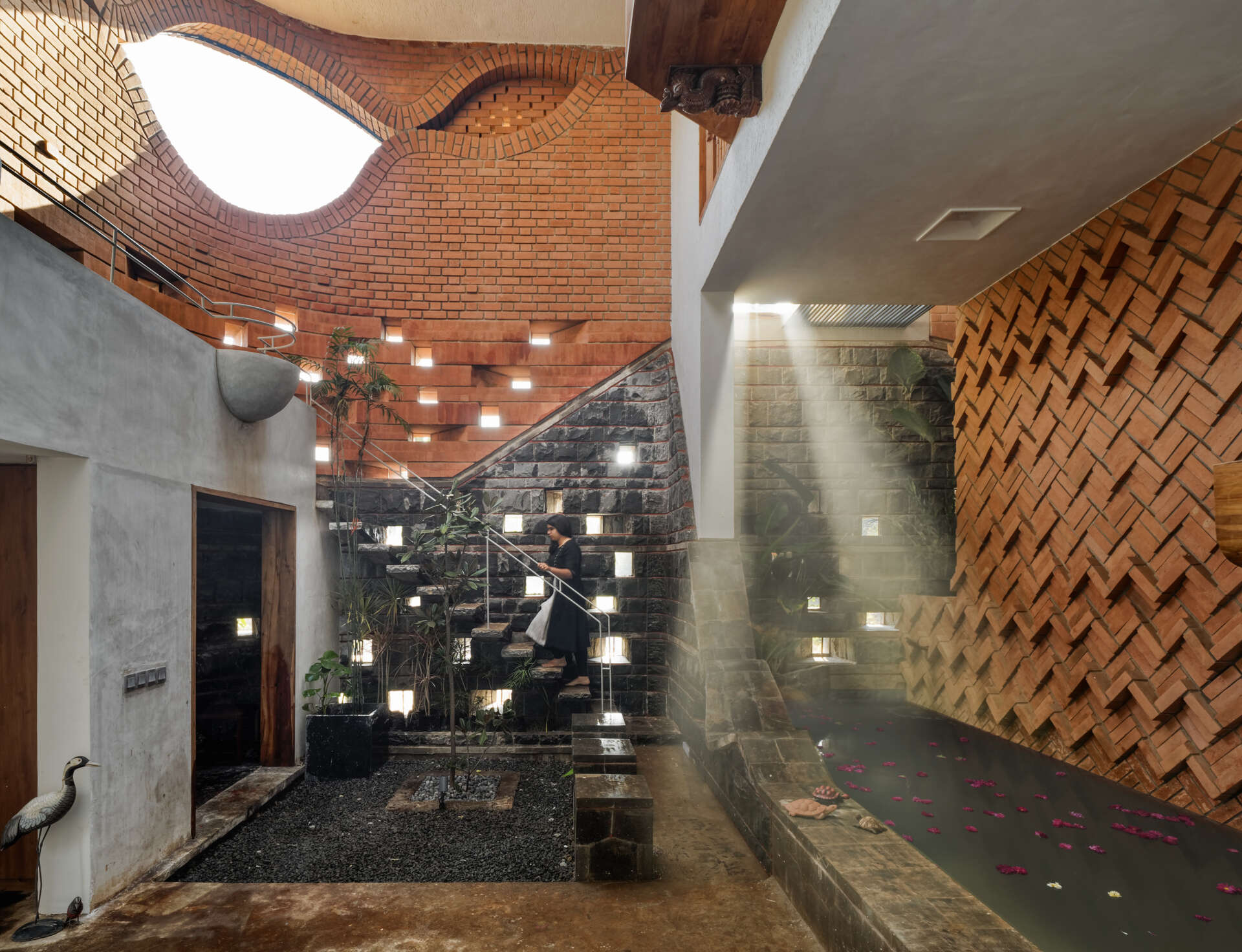
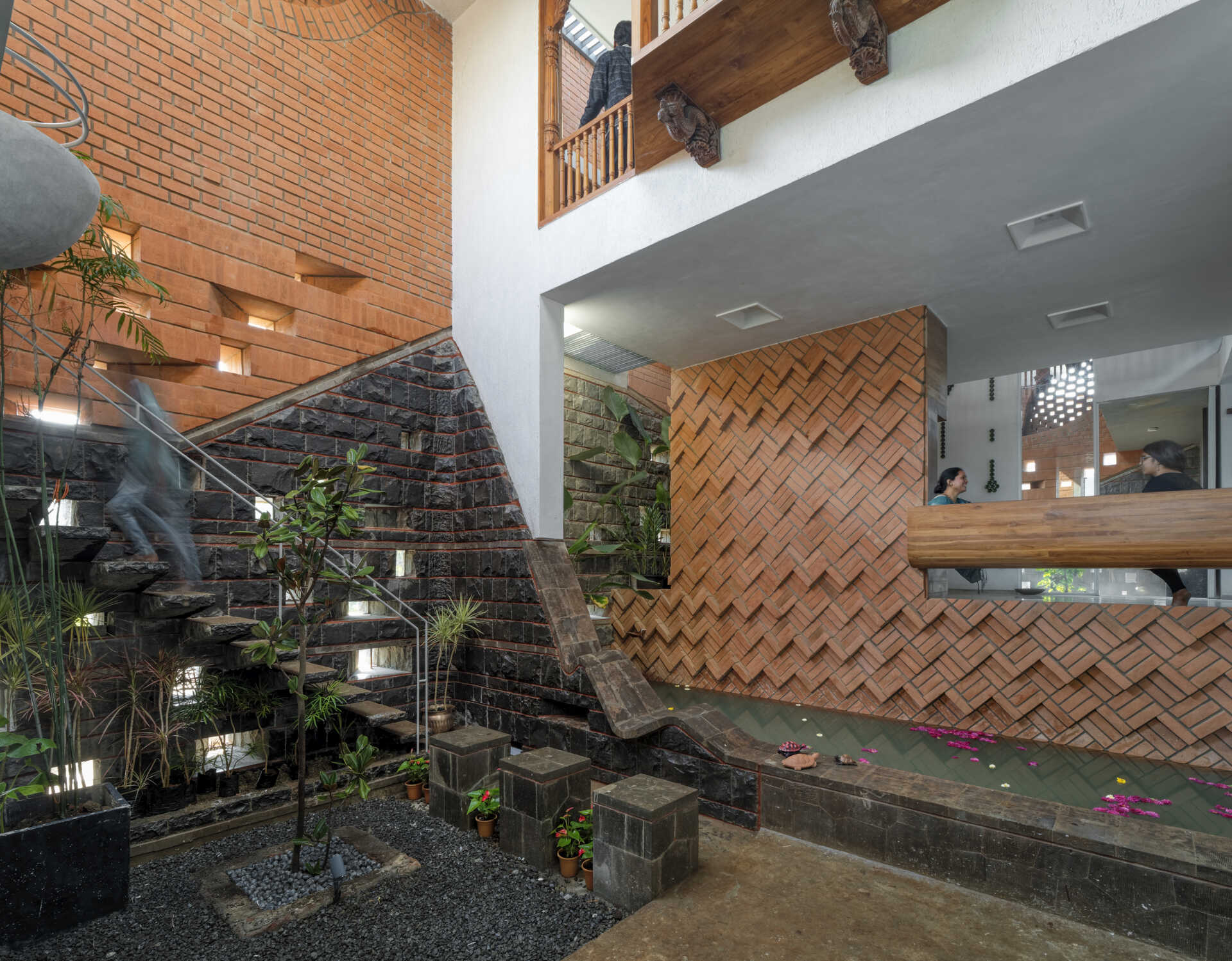
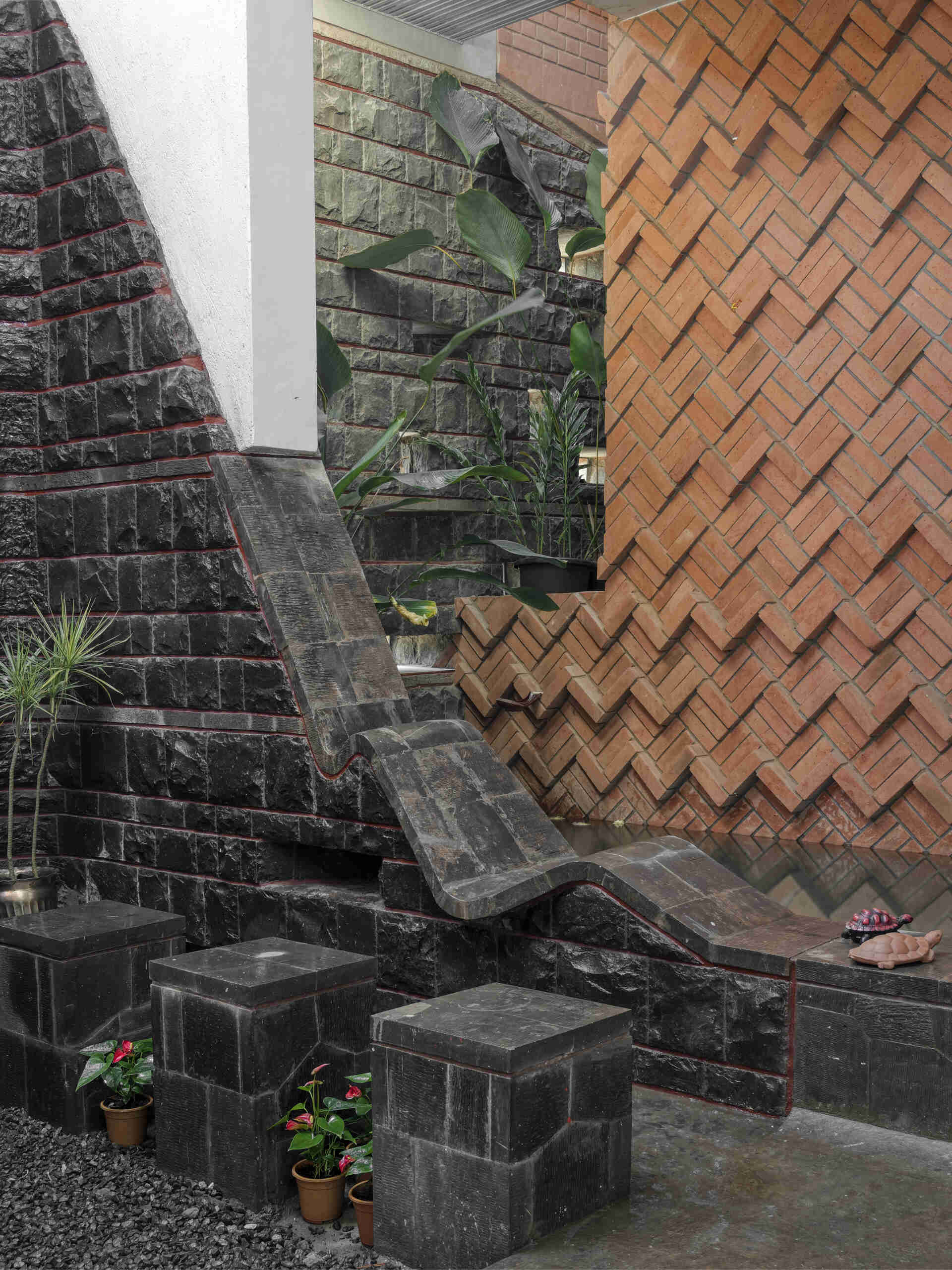
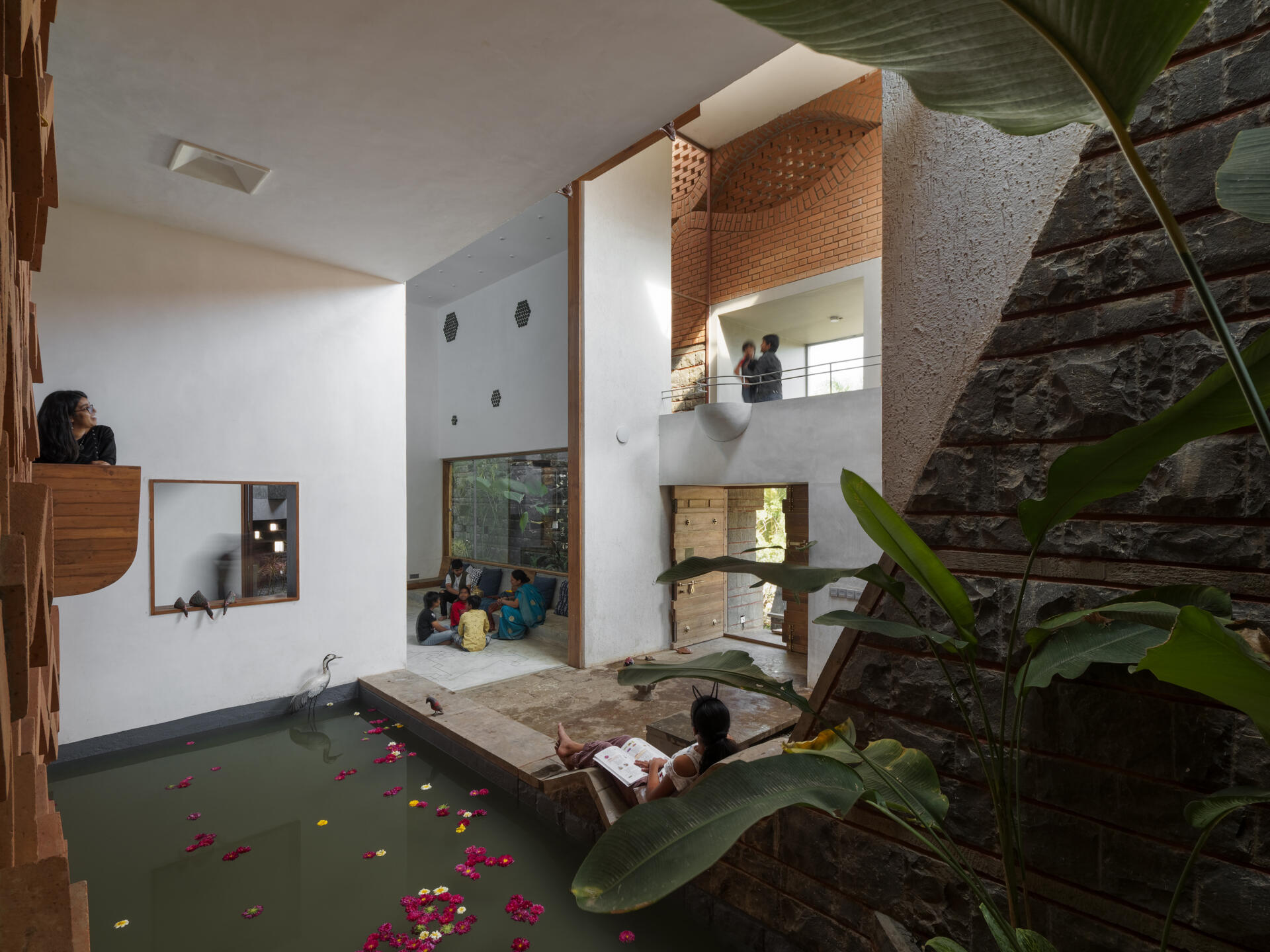
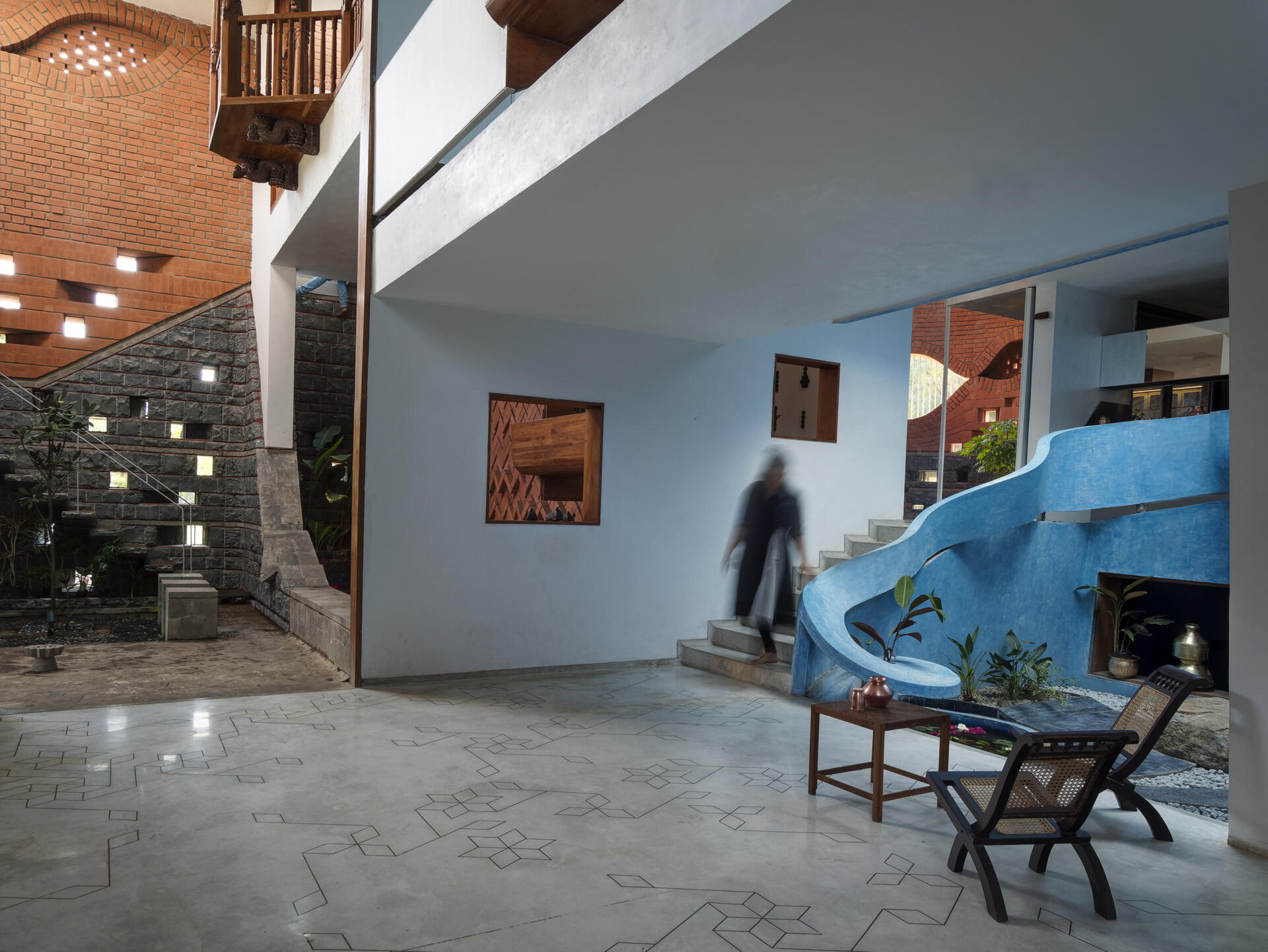
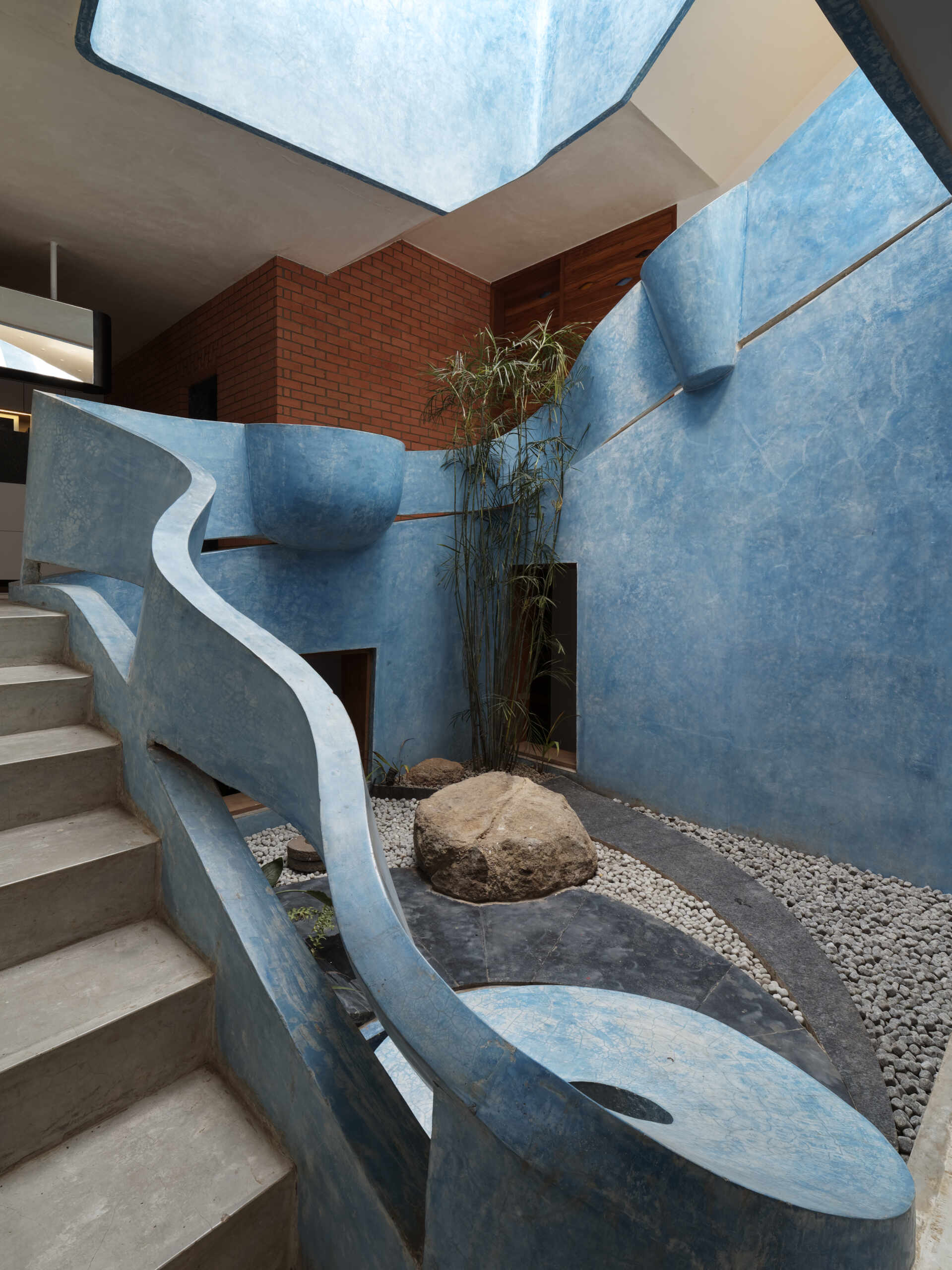
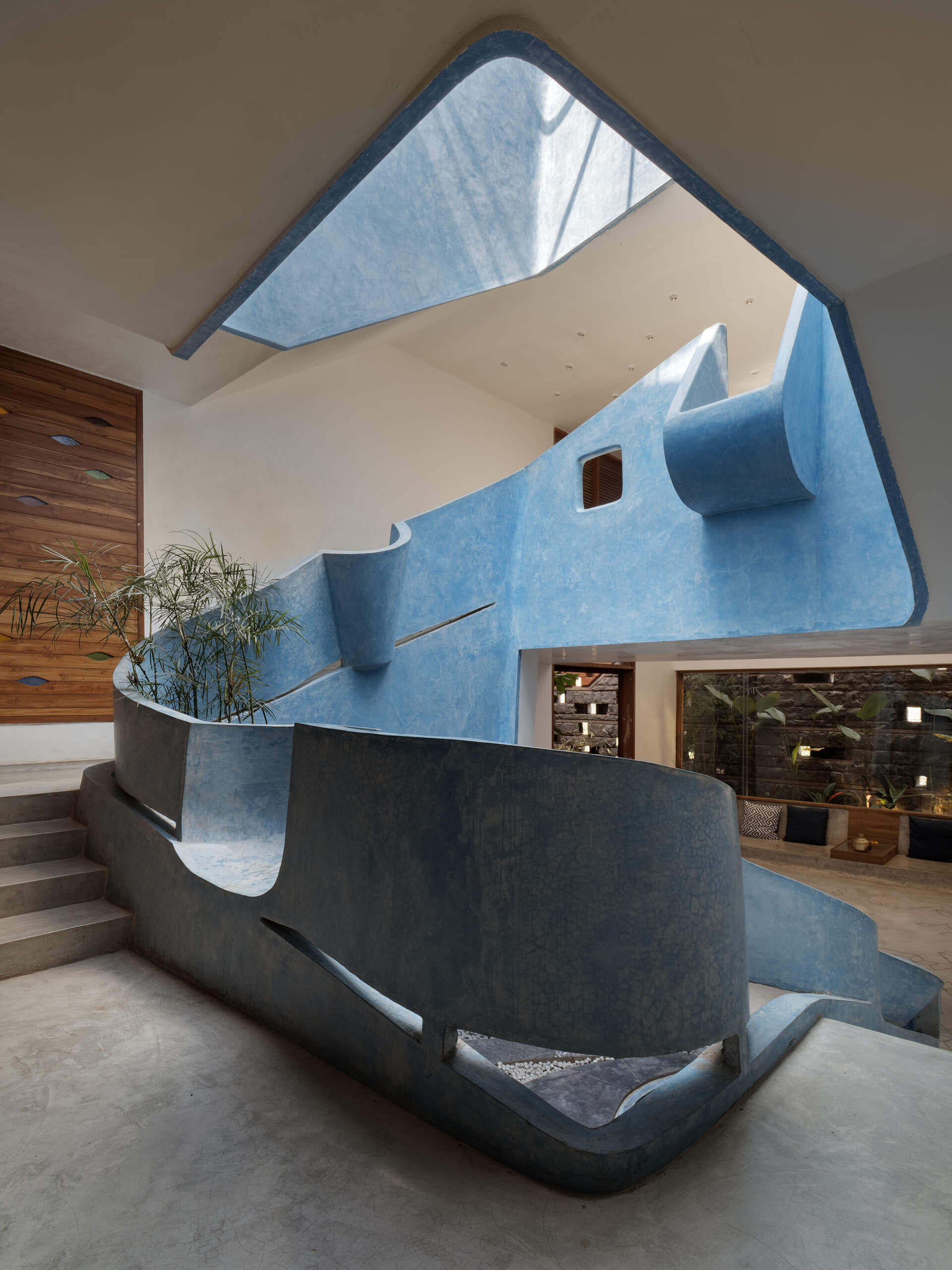
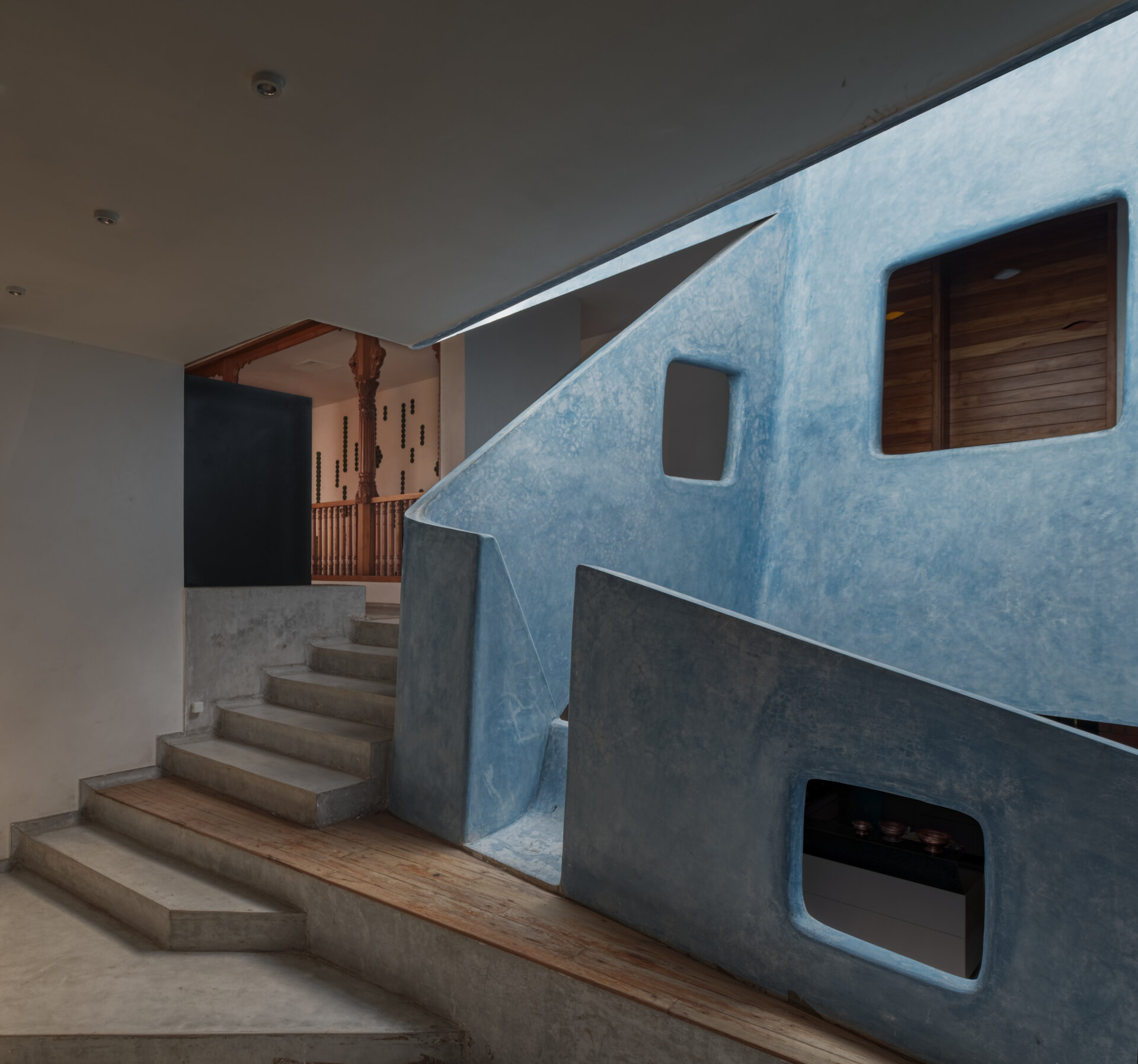
Movement through the house is defined by staircases crafted using the Ferrogami method, a technique that reduces structural weight while enabling delicate transitions. These steps morph with the shifting levels created by the cruciform arrangement of modules, guiding residents upward through a vertical sequence of spaces. They act as architectural connectors, carrying the language of craft into the circulation zones without competing with the expressive brick envelope.
The signature honeycomb brick cutouts are the defining feature of Gadi House. They function as both ventilation elements and ornamental moments, allowing air, light, and patterns of shadow to constantly reshape the interior. Their curved geometry responds to the needs of each internal space, proving how traditional materials can be reinterpreted to solve modern performance needs. These cutouts unify the entire structure with a rhythmic, sculptural crown that highlights the family’s desire for a home that is both protective and celebratory.
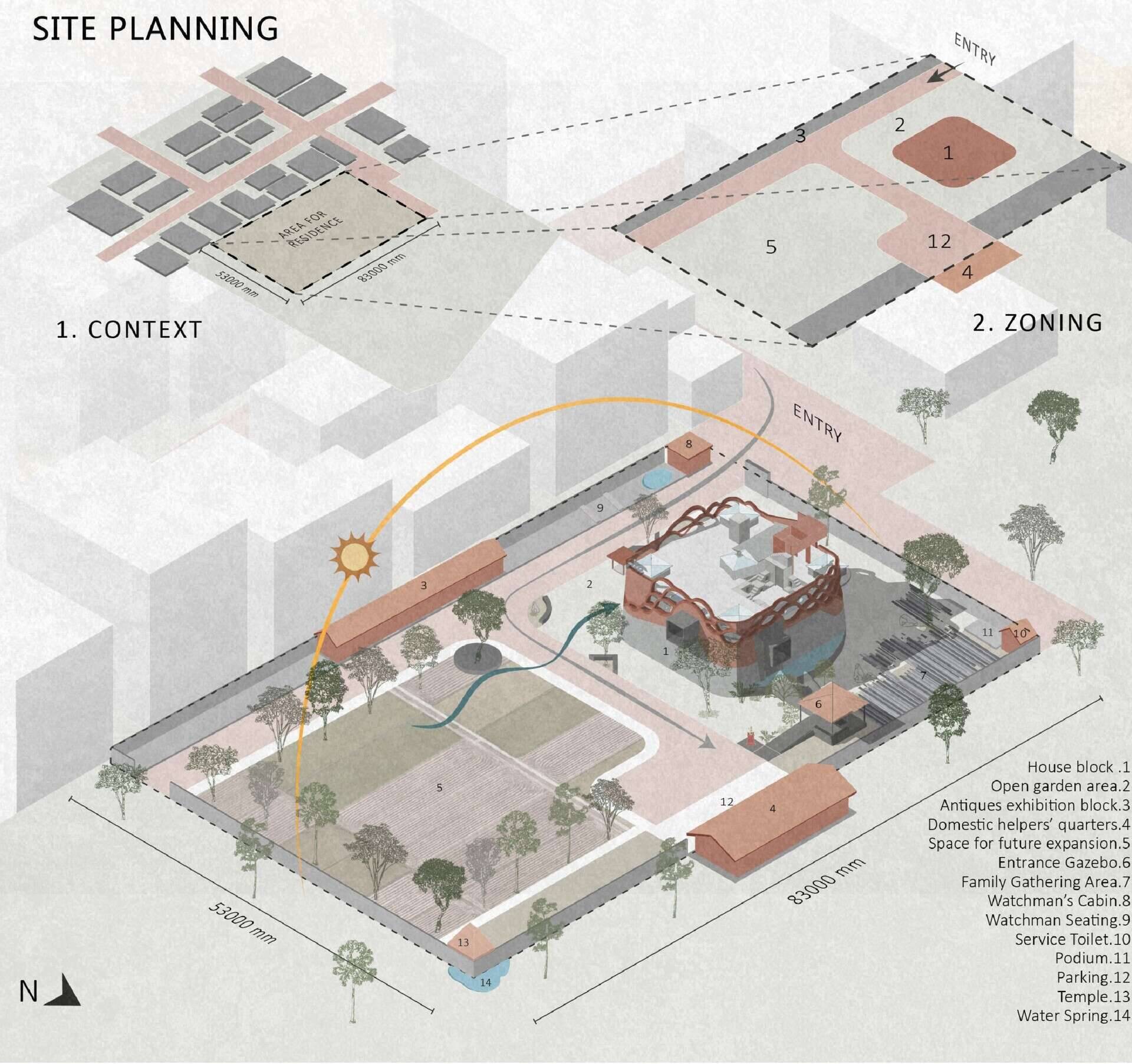
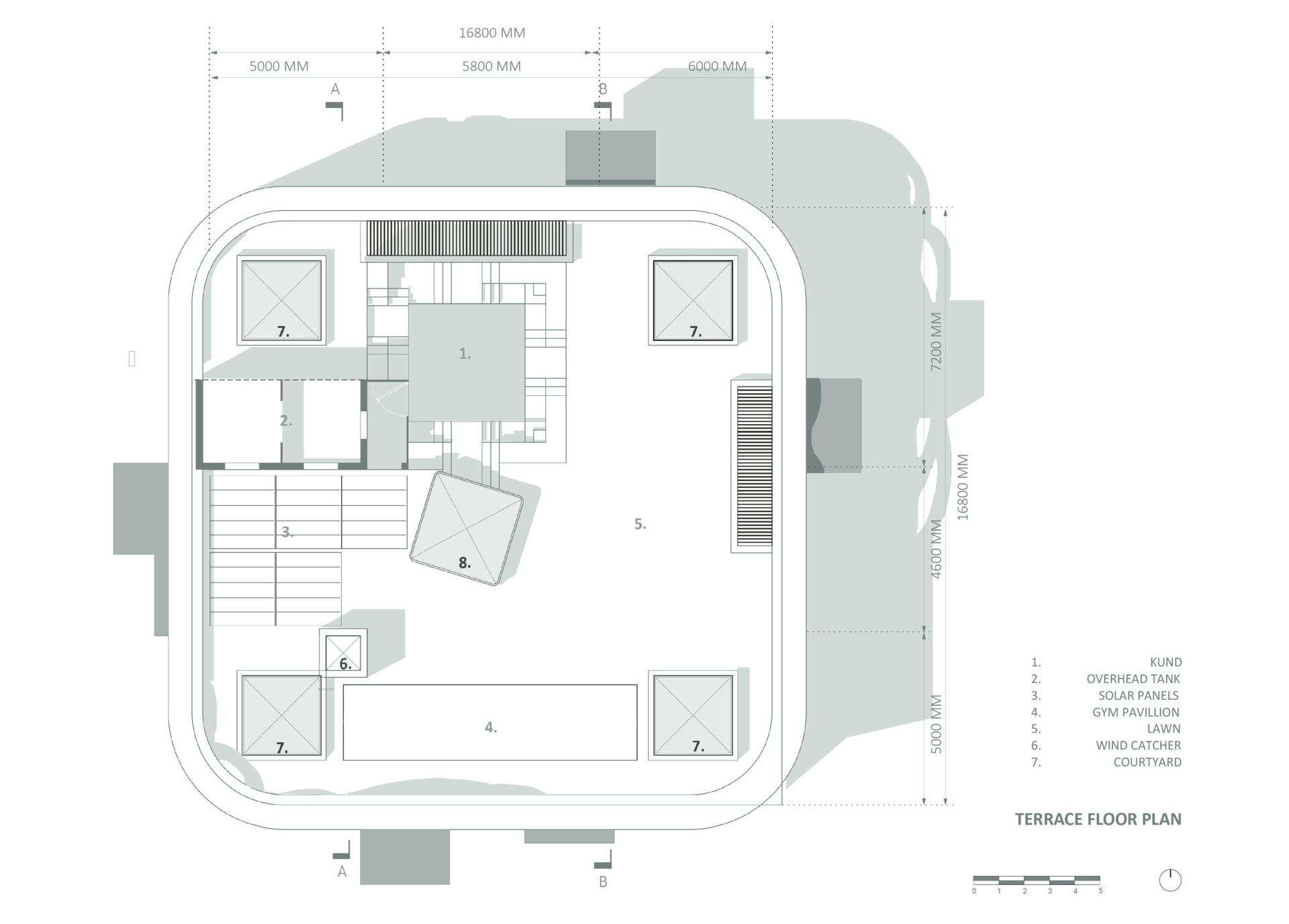
Above the brick crown, sloping roofs and a parking shed accommodate photovoltaic solar panels that help the home generate its own power. The environmental strategy continues with rainwater harvesting and sewage treatment systems that support the kitchen garden. Together, these elements complete the vision of a self sustaining homestead designed to serve the family for generations, all while remaining connected to traditional building logic.
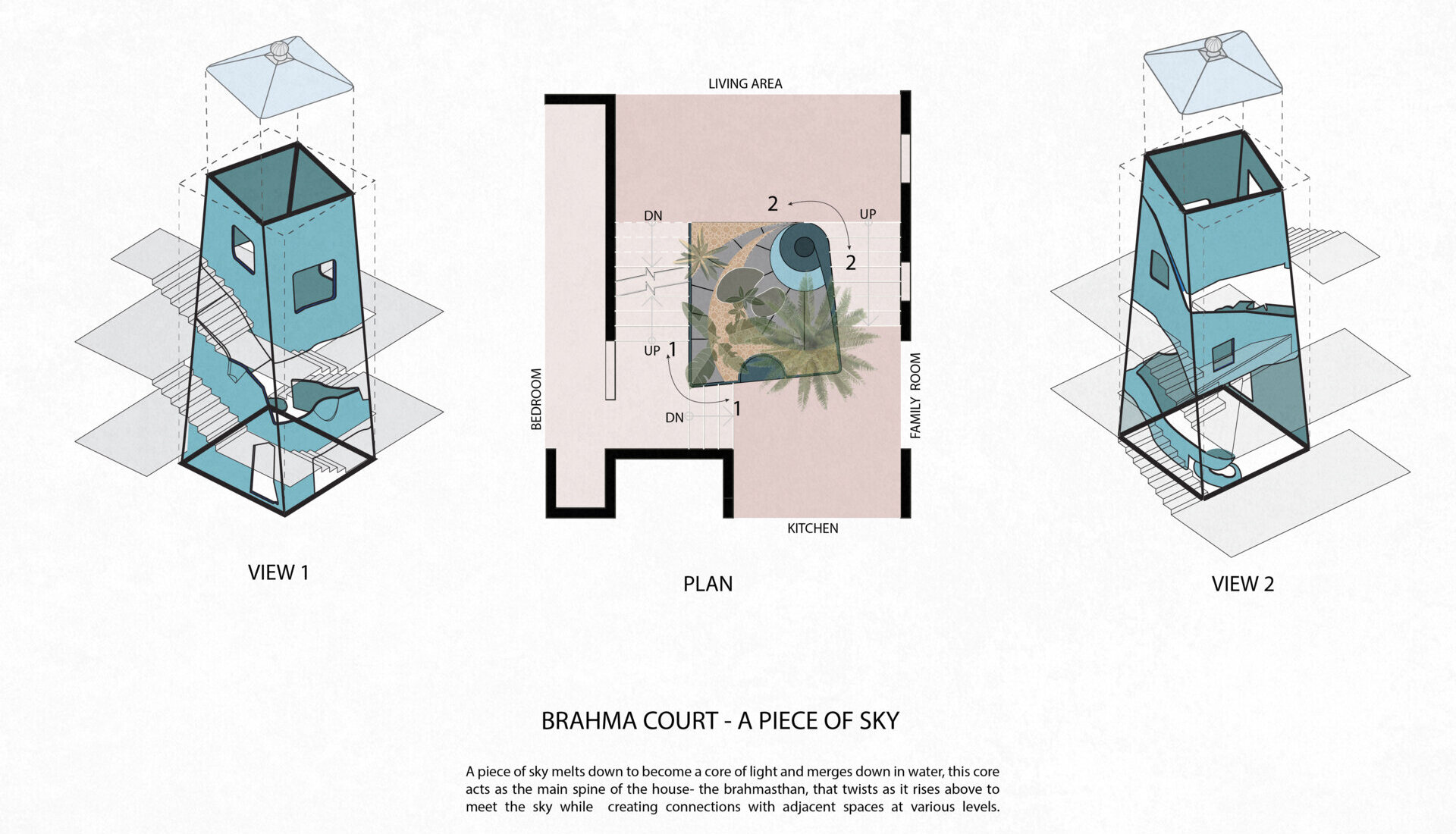
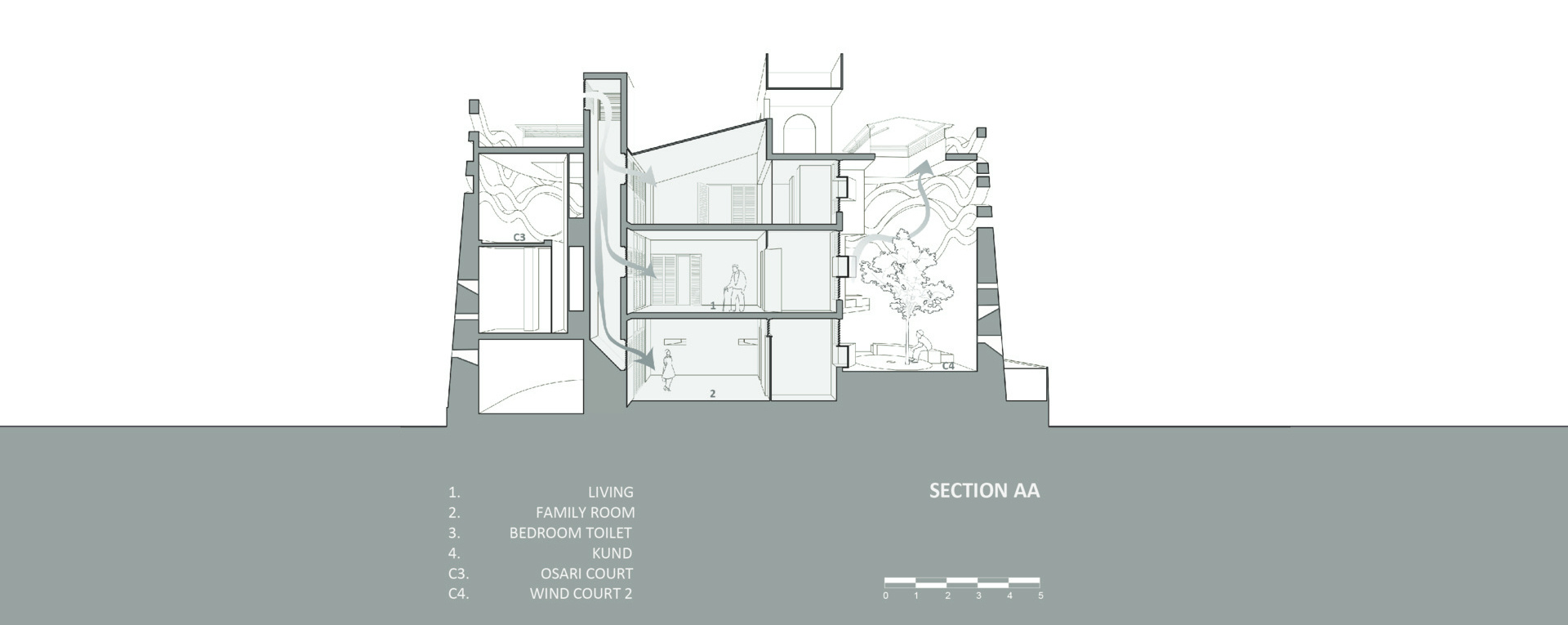
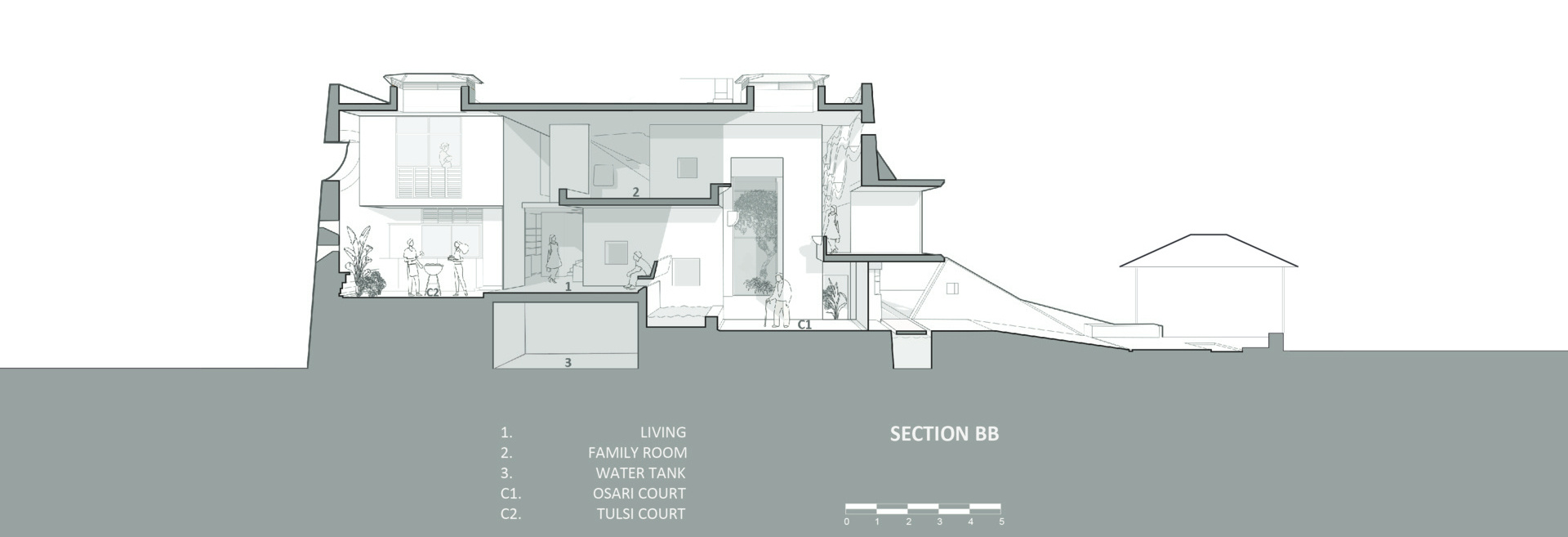
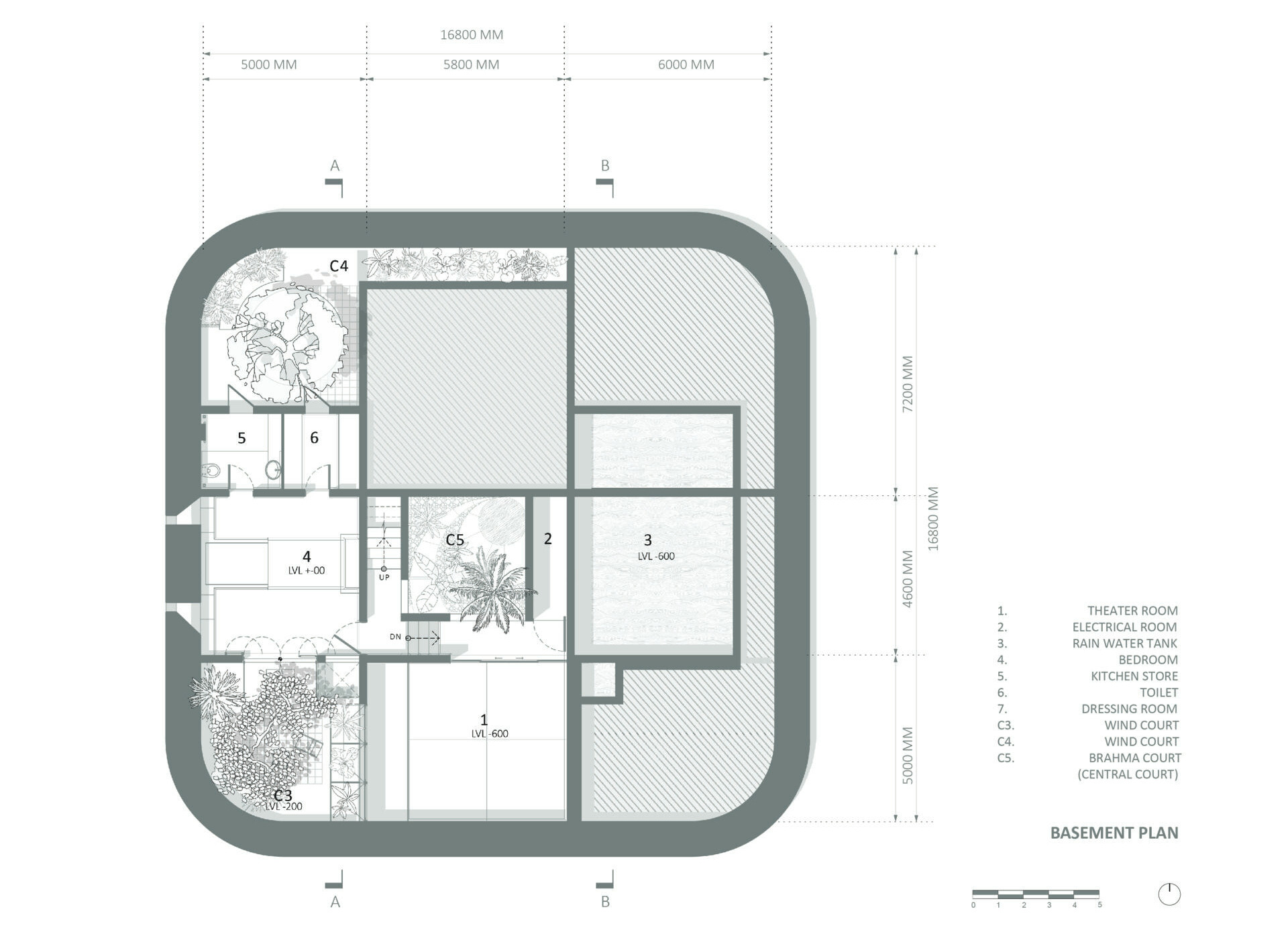
The architectural drawings reveal just how thoughtfully Gadi House has been shaped from the inside out. They map the cruciform layout, the ascending modules, and the open to sky corners that define the home’s spatial rhythm, while clearly illustrating how the thick stone base and sculptural brick crown work together as a unified envelope.
Gadi House stands as a testament to how brick can be both a structural workhorse and a sculptural medium. By combining traditional Maratha wisdom, local craftsmanship, and contemporary construction methods, PMA Madhushala has created a home where heritage is not merely referenced it is built into every wall, opening, and curve.