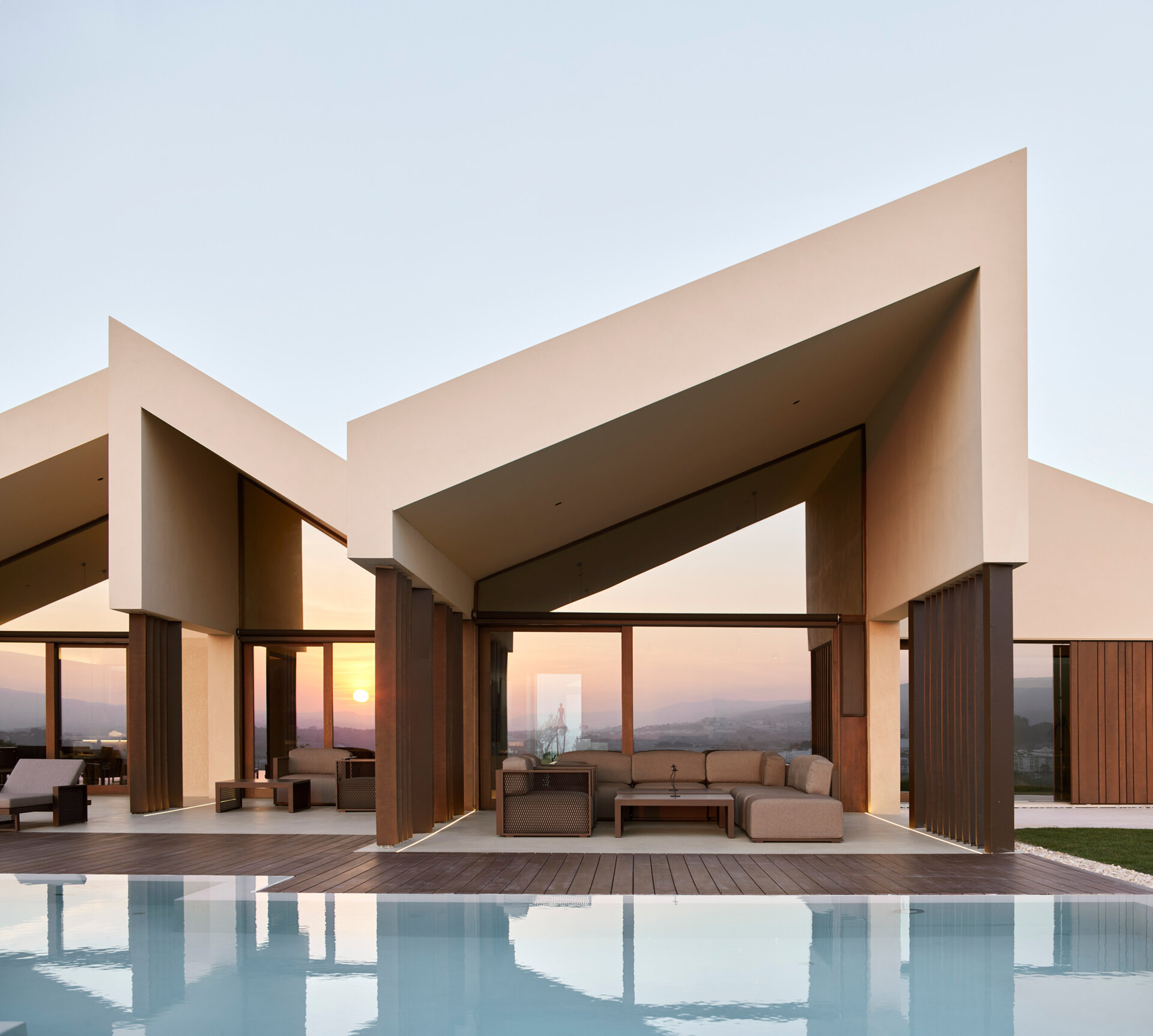
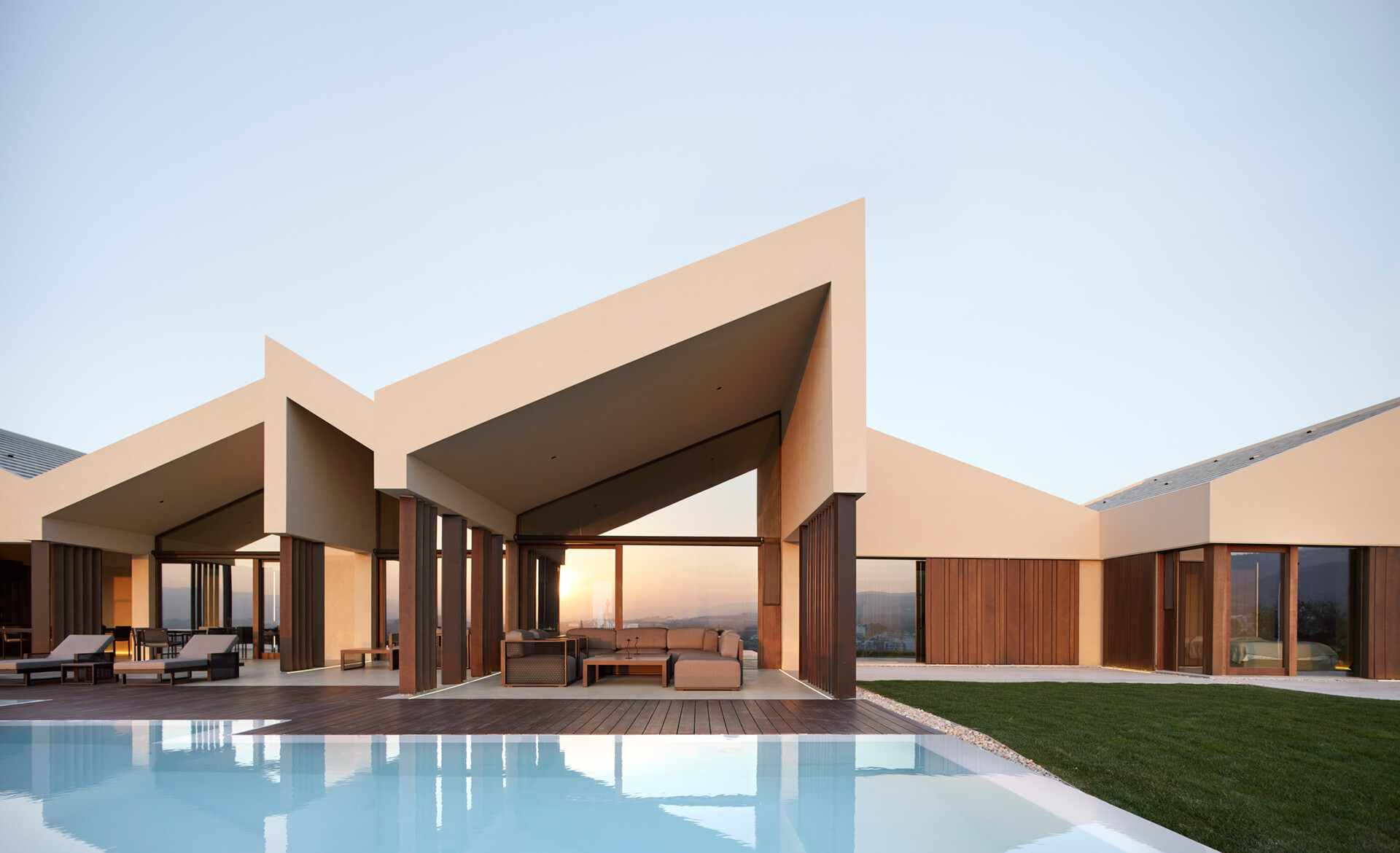
Designed by Ramon Esteve Estudio, Clos de la Vila sits on a hill above a rural town in Valencia, Spain. From a distance, it feels familiar, echoing the region’s traditional gable-roof houses. But look closer and the idea has been reshaped into something new.
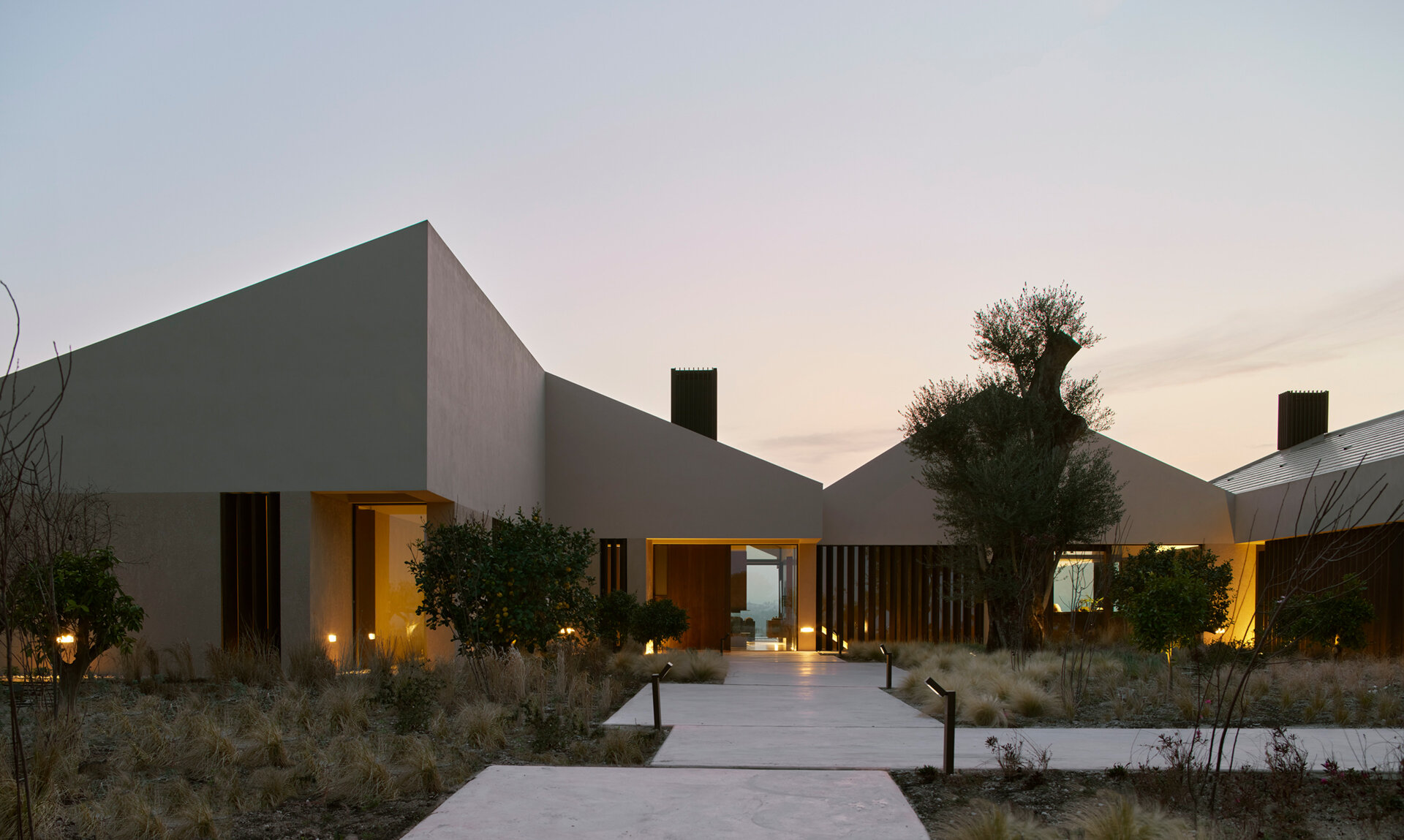
Instead of a single form, the house is made up of multiple adjoining volumes, each with its own mono-pitched roof. These shifting rooflines give the home a distinct silhouette while still holding onto a sense of unity.
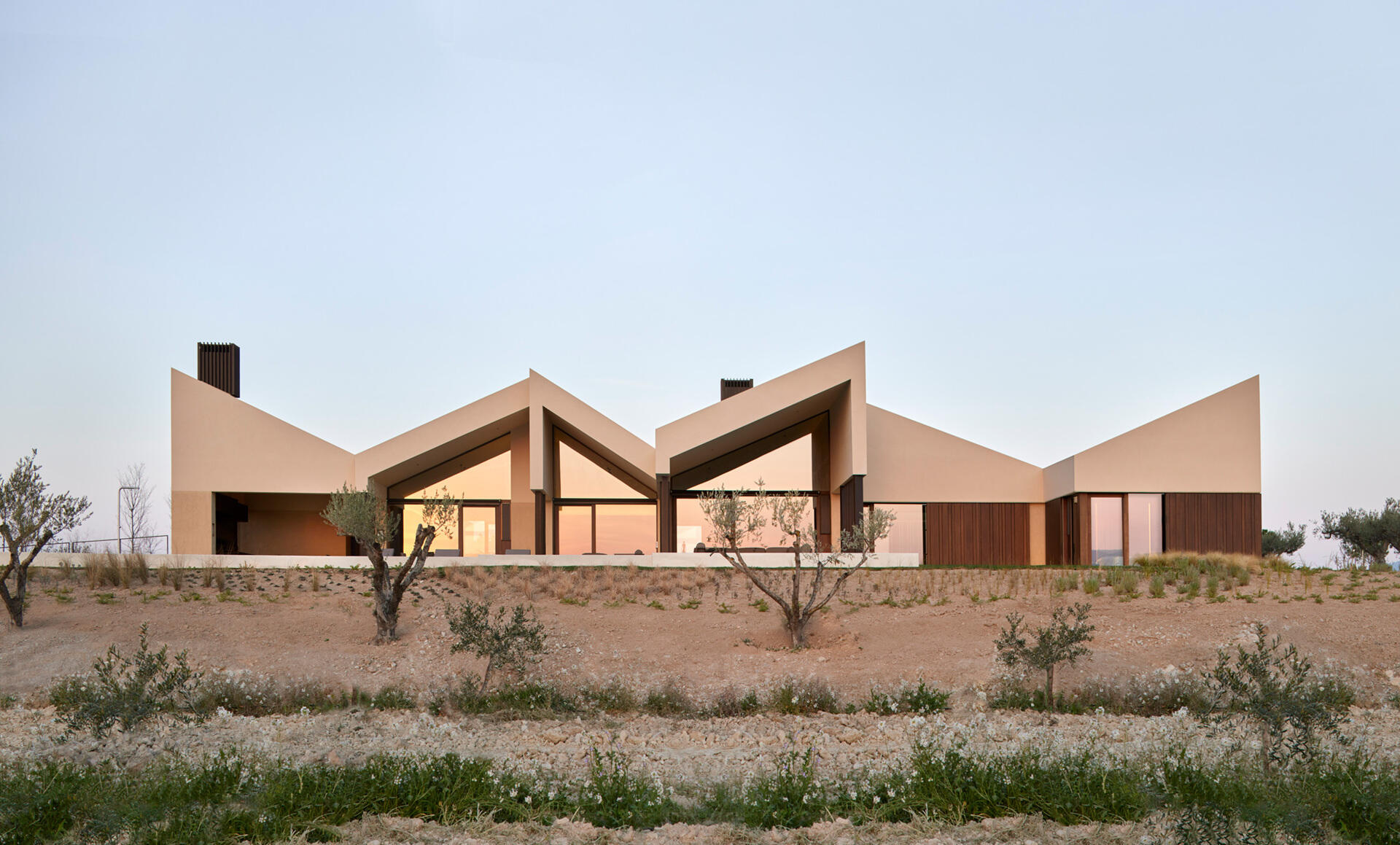
A Composition of Shifting Volumes
The house is organized as a series of offset volumes that create subtle gaps between them. These moments open up space for terraces, porches, and sheltered outdoor areas, making the exterior feel just as intentional as the interior.
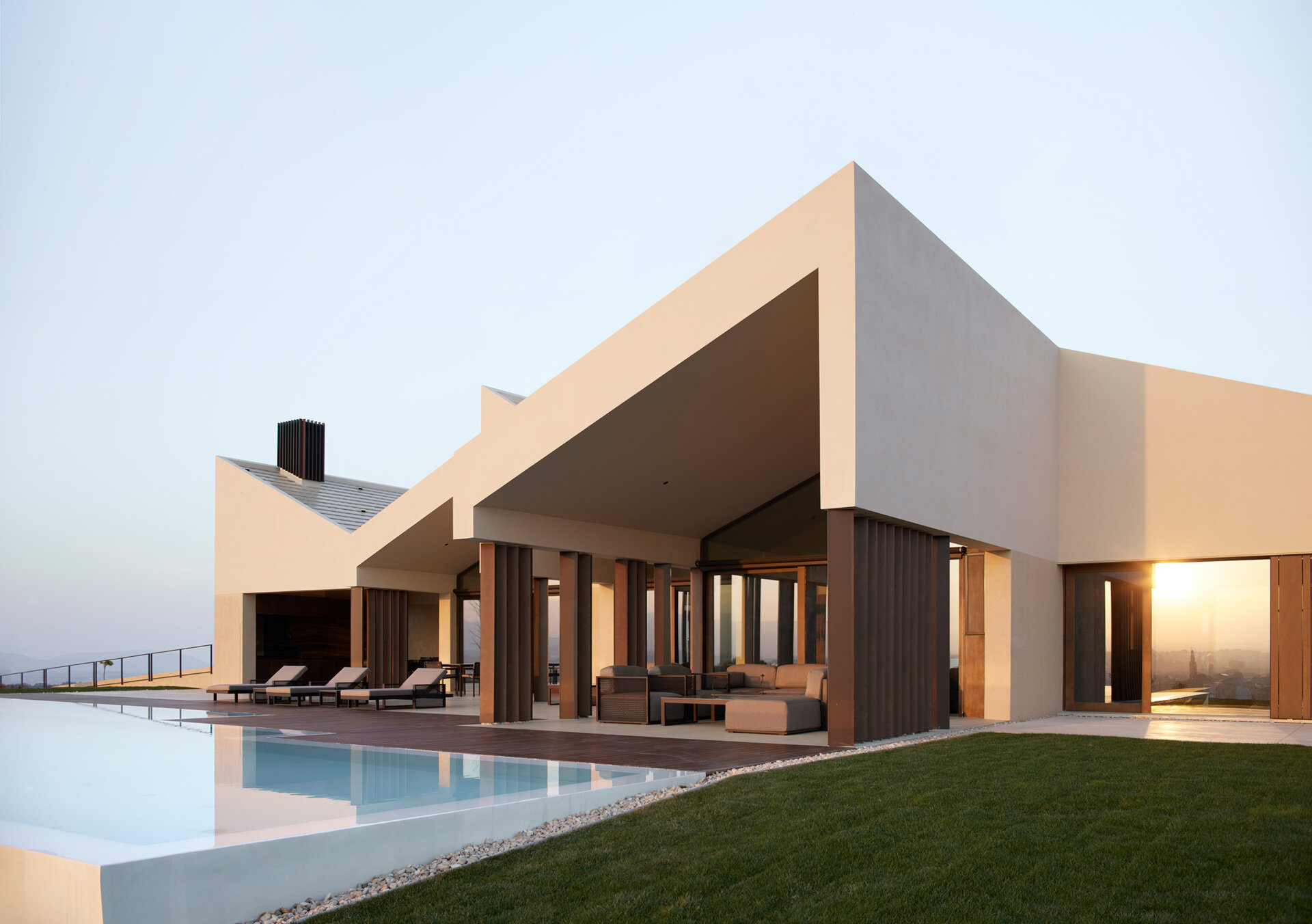
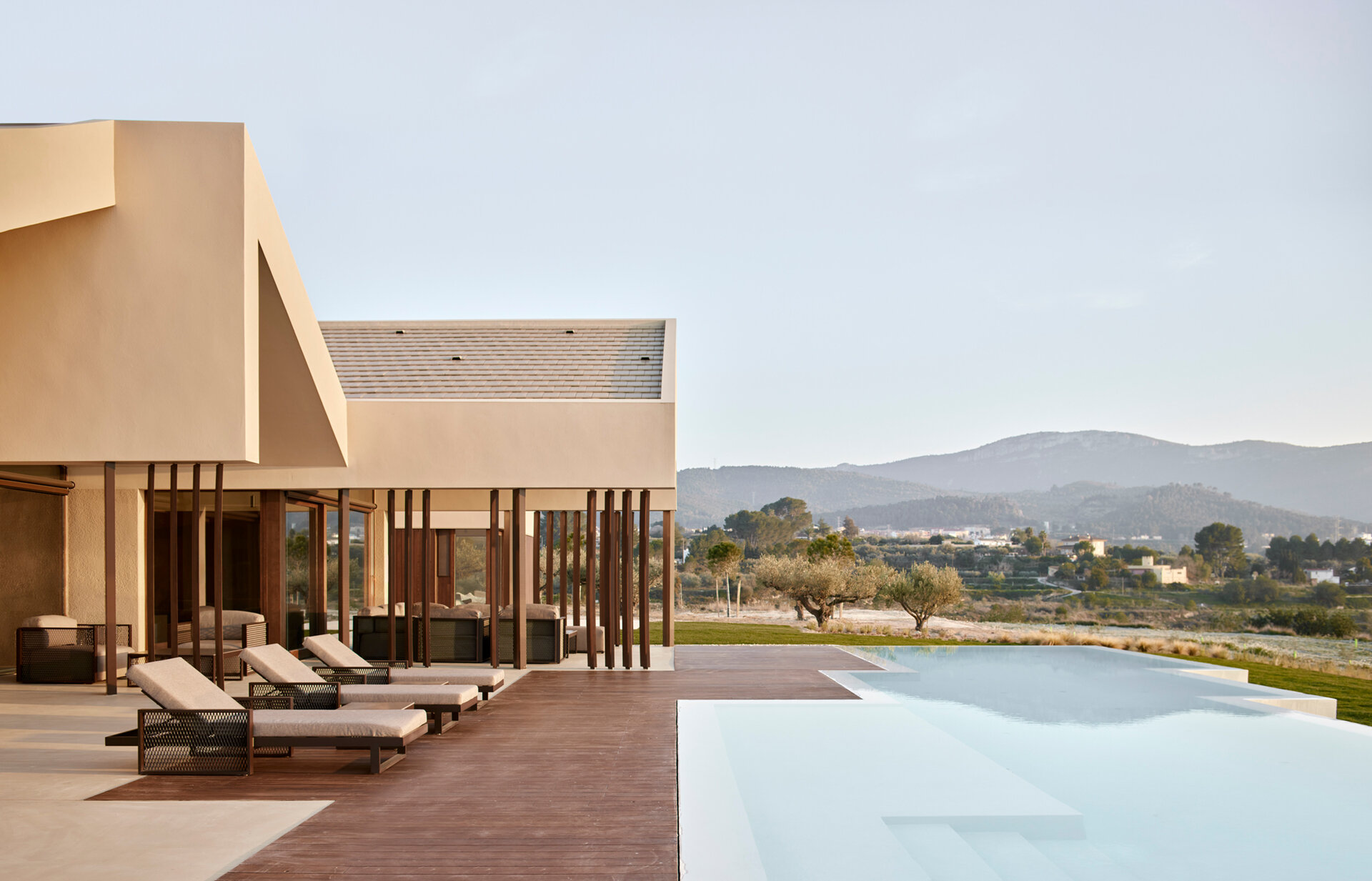
Some of the roofs extend past the enclosed rooms, offering shade and protection from the sun. These overhangs help shape how the house responds to the climate while also adding depth to the overall form.
A Grounded Material Palette
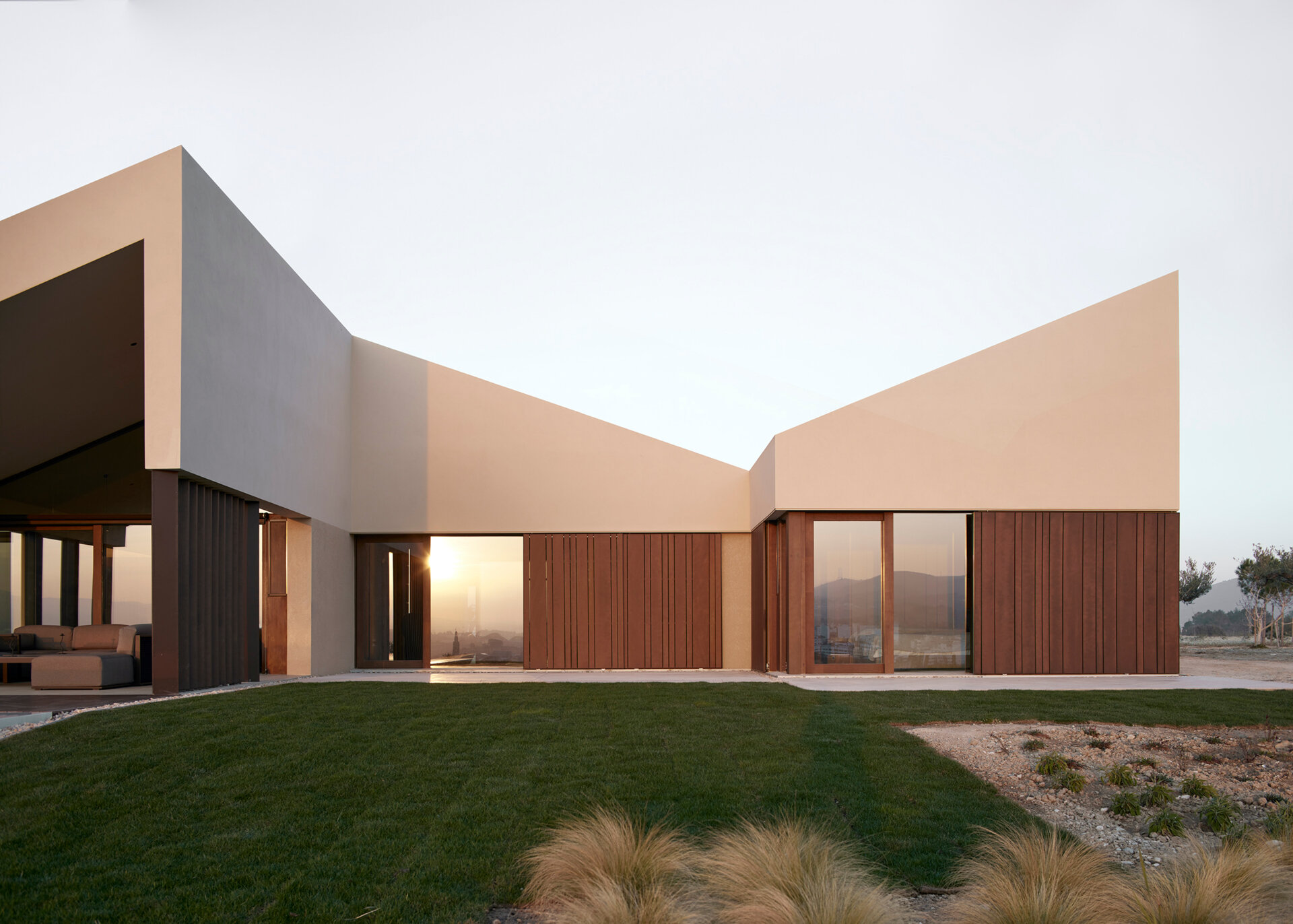
The material palette is simple but effective. A darker stucco base rises from the ground, matching the tone of the surrounding soil and visually anchoring the house. Above it, lighter rough stucco wraps the upper walls, while the roof tiles follow the same colour family, keeping everything cohesive.
This restrained approach allows the form of the house to stand out, while still tying it back to the landscape.
Extending Living Outdoors
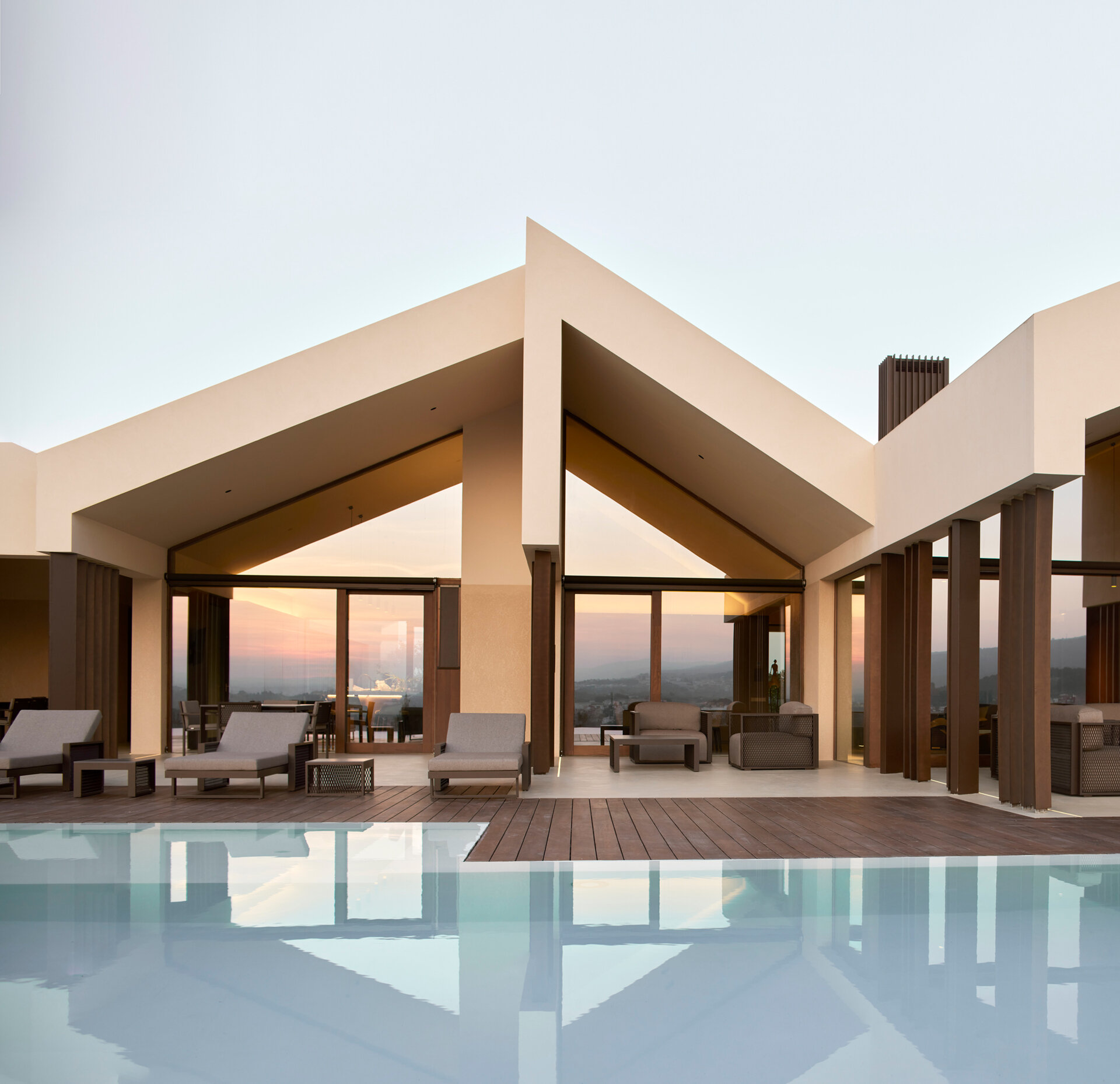
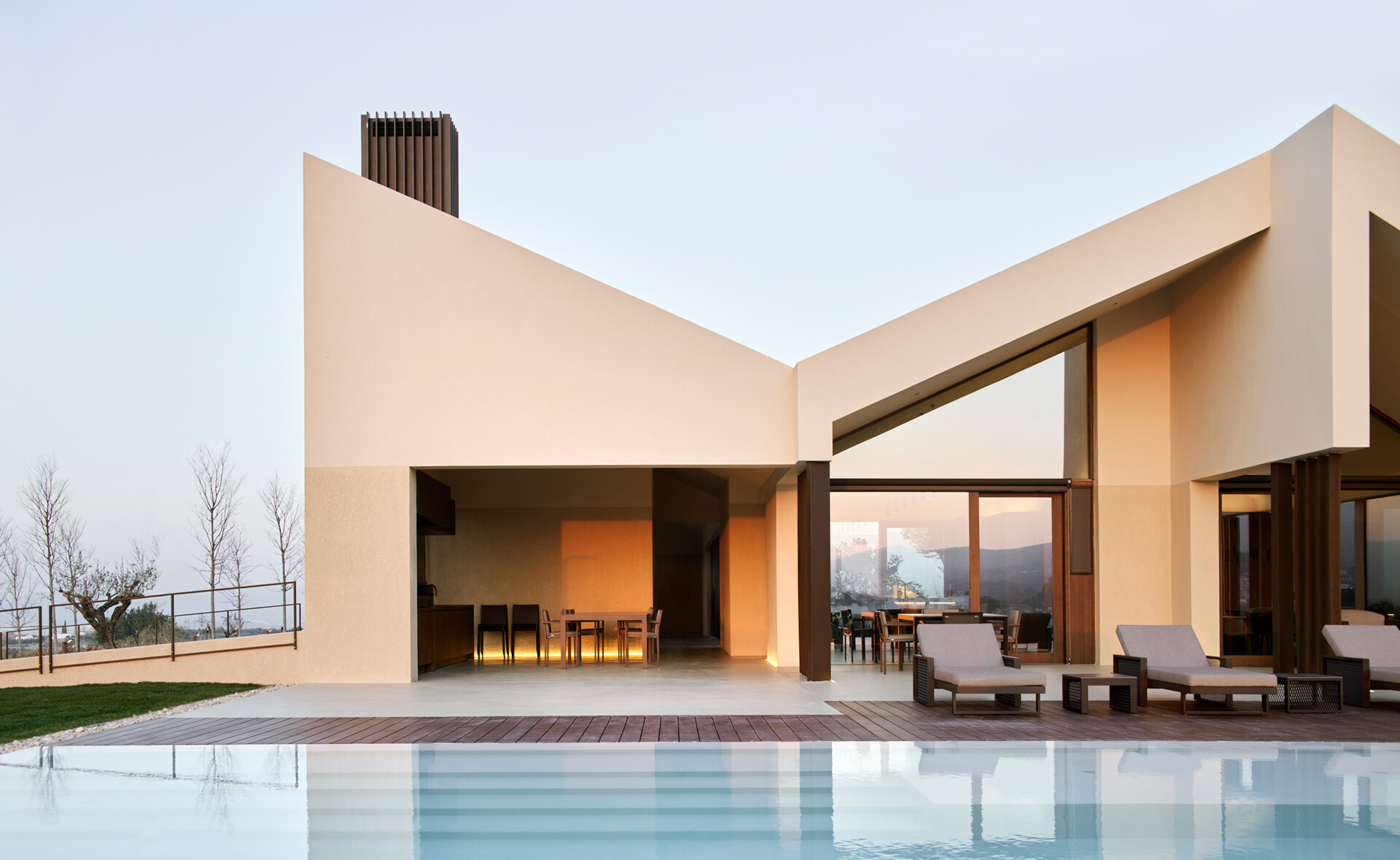
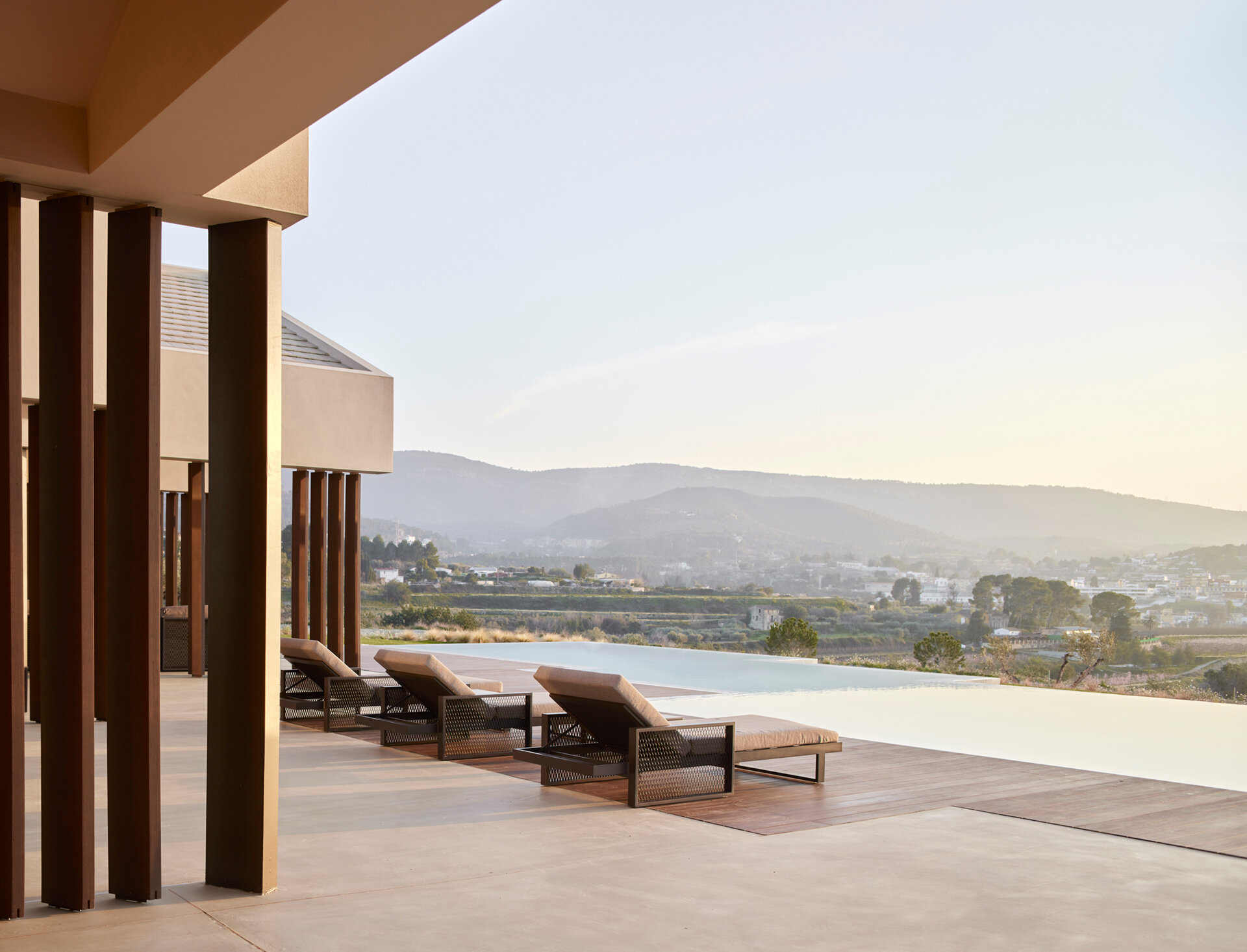
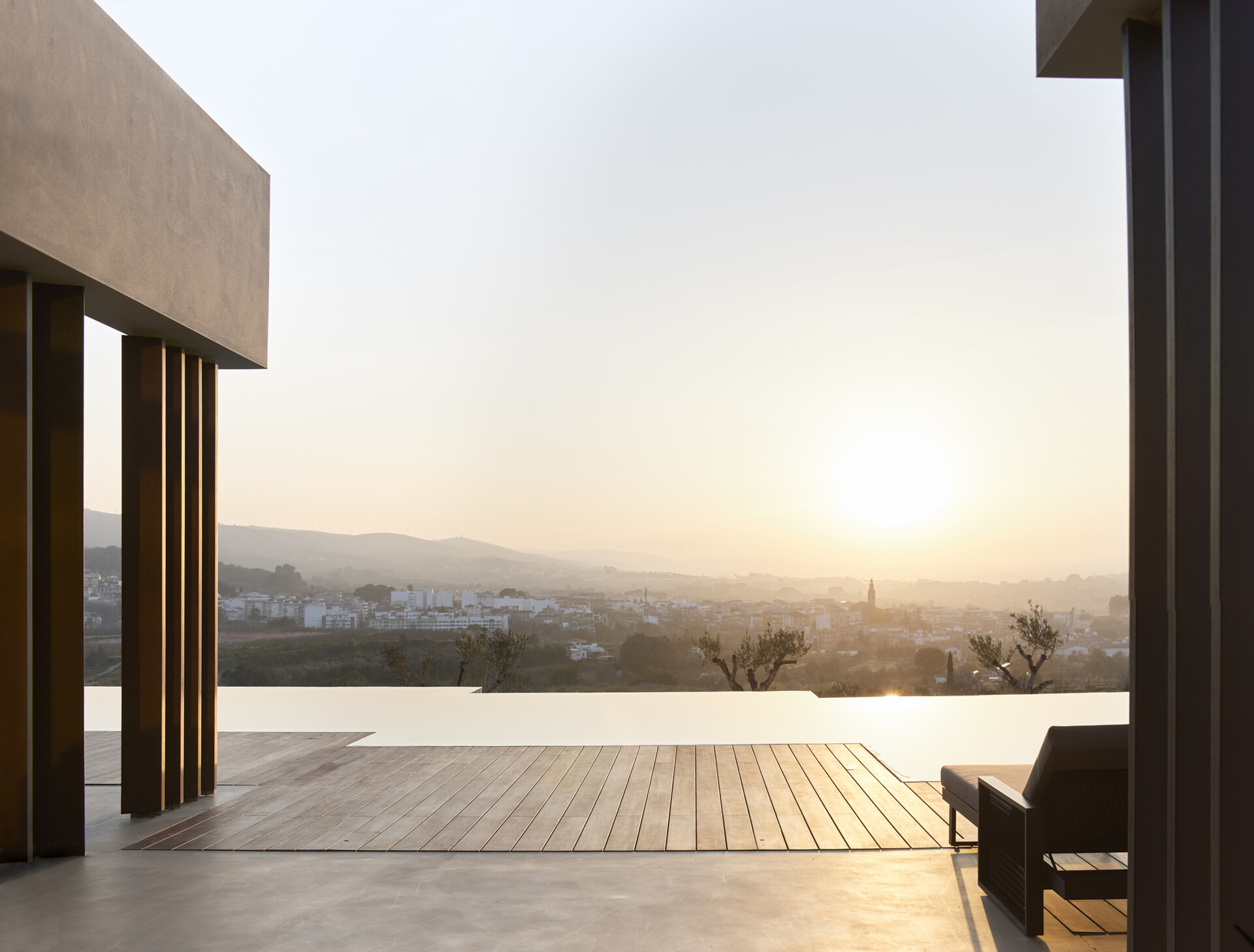
The same flooring used inside continues out toward the pool, creating a seamless transition between interior and exterior spaces. This continuity makes the outdoor areas feel like a natural extension of the house.
Around the pool, wooden platforms add warmth and contrast against the mineral tones. Their shapes echo the geometry of the water, helping define smaller zones for relaxing and gathering.
A Entrance Framed by Nature
The entrance is set within a patio that acts as a welcoming threshold into the home. Planted with citrus trees, the area offers shade and fragrance, creating an immediate sense of place. It also introduces the idea that landscape and architecture are closely linked throughout the project.
Open, Warm, and Connected
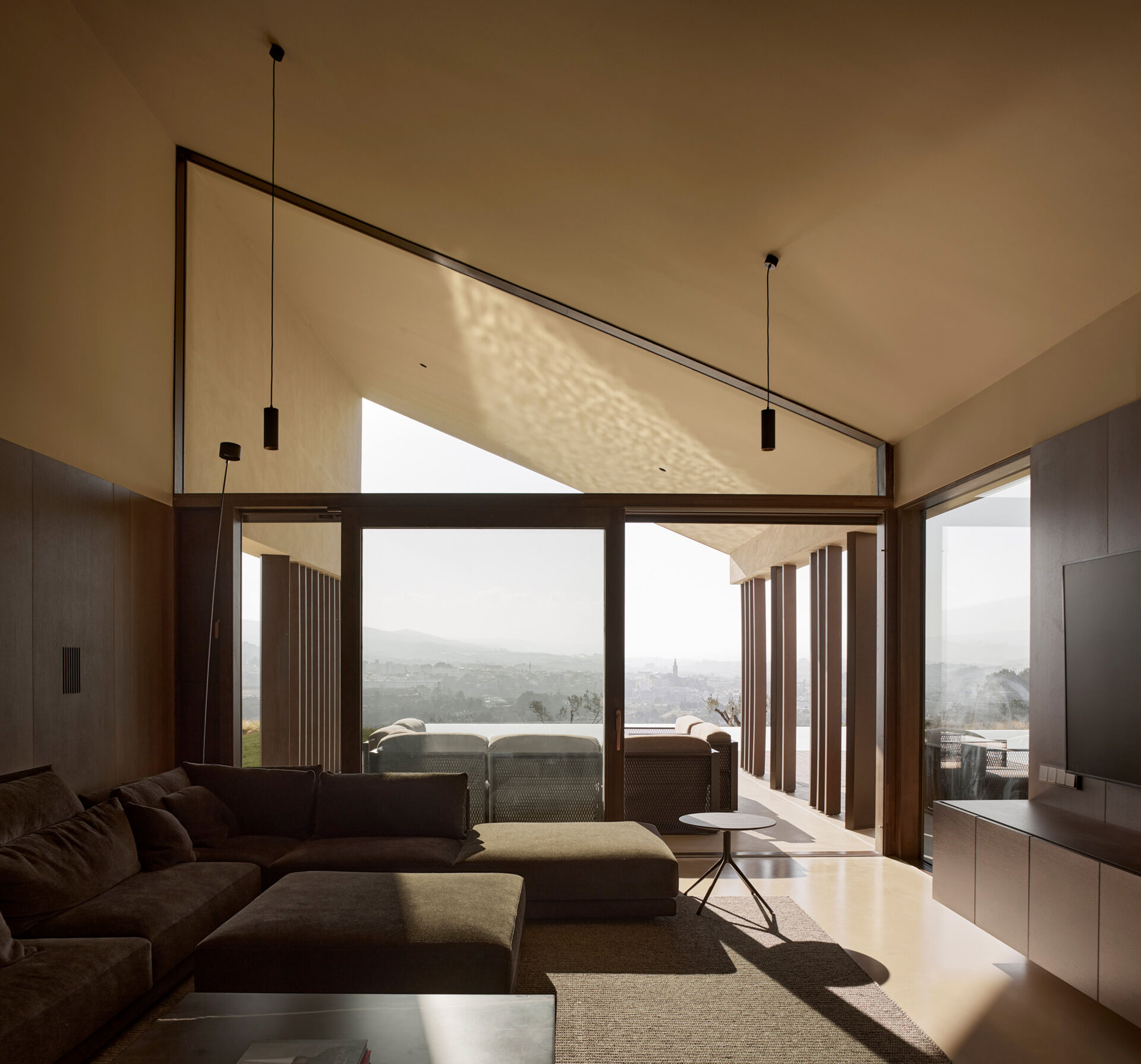
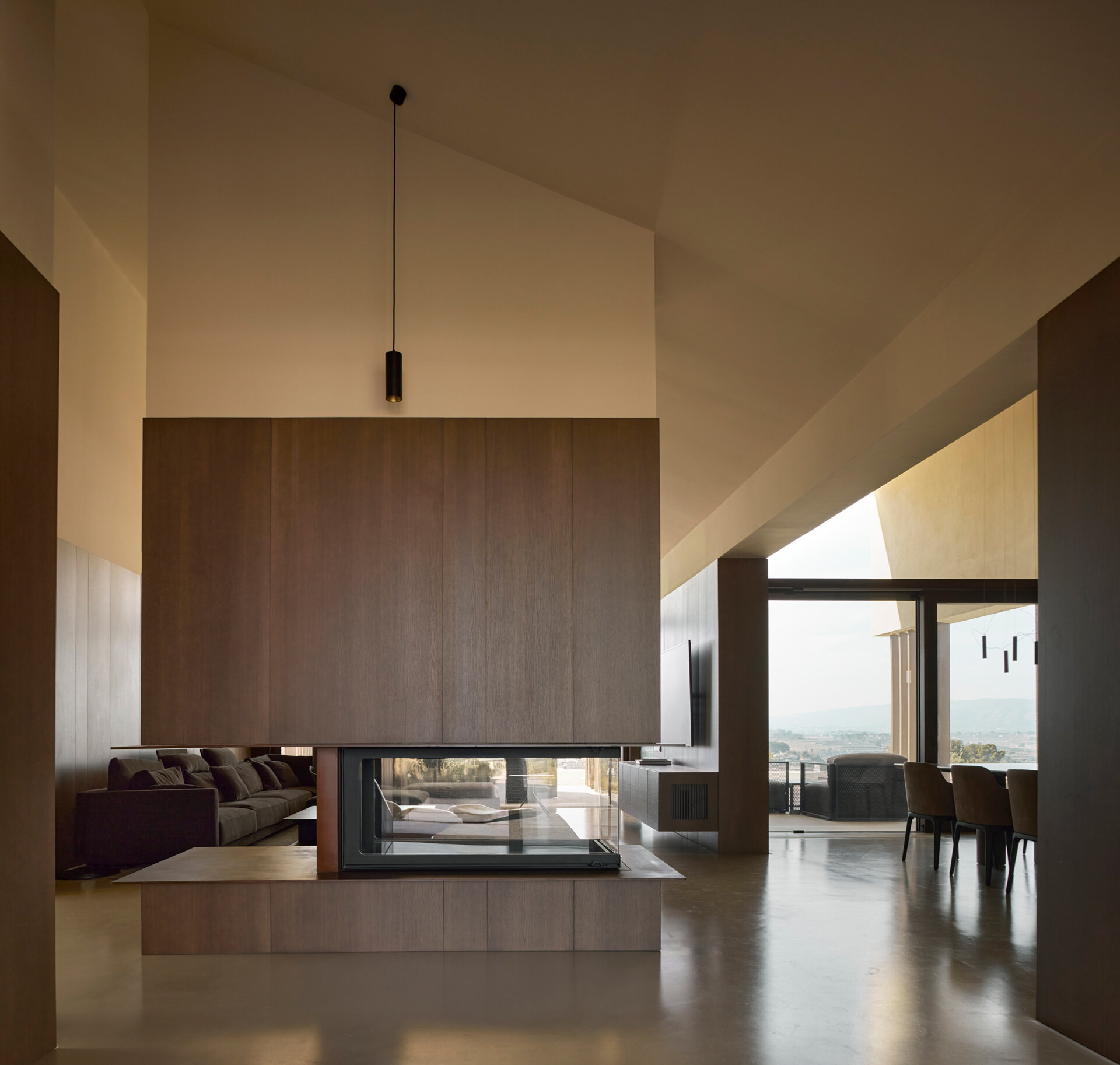
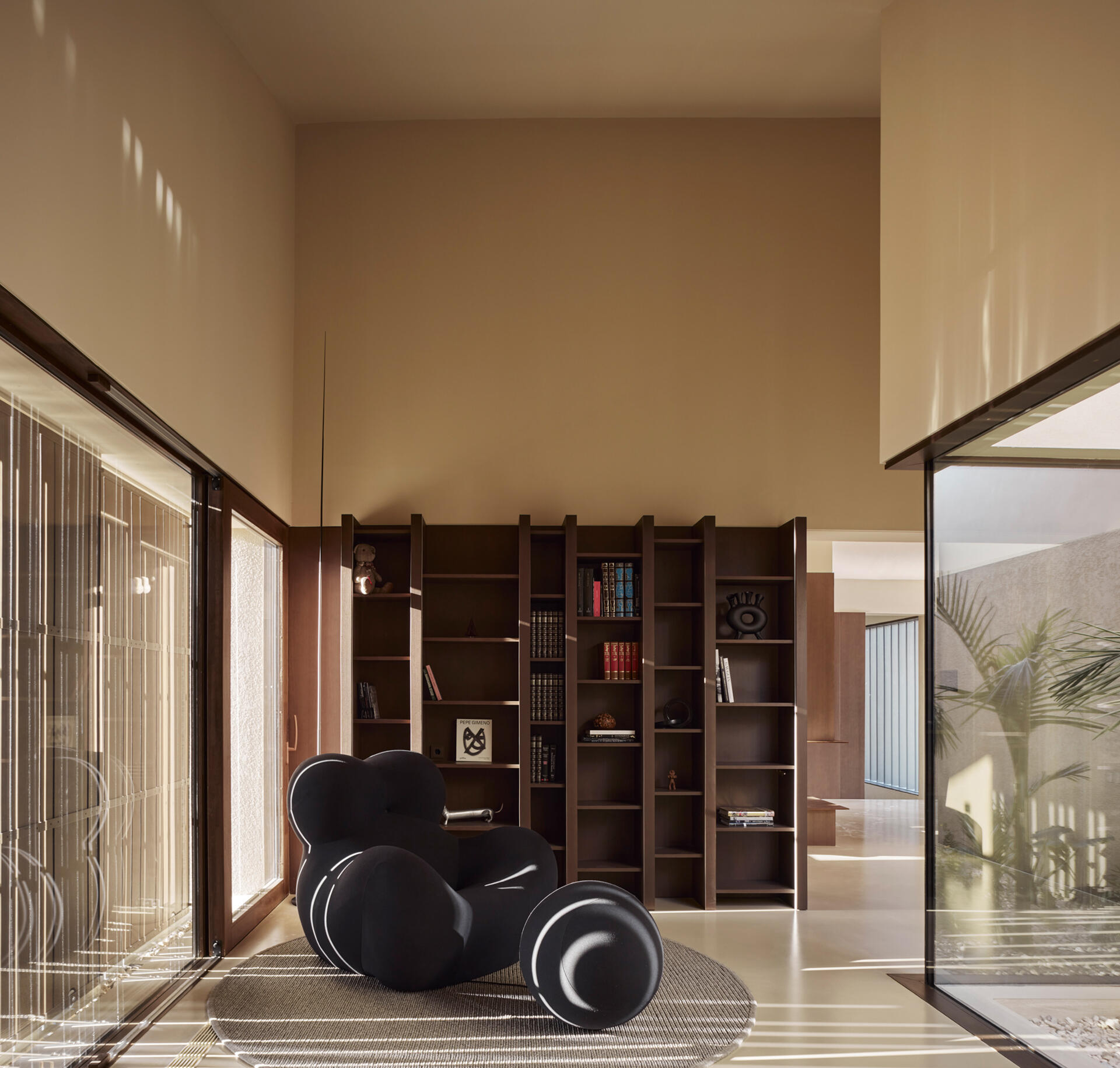
The living room forms part of the open-plan day area, where spaces flow into one another without interruption. Large openings keep it visually linked to the terraces and garden outside.
Wood plays a key role here, softening the stucco surfaces and adding warmth through built-in elements and detailing, while the fireplace becomes a natural focal point, reinforcing the sense of comfort within the open layout.
Positioned Within the Flow
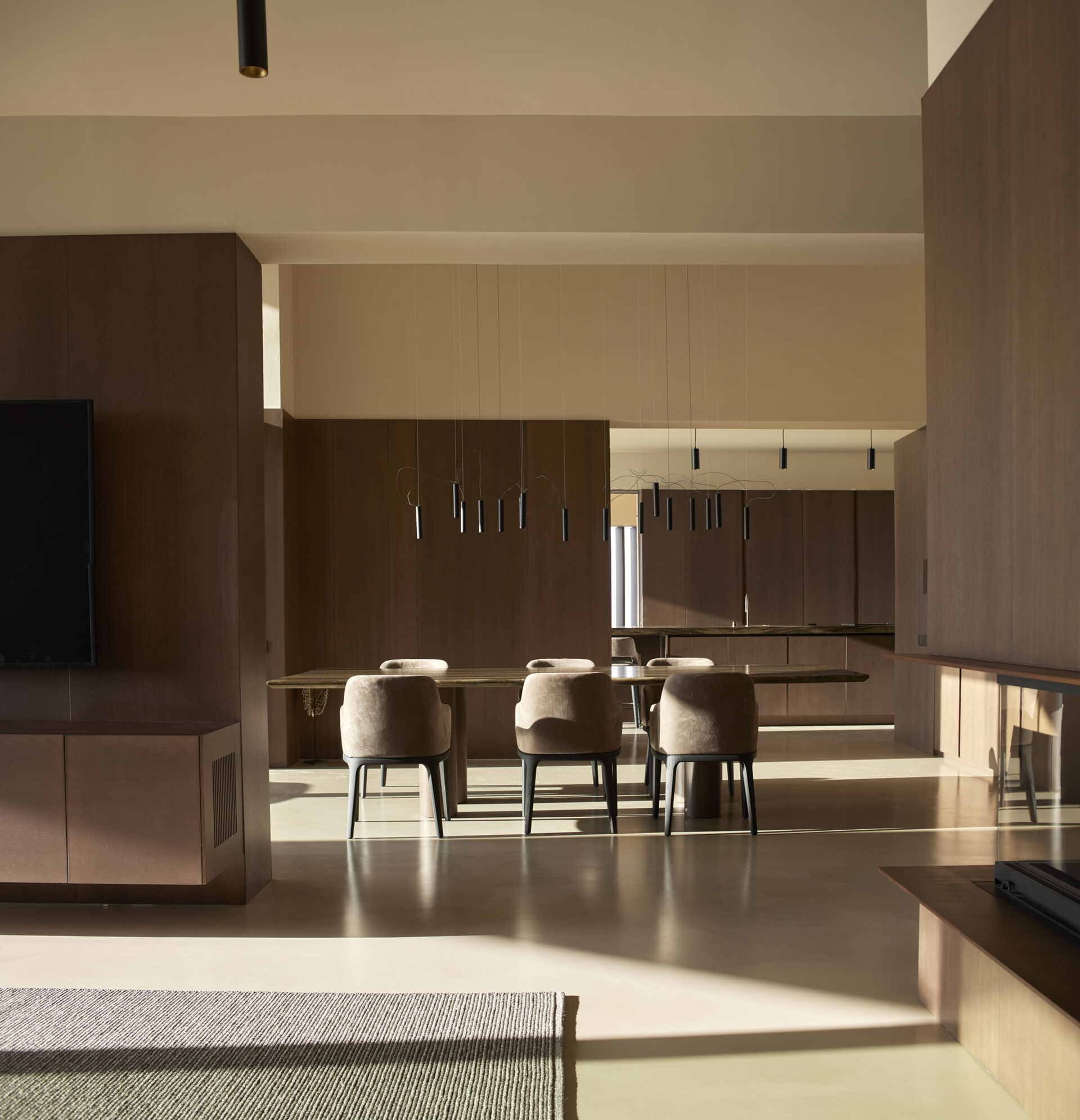
The dining area sits within the same open sequence as the living room and kitchen. It benefits from uninterrupted sightlines across the house and out toward the landscape. Its placement allows it to feel integrated into daily use, while still holding its own as a defined space within the larger plan.
Functional and Social
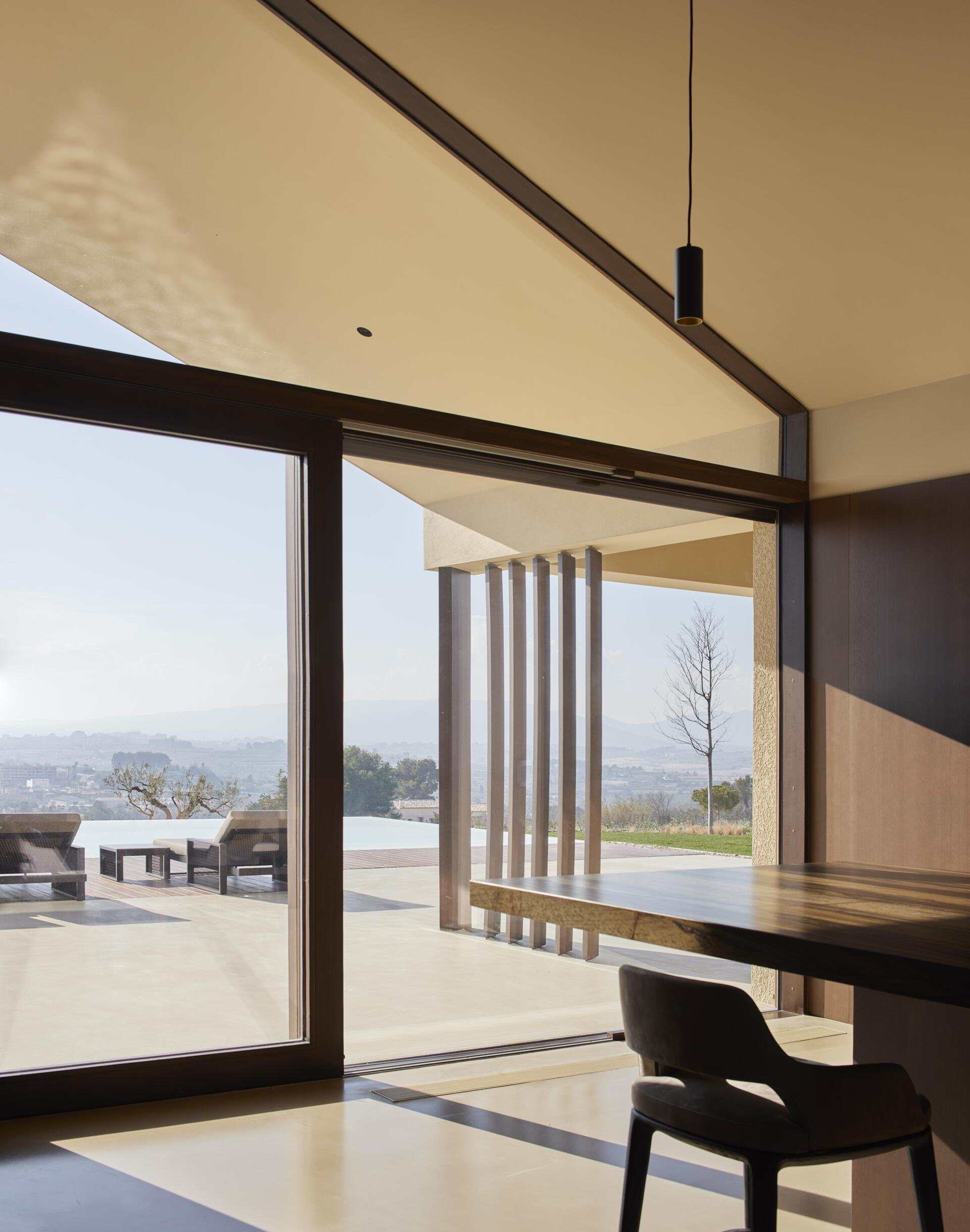
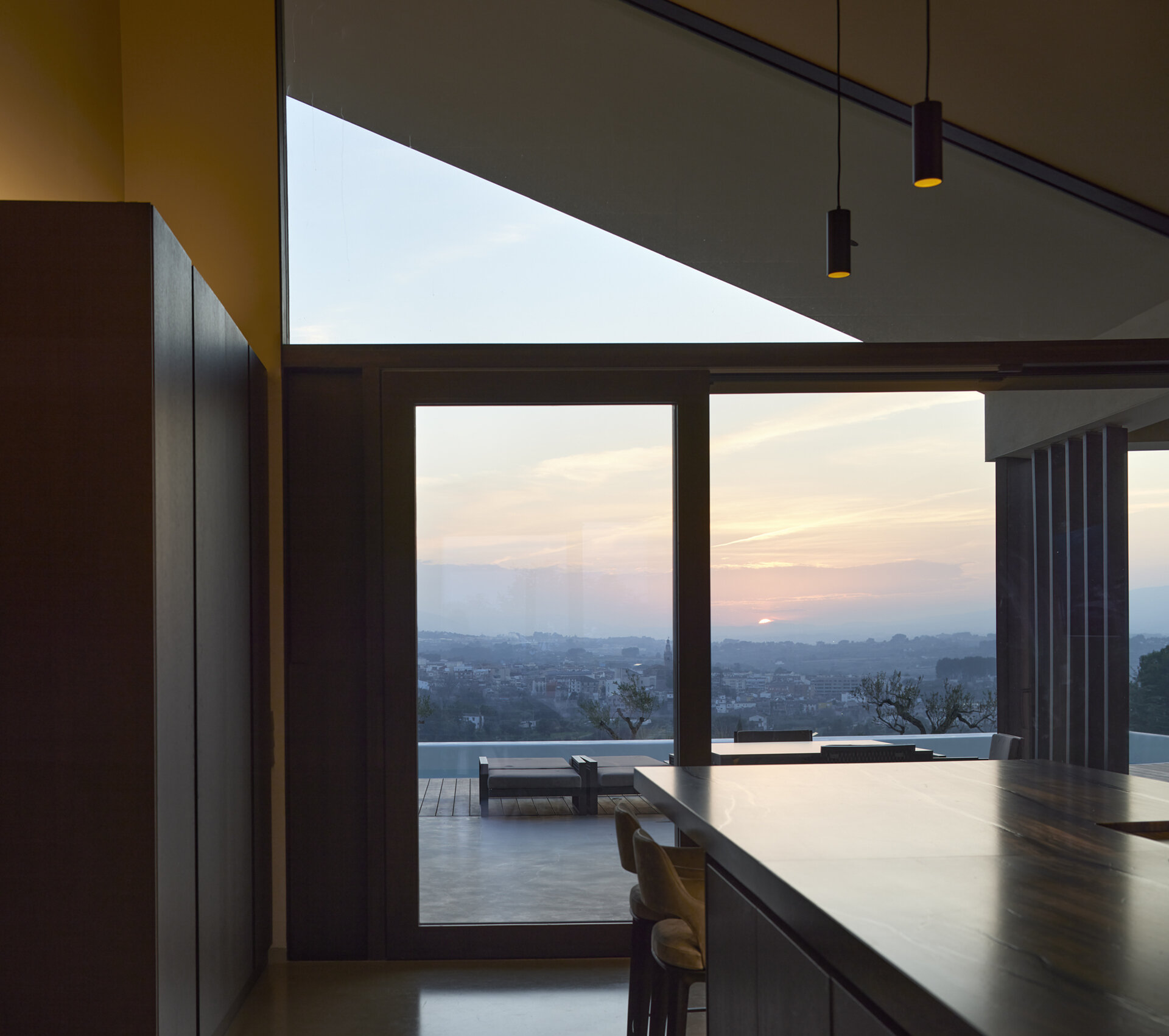
The kitchen is designed to encourage interaction and movement. It connects directly to the outdoor barbecue area, making it easy to move between inside and outside when entertaining, while clean lines and consistent materials keep the space visually calm.
Linking Public and Private
The central entrance divides the house into two clear zones. From here, circulation leads toward the more private side of the home. The hallway becomes a transition space, moving from open, social areas into more enclosed rooms.
Private and Self-Contained
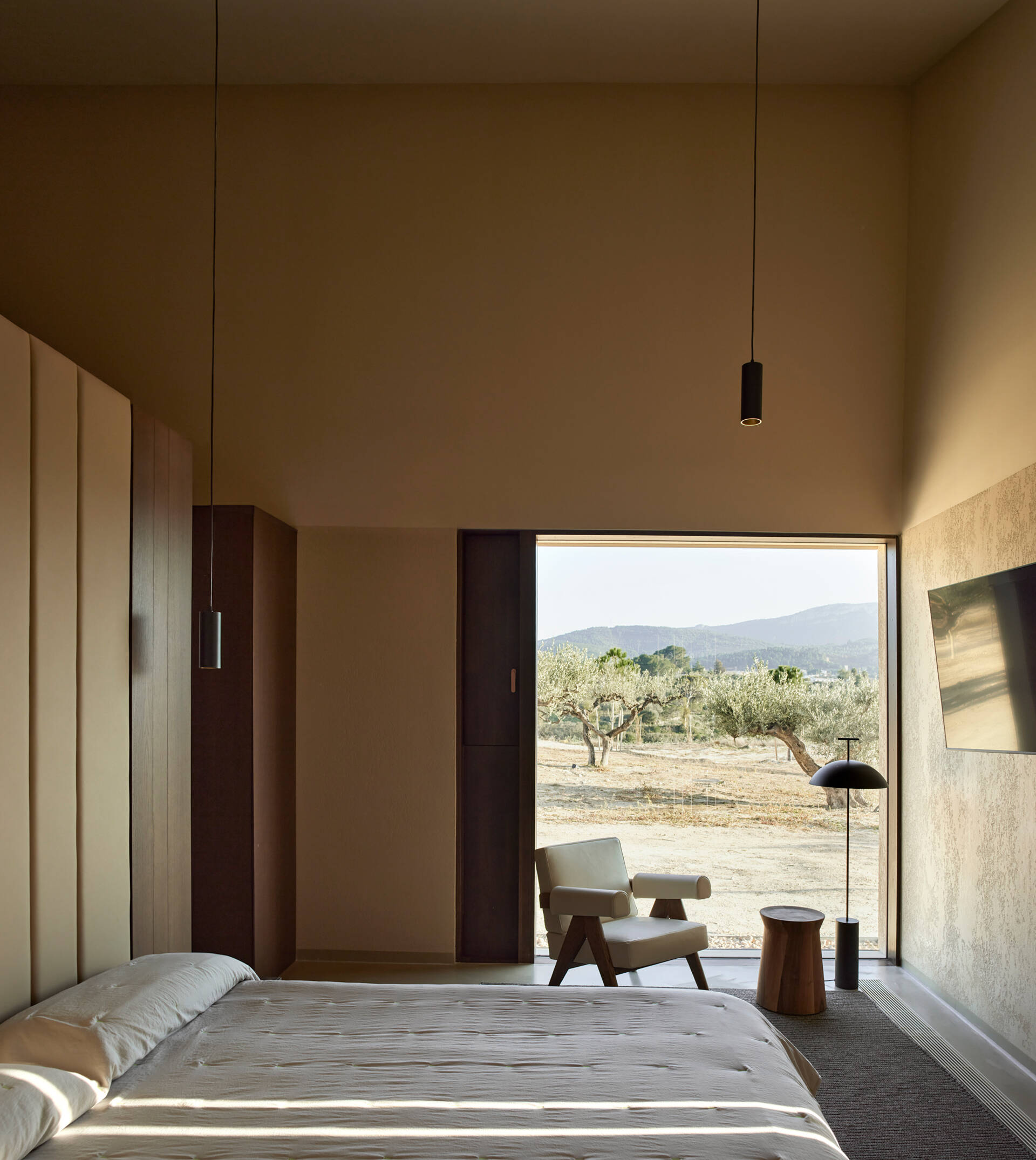
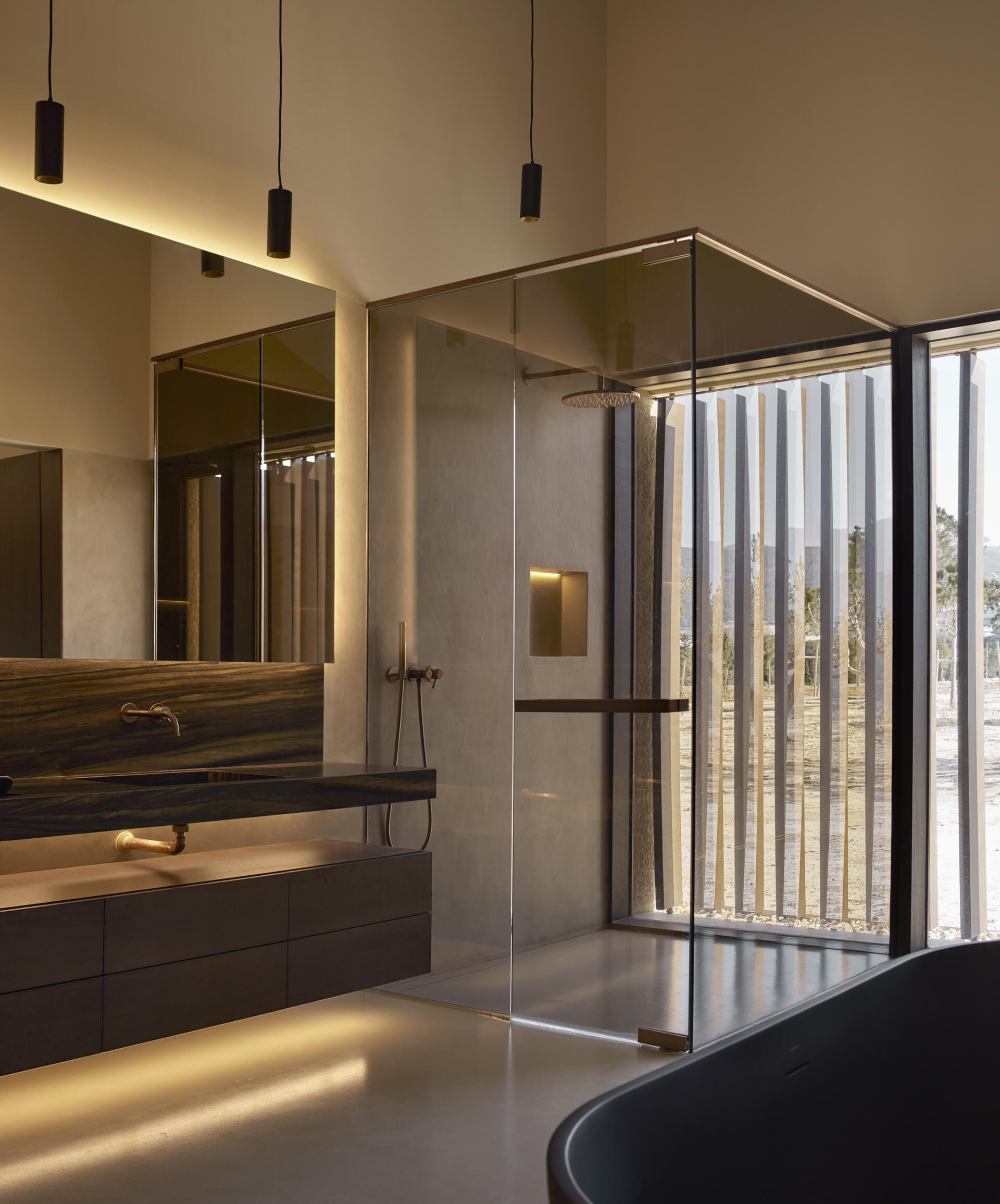
The bedrooms are located in the more private wing of the house. Each one includes its own bathroom and dressing area, giving a sense of independence within the home. In the bathroom, a glass enclosed shower looks out onto the landscape, while hidden lighting creates a dramatic effect.
Clos de la Vila brings together form, material, and layout in a way that feels both familiar and new. By breaking the house into smaller volumes, it creates a series of spaces that open, shift, and connect in different ways.