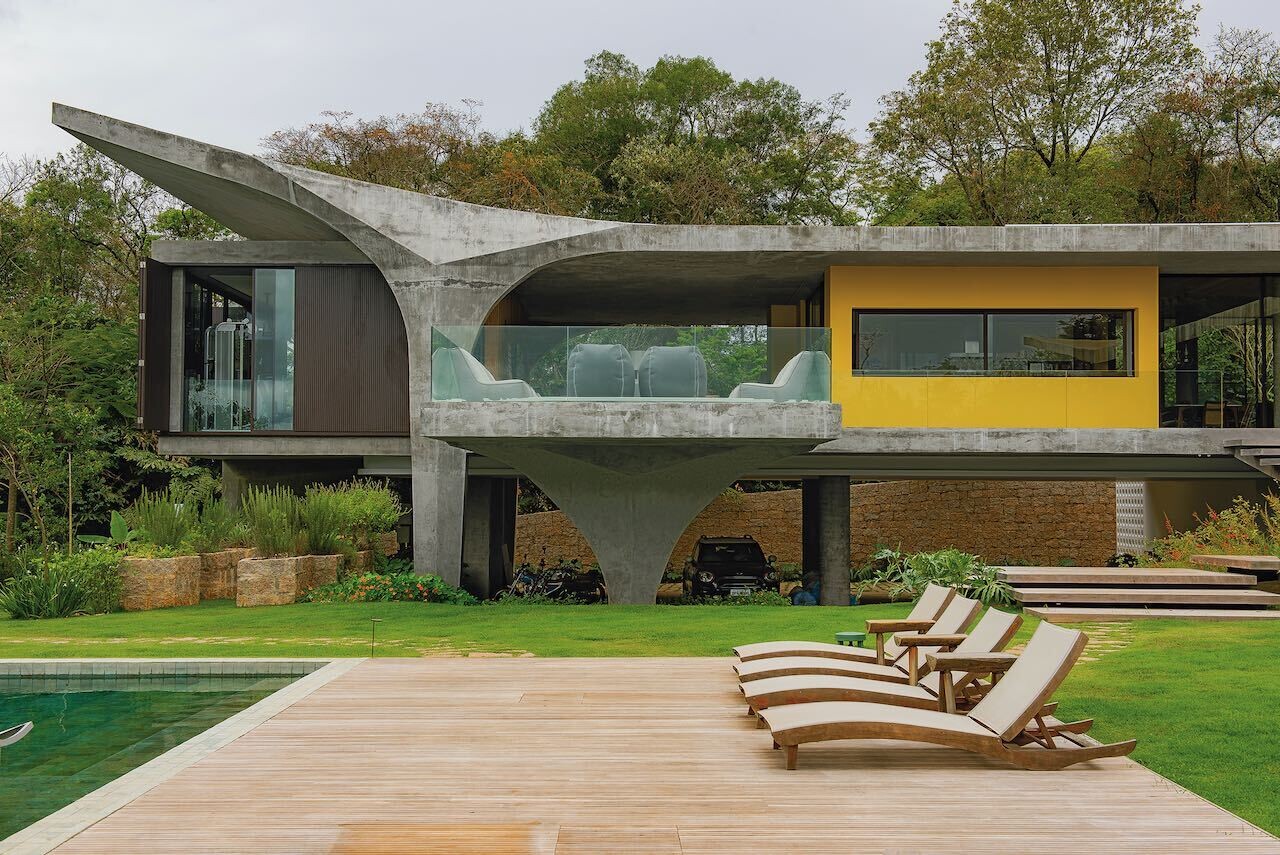
Architect Leo Romano designed a modern concrete house in São Paulo, Brazil, set within a sloped, tree-filled site. The residence sits lightly above the terrain, using its structure to shape both its appearance and how it’s experienced.
From the outset, the house stands apart. Clean lines define the architecture, while the exposed concrete frame becomes the main visual language. The result is a home that feels elevated, open, and closely tied to the surrounding forest.
Architecture That Appears to Float
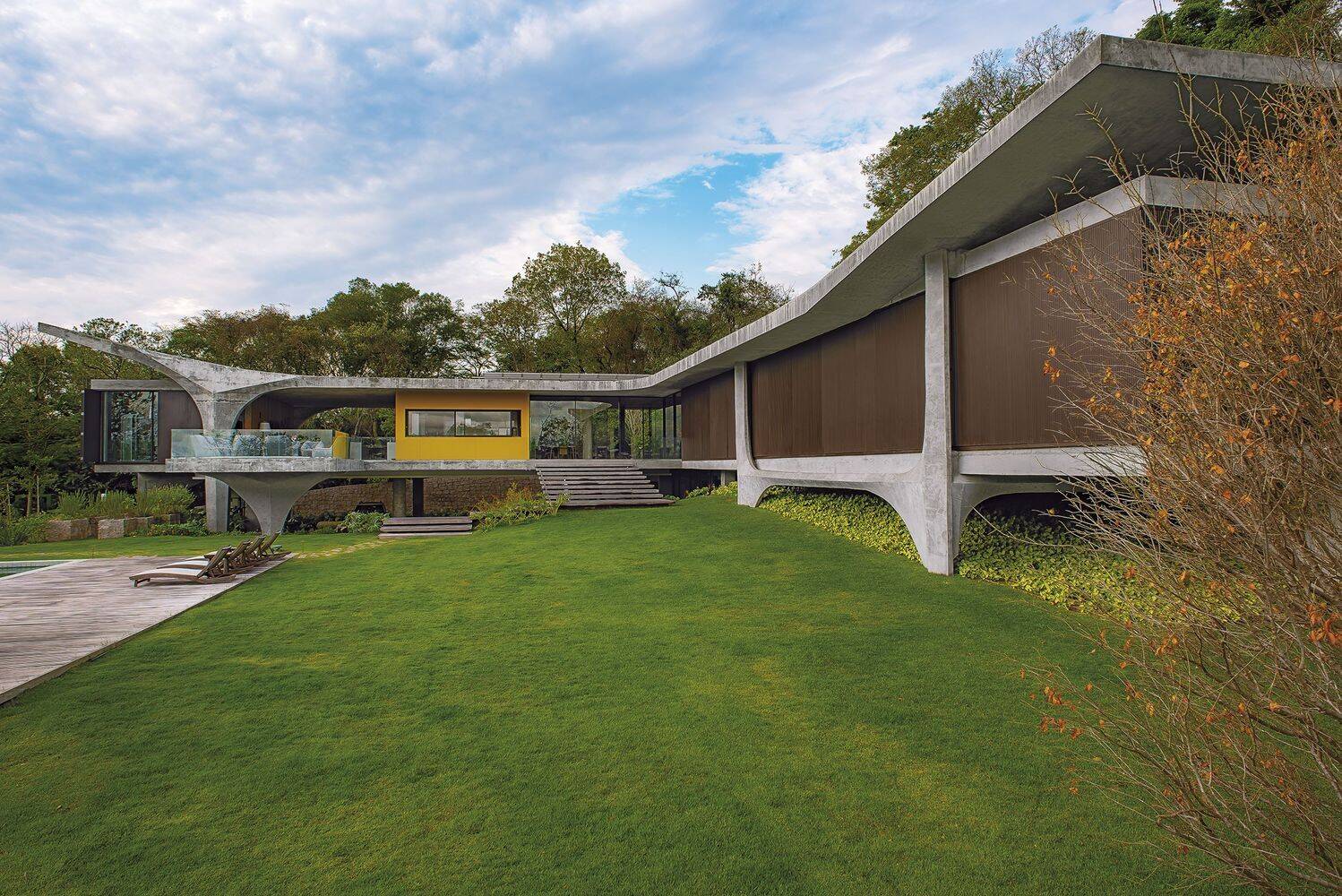
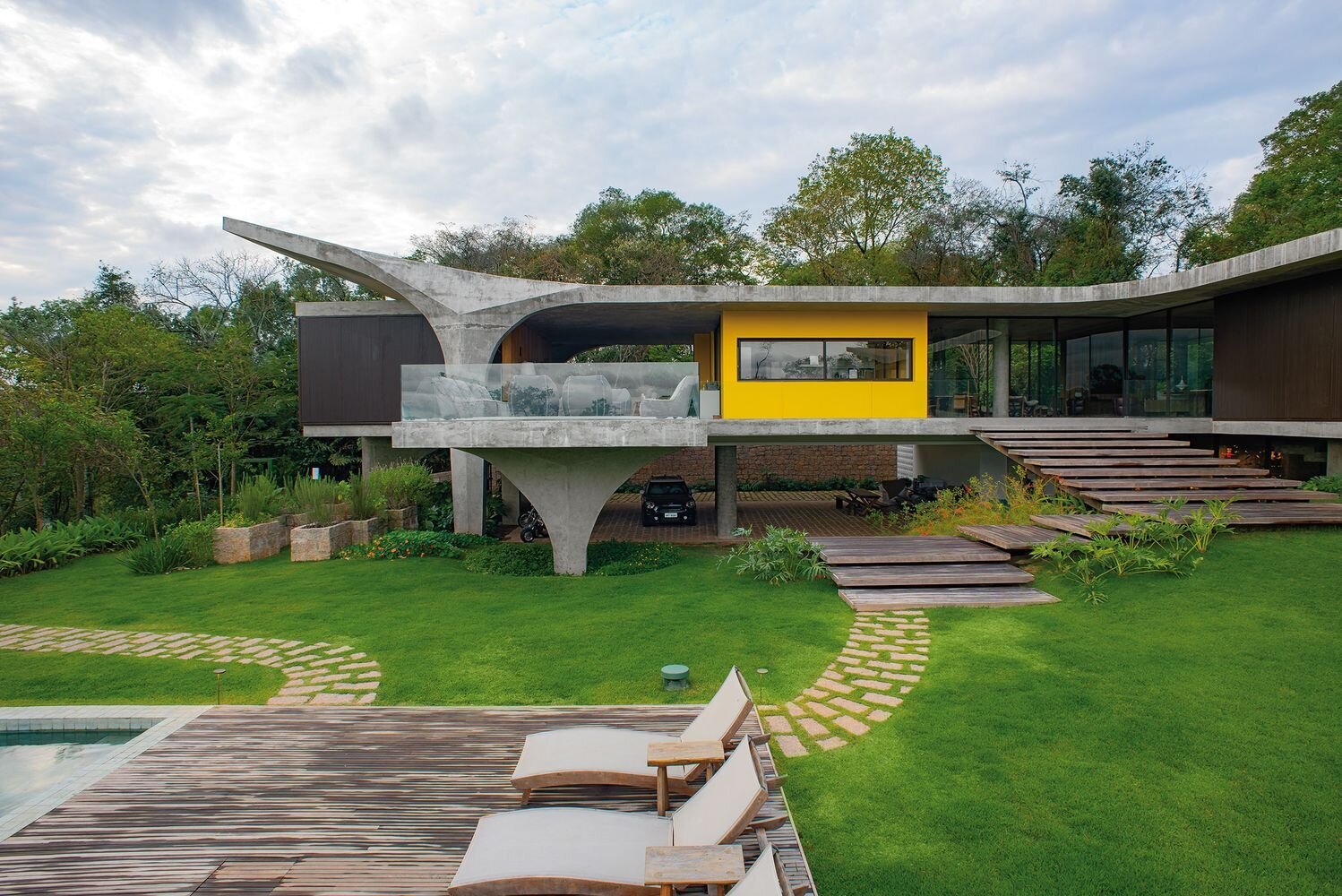
The design takes full advantage of the sloped land, lifting the main living level above the ground. This creates the impression that the home is hovering, with the terrain passing beneath it.
The pillars play a key role here. Instead of being hidden, they are treated as sculptural elements, supporting the structure while also defining its identity. The bold volumes above seem to rest lightly on these supports, reinforcing the floating effect.
A Grand Entrance Framed by Design
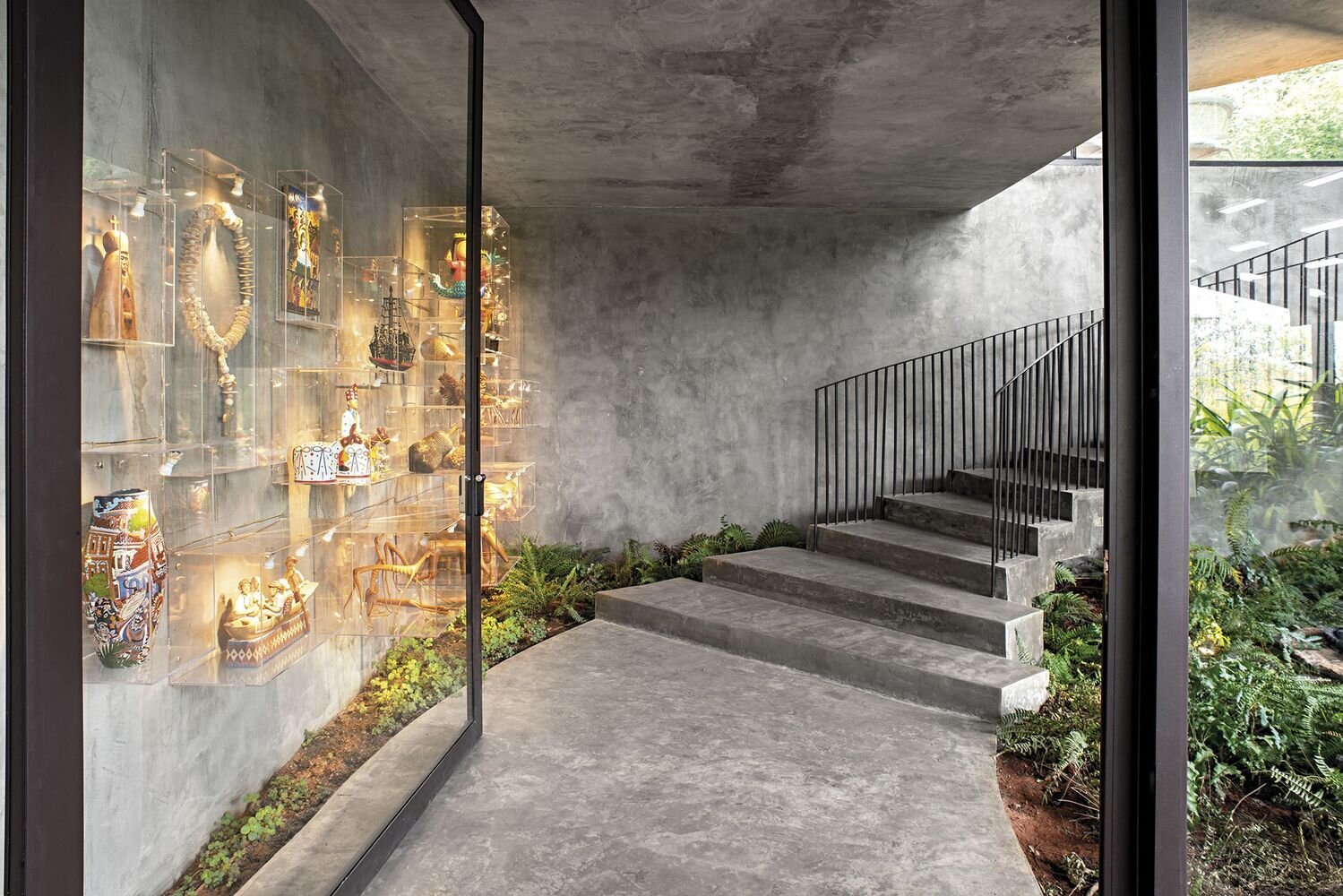
Arrival at the home is marked by a sequence of strong visual elements. An oversized black-framed glass door sets the tone, paired with stairs finished with black railings.
Along the way, a wall with clear floating boxes display sculptural pieces, while surrounding gardens soften the experience. Together, these details create a layered and striking entrance that blends architecture with curated moments.

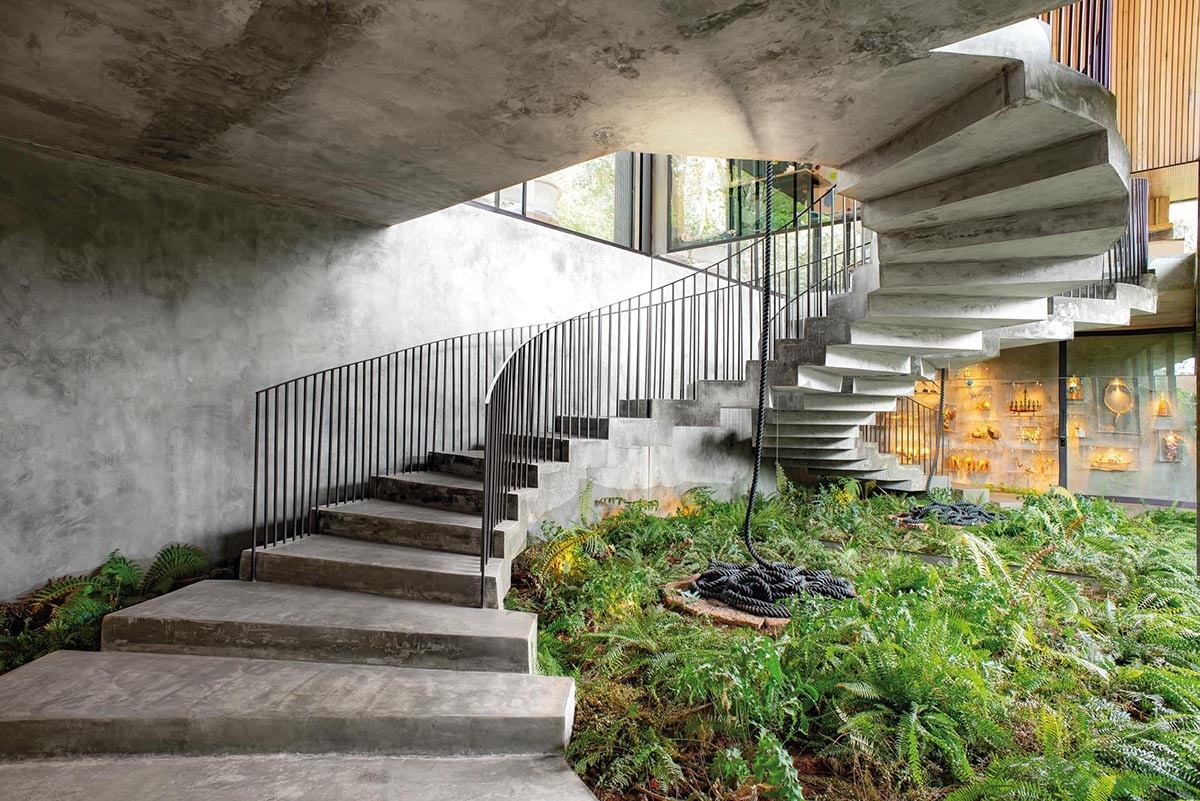
Warmth Inside a Concrete Interior
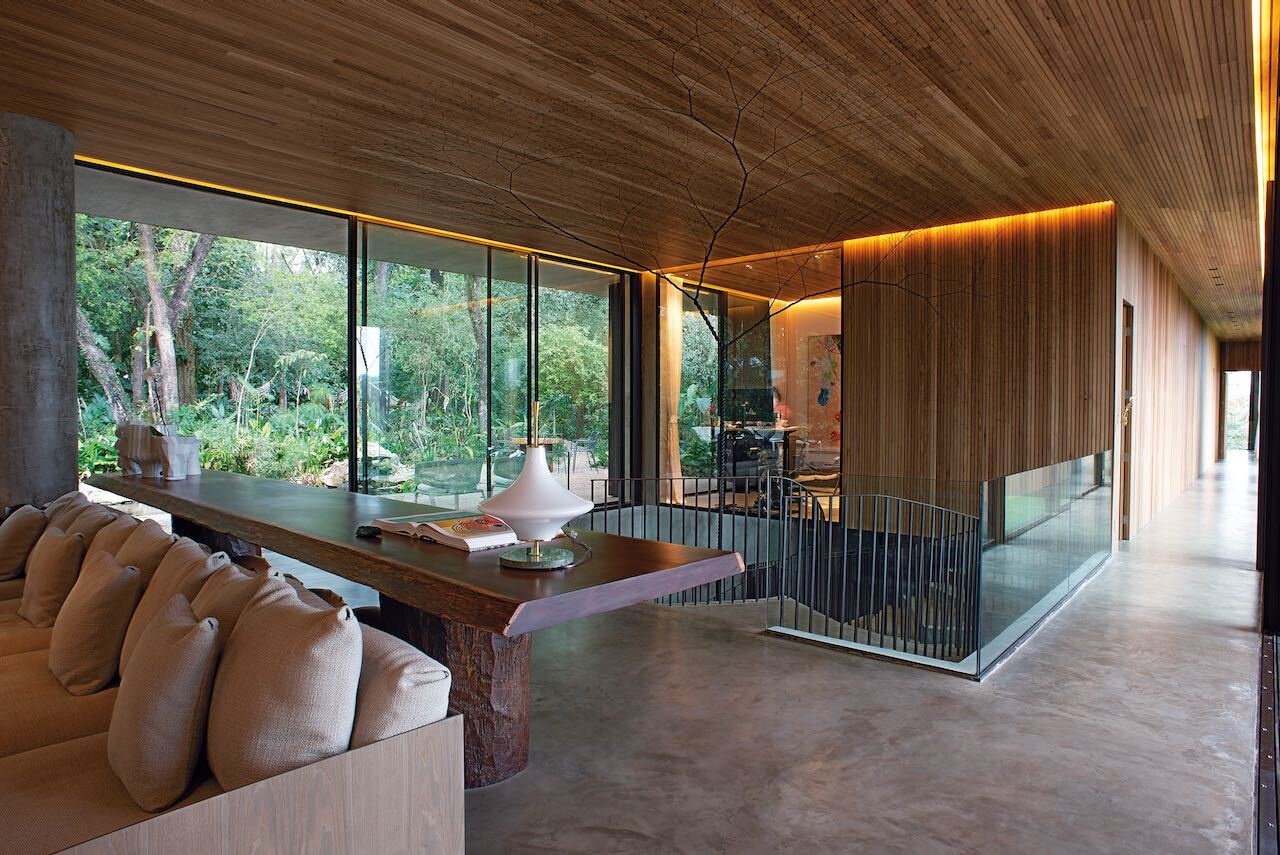
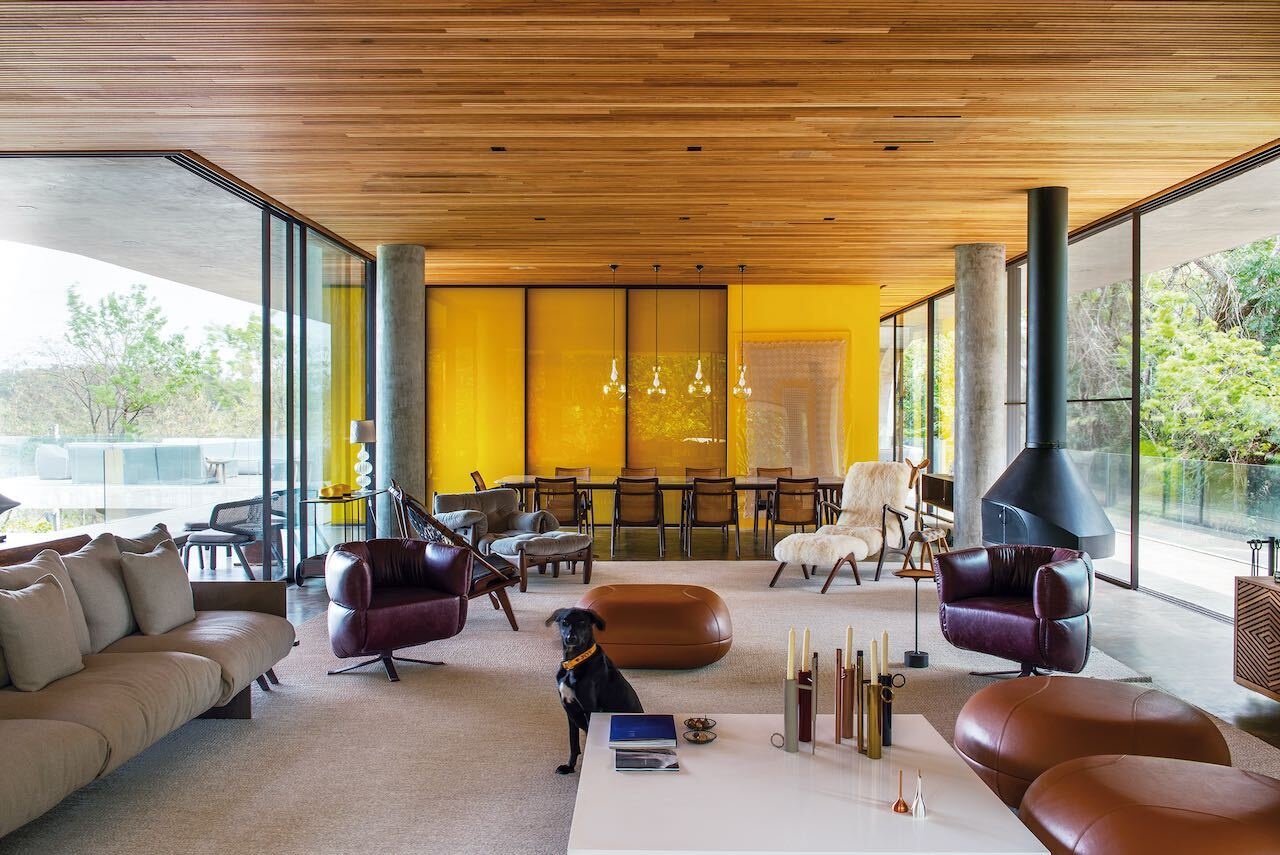
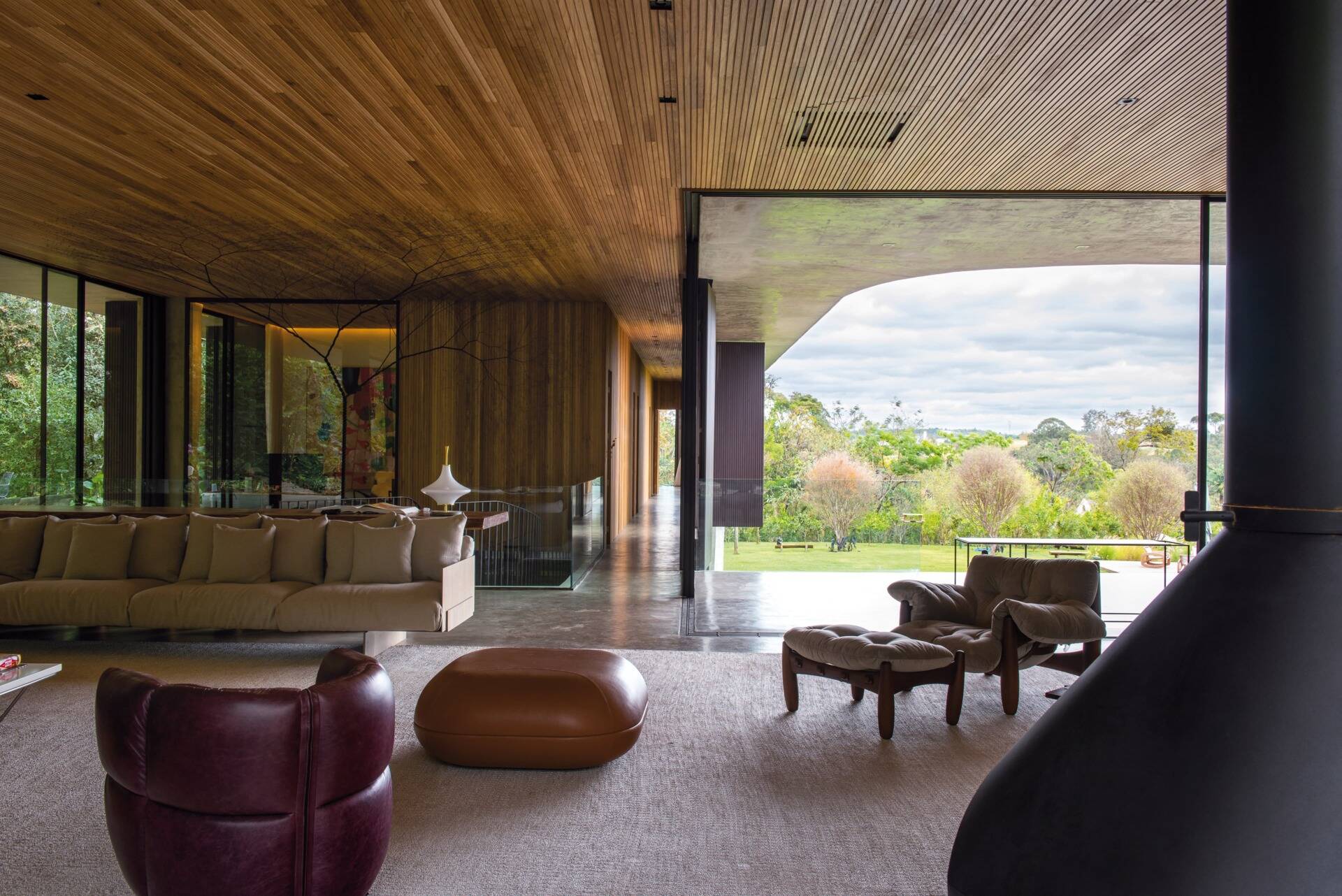
At the top of the stairs, the home opens into a combined living and dining space. While the structure is defined by concrete, the interior introduces warmth through material and lighting.
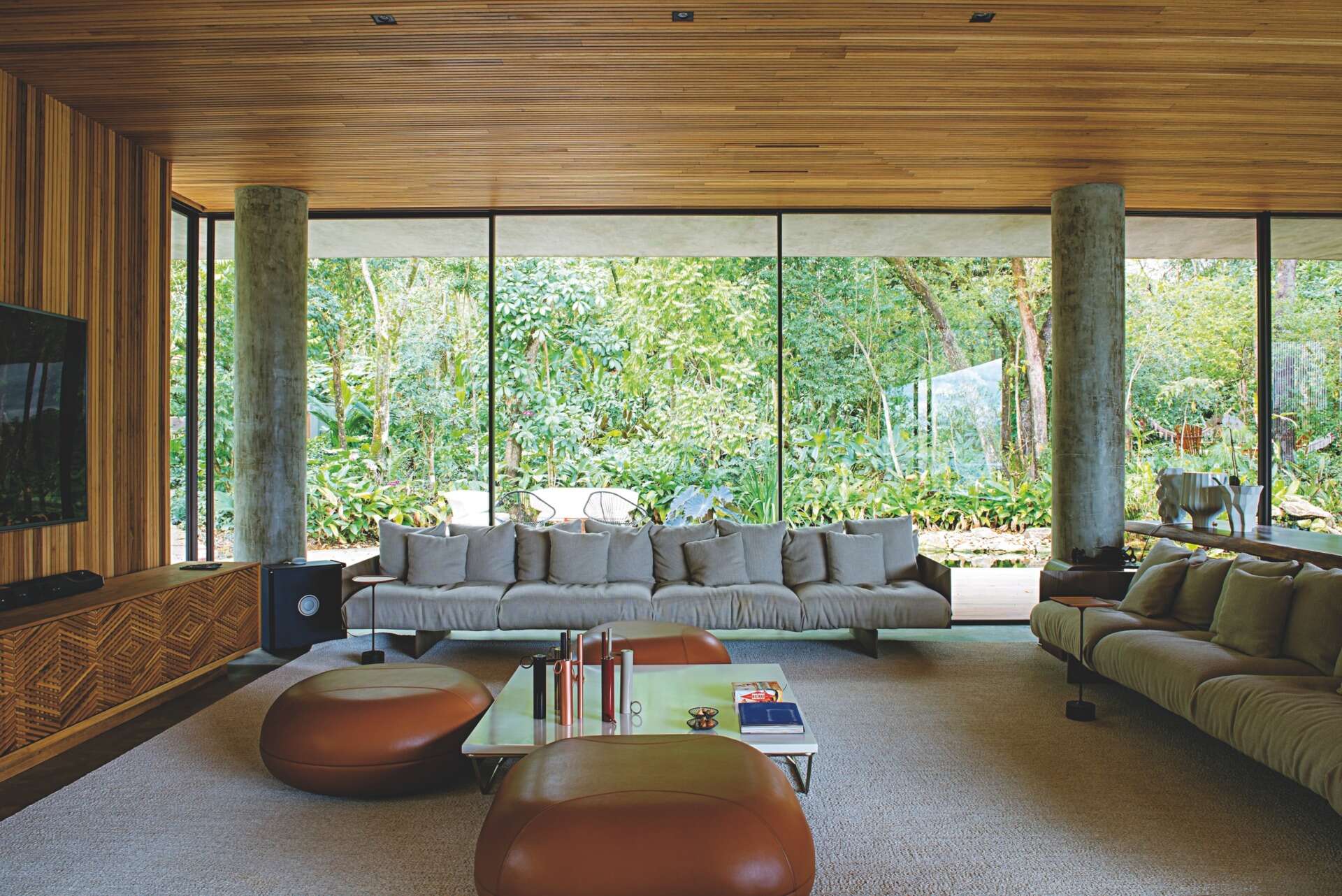
A wood ceiling stretches across the space, paired with soft golden lighting. Concrete floors maintain the architectural consistency, while a hanging fireplace adds a focal point. Full-height glass walls bring in views of the surrounding trees.
Seamless Indoor-Outdoor Living
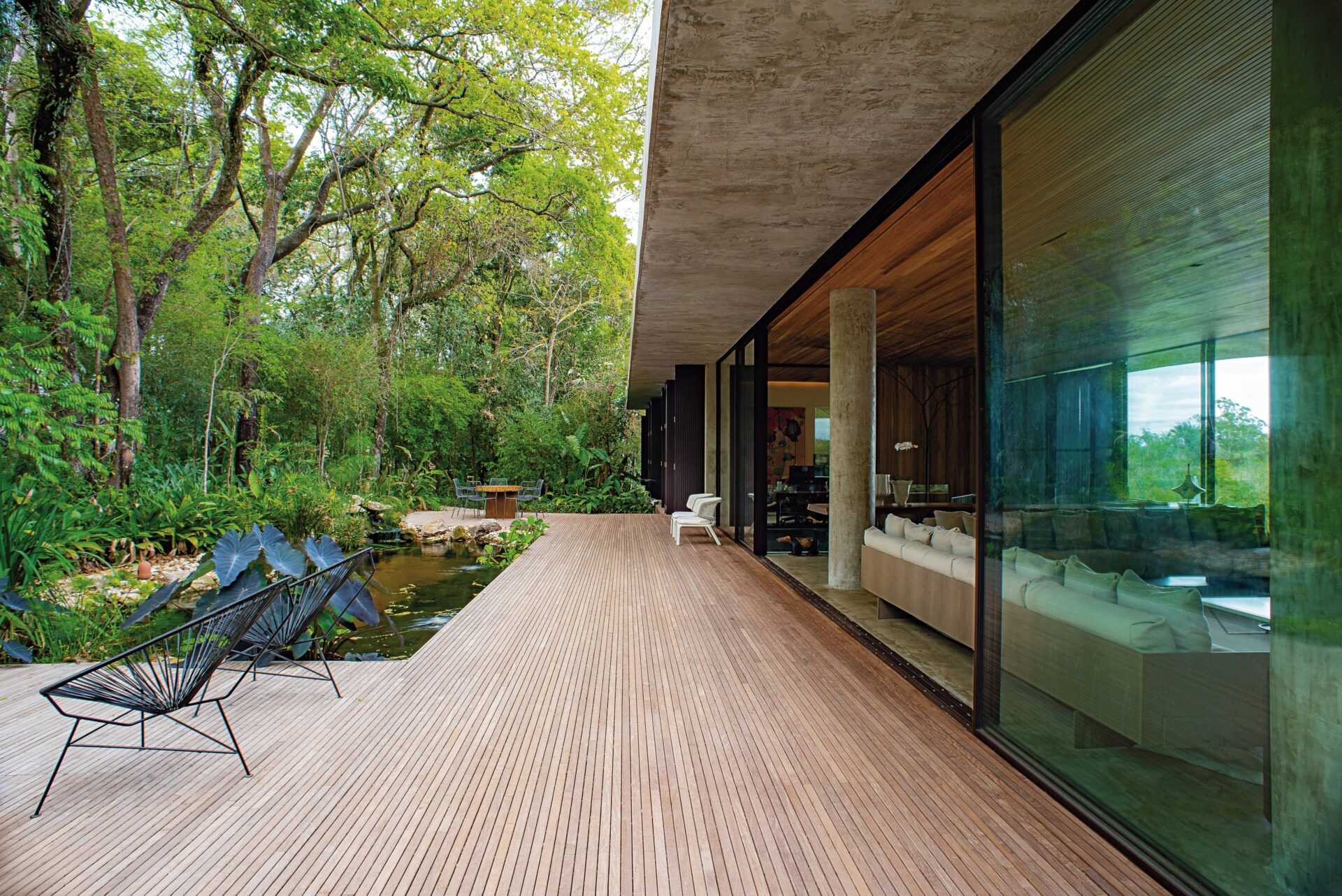
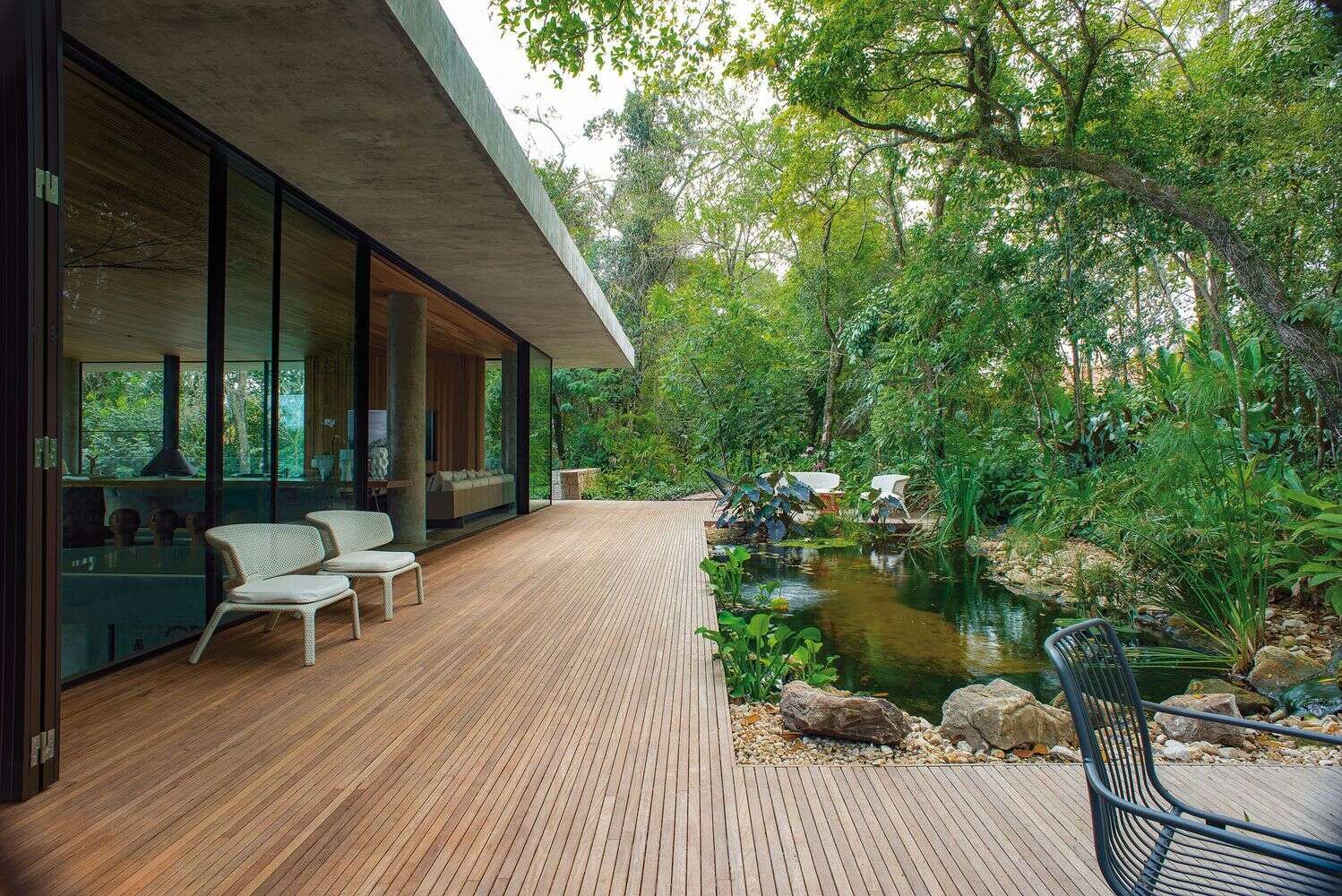
The glass walls slide open to connect the interior with a wood deck outside. Here, a natural water feature and views of the trees extend the living space beyond the walls.
This transition feels effortless, allowing the outdoor setting to become part of the daily experience of the home.
A Minimal Kitchen with a Bold Accent
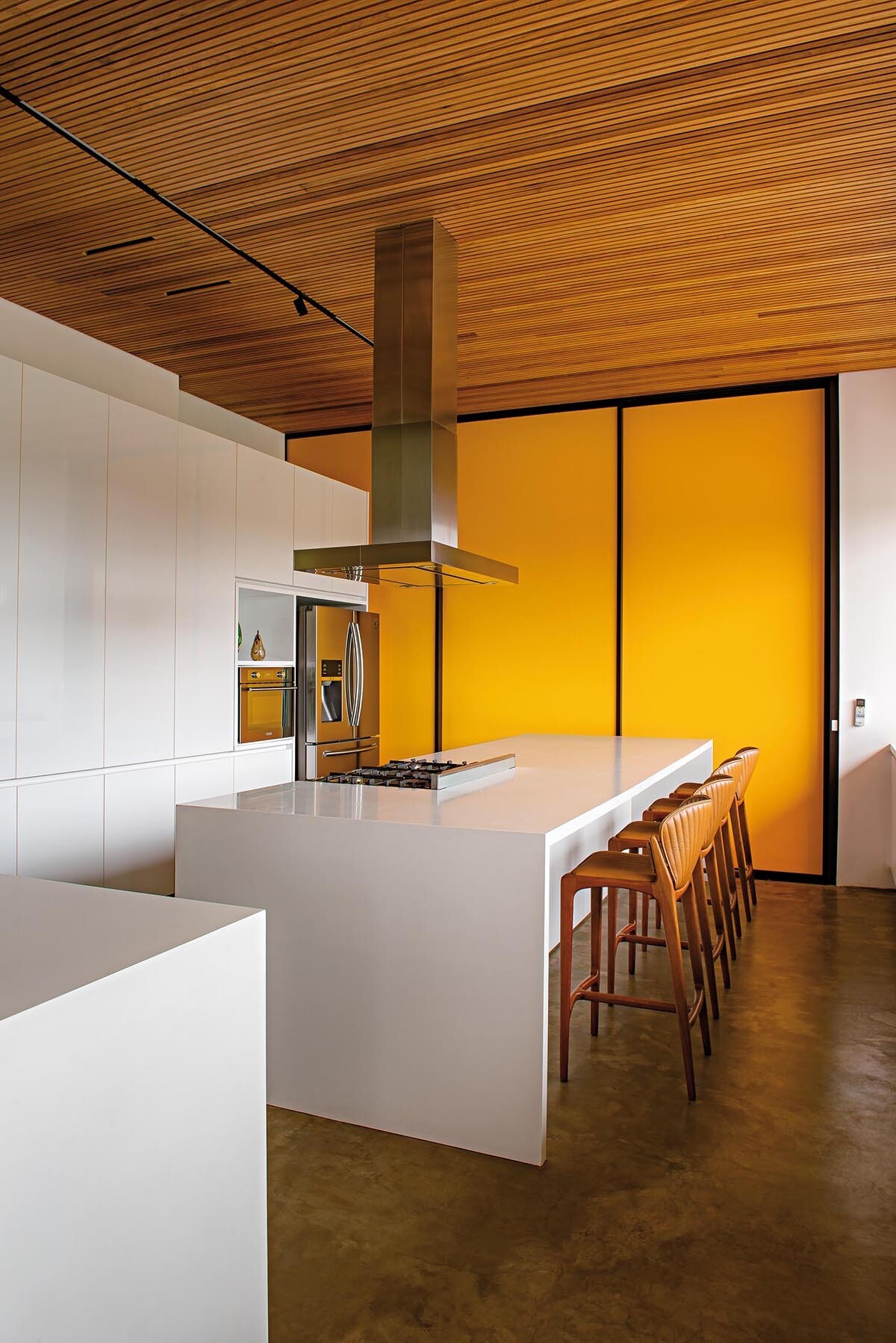
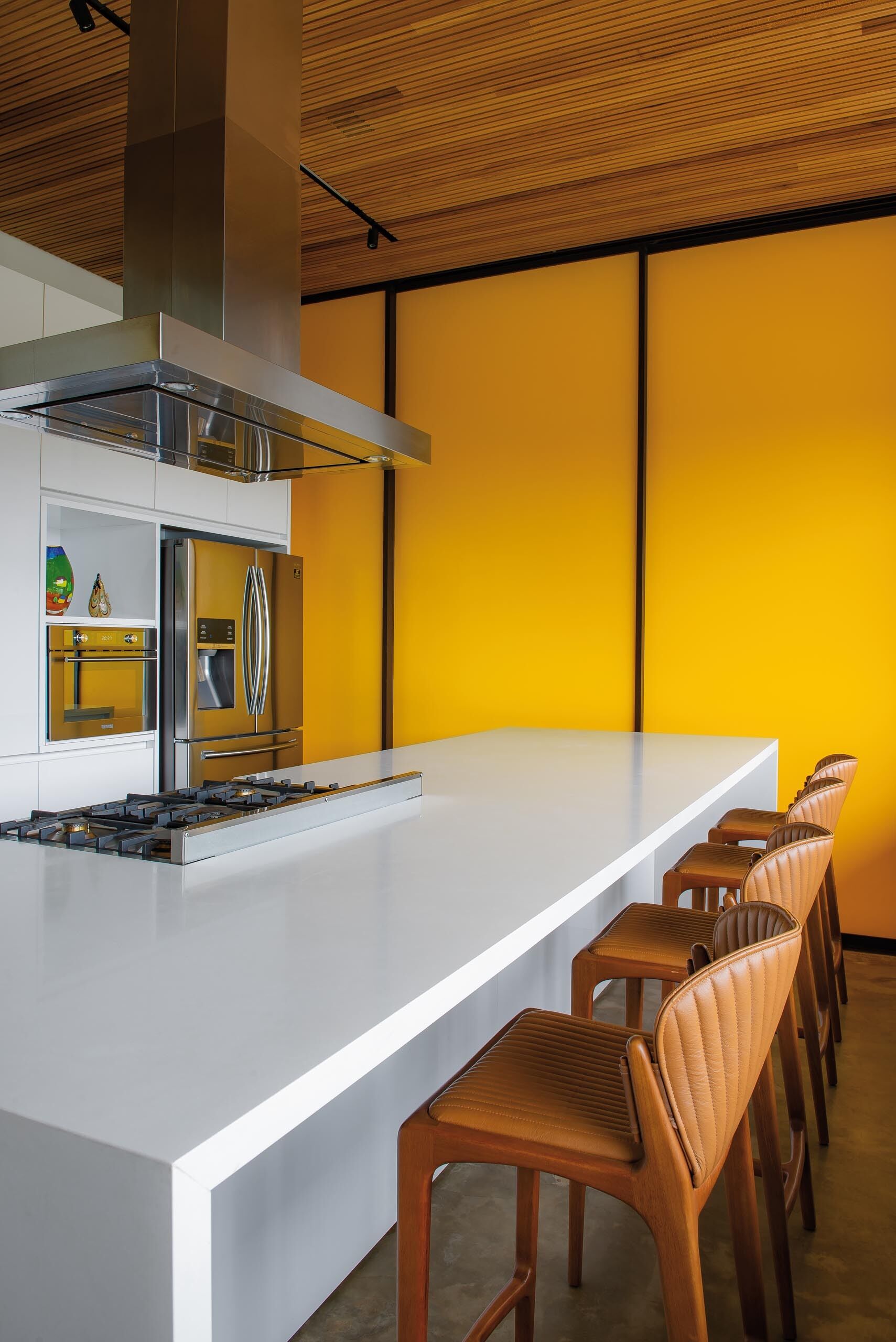
Back inside, the kitchen follows a minimalist approach. White cabinets and an island are designed without visible hardware, keeping the look clean and uncluttered.
In contrast, a bright yellow wall introduces a strong visual moment. It adds energy to the space and becomes a defining feature within the otherwise restrained palette.
Bedrooms with Texture and Light
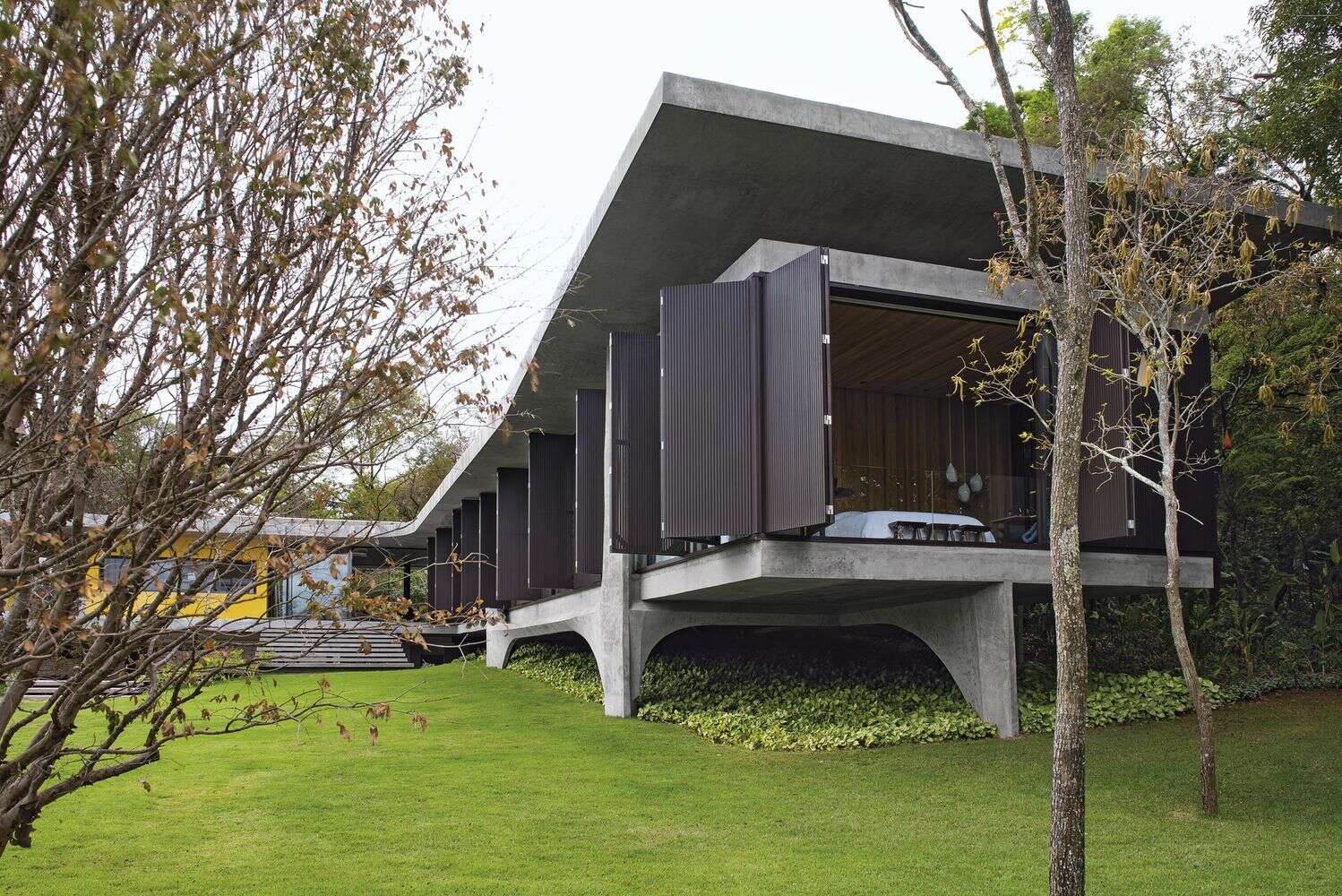
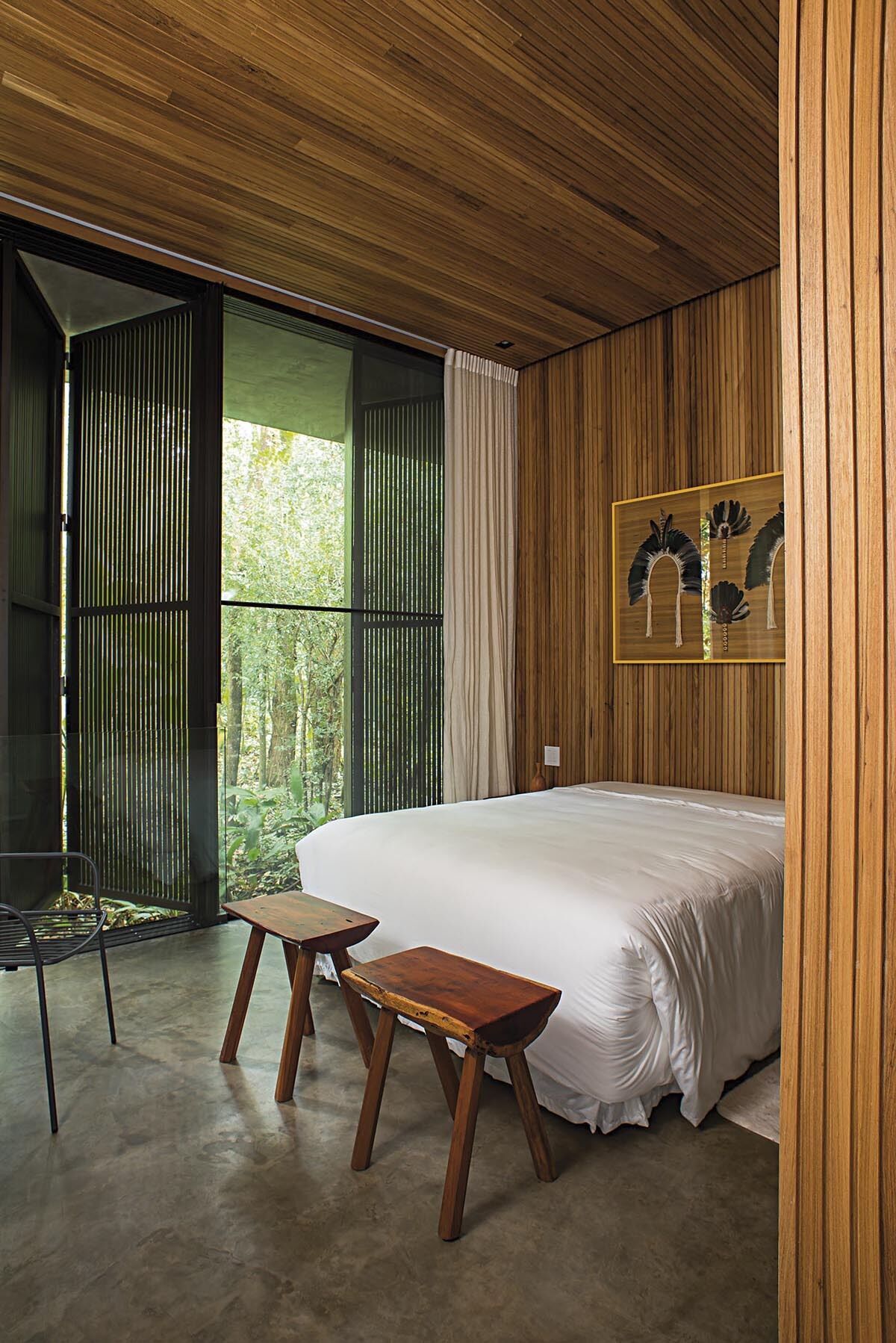
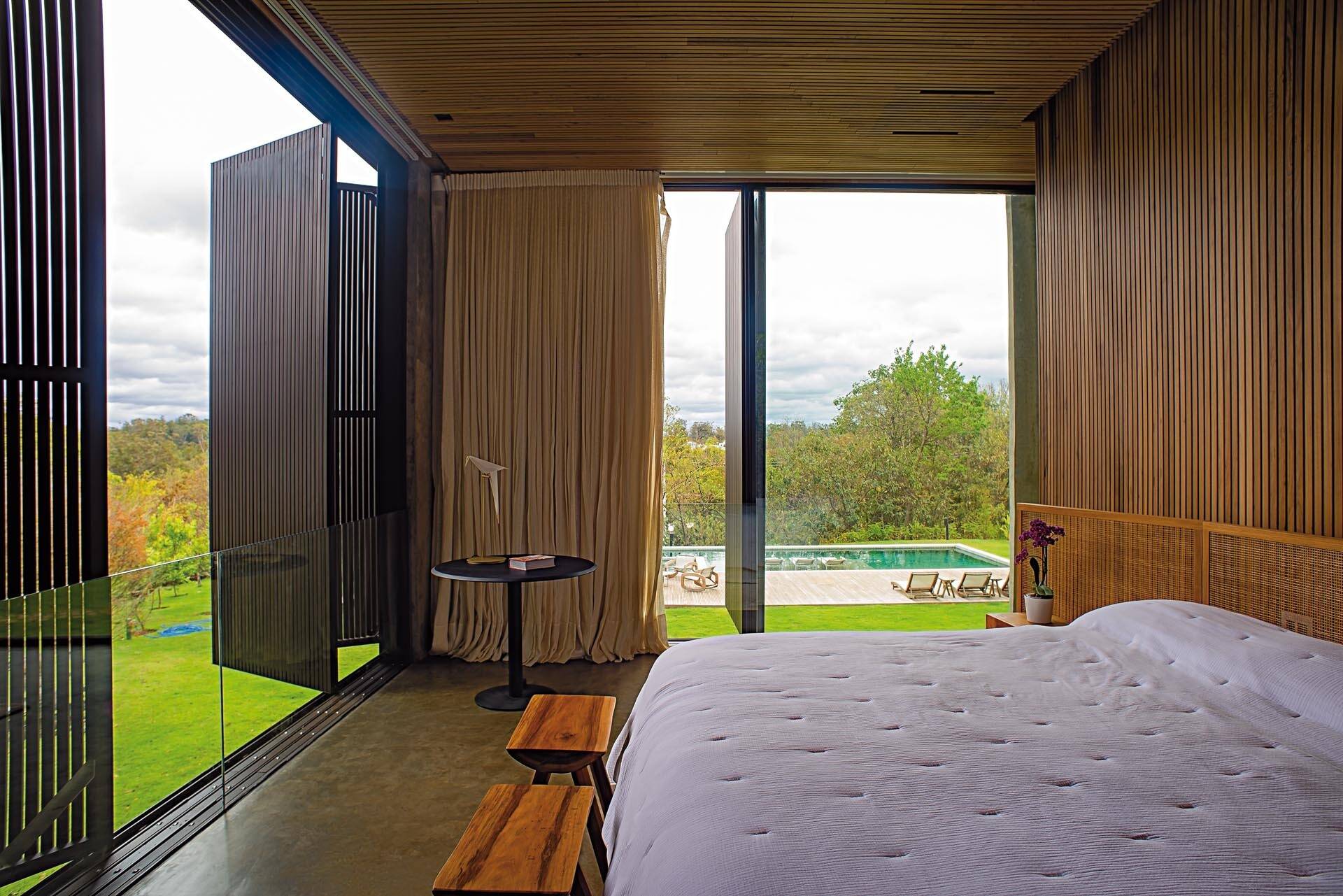
In the bedrooms, the wood ceiling continues down onto the walls, forming a unified backdrop for the bed and artwork.
Wood shutters provide privacy when needed, but when opened, they allow natural light to fill the room. This creates a balance between enclosure and openness.
An Elevated Balcony That Extends the Living Space
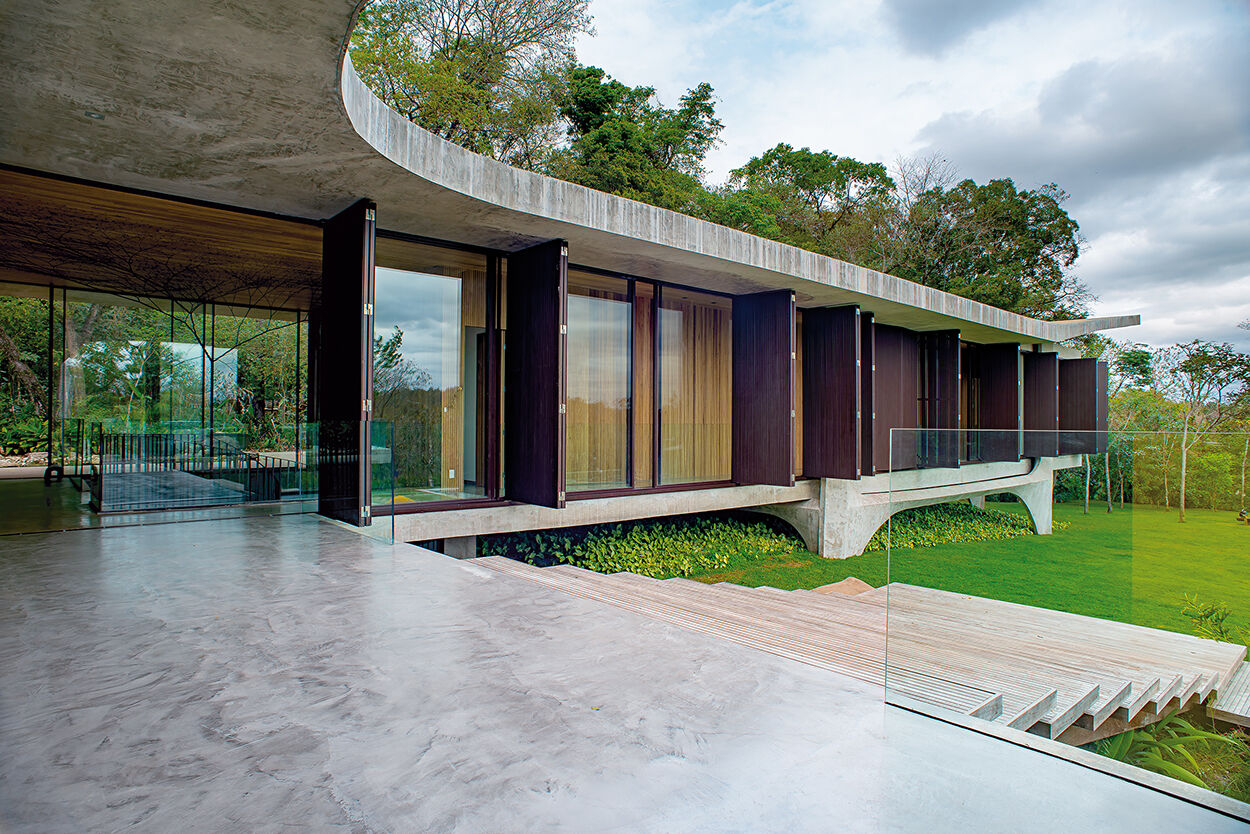
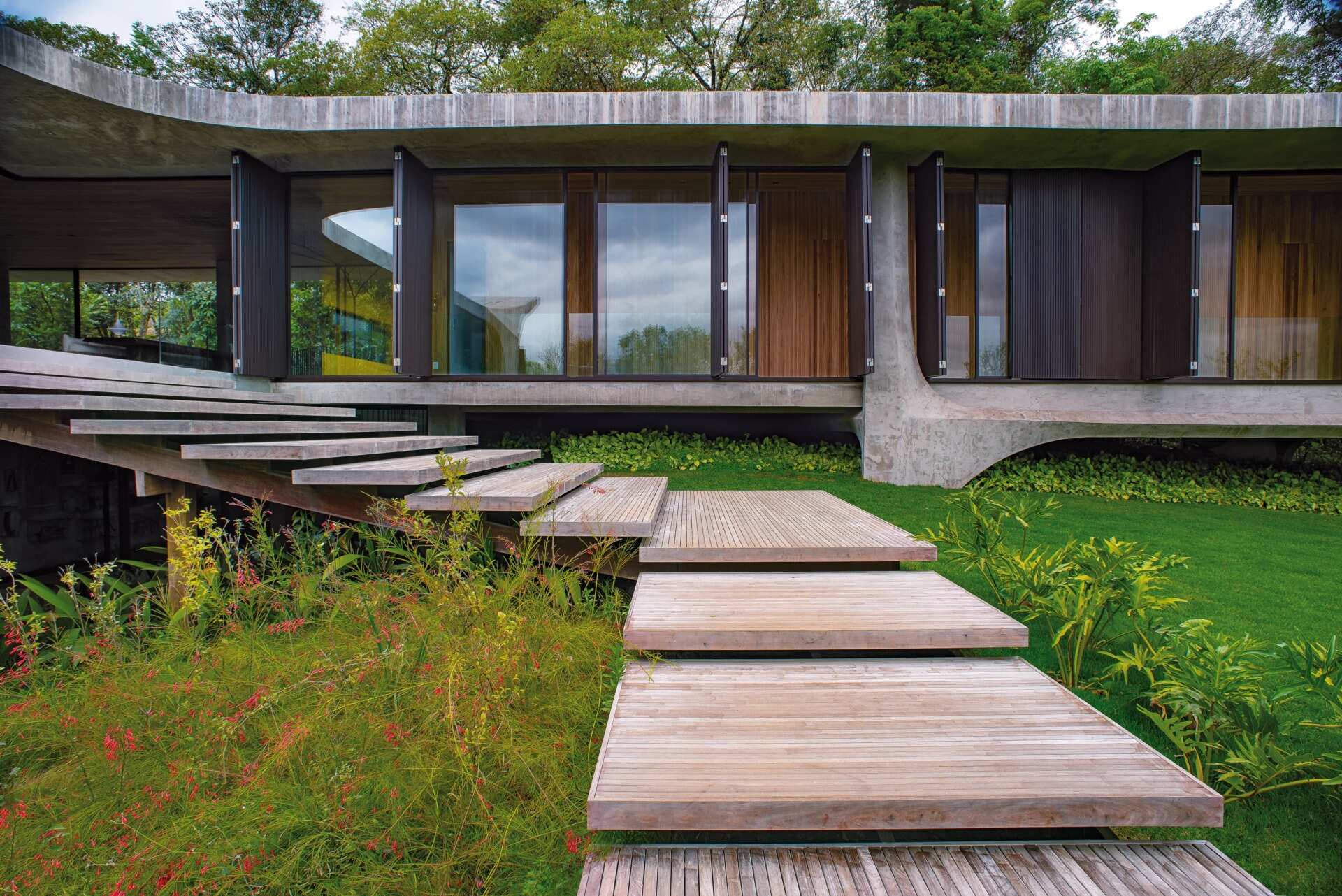
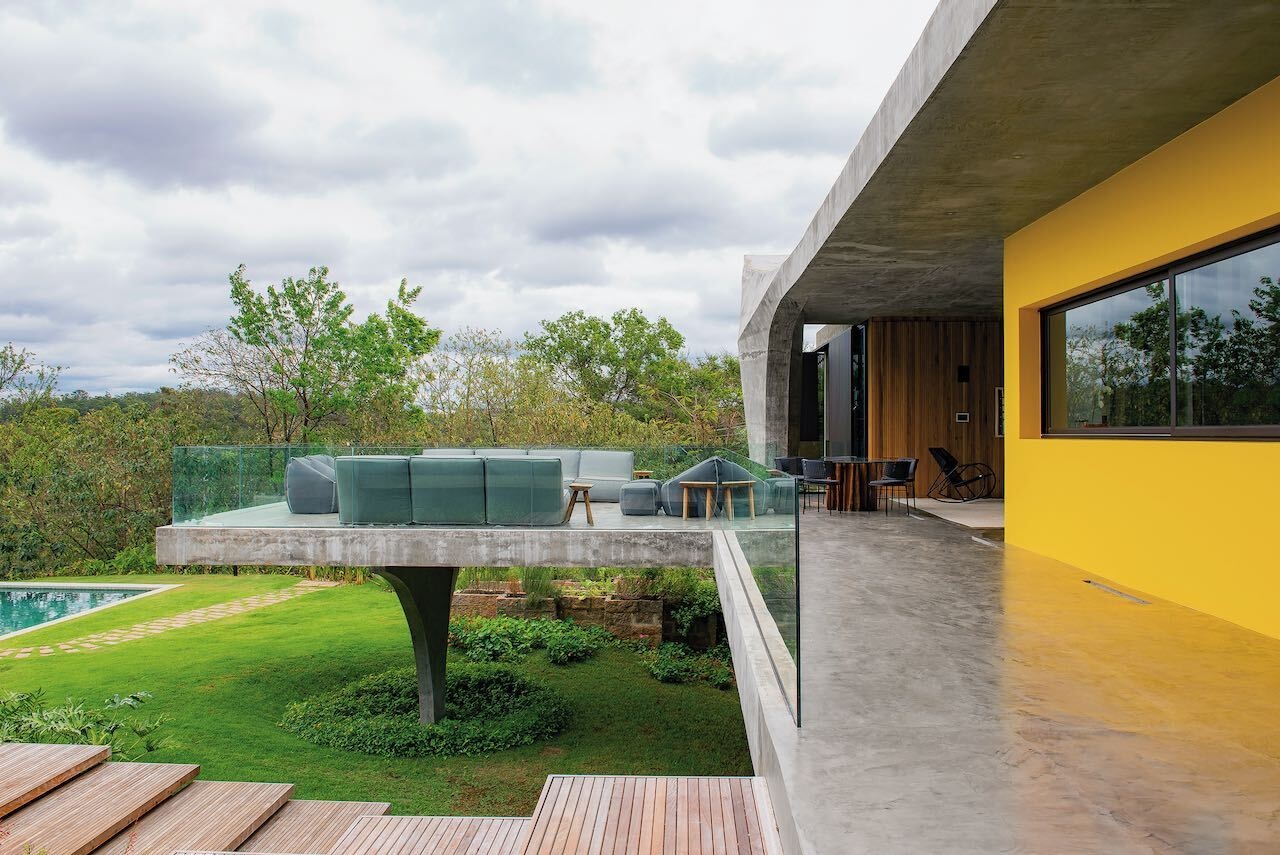
The main level opens out to a large concrete balcony. From here, wood stairs lead down to the outdoor areas below. This layered approach to outdoor space mirrors the architecture itself, with different levels offering varied perspectives of the site.
A Pool Deck Designed for Open-Air Living
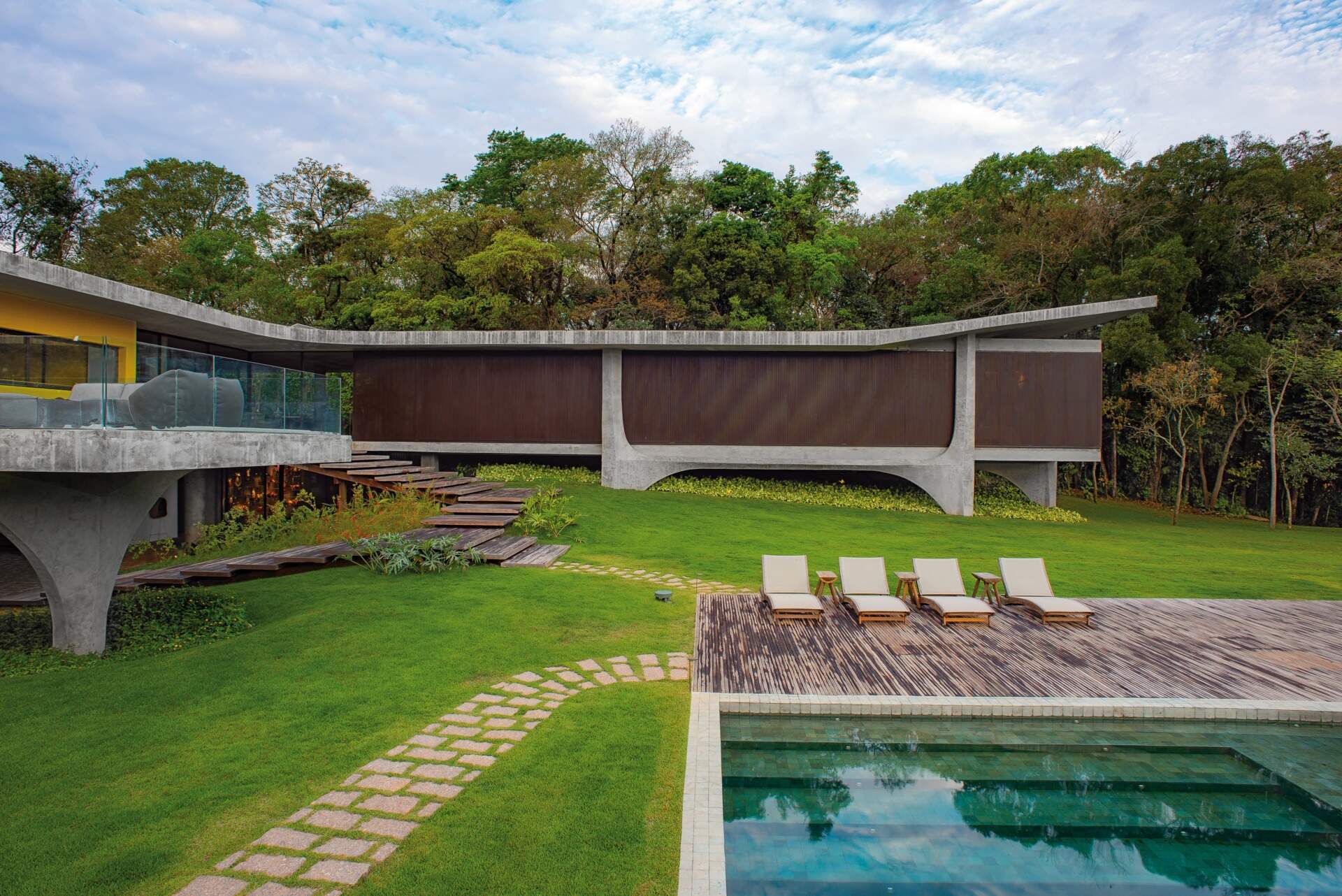
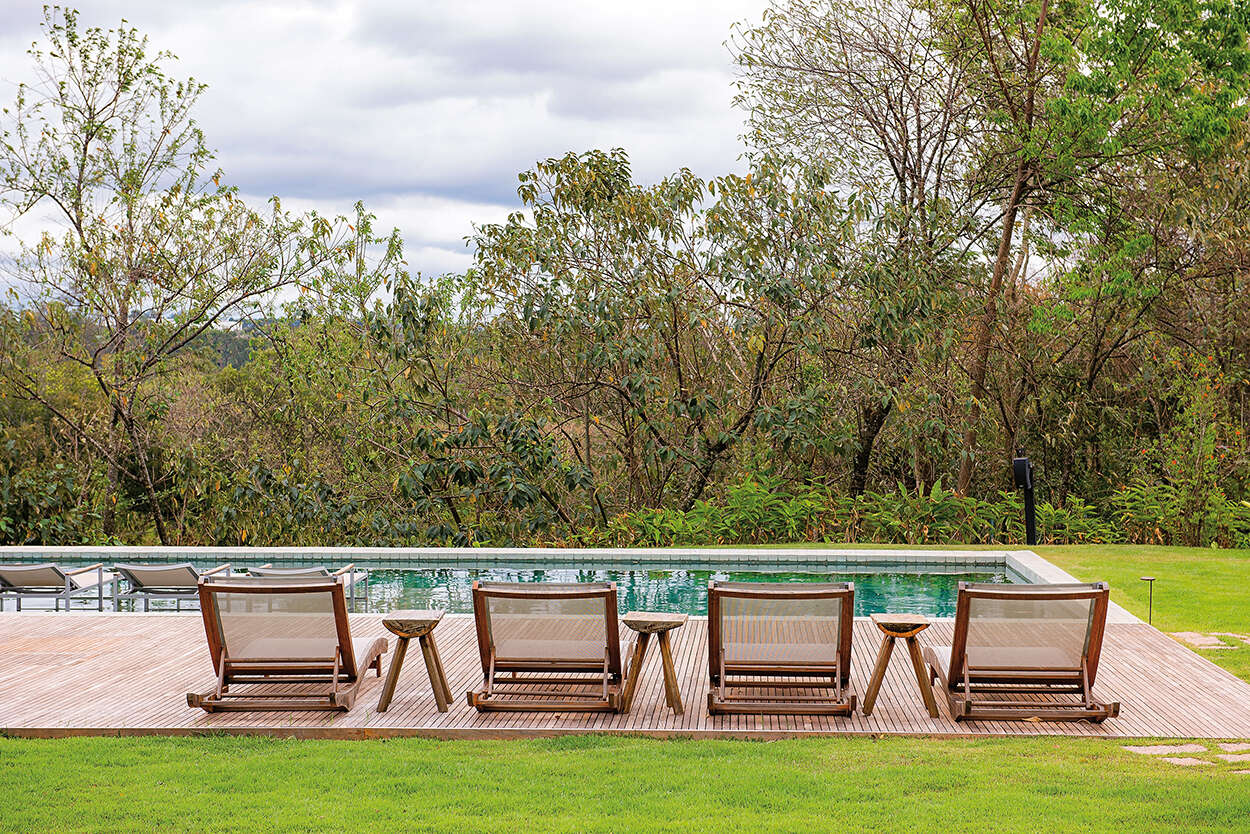
The yard is centered around a swimming pool, bordered by a generous wood deck that runs alongside it.
Positioned within the landscape, the pool area becomes a key gathering space, combining open views with a strong architectural setting.
This home by Leo Romano brings together bold structure and simple materials, with its elevated form, sculptural pillars, and open spaces shaping the overall experience. Warm interiors, natural light, and moments like the yellow feature wall balance the concrete framework, while decks, balconies, and the pool extend living outdoors, creating a home that feels both striking and easy to live in.