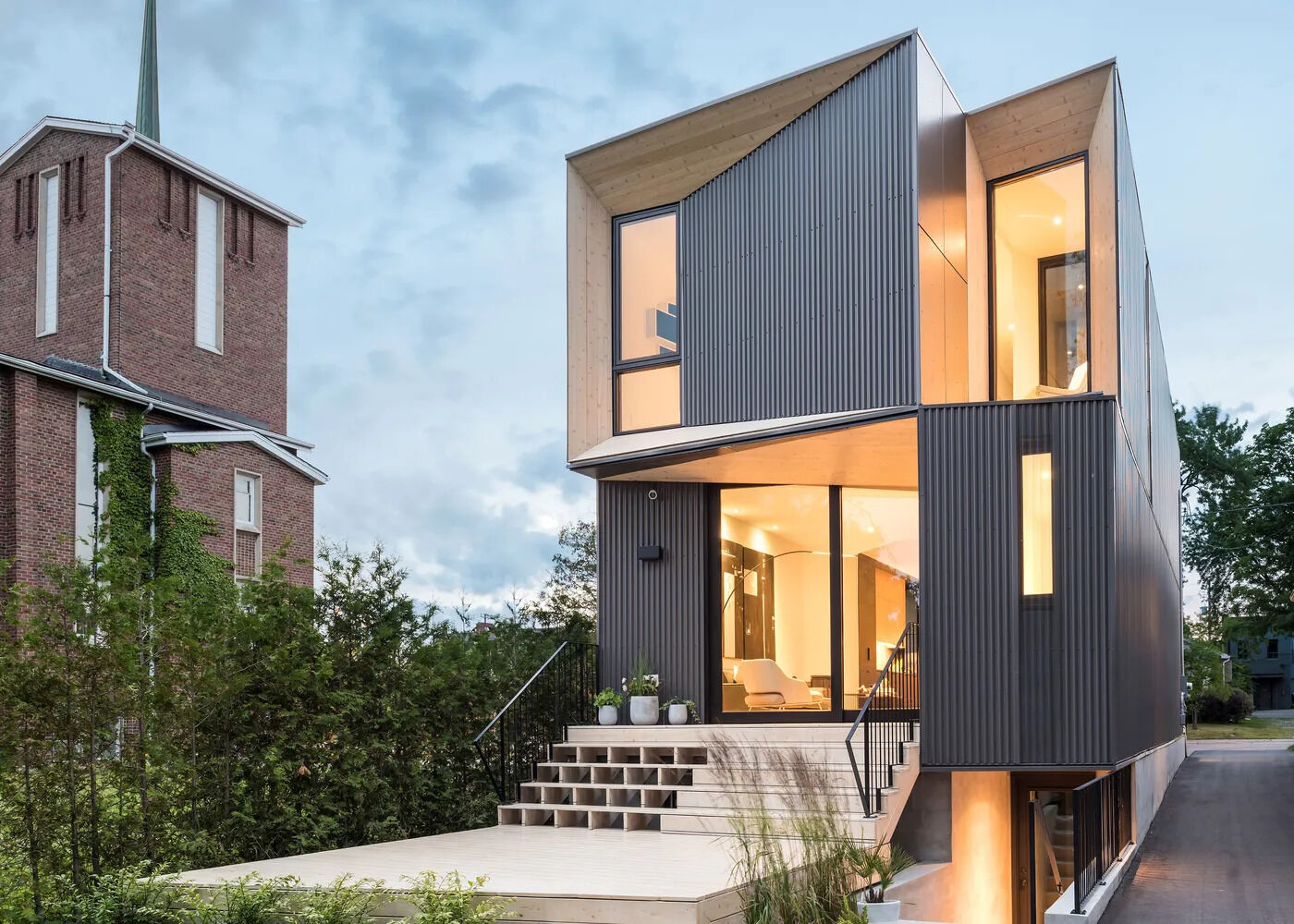
In Toronto’s western lakeside streetcar suburb, a modern home quietly challenges convention. Known as Tesseract House, the single-family residence was designed and completed by designer and homeowner Jeff Geldart together with PHAEDRUS Studio. Its name comes from the sharply folded angles that shape both the facade and rear of the house, hinting at the layered spatial experience within.
From the street, the house feels measured rather than showy. The elongated ground floor sits on a subtle plinth, referencing the horizontal proportions common to the area’s older homes. That sense of horizontality continues across the facade, with a clear delineation between levels giving the building a calm, grounded presence.
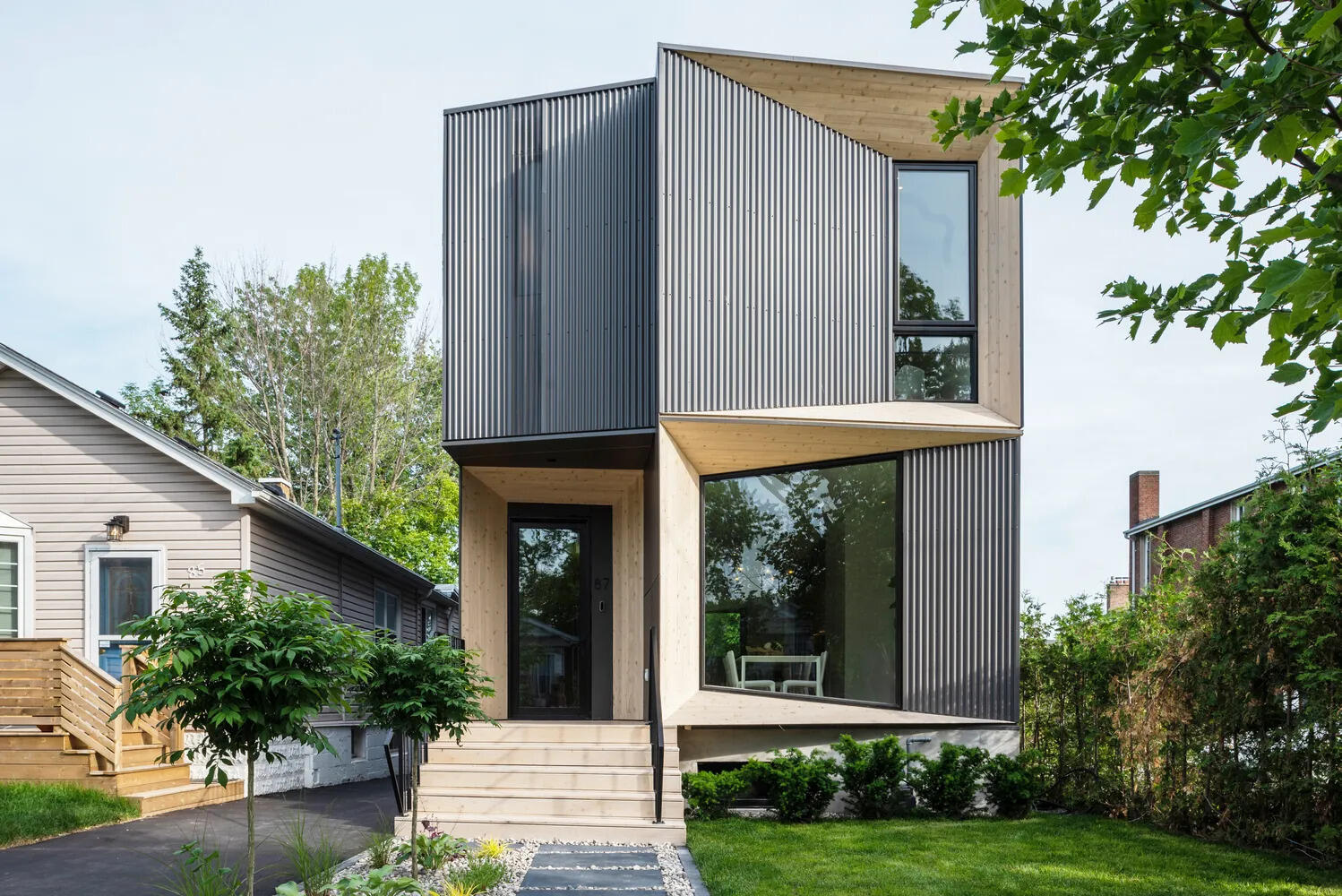
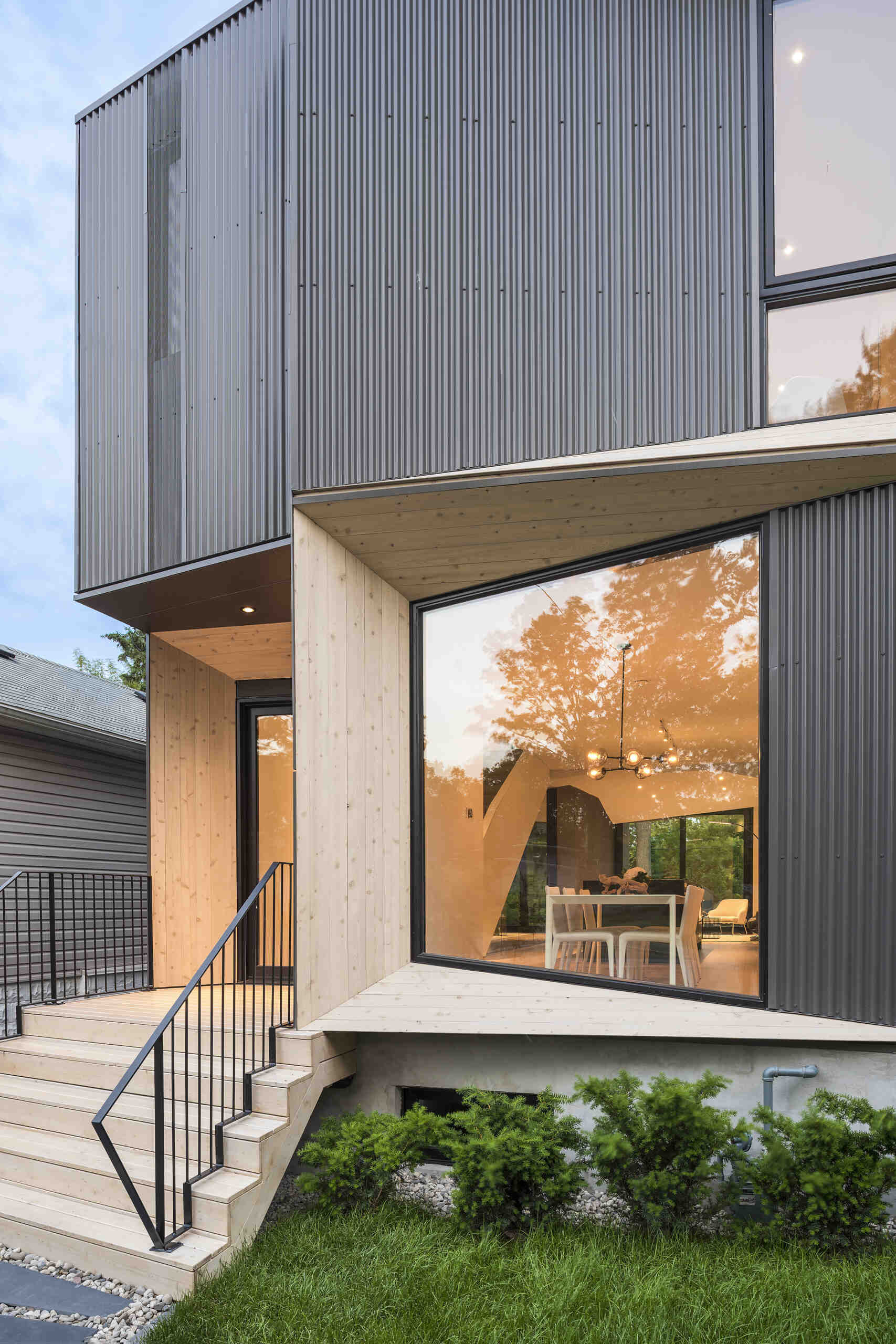
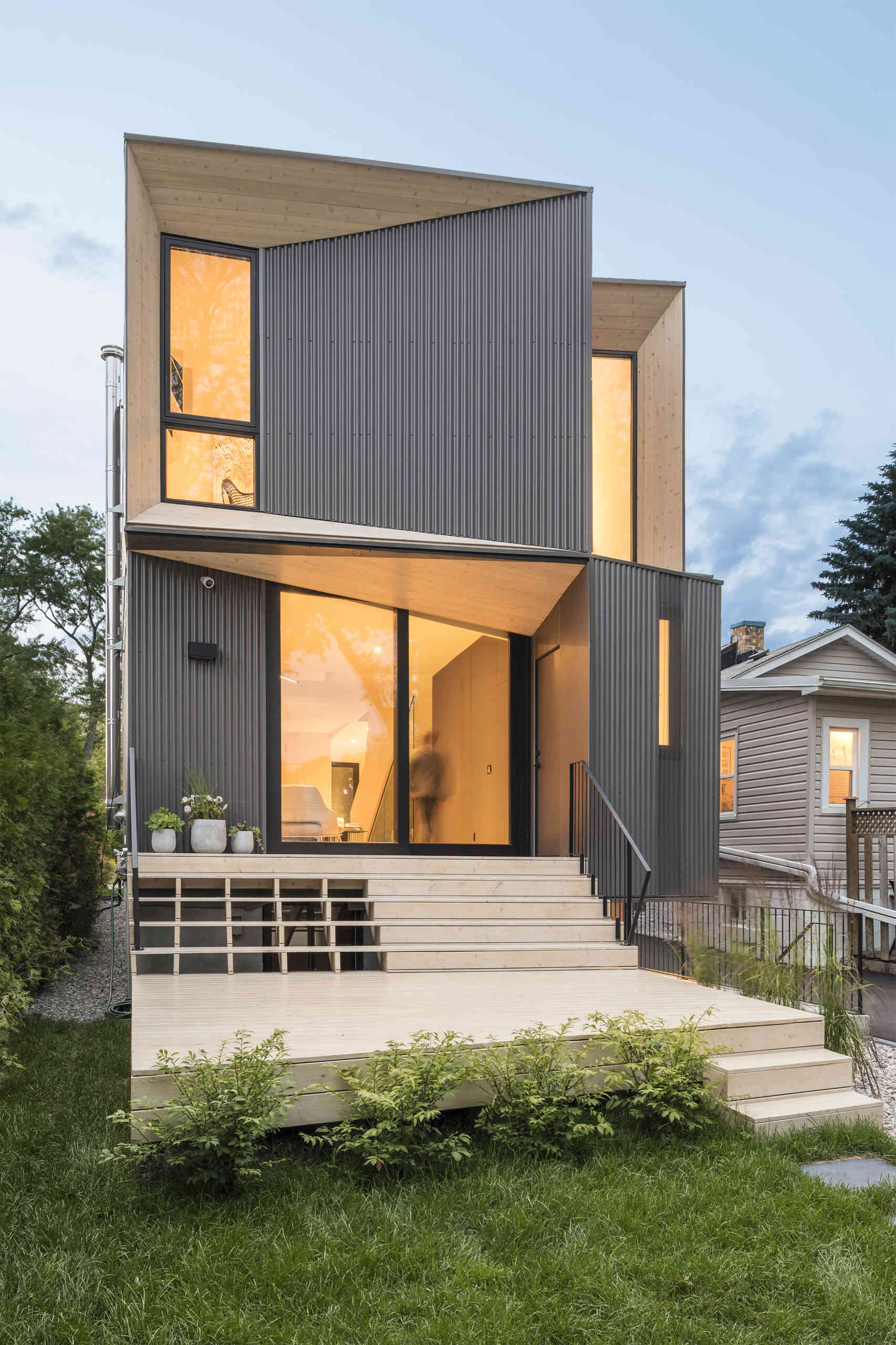
The exterior composition is defined by a careful balance of material and form. Dark steel corrugated siding wraps the heavier volumes of the house, extending along the long elevations and anchoring the building visually. In contrast, cedar-clad apertures are carved into the mass, their warm timber surfaces highlighting the angled geometry. These wood-clad moments soften the steel and create a dialogue between privacy and openness, allowing light to penetrate deep into the home while maintaining a sense of enclosure.
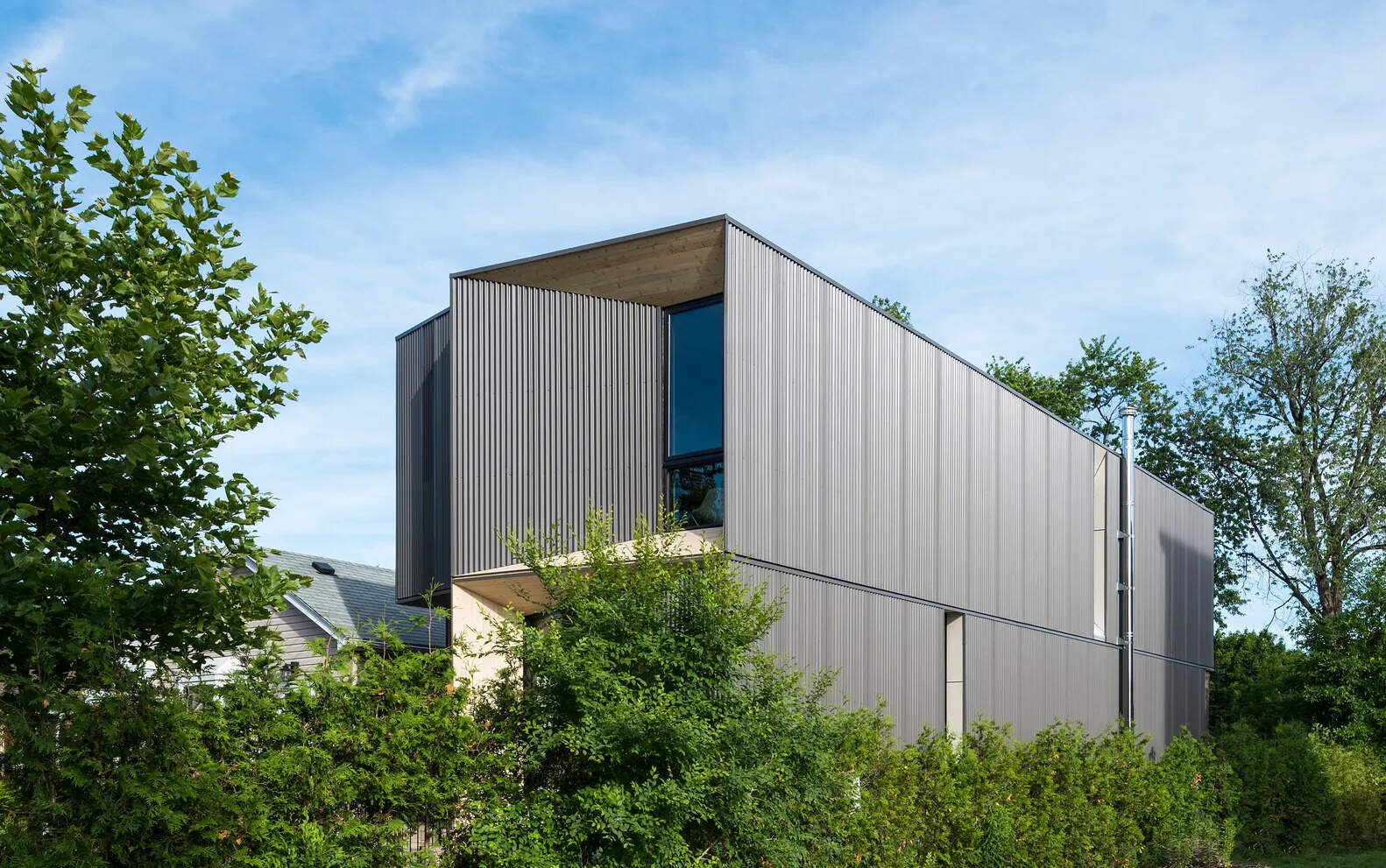
Toward the rear, the restraint of the street-facing facade begins to loosen. Larger openings offer glimpses into the interior, at times pulling the eye straight through the house and into the yard beyond. The broken-down massing, shaped by a series of push-and-pull gestures, allows the home to feel expansive despite its narrow, elongated footprint.
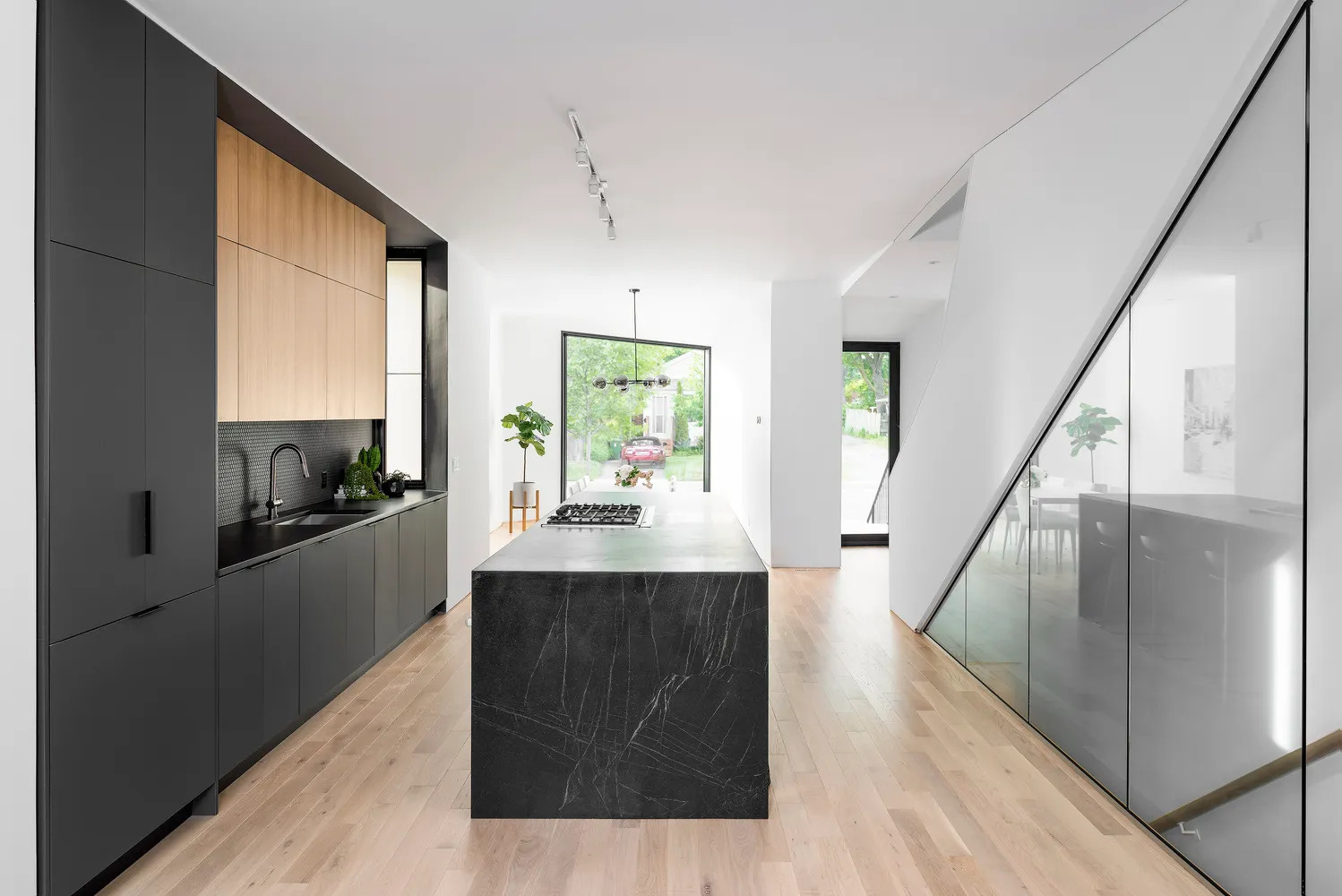
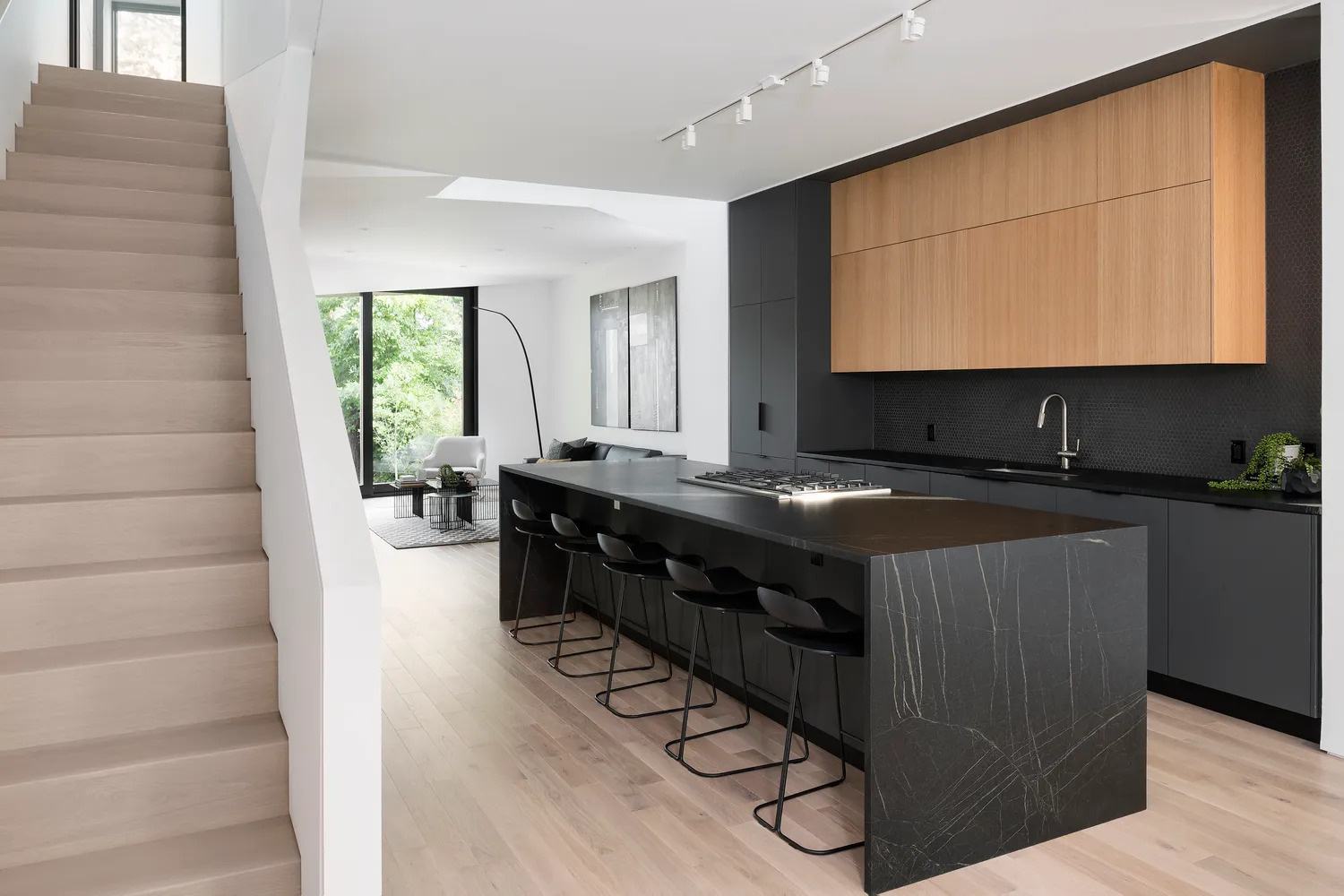
Inside, the palette becomes calmer and more restrained. White walls set the tone, providing a bright backdrop for the home’s darker accents. At the heart of the ground floor sits the kitchen, where matte black cabinets and a matching island immediately draw attention. Positioned centrally, the kitchen acts as a hinge between more formal and more relaxed spaces.
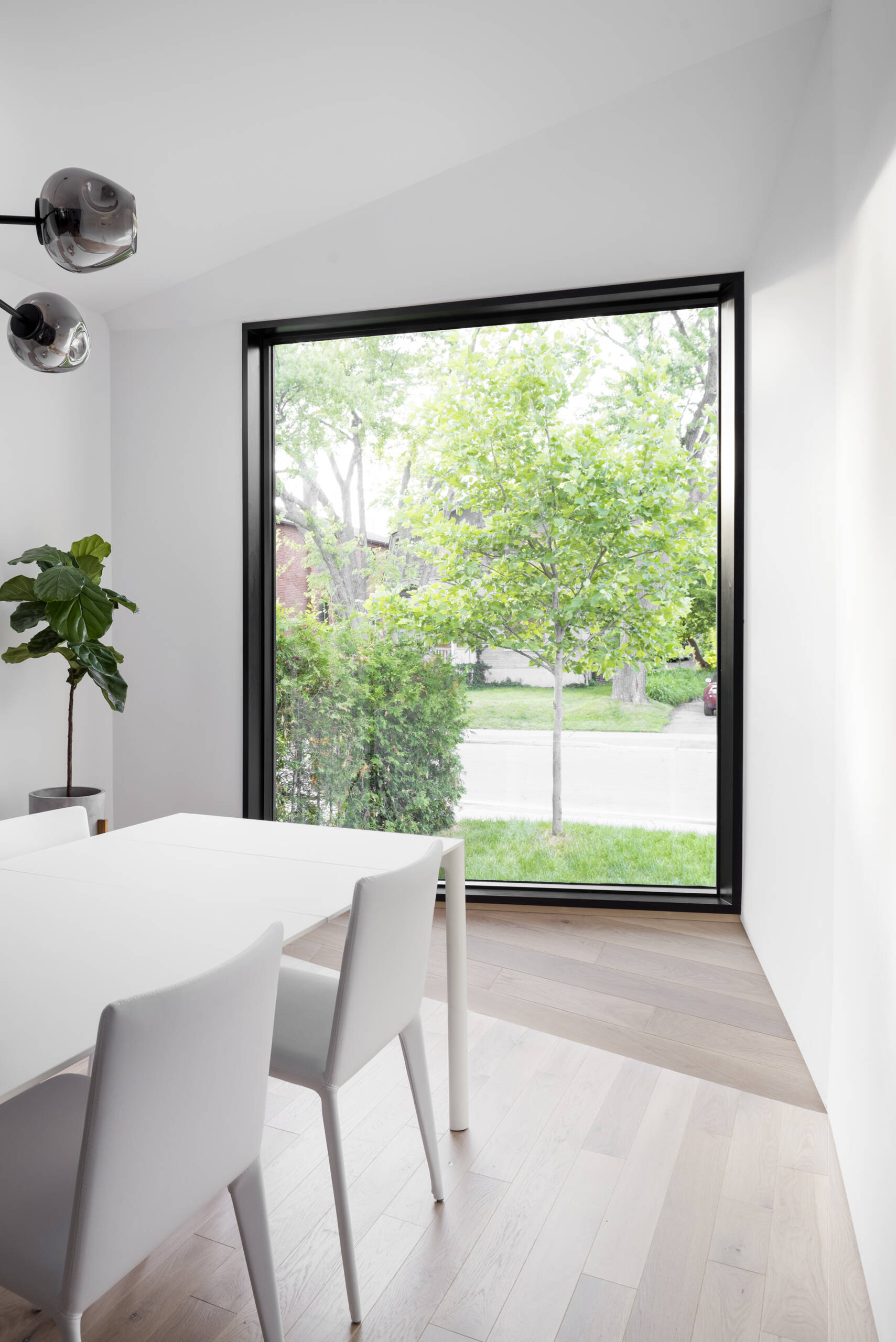
Adjacent to the kitchen is the dining room, furnished simply with a white dining table and white chairs. A large picture window frames views of the street, addressing the neighborhood directly while washing the space in natural light. This room forms a threshold between public and private, where interior and exterior begin to blur through the sharply folded geometry of the opening.
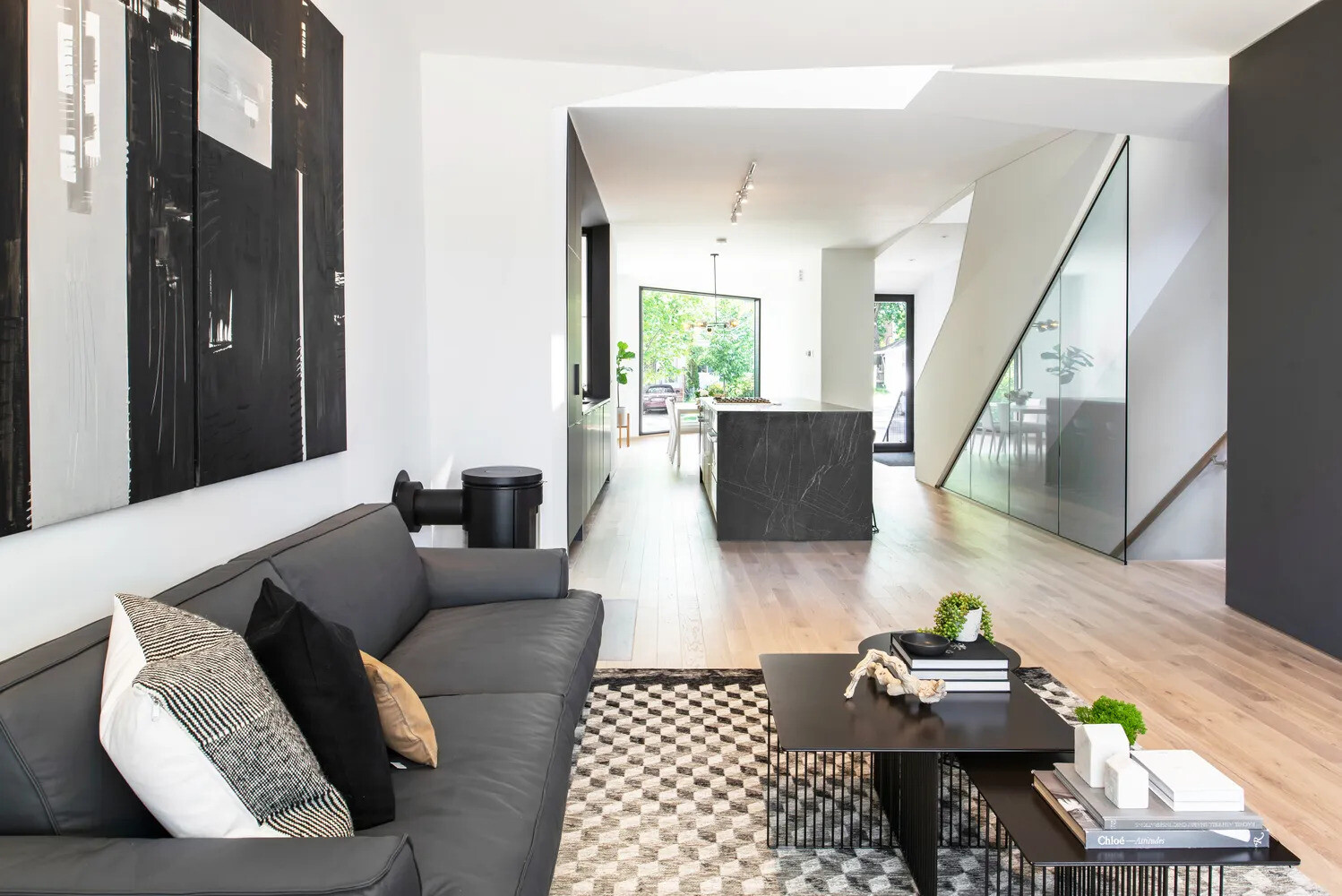
Beyond the kitchen, toward the back of the house, the living room unfolds. Here, a minimalist black accent wall mirrors the kitchen finishes while discreetly concealing a powder room and mudroom. The space feels open and composed, designed for daily life rather than display.
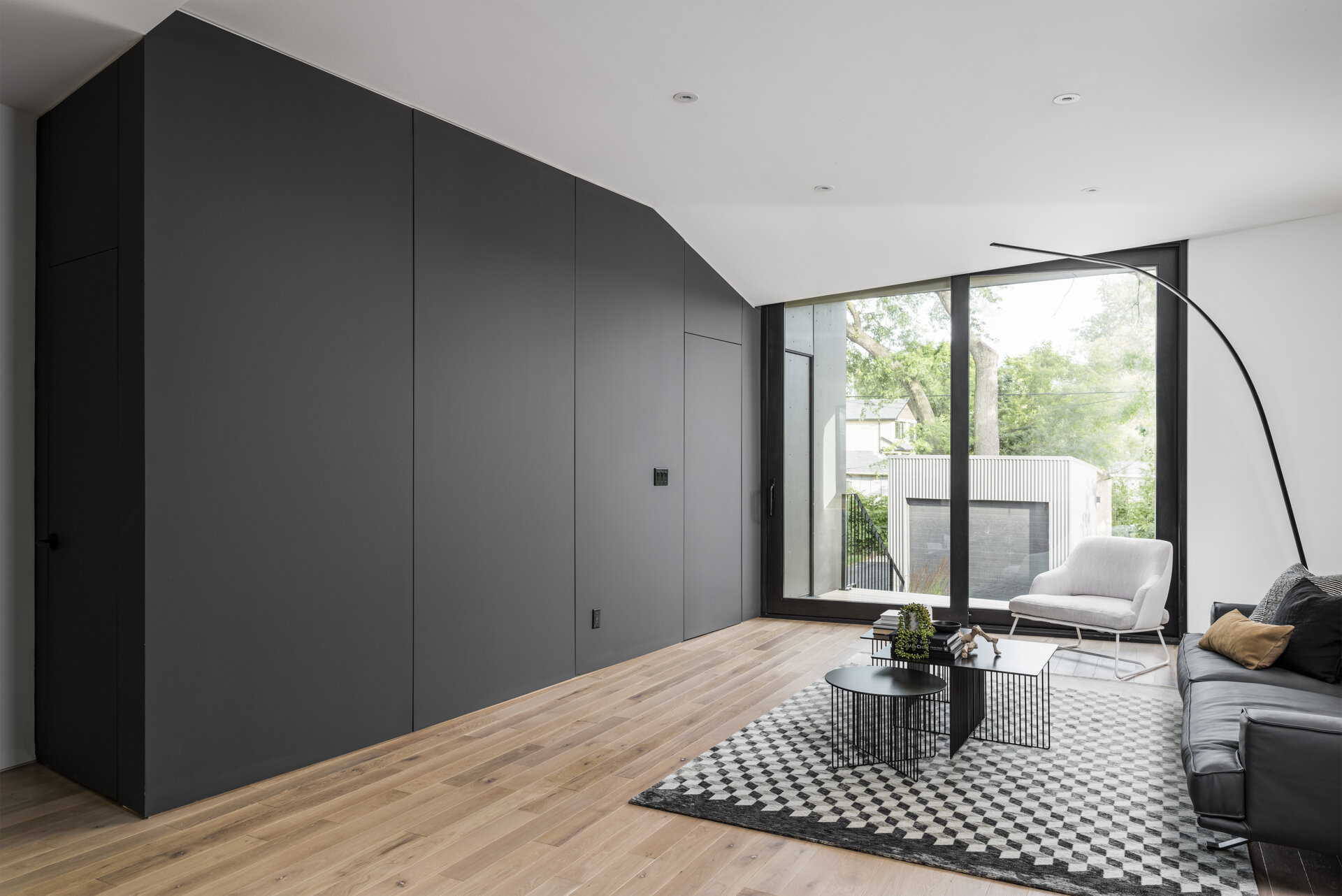
A sliding glass door connects the living area to a compact timber deck, extending the interior outward and providing access to the yard. This transition continues the home’s recurring sequence of expansion and contraction, a rhythm that shapes how spaces are experienced as you move through the house.
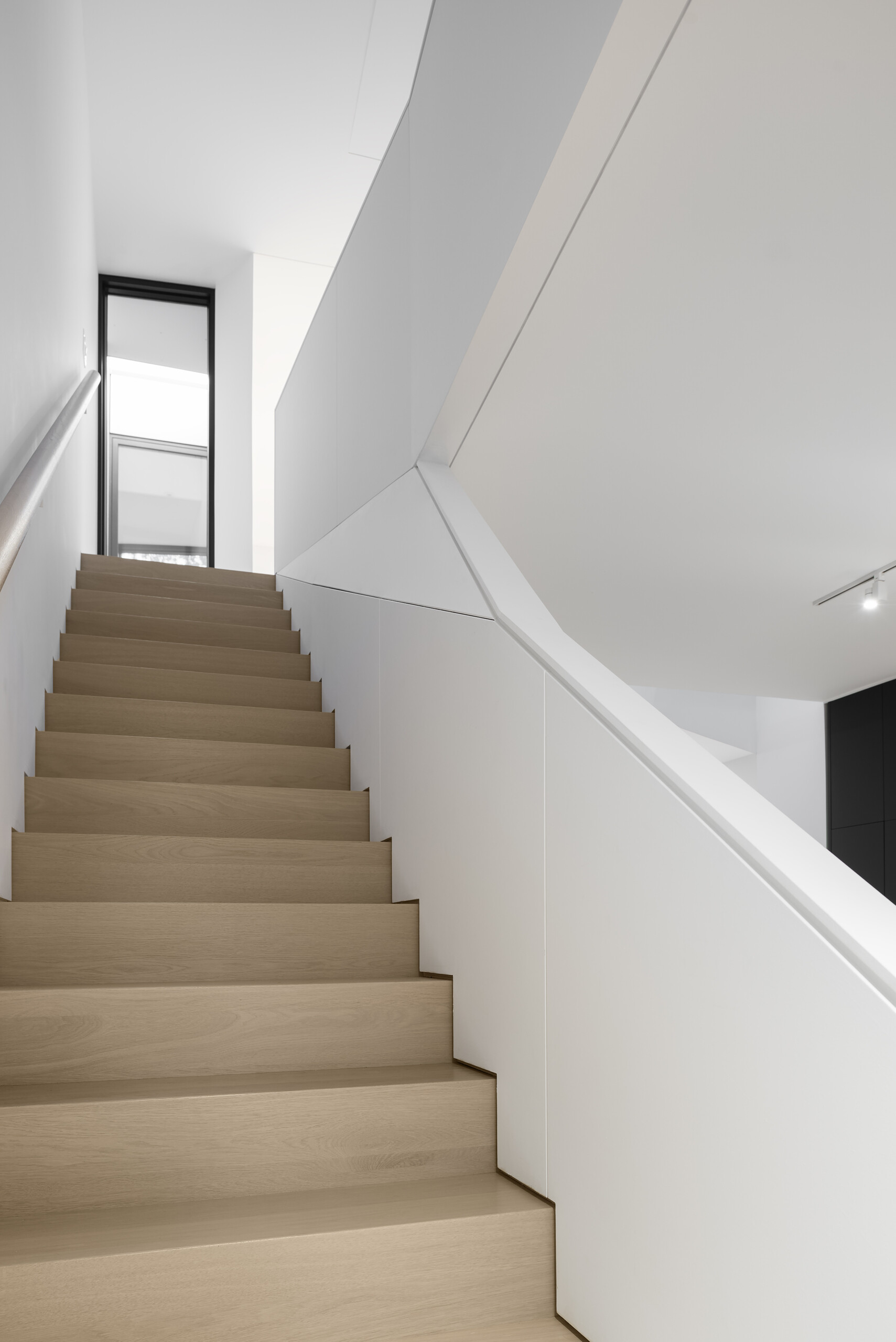
Light wood stairs lead to the upper floor, introducing warmth and guiding circulation along one side of the home. This efficient stacking of vertical and horizontal movement allows the second level to accommodate more private spaces while keeping the overall layout clear and intuitive.
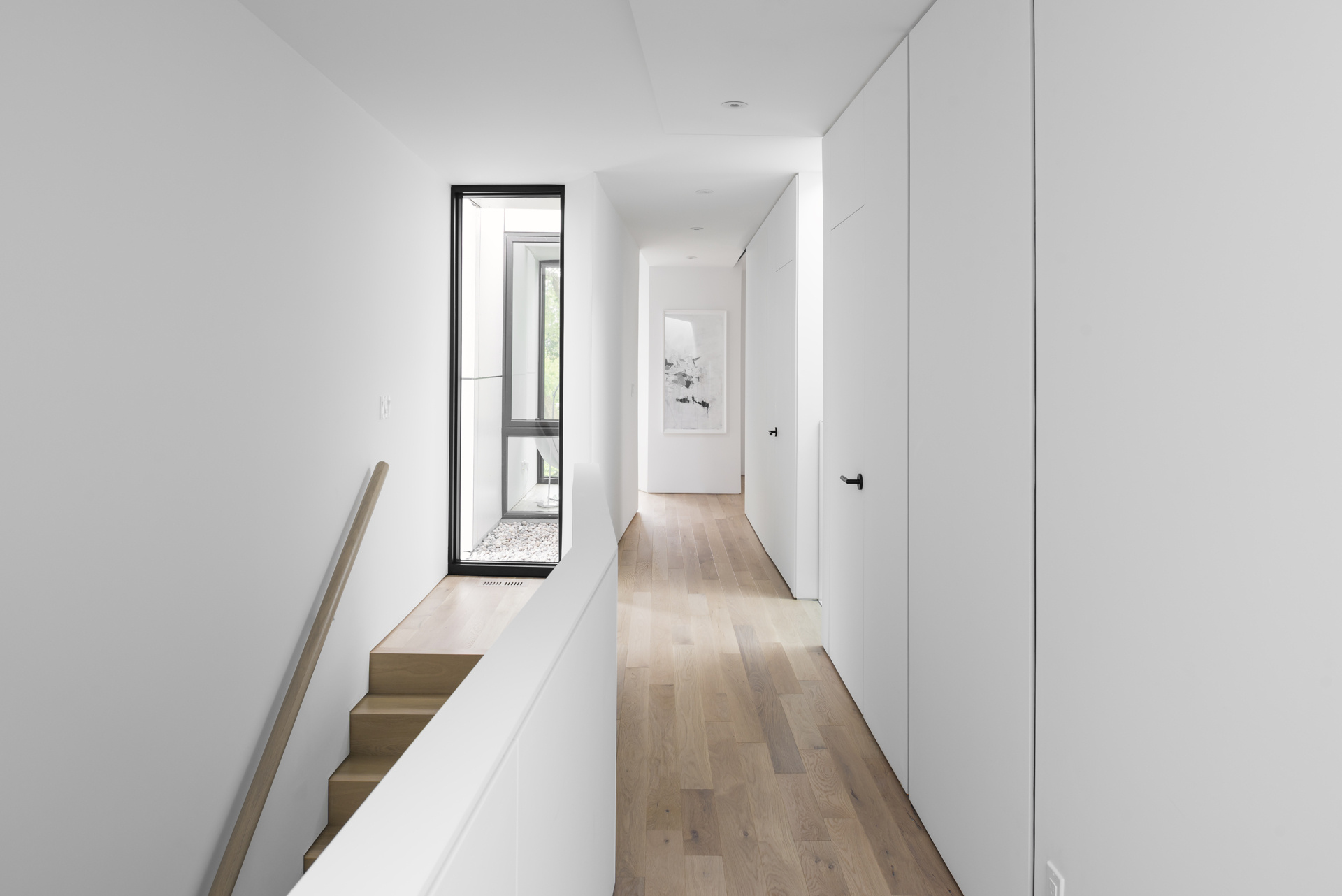
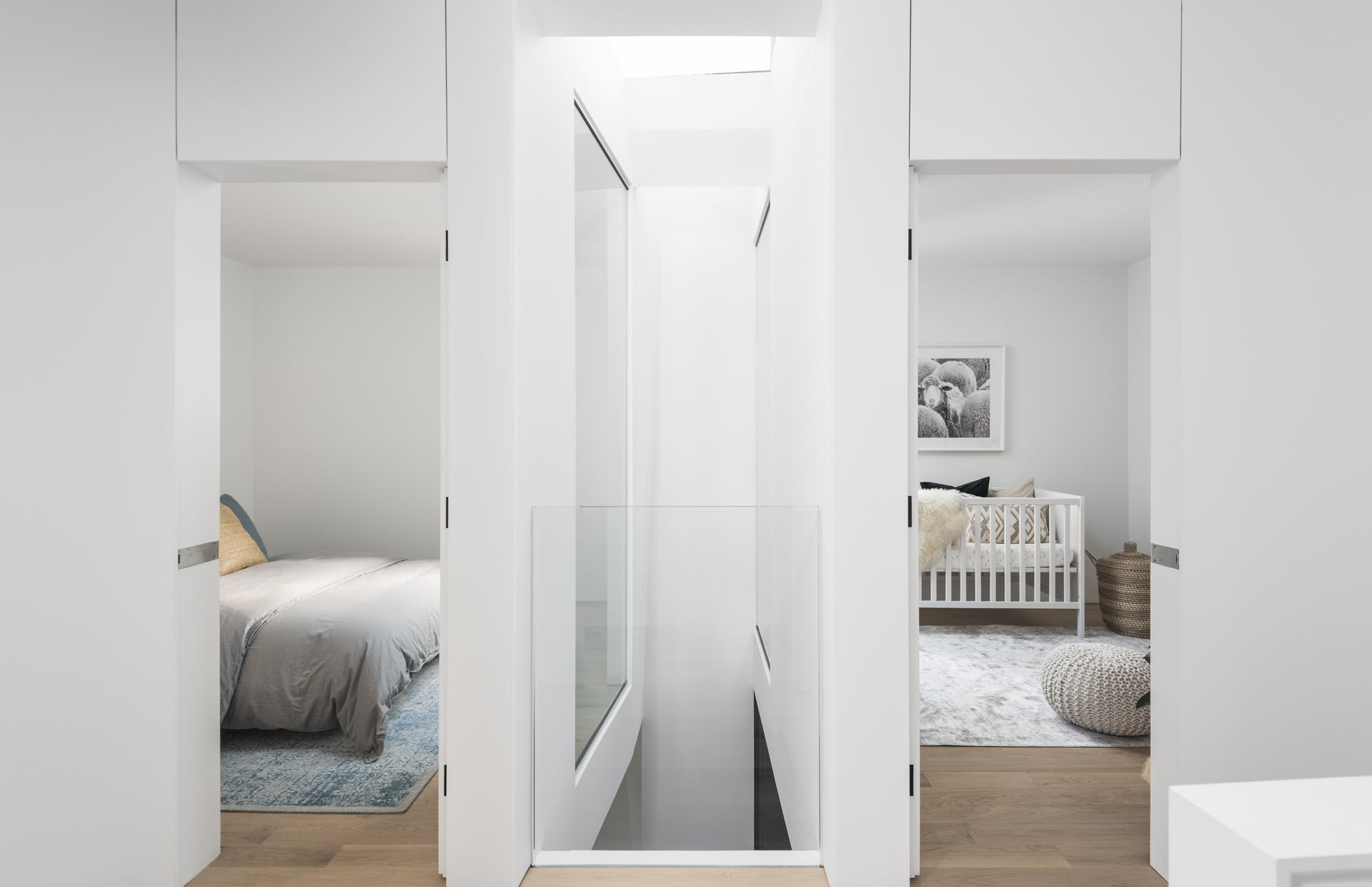
At the top of the stairs, a series of visible voids reveal one of Tesseract House’s most important design moves. These carved openings allow daylight to travel between levels, dissolving boundaries between floors and making the linear organization of the house possible. Light filters down into the heart of the home, reinforcing a constant connection between interior spaces.
Built using conventional local residential construction methods, Tesseract House offers a layered and thoughtful experience that unfolds over time.