On a quiet Brooklyn street, an Anglo Italianate townhouse dating to around 1860 has been reshaped into a calm retreat for a young couple who travel frequently for work. Partnering with Barker Associates Architecture Office, they expanded the relatively compact structure with a three story extension and reimagined the interiors throughout.
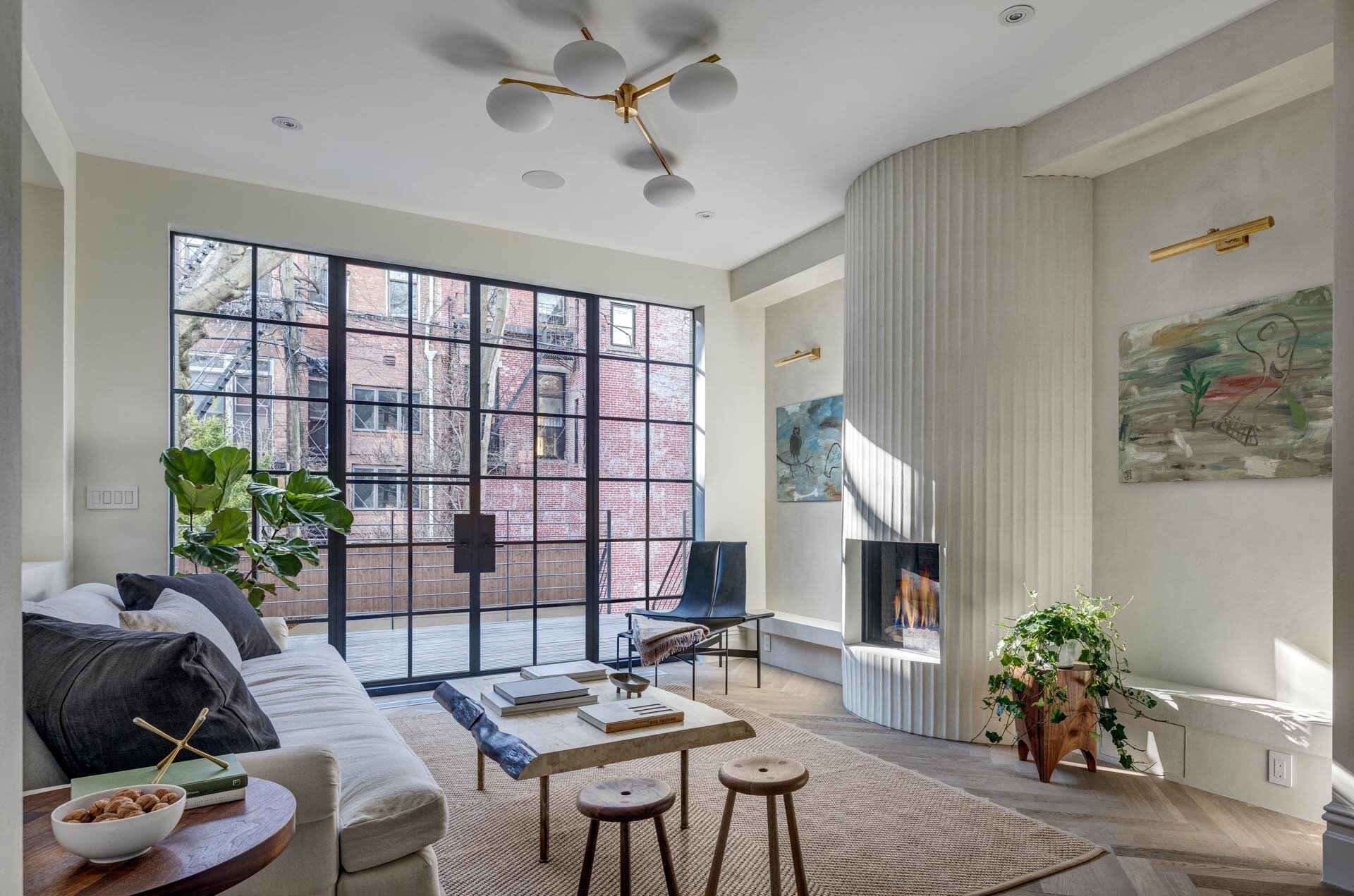
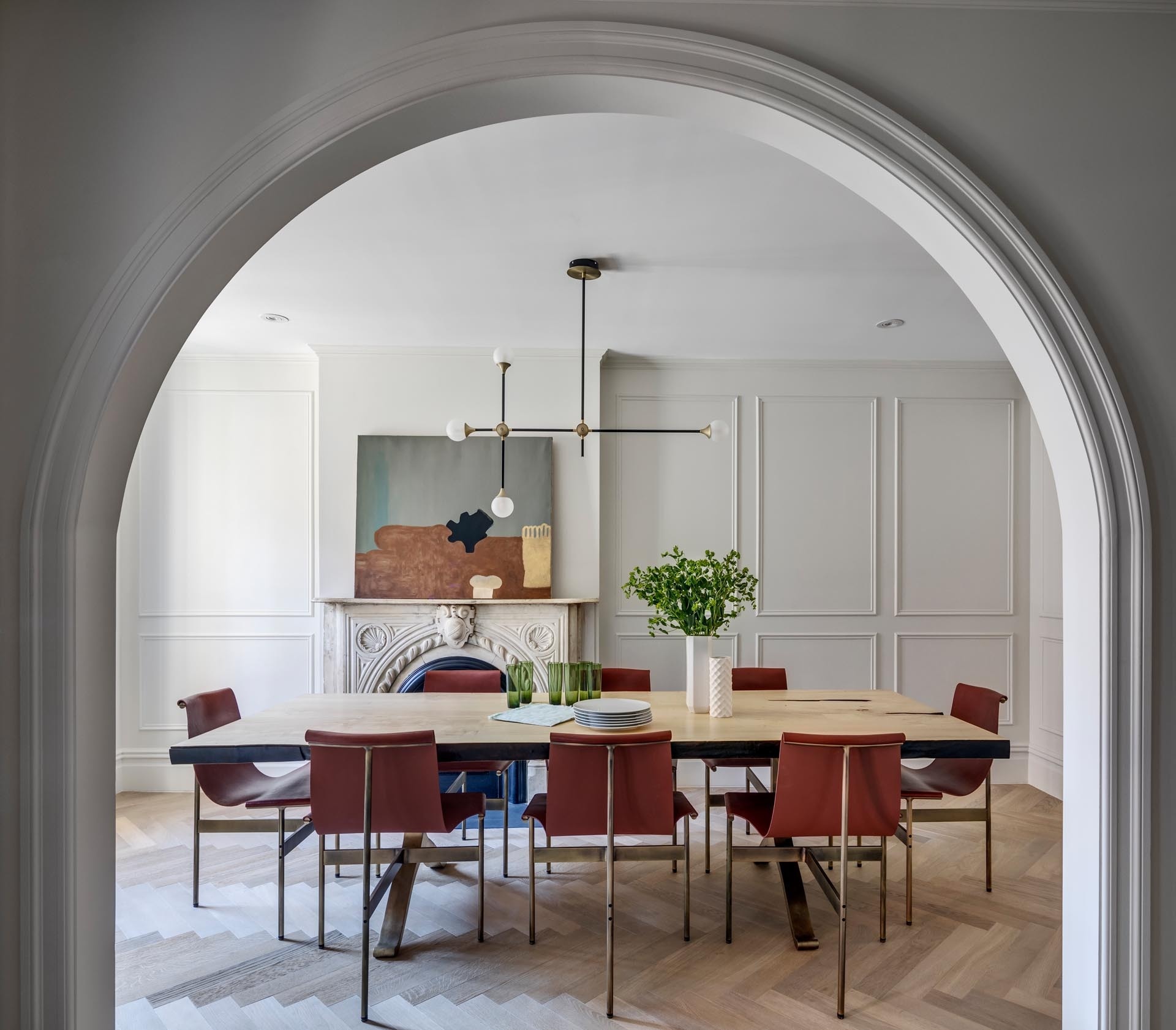
The living room is where the transformation declares itself most clearly. At its center stands a plaster fluted fireplace surround that rises the full height of the room. Its curved, sculptural profile introduces texture and movement without overwhelming the space. Crafted from plaster, the surround reads as both architectural element and artwork.
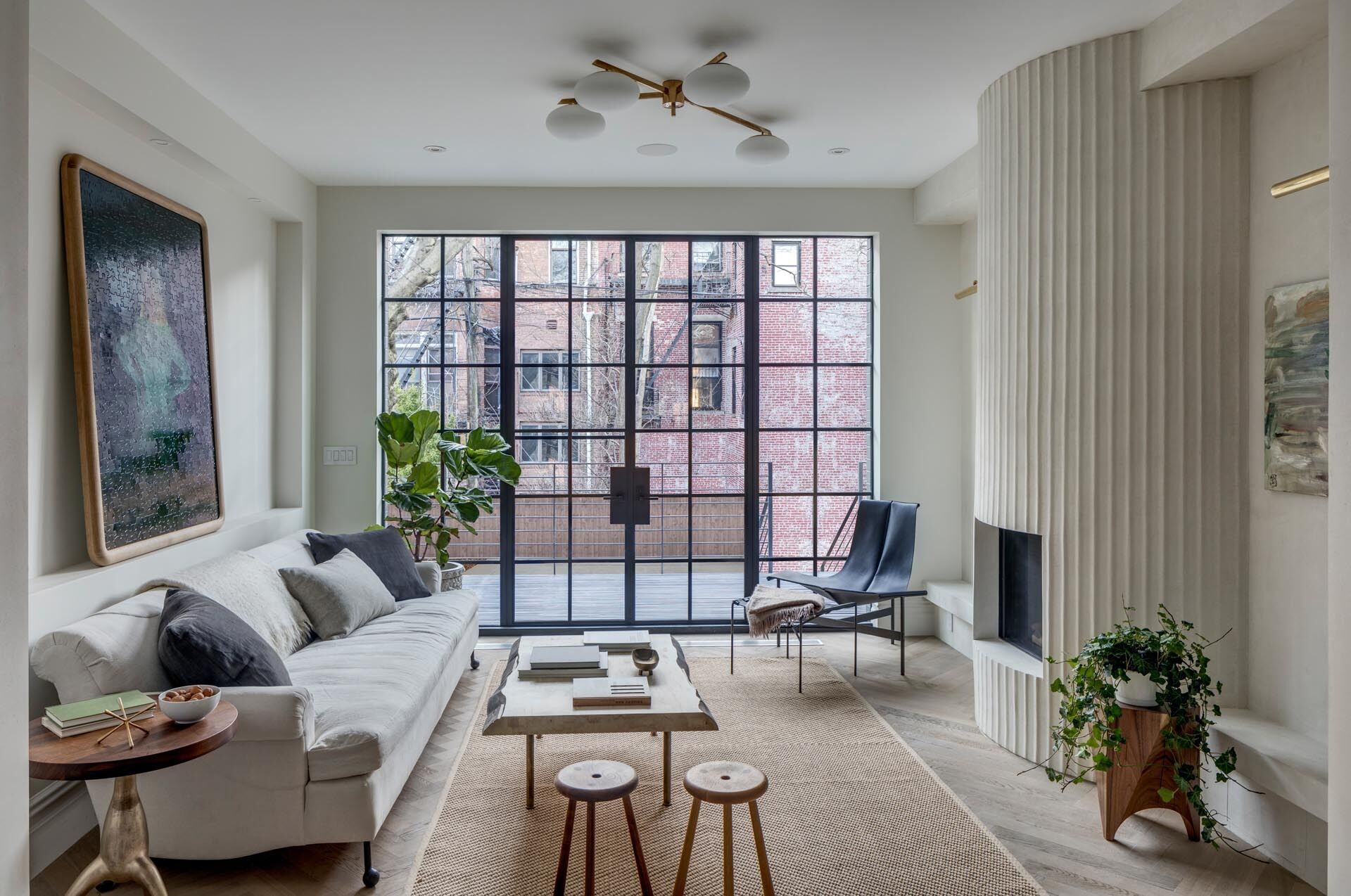
The fireplace extends outward to meet low built in shelves on either side, visually anchoring the wall. Highlighted art is carefully positioned above, while a single plant softens the composition with a touch of green. Rather than competing with the townhouse’s historic bones, the fluted surface reframes them, drawing the eye upward and outward.
On the parlor floor, ceilings were raised to open the room spatially and visually toward the rear yard. A full wall of steel doors frames the garden and connects to a rear deck, allowing light to filter deep into the interior. The fireplace becomes a vertical counterpoint to that glazed wall, balancing solidity with transparency.
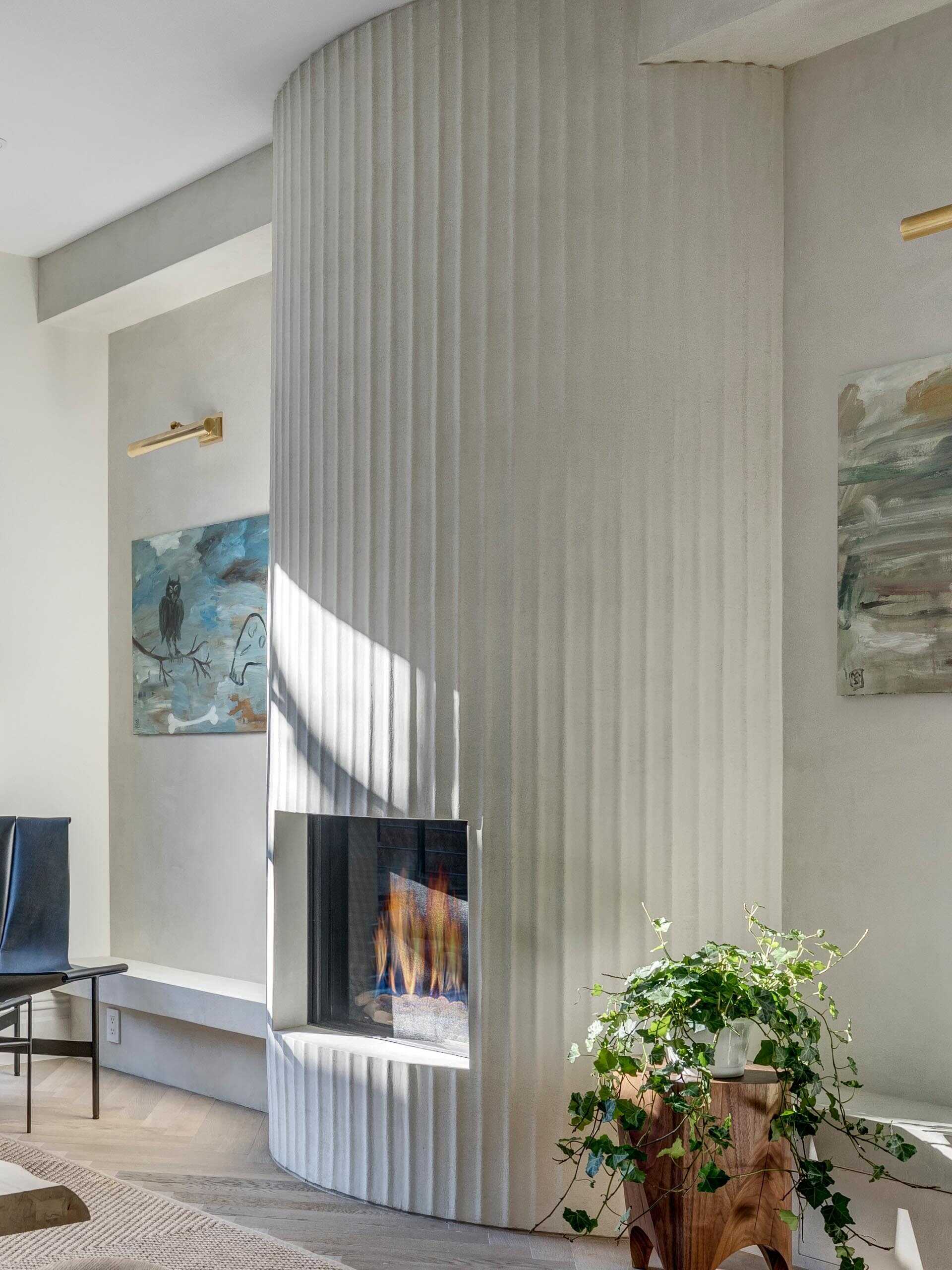
Arched openings connect the dining room to the foyer, creating a gentle progression through the parlor floor. The curves echo the original doorway at the front of the house, reinforcing a sense of rhythm as one moves from space to space.
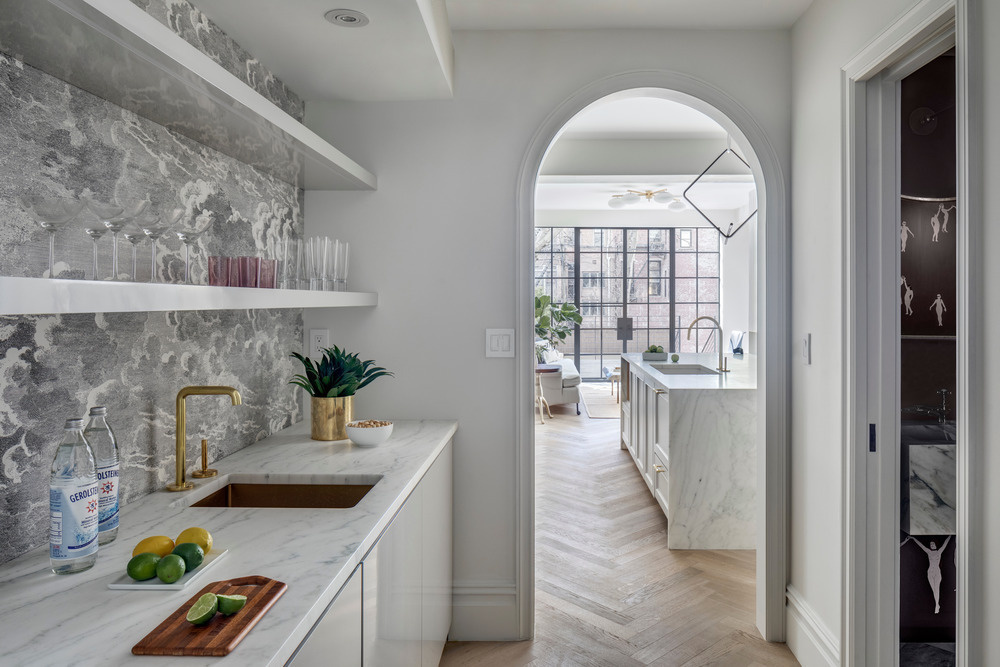
The dining area also links to the kitchen through a butler’s pantry, a transitional moment that preserves sightlines while offering functional separation. The arches create intimacy within openness, shaping rooms that flow without dissolving into one another.
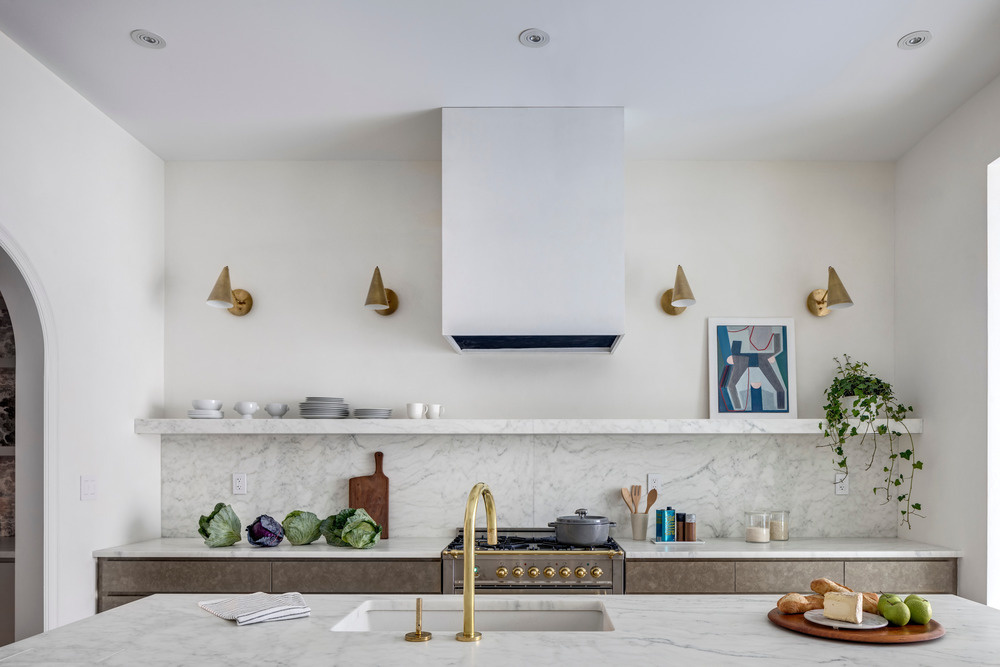
Spanning the full width of the house, the kitchen was designed as a place to gather. A large central marble island anchors the room, offering generous surface area for cooking and conversation. Extensive countertops line the perimeter, supporting the couple’s desire for a social space that accommodates guests as easily as daily routines.
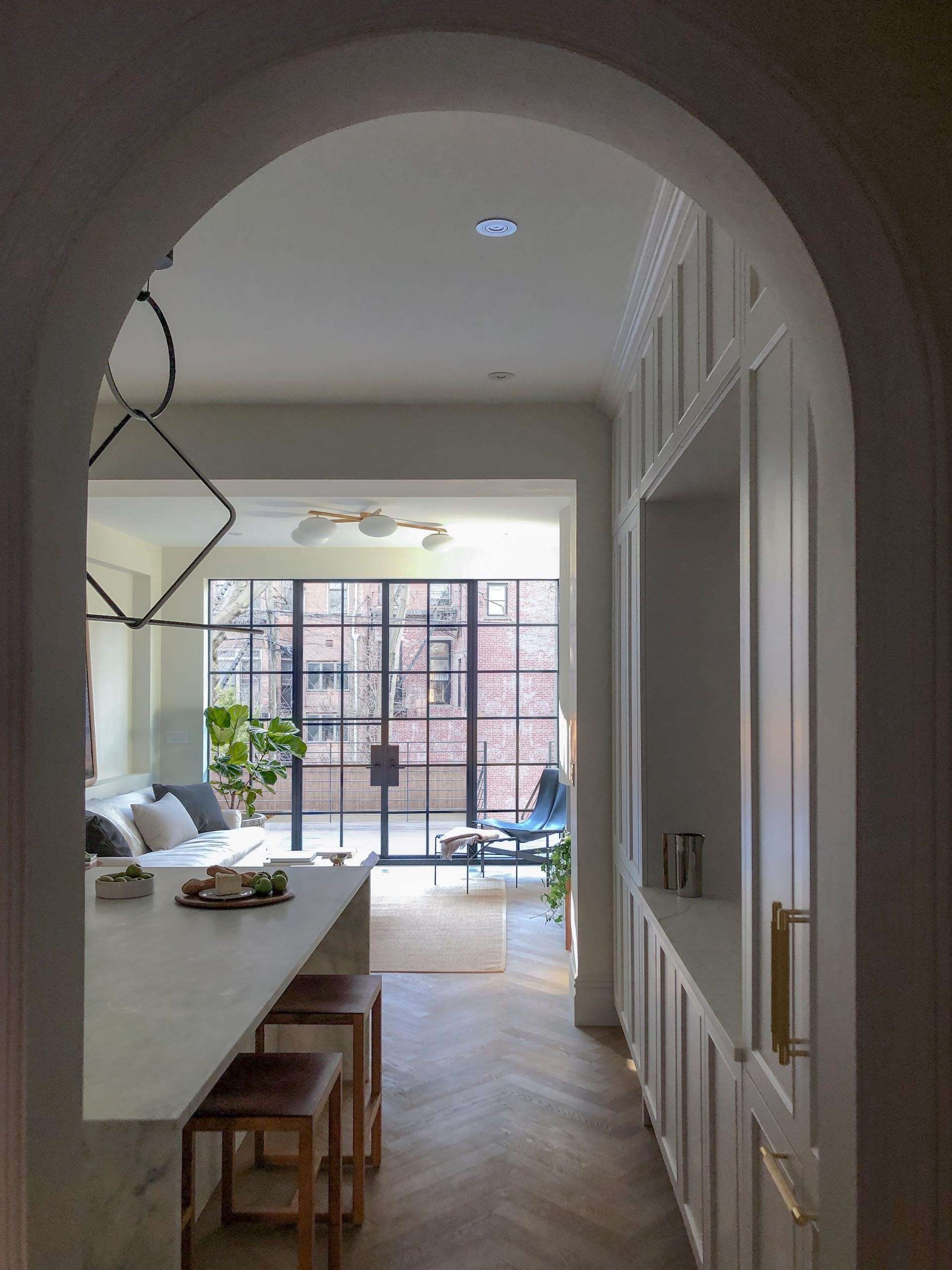
Circulation through the triplex unfolds as a series of framed passages. Arched openings continue to define movement, guiding residents from public rooms to more private quarters.
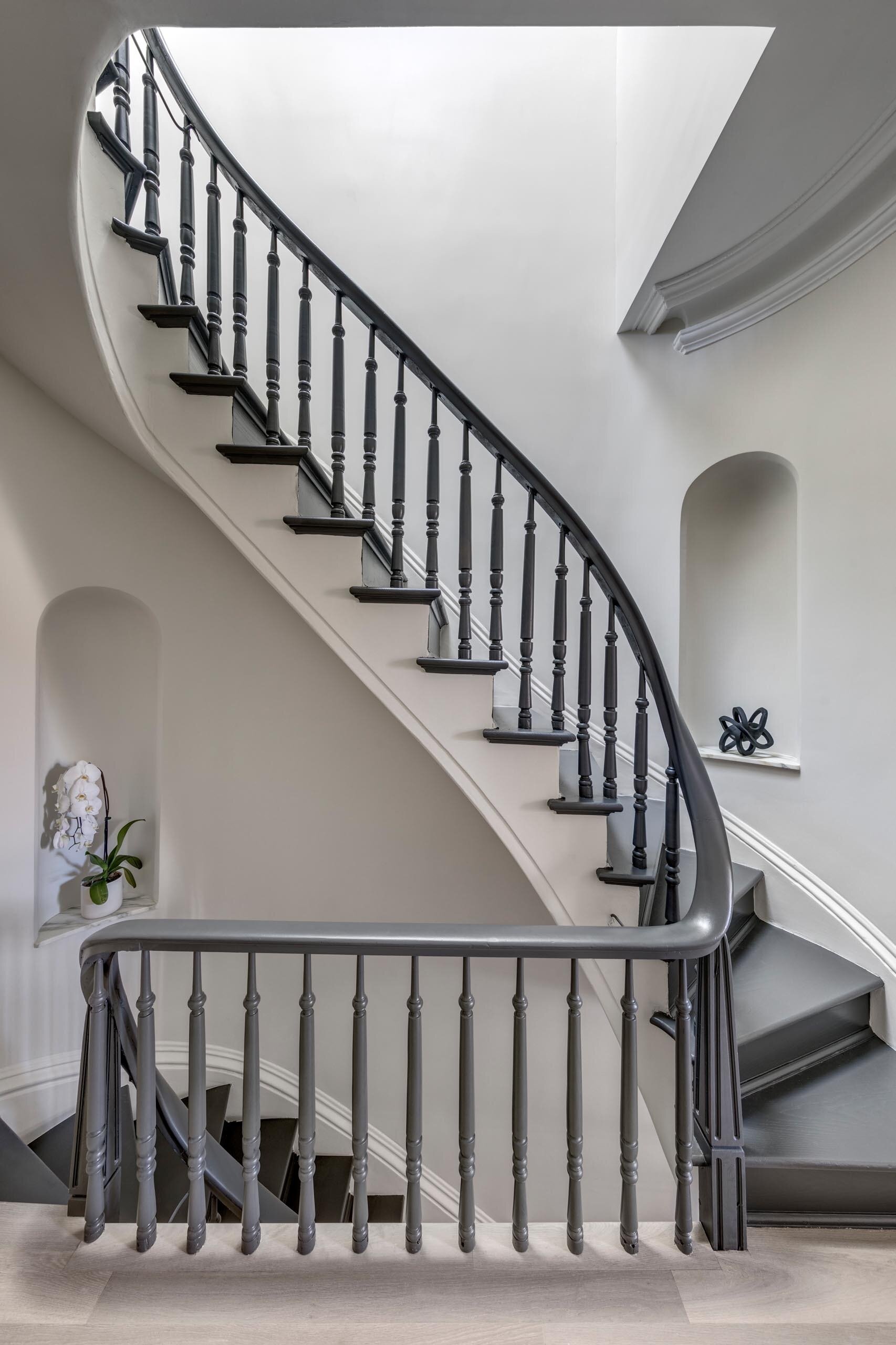
The stair becomes less a singular object and more a connective thread, linking the compact original building with the three story extension. Each ascent shifts the atmosphere subtly, from the openness of the parlor floor to the seclusion above.
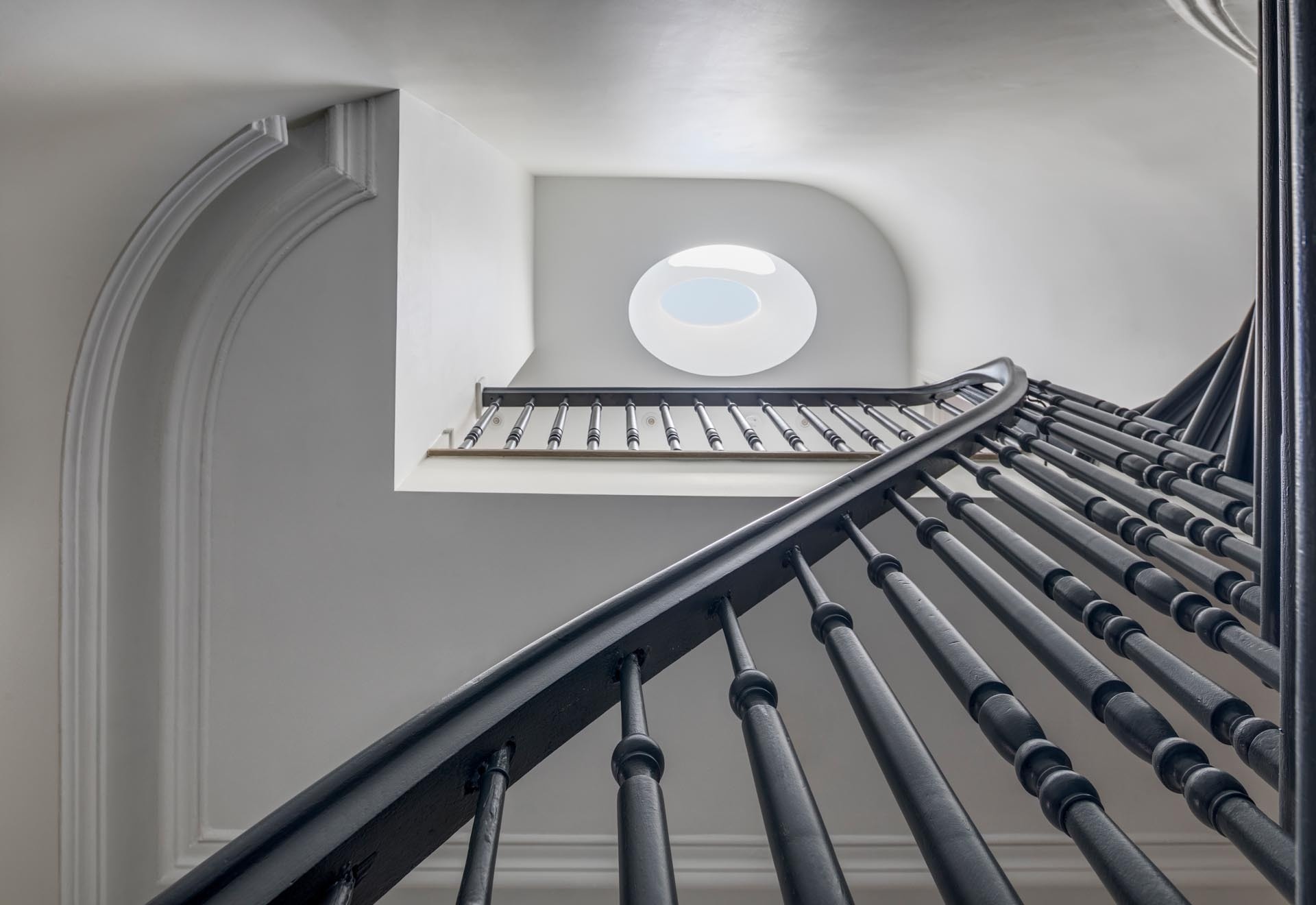
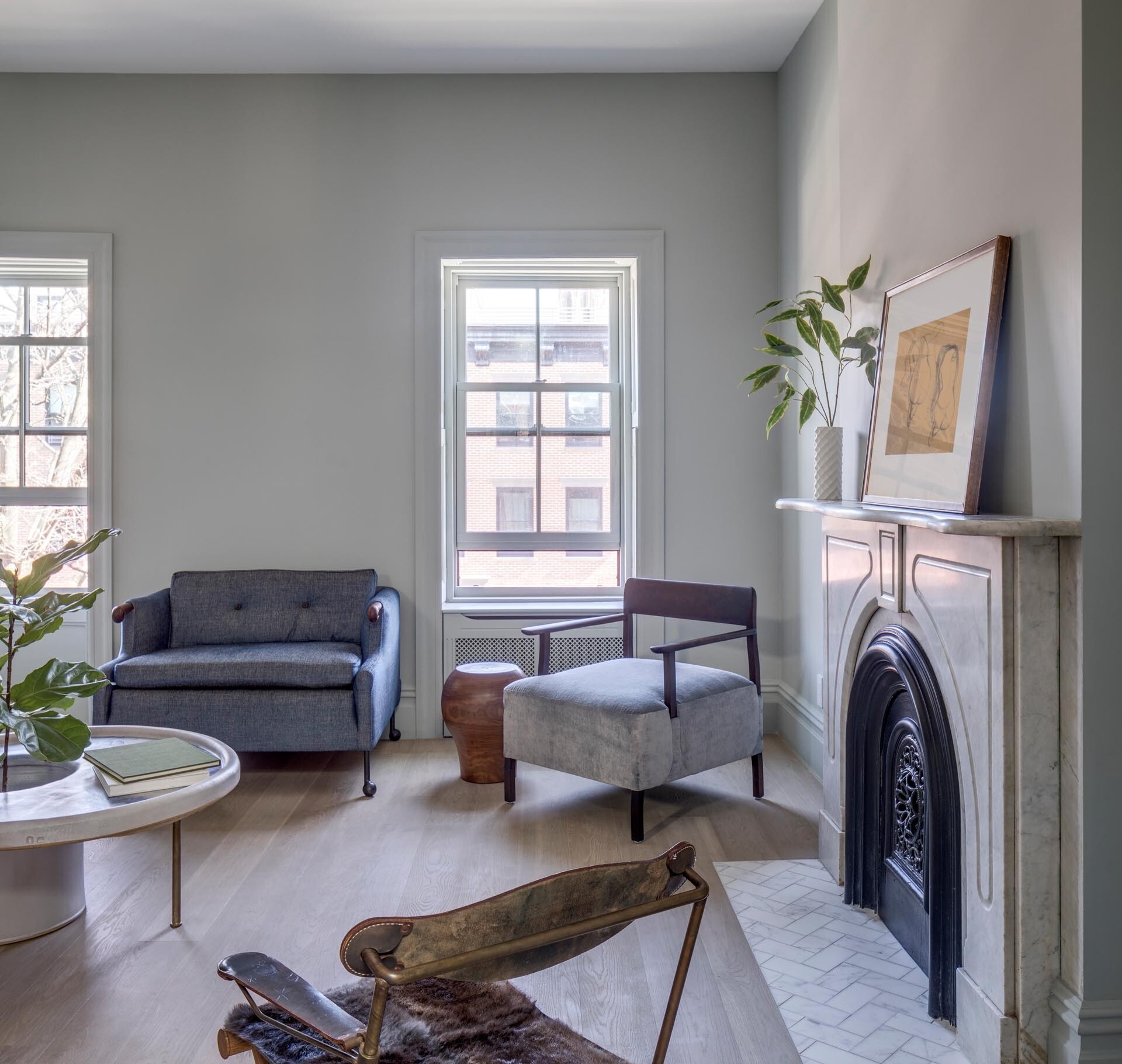
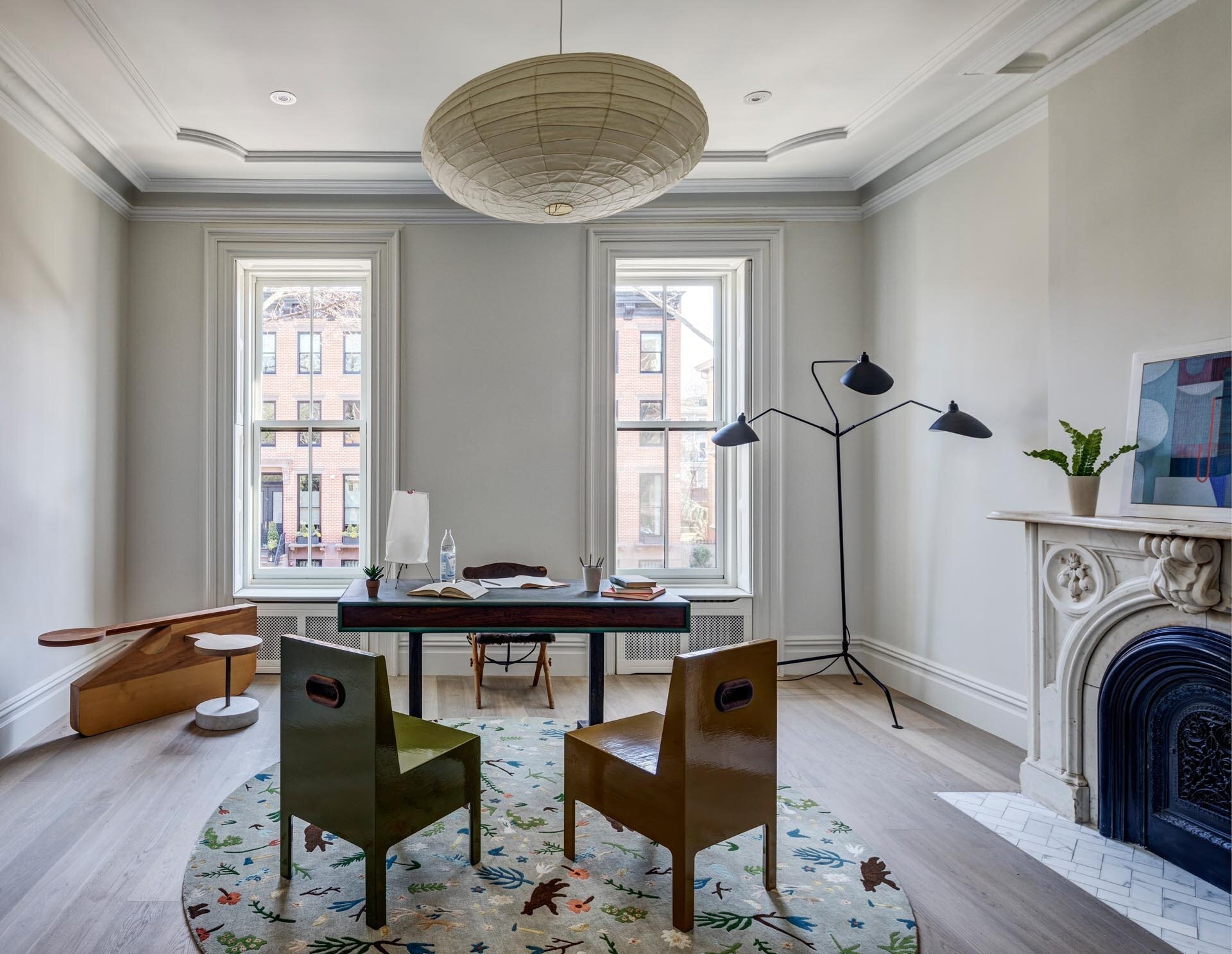
On the second floor, the mood shifts. A library and office overlooking the street retains its original moldings and fireplace, grounding the room in its 19th century origins.
For a couple frequently on the move, the office offers stability. Books, work surfaces, and the existing architectural details create a space that feels rooted and reflective. It stands in quiet contrast to the more contemporary gestures below.
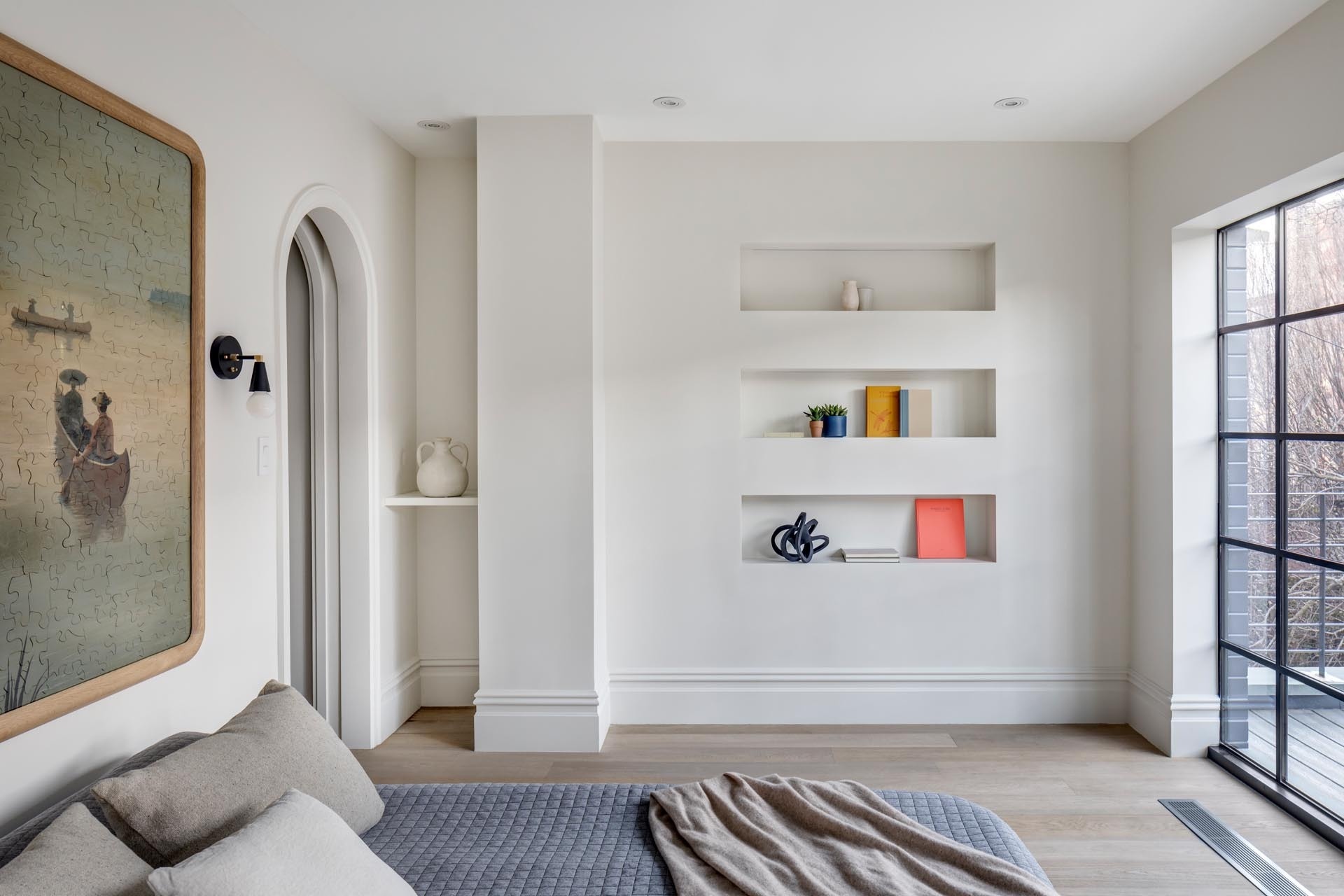
The primary suite occupies the remainder of the second floor. Accessed through more arched openings and along a raised passageway toward the rear, the bedroom feels intentionally set apart, while steel doors open onto a balcony, extending the room outdoors and drawing in light.
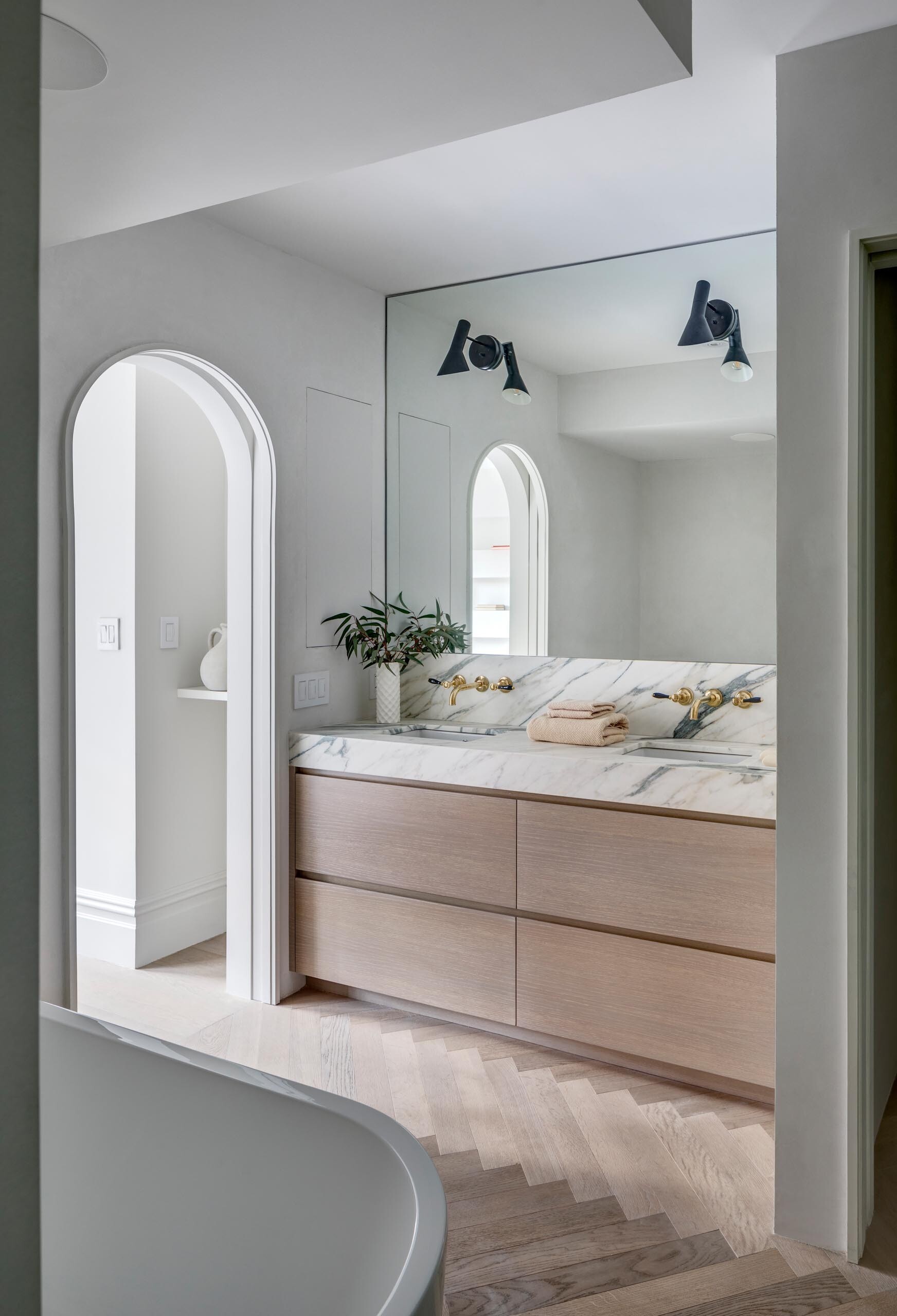
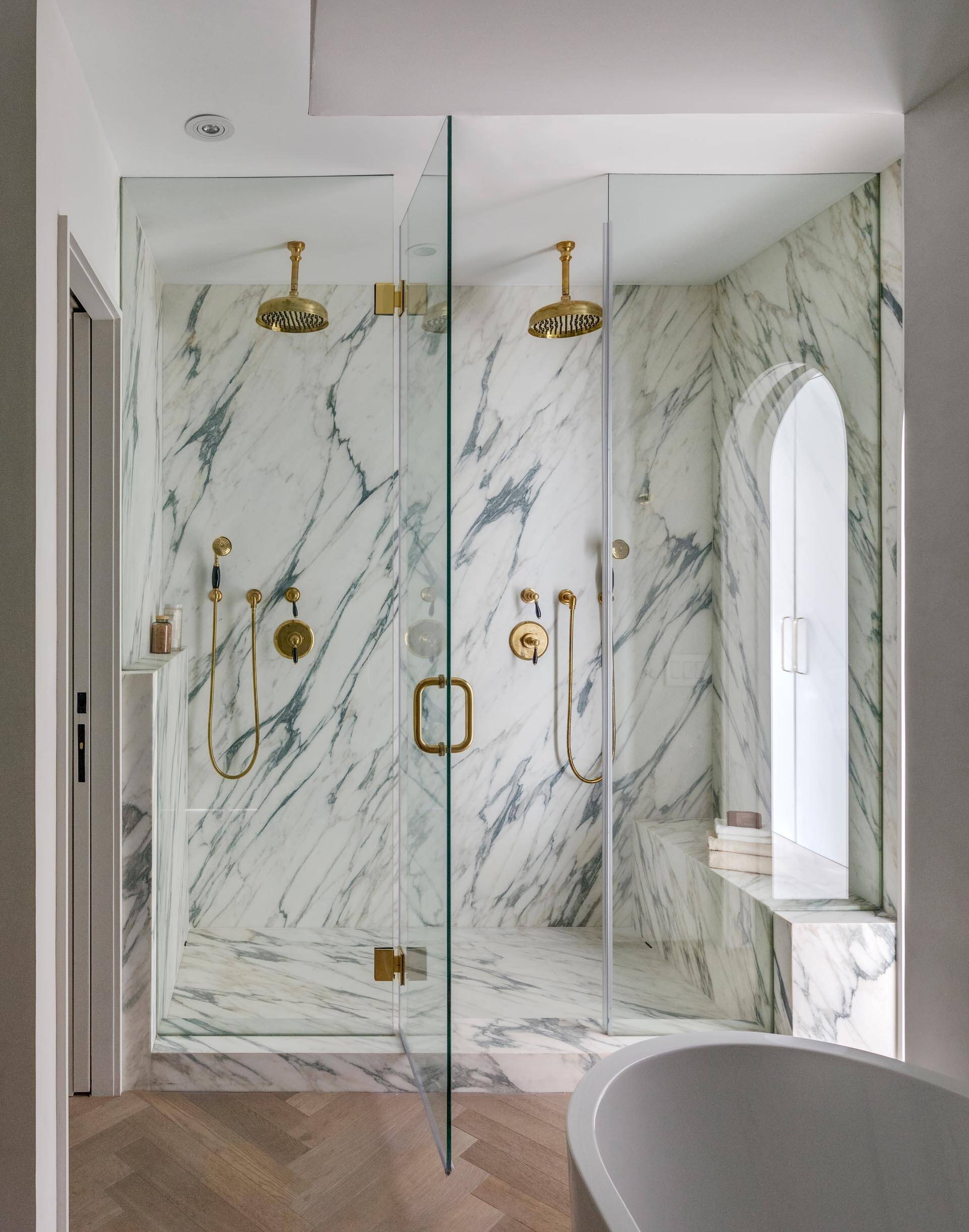
The primary bath pairs plaster and marble, continuing the material language established below while shifting the scale to something more intimate. The combination feels tactile and restrained.
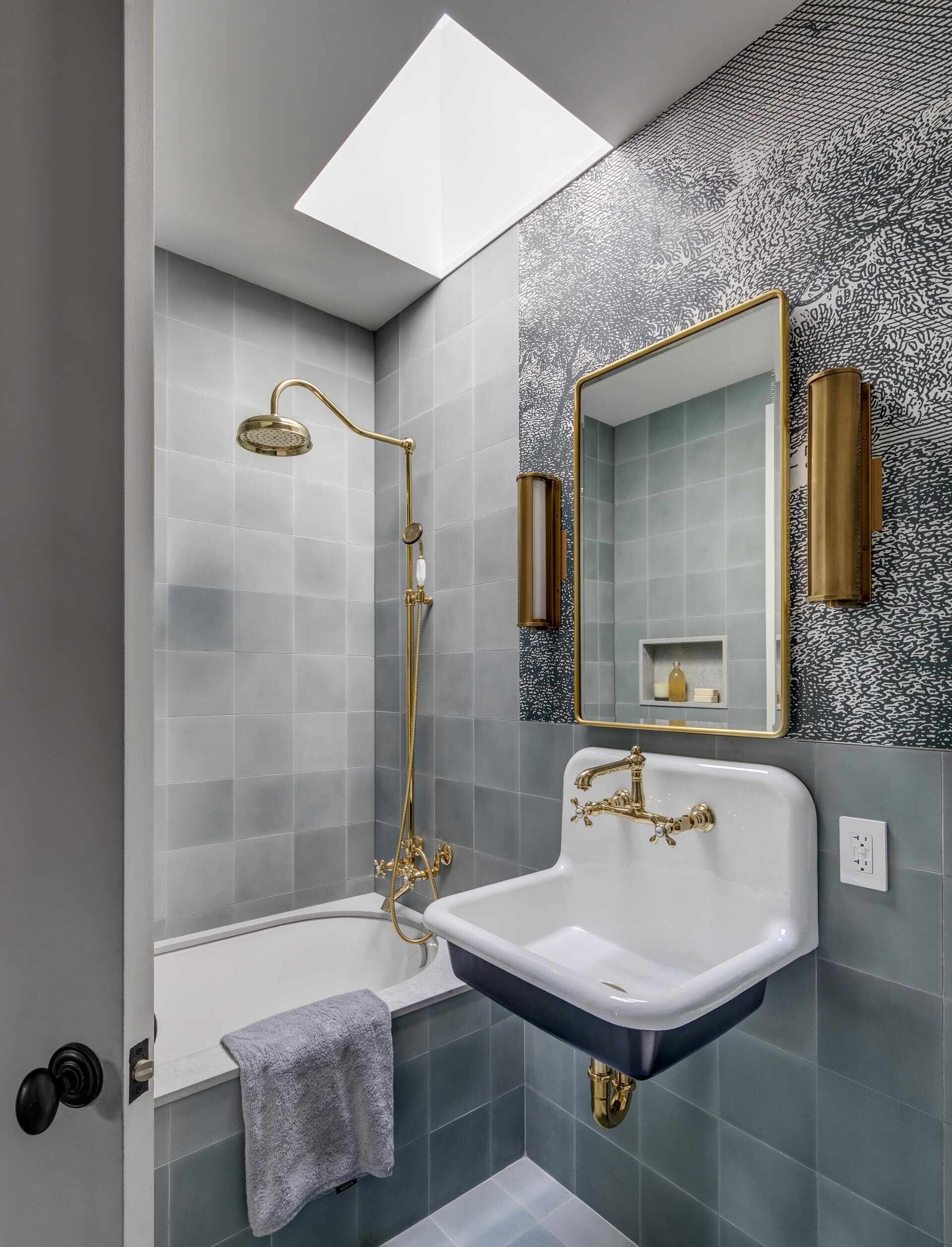
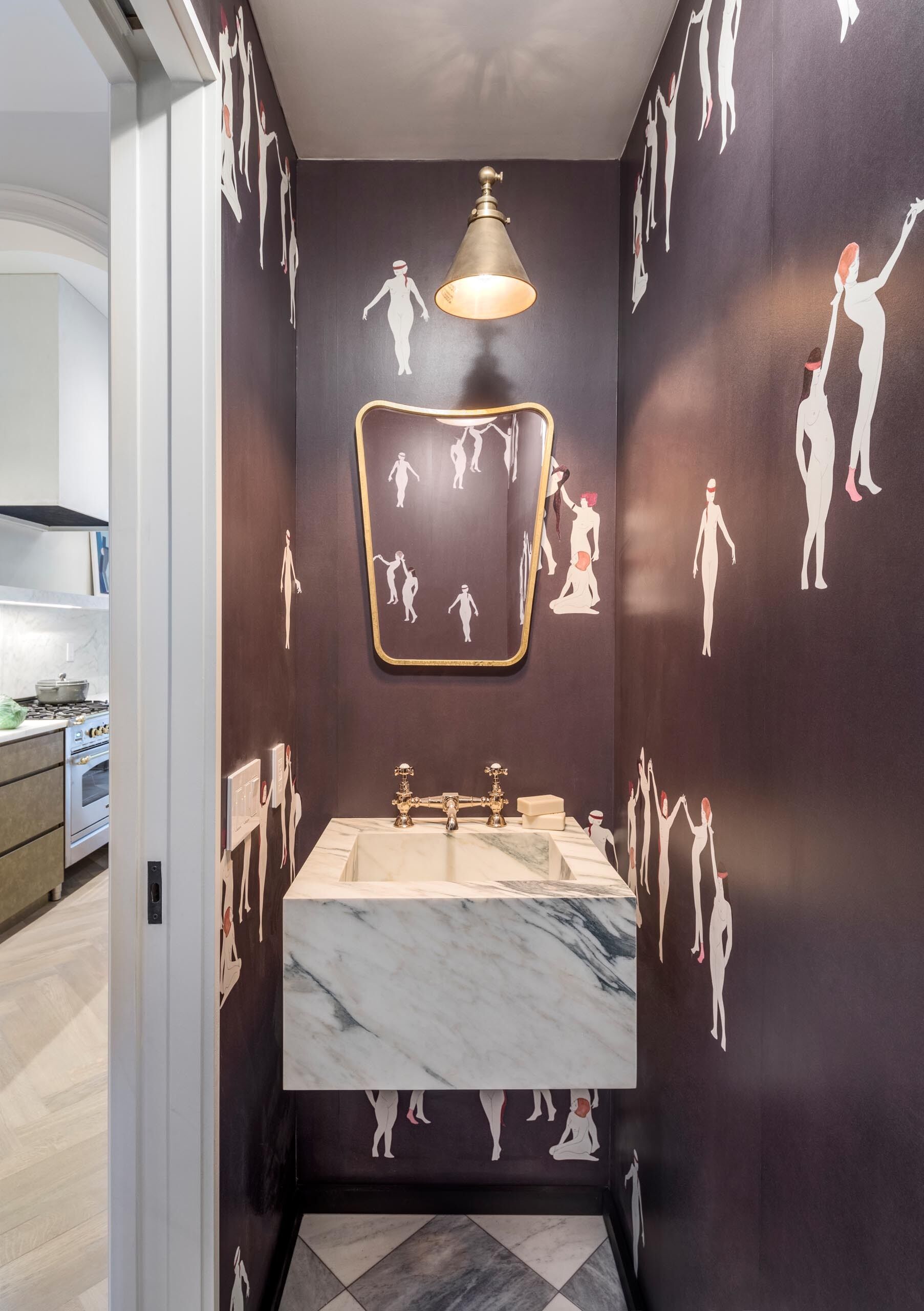
Other bathrooms in the home make use of artistic wallpapers, creating unexpected creative moments.
For two owners accustomed to constant motion, the townhouse offers something quieter. The fluted fireplace reframes the living room, arches guide the eye, steel doors frame the garden, and marble and plaster ground each room.