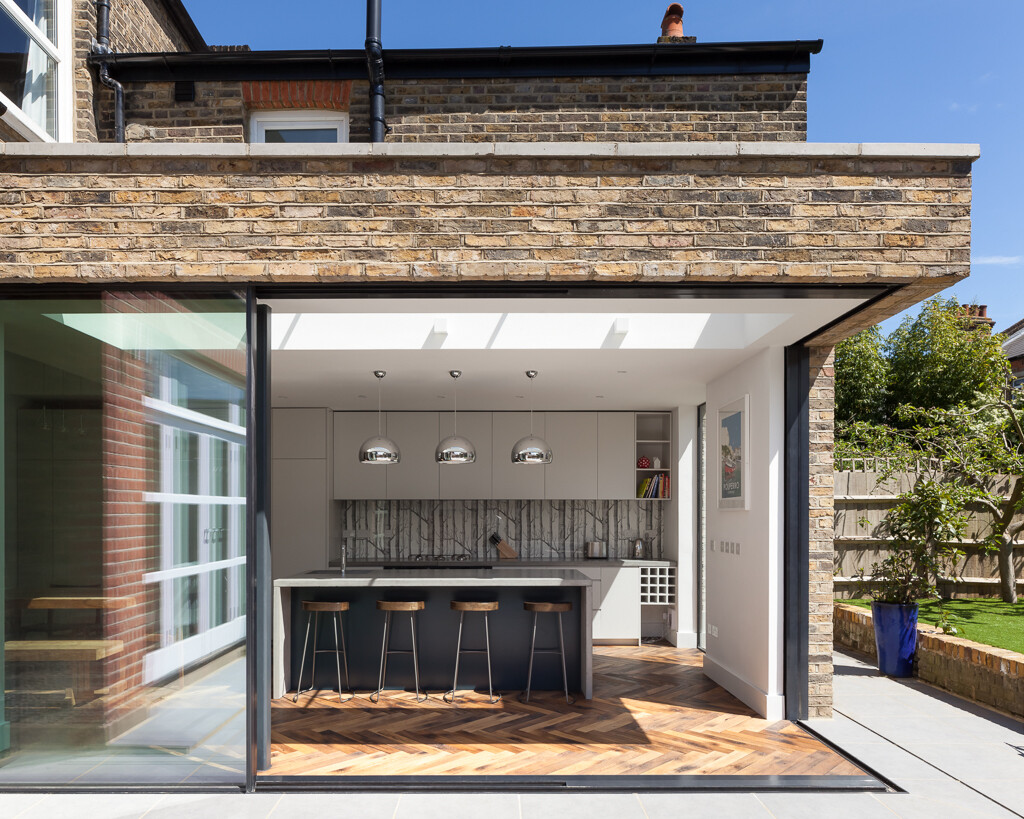
British architecture firm Russian For Fish was commissioned to rework a traditional Victorian house in London for a family looking to reconnect their home with its garden. While the five bedroom link detached property was generous in size and well proportioned overall, one key space was letting it down.
The kitchen, typical of its era, was small, gloomy, and disconnected from the rhythm of daily life. The family wanted more than just a larger kitchen. They wanted a place where cooking, dining, and being together could happen naturally, with light and greenery playing a central role.
Six Months of Careful Expansion
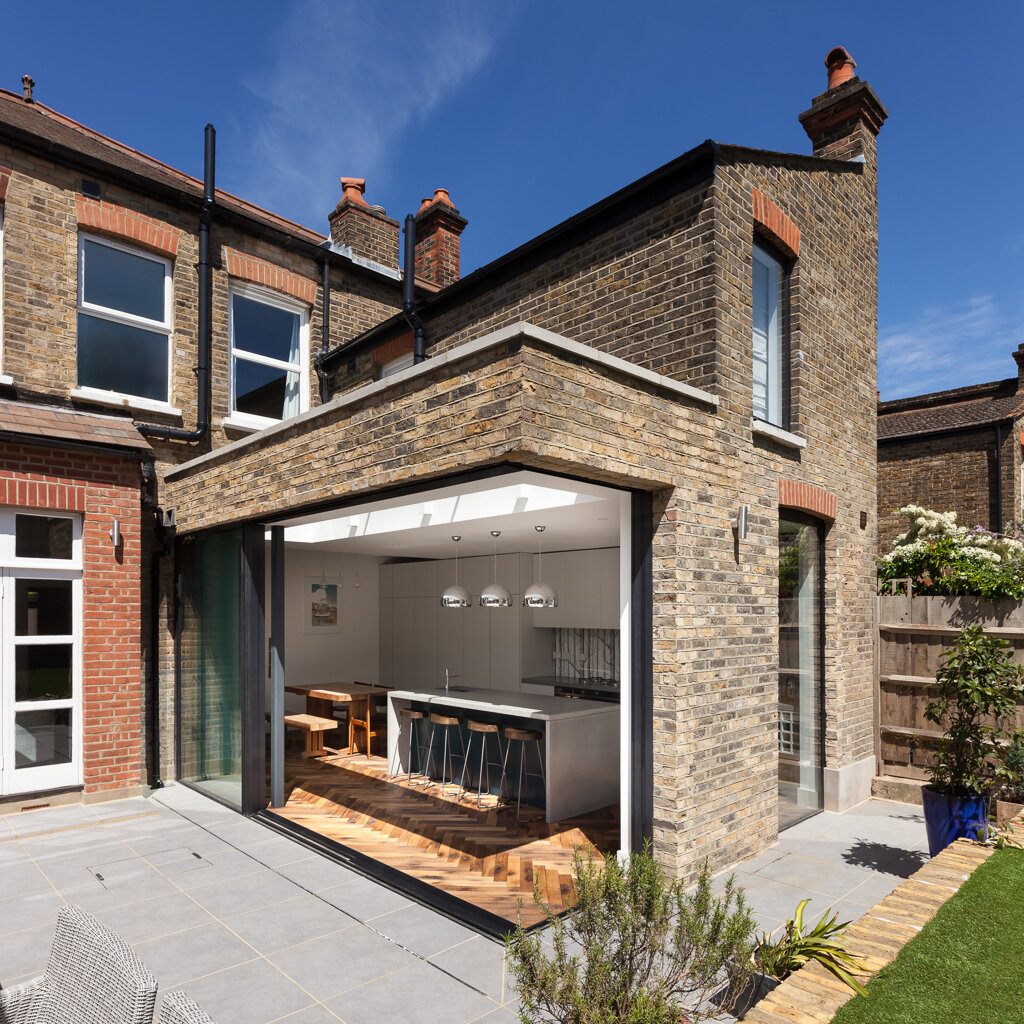
Over the course of six months, the architects focused their efforts on the rear of the home. By widening the building’s rear outrigger, they were able to introduce much needed space without altering the historic footprint of the house. Reclaimed brick was used for the repositioned walls, ensuring the extension blended seamlessly with the original structure. The result is an addition that feels as though it has always belonged there, rather than something newly attached.
Letting the Garden In
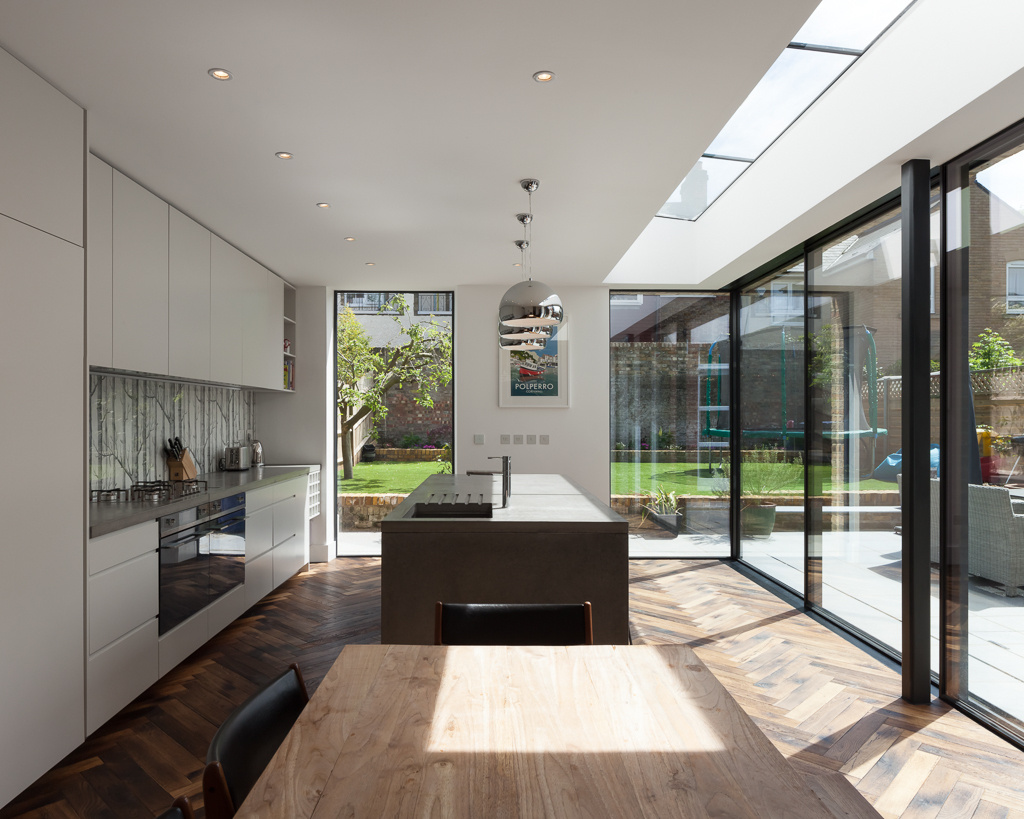
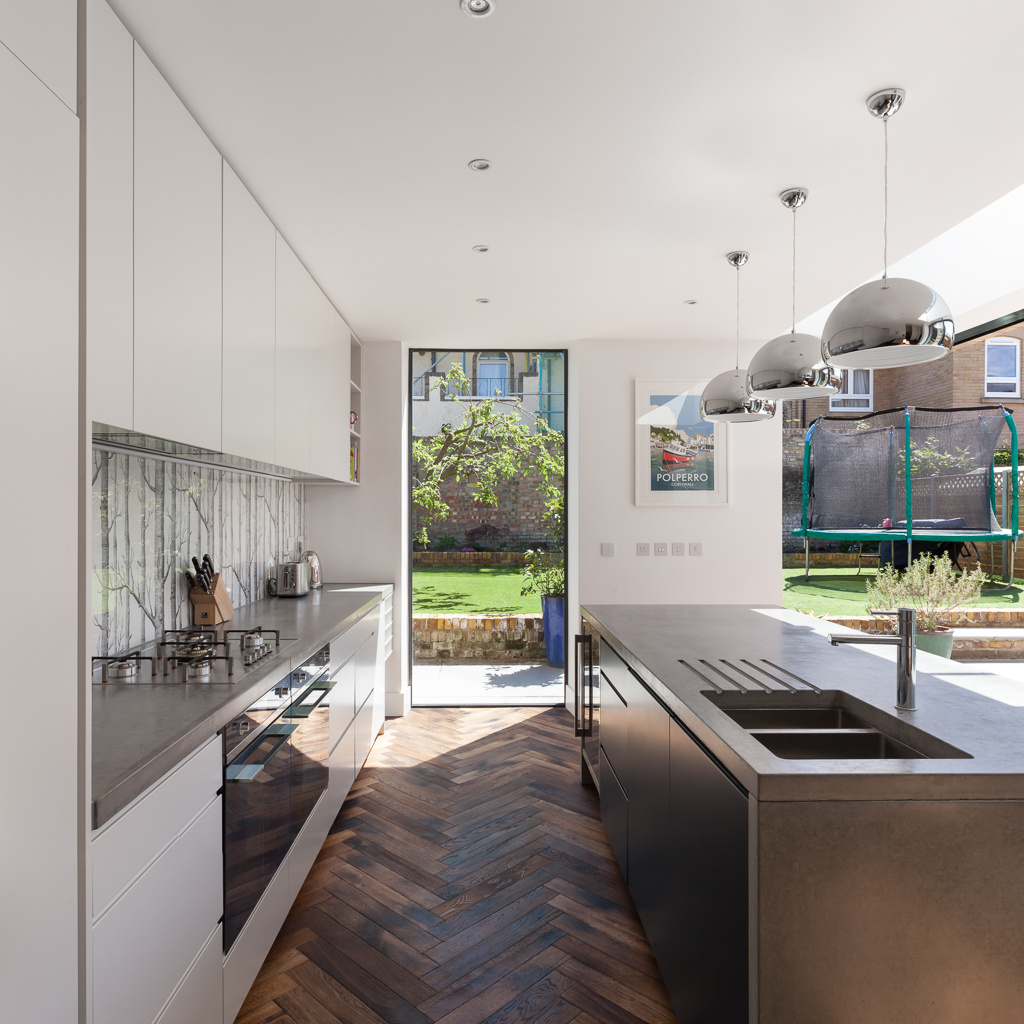
One of the most transformative moments in the redesign comes from the way the kitchen now opens to the outdoors. A set of sliding glass doors framed in powder coated aluminium stretches across a 16 foot (5m) corner of the space. This expansive wall of glass floods the kitchen with sunlight and creates an uninterrupted view of the garden beyond. On warmer days, the doors can be opened fully, dissolving the boundary between inside and out. Overhead, a long rectangular skylight brings even more daylight into the heart of the home, lifting what was once a dark interior.
A Kitchen Designed Around Contrast
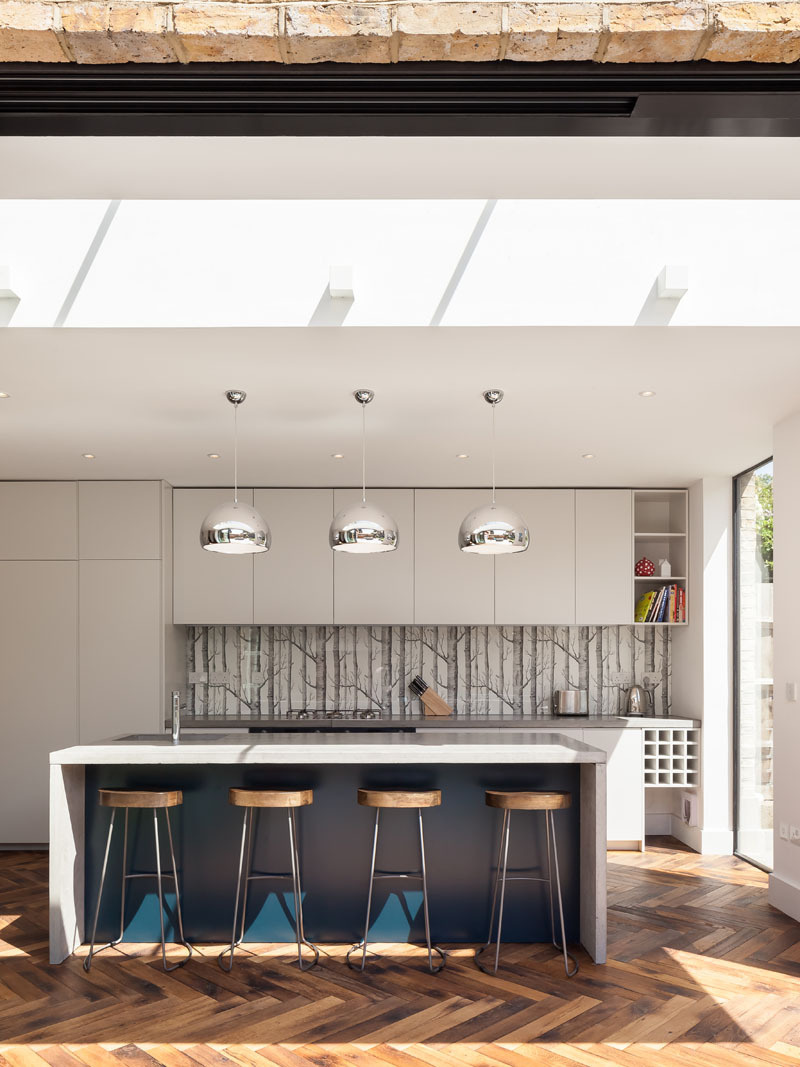
Inside the kitchen, the palette is clean and contemporary. Crisp white cabinetry forms a calm backdrop, allowing the blue kitchen island to stand out as a bold focal point. A nature inspired backsplash introduces subtle pattern, complementing the raw texture of the concrete countertops.
Linking Old and New
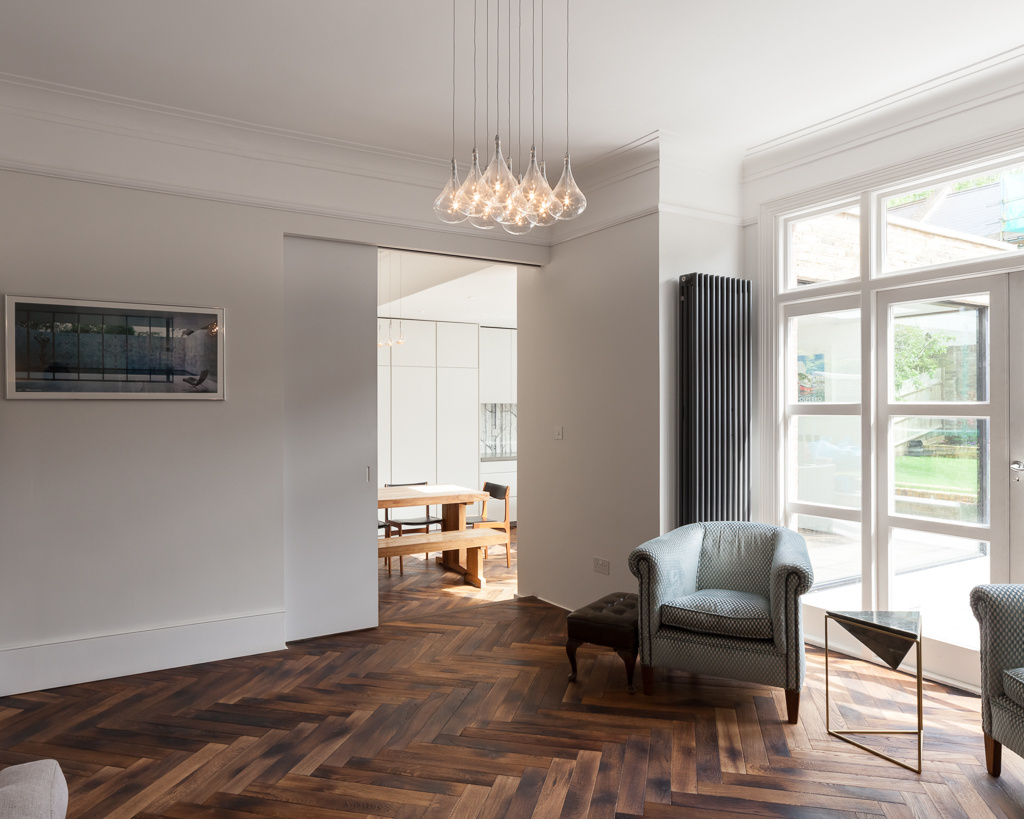
A large sliding door connects the new kitchen and dining area to the rear reception room, allowing the layout to function as open plan when desired while still offering flexibility. Throughout the ground floor, stained oak parquet flooring ties the spaces together, reinforcing a sense of continuity between the original house and its new extension.
A Bathroom Refresh to Match
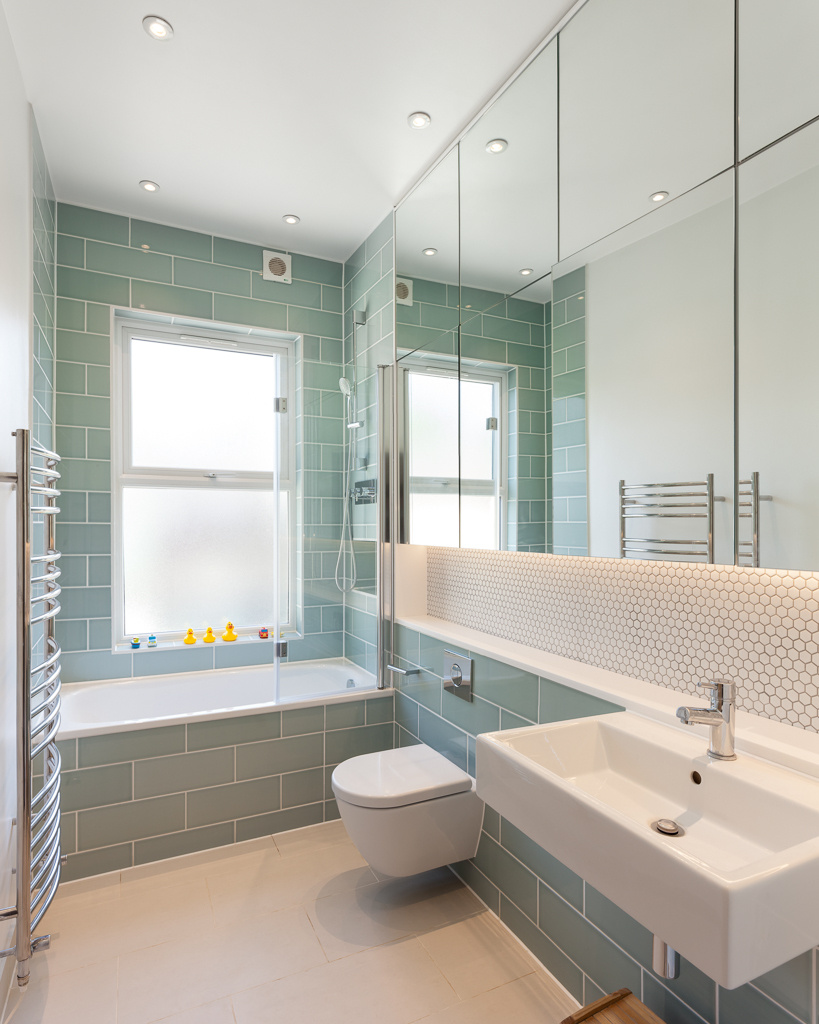
Beyond the kitchen, the renovation extended into the bathrooms, each updated with its own distinct identity. In one bathroom, light green subway tiles are paired with white penny tiles, creating a fresh and layered look. A generous arrangement of mirrors amplifies light and gives the space a more expansive feel.
Bold Contrast and Classic Forms
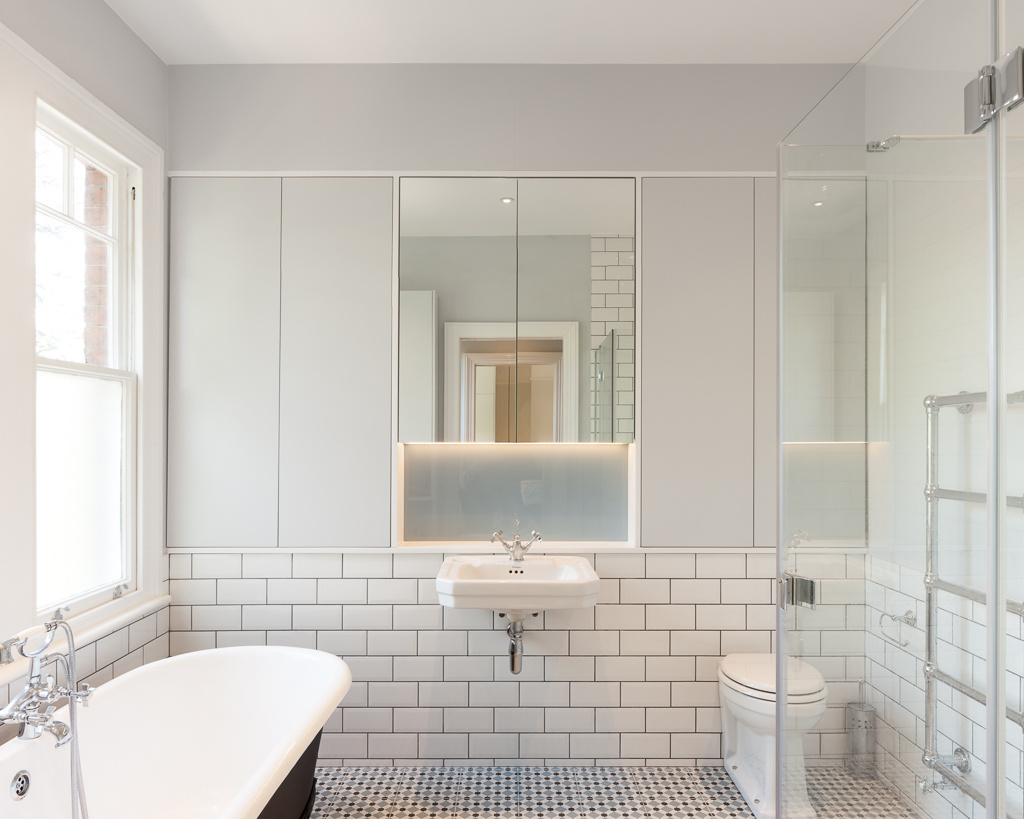
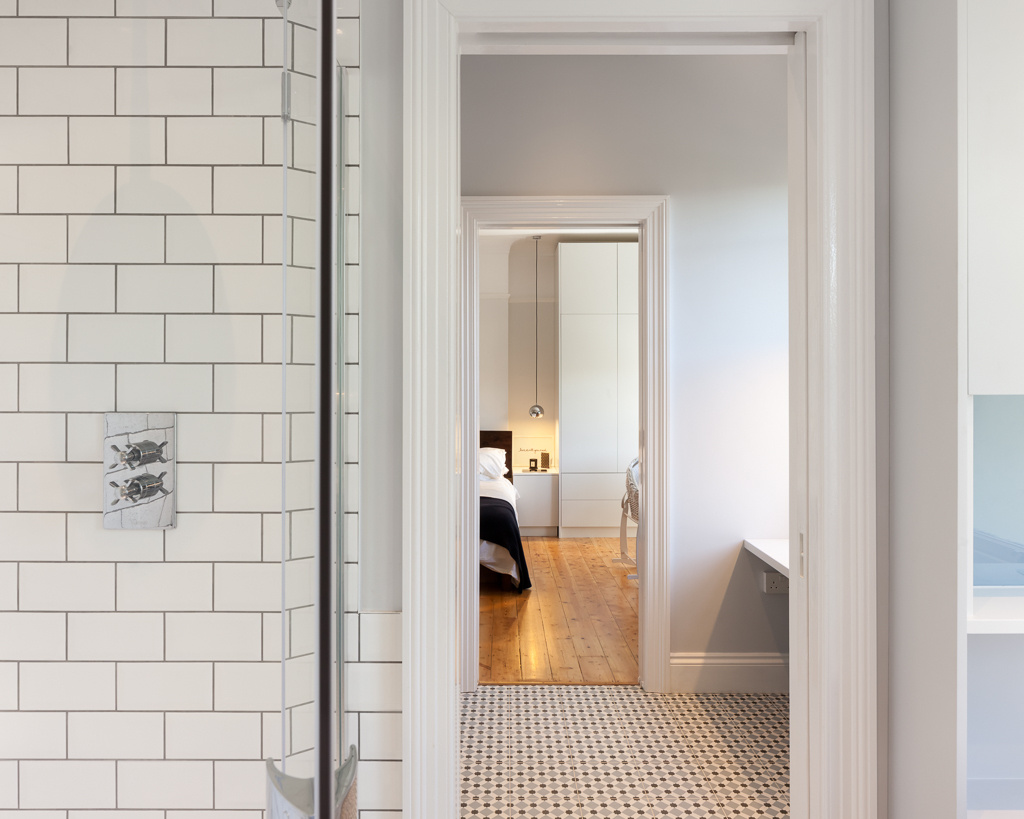
Another bathroom takes a more graphic approach. White subway tiles with dark grout line the walls, offering a timeless backdrop,, while a freestanding bathtub with a black exterior introduces contrast and a strong visual statement against the lighter surroundings.
Light From Above
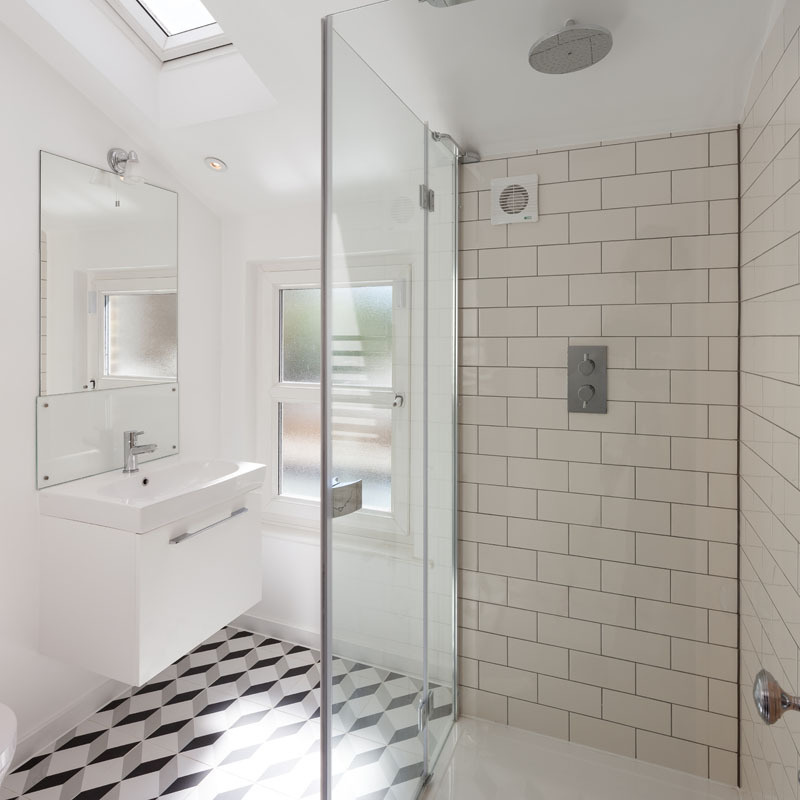
In a third bathroom, a skylight draws daylight down from above, transforming the atmosphere of the space. On the floor, a geometric tile pattern adds an artistic flourish, bringing personality and movement to an otherwise understated room.
This renovation proves that even the most traditional Victorian layouts can be adapted for modern family life. By opening the house toward the garden and flooding its once darkest spaces with light, Russian For Fish have created a home that feels brighter and more social.