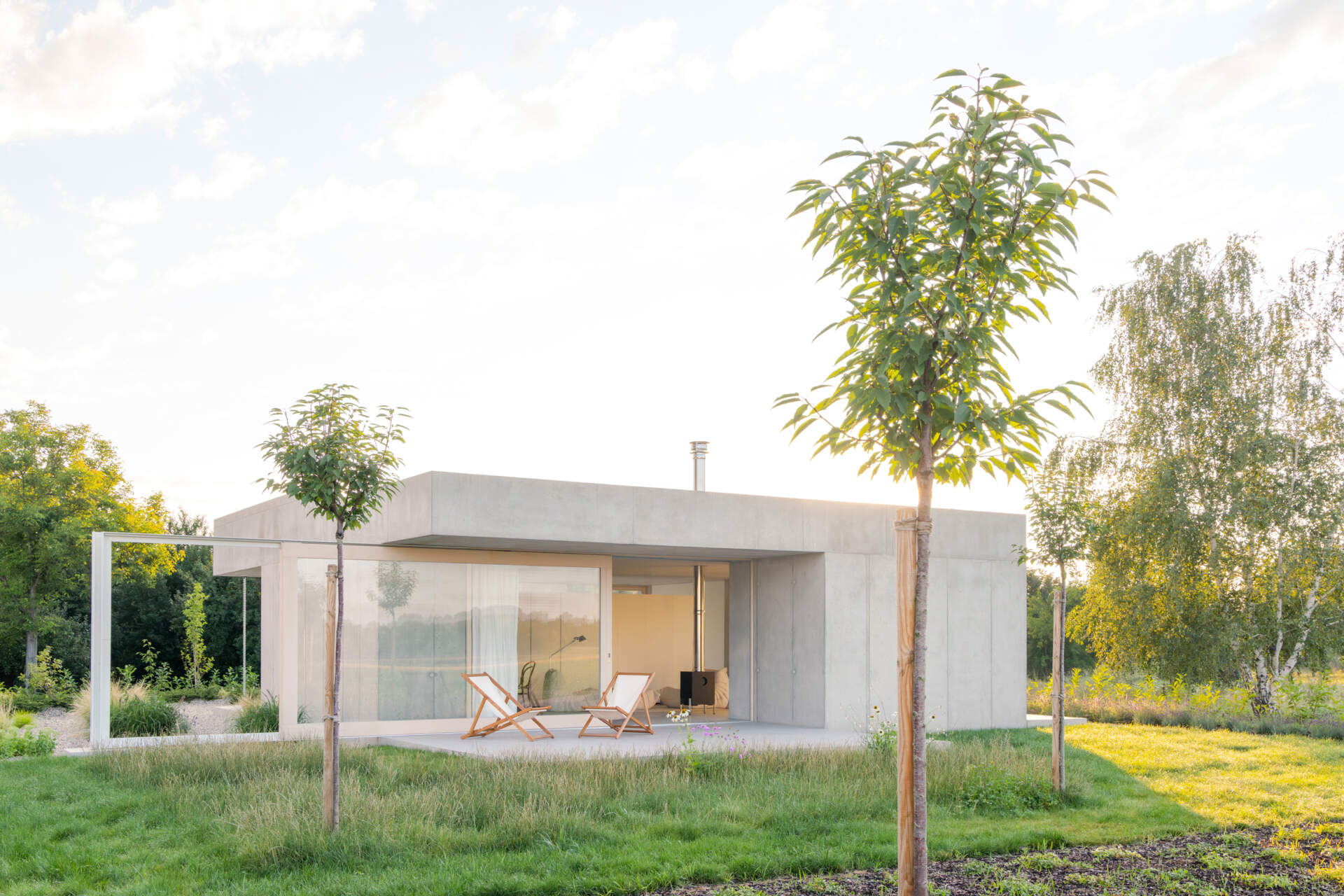
What does a small concrete house need to feel generous? On the edge of Murska Sobota, Slovenia, this one bedroom home reveals it is not about size, but openness.
Designed by Skupaj arhitekti, led by architect Tomaz Ebenspanger, the house transforms a tight suburban condition into a fluid, garden oriented way of living. Here, structure, material and landscape work as one.
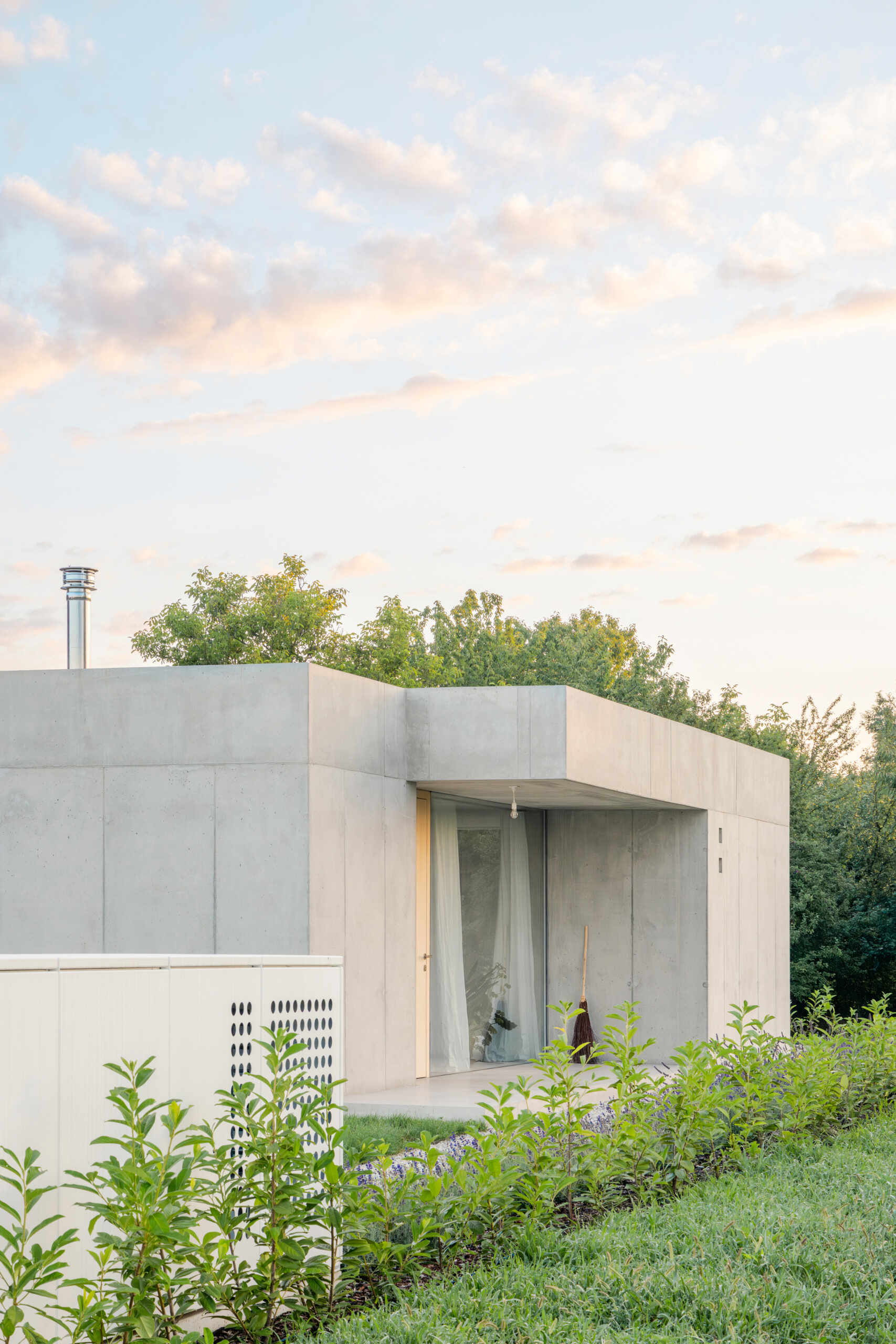
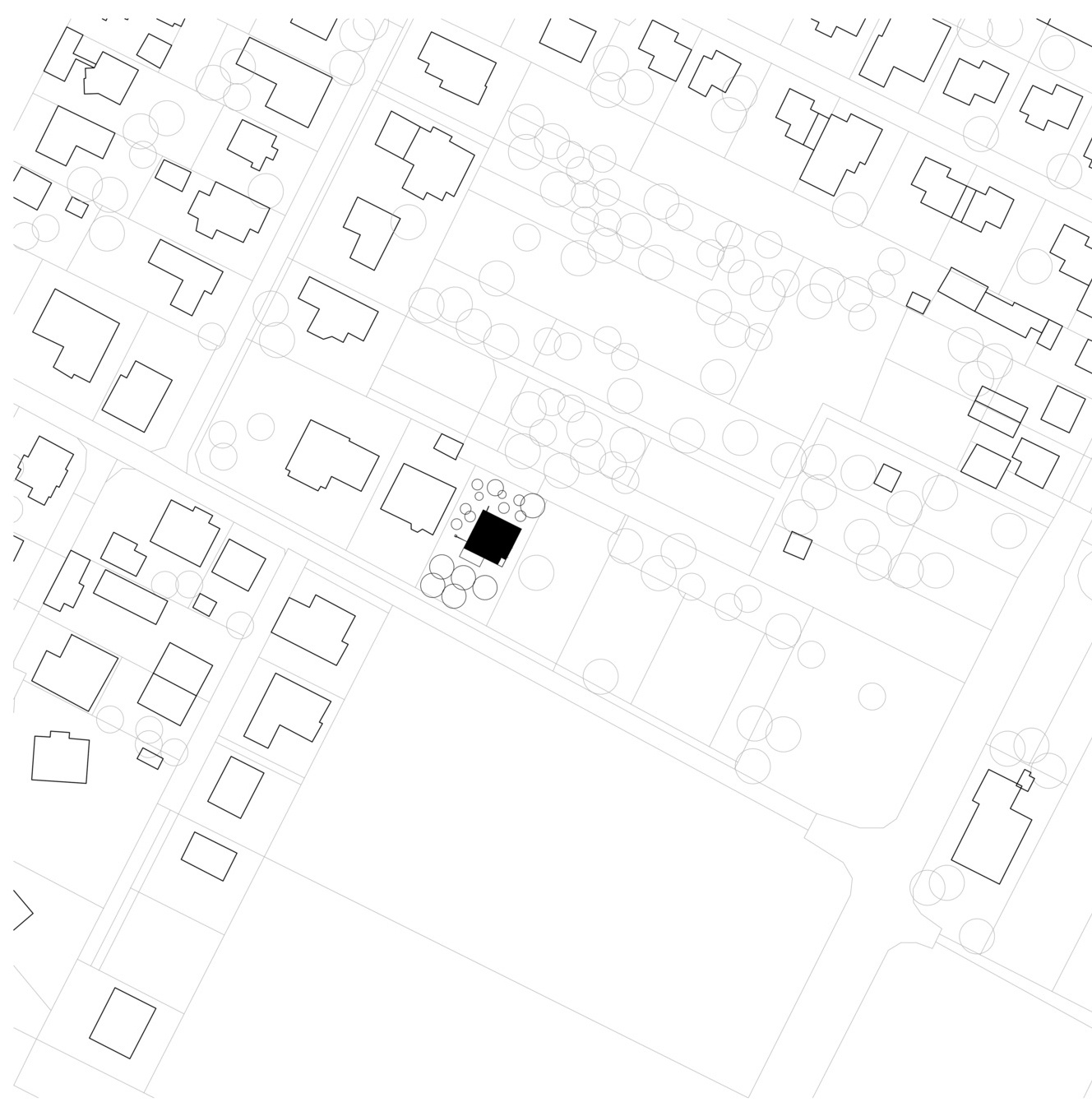
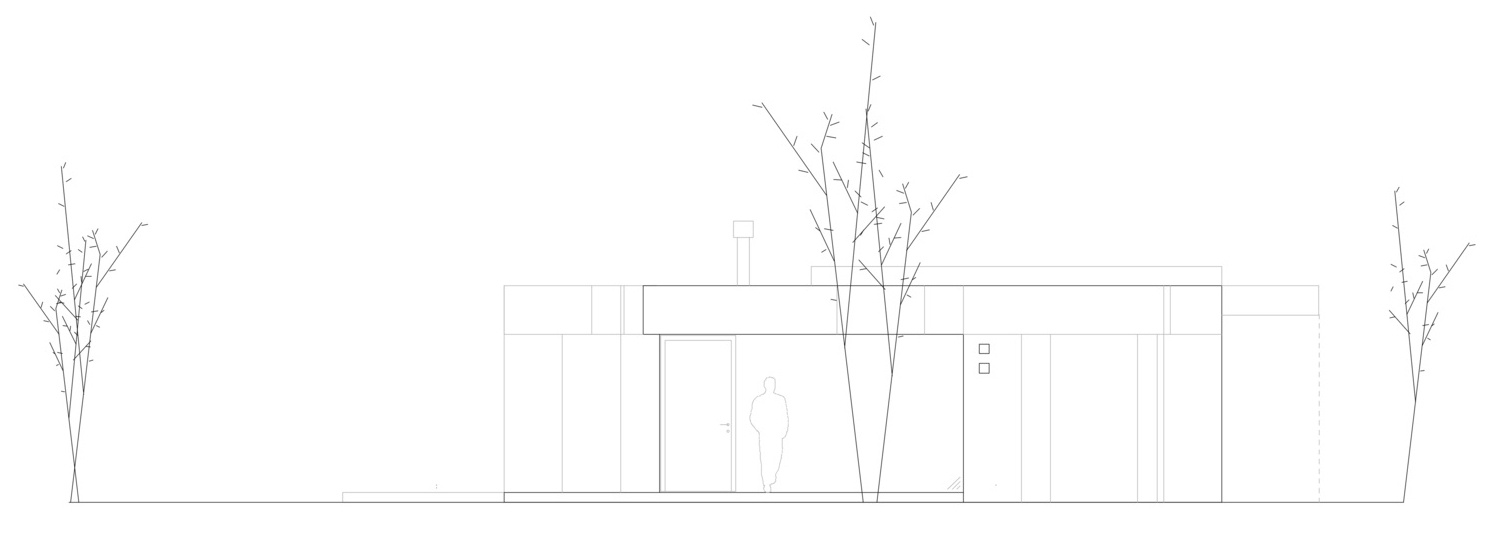
Located at the edge of the Murska Sobota plain, the house responds to a site caught between city and open land. Instead of standing out as an object, it stretches low and horizontal, following the scale of the Pannonian landscape.
The design reinterprets the region’s functionalist modernist legacy, particularly the work of Feri Novak. Structure, program and expression align through a clear tectonic order.
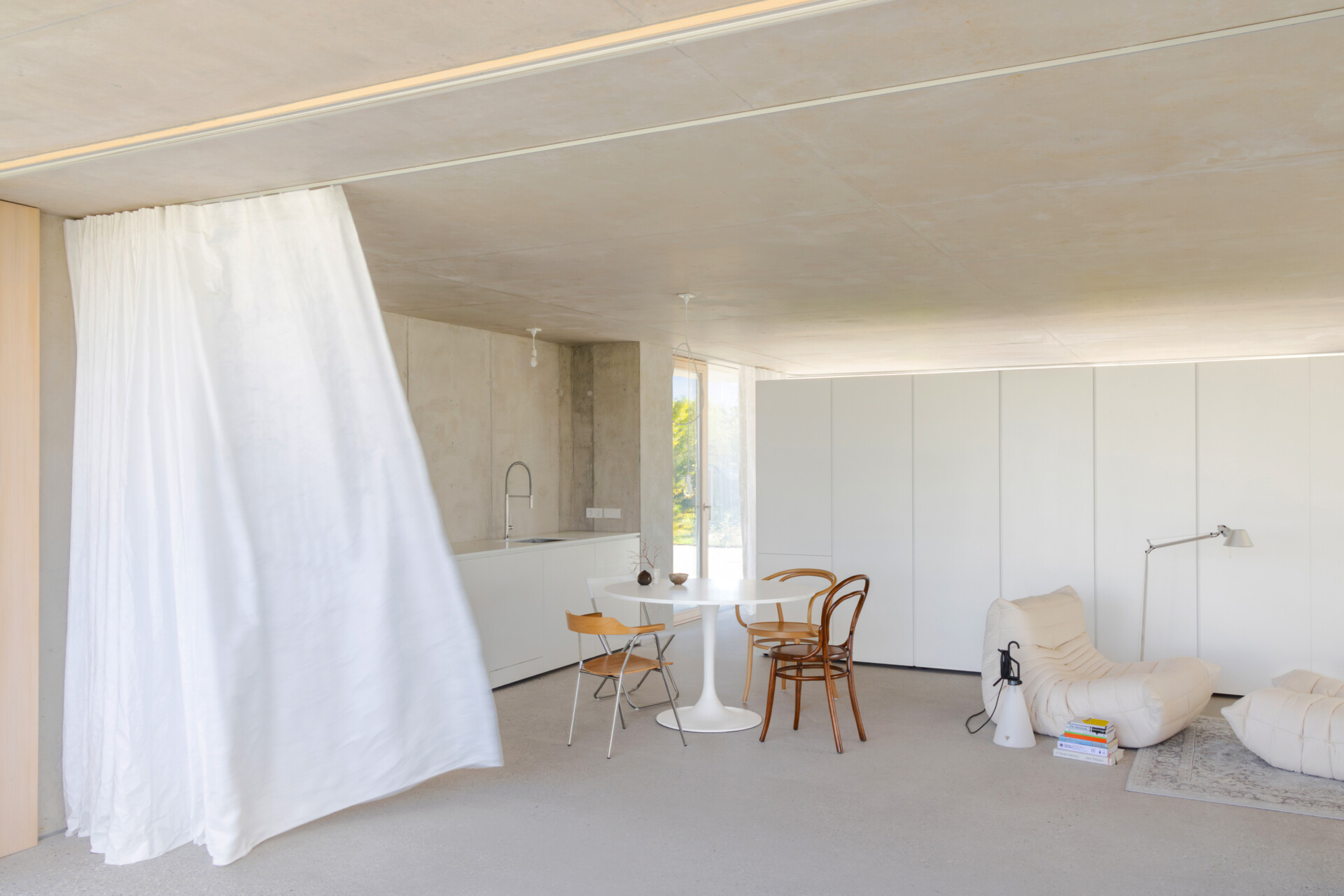
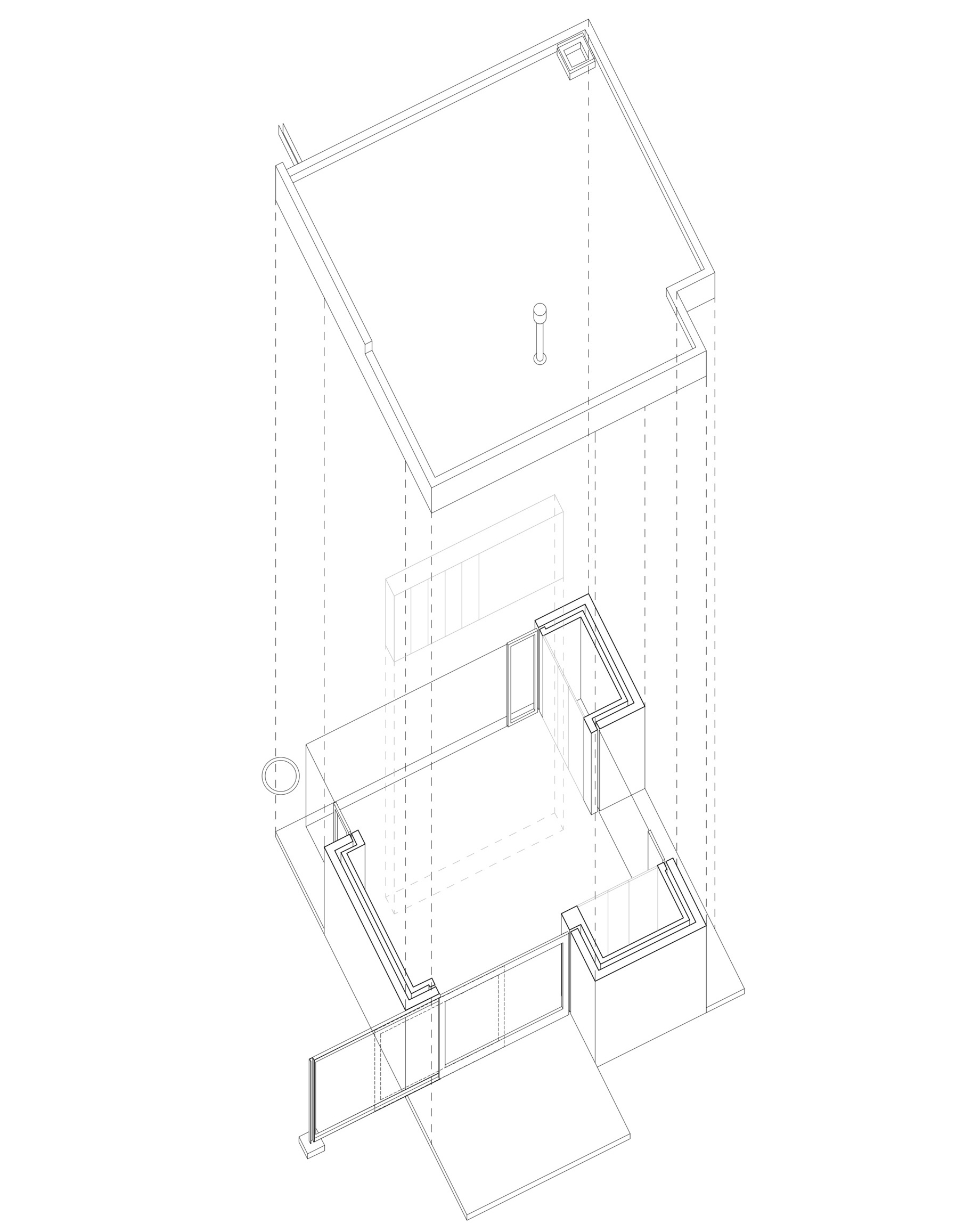
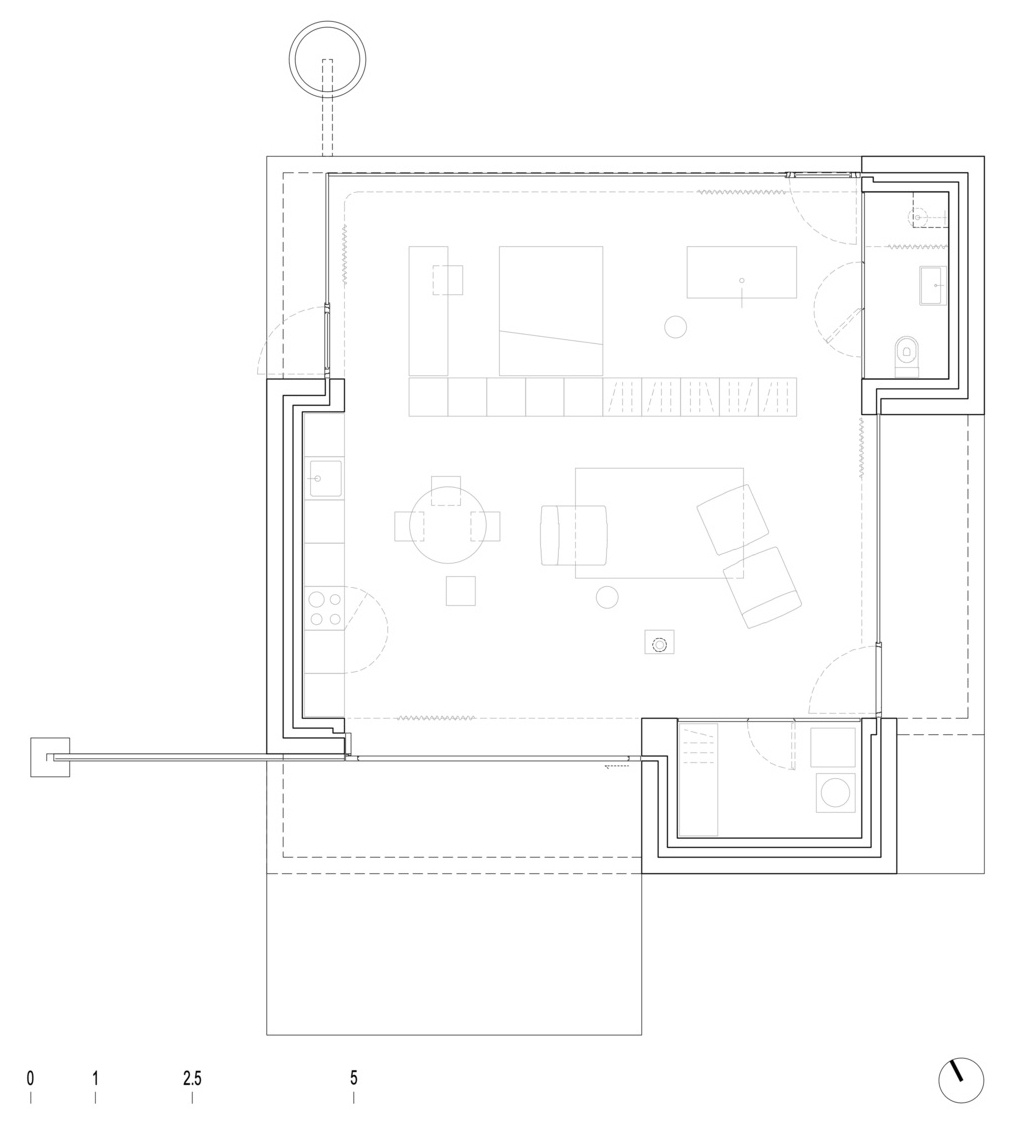
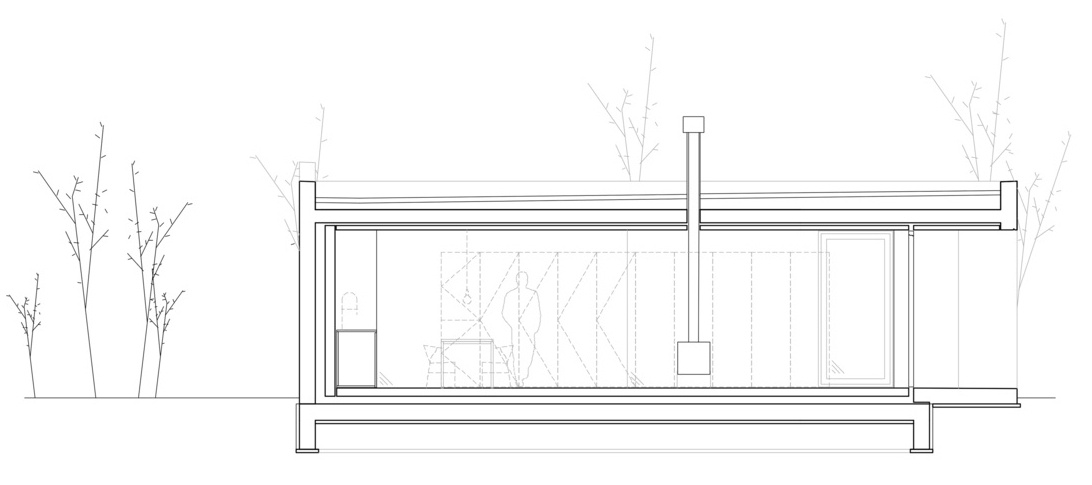
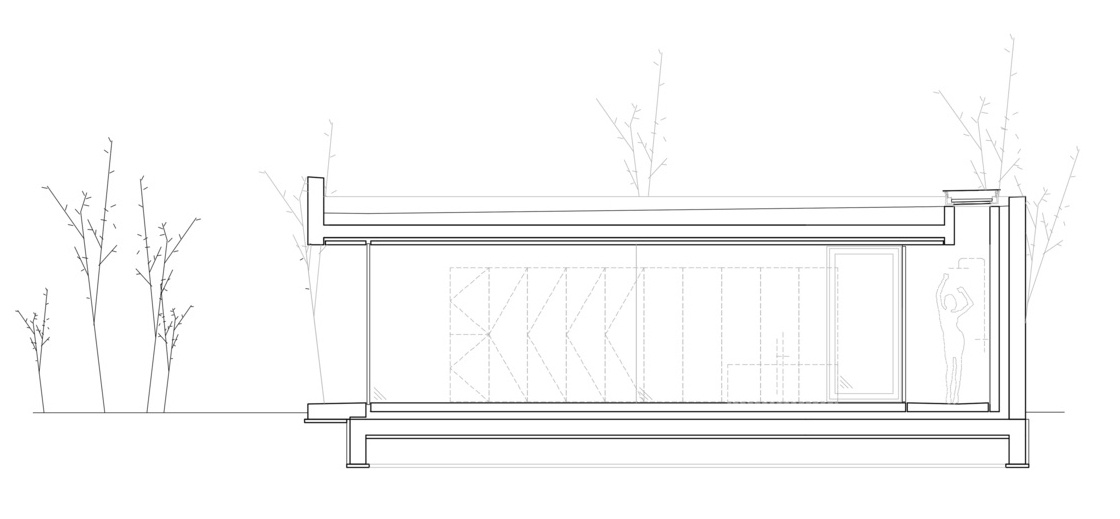
Three reinforced concrete cores anchor the plan. They contain the bathroom, utility spaces and kitchen, while supporting a flat slab above. With structure consolidated into these cores, the remaining space becomes open and flexible.
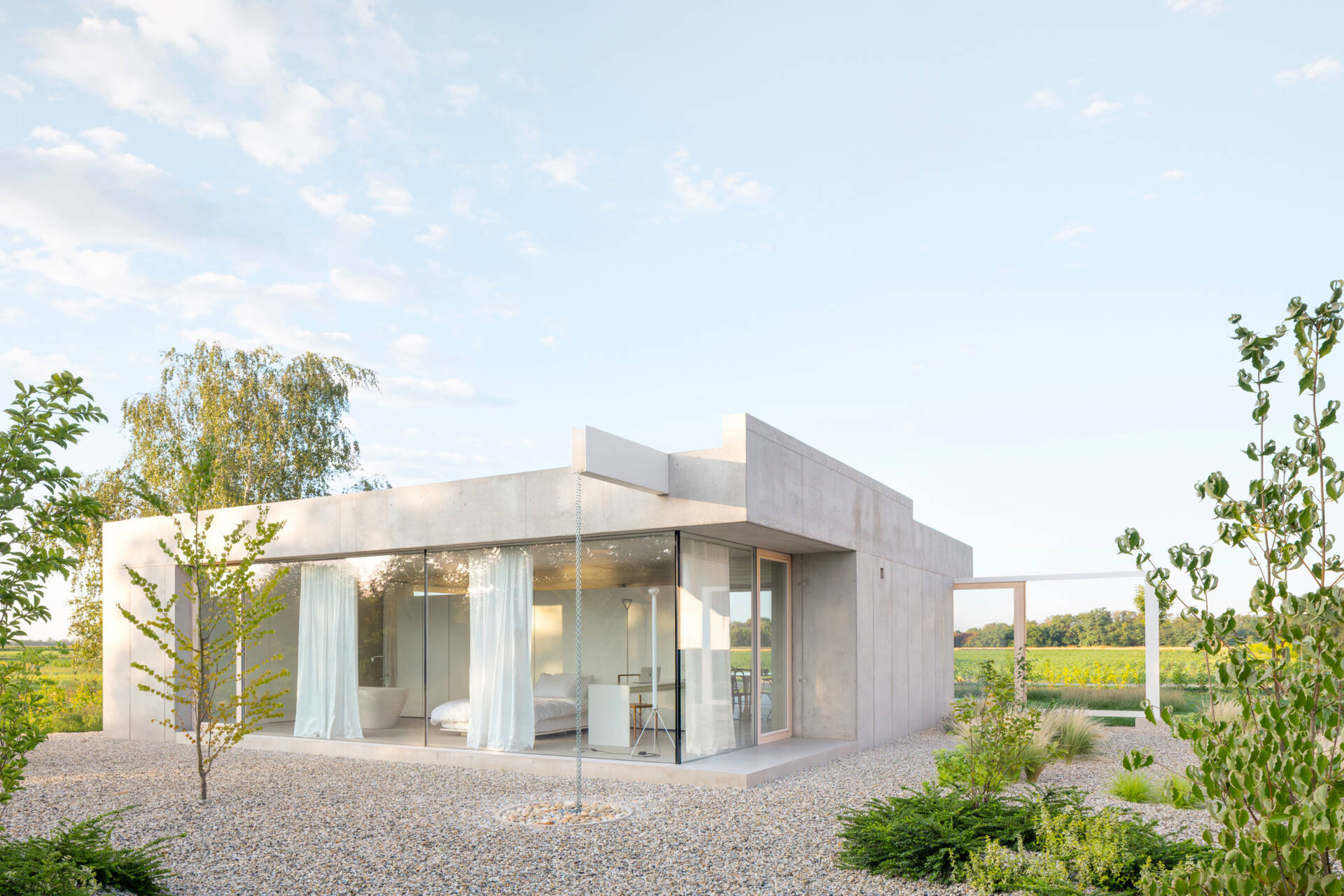
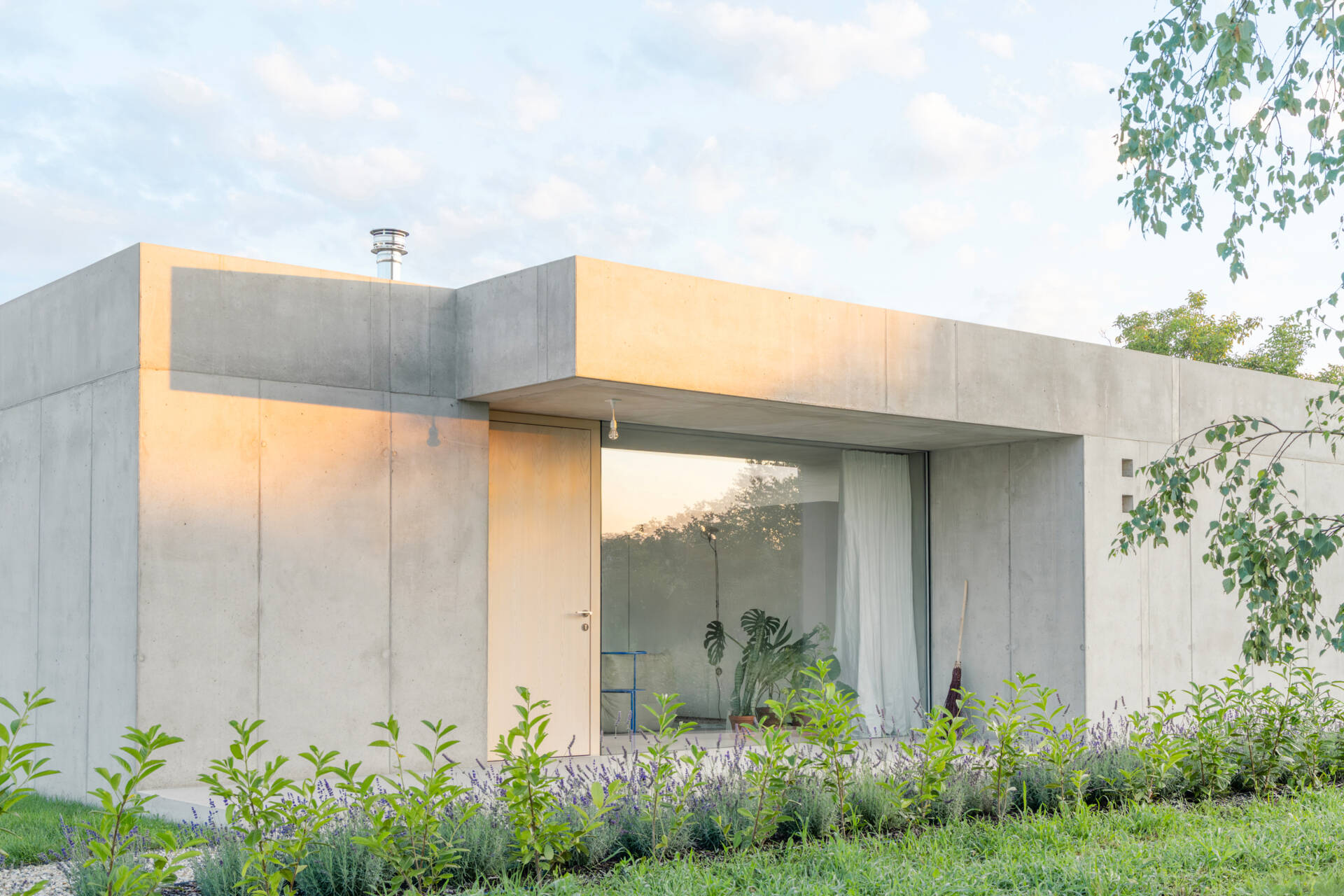
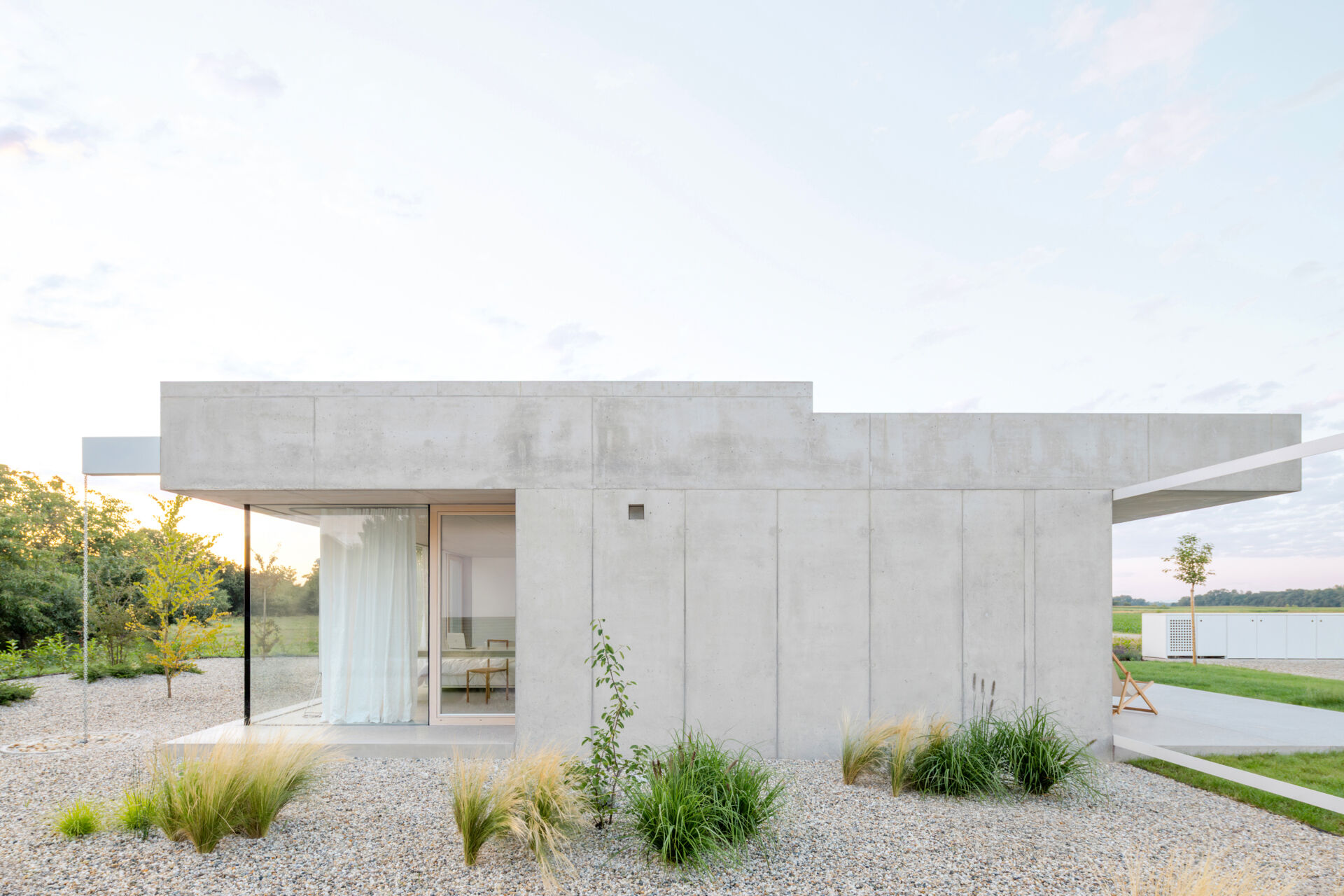
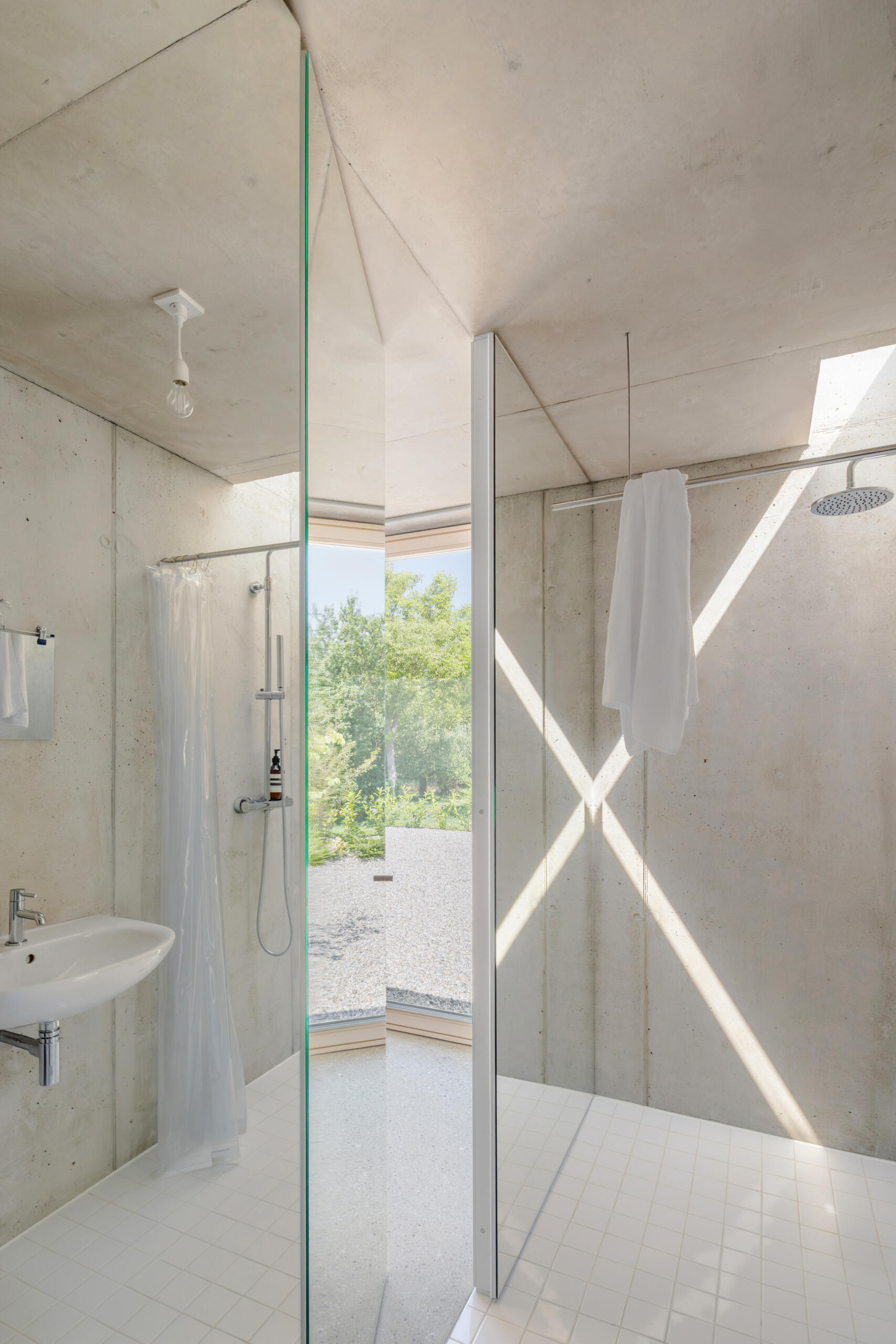
Exposed concrete, cast with locally sourced Mura river aggregate, gives the house its mineral tone. The material retains traces of reused formwork, leaving subtle textures and patina that introduce time and imperfection.
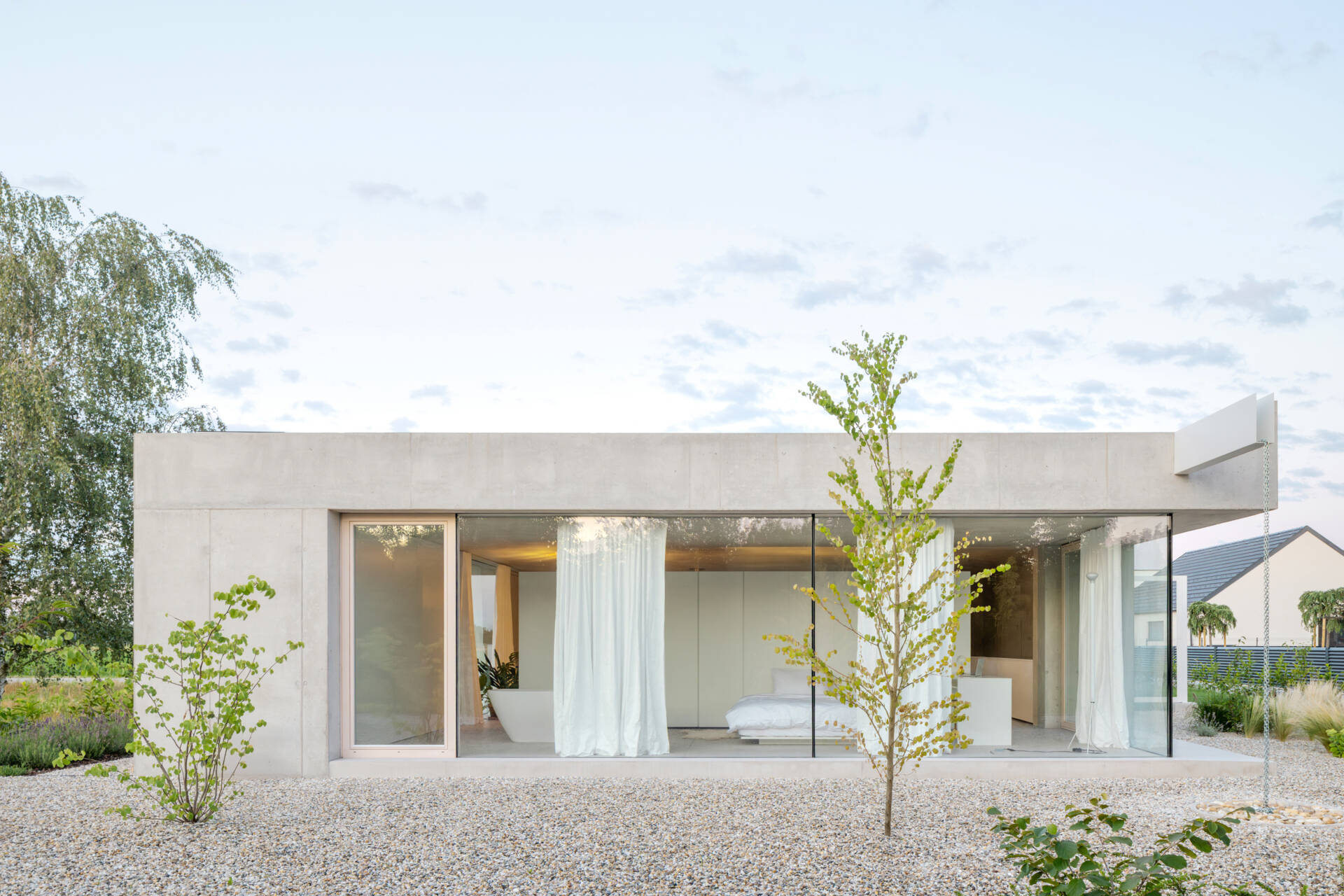
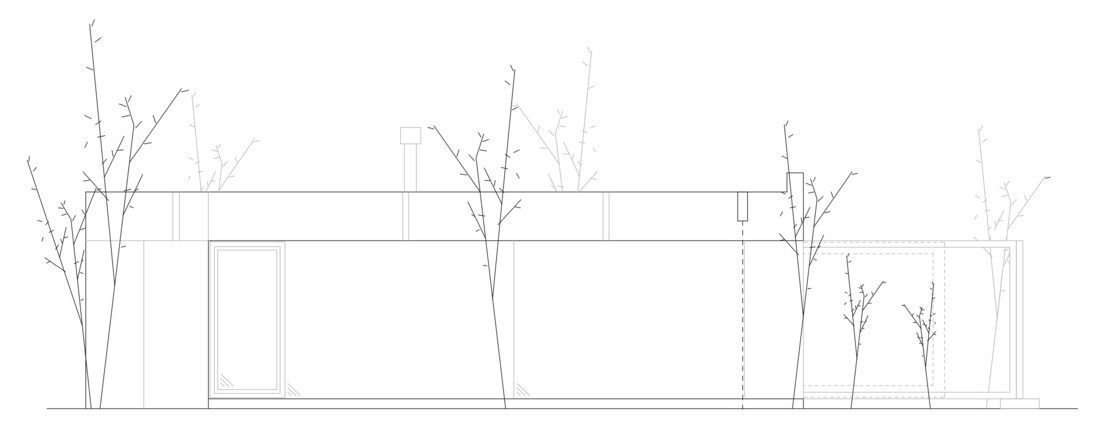
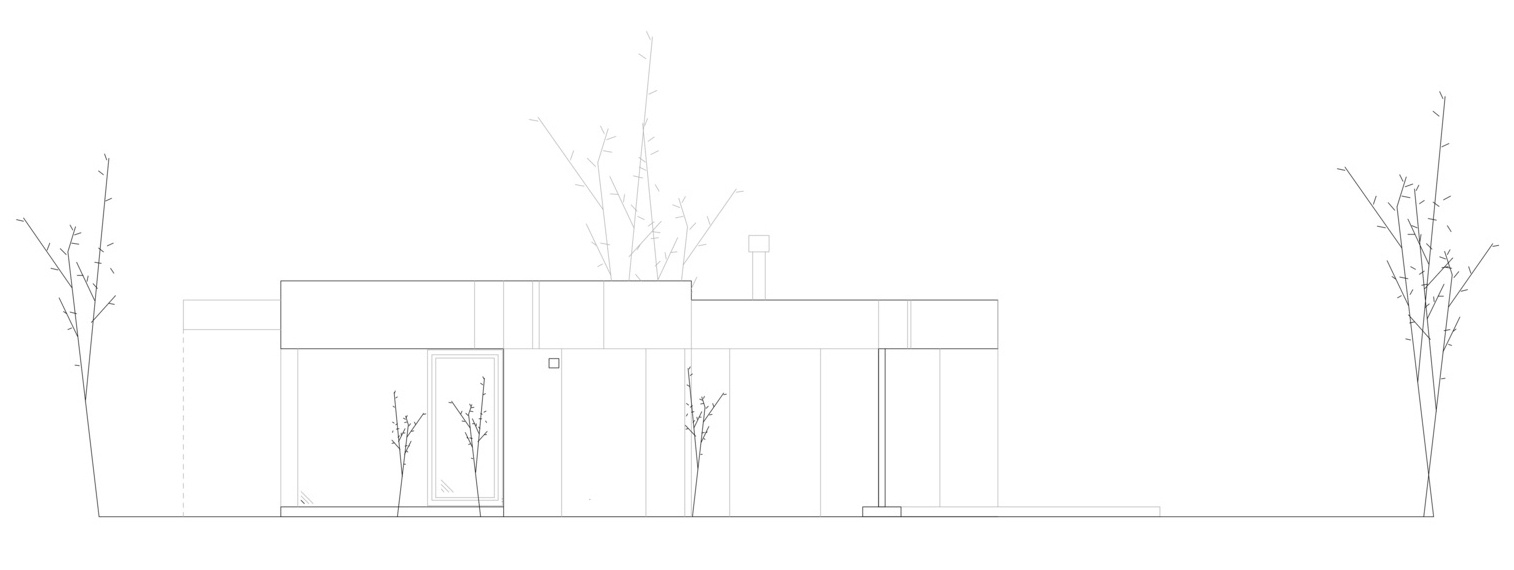
At the north west corner, a subtle fold in the roof allows for a fully glazed, load free corner. The boundary between inside and outside dissolves into transparency.
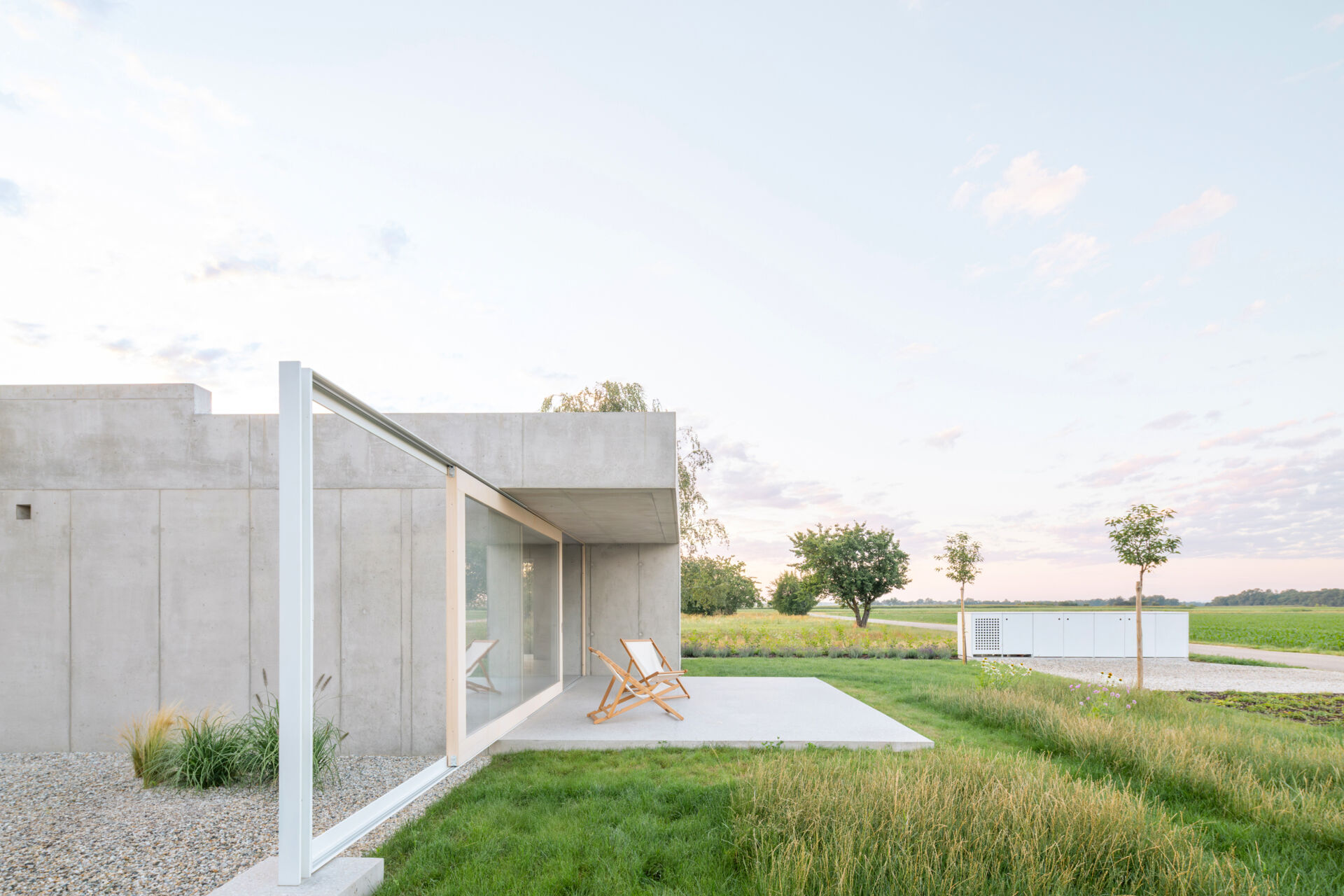
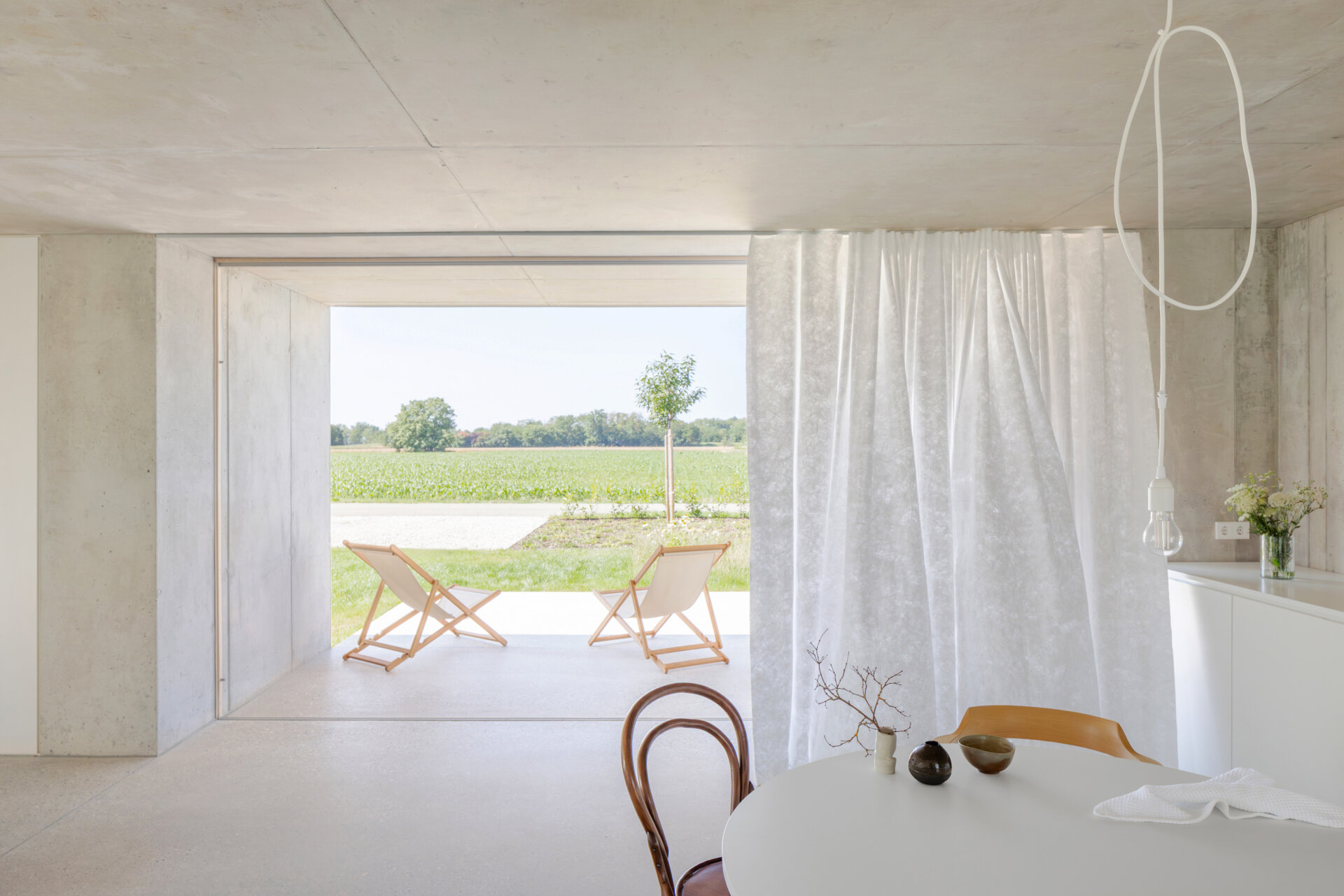
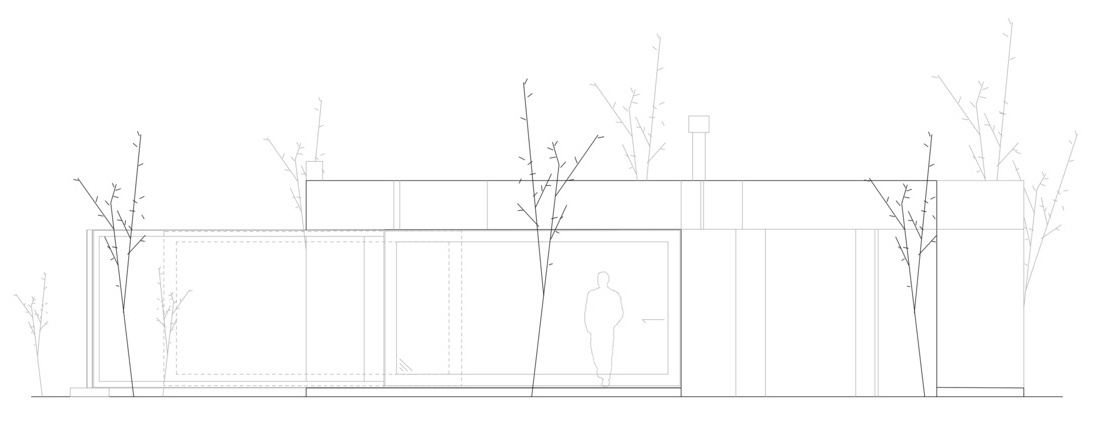
On the south west facade, a large timber sliding panorama window retracts completely into a recessed steel frame. During warmer months, the living area extends directly into the garden, erasing the line between interior floor and outdoor terrace.
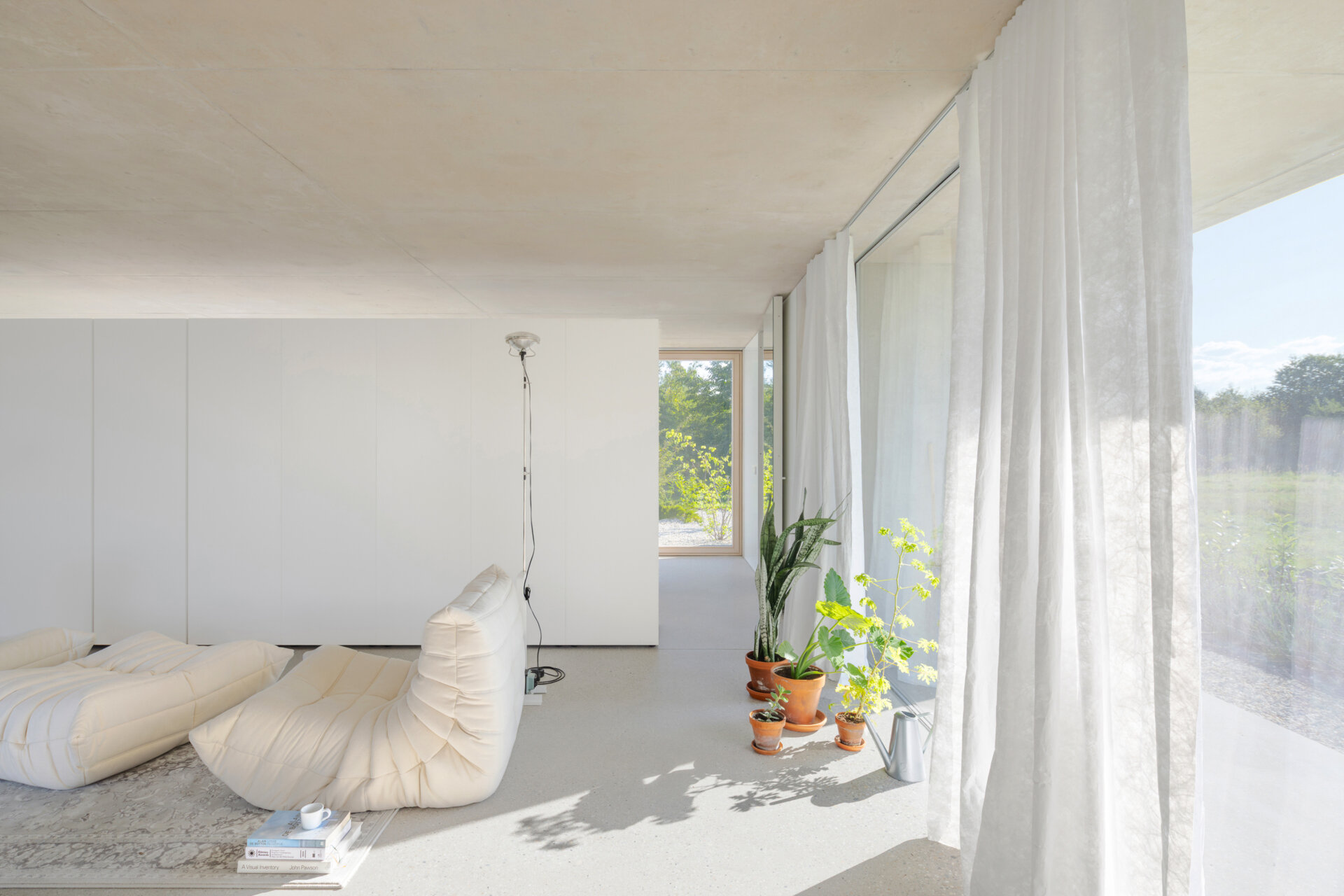
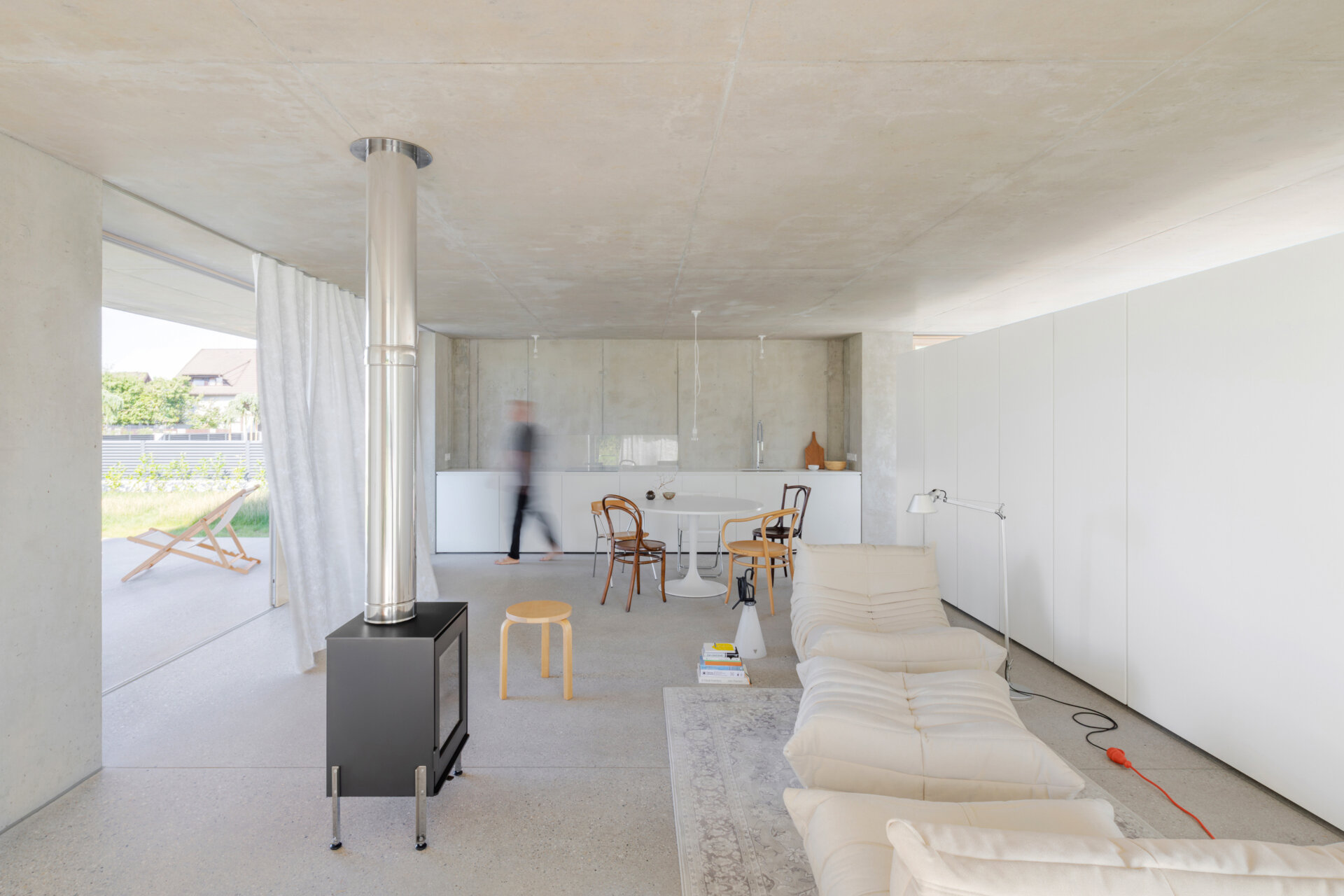
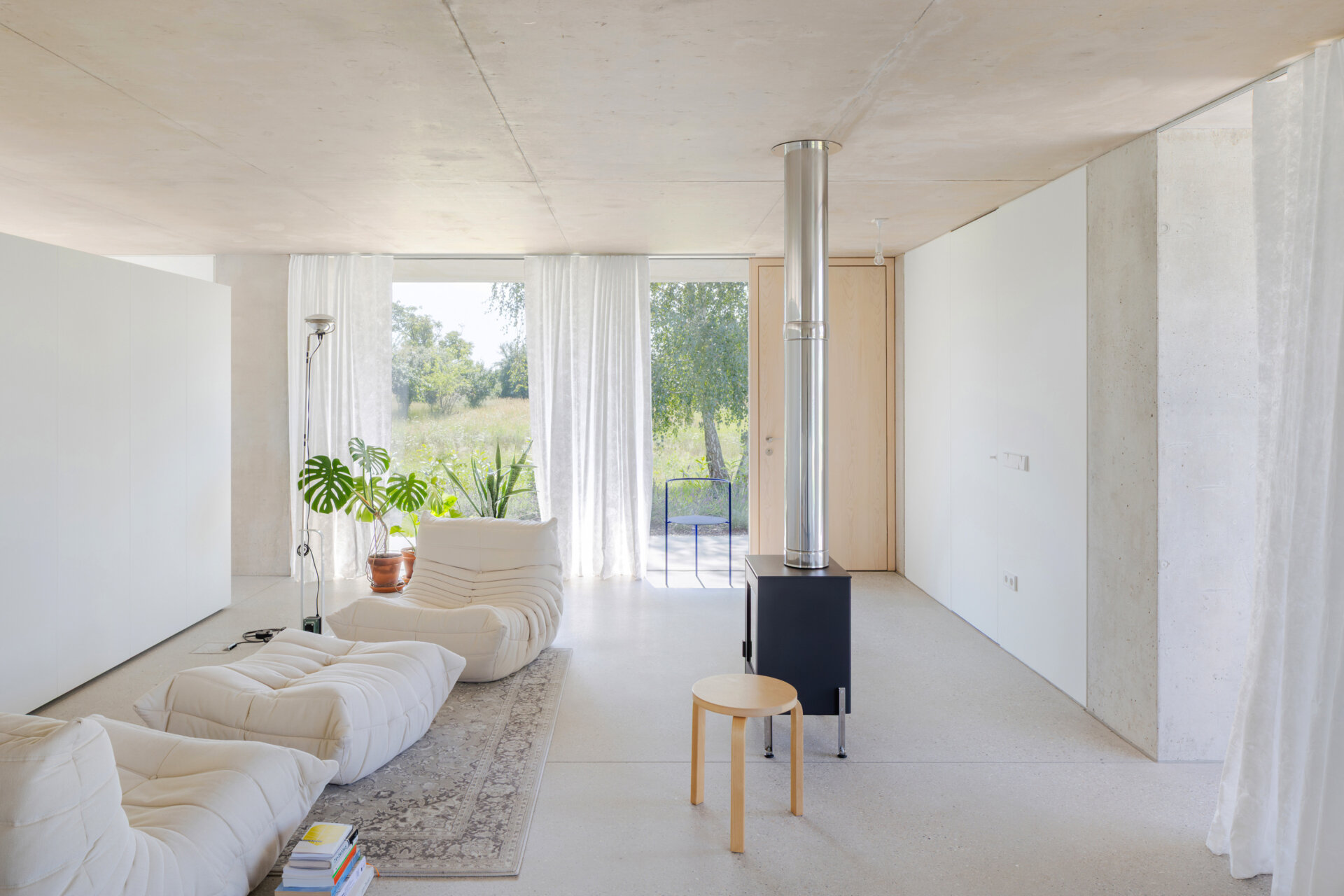
With the cores doing the structural work, the living and dining areas remain uninterrupted. They open toward the south west garden and terrace, capturing light and seasonal change.
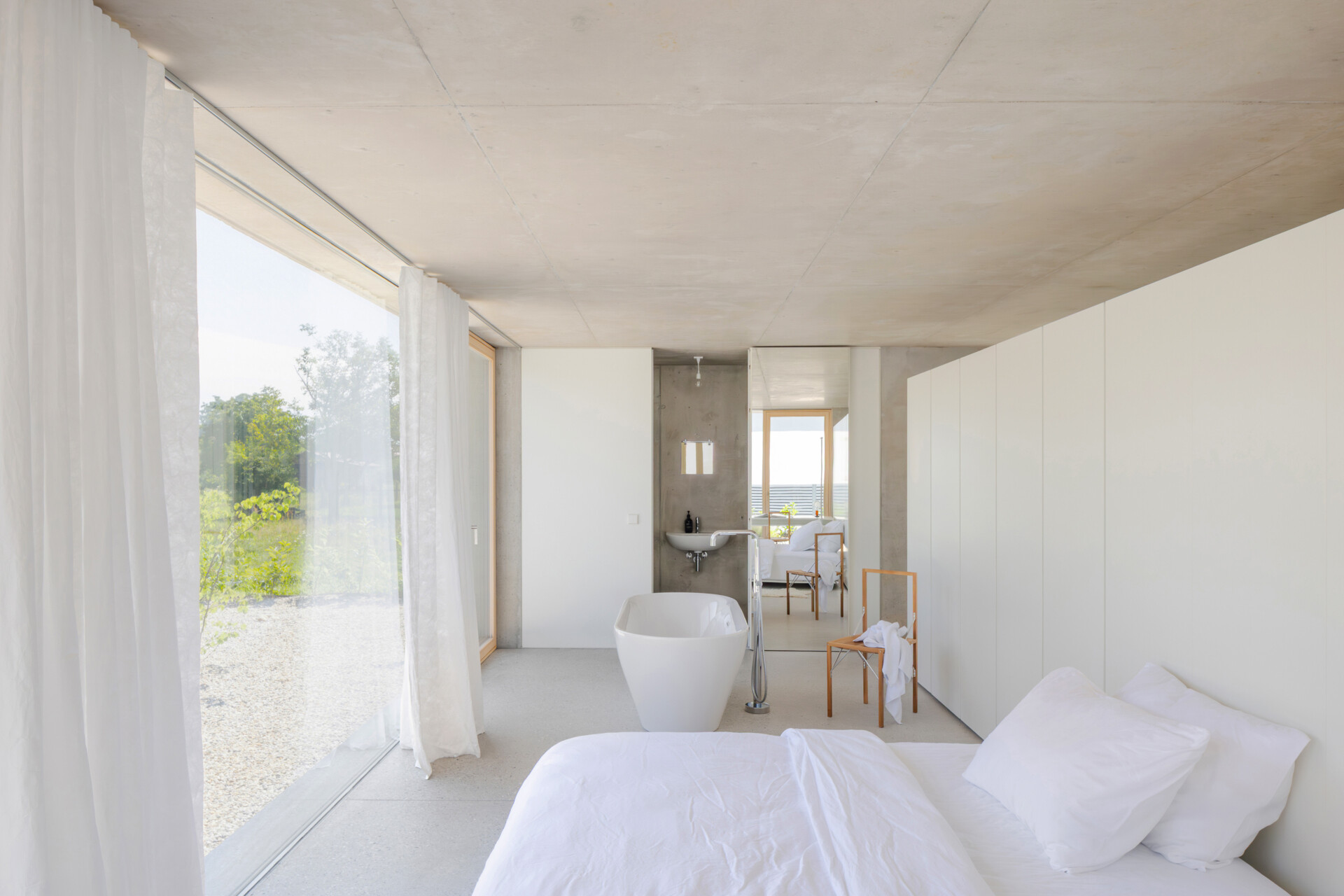
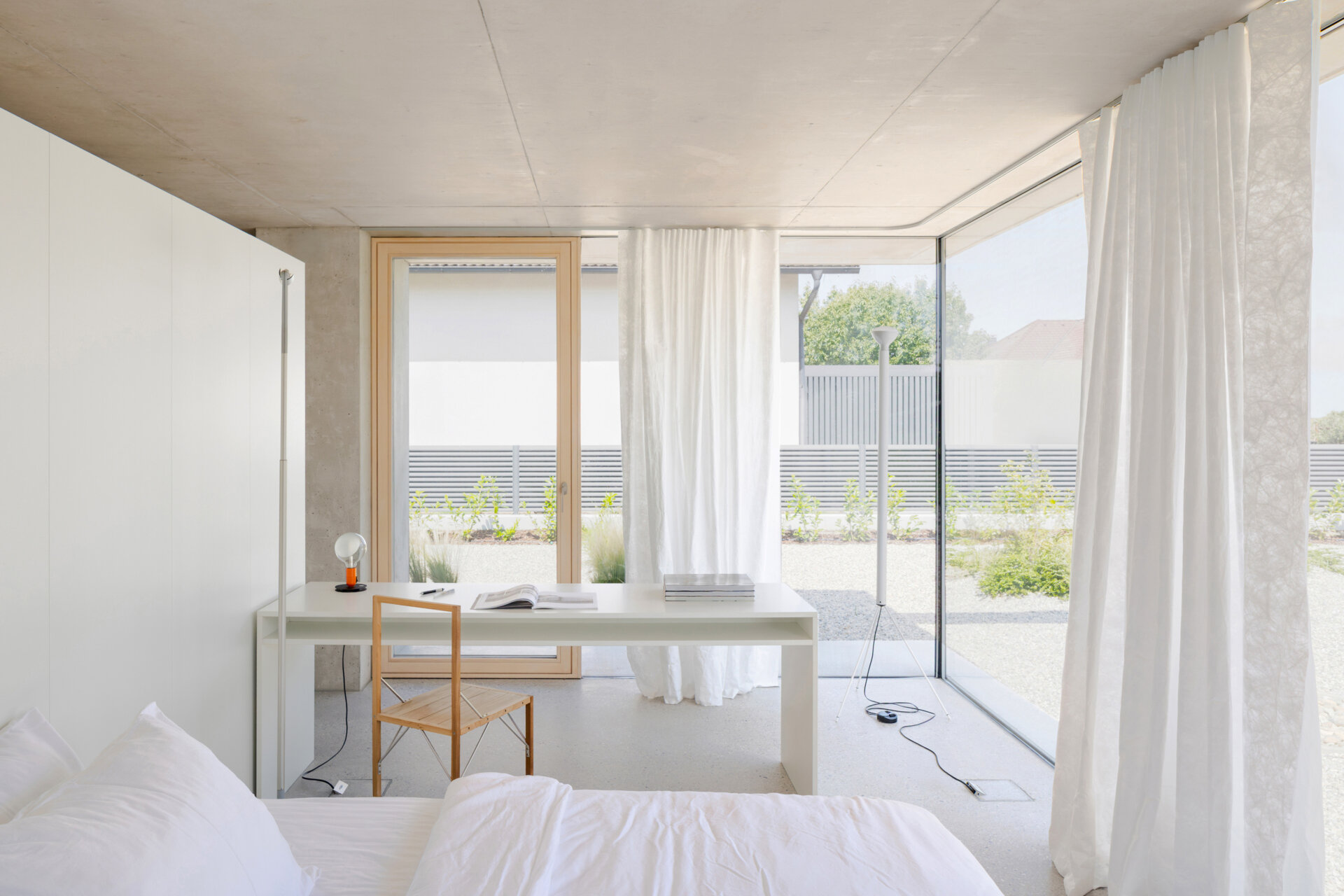
A long, double sided storage wall both separates and connects the living zone from the sleeping and working spaces. Polished concrete floors continue the material logic inside. Built-in furniture made from veneered chipboard, reused chairs, and simple ready made lighting keep the interior restrained.
A compact cast iron stove anchors the space in winter, reinforcing a sense of domestic warmth within the raw concrete envelope.
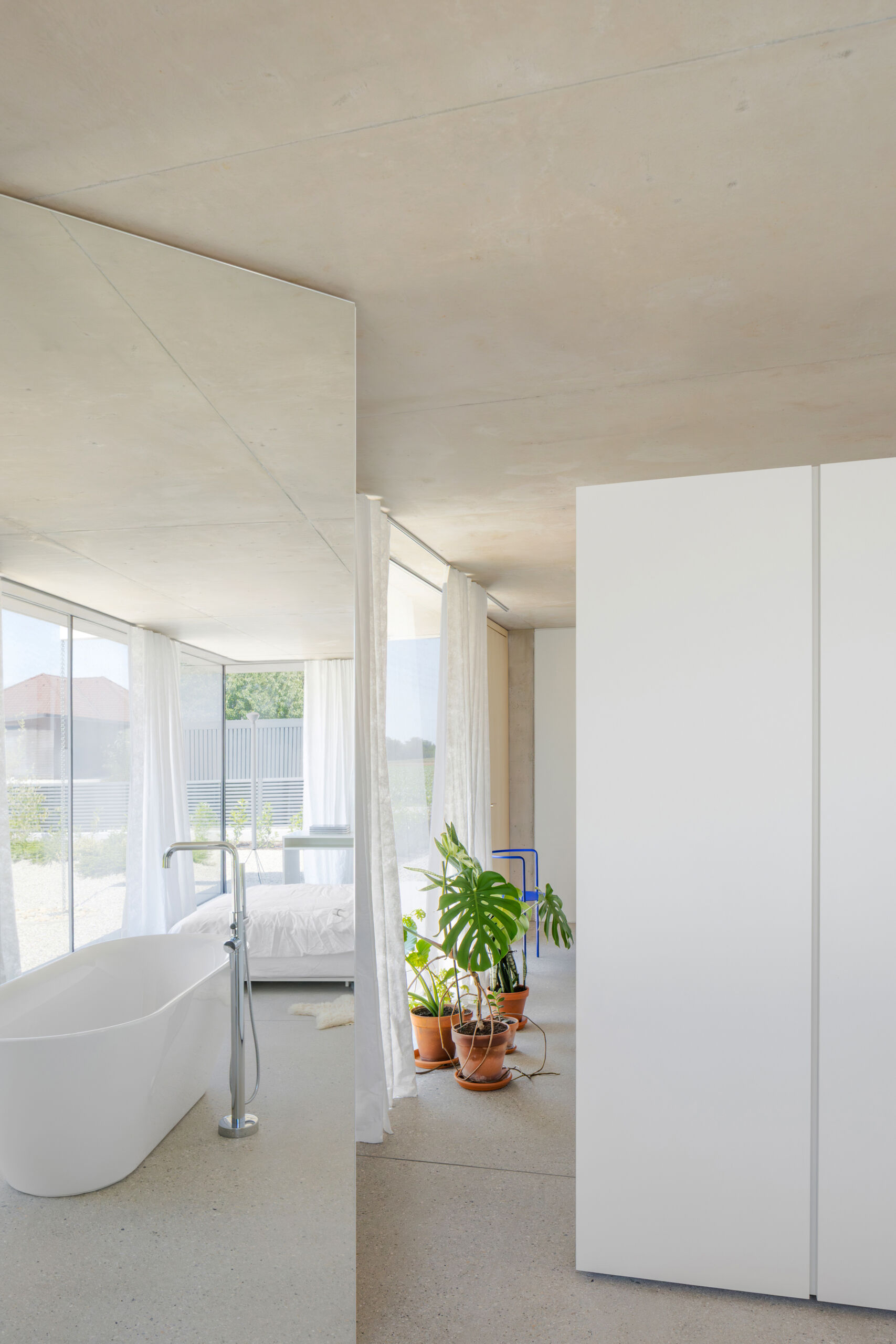
Sleeping and working spaces face a more intimate north east garden. The orientation creates a quieter atmosphere without breaking the openness of the plan. The bathroom is integrated within one of the concrete cores, with mirrored surfaces making the room feel larger.
The architectural drawings reveal the discipline behind the openness. Three structural cores support a flat slab, freeing the perimeter for glazing and garden connection.
By grounding itself in local material, modernist logic, and an honest expression of structure, this small concrete home offers a calm alternative to image driven suburban architecture.