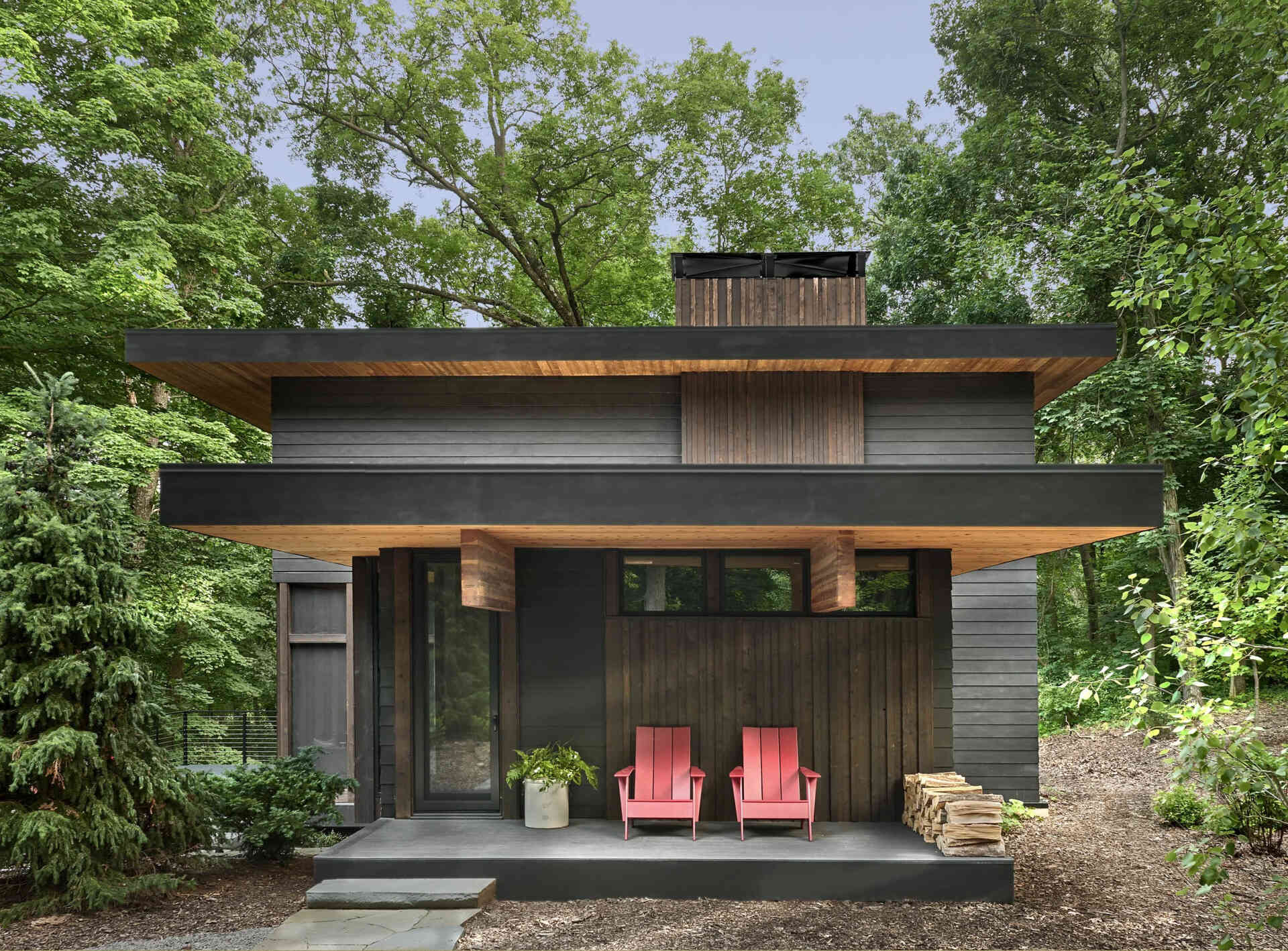
After five years searching across four states, a Chicago based couple found their escape in Jones, Michigan. They wanted the opposite of their Wicker Park loft, trading skyline views and city energy for serenity and a direct connection to nature. The narrow site, with a valley and small creek at its center, won them over after they camped on the land to be sure.
Positioned just below the north ridge to protect mature trees and capture sweeping views, the compact retreat by Searl Lamaster Howe Architects follows the natural slope of the land and takes full advantage of its setting.
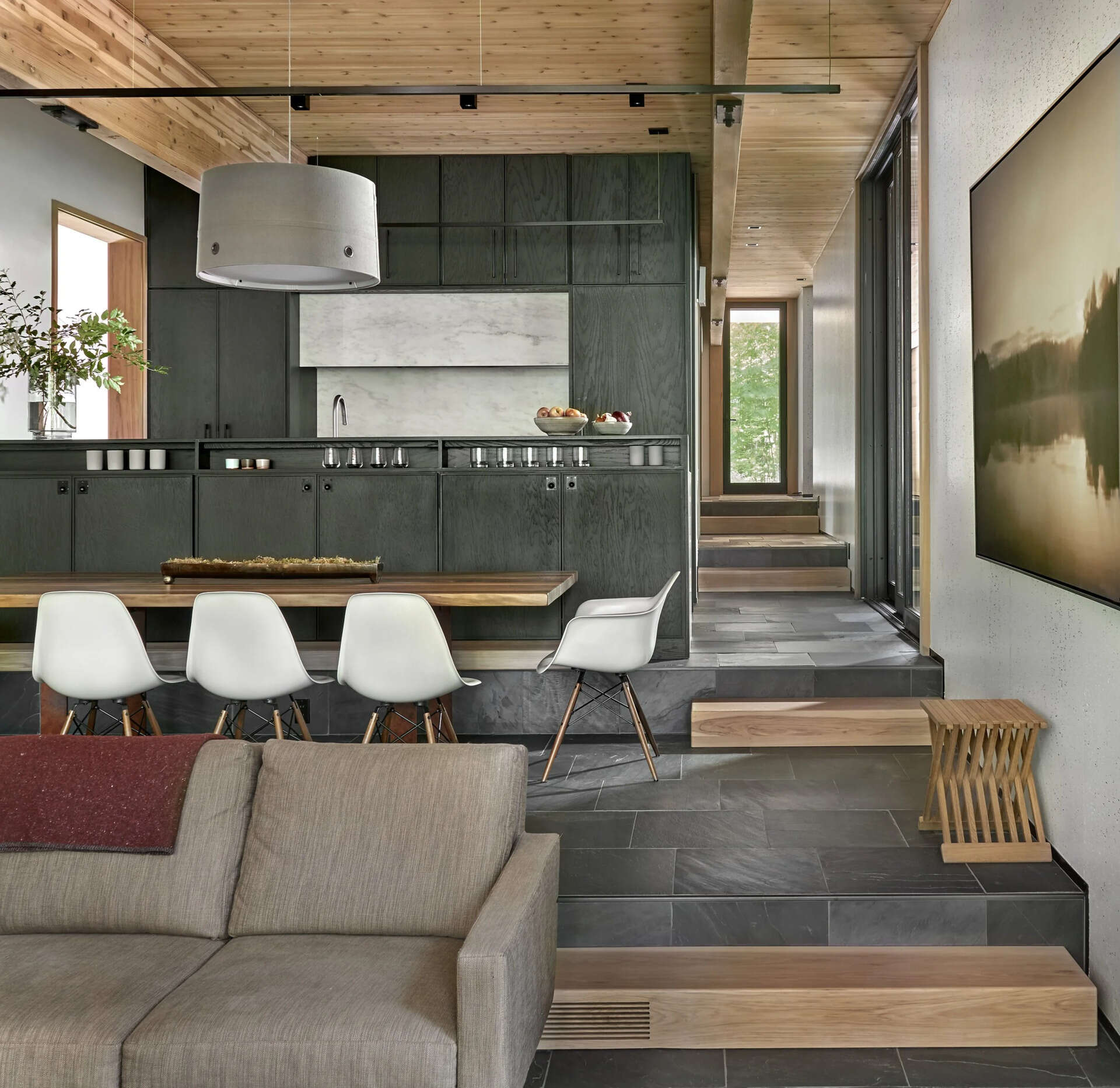
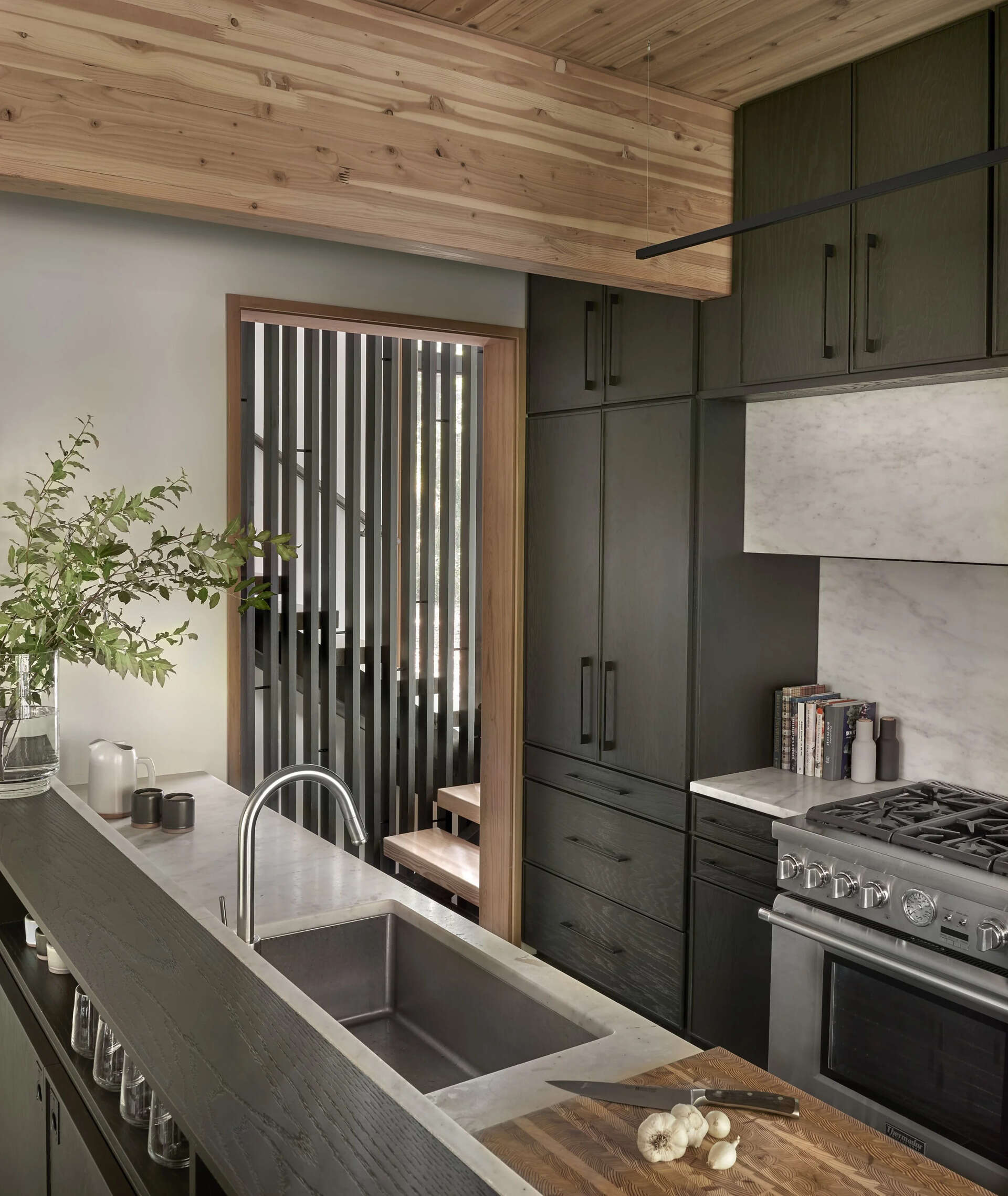
Inside, steps from the glass front door lead down to the kitchen, immediately introducing the terraced floor levels that define the home. The kitchen features dark stained oak cabinets, while naturally clefted black slate floors run throughout the house. The slate is especially visible in the dining area, where additional cabinetry continues the material language and reinforces the sense of cohesion.
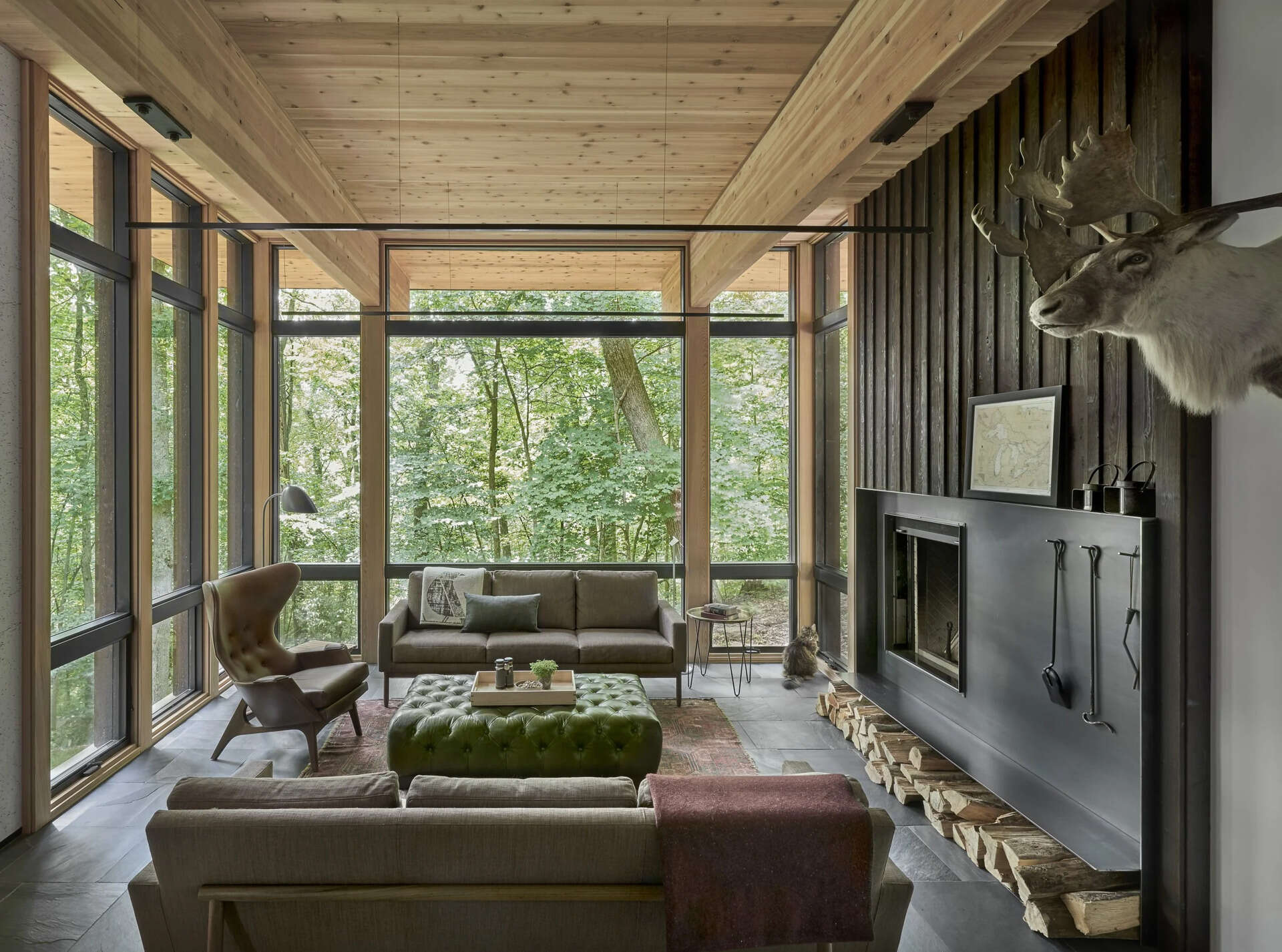
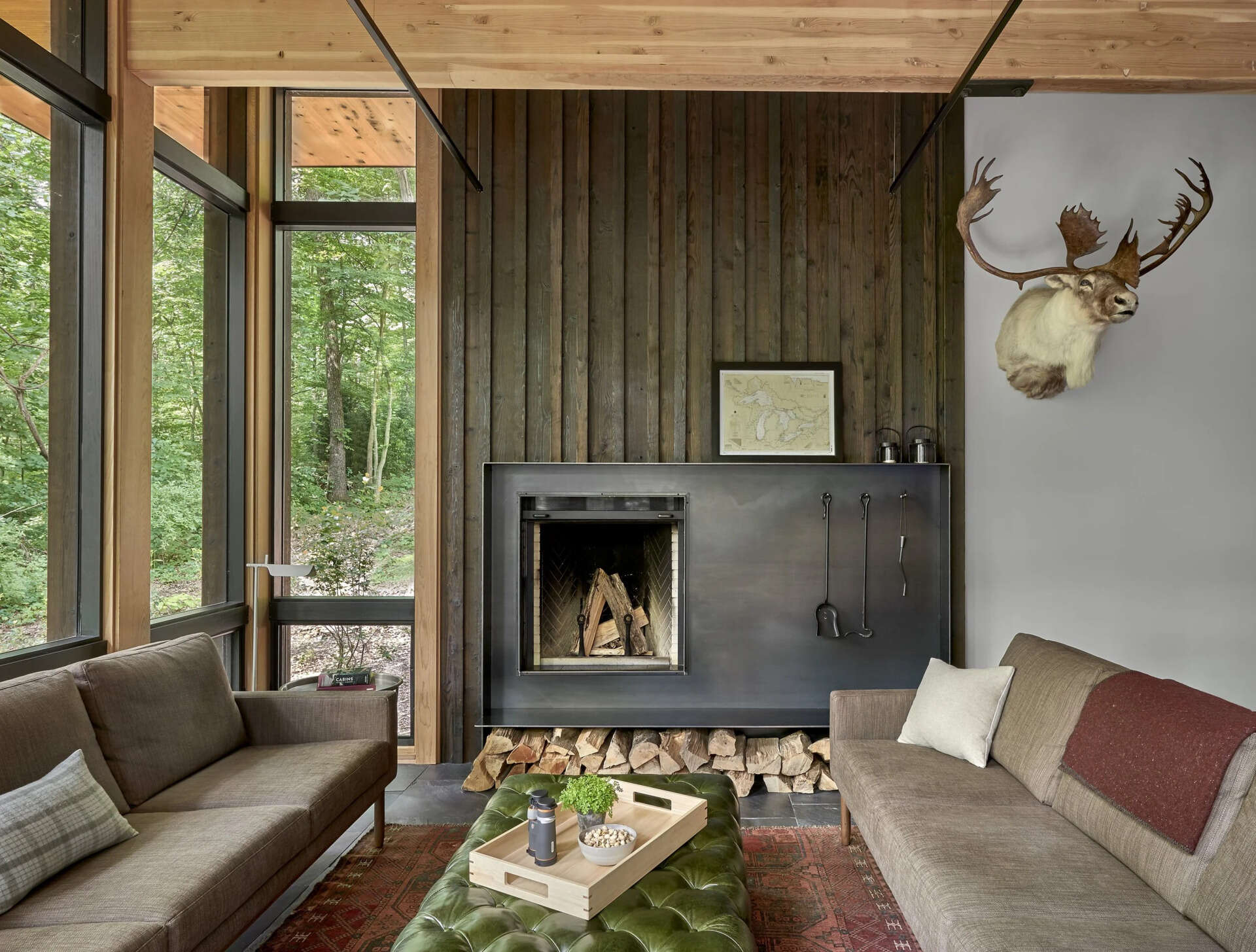
Adjacent to the dining area is a living room that showcases a charred cedar accent wall with a hand worked blackened steel fireplace surround. The material palette is deliberate and tactile, extending the concern for craftsmanship seen throughout the project. The progression through the house increases both in scale and transparency, moving from a more sheltered entry sequence to expansive views of the woods beyond.
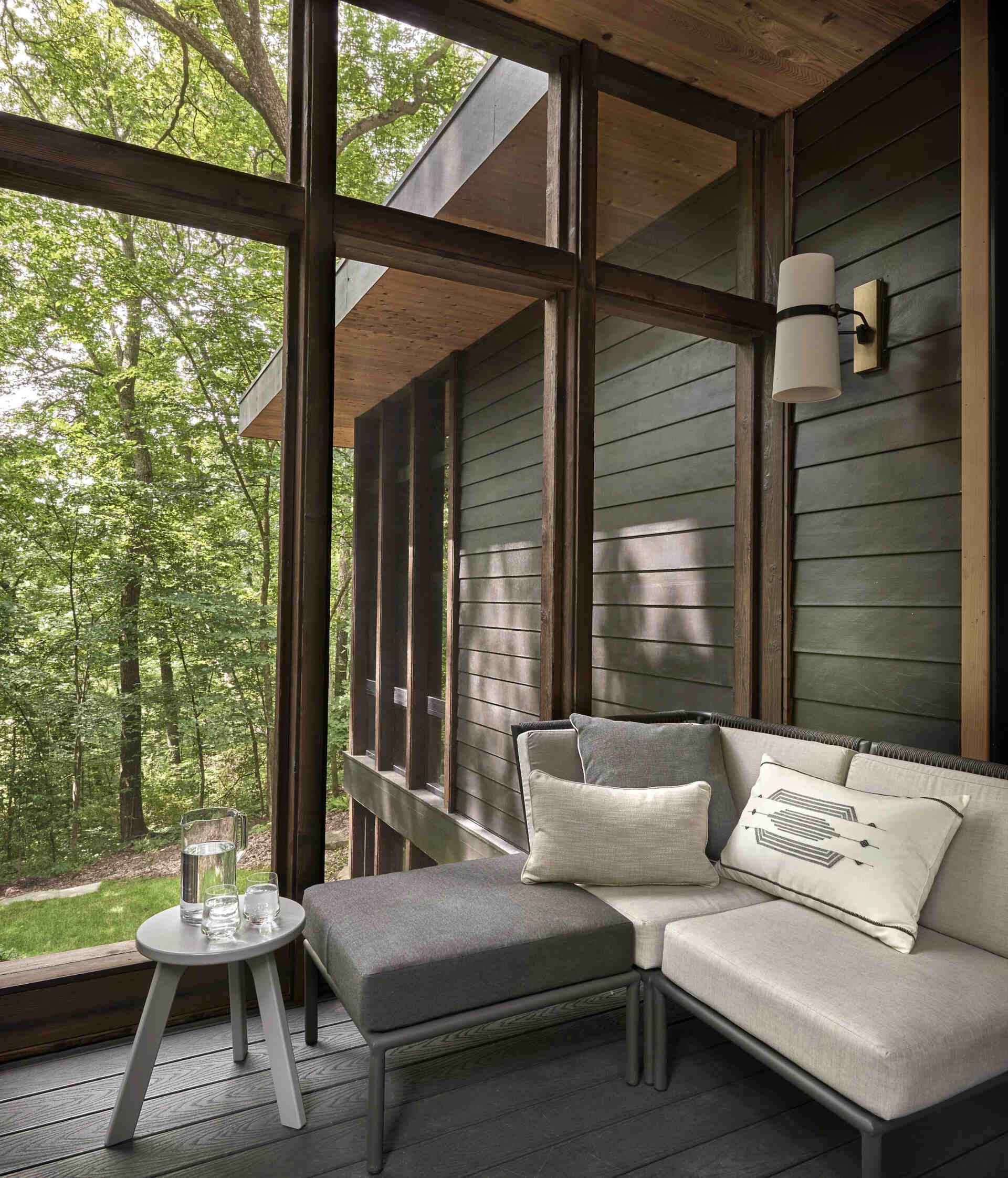
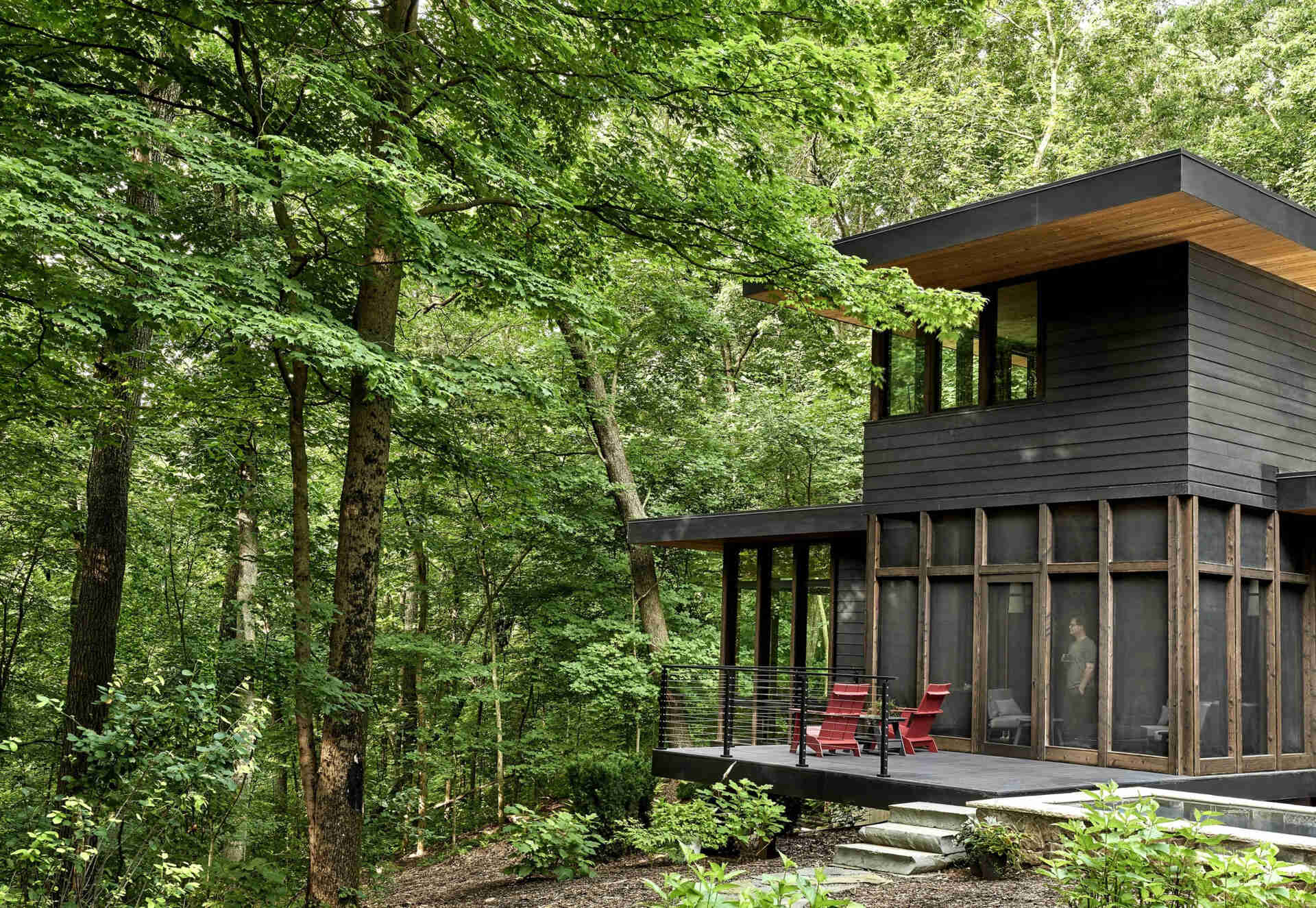
A sunroom off the kitchen creates a place to relax in the shade while still enjoying the trees. It opens to a patio that leads down to the garden, strengthening the connection between interior and landscape.
Outside, a pair of glulam beams run the length of the house. They reinforce a sense of movement and order as the interior floor levels terrace down, following the site’s terrain. Although the total drop is just over five feet, the effect is dramatic. Rather than stepping the ceiling, the architects allowed the floor to respond to the slope, heightening the spatial experience.
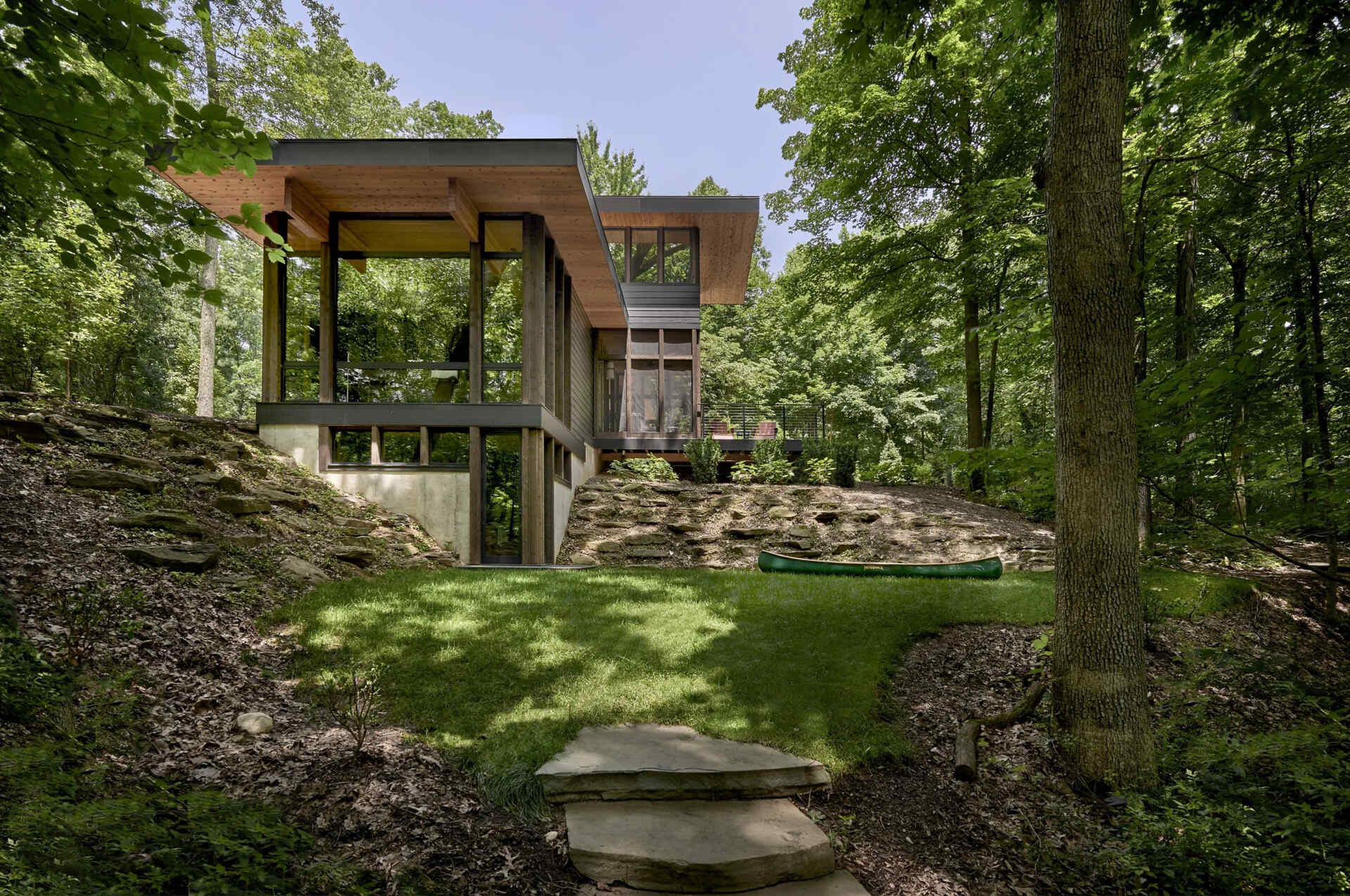
The house is organized along intersecting axes, expressed on the exterior as two contrasting volumes. A disciplined three foot module governs the layout, instilling unity that contrasts with the wild mix of maple, oak, cedar, aspen and ash trees that surround the site. The exterior is defined by untreated and charred cedar alongside obsidian lap siding. In this wooded setting, the black cladding acts less as a bold statement and more as a quiet backdrop to the landscape.
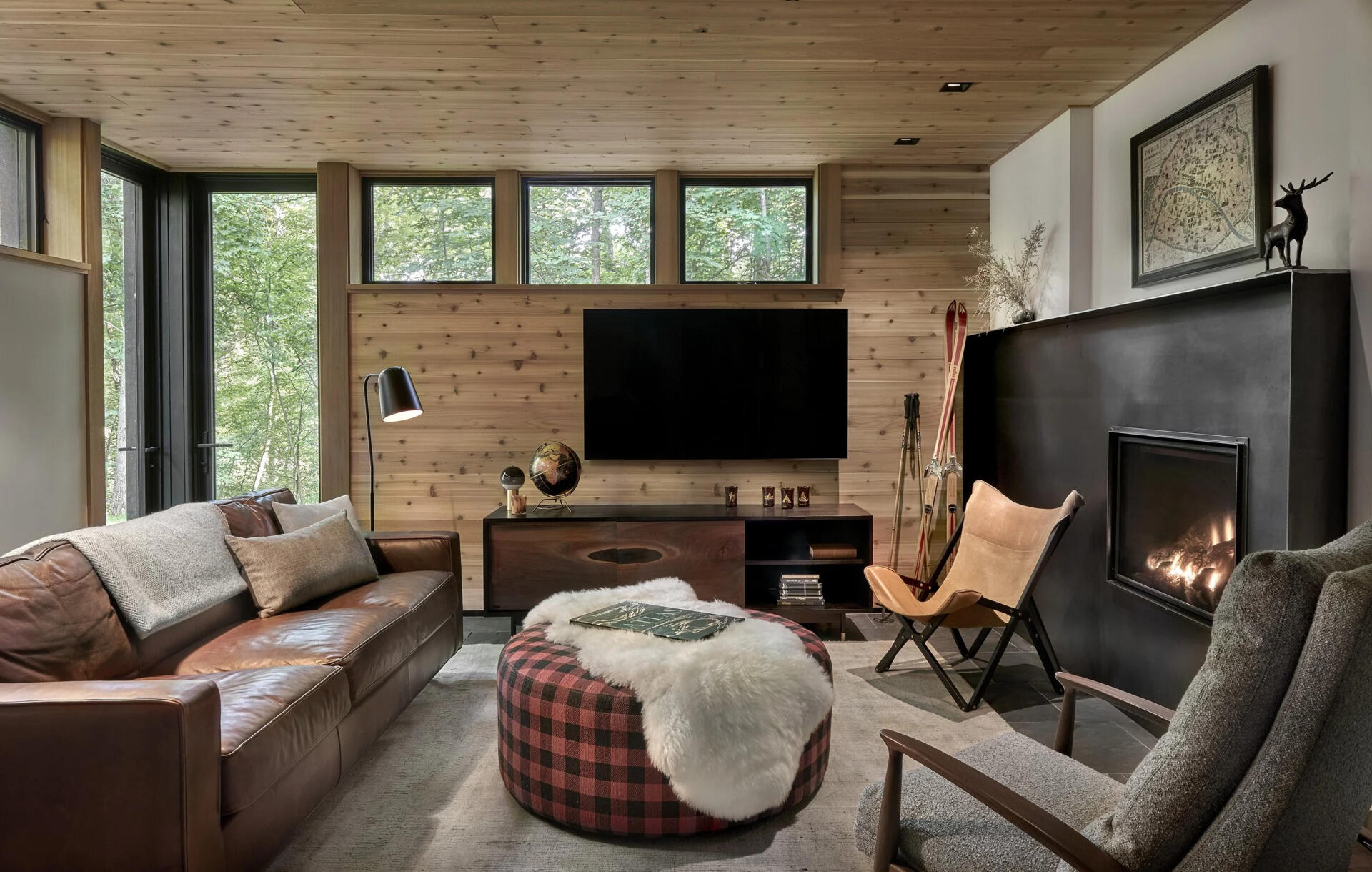
Back inside, there is a second living room with another black steel framed fireplace, while the wood ceiling wraps down onto the wall, blurring the boundary between vertical and horizontal surfaces.
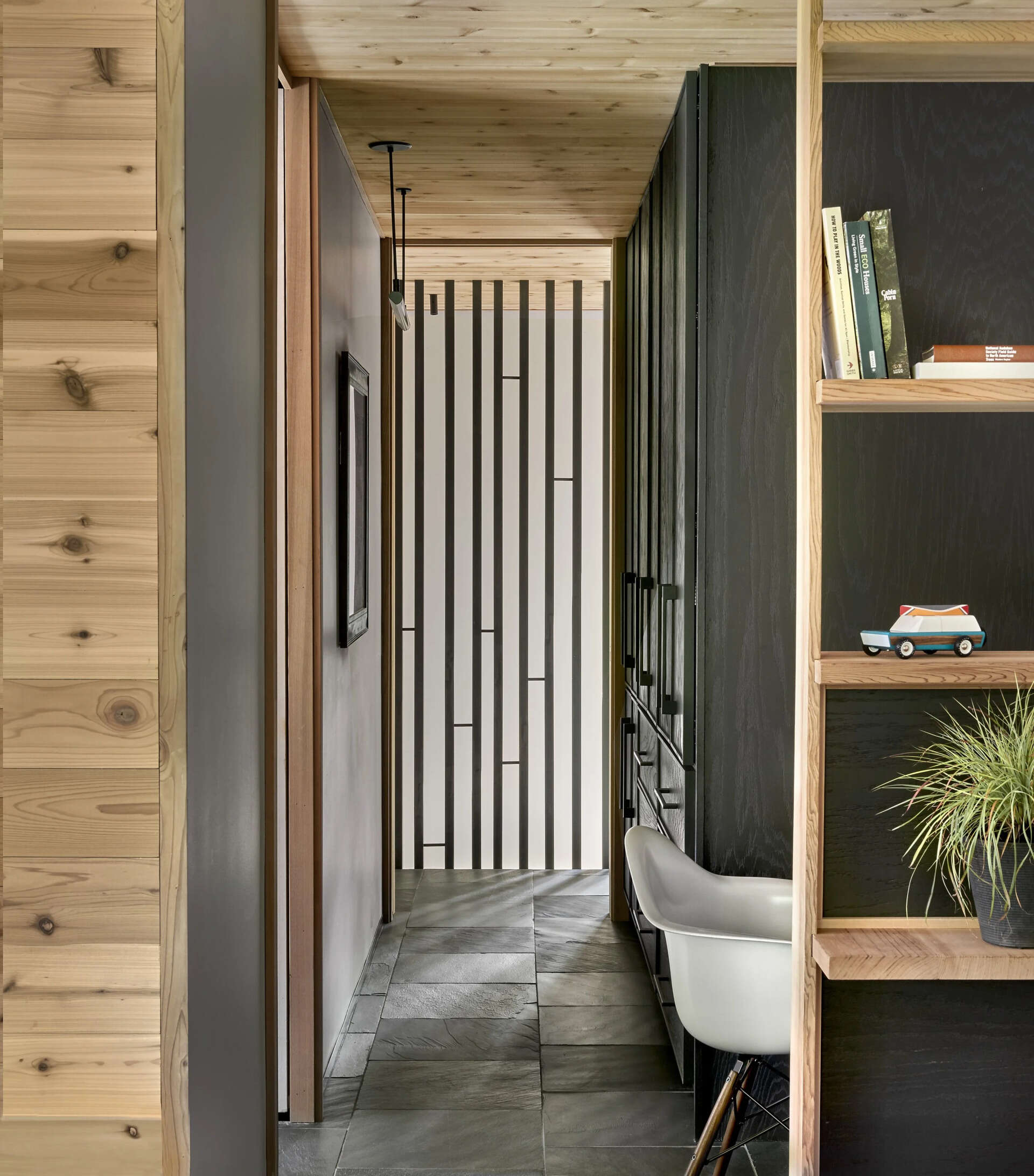
Stairs by the kitchen lead up to the second floor, where the bedrooms are found. Cabinetry that matches the kitchen downstairs provides a closet for the primary bedroom, continuing the deep green stained oak used in key millwork elements.
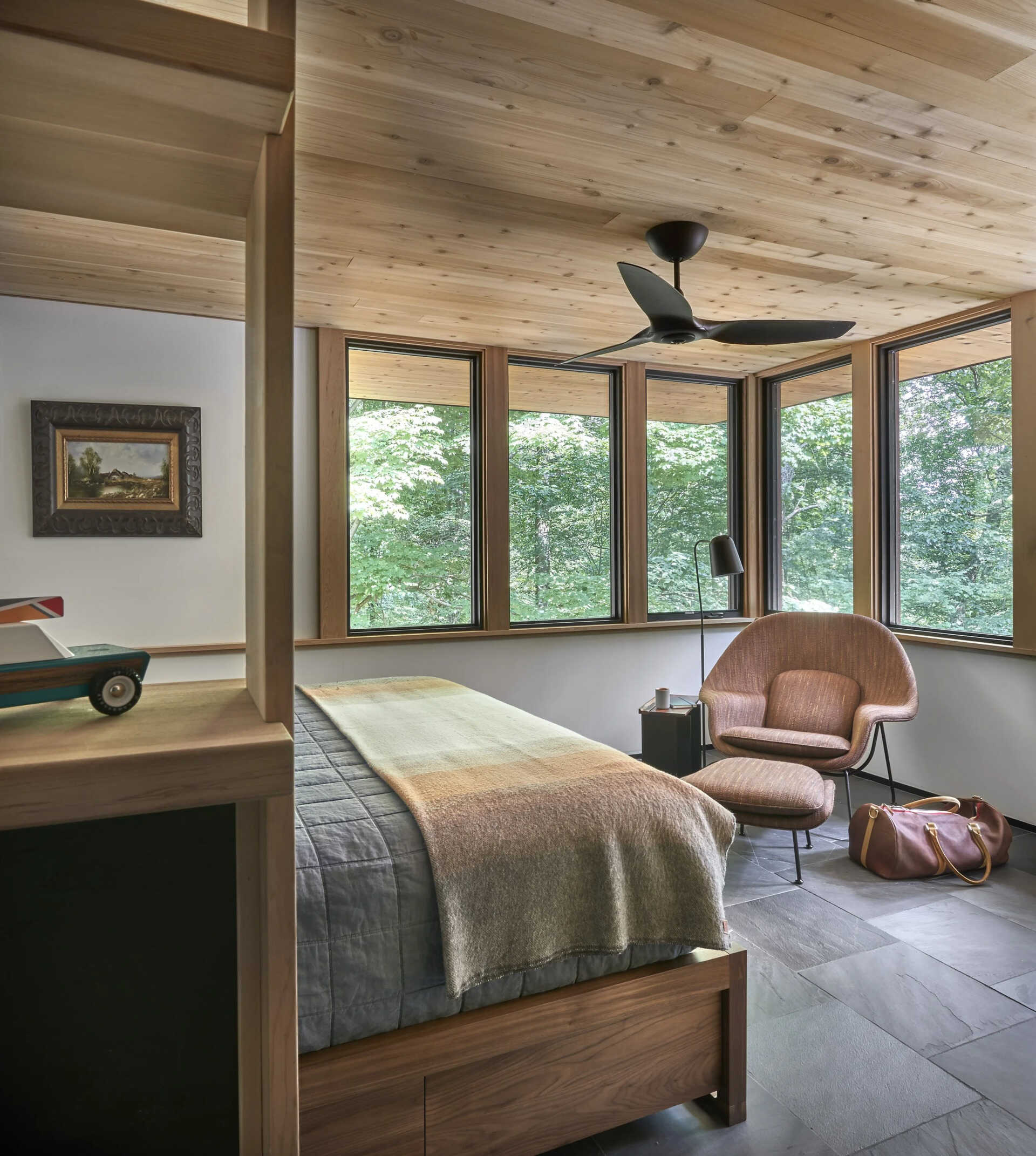
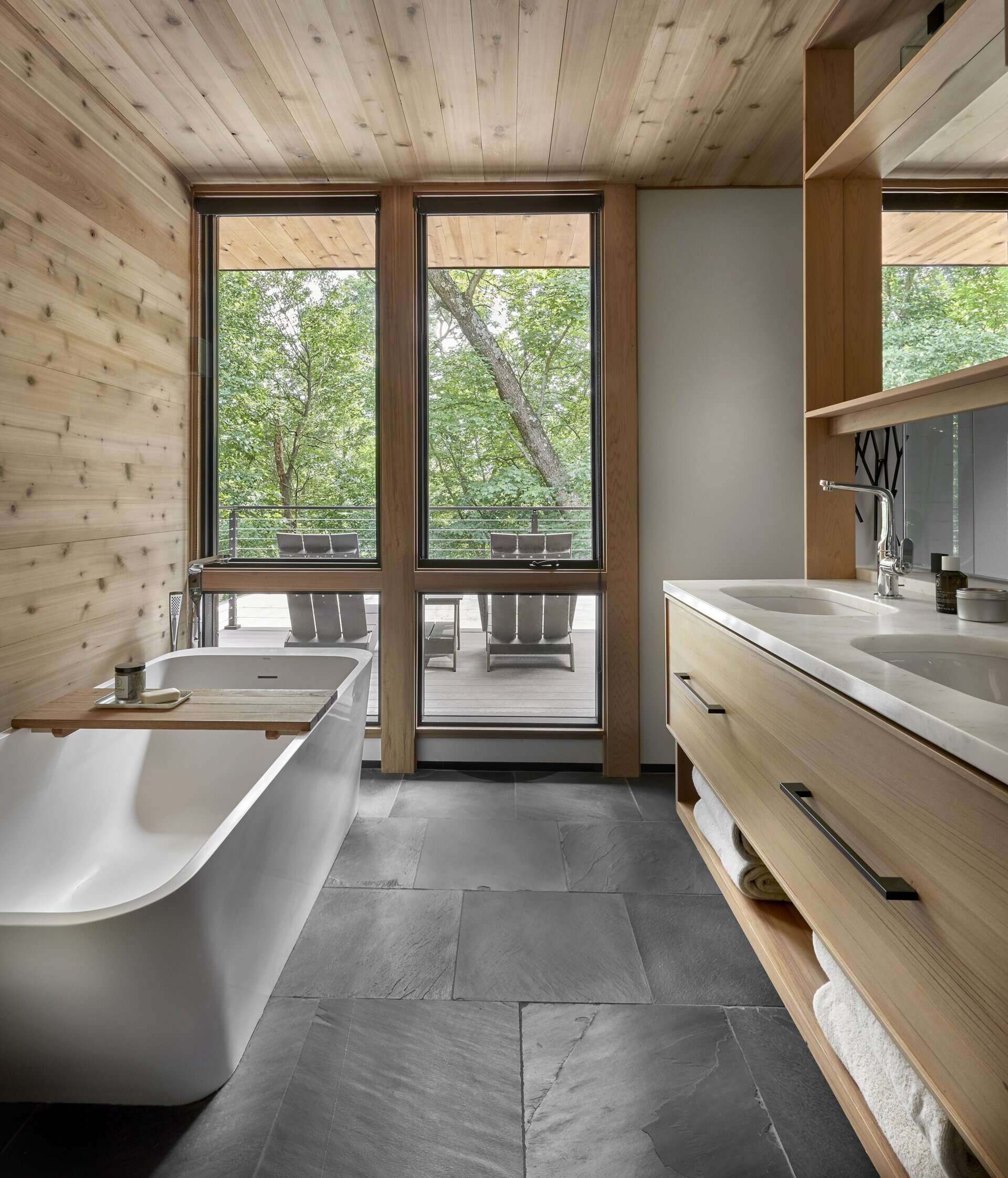
The primary bedroom has windows that wrap around the corner, allowing natural light to flood the room and frame layered views of the trees. In the primary bathroom, a freestanding bathtub takes advantage of windows that overlook a small deck and the forest beyond. Opposite the tub is a wood vanity with dual sinks, storage drawers and open shelving.
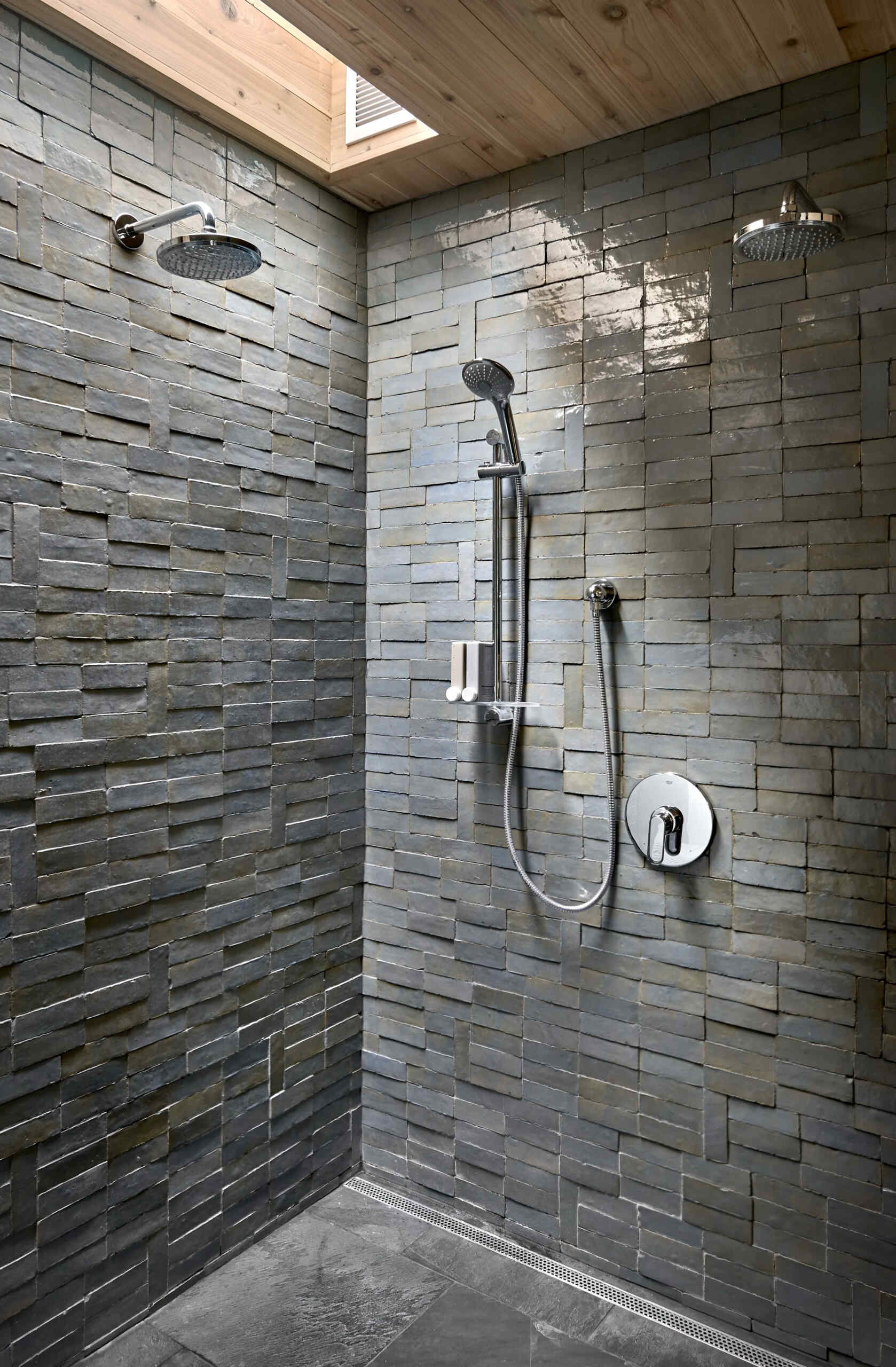
The bathroom also includes a shower with a skylight that highlights the texture and coloring of the handmade tiles that clad its walls, drawing daylight deep into the space.
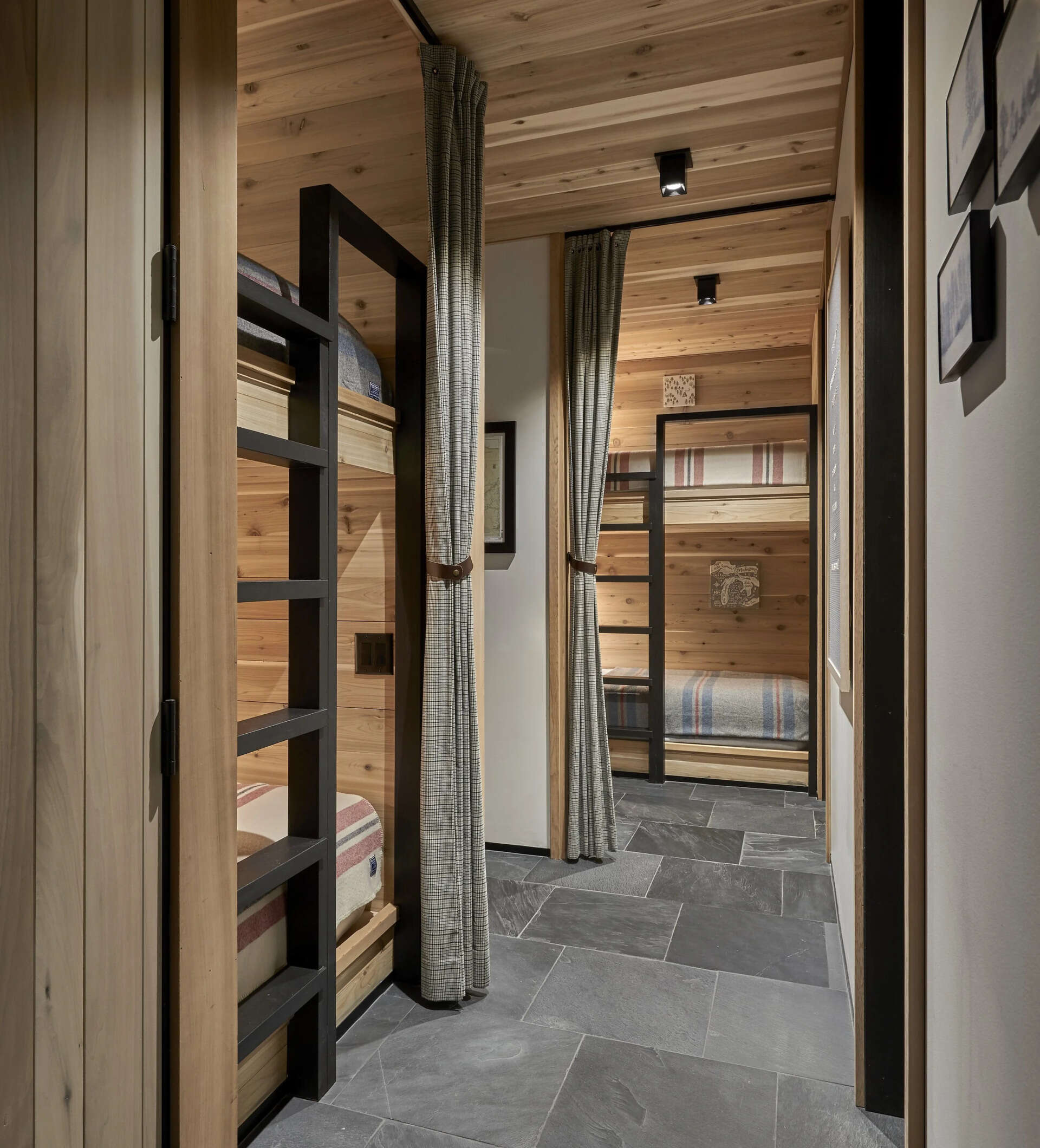
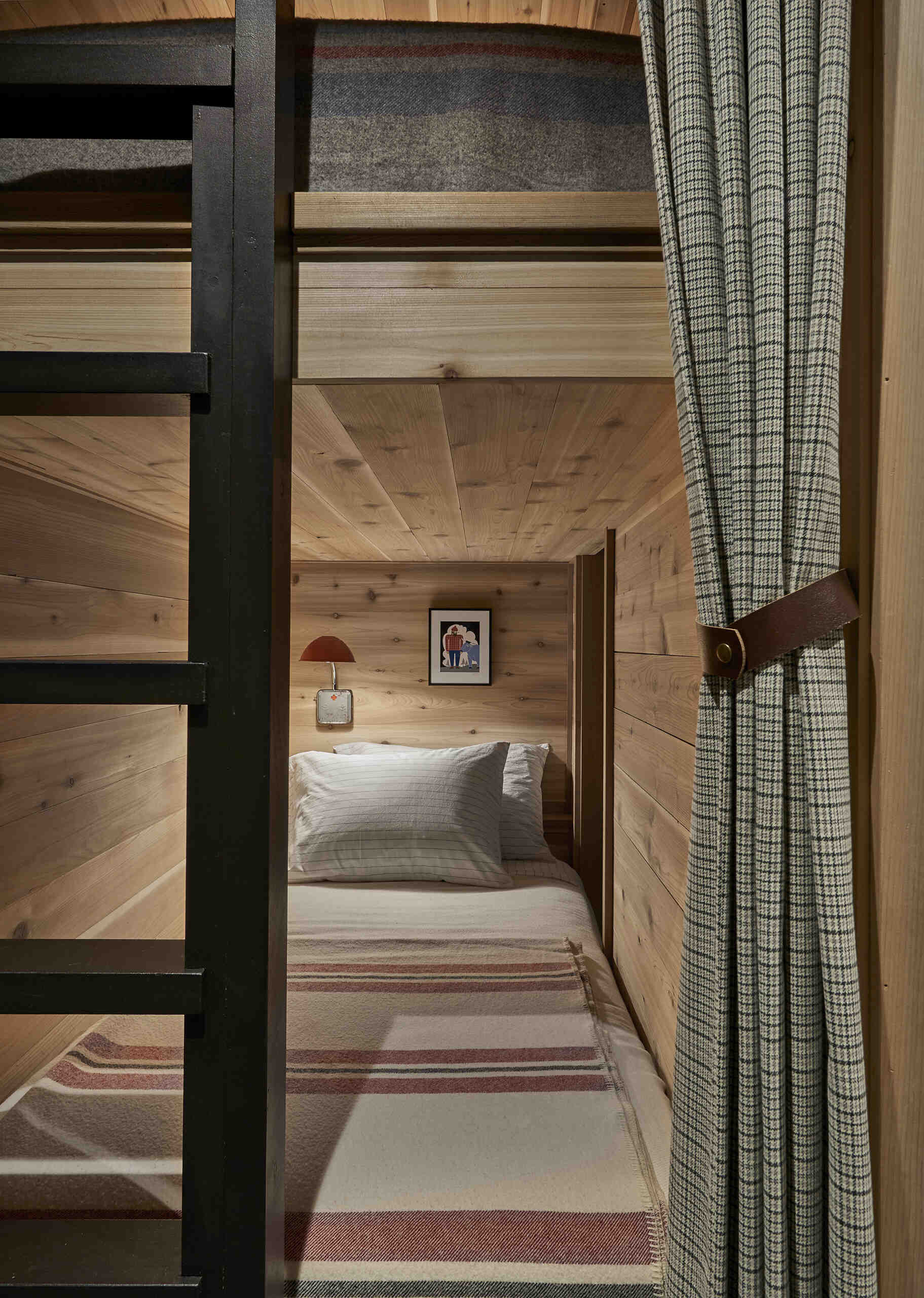
The house also features a room with two pairs of bunk beds. Curtains provide privacy, while black ladders allow for easy access. Each bunk has its own wall mounted lighting, creating individual zones within the shared room. Along with additional sleeping options, the home can comfortably accommodate ten people, and even thirteen in a pinch.
While spacious in feel, not a single square inch is wasted. What began with a tent pitched beside a quiet creek has become a carefully crafted woodland home that offers the slower pace and serenity its owners had been seeking all along.