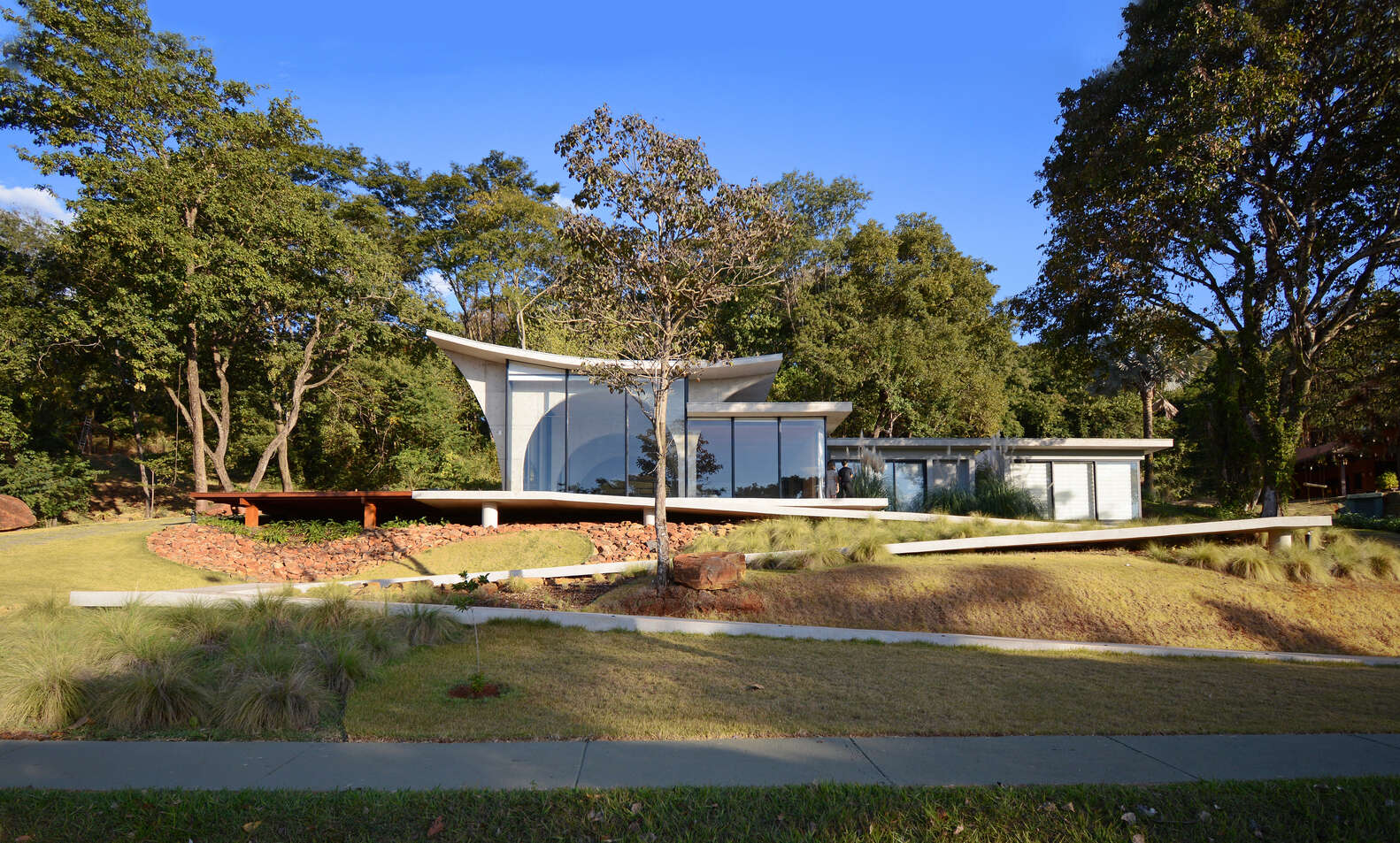
In central Brazil, architect Rodrigo Ferreira designed a home where structure does more than hold up the roof. At Casa Joy, it shapes the entire experience of the house.
The modern residence sits on the outskirts of Goiânia and was designed for an unconventional and active woman in her mid 70s and her family. Rather than creating a quiet space that feels removed from daily life, the goal was to design a place where everyone could gather. The result is a concrete, glass, and wood home defined by bold arches and an architectural language that balances practicality with style.
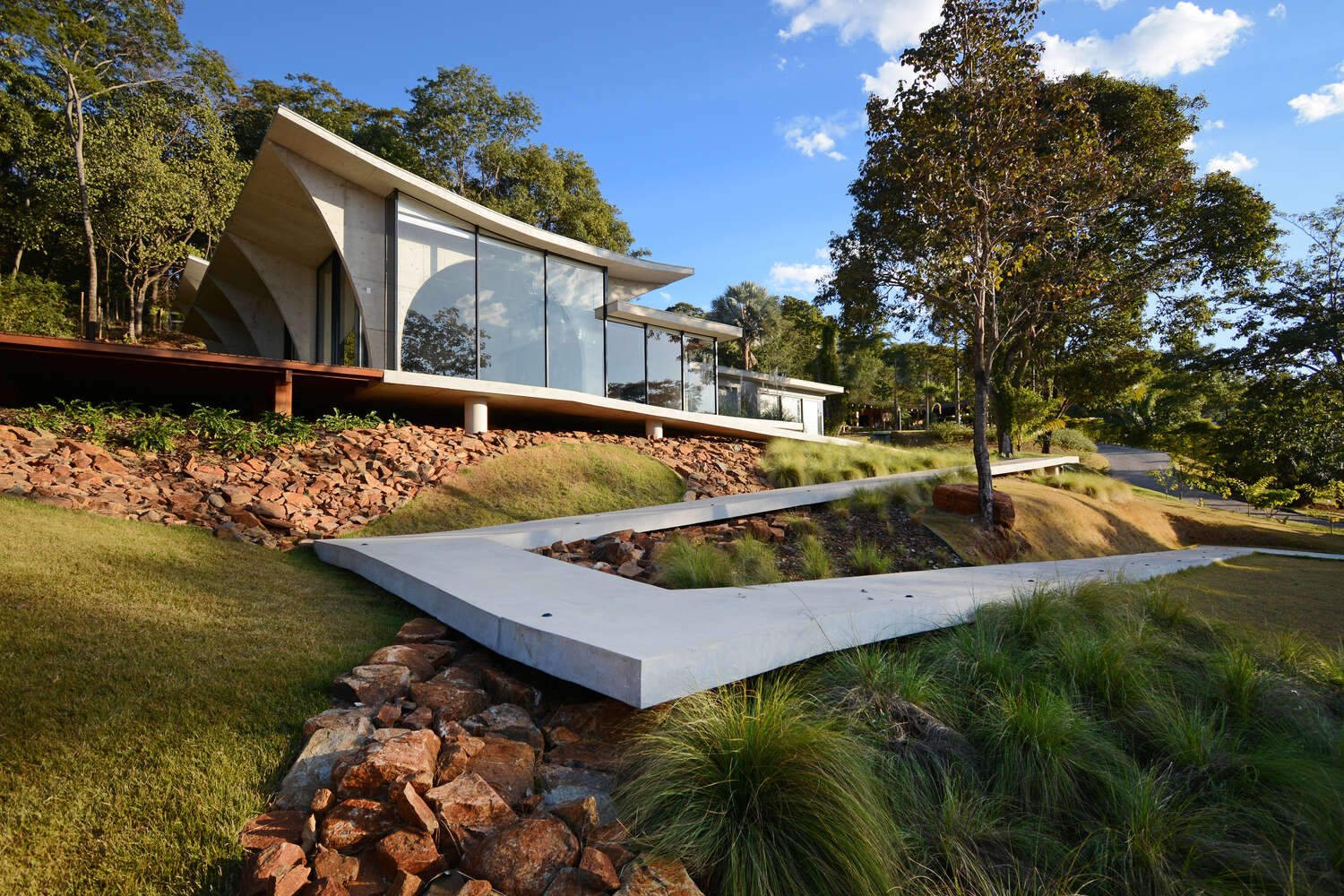
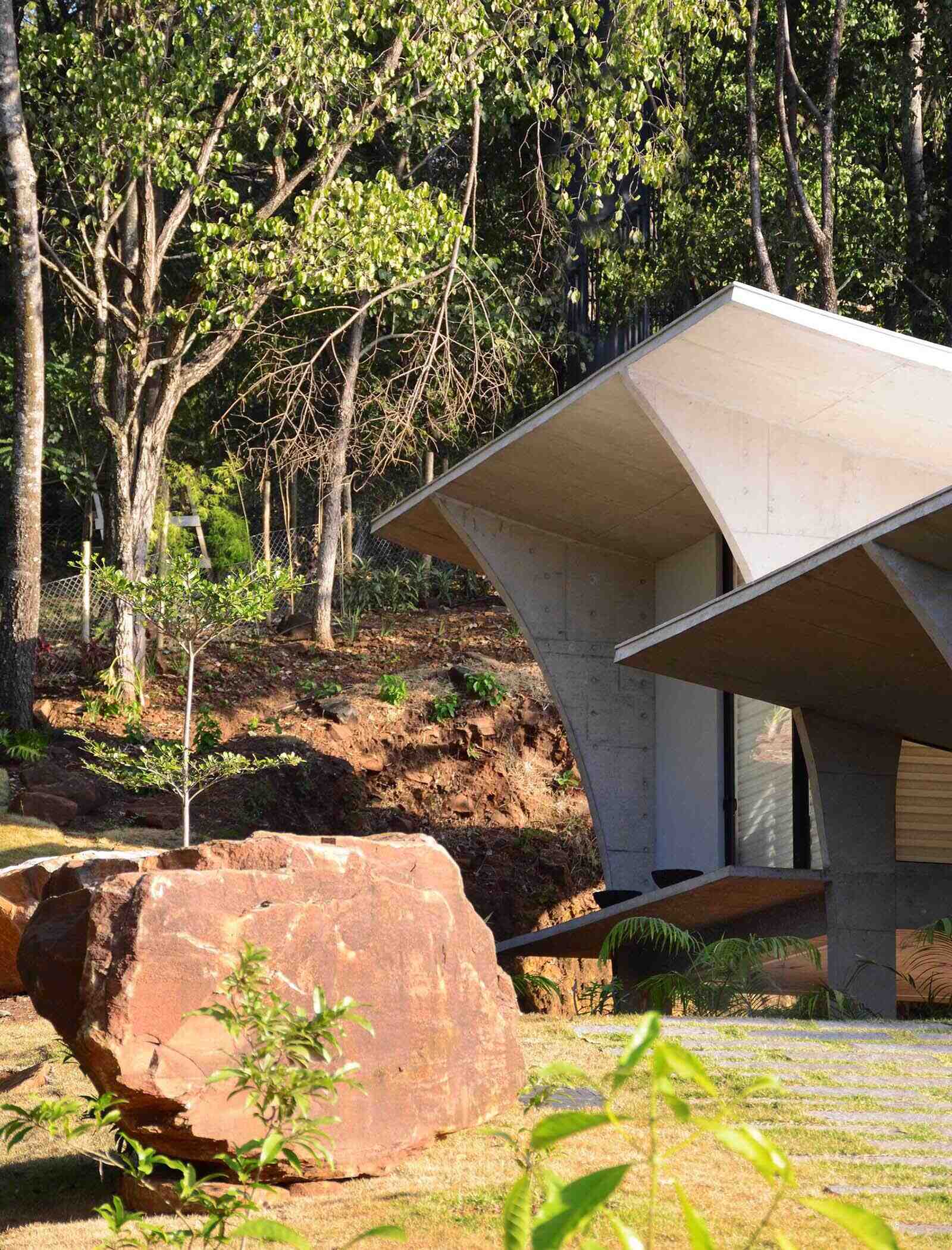
From the beginning, the client’s approach to materials was straightforward. They needed to be durable, practical, and visually striking. Ferreira responded with a structure made primarily of exposed concrete, accented by glass, aluminum frames, and warm wood ceilings inside.
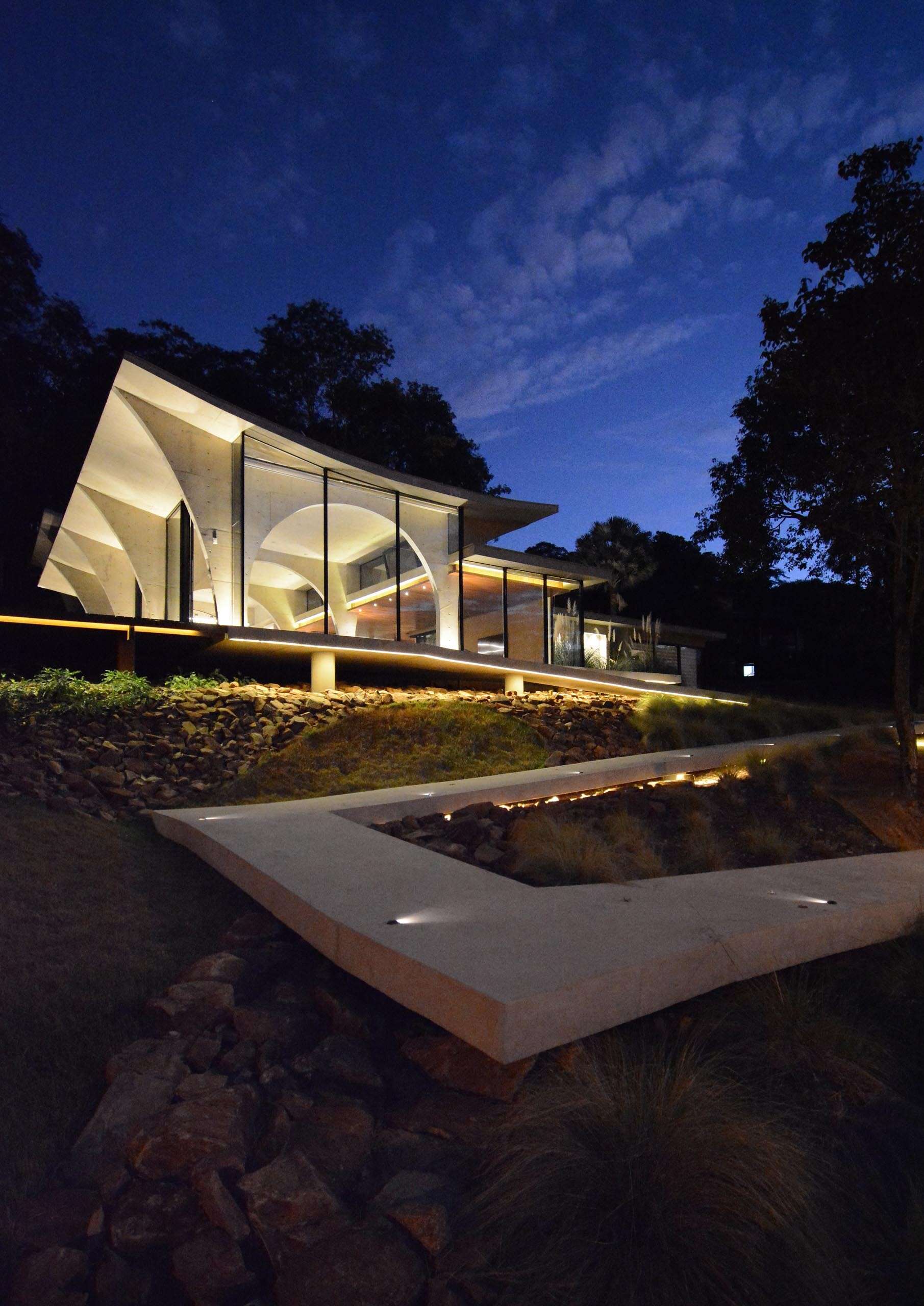
At the front of the house, a winding concrete path leads visitors toward the entrance. The 65 meter zigzagging ramp rises gradually from the street, moving across the entire front setback of the property. Lit at night, the path acts as both an approach and an introduction, slowly revealing the architecture as visitors move upward toward the home.
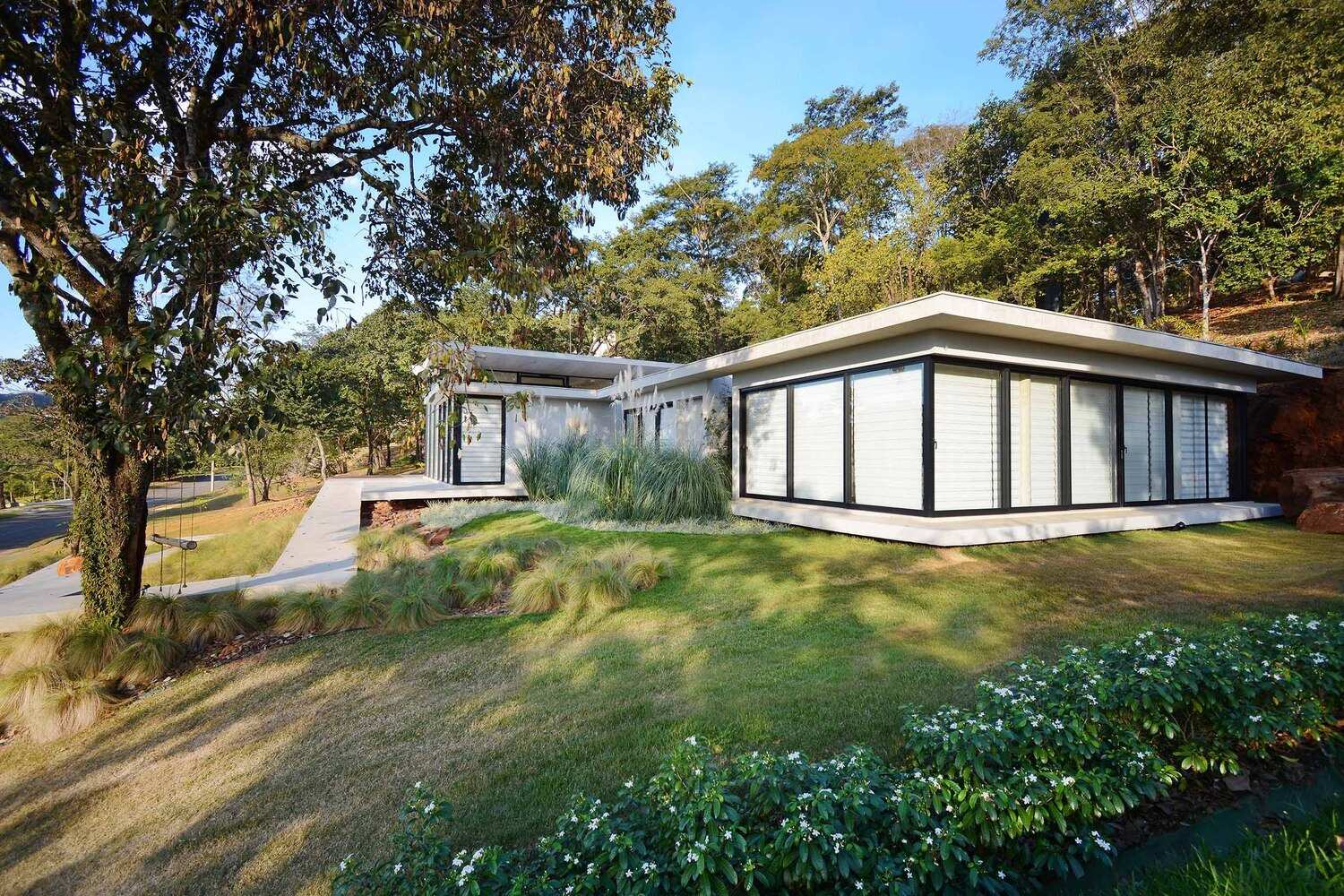
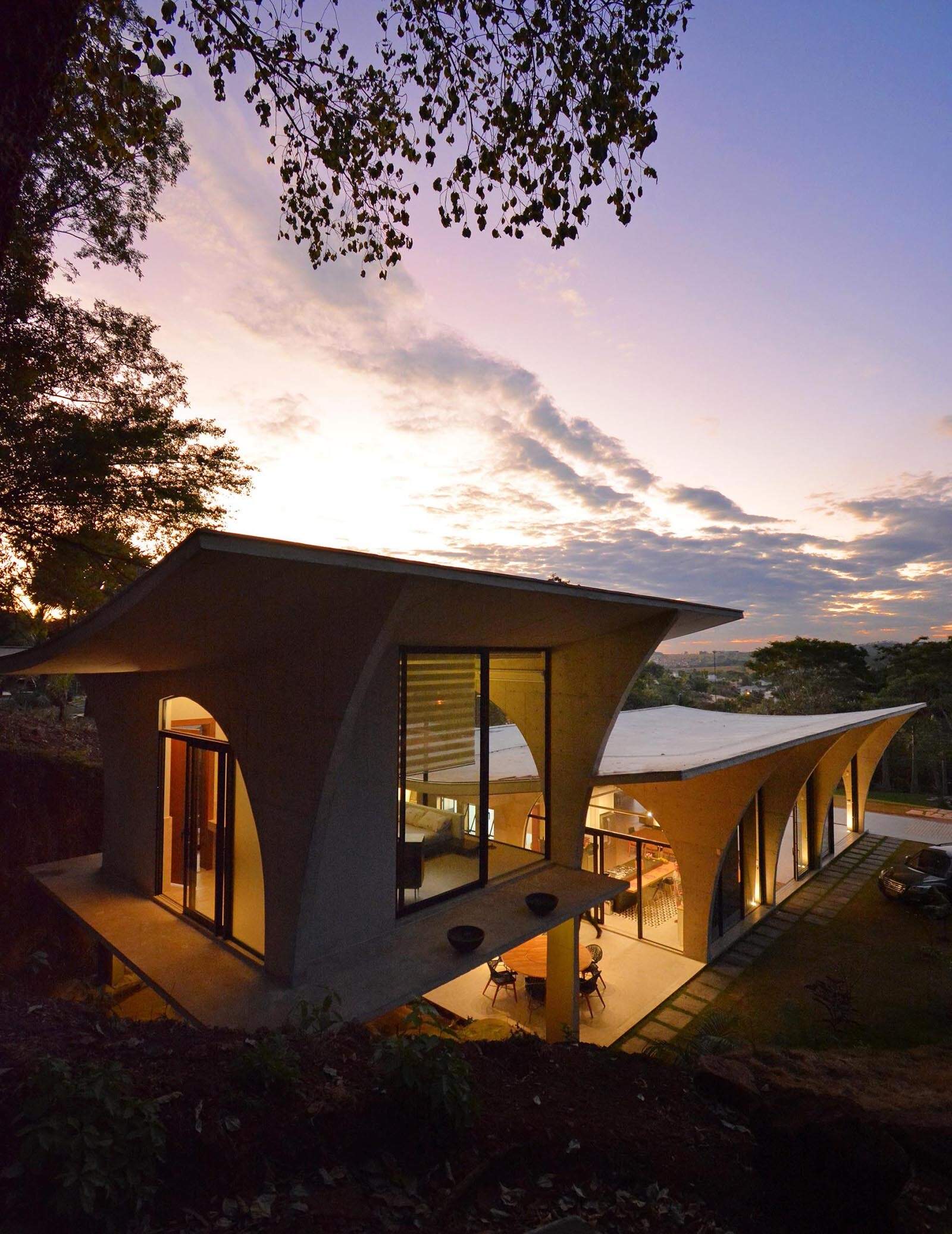
Elevated roughly four meters above street level, the house overlooks the surrounding valley. Its main facade faces north, opening the home to the landscape while allowing natural light to move through the interior during the day.
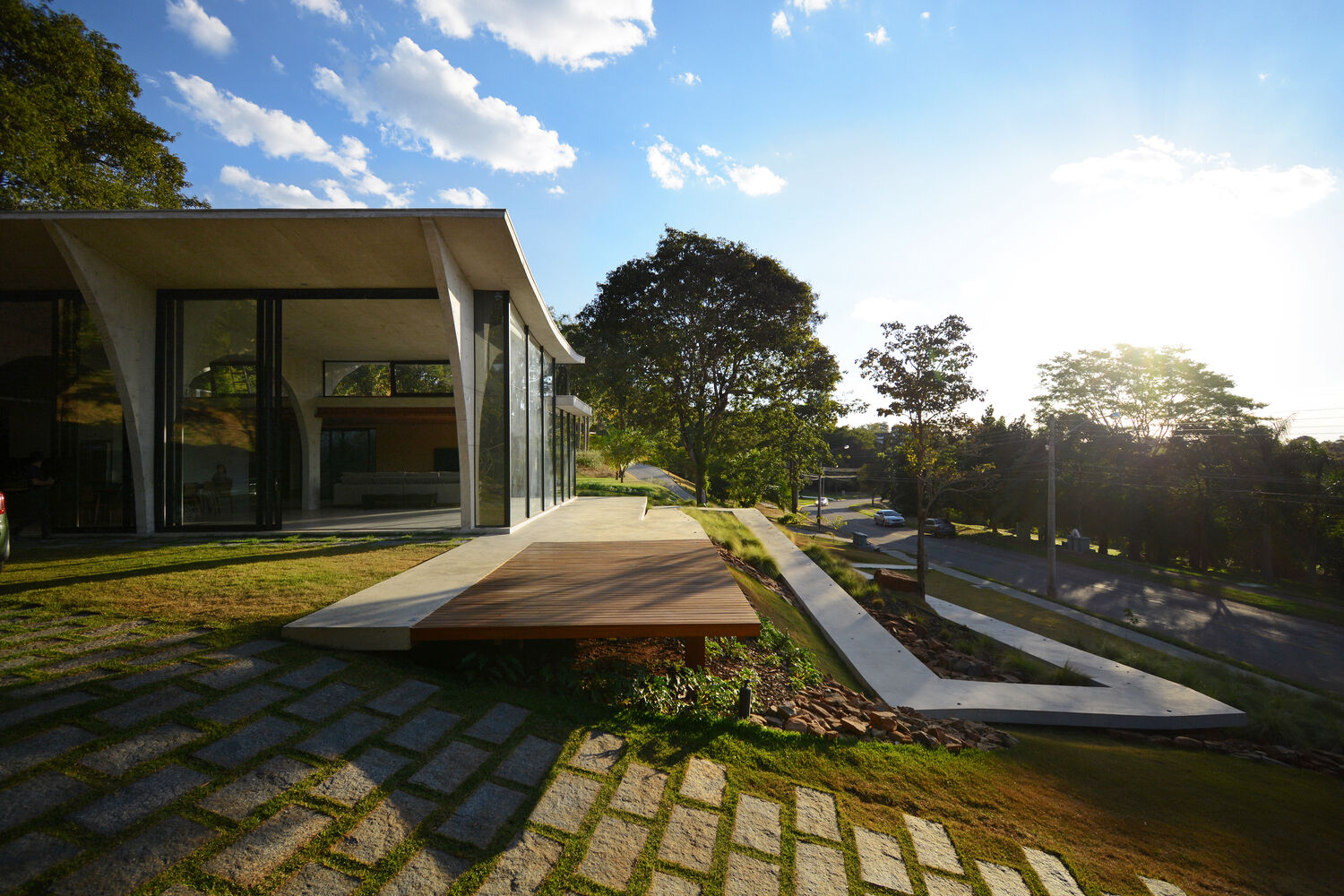
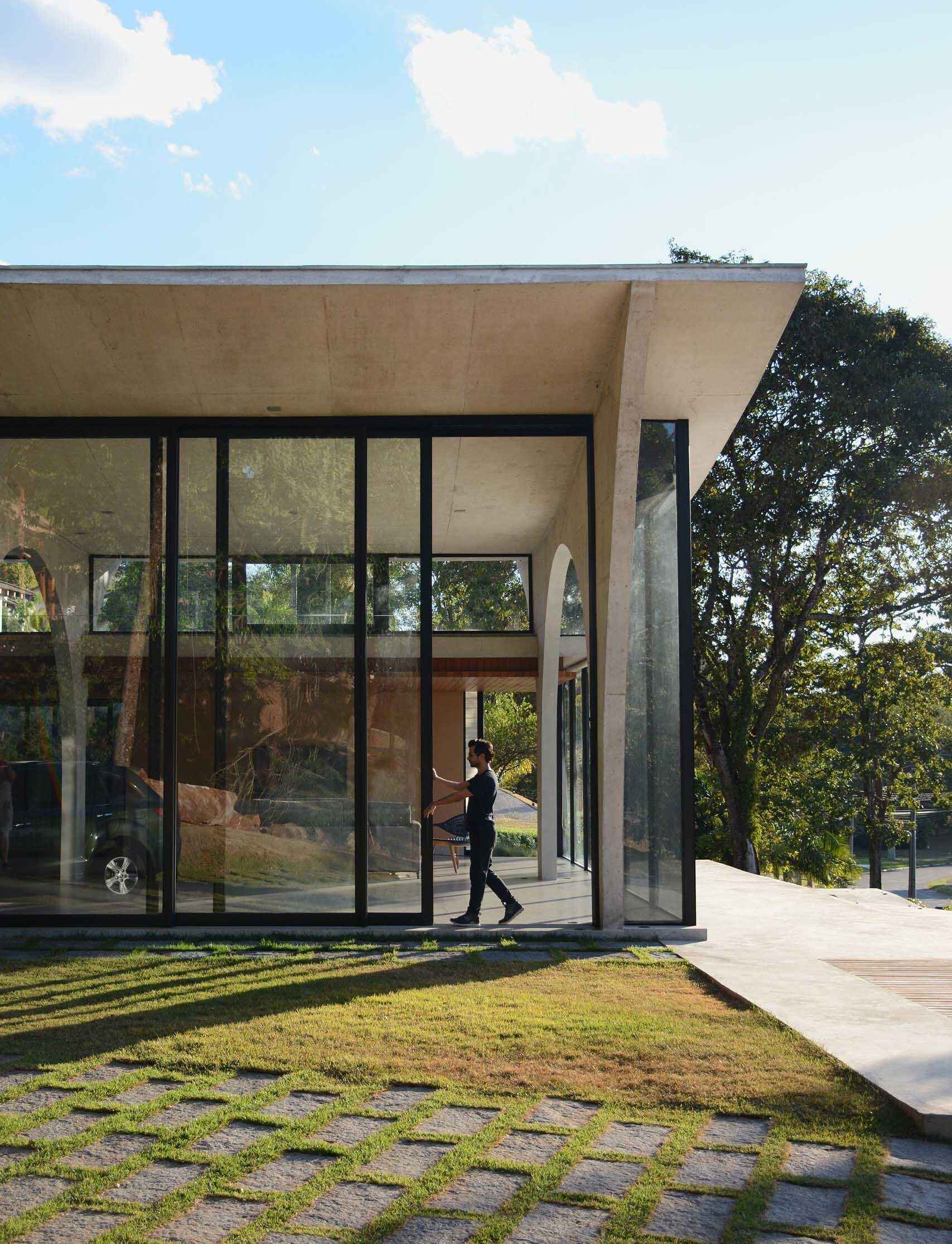
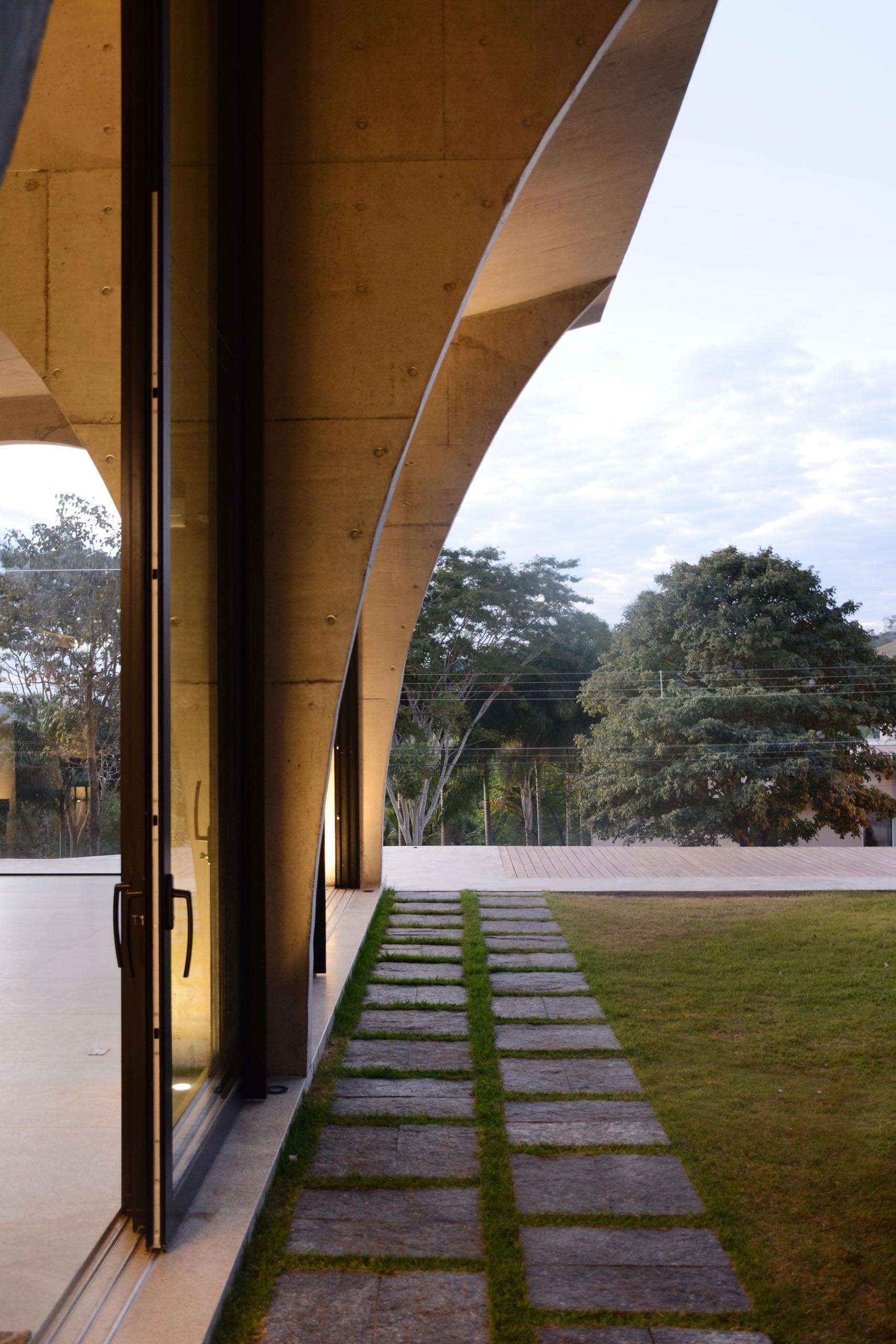
What defines Casa Joy most clearly are its arches. Six large concrete vaults support the structure and are connected by a slab with varying thickness. The system takes advantage of the natural structural efficiency of the arch, allowing the building to use less material while reducing weight and construction costs.
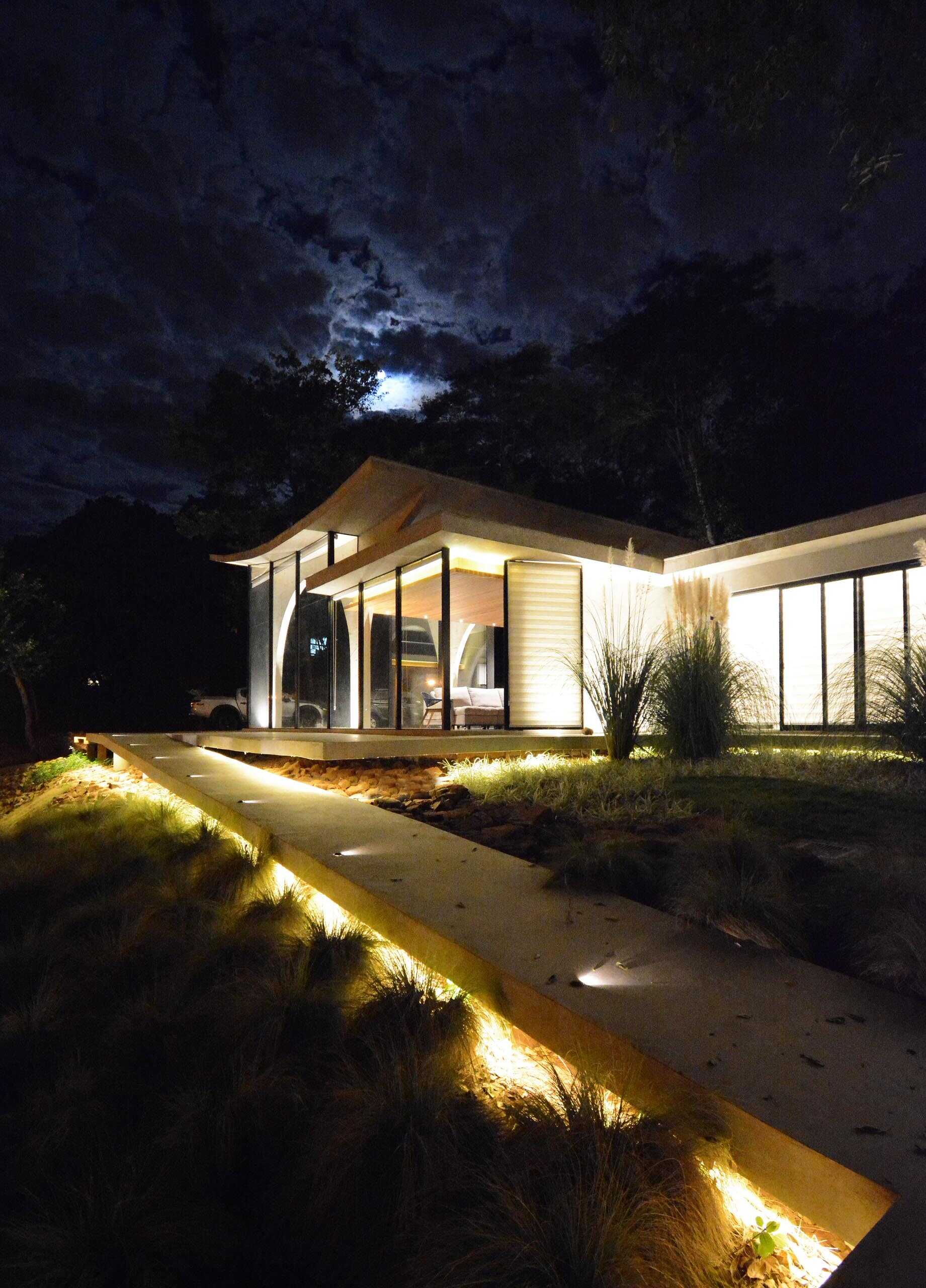
The effect is both practical and sculptural. From the outside, the smooth concave roof appears to float lightly above the structure. At night, when the interior lights glow through the large windows, the arches become even more dramatic, revealing their curves against the darkness.
Visitors arrive at a pivoting front door that opens into a warm and welcoming interior. Wooden ceilings with integrated lighting soften the concrete structure and introduce a sense of comfort that contrasts with the bold architecture outside.
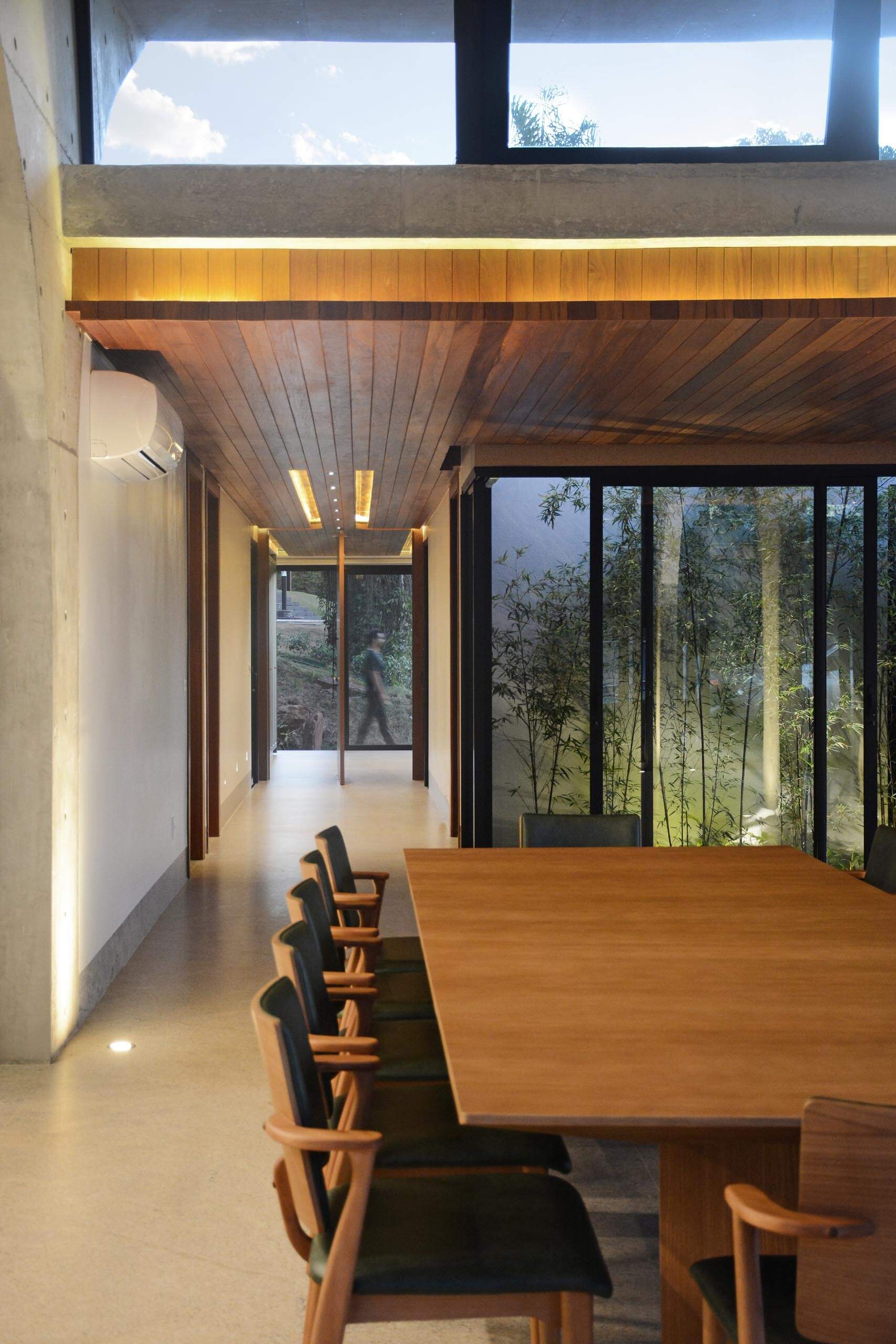
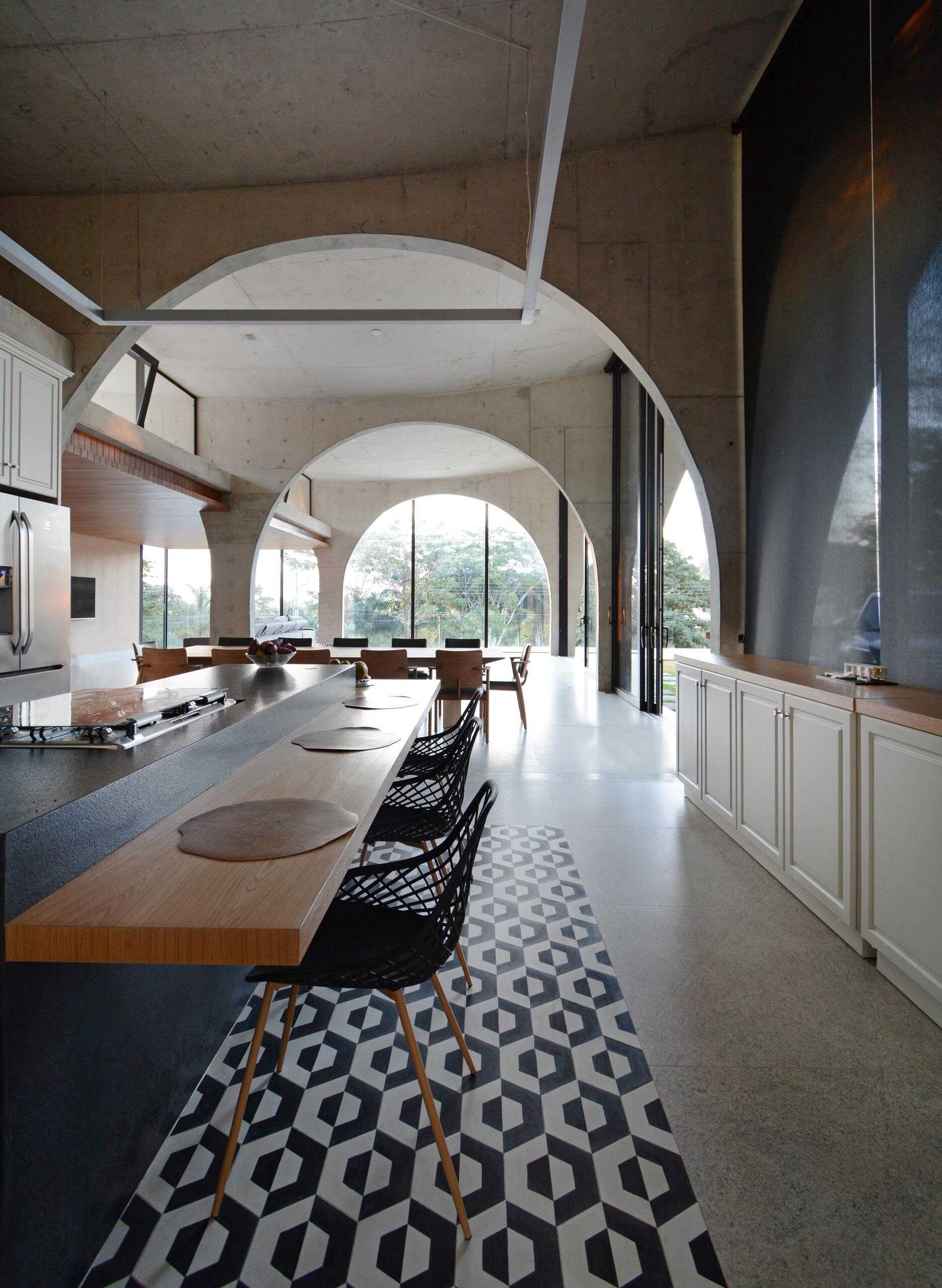
From the entryway, the home opens immediately into the social areas. The living room, dining area, and kitchen share one continuous space housed beneath the arched gallery. The double height ceiling amplifies the scale of the room, allowing the arches to define the space above.
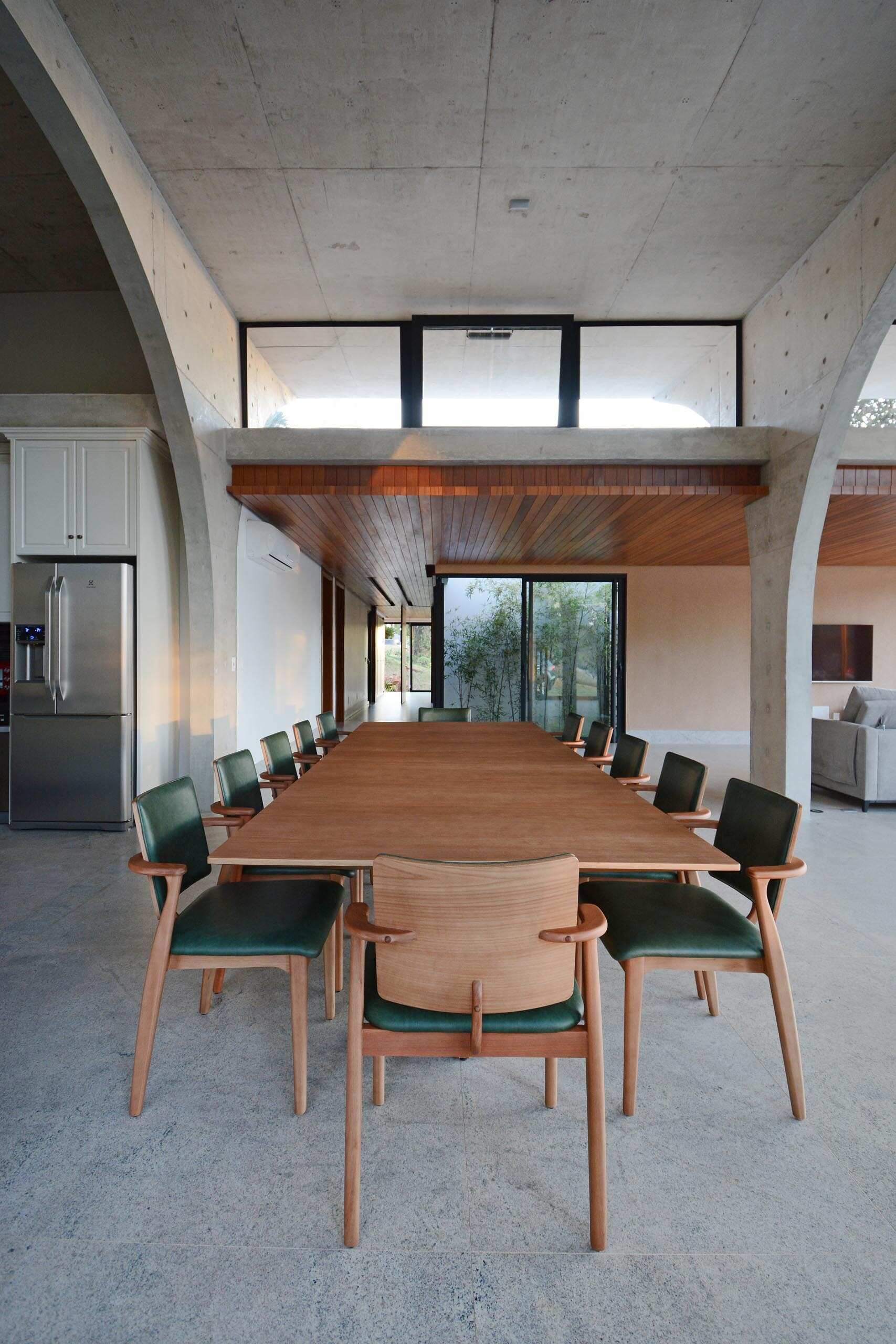
Floor level lighting washes the underside of the slab with light, creating subtle shadow patterns that shift throughout the evening.
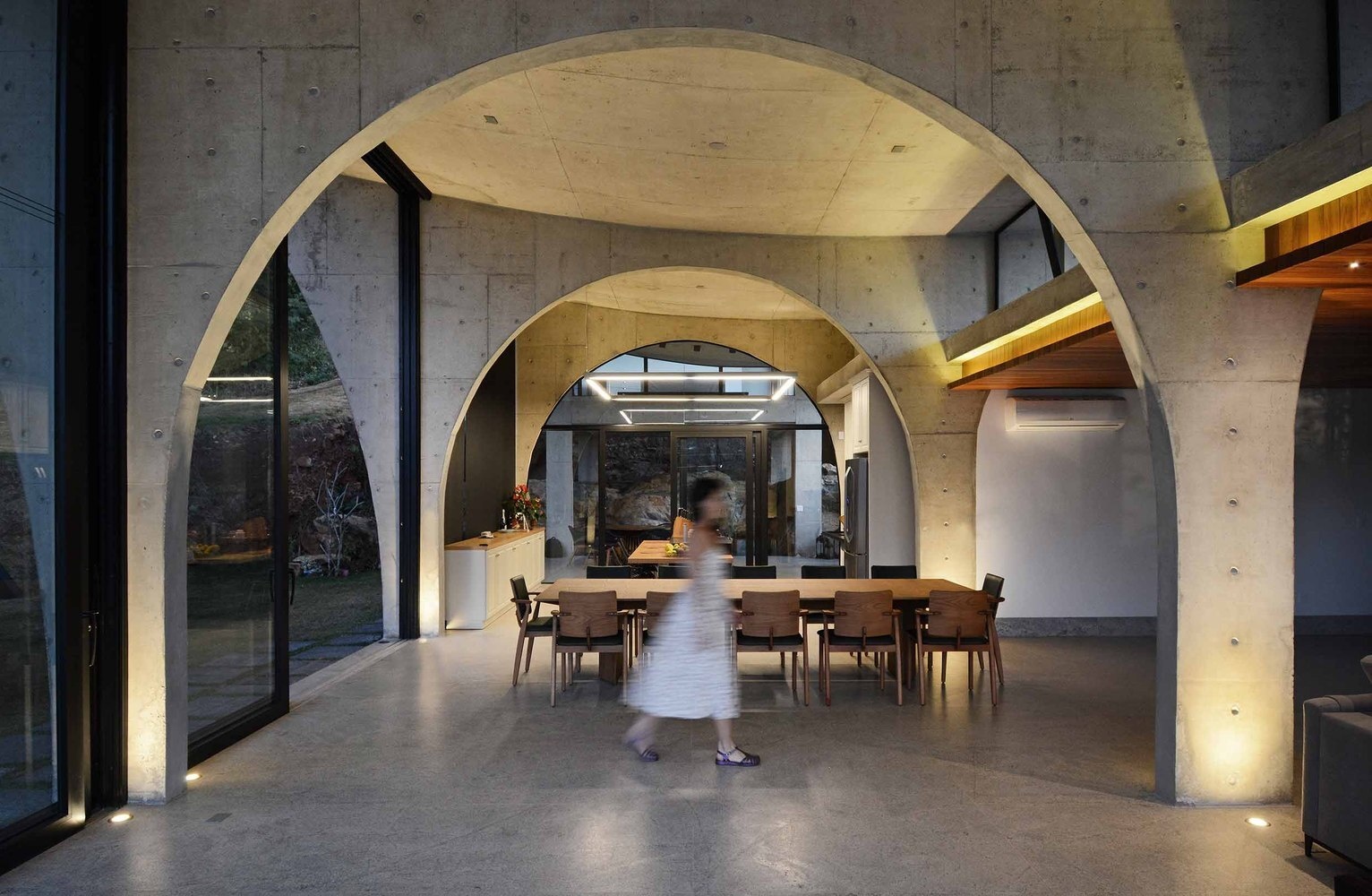
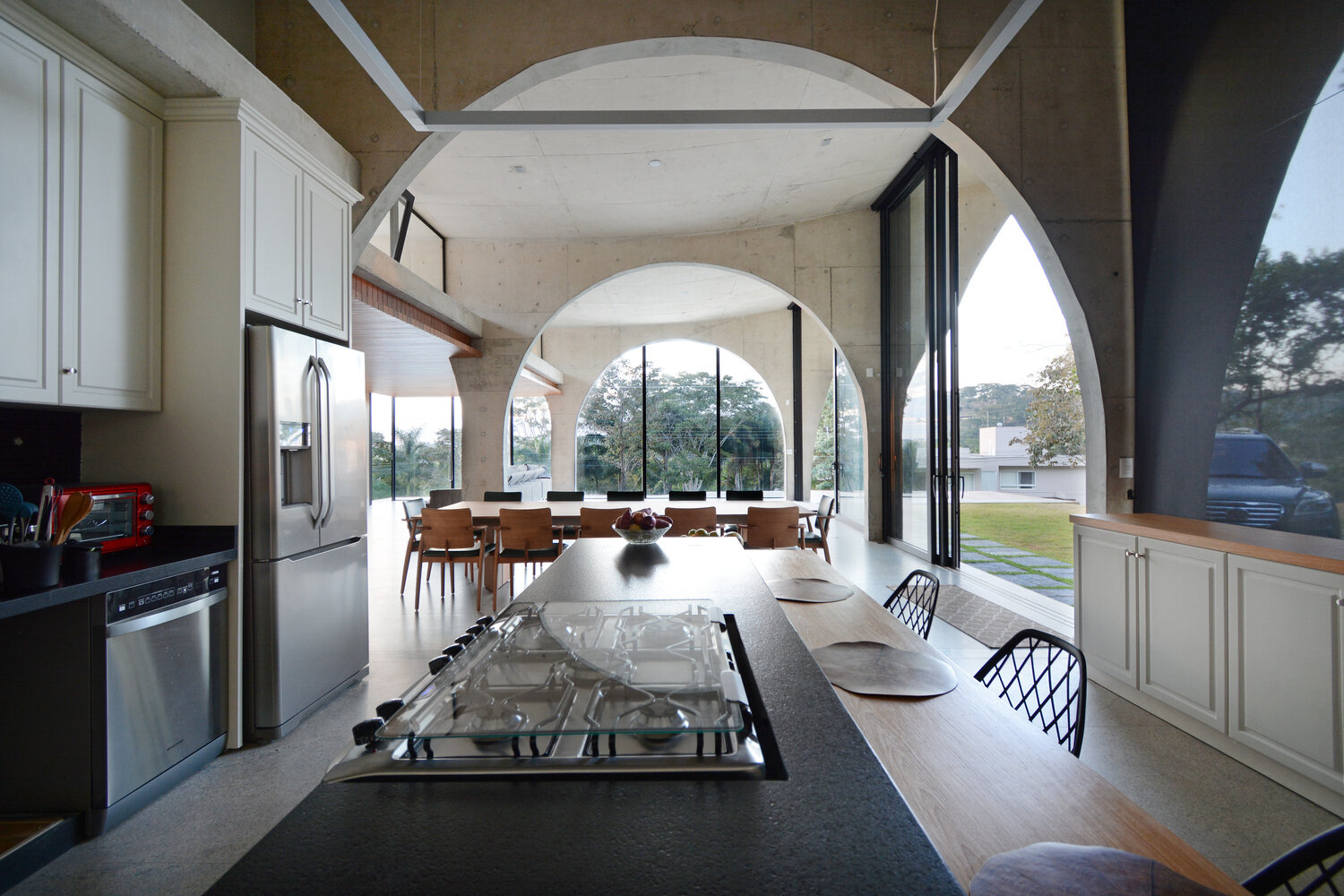
Oversized sliding glass doors line the walls of the great room. Their height emphasizes the scale created by the arches while allowing the interior to open fully to the surrounding landscape. The glass surfaces connect the social spaces to gardens and outdoor areas while maintaining privacy through carefully positioned internal courtyards.
Back inside, the kitchen becomes a natural gathering point. A long island stretches across the space, giving people room to socialize while meals are prepared. The surrounding windows are framed in black aluminum and align precisely with the concrete arches above, reinforcing the geometry of the structure.
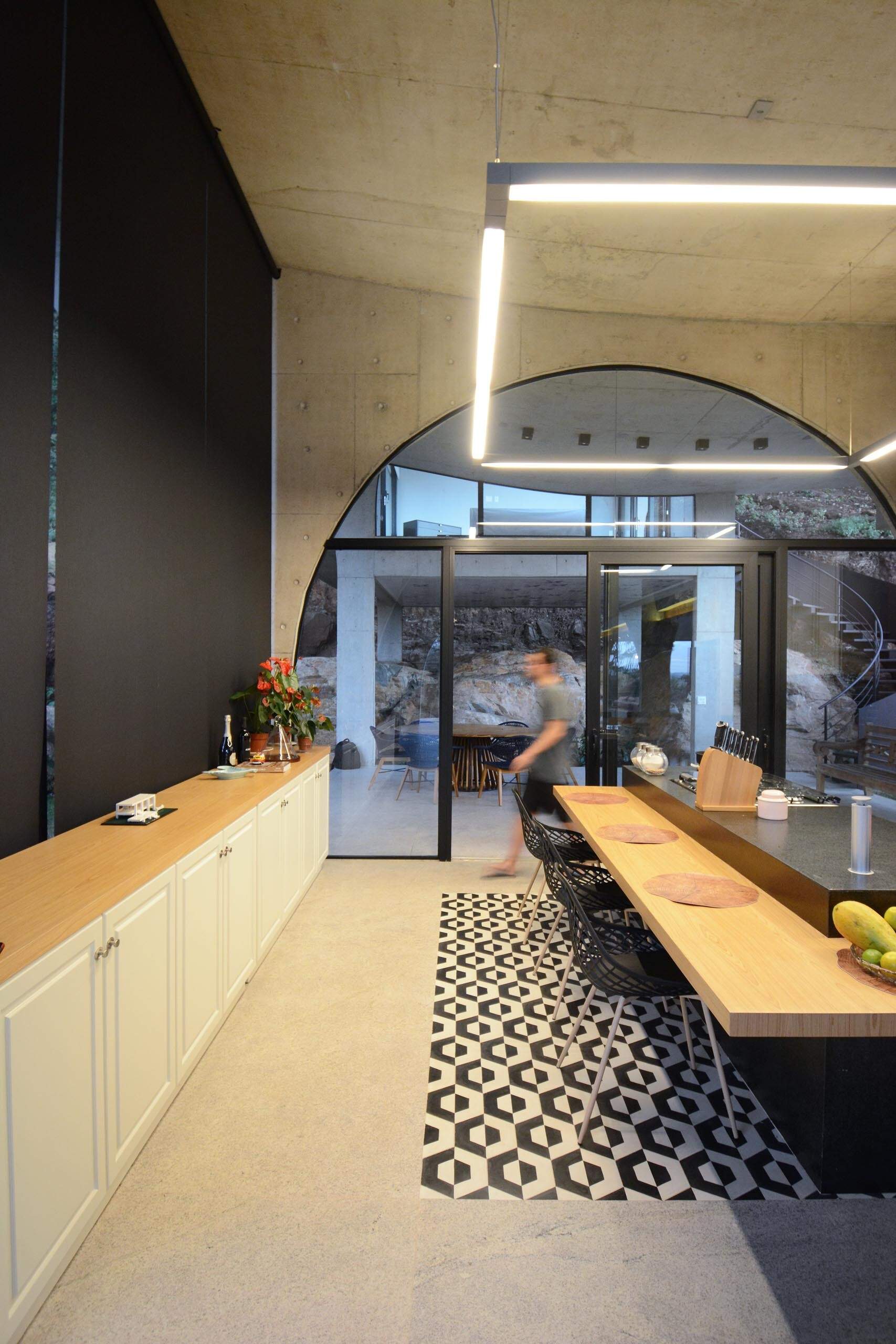
Beyond the main living areas, sliding glass doors lead outside to a covered dining patio. The outdoor space continues the architectural language of curves, with gently rounded stairs connecting the upper level of the house to the surrounding grounds.
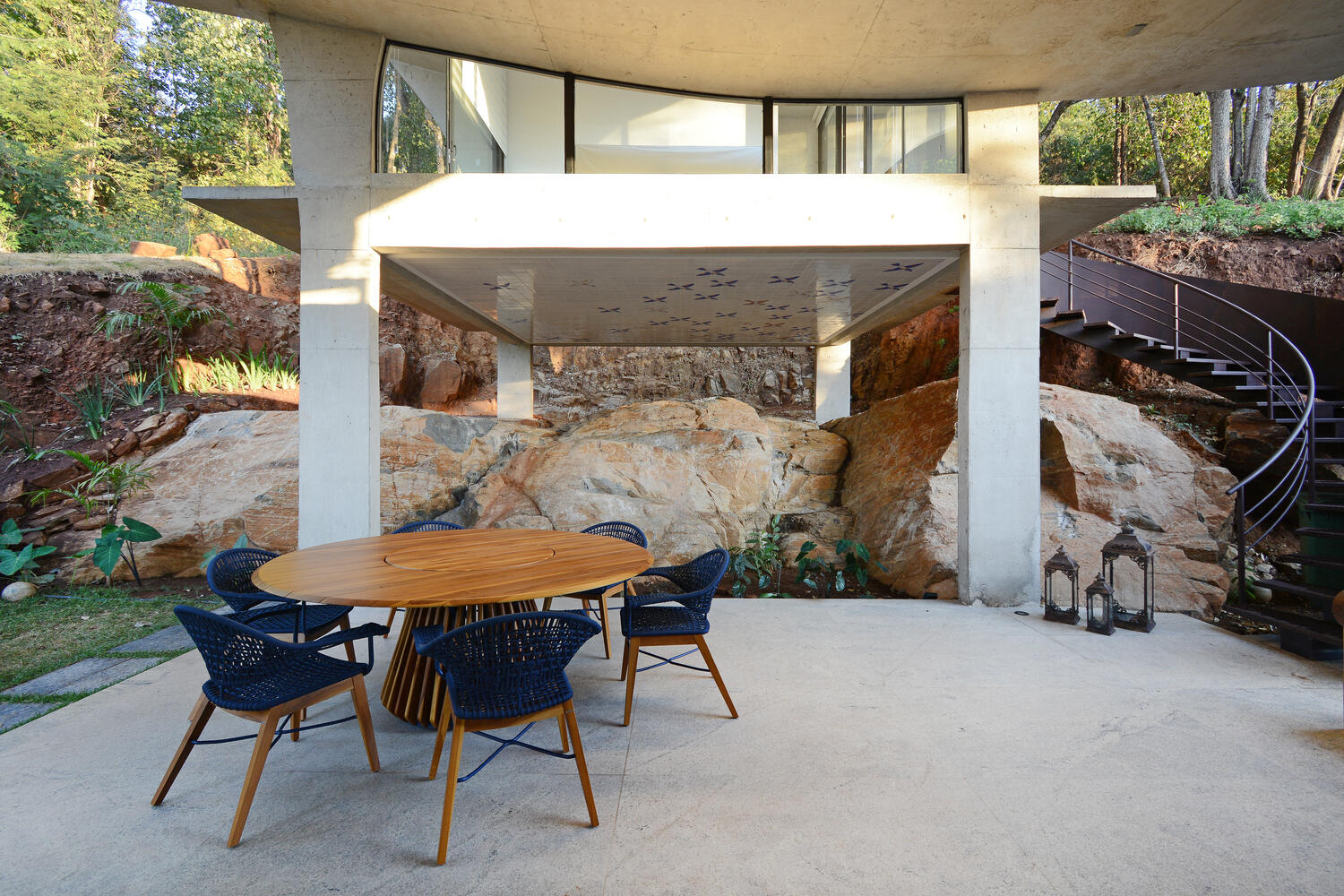
During the construction of the home, an unexpected discovery reshaped part of the design. While preparing the foundations, builders uncovered a natural stone wall at the rear of the lot. The formation, measuring roughly 2.5 meters high and 25 meters long, had not appeared in the original soil survey.
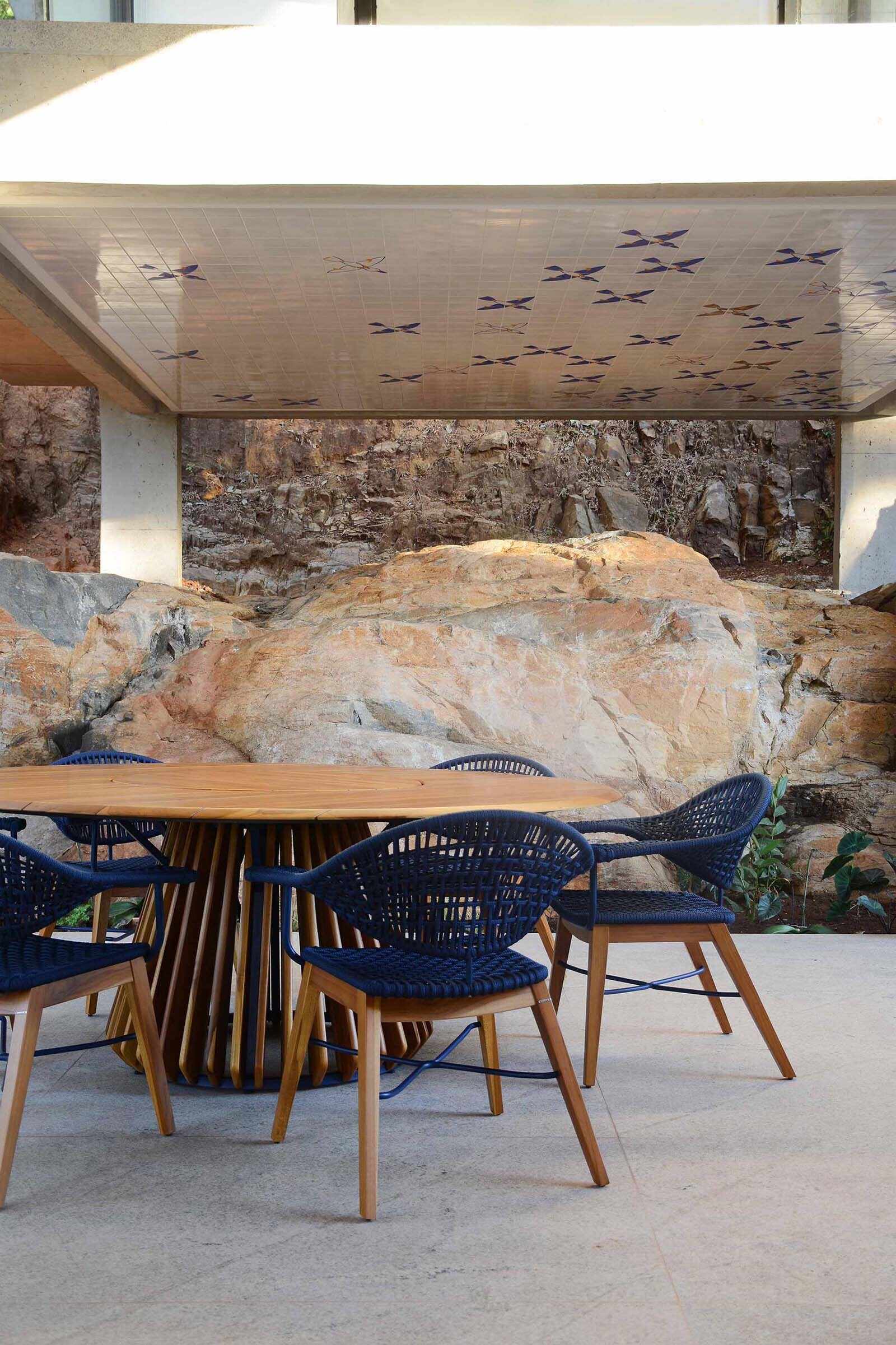
At first, there was discussion about removing it. But as the project evolved, the decision was made to keep the stone and treat it as a sculptural feature of the property. Water slowly seeps from the surface of the rock, creating a quiet atmosphere that adds another layer to the outdoor spaces.
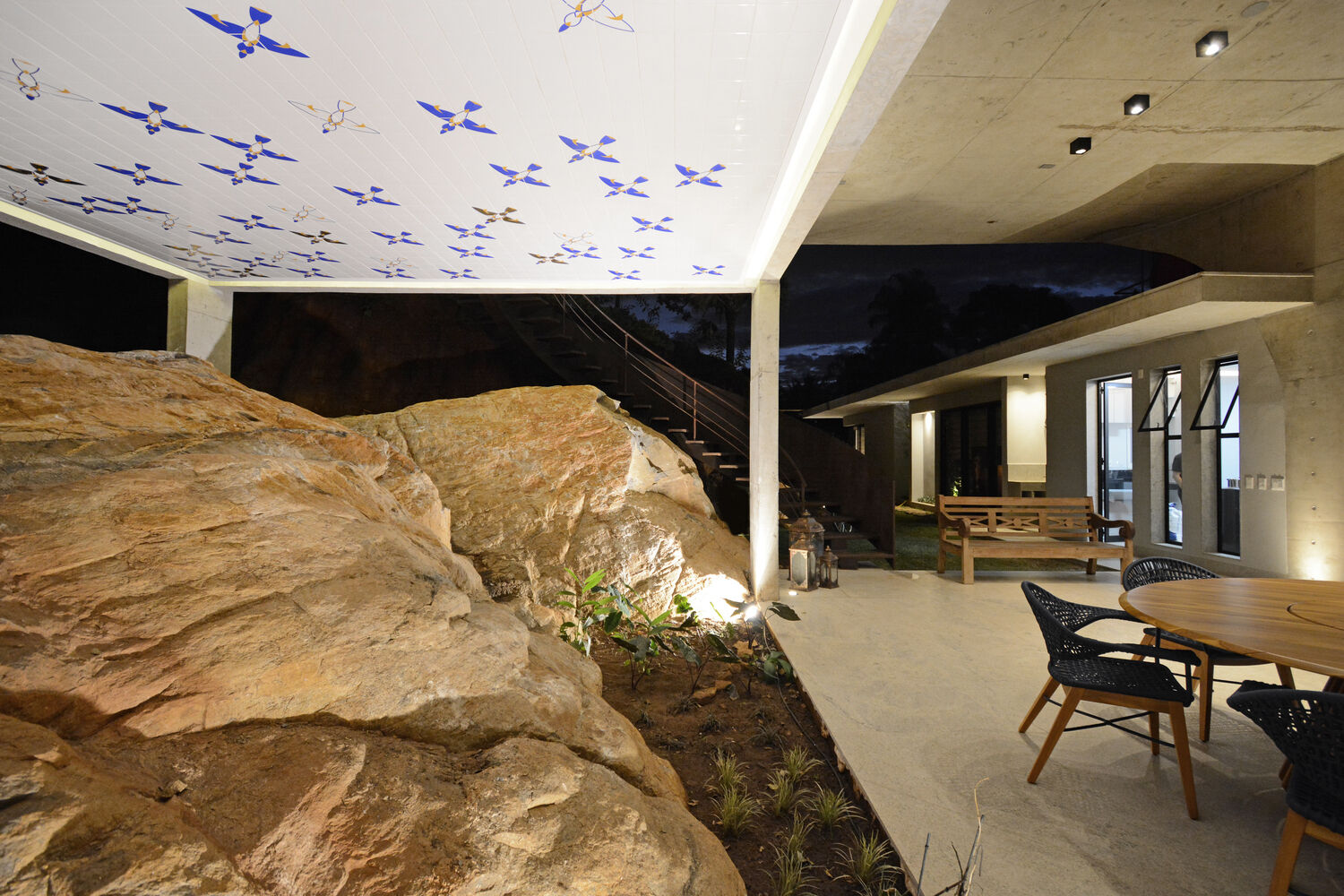
Keeping the stone required several adjustments to the original plan. Leisure and service areas were relocated so the natural formation could become part of the design rather than an obstacle. One of the planned bedrooms was moved above the stone, turning it into one of the most distinctive spaces in the home and strengthening its connection to the surrounding landscape.
The garden design was developed to reinforce that relationship between architecture and nature. Existing trees, rocks, and natural light patterns guided the landscape plan so the house feels integrated into the terrain rather than placed on top of it.
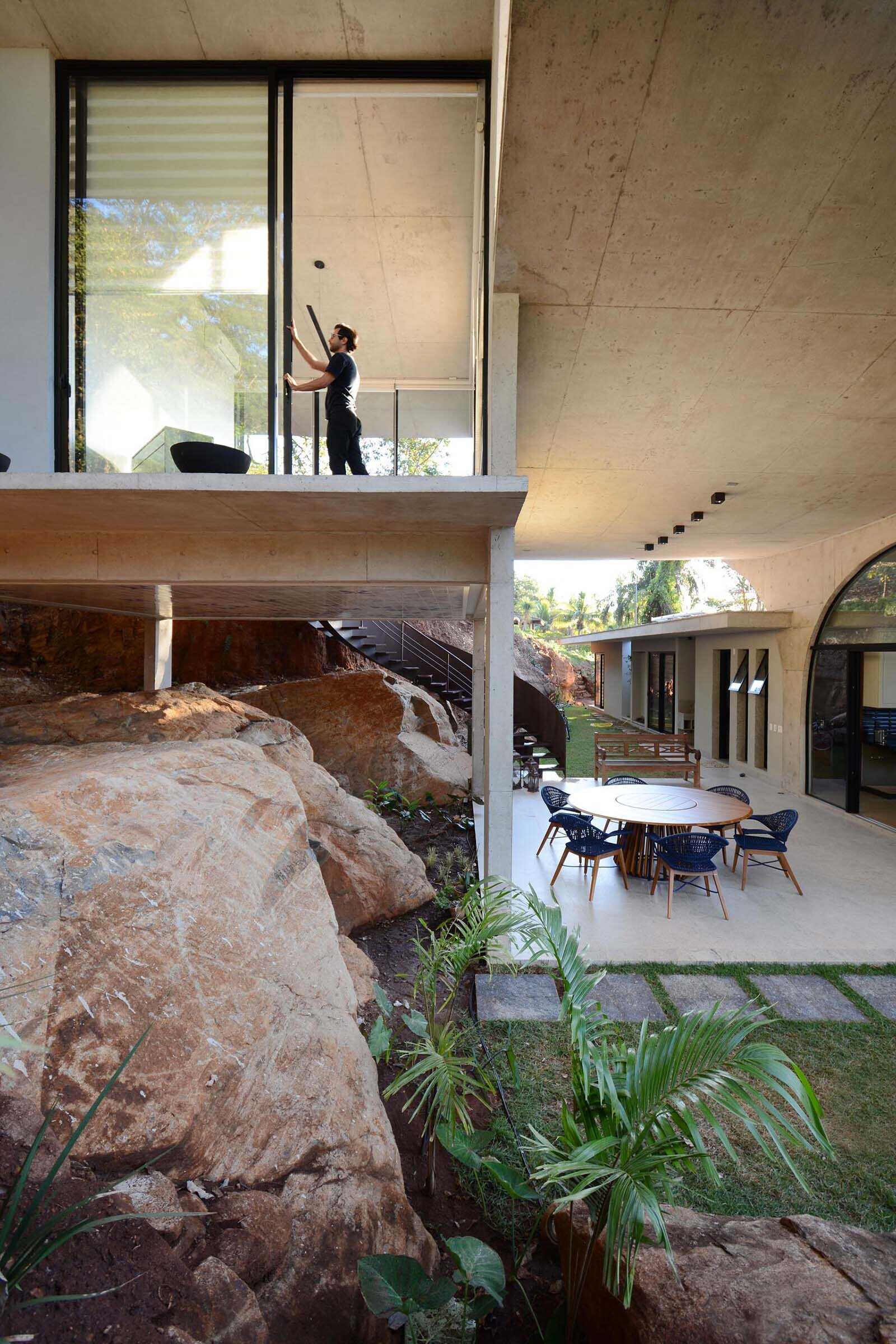
The private quarters of the home sit in a lower block of the residence. Each bedroom opens to its own private garden, creating a quiet outdoor extension of the rooms while also acting as a natural screen that preserves privacy for the residents.
Inside the bedrooms, the arches once again play an important role. Their curved openings allow generous natural light to enter the rooms while also adding a sculptural presence that softens the concrete structure.
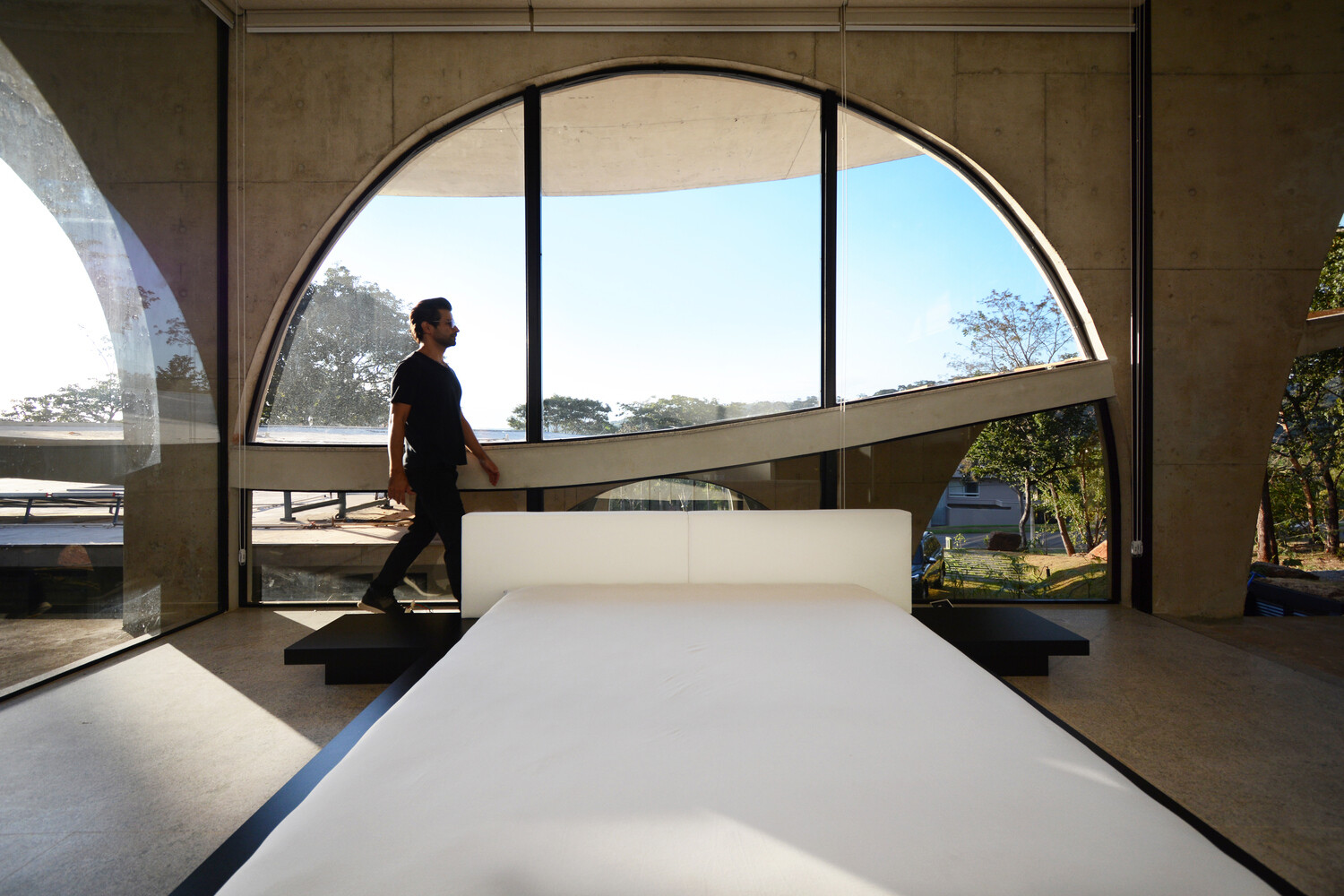
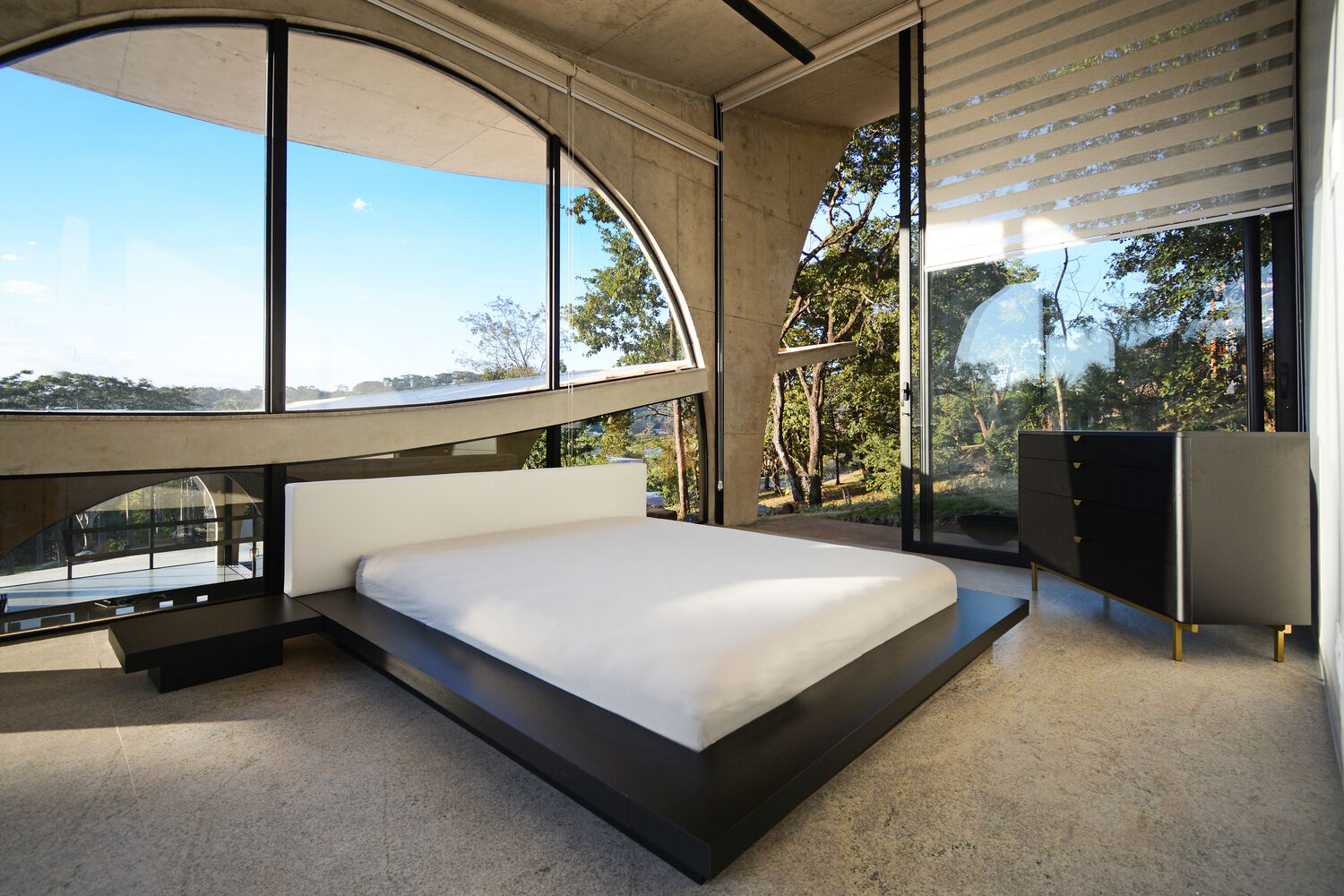
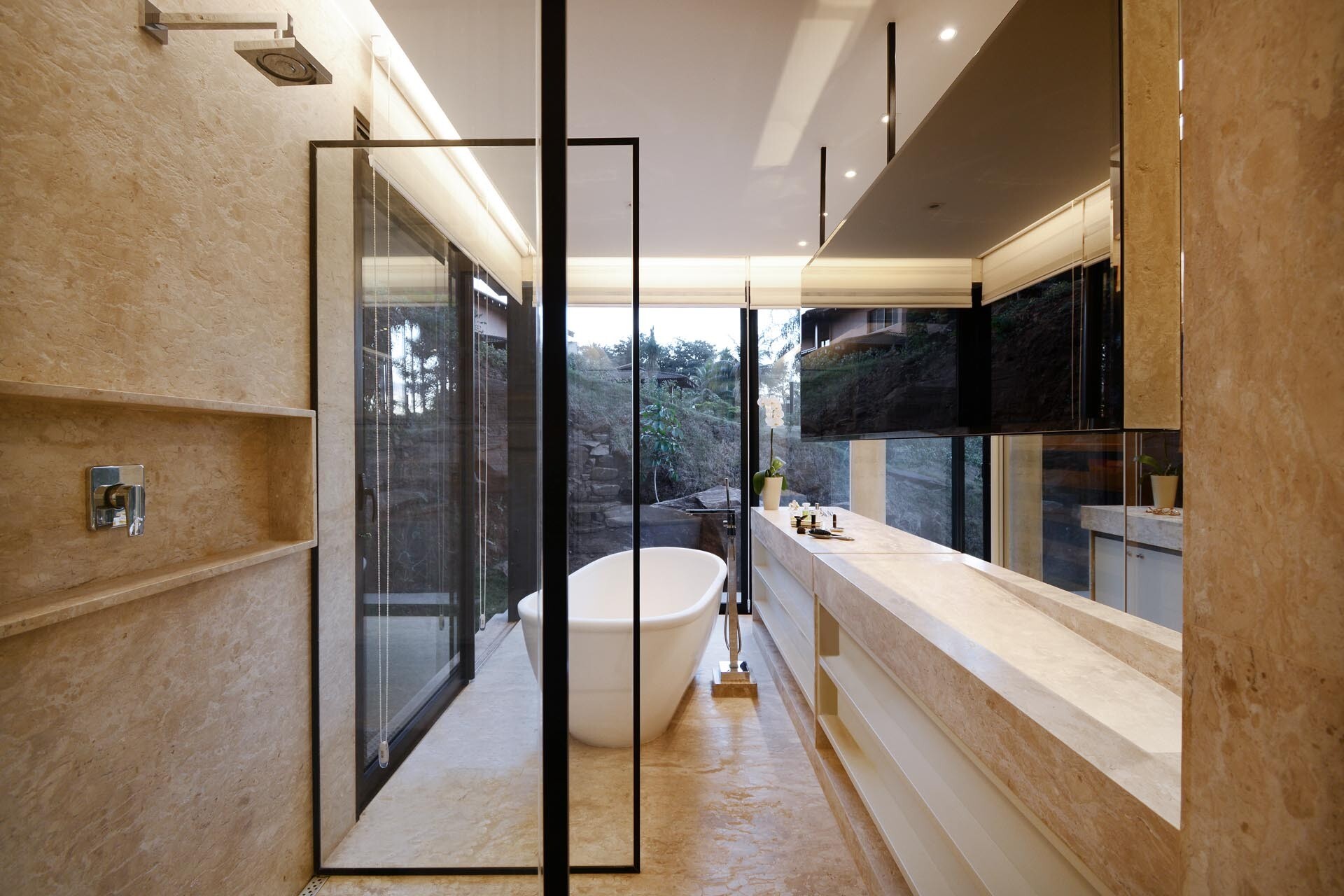
In the primary bedroom suite, the bathroom is designed to take advantage of the surrounding greenery. Floor to ceiling windows frame views of nearby trees, allowing the freestanding bathtub to sit within a space that feels both open and secluded.
Casa Joy ultimately demonstrates how structural ideas can shape the experience of a home. Here, arches are not simply engineering solutions. They define the atmosphere of the rooms, guide movement through the spaces, and give the house its unmistakable identity.