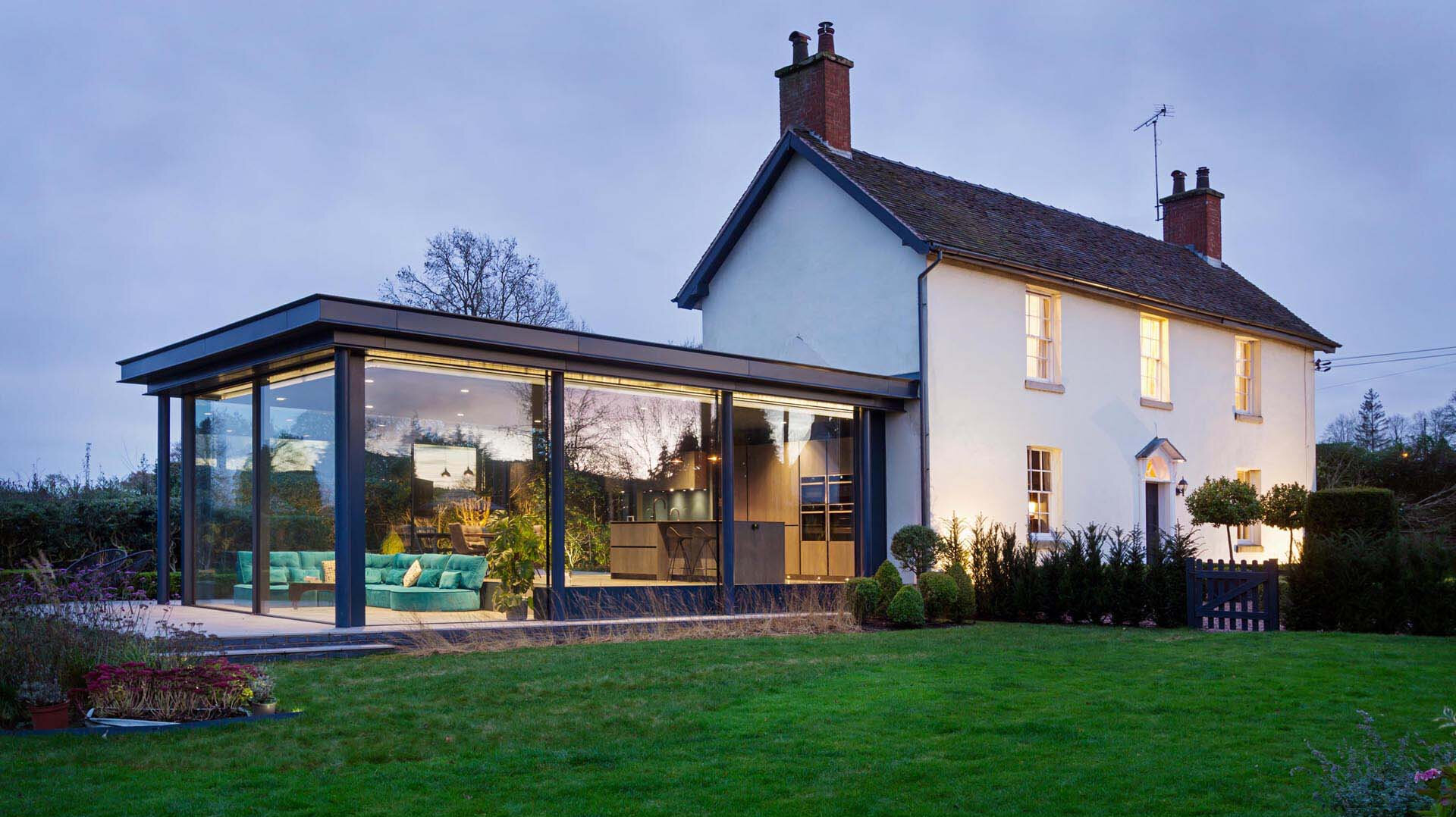
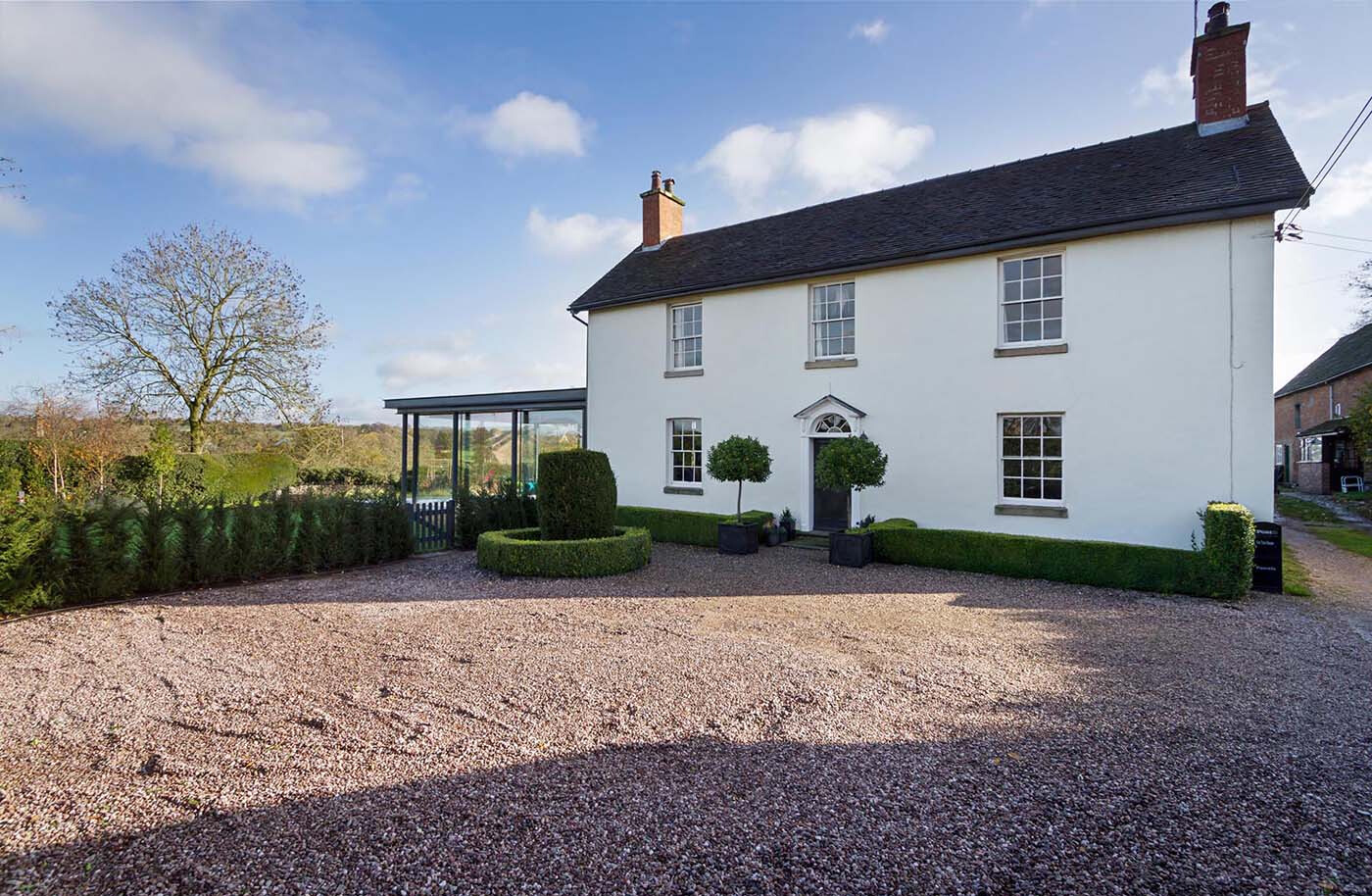
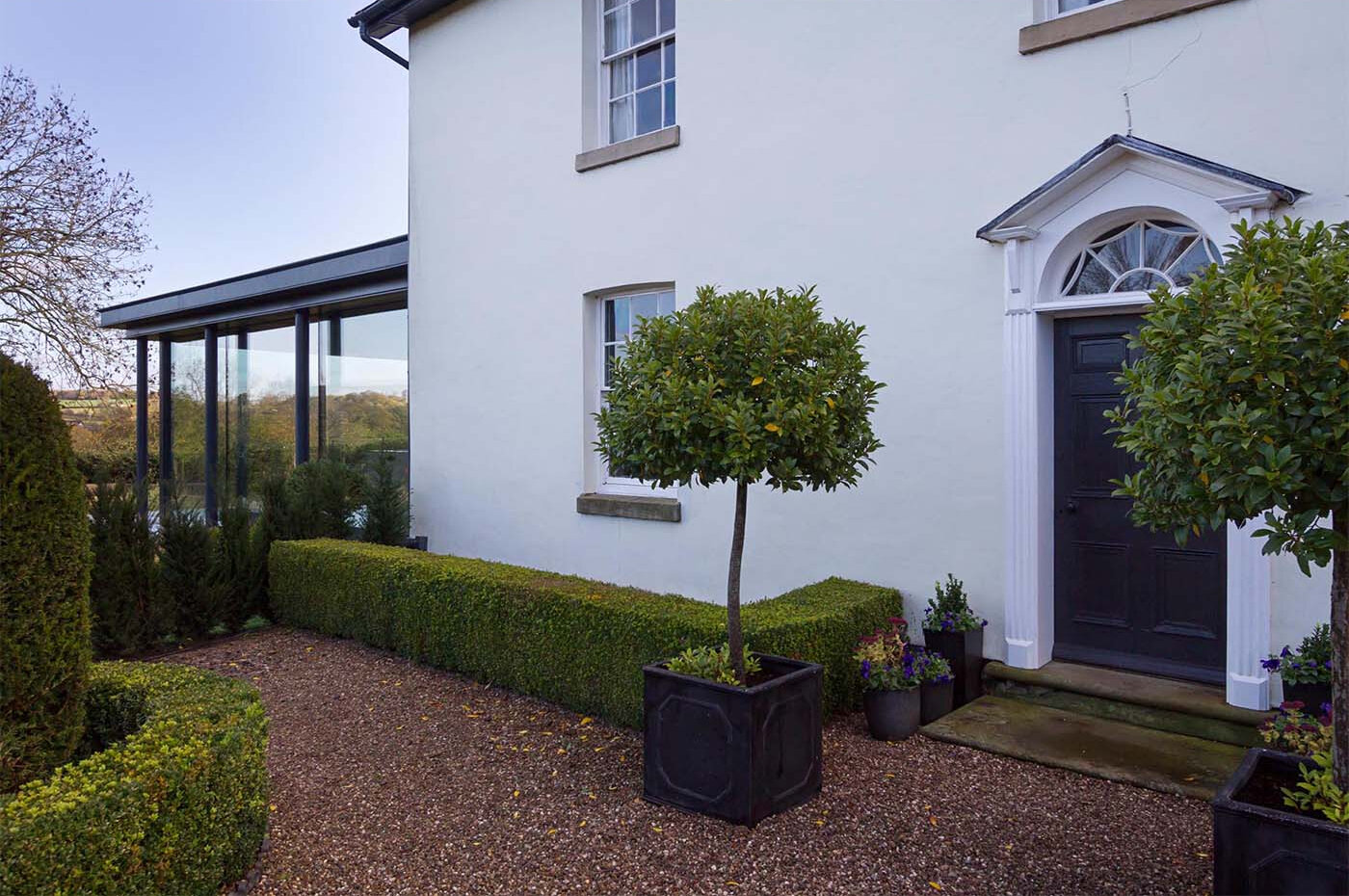
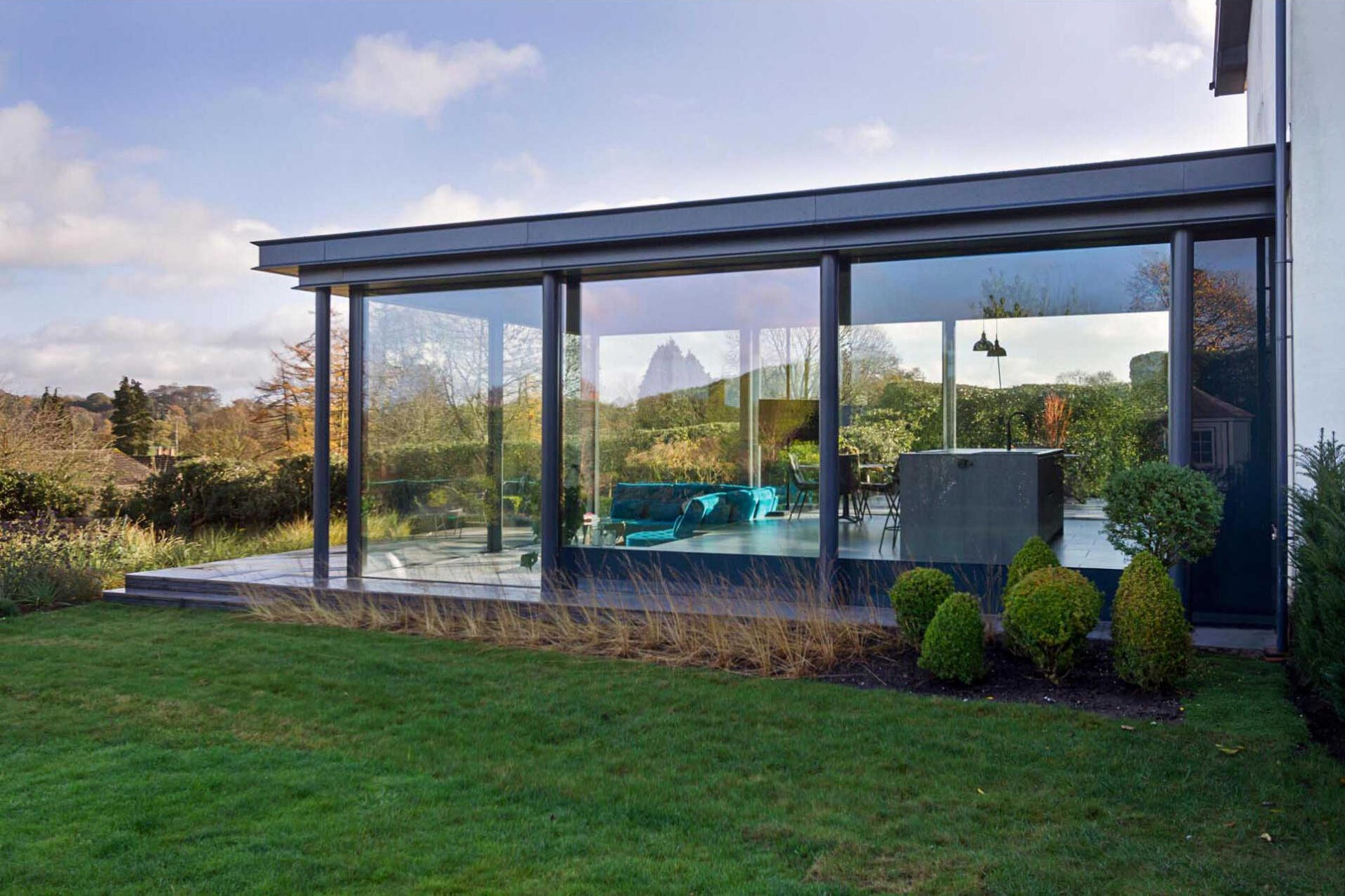
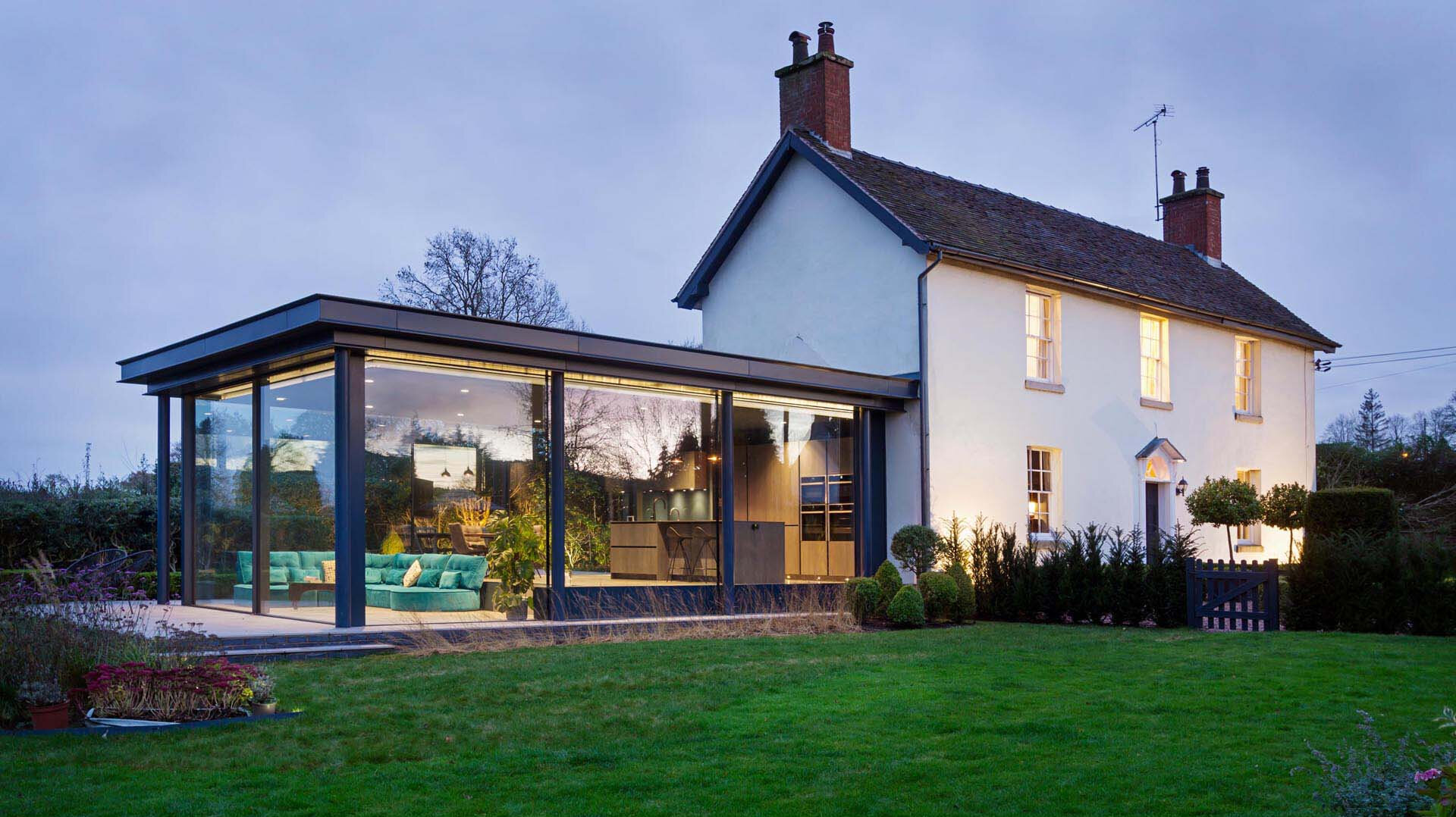
Set within a quiet hamlet in Staffordshire, this early 19th-century farmhouse sits tucked behind high hedges, its stucco exterior hinting at the history beneath. Designed by Croft Architecture, the project introduces a modern glass-enclosed addition to a Grade II Listed home, balancing heritage requirements with a fresh way of living.
Working within a conservation area shaped every decision. The new structure contrasts with the original building, creating a clear distinction between old and new while still respecting the character of the site. The result feels both intentional and natural, giving the home a new layer without losing what made it special in the first place.
Solving an Awkward Layout
While the cottage had plenty of charm, the original downstairs layout made everyday living difficult. Rooms were uneven in size and shape, limiting how the owners could use the space, especially when hosting guests.
Croft Architecture rethought how the home could function, creating an open, inviting area designed for both daytime use and evenings. The new extension replaces outdated outbuildings that had deteriorated over time, solving practical issues while unlocking new possibilities for how the home could be used.
Replacing Outbuildings with Glass
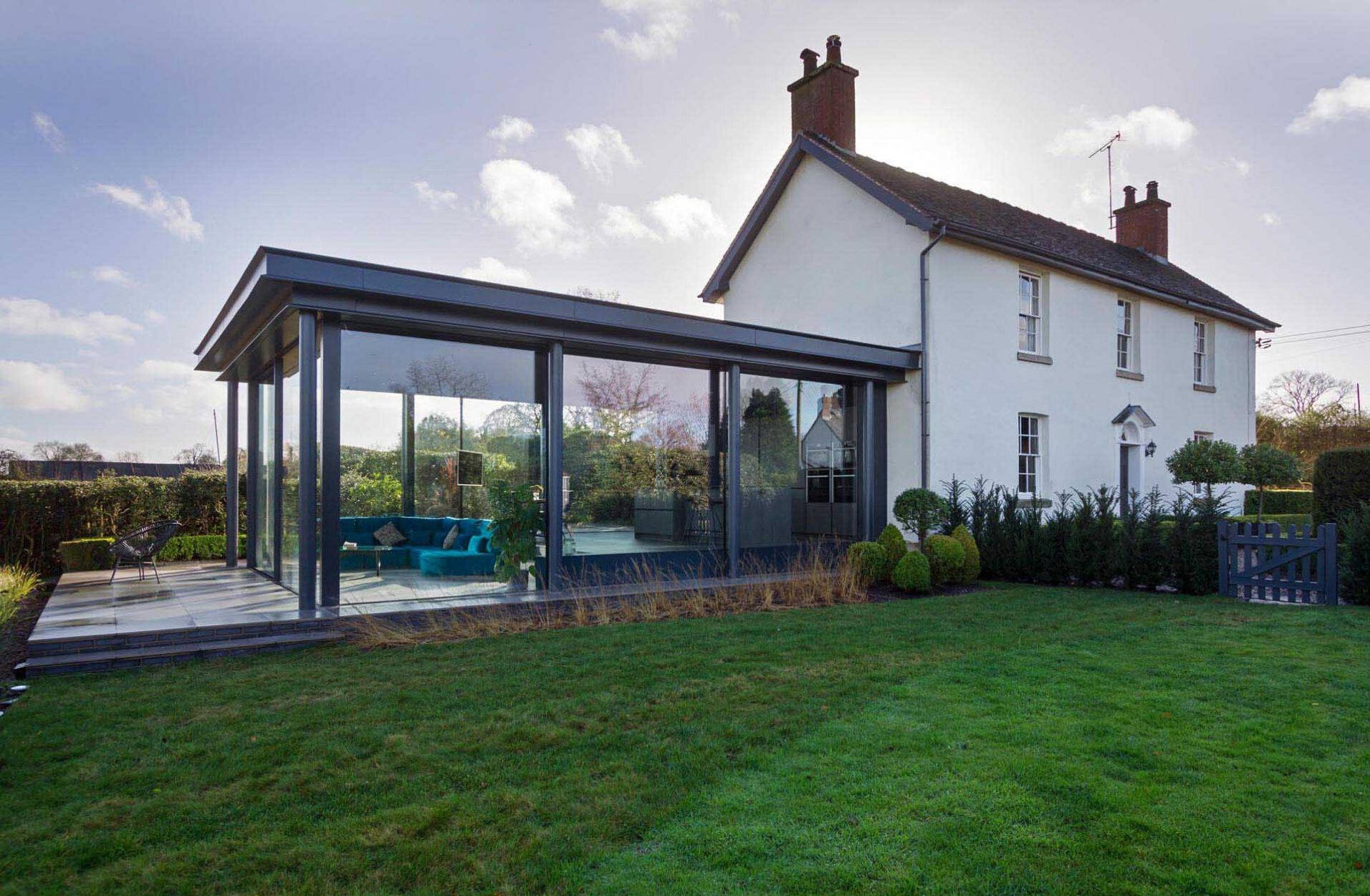
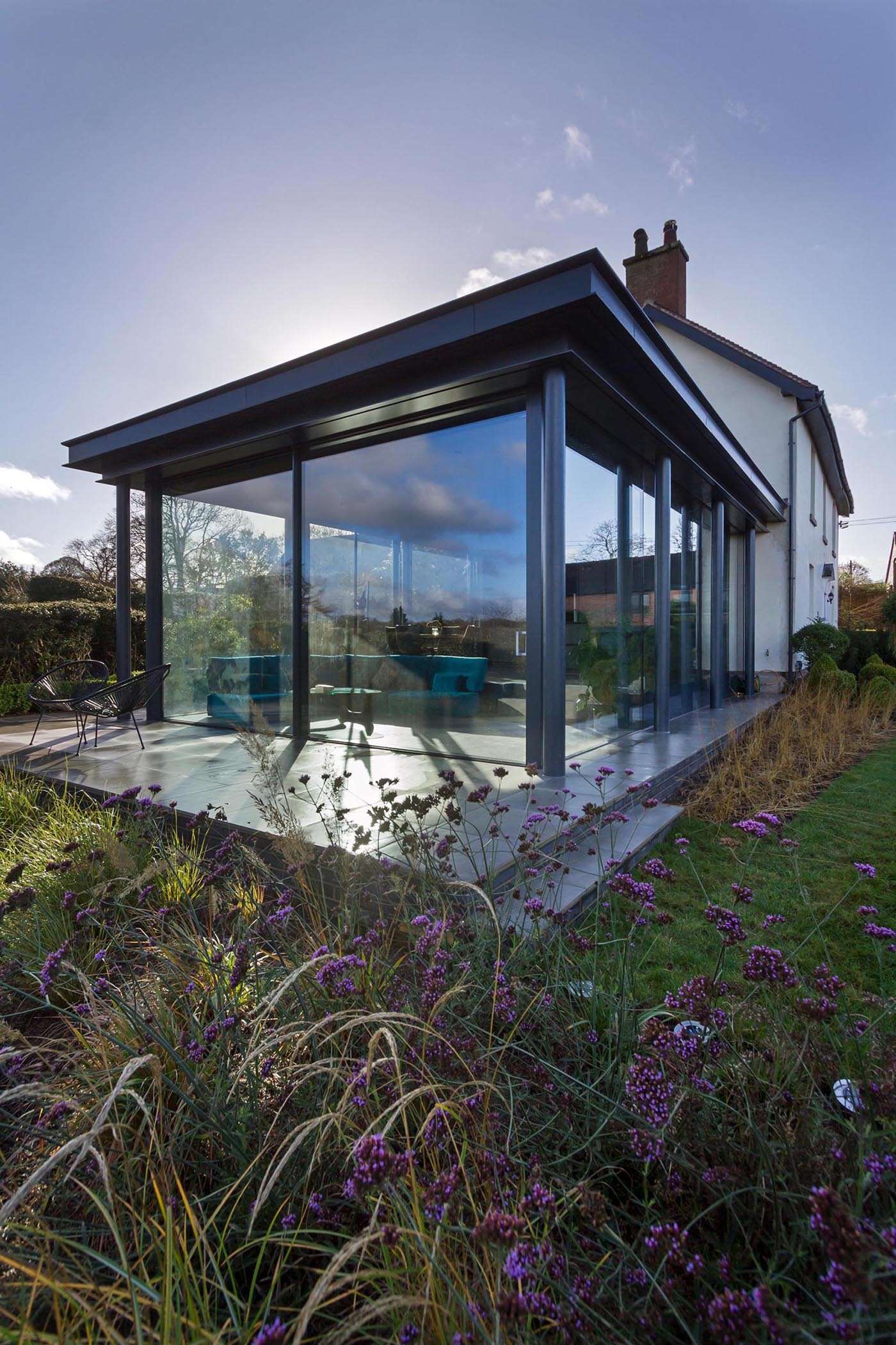
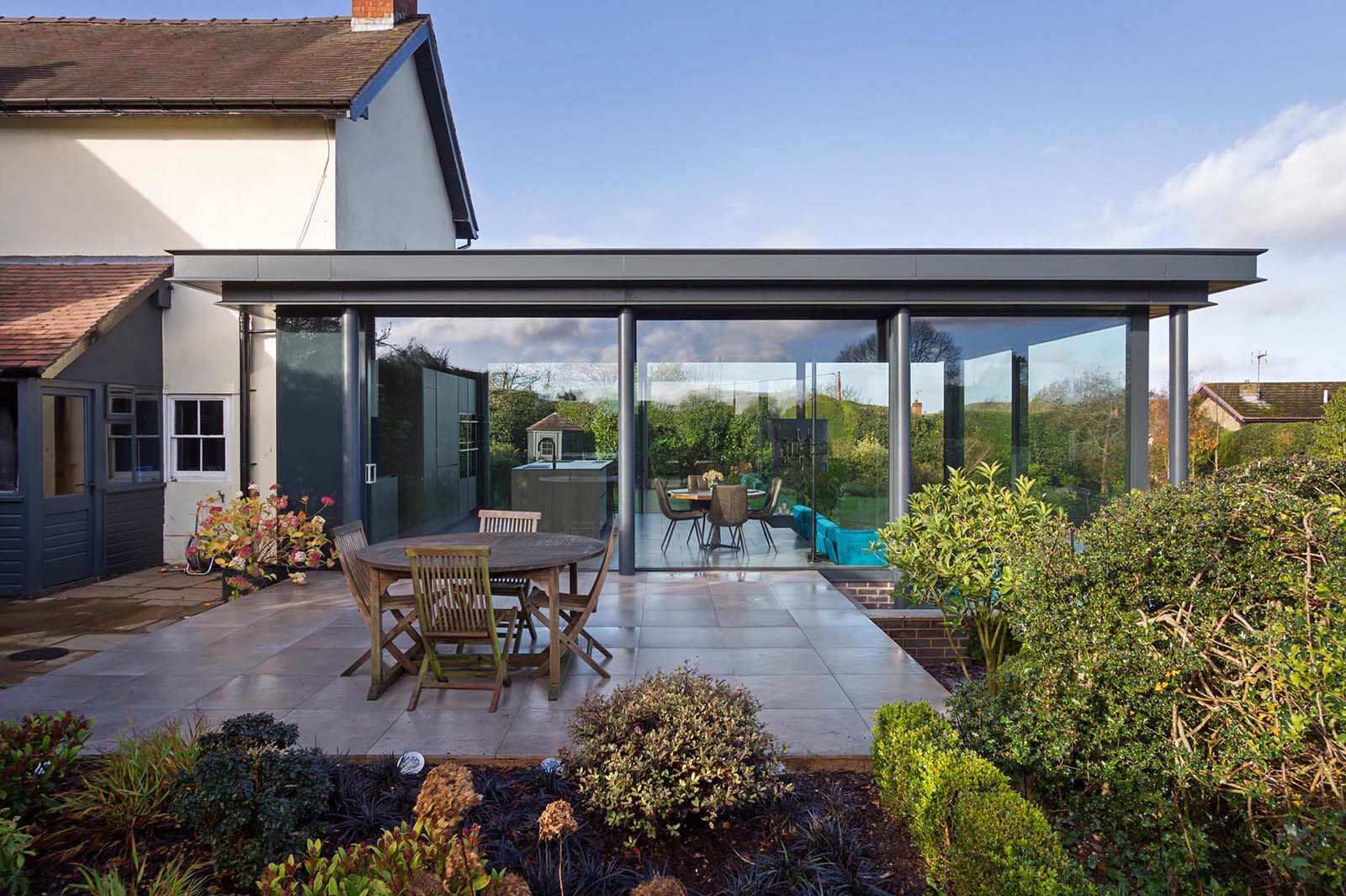
Previously attached outbuildings, once accessed through the main house, had begun to fail due to ongoing leaks. Instead of repairing them, the architects introduced a fully glazed, single-storey extension that feels clean, modern, and easy to maintain.
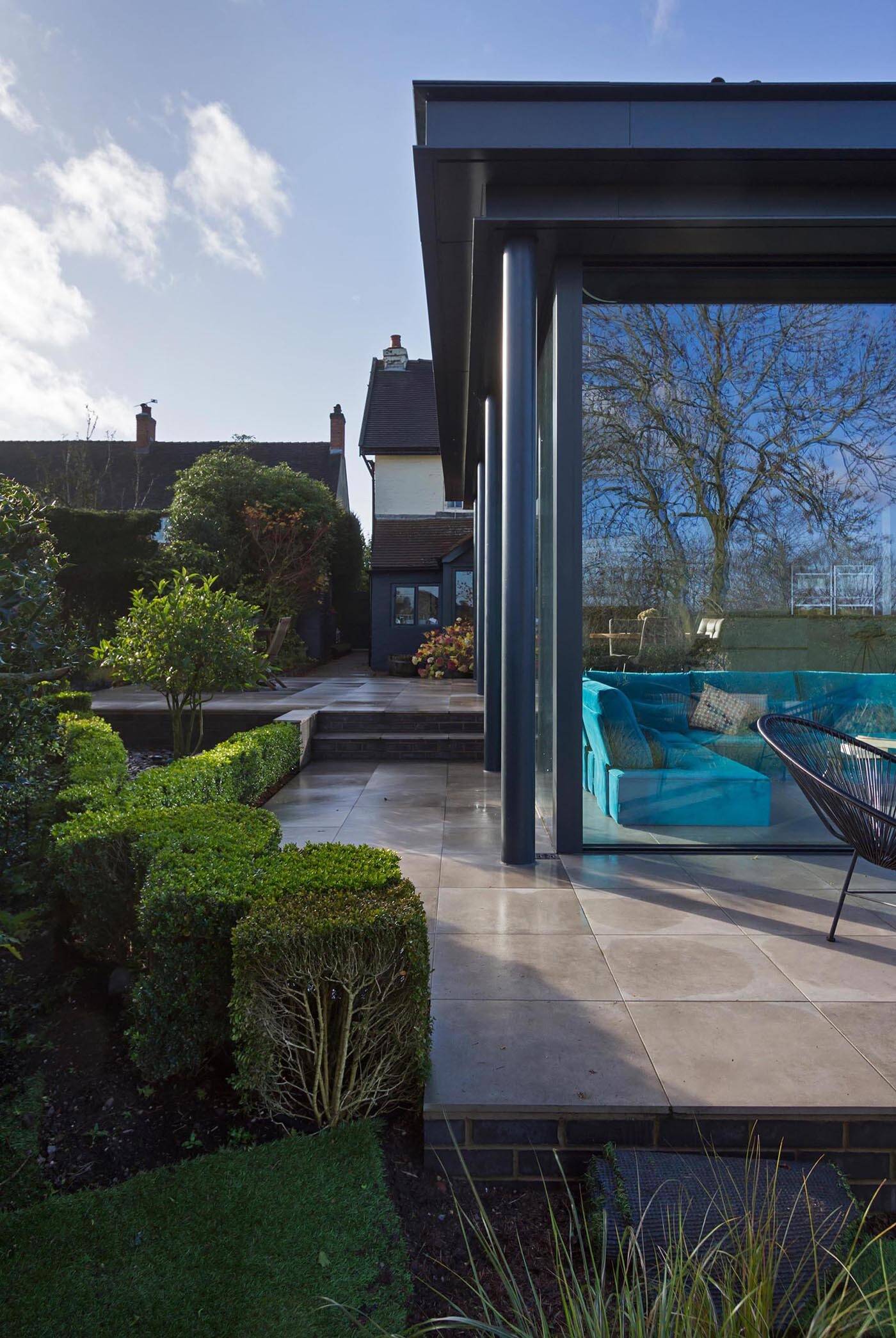
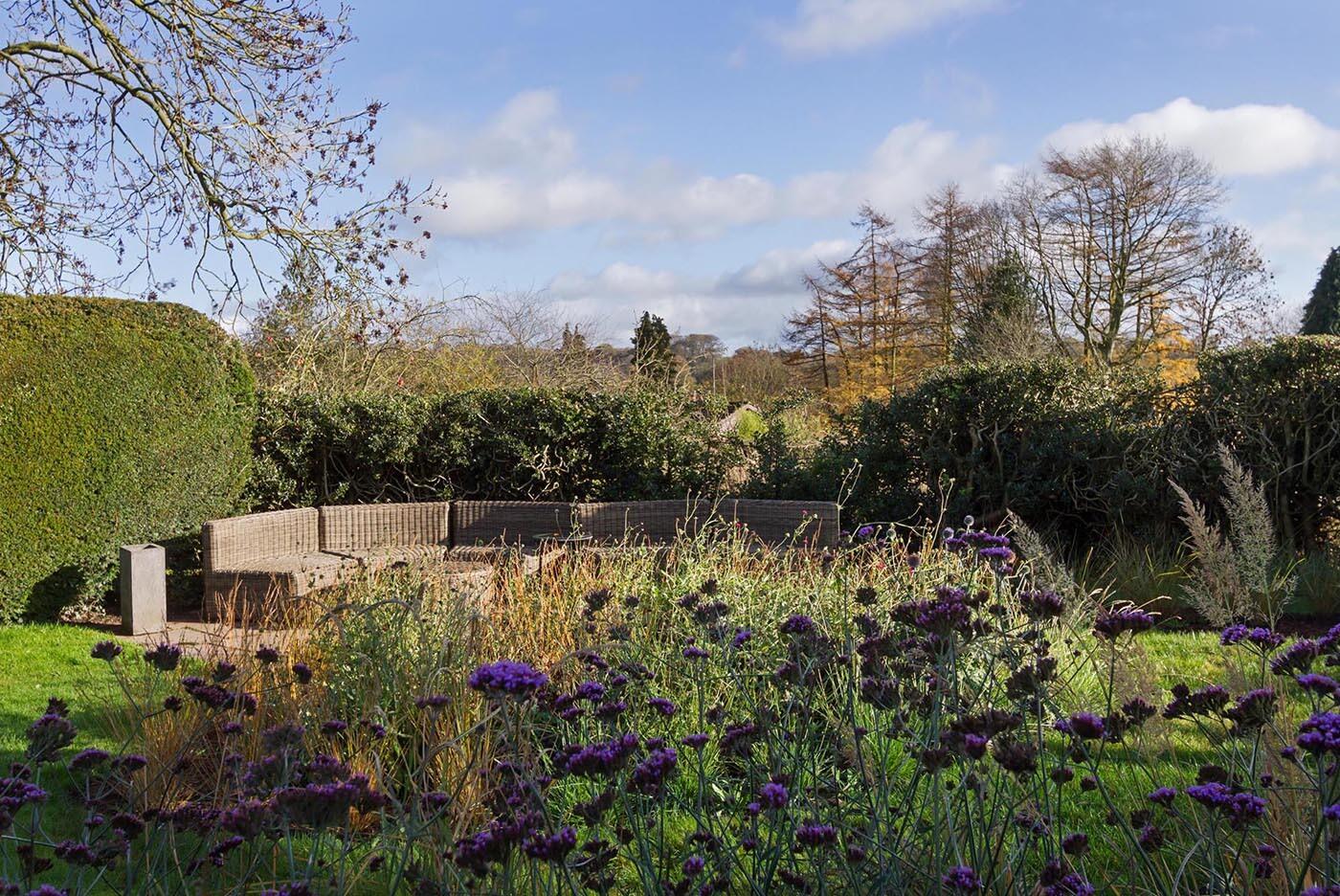
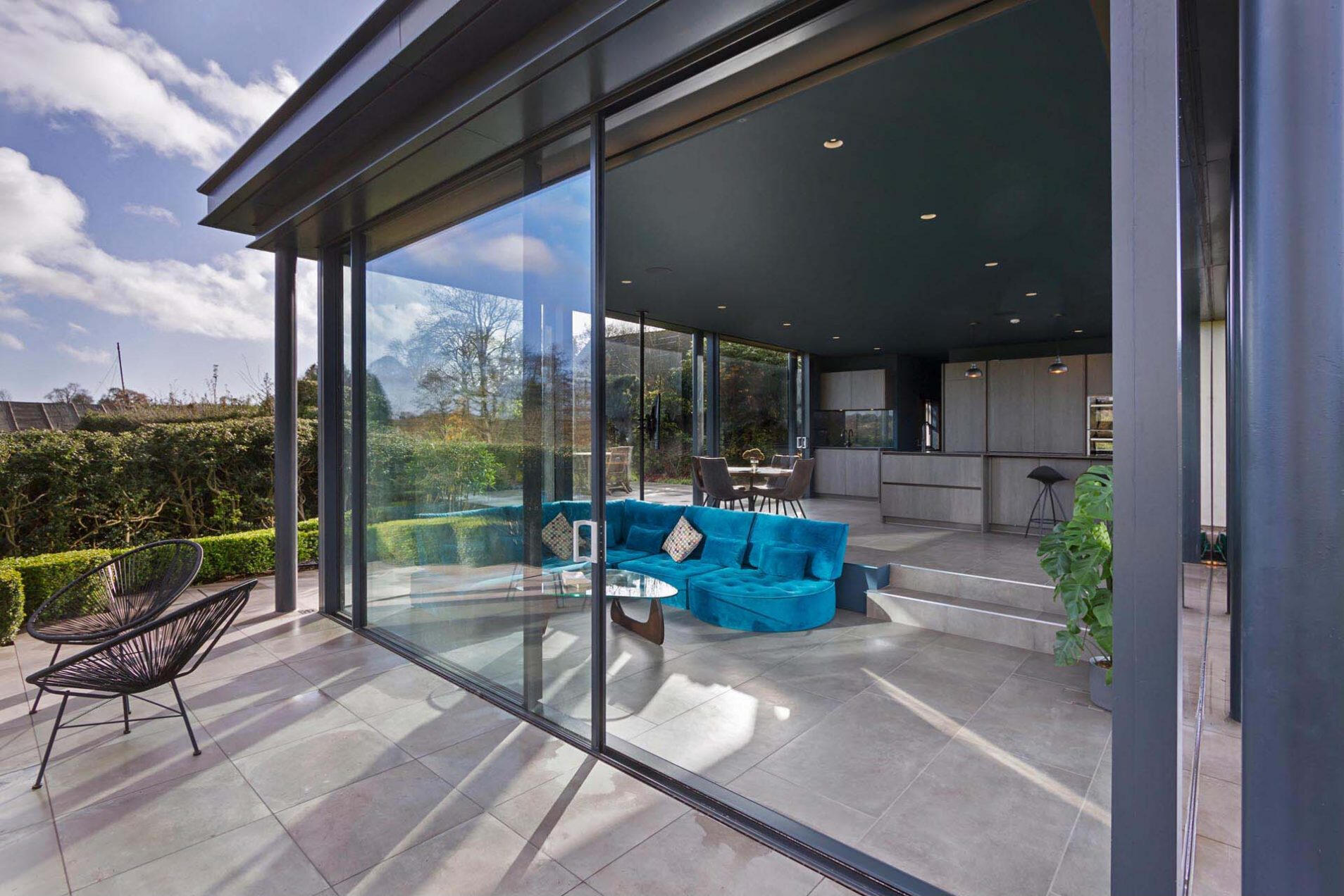
This new addition offers flexibility while opening up the home to the garden. Its transparent design shifts the focus outward, making the surrounding landscape part of the experience inside.
Extending Living Outdoors
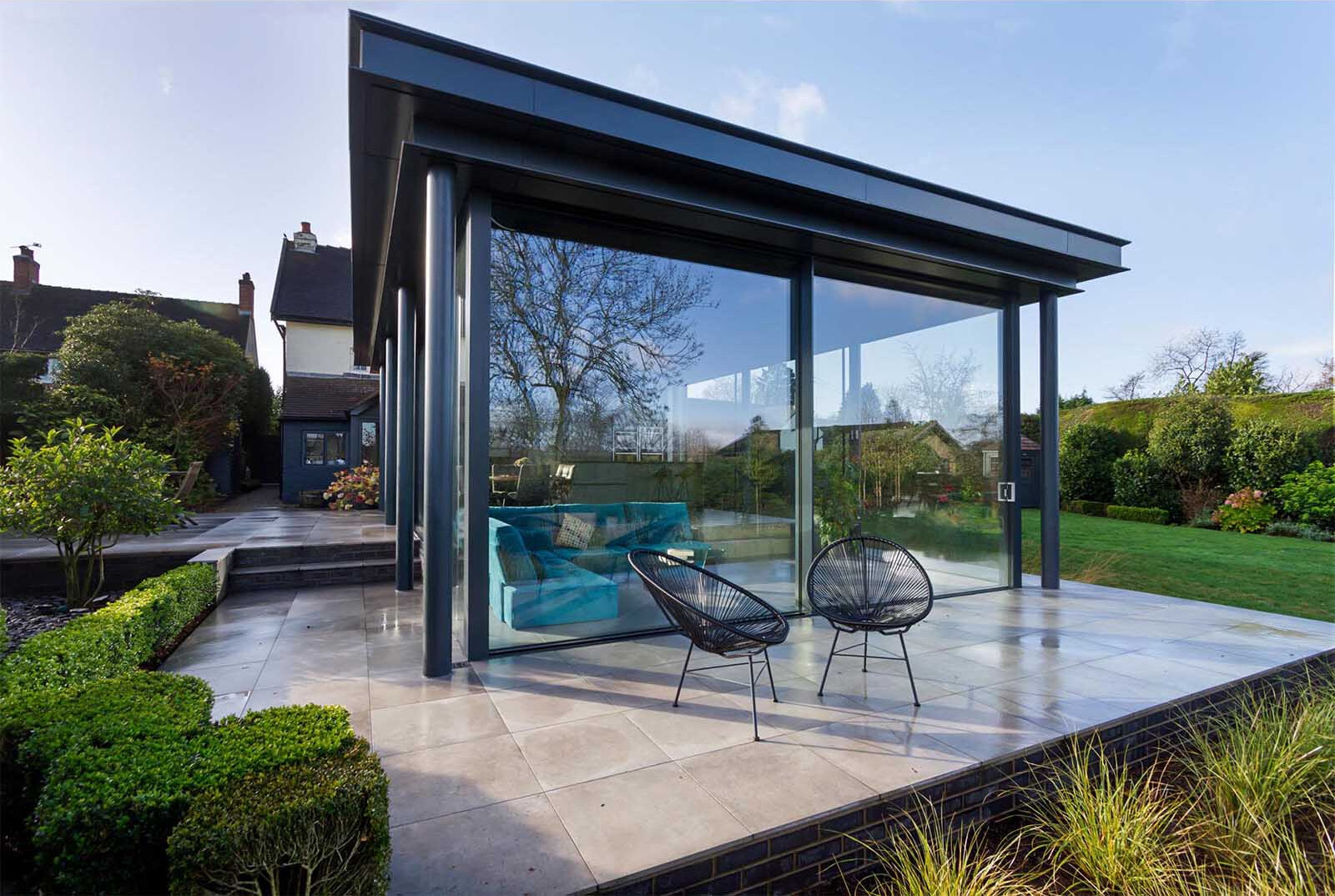
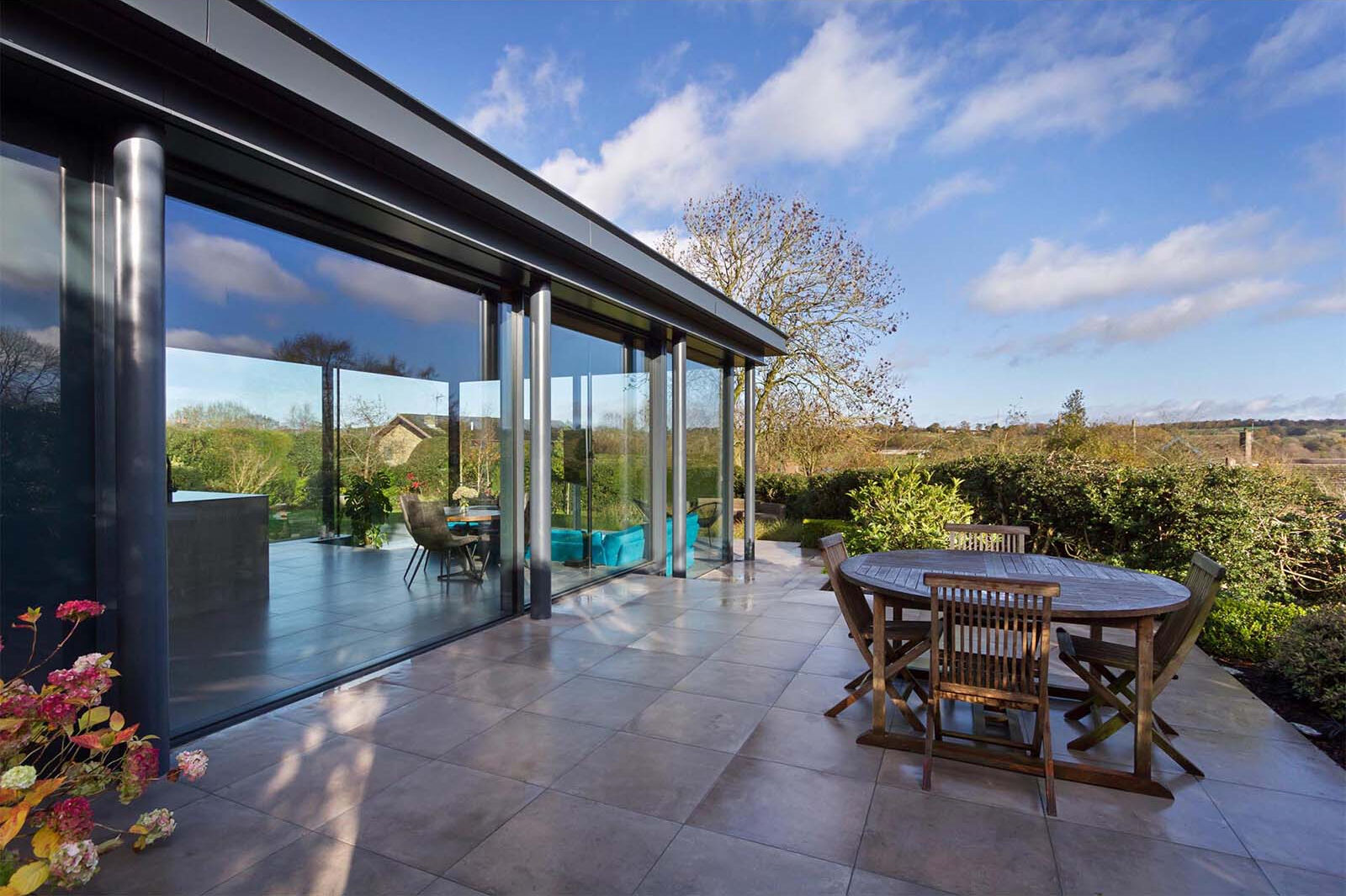
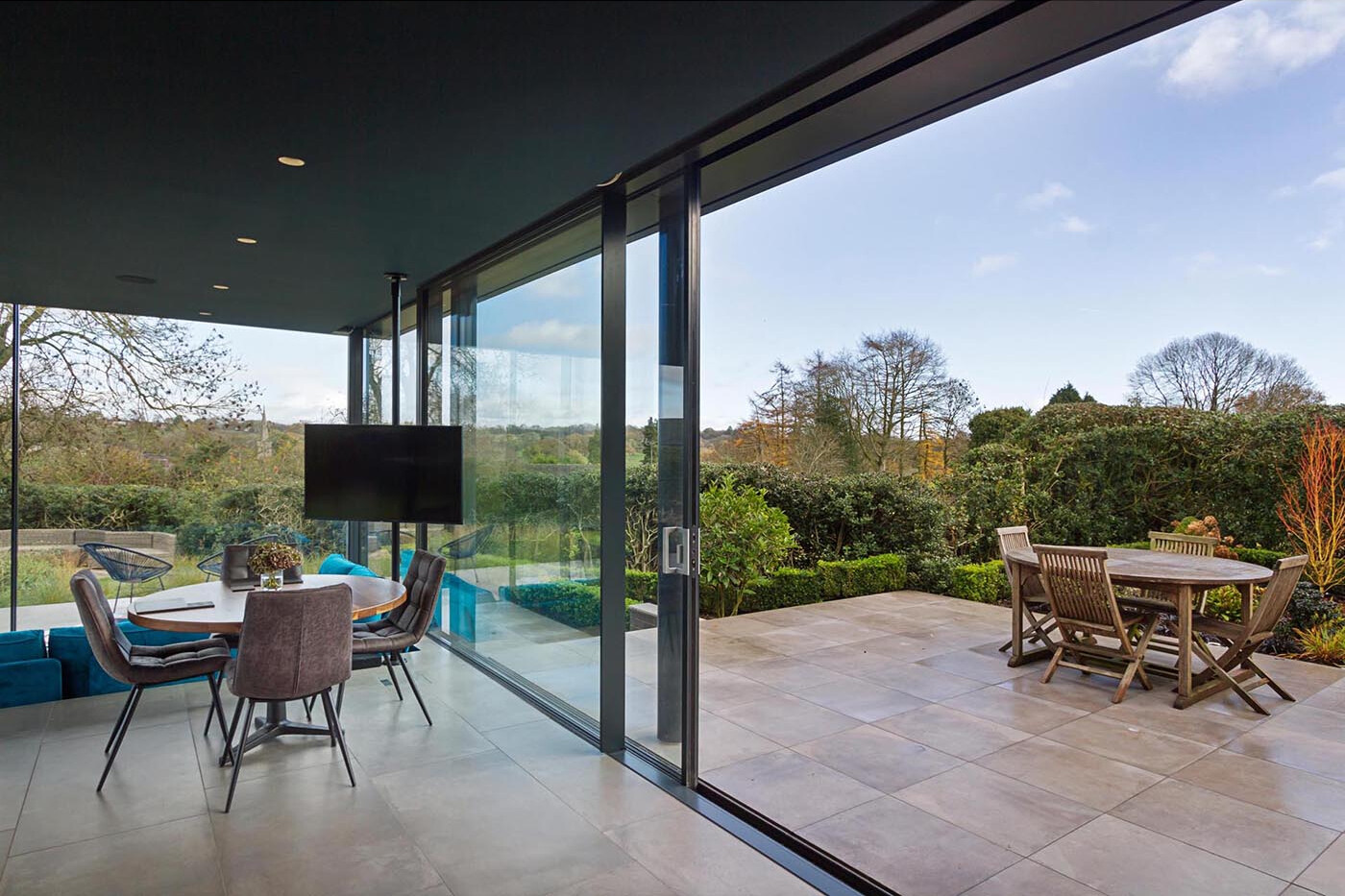
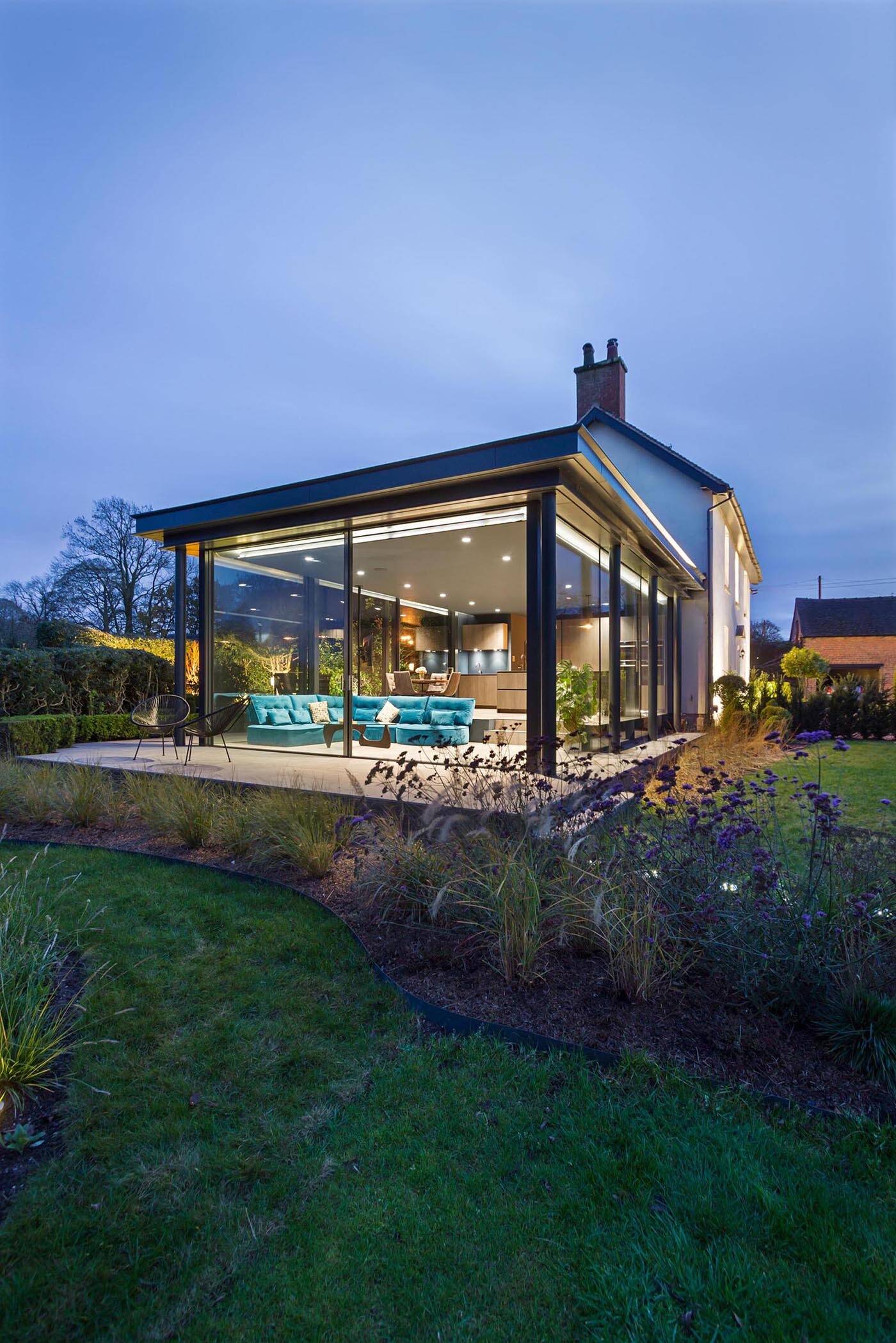
Wrapping around the extension, a generous patio expands the usable space even further. It creates a natural setting for outdoor dining, with room for seating and a relaxed lounge area.
The transition between inside and outside feels effortless, encouraging time spent in the garden. Whether it’s a casual meal or an evening outdoors, the patio acts as an extension of the interior.
Opening Up to Light and Air
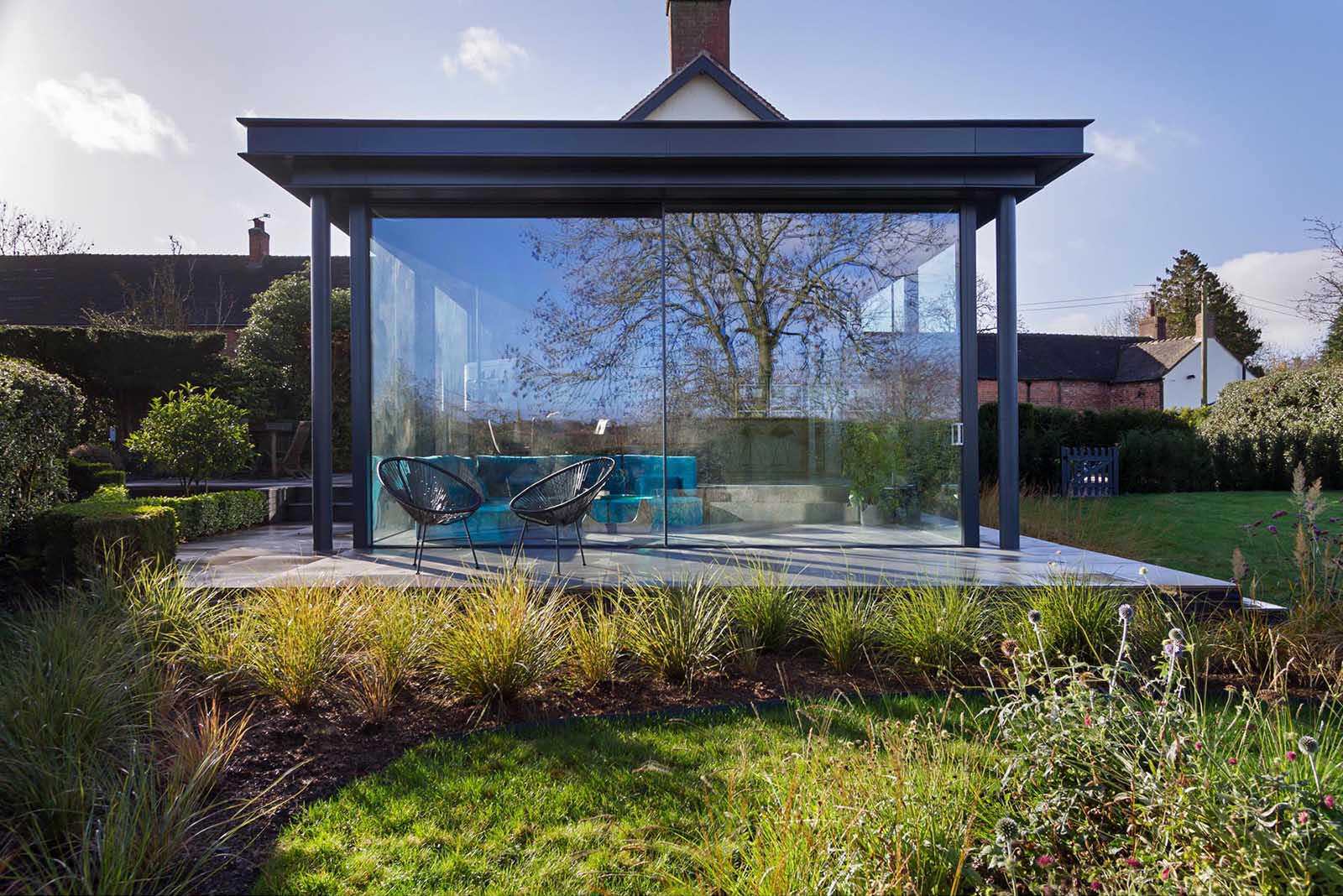
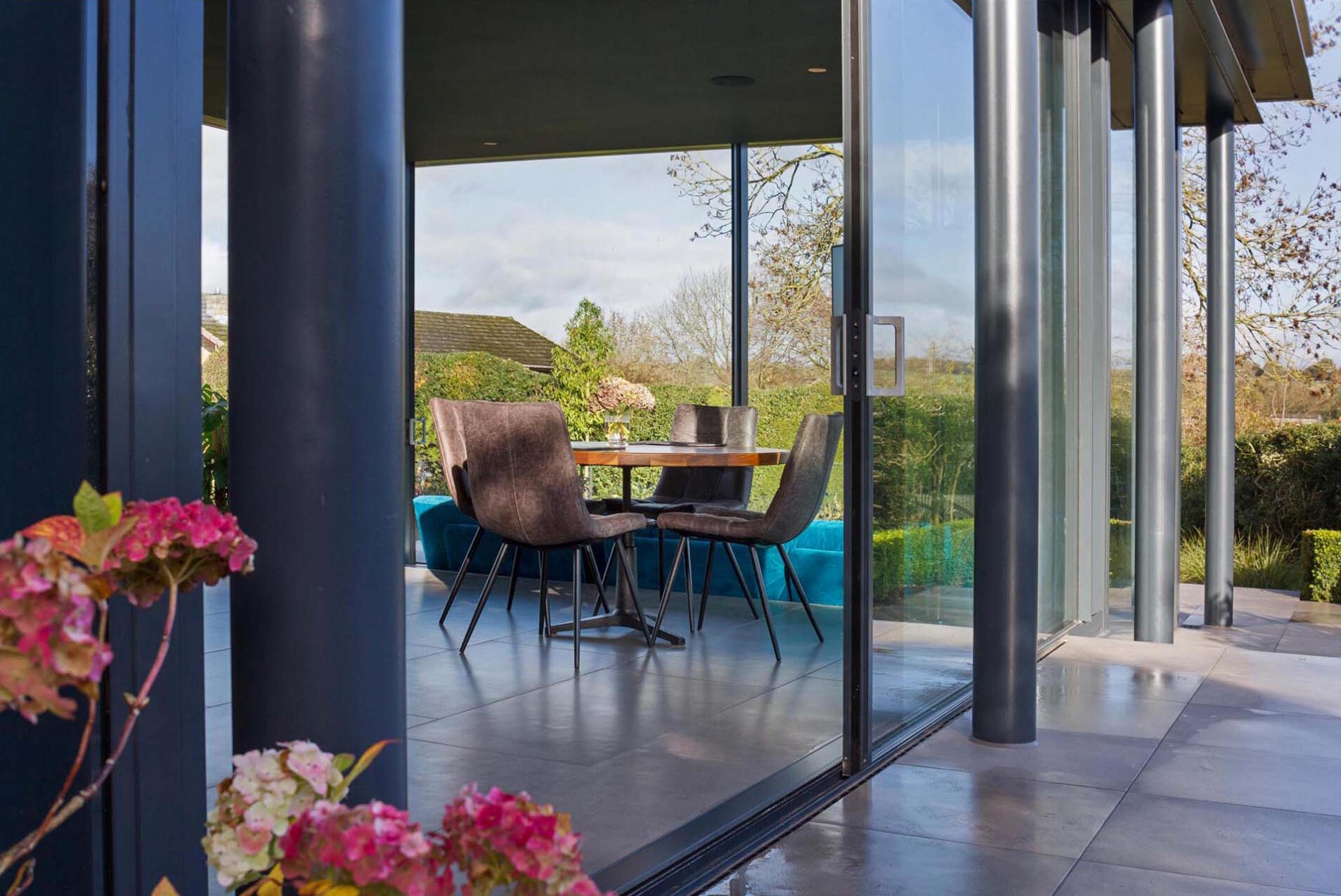
Floor-to-ceiling glazed doors line the extension, flooding the interior with natural light. When fully opened in the warmer months, they allow air to move freely through the space, helping maintain a comfortable temperature.
This design choice strengthens the connection to the garden, making it visible and accessible from almost every angle within the addition.
A Split-Level Living Experience
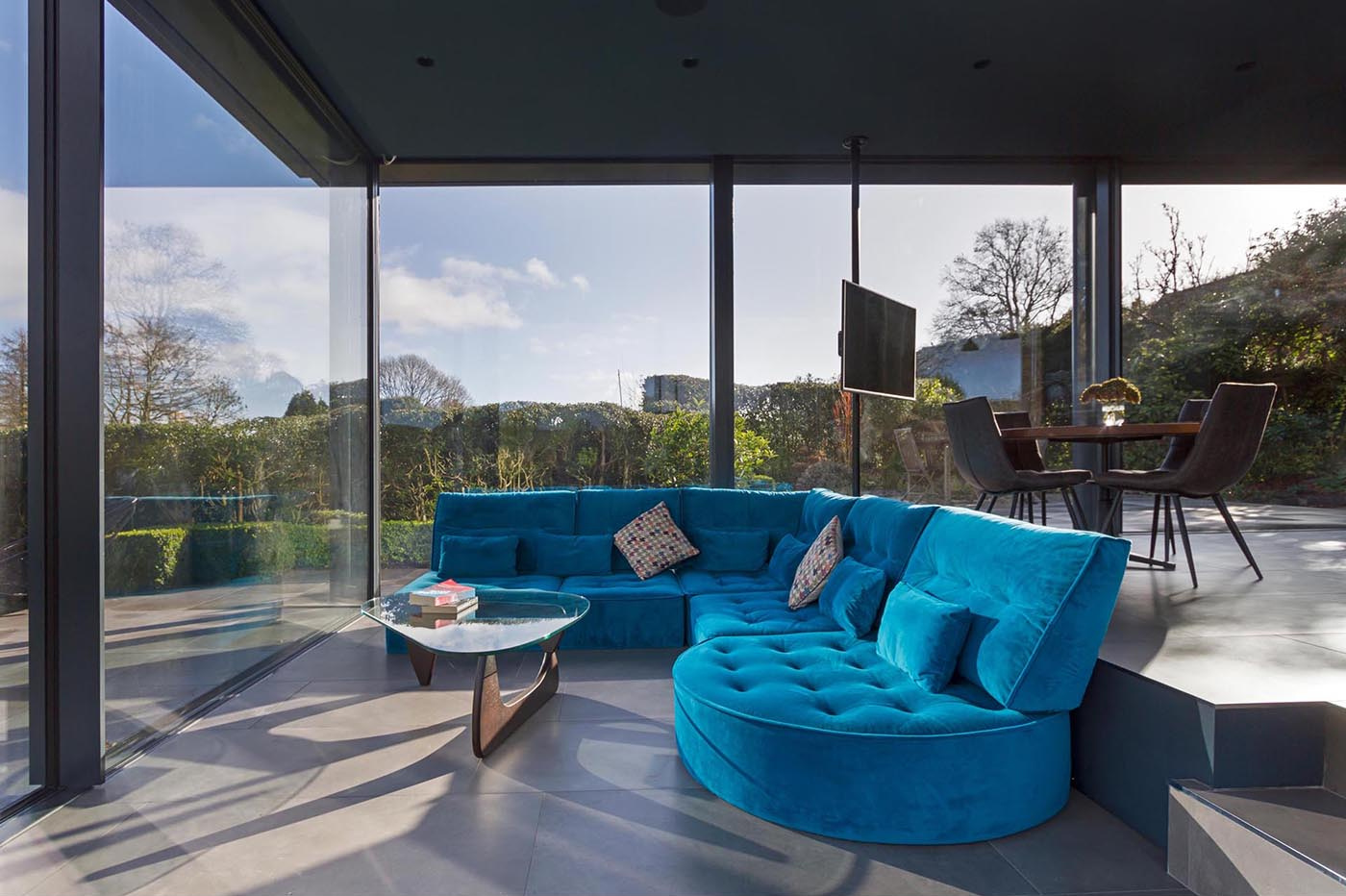
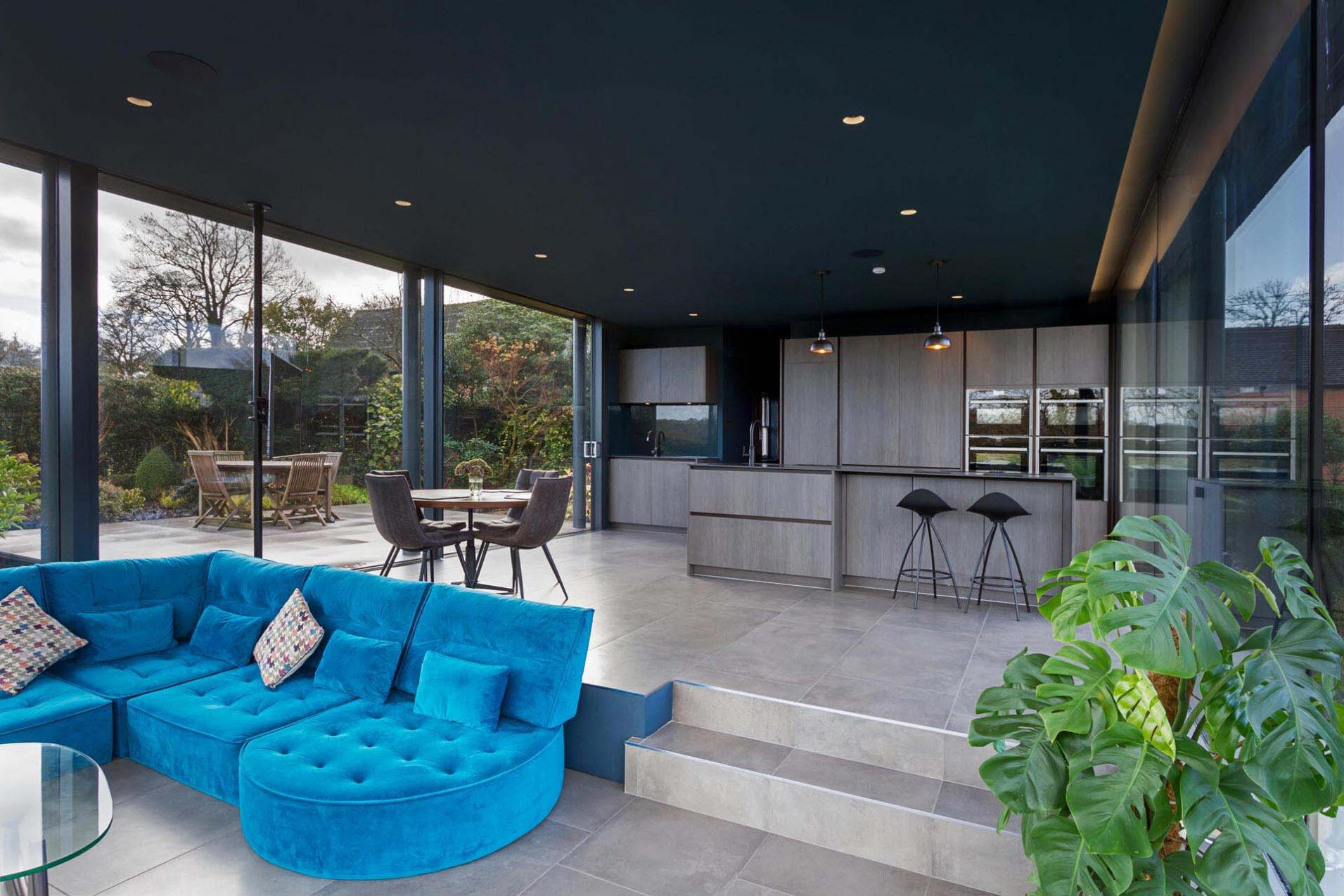
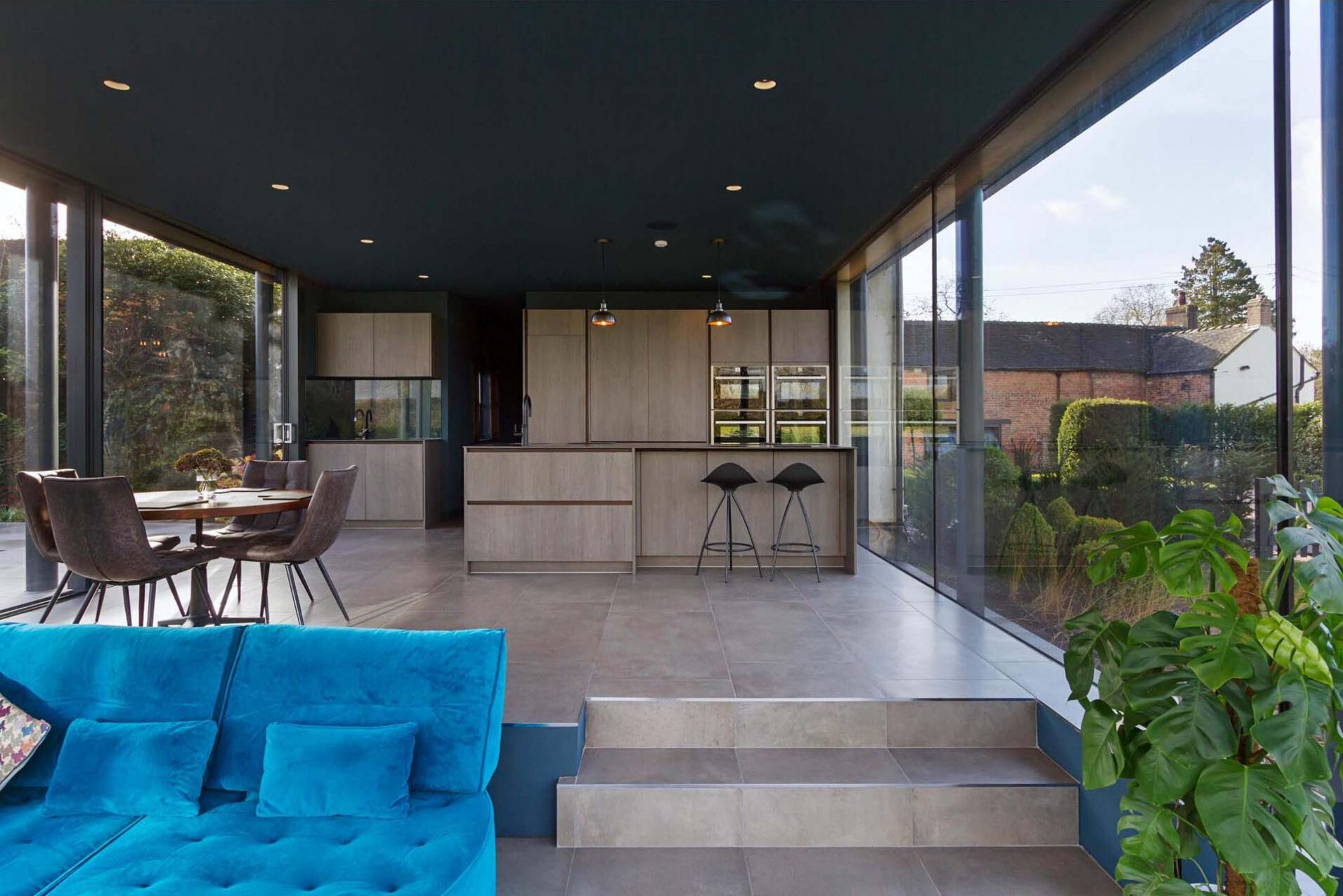
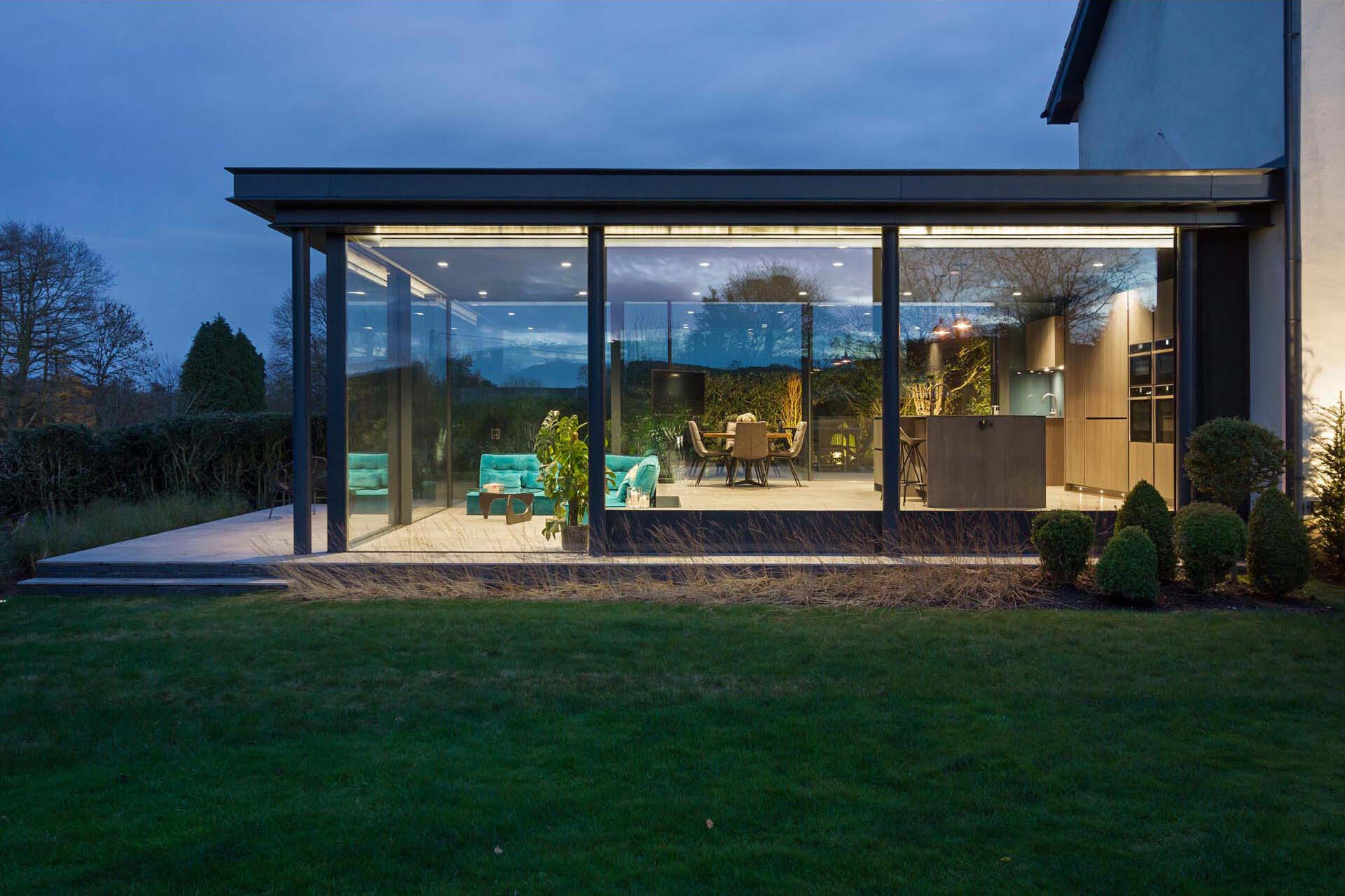
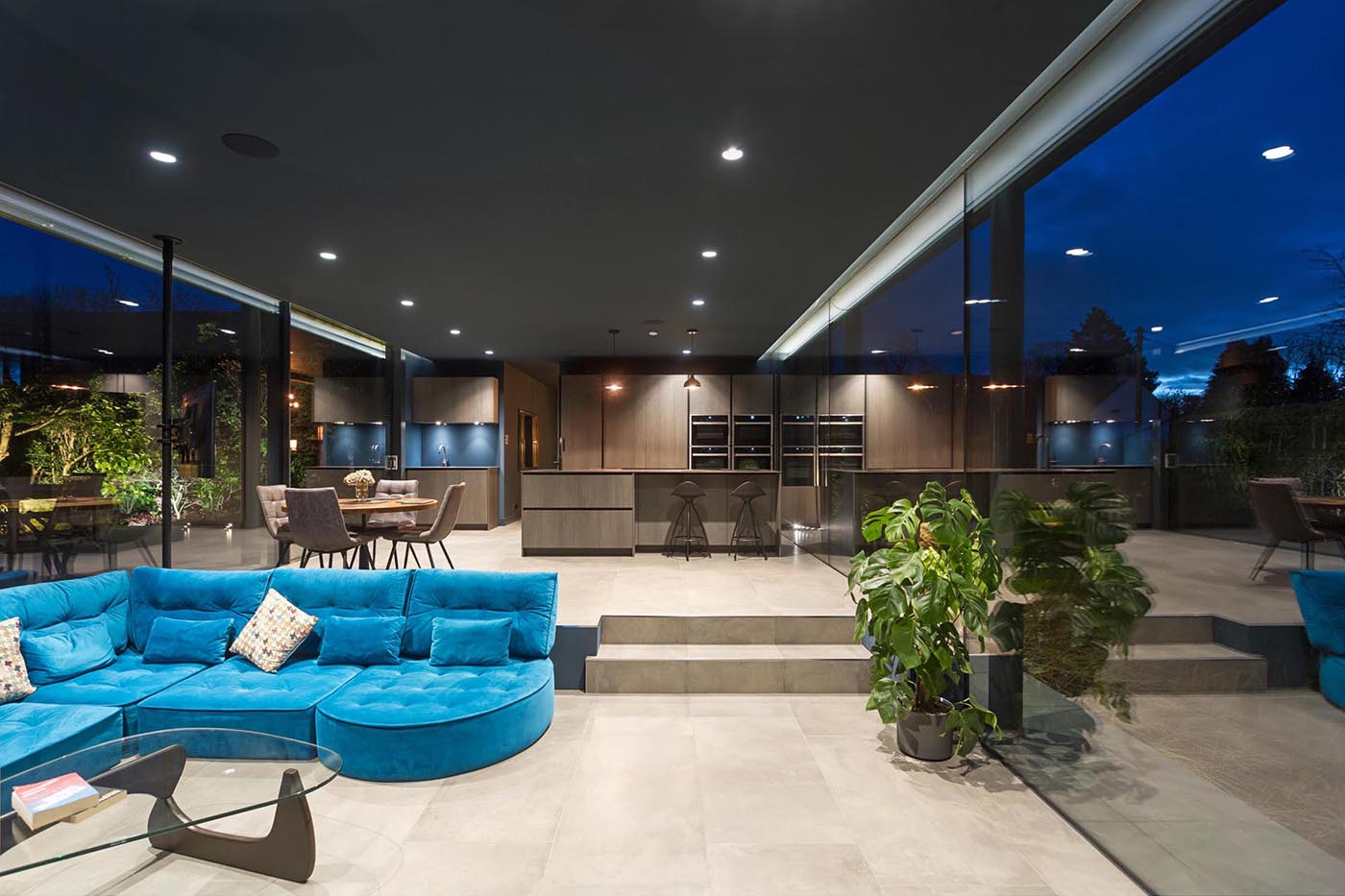
Inside, the extension is organized across a split-level layout inspired by 1960s design. The living area sits slightly lower than the kitchen and dining zone, creating a subtle separation without closing off the space.
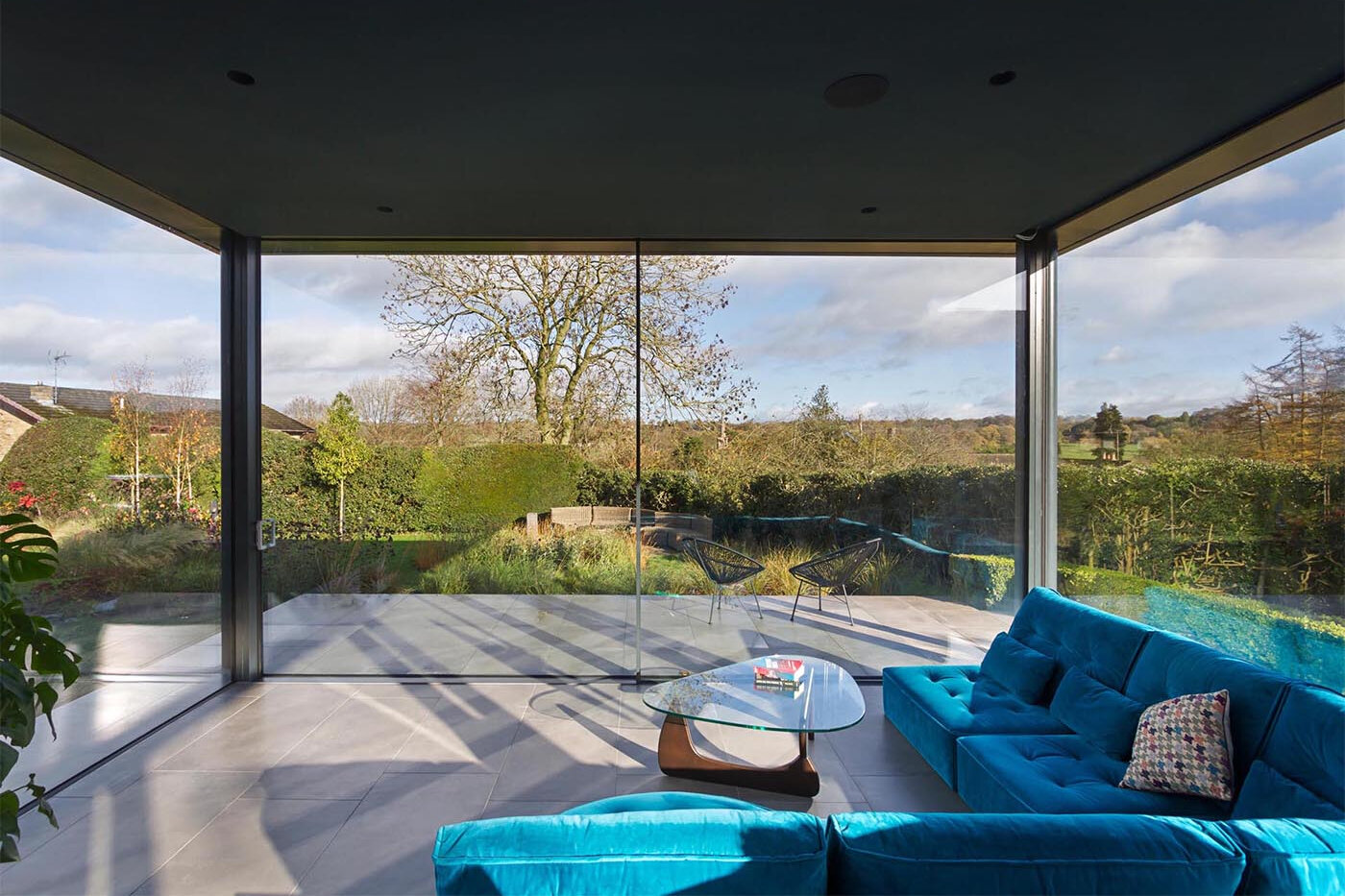
This lower level becomes a comfortable place to unwind, with uninterrupted views of the garden throughout the day and into the evening.
Designed for Evenings and Stargazing
From certain angles, the shift in levels becomes more apparent, defining each zone within the open space. A dark ceiling was introduced to reduce brightness during the day while also improving the experience at night.
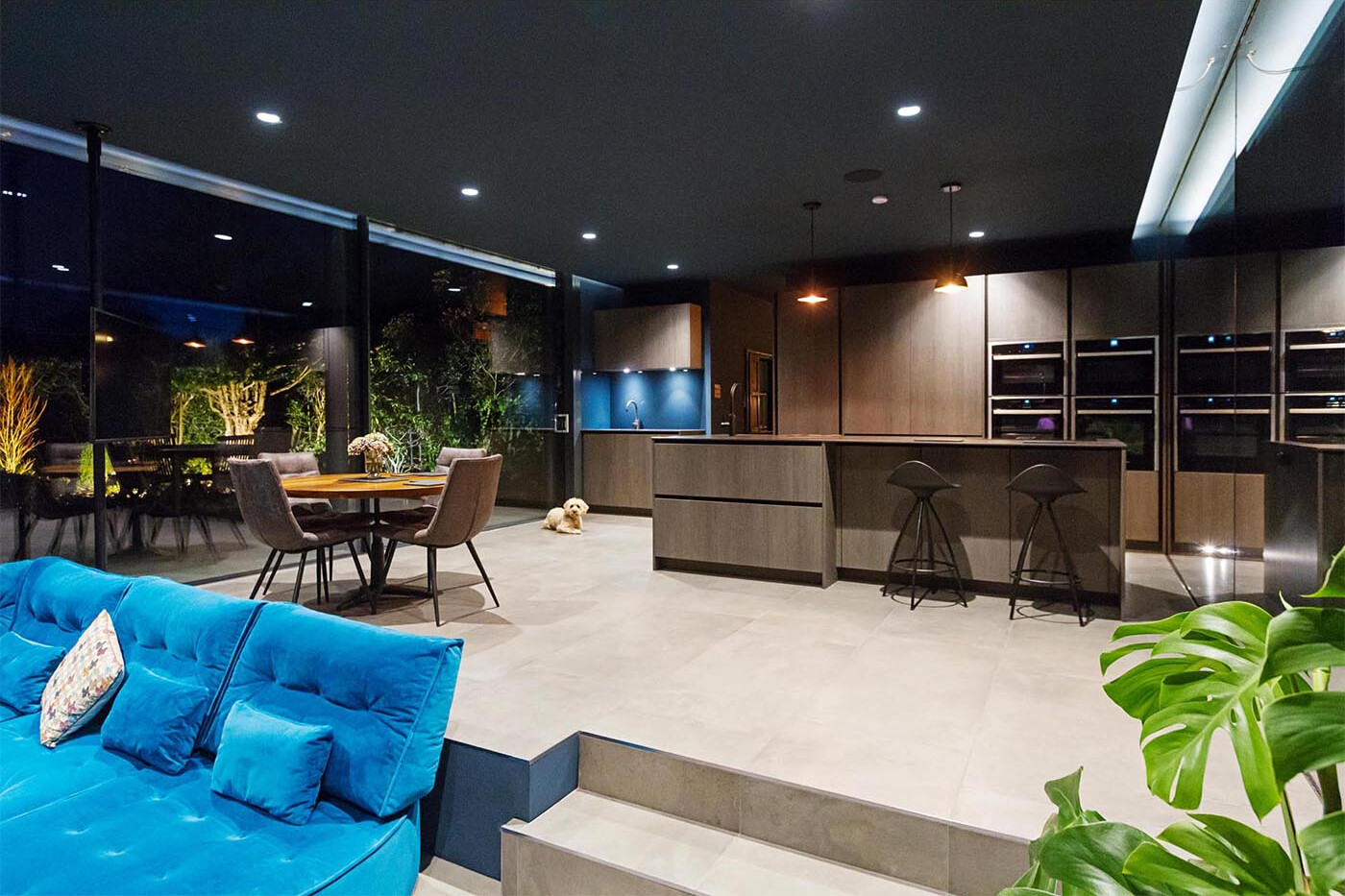
With carefully positioned outdoor lighting, reflections are minimized, allowing clear views outside even when the interior lights are on. This makes the space ideal for evening use, including stargazing from indoors.
Dining Above the Living Space
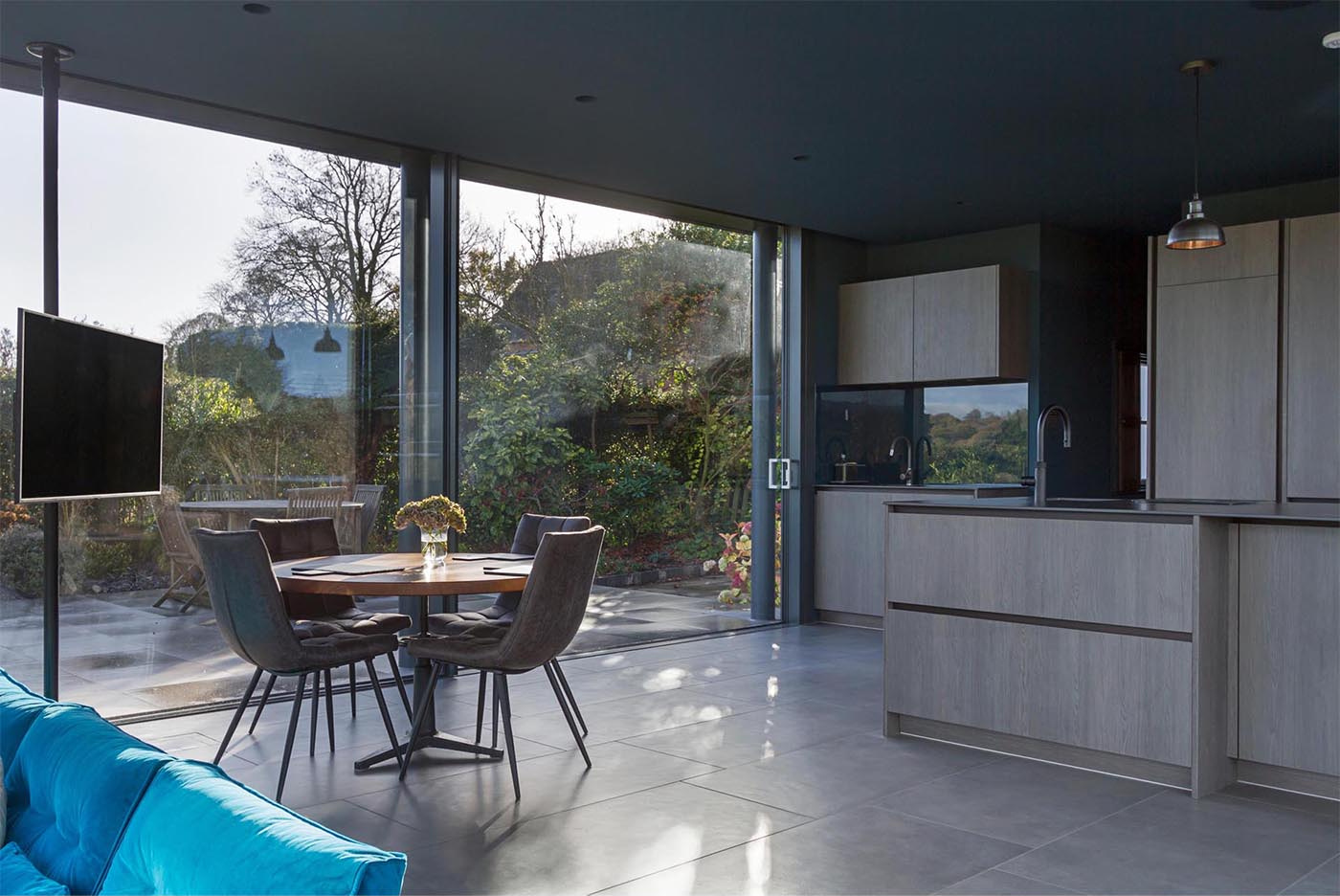
The upper level includes a compact dining area positioned next to a television mounted on a pole. This setup keeps the space flexible, allowing it to adapt to different uses without feeling crowded.
It’s a simple yet effective arrangement that works within the open-plan design.
A Minimalist Kitchen with Warm Details
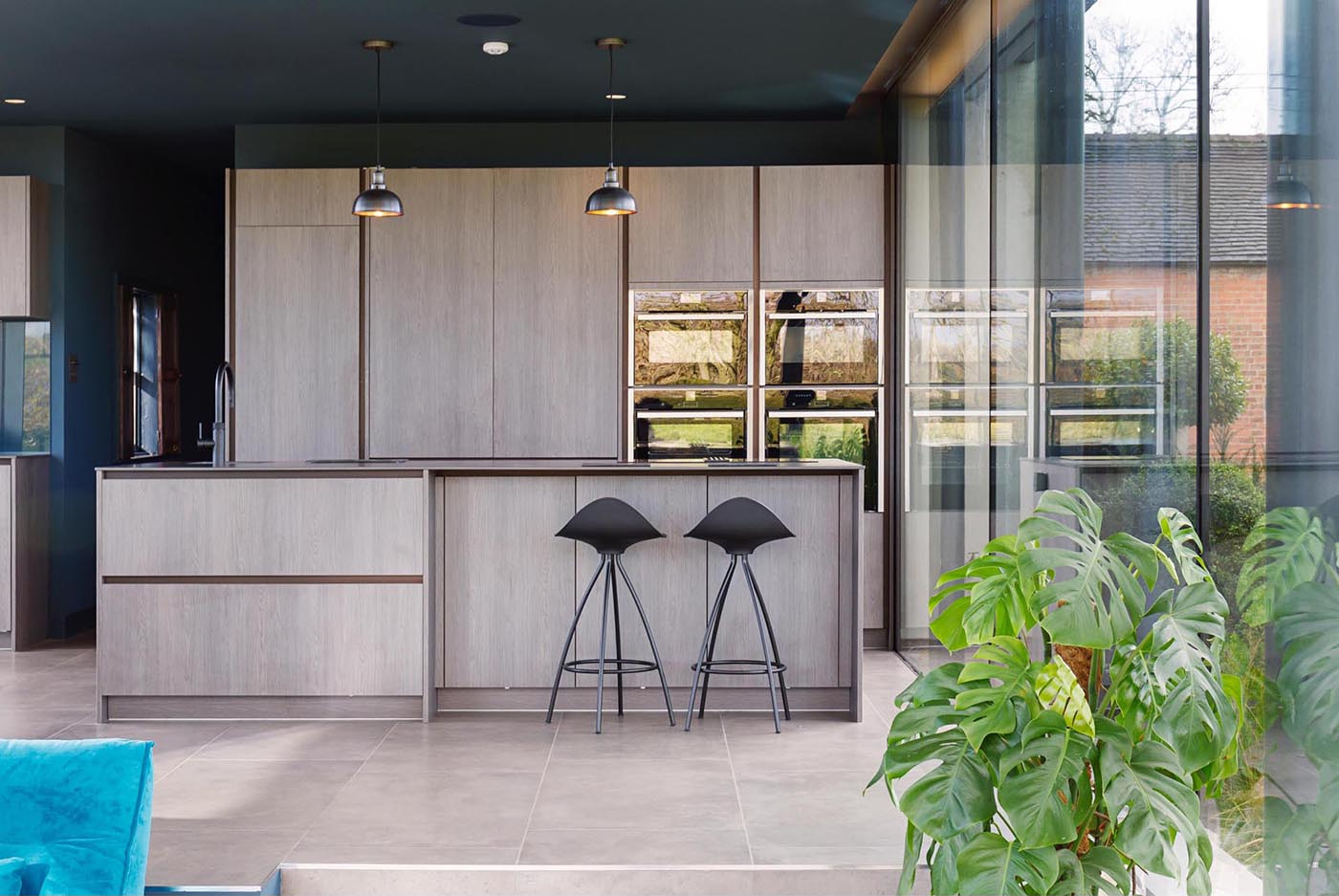
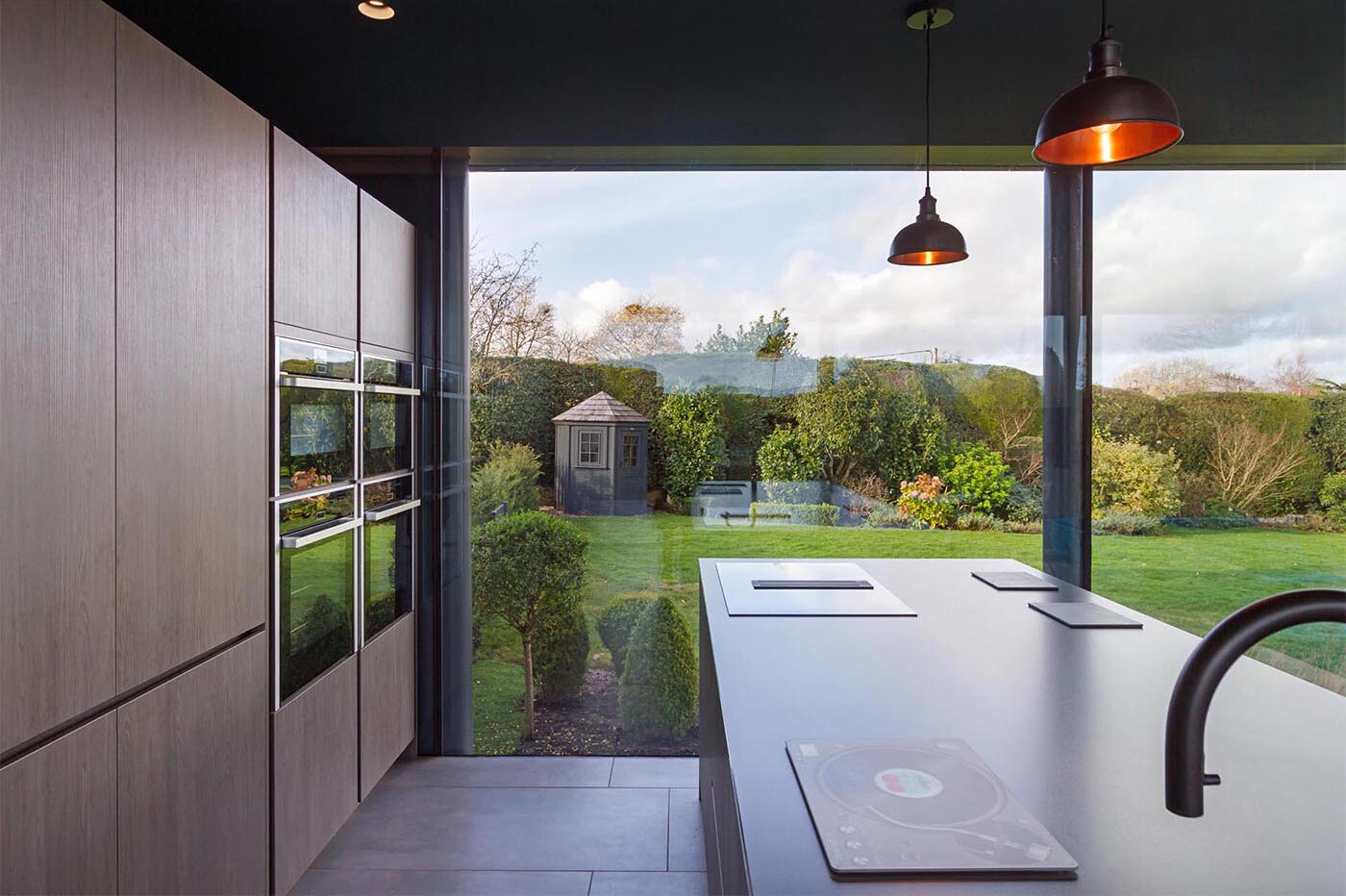
The kitchen continues the clean, modern aesthetic with light wood cabinetry paired with a darker countertop. An island provides additional workspace and casual seating for a couple of stools.
This balance of light and dark materials ties into the rest of the extension, creating a cohesive look throughout.
Connecting Back to the Original Home
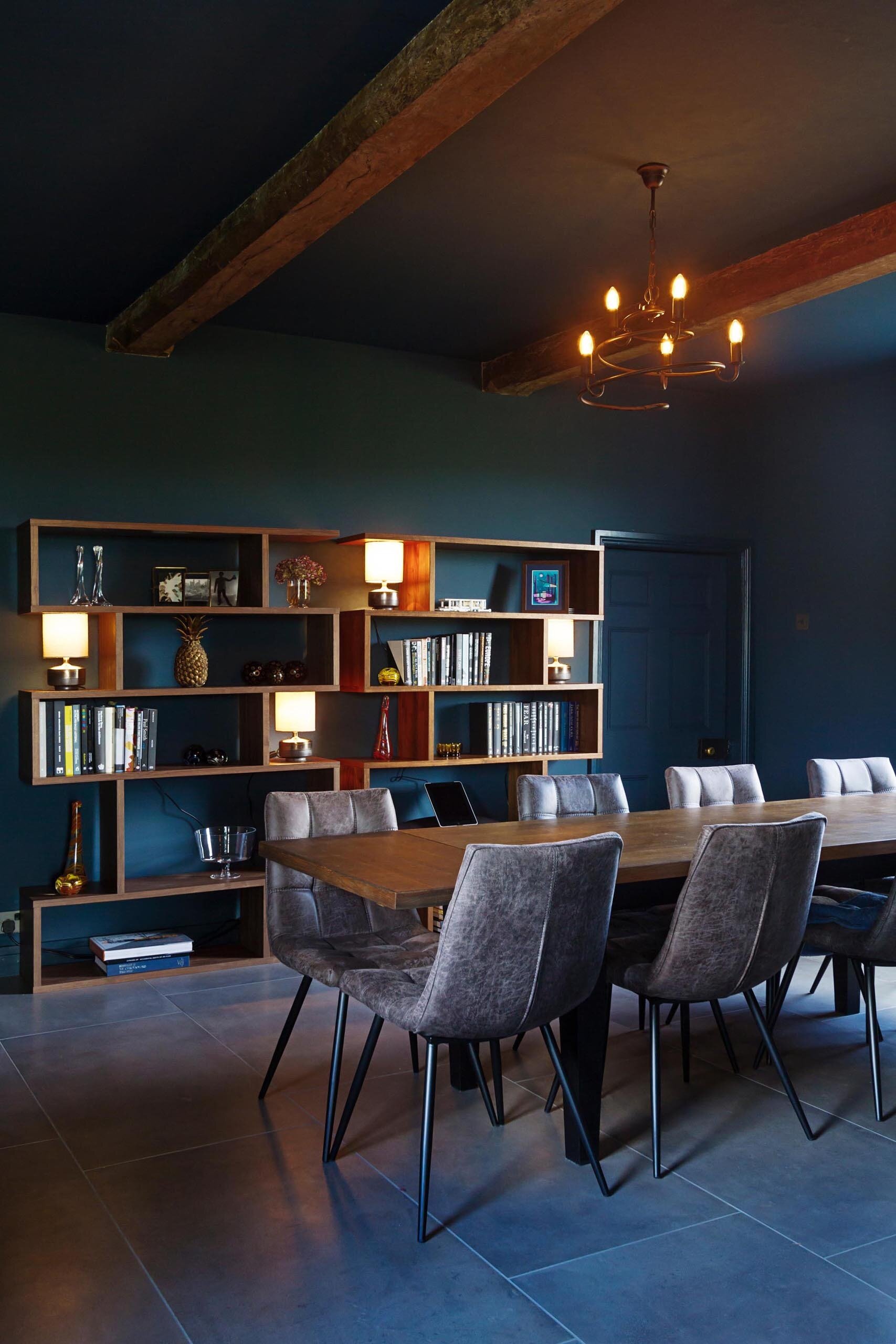
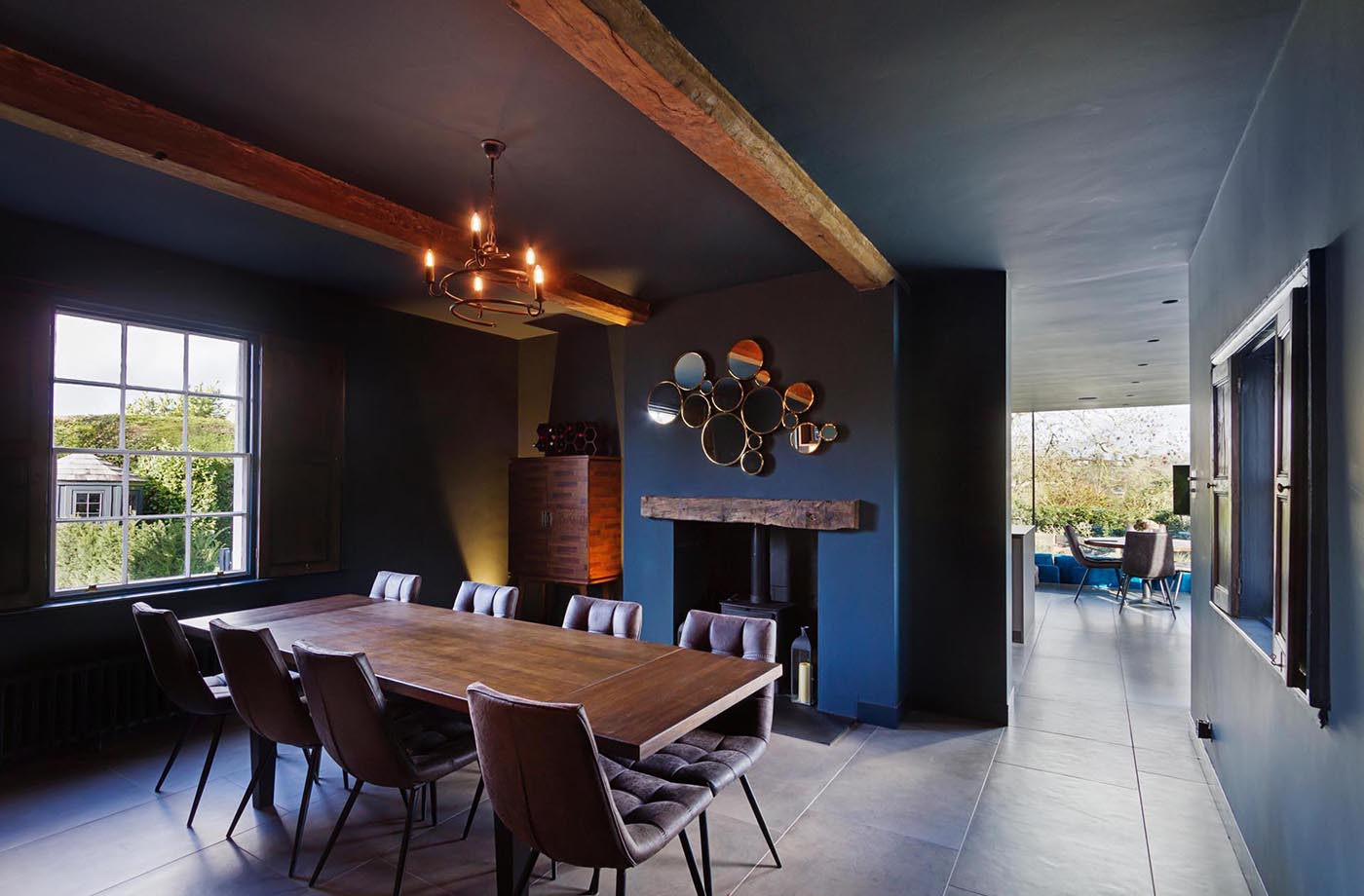
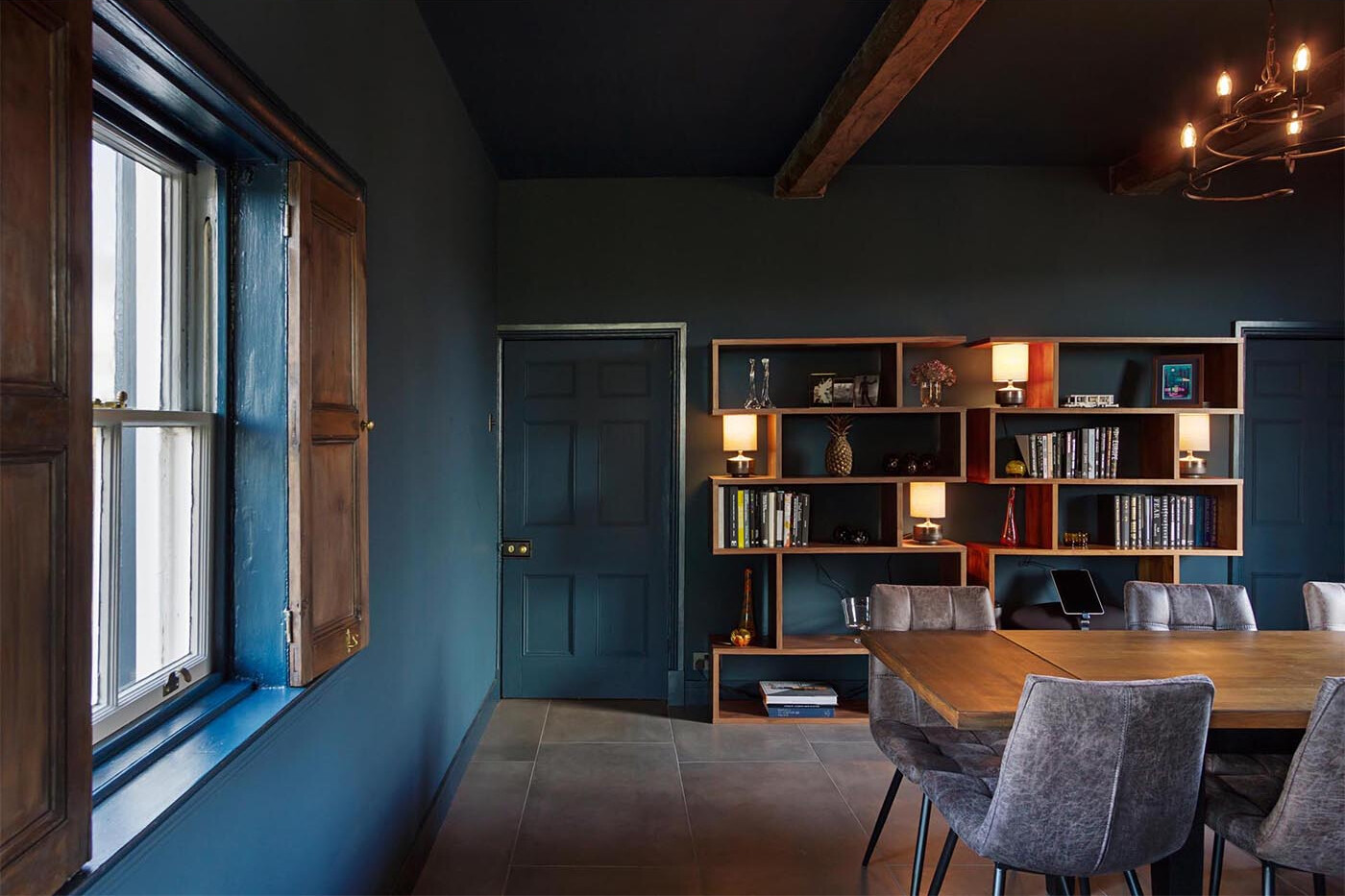
Behind the kitchen, a formal dining room with exposed wood beams links the new extension back to the original cottage. This transition space highlights the contrast between the historic structure and the contemporary addition. It acts as a bridge between two distinct styles, allowing both to exist side by side without conflict.
A Different Atmosphere at Night
As evening sets in, the glass extension takes on a completely different feel. Interior lighting, combined with the dark ceiling and outdoor illumination, creates a calm and atmospheric space.
The transparency of the structure allows the garden to remain visible after dark, turning it into a backdrop that changes with the time of day.
This project by Croft Architecture shows how a historic cottage can evolve without losing its identity. By replacing failing outbuildings with a modern glass extension, the home gains light, flexibility, and a stronger connection to the garden. The contrast between old and new gives the space its character, creating a home that works just as well today as it did in the past.