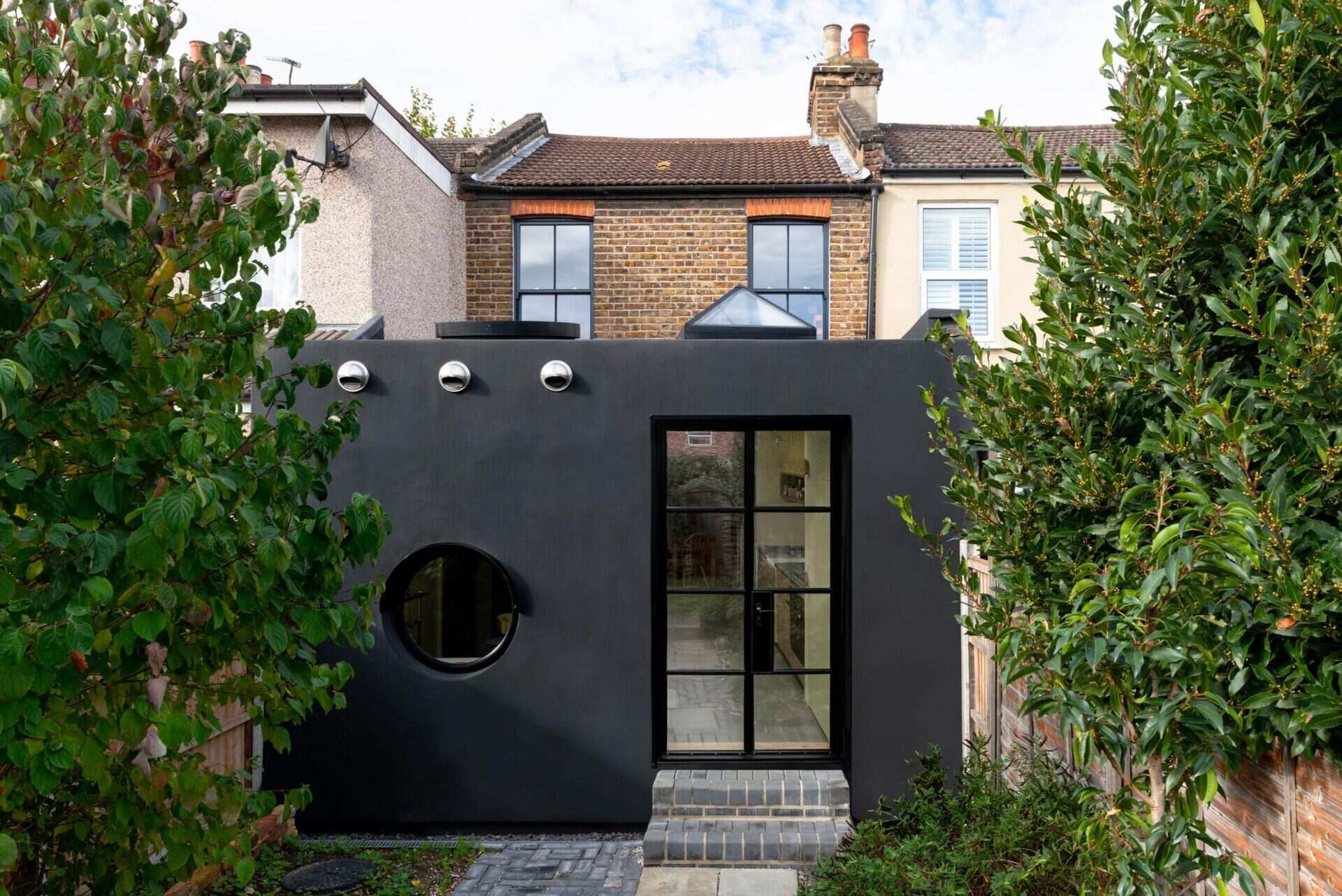
Tucked behind a late 1800s terraced house in England, this bold black extension stands in sharp contrast to the traditional brickwork it sits beside. Designed by London architecture studio Office S&M, the project takes an industrial material more commonly found offshore and turns it into something surprisingly domestic.
The clients wanted to replace a poorly built lean-to that had long outlived its usefulness, so they approached Office S&M with a clear challenge. The new extension needed to feel deliberately different from the Victorian house, while still respecting its scale. It also had to fit a kitchen and a bathroom into a tight footprint, with both rooms looking out to the garden.
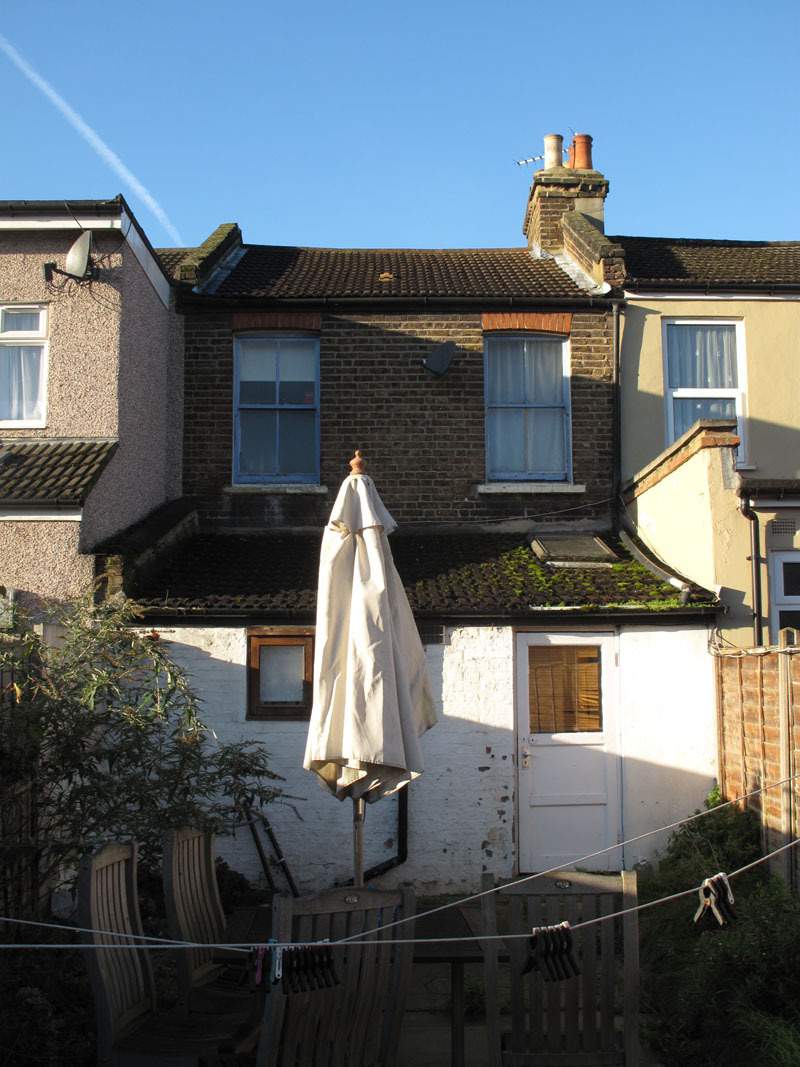
Before the transformation, the rear of the house was defined by an awkward, low-quality addition that blocked light and wasted space. It offered little connection to the garden and failed to make the most of its position at the back of the property. The new design set out to completely rethink how the space worked, both inside and out.
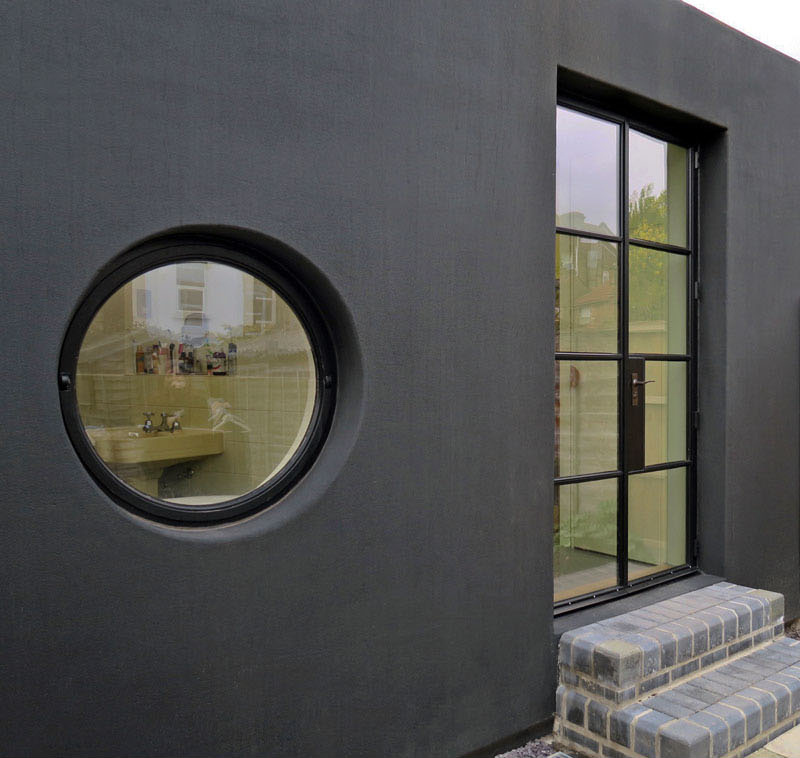
The most striking change is the exterior finish. The extension is coated entirely in a black spray-on rubber known as Prokol polyurea. This unusual material was chosen for its low cost, seamless application, and dramatic contrast with the existing brickwork of the Victorian terrace. Rather than trying to blend in, the extension confidently announces itself as a modern addition.
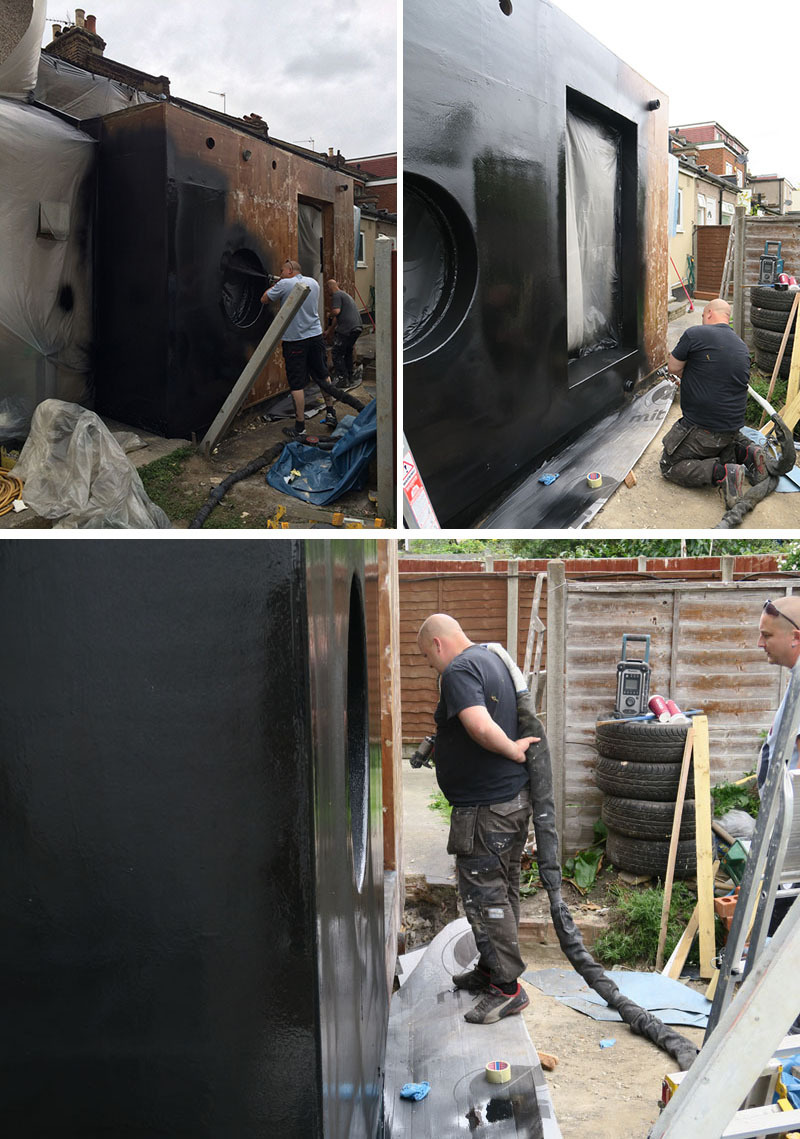
Originally developed for use on oil rigs, Prokol polyurea is waterproof, resistant to weathering, and guaranteed for 60 years. It creates a tough, monolithic shell that wraps the extension in a single continuous surface. Installed by specialist contractors ESW, the rubber coating gives the building its distinctive matte black appearance while offering long-term durability.
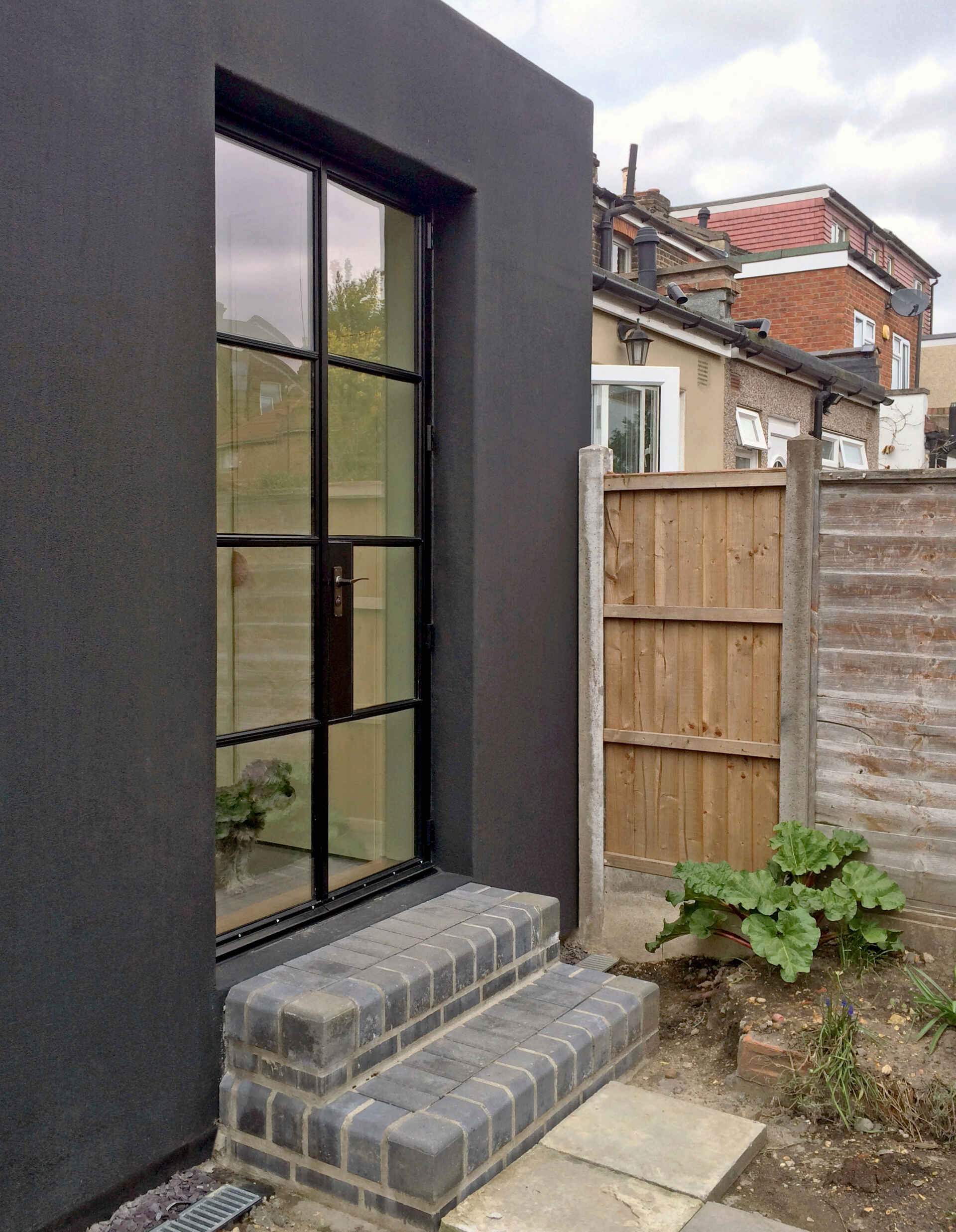
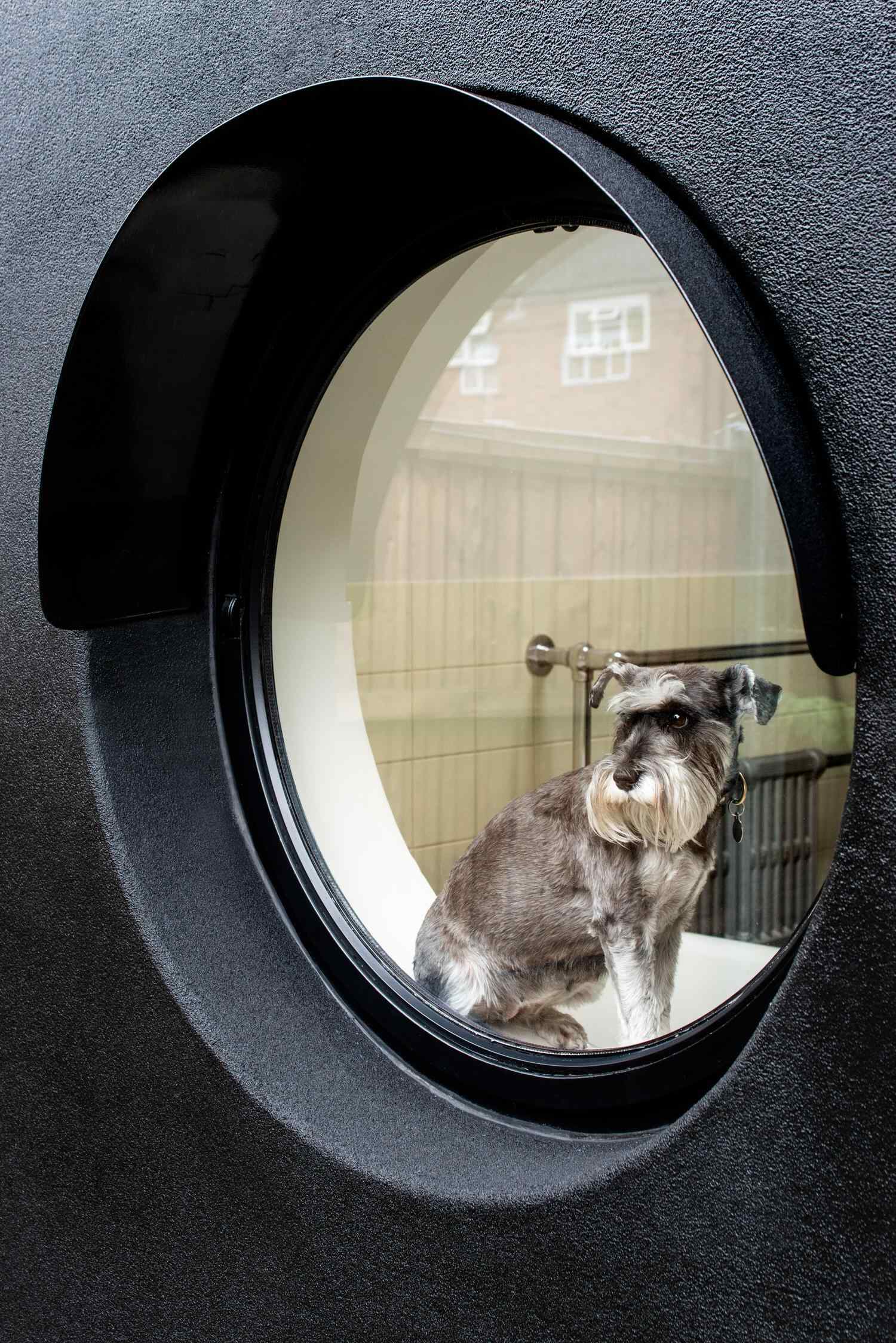
Beyond the material itself, Office S&M introduced a playful layer of geometry to the rear elevation. Circular and rectangular openings punctuate the black surface, immediately drawing the eye. These shapes are not decorative for the sake of it. The circular openings mark the bathroom side of the extension, while the rectangular window and door belong to the kitchen.
A short video captures the moment the spray-on rubber is applied, transforming the raw structure into the finished black form.
The finished extension is a confident example of how unconventional materials and smart spatial planning can dramatically change a home.