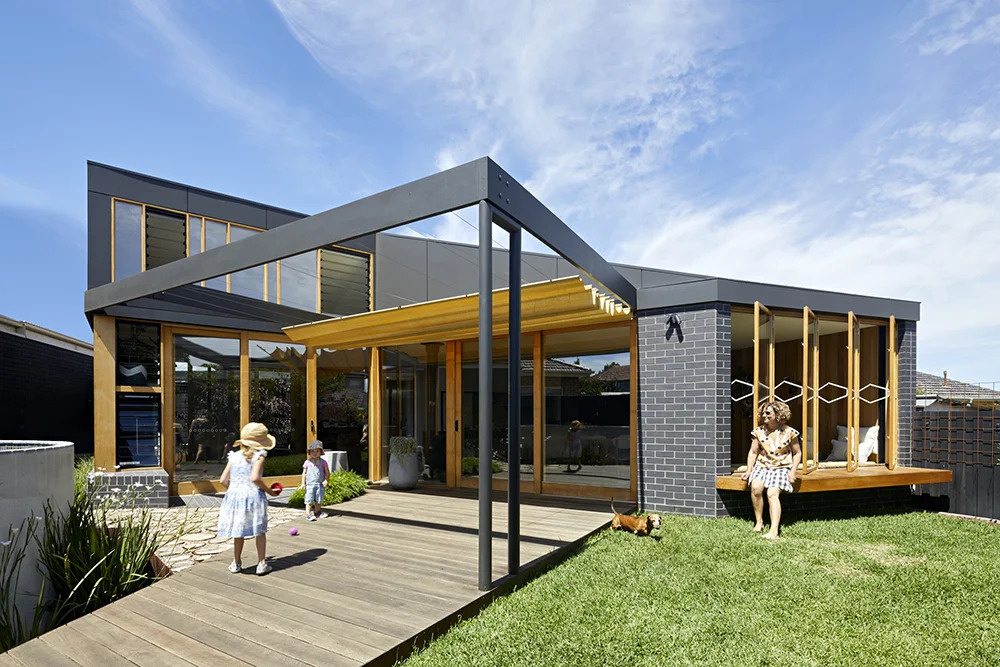
BENT Architecture has added additional living space to a 1960s home in Melbourne, Australia, but the real change is not just about square feet. It is about turning the home around and making the garden the centre of everyday life.
The original brick house still carries the charm of its era, but it now greets visitors differently. A new carport sits alongside a simple pathway that gently leads toward the new addition, signalling that something has shifted.
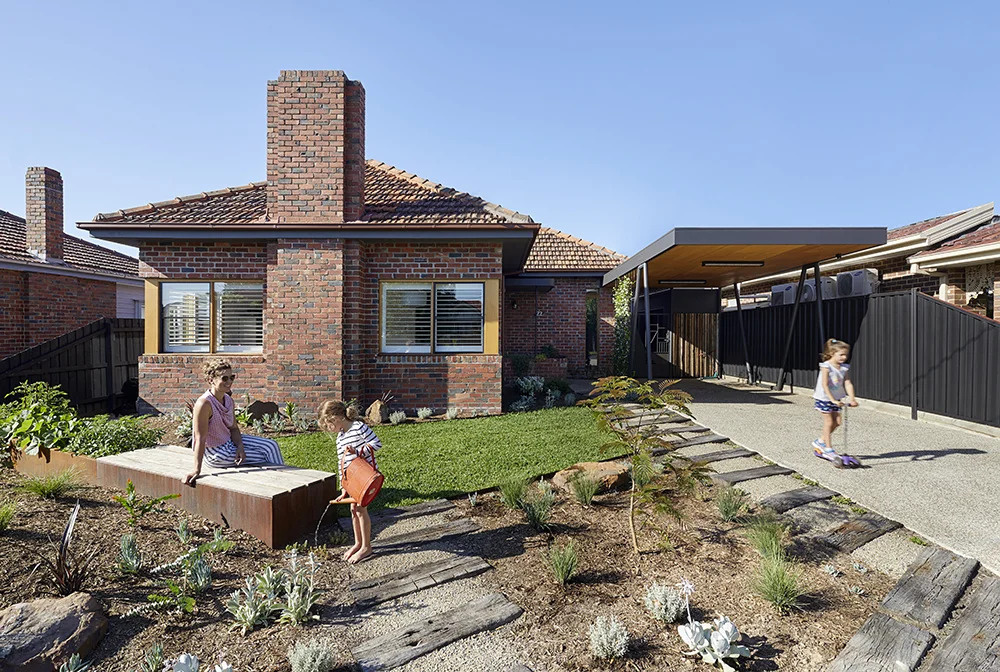
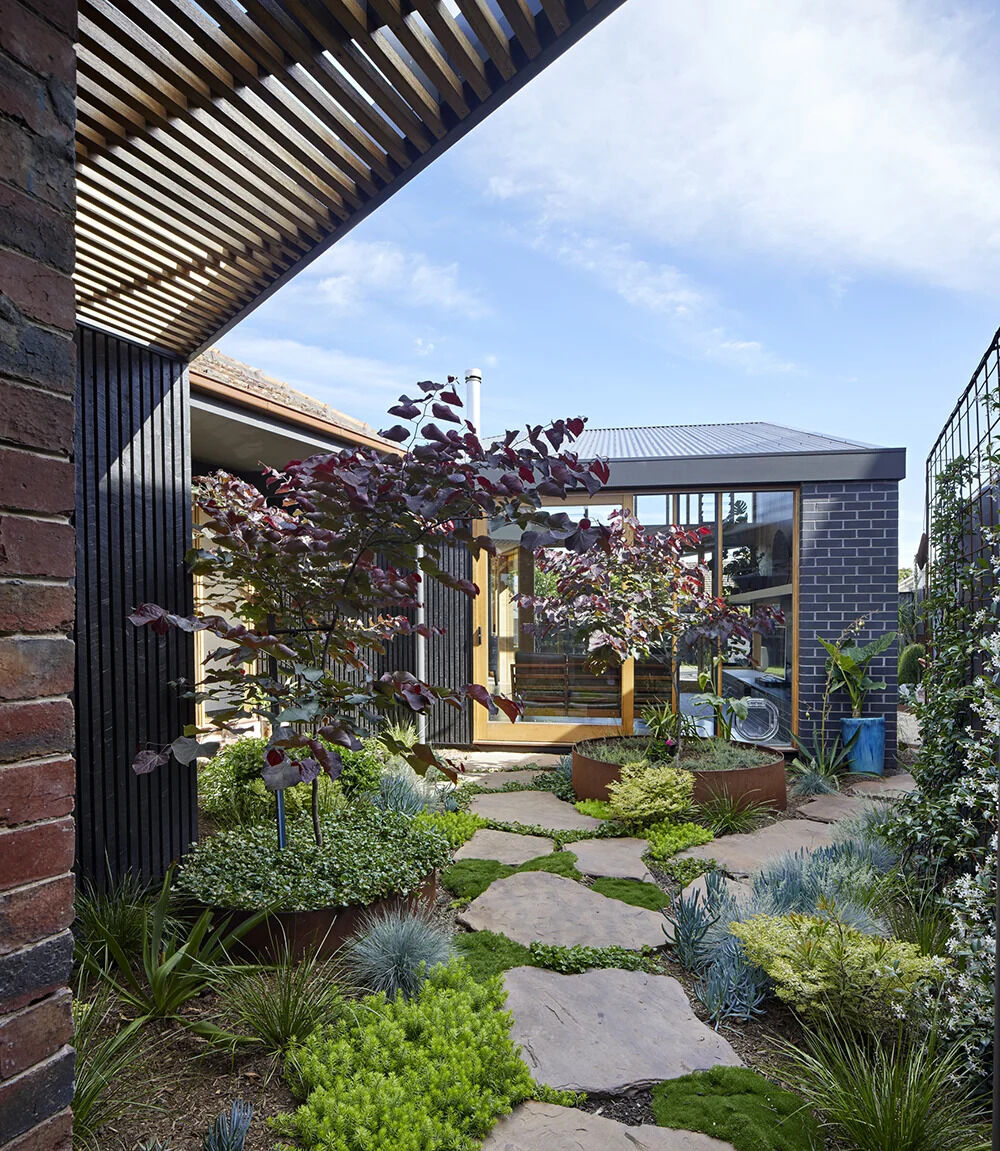
To make this possible, the architects carefully peeled away a series of ad-hoc additions at the back of the home. What remained were the generously proportioned original rooms, which became a strong base to build from. The new extension tucks neatly under the existing eaves, wrapping around the old structure. A continuous roofline folds overhead, visually stitching old and new together and giving the home a calm, unified presence.
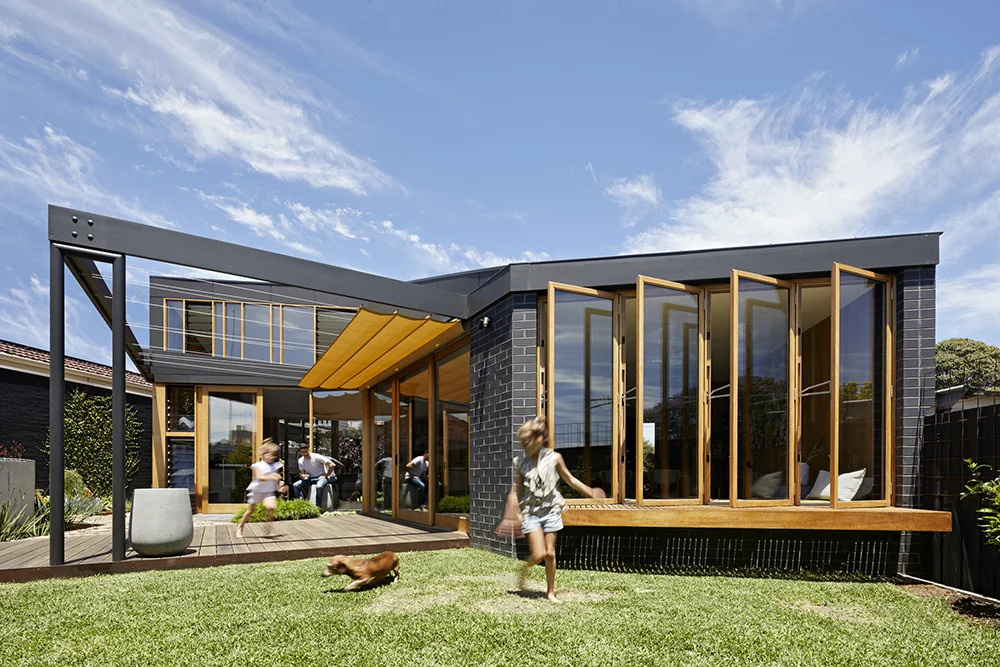
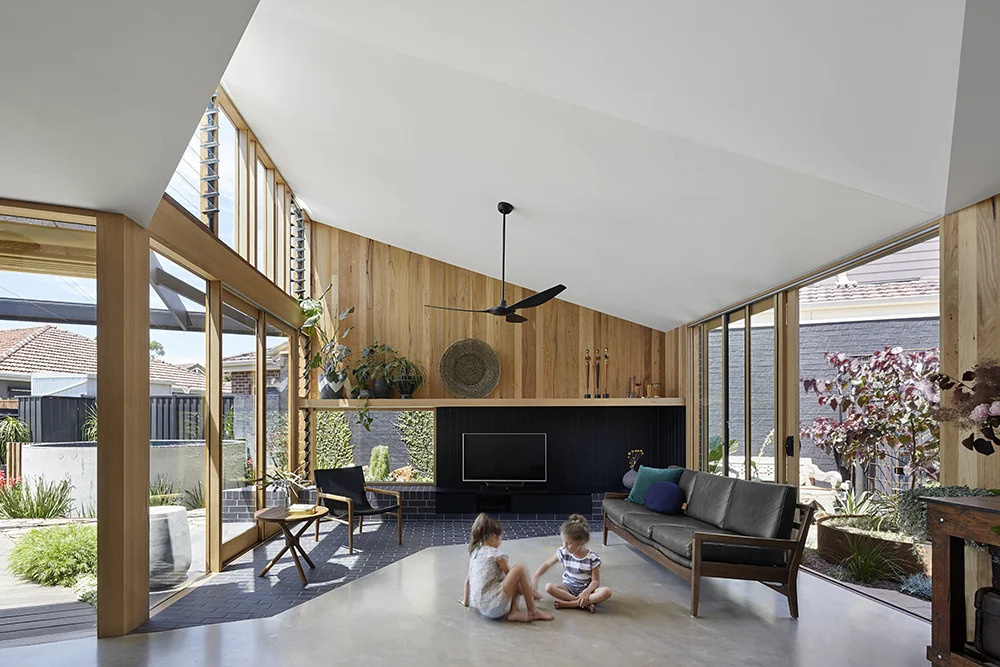
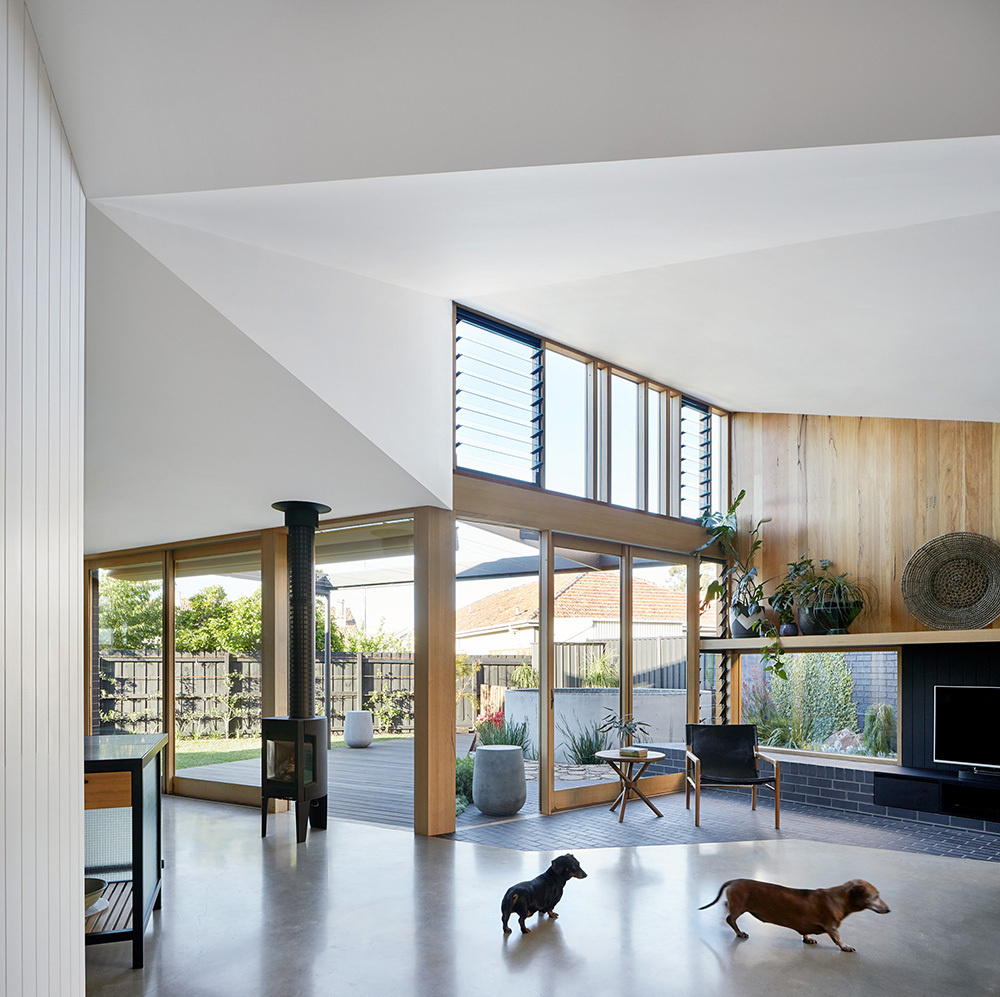
Inside the new living space, high ceilings immediately create a sense of openness and ease. Light pours in through expansive windows, giving the living room a bright, airy feel that contrasts with the more introspective nature of the original house. The dark brick from the patio outside flows seamlessly indoors, grounding the space as it meets the concrete floor.
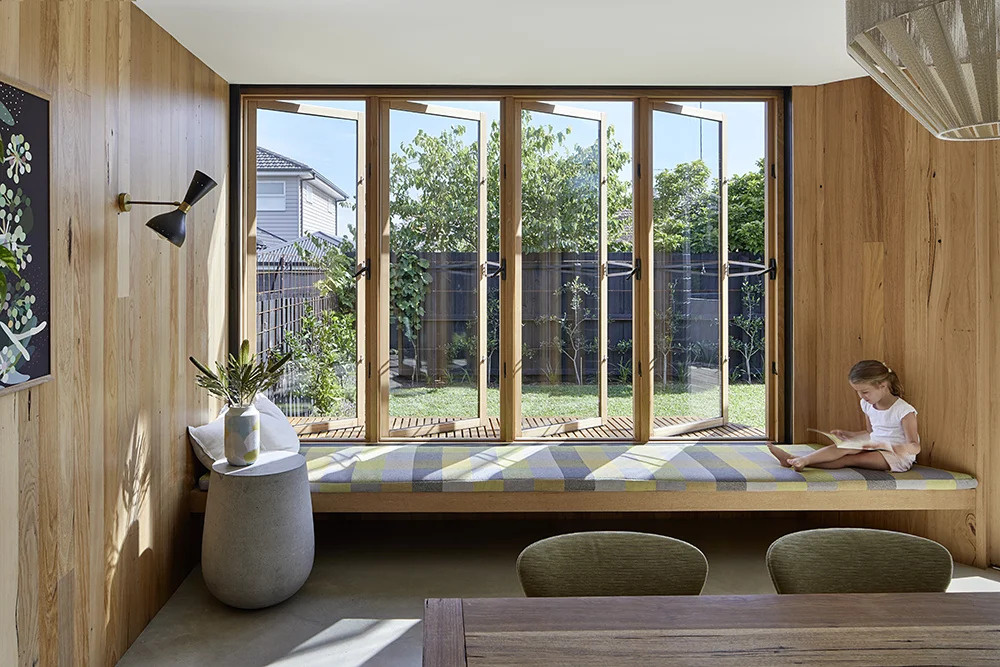
The dining area continues this connection outdoors. A built-in window seat pops out from the wall, drawing light deep into the kitchen and dining space while framing views of the backyard.
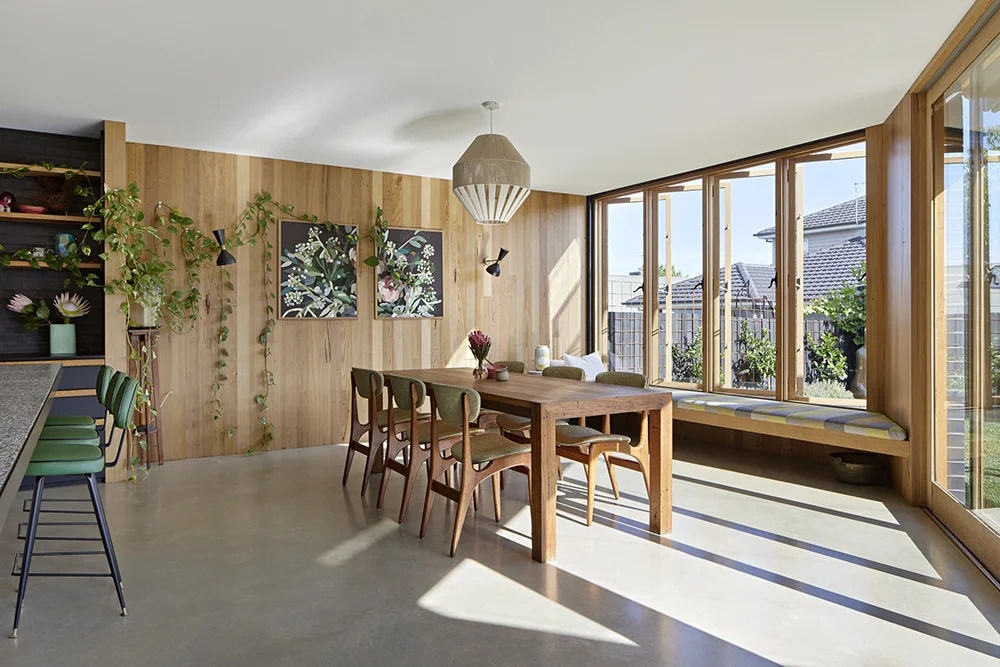
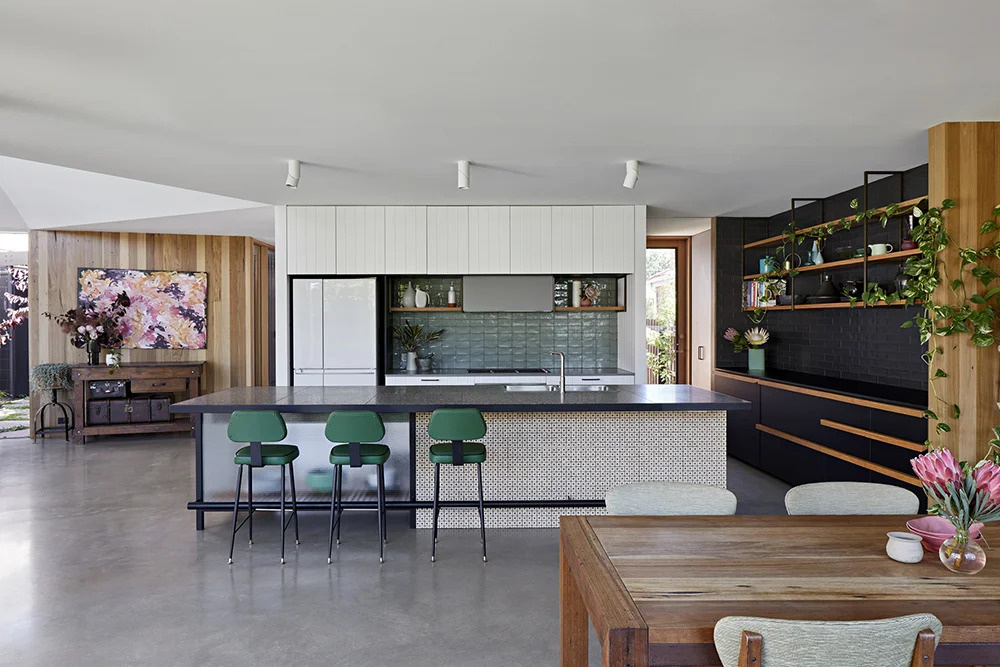
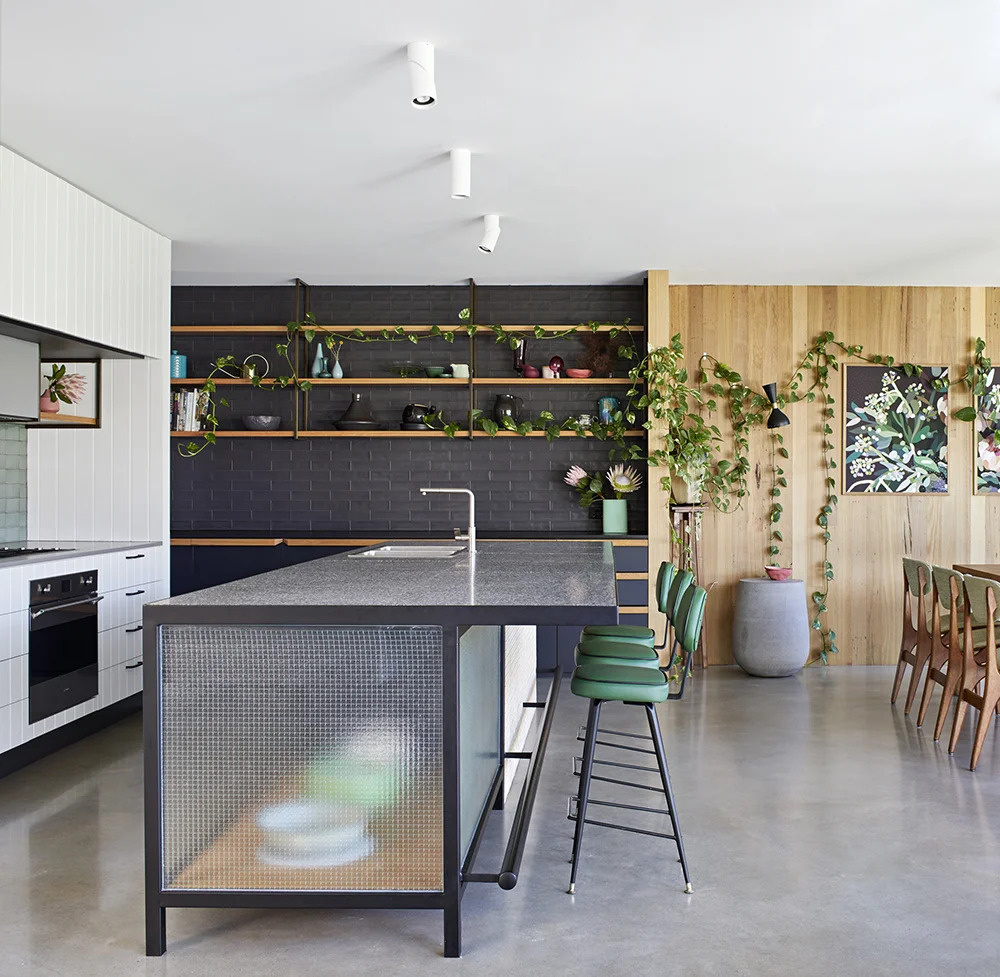
The kitchen balances light and dark cabinetry with natural materials, while a large island anchors the room, offering extra storage and casual seating that encourages people to gather.
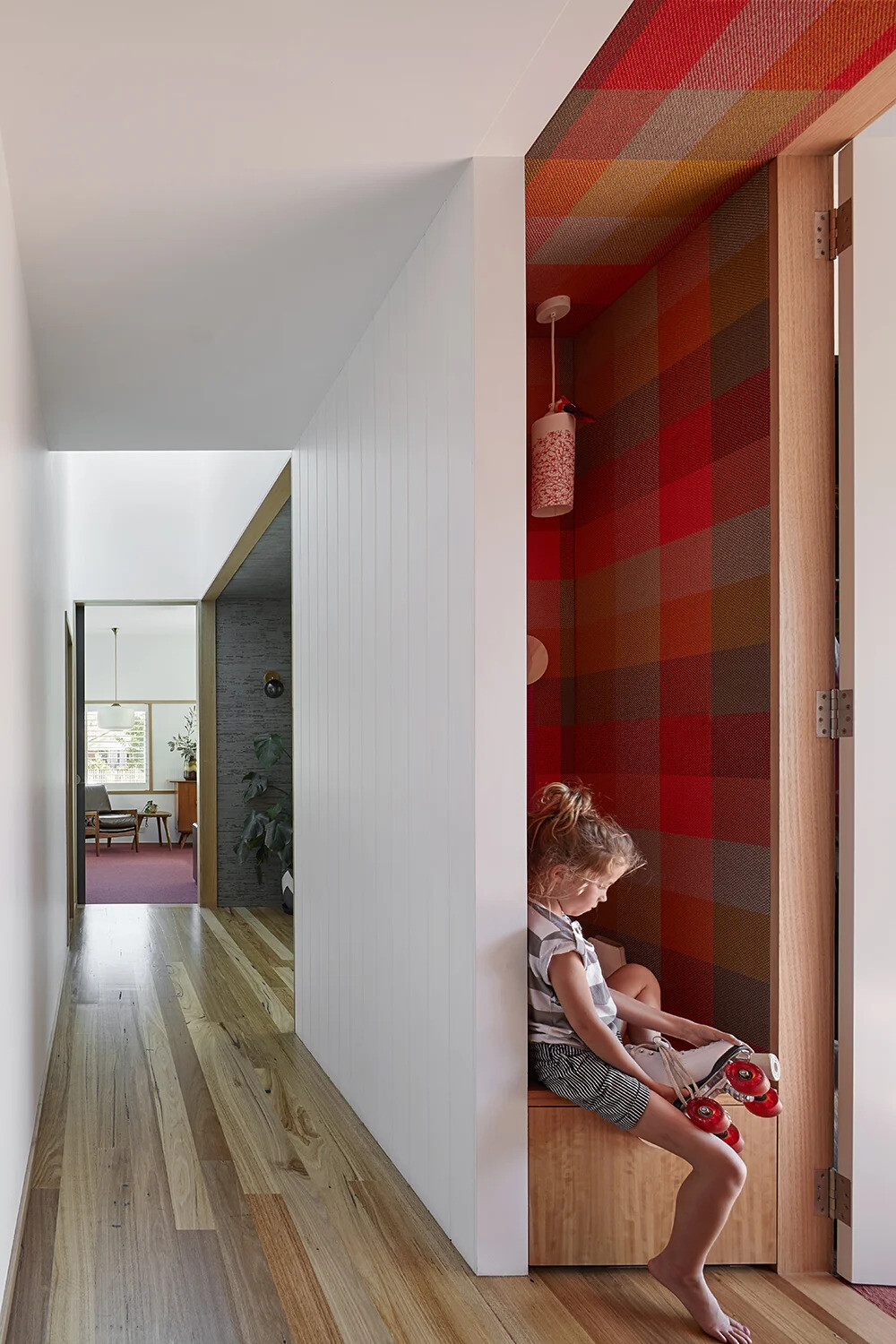
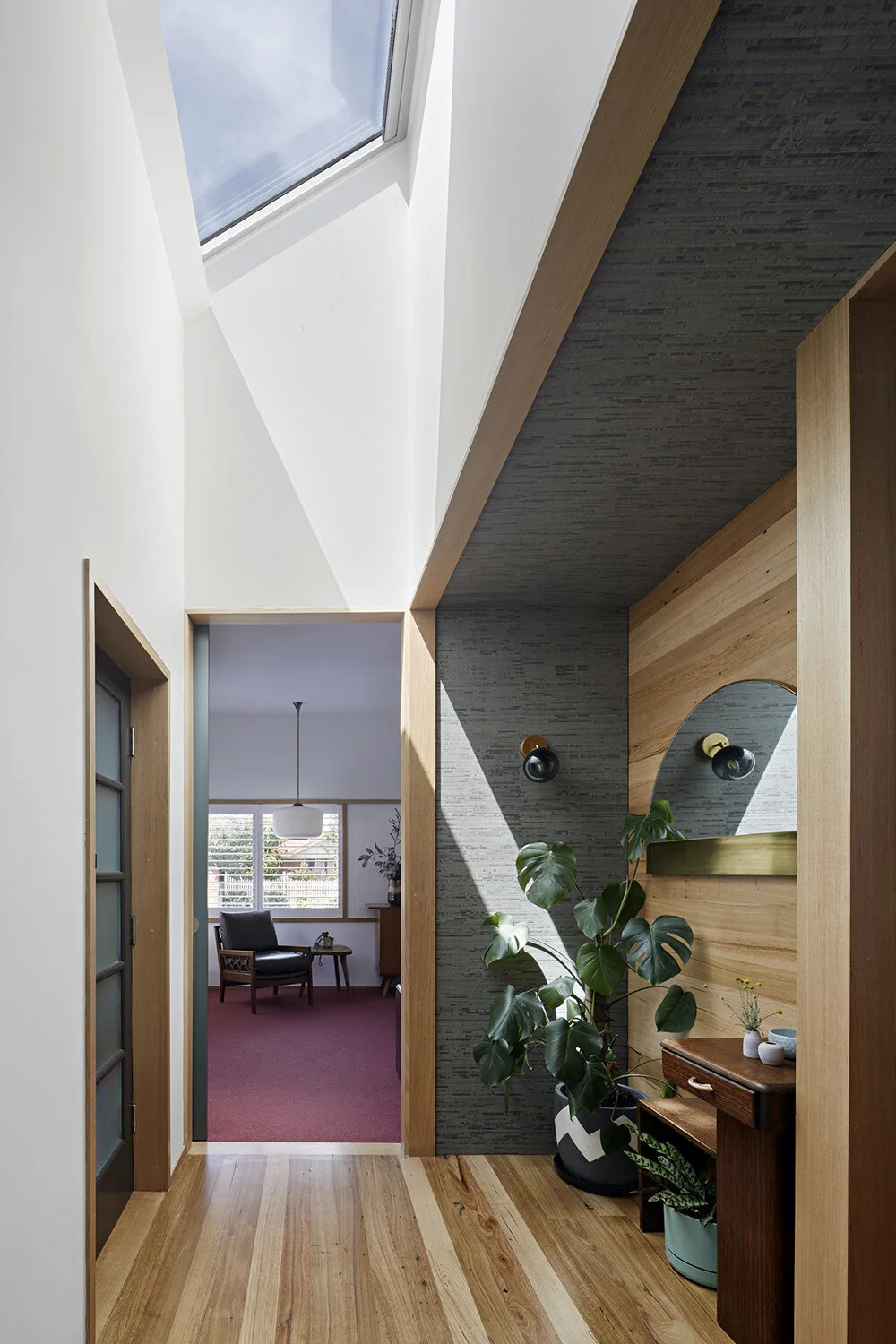
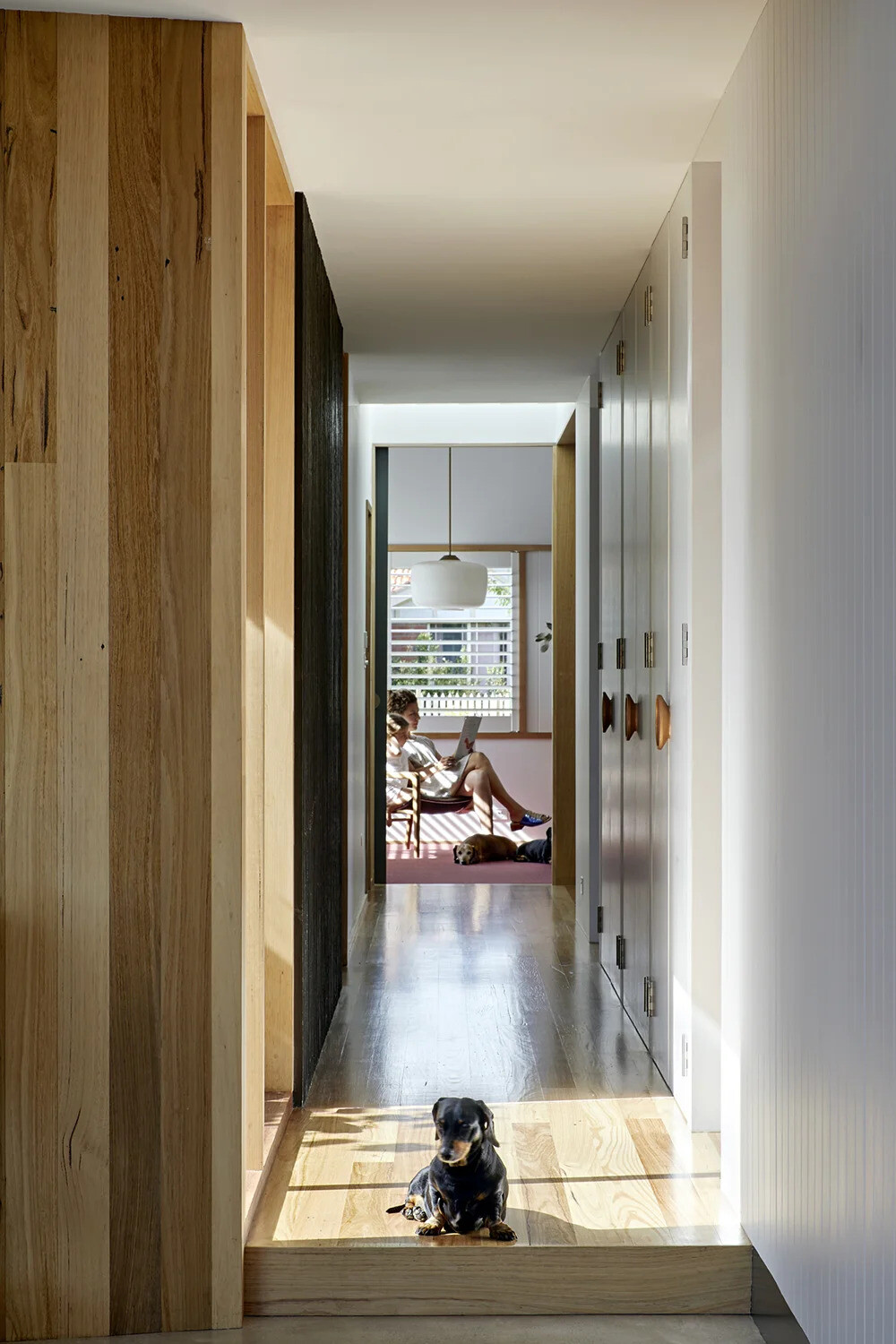
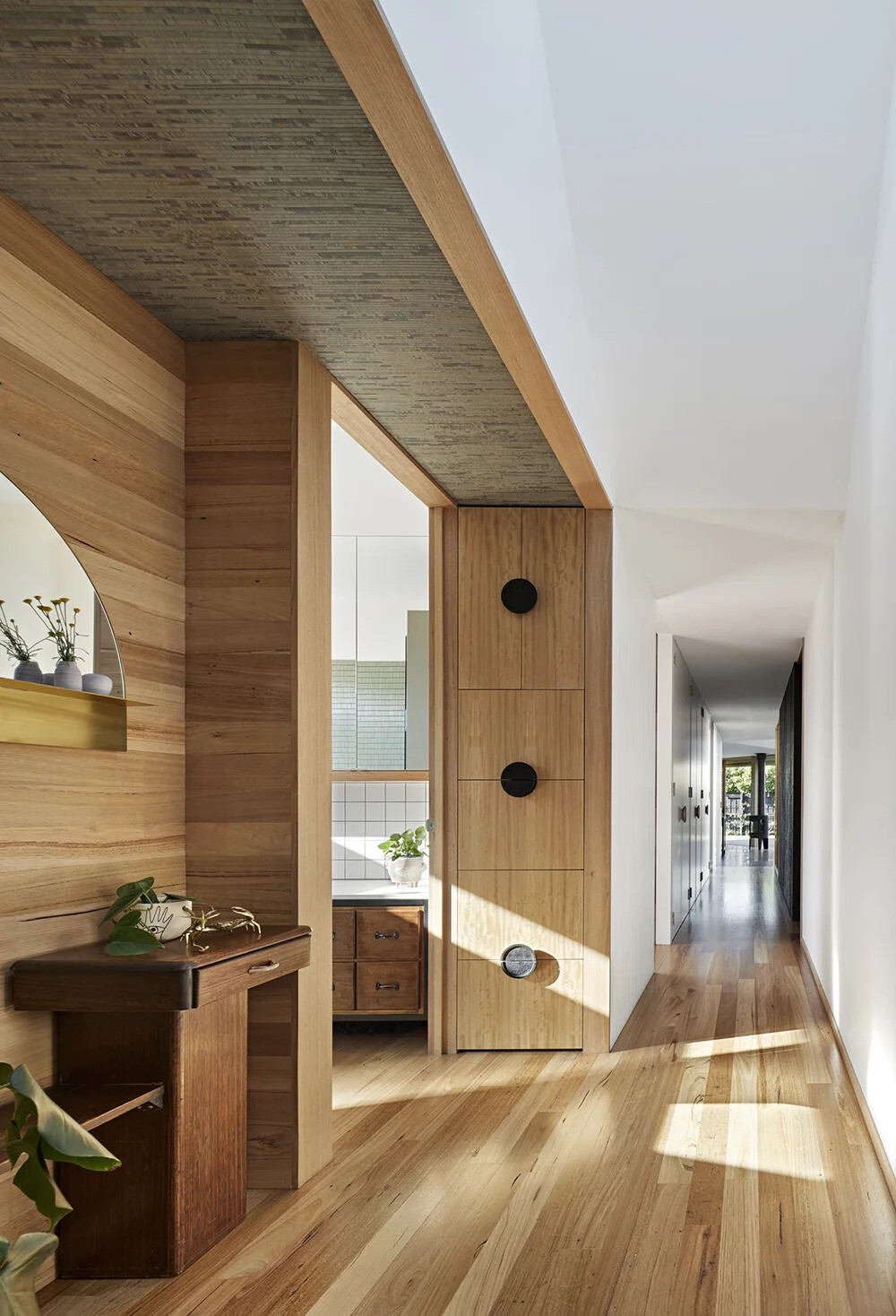
A hallway links the new addition back to the original rooms of the house, marking the transition without feeling disconnected. A skylight runs overhead, keeping the passage bright throughout the day, while wood flooring adds warmth underfoot.
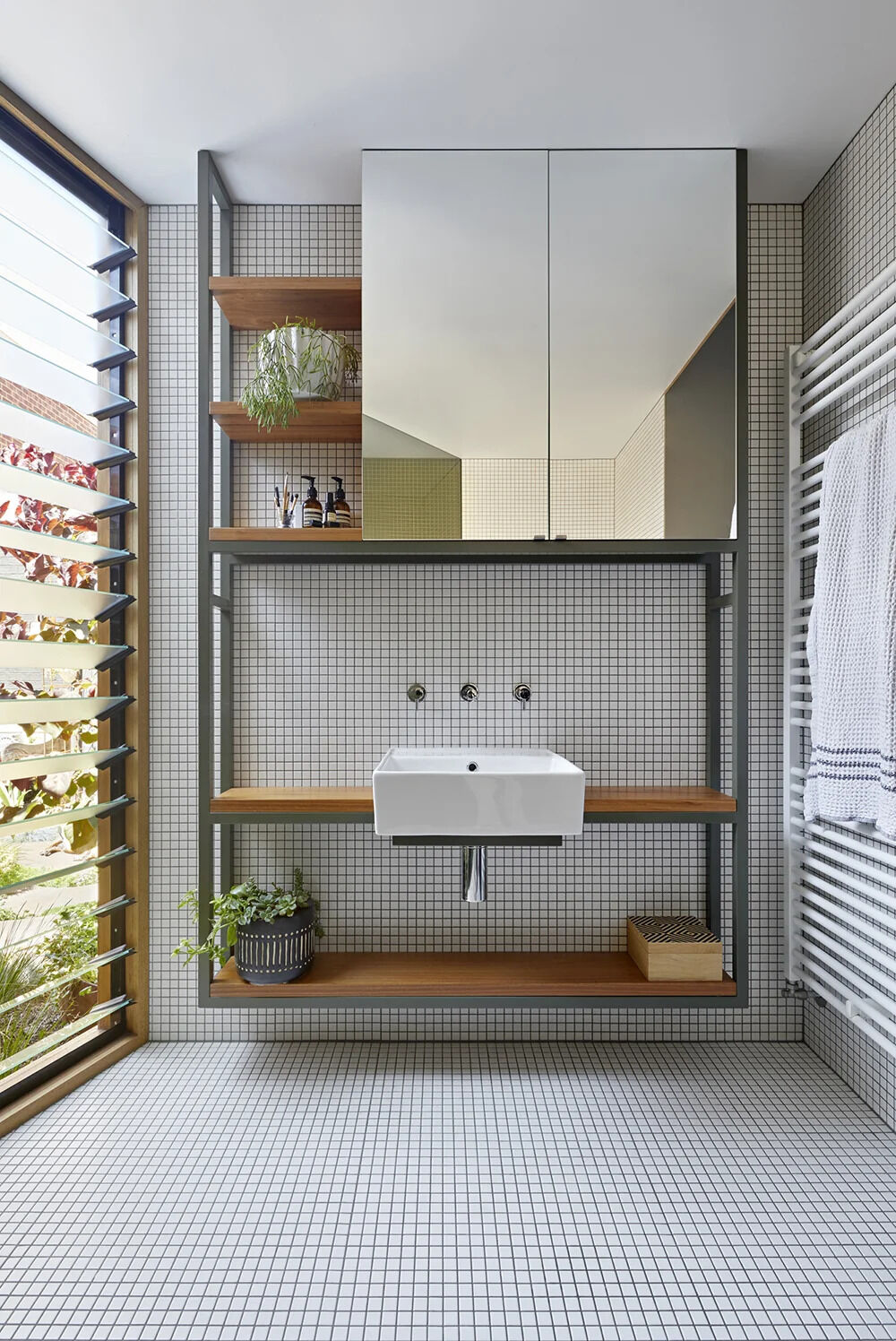
In the bathroom, the material palette softens again. A shelving unit with an integrated mirror and timber shelves sits beside louvre windows, allowing light and fresh air to filter through.
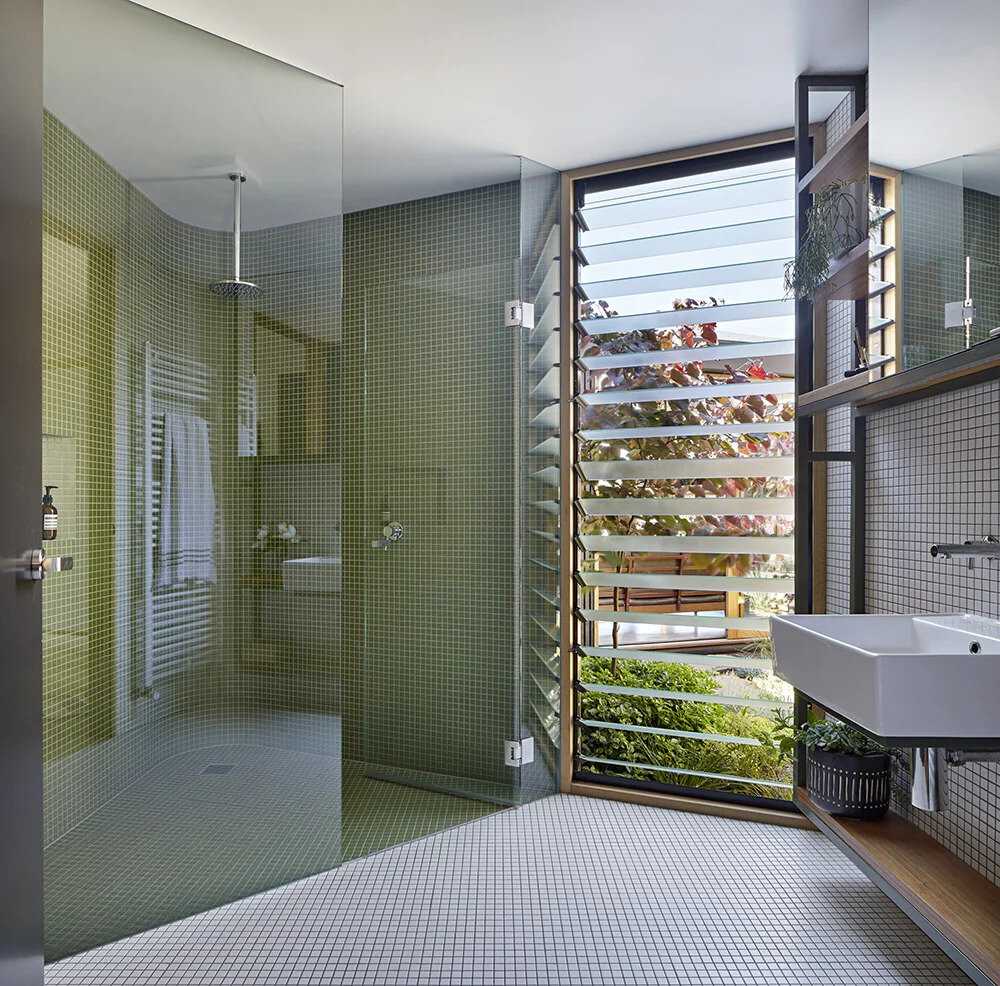
The shower becomes a quiet feature of its own. Enclosed in glass, it curves gently along one wall and is finished in small green tiles. The colour nods back to the garden outside, bringing a subtle sense of nature into one of the most private spaces in the home.
This Melbourne renovation shows how smart additions and a strong connection to the outdoors can turn overlooked spaces into the heart of a home.