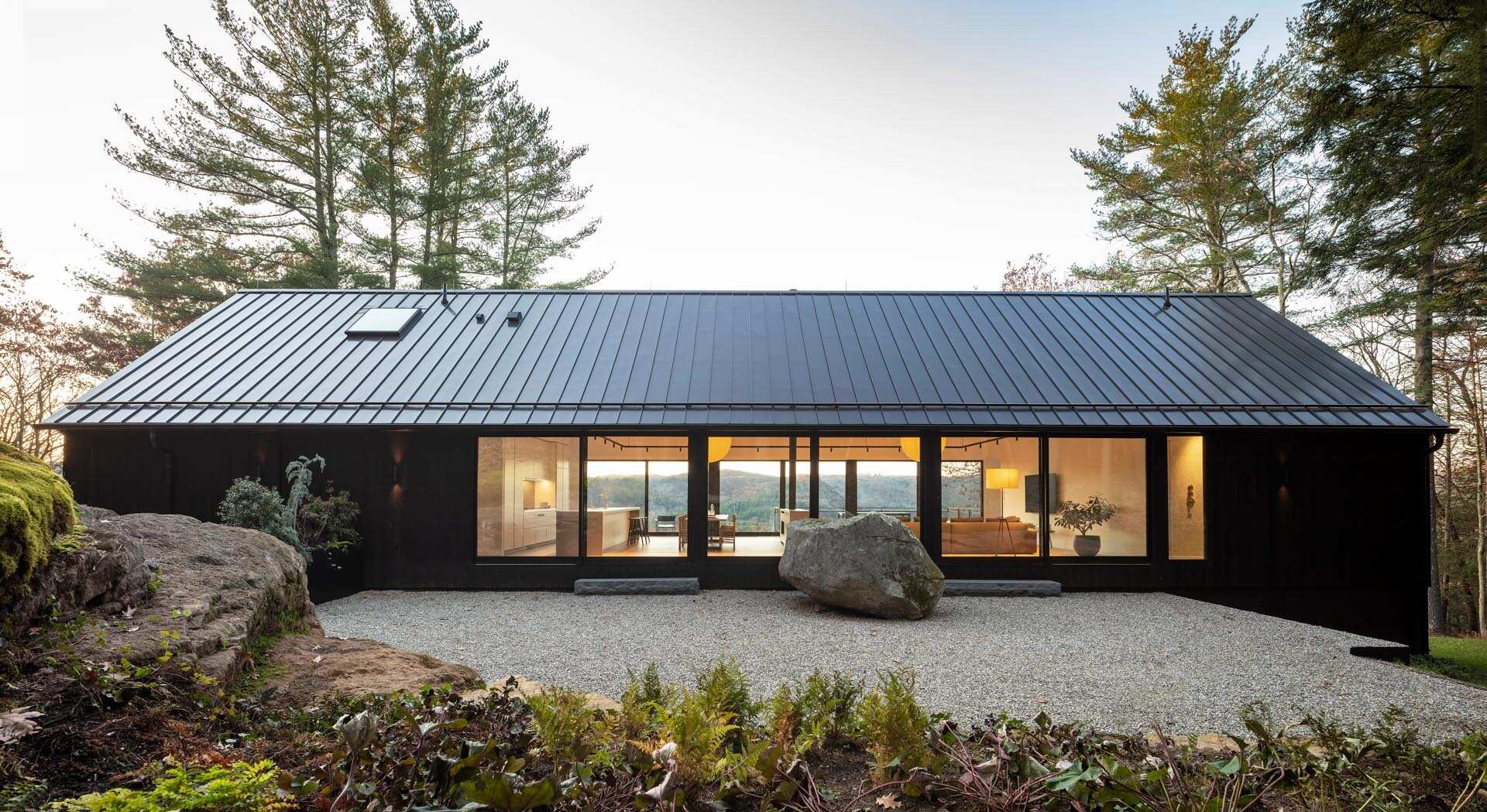
In Cornwall, where the Connecticut Valley opens into rolling woodland and quiet roads, Desai Chia Architecture designed the Ledge House, the modern home that sits among trees, replacing an old cottage that once occupied the site.
The property presented a challenge from the start. A large rock ledge cuts across the land, dictating where and how a new structure could stand. The house is positioned directly on this stone outcropping, turning what could have been an obstacle into the very foundation of the design.
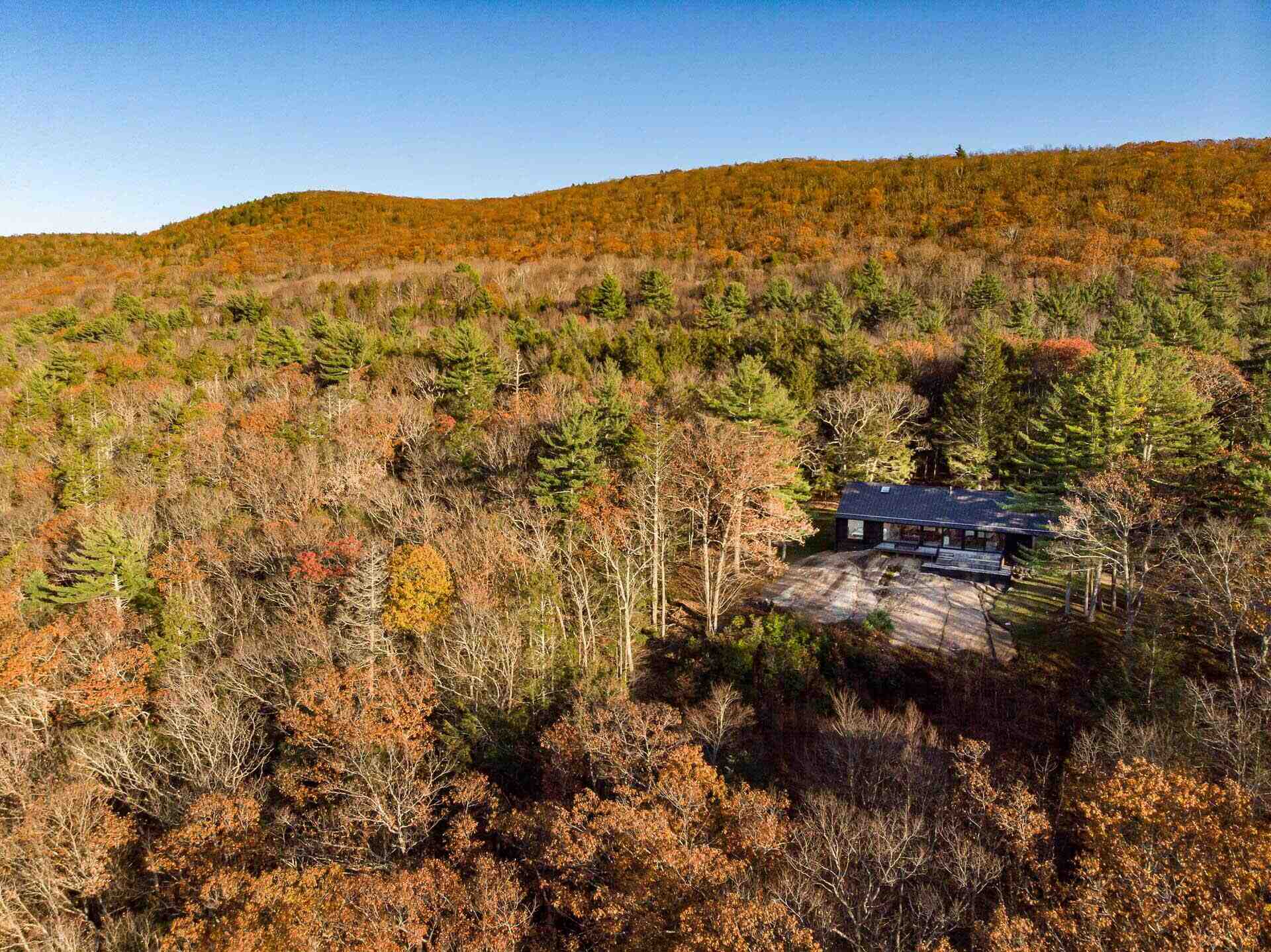
The new form draws from local history. Its silhouette references the indigenous barns scattered throughout the region and the nearby West Cornwall Covered Bridge, a 19th century landmark that continues to define the town’s identity.
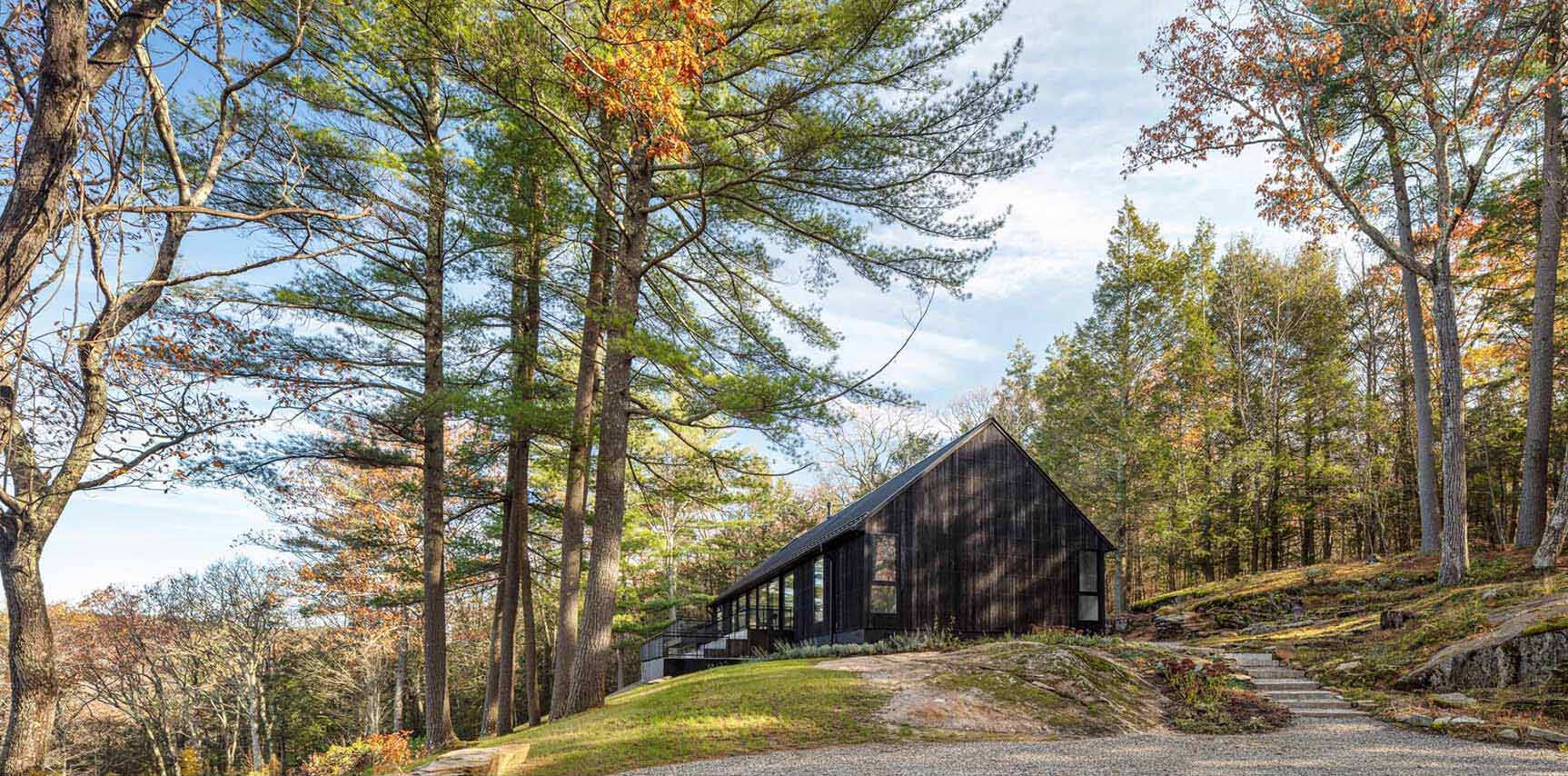
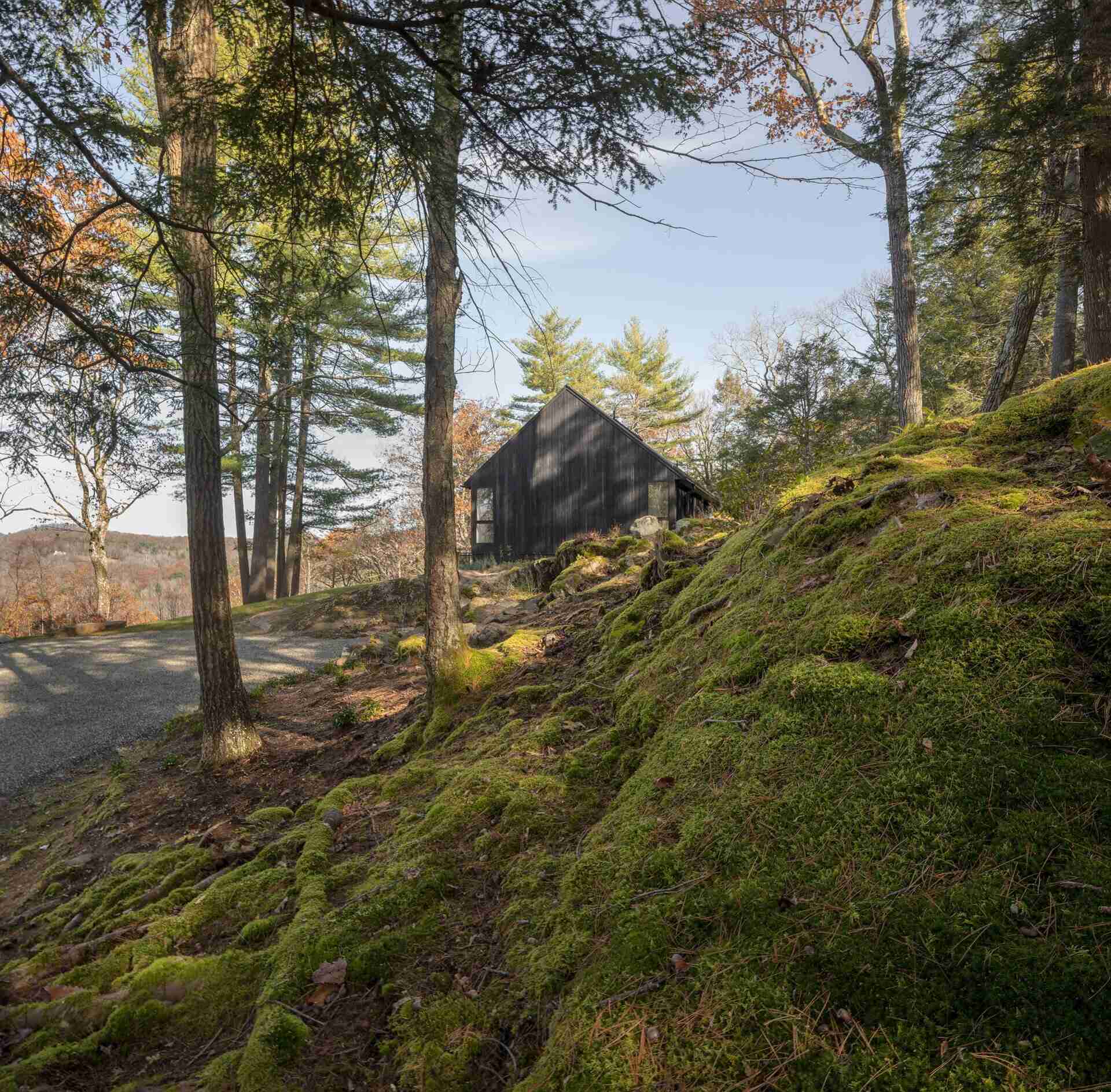
The exterior is clad in Shou Sugi Ban siding, a traditional Japanese technique that chars wood to create a durable surface. Here, it offers a rot resistant and bug resistant finish while sharpening the building’s outline against the trees. The darkened wood allows the house to recede into the forest, especially in the softer light of morning and late afternoon.
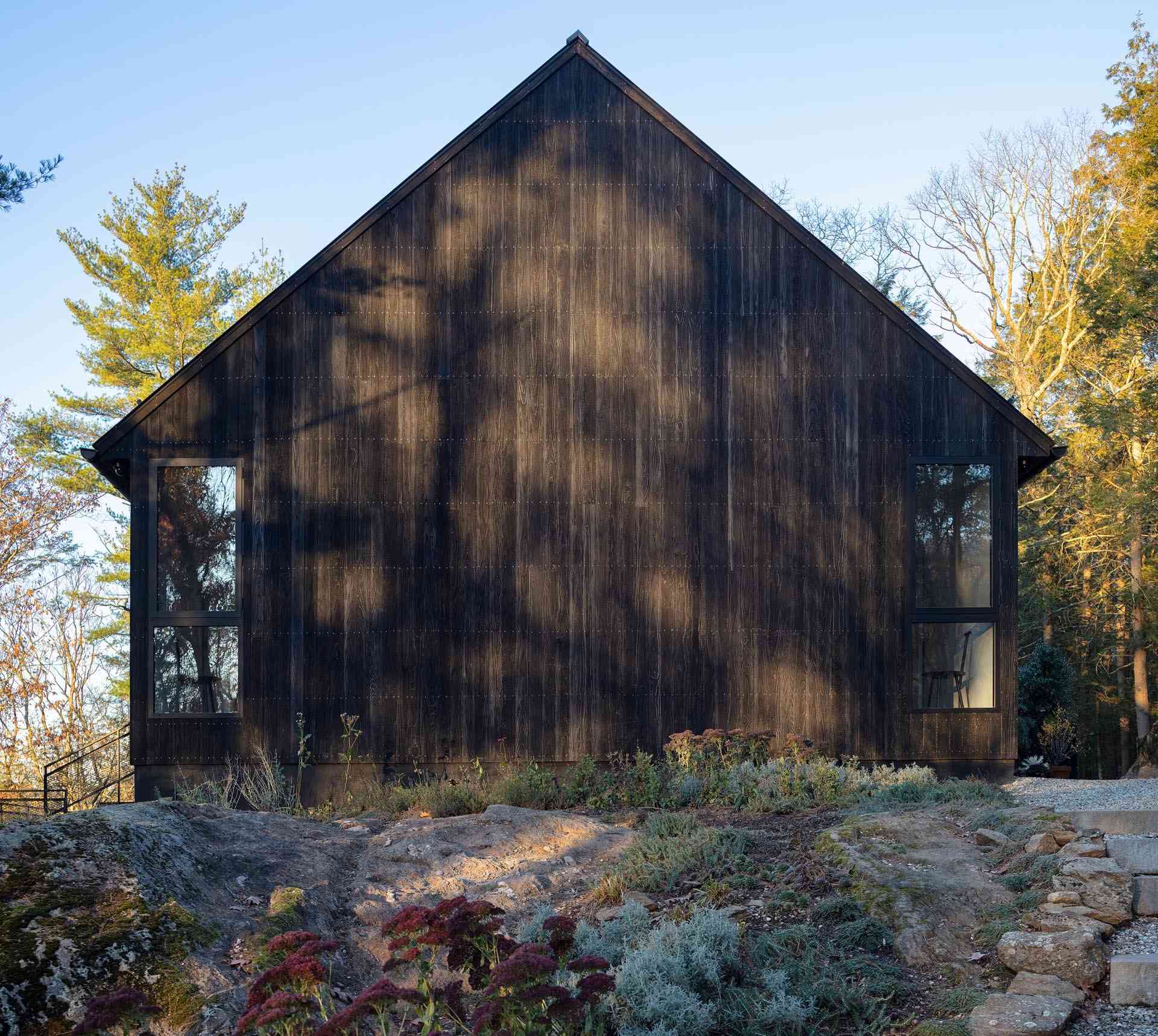
Before stepping inside, visitors pass through a rock garden that connects the house to the surrounding woods. It is a subtle transition, one that reinforces the idea that the home is an extension of the landscape.
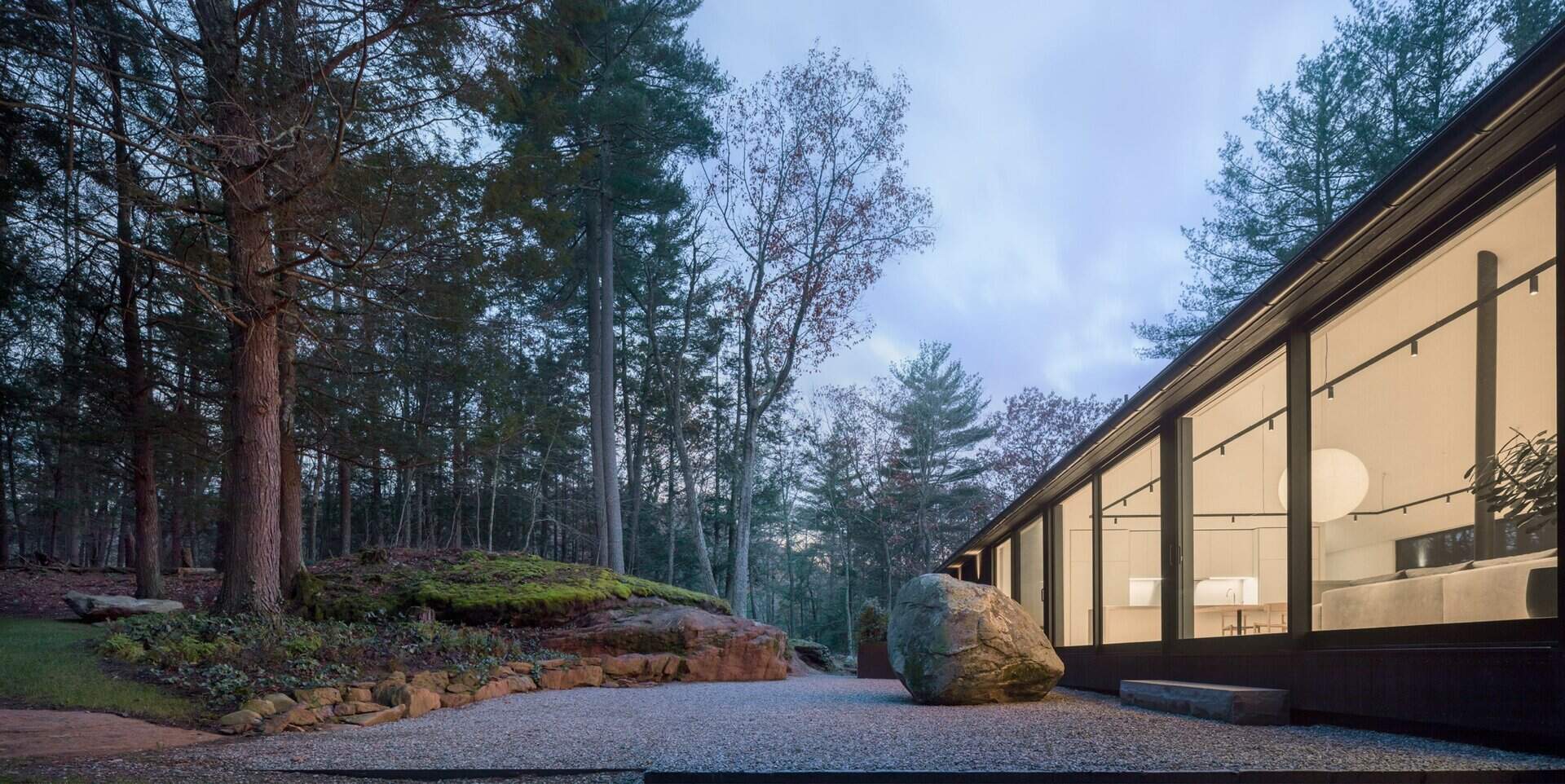
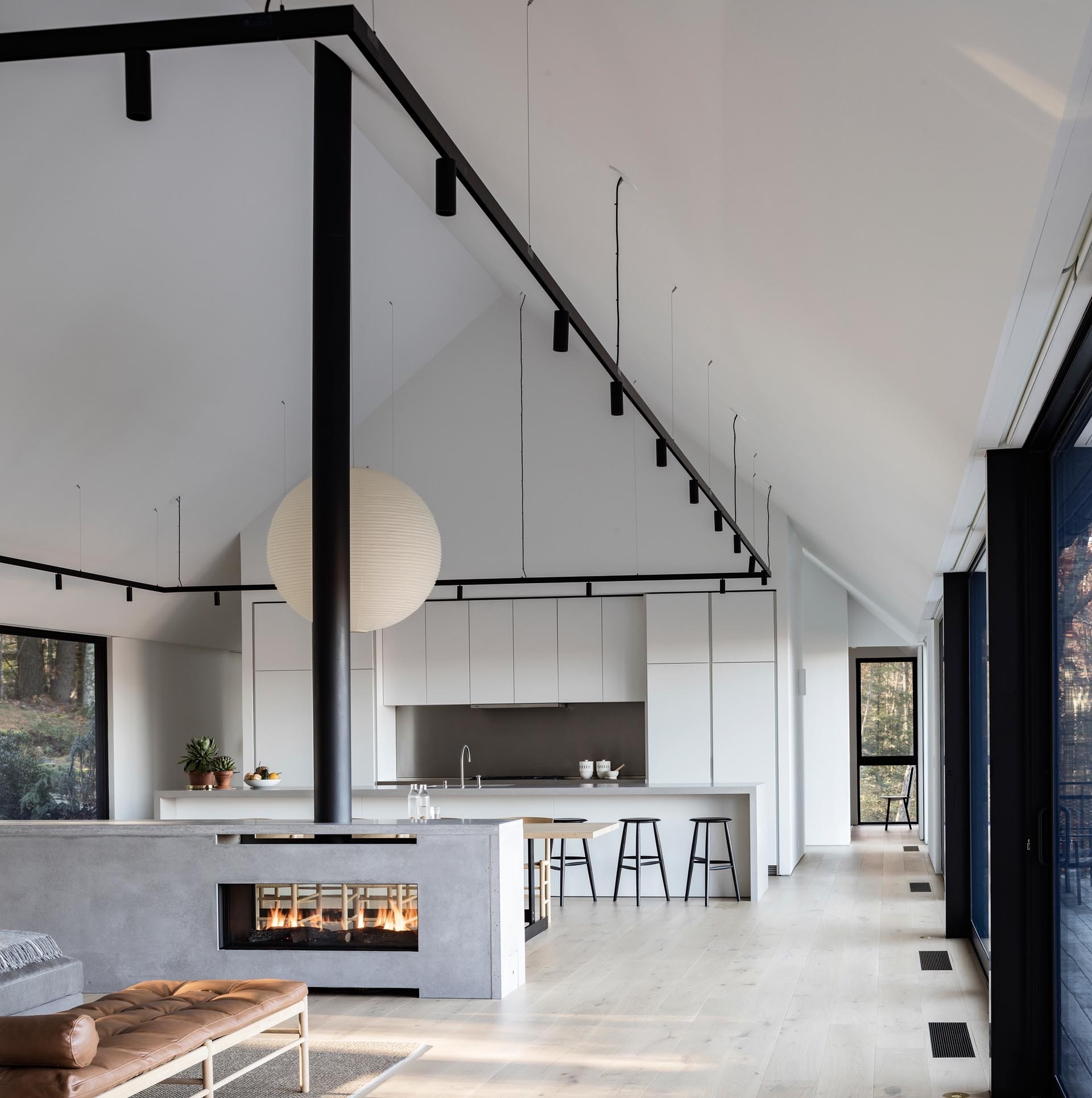
Inside, the living room, dining room, and kitchen unfold as a single great room. Glass walls and sliding doors line each side of the space, allowing light to move freely across the interior and offering long views into the trees.
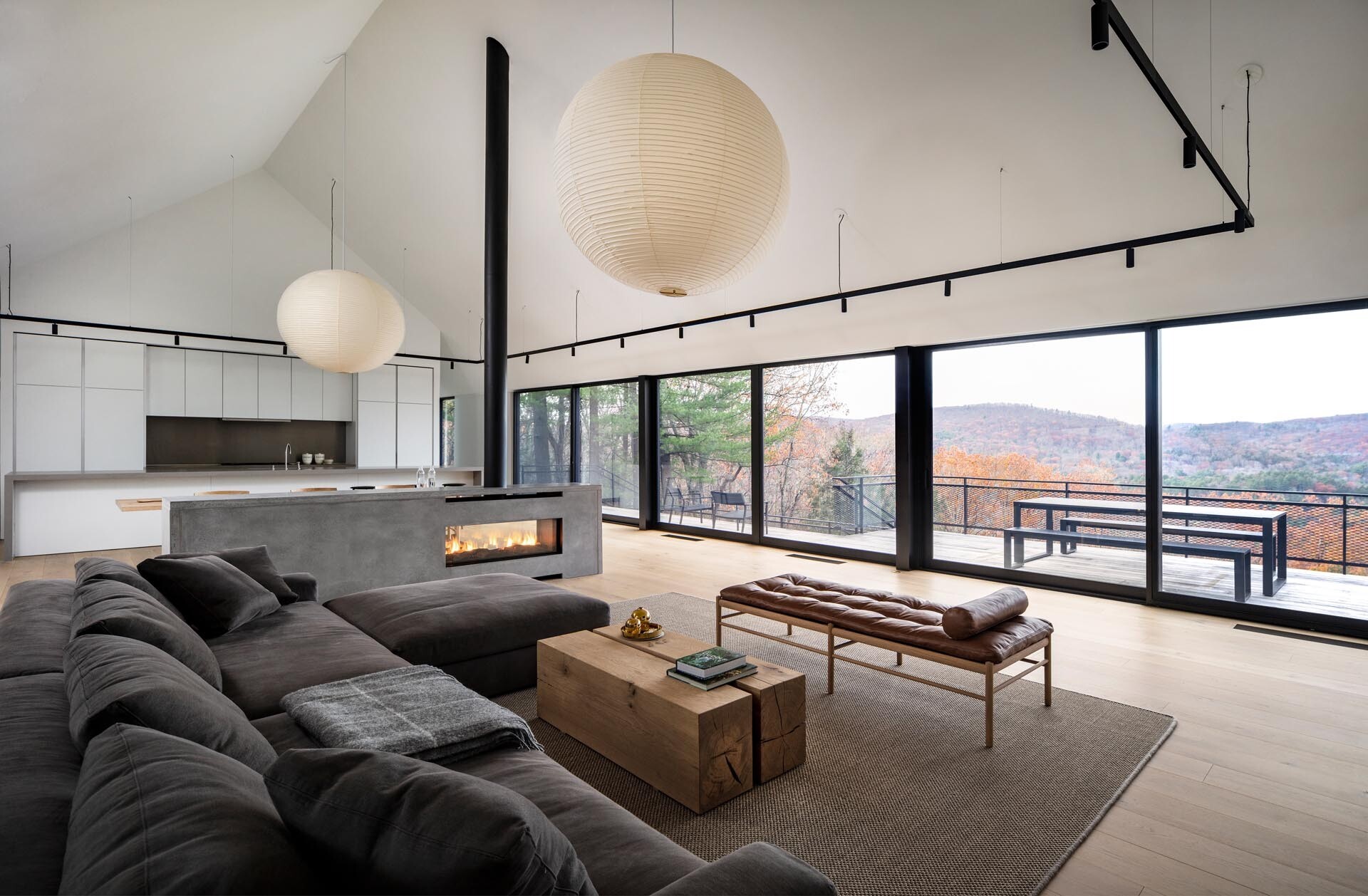
A see through fireplace with a concrete surround separates the living area from the dining room and kitchen without closing either off. The gesture creates definition while preserving openness. On cooler evenings, the fire becomes a focal point visible from both sides.
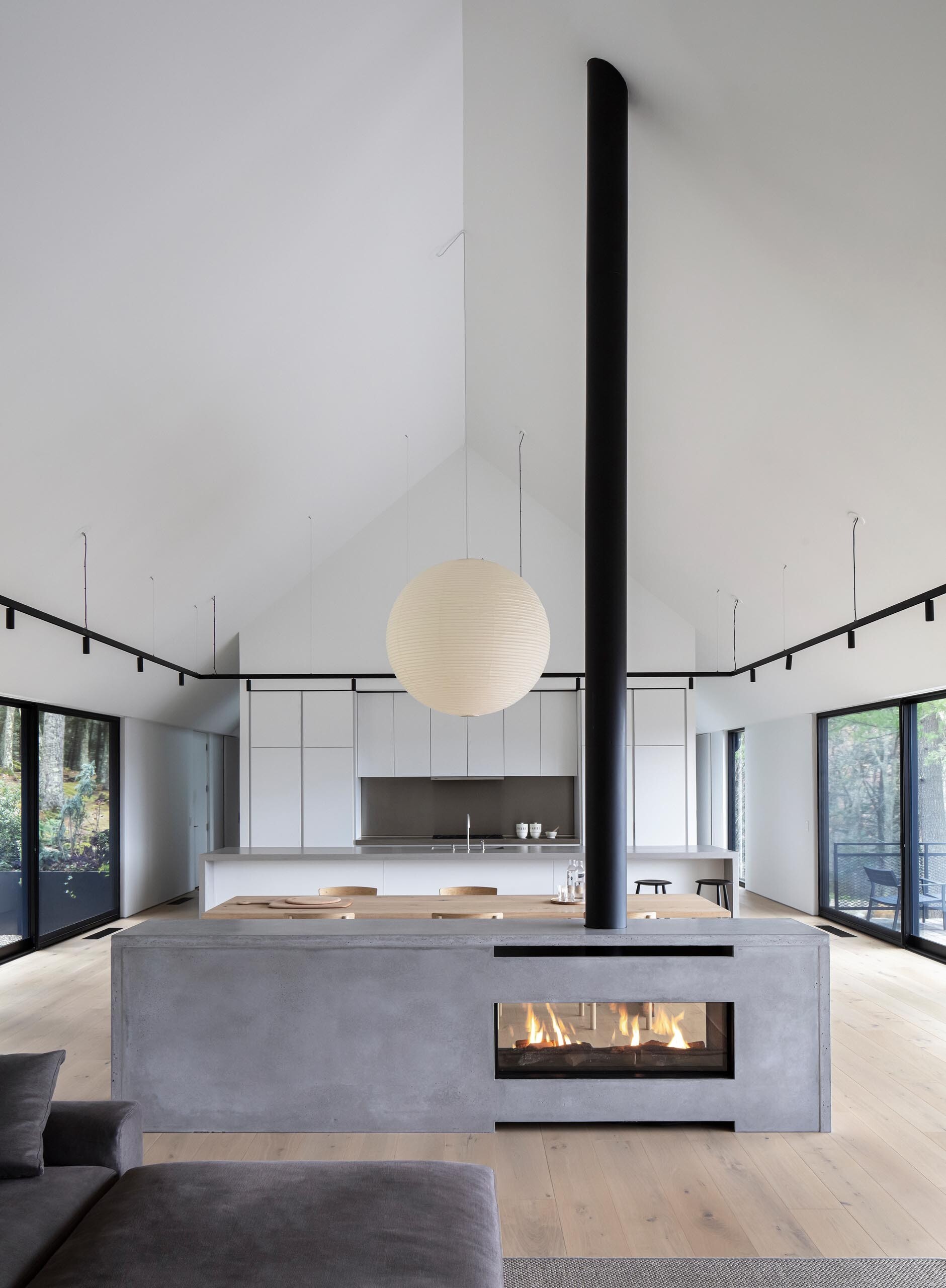
The kitchen continues the restrained palette. White walls echo the white minimalist cabinetry and the long island, while black accents provide contrast.
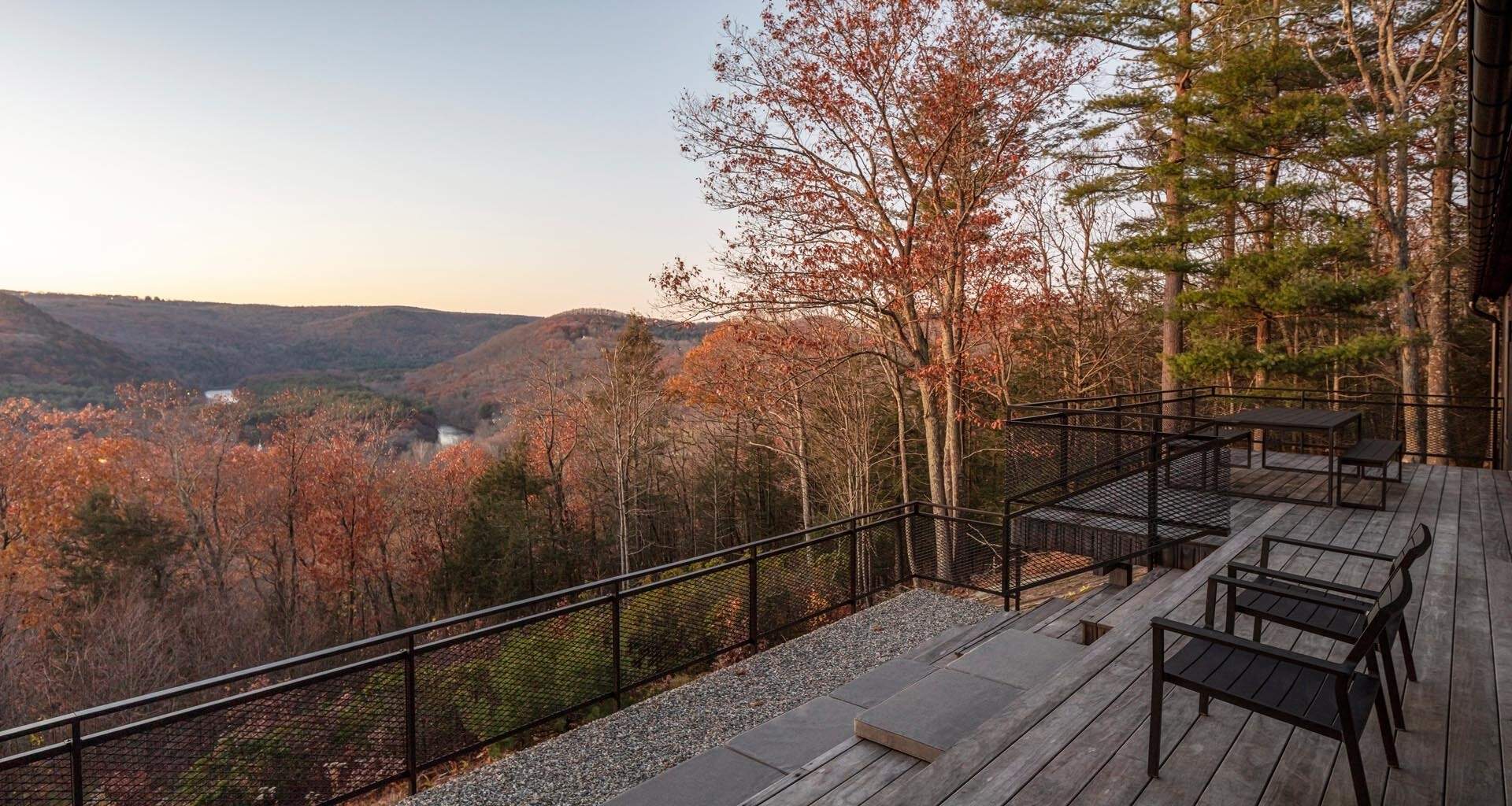
Just beyond the main living space, a large deck steps outward in multiple levels. From here, the view stretches uninterrupted across the trees and the broader landscape of the valley. The layered deck mirrors the natural topography, reinforcing the relationship between house and ledge.
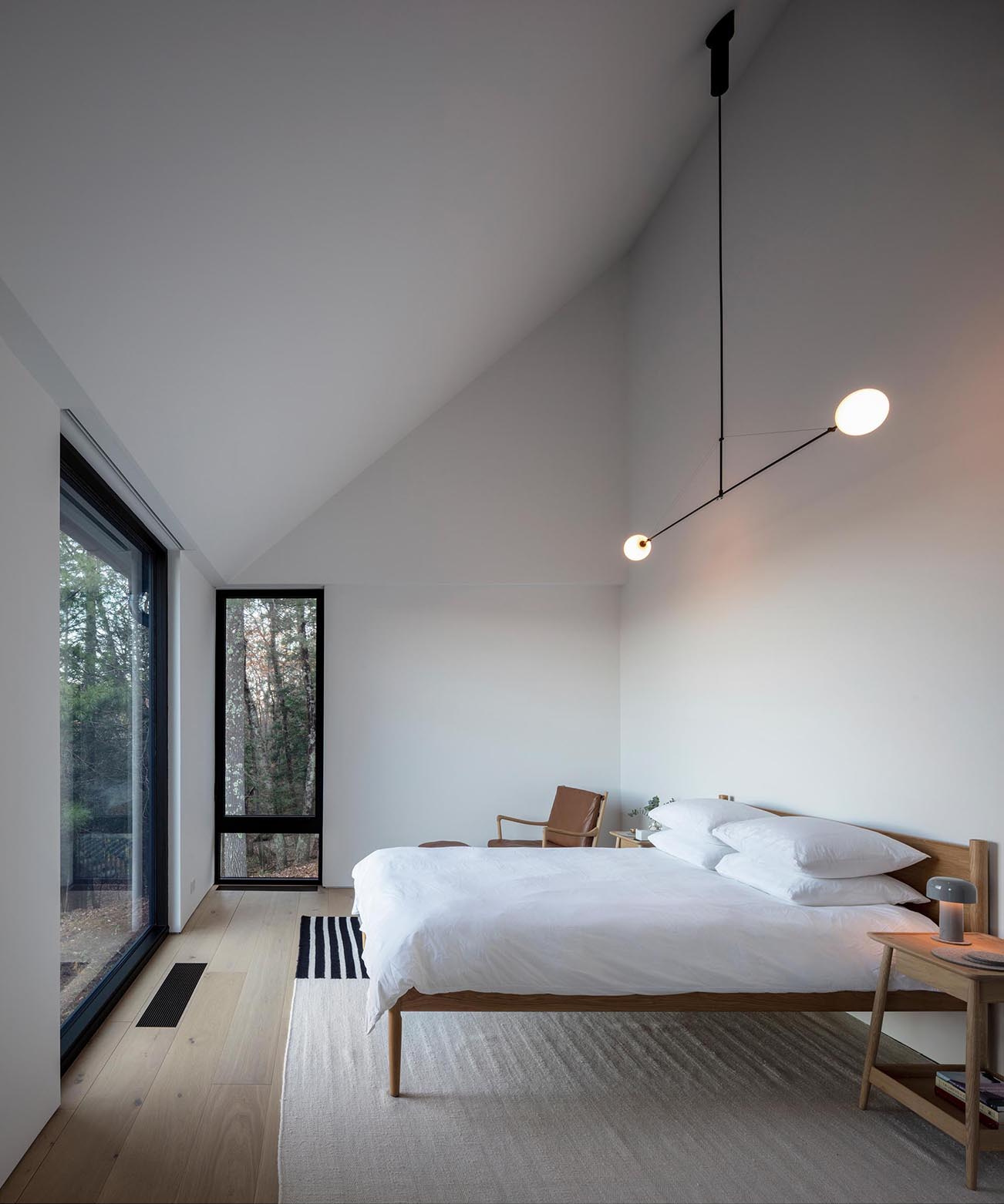
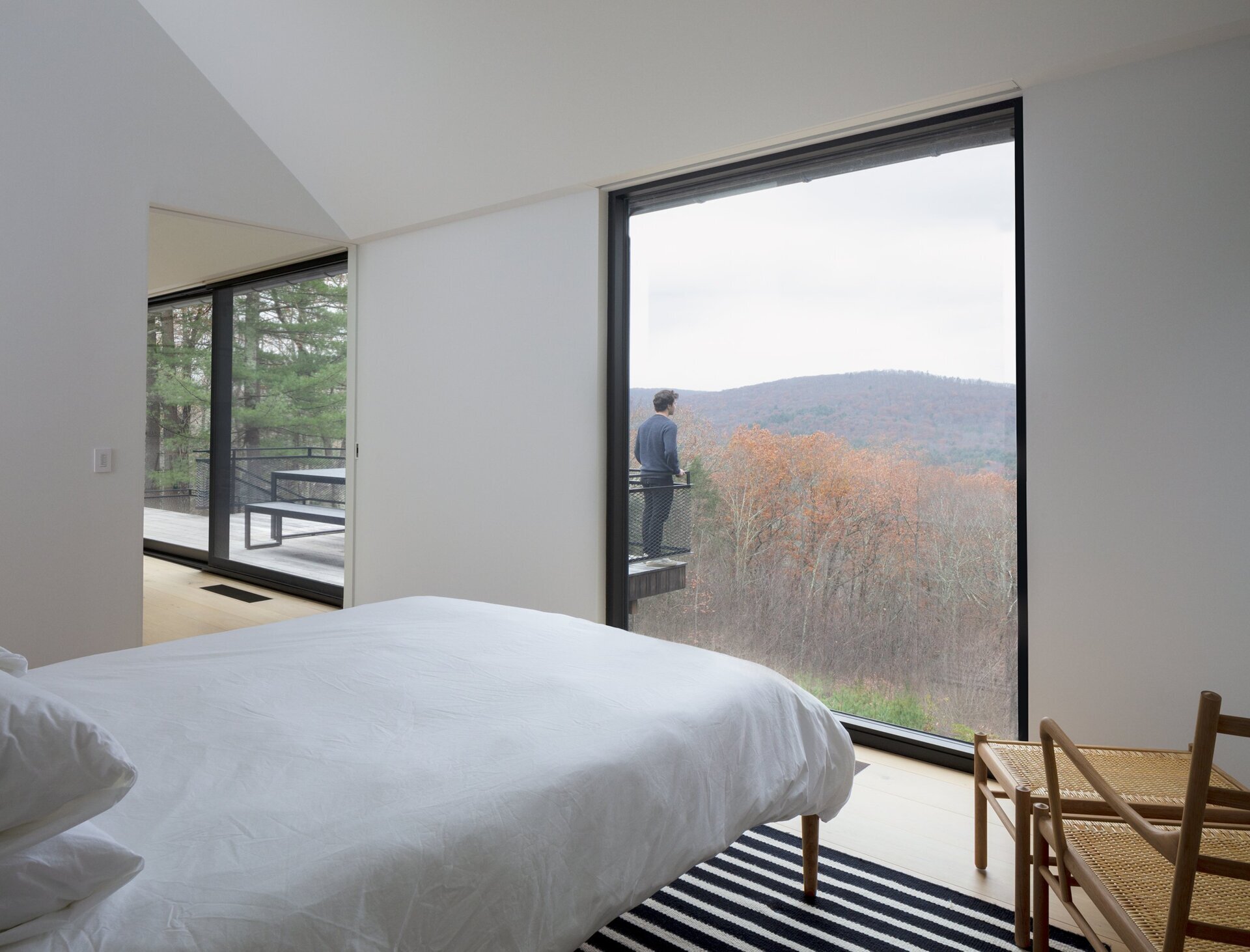
Back inside, the primary bedroom continues the minimalist approach. Plain white walls and a sloped ceiling keep the room feeling open, while black framed windows punctuate the space. A wood bed frame, side tables, and an armchair introduce warmth and texture, a reminder of the trees just beyond the glass.
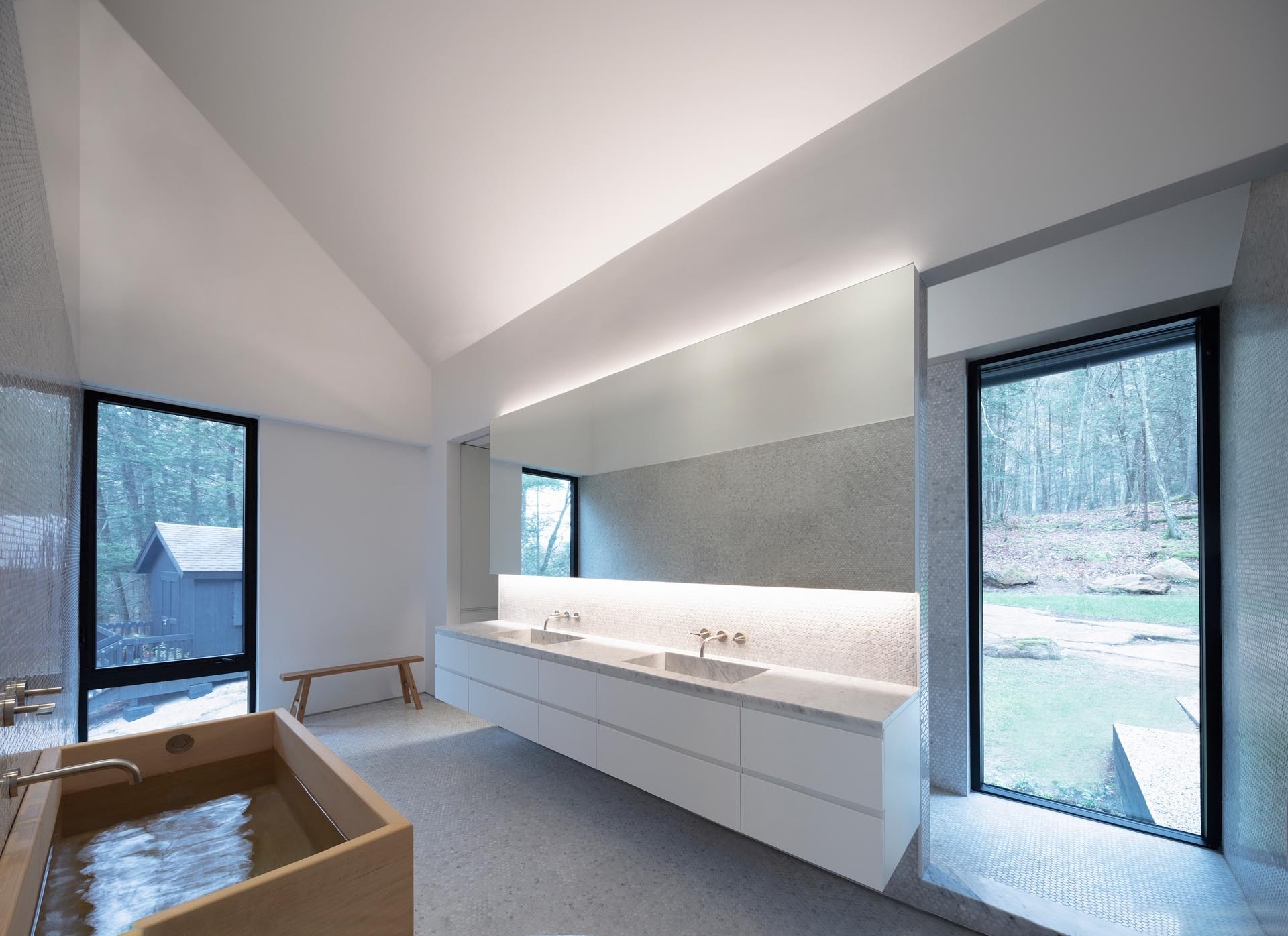
In the primary bathroom, a wood soaking tub anchors the room. Behind the double sink floating vanity, hidden lighting glows from behind the mirror.
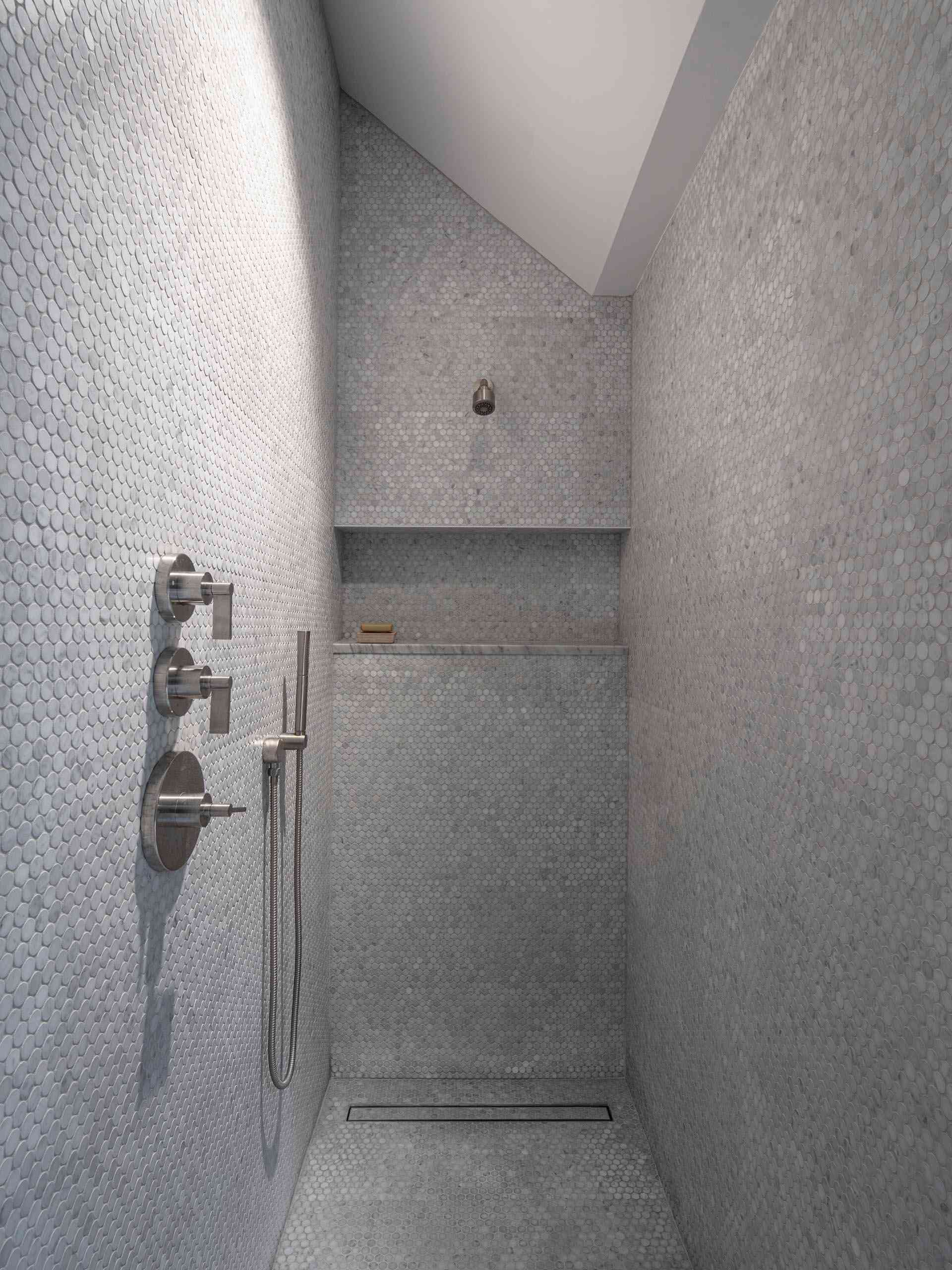
Concealed behind the vanity wall is a shower wrapped in floor to ceiling grey penny tiles. A shower niche holds bottles and soaps, and a linear drain runs along the floor, maintaining the clean geometry of the space.
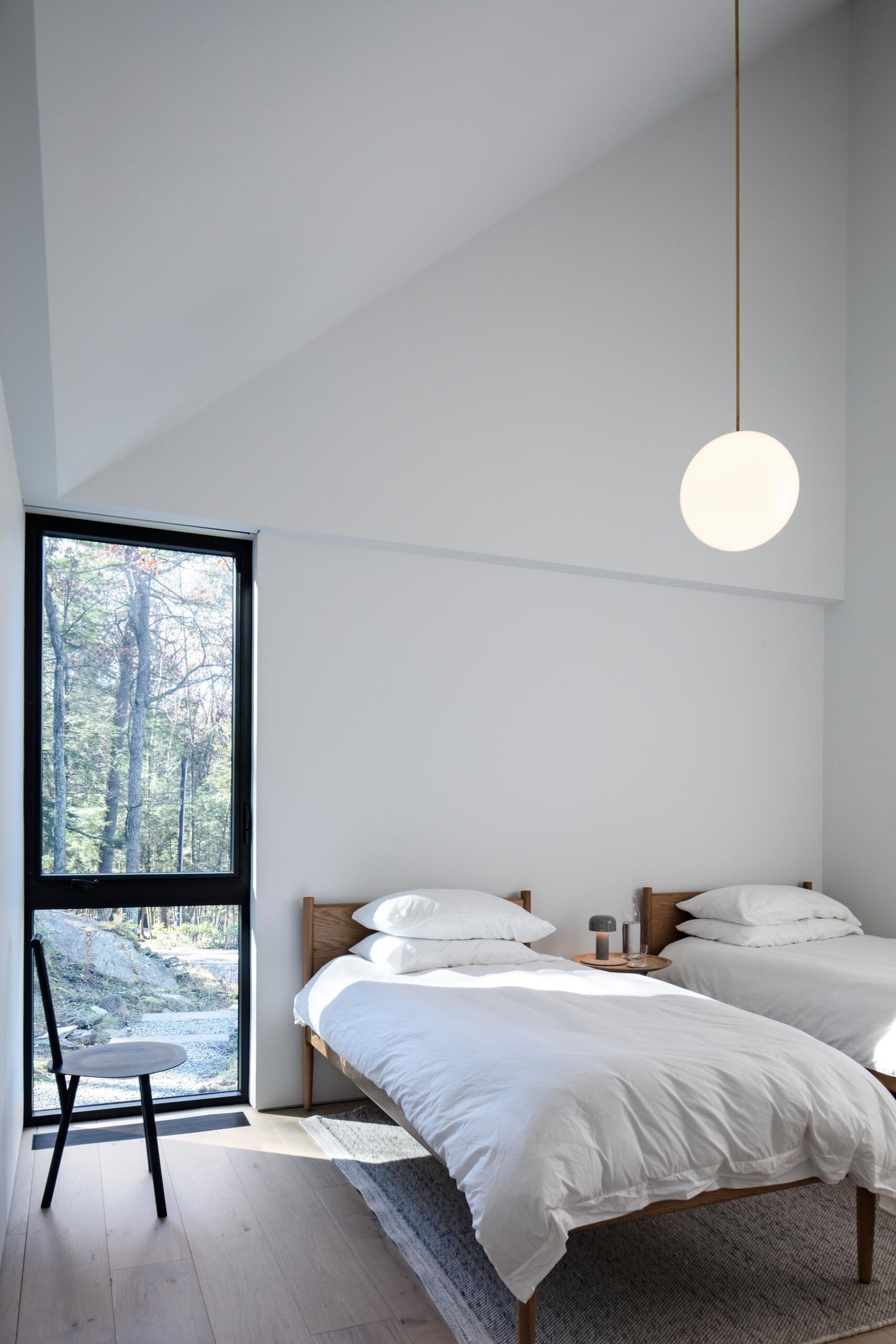
A guest bedroom has been furnished simply, with two beds, a chair, a rug, and a single pendant light suspended from the ceiling.
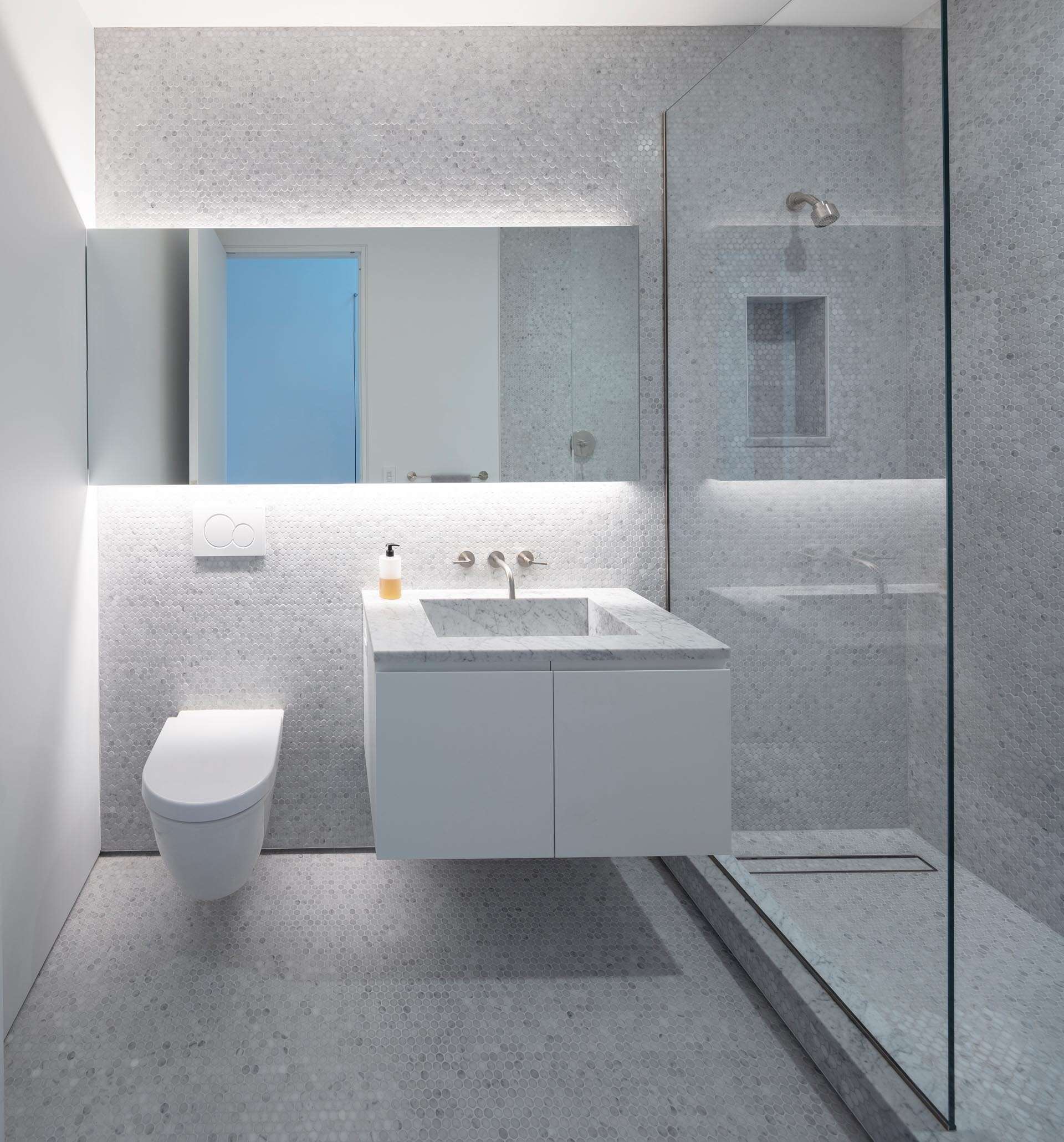
In the second bathroom, the same grey penny tiles cover both walls and floor, echoing the primary bath. Here, a glass shower screen separates the shower from the vanity area, maintaining continuity while adapting the layout.
The floor plan reveals how the primary suite occupies one end of the house, while the guest bedrooms sit at the opposite end. Between them, the central living area acts as a social bridge, bringing owners and visitors together before allowing retreat to more private quarters.
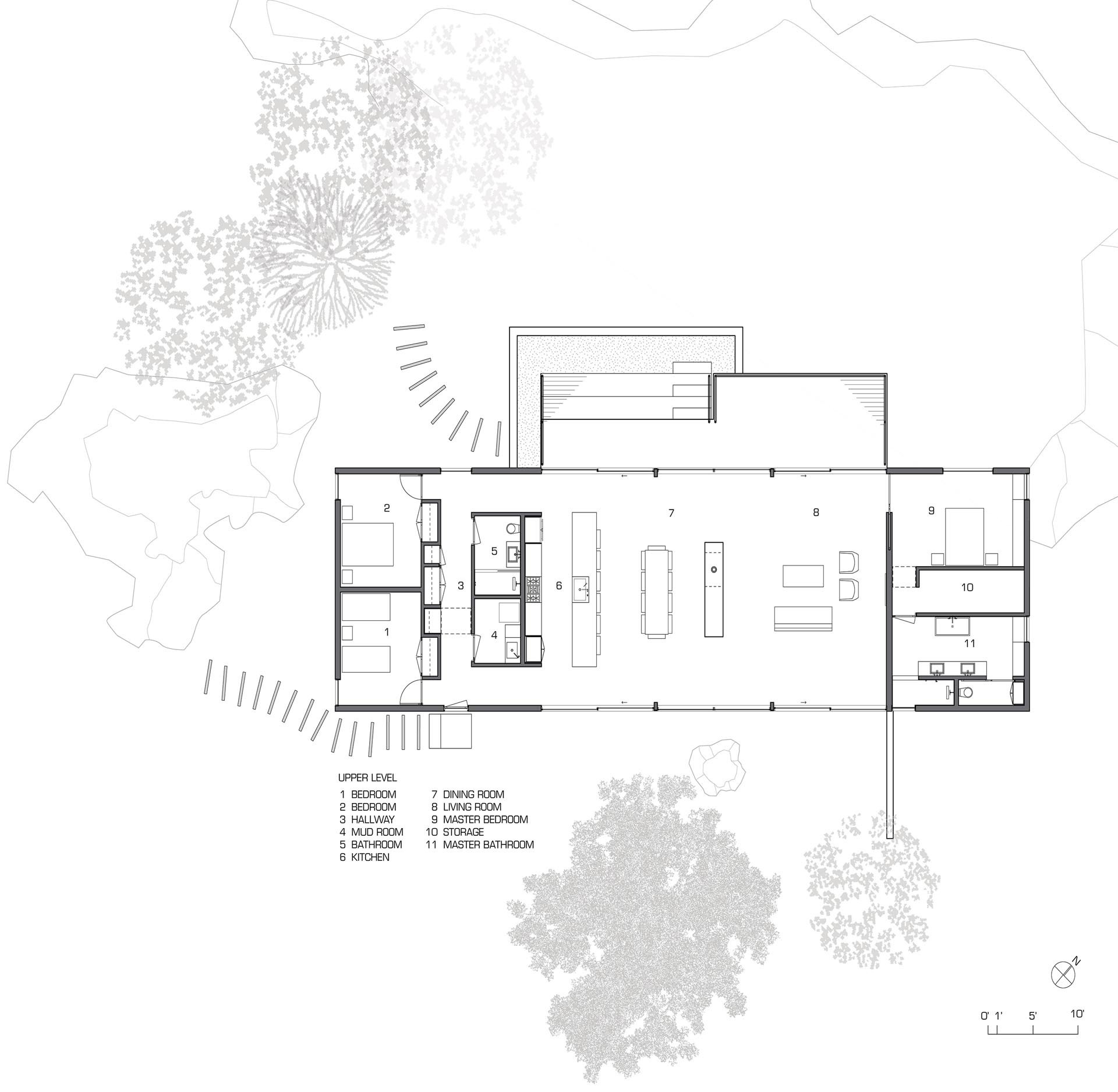
Inspired by the simple forms of regional barns and a historic covered bridge, the Ledge House opens its core to light and air, emerging as a contemporary expression of the Connecticut Valley.