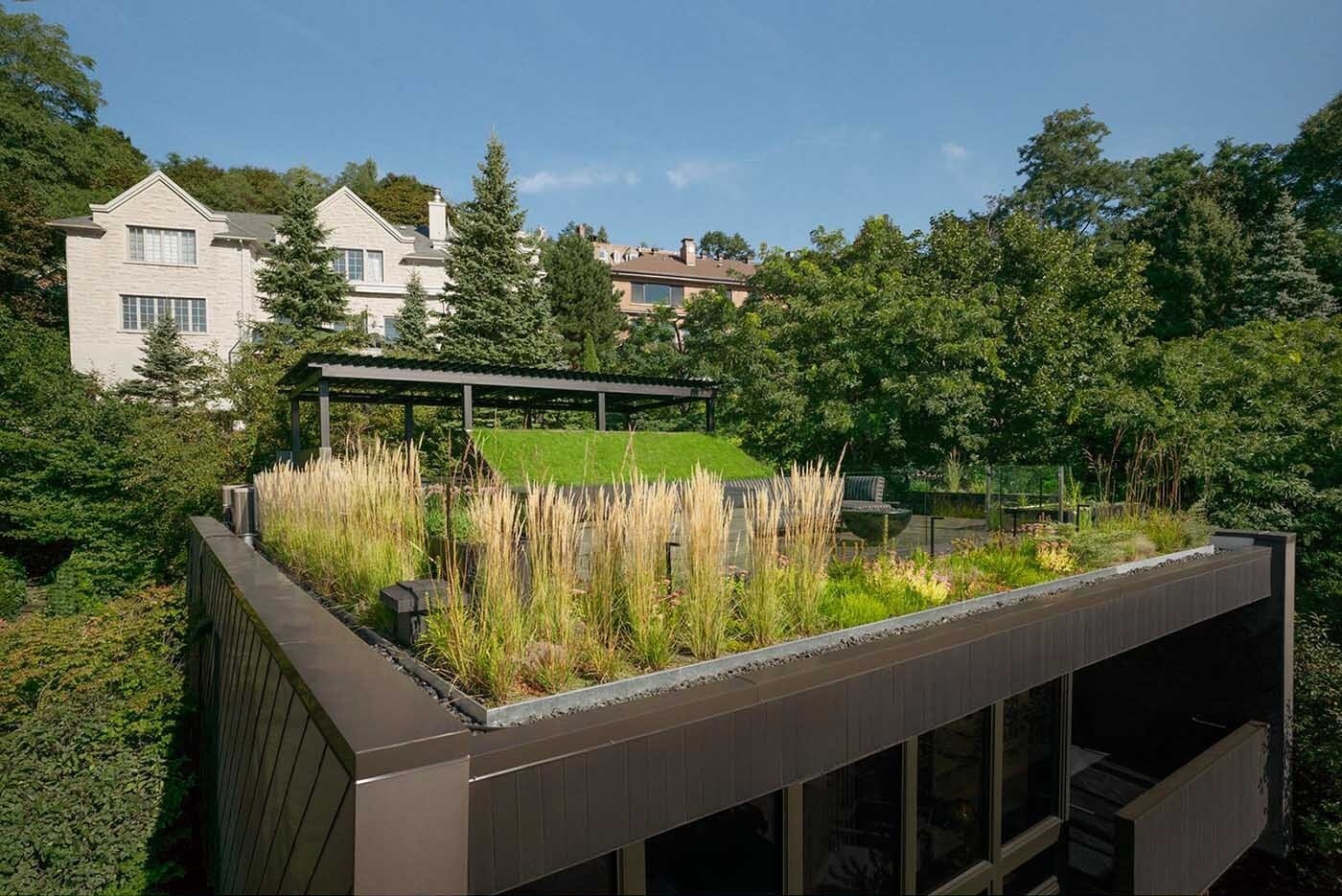
In a quiet corner of Montreal, a flat rooftop that once sat unused has been reworked into something far more engaging. The transformation comes through a collaboration between MYTO design d’espaces vivants designer Martine Brisson and landscape architect Roxanne Miller, who approached the space as both a garden and a place to spend time. What emerged is a rooftop that feels active without feeling crowded, shaped by plant life, material choices, and a clear focus on how the space would be used day to day.
The roof spans 1,965 square feet, offering enough room to move beyond a simple terrace. Instead of treating it as a single open plane, the design introduces layers through planting, decking, and built elements. The result is a space that shifts as you move through it, with moments that feel more open and others that feel slightly tucked away within the greenery.
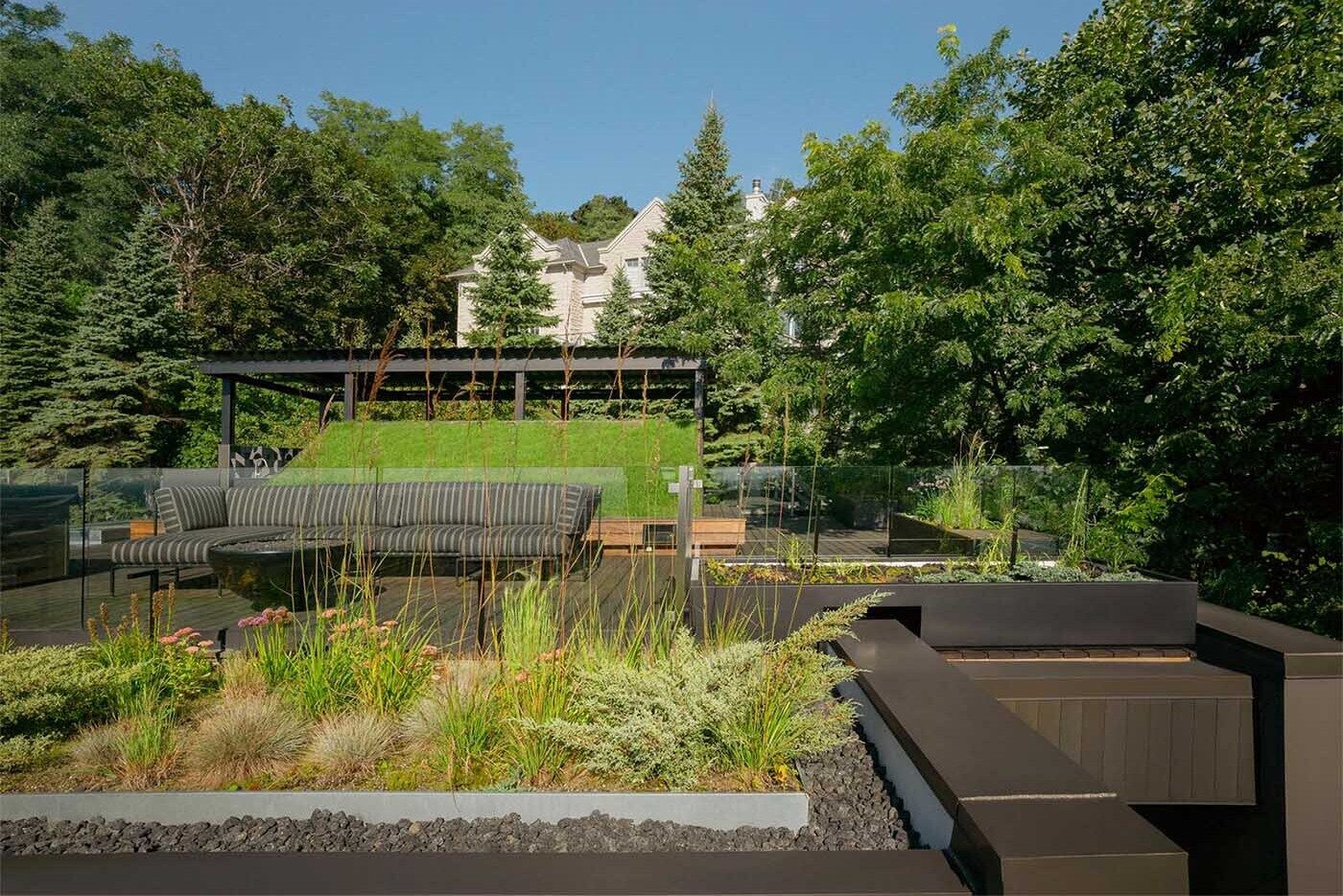
From the start, the homeowner wanted a setting that could host people while also making the most of the surrounding views. The layout supports that balance. There is room to gather, to sit, and to move, all while the city remains visible in the background.
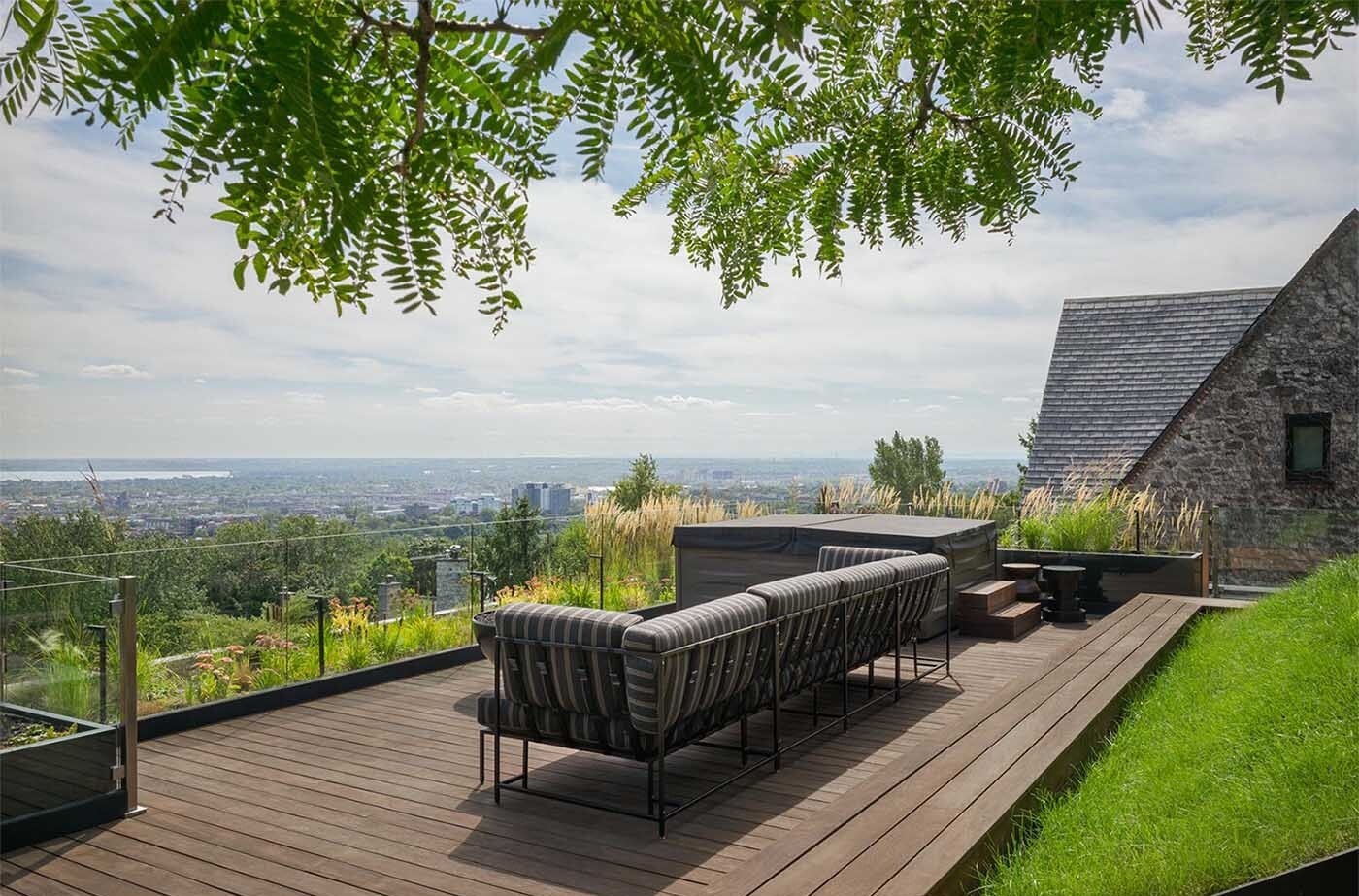
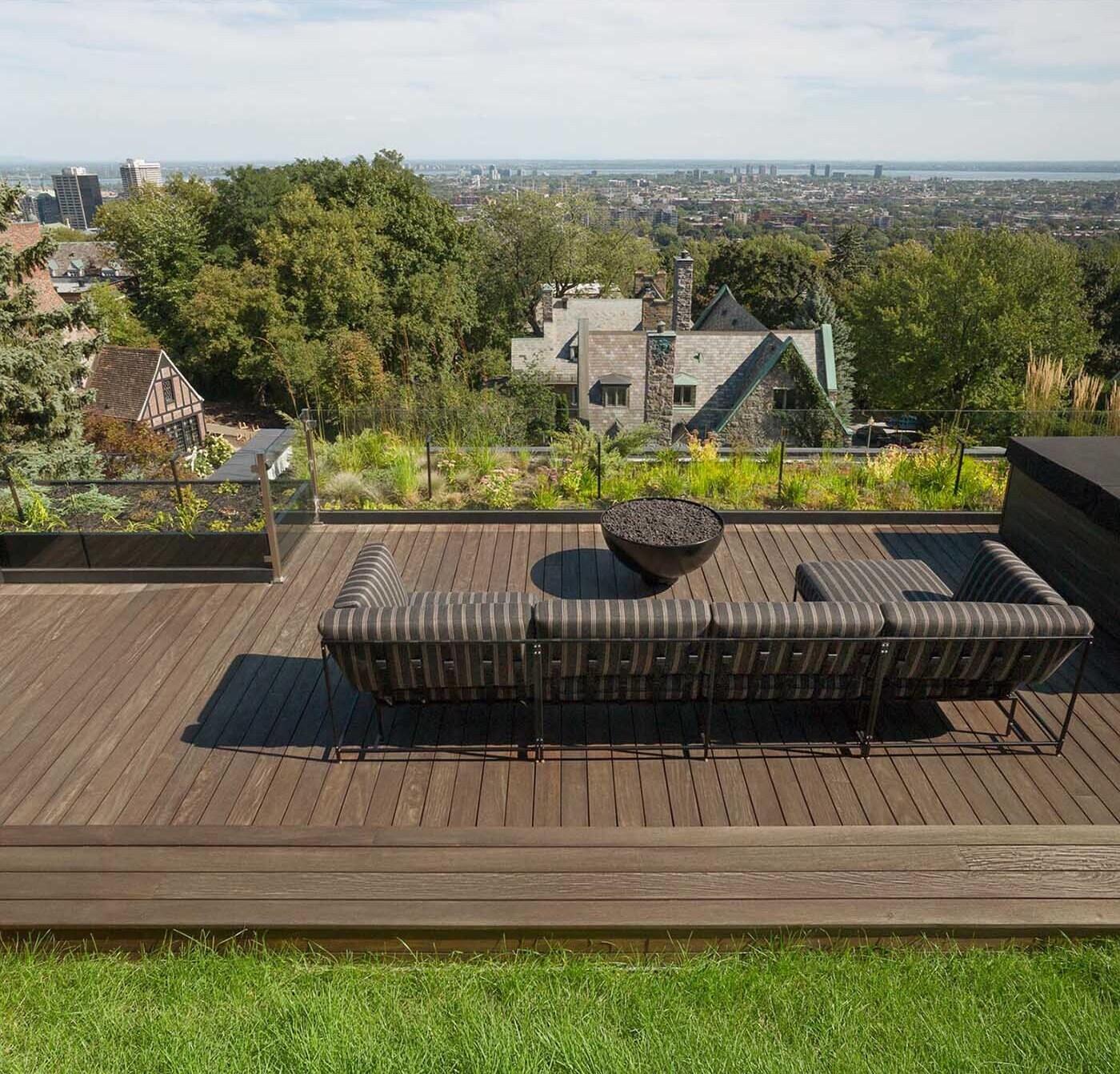
Underfoot, ipe wood forms the deck, bringing a sense of weight and durability to the space. Known for its density and strength, the material also adds a deeper tone that contrasts with the lighter elements around it. The decking anchors the design, giving the planting and furnishings a stable base while introducing a subtle richness in color.
One of the more practical challenges came from the rooftop itself. Ventilation equipment needed to remain accessible but out of sight. The solution appears as a series of wood-clad planters that double as concealment. Built with durability in mind, these elements integrate the technical components into the design. In colder months, sections of the wood can be removed to prevent damage, allowing the planters to adapt with the seasons.
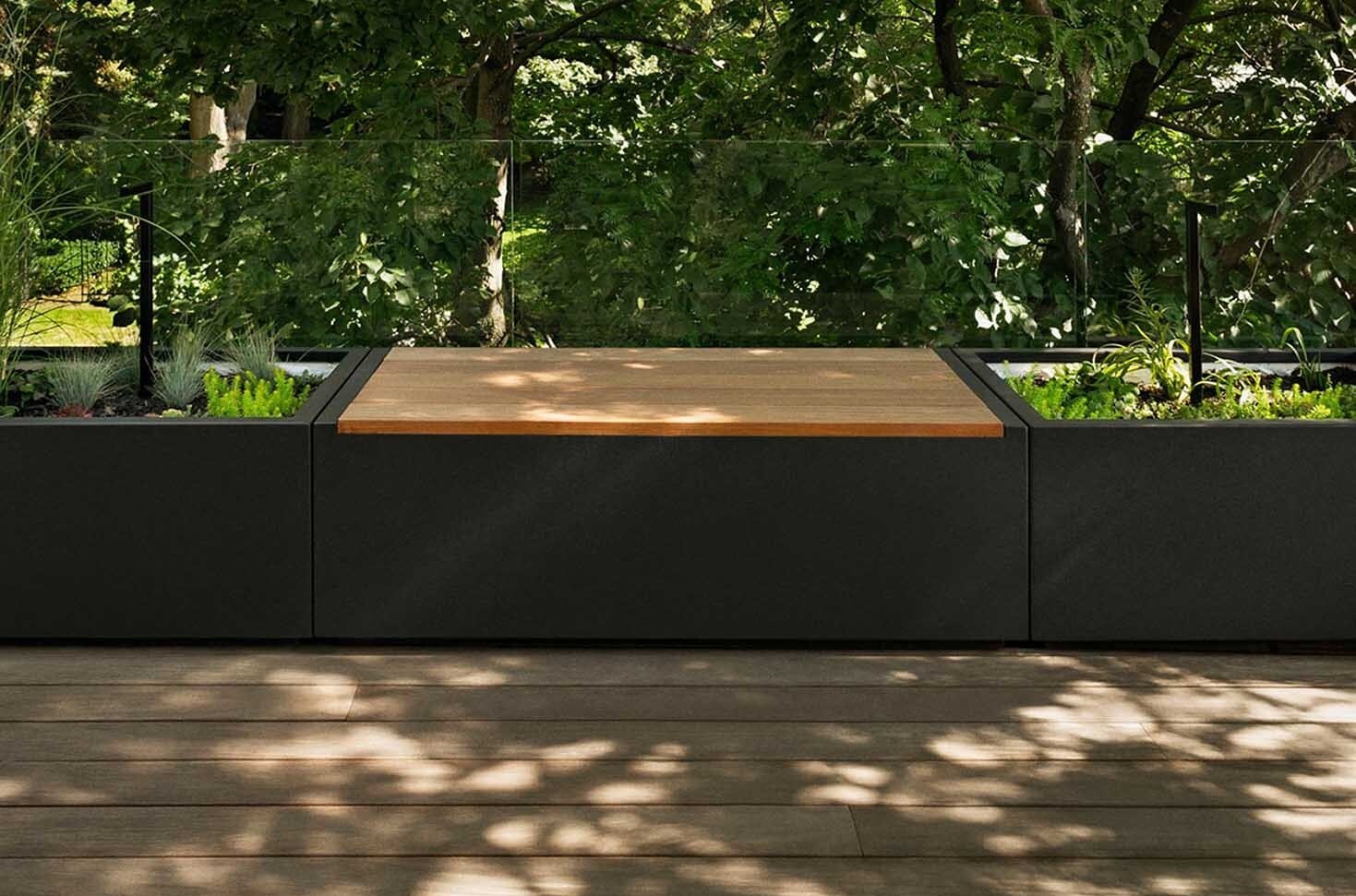
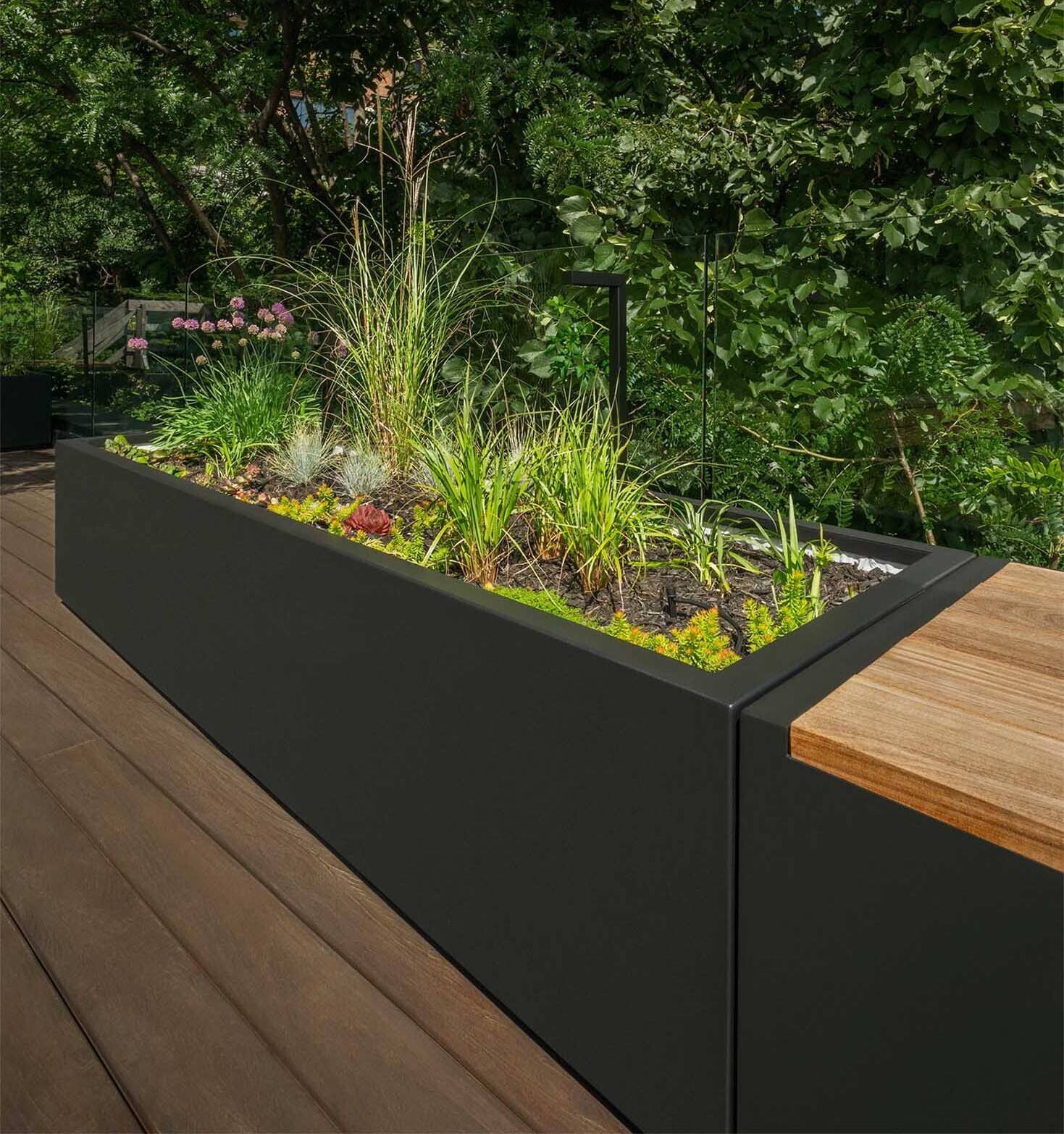
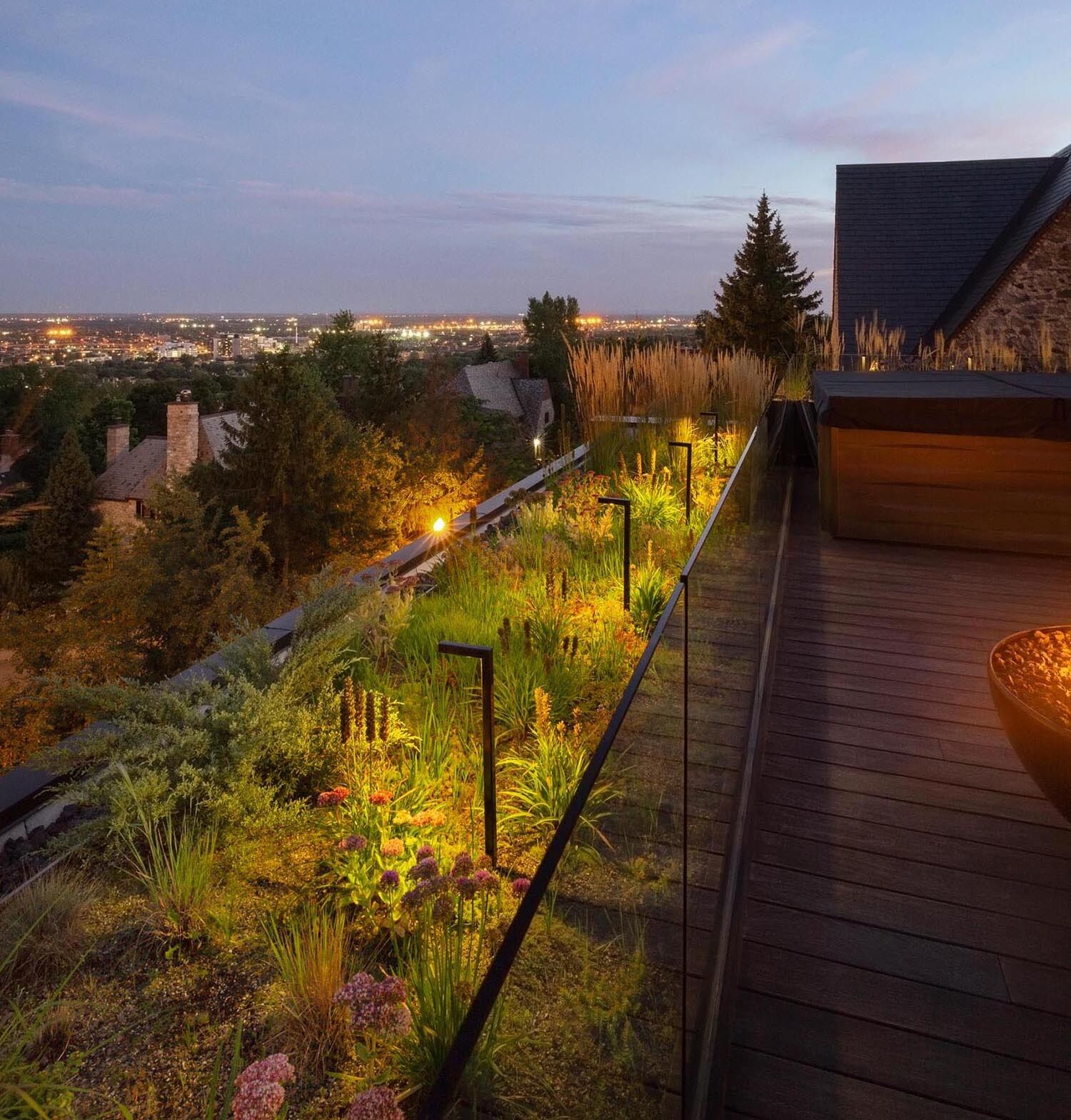
Safety is handled with a light touch. A low wall of transparent glass runs along the perimeter, offering protection without blocking the view. It creates a clear edge to the terrace while maintaining a visual openness that keeps the horizon in sight from nearly every angle.
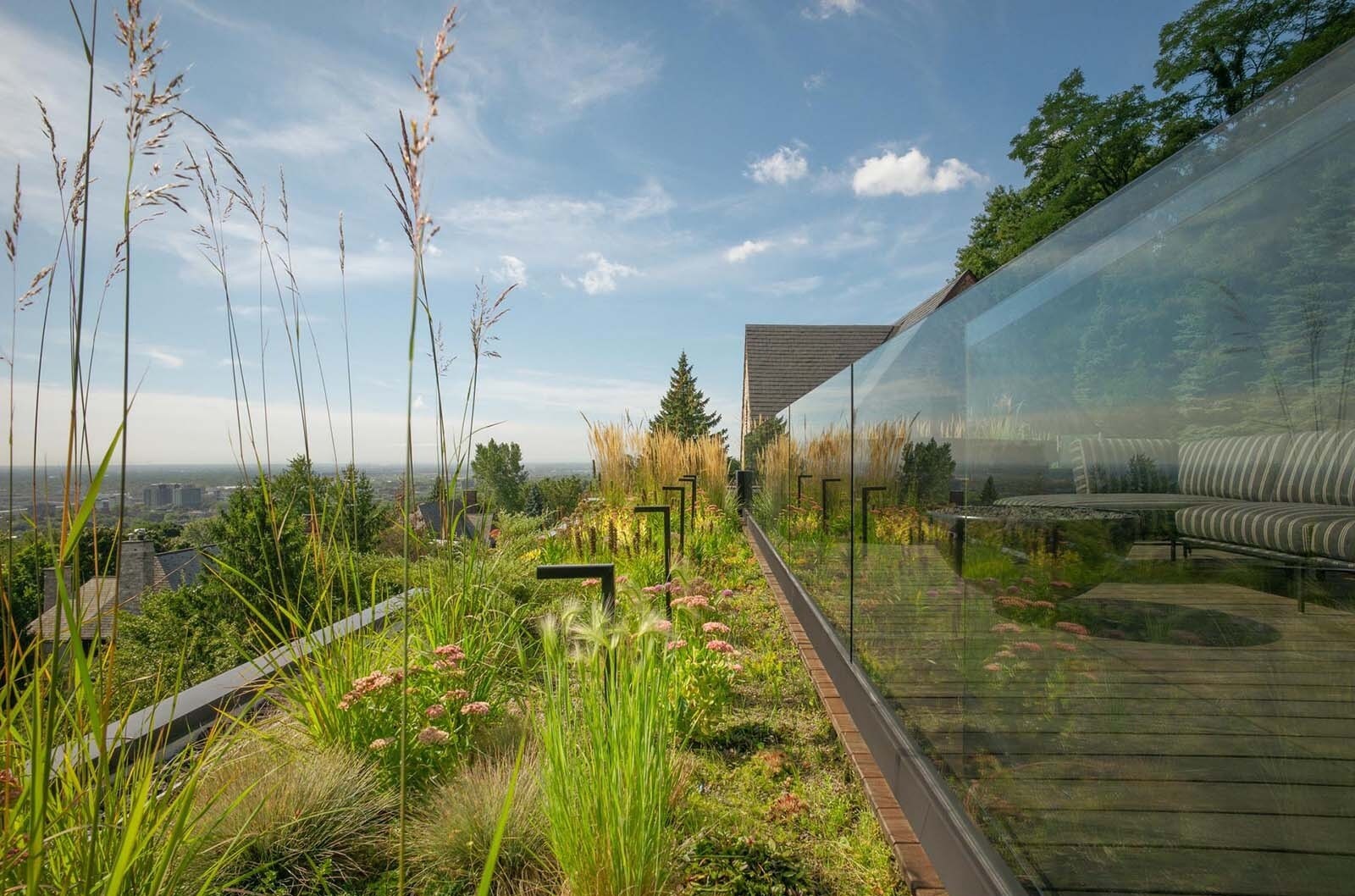
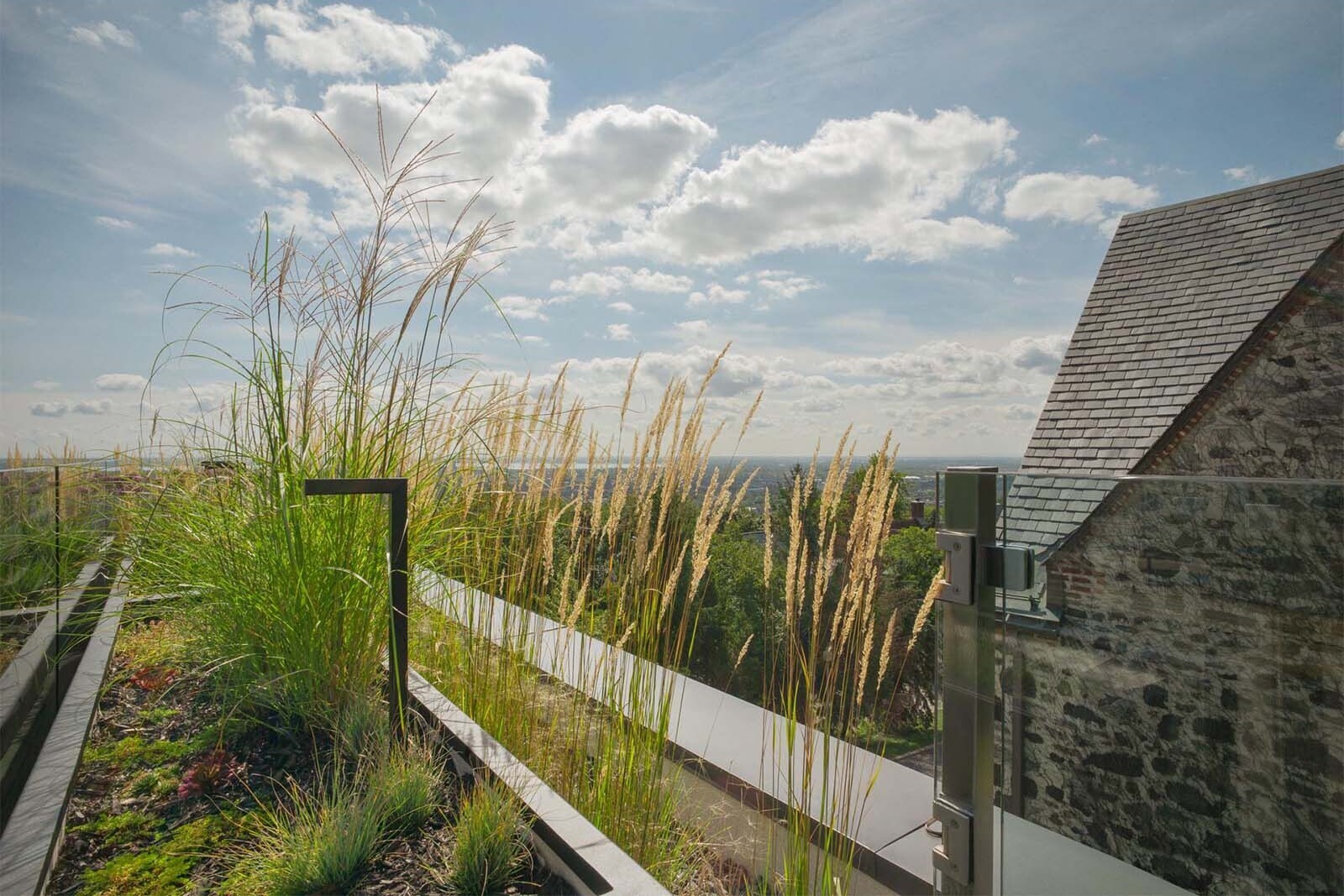
Along the outer edge, planting becomes more expressive. Colorful, slightly untamed vegetation, including wildflowers, softens the structure of the space. The mix introduces movement and variation, shifting with the seasons and adding a sense of looseness that contrasts with the more defined elements like the decking and planters.
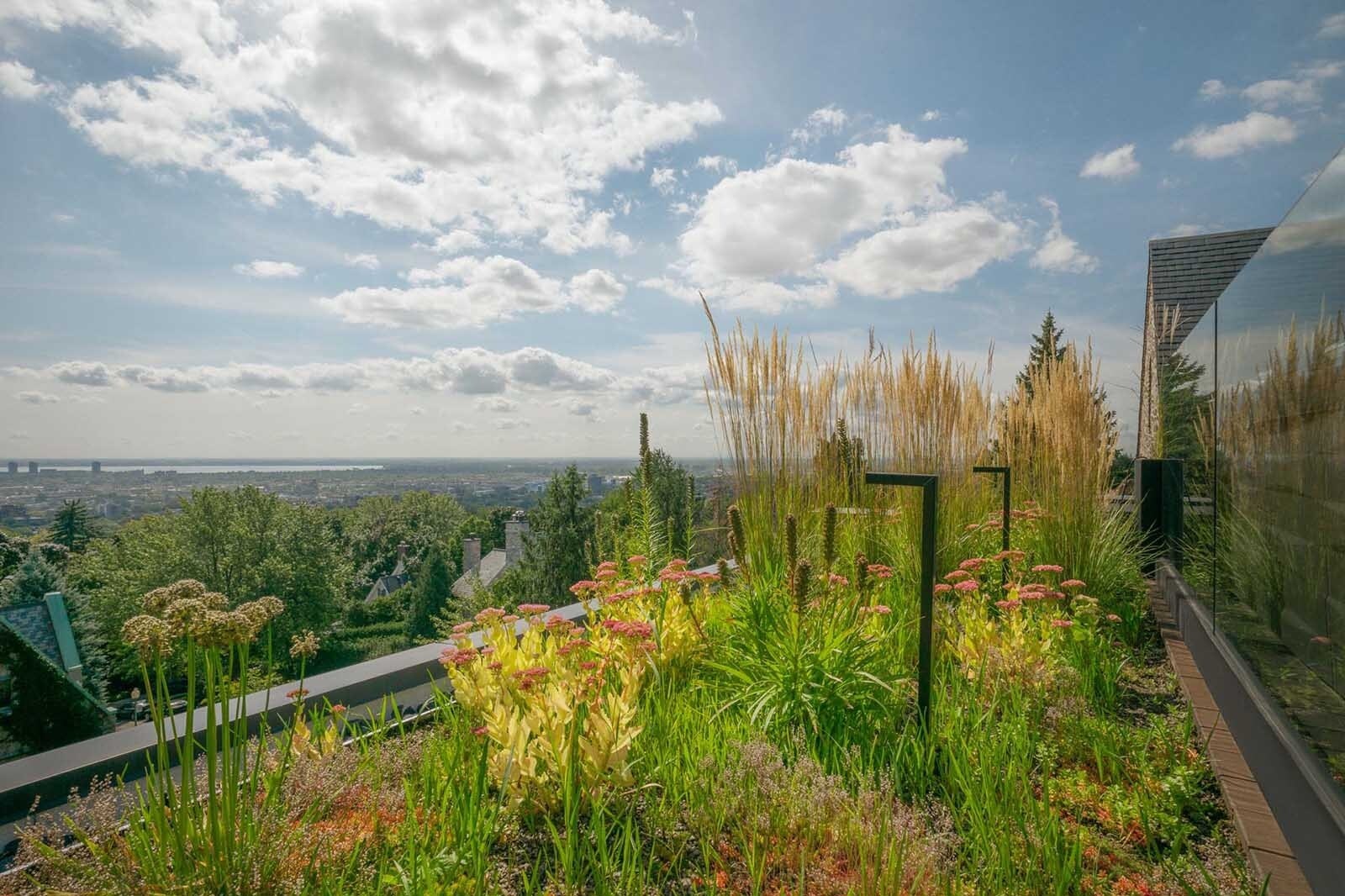
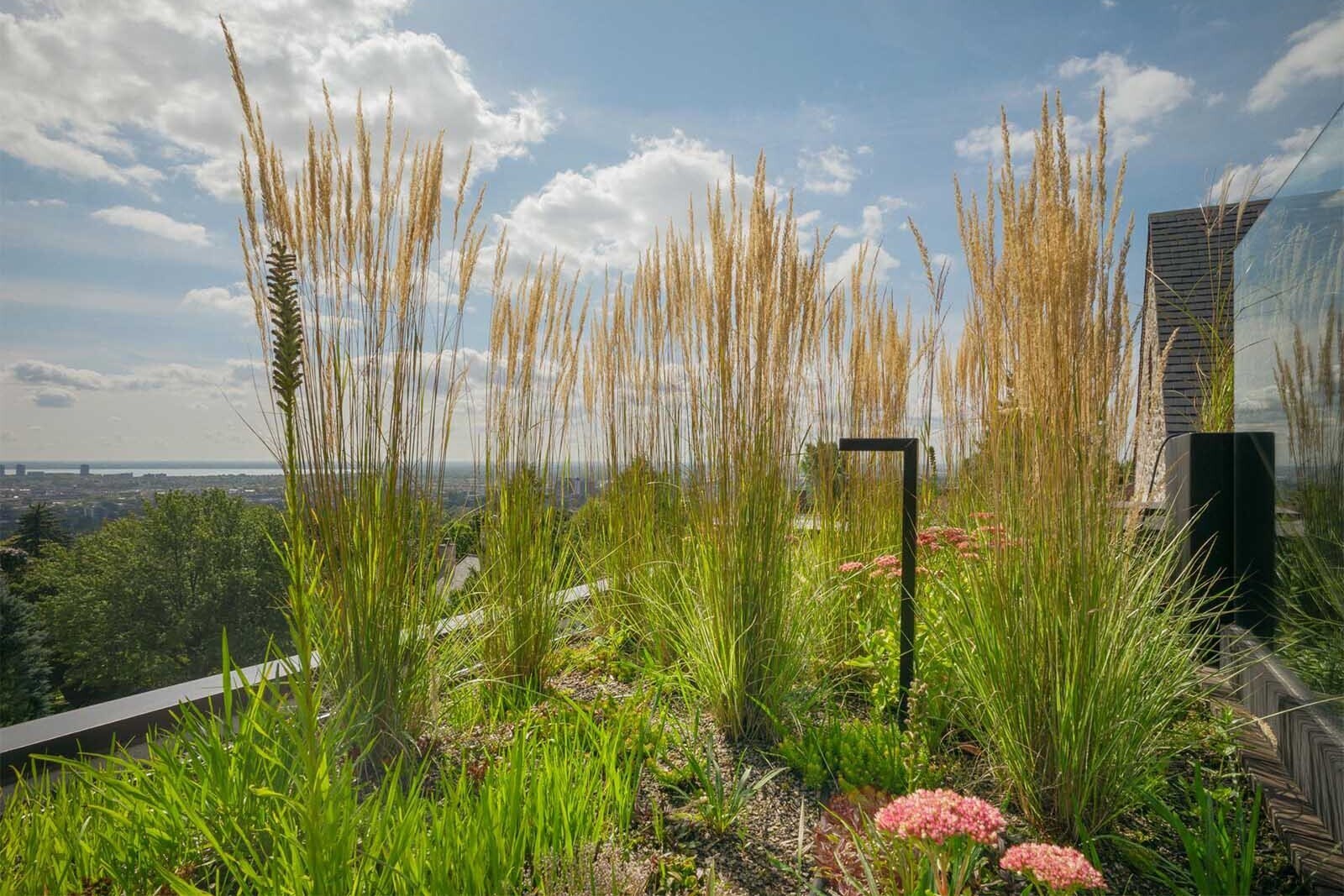
Lighting is kept minimal but precise. Subtle fixtures are placed to highlight the planting and guide movement after dark without overwhelming the space. As evening sets in, the terrace takes on a different tone. The plants are softly lit, and the atmosphere becomes more enclosed, even as the city continues beyond.
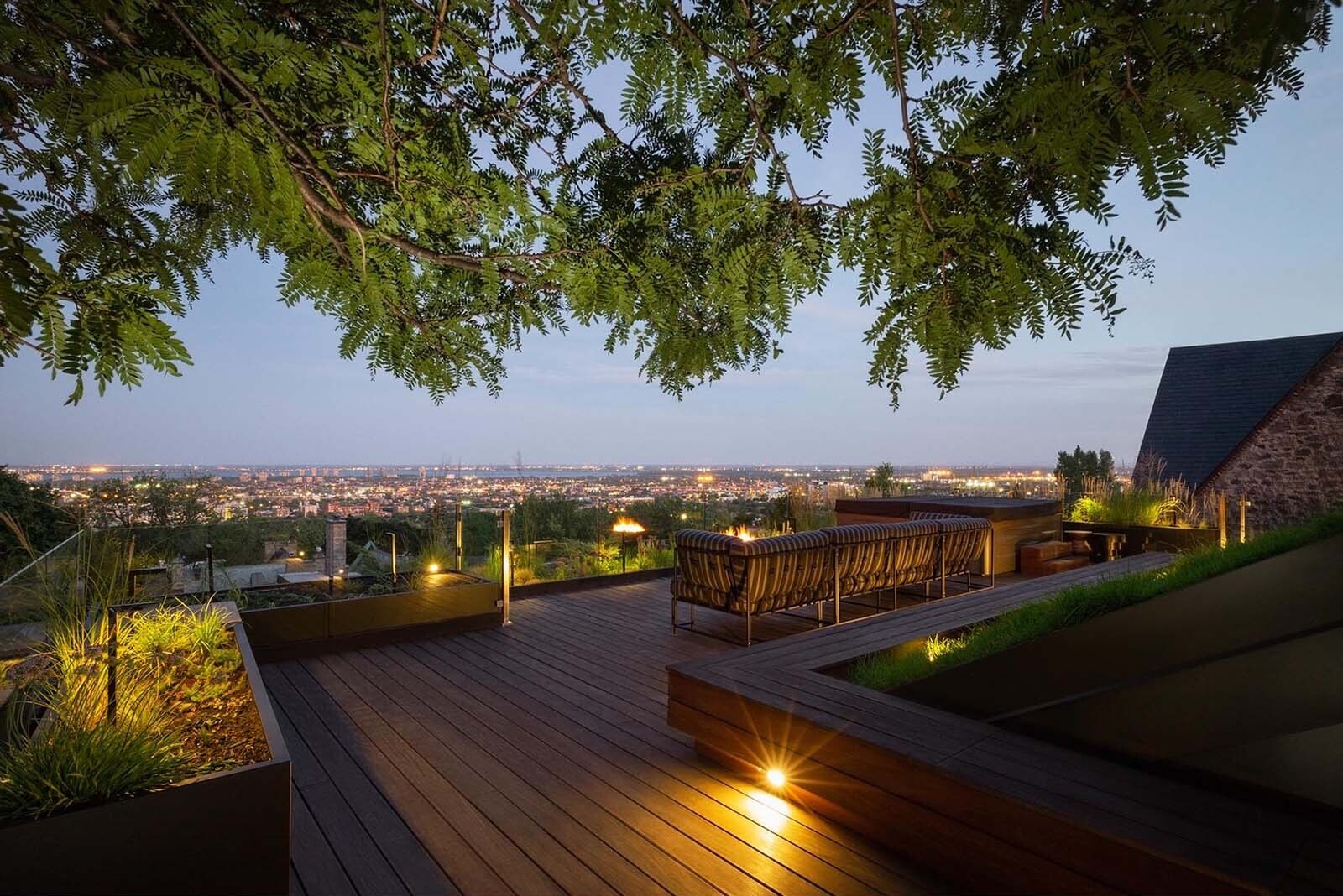
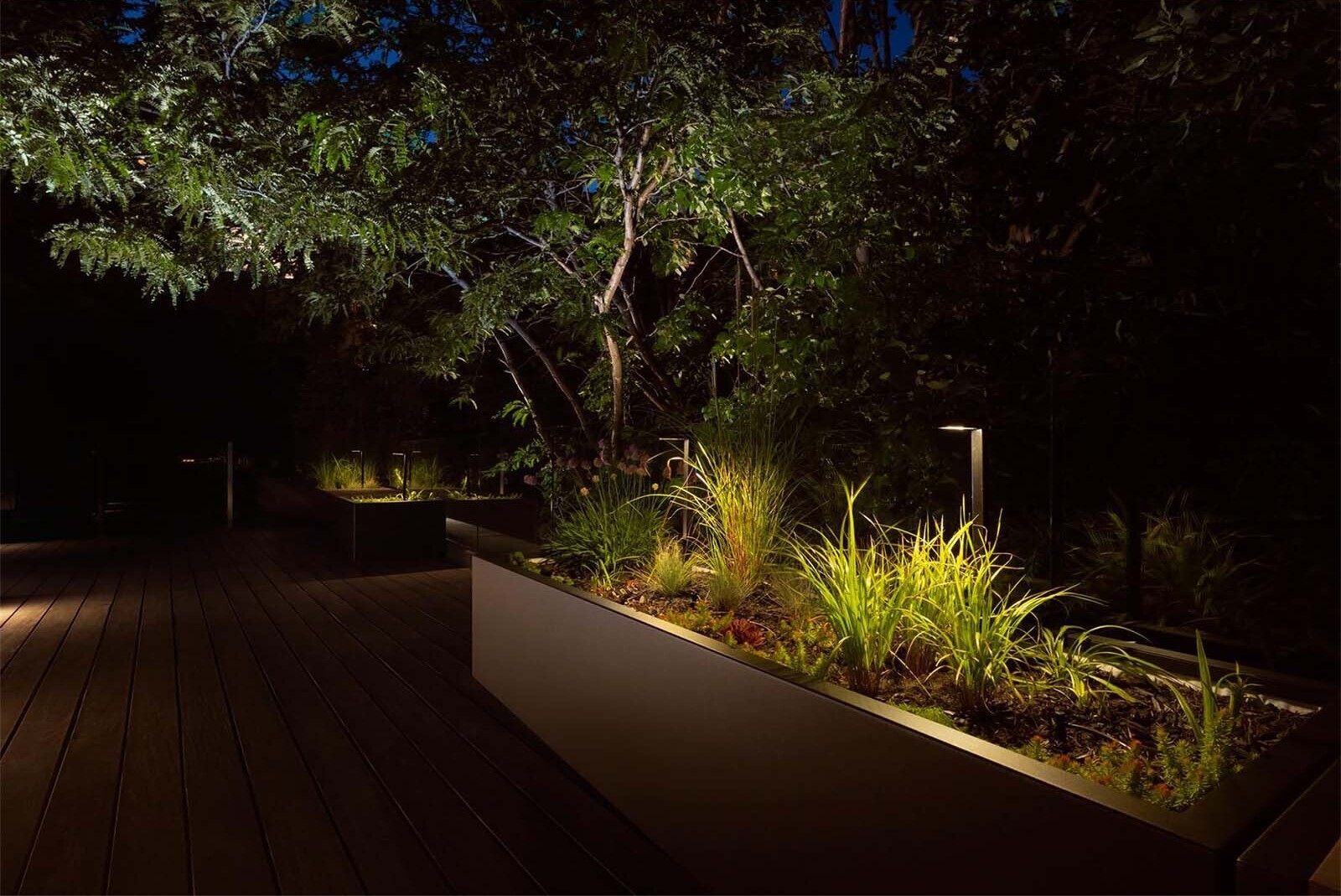
After sunset, the space settles into a quieter rhythm. The combination of planting, materials, and light creates a setting that feels warm and intimate. It invites people to stay a little longer, whether gathered with others or alone with the view.
Projects like this show how overlooked spaces can take on new purpose with the right approach. By working within the limits of the structure and leaning into planting and material, the design turns a simple rooftop into a place people will return to again and again.