
In Washington’s Skagit Valley, a couple set out to build a home that could support daily life on their farmland while staying highly energy efficient.
Working with Designs Northwest Architects, they developed a two-bedroom house designed around rammed earth construction, solar power, and passive heating.
The result is a home built with 24-inch-thick walls that combine structure, insulation, and long-term durability in one system.
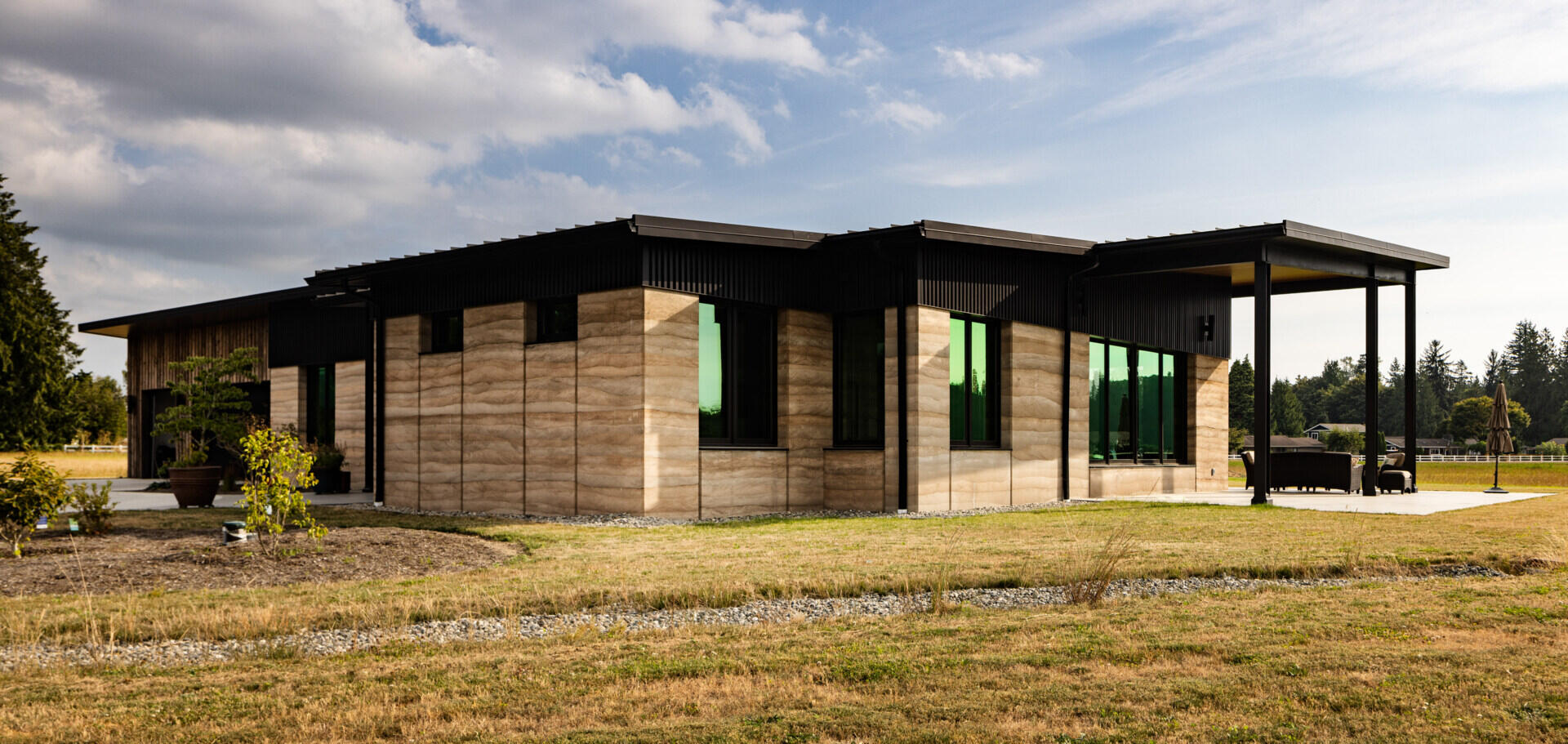
Shaped by the Skagit Valley Landscape
The Skagit Rammed Earth House sits on a residential lot next to 40 acres of farmland owned by the clients. The couple wanted a new home where they could live while managing their property.
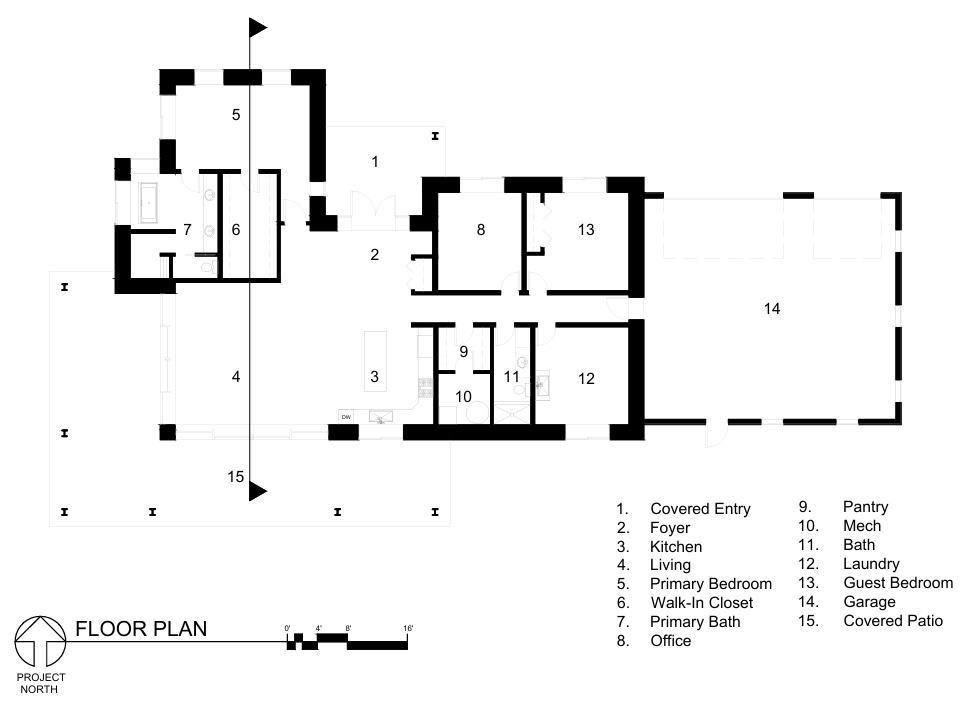
Designs Northwest Architects planned the house with its main axis facing southwest to capture territorial views and optimize solar orientation.
The building form uses a low-pitch shed roof designed to align with the rural character of the surrounding farmland.
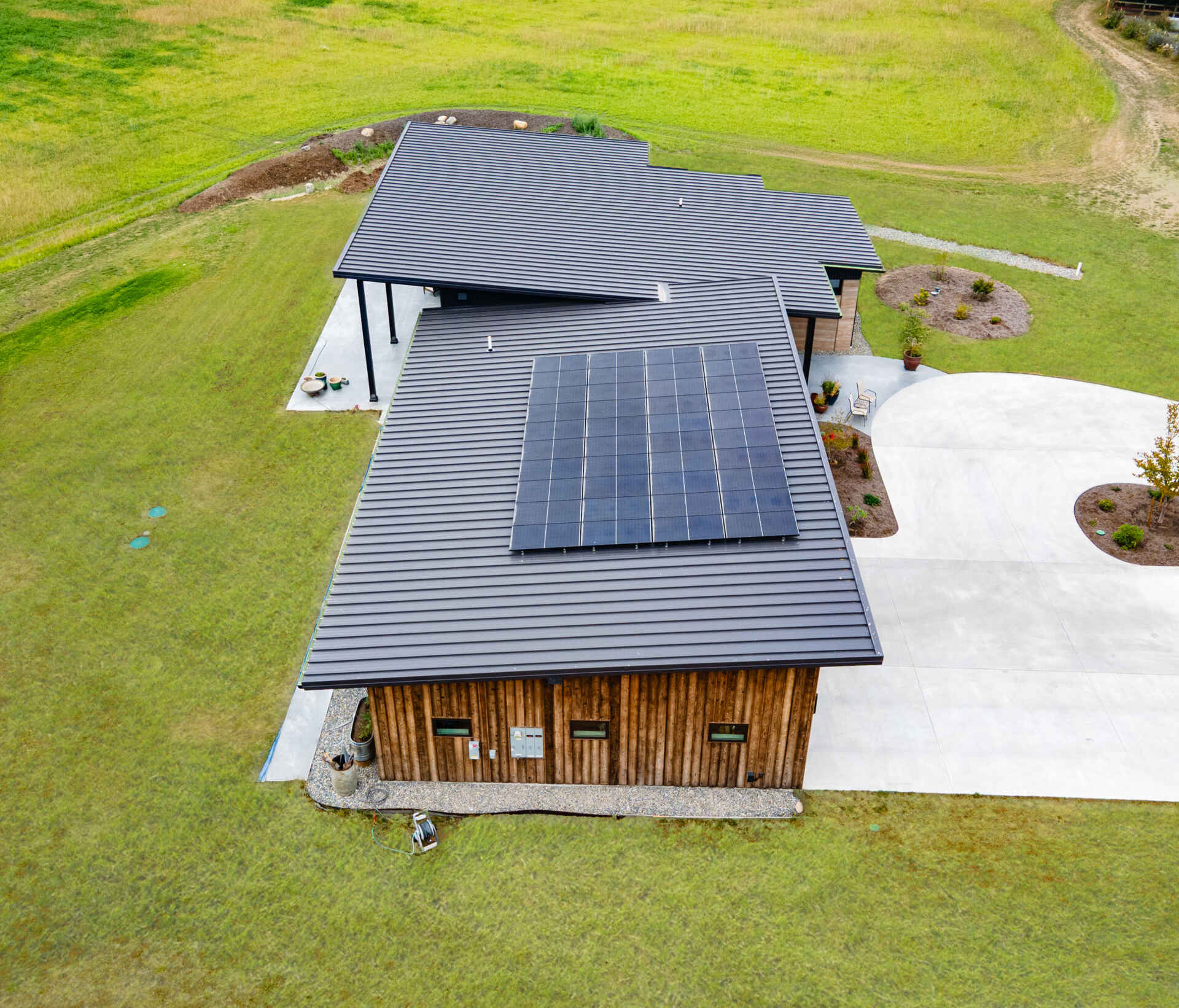
24-Inch Rammed Earth Walls
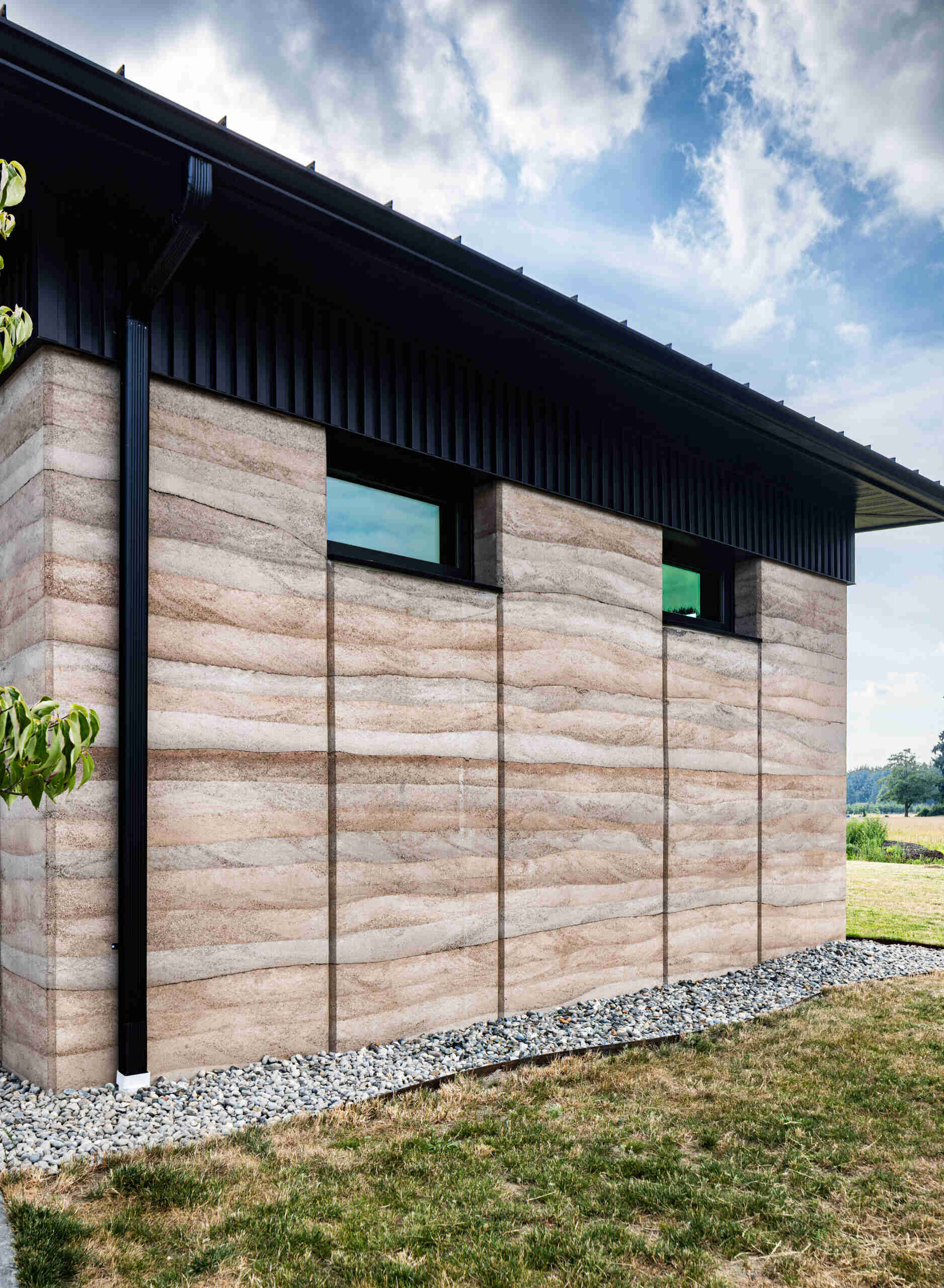
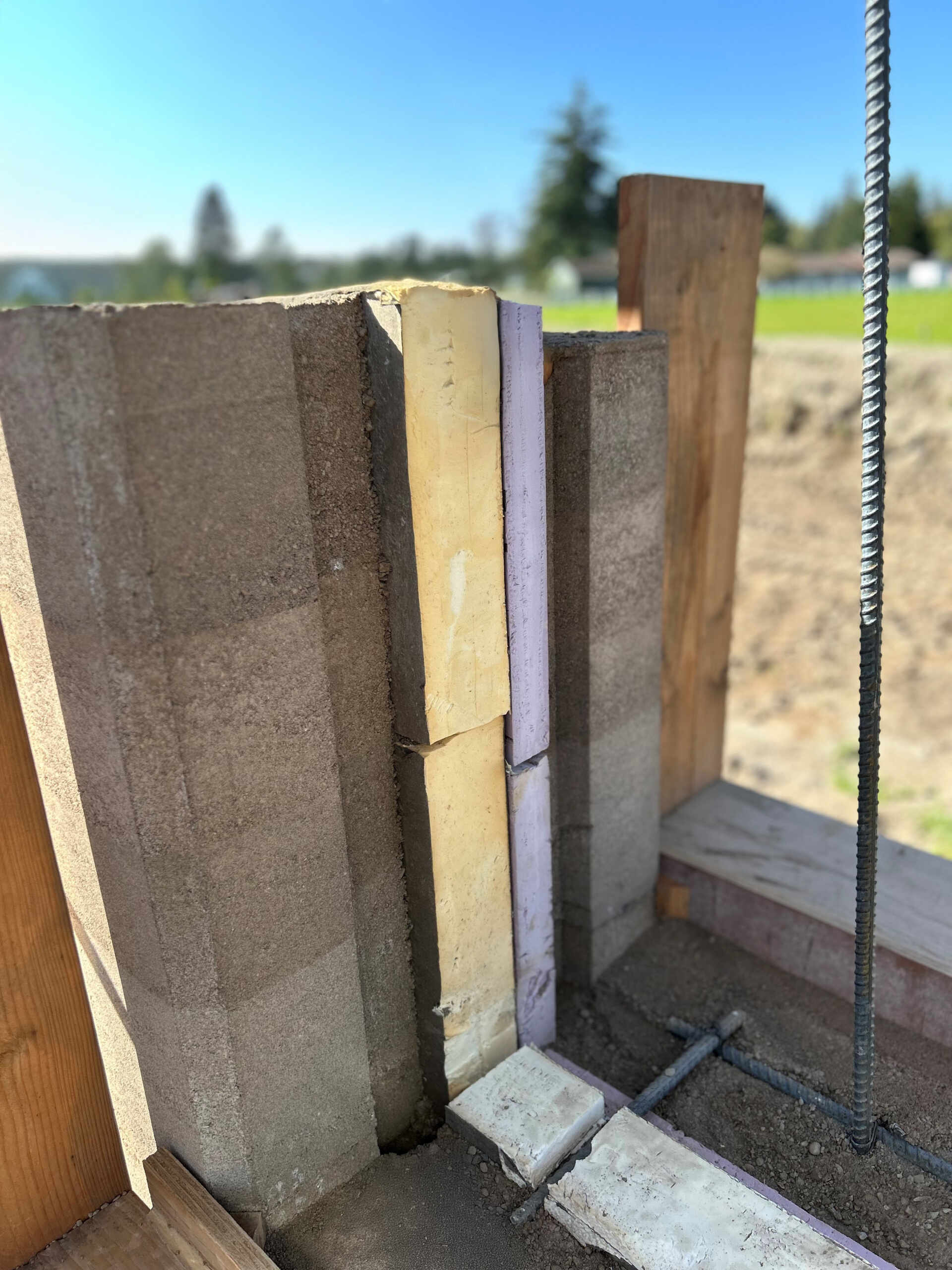
The defining feature of the house is its rammed earth wall system. Instead of traditional uninsulated walls, this design uses a layered structure that reaches a total thickness of 24 inches.
Inside each wall is an 8-inch core of continuous rigid insulation placed between two 8-inch layers of rammed earth. This system creates structural walls that are continuously insulated while using less cement than conventional concrete construction.
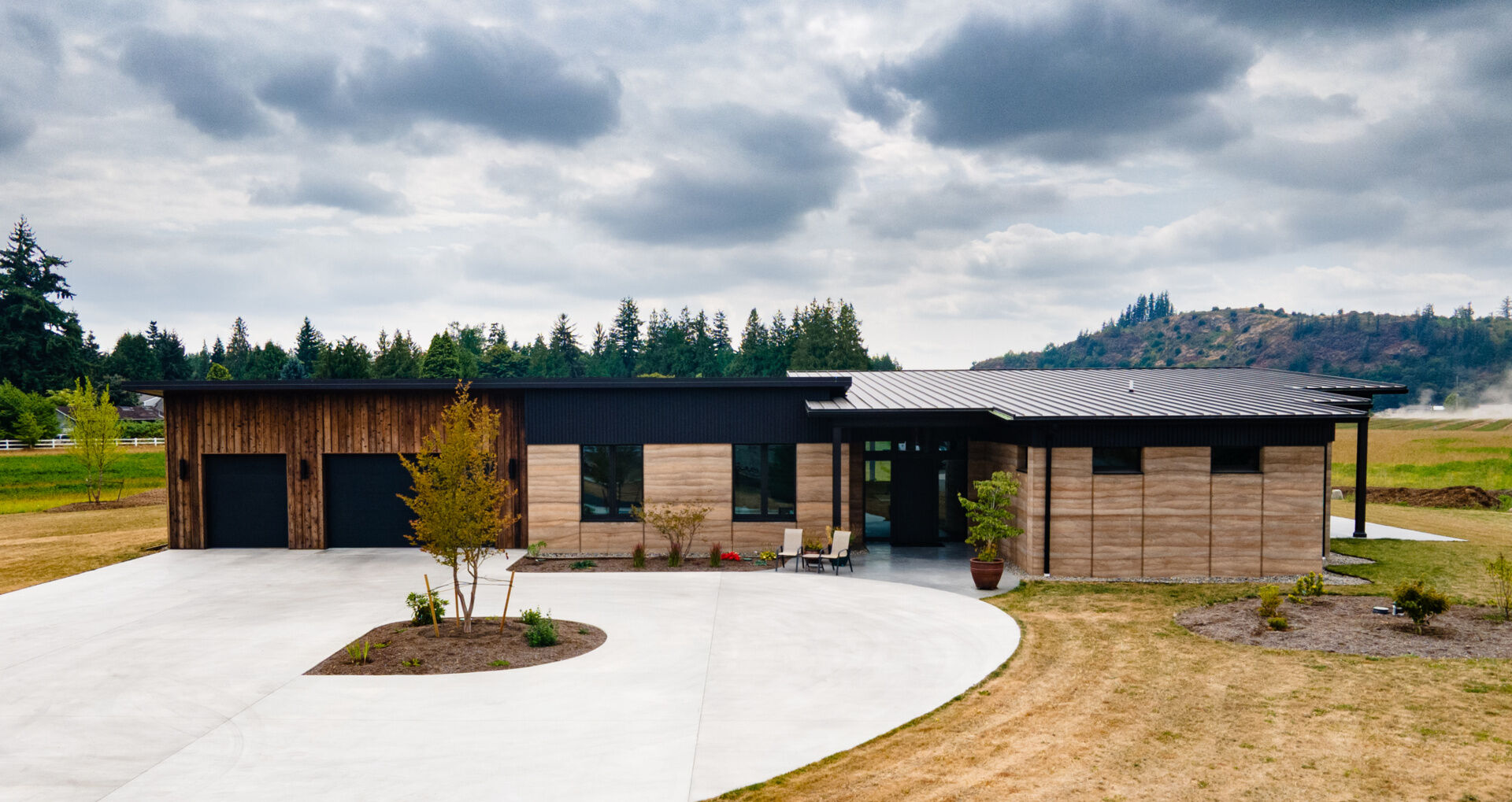
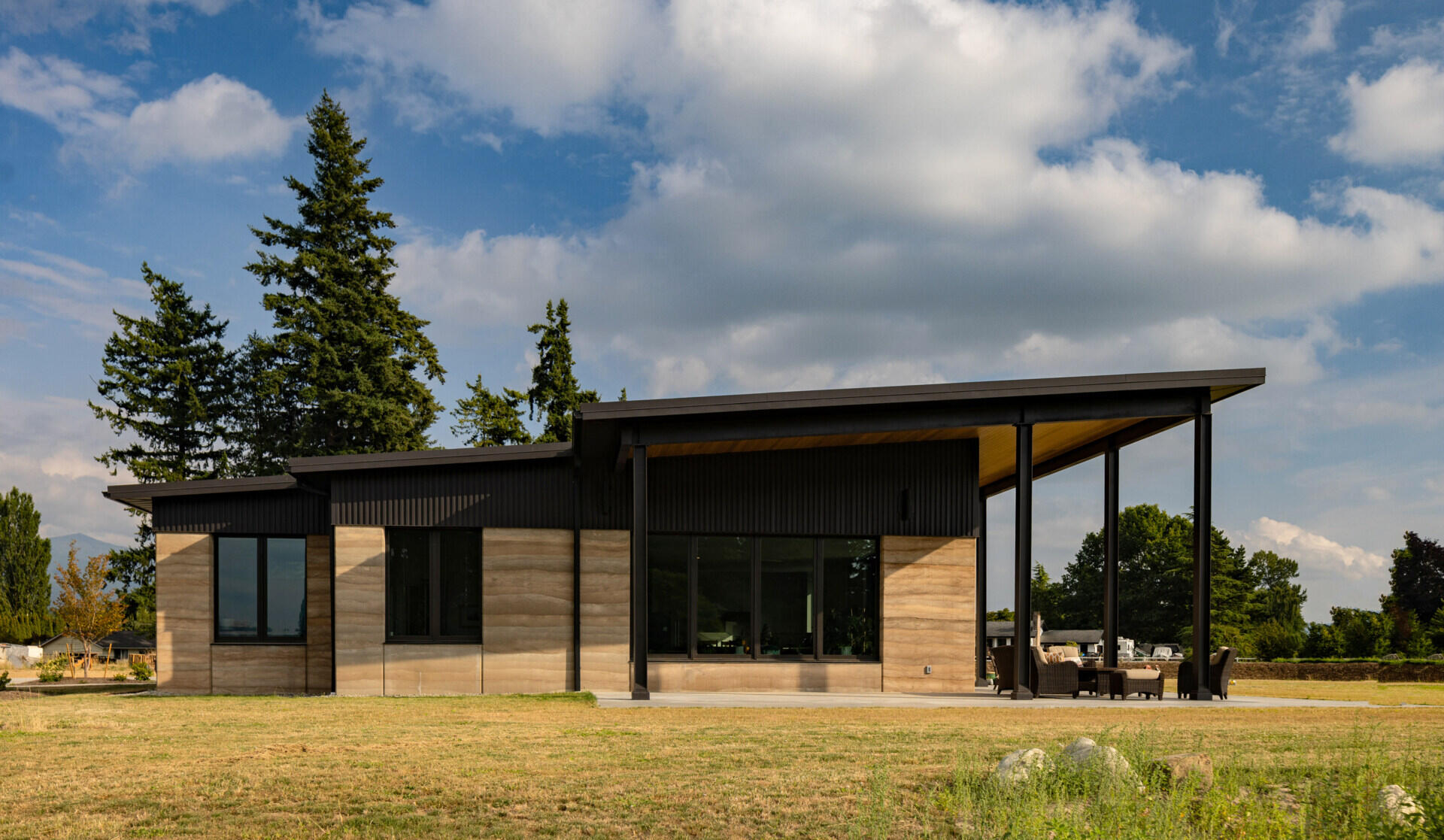
Outdoor Living With Seasonal Shade
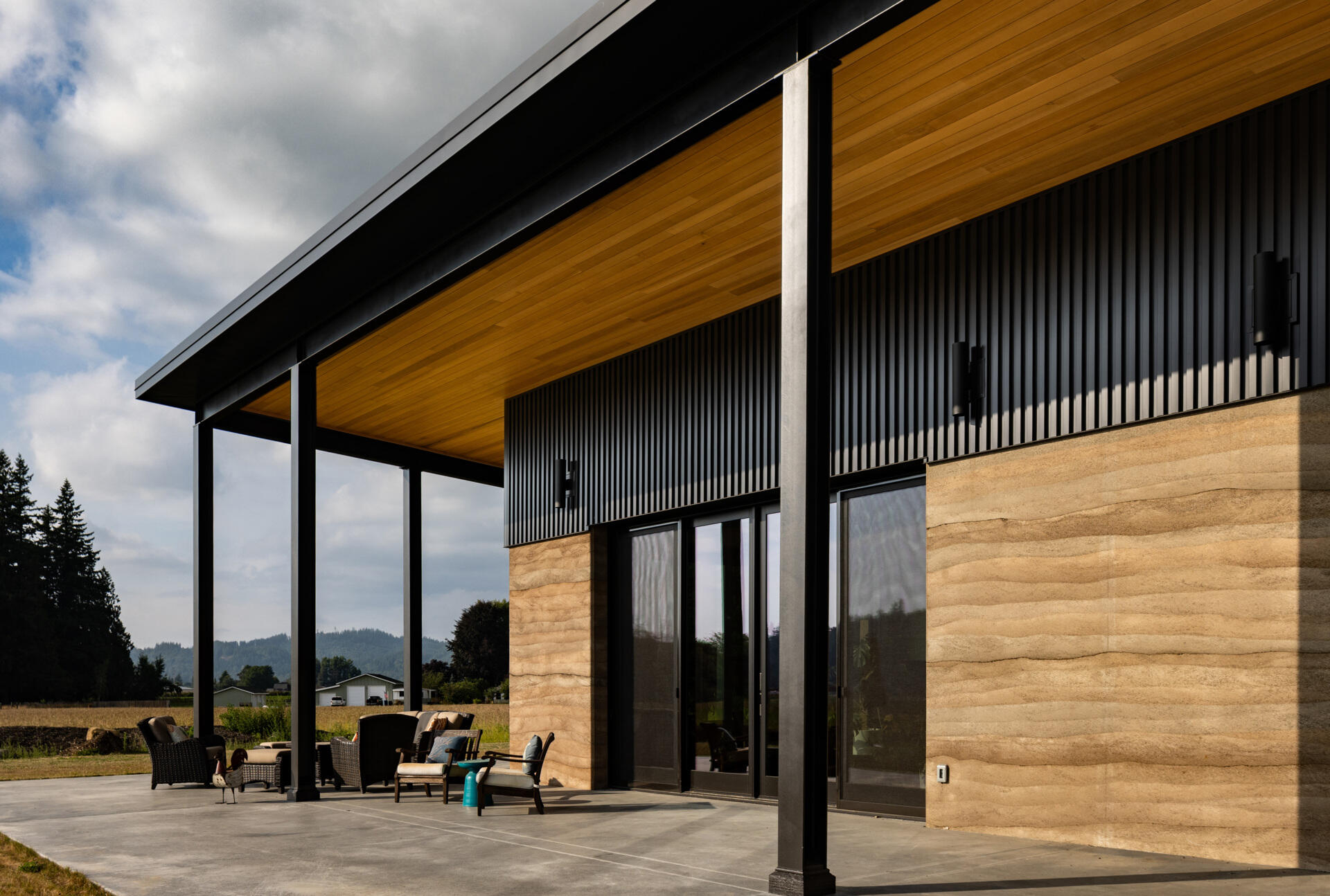
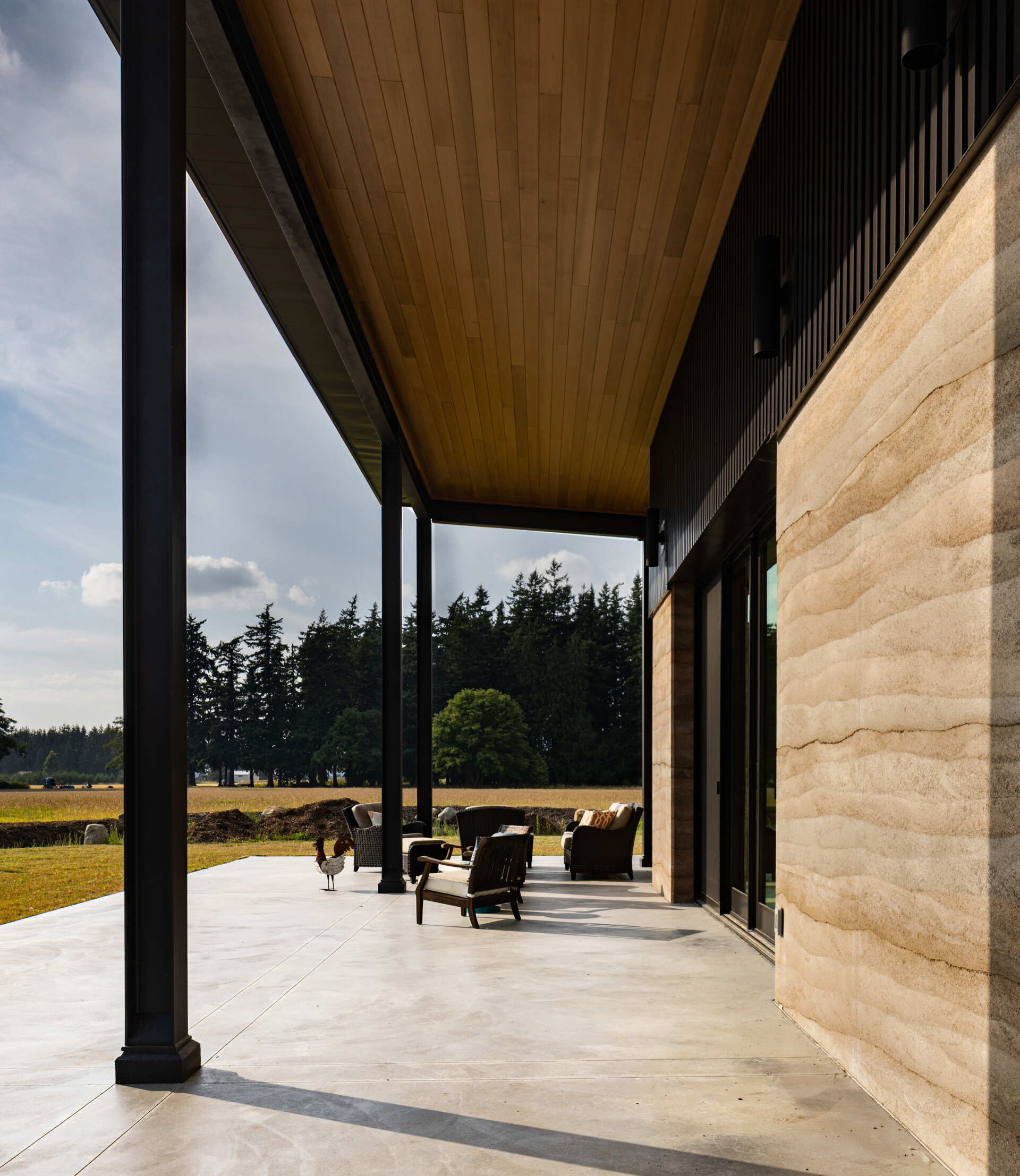
A covered patio extends from the house and faces southeast. The space creates a sheltered outdoor area connected to the main living spaces of the home. Its deep overhang plays an important role in the building’s solar strategy.
During summer months, when the sun sits higher in the sky, the patio shades the house and helps keep the interior cooler. In winter, the lower sun angle allows sunlight to reach inside through the southern glazing, contributing to passive heating while maintaining the connection between indoor and outdoor living.
A Natural Welcome at the Front Door
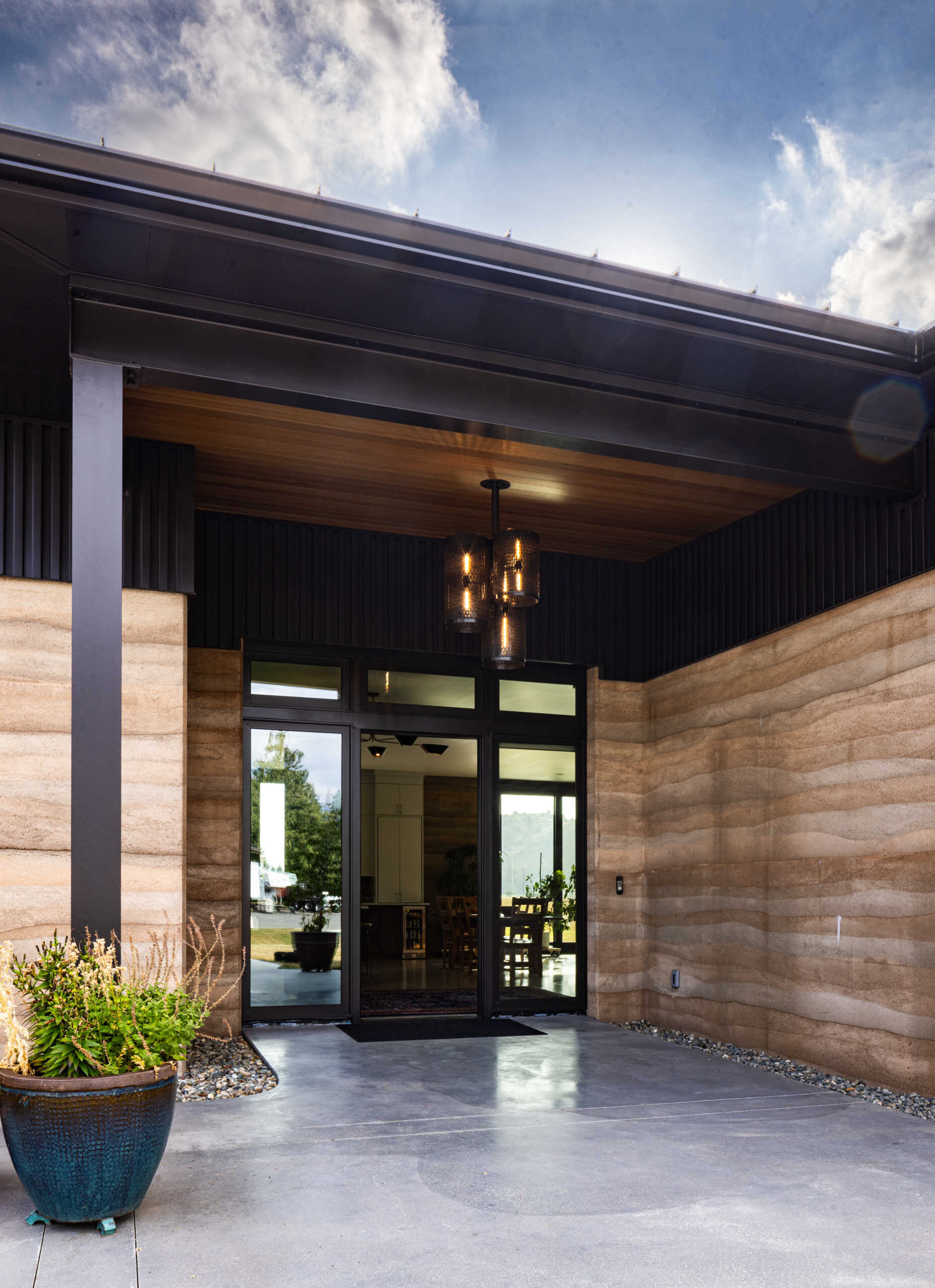
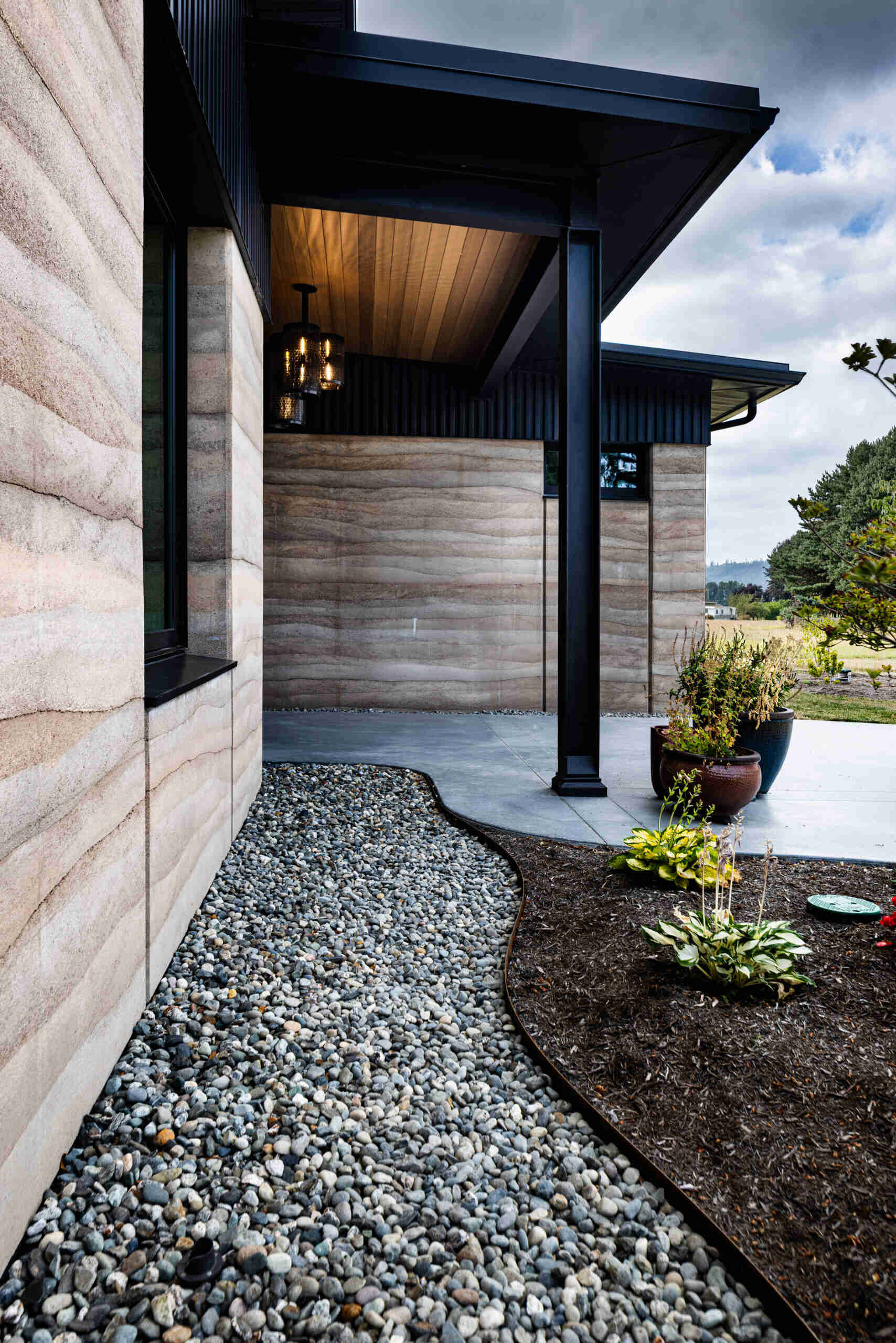
The entryway introduces the material palette used throughout the home. Washed rock and exposed rammed earth create a natural transition between the outdoor landscape and the interior.
These materials reinforce the solid character of the house while connecting the design to the agricultural setting of the Skagit Valley.
A Great Room Framed by Earth and Glass
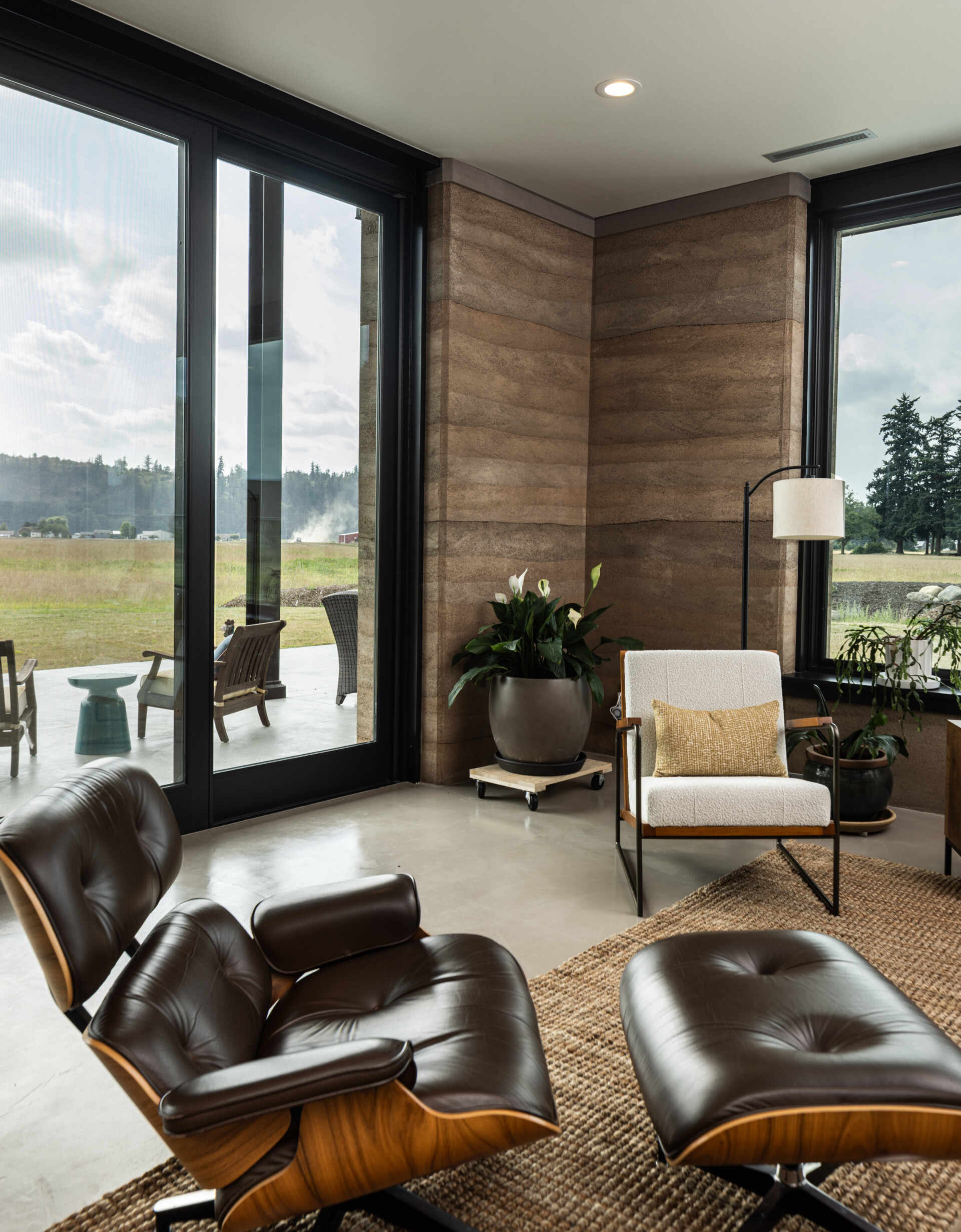
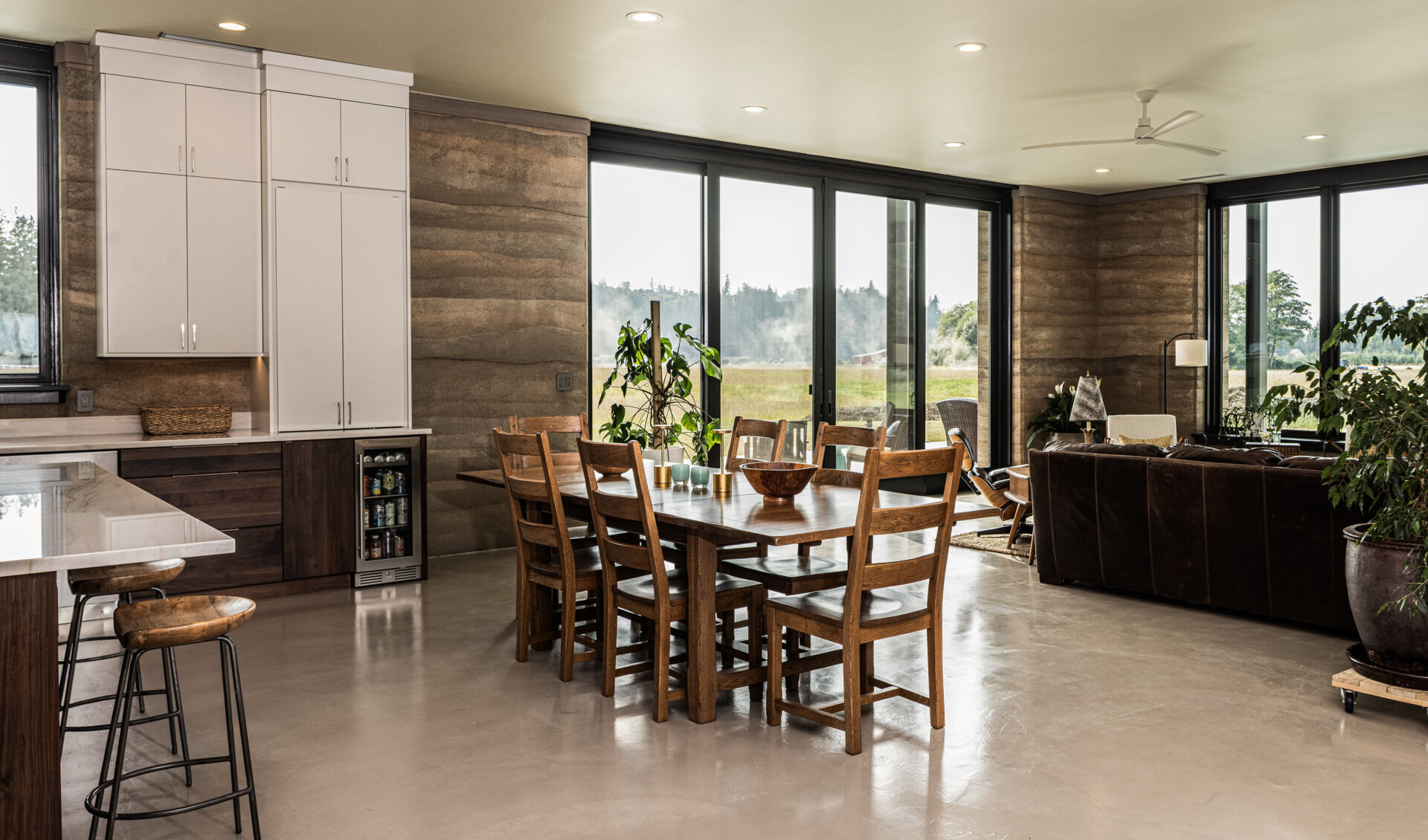
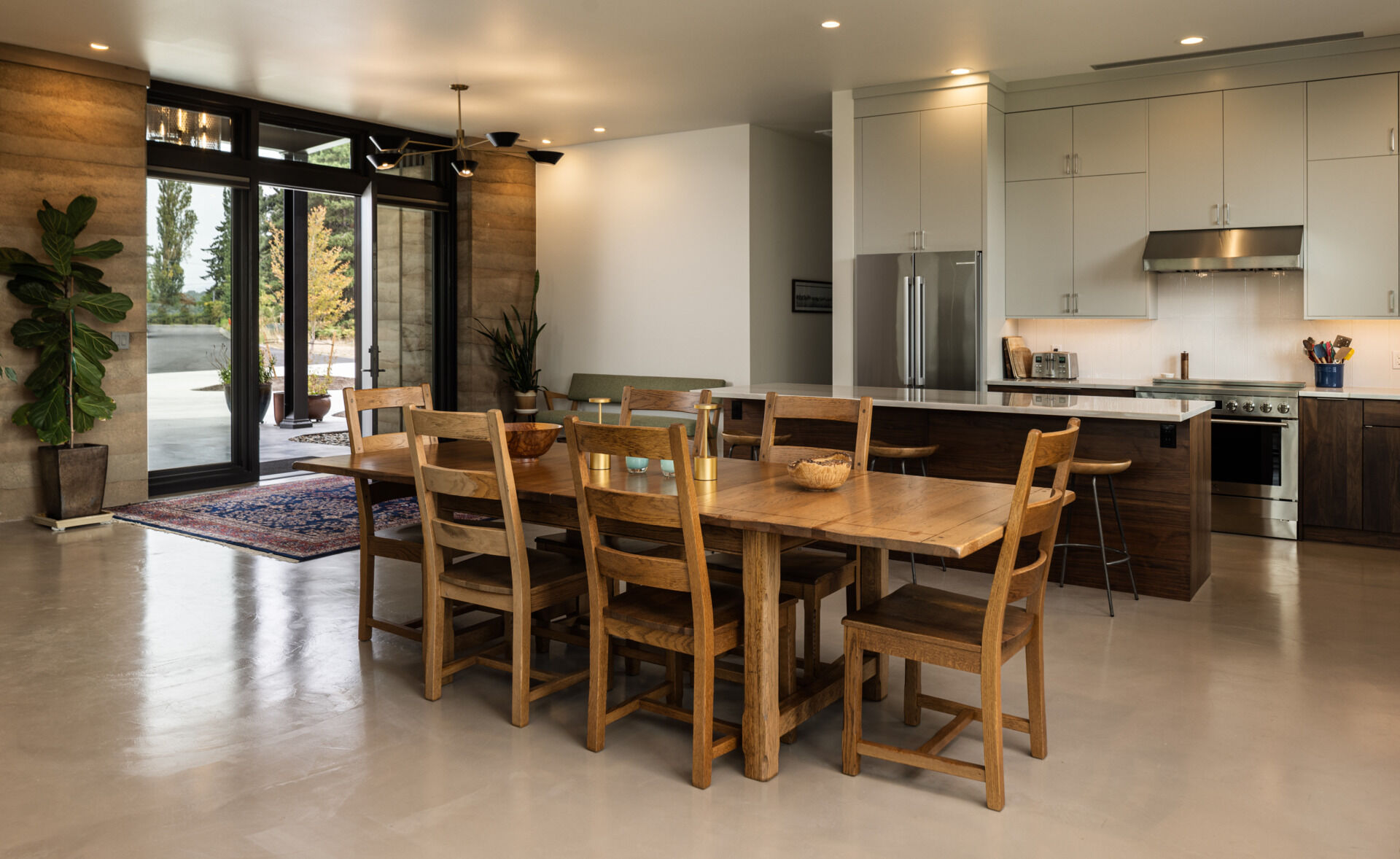
The great room combines the kitchen, dining area, and sitting space in one open layout facing the surrounding farmland. Large sliding glass doors frame the views while bringing natural light deep into the interior.
Exposed rammed earth walls run throughout the space, their layered texture creating a surface that resembles bands of sandstone. Warm wood furniture and cabinetry complement the earthy tones of the walls.
In the kitchen, white upper cabinets contrast with darker wood lower cabinets and island panels, keeping the palette simple and balanced. The dining table sits at the center of the room, with the sitting area arranged nearby around a leather sofa.
A polished concrete floor connects the entire space, reflecting light and reinforcing the calm, minimal interior.

A Quiet Space Within Thick Earth Walls
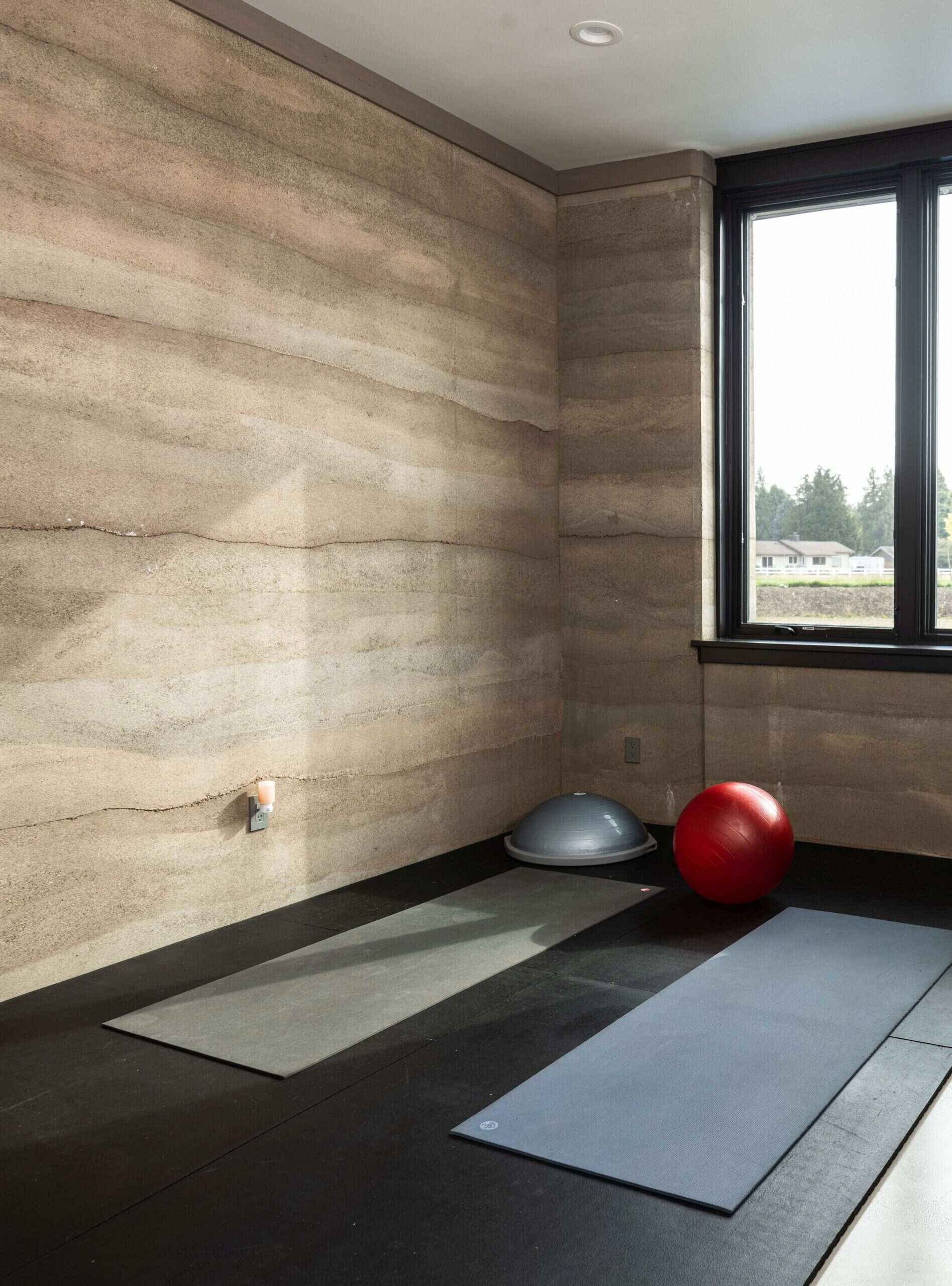
The house includes an exercise room as part of its living space, with the rammed earth walls contributing to the calm atmosphere inside the room.
Resting Inside the Rammed Earth Envelope
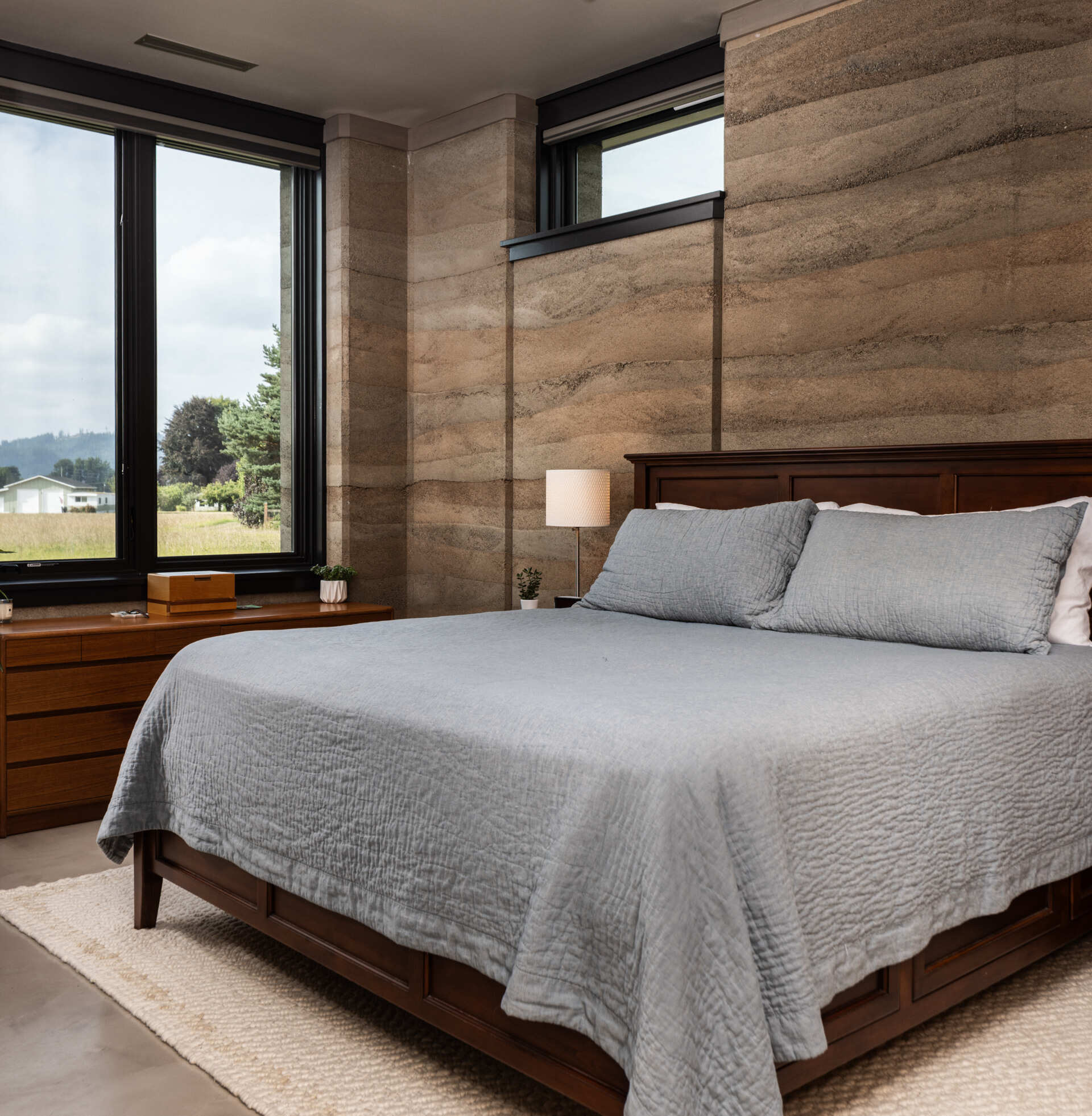
In the bedroom, the wood furnishings complement the natural aesthetic and color of the walls, while the windows allow for views and light.
Durable Spaces Built for Daily Living
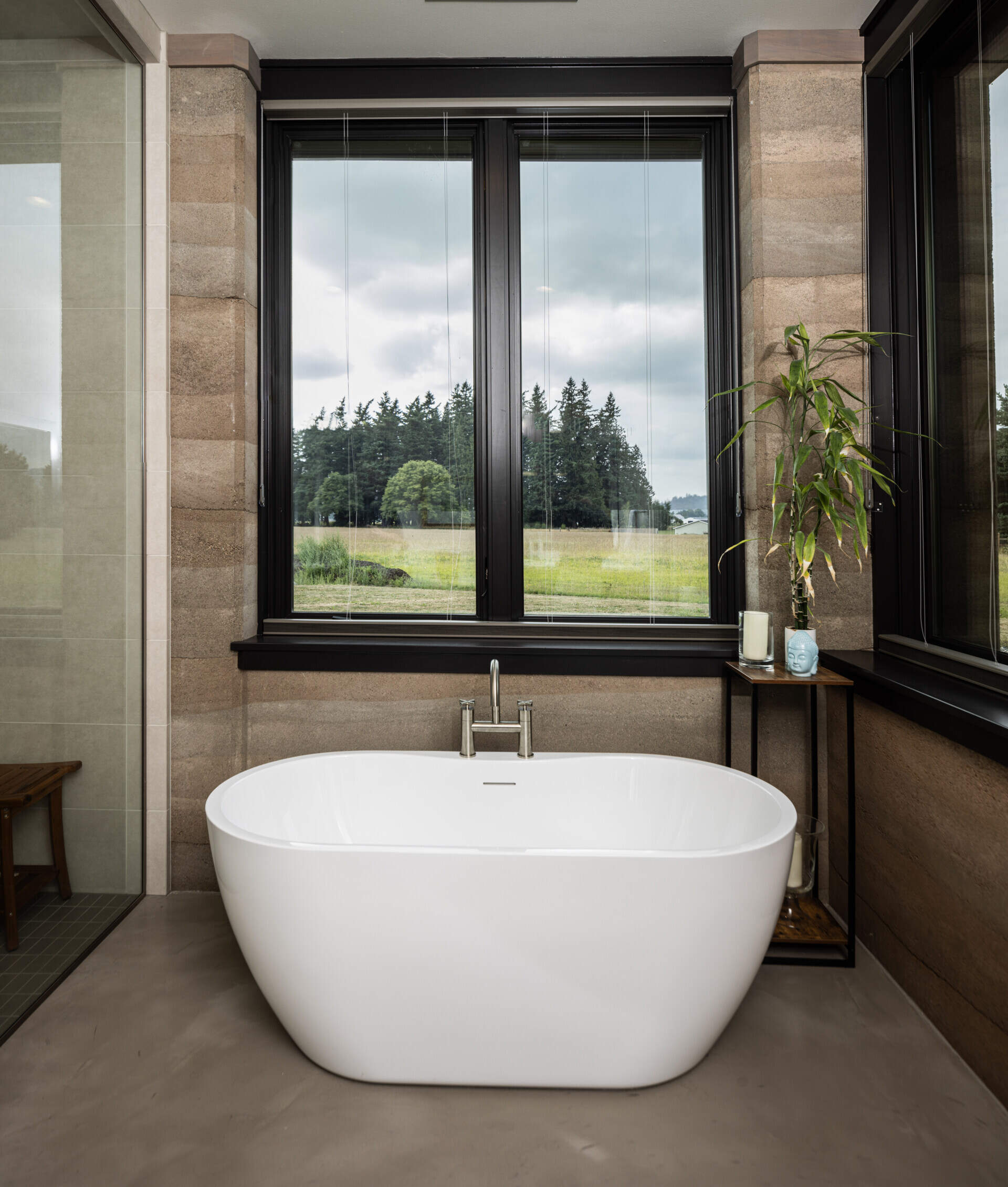
In the bathroom, a glass enclosed shower is adjacent to a freestanding bathtub that’s positioned for views of the landscape.
How the Rammed Earth Walls Were Built
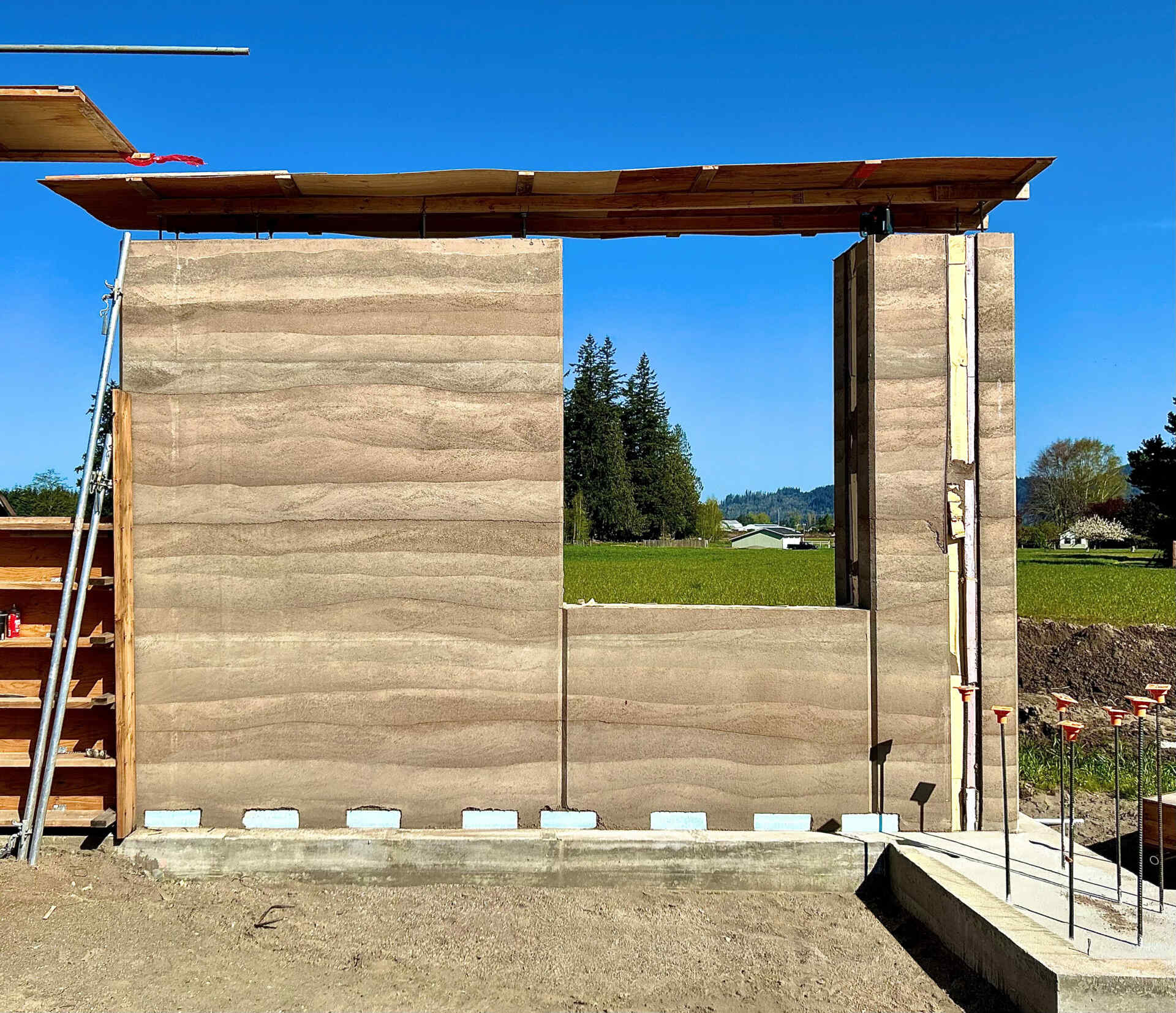
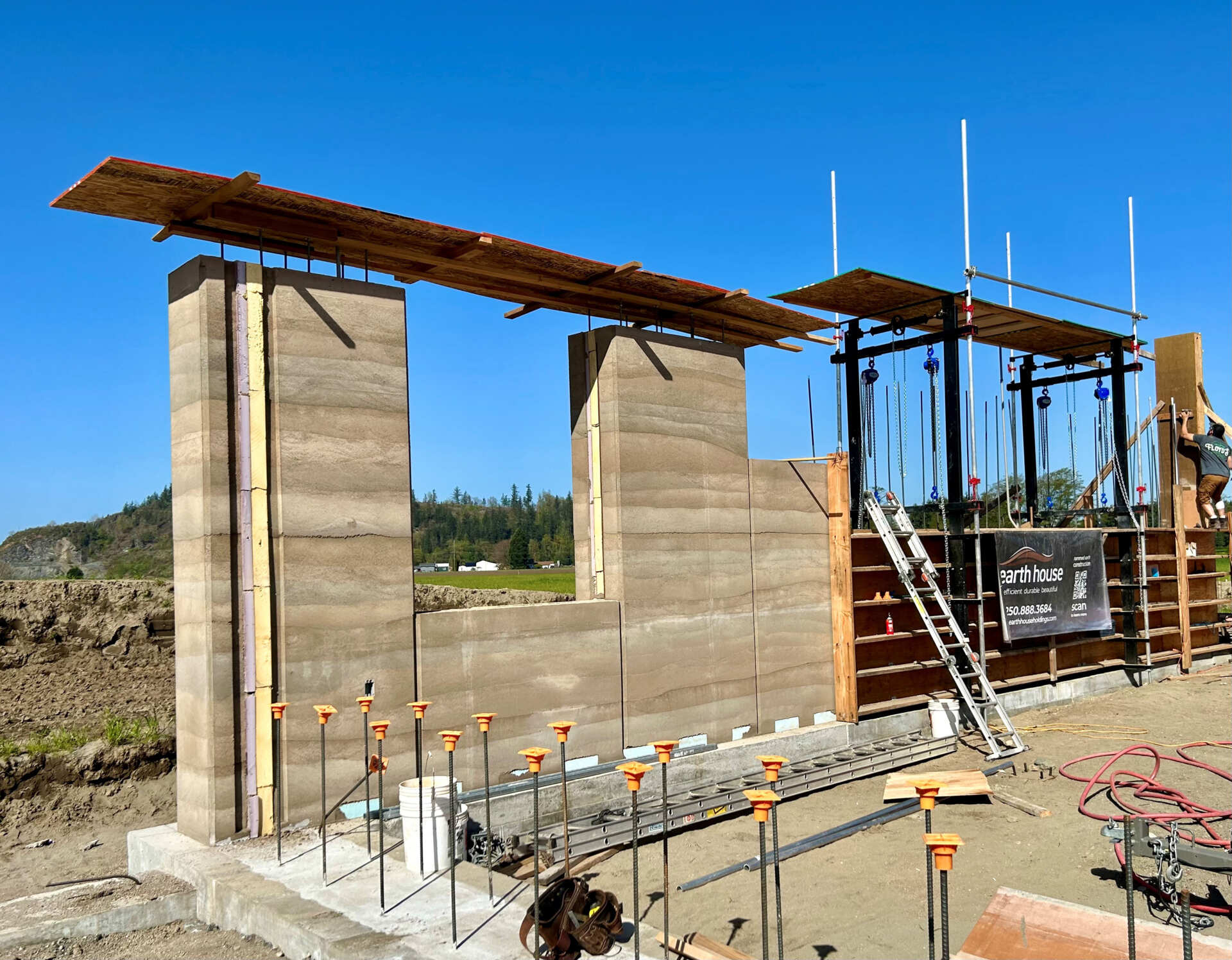
The rammed earth walls are created by compacting layers of material inside special formwork. Each layer is built in lifts of six to eight inches before the next layer is added.
The mixture uses local subsoil materials including sand and gravel, combined with cement, damp-proofing material, iron oxides, and a small amount of water.
Steel rebar reinforcement was installed according to a structural engineer’s specifications to ensure the walls meet strength requirements.

Designing the Structure Behind the Walls
The design process involved close collaboration between the architects and a rammed earth consultant.
Together they developed wall assemblies, structural strategies, and detailing that would support both energy performance and long-term durability.


The Skagit Rammed Earth House shows how traditional construction can support modern energy goals. With insulated rammed earth walls, solar panels, and passive heating, the home produces most or all of its electricity each year while maintaining a stable indoor environment. Designed for durability and low maintenance, the house reflects a long-term approach to building in the Skagit Valley.