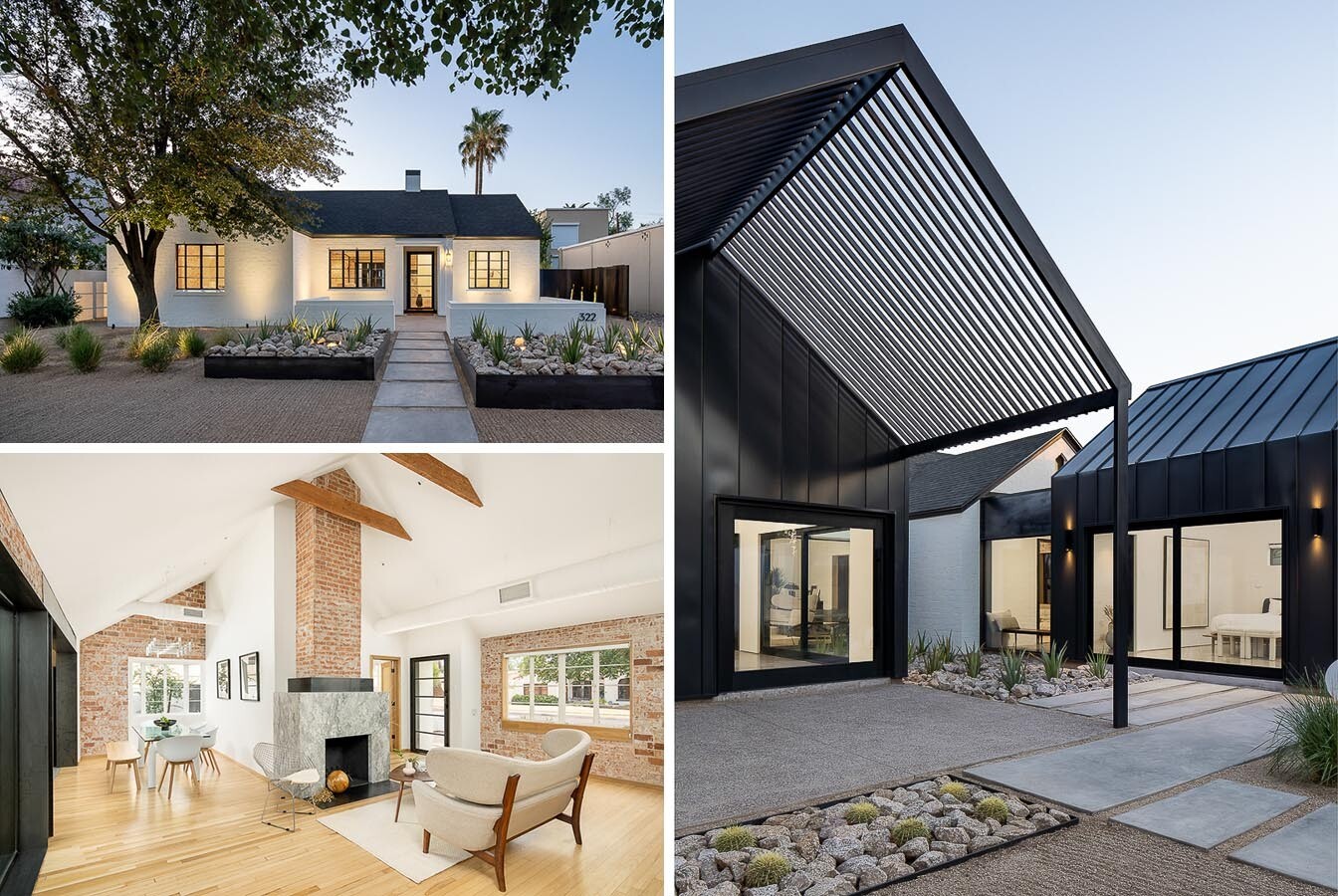
In the Willo historic neighborhood of Phoenix, Arizona, Joel Contreras Design transformed a 1939 home with a remodel that blends historic character with bold modern additions. Working alongside Amy Williams Design, the project introduced a dramatic rear extension while updating the interiors with brighter, more open living spaces.
The home immediately stands out for the contrast between old and new. The original structure maintains its place within the historic streetscape, while the new black metal addition adds a sharper and more contemporary look from the rear. Together, the materials, textures, and interior updates create a home that feels fresh while still acknowledging its past.
A Refreshed Exterior That Respects the Neighborhood
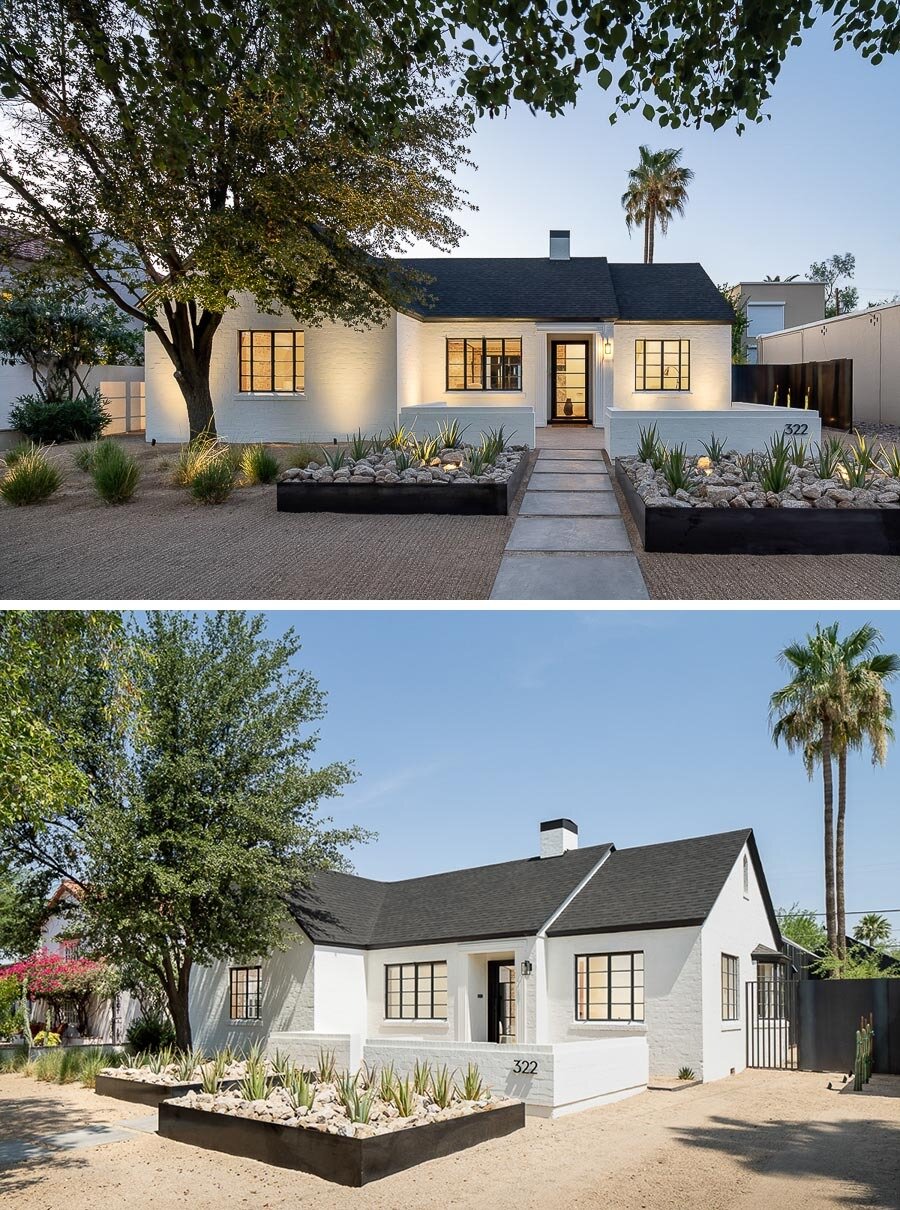
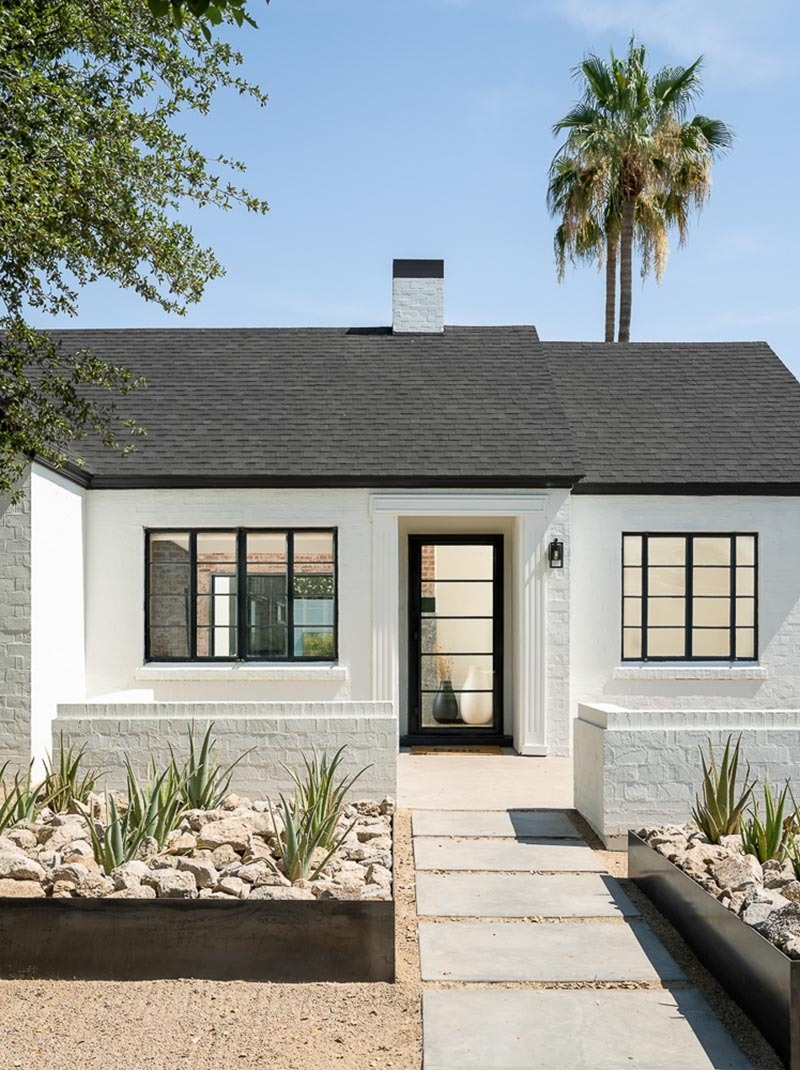
The front of the home received a subtle but modern refresh designed to complement the character of the Willo neighborhood. White-painted exterior walls paired with black trim create a crisp and timeless appearance, while steel planter boxes introduce a modern architectural detail without overwhelming the original structure.
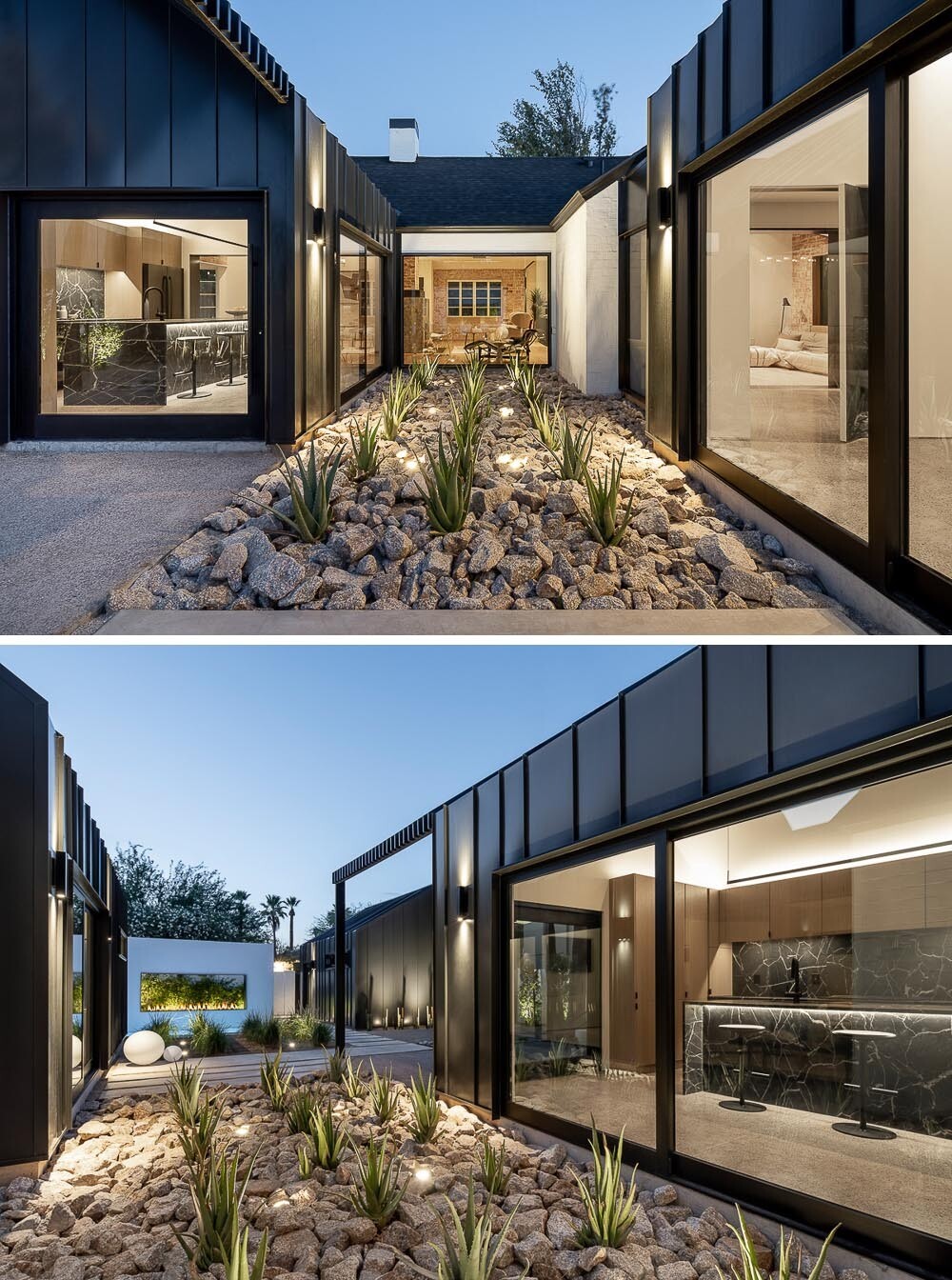
At the rear of the property, the design changes dramatically. The additions were wrapped in black standing seam metal, creating a clear contrast against the older portion of the house. Heavy aggregate concrete floors add texture and durability, reinforcing the industrial-inspired feel of the extension.
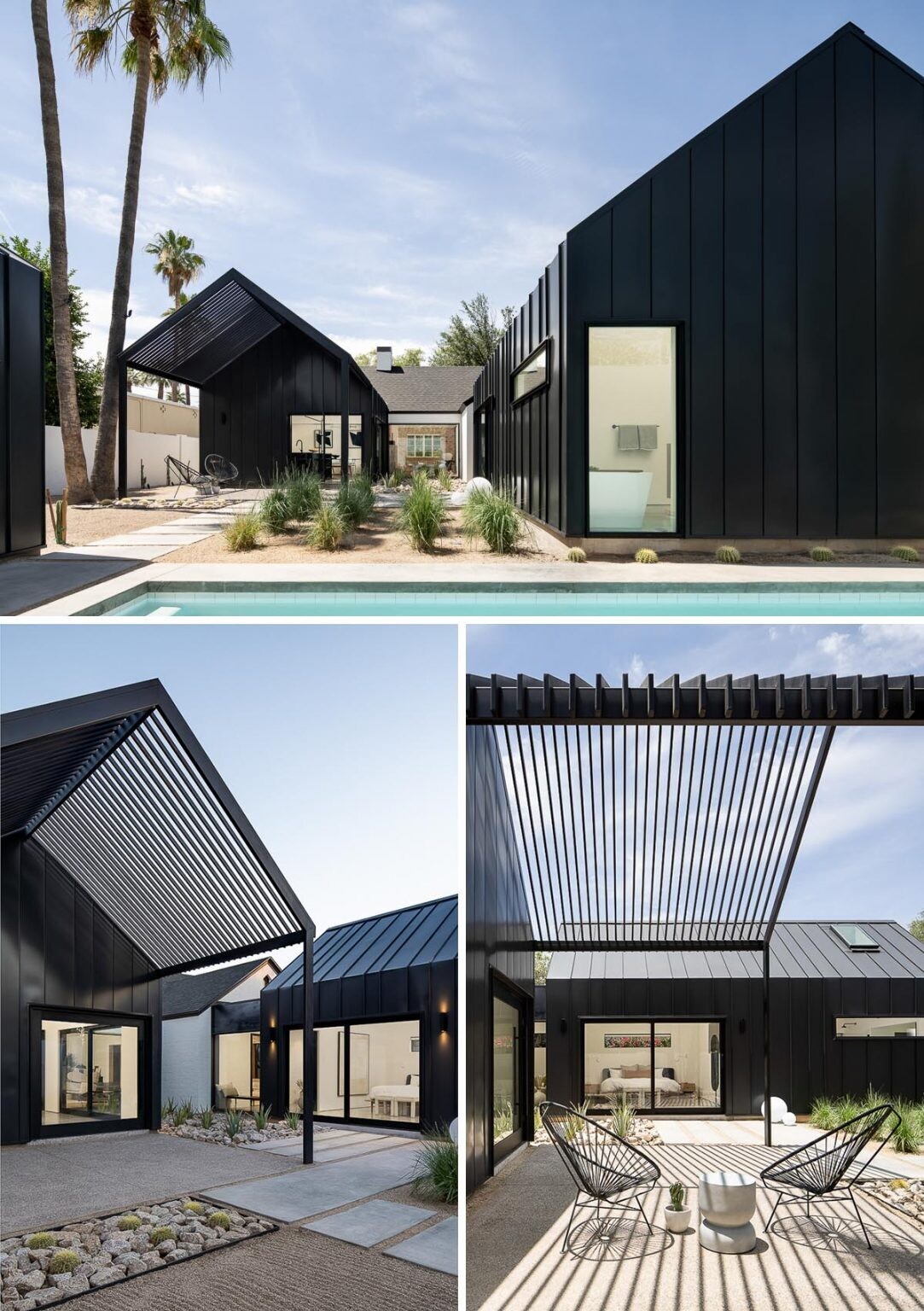
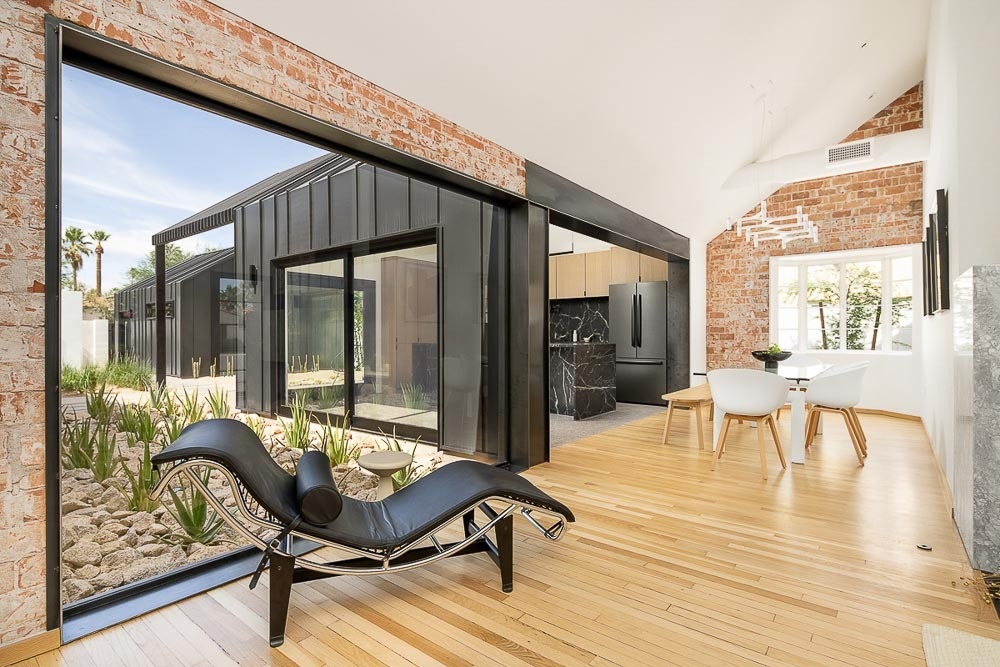
Large picture windows frame views of the desert landscaping outside while also offering glimpses into the interior spaces. The windows help soften the darker exterior materials by bringing natural light into the home throughout the day.
Original Details Meet a Bright New Interior
Inside, the remodel preserves many of the home’s original architectural features. Brick walls, wood floors, and the fireplace remain central elements throughout the interior, adding warmth and texture against the newer finishes and furnishings selected by Amy Williams Design.
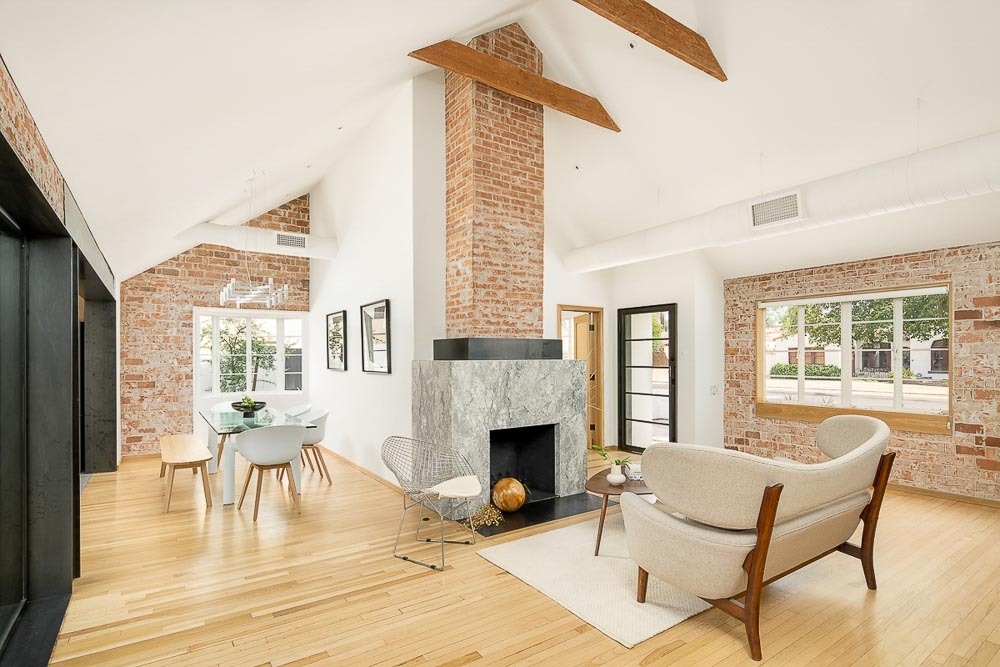
One of the most striking changes was vaulting the ceilings. The newly elevated rooflines exposed brick walls that now stretch all the way to the gable peaks, creating a dramatic cathedral-like effect. The added height completely changes the feeling of the rooms, making them appear brighter, larger, and far more open than before.
The combination of original materials and modern furnishings creates a layered interior that feels inviting without losing the character of the 1939 home.
A Modern Kitchen With Warm Natural Materials
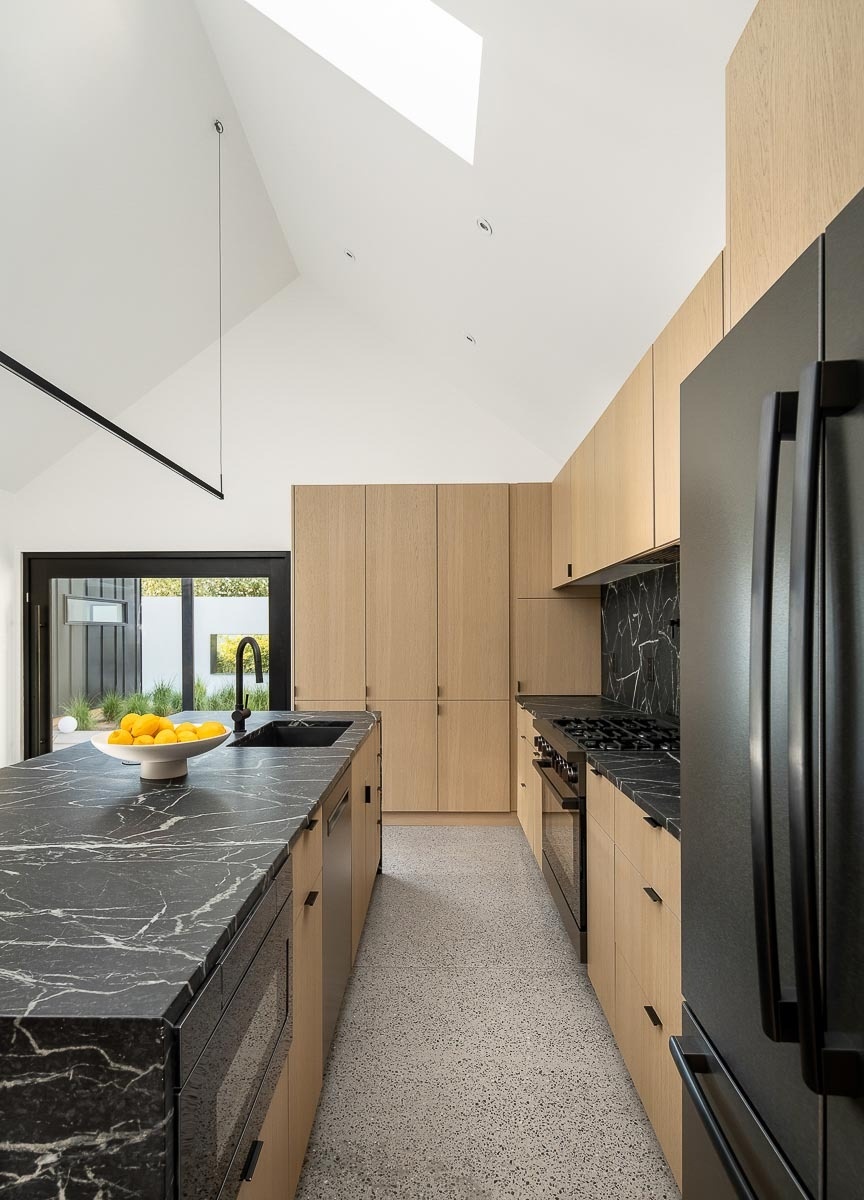
The kitchen continues the balance between modern simplicity and natural texture. White oak cabinetry introduces warmth while maintaining a clean and minimal appearance. Dark soapstone countertops add contrast and tie in with the black detailing seen throughout the remodel.
Black appliances help create a cohesive palette, giving the kitchen a refined but approachable look. The mix of wood, stone, and dark accents feels modern without becoming overly sleek, helping the kitchen connect naturally with the older architectural features nearby.
Two Bathrooms With Completely Different Personalities
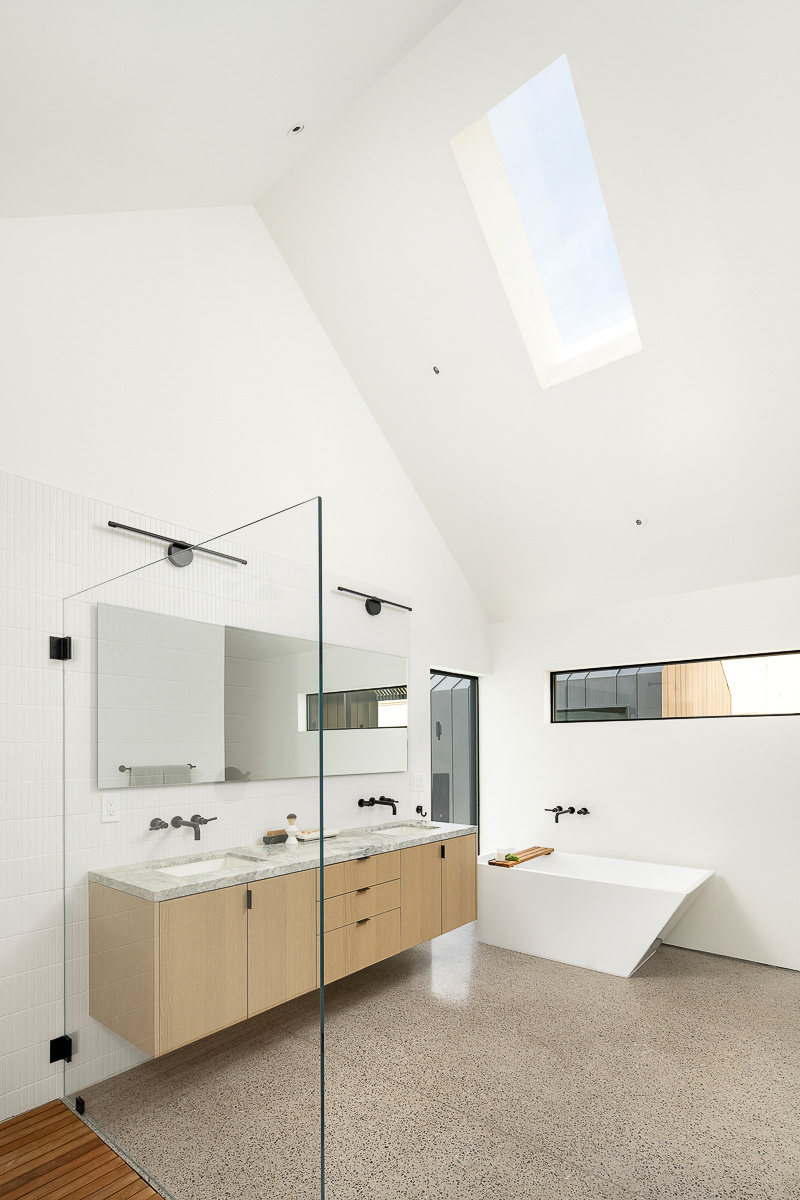
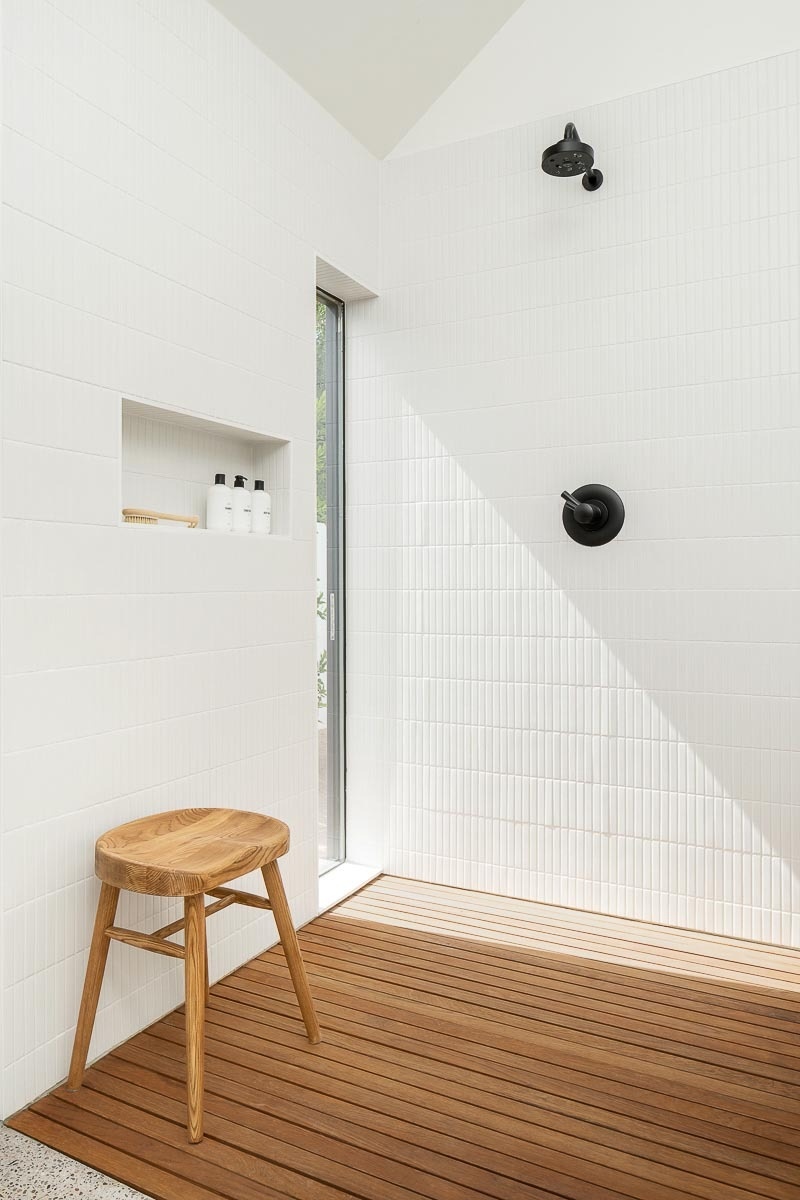
One of the bathrooms embraces light and openness. Vaulted ceilings make the room feel spacious, while white walls, a skylight, and matching white tiles reflect natural light throughout the space. The brightness is balanced by the unexpected addition of a wood floor inside the shower, adding warmth and texture against the clean white finishes.
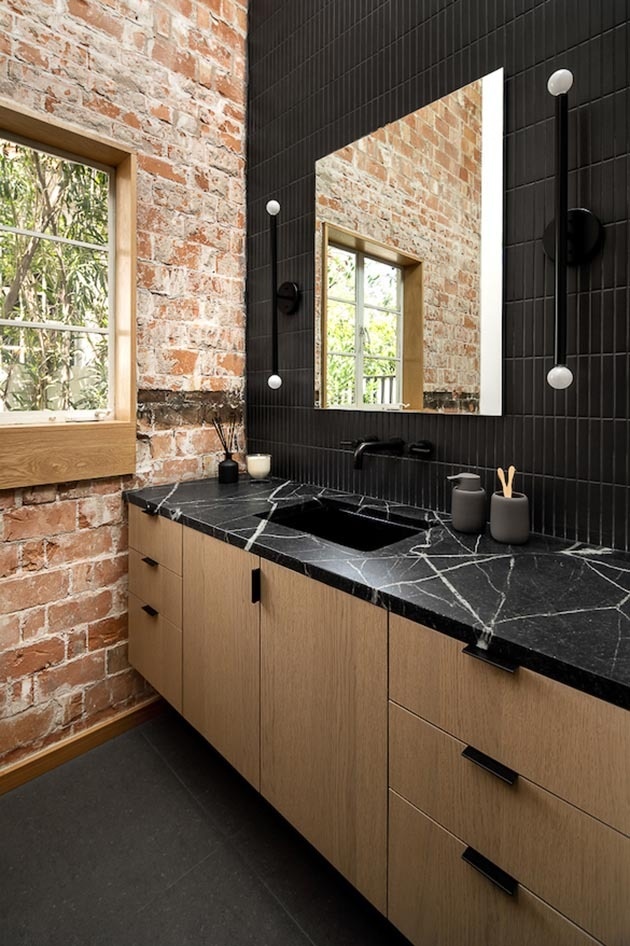
The second bathroom takes a much darker approach. Black wall tiles and black sconces create a moody atmosphere, while the preserved original brick walls add texture and character. A wood vanity softens the darker palette and connects the room to the rest of the home’s natural materials.
The contrast between the two bathrooms highlights the versatility of the remodel, showing how different moods and material palettes can exist within the same home while still feeling cohesive.
This remodel by Joel Contreras Design shows how historic homes can evolve while still maintaining the features that make them memorable. By preserving the original brick walls, wood floors, and fireplace, the home keeps its connection to 1939 Phoenix architecture, while the black metal addition and vaulted interiors introduce a completely new energy.