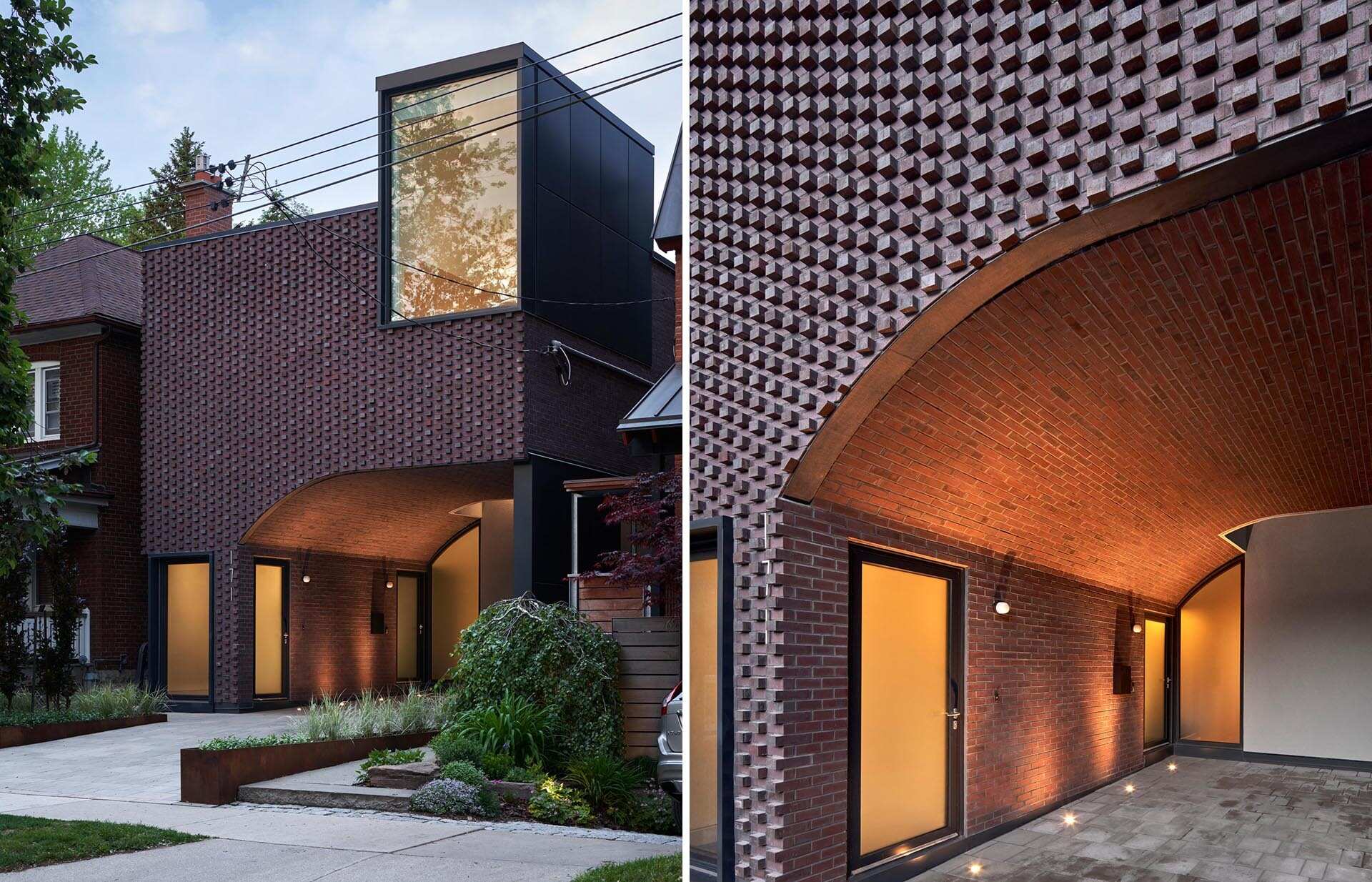
Batay-Csorba Architects designed a home in Toronto, Canada, that brings a fresh perspective to brick. Created for an Italian couple, the project draws from both Italian architectural traditions and the character of Toronto’s residential streets, blending old references with a modern approach.
The design takes cues from historic Roman vaults, reworking them into a contemporary form that shapes both the exterior and interior. At the same time, the home reflects the city’s long-standing use of brick, updating it into something more sculptural and expressive.
A Textured Brick Facade That Shifts with the Seasons
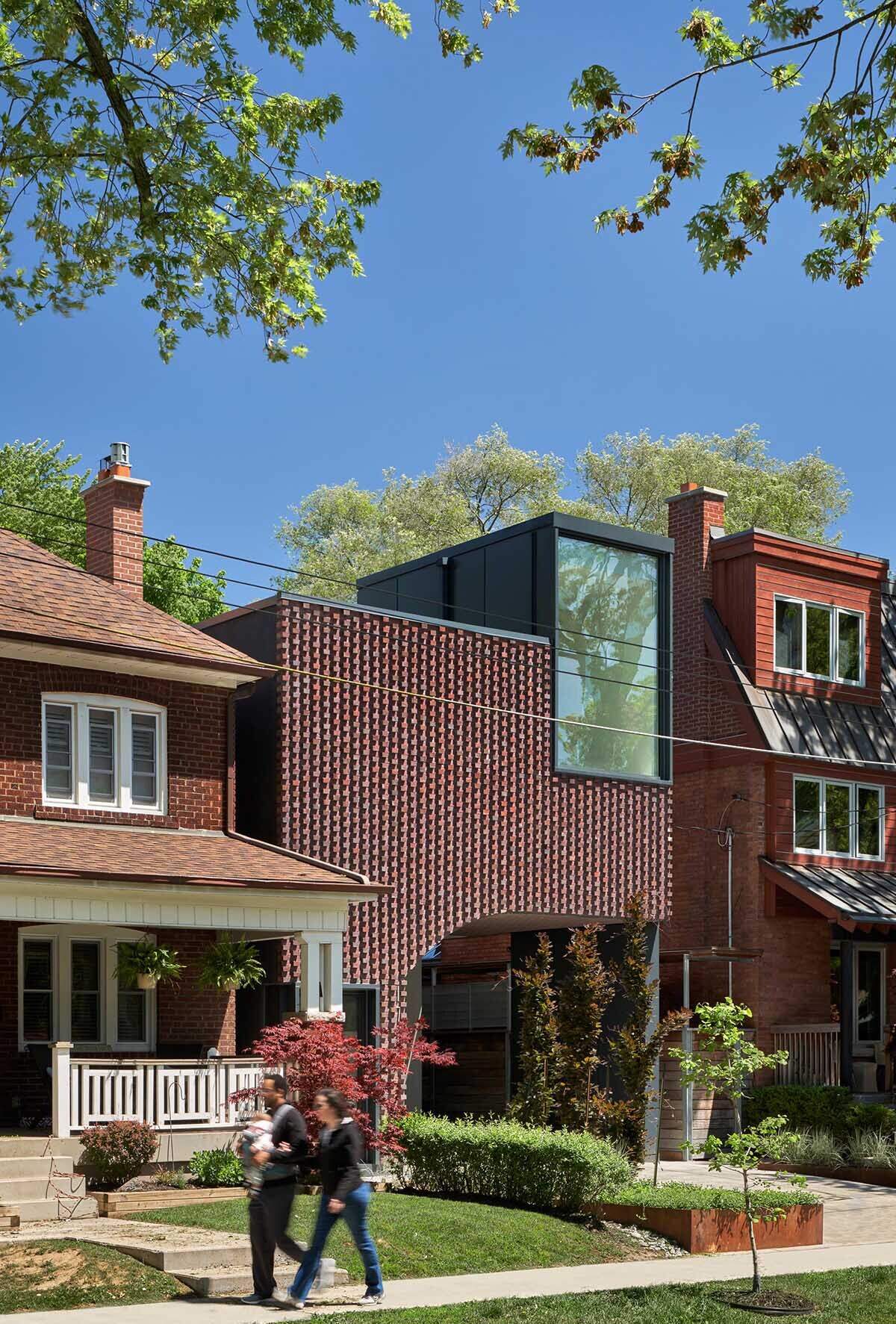
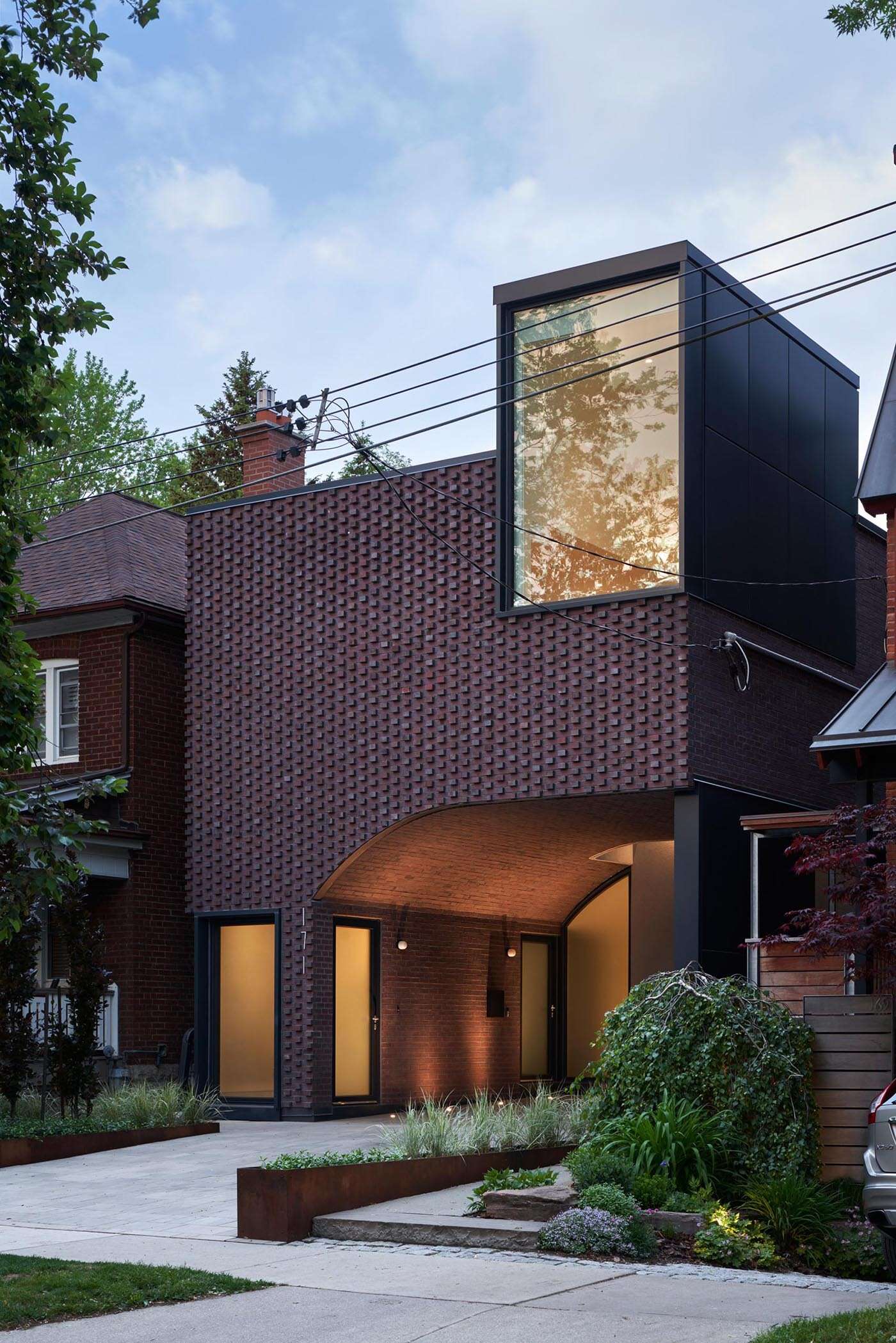
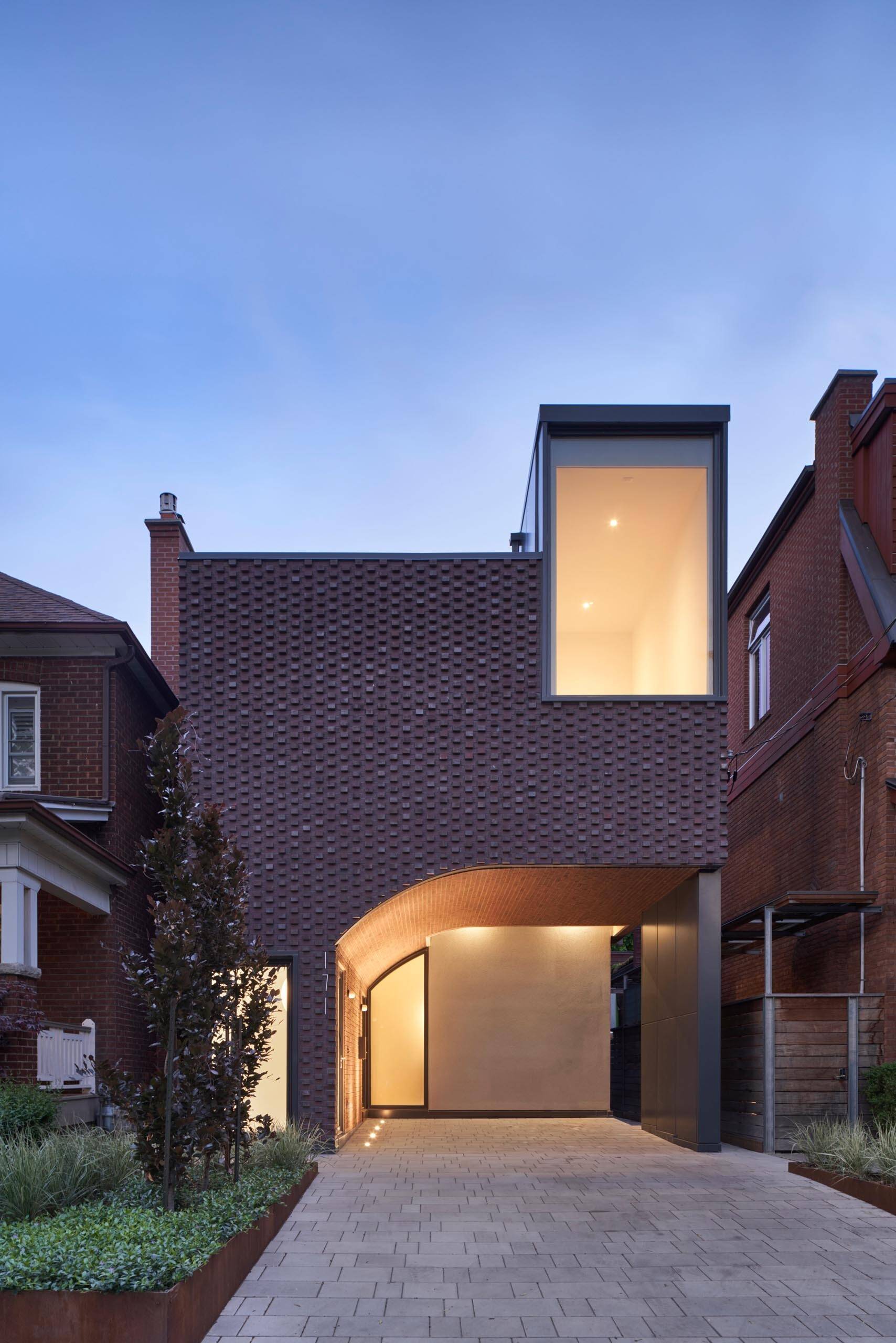
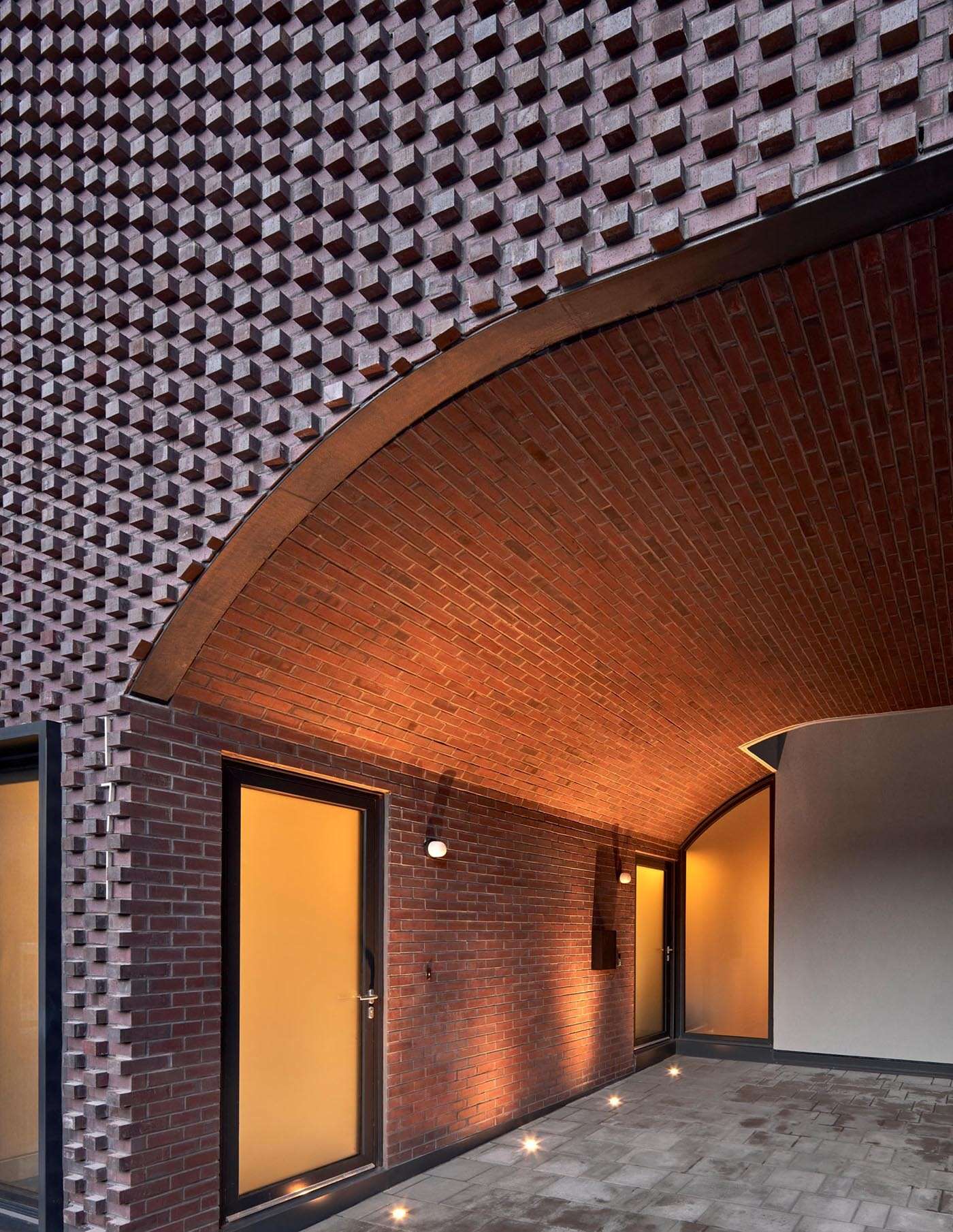
The exterior immediately stands out with its strong, monolithic presence. Brick wraps the facade and continues across the ceiling and walls of the carport, referencing Toronto’s history of masonry detailing.
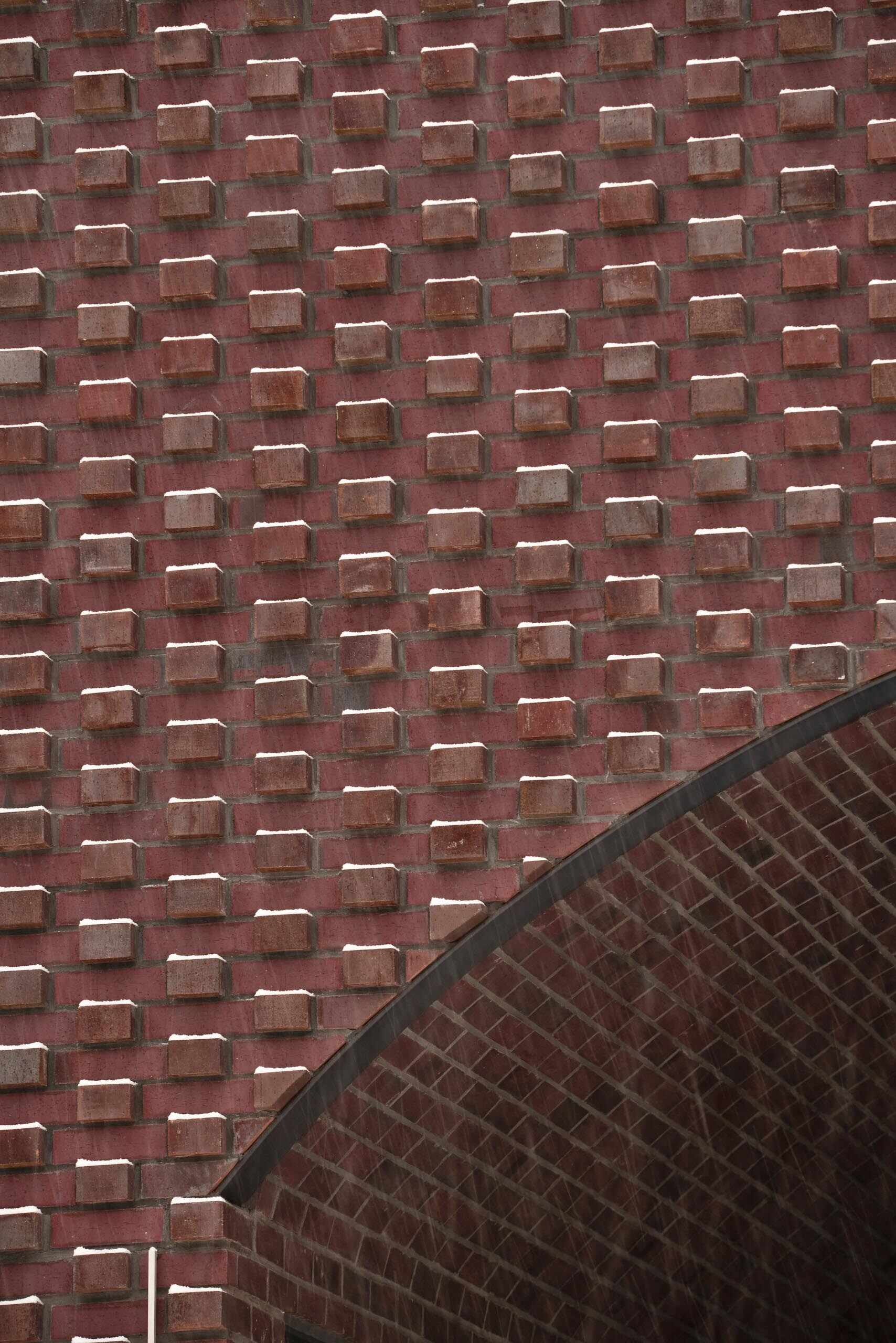
The architects describe the facade as a continuous surface, where a repeated pattern inspired by Flemish-bond creates subtle texture. Instead of decorative accents being used sparingly, the entire surface becomes the feature.
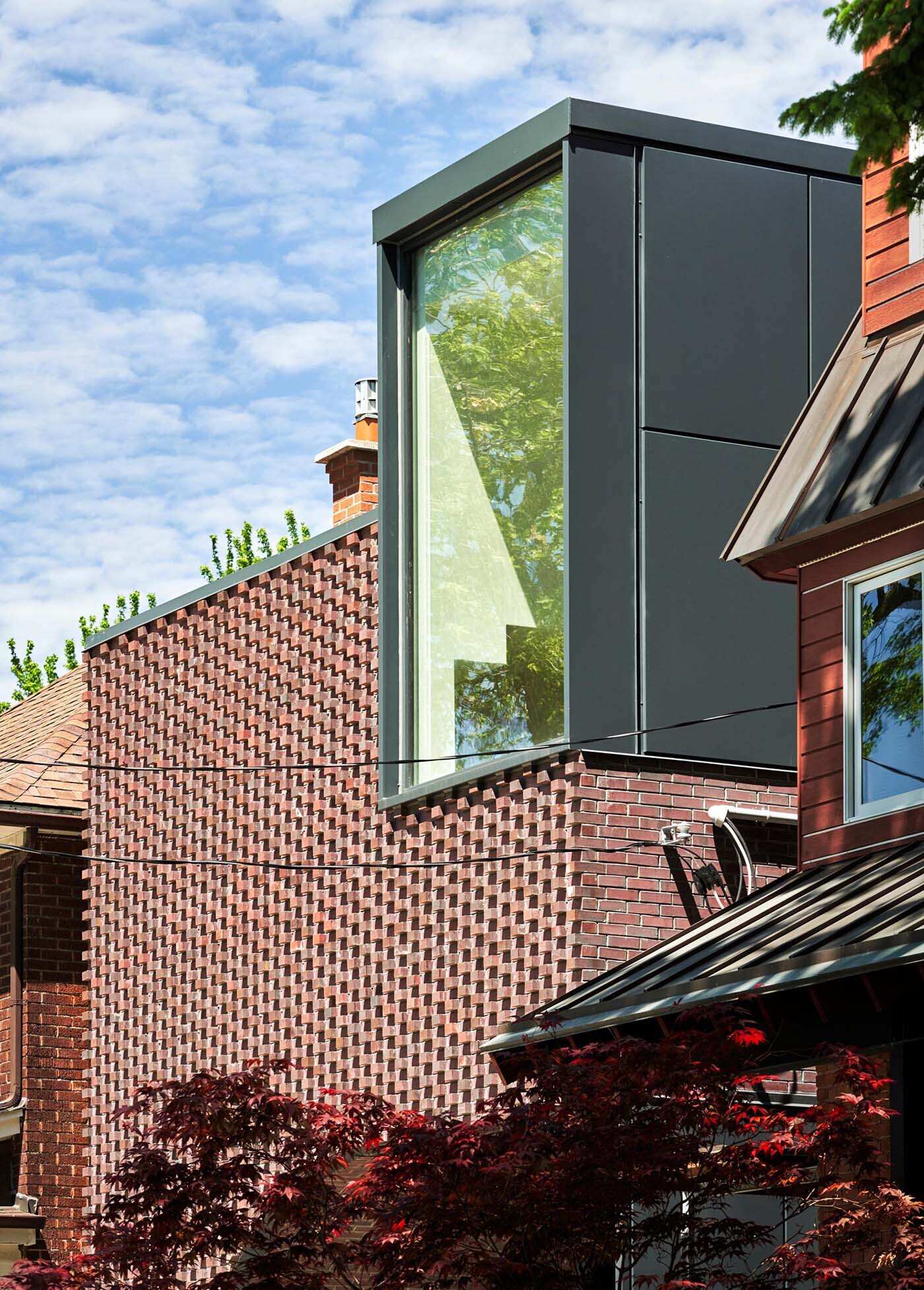
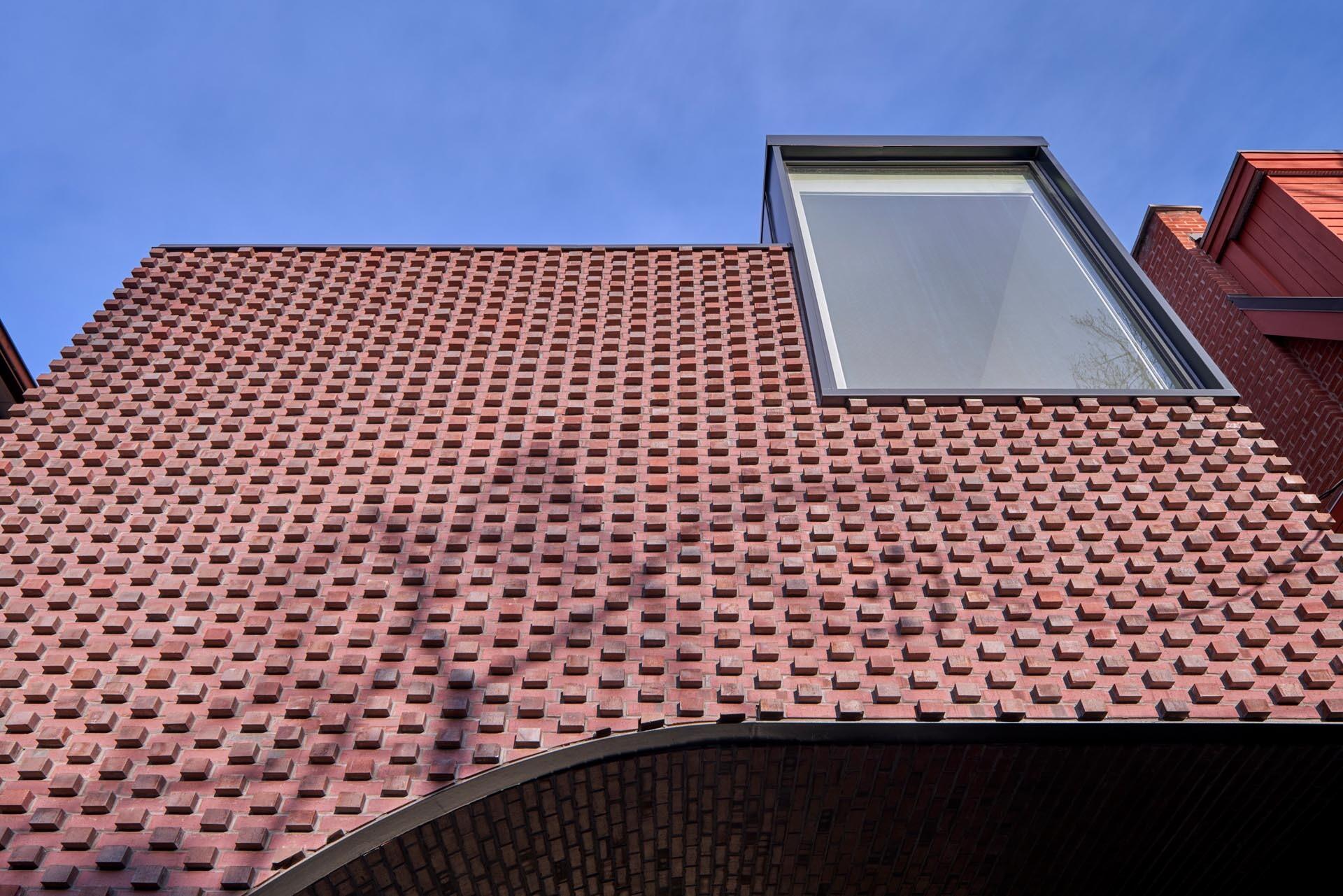
This texture changes throughout the year. In summer, the protruding bricks cast sharp shadows across the surface. In winter, snow gathers on the small ledges, softening the look and adding another layer of variation.
At dusk, the house takes on a completely different character. Interior lighting and carefully placed exterior lights highlight the openings, giving the facade a soft glow that contrasts with its solid form.
Light, Privacy, and a Subtle Street Presence
While the facade feels solid, it still allows light to pass through in a controlled way. Frosted glass on the ground floor provides privacy from the street while letting natural light filter into the interior.
The carport, carved into the front of the home, also plays a key role. Inspired by traditional porticos and Toronto’s front porches, it creates a sheltered transition from the street to the entrance. A lightwell draws daylight into this deeper space, guiding visitors toward the front door.
A Simple Entry That Opens into Volume
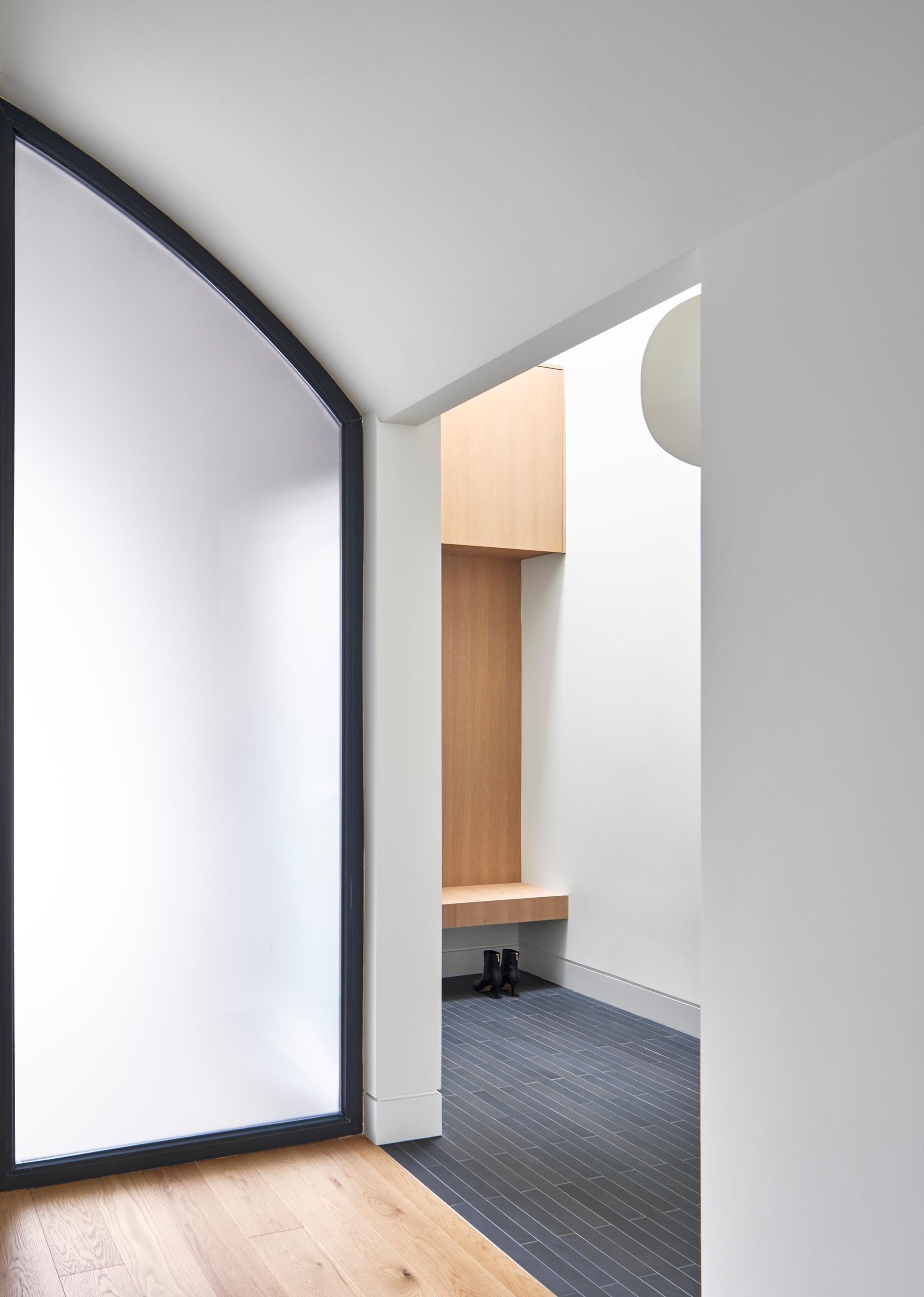
Inside, the experience begins with a compact entryway. A built-in bench offers a practical spot for shoes and coats, setting a casual tone right from the start.
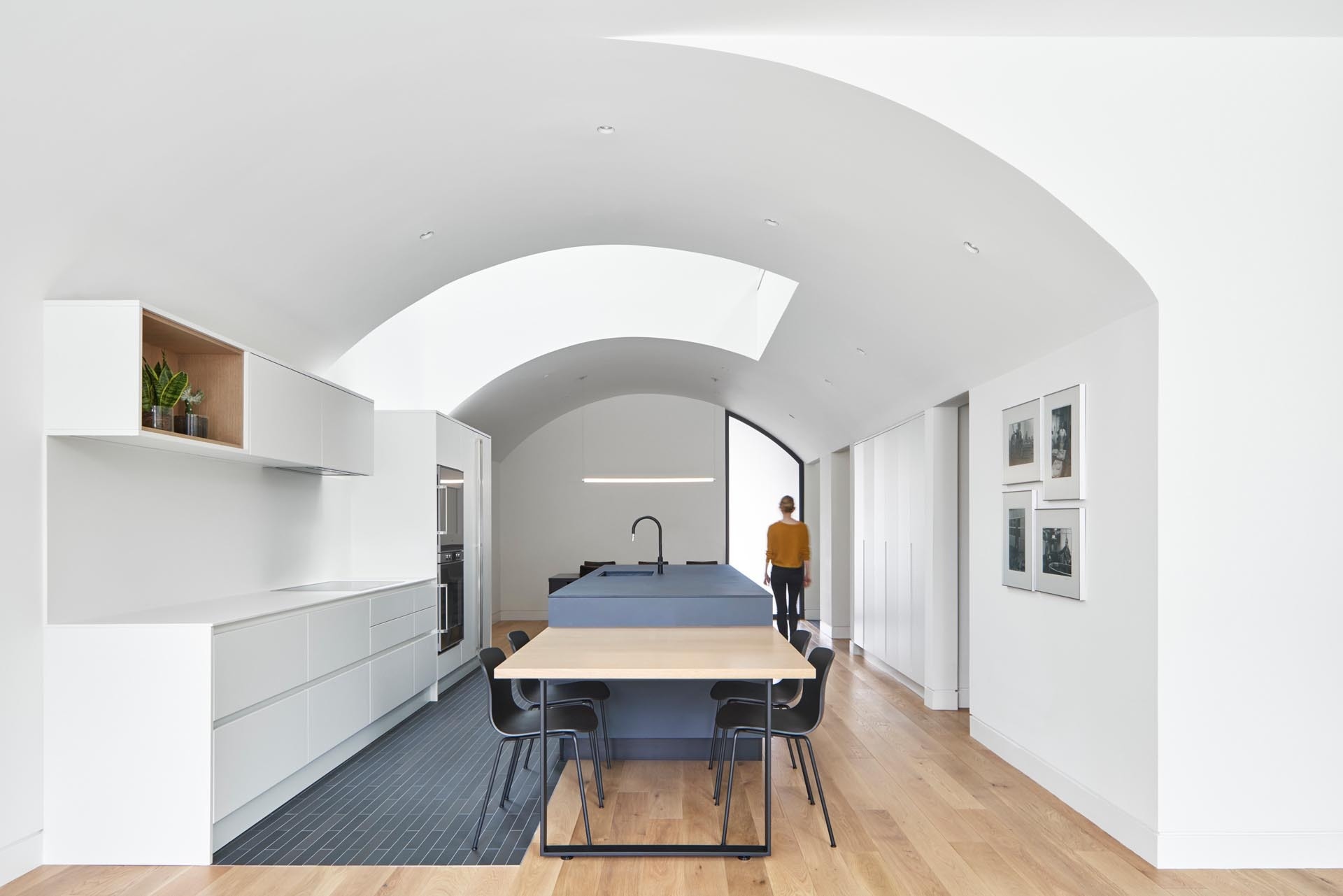
From here, the space opens up dramatically. The front door reveals a curved ceiling that extends through the kitchen and dining area, introducing the vaulted form that defines the home.
This shift from a smaller entry into a more expansive space creates a sense of contrast, making the main living areas feel even larger.
A Kitchen Defined by Contrast and Light
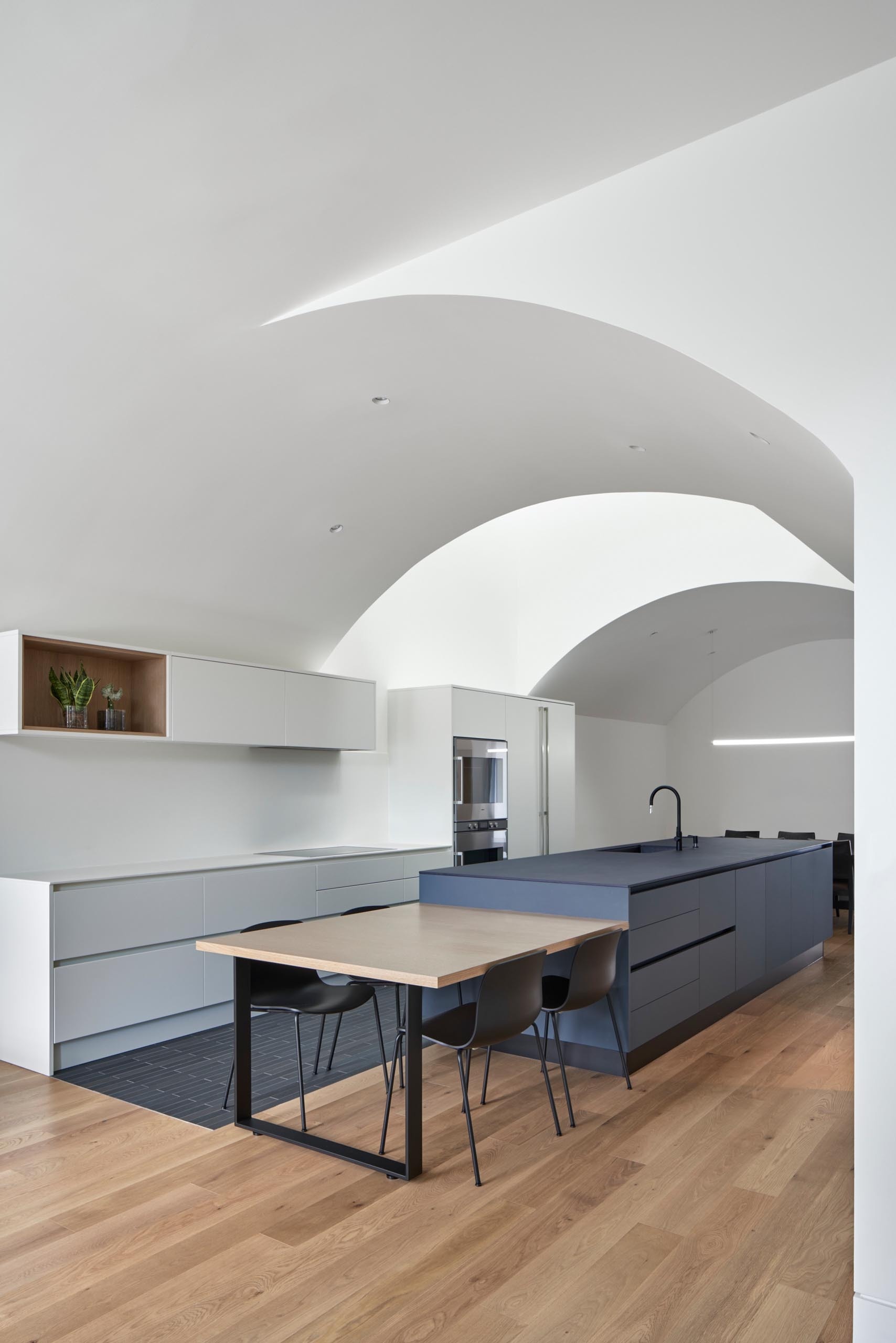
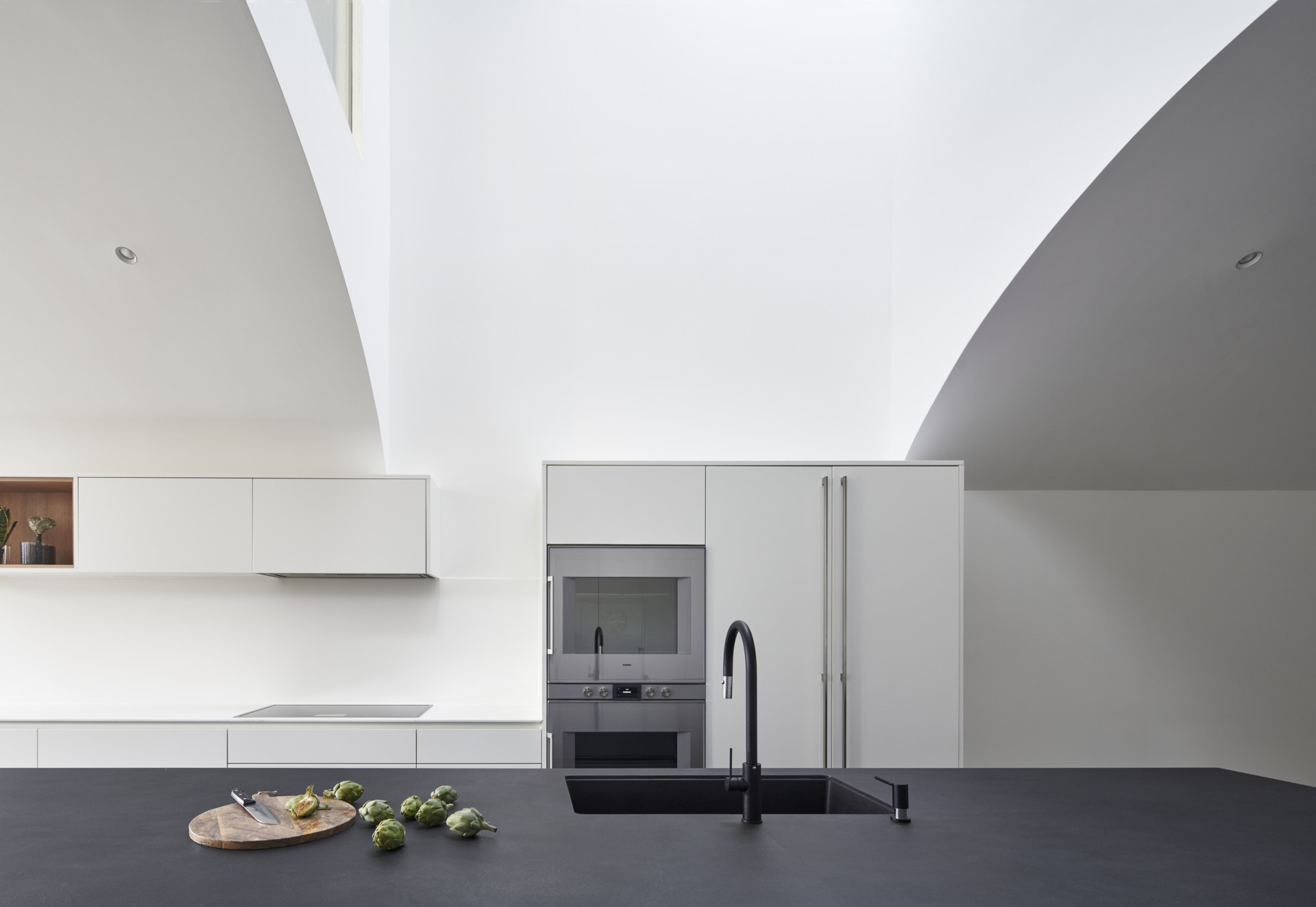
The kitchen sits along the length of the home, combining clean lines with subtle color contrast. White minimalist cabinets run along the wall, keeping the space light and uncluttered.
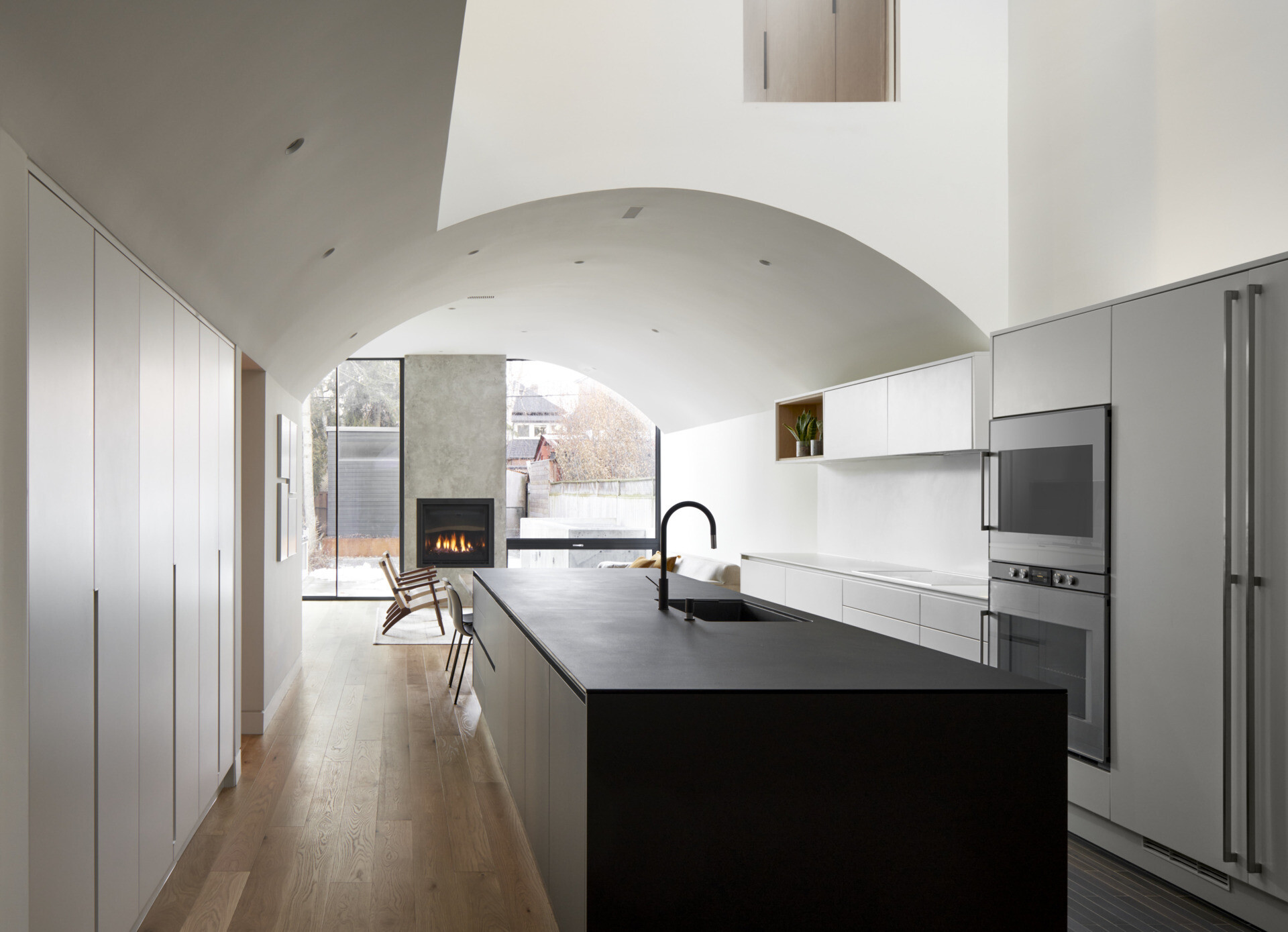
At the center, a matte blue island adds depth and becomes a focal point. The kitchen also connects to a more casual dining area near the living room, making it a social space as much as a functional one.
Above, the vaulted ceiling is partially opened to allow more light in, with skylights bringing daylight into the middle of the long floor plan.
A Living Room Framed by the Outdoors
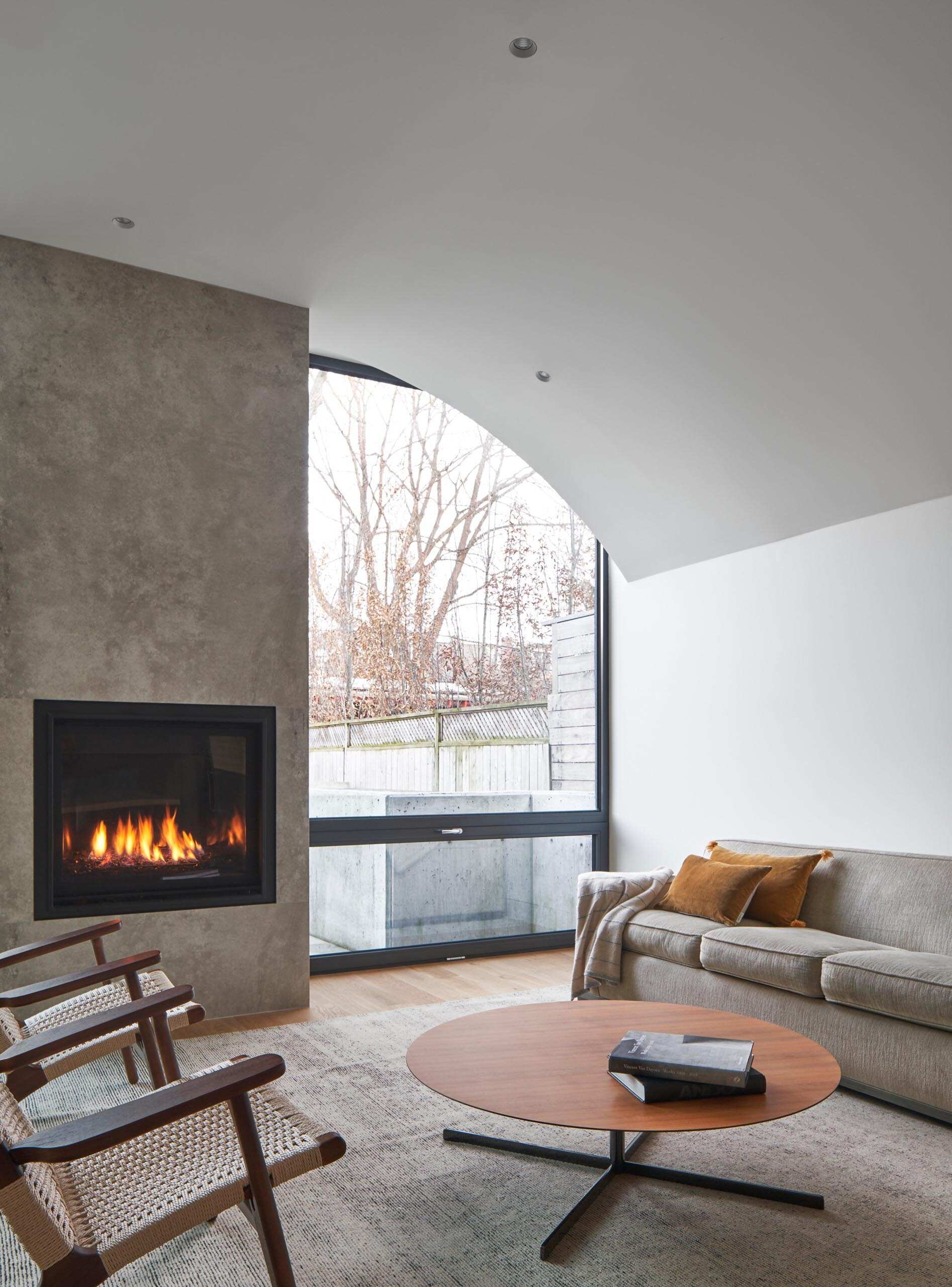
At the rear of the home, the living room offers a quieter setting. A fireplace anchors the space, while a large window frames views of the backyard.
The vaulted ceiling continues here, tying the space to the rest of the ground floor while still allowing each area to feel distinct.
Natural light plays a major role, with the rear glazing bringing in daylight and connecting the interior to the outdoor space.
An Upper Floor Shaped by Light and Openings
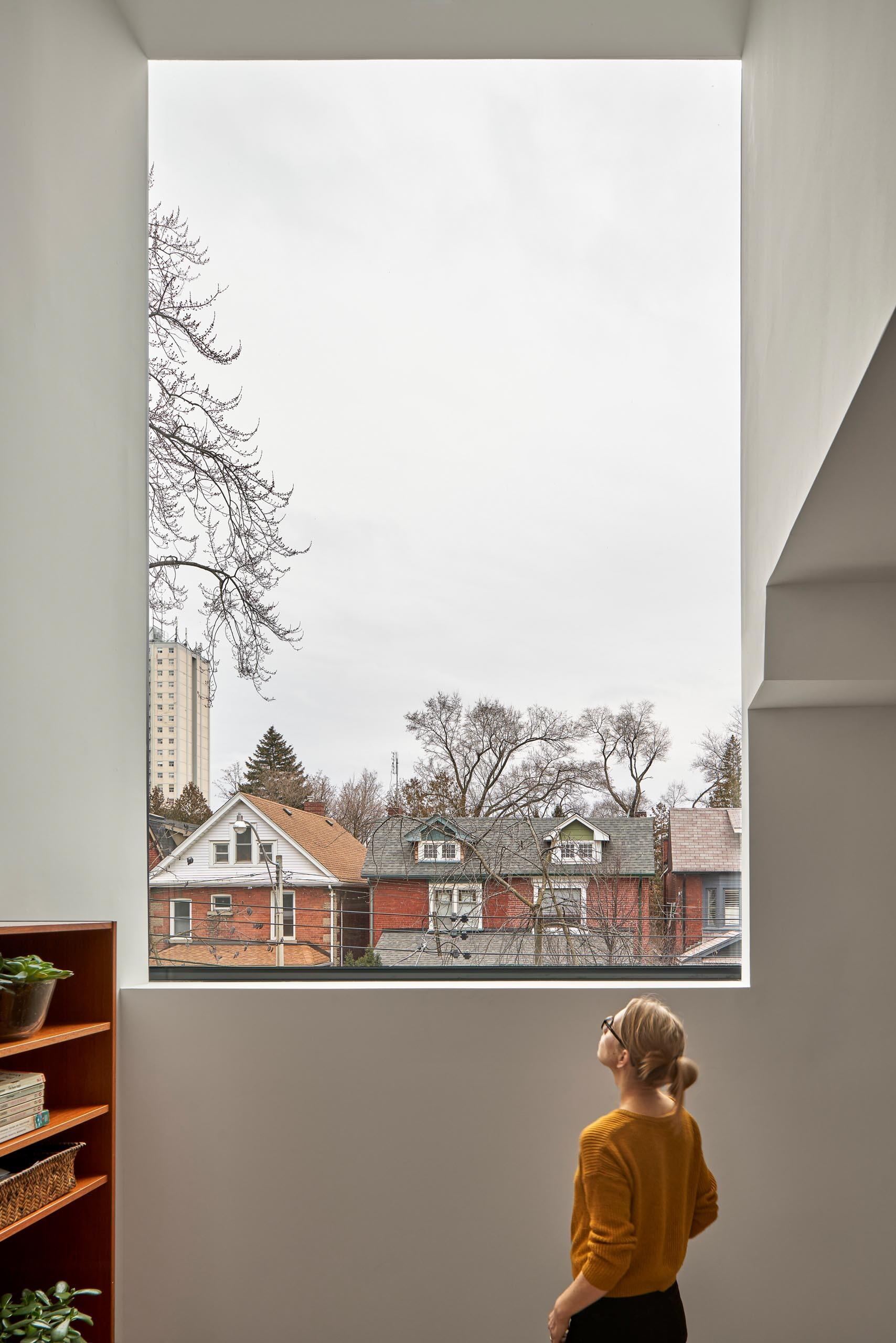
Upstairs, the layout shifts to a more segmented arrangement. Rooms are positioned along the length of the home, with openings and bridges allowing light to travel between them.
A large window frames views of the neighborhood, giving the upper level a connection back to the street.
The design ensures that even with a narrow lot, each room receives natural light, whether from the facade, skylights, or internal openings.
A Bedroom with Simple Contrast
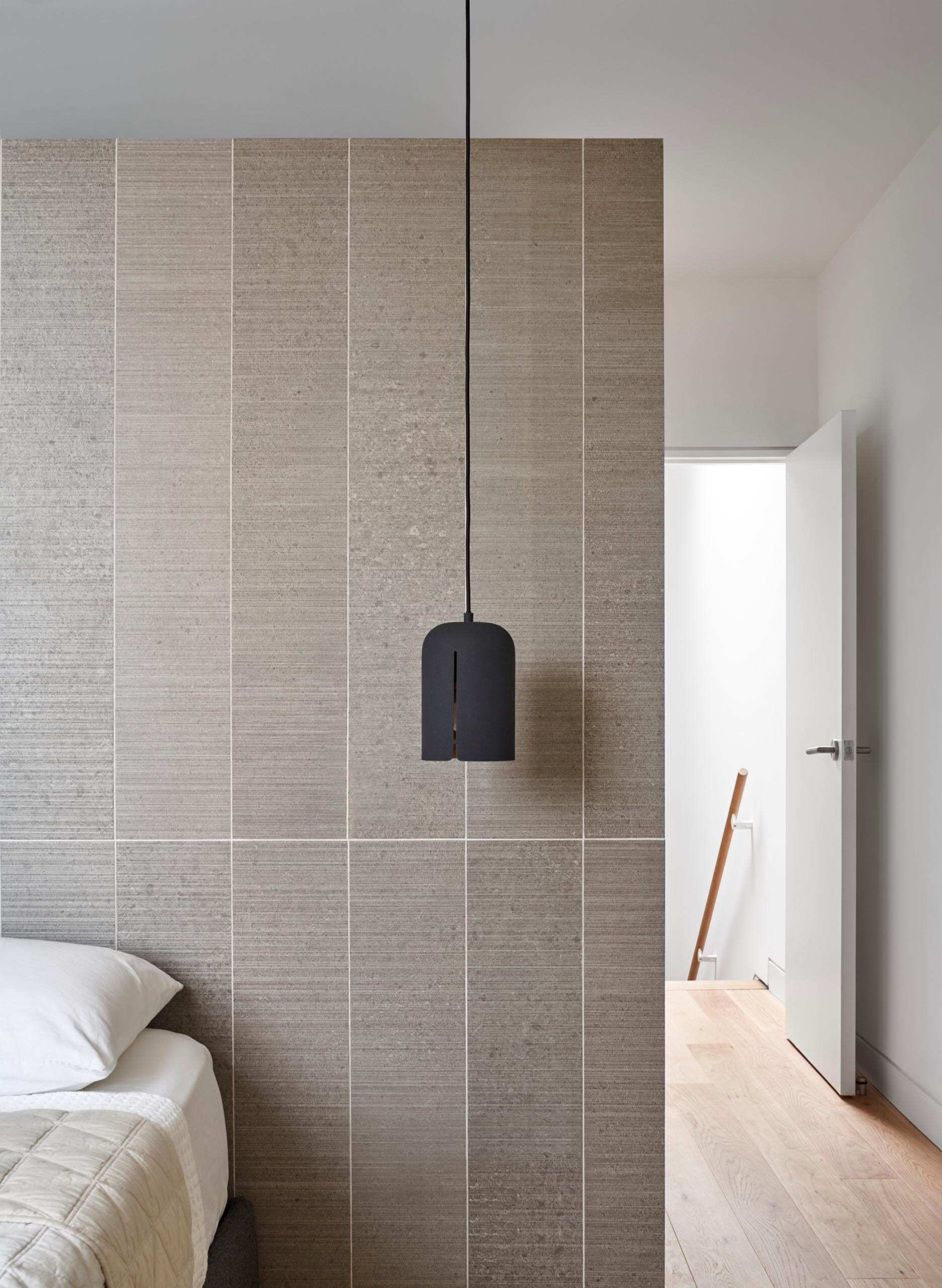
In the bedroom, the design becomes more restrained. A matte black pendant light hangs beside the bed, doubling as a bedside lamp.
This darker element contrasts with the accent wall behind the bed, adding just enough variation without overwhelming the space. The result is a room that feels calm, with a few carefully chosen details standing out.
This Toronto home shows how a familiar material like brick can be reworked into something new. By combining references to Italian architecture with the city’s own building traditions, Batay-Csorba Architects have created a house that changes with light, weather, and time of day.