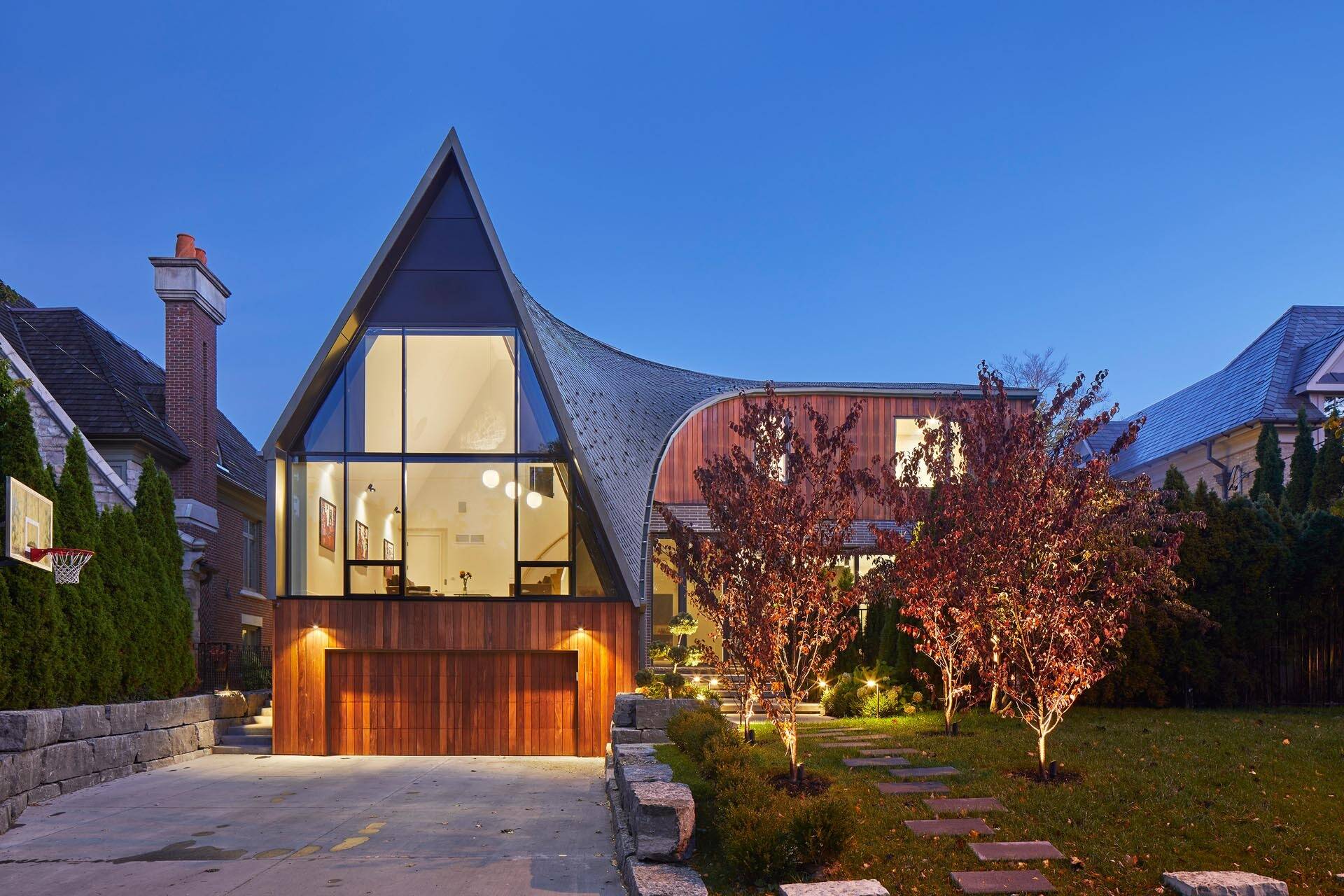
Canadian architecture firm BORTOLOTTO designed a house in Toronto for custom-home builder Farhad Kazmian, owner of Abond Homes.
The project replaces the original family home, but it also takes on a second role. It becomes a physical portfolio, something clients can experience firsthand. Every decision, from form to material, reflects that intention.
A Roof That Changes Everything
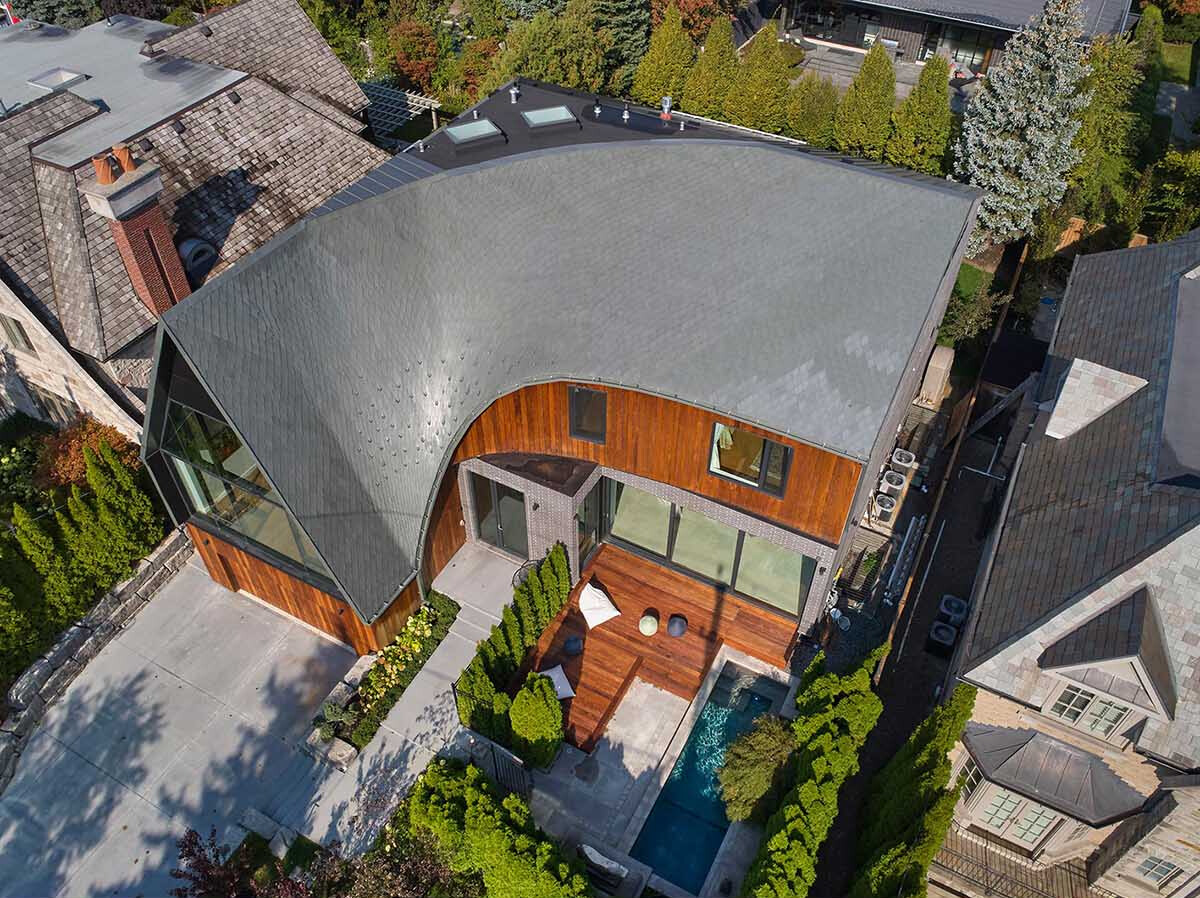
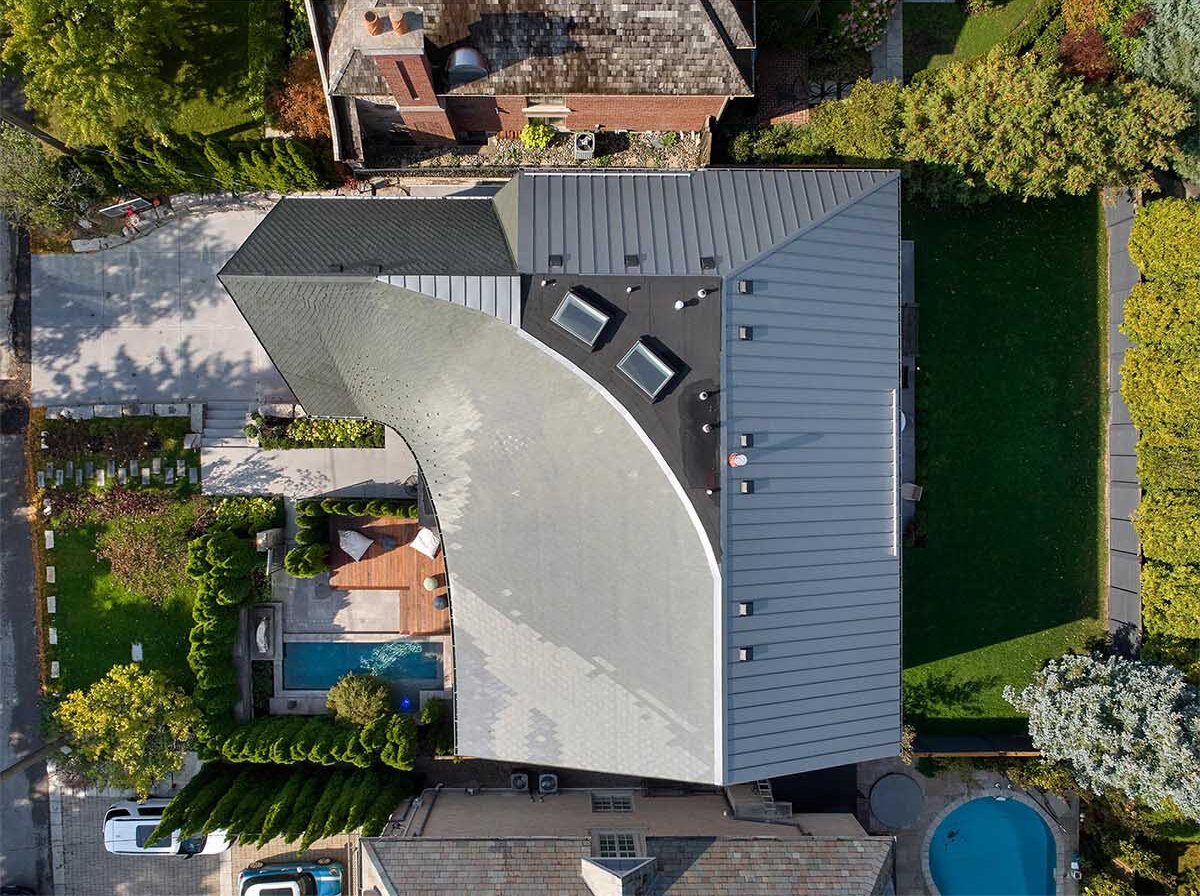
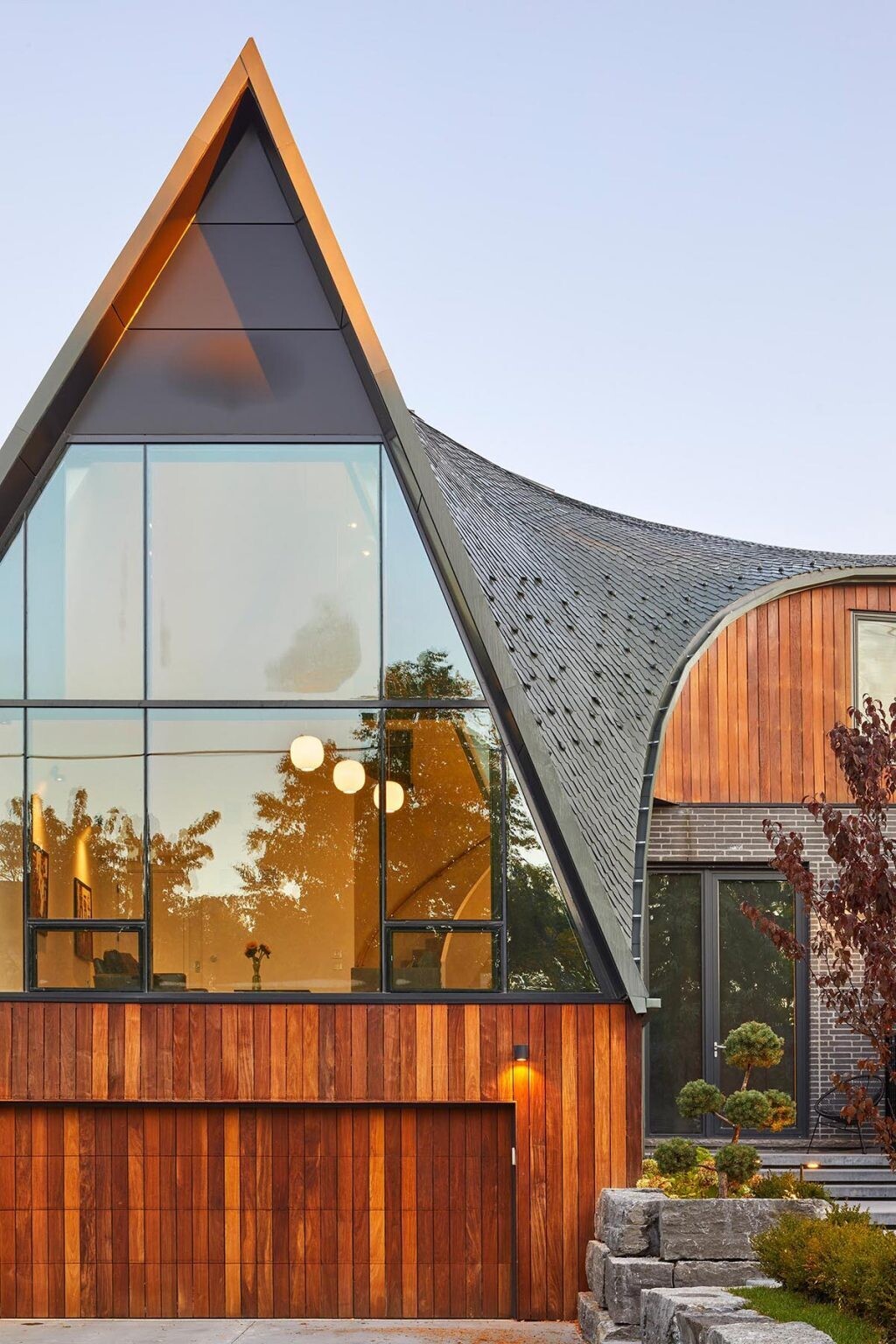
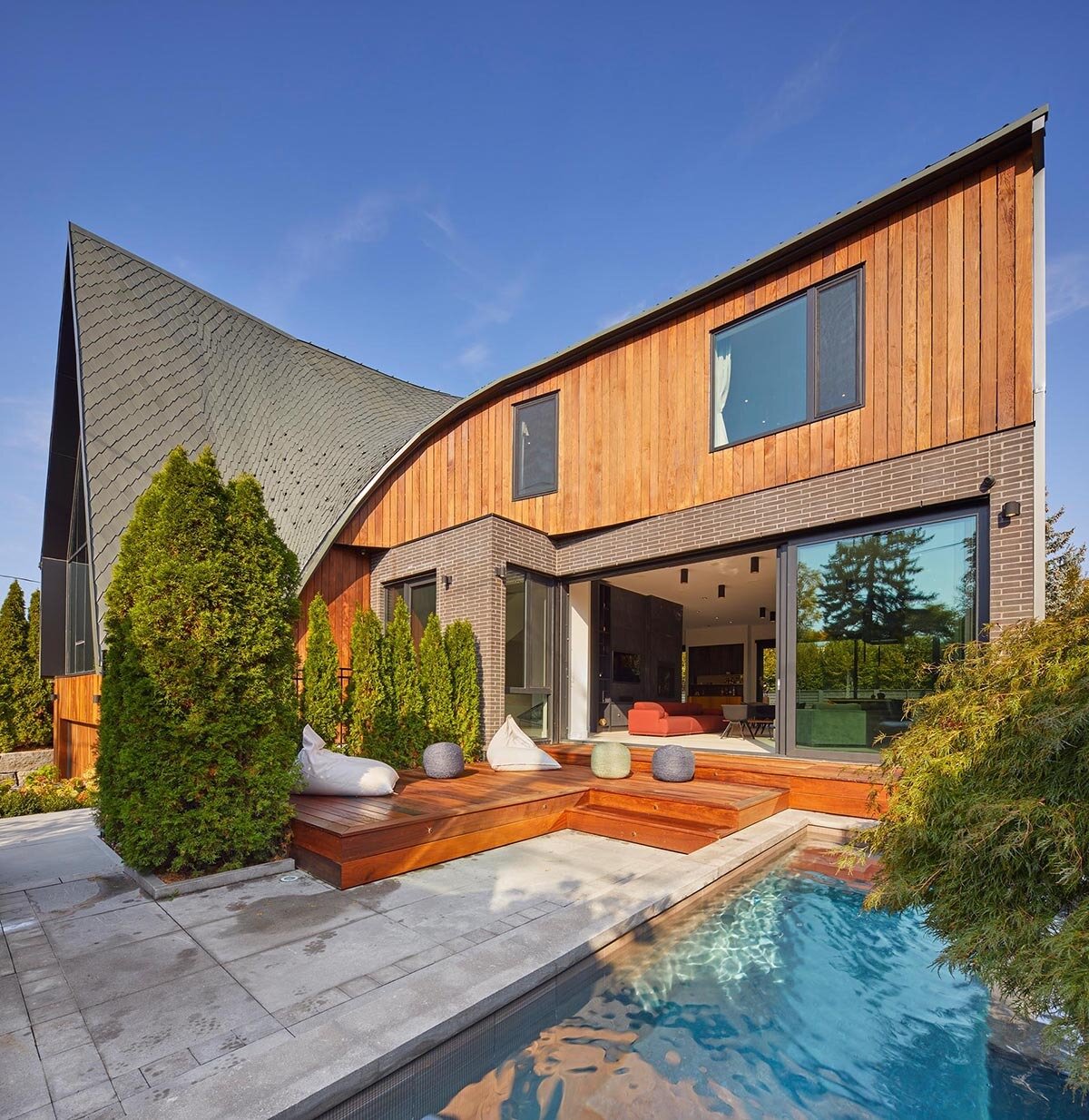
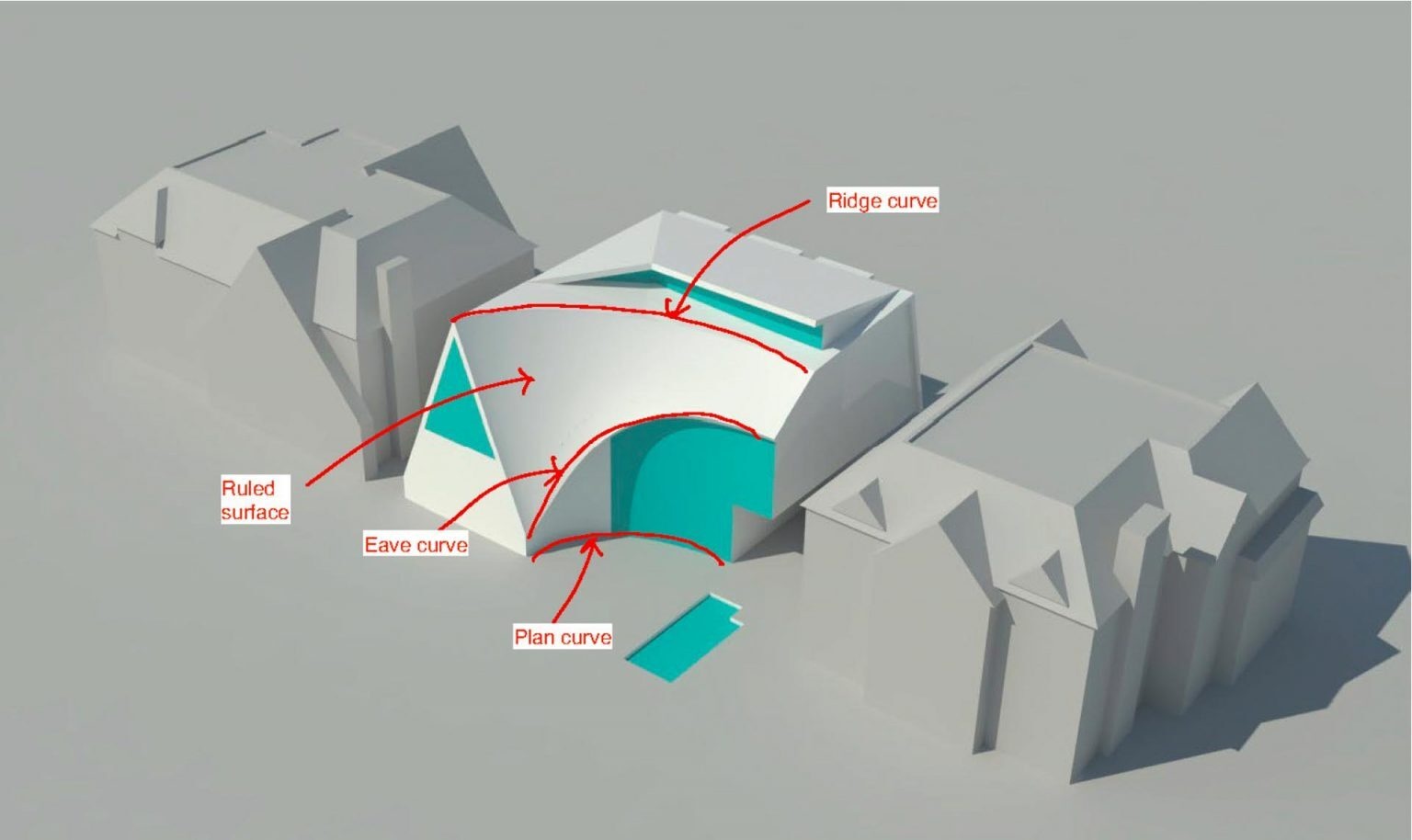
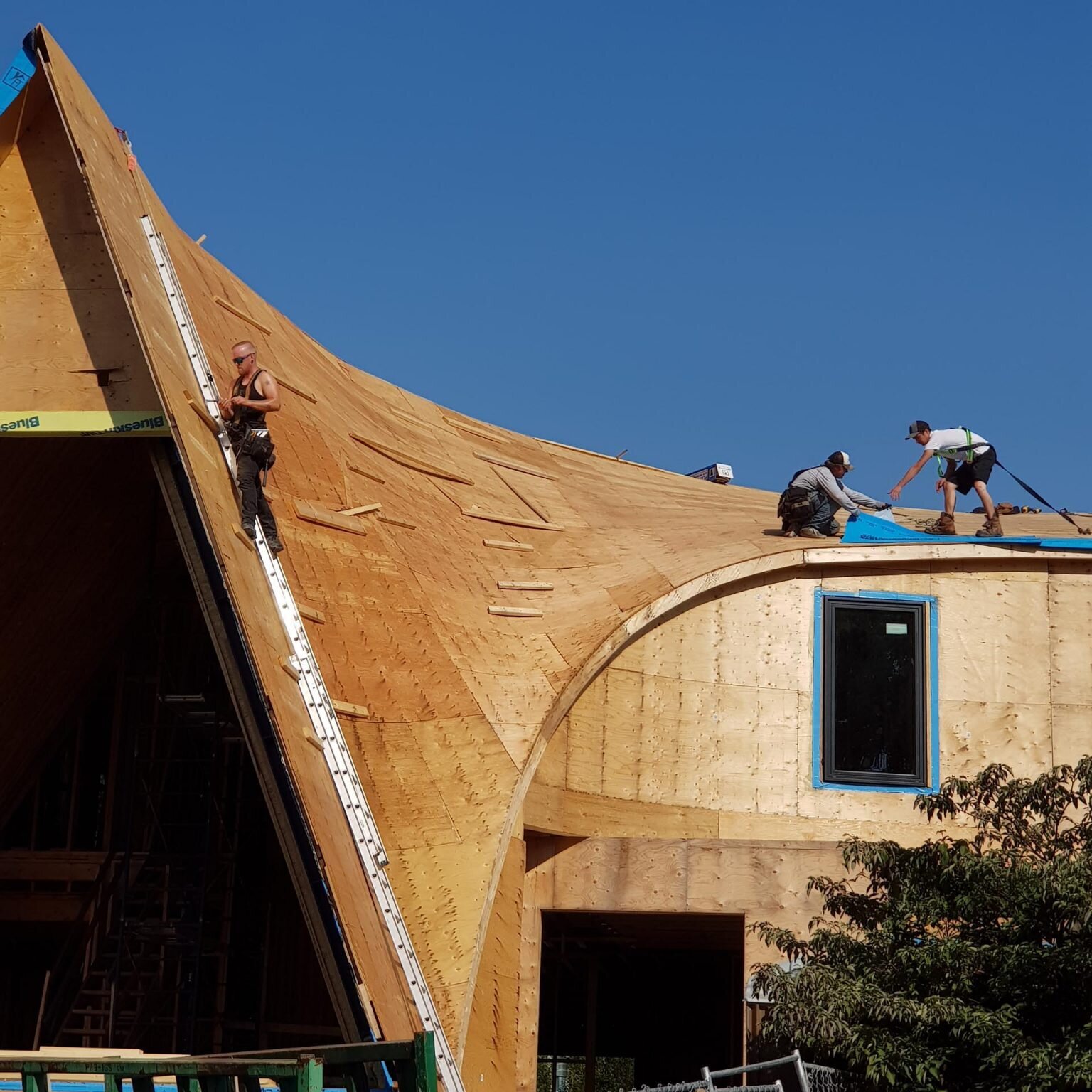
The eye-catching design of the L-shaped house is defined by a softly curved roof. It extends outward from the straight edge of the A-frame and wraps around the courtyard and front door in three dimensions.
Using Grasshopper architectural modeling software, the architects generated a Bézier curve. This gives the roof an organic quality that softens the overall form and avoids the rigid feel of typical residential builds.
Zinc, Texture, and Detail
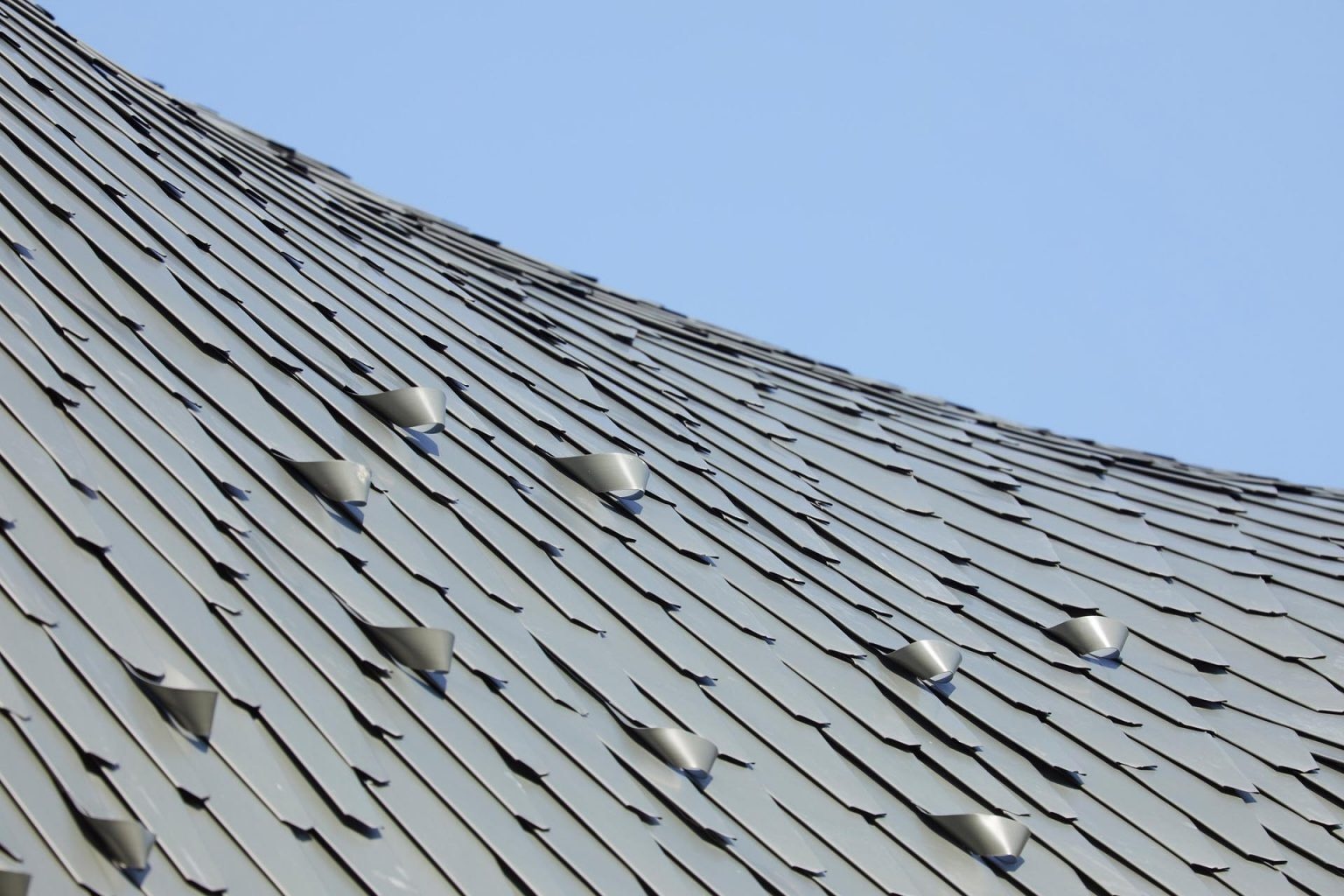
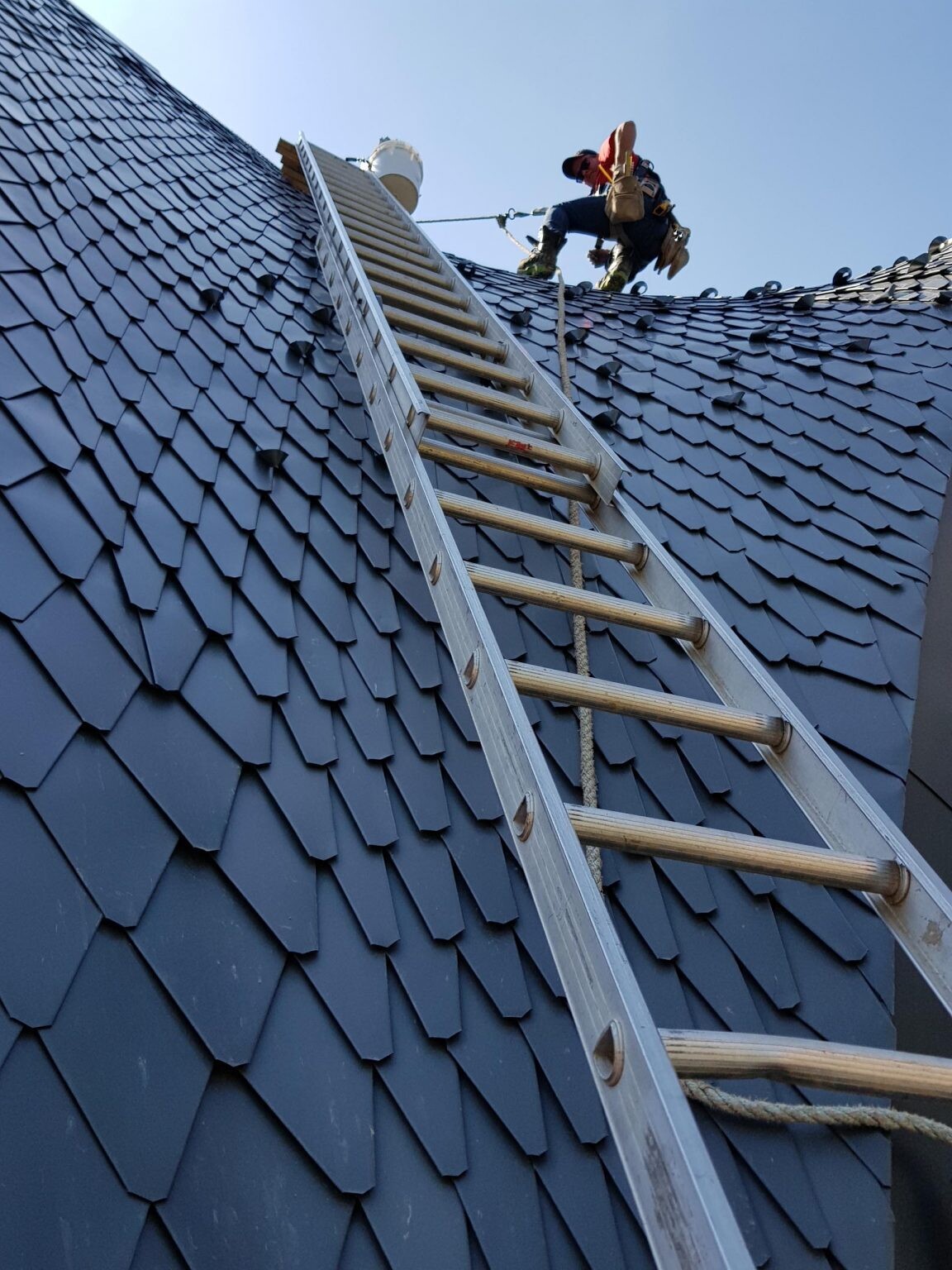
A closer look at the roof shows hand-laid, diamond-shaped zinc shingles. Their surface catches the light, giving the house a subtle shimmer while also referencing nearby slate roofs.
Twisted zinc snow guards add another layer of craftsmanship while serving a practical purpose. These details reinforce the idea that even functional elements can contribute to the visual impact.
A Contemporary Material Palette
The facade combines Ipe wood and brick, creating a modern exterior that still relates to the surrounding homes. The mix of materials ties into the neighborhood’s stone, brick, and timber buildings without copying them. This balance helps the house stand out while still feeling like part of the street.
Outdoor Living
The front courtyard includes a small deck and a swimming pool. Positioned at the front of the house rather than the back, it changes how outdoor space is used and experienced. It becomes a central feature of the home, visible and accessible from key interior spaces.
Opening the Living Space
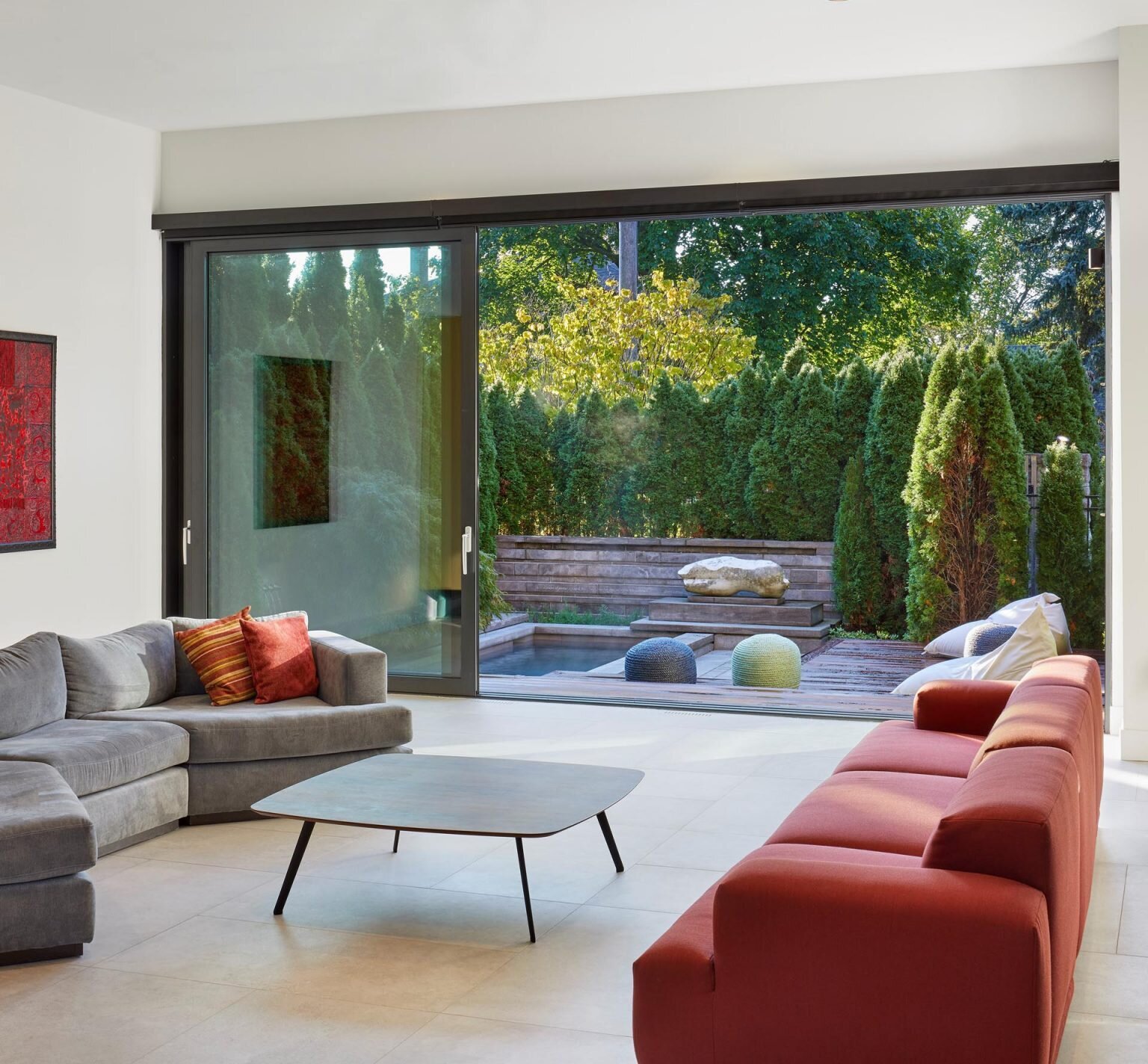
Inside, the living room is lined with large sliding glass doors that open directly to the courtyard and pool. This connection makes the outdoor space feel like an extension of the interior.
Structure as Sculpture
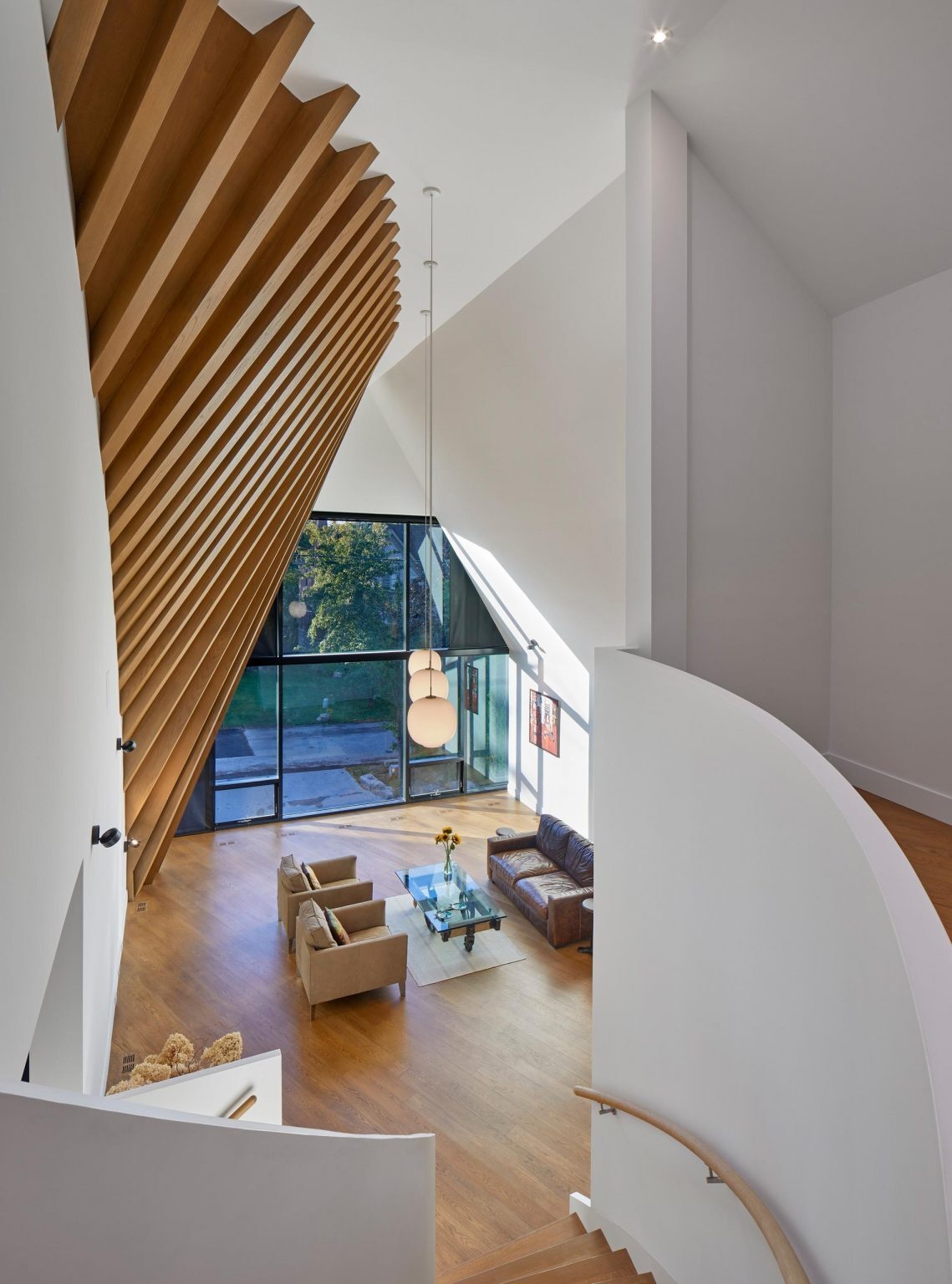
Moving deeper into the house, the exposed rafters clad in red oak veneer continue the dynamic shape of the roof. The structure itself becomes a visual feature. This swirling form is echoed in the curving staircase, reinforcing a consistent language throughout the interior.
A Flexible Dining and Kitchen Space
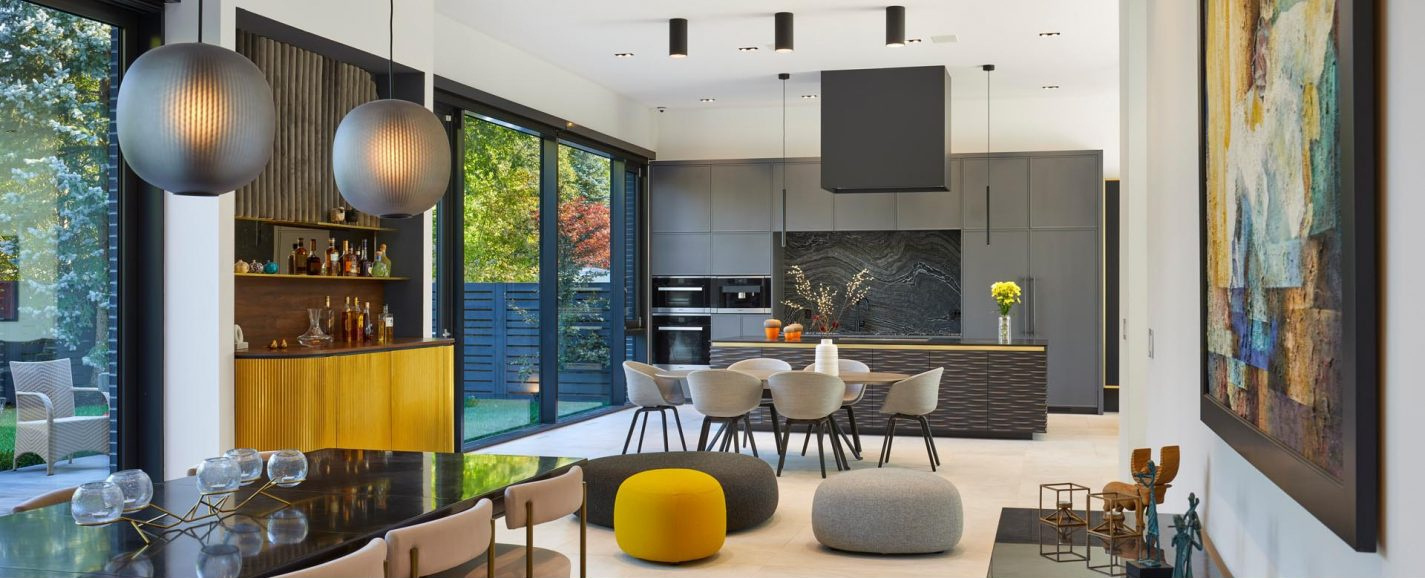
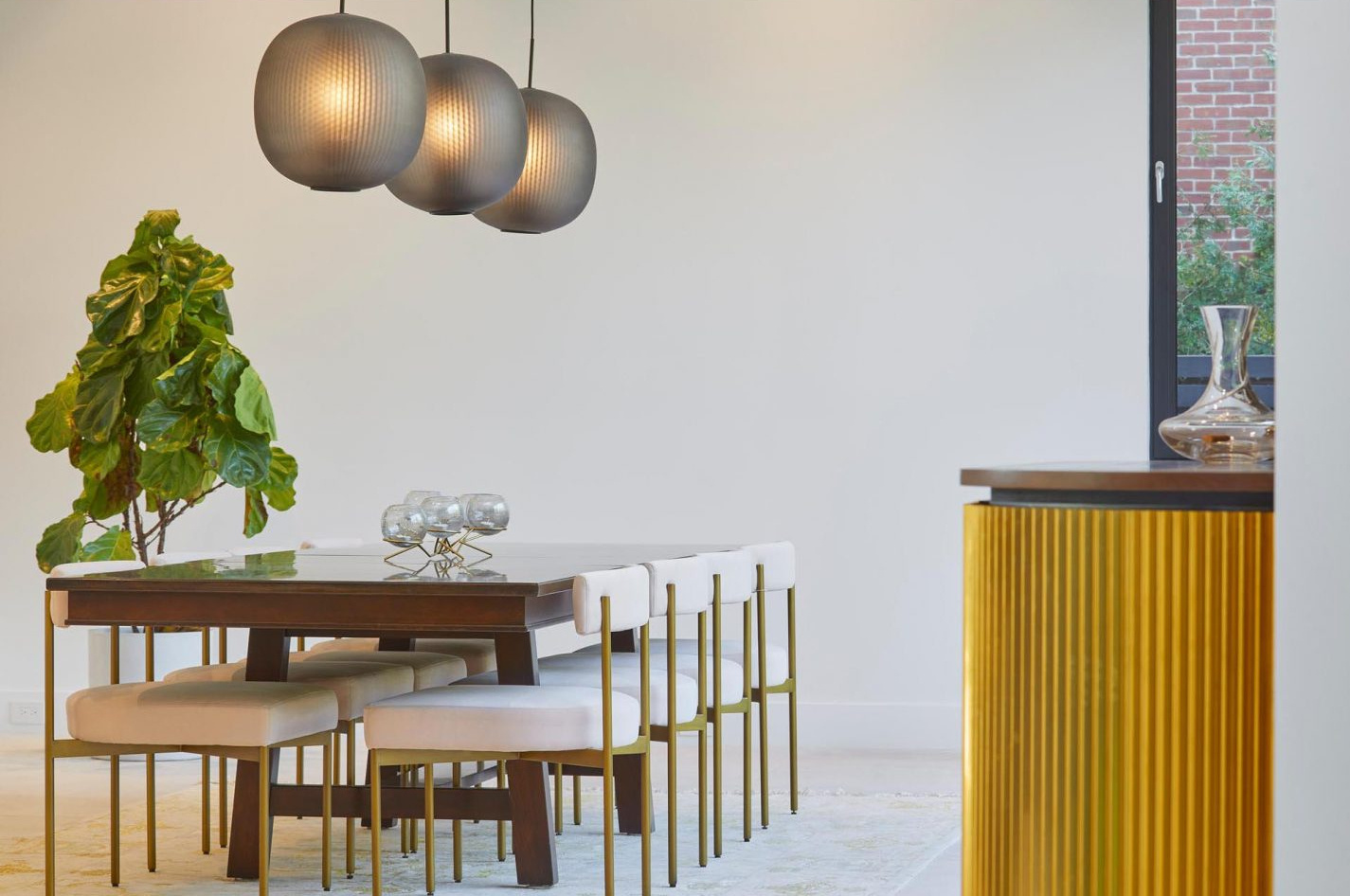
The open-plan dining room and kitchen offer multiple ways to gather, with two dining options and a dedicated bar area. Porcelain tile flooring runs through the space and aligns perfectly with the rear patio pavers, creating a clean transition outdoors.
How the Roof Was Built
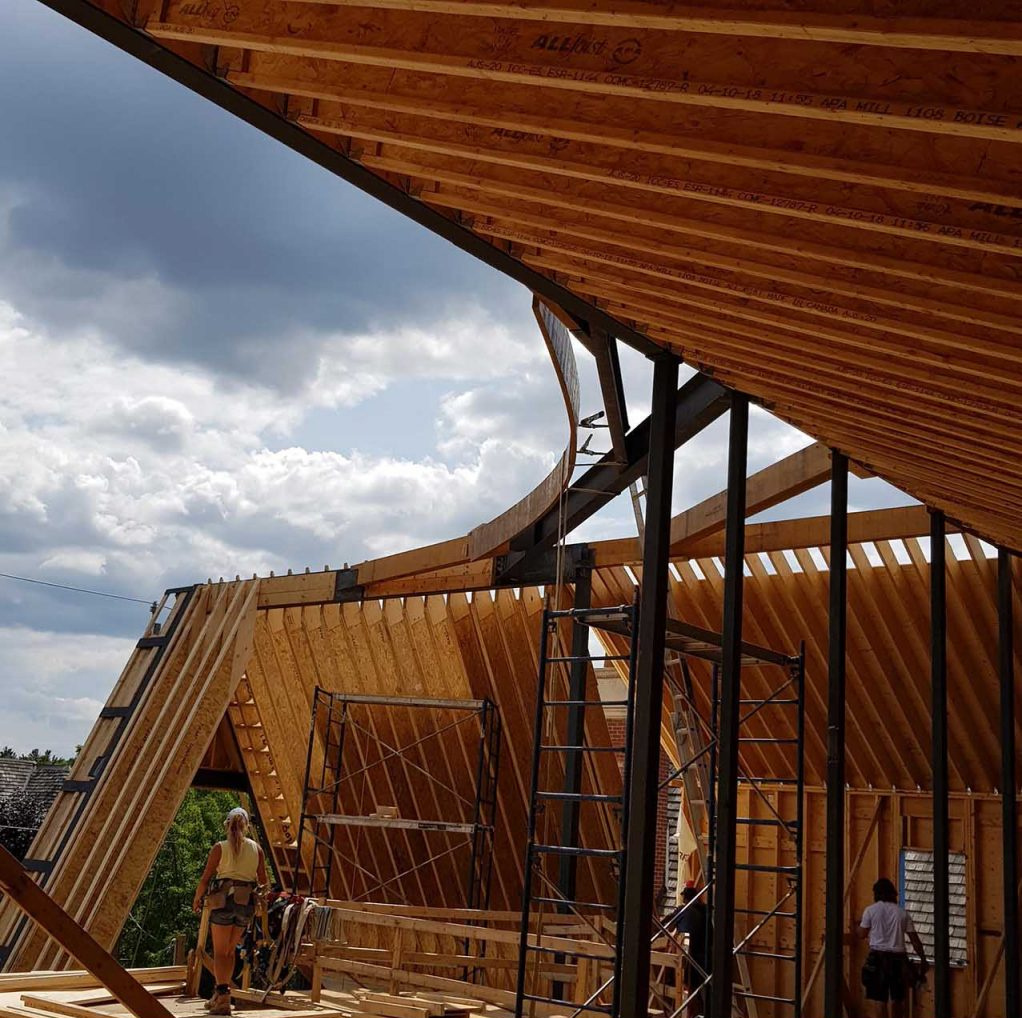
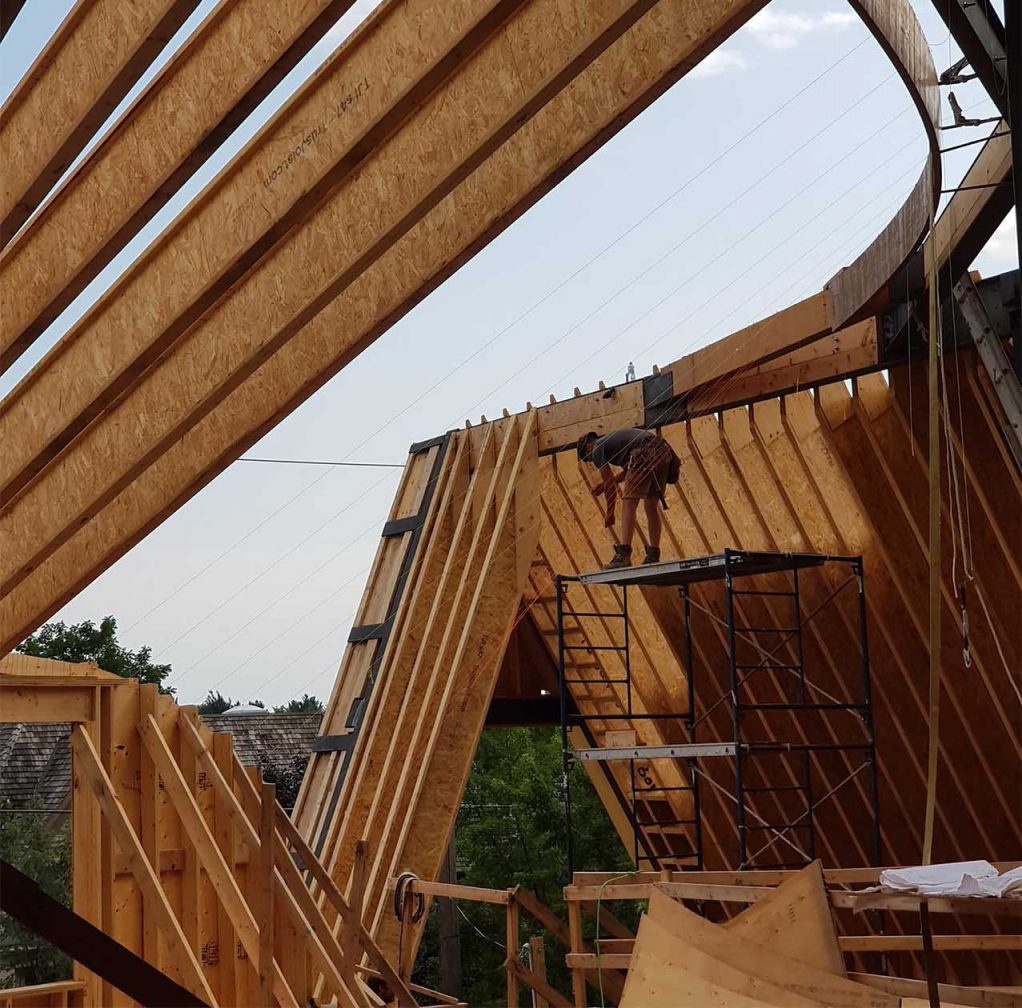
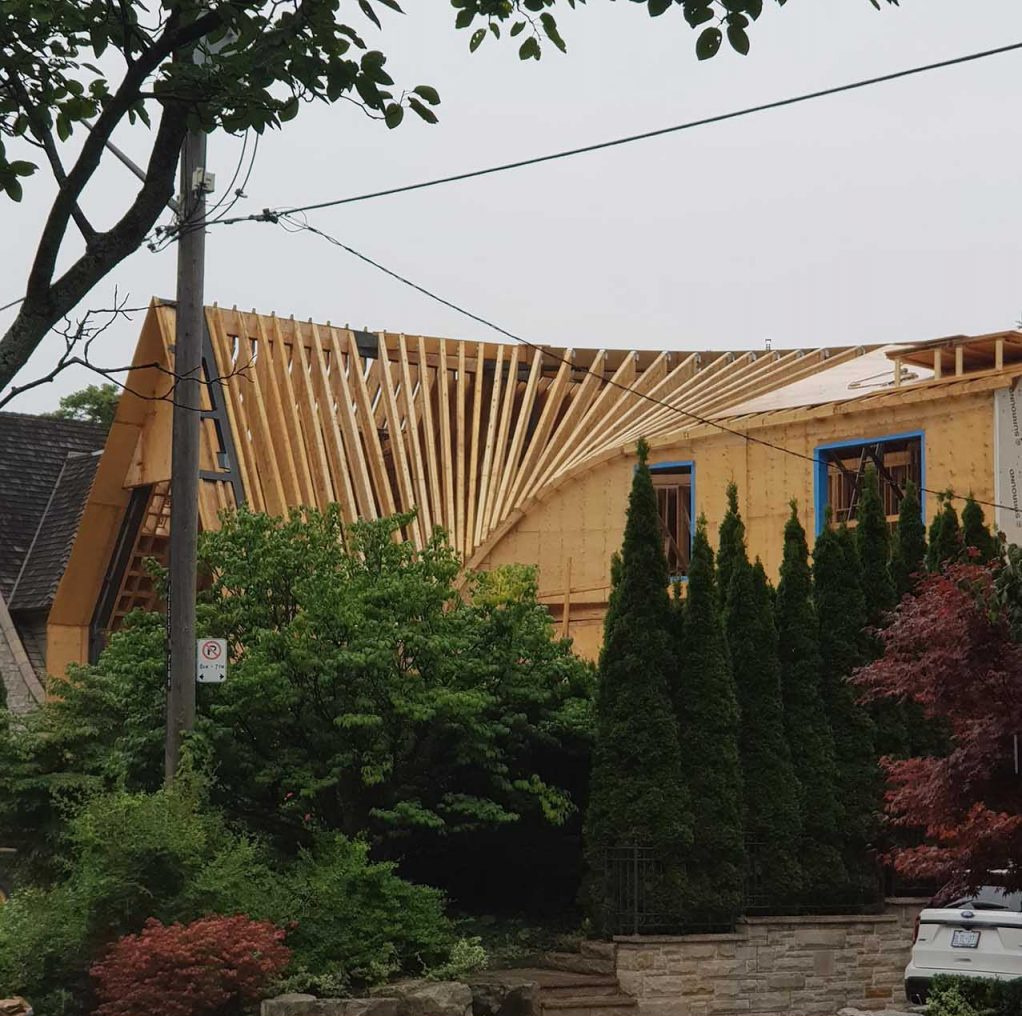
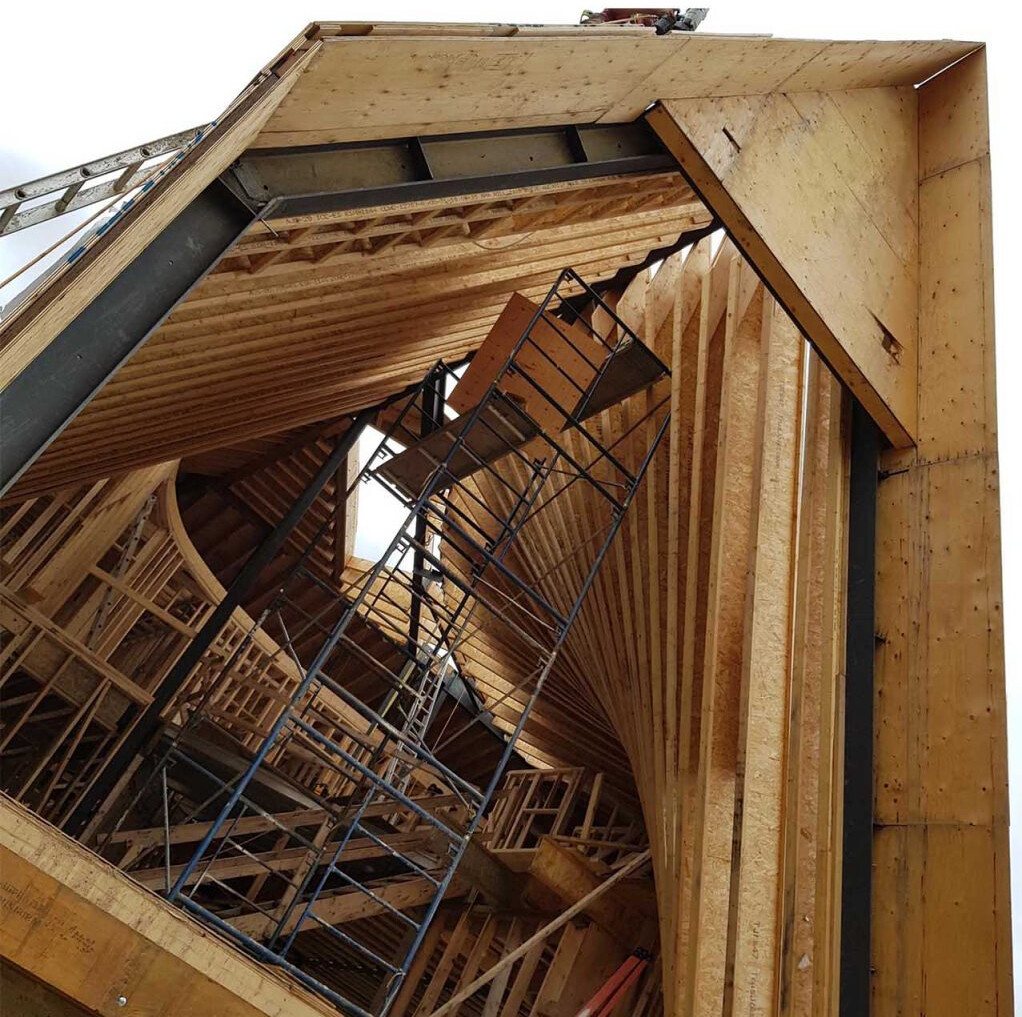
The roof’s form is not just about design but also construction. It combines steel ridge beams with an outrigged A-frame steel structure.
Conventional timber joists fill the gaps, fanning out to create the curved profile. The result is a structure that brings a complex shape to life using a mix of modern engineering and straightforward building techniques.
This Toronto house goes beyond replacing what was there before. It serves as a working example of what design, material, and construction can achieve when they are pushed further, and how a single idea, in this case a curved roof, can shape an entire home.