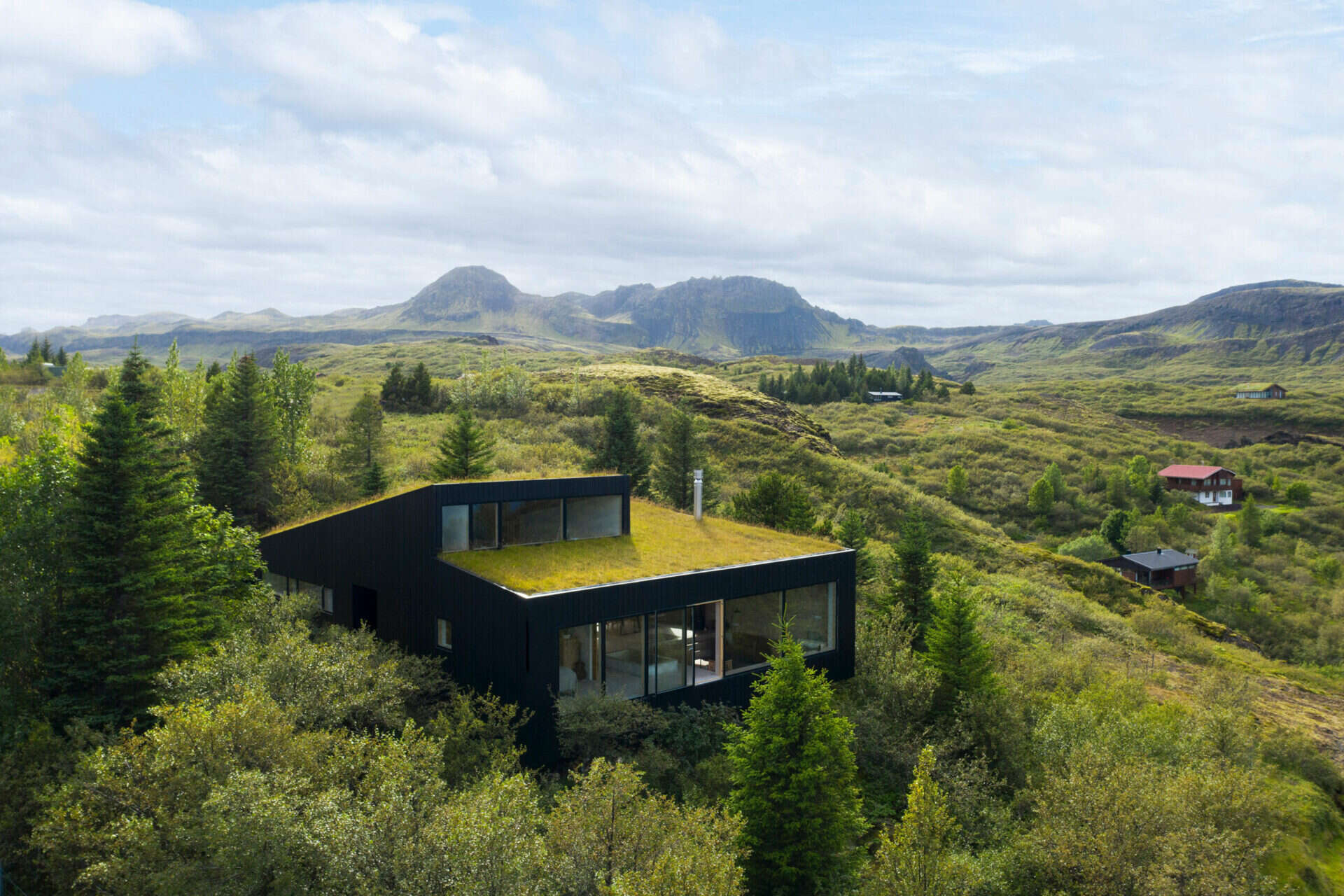
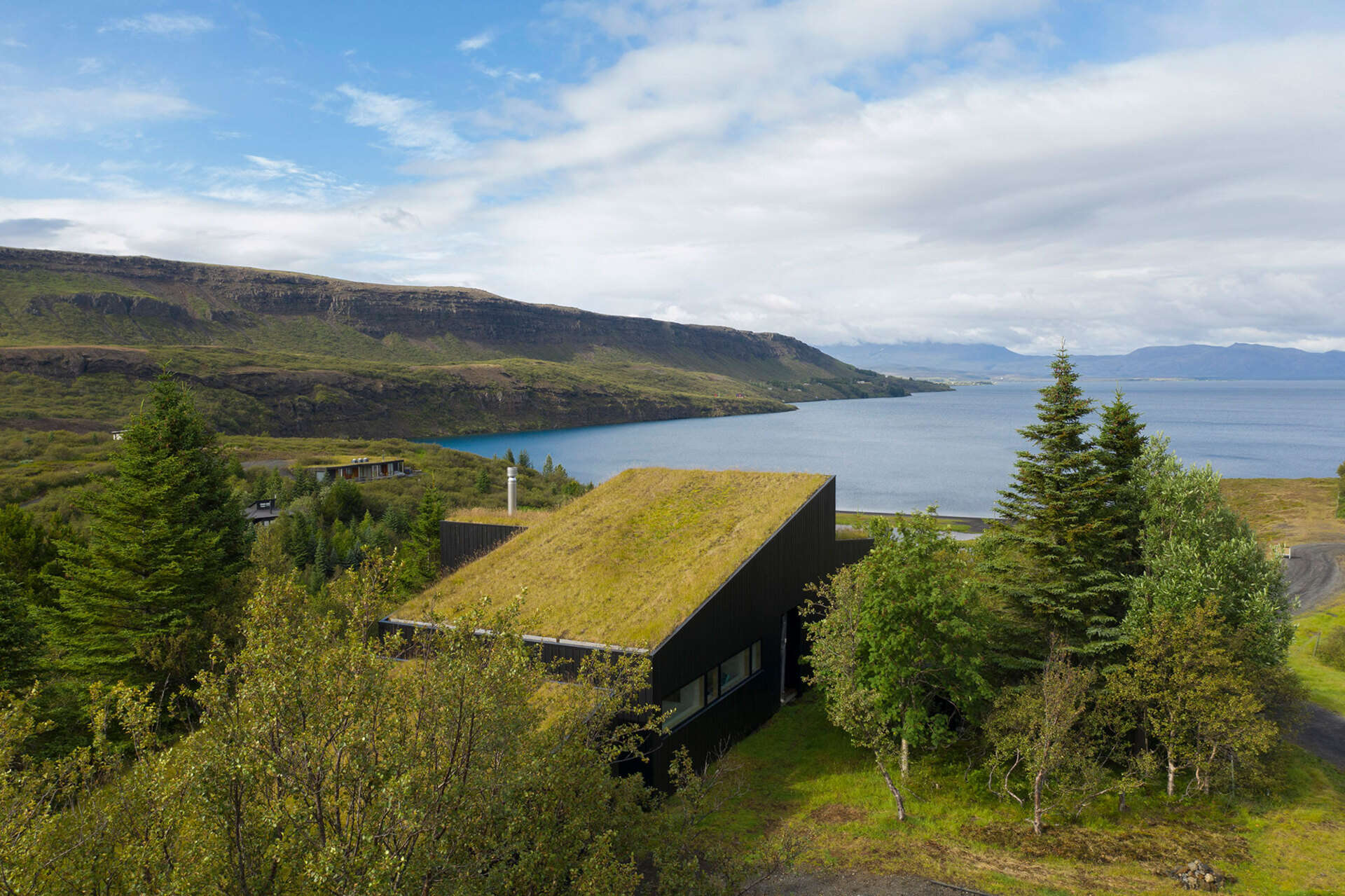
In Pingvallavatn, Iceland, KRADS designed a holiday home for musicians Tina Dickow and Helgi Jonsson that blends into its surroundings through a green roof and a low, layered form. Set on a densely overgrown hill, the project reflects a shared creative understanding between architect and client, shaping both the process and the final result.
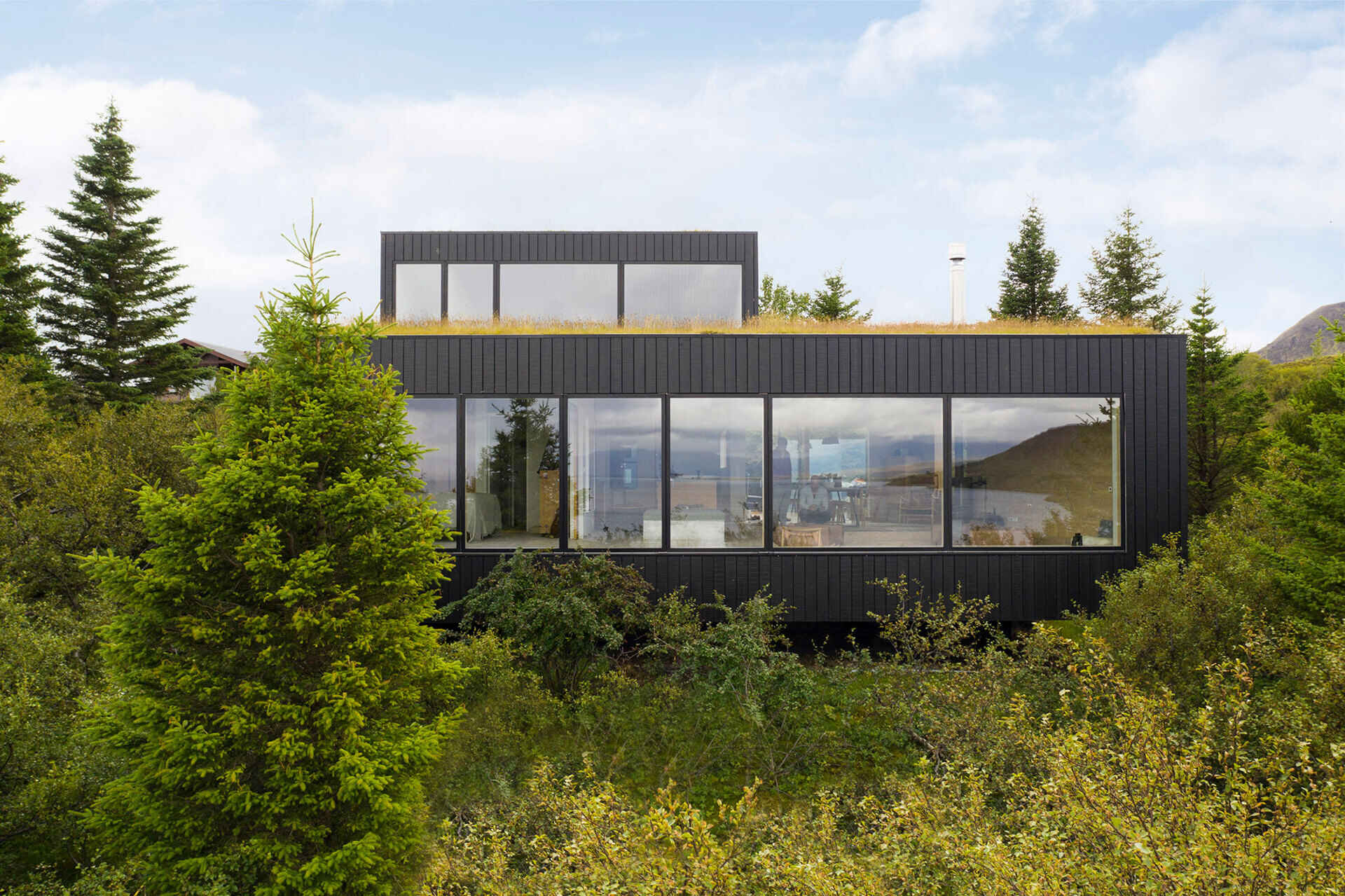
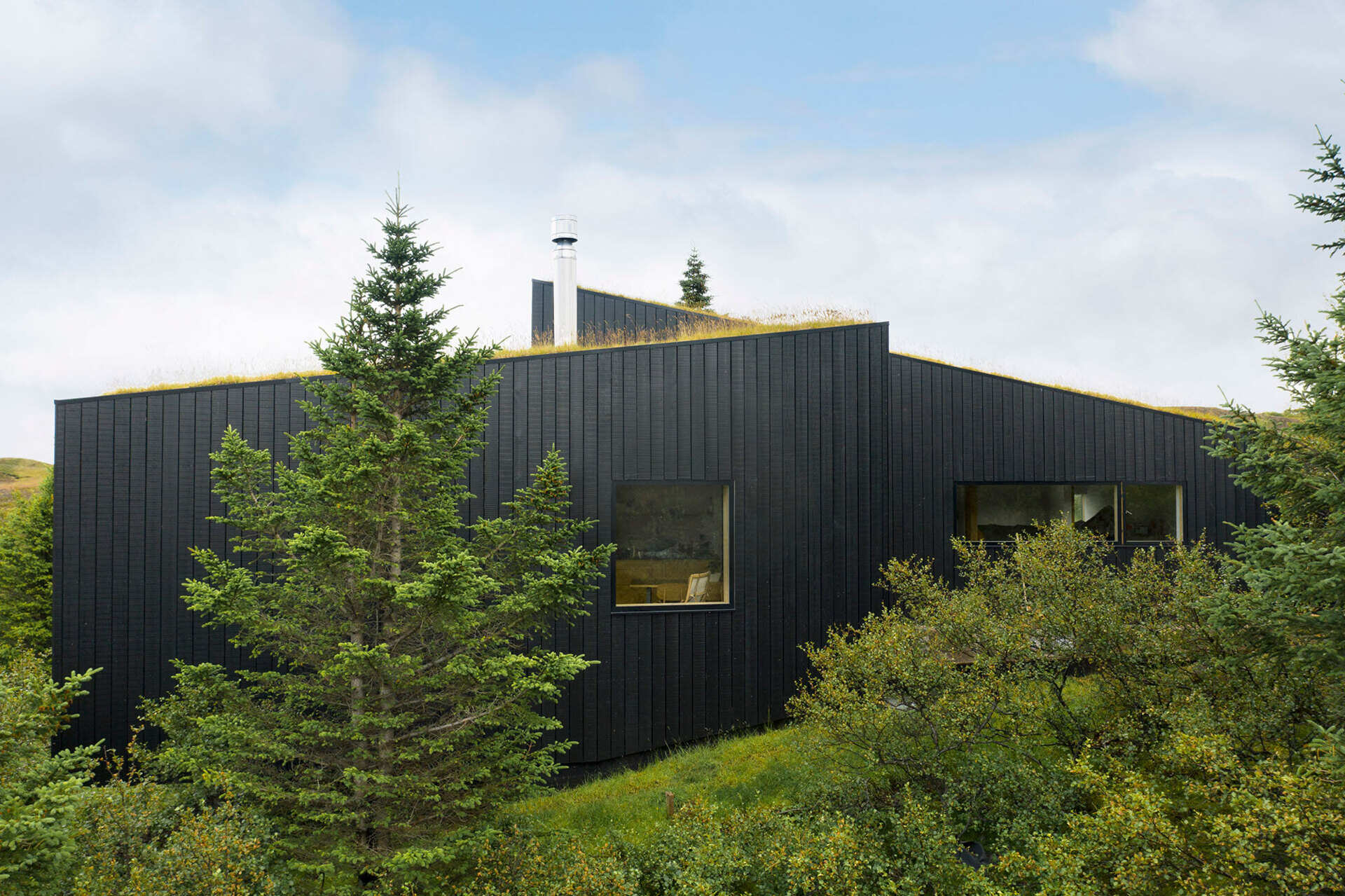
A House That Follows the Hill
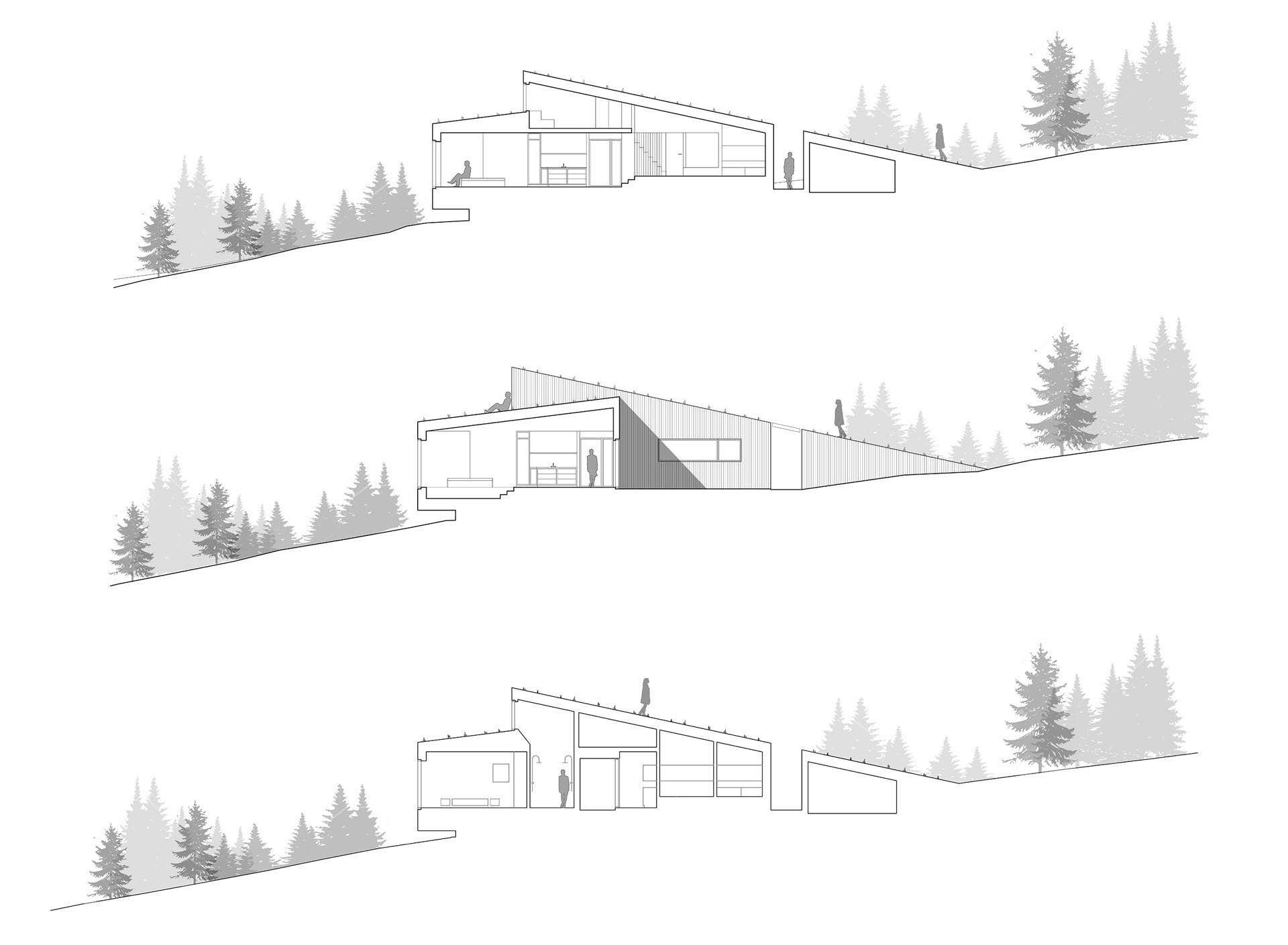
Carefully positioned on a steep, overgrown slope, the home begins with a concrete foundation arranged across three staggered planes. Each level steps with the terrain, allowing the structure to sit low against the land while still opening toward the lake.
This layered base mirrors the uneven ground beneath it, creating a form that feels shaped by the site itself. The approach avoids flattening the hill, instead letting the building move with it.
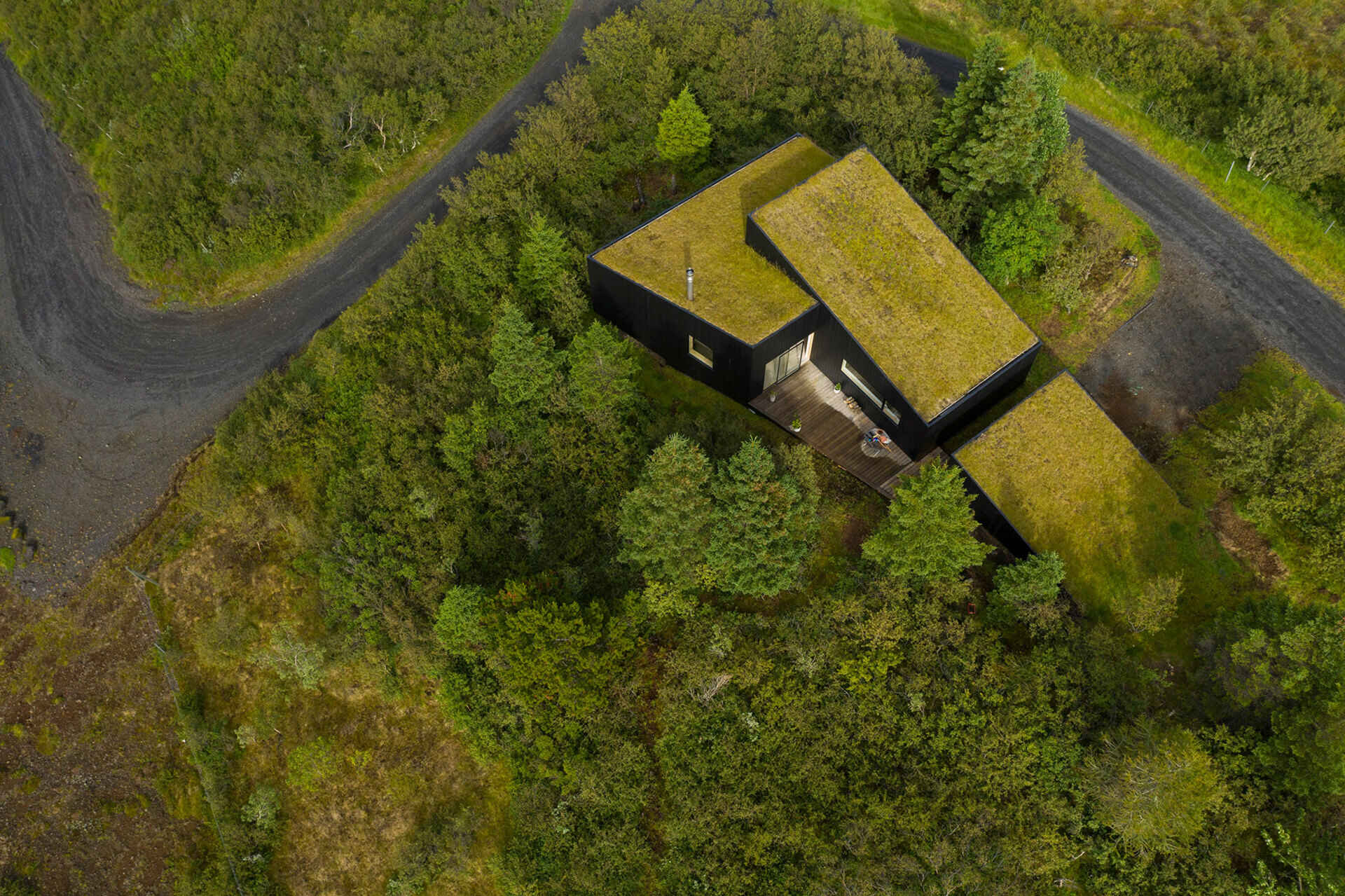
A Living Roof with a View
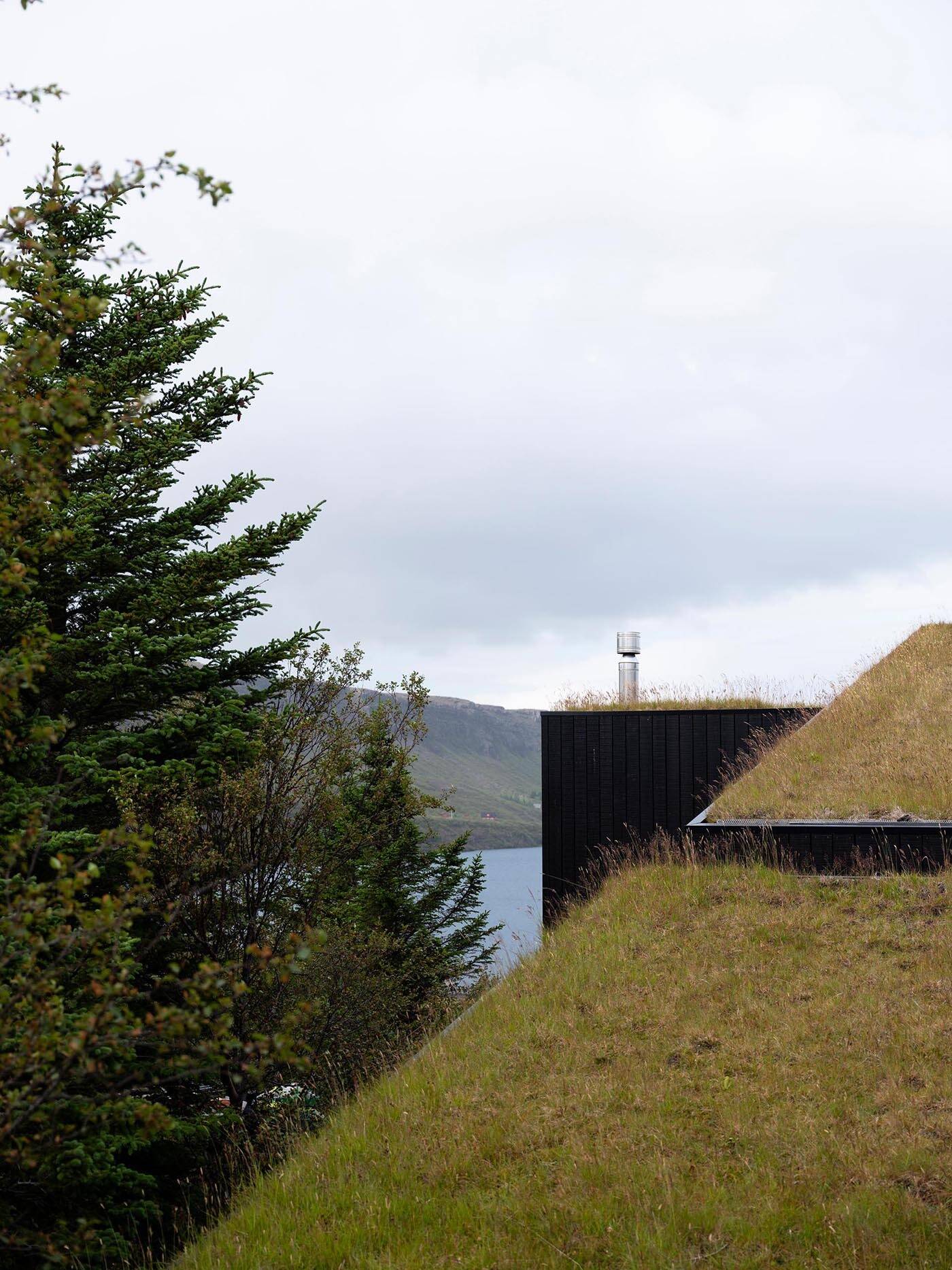
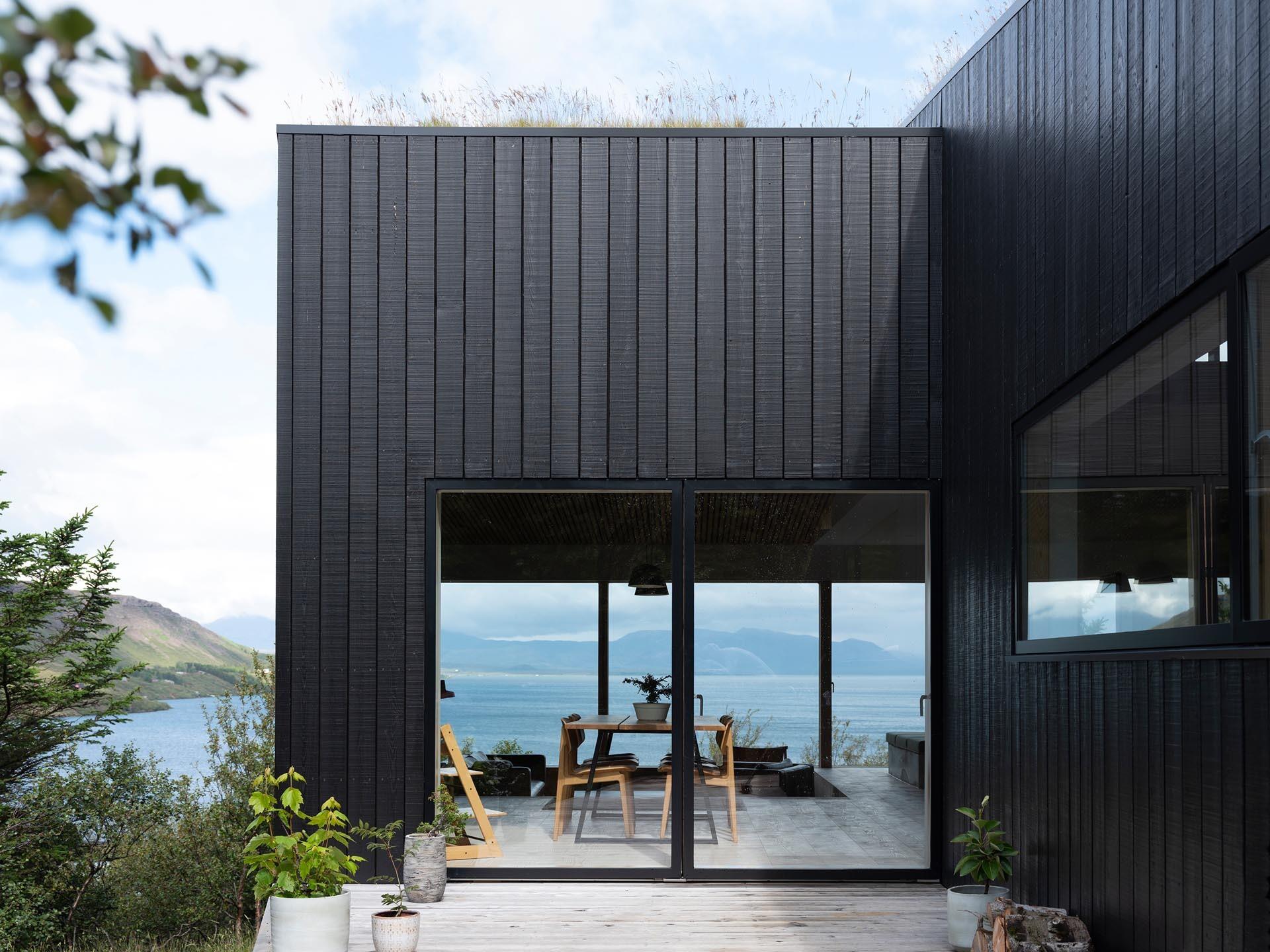
The most striking feature is the green roof, covered in local grass and moss that visually merges the house with the surrounding vegetation. It slopes in multiple directions, echoing the natural contours of the hillside.
Accessible from inside the home, the roof becomes a place to step out, pause, and take in wide views across landscape and the distant mountains. From above the treeline, the perspective shifts completely, opening up a broad panorama that changes with the weather and light.
Dark Timber Against Green
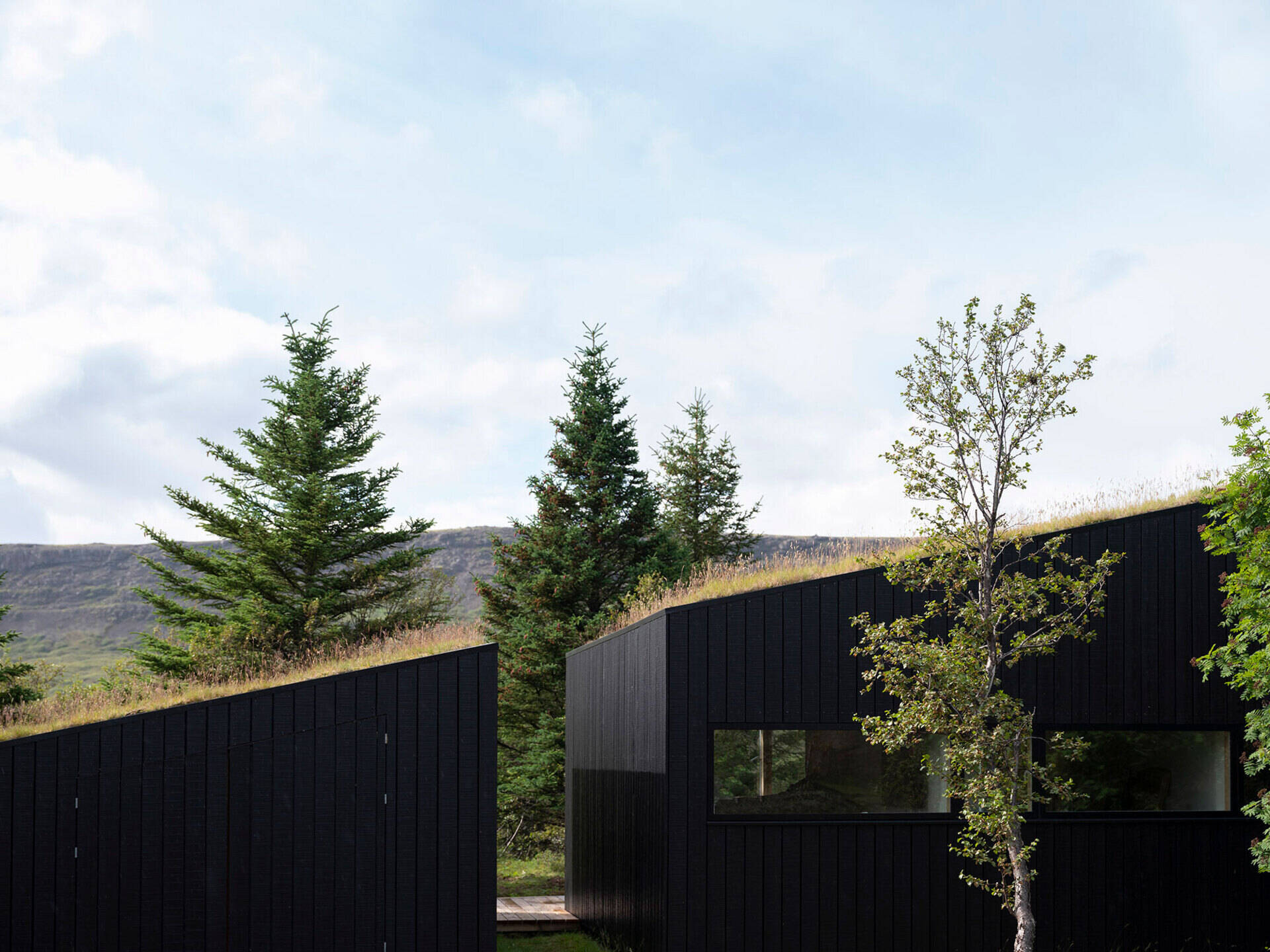
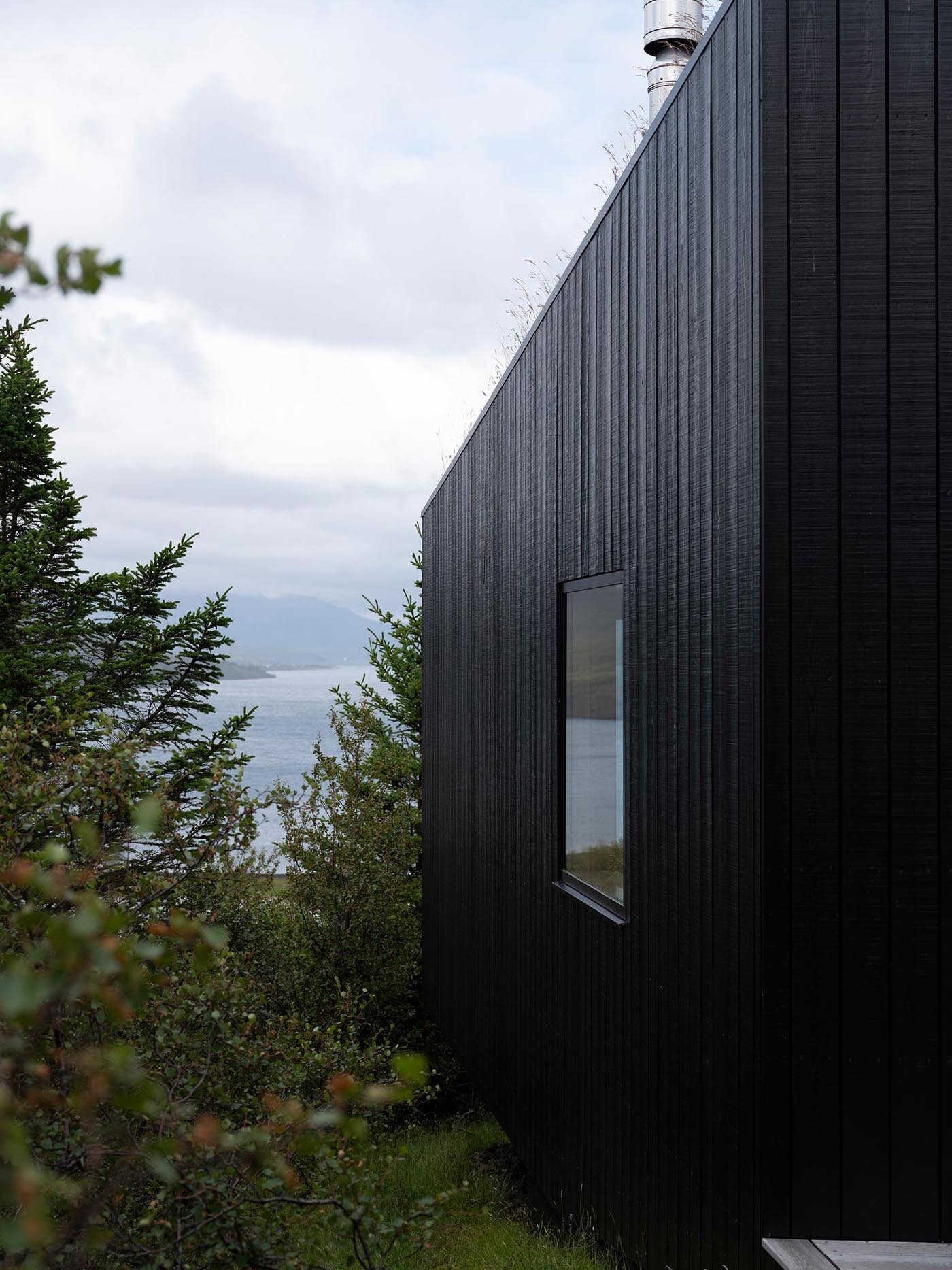
The exterior is wrapped in blackened wood siding, creating a strong contrast against the soft greens of the roof and surrounding trees. This dark finish sharpens the outline of the structure while still allowing it to sit quietly within the landscape. It’s a simple palette, but one that emphasizes both texture and tone, especially as the light shifts throughout the day.
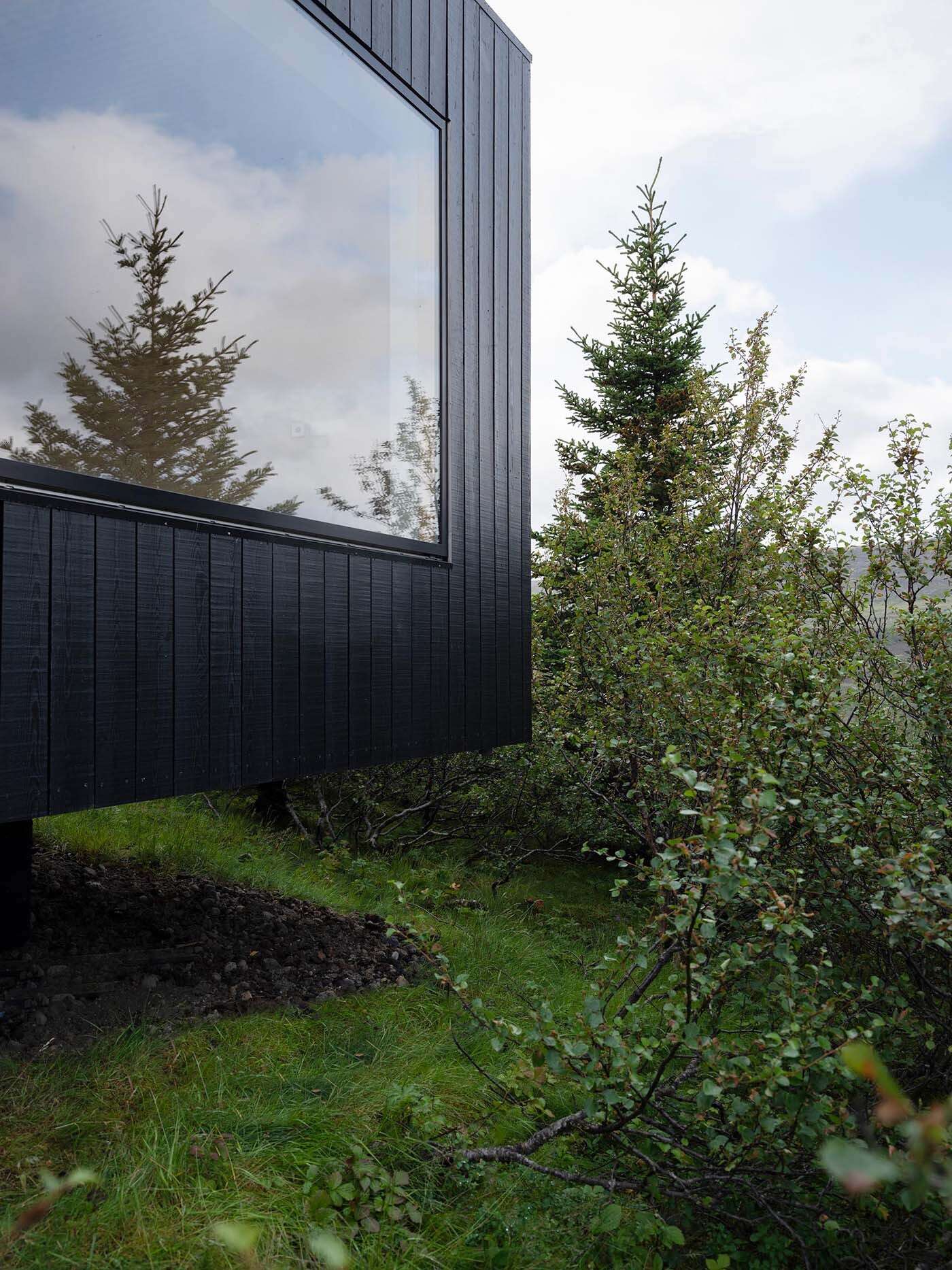
Framing the Landscape
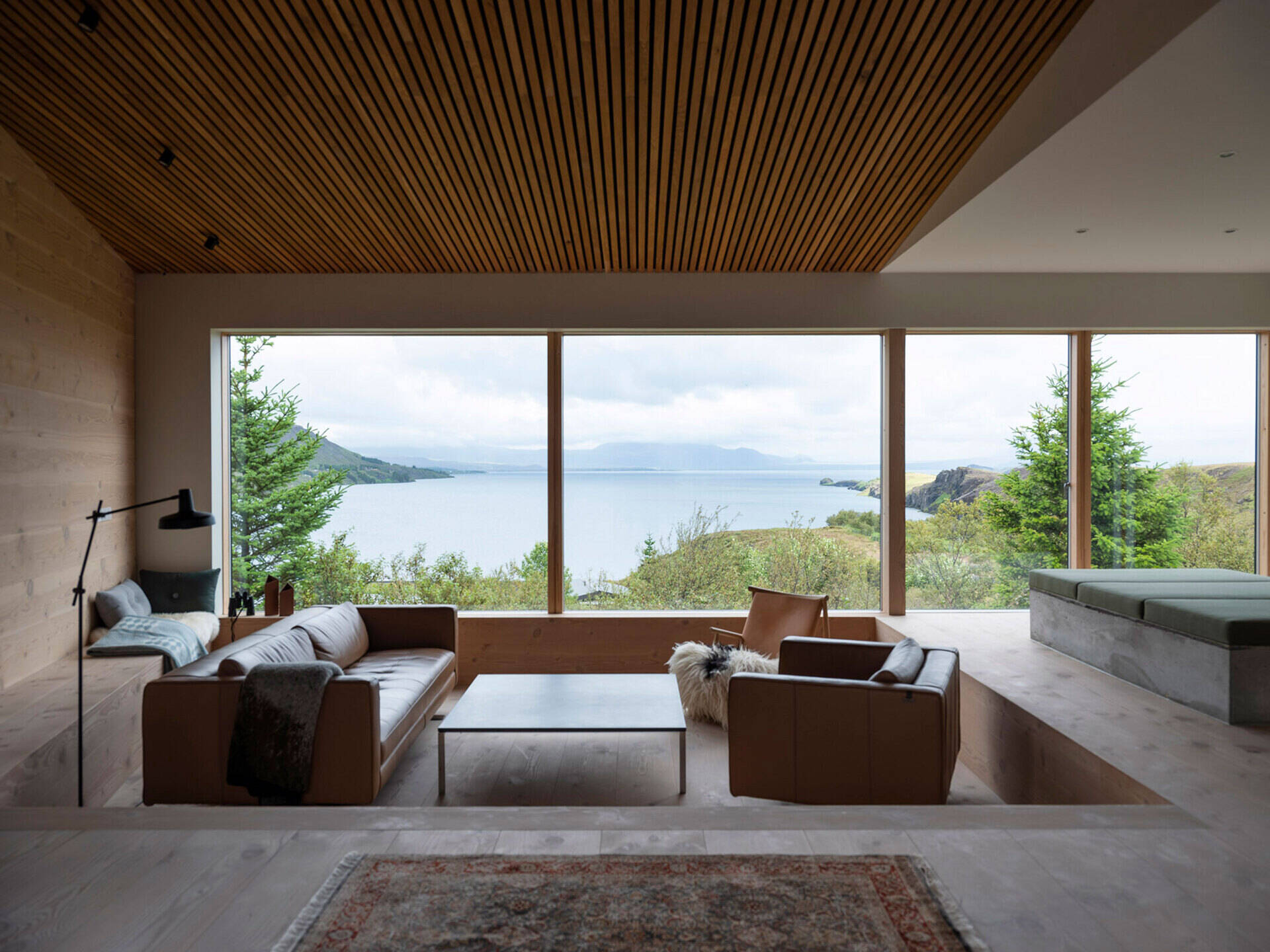
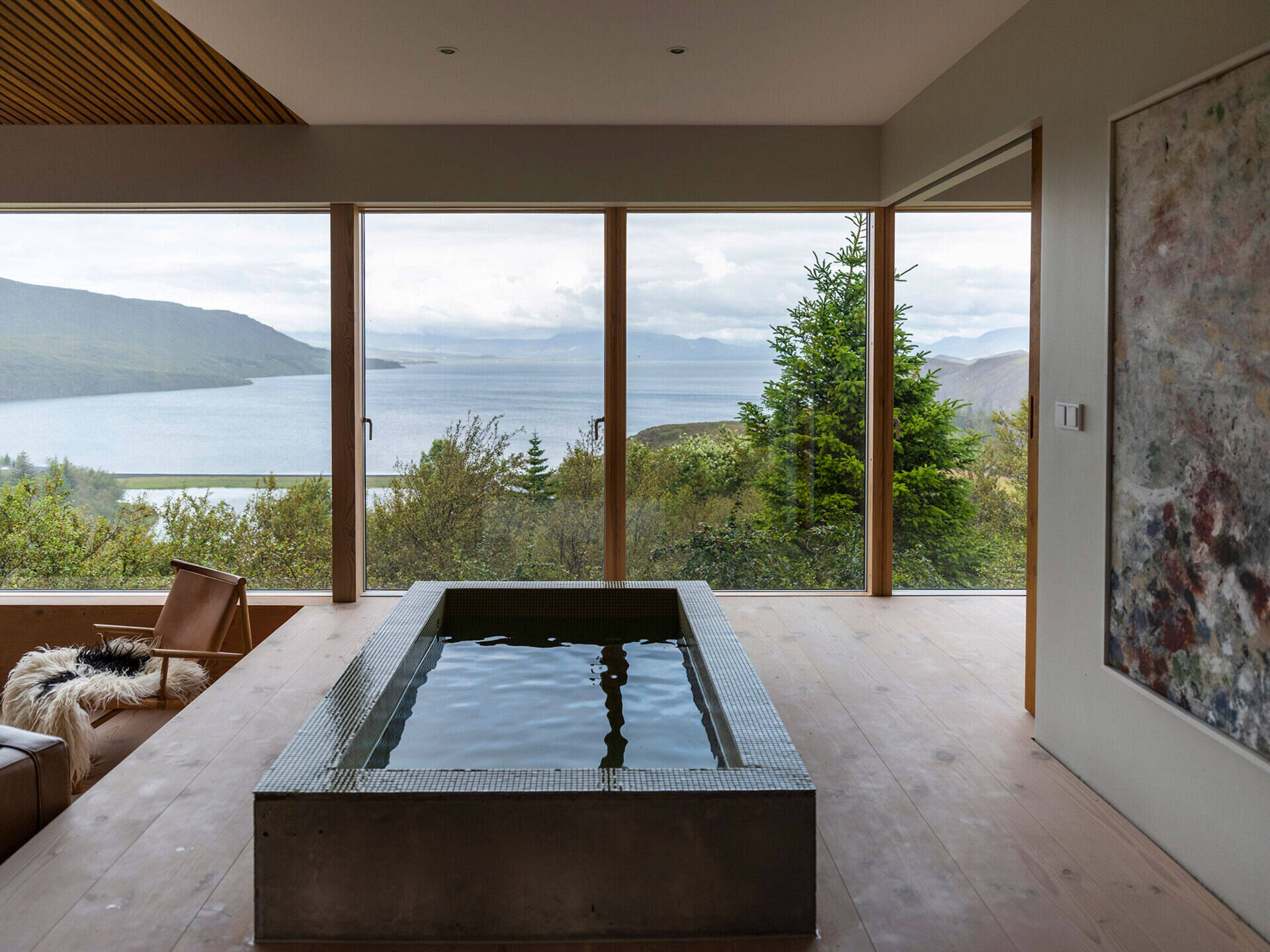
Large sliding glass doors and expansive windows cut through the dark exterior, drawing the landscape into view. From one side of the house to the other, sightlines are aligned so that you can see straight through the interior and out toward the lake.
In the main living areas, the house lifts just enough above the low vegetation to capture uninterrupted views, including distant mountain peaks beyond the water.
Open Plan with Subtle Contrast
Inside, the kitchen and dining area share an open layout. Black accents run through both spaces, creating continuity, while the dining area introduces a wood slat ceiling that adds warmth overhead. A black fireplace anchors the room, adding a focal point without interrupting the openness of the space.
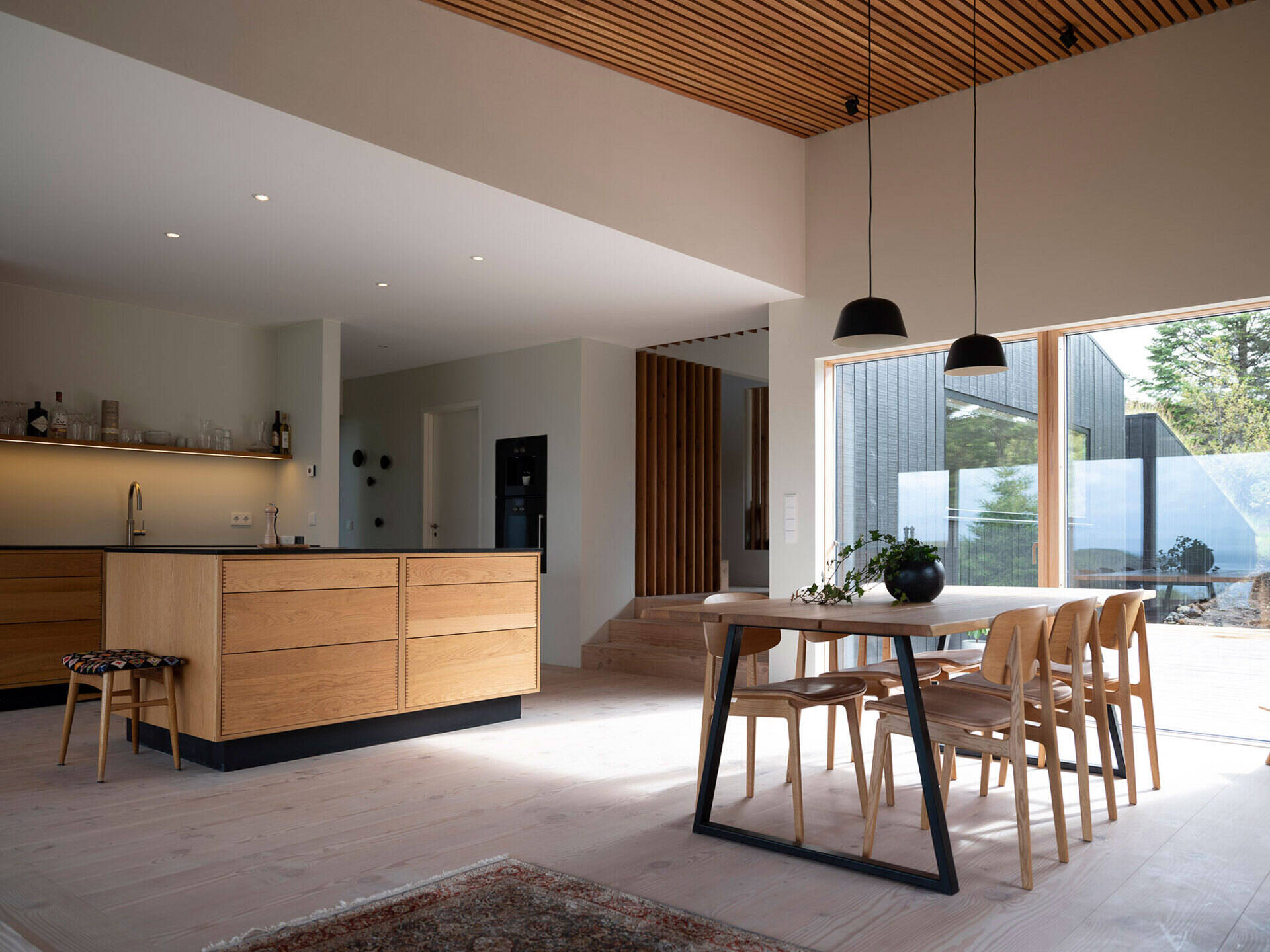
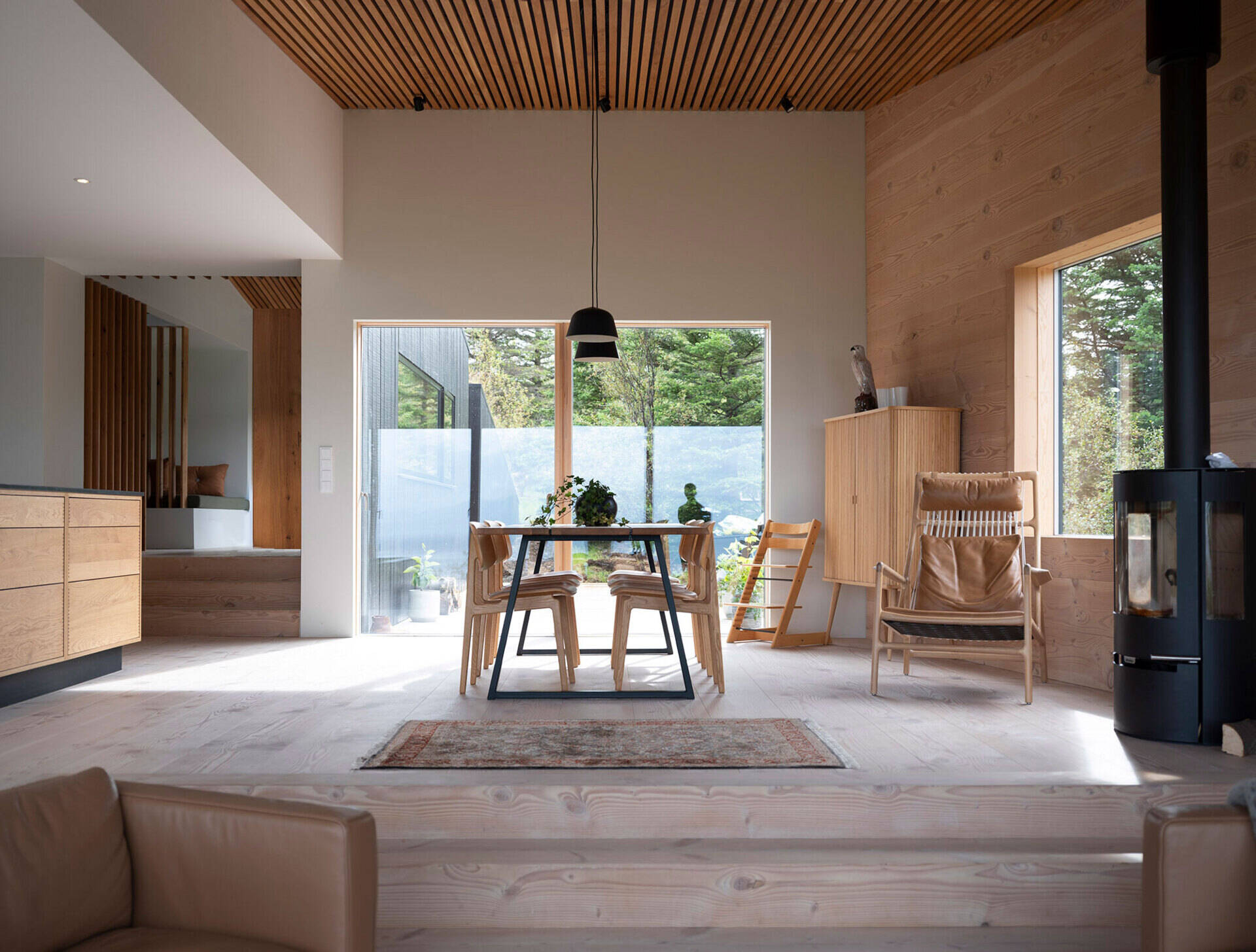
Stepping Down into Light
From the dining area, a short set of steps leads down into the living room. This change in level creates separation without closing anything off.
The living space is filled with natural light, thanks to large windows that stretch across the walls, reinforcing the connection between inside and out.
Timber Details That Tie It Together
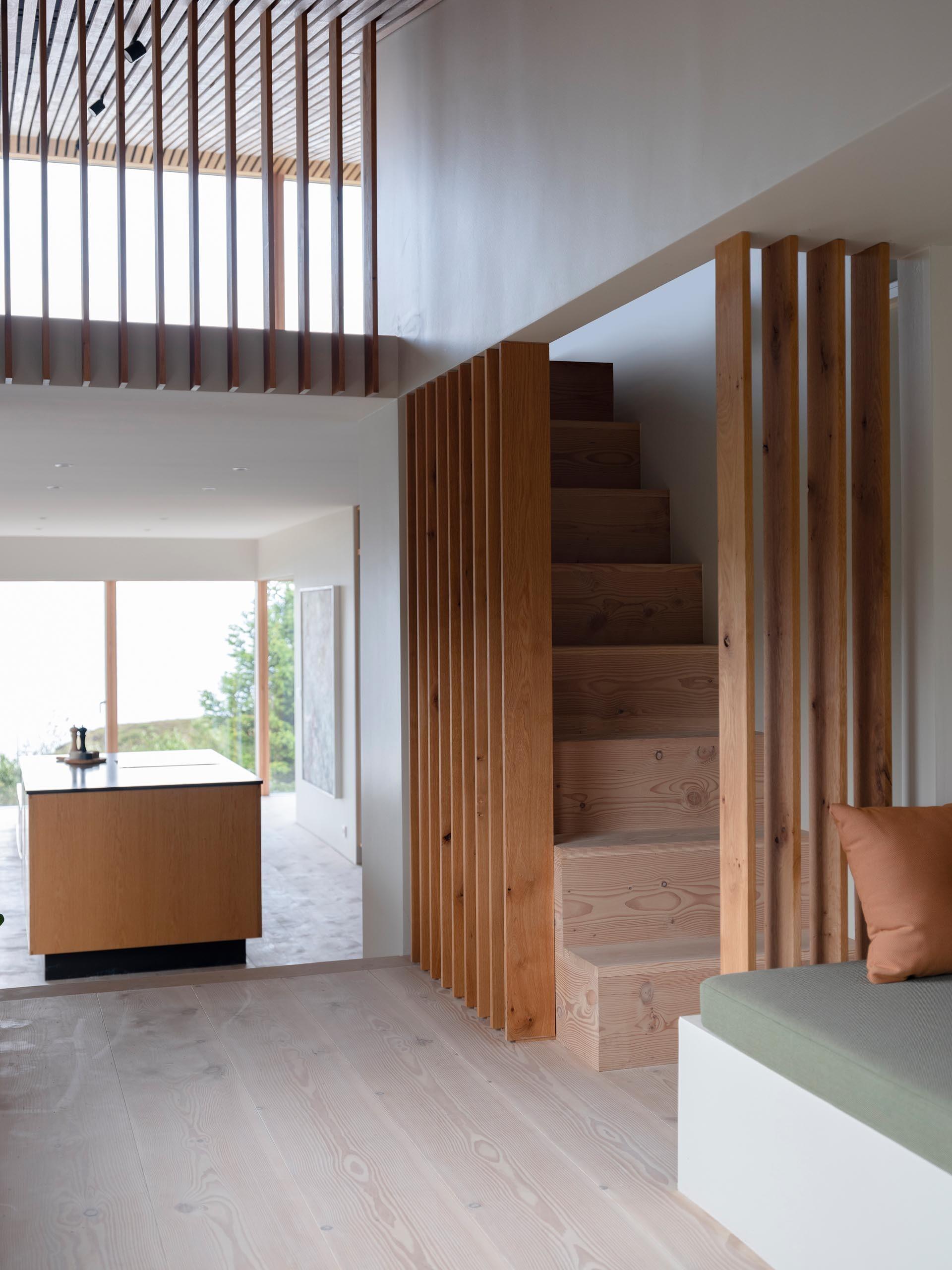
Wood stairs connect the different levels of the home, continuing the material language established in the dining room ceiling. Vertical and horizontal slats repeat throughout, bringing consistency across spaces. These details soften the darker elements and add texture without overwhelming the interiors.
A Window Like a Painting
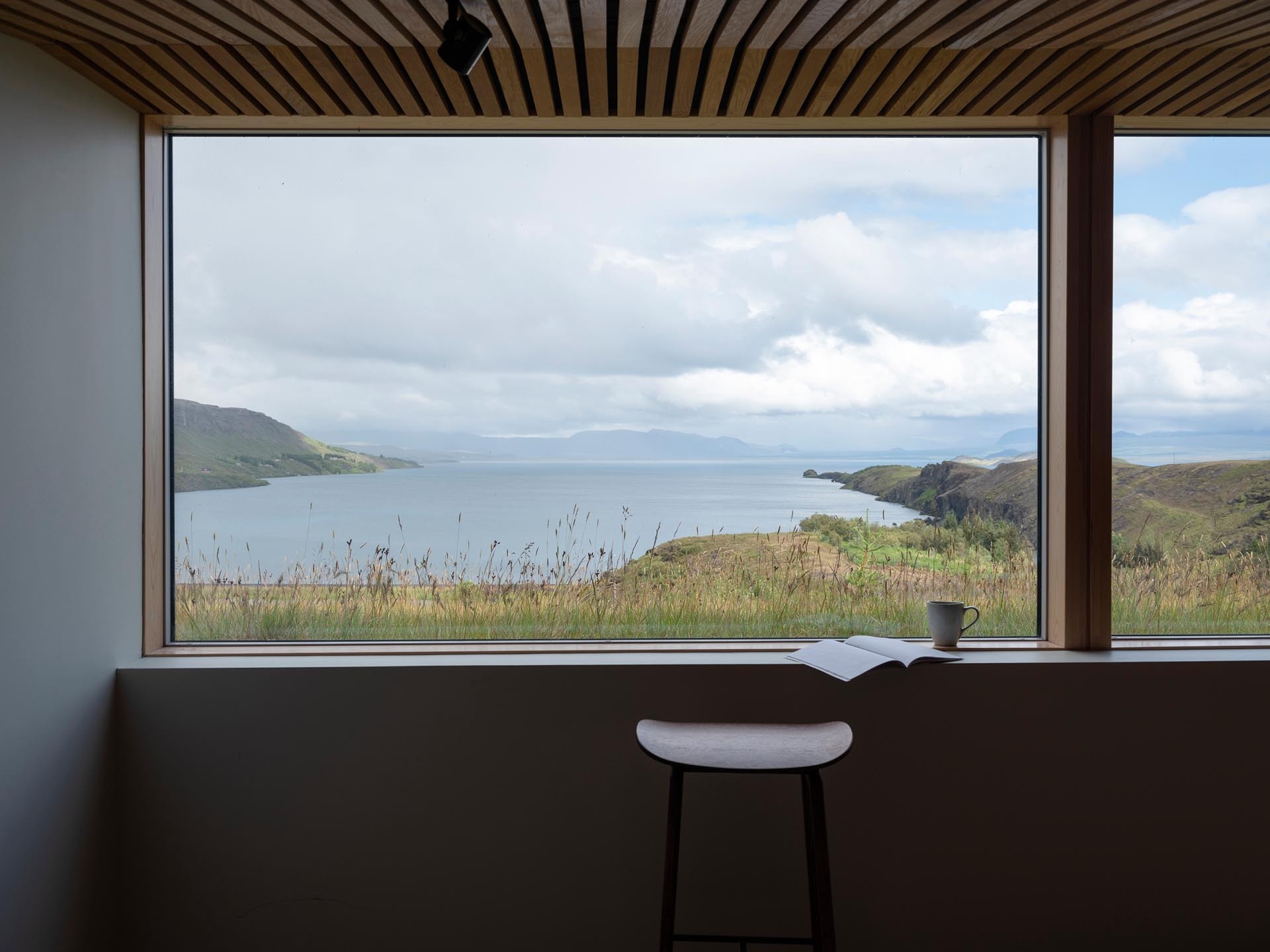
One window stands out in particular, precisely positioned to frame the surrounding landscape. From inside, the view reads like a composed image, with the lake and mountains set within the edges of the frame. It’s a simple move, but one that highlights how intentional the placement of each opening is.
Understanding the Layout
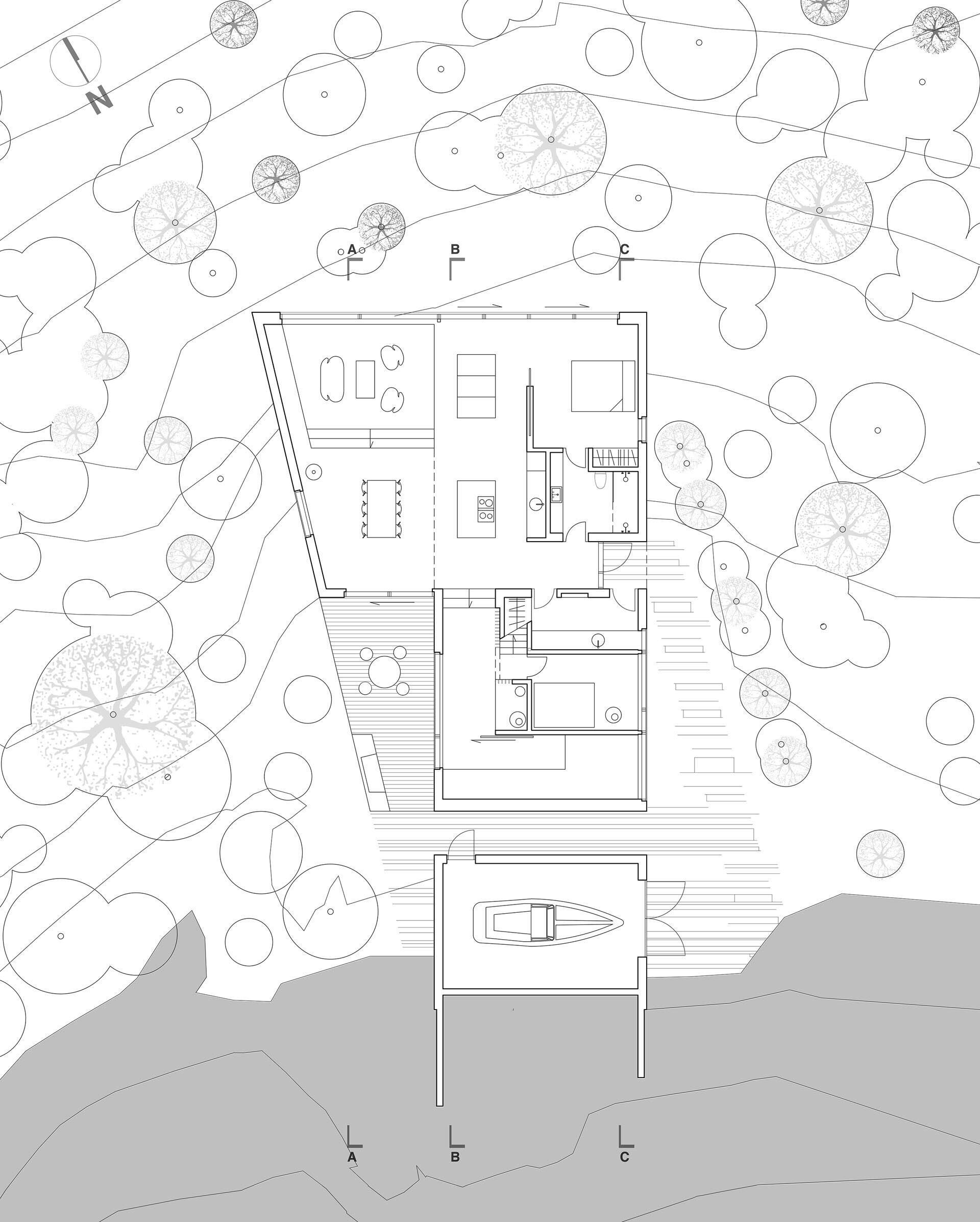
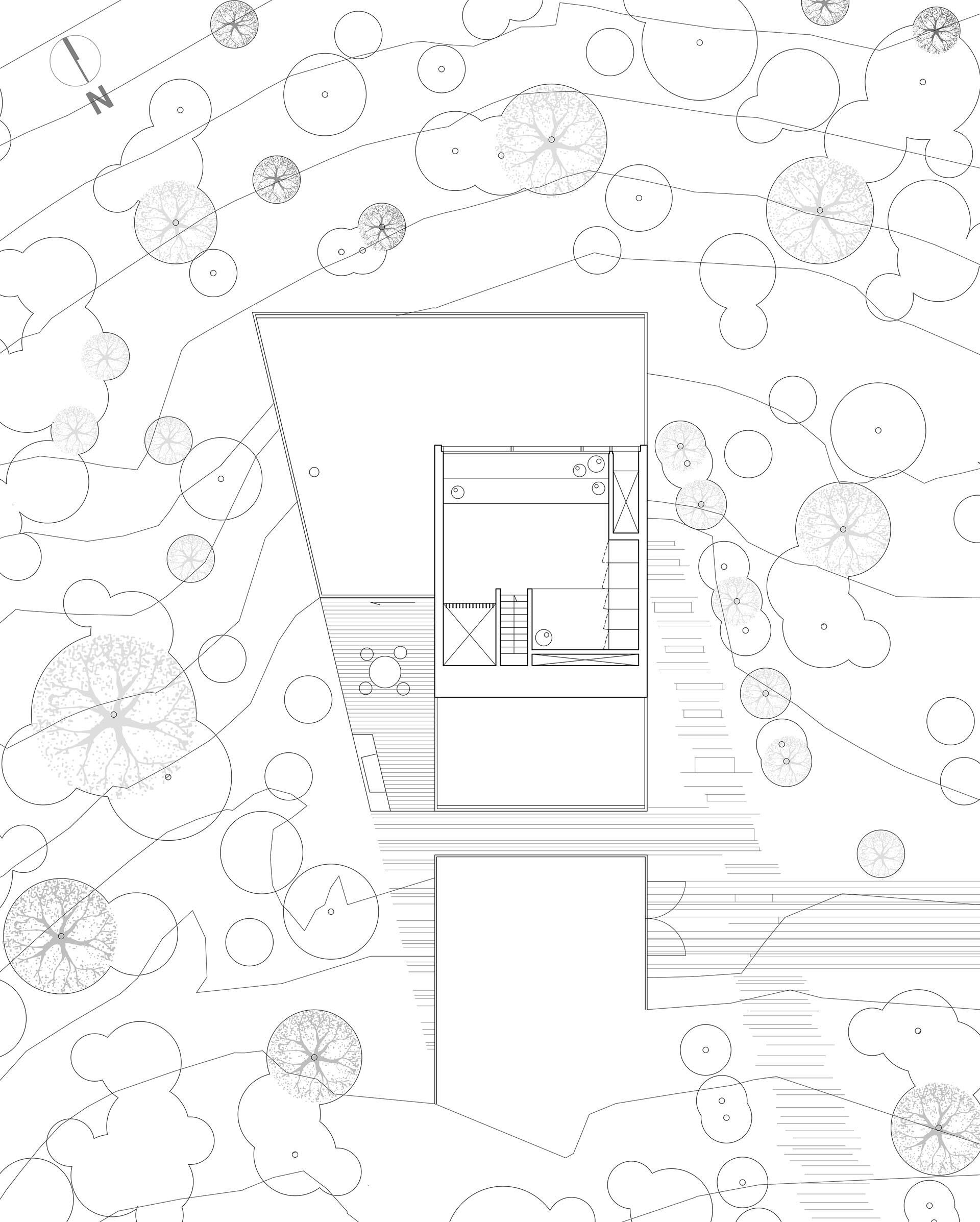
The home’s structure becomes clearer through its sections and floor plans. The staggered levels, the relationship to the slope, and the way views are directed all come together in these drawings, revealing how the design works as a whole.
This holiday home by KRADS shows how a strong collaboration between architect and client can shape a project from start to finish. With its layered base, green roof, and carefully aligned views, the house sits quietly within the landscape while still offering a series of distinct spatial experiences.