Set in the heart of Scotland’s Cairngorms National Park, this reworked home by Brown & Brown Architects brings new life to a traditional cottage while opening it up to its surroundings. The project combines restoration with a bold extension, creating a home that shifts between old and new without losing its sense of place.
The design builds on the existing structure with a clear idea in mind, make the most of the landscape. Every move, from layout to material choice, works toward capturing views and shaping spaces that feel both expansive and flexible for family living.
A Contemporary Volume Above Stone
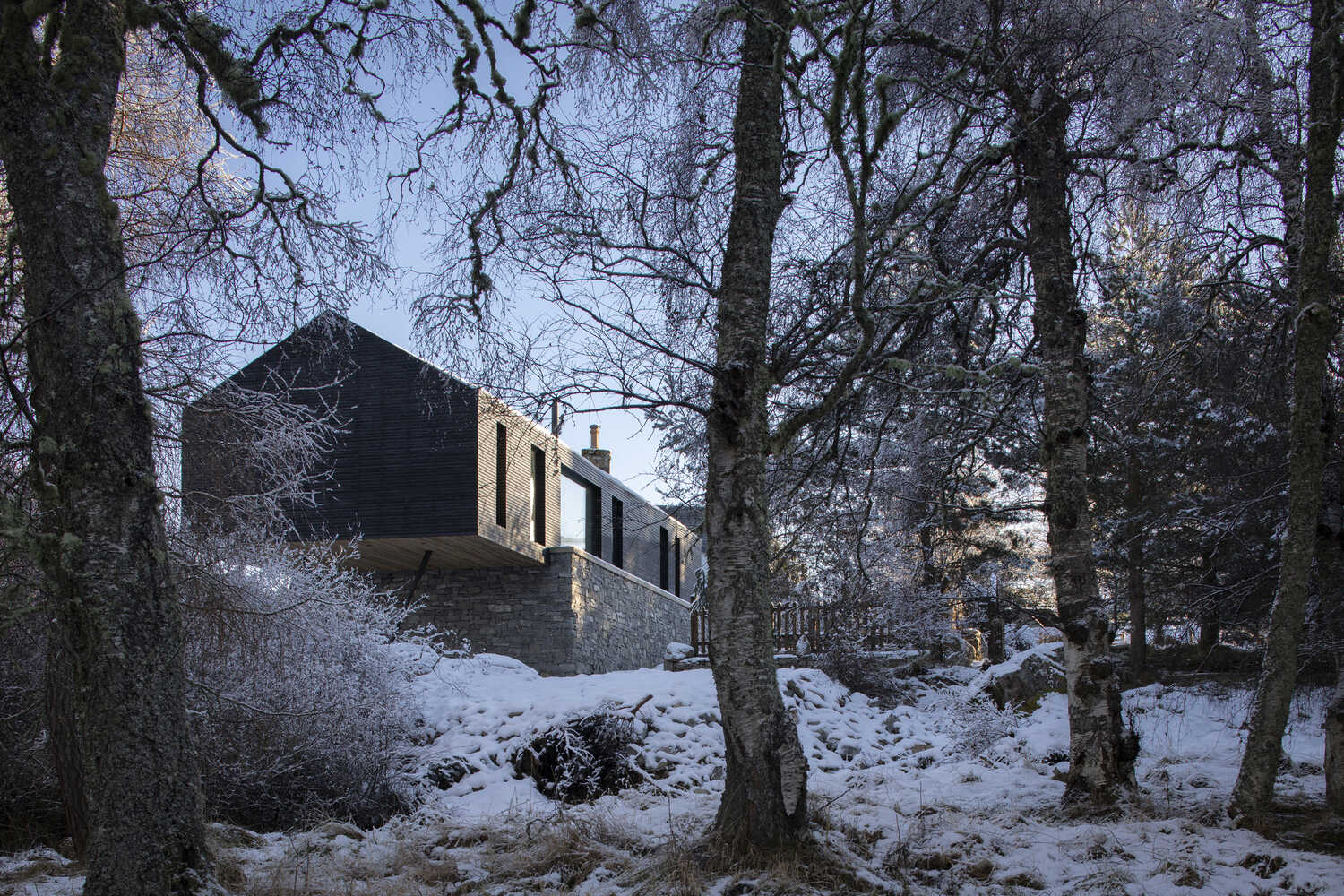
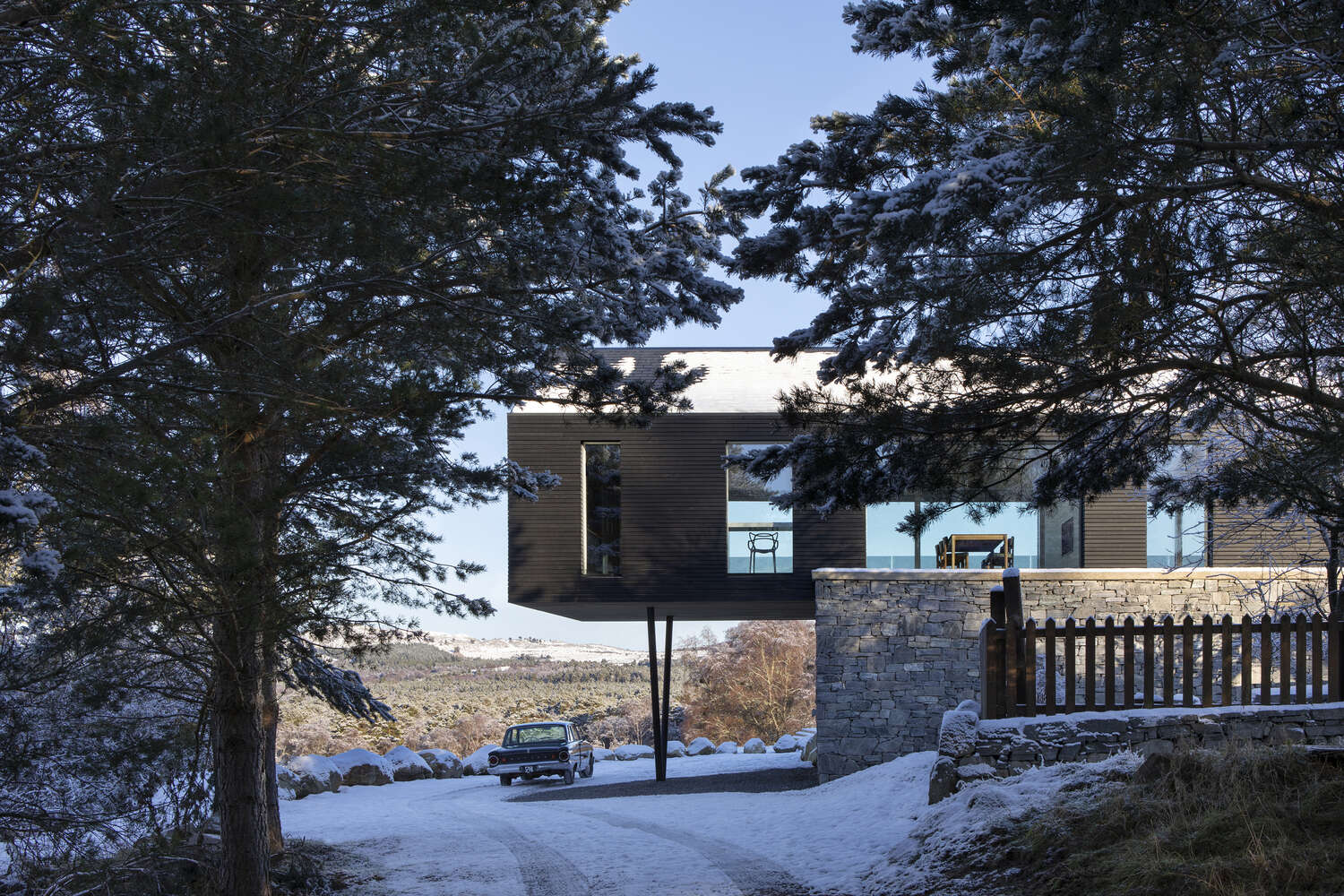
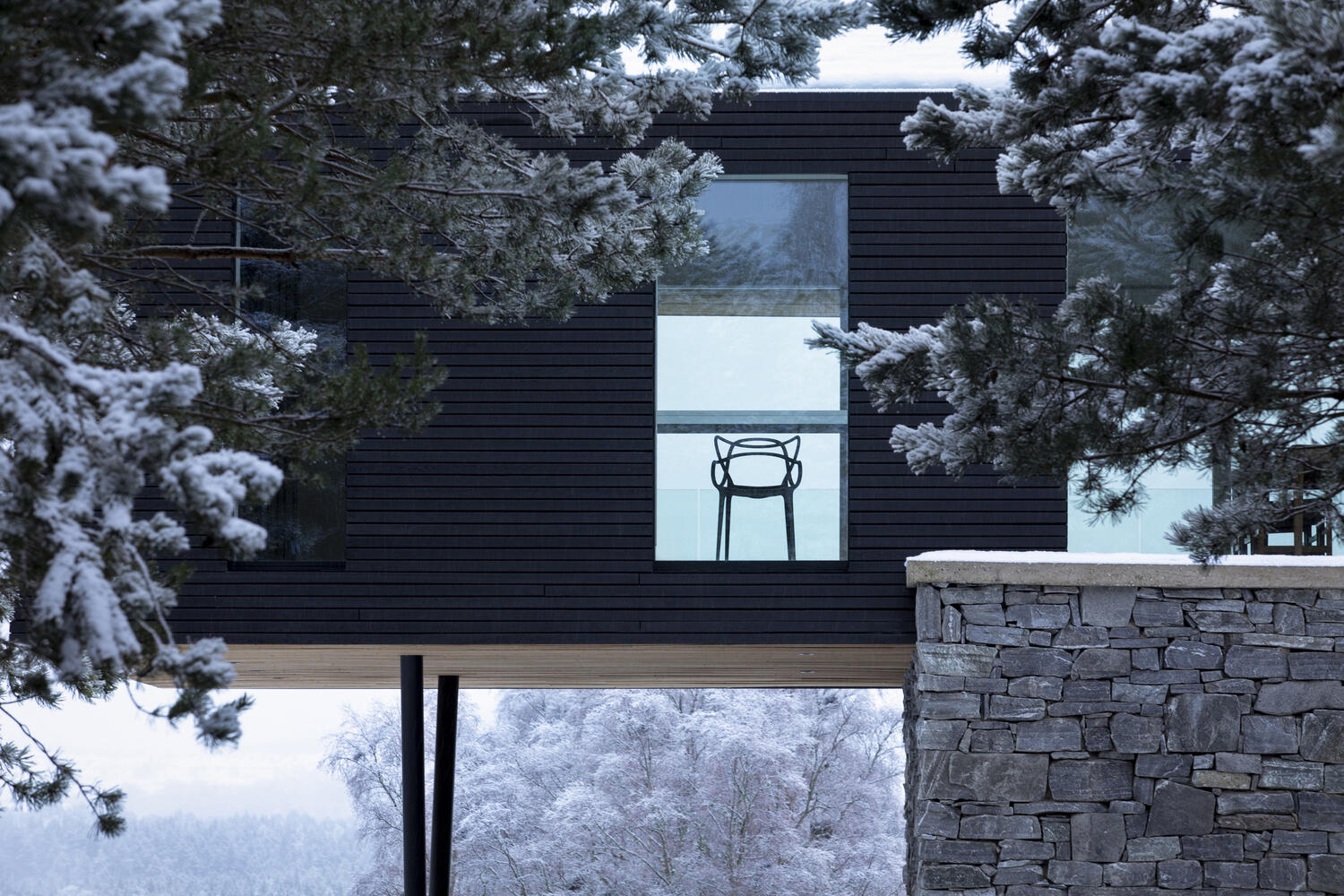
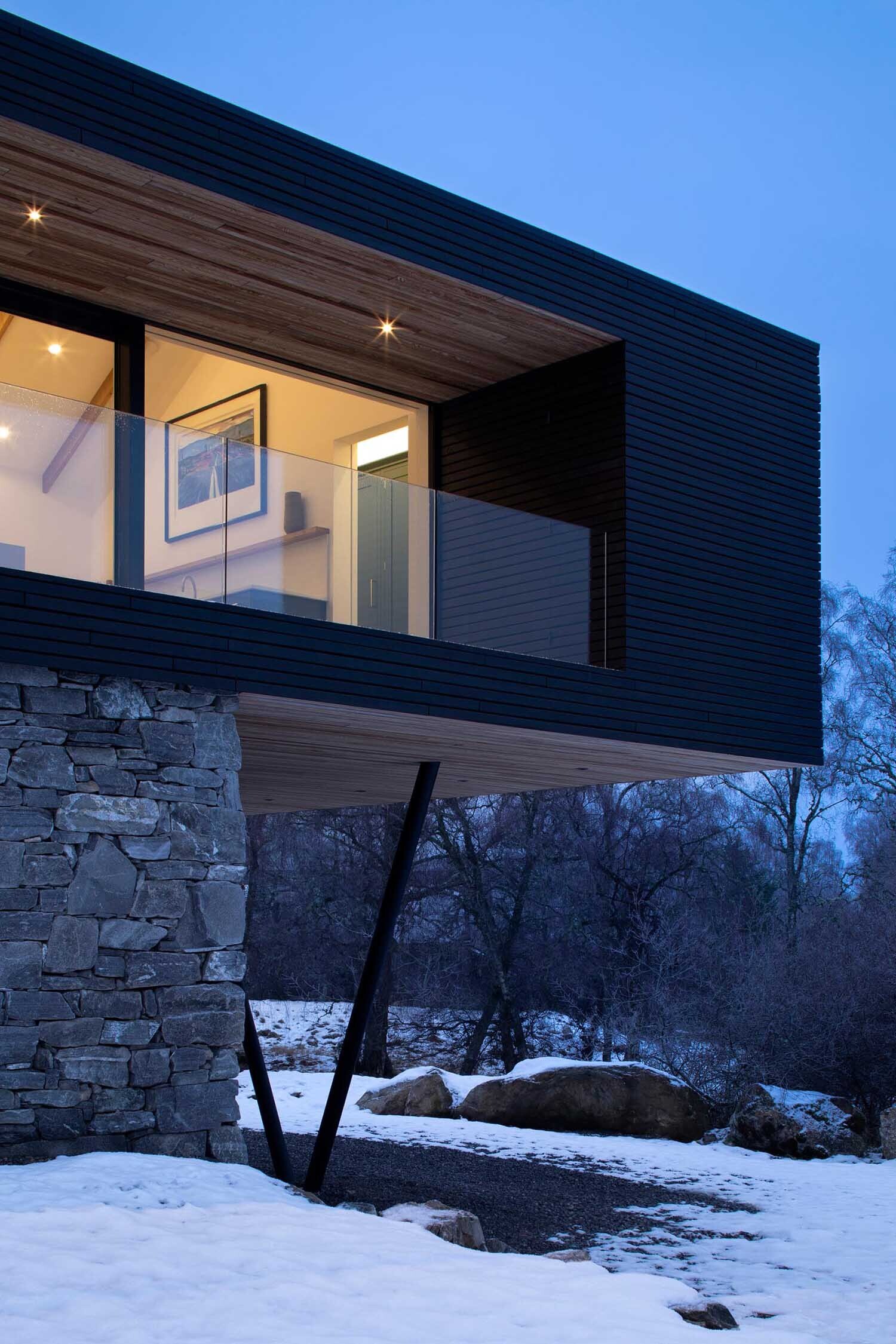
The extension introduces a striking contrast, with a timber and glass upper level sitting confidently on a solid stone plinth. It stretches outward, supported by exposed steel columns, giving parts of the structure a light, almost hovering quality as the ground drops away beneath it.
This layered approach makes the addition feel anchored and open at the same time. The stone base ties it back to the original home, while the upper structure brings in light and long views across the landscape.
A Material Palette Rooted in Place
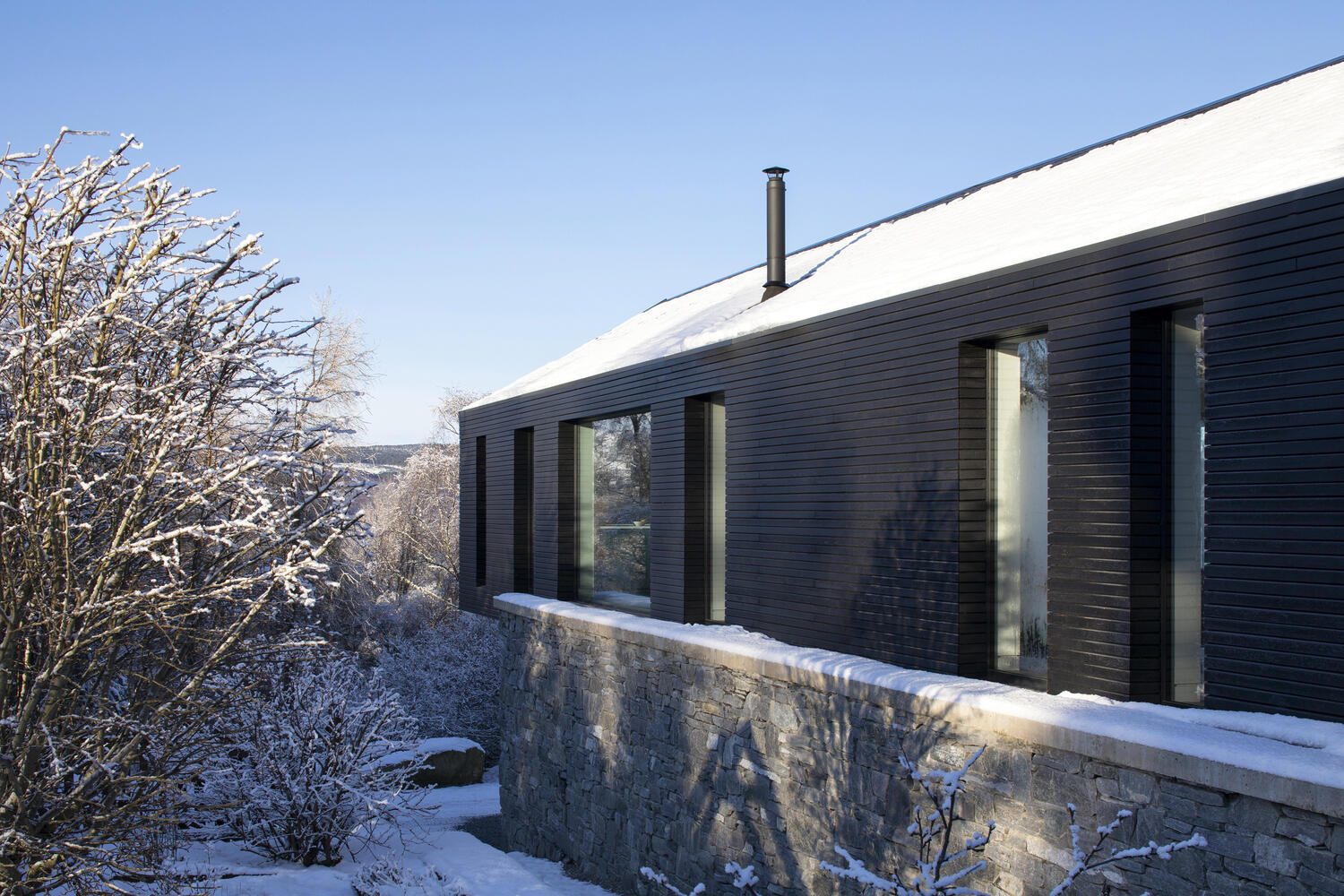
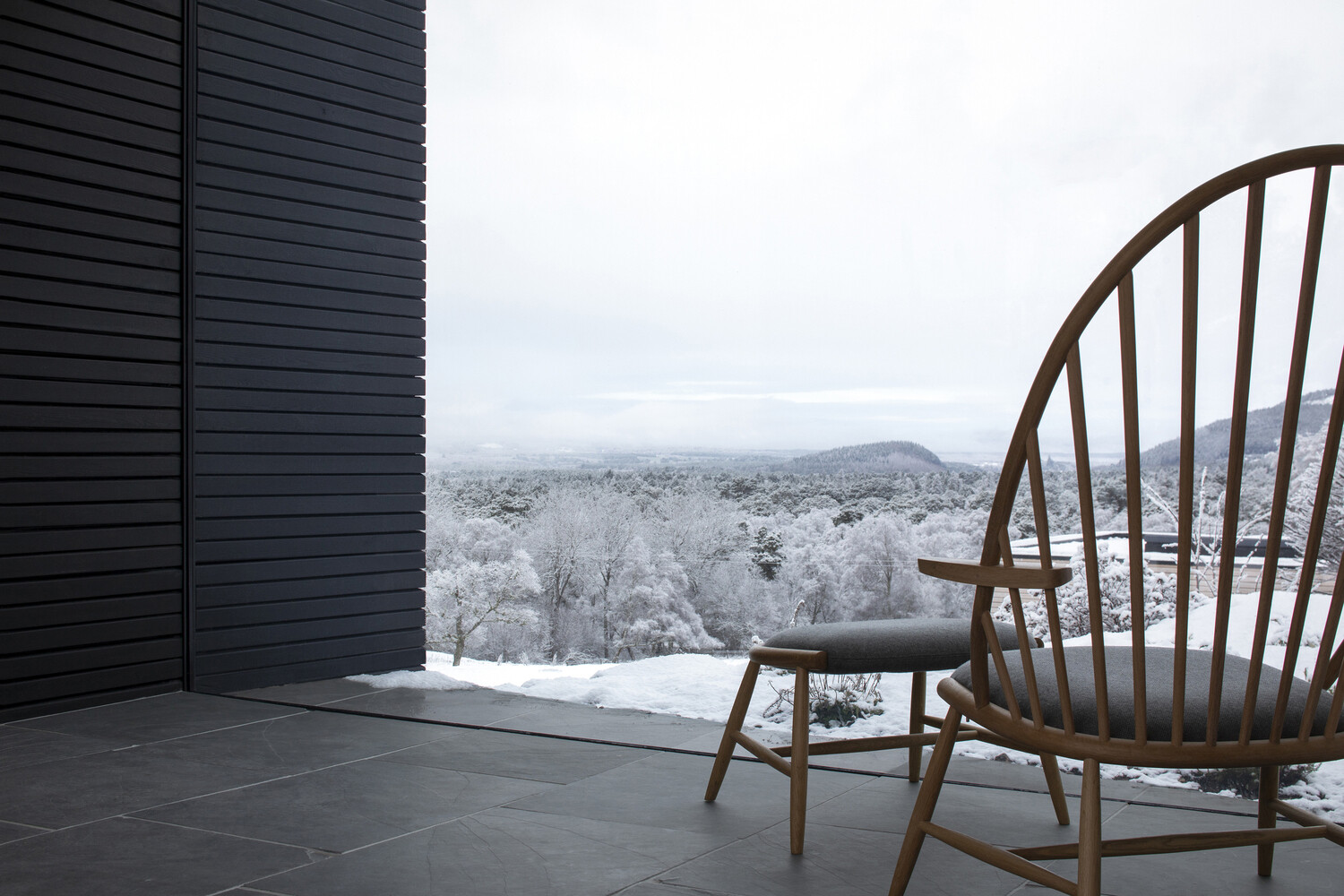
The choice of materials keeps the home closely linked to its setting. Local natural stone forms the base, while Siberian larch adds warmth to the exterior. Natural slate and blackened stainless steel introduce darker tones that balance the lighter timber and glass.
Together, these materials create a palette that feels durable and understated, allowing the changing light and surrounding scenery to take centre stage.
Spaces Designed for Gathering
The extension was shaped to support larger, more social moments. Open areas allow family and guests to come together easily, with spaces that can adapt depending on the occasion.
At the same time, the layout still allows for separation when needed, giving the home flexibility without losing its sense of openness.
A Glass Link Between Old and New
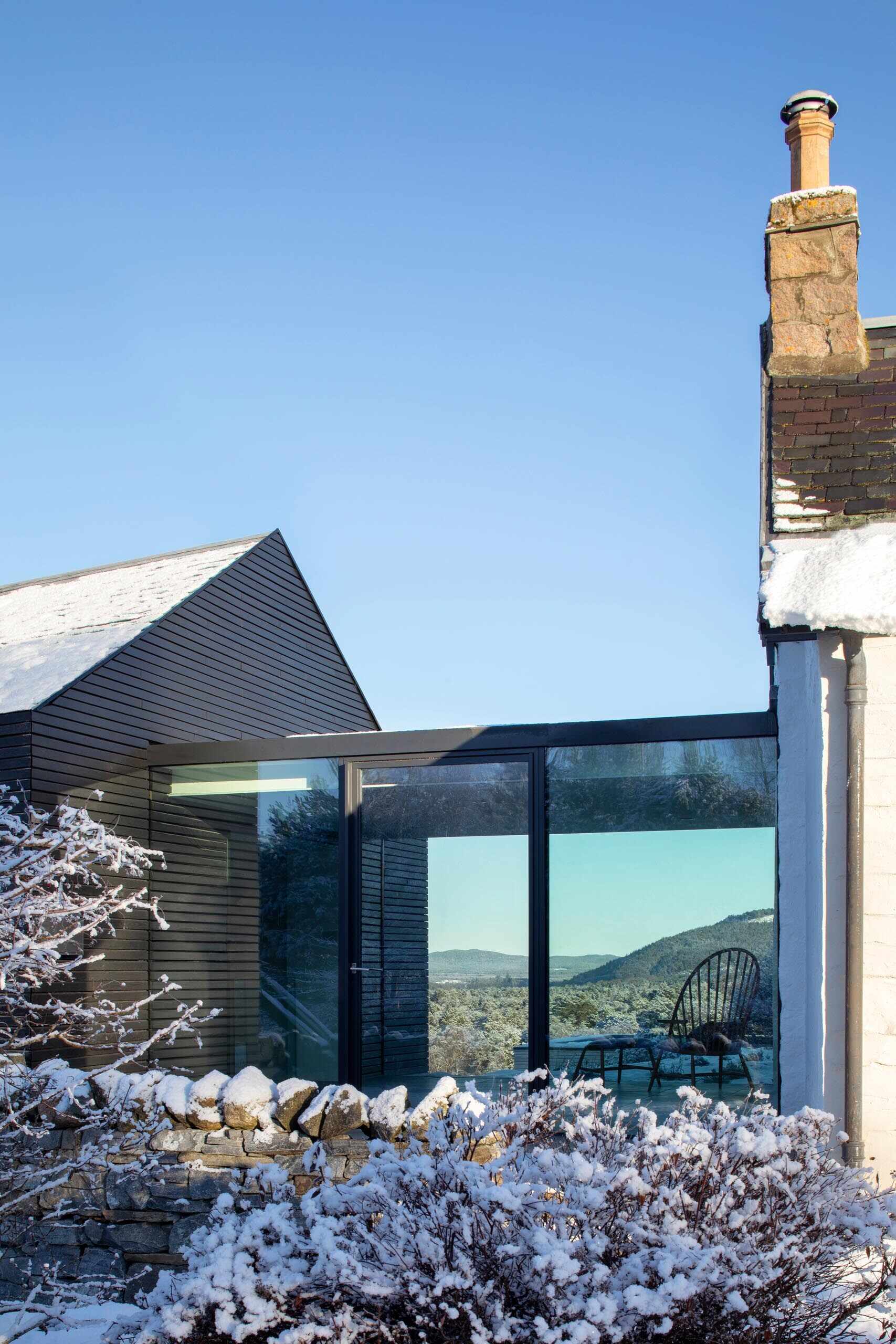
A glass-lined hallway connects the original cottage to the new addition, acting as a quiet transition point between the two. Moving through it, the shift in architecture becomes clear, yet the visual connection to the outdoors remains constant.
This corridor is more than just a link. It keeps the landscape present at every step, reinforcing the idea that the home is organized around what lies beyond its walls.
Subtle Details That Surprise
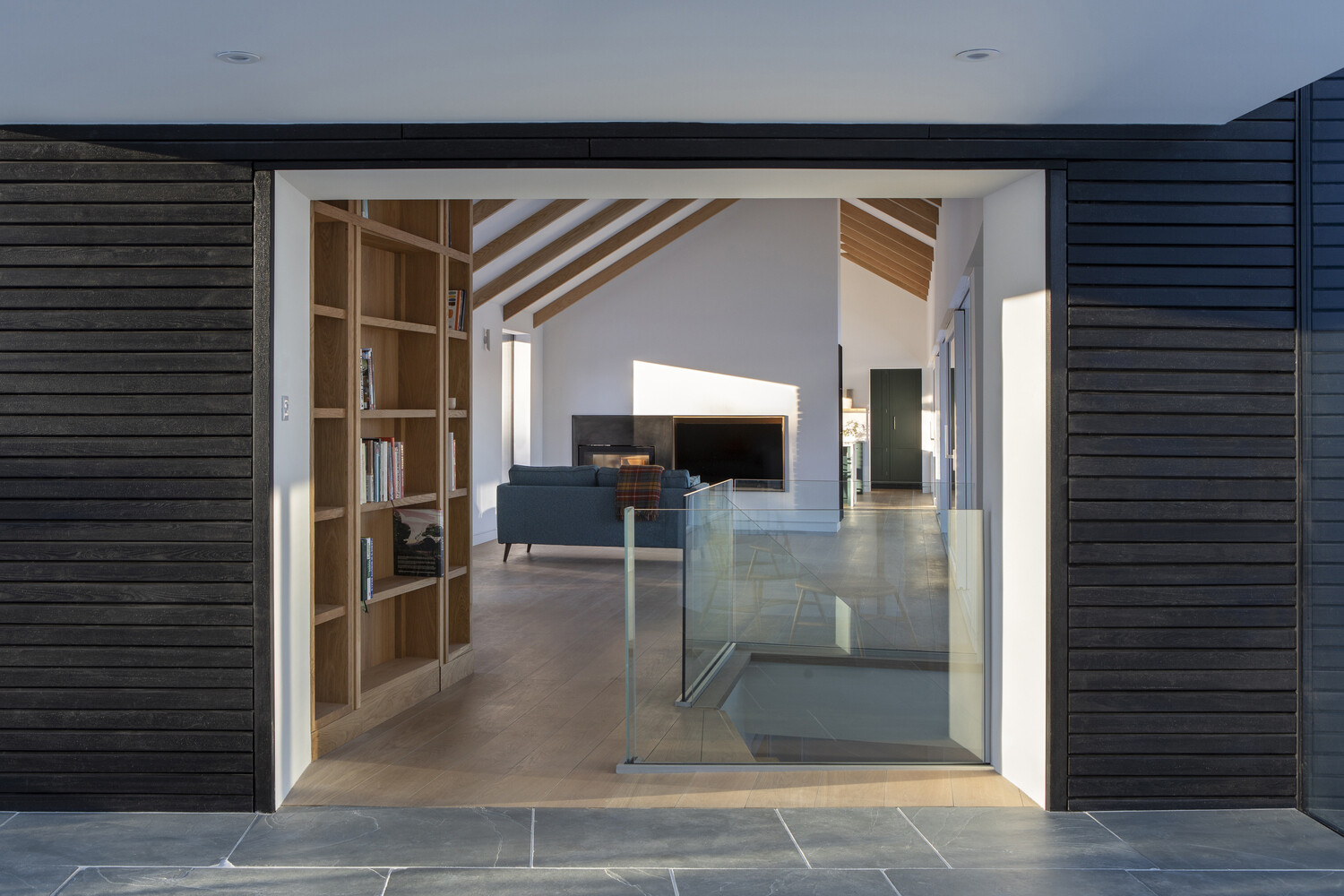
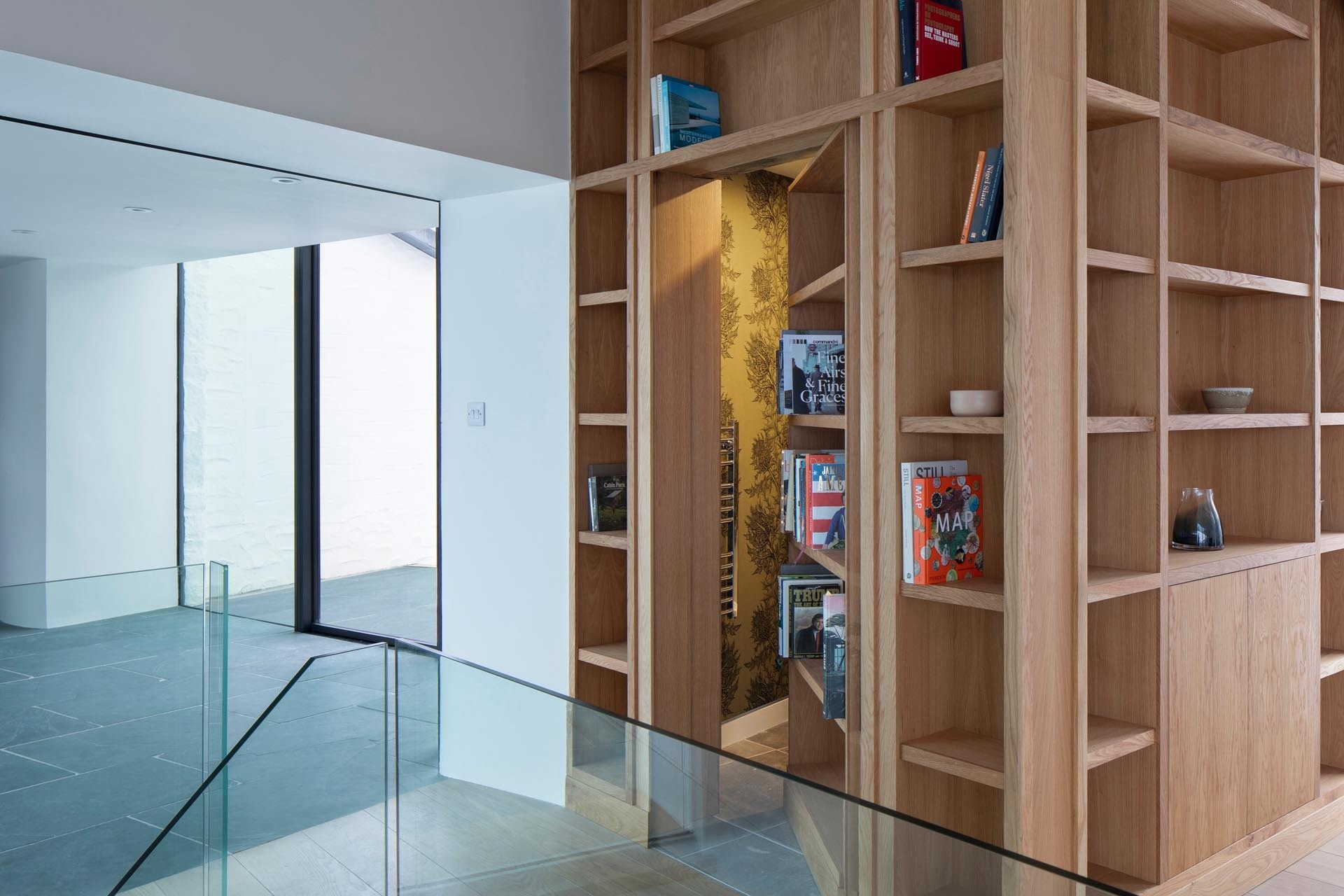
Stepping into the addition, a built-in wood bookshelf does more than store books. It quietly conceals a powder room, blending function into the design without interrupting the flow of the space.
These kinds of details appear throughout the home, adding layers of interest without overwhelming the overall simplicity.
A Living Room Framed by Structure and Light
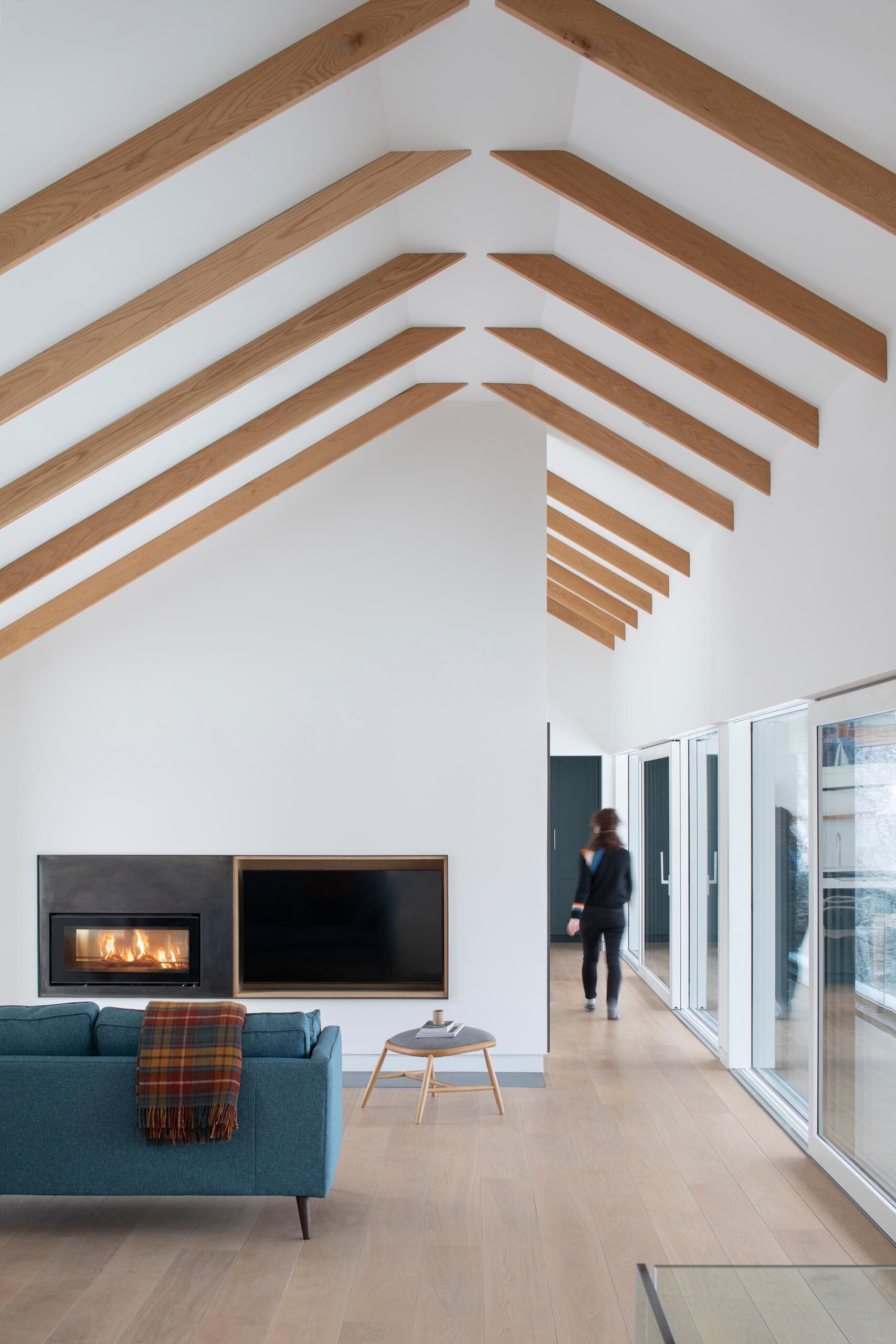
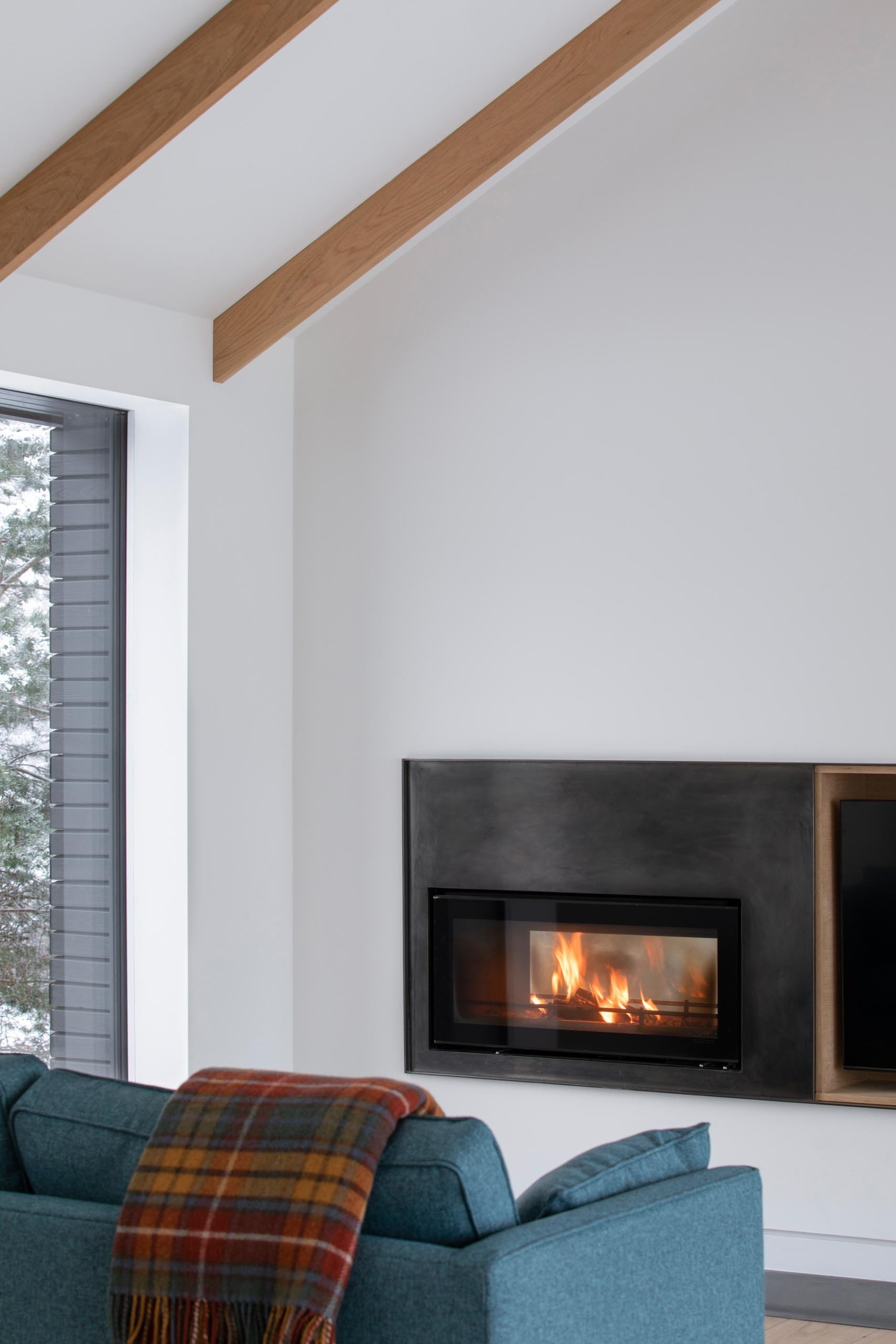
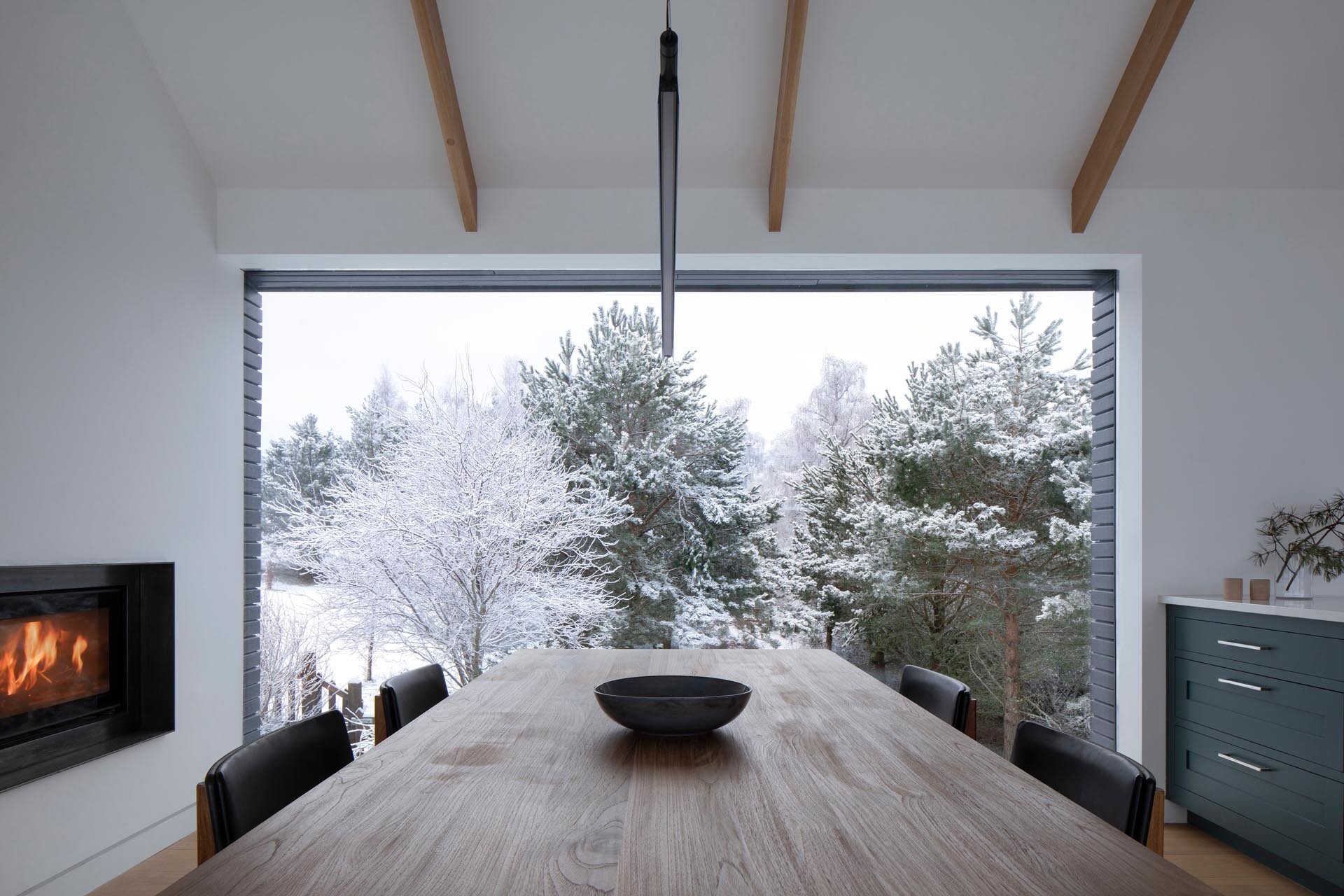
The living room rises up with a vaulted ceiling, where exposed wood beams draw the eye upward. A double-sided fireplace anchors the space, creating a shared focal point that connects different areas.
Along one wall, a wood-lined niche houses the television, keeping it integrated within the design instead of standing out. The result is a room that feels structured yet relaxed, with views always close by.
Dining With a View
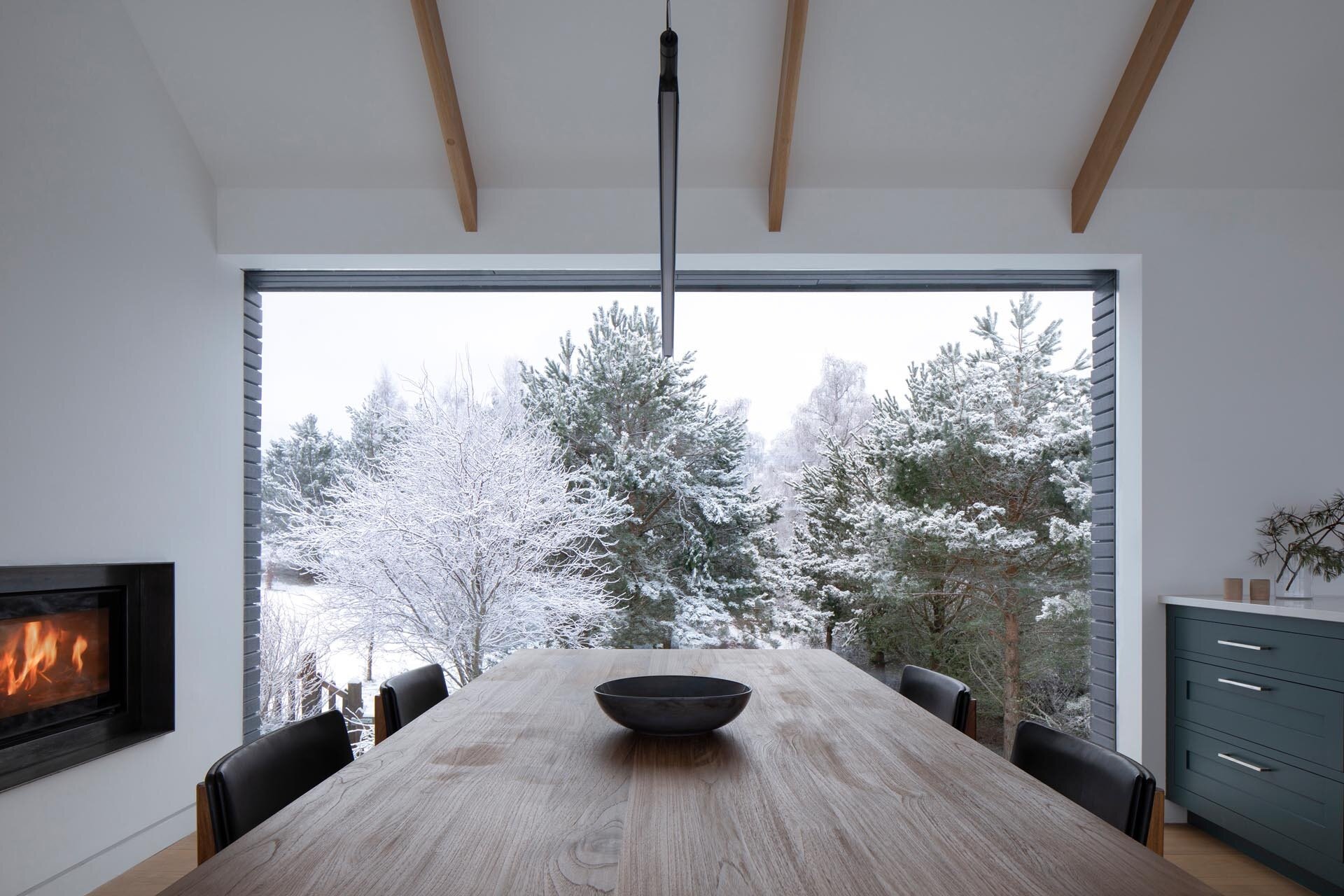
On the opposite side of the fireplace, the dining area opens up to a carefully framed view of the surrounding trees. The placement of windows turns the landscape into a changing backdrop for everyday moments.
It’s a simple move, but one that shifts the experience of the space, making the outdoors part of the interior without needing decoration.
A Kitchen That Balances Function and Color
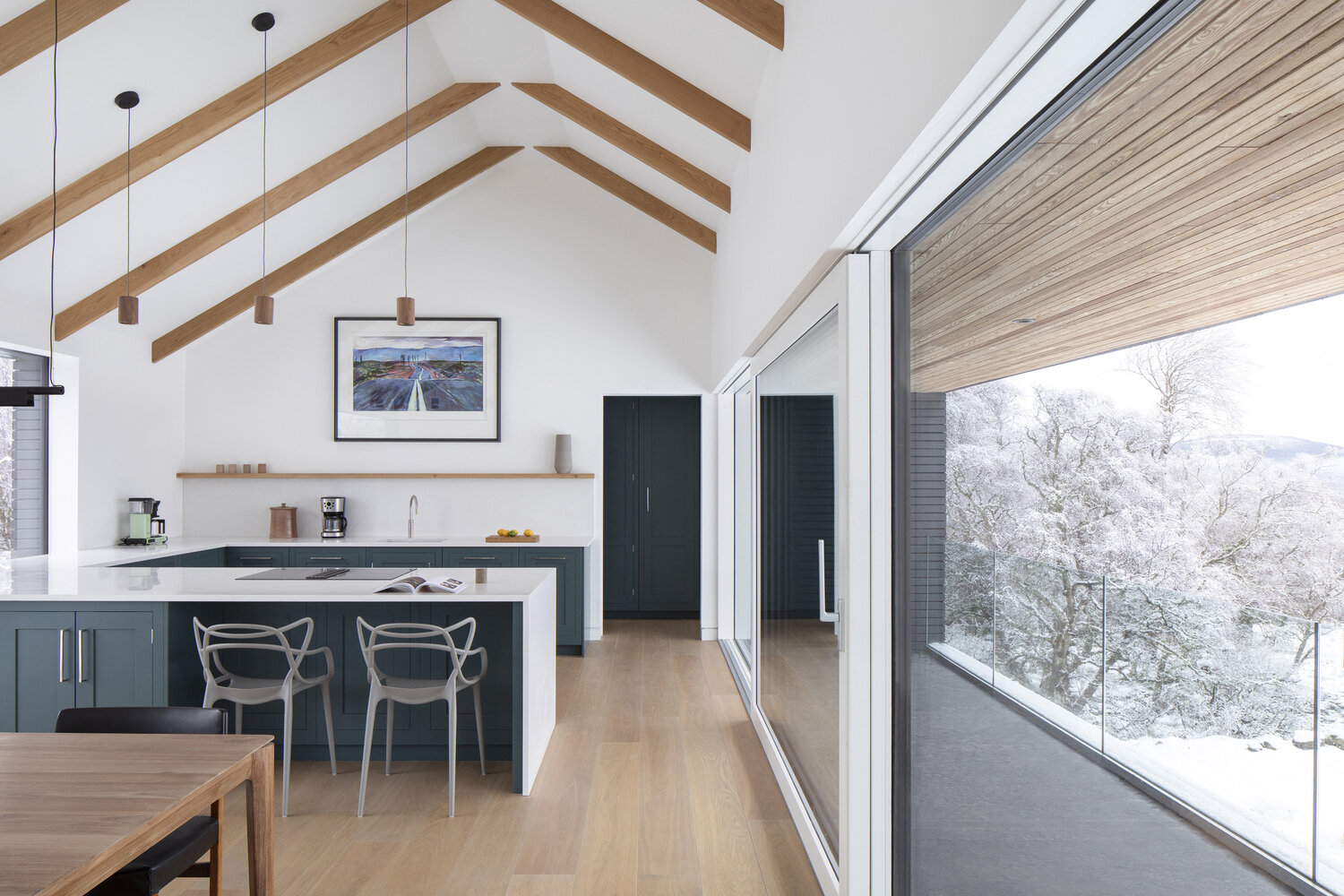
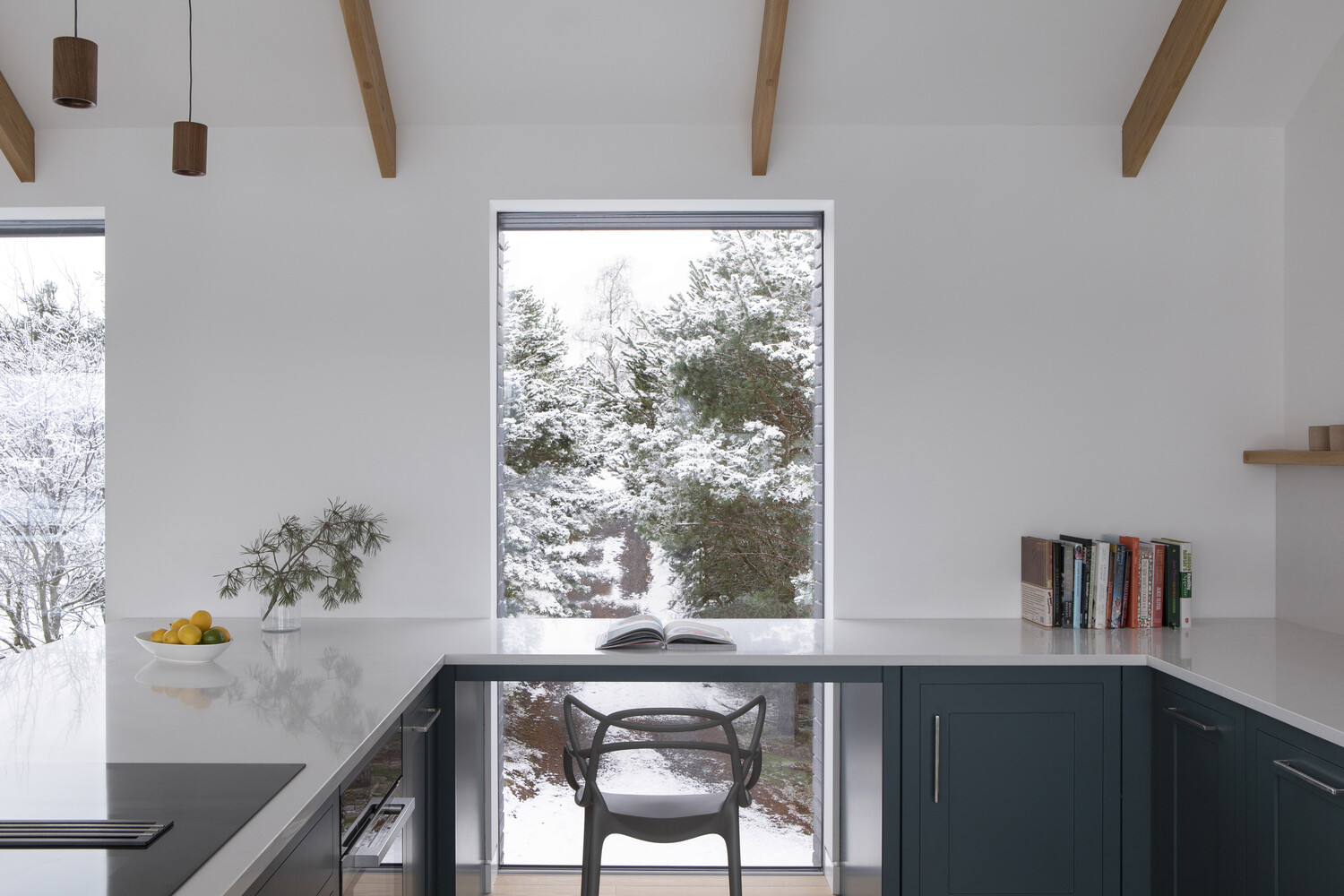
Next to the dining space, the kitchen introduces a subtle shift in tone with colorful lower cabinets. The contrast adds energy without overpowering the rest of the palette.
A waterfall-edge countertop brings a clean, sculptural feel, while a built-in desk area adds flexibility, making the kitchen a place for more than just cooking.
Reworking the Original Home
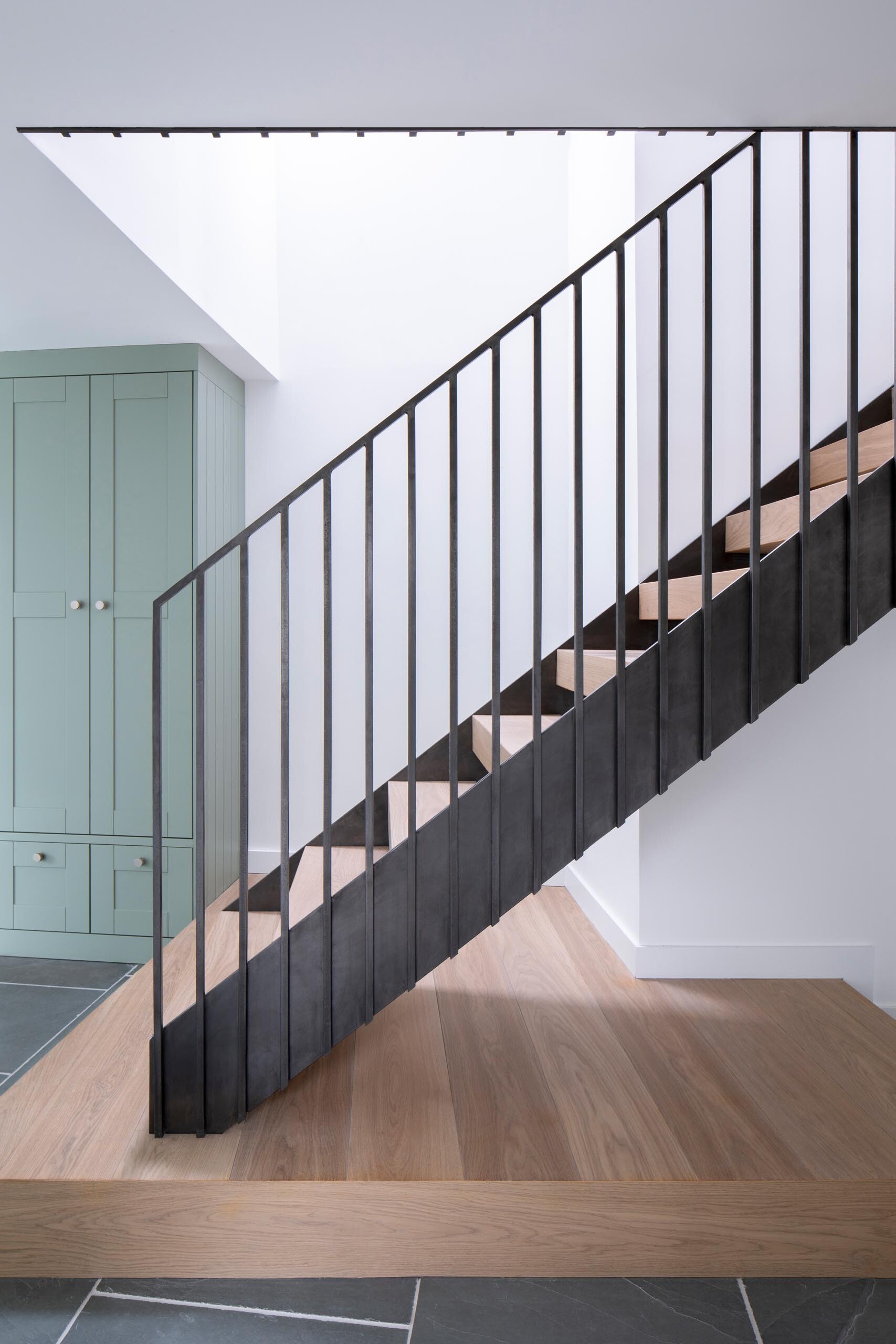
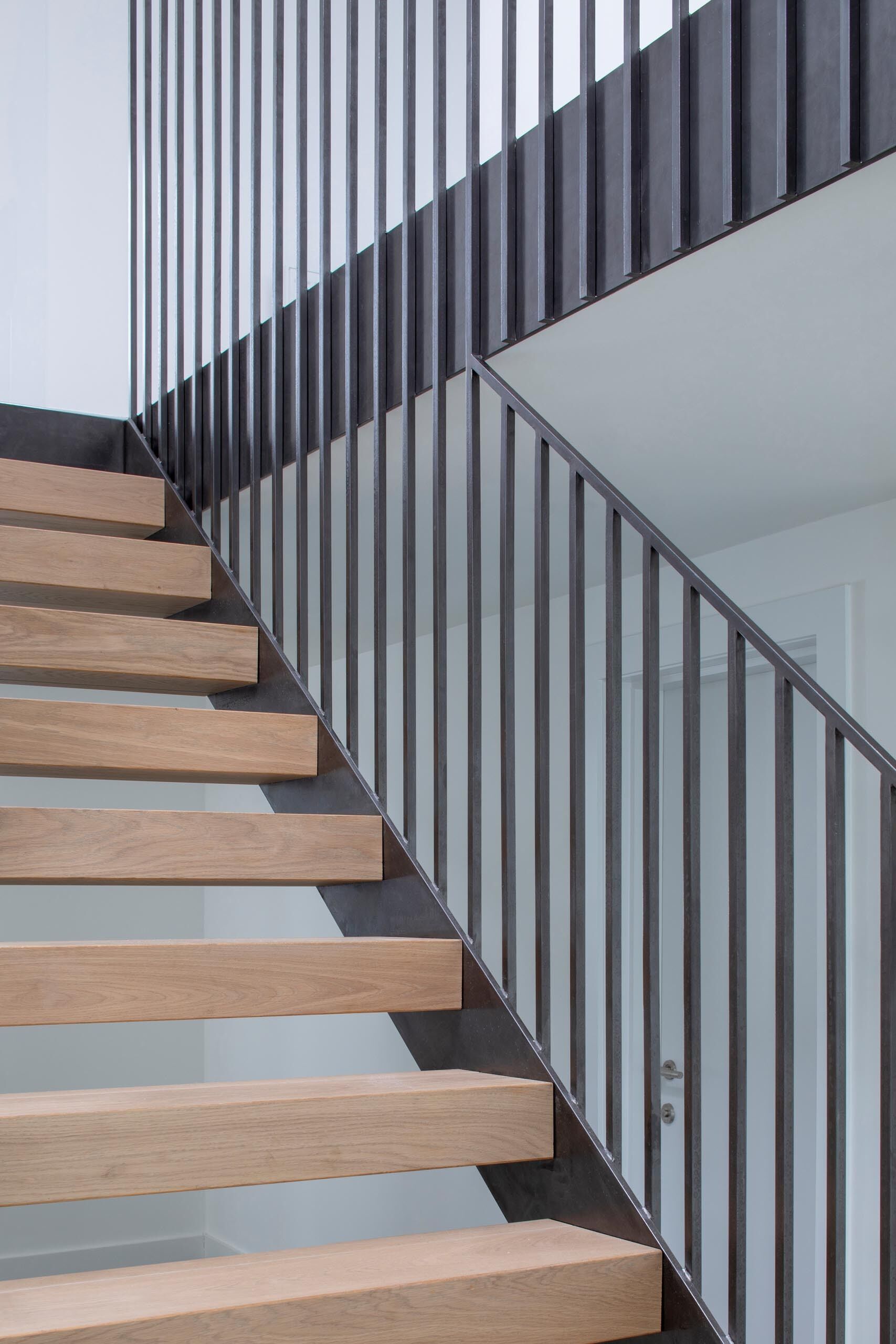
Back in the original part of the house, new steel and wood stairs connect the lower level to the bedrooms and bathrooms above. The update introduces a contemporary edge while respecting the existing structure.
This balance between old and new continues throughout, allowing each part of the home to retain its identity while working together as a whole.
Windows That Replace Artwork
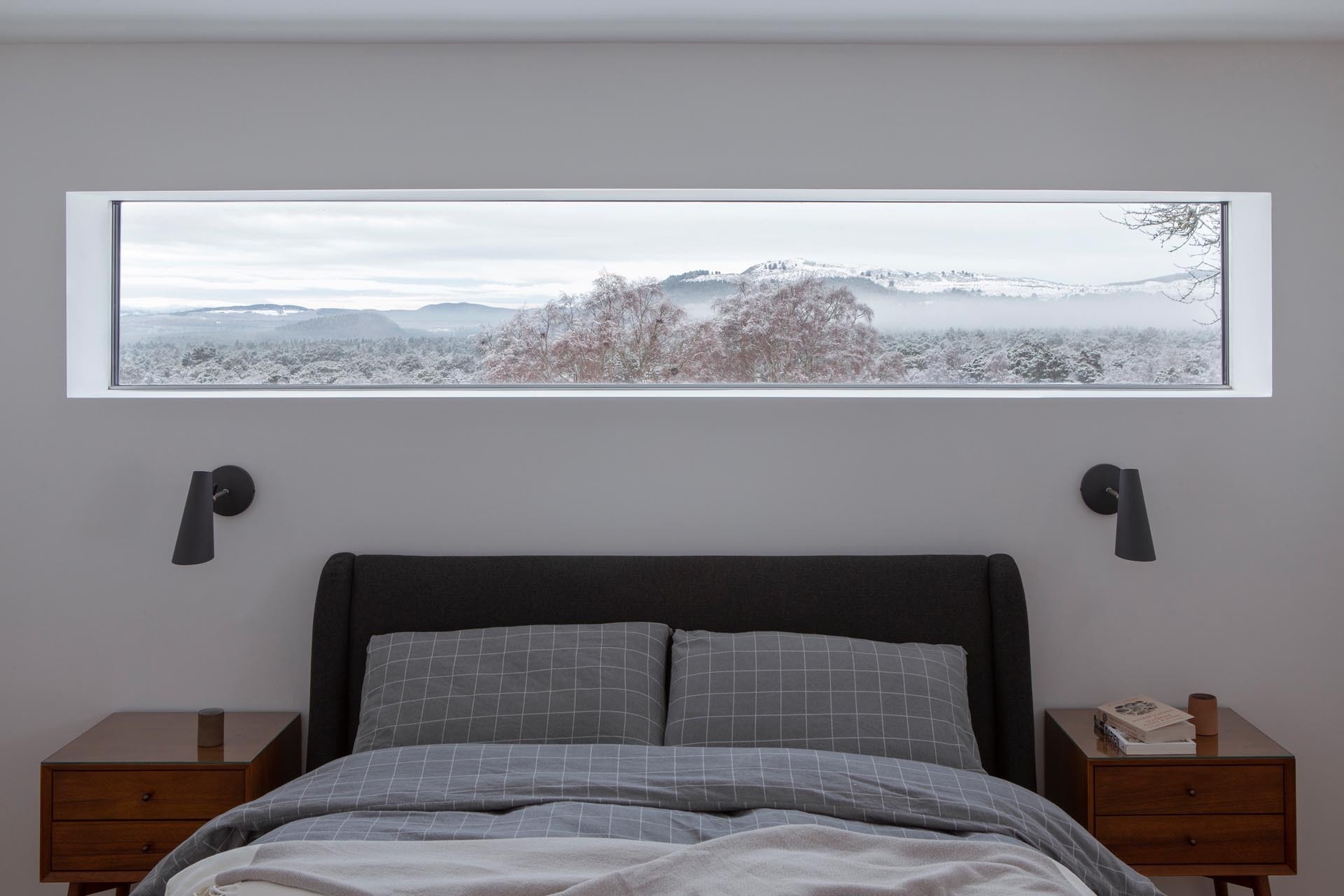
In one of the bedrooms, a long, thin horizontal window stretches across the wall. Instead of hanging artwork, the view itself becomes the focal point, shifting with the seasons and light.
It’s a clear reflection of the home’s overall approach. Rather than adding decoration, the design relies on framing what’s already there, turning the surrounding landscape into something that feels curated and intentional.
This Cairngorms home shows how a careful extension can reshape the way a house is experienced. By focusing on views, materials, and flexible spaces, it creates a connection between inside and out that feels natural and effortless.
At every turn, the windows do more than bring in light. They capture moments of the landscape, turning them into something you notice, pause for, and return to throughout the day.