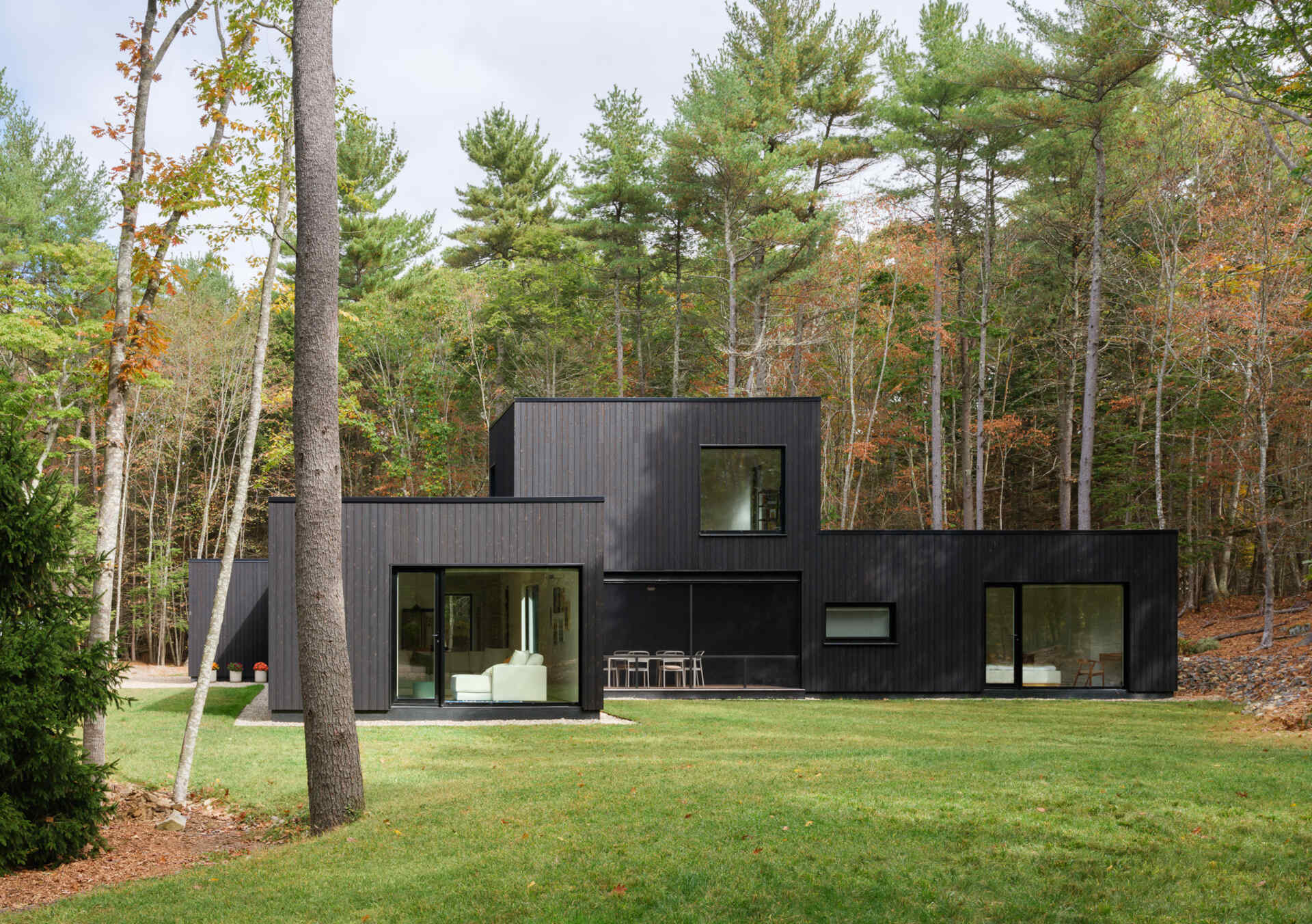
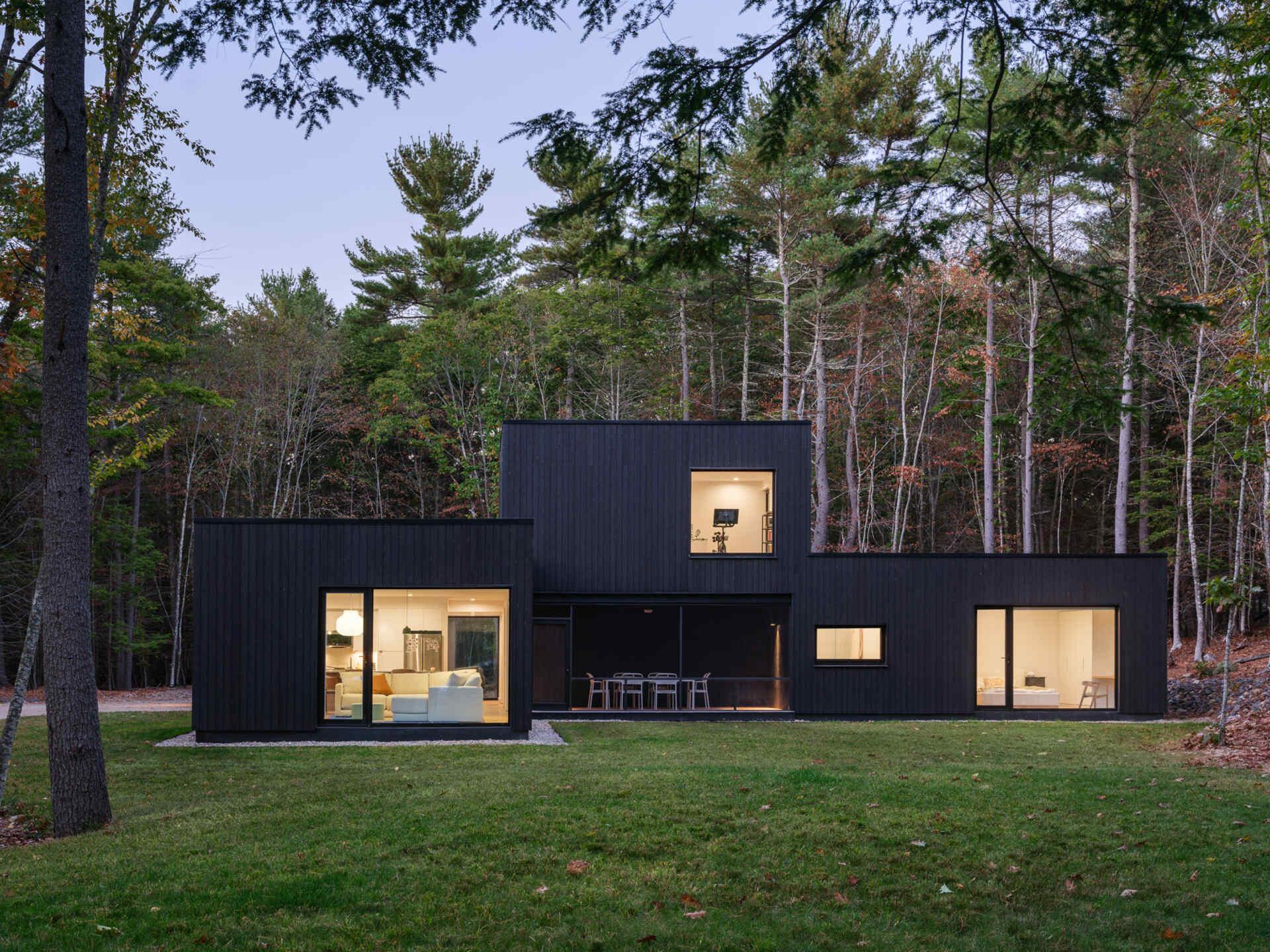
Tucked into a wooded site in Maine, OPAL Architecture designed Elemental as a modern home for a family of four that feels sculptural from every angle. The house is made up of dark rectangular forms with large carved openings that bring light through the structure, creating moments where the interior becomes visible from outside. As daylight fades, the glowing glass openings give the house a lantern-like appearance among the trees.
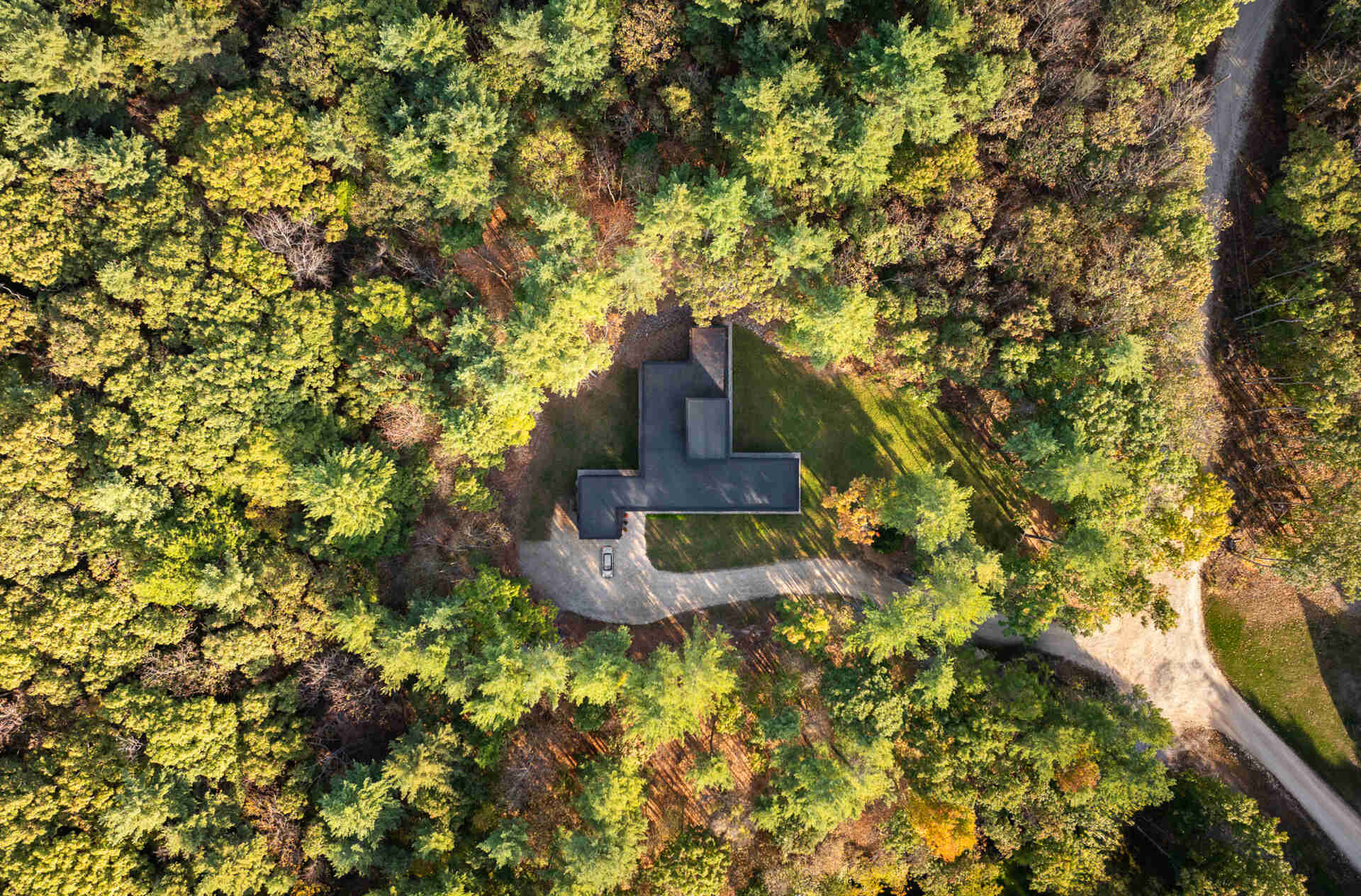
While the home has a striking presence, its design is also highly practical. The slab-on-grade foundation, straightforward structure, and modest spans helped keep construction efficient and cost-effective. The all-electric home also follows a Passive House approach with airtight construction, high insulation levels, heat recovery ventilation, and triple-glazed windows and doors.
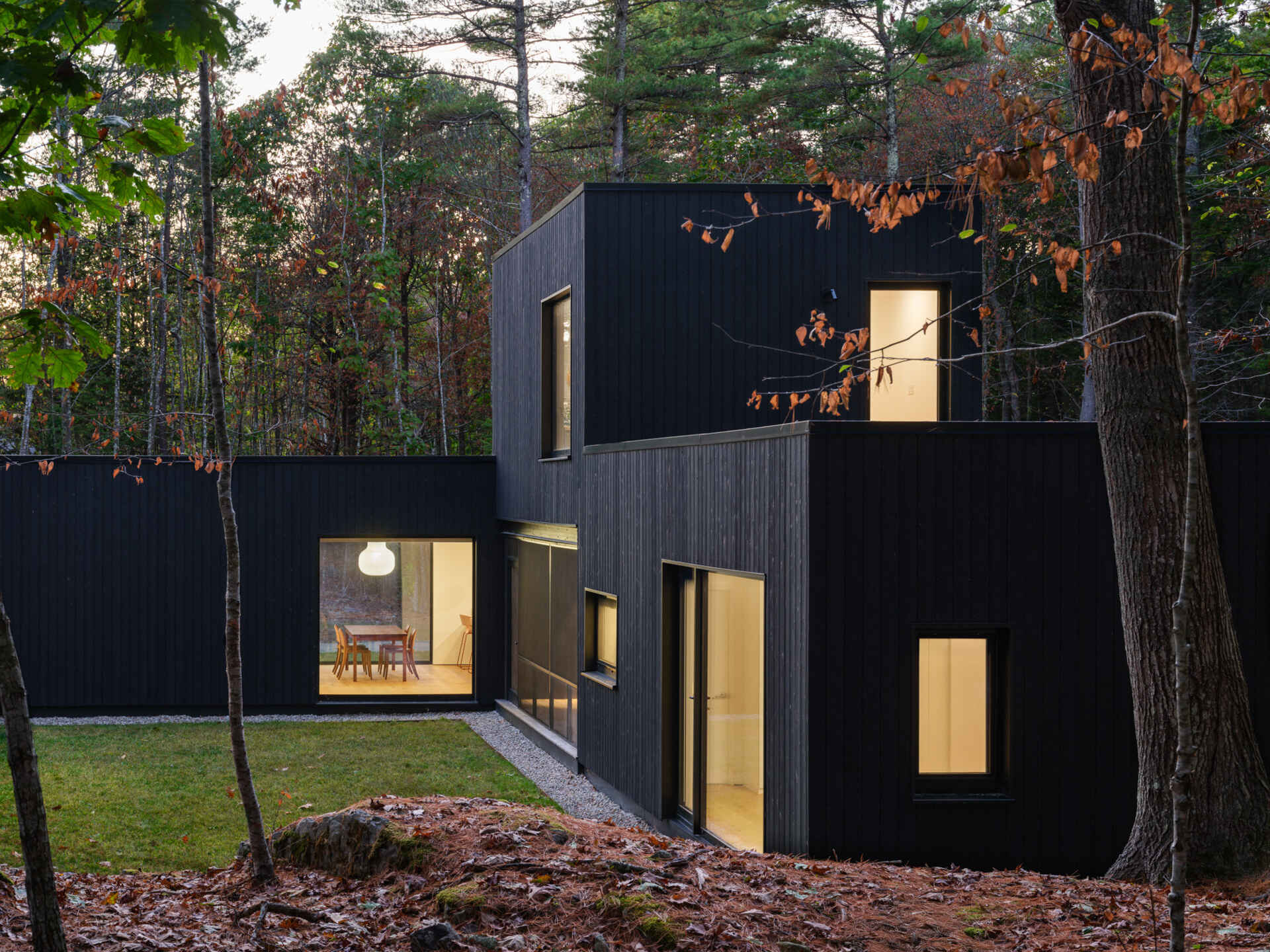
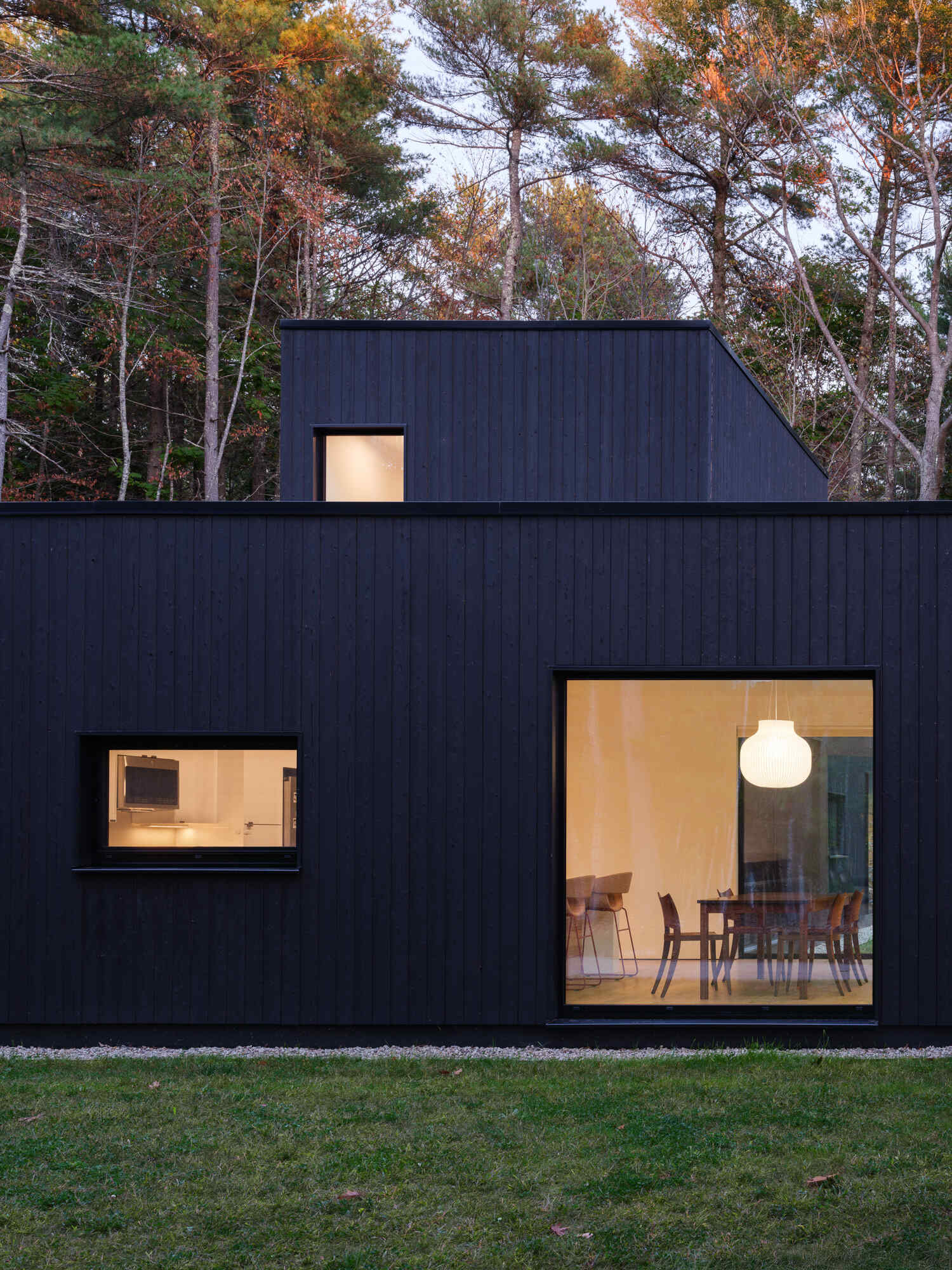
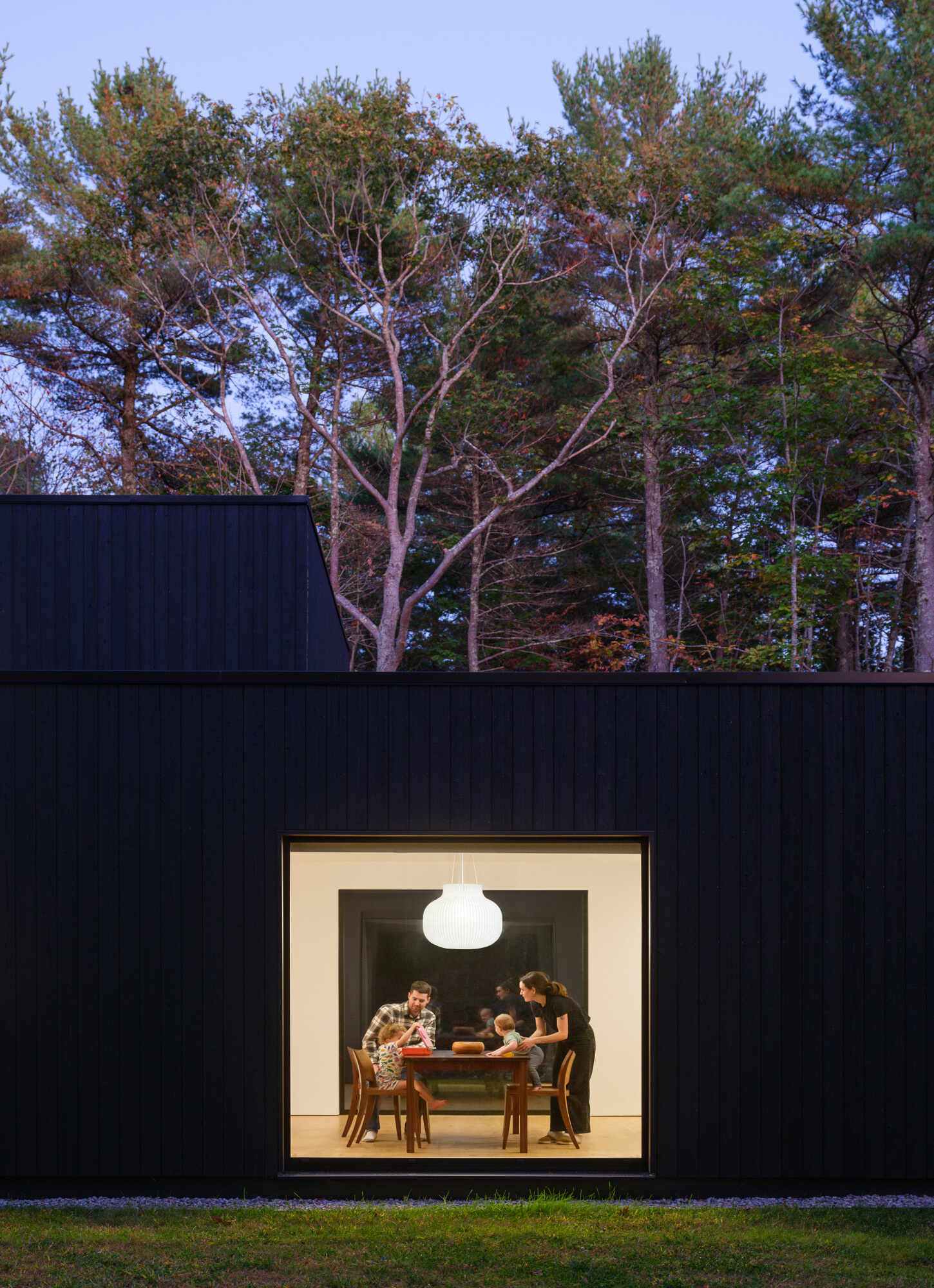
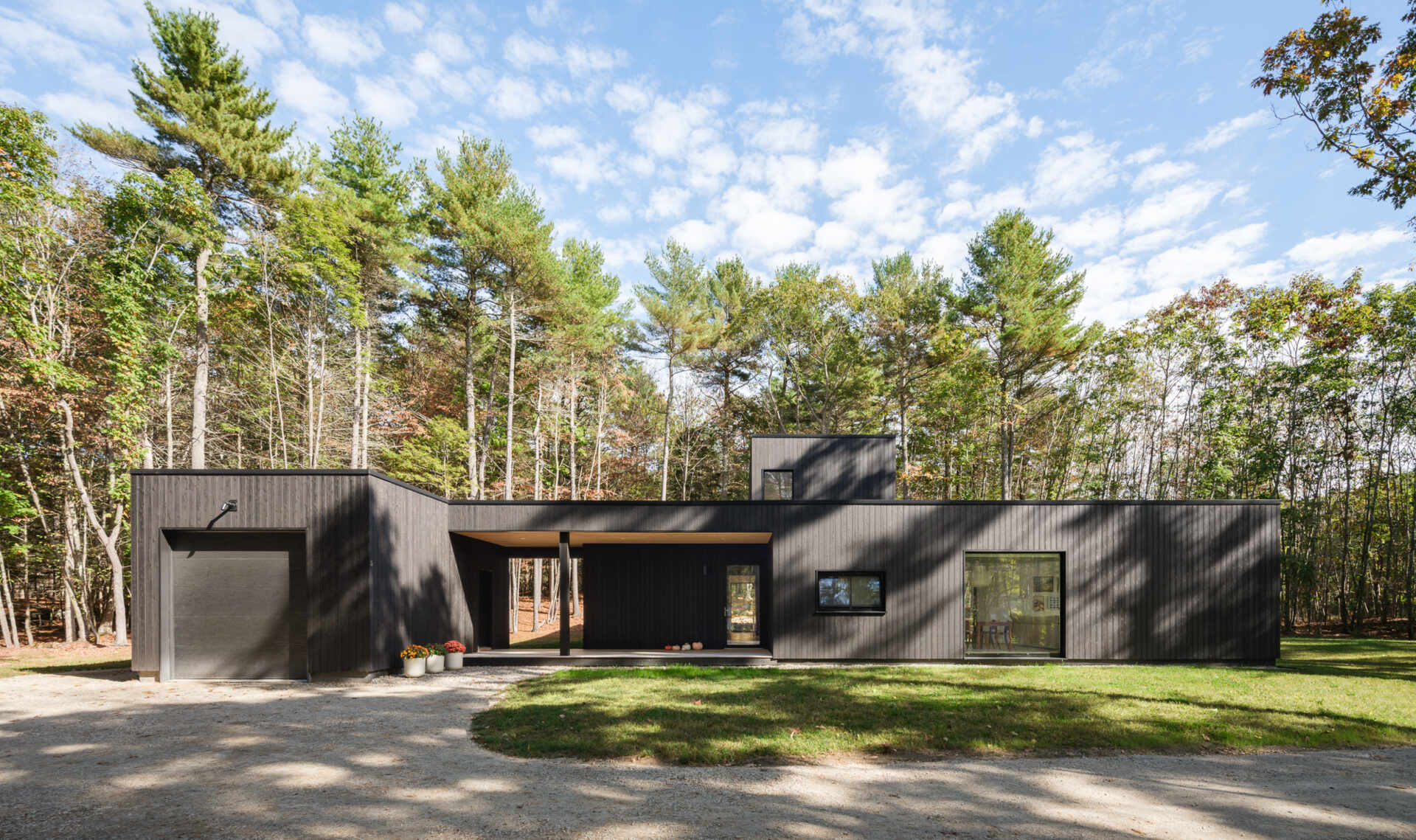
The home’s dark shou sugi ban charred wood siding gives the exterior a textured finish that changes throughout the day as sunlight filters through the surrounding trees. In some moments the surface appears almost matte black, while in others the grain of the wood becomes more visible under shifting light.
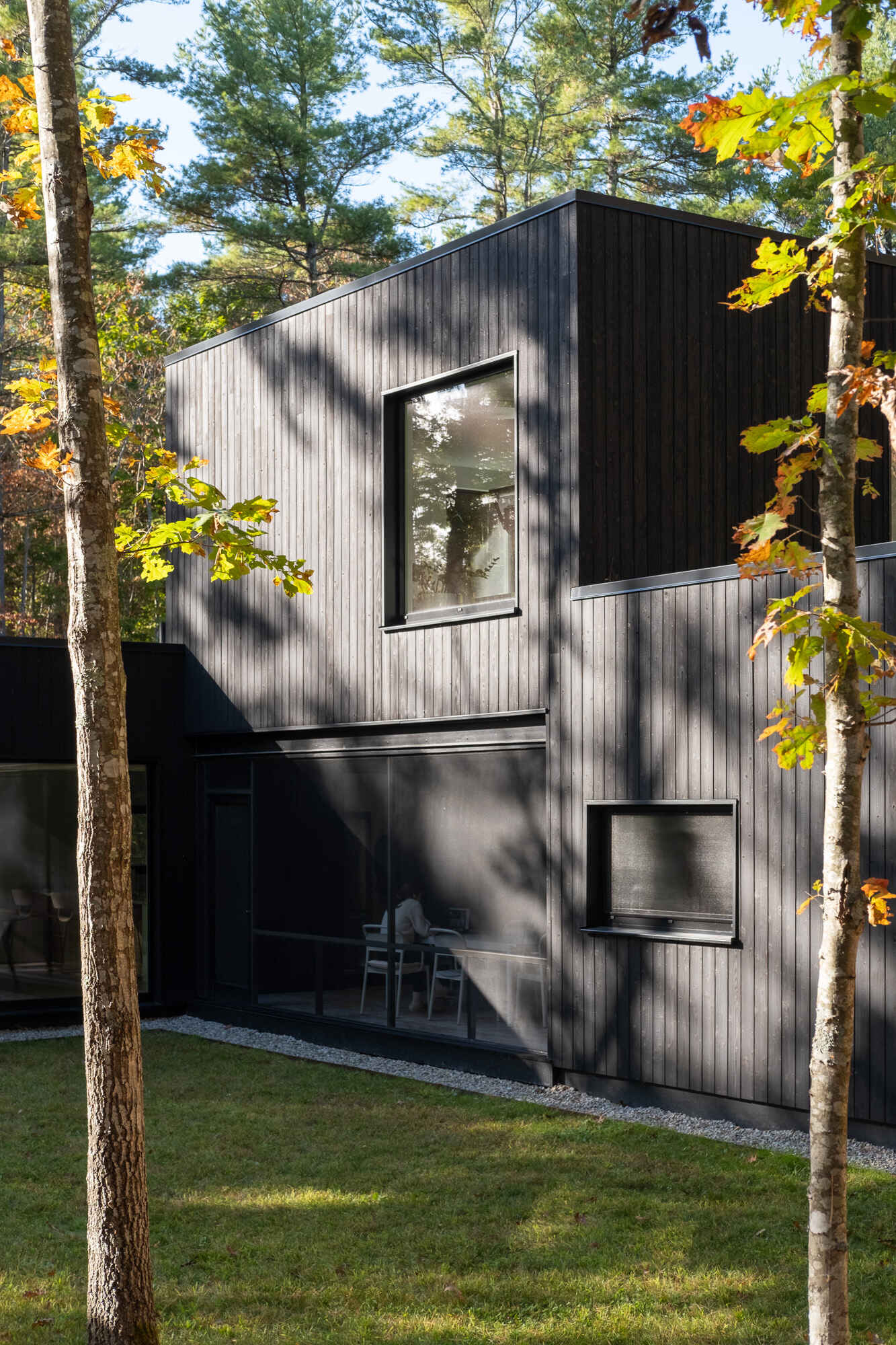
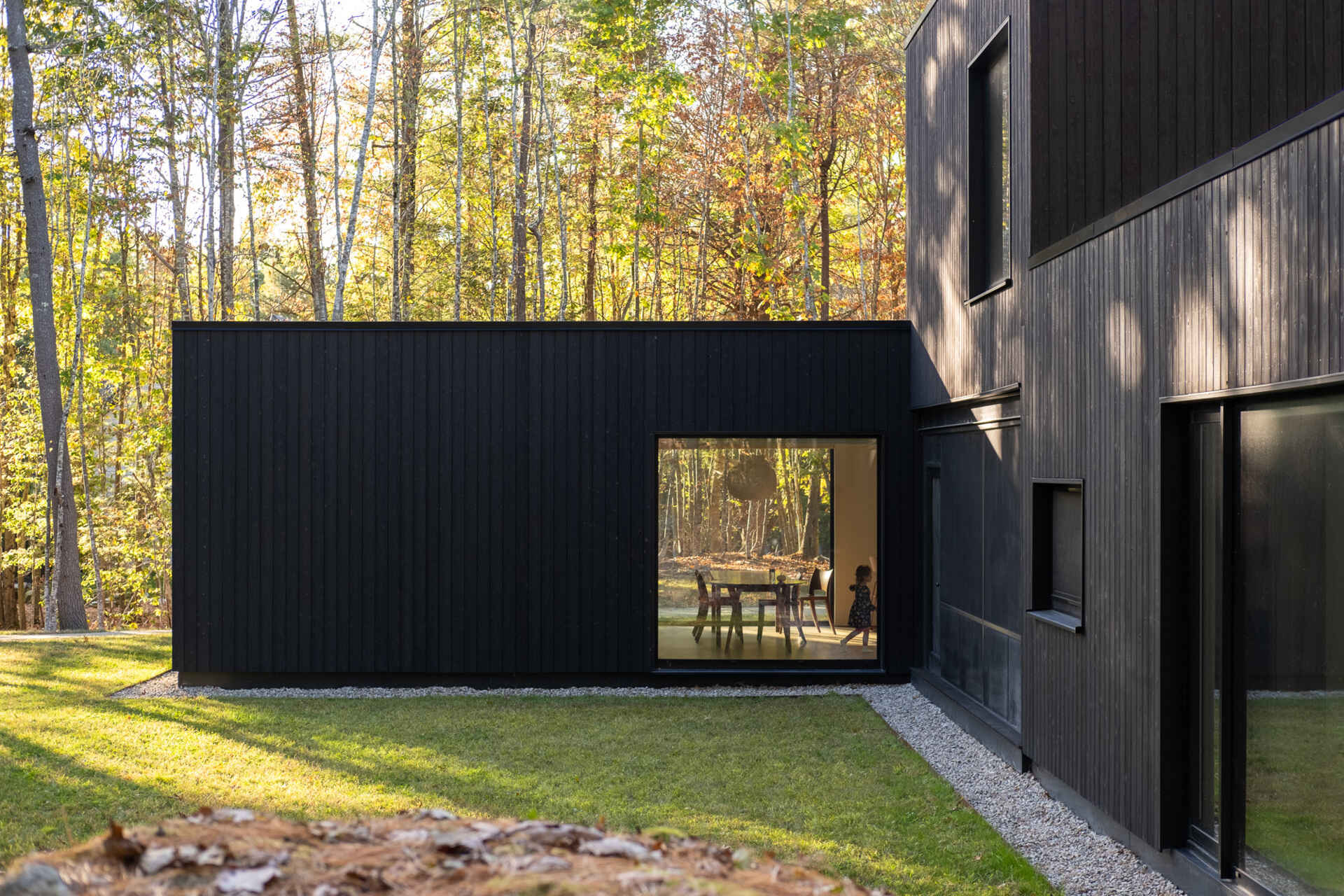
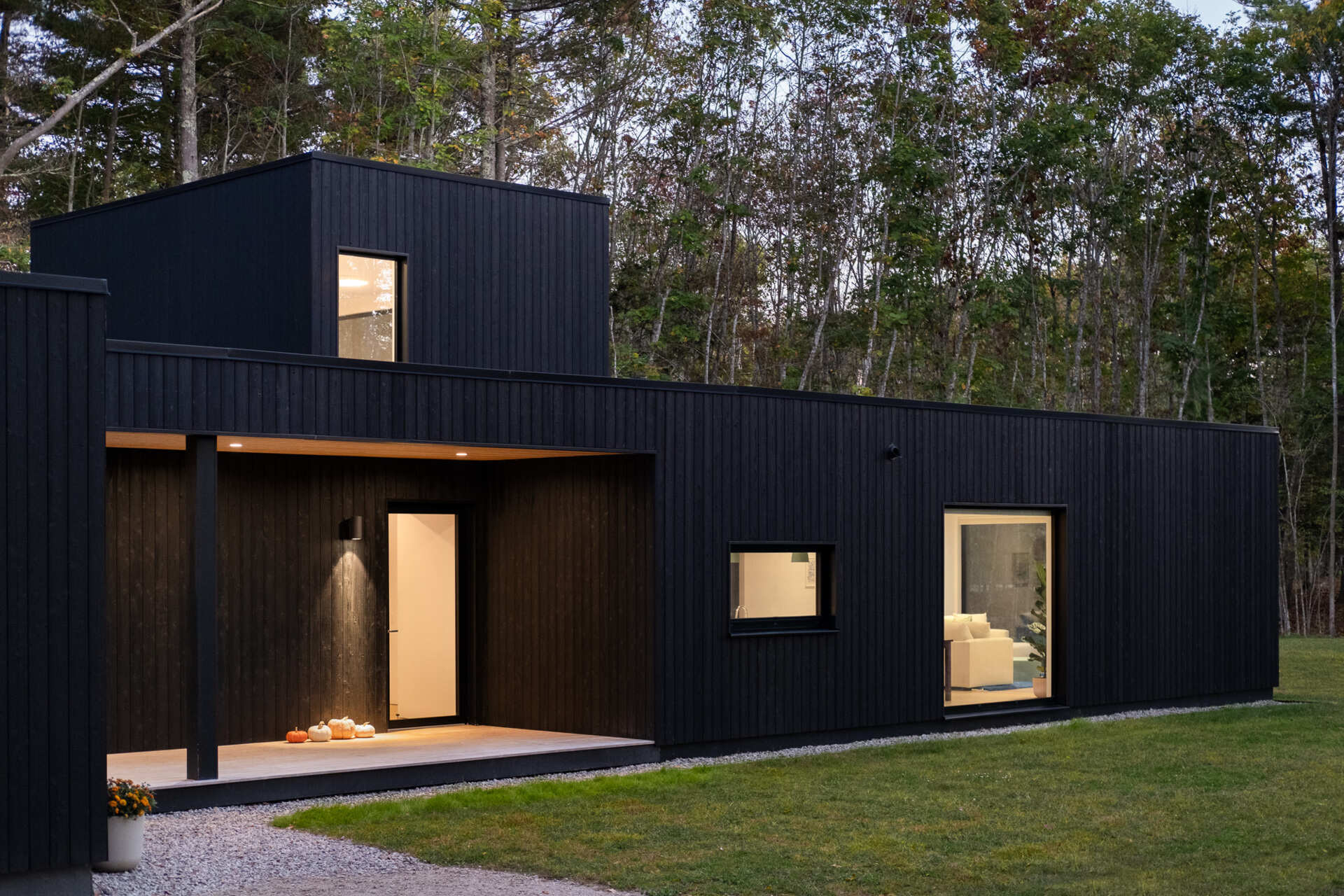
The L-shaped layout also plays an important role in how the house functions. It separates the driveway and vehicle areas from a more private outdoor yard while helping create sheltered exterior zones. Large floor-to-ceiling openings interrupt the dark cladding with dramatic cuts of glass, adding transparency and contrast to the otherwise solid forms.
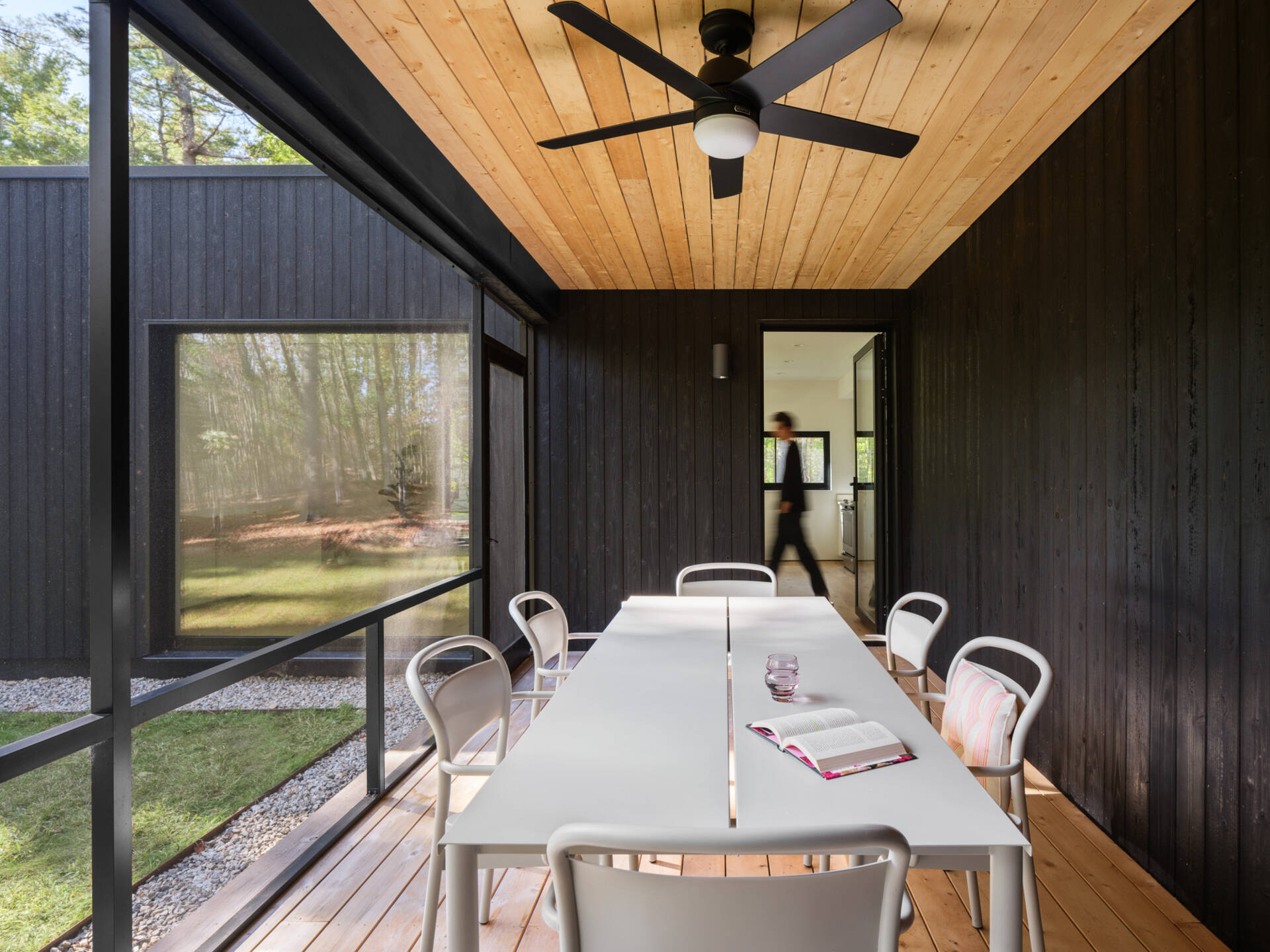
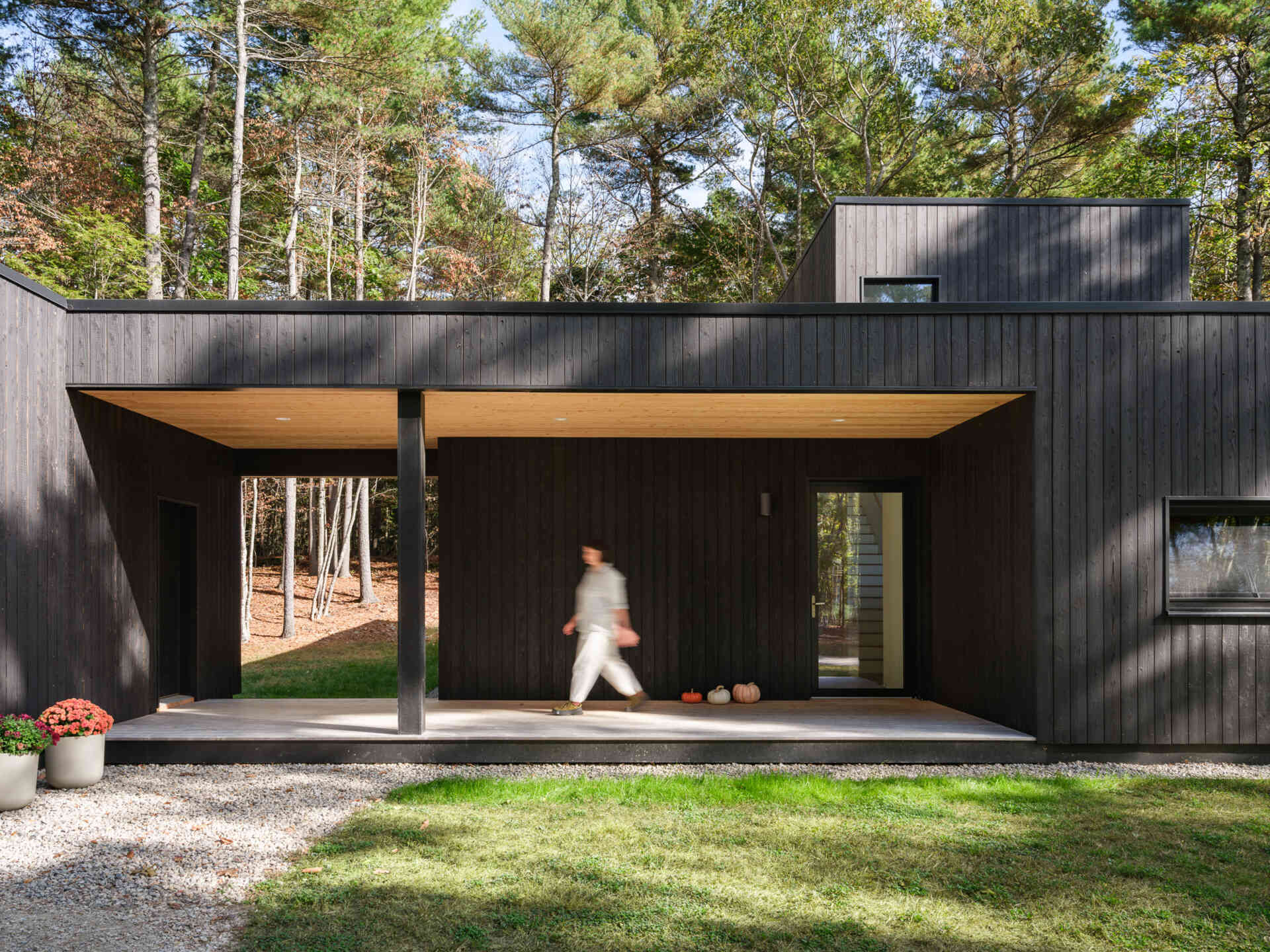
The entry sequence begins with a generous covered porch that links the main house to a small garage and workshop. Instead of feeling enclosed, the covered area creates a welcoming transition between outdoors and indoors while also providing practical weather protection during Maine winters.
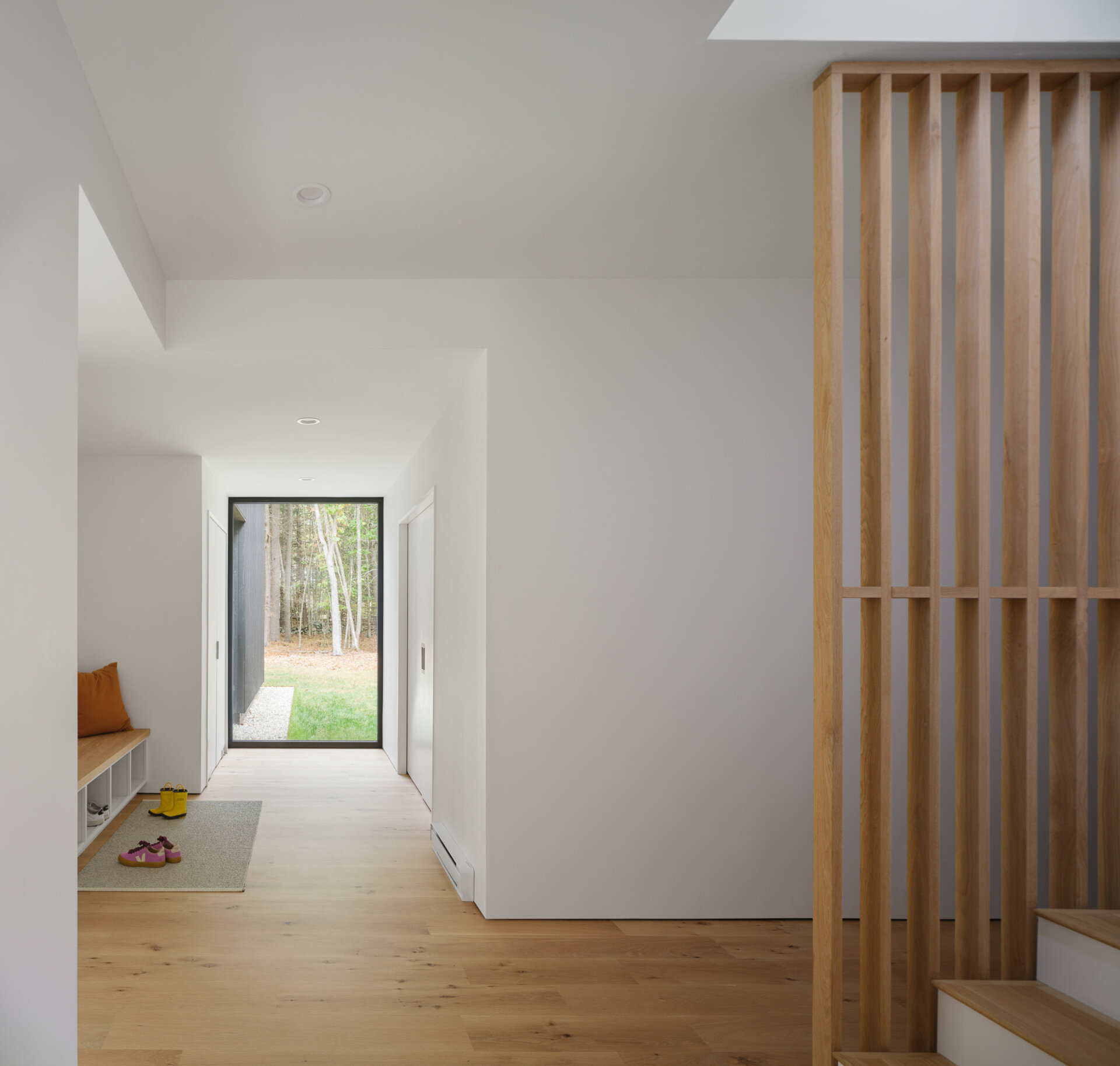
Inside, the atmosphere changes immediately. The dark exterior gives way to bright interiors accented with locally sourced white ash, creating a softer and warmer environment. Natural light moves through the circulation spaces thanks to the home’s large openings and transparent sightlines.
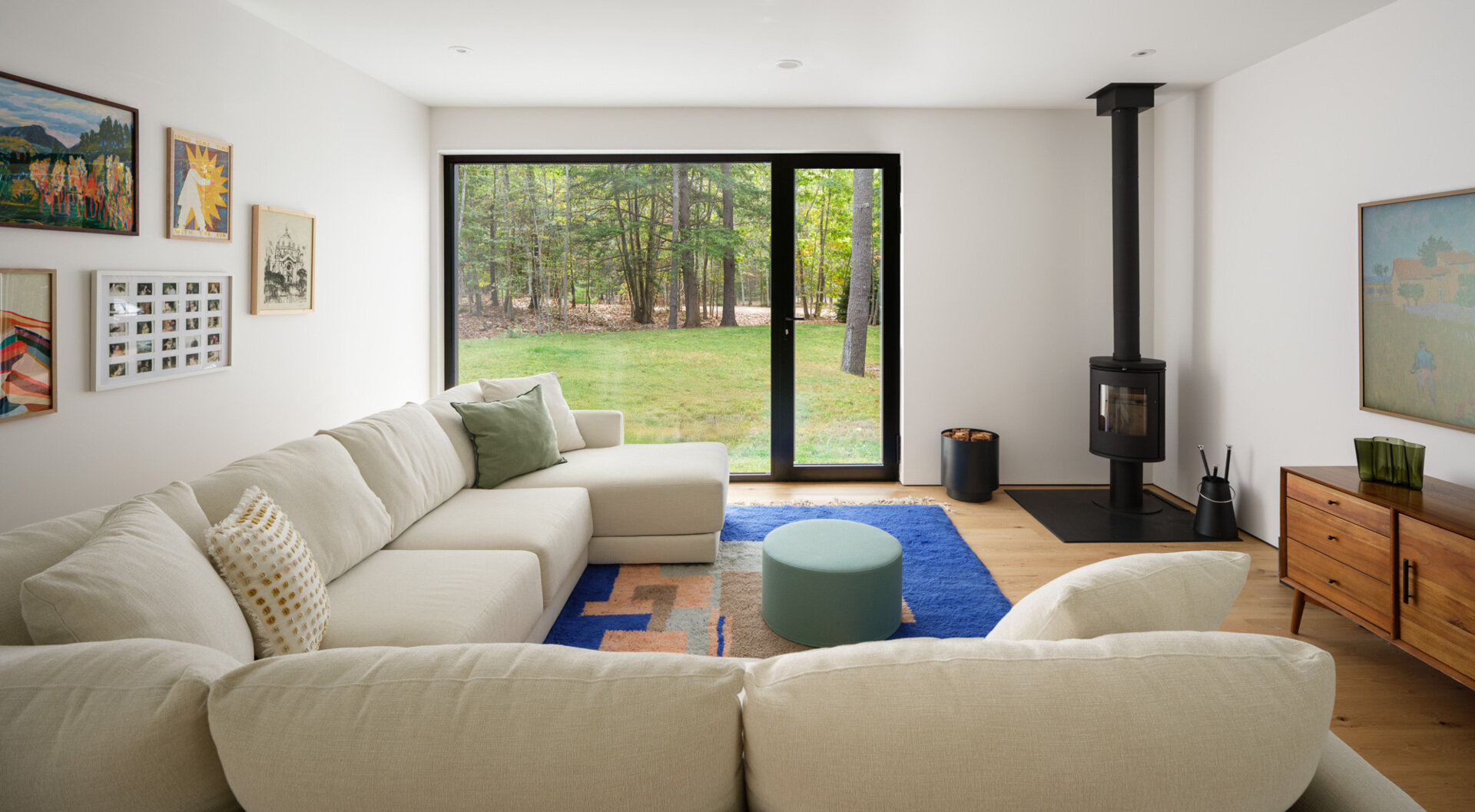
The living room benefits from the home’s strong connection to the outdoors. Large expanses of glazing frame the surrounding trees while bringing changing light patterns into the space throughout the day. The airy interior palette contrasts sharply with the dark exterior shell, making the living areas feel even brighter.
The organization of the house also helps the shared spaces feel open and connected. One of the home’s main circulation axes is dedicated to gathering spaces, allowing the living room to flow naturally into adjacent areas without feeling cramped.
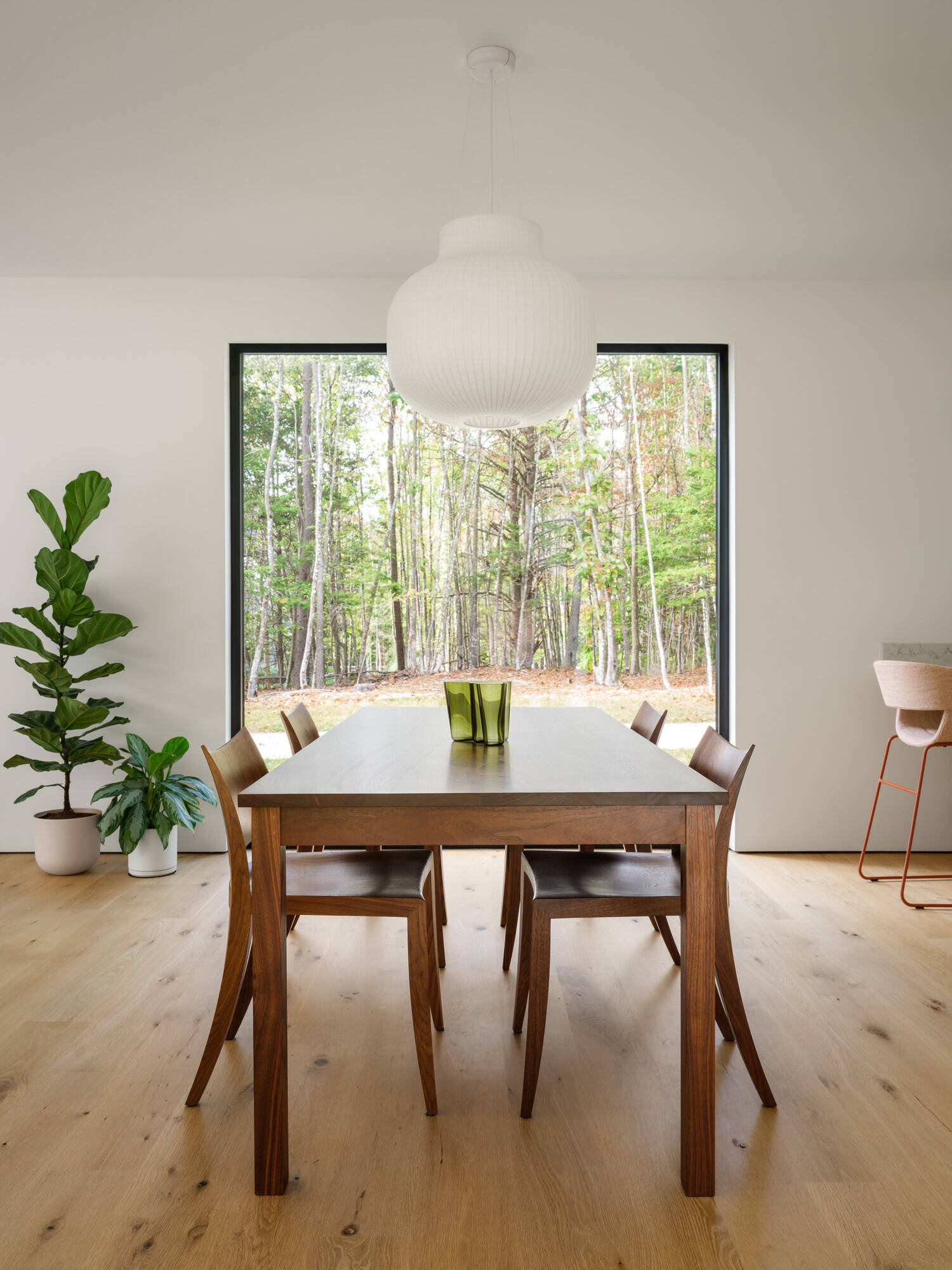
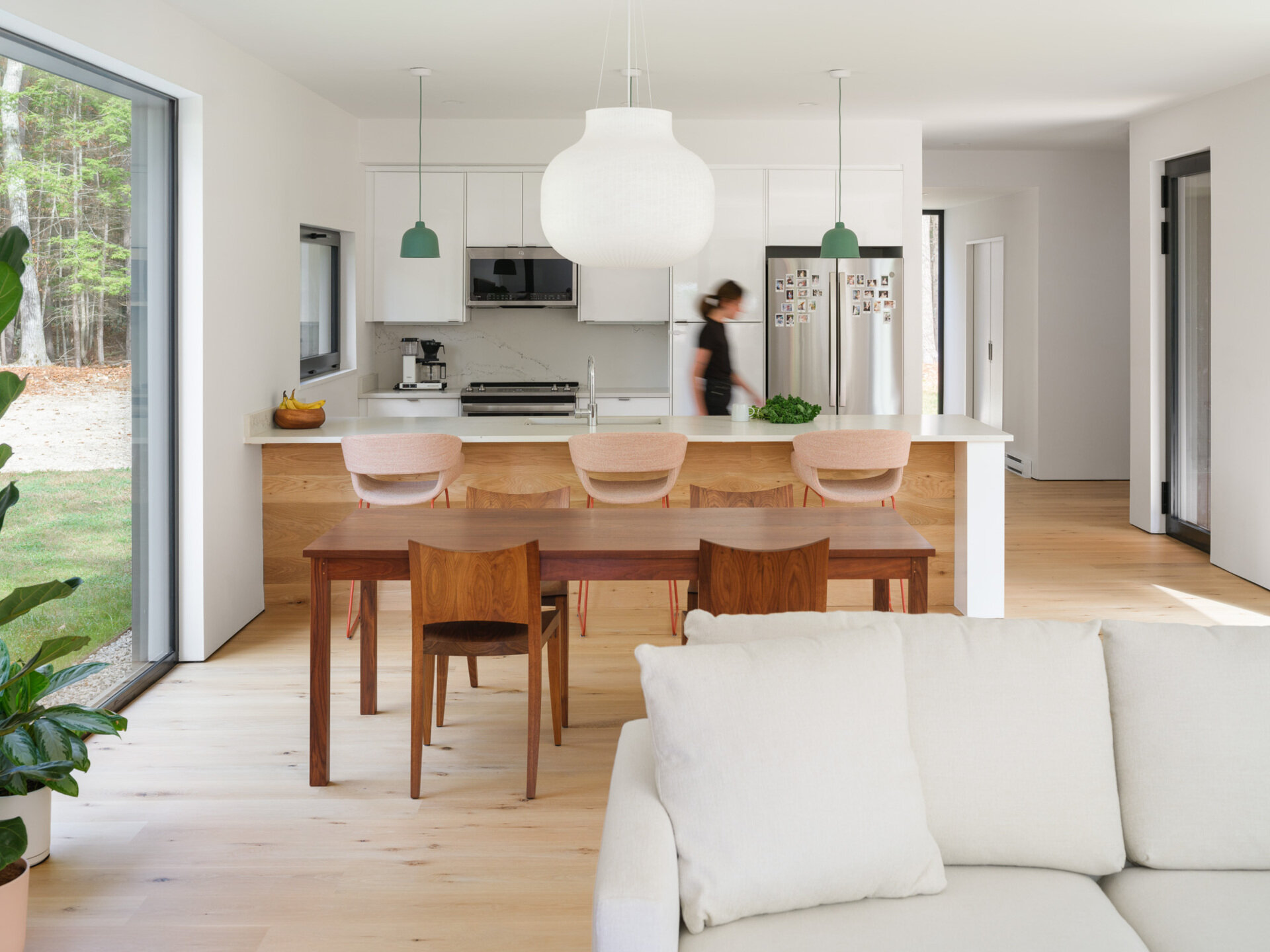
At the center of the home, the kitchen and dining area act as a natural meeting point for the family. Nearby, a screened porch sits at the hinge between the home’s two circulation axes, extending the living spaces outward and creating another place to gather during warmer months.
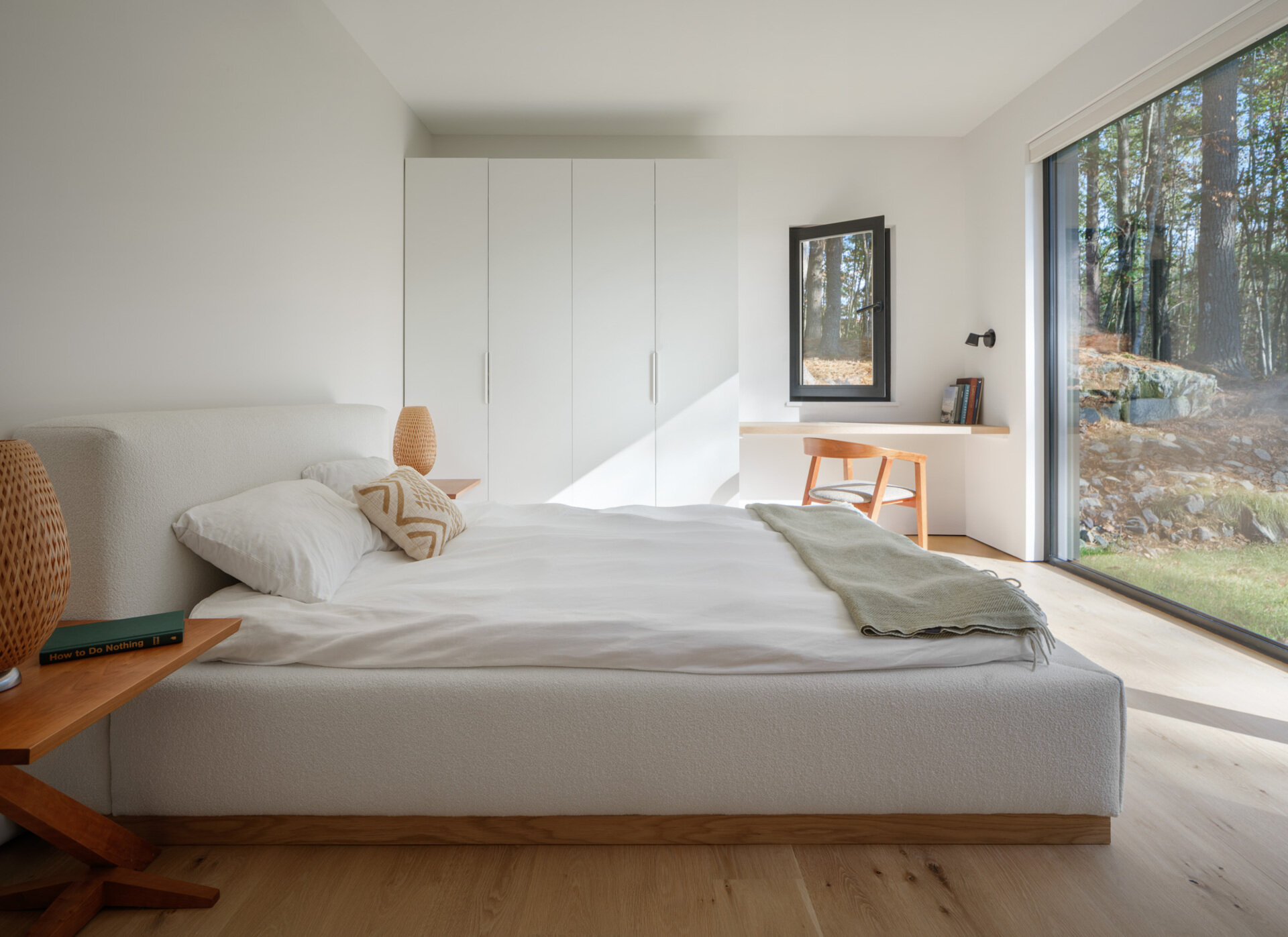
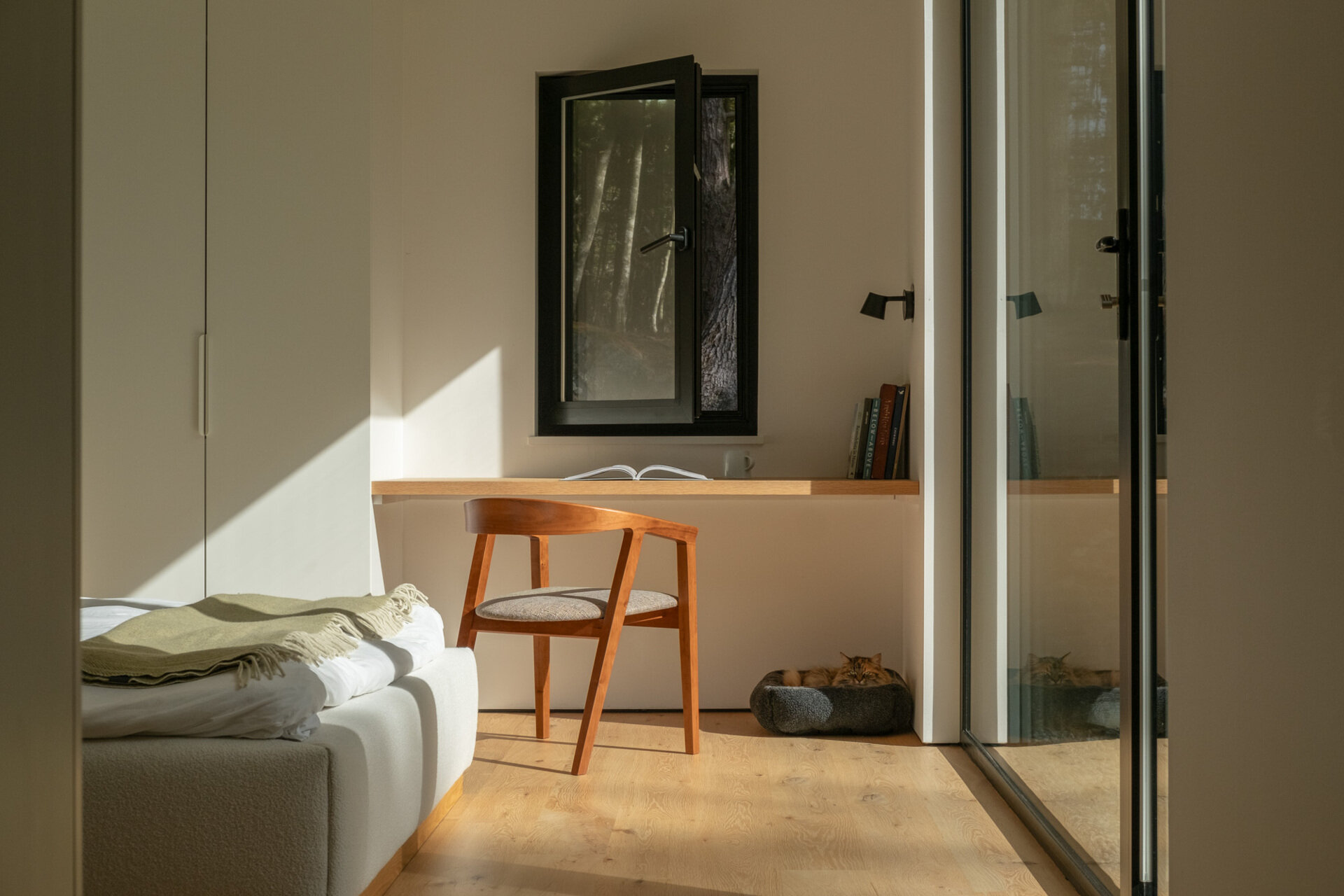
The primary bedroom balances simplicity with functionality. Large windows continue the home’s connection to the landscape while maintaining a calm and uncluttered atmosphere. The restrained material palette keeps attention on light, texture, and views.
A built-in desk adds flexibility to the room, supporting work-from-home needs without requiring a separate office space. It reflects the home’s broader approach to adaptable living, where rooms can easily support multiple functions over time.
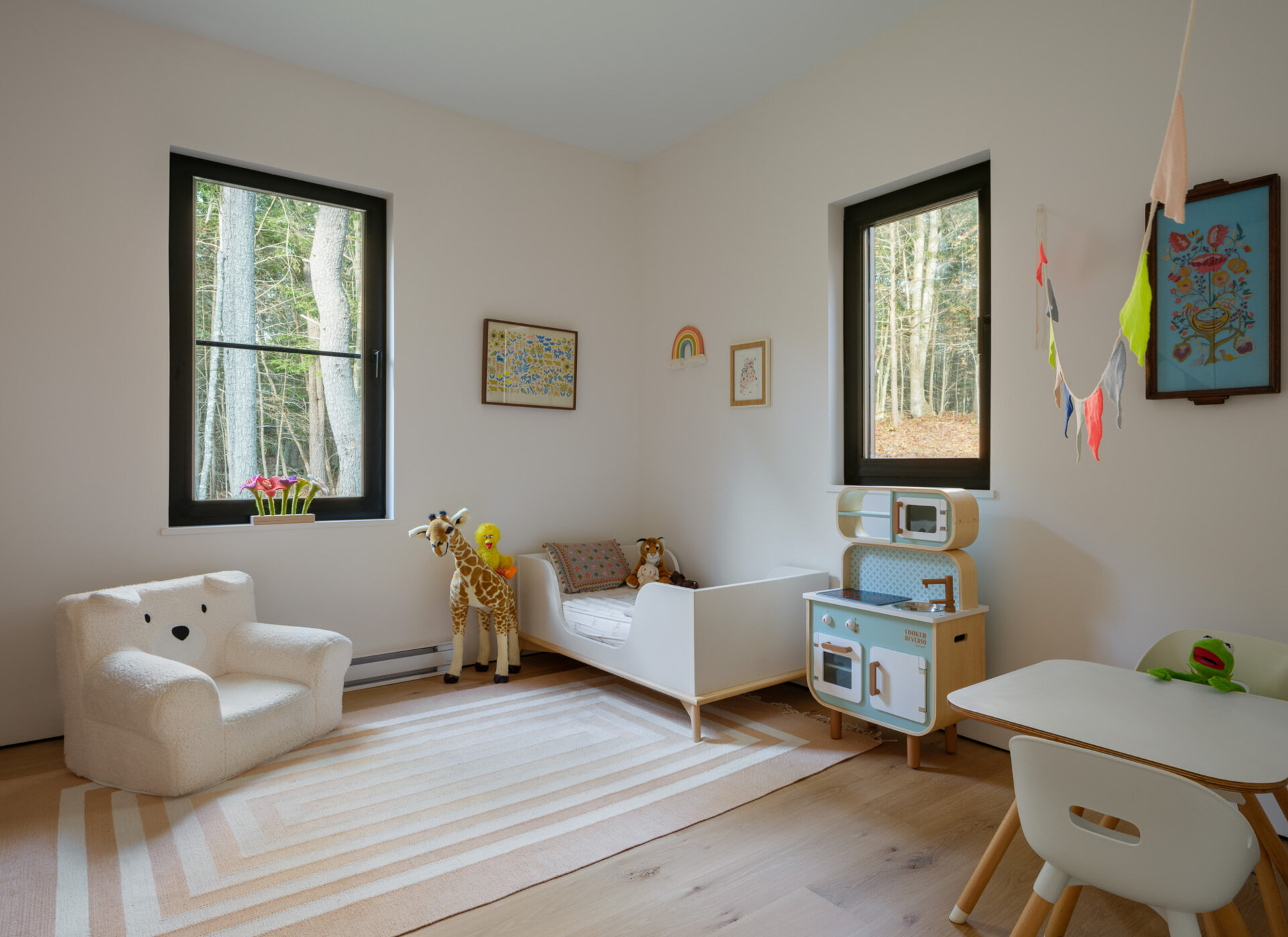
Designed for a young family, the children’s bedrooms continue the home’s clean and light-filled aesthetic, with bright interiors make the spaces feel cheerful while the simple forms leave room for the rooms to evolve as the children grow older.
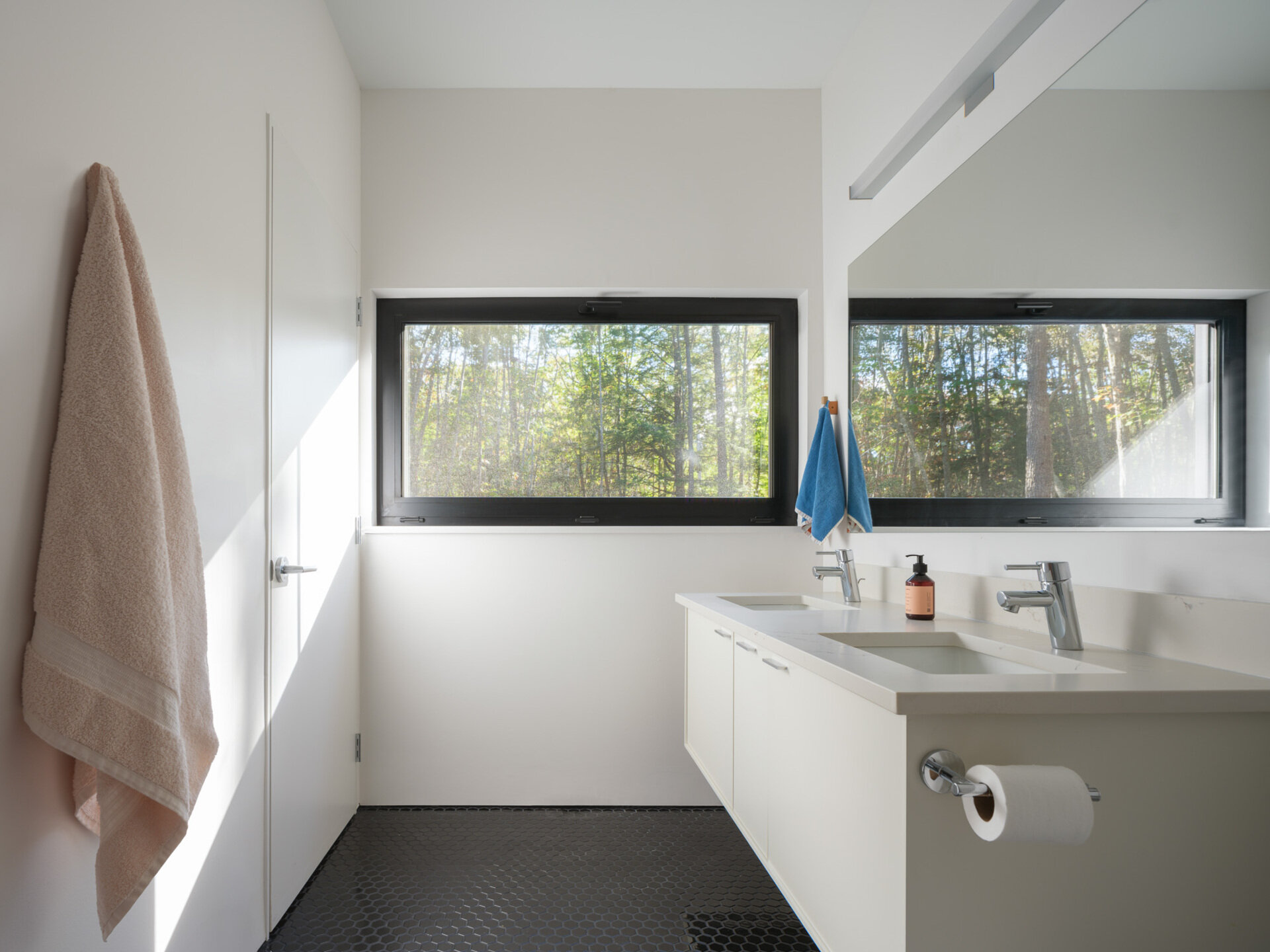
Natural light plays an important role in the bathroom, helping even smaller spaces feel open and airy. The simplicity of the bathroom with its white vanity and black tiles allows the room stand out without excessive decoration or visual clutter.
The wood and white staircase acts connects between levels, while natural light filtering through nearby glazing and the wood slat divider helps prevent the stair zone from feeling enclosed.
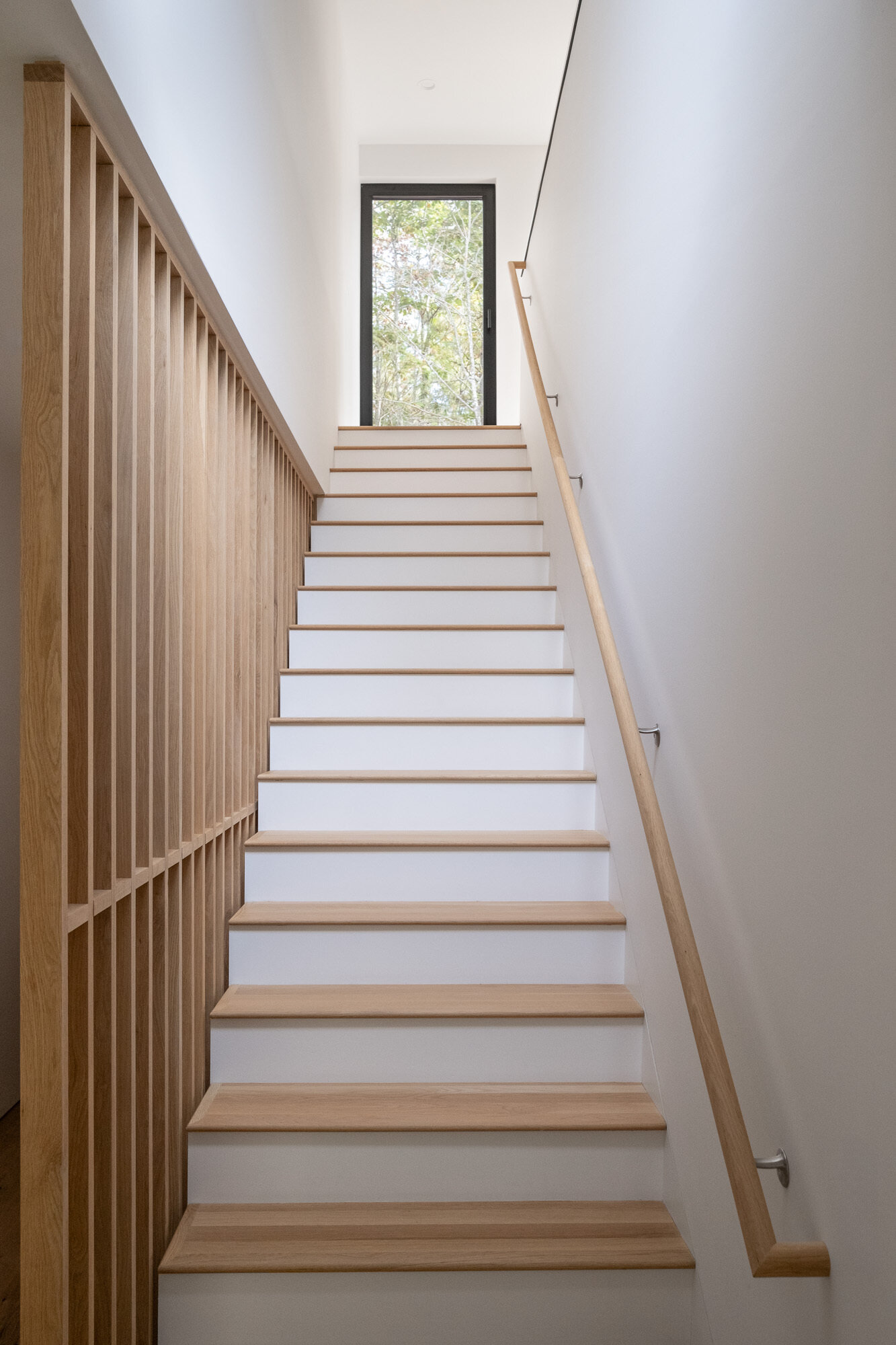
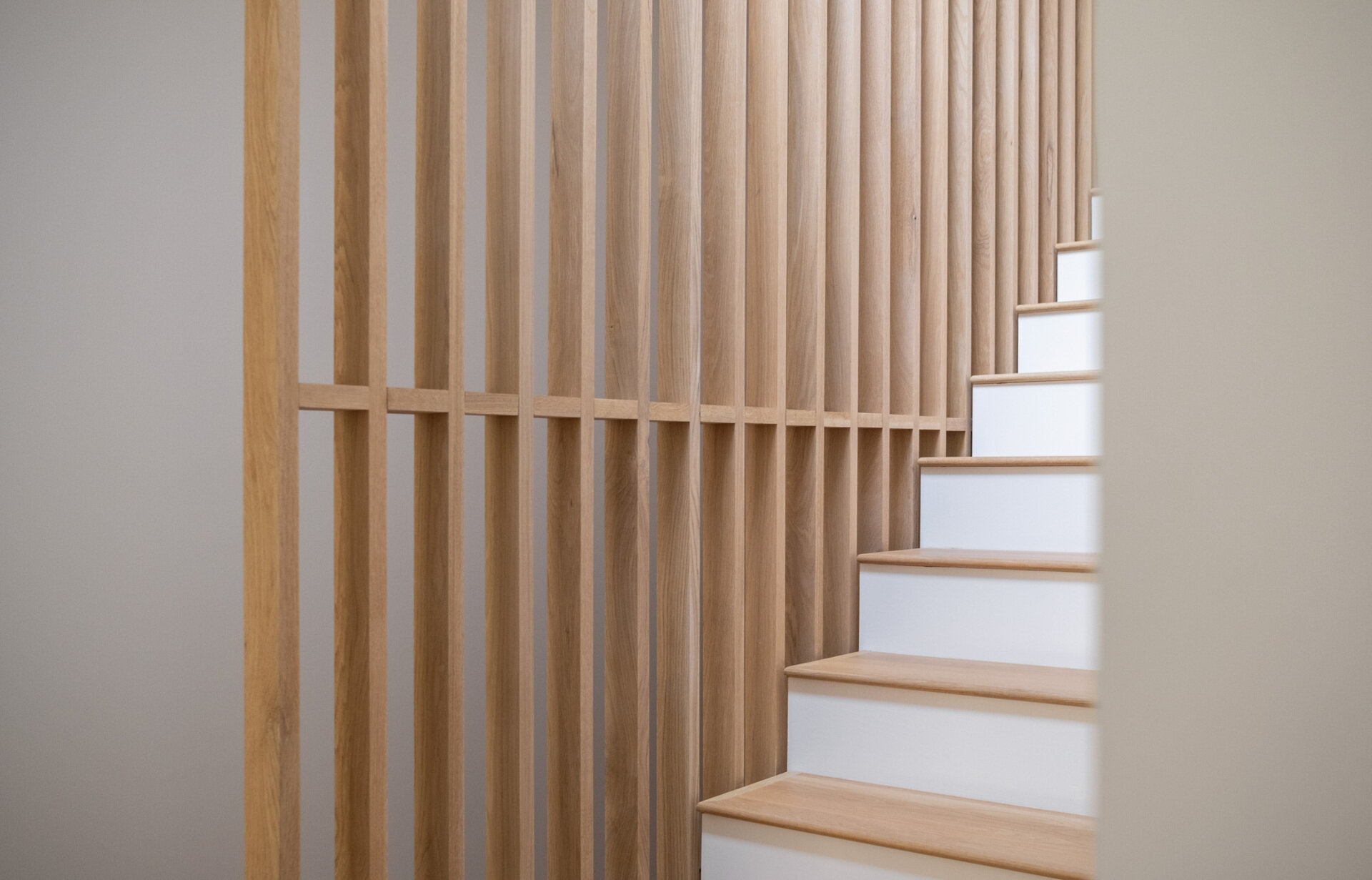
Upstairs, the flexible second-floor spaces allow the home to adapt to changing family needs. One area functions as a gym while also supporting uses like a playroom, office, or den depending on the day.
This adaptability helps maximize the relatively compact footprint of the house. Instead of creating rigid single-purpose rooms, the design allows spaces to shift naturally over time as family life changes.
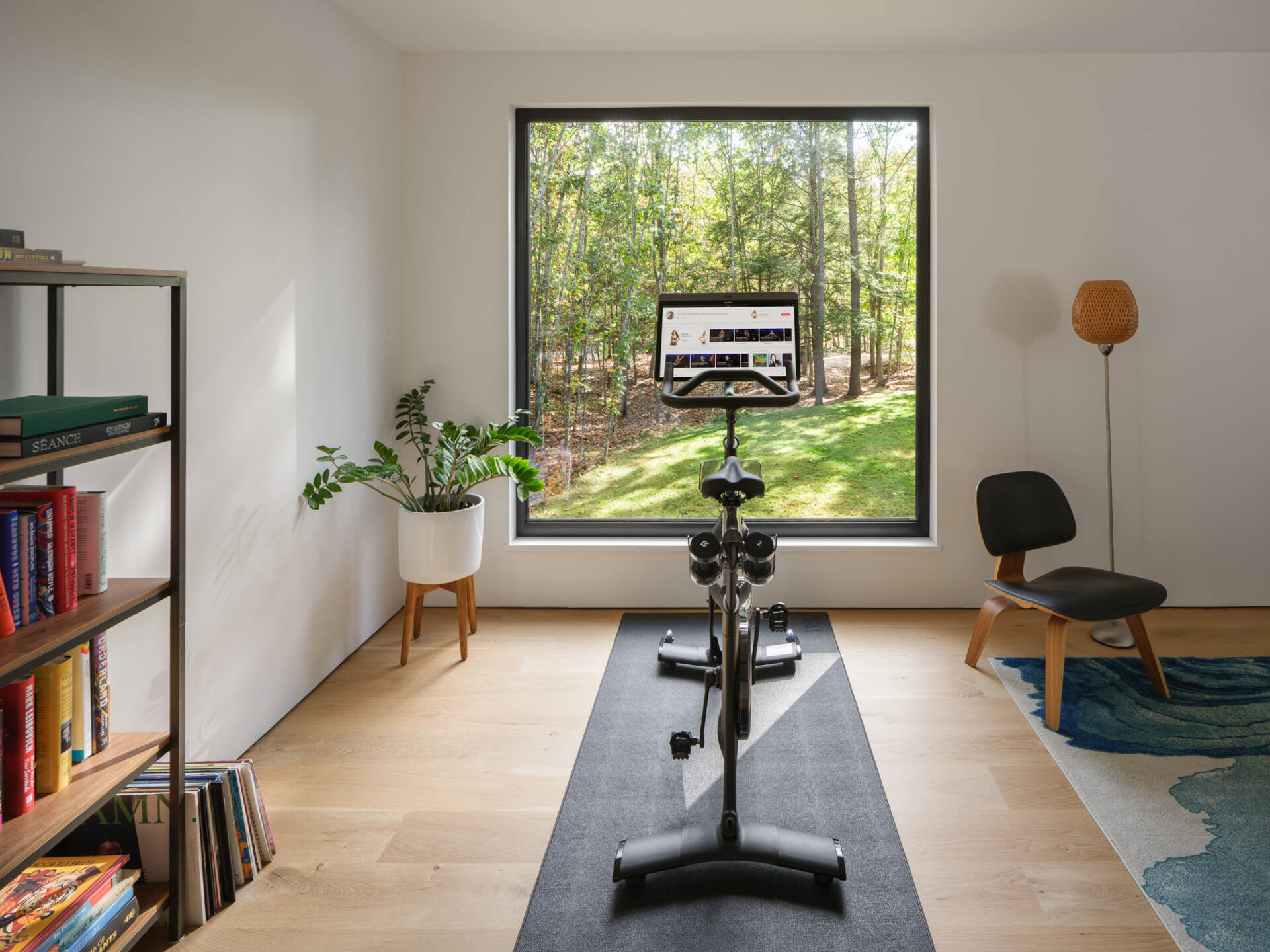
Elemental shows how a relatively modest-sized home can still feel dramatic, warm, and highly functional. Through its contrast of dark charred wood and bright interiors, the house creates a strong visual identity while remaining efficient and practical for family living.