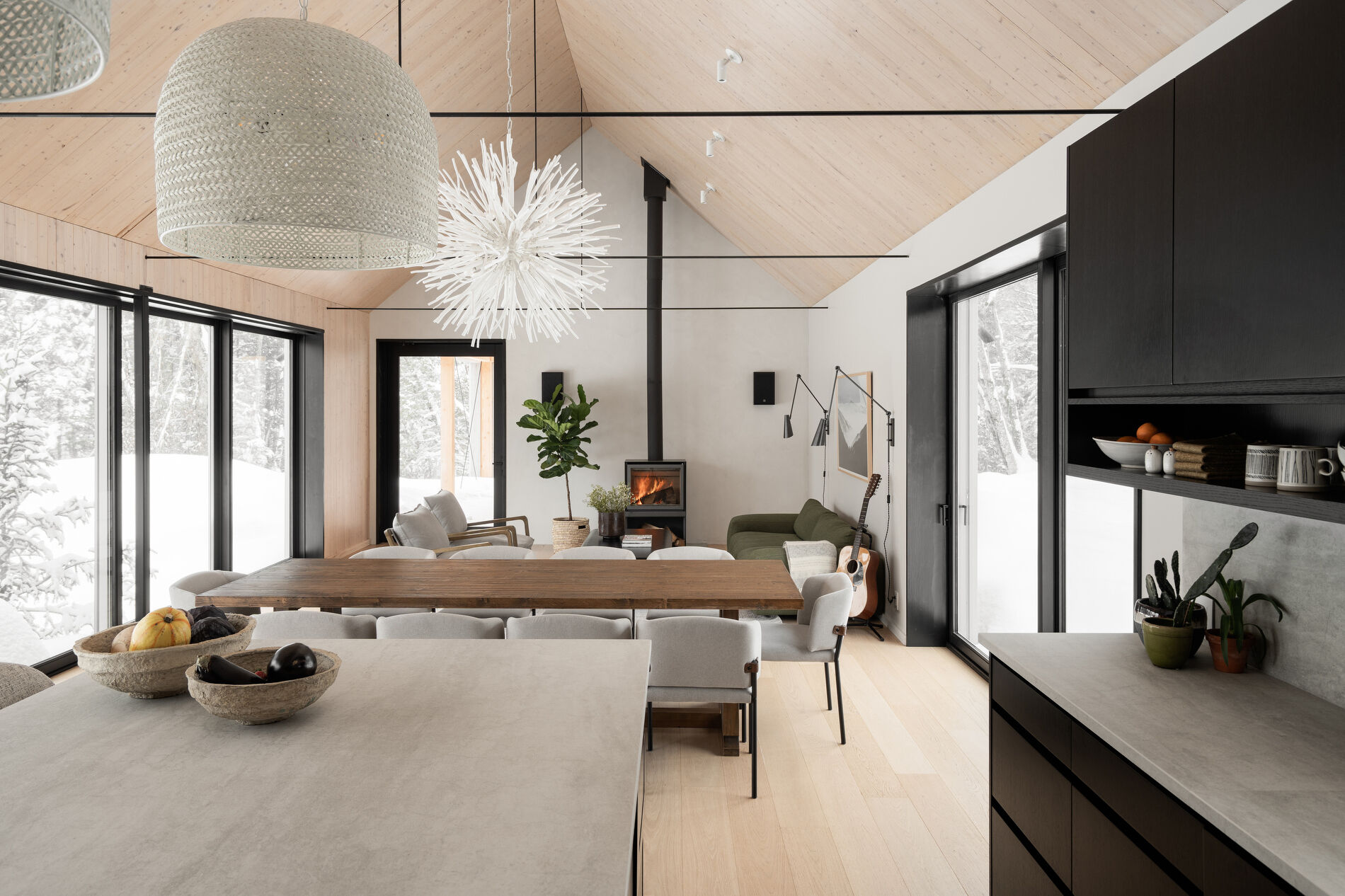
Set in Quebec, Canada, this mountain home by OPAL with interiors by Lux Decor takes full advantage of its remote setting overlooking a calm lake and rugged hills. The design responds directly to the site, shaping the home into a series of distinct family zones while still maintaining a strong sense of connection. From the very beginning, the idea was clear, create separation where needed, but never lose sight of the landscape.
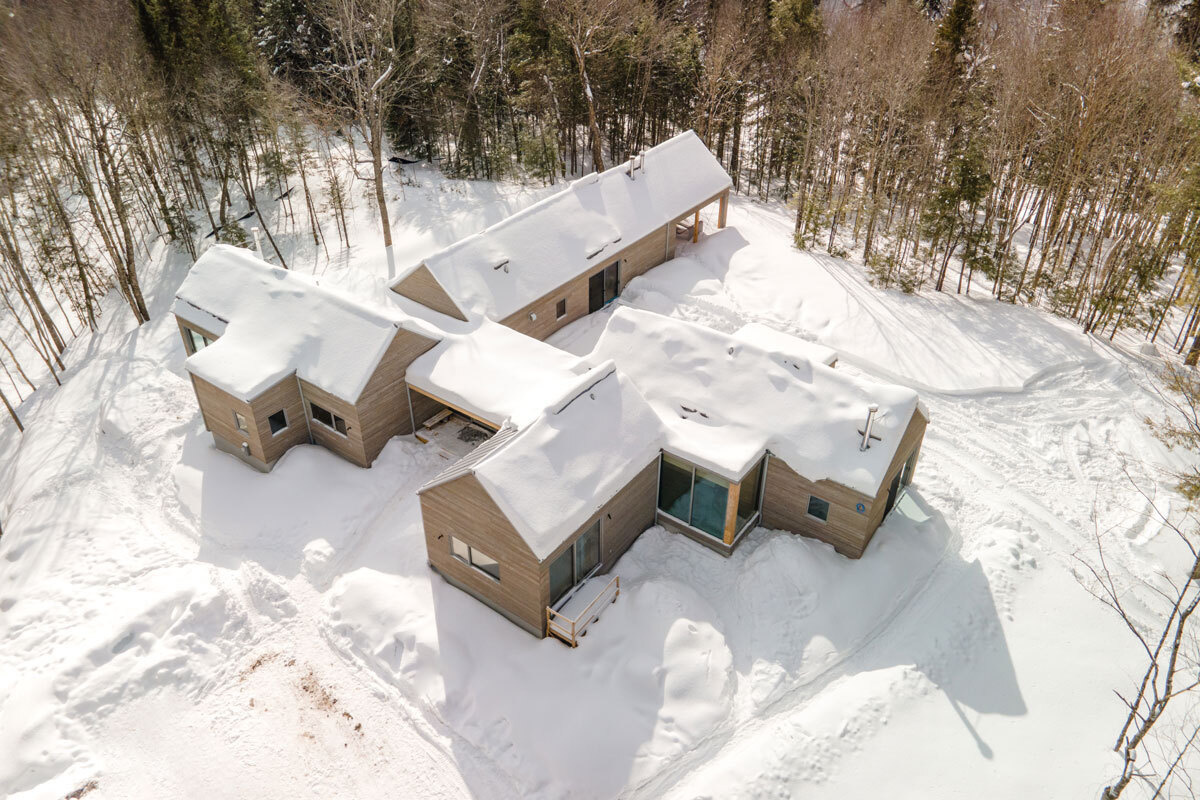
Gabled Timber Volumes Formed Around a Central Glass Spine
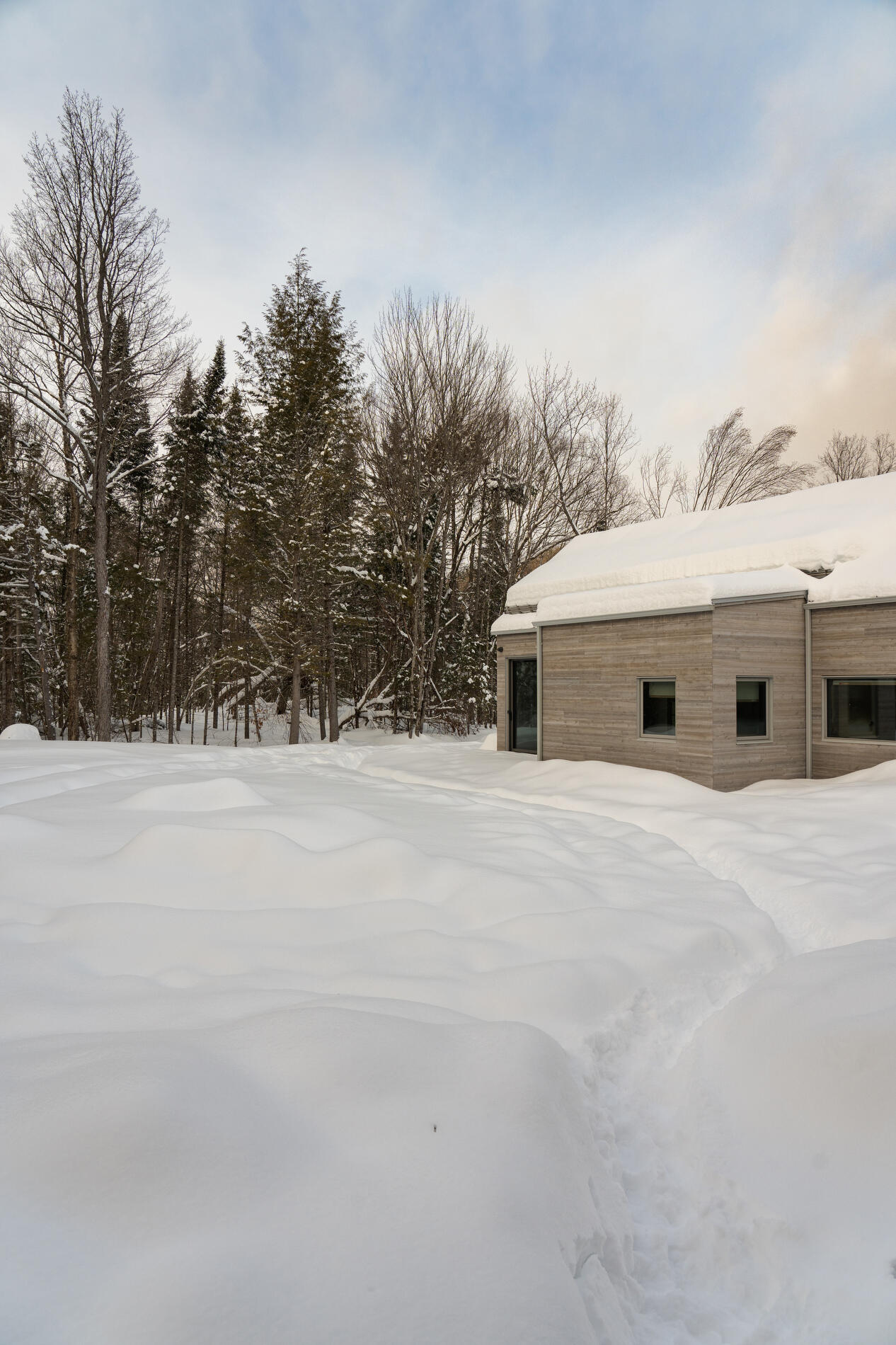
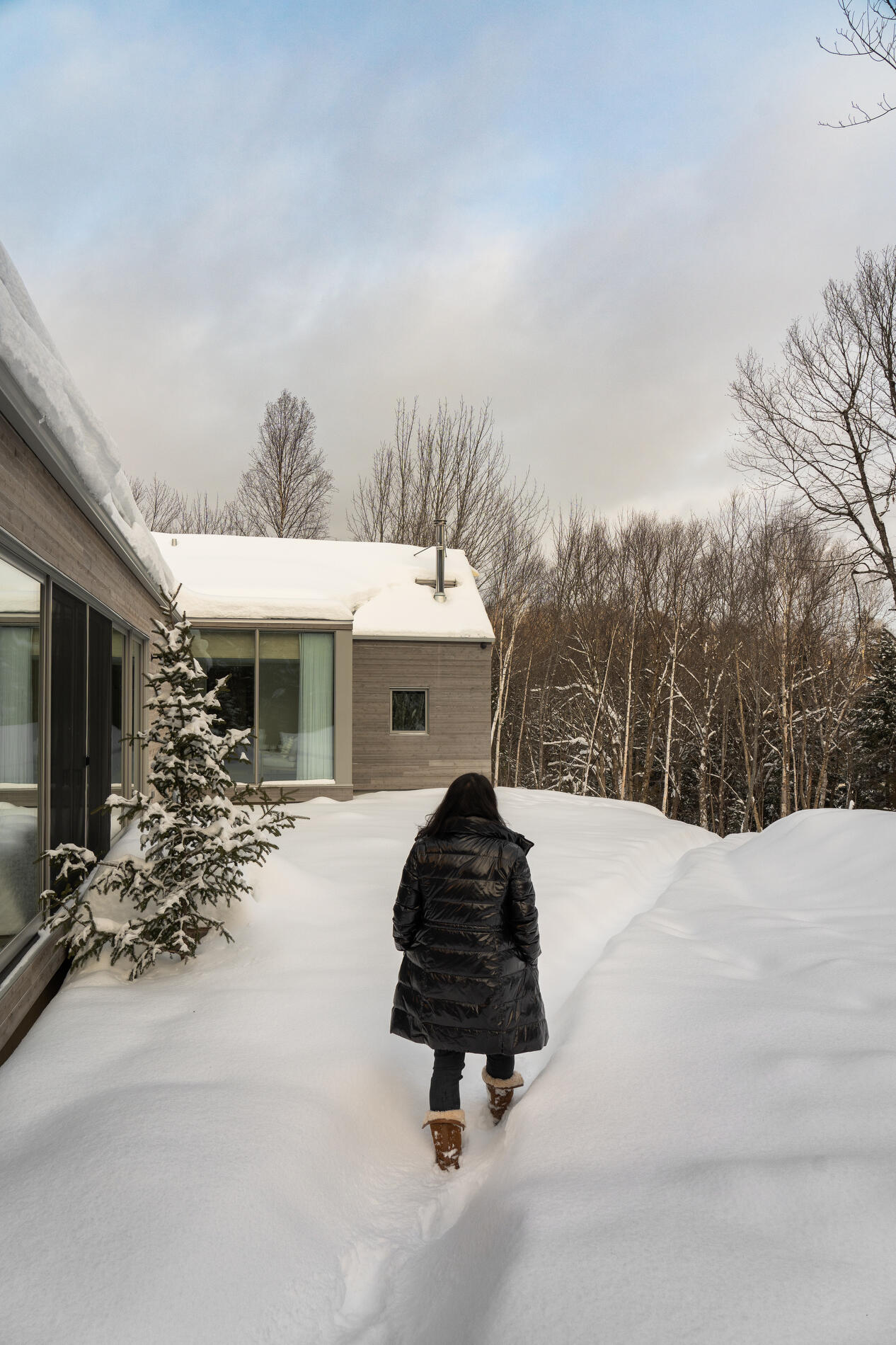
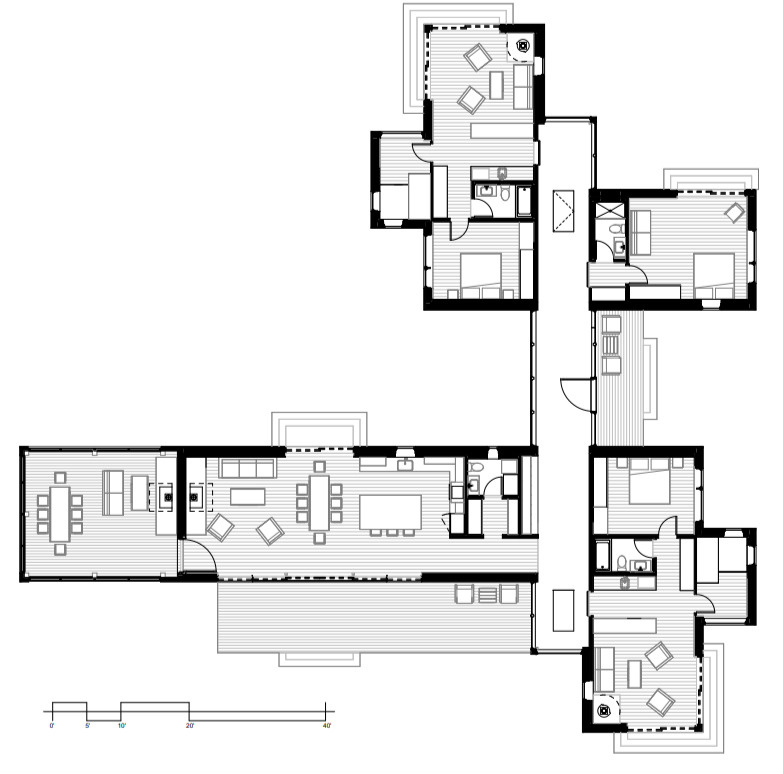
The house is organized in a pinwheel formation, with volumes radiating outward from a central glazed corridor. Each section is shaped as a clean gable form, breaking the overall mass into smaller, more approachable pieces. This approach helps the home sit more comfortably within its natural surroundings.
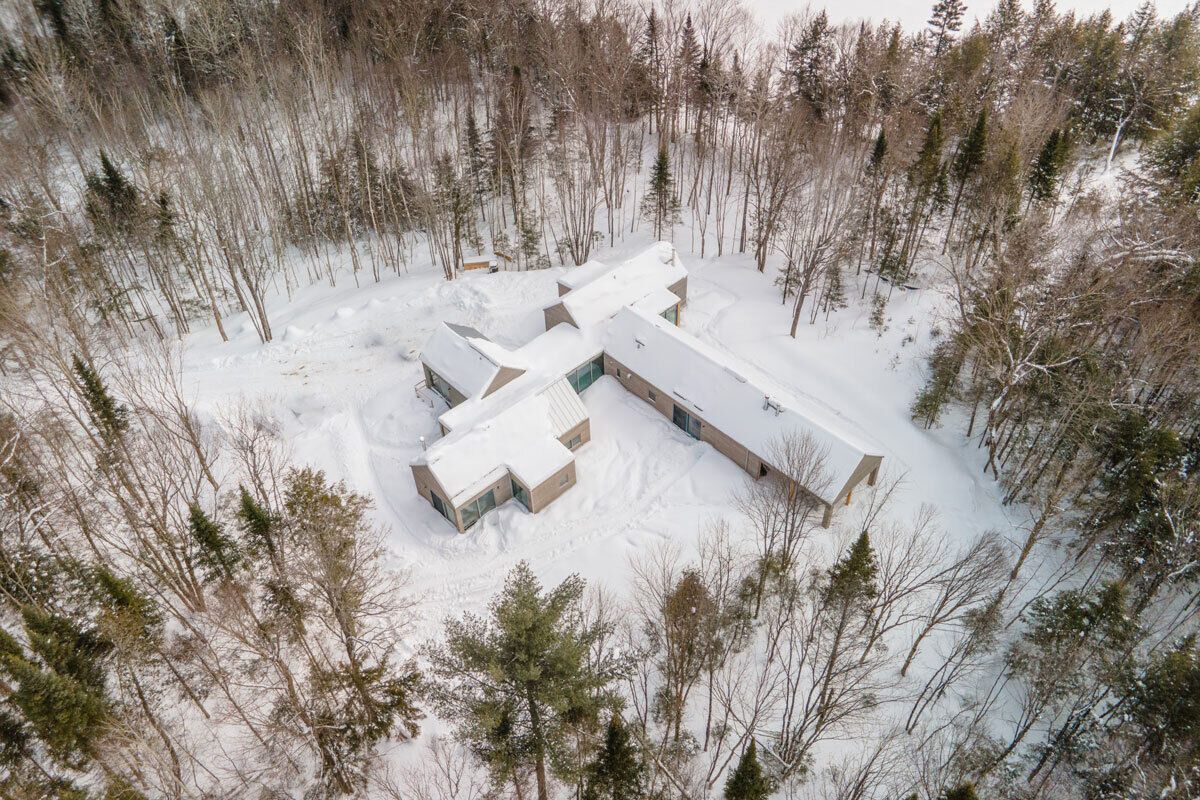
Construction relies on cross-laminated timber, forming a solid wood structure that is both durable and efficient. These panels were manufactured locally in Quebec, allowing for precise assembly and a warm interior finish that carries throughout the home.
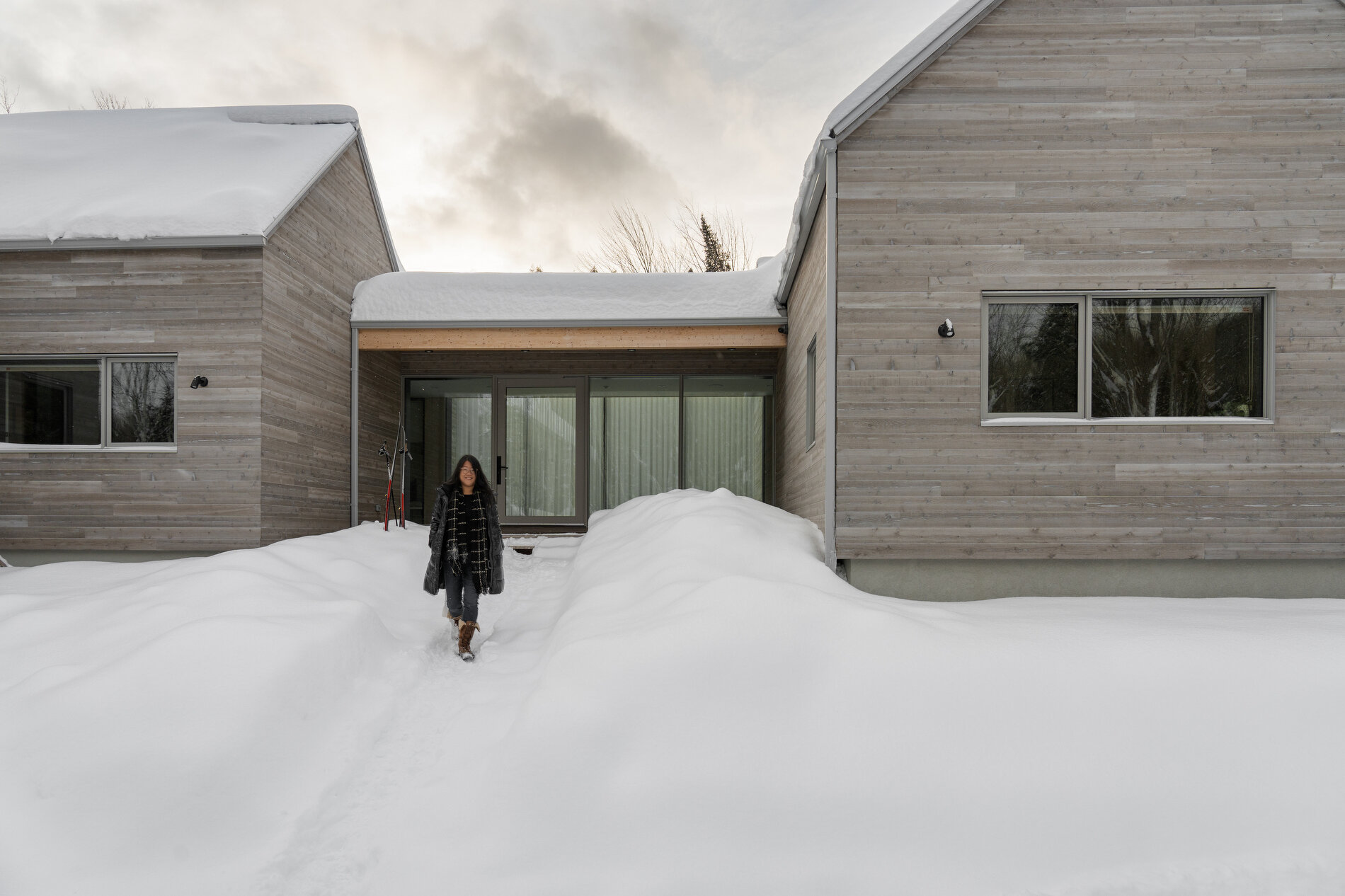
Performance was a major driver behind the design. The building envelope is airtight and highly insulated, paired with high-performance windows positioned to capture solar heat. A heat-recovery ventilation system ensures a constant flow of fresh air while retaining most of the warmth, reducing overall energy use to a fraction of a typical home.
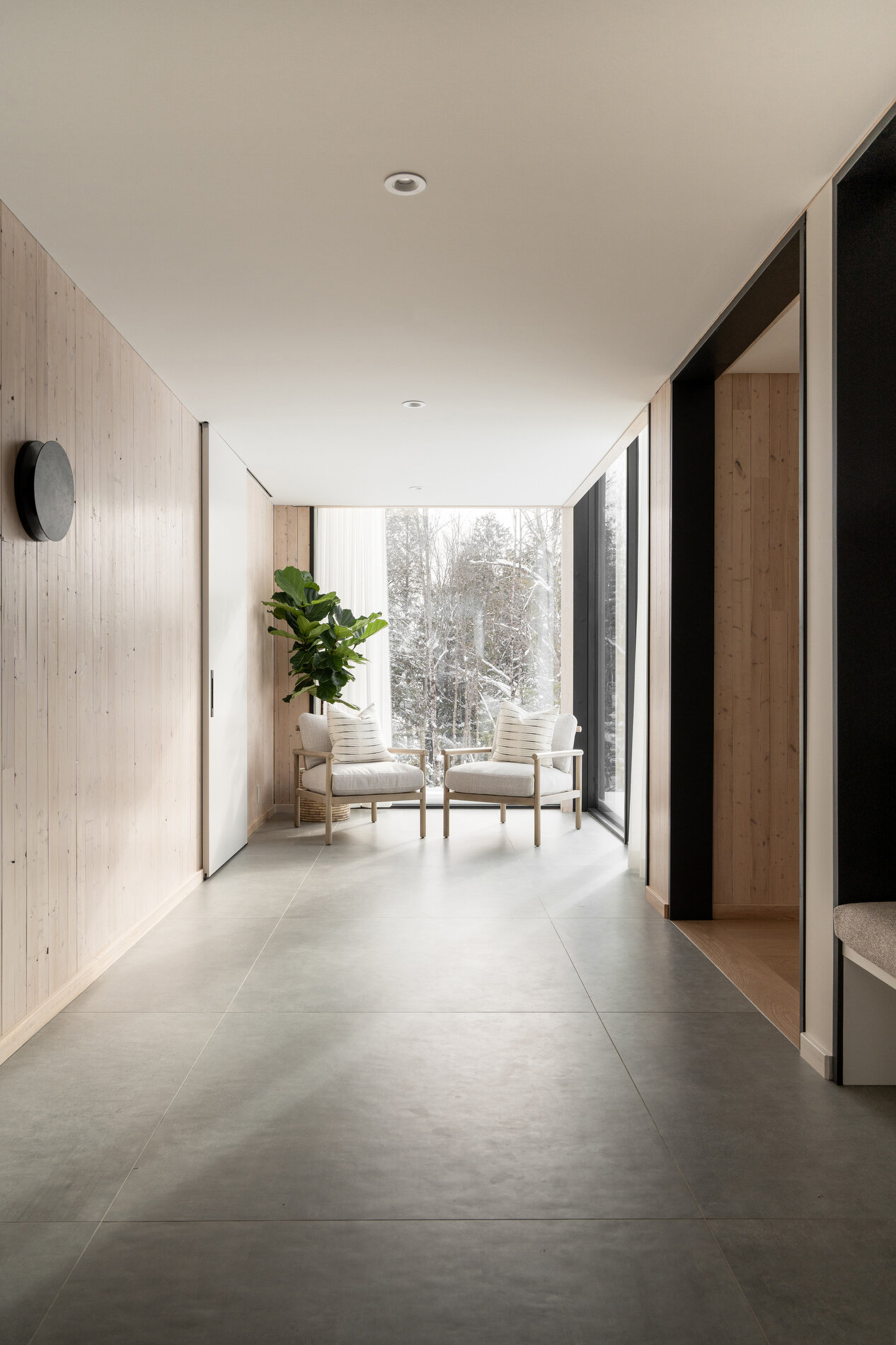
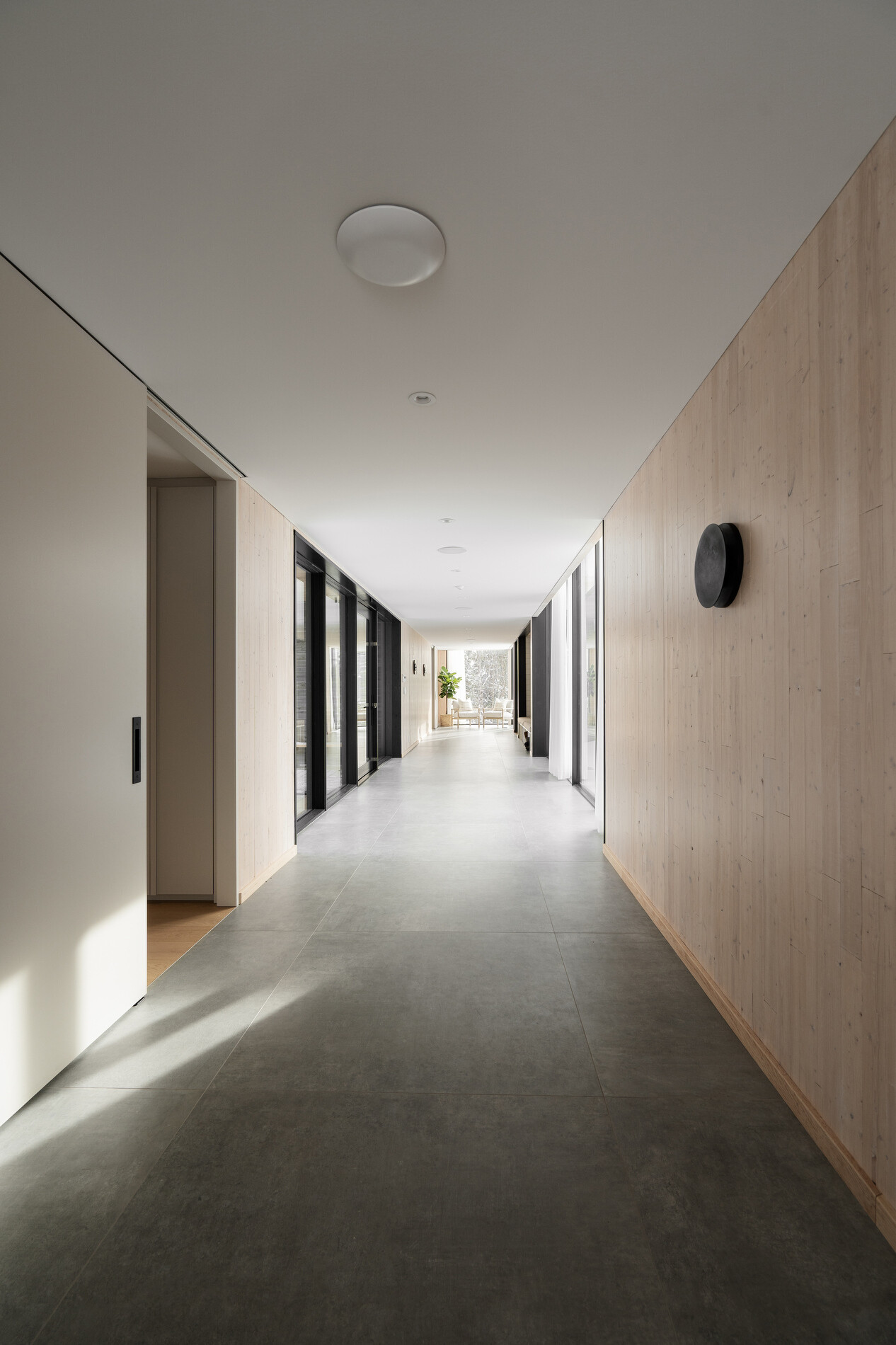
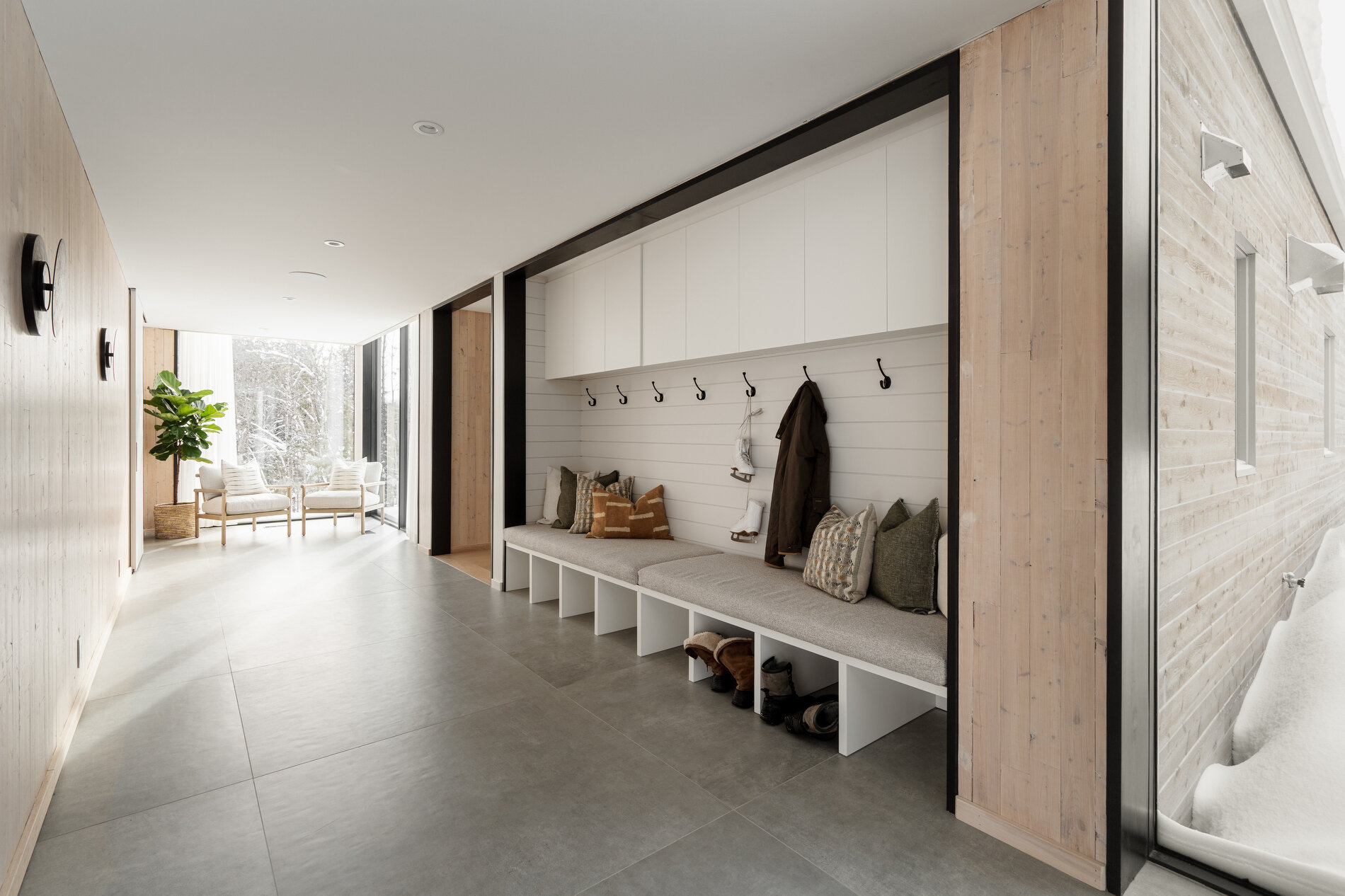
A Glazed Corridor That Organizes the Entire Home
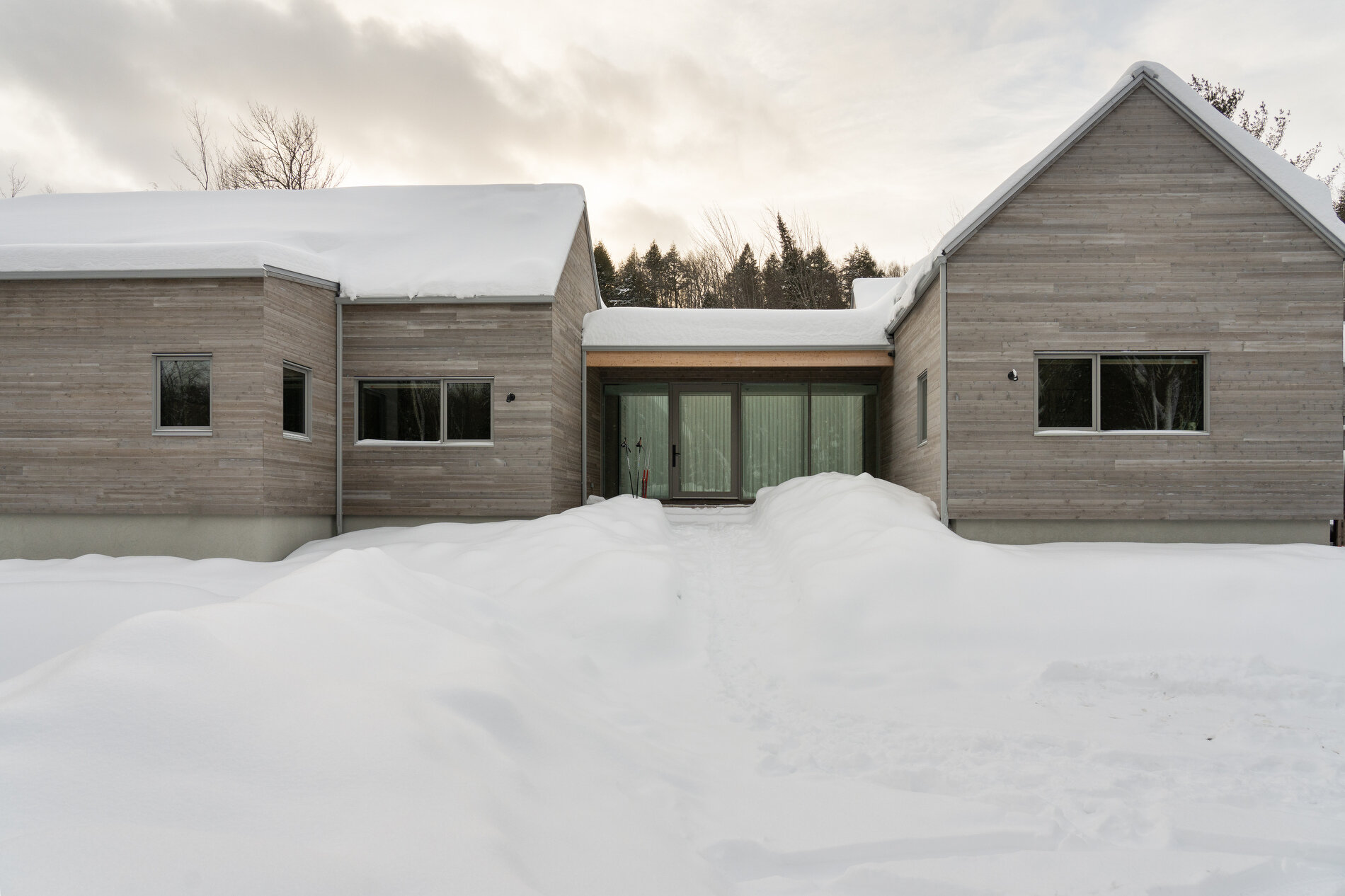
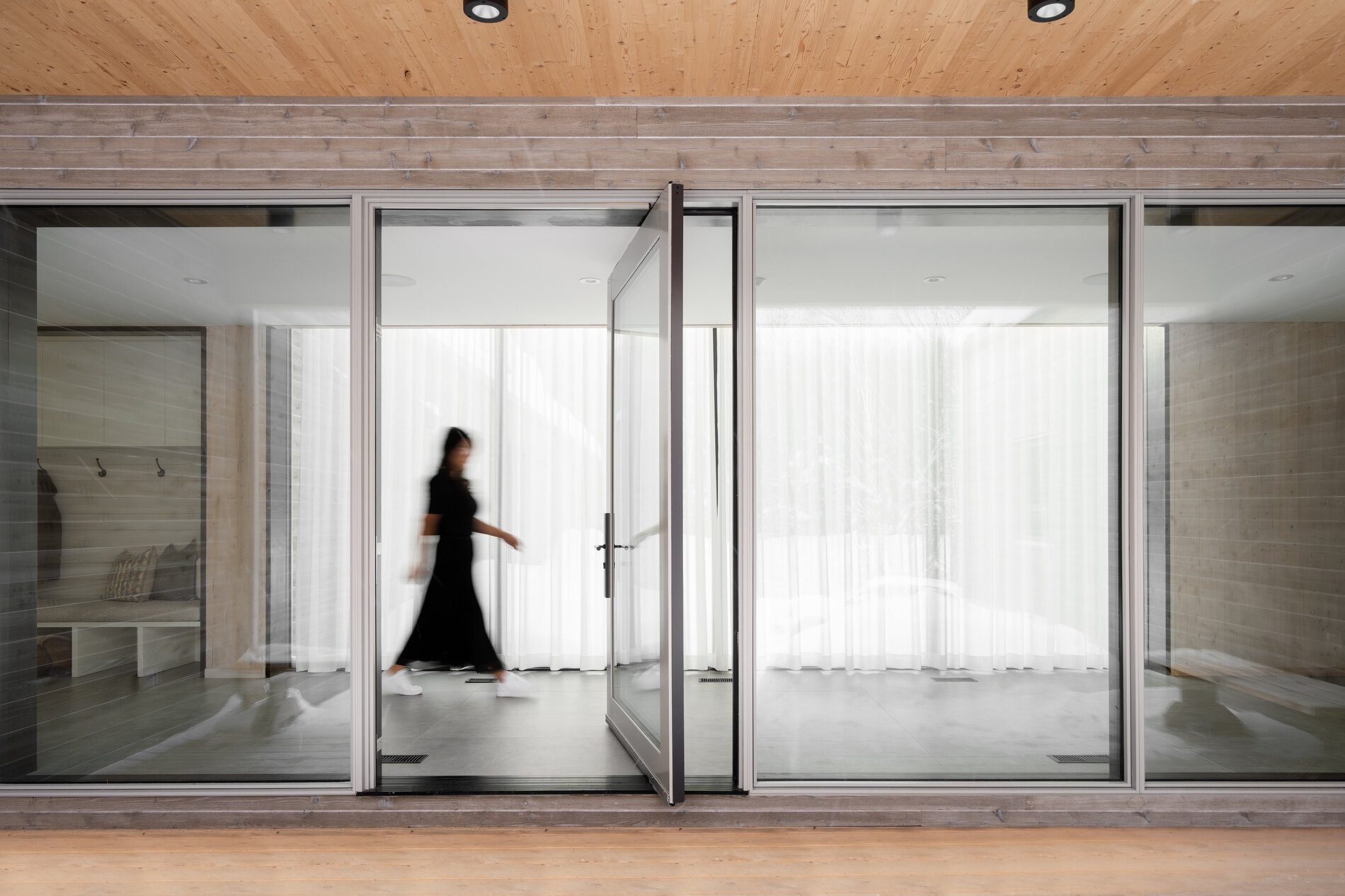
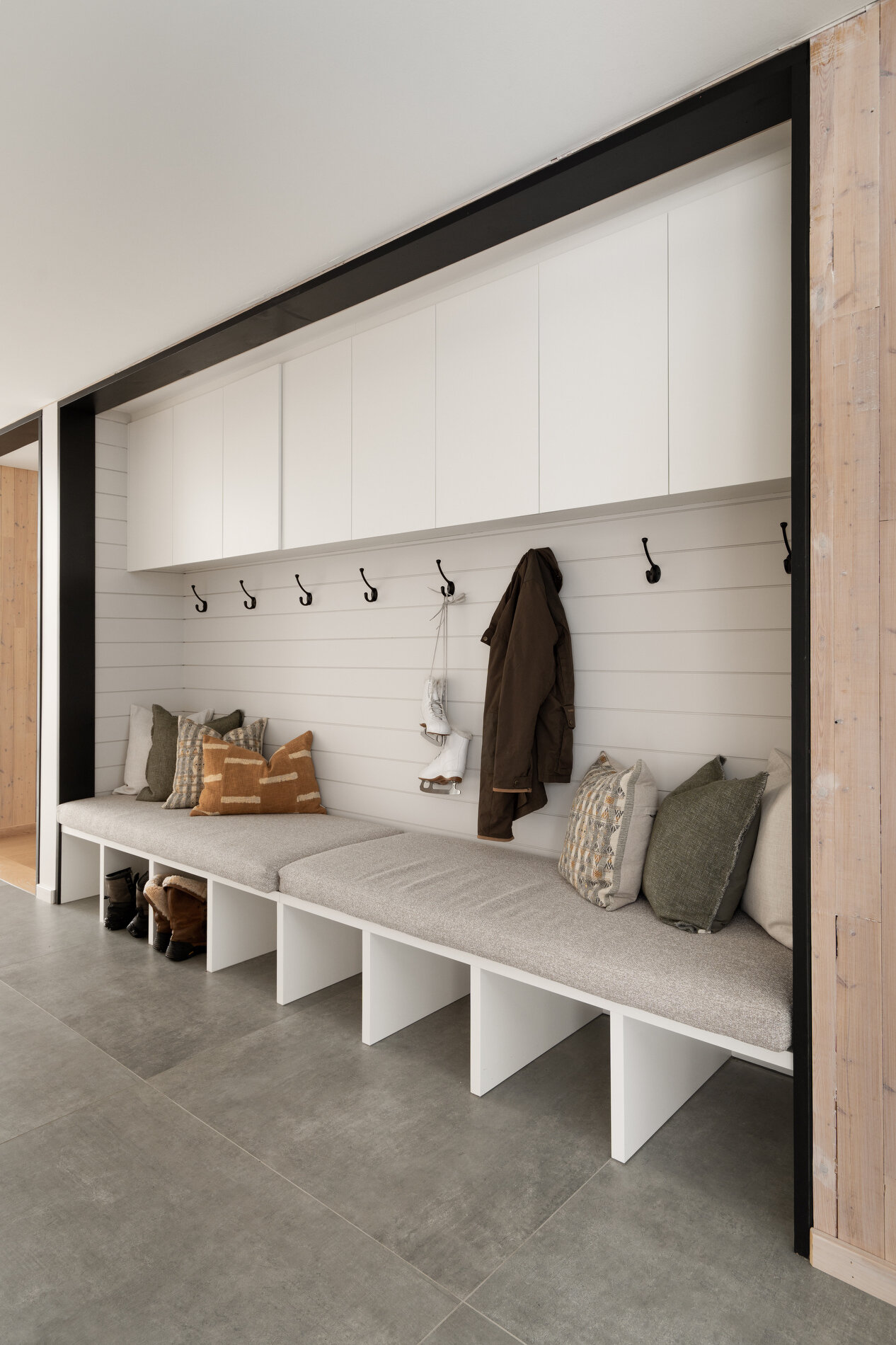
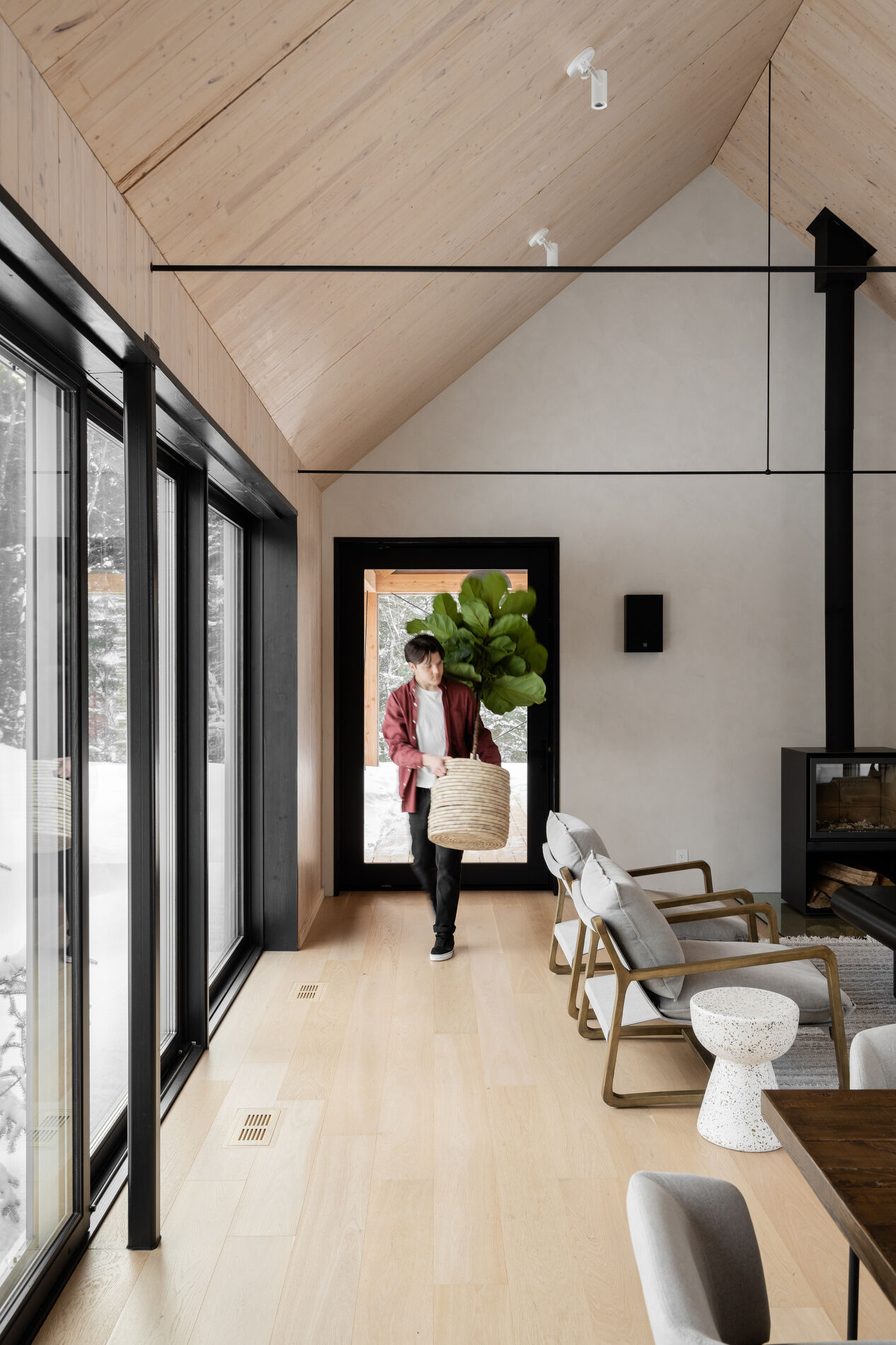
The entry experience begins within the central corridor, a fully glazed passage that acts as the spine of the home. As you move through it, the landscape becomes part of the interior experience. The corridor also separates each volume, giving every section of the house a sense of independence while maintaining an easy flow between them.
A Timber Living Space Framed by Lake Views
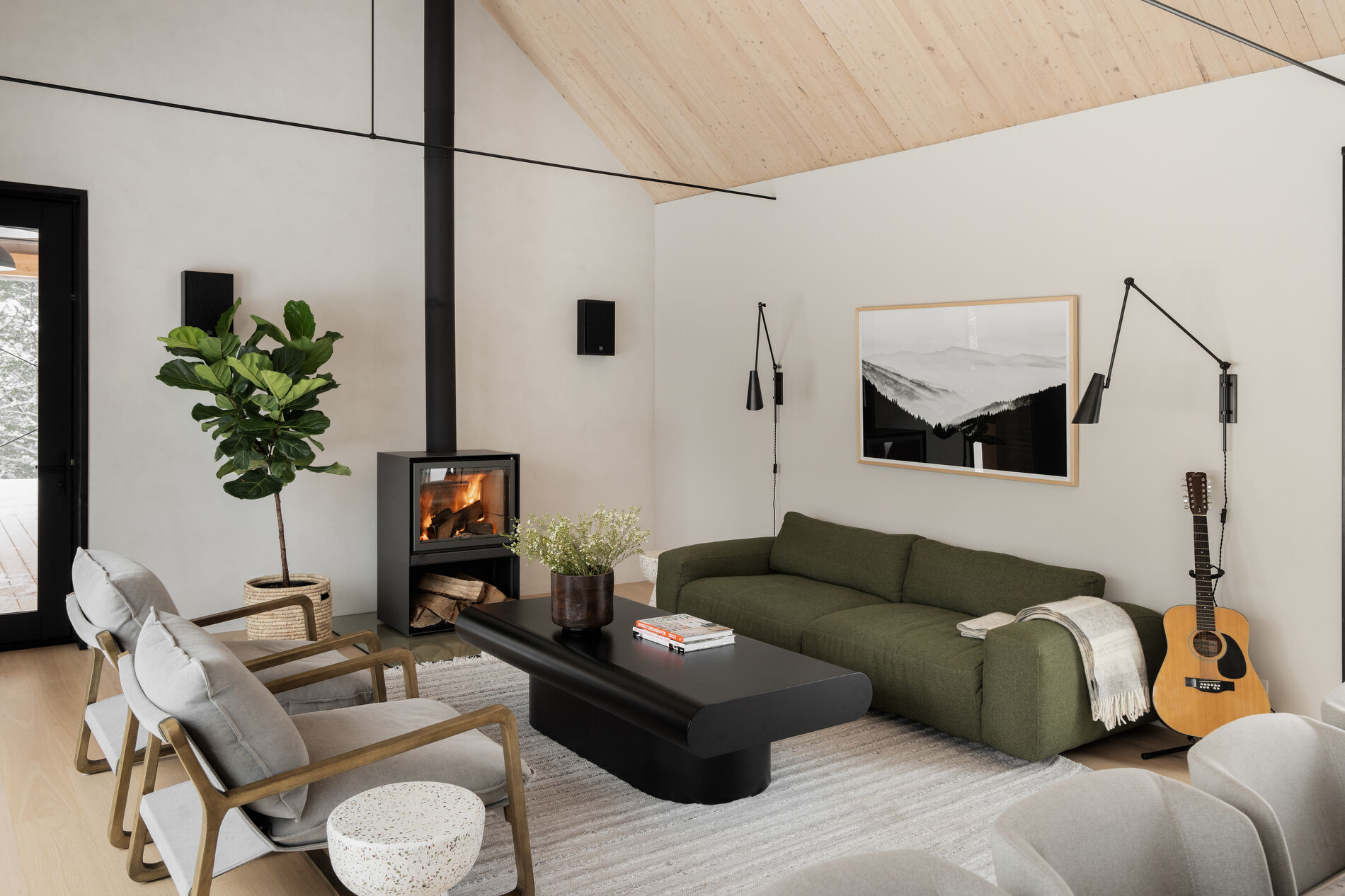
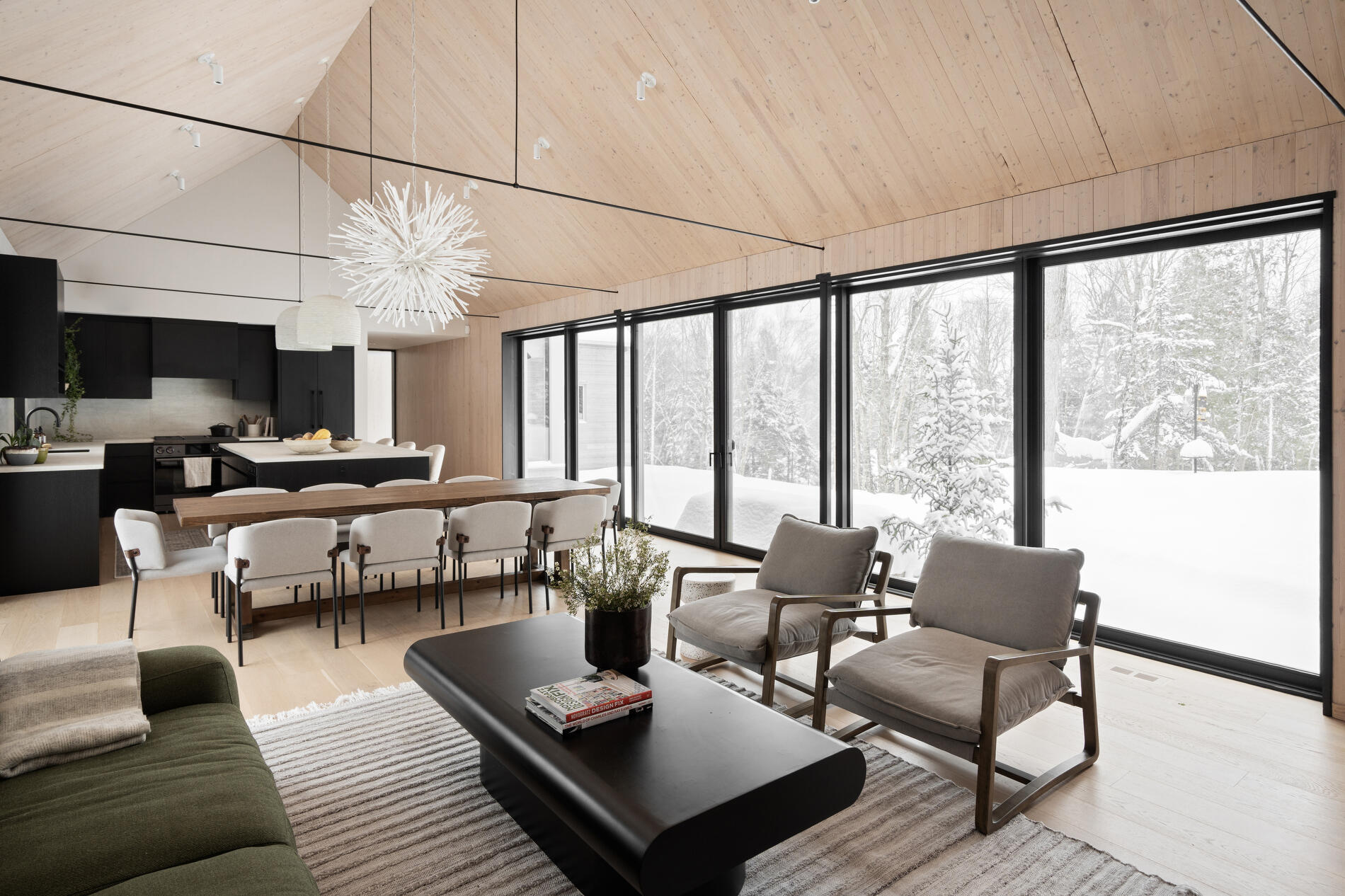
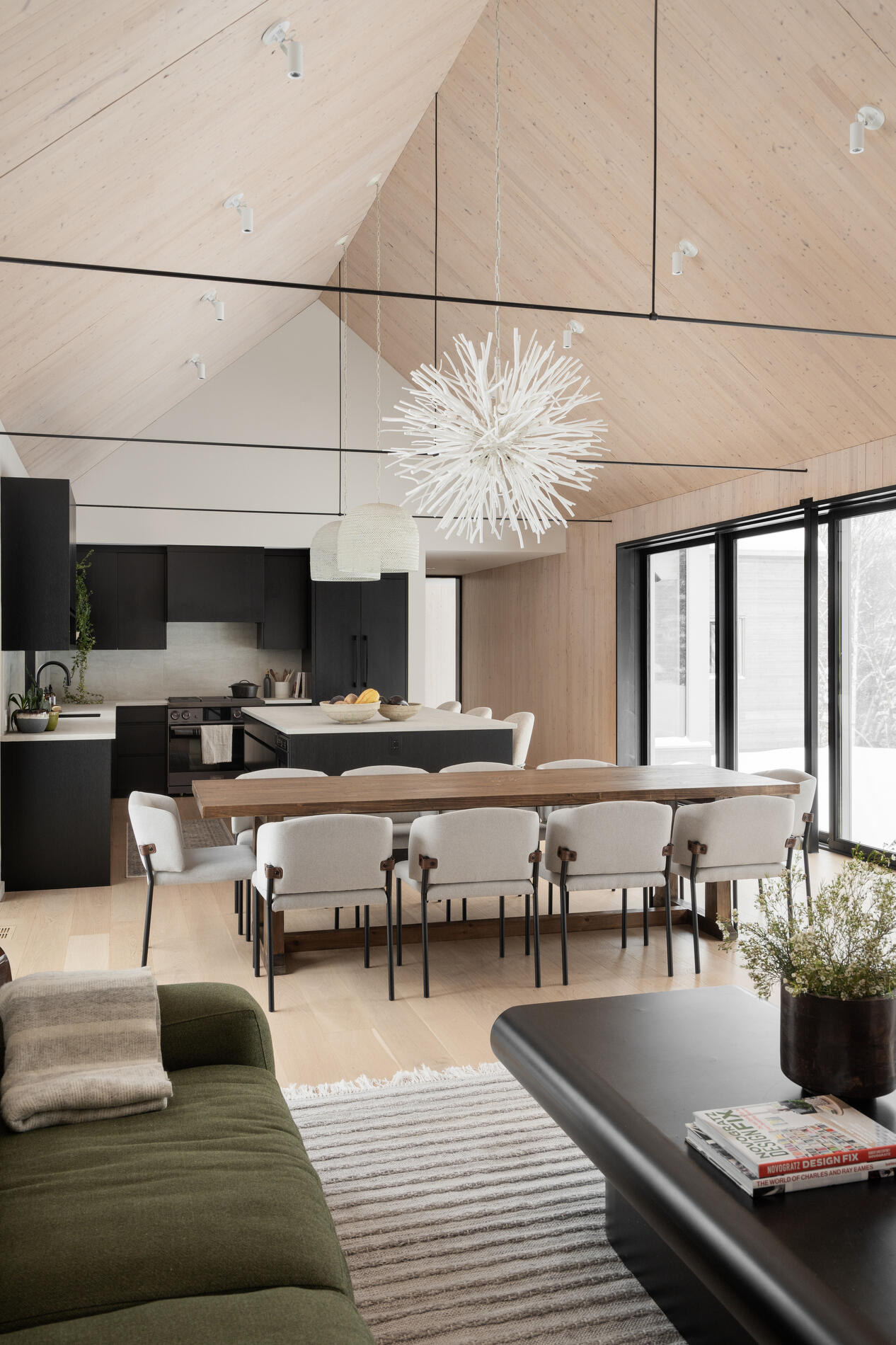
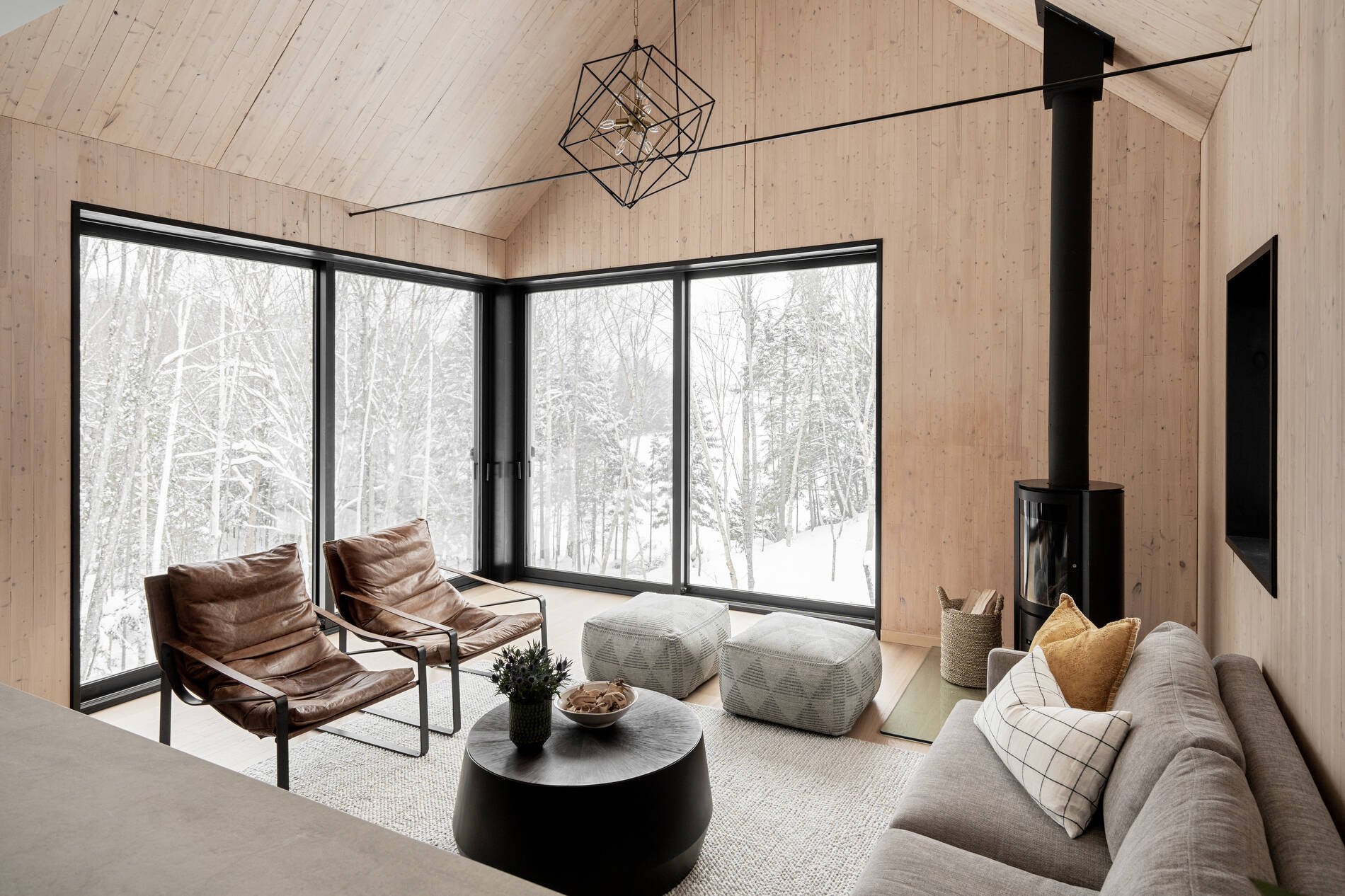
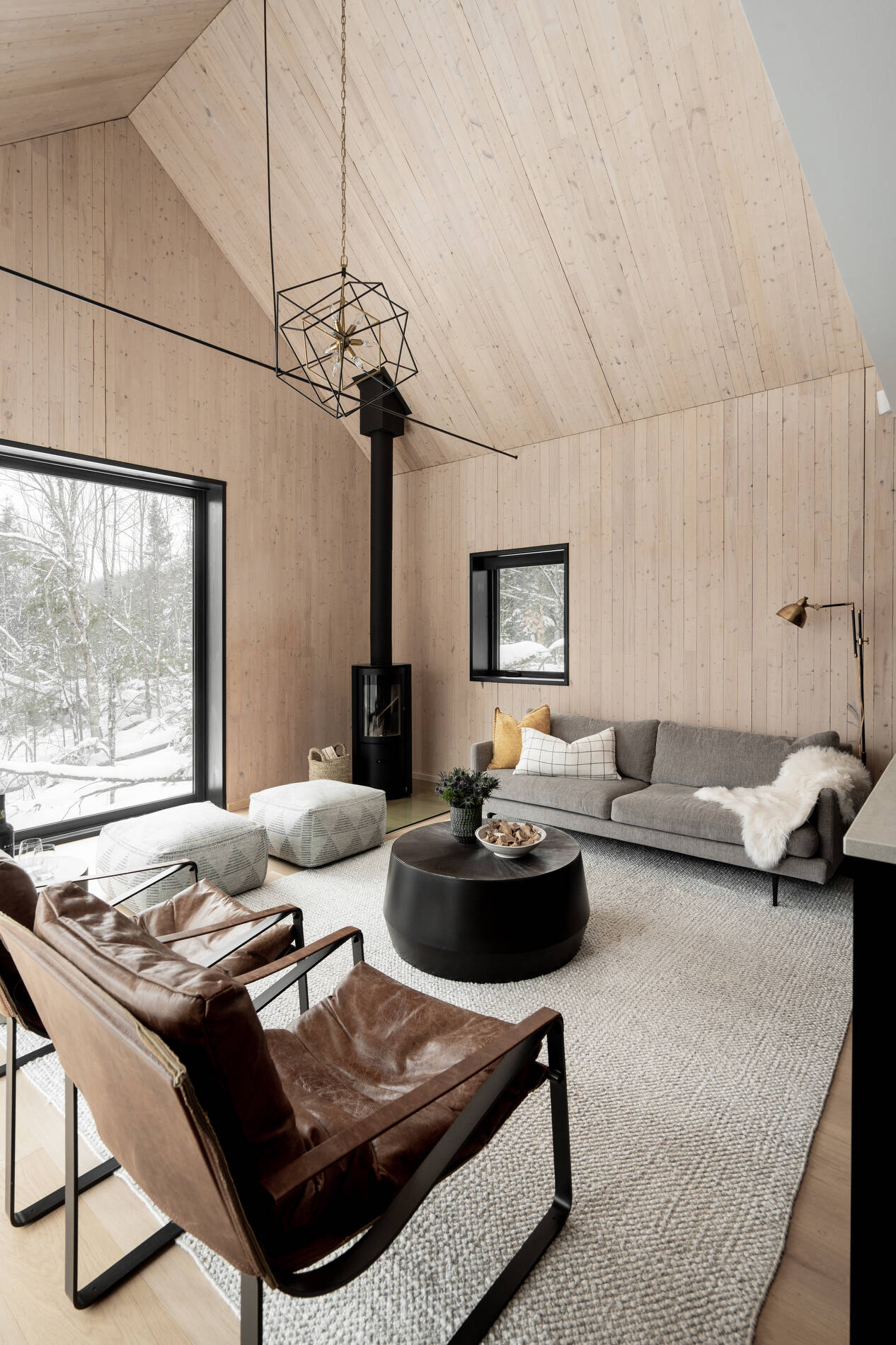
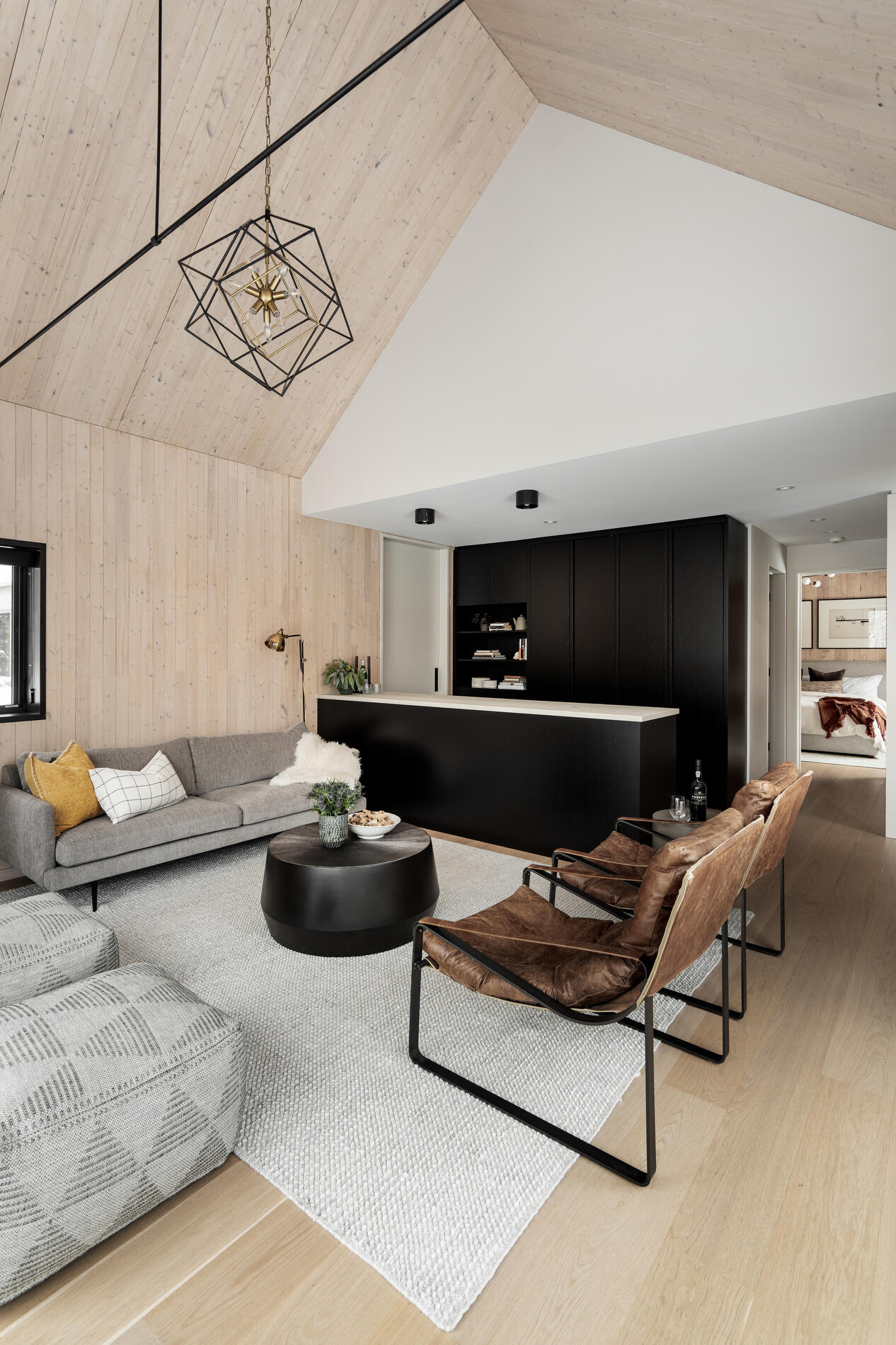
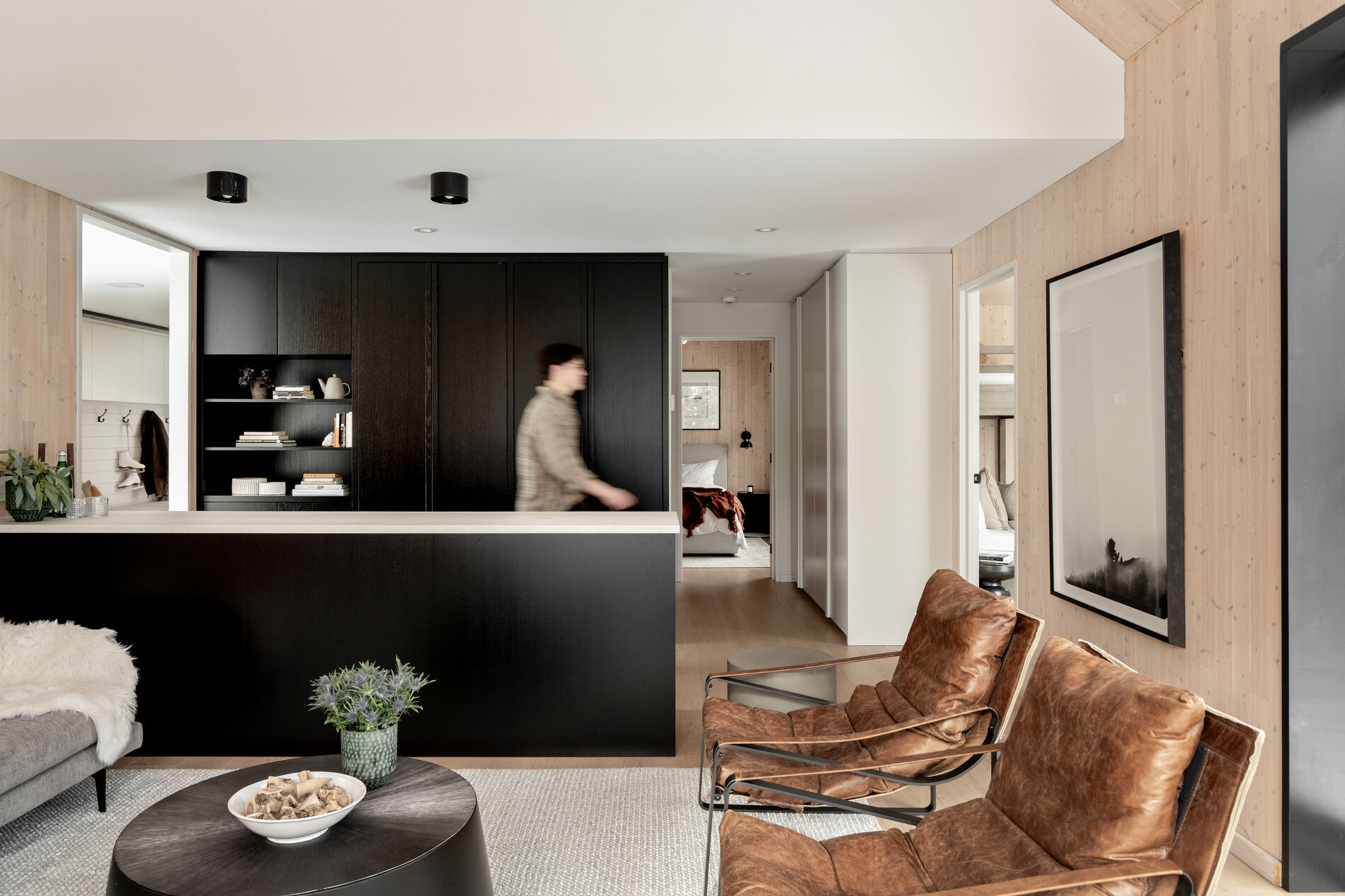
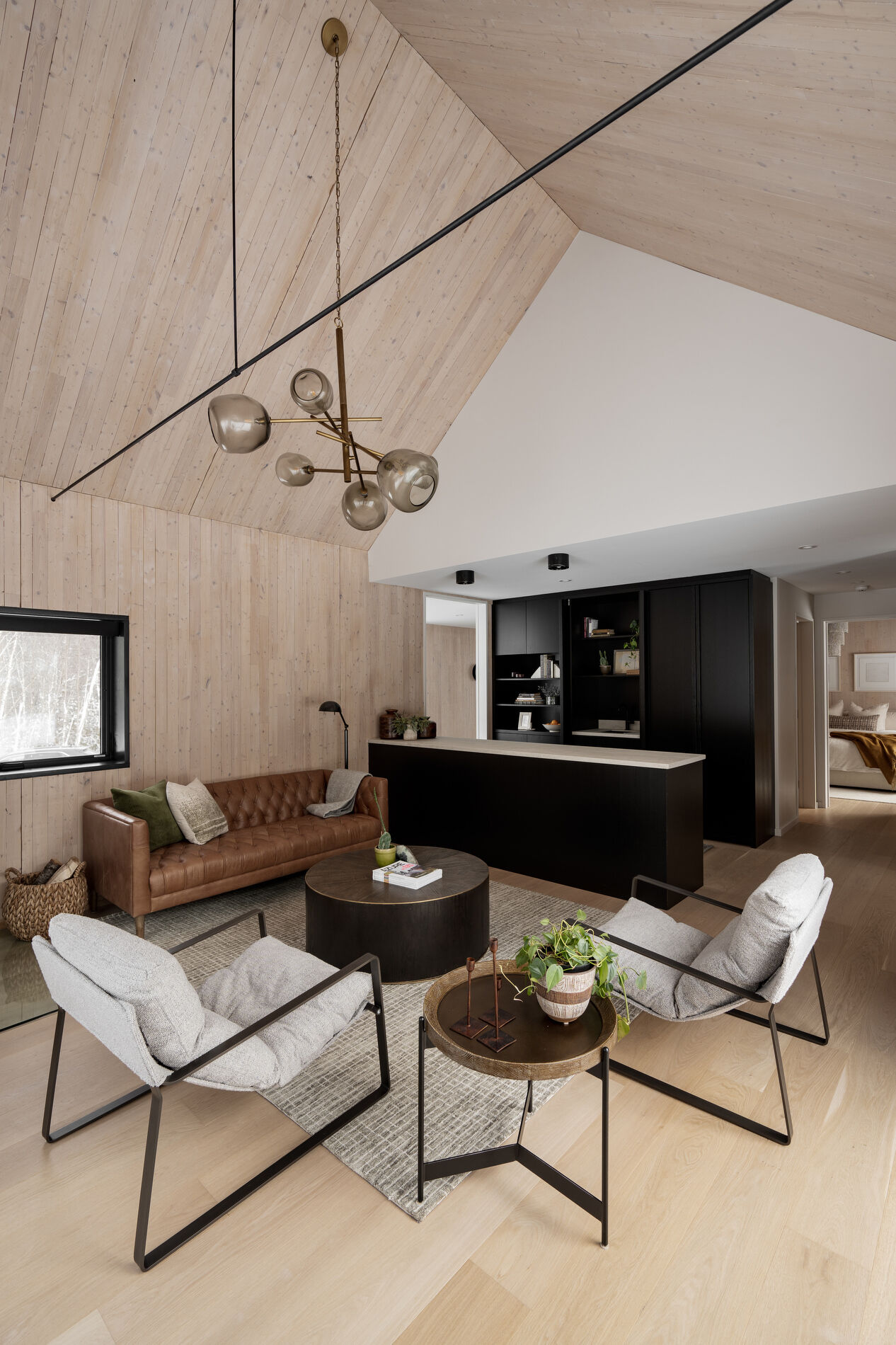
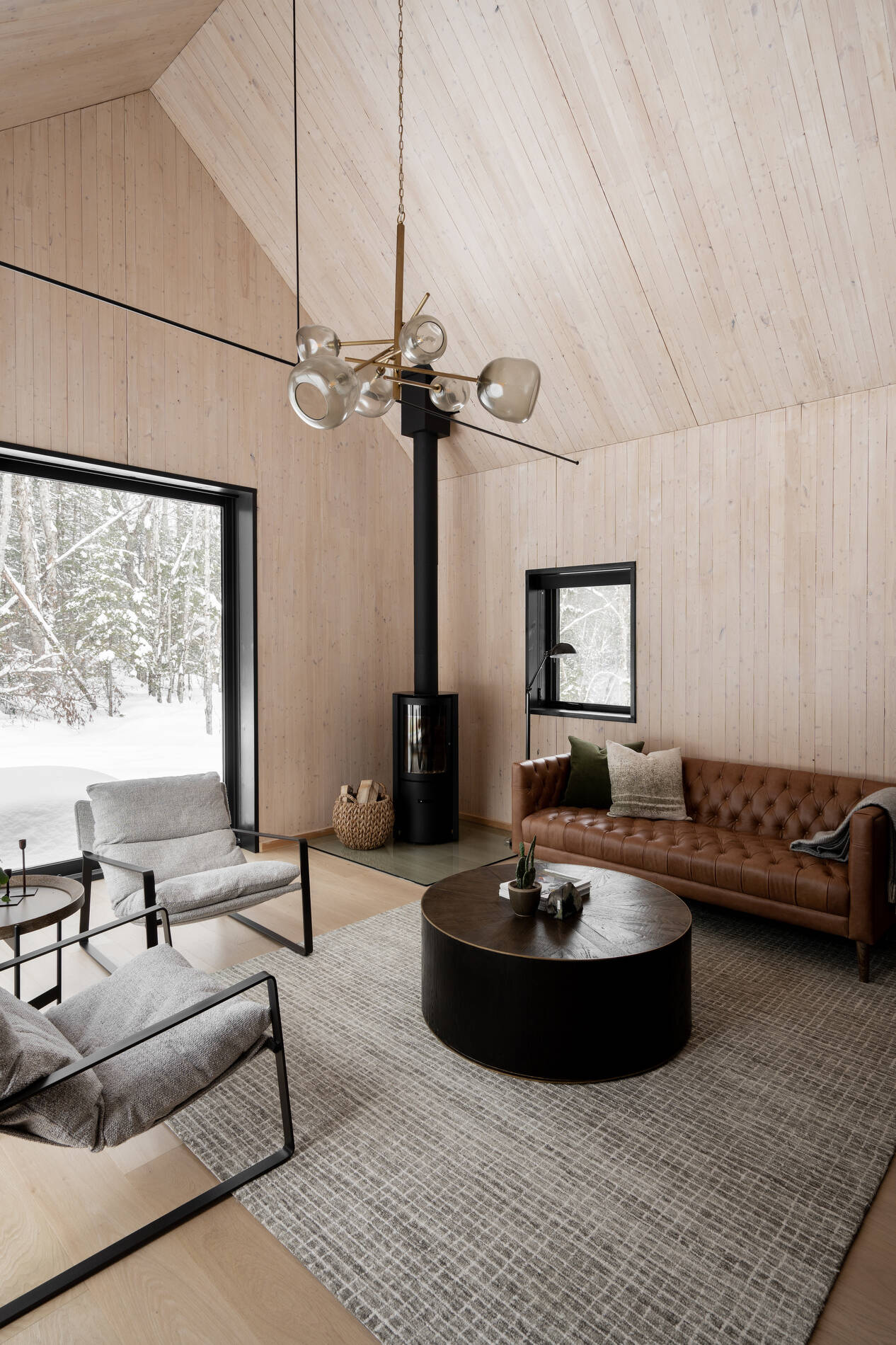
Positioned within one of the gabled volumes, the main living room benefits from both privacy and expansive views. The exposed timber structure defines the space, adding texture and warmth without relying on excessive finishes. Large windows bring in natural light and open up toward the lake, making the outdoors a constant presence.
Dining Between Light, Timber, and Landscape Views
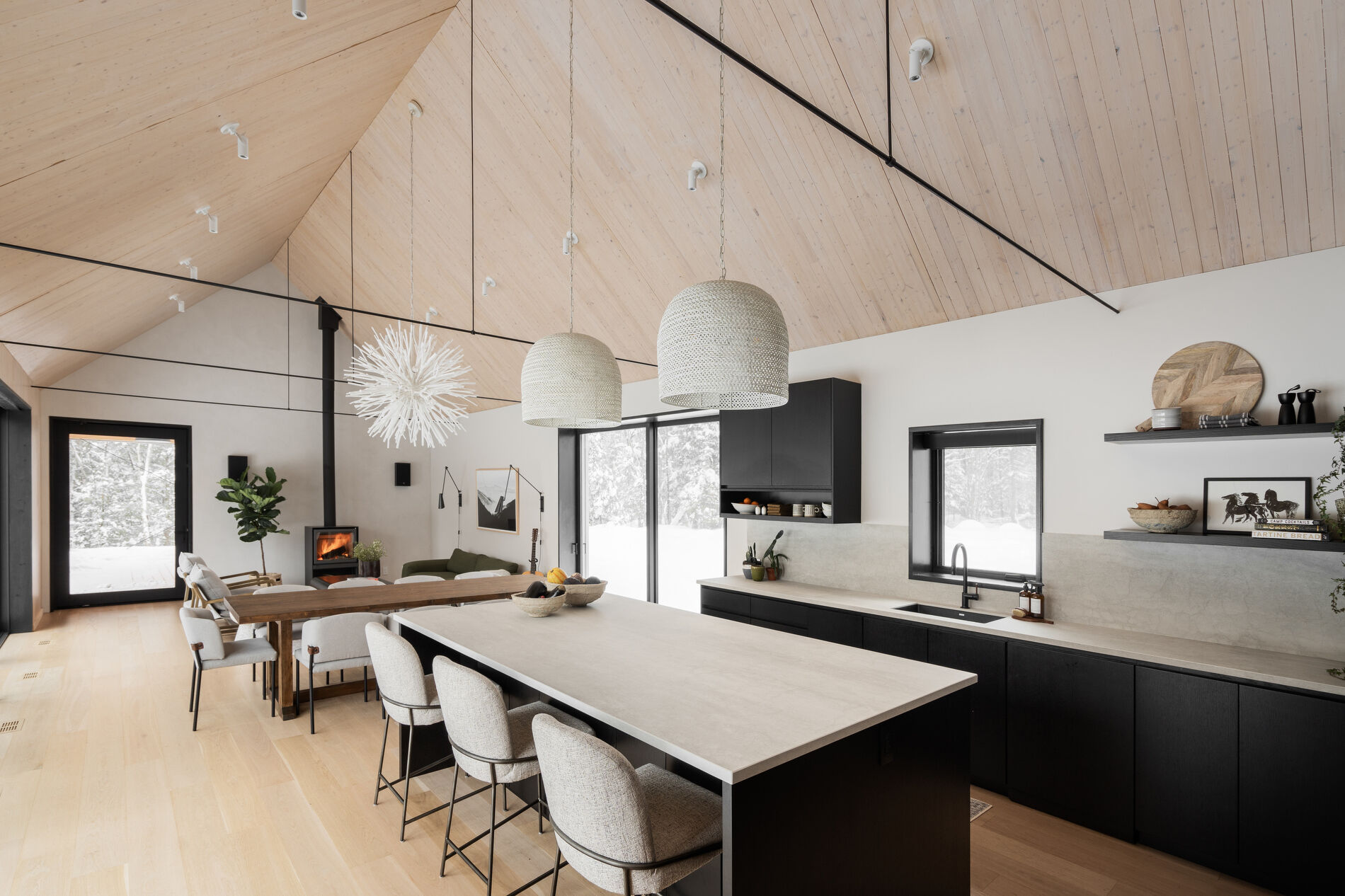
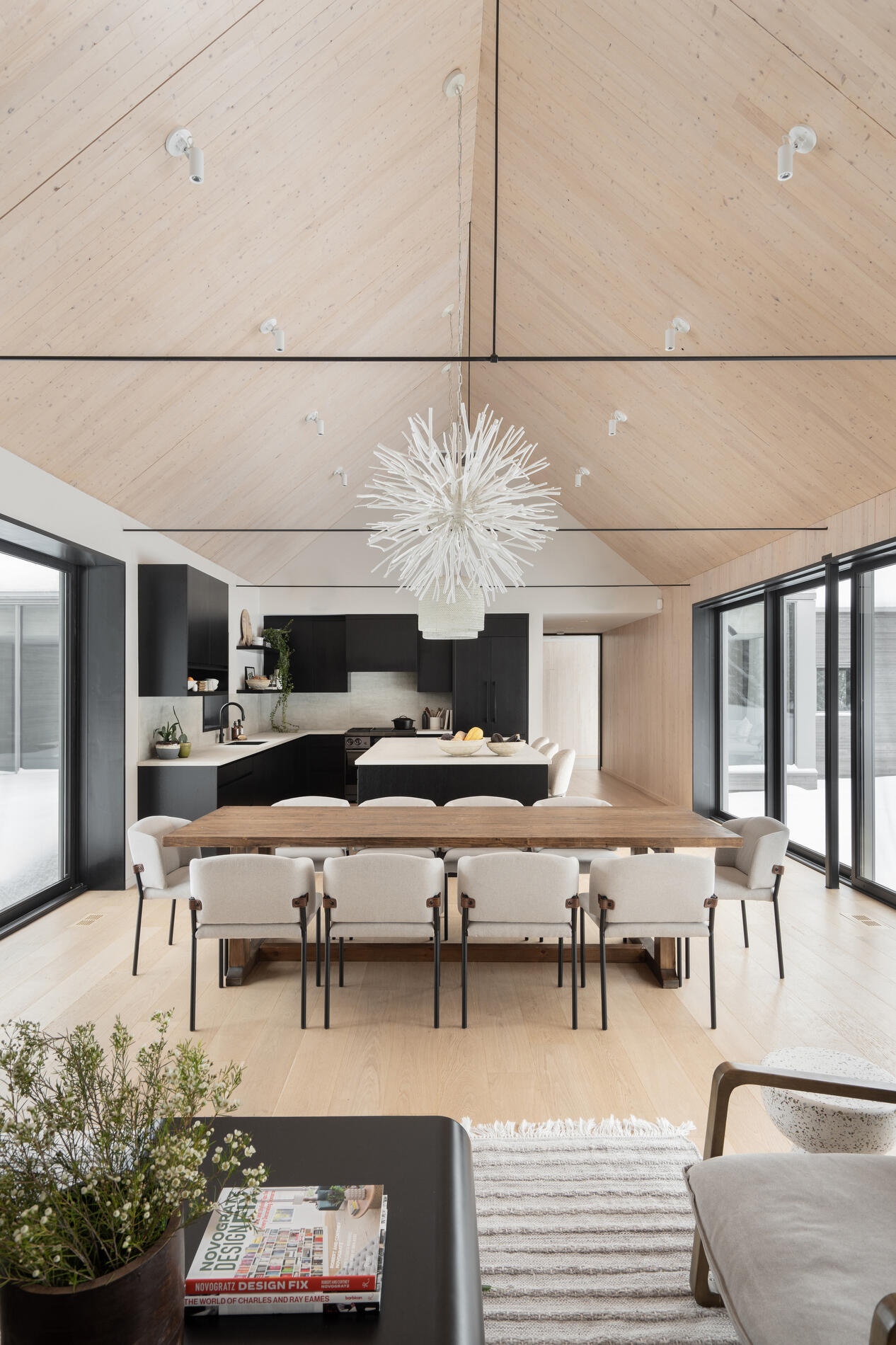
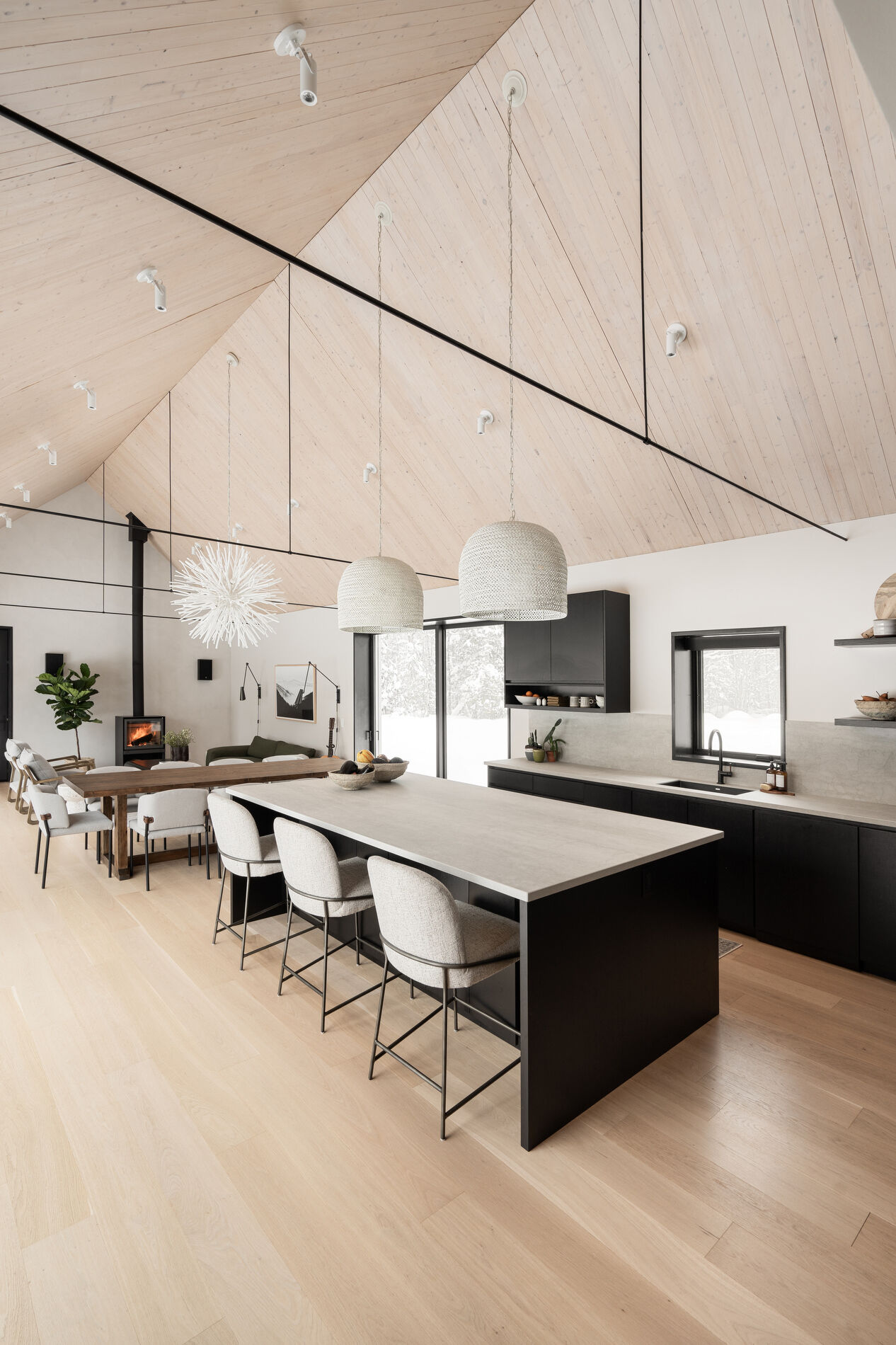
The dining area, with its large wood table and eye-catching light fixture, sits comfortably within the shared zone, maintaining a close relationship with both the living room and kitchen.
A Kitchen with Dark Cabinets
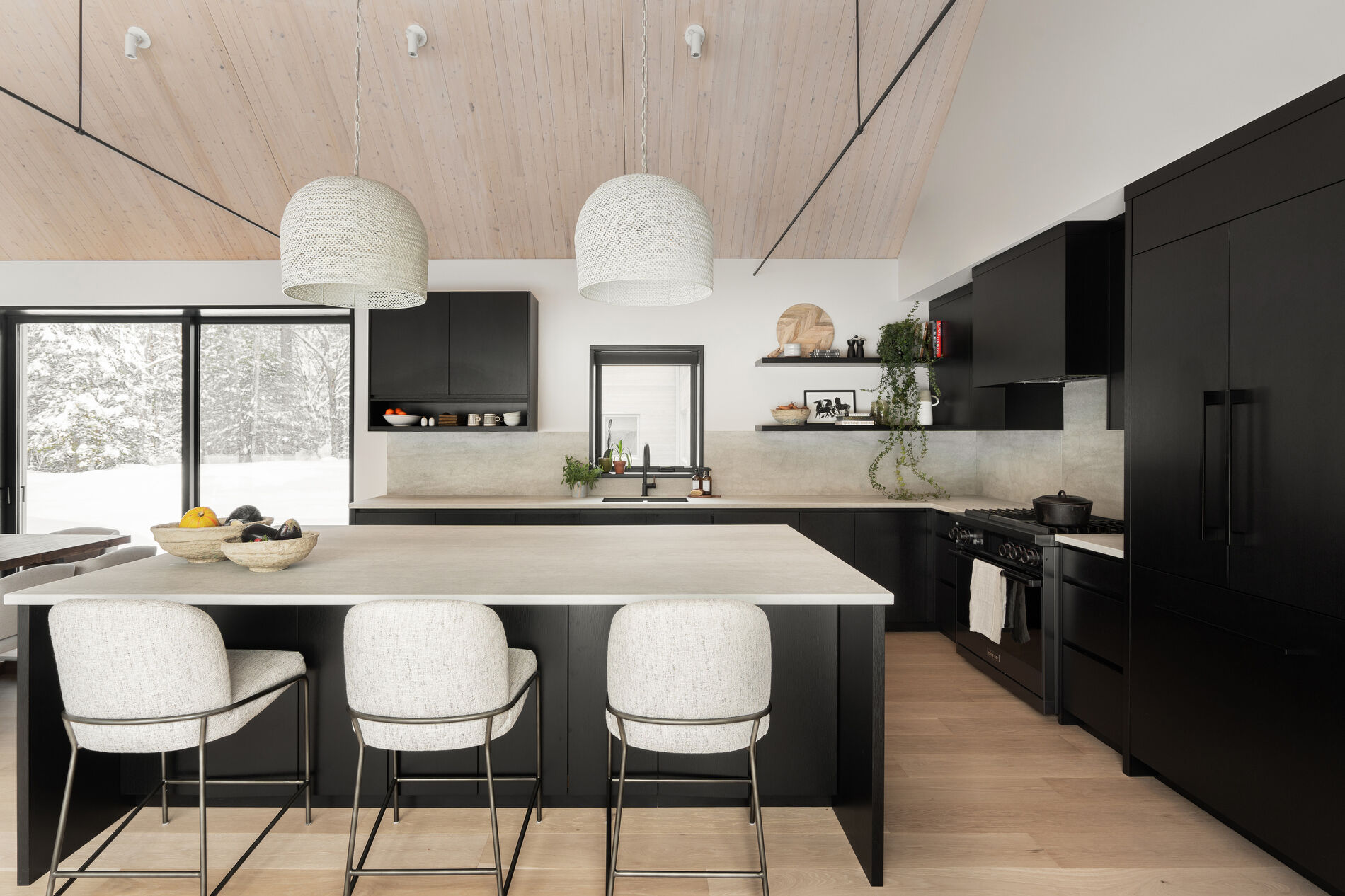
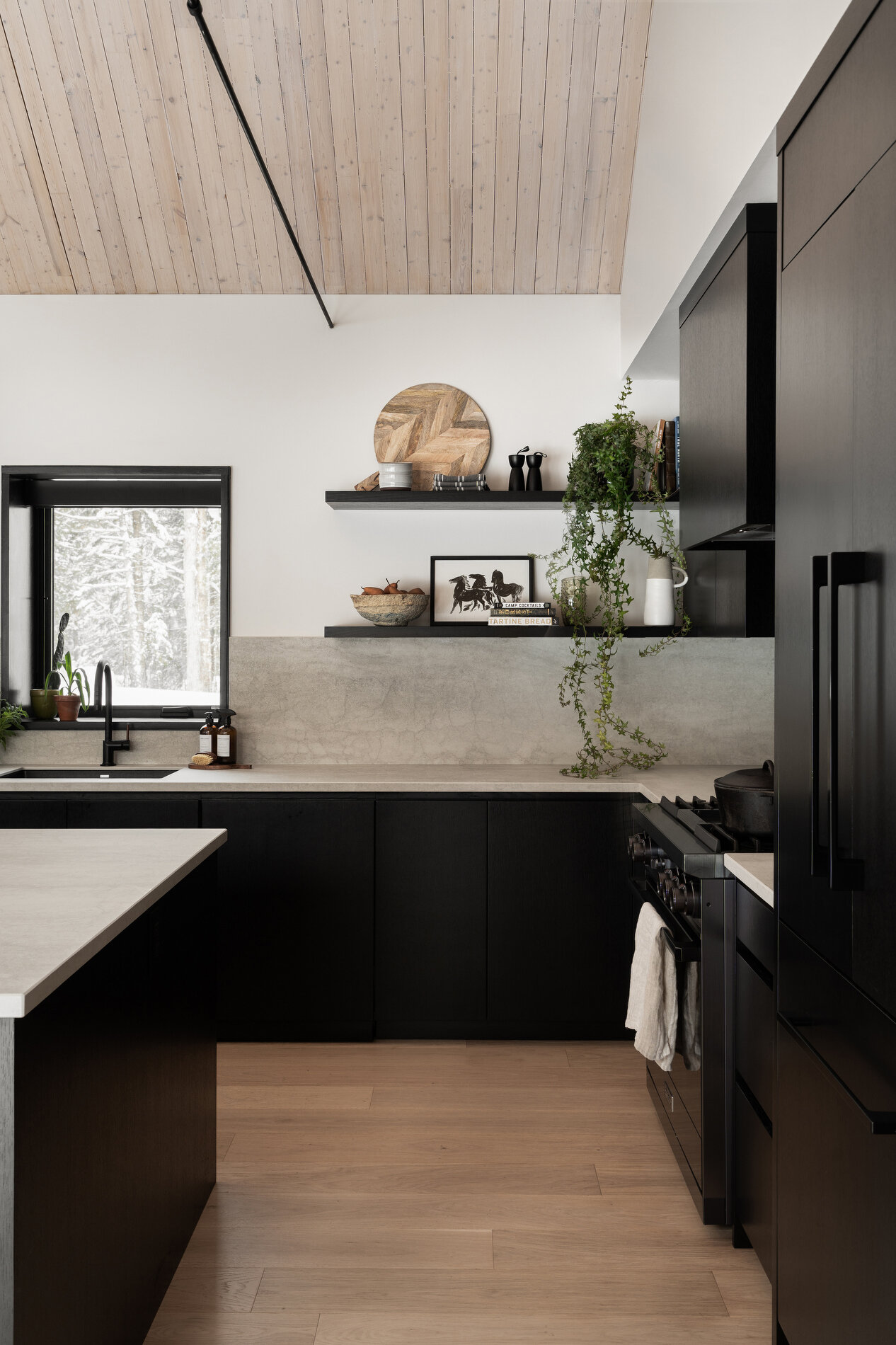
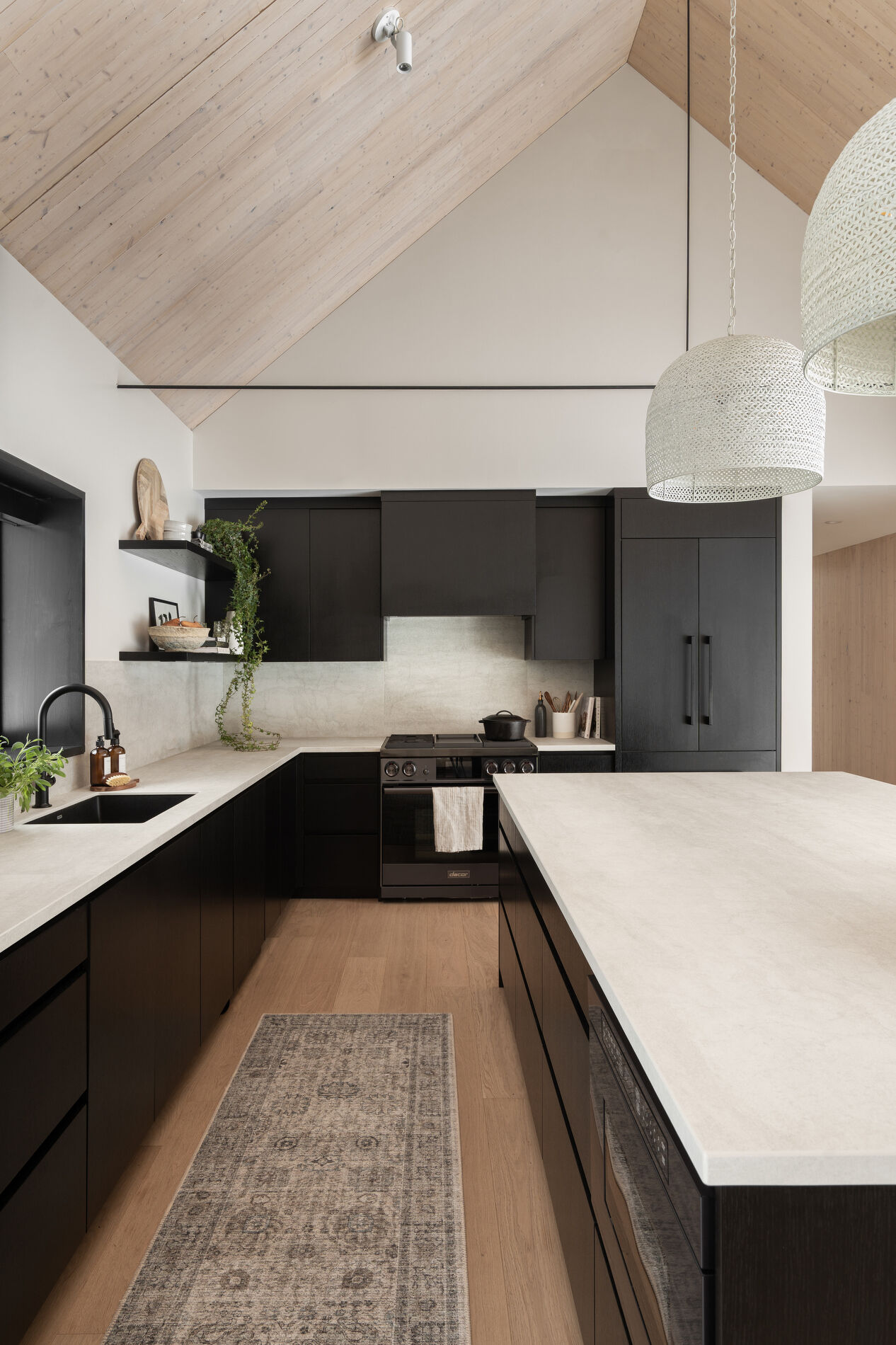
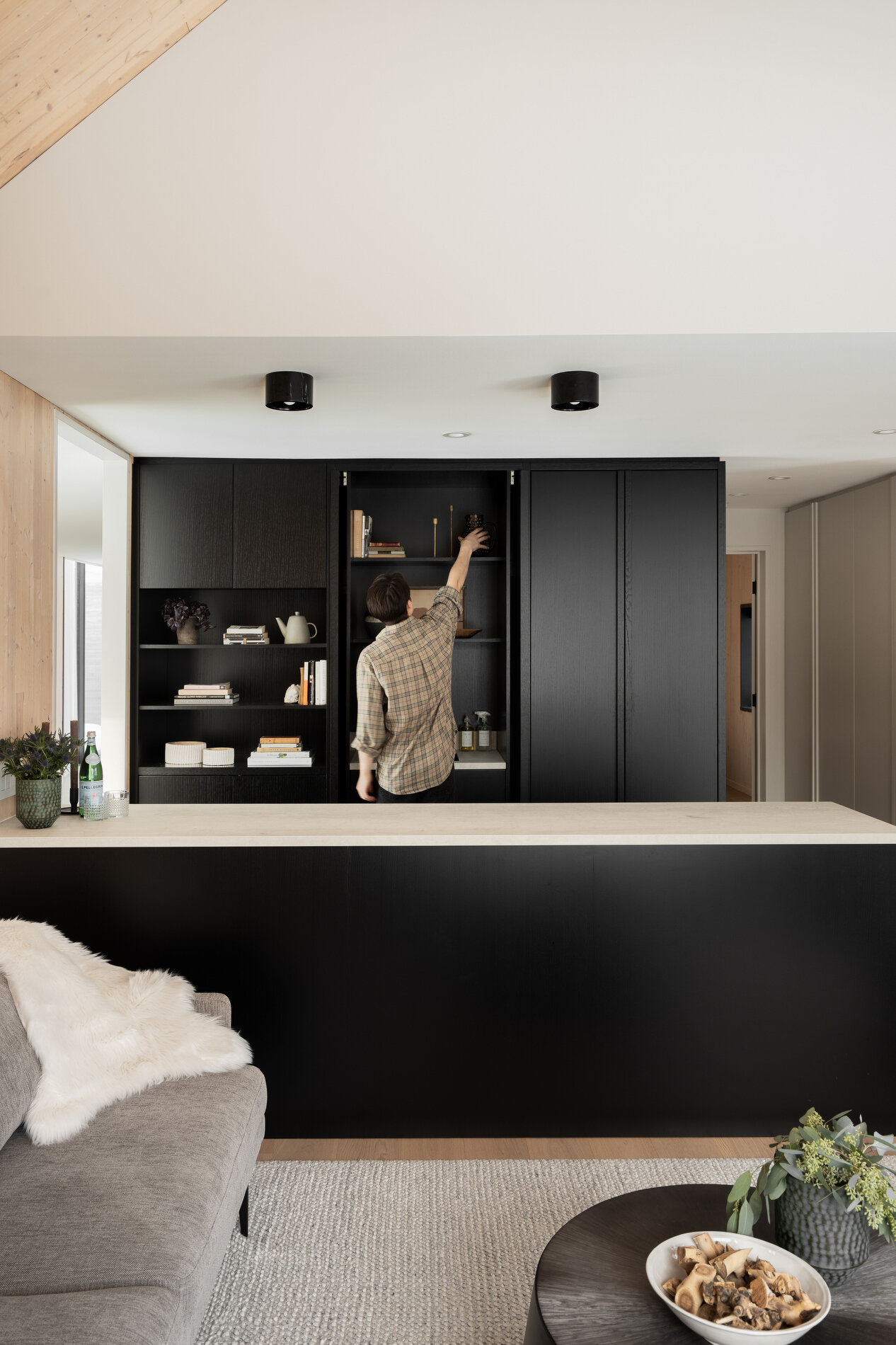
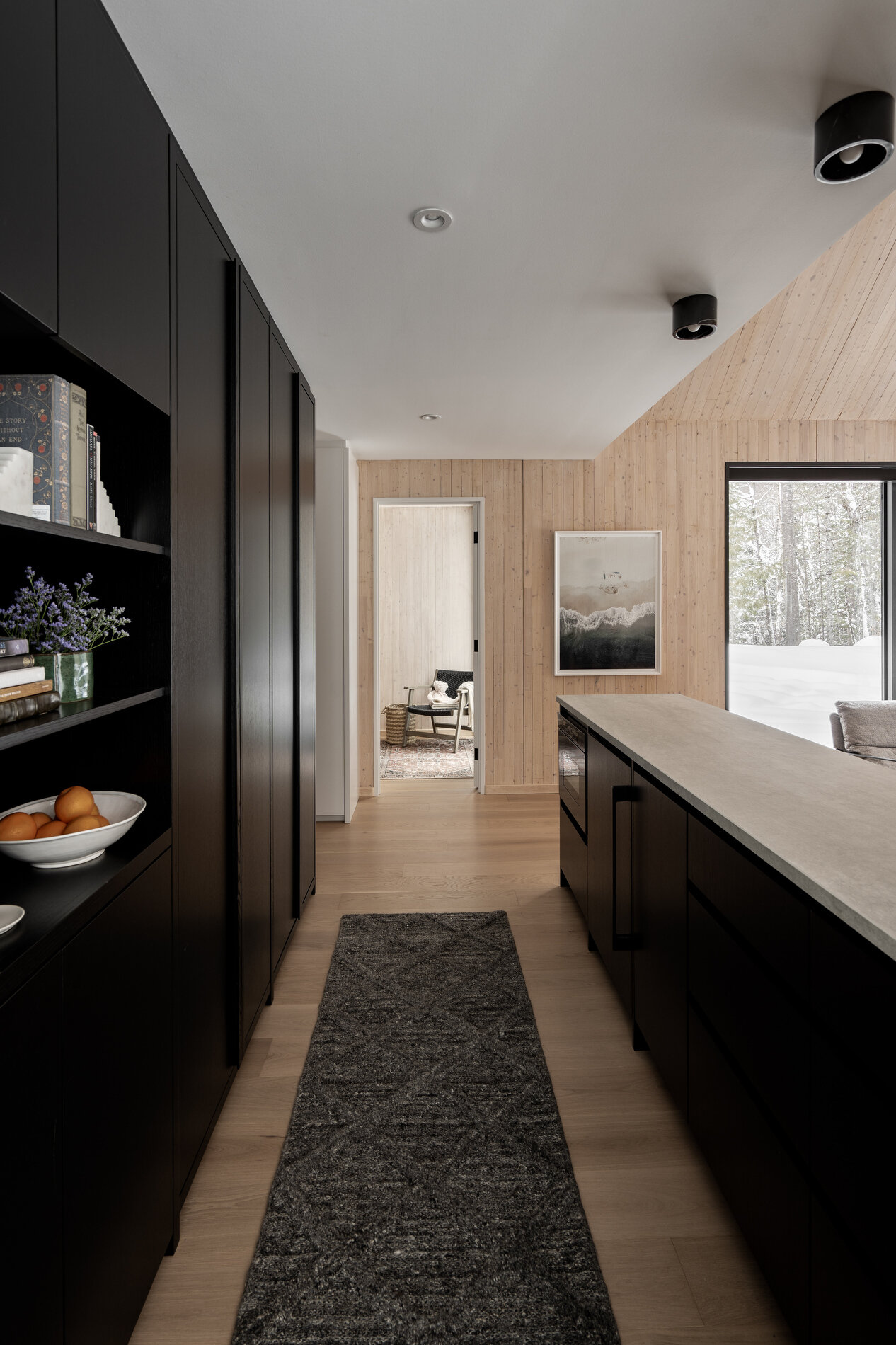
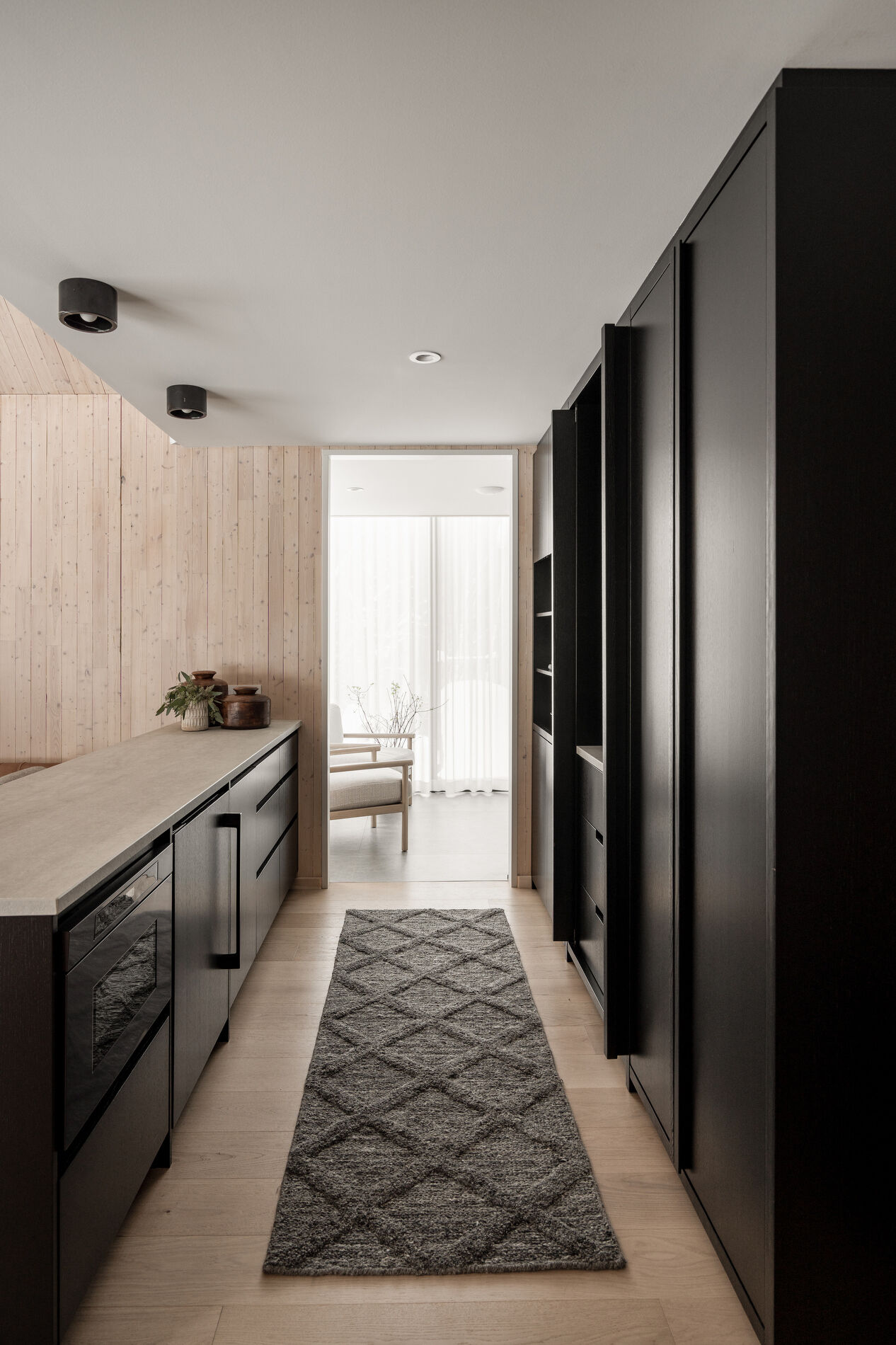
The kitchen features a restrained material palette with black cabinets providing contrast to the room. Positioned within easy reach of the dining area, it supports both everyday use and larger gatherings. Natural light plays a key role here, with openings carefully positioned to brighten the workspace throughout the day.
Quiet Transitions Between Private and Shared Spaces
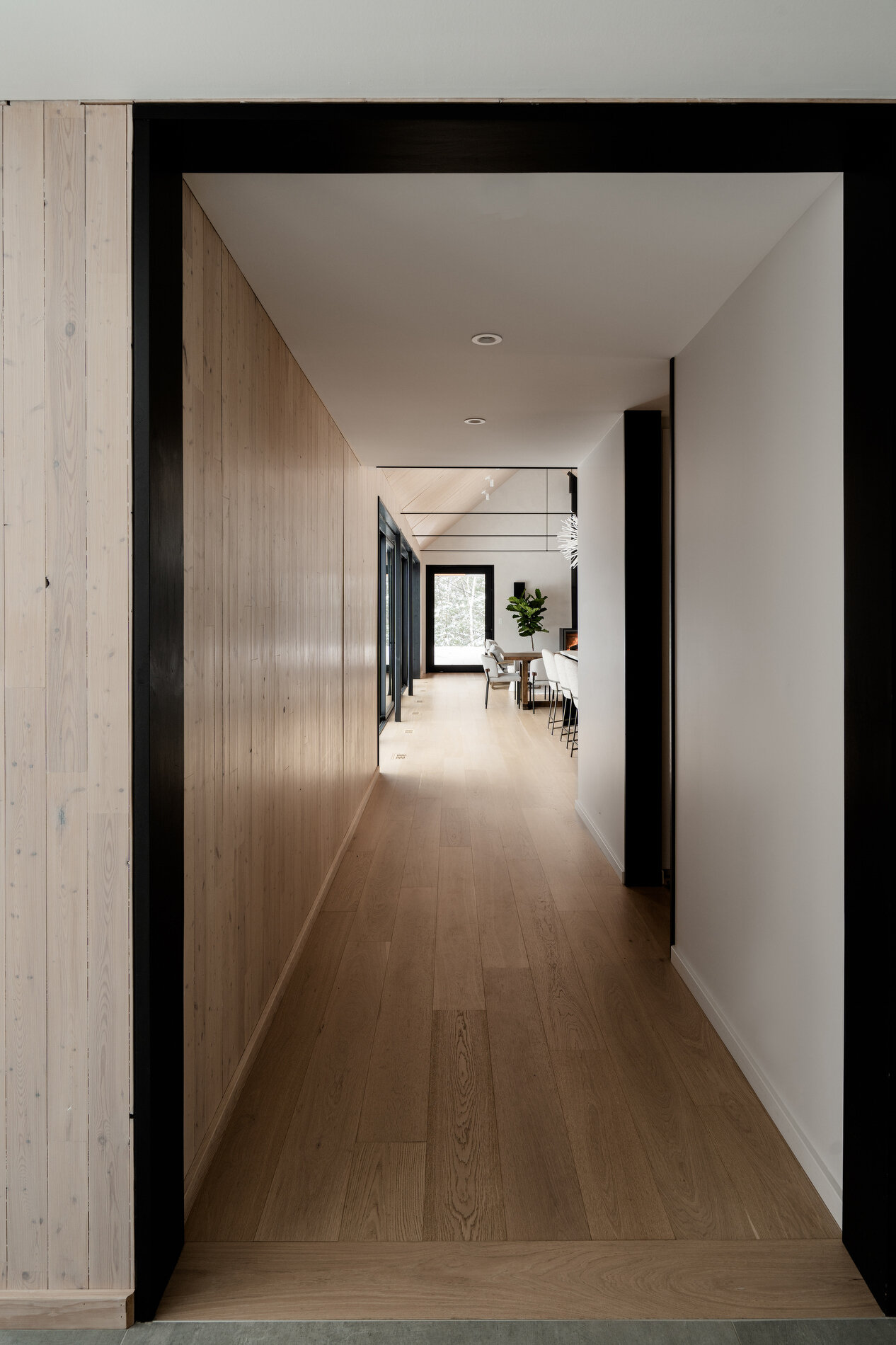
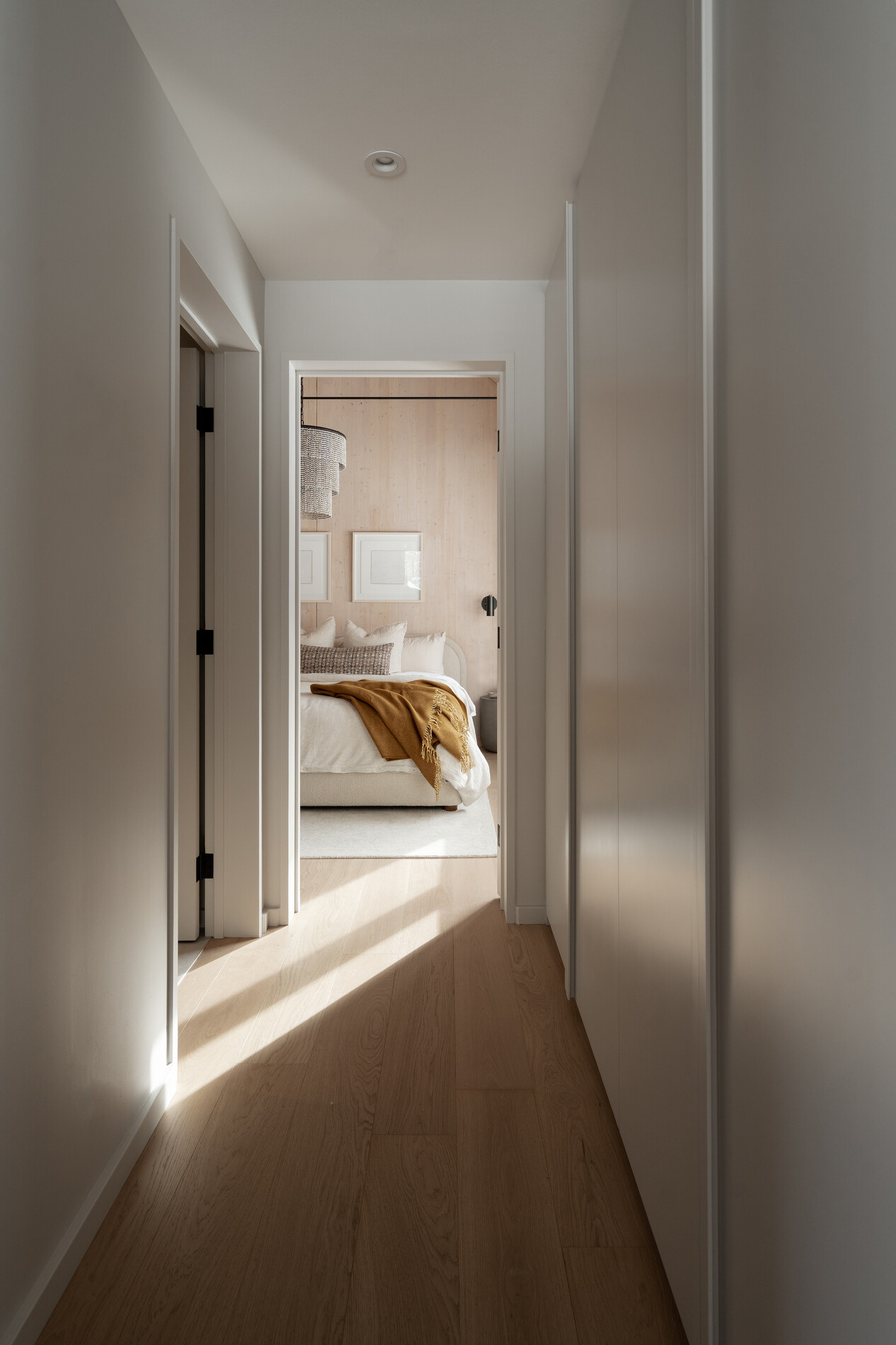
Beyond the main corridor, smaller hallways branch into each private section of the home. These transitions are short but intentional, reinforcing the separation between shared and personal spaces.
A Private Suite Framed by Timber and Landscape Light
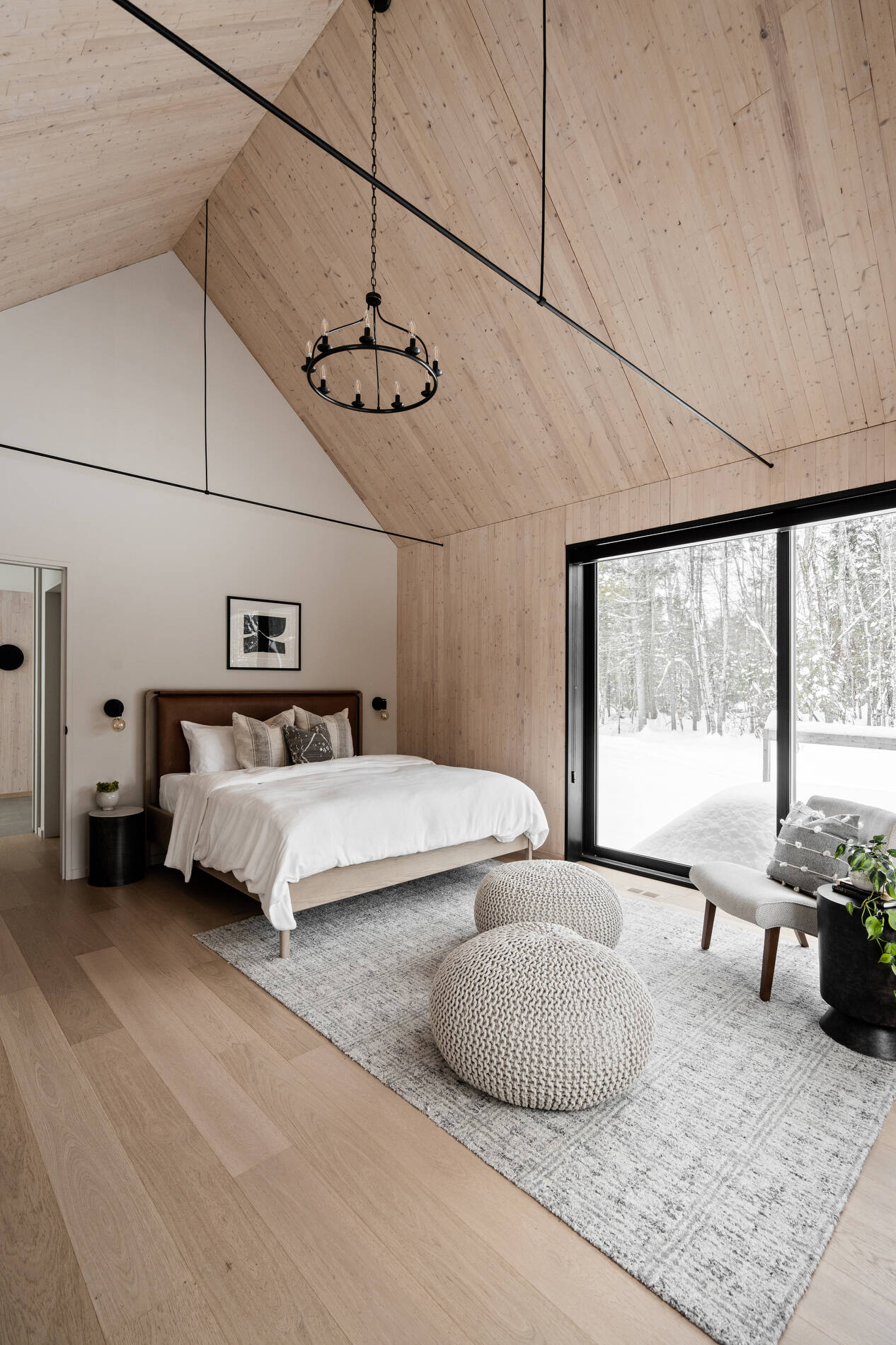
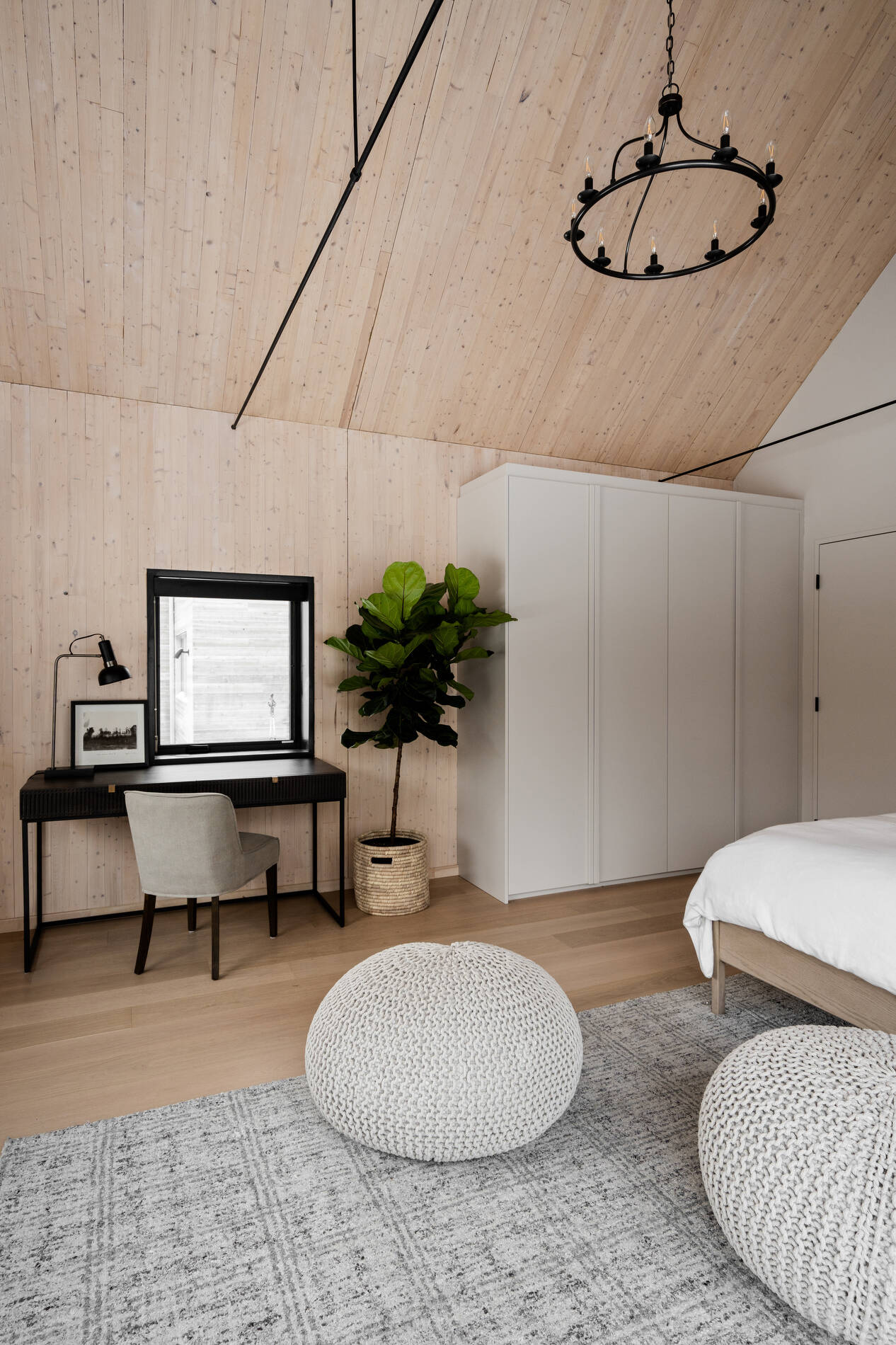
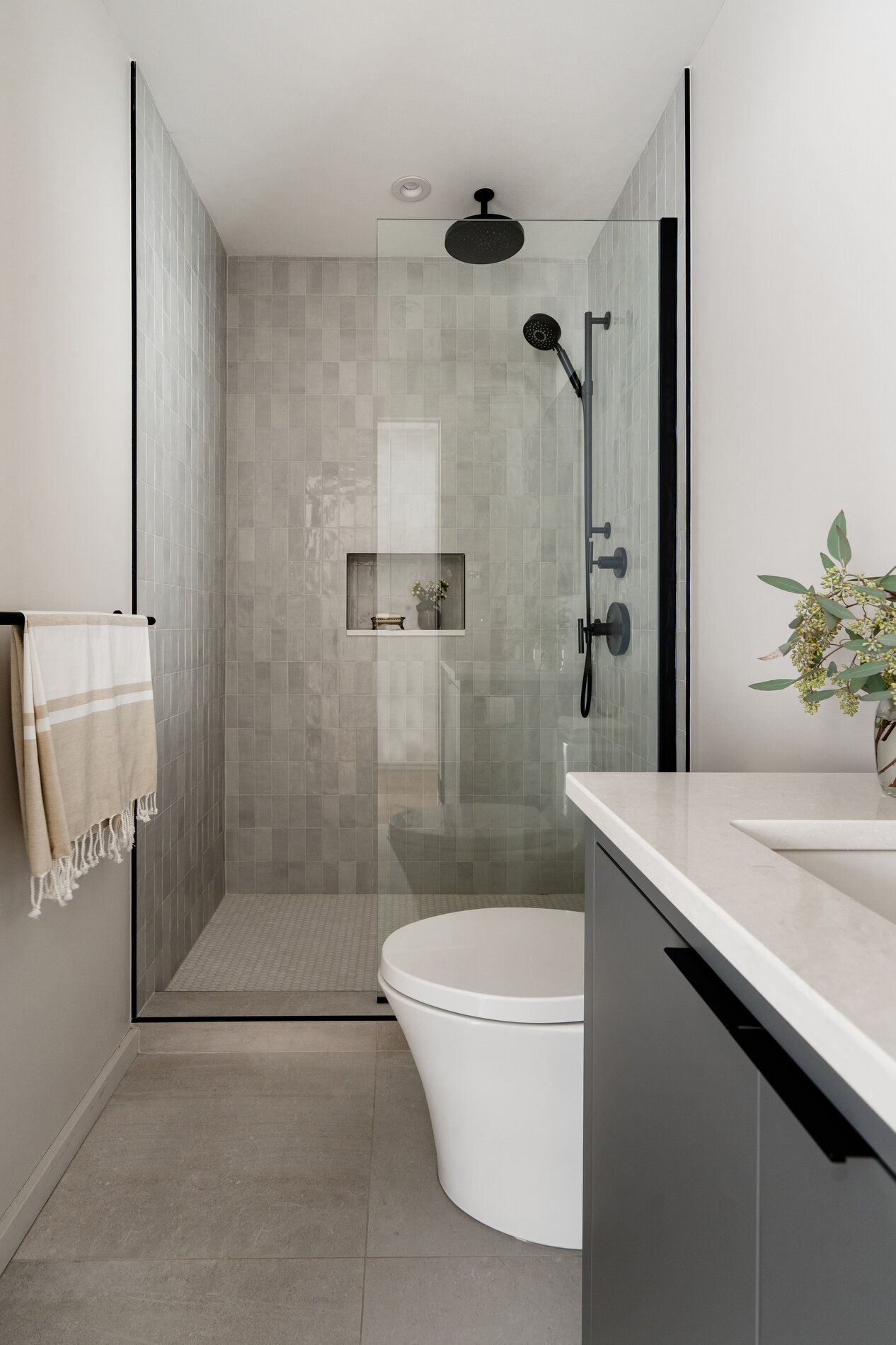
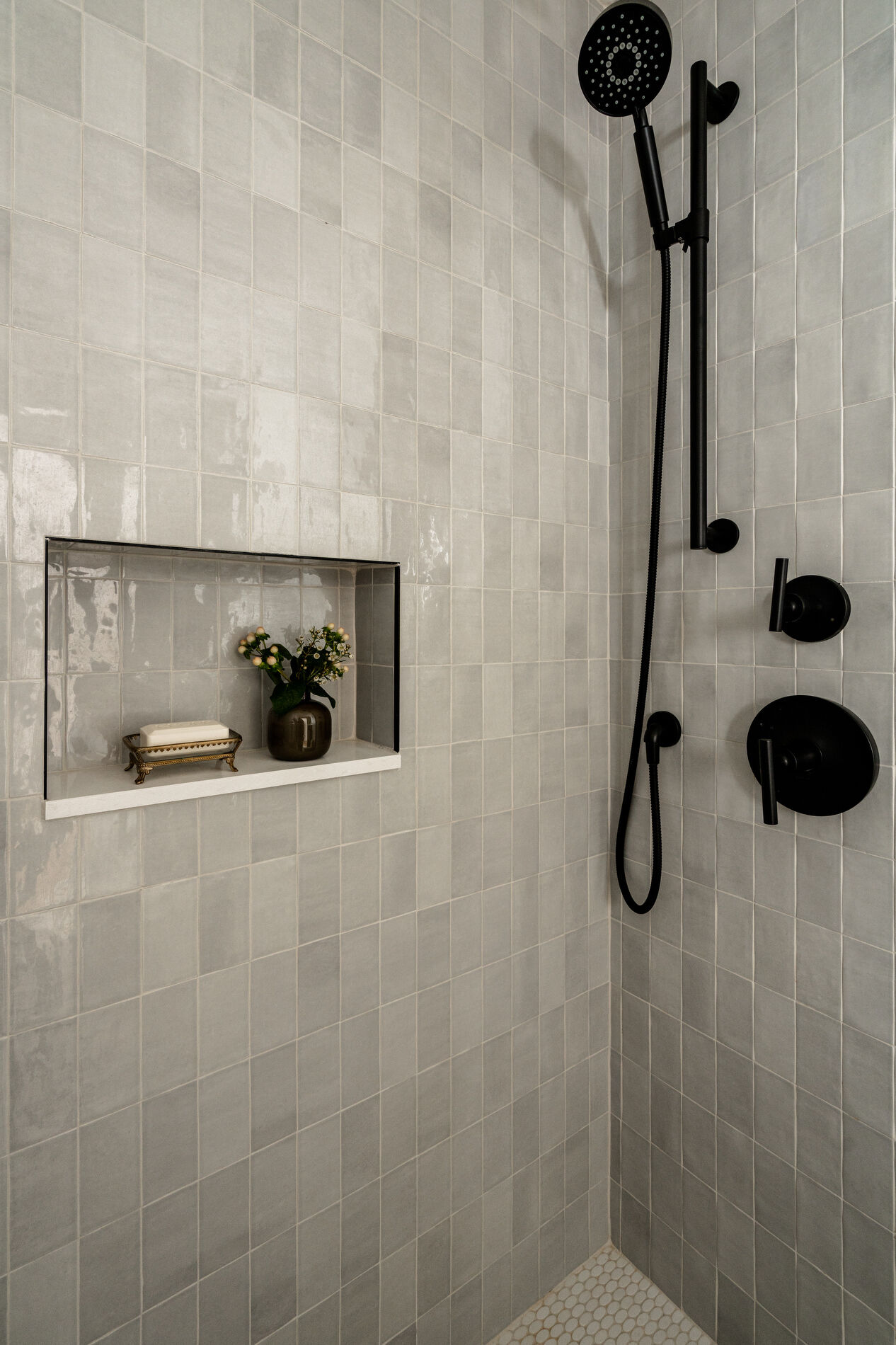
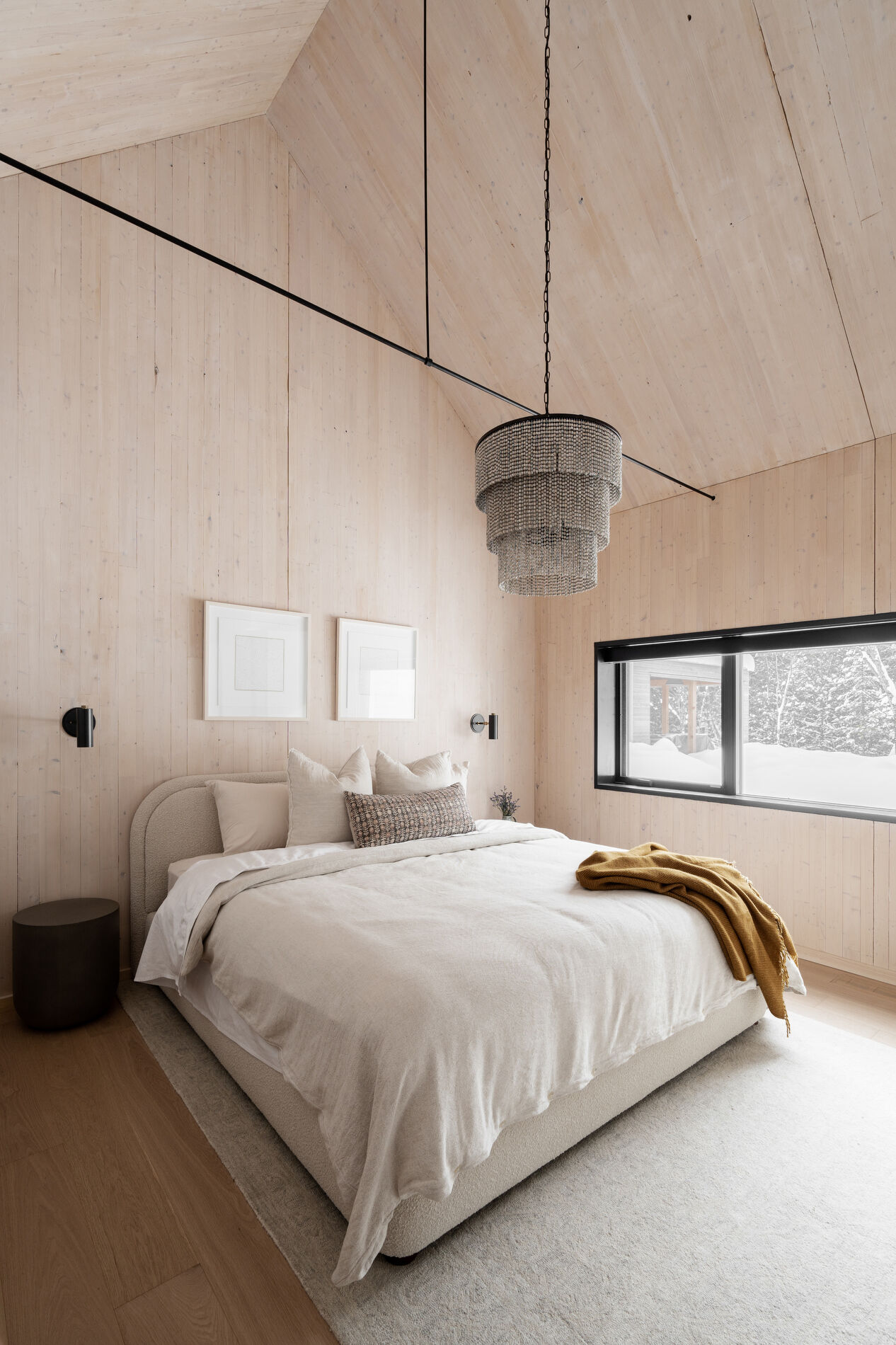
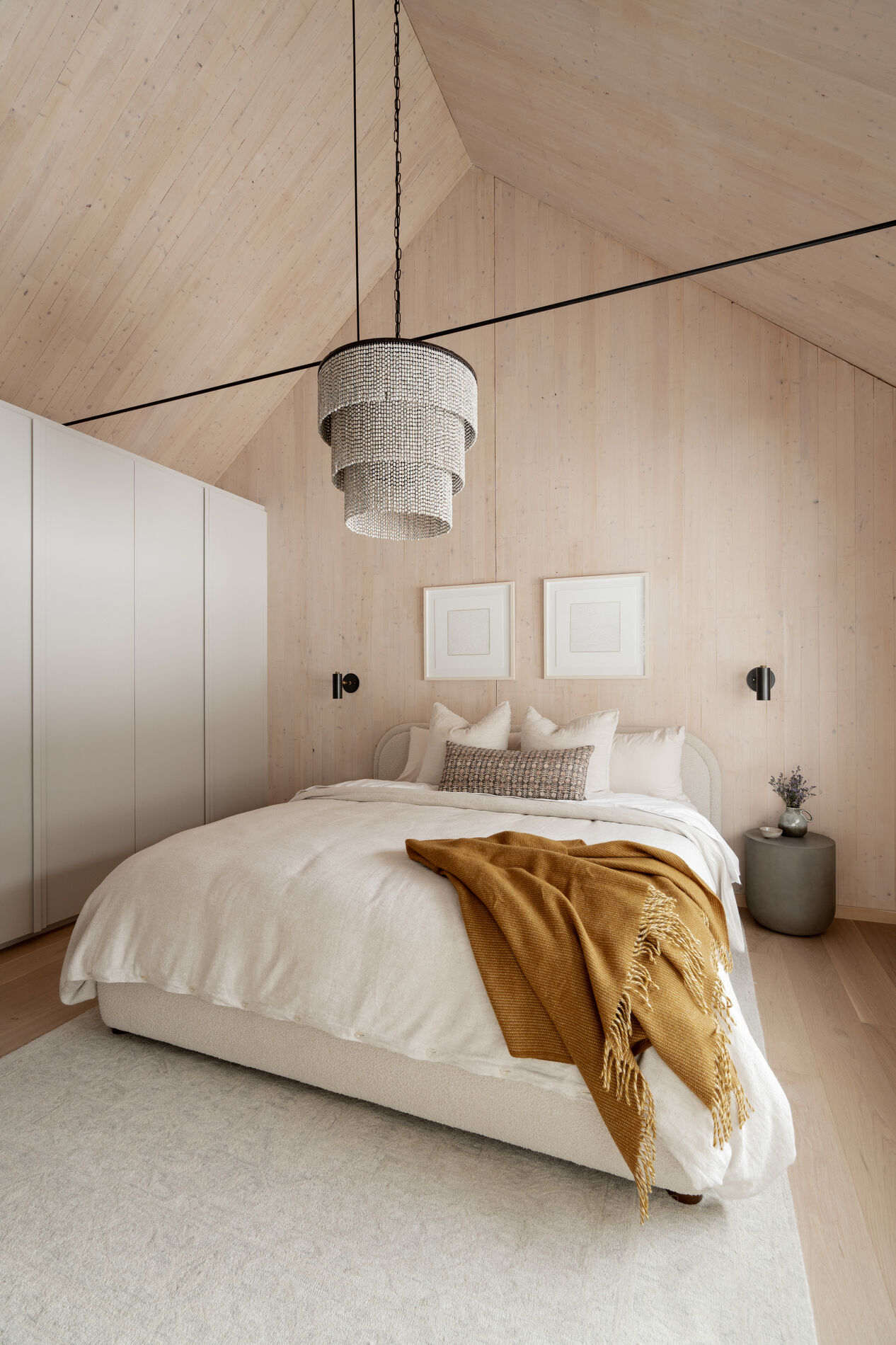
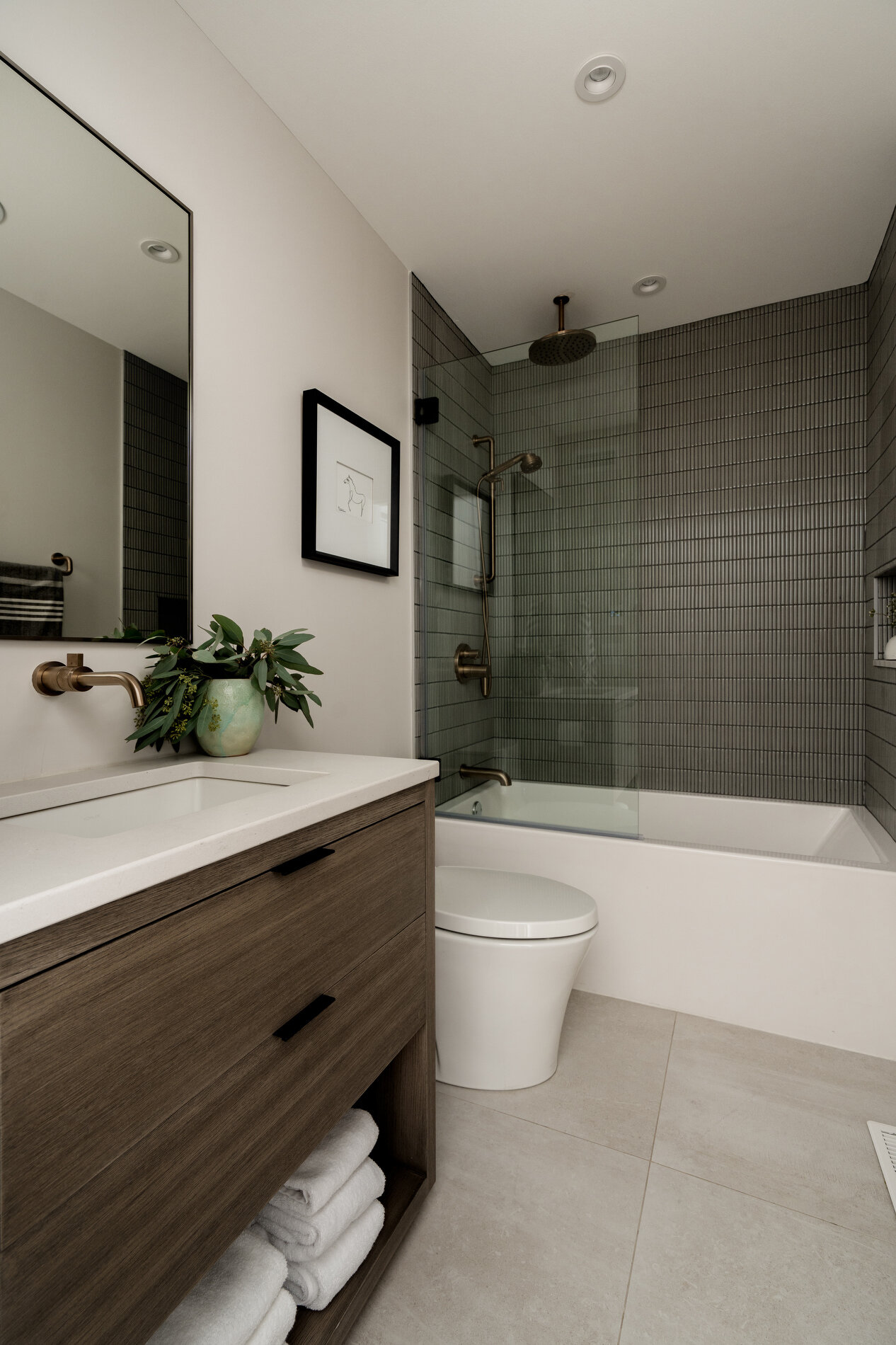
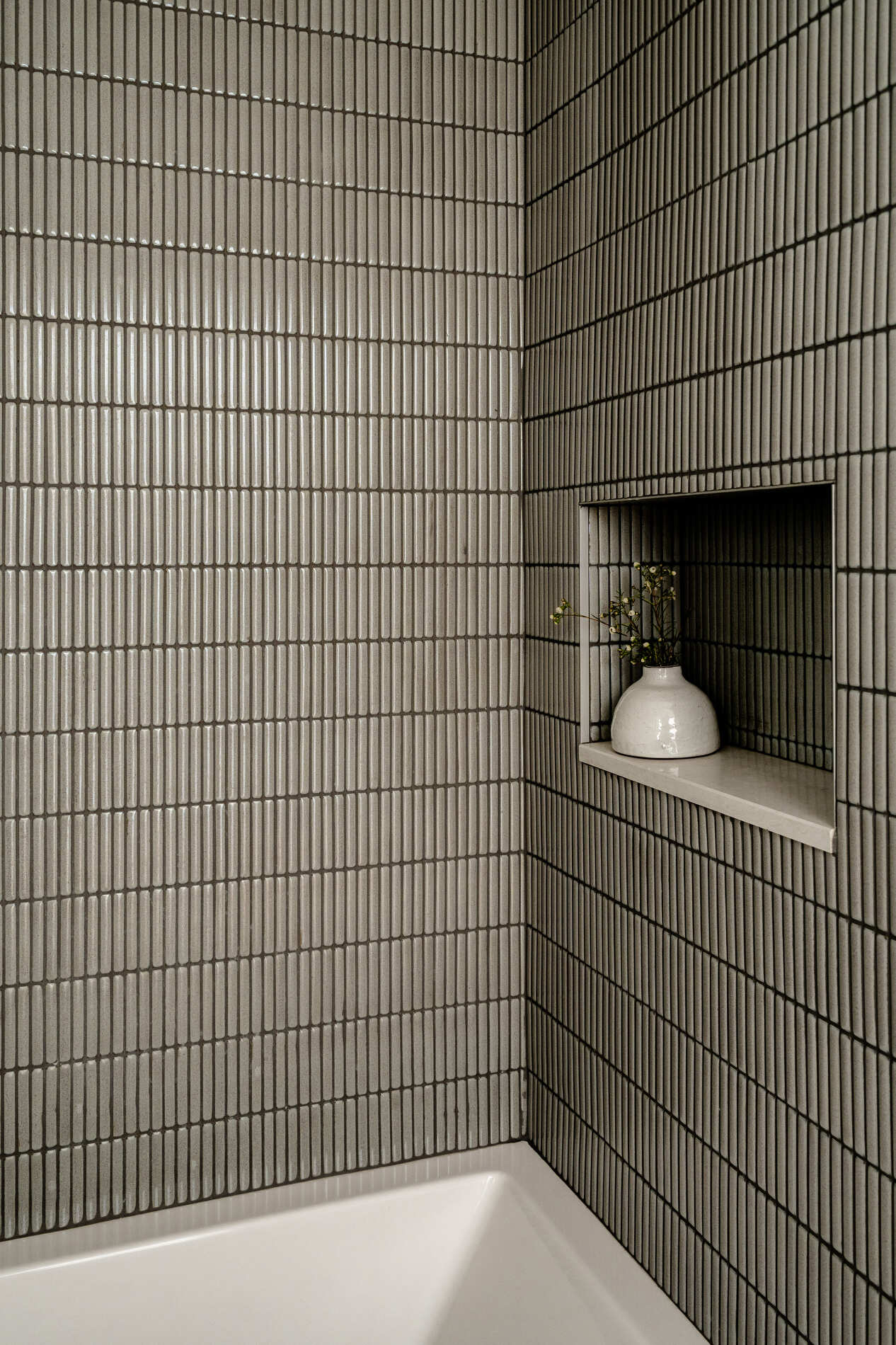
The primary suite occupies its own volume, giving it a quieter position within the layout. Large openings maintain a visual link to the landscape, while the timber interior creates a calm, cohesive atmosphere. The bathroom continues this approach, and features a walk-in shower, gray-tone tiles, and black accents.
Self-Contained Family Wings with Living, Sleeping, and Kitchen Zones
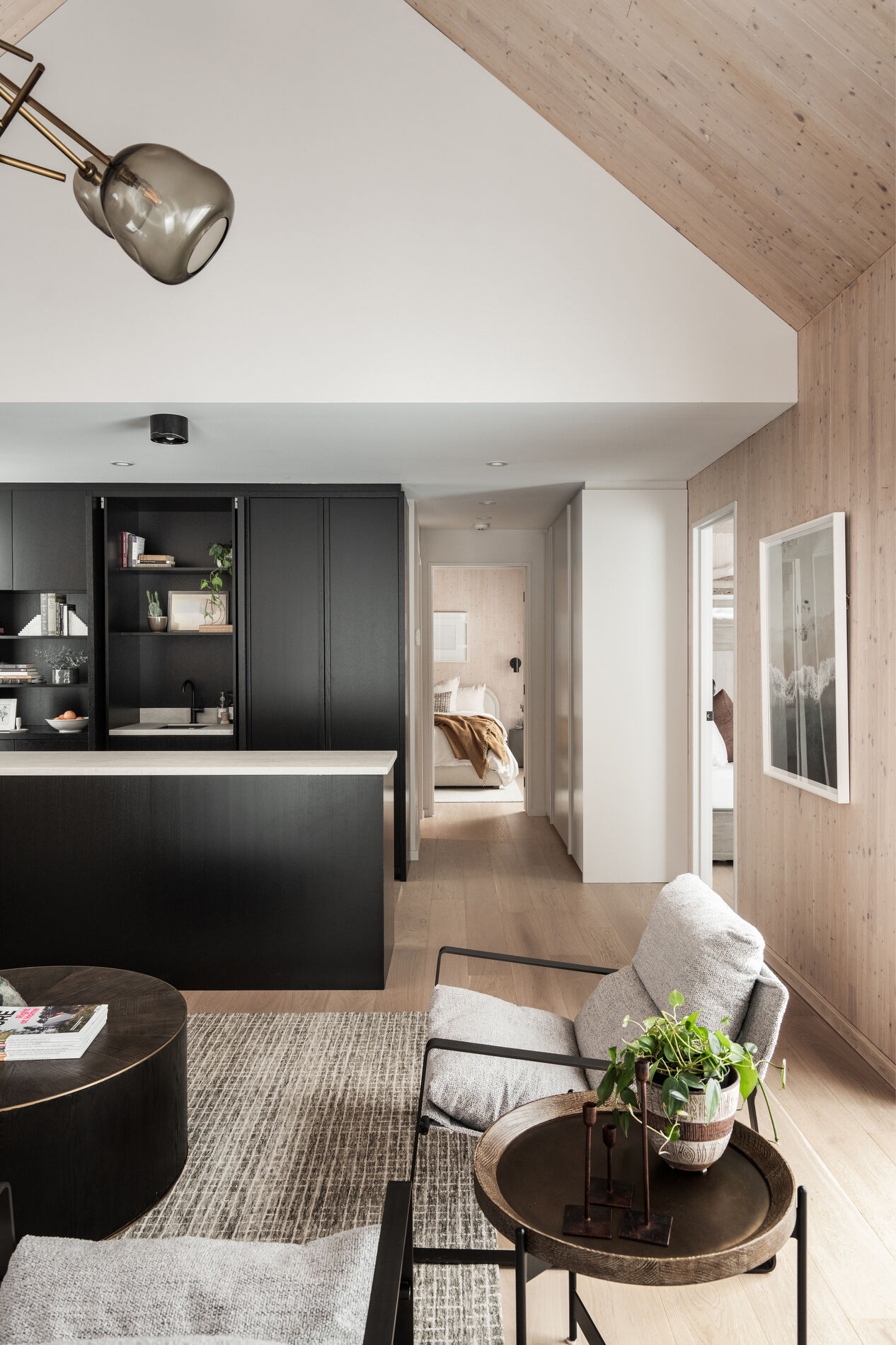
Each family living unit is designed as a compact, self-contained space branching off from the central corridor. Inside, the layout includes a small living room paired with a kitchenette, creating a functional zone for relaxing and casual meals without needing to return to the main communal areas.
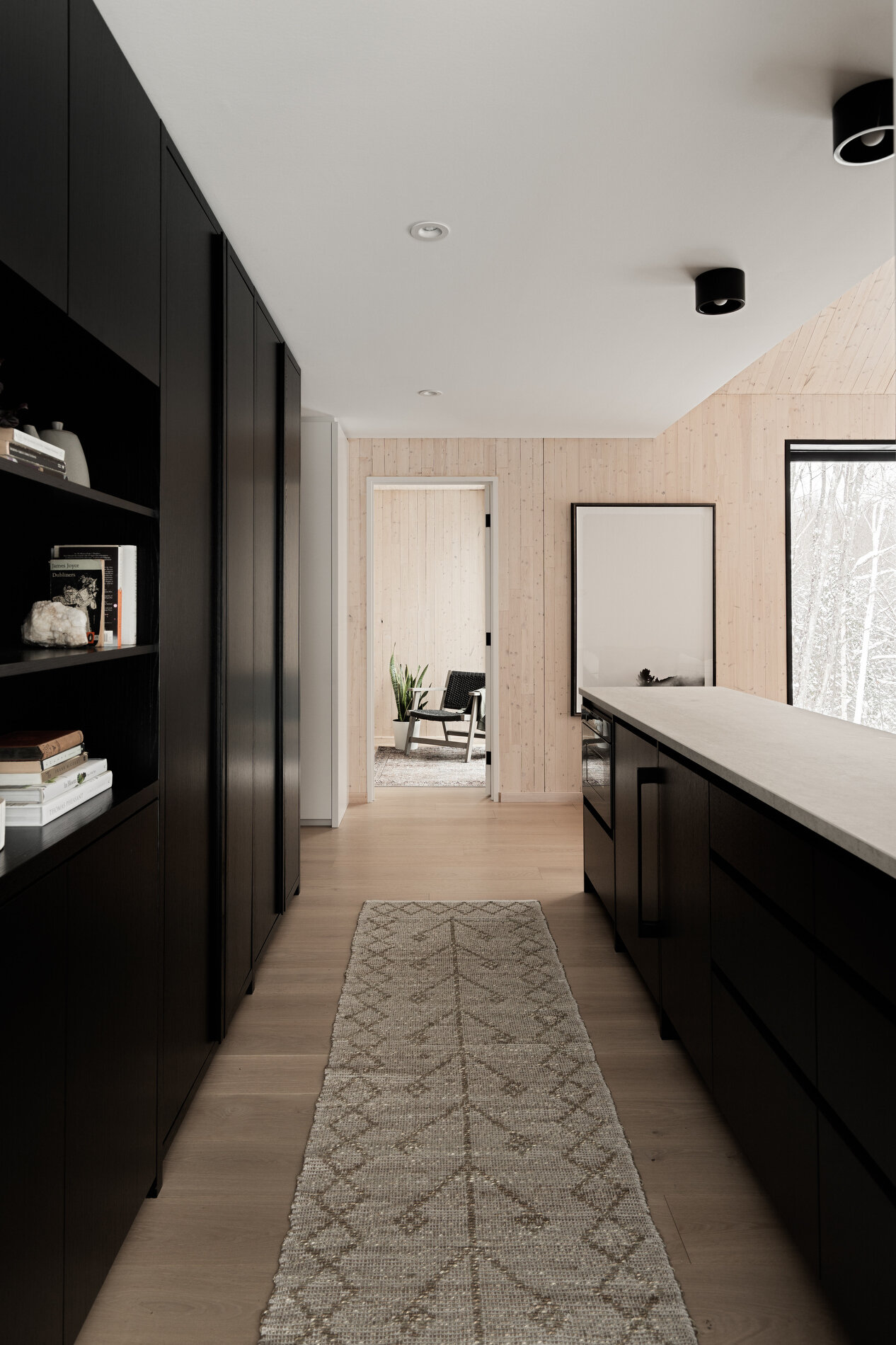
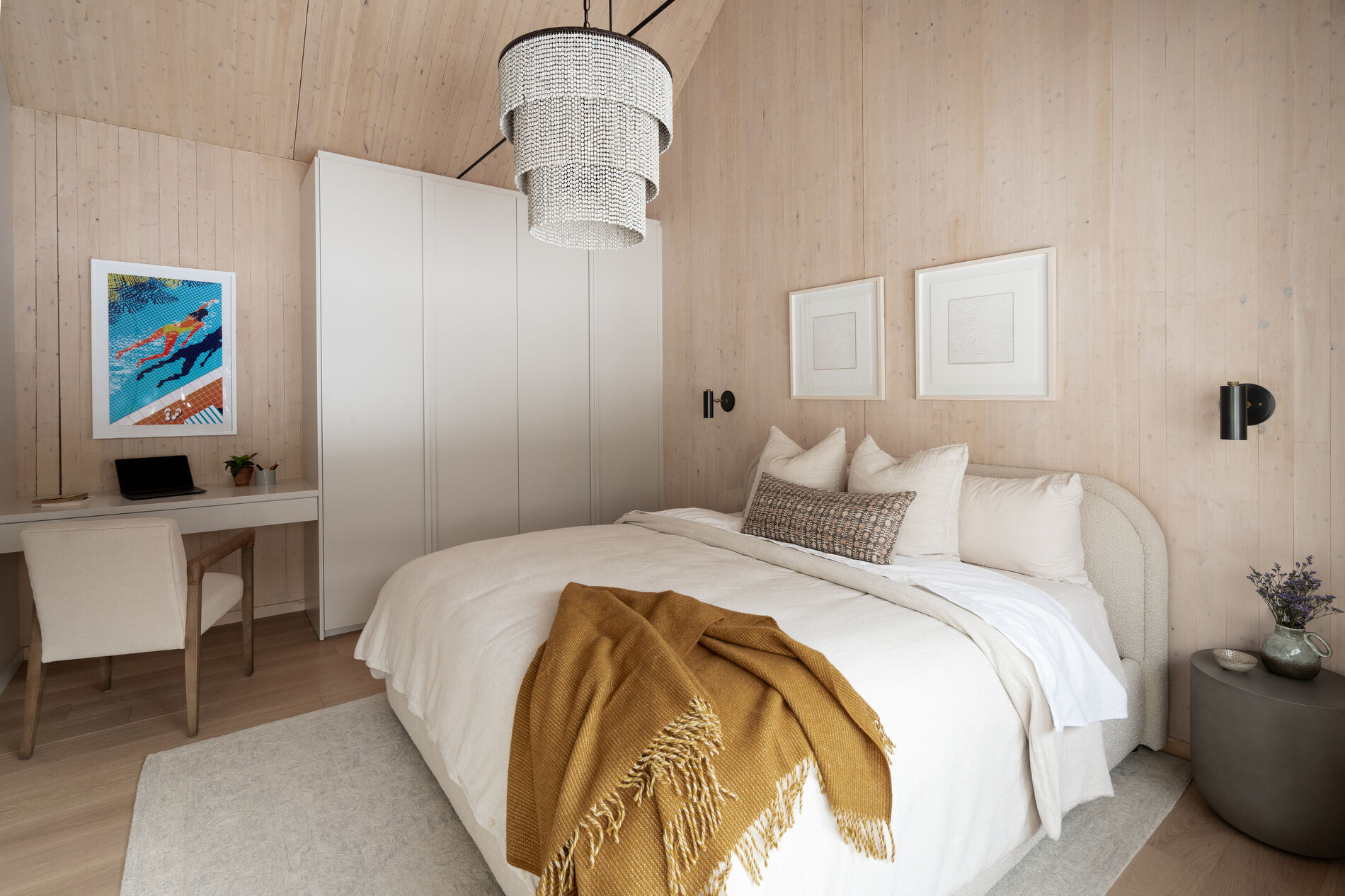
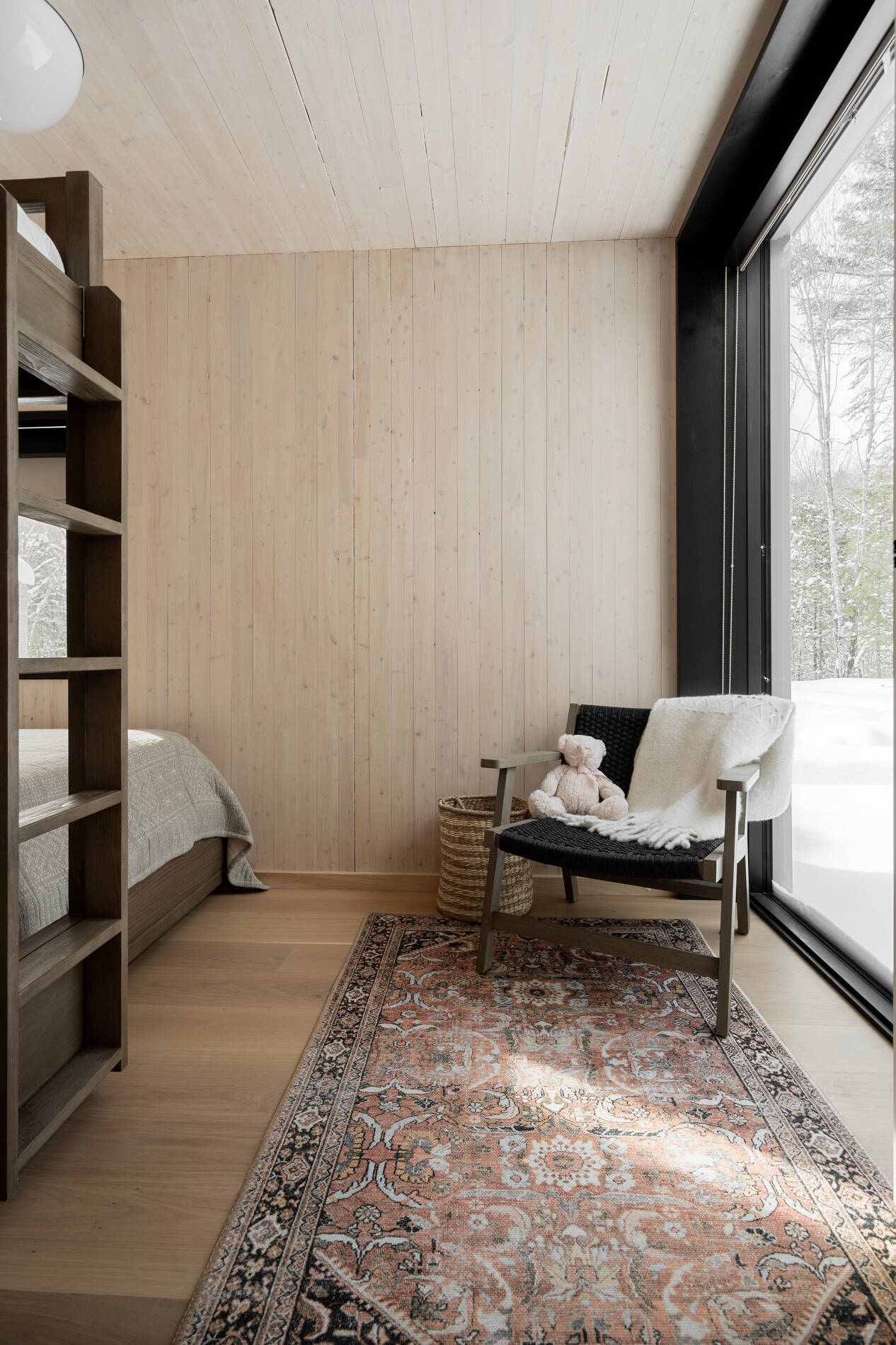
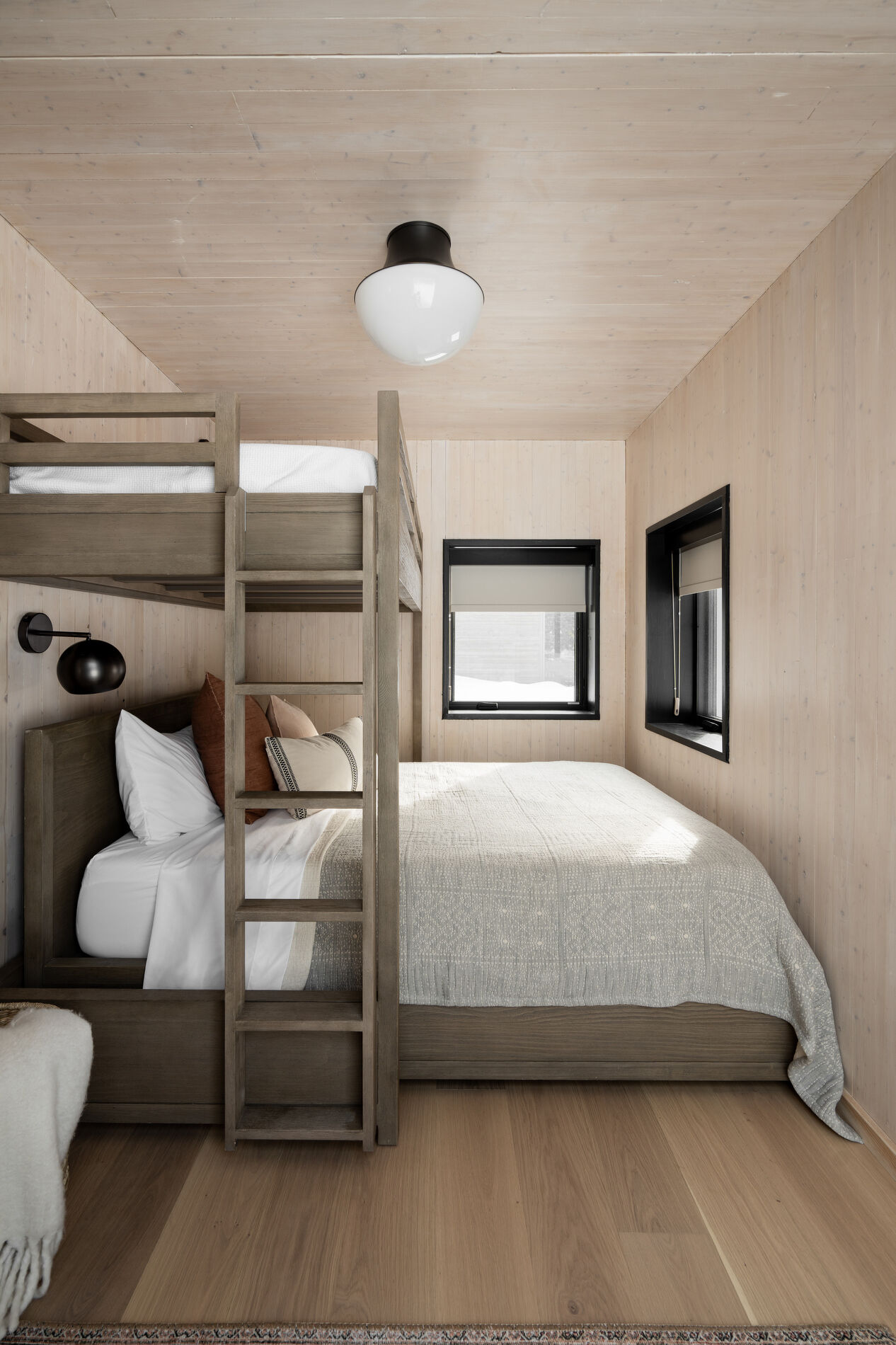
The bedrooms follow a simple and consistent approach, with one standard bedroom and another fitted with bunk beds to accommodate more occupants. A bathroom completes each unit, keeping everything contained within a clearly defined footprint.
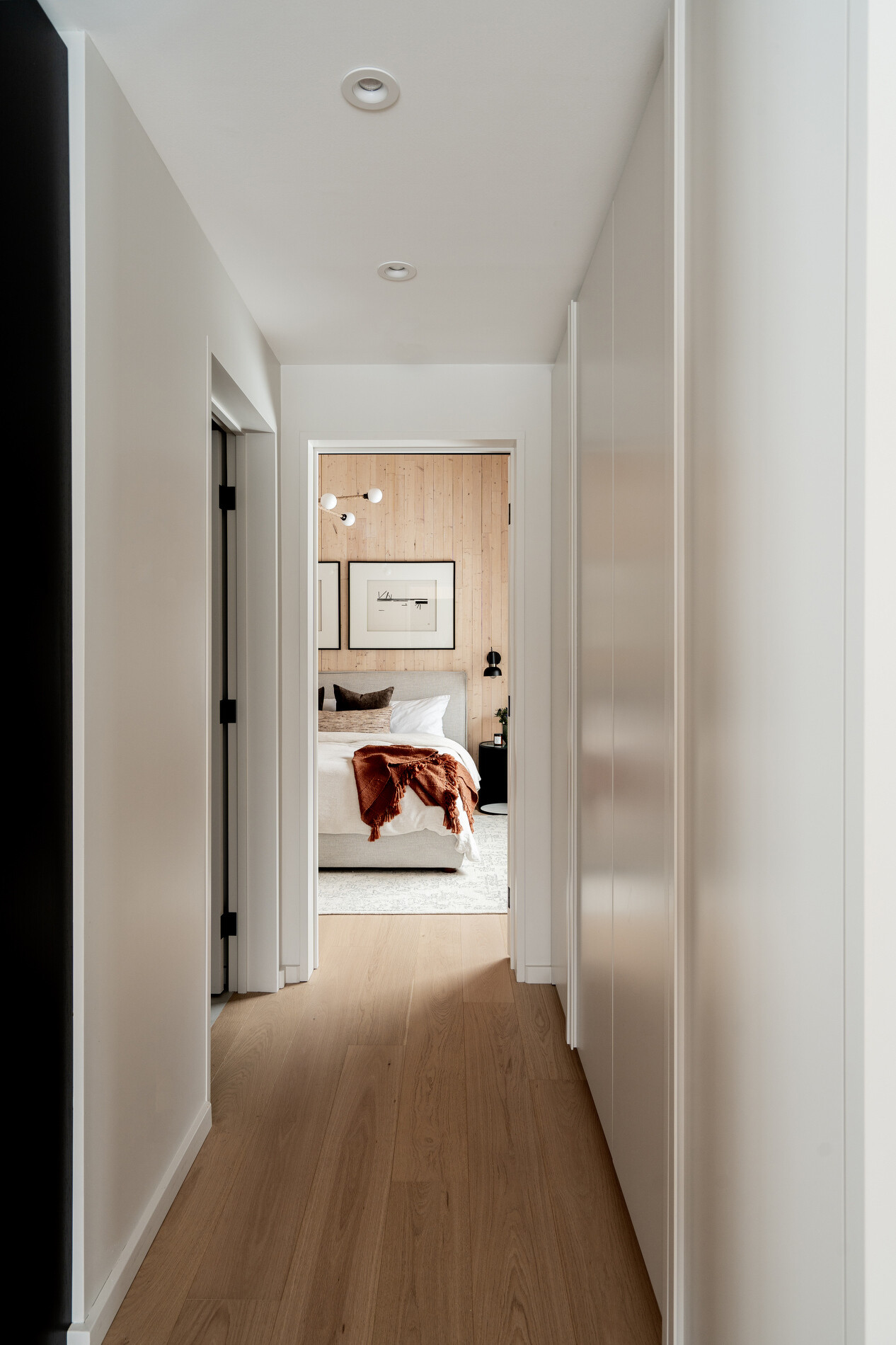
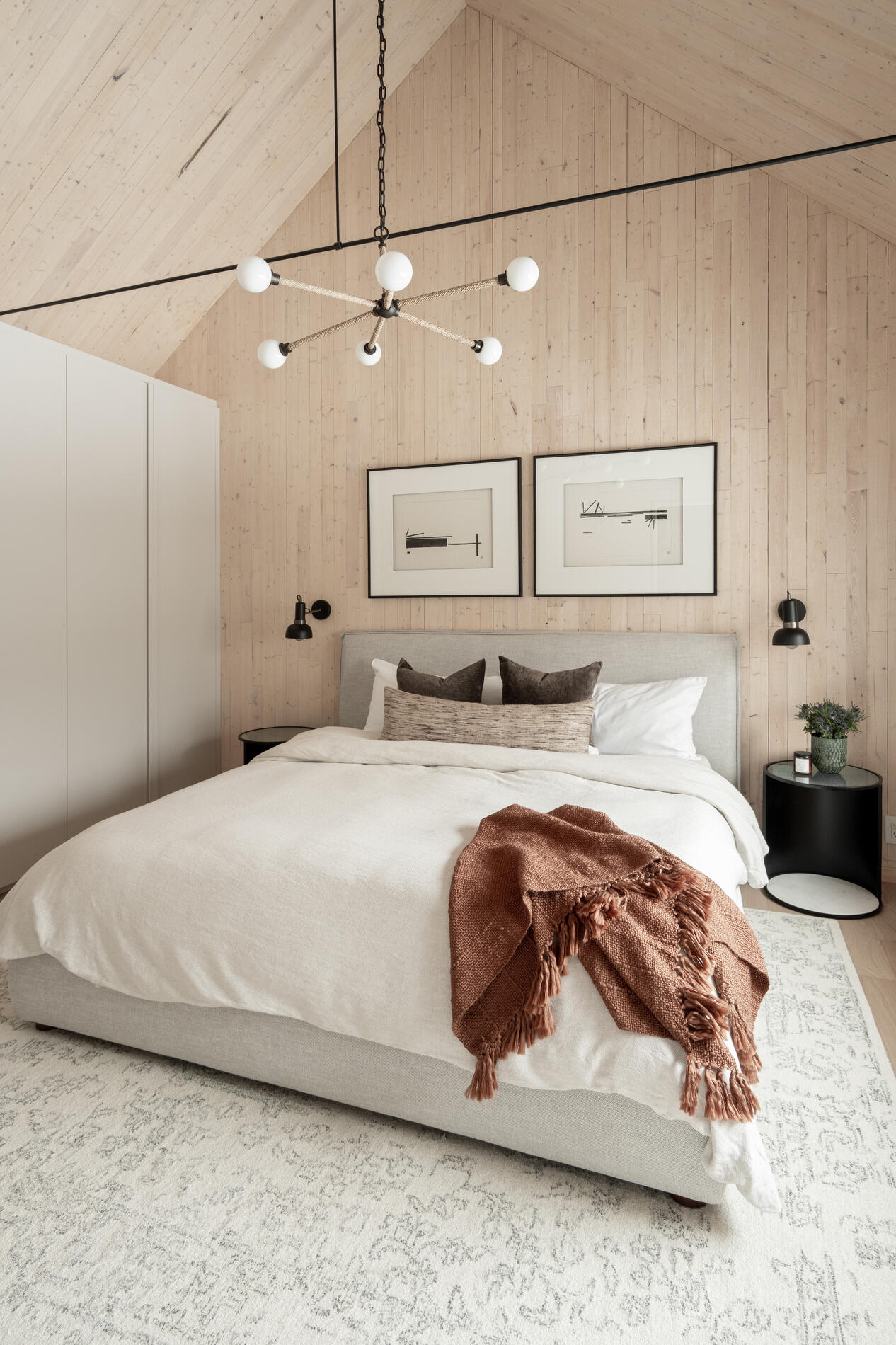
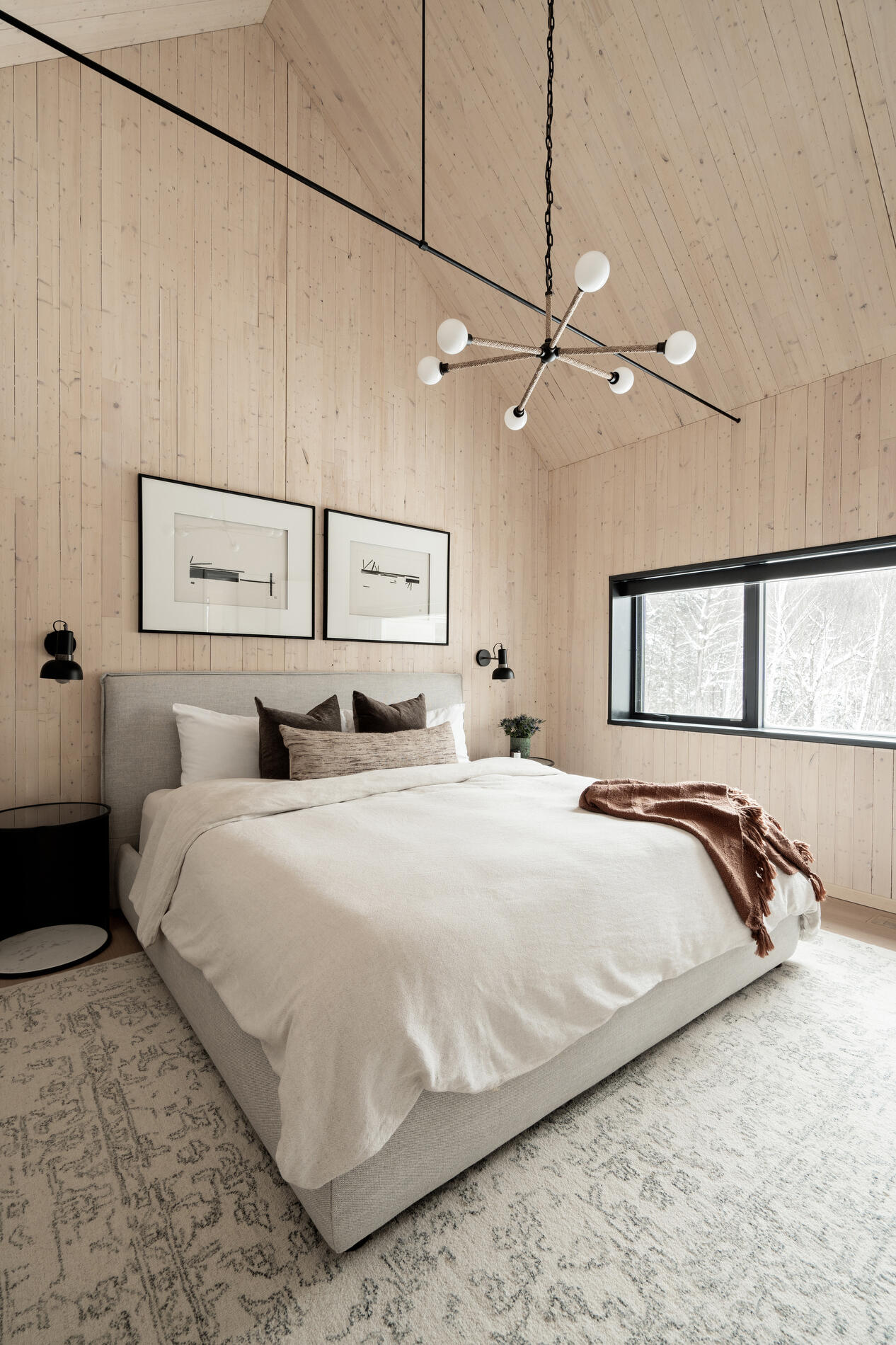
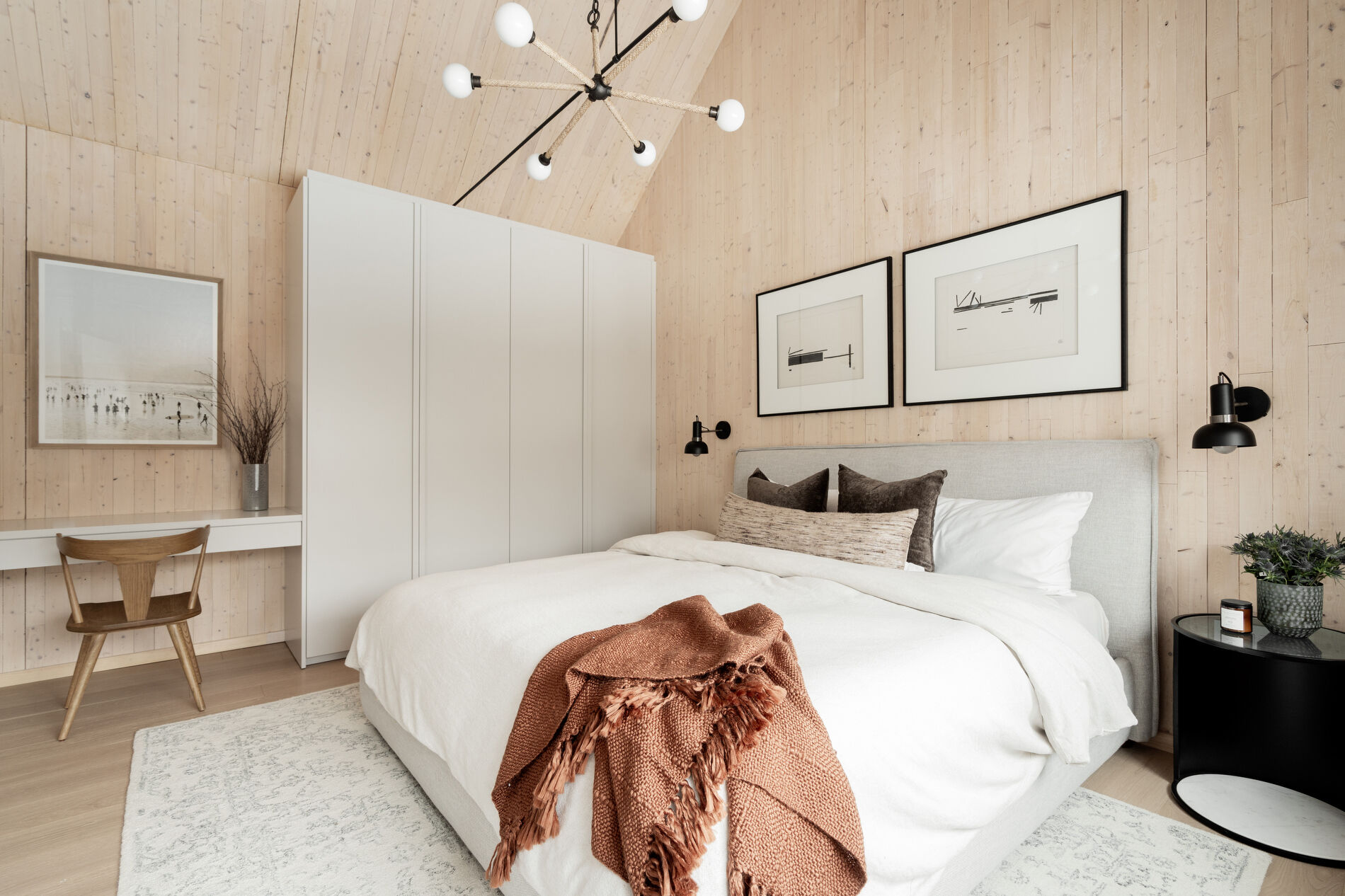
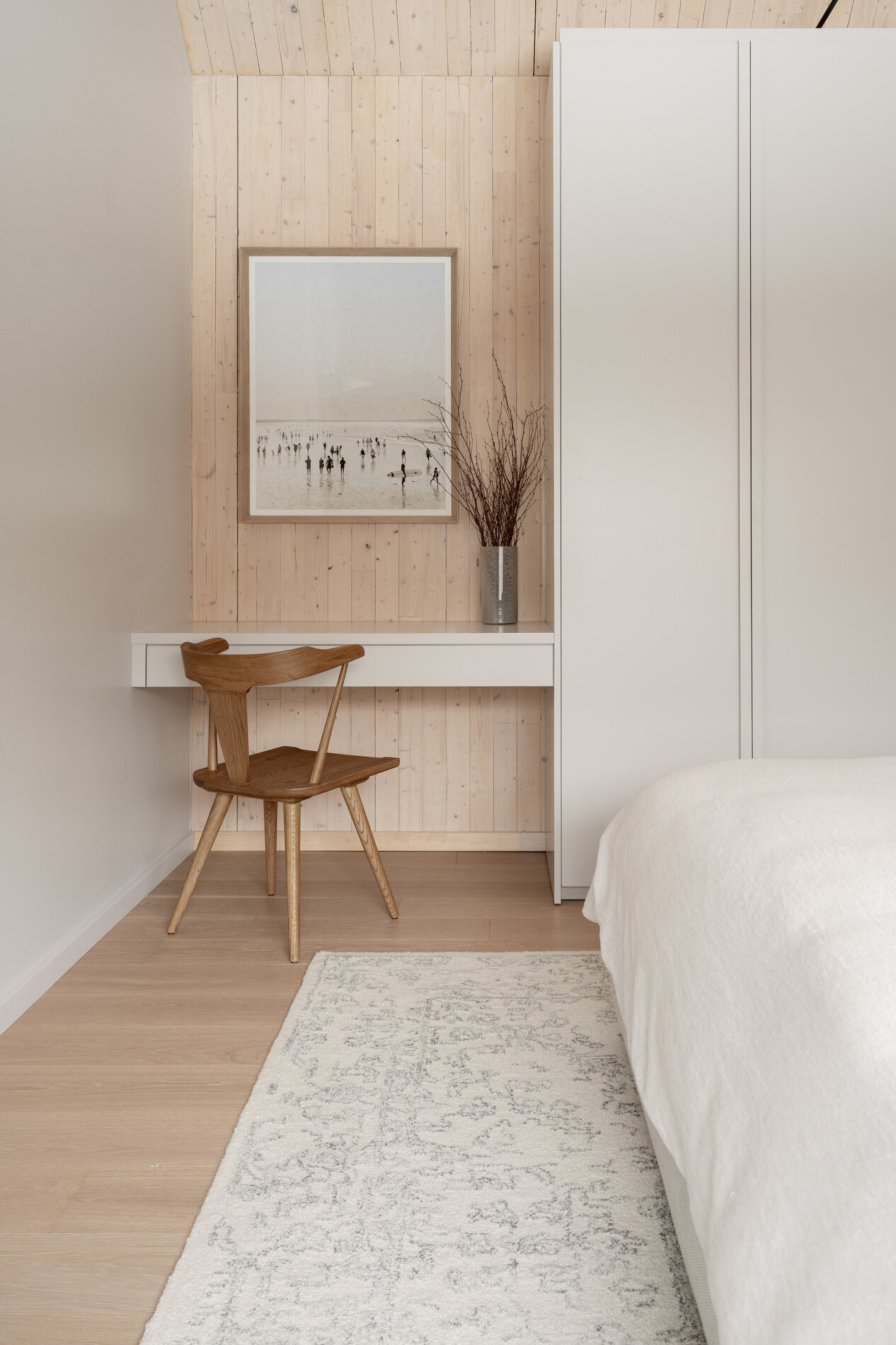
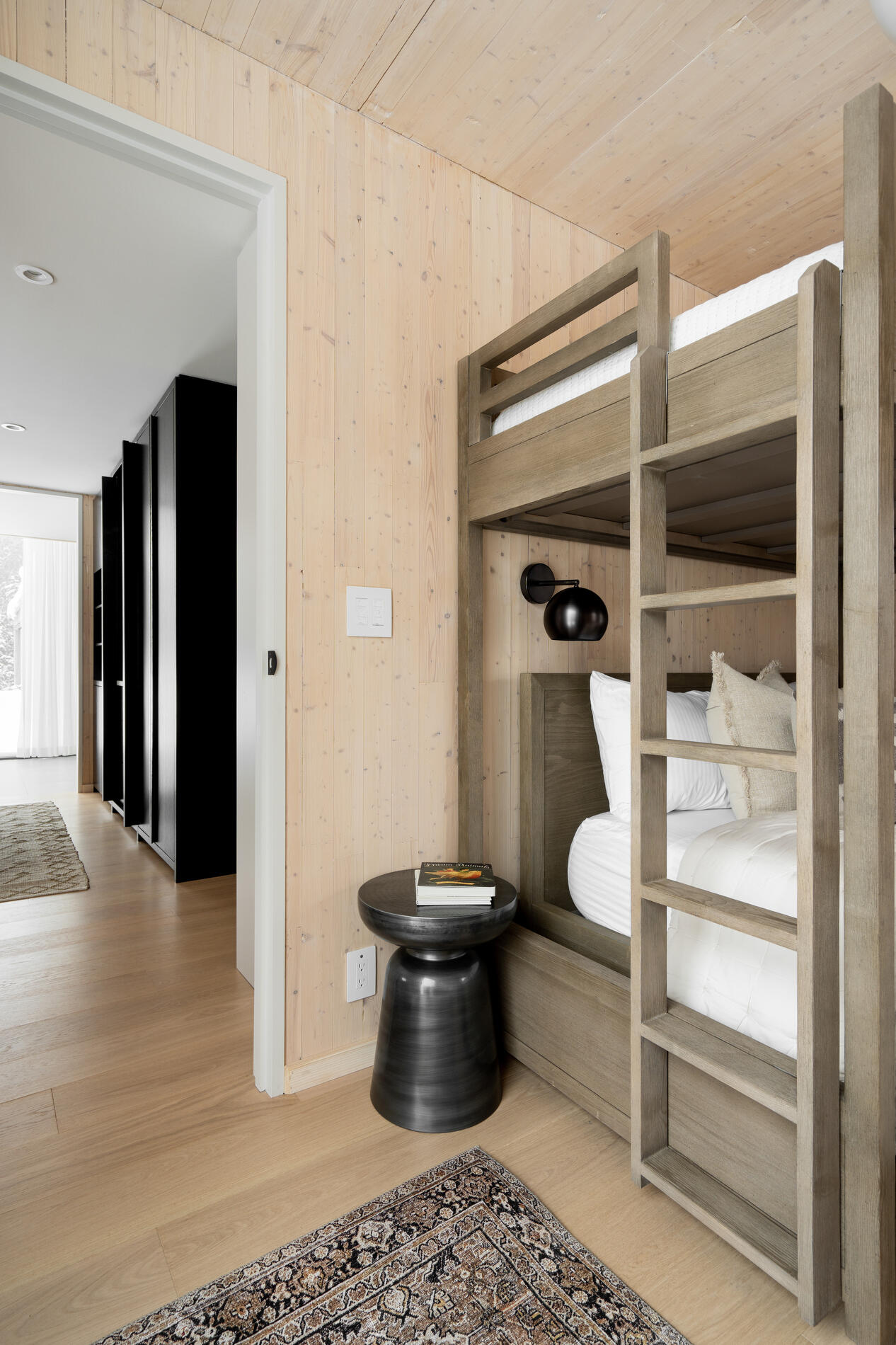
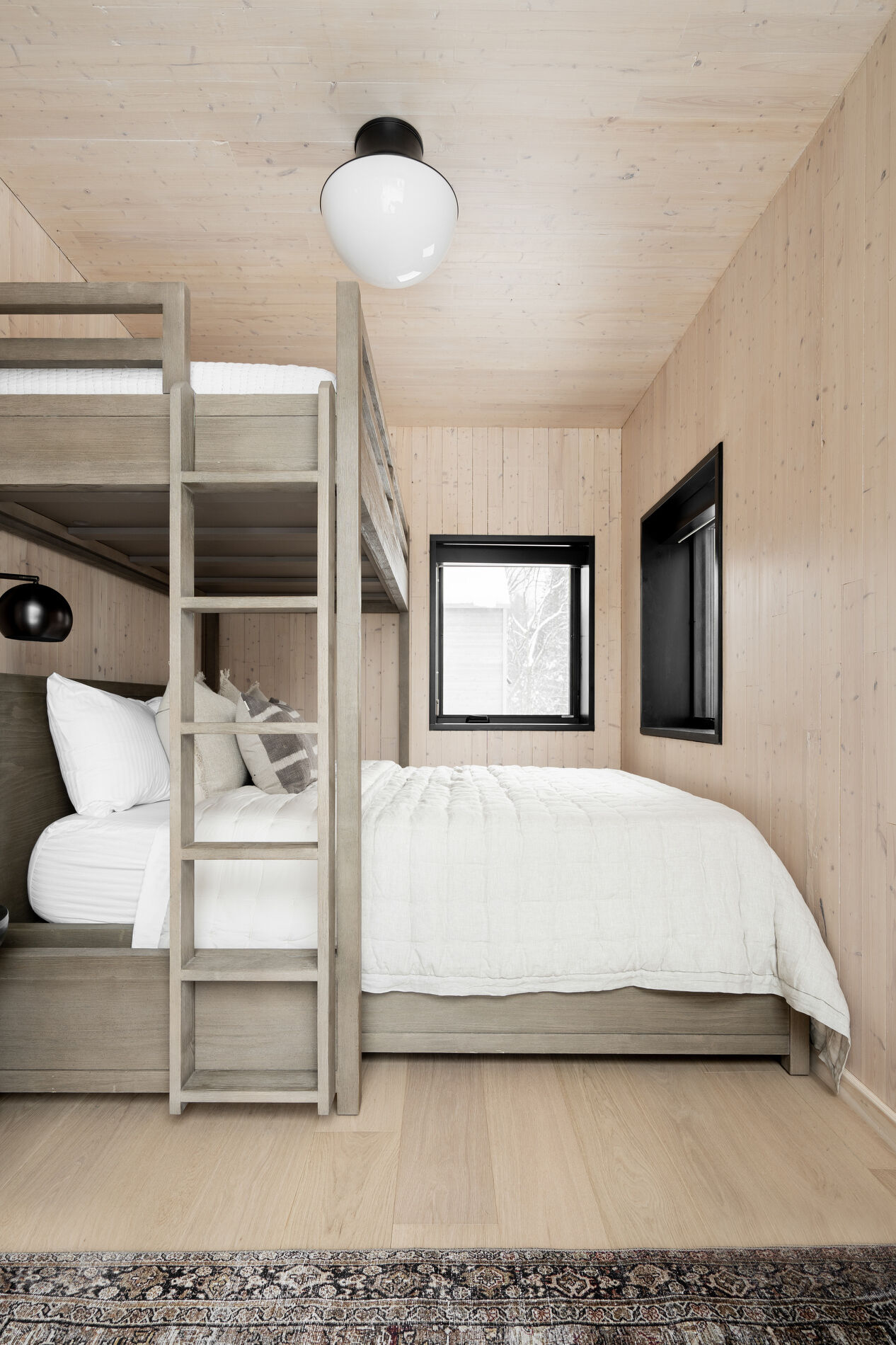
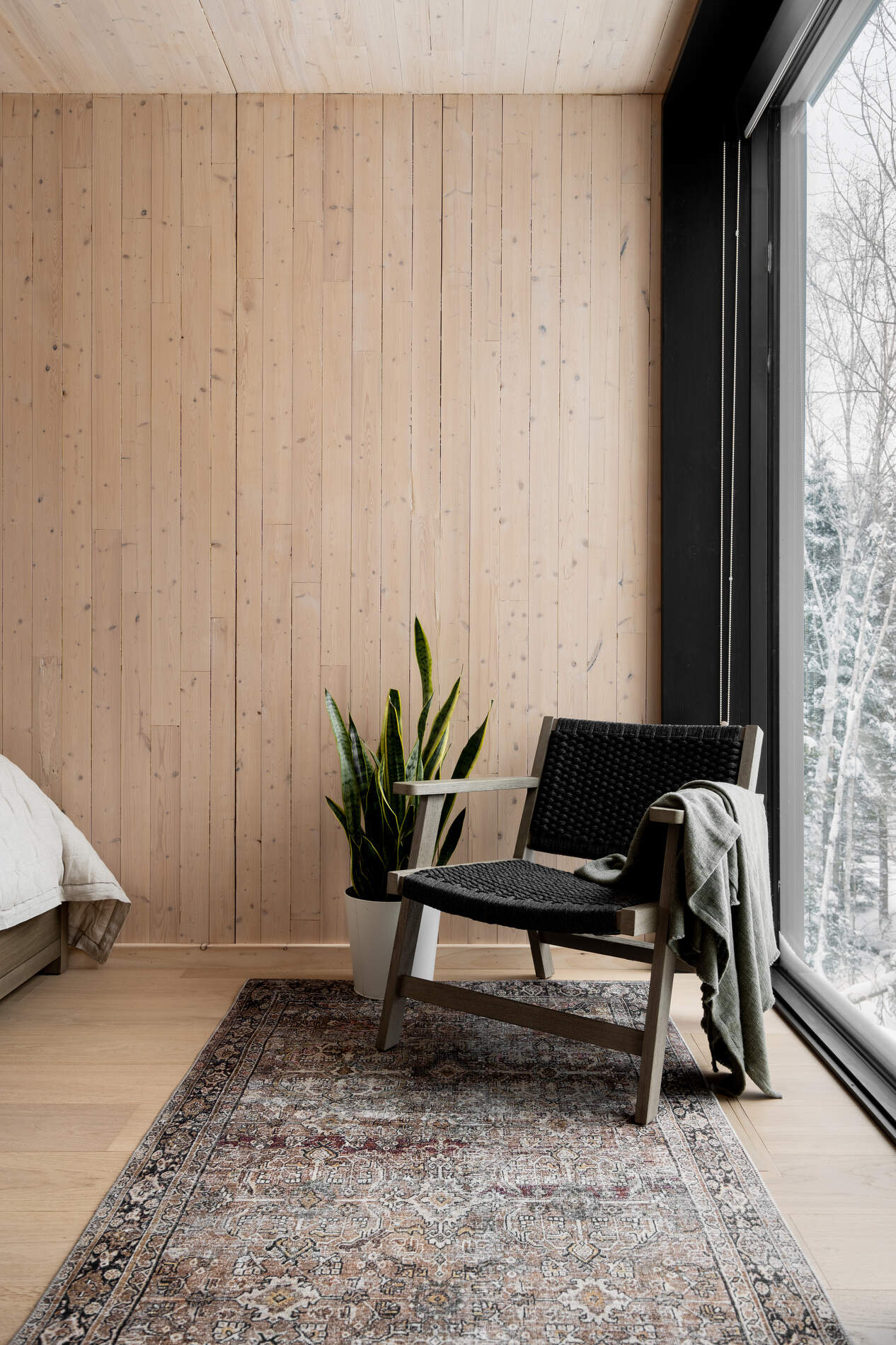
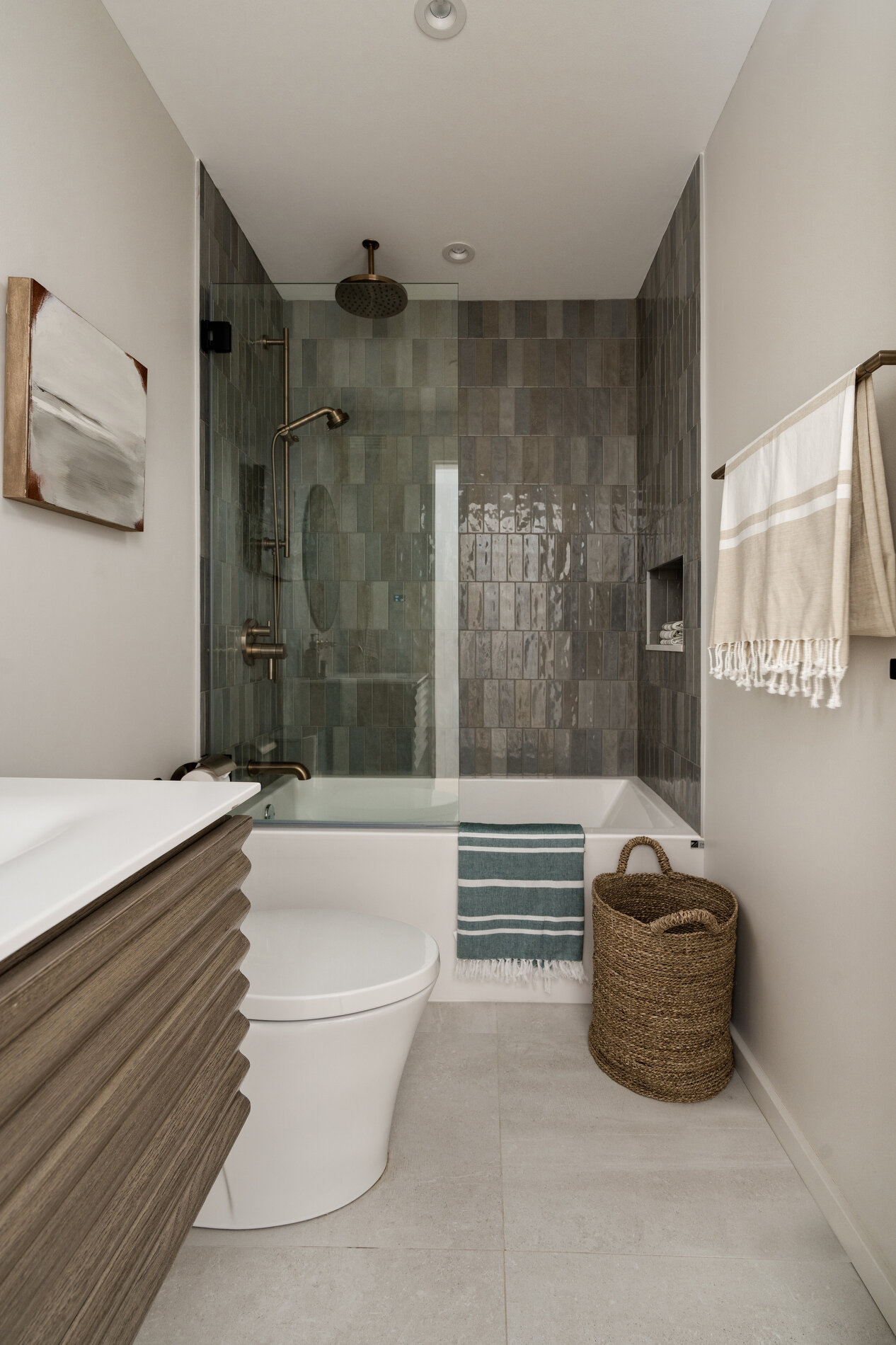
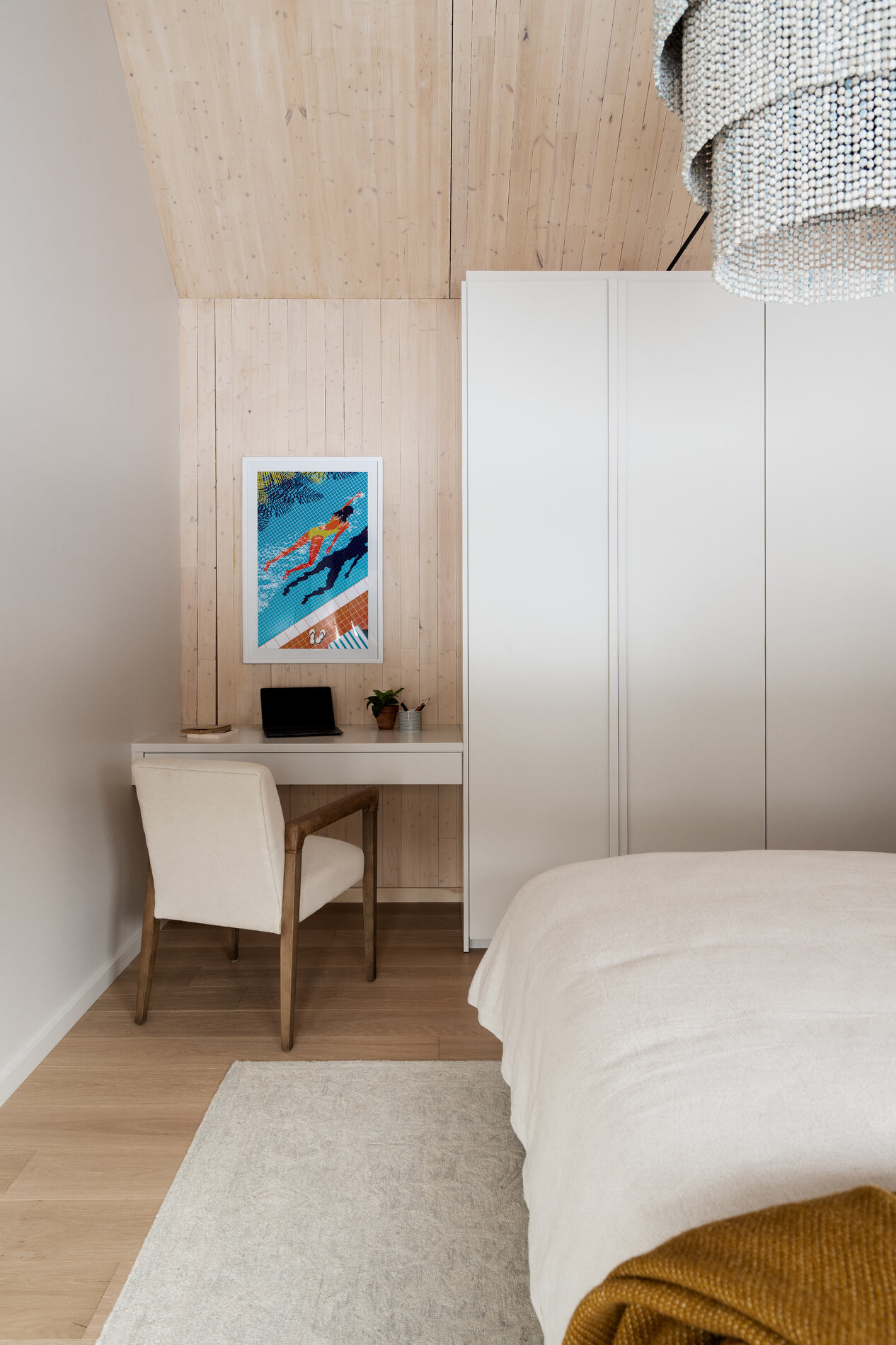
Across both units, the interiors share the same modern mountain aesthetic seen throughout the home. Timber surfaces, clean lines, and minimal detailing create a cohesive look, while natural light helps each space feel open despite its smaller scale.
Pinwheel Geometry Revealed Through the Floor Plan
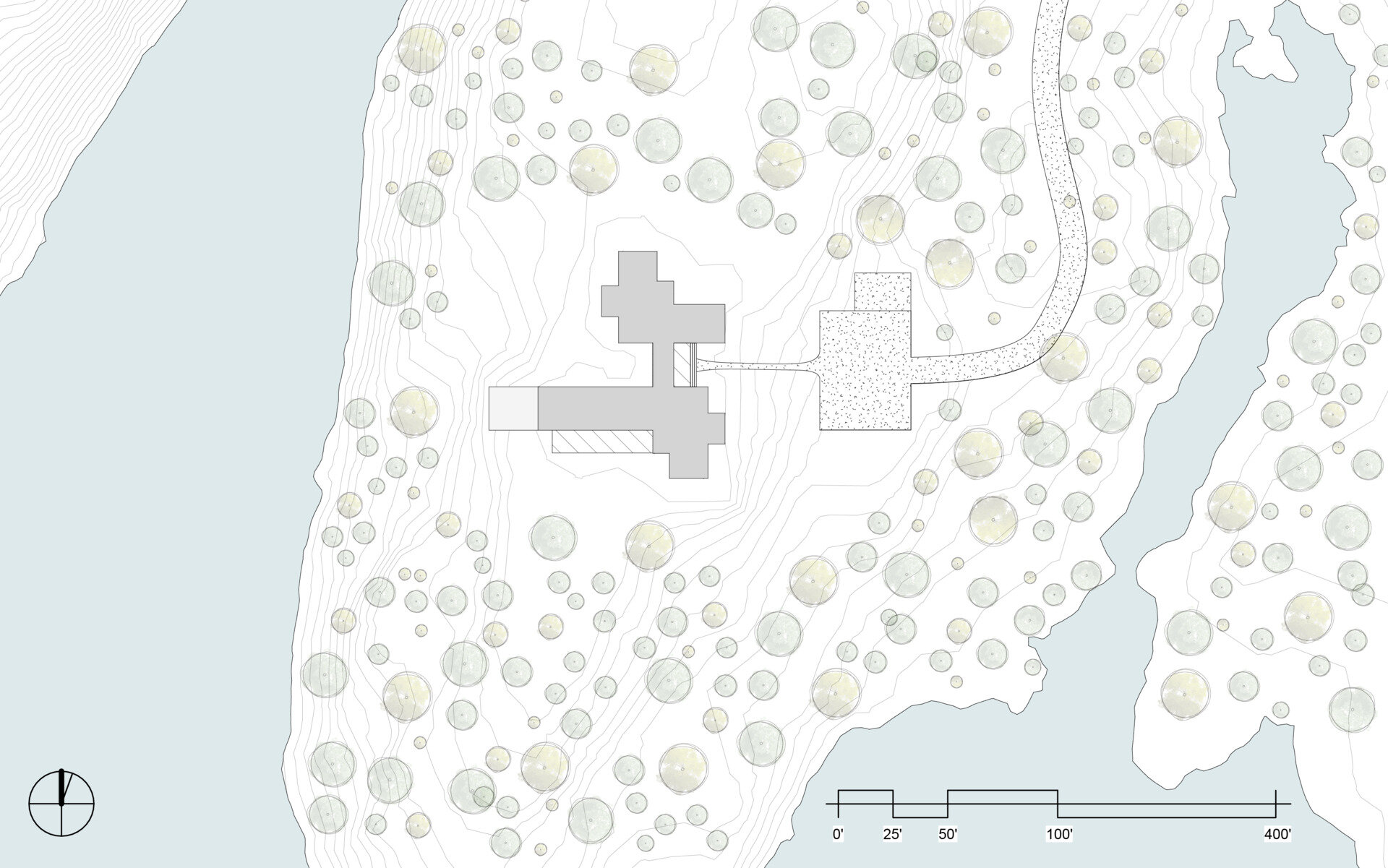
The site and floor plans reveal the logic behind the layout. The pinwheel arrangement becomes clear, showing how each volume extends outward while remaining anchored to the central corridor.
This strategy allows every space to capture a unique view while maintaining separation from neighboring areas.
This Mountain Retreat in Quebec brings together strong geometry, efficient construction, and a clear response to its surroundings. By breaking the home into smaller volumes and linking them through a glazed corridor, the design manages to feel both expansive and intimate at the same time.