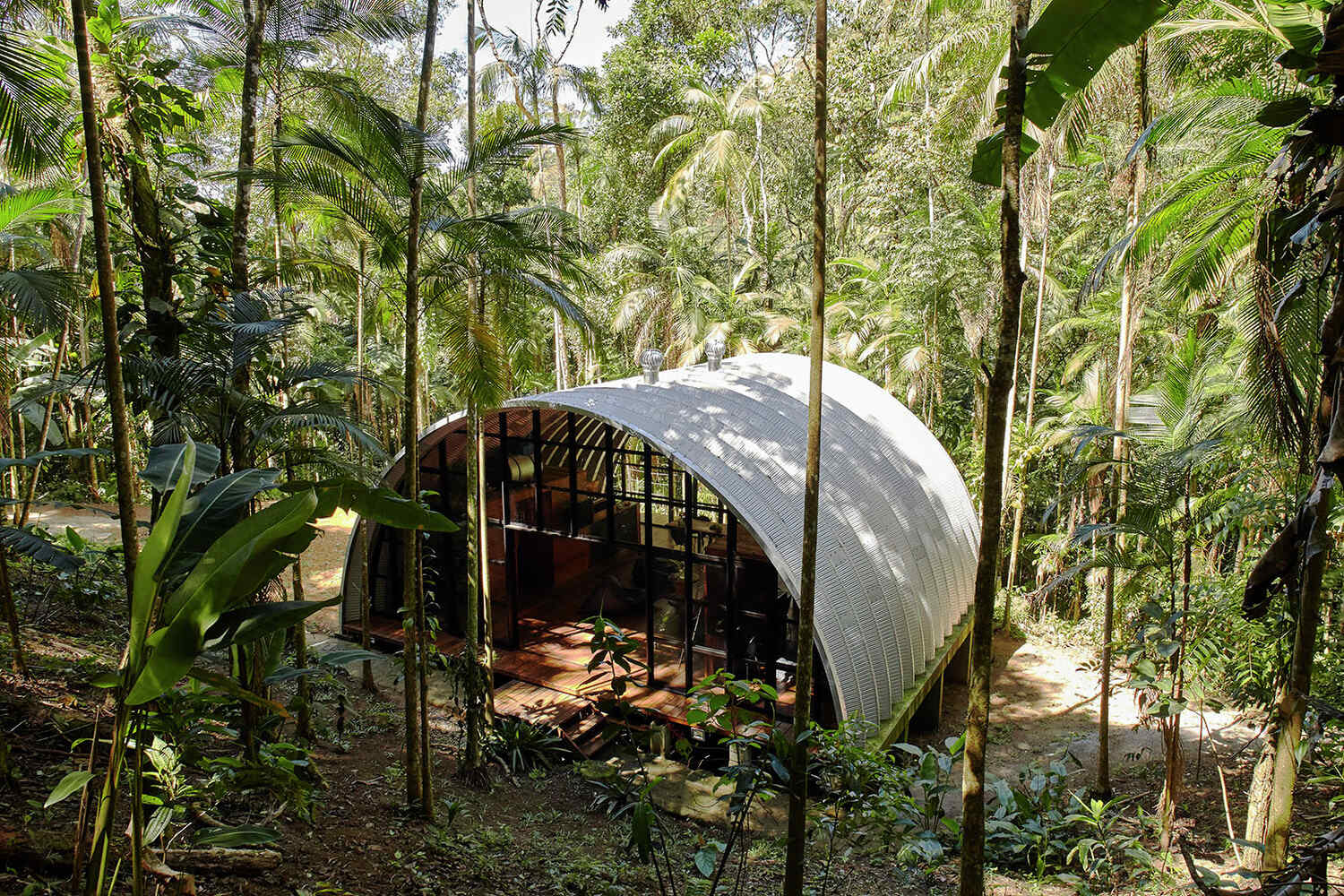
Atelier Marko Brajovic designed a modern house on the edge of Serra da Bocaina National Park, near Paraty in Rio de Janeiro, Brazil. Locals call it “The Ark,” a name that stuck after its curved form appeared in the forest like a boat resting among the trees.
The project draws from Indigenous building traditions, particularly the dwellings of the Asurini people from the Middle Xingu. That influence shows up in the shape, the materials, and the way the home was approached from the very beginning.
Built From the Top Down
Unlike most houses, this one started with the roof. The structure was assembled first, creating shelter before anything else existed below it. This approach follows principles of tropical architecture, where protection from sun and rain comes first. Once the roof was in place, the rest of the house could evolve underneath it.
A Lightweight Structure With a Big Idea
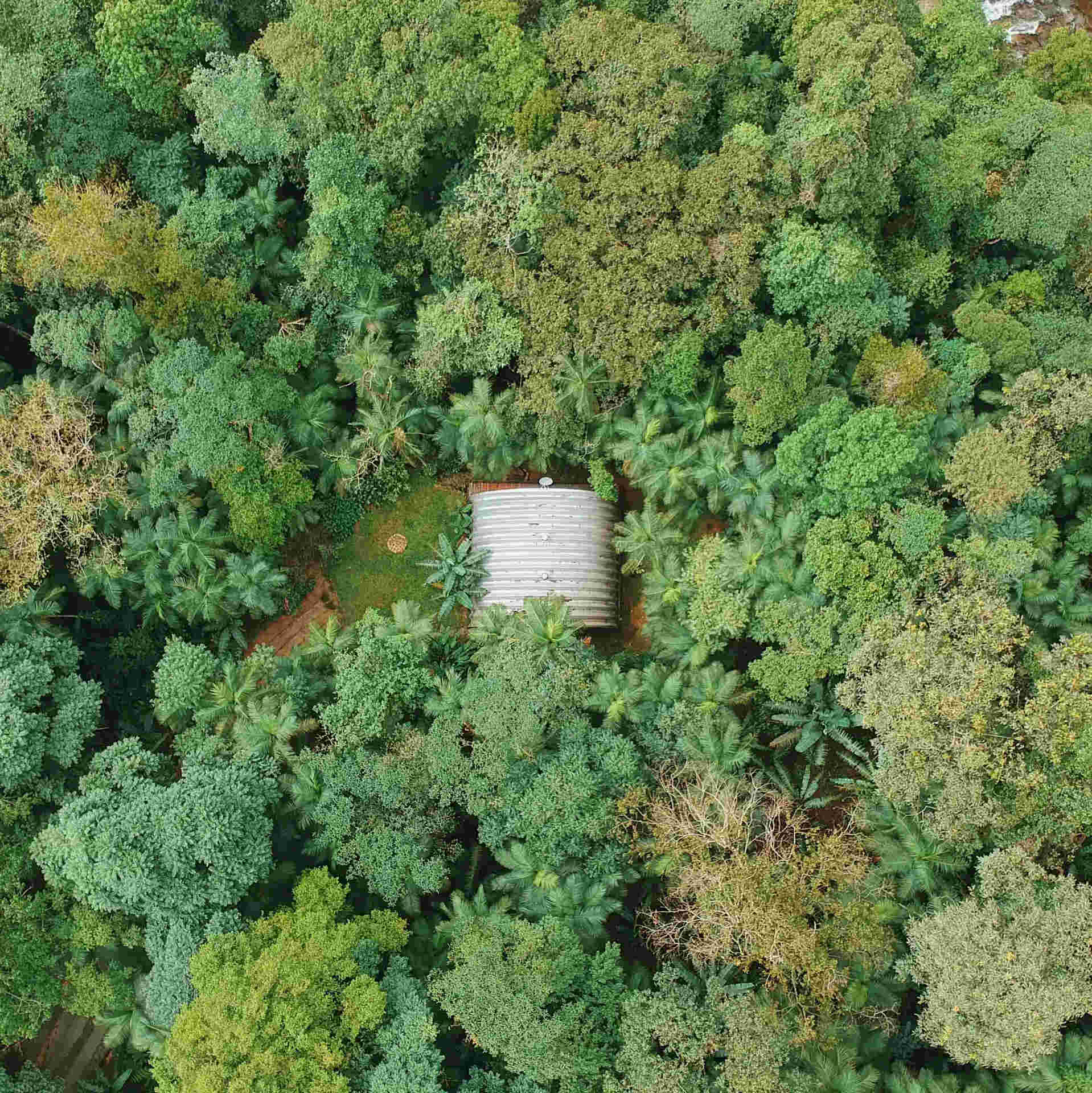
The arched shell is made from ultra-light Galvalume modules, a mix of carbon steel, aluminium, and zinc. These prefabricated pieces were assembled on site in just one week. The system is not fixed in place. It can be taken apart and rebuilt somewhere else, giving the house a level of flexibility that most homes never have.
Extending Living Outdoors
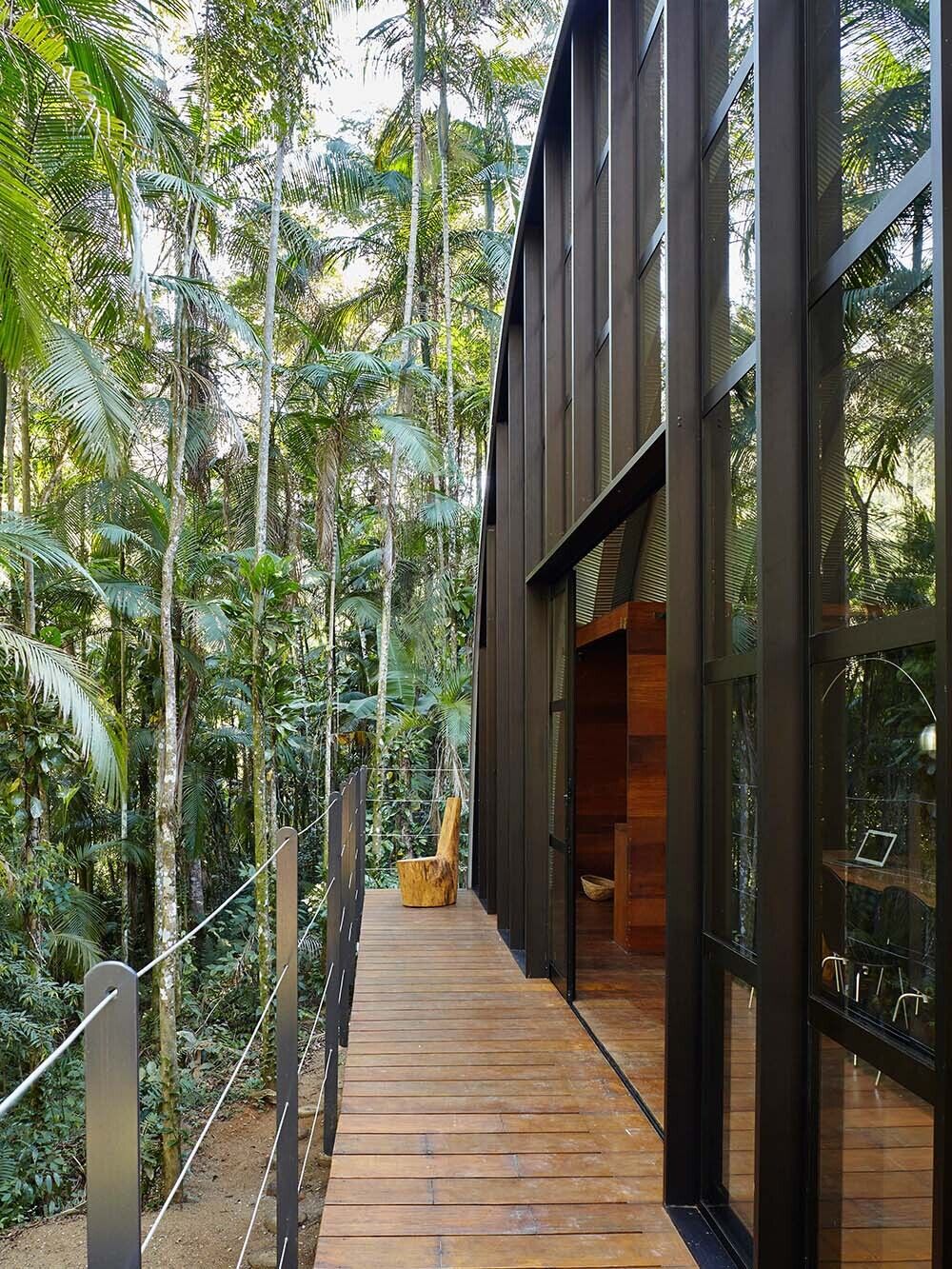
Once the shelter was complete, a wooden deck was added. This simple move expands the usable space, blurring the line between inside and outside. The deck becomes an extension of the home, connecting daily activities to the surrounding forest without adding complexity to the structure.
After the structure and deck were in place, the interior layout was developed. Instead of following a fixed plan, the spaces were mapped out on site using tape and adjusted in real time. This process allowed the design to respond to wind, sun, and views, shaping the home based on how it would actually be used.
An Open Plan Under One Curve
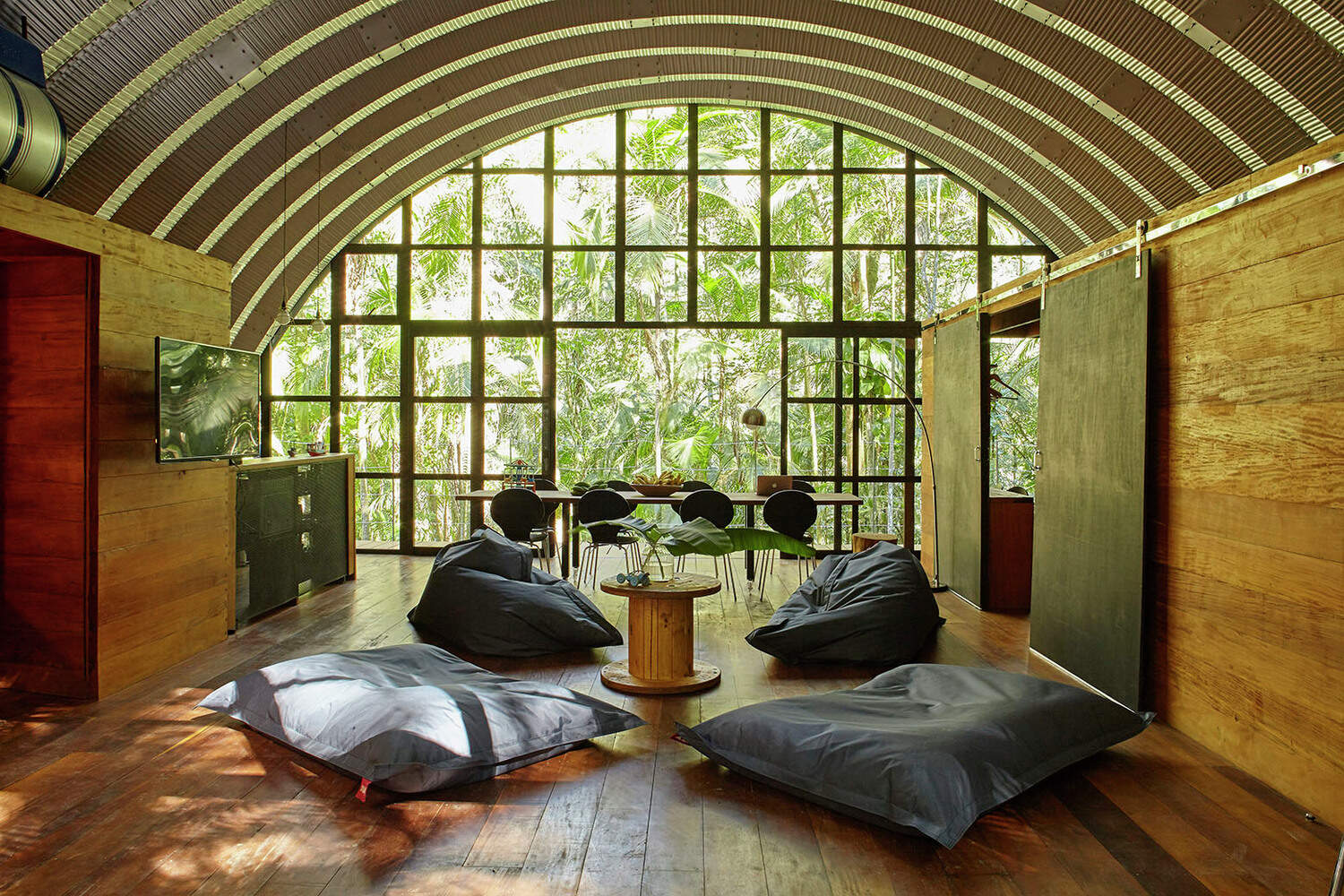
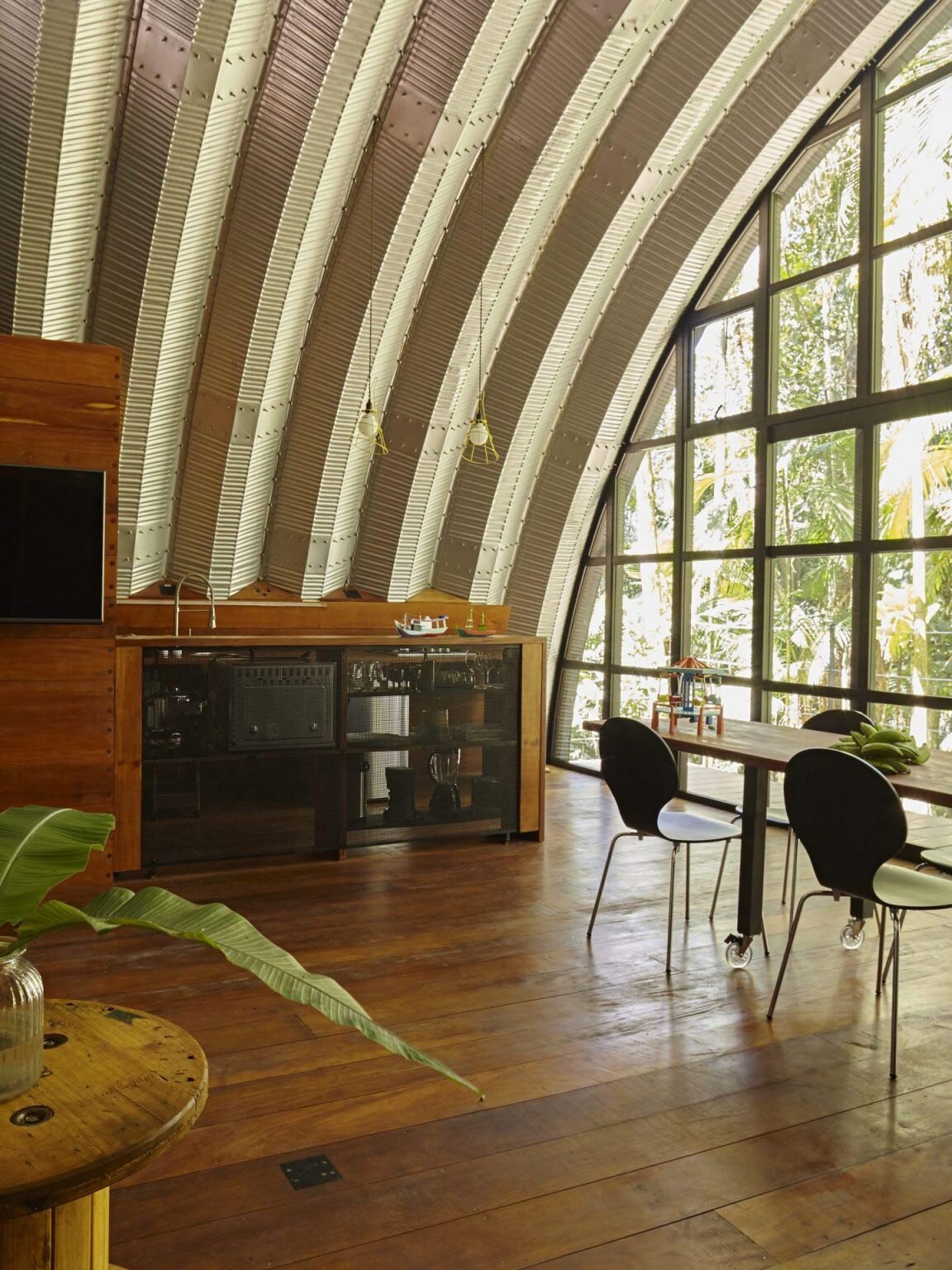
Inside, the main living areas are arranged as a single open space. The kitchen, dining area, and living room all sit beneath the same sweeping roof. From almost any angle, the arched structure is visible, shaping how the space feels and how light moves through it.
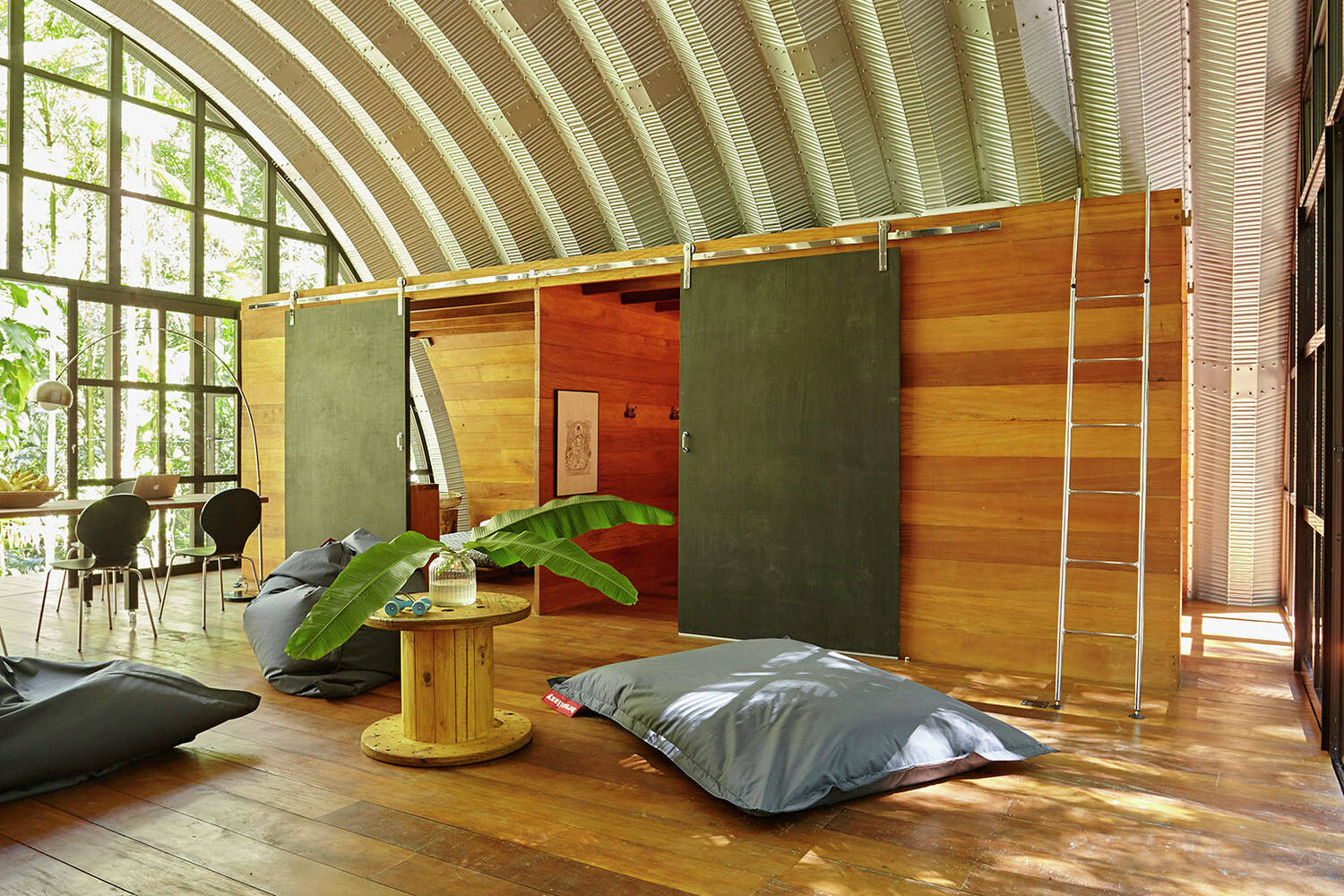
A Roof That Defines Every Room
The form of the roof is more than just shelter. Its curve stretches across the entire home, visually tying every space together. It creates a sense of continuity, while still allowing each area to feel distinct through layout and furniture placement.
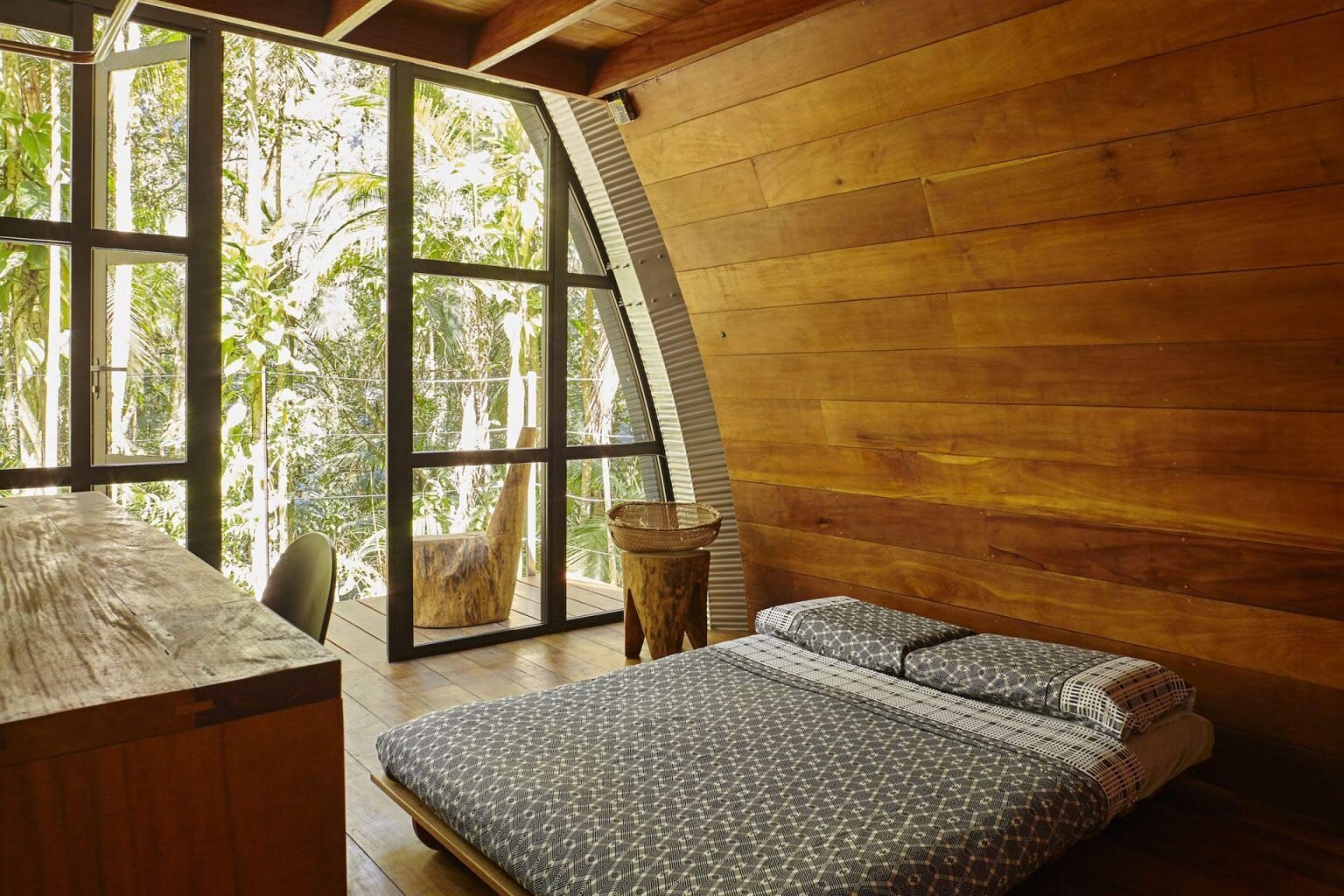
A Bedroom Behind Sliding Doors
Tucked just off the main living area, the bedroom sits behind a sliding barn door. It offers privacy without feeling disconnected from the rest of the house. Wood details bring warmth into the space, while a door opens directly onto the deck, reinforcing that indoor-outdoor link.
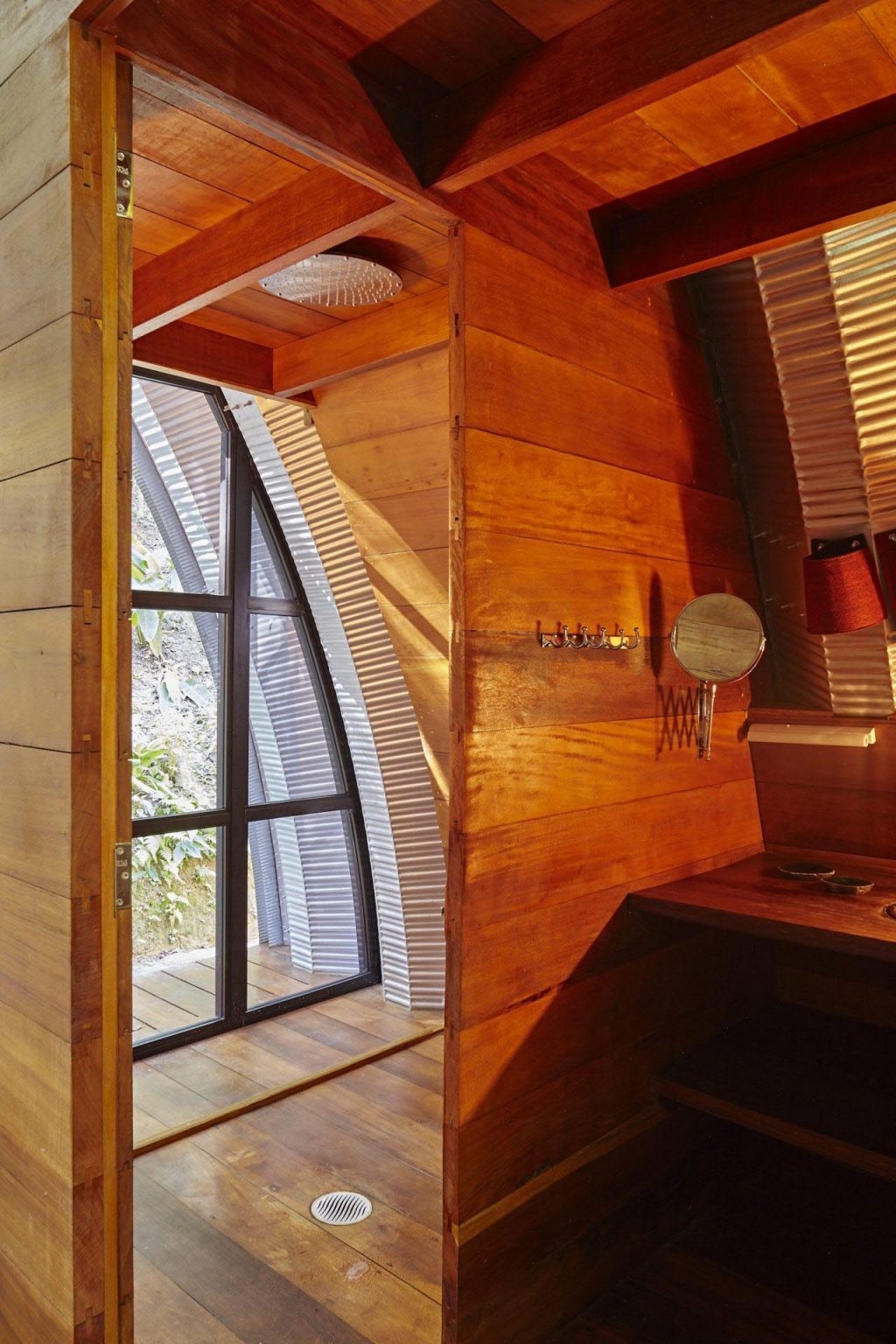
A Bathroom With a View
Behind another sliding door, the bathroom continues the same simple approach. The standout feature is the shower, which looks out into the forest. It’s a small detail, but one that changes the experience of the space entirely.
From its top-down construction to its modular structure and evolving interior, this home challenges the usual order of building a home. Set at the edge of a national park, it shows how a simple idea, executed differently, can lead to something unexpected.