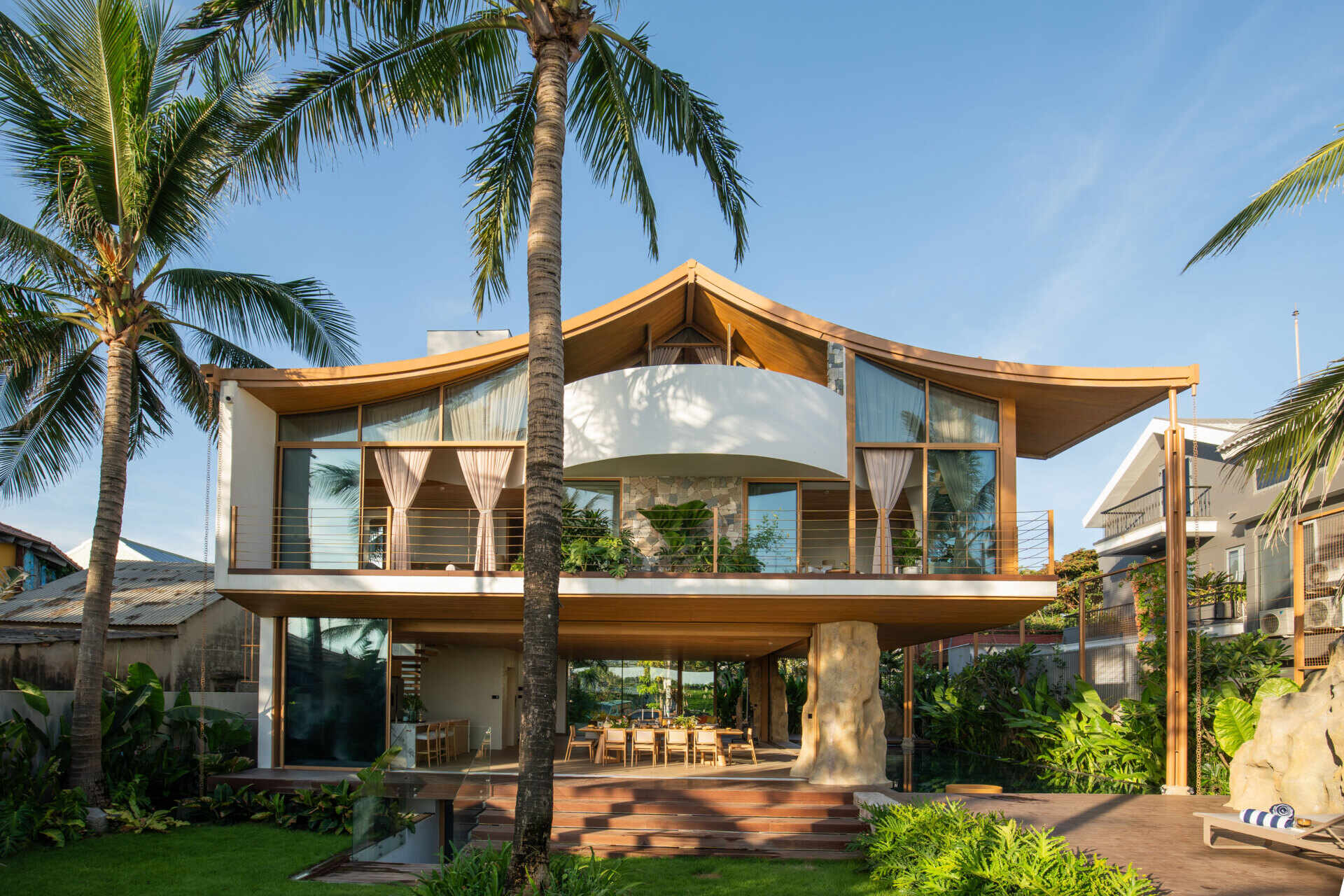
In Hoi An, Vietnam, 85 Design has created TH Villa Hoi An on a 360-square-metre beachfront site where the coastline meets the heritage edge of the city. The location brought strict planning rules covering building height, roof form and site coverage, along with the demands of a tropical climate exposed to strong sunlight, coastal winds and salt air.
Originally planned as a family holiday home, the villa was also designed to adapt into short or long-term accommodation with independently operated guest rooms. That flexibility shaped many of the design decisions, allowing the house to function equally well as a private residence or a boutique-style beachfront villa.
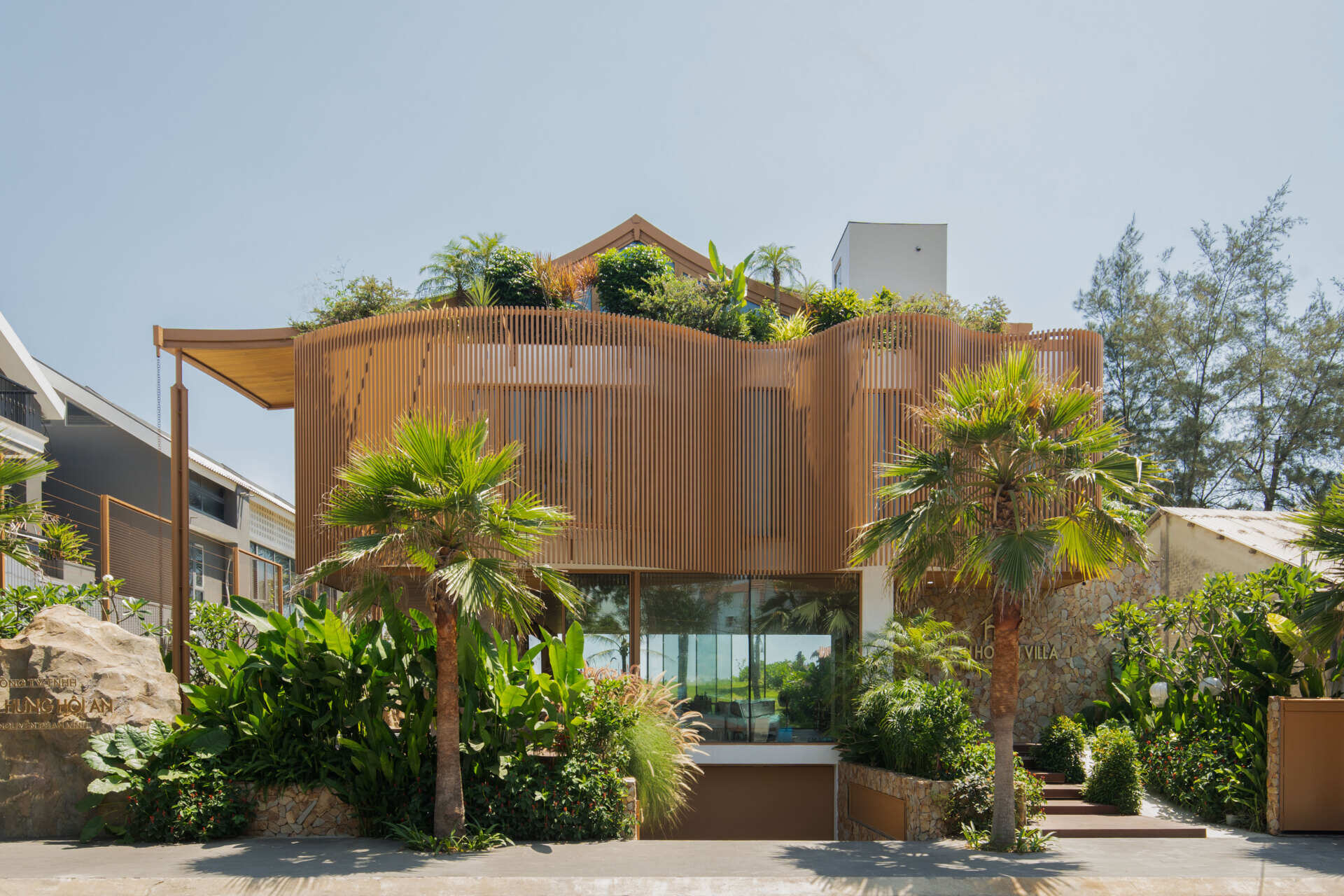
A Curved Facade Inspired by Ocean Waves
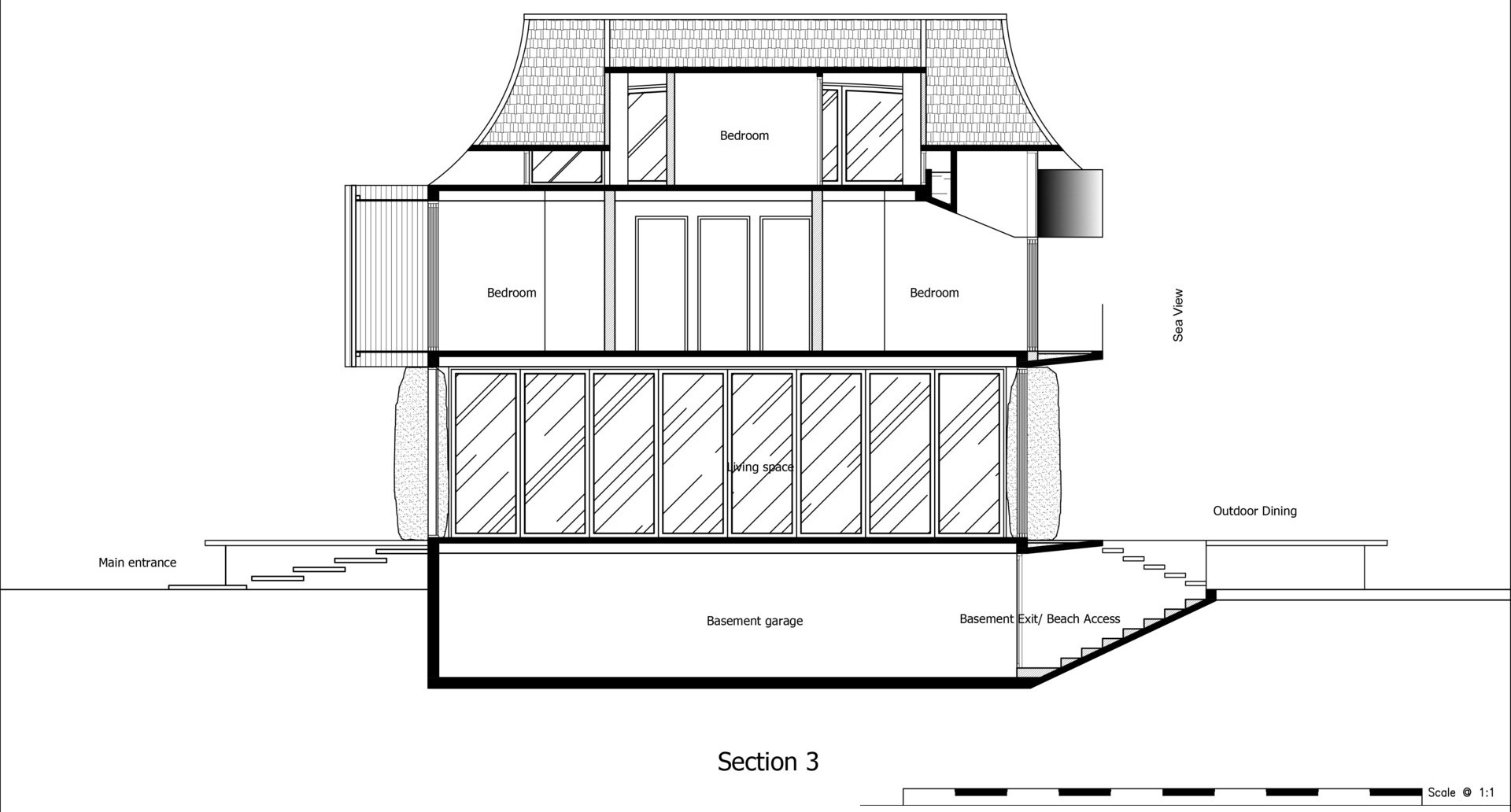
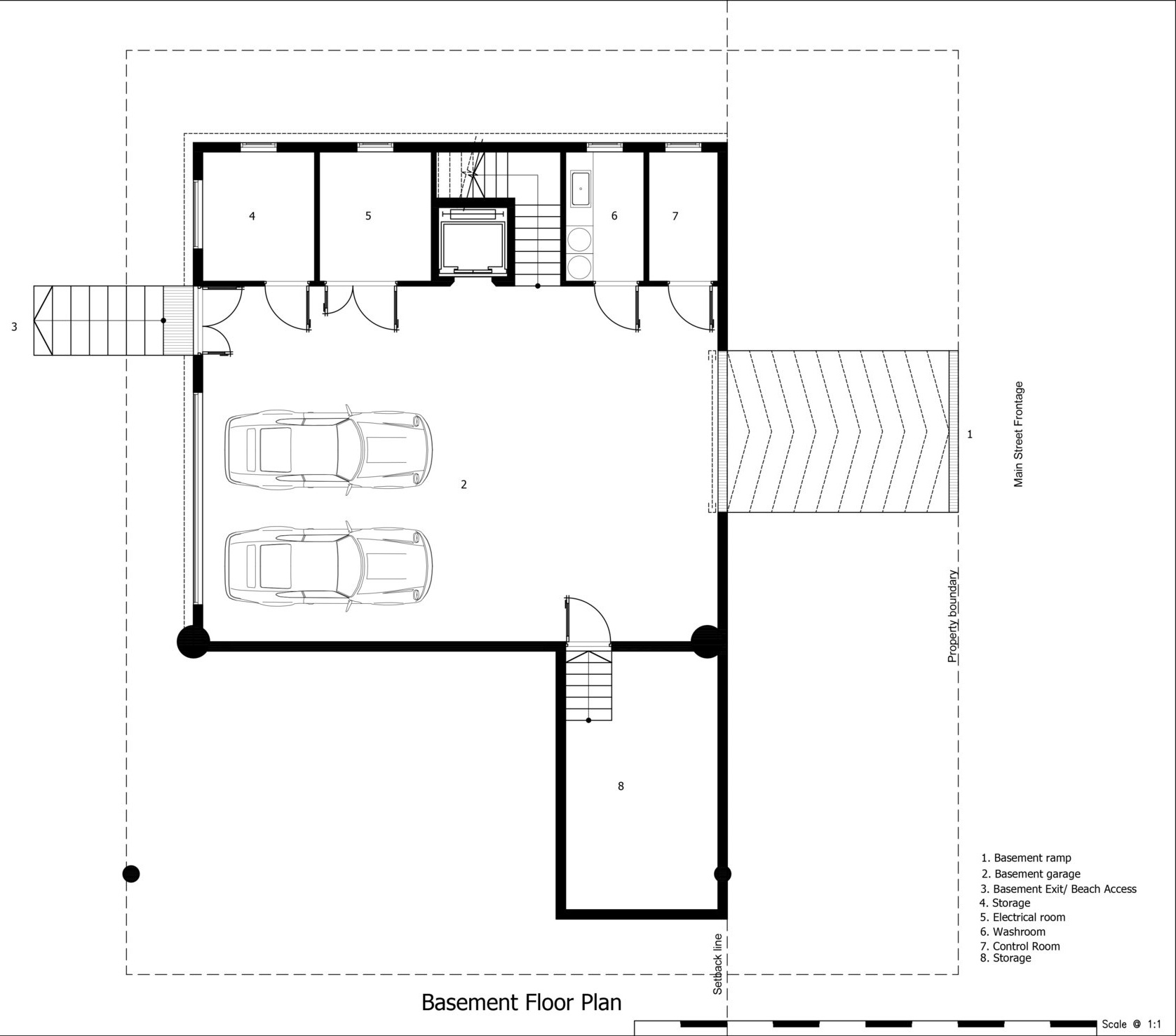
The villa includes a basement level that houses the garage, storage and technical spaces. Moving these practical functions below ground frees the main floor for living spaces, gardens and outdoor entertaining.
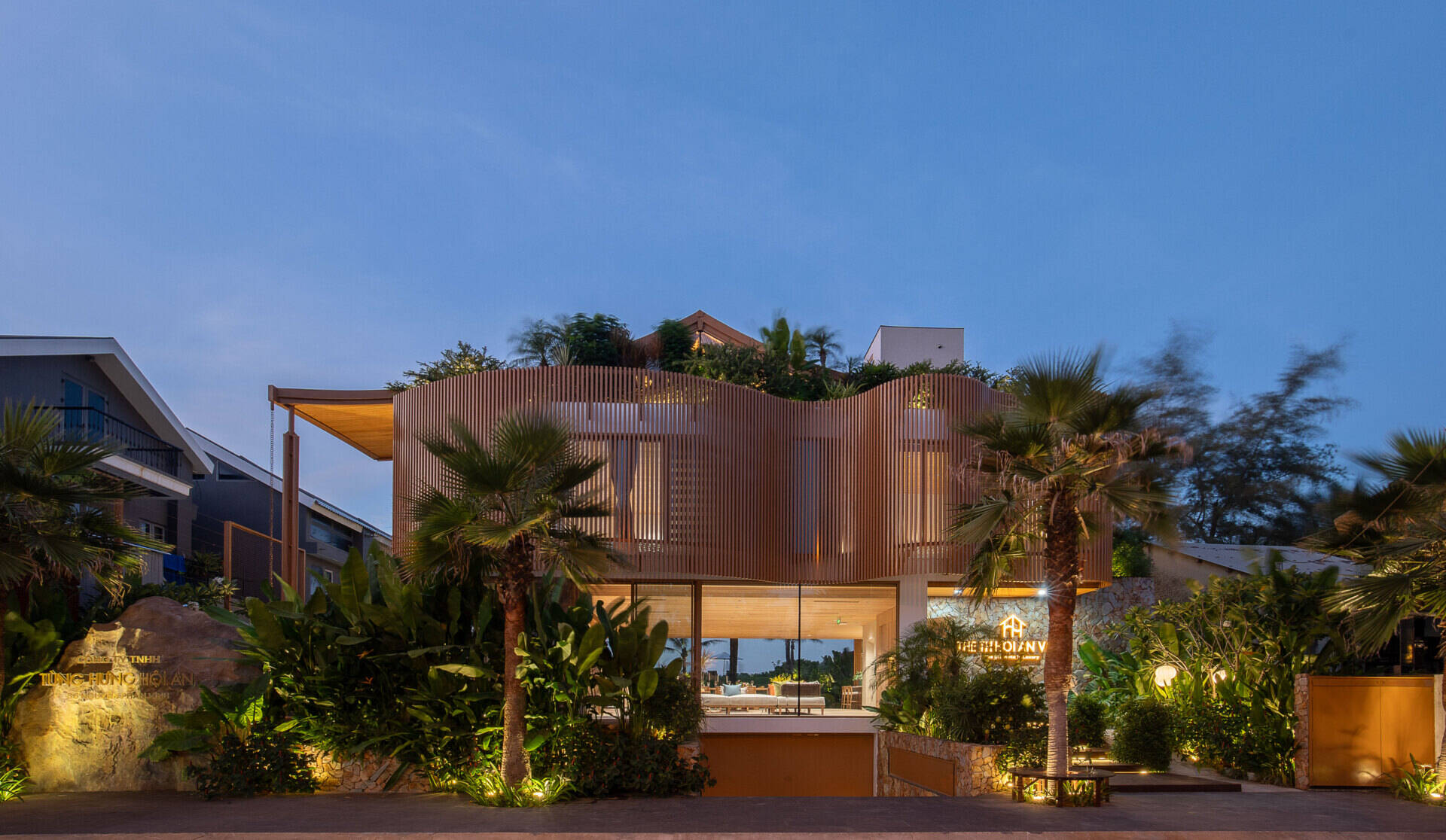
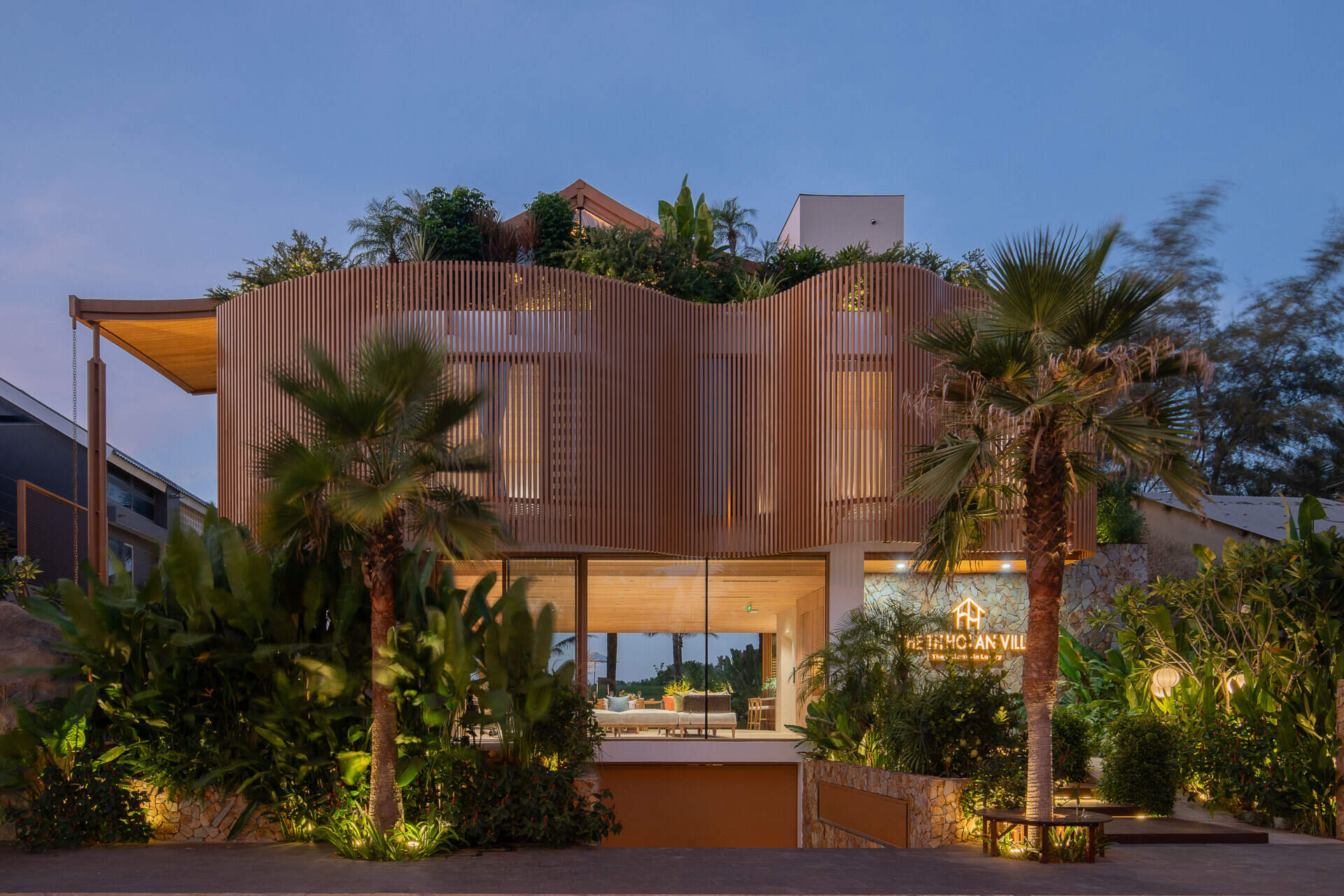
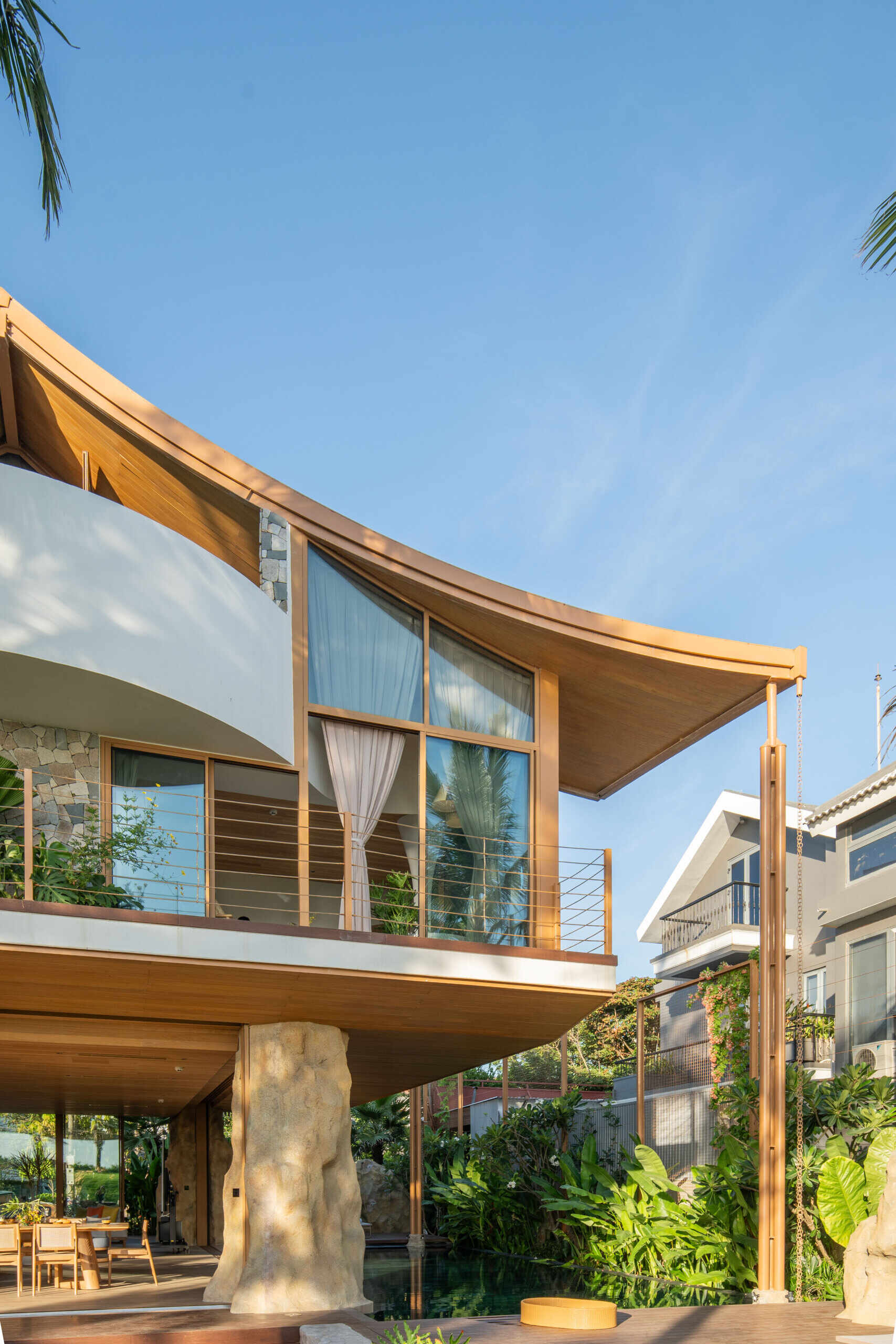
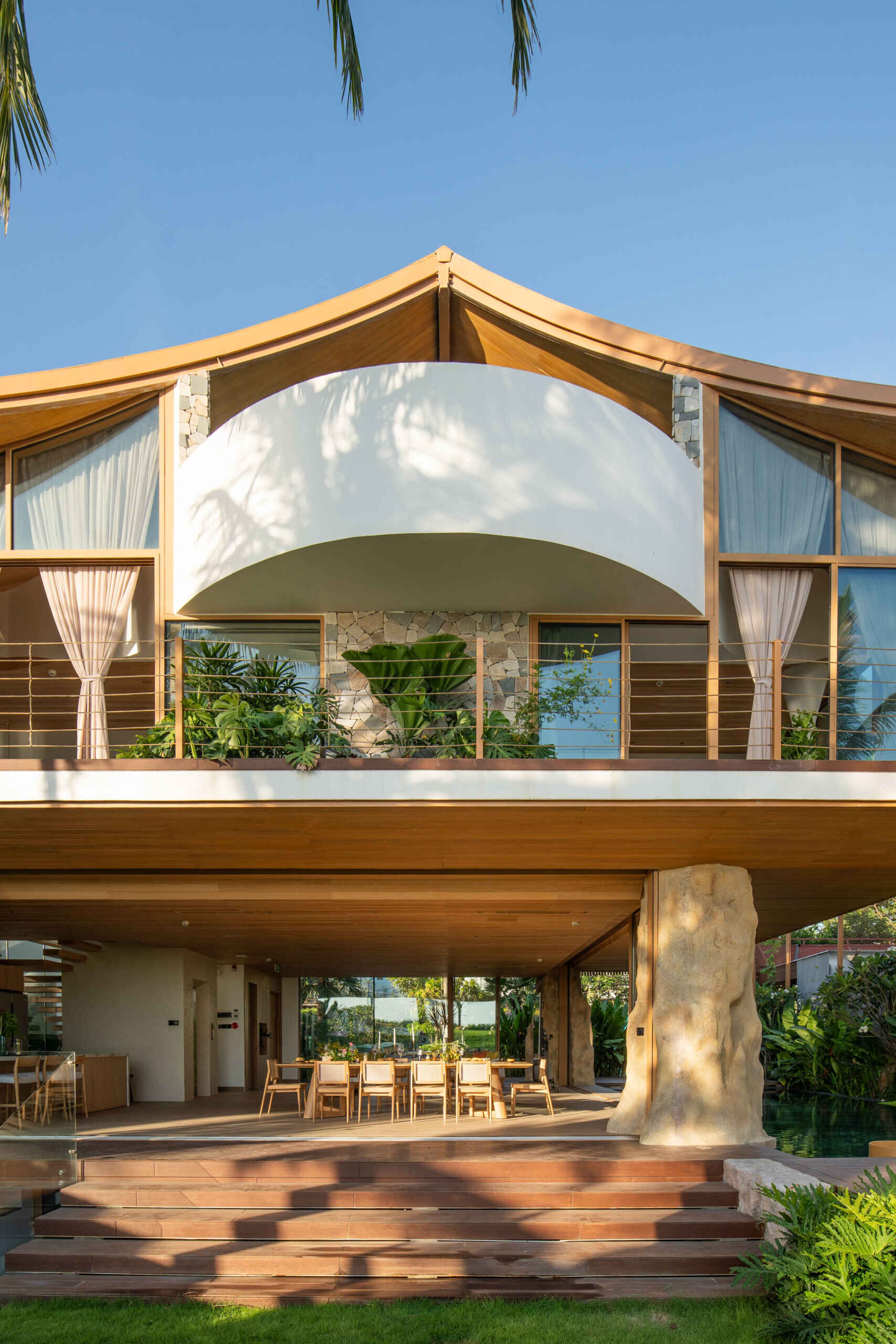
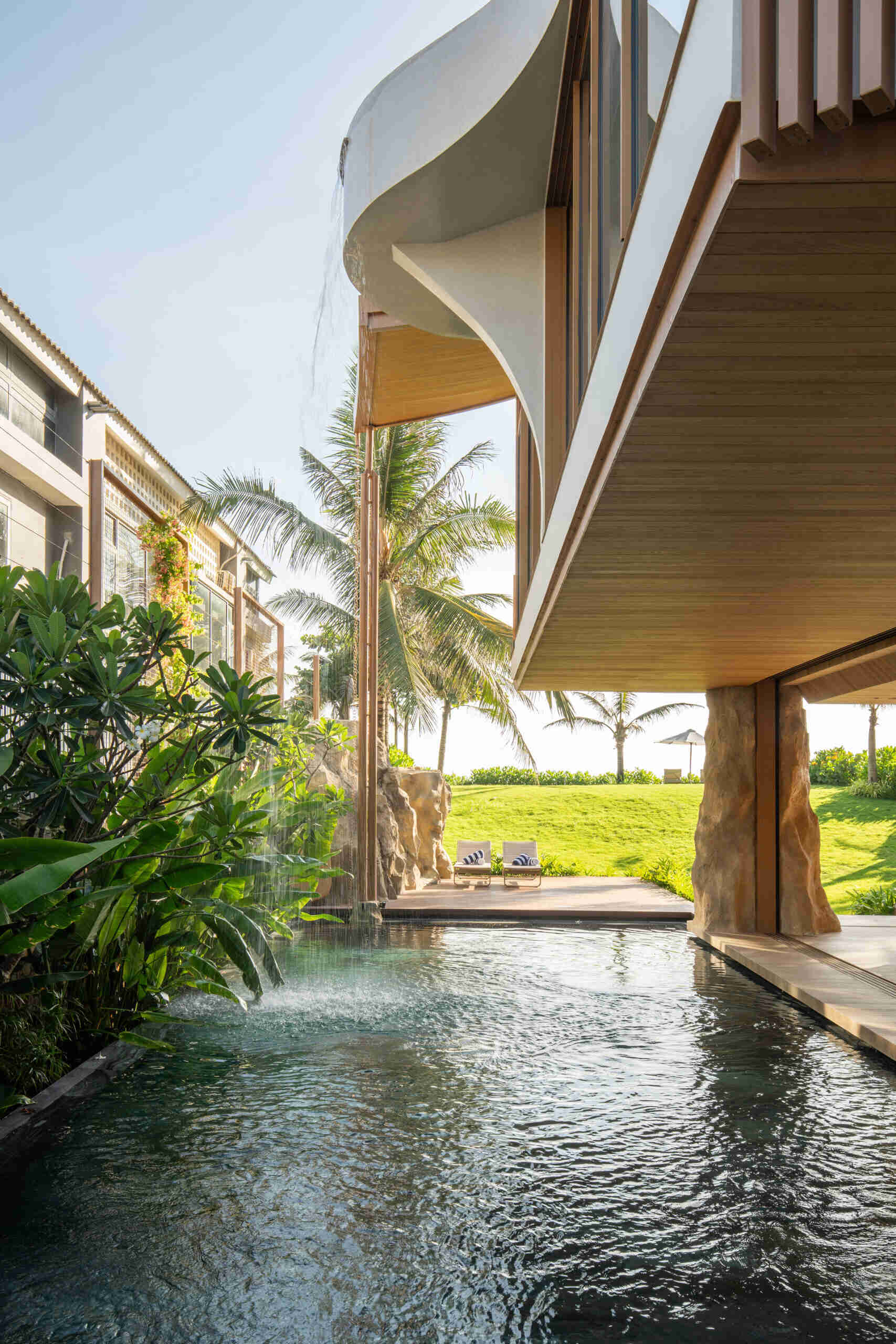
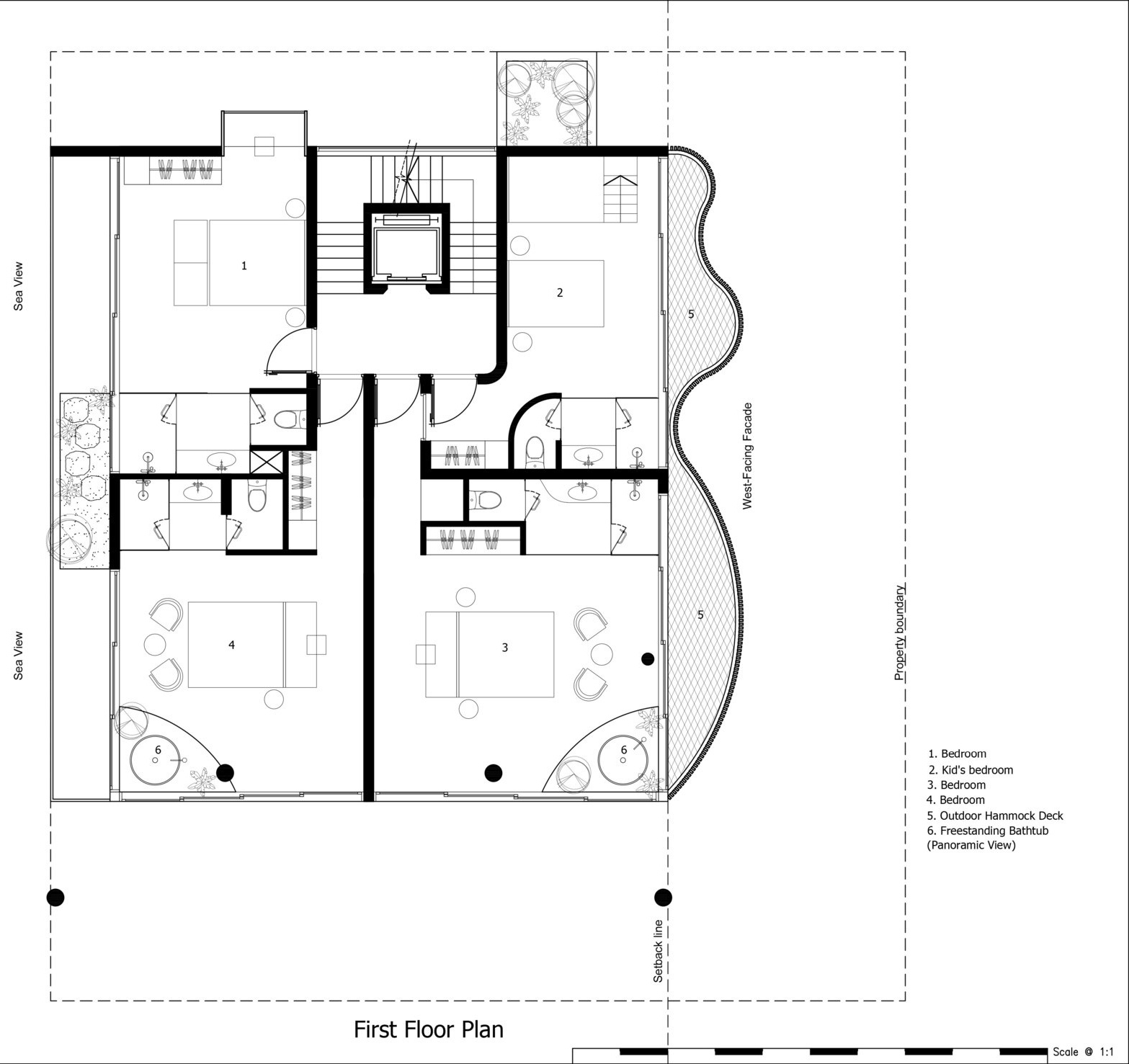
The architectural identity begins with the sweeping pitched roof, inspired by the wings of a seagull gliding above the sea. Along the west-facing facade, a curved stainless steel louver system references rolling ocean waves while helping protect the home from harsh afternoon sun. Designed for the coastal environment, the louvers also improve privacy and encourage natural ventilation.
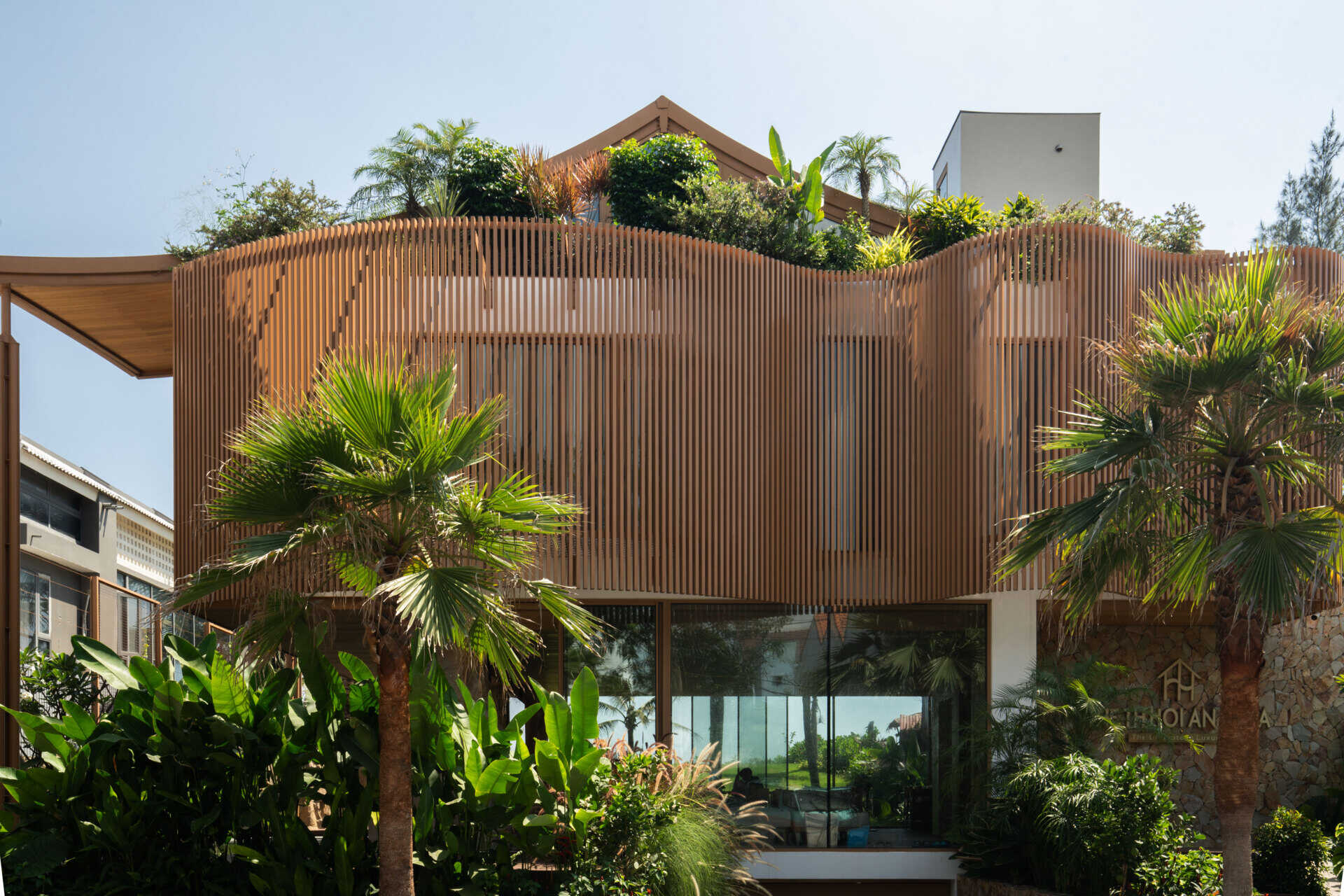
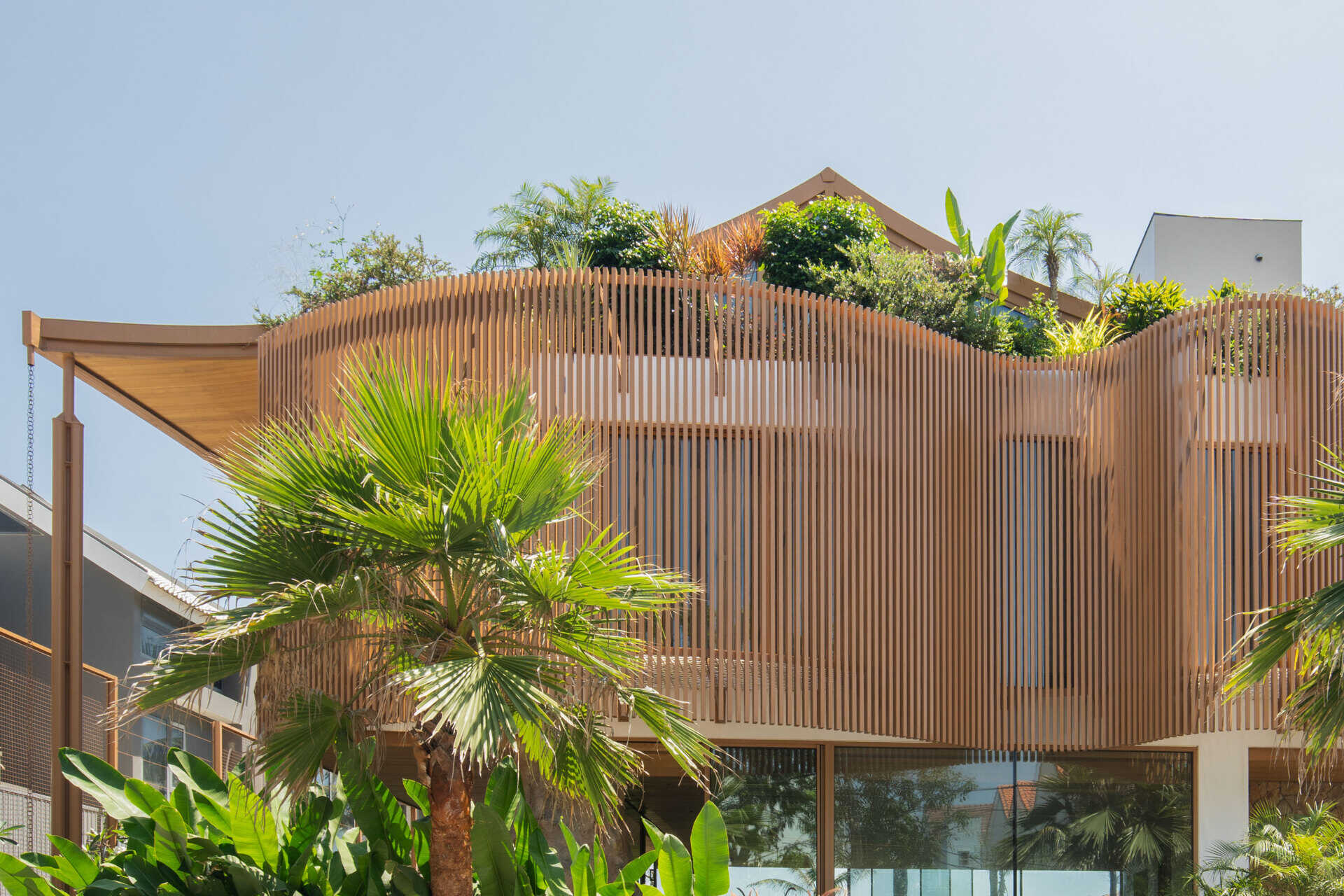
A Roof That Solves More Than One Problem
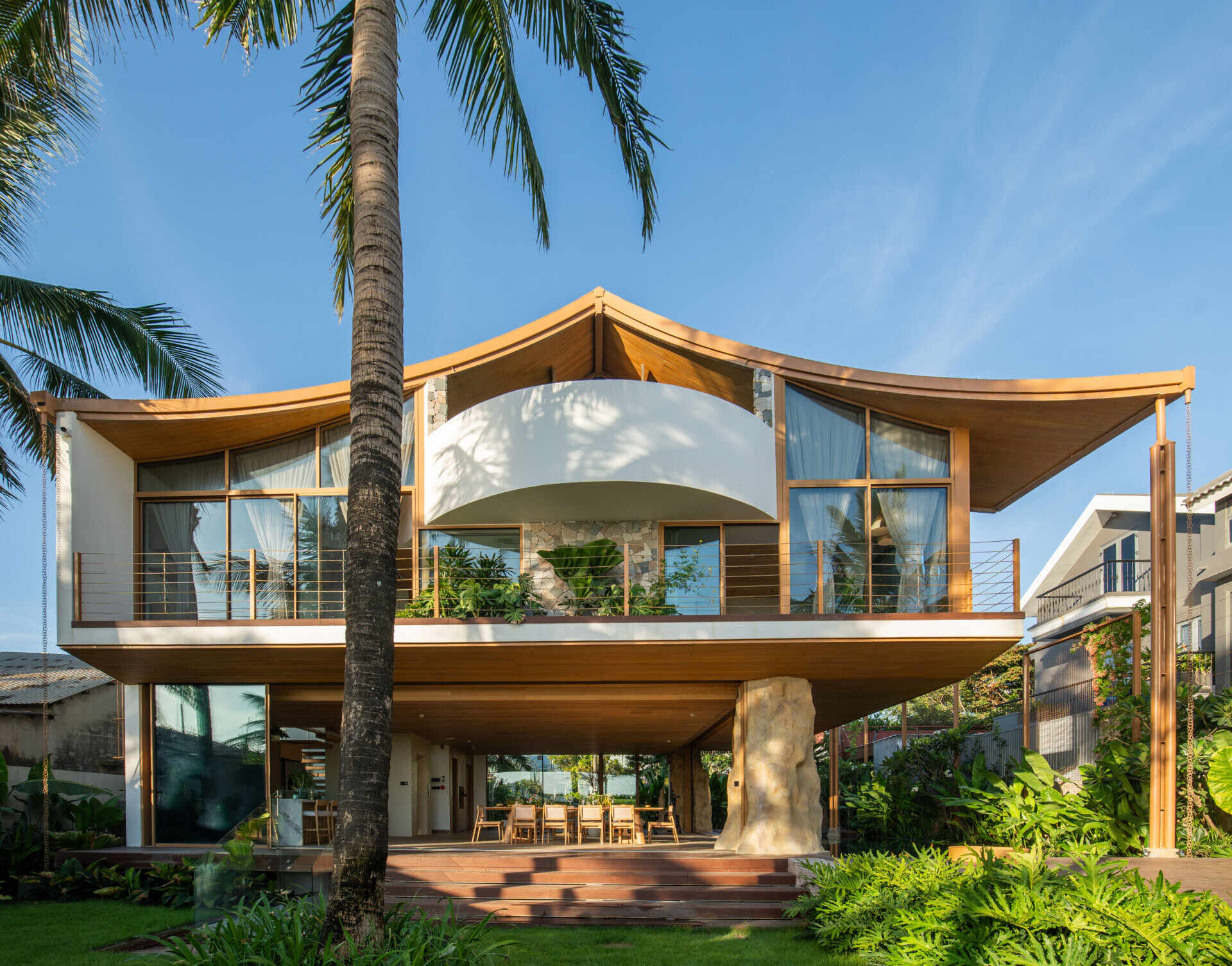
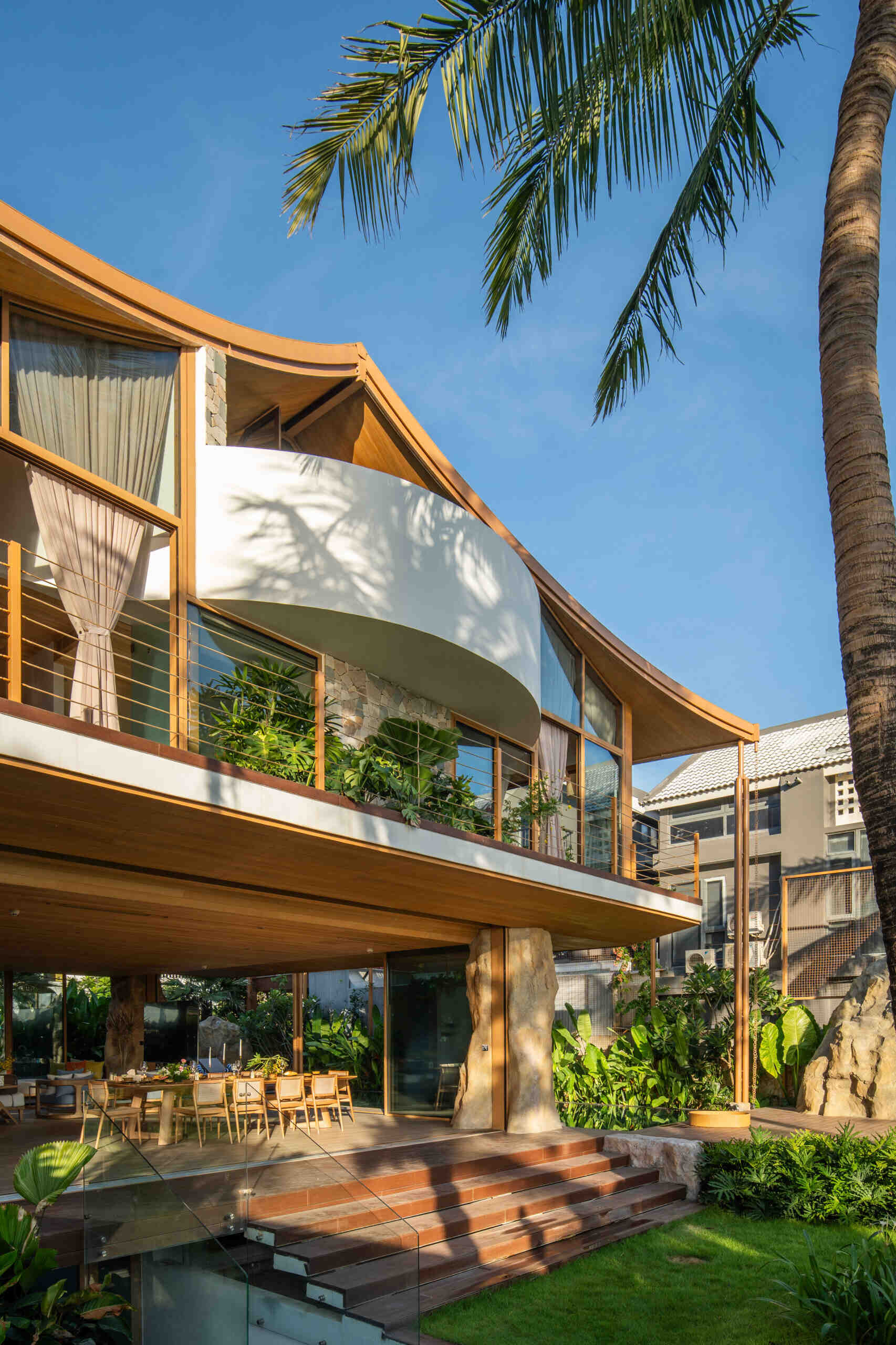
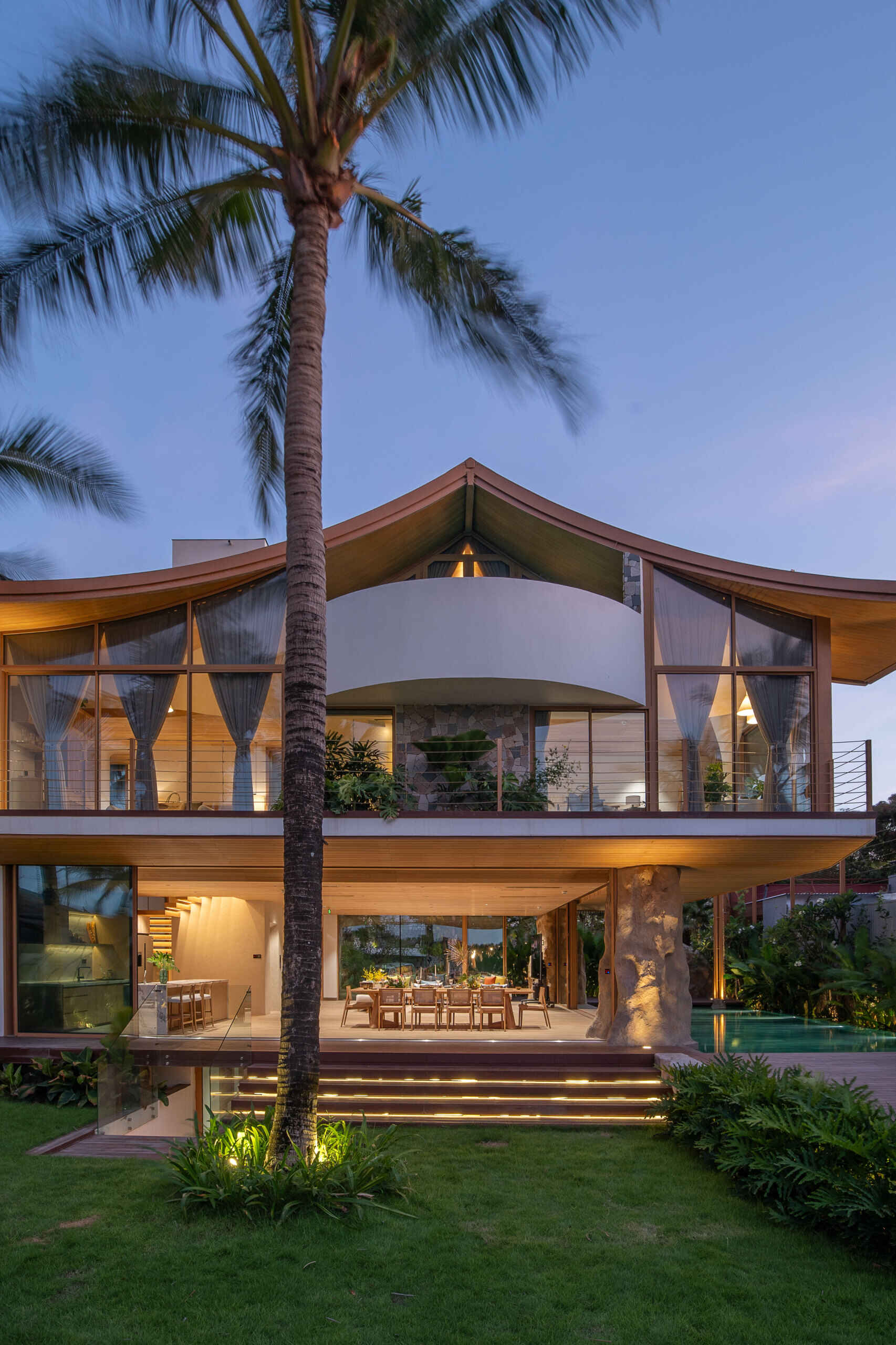
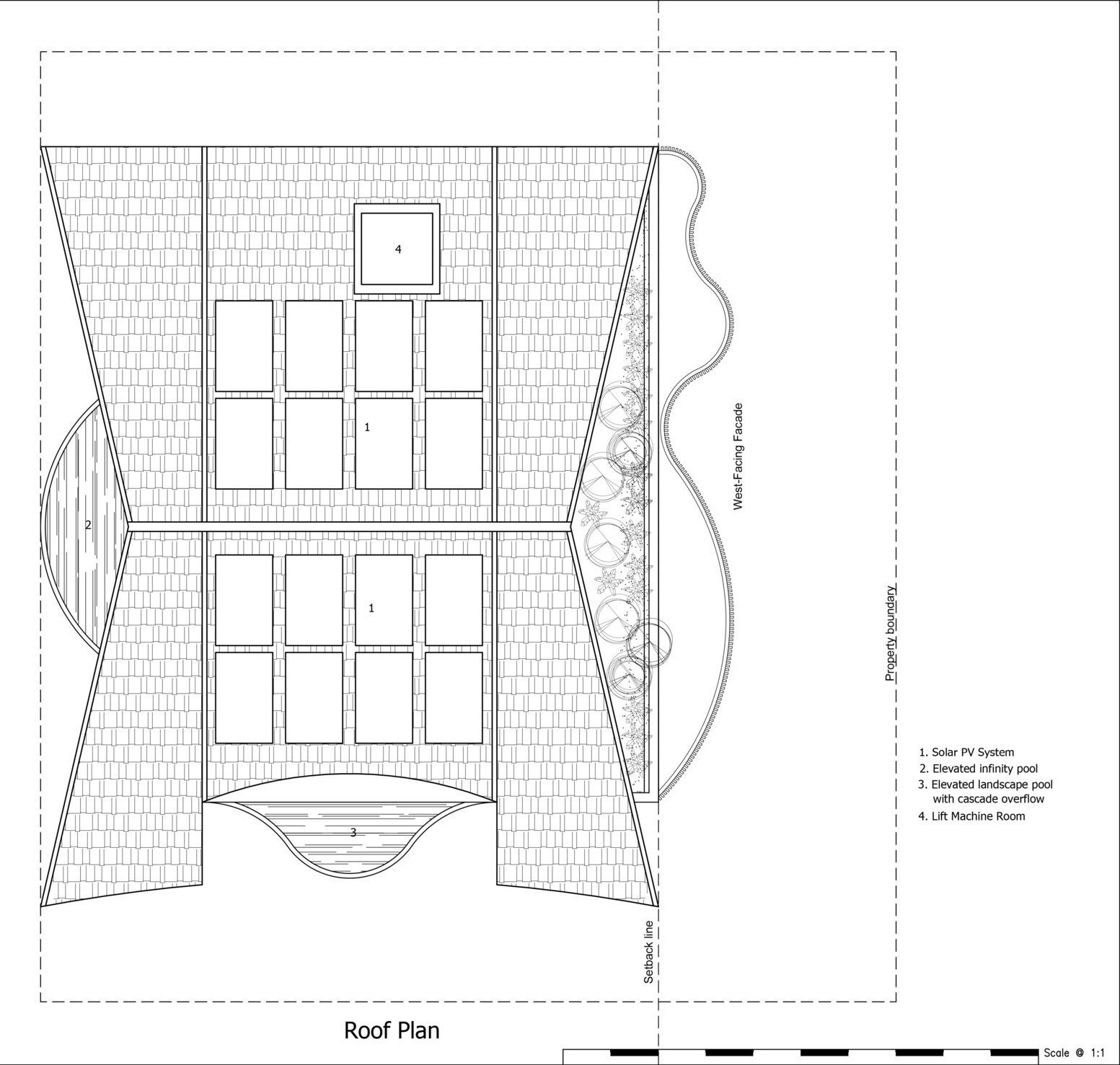
The villa’s roof draws inspiration from a bird gliding above the ocean, giving TH Villa Hoi An its distinctive silhouette. Its sweeping pitched form echoes the outstretched wings of a seagull riding the sea breeze, creating an architectural identity that reflects the home’s beachfront setting while responding to local building regulations.
A Pool That Connects Every Part of the Home
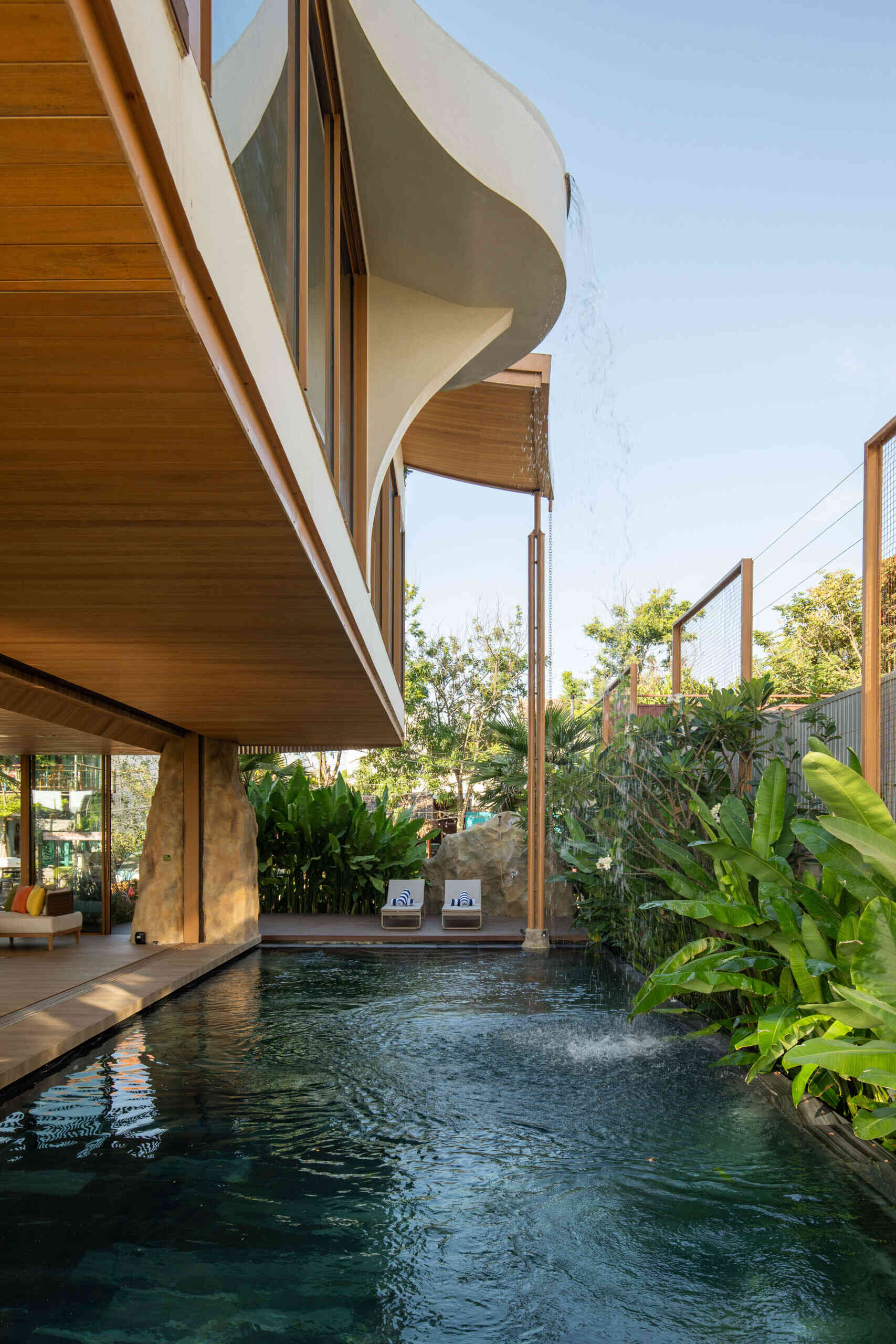
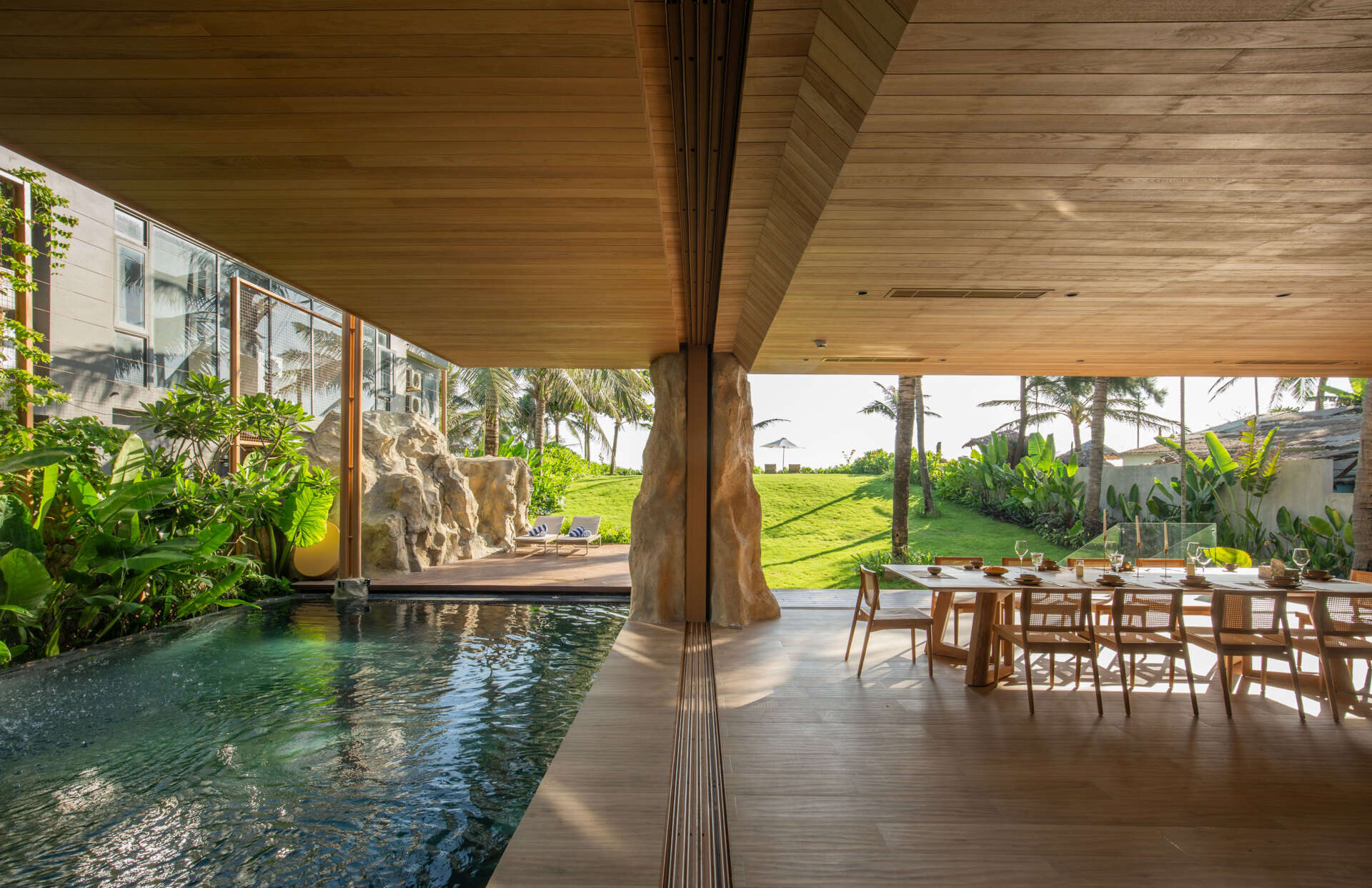
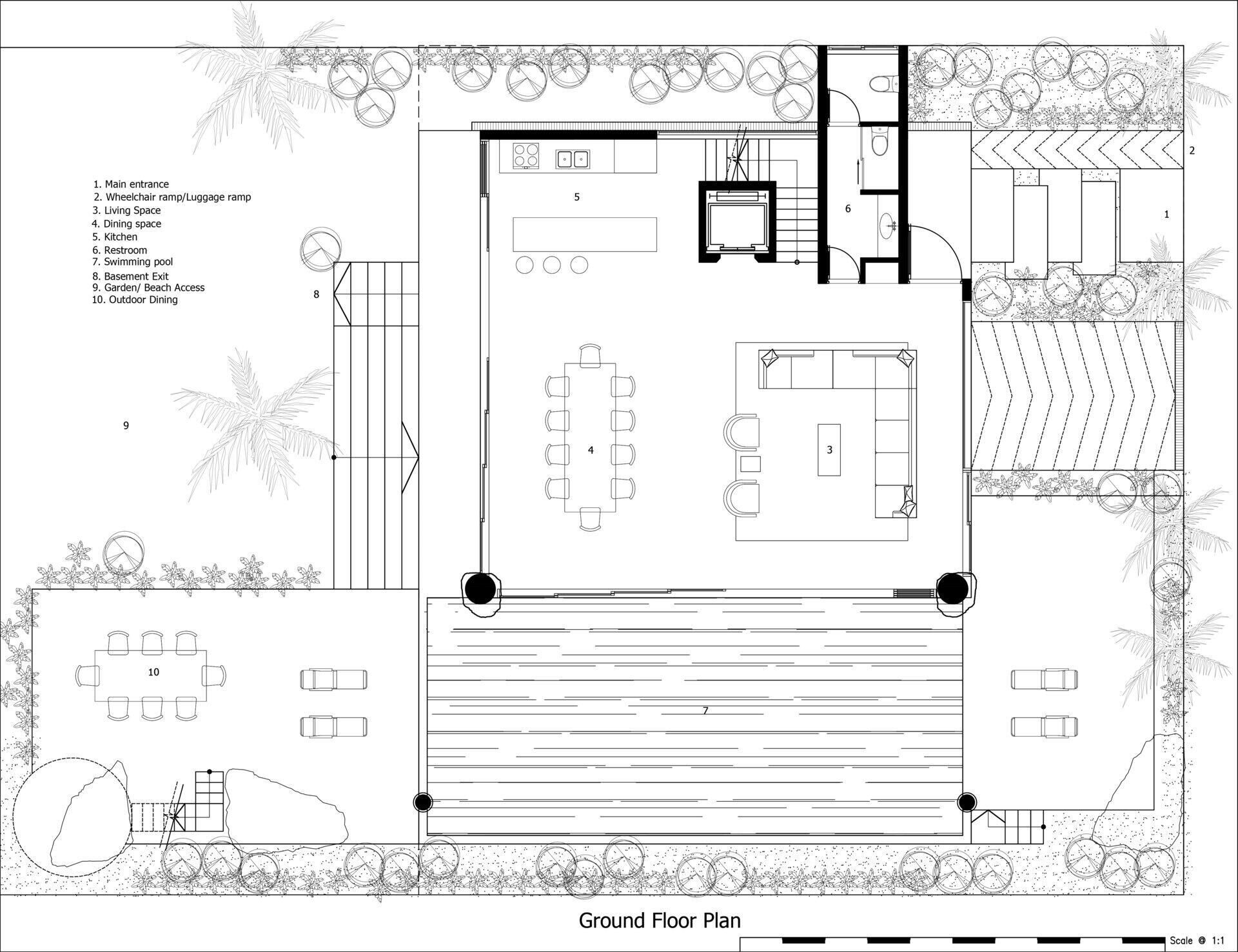
Water plays an important role throughout the property. The ground-floor swimming pool stretches alongside the main living spaces, visually linking the architecture with the garden and the nearby coastline.
Natural boulders are positioned around the landscape, bringing texture and helping soften the transition between the home and its outdoor spaces.
Open Living Spaces
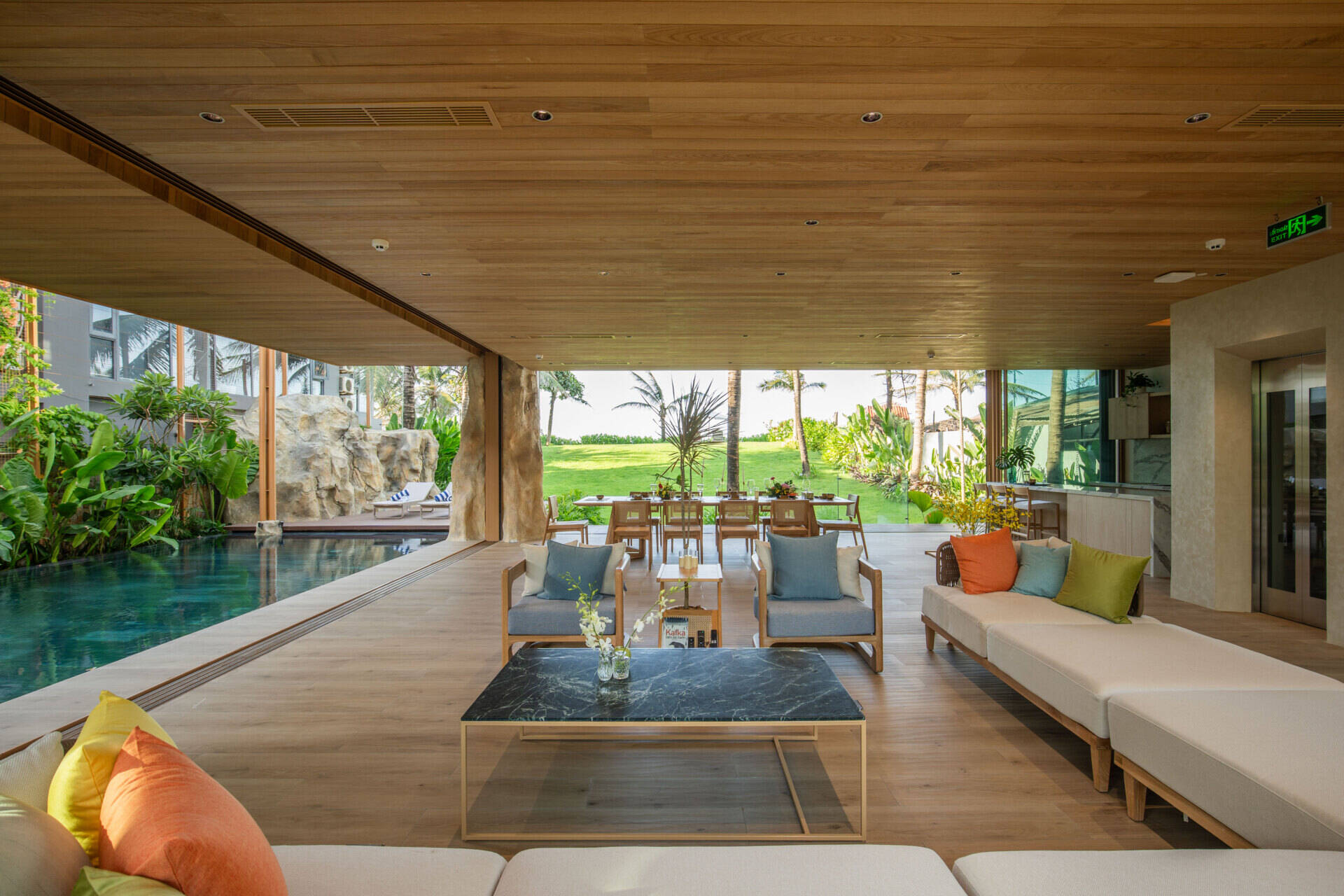
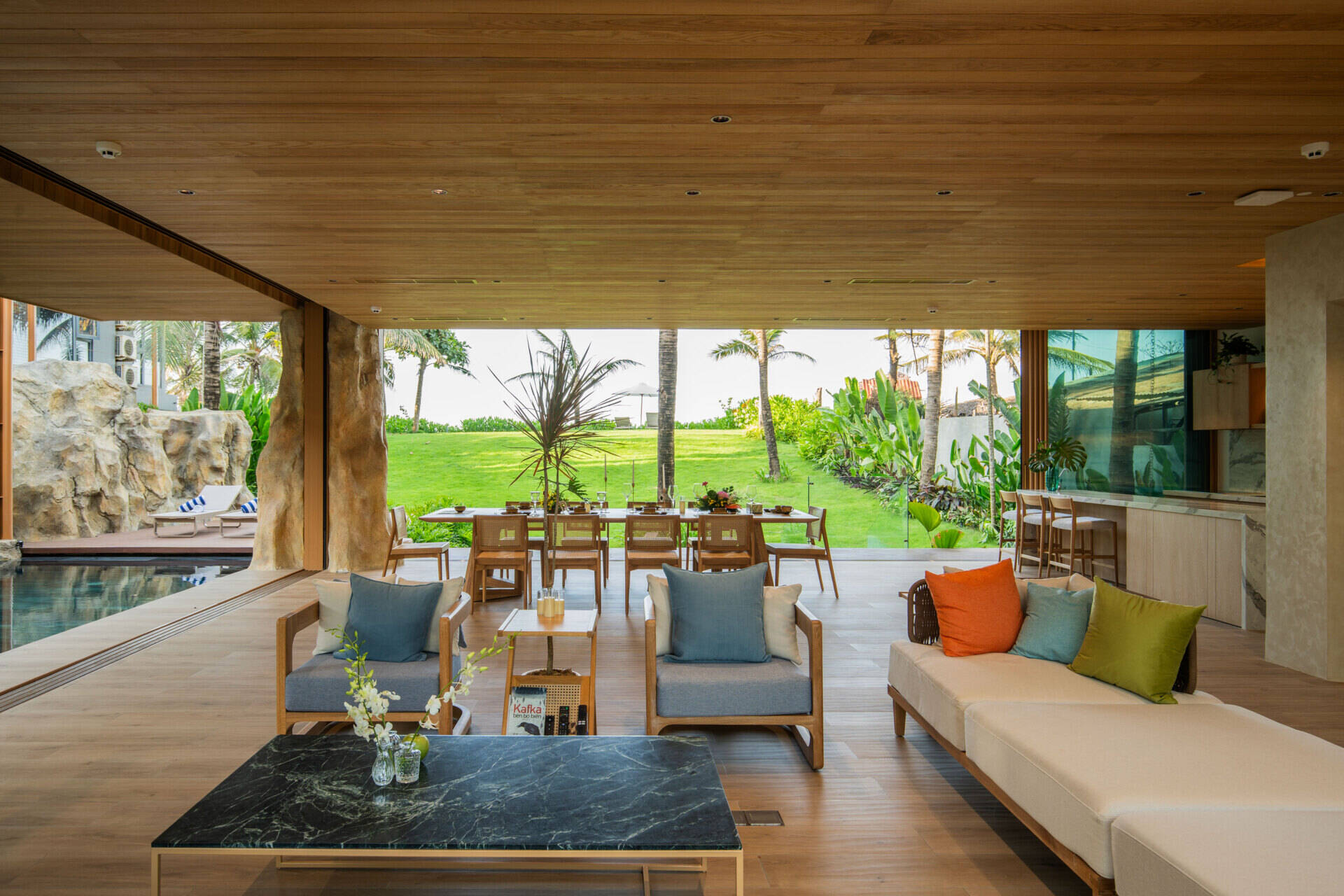
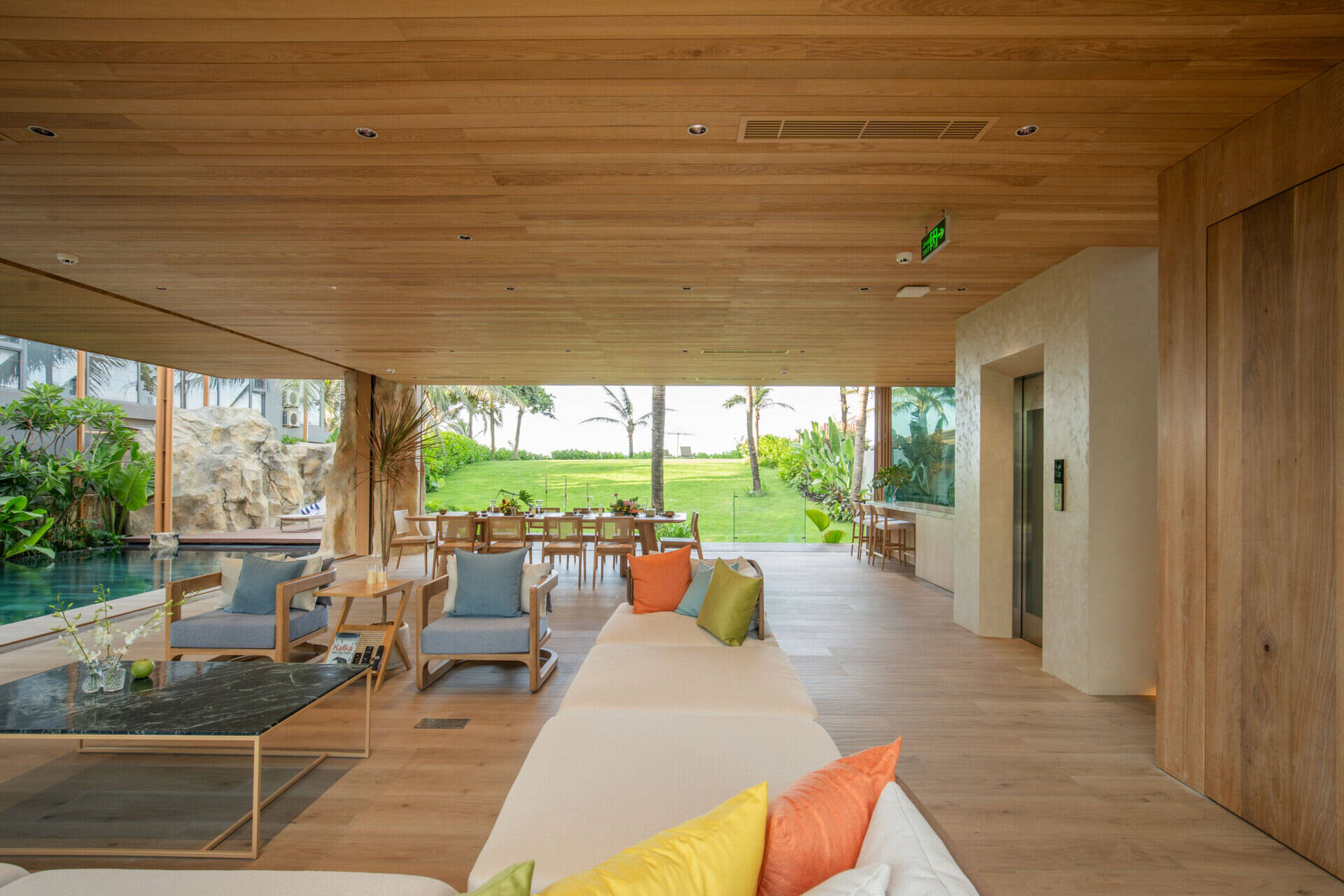
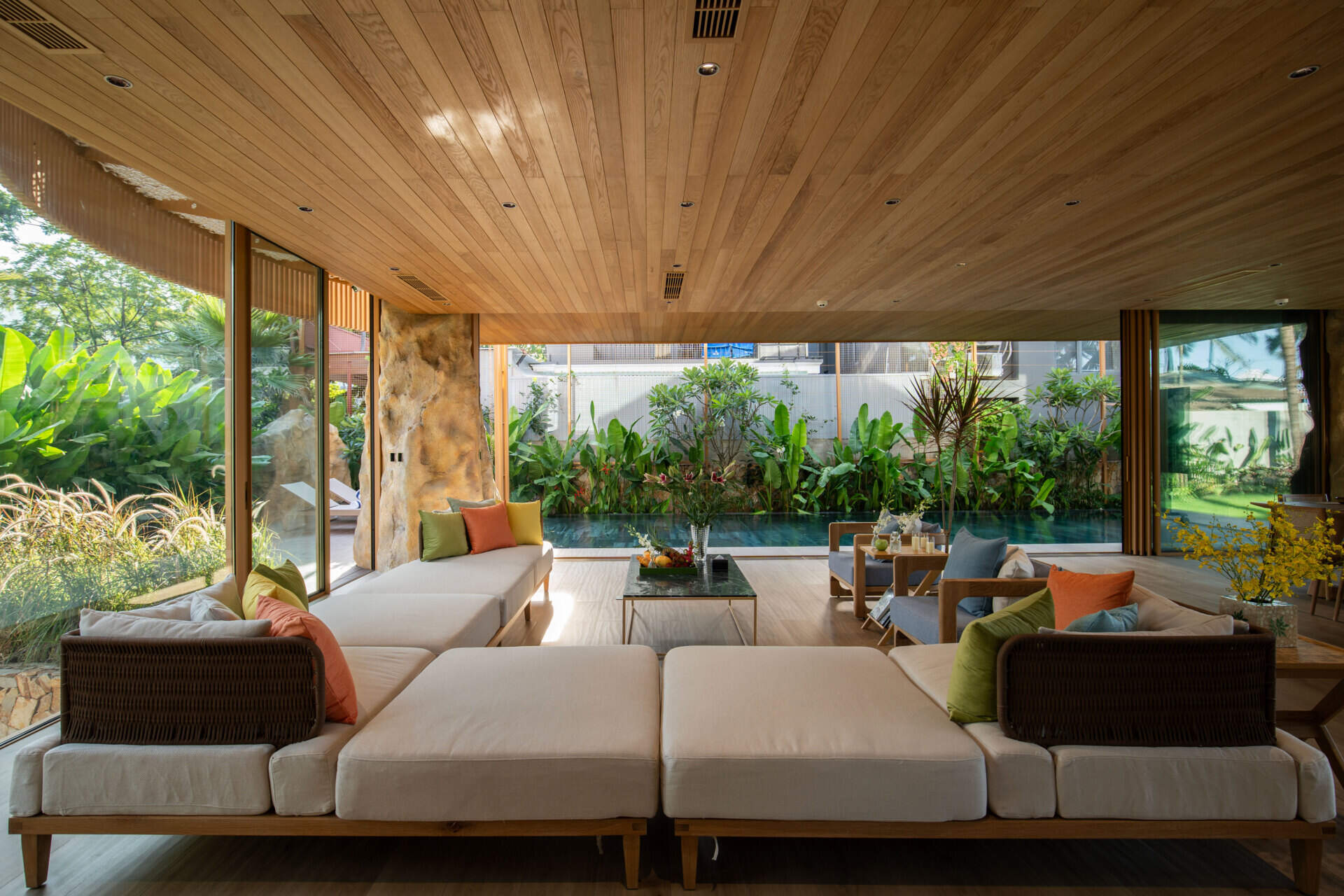
The ground floor is designed as one expansive open-plan living environment. A post-tensioned cable slab system allows large structural spans, reducing the need for interior columns and load-bearing walls. This gives the living room uninterrupted connections with the kitchen, dining area, swimming pool and gardens.
Large sliding glass doors allow the entire space to open to the outdoors, welcoming sea breezes into the home. When closed, Low-E glazing continues to frame the coastal outlook while limiting solar heat gain. Warm timber ceilings and finishes balance the natural stone, water and tropical planting found throughout the property.
Dining Beside the Garden
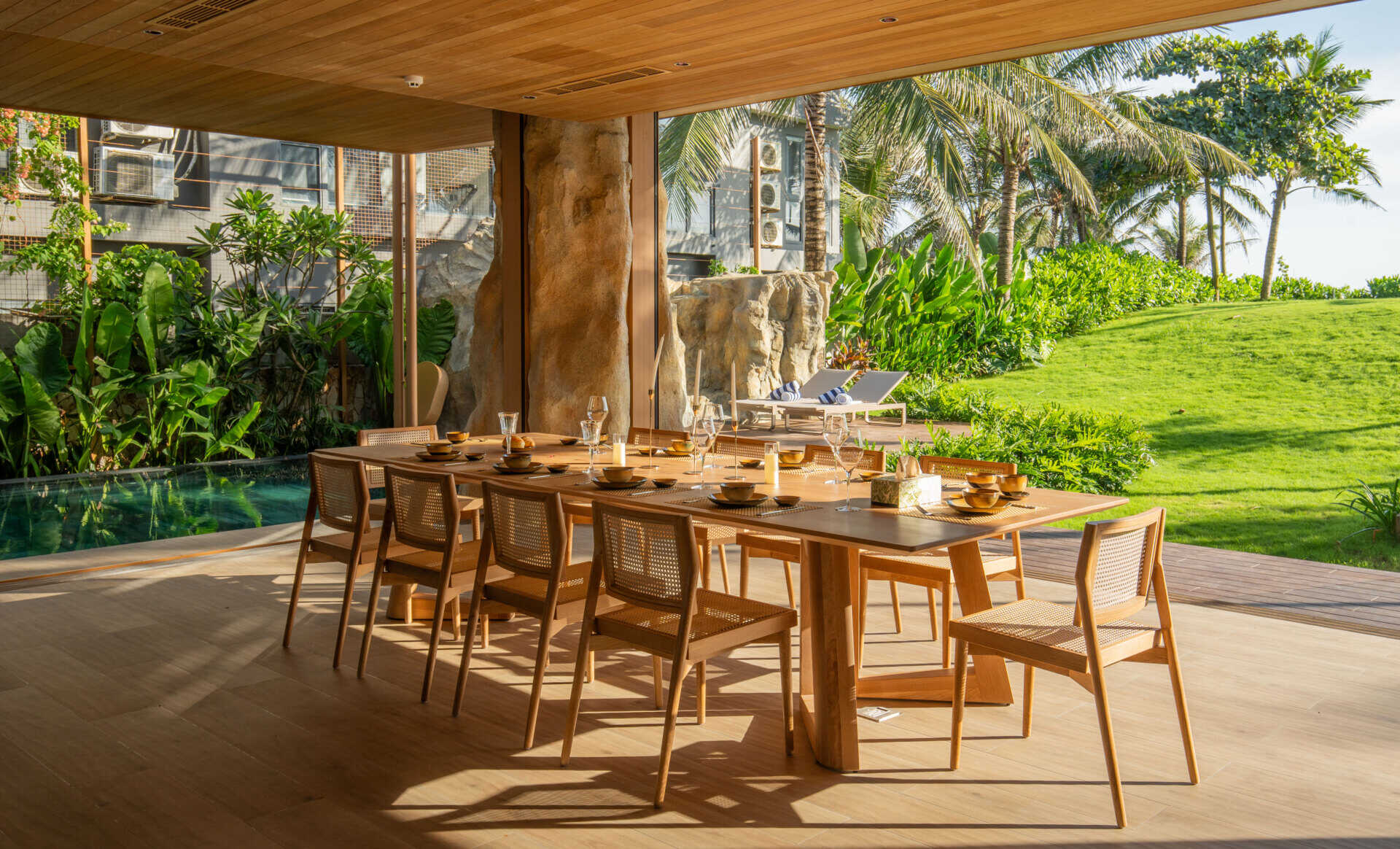
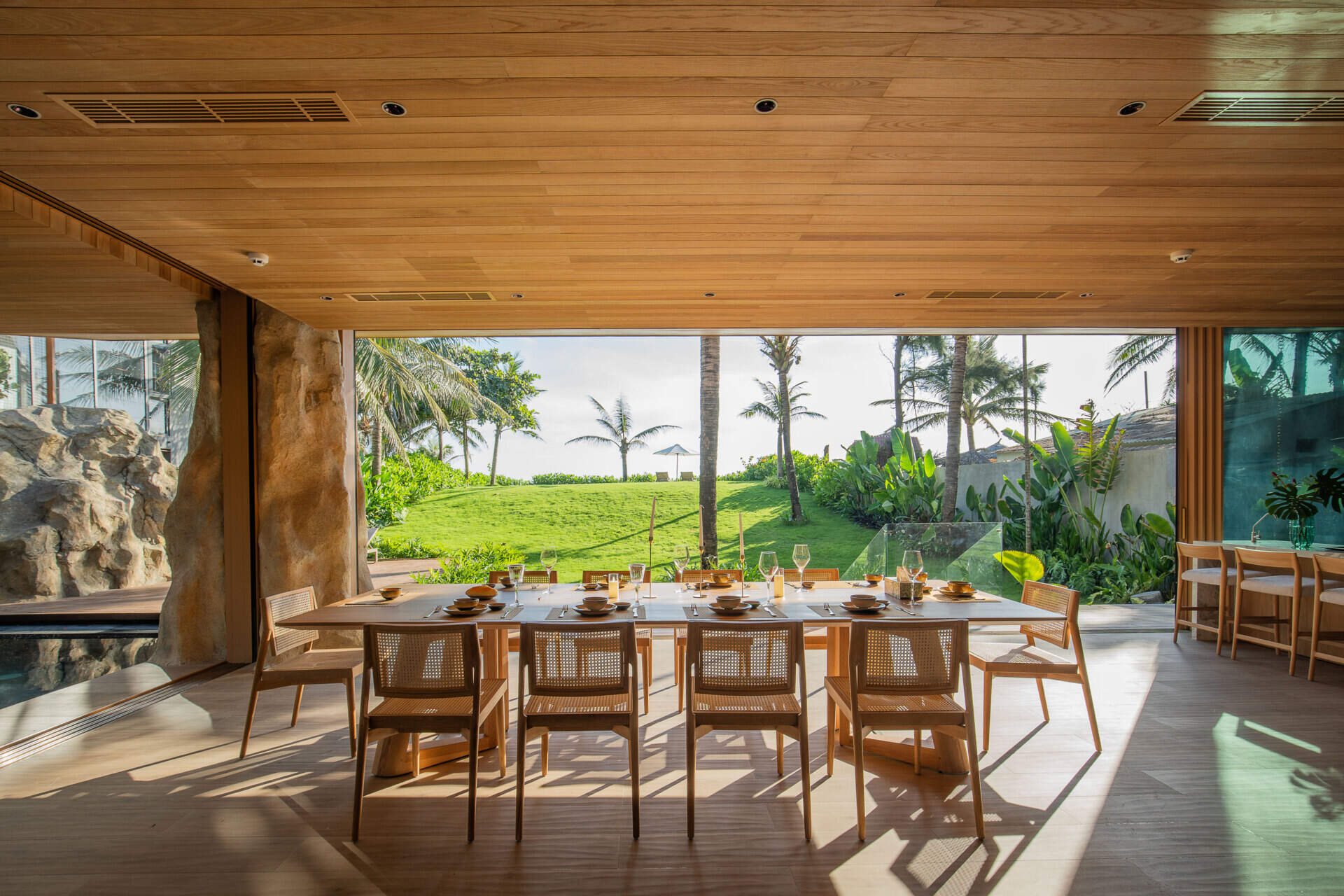
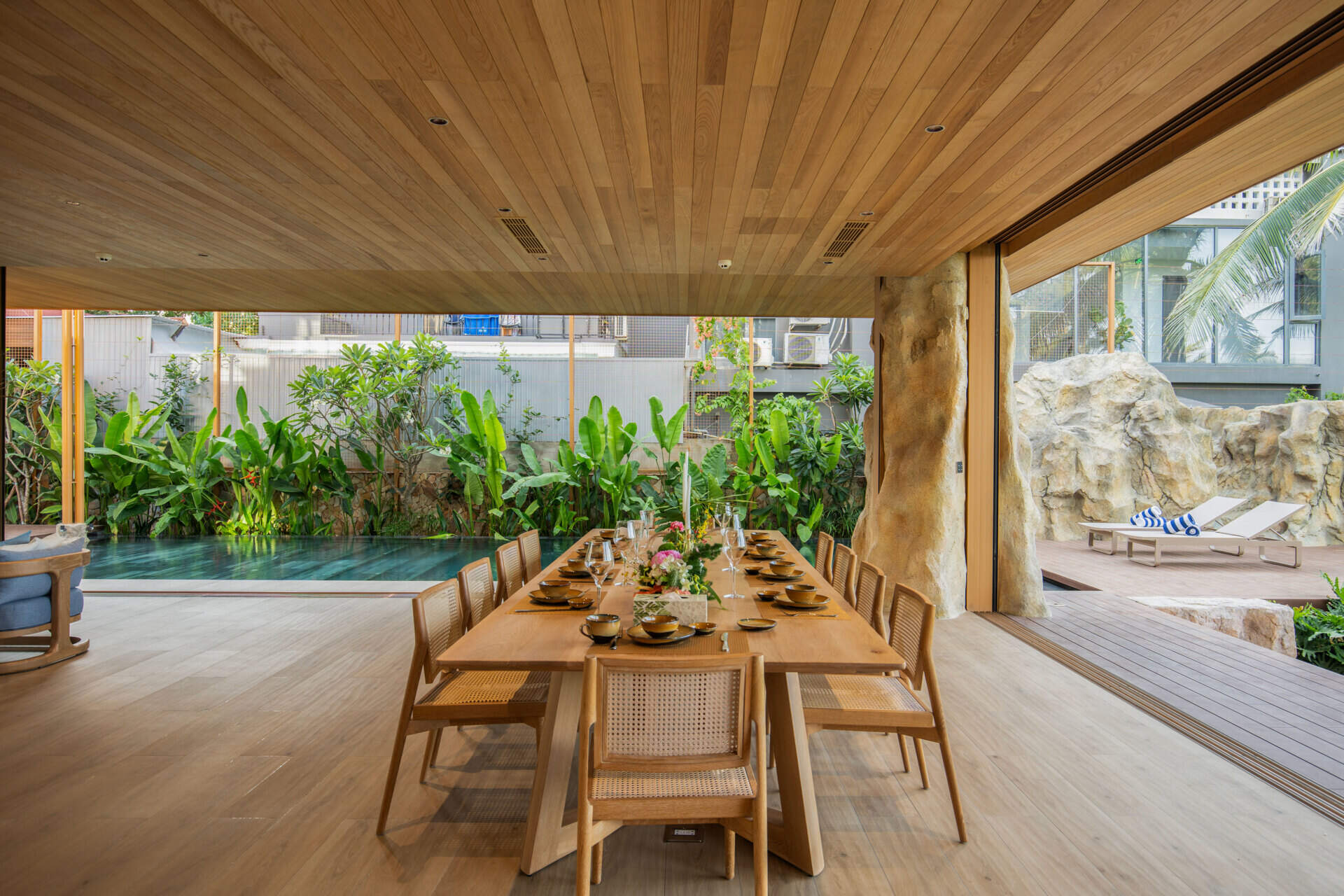
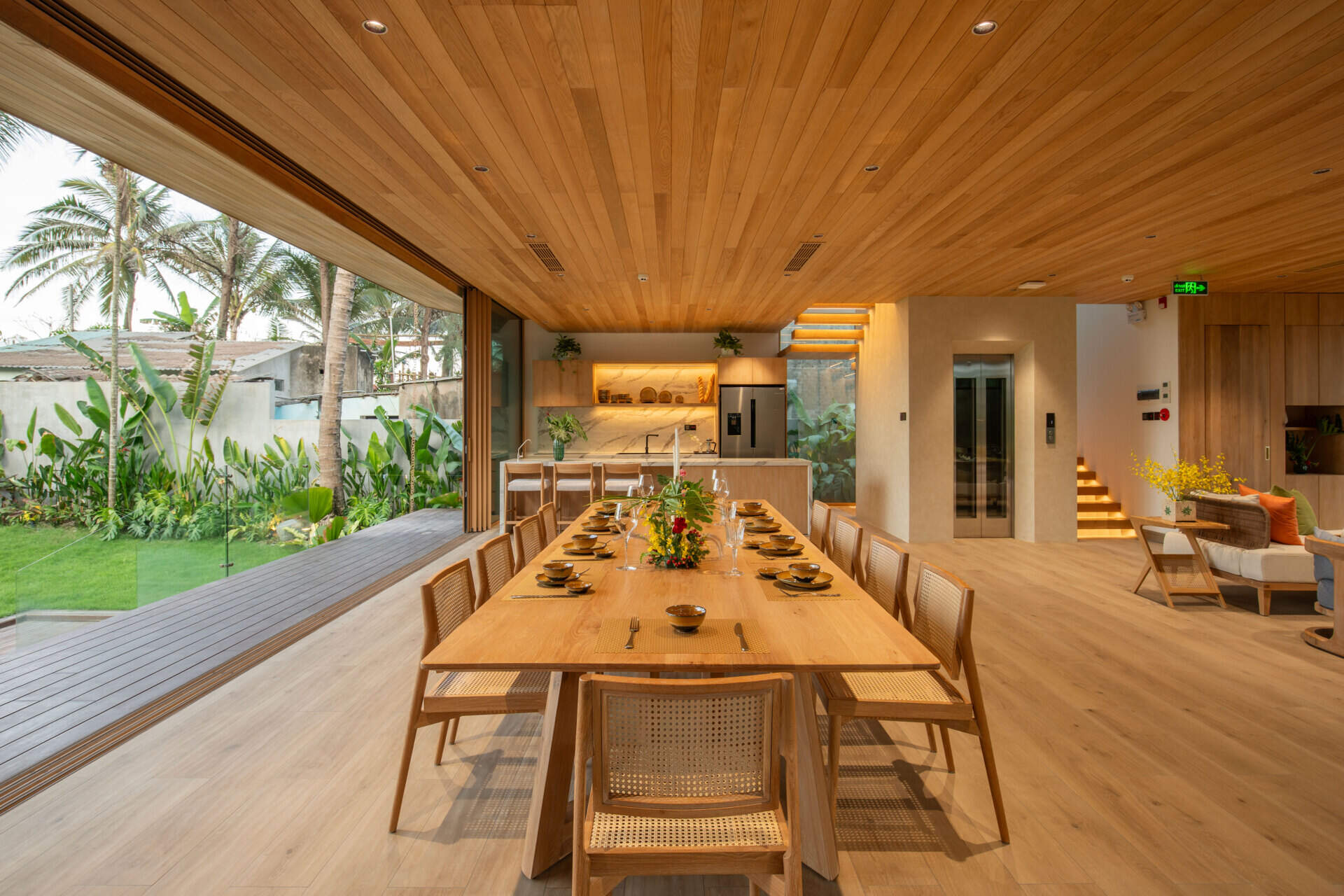
The dining area forms part of the continuous open-plan layout, sharing direct connections with the kitchen, living room, swimming pool and gardens. Large folding glass doors allow the space to open completely to the outdoors, creating an easy transition between indoor meals and outdoor entertaining.
A Kitchen Designed for Flexible Living
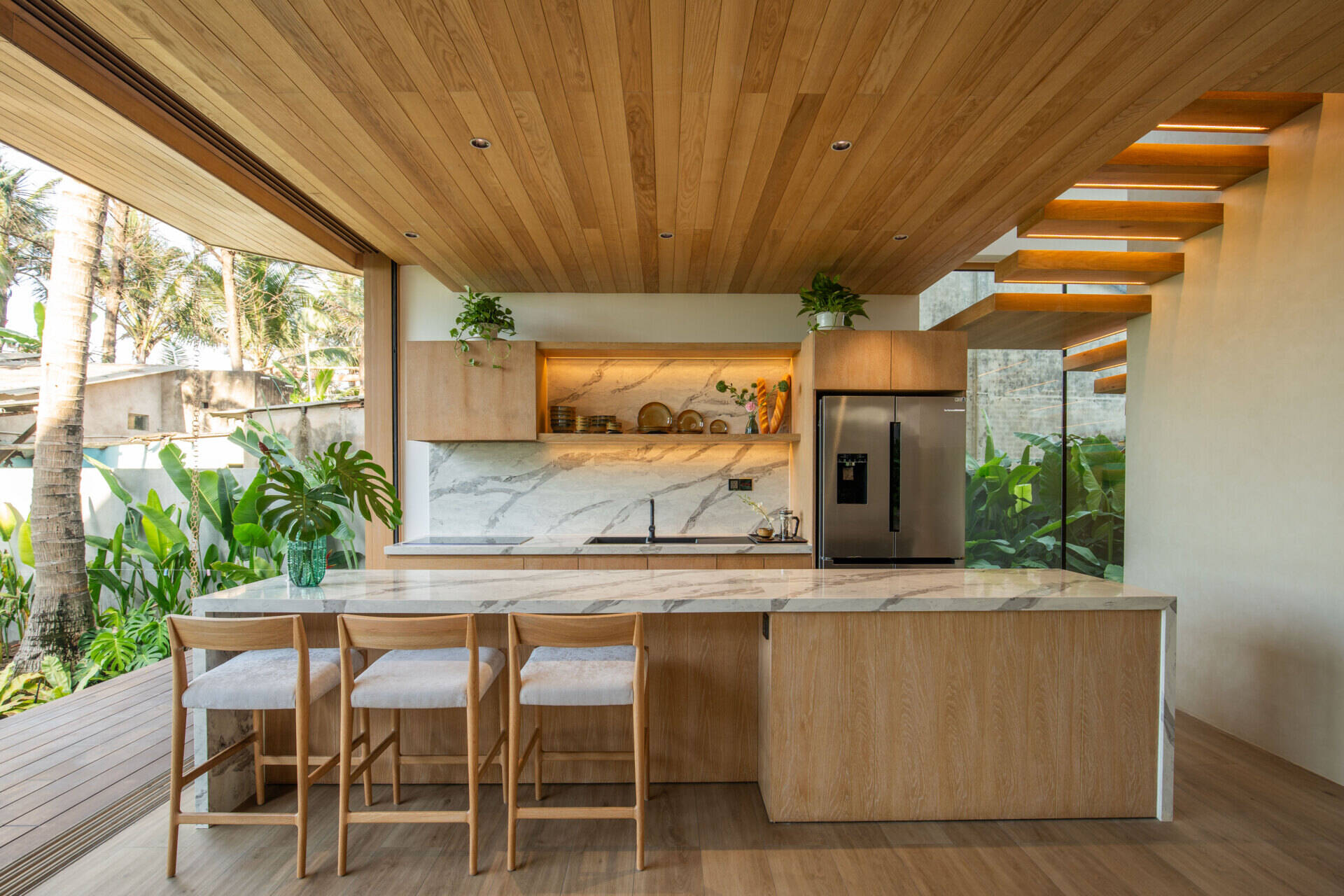
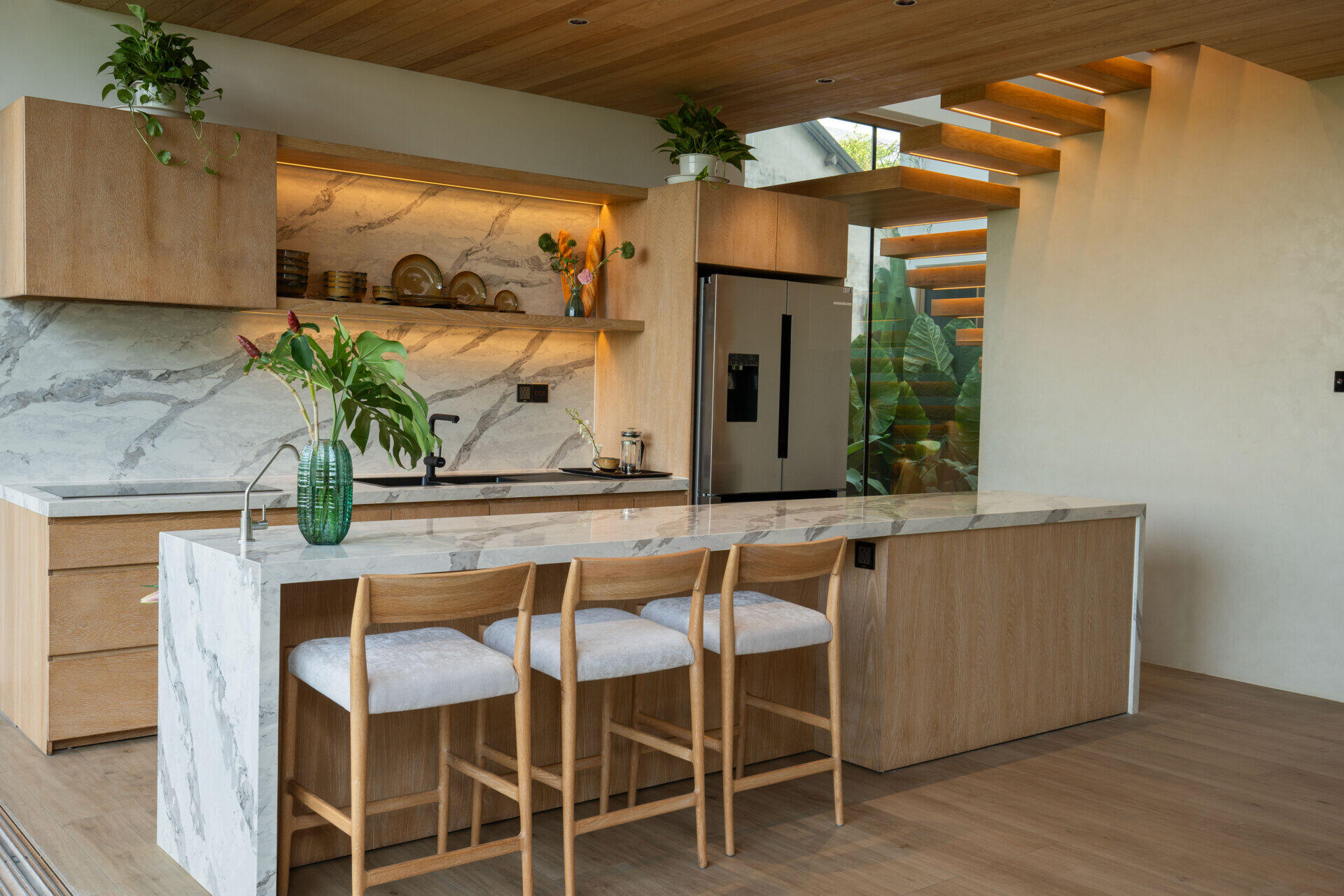
The kitchen continues the open-plan design of the ground floor, where pale timber cabinetry, marble surfaces and a timber-lined ceiling create a warm, inviting atmosphere. A generous island provides space for casual meals and conversation, while the wide opening to the garden fills the room with natural light, tropical greenery and cooling sea breezes.
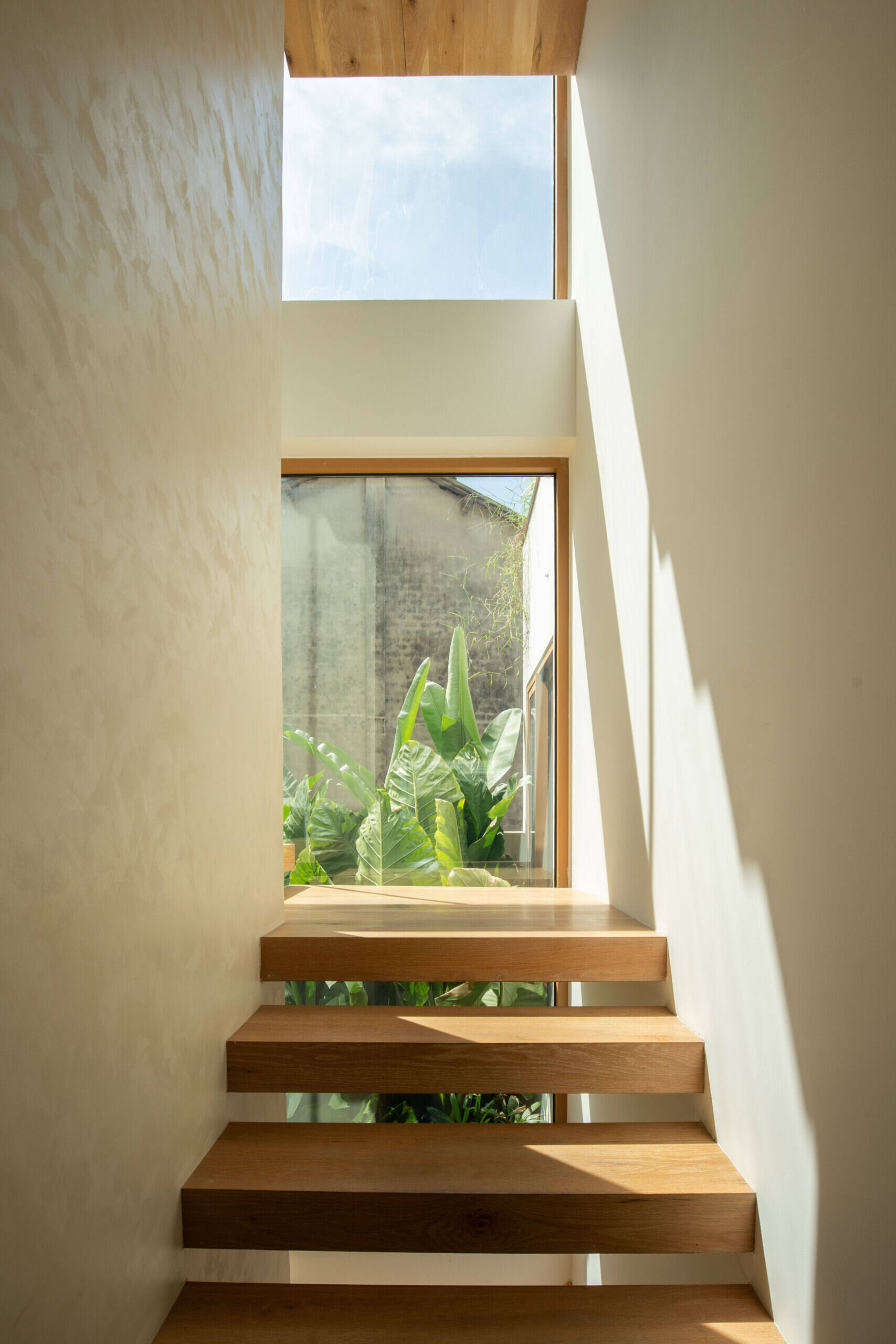
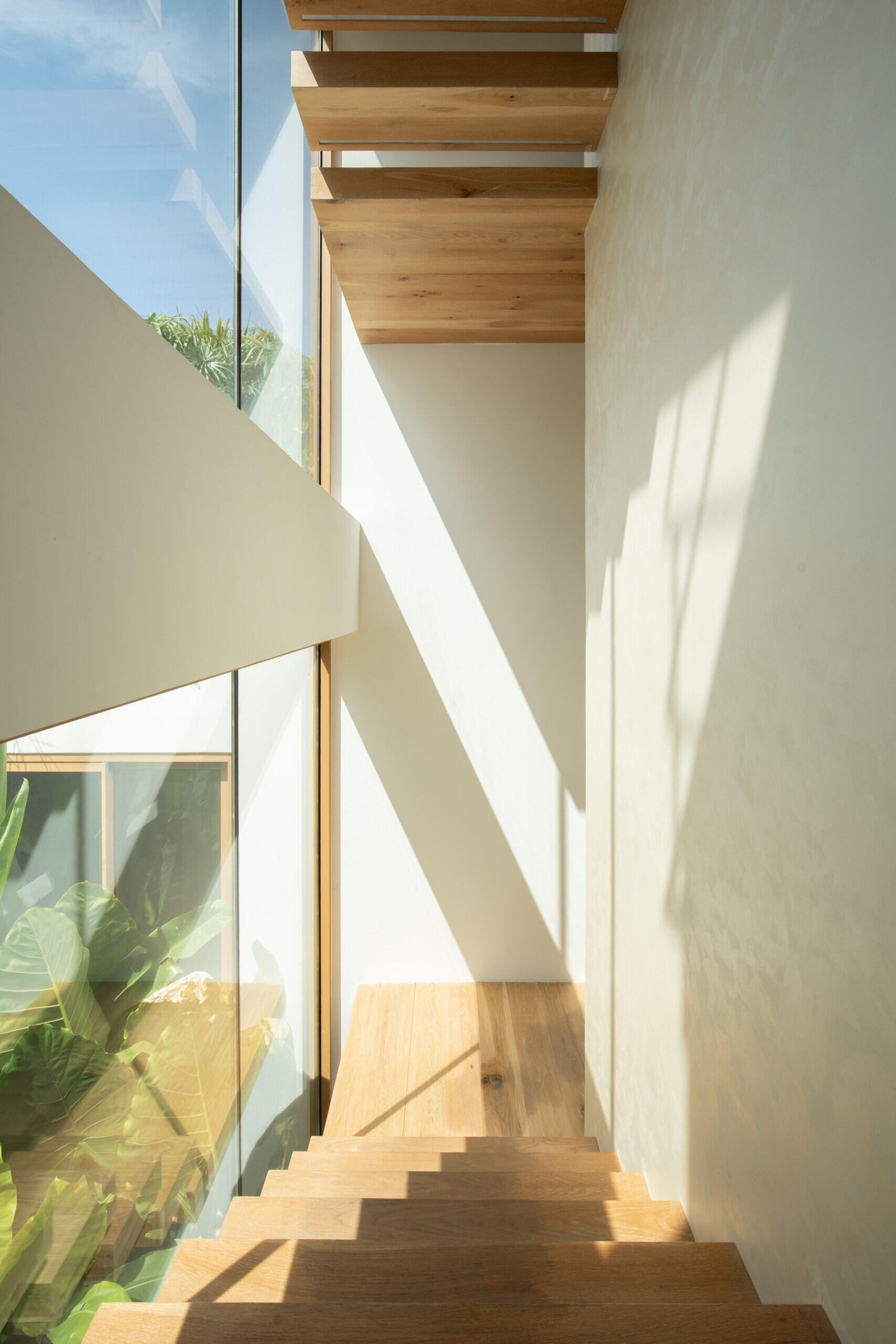
A Staircase Filled with Light and Greenery
Floating timber treads and full-height glazing transform the staircase into a bright transition between floors. Open risers maintain an airy feel, while views of the surrounding tropical planting bring natural light and greenery into the center of the home, making the journey upstairs feel just as inviting as the living spaces themselves.
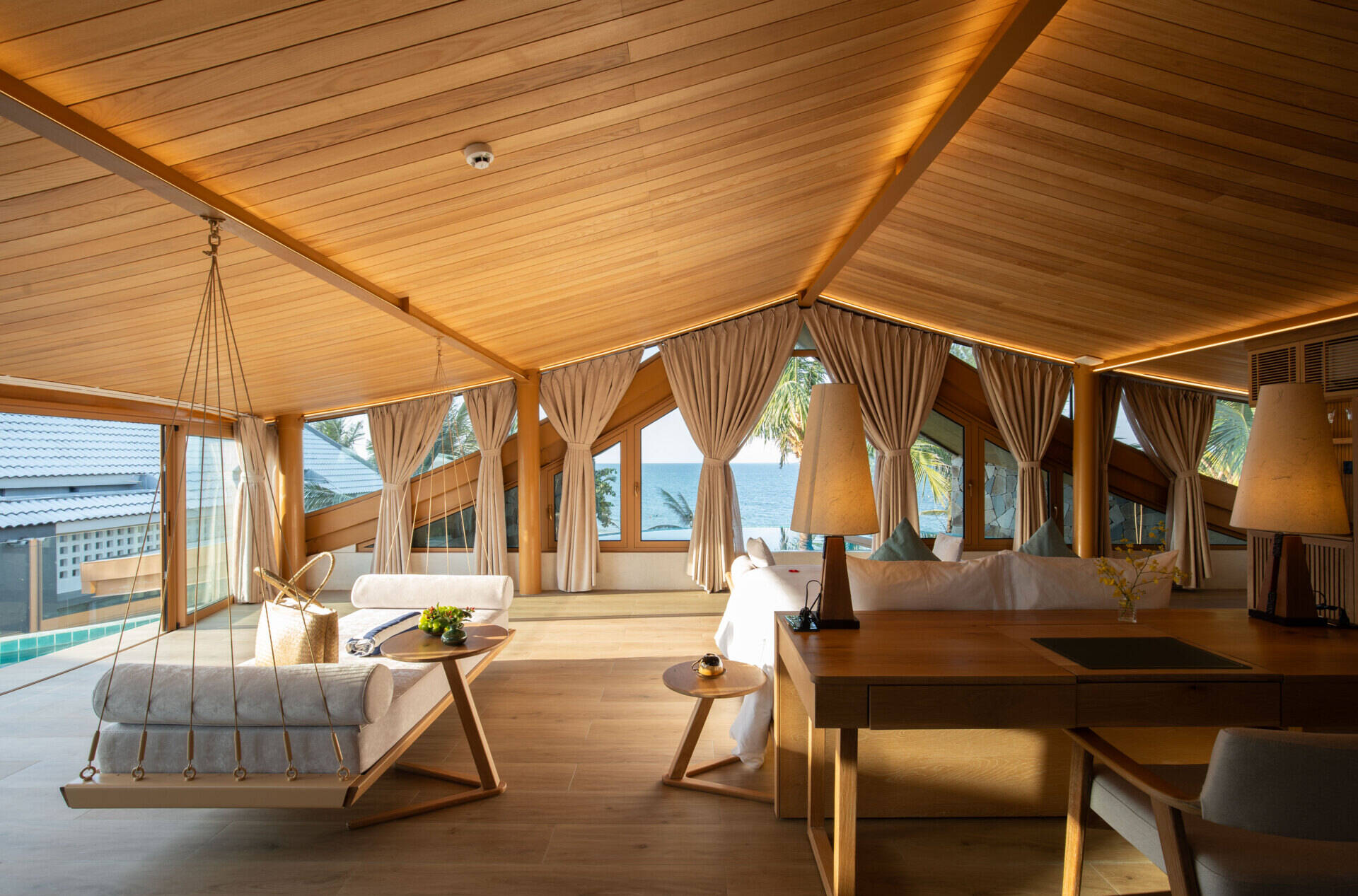
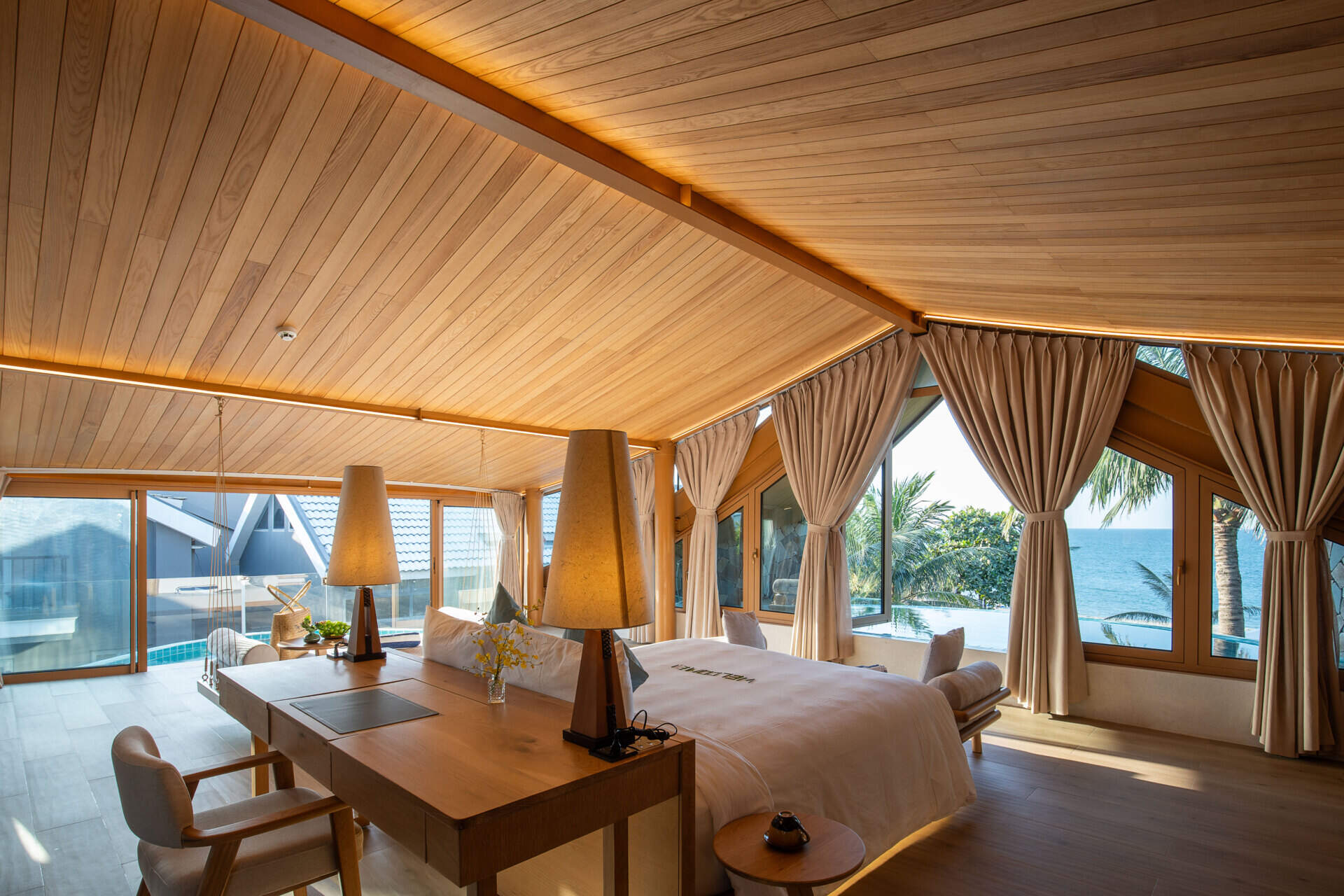
A Primary Suite Above the Coast
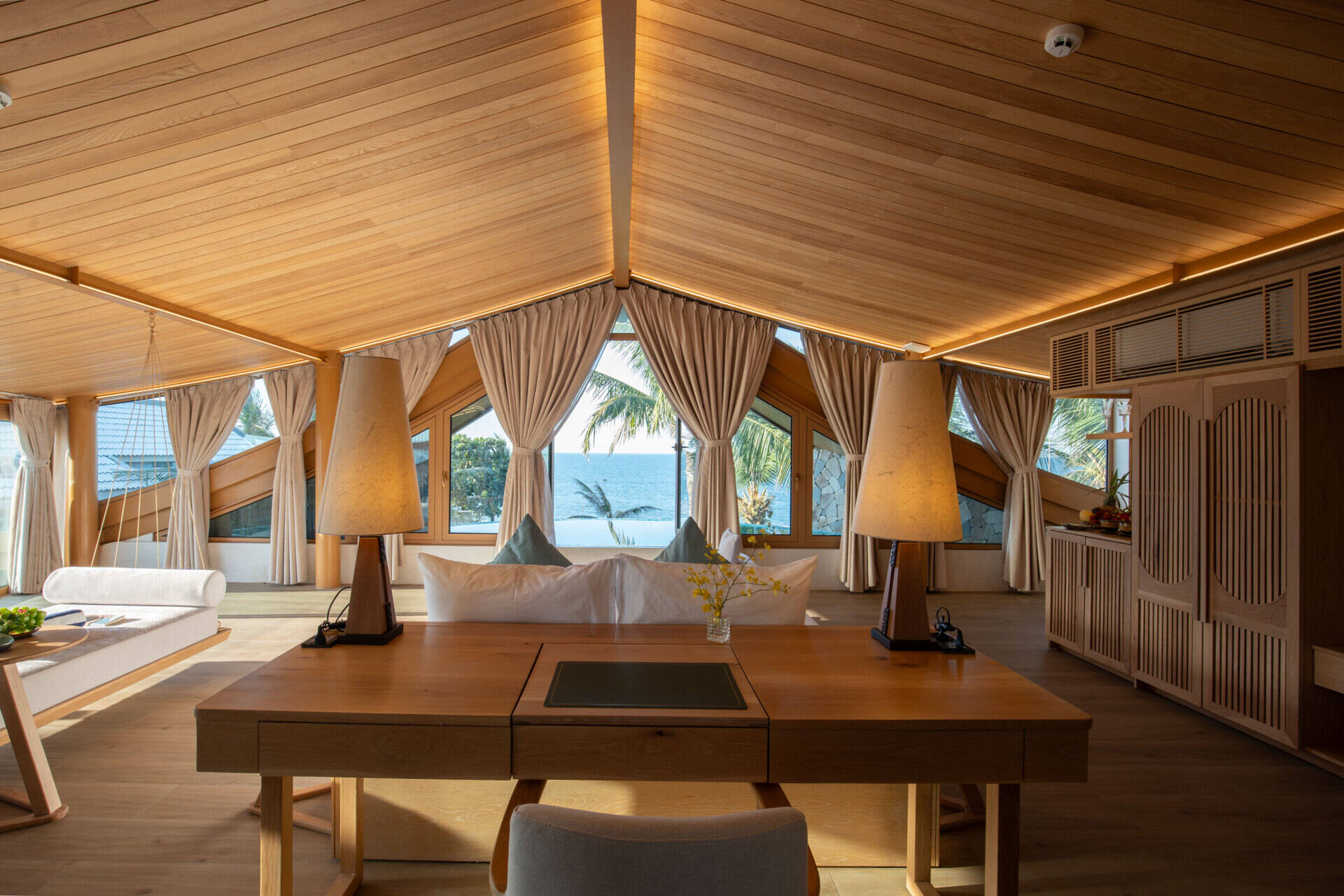
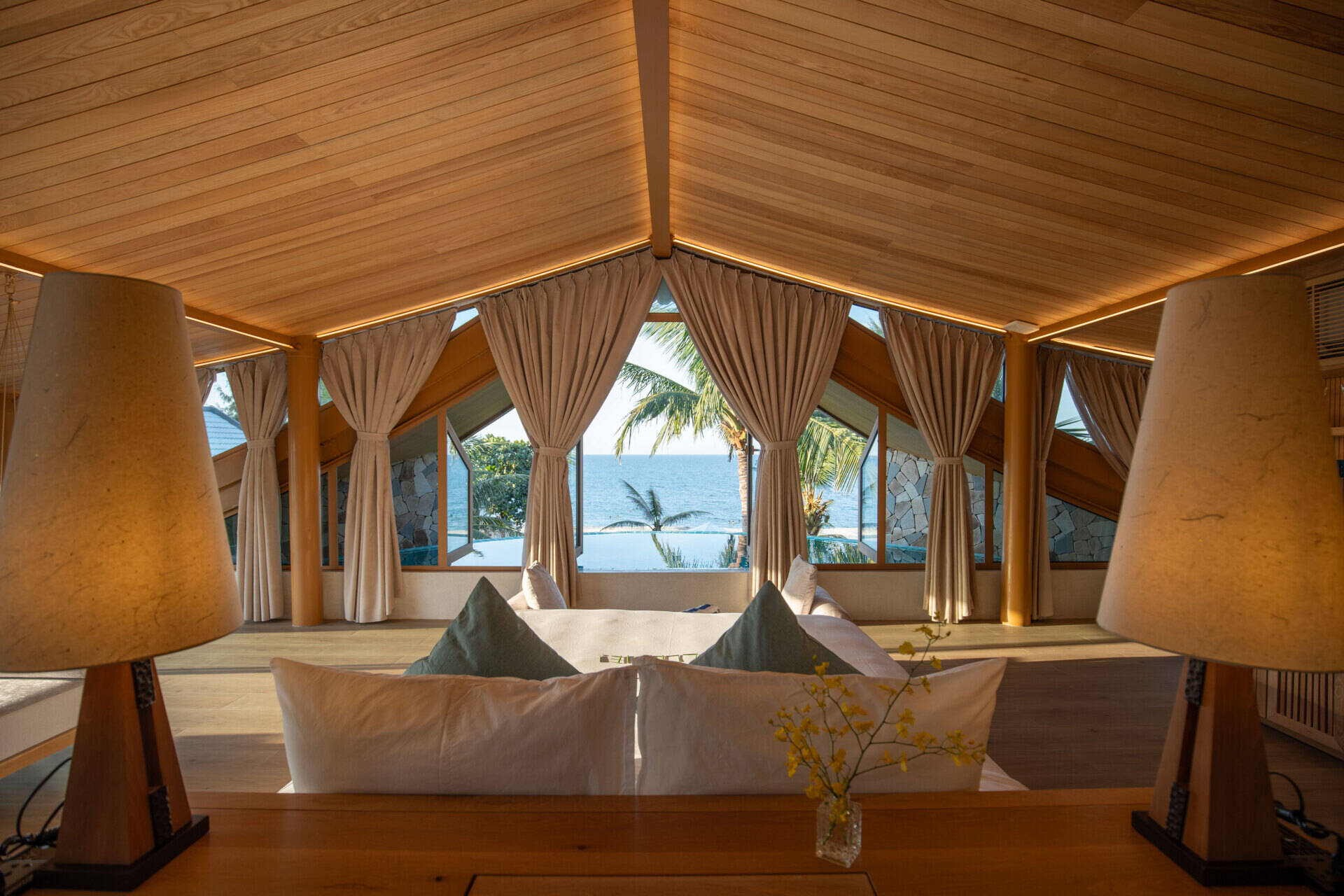
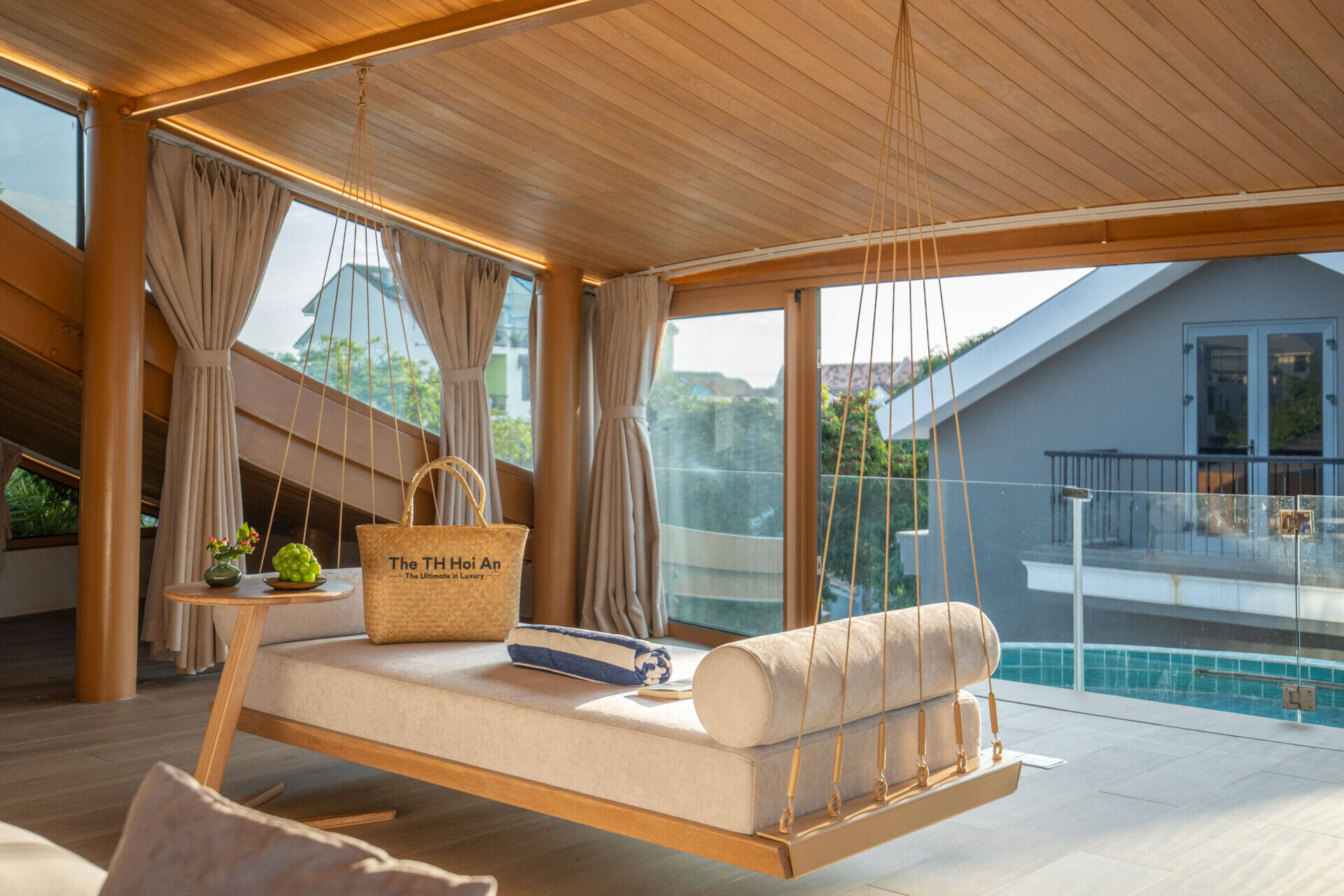
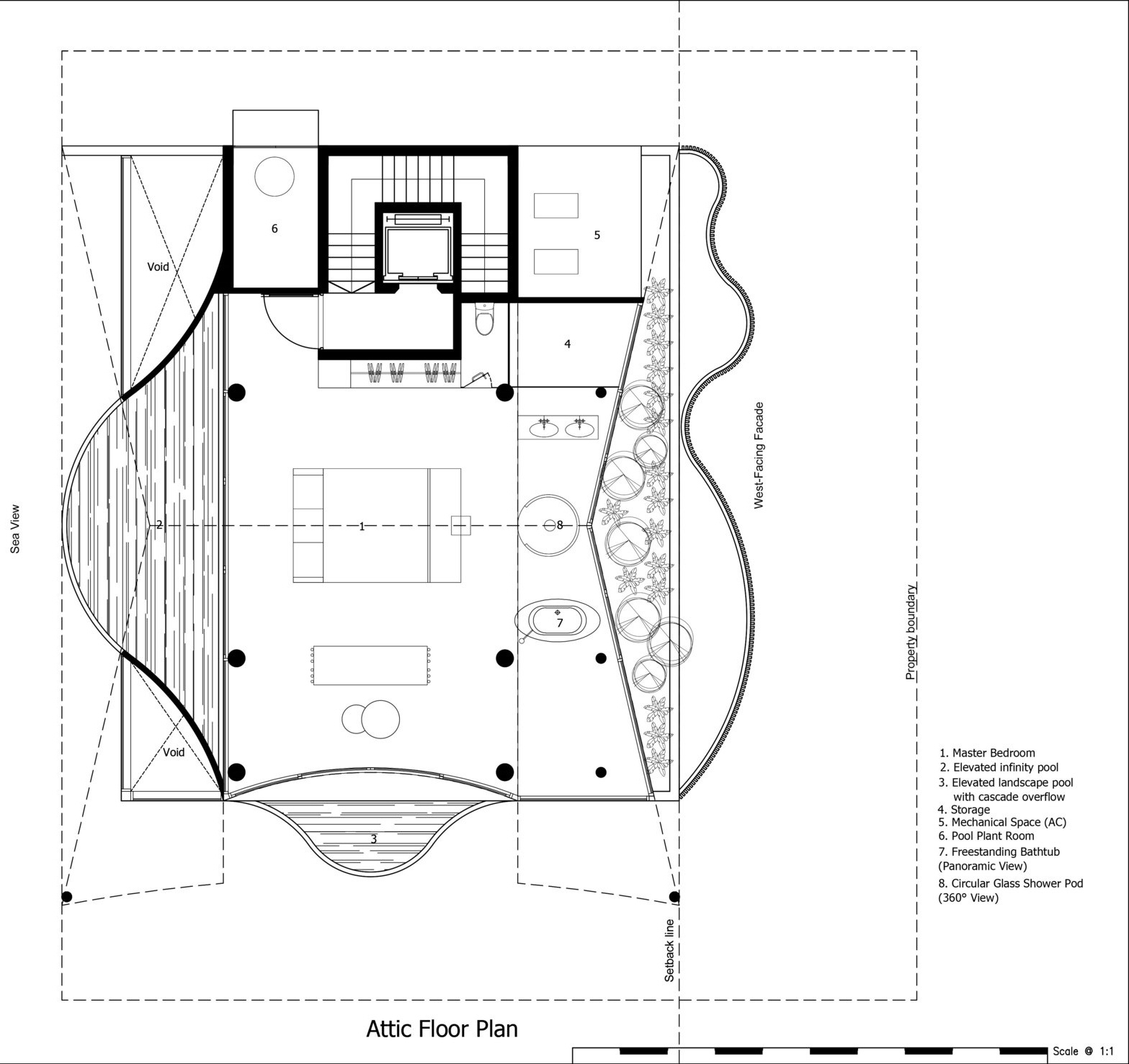
The attic level is dedicated to the primary suite, making full use of the dramatic volume created by the pitched roof. Large openings frame views towards the sea, while the room includes a hanging daybed.
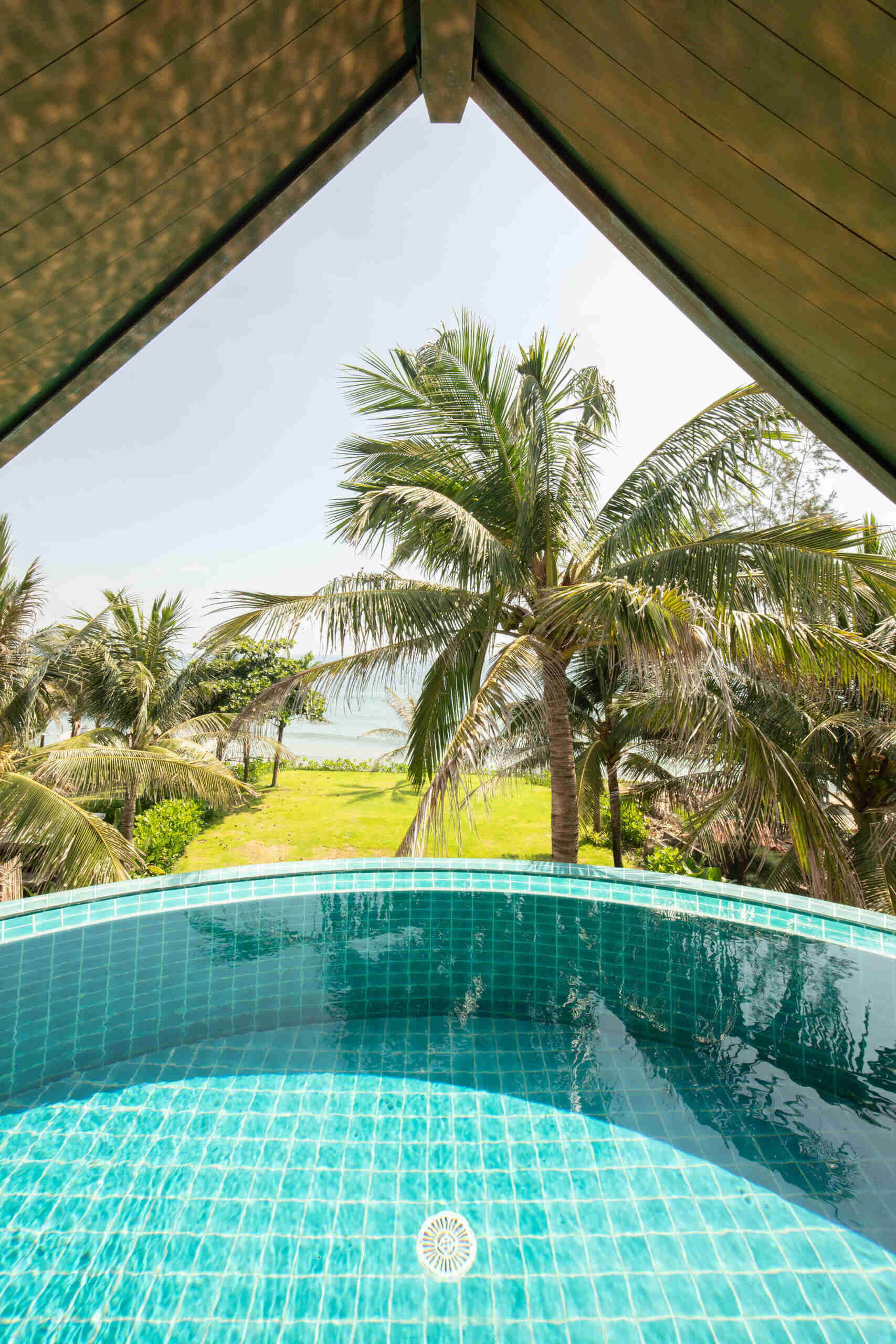
Outside, an infinity pool extends along the main viewing axis, giving the impression that the water reaches toward the horizon. Together with the reflecting pool and waterfall below, the upper level becomes one of the villa’s most memorable spaces.
A Resort-Inspired Suite with Relaxed Coastal Style
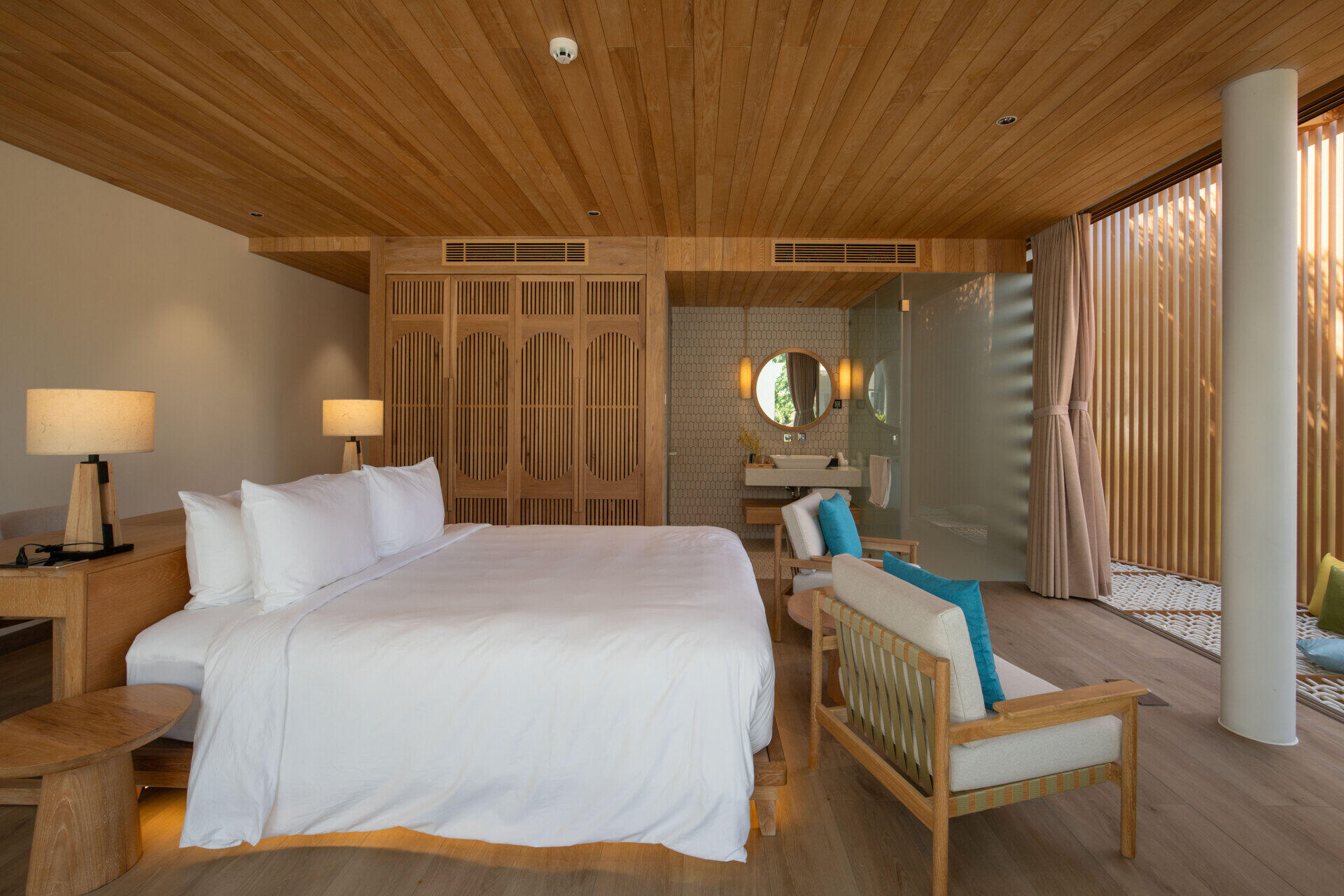
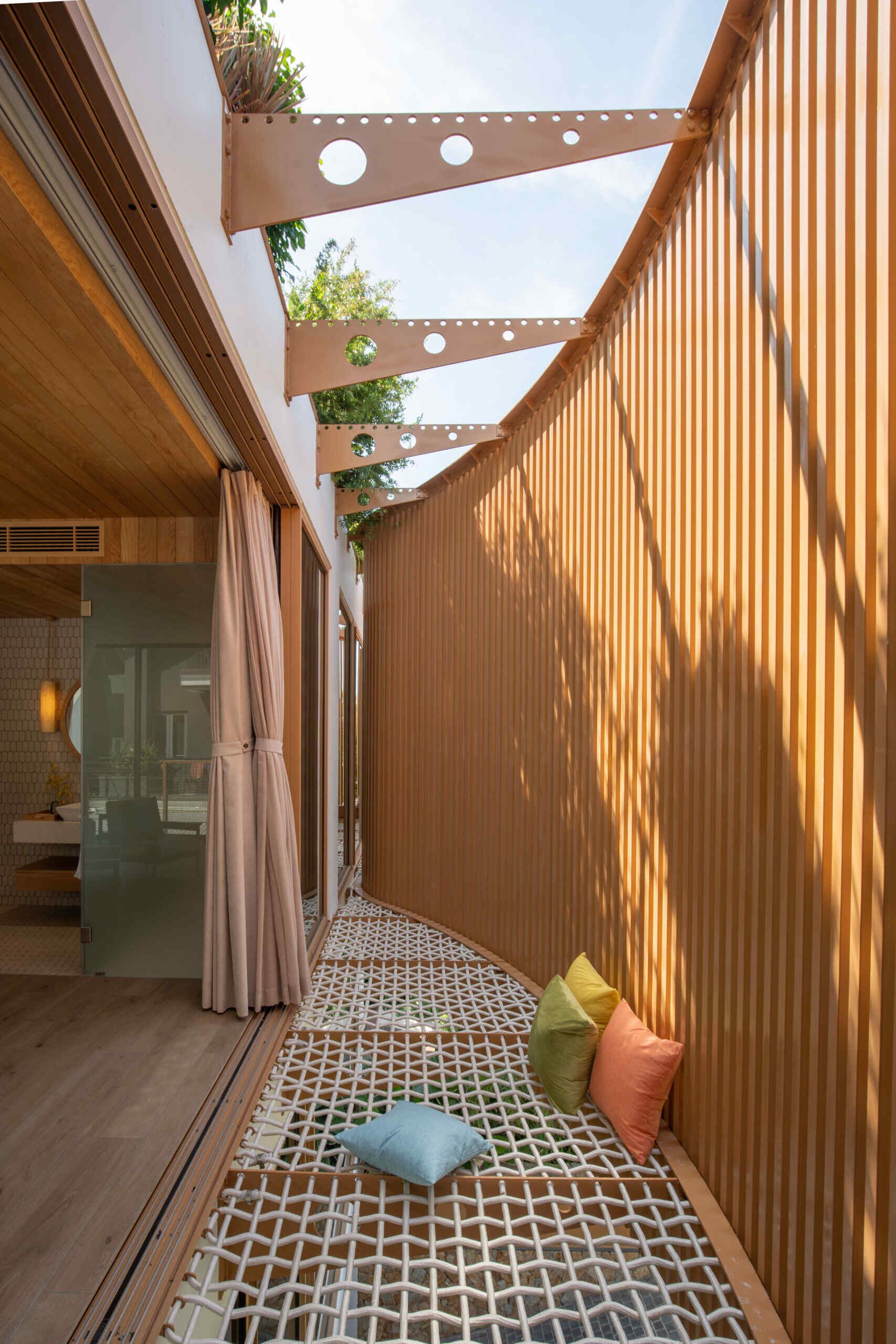
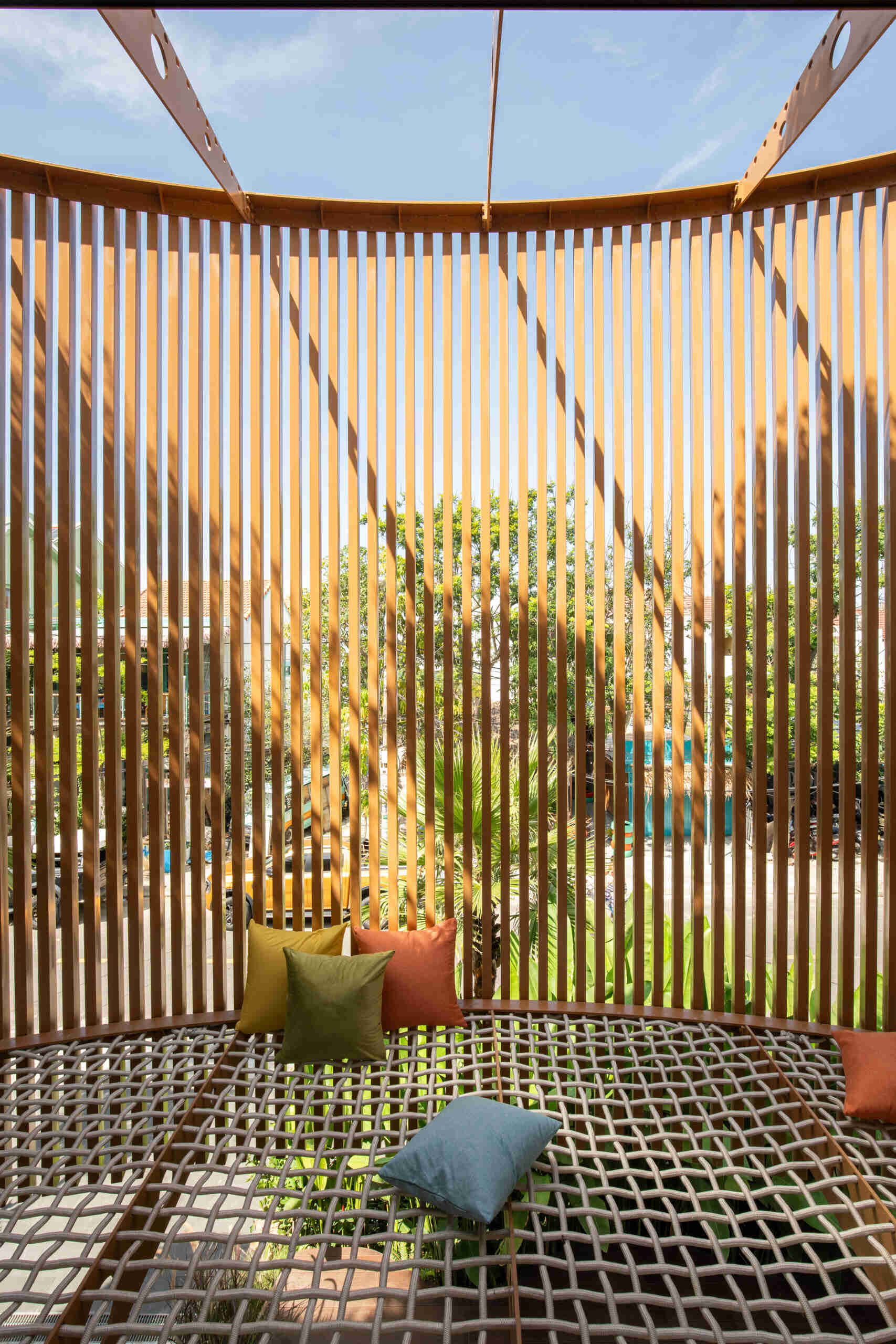
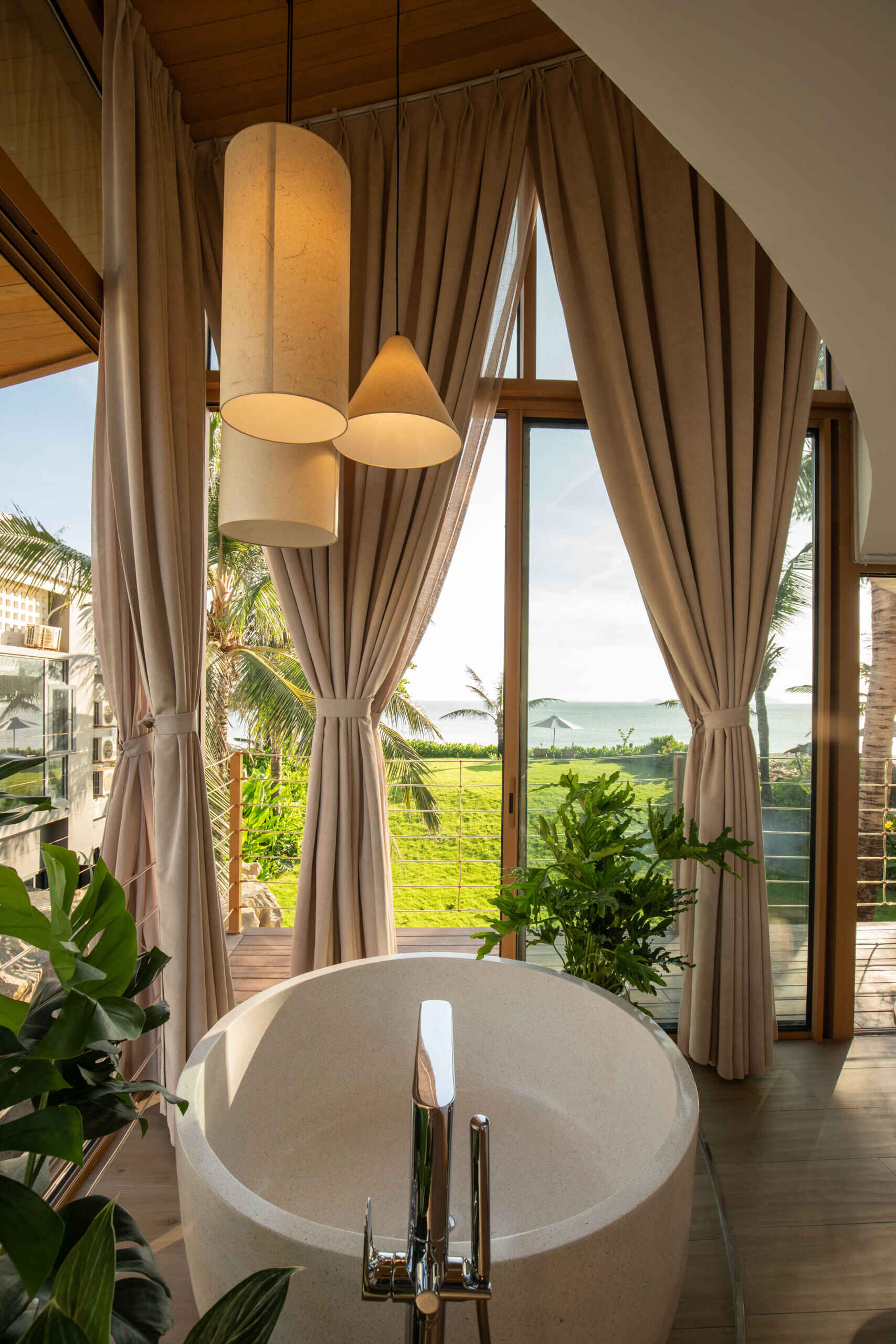
Warm timber wraps the ceilings and floors of this guest suite, creating a welcoming space inspired by coastal resorts. Slatted screens filter natural light while maintaining privacy, and a round soaking tub adds a luxurious touch. Woven lounge netting, soft curtains and accents of blue, green and coral complete a room designed for unwinding after a day by the beach.
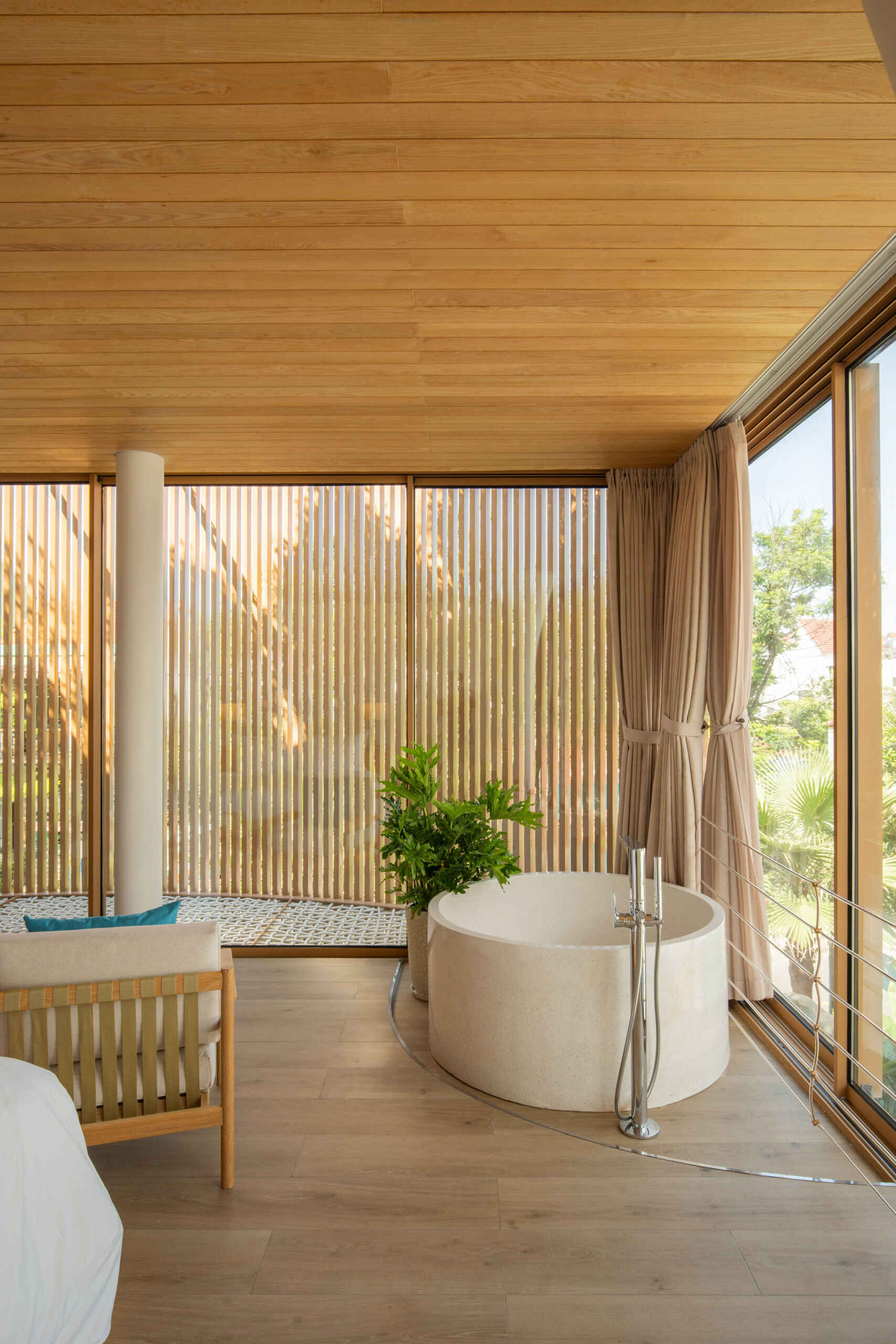
A Bright Guest Room Framed by Ocean Views
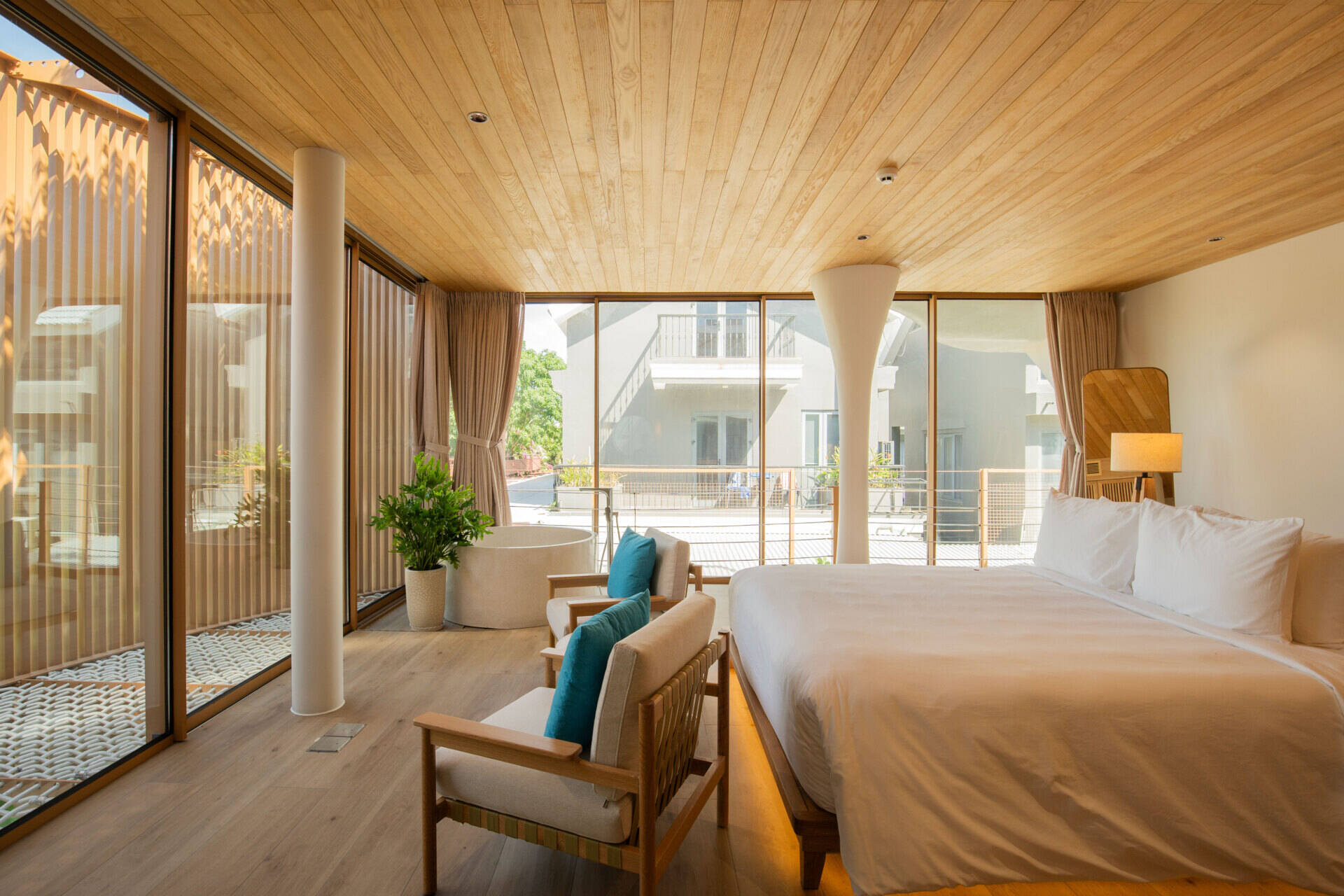
Natural materials and soft finishes give this guest bedroom a bright, relaxed atmosphere. A round soaking tub is positioned beside lush planting, a sculptural column, and expansive glazing, allowing ocean views to become part of the experience.
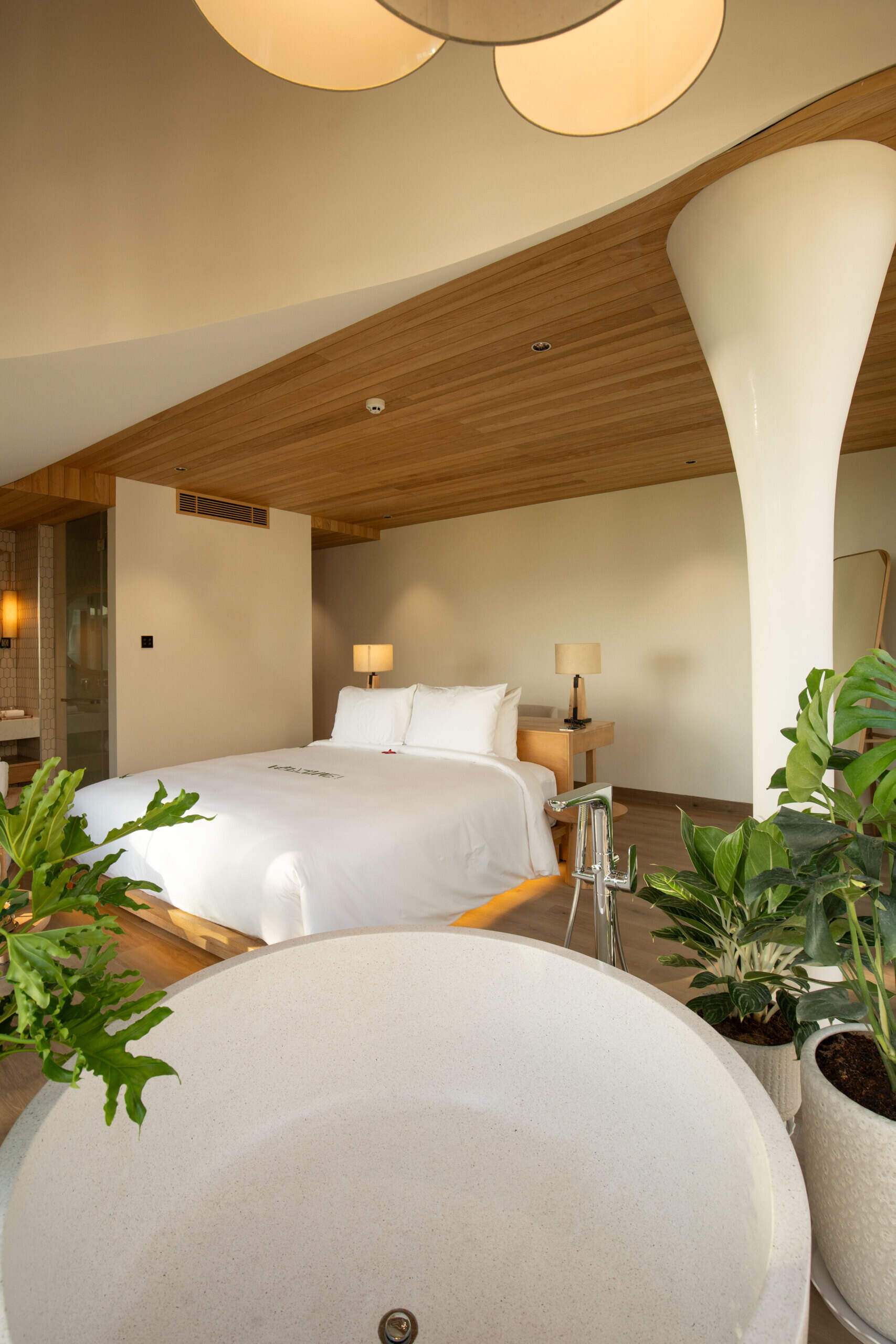
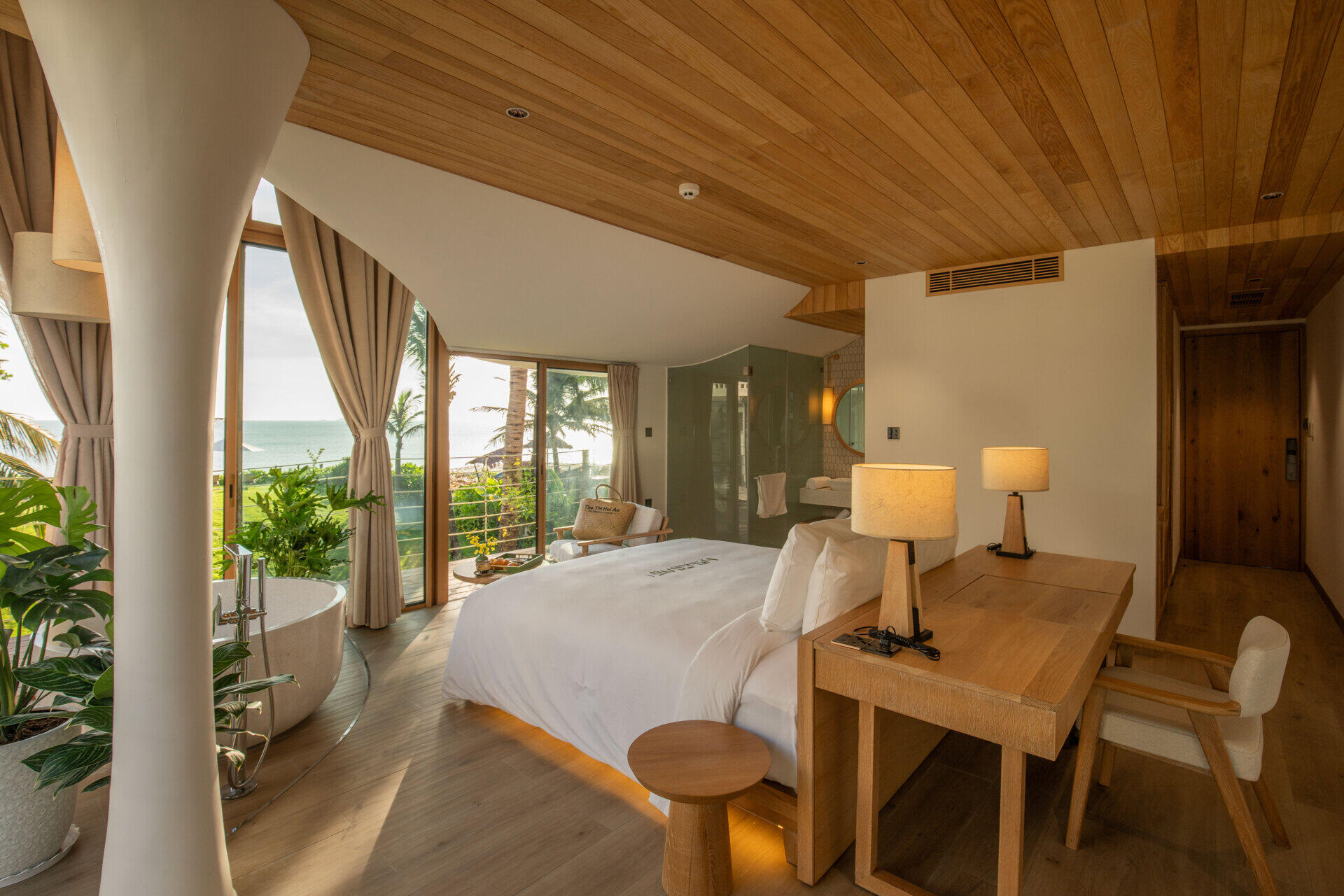
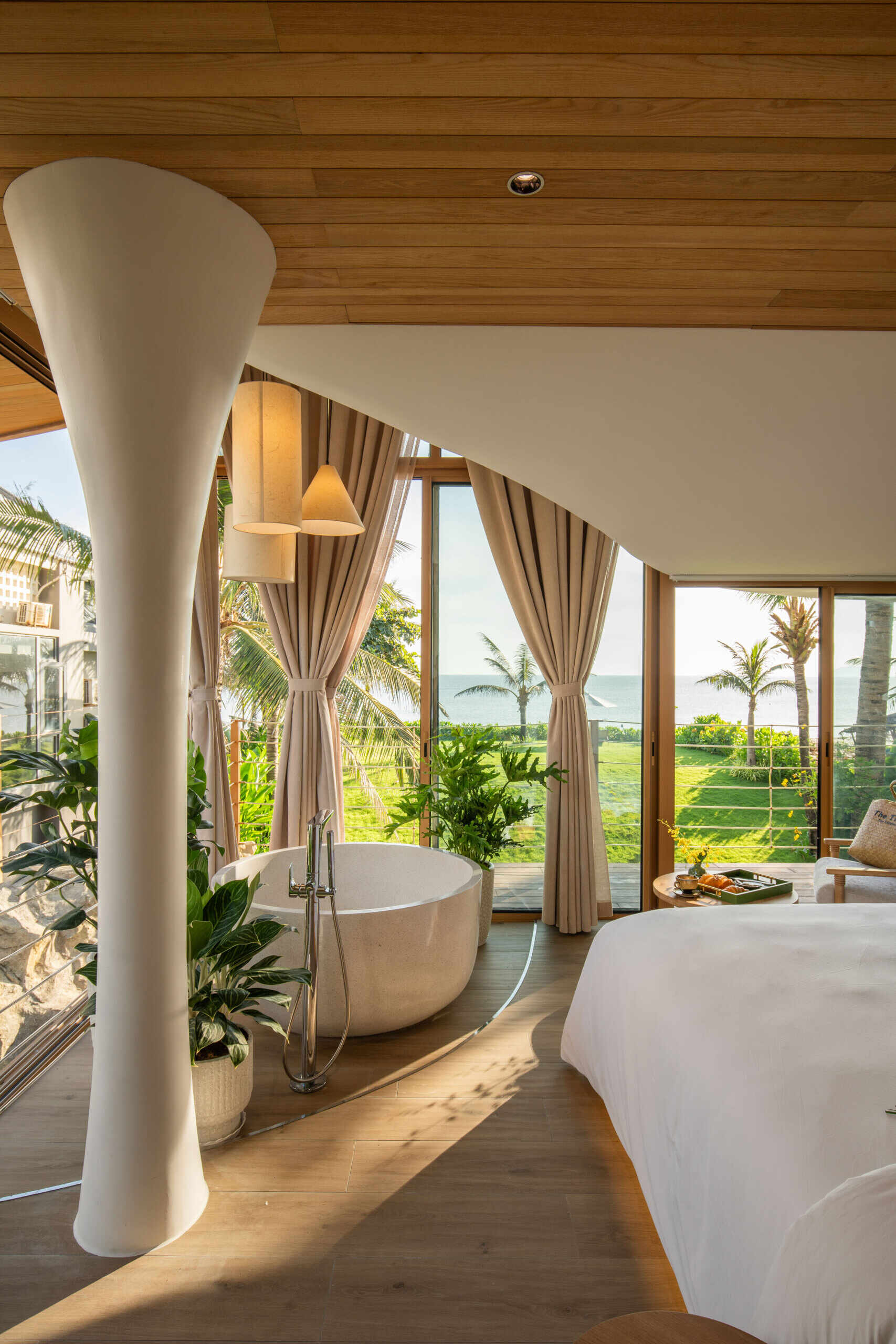
A Sunlit Bedroom Looking Toward the Coast
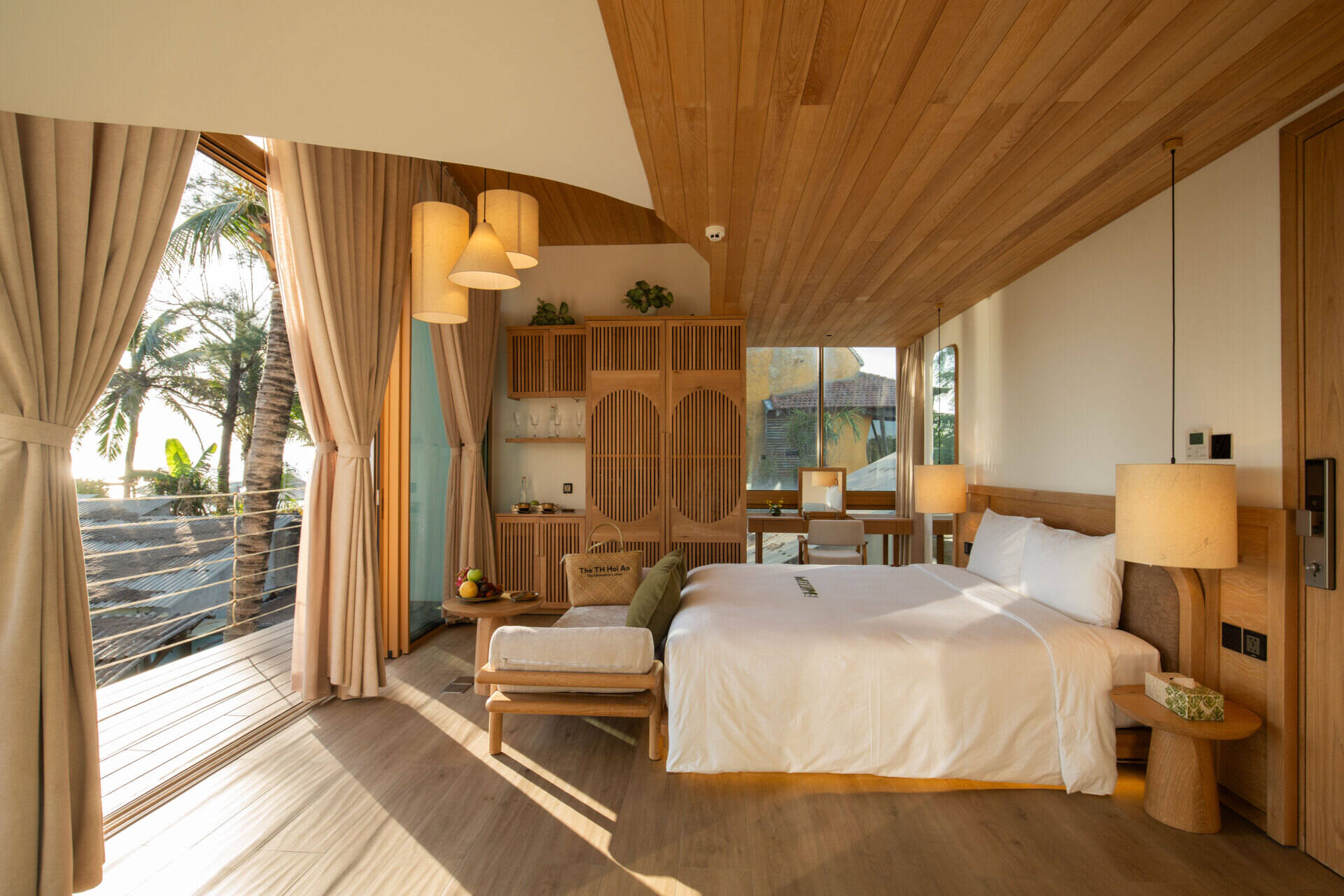
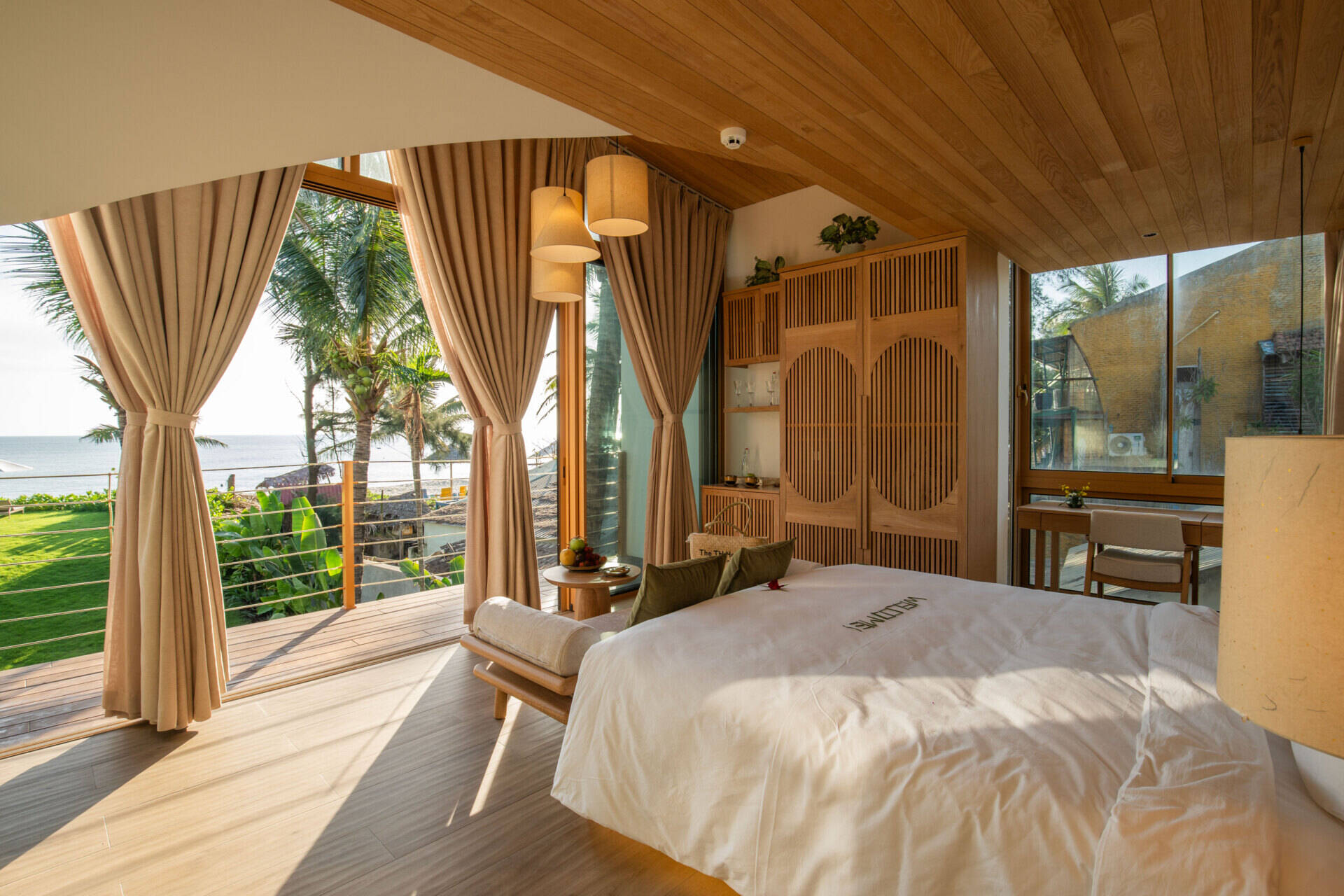
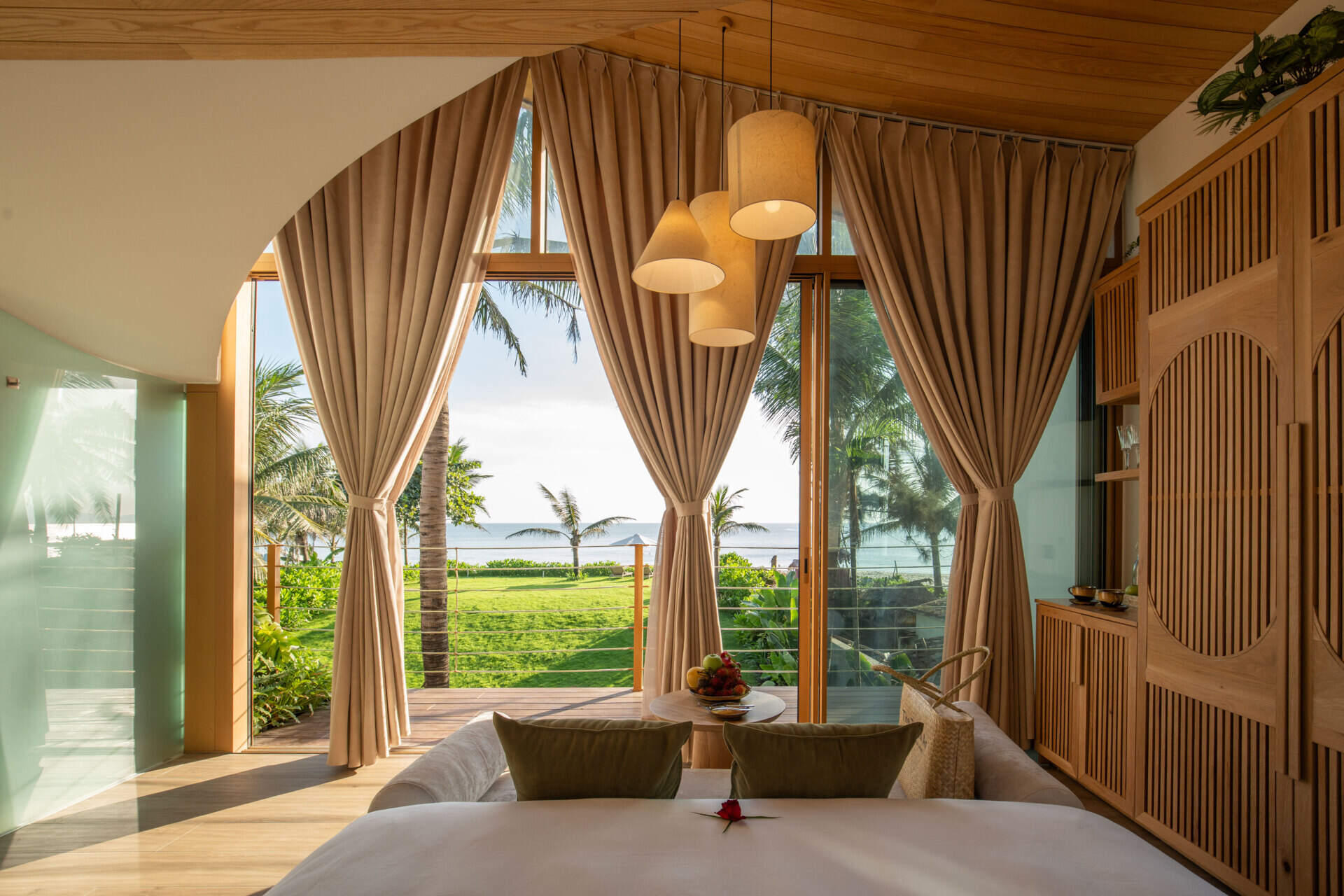
Sunlight pours through full-height glass doors, filling this bedroom with warmth throughout the day. Timber ceilings, slatted cabinetry and light-toned flooring create a calm backdrop, while the balcony overlooks palms and the water beyond. A lounge chair, built-in desk, and understated furnishings complete a space that captures the easygoing character of coastal living.
Reading the Design Through the Drawings
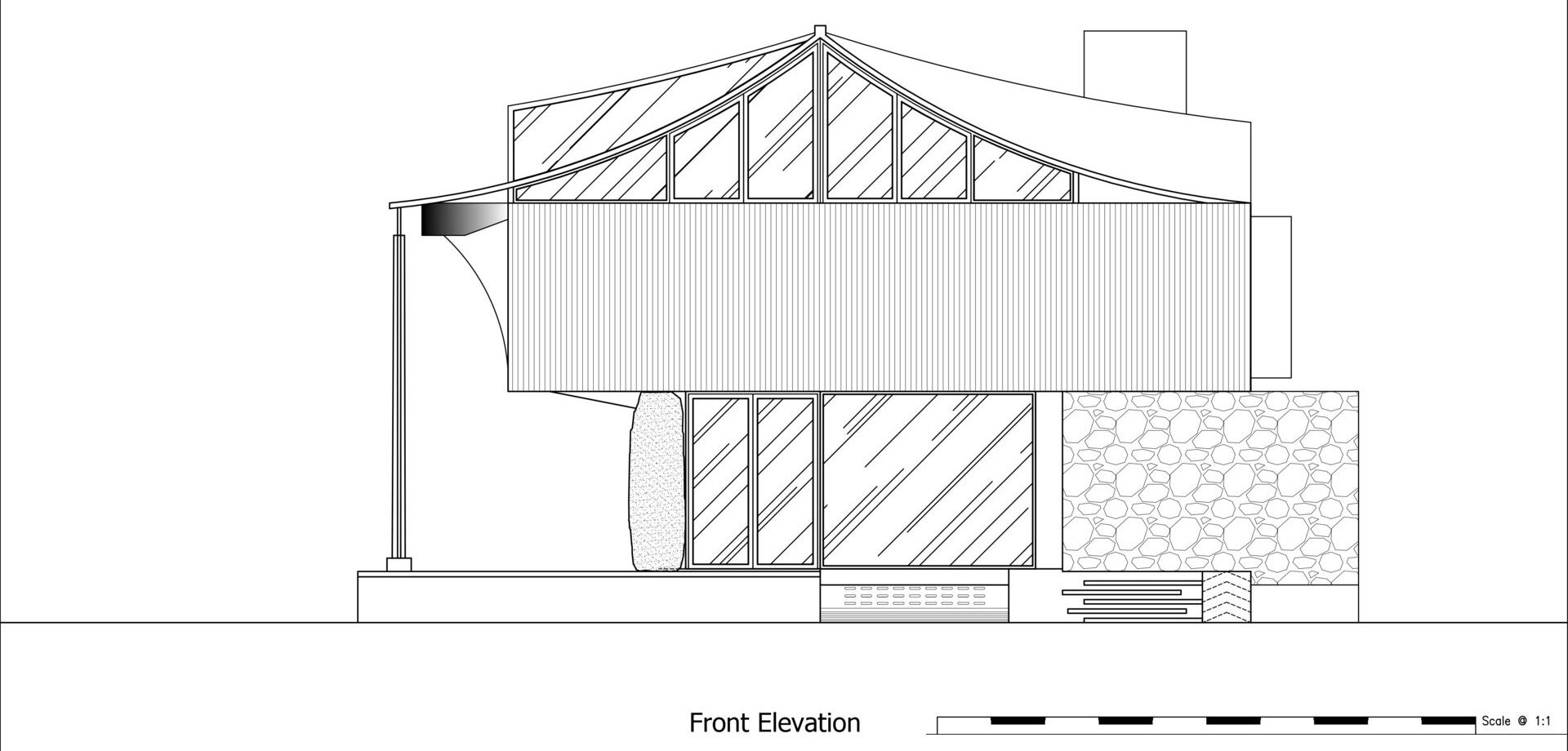
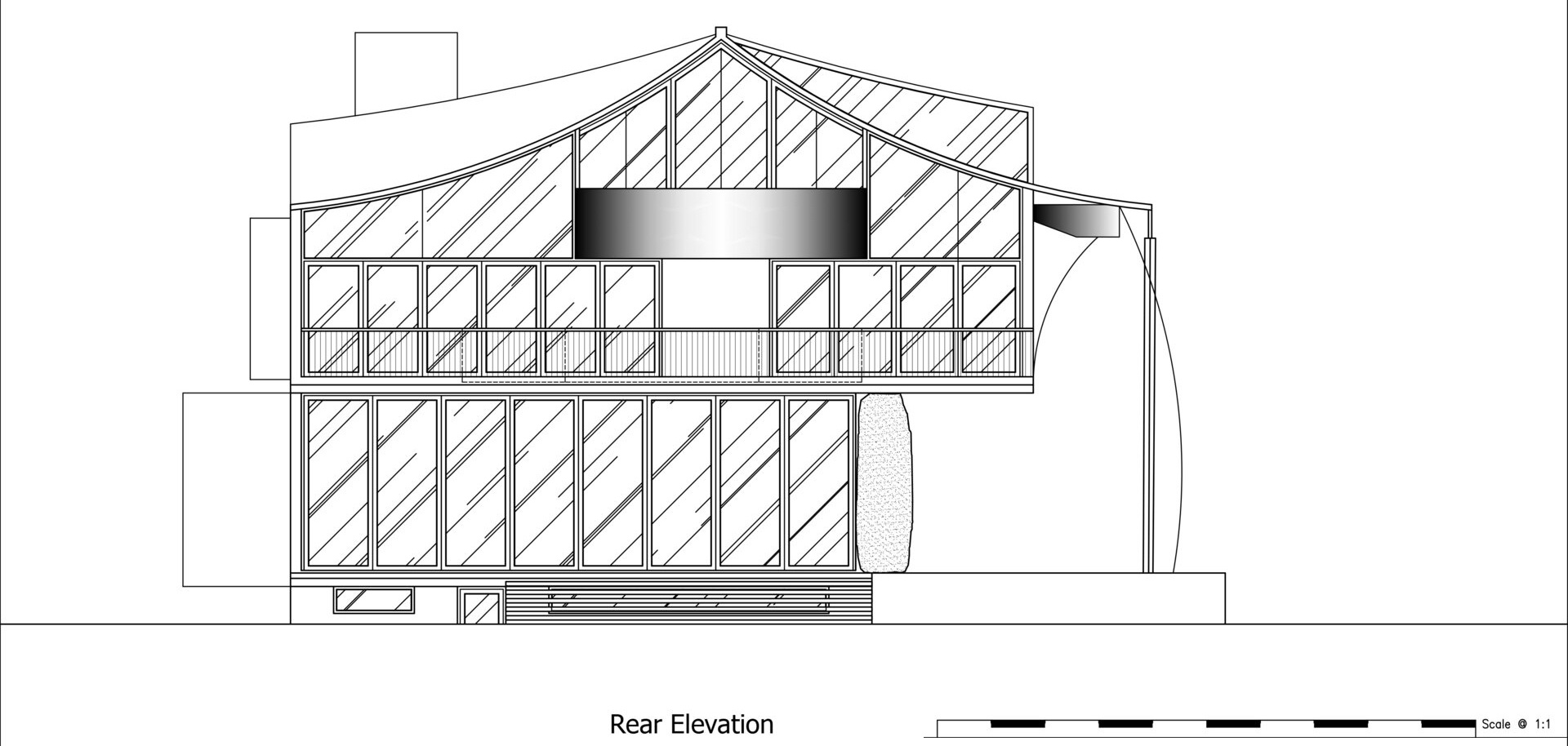
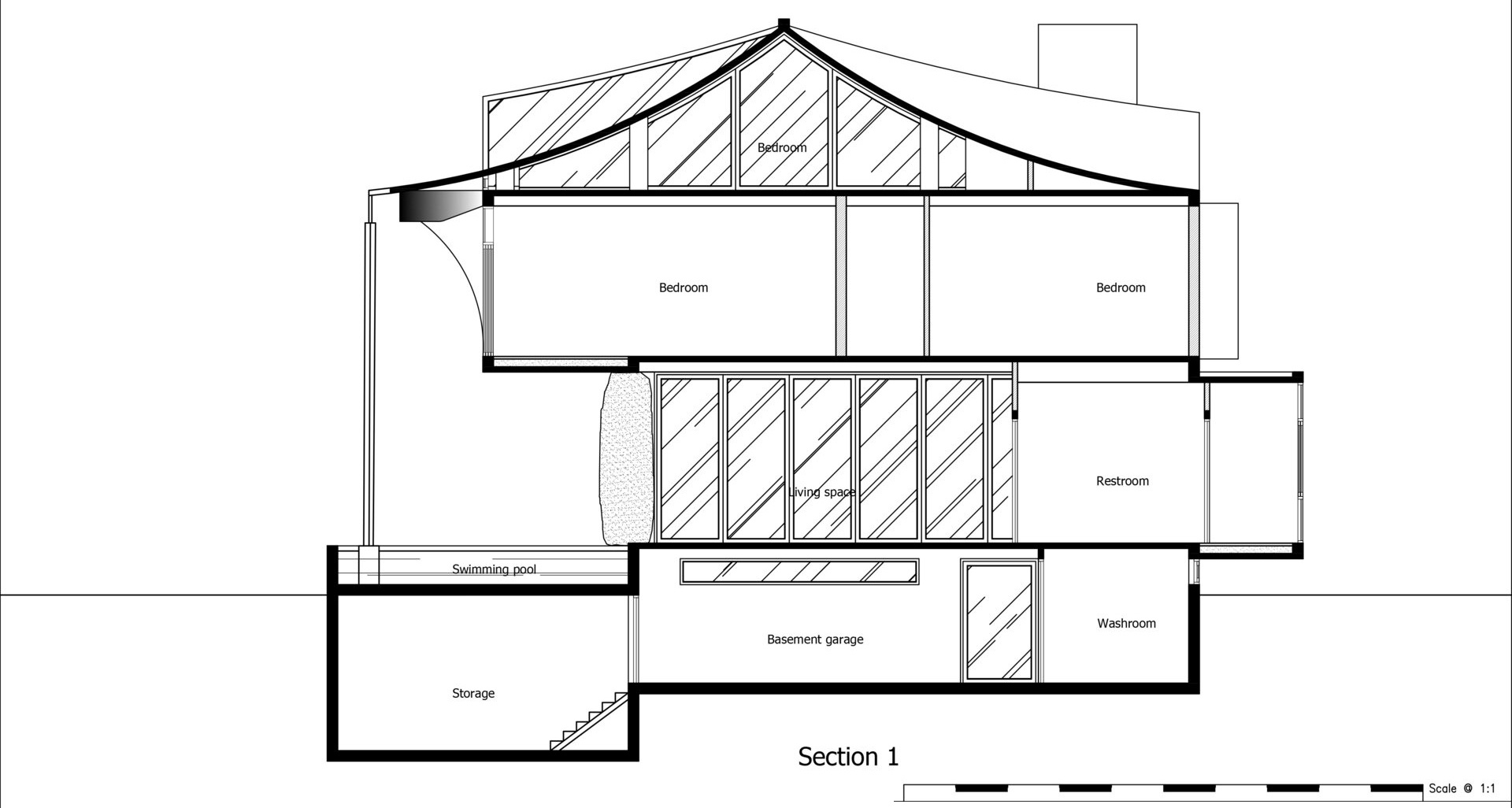
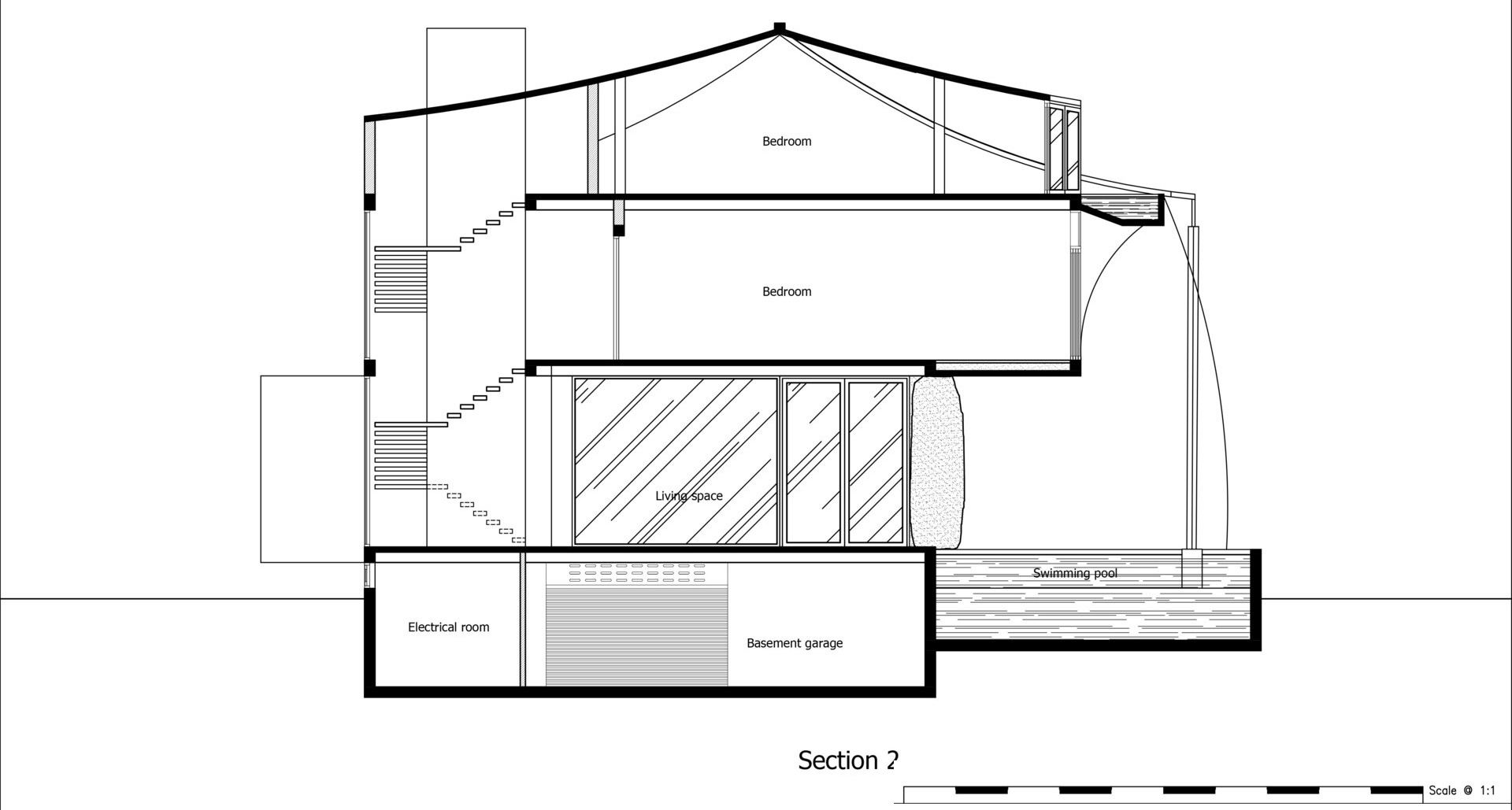
The architectural drawings show how TH Villa Hoi An is organized from the basement garage to the attic primary suite, while illustrating the open-plan ground floor, four guest bedrooms above, and the pitched roof that defines the home’s distinctive coastal form.
TH Villa Hoi An displays that smart architecture can transform coastal design challenges into beautiful, functional spaces beside the sea.