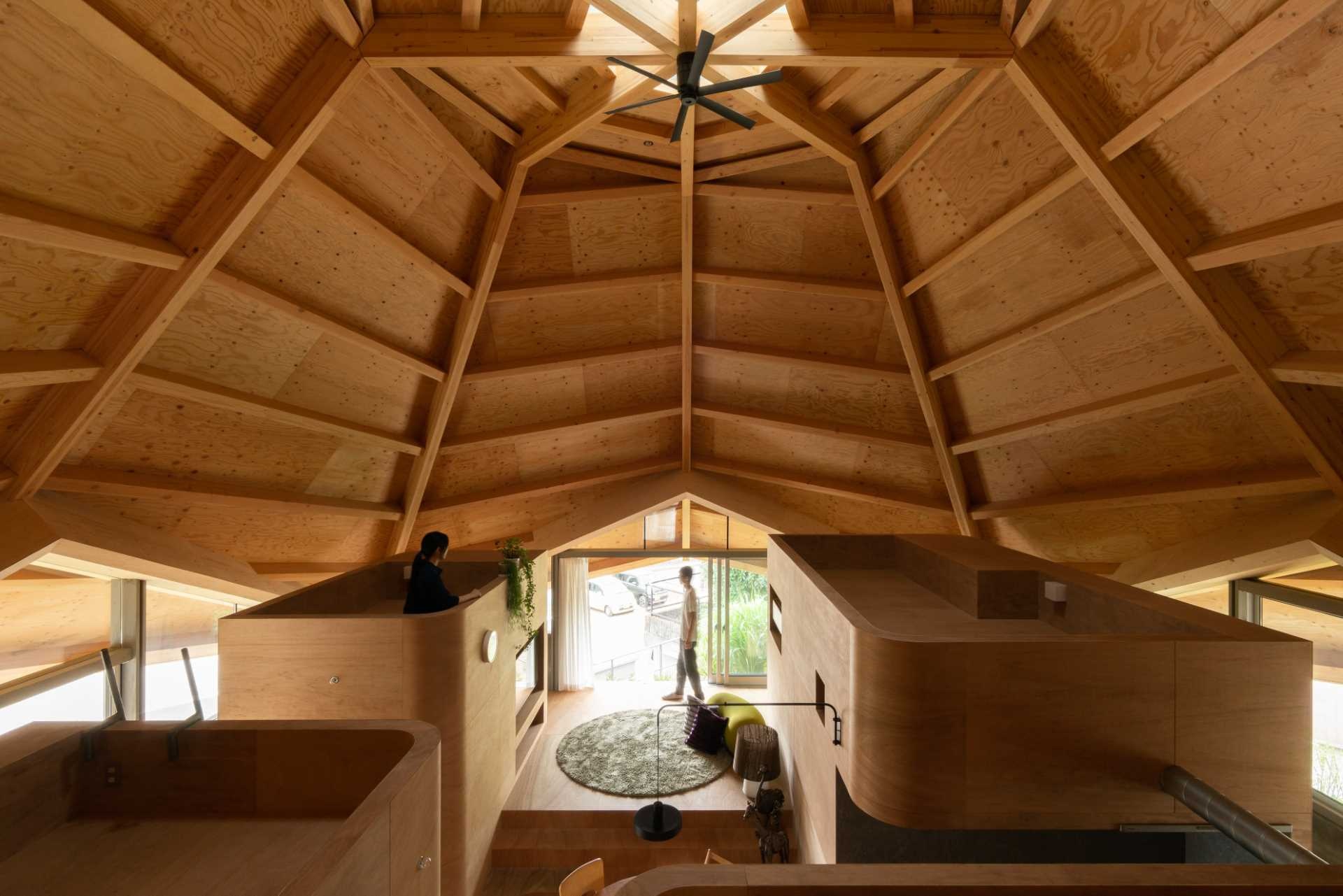
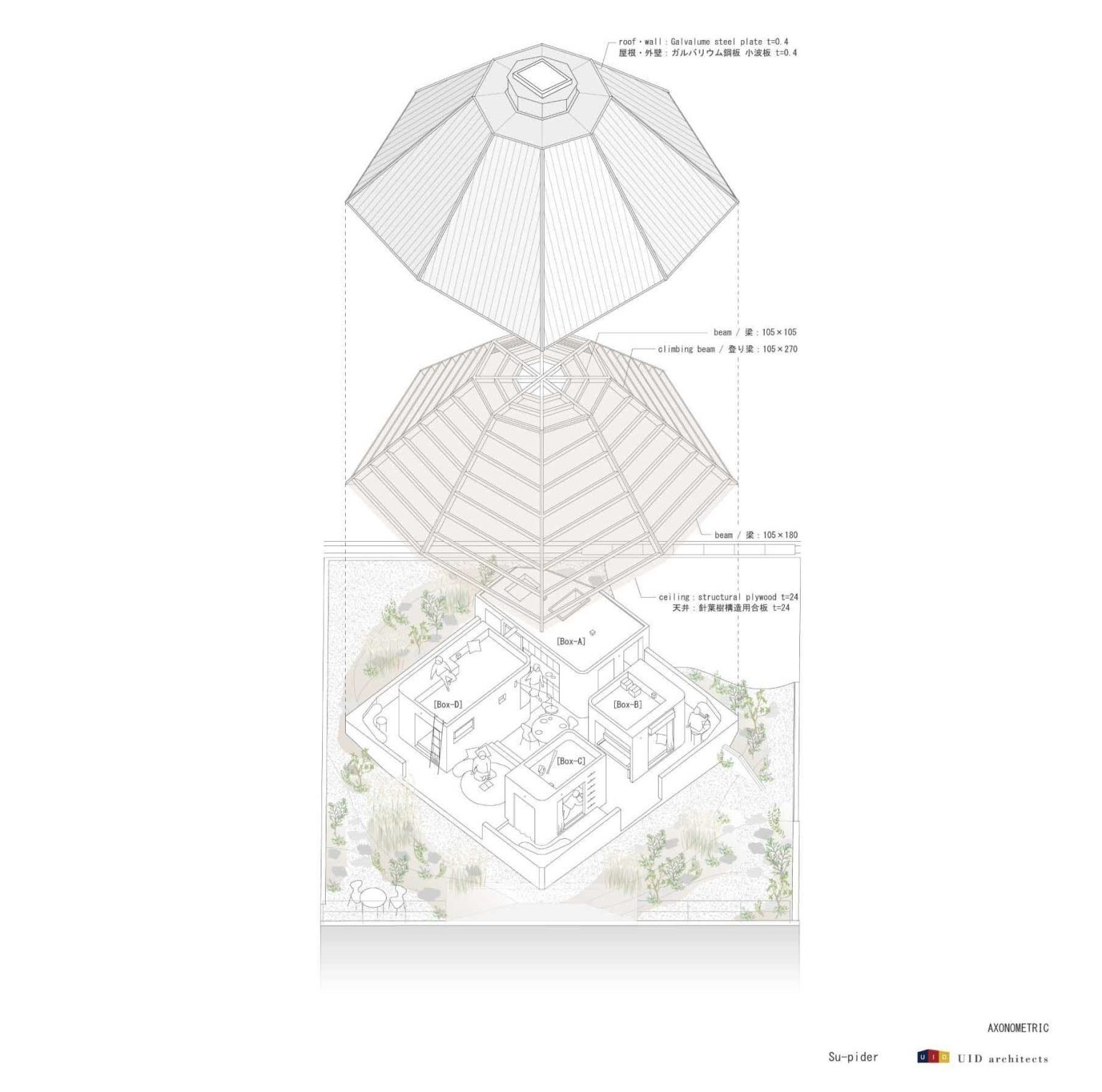
In Fukuyama, Japan, UID Architects created a home that immediately stands apart from its suburban surroundings. Designed for a family of four, the house takes inspiration from the geometry of a spiderweb, resulting in an octagonal form that looks unlike anything nearby.
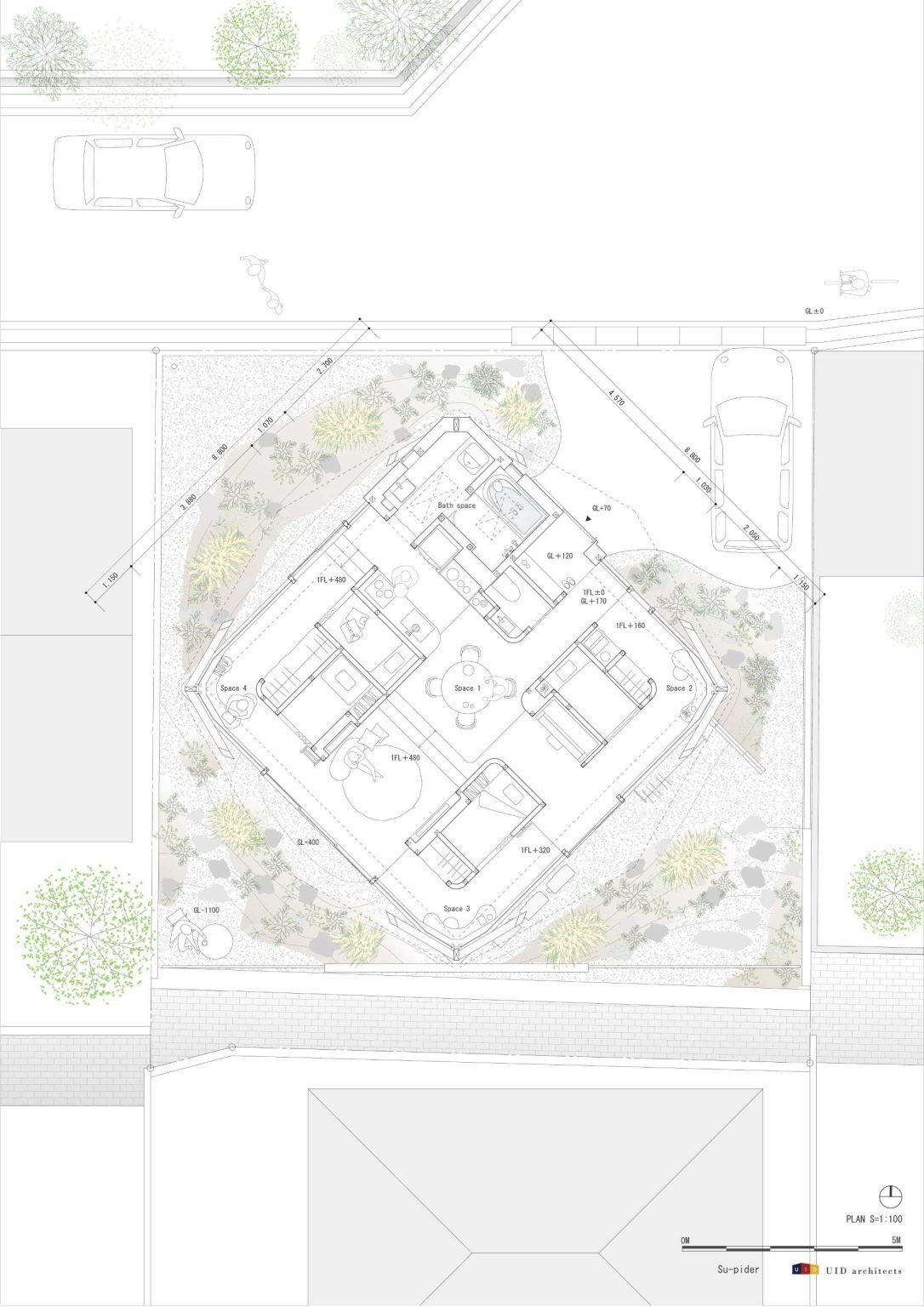
Positioned on a sloping site within a residential neighborhood, the home was rotated at a 45-degree angle to maximize views, ventilation, natural light, and privacy.
A Spiderweb-Inspired Form That Breaks Away From Convention
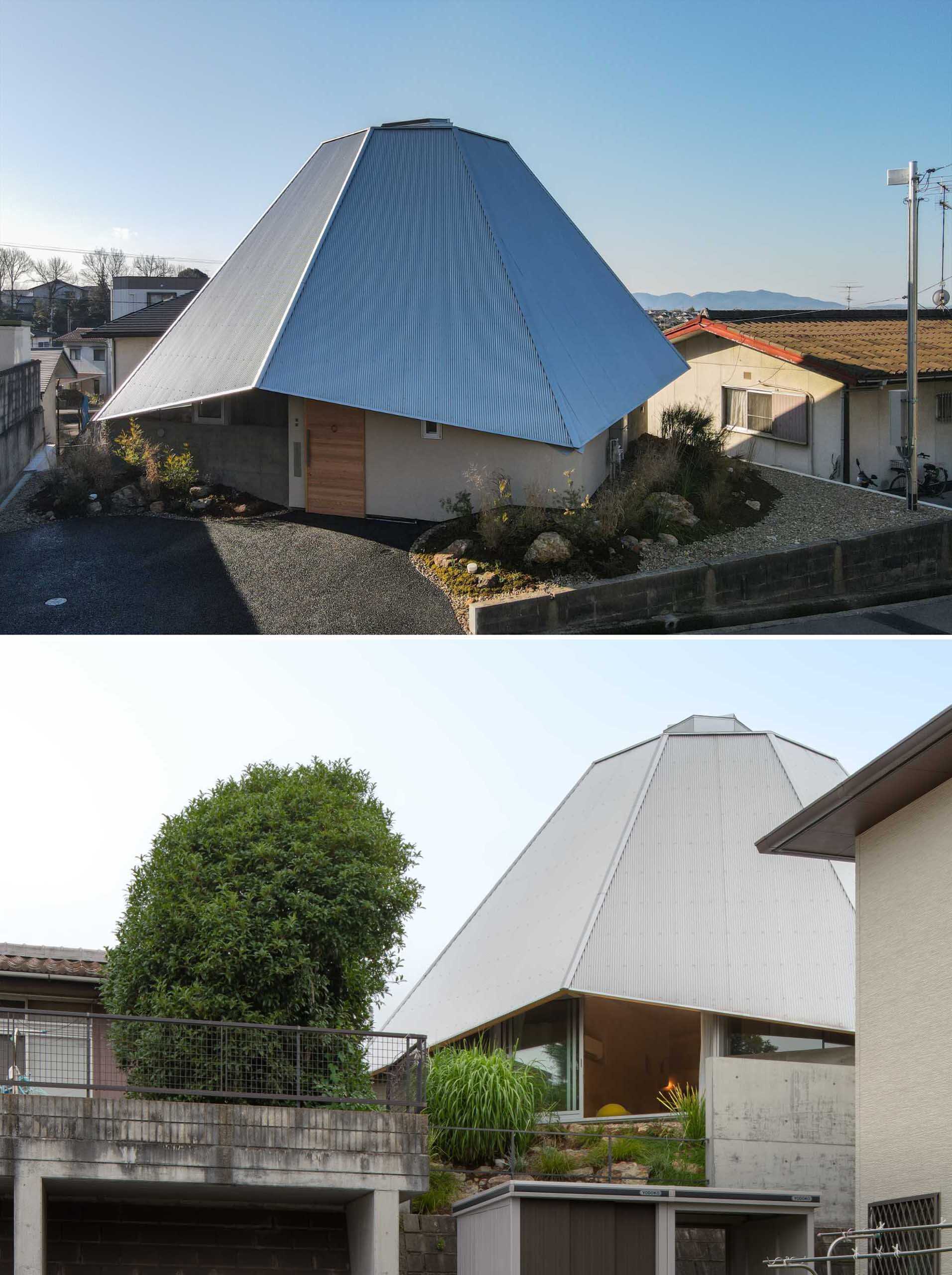
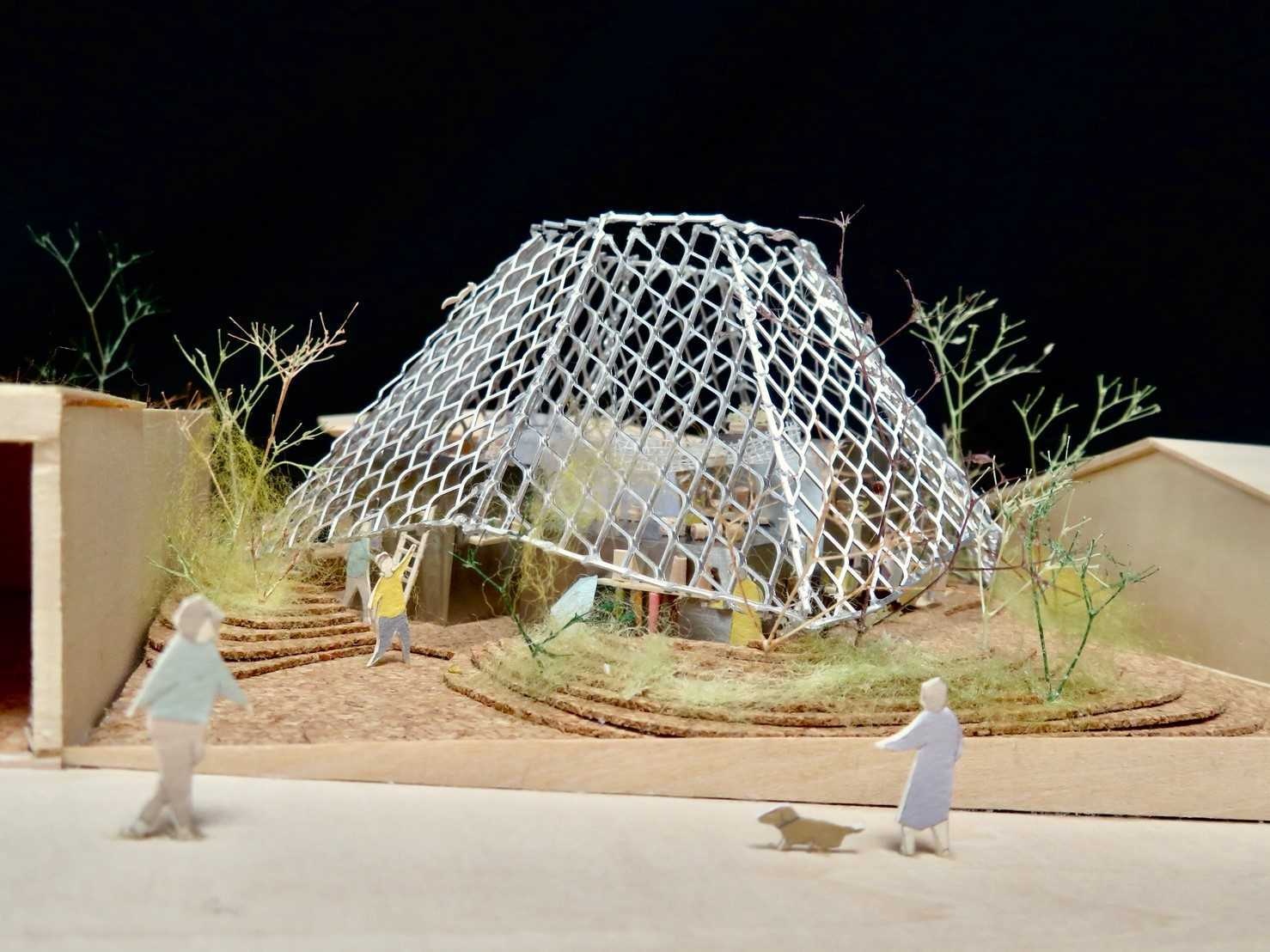
From the outside, the home’s most distinctive feature is its octagonal shape and web-like structural framework. Instead of following the rectangular layouts commonly seen in suburban developments, UID Architects turned the entire volume diagonally across the site.
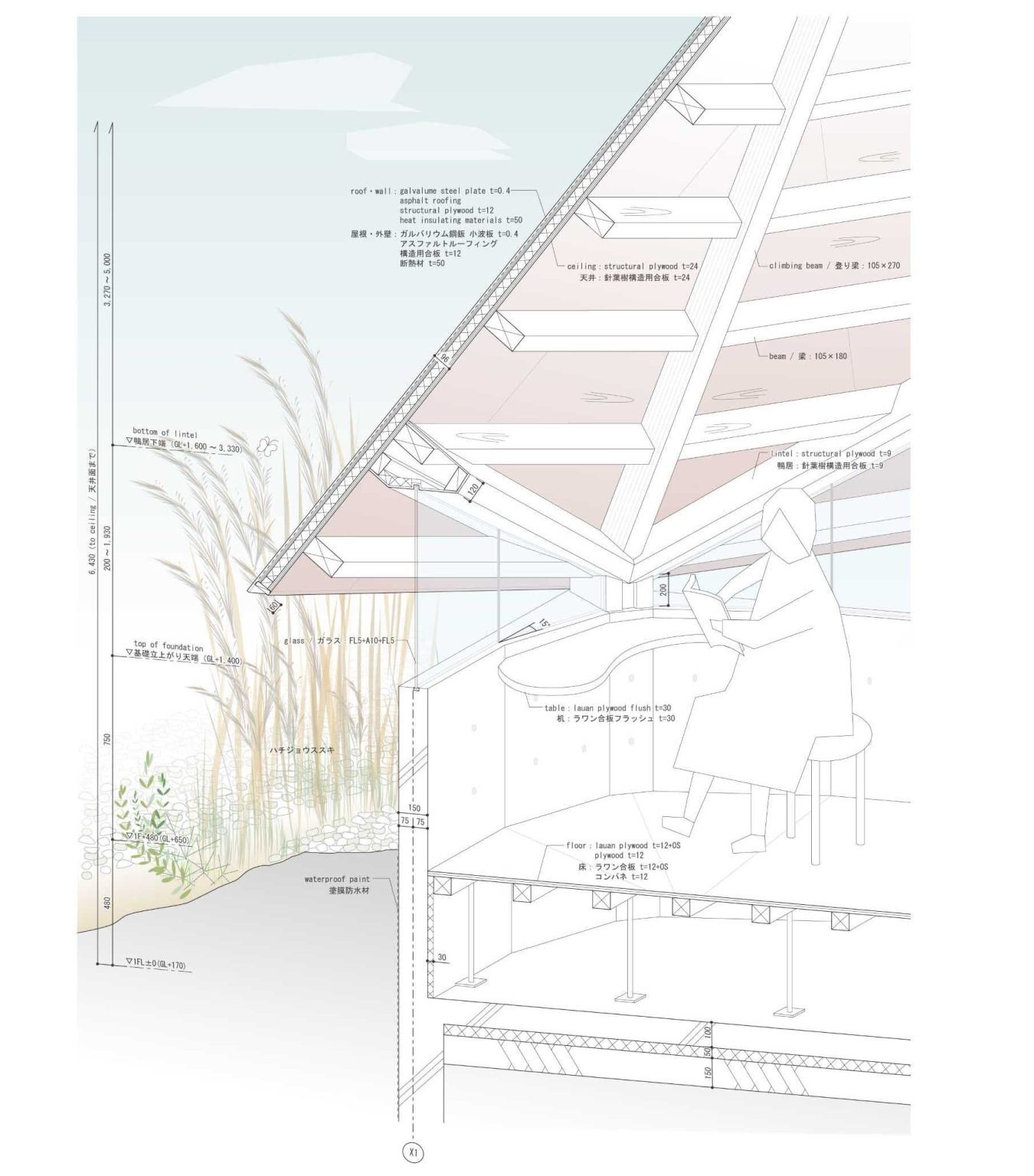
The dramatic slanted roof extends downward toward the supporting legs, giving the structure a sculptural appearance that feels both light and dynamic.
Four Structural Legs Shape a Single Open Living Environment
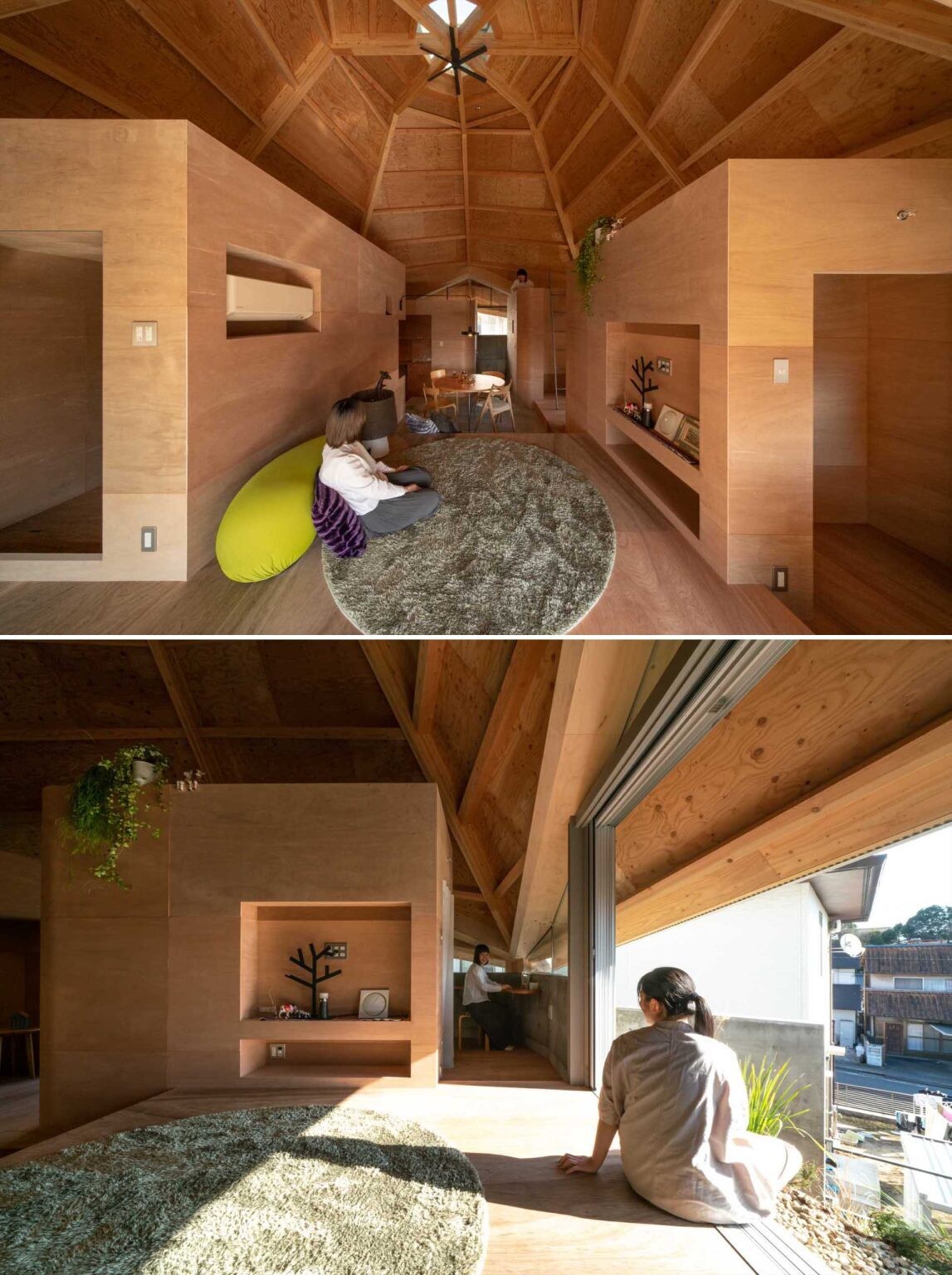
Stepping inside reveals one of the home’s most intriguing ideas. Rather than dividing the interior into a collection of enclosed rooms, the structure creates a large centripetal living space organized around the visible supporting legs.
The house is supported at four points, while triangular openings connect the interior and exterior around the perimeter. These openings allow natural light to enter from multiple directions and strengthen the sense of openness throughout the home.
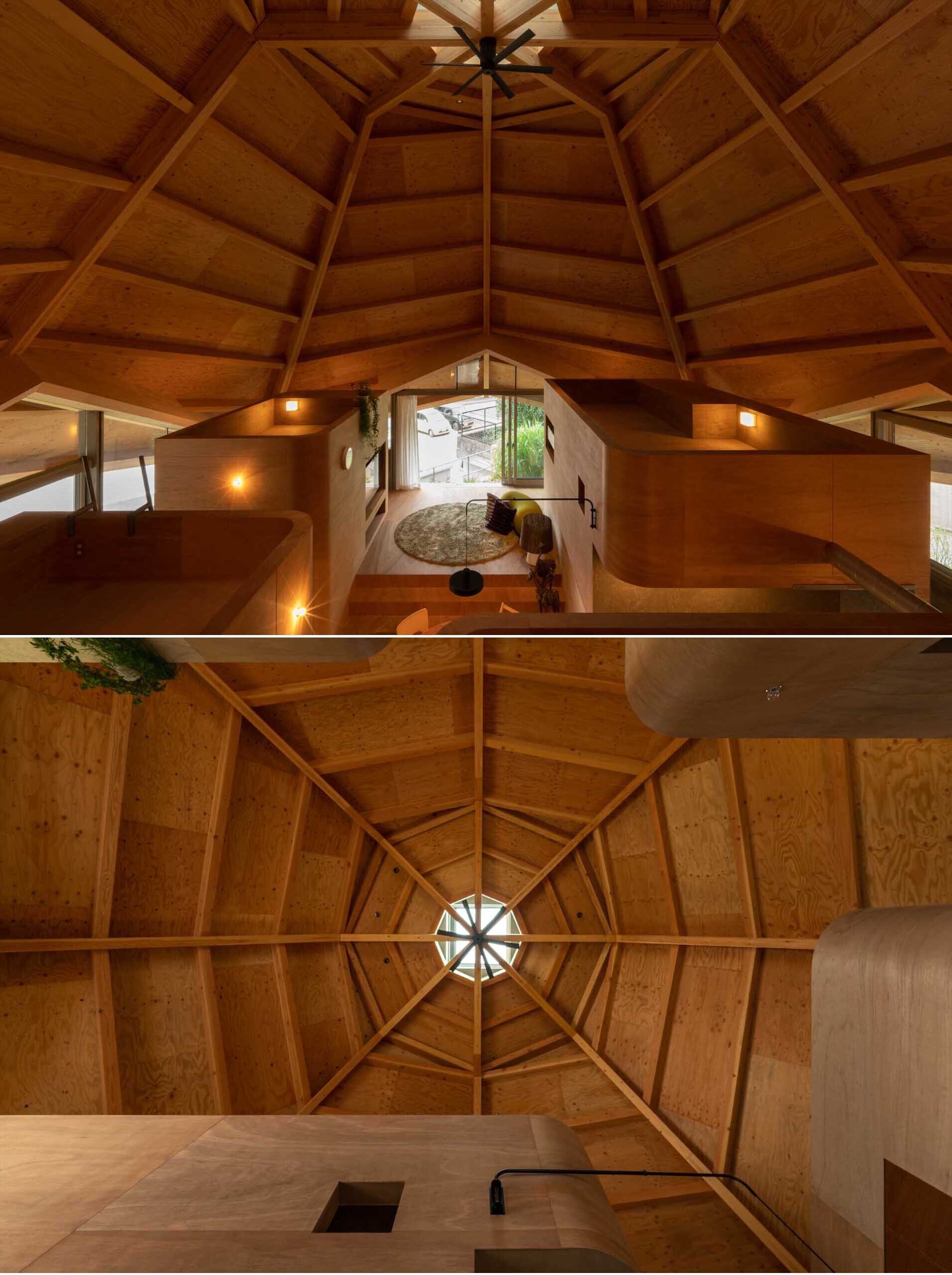
An Open Floor Plan Designed Around Four Boxes
The interior contains approximately 828 square feet (77 square meters) of open space. Within that area, four distinct boxes are positioned strategically throughout the floor plan.
These boxes are not traditional rooms. Instead, they act as functional elements that organize movement through the home and create a corridor-like living environment. Together they help define gathering areas while maintaining visual connections across the entire interior.
A Home That Can Adapt as Family Life Changes
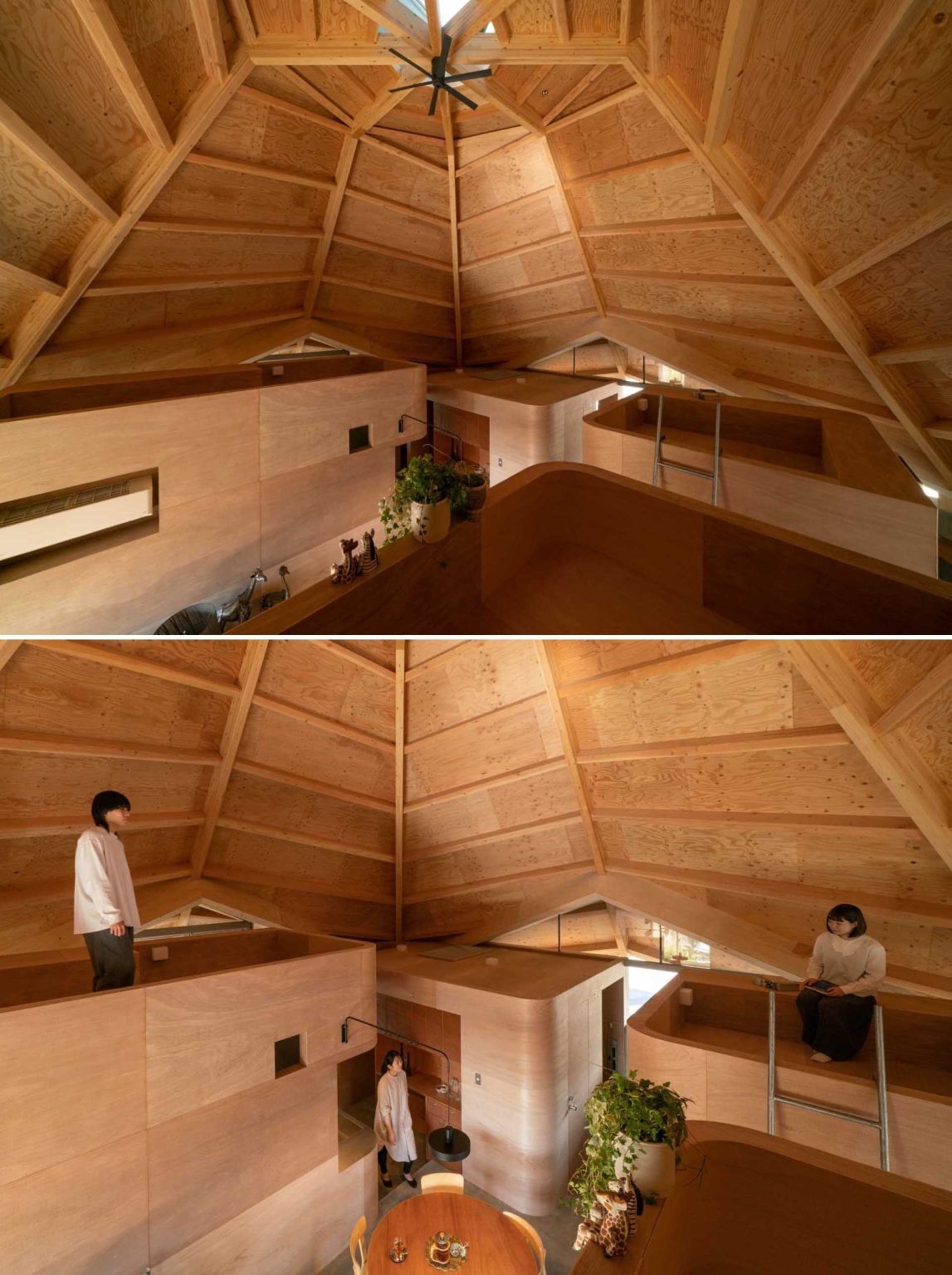
One of the most interesting aspects of the design is the absence of clearly defined rooms. Since there are few permanent boundaries, the use of each area can shift over time.
As the children grow and family needs change, different parts of the house can take on new functions. Areas used for play today may become study zones or workspaces in the future.
The layout allows the home to accommodate changing lifestyles without requiring major renovations. Furniture, activity zones, and family habits can all evolve within the same open framework.
Built-In Features Help Define Individual Areas
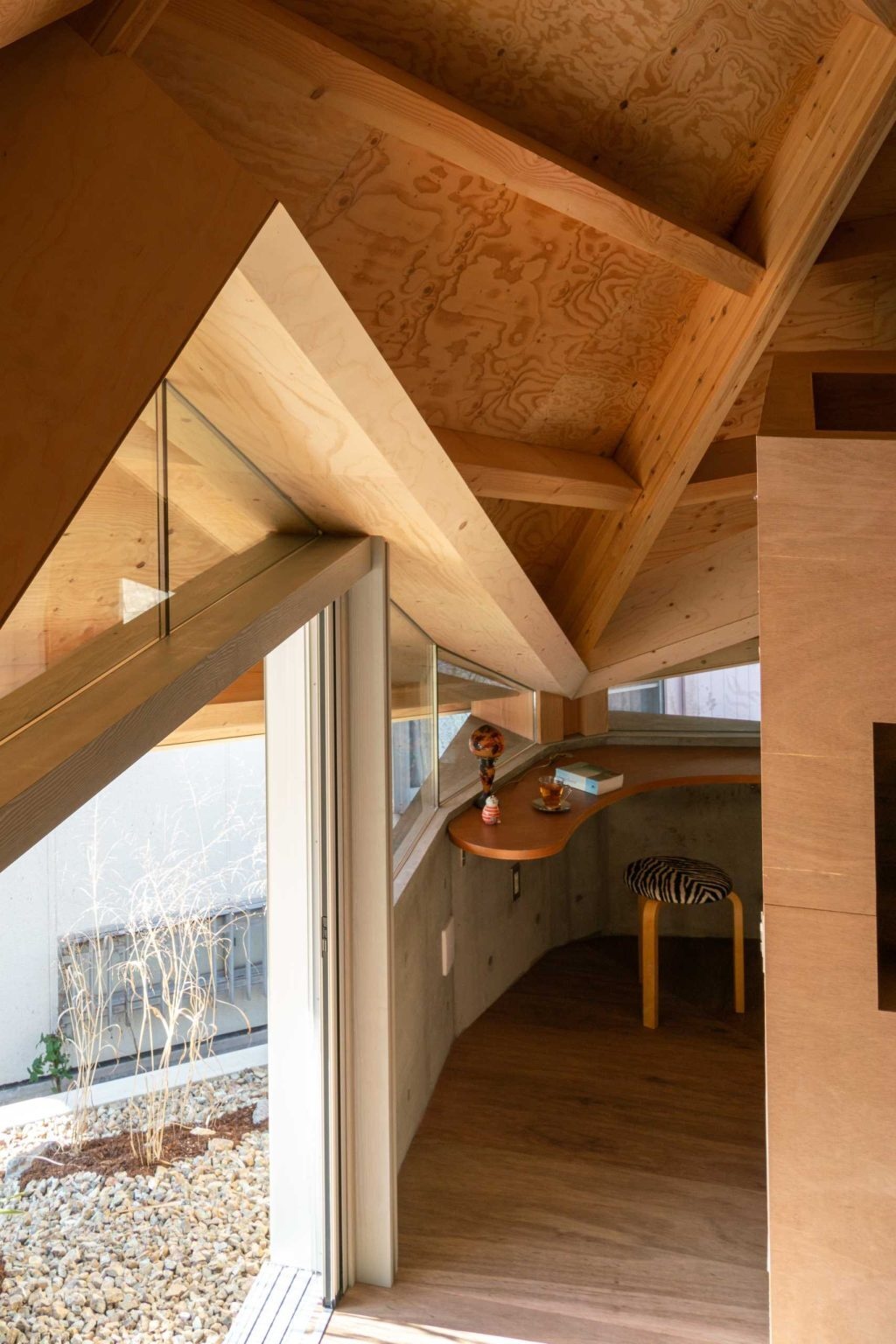
Although the home avoids traditional room divisions, built-in elements help create a variety of distinct settings throughout the interior.
A custom desk provides a dedicated workspace, while a raised seating platform introduces another gathering area within the larger open environment. These integrated features help organize the space and support different activities without interrupting visual continuity.
A Dining Space Beneath the Center of the Spiderweb
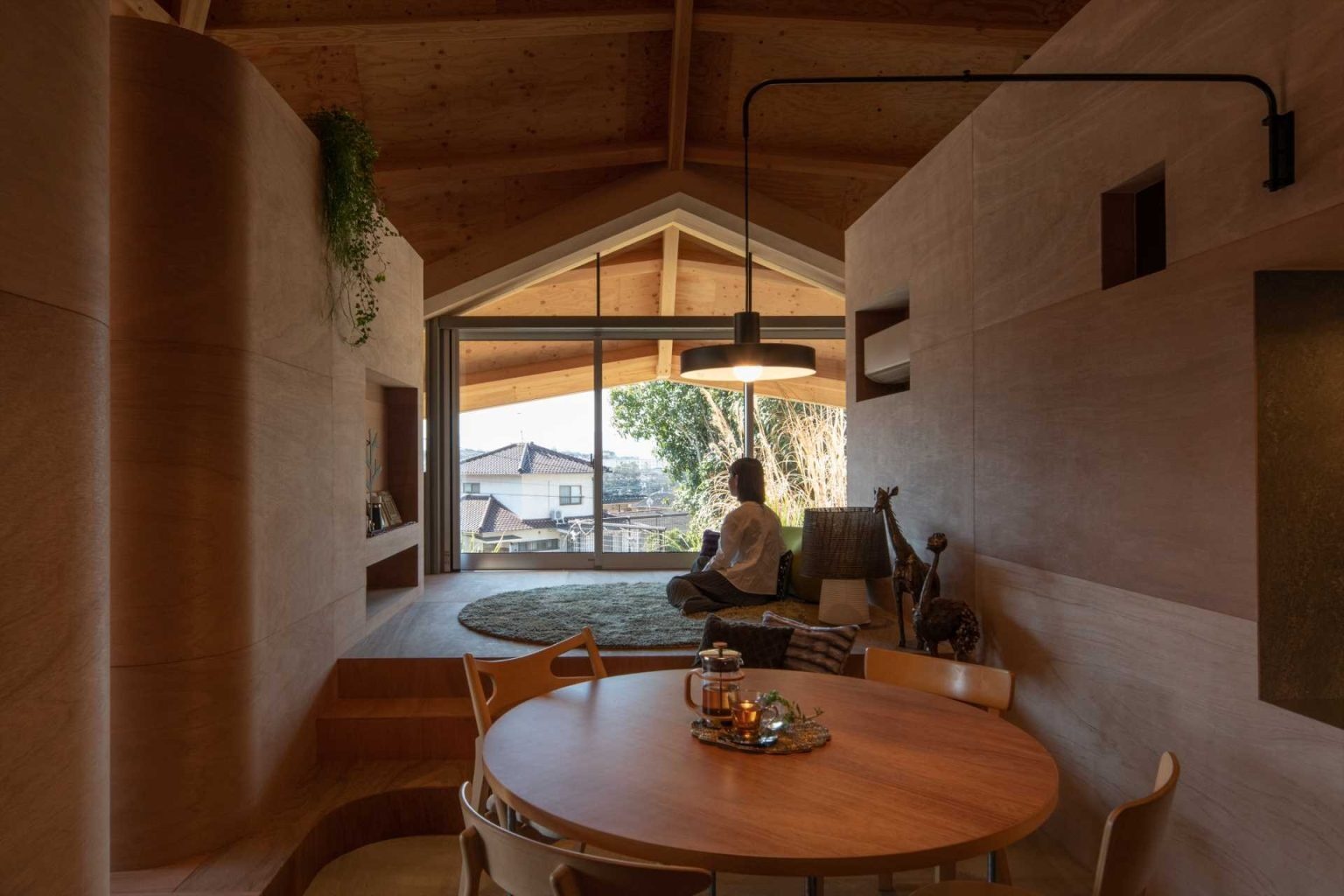
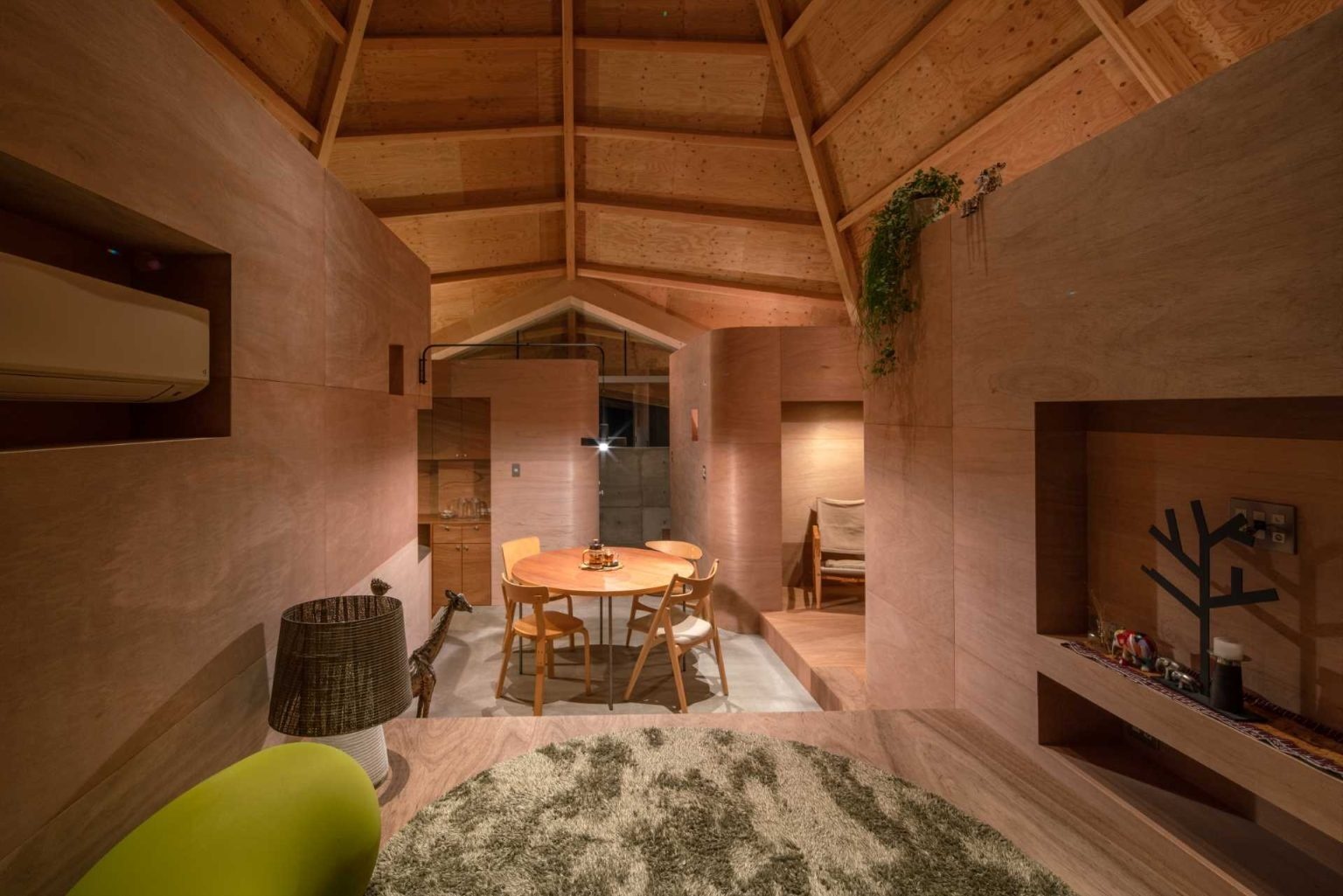
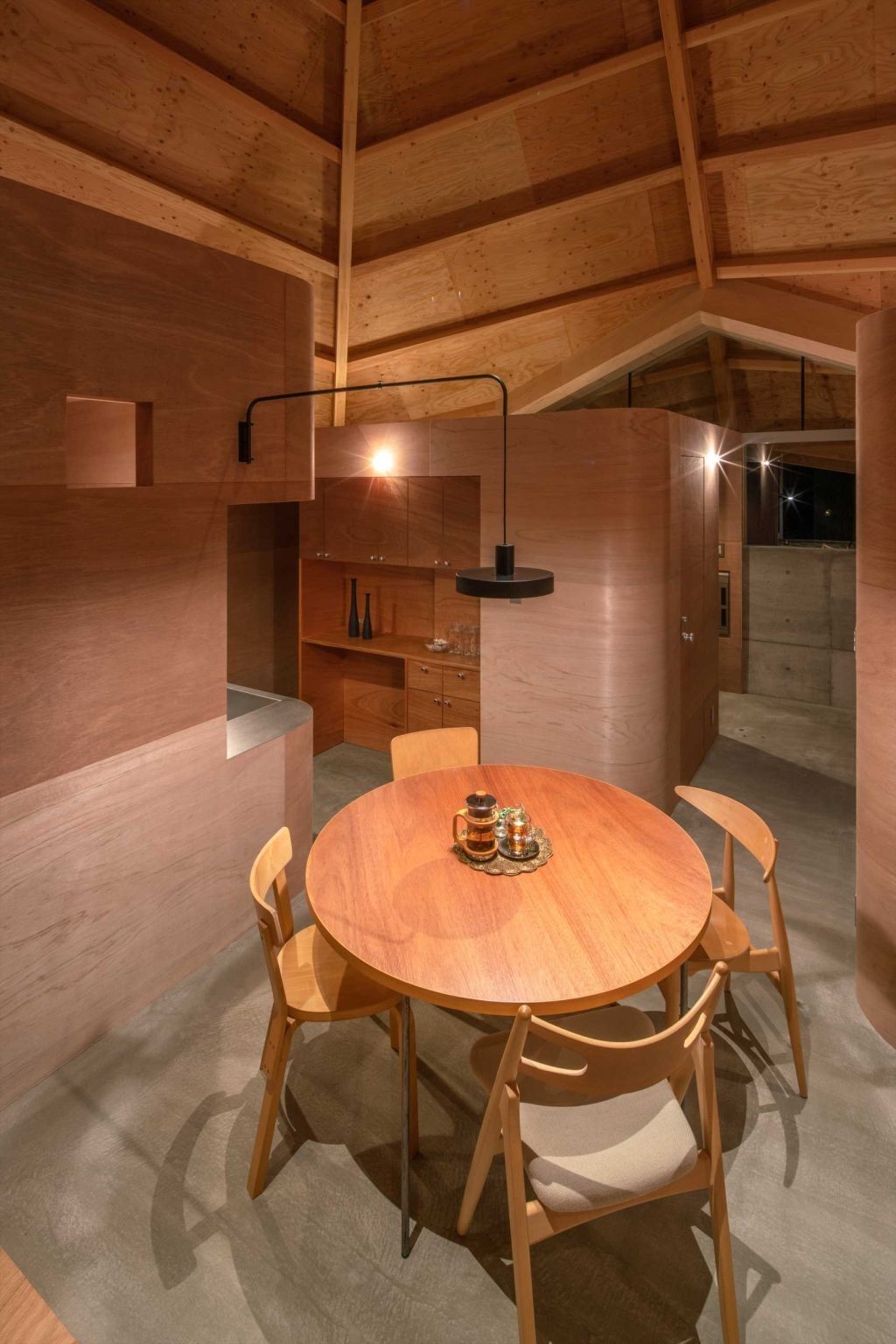
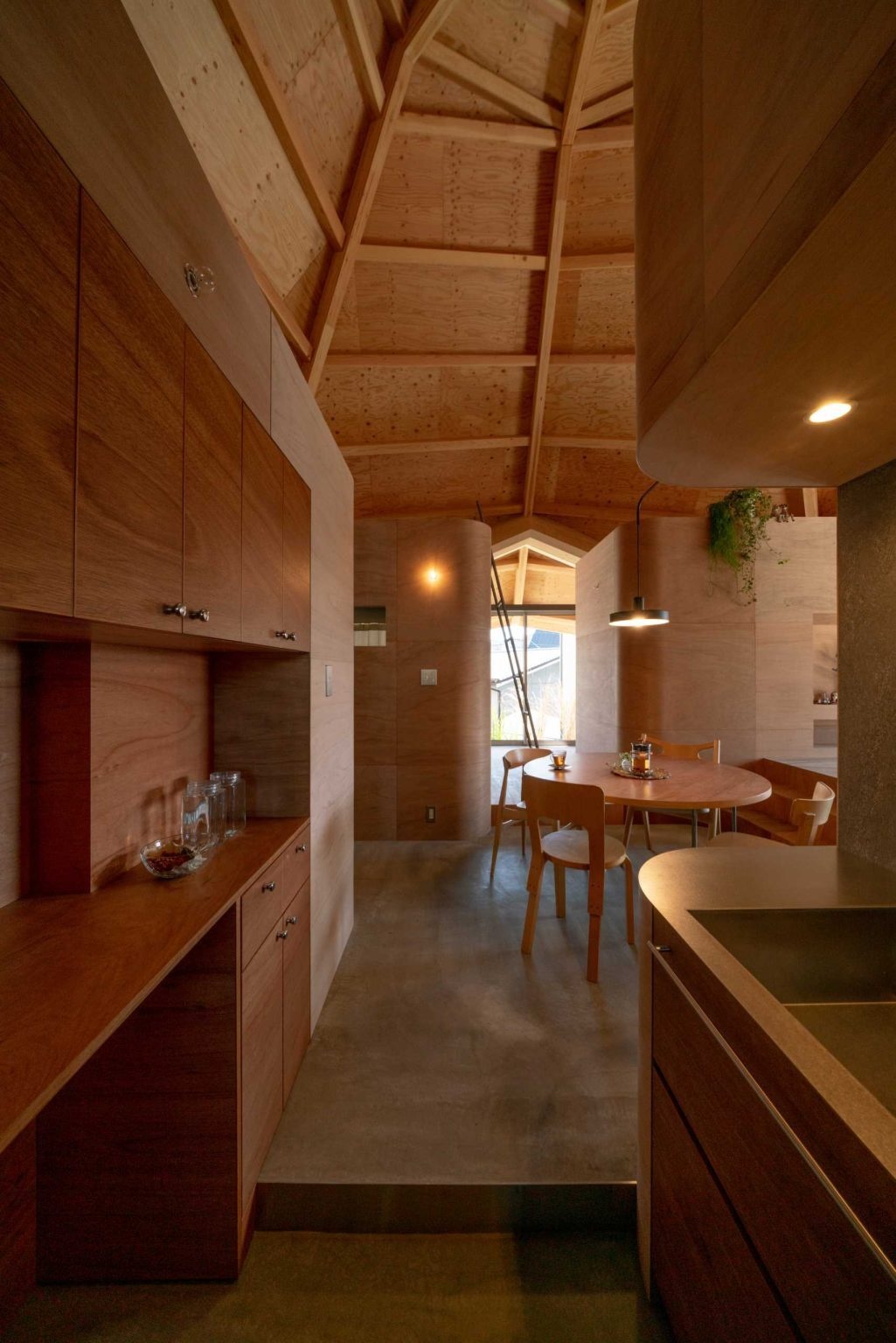
At the heart of the home sits the dining area, positioned directly beneath the center of the spiderweb-inspired structure.
This location naturally draws attention upward to the geometry of the roof while reinforcing the dining table’s role as a central gathering point for the family.
Surrounding boxes feature softened curved corners, introducing a gentler character that contrasts with the strong angular framework of the building. These rounded forms add warmth and visual comfort to the interior.
A Compact Kitchen With Its Own Distinct Character
Adjacent to the dining area is a compact kitchen that stands apart through its material selection.
While much of the interior features a consistent palette, the kitchen introduces a different wood finish that gives it a unique identity within the larger space. This subtle shift helps distinguish the area while maintaining harmony with the rest of the home.
Models and Drawings Reveal the Design Logic
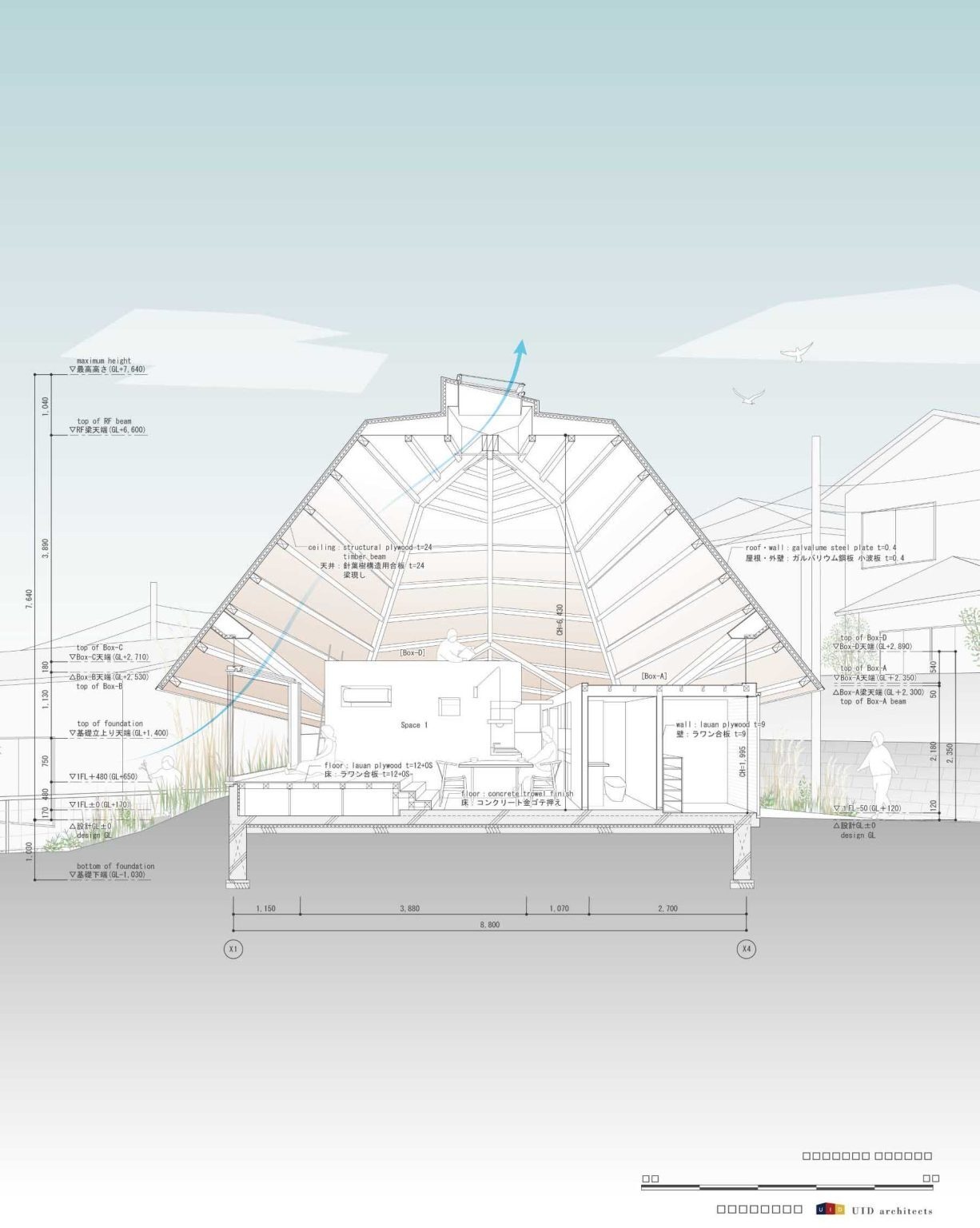
To fully appreciate the complexity of the project, the architectural model, diagrams, and floor plan provide valuable insight into the design process.
These drawings reveal how the octagonal geometry, supporting structure, and arrangement of interior boxes work together to create the home’s distinctive layout. They also illustrate how the angled positioning on the site contributes to views, daylight, ventilation, and privacy.
By replacing fixed rooms with flexible living zones and combining striking geometry with practical functionality, the house creates an environment capable of changing alongside the family over many years.