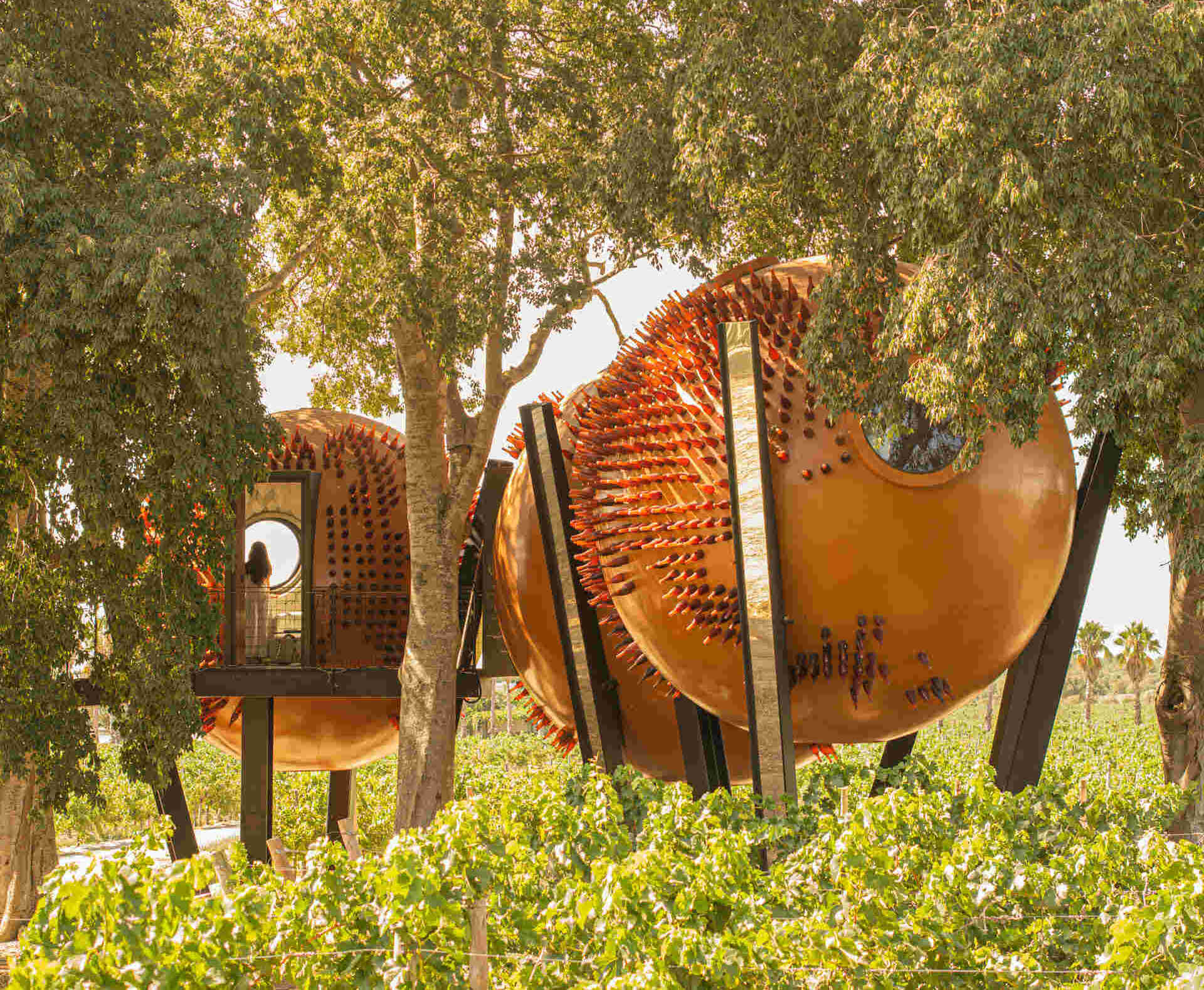
Set among the vineyards of Setúbal, Portugal, ÁTOMOS is unlike a conventional architectural project. Designed by Rebelo de Andrade Studio, led by Luís Rebelo de Andrade and Tiago Rebelo de Andrade, it explores the relationship between art, architecture, sustainability, and the landscape through an unusual composition of three interconnected spheres.
The project also reflects the studio’s wider philosophy. Every design begins by balancing the ambitions of the client with environmental responsibility, local history, and the character of the site itself. The result is architecture that respects its location while introducing something entirely new.
A studio inspired by people, place and history
For Rebelo de Andrade Studio, architecture is never created in isolation. Each project begins with understanding the people commissioning it, while also responding to regulations, local heritage, and the natural landscape.
The practice also places strong emphasis on sustainability. Native materials, energy-conscious thinking, and respect for history all play an important role, creating projects that acknowledge the past while looking ahead to the future.
Three spheres with three different purposes
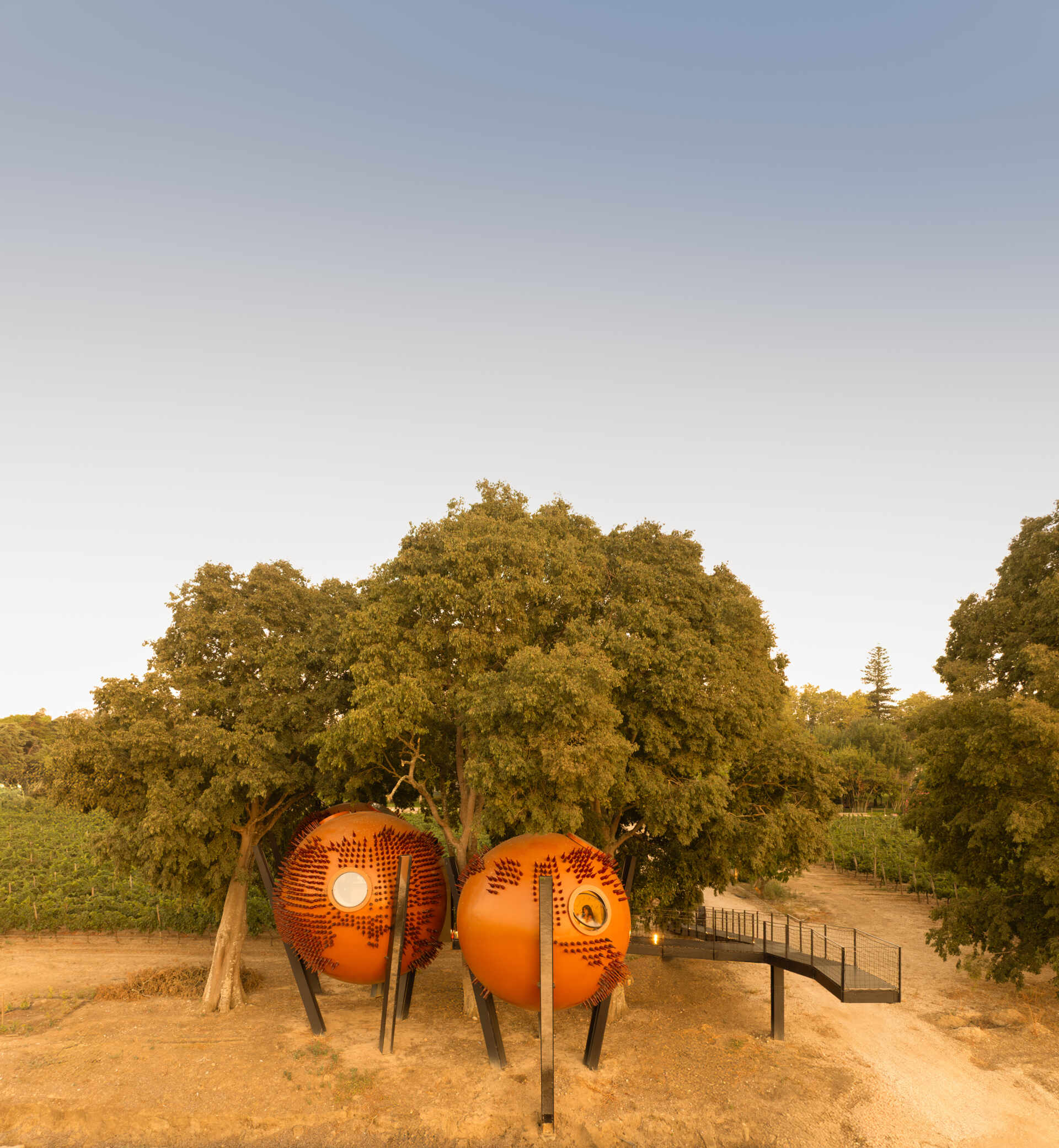
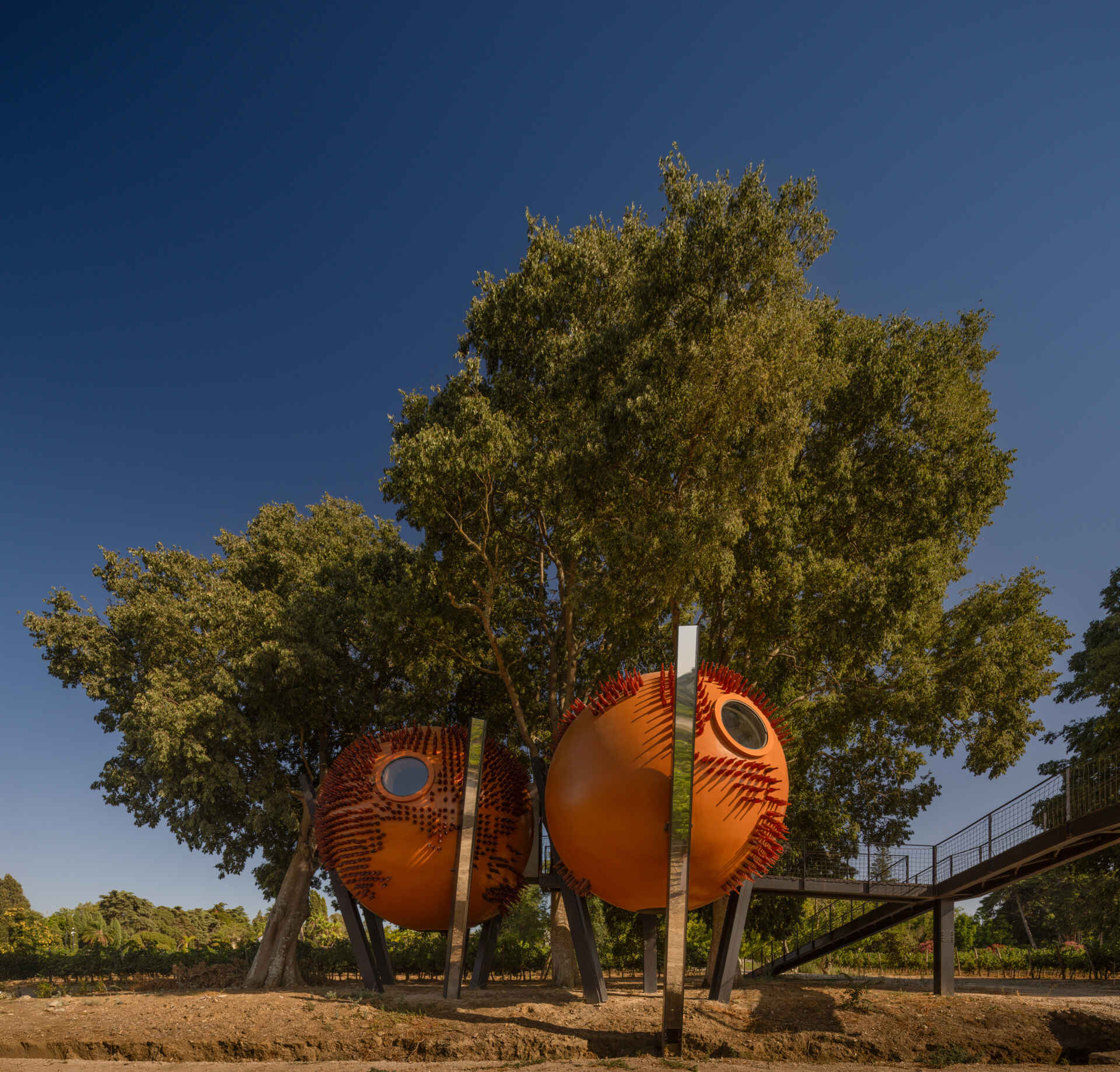
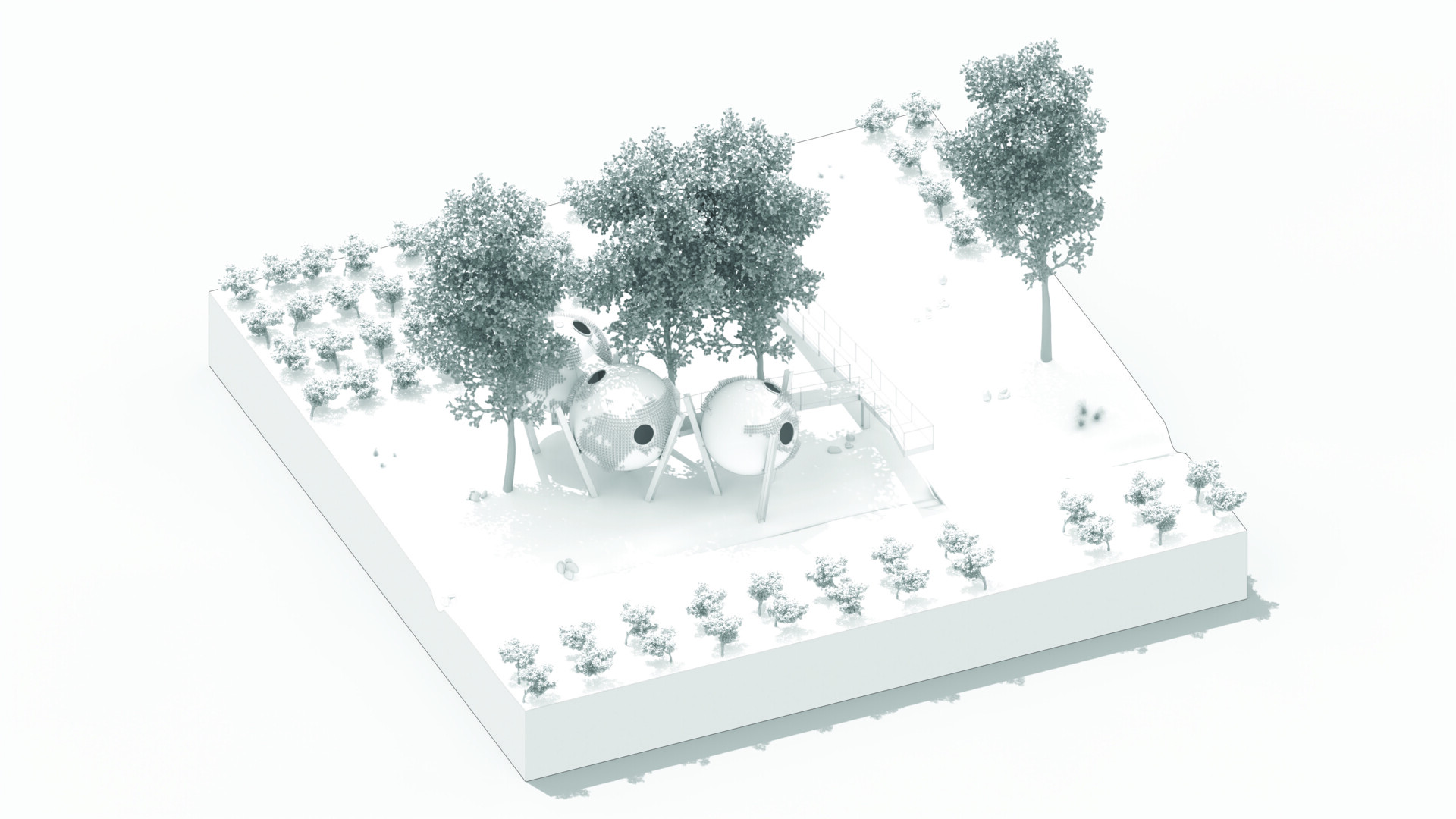
The name ÁTOMOS comes from the project’s three spherical volumes, each representing an individual “atom” that comes together as part of a larger whole.
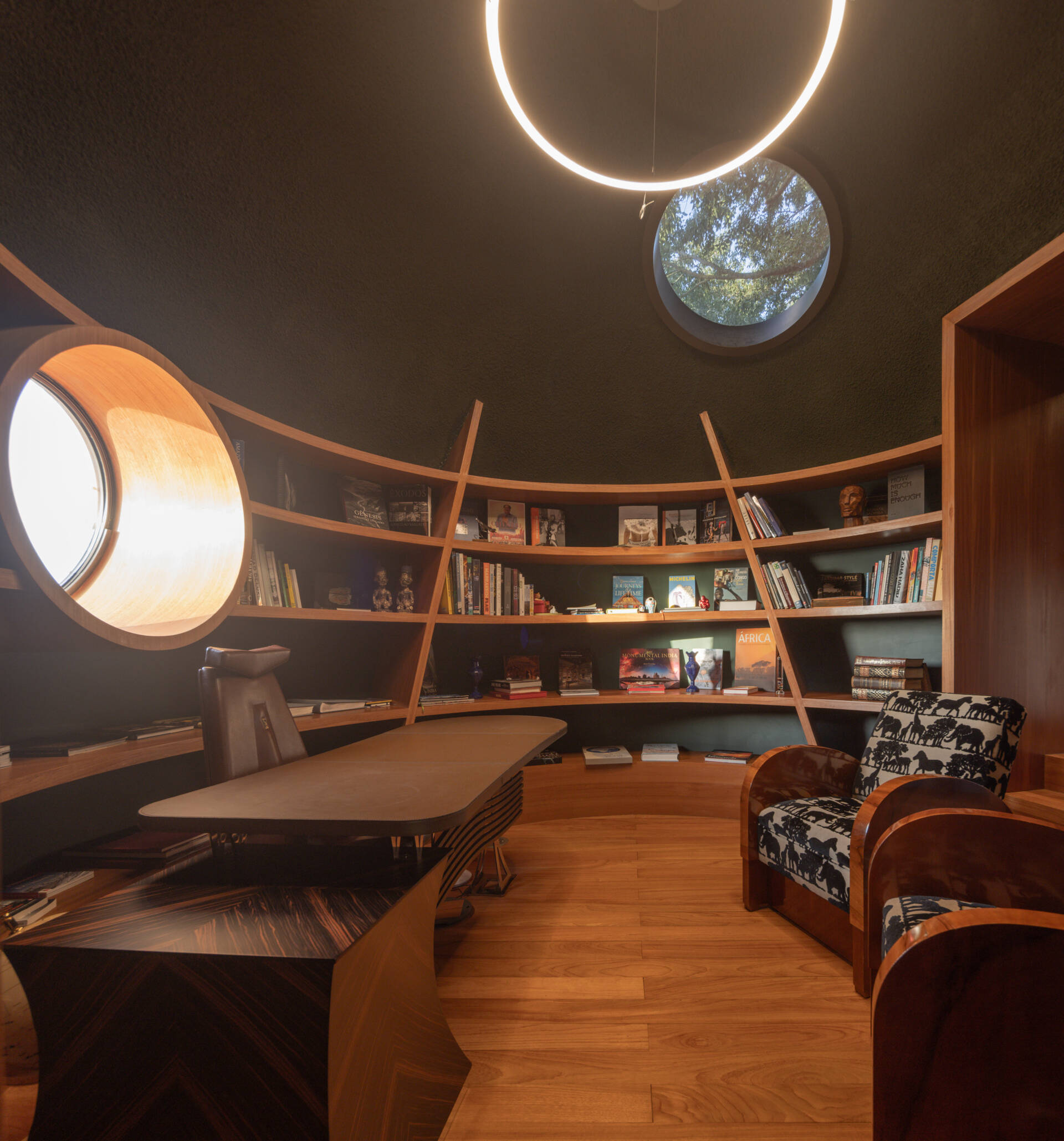
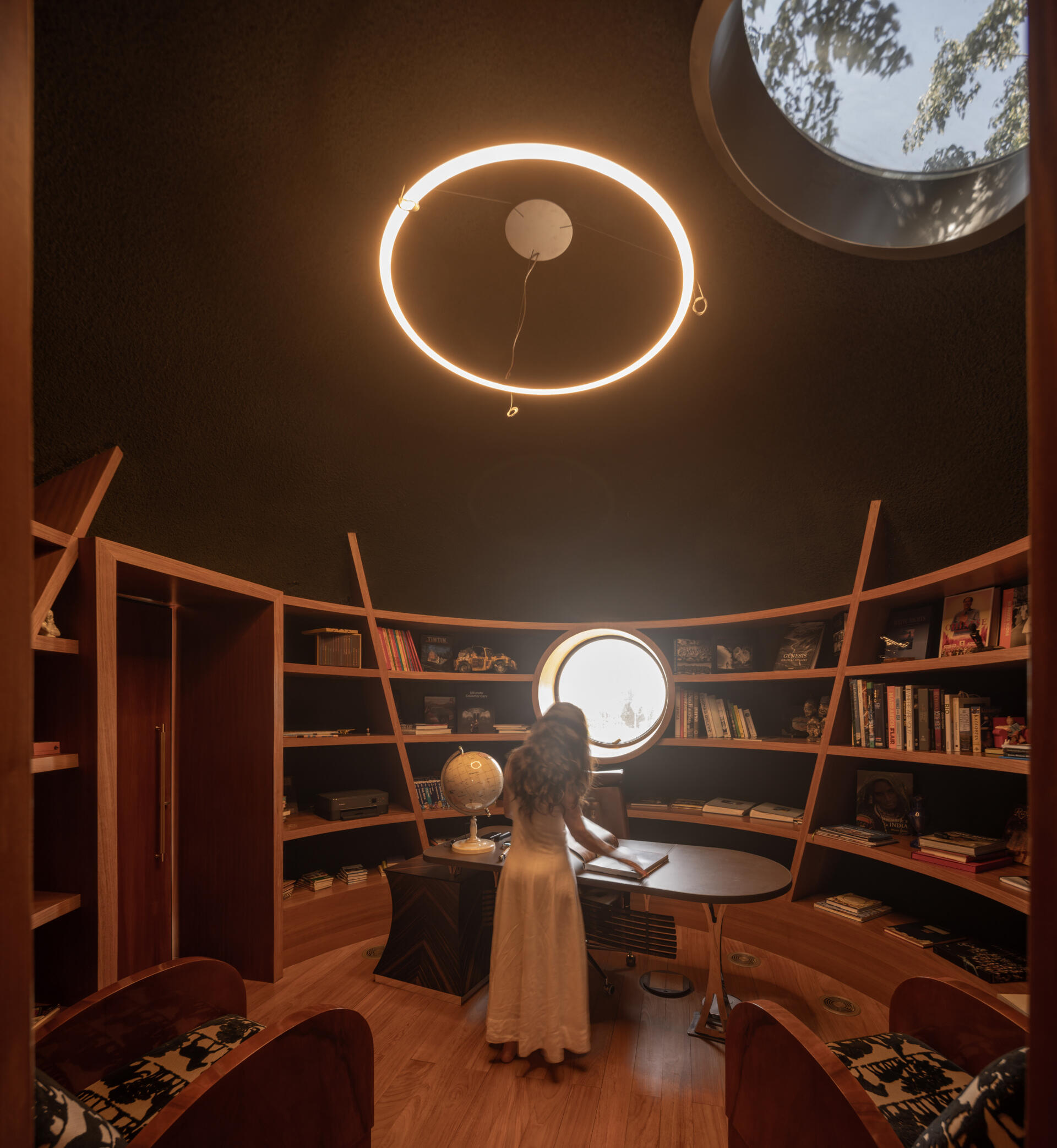
Each sphere has its own identity. One acts as a shared gathering place where conversations and ideas come together. Another offers a quieter space intended for focus, reflection, and creative work. The third becomes a place to pause, slow down, and simply experience the surroundings.
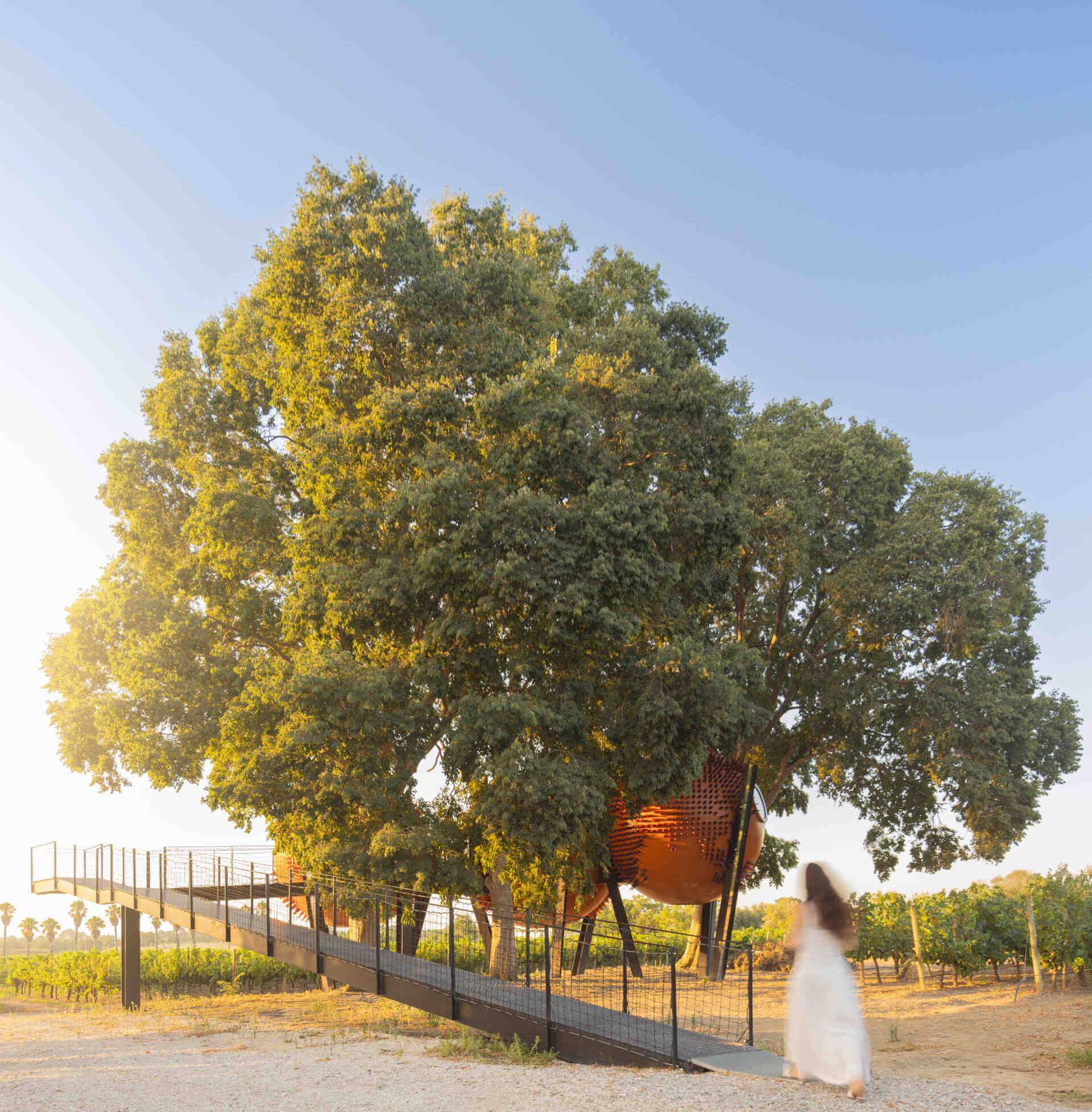
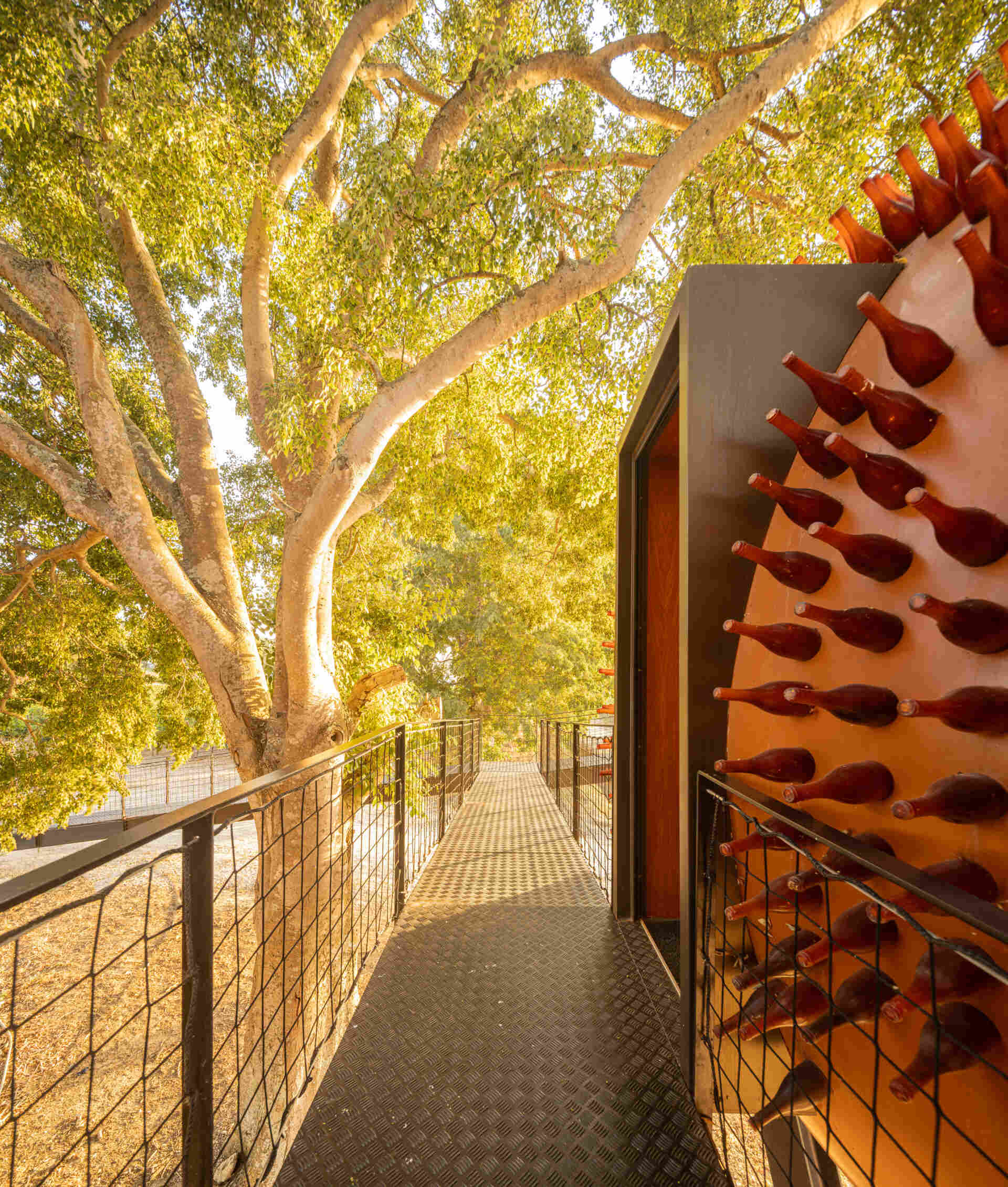
Although every volume has its own purpose, the three are physically connected, allowing visitors to move naturally between different experiences throughout the project.
A skin made from recycled glass
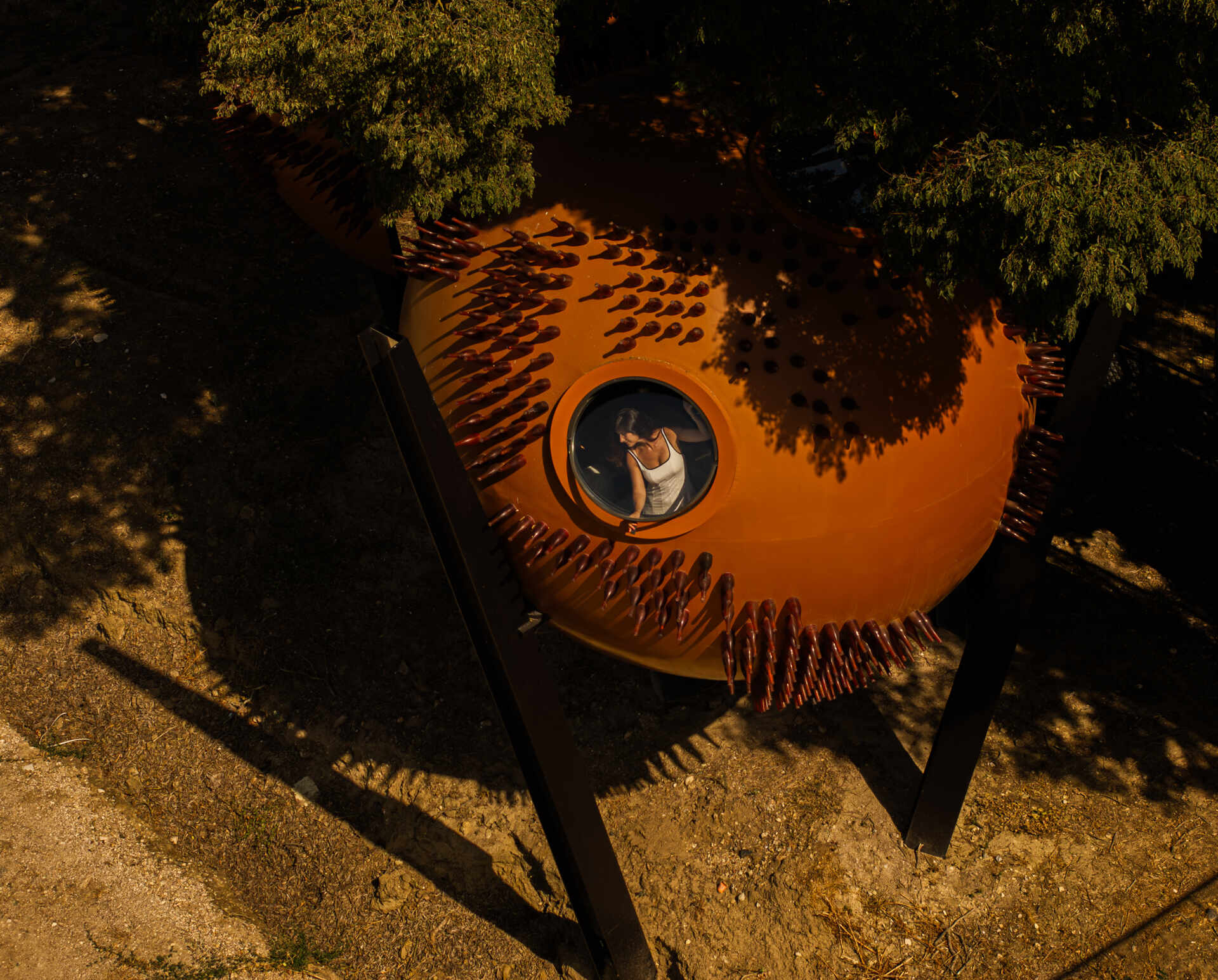
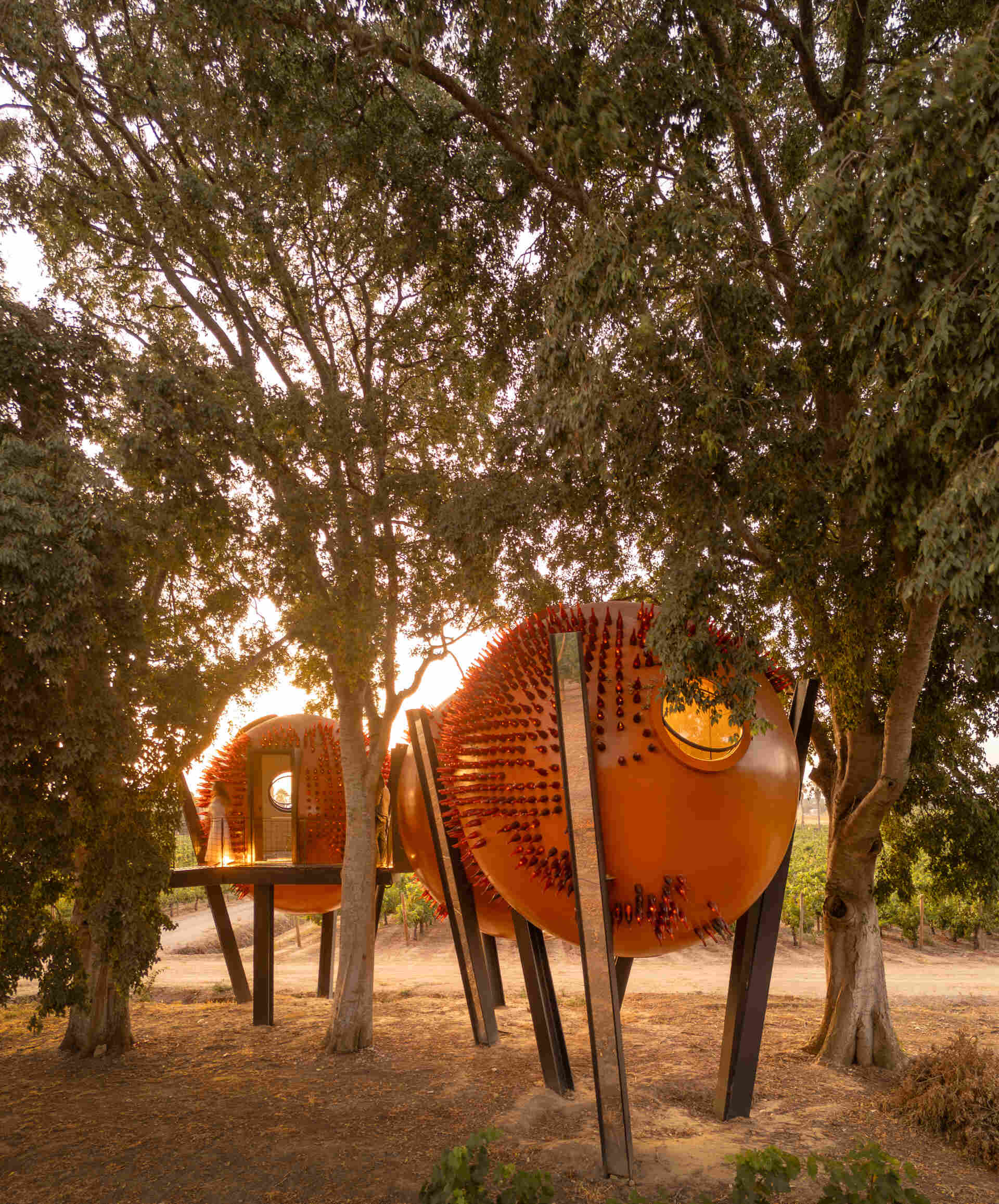
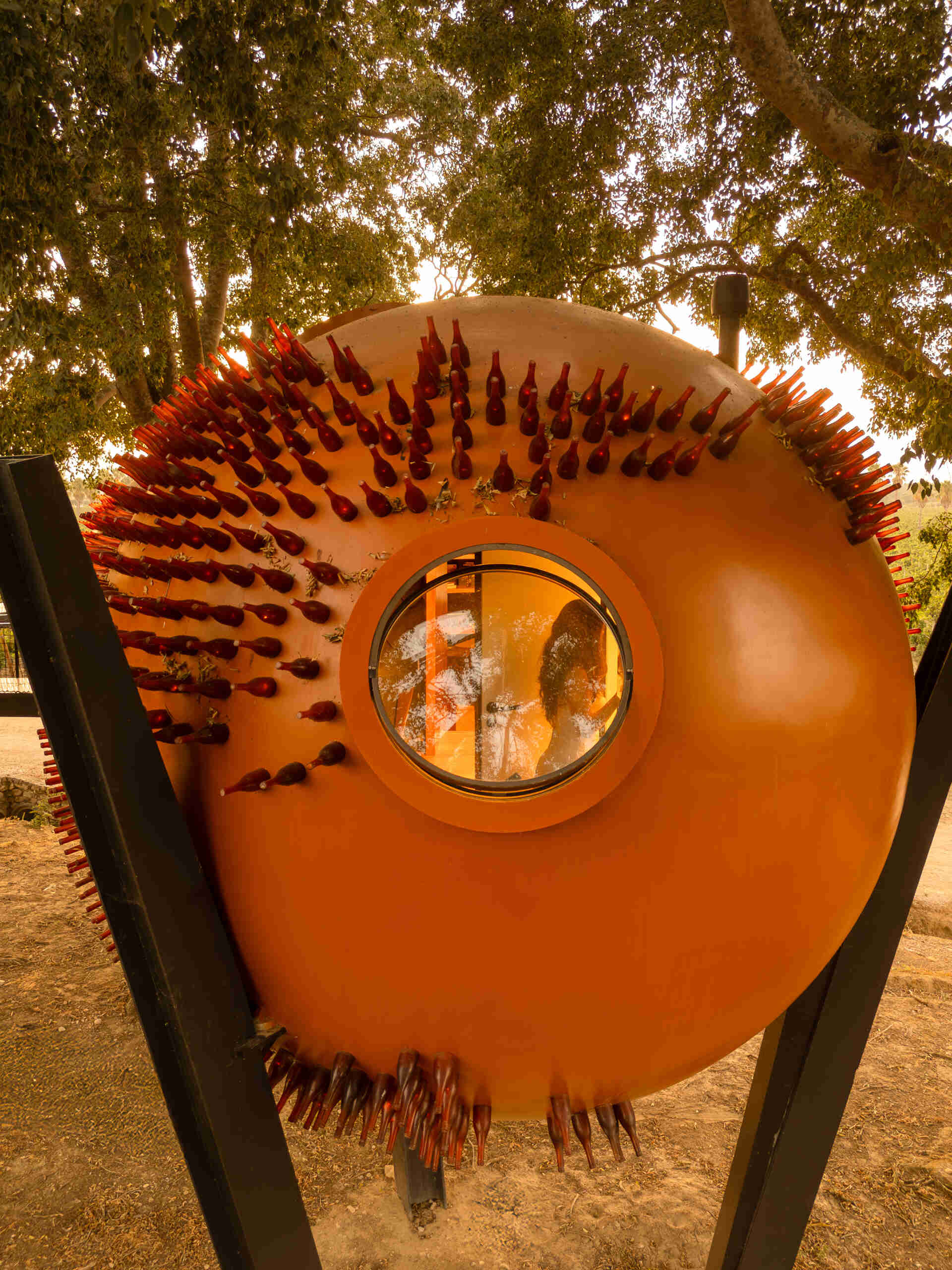
One of the most fascinating features of ÁTOMOS is its exterior. Copper and warm orange tones give the spheres a constantly changing appearance as daylight shifts across their curved forms.
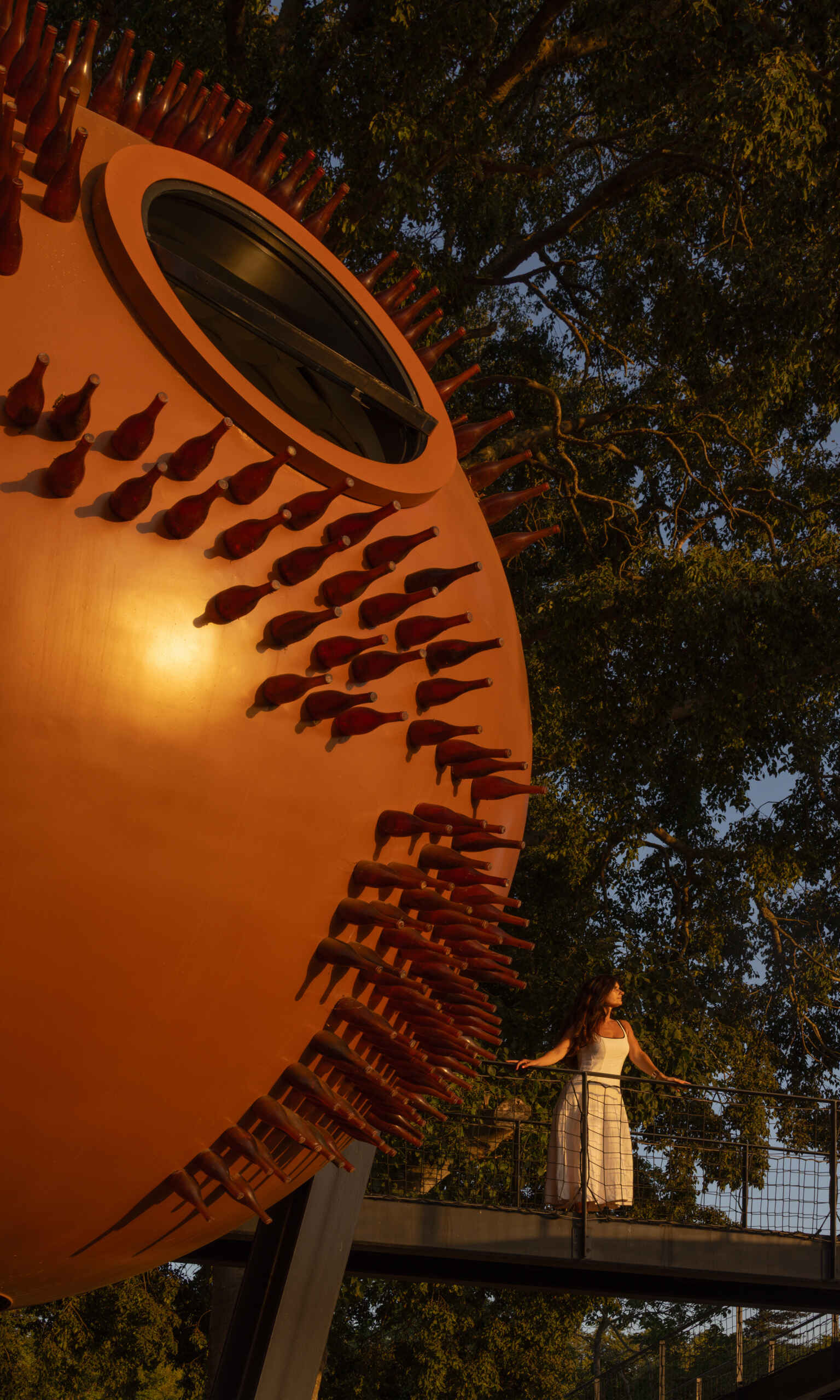
Even more remarkable is the outer skin, which incorporates repurposed industrial glass waste arranged to resemble an abstract world map. It’s a symbolic feature that introduces recycled materials into the architecture while reinforcing the project’s environmental ambitions.
The result is a facade that feels artistic from a distance and reveals another layer of meaning up close.
Architecture rooted in the vineyard
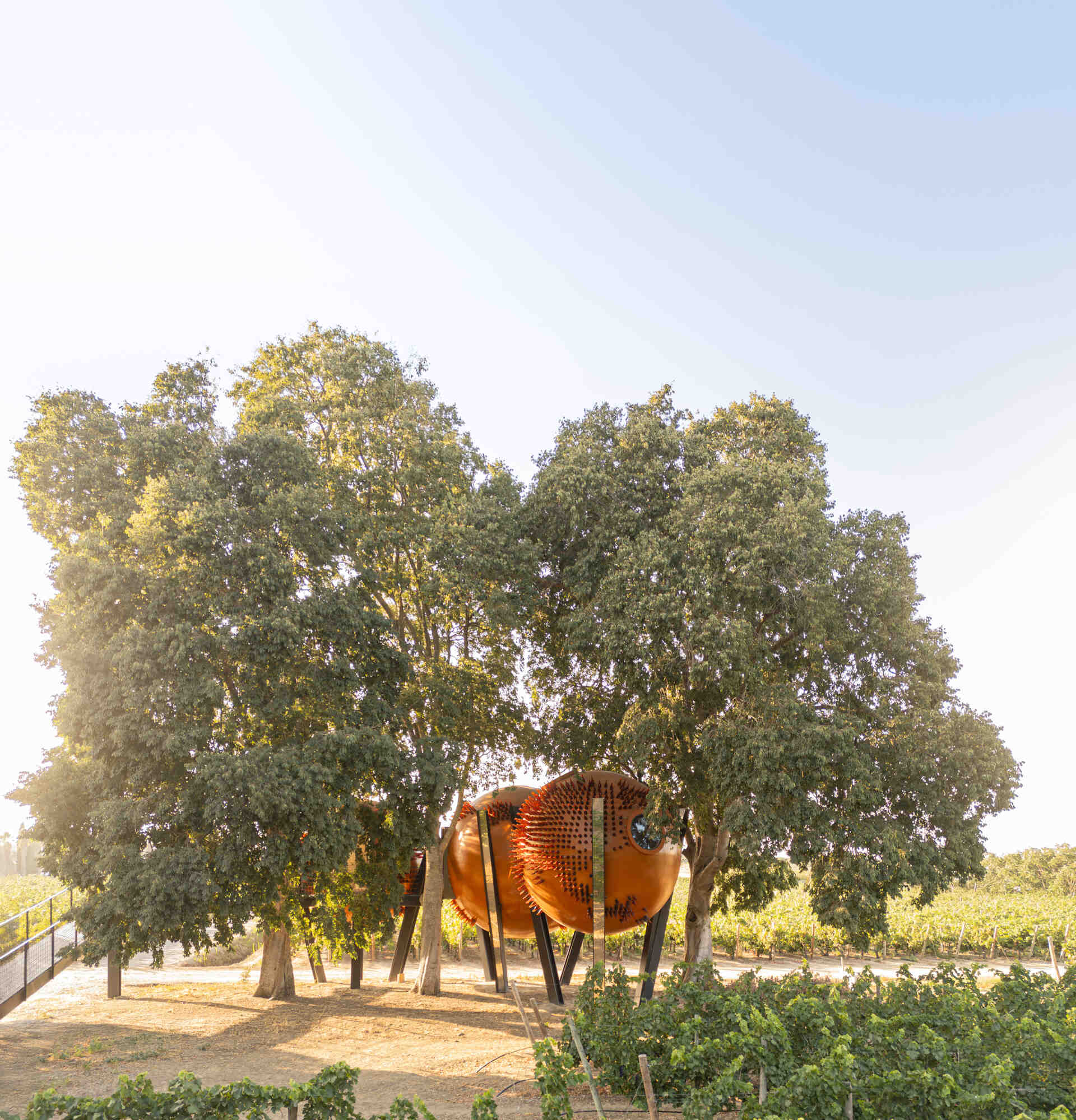
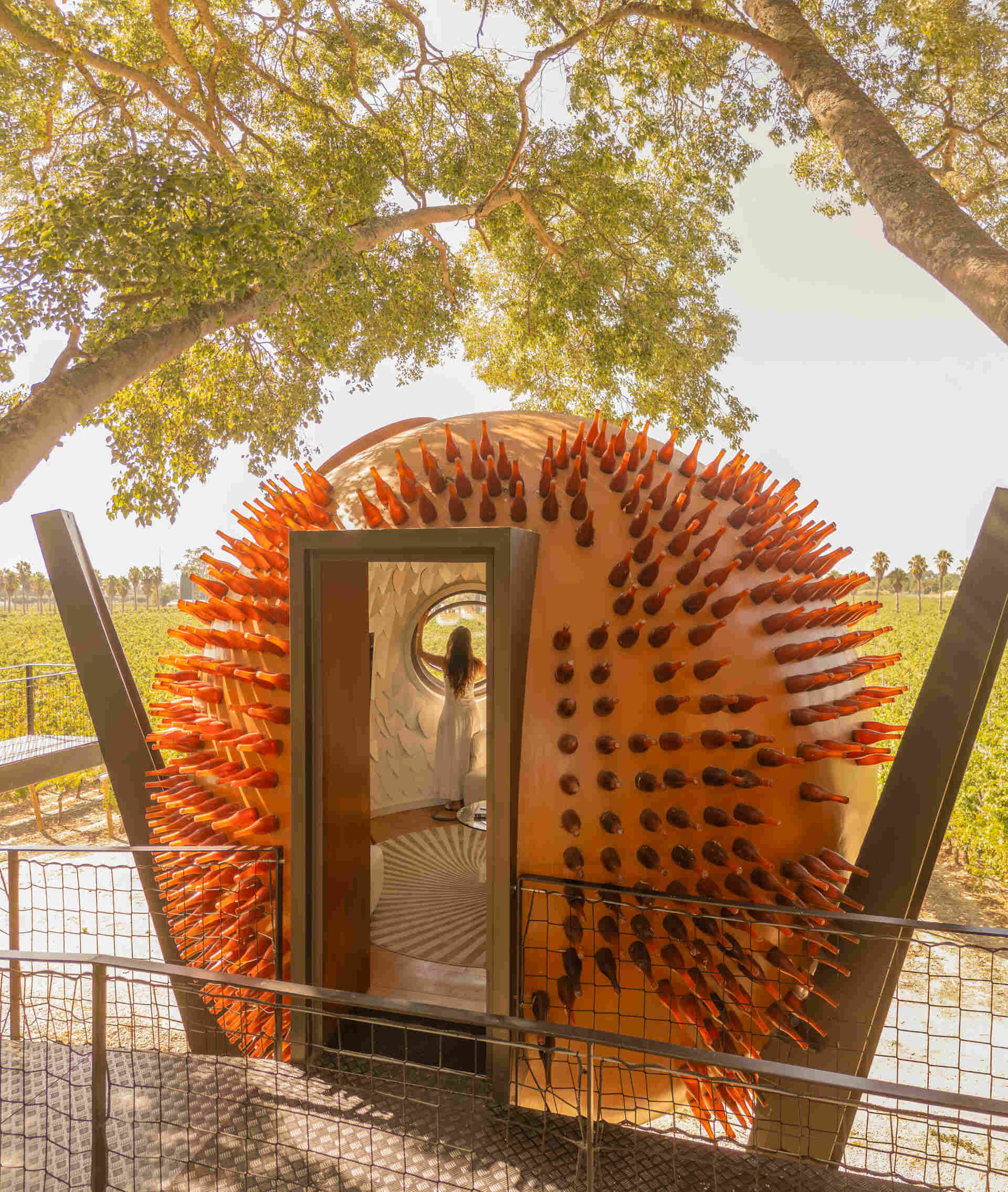
Positioned among vineyards, ÁTOMOS embraces one of Portugal’s most celebrated landscapes. The project references the long relationship between people, agriculture, and winemaking, drawing inspiration from the seasonal cycle that defines the region.
Its presence within the vineyard also reflects transformation, much like the process of turning grapes into wine. Time, nature, and human craftsmanship all become part of the architectural narrative, making the setting every bit as important as the building itself.

A building that changes with every visit
Although constructed from permanent materials, ÁTOMOS is intended to feel constantly alive. As the seasons change and daylight moves across its surfaces, the appearance of the three spheres evolves throughout the day and across the year.
Visitors are encouraged to experience the project through movement as much as observation. Light, sound, texture, and changing perspectives all contribute to an environment that rewards exploration, making every visit slightly different from the last.
Inside the spheres
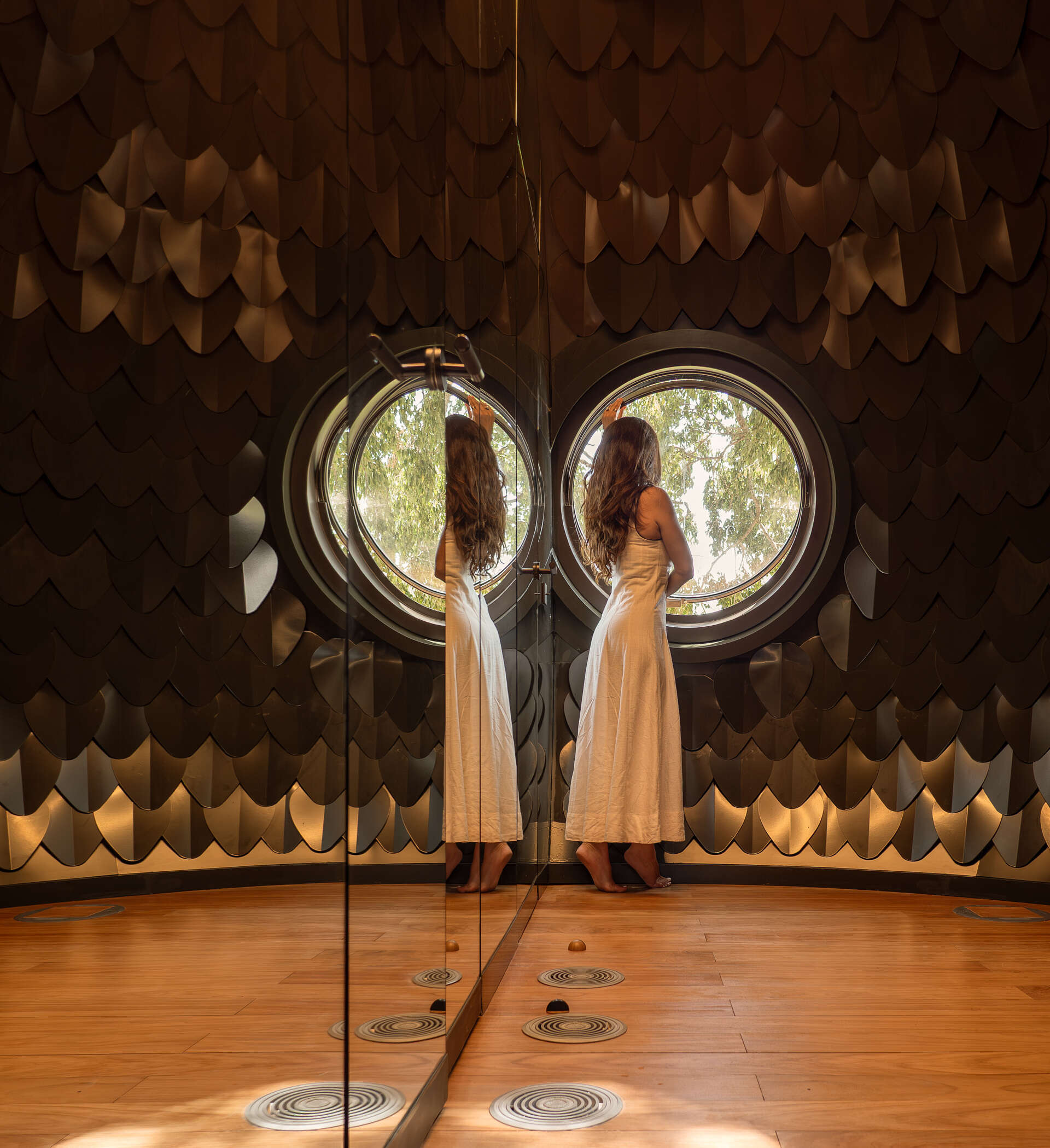
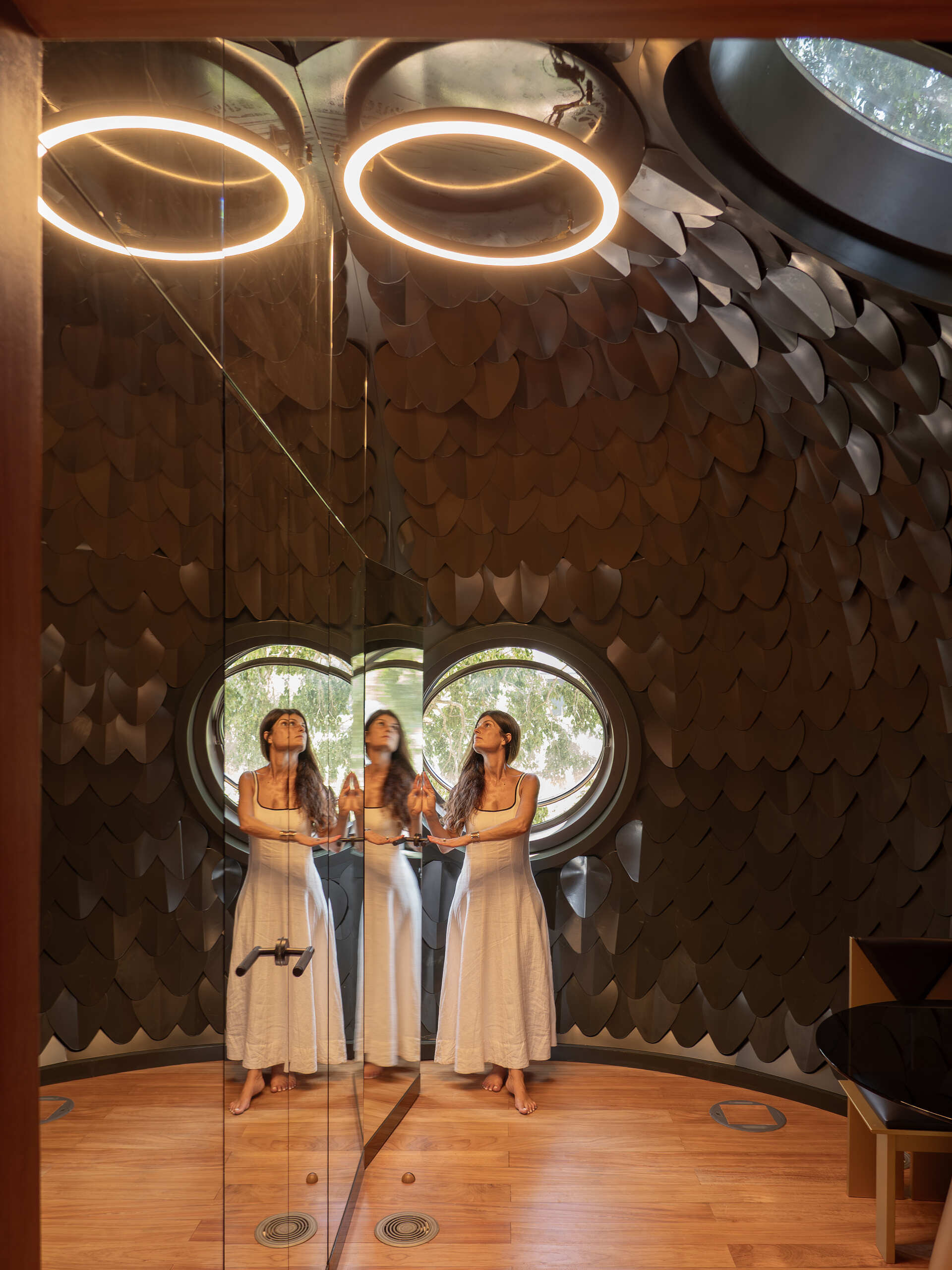
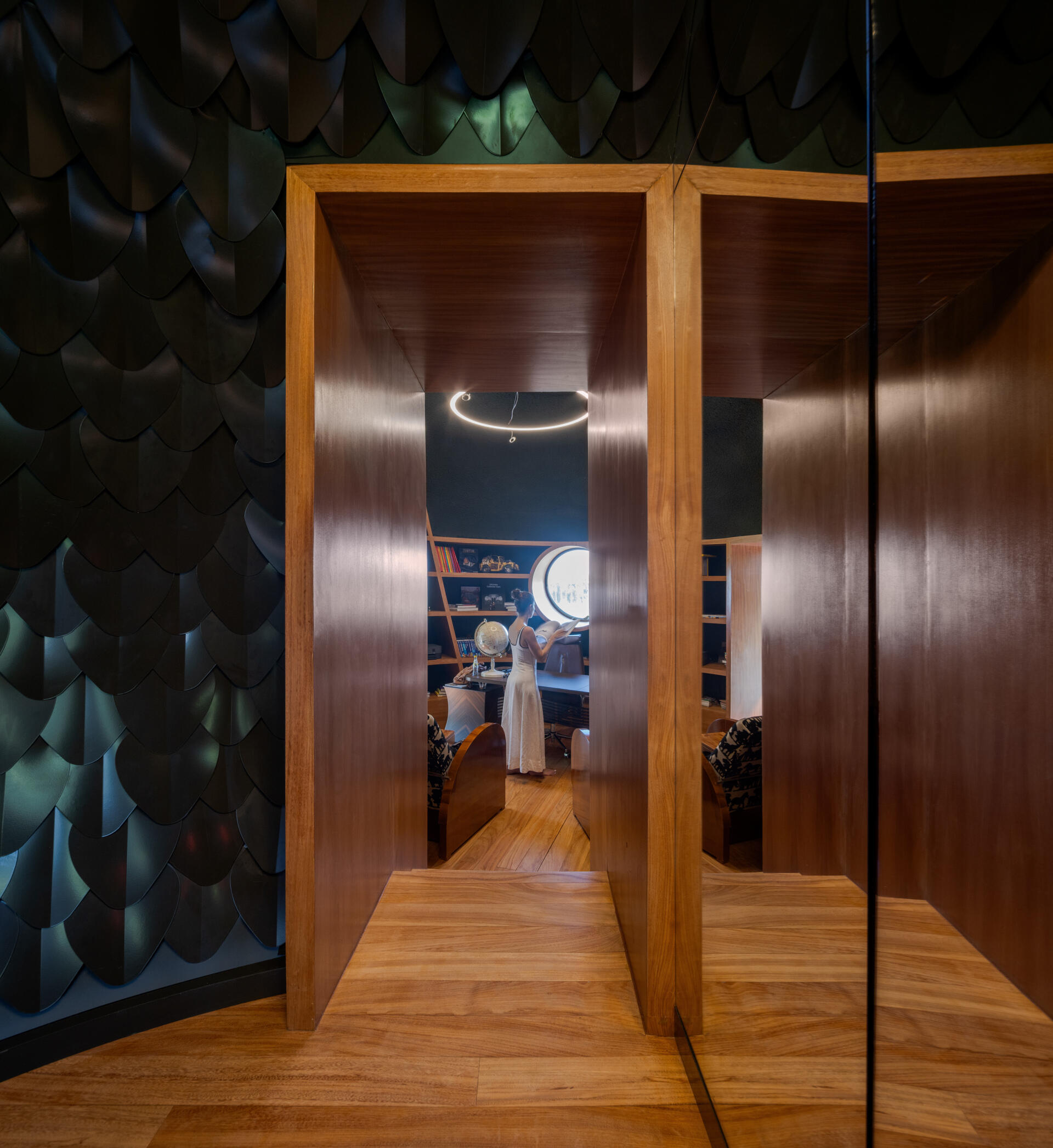
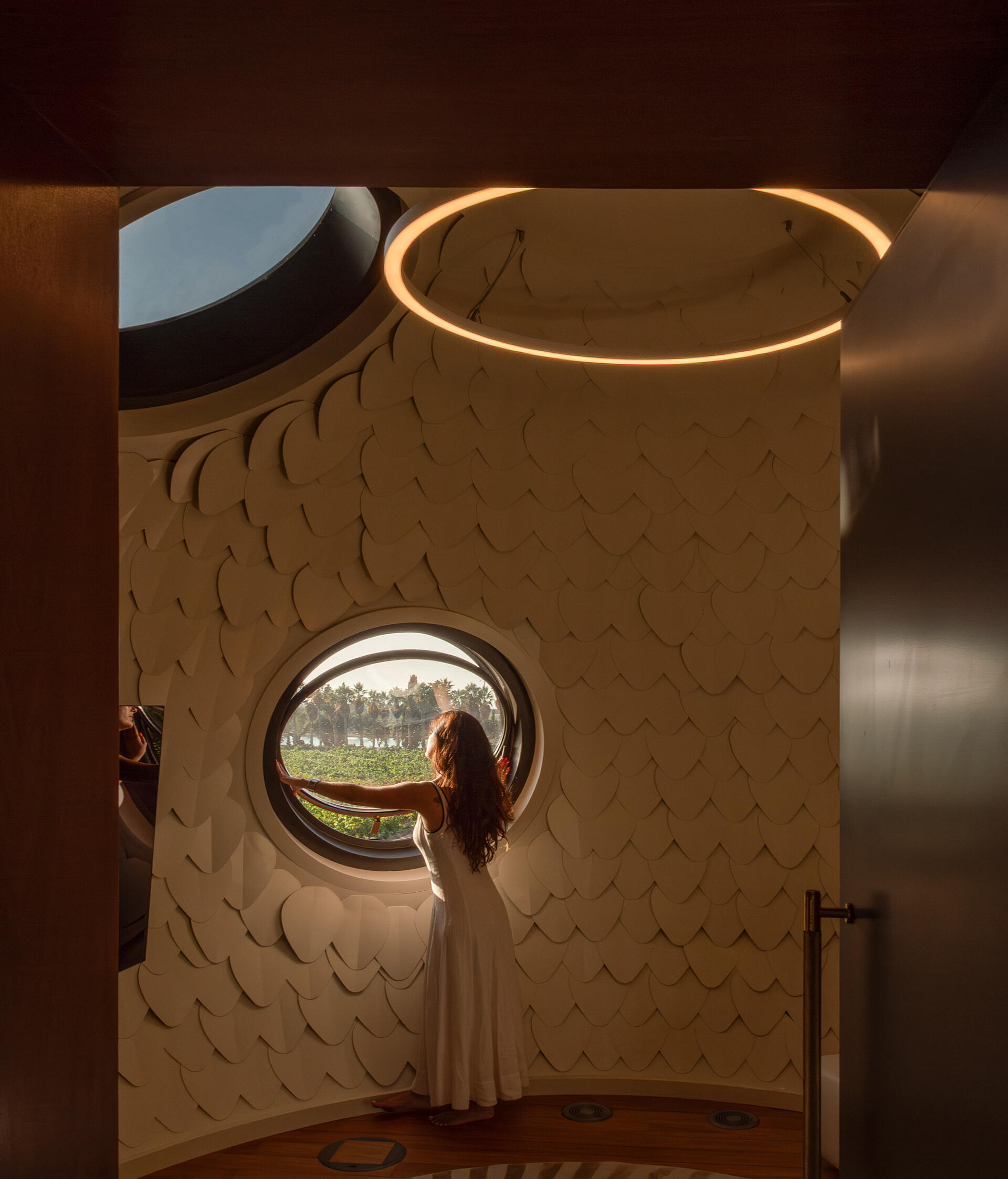
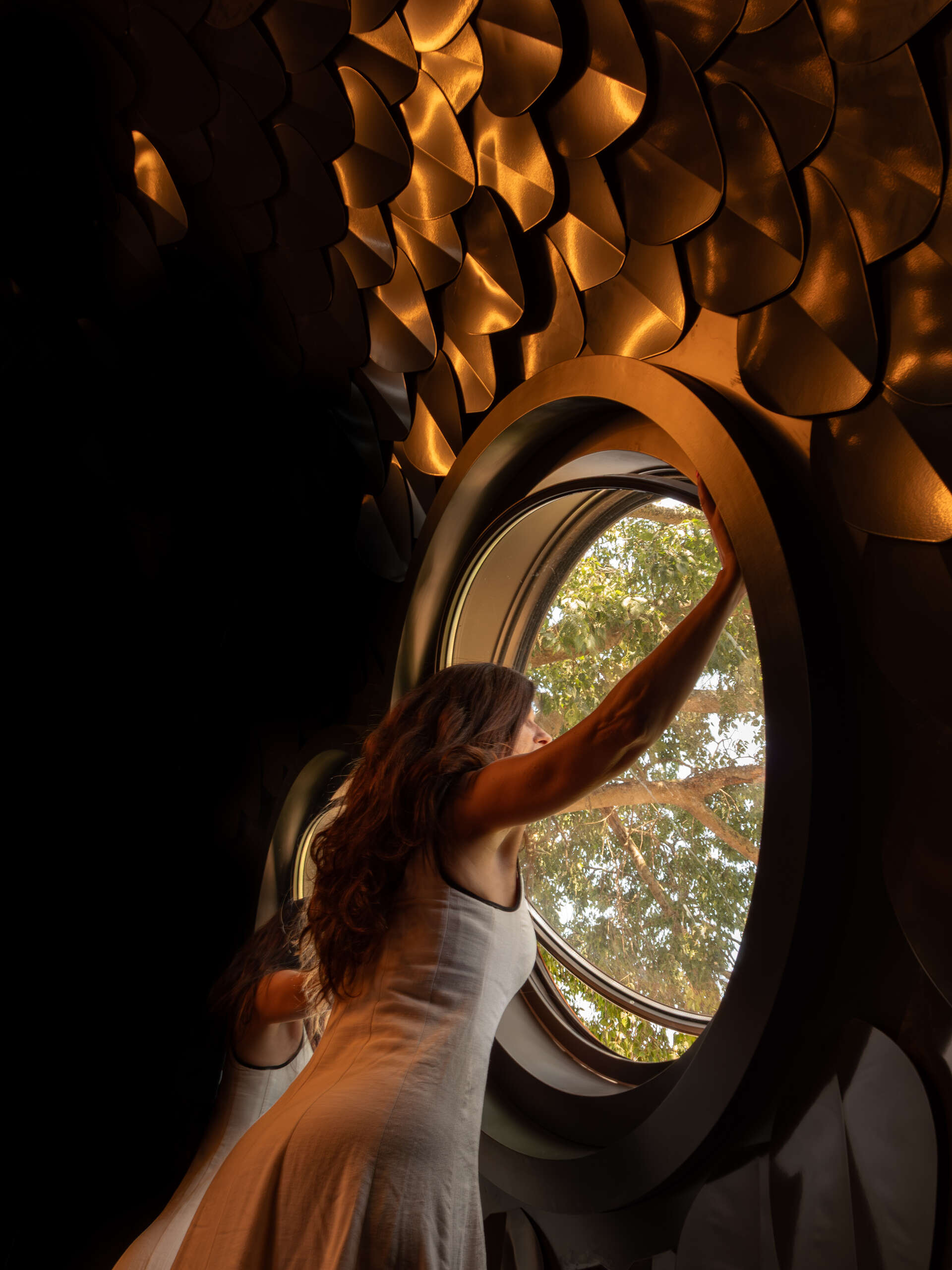
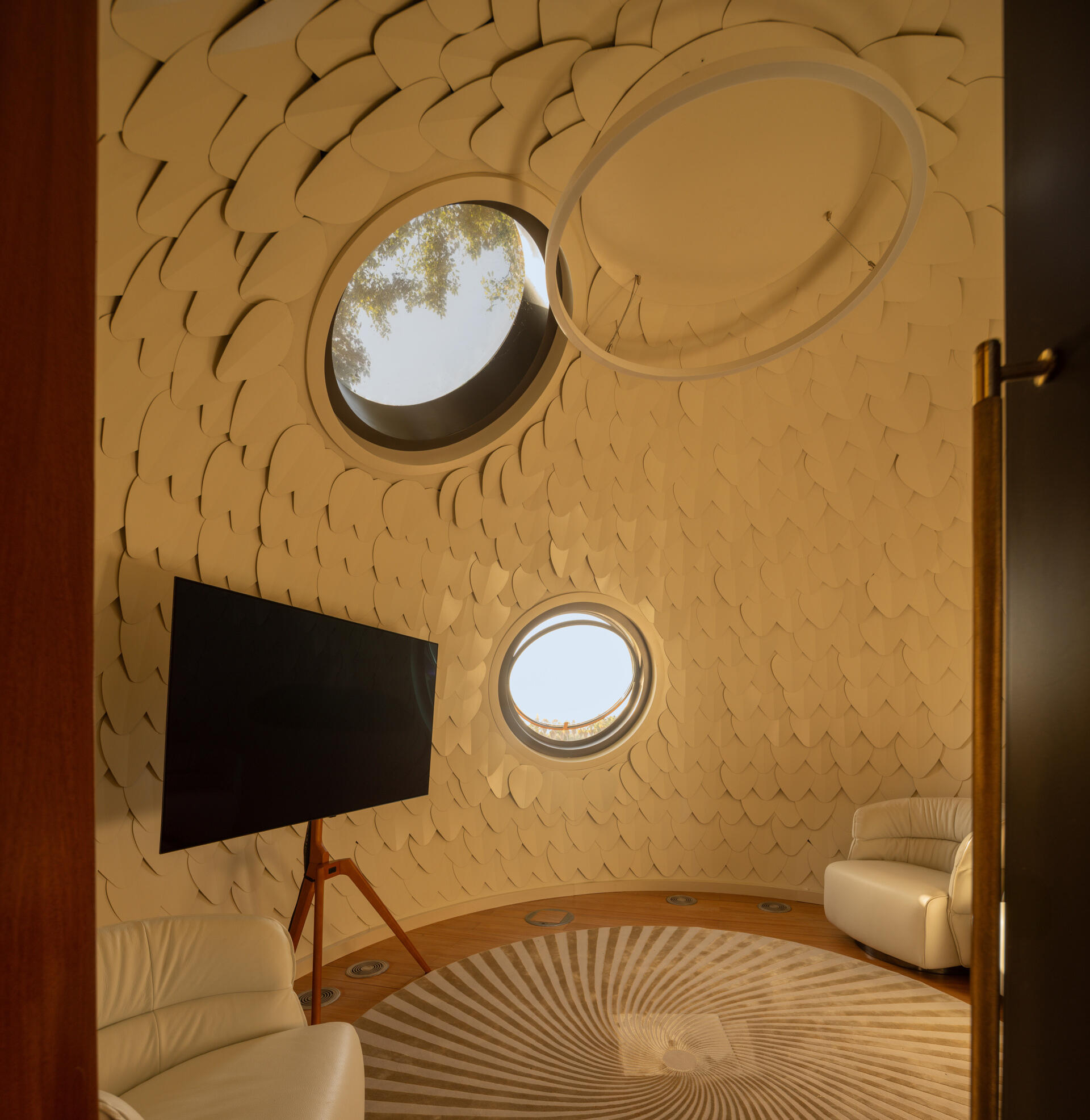
While the sculptural exterior immediately captures attention, the interior continues the same artistic vision. Each of the three connected spheres has its own atmosphere, shaped by its intended purpose, whether bringing people together, supporting creative work, or offering a quieter place to pause.
Moving through the spaces becomes part of the experience. As natural light filters into the curved volumes and views open towards the surrounding vineyards, the interiors encourage visitors to slow down and engage with the architecture. Every transition between the spheres reveals a different mood, making the journey through ÁTOMOS just as memorable as its distinctive exterior.
Looking at the design
The architectural drawings offer another way to understand the thinking behind ÁTOMOS. They reveal how three independent spherical volumes come together as a single composition, illustrating the connections between each space while highlighting the project’s sculptural geometry.
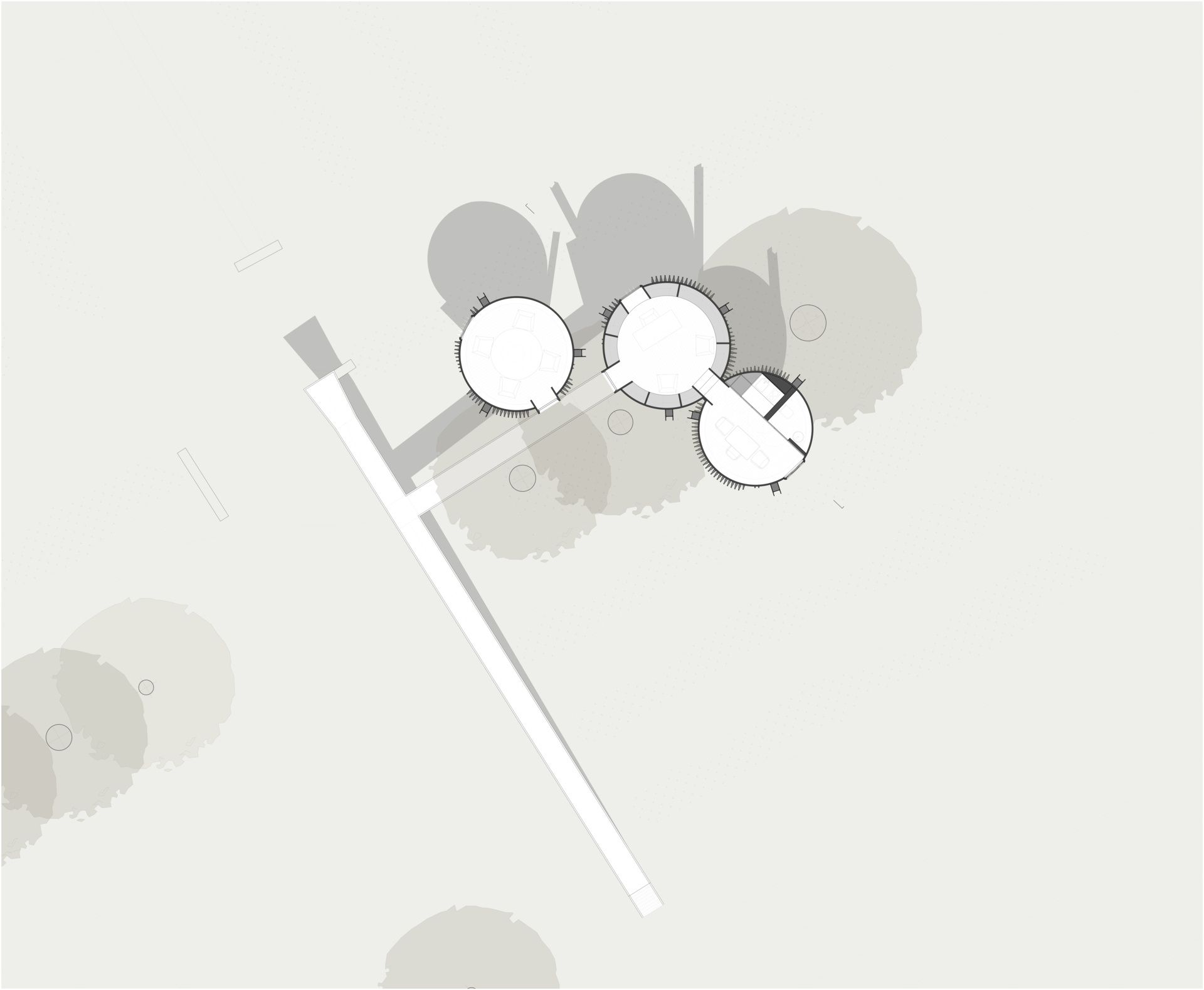
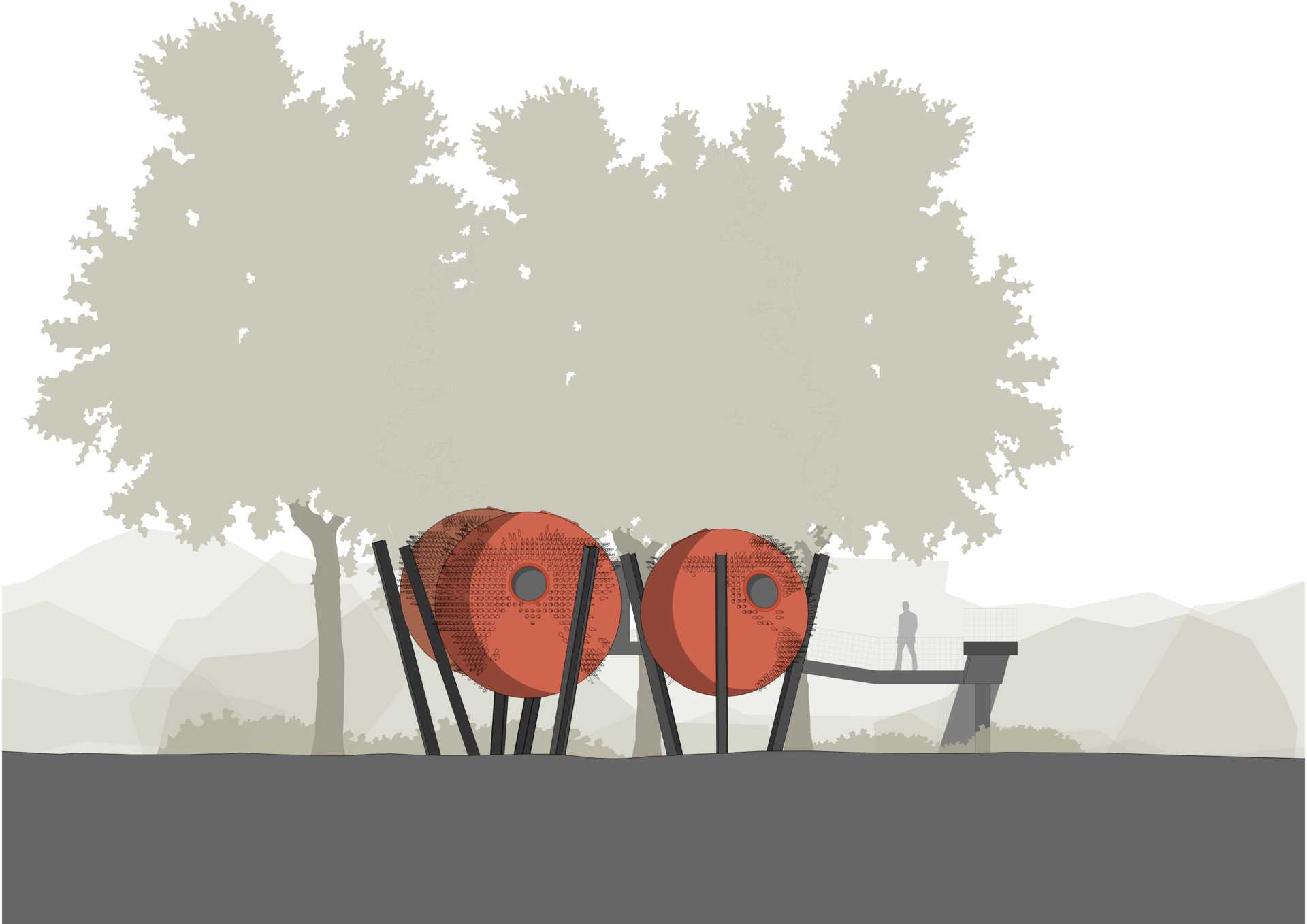
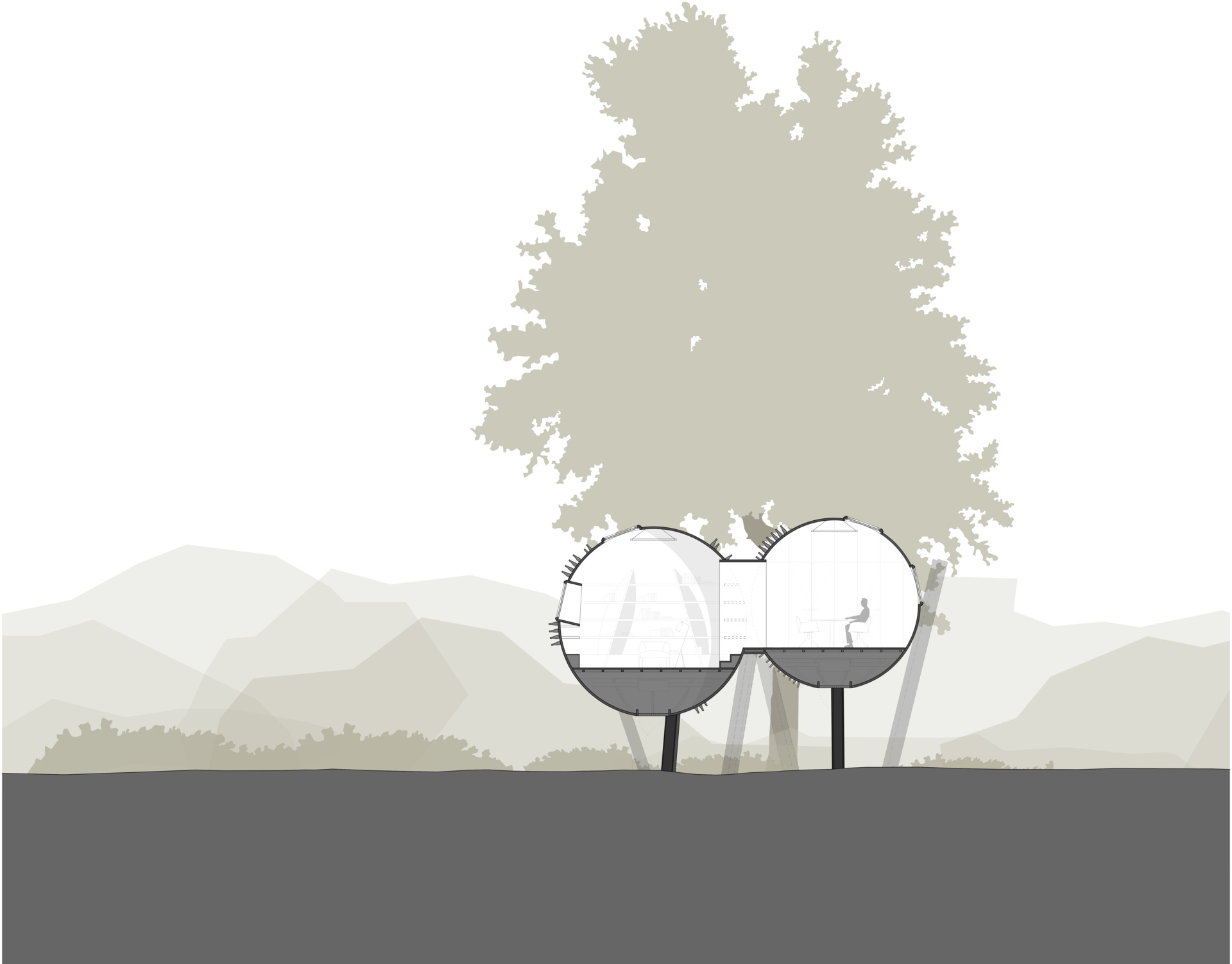
ÁTOMOS occupies a unique space between architecture, sculpture, and philosophy. Its simple geometry recalls ideas about the origins of matter while inviting visitors to think about the relationship between people, art, and the natural world.
Instead of functioning solely as a building, it becomes an experience that encourages observation, curiosity, and reflection. Through its sculptural form, recycled materials, and vineyard setting, ÁTOMOS offers a fresh perspective on what architecture can become when creativity and sustainability share the same vision.