Near Warsaw, Poland, Polish practice 77Studio Architektury has recently completed House with a Glade, a villa shaped by an unexpected discovery hidden within a dense pine forest. What first appeared to be a dark and unremarkable site held a surprise that would ultimately define the entire project.
When the existing building on the property was demolished, a bright circular clearing suddenly emerged among the trees. Tall pines surrounded the opening like a natural frame, creating a striking contrast between shadow and sunlight. Architect Pawel Naduk and his team saw the potential immediately. The newly revealed glade became the foundation for the home’s design, influencing everything from its form to the way light moves through its interiors.
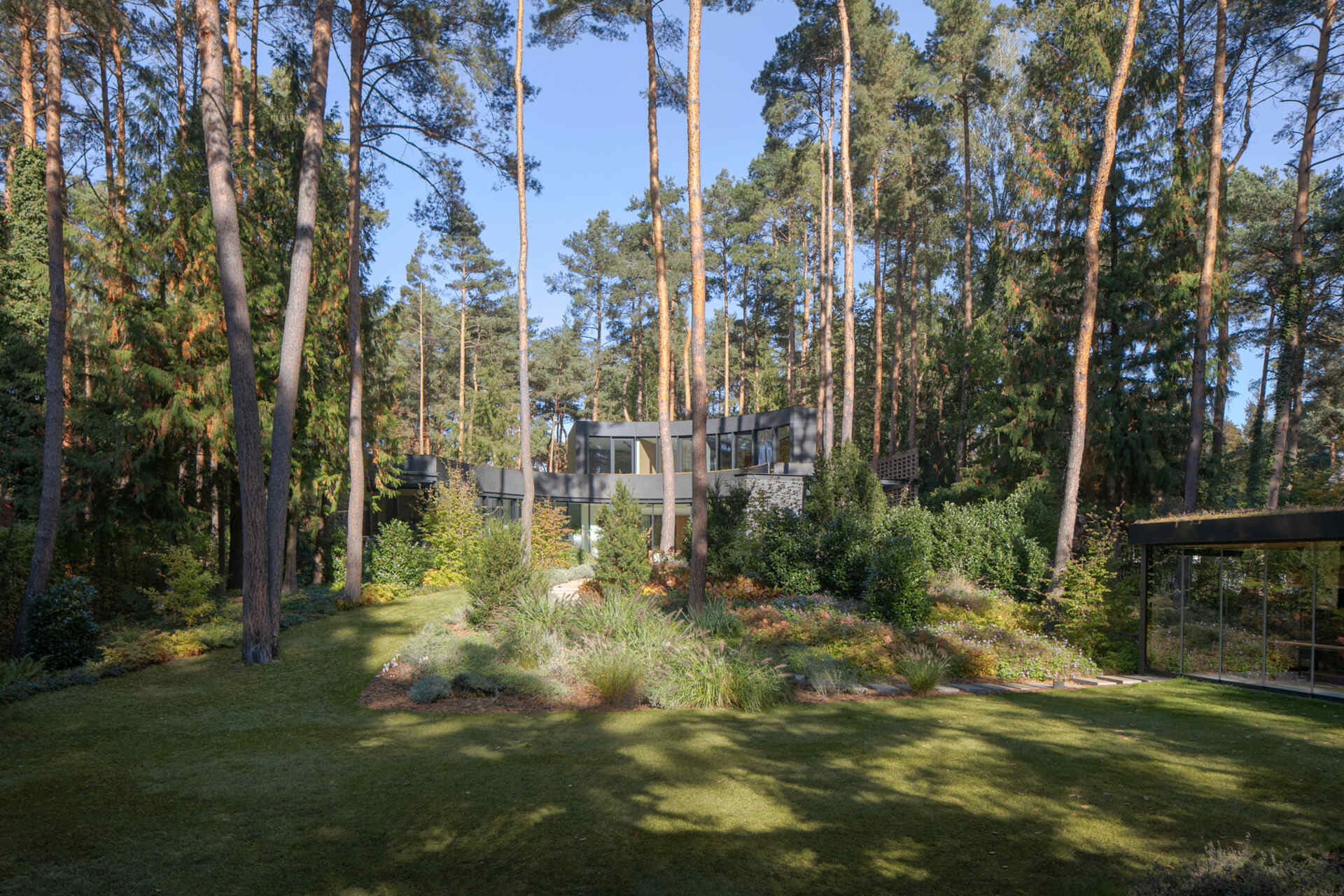
Instead of imposing a structure onto the site, the architects used the shape of the clearing itself as a guide. The result is a house that appears as though it has grown from the forest floor, revealing itself gradually as visitors move through the trees.

Architecture Inspired by the Shape of the Forest
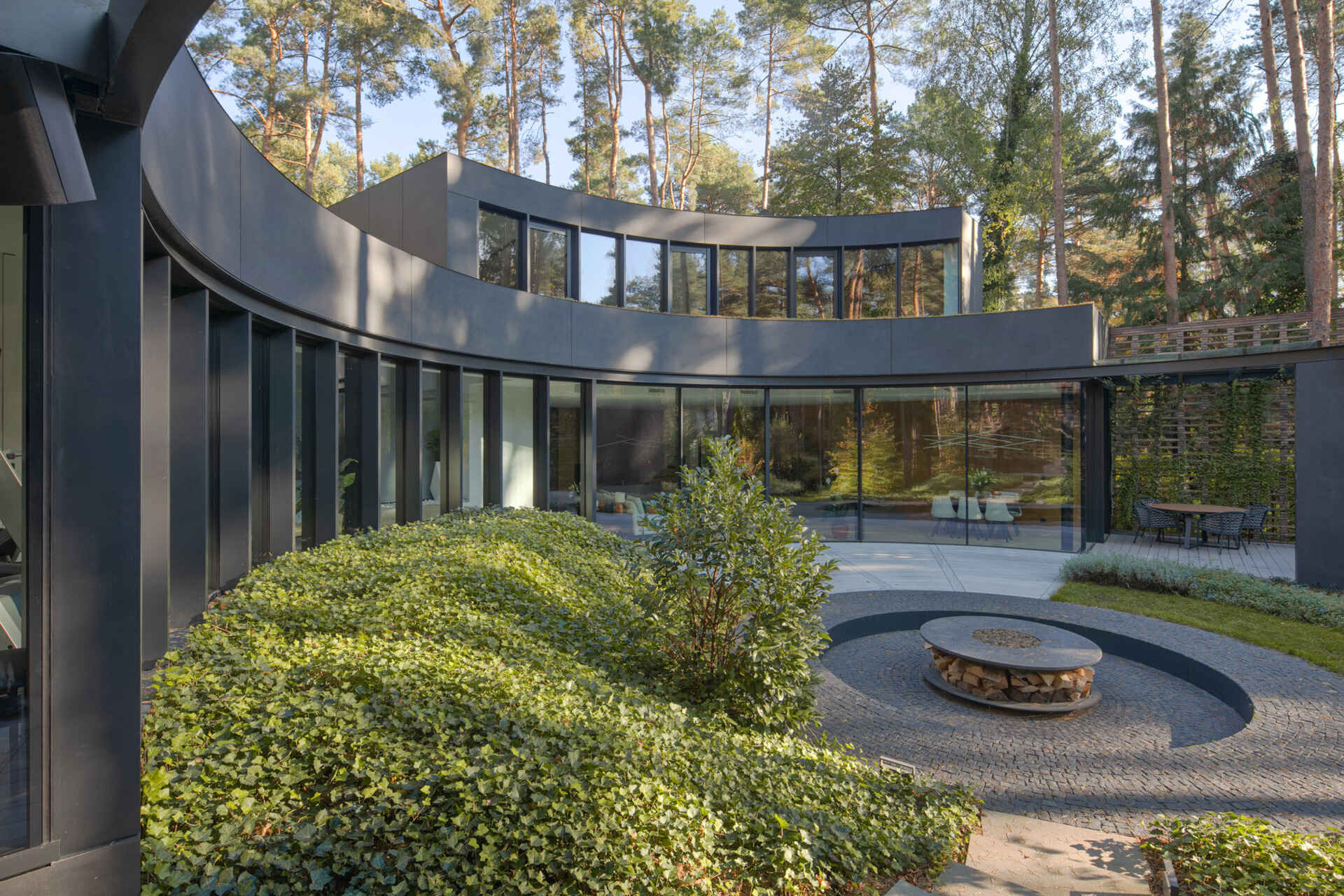
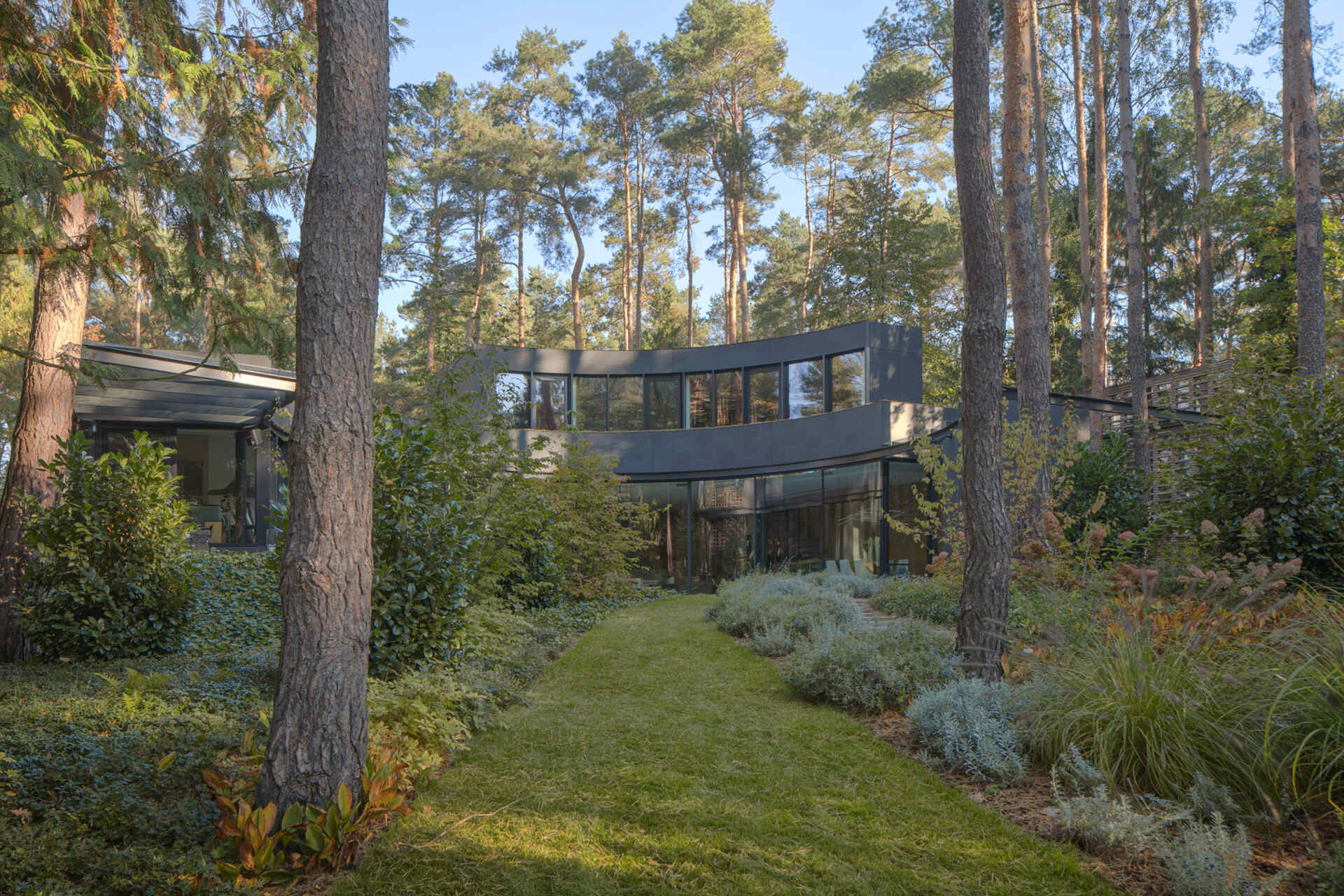
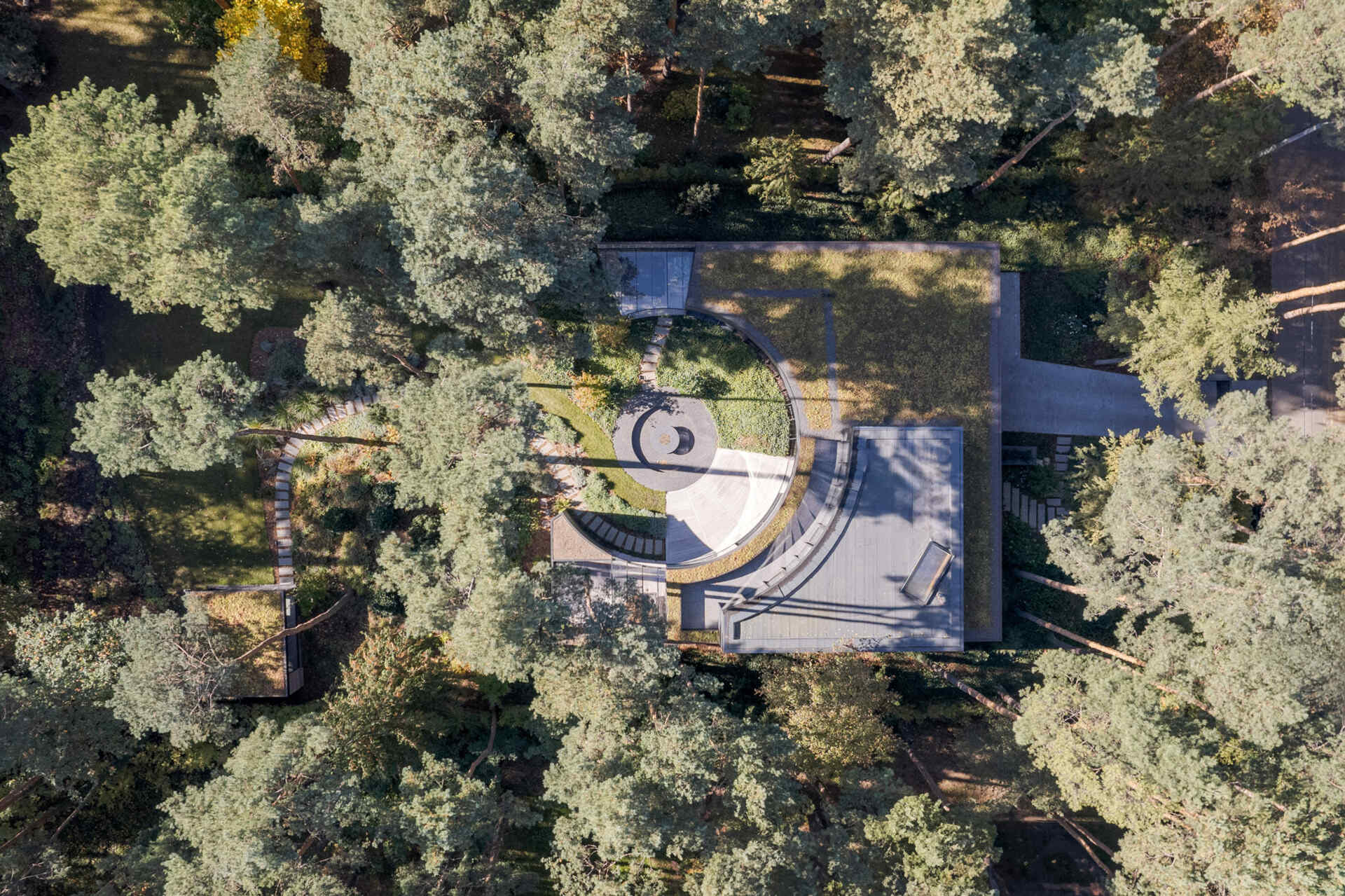
The villa takes its form directly from the outline of the woodland opening. A semicircular wall traces the edge of the glade, creating a distinctive architectural gesture that responds to the landscape in a highly visual way.
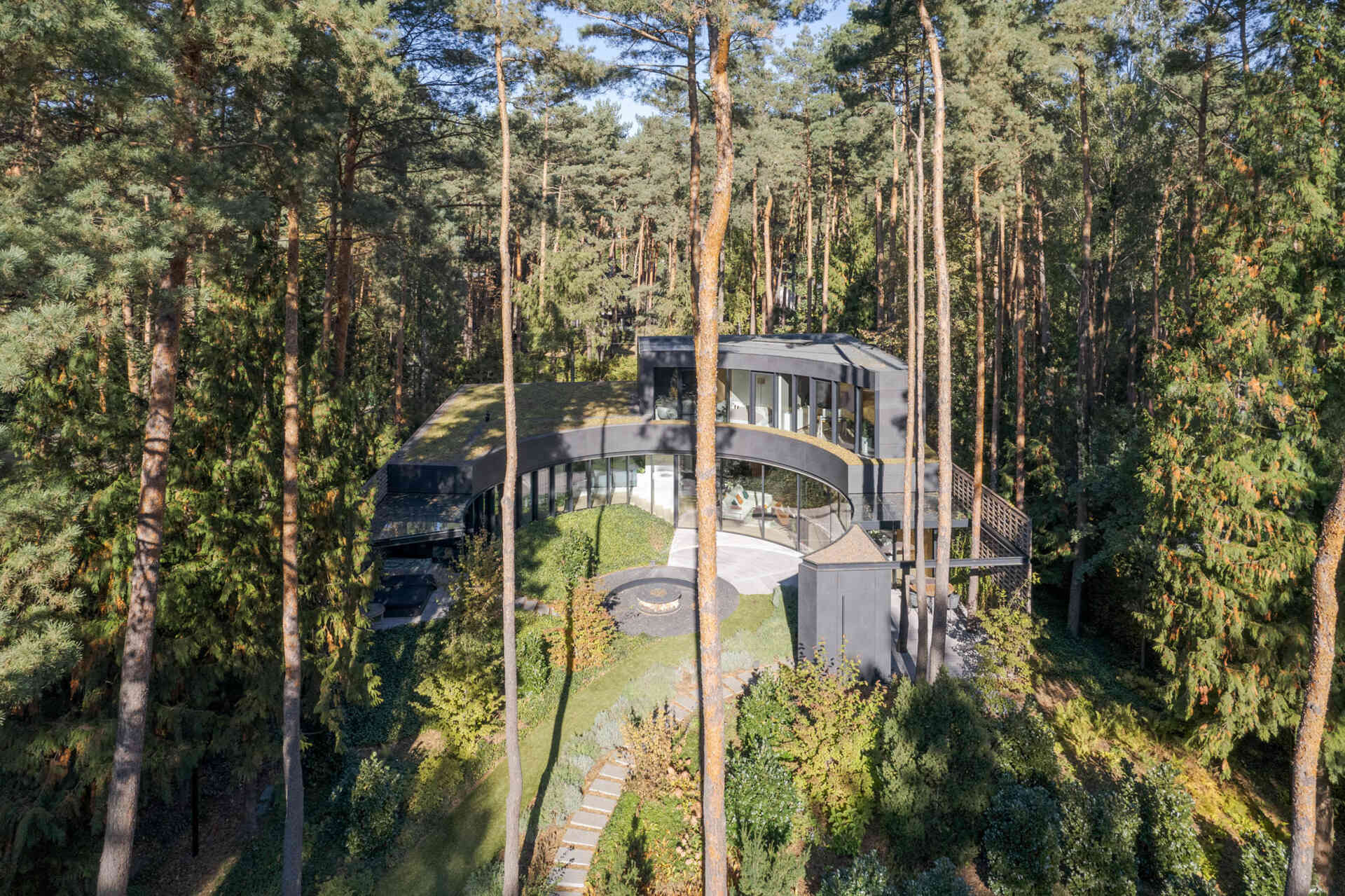
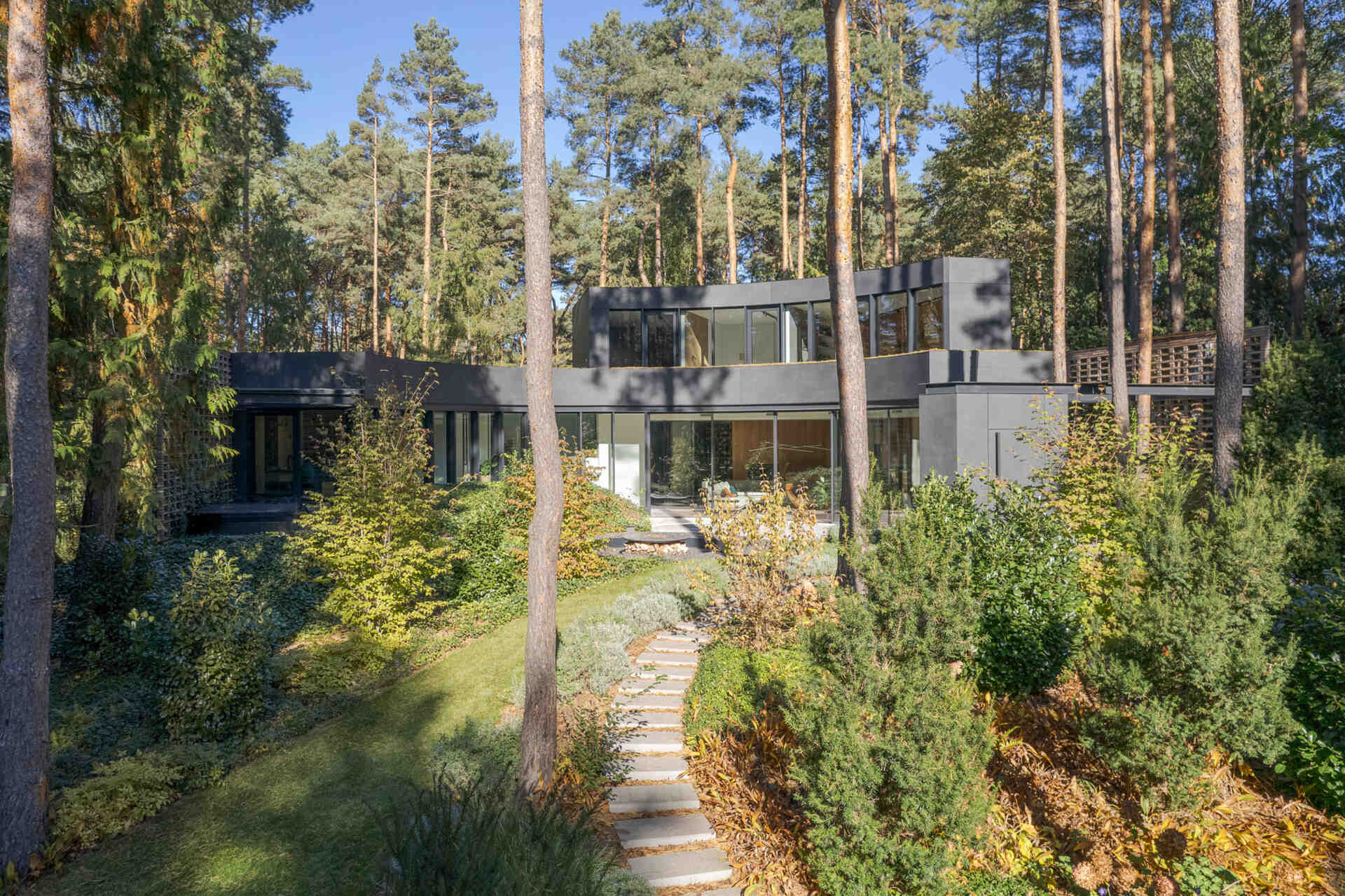
From a distance, the house is difficult to distinguish from the surrounding forest. Its combination of brick, glass, fibre-cement panels and graphite-coloured metal allows it to blend into the woodland setting. The exterior shifts in character depending on where it is viewed from. Some angles reveal only fragments of the building through the trees, while others expose larger sections of its sweeping curved form.
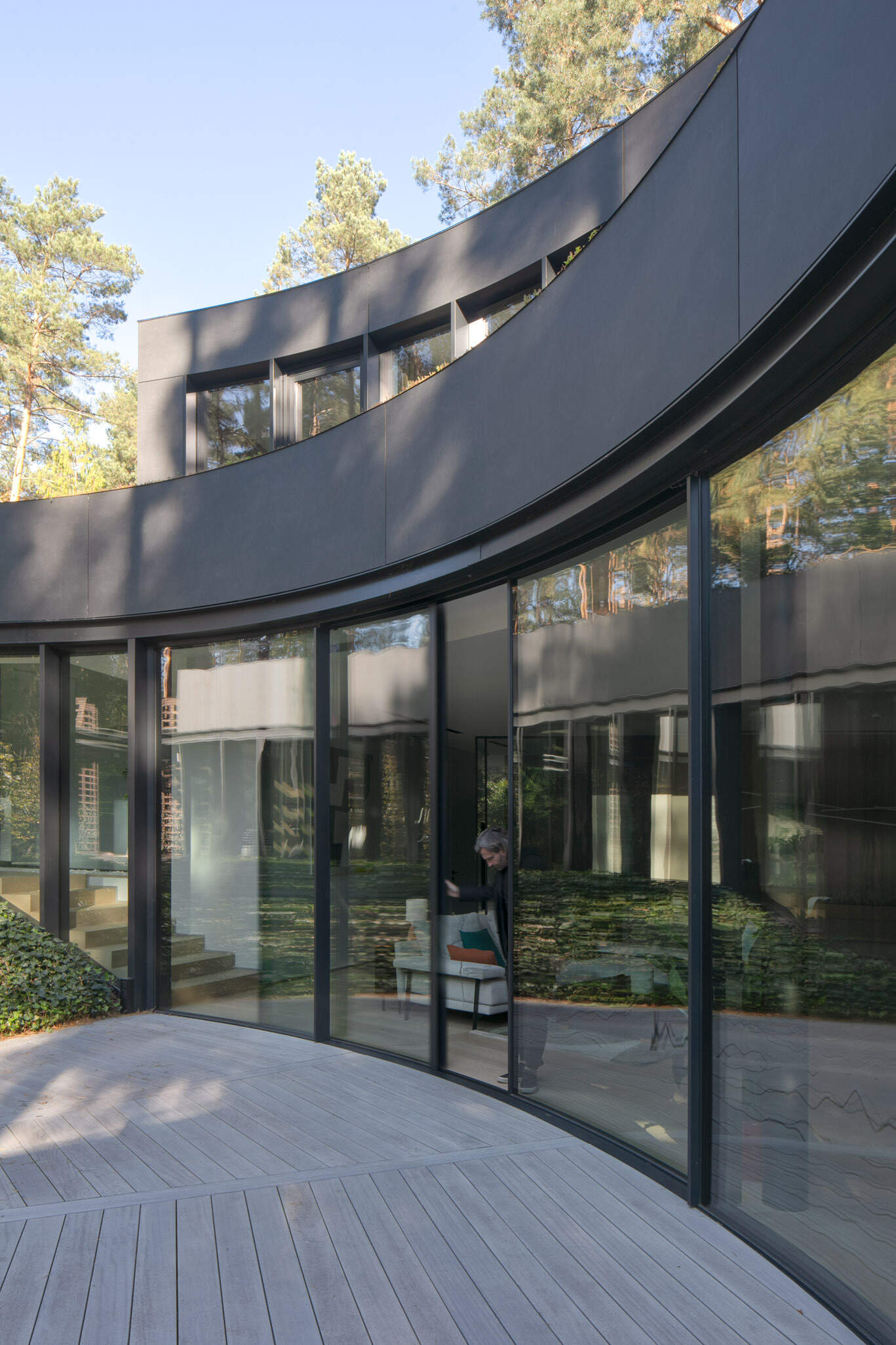
The material palette reinforces this relationship with the forest. Graphite cladding creates a darker outer layer, while warmer surfaces and expansive glazing face the brighter interior garden. This contrast gives the house a unique dual personality, appearing protective from the outside while opening generously toward light-filled spaces within.
Curved Glass Walls and a Courtyard Centered Around Fire
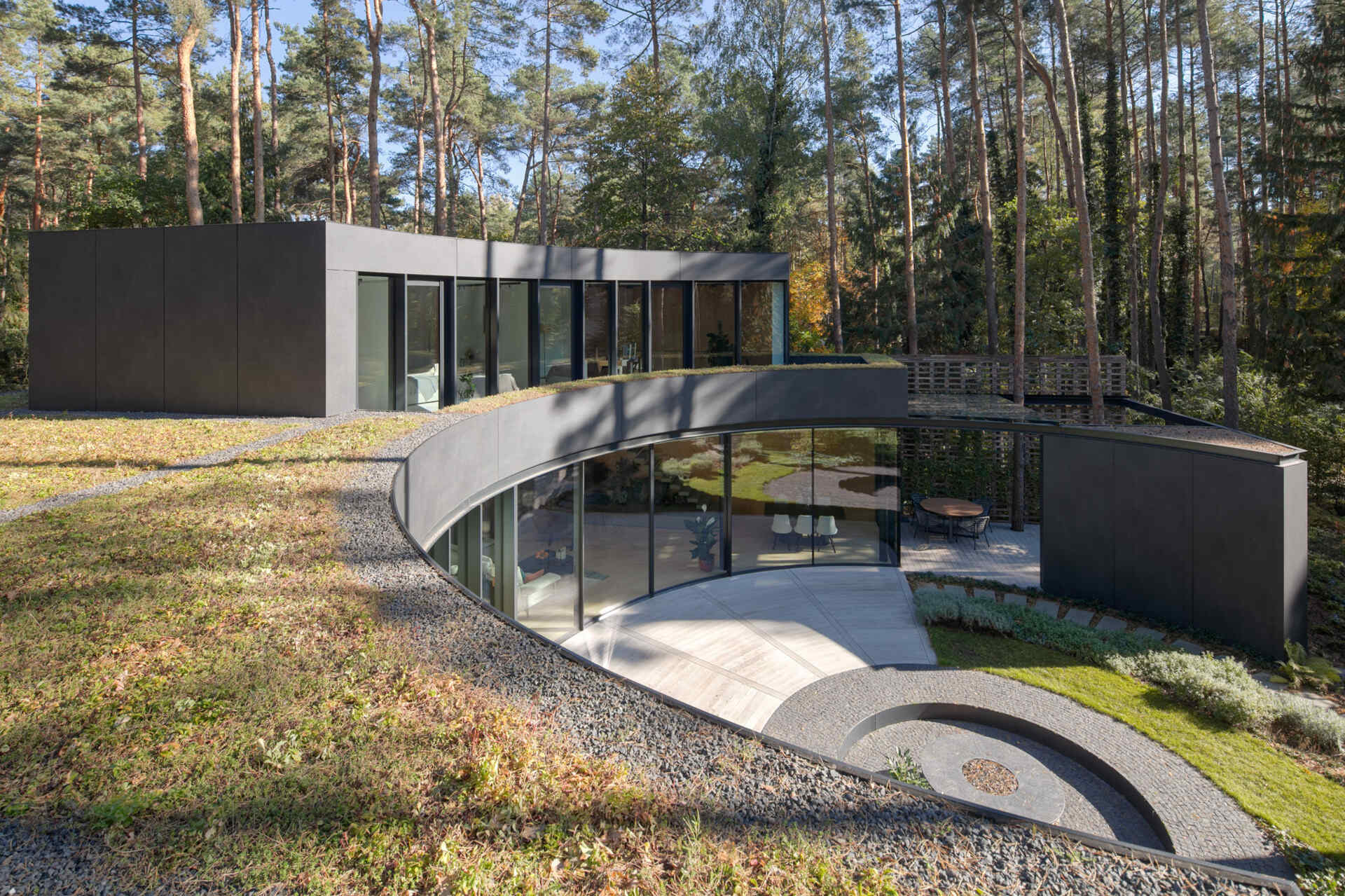
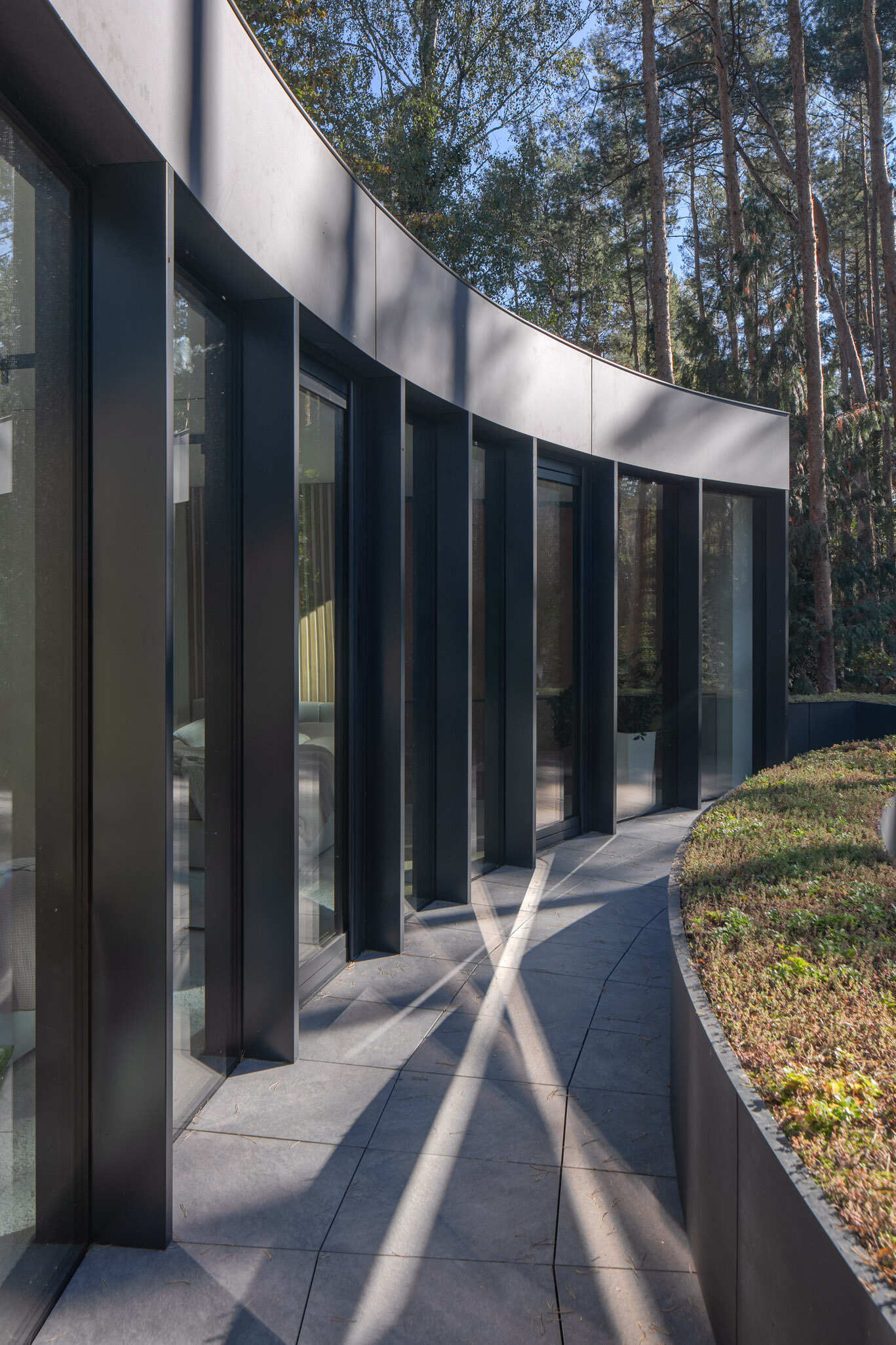
One of the home’s most impressive features is its sweeping glazed facade. Positioned along the edge of the glade, the curved wall acts as a giant viewing frame for the forest beyond.
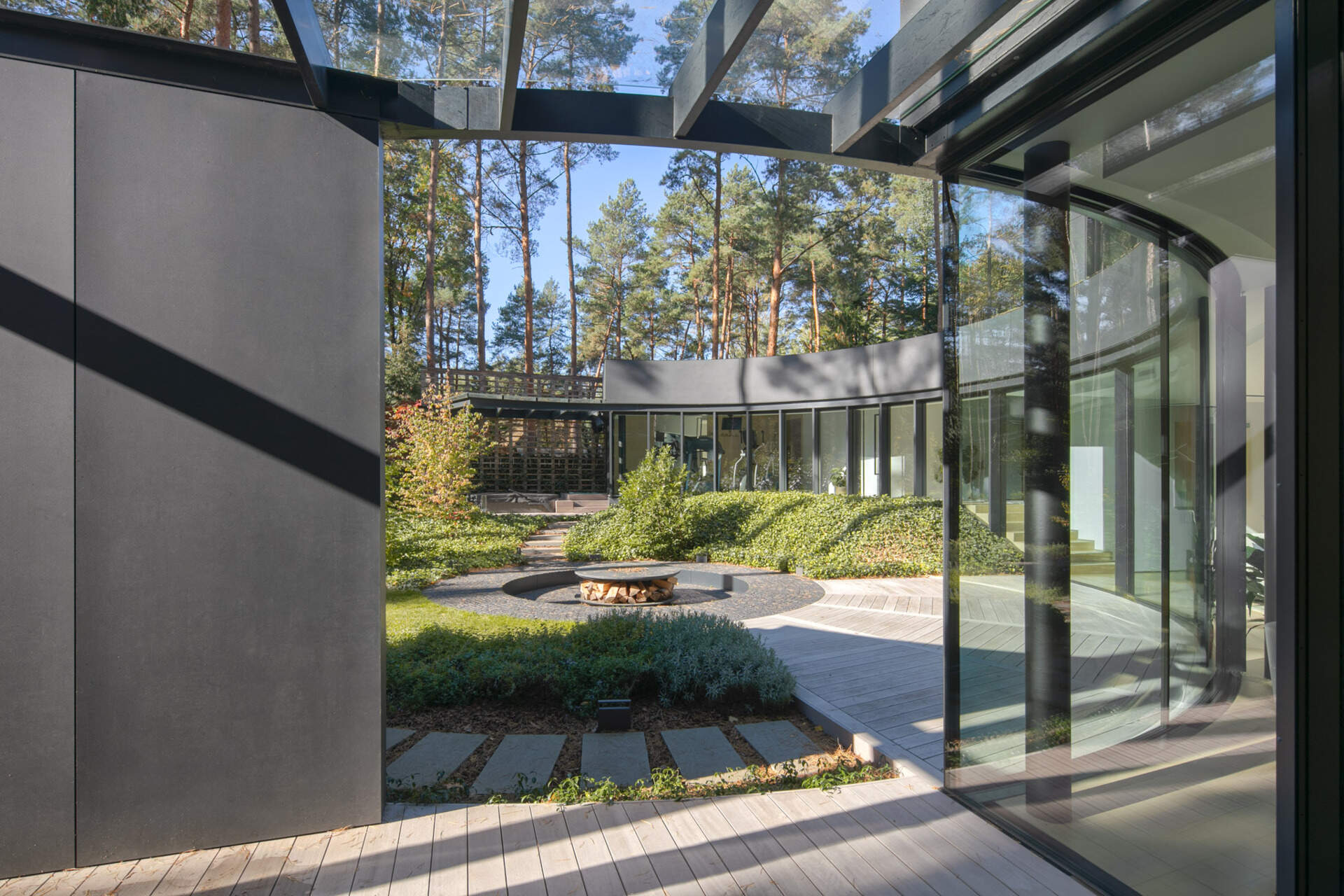
Bringing this vision to life required custom curved glass and sliding doors that move along an arc. These elements allow the interior spaces to maintain a constant visual relationship with the woodland scenery. The room layouts follow the same flowing geometry, helping sunlight reach every part of the home throughout the day.
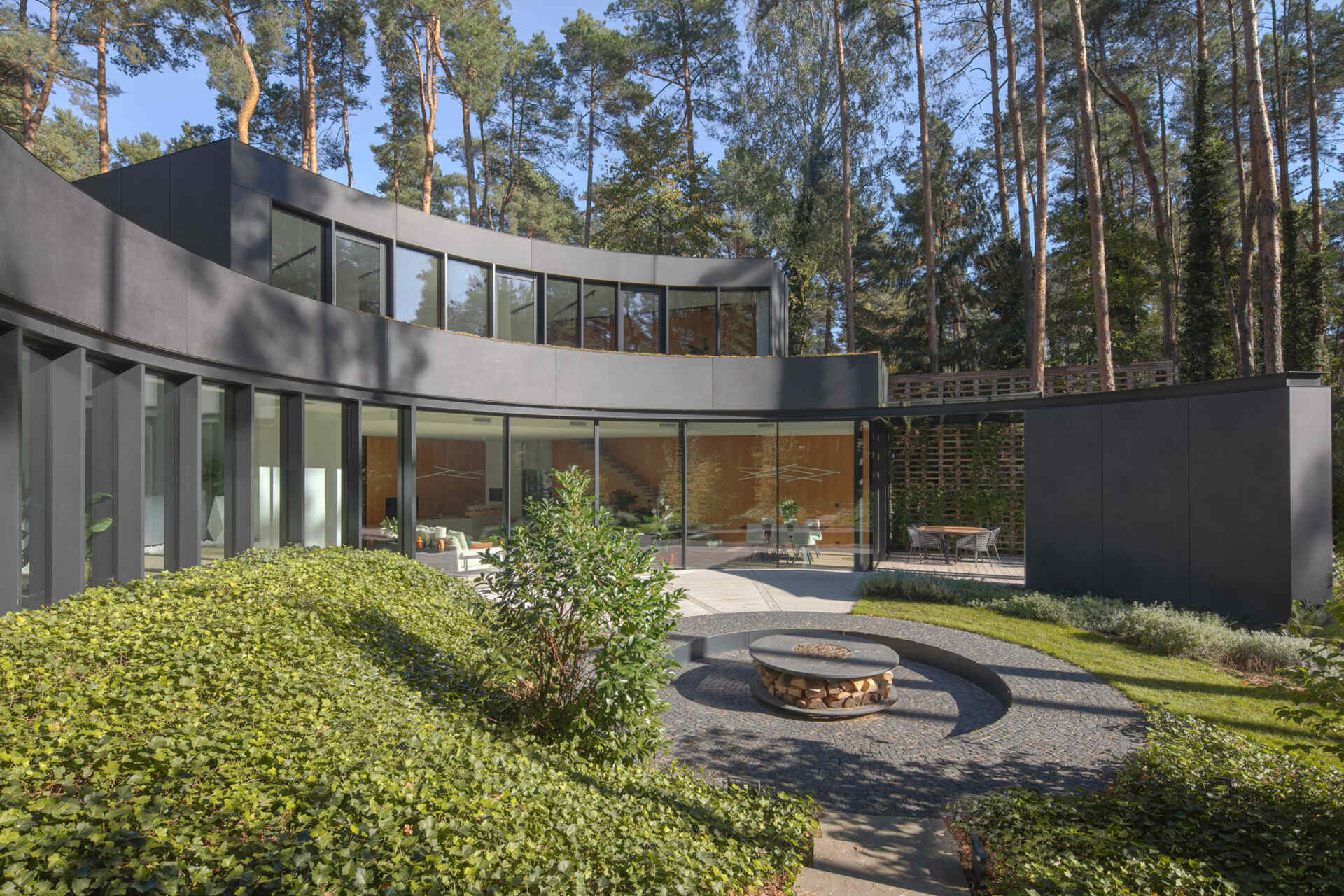
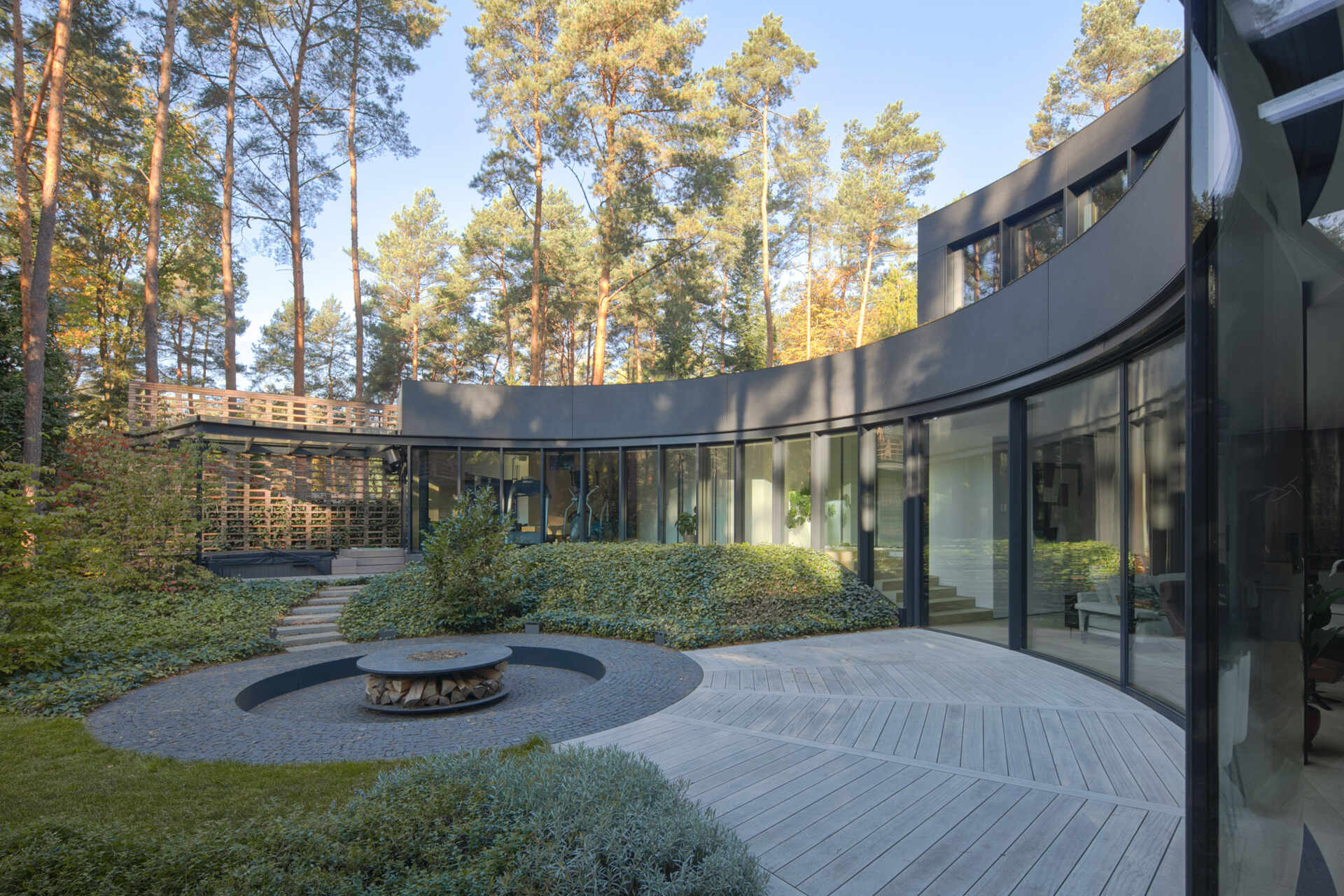
At the center of the semicircular form sits a sheltered courtyard garden. This outdoor space functions as an extension of the living areas, creating a semi-private gathering space embraced by the architecture itself. A fire pit occupies the middle of the courtyard, becoming a focal point after sunset. As daylight fades, firelight reflects across the glass facade and into the interior, creating a completely different atmosphere from the daytime experience.
Around the fire pit, ash decking boards radiate outward in a circular pattern, reinforcing the geometry that first inspired the project.
A Landscape Designed as an Extension of the House
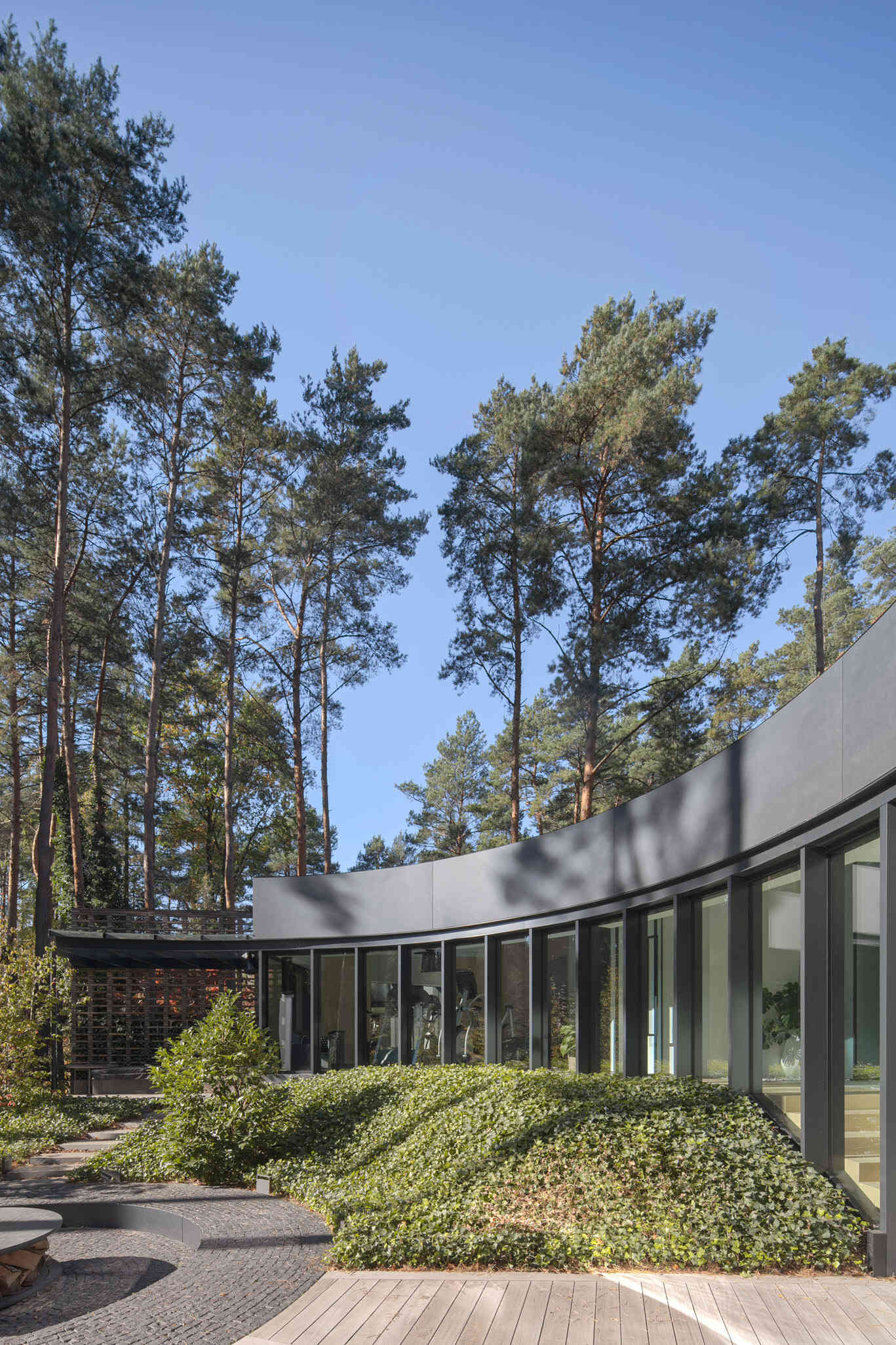
The preserved woodland remains the dominant feature of the site. Existing trees and shrubs were retained wherever possible, allowing the project to maintain the character that originally inspired the design. Instead of competing with the forest, the landscape design works alongside it, creating a seamless transition between architecture and nature.
The Green Roof Revealed from Above
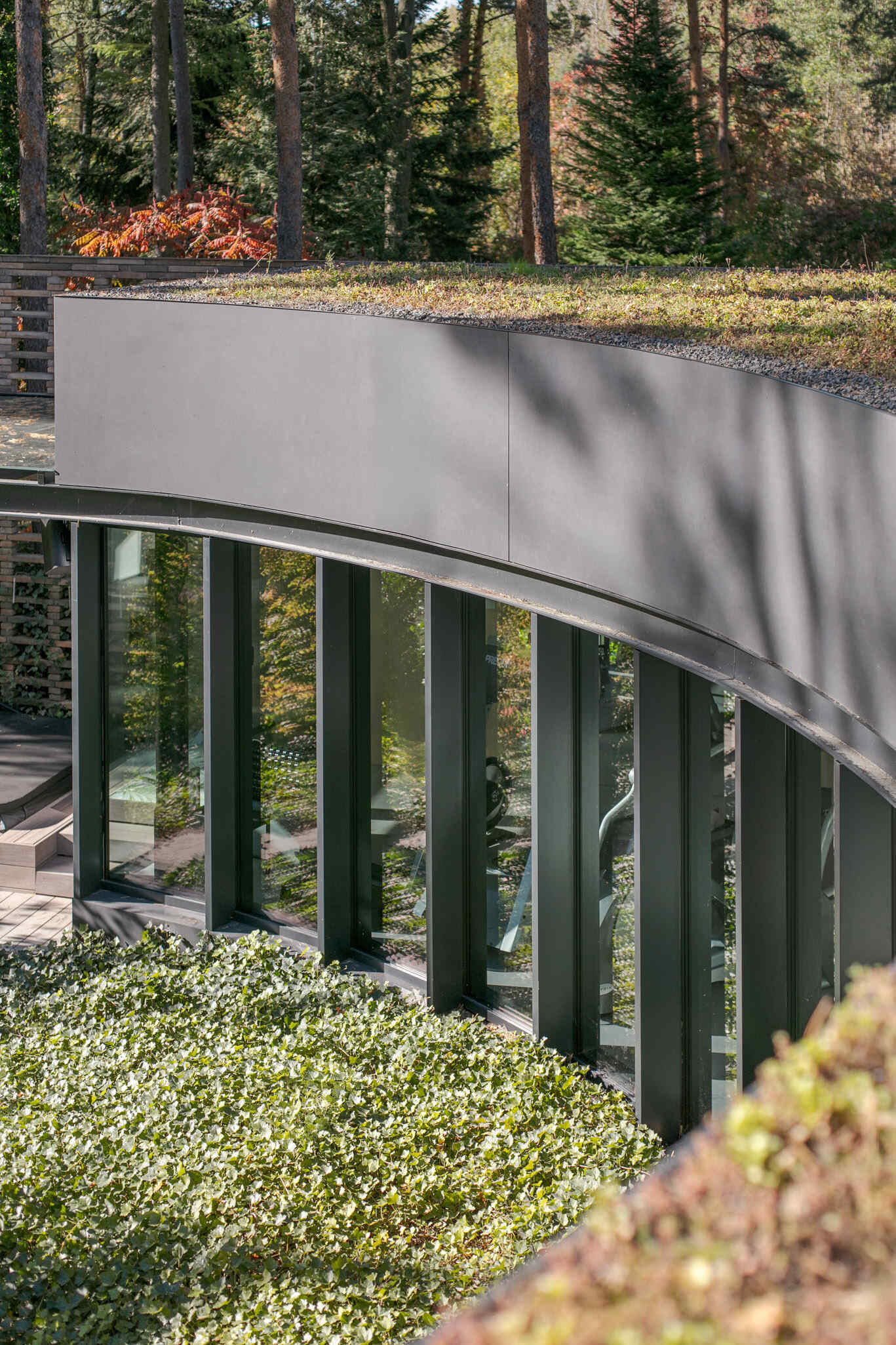
Viewed from above, House with a Glade reveals another layer of its environmental strategy. Green roofs cover portions of the building, softening its visual impact and helping it merge into the woodland environment.
The roofscape adds texture and seasonal variation while strengthening the home’s relationship with the site. From aerial viewpoints, the building appears less like a traditional villa and more like an extension of the forest floor, nestled among the trees.
A Closer Look at the Upper Level and Roofscape
The upper portions of the house provide a better understanding of how the curved geometry shapes the entire project. The sweeping arc of glazing continues across the elevation, creating uninterrupted views toward the forest and courtyard below.
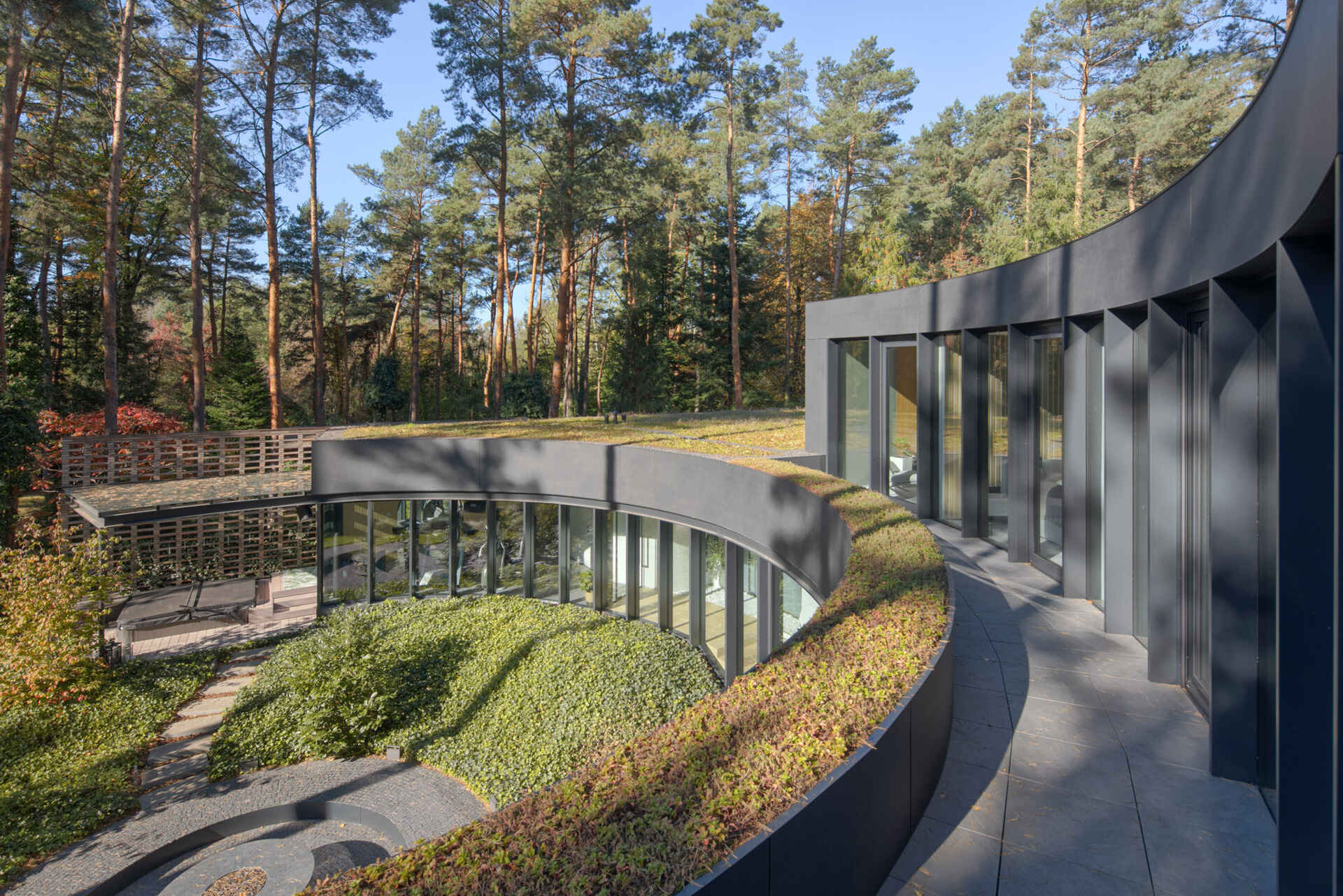
From this perspective, the relationship between architecture and roof design becomes especially clear. The planted roofs sit alongside the curved forms, creating a layered composition of greenery, glass, brick, and metal. Together, these elements give the house a sculptural quality while maintaining a strong connection to the woodland environment.
The contrast between the darker exterior shell and the brighter inner-facing surfaces becomes even more apparent from these elevated views.
Inside the Home
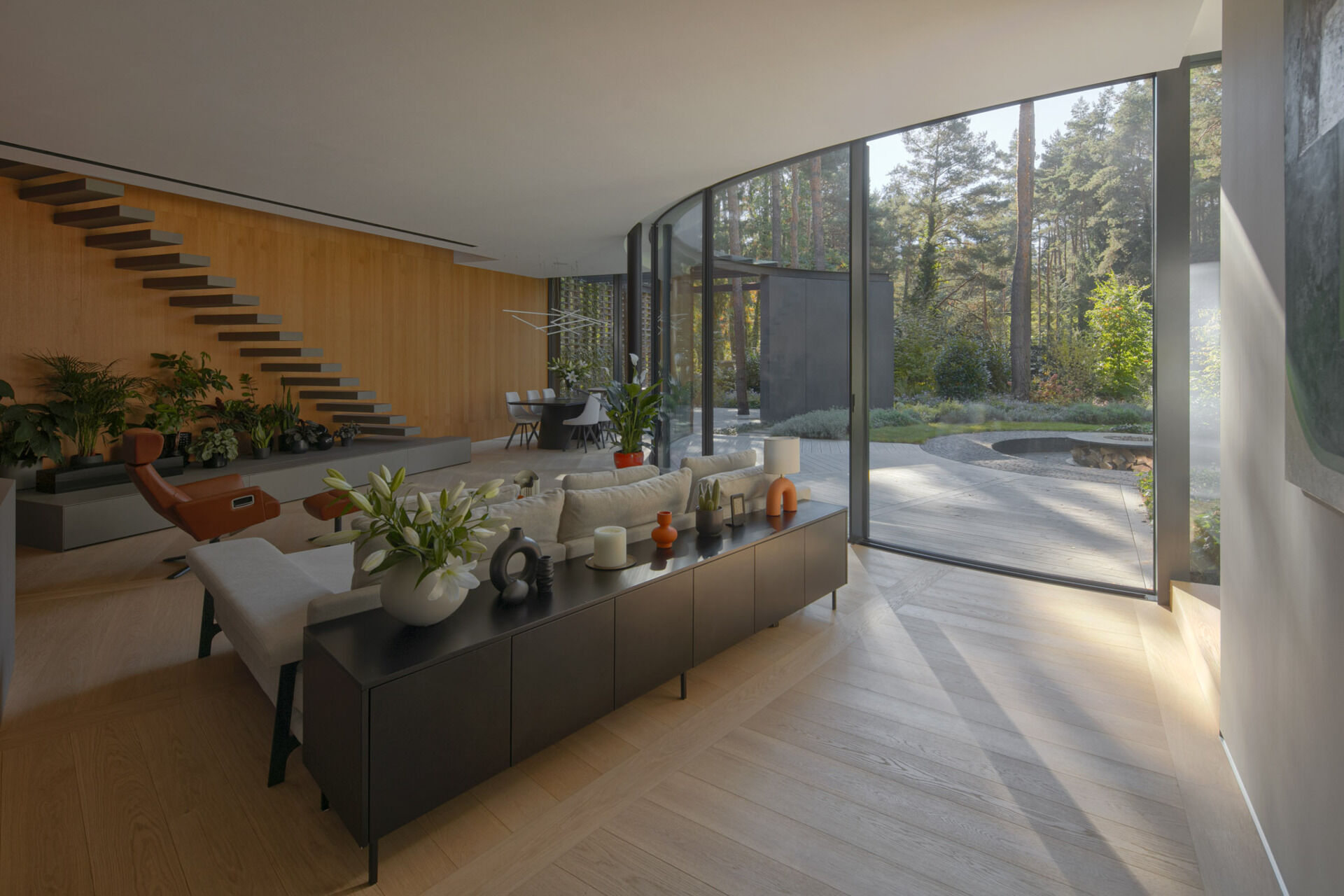
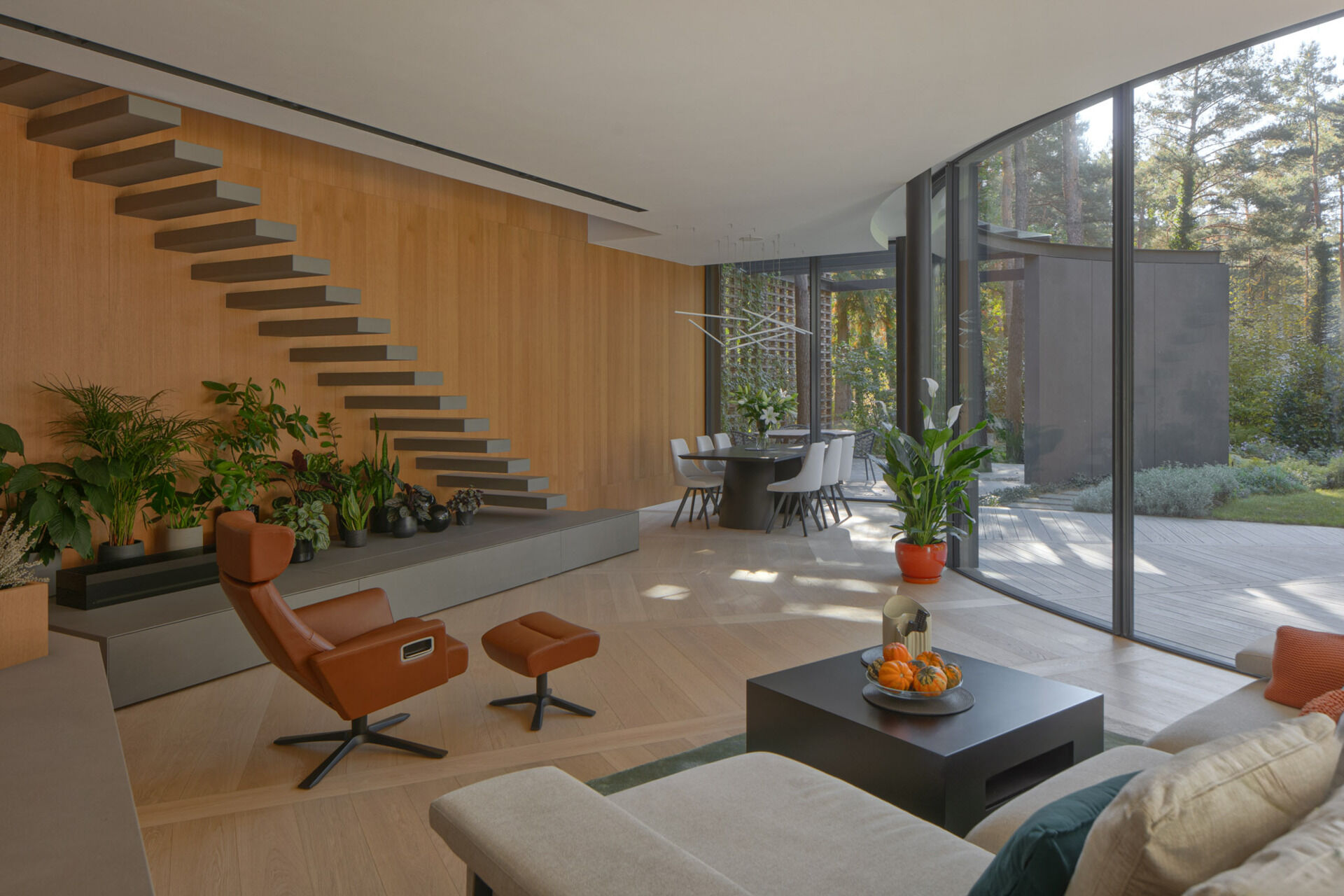
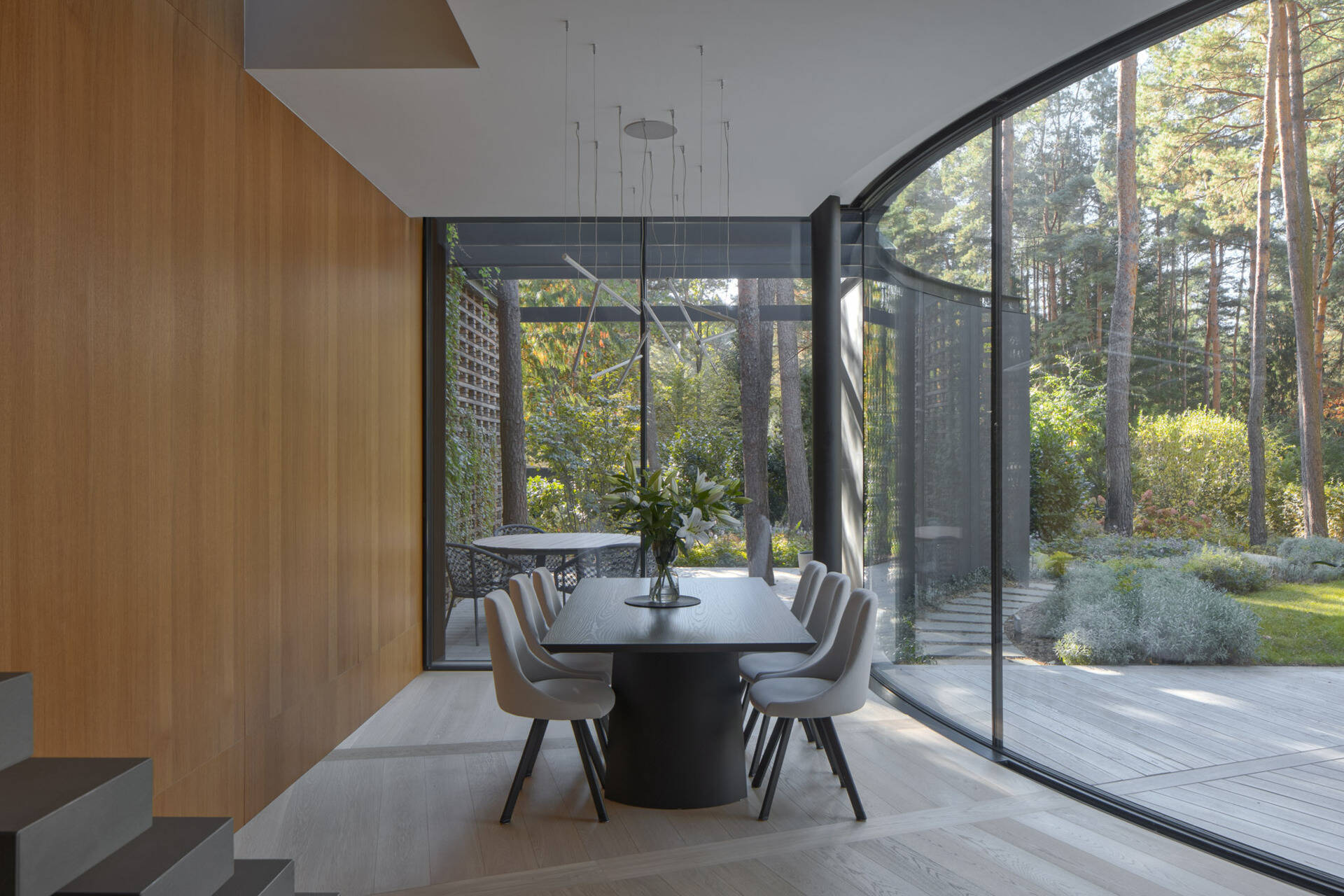
The influence of the curved facade continues throughout the interior. Living and dining spaces are organized along the arc of the glazed wall, ensuring uninterrupted views of the courtyard and surrounding forest.
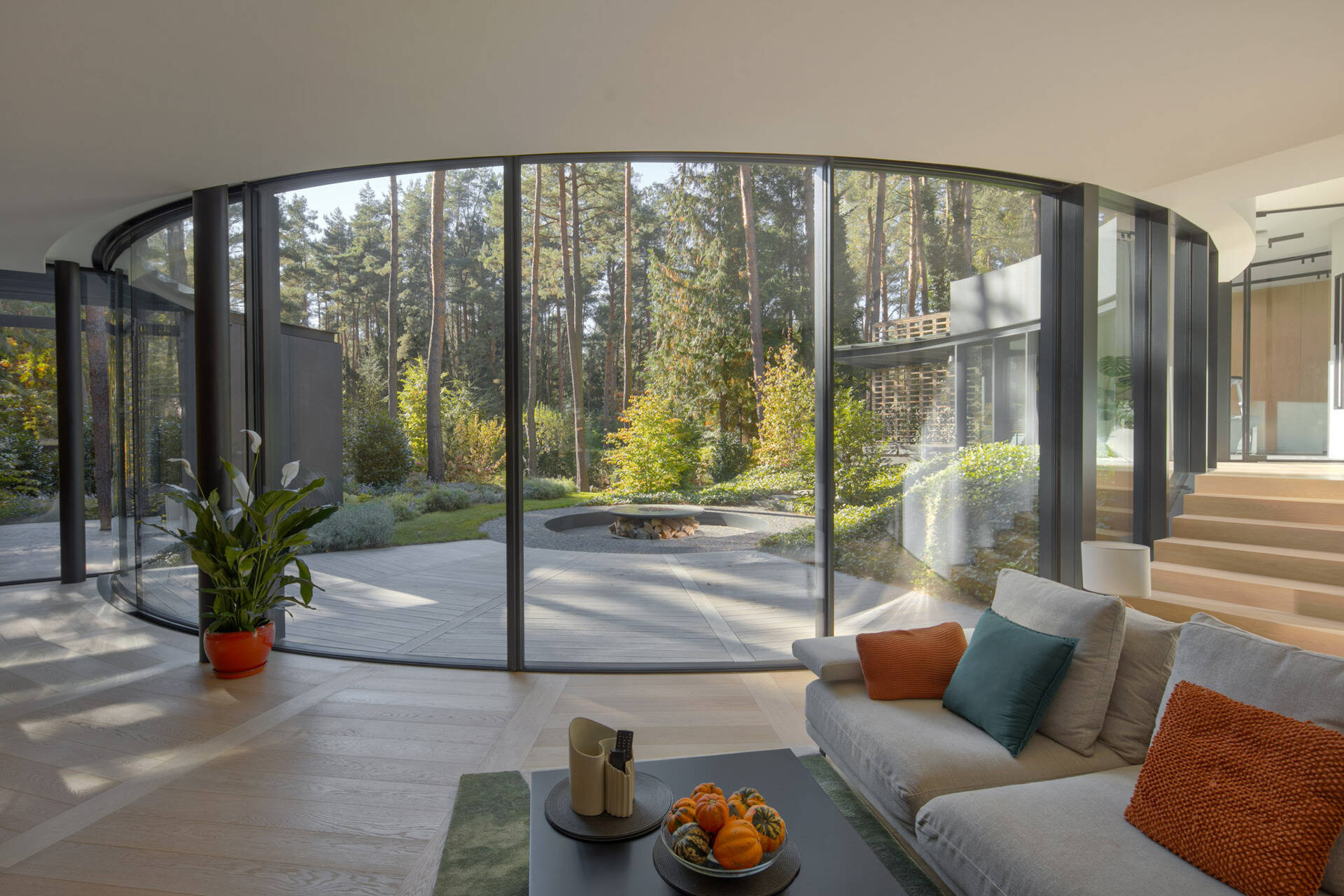
Natural light becomes one of the home’s defining design features. As the sun moves across the clearing, changing patterns of light enter the rooms through the expansive glass. The curved layout also creates a sense of flow between spaces, encouraging movement toward the outdoor courtyard.
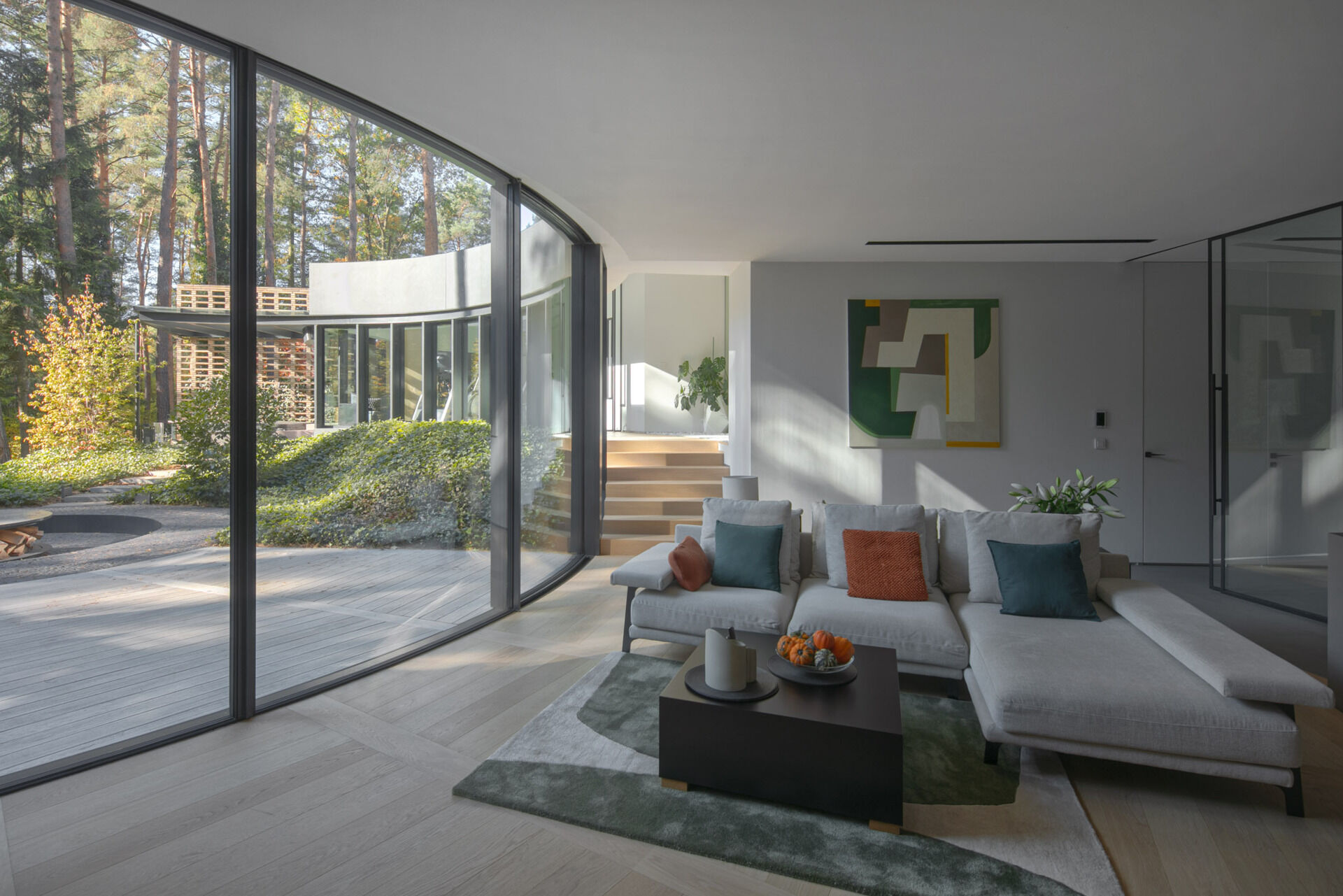
The oak flooring echoes the radial pattern of the terrace outside, visually linking the interior to the landscape beyond the glass. Together with the forest views, this creates living spaces that feel immersed in the changing scenery of the site.
The Beauty of Hand-Formed Brickwork
While the glass facade often attracts the most attention, the brickwork is equally important to the character of the house.
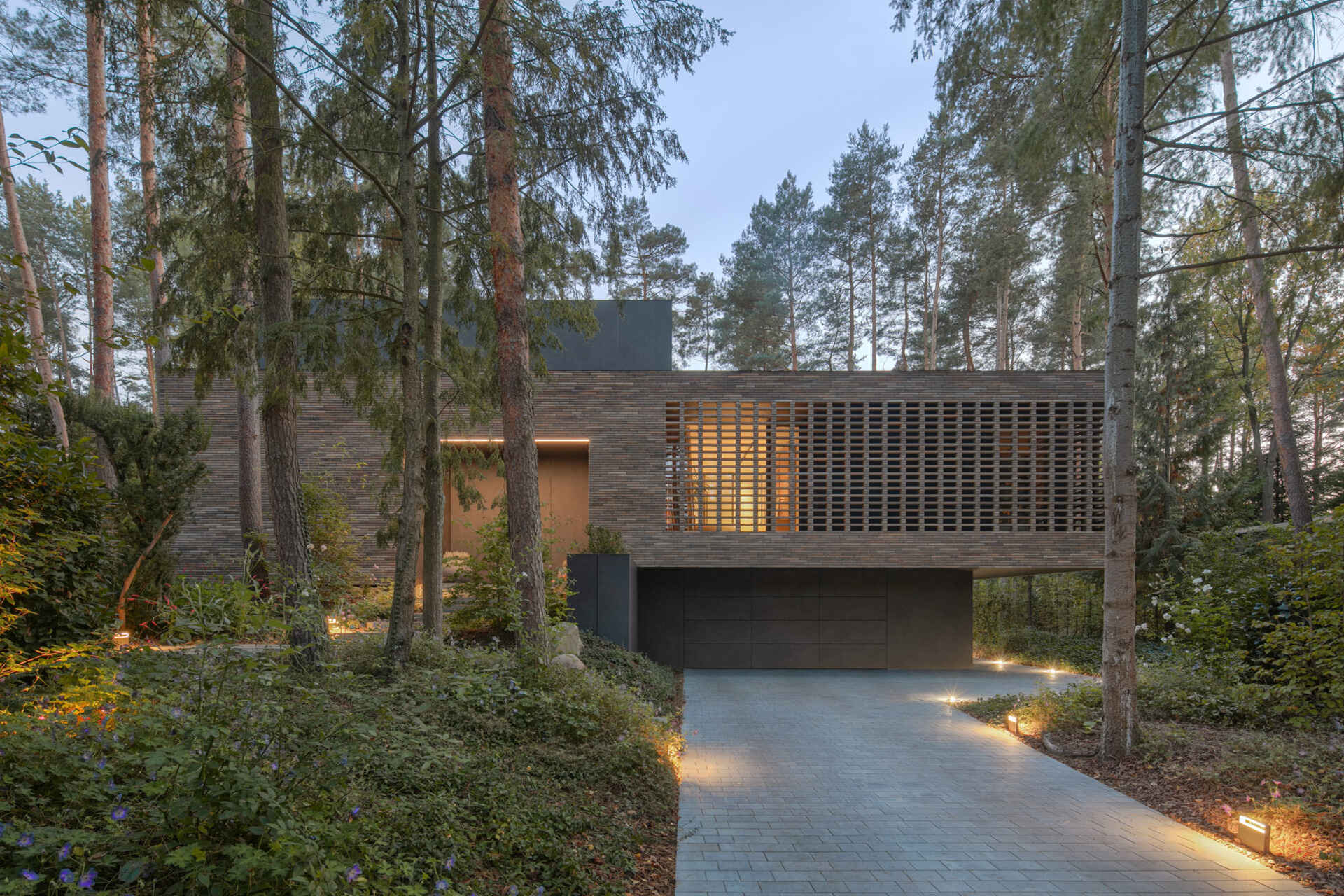
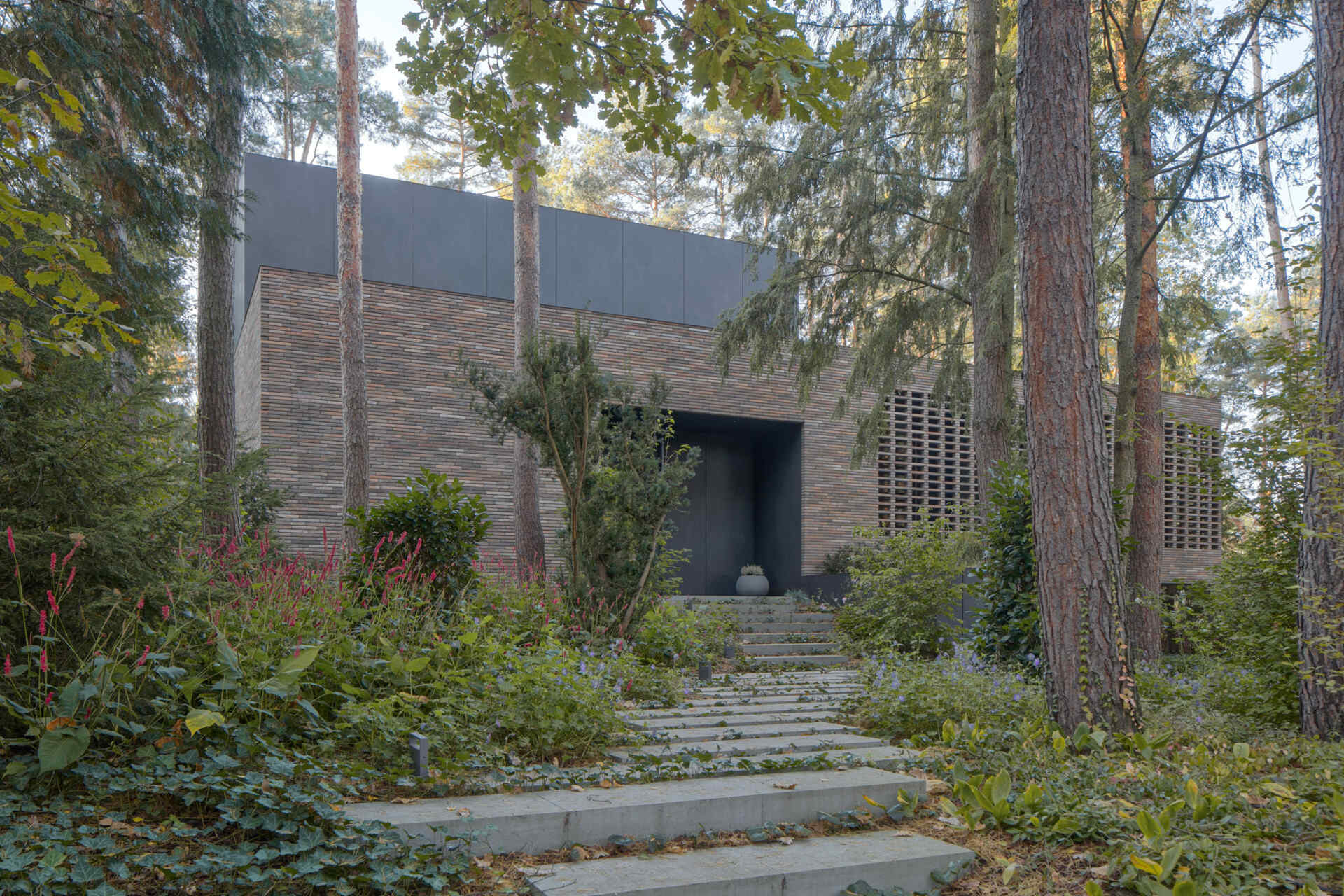
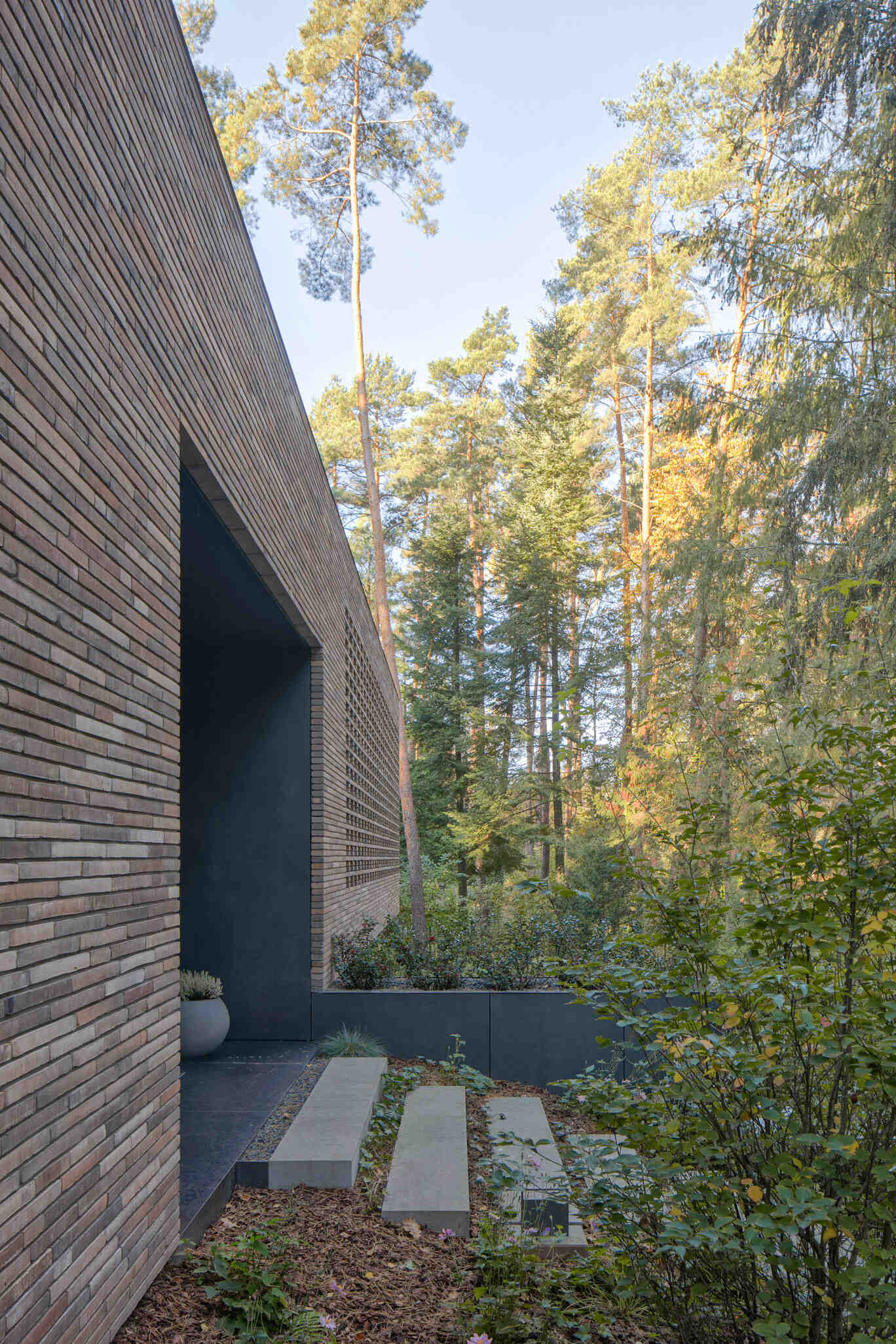
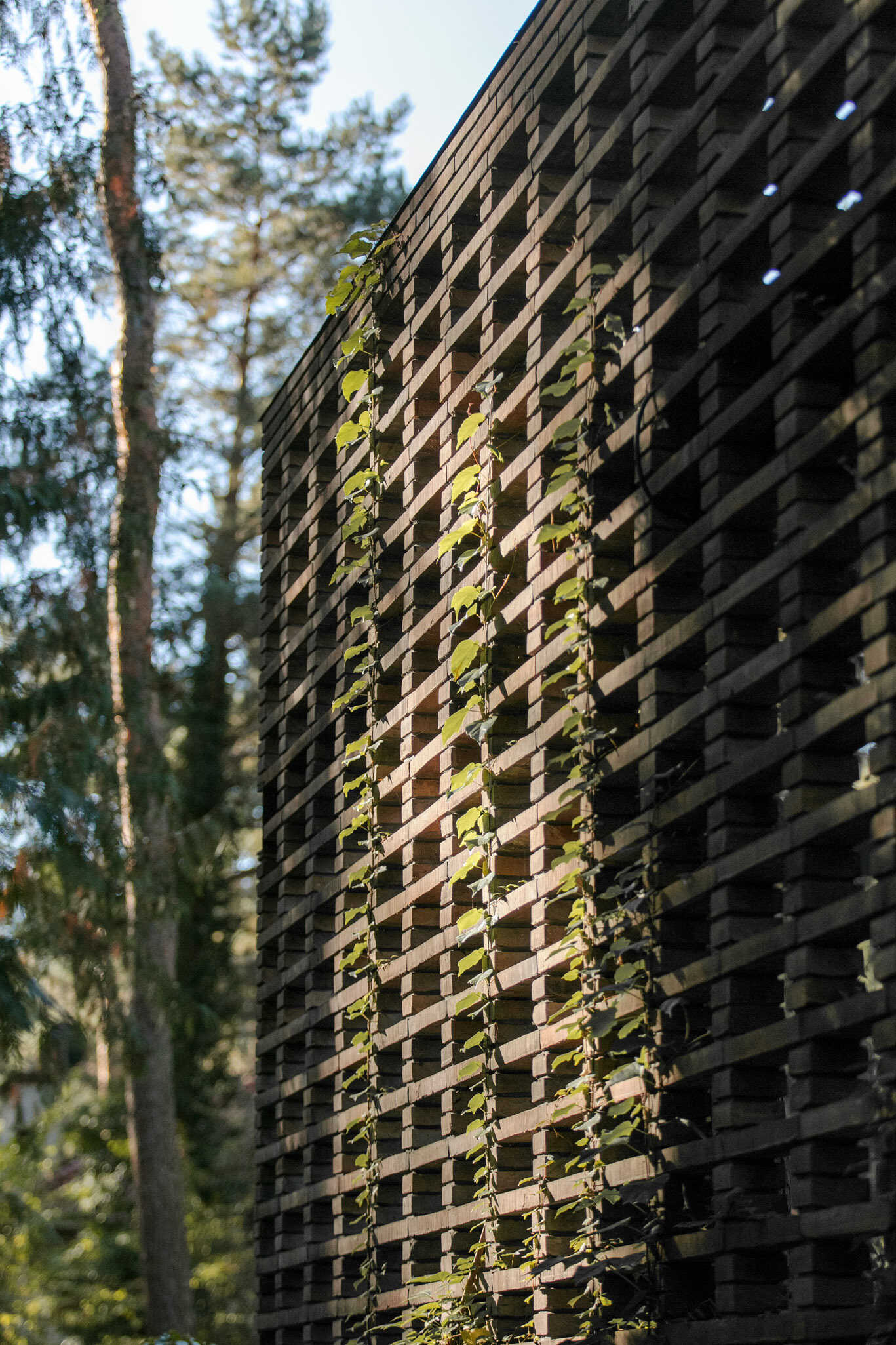
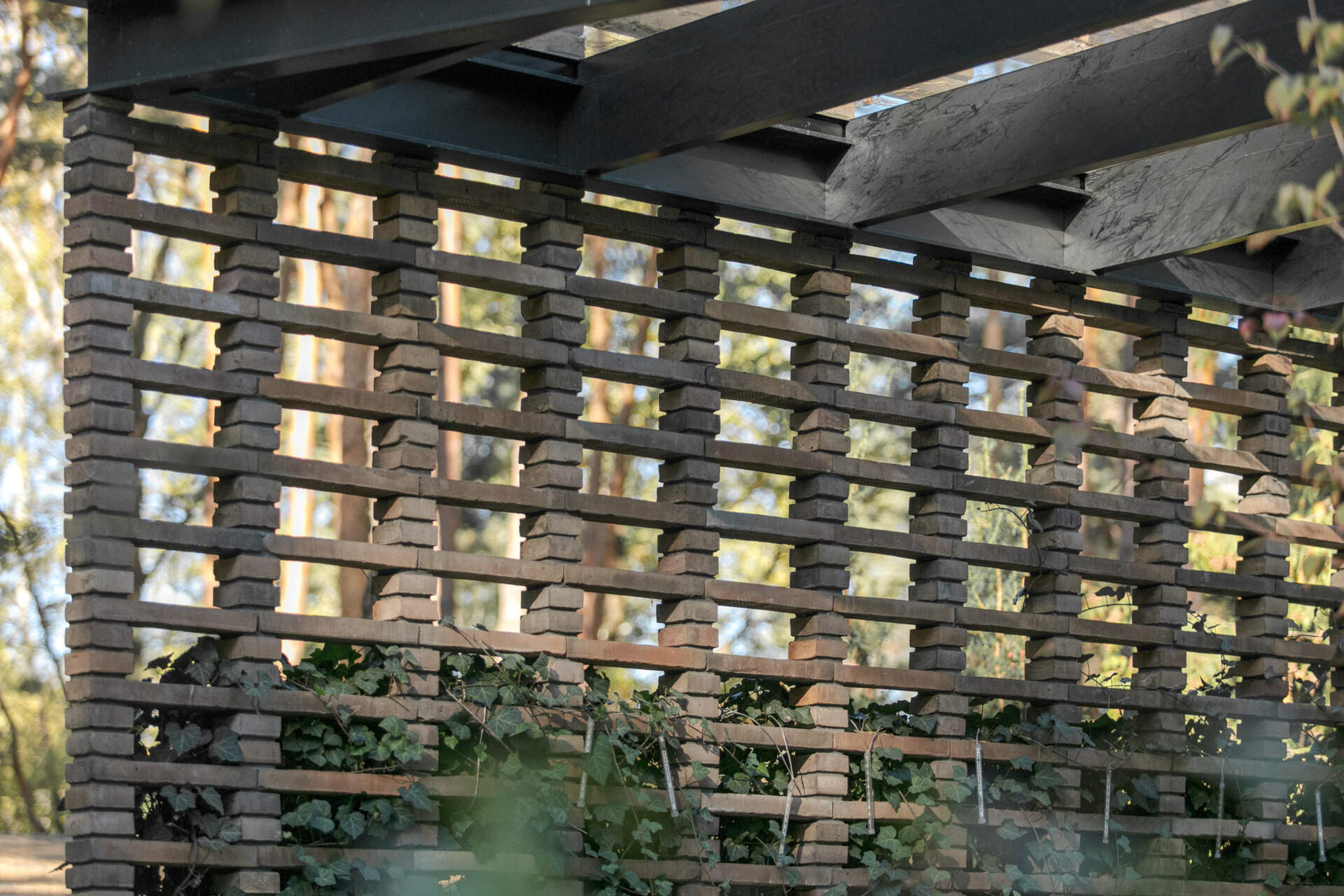
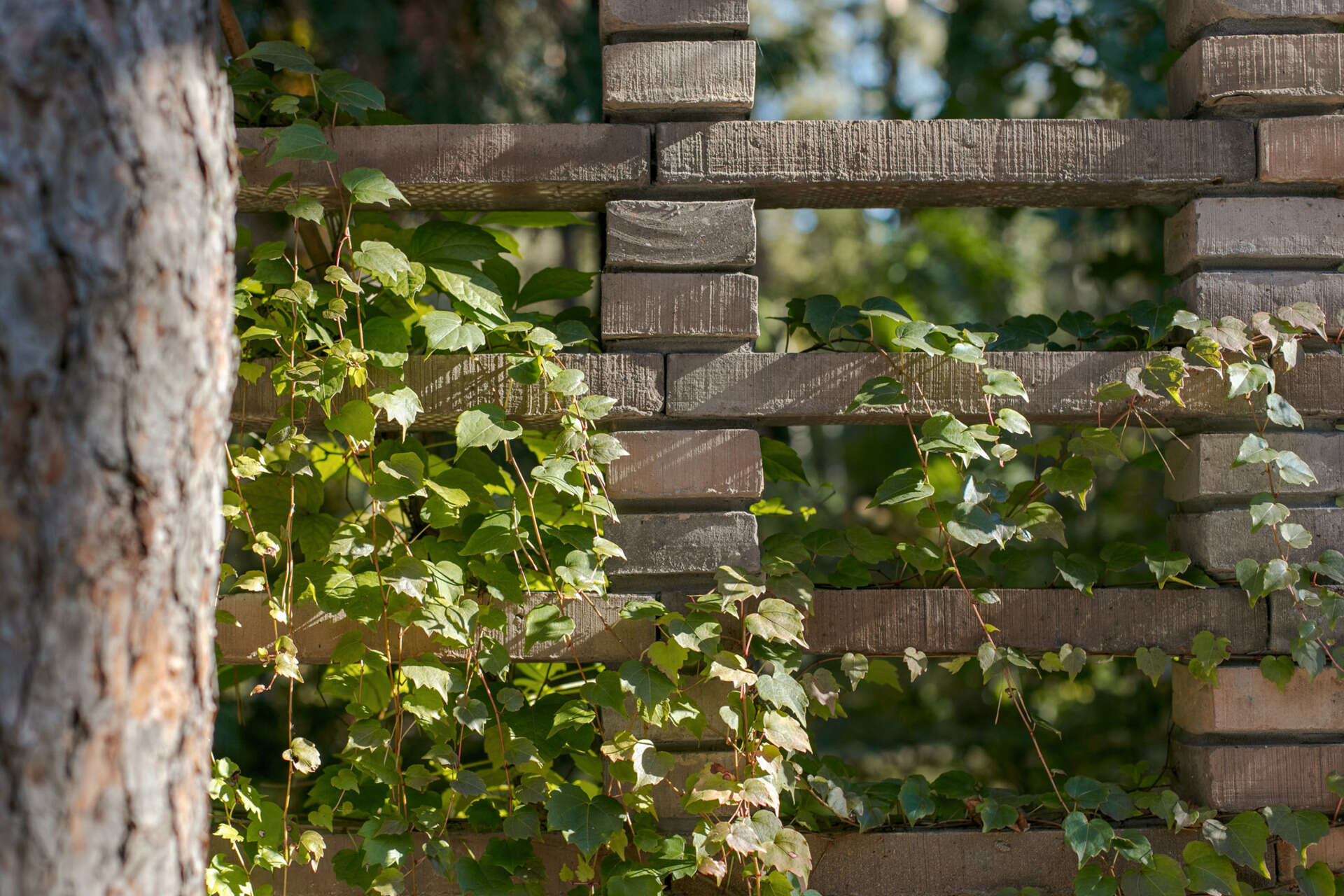
The front elevation is clad in hand-formed brick with warm brown tones that recall the bark of nearby pine trees. This textured surface gives the building a tactile quality and helps it blend into the woodland setting.
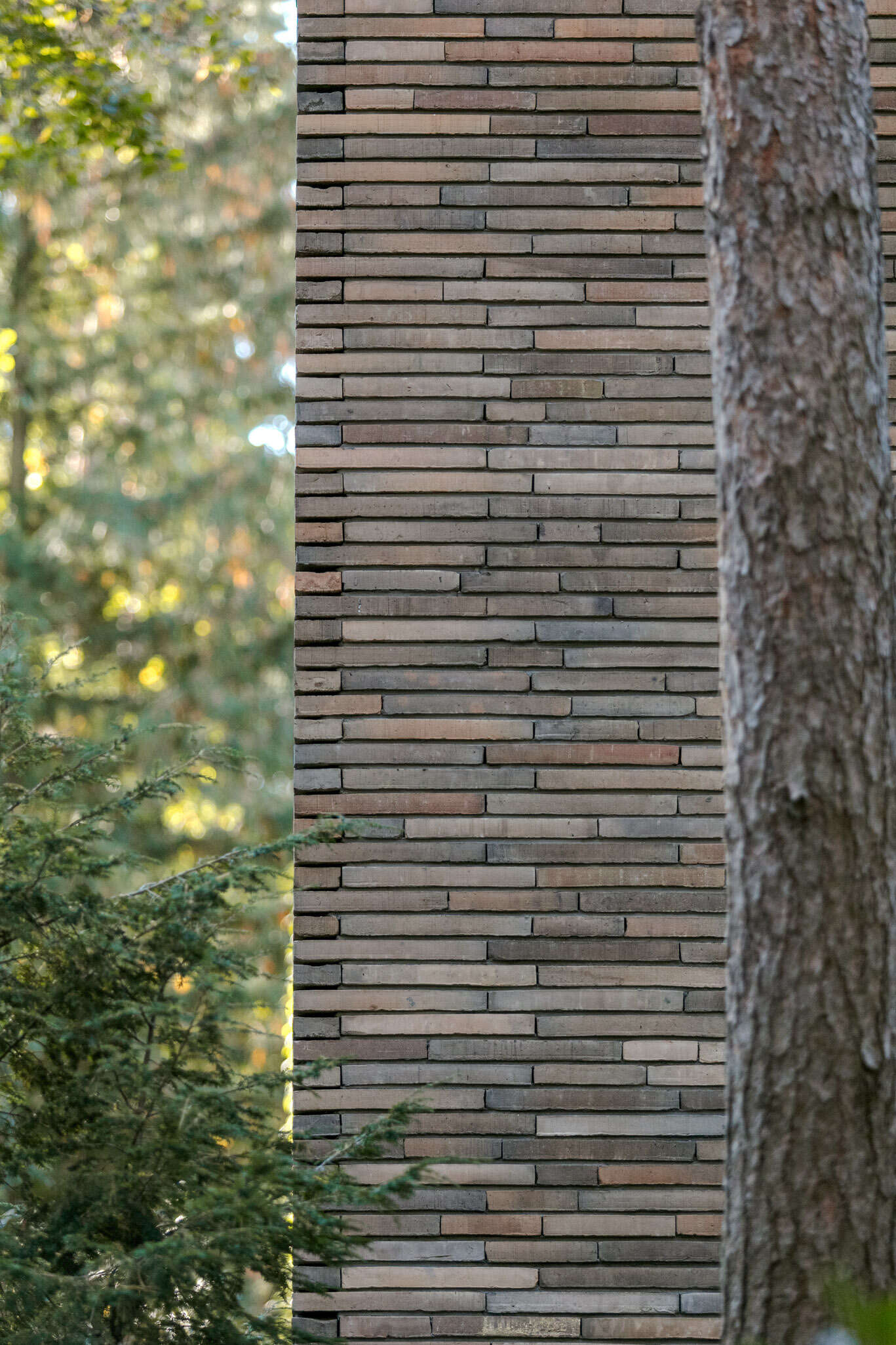
In certain areas, the brickwork becomes openwork, filtering views and light through the facade. These perforated sections create moments of privacy while adding visual depth. One such screen conceals a loggia, providing a sheltered outdoor space tucked behind the brick shell.
House with a Glade began with an unexpected moment. The demolition of an older structure revealed a sunlit clearing hidden within a dense forest, and that discovery became the guiding force behind the entire design. From its curved glass facade and courtyard fire pit to its green roofs and textured brickwork, every element responds to the qualities of that woodland opening.