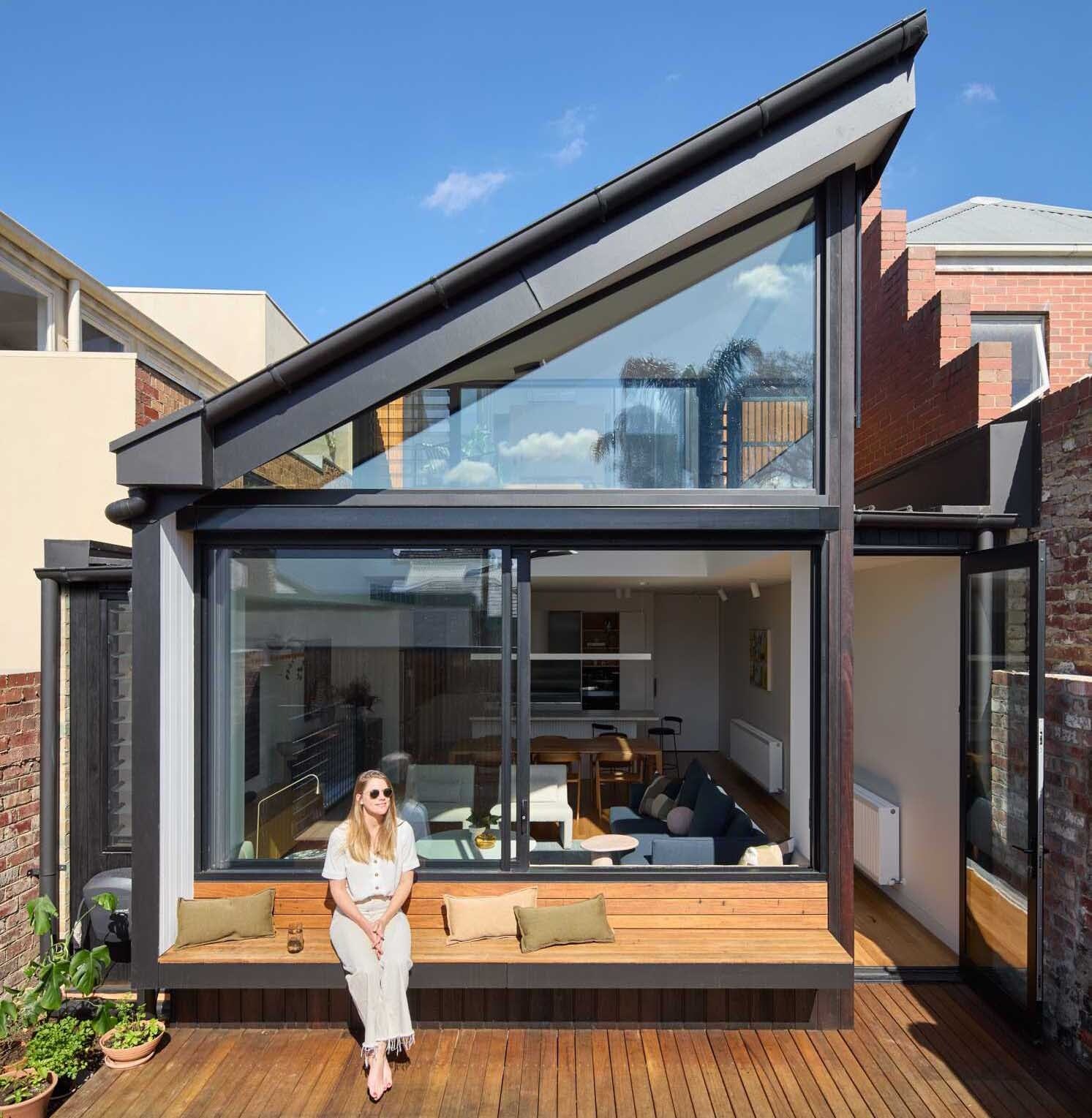
In Victoria, Australia, Ben Callery Architects transformed a Victorian heritage terrace house with a contemporary extension that balances old and new. While the original facade has been retained and restored, a dramatic rear addition introduces a completely different architectural expression, creating a home filled with light despite the challenges of its narrow urban site.
Designed for a couple, the project tackles one of the most common problems facing terrace houses, how to bring natural light into a home surrounded by neighboring buildings. The solution came in the form of sculptural twin parabolic roofs that rise above the rear of the property, creating a distinctive silhouette while helping sunlight reach deep into the interior.
Twin Roofs That Shape the Home
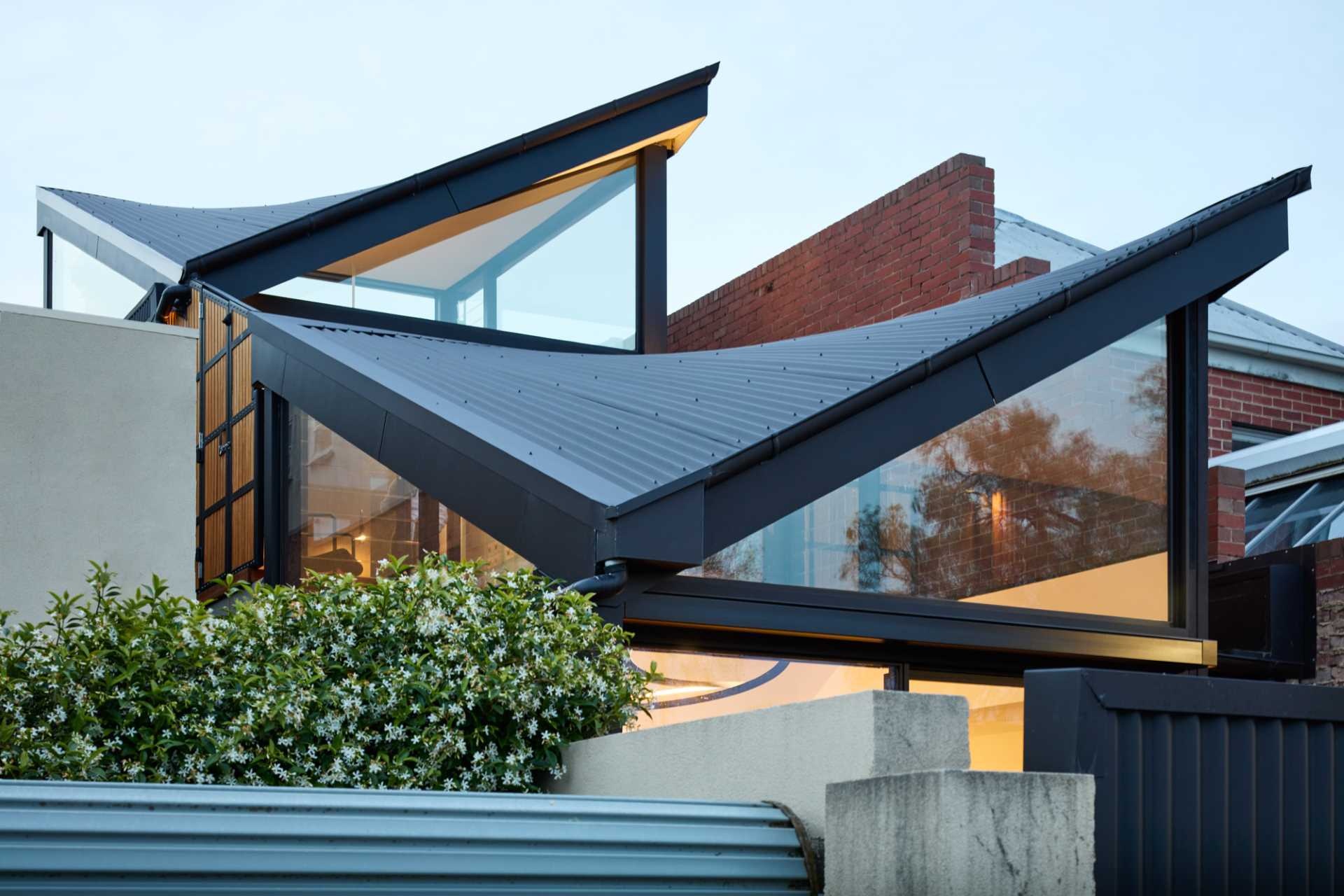
The extension immediately catches the eye with its twin parabolic roofs. Standing above the neighboring terraces, the roof forms twist and angle to respond to the site’s unique conditions.
The narrow six-metre-wide block is bordered by substantial neighboring extensions, making access to sunlight particularly difficult. To address this, the roof design reaches upward toward the north, drawing in valuable sunlight, while sloping downward to the south to avoid casting additional shadow onto neighboring properties.
A Patio Designed for Relaxed Living
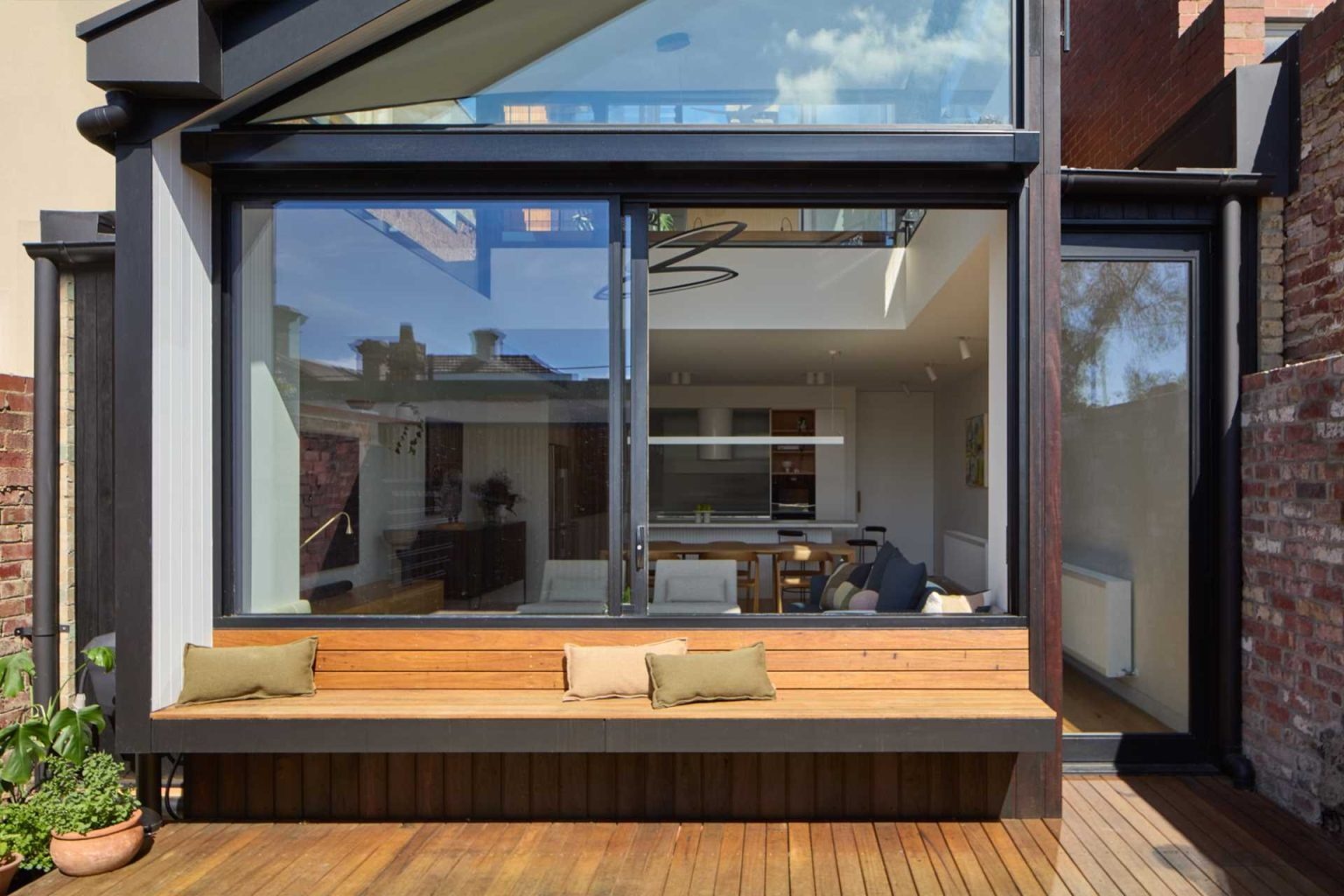
At the rear of the home, large sliding glass doors create a seamless connection between the interior and outdoor spaces.
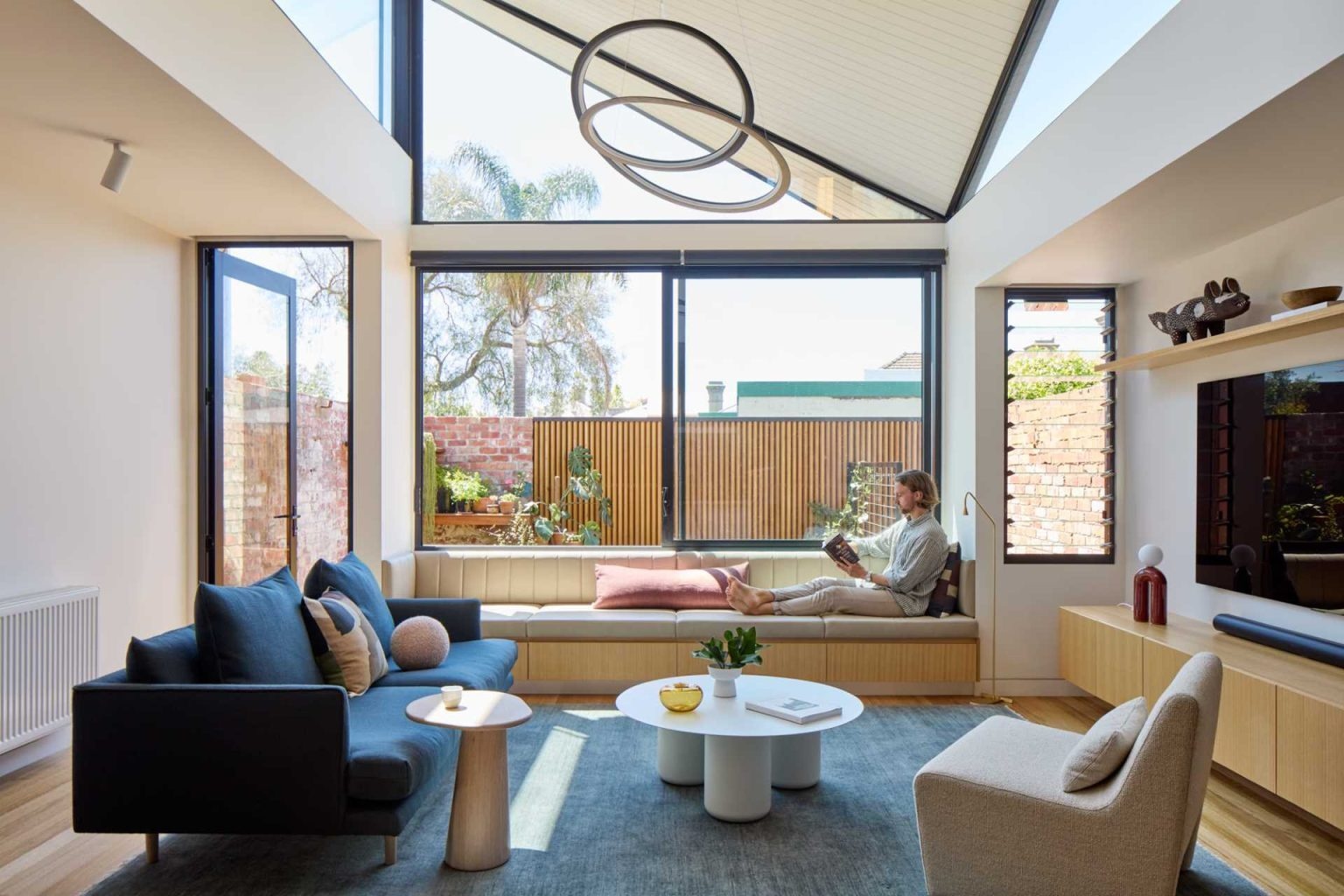
Positioned beneath a generous window is a built-in bench that overlooks the patio. The simple addition creates an inviting spot to sit, read, enjoy a morning coffee, or take in views of the courtyard.
Retained sections of exposed brickwork help connect the extension to the home’s history, while the open outdoor areas bring daylight into surrounding rooms.
A Living Space Filled With Natural Light
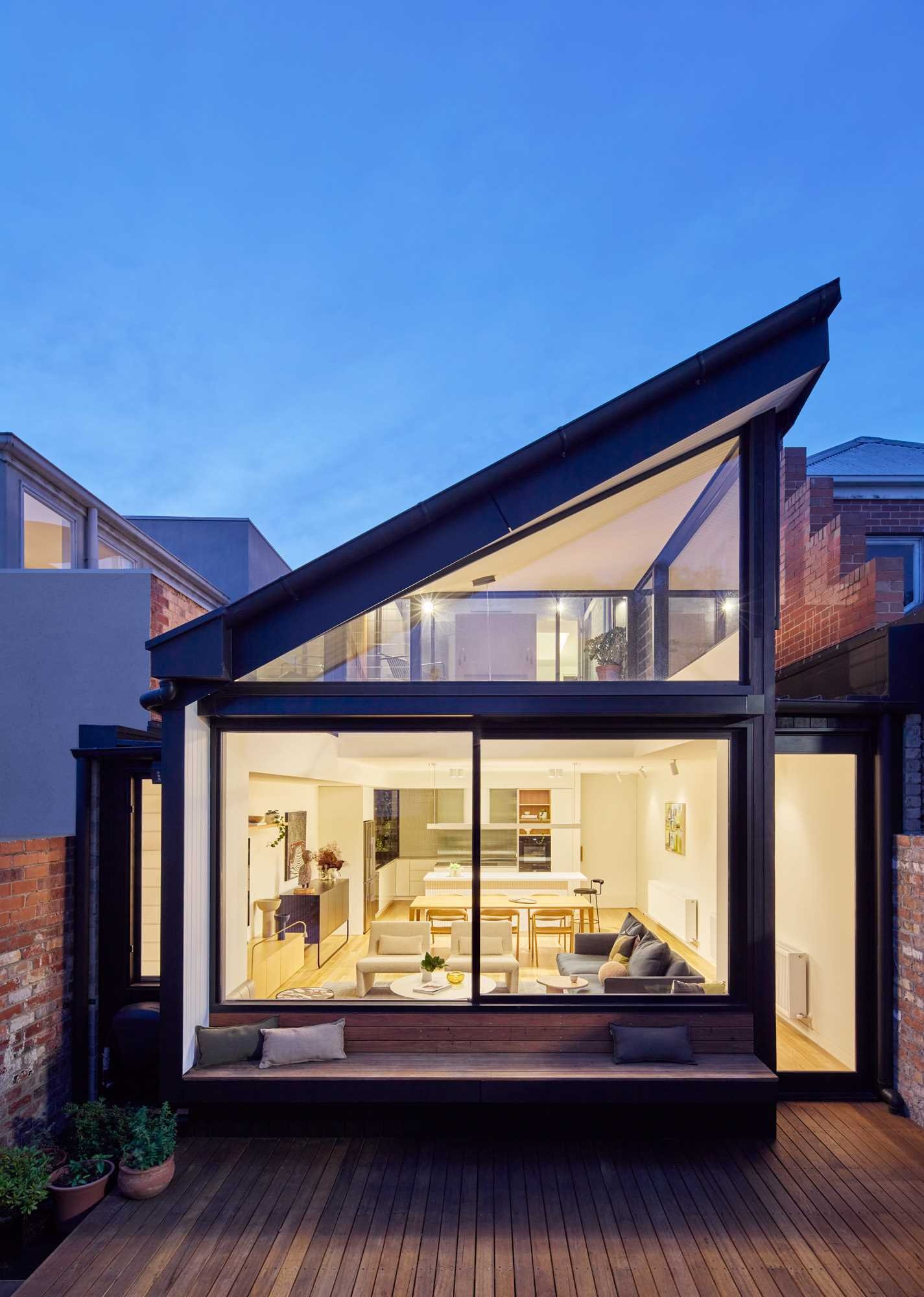
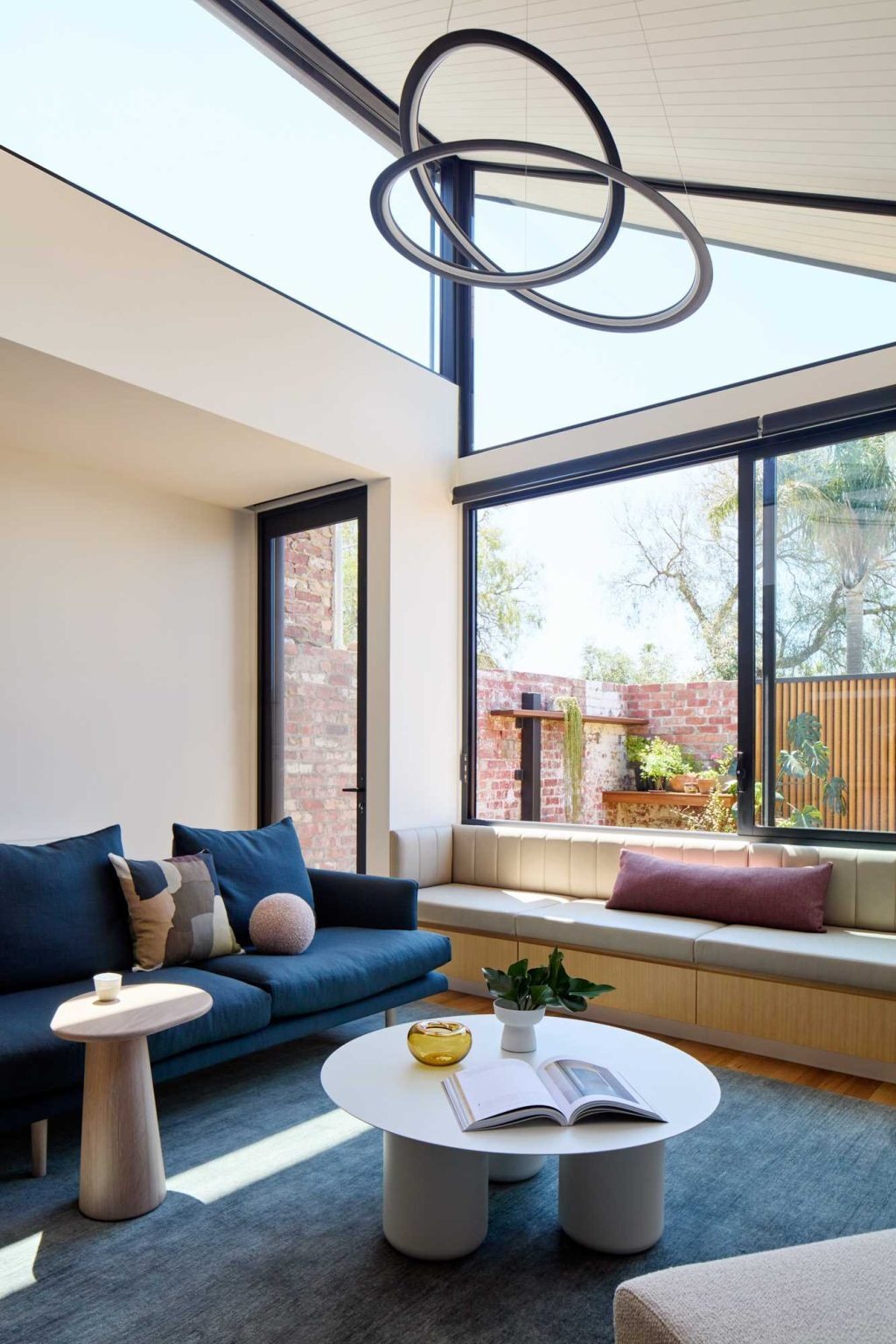
Stepping inside the extension reveals a bright and welcoming living area where white surfaces help bounce light throughout the space.
A second built-in bench has been integrated into the living room, tucked neatly between two walls and fitted with comfortable cushions. This custom feature adds extra seating while reinforcing the home’s clean and uncluttered aesthetic.
The restrained material palette allows the architecture to take center stage. White walls and ceilings amplify daylight, while timber flooring and cabinetry introduce warmth and texture. Above, the ceiling lining boards highlight the movement of the twisting roof form, drawing attention to the unique geometry overhead.
An Open Connection Between Living, Dining and Kitchen Areas
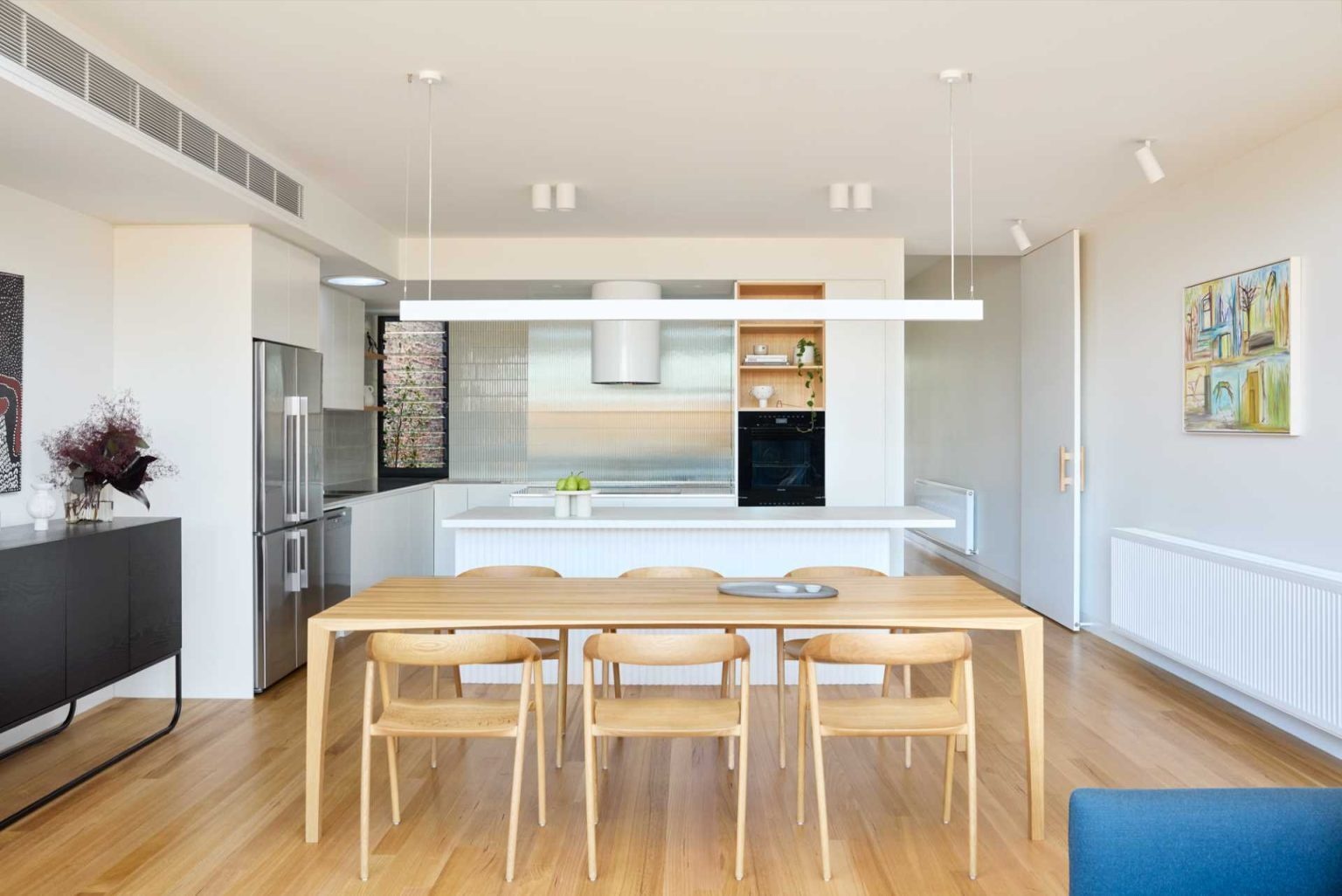
The living room flows naturally into the open-plan dining area and kitchen, creating a layout designed for entertaining and everyday comfort.
Natural light moves easily through the interconnected spaces, helped by the home’s large windows, skylights and highlight glazing. The visual openness makes the extension feel larger than its footprint suggests, while maintaining a comfortable and welcoming atmosphere.
As occupants move through the home, the sequence of spaces gradually becomes brighter, creating a sense of progression from the original heritage rooms toward the contemporary addition.
Stairs That Link Past and Present
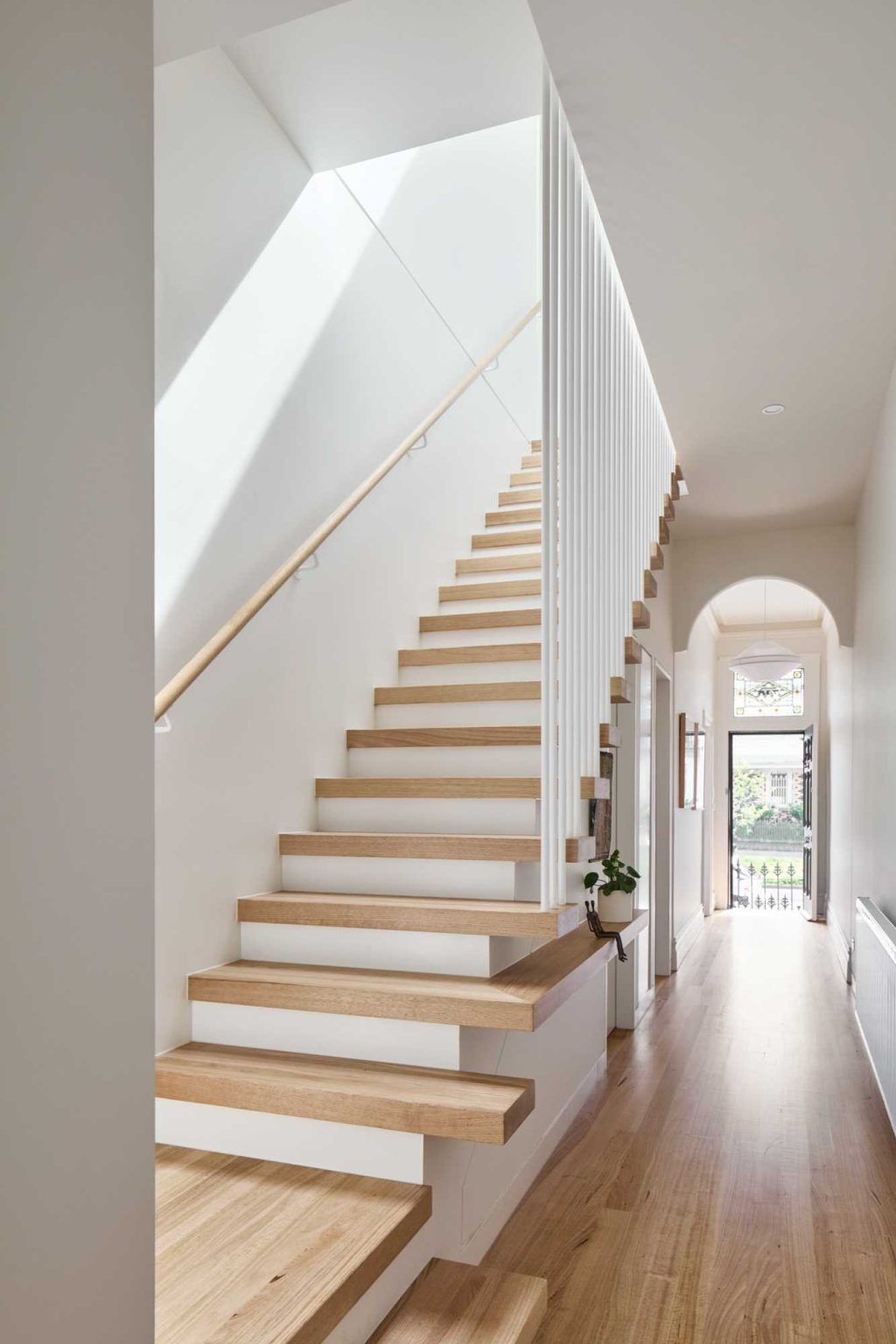
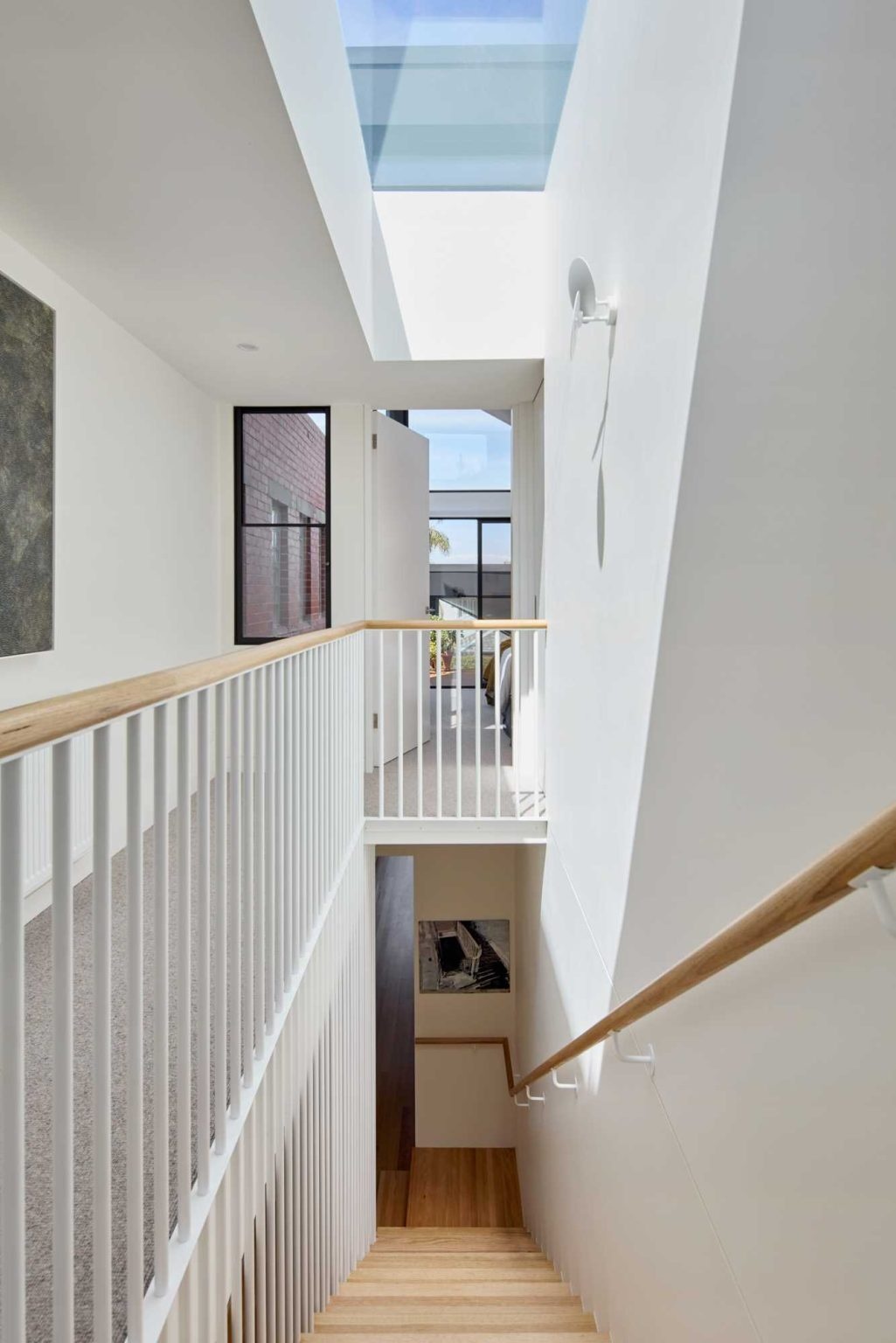
Further into the home, a hallway leads to a staircase that acts as a transition between the original terrace and the new addition.
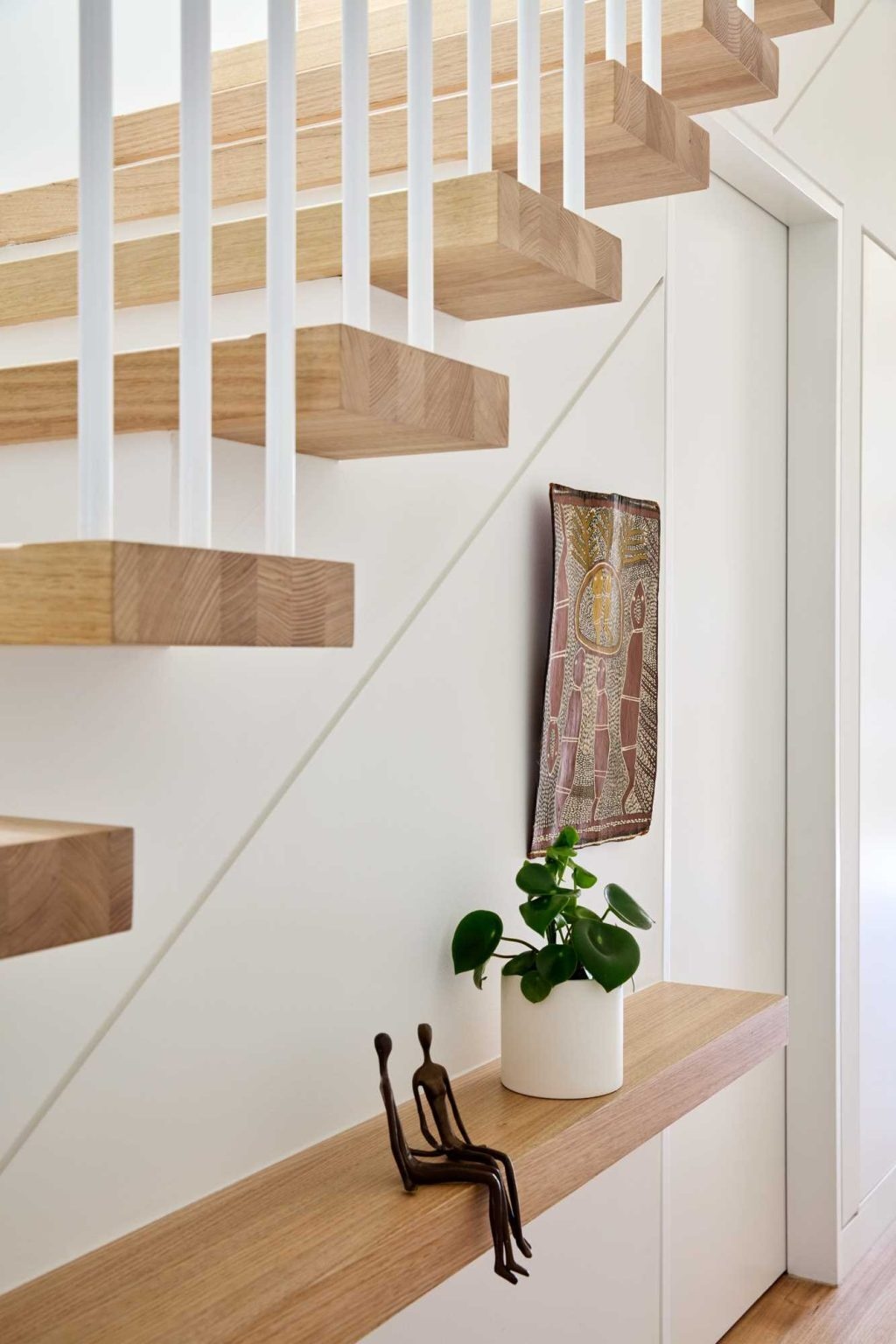
Visible from the heritage section of the house, the staircase combines timber and white finishes to reflect the material palette found throughout the extension. A small integrated shelving ledge adds functionality without adding visual clutter.
The stair journey is enhanced by views toward the sky through carefully positioned windows, reinforcing the sense of moving upward into brighter spaces.
A Bedroom Framed by Light and Views
Upstairs, the primary bedroom continues the home’s understated aesthetic.
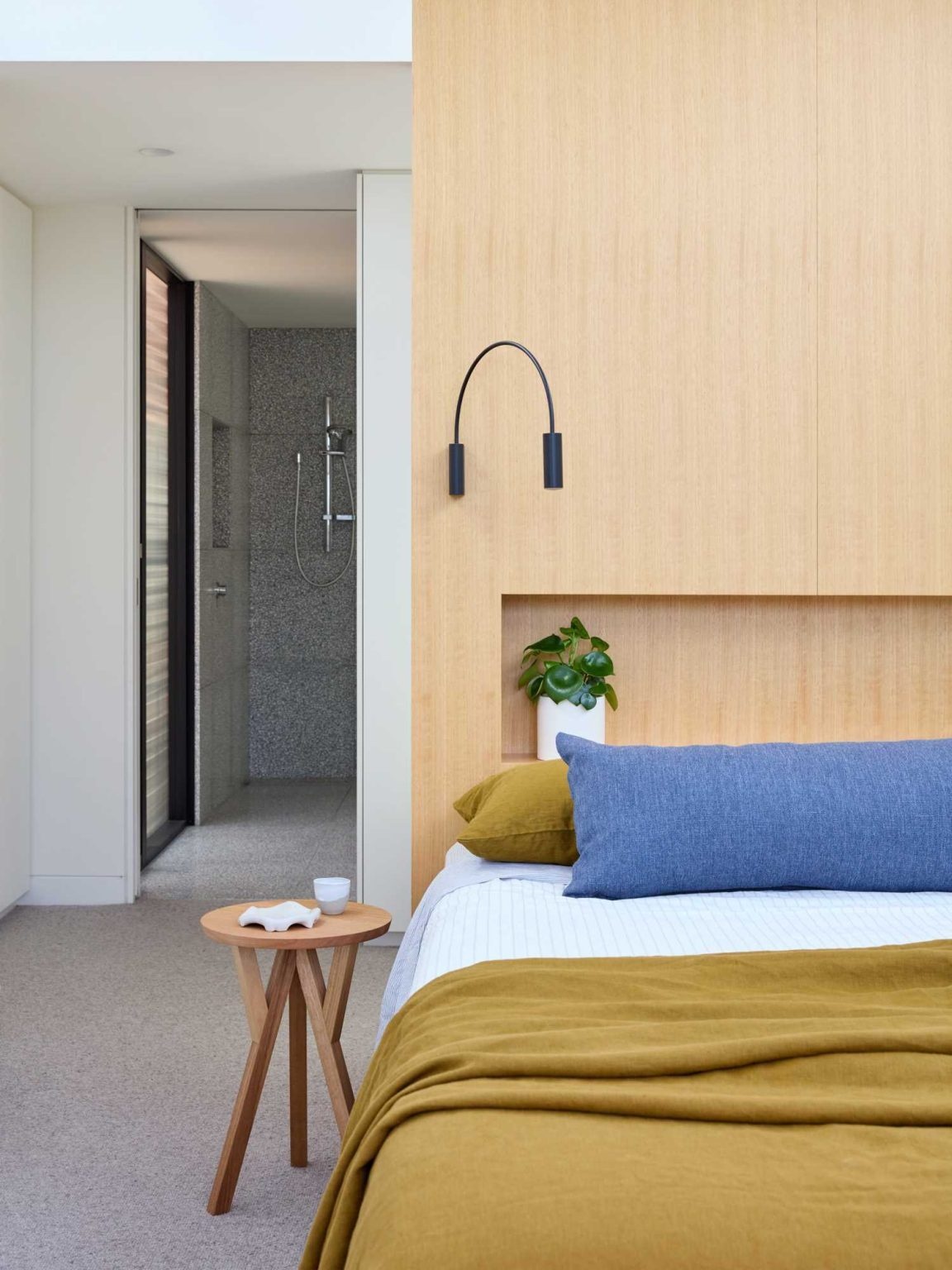
A timber headboard stretches across the room, incorporating a practical shelving niche that keeps essentials within reach. Minimalist black wall sconces provide focused lighting while maintaining the room’s clean appearance.
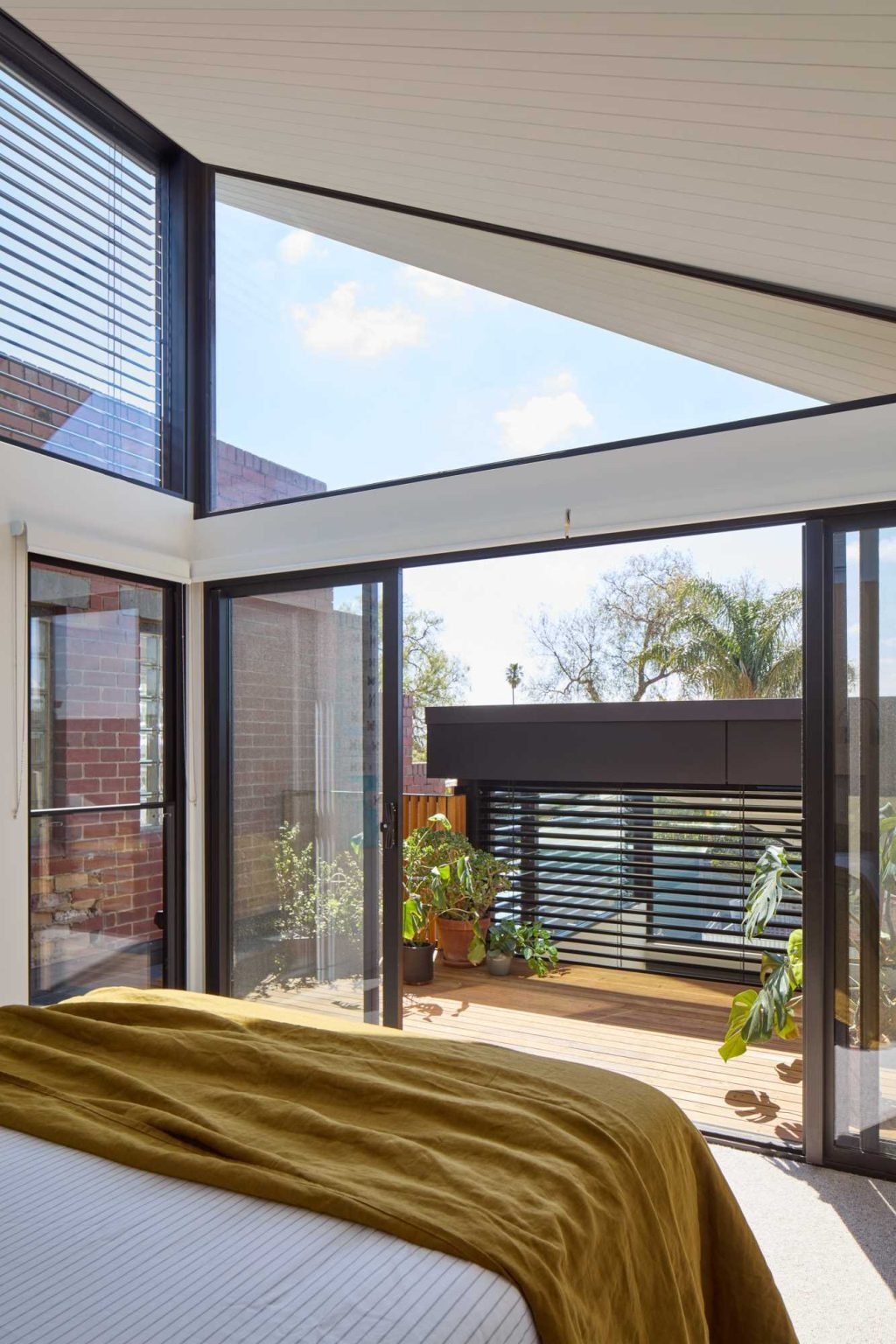
The twisting roof geometry helps frame views through horizontal windows, while natural light fills the room throughout the day. The combination of simple materials and generous daylight creates a calm and comfortable atmosphere.
A Private Balcony Above the Terrace
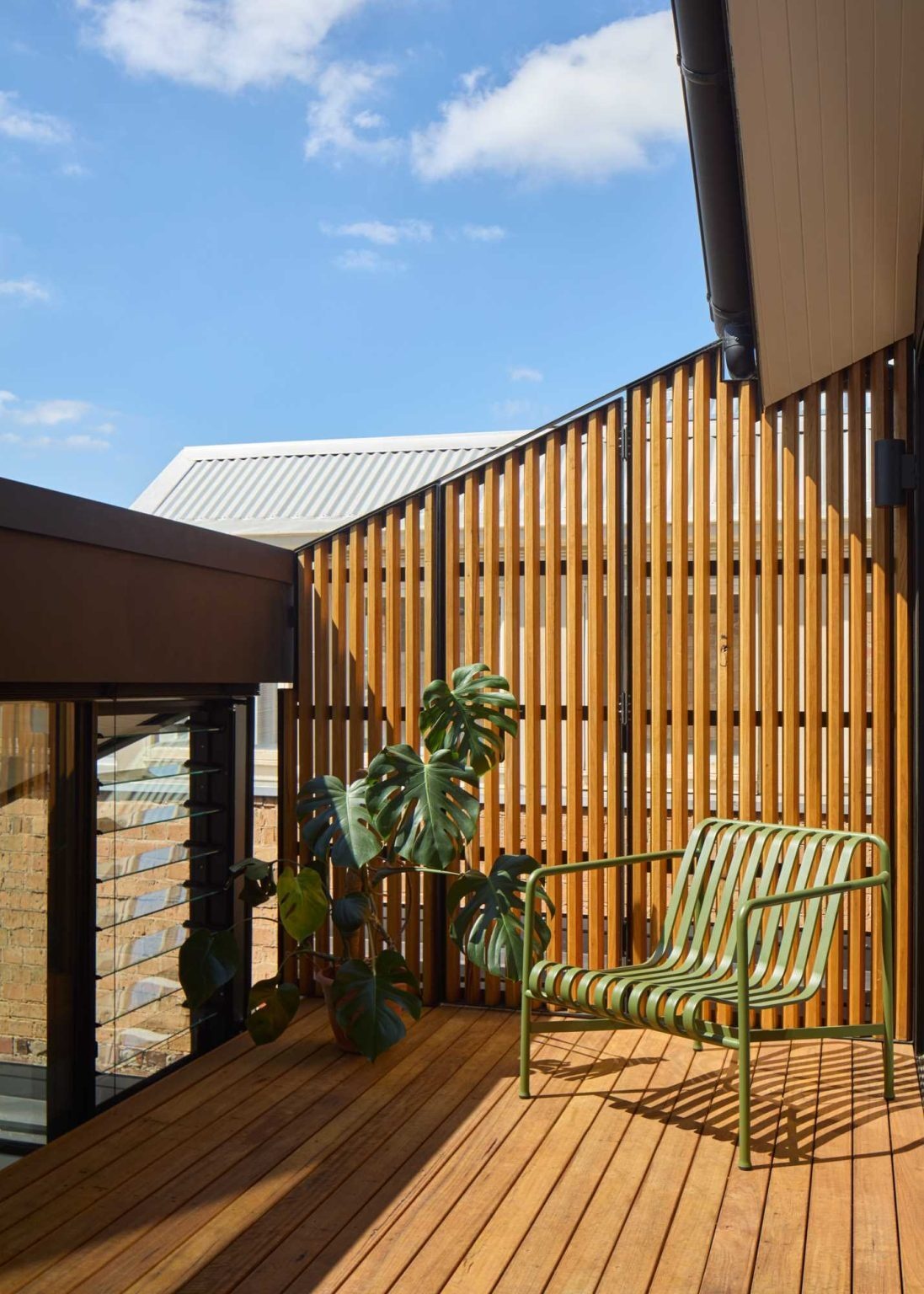
Sliding glass doors open directly from the bedroom onto a private balcony filled with greenery.
The outdoor space offers a welcome connection to nature while providing elevated views across surrounding rooftops and treetops. Higher in the home, the project culminates with outlooks that feel surprisingly expansive given the compact urban site.
The experience highlights one of the project’s key achievements: creating moments of openness and sky views within a densely built neighborhood.
A Contemporary Bathroom With Warm Timber Details
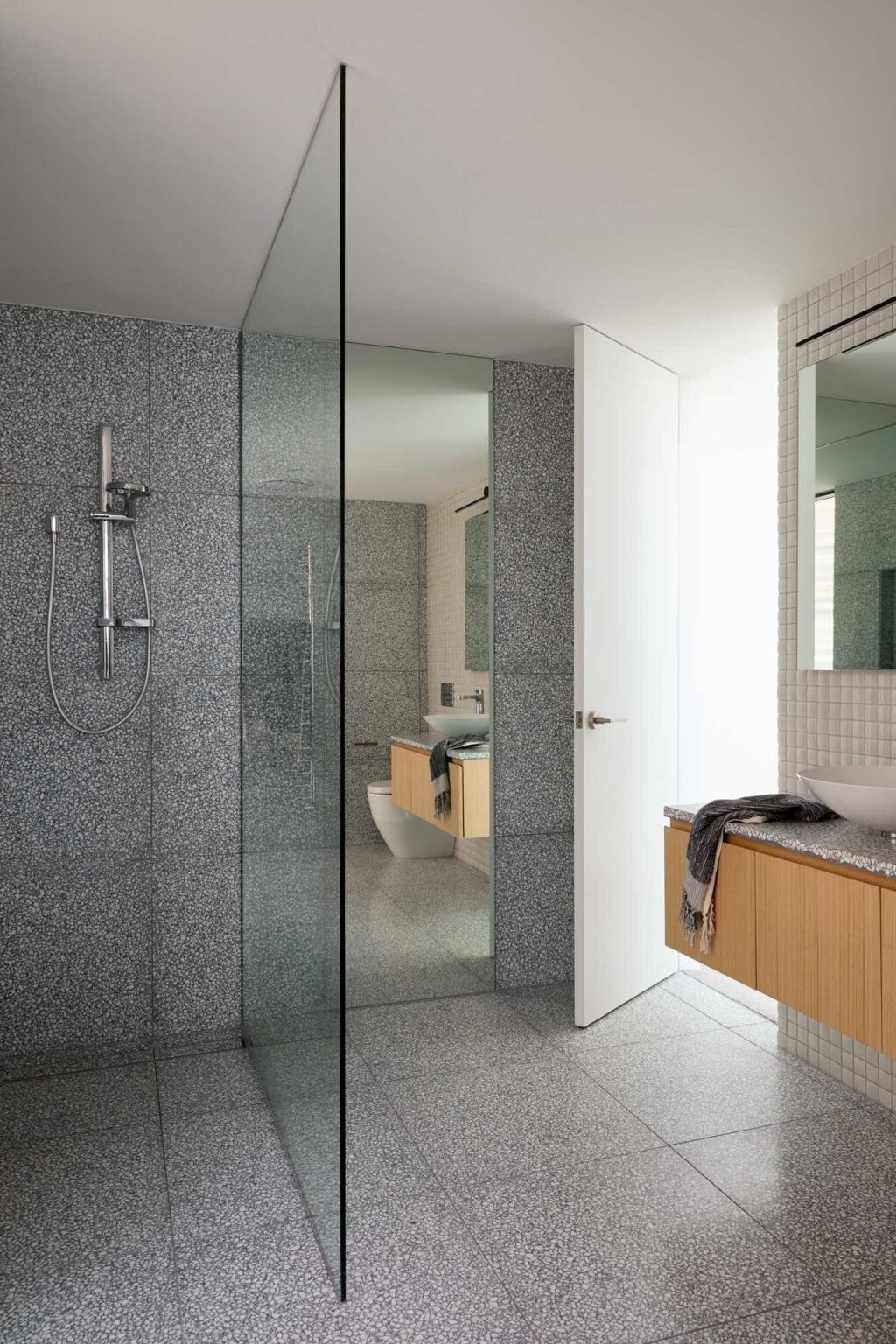
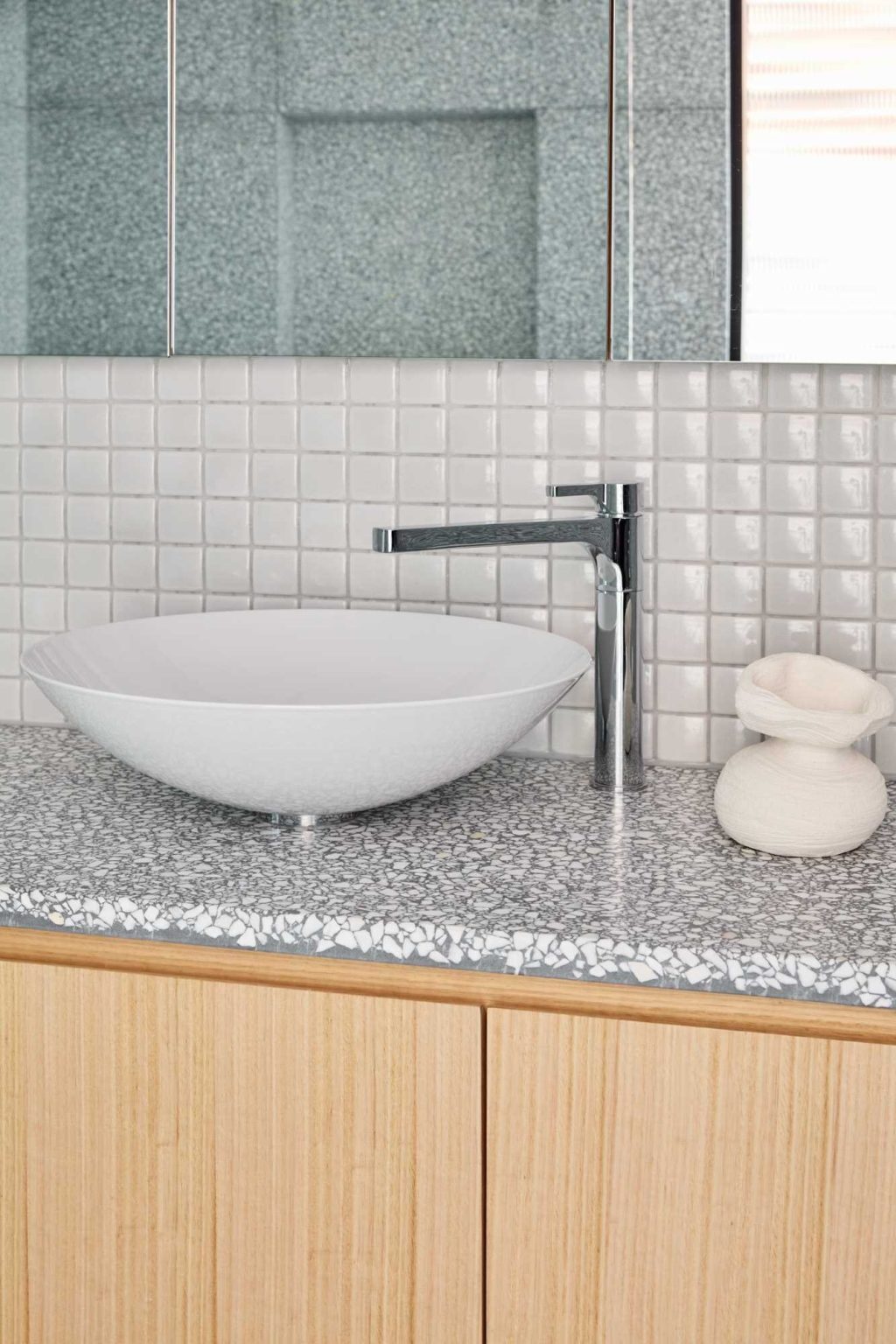
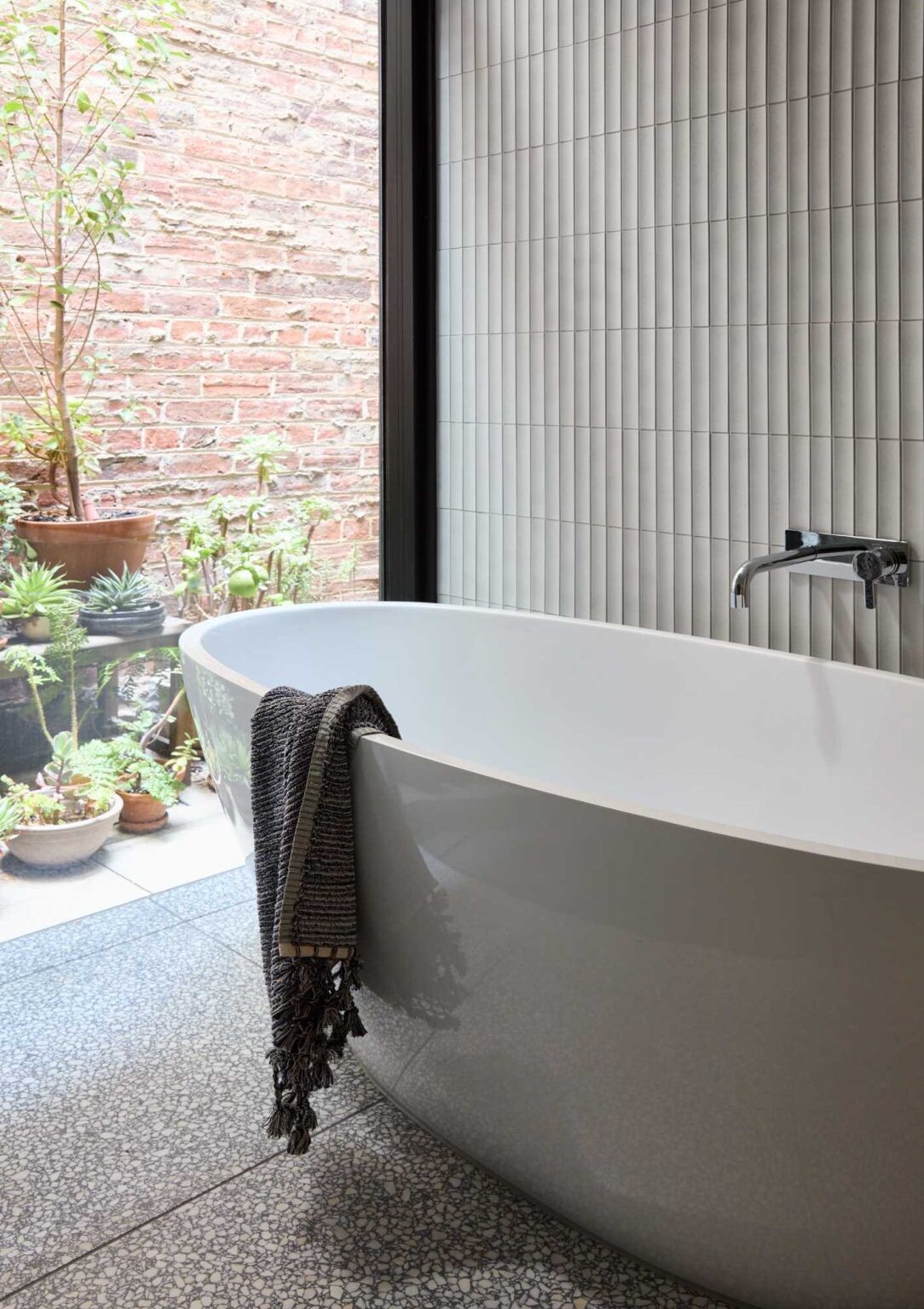
The en-suite bathroom combines modern fixtures with natural materials, with a floating timber vanity introducing warmth while maintaining an airy appearance. Alongside it, a walk-in shower and freestanding bathtub provide a spa-like feel without overwhelming the room.
Throughout the project, the use of timber helps balance the bright white finishes, creating interiors that feel both modern and inviting.
While the extension focuses on improving light and liveability, sustainability also played an important role in the design. Passive solar principles work alongside active solar technology, while all-electric heating and appliances help reduce reliance on fossil fuels.
By preserving the Victorian facade and pairing it with a bold contemporary addition, Ben Callery Architects has created a home with sculptural roof forms, generous daylight and a warm material palette transform a challenging terrace site into a bright and welcoming place to call home.