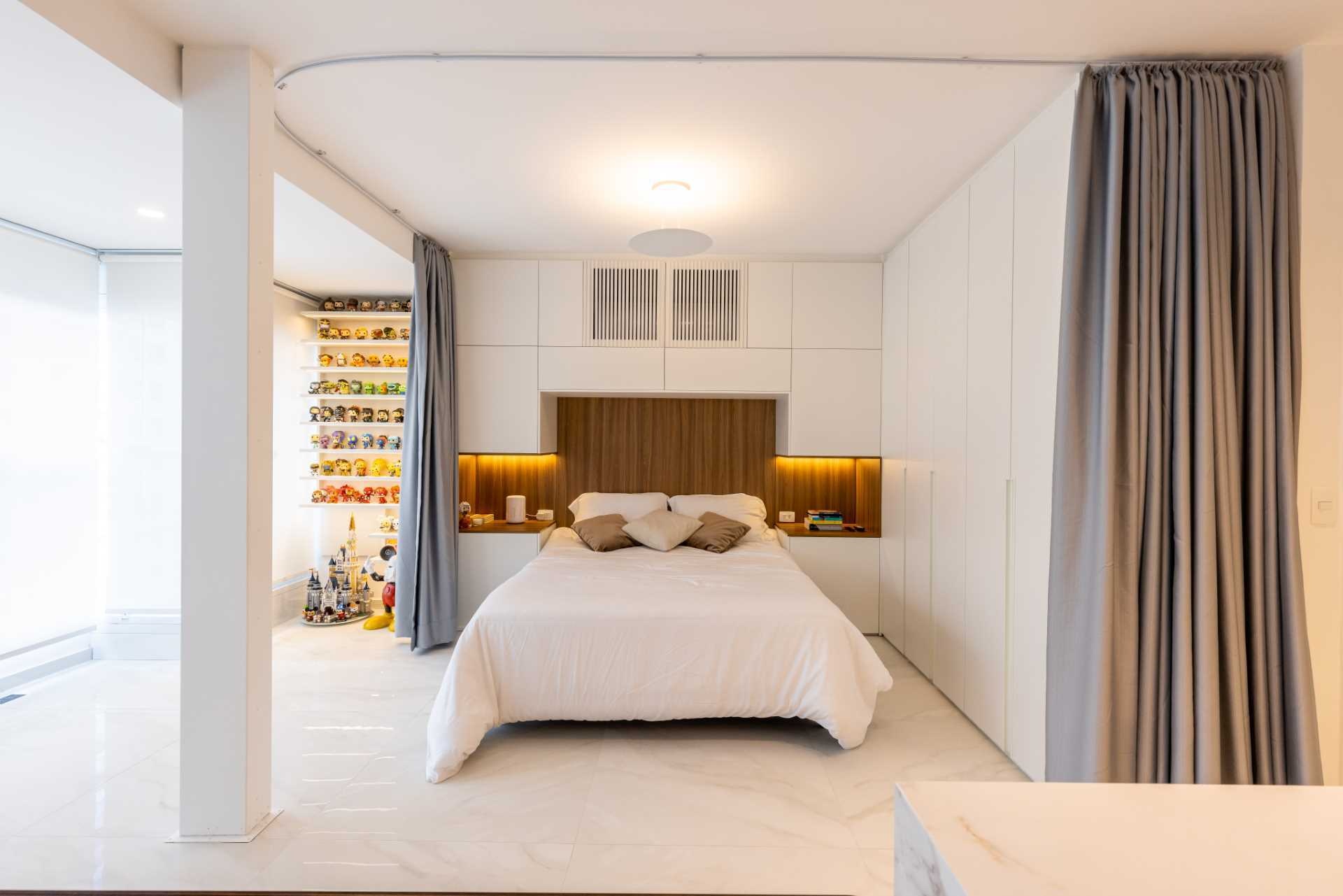
In Moema, a neighborhood of São Paulo, Brazil, Bruno Kim Arquitetura completed the renovation of a compact 495-square-foot (46m²) apartment with a surprisingly bold approach. Instead of keeping the typical arrangement of small, separated rooms, the project embraced openness and flexibility from the start.
The idea emerged when the owner received the keys to the newly built apartment. Looking at the original floor plan, architect Bruno Kim questioned whether so many enclosed rooms were necessary for someone living alone or with a partner. With approval to remove nearly every wall, the apartment was transformed into a single open space, leaving only the bathroom enclosed.
The Bedroom Curtains That Change Everything
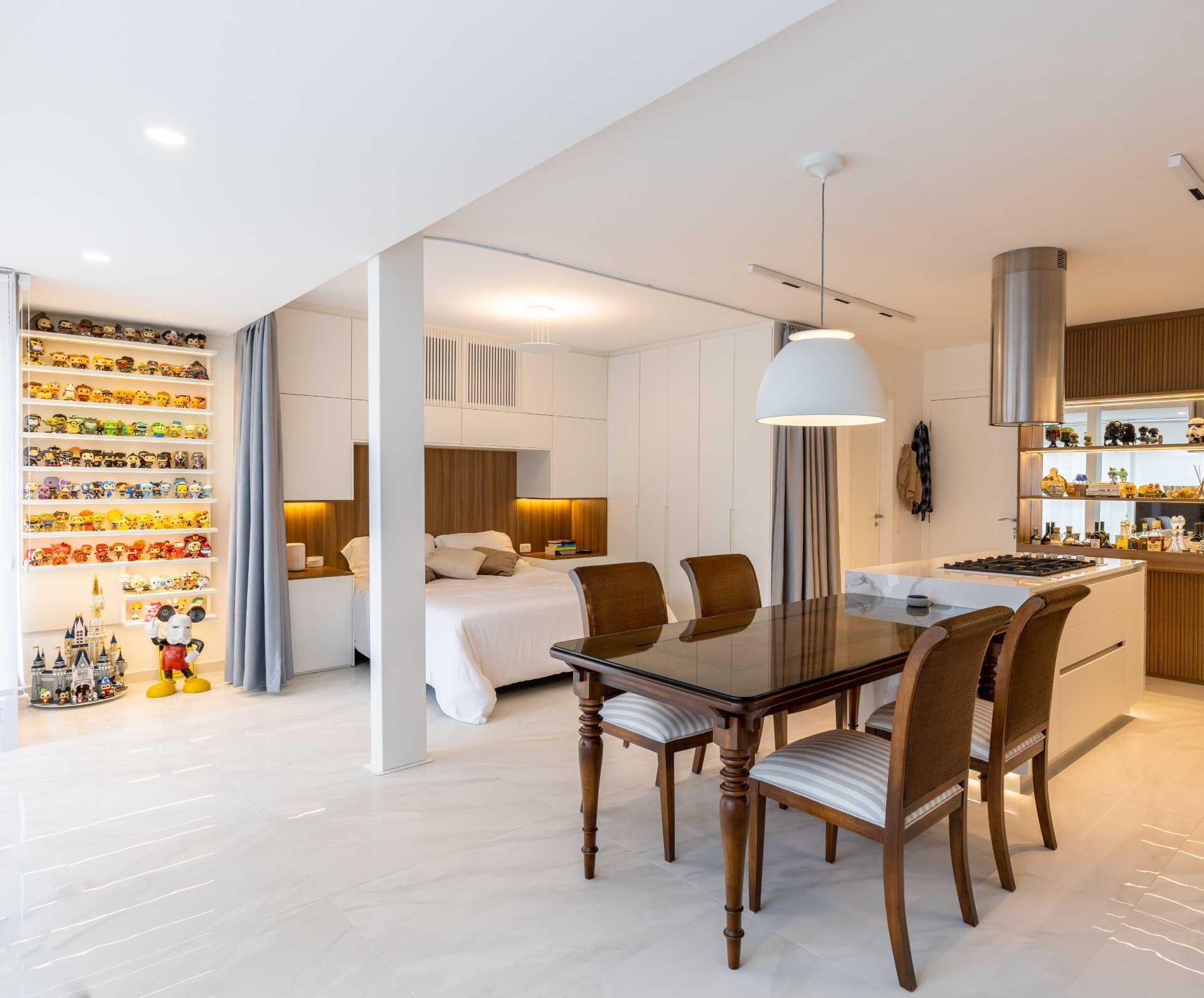
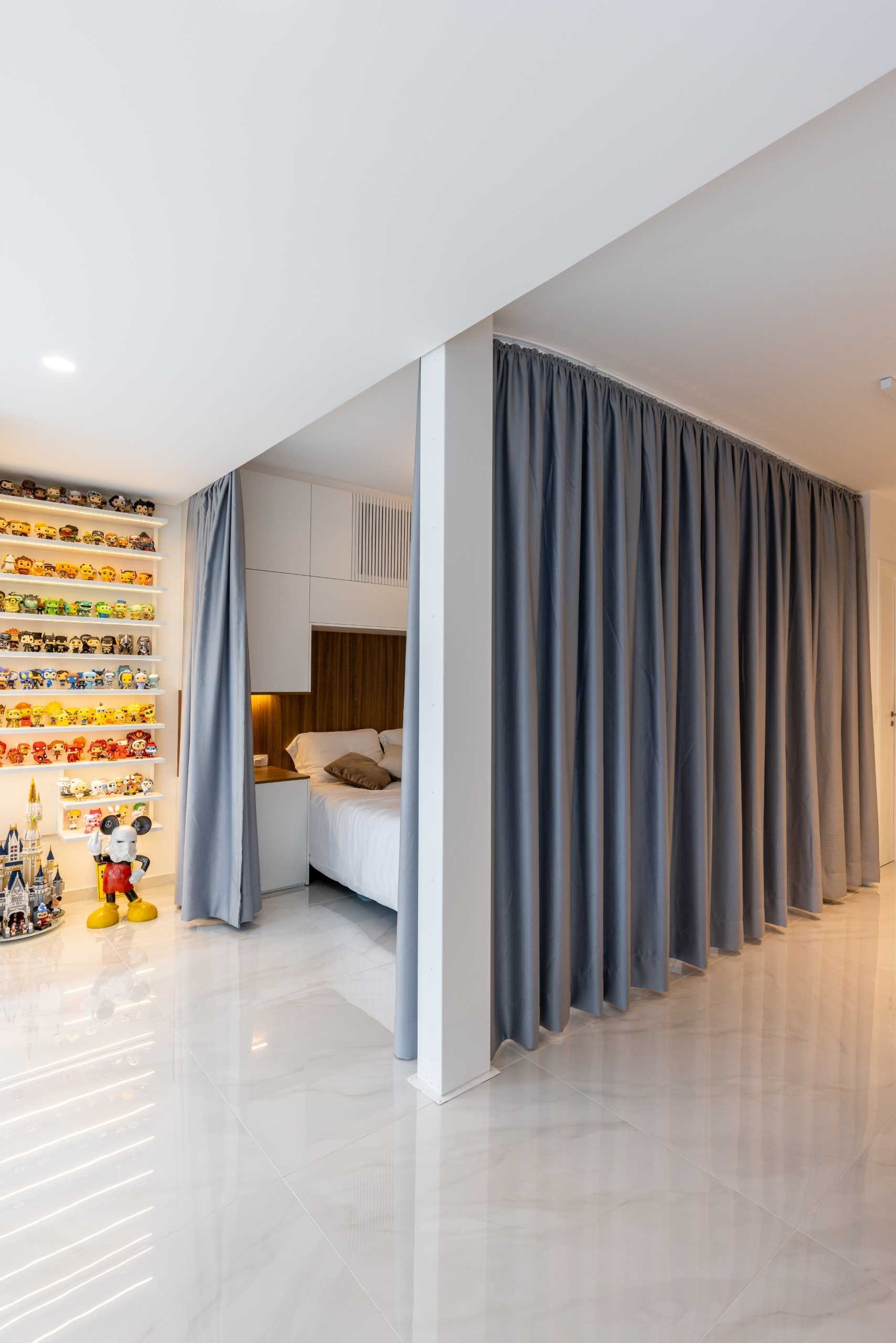
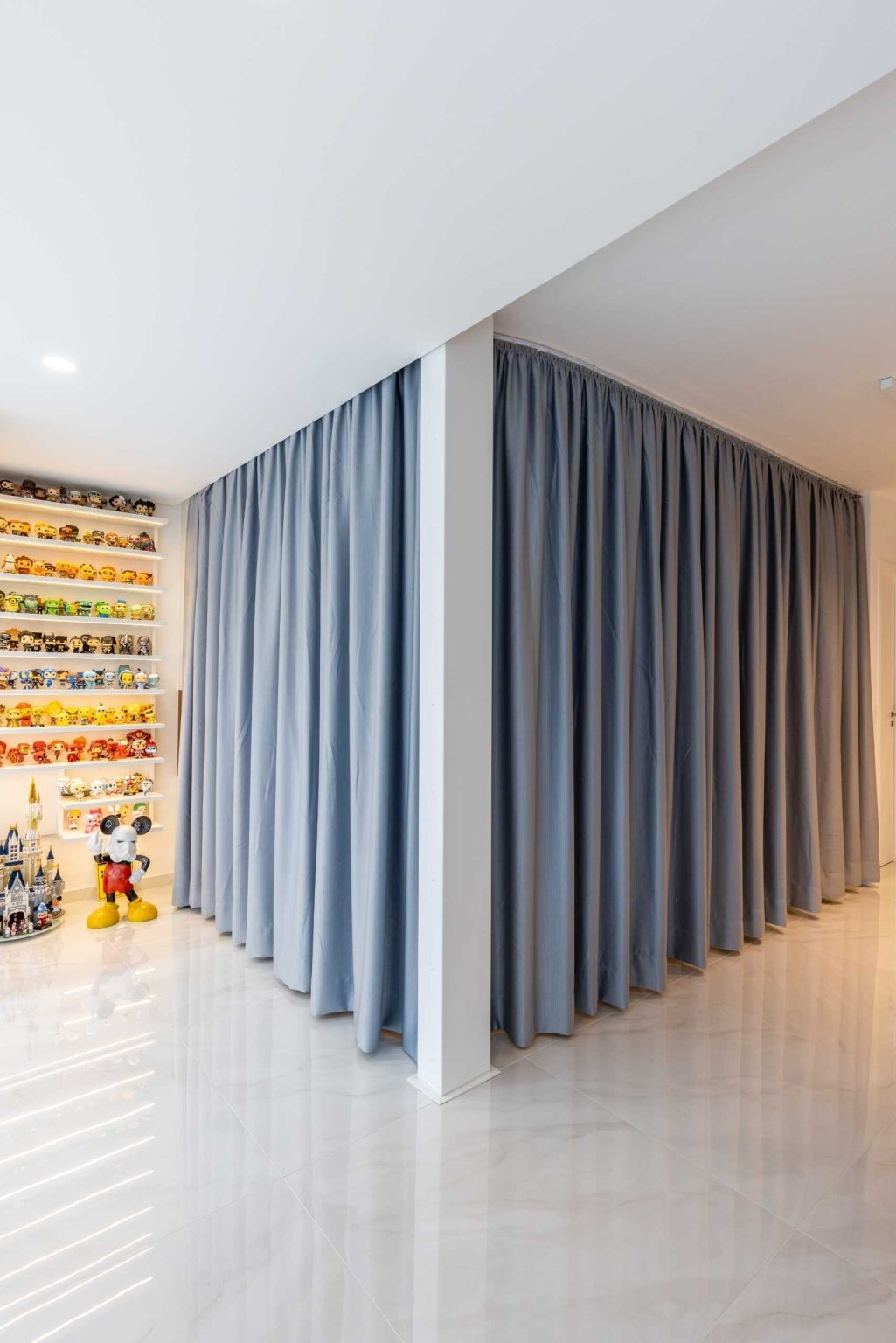
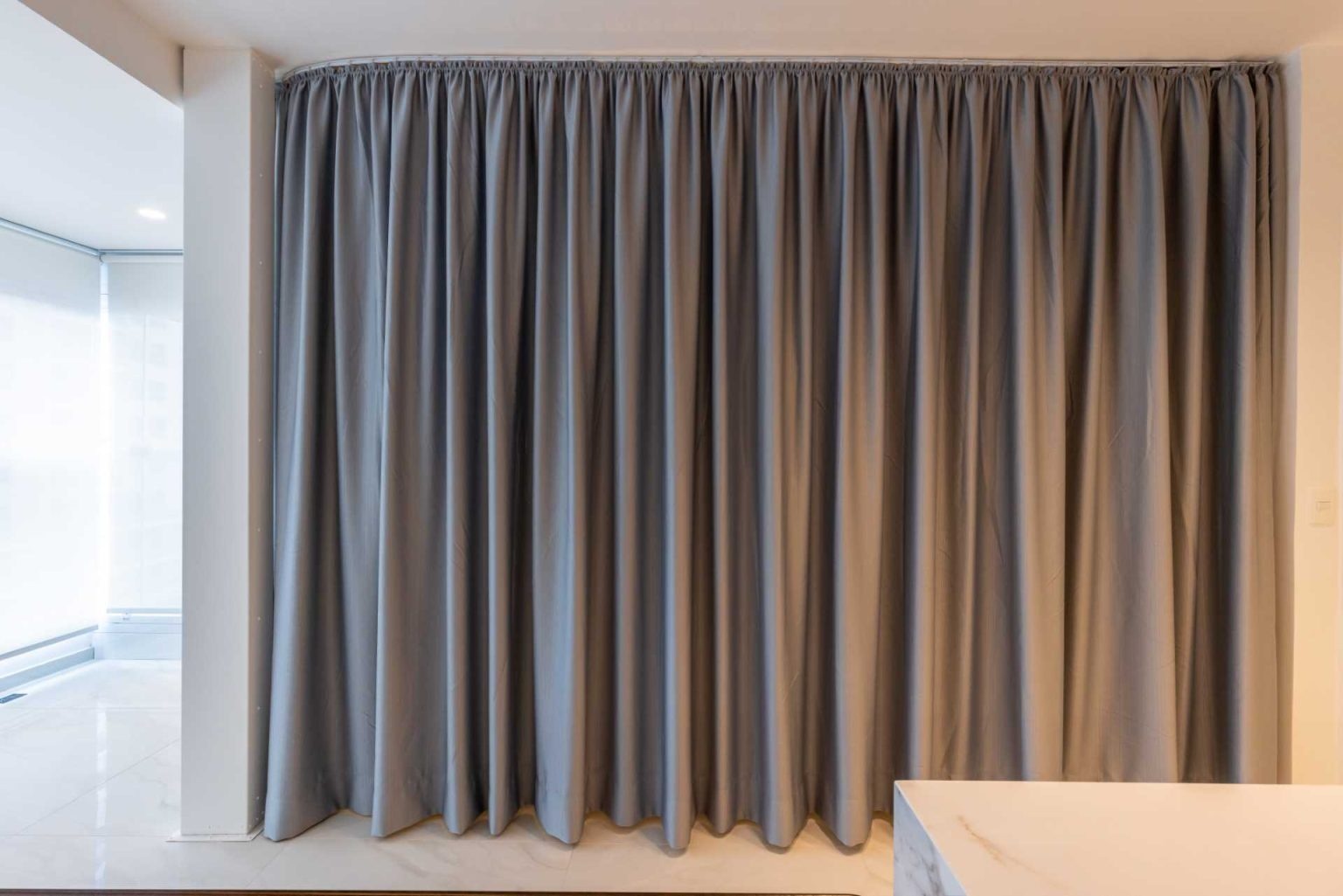
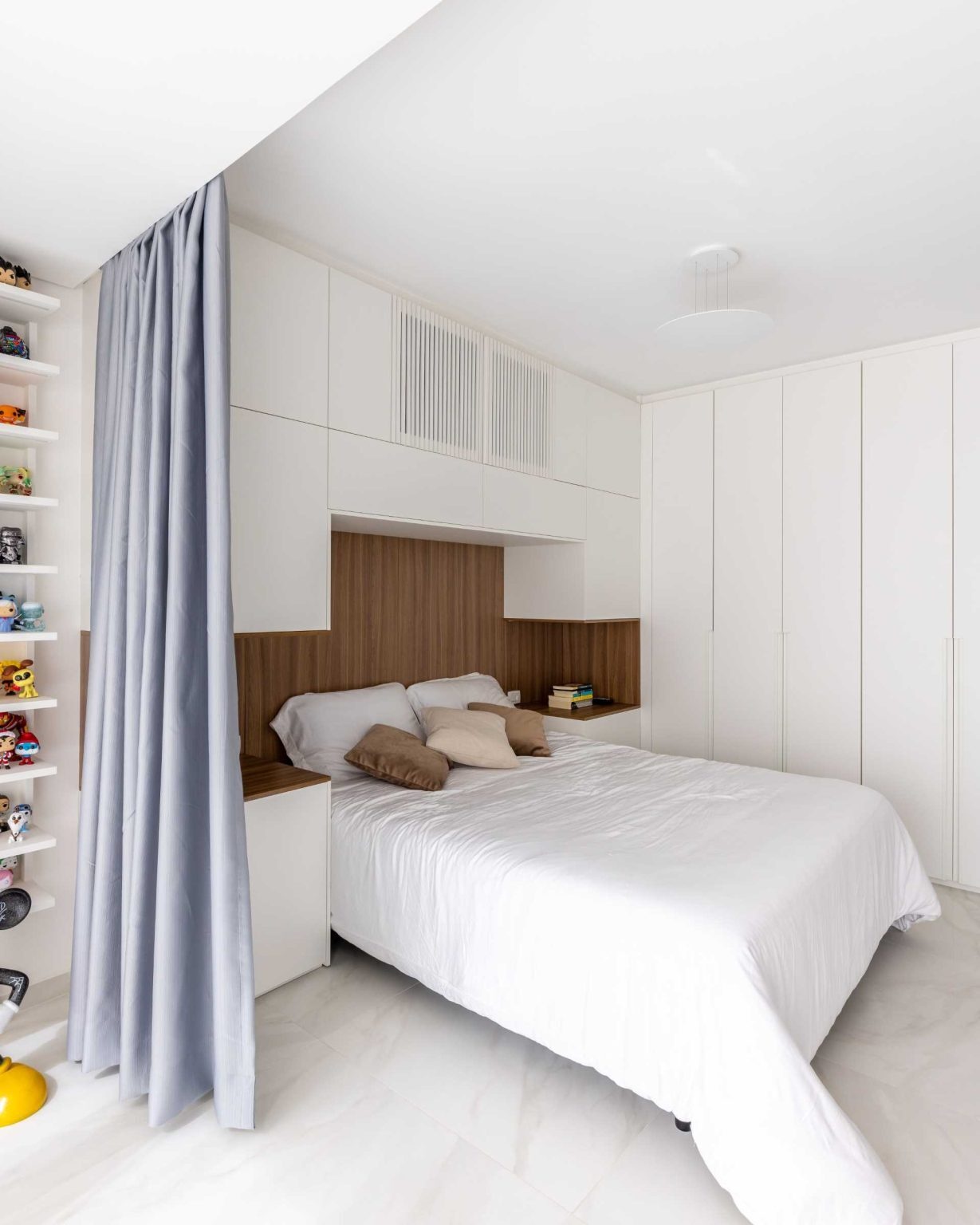
The most distinctive feature of the apartment is the bedroom. Instead of permanent walls, large curtains allow the sleeping area to be separated from the rest of the home whenever privacy is needed.
When the curtains are fully closed, the bedroom disappears from view and becomes a secluded space for sleeping or relaxing. Open the curtains, however, and the room instantly becomes part of the larger living area. It’s a simple solution that allows one space to serve multiple purposes without sacrificing comfort.
Storage, Lighting, and a Multi-functional Sleeping Area
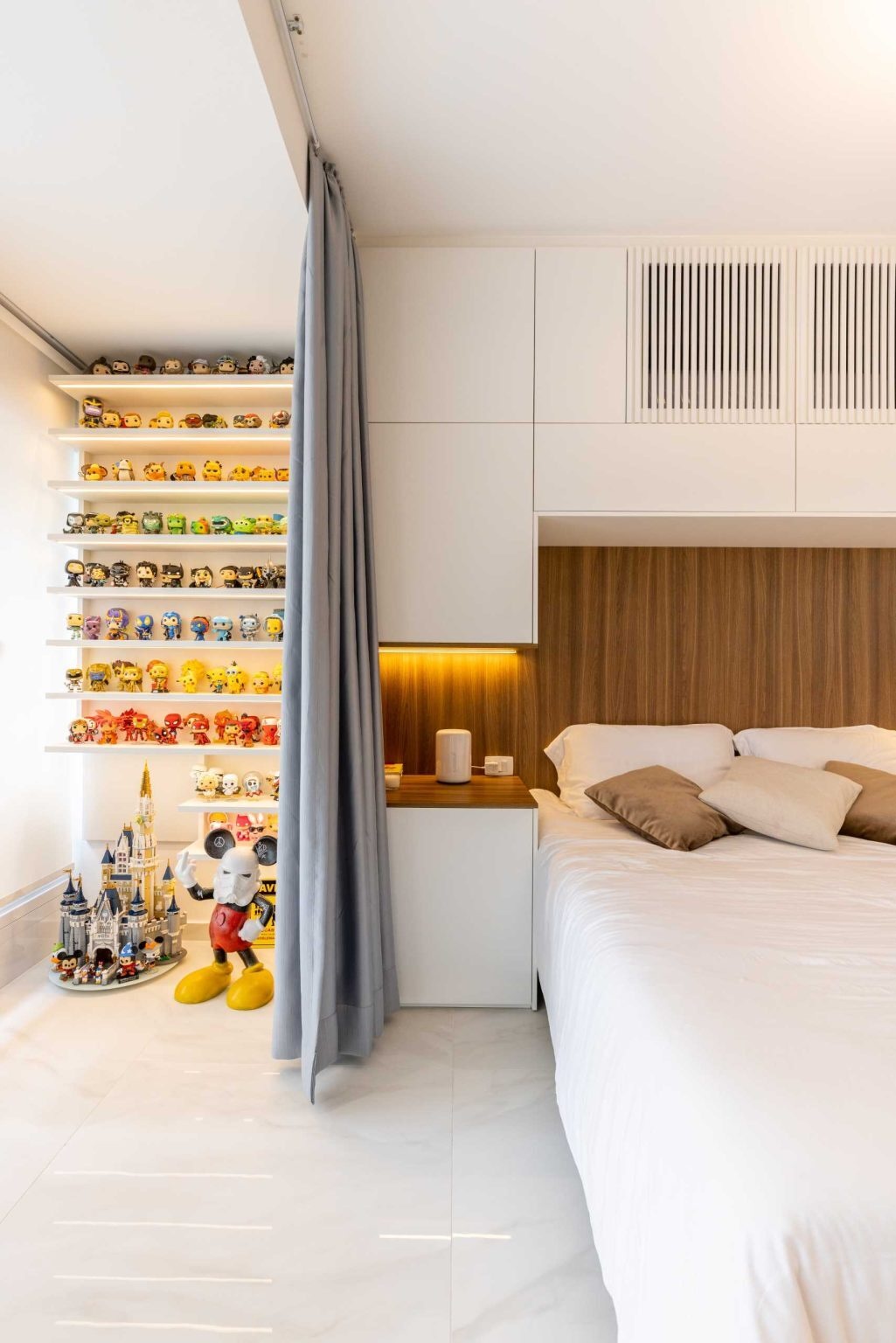
With the curtains open, the bedroom contributes to the apartment’s spacious feel. Storage lines the surrounding walls, helping keep the compact interior organized while reducing visual clutter.
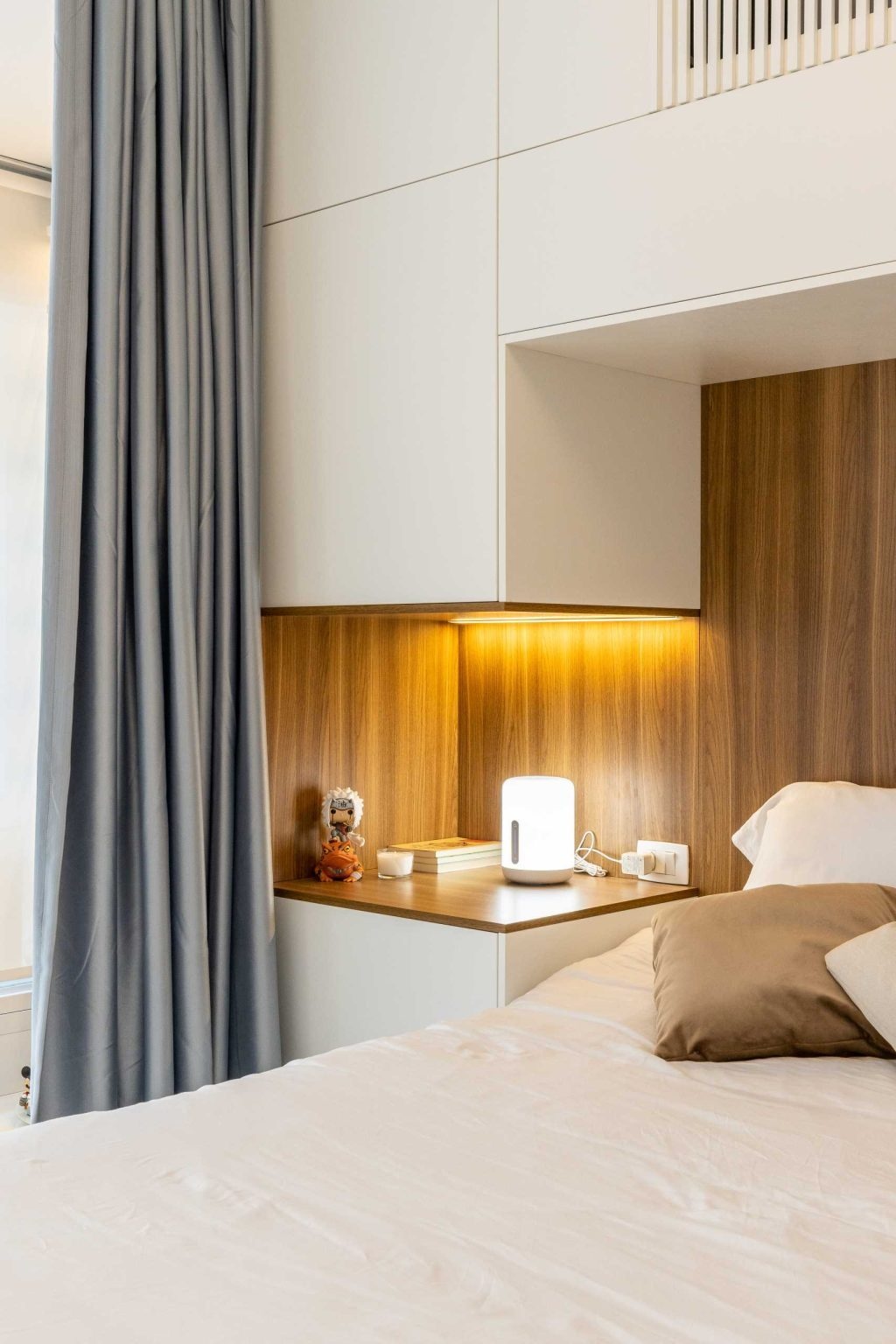
A wood headboard becomes a focal point in the sleeping area, enhanced by hidden lighting that adds warmth and highlights the natural texture of the material. Integrated bedside tables were built into the wardrobes, making efficient use of every available inch without overcrowding the room.
A Kitchen Designed for Gathering
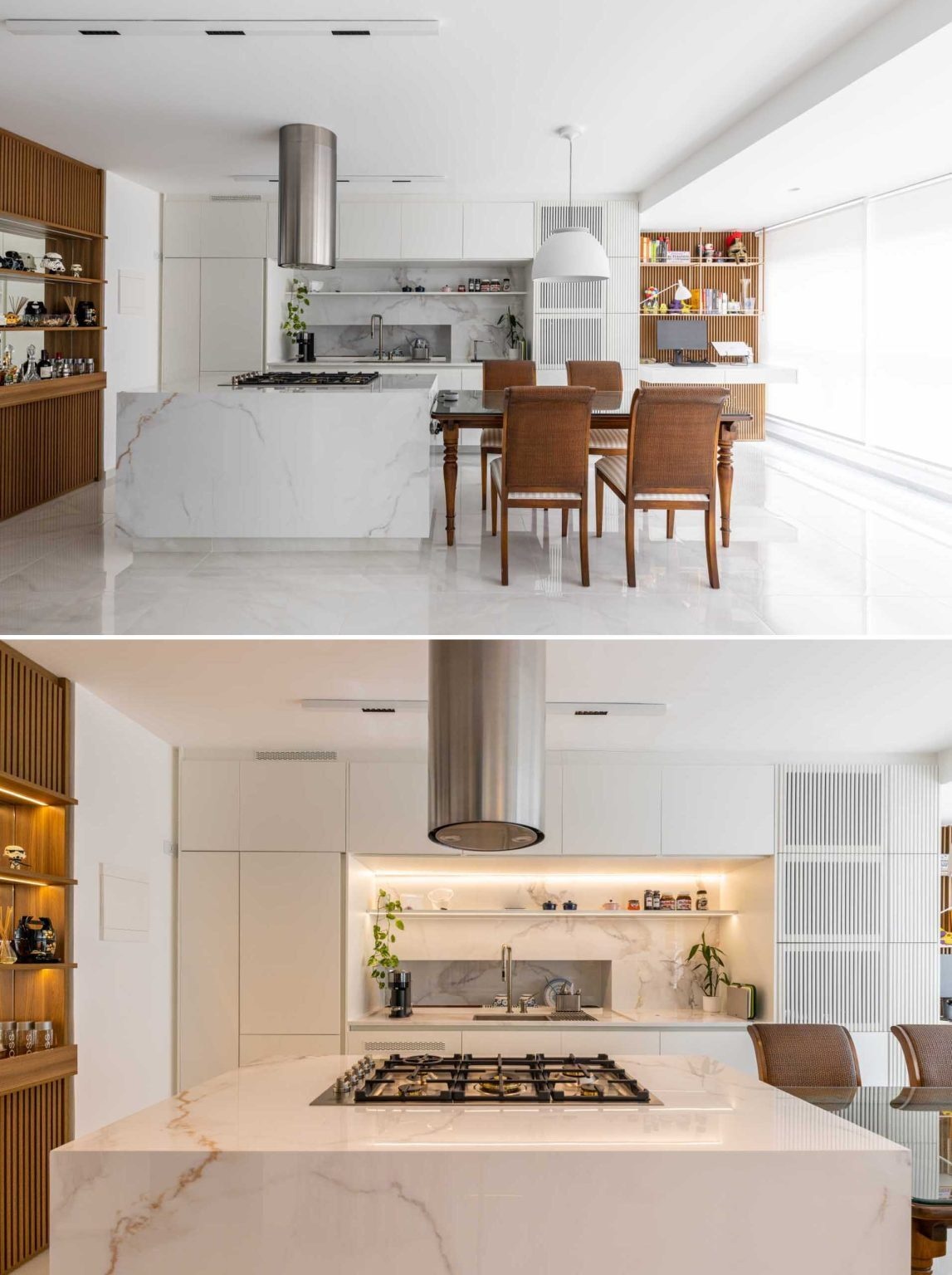
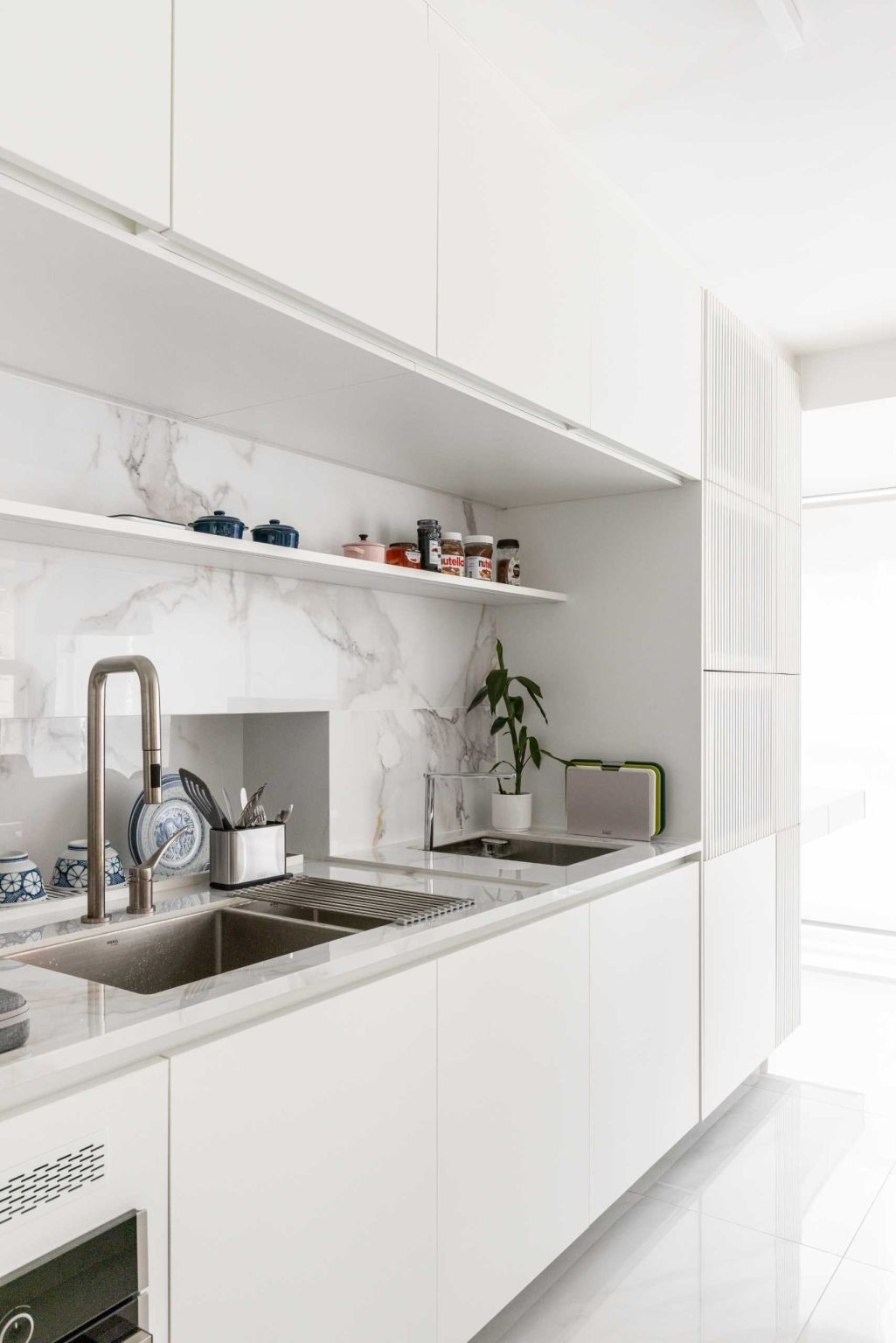
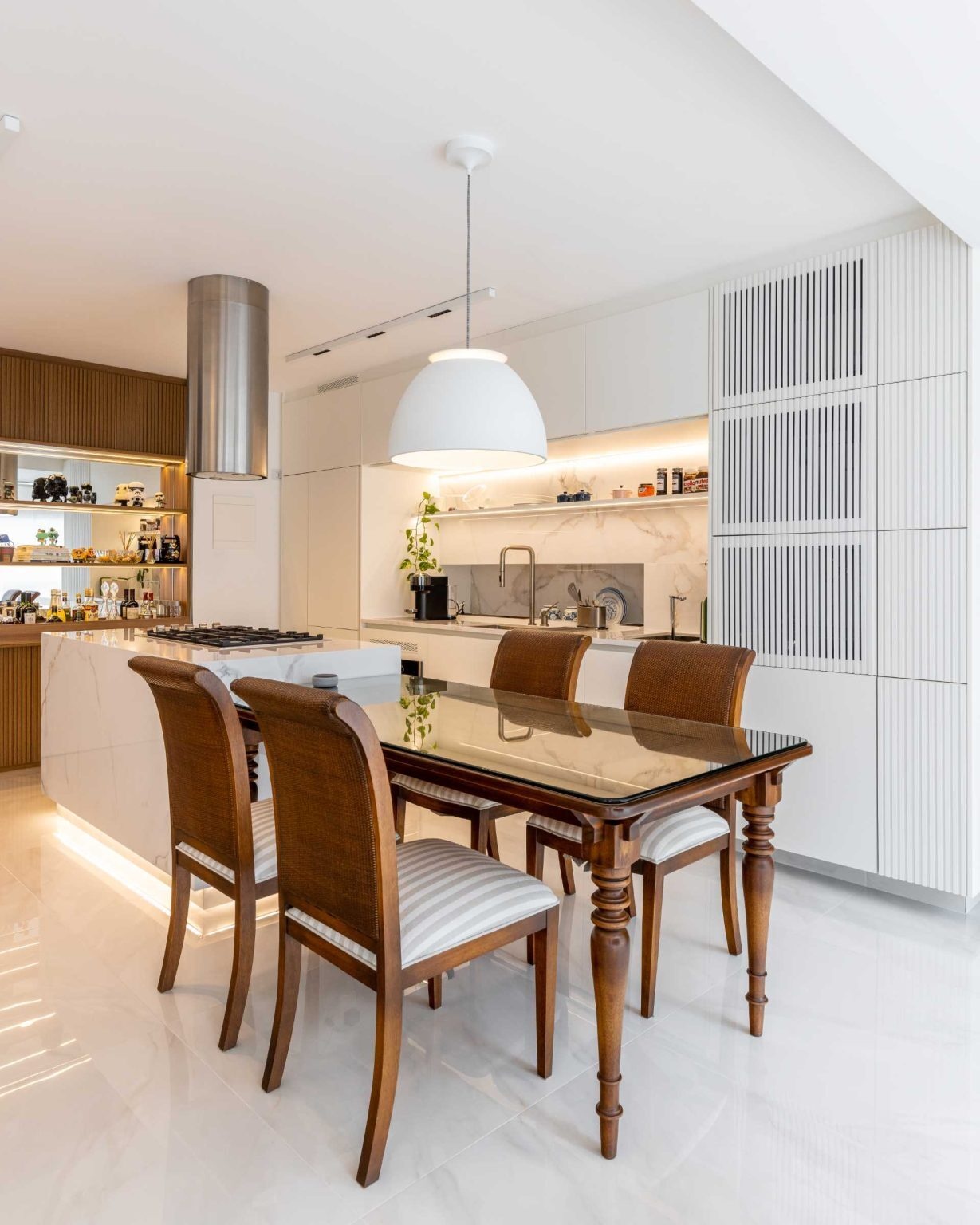
Directly opposite the bedroom is the kitchen, where wood accents continue the material palette established throughout the apartment. A large island anchors the space and extends into a dining table that has special significance, serving as a family heirloom and a place for social gatherings.
The layout encourages conversation between guests and the homeowner, making the kitchen a natural hub for entertaining. Appliances were integrated into the cabinetry, helping maintain clean lines and a streamlined appearance across the open-plan interior.
Warm Lighting Creates Atmosphere
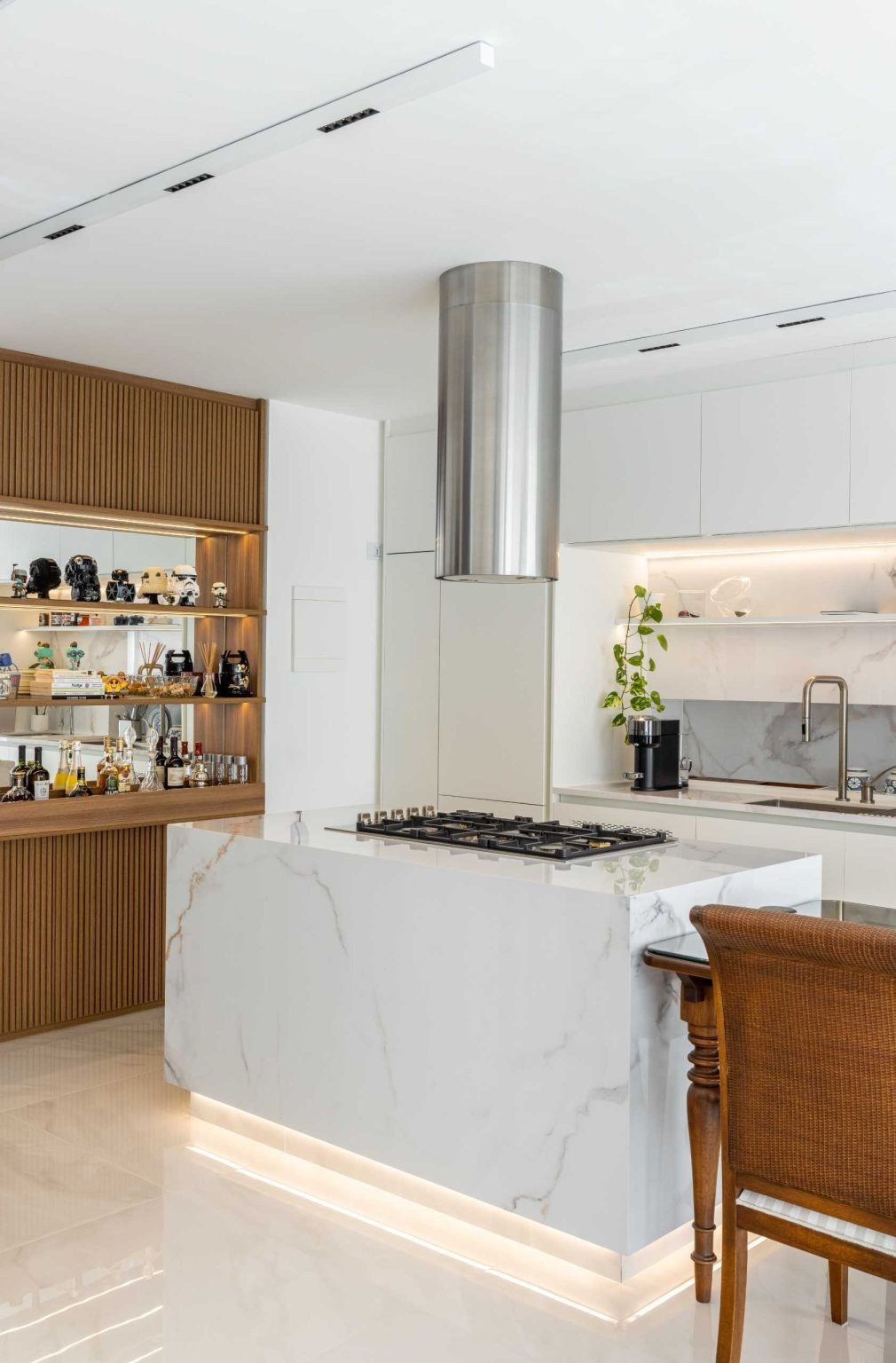
Lighting plays an important role throughout the apartment. Hidden illumination has been incorporated into several areas, adding depth and warmth without introducing visual clutter.
A soft glow highlights the kitchen backsplash, illuminates the underside of the island, and enhances the bar area. These subtle details help define different zones within the open floor plan while maintaining a cohesive look.
A Workspace Framed by Wood
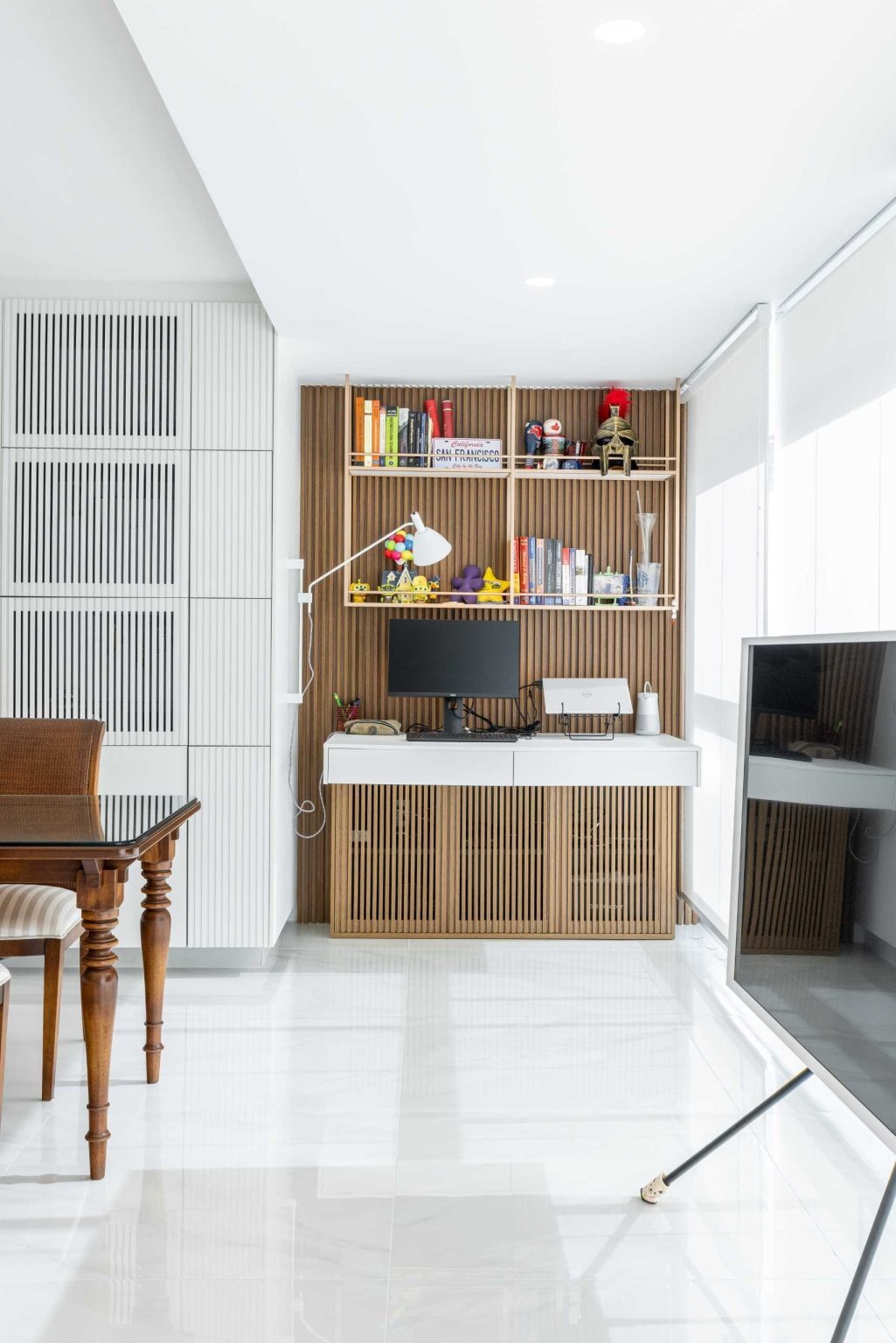
Near the windows, a wood accent wall provides a backdrop for the home’s desk area. The feature adds texture and visual interest while helping establish a dedicated workspace within the larger open room.
Positioning the desk near the windows also allows natural light to support work and study throughout the day, creating a practical corner that remains connected to the rest of the apartment.
A Simple and Refined Bathroom
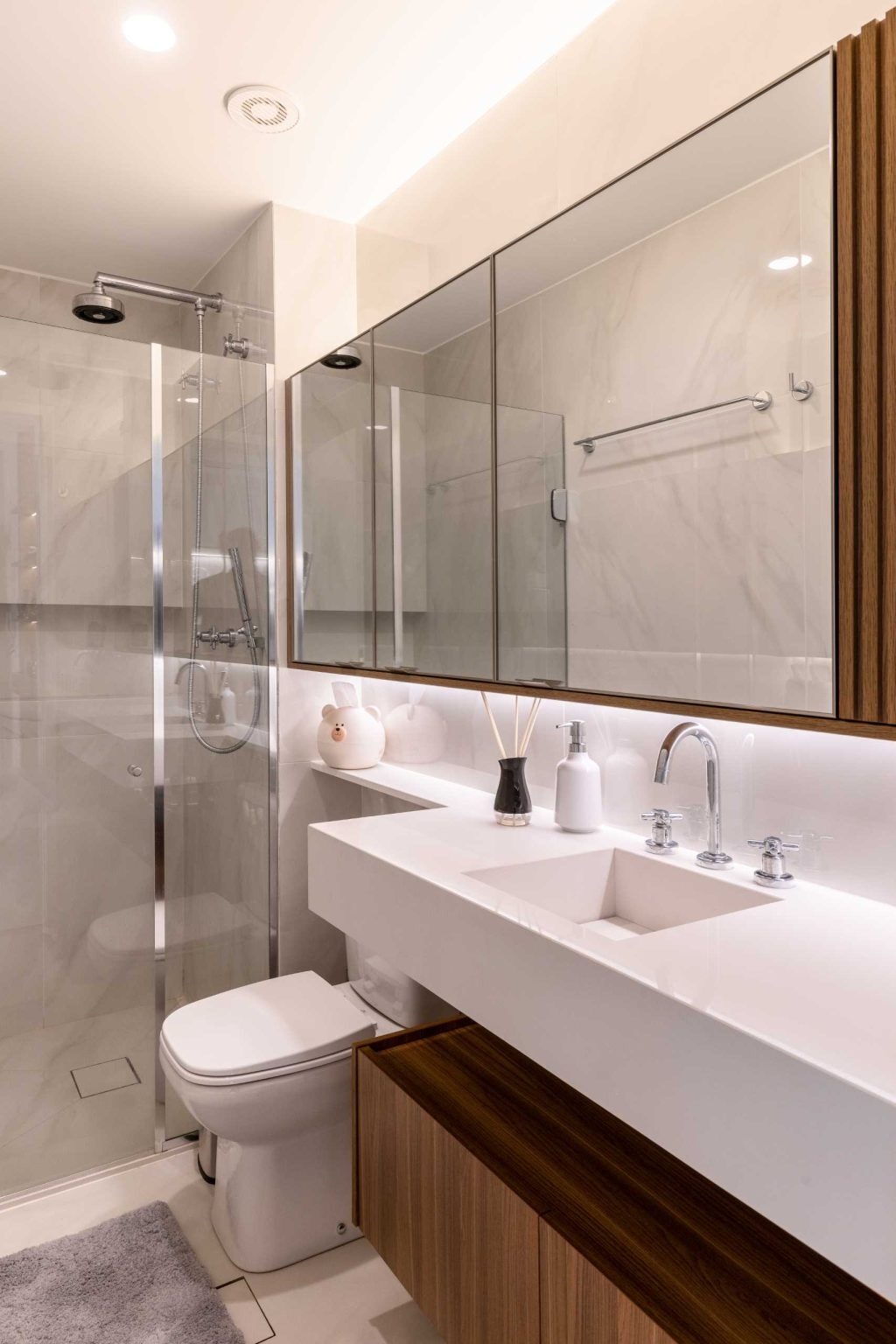
While the rest of the apartment remains open, the bathroom is the only fully enclosed room. Its design follows the same clean and functional approach seen throughout the home.
A lower wood cabinet introduces warmth, while the vanity includes a built-in sink for a streamlined appearance. A walk-in shower completes the space, creating a bathroom that feels modern, practical, and visually consistent with the apartment’s overall design.
This renovation by Bruno Kim Arquitetura shows how a small apartment can feel significantly larger when traditional room divisions are removed. By relying on bedroom curtains instead of permanent walls, the design introduces flexibility that adapts to different needs throughout the day.
Combined with integrated storage, warm wood finishes, concealed lighting, and an open layout that encourages interaction, the apartment offers an inventive approach to compact urban living in São Paulo.