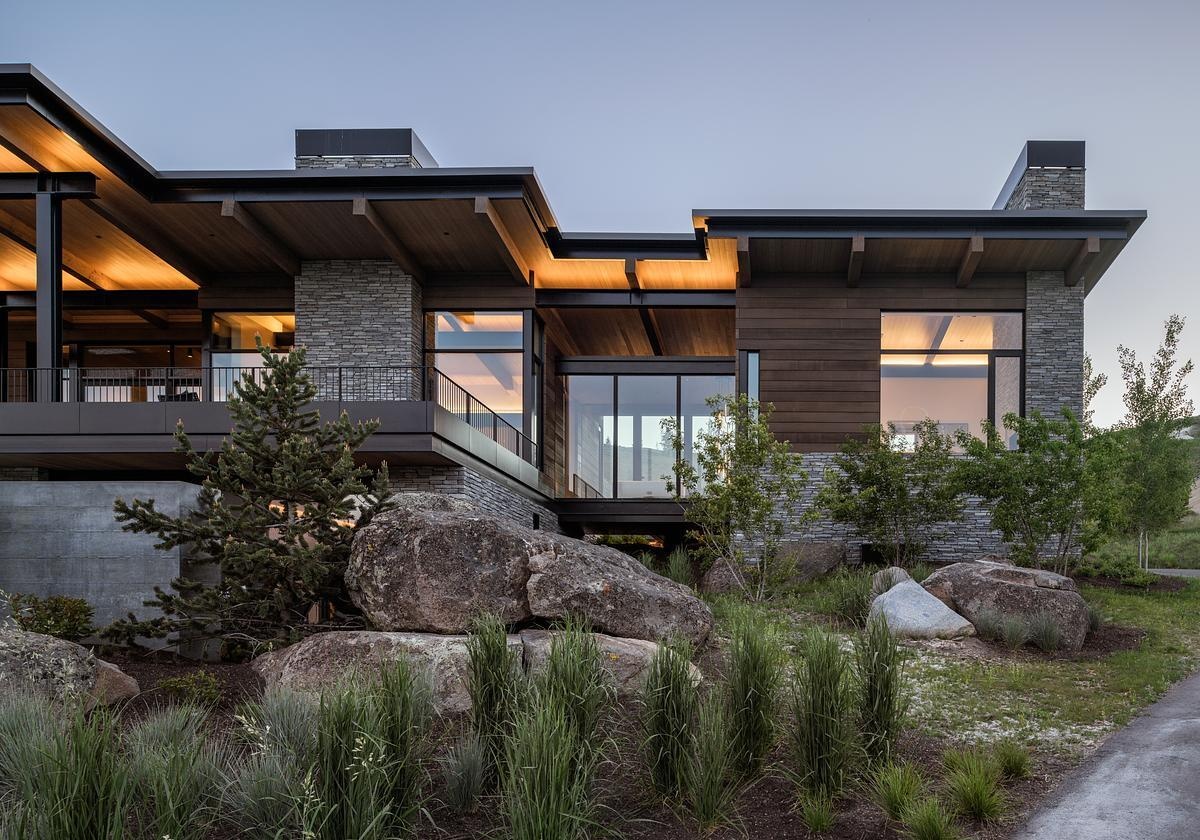
Designed by Farmer Payne Architects with interiors by The Picket Fence Interior Design Studio, White Clouds sits on a double lot along the edge of a golf course in Idaho. From the very beginning, the site’s sloping terrain influenced the design. Instead of resisting the hillside, the home follows it, stepping down across two levels that separate gathering spaces from private areas while maintaining easy connections between them.
What appears modest from the street gradually reveals itself as the land falls away. Views stretch east toward the valley and Proctor Mountain, while the architecture uses the site’s natural contours to organize the home in a way that feels intuitive and efficient.
A House On the Slope
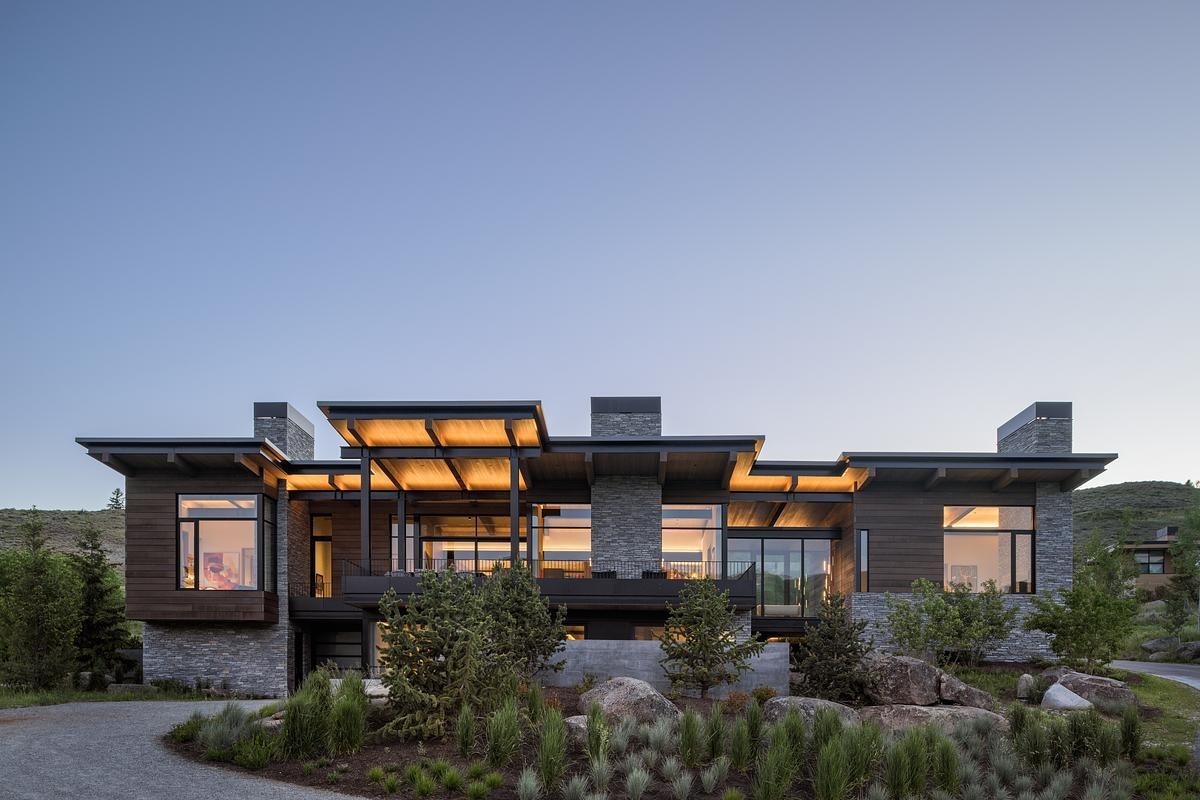
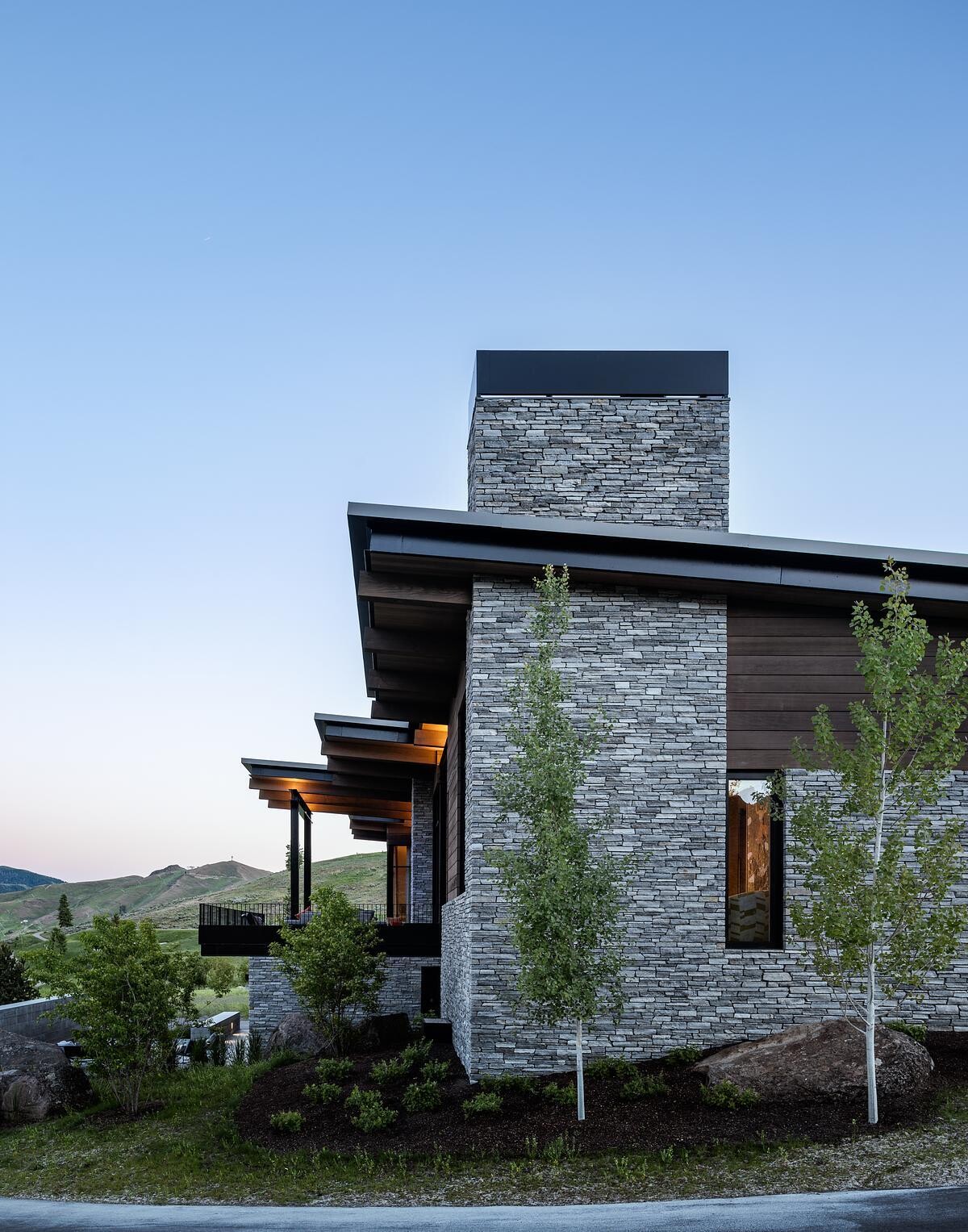
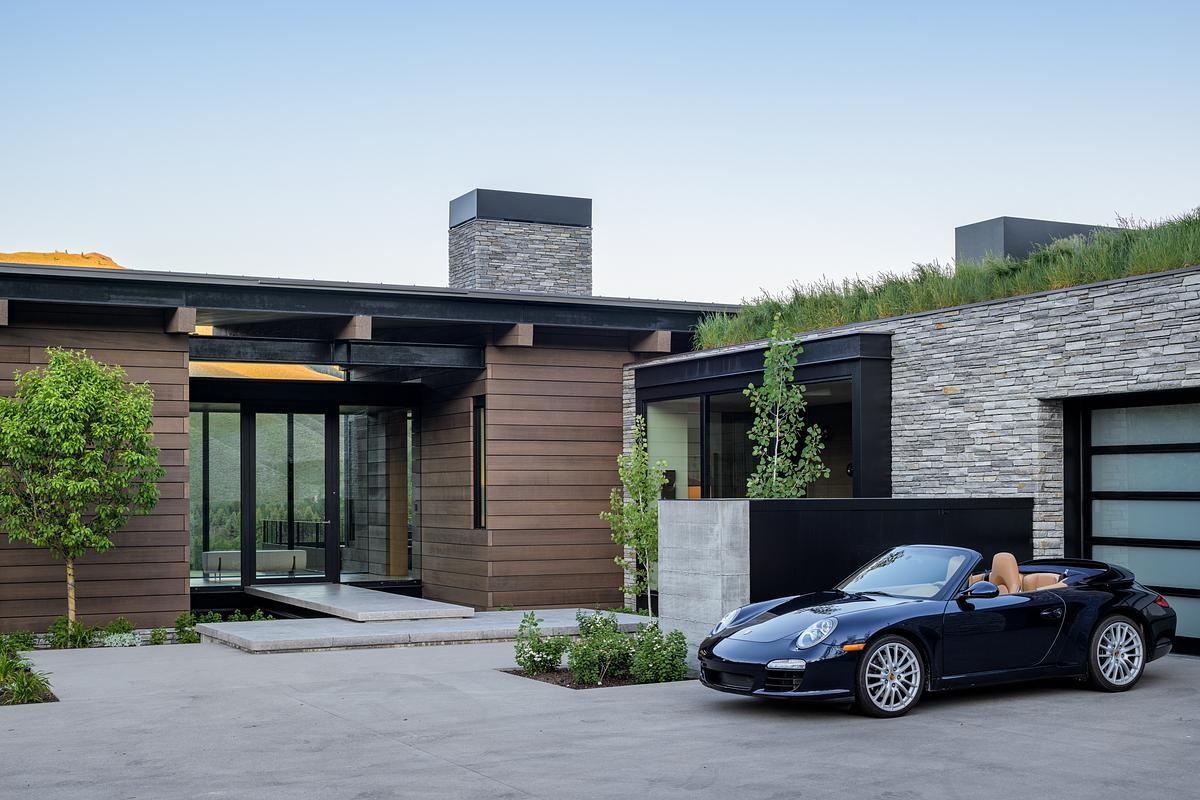
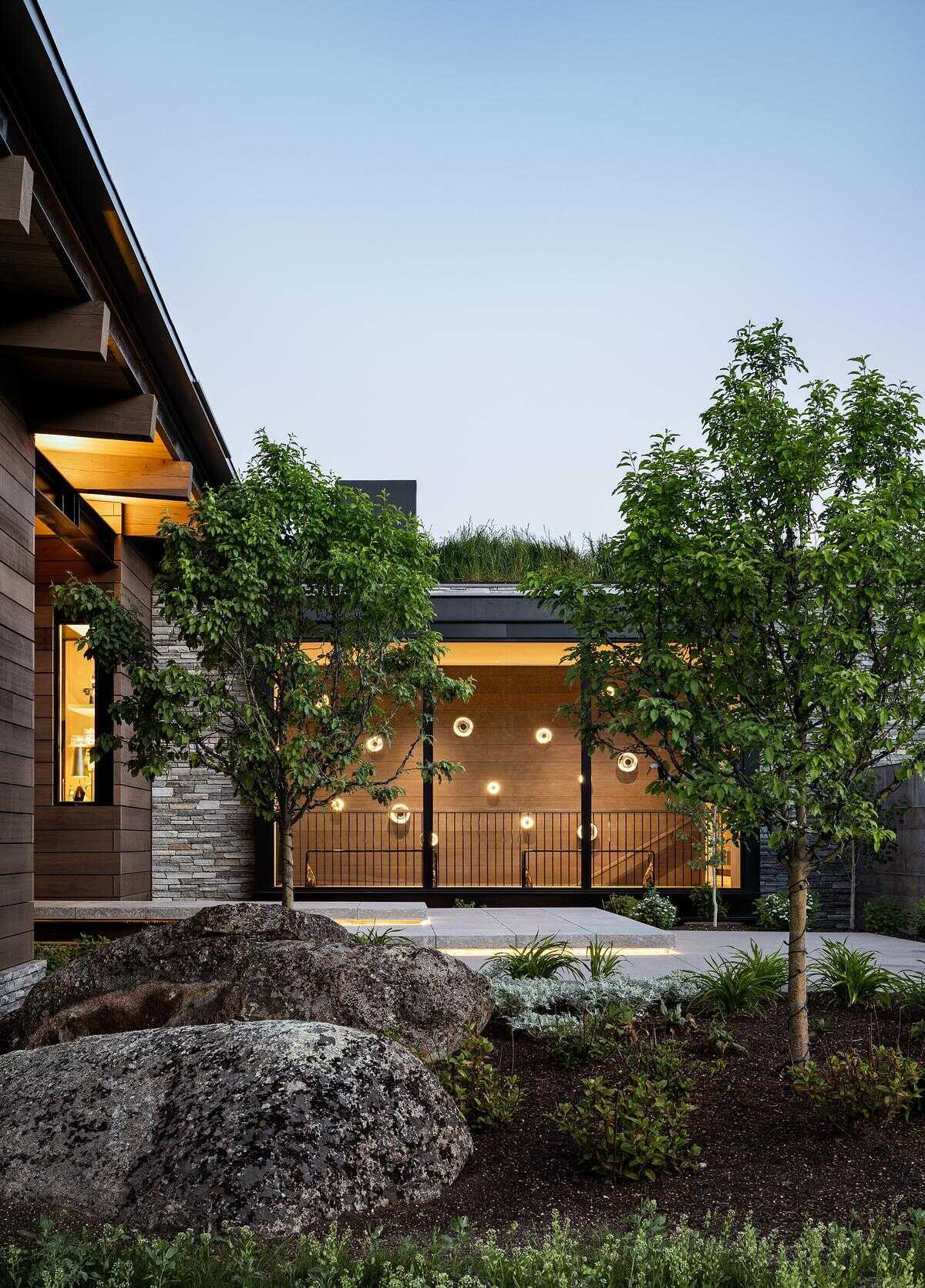
One of the most striking features of White Clouds is how little of it seems visible from certain viewpoints. The upper volume is topped with a green roof planted with native grasses that mirror the surrounding hillside. This feature helps the building visually merge with the landscape while also providing protection from golf balls coming from the nearby course.
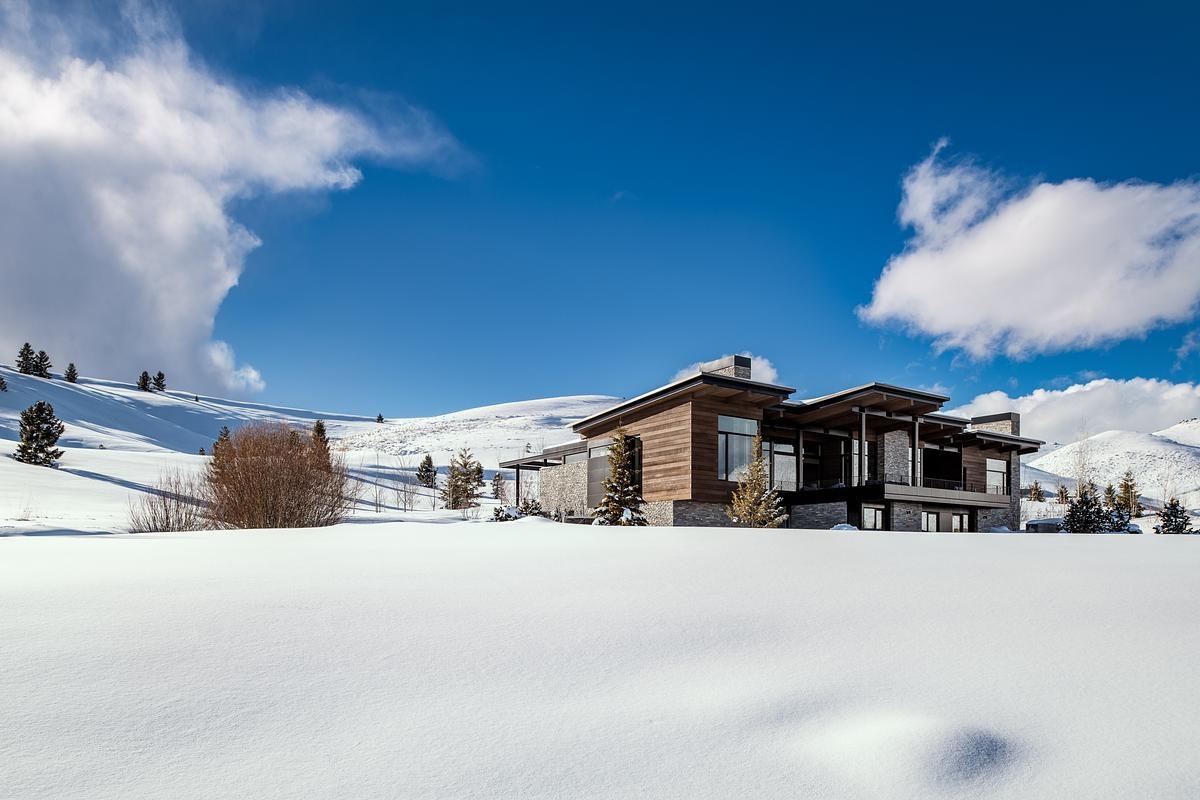
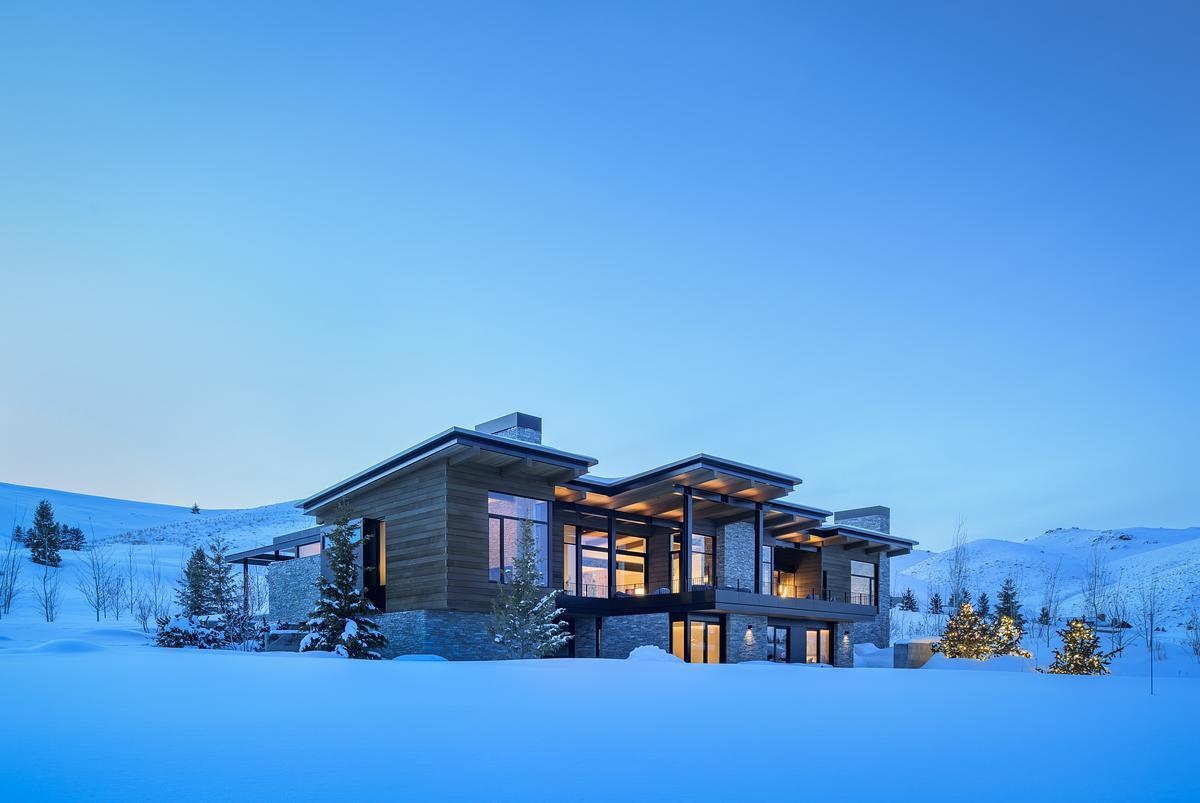
As the terrain drops away, more of the residence becomes visible. Stone, wood, steel, and glass are used throughout, creating a palette that feels both durable and refined. Idaho-quarried Oakley stone wraps exterior and interior walls, while Douglas fir siding and soffits feature a distinctive tooth-edged detail that adds texture and craftsmanship.
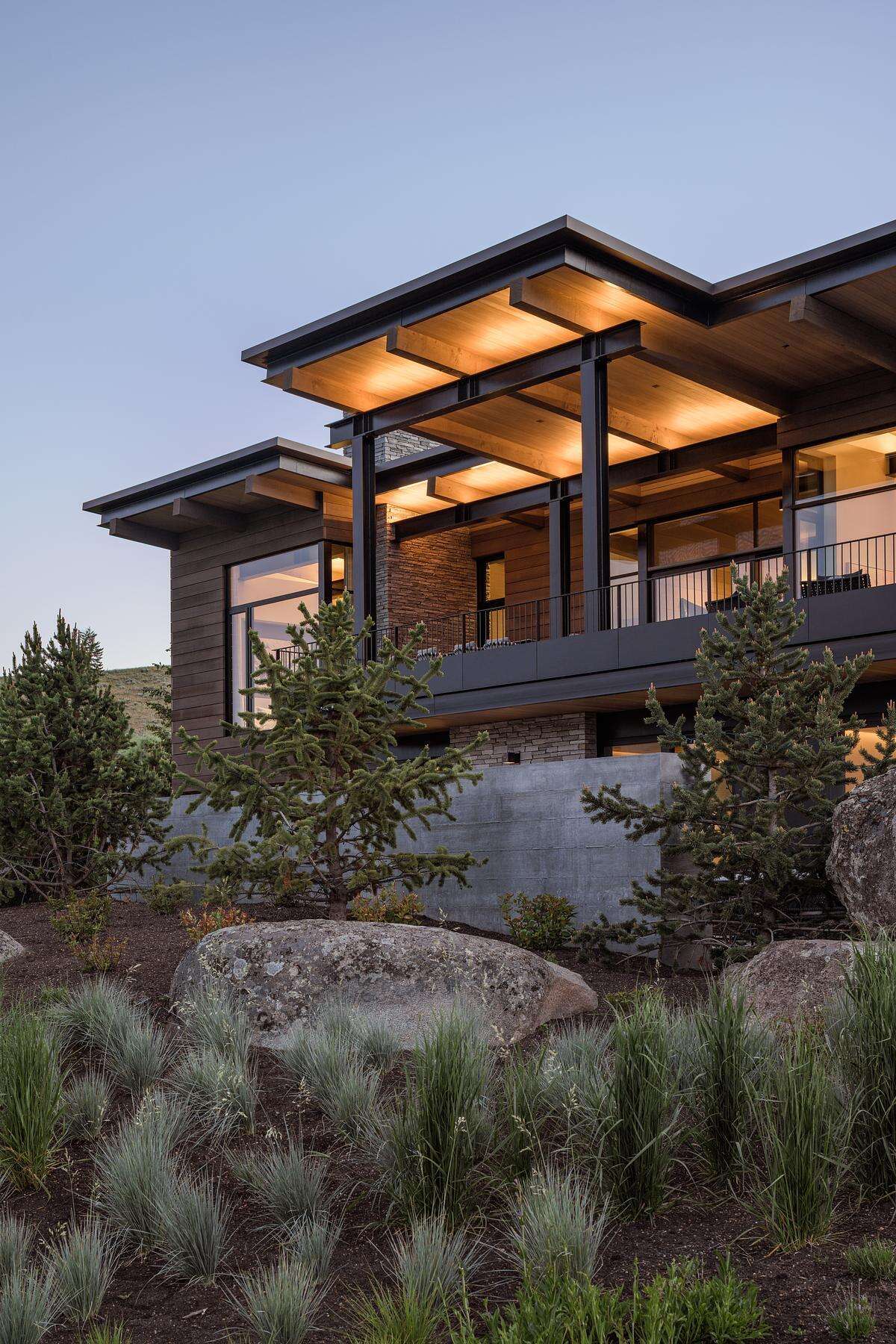
Exposed steel and heavy timber remain visible throughout the structure, revealing joinery and construction details that become part of the home’s character. Large expanses of glass frame views and bring daylight into the interior, but they are used selectively so the architecture maintains a strong, solid presence.
Crossing the Floating Bridge
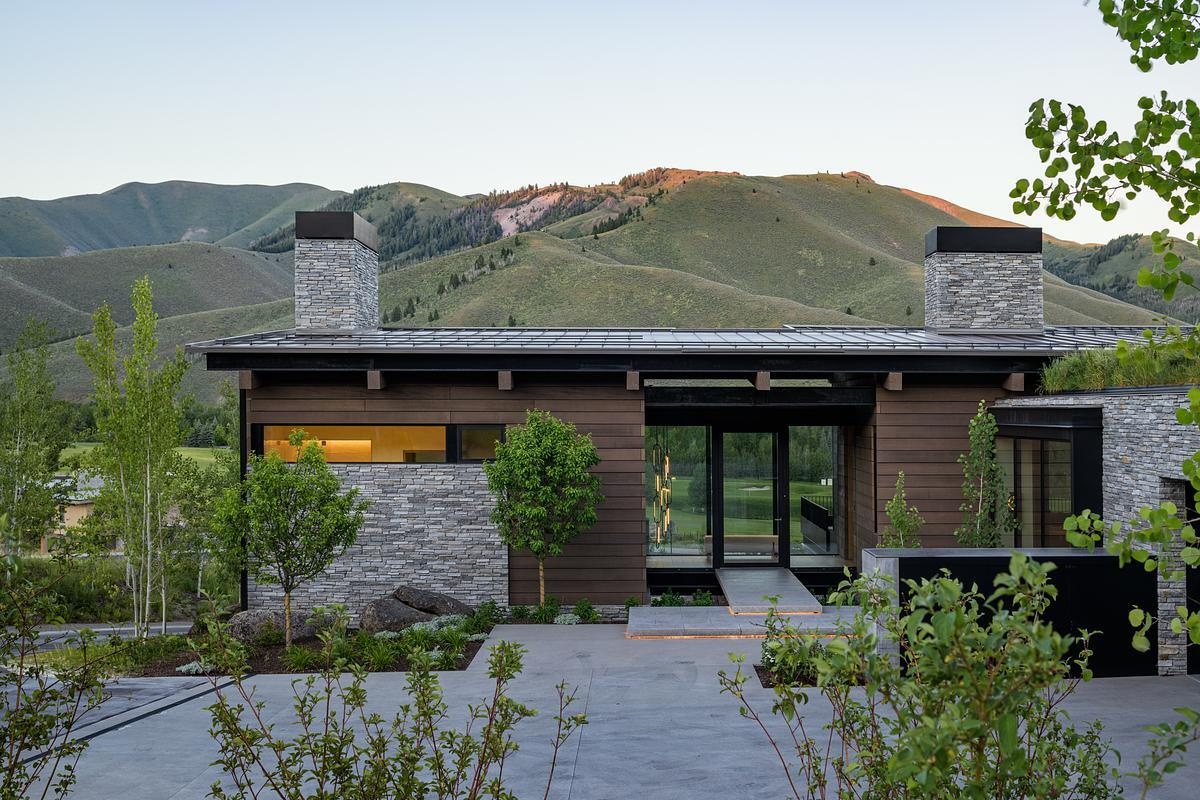
Arrival at White Clouds begins with a floating entry bridge that stretches over a dry creek bed. Lighting beneath the bridge emphasizes the feeling of suspension, creating a memorable approach to the home.
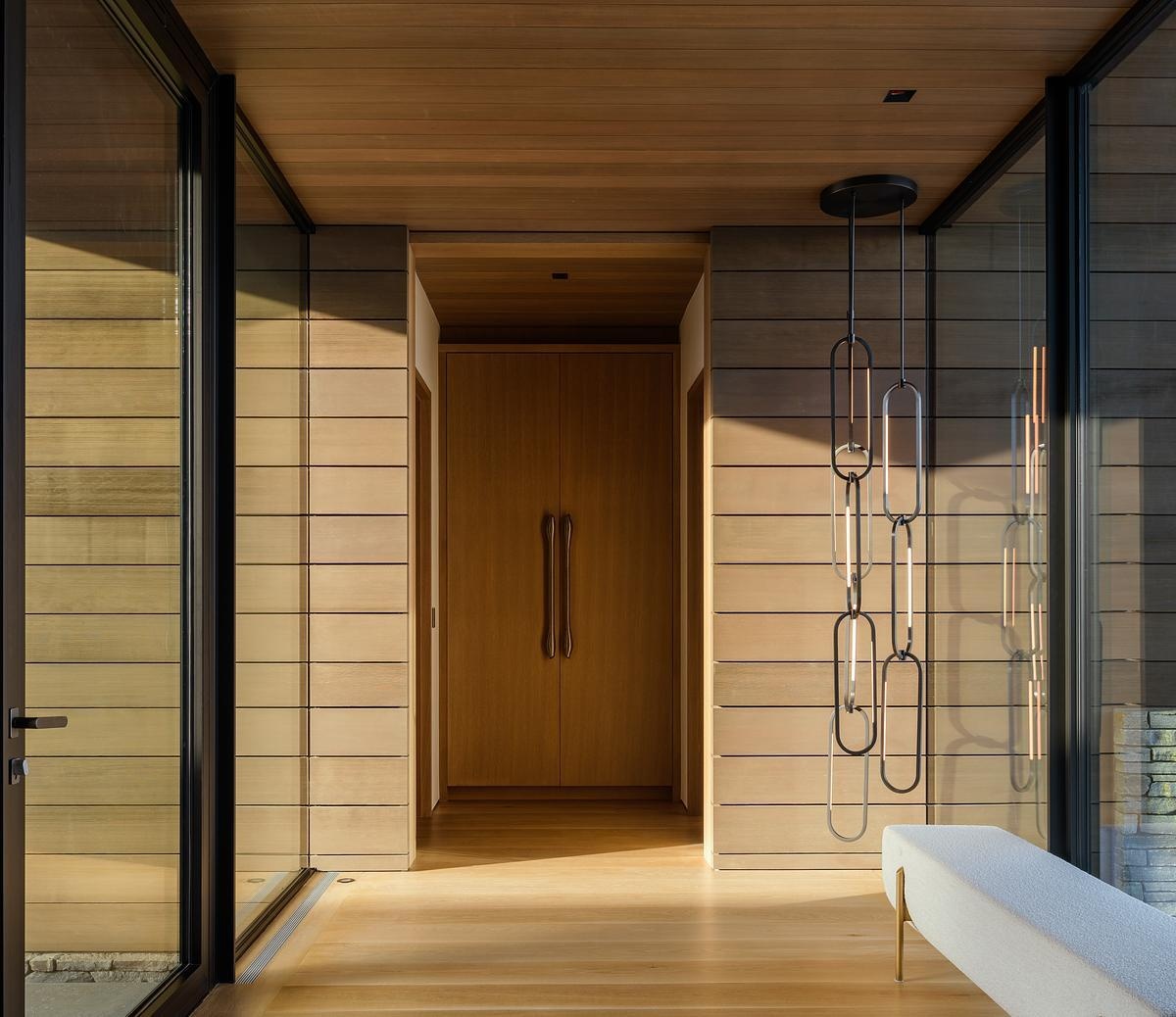
The layout becomes immediately clear upon entering. A guest suite occupies its own private wing to one side, offering visitors a sense of separation from the main household. Moving in the opposite direction leads into the primary living areas and the primary suite beyond.
At the center of the home, exposed timber and structural steel create a dramatic framework, while stone walls and mountain views establish a strong connection to the surrounding landscape.
A Great Room Designed Around Views
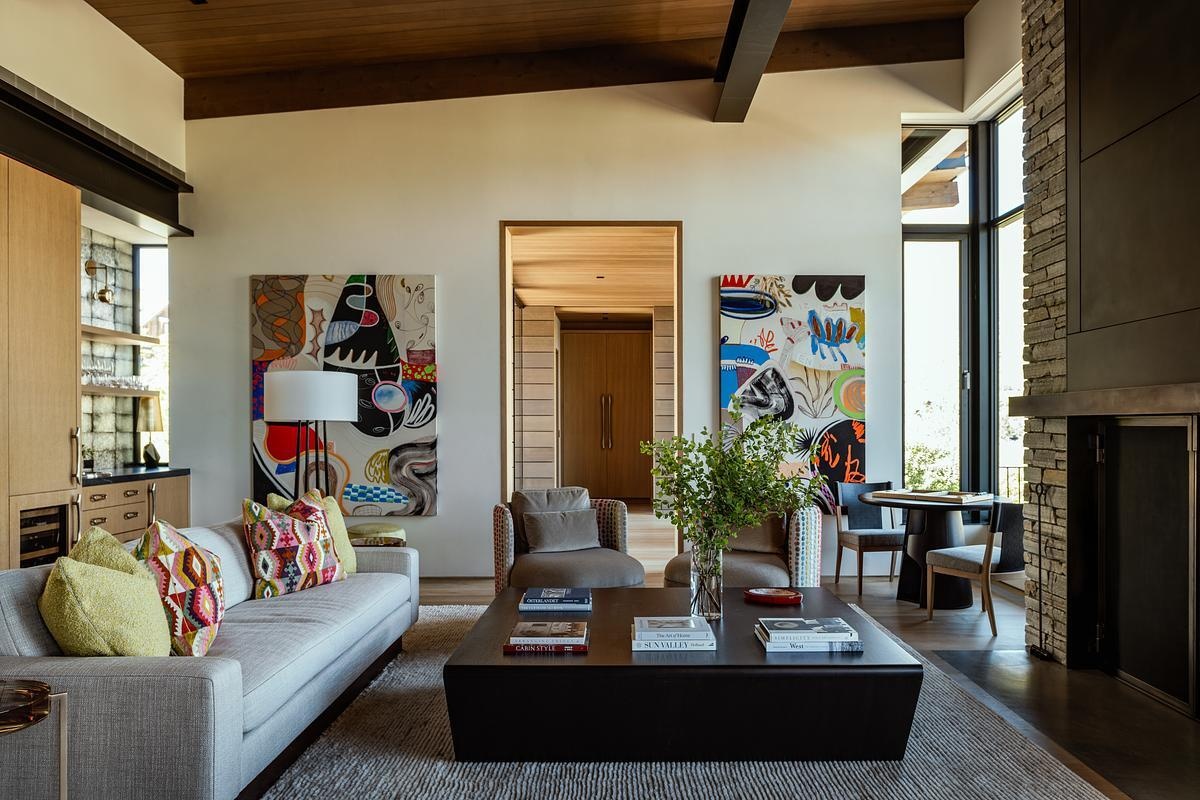
The living and dining spaces form the heart of the upper level. Vaulted ceilings add volume and openness, while material changes help define individual zones without interrupting the overall flow.
Glass walls draw attention toward the valley and Proctor Mountain, turning the scenery into a constantly changing backdrop. Exposed timber and steel provide warmth and structure, balancing the openness of the room with a sense of permanence.
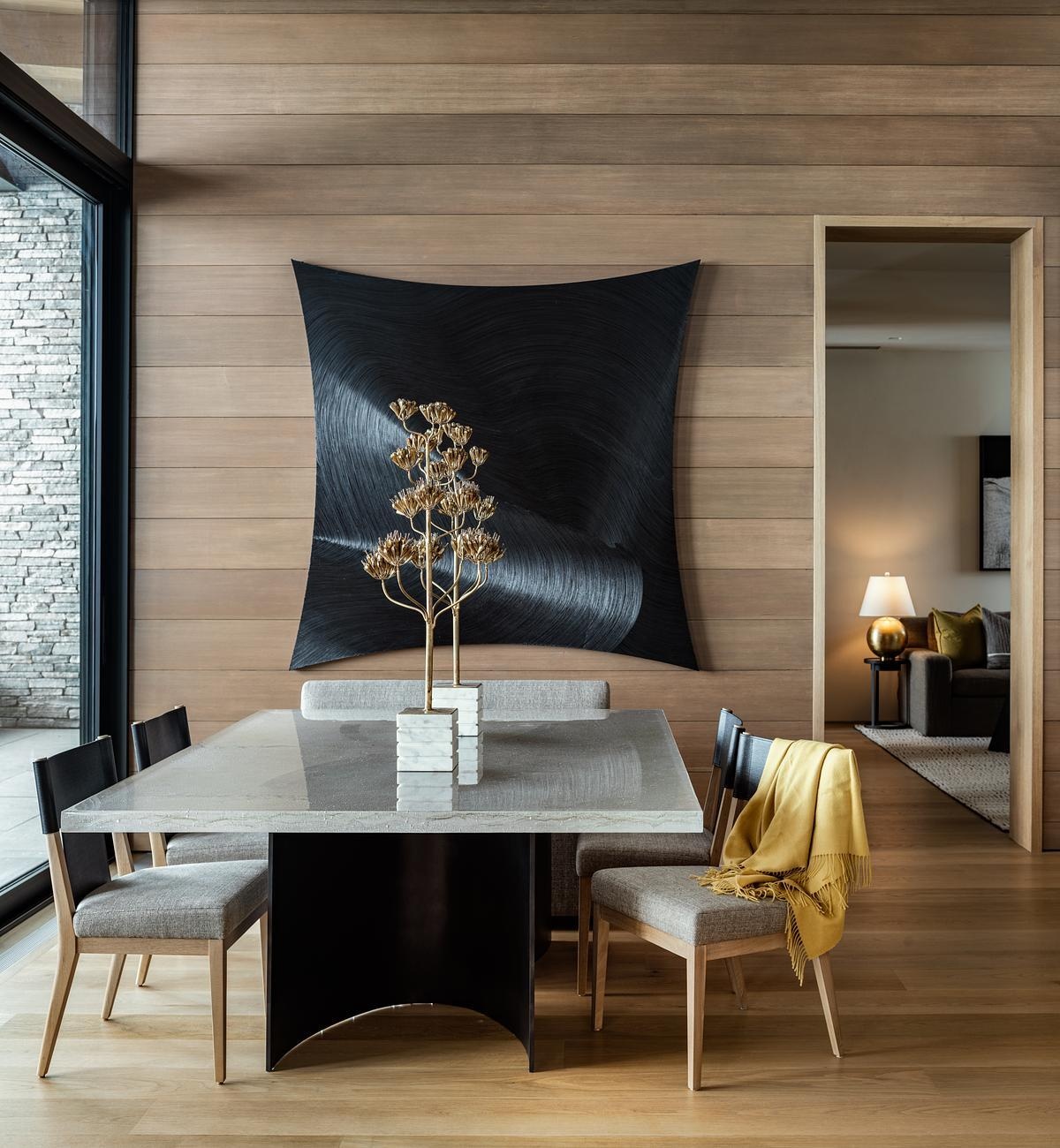
The dining area sits comfortably within this larger volume, maintaining a direct relationship with both the kitchen and living room while benefiting from the expansive views beyond.
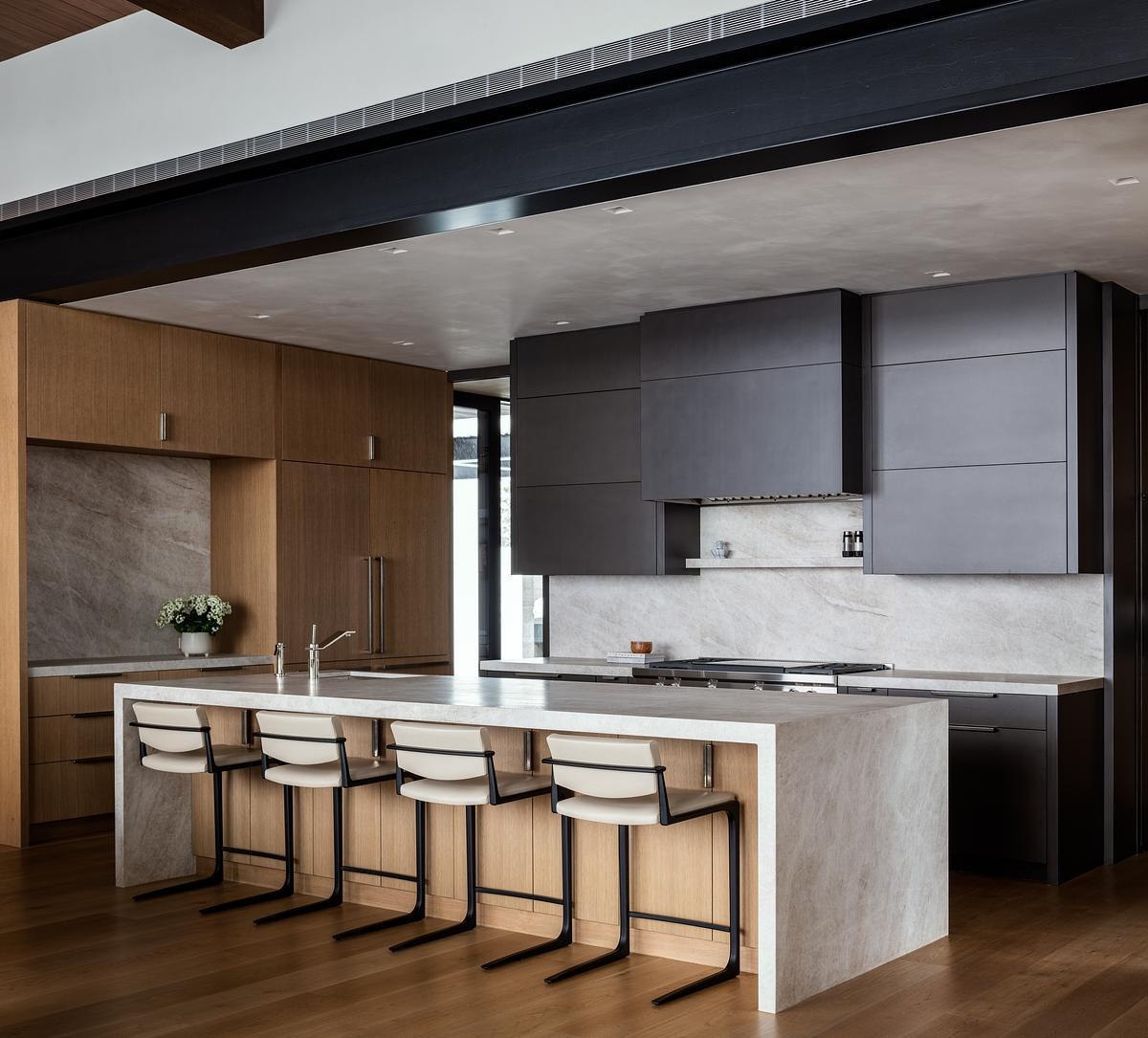
A Kitchen Connected to Everyday Living
The kitchen is positioned just behind the dining area, slightly recessed from the larger gathering spaces. This placement creates a more intimate atmosphere while still keeping the room connected to the activity of the great room.
Practical planning also plays a role. The garage connects directly to the kitchen, simplifying everyday routines and making the movement of groceries and supplies more convenient.
Material continuity helps the kitchen feel integrated with the rest of the home, while subtle shifts in ceiling heights define the space without enclosing it.
Sculptural Circulation Through the Home
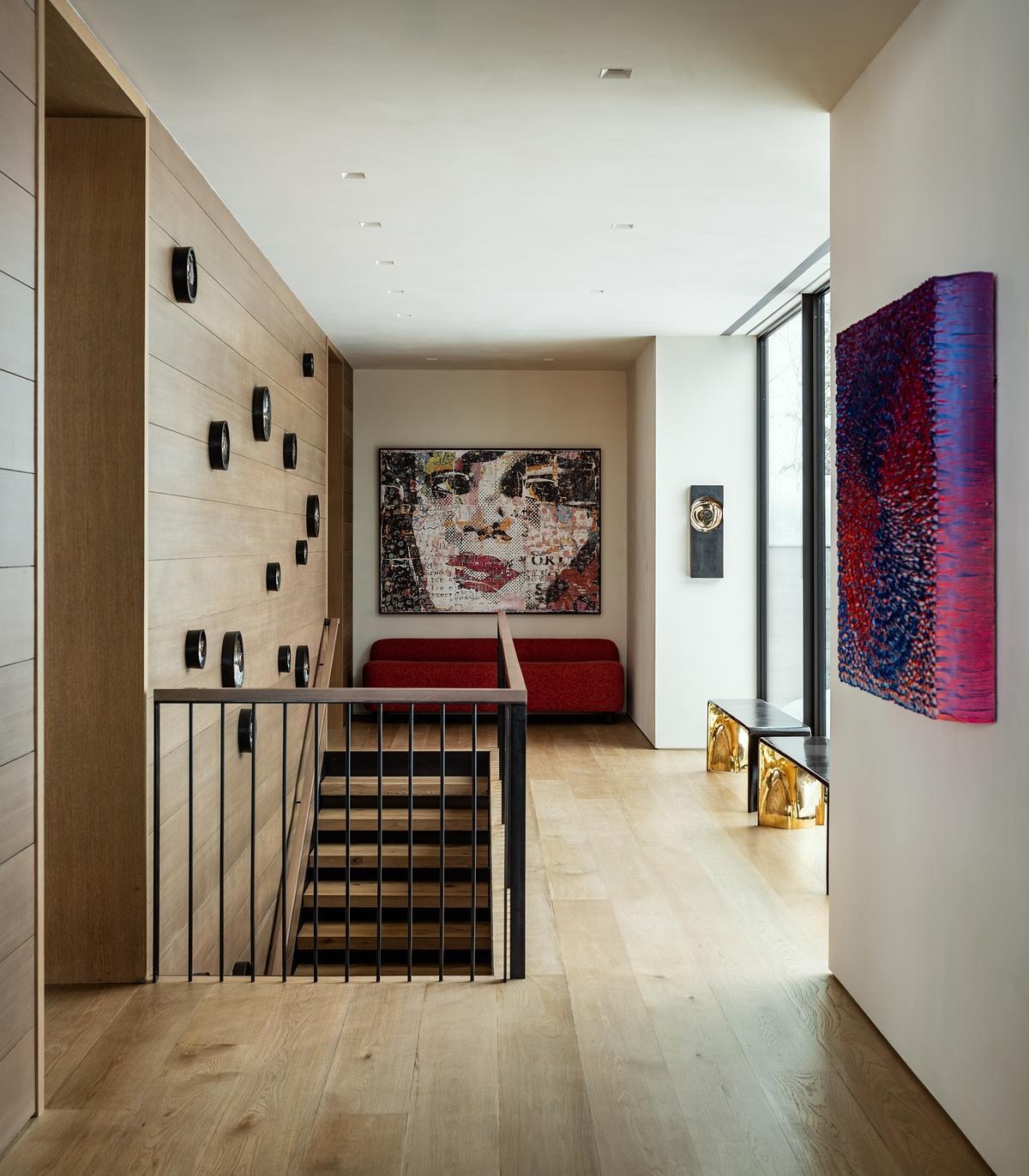
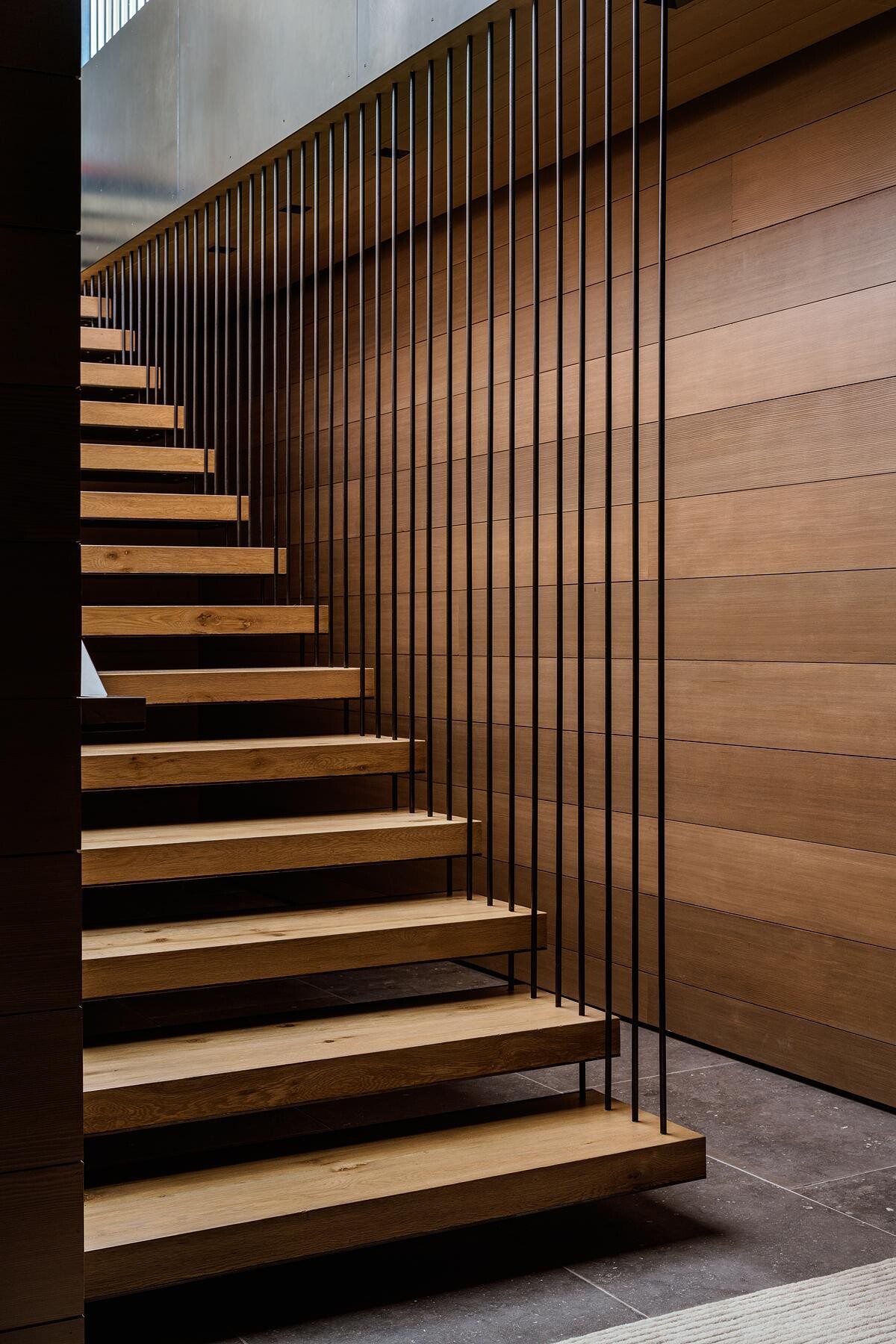
Movement through White Clouds was planned to offer multiple routes between different parts of the house. The transition between levels feels natural as the architecture follows the contours of the hillside.
Exposed structural elements remain visible throughout circulation areas, transforming hallways and stair connections into architectural experiences. As residents move through the home, changing views and shifts in elevation reveal different perspectives of both the interior and the landscape beyond.
A Media Room Hidden Within the Slope
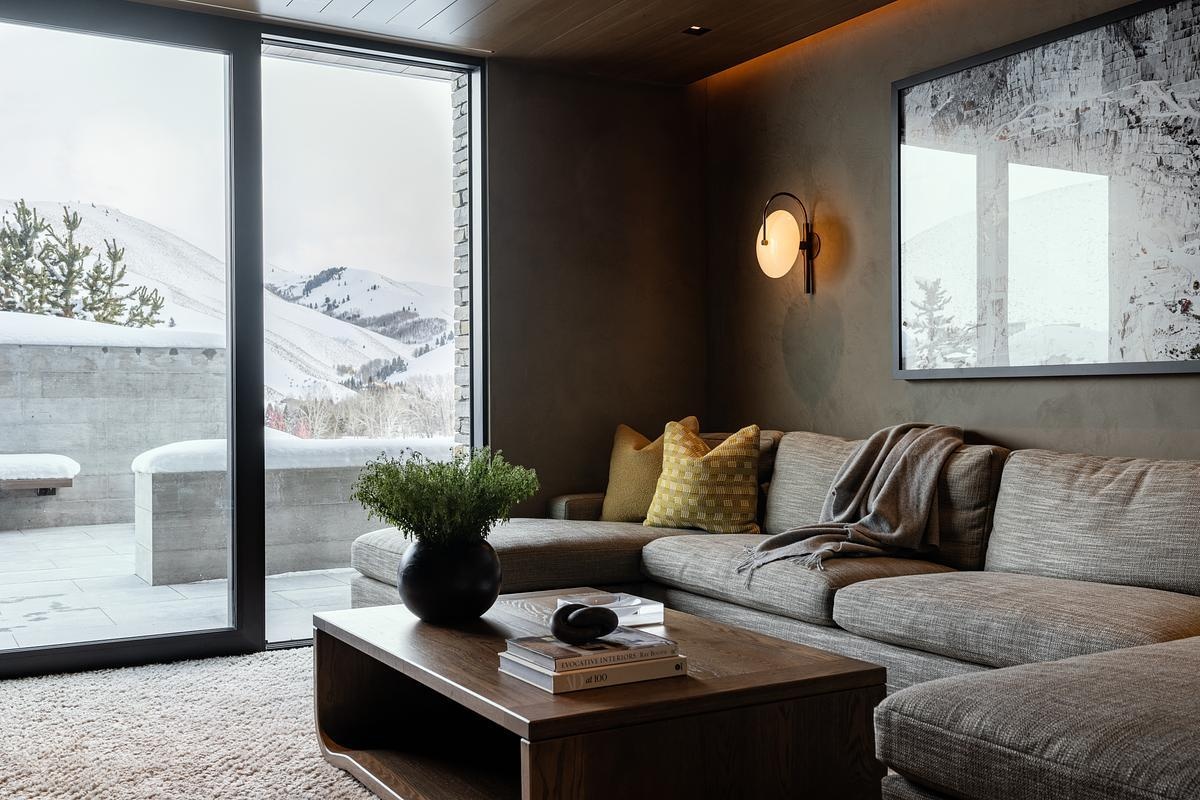
The lower level is embedded into the hillside and remains largely hidden from view. Here, the home expands to include spaces dedicated to relaxation and family life.
Private Bedrooms Framed by Light and Views
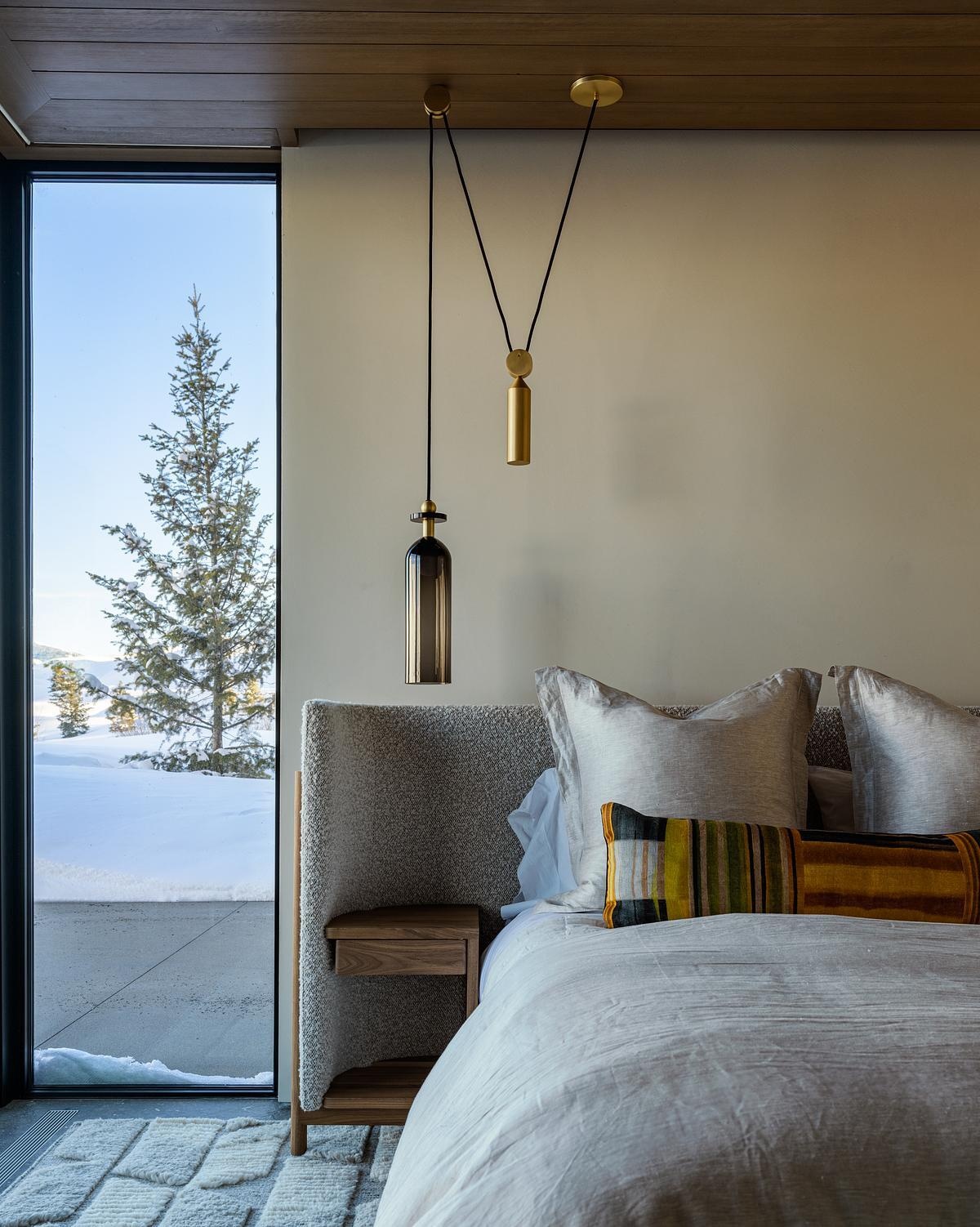
The bedrooms continue the home’s warm material palette, combining wood-lined ceilings, soft textiles, and large windows that bring the landscape into focus. Exposed structural beams overhead add architectural character, while neutral tones create a calm and inviting atmosphere.
Floor-to-ceiling drapery softens the spaces and enhances its sense of comfort, while the timber ceilings draws the eye upward and reinforces the connection to the home’s architectural language.
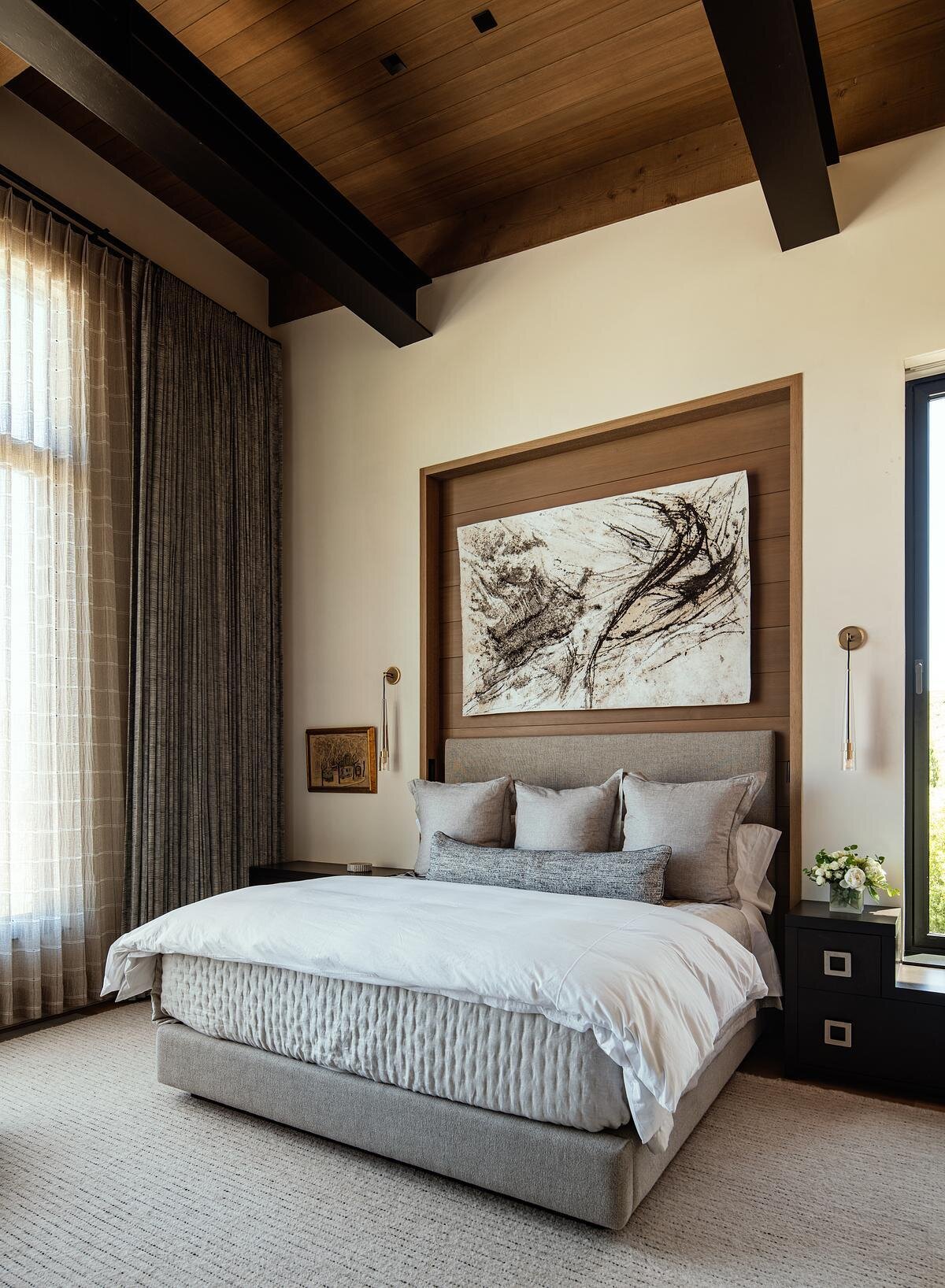
Pendant lighting and integrated bedside elements keep the rooms uncluttered, creating spaces that feel both functional and welcoming.
Though each room has its own character, they share a consistent palette of warm woods, soft textures, and natural light, giving the private areas of the home a cohesive identity that complements the larger architectural vision.
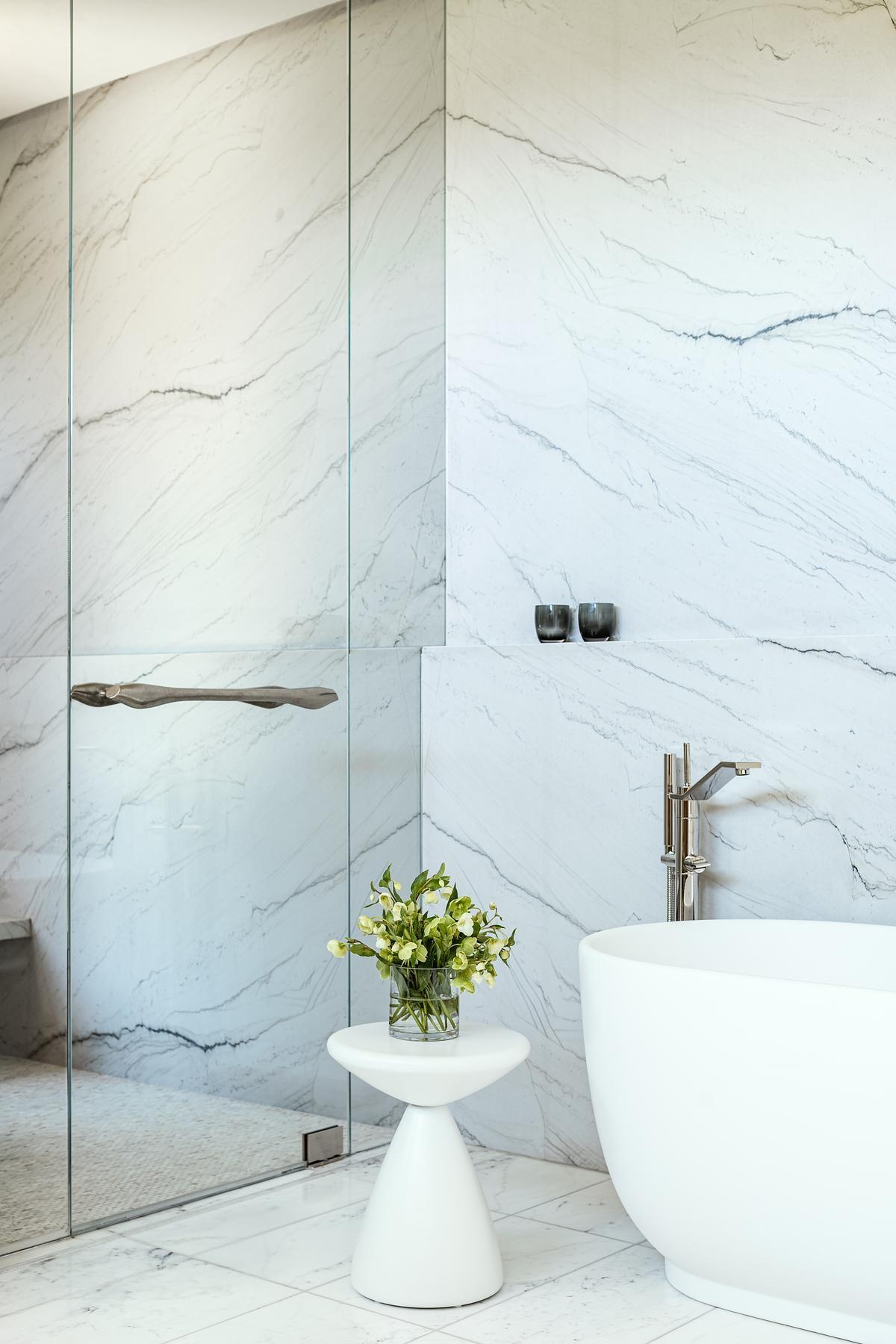
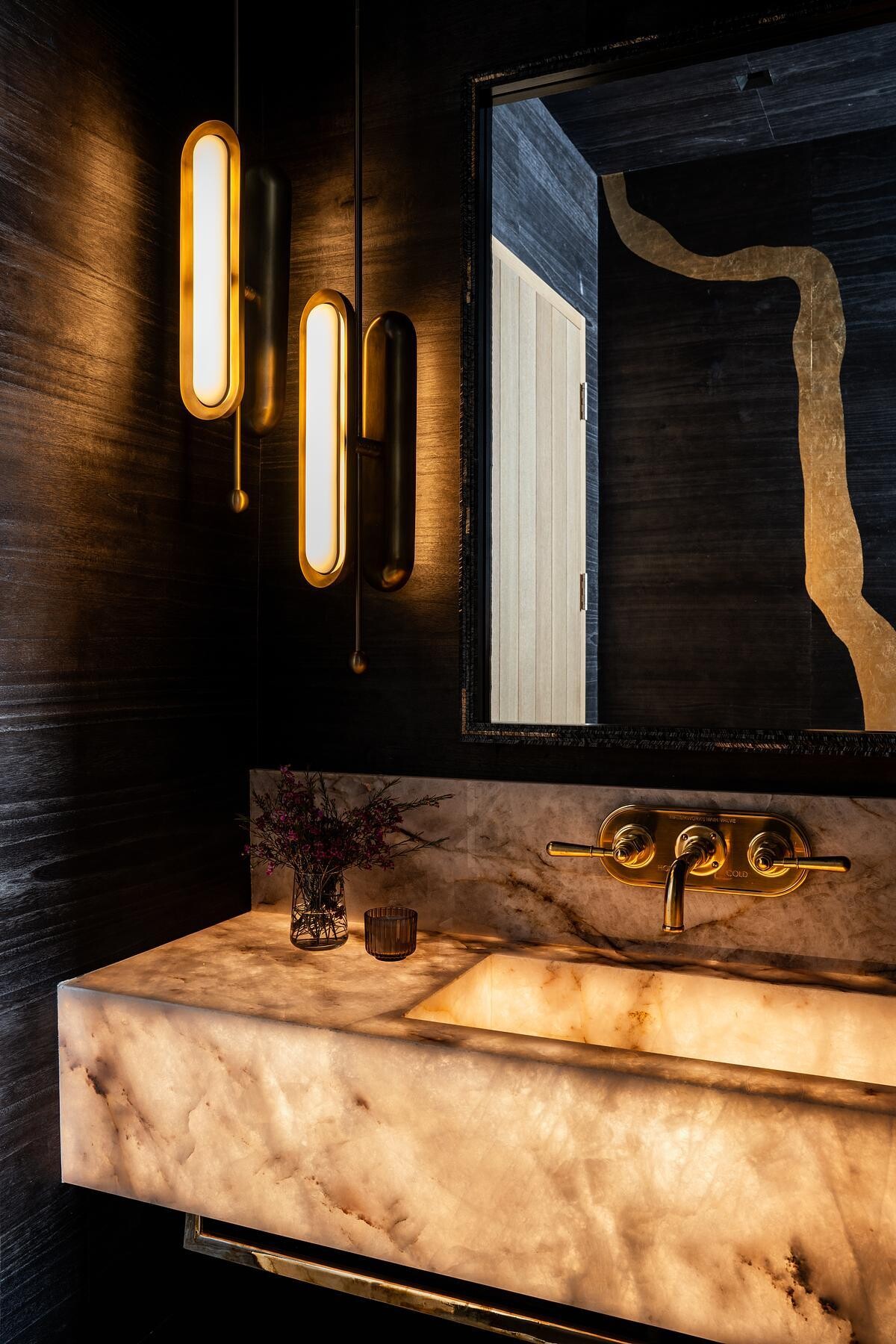
Spa-Inspired Bathrooms and Wellness Spaces
The lower level includes a wellness suite equipped with a sauna, steam room, and cold plunge. These spaces extend outdoors to a sheltered terrace and spa area, creating a seamless relationship between indoor and outdoor amenities.
Stone surfaces, natural materials, and the home’s connection to the landscape help establish an atmosphere that feels calm and restorative. Together, the wellness spaces add another layer of functionality to the residence while taking advantage of the unique hillside setting.
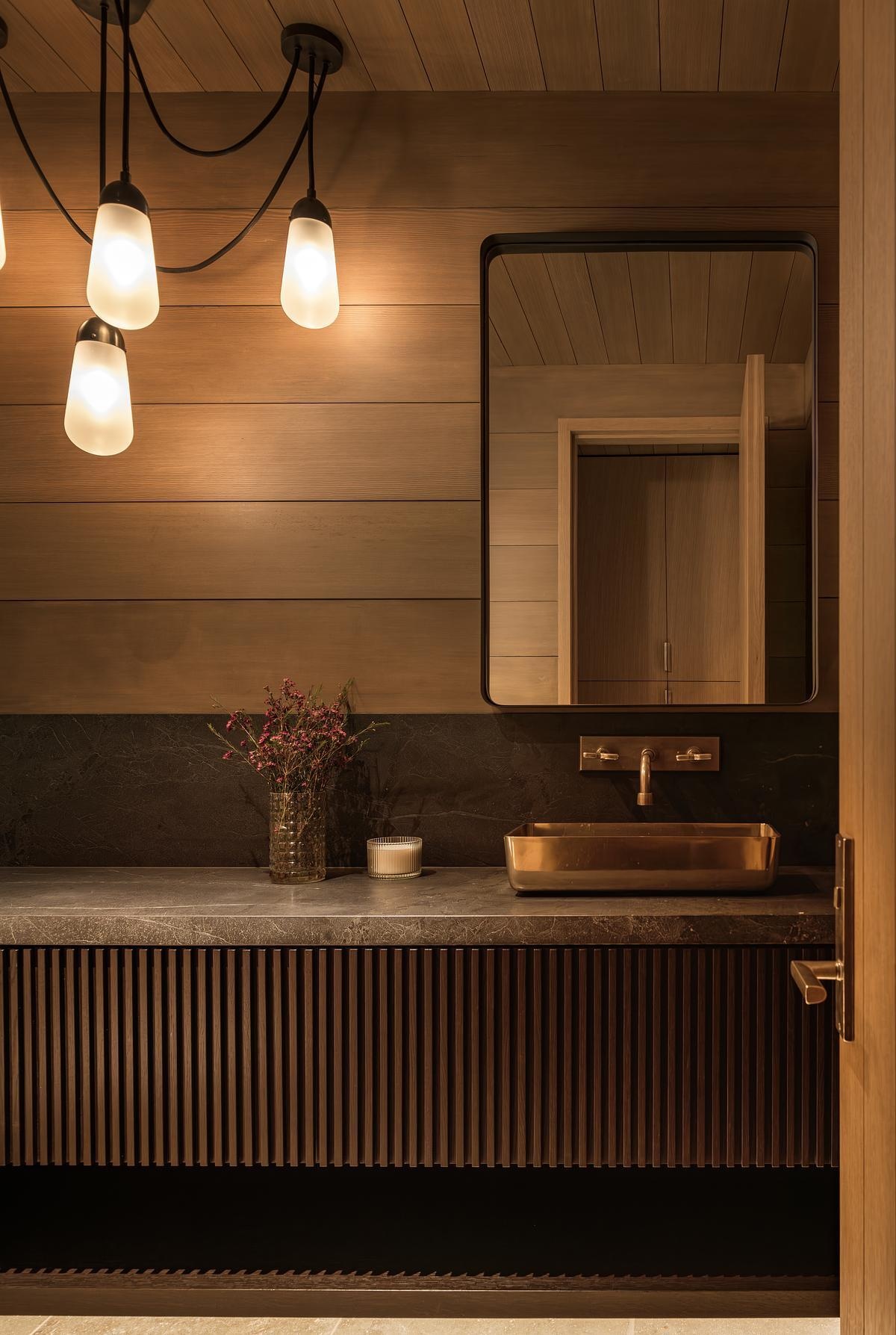
Built into a sloping Idaho site, White Clouds combines a living roof, natural materials, dramatic views, and thoughtful architecture to create a home that reveals new details at every level.