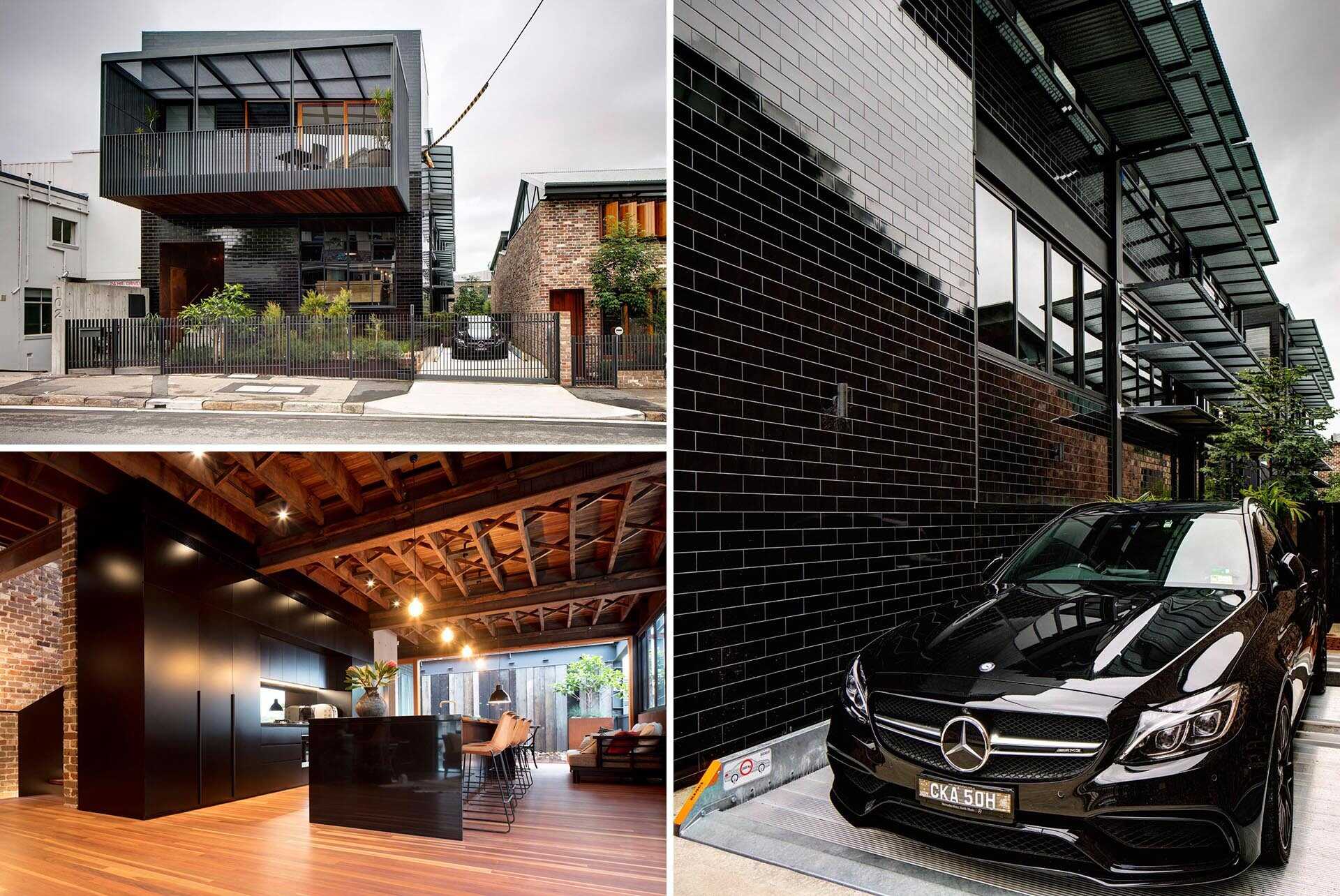
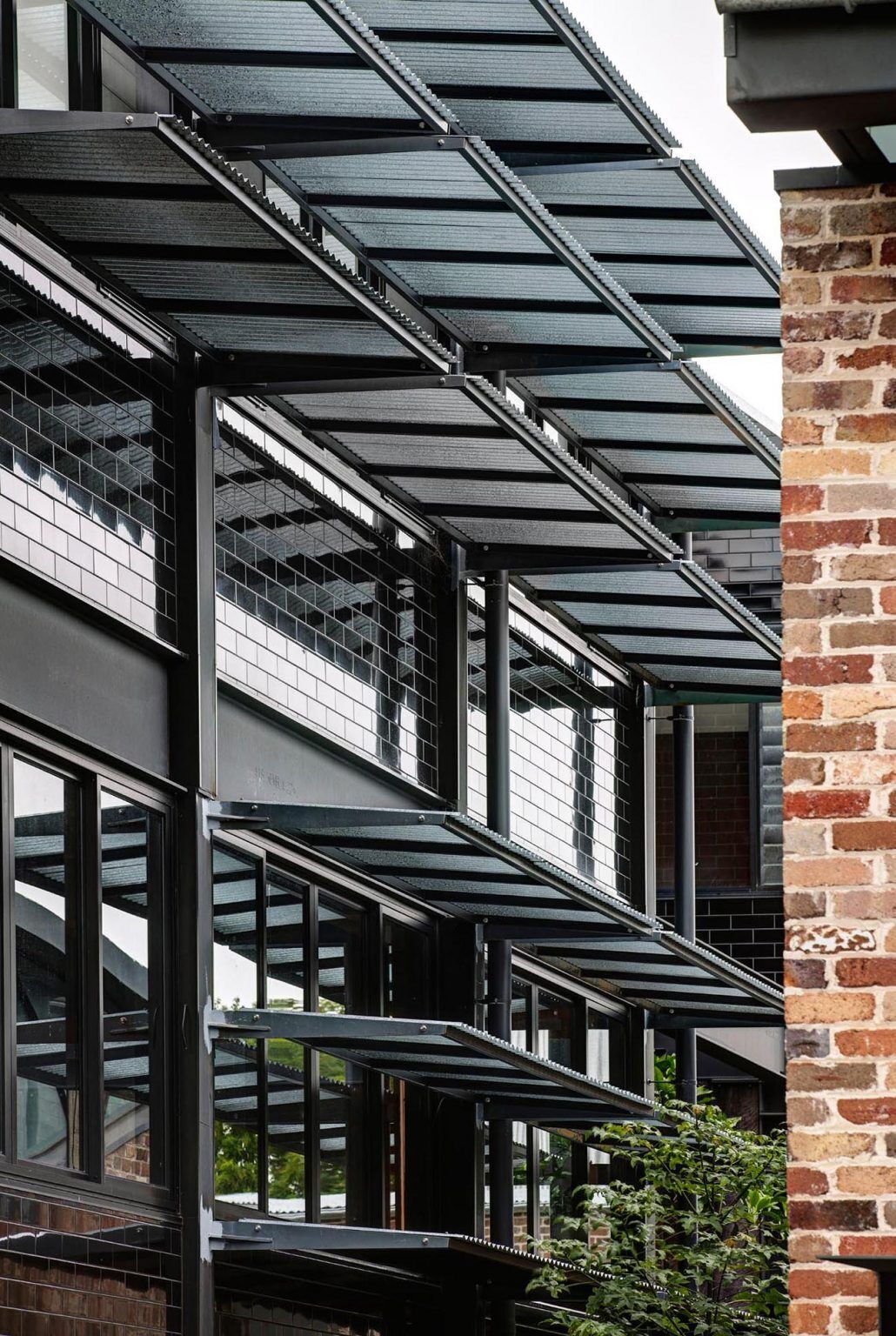
Carter Williamson Architects have transformed a former warehouse in Sydney, Australia, into a four-storey home that brings together industrial history and modern urban living. The building’s new skin of glazed black tiles wraps across the facade and continues around the sides, shifting with light and reflections while setting a bold backdrop for greenery, pocket courtyards, and a small reflective pond.
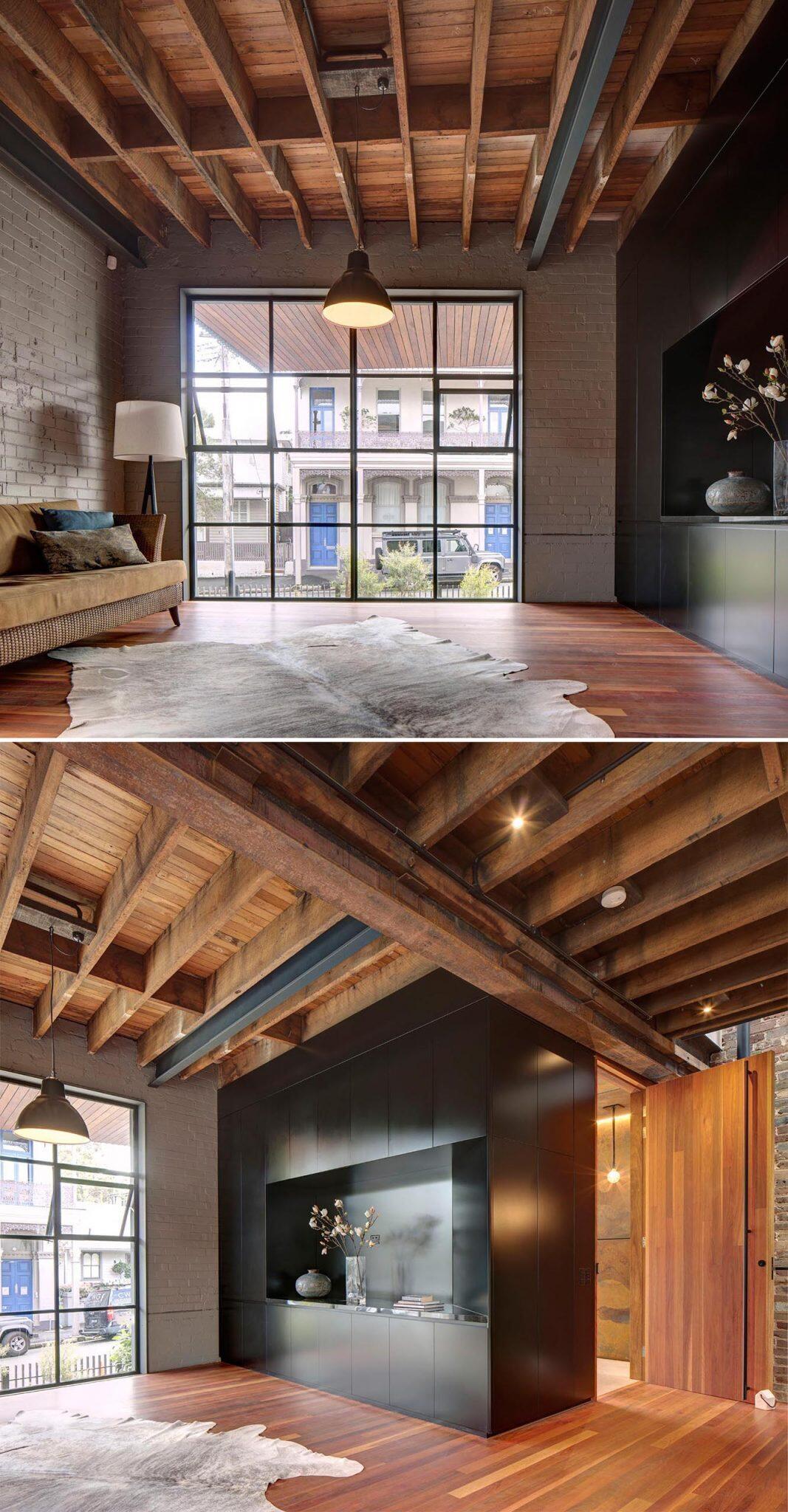
Inside, the original structure is still very present. Brick, steel, and timber remain visible, now reworked into a home shaped by height, light, and layered materials.
A Black-Tiled Facade Reworking an Industrial Past
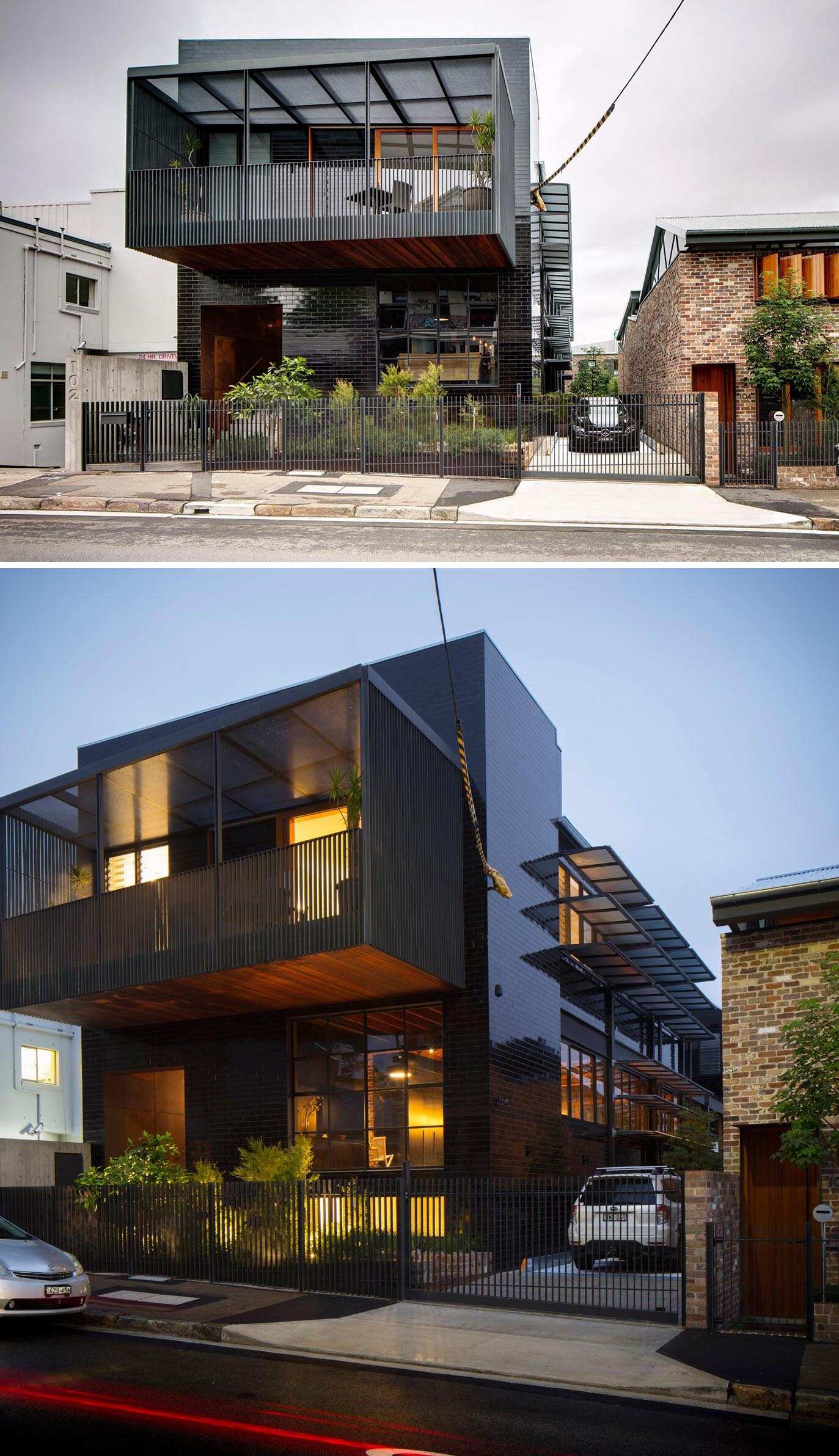
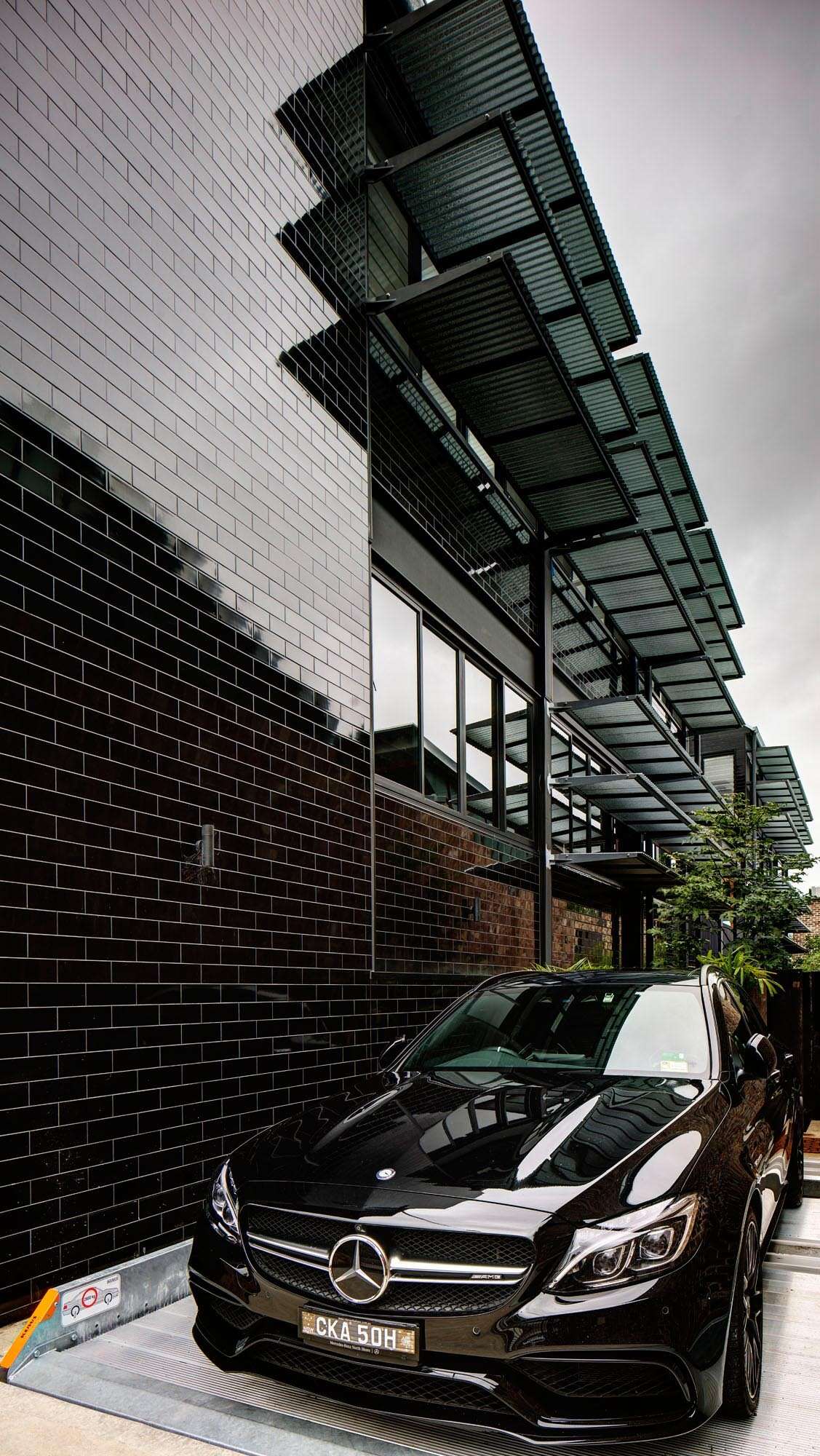
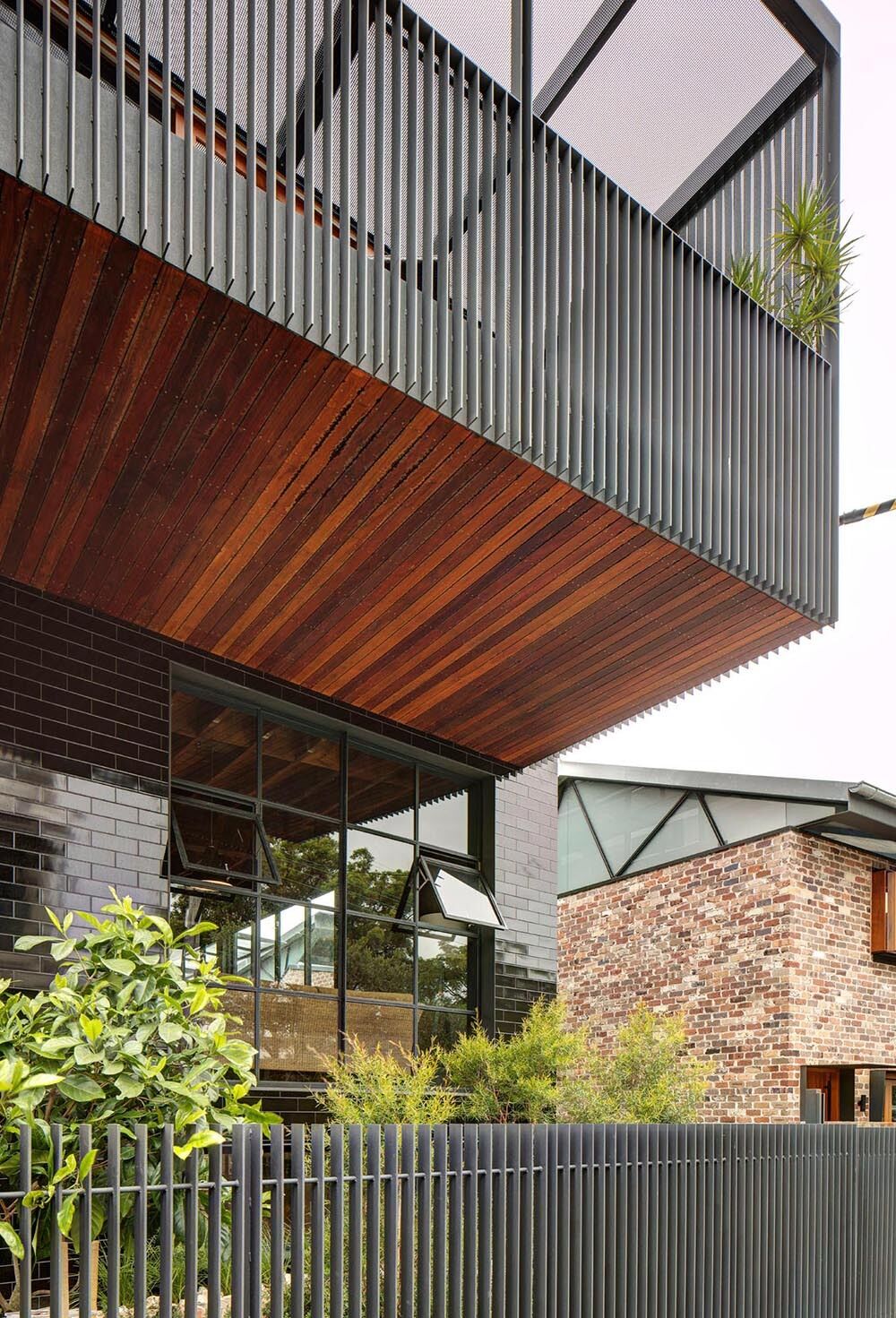
The exterior is defined by a continuous layer of glazed black tiles that give the warehouse a new identity without erasing its history. This surface extends beyond the front elevation and turns the corner, wrapping the building in a unified shell.
Behind it, landscaping softens the industrial structure. Small urban gardens and a pond lined with recycled bricks sit where hard surfaces once dominated, bringing vegetation and water into direct contrast with the dark exterior.
Entryway Through Steel, Timber, and Height
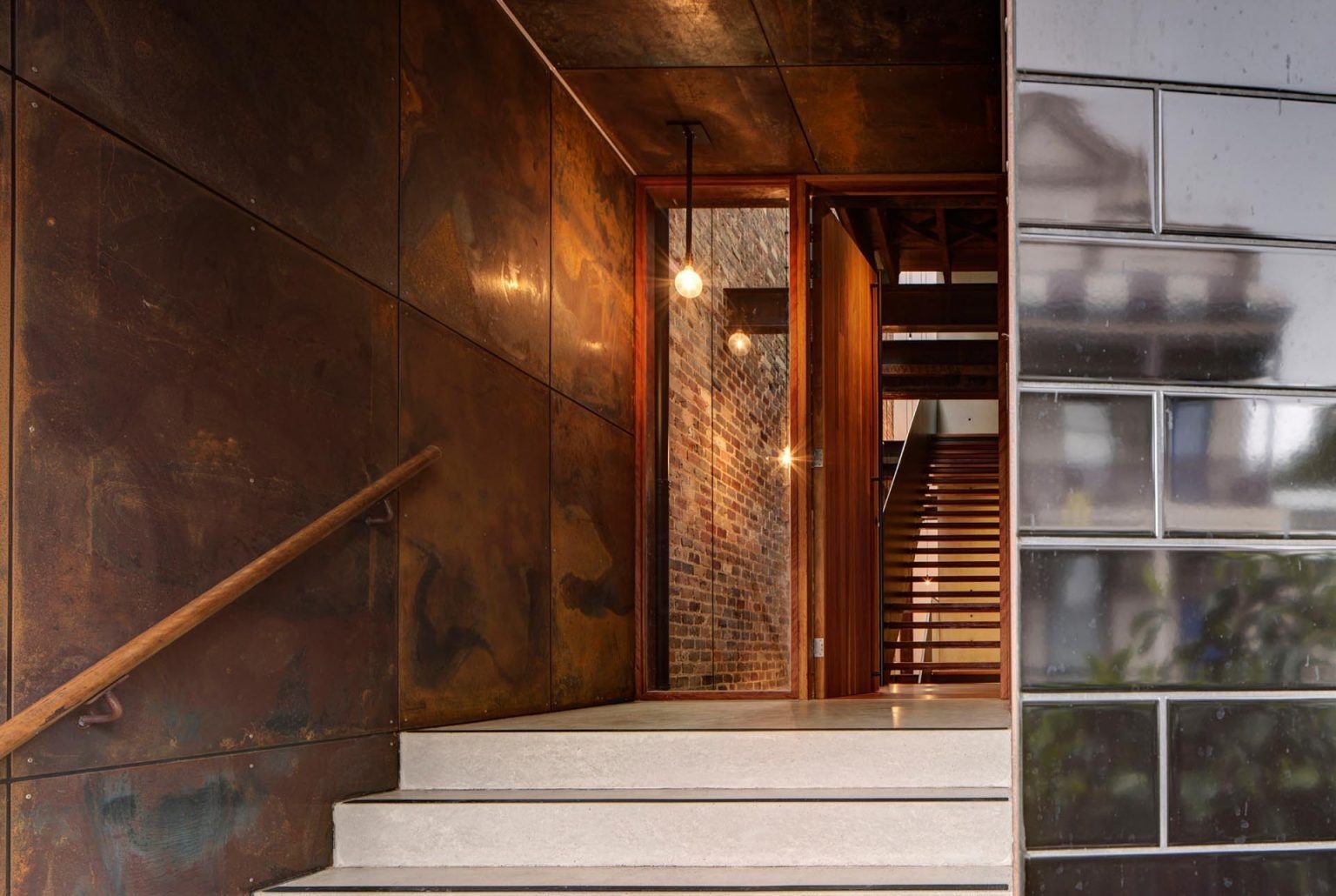
The entry sequence begins with aged steel cladding along a wall that guides movement toward a tall timber front door. The materials feel raw but intentional, echoing the building’s former life while introducing a residential scale.
This threshold sets up the transition from street to interior, where industrial textures remain visible but shift into a more layered domestic setting.
A Staircase Framed by Brick and Light
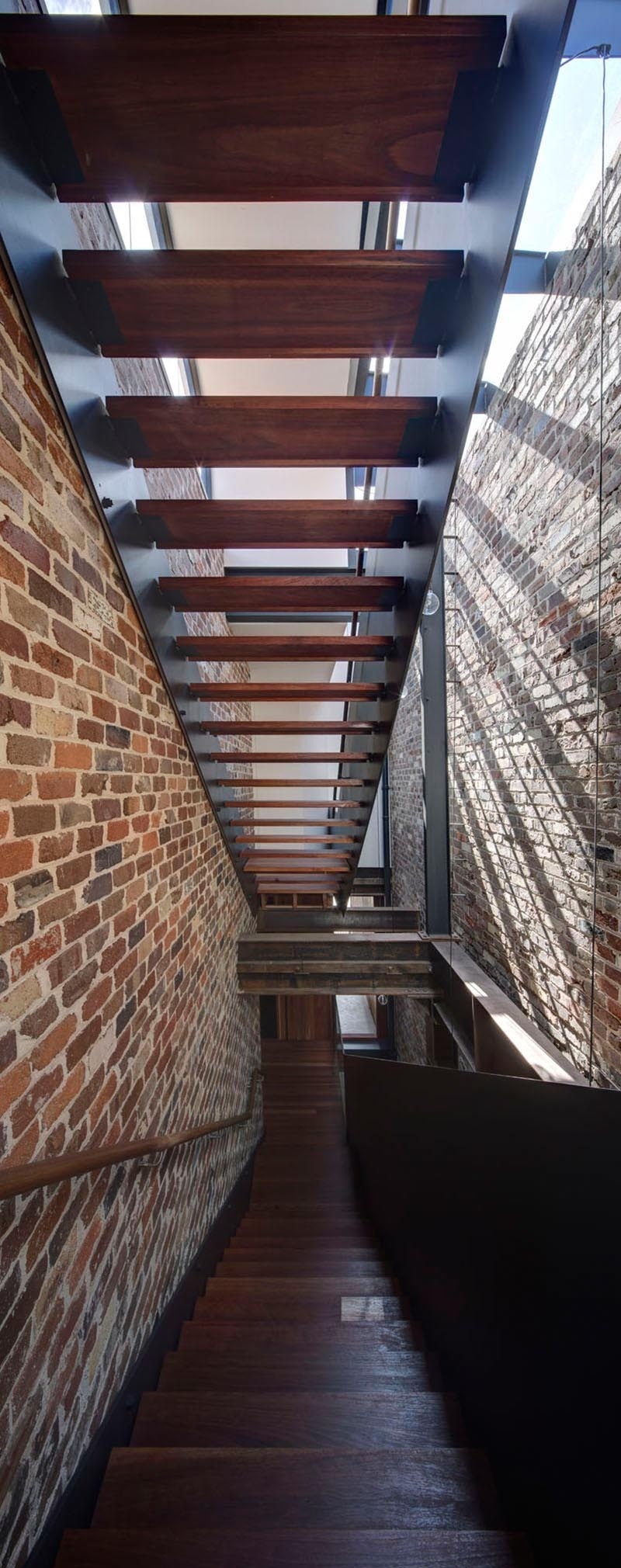
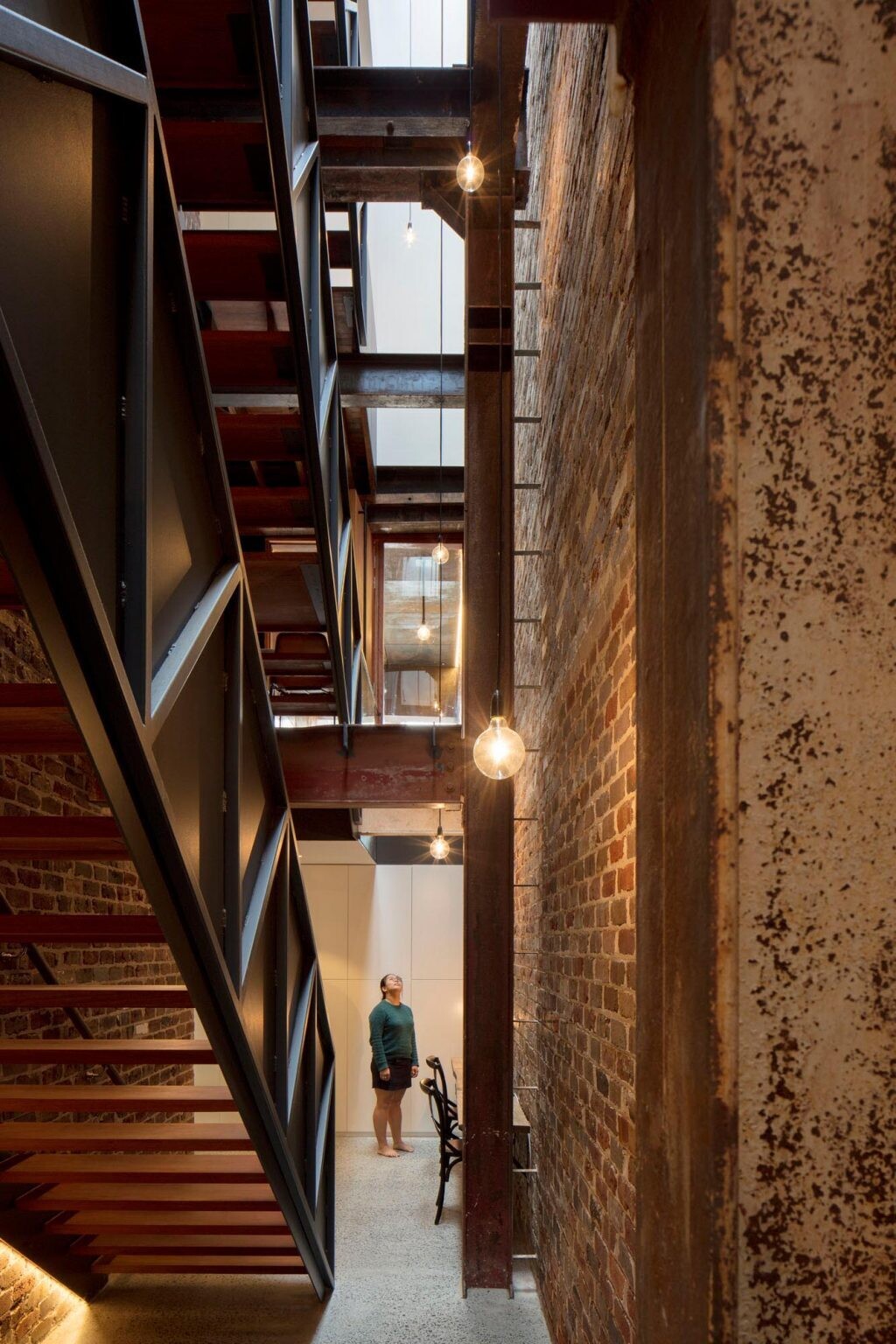
Once inside, the vertical volume becomes the defining feature. A recycled brick wall rises through all four levels, running alongside the staircase and anchoring the interior visually from ground to roof.
Above, a 12-metre void opens through the building, bringing daylight deep into the center. A skylit stairwell climbs beside exposed brick and steel beams, highlighting the original warehouse structure while connecting each level through open sightlines.
Kitchen Living and Courtyard Flow
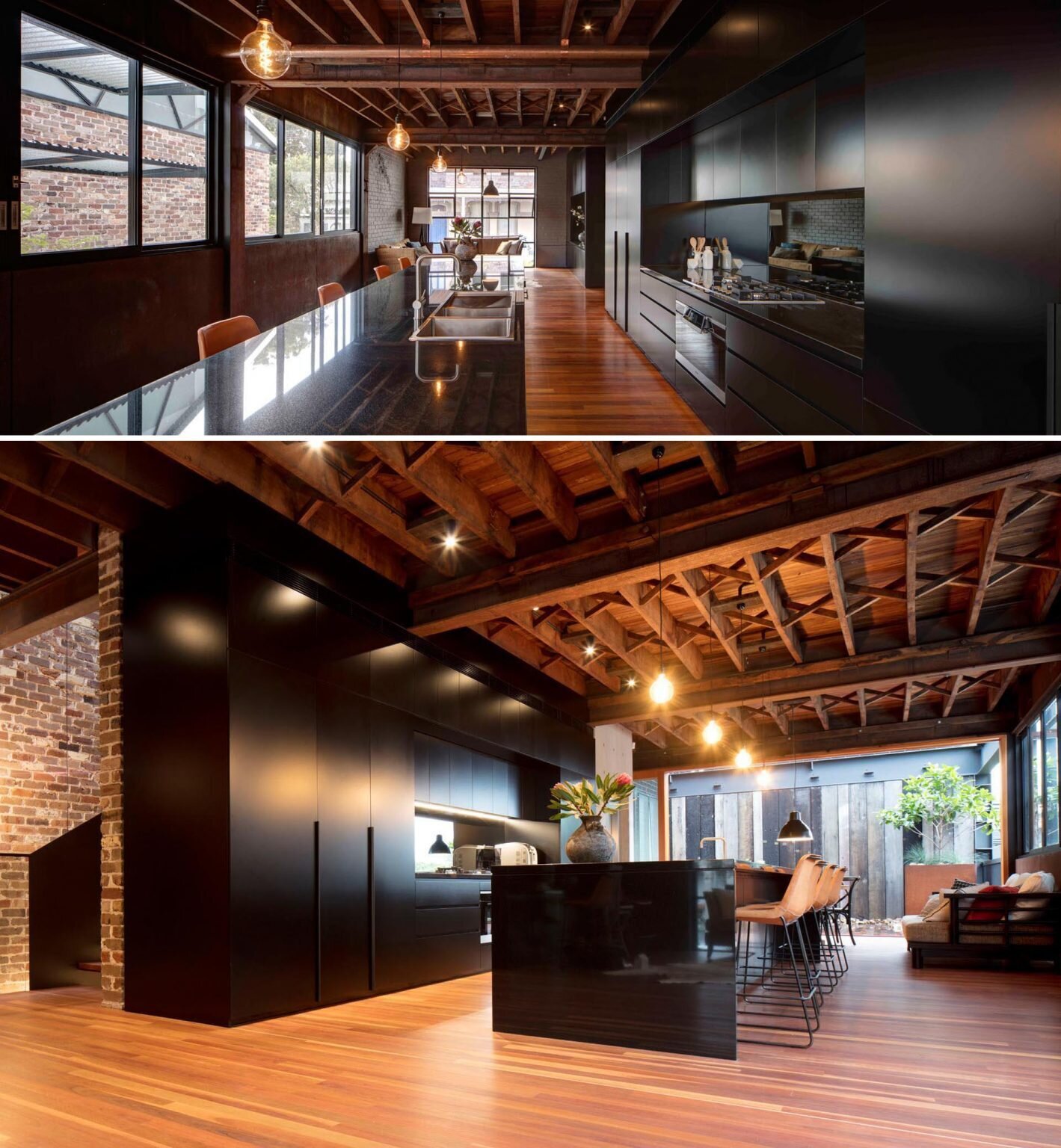
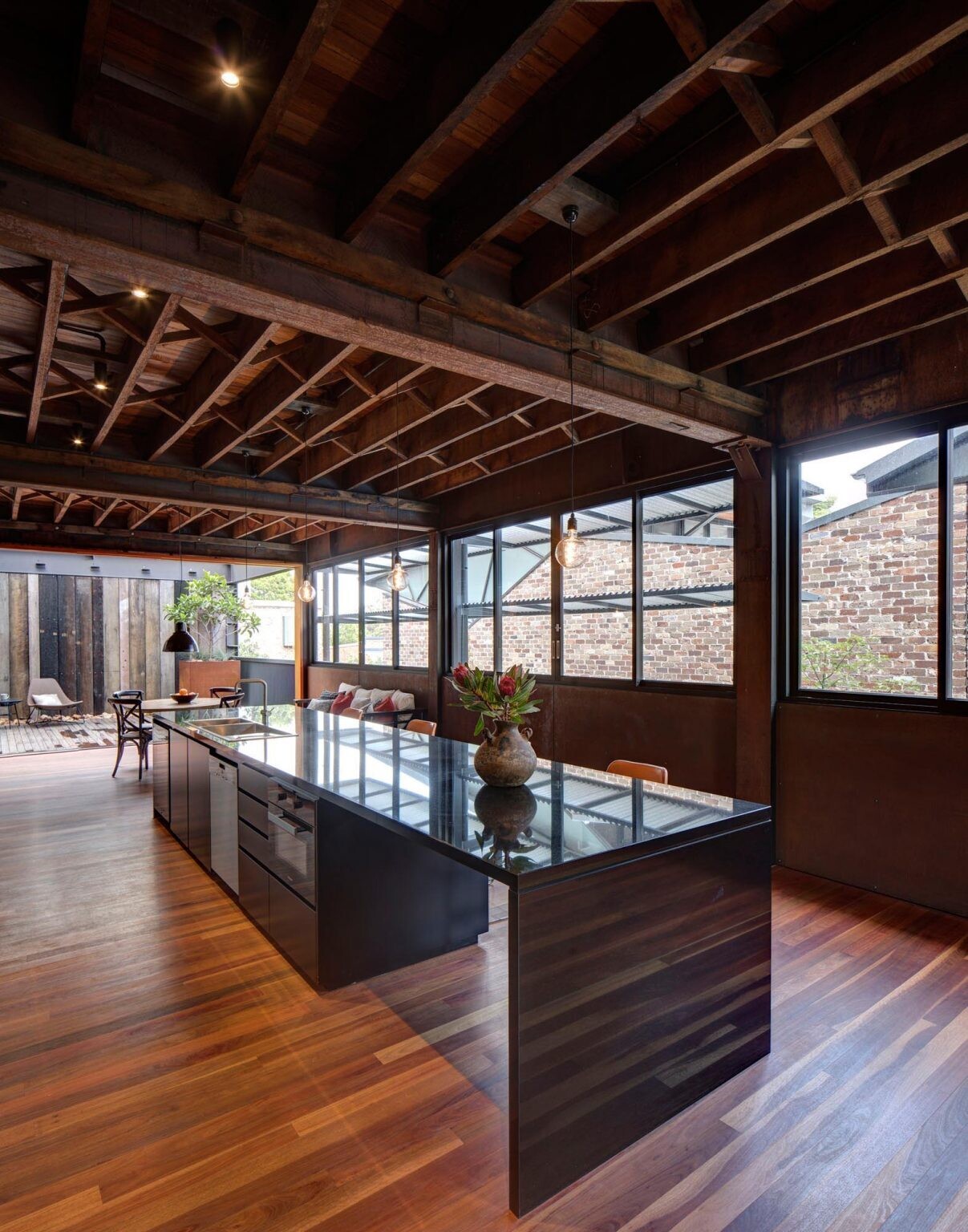
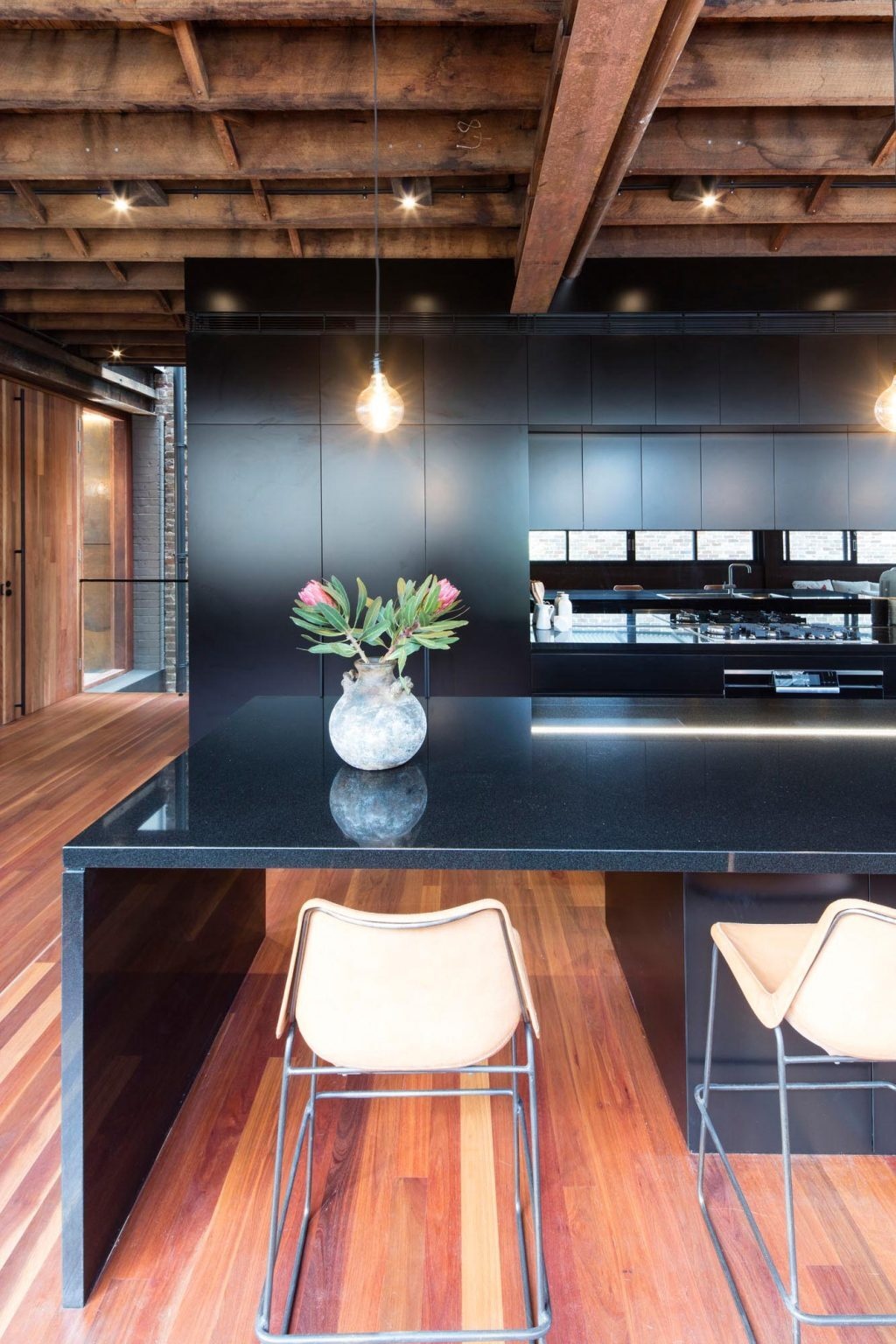
The kitchen sits between living and dining areas, acting as a dividing element while still keeping spaces visually linked. Matte black cabinetry, black countertops, and a mirrored backsplash create a continuous surface, anchored by a long island bench.
Floor-to-ceiling sliding glass doors open directly to a courtyard, where reused warehouse beams, black steel-capped timber panels, and natural stone surfaces shape an outdoor space that feels tightly connected to the interior.
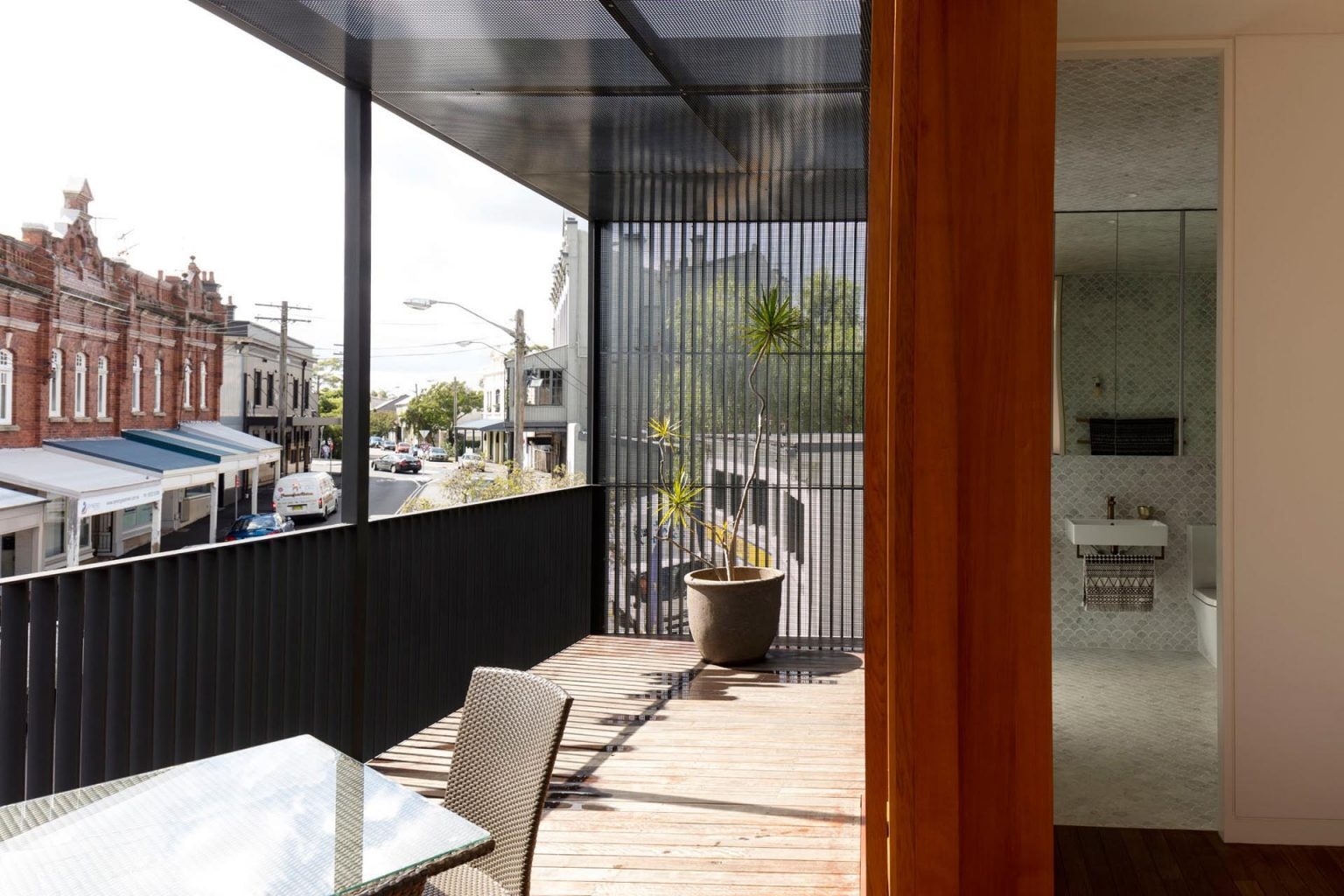
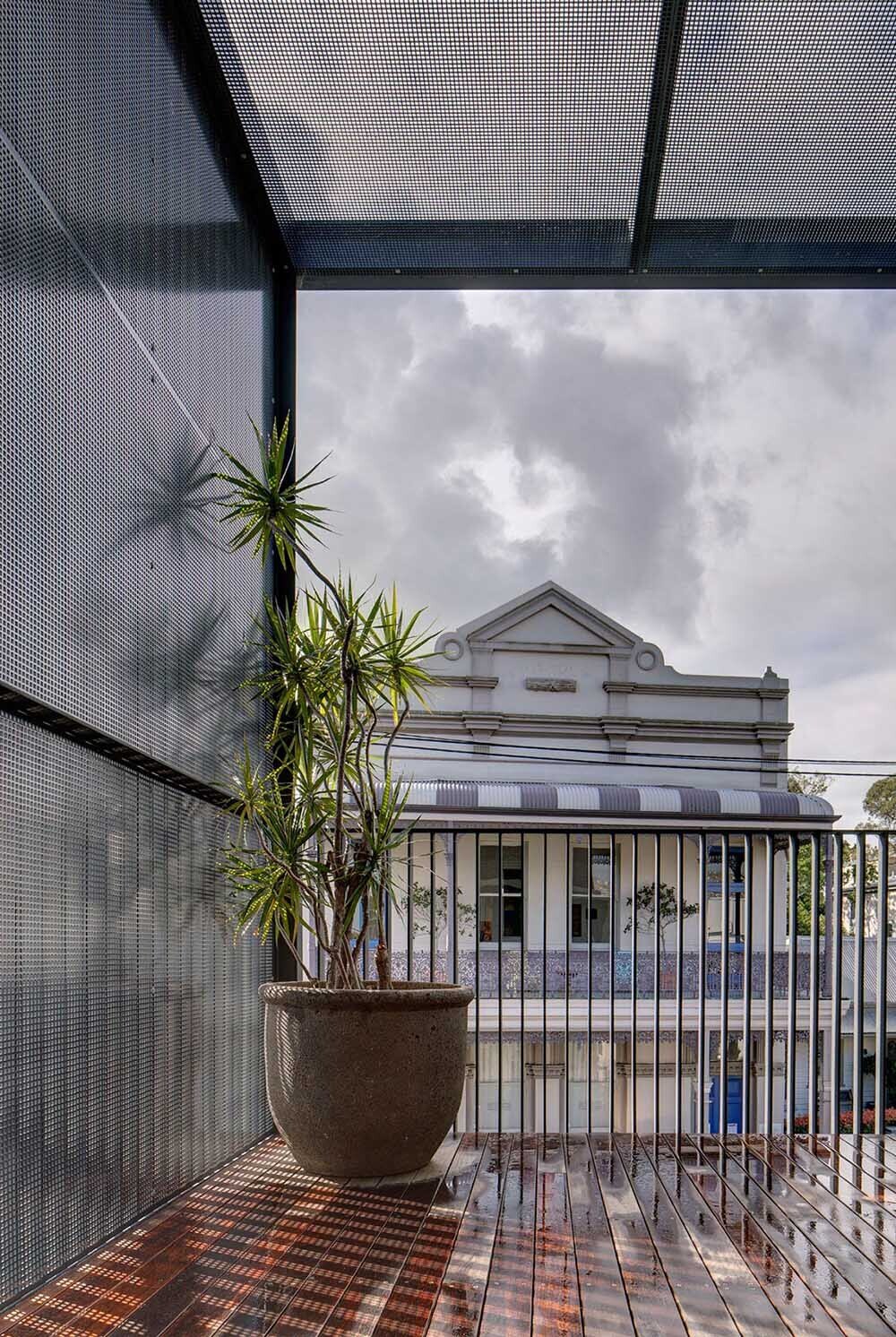
Across the building, pocket courtyards and balconies occupy around 30 percent of the site, introducing greenery into unexpected areas of the former warehouse footprint.
Outdoor Spaces With Reclaimed Materials
The courtyard is structured around materials drawn from the building’s past. Burnt timbers from the original warehouse form walls, while recycled bricks line a central pond, introducing water as a quiet focal point.
These outdoor zones sit between interior rooms and exterior edges, allowing light and air to move through the home while preserving fragments of the warehouse structure in their raw form.
Bathrooms Finished in Marble and Brass
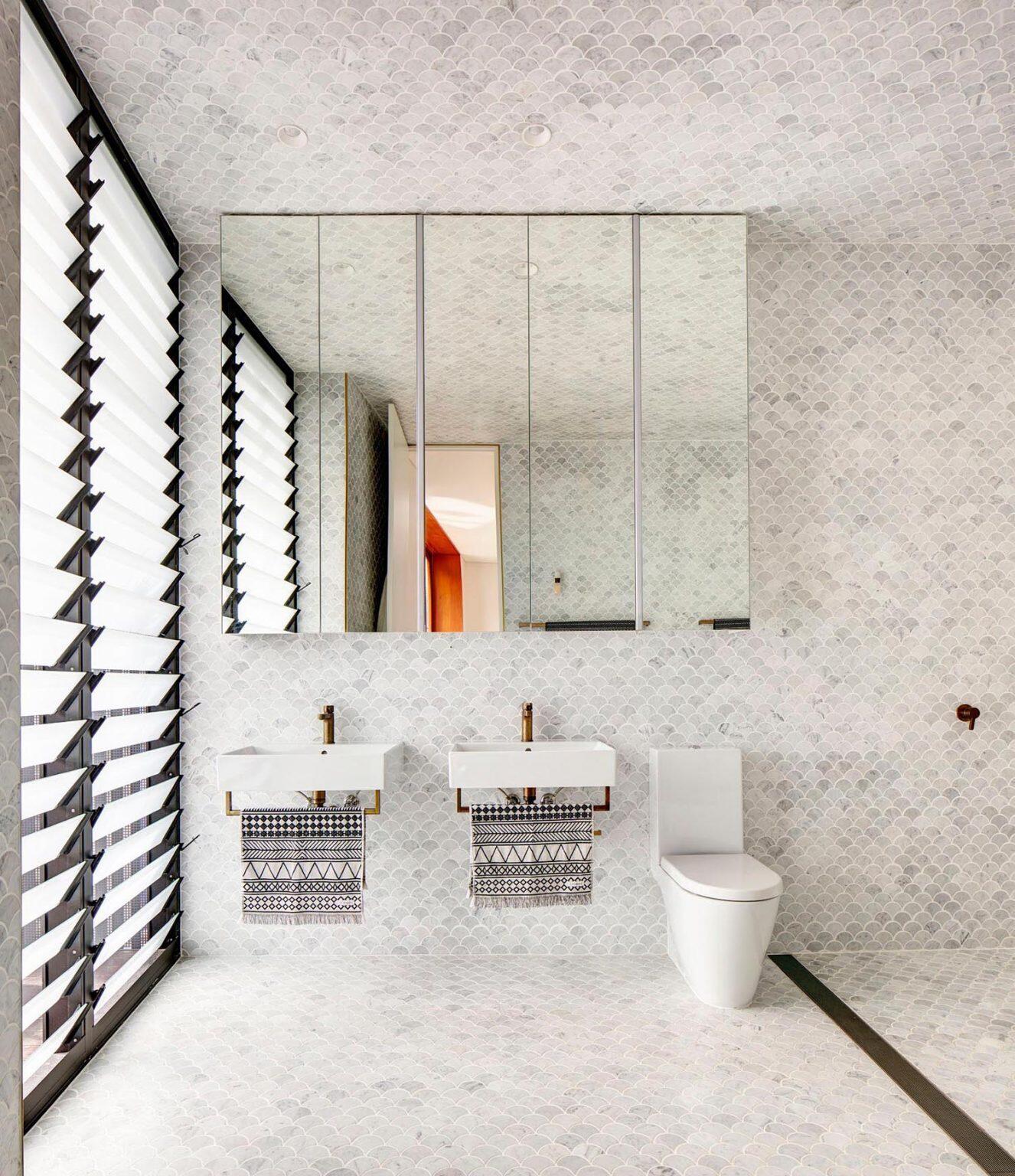
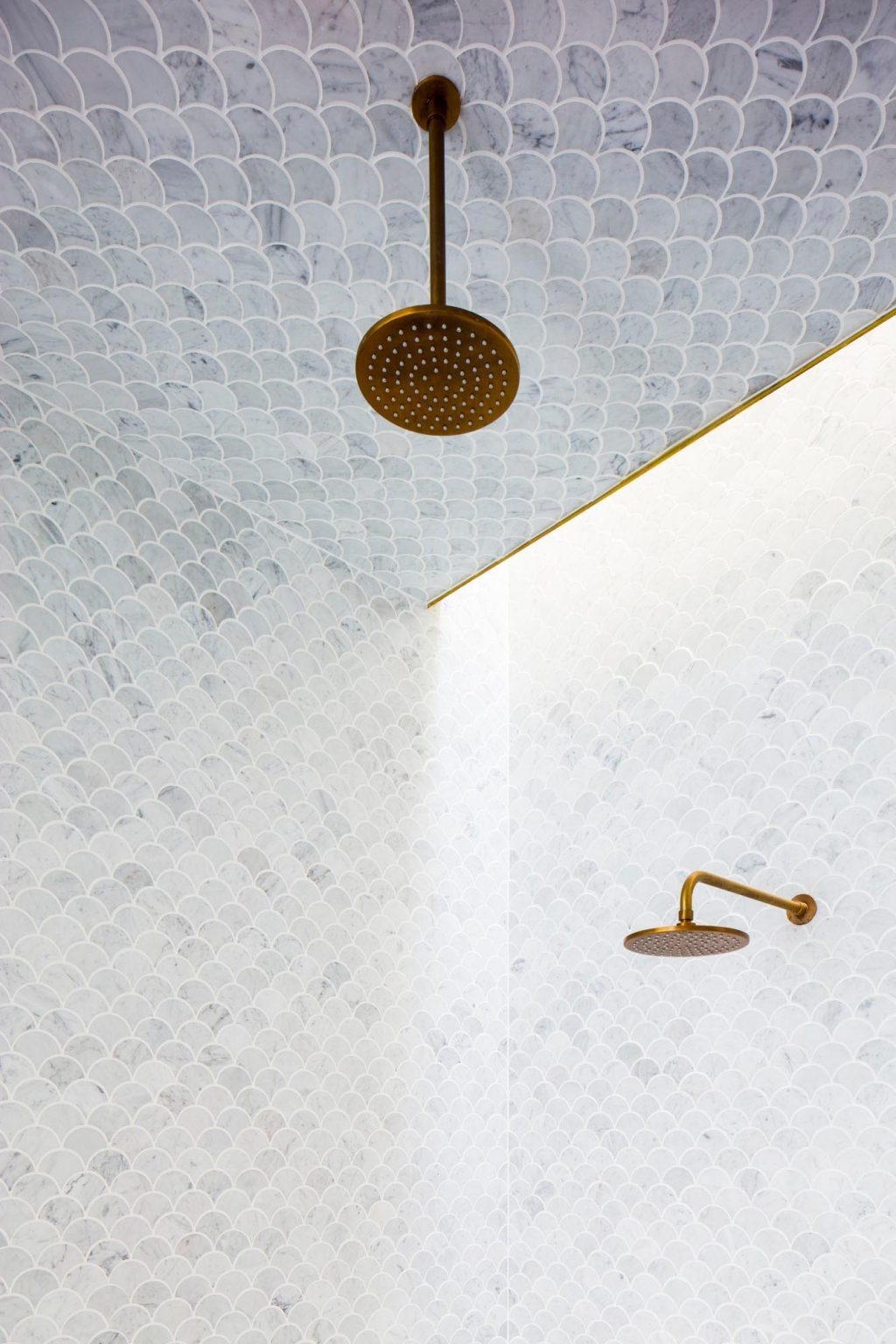
The bathrooms continue the material story in a more refined direction. The main ensuite is wrapped in light grey fan-shaped tiles that extend across ceilings and tall walls, paired with brass fixtures that introduce warmth against the cool surface.
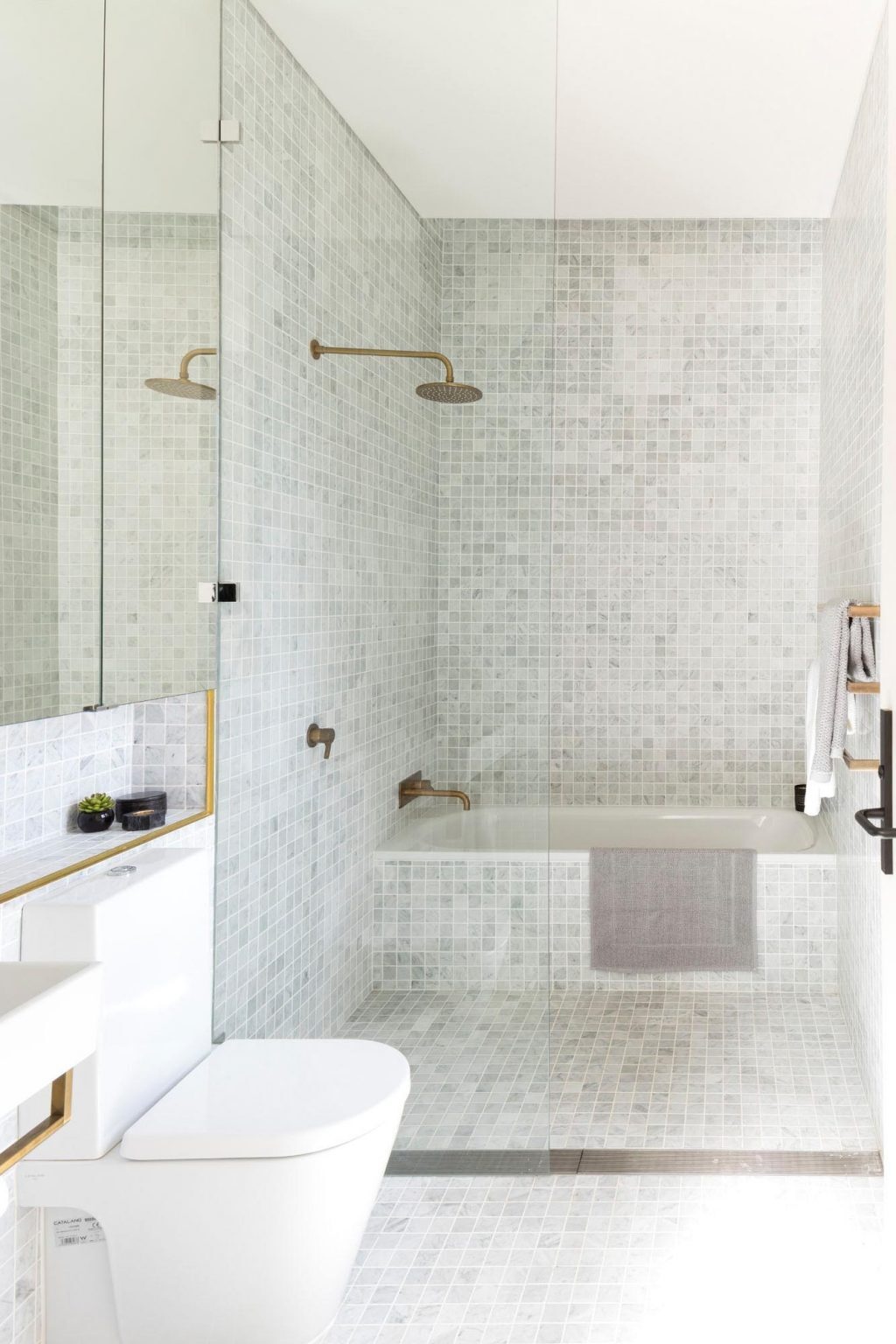
A secondary bathroom shifts to smaller grey square tiles, keeping the palette restrained while maintaining the industrial reference through texture and tone.
This Sydney warehouse conversion by Carter Williamson Architects shows how an industrial structure can be reshaped without losing its history. Through black tiled exteriors, exposed brick volumes, reclaimed materials, and layered outdoor spaces, the home creates a constant dialogue between past and present, all within a dense urban setting.