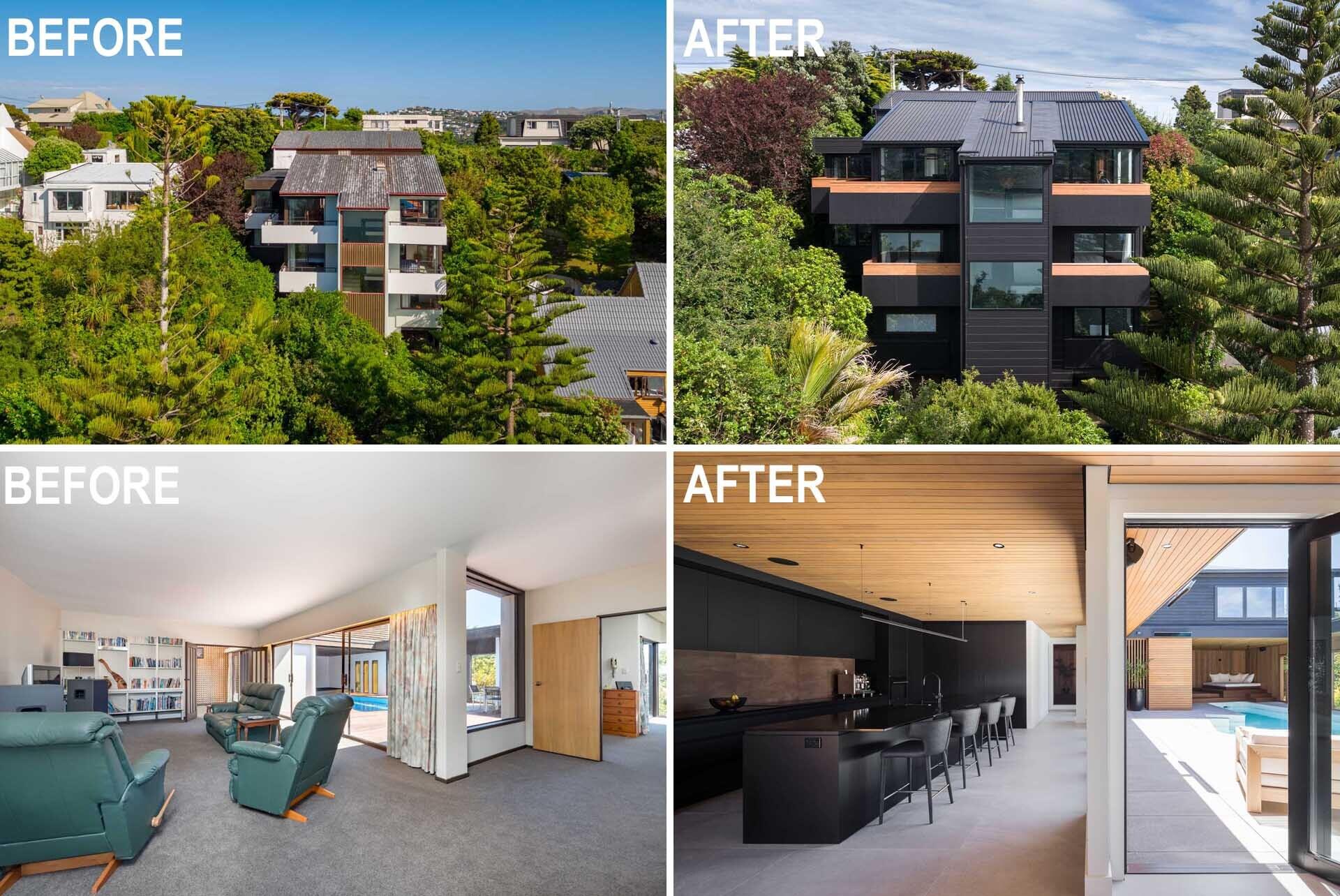
Perched on a hillside in Wellington, New Zealand, this remarkable home has entered a new era thanks to a renovation by Voxell Architecture. Originally designed in the 1970s by modernist architect Friedrich Eisenhofer, the residence already possessed a distinctive identity, with its multi-level layout, hidden courtyard, and strong focus on entertaining.
The goal of the renovation was not to erase the home’s history, but to strengthen what made it special. Through a restrained material palette, improved spatial connections, and a series of targeted updates, Voxell Architecture refreshed the property while maintaining the character of Eisenhofer’s original vision.
What emerges is a home that respects its architectural heritage while offering a cleaner, more contemporary experience for modern living and entertaining.
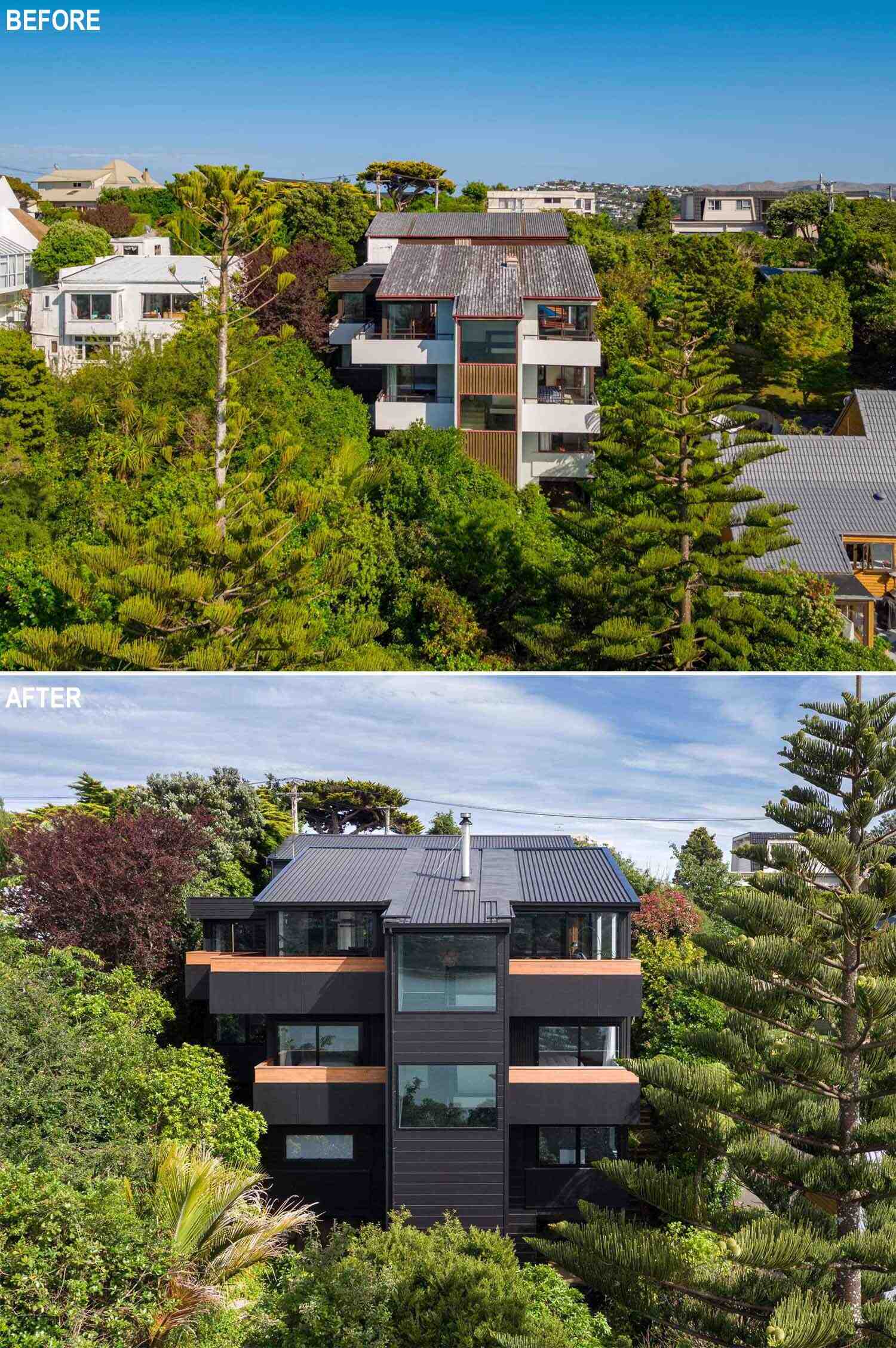
A Bold Exterior With a Strong Identity
The transformation begins with the exterior. The home now features a striking black facade and matching roof, creating a bold and unified appearance that highlights the building’s sculptural form.
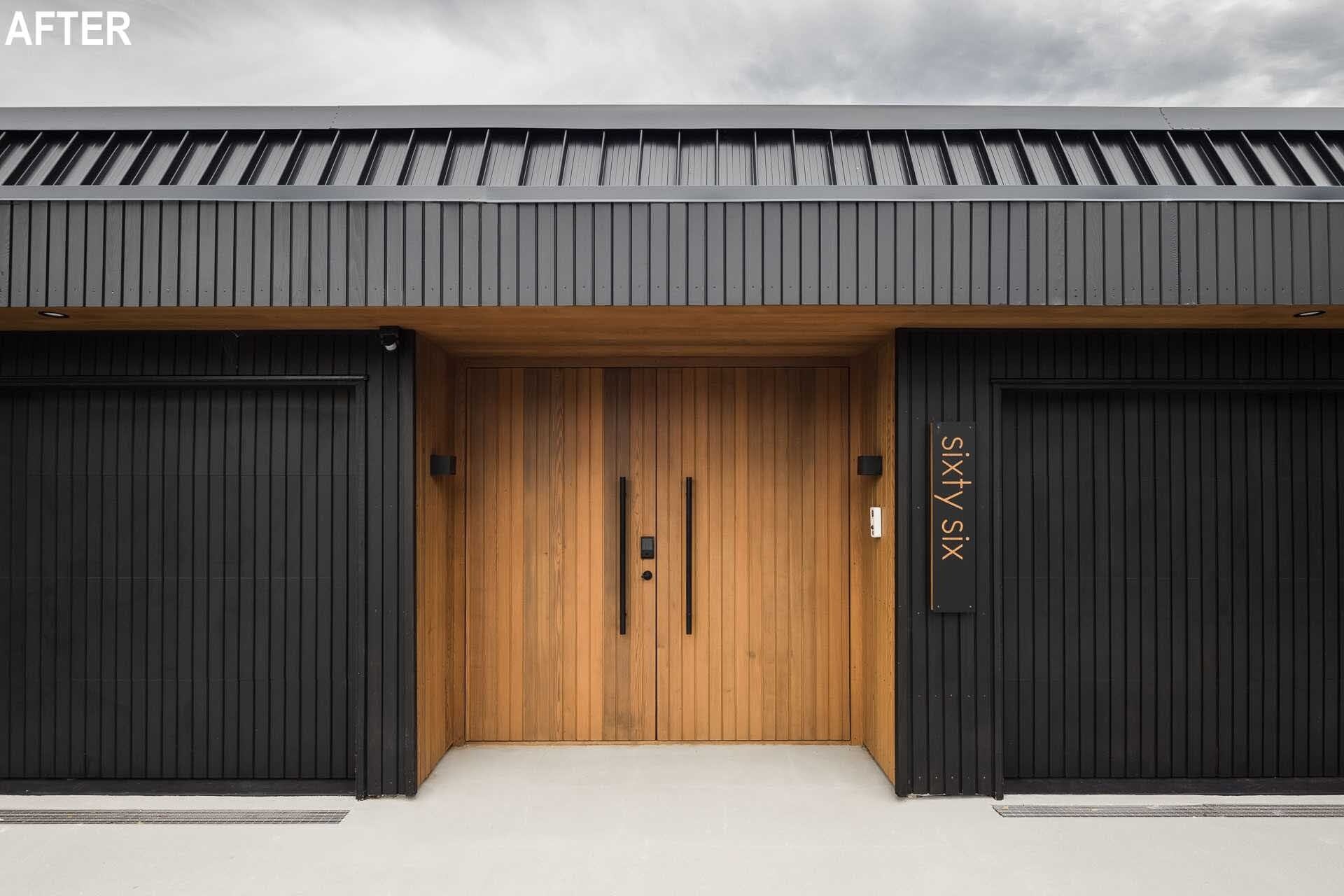
Warm timber accents introduce contrast and texture. Balcony details soften the darker palette and bring visual warmth to the architecture, while the timber front doors create an inviting arrival experience. Set against the vertical black cladding, the natural wood elements immediately stand out and hint at the material palette found throughout the renovation.
The Hidden Courtyard and Pool Take Center Stage
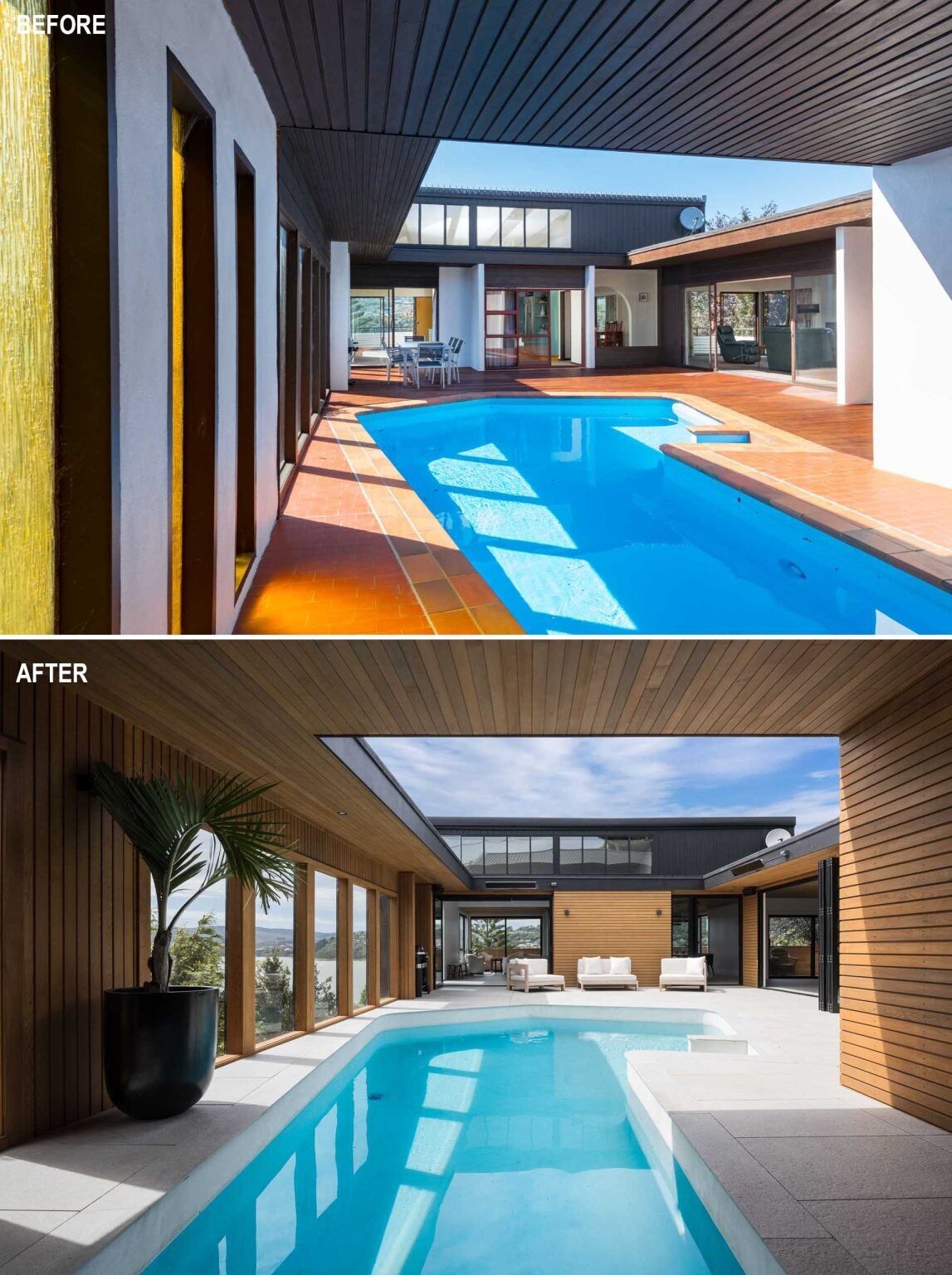
One of the home’s most distinctive features is its layout around a semi-enclosed courtyard and swimming pool. Concealed behind the modest street-facing facade, this outdoor space remains the heart of the home.
The original pool area featured brick-colored tiles, reflecting the design preferences of the era. Today, grey tiles provide a cleaner and more contemporary appearance, creating a seamless connection with the updated interior finishes.
Timber-lined walls introduce warmth and privacy, turning the courtyard into an inviting destination for gatherings and relaxation. By keeping the courtyard as the focal point of the renovation, Voxell Architecture reinforced the entertaining-focused concept that shaped Eisenhofer’s original design.
Opening Up the Main Living Spaces
The most significant changes took place in the kitchen, dining, and living areas. These spaces were completely reconfigured to improve movement between rooms and strengthen visual connections throughout the home.
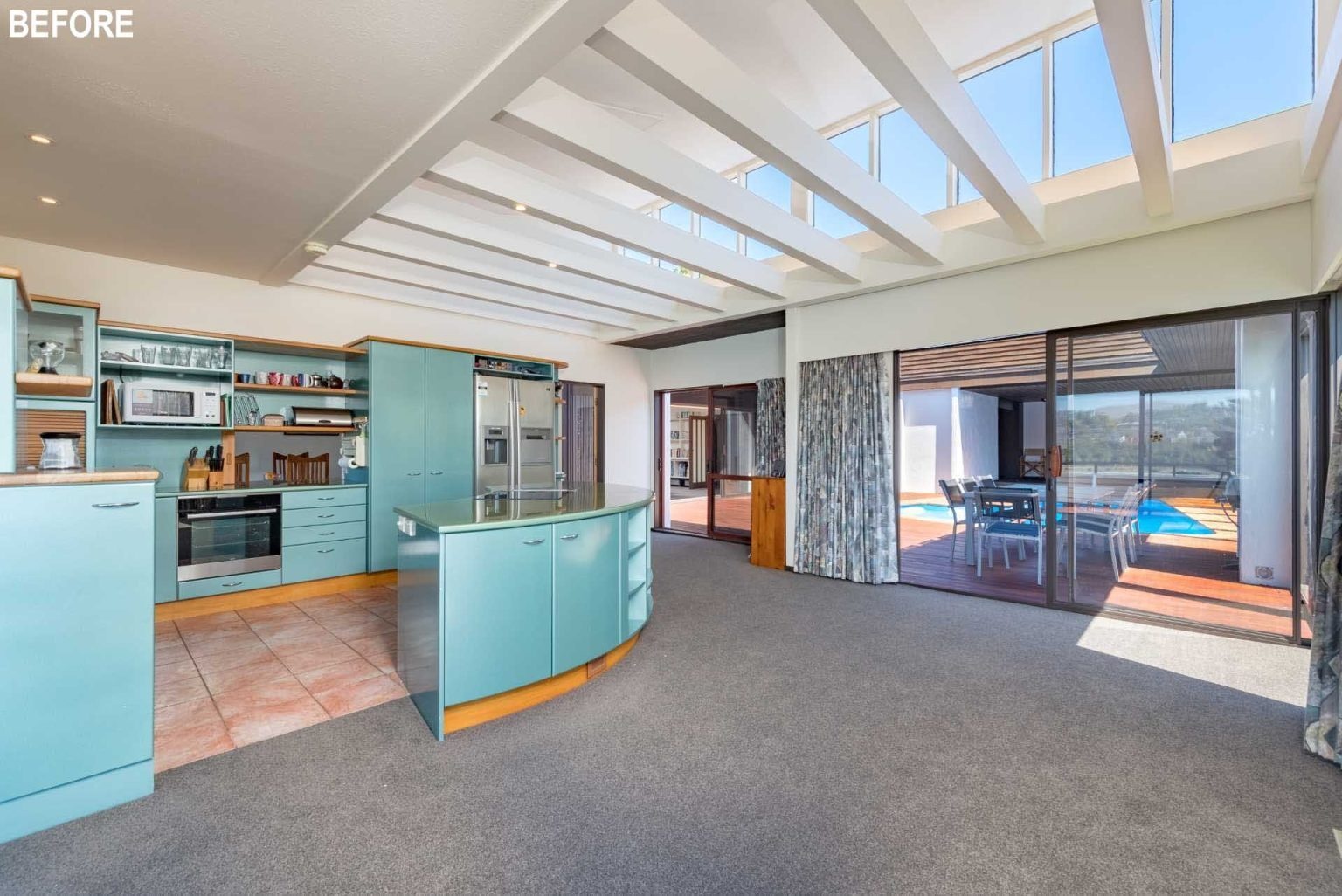
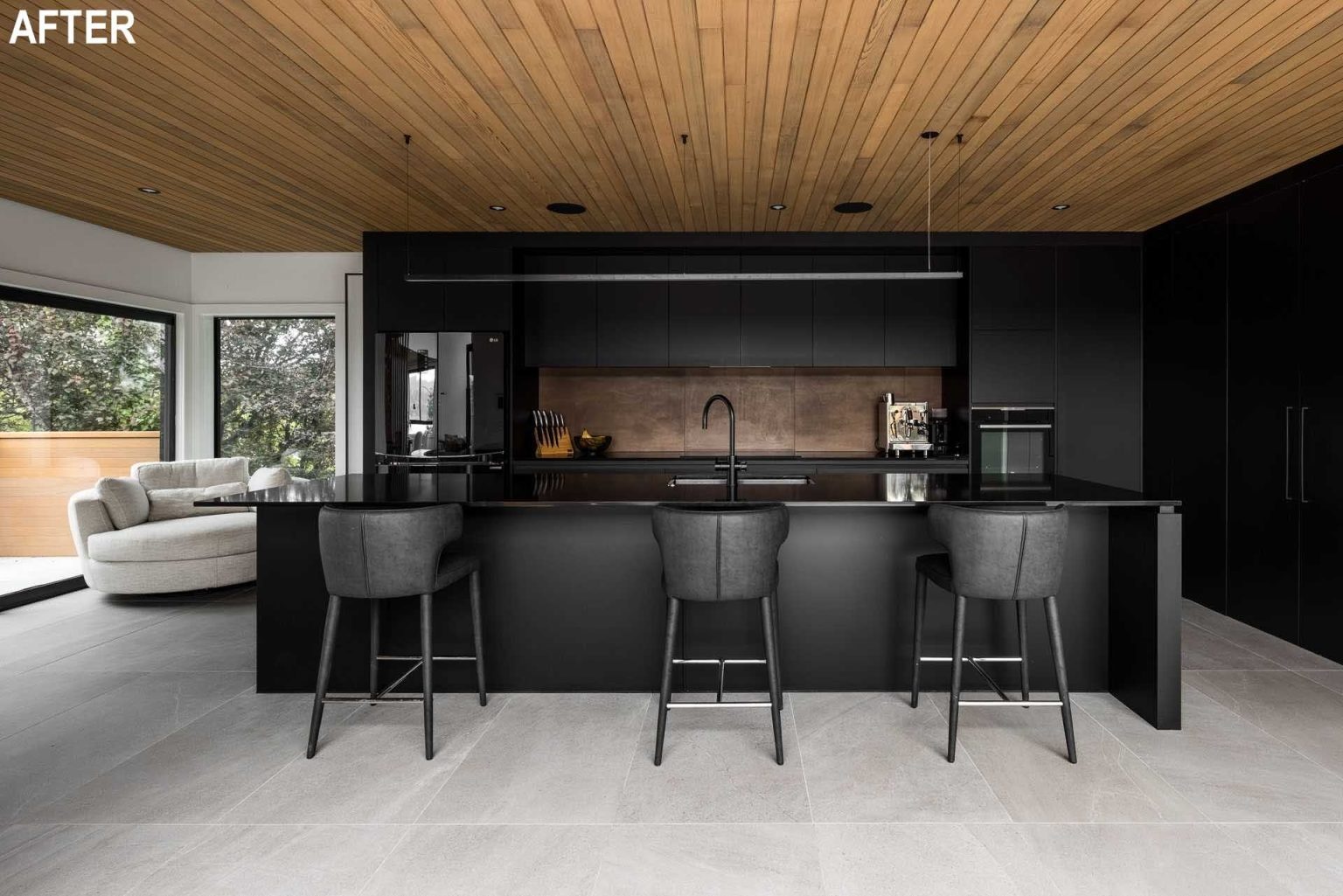
Before the renovation, the interiors featured dated cabinetry, aging carpet, and plain white walls. The new design introduces a more refined aesthetic, anchored by minimalist black kitchen cabinetry and a matching island.
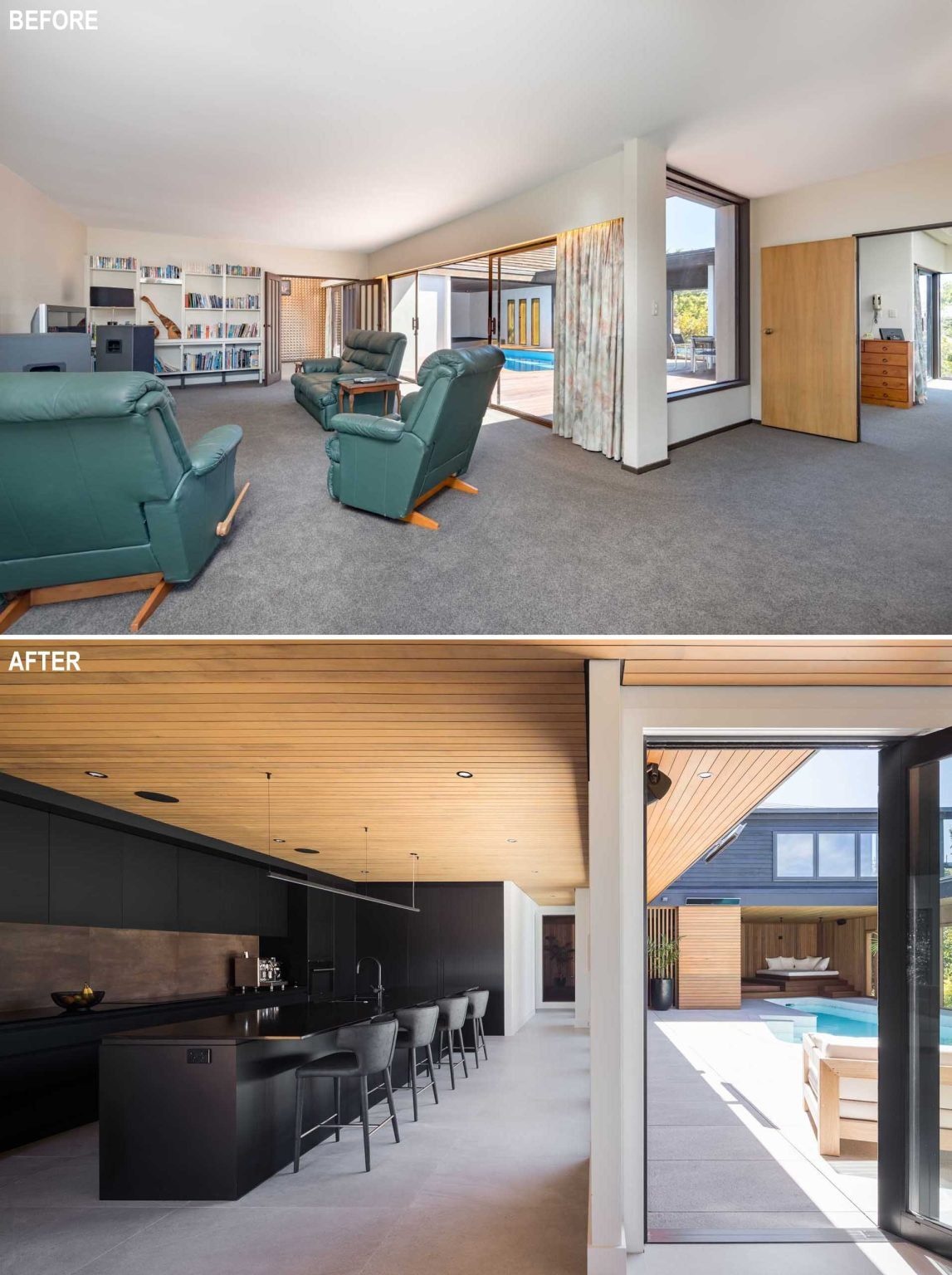
The updated flooring mirrors the tones used around the swimming pool, creating continuity between interior and exterior spaces. This material consistency helps unify the home’s different levels and strengthens the relationship between the living areas and the courtyard.
By simplifying the layout and opening connections between rooms, the renovation creates a more social environment that supports both everyday use and larger gatherings.
Living and Dining With Water Views
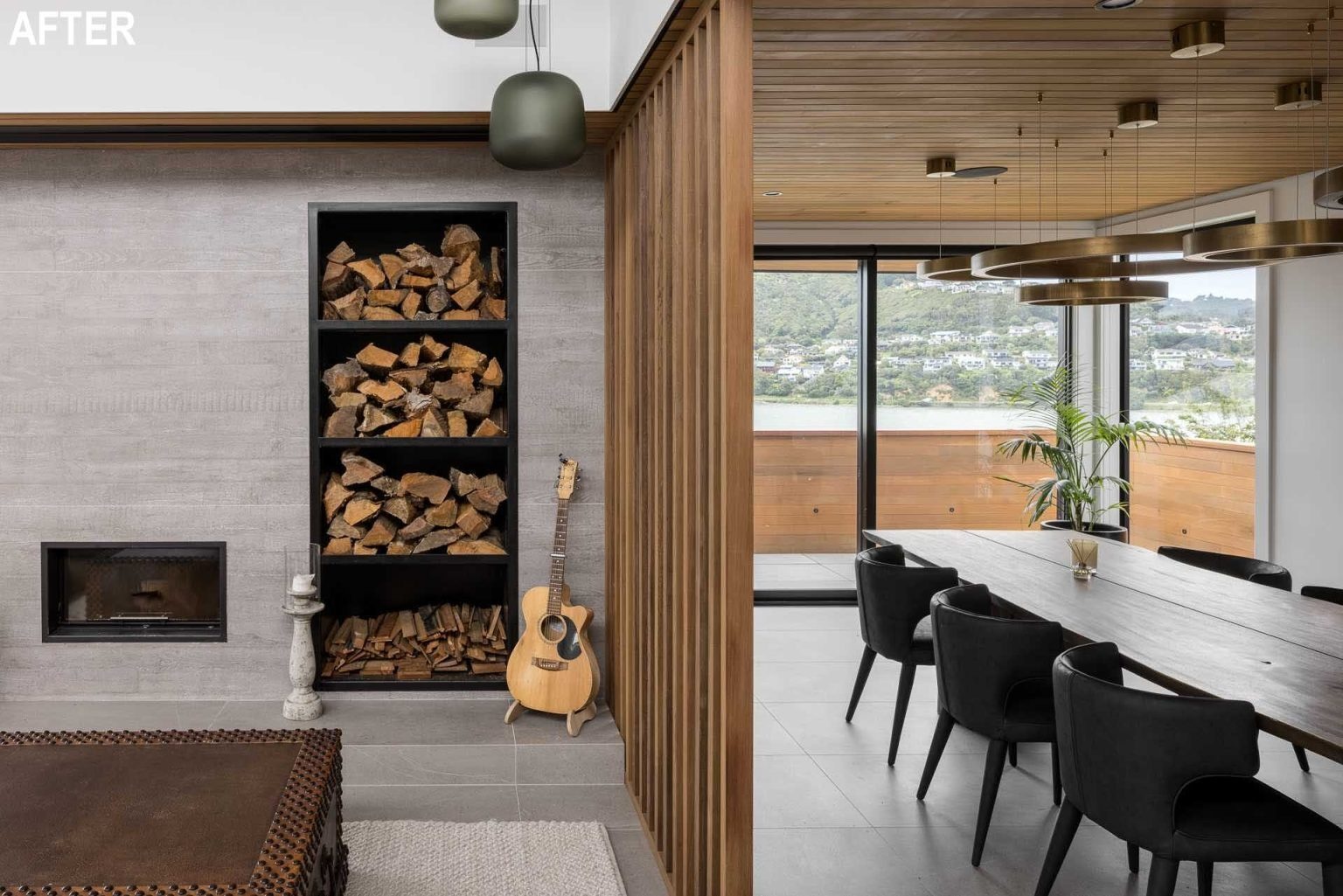
Beyond the kitchen, the living and dining areas also received significant updates. The refreshed spaces feel brighter, more open, and better connected to the home’s outdoor areas.
The dining room benefits from direct access to a balcony, where water views become an extension of the interior experience. These visual links help reinforce the home’s hillside setting and create a stronger connection between architecture and landscape.
Combined with the open-plan arrangement, the updated living spaces support the home’s long-standing focus on entertaining while offering greater comfort and flexibility.
A Staircase Transformation With a Natural Touch
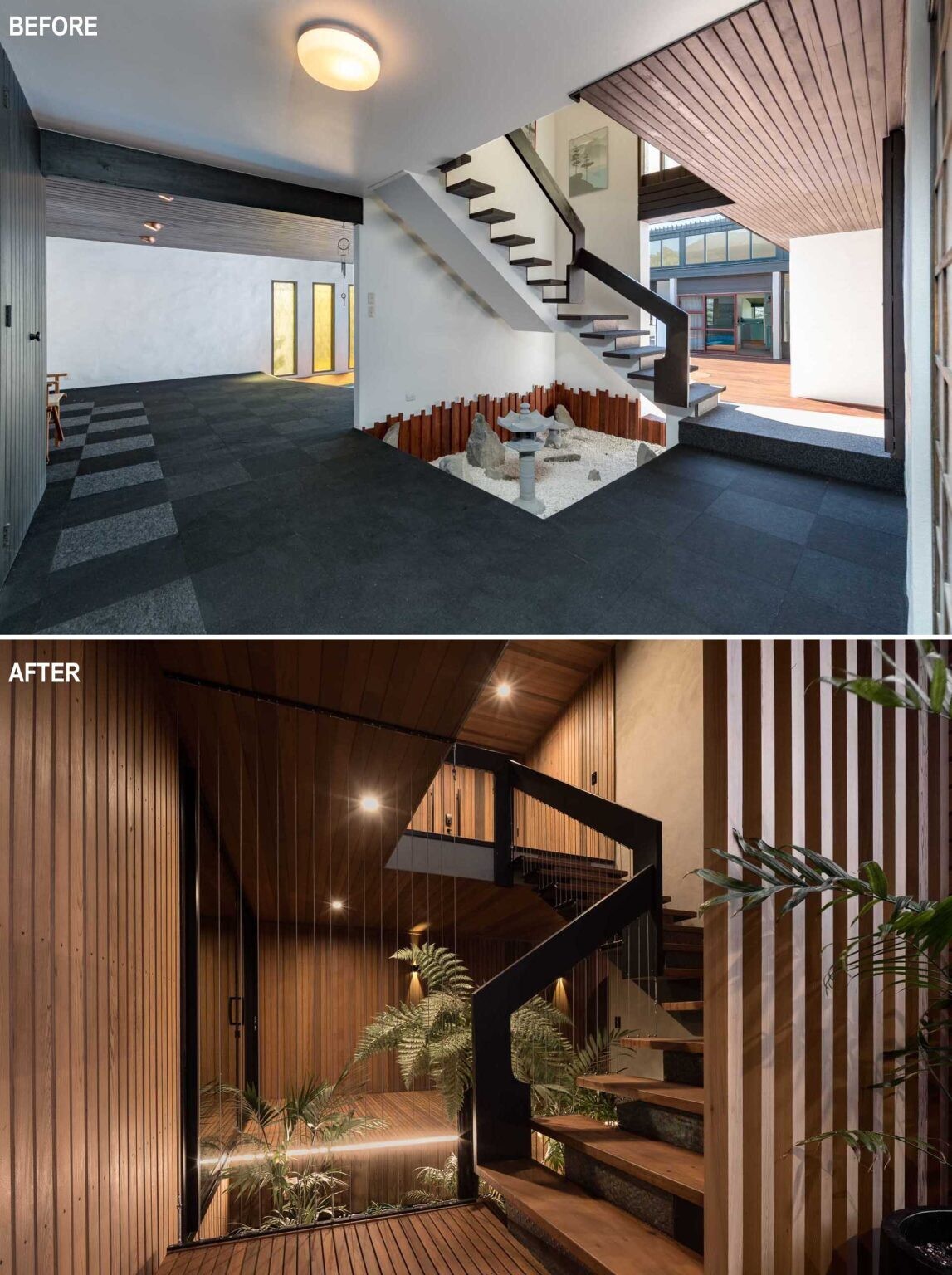
Even the circulation spaces received attention during the renovation. The original black-and-white staircase was replaced with a more refined combination of black finishes and natural timber.
The new staircase feels warmer and more integrated with the home’s broader material palette. Beneath it, an unexpected addition introduces a touch of greenery. A small indoor garden transforms what might otherwise have been unused space into a unique design feature.
A Bathroom Designed for Modern Comfort
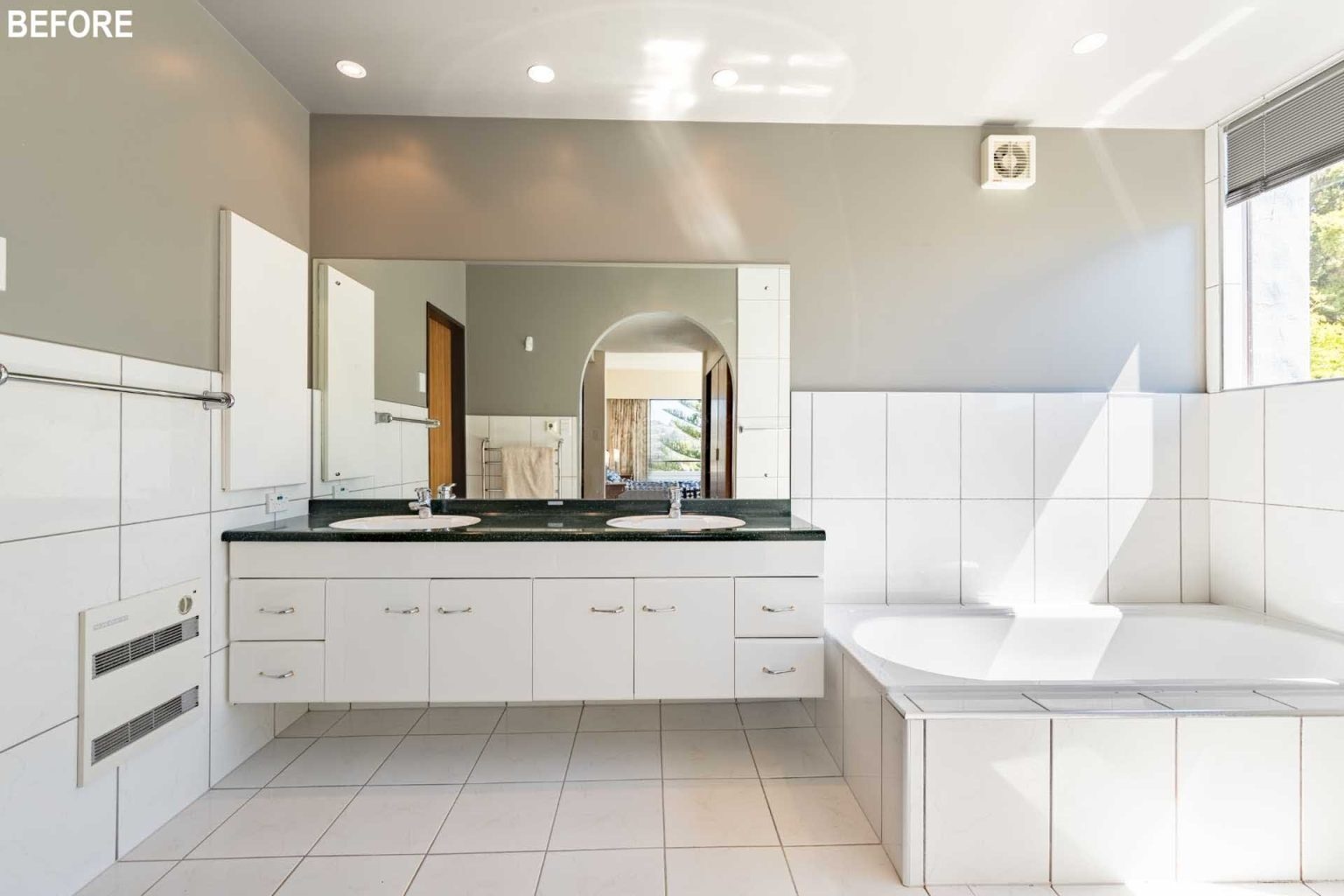
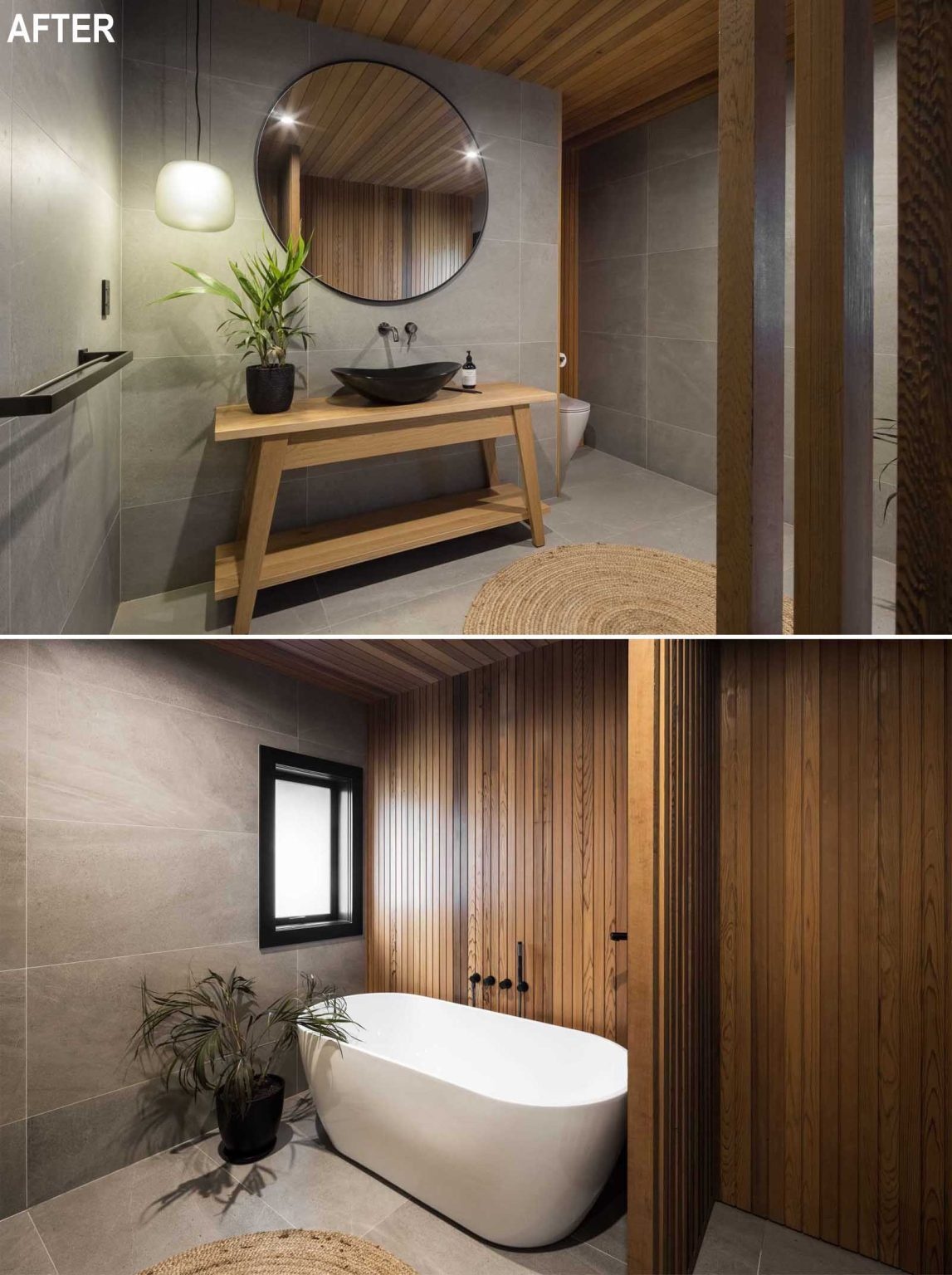
Among the most dramatic transformations is the bathroom. Previously finished in a dated white-and-tan palette, the space has been completely updated with a contemporary design approach.
Natural timber elements add warmth, while large-format tiles create a clean and spacious appearance. The standout feature is a freestanding bathtub positioned against a timber accent wall, creating a strong focal point within the room.
Honoring the Past While Looking Forward
Renovating a distinctive architectural home can be a delicate balancing act, especially when the original design carries such a strong identity. For this Wellington residence, Voxell Architecture approached the project with a clear objective, preserve the qualities that made Friedrich Eisenhofer’s design unique while adapting the home for contemporary living.
From the black exterior and refreshed courtyard to the reconfigured living spaces and modern interiors, every update contributes to a cohesive vision. The result is a home that celebrates its modernist origins while embracing a new chapter, proving that great architecture can continue to evolve without losing the qualities that made it special in the first place.