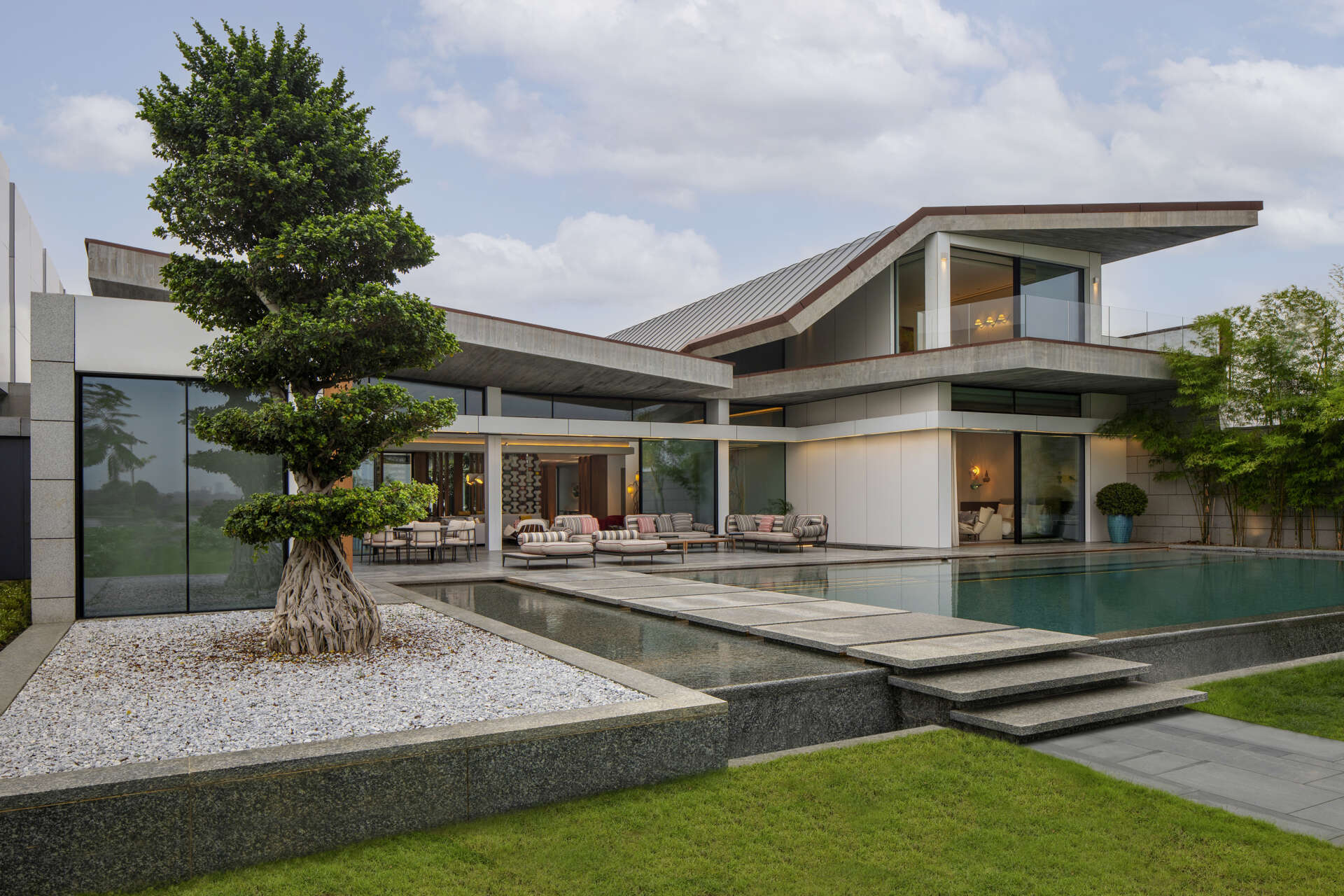
Set in Abidjan, Côte d’Ivoire, along a west-facing stretch between the lagoon and city skyline, Ebrié Villa introduces a bold mix of sculptural architecture and expressive interiors. Designed by SAOTA with interiors by Claude Missir Interiors, the home reflects both its tropical setting and the personality of its owners.
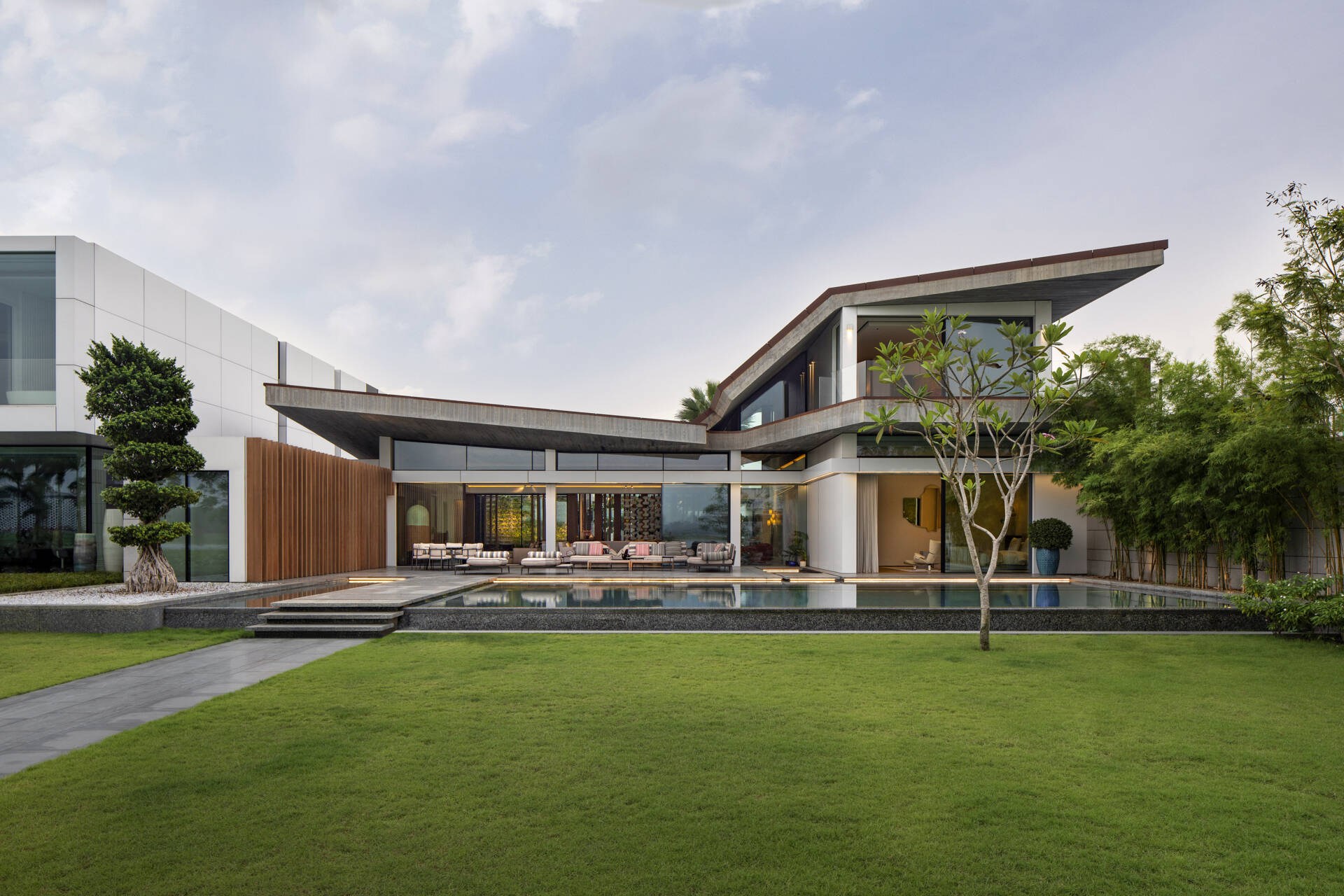
From the outside, the villa stands apart with its organic form and pavilion-like roof. Instead of following the linear language of neighboring homes, the design introduces a more fluid approach, shaped by the surrounding landscape.
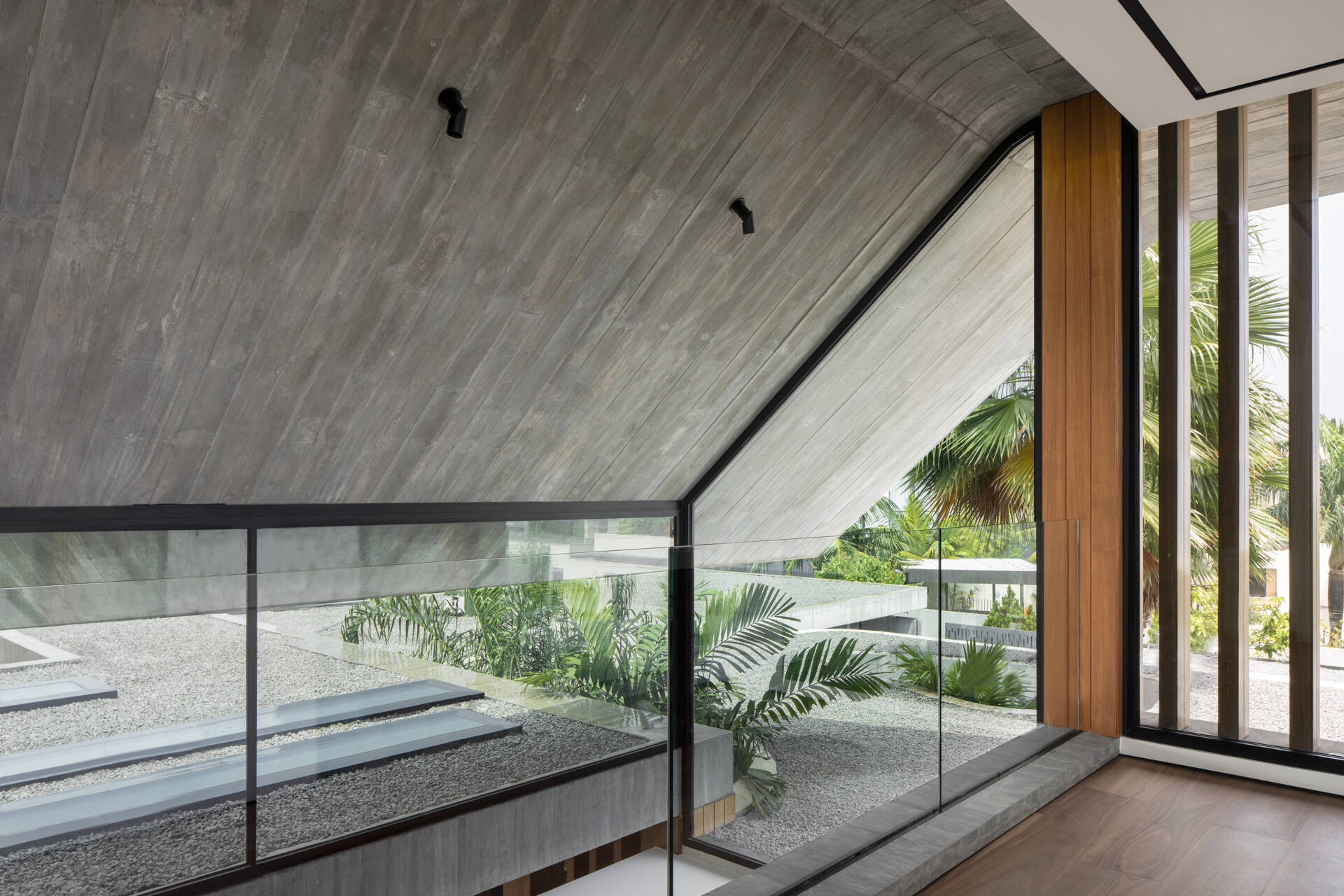
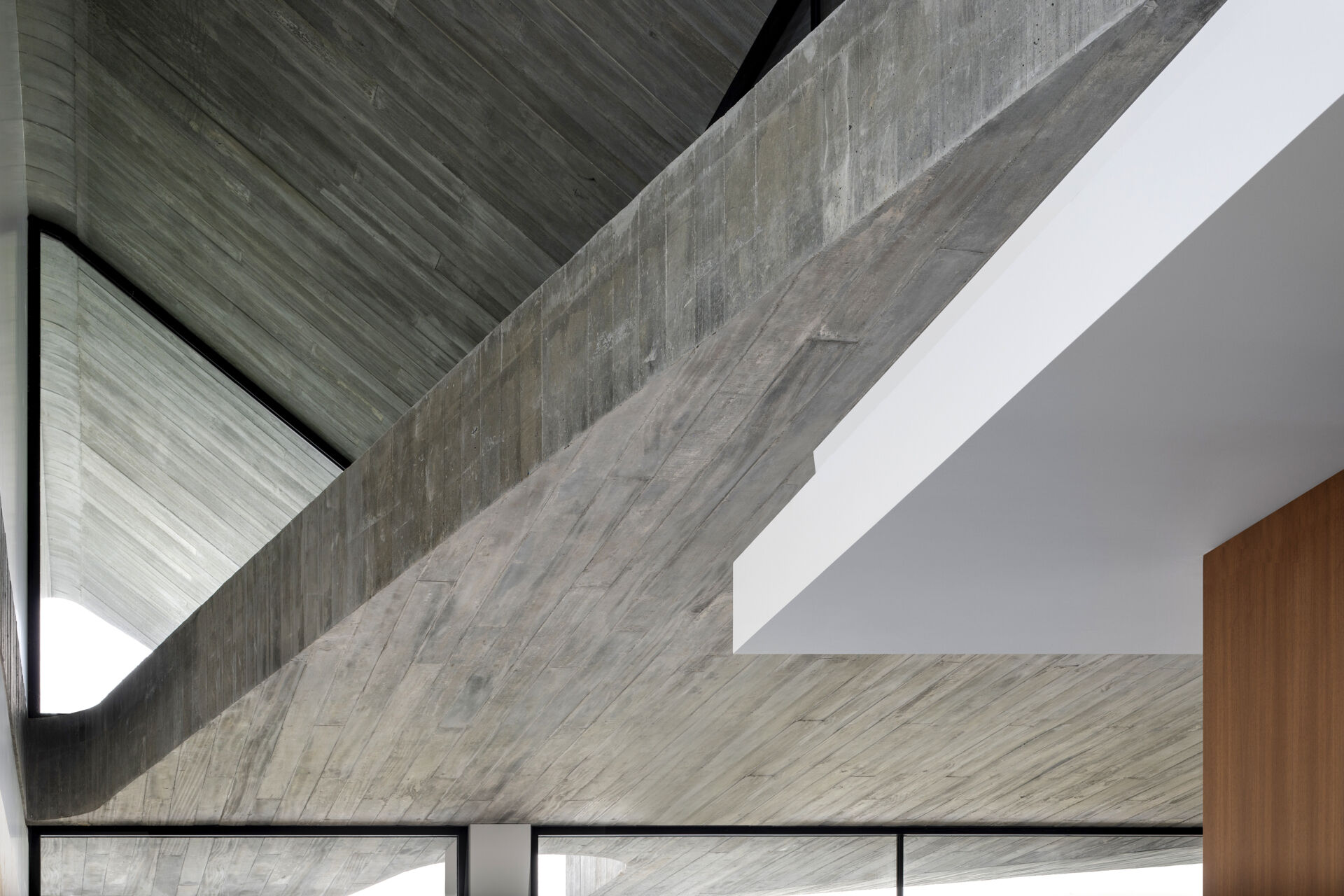
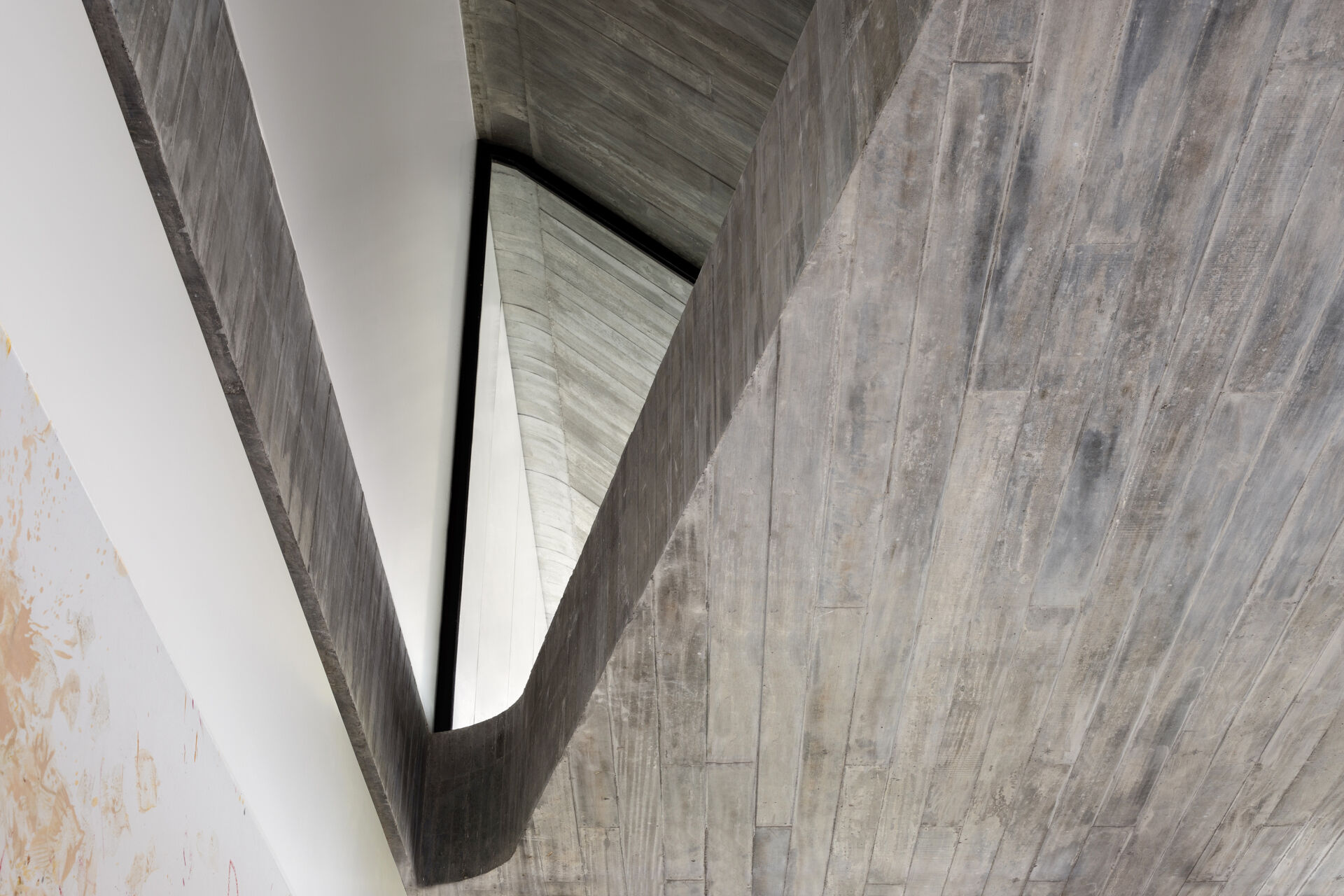
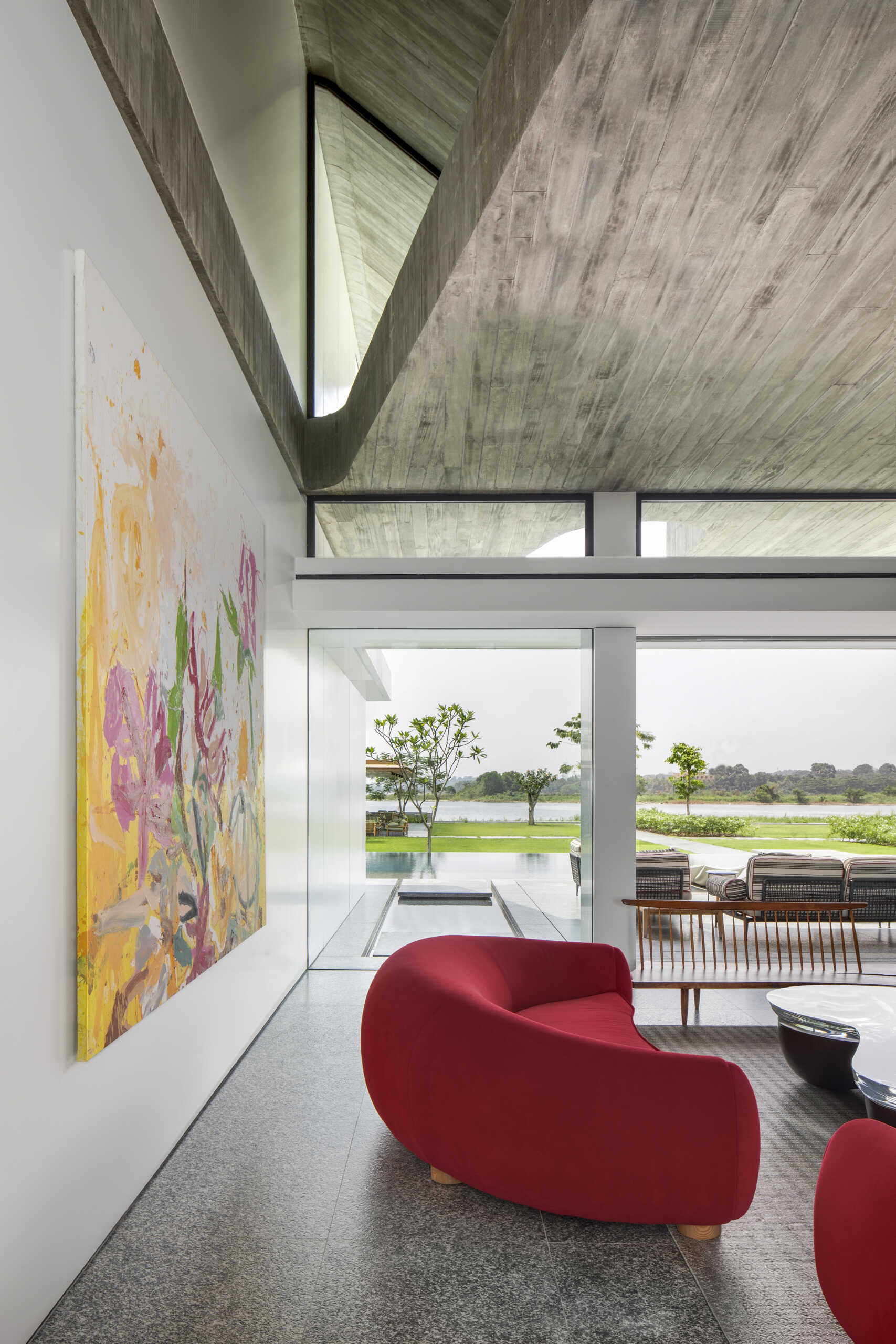
The standout feature is the sculptural off-shutter concrete roof, formed with precision to achieve a smooth, continuous surface. It sits lightly over the structure, creating shade while defining the home’s identity.
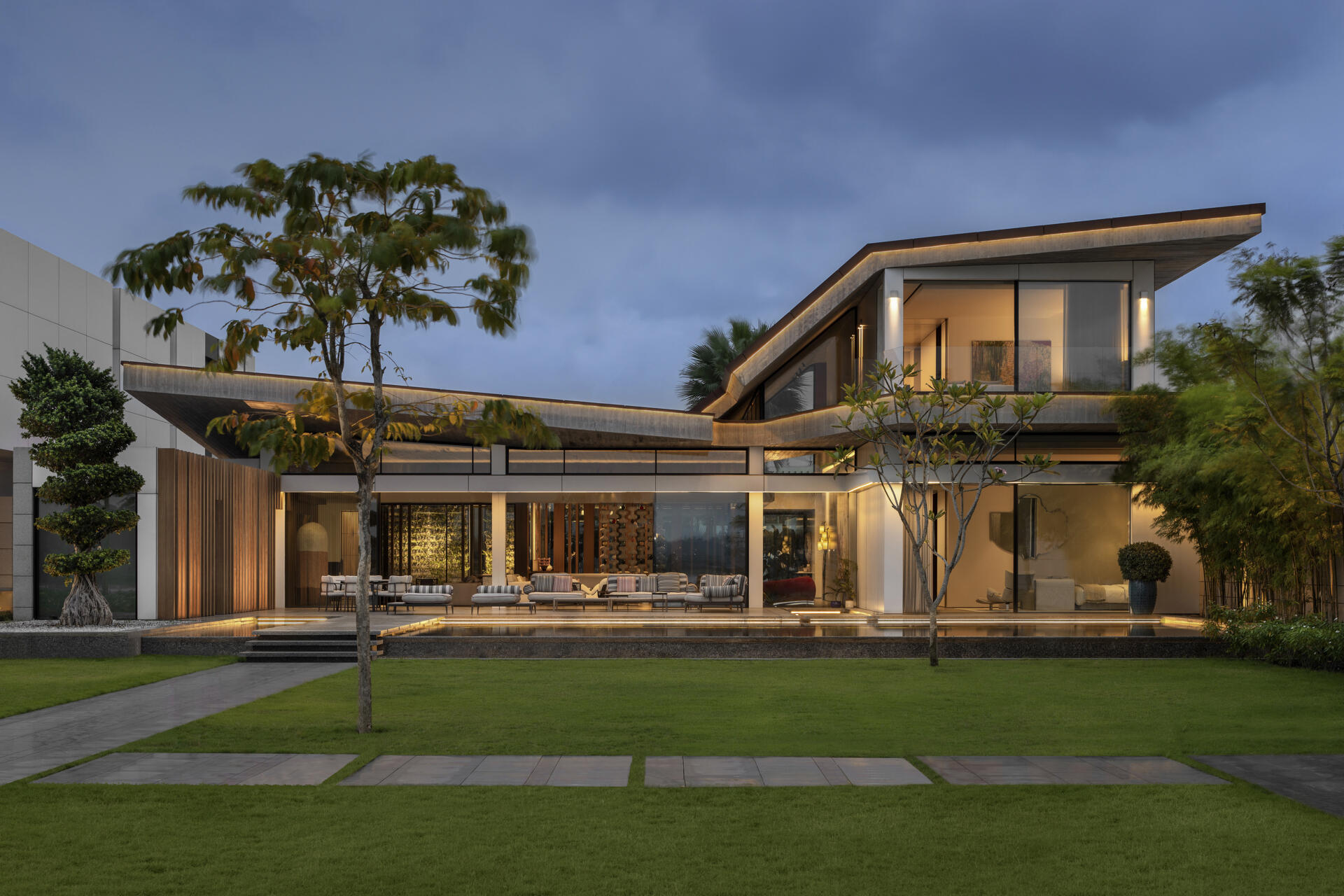
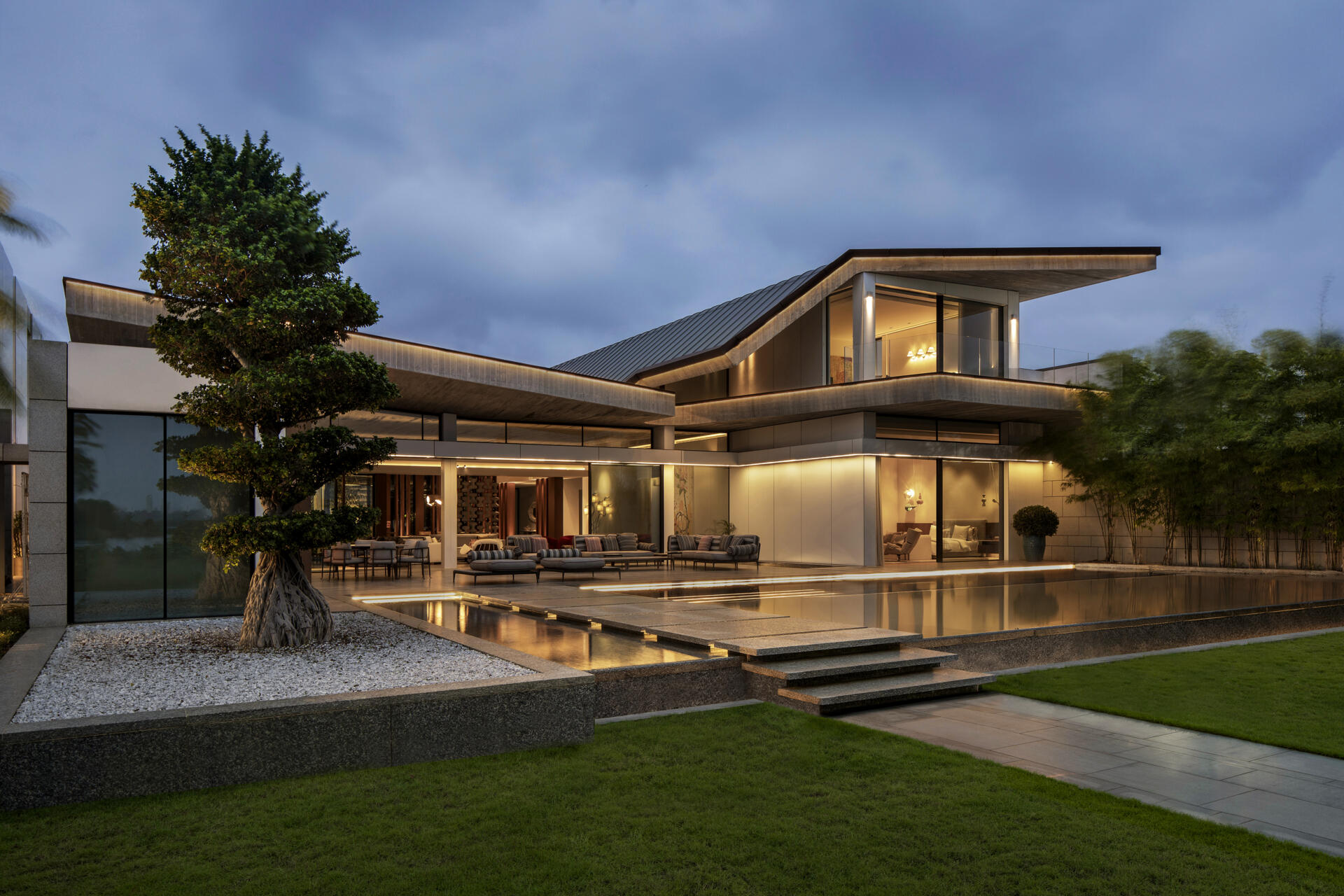
The experience begins at the street, where a sculptural concrete canopy draws you inward. Moving through this threshold, the atmosphere shifts quickly.
A landscaped forecourt appears, framed like an open pavilion. The transition from the tighter urban edge into this open space feels intentional, with greenery, light, and scale working together to soften the arrival.
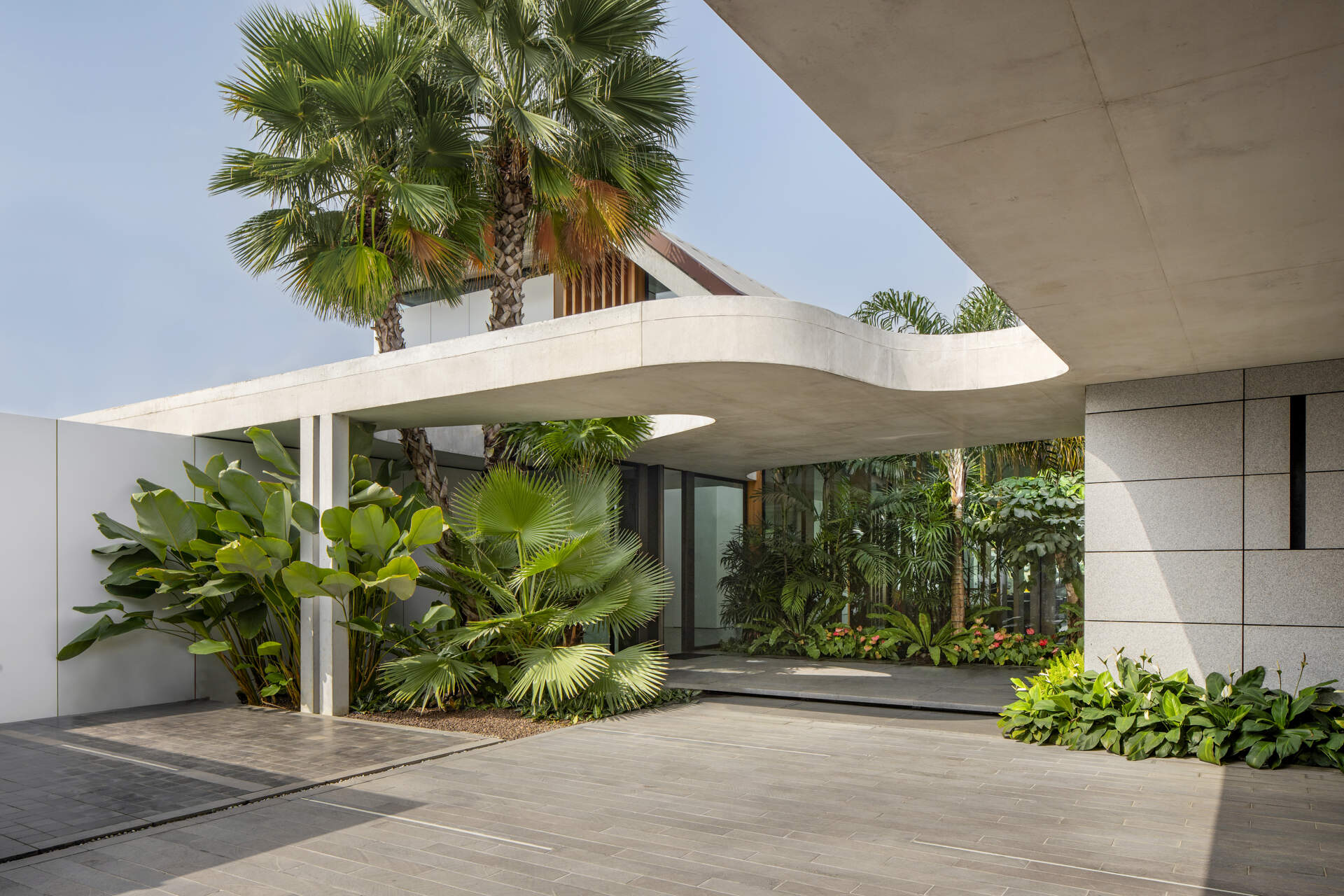
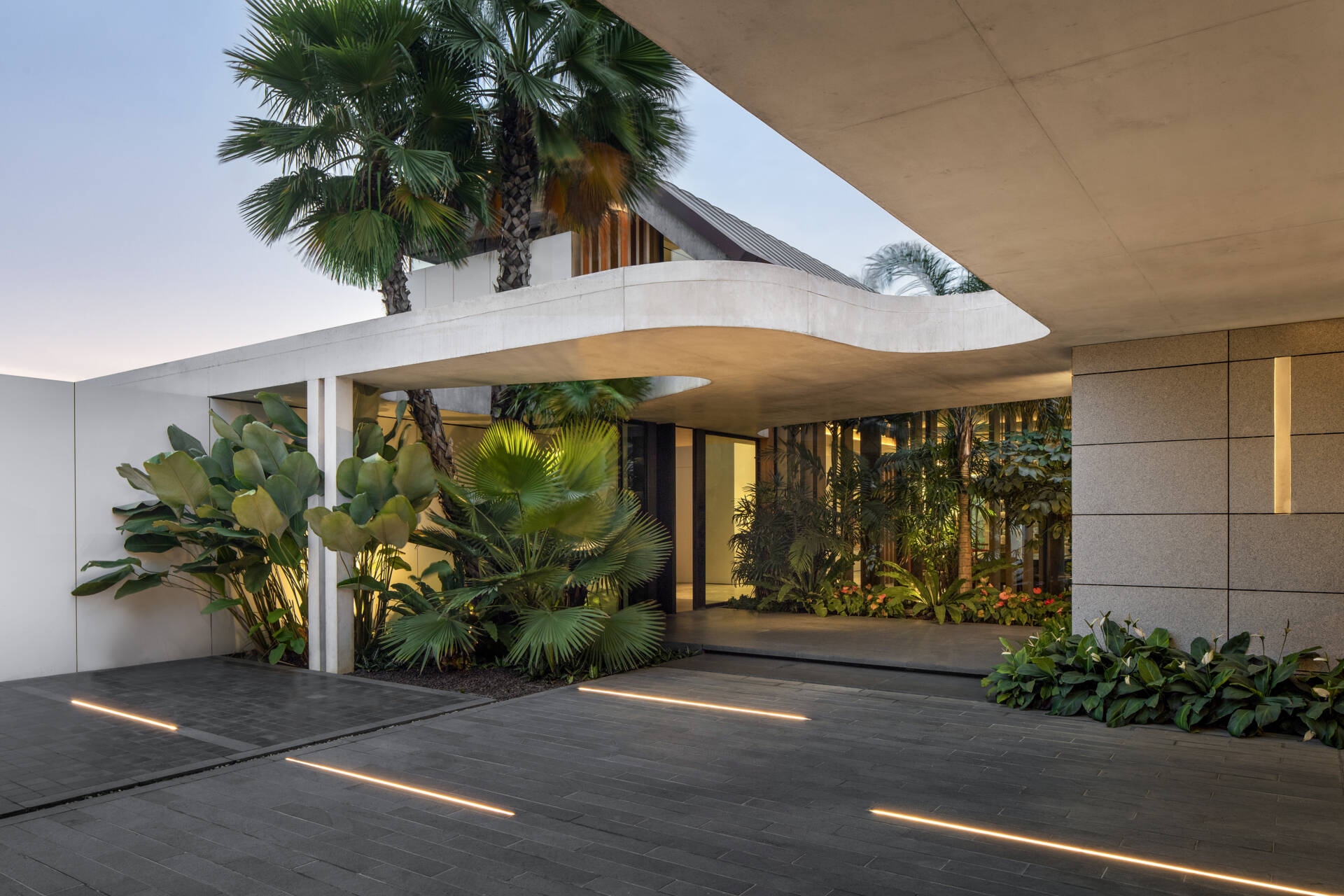
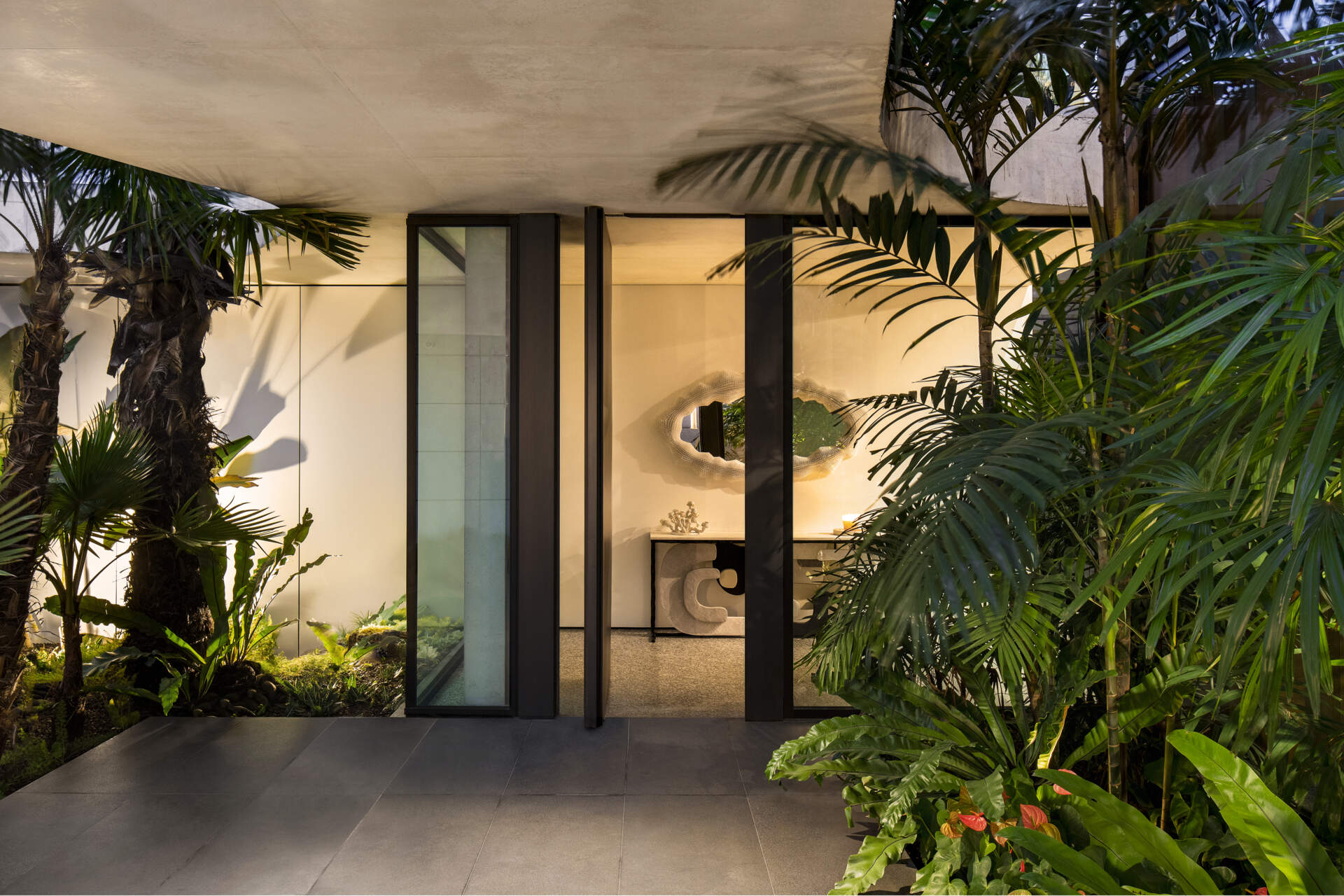
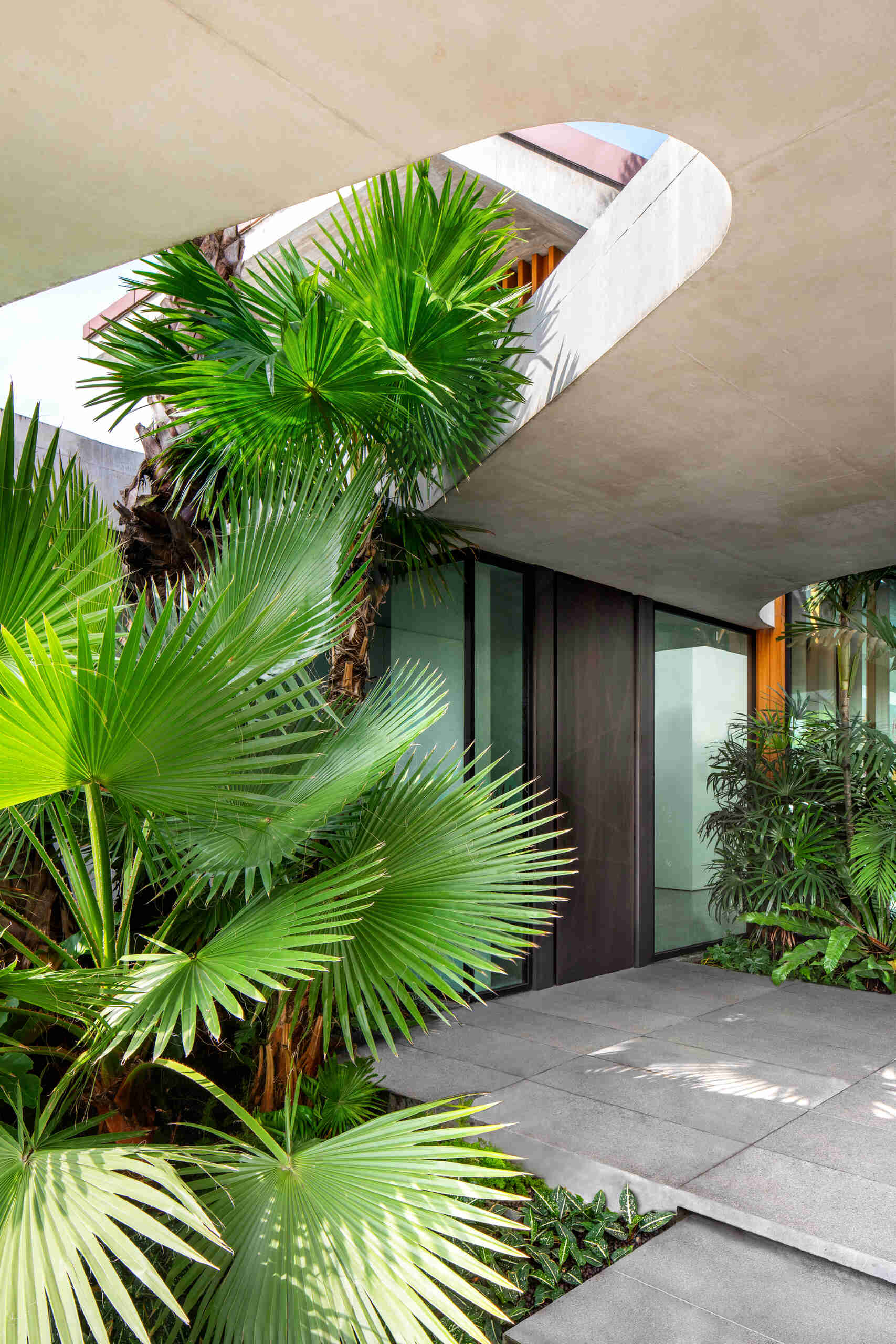
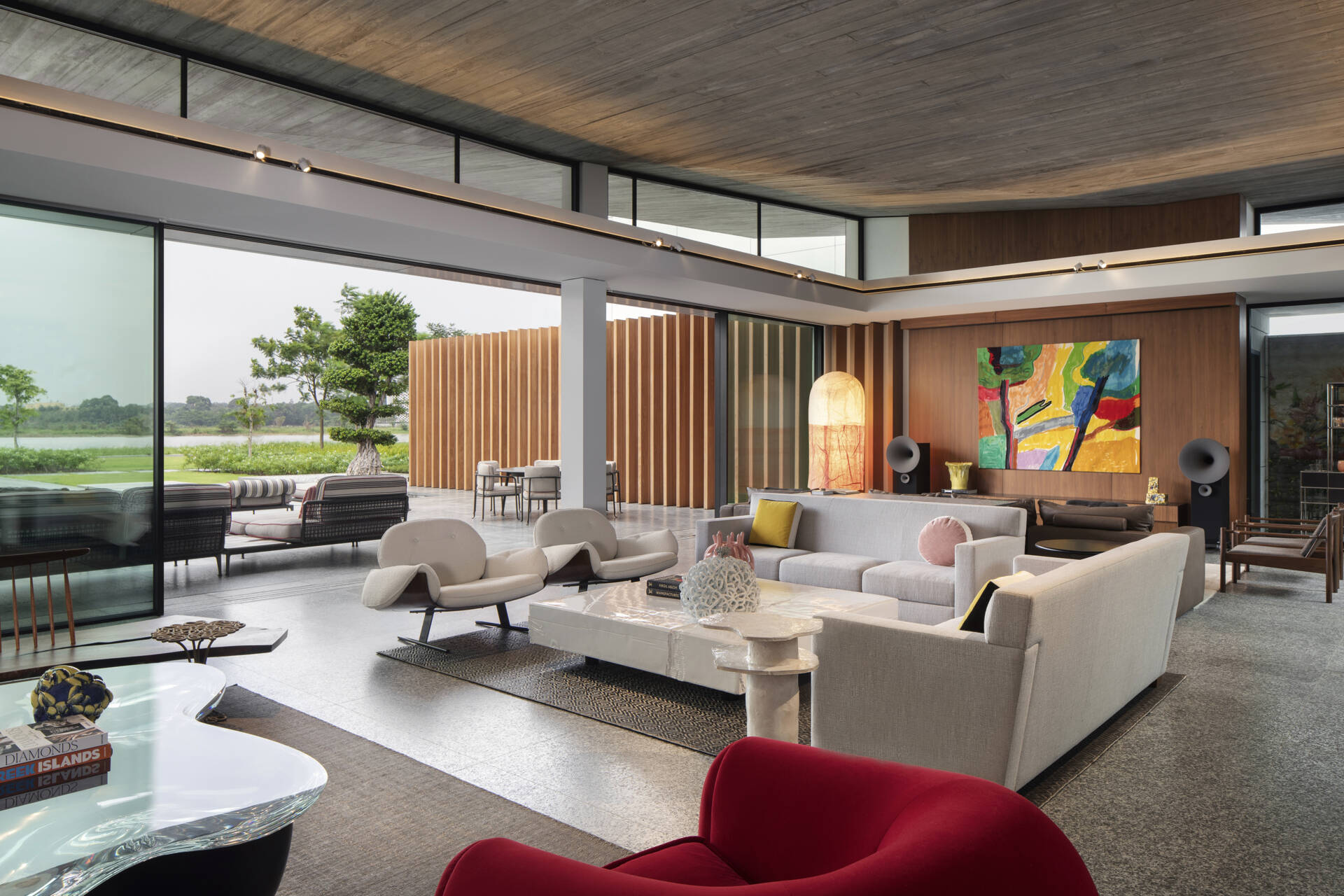
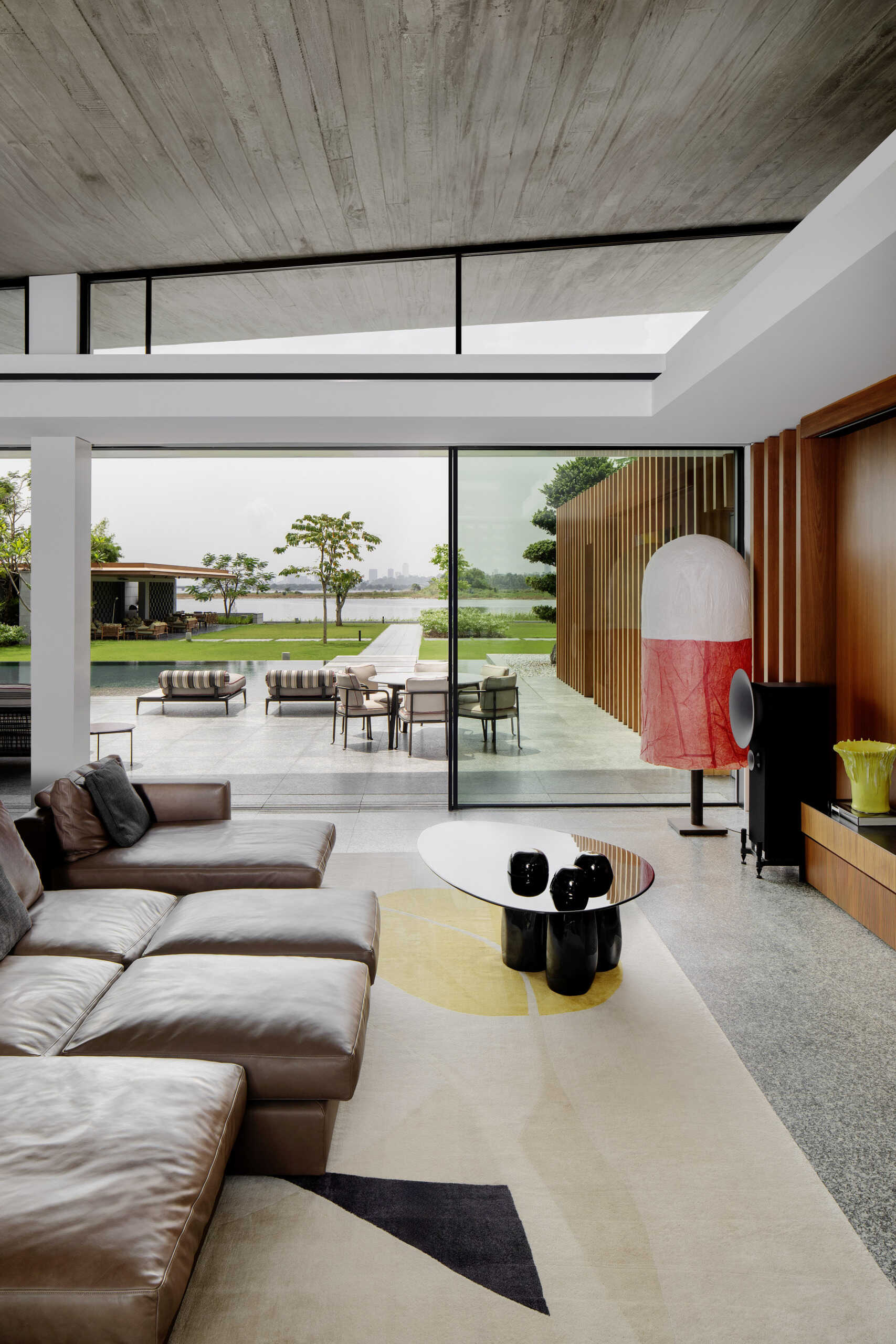
Material choices play a major role in shaping the villa’s character. Off-shutter concrete forms the base, paired with flamed granite floors and warm timber elements.
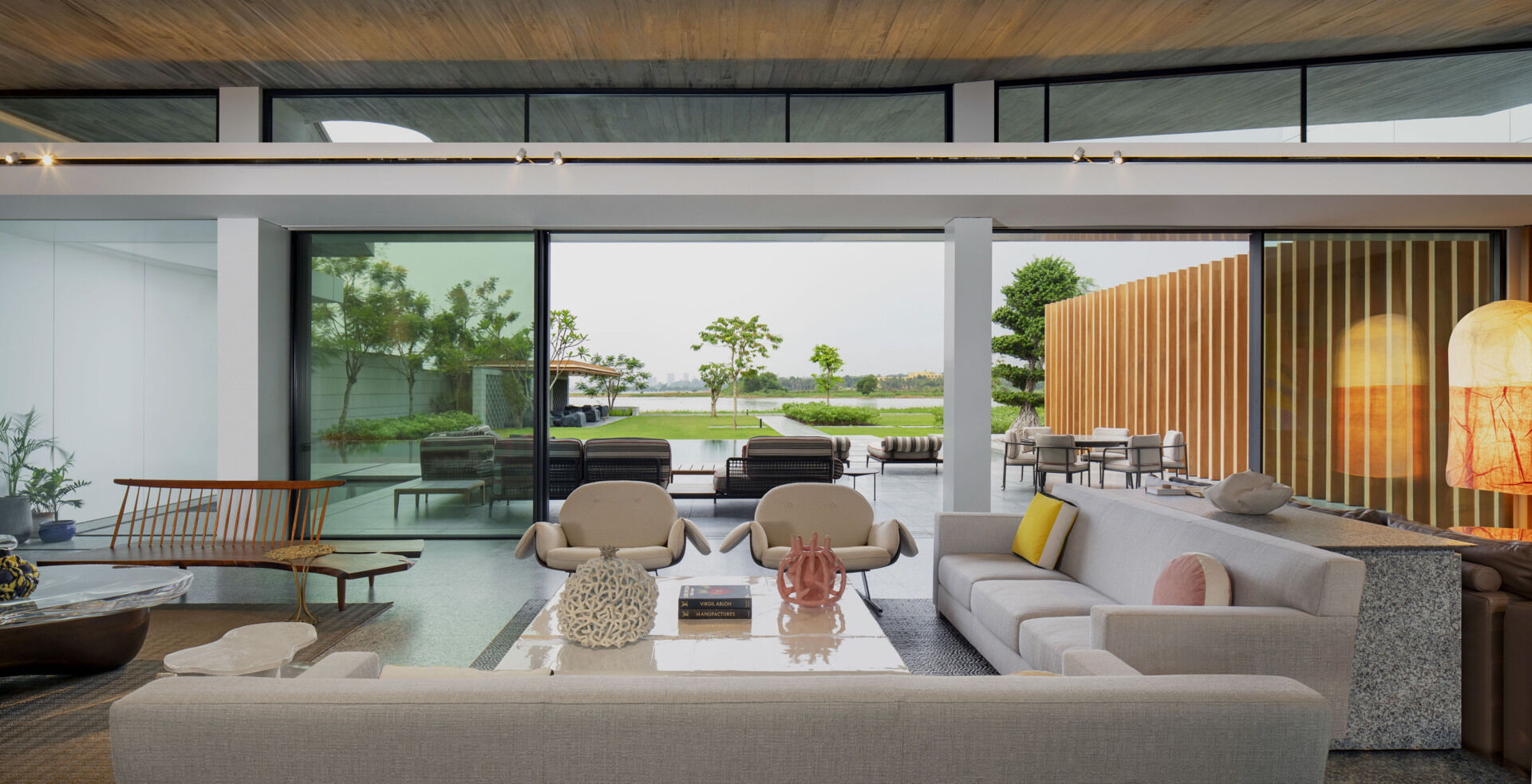
Large overhangs extend outward, cutting down glare and heat, while skylights and wide openings bring in daylight from multiple angles. Light moves across surfaces throughout the day, shifting how each space feels without relying heavily on artificial lighting.
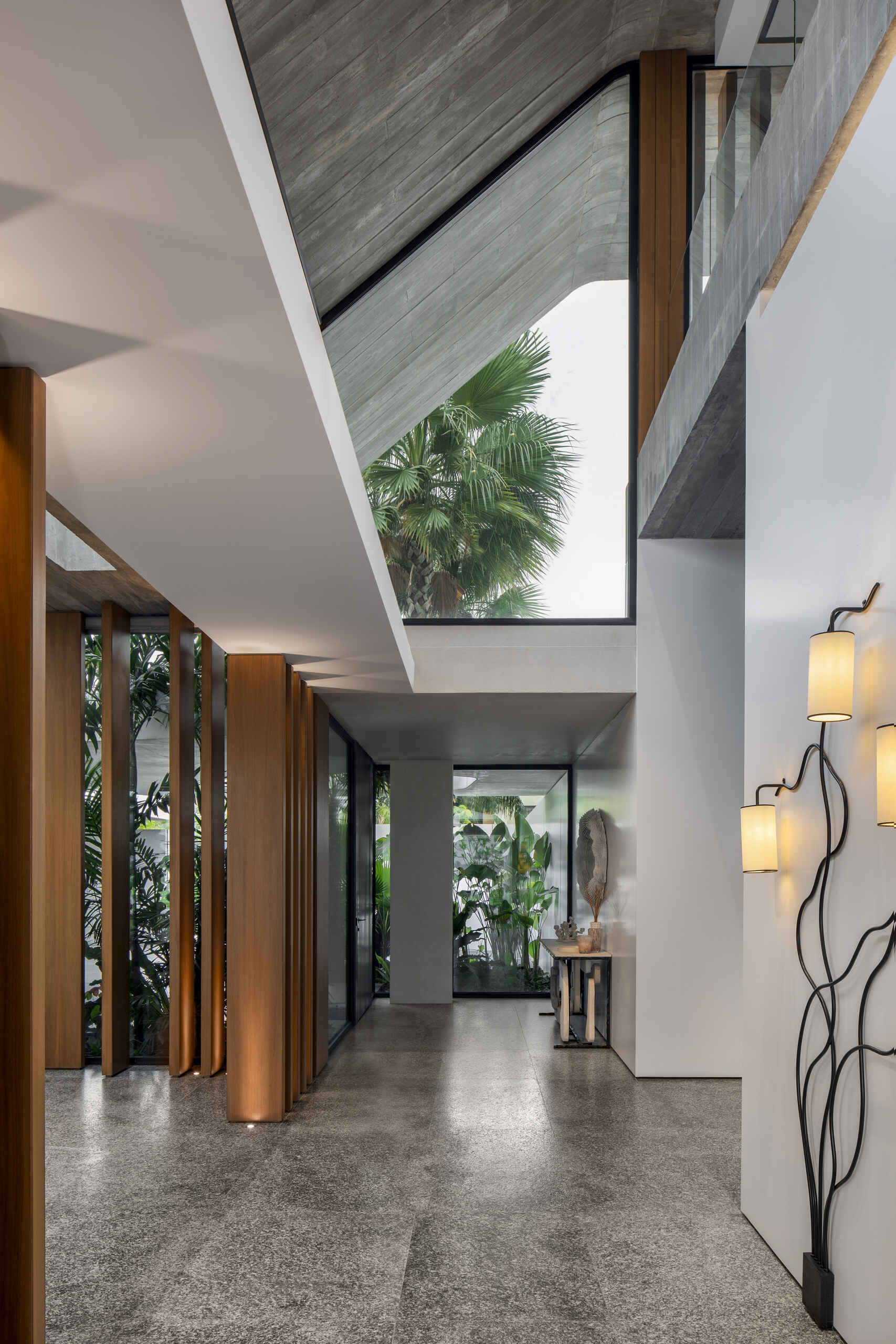
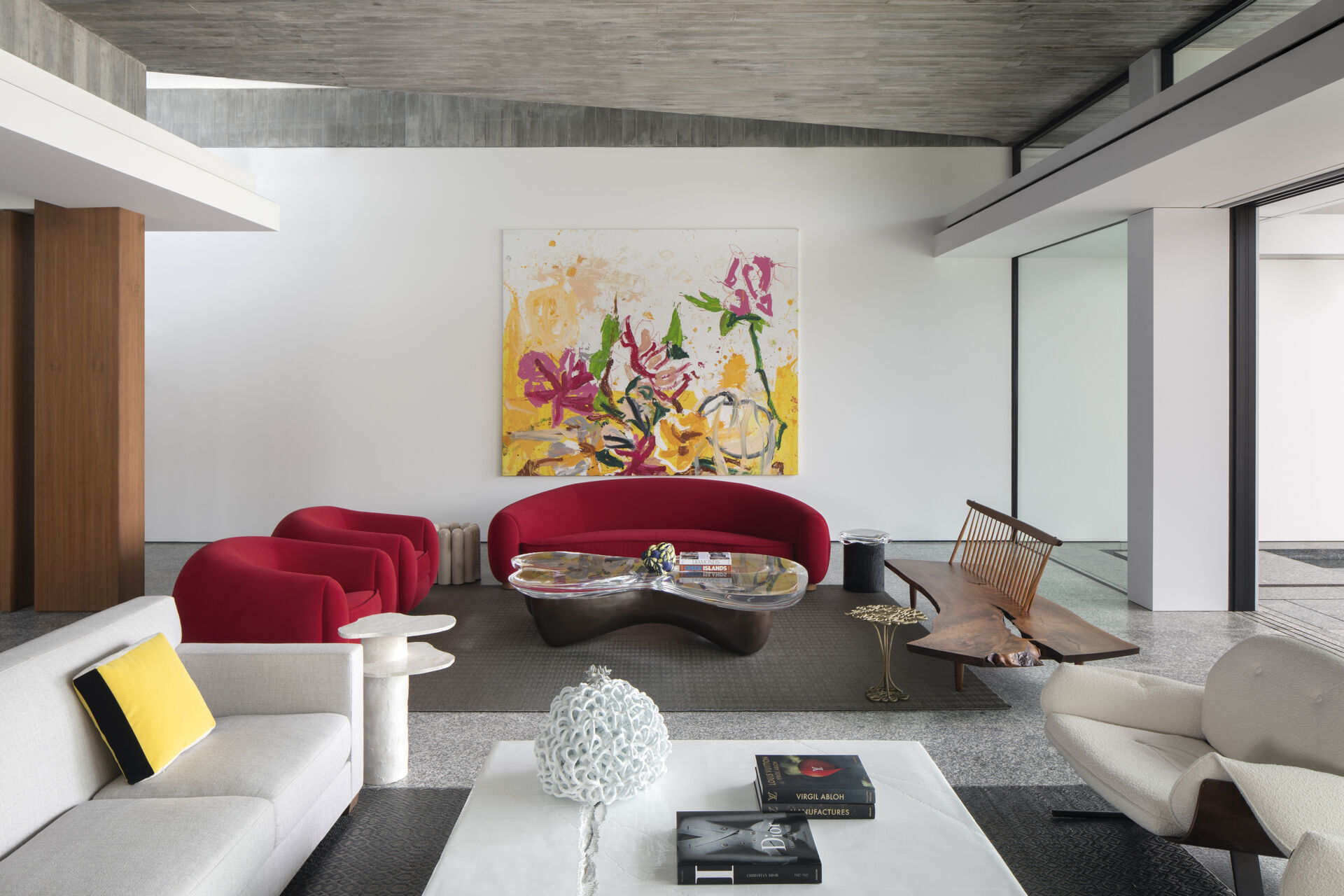
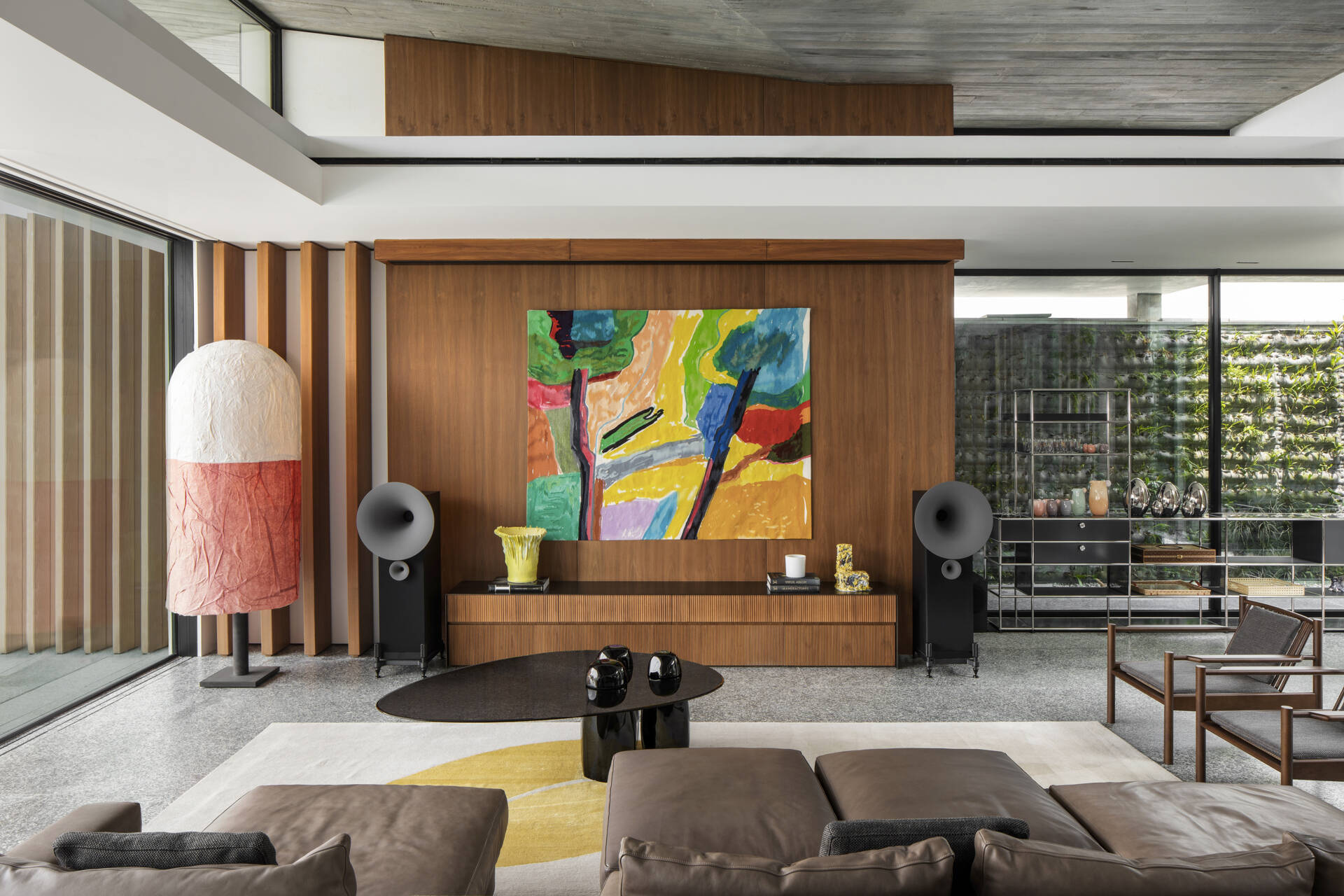
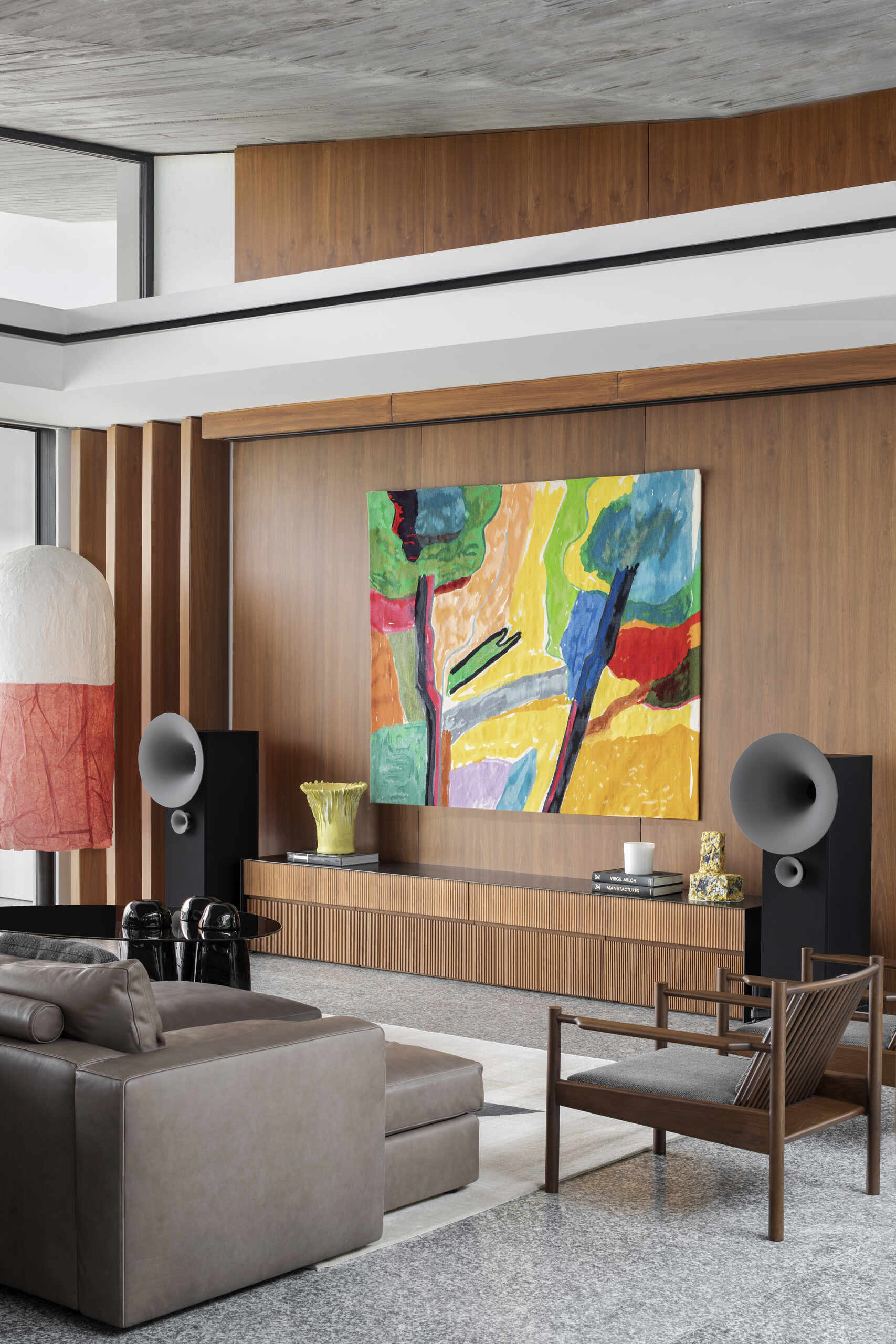
The living room introduces the interior language led by Claude Missir. Here, asymmetry takes over. Sculptural furniture and bold colors sit against the more restrained architectural shell.
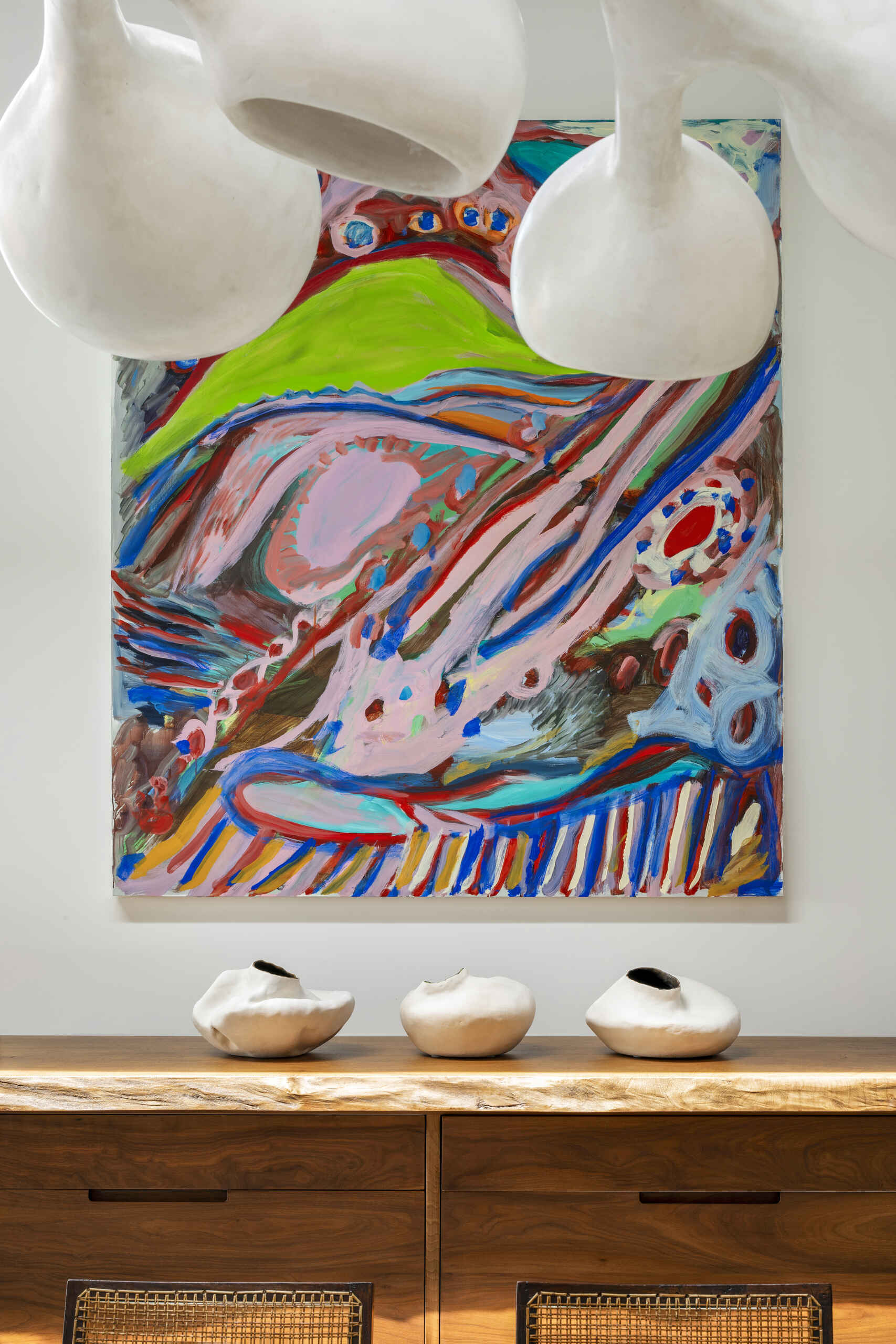
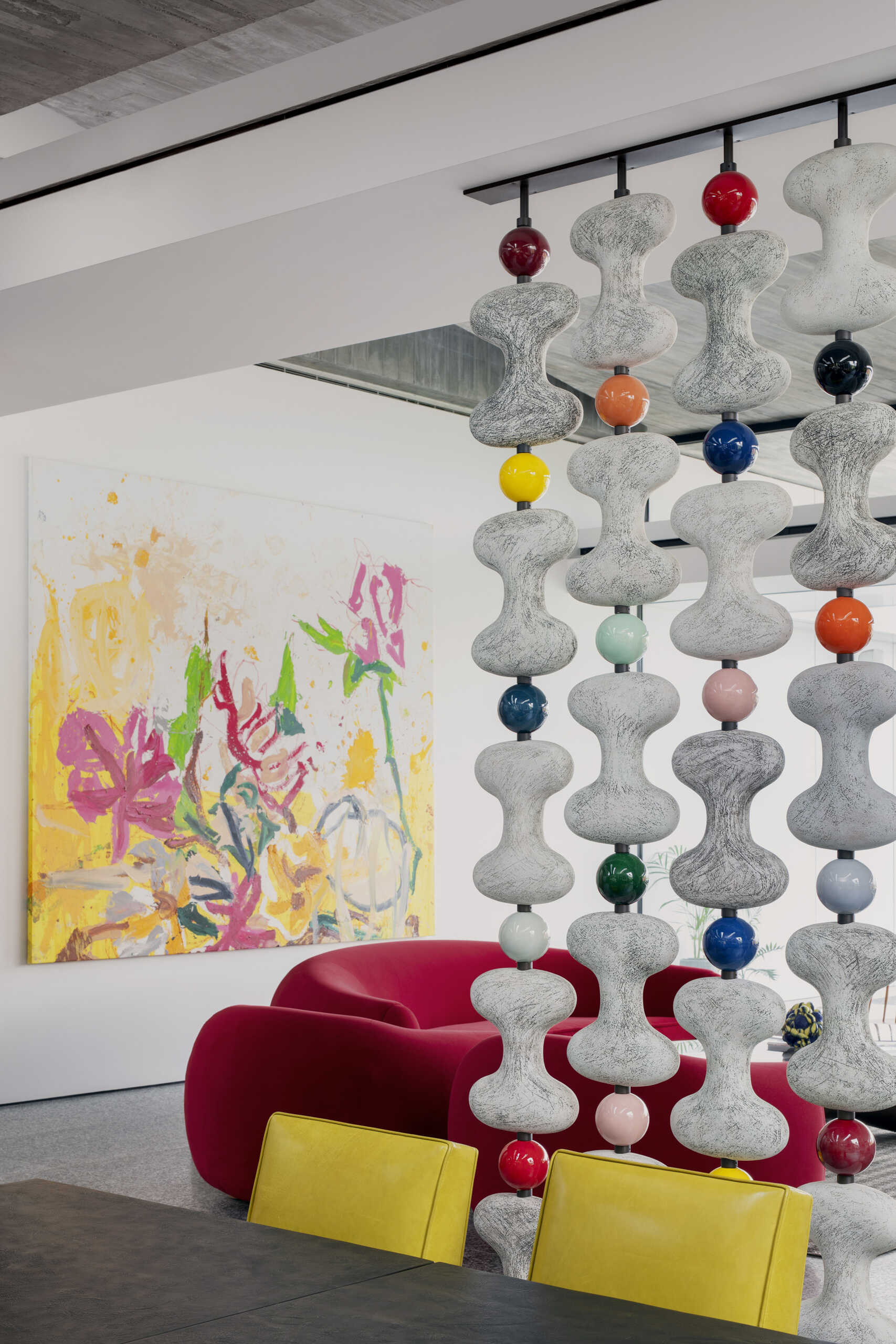
Large artworks and vintage pieces layer into the space, adding depth and contrast to the multiple seating areas. The textures of timber, glass, and concrete act as a neutral backdrop, allowing the furniture and objects to stand out.
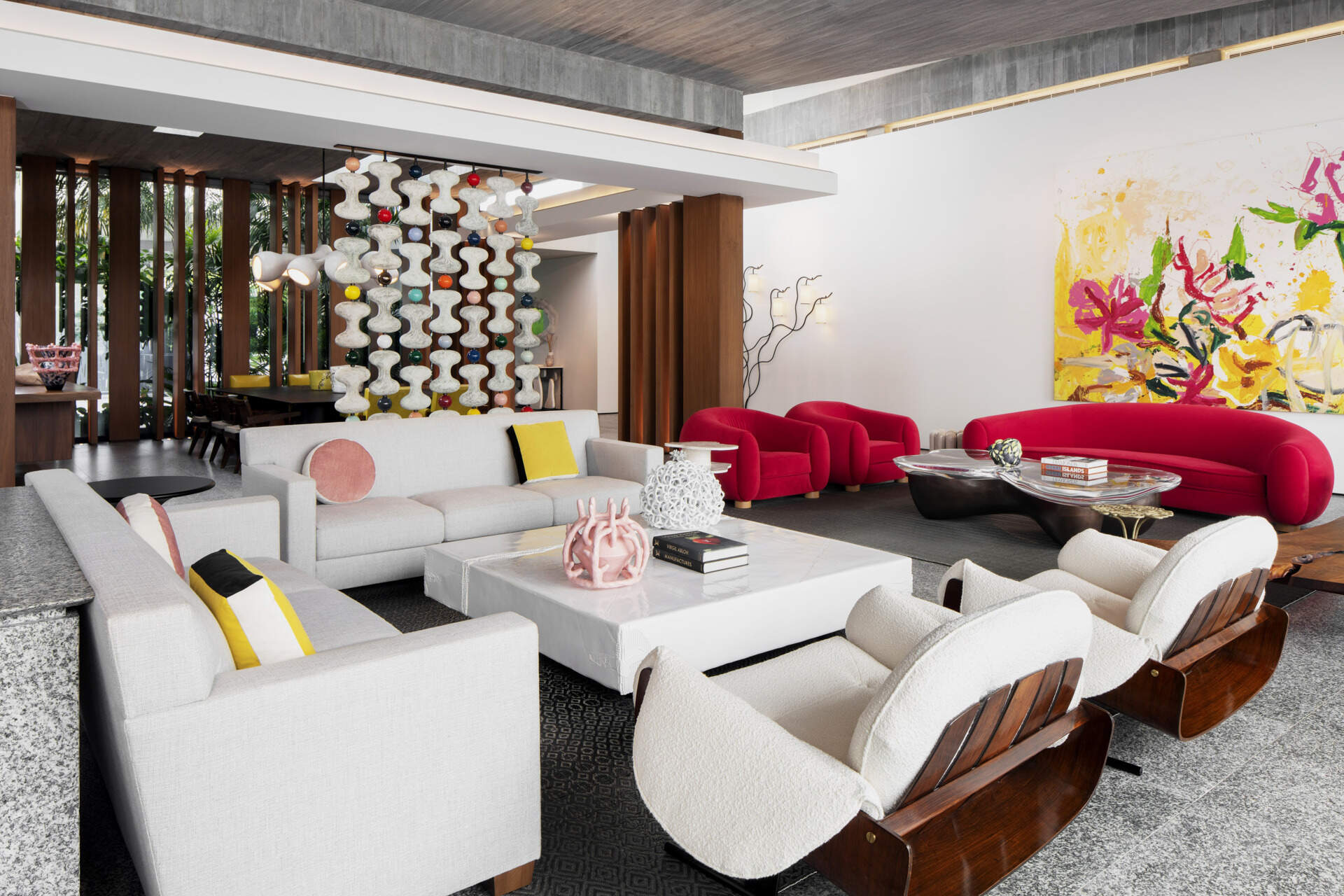
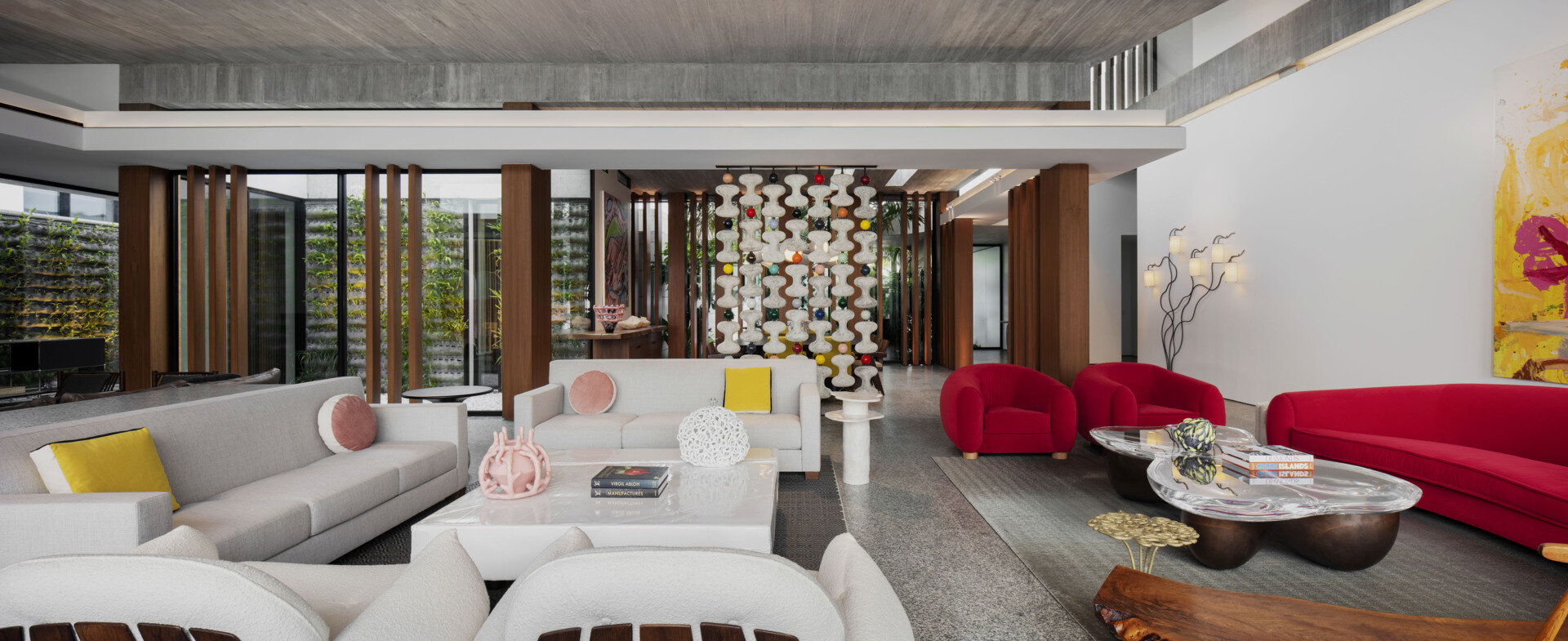
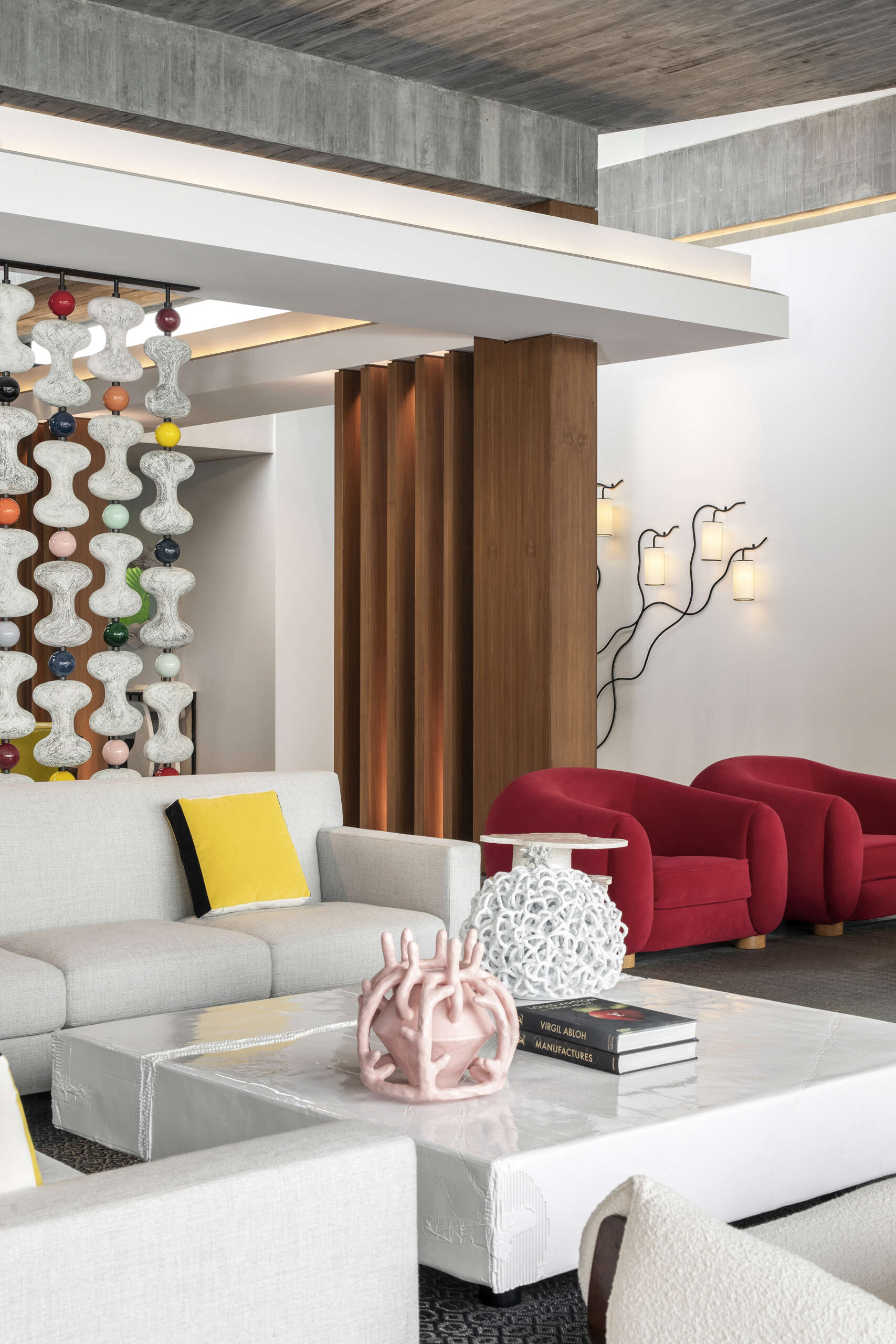
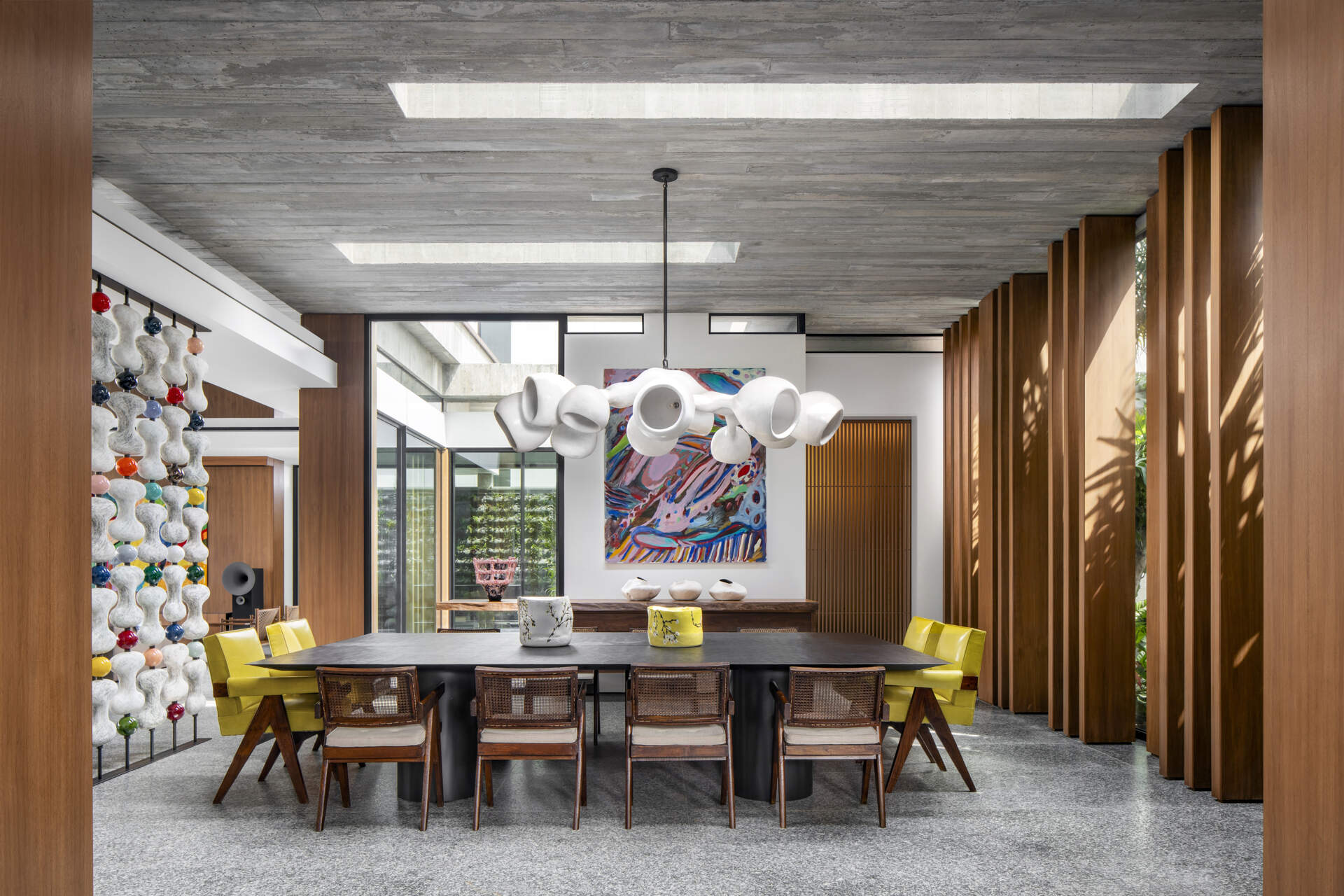
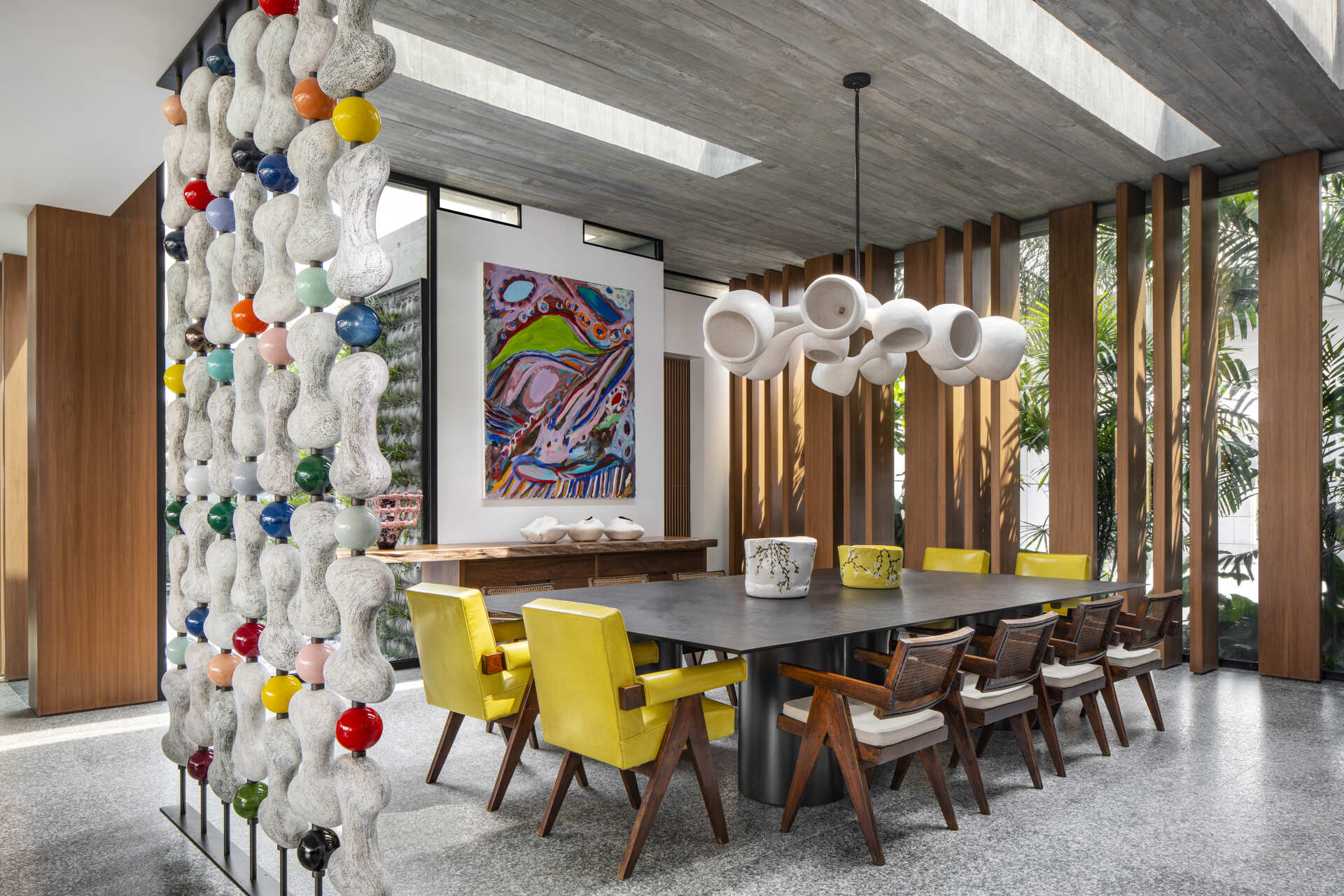
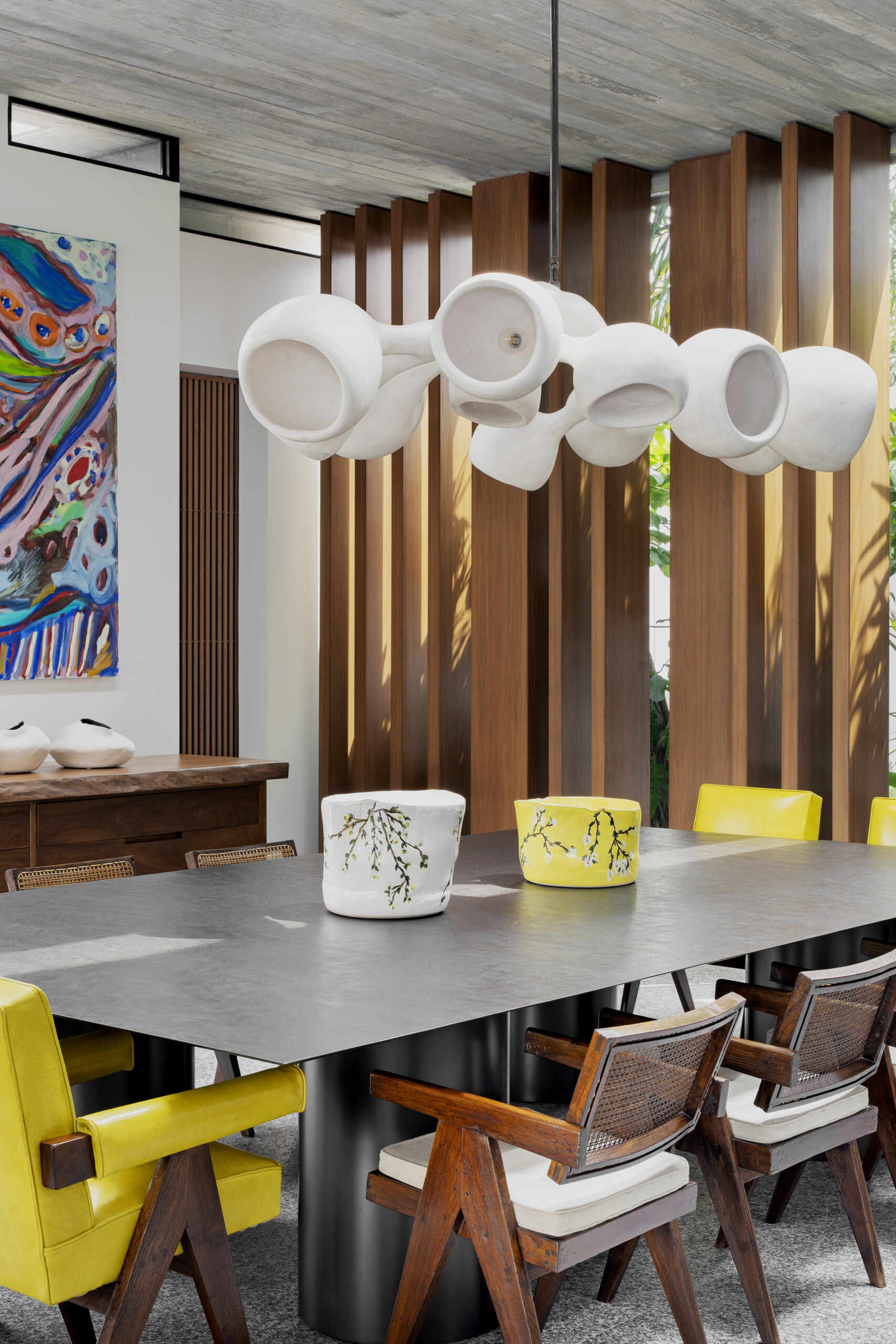
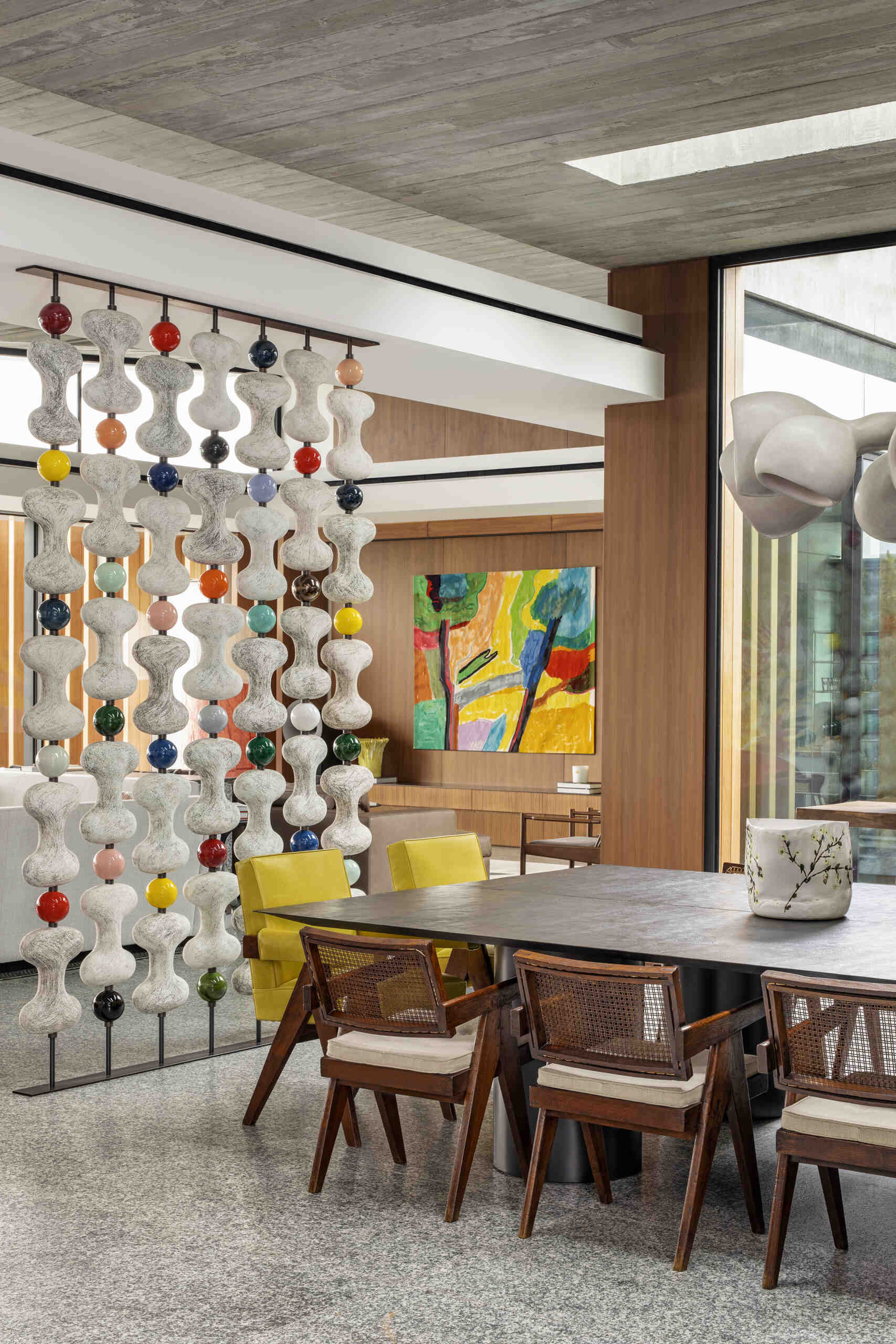
Moving into the dining area, the open plan continues, but with subtle separation. A sculptural wall installation acts as a divider between living and dining zones. It echoes the timber screens used throughout the house, creating continuity while still defining space.
The dining setting itself brings in retro influences, with details like sculptural lighting, rippled glass surfaces, brass elements, and cane seating. These touches contrast with the clean lines of the architecture, adding another layer to the overall composition.
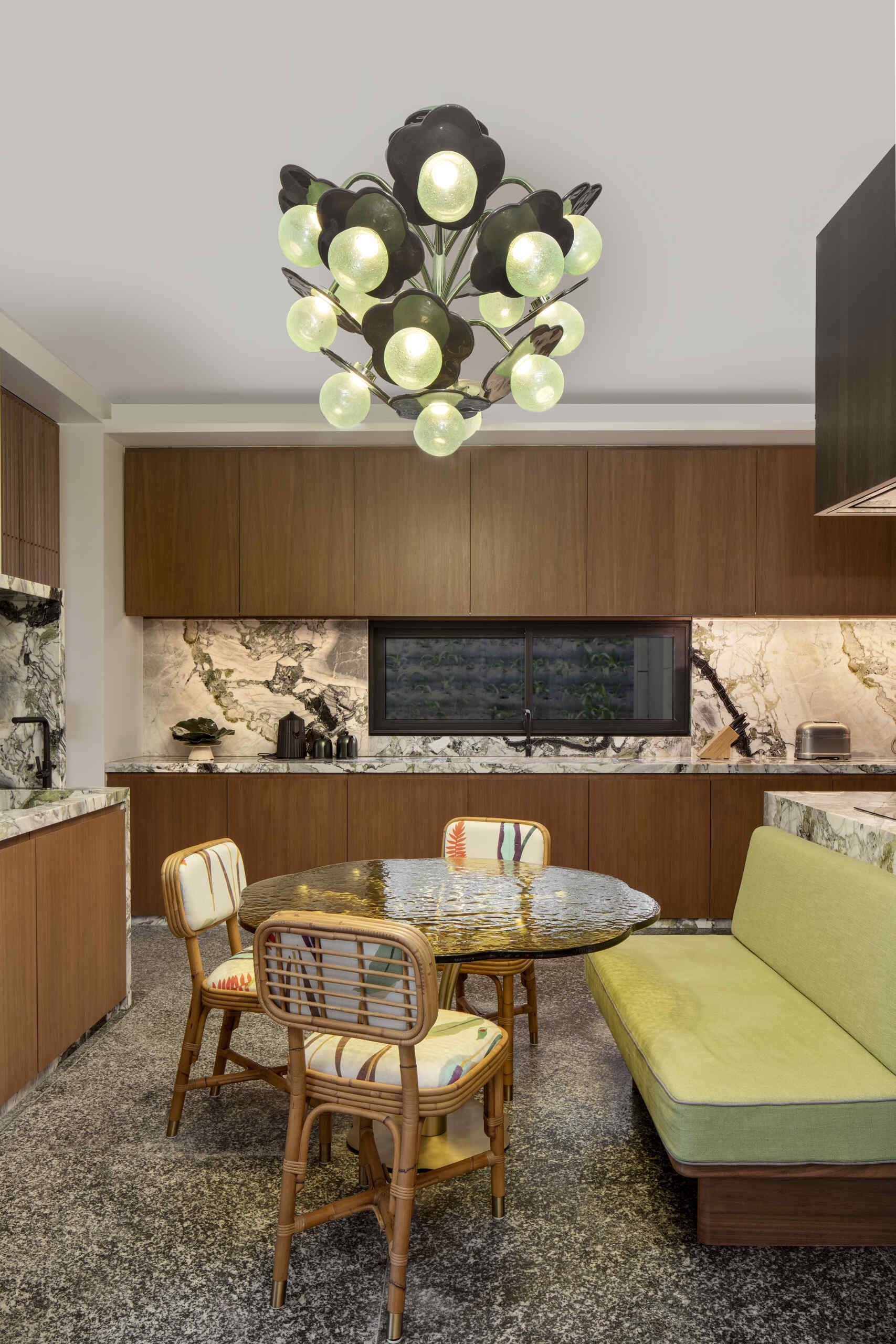
The kitchen follows the same open approach, staying visually connected to the surrounding spaces. A banquette, chairs, and table positioned below a unique lighting fixture introduces a more relaxed dining option.
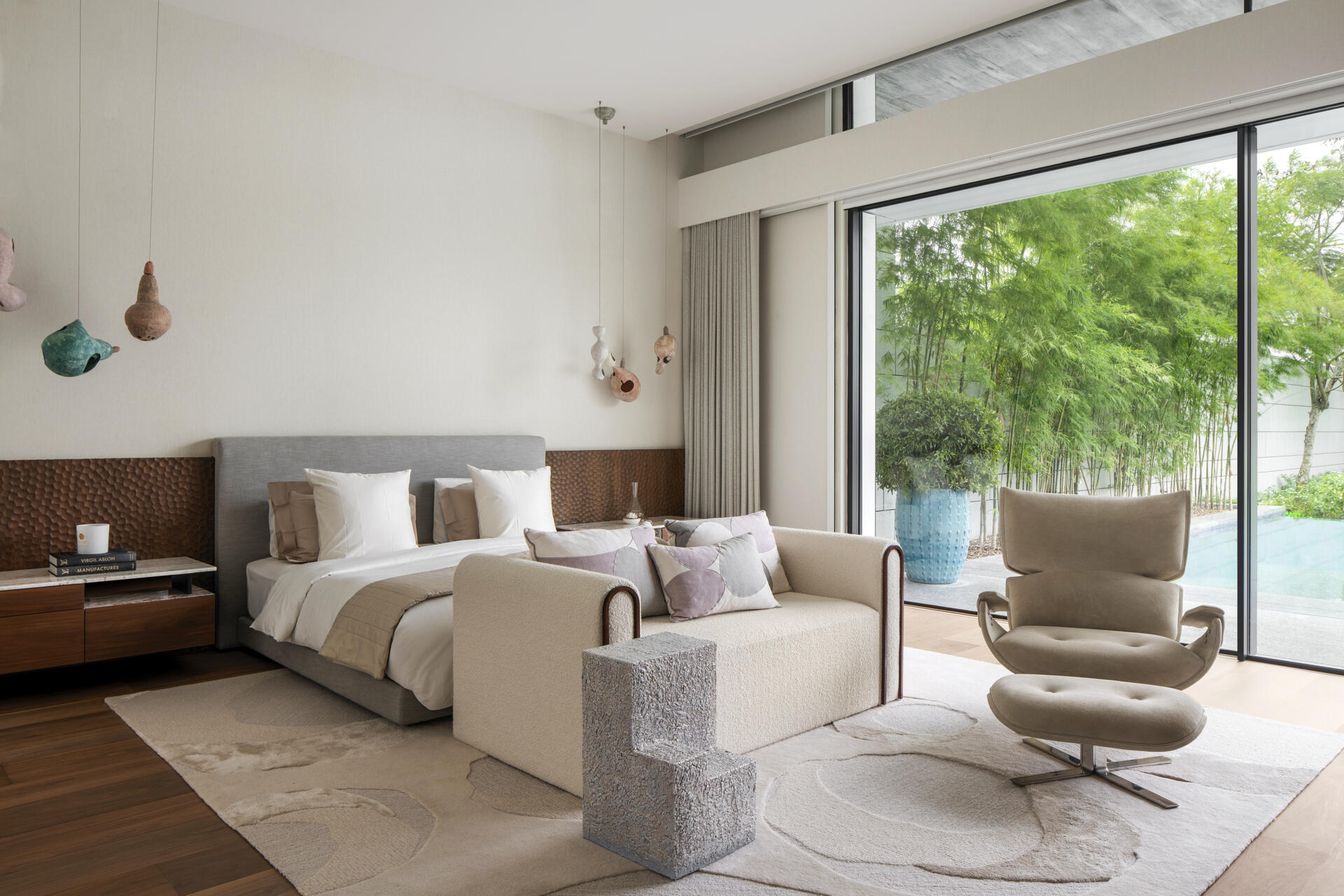
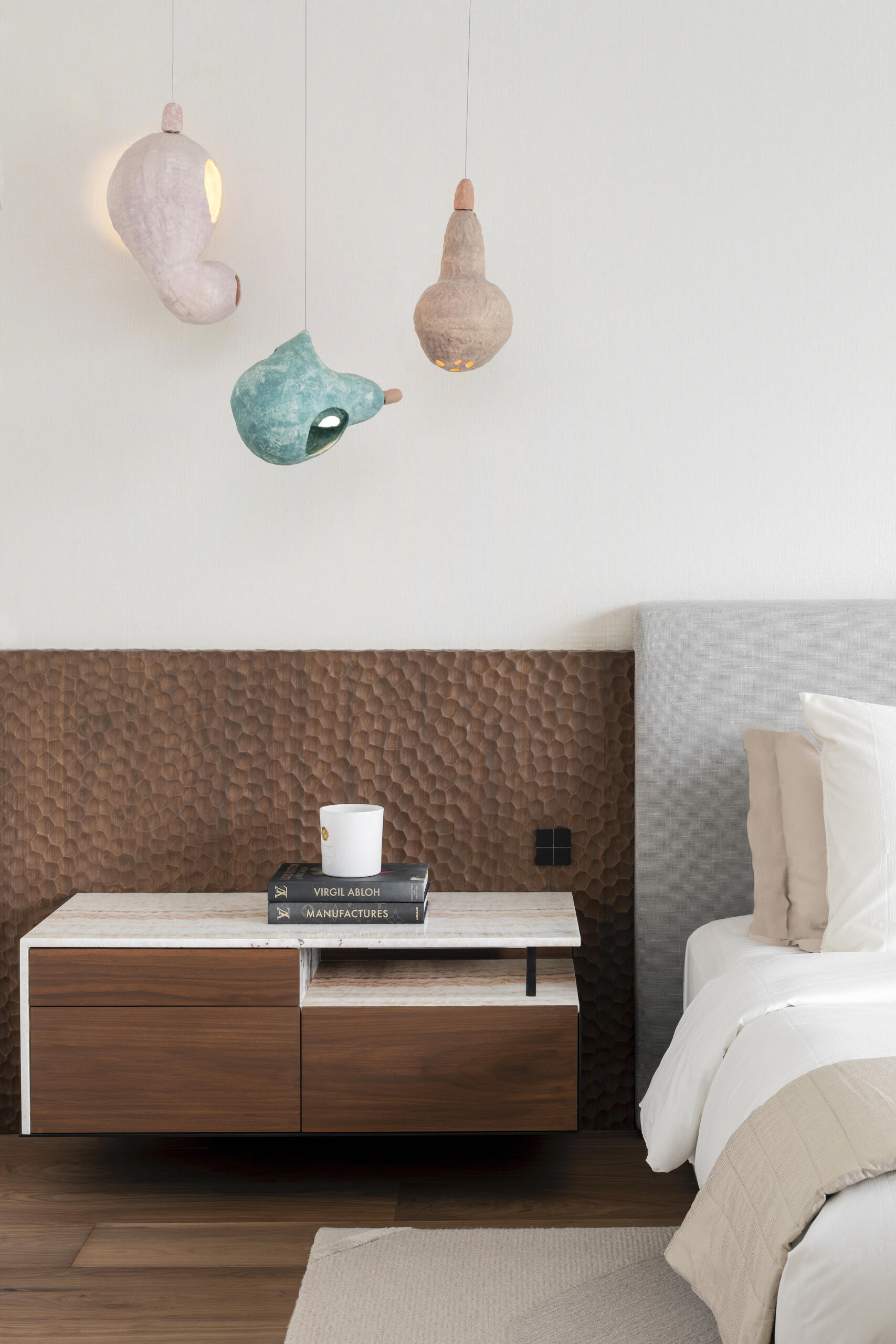
In the main bedroom, the tone shifts. The palette becomes more muted, and the forms are simplified. The focus moves toward comfort, with softer textures and a more restrained use of color. Even so, the sculptural influence remains, visible in the choice of furniture and lighting.
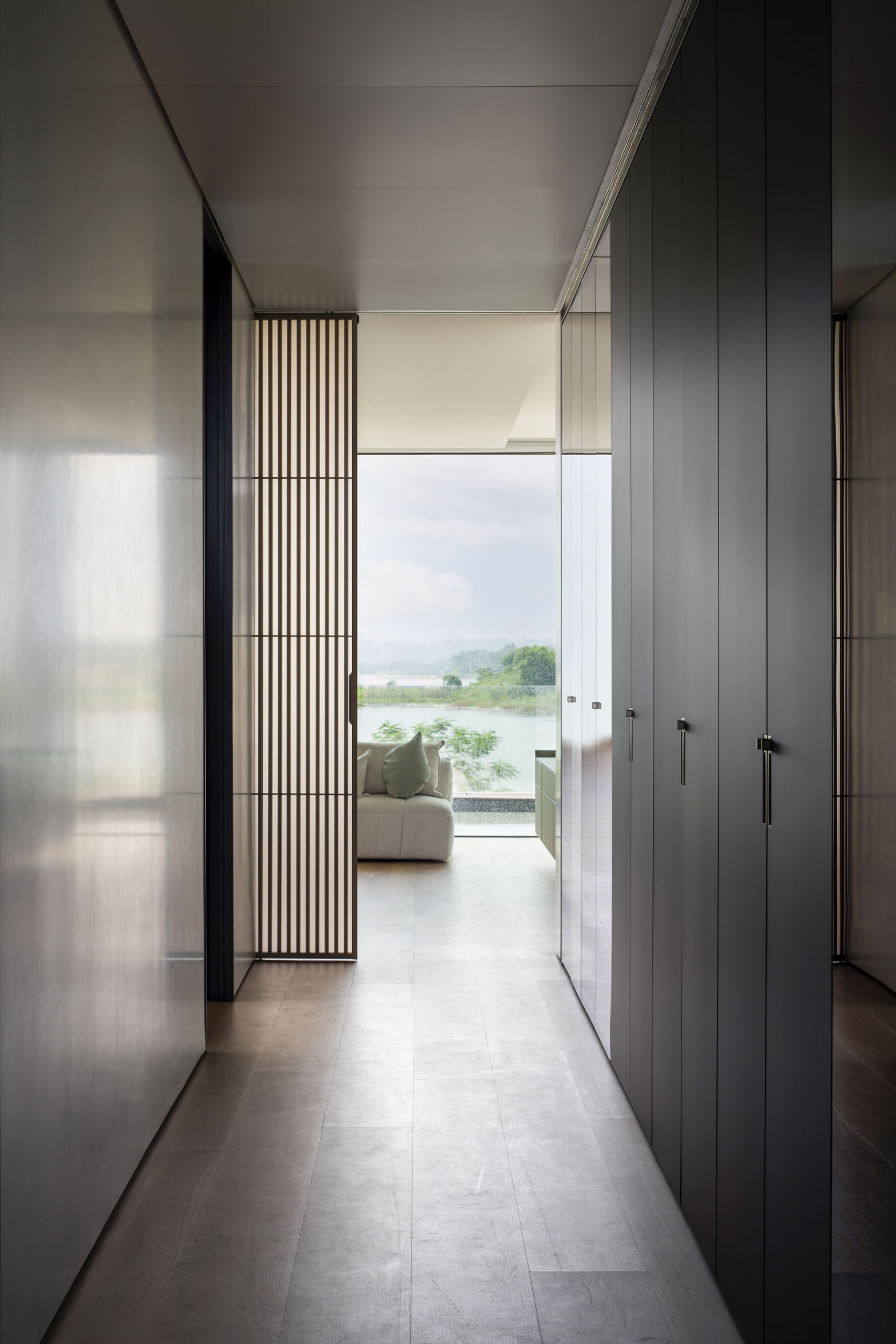
The closet continues the material-driven approach, using clean lines to create a functional yet refined space. Storage is integrated seamlessly, keeping the focus on clarity and ease of use while maintaining the same visual consistency found throughout the villa.
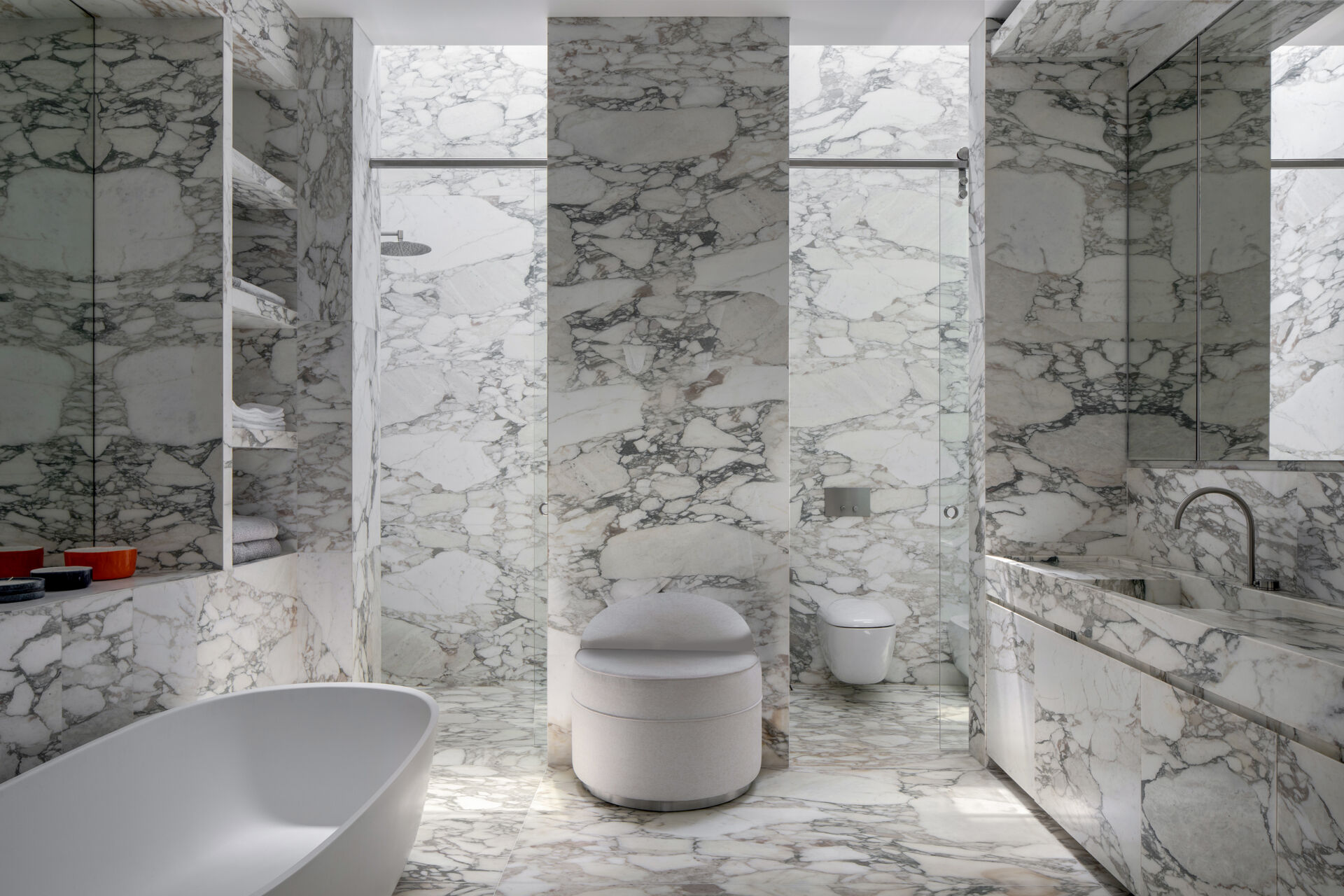
In the bathroom, stone is the key material, while openings and skylights bring in daylight, highlighting surfaces and reducing the need for artificial lighting.
Ebrié Villa captures a distinct moment in Abidjan’s architectural scene, where modernist ideas meet a more expressive, site-driven approach. With its sculptural concrete roof and layered interiors, the home balances structure and personality.