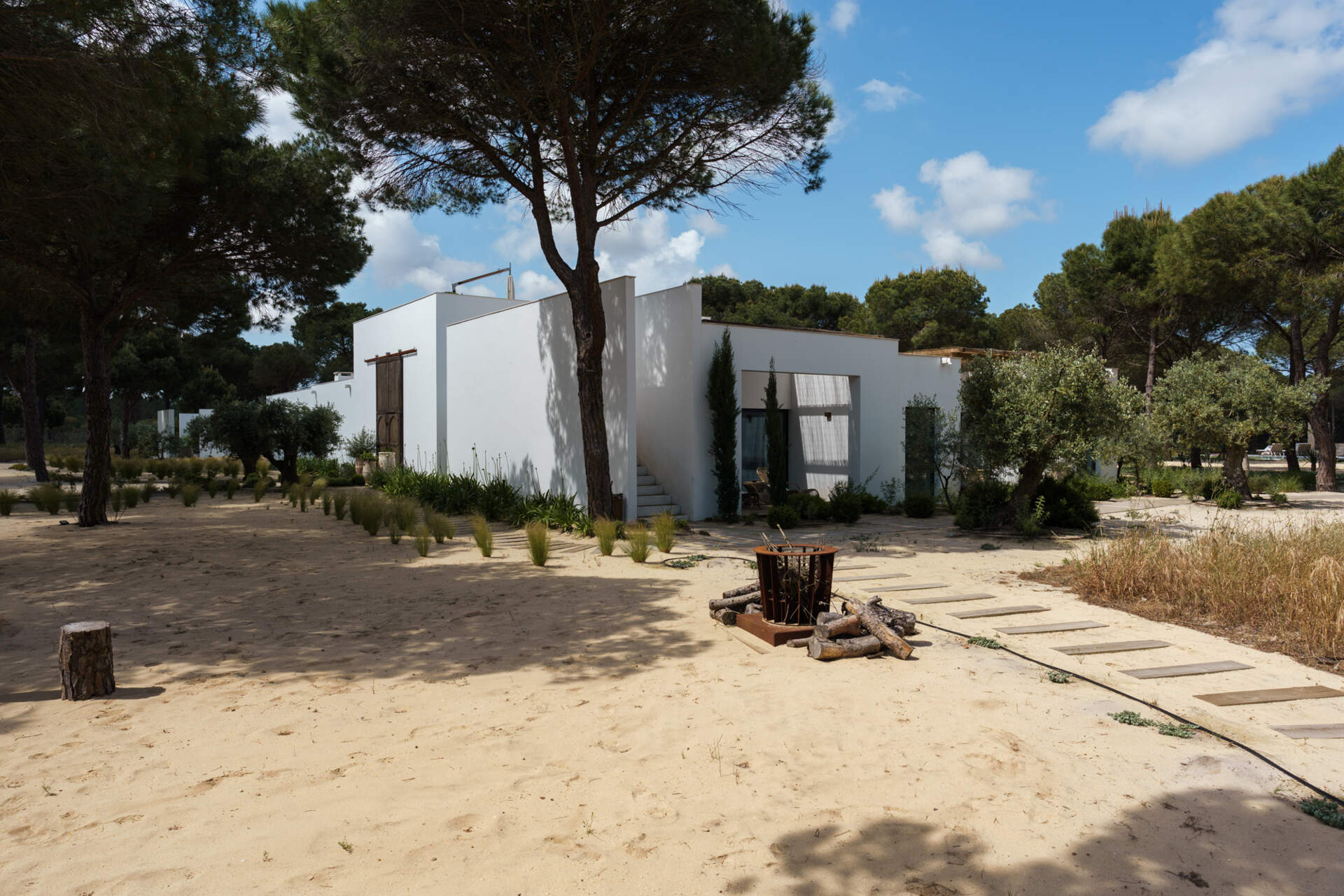
In the sandy landscapes of Comporta, Portugal, Sabrab Architecture designed a white villa that sits quietly among maritime pines and ancient cork oaks. Known as Casa na Comporta, the home uses a clean L-shaped layout to frame a central courtyard while opening toward the surrounding forest.
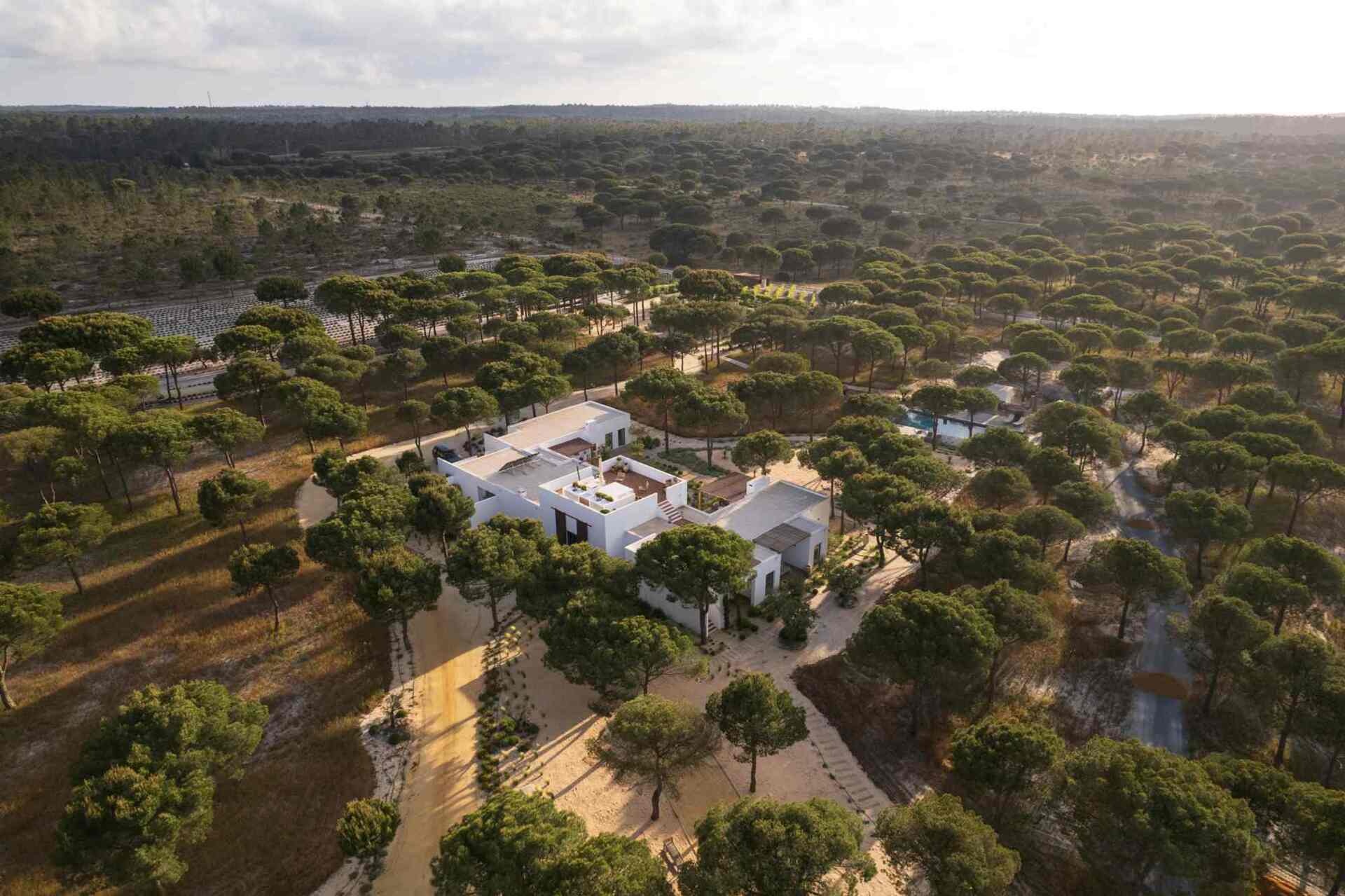
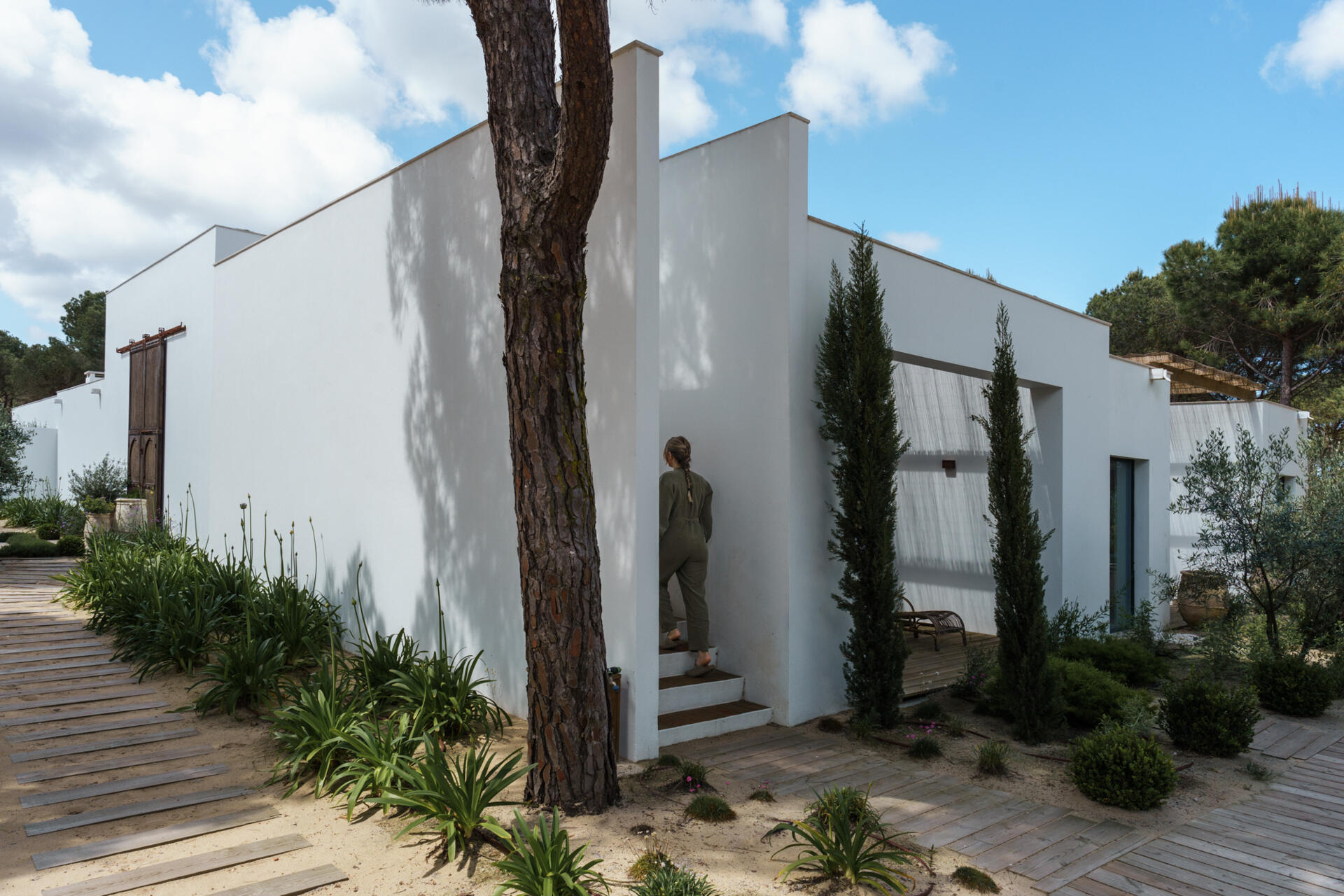
The location plays a major role in the experience of the house. Pine needles cover the ground, cork oak trunks twist through the landscape, and shifting sunlight moves across the white exterior walls throughout the day. From the moment of arrival, the villa feels shaped by the atmosphere of Comporta itself, where sandy soils, coastal breezes, and Mediterranean vegetation influence every part of the design.
Architecture That Wraps Around a Courtyard
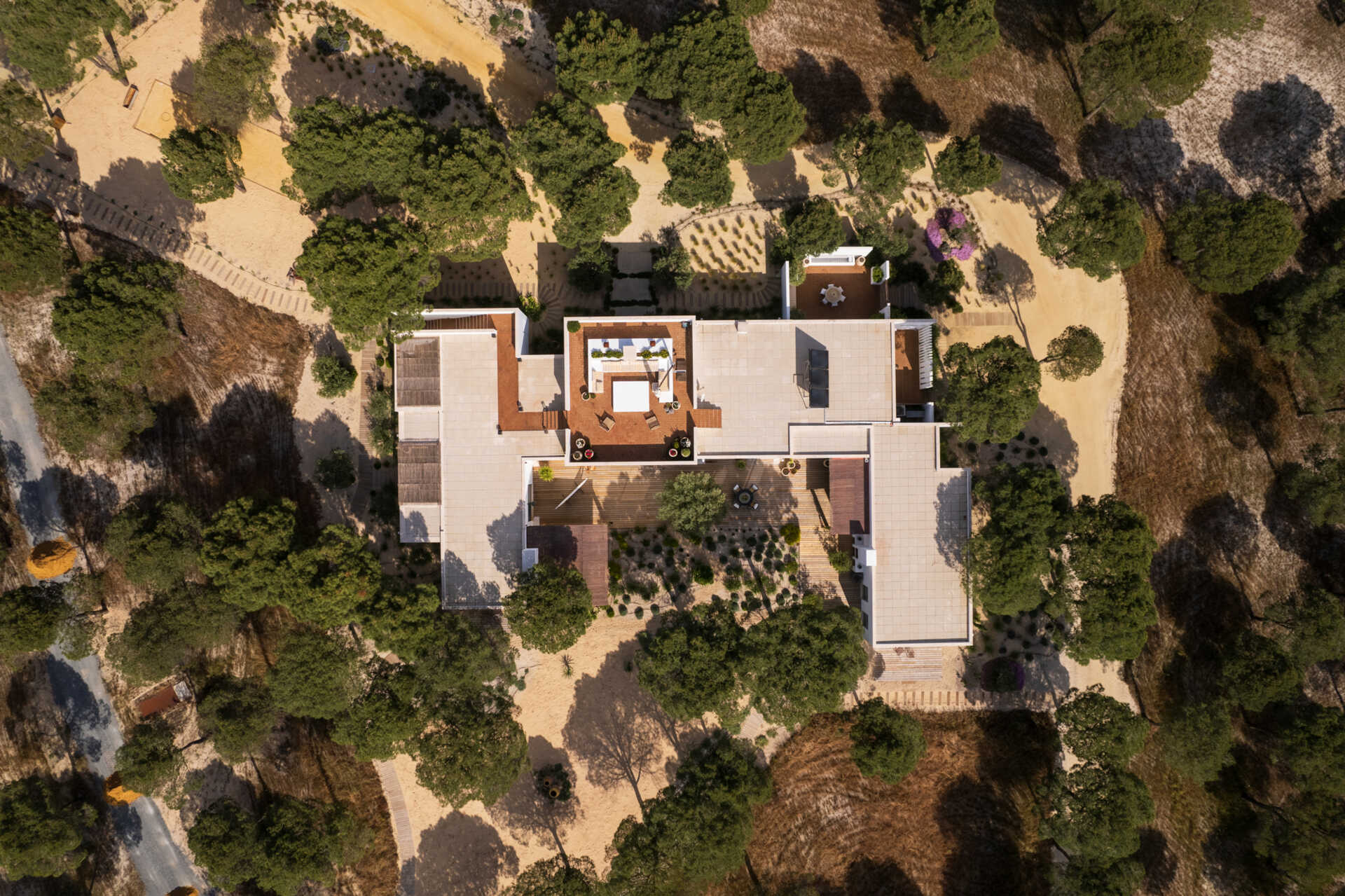
The home’s structure follows the contours of the site, forming a protected inner courtyard at the center of the property. This layout creates privacy while also directing views toward the surrounding trees and open sky.
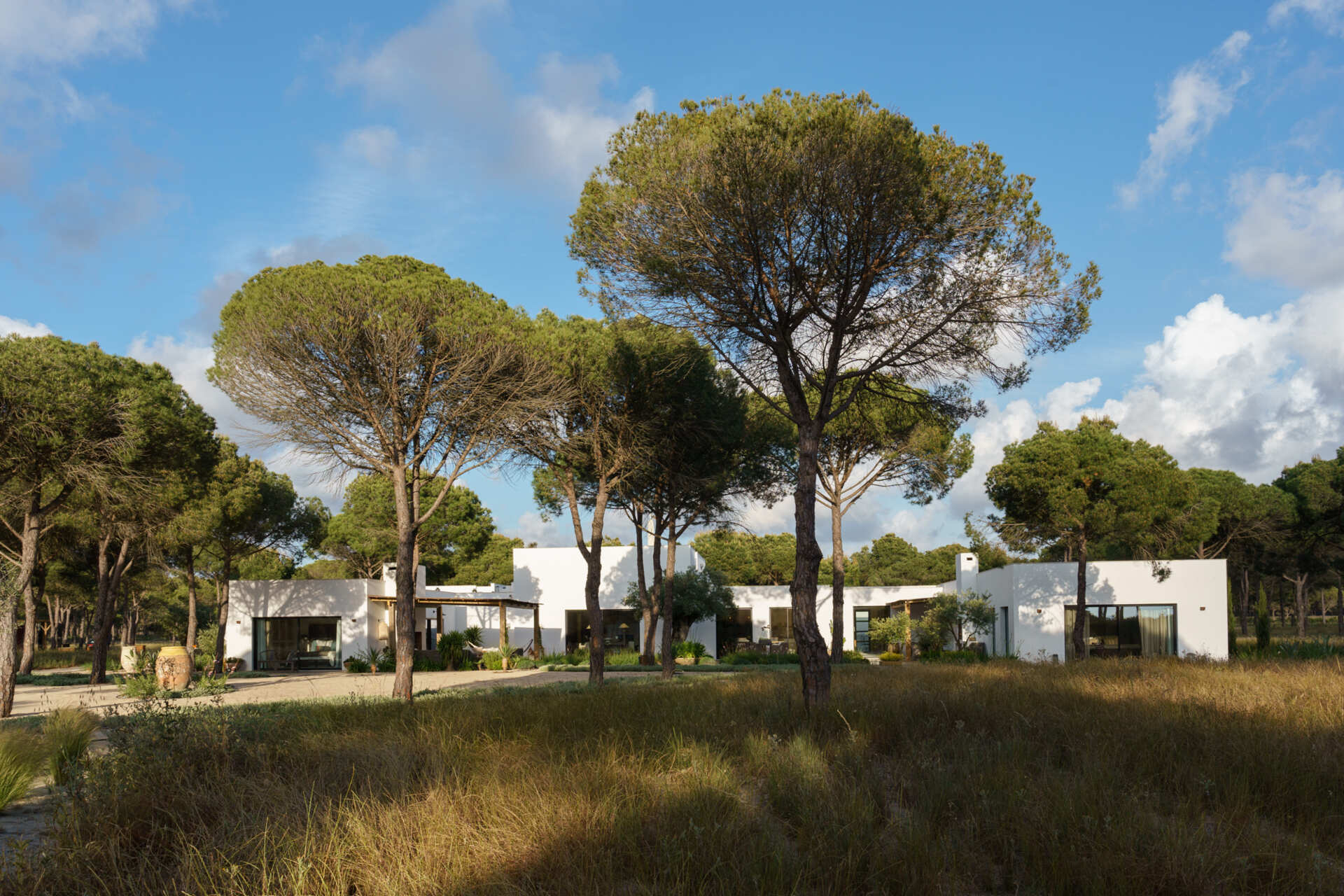
Bright white facades stand out against the dark vertical pine trunks, giving the architecture a graphic simplicity that feels especially striking in the natural setting. Large retractable glass walls along the western side allow the living areas to fully open toward the courtyard and terraces during warmer months.
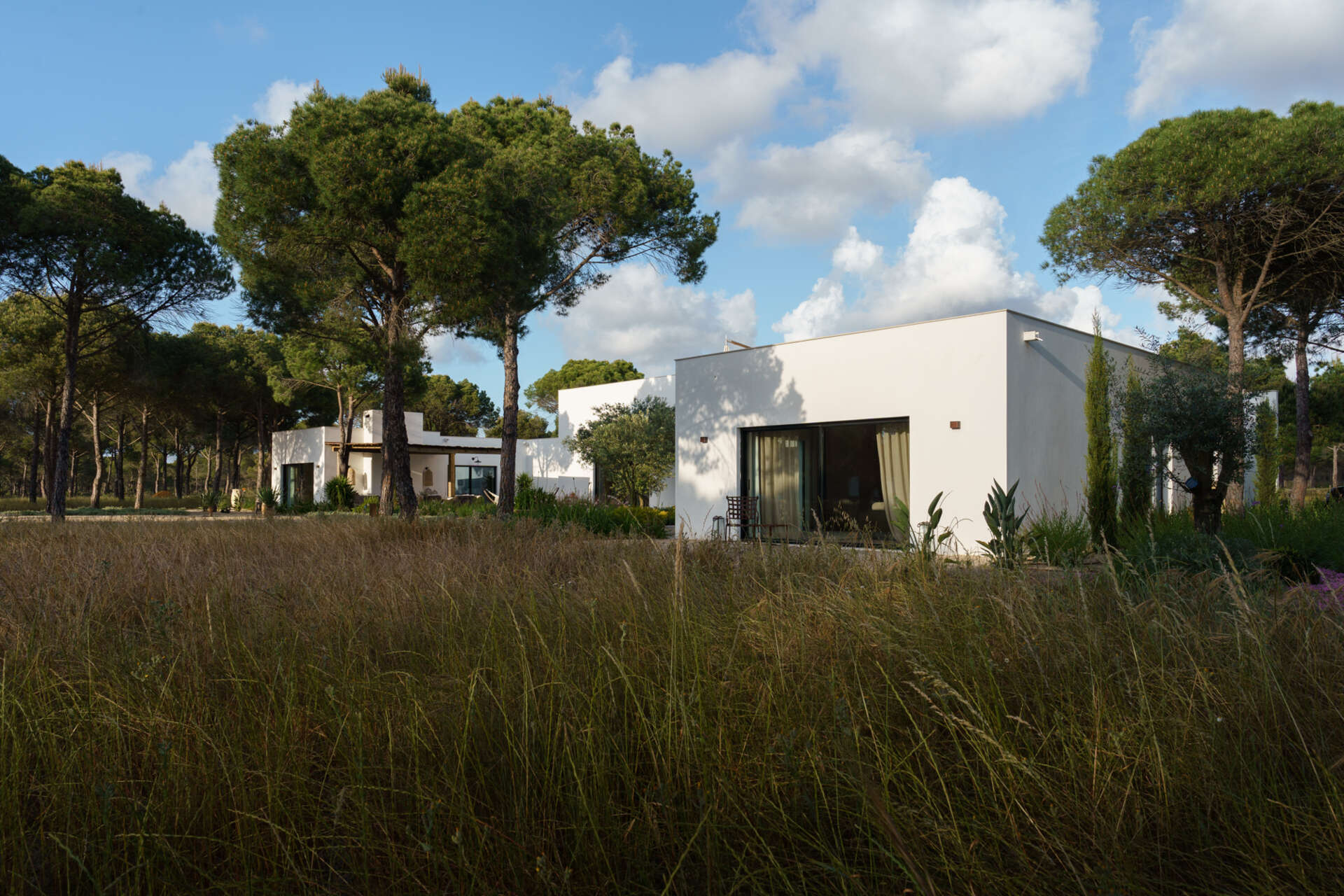
Extended roof overhangs and vertical timber brise-soleils soften the intense sunlight while adding texture to the minimalist design. Throughout the day, shadows move across the walls and polished concrete floors, giving the interiors a constantly changing atmosphere.
The combination of geometric forms, warm wood, glass, and natural stone creates a home that feels modern without appearing cold.
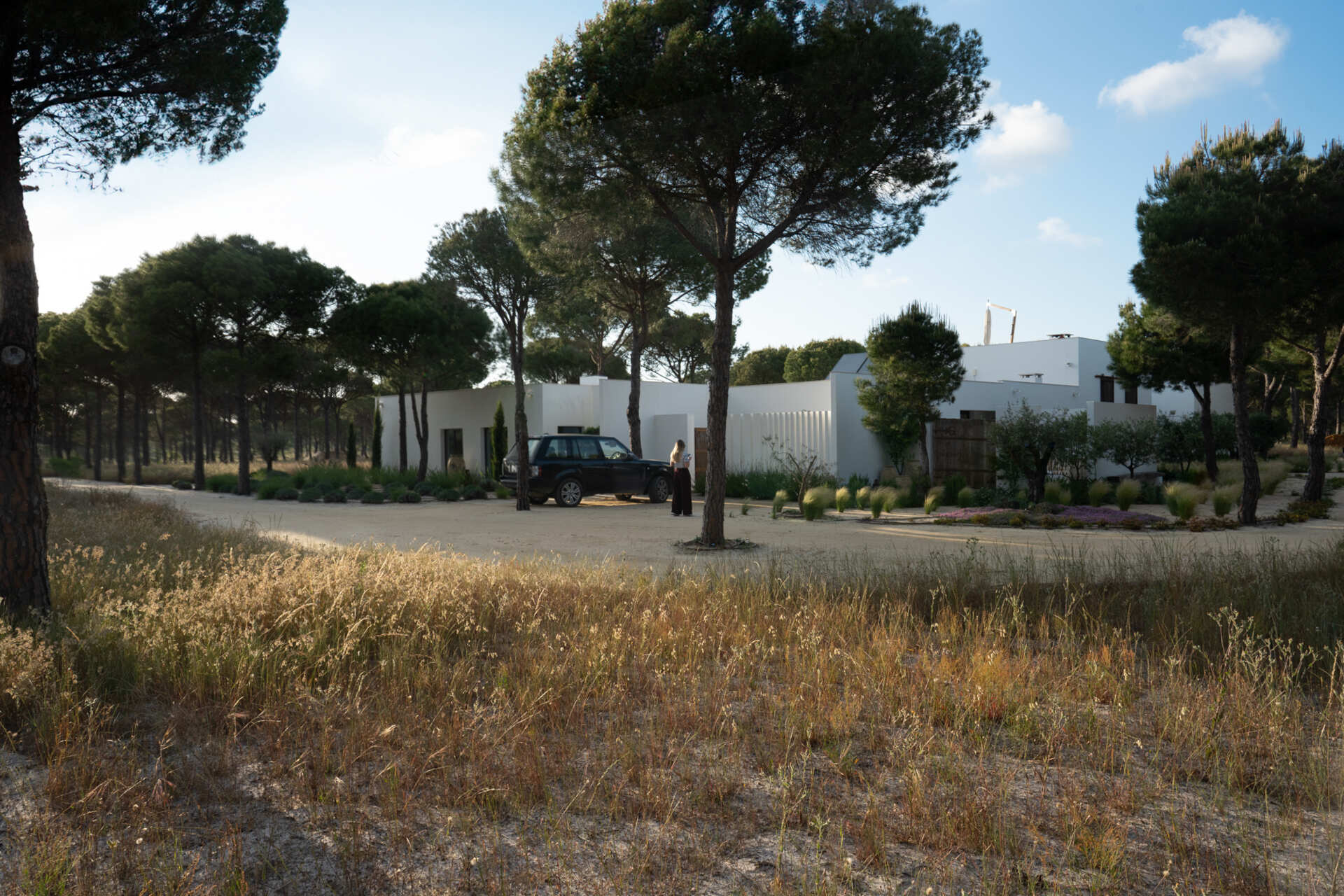
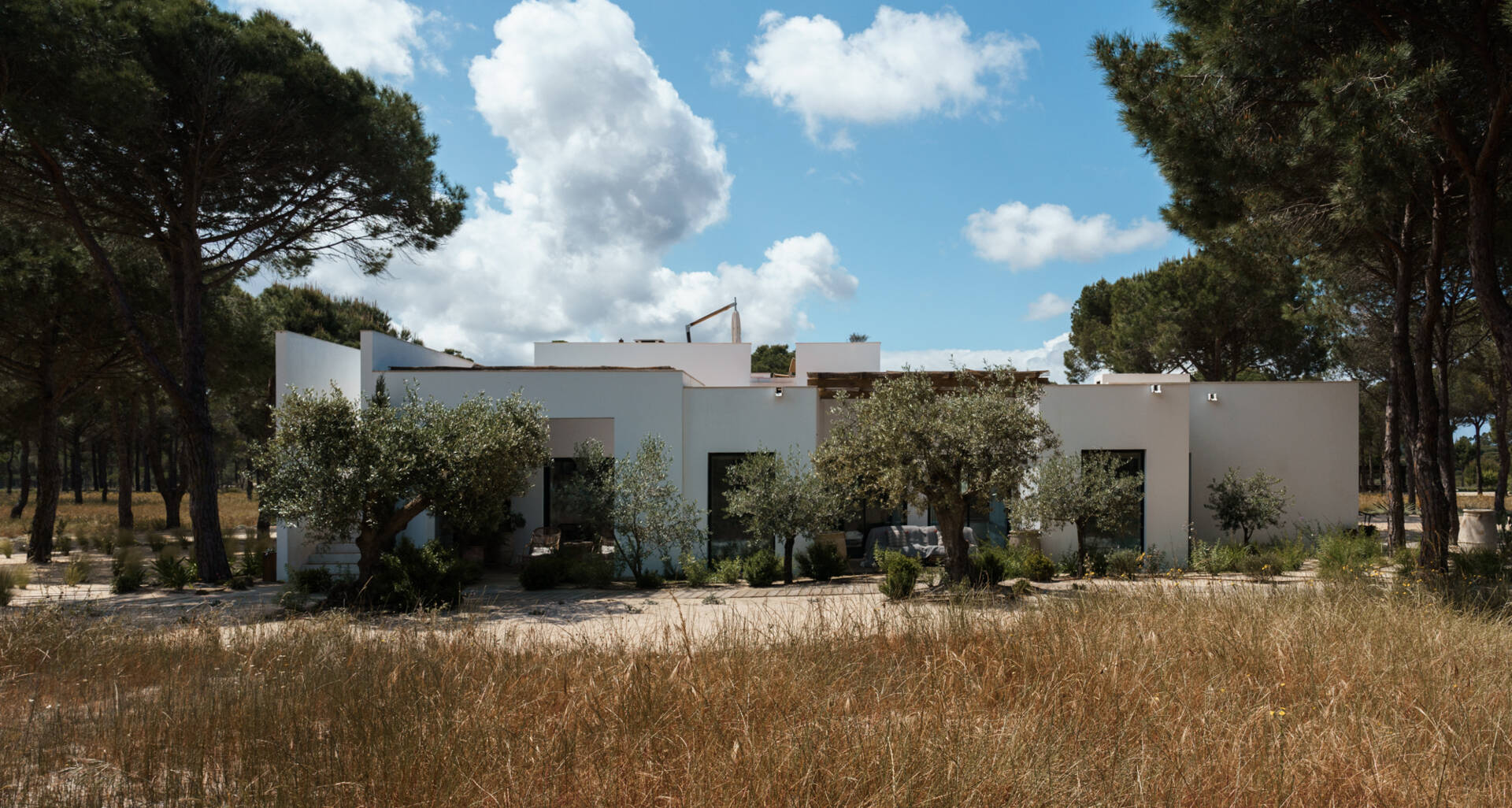
Landscaping That Preserves the Wild Character of the Site
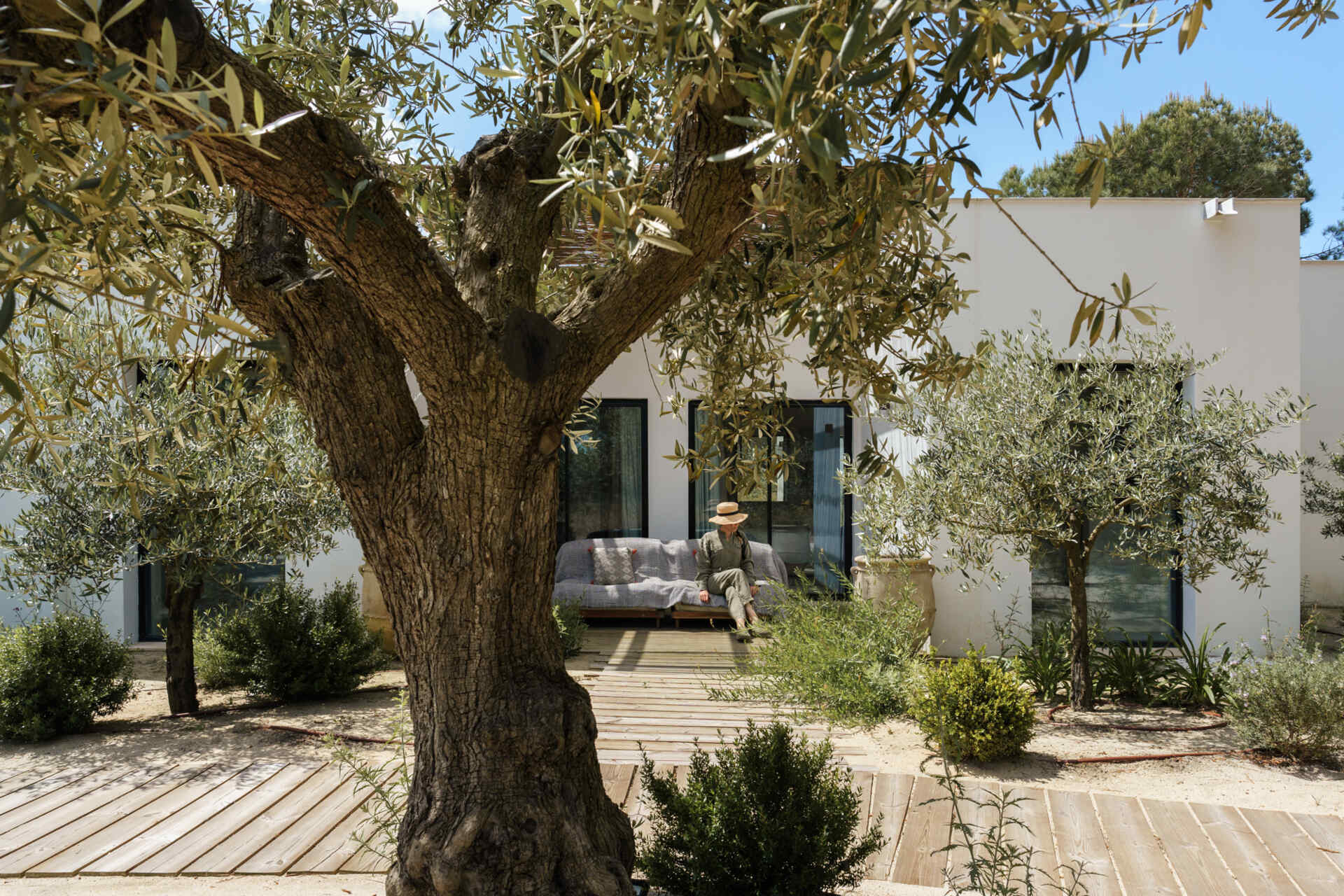
One of the most interesting parts of Casa na Comporta is how much of the original landscape remains untouched. Native dune vegetation grows between pathways and terraces, helping the property maintain its natural appearance.
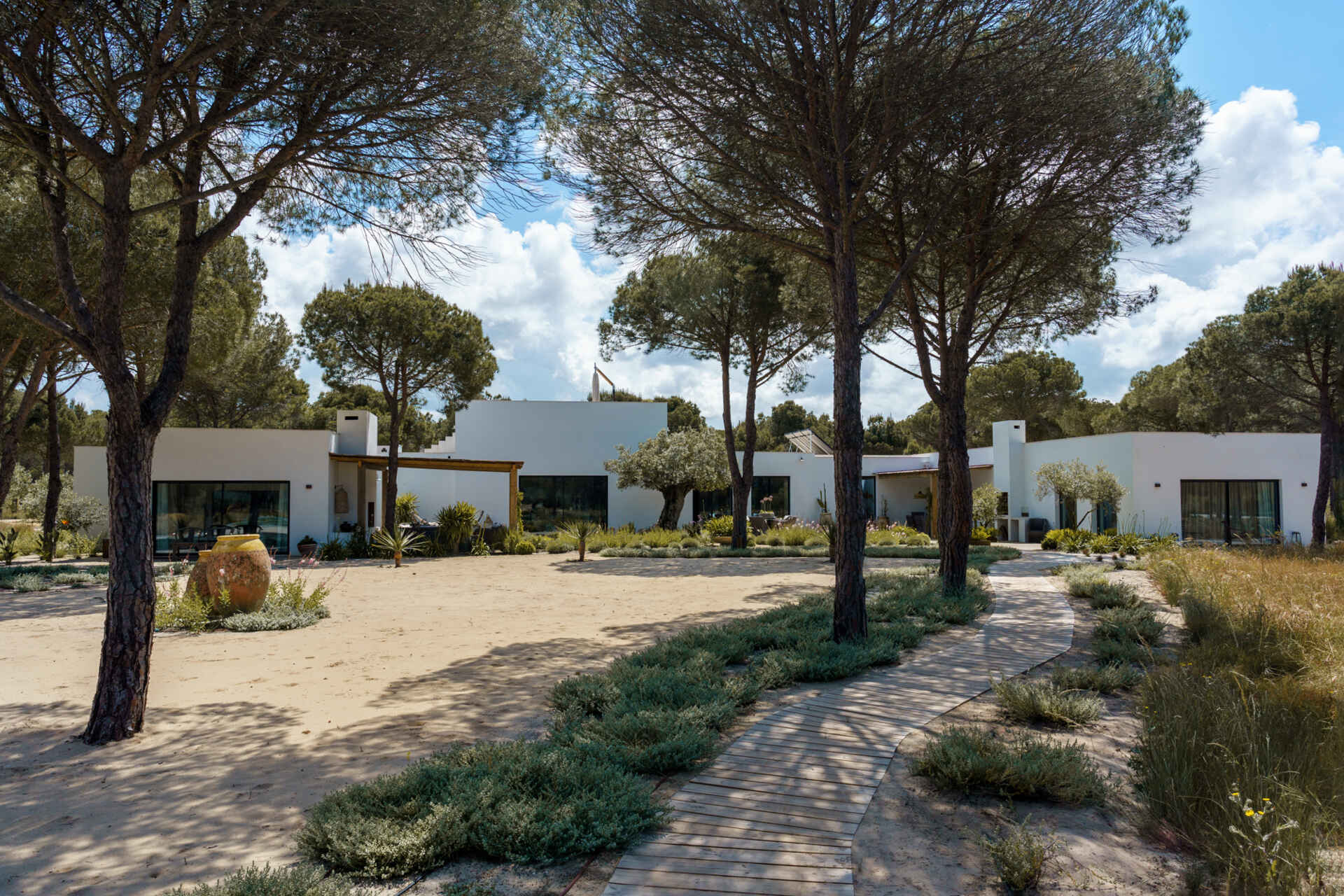
Italian cypress trees and strawberry trees were added around the courtyard to provide shade and help cool the outdoor areas during hot afternoons. Limestone stepping stones weave through the gardens, leading toward hidden seating areas, masonry benches, and quiet corners tucked beneath the trees.
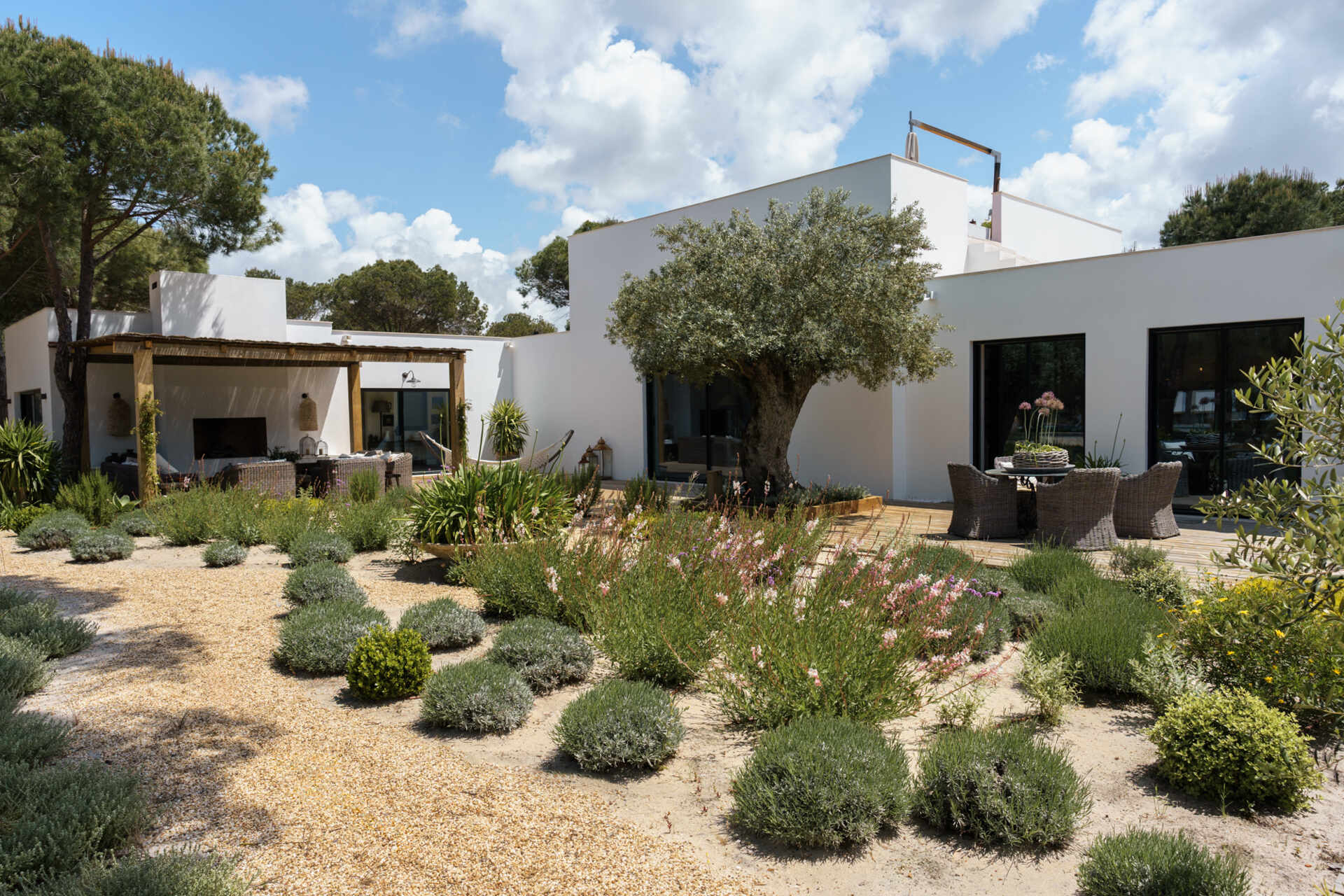
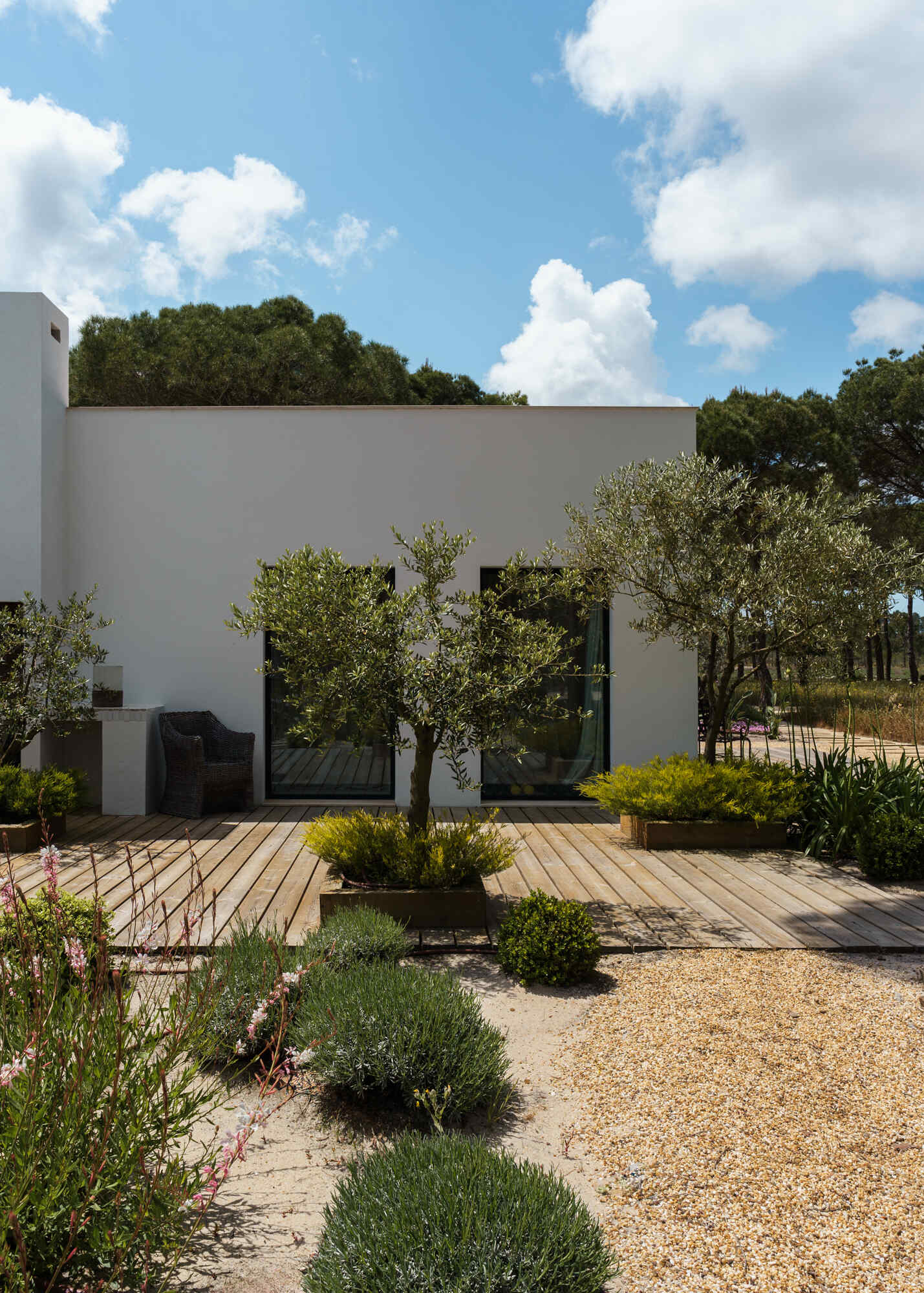
Instead of heavily manicured gardens, the landscaping feels relaxed and organic, allowing the textures of sand, shrubs, and pine needles to remain visible throughout the property.
A Pool That Reflects the Pine Trees Above
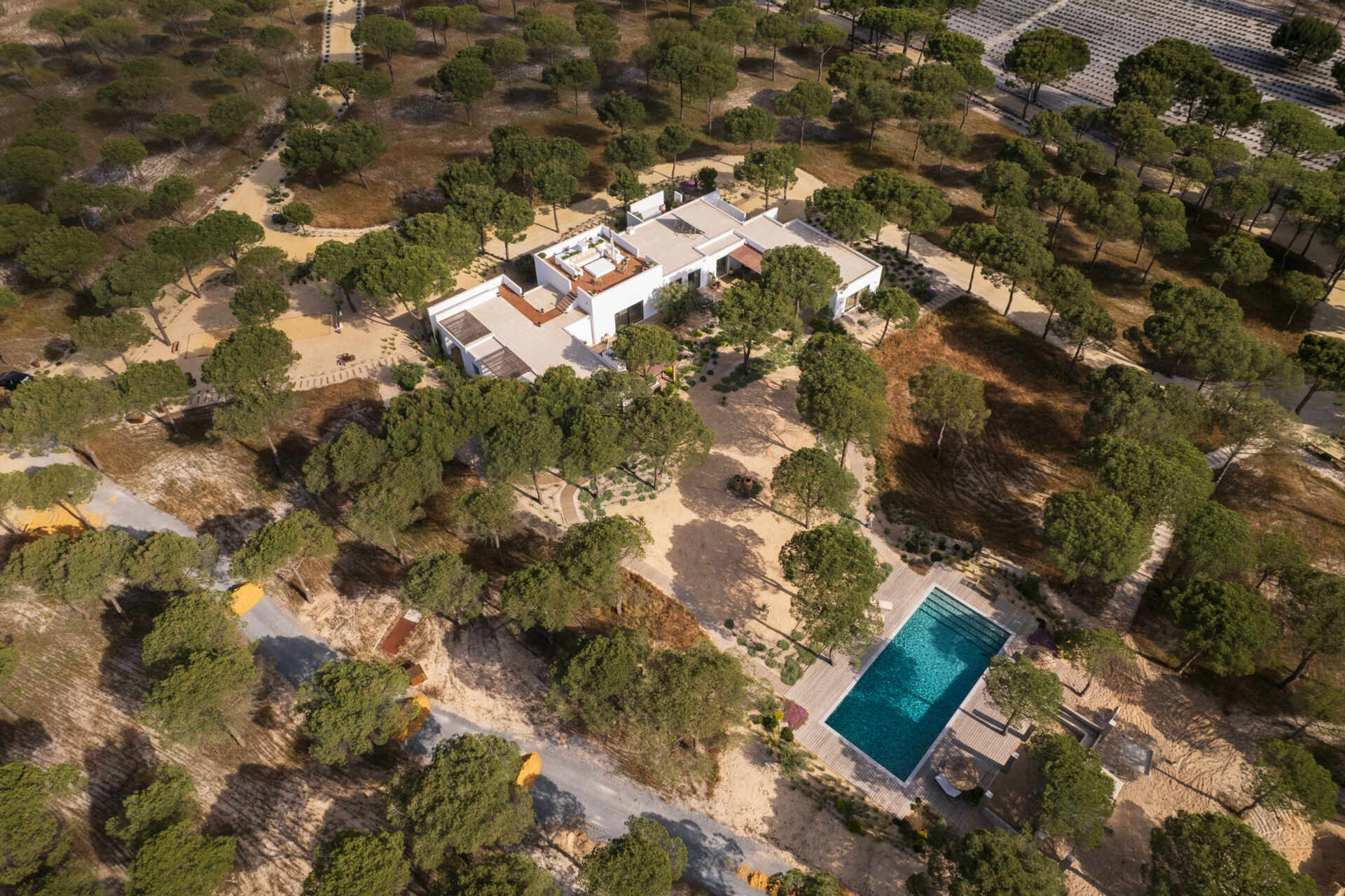
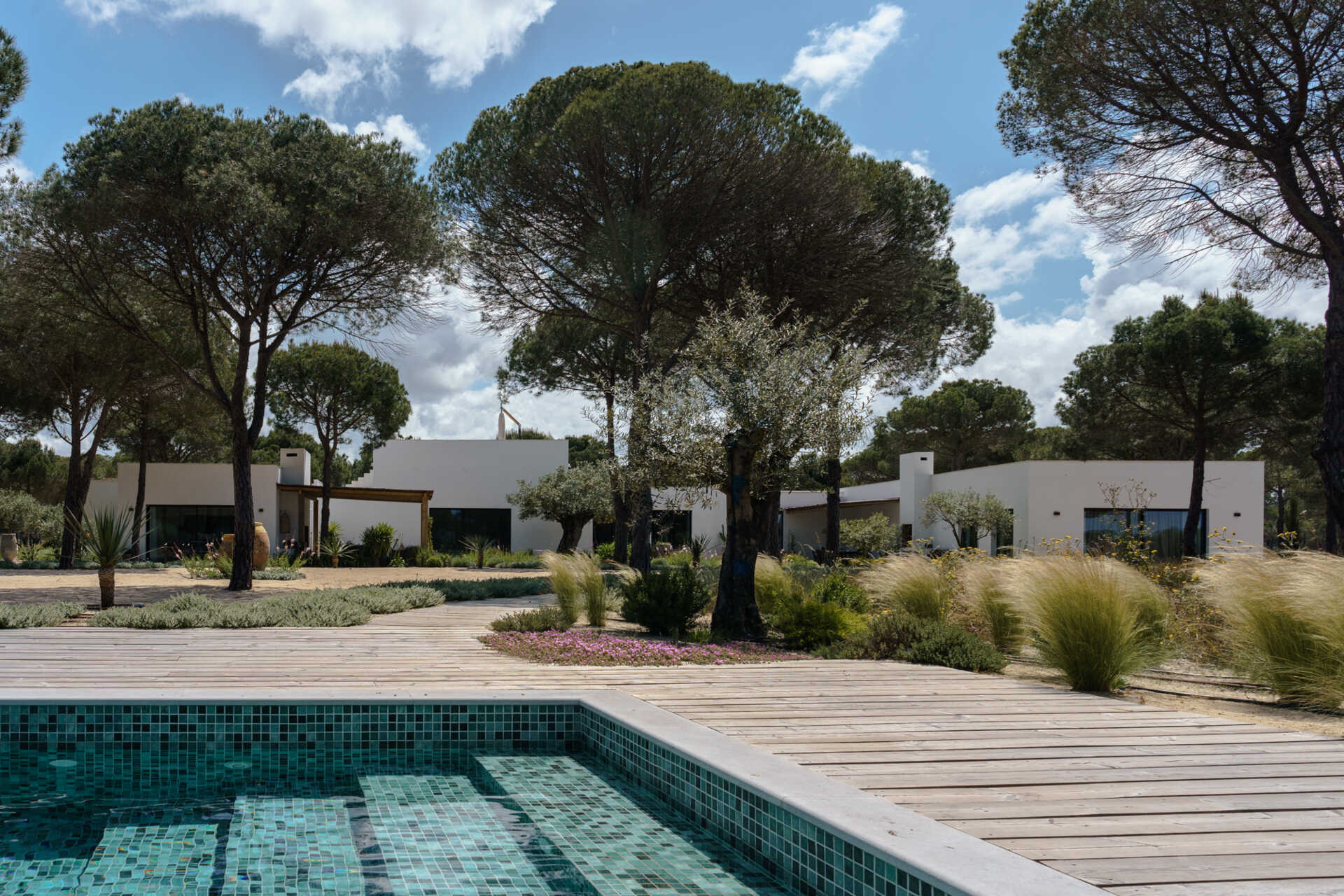
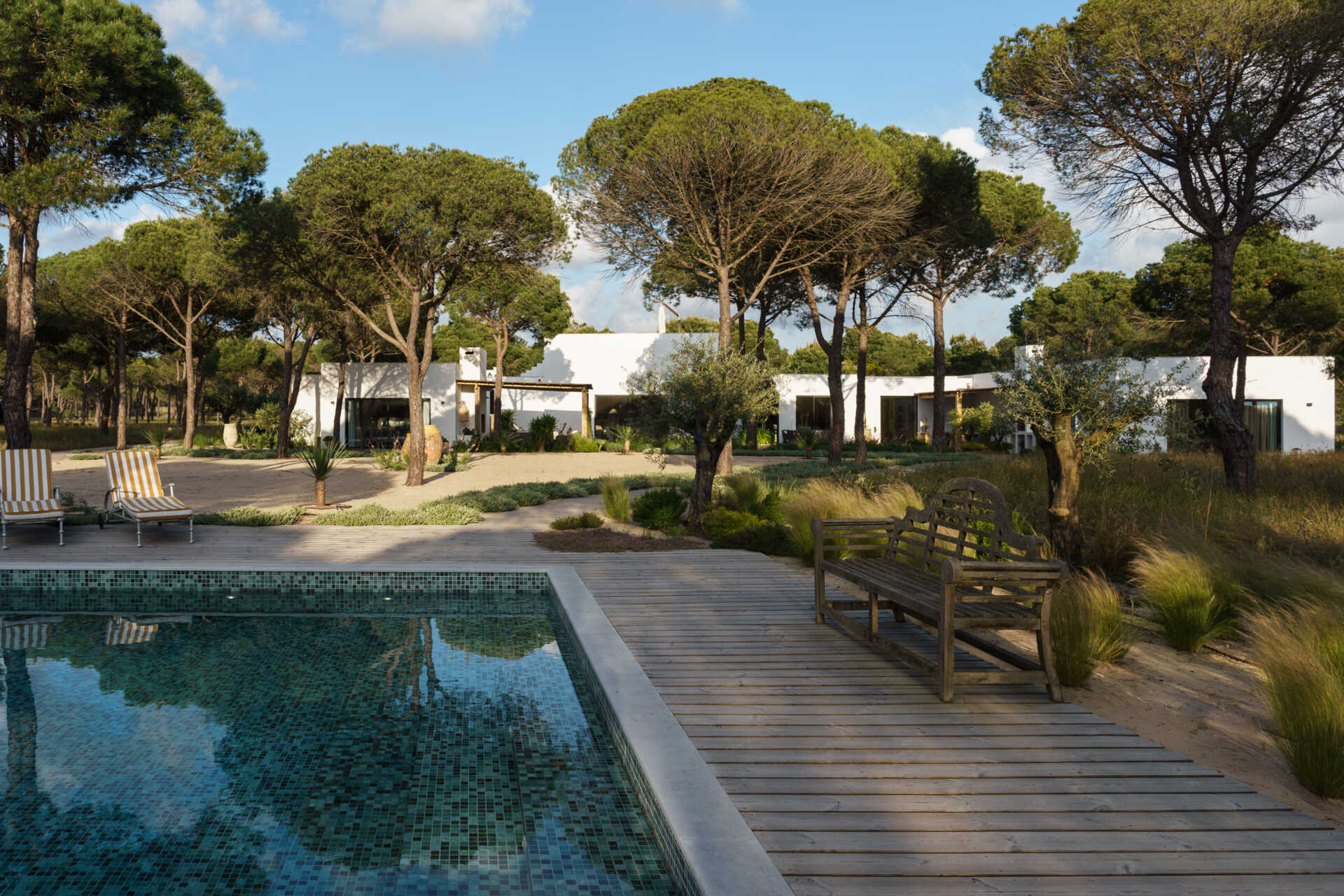
At the center of the courtyard sits a long rectangular pool that mirrors the surrounding pine canopy. On calm days, reflections of cork oak branches ripple across the water, adding movement and depth to the outdoor space.
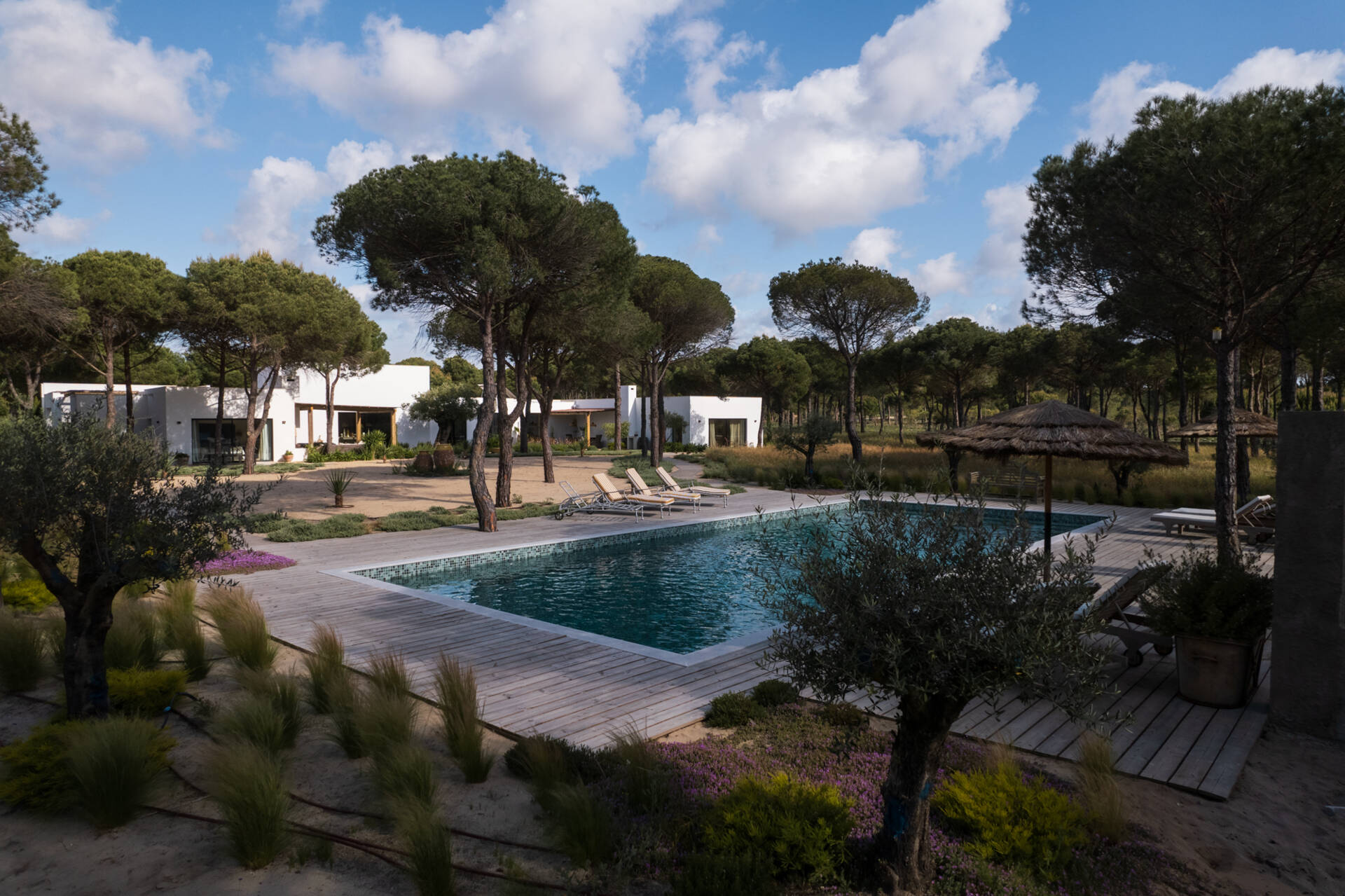
The pool area is designed as a sequence of small gathering zones. Wooden platforms and ceramic sculptures by local artisans surround the water, offering places to relax throughout the day.
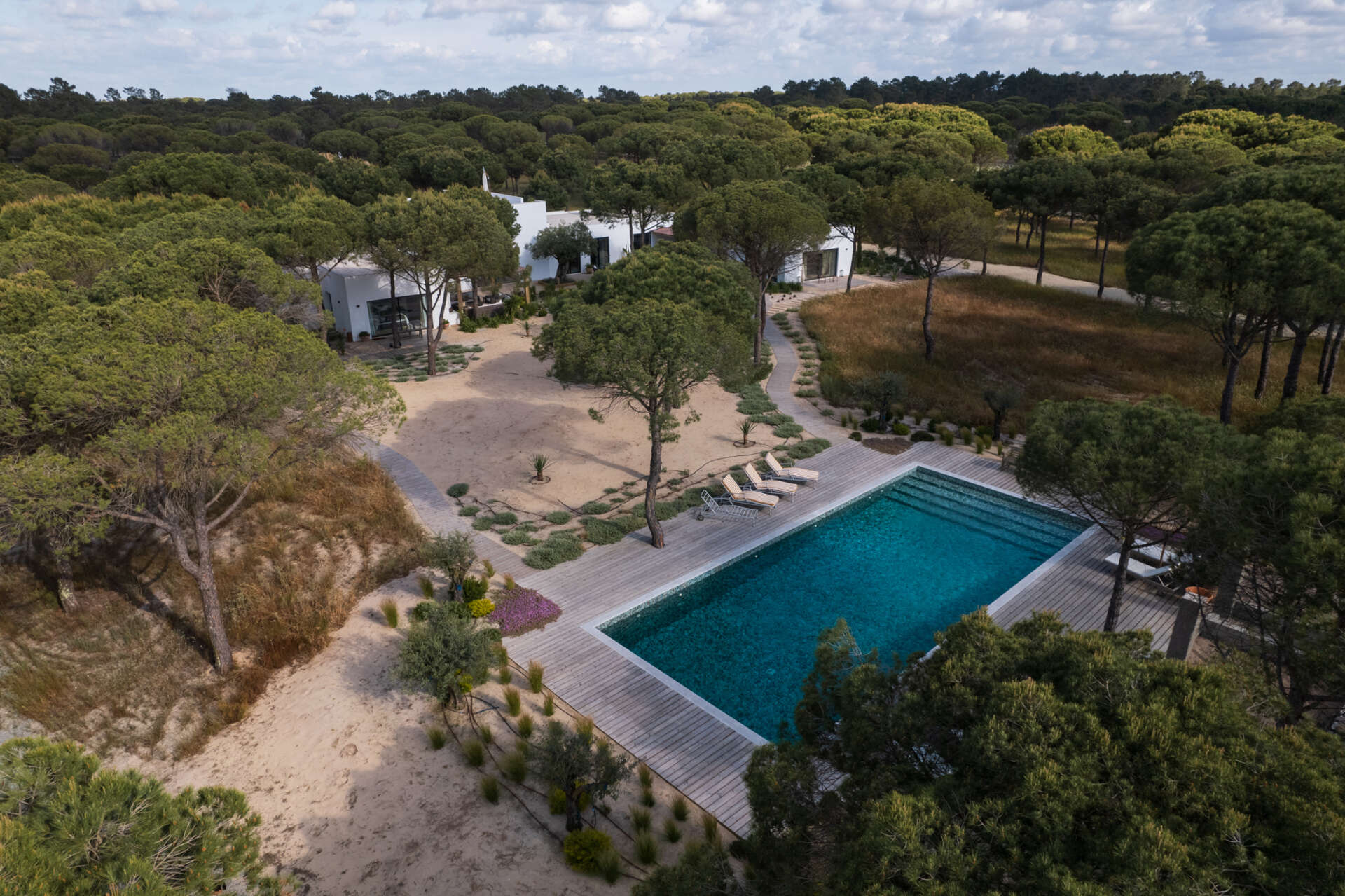
Some areas receive full afternoon sunlight, while others remain shaded beneath nearby trees, giving the courtyard a changing atmosphere from morning to evening.
The simplicity of the pool’s shape matches the minimalist architecture, while the surrounding vegetation softens the space and keeps it connected to the landscape.
Outdoor Spaces Designed for Long Summer Evenings
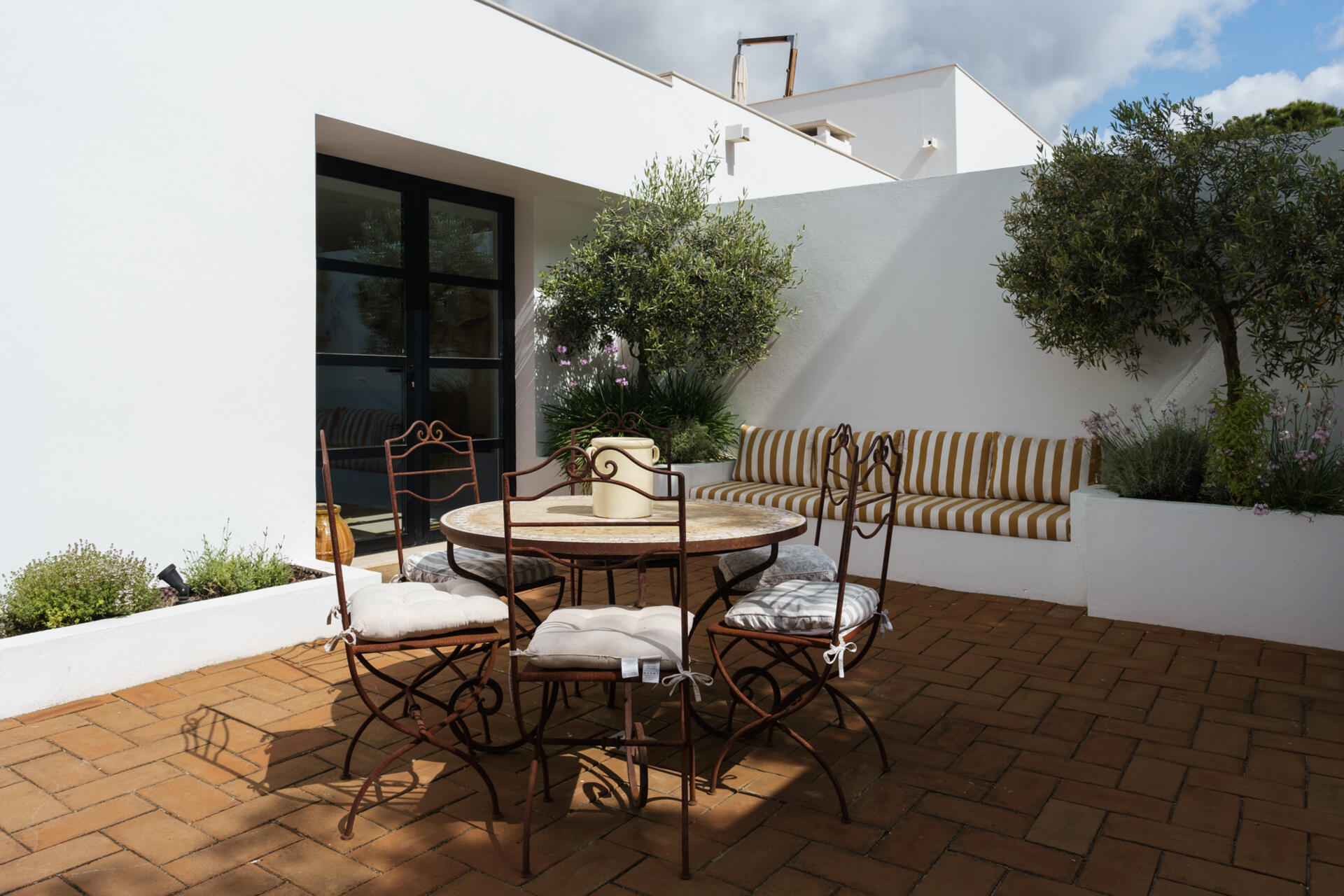
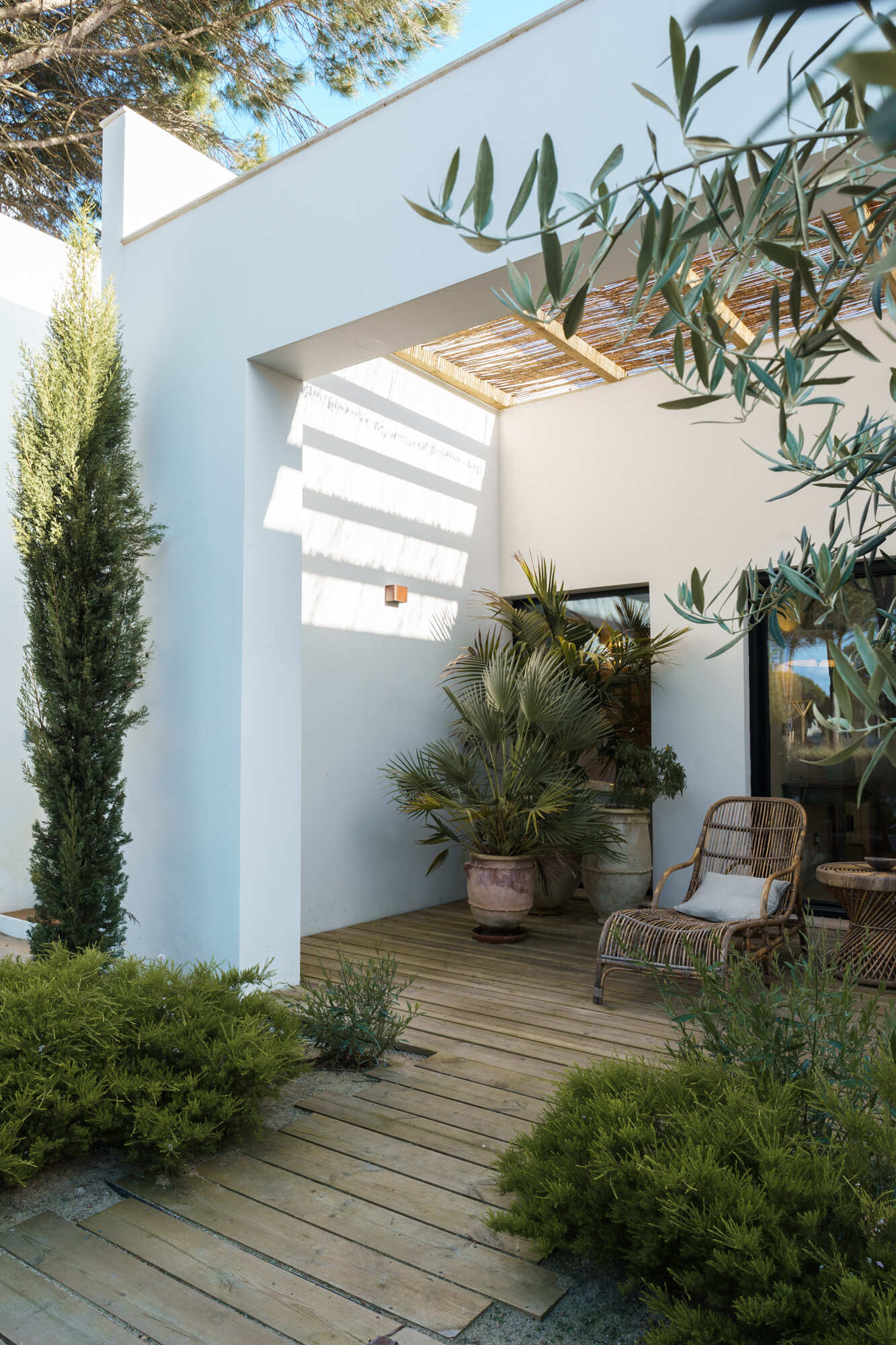
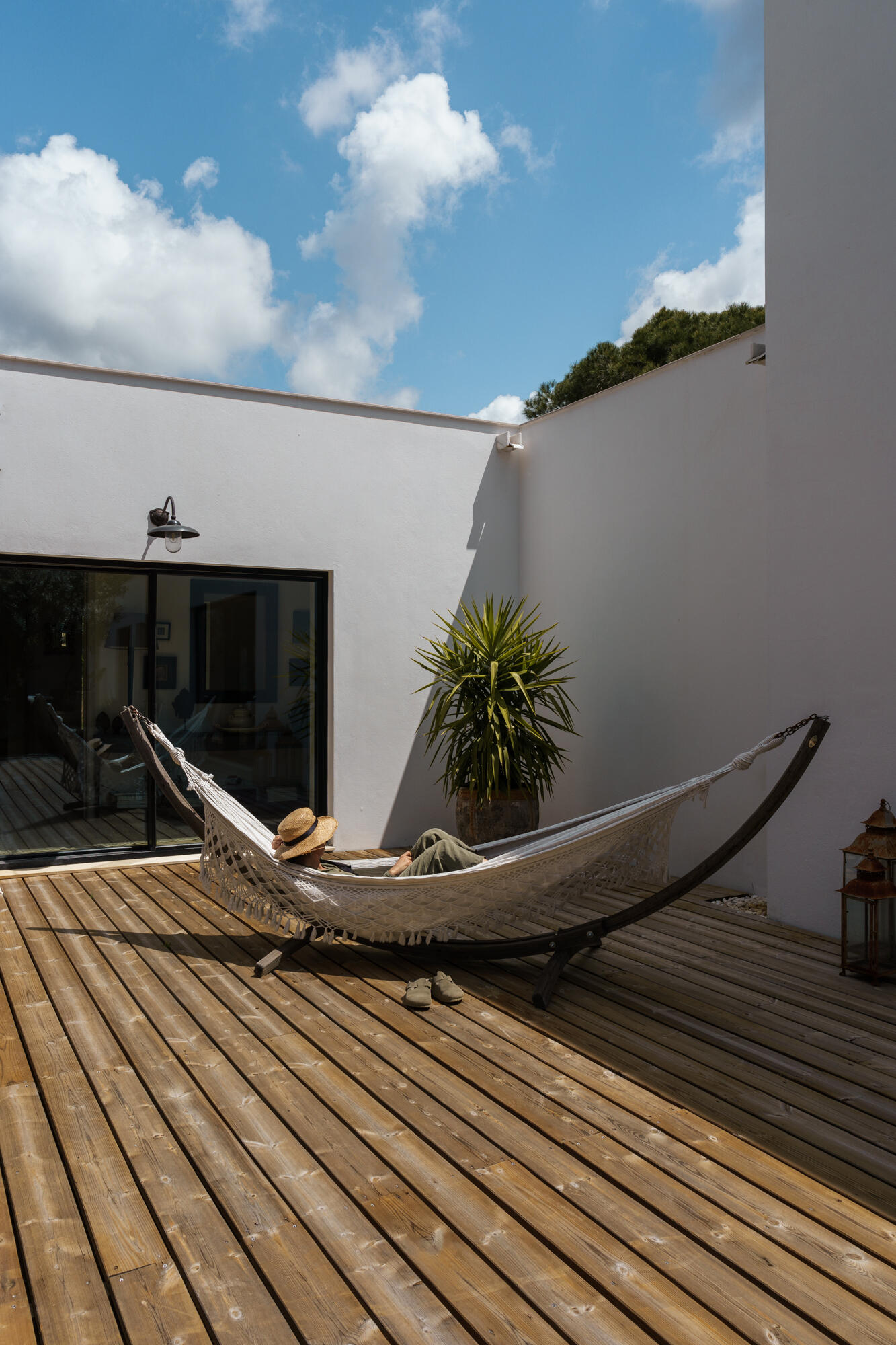
The outdoor areas extend naturally from the interior living spaces, making the transition between indoors and outdoors almost seamless.
Throughout the property, terraces and seating areas are positioned to capture different lighting conditions across the day. Some spaces are open and bright, while others sit beneath pergolas or trees where filtered light creates cooler shaded zones.
Stairs Leading to Rooftop Views Above the Trees
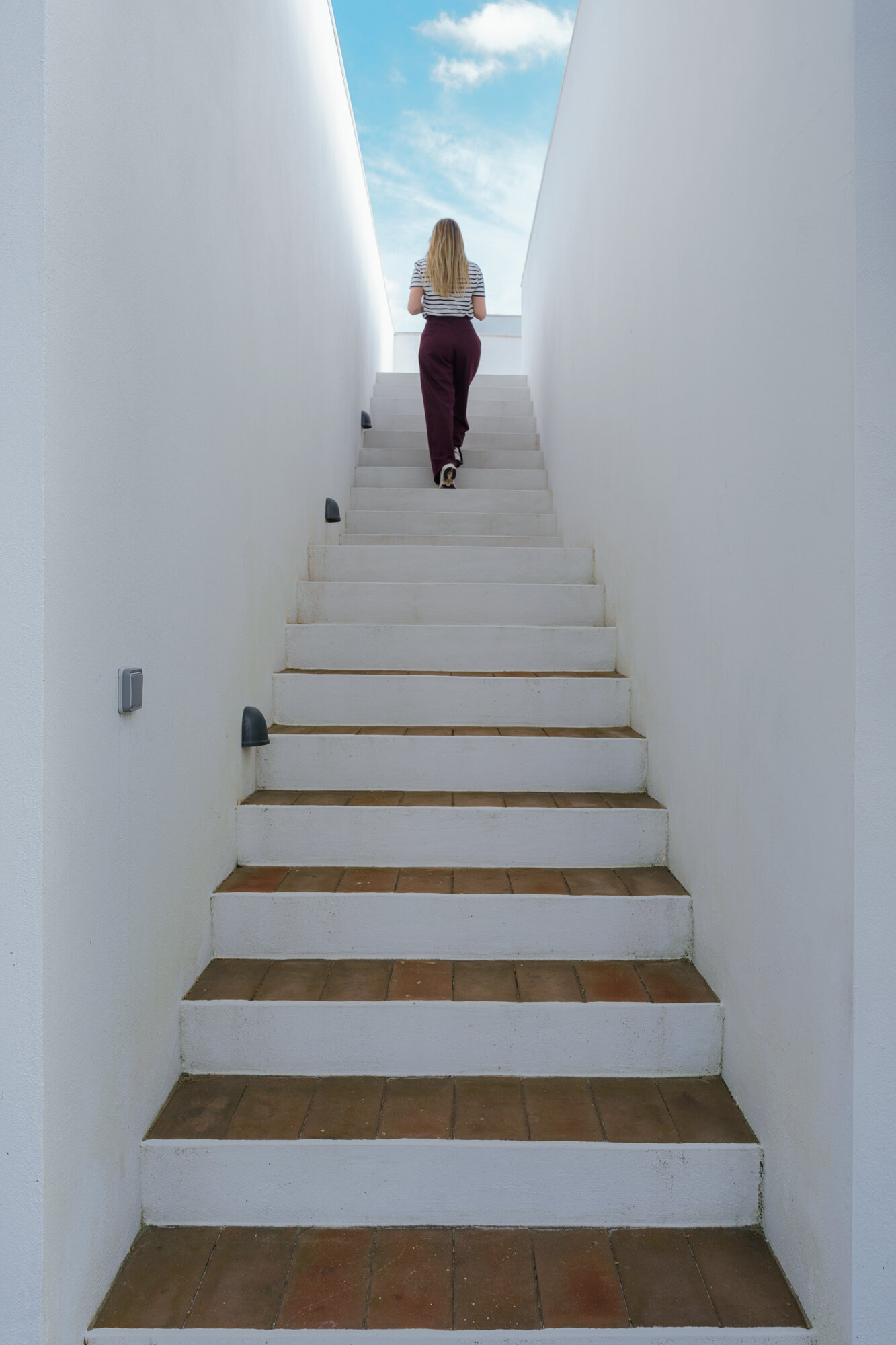
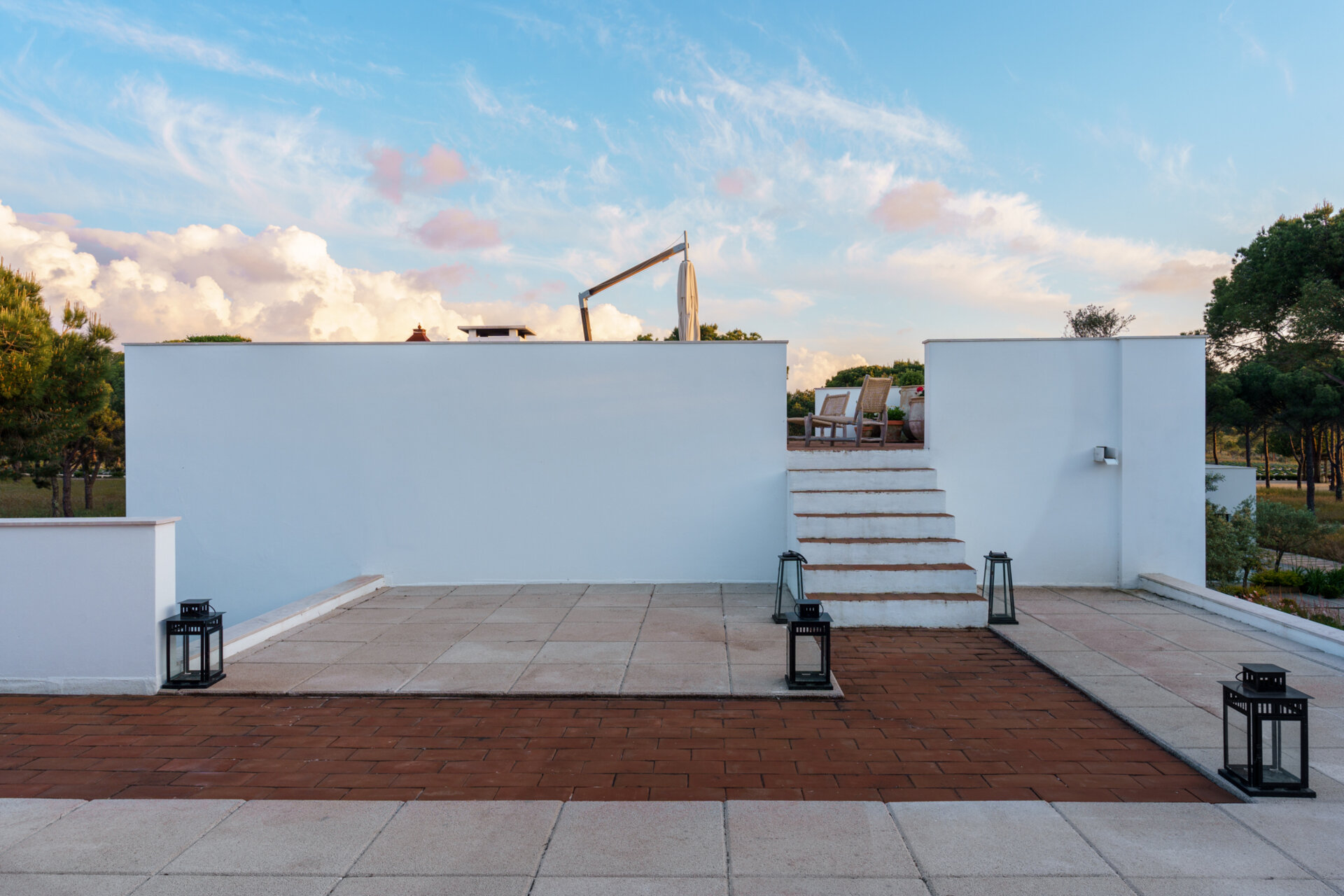
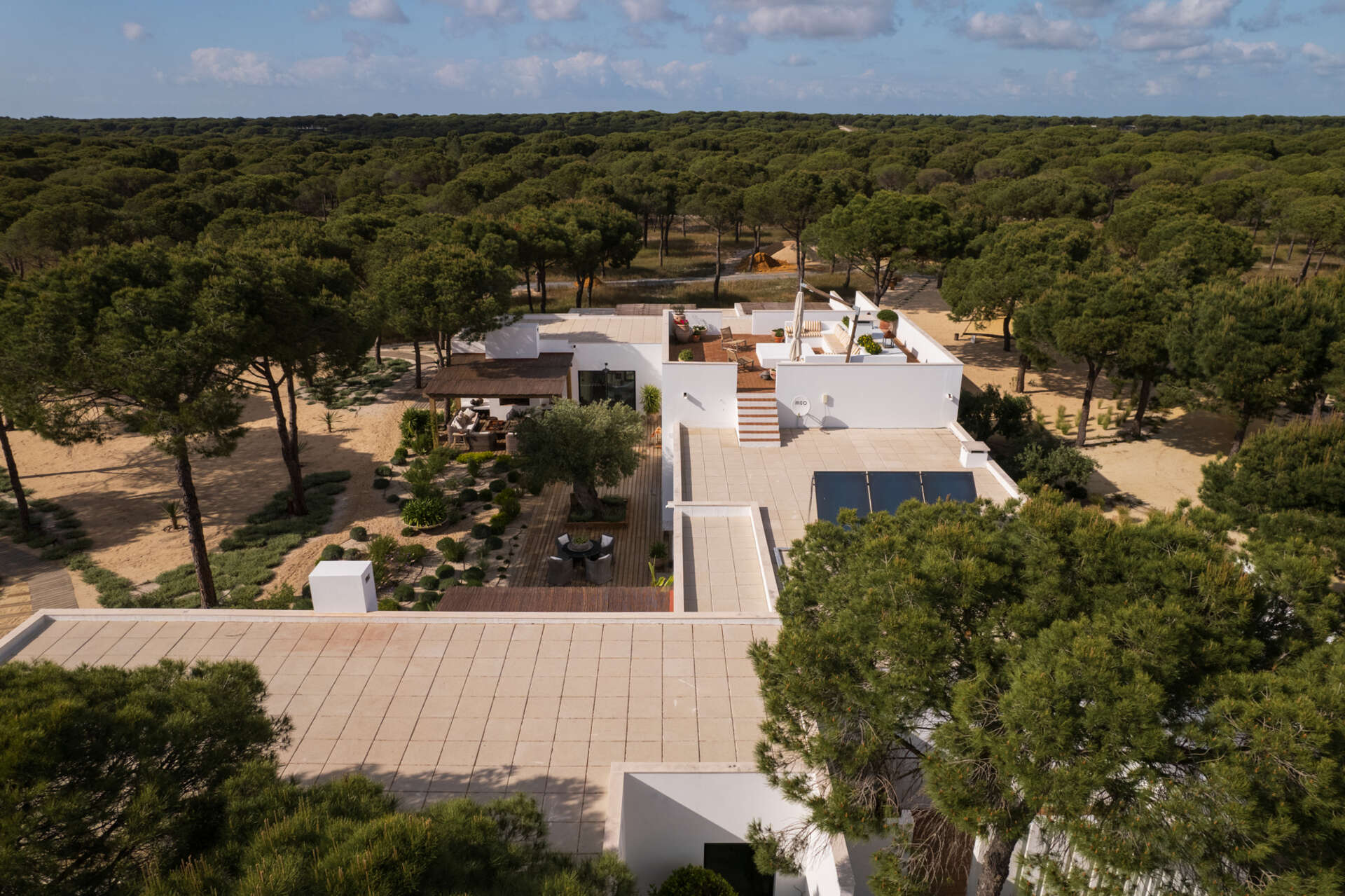
Stairs rise towards a rooftop terrace positioned above the flat roofline of the villa. This elevated outdoor space offers a completely different perspective of the surrounding pine forest.
From above, the contrast between the bright white architecture and the surrounding green landscape becomes even more dramatic, with the rooftop decks adding another layer to the experience of the house, turning the roof itself into an outdoor living space.
A Living Room Framed by Glass and Pine Forest Views
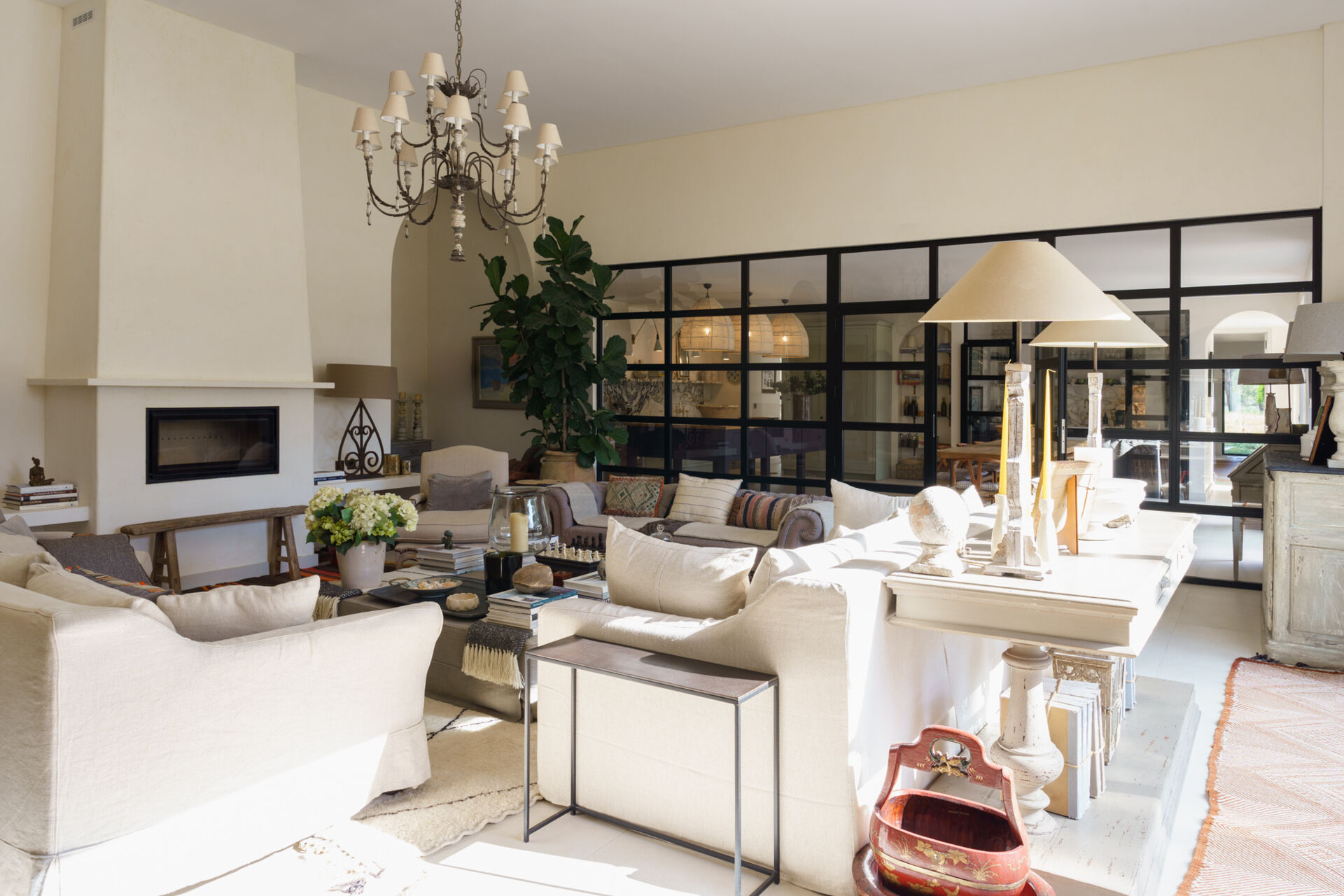
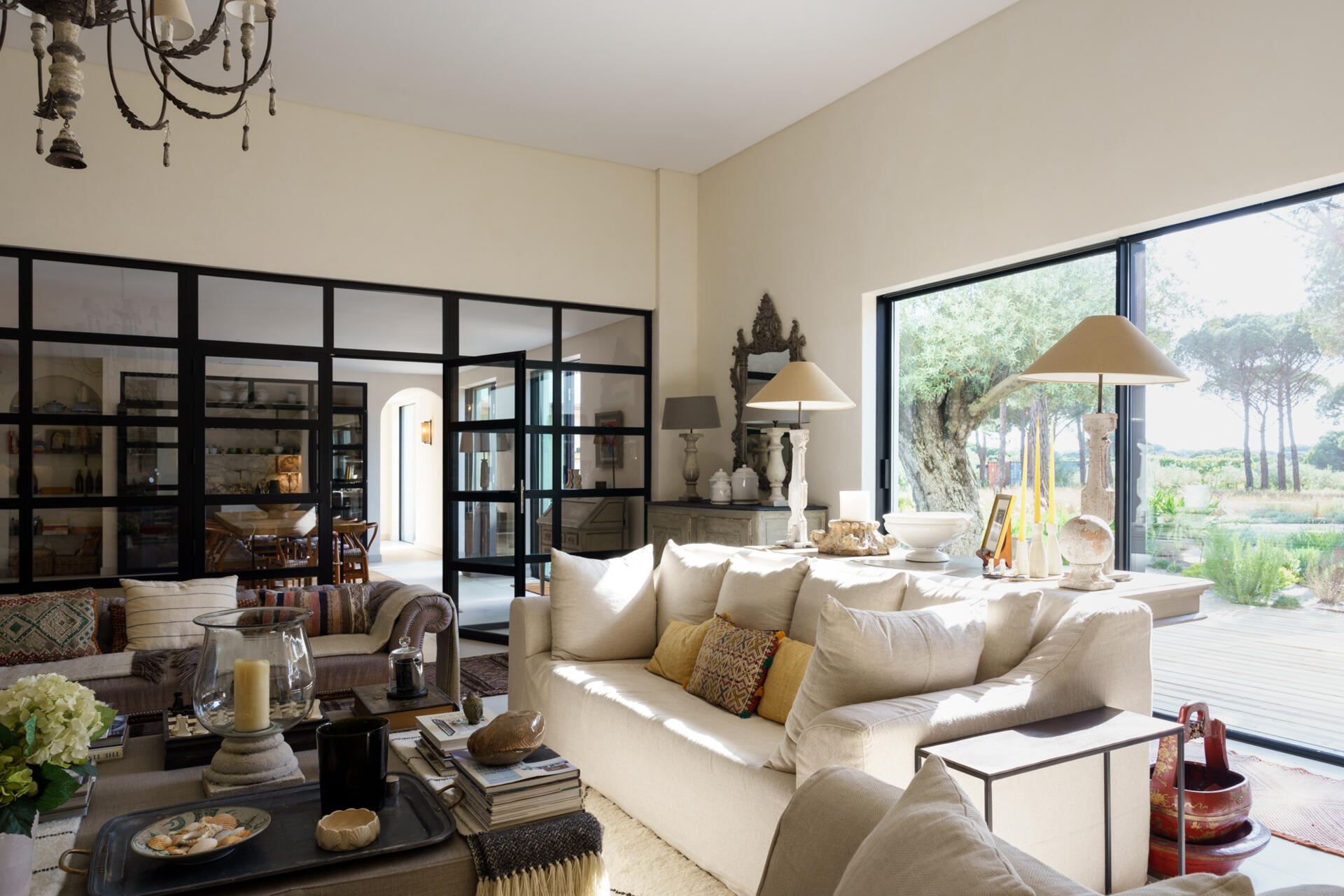
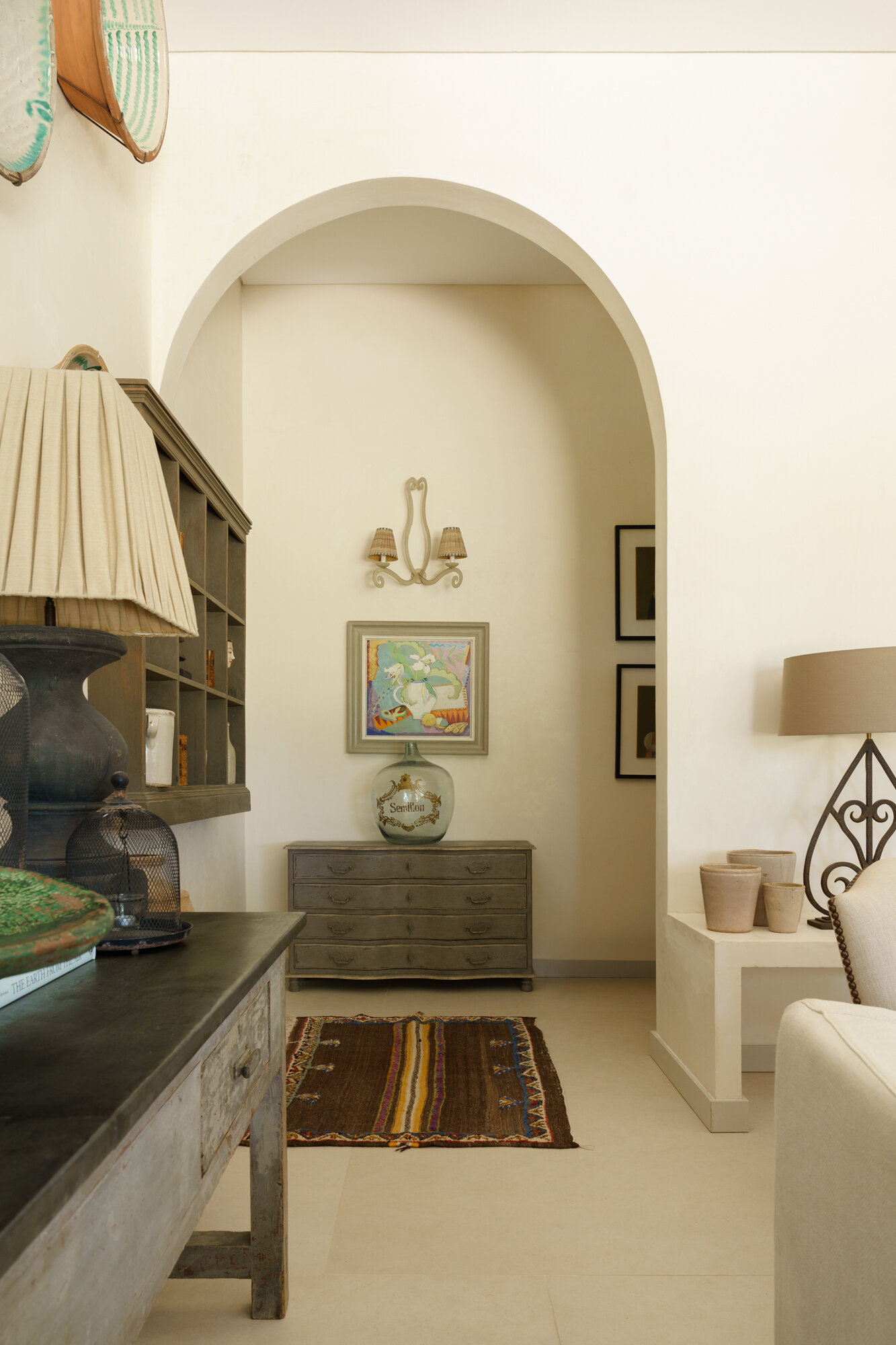
Inside the central wing of the villa, the living room opens completely toward the courtyard through expansive retractable glazing. The room feels constantly linked to the outdoors. Even when closed, the glass walls maintain uninterrupted views of trees, sand, and sky from nearly every angle.
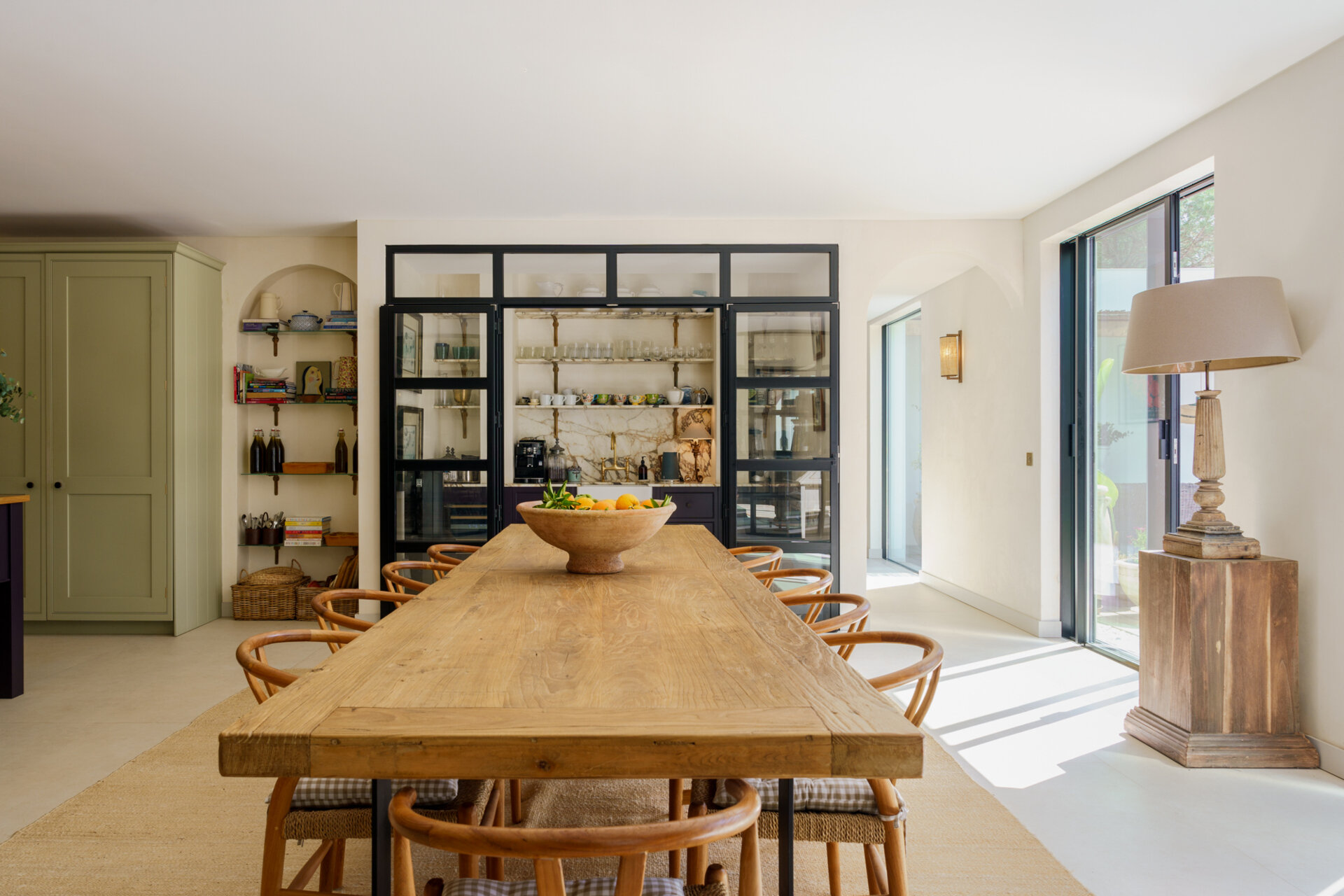
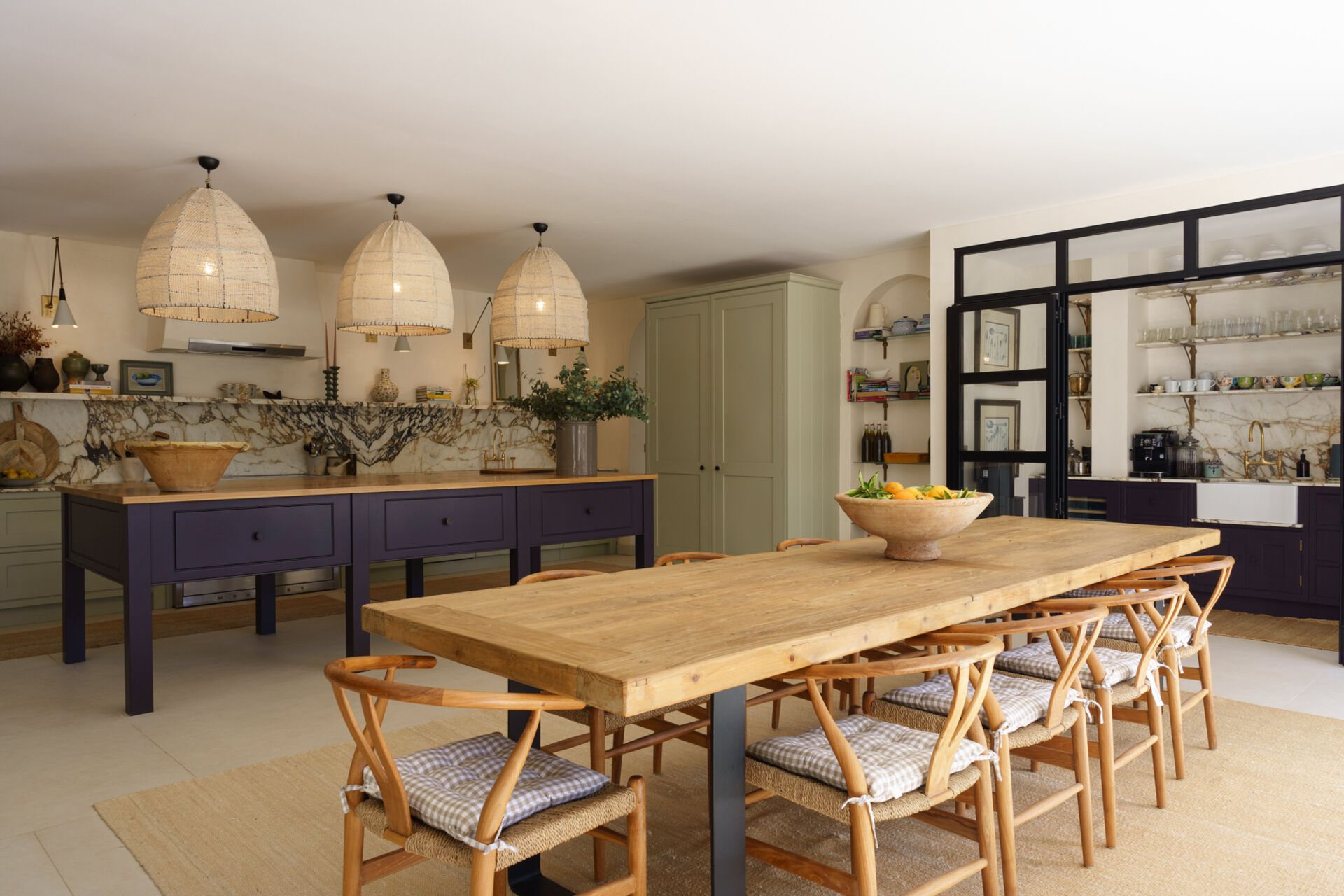
A Dining Area Filled With Warm Evening Light
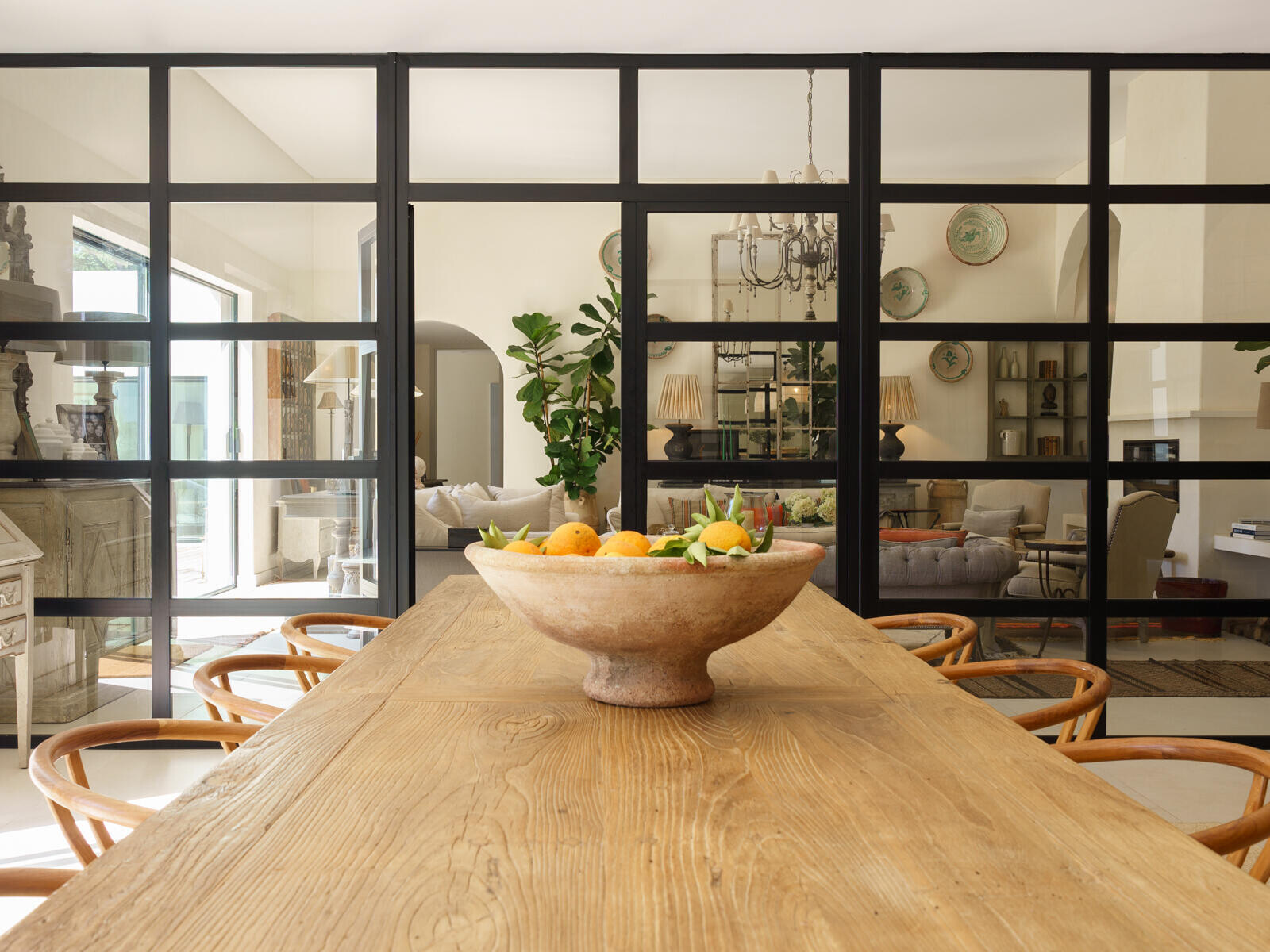
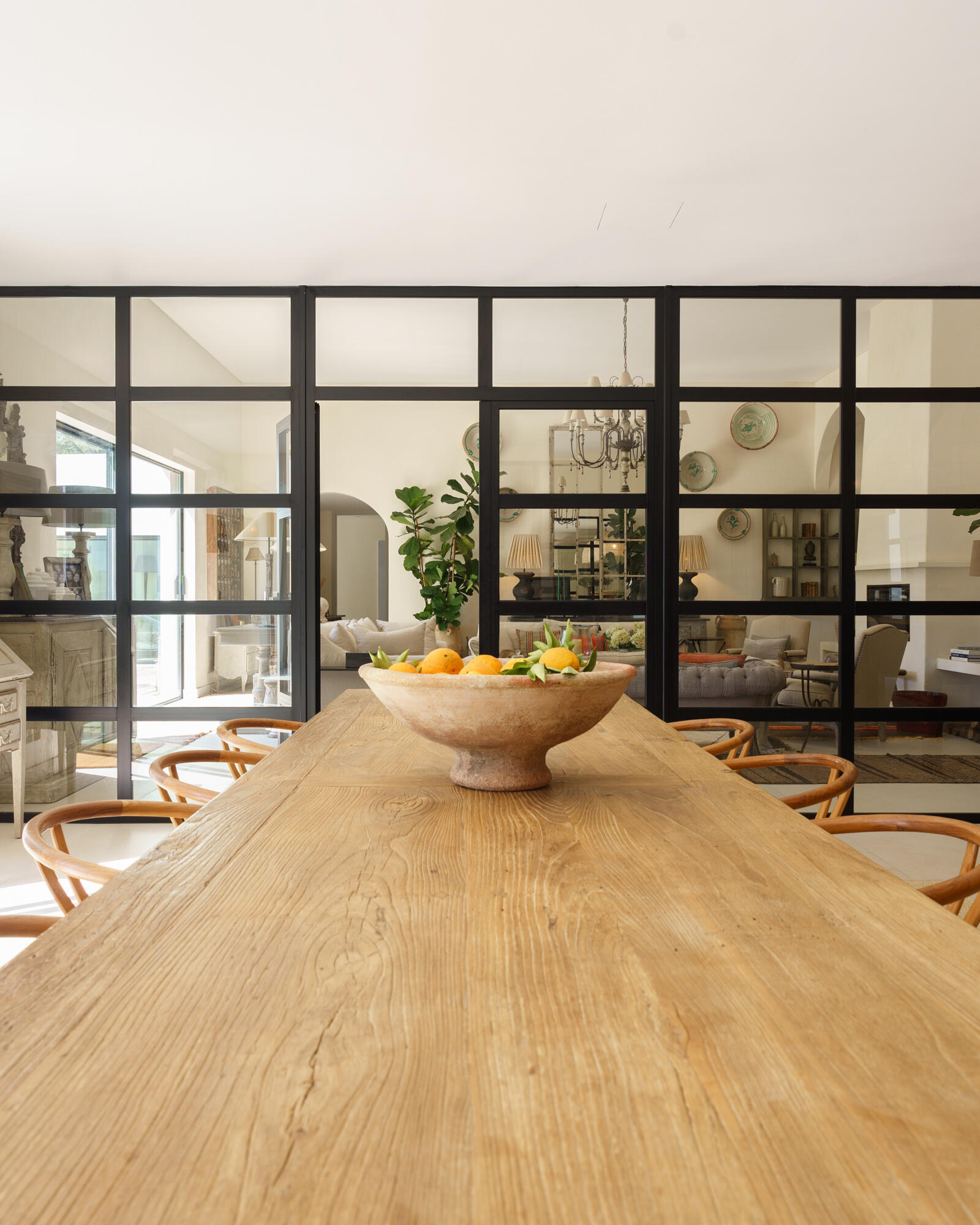
The dining space is separated from the living room by a black-framed glass wall, allowing for natural light to pass through and provide views of the living room.
Natural textures and restrained materials help the space feel relaxed and welcoming without relying on excessive styling.
A Kitchen Filled With Texture and Warmth
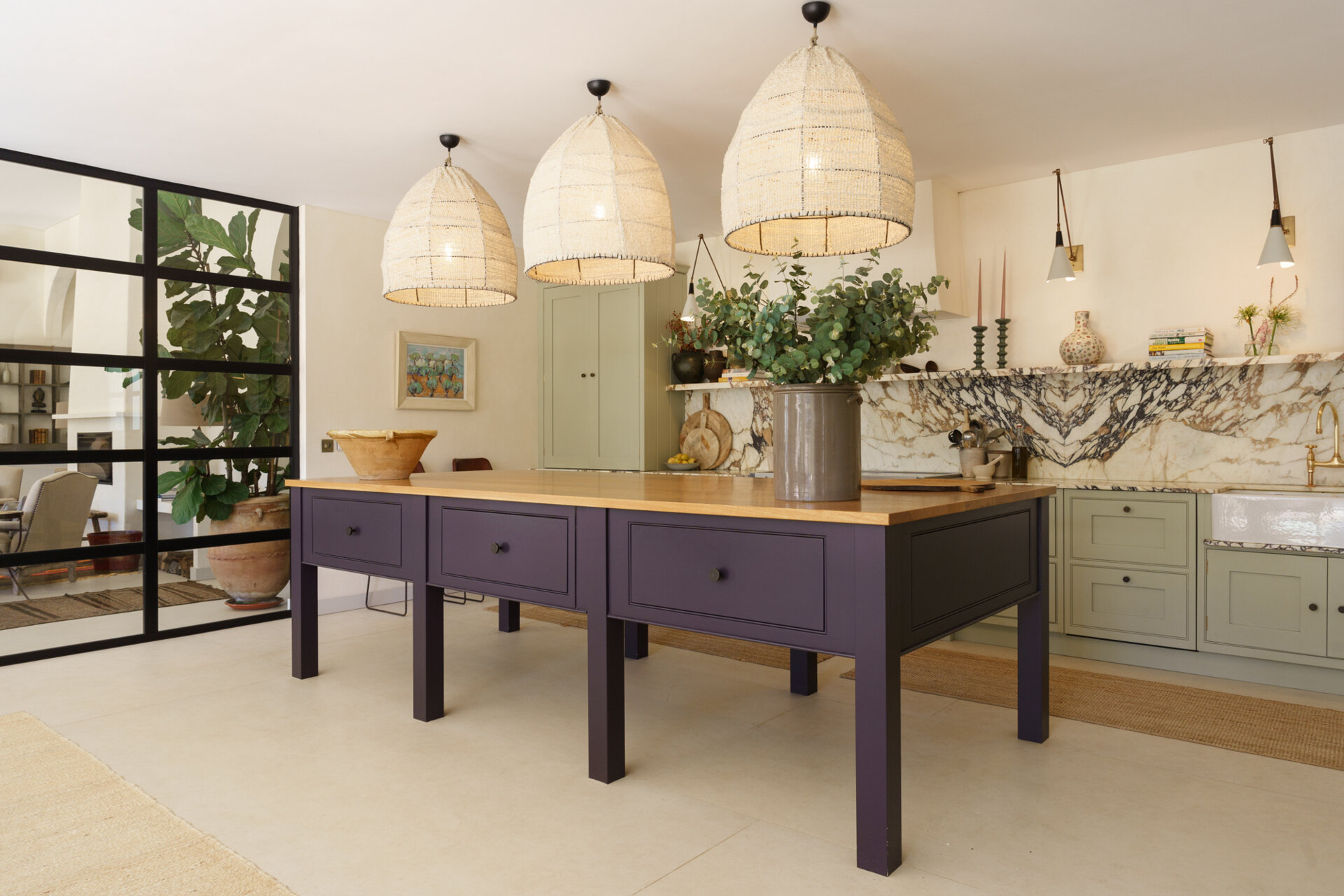
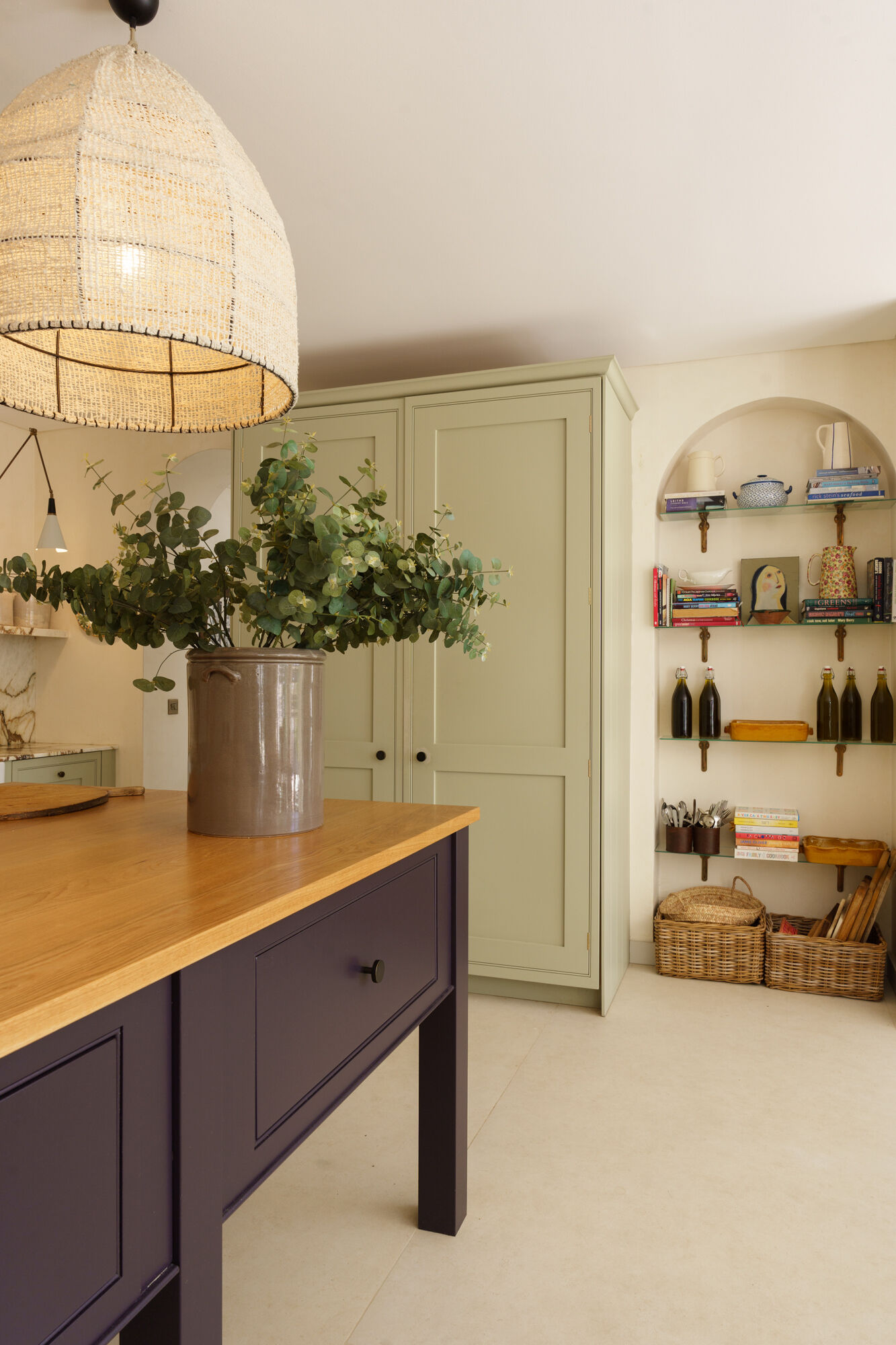
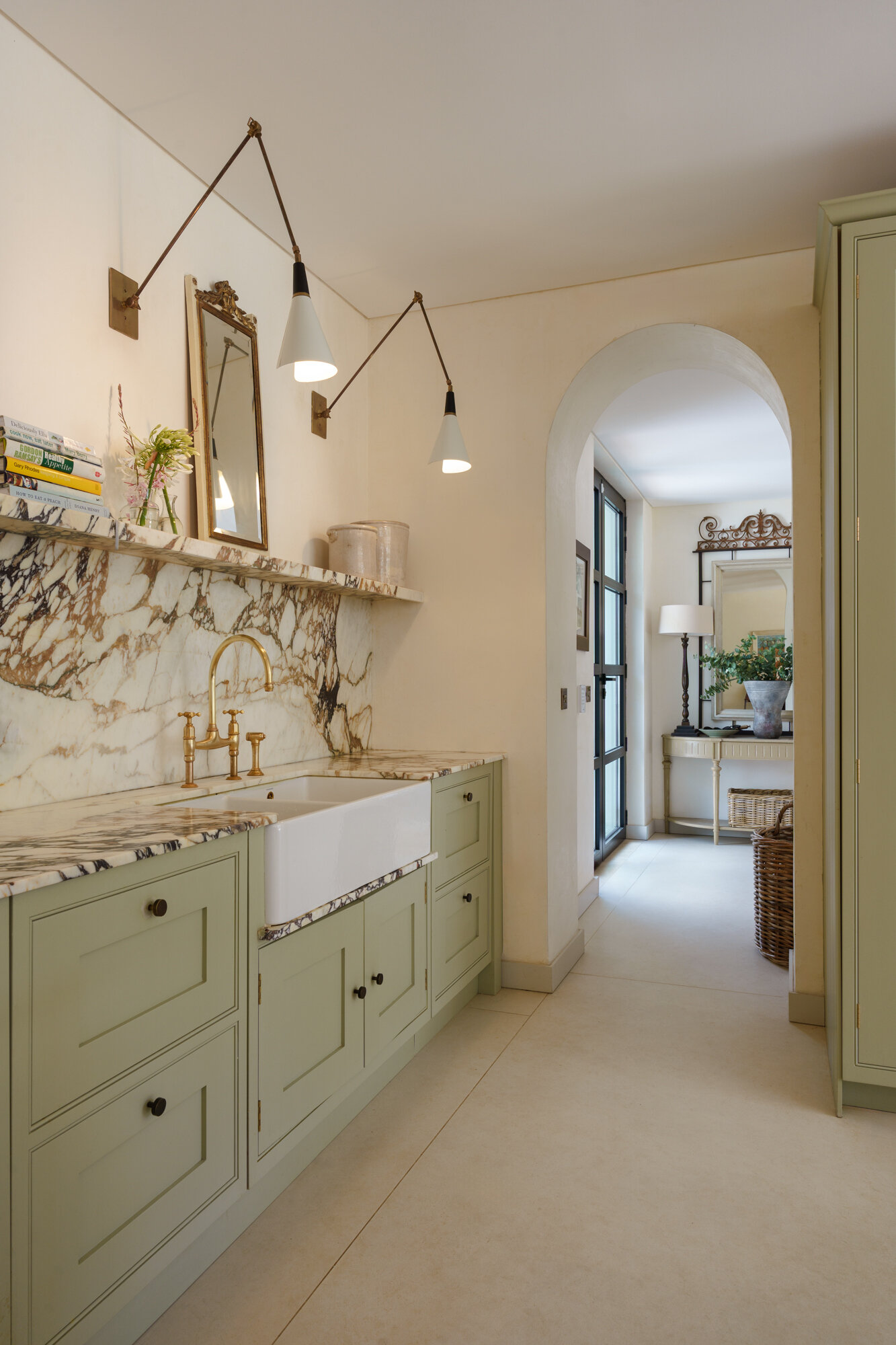
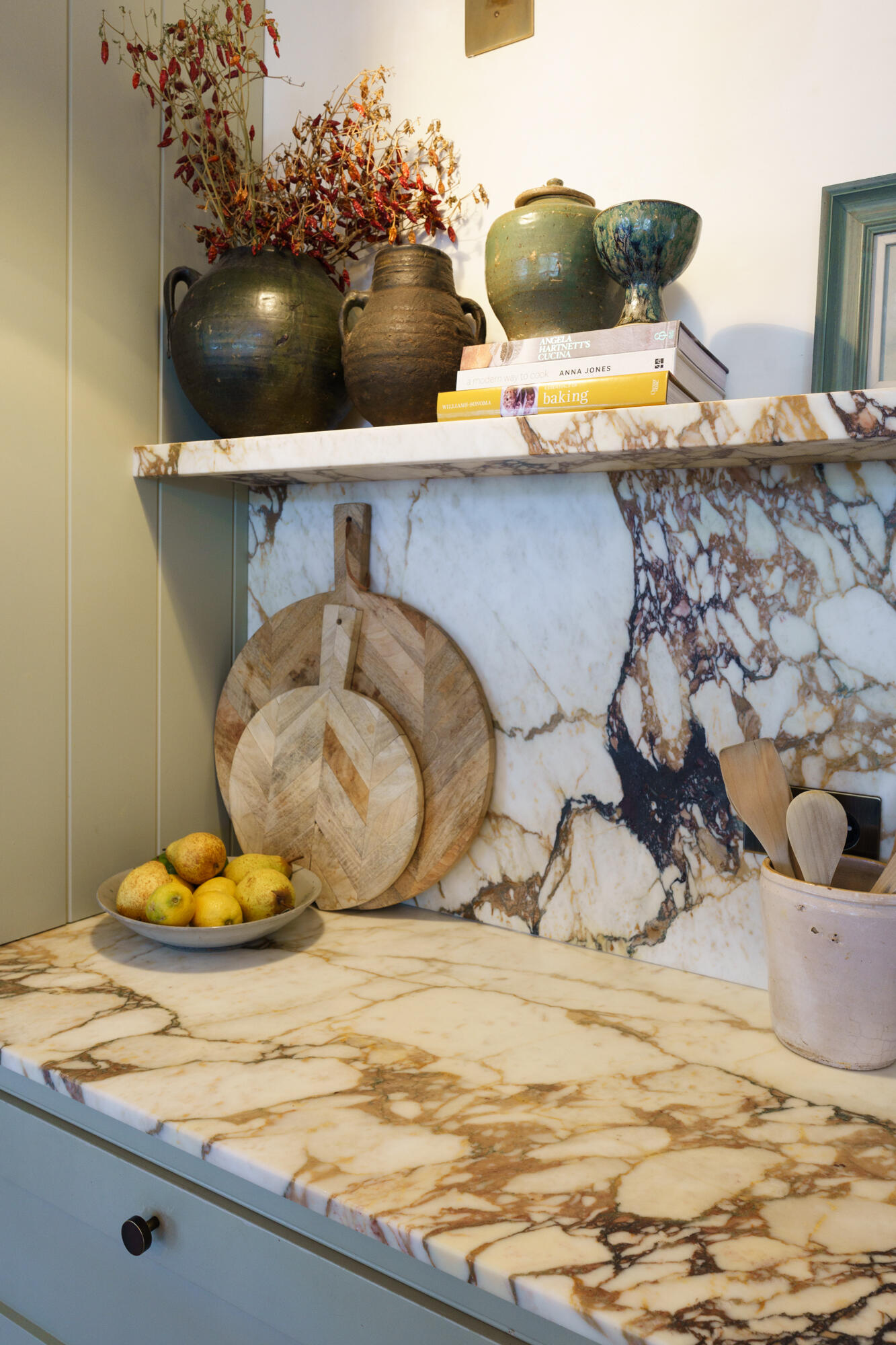
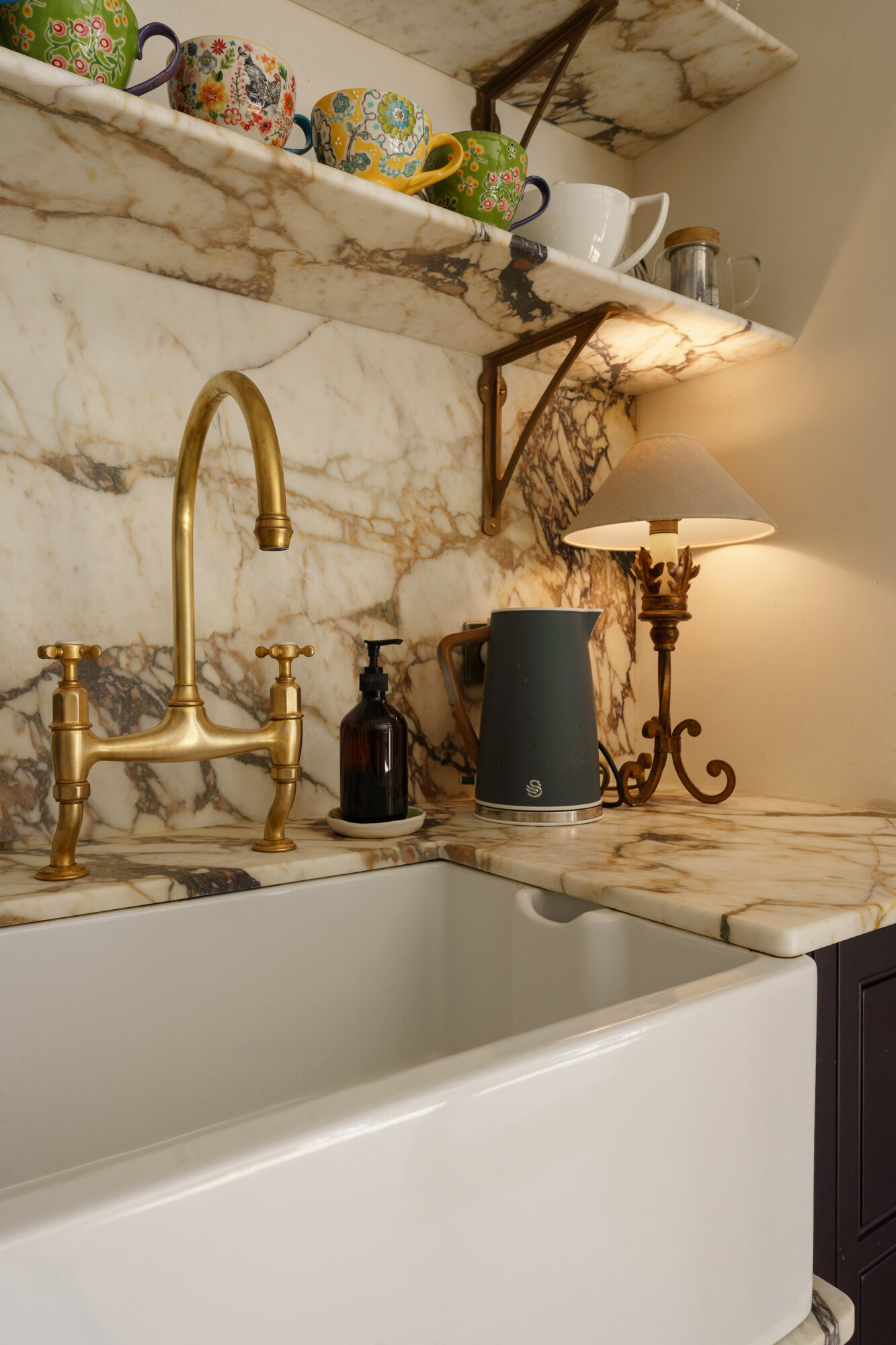
The kitchen combines contemporary design with softer Mediterranean influences through sage cabinetry, woven pendant lighting, and dramatic veined marble surfaces. A deep plum island topped with pale timber anchors the space, while black-framed glass partitions and nearby greenery help maintain a strong visual connection to the surrounding spaces.
Hallways That Frame Light and Shadow
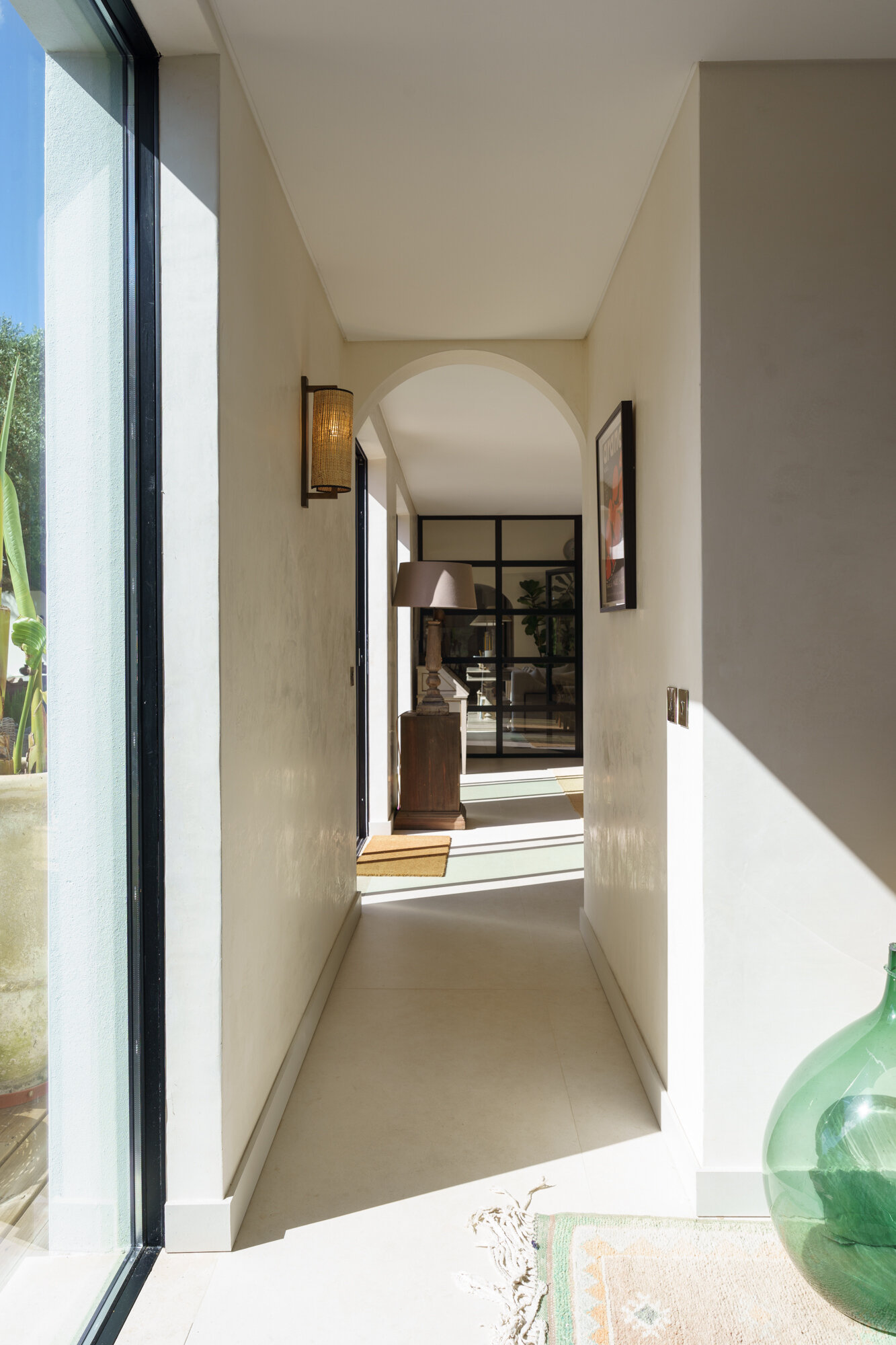
Circulation spaces throughout the villa are treated as more than simple transitions between rooms. Long hallways frame views toward the courtyard, pine trunks, and outdoor terraces, while filtered sunlight moves across the white walls and concrete surfaces throughout the day.
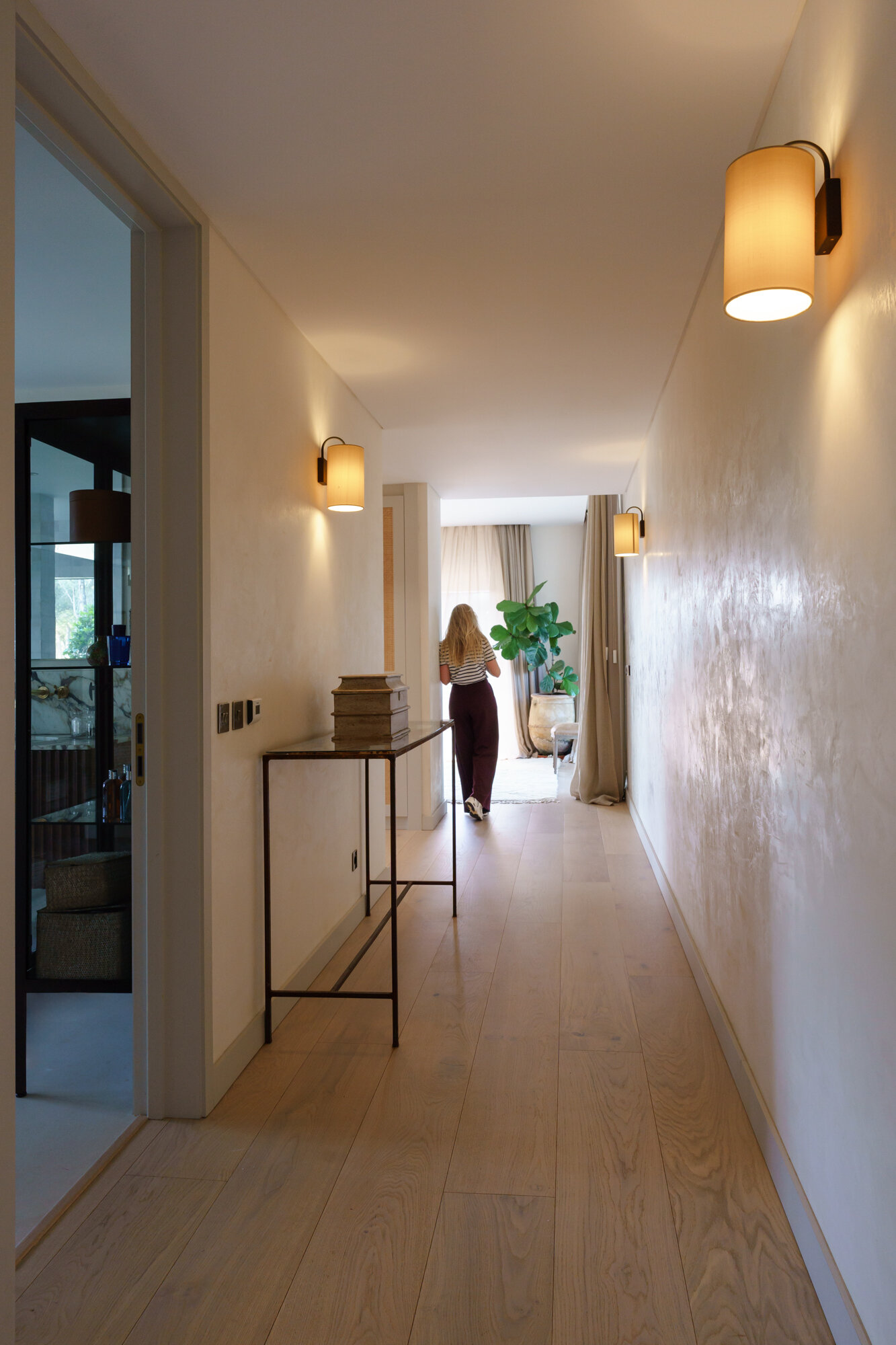
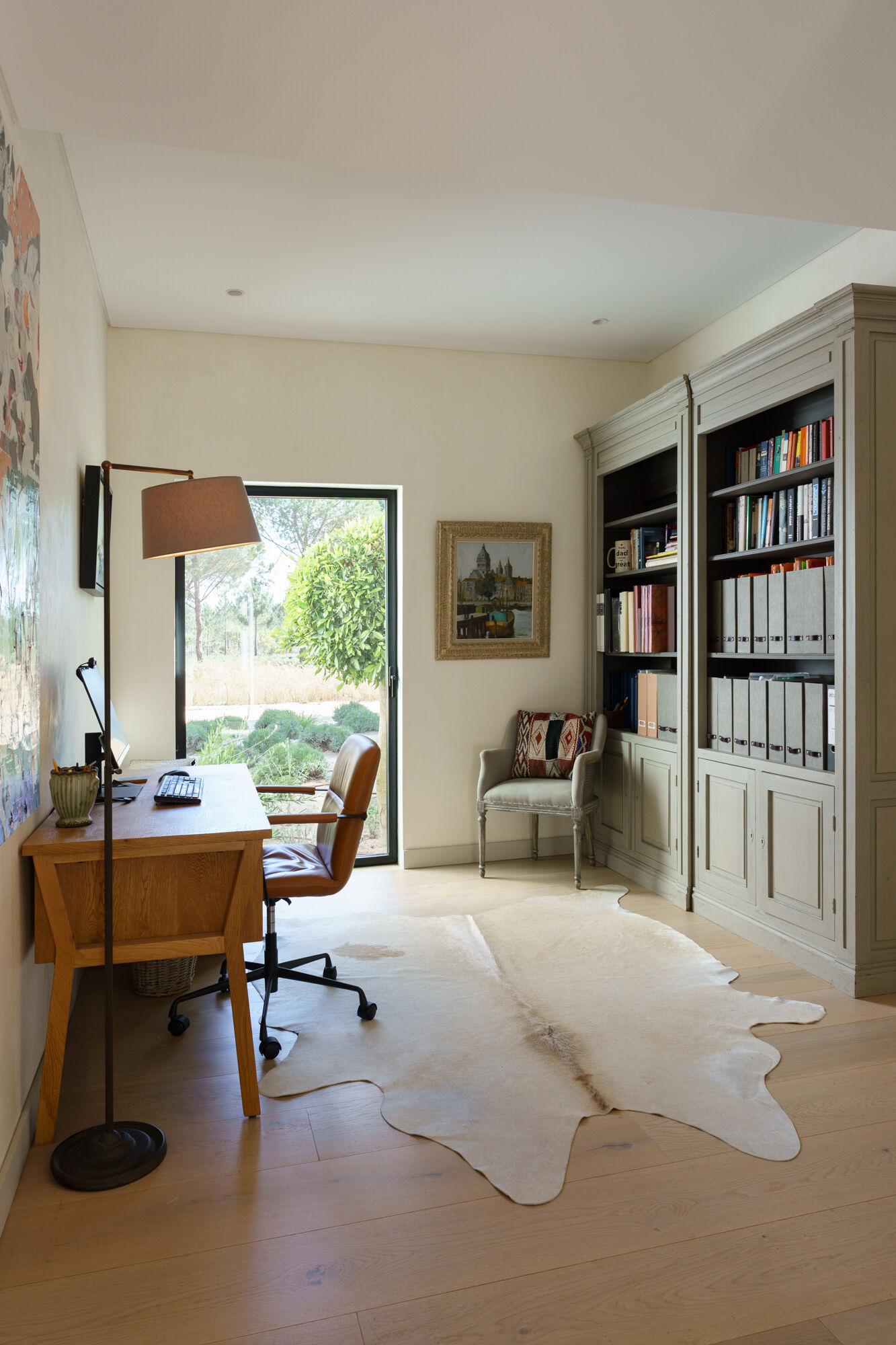
A Home Office Surrounded by Trees
The home office opens directly toward the pine forest through a large glass door. From inside, the trees feel extremely close, almost acting as a natural extension of the workspace itself. The surrounding greenery softens the minimalist interior while creating a calm environment for focus and creativity.
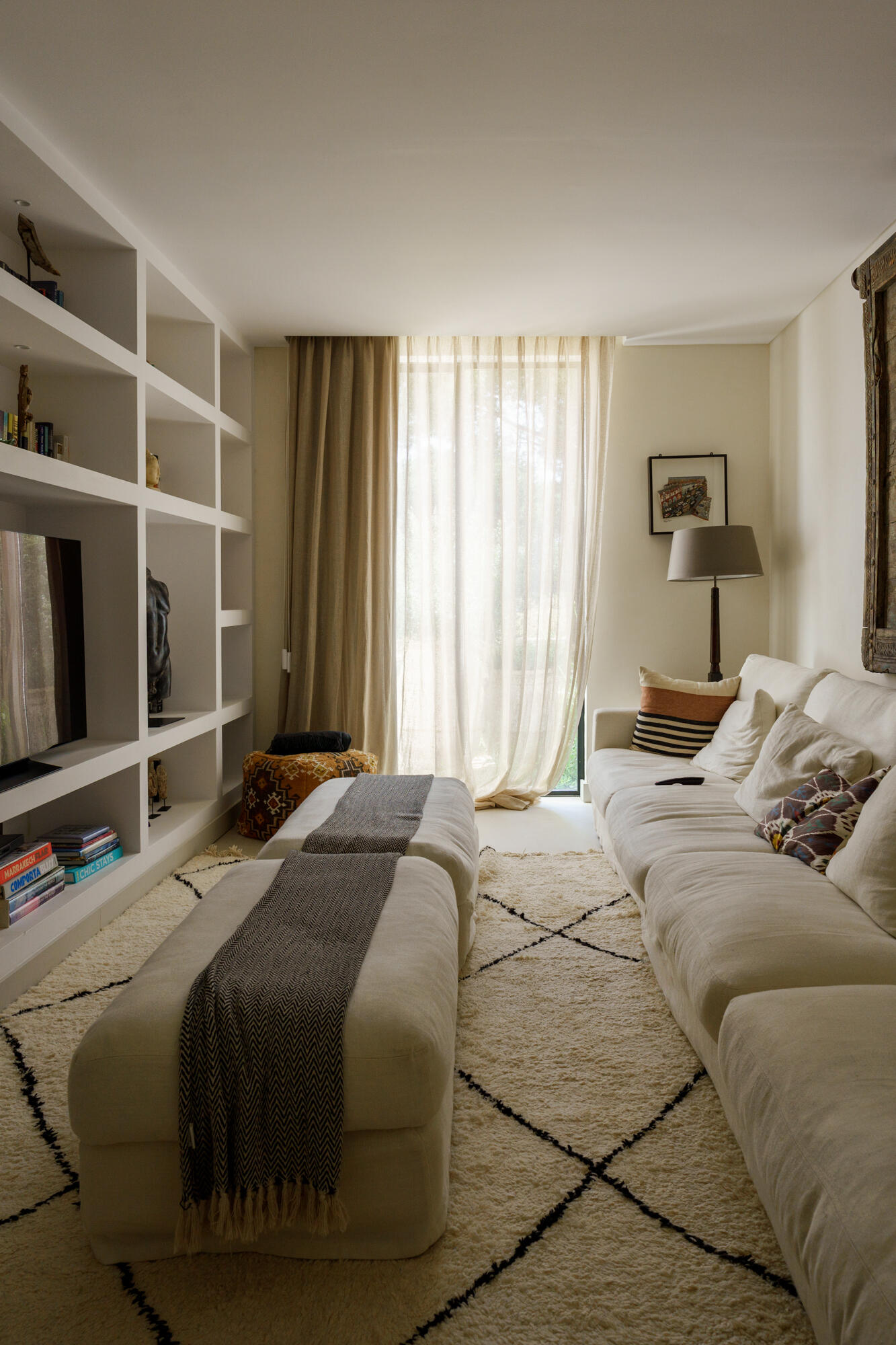
A Media Room With a More Intimate Atmosphere
While much of the villa focuses on openness and connection to the outdoors, the media room introduces a more enclosed and intimate environment. Lower lighting conditions and a quieter atmosphere make the space feel separated from the brighter communal areas of the house. The restrained material palette remains consistent, helping the room still feel visually linked to the rest of the villa.
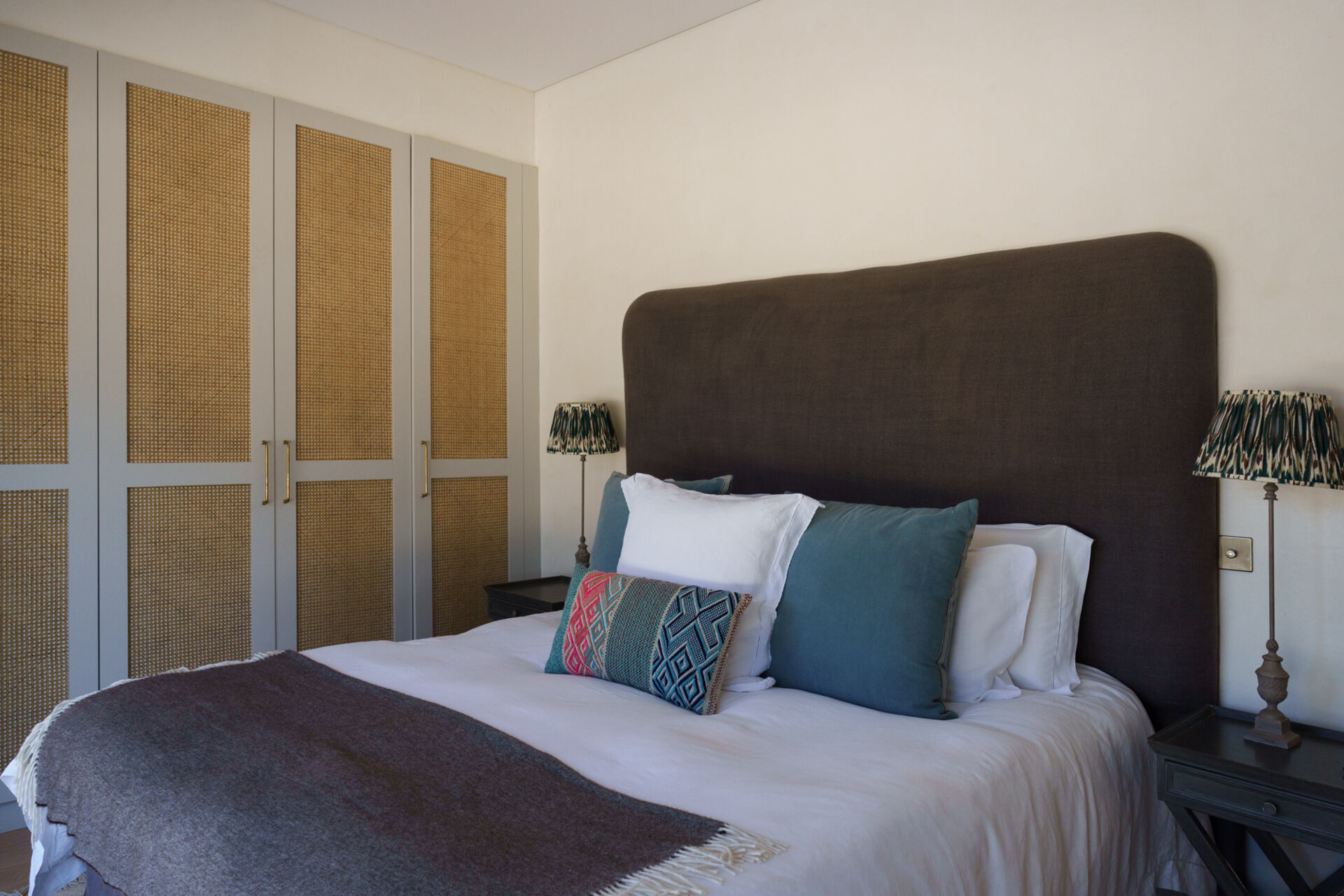
Bedrooms Oriented Toward the Sunrise
The private wing contains three en-suite bedrooms, each opening onto its own balcony facing east toward the pine forest. Each bedroom also includes a narrow terrace lined with aromatic herbs such as rosemary, thyme, and lavender, bringing natural fragrance close to the interiors.
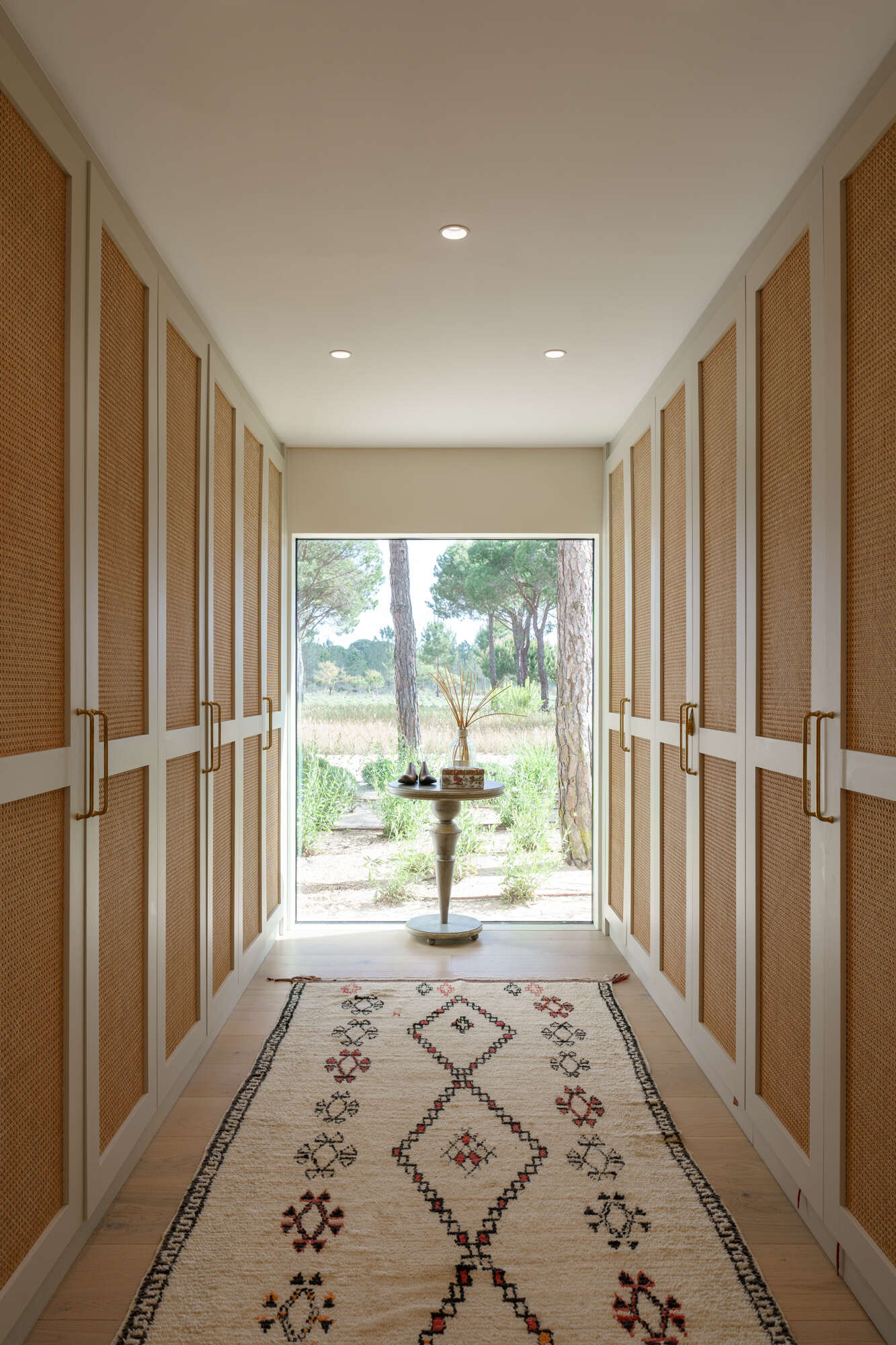
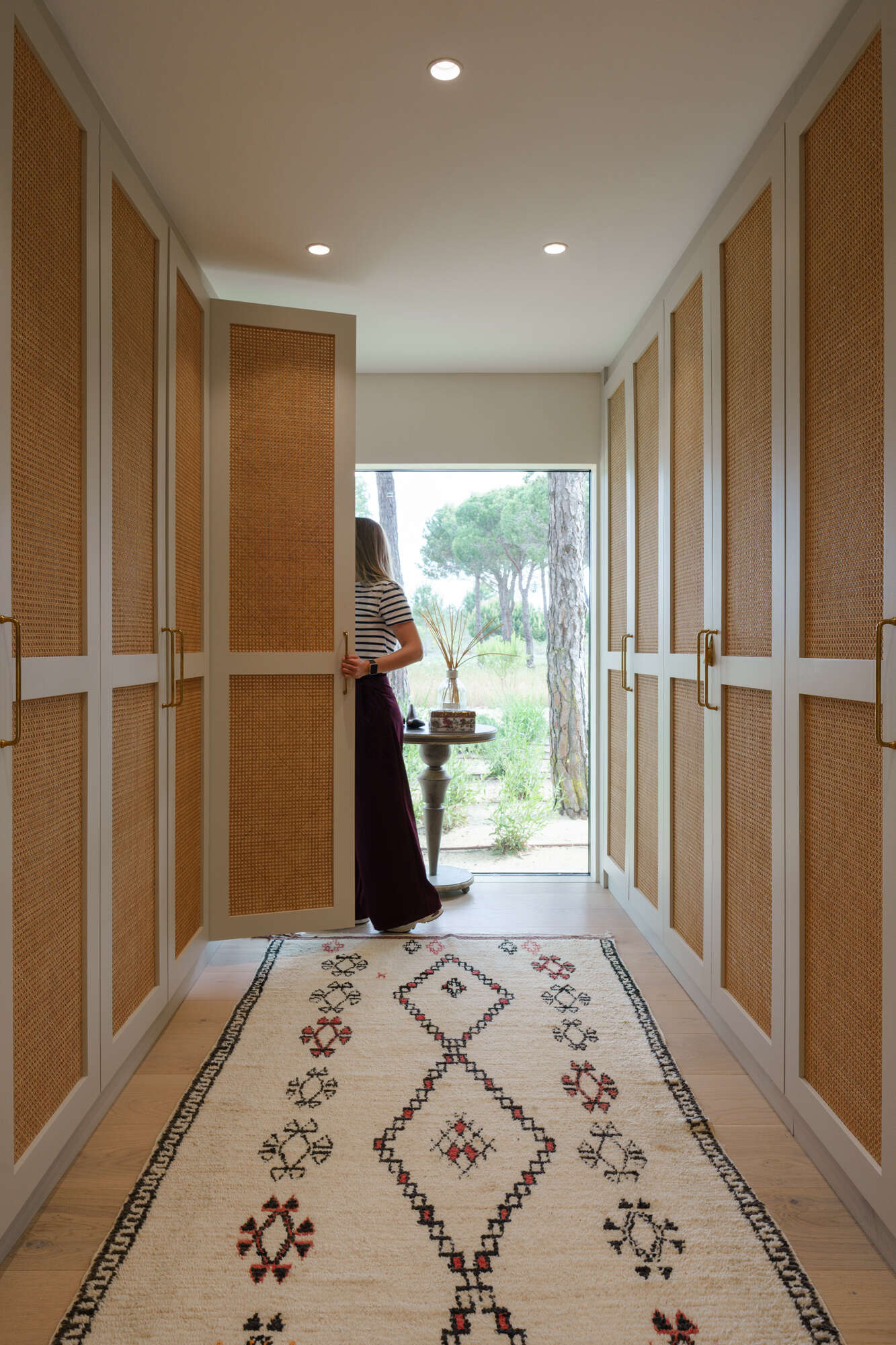
A Walk-In Closet Hidden Within the Master Suite
Its position within the private wing allows it to feel tucked away from the more social areas of the home while still benefiting from natural light filtering through nearby openings. Soft shadows, warm natural tones, and white surfaces help the space feel refined without becoming overly decorative, while the window perfectly frames the landscape.
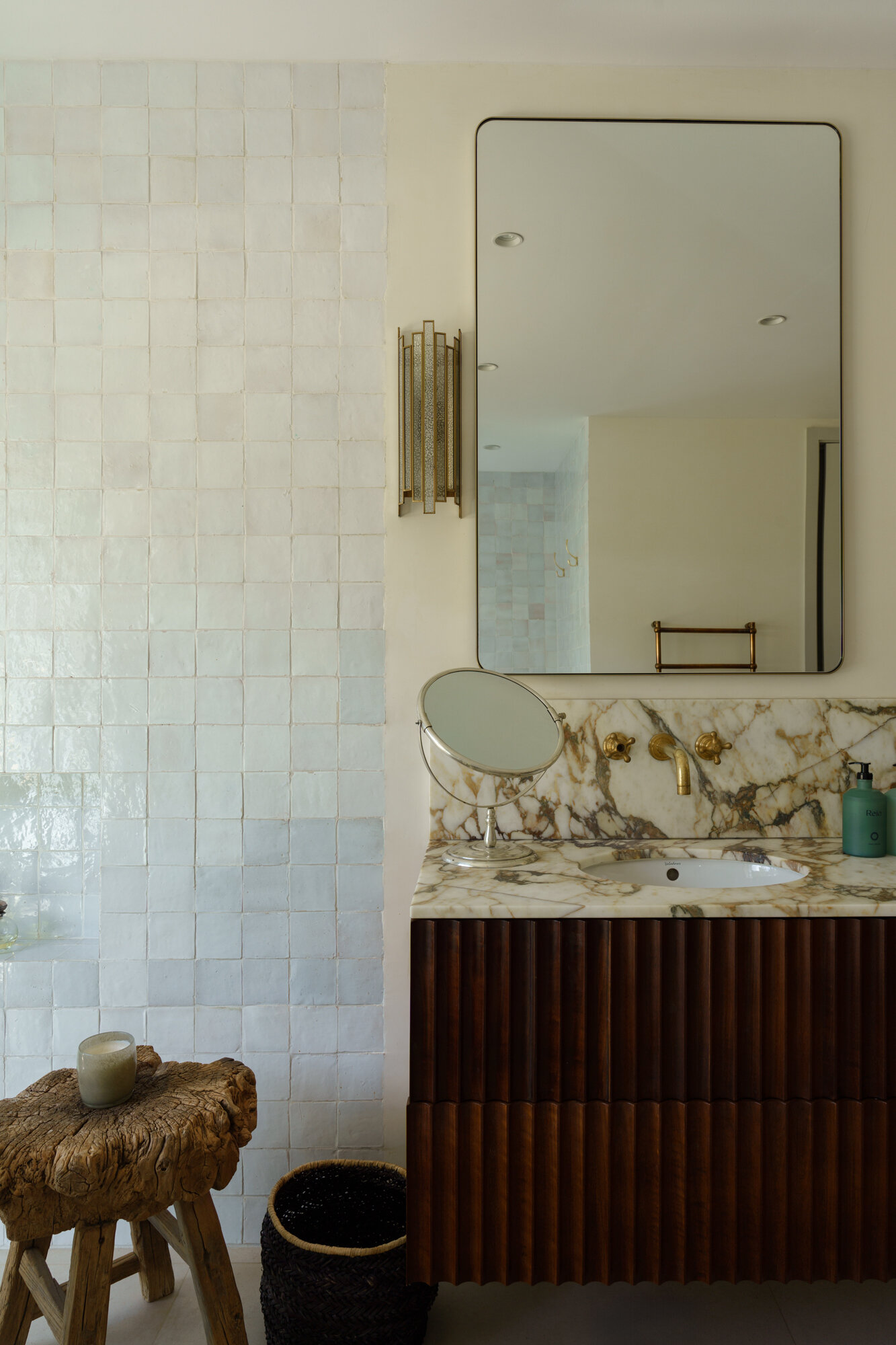
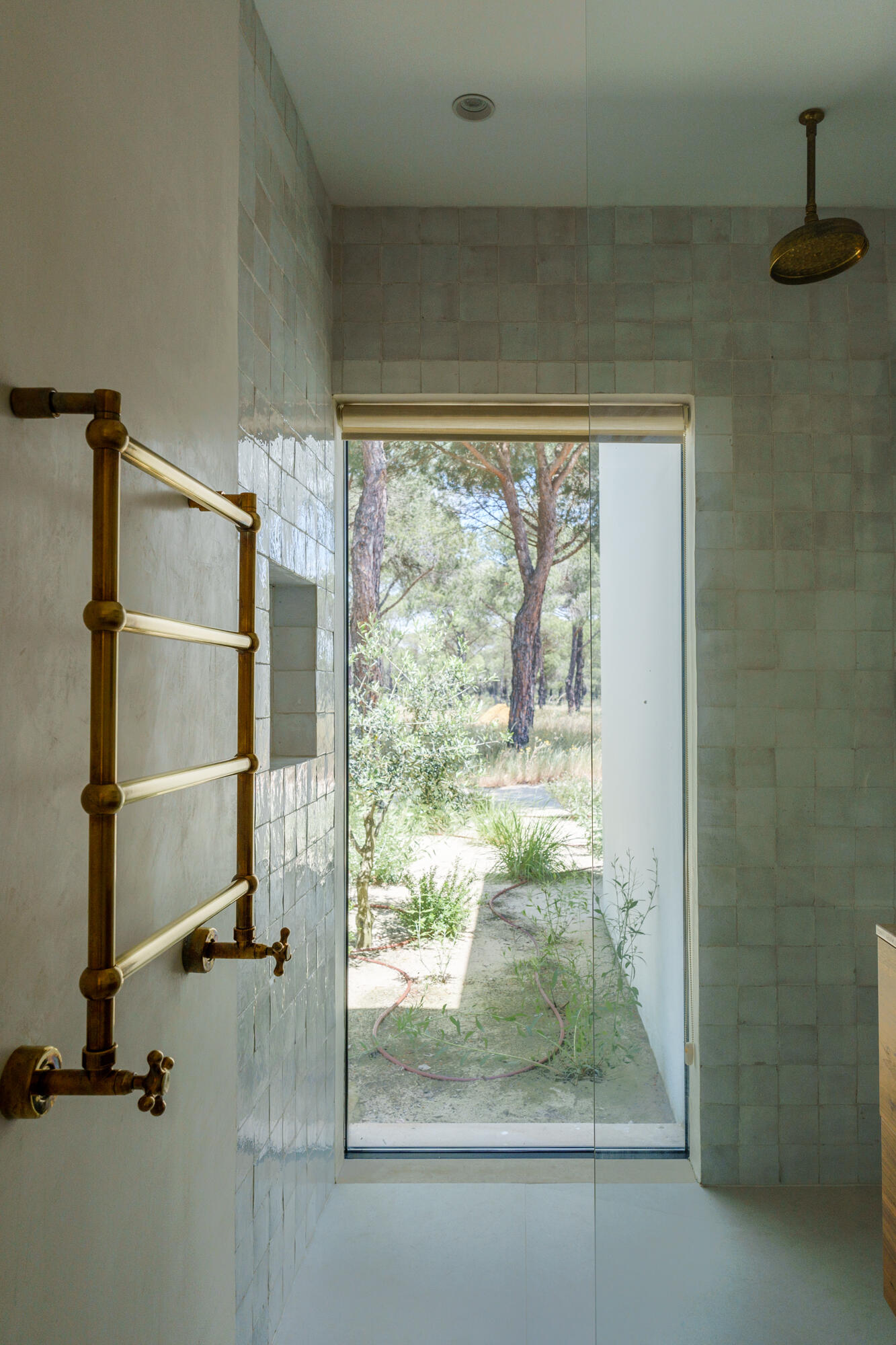
Bathrooms Shaped by Natural Light
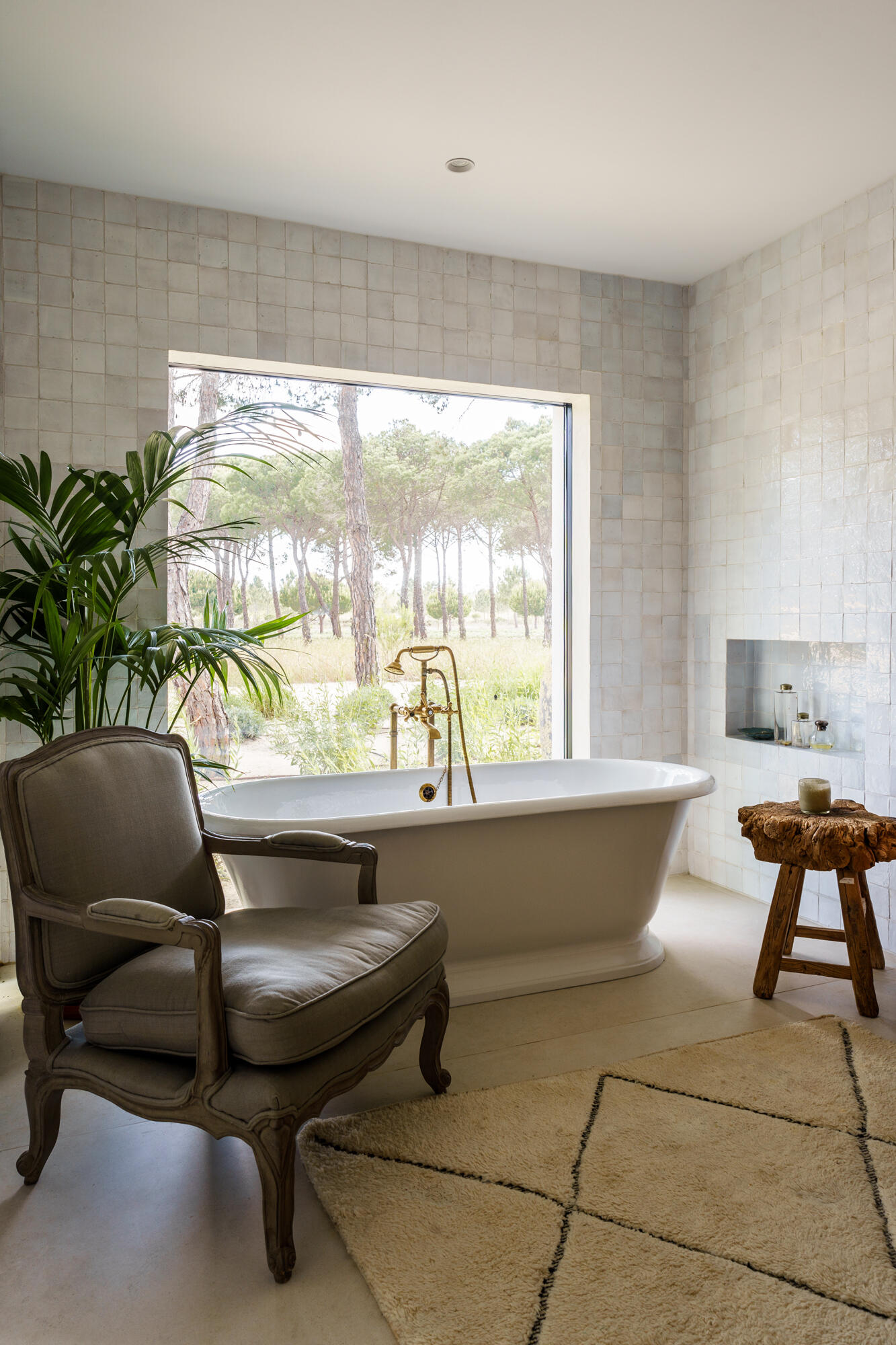
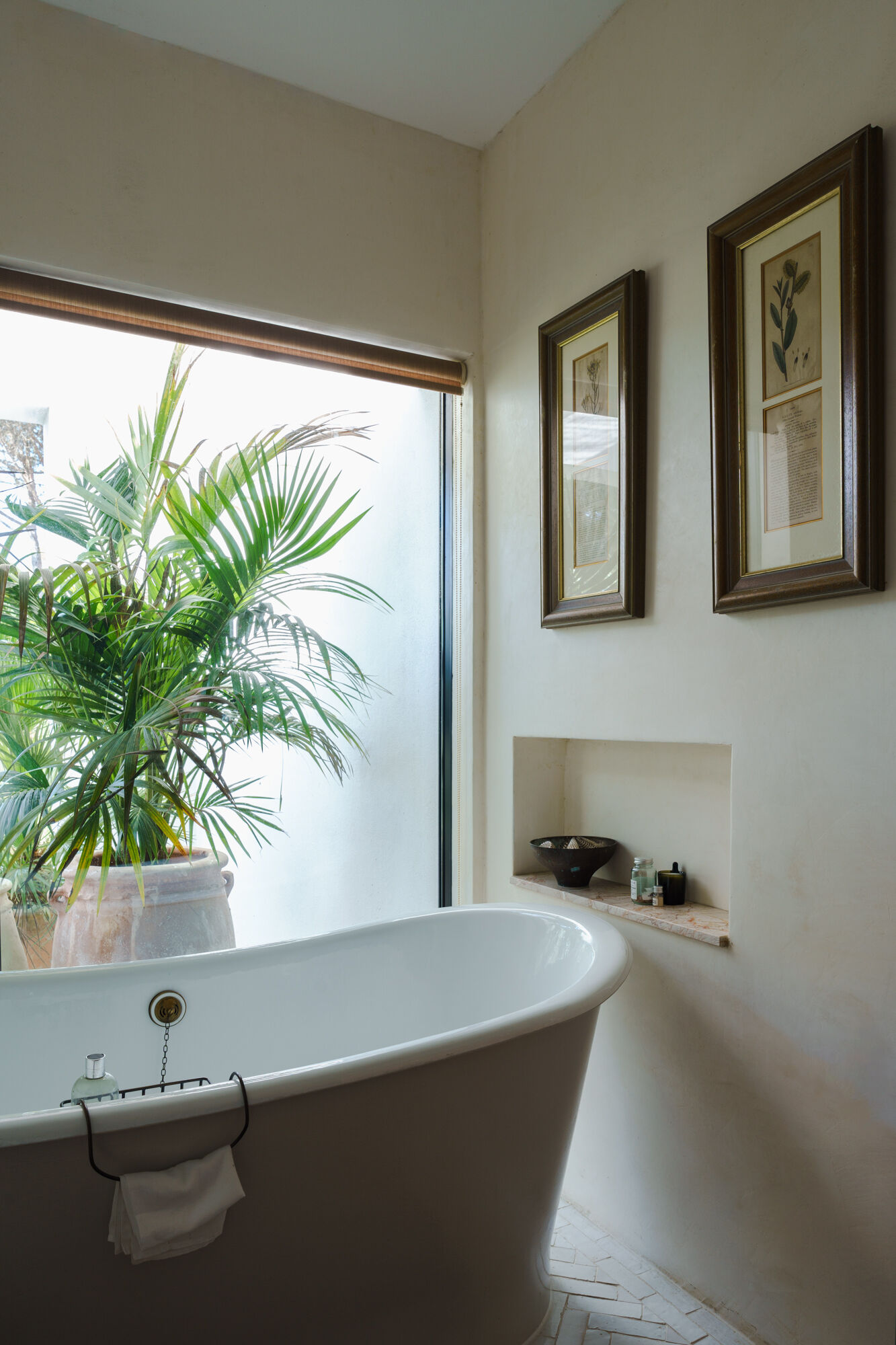
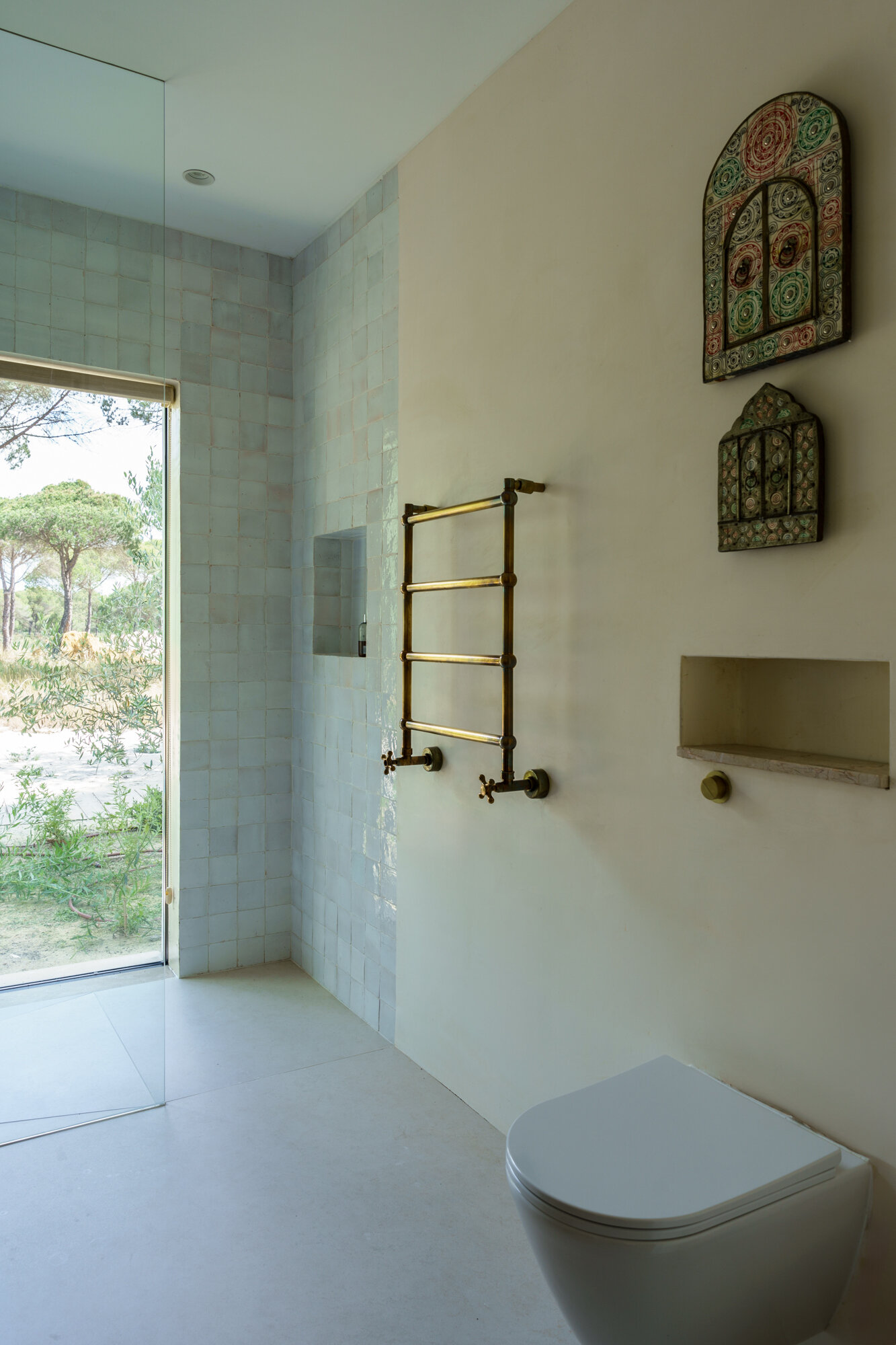
The bathrooms throughout the villa continue the same restrained palette of found in the rest of the home, while stone surfaces and glazed square tiles add interest.
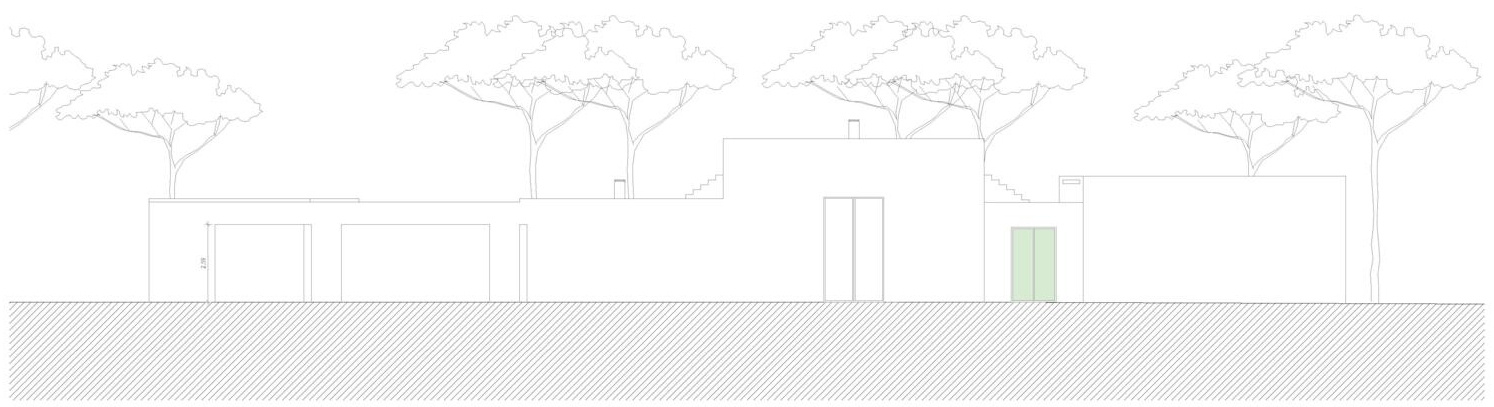
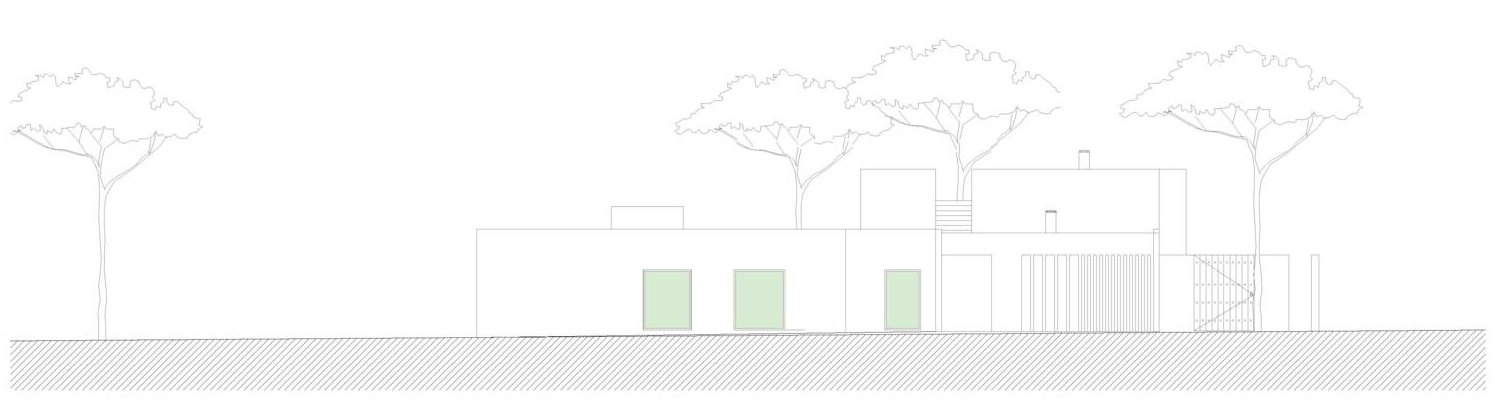
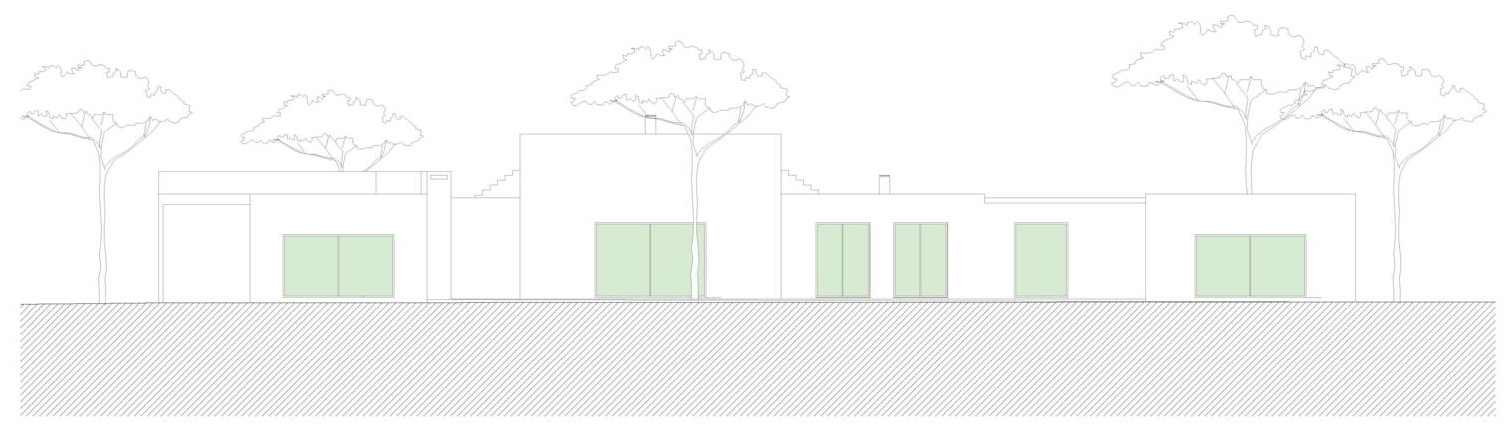
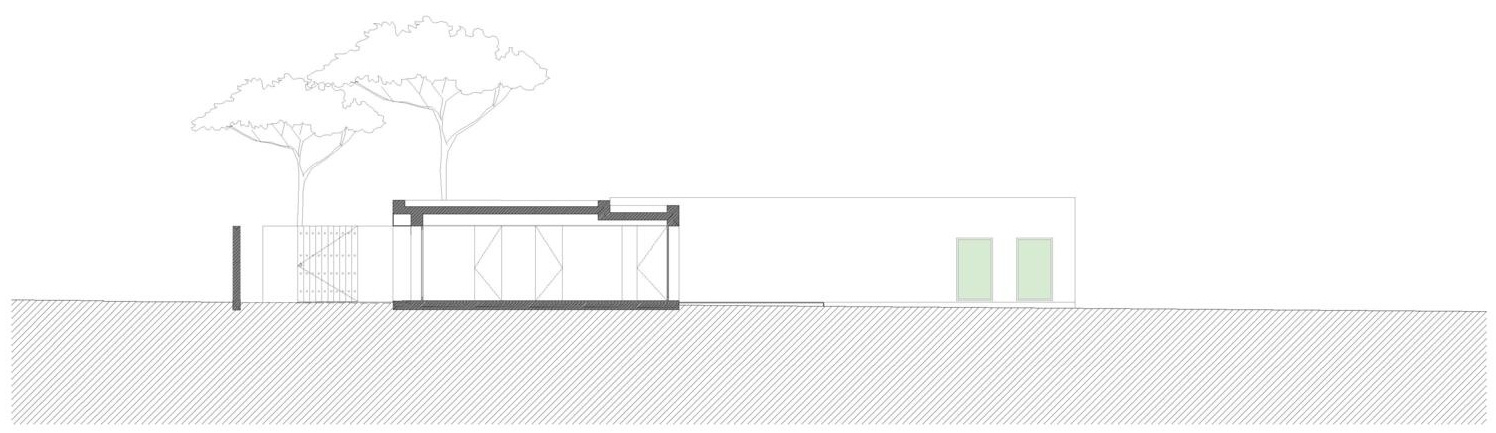
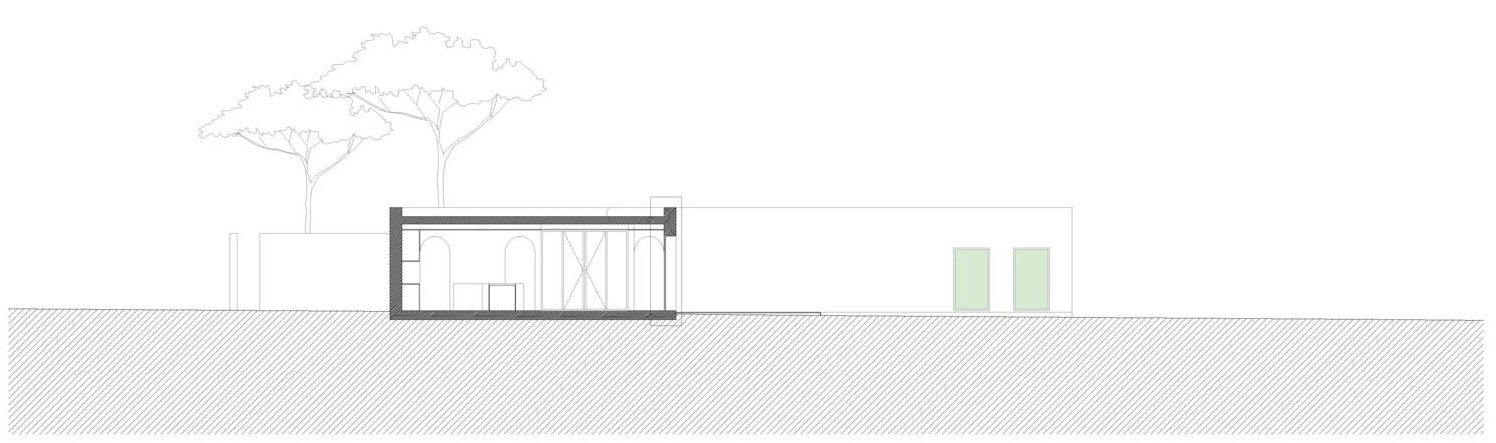
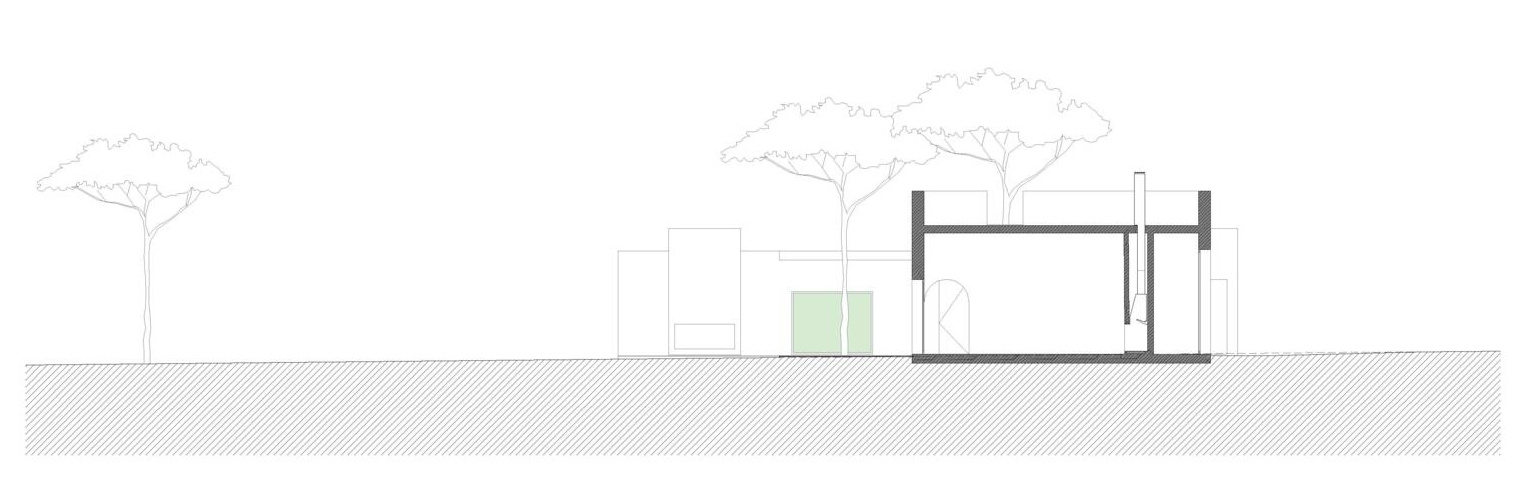
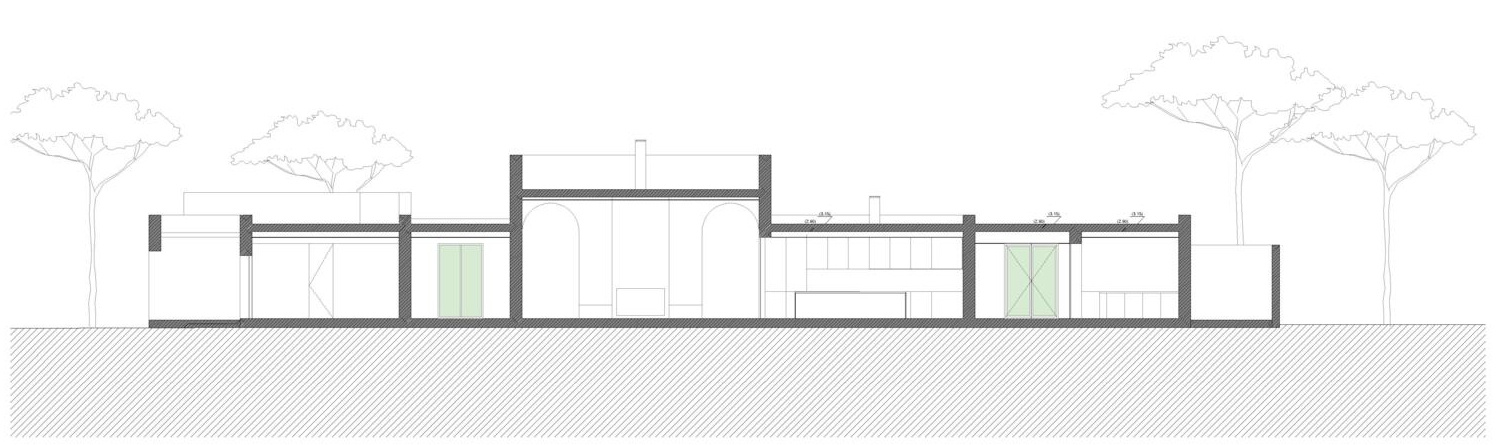
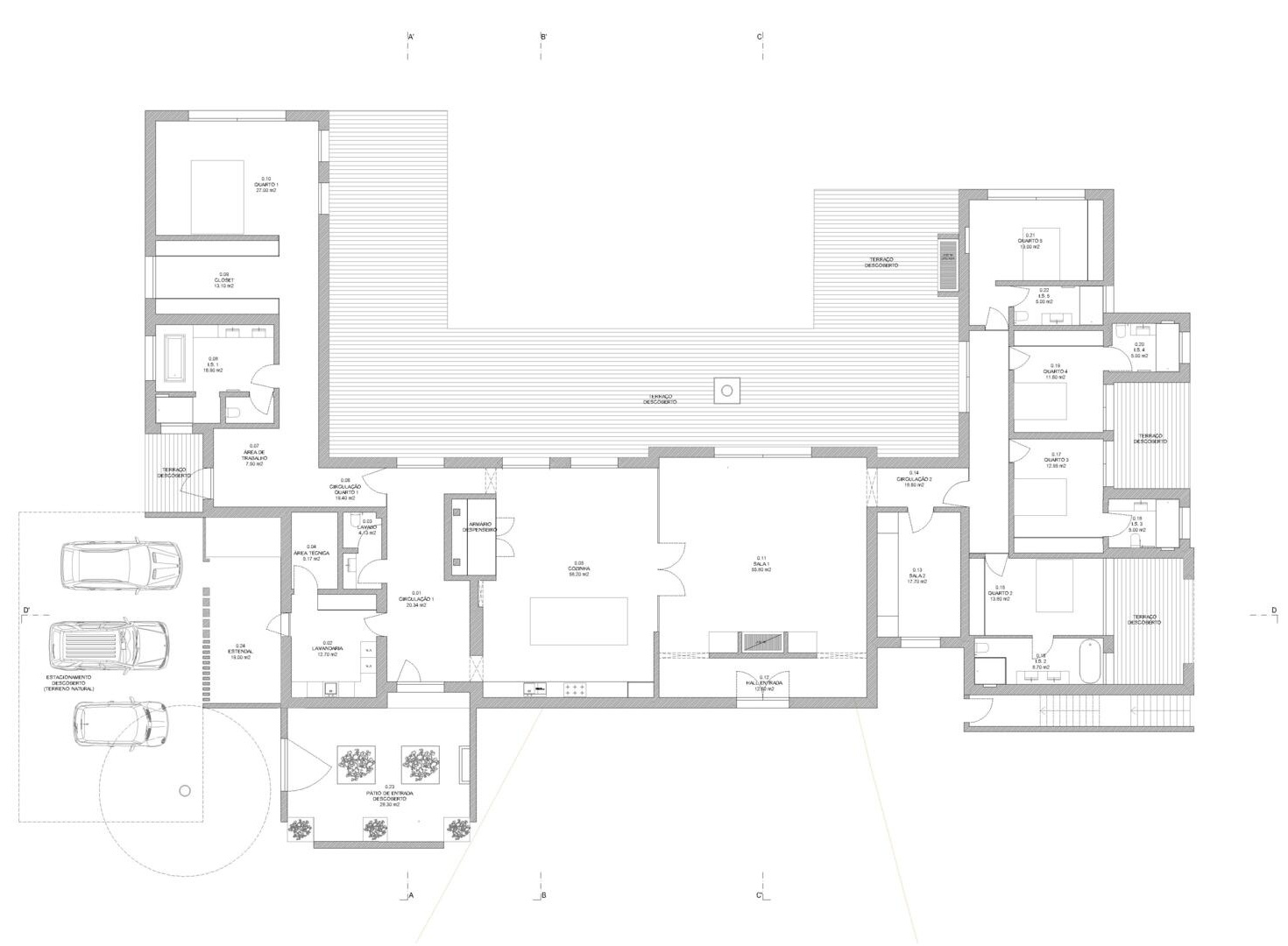
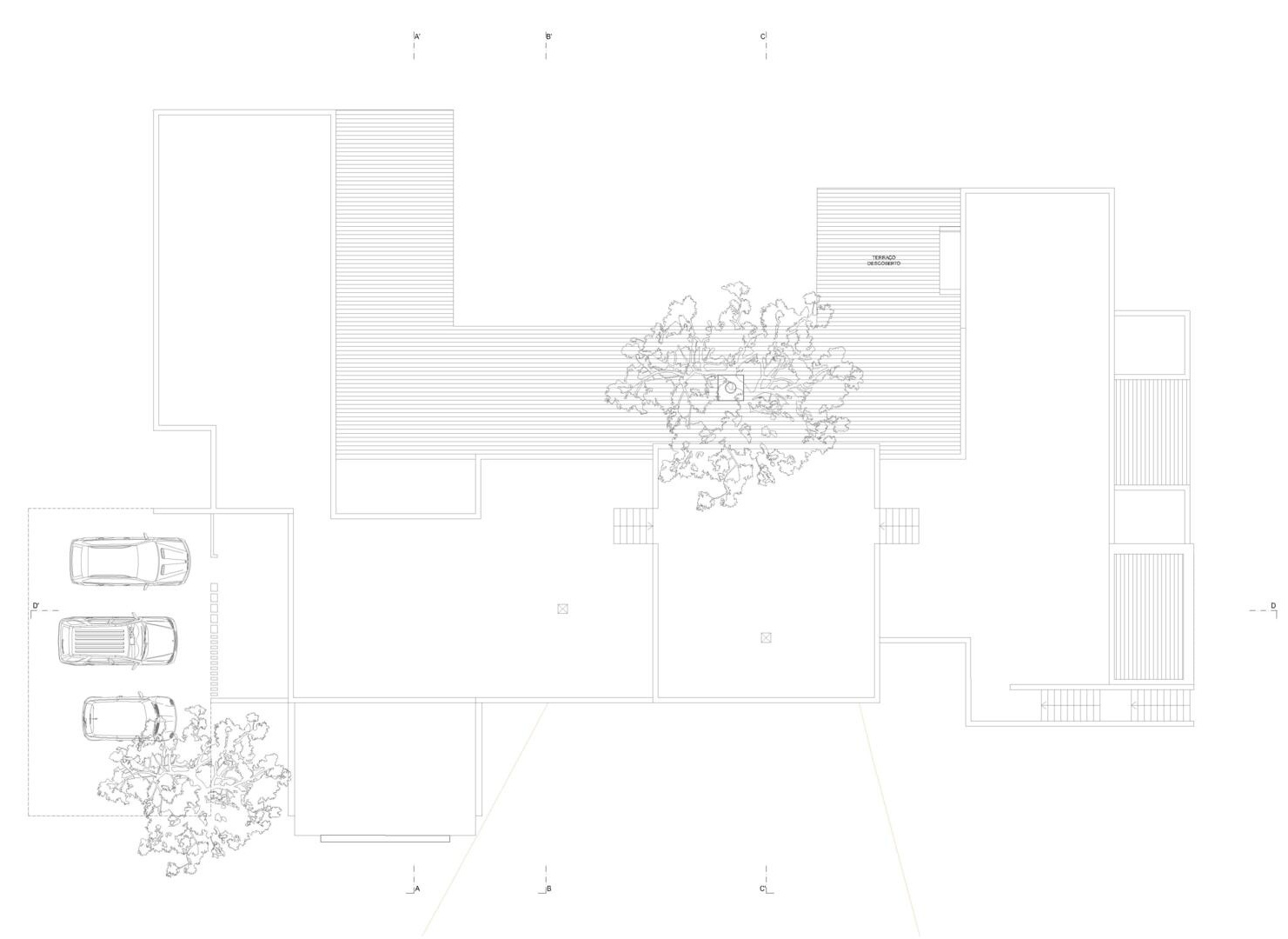
Architectural Drawings Reveal the Layout
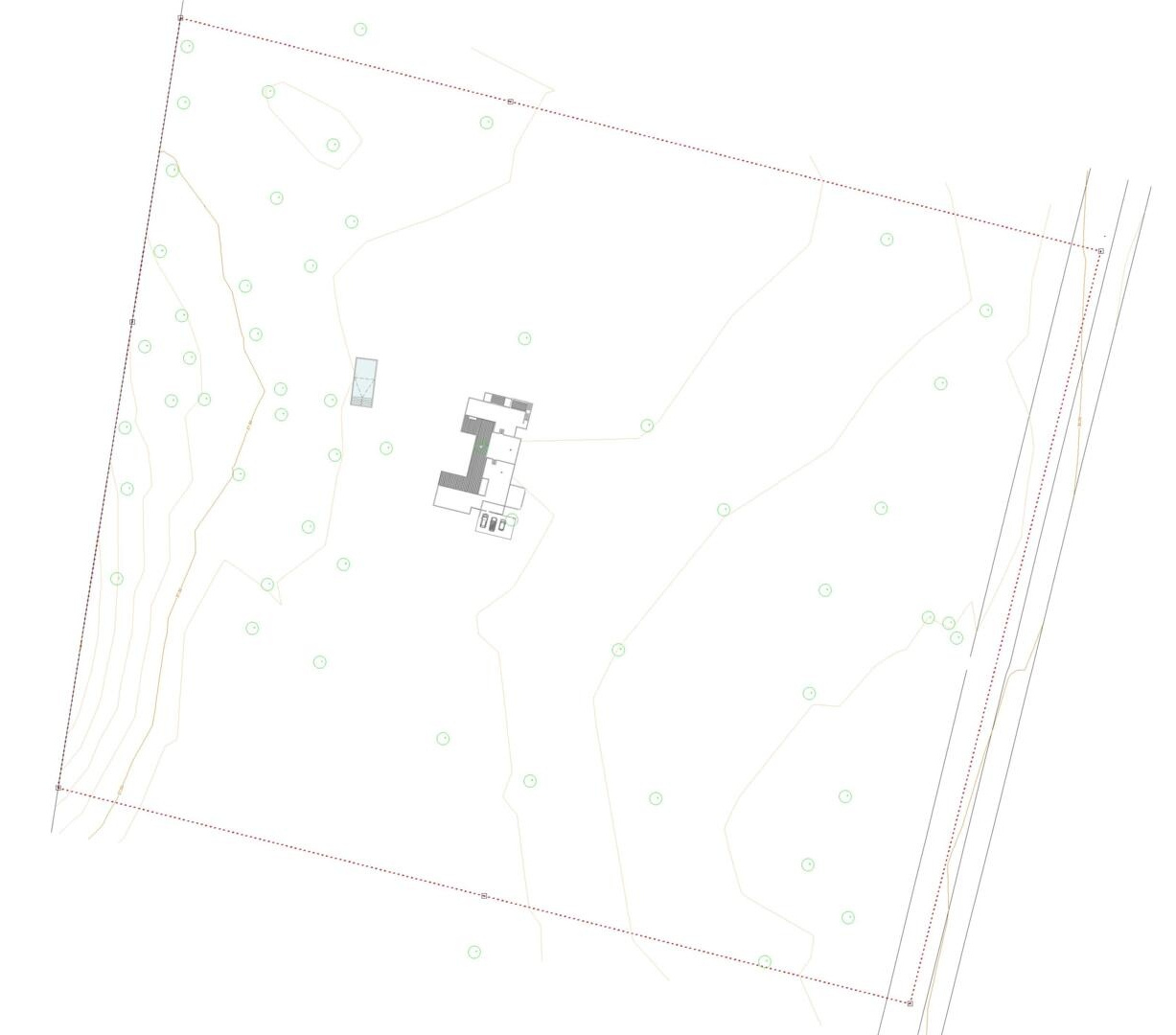
The architectural drawings highlight how efficiently the L-shaped plan organizes the villa around the central courtyard.
Public living spaces occupy the central volume, while the private bedrooms extend along the quieter eastern wing. Rooftop terraces, shaded outdoor areas, and circulation paths are all integrated into the overall geometry of the design.

Casa na Comporta by Sabrab Architecture combines contemporary minimalism with the textures and atmosphere of Portugal’s coastal pine forests.